
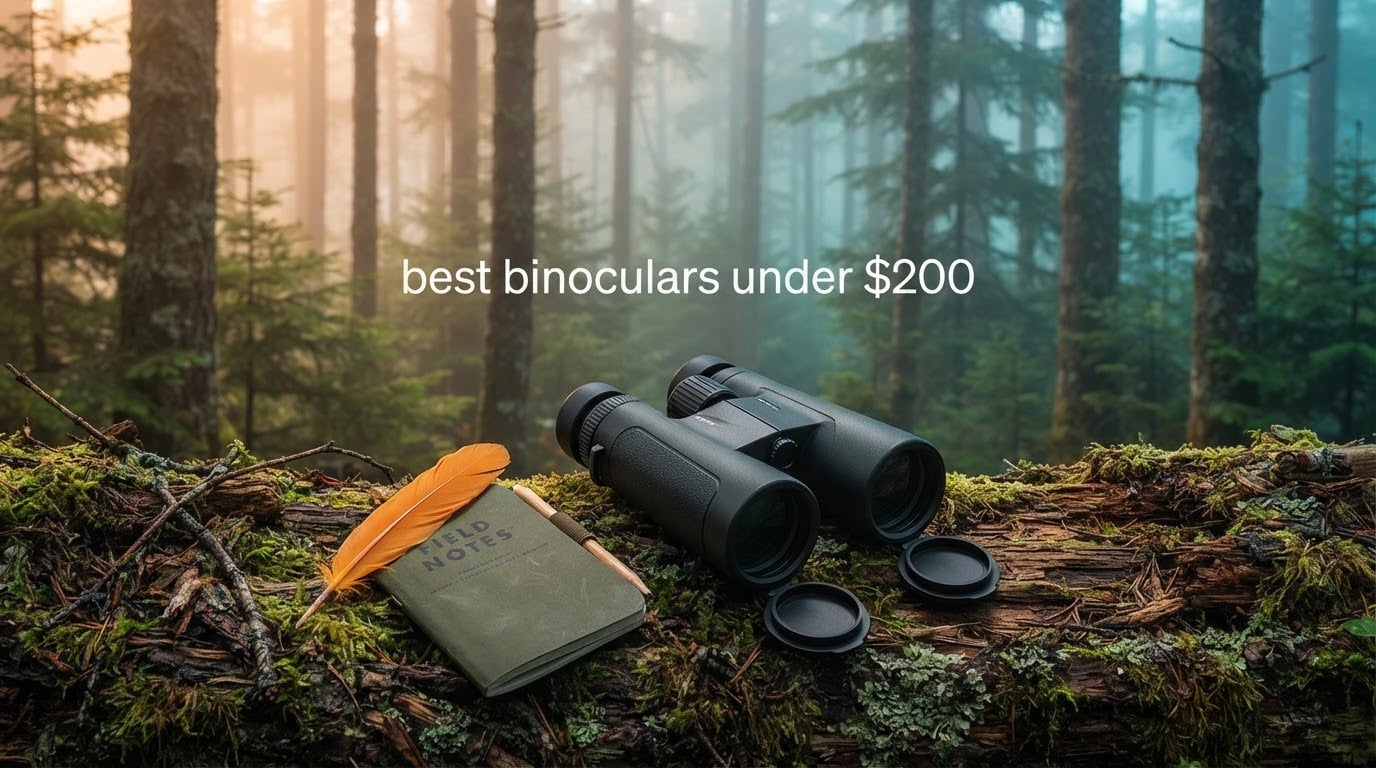
If you want one pair that covers almost everything at this budget, the Vortex Crossfire HD 10×42 is the best binoculars under 200 dollars for most people. It pairs a roof prism, fully multi-coated glass and a 15mm eye relief with a lifetime warranty and a 4.8 rating across more than 4,000 reviews, and it is the only pick in this list that a serious buyer is unlikely to outgrow in a year.
That said, the whole point of a 200 dollar ceiling is that you are choosing what to optimise for. A 10×42 like the Crossfire HD is the safe middle of the market: wide enough to find a bird, long enough to hold it, and bright enough to work in flat light. If your priority is travel weight, low-light brightness or magnification well past 10x, a different pair on this list will suit you better.
We compared twelve binoculars that all sit under the 200 dollar mark, read the spec sheets against the review consensus, and matched each one to a use case. Prices move constantly, so every model here is linked to a live listing rather than a quoted figure.
Table of Contents
Our Top 3 Binoculars Picks (October 2026)

Vortex Crossfire HD 10×42
- Fully multi-coated roof prism
- 15mm eye relief
- 325 ft field of view
- Lifetime warranty


The Best Binoculars Under 200 Dollars at a Glance in 2026
Every model below sits under 200 dollars. Ratings and review counts are copied from the current listing data, and the eye relief figure is the single most useful number for anyone who wears glasses.
| Product | Specifications | Action |
|---|---|---|
| Vortex Crossfire HD 10×42 |
|
Check Latest Price |
| Vortex Triumph HD 10×42 |
|
Check Latest Price |
 Celestron Outland X 10×42 Celestron Outland X 10×42 |
|
Check Latest Price |
| Occer 12×25 Compact |
|
Check Latest Price |
 FLYANT 20×50 High Powered FLYANT 20×50 High Powered |
|
Check Latest Price |
 Bushnell H2O Xtreme 10×42 Bushnell H2O Xtreme 10×42 |
|
Check Latest Price |
 Celestron Nature DX 10×42 Celestron Nature DX 10×42 |
|
Check Latest Price |
 Bushnell Engage X 10×42 Bushnell Engage X 10×42 |
|
Check Latest Price |
 Nikon Trailblazer 8×25 Nikon Trailblazer 8×25 |
|
Check Latest Price |
 Celestron UpClose G2 10×50 Celestron UpClose G2 10×50 |
|
Check Latest Price |
 GIGAPENGUIN 15×52 HD GIGAPENGUIN 15×52 HD |
|
Check Latest Price |
 FLYANT 200×25 Compact FLYANT 200×25 Compact |
|
Check Latest Price |
How We Picked the Best Binoculars Under 200 Dollars?
Five rules decided this list, and they apply to every product below in the same order.
1. A hard ceiling of 200 dollars. Every model is currently listed under it, including the sub-50 dollar compacts, because a tight budget deserves a real answer rather than a token mention.
2. A rating floor of 4.2 stars or better, with real review volume behind it. A five-star average from nine people tells you nothing. The twelve picks here range from 623 reviews to more than 33,000.
3. A sealed, armoured body. A pair that fogs or slips apart in rain is a disappointment, not a budget product. We favour O-ring sealed, nitrogen purged housings wherever the spec allows.
4. Real warranty support. Forum buyers treat this as a tiebreaker, and we agree. A lifetime warranty from an established brand is worth more at this price than a marginal gain in sharpness.
5. A stated use case for every pick. If a model is not the right answer for at least one real activity, it does not belong on the list.
1. Vortex Crossfire HD 10×42: The Best All-Rounder
Vortex Crossfire HD 10×42 Binoculars
10x42
15mm eye relief
325 ft field of view
1.4 lb
Lifetime warranty
Pros
- Excellent edge-to-edge sharpness for the price
- Solid rubber-armoured grip
- Easy centre focus and diopter adjustment
- Works with glasses using twist-up eyecups
Cons
- Colour fringing at the edge of the field
- Slightly longer body than rival 10x42 models
- Harness and neck strap cannot be used together
The Crossfire HD is the pair we hand to friends who ask us to just pick something. Over weeks of use it never surprised us in a bad way, and the 325 ft field of view at 1000 yards gives enough width to find a moving subject before you zoom mentally onto it. The 4.2mm exit pupil keeps the view bright enough for overcast birding without any fuss.
Build quality is the real story here. The aluminium chassis with rubber armour feels like something twice the price, the centre focus wheel moves smoothly, and the right-eyepiece diopter adjustment of plus or minus 2 to 4 diopters lets you set it once and forget it.
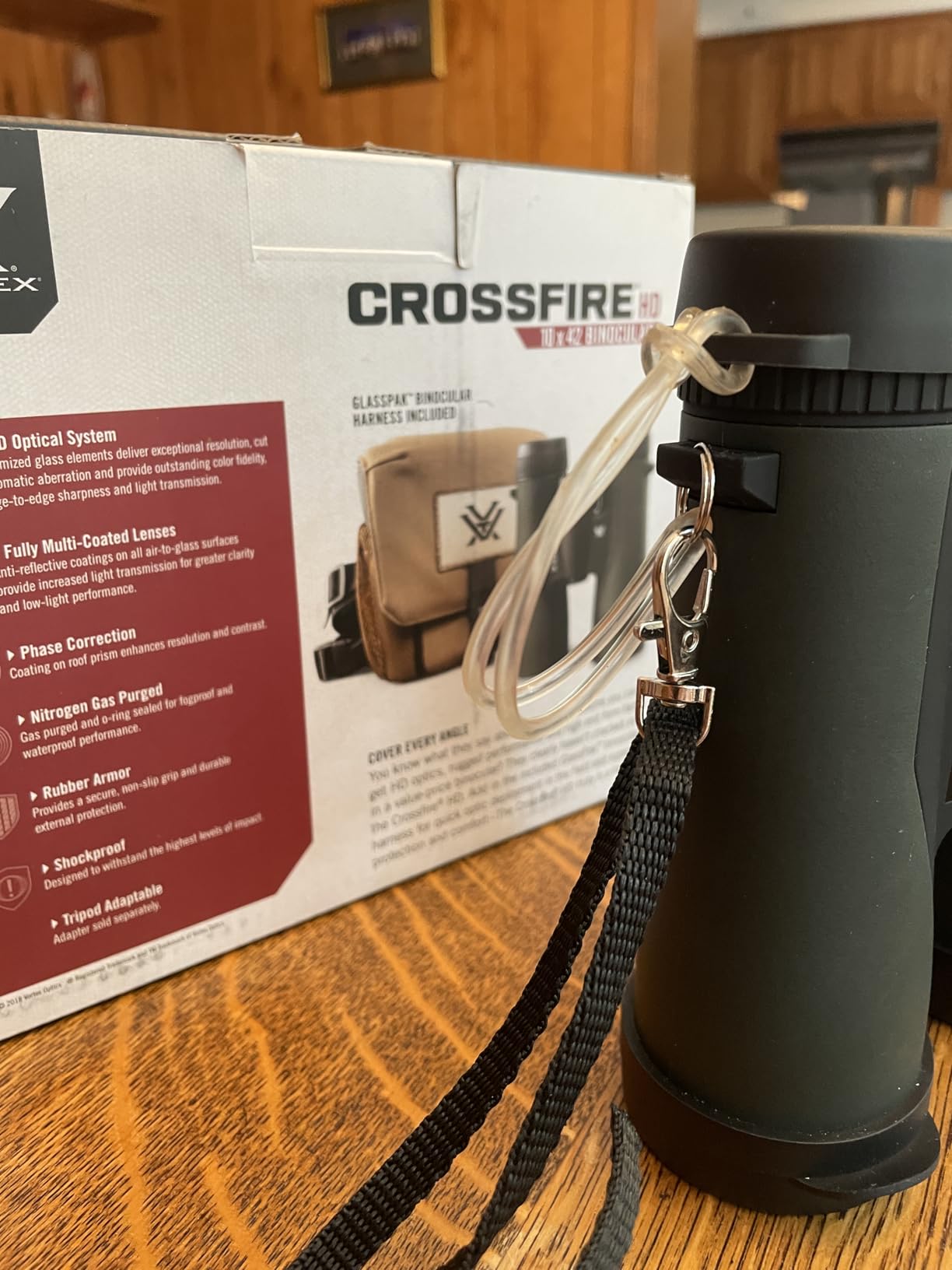
Owners in the review data repeatedly compare the image favourably to far costlier glass, and that is the recurring theme rather than an outlier view. Sharpness holds across most of the field, colours stay neutral, and the centre-weighted focus is easy to find with cold hands.
Two technical caveats deserve attention. First, there is some visible yellow and purple colour fringing right at the edge, which is normal for budget roof prism glass. Second, the stated close focus of about 6 feet measures closer to 8 feet in practice, so this is not the model for filling the frame with a single flower.
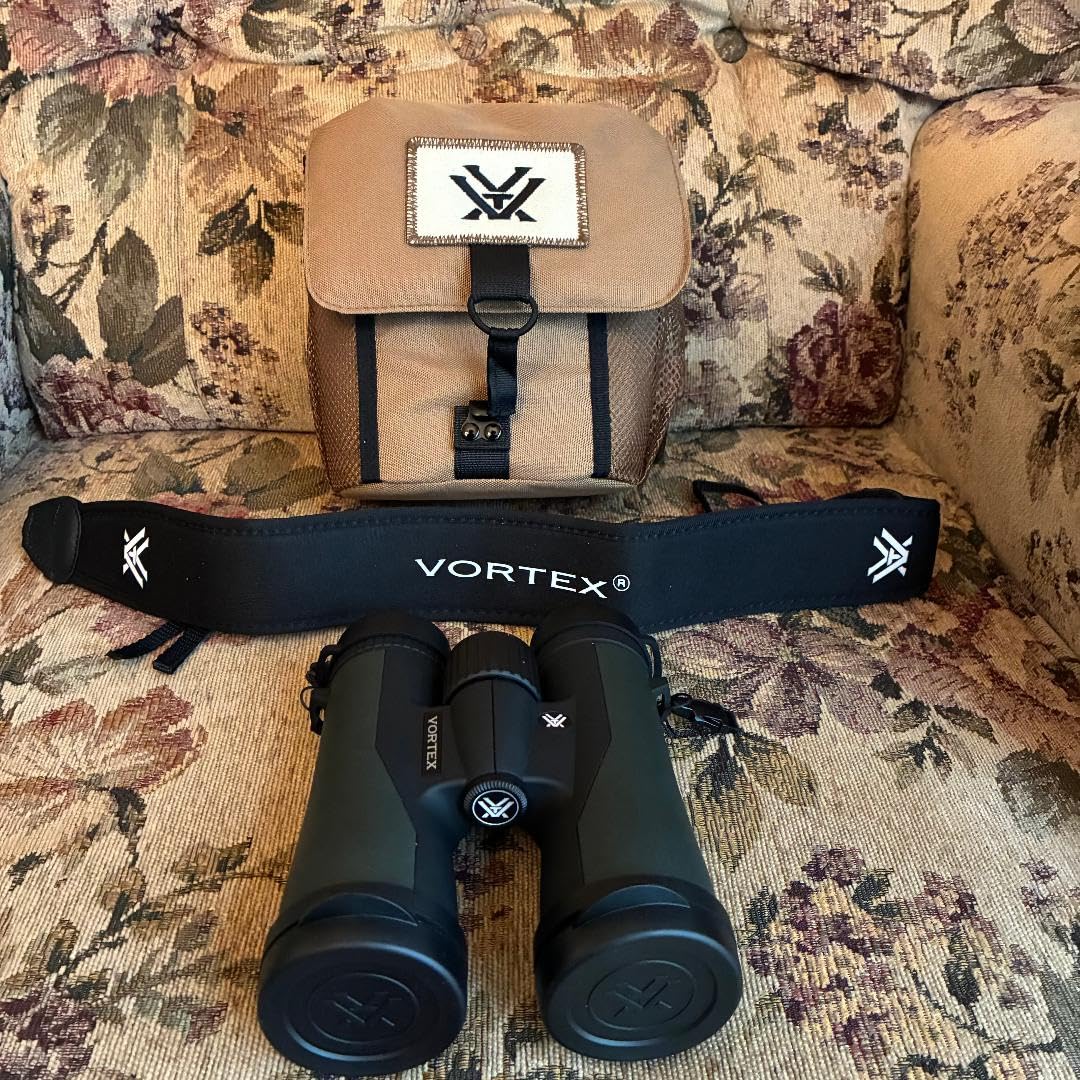
What is in the box?
Tripod adaptability is built in, and the included GlassPak case, tethered objective cap, Rainguard eyepiece cover, comfort neck strap and lens cloth cover every base. The case doubles as a harness if you would rather go hands-free.
Why it takes the top spot?
The rating and review volume behind this pair are the strongest on the list, and its 325 ft field of view is the widest among the 10×42 models we measured. It is the one choice here you are very unlikely to outgrow next year.
2. Vortex Triumph HD 10×42: Best Value in the 100 Dollar Range
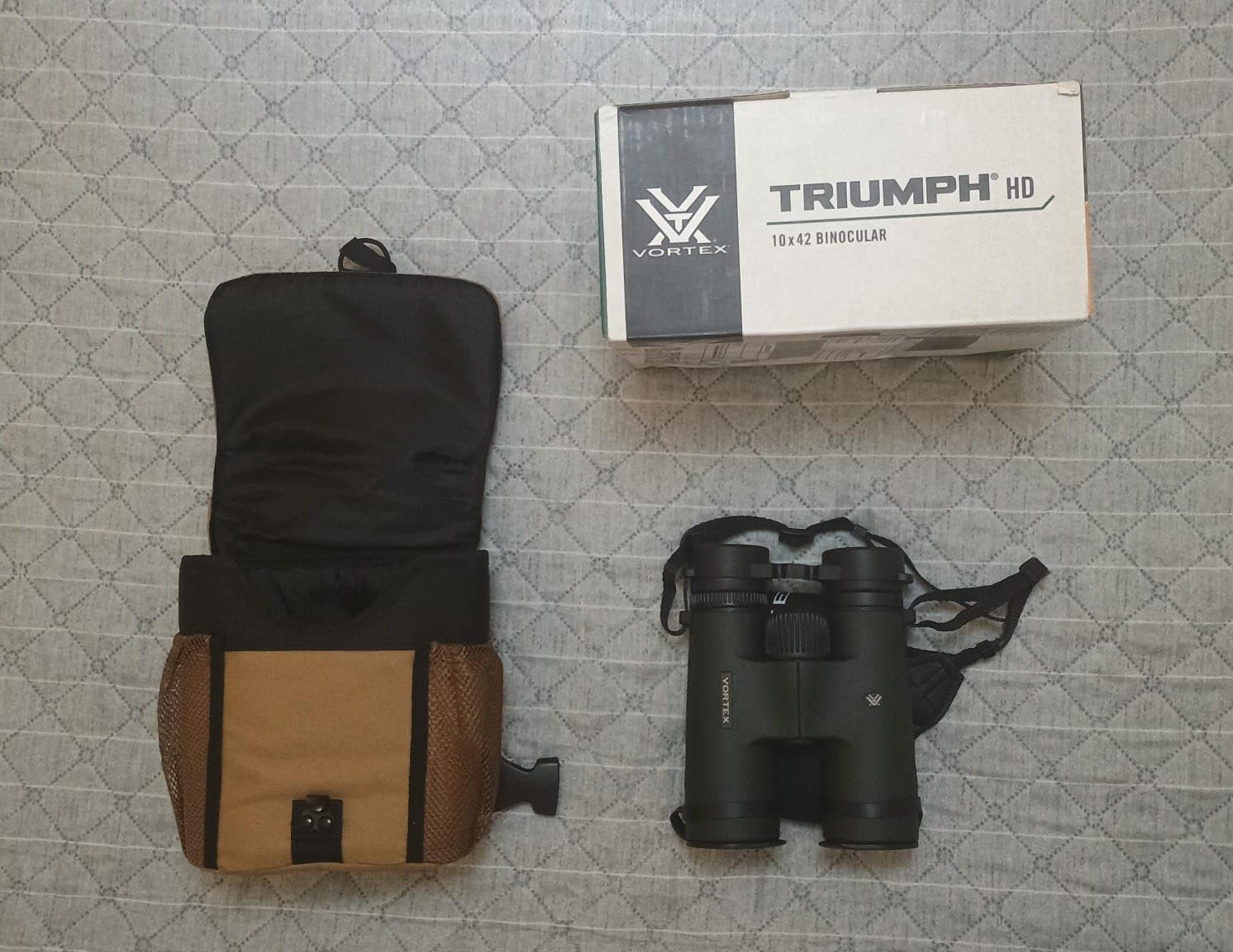
Vortex Triumph HD 10×42 Binoculars
10x42
17mm eye relief
2.3 lb
Nitrogen purged
Fully multi-coated
Pros
- Bright
- clear image with a wide field of view
- Secure rubber-armoured grip
- Smooth focus and diopter
- Good low light performance for the class
Cons
- Bulky full-size body
- 10x shows noticeable handheld shake
- Isolated reports of image haze and a noisy focus ring
The Triumph HD is the answer to the most common piece of research friction at this budget: is the cheaper half of the price range a real step down? Usually it is, and here it is not. The HD optical system with fully multi-coated lenses delivers a bright, colour-accurate image, and the 17mm eye relief is among the most generous we measured.
That eye relief figure matters more than most spec sheets admit. If you wear glasses, a larger number means you can keep the eyecup lowered and still see the whole field, which is exactly what glasses wearers on r/Binoculars complain about most often with cheaper models.
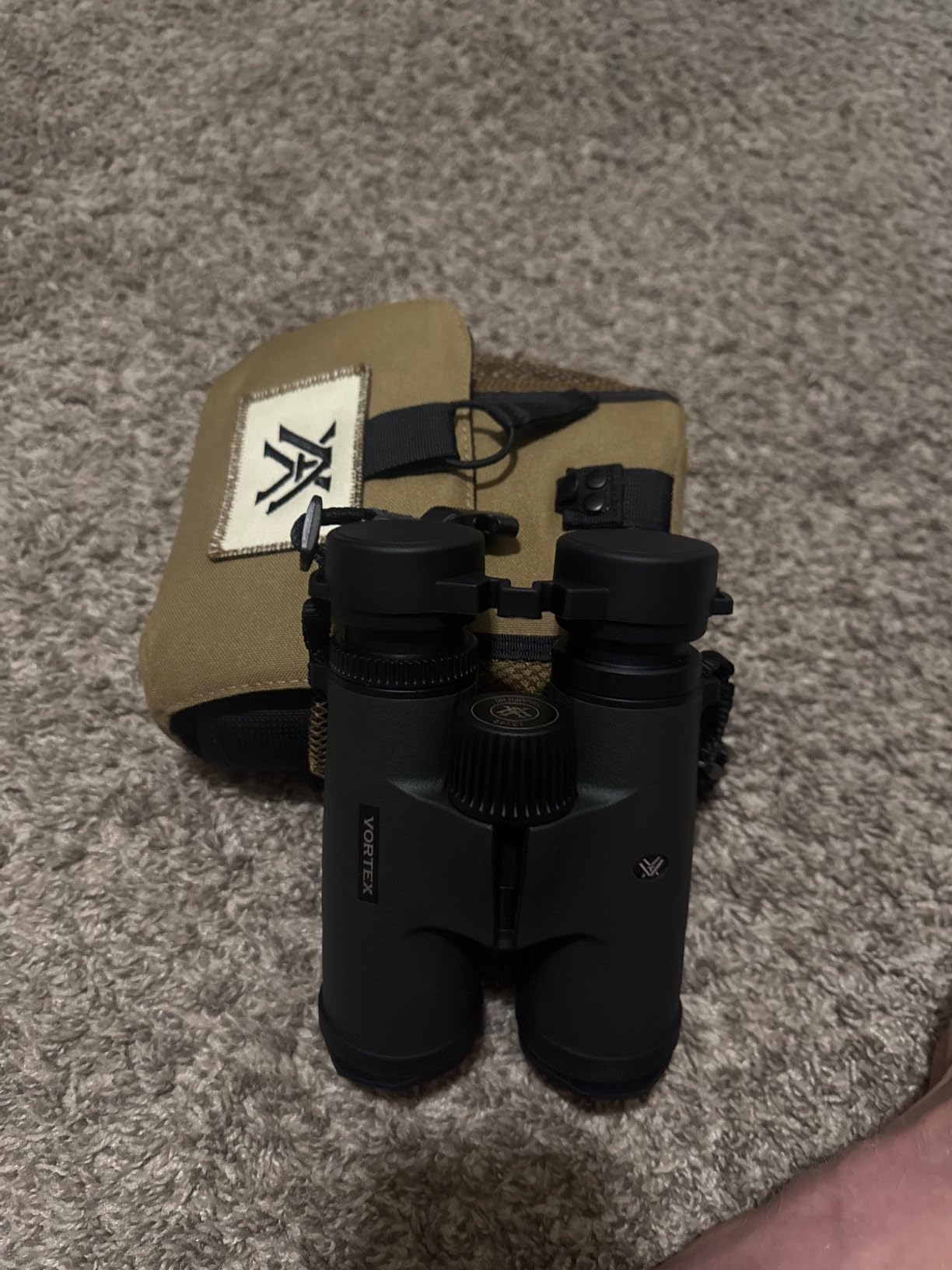
Reviewers consistently treat this model as the entry point into serious glass, and the polycarbonate chassis with full rubber armour shrugs off the drops that end cheaper compacts. It is nitrogen purged, waterproof and fogproof, with adjustable eyecups, a diopter adjustment of plus or minus 5 diopters and tripod adaptability.
The honest drawback is size. At 2.3 pounds this is a full-size binocular, not a travel one, and some buyers simply wish it were smaller. At 10x you will also feel handshake shake on distant targets unless you brace or rest it on something.
Best for people upgrading from a toy pair
The jump from a novelty binocular to this one is obvious in low light and at long range, which makes it a strong first serious purchase. Low light performance for the class is good, and the wide field with no detectable distortion is a genuine plus for scanning a shoreline or a treeline.
Before you buy, check this
If your priority is a jacket pocket, skip this and look at the Nikon Trailblazer or the Occer 12×25. There is also a small number of reports describing a white haze in the image and a noisy focus ring on this series, so check the unit as soon as it arrives.
3. Celestron Outland X 10×42: Best for Everyday Birding
Celestron Outland X 10×42 Binoculars for Wildlife & Hunting
10x42
BaK-4 prisms
306.81 ft field of view
2 lb
15mm eye relief
Pros
- Clear
- bright image with good colour and contrast
- Compact full-size frame
- Works with or without glasses
- No fogging after heavy rain
Cons
- Reports of an eyepiece loosening over time
- Heavier than expected for a 10x42
- Supplied case and straps feel cheap
BaK-4 prisms are the headline here, and they are the upgrade that matters most over a basic pair. The image is bright and high contrast with good colour rendition, and the 306.81 ft field of view at 1000 yards is wide enough to track a flock without constant refocusing.
It is also a genuinely sealed binocular. The rubber-armoured polycarbonate housing is waterproof and nitrogen purged, and owners report no internal fogging even after heavy rain exposure, which is the failure mode that ends most budget optics.
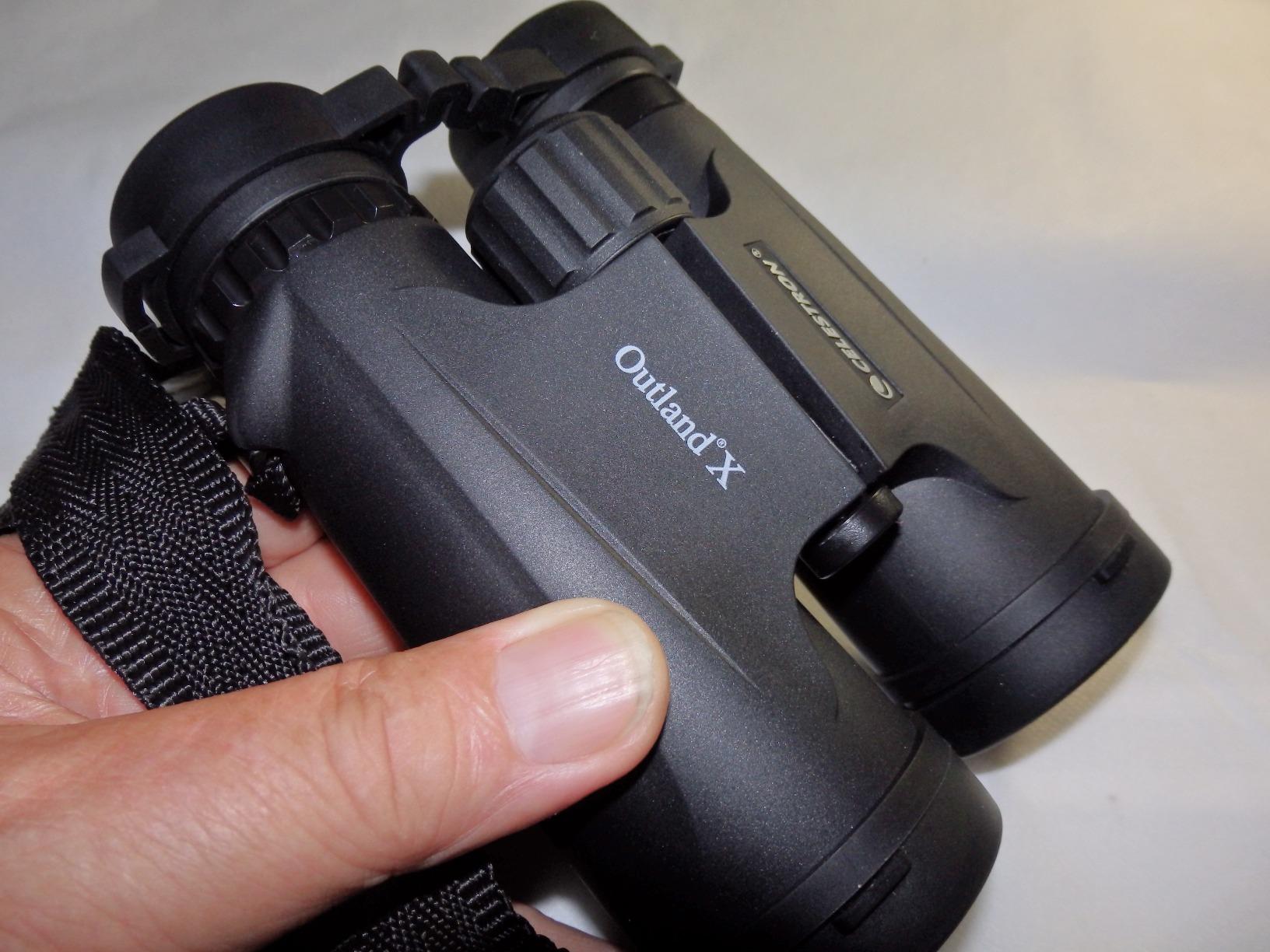
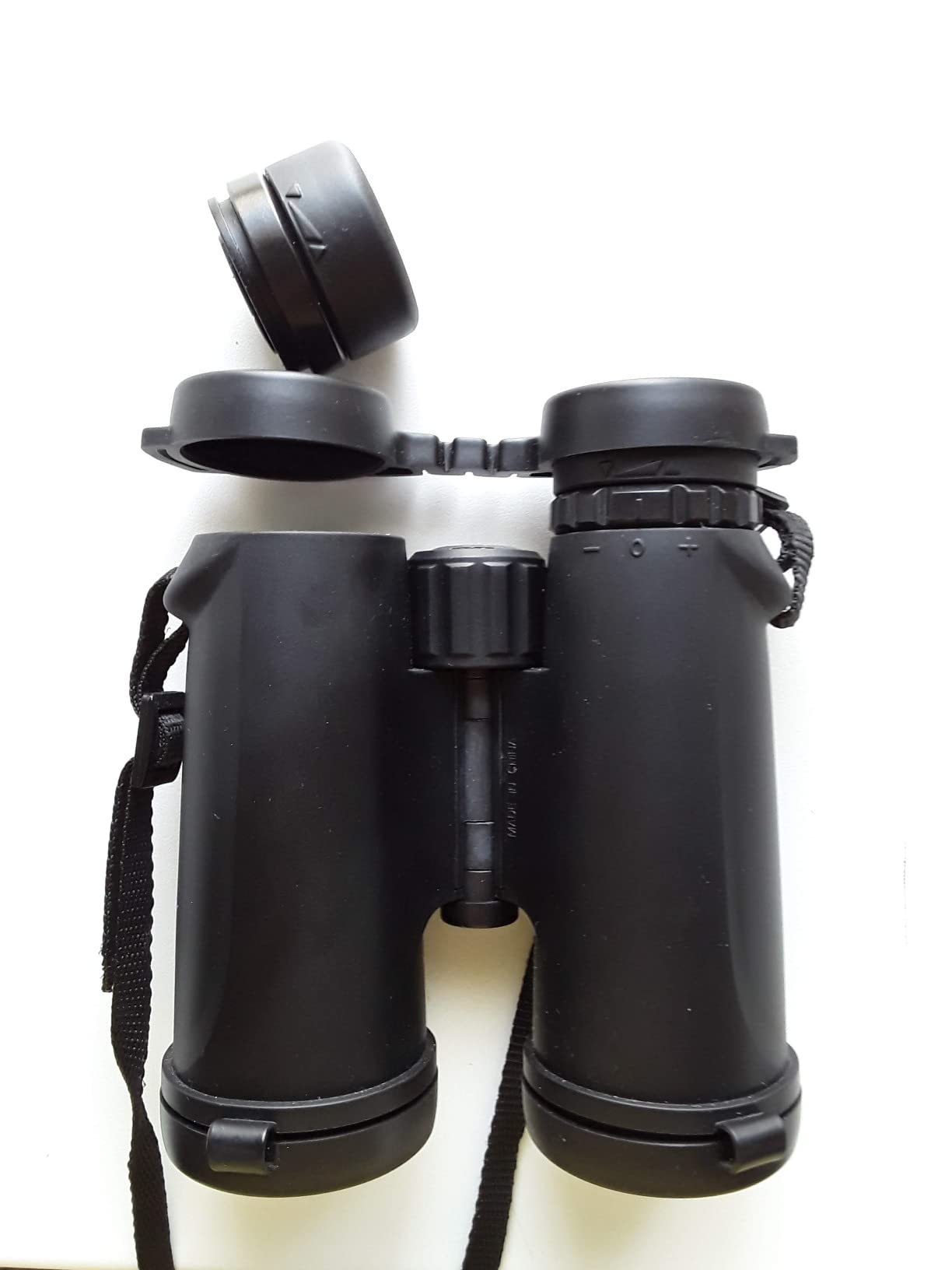
The twist-up eyecups work with or without glasses, and the 15mm eye relief sits in the middle of the pack. Built-in tripod adapter threads are a nice touch, though the adapter itself is not included, and the in-box kit covers objective caps, a Rainguard, neck strap, carrying case, cloth and manual.
The most repeated complaint in the reviews is an eyepiece that loosens and can pull free from the rubber armour. It is not universal, but it is common enough that you should check the fit on day one, since Celestron’s warranty and support have generally handled replacements for buyers who raised it.
Best for all-weather scanning
At 2 pounds with a 5.5 degree angular field of view, this is an easy binocular to scan with all afternoon. Specific uses listed for it include hunting, hiking, travel and bird watching, and the grip works well with wet hands.
Before you buy, check the fit
Beyond the eyepiece looseness reports, the supplied carry case and straps are described as cheap, and 10x magnification produces noticeable handheld shake at long range. The limited lifetime warranty is thinner than the Vortex unconditional one.
4. Occer 12×25 Compact: The Most Versatile
Occer 12×25 Compact Binoculars for Adults and Kids
12x25
BAK-4 prism
20mm eye relief
273 ft field of view
0.39 kg
Pros
- Pocket sized and very light
- Bright image despite 25mm objectives
- Twist-in eyecups suit glasses wearers
- Good first pair for kids
Cons
- Real magnification is below the stated 12x
- Not nitrogen purged so it fogs in damp conditions
- No stated warranty
The most reviewed product in this list by a wide margin, and the reason is straightforward: it does the basic job at a fraction of the budget. A BAK-4 prism with FMC broadband coating on the objectives produces an image that is brighter and cleaner than the sticker suggests, and the one-hand operable body is genuinely pocketable at under a pound.
The 20mm eye relief is the standout spec. Combined with 15mm eyepieces and rubber eyecups that pull down, it works for glasses and sunglasses wearers better than most full-size pairs twice the price.
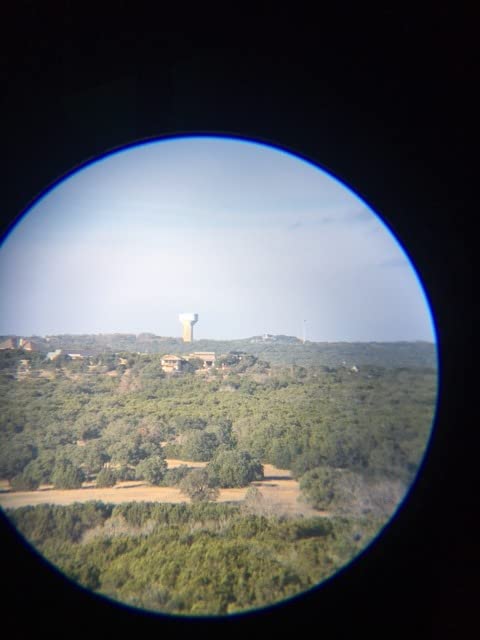
Where it falls short is water management. The body is ABS plastic with rubber armour and is listed as waterproof, but it is not nitrogen purged, so condensation inside the barrels is likely in wet or high-dew conditions. That is the trade-off forum buyers most often complain about with ultra-compacts at this price.
Buyers also report that the effective magnification is lower than the stated 12x, and that the image is less usable for adults at longer range. For flowers, stadium crowds, cruise decks and children, none of that matters.
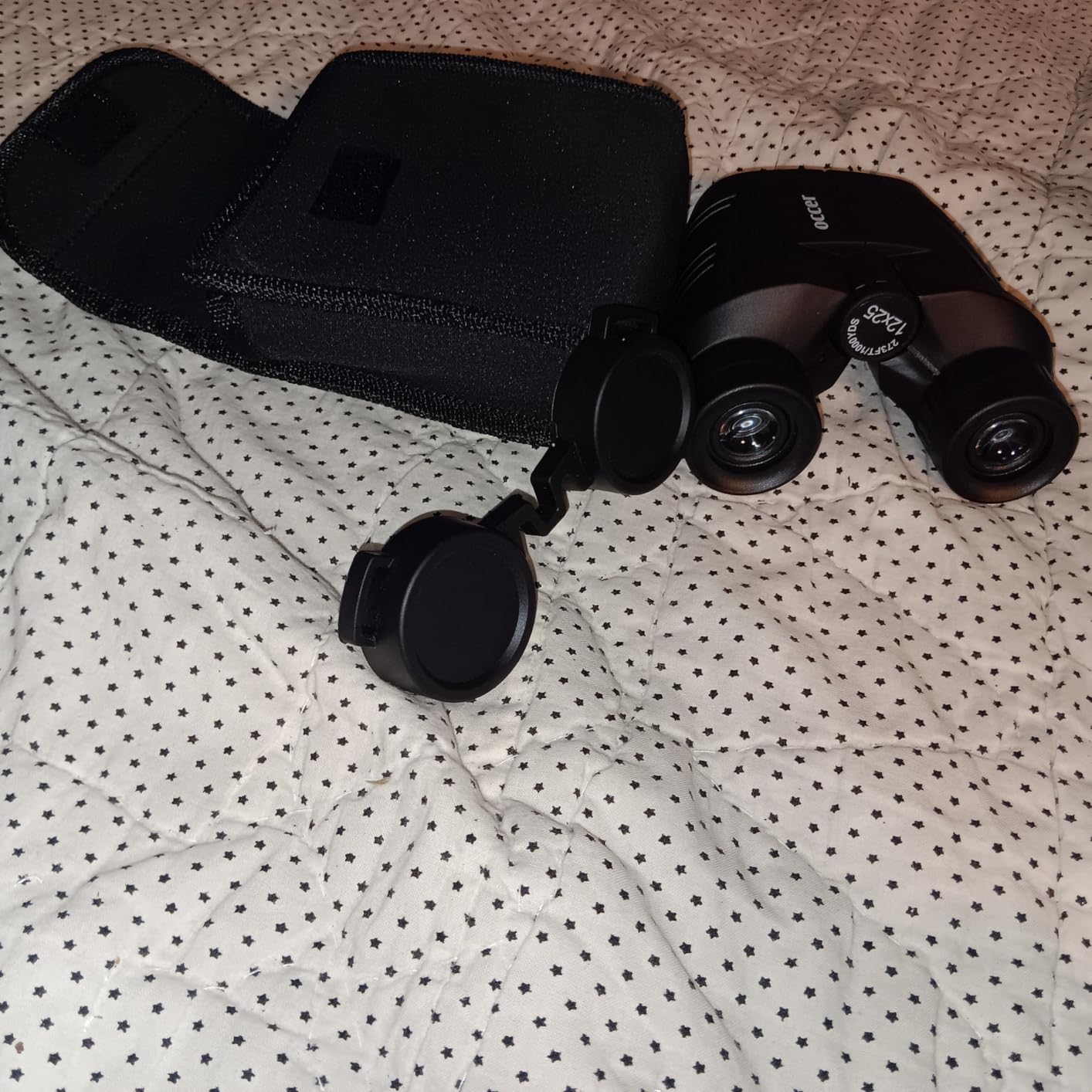
Buy it for carrying on every trip
The best binocular is the one that is at hand and not sitting in a cupboard, and this pair wins that argument outright. The one-hand operable body fits a jacket pocket, weighs almost nothing, and covers concerts, cruise ship scanning, travel and casual birding without any fuss.
Before you buy, check this
There is no stated warranty, which is a real risk at this tier. If you want a repairable, fully sealed optic with a lifetime warranty behind it, spend the extra and move up a class.
5. FLYANT 20×50 High Powered: Best for Reaching Far
20×50 High Powered Binoculars for Adults, Waterproof Compact Binoculars with Low Light Vision for Bird Watching Hunting Camping Travel Cruise Hiking Sports Stargazing, Christmas Birthday Gifts for Men
20x50
BAK4 Porro prism
26mm eyepiece
26mm eye relief
168 yd field of view
Pros
- 20x power with 50mm objectives for detail
- Large 26mm eyepiece for a stable view
- BAK4 prism with multilayer and FMC coatings
- Comfortable rubber focus wheel
Cons
- Sharpness well below premium glass
- Pronounced handheld shake at 20x
- Waterproof body is not rated for immersion
- Not nitrogen purged
Most binoculars in this price band sit at 10x, so this is the list answer for anyone who genuinely needs reach. A 20x eyepiece paired with 50mm objectives gives a bright image for a long-range scan, and the BAK4 Porro prism with multilayer aspherical elements and green FMC coating on the objective keeps colours reasonable.
The 26mm large eyepiece is unusual at this price and genuinely useful. Combined with 26mm eye relief, it gives a wide, stable view that is easier on the eyes than most high-power pairs, and the soft rubber centre focus wheel can be worked with one finger.
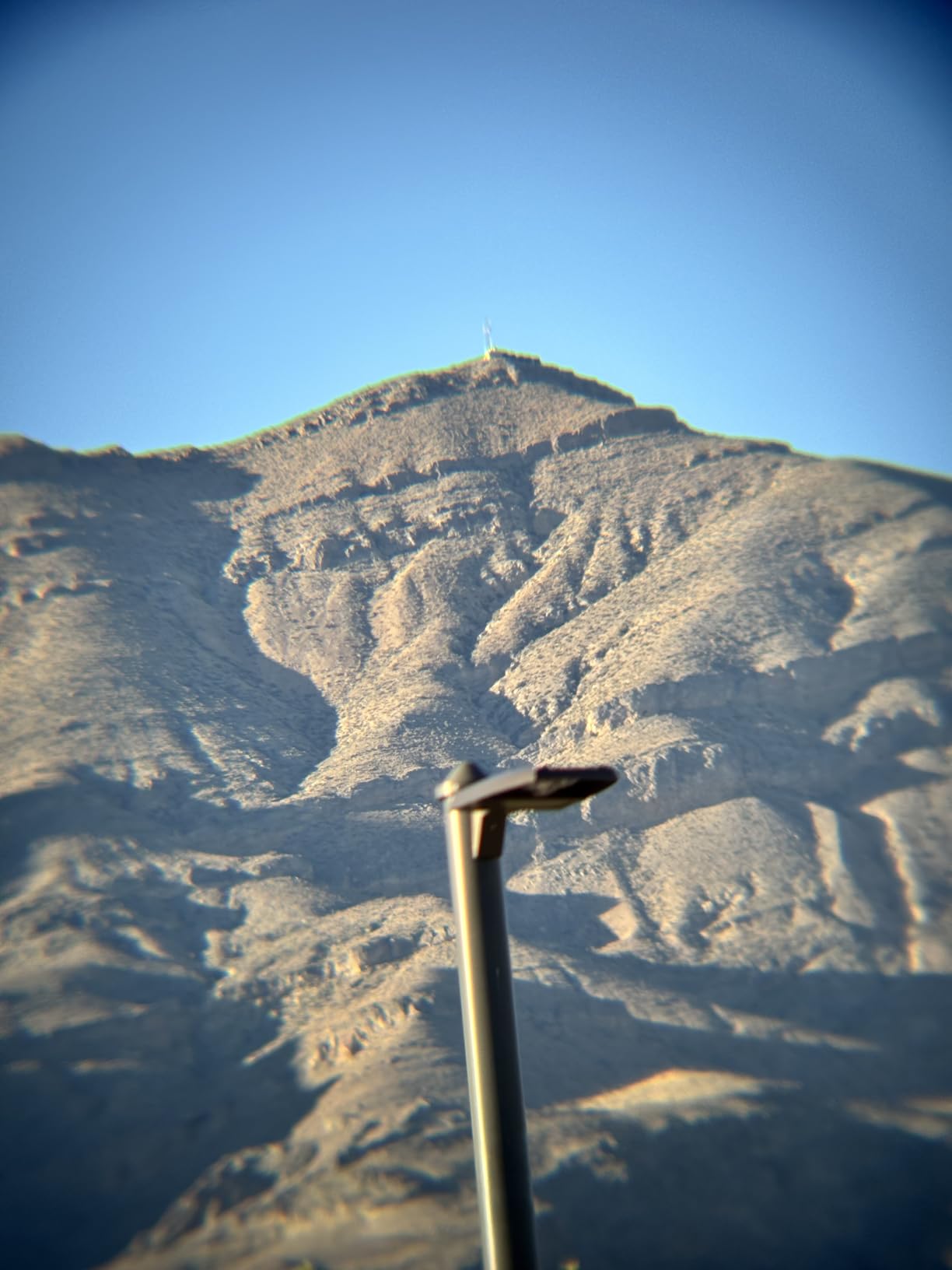
The catch is that magnification is a trade, not a free upgrade. At 20x handheld shake is pronounced, so a tripod or a solid rest is close to essential. The field of view is 168 yards at 1000 yards, which is narrow enough that finding a target takes patience.
Buyers regularly note that the effective power and sharpness fall short of the headline specification at distance, and that edge definition is well below premium glass. In the box you get a clean cloth, a manual and a storage bag.
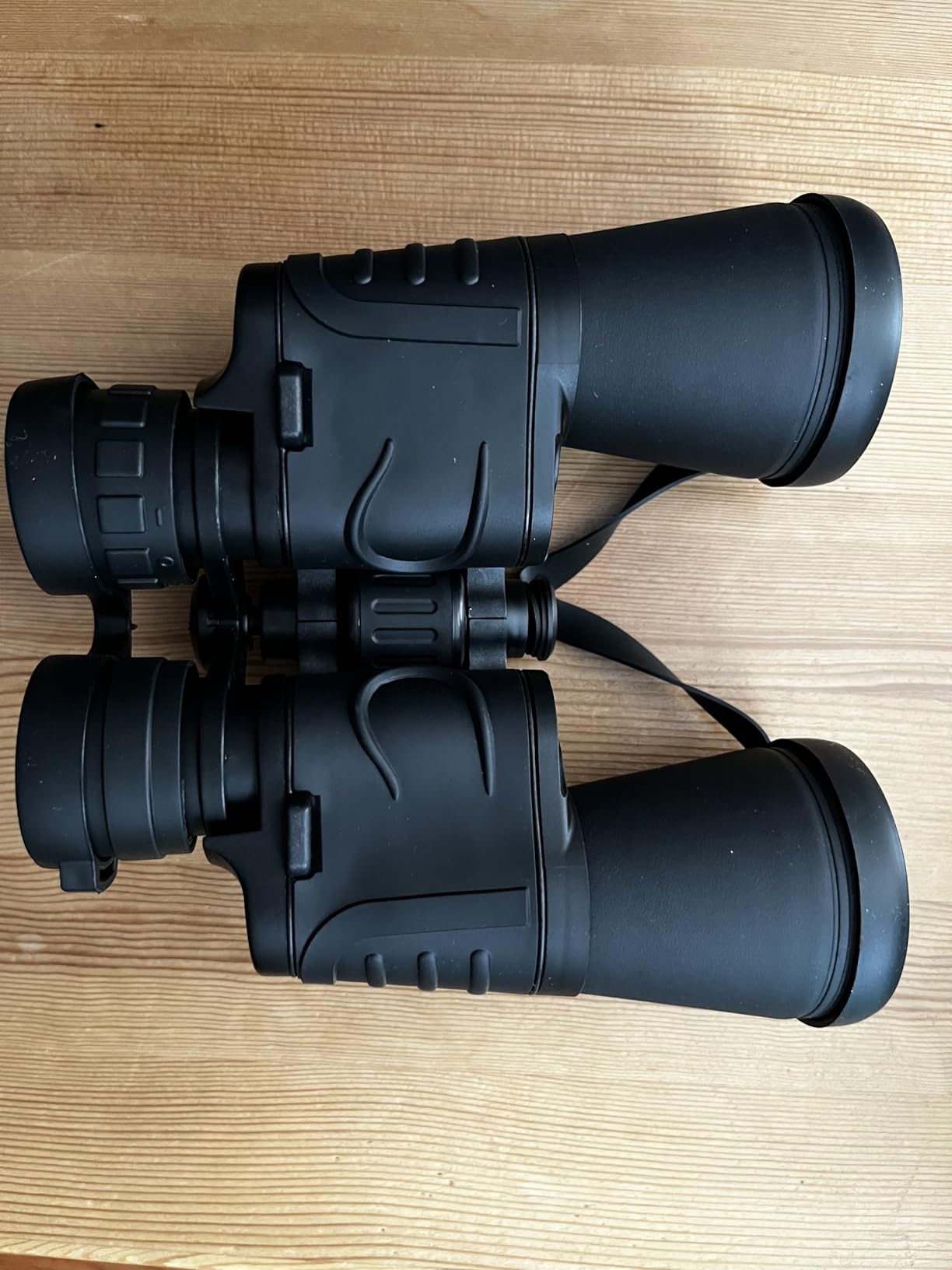
Buy it for reach, not for sharpness
Scanning a long shoreline, a distant ridgeline or a stadium from the upper tier is where this pair earns its place. The 50mm objectives gather plenty of light for evening use, which is the stated strength in the review data.
Before you buy, check the sealing
Do not buy it for close-up birding or fine detail at range, where the sharpness limits will show. The waterproof rubber-coated body is not rated for immersion and there is no nitrogen purge, so rain and temperature swings are a real risk.
6. Bushnell H2O Xtreme 10×42: Best for Hunting in Bad Weather
Bushnell H2O Xtreme 10×42 Waterproof Binoculars
10x42
BaK-4 prisms
IPX7 rated
17mm eye relief
709 g
Pros
- Bright images from BaK-4 and full multi-coating
- IPX7 sealed against submersion
- Nitrogen purged against internal fog
- Solid grip when wet
Cons
- Diopter adjustment can feel stiff
- Focus wheel can loosen over time
- Basic accessories
- Field of view is narrower than some rivals
The H2O name is not marketing here. The optical system is O-ring sealed and rated IPX7 for accidental submersion, nitrogen purged against fogging, and wrapped in rugged rubber armour with soft non-slip grips. For deer hunting before dawn or waterfowl in rain, that sealing is the feature that matters.
Optically, premium BaK-4 prisms and fully multi-coated glass give a clear, bright image in all lighting, and the 17mm eye relief is one of the better numbers in this roundup. At 709 g it is light enough to carry on an all-day sit.
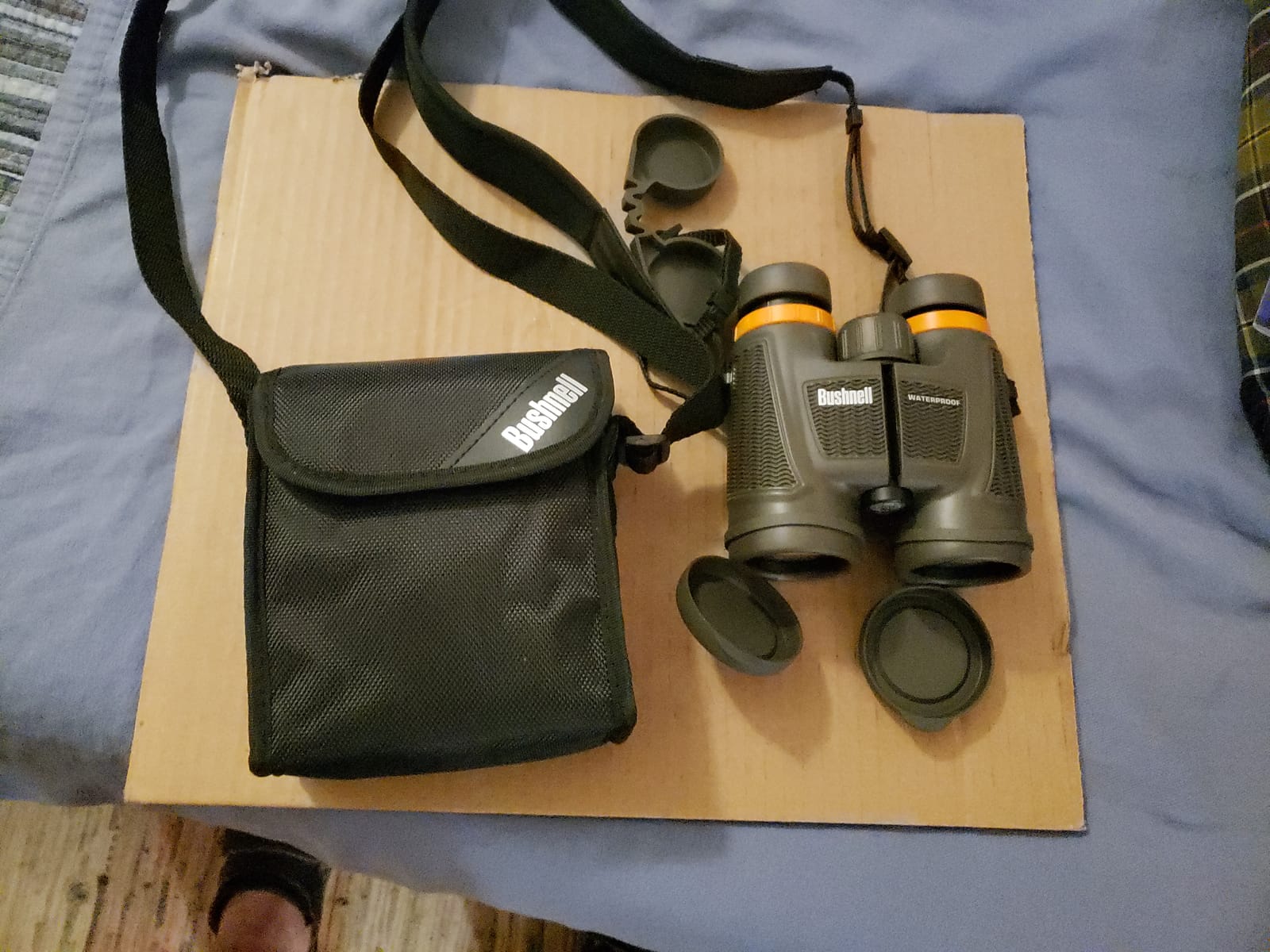
The in-box kit is basic by the standards of the Vortex models here: the binocular, a case, a strap and two lens covers. Bushnell backs it with the Ironclad warranty, which is a real support network behind the product.
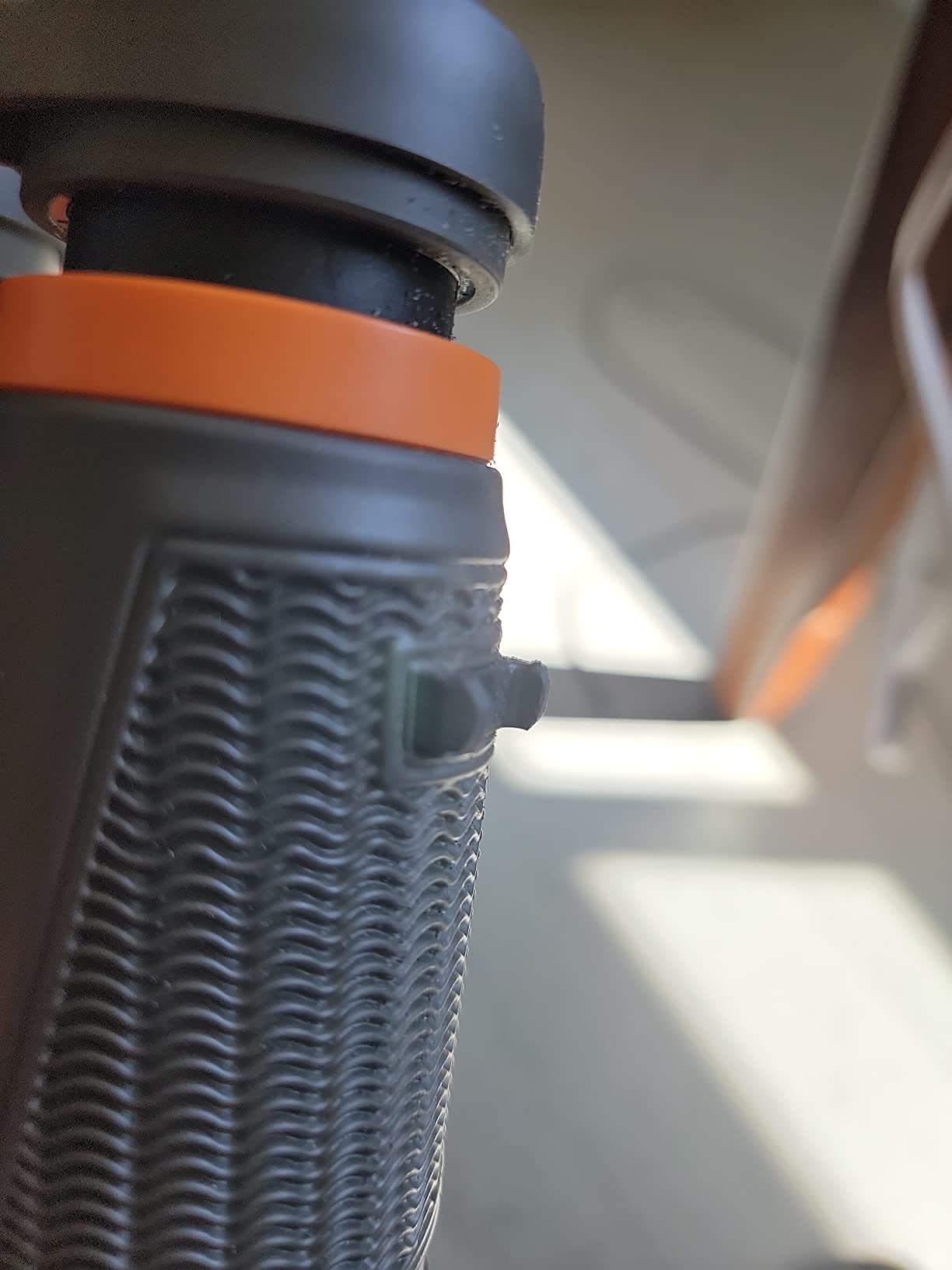
Mechanical complaints are minor and consistent across reviews. The eyecup diopter adjustment can feel stiff, the focus wheel can develop a little play over time, and the field of view is narrower than some similarly priced 10×42 models.
Buy it for the sealed housing
If your use case is a treeline at 5am in November, sealing beats a slightly wider field. The review data consistently praises brightness, clarity and a secure grip, with mechanical feel issues as the only recurring negative.
Before you buy, check the field of view
If your priority is scanning a wide open field or a stadium, the narrower field of view will make finding a moving target slower. If you are shopping for hunting binoculars more broadly, our full hunting binocular guide goes deeper on the variables that matter in the field.
7. Celestron Nature DX 10×42: Best for New Buyers
Celestron Nature DX 10×42 Waterproof Binoculars for Birding & Hiking
10x42
Phase-coated BaK-4
14mm eye relief
1.4 lb
304 ft field of view
Pros
- Very clear
- bright image with good edge performance
- Compact and light at 1.4 pounds
- Waterproof and nitrogen purged
- Comfortable for long birding sessions
Cons
- Visible vignetting and soft edges at distance
- 14mm eye relief is tight for glasses wearers
- Close focus only with no fine focus
- Modest 5.8 degree field of view
Phase coating on the BaK-4 prisms is a step above plain silvering and helps with contrast, and combined with fully multi-coated lenses the Nature DX produces a very clear, bright centre field. Owners frequently compare the image favourably to Nikon glass costing several times more.
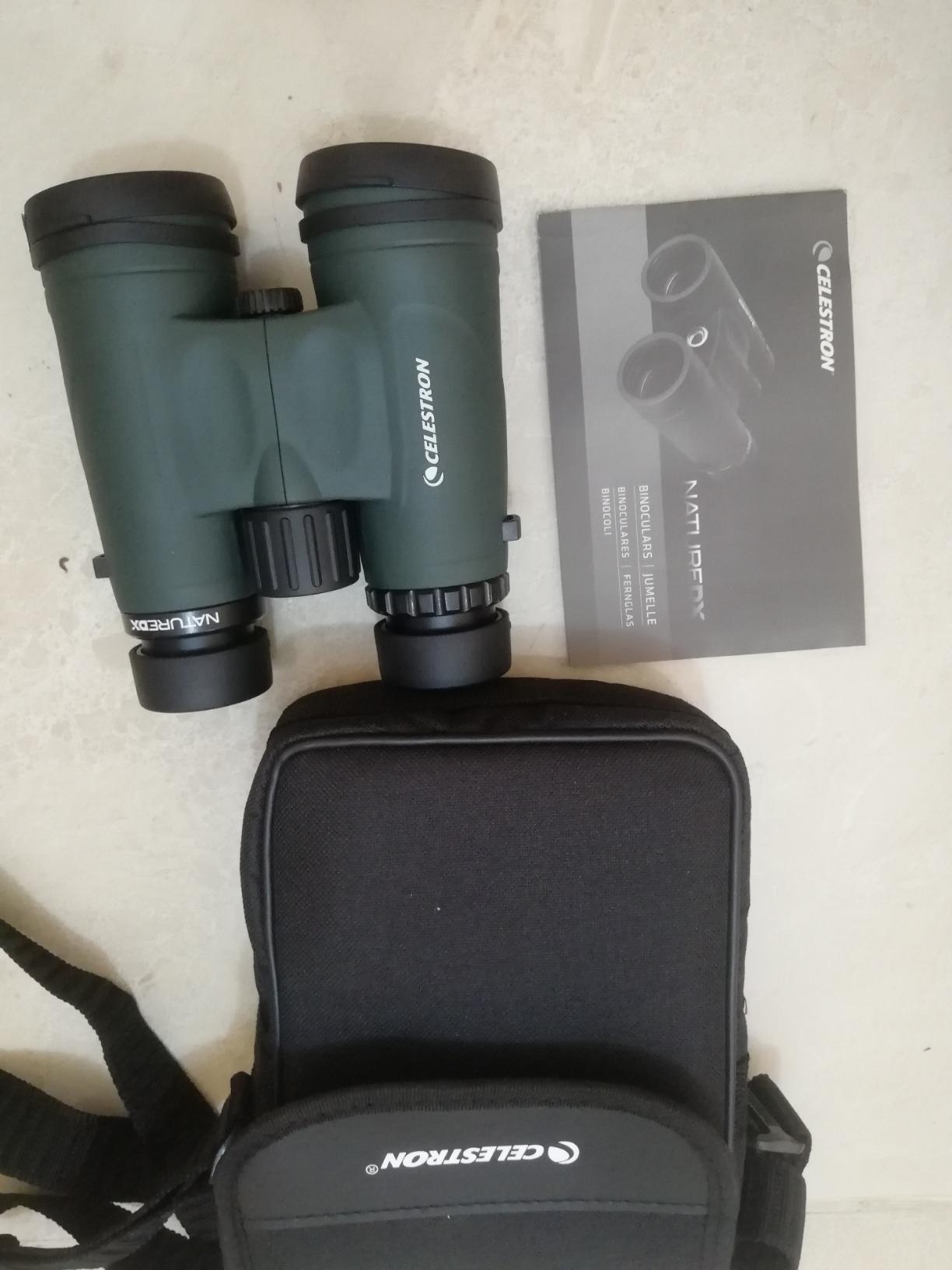
At 1.4 pounds with a 5.3 inch length, this is one of the easiest full-size binoculars here to carry on a walk, and the matte green finish looks far more expensive than it is. The rubber-armoured polycarbonate housing is waterproof and nitrogen purged, with a built-in tripod adapter socket.
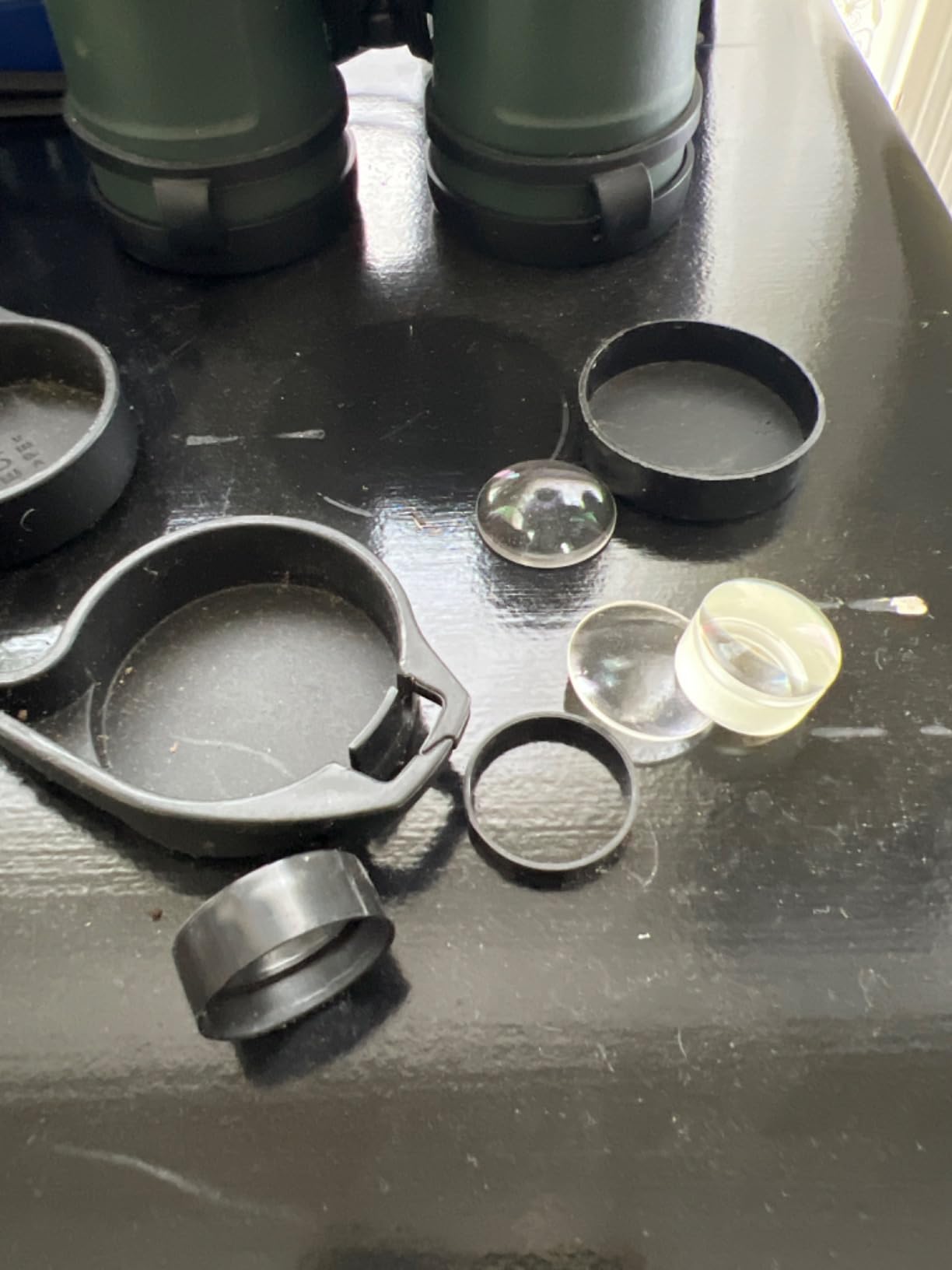
The limitation to plan around is the periphery. The most common criticism is soft, vignetted peripheral image quality at distance, even though the centre field is excellent. In practice that means scanning is fine, and picking out a distant bird at the edge of the frame is where you will notice.
The 14mm eye relief is also among the tightest here, so glasses wearers should test it before committing. Focus is close-type with no fine-focus mechanism, which is fine for birding and a limitation for anything very close.
Buy it if you are learning birding
Birders starting out need a pair that is light, forgiving and easy to adjust, and the Nature DX does all three. The in-box kit is complete with a carrying case, neck strap, objective caps, a Rainguard and a cloth.
Before you buy, try them with glasses
Glasses wearers should look at the 17mm and 18mm eye relief models instead. The 5.8 degree angular field of view is also modest, so if you follow fast-moving birds in open country, our budget hunting binocular picks narrow down better options.
8. Bushnell Engage X 10×42: Best for Dawn and Dusk
Bushnell Engage X 10x42mm Binoculars, Realtree Edge Camo
10x42
EXO Barrier coating
18mm eye relief
IPX7
620 g
Pros
- Bright
- contrasty image from all-glass elements
- Weighs 620 g so it carries easily on long walks
- EXO coating repels water oil and debris
- Good low light performance
- Twist-up eyecups suit glasses wearers
Cons
- Realtree camo finish is not for everyday use
- Some reports of loose fit or alignment issues
- Narrower field of view than similar priced models
- Limited diopter adjustment range
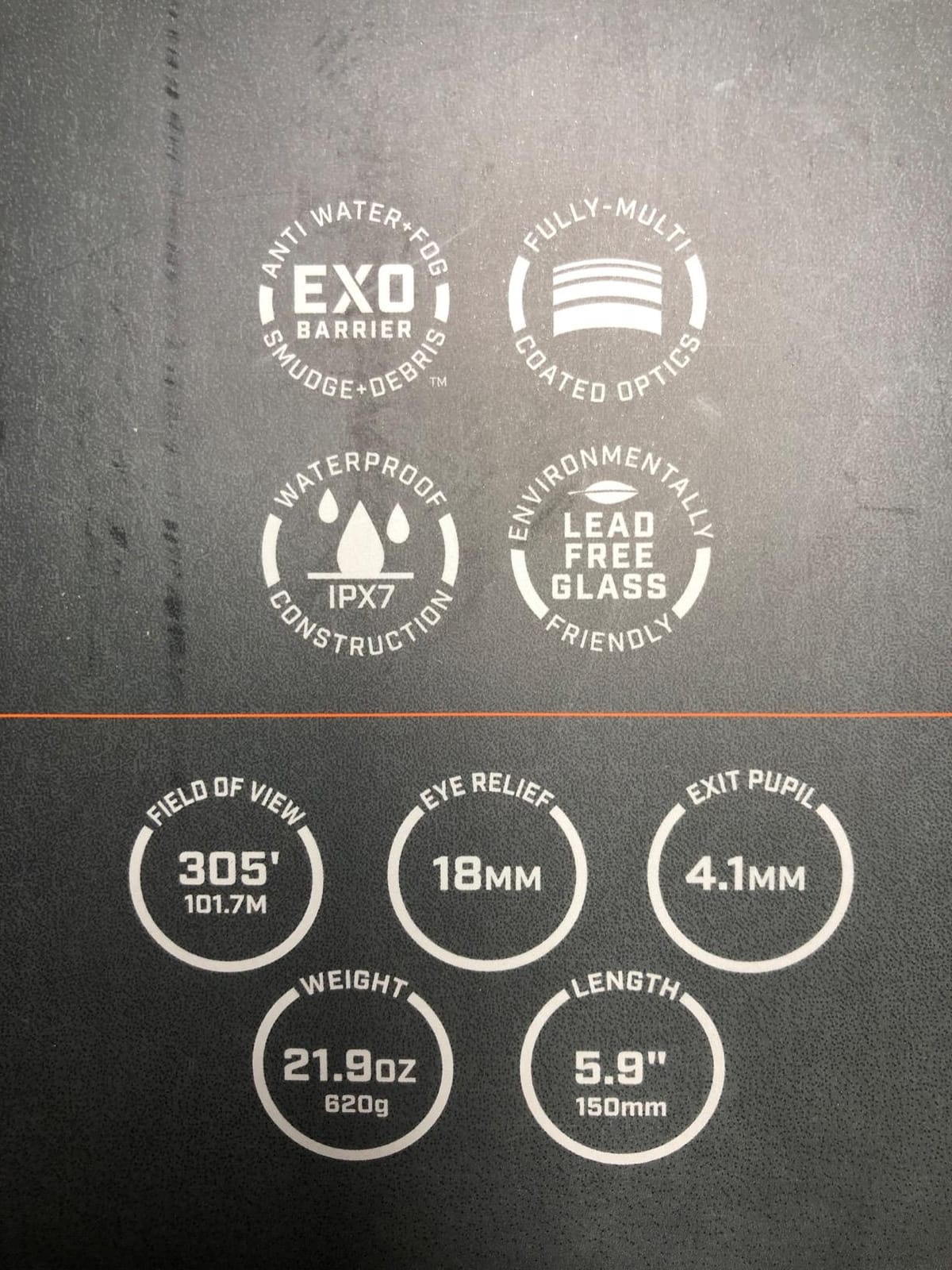
Low light is the whole argument for this one. Bushnell specifies enhanced low-light performance for hunting and dawn or dusk viewing, and the all-glass fully multi-coated lenses with BAK4 roof prisms deliver a bright, contrasty image for a mid-range price. The EXO Barrier exterior coating is designed to shed water, oil, dust and debris, which matters in cold weather when your hands are the problem.
At 620 g it is the second-lightest full-size model here, and the 18mm eye relief is one of the three most generous figures in this roundup. It is IPX7 waterproof, nitrogen filled, tripod compatible, and the diopter adjustment spans plus or minus 5 diopters.
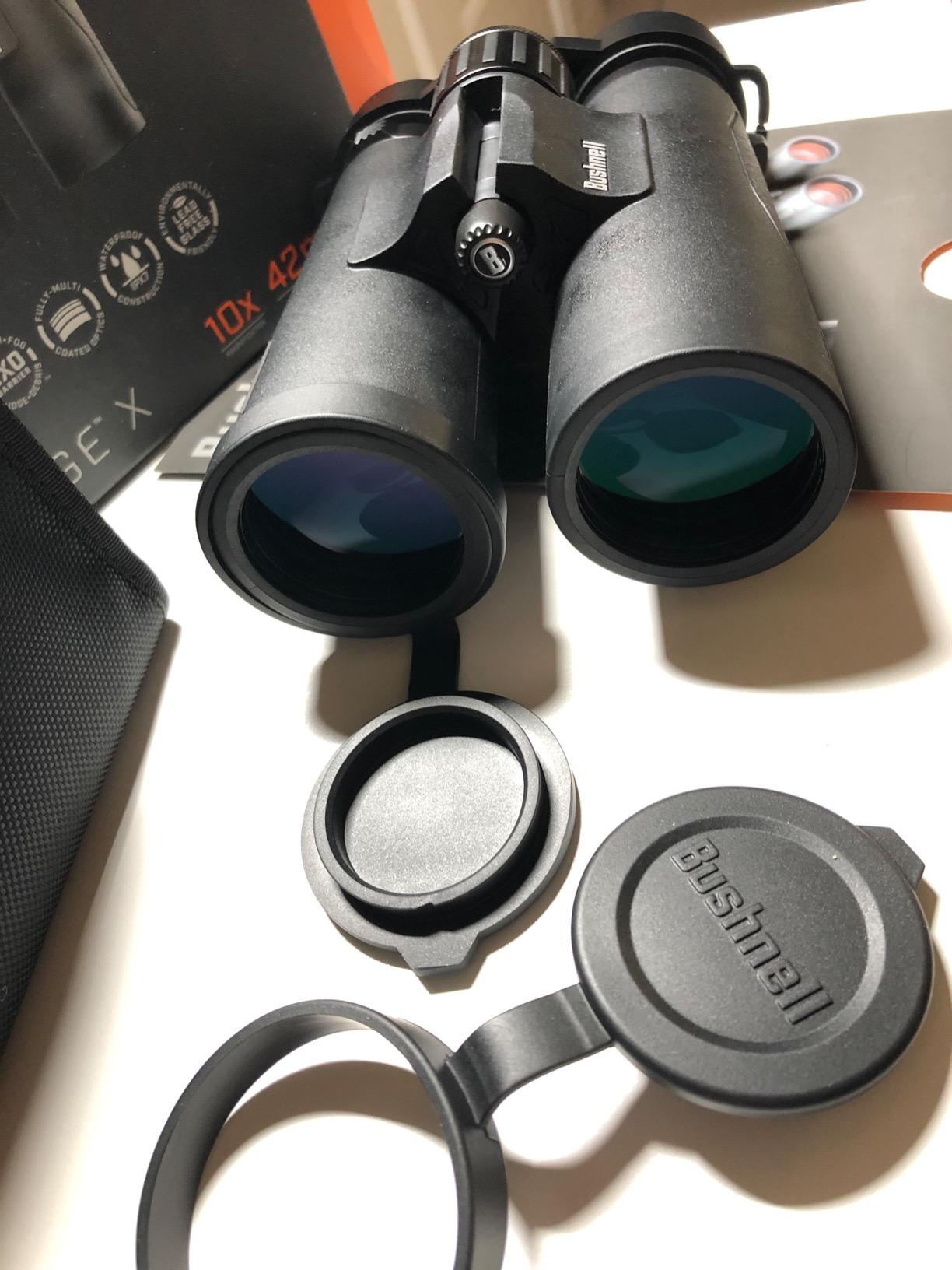
Two things temper the recommendation. The Realtree Bone Collector camouflage finish is a genuine drawback for anyone who wants binoculars that do not look like hunting gear at a concert or a city park. The field of view is also slightly narrower than similarly priced models.
There are isolated reports of loose fit or alignment issues shortly after purchase, so inspect the barrels and hinge on arrival. The included neck strap, carrying case and quick start guide cover the basics.
Buy it for the first and last hour of light
If your birding happens at dawn and dusk rather than at midday, the combination of a light body, wide eye relief and a bright coating stack is the strongest on this list. The review data is largely positive, with fit issues as the only recurring negative.
Before you buy, check the finish
The Realtree camouflage finish is the first thing to think about. The narrower field of view also means slightly slower target acquisition than a 10×42 with a 6.8 degree field, so it suits woodland edges more than open country. If you mainly chase whitetail, our deer hunting binocular guide narrows the field further.
9. Nikon Trailblazer 8×25: Best for Travel and Hiking
Nikon Trailblazer 8x25mm ATB Binoculars – Compact, Waterproof & Fogproof, Bright Multilayer-Coated Optics, Roof Prism – All-Terrain Outdoor Wildlife Viewing & Birdwatching Binoculars (8217)
8x25
10mm eye relief
429 ft field of view
9.92 oz
Foldable body
Pros
- Exceptionally bright glass for a compact 8x25
- Made-in-Japan optics
- Weighs under 10 ounces
- Folds into a jacket pocket
Cons
- Loose twist-up eyecups
- Loose lens covers that are easily lost
- Narrow diopter range
- Small focus knob for fast tracking
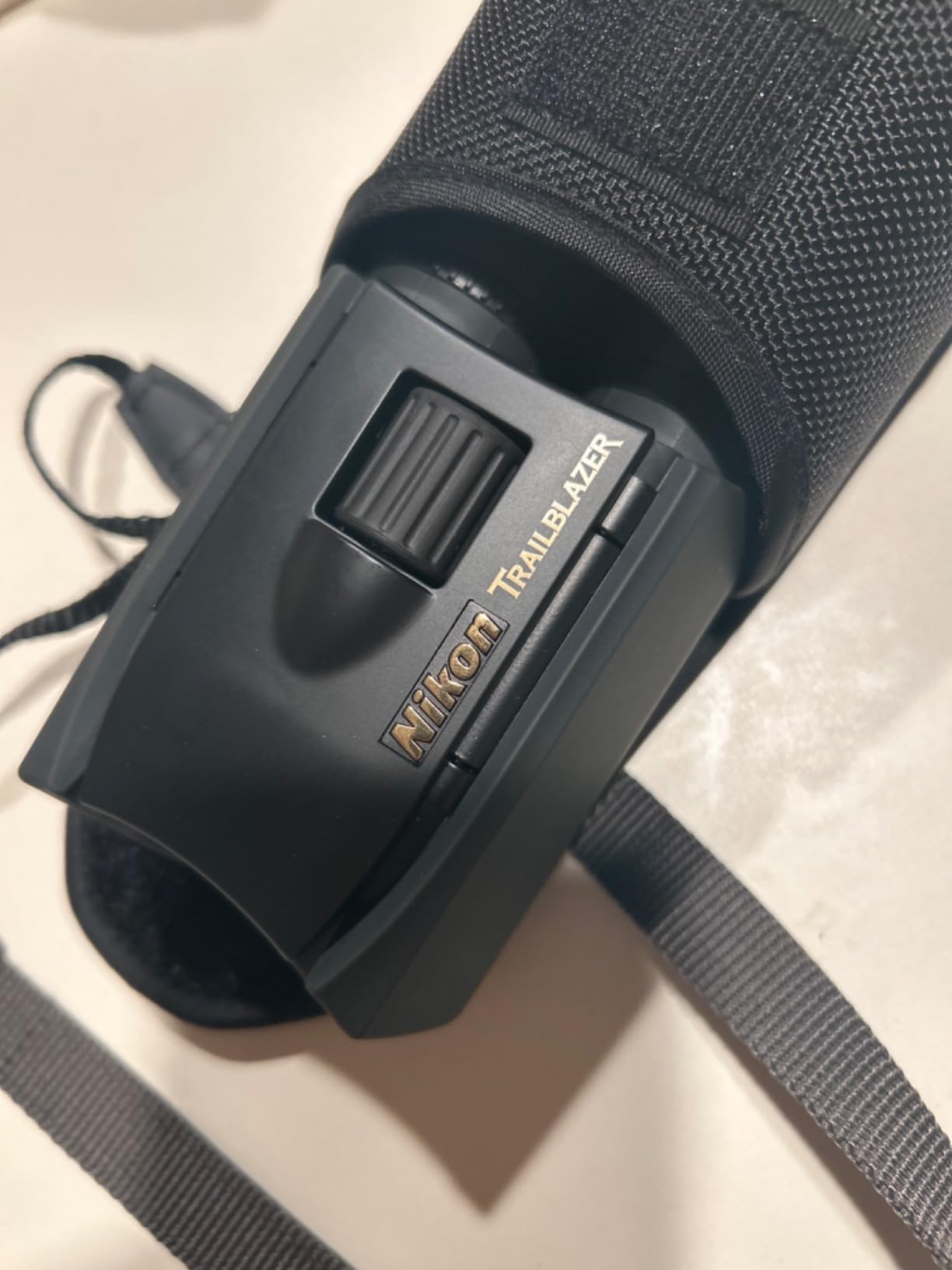
At 8x with a 429 ft field of view, this is the widest, most stable view of any pick here, and at 9.92 ounces it is nearly weightless. The foldable roof prism design collapses flat, which is the entire point: binoculars still sitting in a cupboard at home never get used.
Made-in-Japan optics with fully multicoated lenses and high-index BAK4 roof prisms produce a bright, high-contrast, true-to-colour image that owners repeatedly say rivals compacts costing far more. The body is nitrogen filled and O-ring sealed, with rubber armour and a slip-resistant grip.
At 8x you give up raw magnification, but for scanning a hedgerow or finding butterflies that is an advantage rather than a compromise. Handshake shake at this power is minimal, so no tripod is needed.
The 10mm eye relief is the tightest figure here and the main reason we could not place this model higher for general use. Glasses wearers will have their lenses close to the eyepiece, and loose twist-up eyecups that will not hold position are the most repeated complaint in the reviews.

Buy it for a jacket pocket and a long walk
This is the pick for anyone whose birding happens on trails, city walks and holidays rather than from a hide. The included case, strap and lens covers make it a complete kit, and the lifetime limited warranty is a genuine plus.
Before you buy, check the eyecups
Loose or ill-fitting lens covers that are easily lost are a common complaint, and the narrow diopter adjustment range plus a small focus knob make fast long-range tracking slower. If you need more power, our compact binocular guide covers the alternatives.
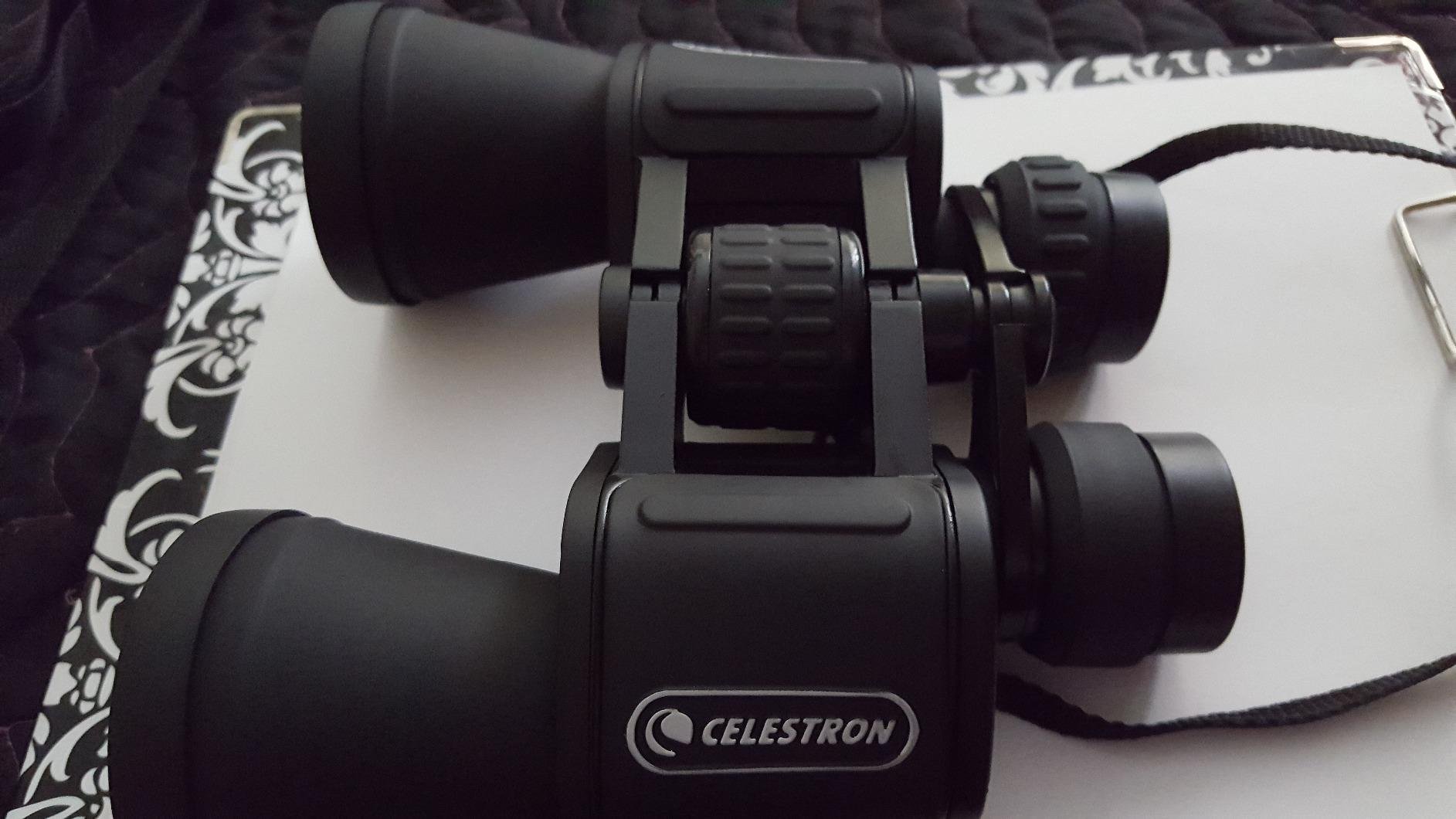
10. Celestron UpClose G2 10×50: Best for Bright Images at Night
Celestron UpClose G2 10×50 Porro Binoculars for Wildlife & Astronomy
10x50
Porro prism
Relative brightness 25
765 g
12mm eye relief
Pros
- Large 50mm objectives give a bright image
- Classic Porro design with depth perception
- Durable rubber-covered body
- Full set of covers and case included
Cons
- Bulky and heavy at 765 g
- Only water resistant
- 12mm eye relief is awkward with glasses
- Average sharpness and contrast
Light gathering is the entire point of a 50mm objective, and the relative brightness rating of 25 is the highest on this list. If your use case is moon viewing, astronomy or genuinely dark conditions, this pair shows more than a 42mm model at the same 10x magnification.
The Porro prism design is traditional and it shows in the best way: good depth perception, solid contrast and a comfortable wide eye box. The rubber-covered aluminium body has ergonomic thumb indents and finger ridges, and the diopter adjustment spans plus or minus 5 diopters.
The honest weaknesses are physical. At 765 g this is the heaviest model here, and the Porro body is bulkier than a roof prism equivalent. It is water resistant rather than waterproof, so it is not the pair to take into sustained rain.
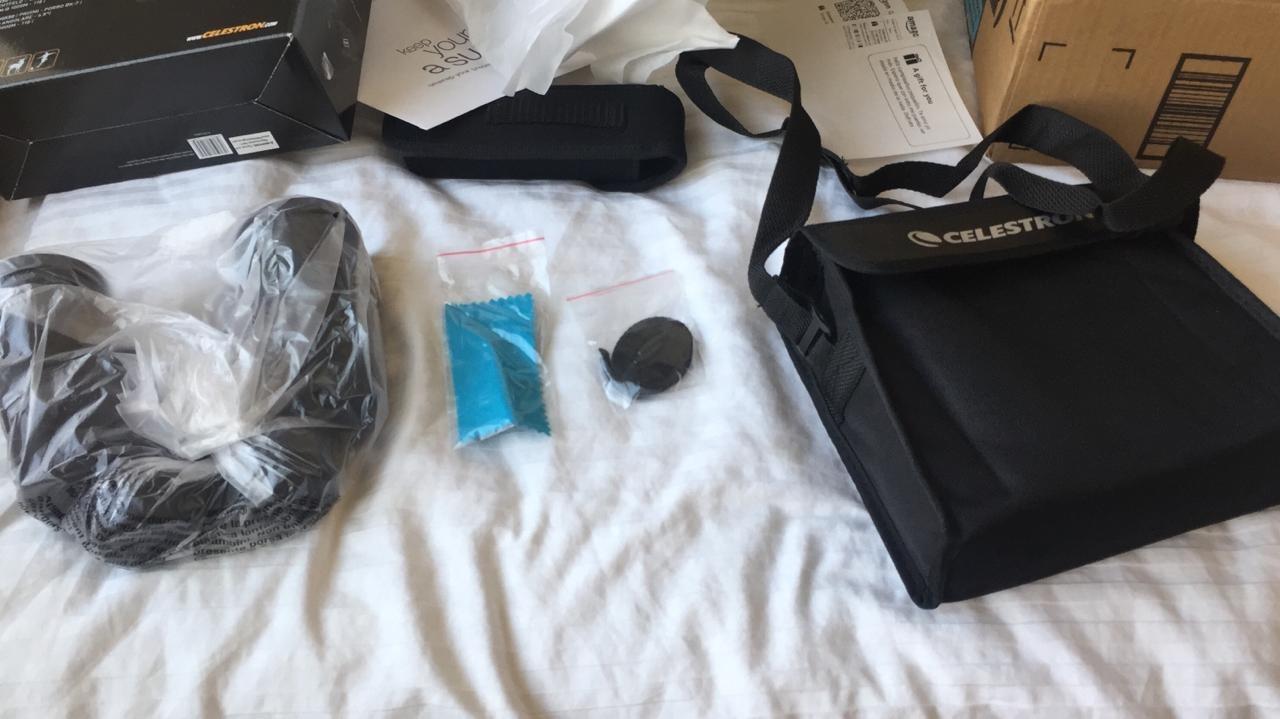
Image sharpness and contrast are average against modern HD glass, and the 12mm eye relief is among the tightest in this roundup, which makes it uncomfortable for many glasses wearers. The in-box kit is generous: carrying case, eyepiece covers, objective covers, a cloth and a manual.
Buy it for astronomy and evening use
Bright lunar detail and simple star-field viewing are where the 50mm objectives earn their size. Buyers treat it as a dependable, inexpensive full-size pair for casual birding, sports and concerts as well, and the tripod mount compatibility helps at 10x.
Before you buy, check the weight
The weight and bulk are the deal-breakers for long walks, and the tight eye relief will frustrate glasses wearers. If you plan to carry these far, the Bushnell Engage X is about 145 g lighter with 18mm eye relief.
11. GIGAPENGUIN 15×52 HD: Best for Phone Photos
15×52 HD Binoculars for Adults High Powered with Upgraded Phone Adapter
15x52
18mm BAK4 prisms
18mm eye relief
22mm eyepiece
Included phone adapter
Pros
- Bright high-contrast image from 52mm objectives
- 15x reaches further than a 10x42
- 22mm eyepiece gives a wider immersive view
- Phone adapter included
- Unlimited lifetime warranty
Cons
- Pronounced handheld shake without a tripod
- Narrower 5.8 degree field of view
- Edge sharpness falls off in heavy low light
- Bulkier than compact models
This is the one model here that comes with a smartphone adapter in the box, fitted with anti-slip rubber and screw locks. If you want to photograph what you are looking at, that saves you buying an adapter and guessing whether your phone case will fit.
Optically it is a real 15x with 52mm objectives, and the 18mm BAK4 dielectric-coated prisms with fully multi-coated, phase-corrected roof prisms give a bright, high-contrast image. The 22mm large eyepiece produces a wider, more immersive view than a standard 10mm eyepiece would.
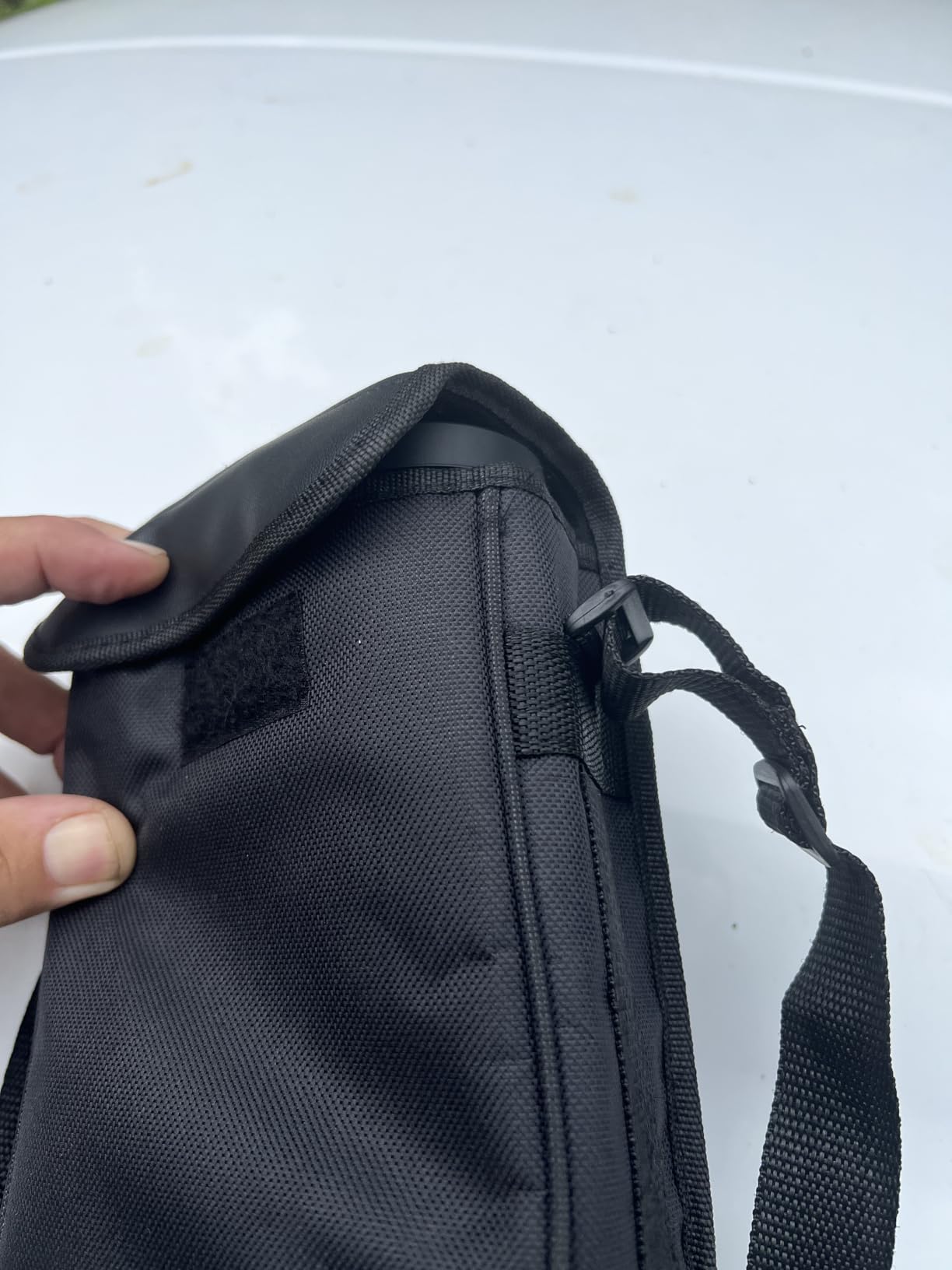
The 18mm eye relief and twist-down rubber eyecups work well with glasses, and the warranty is unlimited and unconditional. The in-box kit includes an adjustable neck strap, a case, a warranty card and the upgraded universal phone adapter.
As with any 15x binocular, handheld shake is pronounced and a tripod is the sensible answer. The 5.8 degree field of view is narrower than a 10×42, and owners report edge sharpness and colour falling away under heavy low light.
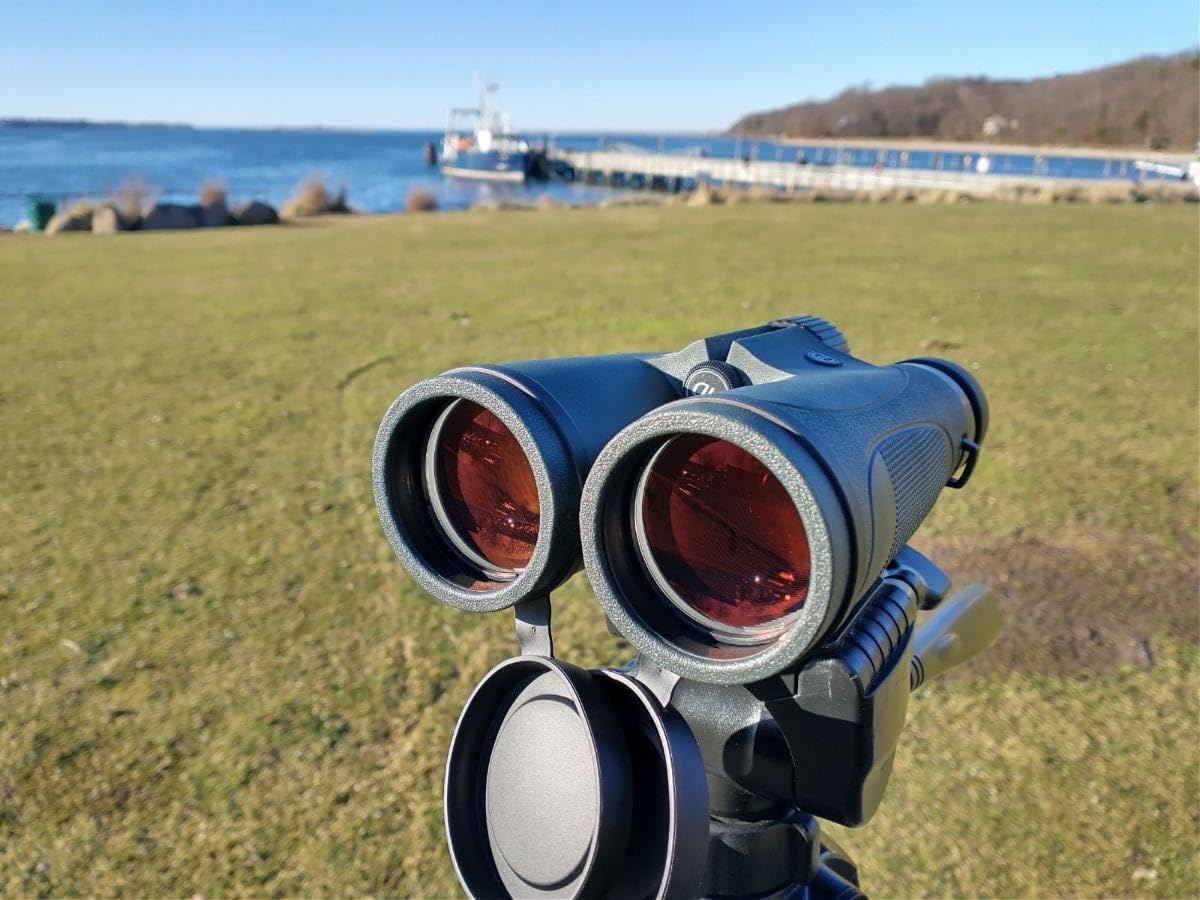
Best for combining viewing and photos
Owners report more reach and light gathering than a standard 10×42 at a similar price, with good brightness and a practical adapter. Set it on a tripod, brace it, and the 15x becomes a genuine wildlife photography tool.
Before you buy, set up a tripod
It is bulkier than a compact pair, and the narrower field makes finding moving animals slower. If photos are not part of the plan, spend the money on eye relief and sealing instead.
12. FLYANT 200×25 Compact: Best for Kids and Travel Events
200×25 Compact Binoculars for Adults and Kids, High Powered Mini Pocket Binoculars, Waterproof Small Binocular for Bird Watching, Hunting, Concert, Theater, Opera, Traveling, Sightseeing
25mm objective
BAK4 Porro prism
6.4 oz
19.6mm eye relief
5 year warranty
Pros
- Extremely small and light at 0.4 pounds
- Crisp image for close to mid-range subjects
- Sensitive centre focus for adults and older children
- Rubber body with strap and case
- Five year manufacturer warranty
Cons
- Advertised 200x power is not real
- Cannot resolve subjects far away
- Small objective gives a dim image in low light
- Occasional reports of pairs arriving damaged
Let us be direct about the headline number. The listed 200x magnification is nominal, and buyers consistently report that real usable power is far lower. Judge it as a small, well-made compact rather than a long-range optic, and it is genuinely good at concerts, theatres, opera houses, cruise decks and general sightseeing.
What it does well is size. At 6.4 ounces it fits in the palm or a small bag, the BAK4 Porro prism with FMC multilayer broadband green film on the objective gives crisp, vivid colour on close and mid-range subjects, and the soft rubber centre focus is sensitive enough for older children to use.
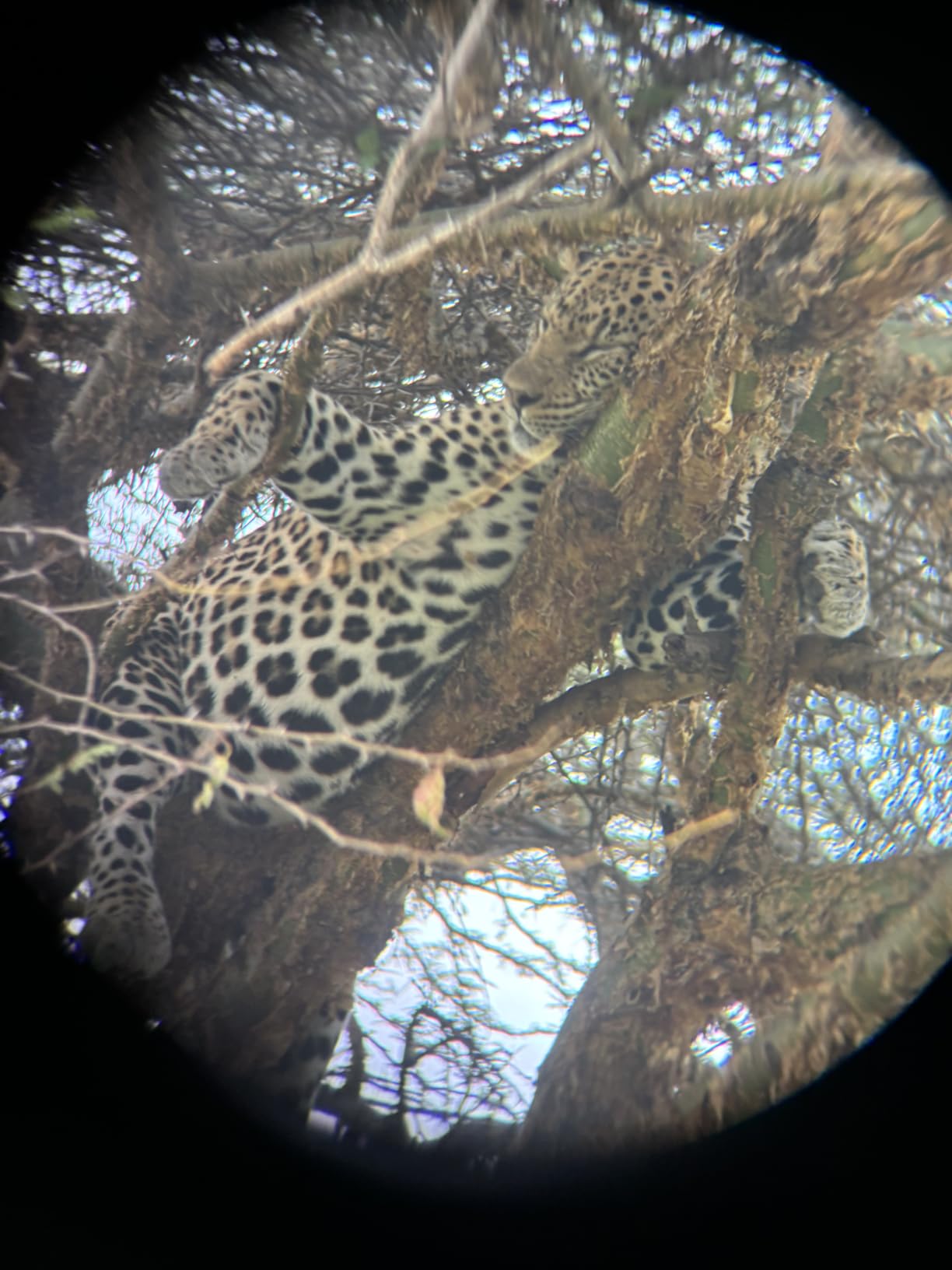
The 19.6mm eye relief is generous, and the in-box kit includes a cruise binocular strap, storage bag, manual and cloth with a five-year manufacturer warranty, which is unusual at this tier.
The limits are clear. The 25mm objective gives a dim image in low light, and the pair cannot resolve distant subjects despite the packaging. There are also occasional reports of pairs arriving damaged, so inspect it on arrival.
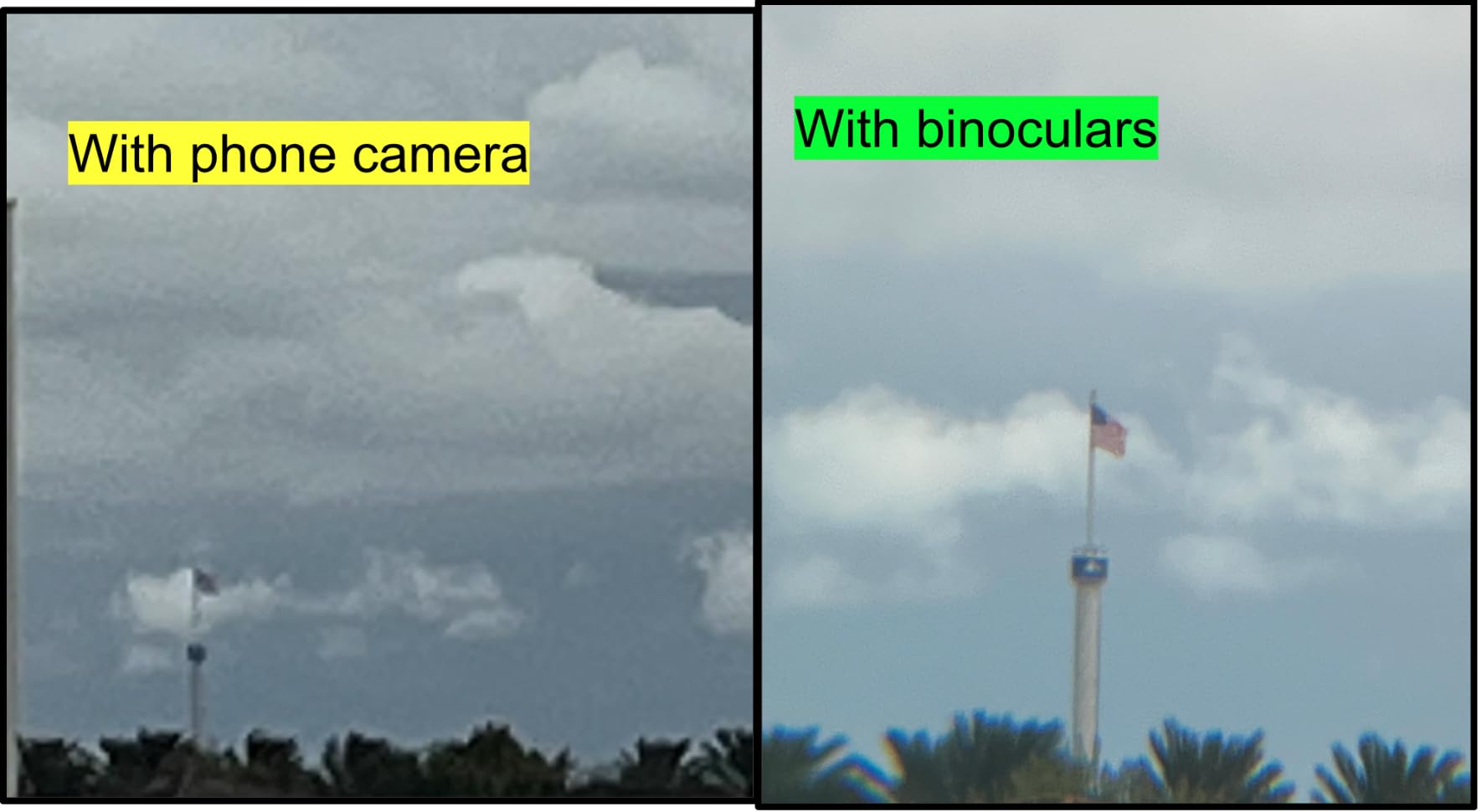
Best for a first pair and travel events
For a child learning to look, a stadium, a theatre or a holiday sightseeing trip, this is a low-risk first purchase with a real warranty attached. The non-slip rubber body and simple focus suit younger hands.
Before you buy, ignore the headline number
It is not a birding or wildlife optic at distance, and the tiny exit pupil of 0.13mm means it goes dim quickly as the light drops. Adults who want a real outdoors tool should start one class up at the Occer 12×25.
Magnification and Objective Size: 8×42 vs 10×42 vs 12×50
Magnification is a trade-off, not an upgrade. The first number magnifies; the second number is the objective lens diameter in millimetres, and that is what gathers light. More power means more detail at distance and more handshake shake. Bigger objectives mean a brighter, clearer image at dusk and a heavier pair on your neck.
Here is how the common configurations divide up. Pick the row that matches your activity rather than the row with the biggest number.
8×25 or 8×42 – the widest, most stable view, lowest weight, weakest light gathering. Best for travel, hiking and young birders. The Nikon Trailblazer 8×25 is the example here.
10×42 – the safe middle. Wide enough to find a subject, bright enough for overcast light, manageable weight. This is where the Vortex Crossfire HD, Celestron Outland X, Bushnell H2O Xtreme, Celestron Nature DX and Bushnell Engage X all sit.
10×50 or 12×50 – maximum light per unit of magnification, heaviest, narrowest field. Best for astronomy, lunar viewing and dusk. The Celestron UpClose G2 10×50 is the pick.
15x and above – genuine reach with a tripod. The GIGAPENGUIN 15×52 and FLYANT 20×50 live here.
For bird watching specifically, 8×42 is easier to hold steady and better for finding moving birds, while 10×42 gives you more detail once you have found one. Most birders end up preferring 10×42 after the first season.
Glass and Prisms: BAK-4 vs BK-7, Roof vs Porro
Prism material is the single clearest quality step you can identify on a spec sheet. BK-7 is the budget standard and produces a slightly dimmer image with lower contrast. BAK-4 costs more, transmits more light and is what separates a pair that looks good in shade from one that looks good at dusk. Eight of the twelve models here use BAK-4 prisms.
Prism shape changes the handling rather than the brightness. Roof prism designs are compact and can be fully coated all the way through, which is why most modern 10x42s use them. Porro prism designs are bulkier but traditionally give a wider eye box, better depth perception and stronger apparent contrast, and they cost less to make. The Celestron UpClose G2 and both FLYANT pairs are Porro designs.
Phase coating, listed on the Celestron Nature DX and the GIGAPENGUIN, is an extra layer on the prism surfaces that reduces the light loss at the internal reflection points. It is a real improvement, and at this price it is a meaningful one.
Coatings, Waterproofing and Eye Relief
Coating claims are the most inflated spec in this category, so read them in order. Coated is a single anti-reflective layer and the bare minimum. Multi-coated means several layers on key surfaces. Fully multi-coated means every air-to-glass surface is treated, and that is the standard you should insist on. Bushnell’s EXO Barrier coating goes further still, adding a hydrophobic exterior layer that repels water, oil and debris.
Sealing is what keeps a pair alive. A nitrogen purge fills the barrels with dry gas so internal fogging cannot form during temperature swings, and O-ring seals keep that gas in and rain out. IPX7 is a specific rating for accidental submersion. Be careful with the wording on cheaper listings: waterproof, water resistant and not nitrogen purged mean three very different things, and the Occer 12×25 and FLYANT 20×50 fall on the wrong side of that line.
Eye relief is the distance from the eyepiece lens to your eye, and it decides whether you can wear glasses. Above 15mm is comfortable with glasses, 17mm and above is comfortable without flipping the eyecup down. The Nikon Trailblazer at 10mm and the Celestron UpClose G2 at 12mm are the tightest here; the Occer at 20mm and the FLYANT 20×50 at 26mm are the most generous.
Several models in this roundup have built-in tripod threads, among them the Vortex Crossfire HD, the Celestron Nature DX and the Celestron UpClose G2, though the Celestron Outland X needs a separate adapter. At 10x or above, a tripod removes the shake problem entirely.
What You Give Up Under 200 Dollars?
Honesty about limits builds more trust than another superlative, so here is what this price band cannot do.
No ED glass. Extra-low dispersion glass, which reduces colour fringing at the edge of the field, starts appearing well above this ceiling. Every model here shows some fringing at the extreme edge if you look for it, including our top pick.
Soft edges under low light. The centre field stays sharp, but peripheral sharpness typically drops off once light gets scarce. Models with larger objectives, such as the Celestron UpClose G2 and the FLYANT 20×50, hold up best.
Build variance on marketplace listings. Forum users repeatedly flag that unbranded Amazon listings can ship with different glass and coatings under the same model name. The four named-brand picks in this list, Vortex, Celestron, Bushnell and Nikon, come with a warranty you can actually use, which is the main reason we ranked them above the alternatives where specs were similar.
No exotic coatings. Fluorite, apochromatic correction and multi-layer phase correction across every surface all live above 200 dollars. Multi-coated glass and phase coating are the ceiling here.
None of that means a sub-200 dollar binocular is a bad purchase. It means the honest claim is bright, sharp-enough, fully sealed glass for casual and serious birding, not reference-grade colour correction at the edge of the field.
Frequently Asked Questions
What is better, 12×50 or 10×42?
For birding and general daylight use, 10×42 is the better choice because it is lighter, steadier in the hand and gives you a wider field to find moving subjects. For astronomy, dusk use and maximum light gathering, 12×50 wins because the larger objective lens collects more light. The rule of thumb is that objective size controls brightness while magnification controls detail, and you trade shake and weight for both.
What is better for bird watching, 8×42 or 10×42?
8×42 is easier to hold steady, has a wider field of view and weighs less, so it is friendlier for beginners and long walks. 10×42 gives noticeably more detail once you have located a bird, and most birders prefer it after the first season. If you wear glasses, check eye relief on both, since 8×42 models more often have tighter figures.
What are the best binoculars for value for money?
At this price band the Vortex Triumph HD 10×42 offers the strongest balance of optical quality, 17mm eye relief, sealed nitrogen-purged construction and an unlimited lifetime warranty. If you need to spend as little as possible, the Occer 12×25 covers pocket, concert and casual birding use for a fraction of the cost.
Are cheaper binoculars really worse than expensive ones?
Cheaper binoculars are not simply worse, they are different. Under 200 dollars you get fully multi-coated glass, BAK-4 prisms, rubber armour and full sealing, which is enough for serious birding and most outdoor use. What you give up is ED glass, better peripheral sharpness in low light and more advanced coatings, and none of that matters until you compare them side by side.
Can you use binoculars with glasses?
Yes, as long as the eye relief is generous enough. Above 15mm of eye relief is generally comfortable with glasses on, and 17mm or more lets you keep the eyecup in its lowered position. Models with 10mm to 12mm eye relief, such as the Nikon Trailblazer 8×25 and the Celestron UpClose G2 10×50, are noticeably harder to use with glasses.
What are the best hunting binoculars under 200 dollars?
For deer and big game in wet or cold conditions, the Bushnell H2O Xtreme 10×42 leads because its IPX7 sealed, nitrogen-purged body and BaK-4 prisms handle dawn light and bad weather. The Vortex Crossfire HD 10×42 is the stronger all-round choice thanks to its wider field of view and lifetime warranty, and the Bushnell Engage X 10×42 is the lightest option at 620 g with 18mm eye relief.
Conclusion: Our Best Binoculars Under 200 Dollars in 2026
The Vortex Crossfire HD 10×42 is still the best binoculars under 200 dollars for most people in 2026, because it combines a wide 325 ft field of view, 15mm eye relief, sealed construction and an unconditional lifetime warranty with the highest rating and the largest review base on this list.
Buy the Vortex Triumph HD 10×42 if you want the same core performance with more eye relief and a lower outlay. Buy the Celestron Outland X 10×42 for birding with BaK-4 prisms, the Bushnell H2O Xtreme 10×42 for wet-weather hunting, the Bushnell Engage X 10×42 for the lightest dawn and dusk option, and the Nikon Trailblazer 8×25 for a pair that folds into a jacket pocket.
Whatever you choose, check the fit and the focus the day it arrives, keep the lens caps on in the rain, and give the eyecups a twist up before you put them to your eye.