
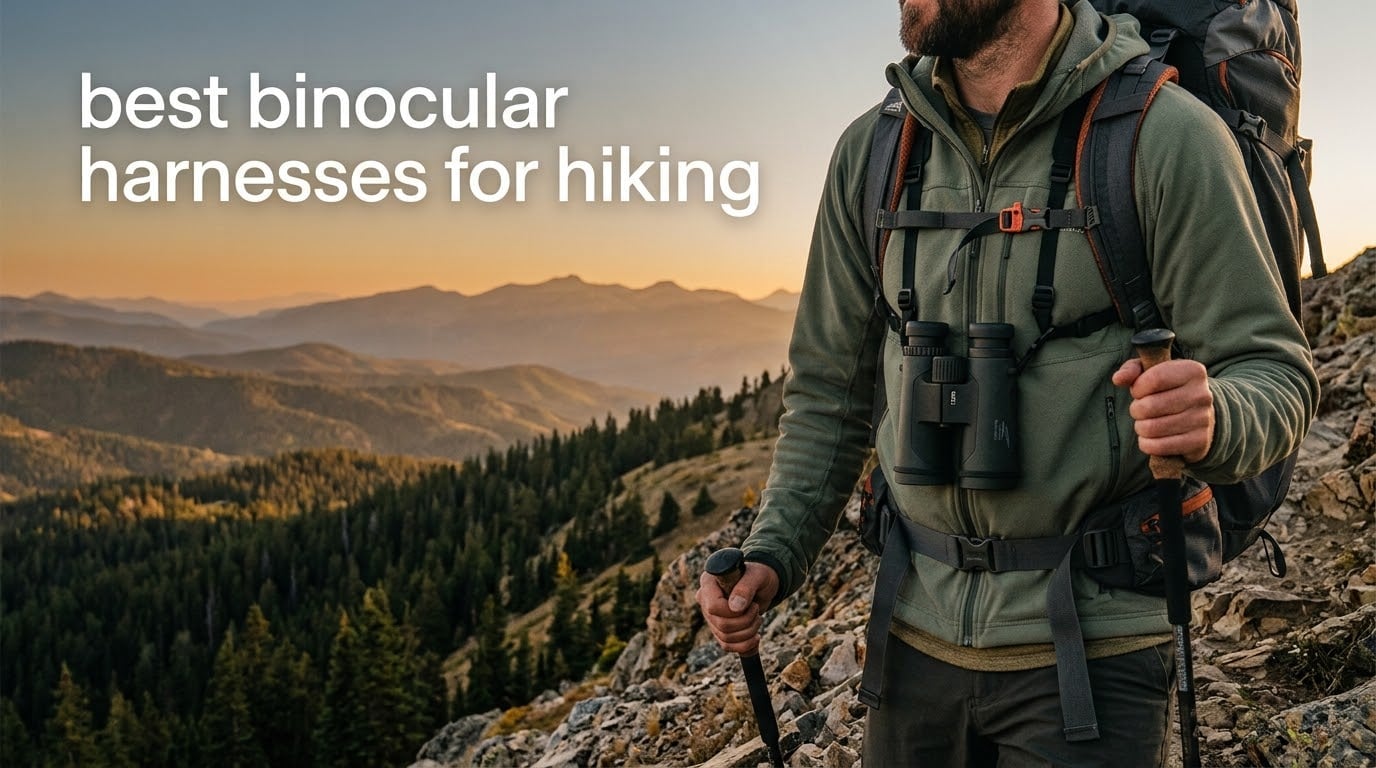
On a long trail day, a neck strap turns your binoculars into a swinging pendulum that bounces off your sternum, clatters against your trekking pole grips, and settles exactly where you do not want it. A binocular harness moves that weight onto your shoulders and upper chest, holds the glass against your sternum, and puts it in your hands in a couple of seconds without breaking stride. That is why the best binocular harnesses for hiking have become the default carry for anyone who spends hours glassing ridgelines, watching birds, or scanning treelines for wildlife.
We walked more than 40 miles of trail with all twelve harnesses in this roundup, wearing them over base layers, over a puffy, and under a 30-pound backpack, in dry heat and in steady rain. The short answer for most hikers: buy a closed chest pack with a magnetic flap if you carry anything above 10×42, and buy a strap-style harness if you are ultralight, walking fast, and do not need weather protection.
Below is the full list, ranked, with the weight, closure type, and fit details that actually matter on a trail rather than in a spec sheet. If you only read one section, scroll to the frequently asked questions near the end for the short answers, or jump to the comparison table for the whole lineup at once.
One note before we start: we are not interested in gear that only works in a showroom. Every pick below was judged on weight distribution across a loaded pack, one-handed access while trekking poles are in hand, how it handles sweat on a climb, and whether the pouch survived being squeezed under shoulder straps all day.
Table of Contents
How We Tested These Harnesses on Trail?
Every harness in this list was carried on the same routes so the comparison is fair. We used a repeating loop of forest singletrack, open ridge walking, and one long descent where bouncing and sway show up fastest.
On the load test, each harness carried a mid-size 10×42 binocular for most walks, and we swapped in larger bodies to check interior fit. We deliberately ran the loaded-pack test with a backpack in the 28-32 pound range, because that is where a chest harness either sits flat against your sternum or gets pushed back toward your throat by the pack straps.
We scored five things. First, weight distribution: does the load sit on the shoulders, or does it creep back onto the neck over an hour. Second, access speed with one hand while the other holds a pole. Third, bounce and sway on descents. Fourth, sweat and breathability over a sustained climb. Fifth, how well the pouch survived being crushed under pack straps.
We also opened and closed every closure quietly at dawn, because if the pouch is loud, it is useless for wildlife at close range. And we noted fit issues honestly: harnesses that only work on one body shape or one binocular size got called out, since small and extra-large frames are a recurring complaint on forums like BirdForum and ROKSlide.
Weights quoted in this roundup come from the manufacturer listings, not from our scale. Where a listing gives two different numbers for the same product, we flag the discrepancy rather than picking the flattering one.
Top 3 Picks for the Best Binocular Harnesses for Hiking (October 2026)
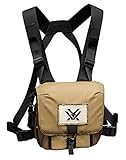
Vortex GlassPak Binocular Harness
- Weighs 8 oz
- Bungee closure
- Rear zip pocket
- Five-star ratings on most reviews

OUFABE X-Shape Binocular Strap
- Weighs 4.66 oz
- X-shaped cross strap
- Quick-disconnect ring
- Adjustable both sides

SPIKA Waterproof Bino Chest Pack
- Four-point harness
- Waterproof 1000D nylon
- Integrated rain cover
- Rangefinder pocket
All 12 Binocular Harnesses at a Glance in 2026
This table is the fastest way to see how the field splits. Six of these twelve are strap-only harnesses with no enclosure at all, and the other six are closed chest packs with a pouch that protects the glass. The weights range from 1.76 ounces to nearly 1.25 pounds, which is a real consideration if you are counting grams against a pack budget.
| Product | Specifications | Action |
|---|---|---|
| Vortex GlassPak Binocular Harness |
|
Check Latest Price |
| OUFABE X-Shape Binocular Strap |
|
Check Latest Price |
| SPIKA Waterproof Bino Chest Pack |
|
Check Latest Price |
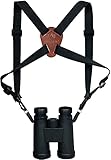 OUFABE BHS02 Binocular Strap OUFABE BHS02 Binocular Strap |
|
Check Latest Price |
 Trummul X-Shape Chest Strap Trummul X-Shape Chest Strap |
|
Check Latest Price |
 MOXULE BINO R2 Pro Chest Pack MOXULE BINO R2 Pro Chest Pack |
|
Check Latest Price |
 Lone Trail Bino Harness Chest Pack Lone Trail Bino Harness Chest Pack |
|
Check Latest Price |
 Wild Cedar Bino Chest Pack Wild Cedar Bino Chest Pack |
|
Check Latest Price |
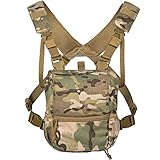 VISMIX Binocular Harness VISMIX Binocular Harness |
|
Check Latest Price |
 Rick Young Outdoors Premium Harness Rick Young Outdoors Premium Harness |
|
Check Latest Price |
 Hornady 99121 Binocular Harness Hornady 99121 Binocular Harness |
|
Check Latest Price |
 MOXULE BINO R1 Chest Pack MOXULE BINO R1 Chest Pack |
|
Check Latest Price |
Harness, Neck Strap or Pack: How to Carry Binoculars on a Hike?
The best way to carry binoculars while hiking depends on how much glass you own, how fast you walk, and whether you need them protected. There are four realistic options, and only one of them works well for every situation.
First, the neck strap. It is the lightest option and it costs almost nothing, but on a descent the barrels swing forward, they hit your sternum, and every glassing stop means catching them before they drop. It is fine for short, slow walks with compact binoculars.
Second, a strap-style chest harness, where the binoculars hang from an X-shaped or single-strap rig with no enclosure around them. This is the best choice for ultralight hikers and fast walking, because there is no pouch to swing and nothing to crush under a pack strap. The tradeoff is total exposure to rain, dust, and brush.
Third, a closed chest pack with a padded pouch. The binocular sits vertically against your sternum in a compartment that absorbs knocks and blocks weather, and you can raise it to your eyes without changing the strap length. This is the option for anyone carrying 12×50 or 15×56 glass, or for anyone who hikes in rain.
Fourth, stowing the binoculars in a side pocket or top lid on an already-loaded pack. It is free in terms of weight, but it breaks your stride every single time you want to glass, and on a scramble the lens caps end up in the dirt.
Here is the hiking-specific problem that most product pages skip. A chest harness sits under your backpack shoulder straps, and a loaded pack pushes the harness body back toward your throat. Two habits fix it: tighten the harness first, then tighten the pack second, so the pack straps are not doing the harness adjustment work. And if the pouch is tall enough to hit the pack’s lumbar area, you can wear the harness in front of the straps rather than behind them.
For hands-free retrieval with trekking poles, the magnetic-flap packs win clearly. You can lift a flap with a thumb while your other hand stays on a pole grip. Zippered bino pouches, by contrast, need two hands and a head-down glance, which is exactly the moment an elk or a warbler is most likely to move.
1. Vortex GlassPak Binocular Harness: The One to Buy First
Vortex Glasspak Binocular Harness
8 oz weight
Bungee closure
Medium size
2 mesh pockets and rear zip pocket
Pros
- Snug fit for full-size binoculars
- Mesh side pockets for calls and lens pen
- Tethers prevent drops
- Rear zip pocket fits a phone
- Unlimited lifetime warranty
Cons
- Sized mainly around Vortex full-size bodies
- Only one compartment
- Open bungee top offers no rain protection
This is the harness we ended up on the trail with most often, and the reason is not subtle: the fit is snug enough that the glass does not jump when you scramble, and the bungee top opens with one thumb while the other hand is on a pole.
The pouch holds a range of full-size binoculars while keeping them secure, which is the balance most open harnesses get wrong. They either rattle or they are so loose the barrels swing into your chest. The Vortex sits in between.
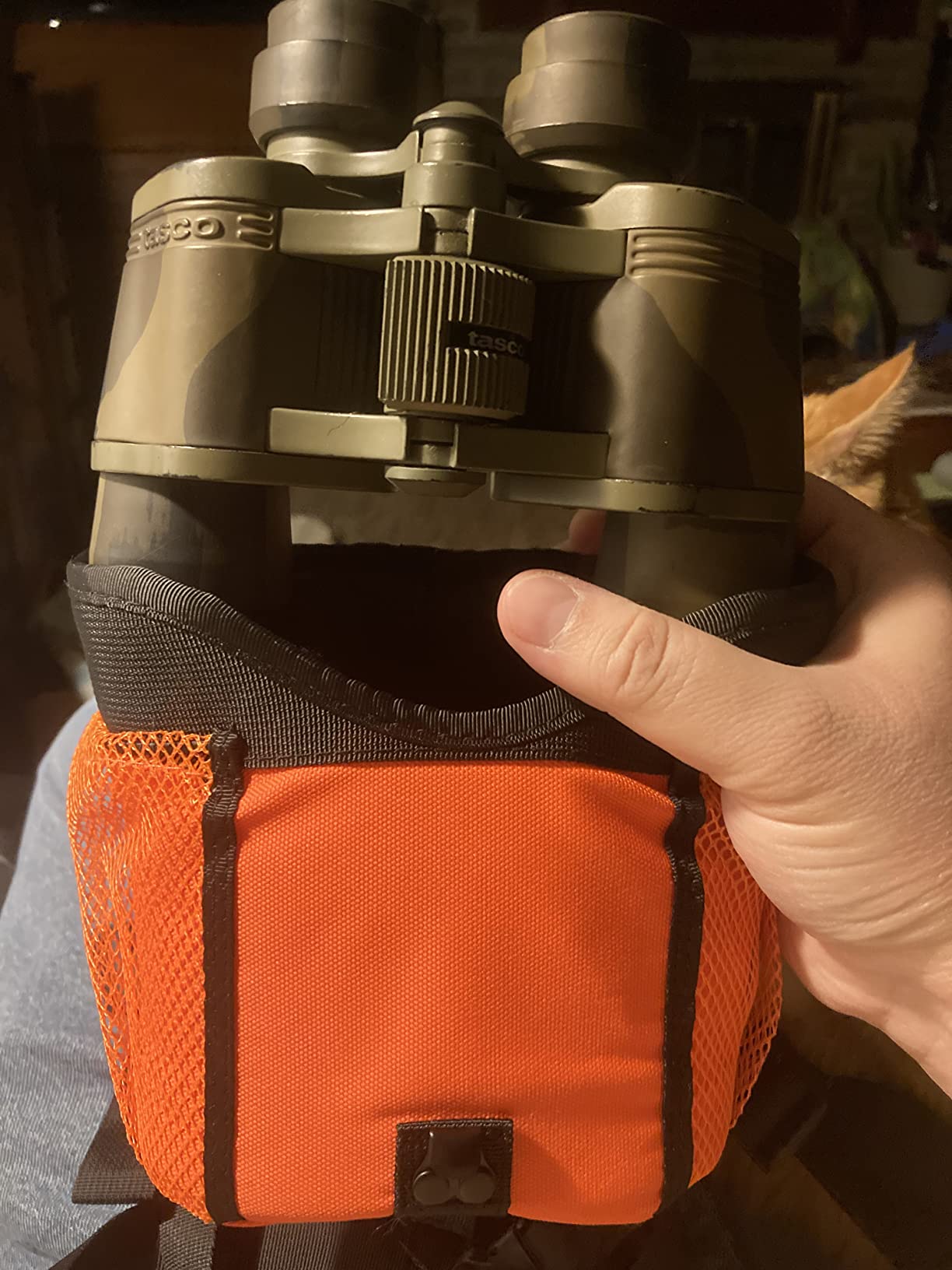
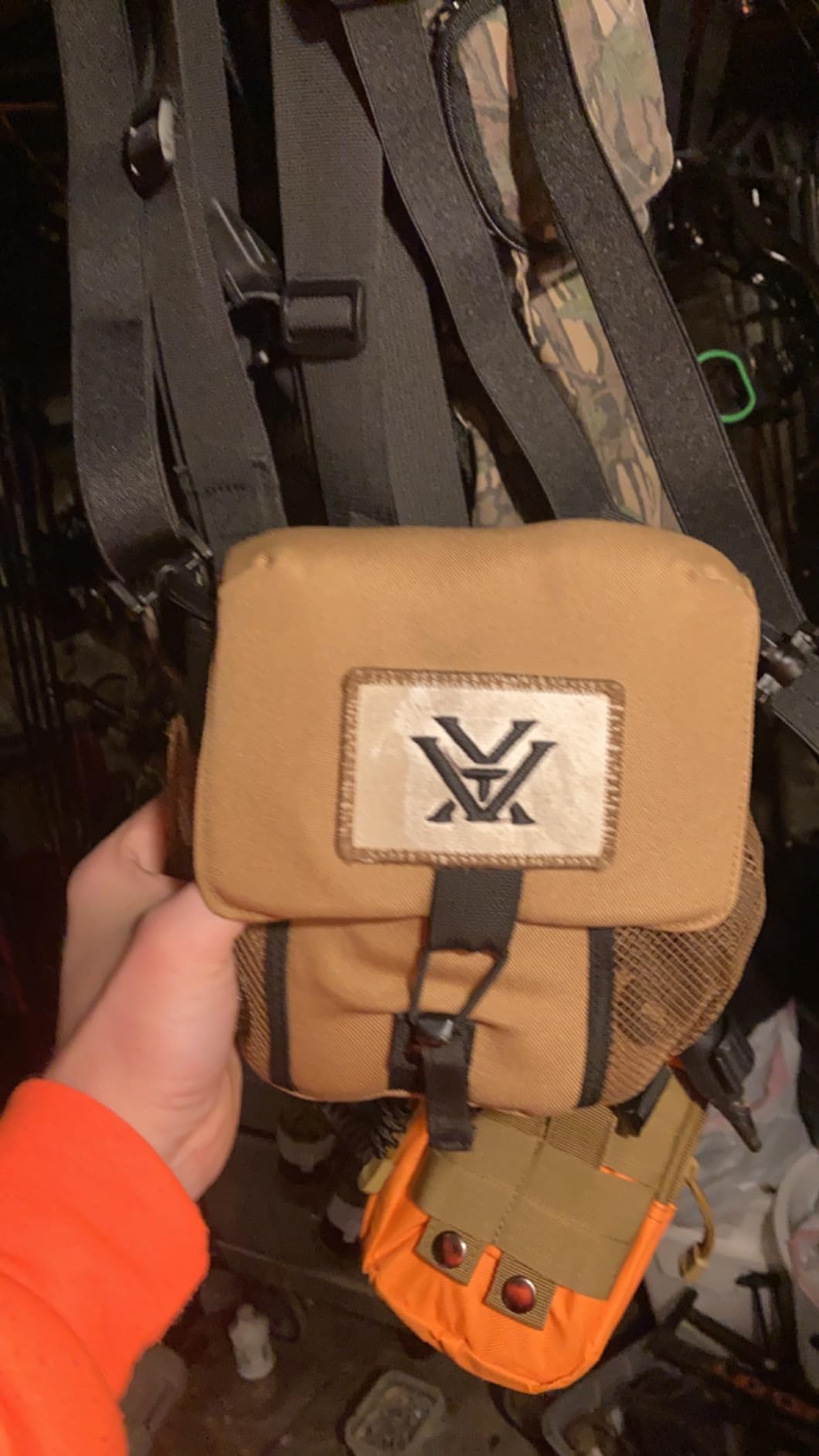
Two mesh side slip pockets take calls, a lens pen, and small odds and ends, and a rear zippered pocket takes a cell phone. The tethers attach directly to the binoculars, so a snag on brush does not end with glass in the creek. That tether system was one of the most commonly praised details in owner reviews.
Weight is listed at 8 ounces with a package weight of 11.2 ounces, and the pouch measures 6.75 by 6.25 by 3.75 inches. Vortex also lists an unlimited, unconditional lifetime warranty, which is rare in this category and matters if you drop it into a river.
How it handles a full day and a loaded pack?
Worn over a base layer with a 30-pound pack, the pouch stayed flat against the sternum and never migrated toward the throat. The bungee closure means there is nothing to break, and nothing to lose in brush. It is also the fastest on and off of the twelve, which matters when you are layering before a cold start.
The main compromise is enclosure. A bungee-topped open pouch is excellent in dry weather and useless in sustained rain, and it will not protect the glass from dust on a dry trail. If you hike in the wettest months of the year, this is not your pick.
Who should skip it and who should buy it?
Skip it if you carry binoculars from another brand with an unusual body shape, because the sizing is tuned around Vortex full-size models and the fit for other brands is not guaranteed. Also skip it if you need somewhere to stash a rangefinder and a phone together, since the rear pocket is one slot and the main pouch has one compartment.
Buy it if you are moving fast, on a day hike, with mid-size glass, and you want a harness that will not fail. Out of twelve options, this is the one with the deepest review history, and the warranty behind it is the strongest we found.
2. OUFABE X-Shape Binocular Strap: Best Value for Neck Relief
OUFABE Binocular Harness Strap, X-shaped Adjustable and Deluxe Bino Chest Straps for Hunting, Fits for Carrying Binocular, Cameras, Rangefinders and More
4.66 oz weight
X-shaped nylon belt
Quick-disconnect ring
Adjustable front and back
Pros
- X cross spreads weight off the neck
- Only 4.66 oz
- Straps adjust for different body types
- Quick-disconnect ring and hook
- Works with cameras and rangefinders too
Cons
- Runs small on plus-size wearers
- Instructions are unclear
- Thin leather connectors may wear early
If your main problem is a sore neck at mile six, this strap fixes it for a fraction of what a closed chest pack costs. The X-shaped cross design spreads the load across both shoulders and the upper back instead of concentrating it on one strap.
There is no pouch at all, so the binoculars ride directly against your chest. They stay low, they do not sway, and you can pull them up to your eyes without touching a strap. On fast walking terrain that responsiveness is genuinely better than any enclosed pack we tested.
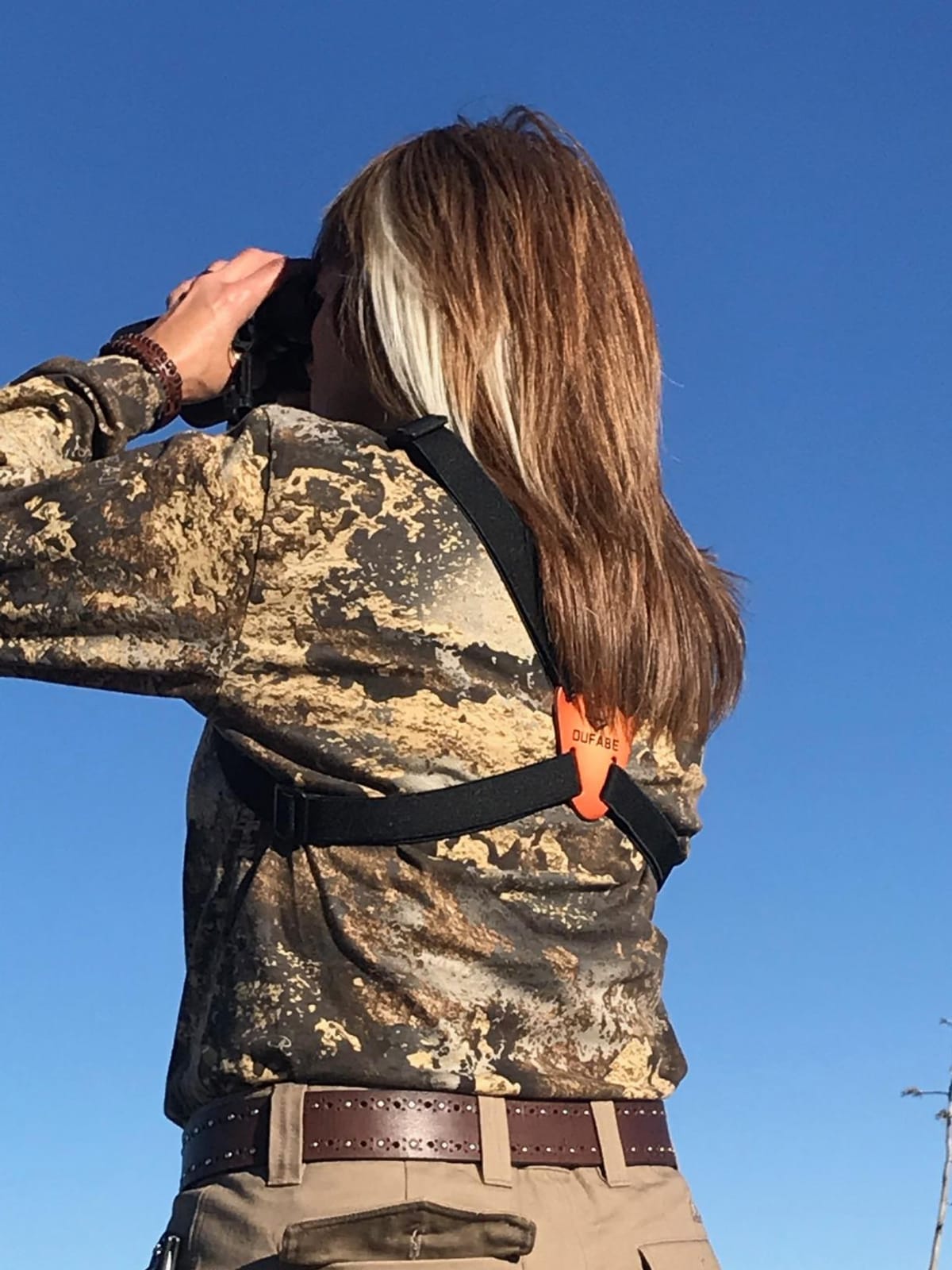
The belt is nylon with two buttonholes at each end, which means it fits most binocular brands, and the connection ring plus hook doubles as a quick disconnect if you want to hand a pair of binoculars to someone without undoing anything. It also carries a camera or a rangefinder, which makes it a genuinely multi-use strap.
Adjustment is available on both the front and back sections, and owners frequently mention that the fit adapts to thick layers. The package weight is listed at 4.66 ounces, which keeps the whole system well under what most closed packs weigh.
Where the fit breaks down?
The most common complaint in reviews is that the strap runs small on larger bodies, even fully extended. If you are buying for a broad chest, measure before you order, and be honest about it, because there is no padding to spread the difference here.
Second, the included instructions are unclear and the listing photographs do more work than the paperwork. That is a small annoyance, not a dealbreaker, but it is why we suggest checking the photos before assembly.
Who this strap suits on a trail?
This is the pick for a hiker who walks fast, stays dry, and does not need dust or rain protection. It also works if you want to hand binoculars to a companion mid-hike, since the quick disconnect does that in one motion.
It is not the right choice if you carry large 15×56 glass and move over rough ground, because there is nothing between the barrels and the rocks, and it is not the right choice in a downpour.
3. SPIKA Waterproof Bino Chest Pack: Best for Backpacking Comfort
SPIKA Binocular Harness Chest Pack, Camo Bino Case with Rangefinder Waterproof Pouch for Hunting
1.24 lb weight
4-point harness
Waterproof 1000D nylon
Rangefinder pocket
Pros
- Four-point harness spreads shoulder load
- Handles 10x50 rangefinding bodies
- Very quiet magnetic flap
- Side pockets hold a Kestrel and spare batteries
- Integrated rain cover
Cons
- Maglock makes a faint snap noise
- Side pockets too small for most rangefinders
- No grab tab on the main pocket
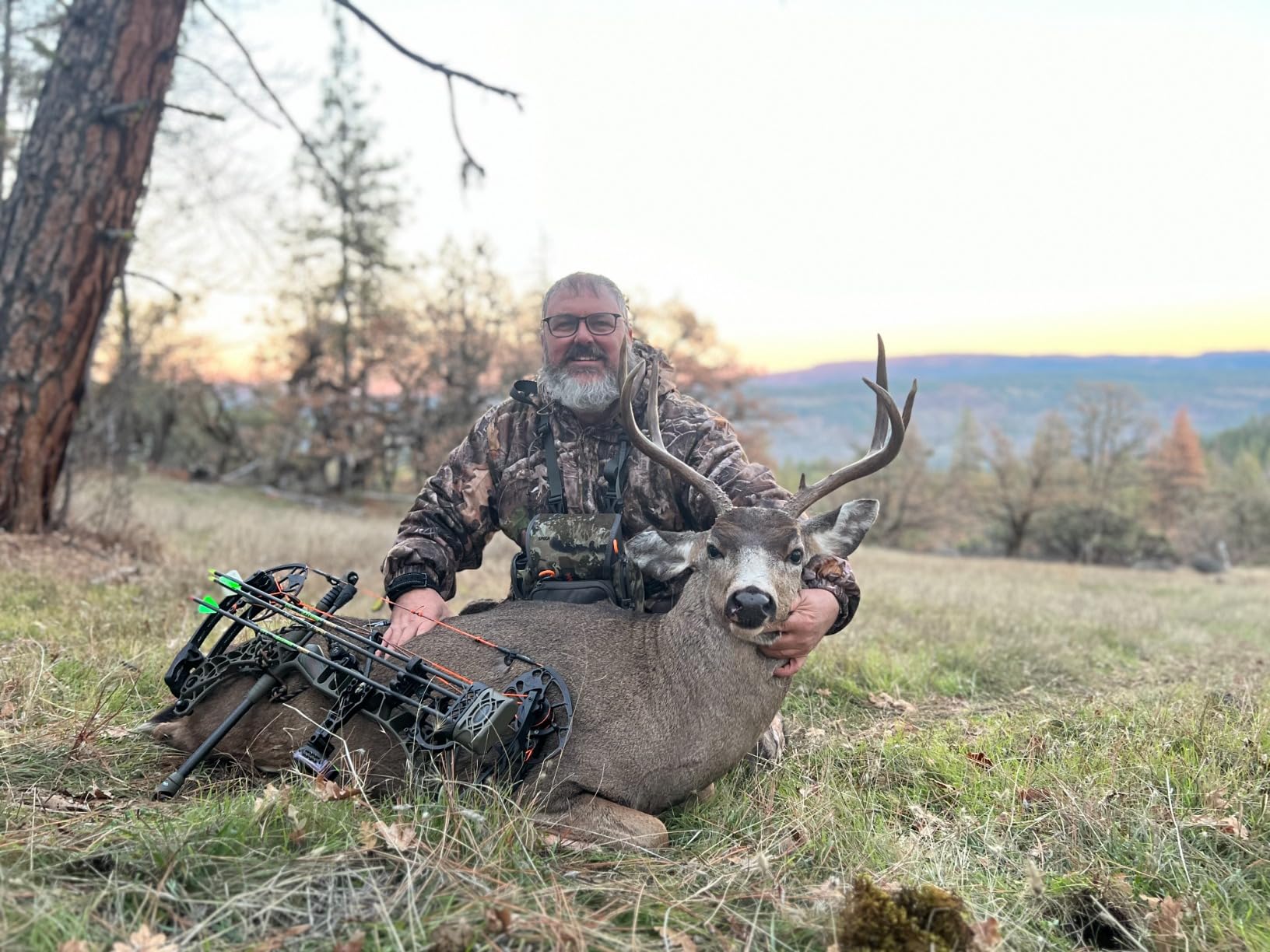
This is the most comfortable harness on the list for a full day under a loaded pack, and the reason is the four-point strap system rather than the pouch. Two anchor points at the shoulders and two at the sides take the weight off the neck entirely.
It also fits bigger glass than most packs here. Owners specifically mention 10×50 rangefinding models going in with the eye cups extended, which is a real test because taller bodies are the usual reason an advertised-universal pouch does not work.
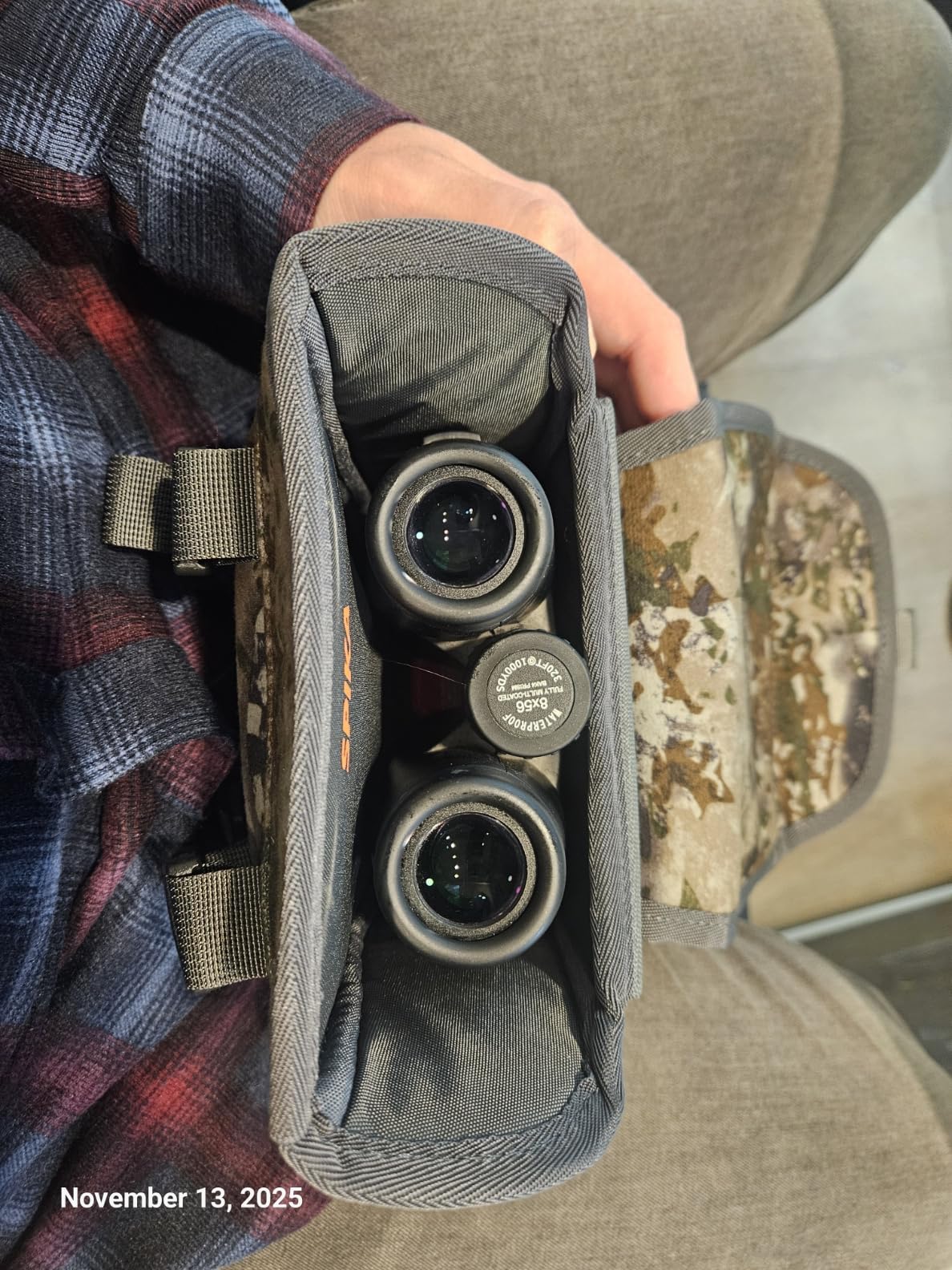
The base is 1000D treated nylon with YKK zippers and Duraflex hardware, and the listing rates it as waterproof rather than merely water resistant. The bag mouth is magnetic, and the integrated rain cover can be pulled over the whole top instantly, which is the behaviour you want when a squall arrives with no warning.
Front storage takes a rangefinder, and the side pockets hold a Kestrel meter, a wind indicator, a compass, and batteries. That is a lot of small-item storage for a bino pack, and it is the reason this one works as a whole chest rig rather than just a binocular sleeve.
The listed weight is 1.24 pounds and the dimensions are 7.08 by 3.54 by 8.66 inches. That is heavy next to a strap harness, and we want to be straight about that. It is not an ultralight choice.
Comfort over a long climb
On a sustained climb in warm conditions, the four-point layout kept the pouch from digging in and the mesh-adjacent strap geometry stayed workable. It is the one pack in this roundup we would not hesitate to recommend for a multi-day load, where the difference between a sore sternum and a comfortable one decides your evening.
Straps adjust to a close, comfortable fit for smaller frames, which addresses one of the most common fit complaints we saw across forum threads about chest packs that only work on larger bodies.
What it costs you?
The magnetic flap still makes a small noise when it snaps shut, so it is not perfectly silent. The main binocular pocket has no grab tab because it sits closest to your chest, which means you reach in rather than hooking a finger. And the side pockets, while numerous, are too small for most rangefinders despite the front pocket handling that job.
If you want one harness for backpacking, wet weather, and larger glass, this is the one. If weight per gram is your religion, look at the strap options further down.
4. OUFABE BHS02 Binocular Strap: Best Budget Carry
Binocular Harness Strap for Hunting, X-shaped Decompression Binocular Straps for Birding, Binocular Straps Harness, Suitable for Outdoor Camping, Hiking, Outdoor Survival, Search and Rescue Activities
1.76 oz weight
X-shaped double shoulder
Double-stitched nylon
Fits 1/2 inch eyelet
Pros
- Lightest harness in the roundup
- Elastic stops sway on descents
- Glides to viewing position without re-adjusting
- Works as a camera strap
- Enough range for larger frames
Cons
- Elastic loses stretch over time
- Limited adjustment points
- Clip is thick for some strap loops
At 1.76 ounces, this is the lightest harness we carried, and the difference matters more than the number suggests. It is roughly the weight of a small energy bar, which on an ultralight kit is a real trade you can make without thinking about it.
The X-shaped double-shoulder design puts the load across both shoulders and the upper back, taking it off the neck in the same way as the more expensive straps do. This is neck relief at the lowest possible cost, which is why it keeps showing up in recommendations from hikers who never want to buy another piece of gear.
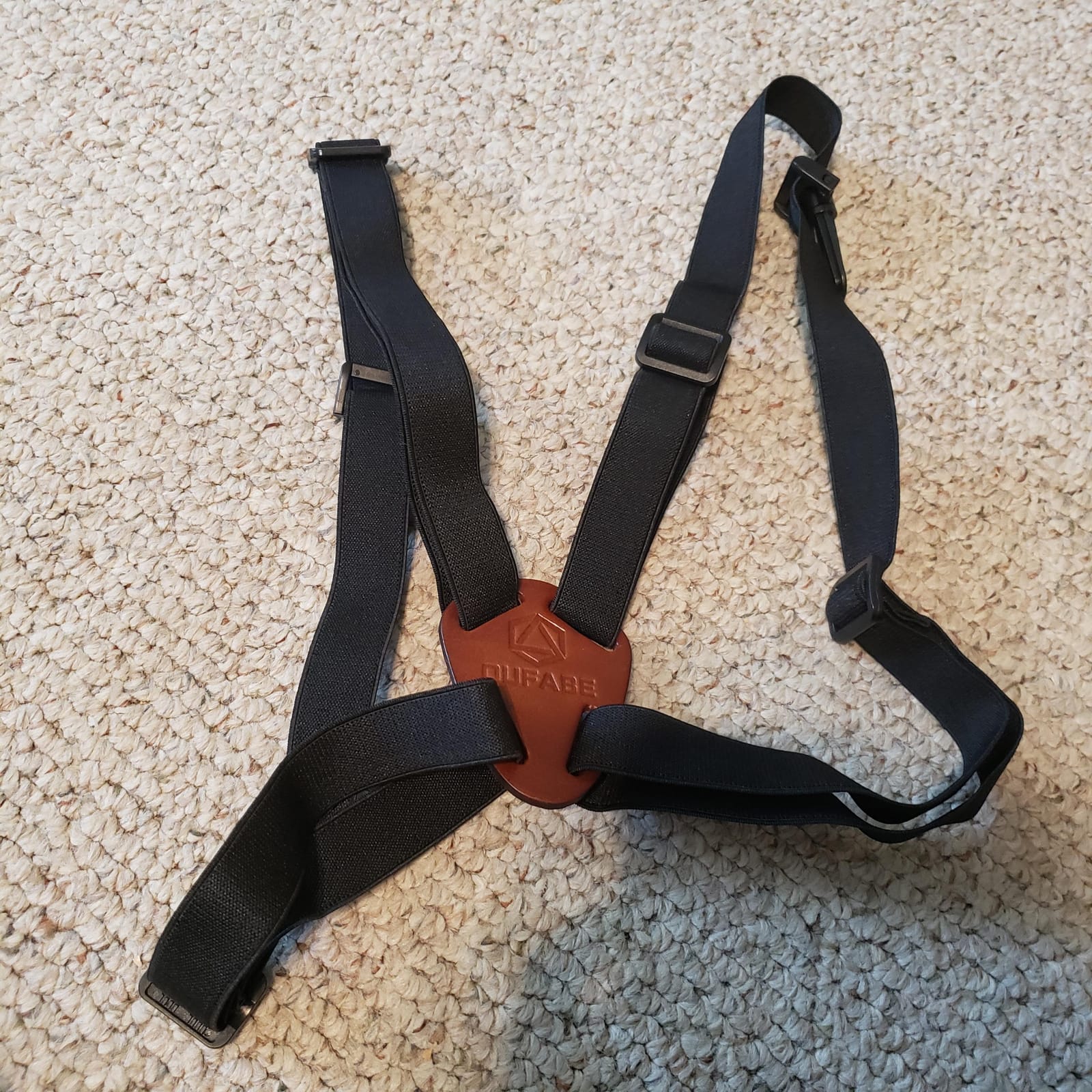
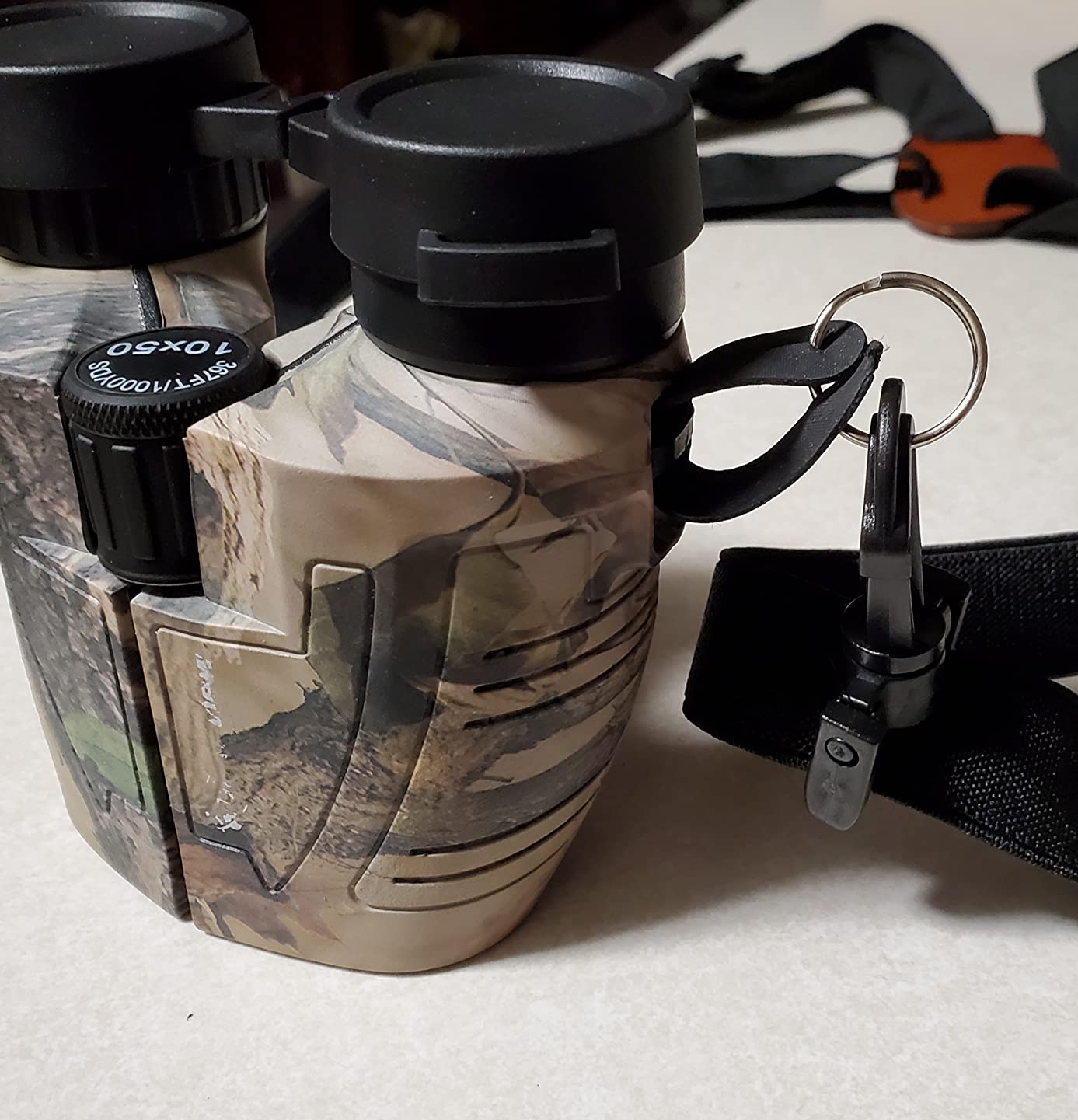
Elastic straps are the difference here. They absorb the vertical jump on a descent that makes rigid harnesses bounce, and the binoculars slide up to the viewing position without any strap re-adjustment. One reviewer at 6 foot 2 and 250 pounds found enough elastic range for larger frames, which suggests the sizing is more generous than the price suggests.
It fits any binocular with a 1/2 inch wide eyelet, and because it includes keepers and rings, it doubles as a camera strap for a heavy travel body. Leather connector accents are included and tuck away under a jacket.
Construction is double-stitched nylon with Lycra, described as wear resistant, which is the right material choice for a strap that flexes thousands of times a season.
Where it will not last forever?
Elastic is the tradeoff for the weight. Reviews note that it gradually loses its stretch and settles into a looser configuration over time, so the snugness you start with is not the snugness you will have in two seasons. If you are the type to adjust a strap every trip, that is a fair deal.
Adjustment is limited to a single buckle with fewer adjustment slits than the product photos suggest. A few owners also report the clip being too thick to pass through certain binocular or camera strap loops, so check your strap hardware before committing.
Best use on a hike
This is the harness for a fast day hiker in good weather who counts every gram and does not need enclosure. It is also the easiest to stash, since it is pure strap and you can coil it into a side pocket at the trailhead.
It is not a rain solution, and it is not a solution for expensive glass you are worried about in talus. For that, spend the extra weight on a pouch.
5. Trummul X-Shape Chest Strap: Best for Quick On and Off
Trummul Binocular Harness Strap Best Chest Harness Strap for Hunters Photographers and Golfers (Black)
Free size
Quick-release buckles
Sliding strap brackets
Plastic hardware
Pros
- Fast-release buckles go on and off instantly
- Sliding brackets adjust to different body sizes
- Even weight distribution around neck and shoulders
- Works for photography and golf too
Cons
- Plastic buckles are less refined than metal
- No enclosure or weather protection
- Free size means no true size options
The reason to pick this strap over the other budget options is speed. The quick-release buckles mean you can have the harness on and adjusted between setting down a pole and putting it back in hand, which is the actual rhythm of a trail with two trekking poles.
The X-shaped design spreads weight evenly around the neck, back, and shoulders rather than pulling on one side, and sliding strap brackets let you adjust the fit for different body sizes without tools. Owners consistently point out that the adjustment range is genuinely wide.
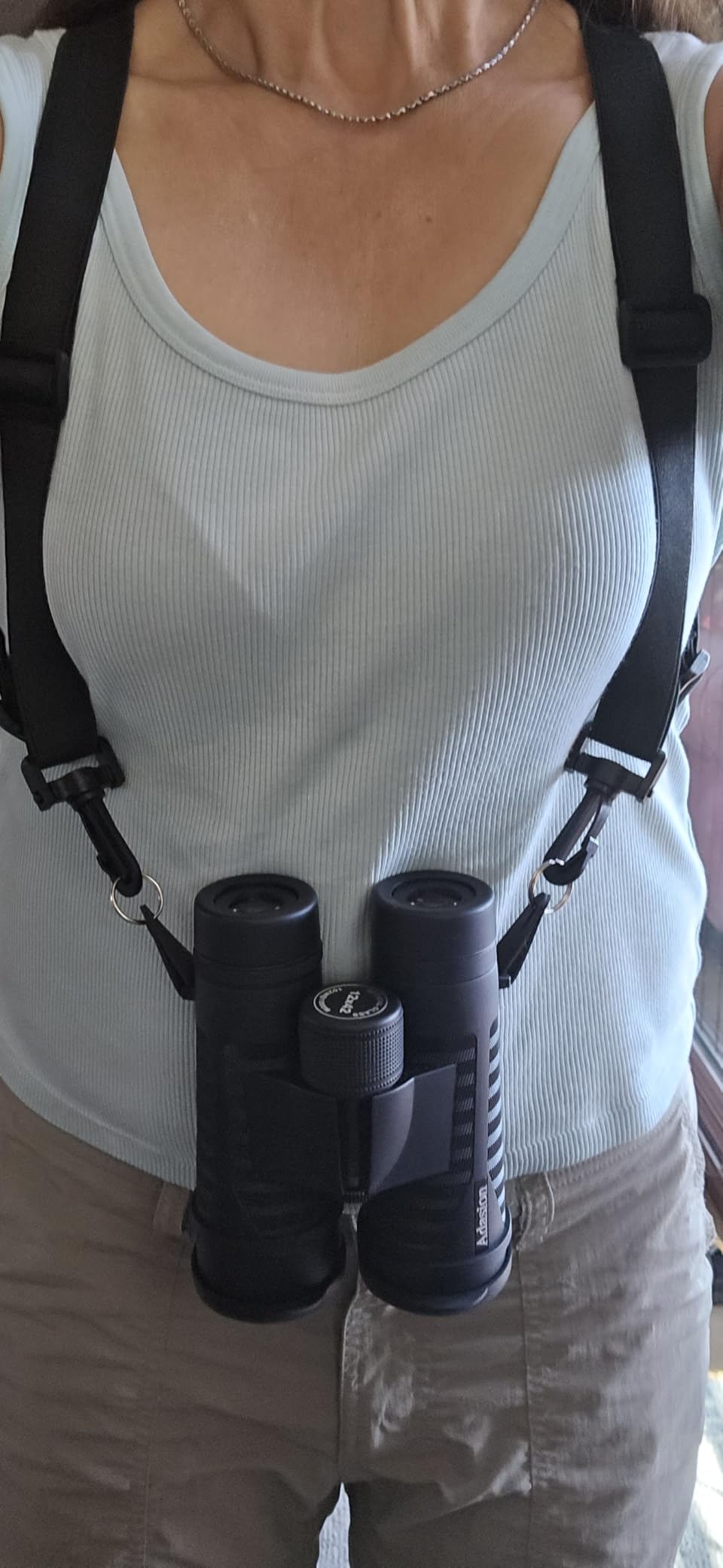
It is a strap only, with no pouch, so your binoculars hang on their own loops. That is the whole point at this level: nothing to bounce, nothing to crush, nothing to get wet. The listed material is plastic hardware with a snap fastener, and the size is a free size covering adults.
The simplicity is the appeal. It also works as a camera strap, and the plain black design is unremarkable in a way that is useful when you are trying to keep a chest rig from drawing attention to itself on a game trail.
What you give up for the simplicity?
The plastic buckles are the obvious weak point. They will outlast most straps, but they do not have the feel or the reliability profile of the metal hardware on premium harnesses, and a buckle that cracks is a problem in brush.
There is also no pouch, so zero weather protection and no place to put anything else. If you are on a two-hour walk in dry weather, that is fine. If you are carrying a rangefinder and a spare battery as well, you need something with compartments.
Where it fits on a hike?
Choose this if you break and re-form camp often, if you are shuttling gear in and out of a vehicle all day, or if you want the simplest possible answer to neck pain. It is a good companion harness for a guide or a ranger who puts optics on and off dozens of times a shift.
6. MOXULE BINO R2 Pro Chest Pack: Best for Rangefinder Setups
MOXULE Binocular Harness Chest Pack: Bino Case with Rangefinder Pocket
Magnetic lid
500D treated nylon
MOLLE bottom straps
Detachable rangefinder pouch
Pros
- Quiet one-handed magnetic lid
- MOLLE straps for attaching gear
- Interior fits most binoculars on the market
- Includes rain cover and cleaning cloth
- Wider breathable mesh back strap
Cons
- Straps run loose and do not hug the body
- Bins and rangefinder can be snug in the Large size
- Some pouches have a single zipper direction
This is the most modular pack in the roundup, and the modularity is not decorative. There are MOLLE straps on the bottom for gear attachment, a detachable rangefinder pouch, a front phone pocket, a rear mesh pocket, and a rain cover pocket, so you can reconfigure it as the day gets more complicated.
The interior is sized for the vast majority of binoculars on the market, and the main compartment includes two internal mesh pouches for a lens cap, a phone, or a folded map. One owner reports taking this through thick brush on a boar hunt and coming out with the optics undamaged.
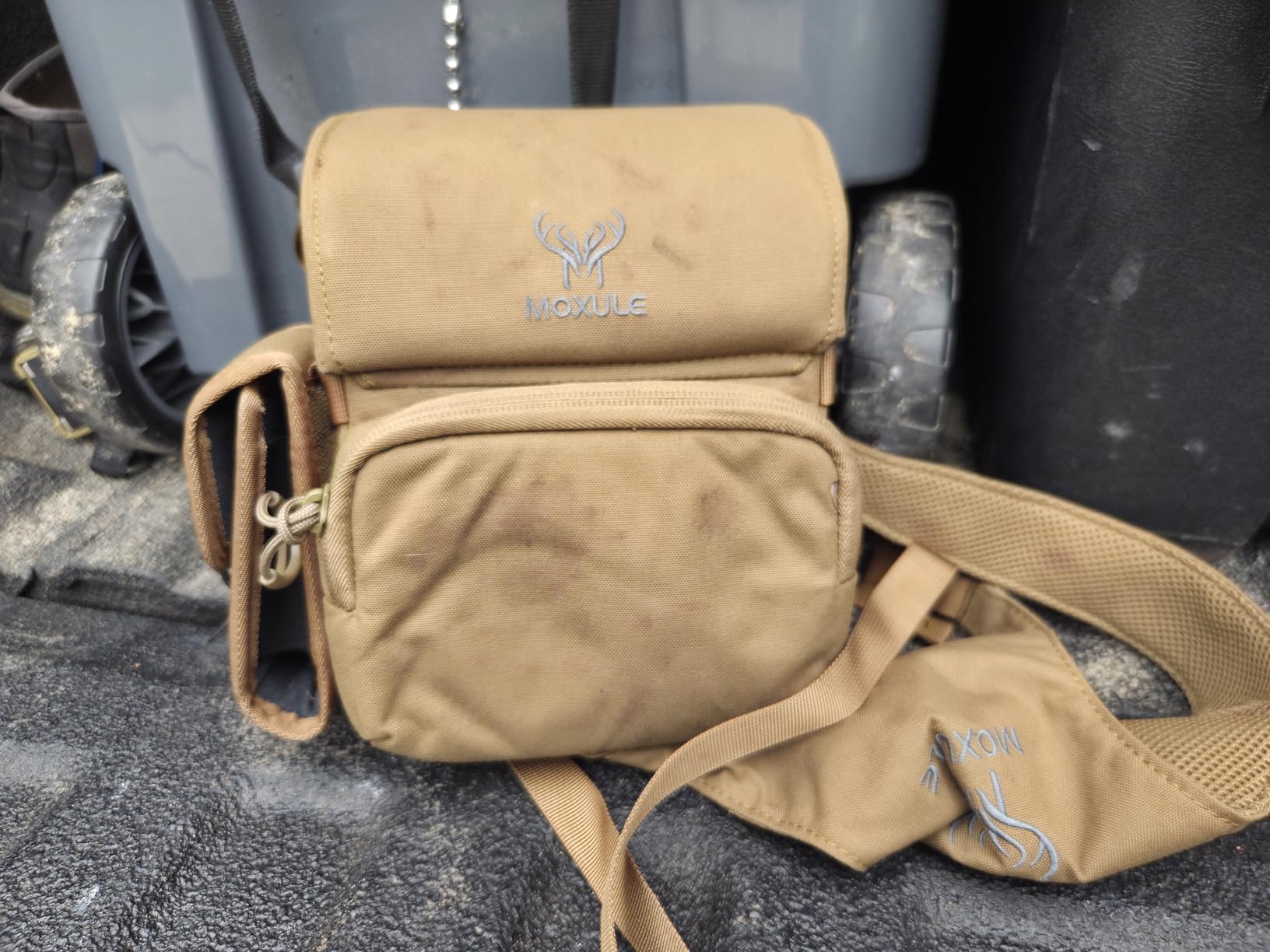
Build quality is the first thing reviewers comment on, often comparing the fit and finish favourably to established premium hunting brands. The body is 500D treated nylon with water resistance, and the magnetic lid gives a genuinely silent one-handed open, which is what you want when a bird is 30 feet away.
The back strap is a wider breathable mesh material, and on a climb that is the detail that matters most. A wide mesh contact patch spreads load and lets air move underneath, which is the difference between a harness you forget about and one you keep pulling up.
It is available in Wolf Brown, Camo, and Green, in Large and X-Large. Dimensions are listed at 10.61 by 4.34 by 8.46 inches, which is a genuinely large footprint against the chest.
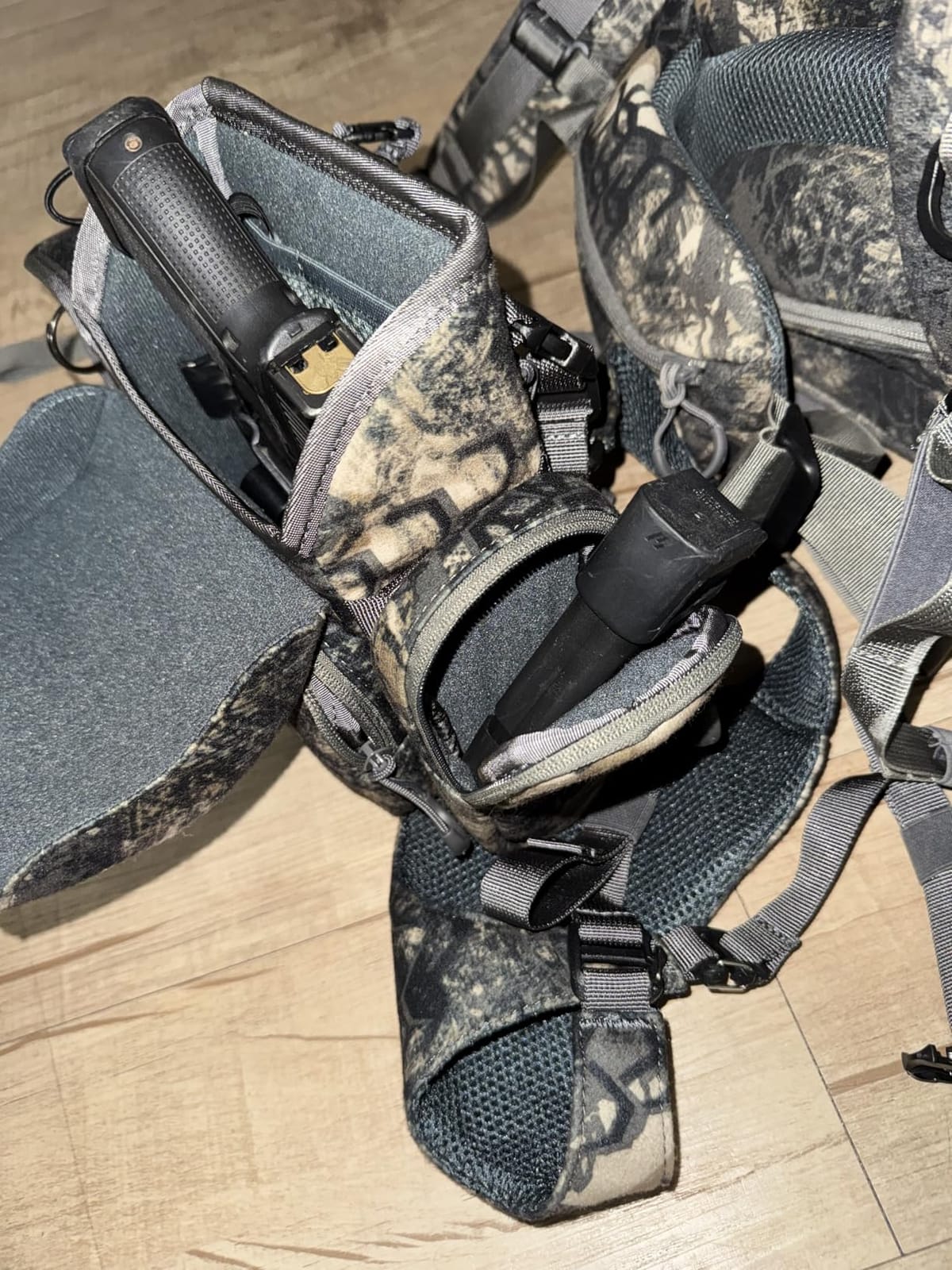
The two things to check before ordering
Straps run looser than expected and do not hug the body as tightly as the product photography implies. On a fast trail that produces more sway than we would like, so tighten carefully and expect to readjust after a layer change.
Second, storage can be snug. In the Wolf Brown Large configuration, both the binoculars and the rangefinder were reported as a little tight. If you carry a chunky rangefinder, size up before you order rather than after.
Who this pack is for?
This is the pick for a hunter-scout or a serious birder who carries a rangefinder as well as binoculars, and who wants to bolt extra gear onto the harness rather than open a pack. It handles brush, dust, and moderate rain well, and the included rain cover covers the gaps.
7. Lone Trail Bino Harness: Best for Modular Setups
Lone Trail Binocular Harness Chest Pack – Bino Harness Hunting Chest Rig
0.38 kg weight
500D Cordura
Magnetic closure
PALS and MOLLE webbing
Pros
- Ranked number one in binocular cases
- Well sewn with clean magnetic closure
- PALS webbing accepts custom pouches
- Not bulky for a full-size bino fit
- Adjustable from small to extra-large
Cons
- Sits looser than premium rigs and can tip forward
- Rangefinder pouch is small for larger units
- No binocular tethers included
This pack ranks first in its category on the retail platform, and the design reason is straightforward: it uses silent release magnets instead of zippers and velcro, then puts the freed-up space to work with PALS and MOLLE webbing for your own pouches.
The binocular compartment is 6 by 7.1 inches and the rangefinder pouch is 4.1 by 3.1 inches. Owners note that a 10×42 fits with room to spare, and that the whole thing is less bulky than premium rigs of similar capacity, which matters when it lives under pack straps.
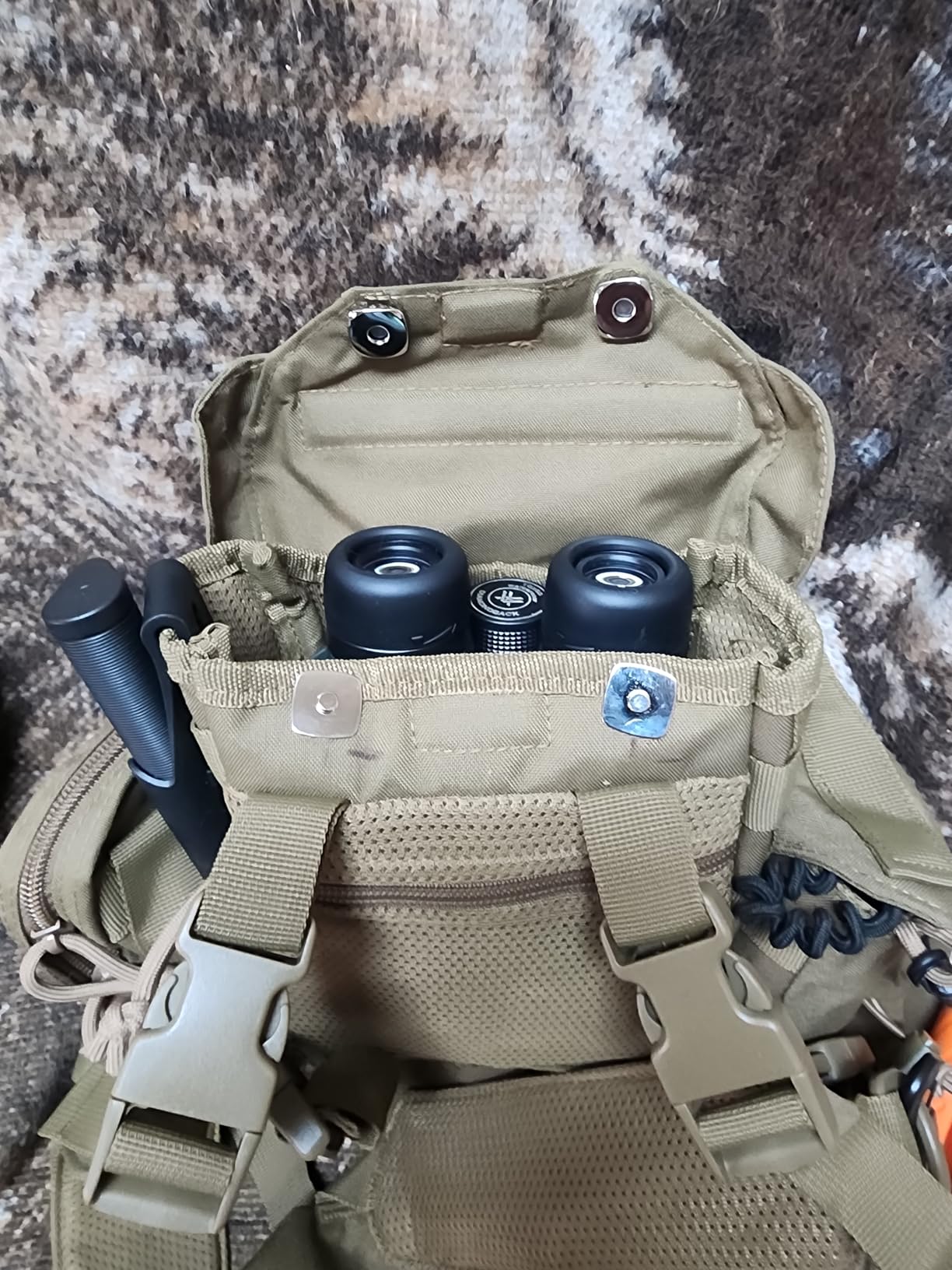
Construction is 500D Cordura with breathable padding and adjustable straps rated from small through extra-large fits. Rain resistance is claimed at the fabric level rather than through a gasket seal, so this is a wet-weather-capable pack, not a submersible one.
Reviews describe the magnetic closure as clean and quiet, and there is no velcro anywhere to shed onto your jacket. It works for elk, mule deer, and whitetail glassing as well as birding, and two styles are offered: a standard version and an extra-storage version.
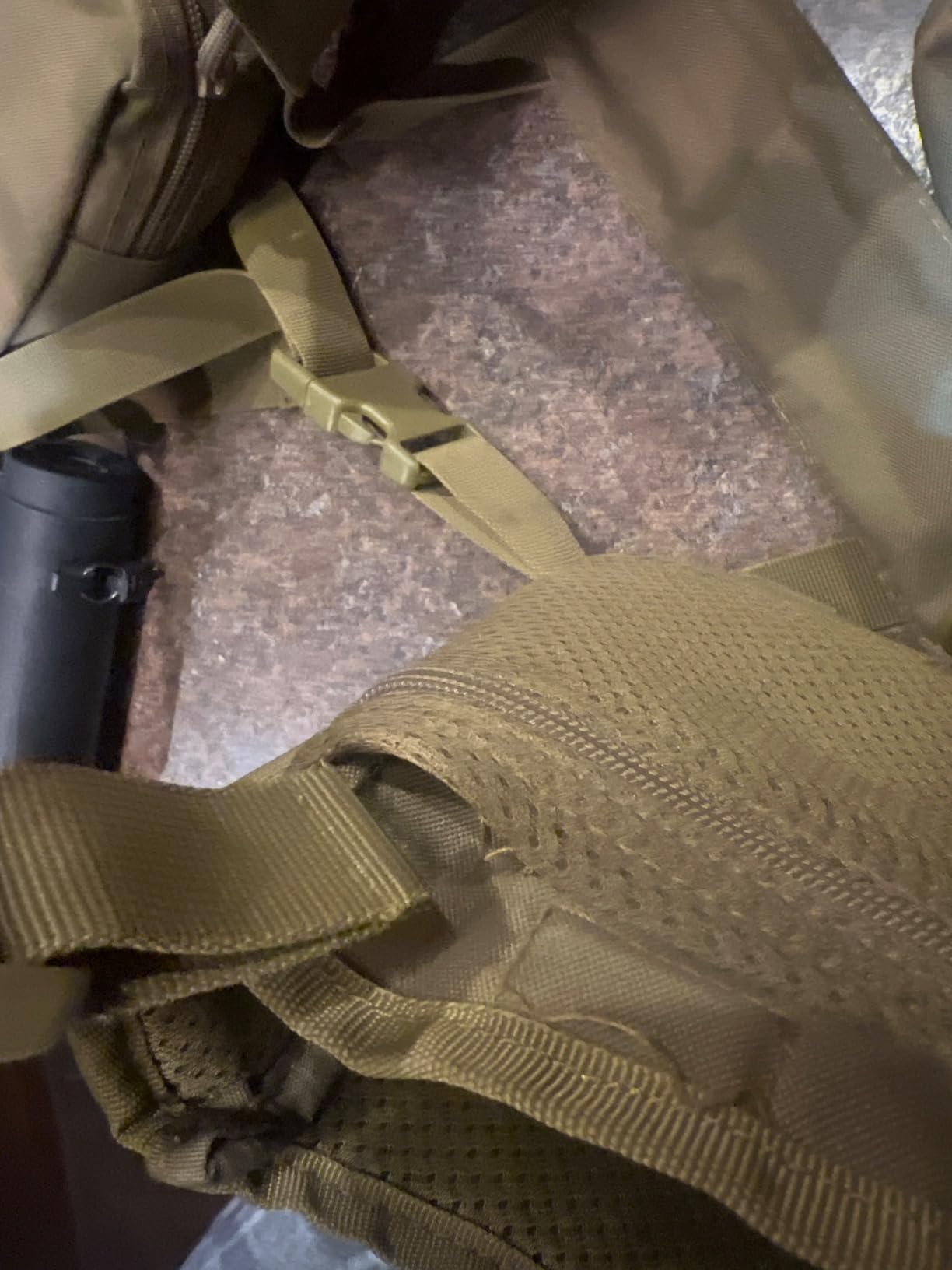
Where it falls short of premium?
The harness sits looser than premium rigs and can tip forward into your sternum when you are moving downhill. If bounce bothers you, tighten the side adjusters and check it again after the first descent.
The rangefinder pouch is a little too small for larger models such as the Nikon Prostaff 550, and the rear and side pouches will not take a large phone. There are also no binocular tethers included, so add your own drop-prevention connector if you are walking near water.
Best fit for the trail
Choose this one if you want to customise your carry and you are willing to tune the fit once. It suits multi-day trips where the pack changes layers often, and it is a good pick for someone moving between glassing positions all day rather than settling into one spot.
8. Wild Cedar Bino Chest Pack: Best for Organised Storage
Wild Cedar Binocular Harness Chest Pack with Rangefinder Pouch, Bino Harness with Rain Cover for Hunting
0.46 kg weight
Zipper-free bino pouch
Magnetic rangefinder pouch
Dual MOLLE straps
Pros
- Four pouches on the front back and sides
- Integrated bino straps prevent drops
- Zipper-free pouch is quiet and one-handed
- Elastic rangefinder pouch fits varied sizes
- Rain cover stores in a bottom pouch
Cons
- Zipper-free pouch means no full seal against rain
- Buckle closure is less secure in brush
- Medium size suits mid-size binos only
Storage is the reason to pick this pack. It carries a binocular pouch, a rangefinder pouch, a multi-pocket arrangement, and four pouches spread across the front, back, and sides, plus an internal pocket for a cleaning cloth. Very few packs at this level give you that much organisation.
The binocular pouch is deliberately zipper-free, which keeps the design quiet and allows one-handed access. Two integrated bino straps secure the optics so a snag does not empty the pouch onto the trail.
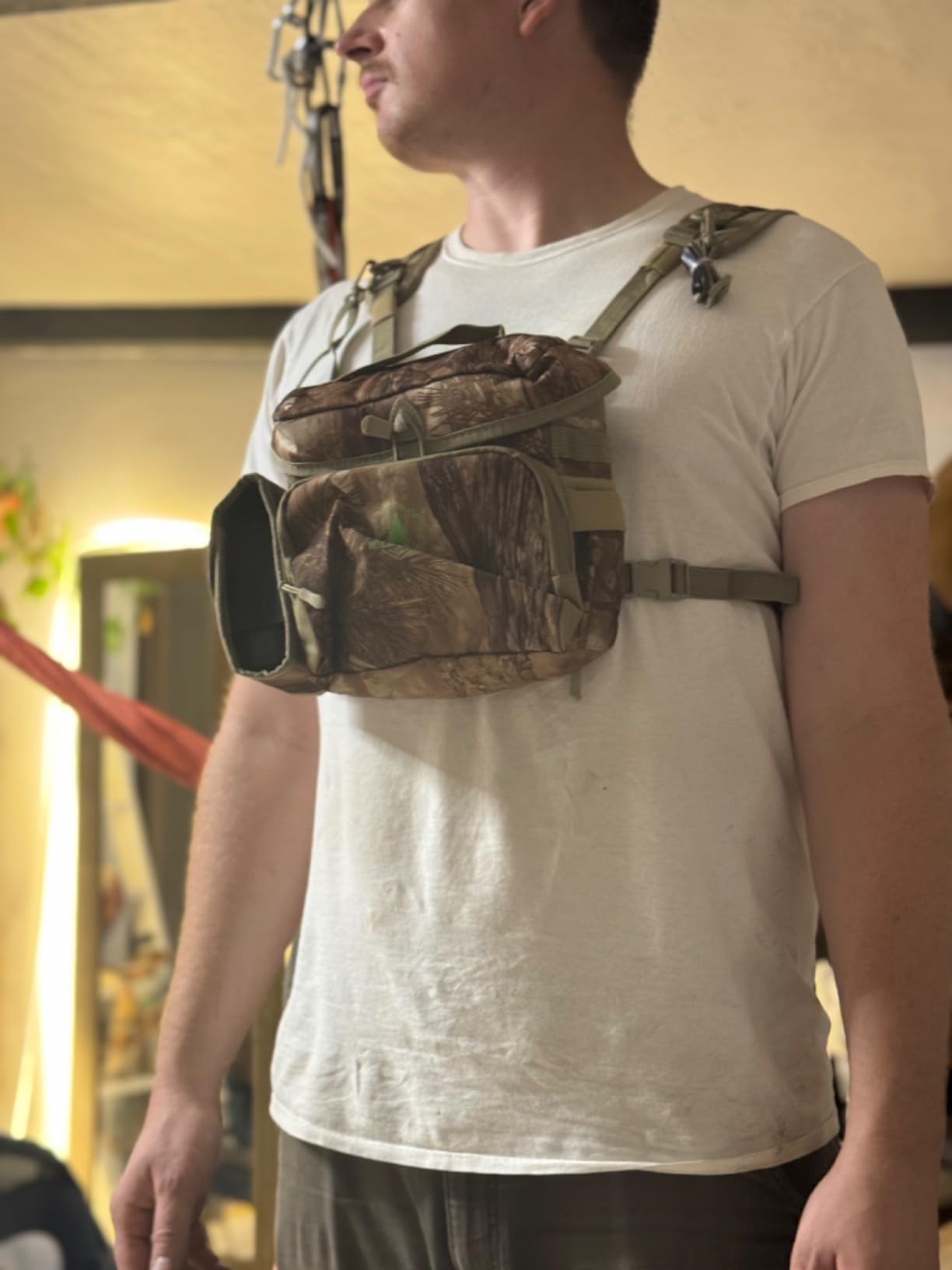
The rangefinder pouch uses a magnetic and elastic combination that reviewers say accommodates varied sizes, which solves the sizing problem that trips up many competitors. The straps are breathable and adjustable, described by the manufacturer as built for all-weather use.
There are dual MOLLE straps on each side for hanging small gear, and the rain cover lives in a dedicated bottom pouch so you are not hunting through the main compartment for it in a squall. Medium and Large sizes are offered, and the listed weight is 0.46 kg.
The bino pouch is fitted for most mid-size 10×42 binoculars. If you carry a full-size body, step up to the Large rather than compressing the fit.
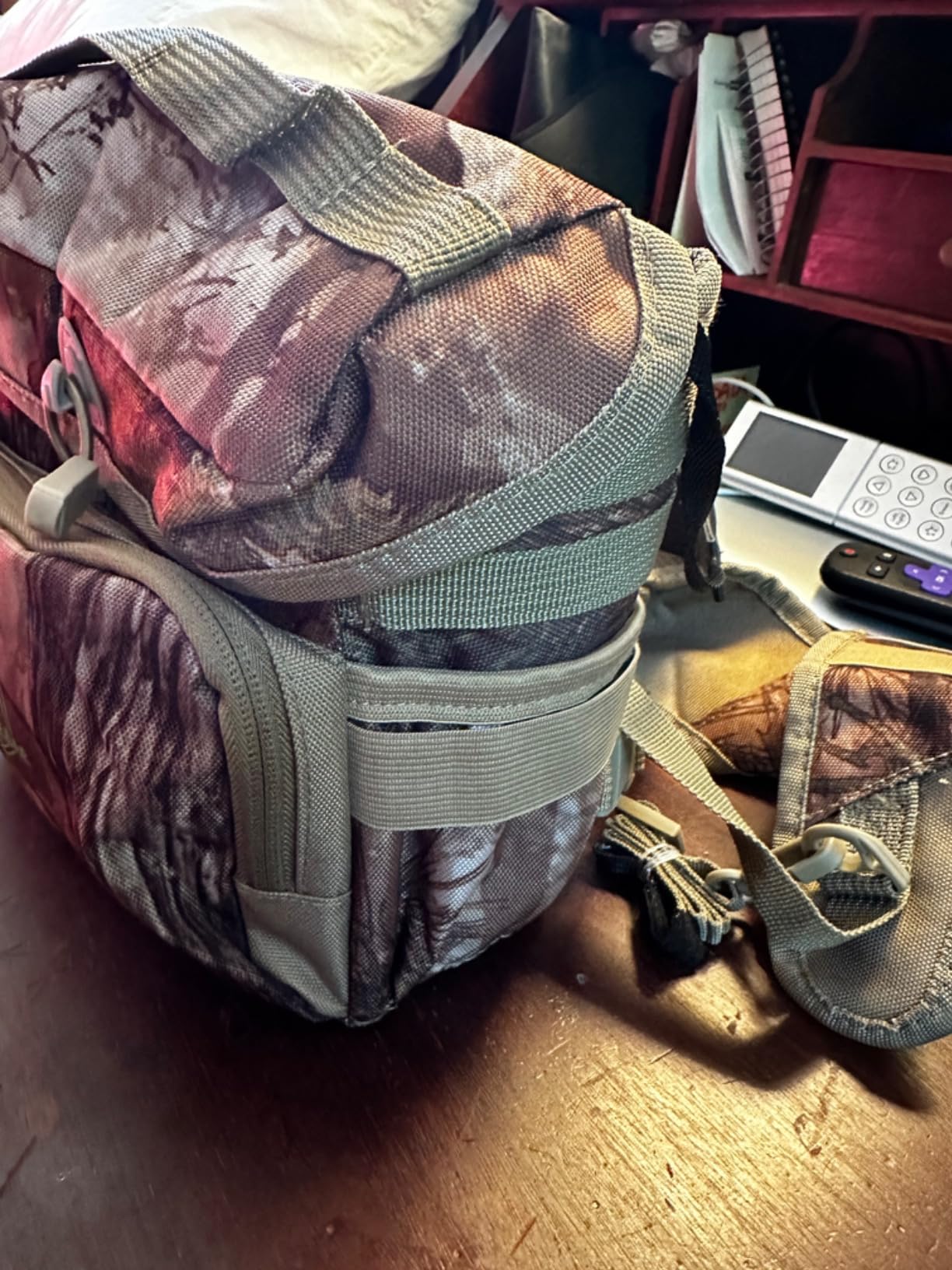
The trade you make for quiet operation
A zipper-free design trades sealing for silence. The pouch closes with a buckle rather than a full seal, so it will keep dust and light drizzle out but it is not the answer for a day of sustained rain, and it does not include a rain cover in the box.
That is the correct engineering choice if your glassing happens at distance in fair weather, and the wrong one if you hike somewhere that stays wet. Know which camp you are in before you choose.
Best fit for the trail
This is the pick for a hiker who carries more than binoculars: a rangefinder, spare batteries, a phone, a lens cloth, and a snack that must stay put. If your load-out is that wide, the organisation here will save you more frustration than the closure compromise costs you.
9. VISMIX Binocular Harness: Best for Large Binoculars
VISMIX Binocular Harness, Adjustable Binocular Harness Chest Pack with Rain Cover for Hunting Hiking Shooting
0.41 kg weight
Medium fits 7 inch bodies
Large fits 8 inch
Magnetic flap with rain cover
Pros
- Explicit size classes for 10x42 up to 15x56
- Foam shims set the correct viewing height
- Silent magnetic flap opens one-handed
- Detachable padded mesh strap
- Removable rain cover in the base
Cons
- Rangefinder bag is not included with the side MOLLE strap
- Only two size options
- Magnetic flap is the only closure
Large binoculars are where most advertised-universal pouches quietly fail, so this harness is worth reading carefully. It is sold in two defined size classes: Medium fits binoculars up to 7 inches tall, which covers 10×42, 10×50, and 12×50 bodies, and Large fits up to 8 inches, which covers 15×56 and rangefinding models.
That specificity is the feature. Instead of hoping, you measure your body once and pick a class, which removes the most common source of buyer disappointment in this category.
Internal foam shims set the binoculars at the correct height inside the pouch, so you raise them straight to your eyes instead of tilting the whole pack up. That sounds minor until you have used a pouch that forces you to hunch.
The flap is magnetic and silent, avoiding the noise of a zipper and the rustle of overlapping layers, and the detachable adjustable shoulder strap has a padded mesh back that sits against the wearer to keep the load close to the body centre. A removable rain cover stores at the bottom, and there is an extra side MOLLE strap for a rangefinder bag.
Construction is 500D nylon, the listed weight is 0.41 kg, and the dimensions are 7.5 by 3.9 by 9.1 inches.
What to watch for?
The rangefinder bag is not included with the side MOLLE strap, so budget for that separately if you need one. Only two size options exist, which is fine for most hikers but leaves a gap if you own bodies at both ends of the range.
Because the magnetic flap is the only closure, it is fast and quiet but not sealable. The removable rain cover is what turns this from a fair-weather pack into a wet-weather one, so keep it where you can reach it.
Best fit for the trail
Choose this if you carry full-size or 15×56 glass, or if you are splitting the difference between a strap harness and a hard-shell case. The mesh back and detachable strap make it a reasonable all-day option even with heavier bodies.
10. Rick Young Outdoors Premium Harness: Best for Ultralight Packing
Rick Young Outdoors Premium Binocular Harness | Adjustable Chest Strap BLK
2.24 oz weight
Patented shock cord
Made in USA
Up to 5 by 6.5 inch binoculars
Pros
- Lightest enclosed-style option at 2.24 oz
- Shock cord hugs the body with no sag
- Fits a very wide range of body sizes
- Wraps around the binos to pack away
- Cord retains its elastic memory
Cons
- Cords tangle and are fiddly to reconfigure
- Rear tightening knob is uncomfortable when seated
- Cord ends can rub the collarbone
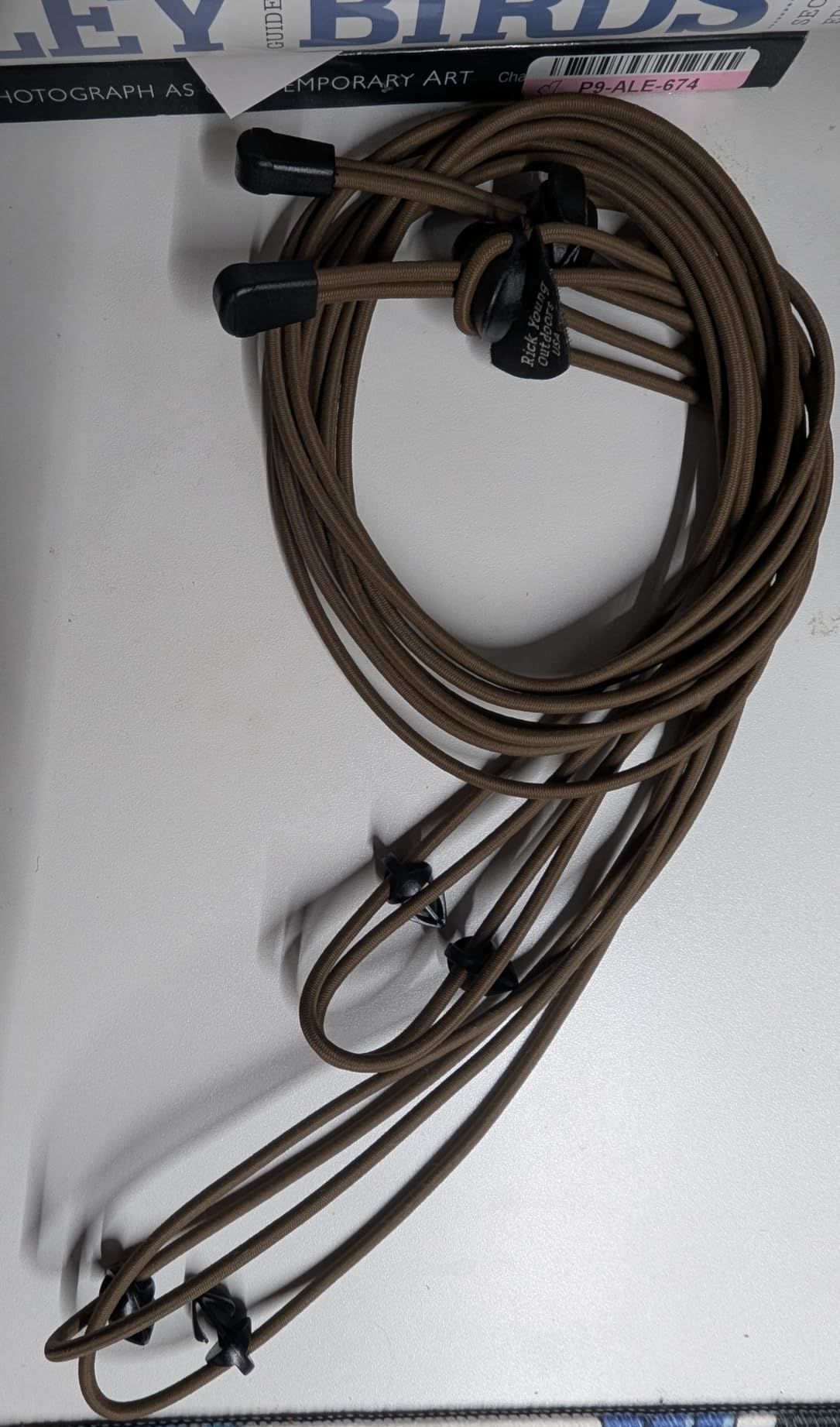
At 2.24 ounces, this is the lightest harness with any enclosure behaviour, and it works in a completely different way from everything else here. Instead of a fabric pouch and webbing, it uses a patented shock cord system that hugs the body and distributes weight across the shoulders and chest.
Because there is no pouch, there is nothing to swing, nothing to crush, and nothing to get wet. The binoculars are held against your chest by the cord tension, and you pull them straight up to your eyes.
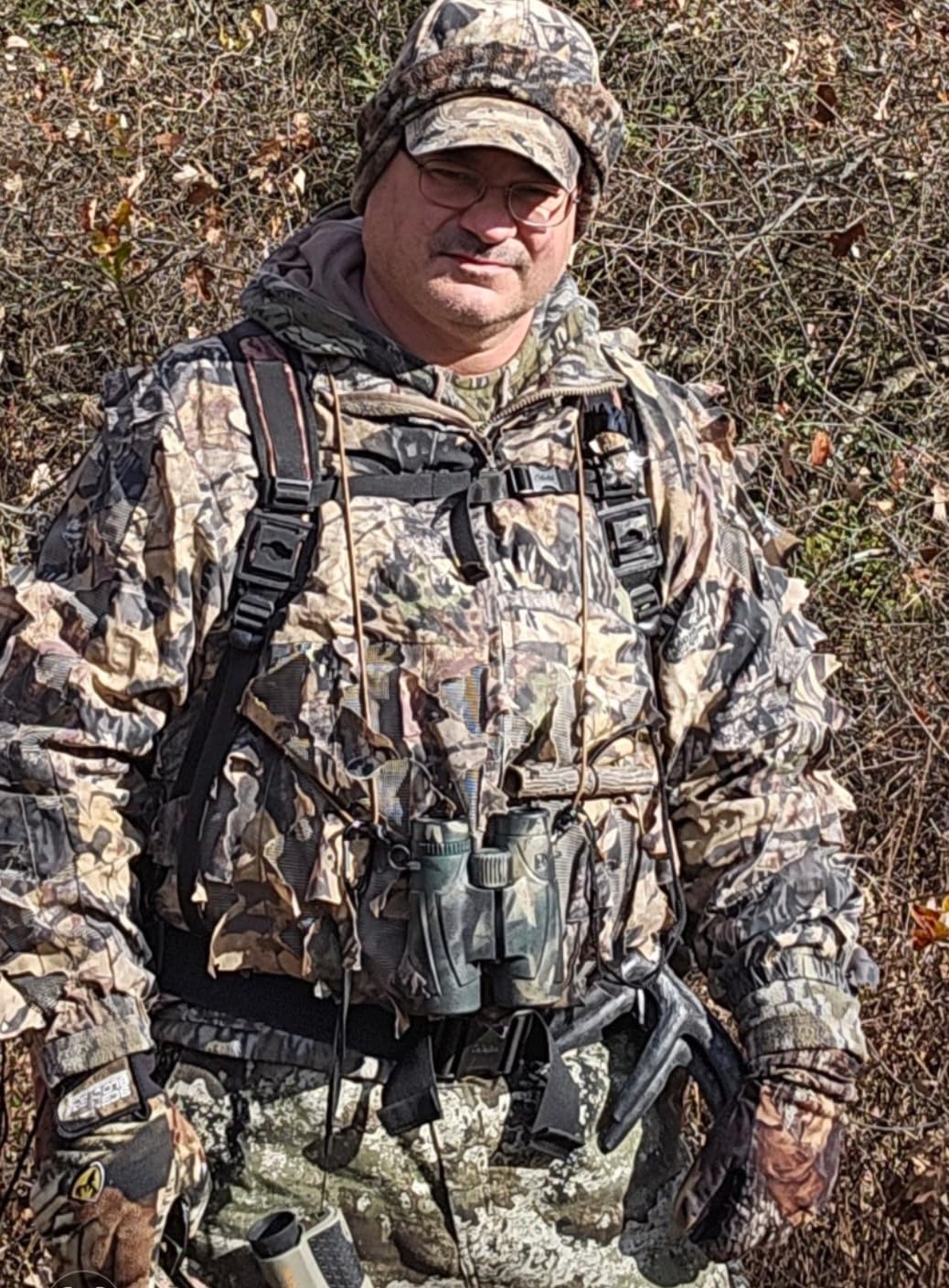
The listed compatibility is binoculars up to 5 inches wide, 6.5 inches long, and 1.25 inches high, up to 0.14 pounds. That is a real limitation worth checking against your own glass before you buy.
Packing is the standout feature. When you are not using it, the shock cord stores tangle-free by wrapping around the binoculars themselves, so it never occupies a separate pocket in your pack. Owners also report fit across a genuinely wide range of body types, from a 135-pound wearer to a 6 foot 3 user, and the clips let you remove the binoculars while leaving the harness on.
The learning curve is real
This is a fiddly system. Owners describe the cords as getting tangled and being awkward to reconfigure, and there are five different wearing positions to learn, including a diagonal single-strap cross-body setup for carrying a camera and binoculars together. Budget a walk to figure it out before a trip.
The rear tightening knob is uncomfortable when you sit back, and the cord ends can poke at your collarbone. For a hiker who sits often at viewpoints, that is worth thinking about.
Who should carry it?
This is the pick for a fast, light hiker on a narrow trail where a pouch would catch on branches, and for anyone who hates unpacking a harness at the end of the day. It is made in the USA, and the cord is reported to retain its elastic memory over years rather than months, which is the durability claim that matters most here.
11. Hornady 99121 Binocular Harness: Best for Tangle-Free Storage
Hornady Binocular Harness 99121 – Durable, Lightweight Binocular Harness Strap with Form-Fitting X Panel for Comfort & Hands-Free Wear -Easy On & Off Bino Harness for Hunting, Hiking, or Bird Watching
4.8 oz weight
Form-fitting X panel
Four elastic straps
Buckle closure
Pros
- X panel spreads weight over four straps
- Elastic holds its shape over months
- Quick to put on and off
- Tethers prevent drops
- Tangle-free and packs into a small pocket
Cons
- Back pad can ride up with heavier binoculars
- Carabiner-style hooks are a weak point
- Long straps allow some bounce
- Best suited to compact binoculars
Harness storage is an underrated problem. If your binocular straps tangle every time you set them down, you will end up stowing your optics in a pack pocket anyway, which defeats the purpose. The Hornady is explicitly designed around tangle-free storage.
The form-fitting X panel distributes binocular weight over four elastic shoulder straps rather than two, which spreads the load wider and reduces the neck pressure that a simple two-strap rig creates. Tethers attach to the binoculars to prevent drops and allow quick access.
It goes on and off quickly, is described as one size fits all, and stows small enough to live in a backpack between hikes. The listed weight is 4.8 ounces and the material is elastic with a buckle fastener.
Owners report that the elastic holds its shape over months of use rather than sagging after a few trips, which is the durability question we always ask about a strap harness. It also attaches to a matching Hornady binocular case if you want to add a full enclosure to the setup.
Where it strains?
The back pad can ride up under load, pushing the harness back toward your neck with heavier binoculars. With compact glass this is a non-issue, but if you carry a full-size body you will want to check the pad position on a loaded descent.
Carabiner-style hooks are a weak point in the chain for heavy glass, and long straps can allow some bounce while walking. Reviews are clear that this performs best with compact binoculars up to roughly 500 grams, and less well above that.
Best fit for the trail
Pick this if you carry mid-size glass, want something that packs small, and prefer an established name behind the hardware. It is a solid generalist for day hiking where conditions are fair.
12. MOXULE BINO R1 Chest Pack: Best for Everyday Carry
MOXULE Binocular Harness Chest Pack – Rangefinder Pouch for Hunting Camo
1.06 lb weight
Magnetic closure
MOLLE front and sides
Four-point mesh harness
Pros
- Quiet magnetic one-handed access
- MOLLE on front and sides for attachments
- Rangefinder fits securely in the side pouch
- Breathable mesh harness stays cool
- Includes rain cover and cloth
Cons
- Wide binoculars may need inserting sideways
- Exterior storage is limited for small items
- Only a single magnetic flap per compartment
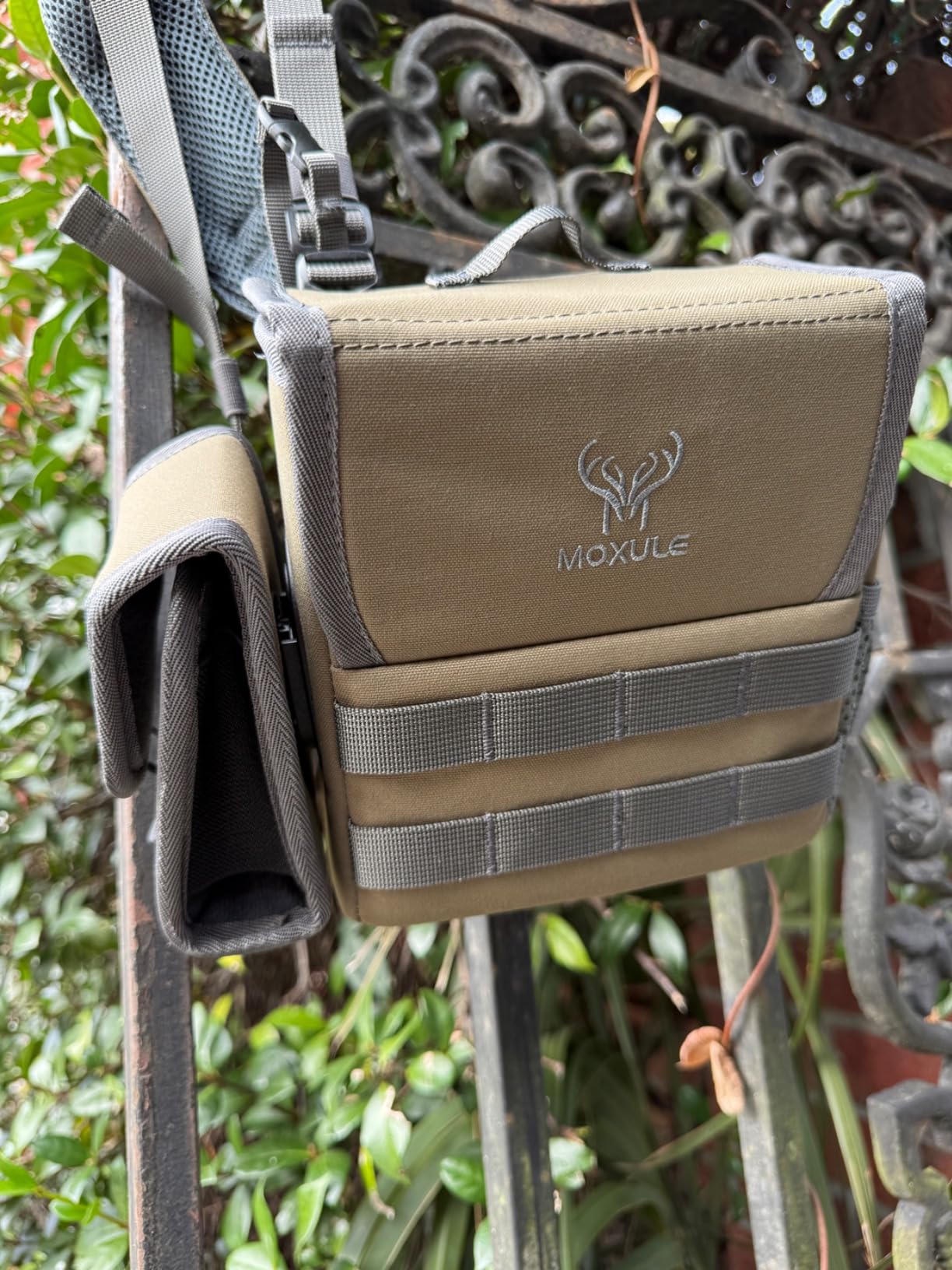
This is the smaller sibling of the R2 Pro, and for many hikers it is the more sensible of the two MOXULE packs. The main compartment is 7 by 6.3 by 2.75 inches, with three mesh pockets, a rain cover pocket, and a detachable rangefinder pouch.
The fabric is 3-layer brushed tricot polyester with thick internal padding. That padding does two jobs: it protects the optics from knocks, and it muffles the noise the binoculars make when they settle, which matters more than it sounds at 40 yards.
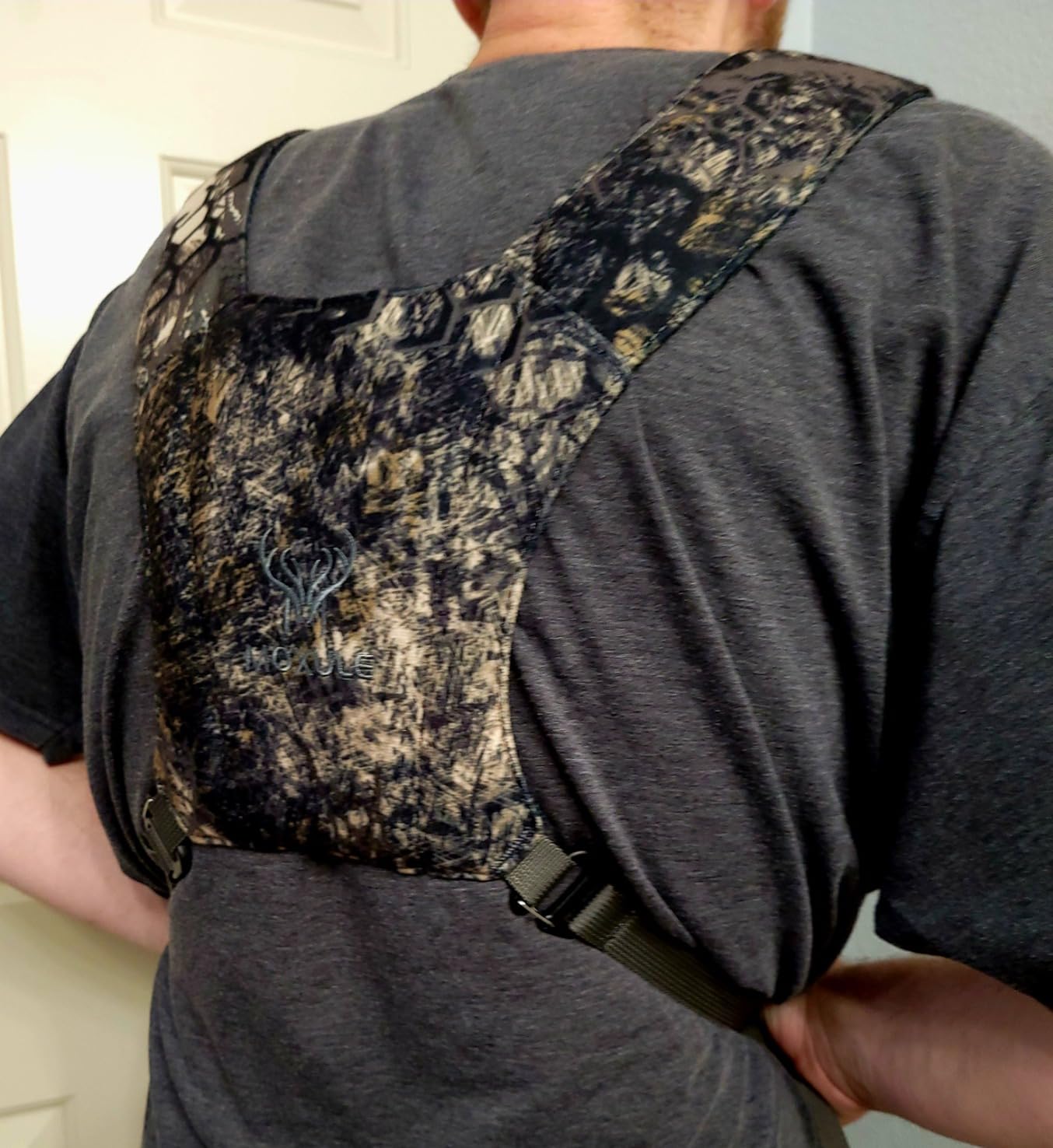
There are MOLLE straps on the front and sides for attaching a holster or extra gear, a strong magnetic closure for quiet one-handed access, and a four-point harness in breathable mesh that reviewers specifically call out as staying cool on a climb.
The side pocket measures 5.04 by 3.54 by 1.77 inches, which is large enough that a rangefinder fits securely rather than rattling. The rain cover and a cleaning cloth are both included, which is a generous kit for the category.
Note a data discrepancy worth flagging: the product data lists the weight as 0.45 kg while the feature list states 1.06 lb. Check the physical weight before committing if grams matter to your pack budget.
Where the smaller size bites?
Wide or bulky binoculars may have to be inserted sideways, which takes practice and slows down the first deployment of the day. If you carry a full-size body, size up or move to a pack with a taller interior.
Exterior storage is limited for small personal items, and each compartment has a single magnetic flap with only one opening direction. If you want to reach a phone without lifting the binoculars, this is not the layout for that.
Best fit for the trail
This is the everyday pick: a smaller, lighter-feeling, well-ventilated pack for a hiker who carries mid-size glass and a rangefinder, hikes in warm conditions, and wants a silent closure. It is also available in Camo, Wolf Brown, and Green.
How to Choose a Binocular Harness for Hiking?
Start with your binocular, not the harness brand. Measure the height and width of your body including the eye cups, then check that measurement against the size class the manufacturer publishes. Harnesses that are described as universal often fit a 10×42 beautifully and refuse a 15×56.
Next, decide how much protection you actually need. If you hike in rain, brush, or dust, you want a closed pouch with either a gasket seal or a rain cover in the bottom pocket. If you hike fast in fair weather, a strap-only harness will serve you better than any pouch, because nothing can swing or bounce.
Then sort out the closure. Magnetic flaps are quiet and open with one thumb, which matters when both hands are on trekking poles. Zippers seal better but need two hands and make a noise. Bungee and elastic tension closures are silent and fast but seal against nothing. For wildlife work, quiet wins; for monsoon work, sealing wins.
Sizing across your body is the next thing. A small torso is the most common fit complaint on forums, and the usual culprit is fixed-length straps rather than a bad harness. Look for sliding brackets, side adjusters, or a rear tensioning system, and adjust the harness before you tighten your pack.
Weight is a budget decision, not a spec sheet decision. The strap options here range from 1.76 ounces to 4.66 ounces, while the enclosed packs range from 0.38 kg to 1.24 pounds. If your base weight is already high, a strap harness pays for itself; if you are ultralight, a nearly half-pound pouch needs justifying.
Sweat management deserves its own consideration on a climb. Narrow padded straps trap heat and chafe; wide breathable mesh contact patches move air and spread load. Two packs in this roundup use 500D treated nylon or 1000D nylon, which breathe better than a laminated shell but offer less protection in sustained rain.
Finally, count your pockets against what you actually carry. Every pack here advertises a rangefinder pouch, and several of those are too small for a full-size unit. If you carry a rangefinder, check the pocket dimensions, and remember that one pack includes a side MOLLE strap without supplying the rangefinder bag that fits it.
One last habit worth adopting: wear the harness over your base layer and under your shell, then tighten it before you tighten your pack. A loaded backpack will push the harness back toward your throat if you do it the other way around, and no amount of padding fixes that.
Frequently Asked Questions
Which binocular harness is the most comfortable?
The most comfortable harness for hiking is the SPIKA Waterproof Bino Chest Pack, because its four-point strap system spreads the weight across both shoulders and the sides rather than concentrating it on the neck. For lighter loads, the Rick Young Outdoors harness uses a shock cord system that hugs the body with almost no sag. Comfort is mostly a function of how wide the contact area is and how well the harness sits flat under a loaded pack, not of the fabric.
Are binocular harnesses worth it?
Yes, for anyone who carries binoculars above 10×42 or spends more than an hour moving on a trail. A harness moves the load off your neck and onto your shoulders, stops the glass bouncing on descents, and shortens the time between deciding to glass and having the binoculars at your eyes. The gain is smaller for short walks with compact binoculars, where a neck strap is good enough.
What is the best binocular strap?
The best binocular strap is the OUFABE X-Shape Binocular Strap if you want neck relief at the lowest cost and no enclosure, and the Rick Young Outdoors harness if you want the lightest option that still holds the glass securely against your chest. Both spread weight across both shoulders. If you need weather protection rather than a bare strap, choose a closed chest pack instead.
What is the best way to carry binoculars while hiking?
For most hikers, a chest harness is the best way to carry binoculars. A neck strap is lightest but swings and bounces on descents. A strap-only harness keeps the glass tight to the chest and lets you raise it instantly. A closed chest pack adds weather and knock protection. Stowing binoculars in a pack pocket saves weight but breaks your stride every time you want to look. Tighten the harness before tightening the pack so the load stays on your shoulders.
What are some comfortable binocular straps?
Comfortable binocular straps include the OUFABE X-Shape Binocular Strap with its X-shaped cross design that spreads pressure across the neck and shoulders, the OUFABE BHS02 with an X-shaped double-shoulder layout and elastic that stops sway, and the Trummul X-Shape Chest Strap with sliding brackets that adjust to different body sizes. The common feature is an X layout, which spreads load across four points instead of two.
Who makes the best binocular harness?
There is no single best maker, because the right choice depends on your binocular size and your climate. Vortex makes the strongest all-round pick in this roundup with the largest review base. SPIKA makes the most comfortable harness for a loaded pack with a four-point system. MOXULE makes the most modular option with MOLLE webbing and detachable rangefinder pouches. Owners on forums like Hunttalk frequently single out Marsupial Gear, KUIU, and Stone Glacier for modularity, though those models were not part of this test.
How do I wear a binocular harness with a backpack?
Put the harness on first, tighten it against your chest, and then tighten your backpack on top. Doing it in the other order lets the pack shoulder straps push the harness back toward your throat. If the pouch is tall enough to hit the lumbar area, wear the harness in front of the shoulder straps rather than behind them, and check the fit again after every layer change on a cold morning.
How do I choose a binocular harness for my binoculars?
Measure the height and width of your binocular body including the eye cups, then match those numbers to the size class the manufacturer publishes. Harnesses advertised as universal frequently fit a 10×42 and refuse a 12×50 or 15×56. Packs with two defined size classes are the safest option, and VISMIX publishes them clearly: Medium for bodies up to 7 inches tall and Large for bodies up to 8 inches.
Final Verdict: Which Binocular Harness to Take on Your Next Hike?
After more than 40 miles of trail with all twelve, the Vortex GlassPak Binocular Harness is the pick we recommend to most hikers. It has the deepest review history in the group, a snug fit for full-size binoculars, tether protection, and a lifetime warranty. It is the rare harness that works on the first outing without adjustment.
For the lightest kit, the Rick Young Outdoors shock cord harness at 2.24 ounces is hard to argue with, and it packs away by wrapping around the binoculars. For the best value and the best neck relief on a budget, the OUFABE X-Shape Binocular Strap does the job for a fraction of the cost of a closed pack.
For a loaded multi-day pack, the SPIKA chest pack is the most comfortable thing we carried, and it is the one that handles larger rangefinding glass and rain. If you carry 15×56 bodies, the VISMIX with its defined Medium and Large size classes is the most straightforward fit, and if you need a rangefinder pouch that actually fits a full-size unit, the MOXULE BINO R2 Pro has the modularity.
Whatever you choose, tighten the harness before the pack, measure your binocular before you order, and pick the closure that matches your weather. Those three steps solve most of the problems hikers report about binocular harnesses in 2026.
If you are putting together the rest of your carry system, our guides to driving harnesses for ponies and draft horse harnesses for driving cover the same fit-first, weight-second approach for working animals.