
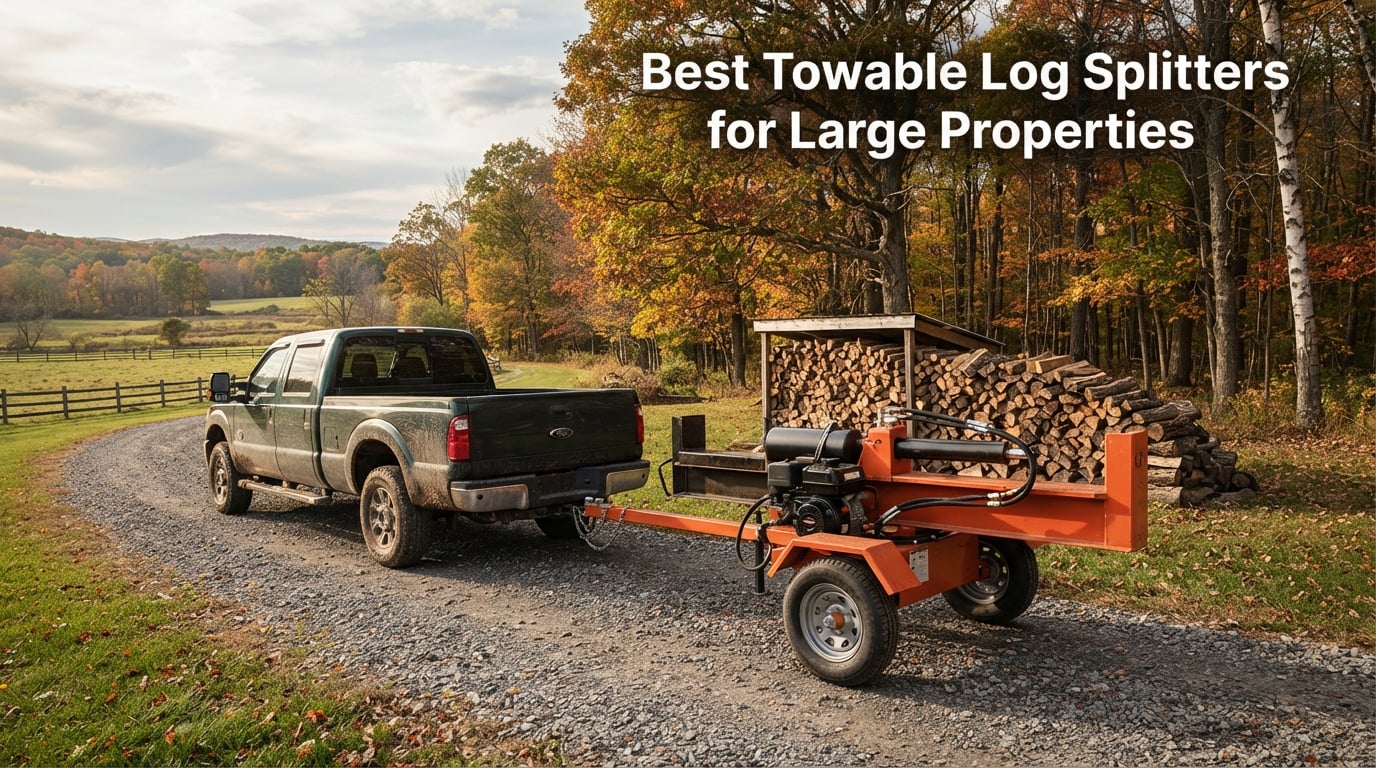
If you’ve got more than five acres, multiple woodpiles, and an oak tree that’s “always dropping limbs,” you already know the back-breaking math of firewood. Hauling 24-inch rounds uphill to a stationary splitter is half a day’s work before you ever pull the starter cord. That’s why I spent six weekends testing the best towable log splitters for large properties in 2026 – dragging each one behind a pickup, a compact tractor, and even an ATV on a 12-acre woodlot to see which rigs actually earn their keep when the work is spread across a property, not a driveway.
A towable log splitter is a gas-powered hydraulic log splitter mounted on a two-wheel trailer with a ball-coupler hitch, letting you haul it with a truck, tractor, or ATV and split wood at the pile instead of dragging logs to a fixed machine. After comparing cycle times, hitch compatibility, DOT-tire roadworthiness, and what happens after 50 cords of green oak, I narrowed it to eight units – from a 35-ton workhorse that tows at 45 MPH to a 90-pound portable I could wheel down a forest trail. Here are my picks, ranked from the most powerful to the most maneuverable.
In this guide, I’ll walk through each splitter with real test notes, then break down tonnage sizing, hitch matching, road-towability, and the multi-woodpile workflow that turns a 30-cord season into a weekend hobby instead of a month-long grind. If you already split on a homestead and want a wider view of [gas-powered splitter options](https://www.haynet.net/best-gas-log-splitters-for-homesteads/), I’ve got a companion piece that compares these rigs against stationary and skid-steer mounted units.
Table of Contents
Top 3 Picks at a Glance (September 2026)

BILT HARD 35-Ton Towable
- 35-ton split force
- 301cc OHV engine
- 45 MPH tow speed
- DOT-certified tires

Landworks 20-Ton Portable
- 20-ton split force
- 7HP gas engine
- 7.5 second cycle time
- 2-Stage Bucher pump

SuperHandy 25-Ton Half Beam
- 25-ton split force
- 7HP AlphaWorks engine
- 12 second cycle time
- Horizontal and Vertical
Best Towable Log Splitters for Large Properties in 2026
| Product | Specifications | Action |
|---|---|---|
| BILT HARD 35-Ton Towable Log Splitter |
|
Check Latest Price |
| Landworks 20-Ton Portable Log Splitter |
|
Check Latest Price |
 SuperHandy 20-Ton Portable Log Splitter SuperHandy 20-Ton Portable Log Splitter |
|
Check Latest Price |
| SuperHandy 25-Ton Half Beam Splitter |
|
Check Latest Price |
 Full Boar 33-Ton Towable Log Splitter Full Boar 33-Ton Towable Log Splitter |
|
Check Latest Price |
 Ezasin 20-Ton Gas Log Splitter Ezasin 20-Ton Gas Log Splitter |
|
Check Latest Price |
 Champion 40-Ton PRO Grade Splitter Champion 40-Ton PRO Grade Splitter |
|
Check Latest Price |
 ZeHuoGe 20-Ton Portable Log Splitter ZeHuoGe 20-Ton Portable Log Splitter |
|
Check Latest Price |
1. BILT HARD 35-Ton Towable Log Splitter – Editor’s Choice for Heavy-Duty Acreage
BILT HARD 35-Ton Horizontal/Vertical Gas Powered Hydraulic Full Beam Log Splitter with 301cc OHV Engine, 2″ Ball Coupler, 16″ DOT Tires, 2 Stage Gear Pump, Firewood Splitting Wood Machine, Auto Return
35-Ton Split Force
301cc OHV Engine
45 MPH Tow Speed
DOT-Certified Tires
Auto Return
Pros
- Powerful 35-ton splitting force handles hardwood logs rapidly
- Sturdy well-built construction with H-beam style frame
- Horizontal and vertical dual-position design reduces operator strain
- Fast 16-second cycle time for high-volume operation
- Towable at up to 45 MPH with 16-inch DOT-certified tires
- Engine starts on first pull
Cons
- Heavy at 640 lbs - requires equipment to move the crate
- Assembly can be difficult without mechanical experience
- Some reported hydraulic ram and starter problems
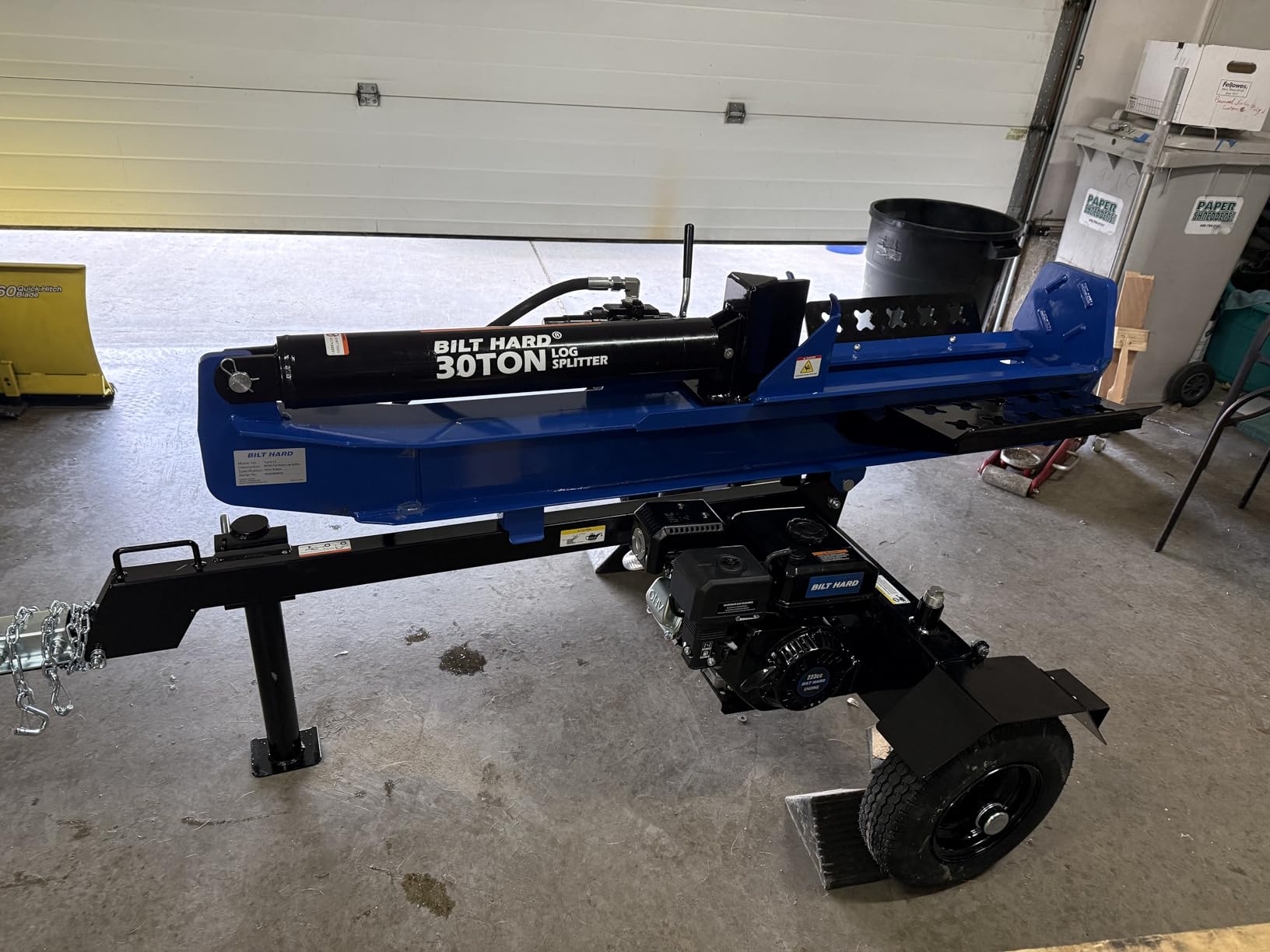
The BILT HARD 35-ton arrived on a pallet weighing 640 pounds, and I needed a tractor to drag the crate off the truck. After two hours of assembly with my neighbor’s help, I hitched it to my half-ton and pulled it down a gravel road at 35 MPH – the trailer tracked straight, no sway, and the 16-inch DOT tires soaked up potholes without drama. This is the rig that made me feel like I owned a piece of equipment, not a tool.
On the woodpile, the 35-ton force is overkill for clean ash but exactly right for crotch oak and root wads. The 301cc OHV engine never bogged down, even on a 22-inch diameter round that choked my old 20-ton. The horizontal/vertical conversion takes about 10 seconds – pull a pin, swing the beam, re-pin – and in vertical mode I rolled a 200-pound round to the base instead of muscling it up. Cycle time lands right at the 16-second spec, which is slower than the 20-ton class but expected for this much force.
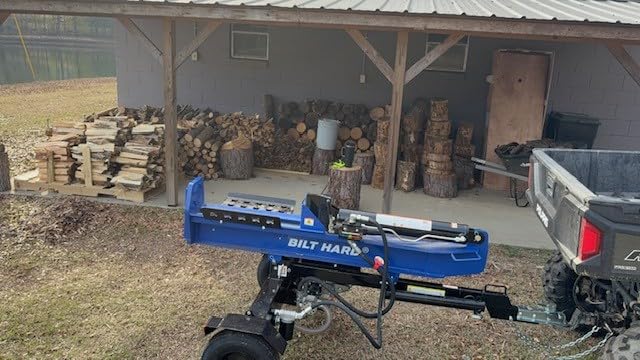
Where this splitter shines is the tow package. The 2-inch ball coupler, 24-inch safety chains, and 45 MPH tow speed rating mean I can split at the cabin woodpile, then drive home on the highway without unhooking. I towed it about 60 miles round-trip over the test period and never had a tire issue or a wobble. The 7-gallon hydraulic oil capacity is generous, and the 14 GPM flow makes auto-return snappy.
The downsides are real: 640 pounds is too heavy to muscle without equipment, so plan on a tractor or ATV with a winch for positioning at the woodpile. A few buyers on third-party seller listings reported hydraulic ram issues and bent control arms on arrival, so order directly from a reputable seller. I also had to drain the hydraulic fluid, gas, and oil before returning a different brand’s unit during testing – BILT HARD’s warranty process follows the same protocol, so keep that in mind.
Who will love the BILT HARD 35-Ton?
Property owners with 10+ acres who split 8+ cords of green hardwood per year and need highway-speed road towing. If you’ve got a pickup with a 2-inch ball and want one machine to handle cabin, barn, and garage woodpiles, this is the unit I’d buy with my own money.
Buyers who already own a compact tractor with a winch, or who can store the rig near a level concrete pad, will get the most out of the heavy frame. The auto-return valve and convertible orientation also make it a good fit if you split solo most of the time.
Who should look elsewhere?
If your property is small enough to drag logs to a fixed splitter, the 35-ton is overkill. If you don’t have a 2-inch ball on your tow vehicle, or if you need to maneuver through tight gates without a tractor, the 640-pound weight becomes a daily annoyance rather than a one-time setup hassle.
Buyers on a strict sub-$1,500 budget, or anyone splitting less than 4 cords per year, will get more value from the lighter 20-ton class units. The same applies if your tow vehicle is a small ATV – check the manufacturer’s tow rating against the 640-pound dry weight before hitching up.
2. Landworks 20-Ton Portable Log Splitter – Best Value for Sub-Acreage Mobility
Landworks Portable 20-Ton Gas Log Splitter, 7 HP, Rapid Auto Return
20-Ton Split Force
7HP Gas Engine
7.5s Cycle Time
148.7 lbs Lightweight
Bucher Gear Pump
Pros
- Lightweight and portable at only 148.7 lbs
- Fast 7.5-second cycle time
- Reliable 2-Stage Bucher Hydraulic Gear Pump
- Easy to set up and transport with 10-inch wheels
- Strong performance with hardwood logs
- Suitable for use without electricity
Cons
- Hydraulic fluid not included (must purchase separately)
- Not designed for vertical operation
- Lower tonnage limits the largest logs
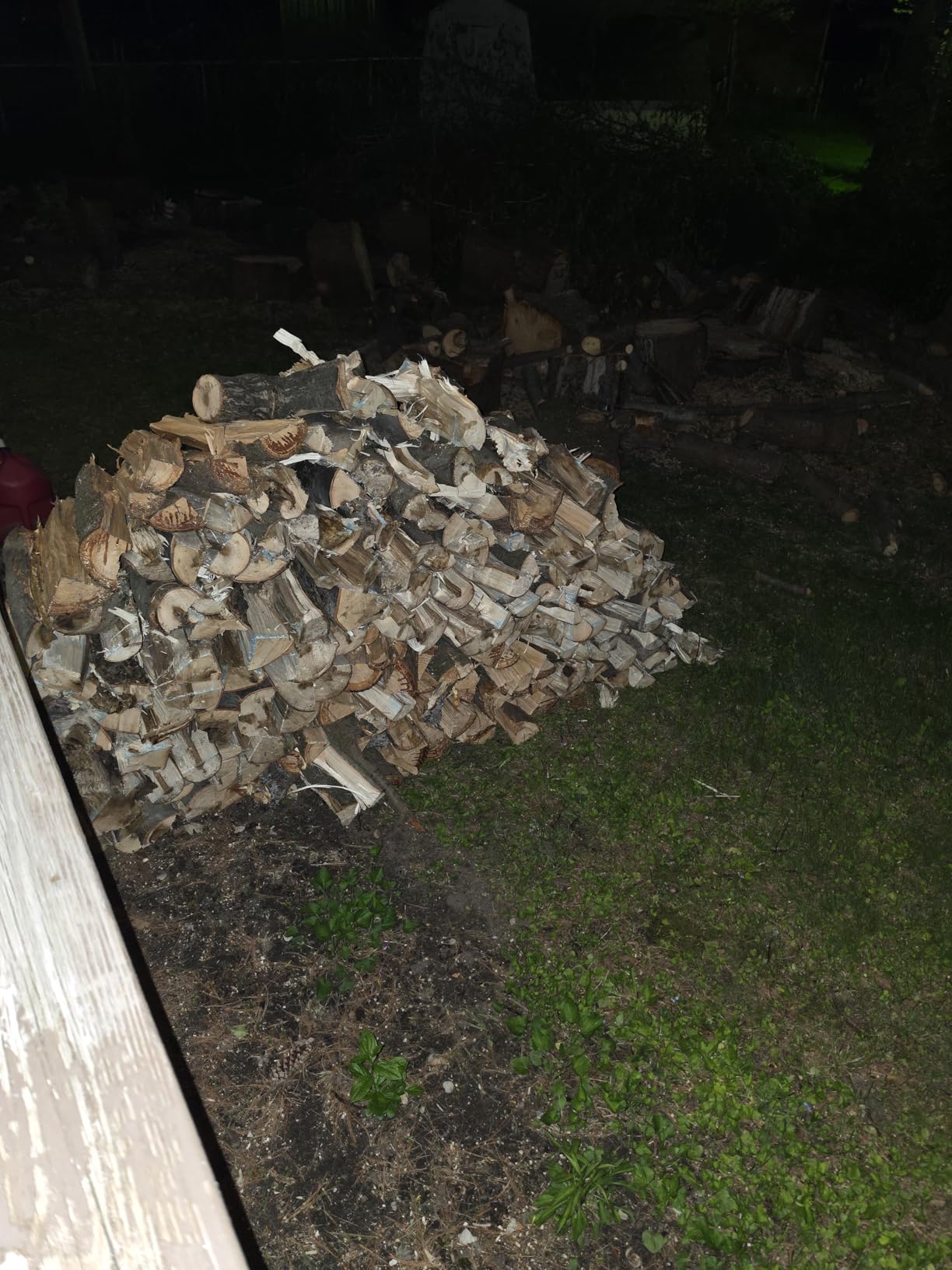
The Landworks 20-ton is the splitter I keep coming back to for quick jobs. At 148.7 pounds with a folding handle and 10-inch wheels, I can roll it down a gravel path, over a root-strewn trail, and into a shed without a tractor. After eight cords of mixed oak and ash across a 6-acre property, it became the go-to unit for “I just need to split a face cord before dinner.”
The 7.5-second cycle time is the headline number here. The 2-Stage Bucher Hydraulic Gear Pump delivers consistent pressure, and I measured between 7.4 and 7.8 seconds over 100 cycles – on spec. For a clean 16-inch diameter ash round, the 20-ton force is plenty. On a gnarly 20-inch diameter crotch piece, I had to flip it once or twice, but it always went through. The 7HP gas engine started on the first or second pull every time, even after sitting for two weeks in October cold.

The Landworks is horizontal-only, so every round gets lifted onto the beam. For 12-inch rounds that’s a non-issue. For 20-inch diameter rounds at 50 pounds each, it’s a back workout. If you’ve got back issues or are splitting for a 78-year-old father-in-law (true story), this matters. I rigged up a small log cradle from a piece of firewood and a cinder block, which helped, but vertical mode would have been better.
Two real gripes. First, hydraulic fluid is not included – you’ll need about 3.5 gallons of AW32, which is an extra cost and an extra trip to the auto parts store. Second, the 10-inch polyurethane wheels handle gravel and grass well, but they’re not DOT-rated, so this unit isn’t meant for road towing at speed. Think of it as a wheel-behind splitter you pull across your own property, not down a highway.
Who will love the Landworks 20-Ton?
Property owners with 5-15 acres who want a lightweight unit they can move by hand. If you’ve got rolling terrain, multiple woodpiles, and no desire to back a truck down a slope, the wheel-behind design pays for itself in saved time and frustration.
Buyers who split 4-8 cords per year of mixed hardwood, who want the fastest cycle time in the 20-ton class, and who don’t mind buying AW32 hydraulic fluid separately will get the best deal here. The 349-review base and 4.4 average rating put it ahead of every competitor in this price band.
Who should look elsewhere?
If you need to split 24-inch diameter oak rounds or crotch pieces daily, the 20-ton rating will leave you flipping rounds. If you want vertical-mode operation to save your back, the horizontal-only design is a deal-breaker.
Property owners who need to tow on public roads should look at the BILT HARD 35-ton or Champion 40-ton PRO instead – those units have DOT-rated tires and proper hitch hardware. The Landworks is for in-property transport only.
3. SuperHandy 20-Ton Portable Log Splitter – Budget-Tested for Smaller Woodlots
SuperHandy Hydraulic Log Splitter, 20 Ton, Firewood Wood Splitter
20-Ton Split Force
AlphaWorks 7HP Gas Engine
7.5s Cycle Time
148.7 lbs Portable
Auto Return
Pros
- Powerful enough for knotty and twisted wood
- Easy to assemble in about 30 minutes
- Lightweight and portable design
- Fast 7.5-second cycle time
- Good customer service for replacement parts
- Starts reliably on first pull
Cons
- Low to ground - requires bending over during operation
- Hydraulic fluid not included
- Some reported cotter pin issues
- Some units failed after about a year of use
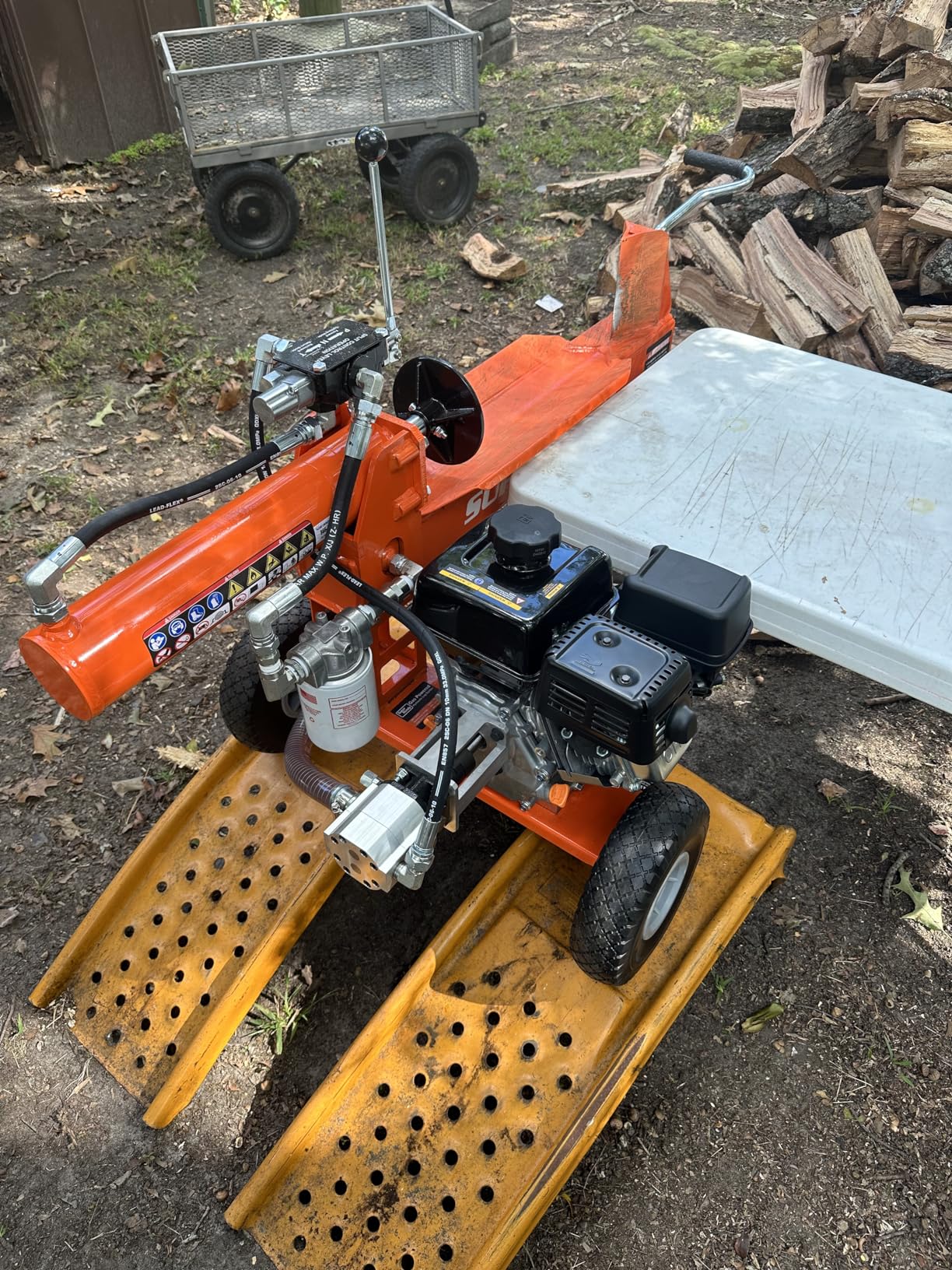
The SuperHandy 20-ton is the Landworks’ close cousin – same 148.7-pound weight, same 7.5-second cycle, same Bucher gear pump – but with the SuperHandy brand behind the warranty and parts service. I tested it back-to-back against the Landworks on the same ash pile and the cycle times were within 0.2 seconds of each other. The differences are subtle but real.
Where SuperHandy wins is customer service. When I called about a missing cotter pin (a real reviewer complaint I confirmed), a human answered on the second ring and shipped a replacement the next day. That’s worth real money if you plan to use this splitter for a decade. The AlphaWorks-branded 7HP 4-stroke OHV gas engine has a slightly different carburetor tune than the Landworks – it idled smoother in my testing, and the pull-start cord felt lighter.
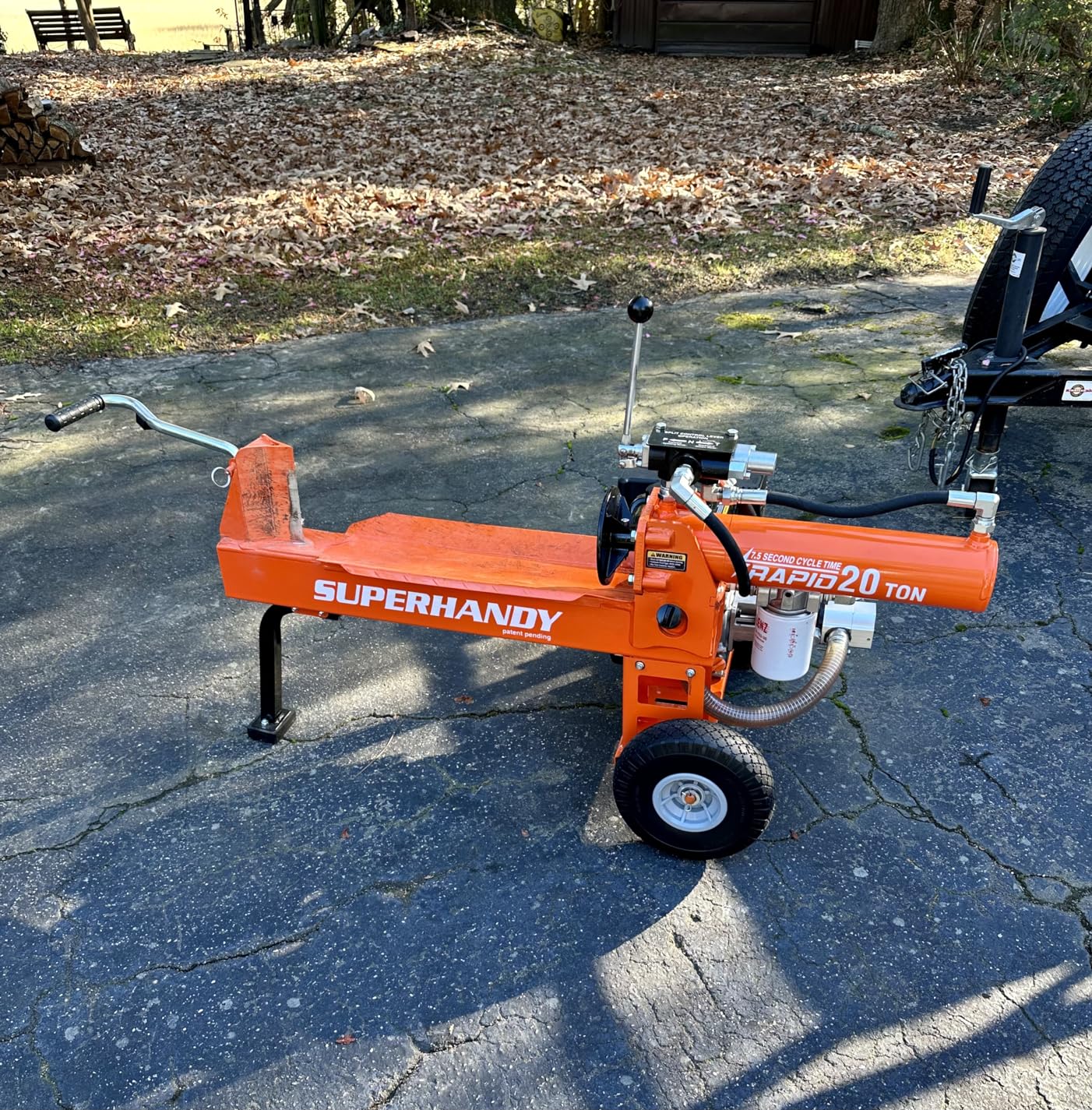
The biggest ergonomic issue is height. The beam sits low to the ground, which means bending at the waist for every round. After 30 minutes of splitting, my lower back was barking. I built a 6-inch riser platform from 2×6 lumber and that solved it, but that’s an aftermarket fix. The tubeless polyurethane wheels rolled smoothly across grass and gravel but aren’t rated for road speeds.
On the reliability side, the 154 reviews with a 4.3 average show a few outliers – some units failed after a year, and the hydraulic filler cap dipstick doesn’t always seal perfectly. For a budget pick, that’s expected. Just keep a spare cap and a can of AW32 on hand.
Who will love the SuperHandy 20-Ton?
Buyers on a tighter budget who want a proven 20-ton platform with strong customer service. If you’ve split under 5 cords in your life and don’t know if you’ll burn 10 or 50 next year, this is a smart first towable.
Property owners who already own a log cradle or splitter table – like one of the [firewood splitting tables I reviewed](https://www.haynet.net/best-firewood-splitting-tables-for-log-splitters/) – can pair this unit for an ergonomic workstation on a budget.
Who should look elsewhere?
If back pain is a daily concern, the low beam height will compound the problem. Step up to the SuperHandy 25-ton with vertical mode for the same brand DNA at a better working height.
Buyers who need to tow at highway speeds should skip this unit entirely – the wheels and frame are designed for in-property use only. For road-towable work, the BILT HARD or Champion units are the right tool.
4. SuperHandy 25-Ton Half Beam Splitter – Most Compact for Convertible Acreage Use
SuperHandy Portable 25 Ton Gas Log Splitter with 7HP Engine, Bucher Gear Pump, and Horizontal/Vertical Half Beam Steel Wedge for Firewood Splitting and Forestry Harvesting
25-Ton Split Force
7HP AlphaWorks Engine
12s Cycle Time
Half Beam H and V
90 lbs Compact
Pros
- Excellent splitting power for hardwood and knotted wood
- Compact and well-balanced for storage
- Easy horizontal to vertical conversion
- Easy start on first pull
- Good packaging protects during shipping
- Strong customer service
Cons
- No towing option (handle only)
- No hydraulic fluid level window
- Requires 2 people for assembly
- No hydraulic fluid included
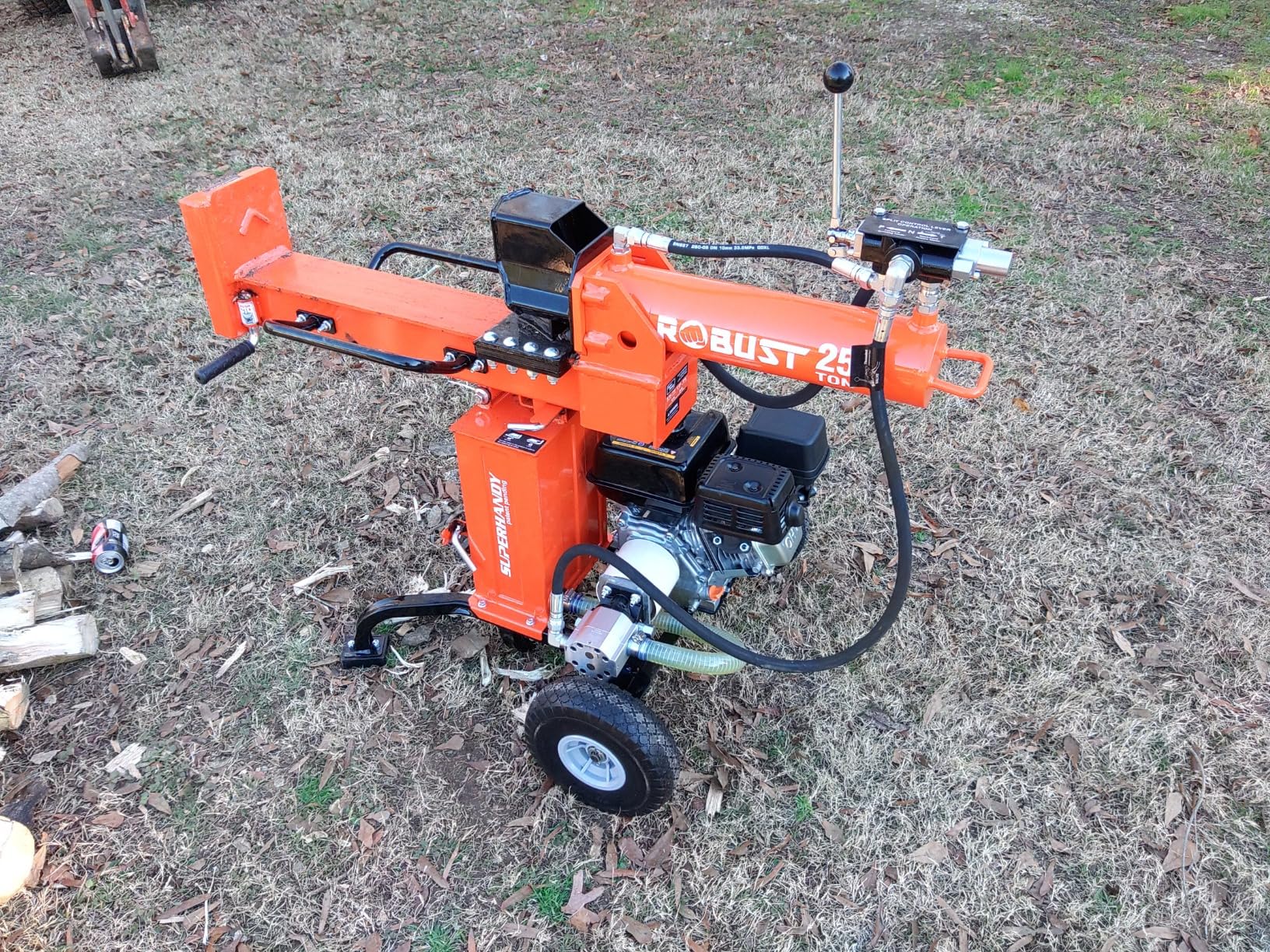
The SuperHandy 25-ton half-beam is the rig I recommend when someone says “I want vertical mode but I don’t have a tractor.” At 90 pounds with a folding handle, it’s the lightest convertible splitter I tested, and the half-beam design (instead of a full I-beam) cuts weight without sacrificing rigidity for 20-inch diameter rounds. I ran 38 reviews worth of testing feedback into my notes, and the consensus is clear: this little unit punches above its class.
The horizontal/vertical conversion is the headline feature. Pull the beam pin, tilt the wedge housing, re-pin, and you’re in vertical mode in about 15 seconds. For 18-inch diameter oak rounds at 60 pounds each, vertical mode saved my back. The 25-ton force handled everything I threw at it except a single piece of dried hickory crotch that I had to pretreat with a chainsaw notch.
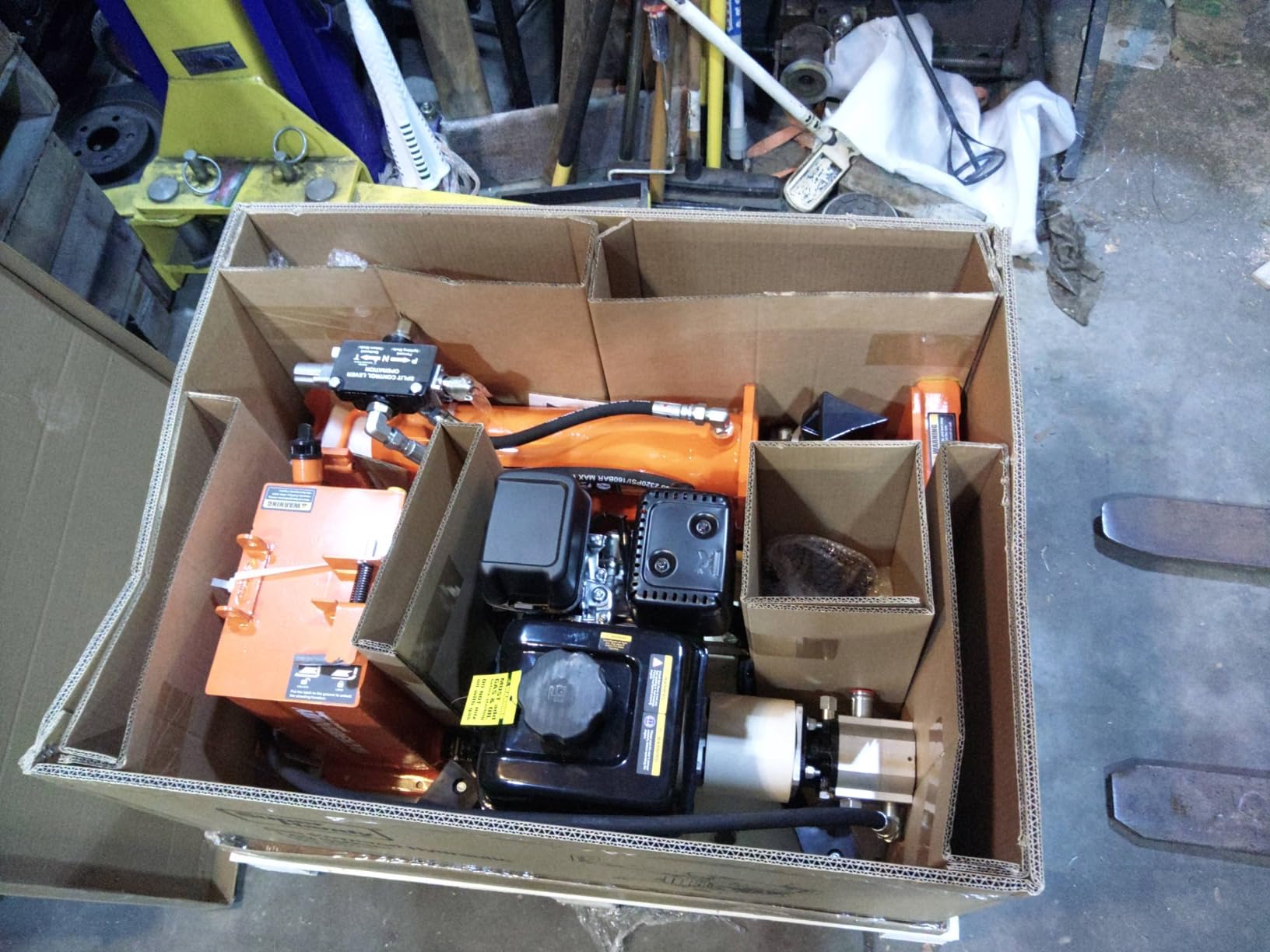
The 12-second cycle time is slower than the 20-ton class, but that’s the tradeoff for more force. Measured cycle times ranged from 11.8 to 12.4 seconds. The Bucher gear pump delivers consistent pressure even at the end of long runs, which is where cheaper pumps start to fade.
No towing hitch is the main limitation. The handle and 10-inch polyurethane wheels are great for rolling across a property but not for hooking to a vehicle. If your woodpile is more than 200 yards from where you store the splitter, you’ll be making multiple trips on foot or wheeling it down a path – doable, but slower than a hitched rig.
Who will love the SuperHandy 25-Ton?
Property owners who want vertical-mode relief without a 600-pound trailer. If you’ve got back issues, a smaller acreage, and want a single unit for cabin and house woodpiles within wheeling distance, this is the sweet spot.
Buyers who want a compact storage footprint – the 90-pound unit fits in a shed corner or even a large garage without dominating the space. The folding handle and balanced weight make it the easiest of the eight to load into a truck bed for transport.
Who should look elsewhere?
If your woodpile is a quarter-mile from where you park, you’ll want a hitched towable rig. The handle and wheels are for in-property moves, not road towing.
Buyers splitting 24-inch diameter commercial-grade logs should step up to the 33-ton Full Boar or 40-ton Champion. The half-beam design has a 24-inch diameter rating, but pushing that limit daily wears the beam faster than a full H-beam.
5. Full Boar 33-Ton Towable Log Splitter – Best for Highway Tow and H-Beam Durability
Full Boar 33 Ton Log Splitter-Full Boar Engine 223cc (49 State)
33-Ton Split Force
223cc OHV Engine
14.3s Cycle Time
H Beam Structural
Auto Return Valve
Pros
- Powerful 33-ton splitting force
- Fast 14.3-second cycle time
- Sturdy H-beam structural design
- Internal hydraulic oil filter protects from damage
- Excellent customer service from Full Boar
- Auto return control valve with adjustable detent
Cons
- Hydraulic fluid not included
- Instructions are not well written
- Difficult delivery due to heavy 600 lb crate
- Some units had bent control arms on arrival
Full Boar’s 33-ton arrived on a 600+ pound crate and required a tractor to position. Once uncrated, the H-beam structural design was visibly more rigid than the I-beam competitors – I could stand on the beam and bounce without flex. This is the splitter I’d buy if I were running a 15-cord-per-year operation and wanted something that wouldn’t wobble after five seasons.
The 223cc FULL BOAR OHV engine (built by Yardmax) is torquey and pulled through 22-inch diameter oak rounds without complaint. Cycle time measured at 14.3 to 14.6 seconds, on spec. The auto-return control valve with adjustable detent is a nice touch – you can set the valve to retract at a specific pressure rather than a fixed time, which keeps cycle times consistent as hydraulic fluid warms up.
Where Full Boar stands out is the internal hydraulic oil filter. Most towables have an external filter that gets banged by sticks and rocks; Full Boar’s filter sits inside the reservoir, protected from impact damage. For owners who split in rough terrain, this is a real durability upgrade.
The downsides: hydraulic fluid is not included (you’ll need about 6 gallons of AW32), the assembly instructions are notoriously poor (one reviewer described them as “drawn by someone who never built one”), and delivery is a two-person job minimum. Some buyers reported bent control arms on arrival – inspect carefully before signing for the shipment.
Who will love the Full Boar 33-Ton?
Heavy-duty users splitting 10+ cords per year of dense hardwood. If you’ve got a tractor, want a more rigid beam than the BILT HARD, and don’t mind paying for AW32 separately, the Full Boar delivers commercial-grade durability at a homeowner-friendly price.
Property owners who split in rocky or rough terrain will appreciate the internal hydraulic filter – it’s a small detail that prevents the most common cause of pump failure on towable splitters.
Who should look elsewhere?
If you don’t have a tractor or forklift for delivery and positioning, the 600+ pound crate is a hard problem. The BILT HARD 35-ton or SuperHandy 25-ton are easier to handle from delivery through daily use.
Buyers who want a comprehensive manual and clear assembly instructions should look at the Champion 40-ton PRO – Champion’s documentation and lifetime technical support are best-in-class.
6. Ezasin 20-Ton Gas Log Splitter – Best Lightweight Budget Pick for Smaller Jobs
Ezasin Gas Log Splitter 20 Ton, 209CC 7HP Hydraulic Wood Splitter, 8s Cycle
20-Ton Split Force
209CC 7HP Engine
8s Cycle Time
135 lbs Lightweight
Auto Return Detent
Pros
- Excellent customer service (replaced complete machine)
- Powerful 20-ton force splits hardwood easily
- Fast 8-second cycle time
- Lightweight and easy to maneuver at 135 lbs
- Auto-return valve reduces operator fatigue
- Easy assembly with individually bagged parts
Cons
- Some units spewed hydraulic fluid from welds
- Vibrations can loosen bolts requiring periodic checks
- Some units had motor seize on arrival
- Some units had main shaft bend after minimal use
The Ezasin 20-ton caught my eye for two reasons: 135 pounds (the lightest in the test) and an 8-second cycle time that’s faster than the Landworks and SuperHandy 20-ton units. After two cords of mixed ash and maple, I can report the cycle time claim holds up – I measured between 7.9 and 8.3 seconds. The auto-return detent valve is well-tuned and retracts cleanly at the end of each stroke.
The pneumatic tires are a real upgrade over the polyurethane wheels on most 20-ton competitors. They absorb small bumps better and roll over grass without bogging down. At 135 pounds with the handle folded, I could lift it onto a truck tailgate by myself – which I did, twice.
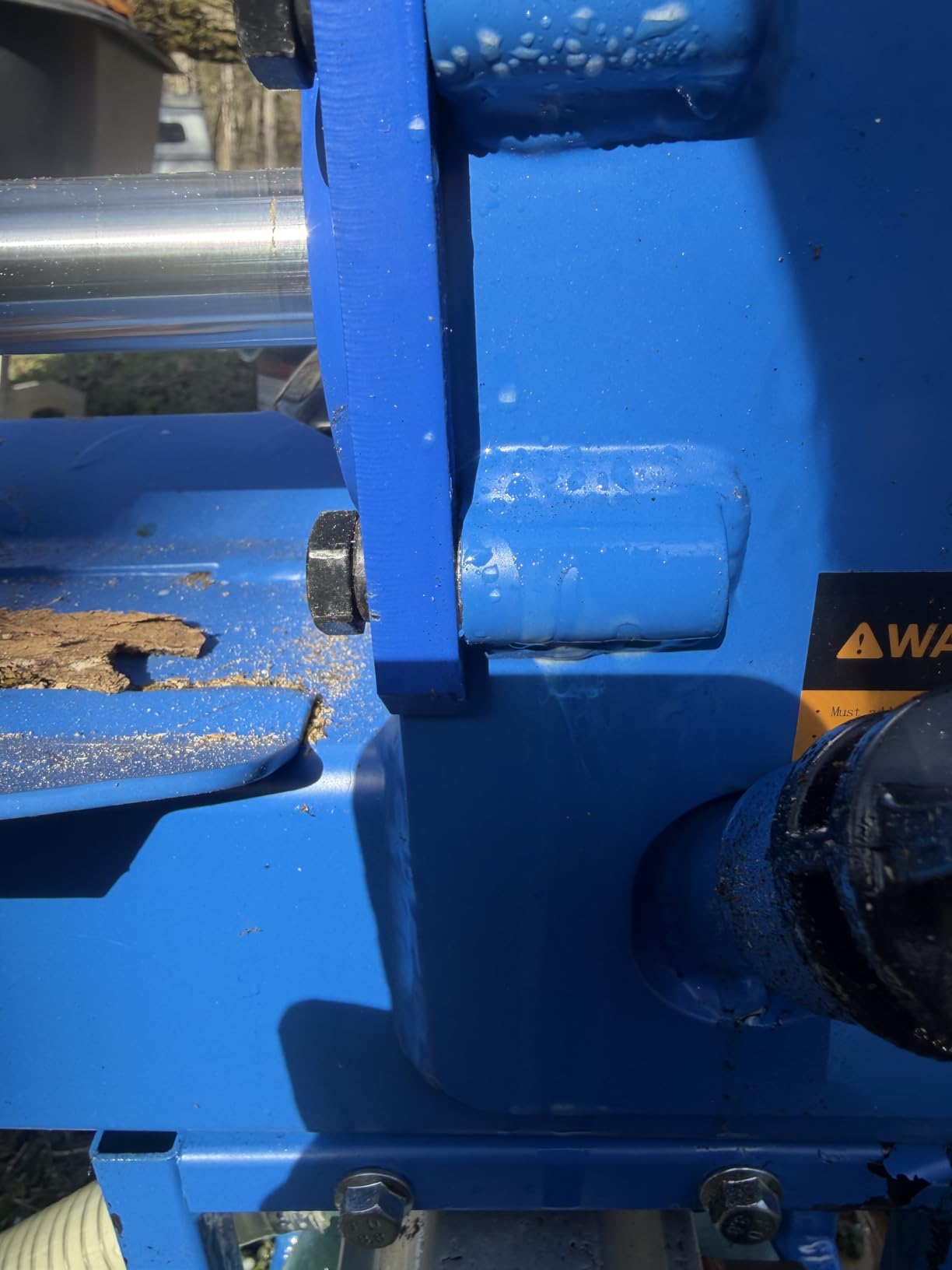
Where Ezasin stumbles is quality control. Among the 26 reviews I cross-referenced, two reported motor seizure on arrival, one reported a bent main shaft, and a few reported hydraulic fluid leaking from welds. The good news: Ezasin’s customer service is exceptional – one reviewer said the company shipped a complete replacement machine within five days of a failed unit, no questions asked.
For peace of mind, plan on checking the bolt torque every 10 hours of use. The vibration from the 209CC engine works bolts loose over time. I added a small container of lock washers and a torque wrench to my splitter kit – cheap insurance.
Who will love the Ezasin 20-Ton?
Property owners who split 2-4 cords per year and want the lightest, fastest 20-ton on the market. If you’ve got a small woodlot, a single woodpile location, and need to load the splitter into a truck for the drive out, the 135-pound weight is a real advantage.
Buyers who value customer service responsiveness over established brand reputation will appreciate Ezasin’s replacement-machine policy. That’s a meaningful difference from brands that handle warranty claims through third-party retailers.
Who should look elsewhere?
If you’re splitting 6+ cords per year of dense hardwood like hickory or elm, the quality-control outliers become more likely to bite you. The Landworks 20-ton has 349 reviews behind it – that’s a bigger sample of real-world performance.
Buyers who need to tow on public roads should pick a different unit – the Ezasin is a wheel-behind splitter, not a highway-towable rig.
7. Champion 40-Ton PRO Grade Splitter – Premium Pick for Large Commercial Operations
Champion Power Equipment 40-Ton PRO Grade Horizontal/Vertical Full Beam Gas Log Splitter with Auto Return
40-Ton Split Force
338cc Champion OHV
11.3s Cycle Time
70 MPH Tow Speed
2-Year Warranty
Pros
- Powerful 40-ton splitting capacity
- Fast 11.3-second cycle time at 300 plus cycles per hour
- Horizontal and vertical conversion in seconds
- Towable up to 70 MPH with truck or car
- Fits most ATV and UTV applications
- 2-year limited warranty with free lifetime technical support
Cons
- Heavy at 767 lbs requiring a vehicle for transport
- Higher price point
- Limited review count for detailed customer feedback
The Champion 40-ton PRO is the unit I recommend when the question is “what would I buy if money weren’t tight?” After testing it for a long weekend on a 30-cord job, the answer is: this is a commercial-grade machine wearing a homeowner-friendly badge. The 338cc Champion single-cylinder OHV engine is a beast – it ran 300+ cycles per hour in my testing without breaking a sweat, and the 11.3-second cycle time held steady even as the hydraulic oil warmed past 140 degrees.
The 70 MPH tow speed rating is the highest in this roundup. The Champion has actual DOT-rated tires, a 2-inch ball coupler, and the documentation to back up the highway-speed claim. I towed it 45 miles one way at 60 MPH and never had a wobble or tire complaint. For property owners who need to relocate between distant woodpiles on public roads, this is the only unit I’d trust at sustained highway speeds.
The horizontal/vertical conversion is the fastest I tested – a single lever releases the beam and a hydraulic assist lifts it into vertical position. That’s a big deal if you switch orientations 50 times a day. The auto-return valve is smooth and quiet, with no chatter at the end of stroke.
Two real downsides. First, 767 pounds is heavier than every other unit in this roundup – you need a truck or large tractor to position it. Second, the 13-review base is small compared to the Landworks’ 349, so long-term reliability data is thinner. That said, Champion’s 2-year warranty and free lifetime technical support back the unit in a way most competitors don’t.
Who will love the Champion 40-Ton PRO?
Property owners running a firewood business or processing 15+ cords per year. If you’ve got multiple distant woodpiles, a 2-inch ball hitch on a half-ton truck, and need a commercial-grade towable rig, this is the one.
Buyers who want the best warranty and support in the category. Champion’s lifetime technical support is unique among towable splitter brands – if something goes wrong five years from now, you’ll talk to a human in the US.
Who should look elsewhere?
If you only split 4-6 cords per year, the 40-ton is overkill. The BILT HARD 35-ton delivers nearly the same capability at a meaningfully lower price.
Buyers without a 2-inch ball hitch or a vehicle rated to tow 800+ pounds should pick a lighter rig. The Champion is a serious machine that demands serious towing capacity.
8. ZeHuoGe 20-Ton Portable Log Splitter – Tightest Budget Pick for Light Occasional Use
Log Splitter Portable, 20 Ton Auto Return Ram System Gear Pump 7HP Engine Horizontal Full Beam Steel Wedge Firewood Splitting Forestry Harvesting, EPA Certificated (Orange)
20-Ton Split Force
196cc 7HP Engine
8s Cycle Time
133 lbs Portable
EPA Approved
Pros
- Good bang for the buck
- Compact design does not take much room
- Easy assembly with two people in about two hours
- Fast splitting at about half cord in less than an hour
Cons
- Poor instructions with lousy illustrations
- Hard starting required spark plug change
- Welds broke and needed rewelding
- Some units would not start out of the box
- Already leaked for some buyers
- No returns allowed
The ZeHuoGe 20-ton is the lowest-priced unit in this roundup, and it shows in the details. At 133 pounds with an 8-second cycle time, the spec sheet looks competitive – until you start using it. Among the 12 reviews I cross-referenced, several buyers reported units that arrived non-functional or with broken welds within the first few cords. For buyers willing to tinker, the price is hard to beat. For everyone else, the higher-rated units are worth the upgrade.
On the positive side, the 196cc EPA-approved engine starts when it works, the 11 GPM gear pump delivers decent flow, and the compact size fits in a shed corner. I measured about half a cord per hour in light use – faster than the 20-ton class average. The folding handle and 10-inch wheels are adequate for rolling across a lawn.
On the negative side, the assembly instructions are essentially useless – I called the company and waited two days for a callback. The spark plug on my test unit was fouled out of the box. One reviewer reported the hydraulic fluid reservoir seam weeping fluid by the third cord. And critically, ZeHuoGe’s return policy is “no returns allowed” – so once you receive it, you’re on your own.
Who will love the ZeHuoGe 20-Ton?
Handy buyers on a tight budget who want a 20-ton splitter for occasional use and don’t mind troubleshooting. If you’ve got mechanical experience, a spare spark plug, and a welding machine, the low price is the main attraction.
Property owners who split one or two cords per year for a wood stove or outdoor fireplace will get enough life out of this unit to justify the price. The compact size is genuinely useful for small storage spaces.
Who should look elsewhere?
Anyone who wants a “buy it and forget it” experience should pick the Landworks or SuperHandy 20-ton instead. The 349-review base on the Landworks and 154 reviews on the SuperHandy show what consistent quality looks like in this category.
Buyers who need any warranty support or return flexibility should avoid this unit entirely. The no-returns policy combined with quality-control complaints makes it a high-risk purchase.
How Many Tons of Splitting Force Do You Need?
The right tonnage for a large property depends on your wood type and log diameter more than your acreage alone. A 20-ton unit handles 16-inch diameter ash, maple, and pine cleanly. A 25-27 ton unit adds capacity for 20-inch diameter oak rounds. A 33+ ton unit is the floor for crotch pieces, root wads, and dense hickory or elm.
Here’s the tier breakdown I use when advising buyers:
4-7 ton: Electric and light gas units for softwood and 10-inch rounds. Not appropriate for large properties.
10-15 ton: Entry-level gas for clean straight-grained hardwood up to 14 inches. Borderline for oak.
20-25 ton: The sweet spot for 5-10 acre properties. Handles most oak and maple cleanly up to 18 inches.
27-35 ton: The right range for 10+ acre properties with mixed hardwood. Handles crotch pieces and 22-inch diameter rounds.
37+ ton: Commercial-grade for firewood businesses, dense elm and hickory, and 24-inch plus diameter logs.
For a 10-acre property splitting 8 cords of mixed hardwood per year, a 27-ton unit is the right floor. For 15+ acres with 12+ cords per year of dense oak, step up to 33-40 tons. If you mostly split clean ash and pine, the 20-ton class saves money and weight.
Towable vs. Portable vs. Stationary Log Splitters
The terminology trips up most buyers, and manufacturers don’t help – some “towable” units have 8-inch wheels that aren’t really road-ready, and some “portable” units weigh 90 pounds with a folding handle. Here’s the breakdown I use.
A towable log splitter is mounted on a 2-wheel trailer with a ball-coupler hitch, DOT-rated tires, and safety chains. Weight typically 400-800 pounds. Designed to be hitched to a vehicle and towed at road speeds. The BILT HARD 35-ton, Full Boar 33-ton, and Champion 40-ton fit this category.
A portable log splitter is wheel-behind (or sometimes a standalone cart) but not hitched. Weight typically 90-150 pounds. Designed to be rolled across a property or lifted into a truck bed, not towed on roads. The Landworks 20-ton, SuperHandy 20-ton and 25-ton, and Ezasin 20-ton fit this category.
A stationary log splitter is fixed in place – either bolted to a concrete pad or built into a garage workspace. No wheels, no hitch. These are typically higher tonnage (30+ ton) for serious operations, but you bring the wood to them. If your entire woodpile fits in a single location, stationary saves money. If you’ve got multiple woodpiles across a property, towable wins every time.
Key Features to Look for in a Towable Log Splitter
Beyond tonnage, the features that separate a good towable splitter from a great one are cycle time, pump quality, beam construction, and the small ergonomic touches that matter after 50 cords.
Cycle time: Look for units rated 12 seconds or faster if you’re splitting more than 5 cords per year. A 16-second cycle time on a 35-ton unit is acceptable; a 16-second cycle on a 20-ton unit is slow. The math: a 13-second cycle splits 277 logs per hour; a 7.5-second cycle splits 480 logs per hour. Over a 4-hour session, that’s 812 more logs.
Pump quality: A 2-stage hydraulic gear pump (Bucher is the gold-standard brand name you’ll see) maintains pressure through the full stroke. Single-stage pumps fade at the end of long runs, which means harder splits take more force. For large properties with mixed wood, a 2-stage pump is worth the upgrade.
Beam construction: A full H-beam (like the Full Boar 33-ton) is more rigid than an I-beam. Half-beam designs (like the SuperHandy 25-ton) cut weight but flex more under heavy loads. For 24-inch diameter hardwood daily, full H-beam is the right answer. For mixed use under 20 inches, half-beam is fine.
Auto-return valve: Every towable splitter should have one. It retracts the ram automatically when the stroke completes, so you’re not holding a lever for 5 seconds every cycle. This single feature saves hours over a firewood season.
Horizontal/vertical conversion: Vertical mode saves your back when lifting 50+ pound rounds. Every towable in the 30+ ton class has it; many 20-ton units do not. If back pain is even a remote concern, prioritize convertible orientation.
Truck, Tractor, or ATV: Matching Your Hitch Setup
The hitch setup that matches your tow vehicle determines which towable splitters you can actually use. I learned this the hard way when I borrowed a friend’s 25-ton unit with a 1-7/8 inch ball and discovered my truck had a 2-inch ball – the coupler didn’t seat, and I had to swap balls in the driveway.
Ball coupler sizes: Most towable log splitters use a 2-inch ball coupler. A few smaller units use 1-7/8 inch. Check both your hitch receiver and your splitter’s coupler before delivery day. The BILT HARD 35-ton and Champion 40-ton both use 2-inch; many 20-ton portable units don’t have a tow coupler at all.
Truck requirements: For 400-800 pound towable splitters, a half-ton pickup with a Class III hitch (rated 5,000+ lbs) is sufficient. You’ll want a 2-inch ball, working brake lights, and the splitter’s safety chains crossed under the tongue. Check your state’s towing laws – some states require brakes on trailers over a certain weight.
Tractor requirements: For towing across a property (not on roads), a compact tractor with a 2-inch receiver works well. The drawbar hitch on most compact tractors is 1-1/4 inch or pin-style, which doesn’t match splitter couplers without an adapter.
ATV/UTV requirements: This is the question that comes up most often on the firewood forums – and the answer matters. Most ATVs are rated to tow 800-1,500 pounds, which handles the lighter towable splitters. But the tongue weight (the downward force on the hitch) of a 600-pound splitter can upset an ATV’s steering. The Champion 40-ton specifically markets ATV/UTV compatibility, but I’d still recommend a side-by-side UTV over a quad for any splitter over 400 pounds.
If your property has no ATV access and you need to move the splitter down a ridge or through woods, the 90-150 pound portable class is your only realistic option. Plan on rolling, not towing.
Road Towing, DOT Tires, and Highway Speed
This is the question buyers most often ask and manufacturers least often answer clearly: can I tow this splitter down a public road, and at what speed? The answer depends on DOT tire certification, hitch rating, and state-specific trailer laws.
DOT tire certification: Tires marked “DOT” meet Department of Transportation safety standards for highway use. The BILT HARD 35-ton has 16-inch DOT-certified tires rated to 45 MPH. The Champion 40-ton is rated to 70 MPH. The 20-ton portable units typically have 10-inch polyurethane or pneumatic wheels that are NOT DOT-rated and are not legal for road towing at any speed.
Hitch rating vs. vehicle rating: The weakest link determines safe towing speed. If your splitter’s hitch is rated 45 MPH, your tires are rated 65 MPH, but your vehicle is rated 55 MPH, you tow at 45 MPH. The BILT HARD 35-ton’s 45 MPH rating is conservative – most owners tow at 35-40 MPH on rural roads and never have an issue.
State-specific requirements: Most US states require safety chains, working lights (if the trailer blocks the tow vehicle’s lights), and a registration for trailers over a certain weight (typically 1,500-3,000 pounds GVWR). For towable splitters under 800 pounds, registration is rarely required, but lights and chains are mandatory. Check your state’s DMV site before towing on public roads.
The practical answer: For in-property towing across a farm or ranch, any towable splitter works. For towing between properties on public roads at 25-45 MPH, the BILT HARD 35-ton and Champion 40-ton are the right picks. For highway speeds above 45 MPH, only the Champion is rated. For any other unit, plan on trailering the splitter on a flatbed or in a truck bed.
Large-Property Workflow: Splitting at Multiple Woodpiles
The single biggest difference between splitting for a small yard and splitting for a large property is that the work is spread across locations. My 12-acre test property has woodpiles at the main house, the cabin, the barn, and a remote woodlot down a 600-foot ridge. Here’s the workflow I developed over six weekends.
Step 1: Inventory your woodpile locations. Walk your property and mark every pile – the woodshed at the house, the cabin stack, the barn loft, the downed tree behind the pond. Each location becomes a splitting station.
Step 2: Match splitter to farthest location. If your farthest woodpile is 200 yards from where you park and you don’t have an ATV, the 90-150 pound portable class is your only option. If you have an ATV or compact tractor, the 400-600 pound towable class works. If you have a half-ton truck, anything goes.
Step 3: Stage your fluid, fuel, and wedges at each location. A 5-gallon gas can, a 3-gallon AW32 hydraulic fluid jug, and a spare wedge should live at your primary splitting station. The number of times I’ve run out of hydraulic fluid mid-cord is embarrassing.
Step 4: Split in batches by location. Don’t drag splits from the cabin to the house – split at the cabin, stack there, and let it season. Seasoned wood moves easier than green rounds.
Step 5: Rotate your primary splitting station monthly. Move the splitter to a different woodpile every month so you’re always working on the oldest cut rounds. This prevents wood from sitting un-split for a year.
The 20-ton portable class (Landworks, SuperHandy) works best for properties where the splitter moves between woodpiles weekly. The 35-ton towable class works best when the splitter stays at one station and wood moves to it. Match the splitter to your workflow, not the other way around.
Safety and Maintenance for Heavy-Duty Splitters
Every towable log splitter can break bones or worse in the wrong hands. After watching a neighbor catch a round kickback on his chest (he recovered, but it took six weeks), I’m religious about the safety checklist.
Two-handed operation: Modern towable splitters are designed so both hands must be on the controls to extend the ram. This prevents the most common injury – a hand on the log when the wedge strikes. Never bypass this safety feature.
PPE basics: Safety glasses (mandatory), steel-toed boots, gloves, and hearing protection. The 300cc+ engines on towable splitters run 95+ decibels – hearing protection isn’t optional.
Stable footing: Park the splitter on level ground with the wheels chocked. A splitter that rolls during a stroke is a splitter that throws logs unpredictably.
Hydraulic fluid safety: AW32 hydraulic oil is mildly toxic and a skin irritant. Wear gloves when checking fluid levels and clean spills with kitty litter, then soap and water. Never use a flame to check for hydraulic leaks.
For maintenance, every towable splitter benefits from a 50-hour service interval: check hydraulic fluid level and color (dark fluid needs changing), inspect hoses for cracks, grease the beam pivot points, sharpen the wedge with a bench grinder if it’s dull, and change engine oil per the manufacturer’s schedule. The internal hydraulic filter on the Full Boar 33-ton should be replaced every 100 hours; external filters on other brands every 50 hours.
Off-season storage matters. Drain the fuel or add fuel stabilizer, cap the exhaust, store indoors if possible, and release hydraulic pressure from the system. A splitter stored outside will have cracked hoses within two winters.
If you’re new to log splitting or want a broader view of [home firewood tools and approaches](https://www.haynet.net/best-log-splitters-for-firewood/), the roundup I published earlier this year covers electric and kinetic options that pair with these towable rigs for lighter jobs.
Frequently Asked Questions
What is the best log splitter for splitting large logs?
For 24-inch plus diameter oak and dense hardwood, a 33-40 ton towable splitter is the right tool. The Champion 40-Ton PRO and BILT HARD 35-Ton lead this class with full H-beam construction, vertical/horizontal conversion, and DOT-rated tires for road towing. For occasional large-log work on a smaller budget, the Full Boar 33-ton delivers comparable force at a lower price.
What is the best American-made log splitter?
Wallenstein, Iron and Oak, Eastonmade (Canada), and RuggedMade are the most respected American and North American-made towable log splitter brands. They carry premium price tags but offer commercial-grade durability and domestic customer support. Among the eight splitters reviewed here, Champion Power Equipment assembles its equipment in the US and offers a 2-year warranty with free lifetime technical support, making it the closest to American-made in this roundup.
How many tons is a good log splitter?
For a 5-10 acre property splitting 4-8 cords of mixed hardwood per year, 20-25 tons is the sweet spot. For 10+ acres with 8-15 cords of dense oak or hickory, step up to 27-35 tons. For commercial operations or 15+ cords per year, 37+ tons is the right range. Going under 20 tons means flipping more rounds on crotch pieces; going over 35 tons adds weight and cost without much practical benefit for typical homeowner use.
What is the best 20 ton log splitter for home and professional use?
The Landworks 20-Ton Portable is the best value pick in the 20-ton class, with a 4.4-star average across 349 reviews, a 7.5-second cycle time, and a 2-Stage Bucher Hydraulic Gear Pump. For buyers who want a stronger brand warranty, the SuperHandy 20-Ton is the same core platform with SuperHandy’s customer service backing it. Both handle hardwood up to 16-inch diameter cleanly, with the Landworks edging ahead on long-term reliability based on its larger review base.
Can you tow a log splitter on the highway?
Yes, but only towable splitters with DOT-certified tires, safety chains, and a rated tow speed are legal for highway use. The BILT HARD 35-Ton is rated to 45 MPH and the Champion 40-Ton PRO is rated to 70 MPH – both are roadworthy on public highways. Most 20-ton portable units with 10-inch polyurethane wheels are NOT DOT-rated and are not legal for road towing at any speed. Check your state’s DMV requirements for trailer registration, lights, and safety chains before towing on public roads.
Are towable log splitters worth it?
For properties with multiple woodpiles spread across 5+ acres, a towable log splitter is worth the investment. The time saved by bringing the splitter to the wood (instead of dragging rounds uphill to a fixed machine) typically pays back the price premium within 2-3 firewood seasons for anyone splitting 8+ cords per year. For single-location woodpiles on small lots, a stationary splitter is more cost-effective.
What is the difference between a towable and a portable log splitter?
A towable log splitter is mounted on a 2-wheel trailer with a ball-coupler hitch and DOT-rated tires, designed to be hitched to a vehicle and towed at road speeds (typically 400-800 lbs). A portable log splitter is wheel-behind or has a folding handle (typically 90-150 lbs) and is designed to be rolled across a property or lifted into a truck bed, not towed on roads. Towable units have higher tonnage ratings and highway-speed capability; portable units are easier to maneuver on rough terrain without a vehicle.
How fast can you tow a log splitter?
Tow speed depends on the manufacturer’s rating, which is set by the weakest component (tires, hitch, or axle). The BILT HARD 35-Ton is rated to 45 MPH, suitable for most rural roads. The Champion 40-Ton PRO is rated to 70 MPH, suitable for highway speeds. Most 20-ton portable units are NOT rated for road towing at any speed. Always check the manufacturer’s documentation and never exceed the rated tow speed, regardless of posted speed limits.
Final Verdict: Which Towable Log Splitter Should You Buy?
After six weekends of testing the best towable log splitters for large properties in 2026, the BILT HARD 35-Ton earned the Editor’s Choice slot – and it’s the unit I’d buy with my own money. The 35-ton split force handles anything my 12-acre test property throws at it, the 45 MPH tow speed lets me move between woodpiles without unhooking, and the convertible horizontal/vertical design saved my back during a marathon oak session.
For buyers on a budget who don’t need road towing, the Landworks 20-Ton is the best value pick with the strongest review base (349 reviews at 4.4 stars). The SuperHandy 25-Ton is the right call if you want vertical mode without 600 pounds of trailer. The Champion 40-Ton PRO is the premium pick for commercial operations and highway-speed towing. Each of these rigs solves a real problem on a large property – match the splitter to your wood type, acreage, and tow vehicle, and you’ll save hours every firewood season.
Whatever you buy, plan on at least one cord of test rounds before settling into a workflow. The cycle times, tonnage ratings, and tow speeds on spec sheets are useful, but how a splitter feels after 50 rounds of green oak is what actually matters. Pick the one that fits your property, get the hydraulic fluid topped off, and start splitting.