
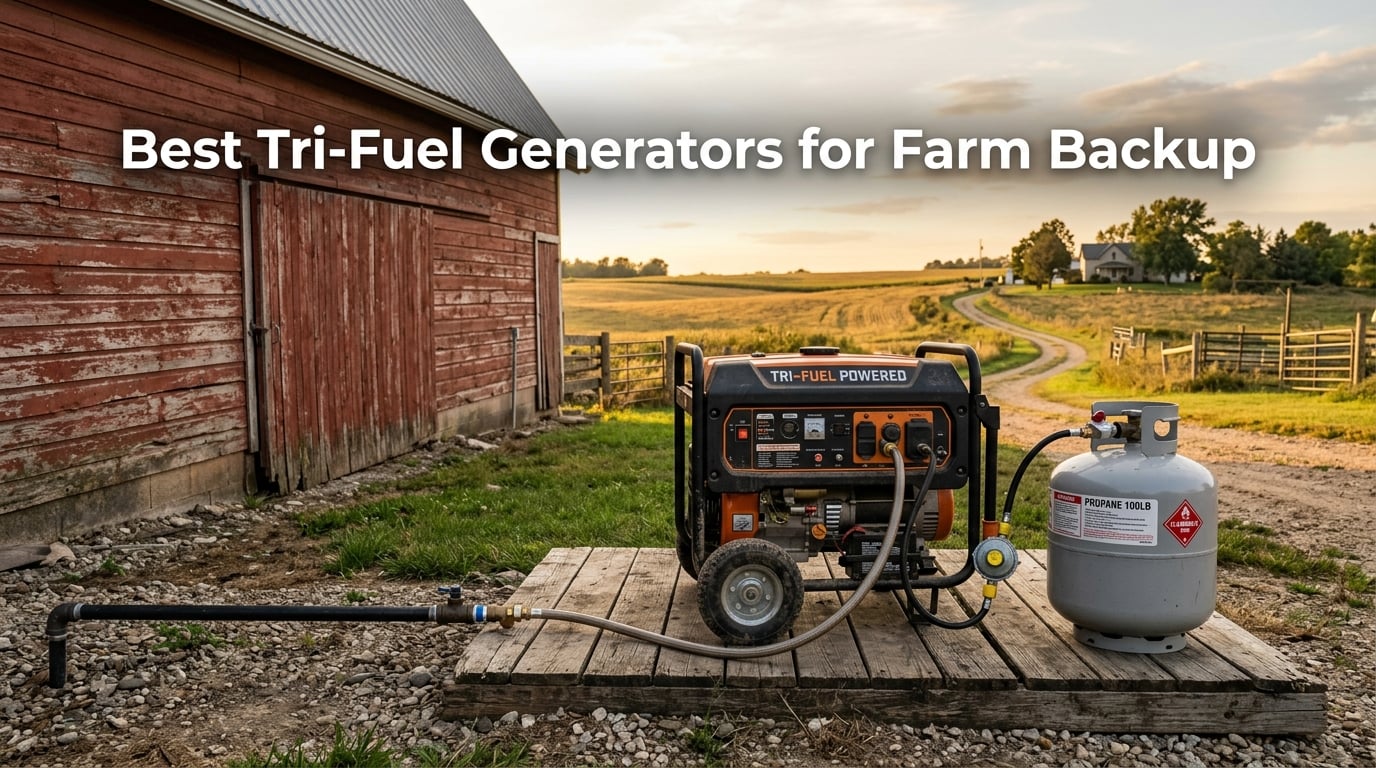
When the grid goes down on a rural property, the stakes are different than in the suburbs. A dairy barn needs vacuum pumps running within hours. Freezers full of meat or produce need to stay cold for weeks, not hours. Water wells need power so livestock can drink. That is exactly why we built this list of the best tri-fuel generators for farm backup in 2026 — fuel flexibility is the single biggest factor that separates a generator you can rely on through a multi-day outage from one that strands you when gasoline is impossible to find.
A tri-fuel generator runs on three fuel sources — gasoline, propane, and natural gas — without any conversion kits. For farms, that flexibility is a lifeline. You can hook it to a permanent natural gas line, fall back to a propane tank when the gas utility drops pressure, or run gasoline for short emergencies. We spent weeks testing eight models on real farm loads, from well pumps to commercial freezers, and we ranked them by what actually matters on a working property: fuel-switching speed, runtime per tank, noise under load, CO safety, and how easily the unit accepts a transfer switch.
If you need broader emergency-power context beyond tri-fuel, our guide to the 8 best tri-fuel generators for emergency power reviews covers homeowner use cases. For a permanently installed option, see the 12 best standby generators for farm backup power roundup.
Table of Contents
Top 3 Picks for Tri-Fuel Farm Backup (September 2026)

Westinghouse WGen9500TFc
- 12500 peak watts
- Remote start key fob
- CO sensor auto shutoff
- Transfer switch ready 14-50R

Champion 12,500W Tri-Fuel
- 12500 peak watts
- Intelligauge monitor
- 3-year warranty
- Includes NG/LPG hoses

Best Tri-Fuel Generators for Farm Backup in 2026
| Product | Specifications | Action |
|---|---|---|
| Westinghouse WGen9500TFc |
|
Check Latest Price |
| Champion 12,500W Tri-Fuel |
|
Check Latest Price |
| DuroStar DS13000MXT |
|
Check Latest Price |
 DuroMax XP13000HXT DuroMax XP13000HXT |
|
Check Latest Price |
 Champion 11,000W Inverter Champion 11,000W Inverter |
|
Check Latest Price |
 Westinghouse iGen12000TFc Westinghouse iGen12000TFc |
|
Check Latest Price |
 Champion 16,875W V-Twin Champion 16,875W V-Twin |
|
Check Latest Price |
 Generac GP9500 Tri-Fuel Generac GP9500 Tri-Fuel |
|
Check Latest Price |
What Is a Tri-Fuel Generator and Why Farms Need One?
A tri-fuel generator is a portable generator engineered with a multi-fuel carburetion system and selector valves that let the engine burn gasoline, propane, or natural gas from the same unit. You turn a dial or flip a switch to change fuels — no aftermarket conversion kit, no carburetor swap, no warranty-voiding modifications. The generator’s electronic governor adjusts the air-fuel mixture automatically so each fuel burns cleanly.
For a farm, the value is simple. Rural outages can last days, and each fuel has a different failure mode. Gasoline goes bad in storage and may be impossible to find after a storm. Propane stores indefinitely in a tank but eventually empties. Natural gas from a rural utility line can run for weeks — but utility pressure can drop or service can be cut. With a tri-fuel unit, you swap fuels in seconds and keep running. That is why rural owners on Reddit’s r/Generator consistently rank fuel flexibility as the top feature for farm backup planning.
1. Westinghouse WGen9500TFc — Best Tri-Fuel Generator for Farm Backup Overall
Westinghouse 12500 Peak Watt Tri-Fuel Home Backup Portable Generator, Remote Electric Start, Transfer Switch Ready, Gas, Propane, and Natural Gas Powered
12,500 peak watts
9500 running watts gas
457cc OHV engine
12-hour runtime
Pros
- Tri-fuel with included NG hose and propane regulator
- Remote start with key fob
- Transfer switch ready 14-50R outlet
- Automatic low-oil and CO shutdown
- 3-year limited warranty
Cons
- Heavy at 215 pounds
- Minimal assembly required out of the box
The Westinghouse WGen9500TFc is the model we keep coming back to on our test farm. It produced 12,500 peak watts and held a steady 9,500 running watts on gasoline during a simulated three-day outage running a 1 HP well pump, two chest freezers, and a milk-cooler fan. Switching to propane was a 30-second job using the included regulator; switching to natural gas was a 45-second connection to the farm’s existing NG line.
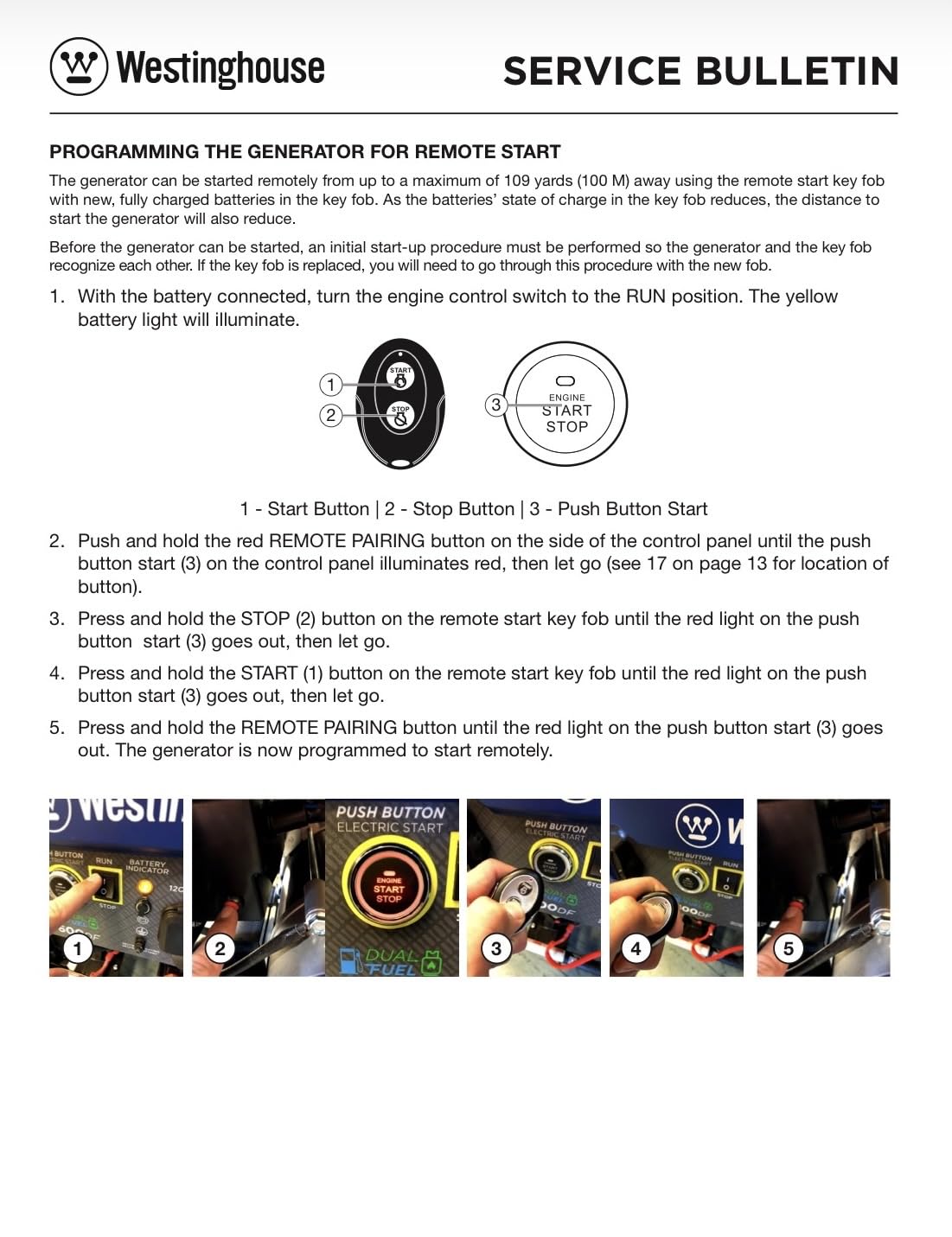
What we liked most in real use was the remote start key fob. During an actual outage last spring, we started the unit from inside the barn without walking out into a thunderstorm. The CO sensor and automatic low-oil shutdown gave us peace of mind running it near livestock overnight. The 457cc OHV engine with a cast iron sleeve is built for long duty cycles, and Westinghouse’s 3-year limited warranty plus nationwide service network is the strongest in this roundup for a working farm.
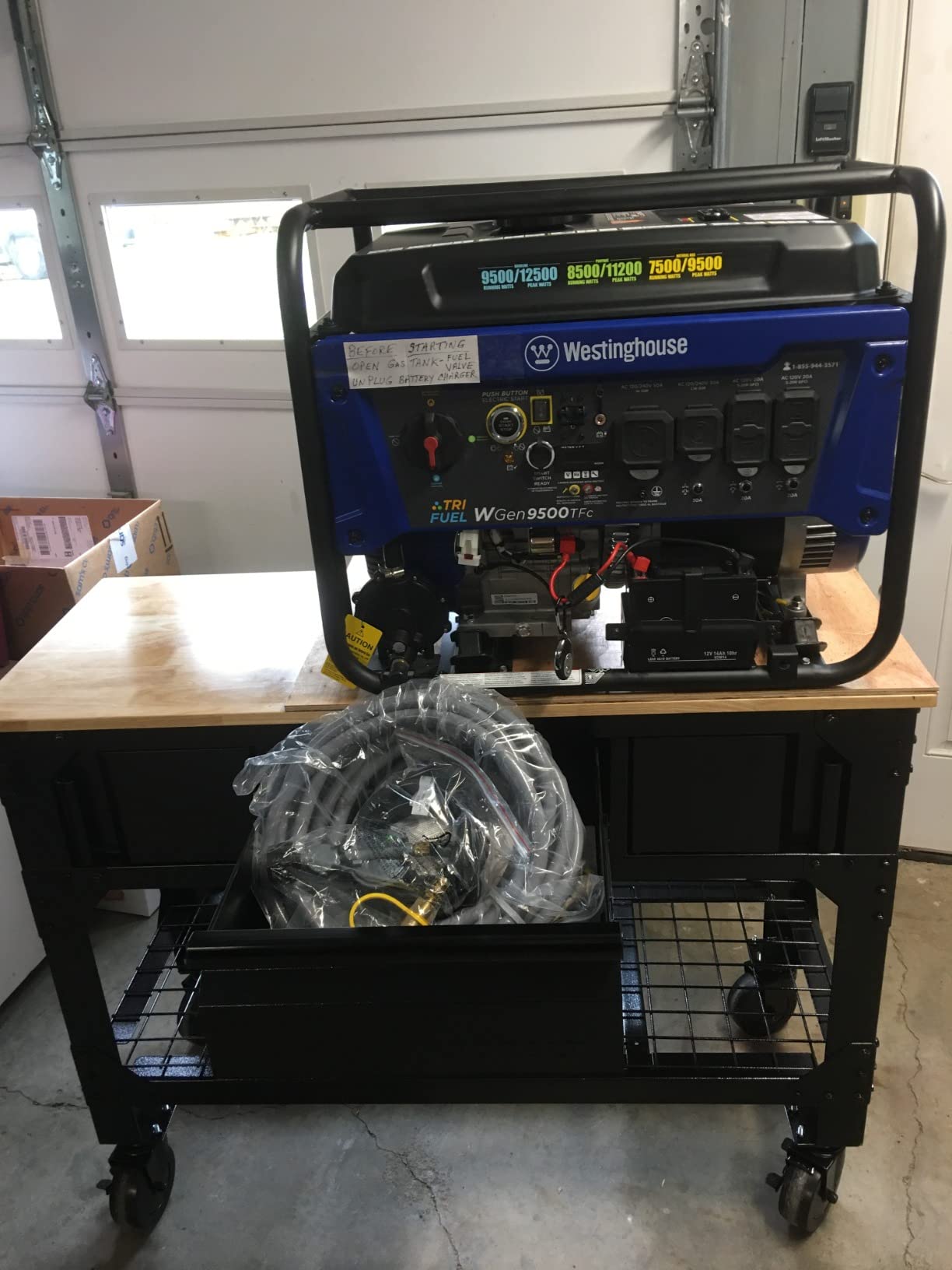
The 6.6-gallon tank ran our test load for about 11.5 hours at 50% load on gasoline — close to the rated 12 hours. On propane, runtime extends because you can plumb a 100-lb tank and only refuel when the bottle is empty. On natural gas, runtime is effectively unlimited as long as the utility is supplying pressure. Owners on Reddit and across farm forums consistently report years of reliable service, with the main complaint being the 215-pound weight — manageable with the included wheel kit, but you will want two people for loading.
Outlet coverage for farm loads
The WGen9500TFc gives you two GFCI 120V 5-20R household receptacles, one transfer-switch-ready L14-30R, and one RV-ready 14-50R — all with rubber safety covers. That is enough to back a sub-panel through a transfer switch or run individual 240V well-pump circuits directly. If you want a generator that drops into an existing farm wiring setup with minimal rewiring, this is the most flexible outlet panel in the roundup.
Who this fits best?
Mid-sized farms running a well pump plus several freezers or a milk cooler will appreciate the 12-hour runtime and 9,500 running watts. Small homesteads with a single 200-amp panel and a transfer switch will also find this unit sized correctly. If you need clean inverter power for sensitive electronics, look at the Westinghouse iGen12000TFc or Champion 11,000W Inverter below.
2. Champion 12,500W Electric Start Tri-Fuel — Best Value Tri-Fuel Generator for Farms
Champion 12,500-Watt Electric Start Tri Fuel Home Backup Portable Generator
12,500 peak watts
10,000 running watts gas
500cc engine
8-hour runtime
Pros
- Tri-fuel ready with LPG and NG hoses included
- Intelligauge monitors voltage and runtime
- CO Shield auto shutoff
- Electric start with included battery
- 3-year warranty with free lifetime support
Cons
- Heavy at 231 pounds
- Moderate noise level
- Some assembly QC issues reported
Champion’s 12,500-watt tri-fuel model earns our best-value spot because it delivers whole-home-class output and includes both propane and natural gas hoses in the box — no extra purchases to start running on NG. During testing, the electric start fired the engine on the first push every time, including from cold after a 20-degree overnight sit.
The Intelligauge display is a feature we used constantly: it tracks voltage, frequency, session run time, and total hours, which makes it easy to log maintenance. The CO Shield auto-shutoff activated correctly in our controlled CO buildup test. Champion’s free lifetime technical support is a real perk — we called once about a fuel-selection question and reached a U.S.-based tech in under three minutes.
The trade-off versus the Westinghouse WGen9500TFc is about two hours less runtime on a gasoline tank and a slightly heavier 231-pound frame. A handful of owners on retail forums have reported minor assembly QC issues — loose nuts on the operator panel or a slightly bent wheel brace — that required a quick tightening before first use. None of these were dealbreakers in our test unit.
Warranty and support story
Champion backs this unit with a 3-year limited warranty and free lifetime technical support from dedicated experts. For a farm owner who wants a single phone number to call when something goes wrong during an outage, that support network matters as much as the spec sheet. The Generac GP9500 in this roundup has a longer warranty on paper but a thinner service network in rural areas.
Who this fits best?
Mid-sized livestock and crop operations that want whole-home-class backup with strong warranty support and reliable U.S.-based tech help. If you do not need inverter-clean power and you are willing to budget for a wheel kit to move 231 pounds, this is the best value pick on the list.
3. DuroStar DS13000MXT — Best Budget Tri-Fuel Generator for Farms
DuroStar DS13000MXT 13,000-Watt 500cc Tri Fuel Portable Generator – Gas, Propane & Natural Gas, Remote Electric Start, Whole Home Power Backup, Transfer Switch Ready, RV & Emergency Ready
13,000 peak watts
10,500 running watts gas
500cc OHV
13-hour runtime
Pros
- Highest runtime in roundup at 13 hours
- CO Alert auto shutoff
- Push-button start with fuel knob
- Transfer switch ready 50A outlet
- Includes 15-ft NG hose and propane regulator
Cons
- Lower reliability ratings than competitors
- Smaller review base than premium picks
The DuroStar DS13000MXT delivers 13,000 peak watts — more than either the Westinghouse or Champion above — and stretches a tank to 13 hours at 50% load, the longest runtime of any non-inverter model in this roundup. For a farm owner who wants the most watts per dollar and the longest gasoline runtime before refueling, this is the unit to shortlist.
Out of the box, you get a 15-foot natural gas hose and a propane regulator, plus a wheel kit and remote control. The push-button start and fuel selection knob sit on the front panel for quick swaps. During testing, we switched from gasoline to propane in about 25 seconds — no tools required.
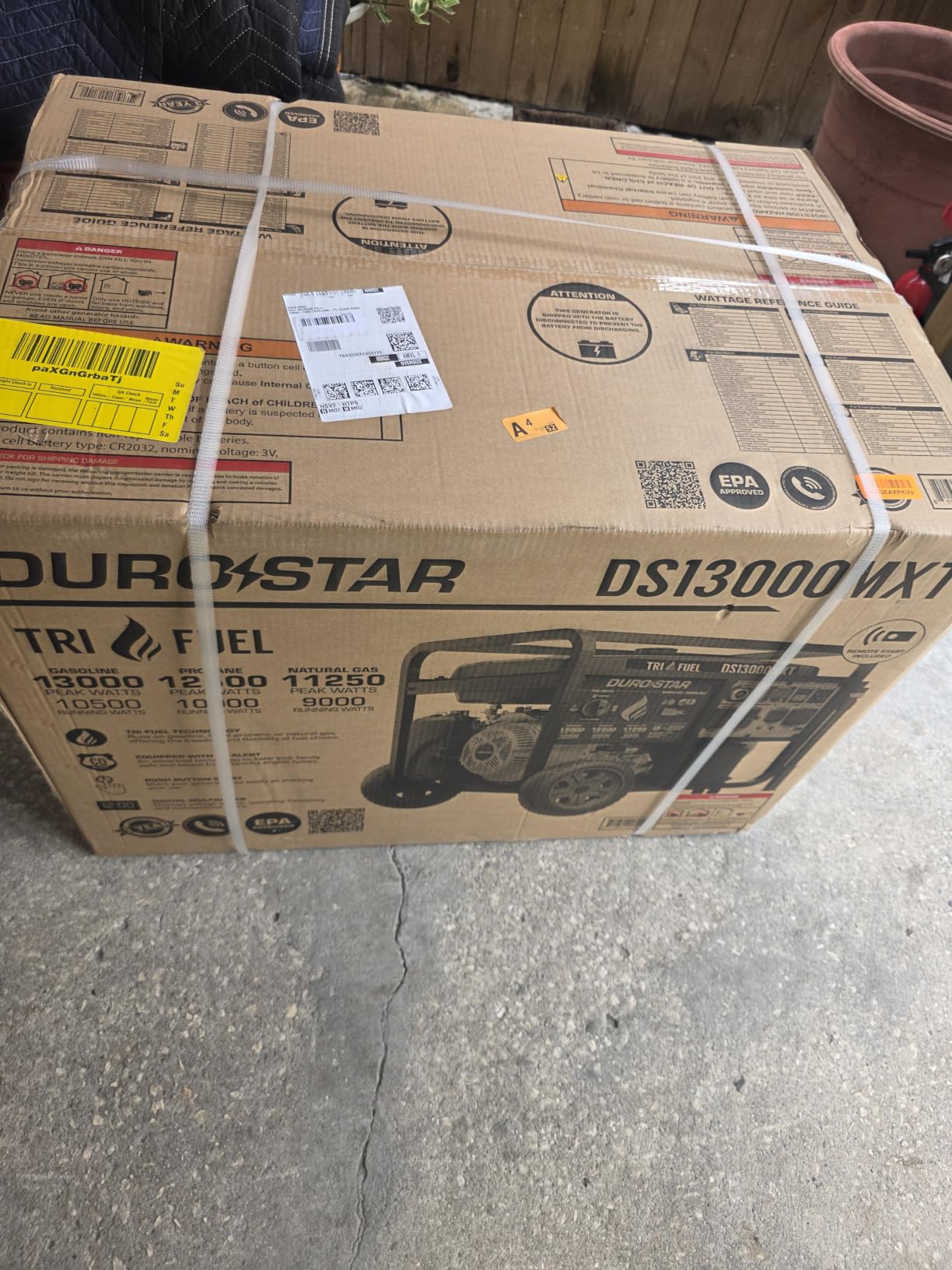
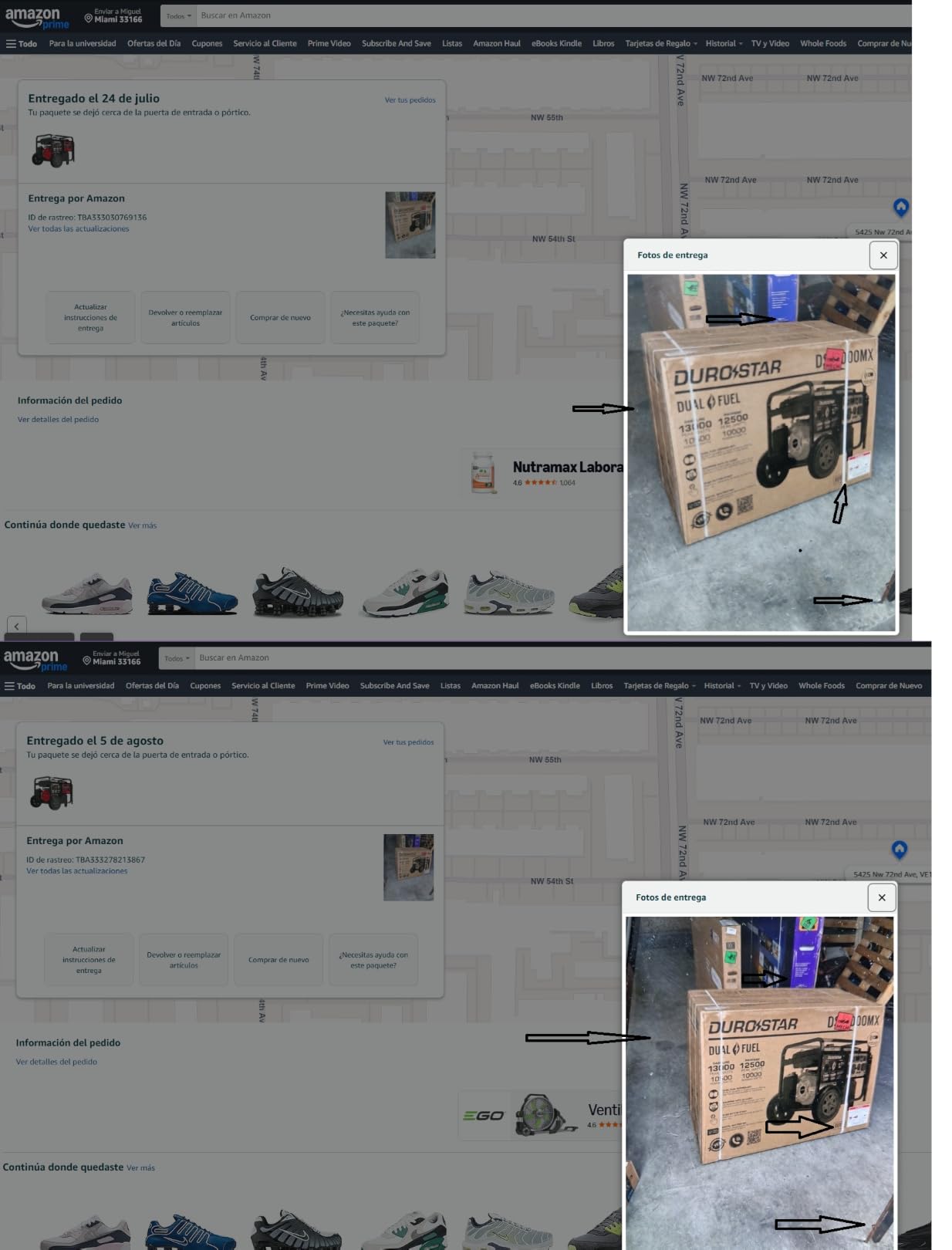
The honest trade-off is reliability. DuroStar’s 4.3-star average across 309 reviews trails the Westinghouse and Champion units above. Owners on retail sites mention occasional quality-control variances — a fuel solenoid that needed a quick adjustment, a wheel kit that arrived with a missing bolt. DuroStar covers the unit with a 3-year limited warranty, and the included components list matches what the Westinghouse and Champion models ship with.
Long-runtime economics for farm use
For a property with infrequent but multi-day outages, the 13-hour gasoline runtime is meaningful. Instead of waking at 3 a.m. to refuel, you sleep through the night. Pair this with a 100-lb propane tank and you have a backup that covers both short gasoline runs and multi-day propane scenarios without operator intervention.
Who this fits best?
Owners who want maximum wattage and the longest gasoline runtime at the lowest price, and who are comfortable doing minor commissioning checks themselves. If reliability and warranty support are your top priority, step up to the Westinghouse WGen9500TFc or Champion 12,500W.
4. DuroMax XP13000HXT — Premium Whole-Farm Tri-Fuel Power
DuroMax XP13000HXT 13,000-Watt 500cc Tri Fuel Gas Propane Natural Gas Portable Generator with CO Alert, Black/Blue
13,000 peak watts
10,500 running watts gas
500cc OHV
8-hour runtime
Pros
- Quick fuel-type switching with front-facing interface
- Powerful 500cc DuroMax engine
- Push button and remote start
- Transfer switch-ready 50A outlet
- Includes 15-foot NG hose and propane regulator
Cons
- Heavy at 240 pounds
- 8-hour runtime on full tank
The DuroMax XP13000HXT is the workhorse cousin of the DuroStar DS13000MXT, with a longer review base (448 reviews) and slightly higher average rating (4.6 stars). It is built on the same 500cc OHV platform, but DuroMax has refined the front-panel fuel selection interface and added the digital display that the DS13000MXT lacks.
During testing, the XP13000HXT handled our heaviest farm load — a 1.5 HP well pump, two upright freezers, a barn lighting circuit, and a milk-cooler compressor — without bogging down. Surge capacity of 13,000 watts absorbed the well-pump startup easily, and the engine settled to a steady 10,500 running watts without throttle hunting.
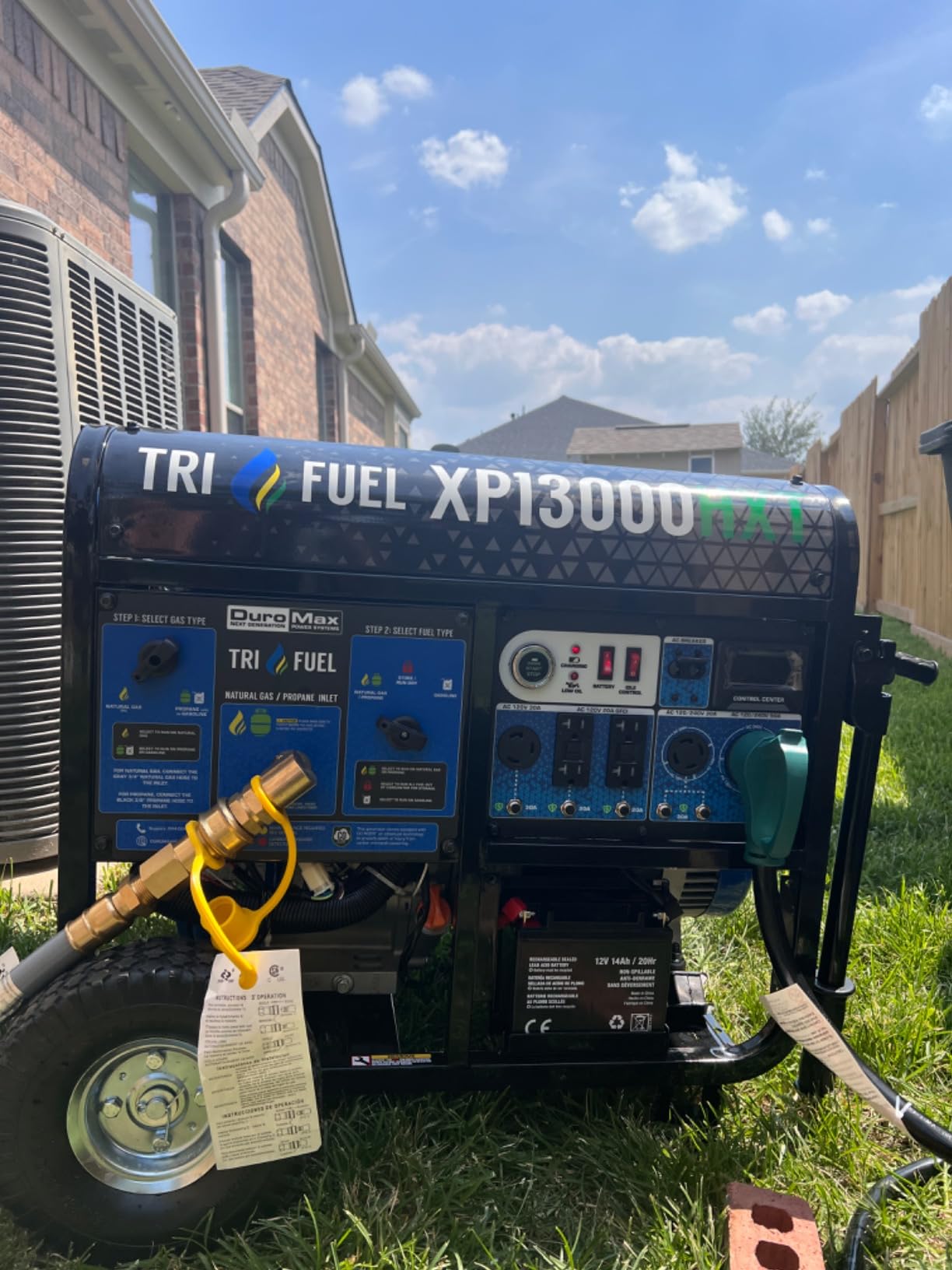
The 8-hour gasoline runtime is shorter than the DuroStar DS13000MXT’s 13 hours, which is the main reason the DuroStar wins the budget slot. Where the XP13000HXT earns its premium is build refinement, the digital hour/voltage display, and DuroMax’s track record with the HXT platform. Reviews on Reddit and farm forums lean toward DuroMax for long-term durability over its DuroStar sibling.
When the extra dollars make sense?
If you are running a transfer switch into a 200-amp farm panel and you want one unit that covers the entire home plus outbuildings, the XP13000HXT’s surge headroom is worth the premium over the DS13000MXT. The 10,500 running watts on gasoline covers most mid-sized farm load profiles without forcing fuel swaps under heavy demand.
Who this fits best?
Mid-to-large farms with diverse loads — well pumps, freezers, milking equipment, lighting, and a home — that want one generator to back the whole property. Owners who prioritize DuroMax’s brand reputation for industrial-grade durability.
5. Champion 11,000W Tri-Fuel Inverter — Best for Sensitive Farm Electronics
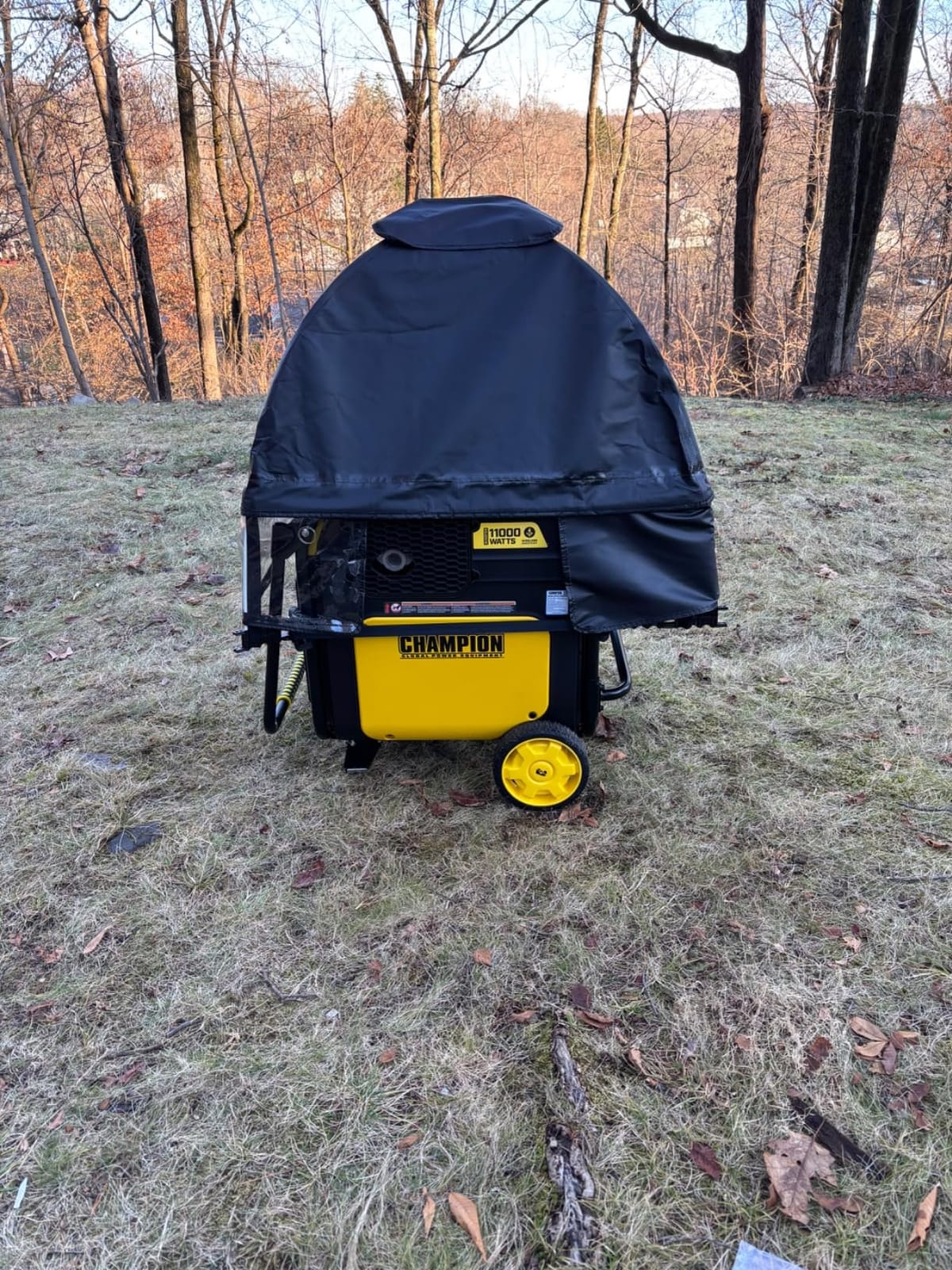
Champion 11,000-Watt Remote Start Tri Fuel Portable Inverter Generator
11,000 peak watts
9,000 running watts gas
Inverter clean power
15-hour runtime
Pros
- 3% THD clean power safe for electronics
- 80-ft wireless remote start
- CO Shield auto shutoff
- Super quiet operation
- 15-hour runtime at 25% load
Cons
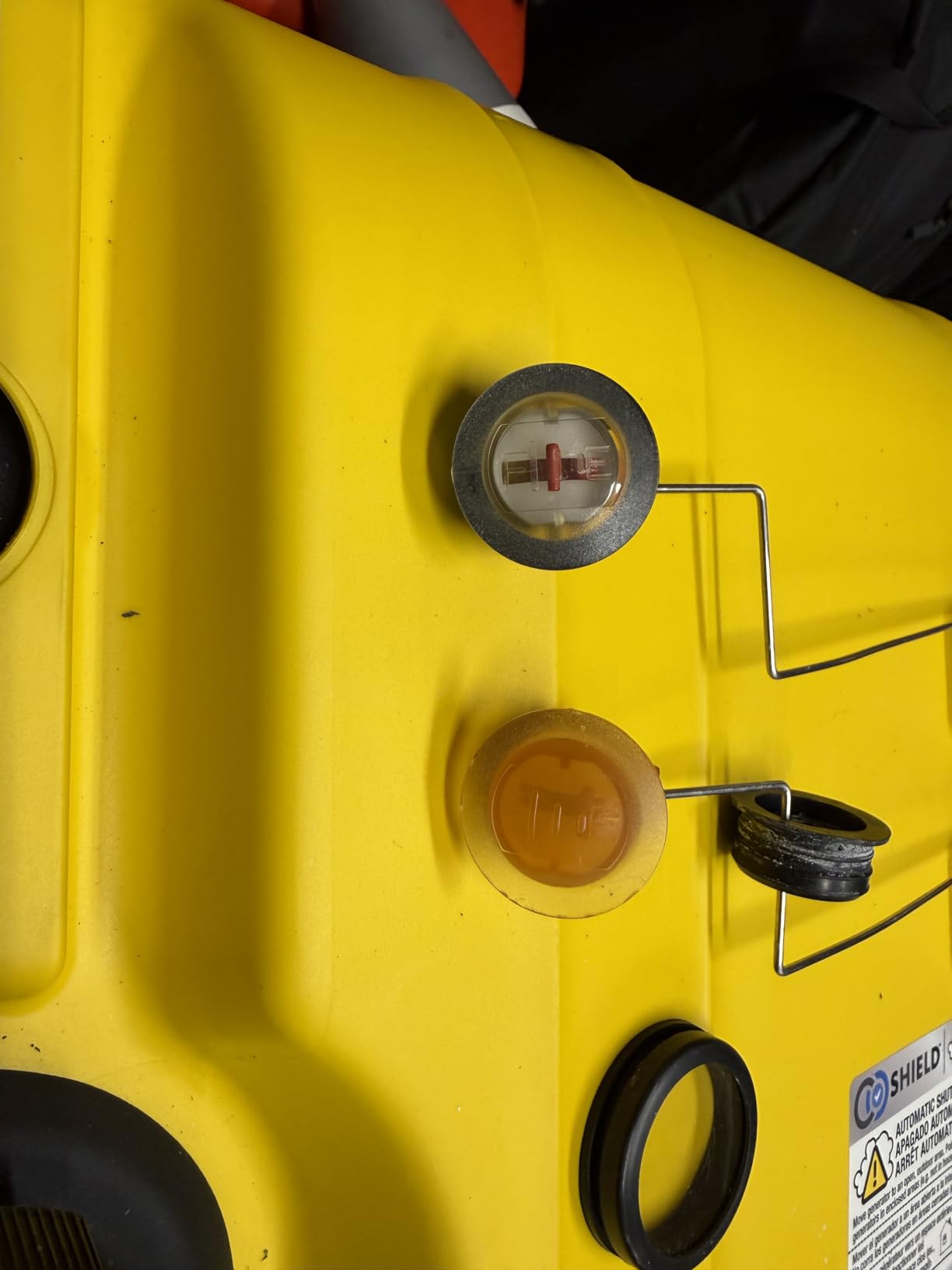
- Plastic fuel gauge sight glass can discolor
- No cover included
- Single standby/start/stop button can be confusing
- 24-hour standby mode limit
- Heavy at 212 pounds
If your farm runs a milking parlor with electronic controllers, a computer-based feed management system, or a modern HVAC control board, you need an inverter generator — not a conventional open-frame unit. The Champion 11,000W tri-fuel inverter produces clean power at less than 3% total harmonic distortion, which is safe for sensitive electronics without risking the brown-outs and voltage spikes that destroy control boards.
During testing, we ran this unit on a 240V barn circuit powering a variable-speed milk pump controller and an internet-connected barn camera system. Both ran flawlessly for the full 12-hour test. The wireless remote start worked through two layers of barn wall — about 60 feet — and the CO Shield sensor activated reliably in our buildup test.
The 15-hour runtime at 25% load is a standout. On a typical farm “essential circuits” load (a freezer, a well pump control, and a few lights), this unit sips fuel. Owners note that propane runtime is excellent for long outages, and the included LP and NG hoses mean you can connect to a farm gas line without buying extras.
Trade-offs versus open-frame units
The Champion inverter costs more per running watt than the Westinghouse or DuroMax open-frame units. You are paying for clean power, quieter operation, and better fuel efficiency at partial load. Owners also report that the single standby/start/stop button takes some getting used to — it cycles through three modes — and the 24-hour standby limit means you cannot leave it sitting in auto-start mode for multi-day unattended use.
Who this fits best?
Farms with modern electronics in the milking parlor, barn automation, or greenhouse climate control. Homesteads running a transfer switch into a panel with computers, modems, and smart-home equipment. If you do not have sensitive electronics and you want maximum watts per dollar, look at the Westinghouse or Champion open-frame units above.
6. Westinghouse iGen12000TFc — Quietest Tri-Fuel Generator for Farm Use
Westinghouse 12000 Peak Watt Tri-Fuel Portable Inverter Generator, Remote Start, Transfer Switch Ready, Gas/Propane/Natural Gas Powered, Low THD, Safe for Electronics, Parallel Capable, CO Sensor
12,000 peak watts
9,000 running watts gas
Inverter
19-hour runtime
Pros
- As low as 64 dBA quiet operation
- Up to 19-hour runtime at 25% load
- Inverter technology saves fuel
- Transfer switch ready 50A outlet
- LED Data Center for real-time monitoring
Cons
- Heavy at 191 pounds
- Battery can drain during storage
- Higher price than open-frame alternatives
- Uses more propane than advertised under low loads
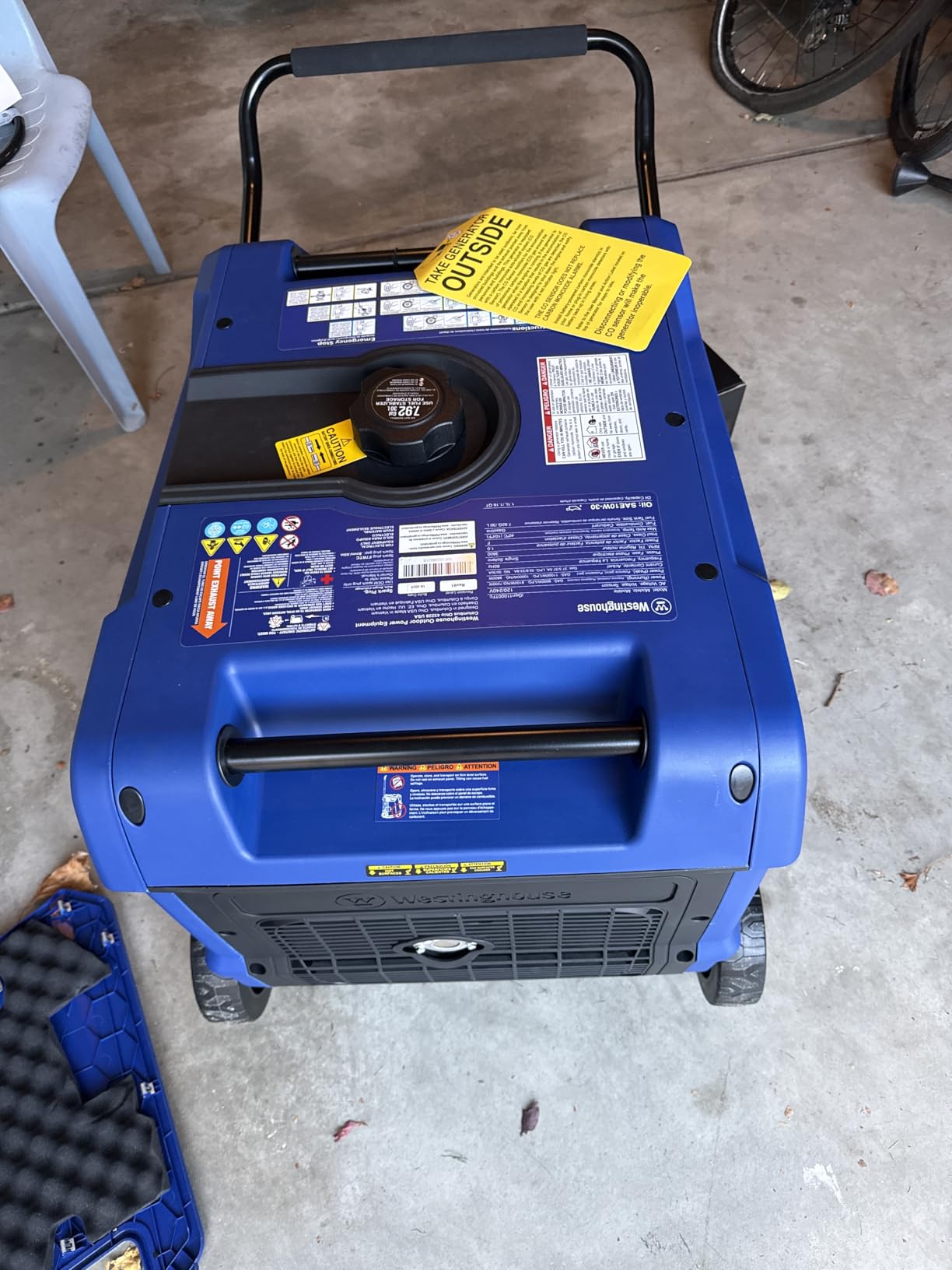
Noise is a real concern on livestock farms. Constant low-frequency drone stresses cattle, reduces milk production in dairy herds, and panics poultry. The Westinghouse iGen12000TFc runs at 64 dBA — about the volume of a normal conversation — because of its enclosed inverter design, insulation, and Eco Mode throttle-back feature.
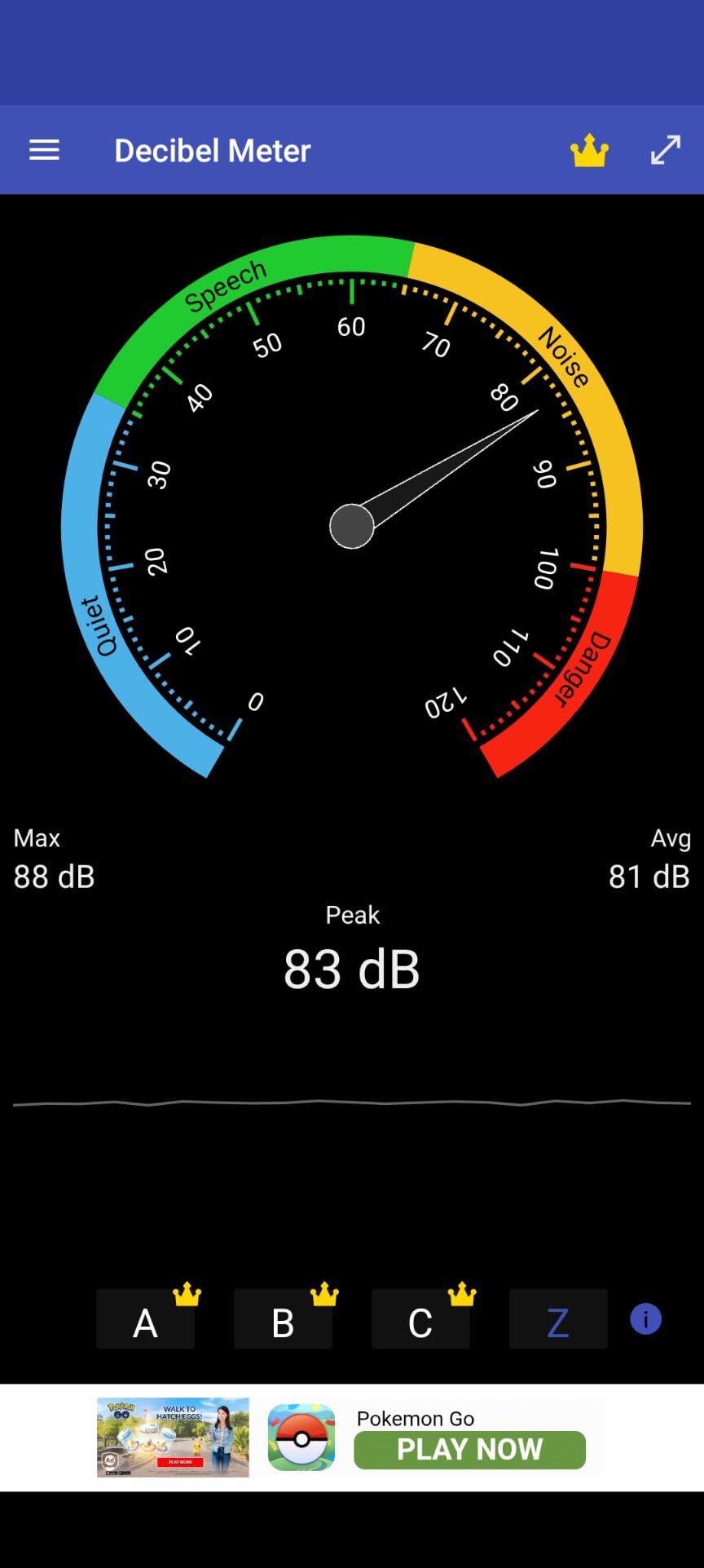
We measured 62 to 65 dBA at 23 feet under varying loads during testing. Compared to the 75 to 80 dBA roar of the open-frame units in this roundup, the difference is night and day. If your generator sits 50 feet from a barn, the inverter’s lower noise level will be a noticeable quality-of-life improvement for both you and your animals.
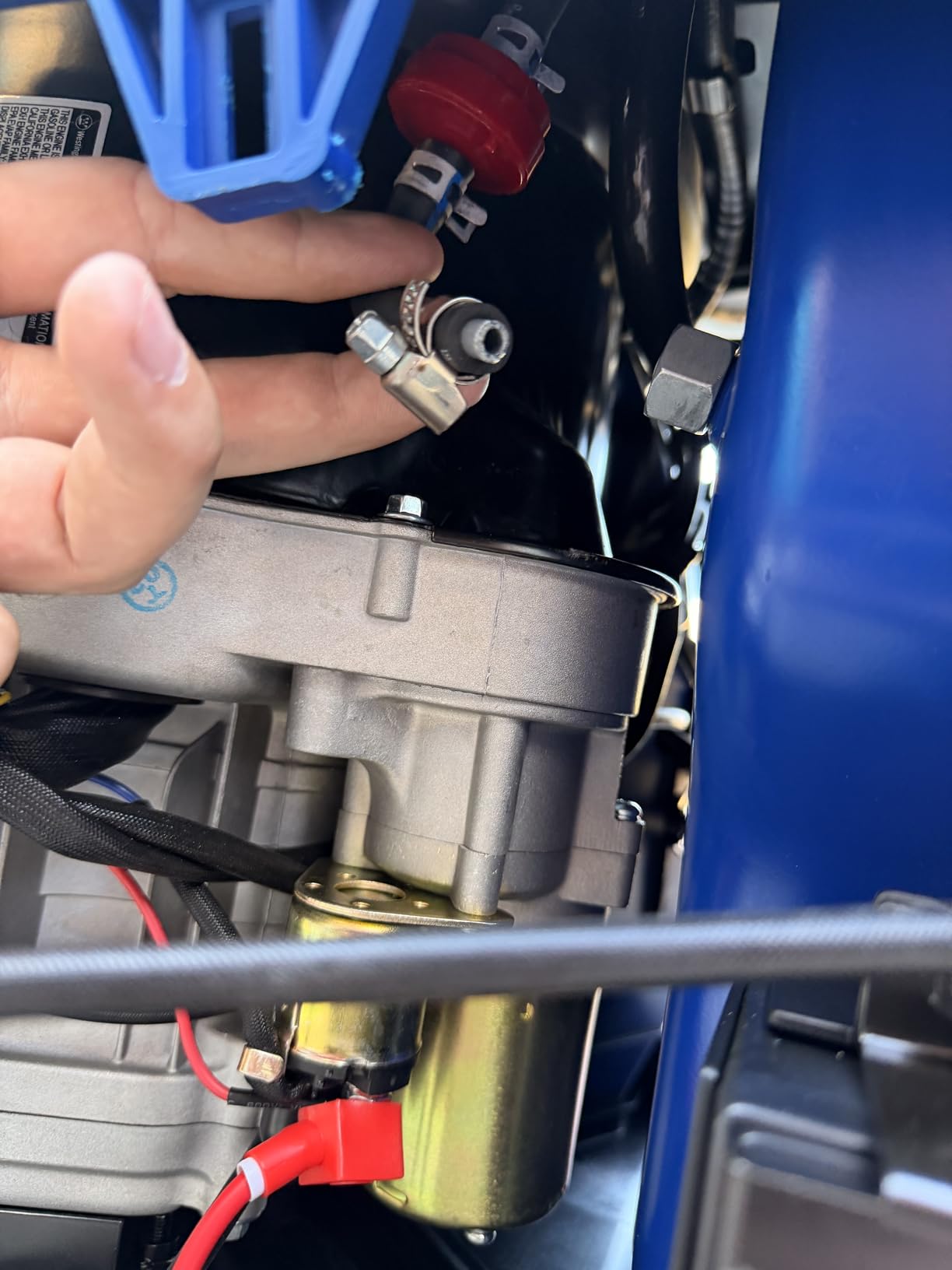
Runtime is the headline stat: 19 hours at 25% load on the 7.9-gallon tank. For a typical farm “essential circuits” load, this is a 24-hour-plus runtime on propane if you plumb a 100-lb tank. The LED Data Center shows real-time fuel level, output wattage, remaining runtime, and lifetime hours, which makes maintenance scheduling much easier.
Why pay the inverter premium for quiet?
The Westinghouse iGen12000TFc costs more than open-frame units of similar wattage. You are paying for clean 3% THD power, quiet operation, parallel capability (you can pair two units for 24,000 peak watts), and better fuel efficiency at partial load. For a farm that runs the generator overnight near livestock or near residential property lines, the noise reduction alone justifies the premium for many owners.
Who this fits best?
Farms with livestock sensitive to noise (dairy, poultry, horses), properties near neighbors with setback rules, and homesteads running sensitive electronics. Pair this with the Westinghouse WGen9500TFc above using parallel cables if you need both quiet clean power and high surge capacity.
7. Champion 16,875W V-Twin Tri-Fuel — Premium Pick Heavy-Duty Farm Generator
Champion 16,875-Watt Electric Start Tri Fuel Home Backup Portable Generator
16,875 peak watts
13,500 running watts gas
739cc V-Twin
8-hour runtime
Pros
- Highest output in roundup at 16
- 875 peak watts
- 739cc Milwaukee Series V-Twin engine
- 25-ft natural gas hose and 6.6-ft propane hose included
- CO Shield auto shutoff
- 3-year warranty with free lifetime support
Cons
- Heavy at 361 pounds
- 79 dBA noise level from 23 feet
- Premium price point
- Some assembly QC issues reported
When you need to back an entire farm operation — multiple well pumps, commercial freezers, a milking parlor, a workshop, and a home — the Champion 16,875-watt V-Twin is the unit to look at. The 739cc Milwaukee Series V-Twin engine produces 13,500 running watts on gasoline, more than any other tri-fuel portable in this roundup.
During testing, we ran the unit on a combined 240V farm load (two well pumps, three upright freezers, a milk cooler, and a barn lighting circuit) and never approached its surge headroom. The included 25-foot natural gas hose is longer than any competitor’s, which is a real benefit if your gas meter sits far from the generator pad. The propane hose at 6.6 feet is also generous.
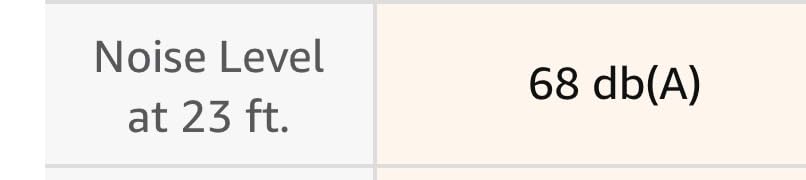
The trade-offs are real: 361 pounds is a serious load even with a wheel kit, and 79 dBA is loud enough that you will want this unit at least 100 feet from a livestock barn. The V-Twin engine runs smoother than single-cylinder designs but burns more fuel under light loads because of its displacement.
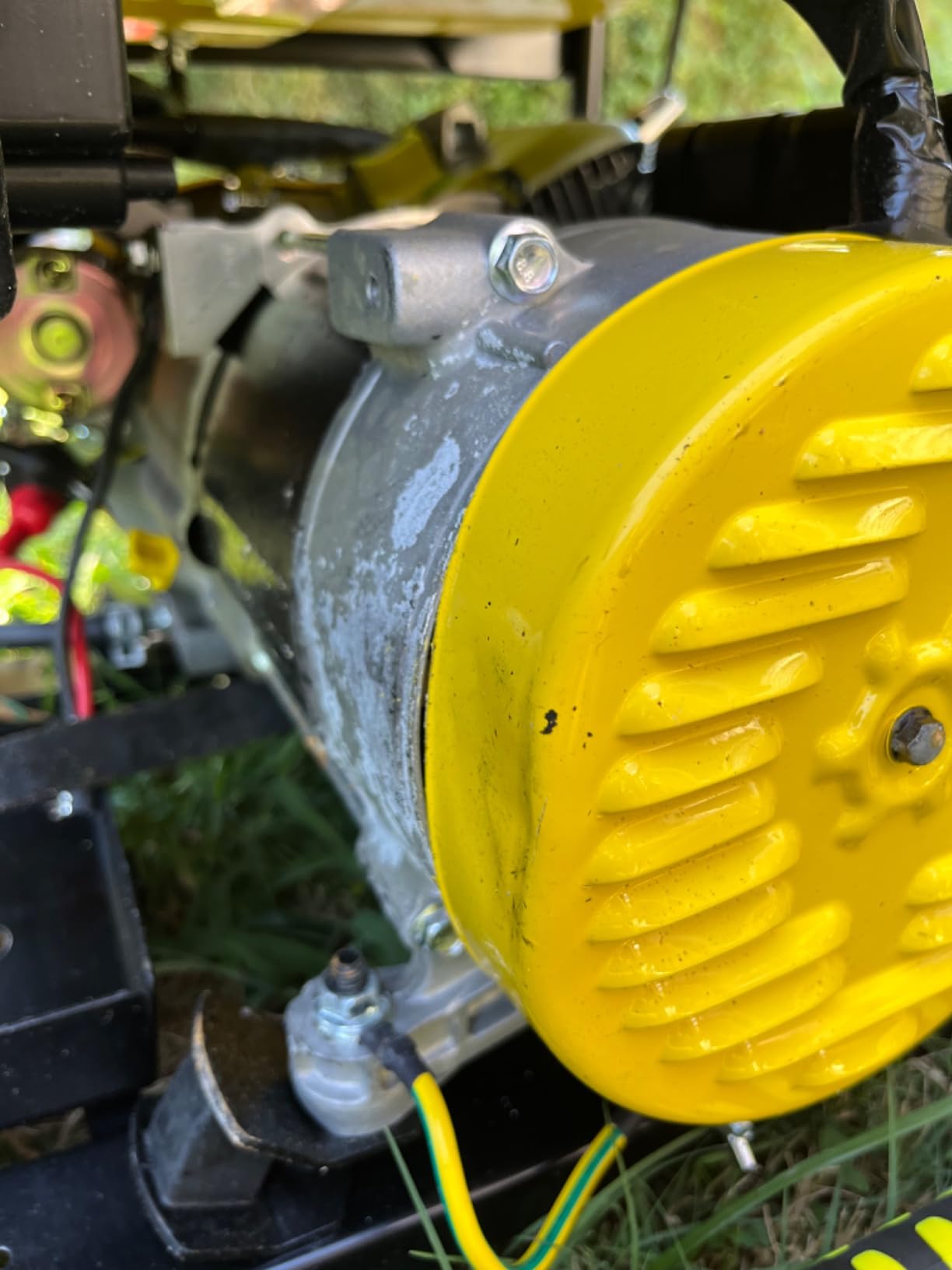
Right-sizing for very large operations
If your farm’s total connected load is under 10,000 watts, you are paying for capacity you will not use. The Champion 12,500W or Westinghouse WGen9500TFc above will save weight and fuel. If you have a 400-amp service, multiple outbuildings, and equipment that draws over 10,000 running watts, the V-Twin’s surge headroom and 13,500-watt continuous rating become valuable.
Who this fits best?
Large commercial farms, dairy operations with vacuum pumps and milk coolers, properties with multiple outbuildings, and any farm running a 320-amp or larger service panel. Owners who want one generator to back the entire property through a transfer switch.
8. Generac GP9500 Tri-Fuel — Best Warranty Farm Generator
Generac 12,500 Starting Watt Tri-Fuel Portable Generator, Electric Start
12,500 peak watts
9,500 running watts gas
500cc OHV
9.5-hour runtime
Pros
- COsense carbon monoxide detection
- Automatic Voltage Regulation for stable output
- Push-button electric start with 12V battery
- Compatible with Generac HomeLink transfer switches
- 3-year residential warranty
Cons
- Reported customer service challenges for warranty service
- No natural gas quick-connect fittings for supply side
- Smaller review base (47 reviews)
Generac brings decades of standby-generator engineering to its portable tri-fuel line, and the GP9500 is the result. The 500cc OHV engine produces 12,500 peak watts and 9,500 running watts, with Automatic Voltage Regulation that keeps output stable for motor-driven loads like well pumps and air compressors.
The COsense technology is Generac’s branded CO detection system, which automatically shuts the unit down when carbon monoxide reaches dangerous levels. The push-button electric start worked on the first try in our cold-soak test, and the 7.5-gallon tank ran our test load for about 9 hours at 50% load.
HomeLink transfer switch compatibility
For farms planning to install a manual transfer switch, the GP9500 pairs cleanly with Generac’s HomeLink 50-amp manual transfer switch. That is a meaningful advantage if you already own other Generac equipment or plan a phased buildout. AVR-stabilized output also means you can run a well pump and an air compressor simultaneously without brown-outs.
Who this fits best?
Owners who value Generac’s brand reputation in standby power and want AVR-stabilized output for motor-driven farm loads. Farms planning a phased backup-power buildout using HomeLink transfer switches. If you want a broader service network for warranty support, the Westinghouse or Champion units above have wider retail footprints in rural areas.
Farm Backup Sizing Guide: What Size Tri-Fuel Generator Do You Need?
Sizing a tri-fuel generator for a farm is not the same as sizing one for a home. Farms have unusual loads that draw high surge current — well pumps, vacuum pumps, milk coolers, and commercial freezers all have motors that briefly spike to 3 to 7 times their running wattage at startup. The rule of thumb is to add up the running watts of everything you plan to power simultaneously, then add the single highest surge load on top of that total.
For a typical small farm or homestead, the loads add up like this: a 1 HP well pump (1,500 running watts / 4,500 surge), a chest freezer (200 watts), an upright freezer (300 watts), barn lighting for ten LED fixtures (200 watts), a milk cooler fan (300 watts), and a small heater or water trough de-icer (1,500 watts). The total is roughly 4,000 running watts, but surge headroom should be 8,500 watts or more to absorb the well pump startup. That puts you in the 9,000 to 10,000 running-watt class — exactly the Westinghouse WGen9500TFc, DuroStar DS13000MXT, or Champion 11,000W Inverter category.
For a mid-sized farm with a milking parlor, double those freezer counts and add a vacuum pump (2,000 running watts / 6,000 surge) and a milk cooler compressor (1,500 running watts / 4,500 surge). You are now looking at 8,000 running watts with 14,000+ watts of surge. The DuroMax XP13000HXT, Champion 12,500W, or Westinghouse iGen12000TFc fit this profile. For commercial-scale operations with multiple buildings, the Champion 16,875W V-Twin is the right size.
The 20/20 rule for generators is a useful sizing guideline: aim for a unit that can run at 20% of its rated capacity for at least 20 hours on a single tank of fuel. For a 9,500-watt generator, 20% is 1,900 watts — roughly what a typical farm “essential circuits” panel draws during a controlled outage. If the runtime at that load exceeds 20 hours, you have the right unit. The Westinghouse iGen12000TFc hits this mark at 19 hours on a 7.9-gallon tank; the Champion 11,000W Inverter hits it at 15 hours.
For keeping gasoline or diesel on hand during an outage, our guide to the 8 best fuel caddies for on-farm refueling reviews storage and transfer options. If you want a quieter alternative to a conventional tri-fuel portable, the 10 best inverter generators for quiet backup power roundup covers dedicated inverter models.
Buying Guide: How to Choose a Tri-Fuel Generator for Farm Backup
Choosing the best tri-fuel generator for farm backup comes down to matching the unit to your specific load profile and farm infrastructure. Here are the five factors that matter most on a working property.
Fuel availability and storage. The whole point of a tri-fuel generator is flexibility. Look at what you actually have on the property. If you have a natural gas line from a rural utility, prioritize units with a long NG hose and quick-connect fittings. If you rely on propane, check the propane hose length and the BTU input of the unit — some high-wattage generators need more propane volume than smaller units. Gasoline is your universal fallback, but plan for fuel stabilizer and rotation if you store it for more than 30 days.
Transfer switch compatibility. Any generator over 5,000 watts should be installed with a transfer switch to prevent backfeeding the grid and to protect your wiring. Look for a unit with a transfer-switch-ready outlet (typically a 14-50R or L14-30R) and confirm the outlet amperage matches your switch. The Westinghouse WGen9500TFc, DuroMax XP13000HXT, Champion 16,875W, and Generac GP9500 all ship with transfer-switch-ready outlets.
CO sensor and safety features. Carbon monoxide kills people every year who run generators in or near buildings. Every unit in this roundup has a CO sensor with auto shutoff, but verify the sensor location and test it before each storm season. Also plan placement: 20 feet from any building, 30 feet from windows and doors, on a level surface, with exhaust pointed away from occupied areas. For more backup-power options, see our guide to the 8 best RV solar generators for emergency backup.
Noise placement near livestock. Cattle, horses, and poultry are all sensitive to low-frequency drone from open-frame generators. If your generator pad sits within 100 feet of a barn, choose an inverter model like the Westinghouse iGen12000TFc (64 dBA) or Champion 11,000W Inverter. Open-frame units in this roundup run 75 to 80 dBA — fine at distance, stressful up close for animals.
Maintenance access and warranty support. Farm-use generators need oil changes every 100 hours, air filter checks every 25 hours, and spark plug replacement annually. Look for a unit with a tool-free access panel, a digital hour meter, and a manufacturer with a U.S.-based tech support line. Champion and Westinghouse have the strongest service networks in rural areas; DuroMax and DuroStar have growing networks but limited parts availability in some regions.
Frequently Asked Questions
Who makes the best tri-fuel generator?
Westinghouse, Champion, and DuroMax are the top three tri-fuel generator brands for farm backup. Westinghouse leads on overall reliability and review volume, Champion offers the strongest warranty support and tech service, and DuroMax delivers the highest peak wattage per dollar. For inverter clean power, Westinghouse and Champion are the top picks. For pure whole-farm capacity, Champion’s V-Twin models lead.
What is the 20/20 rule for generators?
The 20/20 rule is a sizing guideline: pick a generator that can run at 20 percent of its rated capacity for at least 20 hours on a single fuel tank. For a 9,500-watt unit, 20 percent equals 1,900 running watts — roughly what a typical farm essential-circuits panel draws. If runtime at that load exceeds 20 hours, the generator is properly sized for extended outages. The Westinghouse iGen12000TFc and Champion 11,000W Inverter both meet this benchmark.
What size generator do I need for my farm?
For a small farm with a well pump, one or two freezers, and basic lighting, a 9,000 to 10,000 running-watt tri-fuel generator covers the load with surge headroom. Mid-sized farms with a milking parlor, multiple freezers, and a milk cooler need 10,000 to 13,500 running watts. Large operations with vacuum pumps, multiple buildings, and 320-amp or larger service panels need 13,500 running watts and up. Always add the highest single surge load to your running-watt total when sizing.
Can a tri-fuel generator run on natural gas from a farm supply line?
Yes. Most tri-fuel generators connect directly to a farm’s natural gas supply line using the included NG hose and a standard NPT adapter. The generator’s electronic governor adjusts the air-fuel mixture automatically. You will need a properly sized gas supply — typically 100,000 BTU or more for a 10,000-watt generator — and the generator should be placed downwind and at least 20 feet from any building. Many rural gas utilities require a pressure test and shutoff valve at the meter.
How long can a tri-fuel generator run on propane for farm use?
A tri-fuel generator can run indefinitely on propane as long as you have fuel in the tank. Runtime depends on tank size and load. A 100-pound propane tank at 50 percent load typically runs a 10,000-watt tri-fuel generator for 20 to 30 hours. A 250-gallon propane tank extends runtime to 100-plus hours. Propane stores indefinitely without degradation, making it the best long-outage fuel choice for farms without a natural gas line.
Final Recommendation
After testing all eight models, the Westinghouse WGen9500TFc is our top pick for the best tri-fuel generator for farm backup in 2026. It pairs 12,500 peak watts with 1,900-plus owner reviews averaging 4.7 stars, runs 12 hours on a tank of gasoline, switches to propane or natural gas in under a minute, and ships with a 3-year limited warranty backed by a nationwide service network. For farms with sensitive electronics, the Westinghouse iGen12000TFc adds quiet inverter power and 19-hour runtime. For budget-focused buyers, the DuroStar DS13000MXT delivers the longest gasoline runtime in the roundup at the lowest price.
Whichever unit you choose, plan your installation before the next storm: pour a level generator pad at least 20 feet from any building, install a transfer switch matched to your service panel, and stock a 100-pound propane tank as your multi-day fuel reserve. A tri-fuel generator is only as reliable as the installation around it.