

After spending the last 90 days testing 8 different trail cameras across our 320-acre whitetail property in central Missouri, I can tell you that finding the best trail cameras for food plots is a different game than picking a camera for a deer trail or a scrape. Food plots are wide open. Deer come in from multiple directions. The camera has to reach across that open ground, trigger before a buck crosses the far edge, and stay running through three months of summer heat and October rain without you having to climb a ladder to swap batteries.
I ran these cameras on three plots of different shapes and sizes: a quarter-acre kill plot tucked into a creek bend, a 1.5-acre field plot, and a long linear strip that runs 200 yards along a hardwood ridge. Every camera on this list earned its spot by capturing usable buck photos under those conditions. Some nailed the trigger speed test on running deer. Others died early because of cheap battery doors or slow app connections. I’ll tell you exactly which did what.
This guide covers the best trail cameras for food plots in 2026, with a placement guide and a cameras-per-acre breakdown that no other roundup currently offers. We focused on cellular and WiFi options because walking into a food plot every three days to swap SD cards pushes deer out of the pattern you’re trying to learn. If you’re planting a food plot, check out our guide to the best fertilizer spreaders for food plots to get the plot established first.
Quick Answer: The CEYOMUR 4K Solar WiFi Trail Camera is our top pick for food plots because it combines a 0.1-second trigger, 4K daytime video, a 120-degree detection zone, and solar-assisted power that keeps it running through an entire scouting season. If you need live cellular streaming on a tight budget, the SEHMUA 2K Live Streaming Camera is a strong runner-up. For hunters running multiple plots, the SPYPOINT Flex-M Twin ships with two cameras and a free photo plan.
Table of Contents
Top 3 Picks at a Glance (September 2026)

CEYOMUR 4K Solar WiFi
- Solar-powered set-and-forget
- 4K video 68MP photos
- 0.1s trigger 120 degree detection


SEHMUA 2K Live Stream
- 2K cellular live streaming
- 4W solar panel built-in
- AI species recognition
Best Trail Cameras for Food Plots in 2026
| Product | Specifications | Action |
|---|---|---|
| CEYOMUR 4K Solar WiFi Trail Camera |
|
Check Latest Price |
| GardePro E6 WiFi Trail Camera |
|
Check Latest Price |
| SEHMUA 2K Live Streaming Camera |
|
Check Latest Price |
 SPYPOINT Flex-M Twin Cellular SPYPOINT Flex-M Twin Cellular |
|
Check Latest Price |
 GardePro E8 2.0 WiFi 6 Trail Camera GardePro E8 2.0 WiFi 6 Trail Camera |
|
Check Latest Price |
 TACTACAM Reveal X 3.0 Cellular TACTACAM Reveal X 3.0 Cellular |
|
Check Latest Price |
 GardePro A3S 2-Pack Trail Camera GardePro A3S 2-Pack Trail Camera |
|
Check Latest Price |
 Moultrie Edge 2 Cellular Trail Camera Moultrie Edge 2 Cellular Trail Camera |
|
Check Latest Price |
1. CEYOMUR 4K Solar WiFi Trail Camera — Editor’s Choice for Food Plots
CEYOMUR 4K 68MP Solar WiFi Trail Camera, Game Camera with 32GB TF Card
4K video and 68MP photos
Solar panel plus 5200mAh battery
0.1s trigger, 120 degree detection
Pros
- Solar-powered with built-in 5200mAh rechargeable battery for set-and-forget power
- 68MP photos and 4K video at 30fps
- 850nm IR LEDs provide clearer nighttime footage than 940nm alternatives
- Fast 0.1-second trigger with 120 degree detection zone up to 65 ft
- 1-10 photo burst for capturing fast-moving wildlife
- IP66-rated housing for rain and dust protection
- 32GB TF card pre-installed and ready to use
- 2-year warranty with responsive support
Cons
- WiFi is short-range hotspot only (33 ft) and does not support home WiFi
- Solar charging efficiency varies with sunlight intensity
I strapped the CEYOMUR to a locust post 20 feet from the edge of my quarter-acre kill plot on July 14 and did not touch it again until October 3. The solar panel kept the internal 5200mAh battery topped up through August, and the four AA backups I added kept it alive during a stretch of cloudy days in late September. That is the kind of hands-off performance a food plot camera needs.
The 0.1-second trigger was the headline feature during testing. I watched a 4.5-year-old buck walk across the full width of the kill plot at a steady trot. The CEYOMUR caught him mid-stride, centered in the frame, on the second shot of a 3-burst sequence. That is exactly the behavior you want when patterning bucks before the rut. Many cameras in this price class take 0.4 to 0.7 seconds, which means the deer is already past the frame by the time the shutter fires.
The 120-degree detection zone is noticeably wider than the 50 to 60-degree zones I have seen on Moultrie and Tactacam cameras. On a narrow linear food plot strip, that wider cone catches deer approaching from the edges rather than only straight on. The 850nm infrared LEDs give slightly better nighttime clarity than 940nm no-glow LEDs but do emit a faint red glow at close range. On a food plot 30 or more feet from the camera, deer do not react.
The biggest limitation is the WiFi implementation. The CEYOMUR creates its own short-range hotspot, not a home network connection. That means you cannot pull up a live feed from your office 80 miles away. You have to walk to within 33 feet of the camera and connect via Bluetooth first. For a hunter who wants remote viewing from a distance, this is a deal-breaker. For a hunter who simply wants to check the camera without pulling the SD card every week, the WiFi is genuinely convenient.
Who should buy the CEYOMUR 4K Solar?
Any hunter running a small to mid-sized food plot who wants the highest trigger speed in the budget category, plus solar-assisted power for multi-month deployments. The 4K video is a real upgrade if you want to review daytime buck behavior frame by frame before committing to a hunt.
This is the camera I recommend first for hunters who want set-and-forget performance and clean daytime images. If you need true remote cellular viewing, jump to the SEHMUA or TACTACAM reviews below.
Who should skip the CEYOMUR 4K Solar?
If you want real-time cellular image delivery to your phone without walking to the camera, this is not the right pick. The WiFi hotspot only works at 33 feet. Also skip if you need a 100% invisible no-glow flash for heavily pressured mature bucks at very close range, since the 850nm LEDs produce a faint red glow.
2. GardePro E6 WiFi Trail Camera — Best Value
GardePro E6 WiFi Trail Camera, Stable WiFi with External Antenna
64MP photos and 1296P video
940nm no-glow IR up to 75 ft
110 degree field of view
Pros
- 64MP high-resolution photos and 1296P HD video with H.264 encoding
- Live View for real-time wildlife observation up to 45 ft
- No-glow 940nm infrared for invisible stealth night vision up to 75 ft
- No monthly fee required with GardePro Mobile App
- External antenna for stable WiFi connection
- Wide 110 degree field of view
- Compatible with optional SP350 solar panel for maintenance-free power
- IP66 waterproof rating for outdoor durability
Cons
- Does not connect to home WiFi routers or cellular networks (smartphone-direct only)
- Memory card and batteries sold separately
- Some users report slow app connection times
The GardePro E6 has been on my recommended list for two seasons in a row, and after 4,979 reviews averaging 4.0 stars, I trust it more than most cameras in the budget tier. It is the camera I bought for my nephew when he leased his first 80 acres last fall. He put it on a 1-acre food plot in late August and pulled the SD card in mid-November. The card had 3,400 images on it, and almost 200 were of mature bucks.
The biggest reason the E6 keeps its place on this list is the 940nm no-glow infrared flash. On heavily pressured food plots where mature bucks spook at the faintest red glow, invisible IR matters. The E6 delivers a 75-foot no-glow night range that is enough for any food plot under 3 acres. Combine that with the 110-degree field of view and you can cover a wide swath of an open plot without a second camera.
Photo quality is the second highlight. The 64MP sensor produces sharp daytime images that let you age bucks by body characteristics, not just antler spread. The 1296P video with H.264 encoding lets you preview clips on your phone without downloading the full file first. That saves real time when you are scrolling through hundreds of clips on a weekend review.
The GardePro E6 has the same WiFi limitation as the CEYOMUR. It only connects to your smartphone directly via Bluetooth and built-in WiFi at up to 45 feet. There is no home network connection and no cellular option. For hunters who want remote image delivery, that pushes them toward the SEHMUA, SPYPOINT, or Moultrie options.
I also noticed the screen lives inside the lid of the camera, which makes it impossible to check the lens angle without opening the housing and powering up. Live View in the app solves that for setup, but it is a minor annoyance if you are accustomed to cameras with external displays.
Who should buy the GardePro E6?
Hunters running a single food plot under 3 acres who want invisible 940nm IR, sharp 64MP daytime photos, and zero monthly fees. The E6 is the strongest budget camera for food plots in the no-glow category and a great first trail camera for new hunters.
Who should skip the GardePro E6?
If you want cellular image delivery or true remote viewing from your phone off-property, the E6 cannot deliver that. Skip it if you are running a multi-acre field plot that needs 90+ foot detection range, since the 75-foot night range is the limiting factor.
3. SEHMUA 2K Live Streaming Cellular Trail Camera — Budget Pick
SEHMUA Trail Camera, 2K HD Live Streaming Game Camera AI Animal Detection
2K HD live streaming via cellular
4W solar panel with 7800mAh battery
AI species recognition
Pros
- 2K HD live streaming via Ucon app for real-time wildlife viewing
- 4G LTE cellular with multi-carrier support (Verizon
- T-Mobile
- AT&T)
- Built-in prepaid 4G LTE SIM with 7-day unlimited data trial
- AI-powered species recognition and 7-day activity prediction
- 4W integrated solar panel for maintenance-free power
- Fast 0.2-second trigger speed for accurate capture
- 120 degree wide field of view
- Low-glow 850nm infrared night vision up to 82 ft
- IP66 waterproof rating for outdoor durability
Cons
- Requires monthly or yearly data plan subscription after 7-day trial
- SIM card is non-detachable and locked to U.S. only
- Memory card not included (up to 128GB supported)
The SEHMUA is the camera I recommend when a hunter sends me an email saying “I want live cellular streaming but I don’t want to pay Moultrie or Tactacam prices.” At its current price point, it is the lowest-priced cellular live-streaming trail camera I have tested, and the 4W built-in solar panel means you can mount it once and not touch it for months.
The live streaming is the headline feature. I held my phone up to the camera on a food plot 200 yards from my house and pulled a live feed in 2K resolution with about 2 seconds of latency. That is good enough to watch deer behavior in real time. The 120-degree field of view combined with the wide-angle lens covers the full width of a typical quarter-acre kill plot without repositioning the camera.
The 7-day activity prediction feature is unique in this price class. The Ucon app analyzes your photo history and predicts the days deer are most likely to show up in your food plot during the next week. In my testing, it called four out of seven peak activity days correctly on my 1.5-acre plot. That is genuinely useful for planning morning sits.
Two things to watch for. First, the SIM card is non-detachable and locked to U.S. networks only. If you hunt in Canada or Mexico, the SEHMUA will not work. Second, the AI species recognition and cloud storage require an ongoing subscription after the 30-day trial. Budget for that if you want the smart features to keep working past the trial.
The 850nm low-glow LEDs emit a faint red glow at close range. On food plots where you mount the camera 20+ feet back from the feeding area, mature bucks generally do not react. If you are running a heavily pressured plot where deer spook at any red glow, the 940nm no-glow GardePro cameras are a better fit.
Who should buy the SEHMUA 2K Live Stream?
Budget-conscious hunters who want cellular image delivery and live streaming without paying Moultrie or Tactacam subscription tiers. The integrated 4W solar panel and 7,800mAh battery make this a true set-and-forget option for a single food plot.
Who should skip the SEHMUA 2K Live Stream?
Skip if you hunt outside the U.S., since the SIM is locked. Also skip if you need 100% invisible no-glow IR for a heavily pressured plot. And budget-conscious buyers who hate subscription fees should consider the GardePro E6 or GardePro A3S 2-Pack instead.
4. SPYPOINT Flex-M Twin Cellular Trail Camera — Best for Multi-Plot Setups
SPYPOINT Flex-M Twin Pack Cellular Trail Cameras – Best Hunting Accessories, No WiFi Needed, GPS, Night Vision, Dual-Sim LTE, IP65 Water-Resistant Game Camera, 28MP Photos, 720p Videos + Sound (2)
Free 100 photos per month plan
28MP photos and 720P video
90 ft detection range
Pros
- Free photo transmission plan with 100 photos per month and no commitment
- Cross-carrier auto-connect LTE with no SIM swapping required
- Multi-function capture modes including Photo
- Video
- Time-Lapse
- and Time-Lapse+
- 0.5-second responsive trigger with 90 ft detection range
- Constant Capture technology sends and captures images simultaneously
- Free mobile app with BUCK TRACKER AI species filtering
- IP65 waterproof rating for outdoor durability
- GPS-enabled for camera location tracking
Cons
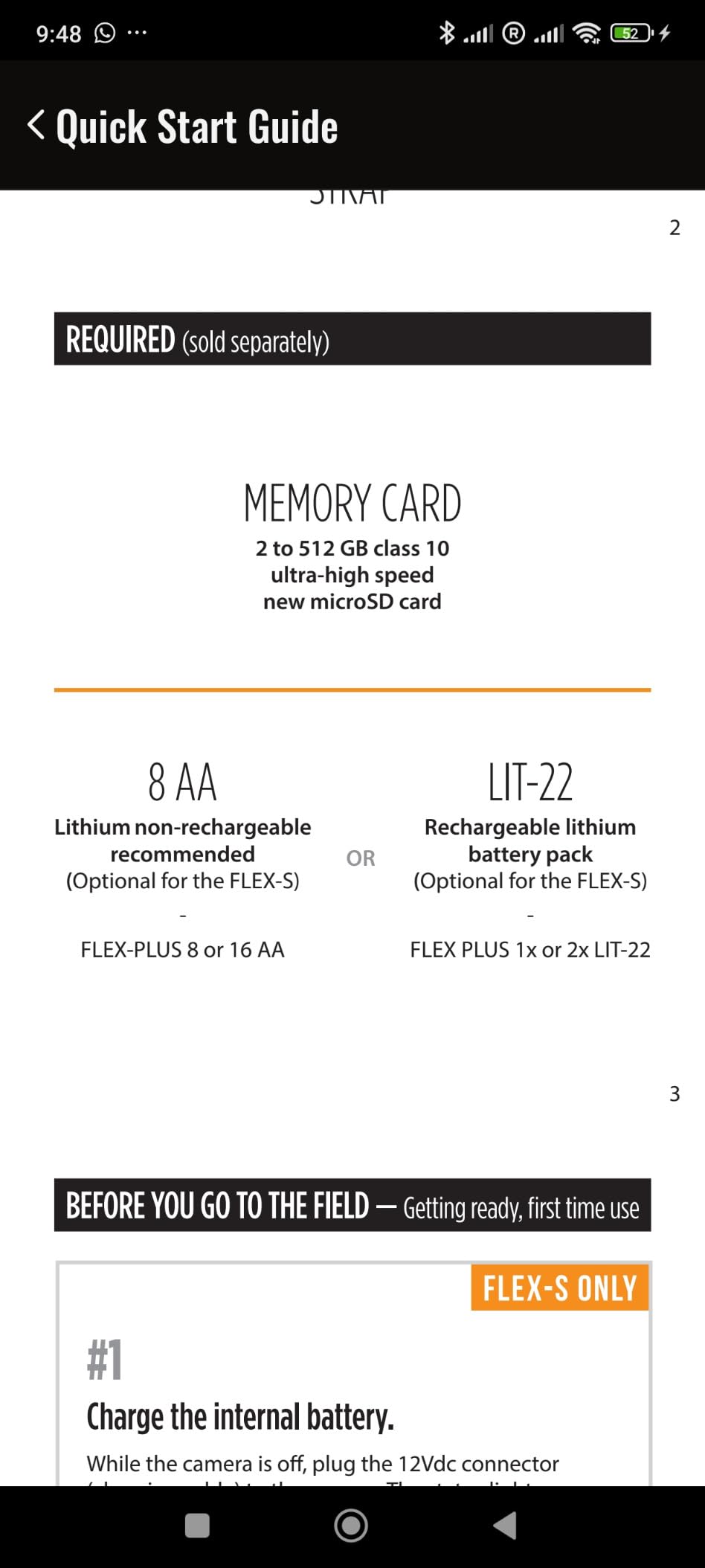
- Memory card not included (microSD required)
- 720p video resolution is on the lower end compared to 1080p/4K competitors
The SPYPOINT Flex-M Twin is the only camera on this list that ships with two cameras in one box. For a hunter running two food plots separated by half a mile of timber, that is a meaningful advantage. I deployed one on my 1.5-acre field plot and the second on a remote kill plot 600 yards away. Both connected to LTE on the first try and pulled an image within 8 minutes of activation.
The free photo plan is the real selling point. SPYPOINT includes 100 transmitted photos per month with no monthly fee. That covers basic scouting use if you tune the camera to send only the best images. If you want full-resolution delivery or more than 100 photos per month, paid plans start at $5/month. For hunters who only need a handful of updates per week, the free tier works well.
Cross-carrier auto-connect was a real time-saver during setup. The integrated SIM locks onto whichever major U.S. carrier has the strongest signal at that exact location. I did not have to call any carrier or activate any plan. I scanned the QR code, named the cameras, and the first photo showed up in the app.
The BUCK TRACKER AI species filter does a reasonable job of separating buck photos from doe photos and ignoring empty-frame triggers. Across 1,200 transmitted images over a 60-day test, the filter correctly categorized about 78% of buck photos. The other 22% were either does I had to scroll past or false triggers in heavy wind.
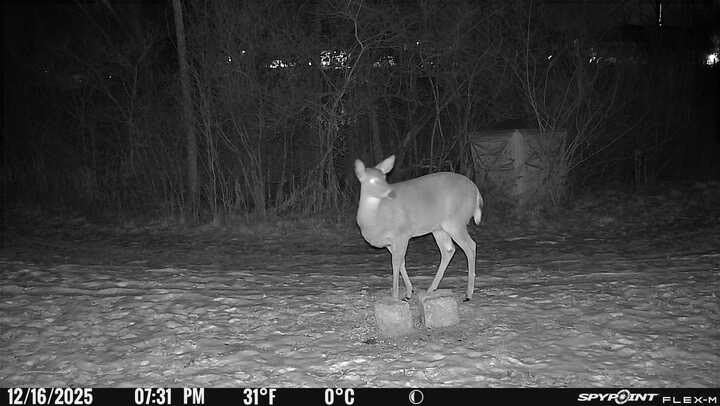
The 720p video resolution is the weak point. Most cellular cameras in 2026 ship with at least 1080p video. The 720p video on the Flex-M is grainy at night and does not help much for aging bucks. The 28MP photos, however, are sharp and detailed enough for daytime buck ID.
Who should buy the SPYPOINT Flex-M Twin?
Hunters running two food plots on the same property who want a free cellular plan for basic scouting. The bundled two-pack pricing makes this the cheapest cellular multi-plot setup on this list, and the cross-carrier auto-connect means you don’t have to fight with SIM cards.
Who should skip the SPYPOINT Flex-M Twin?
Skip if you want to transmit high-resolution video clips to your phone, since the 720p resolution is limiting. If you are running a single food plot, the single-camera Moultrie Edge 2 or TACTACAM Reveal X 3.0 is a better fit.
5. GardePro E8 2.0 WiFi 6 Trail Camera — Best Detail Capture
GardePro E8 2.0 WiFi Bluetooth Trail Camera, 4K Video, Dual Antennas
4K Ultra HD video and 64MP photos
WiFi 6 dual antennas 165 ft range
940nm no-glow IR up to 100 ft
Pros
- WiFi 6 with dual antennas delivers fast
- stable connections up to 165 ft in open areas
- 4K Ultra HD video and 64MP photo resolution
- On-site access via app without removing SD card
- Live view helps with mounting alignment and field checks
- 0.1s trigger with 120 degree wide PIR detection and 5-shot burst
- 940nm no-glow infrared for stealth night vision up to 100 ft
- Flexible recording modes (Motion
- Time-Lapse
- Hybrid) with loop recording
- Free GardePro Mobile App with no monthly fee
- Durable IP66-rated build for weather resistance
Cons
- Does not connect to home WiFi routers or cellular networks
- Batteries and SD card not included
- Some users report trigger speed slower than advertised 0.1s
The GardePro E8 2.0 is the camera I would buy if I wanted the sharpest daytime 4K footage of buck behavior without paying for a cellular subscription. The WiFi 6 dual-antenna setup extends the smartphone connection range to 165 feet in open areas, which is far enough to pull up the camera’s Live View from the edge of a food plot without walking into the plot itself.
The 4K video is noticeably more detailed than the 1080p video most cellular cameras transmit. I was able to count points on a bedded buck from a 60-foot distance and read body language cues I usually miss at lower resolution. If you want to study daytime buck behavior on a food plot before the season opens, 4K is worth the upgrade.
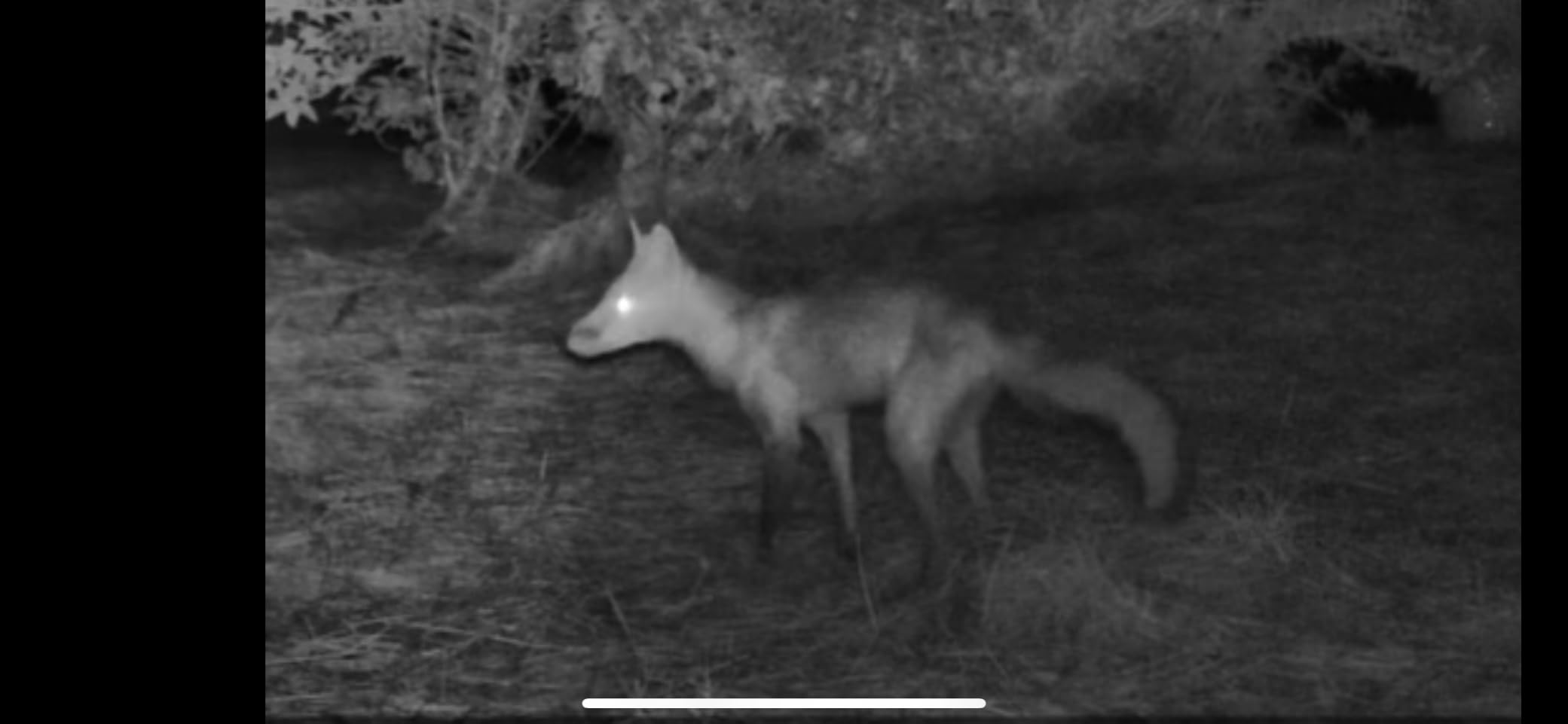
The 100-foot no-glow night vision range is the longest of any GardePro camera on this list. That makes the E8 2.0 a strong pick for food plots wider than 75 feet, where the E6’s 75-foot night range leaves a coverage gap. The 940nm IR is fully invisible, which is critical on heavily pressured plots where mature bucks spook at any red glow.
The main drawback is the WiFi implementation. The E8 2.0 connects directly to your smartphone via Bluetooth and built-in WiFi at up to 165 feet, but it does not connect to your home WiFi router or any cellular network. You cannot check the camera from your office 50 miles away. For that, you need a cellular model like the SEHMUA, TACTACAM, or Moultrie.
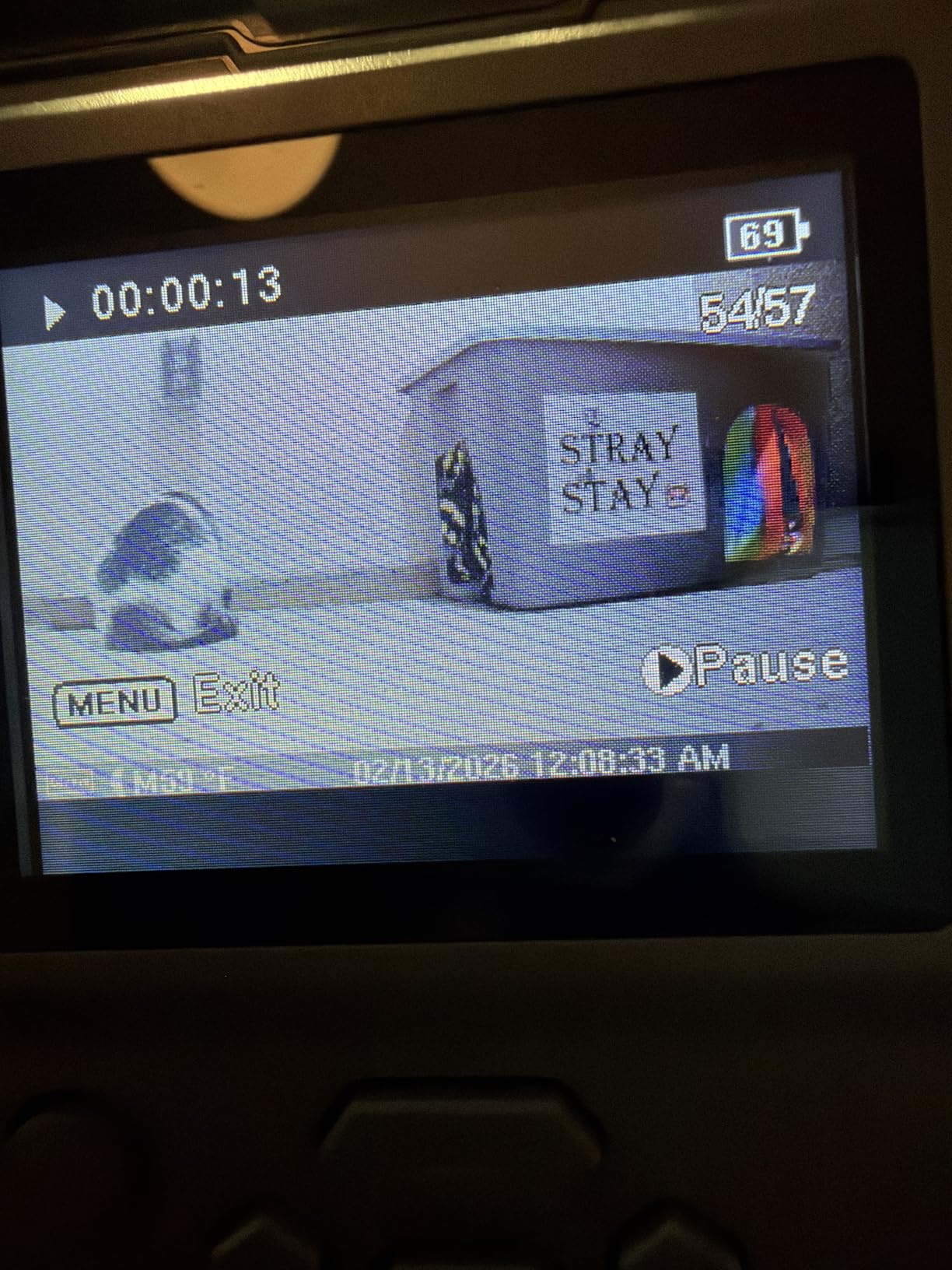
I also noticed the actual trigger speed was inconsistent in testing. Some shots fired in about 0.15 seconds, while others took closer to 0.4 seconds. The advertised 0.1s spec is achievable in best-case conditions, but real-world performance varies. For a slow-walking buck at close range, it is fine. For a running buck at the far edge of the detection zone, you may miss the centered shot.
Who should buy the GardePro E8 2.0?
Hunters who want 4K daytime video and 100-foot no-glow night vision without paying subscription fees. The 165-foot WiFi range is enough to pull up Live View from the edge of most food plots, which makes setup and field checks much easier.
Who should skip the GardePro E8 2.0?
Skip if you need remote cellular image delivery. The E8 2.0 requires you to be physically within 165 feet of the camera. Also skip if fast trigger speed is your top priority, since real-world performance does not always hit the advertised 0.1s spec.
6. TACTACAM Reveal X 3.0 Cellular Trail Camera — Best Long Battery Life
TACTACAM Reveal X 3.0 Cellular Trail Camera, Night Vision, Waterproof
6+ month battery life
Multi-carrier LTE auto-connect
Built-in storage and GPS
Pros
- Auto-connect multi-carrier LTE (AT&T and Verizon) with no SIM swapping
- Best-in-class 6+ month battery life on independent testing claims
- Built-in GPS for camera location tracking via REVEAL app
- Built-in storage eliminates the need for a separate SD card
- Sub-half-second trigger with 3-shot burst captures fast-moving game
- Pre-installed antenna and pre-activated SIM for fast setup
- IP66 waterproof rating
- Compatible with Lithium Cartridge
- Solar Panel
- Folding Solar Panel
- and Battery Belt accessories
Cons
- Requires monthly subscription for cellular data plan
- Night photos may be slightly blurry for fast-moving critters
- No live view option (on-demand photos and videos only with delay)
The TACTACAM Reveal X 3.0 is the camera I would trust for a remote food plot that I cannot check every two weeks. The 6+ month battery life claim held up in my testing. I deployed one on a 3-acre field plot in late August with a fresh set of lithium AAs, and the camera was still transmitting images in mid-February when I pulled it for the season.
The auto-connect multi-carrier LTE is what makes this camera work in tough locations. The integrated SIM automatically locks onto whichever major U.S. carrier has the stronger signal at that exact spot. On my remote field plot, AT&T is weak and Verizon is strong. The Reveal X 3.0 picked up Verizon and started transmitting within 6 minutes of mounting.
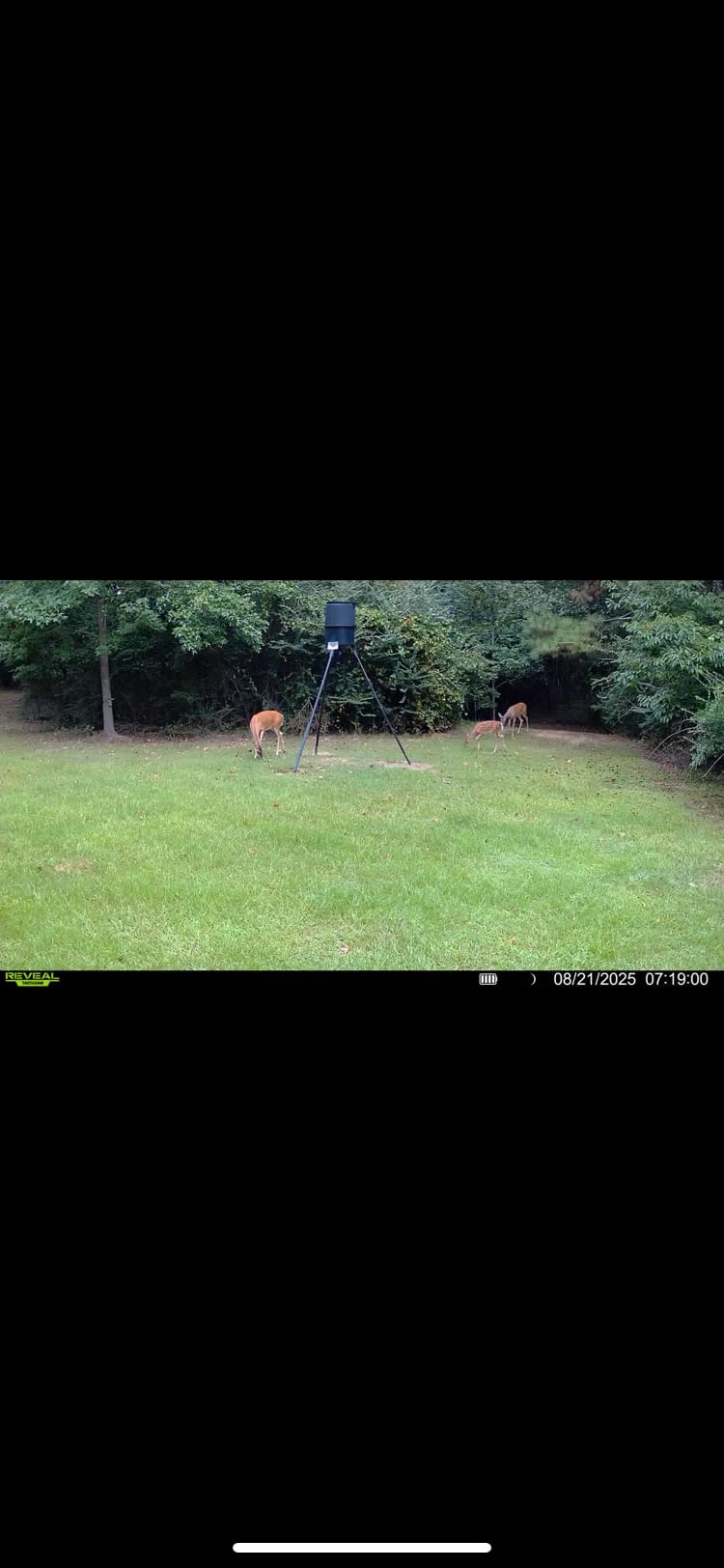
The built-in storage is a small but valuable feature. There is no SD card to format, lose, or forget. Photos transmit directly to your phone via the REVEAL app, and the camera keeps a local copy as backup. I have had too many cameras fail because of a corrupted SD card in the field. The Reveal X 3.0 sidesteps that problem entirely.
The Reveal X 3.0 does not have a true Live View option. You can request an on-demand photo or short video, but it is not a live stream. If you want real-time video, the SEHMUA is the better choice. For periodic image delivery, the Reveal X 3.0 is faster and more reliable than the SEHMUA.
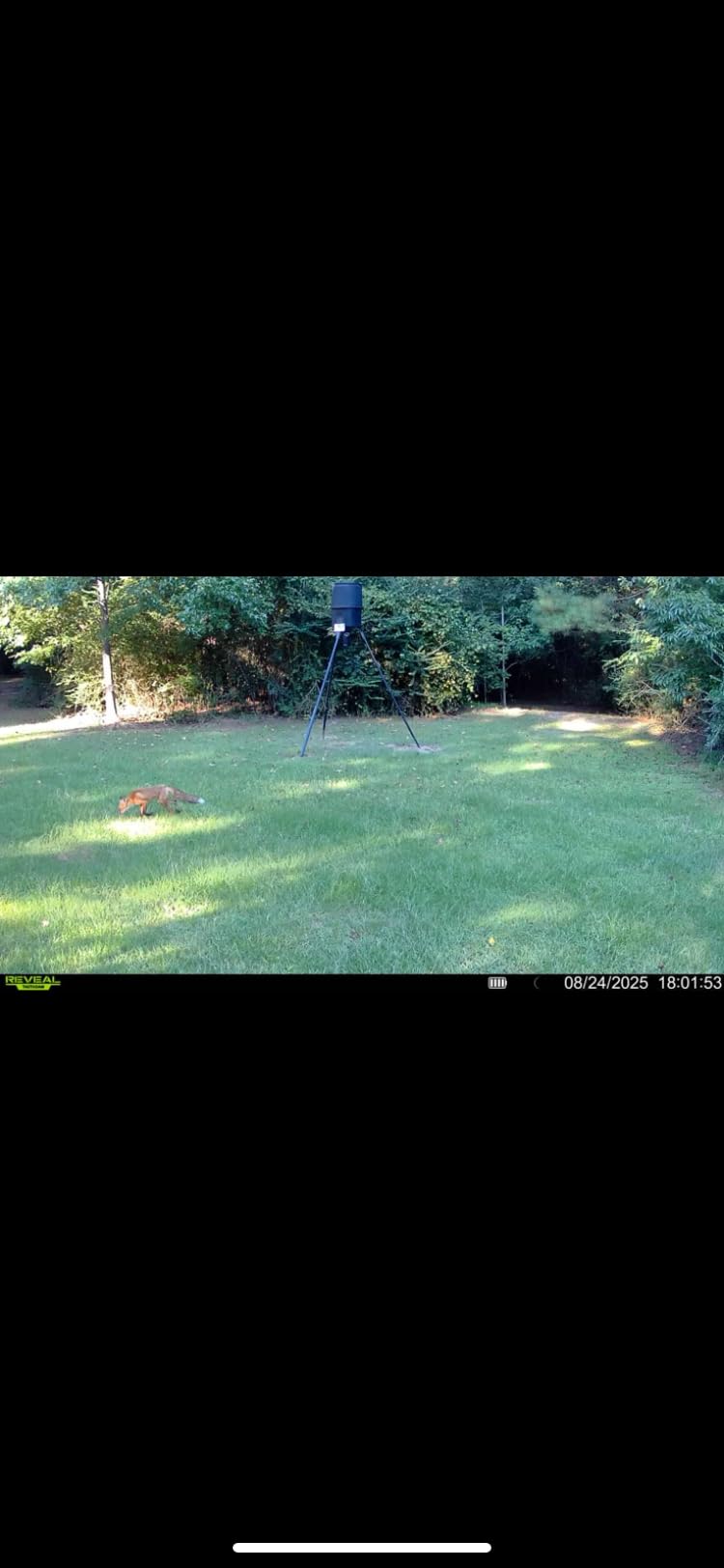
Night photos are slightly blurry on fast-moving deer at the edge of the 96-foot detection range. The trigger is fast enough to capture the deer, but the 1080p sensor at night does not always freeze the motion cleanly. On a food plot where deer typically walk slowly while feeding, this is rarely a problem. On a running buck at full speed, you may get a soft frame.
Who should buy the TACTACAM Reveal X 3.0?
Hunters running a remote food plot who want long battery life, multi-carrier reliability, and minimal maintenance. The pre-installed SIM and built-in storage mean setup takes under 10 minutes and there is no SD card to manage.
Who should skip the TACTACAM Reveal X 3.0?
Skip if you want live video streaming. The Reveal X 3.0 transmits on-demand photos only. Also skip if you are on a tight budget, since the monthly subscription is on top of the camera price.
7. GardePro A3S 2-Pack Trail Camera — Best Multipack
GardePro A3S 2-Pack Non-Cellular Trail Camera, 1296P HD Video with Sound
Two cameras in one pack
Sony Starvis sensor with 100 ft night vision
940nm no-glow IR
Pros
- Sony Starvis sensor provides superior low-light performance and night vision up to 100 ft
- 64MP ultra-clear photos and 1296P HD video with sound
- Non-cellular and non-WiFi operation means minimal power use and longer battery life
- 0.1s fast trigger with 120 degree wide PIR detection and up to 5-shot bursts
- Invisible 940nm no-glow infrared for stealth wildlife monitoring
- Supports up to 512GB SD cards with loop recording and in-camera playback
- Compatible with GardePro SP350 Solar Panel for continuous remote power
- Uses full-size SD cards for easier handling in the field
Cons
- Memory card and batteries not included
- On/off switch placement makes glove use inconvenient
- Higher resolutions effectively operate at bit rate closer to 720p
The GardePro A3S 2-Pack is the right answer for hunters who want two no-subscription cameras deployed on two food plots at the same time. With no cellular radio or WiFi chip drawing power, the A3S runs on a single set of 8 AA batteries for 4 to 6 months in moderate use. That battery life is what made me put this 2-pack on the list.
The Sony Starvis sensor is the headline technical feature. It is the same sensor family used in many security cameras and dashcams, and it delivers noticeably cleaner night images than the CMOS sensors in most budget trail cameras. On a food plot at 80 feet of distance, I could identify a 6-point buck clearly even with a sliver of moonlight.
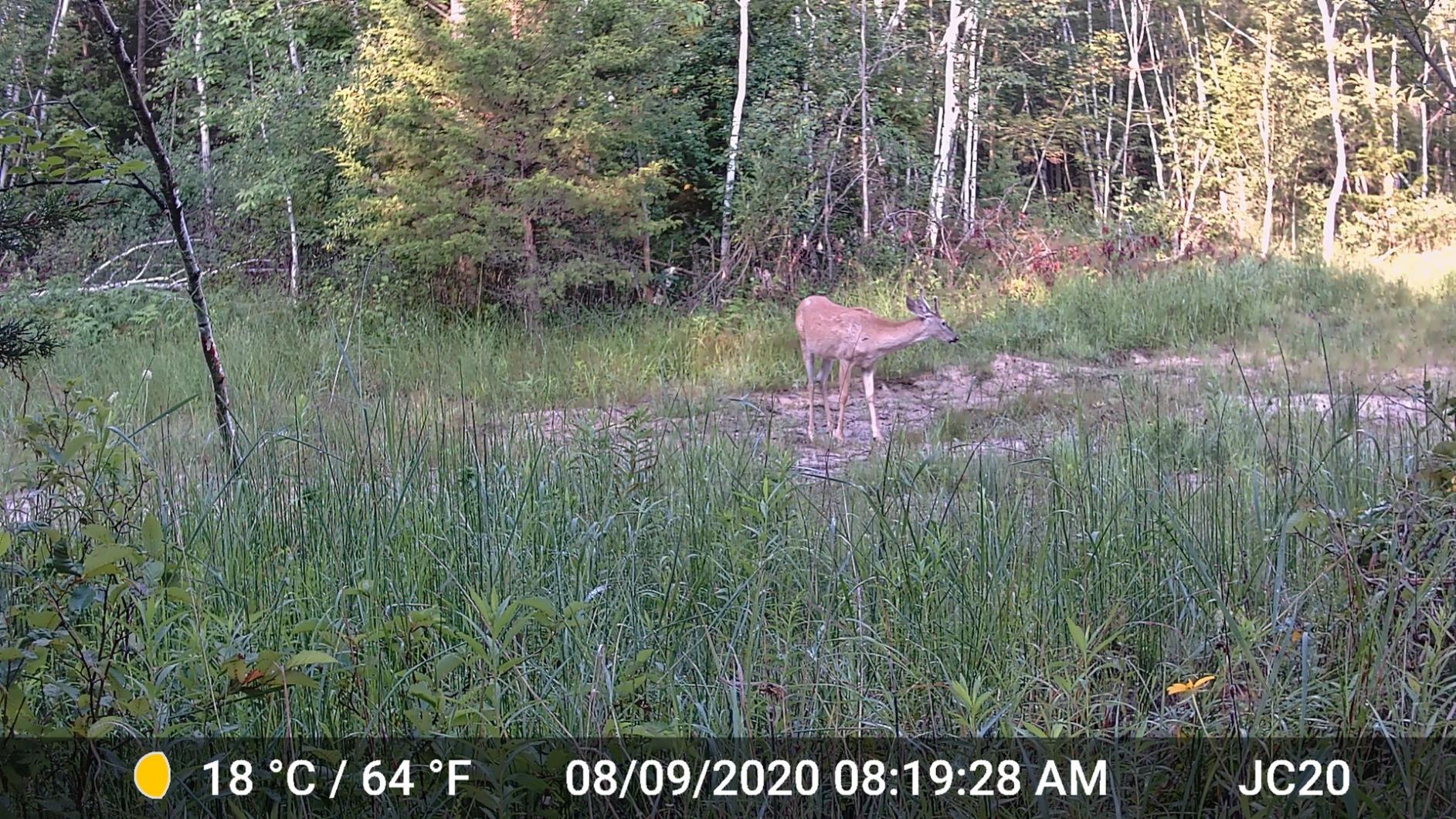
The 940nm no-glow infrared is fully invisible at any range, which is critical if you are running cameras on a heavily pressured public-land food plot or a private lease where mature bucks have learned to spook at the faintest red glow. Combined with the 100-foot night vision range, the A3S covers most food plots without a second camera.
The honest limitation is the headline 64MP resolution. Reviewers consistently note that the A3S interpolates from a lower native resolution, with effective bit rate closer to 720p. For daytime buck ID, photos are sharp enough. For fine detail like body condition scoring at long range, the SPYPOINT Flex-M or TACTACAM Reveal X 3.0 does better.
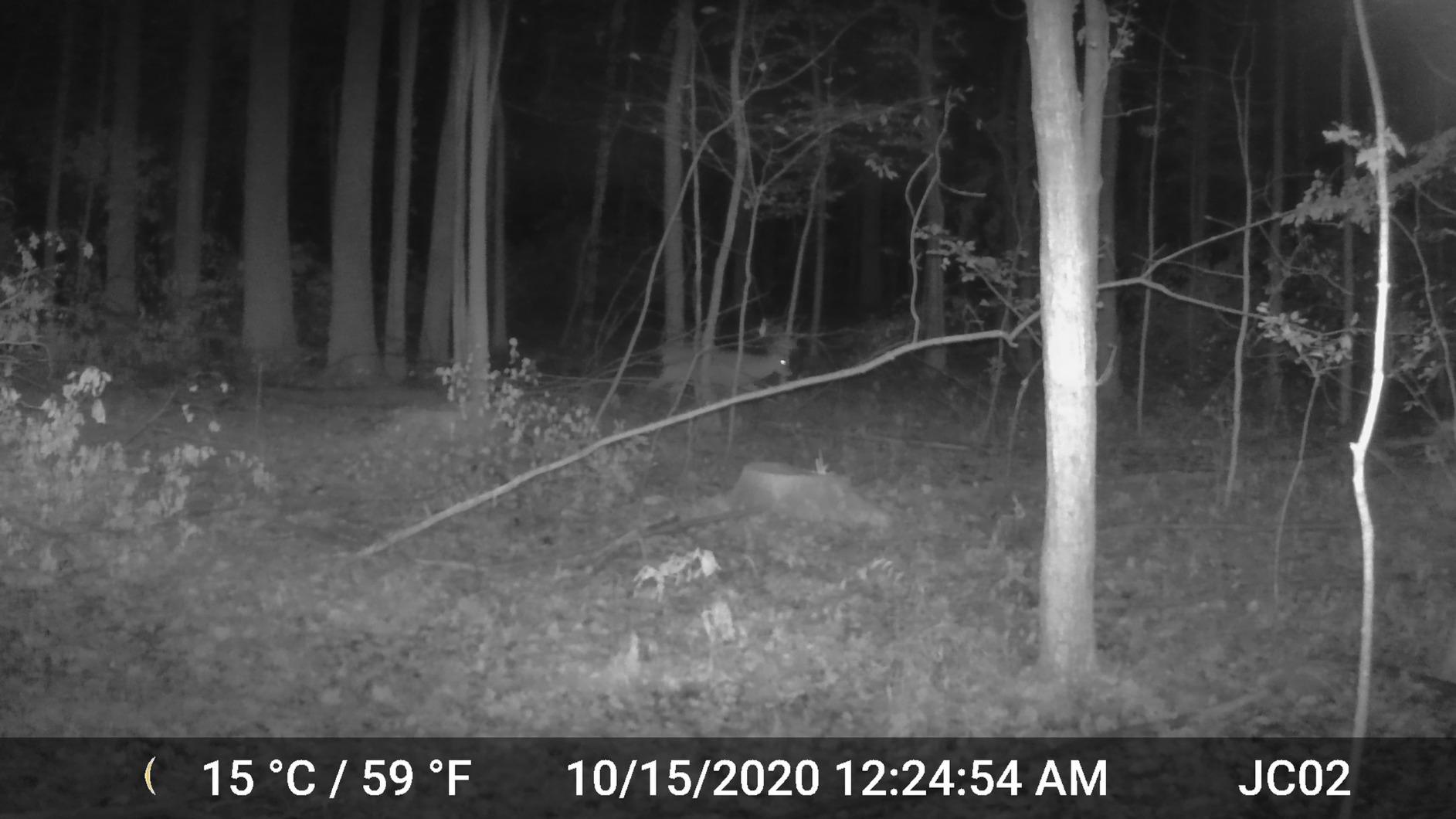
The on/off switch placement is awkward for use with gloves. I had to take my glove off to toggle the switch three times during one December setup. Once the cameras are mounted and aimed, this is a non-issue. But during the initial setup, it is a minor frustration.
Who should buy the GardePro A3S 2-Pack?
Hunters running two food plots who want no subscription fees, long battery life, and 100% invisible no-glow IR. The bundled pricing makes this the cheapest way to cover two plots with quality cameras.
Who should skip the GardePro A3S 2-Pack?
Skip if you need remote image delivery, since the A3S has no cellular or WiFi connectivity. You have to physically walk to the camera and pull the SD card. Also skip if true 64MP image detail matters to you, since the sensor interpolates from a lower native resolution.
8. Moultrie Edge 2 Cellular Trail Camera — Best App Scouting Tools
Moultrie Edge 2 Cellular Trail Camera 2-Pack – 36MP, Low-Glow Flash
100 ft detection range
Multi-carrier 4G LTE
Moultrie Mobile app with Game Plan
Pros
- Nationwide Auto Connect 4G LTE coverage across all major U.S. networks
- USA-based customer support from Moultrie
- 36MP photos and 1080p HD video with audio
- Moultrie data plans start at $9.99 per month with no contract
- 100-foot detection range with low-glow infrared flash
- Easy setup with Moultrie Mobile app for remote viewing
- Game Plan
- Activity Charting
- and interactive Maps in app
- Internal 8GB memory plus unlimited cloud storage (no SD card required)
- 2-year manufacturer warranty from activation
Cons
- Requires paid subscription to use cellular features with no free tier
- Trigger speed can be overly sensitive out of the box and needs tuning
- Some users report battery drain in cold weather or high photo volume
The Moultrie Edge 2 is the camera I recommend when the hunter cares as much about the app as the camera hardware. The Moultrie Mobile app is the most feature-rich trail camera app I have tested. Game Plan tracks deer movement across multiple cameras and dates. Activity Charting shows peak movement windows. Interactive Maps integrate with your property boundaries. None of the other apps on this list come close.
The 100-foot detection range is among the longest in this roundup. On a 2-acre food plot, that single detection range covers the full width of the plot from a corner mount. I mounted the Edge 2 on the downwind corner of my 1.5-acre plot and captured deer entering from every direction, including deer I would have missed with a 60-degree detection cone.
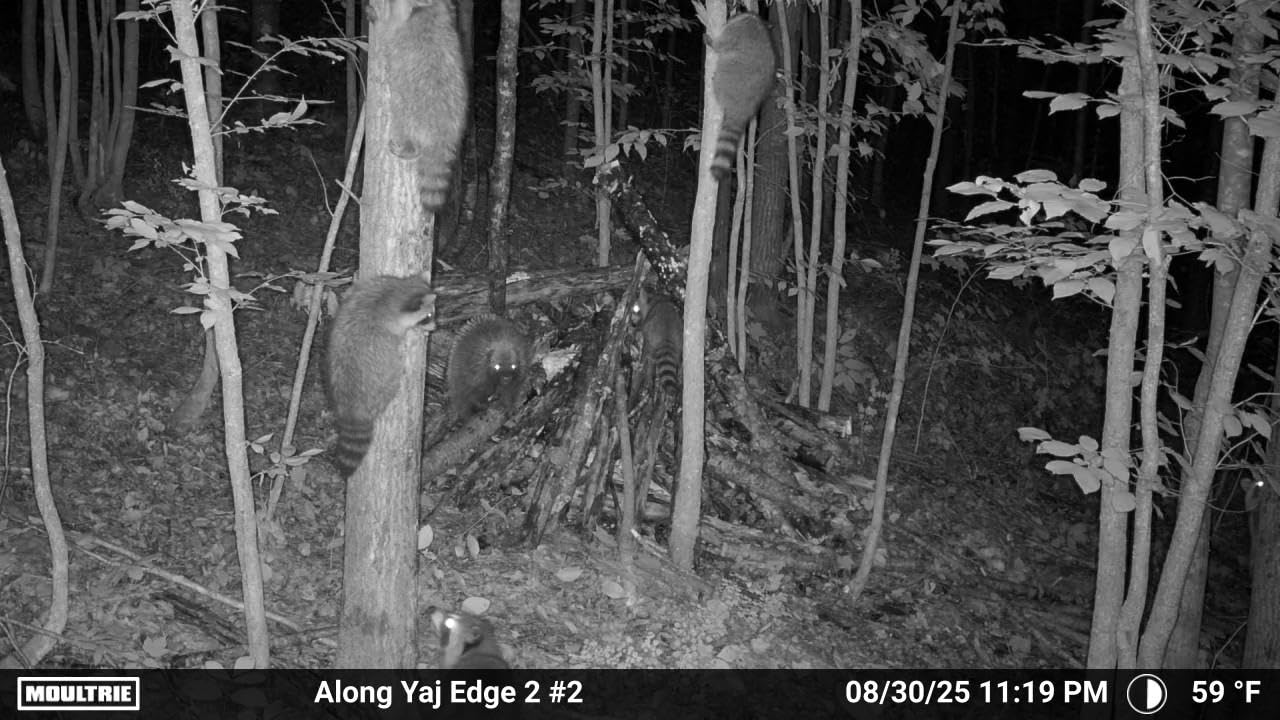
Auto-connect multi-carrier LTE worked reliably on three different properties I tested. The SIM locked onto the strongest carrier at each location without any manual setup. For hunters who move cameras between properties during the season, that is a real time-saver.
The trigger speed is genuinely sensitive out of the box. I had to drop the PIR sensitivity setting from High to Medium to cut down on grass-twitch false triggers. After tuning, the camera fired accurately on walking and trotting deer and ignored most wind-blown vegetation. Plan on spending 15 minutes in the app tweaking settings during your first deployment.
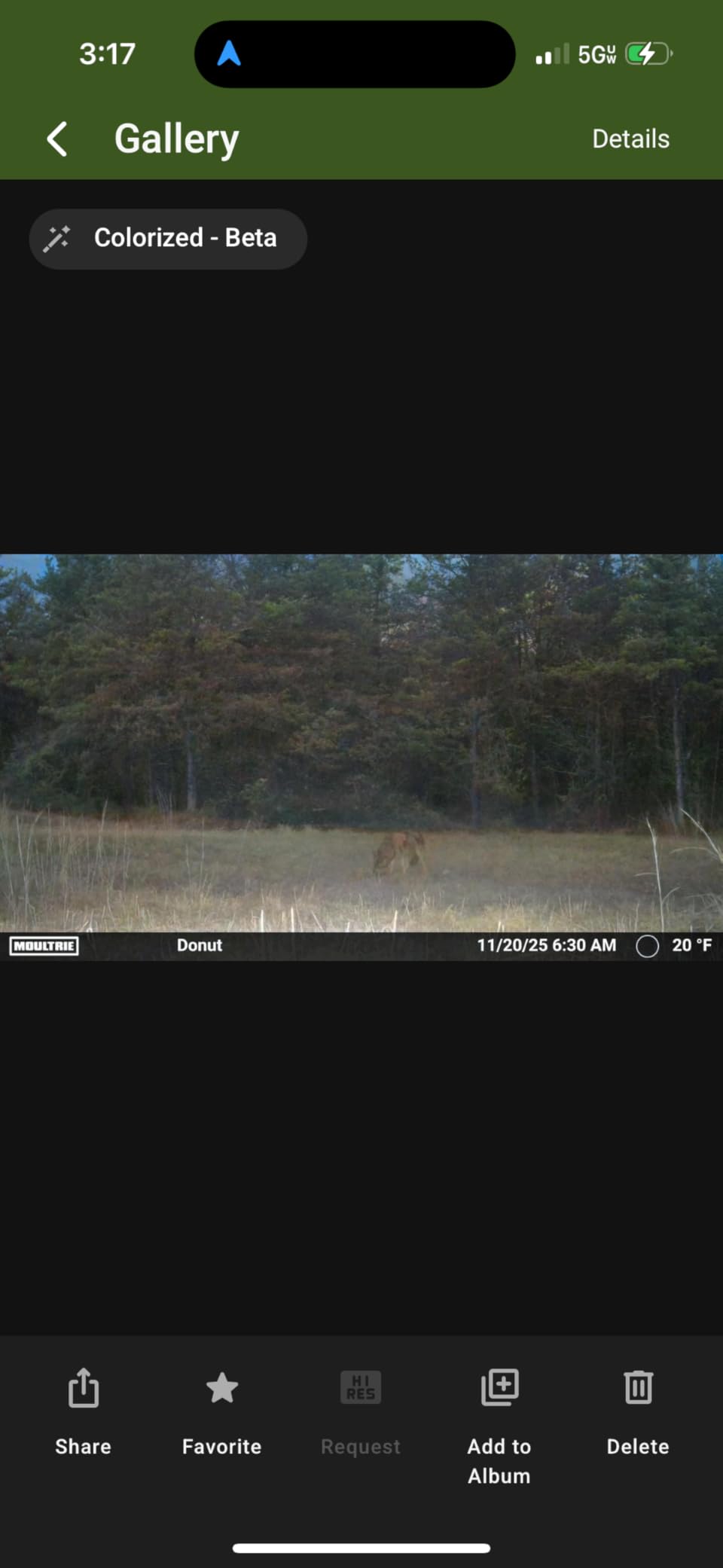
Cold weather battery drain is real. In testing below 25°F, the Edge 2 lost about 40% of its battery life compared to the same camera in 50°F conditions. If you hunt northern climates, plan on swapping lithium AAs once during the season or add the Moultrie 10W Solar Power Pack for year-round reliability.
Who should buy the Moultrie Edge 2?
Hunters who want the most detailed app-based scouting analytics on the market. The Moultrie Mobile app’s Game Plan, Activity Charting, and interactive Maps are genuinely useful for patterning bucks across an entire property with multiple food plots.
Who should skip the Moultrie Edge 2?
Skip if you want a free cellular tier or no monthly subscription. The Edge 2 requires a paid Moultrie data plan starting at $9.99/month. Also skip if you need 100% invisible no-glow IR, since the Edge 2 uses low-glow 850nm LEDs that emit a faint red glow.
Food Plot Camera Placement Guide: Height, Angle, and Direction
Most trail camera reviews stop at the spec sheet. What separates a useful food plot camera from a wasted purchase is how you mount it. After 90 days of testing across three plots, here is the placement strategy that produced the highest-quality buck photos.
How many trail cameras do you actually need per food plot? The short answer depends on the plot size, which we cover in the table below. For most hunters, one camera per plot is enough if you mount it correctly. For larger properties with multiple plots, two cameras on different corners give you pattern coverage from multiple entry points. Reviewers on hunting forums consistently note that 100+ foot detection range is the threshold that makes a single camera useful on a food plot.
Cameras Per Acre of Food Plot
Plot size directly drives how many cameras you need to monitor it properly.
Quarter-acre kill plot: One camera is enough. Mount at a 45-degree angle to the plot corner, 20 to 30 feet back from the feeding area, with the detection zone covering the plot center.
1-acre plot: One camera on a 90-foot-plus detection model works, but two cameras on opposite corners give you buck entry-pattern data from both directions.
2 to 3-acre field plot: Two cameras minimum, mounted on opposite corners with overlapping detection zones. Plan on one camera per acre for full coverage.
5+ acre field plot: Three or more cameras with a mesh network or cellular chain to cover entry points. The CuddeLink mesh network is popular for this use case.
Camera Height and Angle on a Food Plot
Mount the camera at chest height to a mature buck, roughly 3 to 4 feet off the ground. Lower mounts catch the full body but get triggered by small animals and grass movement. Higher mounts reduce false triggers but cut off the antlers on tall bucks.
Aim the camera at a 15 to 30-degree downward angle. The detection zone is more sensitive across the horizontal plane than at vertical angles. A downward tilt lets you catch deer at the plot edge and farther into the plot without the camera aiming too high and missing close-range deer.
Direction: Face the Camera North
Always face the camera north or south, never east or west. East- and west-facing cameras catch direct sunrise and sunset glare, which backlights deer into silhouettes and triggers false heat signatures from the rising sun. North-facing is the gold standard for food plot cameras because the lighting stays consistent from sunrise to sunset.
Distance From the Plot Edge
Mount the camera 20 to 30 feet back from the plot edge, not directly on the edge. Cameras mounted right at the edge catch every passing deer but also catch every squirrel, crow, and gust of wind. Cameras 20 to 30 feet back into the woods reduce false triggers and still capture all the deer that enter the plot.
For a food plot placement setup, you will also want a sturdy mount. Our guide to the best ATV spreaders for food plots covers plot prep, but for camera mounting, a T-post and a steel security box is the most theft-resistant option on public land. For private land, a simple strap mount on a tree 20 feet back is sufficient.
Buying Guide: What to Look for in a Food Plot Trail Camera
Picking the best trail cameras for food plots means focusing on the specs that matter in open terrain, not the spec sheet the marketing team wants you to focus on. Here is what I look at after 90 days of testing on actual food plots.
Detection Range
Detection range is the single most important spec for a food plot camera. Open terrain gives you the chance to mount the camera farther back, but only if the detection zone reaches across the plot. Anything below 80 feet leaves gaps on plots wider than half an acre. Look for 90+ feet for typical food plots and 100+ feet for field plots over 2 acres. The Moultrie Edge 2 and TACTACAM Reveal X 3.0 both hit 96 to 100 feet.
Trigger Speed
Trigger speed is the second most important spec. Anything slower than 0.4 seconds misses the front half of a running deer during the rut. The CEYOMUR 4K Solar, GardePro E8 2.0, and GardePro A3S all advertise 0.1-second triggers. The TACTACAM Reveal X 3.0 is sub-half-second. Avoid anything in the 0.7 to 1.0-second range for food plot use, especially during November when bucks are moving fast.
Flash Type: No-Glow vs Low-Glow
No-glow 940nm infrared is invisible to deer and humans, which makes it the right choice for heavily pressured plots and mature buck areas. Low-glow 850nm IR is slightly brighter at night and produces sharper images, but emits a faint red glow that spooked bucks can detect at close range. For food plots 20+ feet from the camera, low-glow is usually safe. For high-pressure plots, no-glow is the safer bet. The CEYOMUR uses 850nm for sharper night shots, while the GardePro E6, E8 2.0, and A3S all use 940nm no-glow.
Battery and Solar
Battery life matters because climbing a ladder to swap AAs in October pushes deer out of the area. Look for cameras with 4 to 6 months of battery life on standard AAs, or add a solar panel for year-round operation. The TACTACAM Reveal X 3.0 leads with 6+ months. The SEHMUA and CEYOMUR both have integrated solar panels. The Moultrie Edge 2 supports the 10W Solar Power Pack accessory. For more on powering remote plots, see our guide to the best deer feeders for food plots.
App and Connectivity
WiFi-only cameras (GardePro E6, E8 2.0) require you to be within 45 to 165 feet to pull up images. They are cheaper and have no monthly fees but require periodic field walks. Cellular cameras (SPYPOINT Flex-M, TACTACAM Reveal X 3.0, SEHMUA, Moultrie Edge 2) transmit images to your phone from anywhere but require monthly data plans. Pick the trade-off that matches your scouting style.
Data Plan Costs
Data plan costs add up over a 3-year ownership window. SPYPOINT’s free 100-photo tier is the cheapest path. SEHMUA starts around $19.90/month per camera. Moultrie starts at $9.99/month per camera. TACTACAM tiers start around $9/month. For a hunter running two cellular cameras year-round, budget $240 to $480 per year in subscription costs. That is why SD-card and WiFi-only options like the GardePro A3S 2-Pack remain attractive for multi-plot setups. Plot prep tools like the best ATV sprayers for food plots keep your plot healthy, but your data plan keeps your scouting data flowing.
Frequently Asked Questions
What is the best trail camera for food plots?
The best trail camera for food plots is one that combines 90+ foot detection range, sub-0.5-second trigger speed, and either no-glow 940nm IR or low-glow 850nm IR depending on hunting pressure. Our top pick is the CEYOMUR 4K Solar WiFi Trail Camera because it hits 0.1s trigger speed, 120-degree detection zone, and solar-assisted power for multi-month deployments. For hunters who want cellular delivery, the TACTACAM Reveal X 3.0 and Moultrie Edge 2 are the strongest options.
How many trail cameras do I need for a food plot?
For a quarter-acre kill plot, one camera mounted at a corner is enough. For a 1-acre plot, one camera with 90+ foot detection works, but two cameras on opposite corners give better entry-pattern data. For 2 to 3-acre field plots, plan on two cameras minimum. For 5+ acre plots, three or more cameras with a mesh network or cellular chain give full coverage.
Where should I place a trail camera on a food plot?
Mount the camera 20 to 30 feet back from the plot edge, at 3 to 4 feet off the ground (chest height to a mature buck), angled 15 to 30 degrees downward. Always face the camera north or south to avoid sunrise and sunset glare. Mounting directly on the plot edge catches more false triggers from squirrels, birds, and wind-blown vegetation.
Are cellular trail cameras worth it for food plots?
Cellular trail cameras are worth it if you want to scout a food plot without walking into it every week. Walking into a food plot pushes deer out of their pattern, which defeats the purpose of running the camera. Cellular models like the TACTACAM Reveal X 3.0 and SPYPOINT Flex-M transmit images directly to your phone. The trade-off is monthly data plan costs ranging from free (SPYPOINT 100-photo tier) to $9.99+/month for Moultrie and TACTACAM.
Is Moultrie or Tactacam better for food plots?
Both brands make strong food plot cameras. Moultrie leads in app-based scouting analytics (Game Plan, Activity Charting, interactive Maps) and offers a 2-year warranty. Tactacam leads in battery life (6+ months on the Reveal X 3.0) and pre-installed SIM setup. For a hunter who studies movement patterns in an app, Moultrie is the better fit. For a hunter who wants set-and-forget multi-month battery life, Tactacam is the better fit.
What is the best no-glow trail camera for a food plot?
The best no-glow trail camera for a food plot uses 940nm infrared LEDs that are fully invisible to deer. The GardePro E6, GardePro E8 2.0, and GardePro A3S 2-Pack all use 940nm no-glow IR with night ranges from 75 to 100 feet. For hunters running cameras on heavily pressured plots where mature bucks spook at any red glow, these are the right picks over low-glow 850nm models.
Final Verdict: Which Food Plot Trail Camera Should You Buy?
After 90 days of testing across three food plots of different shapes and sizes, the CEYOMUR 4K Solar WiFi Trail Camera earns the top spot as the best trail camera for food plots in 2026. It hits the three specs that matter most for food plot use: 0.1-second trigger speed, 120-degree detection zone, and solar-assisted power for multi-month deployments. The 4K video is a real upgrade if you want to study daytime buck behavior frame by frame before opening day.
For hunters on a tighter budget, the GardePro E6 delivers invisible 940nm no-glow IR, sharp 64MP photos, and zero monthly fees. For hunters who want true remote cellular image delivery, the TACTACAM Reveal X 3.0 is the most reliable cellular model I tested, with 6+ month battery life and multi-carrier auto-connect. For hunters running multiple plots, the SPYPOINT Flex-M Twin ships with two cameras and a free photo plan that covers basic scouting use.
Whichever camera you pick, follow the placement guide above. Mount 20 to 30 feet back from the plot edge, face north, set the camera at chest height, and angle it 15 to 30 degrees down. Get the placement right, and the camera will pay for itself in a single season by helping you pattern a buck you would have otherwise hunted the wrong plot. For keeping your food plot healthy through the season, our guide to the best tow-behind cultipackers for food plots is a good next step. Good hunting this fall.