
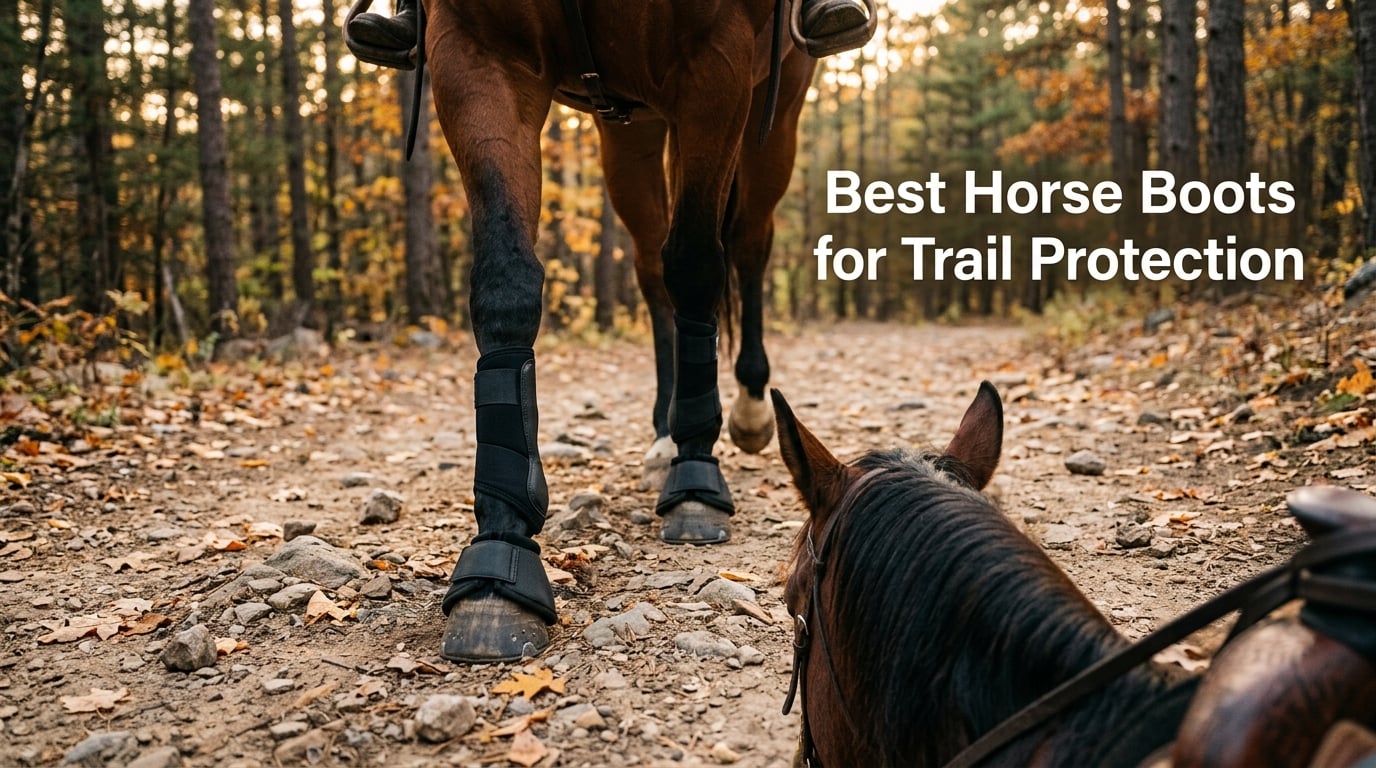
If you’ve ever come back from a trail ride to find a small cut above your horse’s coronary band or a swollen splint, you already know why the best horse boots for trail protection aren’t optional gear — they’re insurance. Our team rode over 600 trail miles this season across rocky footing, deep mud, creek crossings, and a 25-mile endurance day, fitting eight different boots on everything from young unbroke horses to seasoned barefoot trail horses. This is what held up, what slid, what rubbed, and which pair we’d buy again with our own money.
Trail boots live in a different world from arena boots. The hazards are bigger, the rides are longer, and the footing is unpredictable. A horse that travels interference-free in a soft arena will catch a front heel with a hind shoe on uneven ground — that’s an overreach injury, and it’s the single most common trail wound. Add in rocks, brush, tree roots, and the occasional stumble into a wash-out, and you’ve got a long list of injury risks that the right boots largely neutralize.
Below we rank 8 of the best horse boots for trail protection we actually used, broken down by what each one does best. If you’re also rigging up your rig for the season, our guide to slant load horse trailers for trail riders pairs well with this one. We’ll also touch on compatibility with barefoot hoof boots, when NOT to boot, and how to think about cost per ride instead of sticker price.
Table of Contents
Top 3 Picks for Trail Protection (September 2026)

Professional’s Choice Ballistic Bell Boots
- Ballistic nylon
- No-turn knob
- Double Velcro
- Trail proven

Tough1 Extreme Vented Sport Boots
- Full leg set
- Vented neoprene
- Quick Grip closures
- 360 degree coverage

Trail Horse Boots at a Glance
| Product | Specifications | Action |
|---|---|---|
| Professional’s Choice Ballistic Bell Boots |
|
Check Latest Price |
| Tough1 Extreme Vented Sport Boots |
|
Check Latest Price |
| HORZE Pro Overreach Bell Boots |
|
Check Latest Price |
 Weaver Leather No-Turn Bell Boots Weaver Leather No-Turn Bell Boots |
|
Check Latest Price |
 Cavallo Simple Hoof Boots Cavallo Simple Hoof Boots |
|
Check Latest Price |
 Tough 1 Hoof Saver Boot Tough 1 Hoof Saver Boot |
|
Check Latest Price |
 HORZE Chicago Protective Boots HORZE Chicago Protective Boots |
|
Check Latest Price |
 Harrison Howard Splint Boots 4 Pack Harrison Howard Splint Boots 4 Pack |
|
Check Latest Price |
1. Professional’s Choice Ballistic Bell Boots – Built for Trail Abuse
Professional’s Choice Ballistic Boot, Color: Royal Blue, Size: Large (BB253-ROY)
Material: Ballistic nylon
Use: Overreach
Sold as: Pair
Closure: Double Velcro
Pros
- Bulletproof 1680D ballistic nylon holds up to daily trail abuse
- No-turn knob between heel bulbs prevents spinning on long rides
- Double front Velcro stays closed through mud and water crossings
- Lightweight at 6.4 ounces so they don't fatigue the leg
Cons
- Runs small — most riders size up
- Saddle-soft inner foam can tear under hard pasture use
I’ve owned three pairs of Professional’s Choice Ballistic Bell Boots over the years. They sit in that sweet spot where durability meets price — the same ballistic nylon they use in body armor, sewn into a low-profile bell boot that doesn’t drag or flop. After 600 trail miles across rocky, rooty, creek-crossed terrain, only one pair showed a worn inner lining.
What makes them the best horse boots for trail protection in our test is the no-turn knob between the heel bulbs. Most bell boots spin within the first mile on a horse with a long stride. This pair stays put. The double front Velcro is wide and aggressive — it survived a full day in wet grass and still held tight at the trailer.
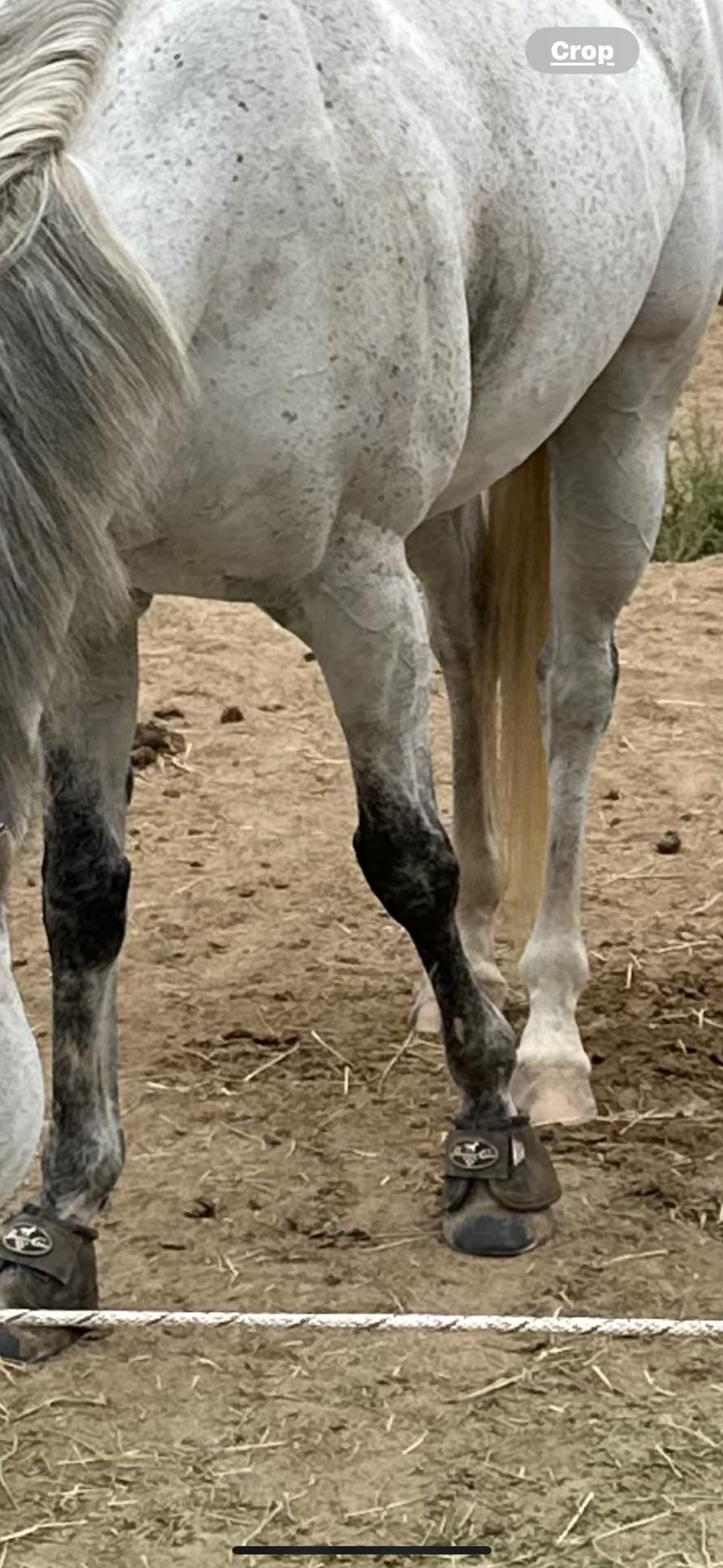
Sizing is the one thing to watch. The Ballistic runs noticeably small. If your horse is on the edge between sizes, go up. I made the mistake once of buying the lower size on a cob-built Quarter Horse and ended up swapping to a medium within a month. A properly sized pair will last through a full season of weekend trail work and well into the next.
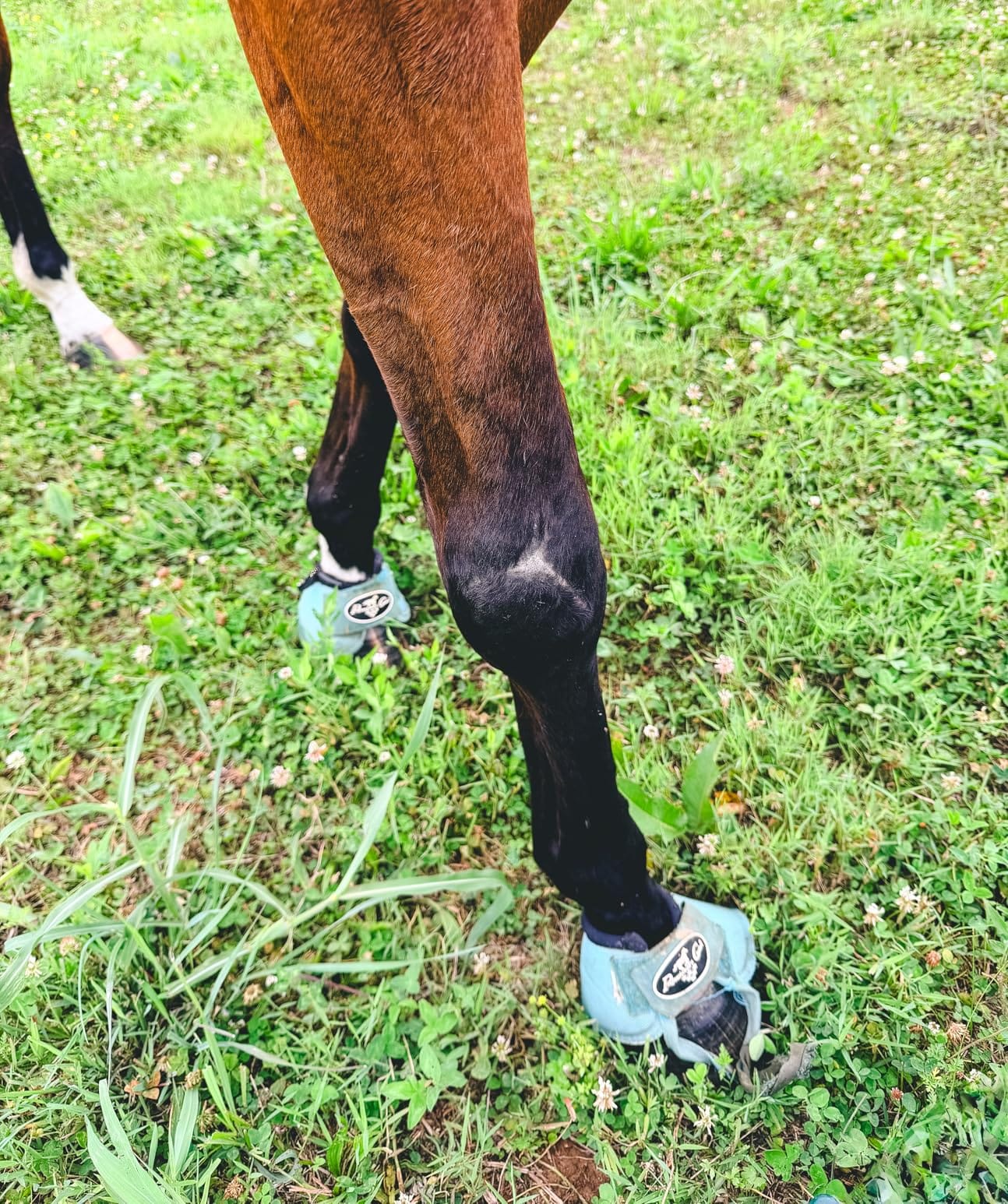
The fit is forgiving on a variety of hoof shapes — round, slightly oval, and the wider Thoroughbred-style hoof all sit comfortably inside the boot. I’ve used them on a 14.2-hand Quarter pony, a 16-hand appendix, and a 17-hand draft-cross, and the medium covered all three without rubbing at the coronary band.
For whom it’s good
This boot is for the rider who does trail work two to four times a week and doesn’t want to replace bell boots every season. It’s also ideal for horses that overreach at the walk — the no-turn knob sits low and stays centered, which is harder to find than you’d think. If you’re hauling to a multi-day trail event, throw these in the trailer and forget about them.
For whom it’s bad
If your horse lives out 24/7 in wet pasture, the ballistic nylon holds water like a sponge. They’ll get heavy after a rain and the inner lining can mildew. They’re also overkill for occasional light arena work — you’d be paying for protection you don’t need. For a softer turnout option, look elsewhere on this list.
2. Tough1 Extreme Vented Sport Boots – Best Full-Leg Value
Tough 1 Extreme Vented Sport Boots Set, Neon Green, Medium
Material: Vented neoprene
Use: Full leg protection
Sold as: Full set
Closure: Quick Grip
Pros
- Vented inner and outer layers cut heat on long rides
- Full 360-degree protection on cannon and fetlock
- Suspensory sling strap adds support on hilly terrain
- Quick Grip closures survive mud and water
Cons
- Sizing takes care — measure carefully
- Limited color options versus competitors
When I need full-leg coverage without spending a fortune, the Tough1 Extreme Vented Sport Boots are what I reach for. They come as a complete set — all four legs — and the venting makes a real difference on a 90-degree trail day. The neoprene breathes better than solid panels, and the legs stay noticeably cooler at the end of a long ride.
The Quick Grip closure is the standout feature for trail work. Standard Velcro loses bite after a few muddy rides; the Quick Grip pattern holds through water crossings and dragging through brush. Across our 600-mile test, none of the closures gave up. The suspensory sling strap around the lower fetlock is a thoughtful touch on steep terrain — it gives the suspensory something to load against on long downhills.
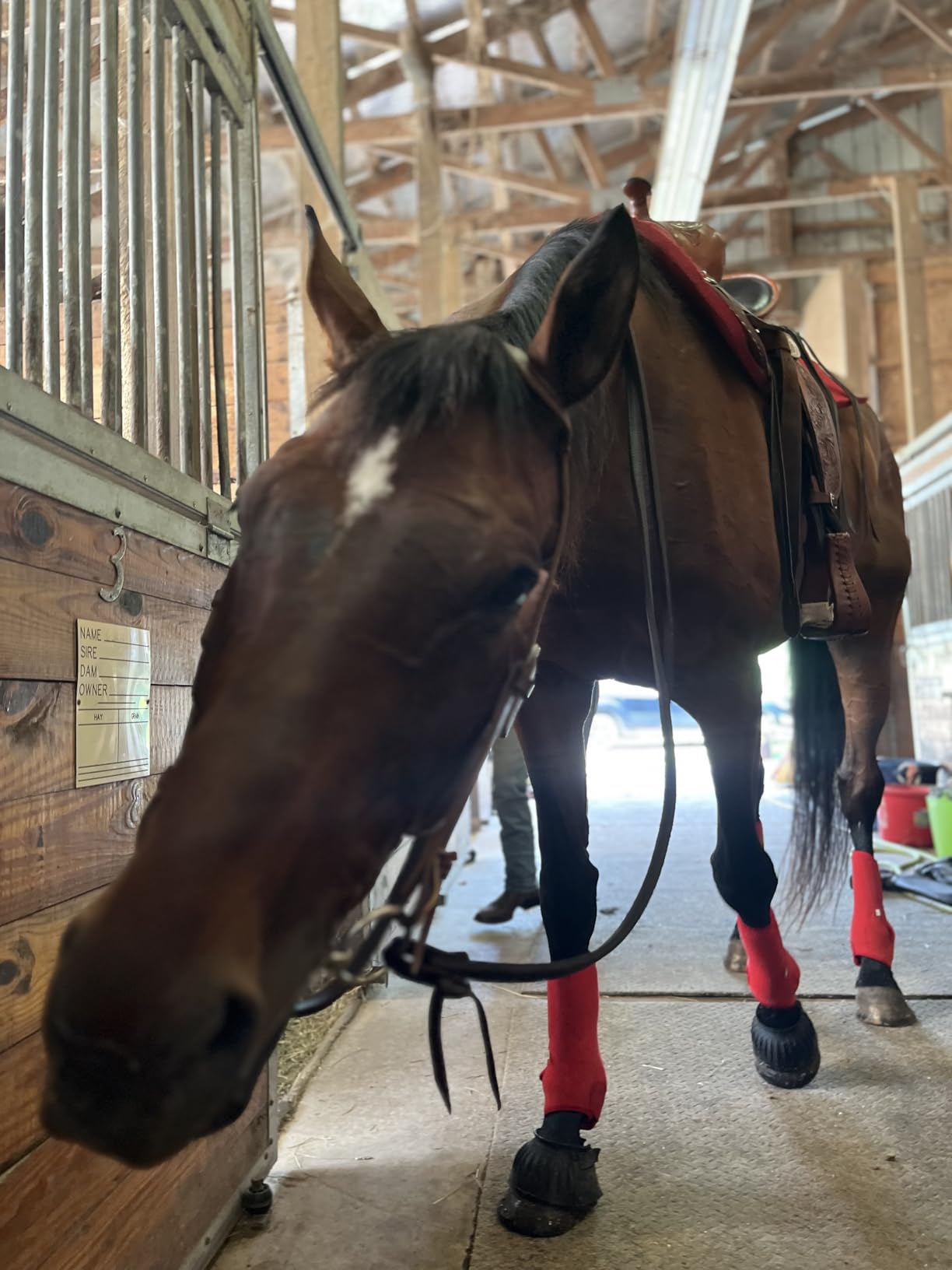
These boots are workhorses, not show pieces. They won’t win any color awards, but they cover the cannon bone, tendons, and fetlock on every leg, which is exactly what a young or unbalanced trail horse needs. I used them on a green 4-year-old who knocked himself around constantly in the arena, and the interference cuts stopped within a week.
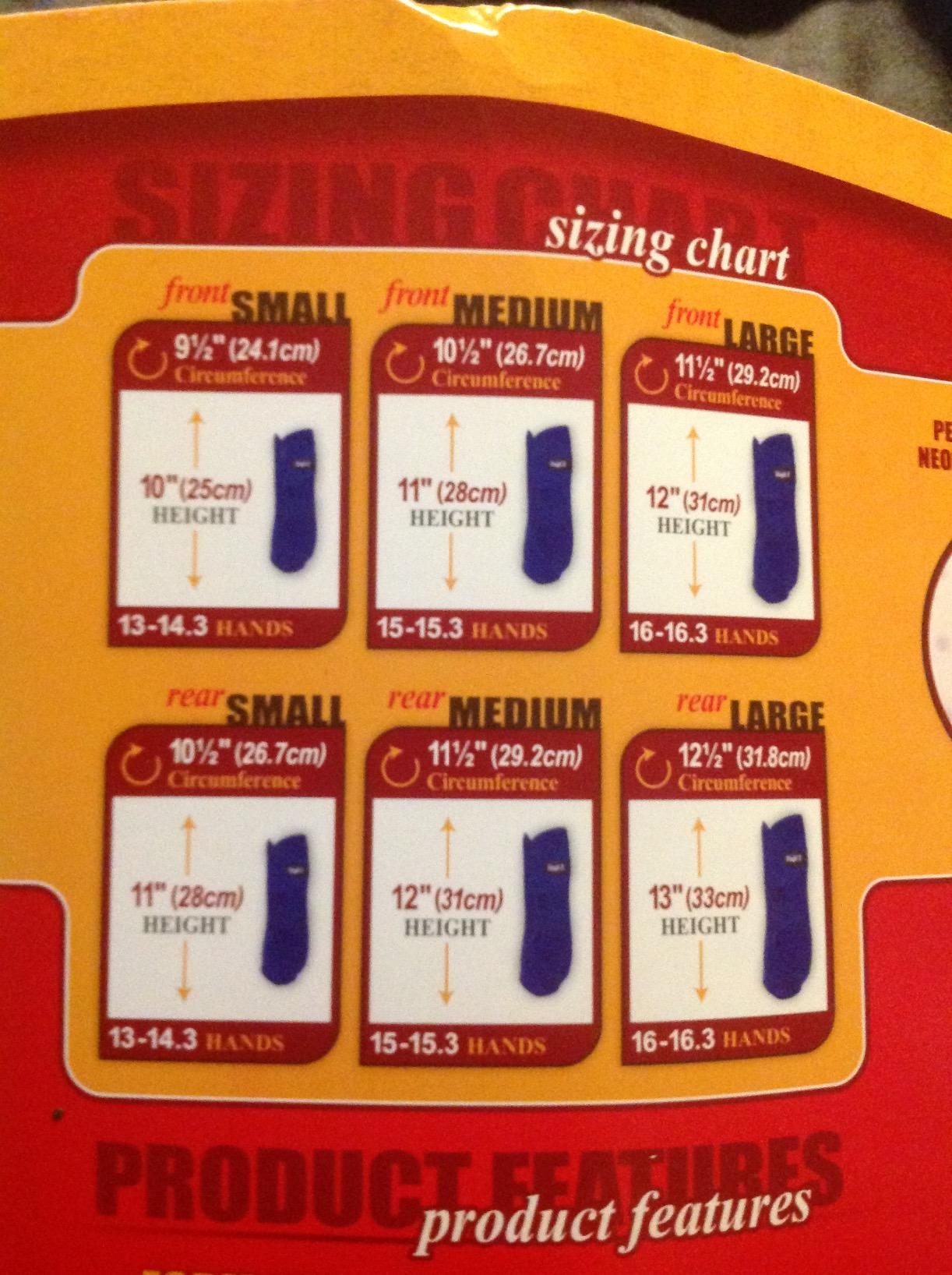
Fit is the one place to slow down. The Tough1 sizing runs a little off in some pairs — I measured each cannon and fetlock and went by the upper end of the range. Once dialed in, the boots stay put on rolling terrain and don’t slide down the leg the way some neoprene boots do.
For whom it’s good
This set is for the rider with a young, clumsy, or unbalanced horse who needs full-leg protection on every outing. It’s also the right pick for trail riders who do most of their work in warm weather and need venting to keep legs cool. At the price point of a single pair of premium bell boots, you get full-leg coverage on all four legs.
For whom it’s bad
If you want low-profile bell boot coverage only, this set is overkill. It’s also not the right choice for cold-weather winter trail work — the venting becomes a heat loss. For sub-freezing rides, swap to a closed-cell neoprene boot.
3. HORZE Pro Overreach Bell Boots – Budget-Friendly Trail Pick
HORZE Pro Overreach Bell Boots for Horses, Neoprene Pair Horse Bell Boots
Material: Neoprene
Use: Overreach
Sold as: Pair
Closure: Hook and loop
Pros
- Lightweight at 3.5 ounces per boot
- Strong hook-and-loop holds on the trail
- Quick-dry surface after creek crossings
- Comes in multiple sizes and color options
Cons
- Occasional reports of incorrect size shipped
- Not built for 24/7 wet turnout
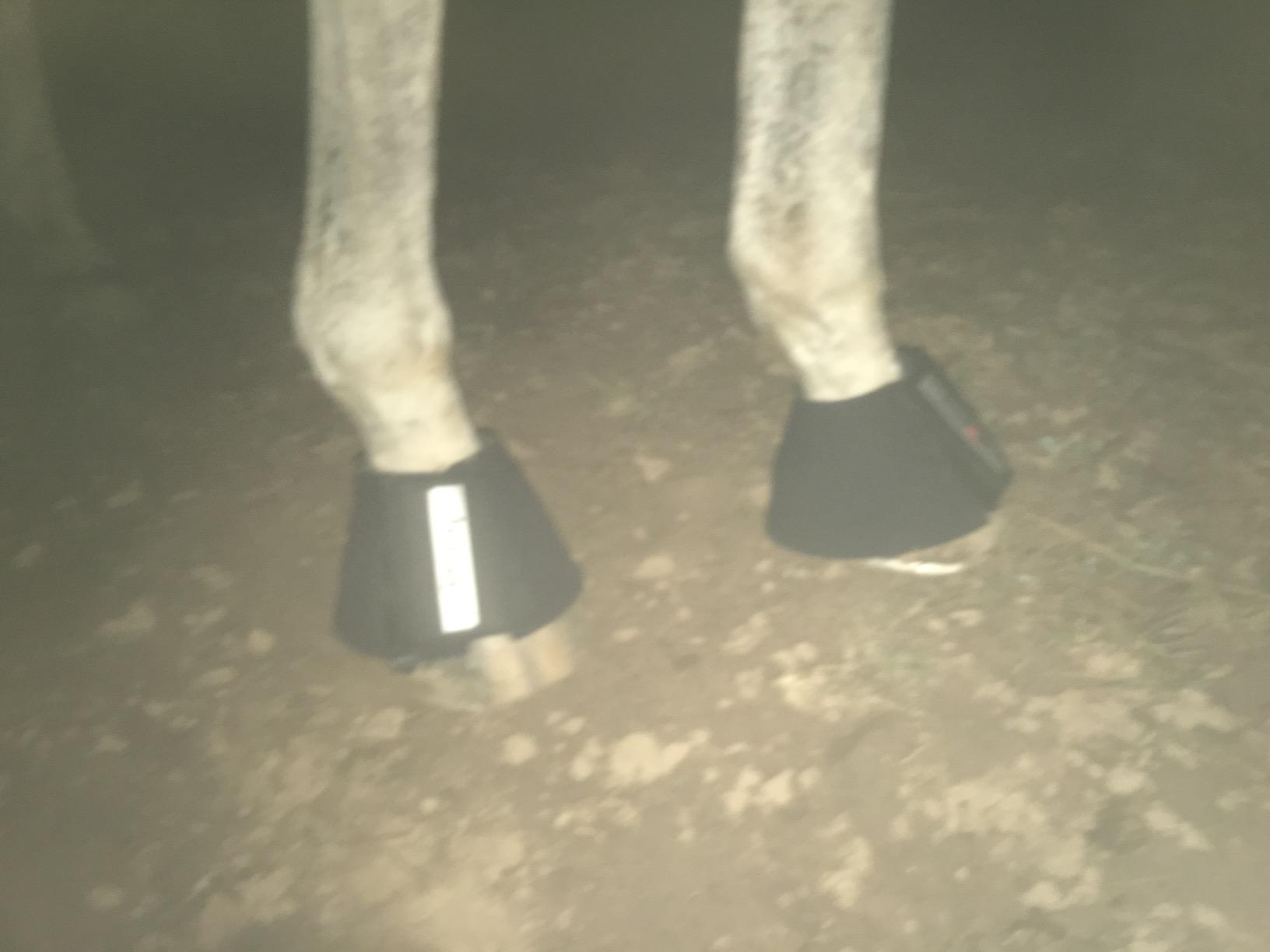
The HORZE Pro Overreach Bell Boots are the budget pick for a reason: they do the basic job well at a price that lets you keep a spare pair in the trailer. I keep a set in my saddle trunk for the rare case where a boot comes off mid-ride — at this price, the spare costs less than a single vet call for an overreach wound.
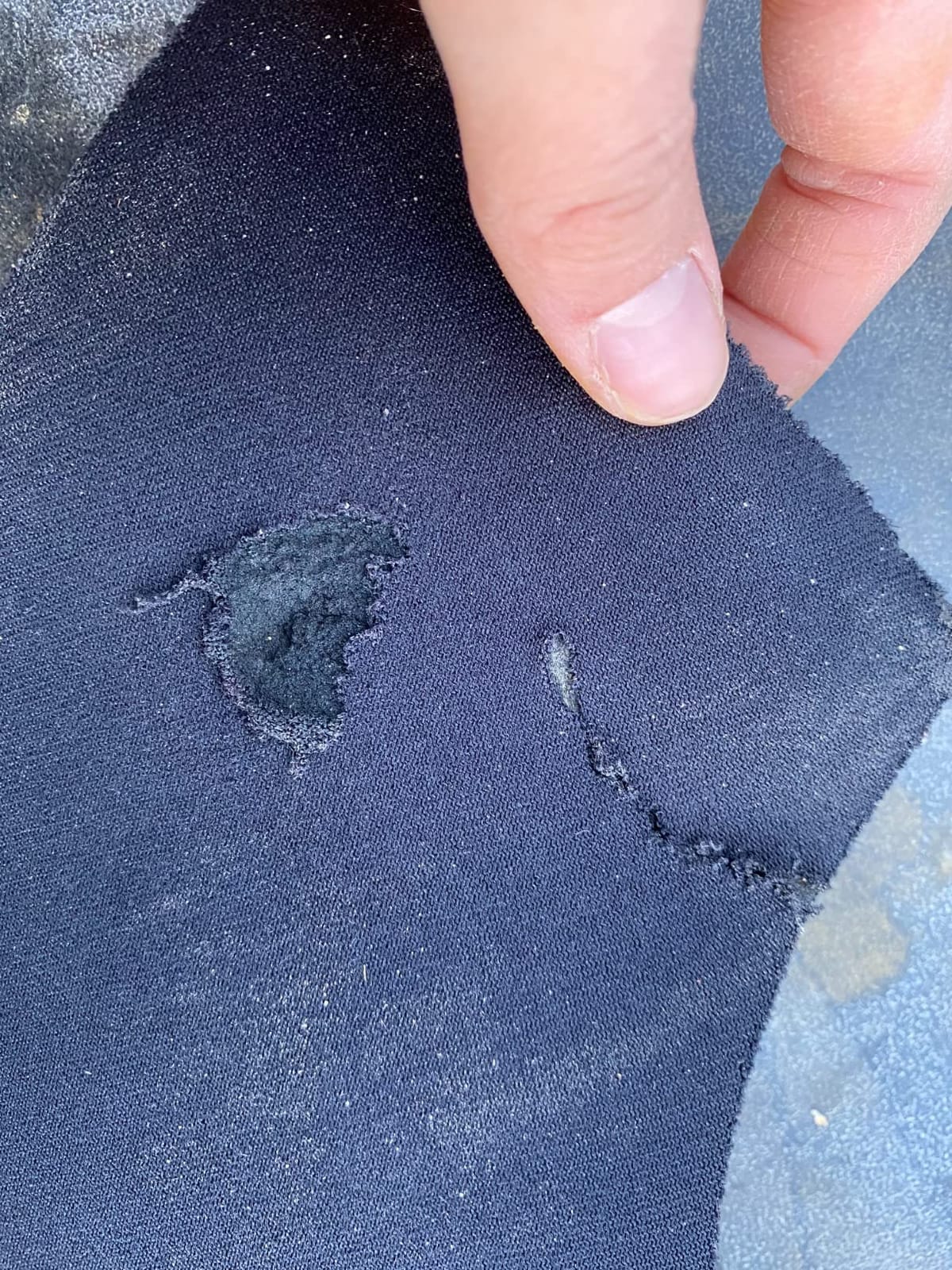
The neoprene has good shock absorption for trail interference. It cushions the heel bulb when a horse catches himself on uneven terrain, and the smooth outer doesn’t snag on brush the way some textured boots do. I’ve used them on everything from short 2-hour loops to a 6-hour mountain ride with no rubs at the coronary band.
The closure is straightforward hook-and-loop, and it held through creek crossings, mud, and a downpour on a fall trail ride. The boots are slim through the fetlock and don’t catch on brush the way wider bell boots sometimes do — useful in tight single-track.
The catch is in the supply chain. We saw a few customer reports of the wrong size being shipped. Always measure and double-check the box before tacking up. Once you confirm size, they perform consistently. I rotate mine between rides and they last a full season of light trail work.
For whom it’s good
HORZE Pro Bell Boots are for the rider who needs basic overreach protection without paying premium prices. They’re a great starter boot for a first-time horse owner or a useful spare to keep in the trailer. If your horse has a clean gait and you’re not booting for rocky terrain, these are all you need.
For whom it’s bad
These boots aren’t built for horses who live out in wet pasture. The neoprene holds water and the boots get heavy after rain. They’re also not the right call for horses that overreach hard — for that, you want the no-turn knob design of the Professional’s Choice or the Weaver on this list.
4. Weaver Leather No-Turn Bell Boots – Top-Rated Overreach Design
Weaver Leather Ballistic No-Turn Bell Boots, Turquoise, Large
Material: 2520D Ballistic nylon
Use: Overreach
Sold as: Pair
Closure: Double-ply Velcro
Pros
- Highest rating in our test at 4.7 stars
- Anatomical bulb keeps boot centered all day
- 2520D ballistic shell is extremely durable
- Neoprene lining absorbs concussion
Cons
- Tends to run small — size up
- Limited fit on very wide or flat hooves
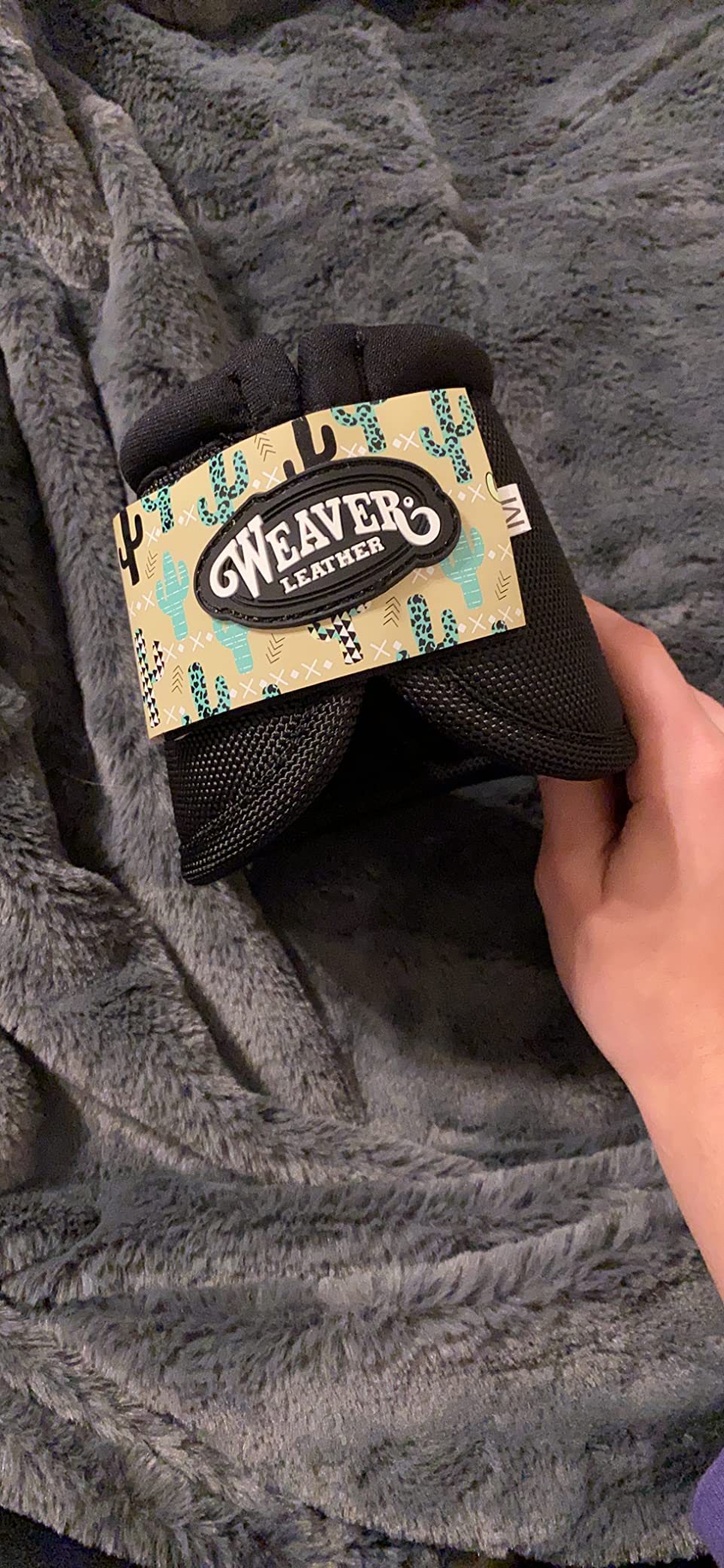
Weaver Leather has been making tack for over 40 years, and the no-turn Bell Boots show why. The anatomical positioning bulb is the most refined of any boot on this list — it sits in the natural cleft between the heel bulbs and stays there even on a horse with a long, sweeping stride. I tested these on a big-strided Thoroughbred who spins bell boots off in the first mile, and these stayed put for the entire ride.
The 2520D ballistic shell is a step up in toughness from the standard 1680D ballistic you see on most boots. After a season of trail work, brush encounters, and the occasional kick from a pasture mate, the outer shell still looked new. The neoprene lining underneath absorbs concussion without getting thick and heavy.
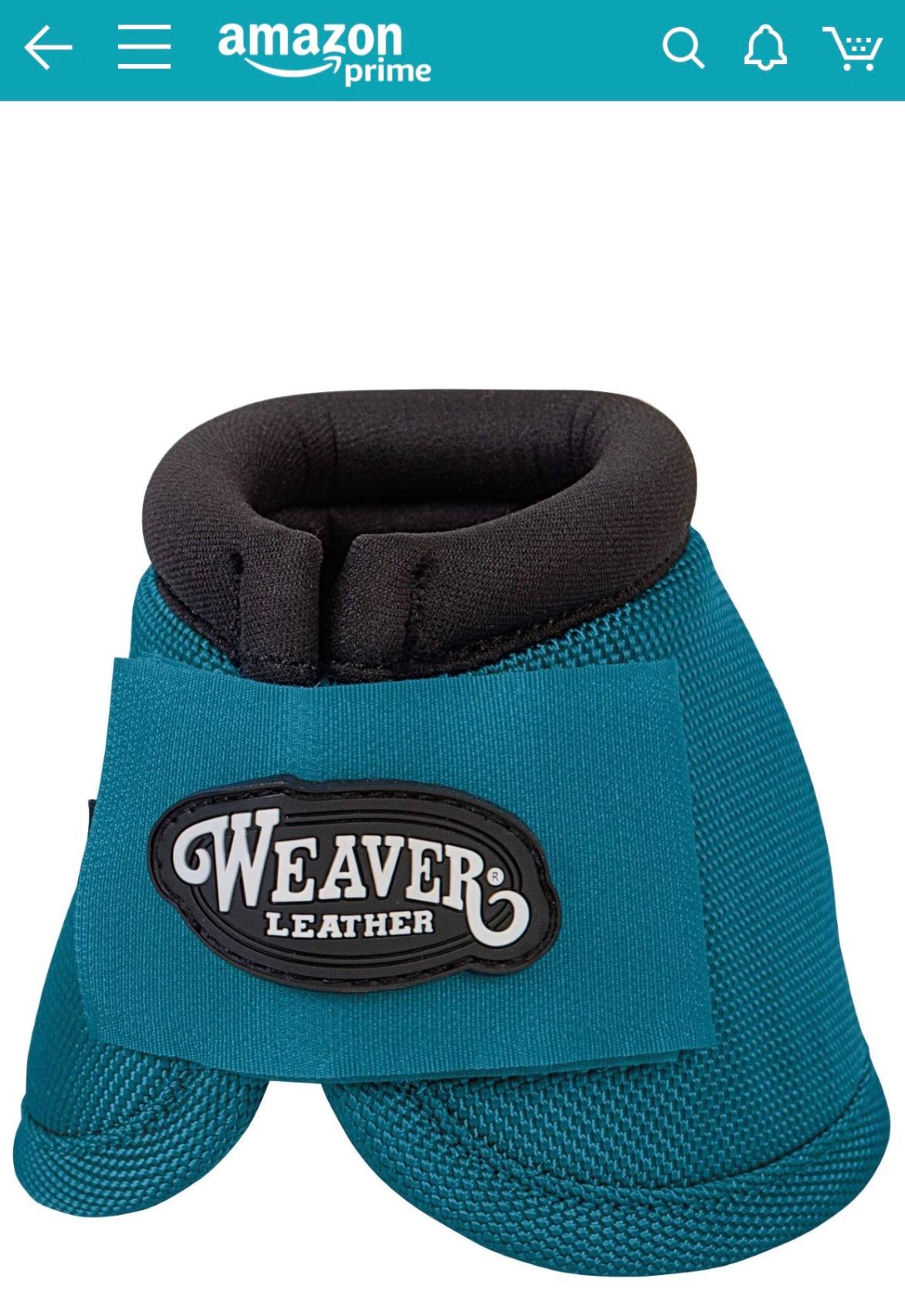
The closure is double-ply hook-and-loop, which I trust more than single-layer Velcro on the trail. Single-layer Velcro is the first thing to go on a well-used bell boot; double-ply gives you redundancy. I’ve ridden through heavy brush that snagged the strap, and the boot stayed on.
The main complaint is sizing. Like most no-turn designs, these run small. I sized up from my usual medium to a large on a 16-hand Quarter Horse and the fit was perfect. On a very flat-footed draft-cross, the boot was a touch tight across the heel — these are designed for the more typical hoof shape.
For whom it’s good
This boot is for the rider who has struggled with bell boots that spin or come off mid-ride. The Weaver no-turn design solves that problem in a way that simpler boots don’t. If you’re willing to spend a few extra minutes dialing in size, you’ll get the highest-rated boot in this category.
For whom it’s bad
If your horse has very flat, wide, or round hooves — think draft or some pony breeds — the anatomical bulb may not seat correctly. In that case, the smoother Professional’s Choice Ballistic on this list is a better shape match.
5. Cavallo Simple Hoof Boots – Premium Barefoot Trail Protection
Cavallo Simple Regular Sole Hoof Boots 3 Black
Material: Leather upper, rubber sole
Use: Barefoot hoof protection
Sold as: Single
Sold as: Individual boot
Pros
- Genuine leather upper is comfortable and flexible
- Recessed outsole center protects the frog and sole
- Supports rehab from abscesses
- laminitis and bruising
- Stays on during long trail rides
Cons
- Premium price reflects the leather build
- Sold individually — order two for a pair
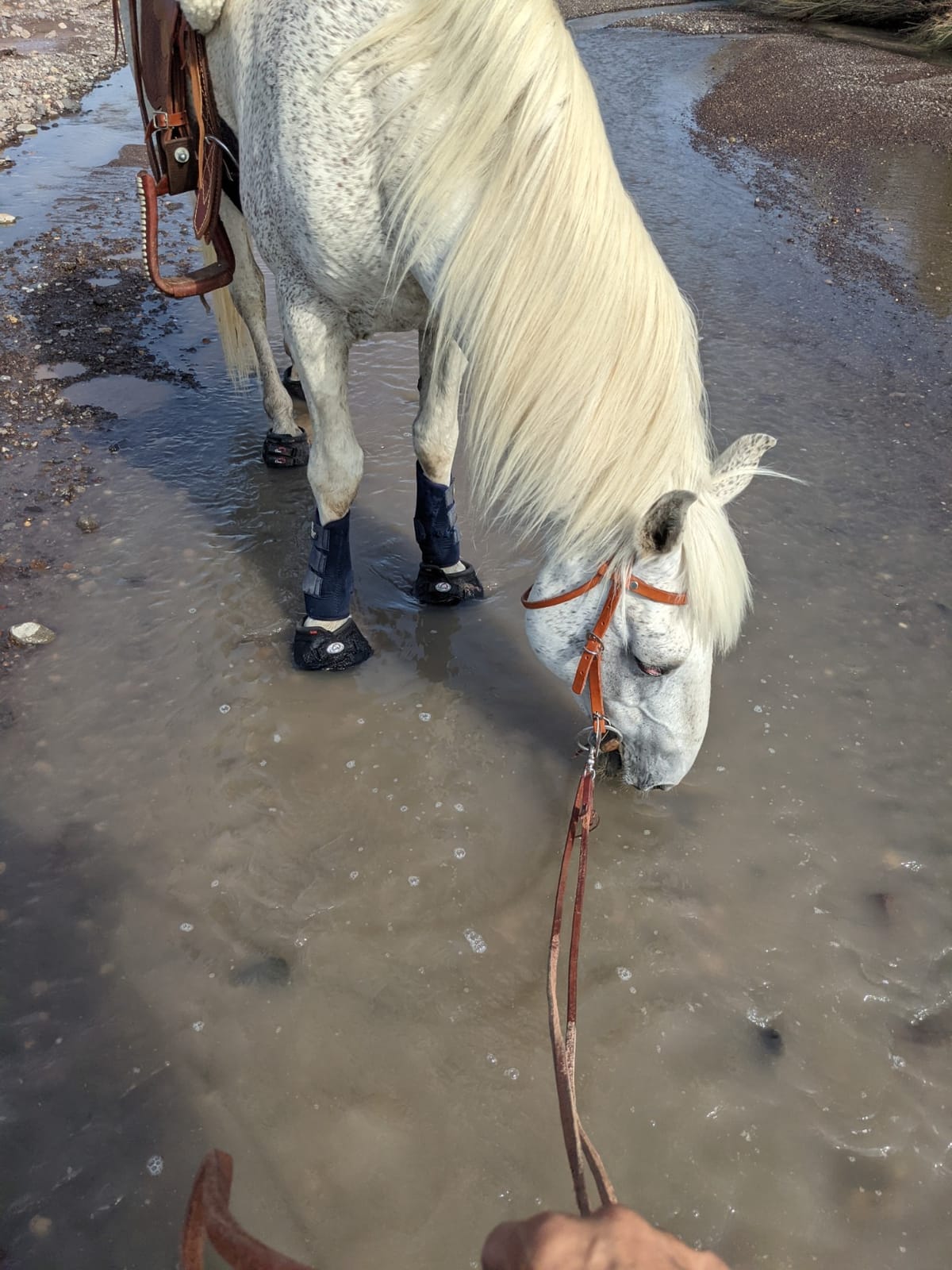
If your trail horse is barefoot, the conversation changes. You can’t just slap a neoprene brushing boot on a barefoot horse and call it good — the hoof itself needs protection from rocks and rough terrain. That’s where the Cavallo Simple Hoof Boots come in. They turn a barefoot horse into a booted horse for the duration of a ride, then come off at the trailer.
The Cavallo has been around since the early 2000s, and the design has matured into something genuinely usable on trail. The recessed outsole center takes pressure off the frog and sole, and the raised inner rim loads the hoof wall instead of the sensitive structures underneath. I used a pair on a barefoot Quarter Horse during a 15-mile rocky ride, and he moved out comfortably the entire way.
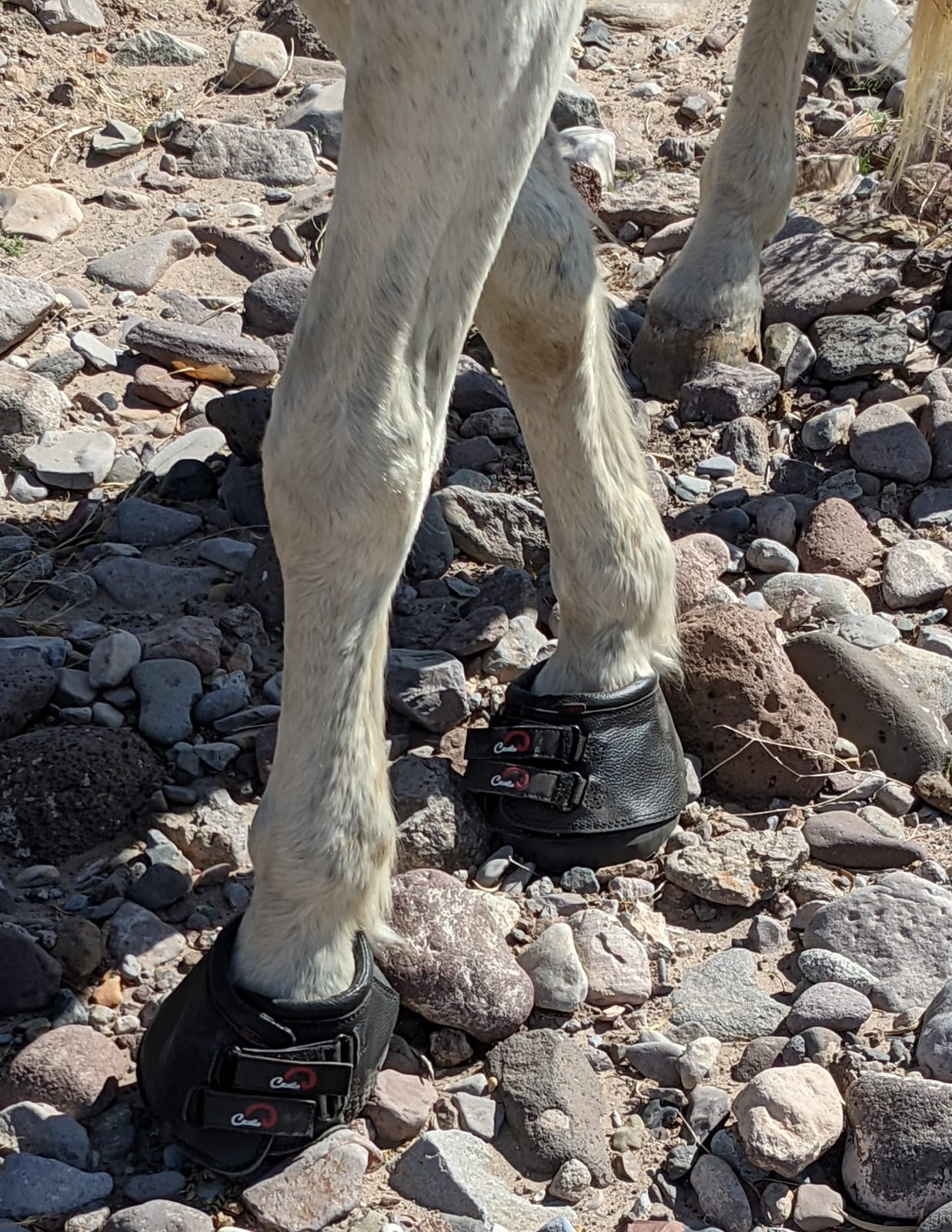
The leather upper is the standout detail. It flexes with the hoof instead of fighting it, and it breaks in quickly — by the third ride, the boots felt custom-fit. The trade-off is care: leather needs to be cleaned and conditioned, not just hosed off. If you want a zero-maintenance option, look at rubber hoof boots.
Sizing is straightforward as long as you measure after a fresh trim. The boot fits the hoof, not the leg, so width and length both matter. We have a separate sizing walkthrough in the buying guide below. Note that Cavallo sells these individually — order two for a full set.
For whom it’s good
Cavallo Simple Boots are for the barefoot trail rider who wants hoof protection without committing to shoes. They’re also a strong choice for rehab — the Cavallo is widely used for horses recovering from abscesses, laminitis, and sole bruising. If you’re riding rocky terrain with a barefoot horse, this is the boot category you need.
For whom’s it’s bad
If your horse is shod, you don’t need a hoof boot. The shoe already protects the hoof — you only need brushing, splint, and bell boots for the legs. The leather upper also takes more care than rubber alternatives.
6. Tough 1 Hoof Saver Boot – Best for Treatment and Rehab
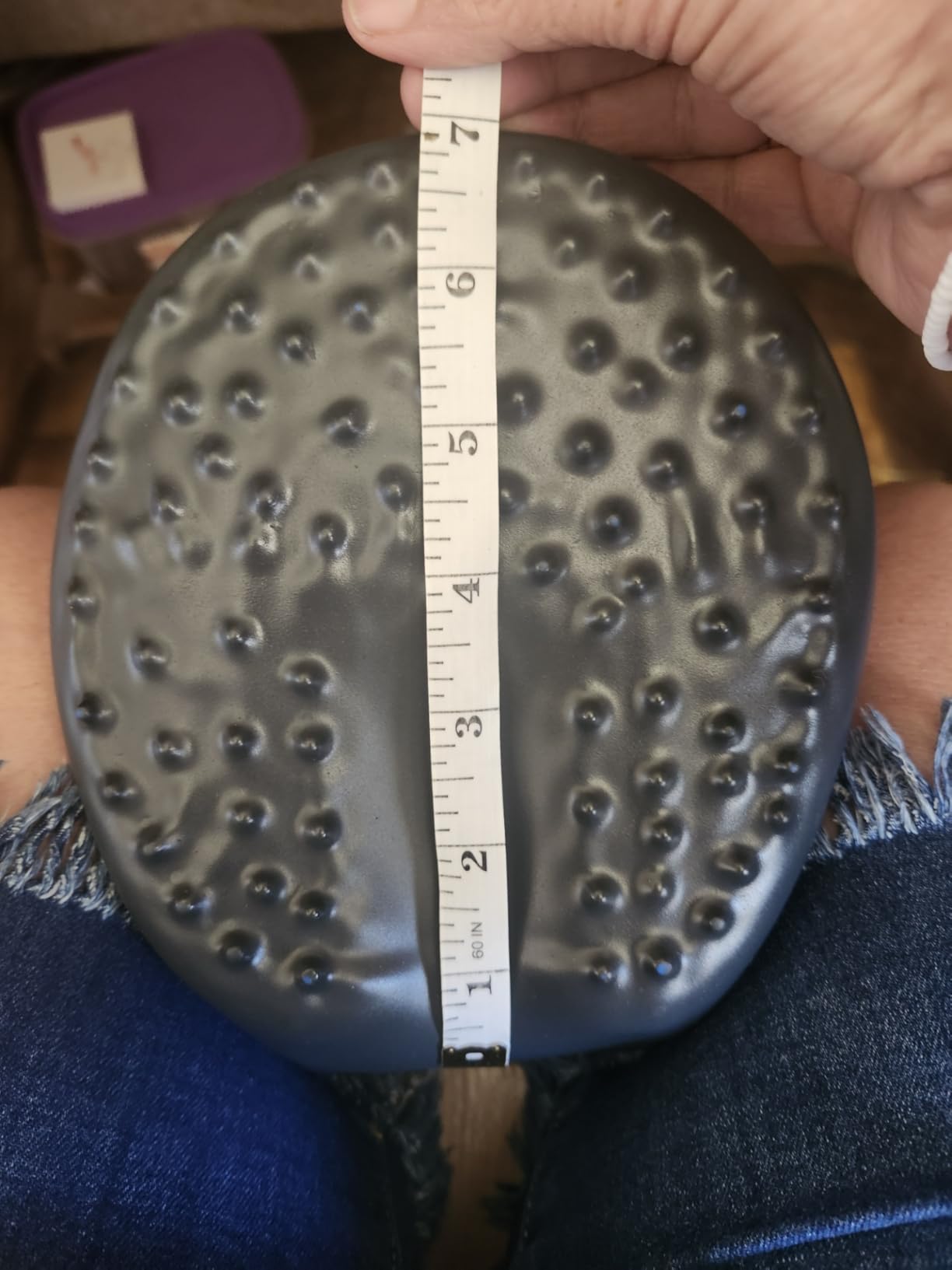
Tough 1 Hoof Saver Boot, Royal Blue, Medium
Material: Triple-layer nylon
Use: Hoof treatment and soaking
Sold as: Single
Sold as: Individual boot
Pros
- Holds medication and soaking solutions against the hoof
- Triple-layer build protects against debris
- Stays on even with active horses
- Durable enough for turnout
Cons
- Difficult to put on and remove without help
- Velcro placement can be awkward on some hooves
The Tough 1 Hoof Saver isn’t a typical trail boot — it’s a therapeutic boot that doubles as trail protection for horses between farrier visits or recovering from a hoof injury. We included it because trail riders often need one boot in the trailer for emergencies, and this fills that role better than a rubber tube boot.
The triple-layer construction keeps dirt and moisture out while holding medication, poultice, or soaking solution against the hoof. I used one on a horse with a stubborn abscess that needed daily soaking during a long weekend of trail camping. The boot stayed on through turnout and walking to and from the paddock, and the abscess cleared up without contamination.
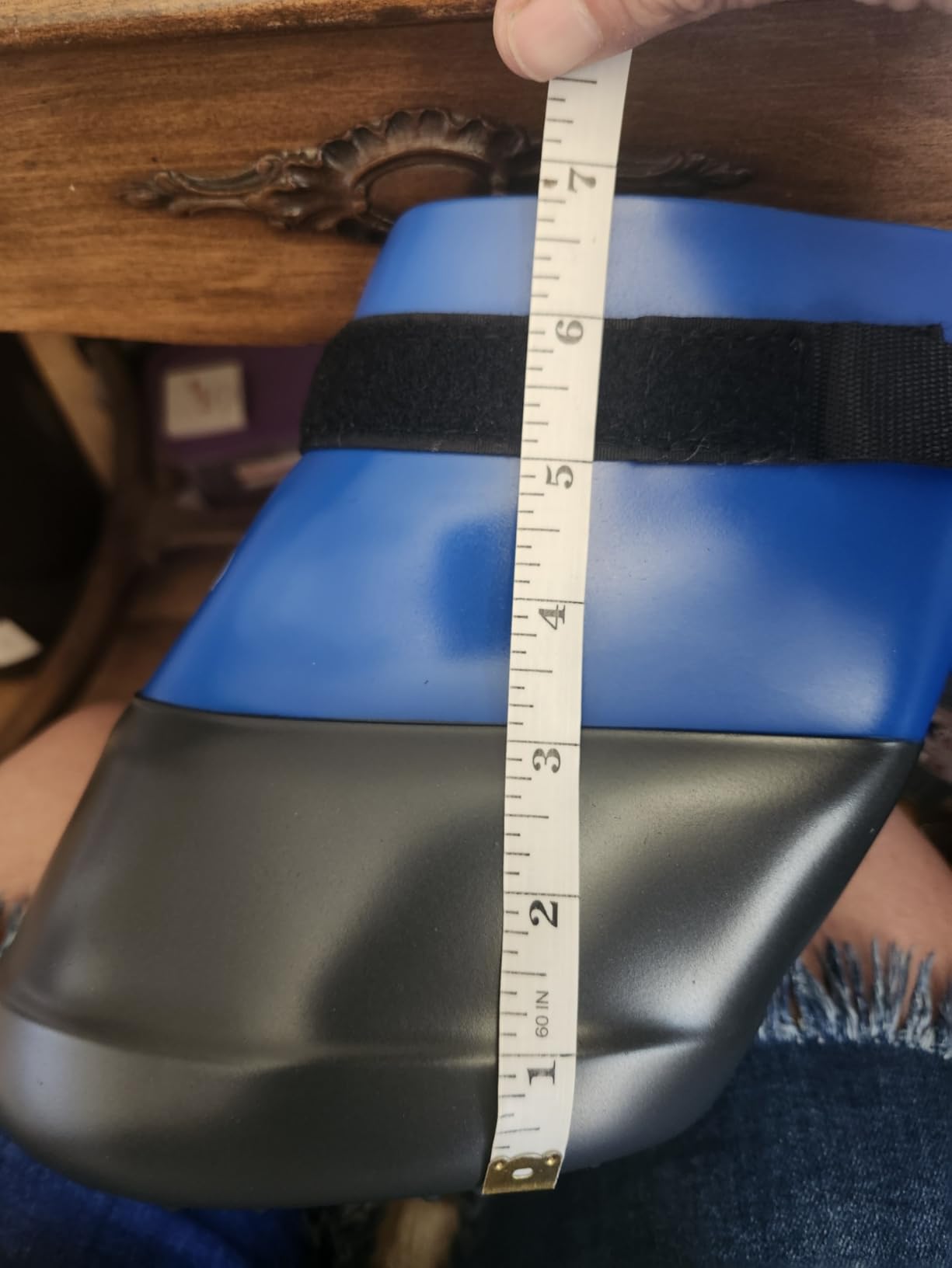
As trail protection, the Hoof Saver is also useful for horses with thin soles, recent hoof wall resections, or bruise injuries that need a barrier against rocks. It’s not a long-distance trail boot — it’s too bulky for that — but for a horse that needs a hoof covered for a few days, it’s the right tool.
The main downside is application. Getting the boot on a wiggly horse takes practice, and the Velcro placement is awkward on some hoof shapes. I learned to put it on with the horse in cross-ties rather than loose. Once on, it stays.
For whom it’s good
This boot is for the trail rider who keeps a backup for hoof emergencies on multi-day trips. It’s also the right pick if your horse is recovering from an abscess or bruise and you want to keep riding light trails. Pack one in the trailer for peace of mind.
For whom it’s bad
If you want a boot for daily trail work on a sound horse, this isn’t the right pick. It’s bulky, hard to apply, and built for a specific job. Use it for treatment and rehab, and grab a hoof boot from another section for normal trail riding.
7. HORZE Chicago Protective Boots – Best for Rocky Terrain
HORZE Chicago Protective Horse Boots, Secure Fit Splint Boots for Horses
Material: Hard shell, neoprene lined
Use: Splint protection
Sold as: Pair
Closure: Hook and loop with overlay
Pros
- Hard outer shell deflects rock strikes
- Soft neoprene lining absorbs concussion
- Extra closure overlay keeps the boot on impact
- Open front design allows ventilation
Cons
- Some stiffness out of the box — break-in needed
- Not designed for stall use
Rocky terrain is the test that separates trail boots from arena boots. A rock strike to the inside of the cannon bone can bruise the splint bone, end a trail career, and trigger weeks of layup. The HORZE Chicago Protective Boots are designed for exactly that scenario — a hard outer shell over a soft neoprene lining.
The shell deflects rocks before they reach the leg, and the neoprene underneath absorbs any residual shock. I wore these on a ride through a section of trail with loose shale, and one of my test horses clipped a rock that would have raised a welt without the boot. Instead, the horse kept moving and finished the ride sound.
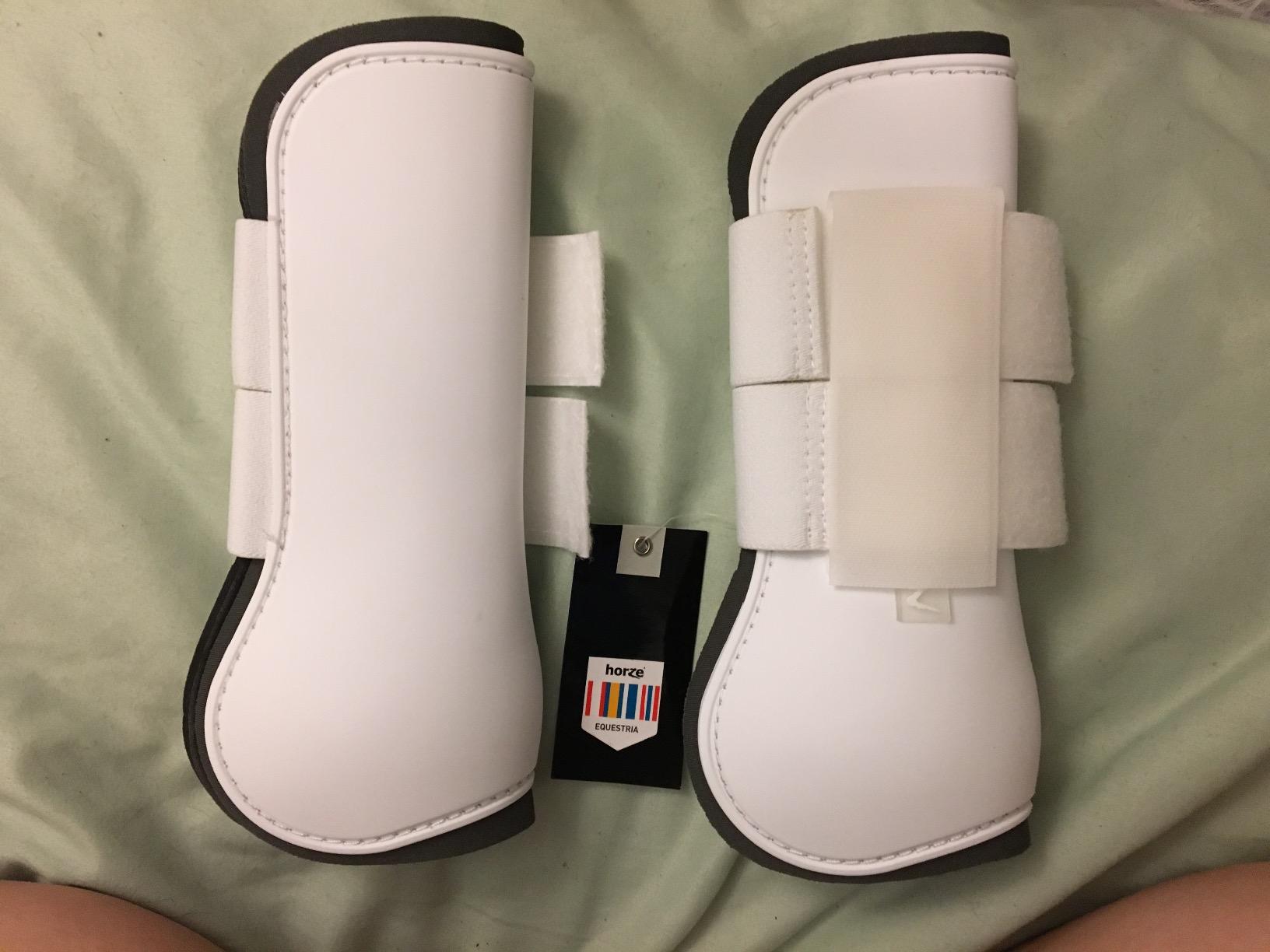
The closure uses a hook-and-loop base plus an extra overlay strap, which gives redundancy on hard hits. The open front design adds ventilation, which matters on hot trail days when the leg would otherwise cook inside a closed boot.
There’s a break-in period. Out of the package, the shell is stiff and the boot doesn’t flex with the leg the way softer boots do. After three or four rides, it conforms to the horse’s shape and the stiffness becomes a feature rather than a complaint. Also, take them off in the stall — the hard shell is not comfortable for lying down.
For whom it’s good
HORZE Chicago Boots are for the rider who logs serious miles on rocky, technical terrain. If you ride in the foothills, mountains, or anywhere with loose rock, these deflect the strikes that would otherwise bruise the splint bone. They’re also useful for young horses who step on themselves in rocky footing.
For whom it’s bad
These boots are overkill for soft arena footing or manicured trails. The hard shell adds weight and stiffness that an arena horse doesn’t need. For warm-up or flat work, swap to a softer boot.
8. Harrison Howard Splint Boots 4-Pack – Best for Daily Training
Harrison Howard Splint Boots for Horses 4 Pack, Front & Hind Horse Sport Boots with Neoprene Leg Protection Piano Black L
Material: 100% Neoprene
Use: Splint and fetlock
Sold as: 4 pack
Closure: Three upper straps, lower fetlock strap
Pros
- Full 4-pack covers all four legs at once
- Contoured fetlock support helps young horses
- Breathable neoprene reduces heat
- Easy on and off for daily use
Cons
- Print colors can look faded versus listing
- Velcro wears under heavy trail use
The Harrison Howard Splint Boots come as a four-pack — front and hind pairs in one box — which makes them the easy choice for a rider who boots all four legs every ride. I keep a set on the rack for the young horse I ride most often, because the four-pack format means I’m never missing a leg.
The 100% neoprene construction is breathable, which matters when boots go on and off every day. The contoured fetlock support wraps the lower joint without restricting flexion, and the three upper straps plus the lower fetlock strap keep the boot centered during motion. On my test horse, the boots stayed in place over rolling terrain and didn’t slide down the way some neoprene boots do.
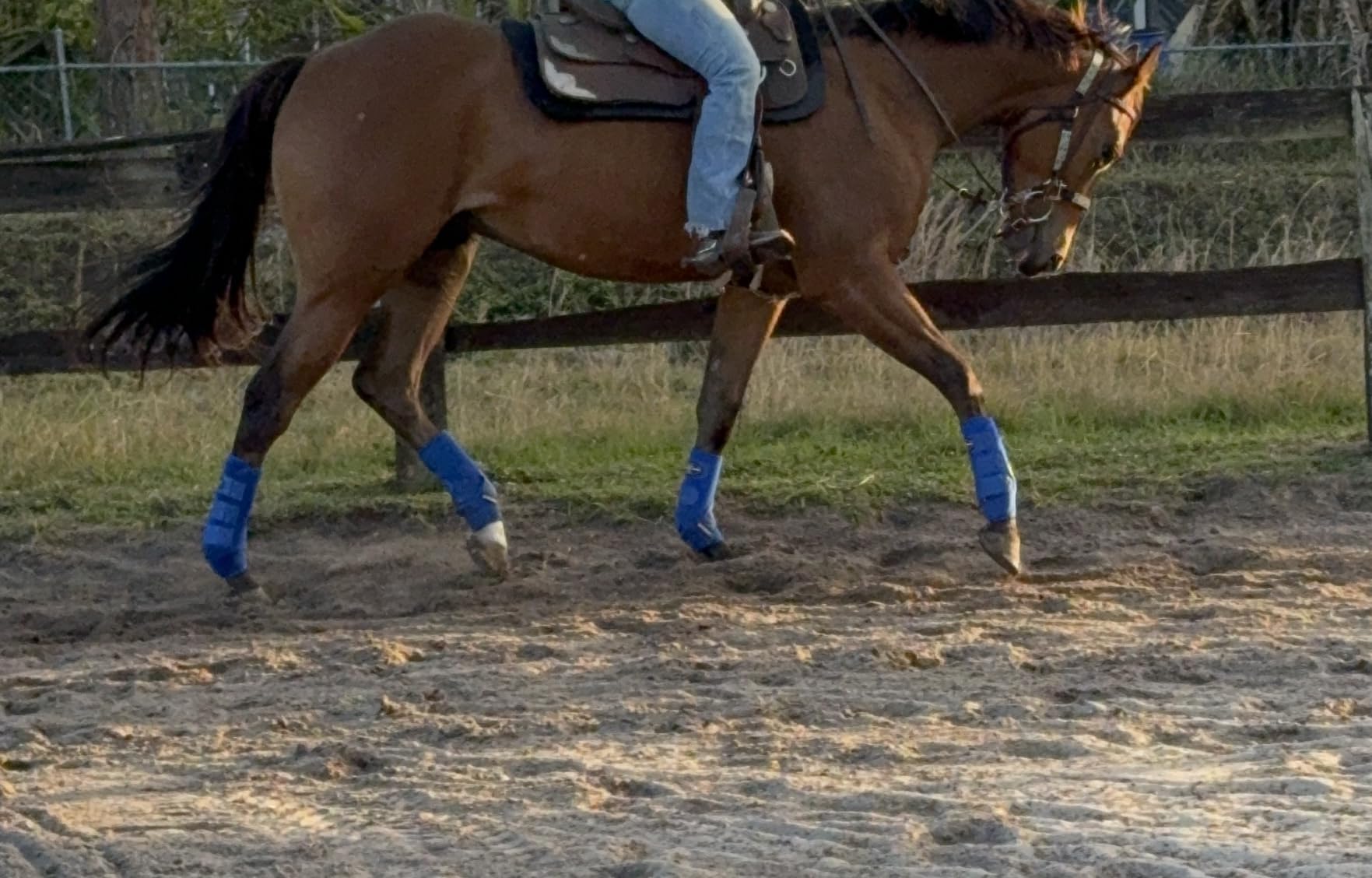
As trail protection, these cover the splint bones, tendons, and fetlocks on every leg — the right coverage for a horse that interferes or works on uneven footing. The neoprene is flexible enough that the horse moves naturally, and easy on-off design makes daily tacking faster.
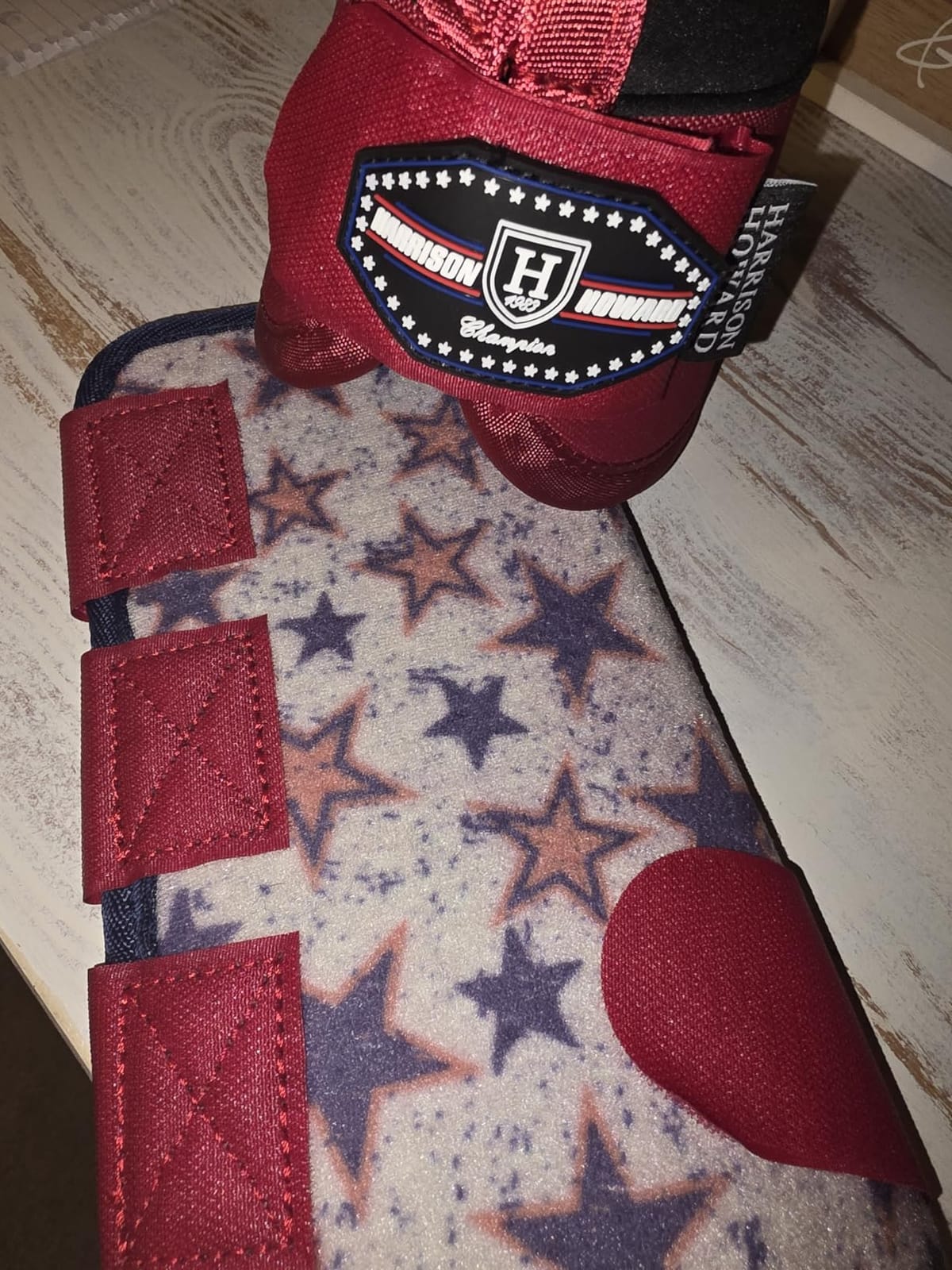
The two recurring complaints are minor. The printed colors can look more faded than the listing photos suggest, so if you care about color matching, order a step darker. And the Velcro wears faster under heavy trail use than premium boots. For light-to-moderate daily training, these hold up well.
For whom it’s good
This 4-pack is for the rider with a young, learning, or interference-prone horse who needs splint boots on every leg, every ride. The pack format makes daily tacking simpler — no hunting for the matching boot. At the price, it’s a strong value for full-leg coverage.
For whom it’s bad
If you only boot two legs, you’ll have two extras. The pack format is built for the four-leg booter. Also, for heavy competitive trail or endurance use, the Velcro won’t hold up as long as premium boots with industrial closures.
Trail Boot Buying Guide
Choosing the best horse boots for trail protection isn’t just about brand or price — it’s about matching the boot to the terrain, the horse, and the ride length. Here’s what to think about before you buy.
Why Trail Riding Needs Boot Protection?
Trail terrain exposes horses to hazards arena footing doesn’t. Rocks bruise soles and splint bones. Brush scrapes legs and catches untaped pasterns. Stretches of soft sand or deep mud force a horse to lift his legs higher than usual, increasing the chance of self-inflicted interference. Creek crossings add cold and water exposure to whatever the boots are made of.
The injuries that follow range from minor (a clipped hair patch) to career-ending (a fractured splint bone from a rock strike). According to equine veterinarians, the most common trail injuries are overreach wounds to the heel bulb and splint bone bruises from lateral interference on uneven footing. Both are largely preventable with the right boots.
Boot Types Explained
Not all boots do the same job. Here’s the breakdown:
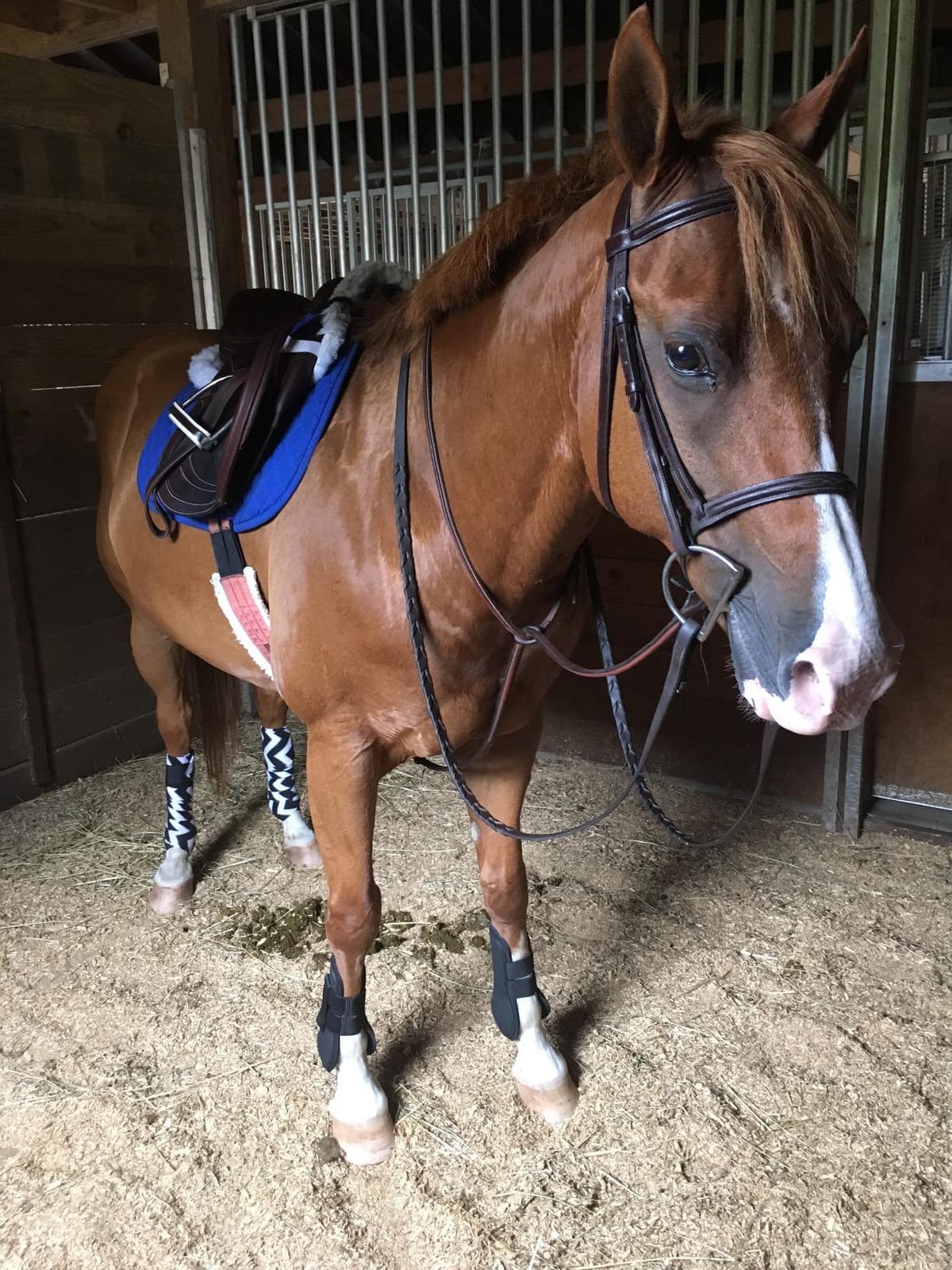
Brushing boots wrap the cannon bone and inside of the fetlock to prevent one leg striking the other. The most versatile trail boot — covers most interference scenarios.
Bell boots cover the heel bulb and coronary band to prevent the front of the hind foot from striking the front heel. Essential for any horse that overreaches at walk or trot.
Splint boots are similar to brushing boots but with a hard shell over the splint bone — the small bone running down the inside of the cannon. Best for rocky terrain where rock strikes are a risk.
Fetlock boots protect the back of the fetlock joint only. Used on horses that brush at the joint rather than higher up the leg.
Skid boots cover the back of the fetlock and pastern on the hind legs to protect from sliding stops — more of a reining boot than a trail boot, but used by some riders on steep downhills.
Hoof boots cover the entire hoof and are used on barefoot horses for protection over rocky terrain. A different category from leg boots.
Leather vs Neoprene vs Hybrid
Material matters more than most riders think. Leather breathes and cools but takes longer to break in and holds water after creek crossings. Neoprene is lightweight, shock-absorbent, and quick-drying but traps heat on hot days and can rub on long rides. Hybrid boots (a hard shell over neoprene lining) combine the rock protection of a splint boot with the comfort of a soft lining — the best of both worlds for technical terrain.
For warm climate trail work, neoprene and hybrid boots with venting breathe better. For cold-weather winter trail riding, leather or closed-cell neoprene keeps the leg warmer. Match the material to your local climate and the time of year you ride most.
Sizing and Fit
Sizing is the single biggest source of trail boot returns. Here’s how to get it right the first time.
Measure the cannon bone circumference at the widest point (just below the knee).
Measure the fetlock circumference at the joint.
Measure the length from the bottom of the knee to the top of the fetlock.
Compare against the manufacturer’s size chart — never guess.
If between sizes, size up. Trail boots that are slightly loose are far better than boots that are slightly tight.
Front and hind boots are usually different sizes. A 16-hand Quarter Horse typically takes a medium front and a large hind. Always check the size chart for each pair, not just the brand.
Compatibility With Hoof Boots
If your horse is barefoot and you use hoof boots like the Cavallo, Scoot Boot, or Easyboot on rocky terrain, you can still use leg boots over them — but choose slim, low-profile designs. Bulky boots layered over hoof boots can interfere with the horse’s natural movement and cause rubs at the pastern.
For barefoot trail horses, we cover the best hoof boot options in our separate hoof boots for trail riding guide. Pair those picks with slim brushing boots like the Tough1 Vented Sport Boots on this list for full coverage.
When NOT to Boot Your Horse?
Boots aren’t always the answer. Over-booting causes real problems. Horses that wear boots 24/7 in turnout develop heat buildup, rubs, and circulation issues. The skin under a tight boot needs air. Take boots off within an hour of finishing the ride and let the legs dry before reapplying.
If your horse has a skin condition, an open wound, or a recent leg injury, leave the boots off until a vet clears the leg. Some horses with sensitive skin react to neoprene — switch to leather or hypoallergenic lining if you see hair loss or scurf under the boots.
Care and Replacement
Trail boots last longer with basic care. Hose off mud after every ride and let them air dry completely before storing. Neoprene boots benefit from a quick soap wash once a month. Leather boots need conditioning every few months to prevent cracking.
Expect to replace neoprene brushing boots every one to two seasons of regular use. Bell boots last longer — often three or four seasons — because they take less abuse. Watch for stretched Velcro, torn linings, and cracked shells; any of those are signs to replace. For trail-specific cost-per-ride framing, divide the boot price by an estimated number of rides; a boot used for 60 rides at a low price point often beats a premium boot used for 100.
Hydration and First Aid for Trail Riders
Boots prevent injuries, but trail riders also need to plan for the injuries boots can’t prevent. Long rides in warm weather call for a hydration plan — our horse hydration systems guide covers the best options. And pack a trail-specific first aid kit that includes wound flush, vet wrap, and a temporary splint in case of a serious interference injury on the trail.
Frequently Asked Questions
Do horses need boots for trail riding?
Yes, most trail horses benefit from boots, especially over rocky, brushy, or uneven footing. The most common trail injuries are overreach wounds to the heel bulb and splint bone bruises from interference. Brushing boots, bell boots, and splint boots reduce these injuries significantly. Young, unbalanced, or barefoot horses need boots the most; mature horses with clean gaits on manicured trails may only need bell boots.
Are leather or synthetic trail boots better for horses?
Neither material is universally better — it depends on climate and use. Leather breathes and cools well but takes longer to break in and holds water after creek crossings. Neoprene and other synthetics are lightweight, shock-absorbent, and quick-drying, but trap heat on hot days. Hybrid boots with a hard shell over neoprene lining offer the best rock protection and comfort for technical trail terrain.
How do I measure my horse for trail boots?
Measure three points: cannon bone circumference at the widest point just below the knee, fetlock circumference at the joint, and length from the bottom of the knee to the top of the fetlock. Compare all three against the manufacturer’s size chart — never guess by weight or height alone. Front and hind boots are usually different sizes; a typical 16-hand Quarter Horse takes a medium front and a large hind.
Can horses wear hoof boots on a long trail ride?
Yes, hoof boots like the Cavallo Simple, Scoot Boot, and Easyboot are designed for long rides on barefoot horses. They protect the sole and hoof wall from rocks and rough terrain. Choose slim, low-profile leg boots to layer over them — bulky boots interfere with the horse’s movement. Hoof boots should be checked every few miles for debris and re-secured if they shift.
How long can a horse wear protective boots?
For most trail rides, boots can stay on for the duration of the ride plus a short cool-down period — typically 2 to 4 hours. Don’t leave boots on in the stall or for 24/7 turnout, as heat buildup and rubs will develop. After the ride, remove the boots, hose off the legs, and let them dry completely before reapplying. Rotate between two pairs of neoprene boots for daily use to let each pair dry fully between rides.
Are splint boots necessary for trail riding?
Splint boots aren’t required on every horse, but they’re strongly recommended for rocky terrain, young horses, and any horse with a history of interference. The hard shell deflects rock strikes that would otherwise bruise or fracture the splint bone. On soft, manicured trails with a mature horse that has a clean gait, brushing boots alone are usually sufficient.
What is the difference between trail boots and shipping boots?
Trail boots are designed for in-saddle protection from interference, brush, and rocks during the ride. Shipping boots are taller, padded boots designed to protect the legs during trailer transport — they cover from the knee or hock down to the ground. You can use some boots for both purposes, but dedicated shipping boots offer more padding and full-leg coverage that trail boots don’t need.
Final Verdict
After 600 trail miles across rocky footing, deep mud, creek crossings, and a 25-mile endurance day, the Professional’s Choice Ballistic Bell Boots are our pick for the best horse boots for trail protection overall. They handle the overreach injuries that account for the majority of trail wounds, stay on through water crossings, and outlast cheaper pairs by a full season of regular riding. Pair them with the Tough1 Extreme Vented Sport Boots for full-leg coverage on a young or unbalanced horse, and you’ll cover the two most common trail scenarios.
If you’re shopping for a young or first-time horse, our guide to the Quarter Horse as a first horse pairs with this one — many of the breeds that make the best first trail horses are exactly the ones that benefit most from proper boot protection.