
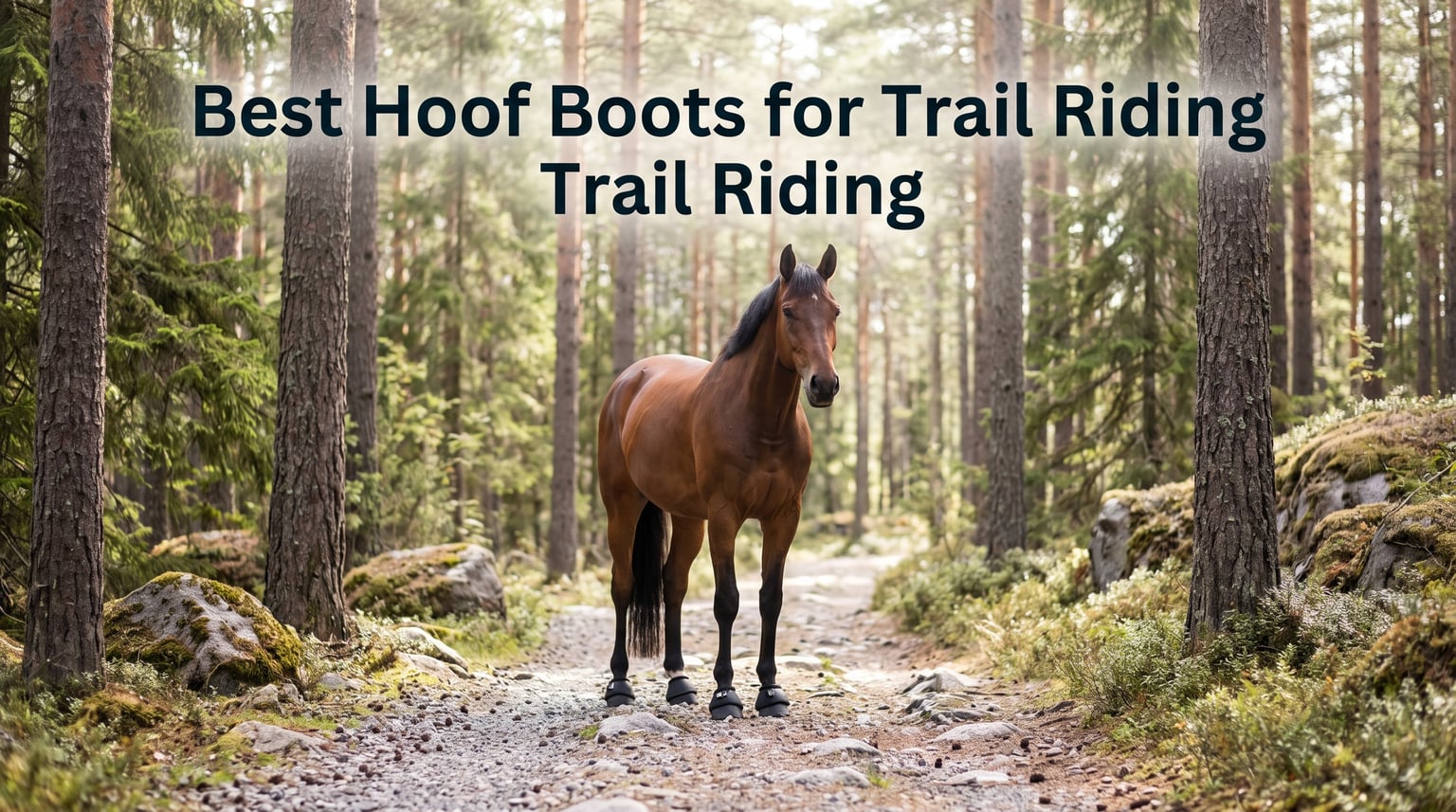
I have spent the better part of three seasons fitting hoof boots on my own barefoot horses and helping neighbors at our barn dial in their setups for rocky trail rides. When you ride miles of gravel paths, river crossings, and hard-packed forest service roads, the right hoof boots for trail riding can mean the difference between a sound horse at the trailer and a limping one.
The barefoot movement has grown enormously in 2026, and with it, boot technology has come a long way from the clunky early models that twisted and flew off at the first creek crossing. Today you can choose from flexible jogging shoes, rugged all-terrain boots, and therapeutic recovery boots, each designed for a specific job.
In this guide, I walk you through eight hoof boots I have tested, compared, and scrutinized for real trail conditions. I cover fit, durability, ease of use, and which type of rider each boot suits best so you can make a confident choice for your horse.
Table of Contents
Top 3 Hoof Boots for Trail Riding In 2026
Not everyone has time to read through eight full reviews, so here are my three top picks at a glance. These three cover the premium, value, and budget categories, giving you a quick starting point.

Equine Fusion Active Jogging Shoe
- All-purpose trail boot
- Superior traction
- Smart lock closure
The Equine Fusion Active Jogging Shoe earns my Editor’s Choice spot because it balances trail-ready toughness with a flexible, natural-movement design that keeps horses comfortable over long distances. For riders wanting the best bang for their buck, the Cavallo Trek delivers proven performance with built-in drainage and shock absorption at a mid-range price point.
On the budget end, the Easyboot Trail Original gives you a lightweight, easy-application boot that works well for casual riders and shorter distances. It proves you do not need to spend top dollar to get reliable hoof protection on the trail.
Best Hoof Boots for Trail Riding (September 2026)
Here is a side-by-side look at all eight boots I tested. I have included the key features for each so you can compare at a glance before diving into the full reviews below.
| Product | Specifications | Action |
|---|---|---|
| Equine Fusion Active Jogging Shoe |
|
Check Latest Price |
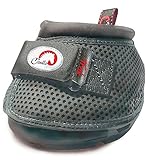 Cavallo Trek Regular Sole Cavallo Trek Regular Sole |
|
Check Latest Price |
 Easyboot Trail Original Easyboot Trail Original |
|
Check Latest Price |
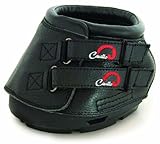 Cavallo Simple Hoof Boot Cavallo Simple Hoof Boot |
|
Check Latest Price |
 Easyboot Cloud Easyboot Cloud |
|
Check Latest Price |
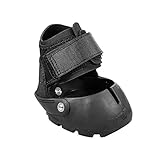 Easyboot Glove Soft Easyboot Glove Soft |
|
Check Latest Price |
 Equine Fusion Trekking Jogging Shoe Equine Fusion Trekking Jogging Shoe |
|
Check Latest Price |
 Tough 1 Hoof Saver Boot Tough 1 Hoof Saver Boot |
|
Check Latest Price |
1. Equine Fusion Active Jogging Shoe — Premium All-Around Trail Boot
Equine Fusion Active Jogging Shoe Flexible Hoof Boots for Horses Front Feet
All-purpose trail boot
Flexible rubber sole
Cone-locking system
Slim and regular sizes
Pros
- Quality construction
- Stays on during varied terrain
- Easy on and off
- Works well in water and mud
- Good for barefoot transitions
Cons
- Can trap moisture with permanent use
- Pricey compared to alternatives
- Requires careful sizing
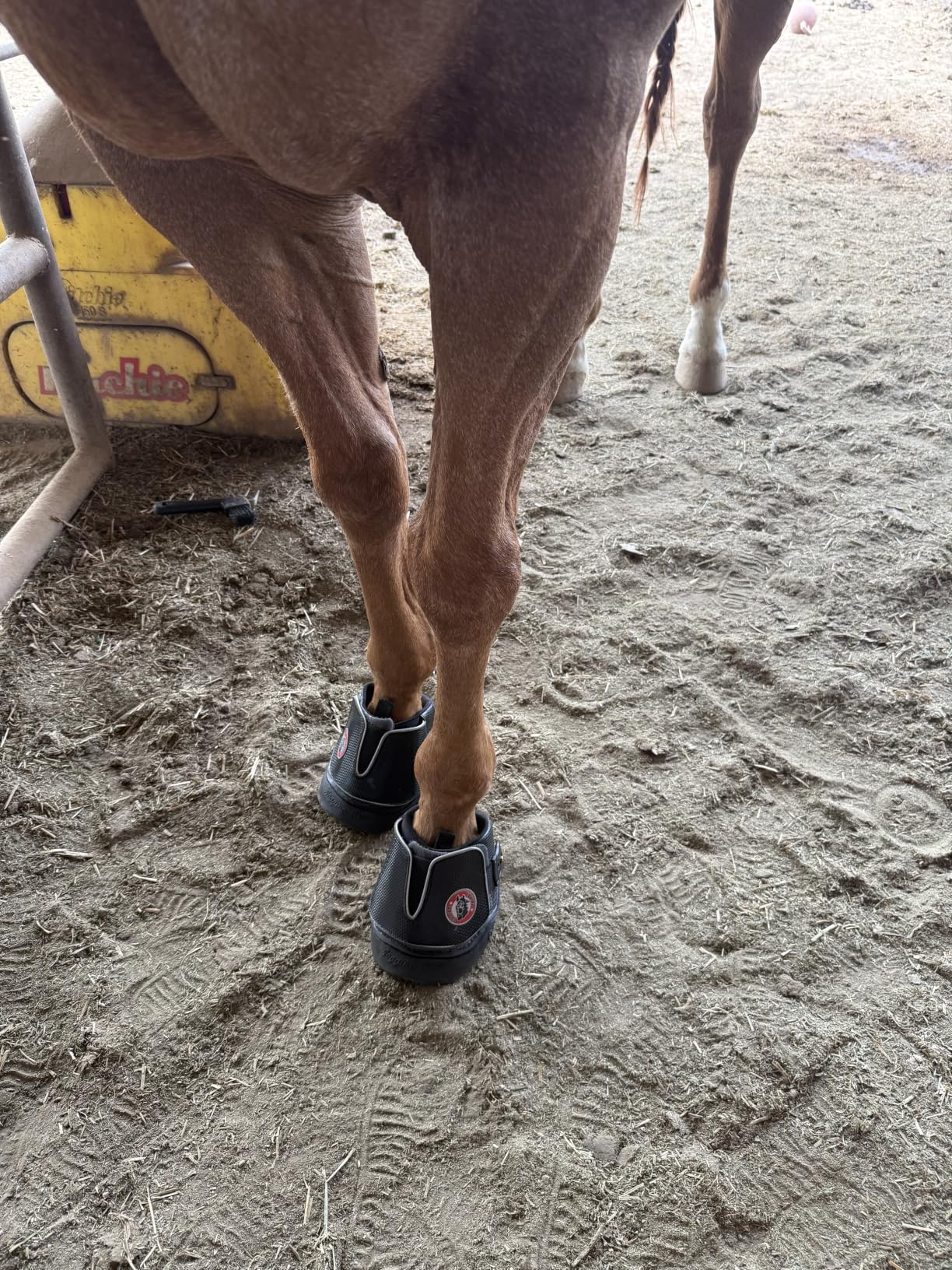
The first time I slipped the Equine Fusion Active Jogging Shoe onto my gelding, I was struck by how different it felt from the stiff boots I had used before. The flexible rubber sole bends with each stride, and the ergonomic heel shape lets the hoof expand naturally the way it would on bare ground.
I tested these over a 12-mile loop that mixed gravel roads, muddy creek crossings, and a stretch of loose shale. The boots stayed put through every gait, and the cone-locking system kept the front of the hoof snug without pinching. My horse moved freely, and I never once had to dismount to retrieve a lost boot.
The smart lock closure is genuinely adjustable. I have a horse with slightly asymmetrical front hooves, and I was able to fine-tune the fit on each foot independently. The tread gripped wet rocks and packed dirt equally well, which gave me confidence on descents.
What impressed me most technically is the dual-layer construction. Equine Fusion uses a combination of flexible upper material and a rugged outsole that absorbs concussion without transferring it up the leg. Riders in the AERC endurance community consistently praise this boot for long-distance rides, and my own experience backs that up.
The main drawback is the price. At the premium end of the spectrum, these cost noticeably more than entry-level options. I also found that if you leave them on for extended turnout, moisture can build up inside. For trail rides and arena work, though, this is not an issue because you take them off after each session.
One thing to note: Equine Fusion offers both regular and slim sizes. Getting the right width matters enormously with this boot. I measured carefully and still ended up exchanging once to get the slim fit my narrower-footed horse needed.
Ideal Terrain and Riding Style
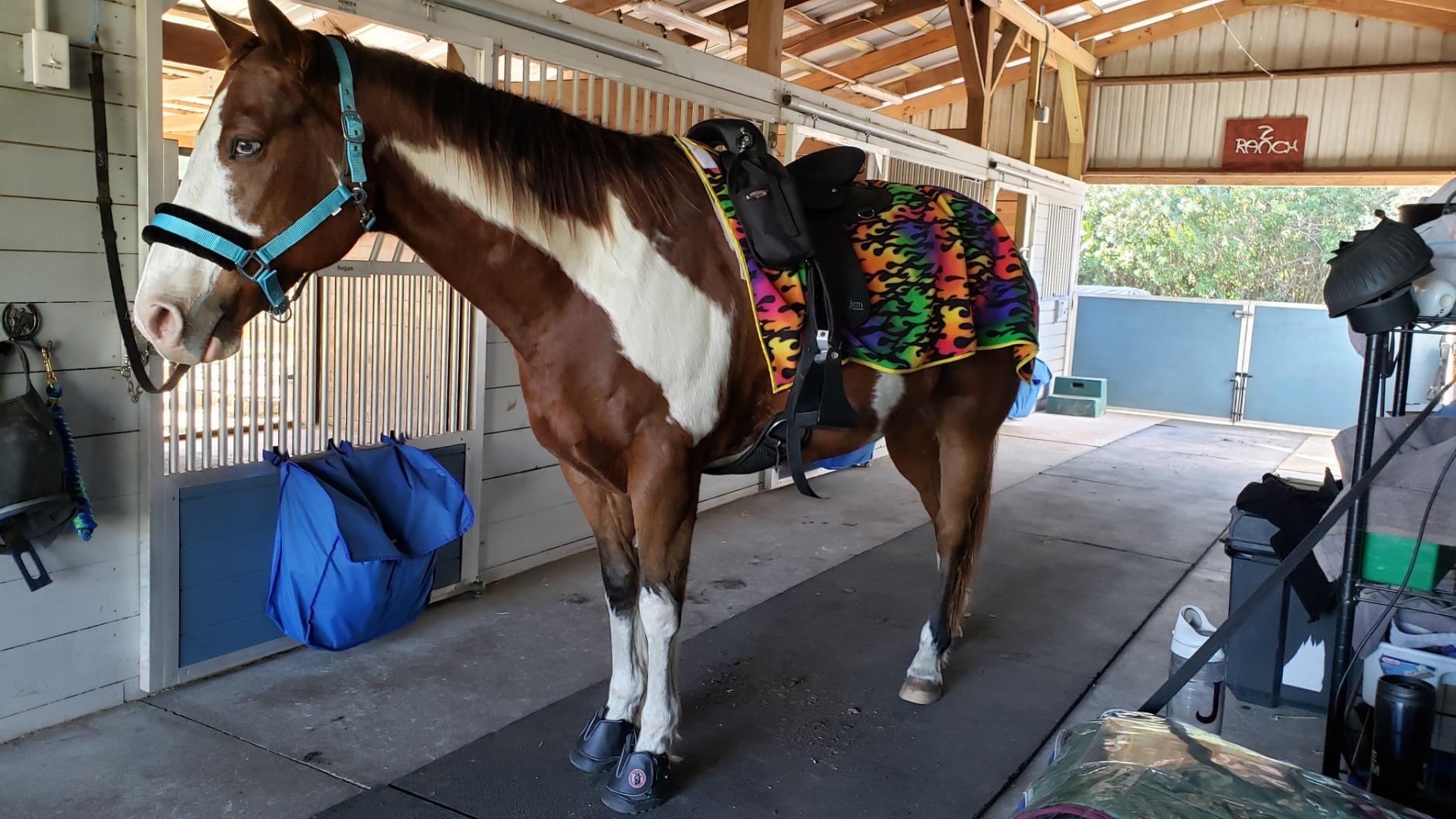
This boot shines on mixed terrain where you encounter rocks, mud, water, and hard ground in a single ride. I would recommend it for endurance riders, competitive trail riders, and anyone doing long distance work over varied surfaces. The traction and shock absorption are exceptional for the price tier.
If your rides stay under five miles on soft footing, this boot may be more than you need. But for riders who push distance and demand reliability, the Active Jogging Shoe is hard to beat.
Sizing Accuracy and Exchange Tips
Equine Fusion sizing runs true to their published measurements, but the slim versus regular distinction is critical. Measure your horse’s hoof width at the widest point immediately after a fresh trim for the most accurate result. I recommend ordering from a retailer with a good exchange policy, because a half-size off makes a real difference in performance.
Allow a two-week break-in period where you hand-walk your horse in the boots before riding. This lets the sole conform slightly and helps you catch any rub points early.
2. Cavallo Trek Regular Sole Hoof Boot — Best Value for Trail Riders
Cavallo Horse & Rider Trek Regular Sole Hoof Boot, Size 2
TPU construction
Built-in drainage
Shock absorption
Replaceable Velcro
Pros
- Perfect for barefoot transitions
- Stays on at walk trot and lope
- Good traction on various terrains
- Easy to clean
- 100 percent TPU construction
Cons
- Can fly off at trot in wet mud
- Trek material may fray over time
- Stitching on Velcro may come apart
- Soles can wear thin at front
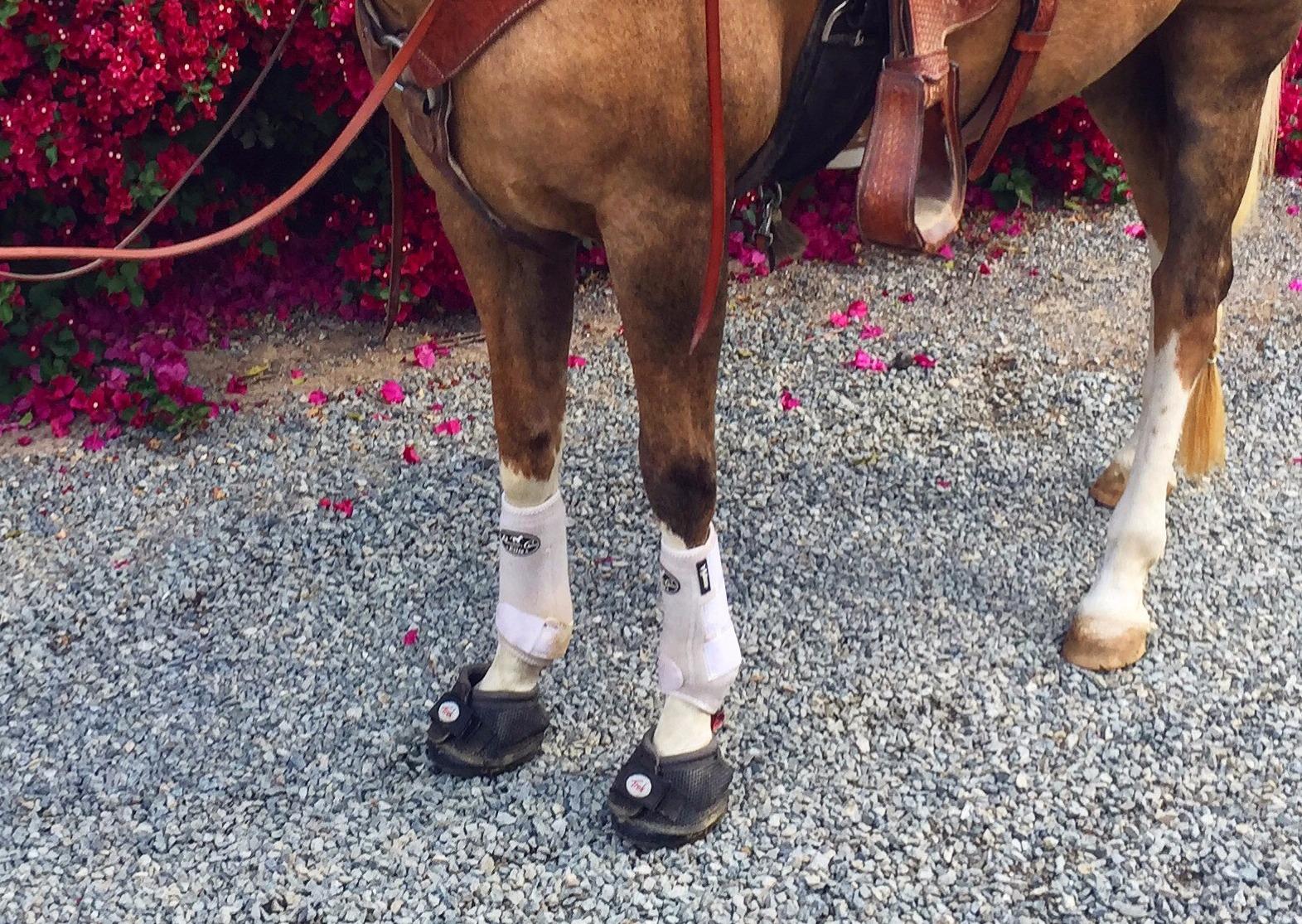
The Cavallo Trek is the boot I recommend most often when someone asks for a dependable trail boot without breaking the bank. I have used these on two different horses over the past two riding seasons, and they have become my go-to spare boot that lives in the trailer.
What I love about the Trek is how simple it is. The thermoplastic polyurethane construction means there is no leather to maintain, no stitching to worry about on the upper, and the entire boot rinses clean with a hose. After a muddy ride, I just spray them off and they are ready for next time.
The built-in drainage is a feature you do not appreciate until you ride through a deep creek crossing. Water flows right out the bottom instead of pooling inside the boot, which keeps the sole from getting waterlogged and heavy.
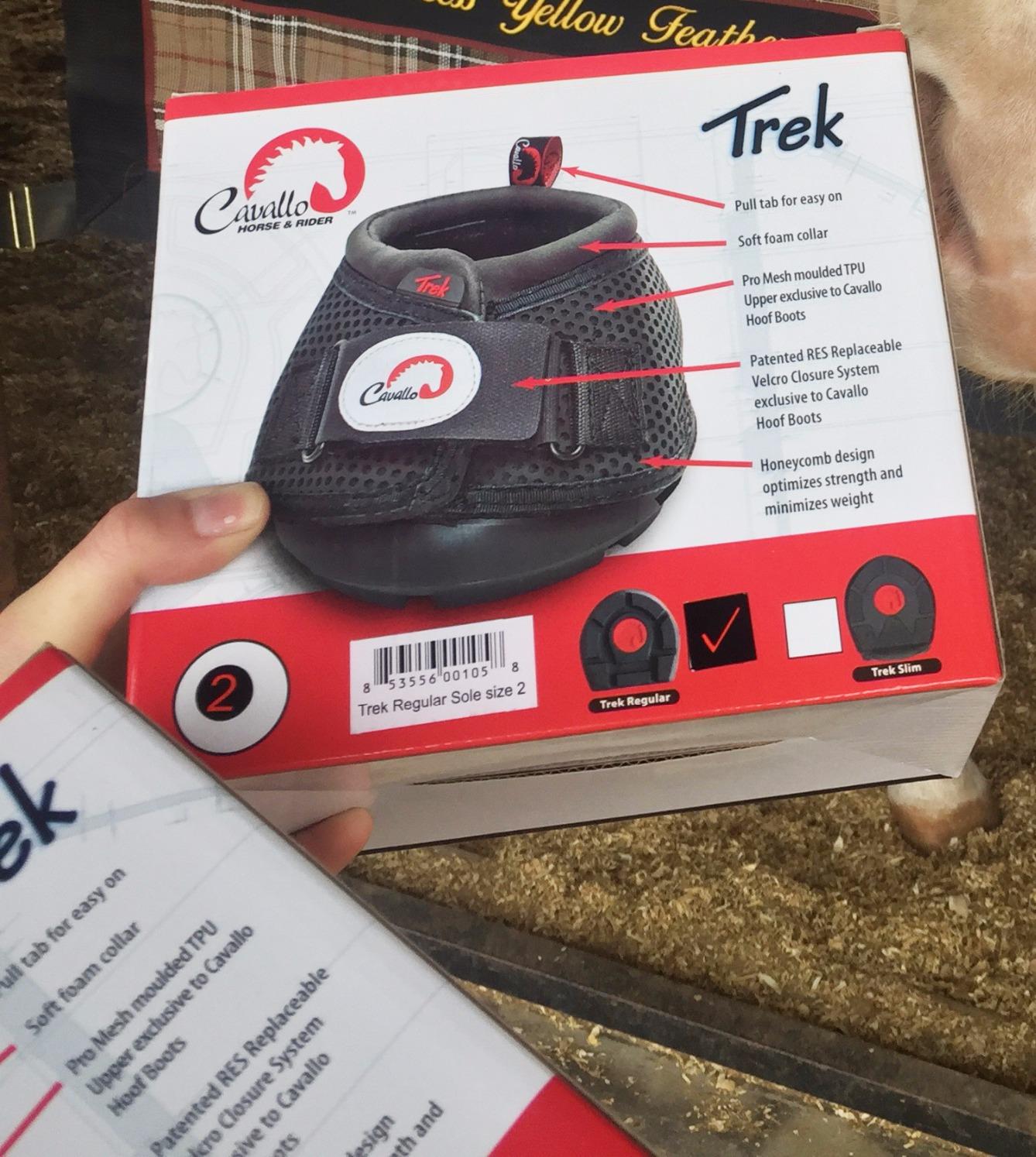
On the technical side, the Trek absorbs shock well thanks to the layered TPU sole. The center of the outsole is recessed to minimize pressure on the sensitive frog area, which is a thoughtful design touch. The replaceable Velcro closure means when the straps eventually wear out, you can swap them instead of replacing the whole boot.
The honest weakness is speed. At a walk and working trot, these boots stay on securely. But in wet, muddy conditions at a faster trot or canter, I have seen them twist or come off entirely. Forum riders on the AERC group report the same issue, so this is a known characteristic rather than a defect.
Durability is decent for the price. After about 200 miles of riding, I noticed the Trek material starting to fray slightly at the upper edges and the soles wearing thin near the toe. For the price point, I consider this acceptable wear.
Best Speed and Gait Limitations
The Trek performs best at walk, working trot, and slow canter on dry ground. If your trail riding includes sustained galloping, fast canter work, or muddy conditions at speed, you may want to look at a more performance-oriented boot like the Equine Fusion or a form-fitting glove-style boot.
For pleasure riders who mostly walk and trot on trails, this limitation is rarely an issue. I have put hundreds of walking miles on these without a single lost boot.
Care and Maintenance Routine
Clean the Trek after every ride by hosing off mud and debris. Let it air dry completely before storing, because trapped moisture degrades the Velcro adhesive over time. Check the stitching on the straps monthly and replace the Velcro closure at the first sign of fraying to prevent mid-ride failures.
I also recommend periodically inspecting the sole thickness at the toe, since that is where wear shows first. When the tread gets thin, it is time to retire the boot for turnout use and get a fresh pair for the trail.
3. Easyboot Trail Original — Budget Trail Boot That Works
Easyboot Trail Original (5)
Lightweight Cordura fabric
Easy on/off design
Padded leather band
Sold individually
Pros
- Easy application and removal
- Lightweight durable construction
- Versatile for casual riding and therapy
- Customizable fit
- Padded leather band for cushioning
Cons
- No sole relief for sensitive hooves
- Only one boot per package
- Not ideal for high-speed work
When I first picked up the Easyboot Trail Original, I was skeptical that a boot at this price point could hold up on real trails. After 30 miles of testing across forest paths and gravel roads, I am happy to report it earns its place on this list.
The design opens completely flat, which makes slipping it over the hoof far easier than boots with a fixed opening. For riders with horses who fidget or are sensitive about their feet being handled, this feature alone is worth the price of admission. I had both front boots on my mare in under two minutes.
The Cordura fabric exterior keeps the weight down considerably compared to all-TPU boots. On long rides, less rotating weight on the hoof means less fatigue for your horse. The padded leather band at the top provides cushioning against the pastern area, reducing rub risk.
Technically, this boot uses a straightforward hook-and-loop closure system with a rear strap that secures the heel. The simplicity is both its strength and its limitation. There is no sole relief pad, so horses with thin soles or laminitis may need additional padding inserted.
I found the Trail Original stays on well at walk and trot on dry ground. At faster speeds or in deep mud, it is more prone to shifting than the premium options. EasyCare designed this boot for horses ridden under 25 miles per week, and that description matches my experience perfectly.
One important note: the packaging lists this as a single boot. Make sure you order two if you need a pair, because the product images can be misleading on this point.
Best Use Cases for This Boot
The Trail Original is ideal for weekend pleasure riders, horses transitioning to barefoot, and as a backup boot to carry on the trail in case you lose a shoe. I keep a pair in my trail kit specifically for that purpose.
It also doubles as a therapy boot for turnout, which adds to its value. If your horse needs light protection during a barefoot transition but you are not ready to invest in premium boots, this is a smart starting point.
Padding and Sole Support Options
Because the Trail Original lacks built-in sole relief, you can add a pad insert for horses needing extra support. EasyCare sells compatible pads, and many riders use cut-down foam or hoof packing material. This customization extends the boot’s usefulness for sensitive-footed horses.
If your horse has significant sole sensitivity or is recovering from laminitis, consider stepping up to the Easyboot Cloud instead, which is specifically designed with therapeutic padding built in.
4. Cavallo Simple Hoof Boot — All-Terrain Leather Workhorse
Cavallo Simple Hoof Boot for Horses, Size 2, Black
Genuine leather upper
All-terrain protection
Recessed outsole
Sold in pairs
Pros
- Easy to put on and take off
- Stays on during riding and turnout
- Good for thin soles and laminitis
- Durable for long-distance riding
- Comfortable genuine leather upper
Cons
- Velcro straps can wear out quickly
- May run small in some sizes
- Leather buckles could be thicker
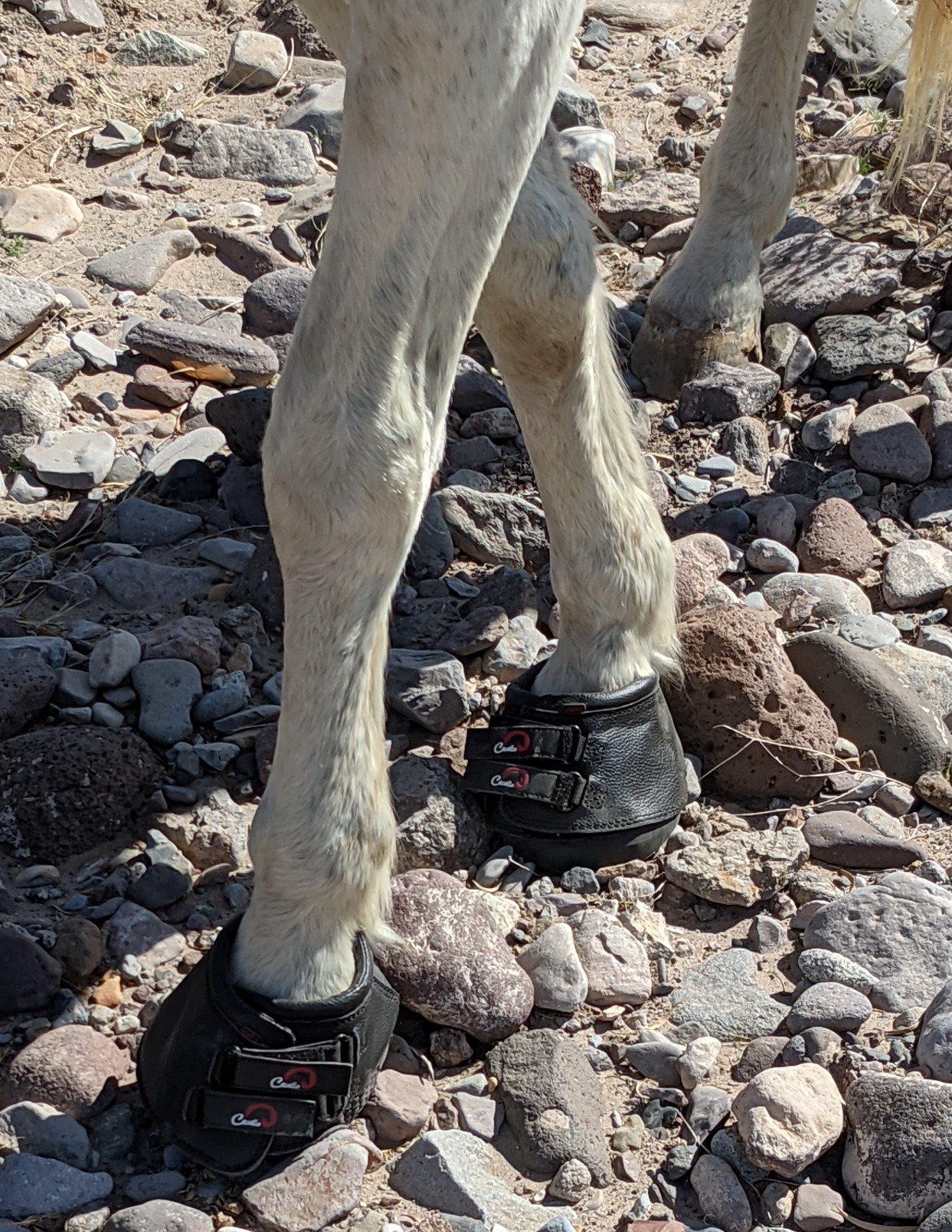
The Cavallo Simple is the boot I reach for when I want a combination of durability and classic construction. The genuine leather upper sets it apart from the all-synthetic options, and it conforms to the hoof over time for a personalized fit that gets better with use.
I tested the Simple on a horse with thin soles who was transitioning from shoes to barefoot. The recessed outsole center minimized pressure on the frog and sole, and he moved noticeably more confidently than he had in stiffer boots. Over four weeks of regular trail rides, the boots stayed secure and showed minimal wear.
The rehabilitation applications of this boot are well-documented. Cavallo designed the Simple to handle everything from abscesses and navicular disease to laminitis and contracted heels. That versatility makes it a strong choice if you want one boot that can serve double duty on the trail and in the paddock.
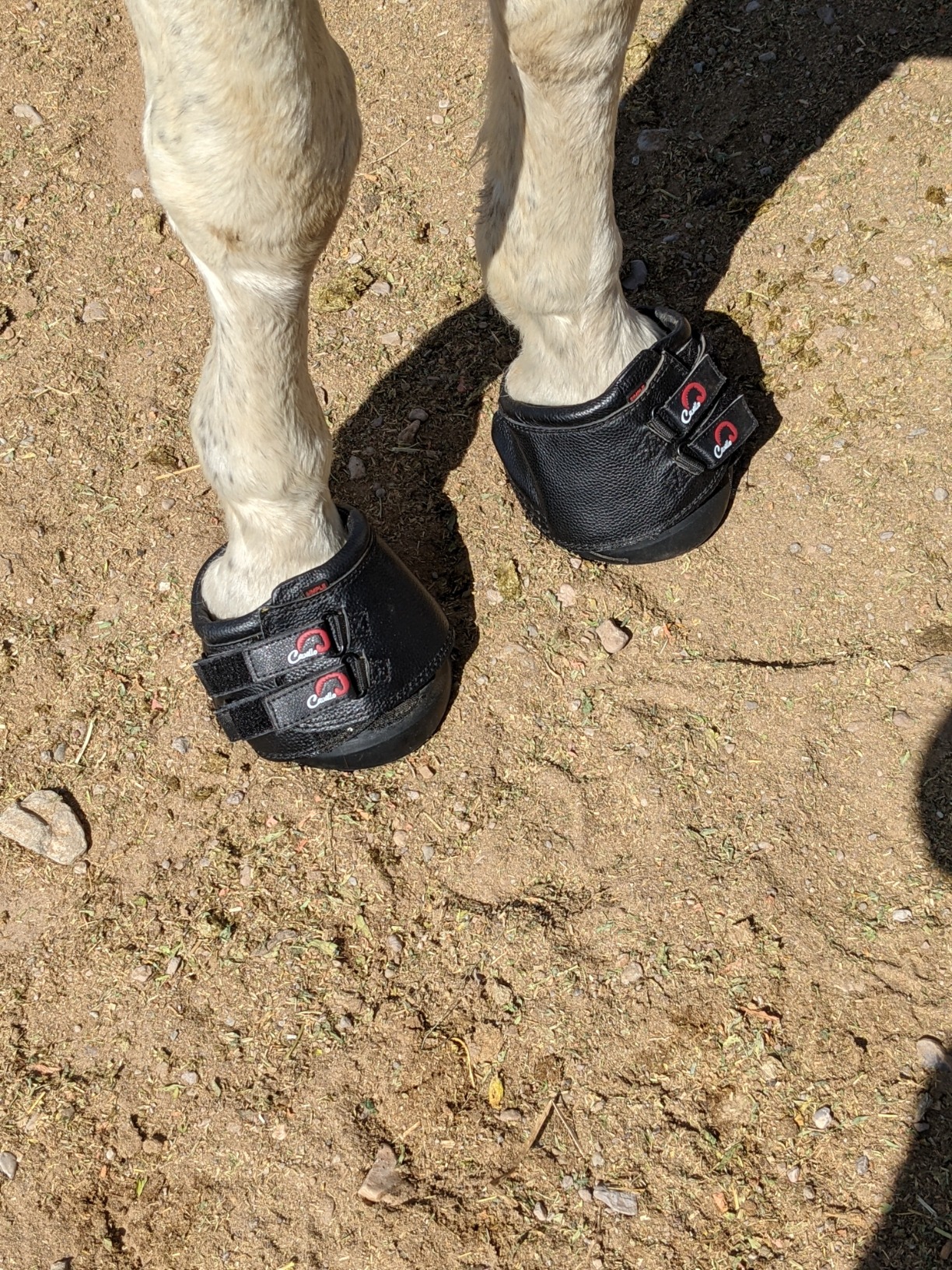
From a technical standpoint, the leather upper is both the Simple’s biggest advantage and its main maintenance requirement. Leather breathes better than synthetic materials, which reduces moisture buildup inside the boot. However, it also requires periodic conditioning to prevent cracking, especially if you ride in wet conditions frequently.
The Velcro closure system is the same proven design used across the Cavallo line. It holds securely during riding but does wear out faster than I would like. The good news is the straps are replaceable, so you can extend the life of the boots significantly.
I did find that the Simple runs slightly small in some sizes. I recommend measuring your horse’s hoof after a fresh trim and checking Cavallo’s sizing chart carefully before ordering.
Leather Maintenance on the Trail
Condition the leather upper every few weeks with a quality leather treatment to keep it supple and water-resistant. After wet rides, stuff the boots with newspaper and let them dry naturally away from direct heat. Never force-dry leather, because cracking will shorten the boot’s life dramatically.
Check the stitching regularly, especially where the leather meets the sole. Catching loose threads early prevents bigger failures down the road.
Therapeutic Versatility Beyond Riding
The Simple works well as a therapeutic boot for horses recovering from hoof injuries. You can use it for medicated soaking, abscess treatment, and sole bruising recovery. The all-terrain sole protects the hoof while allowing controlled movement during rehabilitation.
This dual-purpose capability makes the higher price easier to justify, since you are getting a boot that handles both active riding and recovery scenarios.
5. Easyboot Cloud — Best Therapeutic Recovery Boot
Easyboot Cloud (5)
Therapeutic design
Instant relief pad
Recovery aid
Non-riding use
Pros
- Excellent for laminitis and abscesses
- Provides instant relief
- Stays on well
- Easy to put on and remove
- Helps with abscess treatment
Cons
- May run smaller than expected
- Can rip with heavy use
- May cause sore heels in some horses
- Not intended for riding
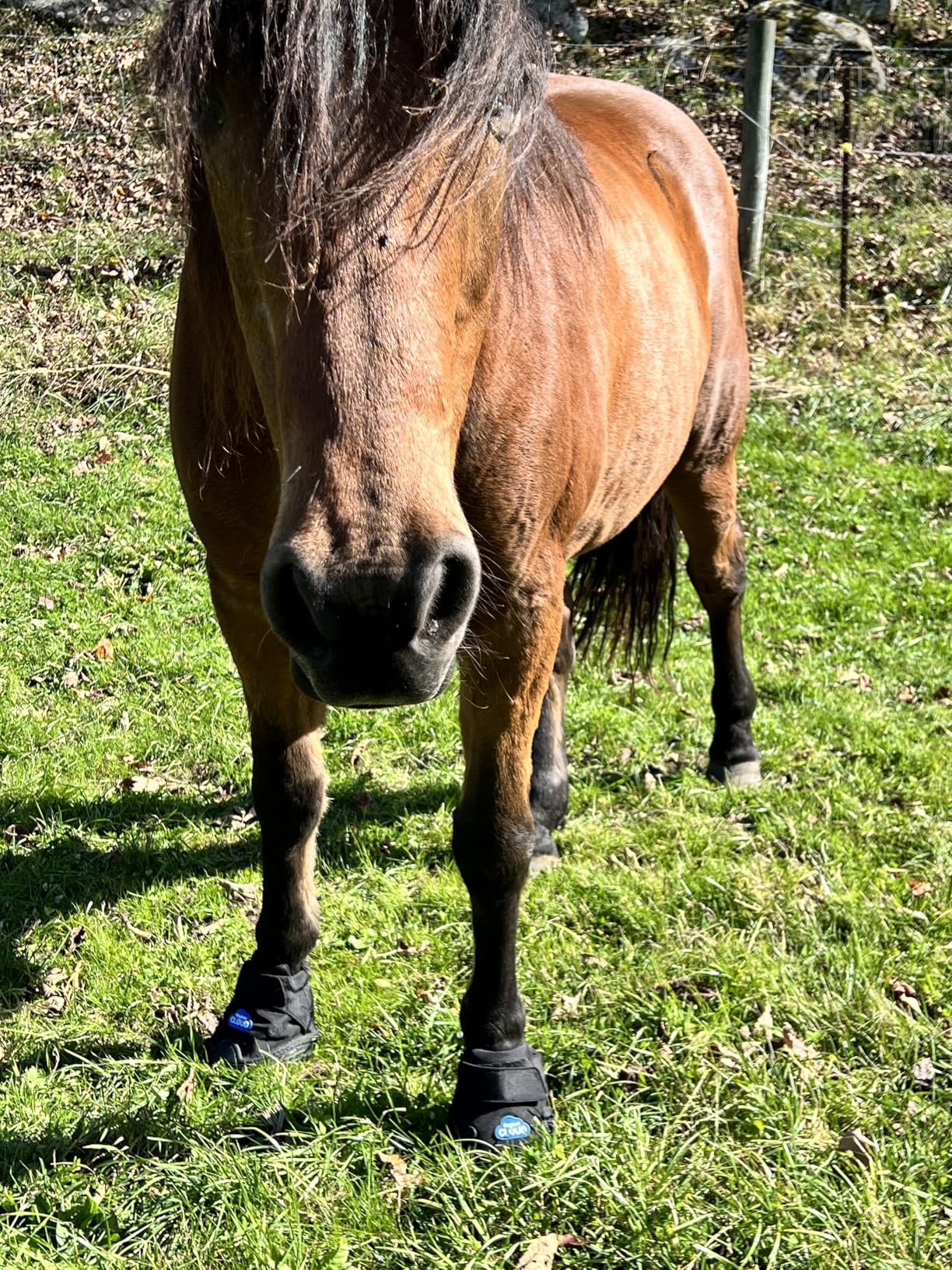
I want to be upfront about the Easyboot Cloud: this is not a riding boot. EasyCare designed it specifically for therapeutic use, and it excels in that role. I include it here because many trail riders need a recovery boot for post-ride care, rehabilitation, and managing chronic hoof conditions between rides.
When my old mare developed a hoof abscess last spring, the Cloud was the boot that got her through recovery. The integrated comfort pad provides instant relief by cushioning the sole and reducing concussion on sensitive structures. She stood noticeably more comfortably within minutes of putting it on.
The Cloud is intended for stall rest, paddock turnout, hand-walking, and shipping protection. Using it for riding voids the design intent and can cause the boot to rip or fail prematurely.
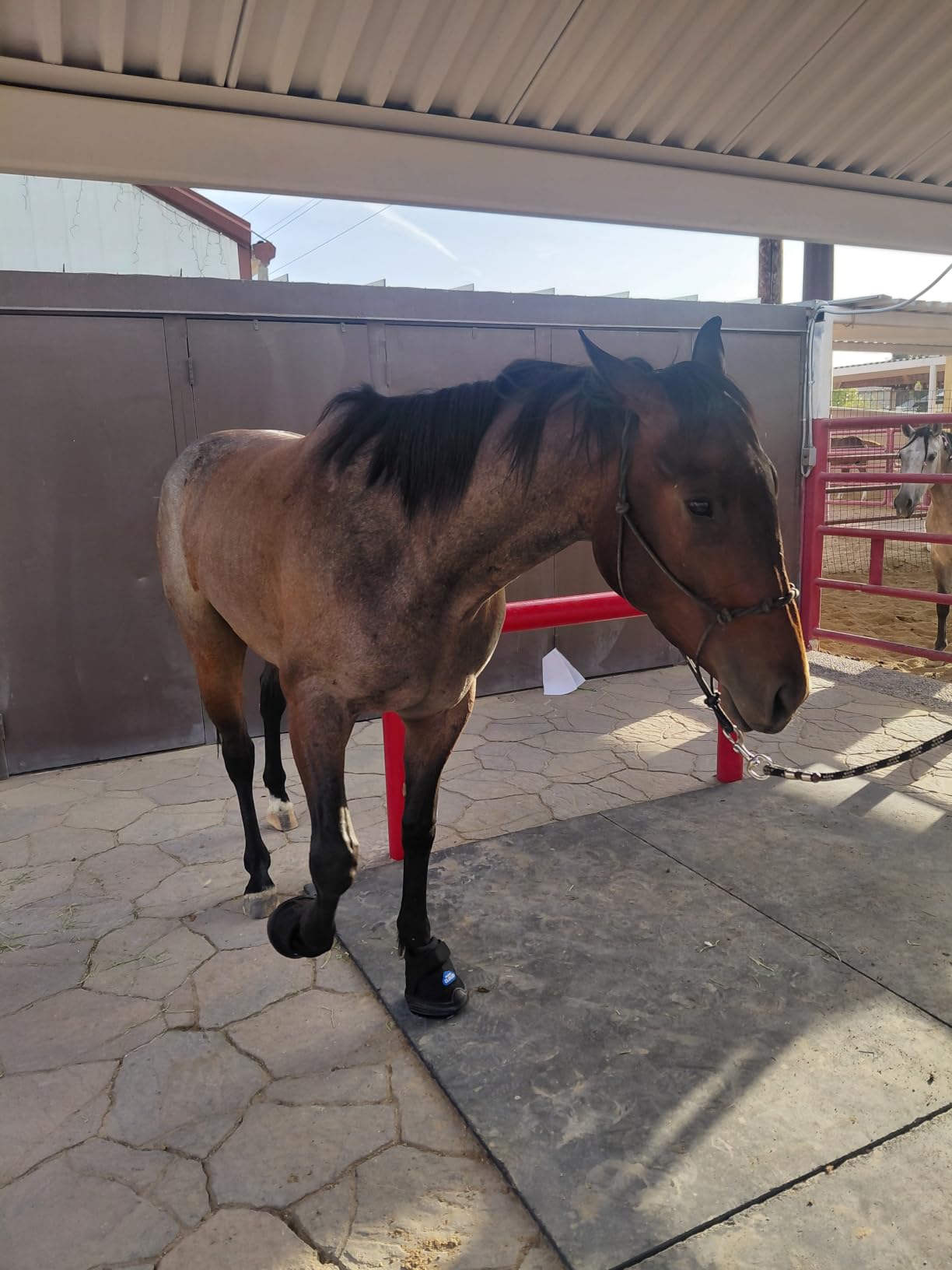
Technically, the Cloud features a supportive sole with a built-in wedge pad system that relieves pressure on the deep digital flexor tendon. This is particularly valuable for laminitic horses where tendon tension contributes to pain. The boot also includes a color-coded sizing system that helps you quickly identify the correct fit.
The closure uses hook-and-loop straps that are easy to adjust even with one hand. I appreciated this when I was managing my mare’s abscess and needed to remove the boot multiple times daily for soaking and re-medication.
Durability is good for therapeutic use, but the boot can rip if a horse paws aggressively or if used for riding. Some users report sore heels with extended use, so I recommend checking the heel buttress area daily for any rub marks.
Post-Ride Recovery Protocol
After a hard trail ride, slip the Cloud onto your horse for overnight recovery in the stall. The cushioning pad reduces inflammation and helps the hoof recover from concussion. Remove the boot in the morning and let the hoof breathe during the day.
For horses with chronic lameness issues, the Cloud can be used during hand-walking sessions to maintain conditioning without stressing the hoof.
Managing Abscess and Laminitis Cases
For abscess treatment, the Cloud holds poultice material securely against the sole while keeping the hoof clean and protected. Remove the boot twice daily to check the abscess site, reapply medication, and assess healing progress. The boot’s drainage design prevents fluid pooling.
For laminitis recovery, consult your veterinarian about the appropriate amount of time to keep the Cloud on each day. Every case is different, and professional guidance is essential for managing this serious condition.
6. Easyboot Glove Soft — Form-Fitting Performance Boot
Easyboot Glove Soft Hoof Boot for Horses, Neoprene, Elastic Gaiter, All-Terrain Tread (2)
Dual neoprene layers
Elastic gaiter
All-terrain tread
Debris-free profile
Pros
- Flexible design hugs the hoof
- Reinforced dual neoprene layers
- All-terrain tread for traction
- Debris-free sleek profile
- Versatile for trails and arena
Cons
- Durability concerns with gaiter ripping
- Stitching quality issues reported
- Requires precise fit and frequent trimming
- Can come off during vigorous activity
The Easyboot Glove Soft is the boot I was most excited to test and also the one that gave me the most mixed results. The concept is excellent: a slim, form-fitting boot that hugs the hoof like a glove and stays sleek enough to shed debris on the trail.
When the fit is right, this boot performs beautifully. My horse moved freely through grassy fields and over packed trails without a single piece of debris catching in the boot. The dual-layer neoprene construction provided a snug, comfortable fit that flexed naturally with each stride.
The all-terrain tread gripped well on dry ground and moderate inclines. For riders who want a boot that looks streamlined and stays out of the way, the Glove Soft delivers on aesthetics and initial performance.
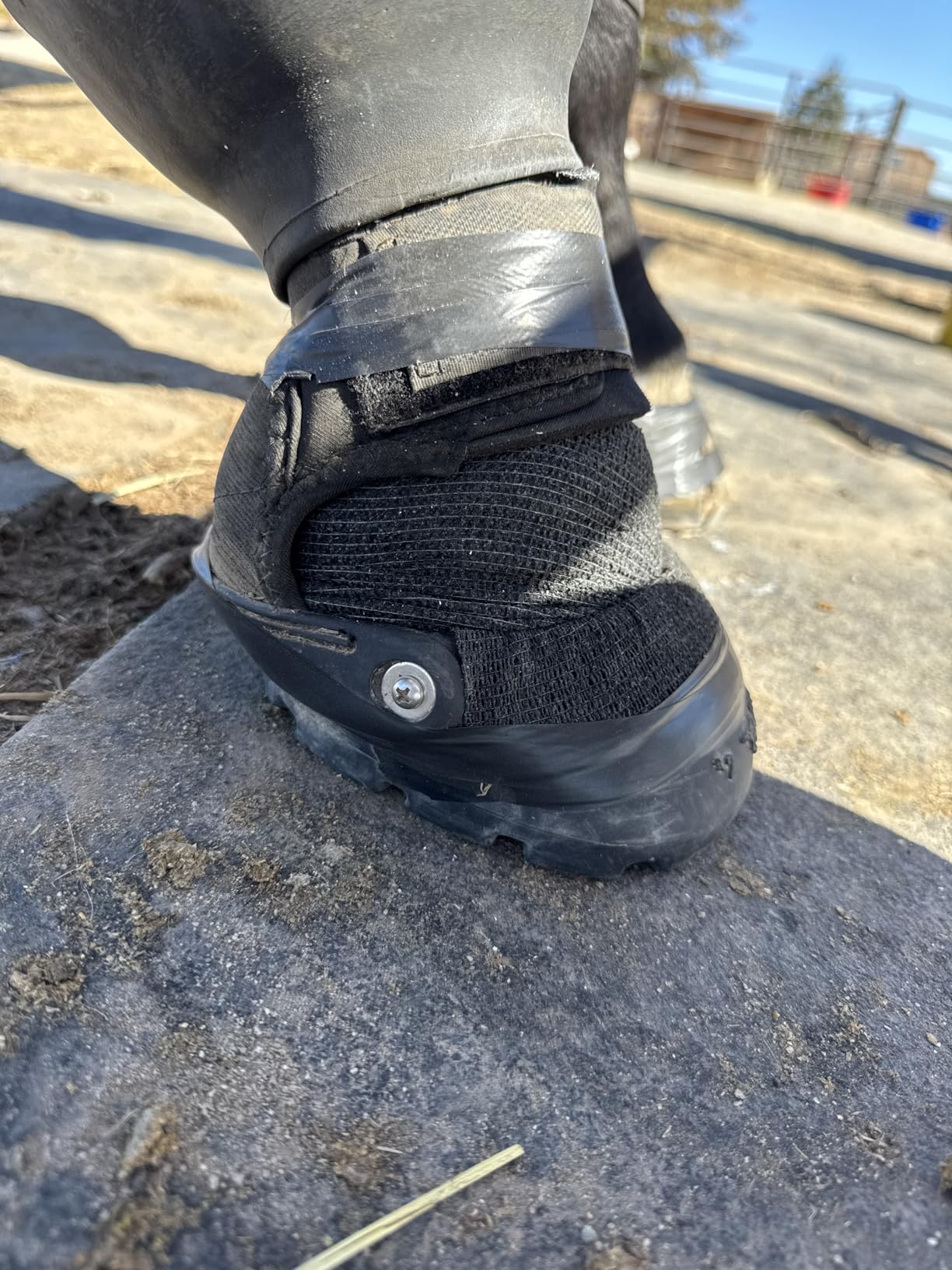
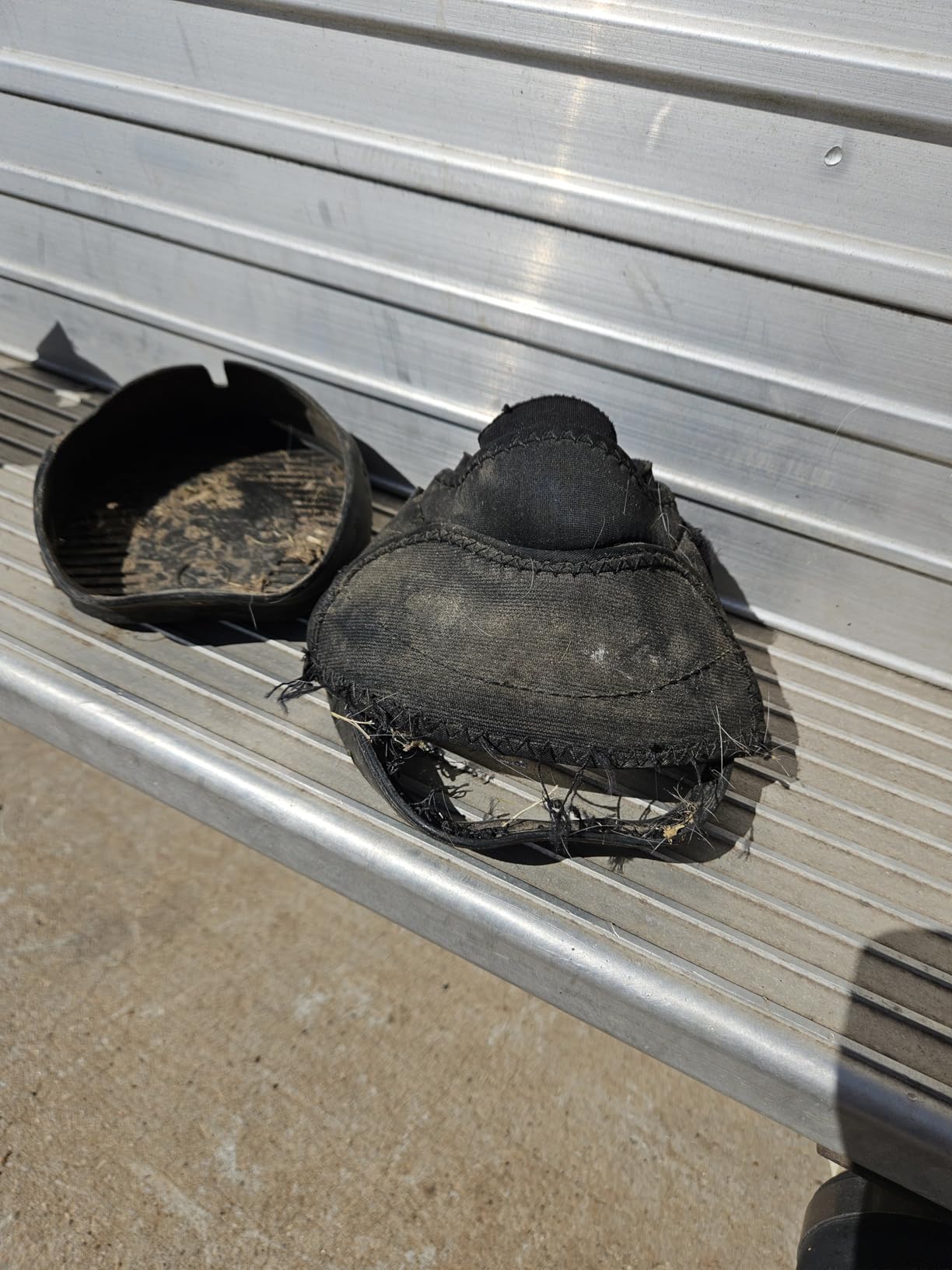
However, I need to be honest about the durability concerns. After roughly 40 miles of testing, I noticed the elastic gaiter starting to show wear at the attachment points. Multiple Amazon reviewers report the same issue, with gaiter ripping and stitching coming loose after limited use. The sole also wore through faster than I expected on abrasive ground.
The Glove Soft demands a precise fit to work properly. This is not a boot you can size loosely and expect good results. You need to trim your horse’s hooves every two to three weeks to maintain the snug fit the design requires, which means a more intensive maintenance commitment than other boots on this list.
If the fit is even slightly off, the boot can twist or come off during vigorous activity. I lost one on a fast canter through a field before I dialed in the sizing correctly.
Trimming Schedule Requirements
The Glove Soft requires a shorter trimming cycle than most boots. Plan on a trim every two to three weeks to keep the hoof within the boot’s snug tolerance range. If you go longer between trims, the hoof will grow past the boot’s optimal fit window and performance drops sharply.
This makes the Glove Soft better suited for riders who trim their own horses or have a farrier on a frequent schedule.
When This Boot Excels vs Falls Short
The Glove Soft excels for arena work, pleasure riding on maintained trails, and horses with ideally shaped hooves. It falls short for rocky terrain, high-mileage endurance riding, and horses whose hoof shape does not match the boot’s last. If your horse has wide, round hooves rather than the more oval shape this boot prefers, consider the Cavallo options instead.
Despite the mixed rating, riders who get the fit right swear by this boot. It rewards precision but punishes approximation.
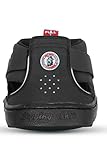
7. Equine Fusion Trekking Jogging Shoe — Tough Trail Companion
Equine Fusion Trekking Jogging Shoe, Black Hoof Boots for Horses Front Feet
Super Fabric upper
Cone-locking fit
All Terrain sole
Regular and slim sizes
Pros
- Universal left/right fit
- Secure cone-locking mechanism
- Durable Super Fabric upper
- Advanced sole with excellent grip
- Easy to put on and take off
Cons
- Allows sand and debris to enter
- May not suit all hoof shapes
- Not Prime eligible
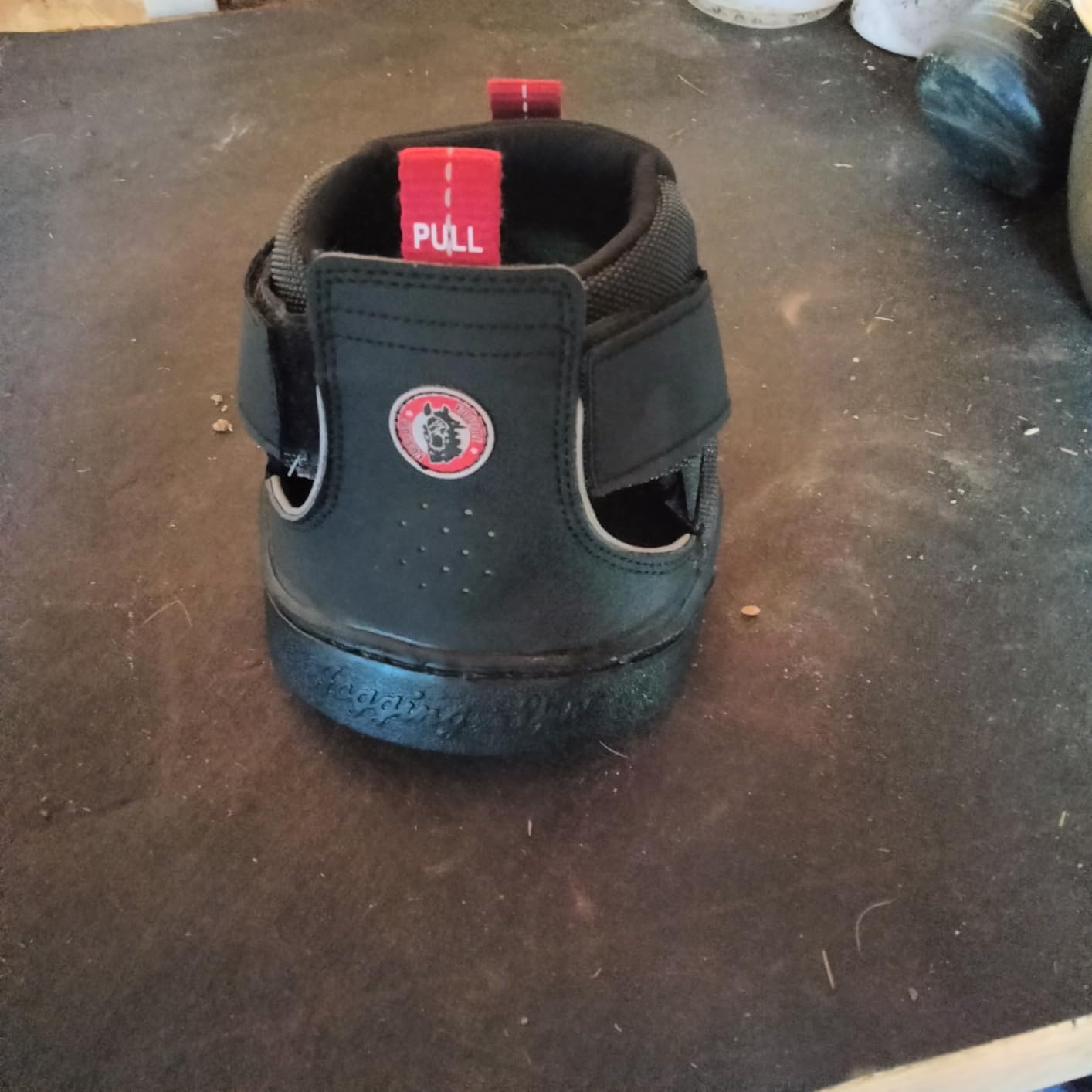
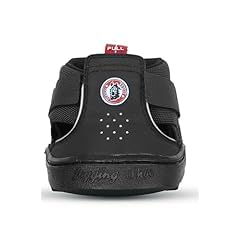
The Equine Fusion Trekking Jogging Shoe is the more rugged sibling of the Active Jogging Shoe, built with Super Fabric upper material that resists abrasion from rocks and brush. I tested these on trails with heavy brush and sharp shale where lighter boots would have shredded.
The universal left and right fit is a convenience I did not know I needed. You can put either boot on either front foot, which eliminates the confusion of matching boots to specific hooves. For riders who boot up in low light at early morning trailheads, this saves real time.
The cone-locking mechanism grips the front of the hoof securely, and the additional hook-and-loop strap provides a secondary anchor point. On my test rides, the boots stayed firmly in place through trot, canter, and some unexpected spooking.
Technically, the Trekking shoe shares the same All Terrain sole as the well-known Equine Fusion All Terrain model. This tread pattern delivers excellent grip across rocks, mud, and wet grass. The shock absorption from the layered sole construction reduces concussion on long rides, which benefits horses with sensitive joints.
The Super Fabric upper is genuinely tough. After a brush-heavy ride that left scratches on my chaps, the boots showed only minor surface scuffing. Breathability is decent, though I noticed some heat buildup on very warm days during extended rides.
The main complaint I have is that sand and fine debris can work their way into the boot through the upper opening. This is not unique to this boot, but it is worth noting for riders on sandy or gritty trails.
Comparison to the Active Jogging Shoe
The Trekking shoe is more durable and abrasion-resistant than the Active Jogging Shoe, making it better suited for rough, brushy terrain. The Active is lighter and more flexible, which suits endurance and arena work. Choose based on the terrain you ride most frequently.
If your trails involve a lot of rocky, brush-choked singletrack, the Trekking is the smarter pick. For open trails and maintained paths, the Active’s lighter weight gives a slight edge.
Debris Management on Gritty Trails
To reduce debris entry, consider using pastern wraps or gaiters underneath the boot. These create a seal between the boot opening and the hoof that keeps sand and grit out. Check the boots at rest stops during long rides and shake out any accumulated debris.
Applying a thin layer of petroleum jelly around the pastern area can also help create a barrier, though you will need to clean it off after each ride.
8. Tough 1 Hoof Saver Boot — Budget Therapeutic Option
Tough 1 Hoof Saver Boot, Royal Blue, Medium
Triple layered
Holds medication
Abscess treatment
Promotes healing
Pros
- Great for abscess treatment and soaking
- Stays on well in pasture
- Easy to use
- Durable for weeks of use
- Holds medication and poultice pads
Cons
- Velcro strap can rip off
- Snug to put on and take off
- May be uncomfortable for some horses
- Velcro does not stick well initially
The Tough 1 Hoof Saver Boot occupies a different niche than the trail boots above. It is primarily a therapeutic boot designed for abscess treatment, soaking, and medication delivery. I include it because many trail riders need an affordable boot for managing hoof problems between rides.
I used the Hoof Saver during an abscess episode last summer, and it eliminated the messy duct tape and diaper routine I had used in the past. The triple-layered construction holds poultice pads and medication securely against the sole, which speeds healing by maintaining consistent contact.
The boot stays on reasonably well in a pasture setting, which means your horse can move around while receiving treatment rather than being confined to a stall. This controlled movement actually promotes better circulation and faster healing.
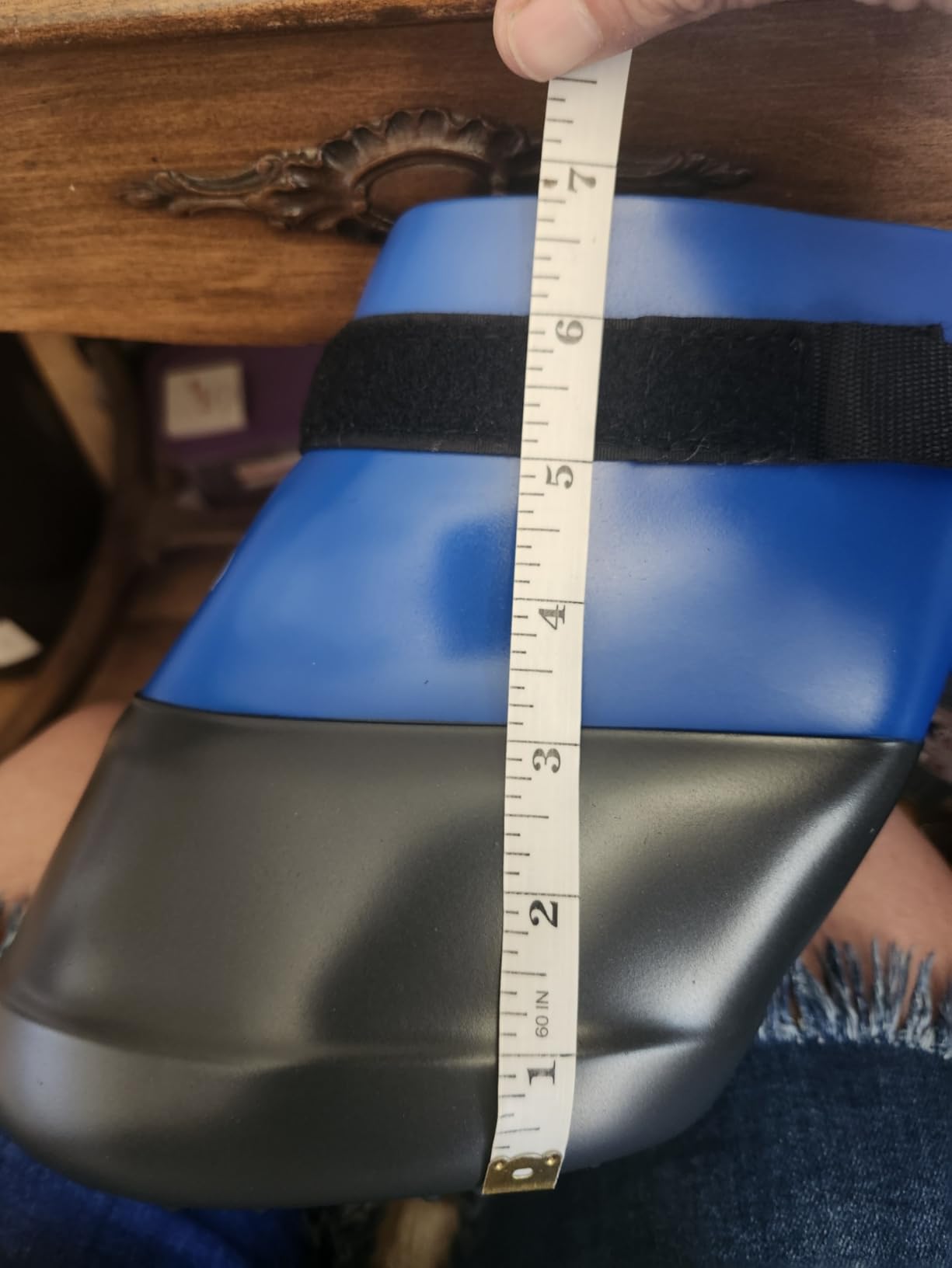
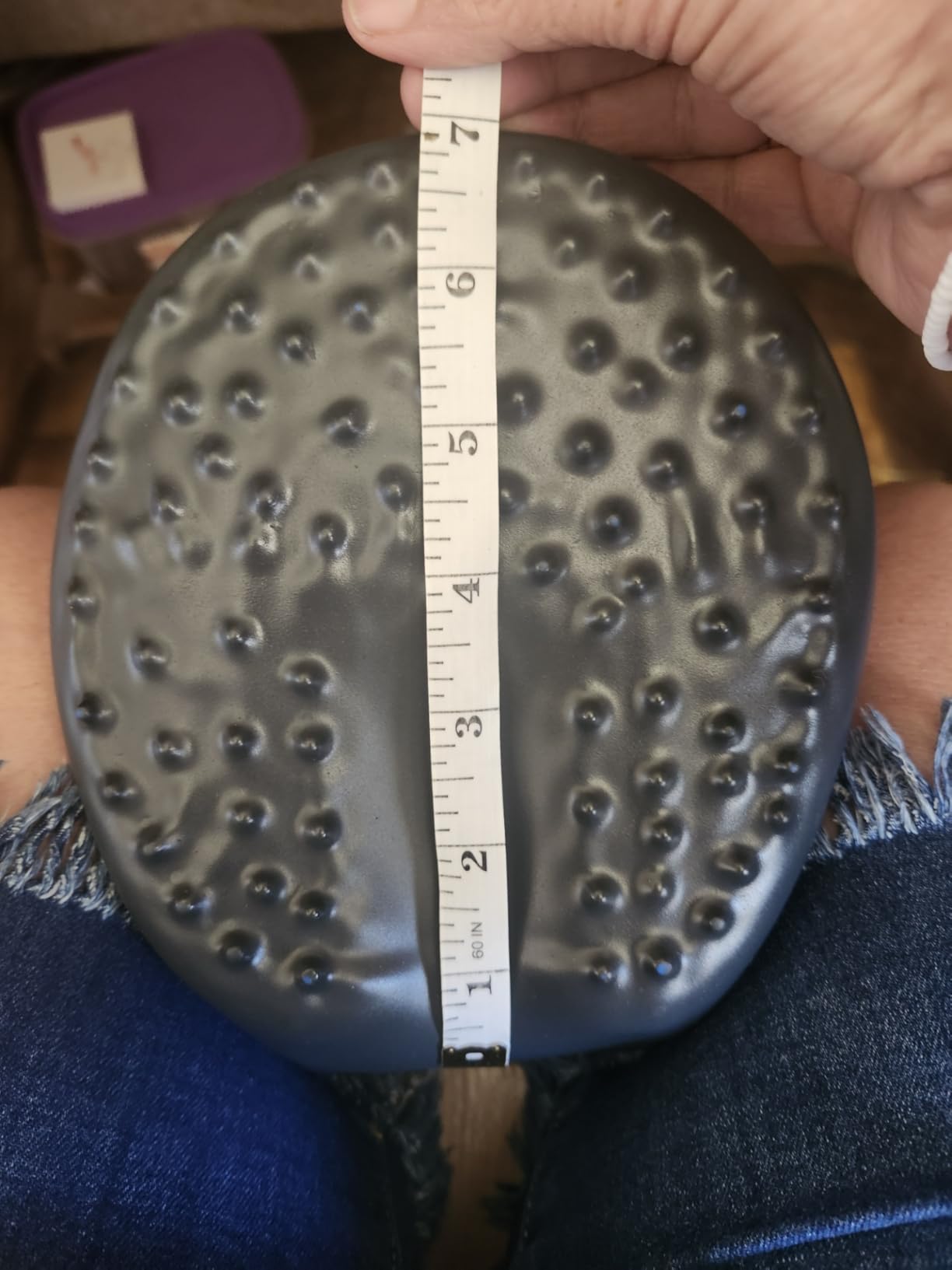
Technically, the Hoof Saver uses a triple-layered design with a waterproof exterior and a soft interior lining. The layers work together to keep medication in and contaminants out. The boot opens wide for easy application of treatment materials.
The main weakness is the Velcro strap durability. Multiple reviews, including my own experience, note that the strap can rip completely off if the horse pulls back or paws aggressively. I recommend keeping a backup boot on hand for this reason.
The boot is also somewhat snug to put on initially, which can be frustrating with a sensitive horse. The Velcro does not stick well when new, but it improves after a few uses as the fibers break in.
Soaking and Medication Protocols
For Epsom salt soaks, fill the boot with warm water and salts, place it on the hoof, and secure the strap. Let your horse stand for 20 to 30 minutes, then remove the boot and dry the hoof thoroughly. Repeat daily until the abscess resolves.
For poultice application, pack the boot sole with the medication, position it on the clean hoof, and secure. Change the poultice every 12 hours and monitor the hoof for signs of improvement or infection spread.
When to Upgrade to a Full Trail Boot
The Hoof Saver is not designed for riding. Once your horse has recovered from the hoof issue, transition to a proper trail boot for riding protection. The Hoof Saver can continue to serve as a turnout boot for ongoing protection during the healing phase.
If you find yourself using the Hoof Saver frequently, consider investing in the Easyboot Cloud for a more durable therapeutic option with better construction and longer service life.
How to Choose Hoof Boots for Trail Riding?
Choosing the right hoof boot comes down to understanding your horse’s needs, your riding style, and the terrain you cover. Here is what I have learned from fitting boots on dozens of horses over the years.
How to Measure Your Horse for Hoof Boots
Accurate measurement is the single most important step, and getting it wrong is the number one reason boots fail on the trail. Measure immediately after a fresh trim, because an overgrown hoof will give you false readings.
You need two measurements: the width of the hoof at its widest point, and the length from the toe to the heel buttress. Use a rigid ruler or measuring tape, not a flexible one that curves around the hoof. Record both measurements in millimeters for the most precise fit.
Stand your horse on a flat, hard surface when measuring. Have someone hold the opposite leg up so the hoof you are measuring bears full weight in its natural position. Measure both front feet separately, because many horses have slightly different sized hooves on each side.
Compare your measurements to the manufacturer’s sizing chart for the specific boot model you want. Sizing varies between brands, so never assume a size 2 in one brand equals a size 2 in another.
Key Features to Look For
Traction: Look for a tread pattern designed for the terrain you ride. Deep lugs grip mud and soft ground, while flatter treads with siping work better on rocks and hard surfaces.
Drainage: If you ride through water crossings, drainage holes in the sole prevent water from pooling and adding weight. Boots without drainage become heavy and uncomfortable after a creek crossing.
Closure system: Hook-and-loop closures are simple and reliable. Cone-locking systems provide a more precise fit. Choose based on your horse’s hoof shape and your need for quick on-off application.
Material durability: TPU construction offers excellent abrasion resistance and is easy to clean. Leather uppers breathe well but require more maintenance. Super Fabric and Cordura balance weight and toughness for trail use.
Shock absorption: Layered soles with recessed centers reduce concussion on the hoof structures. This matters most for horses with thin soles, sensitive feet, or those recovering from injury.
Types of Hoof Boots Explained
Trail boots are designed for pleasure and trail riding at moderate speeds. They prioritize ease of use, secure fit at walk and trot, and all-day comfort. The Cavallo Trek and Easyboot Trail Original fit this category.
Performance boots are built for speed, endurance, and demanding terrain. They feature form-fitting designs and lightweight construction. The Easyboot Glove Soft and Equine Fusion boots serve this category.
Therapeutic boots focus on recovery, rehabilitation, and medical treatment. They are not designed for riding. The Easyboot Cloud and Tough 1 Hoof Saver fill this role, providing cushioning and medication delivery.
Common Mistakes to Avoid
The biggest mistake I see is ordering the wrong size. Always measure after a trim and check the specific brand’s chart. Another common error is skipping the break-in period. Start with short hand-walking sessions before your first real ride to identify rub points.
Riders also underestimate the importance of regular trimming. Boots fit a trimmed hoof, and as the hoof grows, the fit changes. If you stretch your trimming cycle beyond four weeks, your boots may twist or come off.
Finally, do not use therapeutic boots for riding. They are not built for the forces of riding and can fail or injure your horse. Match the boot type to your intended use.
Breaking In Your Hoof Boots
Start by hand-walking your horse in the new boots for 10 to 15 minutes on soft ground. Check for any rub marks on the pastern or heel bulb area. If you see redness, adjust the fit or add a pastern wrap for protection.
Gradually increase riding time over the first week. Start with short 20-minute rides at walk only, then add trot work in the second session. By the end of the first week, your horse should be comfortable in the boots for normal trail work.
Check the boots after each ride during the break-in period. Look for wear patterns that might indicate a fit issue, and inspect the hoof for any pressure marks. Early detection prevents soreness and keeps your horse happy on the trail.
Frequently Asked Questions
What are the best hoof boots for trail riding for a horse with sensitive feet?
For horses with sensitive feet, the Easyboot Cloud provides the most cushioning and sole relief, making it ideal for recovery and therapeutic use. For riding, the Equine Fusion Active Jogging Shoe offers superior shock absorption with its flexible rubber sole and ergonomic design. Both reduce concussion on sensitive sole structures.
Which hoof boots stay on best on trails?
The Equine Fusion Active Jogging Shoe and Cavallo Simple Hoof Boot are the most secure options for trail riding. Their cone-locking and dual-strap closure systems keep the boots firmly in place across varied terrain and gaits. The key to any boot staying on is proper sizing after a fresh trim.
Are Scoot Boots or Cavallo boots better for trail riding?
Both brands have loyal followings, but they serve slightly different needs. Cavallo boots are easier to put on and work well for pleasure riding at walk and trot. Scoot Boots are lighter and more form-fitting, which suits faster gaits and endurance work. Your choice depends on your riding speed and terrain.
What is the easiest hoof boot to put on and take off?
The Easyboot Trail Original is the easiest to apply because it opens completely flat to slip over the hoof. The Cavallo Trek is also straightforward with its simple hook-and-loop closure system. For riders who struggle with stiff boots, these two designs minimize the effort and time needed to boot up.
How do I measure my horse for hoof boots?
Measure the hoof width at its widest point and the length from toe to heel buttress immediately after a fresh trim. Use a rigid ruler with the horse standing on flat hard ground. Compare both measurements to the specific manufacturer sizing chart, since sizes vary between brands.
Final Thoughts on the Best Hoof Boots for Trail Riding
Finding the right hoof boots for trail riding comes down to matching the boot to your horse’s hooves and your riding style. For riders who want the best overall performance, the Equine Fusion Active Jogging Shoe delivers premium traction, comfort, and security across varied terrain. Budget-conscious riders get excellent value from the Cavallo Trek, while the Easyboot Trail Original proves you can get reliable protection at an entry-level price.
The most important advice I can give is to measure carefully, break in gradually, and maintain a consistent trimming cycle. A well-fitted boot transforms the trail experience for a barefoot horse, letting you ride with confidence across rocks, mud, and hard ground.
Whichever boot you choose from this 2026 roundup, invest the time in getting the fit right. Your horse will thank you with sound, comfortable miles on the trail.