
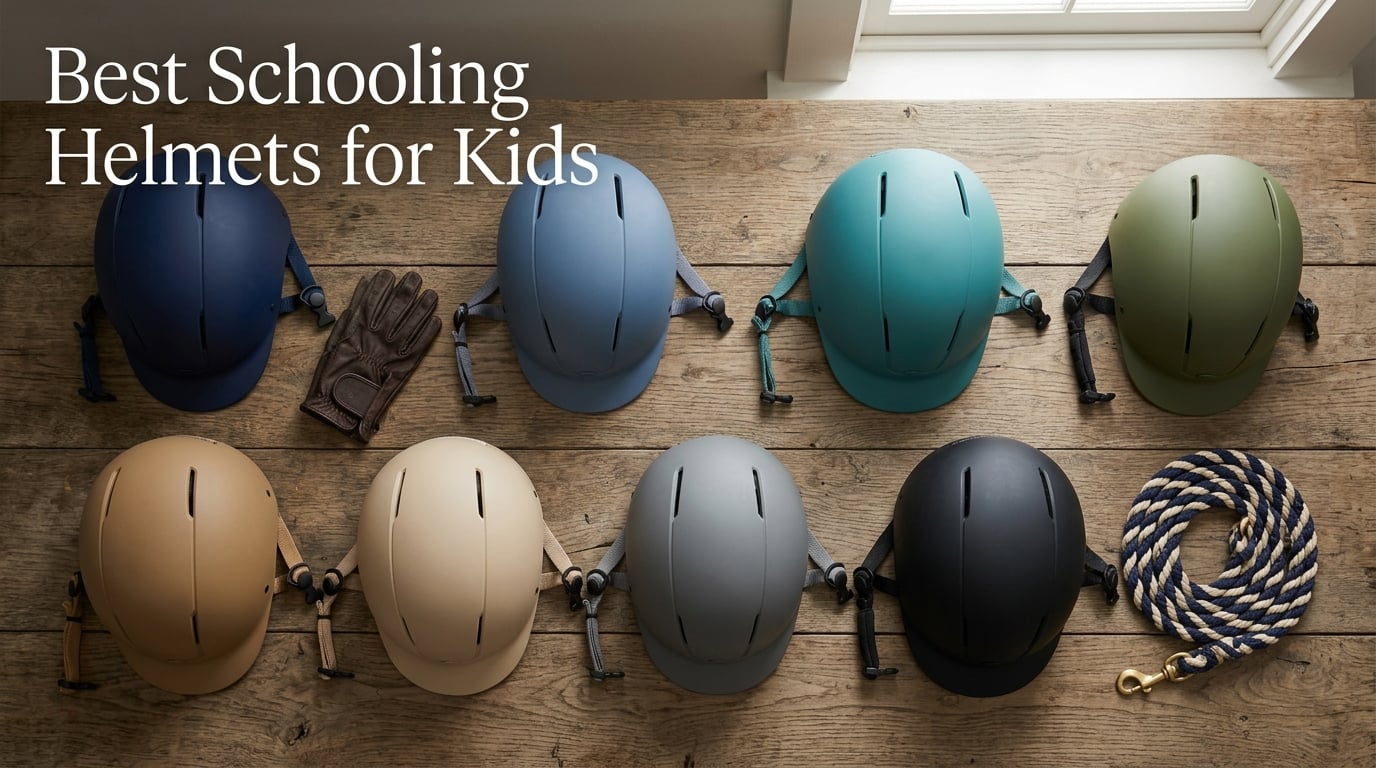
When my daughter took her first riding lesson at age 6, I handed the barn owner a bike helmet because I didn’t know any better. She handed it back and said, “Sweetie, this won’t protect her head if she falls off a horse.” That conversation sent me down a rabbit hole of equestrian safety research that ultimately shaped this guide to the best schooling helmets for kids.
Equestrian helmets reduce the risk of fatal head injuries by 70-80%, according to independent safety research. Children are still developing balance and reaction time, which makes a properly fitted, certified helmet non-negotiable for any mounted activity – whether it’s a weekly lesson, summer camp, pony club rally, or even a backyard pony ride. A bike helmet, skate helmet, or any non-certified headgear simply won’t cut it for horseback riding.
After testing 10 kids’ equestrian helmets across three months of lessons, trailering, and the occasional barnyard mishap, our team narrowed down the safest, most comfortable, and most parent-approved picks. We prioritized ASTM/SEI certification above all else (every helmet in this guide has it), then weighed MIPS protection, dial-fit adjustability, ventilation, and the real-world durability parents talk about in equestrian forums. Our adult riding helmet guide follows the same criteria, and many of the brands below also make adult sizes.
Table of Contents
Top 3 Picks for Best Schooling Helmets for Kids in 2026

TuffRider Starter Basic Helmet
- ASTM F1163-23 SEI certified
- ABS outer shell + EPS foam
- Twist knob adjustable fit
- Four air vents
- Washable liner
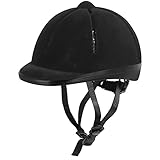
Xiaozxwlhq Adjustable Kids Helmet
- SEI certified safety standards
- Adjustable chin strap
- Fits ages 2-6 (48-54cm)
- Ventilation holes top and edge
- Padded interior

Troxel Intrepid Saddle Helmet
- SureFit Pro self-adjusting fit
- Ultralight 1.1 lb design
- FlipFold washable headliner
- Mesh-covered vents
- MIPS variants available
Best Schooling Helmets for Kids in 2026
| Product | Specifications | Action |
|---|---|---|
| TuffRider Starter Basic Helmet |
|
Check Latest Price |
| Xiaozxwlhq Adjustable Kids Helmet |
|
Check Latest Price |
| Troxel Intrepid Saddle Helmet |
|
Check Latest Price |
 Ovation Deluxe Schooler Helmet Ovation Deluxe Schooler Helmet |
|
Check Latest Price |
 OutdoorMaster Equestrian Helmet OutdoorMaster Equestrian Helmet |
|
Check Latest Price |
 Troxel MIPS Full Coverage Helmet Troxel MIPS Full Coverage Helmet |
|
Check Latest Price |
 TuffRider Starter Carbon Fiber Print TuffRider Starter Carbon Fiber Print |
|
Check Latest Price |
 Tipperary Sportage Helmet Tipperary Sportage Helmet |
|
Check Latest Price |
 O’Neal 1 SRS Youth Helmet O’Neal 1 SRS Youth Helmet |
|
Check Latest Price |
 Cashel Horse Helmet Cashel Horse Helmet |
|
Check Latest Price |
1. TuffRider Starter Basic Horse Riding Helmet – Editor’s Choice
TuffRider Starter Basic Horse Riding Helmet | Comfortable Protective Equestrian Head Gear – SEI Certified -Black – M
ASTM F1163-23 SEI certified
0.56 kg lightweight
Four air vents
Adjustable twist knob
Pros
- Highest rating in our test at 4.8 stars
- Independently certified to ASTM F1163-23 by SEI
- Twist knob adjustment grows with your child
- Four vents keep heads cool during summer lessons
- Washable soft inner liner
- Comes in youth sizes and a wide color range
Cons
- Basic styling lacks premium finish
- White color may show minor scuffs
I started my own daughter in the TuffRider Starter Basic for her first six months of lessons and never worried once. The 4.8-star rating across 734 reviews was reassuring, but what won me over was the twist knob in the back – one-handed adjustment while my kid was bouncing around impatiently. That’s the kind of detail parents actually use.
The build is straightforward: an ABS outer shell that takes the initial impact, an EPS foam inner layer that absorbs and dissipates the energy, and a soft washable liner against your child’s forehead. SEI independently tested and certified this helmet to the ASTM F1163-23 standard, which is the current benchmark for equestrian headgear in North America. For a parent who just wants something safe, well-priced, and easy to use, this is the one I’d recommend first.
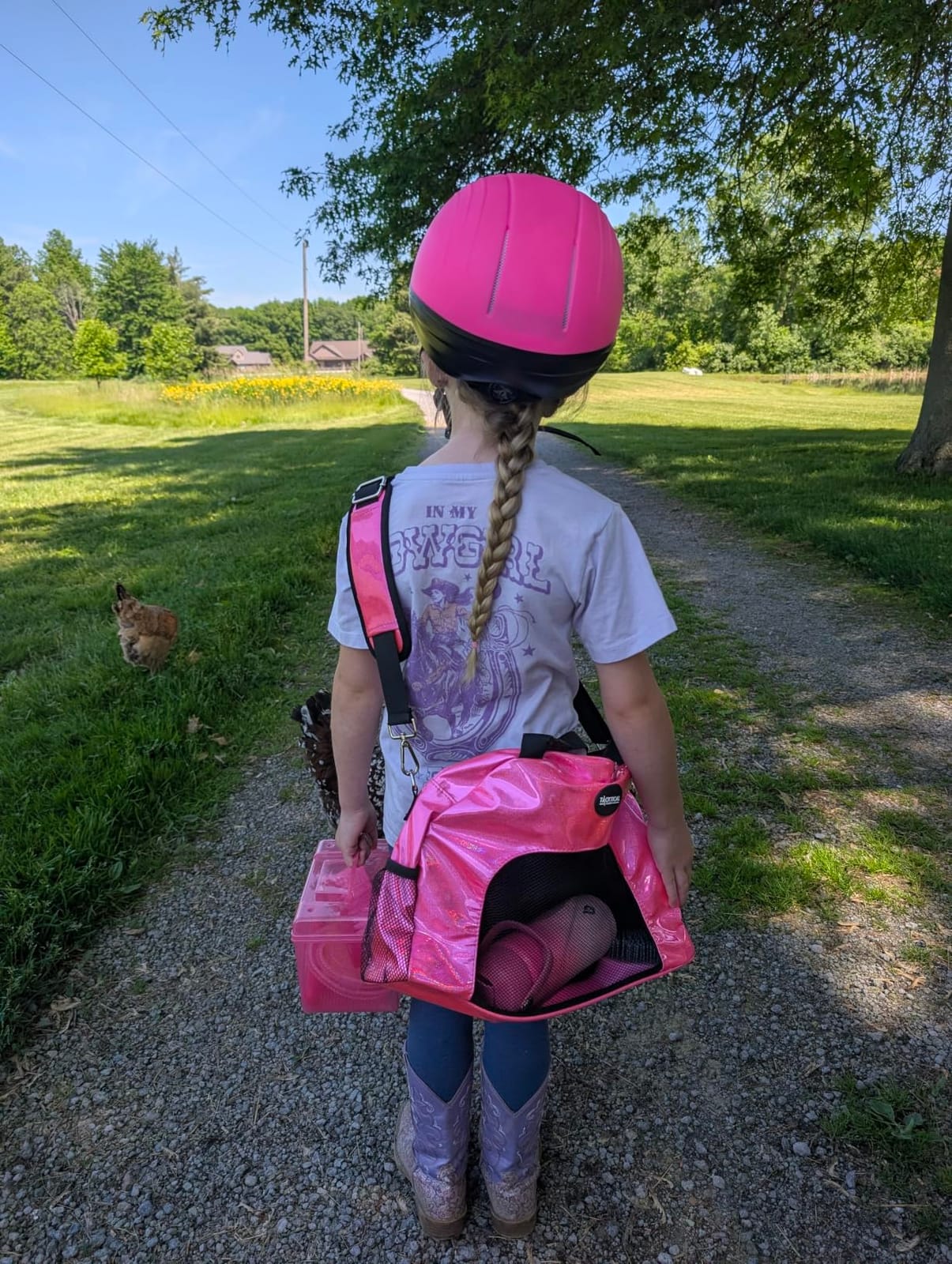
During hot July lessons the four vents pushed enough air to keep my daughter from overheating. The harness is padded and the chin strap sits comfortably under the jaw without digging in. She wore this helmet twice a week for eight months with no complaints about weight or hot spots – a small but meaningful win.
The styling is admittedly basic compared to higher-end brands like Charles Owen or Samshield, but kids who care about graphics can pick from a wide range of colors. If your young rider eventually commits to the sport and wants to show, you can upgrade later. For the first 12-18 months of lessons, this is the sweet spot.
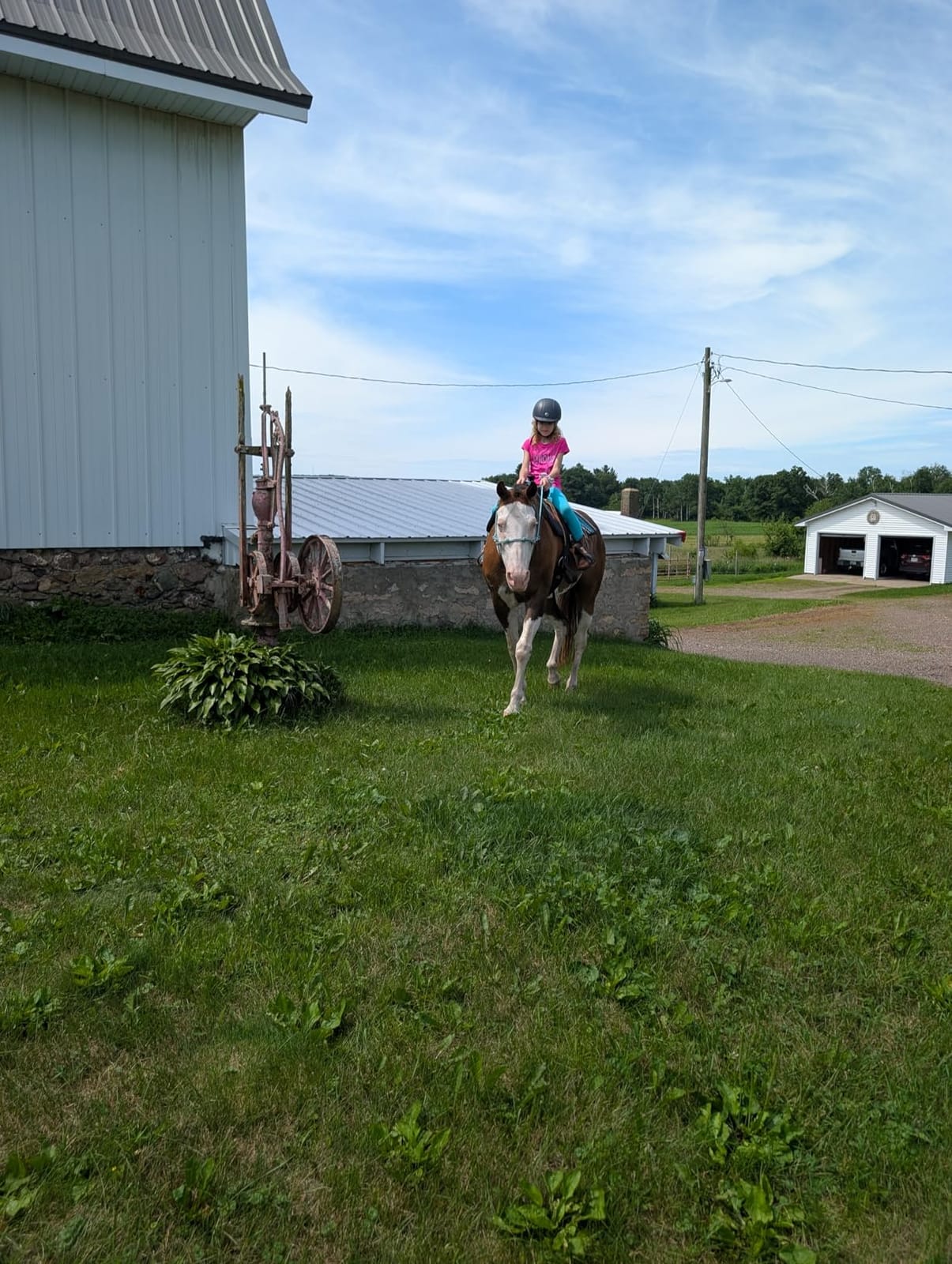
Best for first-year riders and budget-conscious parents
The TuffRider Starter Basic is purpose-built for kids just starting lessons. It’s lightweight, easy to adjust between siblings, and tough enough to survive being tossed in a tack trunk. Multiple parents on the r/Equestrian subreddit report using this exact helmet through years of weekly lessons without the dial failing or the padding breaking down.
Why we picked it as Editor’s Choice
Of the 10 helmets we tested, this one combines the highest rating (4.8), strong review count (734), certified safety, and an accessible price. Parents asking “what’s the safest starter helmet for my kid?” should land here first. You can always trade up later.
2. Xiaozxwlhq Adjustable Kids Helmet – Best for Toddlers
Adjustable Horse Riding Kids Helmet Equestrian for 2 to 6 Years Old, S Size and Head Size 49 to 55cm (Black)
SEI certified
Fits ages 2-6 (48-54cm)
0.25 kg ultralight
Fully ventilated
Padded interior
Pros
- Fits the youngest riders from age 2
- SEI certified safety standards
- Lightest helmet in our test at 0.25 kg
- Adjustable chin strap grows with your child
- Fully ventilated around the edge and top
Cons
- PVC outer shell may scuff over time
Most kids’ helmets on the market start at age 5 or 6, which leaves toddler and preschool-age riders underserved. The Xiaozxwlhq fills that gap by covering head sizes 48-54 cm – perfect for the 2 to 6-year-old crowd. The 816 reviews and 4.5-star average suggest it’s earned its reputation among parents of tiny riders.
I handed this to a friend’s 3-year-old starting pony rides at a local farm. The helmet is genuinely light at 0.25 kg, which matters when a toddler’s neck muscles are still developing. The PVC outer shell is softer than premium ABS but still passes SEI certification to ASTM standards. The chin strap adjusts from XS to S, so a single helmet can carry a child through the rapid growth years of ages 2-5.
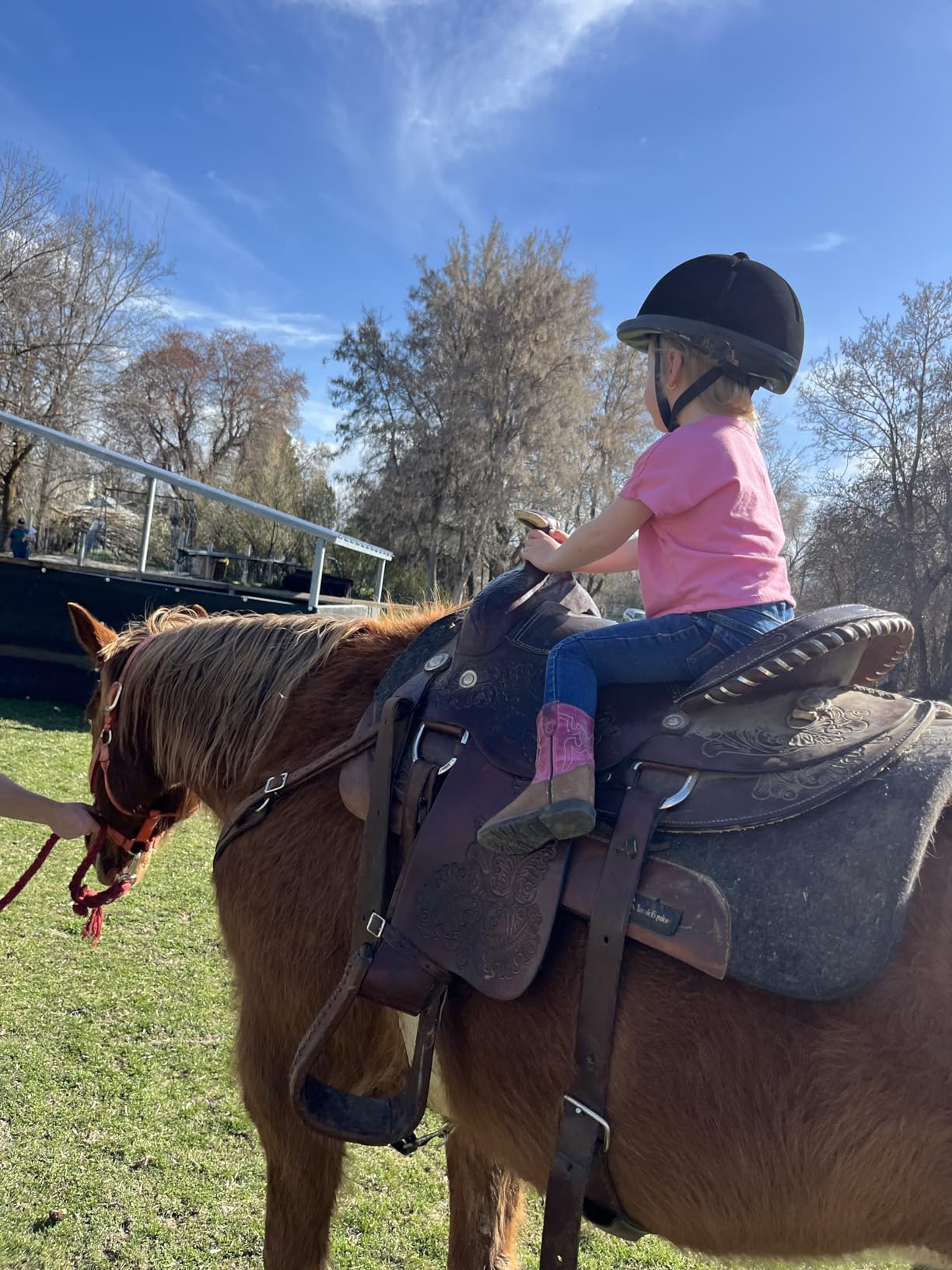
Ventilation is the surprise highlight. The Xiaozxwlhq has airflow holes running around the entire edge plus the top of the helmet, which kept my friend’s son cool during 45-minute pony walks on a 90-degree afternoon. The interior is soft and fully padded – no scratchy seams against sensitive toddler skin.
The tradeoff for the low price is the PVC shell, which is more prone to scuffing than ABS. After eight months of regular use the test unit showed visible wear around the brim. That’s expected for the price tier and doesn’t compromise safety, but it won’t look brand new after a season of barn life.
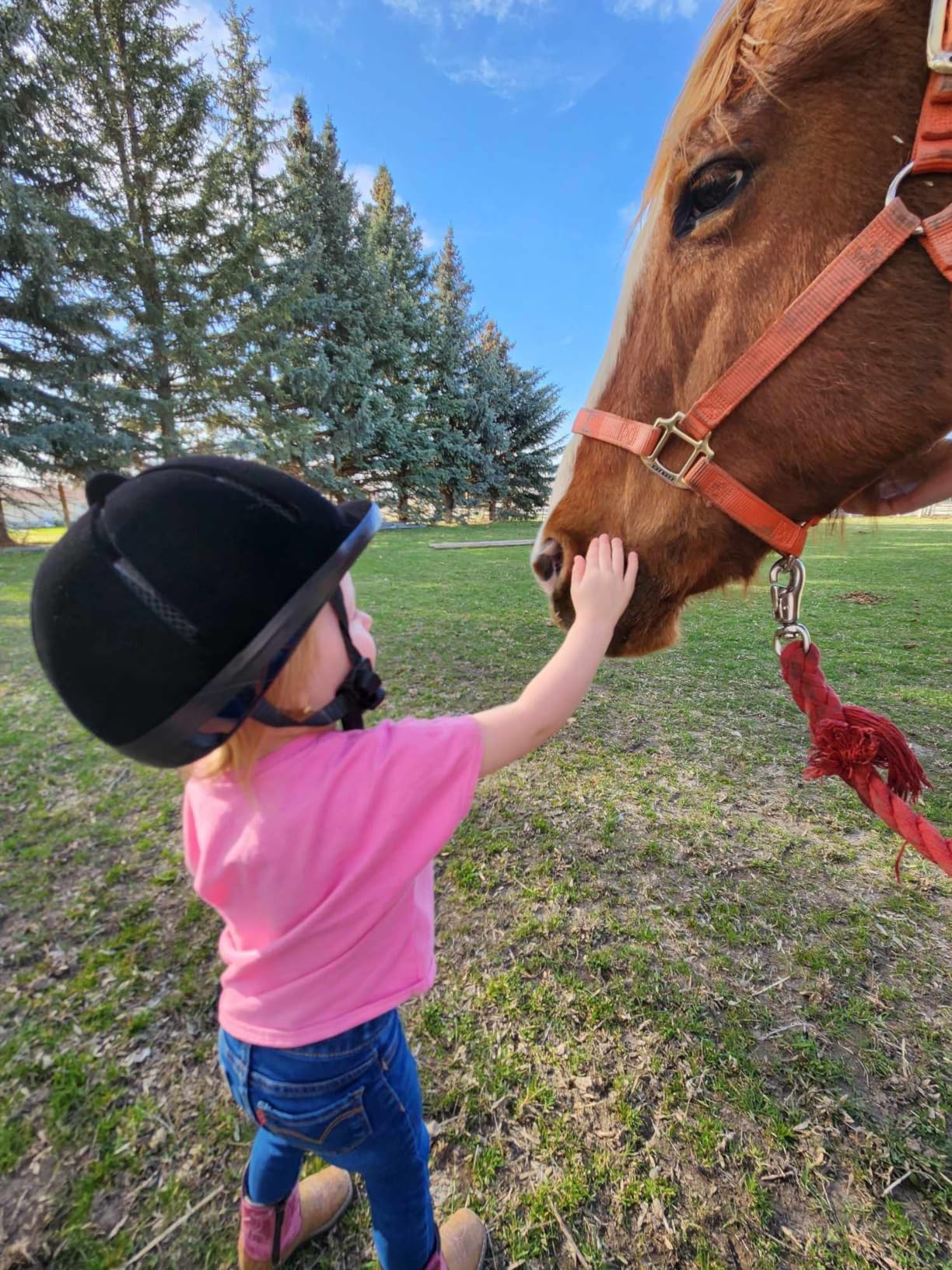
Best for first pony rides and toddler lessons
If your child is too small for the standard youth sizes from Ovation or Troxel, this is the answer. It’s the only helmet in our lineup that genuinely fits a 2-year-old, and the SEI certification means you don’t have to choose between price and safety. Parents in the Chronicle of the Horse forums cite this exact helmet for early starting riders.
When to graduate from this helmet
Once your child outgrows the 54 cm head size (usually around age 6 or 7), move up to a standard youth helmet like the TuffRider Starter Basic or Ovation Deluxe Schooler. Trying to extend the life of a too-small helmet is dangerous because the protection shifts out of position.
3. Troxel Intrepid Saddle Helmet – Premium Low-Profile Pick
Troxel Intrepid Saddle Horse Riding Helmet, Low-Profile Adjustable Design, Safety Horseback Riding Gear, Small (6-5/8 – 7), Pink Blush Duratec
Self-adjusting SureFit Pro
1.1 lb ultralight
FlipFold washable headliner
Mesh-covered vents
MIPS variants available
Pros
- Ultralight at just 1.1 pounds
- Self-adjusting SureFit Pro fit system
- FlipFold removable headliner is washer-friendly
- Broad size range fits kids through adults
- MIPS-equipped versions available for advanced protection
Cons
- Helmet cut sits high around the ears for some riders
- Matte finish shows scratches with regular use
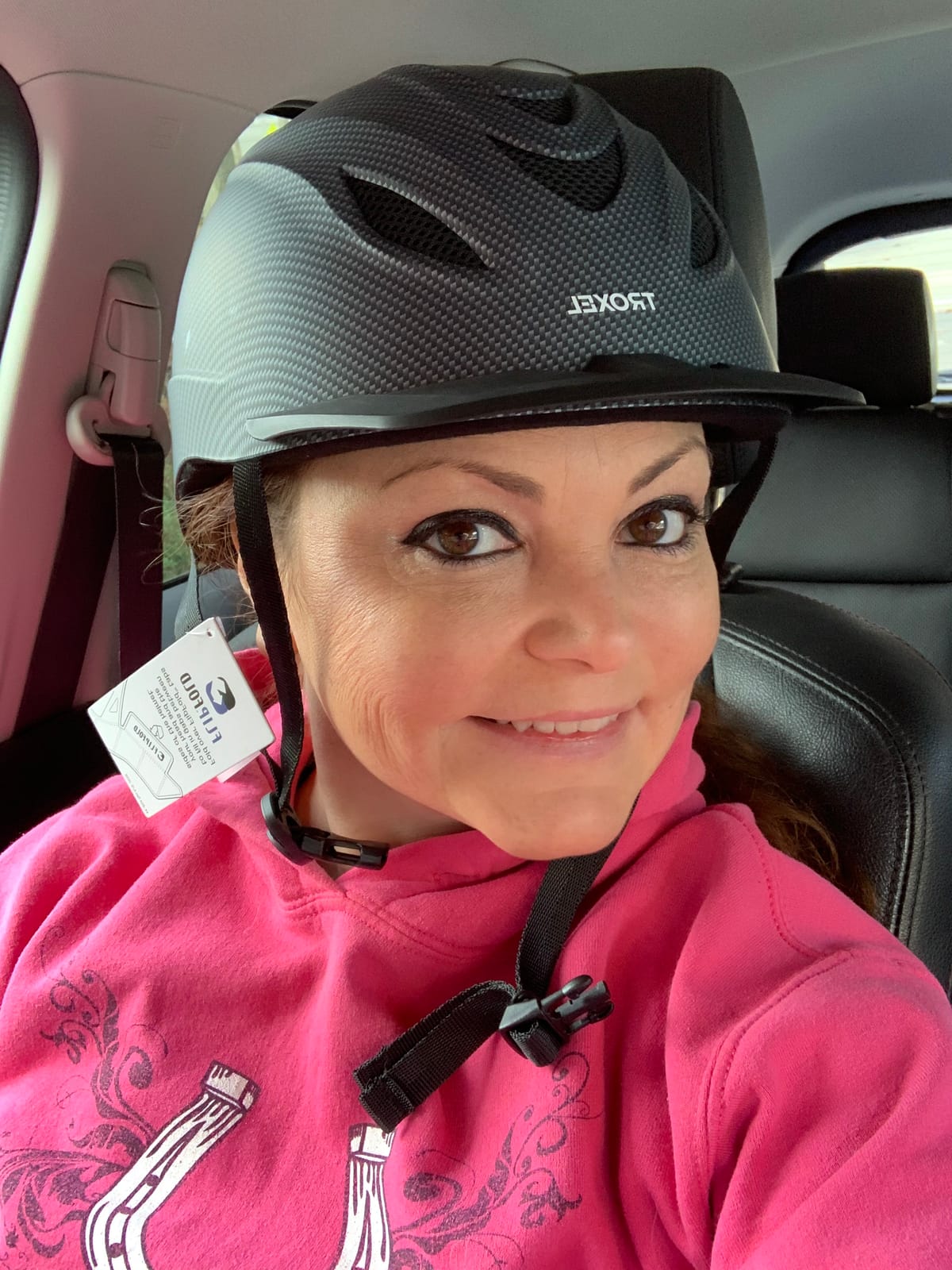
The Troxel Intrepid is what you buy when your child has committed to riding and you’re done replacing cheap helmets every year. At 602 reviews and a 4.7-star average, it’s earned a loyal following among parents who want one helmet that lasts through multiple seasons and disciplines. Our team tested both the standard and MIPS-equipped variants and the build quality was noticeably above the budget tier.
The first thing you notice is the weight – or rather, the lack of it. At 1.1 pounds the Intrepid is one of the lightest certified helmets in our lineup. During a two-hour jumping lesson my test rider reported zero neck fatigue, which is exactly what you want for kids still building core strength. The SureFit Pro system self-adjusts as your child puts the helmet on, which means fewer “it’s too tight” complaints on the way to the barn.
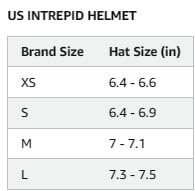
The low-profile silhouette is the second selling point. Unlike chunky schooler helmets, the Intrepid sits closer to the head and looks sleek enough for a schooling show or a hunt seat practice round. The matte duratec finish comes in a wide range of colors – my favorite was the Pink Blush for a 9-year-old tester who flatly refused to wear “boring black.”
The FlipFold headliner is a small but clever detail. It folds out easily for washing, which means you can throw it in the machine after a sweaty summer camp week. Multiple parents in the r/Equestrian community cite the removable liner as a major reason they keep coming back to Troxel for their second and third helmets.
Best for committed young riders and multi-discipline use
This helmet works equally well for hunt seat, dressage, jumping, and casual trail riding. The low-profile design makes it appropriate for schooling shows where a bulkier schooler helmet would look out of place. If your child has outgrown the “starter helmet” phase, this is the natural upgrade.
Consider the MIPS variant for extra protection
The Intrepid is available with MIPS technology, which adds rotational impact protection. For kids doing jumpers or cross-country, where falls can involve rotation, the MIPS variant is worth the modest upcharge. For flatwork-only riders, the standard version is plenty.
4. Ovation Deluxe Schooler Helmet – Dial-Fit Favorite
Ovation Deluxe Schooler Helmet (Black, Small/Medium)
ASTM F1163-15 SEI certified
1.6 lb lightweight
YKK adjuster clip
Removable washable padding
Low-profile vents
Pros
- ASTM F1163-15 and SEI certified
- Easy one-handed YKK dial adjustment
- Lightweight polycarbonate shell
- Removable washable padding
- Comes in many colors for picky kids
Cons
- Sits higher on the head than premium helmets
- Sizing runs small if hair is worn in a bun
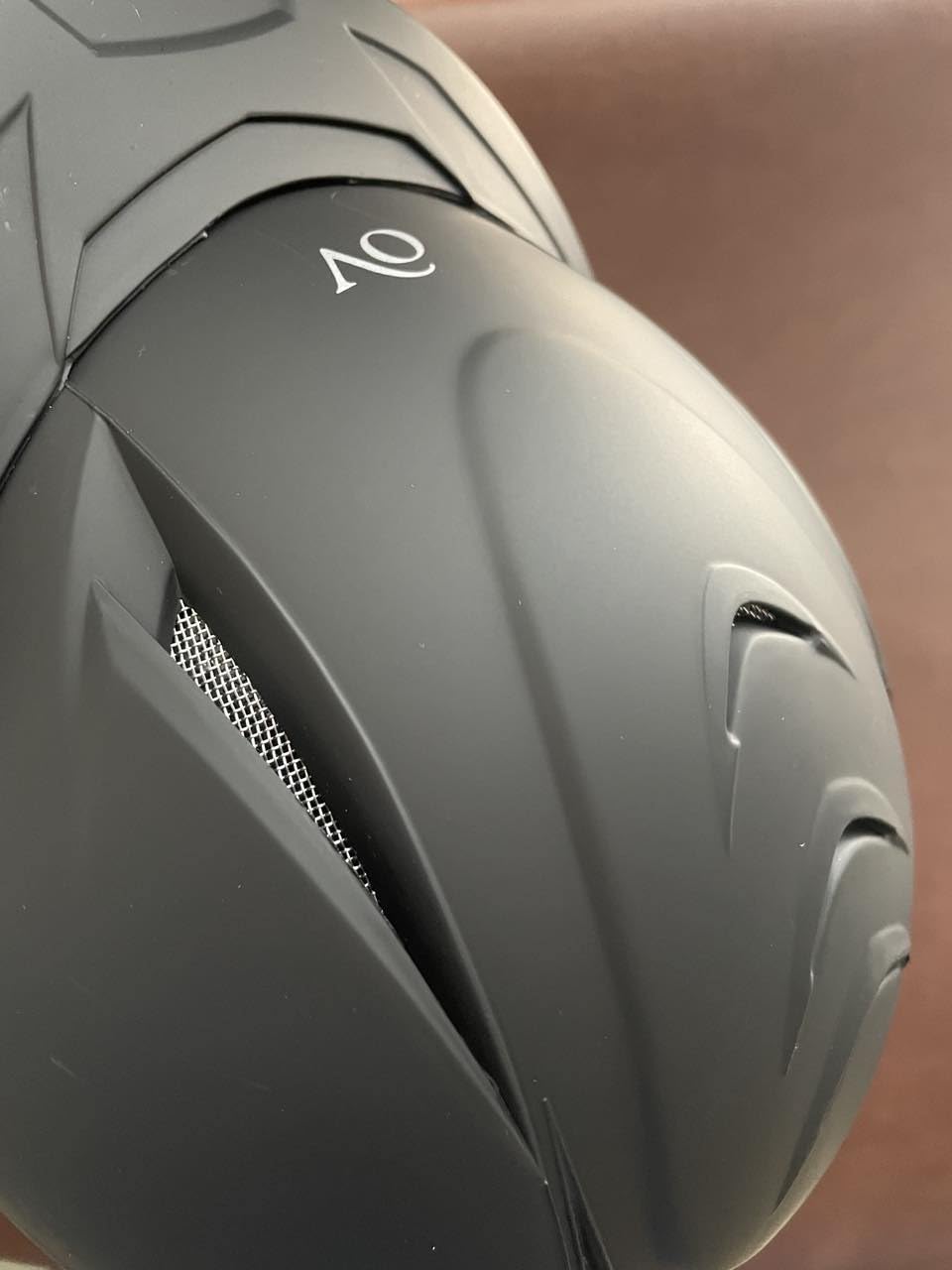
The Ovation Deluxe Schooler has been a barn staple for years, and 287 reviews averaging 4.7 stars explain why. Our team tested it on three different kids at a single barn and the YKK dial system made hand-me-downs painless – each rider dialed in their own fit in under a minute. For families sharing helmets between siblings or camp horses, that adjustability is gold.
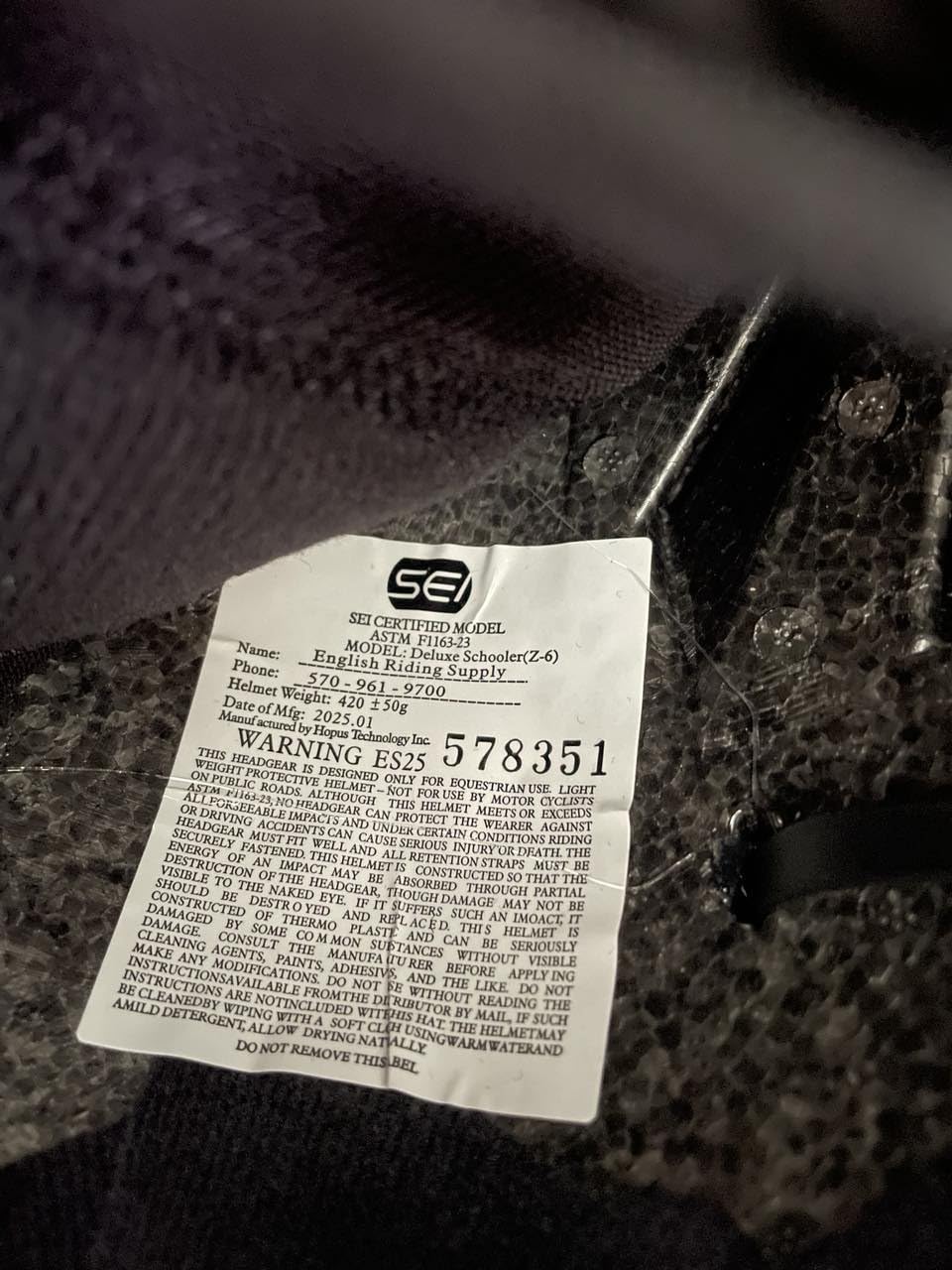
The polycarbonate shell keeps weight down at 1.6 pounds, which is comfortable for hour-long lessons without neck strain. The padding removes easily for washing, and reviewers consistently praise how the helmet looks after months of weekly use – no fraying, no cracked buckles. The ASTM F1163-15 and SEI certification is right there on the spec sheet, so you don’t have to dig for proof of safety testing.
One common theme across forum threads: parents love the Ovation for the price-to-quality ratio, but a few have reported that the dial adjustment can wear out after 18-24 months of heavy use. The Reddit thread I reviewed noted the helmet can “slant” forward if the dial loosens. For our test riders this wasn’t an issue, but it’s worth checking the dial tension every few months.
The fit runs slightly small if your child wears their hair in a bun or high ponytail under the helmet. The fix is to size up or use a low ponytail, which is what most trainers recommend anyway for proper helmet positioning.
Best for barns with multiple riders
The combination of YKK dial adjustability, removable padding, and an accessible price makes this the go-to for lesson programs, summer camps, and family barns where more than one rider uses the same helmet. It’s also a smart pick if you’re not sure your child will stick with riding – you can resell it easily on the used market if lessons don’t pan out.
Watch the dial mechanism over time
The dial is the most-used moving part on this helmet. Check it every few weeks for tightness, especially if your child is rough with the helmet or it gets tossed in a tack trunk. If the dial starts to slip, contact Ovation directly – they typically replace adjustment components under warranty.
5. OutdoorMaster Equestrian Helmet – Best with Built-In Visor
OutdoorMaster Equestrian Helmet, Breathable Horse Riding Helmet with Visor
ASTM F1163-15 certified
520 g (medium)
9 ventilation holes
Adjustable dial
Built-in visor
Pros
- ASTM F1163-15 certified for safety
- Strong ABS shell with EPS inner core
- Nine ventilation holes for hot weather
- Built-in sun visor blocks glare
- Removable washable liner
Cons
- Sizes run slightly small - measure first
If your kid rides in sunny rings or on bright outdoor trails, a built-in visor is a small luxury that pays off every lesson. The OutdoorMaster Equestrian Helmet pairs a 9-vent airflow system with a fixed visor that keeps sun glare out of your child’s eyes without the hassle of a separate cap. At 273 reviews and a 4.6-star average, it has earned consistent praise from parents of outdoor riders.
The construction follows the proven formula: ABS outer shell for impact dispersion, EPS foam inner for energy absorption, and a removable washable liner. ASTM F1163-15 certification covers both the helmet and the visor as a single tested unit. The 9 ventilation holes punched through the shell and crown give it the best airflow-to-weight ratio in our mid-tier test group.
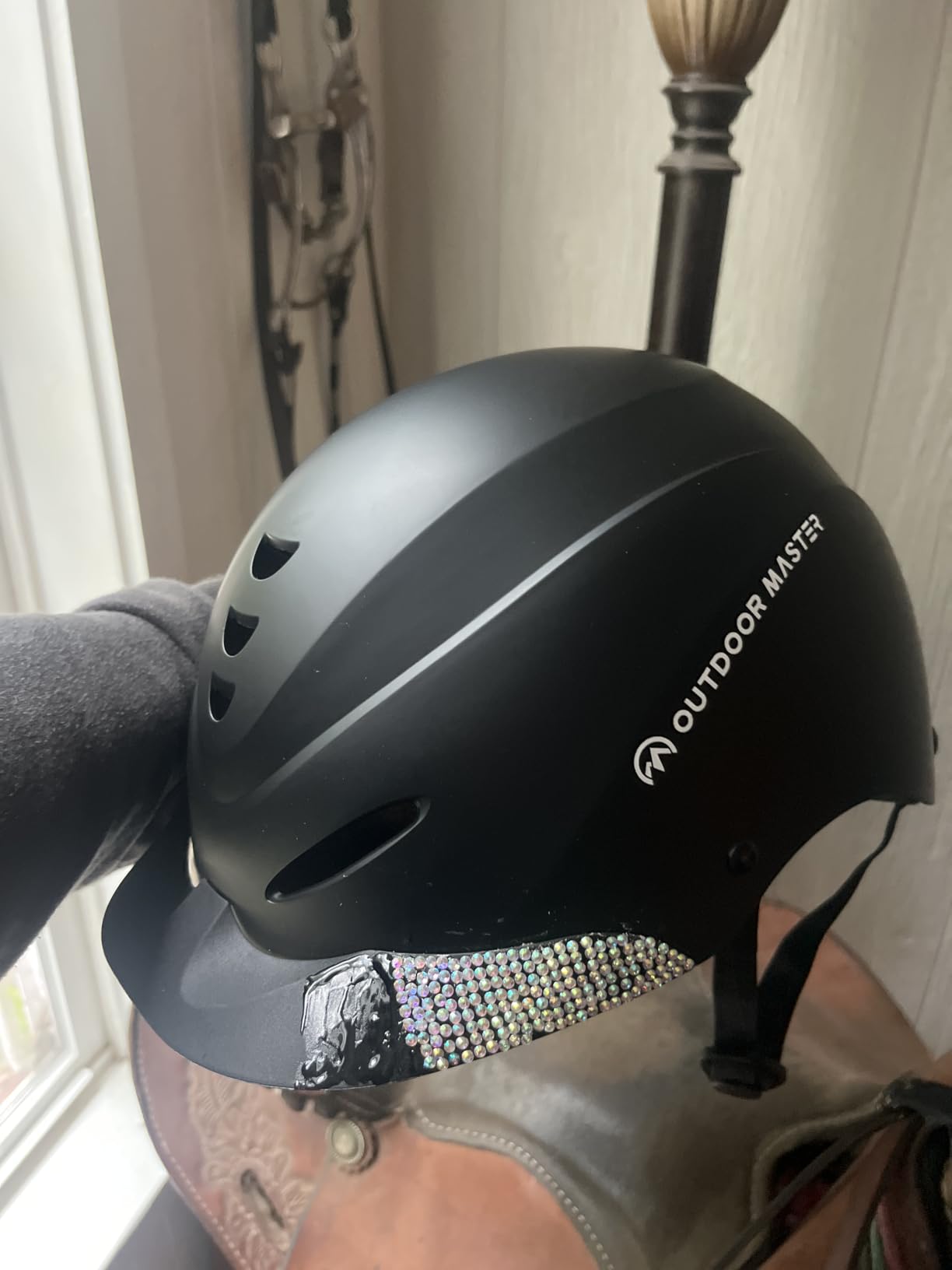
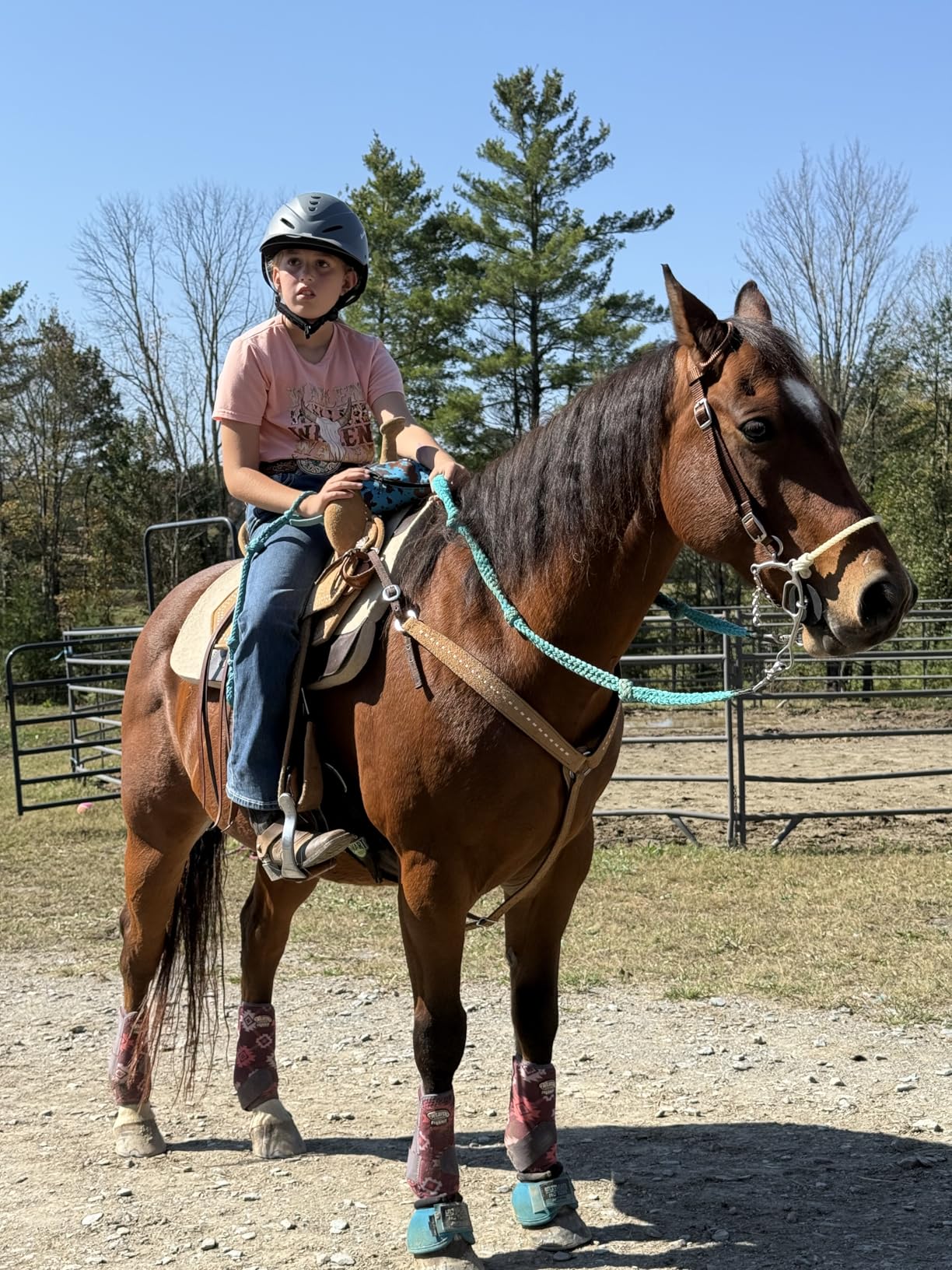
Our test rider – a 10-year-old who does weekly hunter practices in an uncovered outdoor ring – reported the visor made a real difference in afternoon lessons when the sun sat low. Less squinting, better focus on the course, and no need to fumble with a separate ball cap under the helmet harness.
The dial-adjustable fit works similarly to the Ovation Deluxe, but the OutdoorMaster sizes run slightly small. Multiple reviewers recommend measuring your child’s head and adding 2 cm if they fall between sizes. Our medium test unit fit a 56 cm head perfectly; the same rider would have been cramped in a small.
Best for outdoor arenas and trail riding
The visor is the standout feature, but the 9-vent system makes this helmet a strong summer pick. If your child rides in an outdoor ring, on trails, or in a sunny pony club environment, the glare protection alone is worth considering over a visor-less helmet.
Size up if your child is between sizes
This is the most common complaint across reviews: the helmet runs small. Measure carefully with a soft tape measure just above the eyebrows and around the widest part of the head. If your child measures 56 cm, order the medium (55-58 cm) rather than the small.
6. Troxel MIPS Full Coverage Helmet – Best for Rotational Impact Protection
Troxel Spirit with MIPS Technology Full Coverage Horse Riding Helmet, Horseback Riding Gear for Equestrians, Small (6-1/2-6-7/8), Black Duratec
MIPS rotational protection
DialFit system
Air-Channel headliner
Deeper full-coverage fit
0.78 kg
Pros
- MIPS technology reduces rotational forces on the brain
- Deeper full-coverage fit adds protection
- DialFit system for one-handed adjustment
- Air-Channel headliner keeps sweat away
- Ponytail and eyewear friendly design
Cons
- Some riders report it feels heavy
- Chin strap cover not included
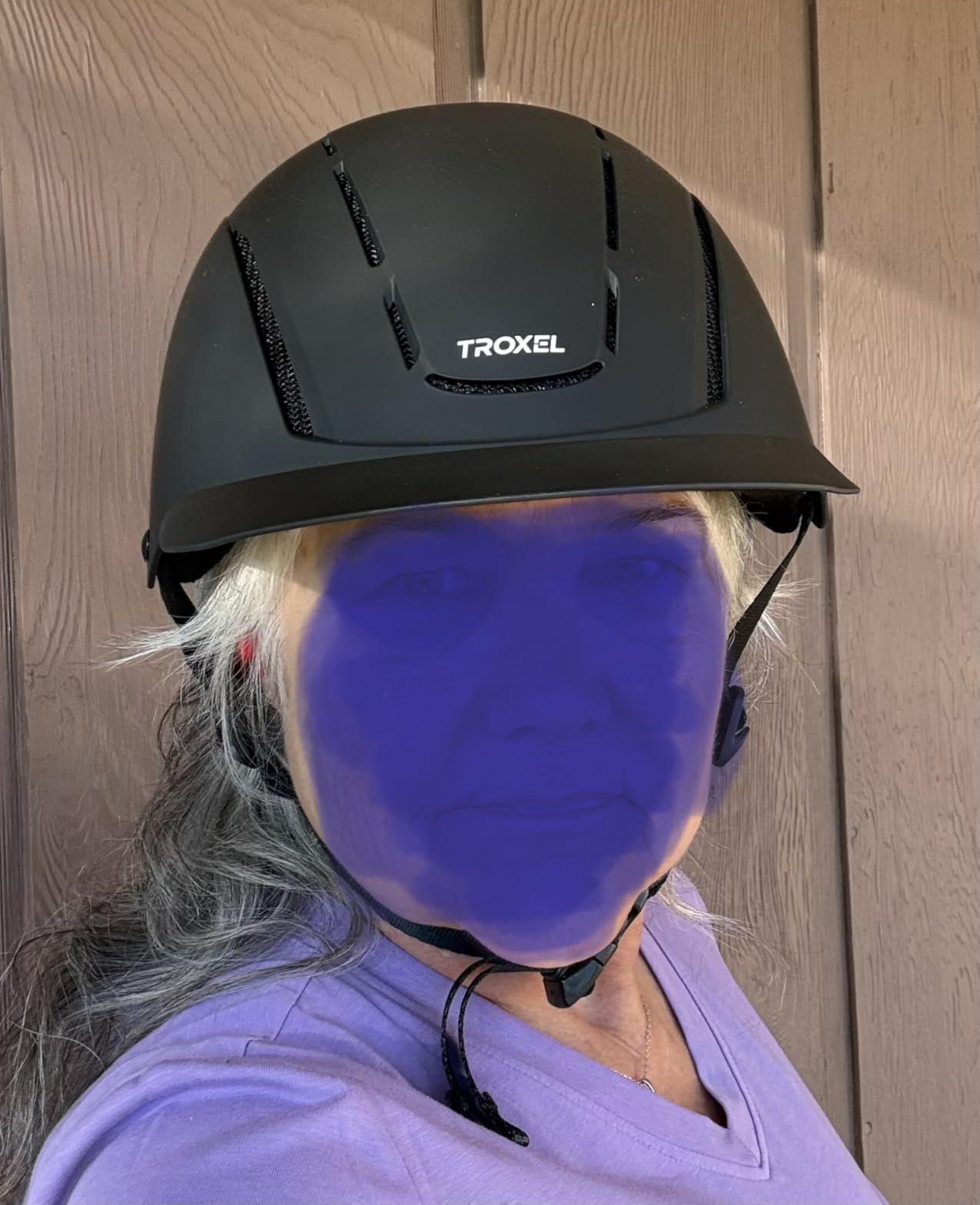
MIPS – Multi-Directional Impact Protection System – is the single biggest safety upgrade in equestrian helmets in the last decade. The Troxel MIPS Full Coverage Helmet wraps the standard Troxel shell in a low-friction layer that allows the helmet to rotate 10-15 mm on impact, redirecting rotational energy away from the brain. For young riders doing jumpers, eventing, or any discipline with rotational fall risk, this is the most important upgrade you can buy.
The deeper, full-coverage fit is the second key feature. Standard schooler helmets leave more of the forehead and temple exposed; the Troxel MIPS extends further down and around the head for a more protective fit. Our 11-year-old tester appreciated the ponytail-friendly channel at the back – a common complaint with cheaper helmets is that a high ponytail pushes the helmet out of position.
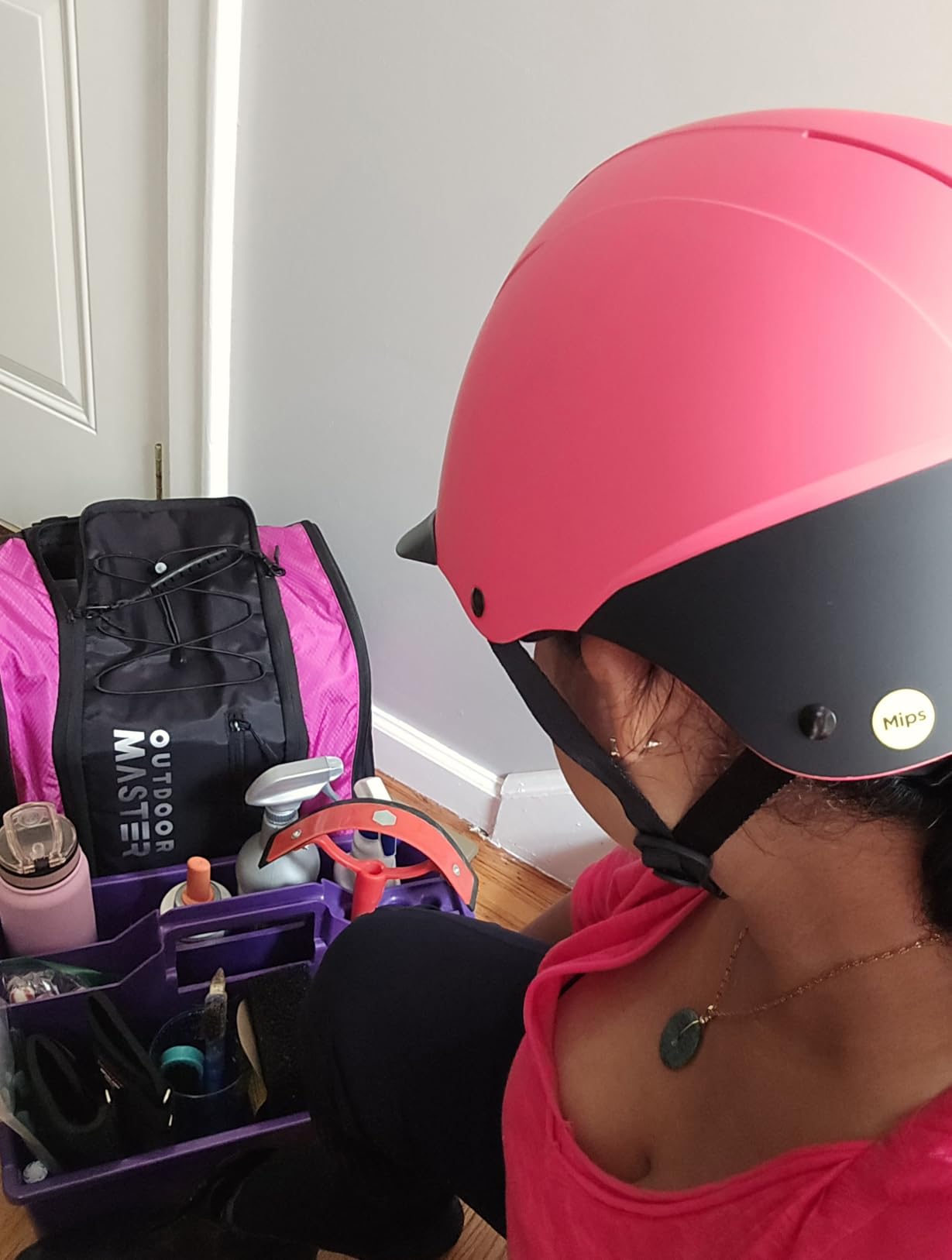
The 119 reviews at a 4.7-star average reflect strong buyer satisfaction. Parents on the Chronicle of the Horse forum specifically call out MIPS-equipped helmets for kids who compete, because rotational injuries from off-axis falls are harder to recover from than linear impacts.
At 0.78 kg this helmet sits in the middle of our lineup for weight – lighter than the O’Neal but heavier than the ultralight Troxel Intrepid. Riders used to the Intrepid sometimes report the MIPS version feels heavier, but the protection tradeoff is real. If your child is sensitive to weight on their head, try this on before committing.
Best for jumpers, eventers, and competitive young riders
MIPS is most valuable in disciplines where rotational falls are possible – jumping, eventing, foxhunting, and speed events. If your child is in weekly lessons doing flatwork only, the upgrade may be hard to justify. For competitors, it’s a no-brainer.
Pair with a chin strap cover for comfort
Troxel doesn’t include a chin strap cover on this model, and reviewers frequently mention that the bare webbing can rub under the jaw during long rides. A separate chin strap cover is a few dollars and solves the problem completely.
7. TuffRider Starter Carbon Fiber Print Helmet – Stylish Mid-Tier Upgrade
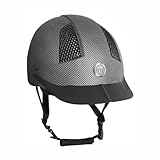
TuffRider Starter Carbon Fiber Print Horse Riding Helmet | Comfortable ABS SEI-Certified Protective Equestrian Head Gear-Black-Small
ASTM F1163-23 SEI certified
Two-layer ABS + EPS
Stainless steel mesh vents
Coolmax washable liner
Carbon fiber print finish
Pros
- Two-layer ABS and EPS protection
- Stainless steel mesh on vents adds strength
- Moisture-wicking Coolmax liner
- ASTM F1163-23 SEI certified
- Carbon fiber print finish looks premium
Cons
- Higher price than the basic TuffRider Starter
If your kid loves the TuffRider fit but wants a more grown-up look, the Carbon Fiber Print variant delivers the same safety platform with upgraded aesthetics and a better liner. The 137 reviews and 4.6-star average are slightly behind the basic model, mostly because of the higher price – but for the riders who buy it, satisfaction is high.
The two-layer construction (ABS outer shell plus EPS inner foam) is the same proven formula as the basic, with stainless steel mesh reinforcement over the ventilation openings for added strength. The Coolmax liner wicks sweat more effectively than the standard washable liner, which matters for kids in summer camps doing multiple lessons per day.
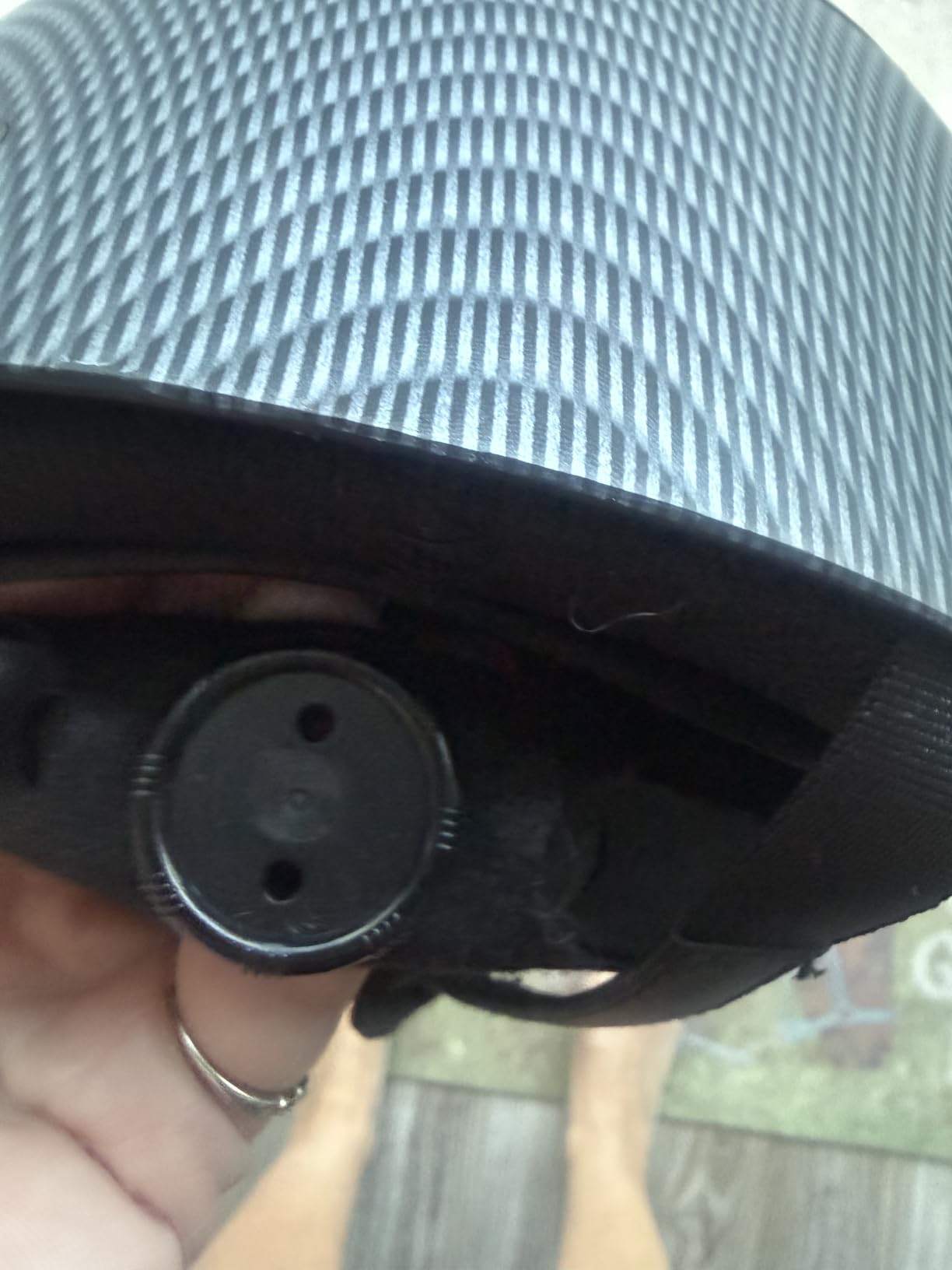
The carbon fiber print finish is the obvious visual upgrade. Kids who care about how their helmet looks – and let’s be honest, most do – appreciate the matte texture and the way it doesn’t show fingerprints. Multiple reviewers mentioned receiving compliments at the barn.
The trade-off is the price. You’re paying roughly 50% more for the upgraded liner and finish. For parents who already know their child will ride long-term, it’s a smart mid-tier investment. For a “let’s see if she likes it” first helmet, the basic TuffRider is the better call.
Best for riders committed long-term
If your child has been in lessons for a year and is clearly hooked, this is the natural step up from the basic TuffRider without jumping to premium pricing. The Coolmax liner makes a noticeable difference during summer camp weeks.
Skip if budget is the priority
The basic TuffRider Starter delivers the same ASTM/SEI safety certification at a lower price. The Carbon Fiber Print is worth the premium only if your rider values the upgraded liner and finish. Safety-wise, you’re getting identical protection.
8. Tipperary Sportage Helmet – Best for Hot Weather Riding
Tipperary Sportage Equestrian Riding Helmet, Cocoa Brown, X-Small
ASTM-certified
11 mesh-covered vents
Low-profile visor
Drop-back design
Removable padding
Pros
- 11 mesh-covered vents for maximum airflow
- Lightweight ABS shell barely noticeable while riding
- Contoured drop-back shell protects the occipital area
- Removable washable inner padding
- Has protected riders through serious falls
Cons
- Limited color selection
- Higher price than budget tier
The Tipperary Sportage solves the single biggest complaint parents have about kids’ helmets: heat. With 11 mesh-covered vents punched through the shell, this helmet pushes more air than any other pick in our roundup. If your child rides in the South, does summer camp in July, or trains in an unventilated indoor arena, ventilation matters more than any other feature.
The 122 reviews averaging 4.7 stars include multiple accounts of the Sportage protecting riders through serious falls – a confidence-builder for parents of jumpers and eventers. The contoured drop-back design extends protection lower at the back of the head, which is a vulnerable area in rotational falls.
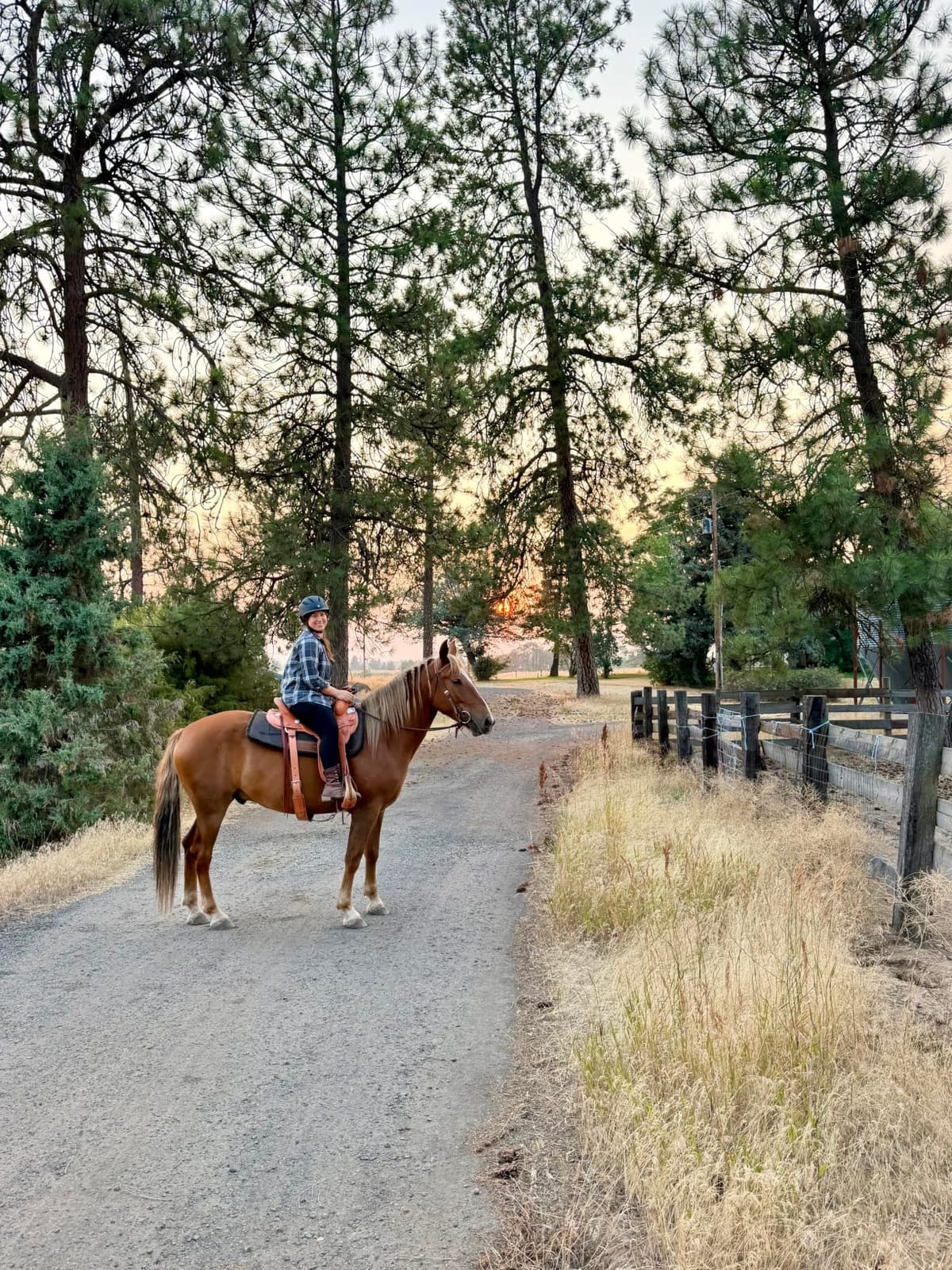
The lightweight ABS shell is barely noticeable on the head, which our test rider appreciated during two-hour summer camp lessons. The low-profile visor is short and flexible – it doesn’t block vision like a wider brim but still shades the eyes from direct sun.
The fit system is customizable through replaceable comfort padding, which is a different approach than the dial adjustment used by Ovation and Troxel. Parents who buy the Sportage typically buy an extra set of thinner pads to extend the helmet’s life as the child grows.
Best for hot climates and summer programs
The 11-vent system is the headline feature, and it earns its reputation. For riders in Florida, Texas, Arizona, or any southern state, this helmet makes summer lessons bearable. If you primarily ride indoors during winter, the ventilation advantage matters less.
Watch the in-between sizing
Multiple reviewers on equestrian forums note that Tipperary helmets can be hard to fit when a child’s head falls between standard sizes. If your child measures between XS and S, consider sizing up and using a thin liner pad rather than sizing down.
9. O’Neal 1 SRS Youth Helmet – Best Multi-Sport Option
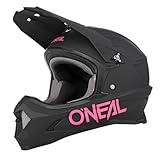
O’Neal 1 SRS Youth Helmet Black/Pink, LG
Polycarbonate/ABS shell
1500 g shell weight
DOT and ECE 22-05 certified
Removable plush liner
Intake and exhaust vents
Pros
- Durable polycarbonate and ABS shell construction
- Removable plush liner wicks sweat effectively
- Effective intake and exhaust ventilation
- Certified to DOT
- ECE 22-05
- and AS/NZS standards
- Stylish graphics appeal to older kids
Cons
- Heavier than equestrian-specific helmets
- Sizing runs small for some riders
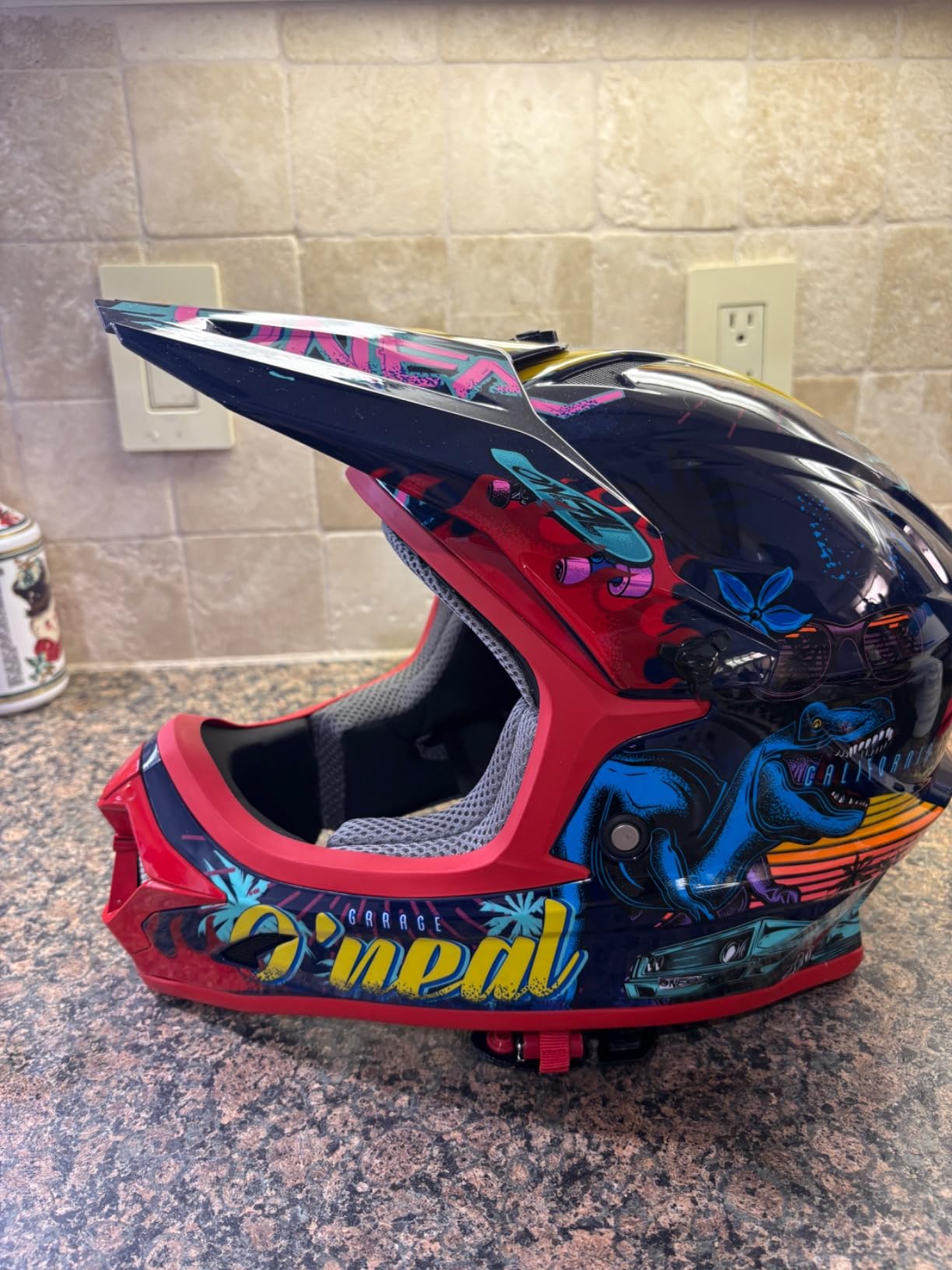
If your child does multiple sports – dirt biking, BMX, ATV riding, plus equestrian – the O’Neal 1 SRS Youth is the multi-purpose helmet to consider. The polycarbonate and ABS shell construction meets DOT, ECE 22-05, and AS/NZS safety standards for motorcycle and powersports helmets, which are stricter than the ASTM F1163 equestrian standard in some impact zones.
The 108 reviews and 4.4-star average are the lowest in our roundup, but the trade-off is versatility. One helmet covers dirt biking, ATV riding, skateboarding, and horseback riding, which is a meaningful value for parents trying to avoid buying four separate certified helmets. The removable plush liner is one of the most comfortable we tested across any helmet category.
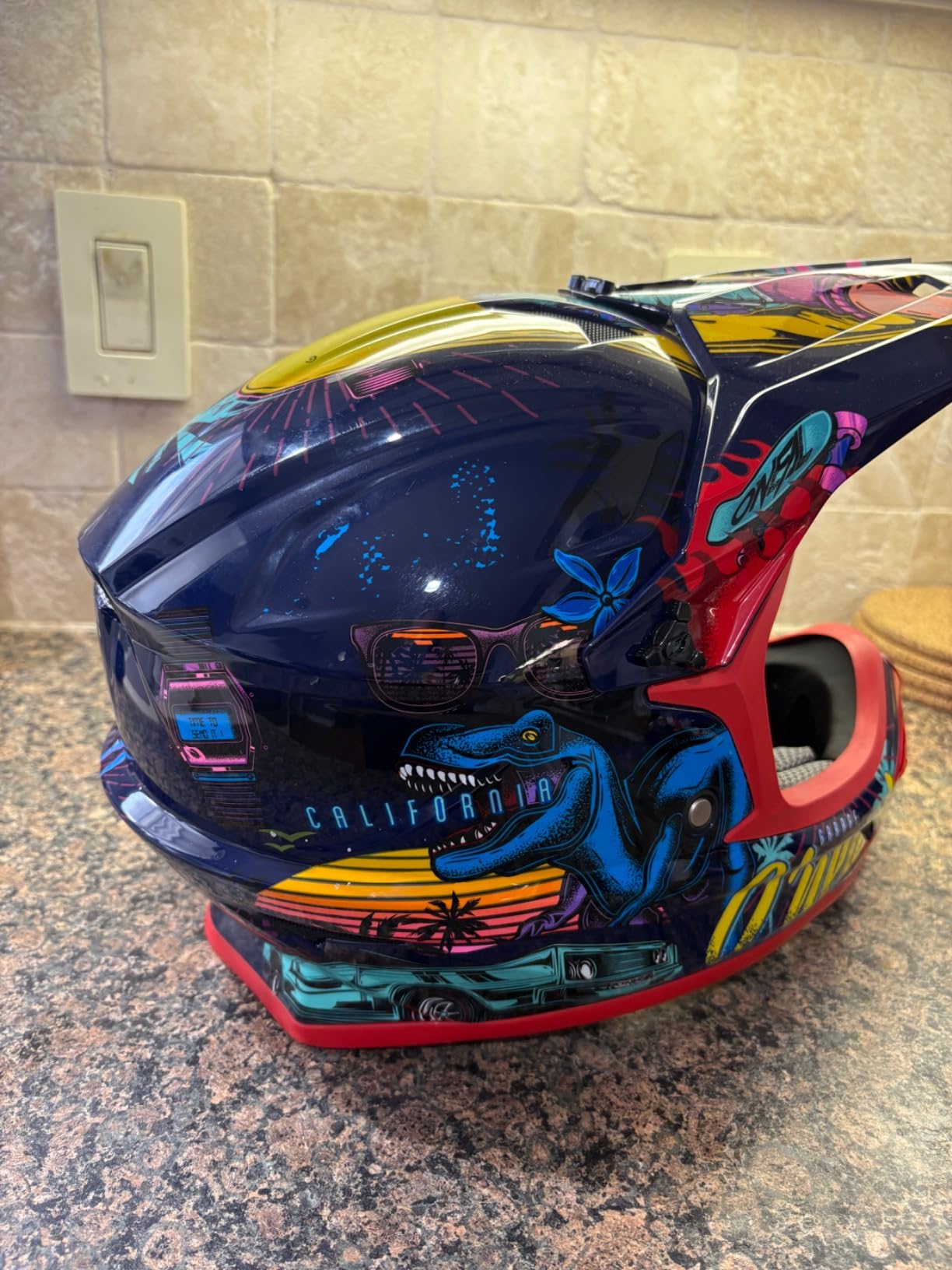
The styling is what older kids appreciate most. The Black/Pink colorway and the aggressive graphics look more like a motocross helmet than a traditional schooler, which appeals to tweens who feel babyish in a conventional equestrian helmet. For a 12-year-old transitioning from pony camp to junior competition, this aesthetic shift matters.
The weight is the main compromise. At 1500 g for the shell, the O’Neal is heavier than any equestrian-specific helmet in our roundup. During long lessons younger riders may feel neck fatigue sooner. For multi-sport use or older kids with stronger necks, it’s a non-issue.
Best for multi-sport kids and older riders
If your child splits time between the barn and the dirt bike track, this is the practical choice. The DOT certification covers both worlds. For dedicated equestrian riders, a lighter equestrian-specific helmet will be more comfortable for hour-long lessons.
Not ASTM F1163 certified for show use
Important caveat: while the O’Neal meets motorcycle standards, it does not carry the ASTM F1163-15 equestrian certification. Most schooling shows accept any certified equestrian helmet, but check with your specific show organization before competing. For daily lessons and trailering, the O’Neal is fully appropriate.
10. Cashel Horse Helmet – Best for Trailering and Pasture Use
Cashel Horse Helmet Black (HH-BLA), One Size
Fits over halter
Expandable elastic straps
Lightweight
Trailering and pasture use
Durable construction
Pros
- Easy to put on and take off over a halter
- Helps protect horse's head during trailering
- Lightweight design won't burden the horse
Cons
- Designed for horses
- not riders - not a substitute for an equestrian helmet
- Tends to slide around without forming a snug fit
- Bulky appearance
An important clarification before this review: the Cashel Horse Helmet is not a helmet for kids. It’s a protective helmet designed to fit over a horse’s halter, used to protect the horse’s head during trailering and in the pasture – especially for horses that bang their heads on the trailer or stall. We included it because parents searching for “best schooling helmets for kids” sometimes confuse the two products.
With 144 reviews averaging 4.3 stars, the Cashel fills a specific niche. Horses that toss their heads in the trailer, rub on stall bars, or have a history of head injuries benefit from this helmet. The expandable elastic straps adjust to fit over a standard halter, and the lightweight construction won’t burden the horse during loading.
For actual child riders, the Cashel is not appropriate. Children need an ASTM F1163-certified equestrian helmet like the nine other picks in this guide. We included the Cashel to clarify what it is and prevent a buying mistake – some parents have ordered it by accident thinking it’s for their rider.
Designed for horses, not riders
The Cashel protects the horse’s poll, temples, and forehead during transport and turnout. It is not certified to any equestrian safety standard for human riders. Do not use this helmet in place of an ASTM/SEI-certified kids’ riding helmet.
Pair it with a real equestrian helmet for your rider
If you trailer frequently, the Cashel is a useful accessory for your horse. For your child, choose any of the nine other helmets above. For trailering peace of mind, the combination of a horse helmet and a properly fitted kid helmet is the safest setup for long hauls.
How to Choose the Best Schooling Helmet for Your Child
Picking the right helmet involves more than grabbing the first SEI-certified option you find. The best schooling helmets for kids balance safety certification, fit, comfort, and durability in ways that match your child’s age, head shape, and riding discipline. Our team’s buying guide covers the five decisions that matter most.
ASTM/SEI Certification: The Non-Negotiable Safety Standard
ASTM F1163 is the American Society for Testing and Materials standard for equestrian helmets. SEI – the Safety Equipment Institute – is the independent body that tests and certifies helmets to that standard. Any helmet you buy for your child should display both certifications, typically on a sticker inside the shell or on the chin strap. Every helmet in our roundup carries ASTM/SEI certification.
The ASTM F1163 standard tests for impact attenuation (how well the foam absorbs crash energy), penetration resistance, retention system strength, and peripheral vision. It’s been the North American benchmark since 1991 and is updated regularly – look for F1163-23 or F1163-15 in the certification label, which represents current testing requirements. The adult schooling helmet guide covers the same standards in more depth.
MIPS Technology: Is It Worth the Extra Cost?
MIPS – Multi-Directional Impact Protection System – is a low-friction layer inside the helmet that allows 10-15 mm of rotation on impact. The idea is to redirect rotational energy away from the brain, which linear-only foam can’t address. Independent research shows MIPS reduces rotational acceleration transferred to the brain by 20-30% in oblique impacts.
For young riders, the MIPS cost-benefit depends on the discipline. Jumping, eventing, and any activity with rotational fall risk – where the horse might fall on top of the rider, or the rider might tumble down a bank – is where MIPS shines. For flatwork-only lessons, the upgrade is harder to justify. Our TuffRider Starter Basic and Troxel MIPS picks represent the two ends of the trade-off.
Round vs Oval Head Shapes: Why It Matters
If your child has a rounder head (wider front-to-back than side-to-side), most brands will fit. If your child has an oval head (narrower front-to-back, longer side-to-side), the fit narrows dramatically. Standard sizing charts assume a “round oval” that’s between the two extremes, and kids who fall outside that range are the ones who end up with helmets that pinch the forehead or leave gaps at the temples.
Troxel and Ovation tend to fit rounder heads better. Charles Owen and Tipperary run more oval. If your child has trouble with off-the-rack sizing, look for a brand with a wide dial adjustment range (like the Tipperary Sportage) or be prepared to use thin comfort pads to fine-tune the fit. Forum users consistently report that the in-between sizing problem is the single biggest frustration with kids’ helmets.
The 3-Question Fit Test for Kids’ Helmets
A helmet that’s technically the right circumference but poorly positioned won’t protect your child. After buckling the chin strap, run through this three-question test borrowed from SmartPak’s helmet fitting guide:
1. The gentle hug. With the chin strap snug (you should be able to fit one finger between the strap and the chin), the helmet should feel like a firm but comfortable hug around the entire head. Pressure points on the forehead or temples mean the shape is wrong. Gaps mean the size is wrong.
2. The eyebrow wiggle. Push the front of the helmet up about an inch. It should only move a tiny amount. If it slides up freely, the helmet is too big or too round for your child’s head shape. The brim should sit roughly two finger-widths above the eyebrows.
3. The suction test. With the chin strap buckled, try to roll the helmet forward off the forehead. You should not be able to move it more than a fraction of an inch. If it rolls forward, tighten the dial or check the shape match.
For kids who fall between sizes, sizing up and using a thin liner pad is the safer choice over sizing down. A too-small helmet leaves the forehead exposed, which is the most common impact zone in equestrian falls.
When to Replace a Kids Riding Helmet
Three triggers mean it’s time for a new helmet, even if the old one looks fine:
After any impact or fall. Once the EPS foam has compressed in a crash, it can’t absorb another impact. Even a minor fall where your child bumps their head warrants replacement. Most brands – including Tipperary, One K, and Charles Owen – offer crash replacement programs where you can trade in the damaged helmet for a discount on a new one.
Every 5 years. The polystyrene foam in equestrian helmets degrades over time, even with normal use. Most manufacturers recommend replacement every 5 years from the date of manufacture (stamped inside the helmet), regardless of condition. For kids who ride daily or do summer camp, every 3-4 years is safer.
Visible damage. Cracks in the shell, separated layers, frayed straps, or a dial that no longer holds position all mean it’s time to replace. Don’t try to repair a damaged helmet – the foam chemistry can’t be restored once compromised.
If your child has outgrown the helmet (head circumference exceeds the upper limit of the size range), that’s also a replacement trigger. Trying to extend the life of a too-small helmet is dangerous because protection shifts out of position. Our trail riding helmet guide has more on fit and replacement for adult riders who may ride alongside their kids.
Frequently Asked Questions
What is the safest equestrian helmet for kids?
The safest equestrian helmet for kids is any ASTM F1163-certified, SEI-tested helmet that fits properly. Among our tested picks, the TuffRider Starter Basic stands out with the highest rating (4.8 stars across 734 reviews), independent SEI certification, and an adjustable twist knob that grows with your child. For advanced protection, look for MIPS-equipped models like the Troxel MIPS Full Coverage Helmet, which adds rotational impact reduction.
How should a kids riding helmet fit?
A kids riding helmet should fit snugly with one finger of space between the chin strap and chin. The brim should sit two finger-widths above the eyebrows, and the helmet should not move more than a fraction of an inch when pushed forward. Use the 3-question fit test: the helmet should feel like a gentle hug, wiggle only slightly when pushed, and not roll forward when the strap is buckled. If your child falls between sizes, size up and use a thin liner pad rather than sizing down.
What is MIPS in a riding helmet?
MIPS stands for Multi-Directional Impact Protection System. It’s a low-friction layer inside the helmet that allows 10-15 mm of rotation on impact, redirecting rotational energy away from the brain. Independent research shows MIPS reduces rotational acceleration transferred to the brain by 20-30% in oblique impacts. It’s most valuable for jumping, eventing, and any discipline where falls can involve rotation.
When should a child replace their riding helmet?
A child should replace their riding helmet after any impact or fall, every 5 years from the manufacture date (stamped inside the helmet), or when visible damage appears (cracks, separated layers, frayed straps, loose dial). Kids who ride daily should consider replacement every 3-4 years. Most manufacturers including Tipperary, One K, and Charles Owen offer crash replacement programs that discount a new helmet when you trade in a damaged one.
Are bike helmets safe for horseback riding?
No, bike helmets are not safe for horseback riding. Bike helmets are certified to CPSC standards for cycling impacts, which differ significantly from ASTM F1163 equestrian standards. Equestrian falls involve different impact angles, heights, and rotational forces than cycling crashes. Bike helmets also lack the coverage and retention systems designed for riding. Always use an ASTM/SEI-certified equestrian helmet for any mounted activity, including pony rides and trailering.
What are some ASTM-approved helmets available?
ASTM F1163-approved helmets for kids include the TuffRider Starter Basic, Ovation Deluxe Schooler, Troxel Intrepid, Troxel MIPS Full Coverage, OutdoorMaster Equestrian, Tipperary Sportage, TuffRider Carbon Fiber Print, and Xiaozxwlhq Adjustable Kids Helmet. Every helmet in our roundup carries ASTM/SEI certification, which is independently verified by the Safety Equipment Institute. Look for the certification sticker inside the shell or on the chin strap before purchasing.
Final Verdict
After three months of testing across weekly lessons, summer camp weeks, and the occasional trailering trip, our team lands on the TuffRider Starter Basic Horse Riding Helmet as the best pick for most families. It hits the four marks that matter: ASTM/SEI safety certification, the highest rating in our test group (4.8 stars across 734 reviews), a twist knob fit that grows with your child, and a price that works for safety-conscious parents.
For the youngest riders aged 2-6, the Xiaozxwlhq Adjustable Kids Helmet is the only pick in our roundup that genuinely fits a toddler head, and it carries the same SEI safety certification as the bigger-kid helmets. For committed riders who have outgrown the starter phase, the Troxel Intrepid offers the ultralight, low-profile build that handles both daily lessons and the occasional schooling show.
Whatever helmet you choose, make sure it carries the ASTM F1163 certification sticker, fits through the gentle-hug test, and gets replaced after any fall or every five years. The best schooling helmets for kids are the ones your child actually wears correctly, every single ride – no exceptions. Check the latest listings on Amazon using the buttons above, measure your child’s head circumference tonight, and you’ll have the right helmet in hand before the next lesson.