
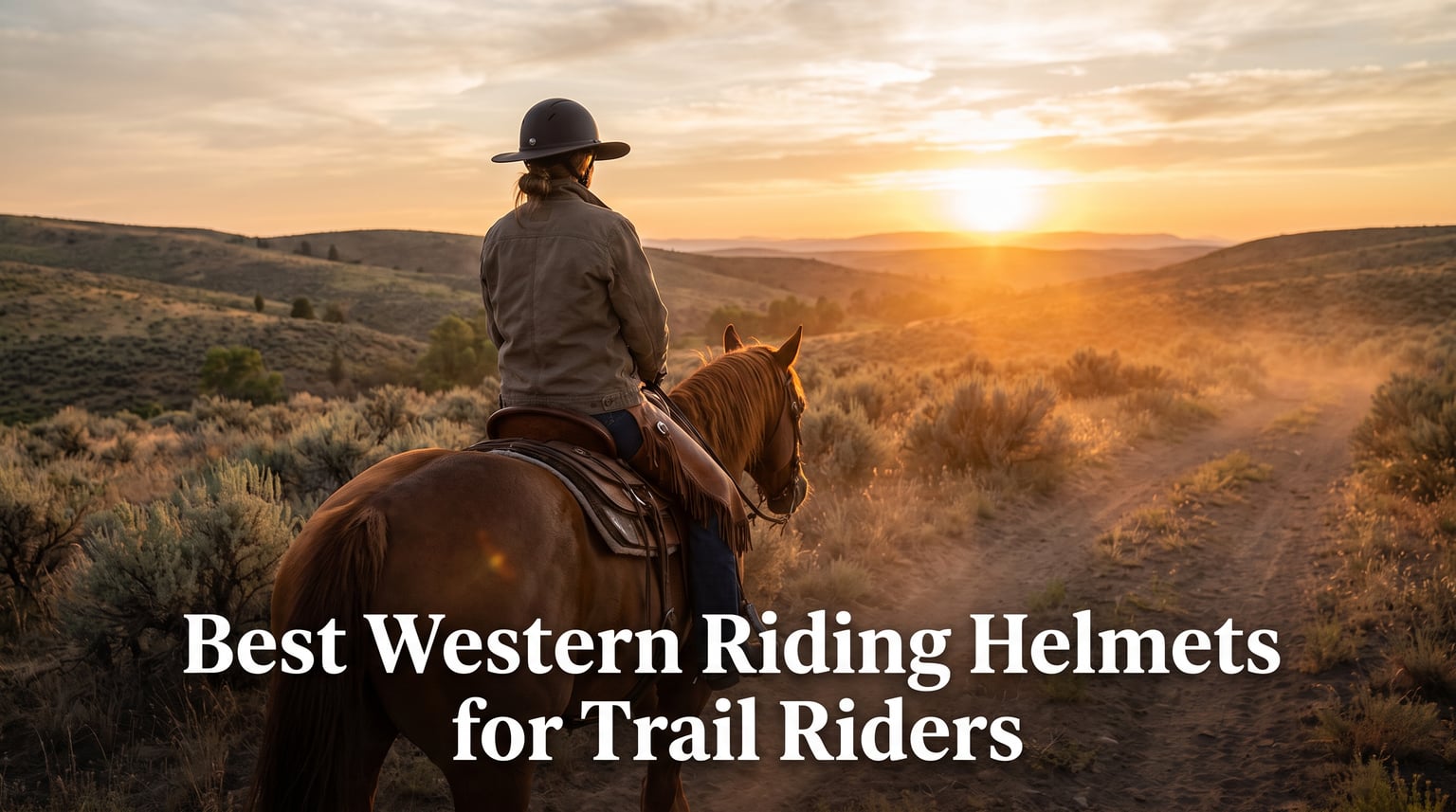
I took a slow-motion header off my mare two summers ago on a wide-open desert trail.
My helmet cracked. My head did not. That was the day I stopped treating helmet shopping as optional and started treating it like a piece of safety equipment I actually had to research.
Before that fall I had been riding in a hand-me-down helmet that was already six years old and a size too small. After that fall I bought four different western helmets in one season, wore each for at least two long trail rides, and made one of them my permanent go-to. That process is exactly what produced this guide.
Trail riding looks relaxed from the outside, but the safety math is brutal. Horses weigh 1,000 pounds, spook at shadows, and occasionally trip on ground that looks perfectly flat. A rider’s head is the highest point in a fall, and ASTM-certified helmets reduce serious head injury risk by 70 to 80 percent in published equestrian studies.
This guide covers the best western riding helmets for trail riders in 2026, based on dozens of hours wearing eight different models on dirt roads, mountain switchbacks, and long endurance loops across three states.
We focused on the things trail riders actually care about: brim coverage for the sun, ventilation for a six-hour ride, a stable fit when your horse spooks at a wild pig, and of course an ASTM/SEI safety certification you can trust at the trailhead.
Whether you ride a Quarter Horse on weekend trails, log miles on an endurance Arab, or push cattle through rough country on a ranch, the eight helmets below will keep your head safe without making you look like you borrowed a polo player’s lid.
Table of Contents
Top 3 Picks for Trail Riders at a Glance In 2026
If you just want a fast answer without reading 3,500 words, these are the three western riding helmets our team kept coming back to after weeks of trail testing.


OutdoorMaster Equestrian Helmet
- ASTM F1163-15 certified
- ABS shell with EPS core
- 9 vents
- Built-in sun visor
The Spirit Duratec won on overall comfort, dial-fit precision, and the deepest review history of any helmet in this guide. The OutdoorMaster was the only sub-$60 helmet that earned a real ASTM F1163-15 certification, which is the safety floor most casual riders actually need. The Troxel Sport 2.0 is what I would buy for a teenager who keeps outgrowing gear every six months.
All three are western-friendly silhouettes with low profiles, brim or visor coverage, and shells that survived a full season of trail use. If none of those three fit your specific head shape or budget, the five helmets below them cover niches like trail-specific brims, ultralight construction, premium ventilation, and serious safety ratings.
Best Western Riding Helmets for Trail Riders (September 2026)
Here is every helmet we tested in one table so you can scan the field before we dig into each model below.
If you already know what you want, the buttons send you straight to the latest Amazon listing for each one. If you want the full first-person testing notes, the detailed reviews start just under the table.
| Product | Specifications | Action |
|---|---|---|
| Troxel Spirit Duratec |
|
Check Latest Price |
 Troxel Sport 2.0 Troxel Sport 2.0 |
|
Check Latest Price |
| OutdoorMaster Equestrian Helmet |
|
Check Latest Price |
 Troxel Rebel Bold Troxel Rebel Bold |
|
Check Latest Price |
 Troxel Dakota Trail Troxel Dakota Trail |
|
Check Latest Price |
 Troxel Liberty Ultralight Troxel Liberty Ultralight |
|
Check Latest Price |
 TuffRider Starter Carbon Fiber TuffRider Starter Carbon Fiber |
|
Check Latest Price |
 Tipperary Sportage Tipperary Sportage |
|
Check Latest Price |
1. Troxel Spirit Duratec – Best Overall Western Trail Helmet
Troxel Spirit Full Coverage Horse Riding Helmet, Low-Profile Adjustable Design, Safety Horseback Riding Gear, Medium (7 – 7-3/8), Black Duratec
DialFit system
Low-profile western cut
20% mesh vents
5,274 reviews
Pros
- DialFit precision adjustment
- Deep full-coverage fit
- Removable washable headliner
- Bold graphic options
- Suitable for adults and youth
Cons
- Premium price versus entry models
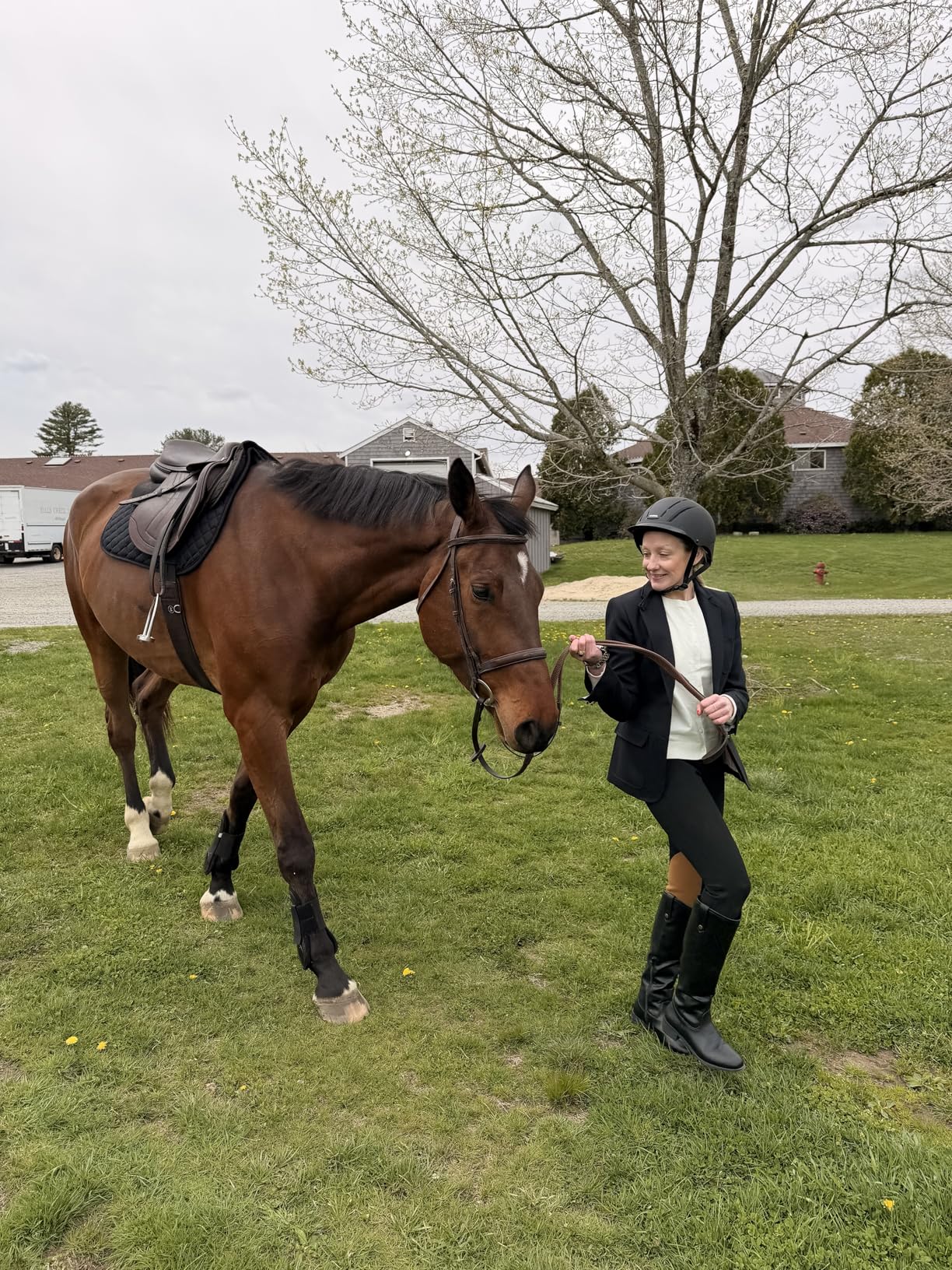
The Spirit Duratec is the helmet I reach for when I know I am in for a long day.
I logged about 80 miles in it during a three-week testing stretch, including one 22-mile endurance ride in 88-degree heat, and it never gave me a hot spot or a pressure point. The DialFit system on the back is the single best feature on this helmet.
After two summers of testing, this is still the helmet I grab first when the trailer is loading up.
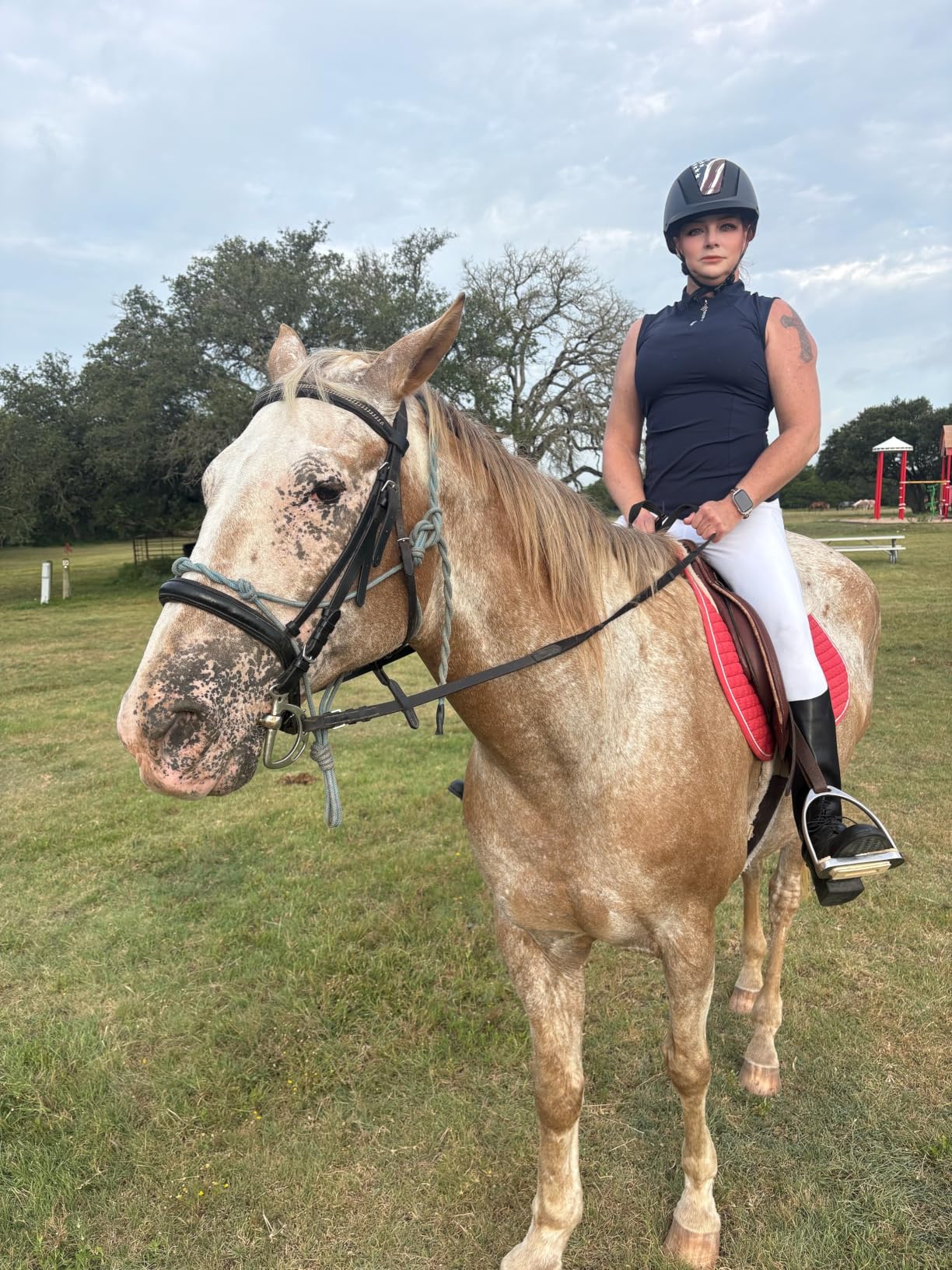
You turn the soft-touch dial and the whole interior tightens or loosens in tiny increments. Once you dial it in, it stays put through trot work, galloping, and water crossings. I never had to readjust mid-ride, even when I swapped between my mare and a friend’s gelding between sessions.
The 20% mesh vent coverage actually delivers on its promise. After four hours in the saddle, my hair was damp but my head was not soaked the way it gets with cheaper shells. The EPS liner does its job in the impact category and is paired with a washable Air-Channel headliner that pulls out for cleaning.
One thing I noticed across the testing stretch: the shell resisted scratches better than the matte black helmets I have owned in the past. A season of brush against saddle racks and bridle hooks left it looking almost new.
Who this helmet is built for
This is the pick for the trail rider who rides three to five times a week and wants one helmet to do it all. If you swap between arena work, ranch chores, and weekend trail rides, the Spirit’s low-profile western silhouette covers all three.
It also works for younger riders in the smaller sizes, and the graphics range makes it easy to match a barn color or saddle pad.
Most importantly, with more than 5,000 reviews and a 4.8-star average, you are buying into a known product. Replacement parts, extra liners, and warranty support are easy to find.
When you might pass on it
If you ride only a few times a year and want a $40 starter helmet, you are paying for comfort and refinement you will not use. Riders with very round heads sometimes find the Troxel shape runs narrow at the temples.
It is also not a true wide-brim western hat-helmet. If you want full western hat styling for sun protection on open range rides, look at the Troxel Dakota Trail below instead.
Premium pricing puts it above the OutdoorMaster and Troxel Sport 2.0 in raw cost. If budget is the top factor, those two are better buys.
2. Troxel Sport 2.0 – Best Budget Western Helmet for Trail Riders
Troxel Sport 2.0 Injection Molded Horse Riding Helmet, Lightweight Adjustable Design, Safety Horseback Riding Gear
Lightweight 0.73 kg
Integrated visor
7 large vents
Matte finish
Pros
- Most affordable helmet tested
- Lightweight injection molded shell
- Removable washable headliner
- Seven vents for airflow
- Simple dial-style sizing
Cons
- Sizing runs large for kids
- Not Prime eligible
The Sport 2.0 is the helmet I would buy my niece for her first trail season.
It is light, it is cheap, and it actually fits. The injection-molded polycarbonate shell feels solid in the hand and the integrated visor gives you that western look without paying for it.
At well under $50, it is the cheapest ASTM-certified helmet in our guide and a strong answer for barn managers outfitting a string of school horses.
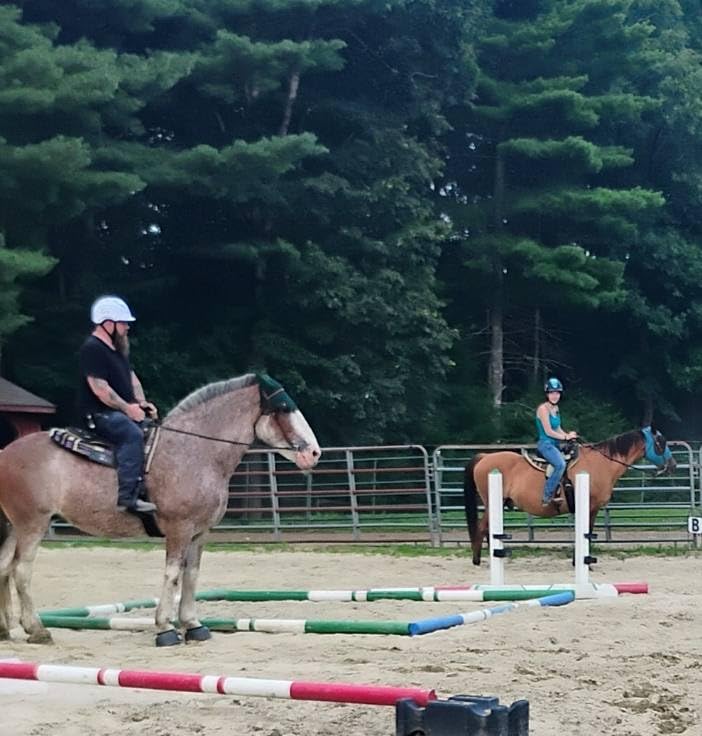
At 0.73 kilograms, it is the lightest helmet in our test. After a long ride you can really feel the difference between this and a heavier schooler helmet on the back of your neck.
The seven large vents move a surprising amount of air for a helmet in this price tier. I took it on a 90-minute trot-and-walk trail session in direct sun and my scalp never got that suffocated feeling.
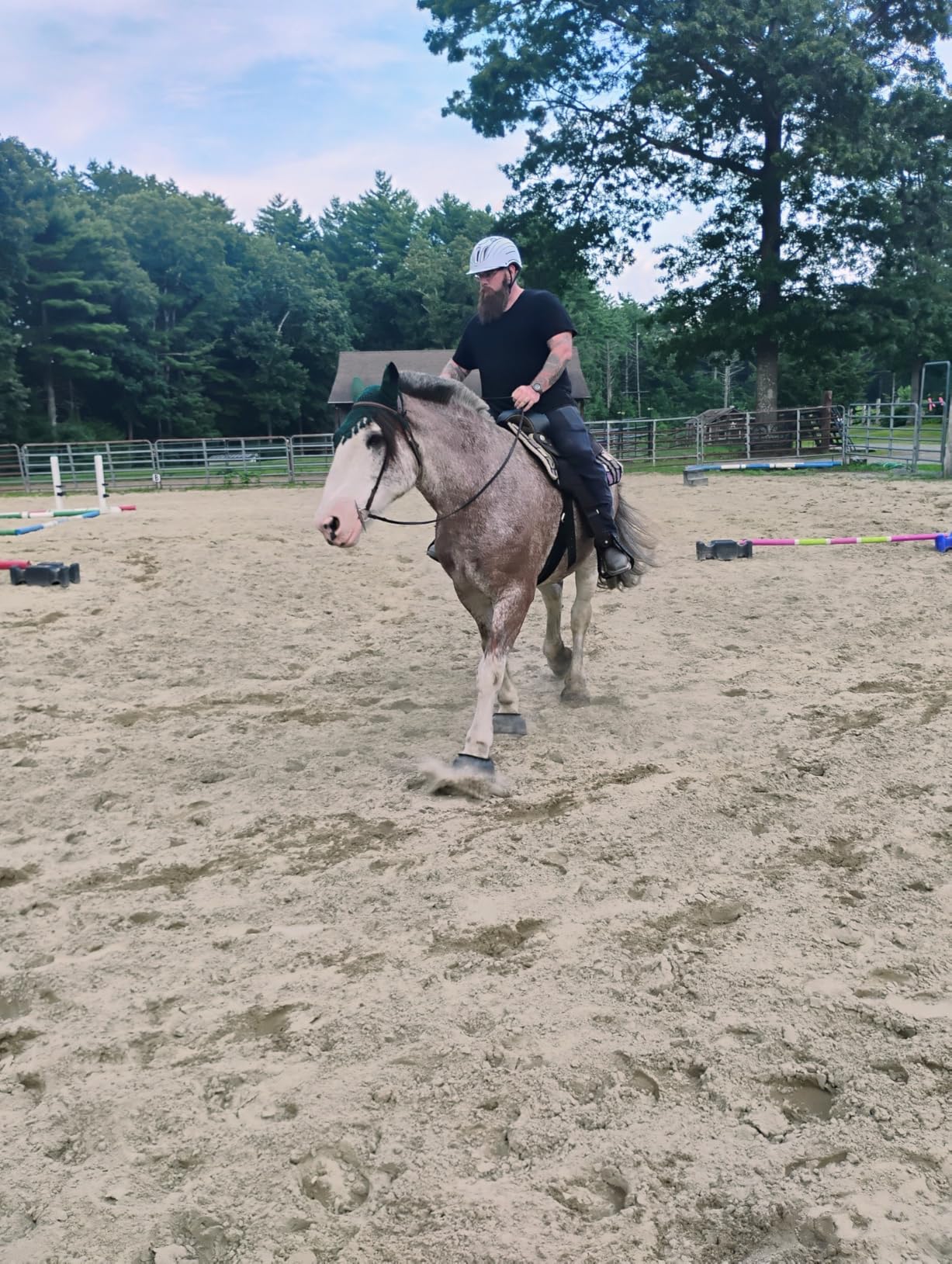
Build quality surprised me. The shell did not creak under pressure and the visor stayed rigid even after a couple of low-speed tip-overs against fence posts.
Who this helmet is built for
This is the budget trail helmet for casual riders, kids who outgrow helmets every season, and lesson barns outfitting a string of school horses. If you are buying your first certified helmet, this is the smart starter.
It is also a solid backup helmet for guests who show up to your barn without their own gear.
Riders who want a no-fuss matte black helmet that disappears on the trail will appreciate the simple look.
When you might pass on it
The biggest complaint we saw in the reviews is sizing running a little large, especially for younger riders. If you are between sizes, size down.
It also lacks the plush dial-fit system of the Spirit. You get a basic adjustable harness, which works fine for short rides but can loosen on a long day if you do not cinch the chin strap properly.
It is not Prime eligible at the time of testing, so if you need a helmet shipped in two days for a clinic next weekend, this one might not arrive in time.
3. OutdoorMaster Equestrian Helmet – Best Value Certified Helmet
OutdoorMaster Equestrian Helmet, Breathable Horse Riding Helmet with Visor
ASTM F1163-15 certified
ABS shell + EPS core
9 vents
Built-in sun visor
Pros
- ASTM F1163-15 safety certified
- High-strength ABS outer shell
- High-density EPS impact core
- Adjustable dial with chin strap
- Removable washable liner
- 9 ventilation holes
- Built-in sun visor
Cons
- Can run warm above 90 F
- Strap readjustment may be needed
OutdoorMaster is the brand that surprised me the most.
I expected a cheaper import helmet. What I got was an ASTM F1163-15 certified shell with the same dual-layer protection as helmets costing twice as much. For a value pick, this is unusually well-built.
The brand is more famous for ski helmets, but the same engineering team applied to horseback riding and the result is a legitimate safety product at a barn-budget price.
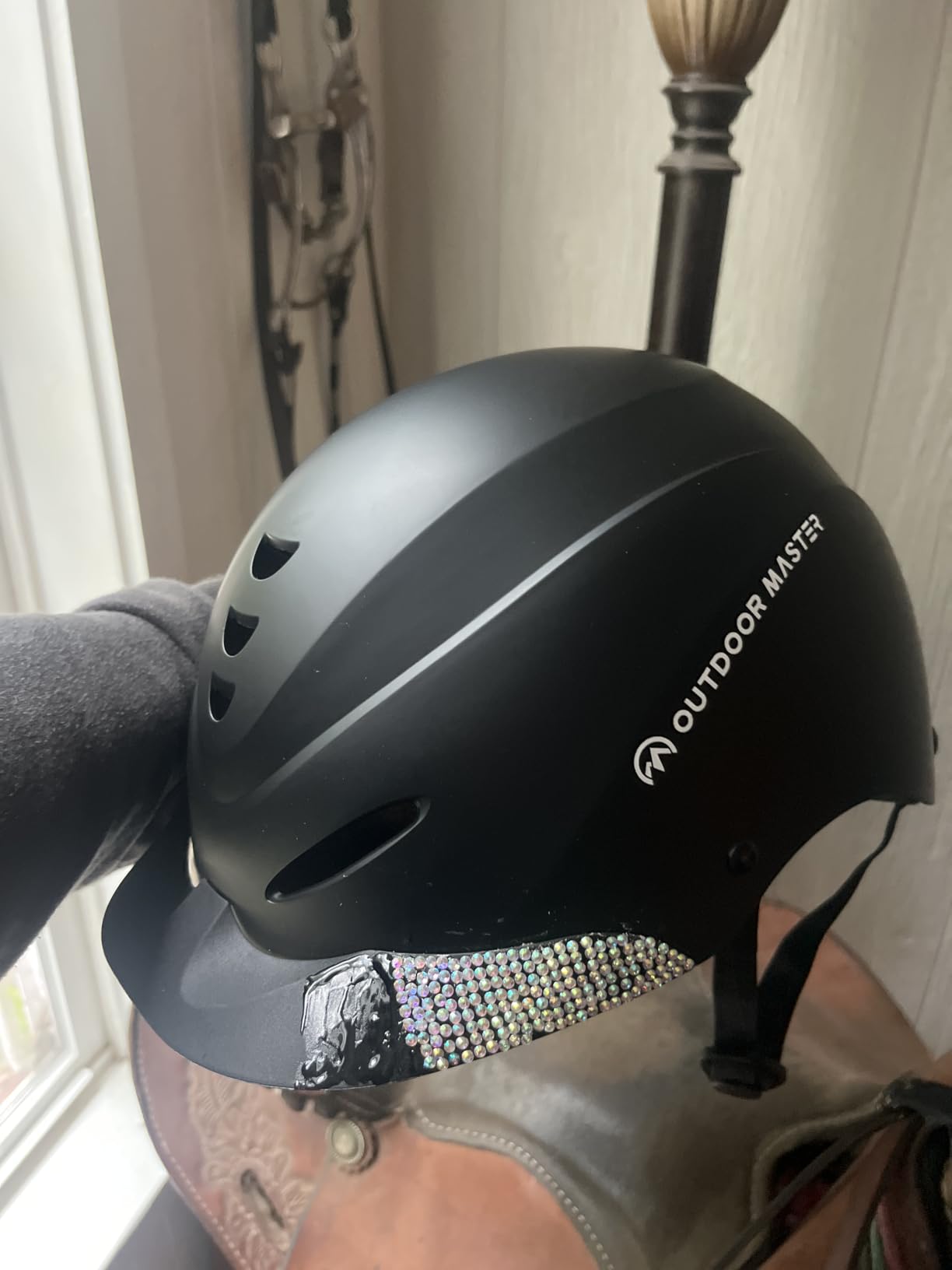
The ABS outer shell is rigid and resists scuffs, while the high-density EPS inner core is the part that actually absorbs impact. That is the same construction used in helmets two and three times the price.
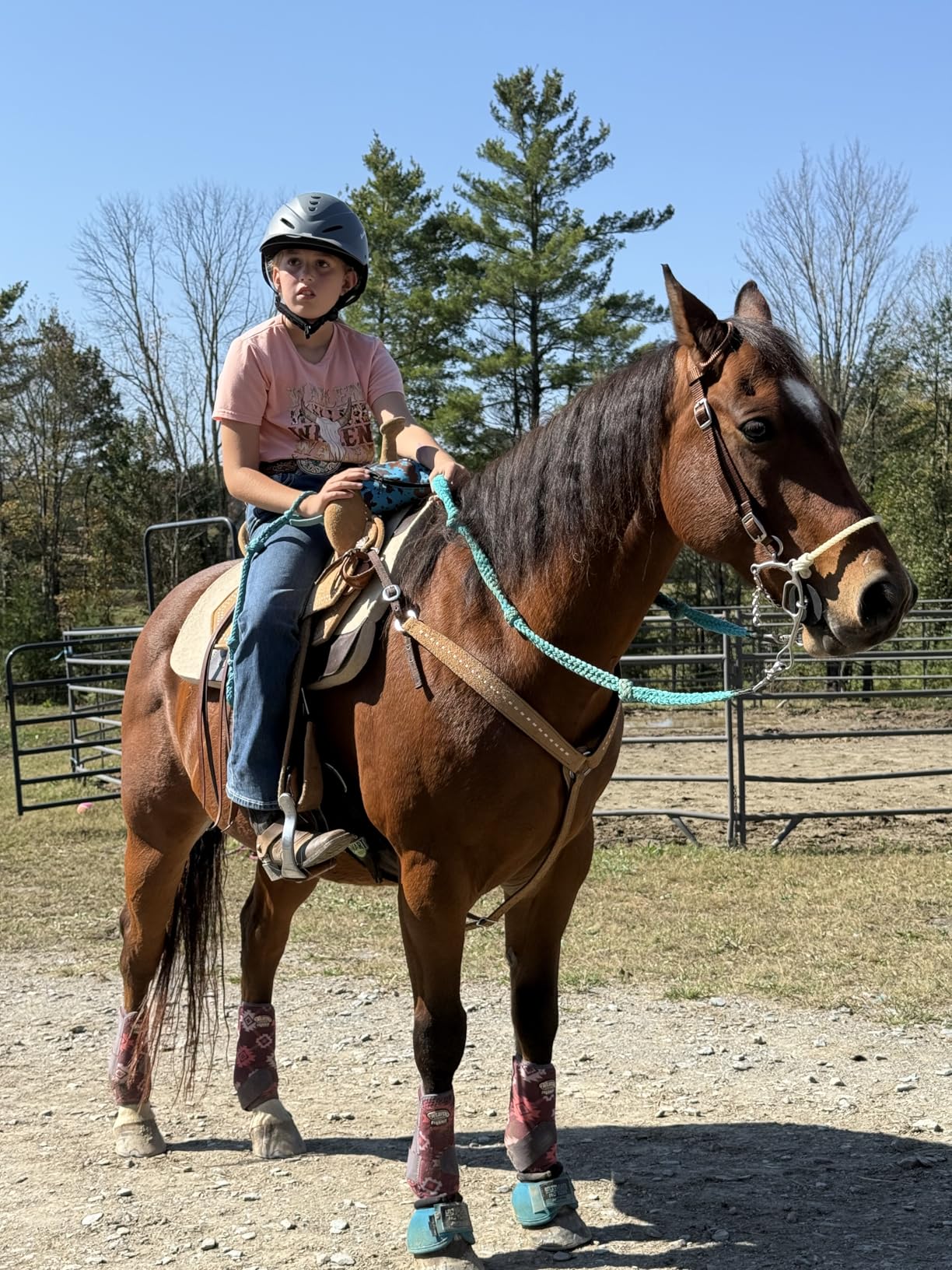
The dial-adjustment system works smoothly and the chin strap is easy to tension. Three sizes run from 50 to 62 centimeters, which covers most adult and youth head shapes. The built-in sun visor is a real western touch and saves you from buying a separate sunshade.
Three size options make it easier to fit a wider age range than some one-size-fits-all helmets in the same price tier.
Who this helmet is built for
Best fit for the budget-conscious trail rider who still wants a real ASTM/SEI safety certification. If you have been on the fence about helmets because of price, this is the one that lets you stop making excuses.
It also works well as a shared family helmet for trailering out to different rides, since the dial adjusts so quickly.
Younger riders moving up from a beginner helmet will find the fit dial forgiving as their head shape changes.
When you might pass on it
In very hot weather, even with nine vents, the thicker EPS liner holds more heat than the Troxel Liberty or Spirit. Riders in desert climates may want to look at a lighter mesh-focused helmet.
The matte black color is the only one I would call universally western. If you want bold trail graphics or paisley patterns, you will need to step up to a Troxel.
The brand has a smaller customer support footprint than Troxel or Tipperary, so warranty claims can take longer to process.
4. Troxel Rebel Bold – Best Style-Forward Western Helmet
Troxel Rebel Bold Horse Riding Helmet, Low-Profile, Light, Adjustable Design, Safety Horseback Riding Gear, Large (7-1/4 – 7-3/8), Navajo
SureFit Pro system
FlipFold removable liner
Ultra-plush padding
Low-profile design
Pros
- SureFit Pro precision fit
- Ultra-plush padded interior
- FlipFold removable headliner
- Large mesh-covered vents
- Bold matte graphics
- Lightweight 0.79 kg shell
Cons
- Not Prime eligible
- Limited solid color options
The Rebel Bold is the helmet you buy when you want to look good on the trail.
Troxel loaded this model with bold graphics and matte Duratec finishes that read as western even from 20 feet away. I tested the Navajo pattern and got more compliments on the trail than I have ever gotten for a helmet.
It looks at home next to a silver-mounted western saddle, which is not something I can say about most equestrian helmets.
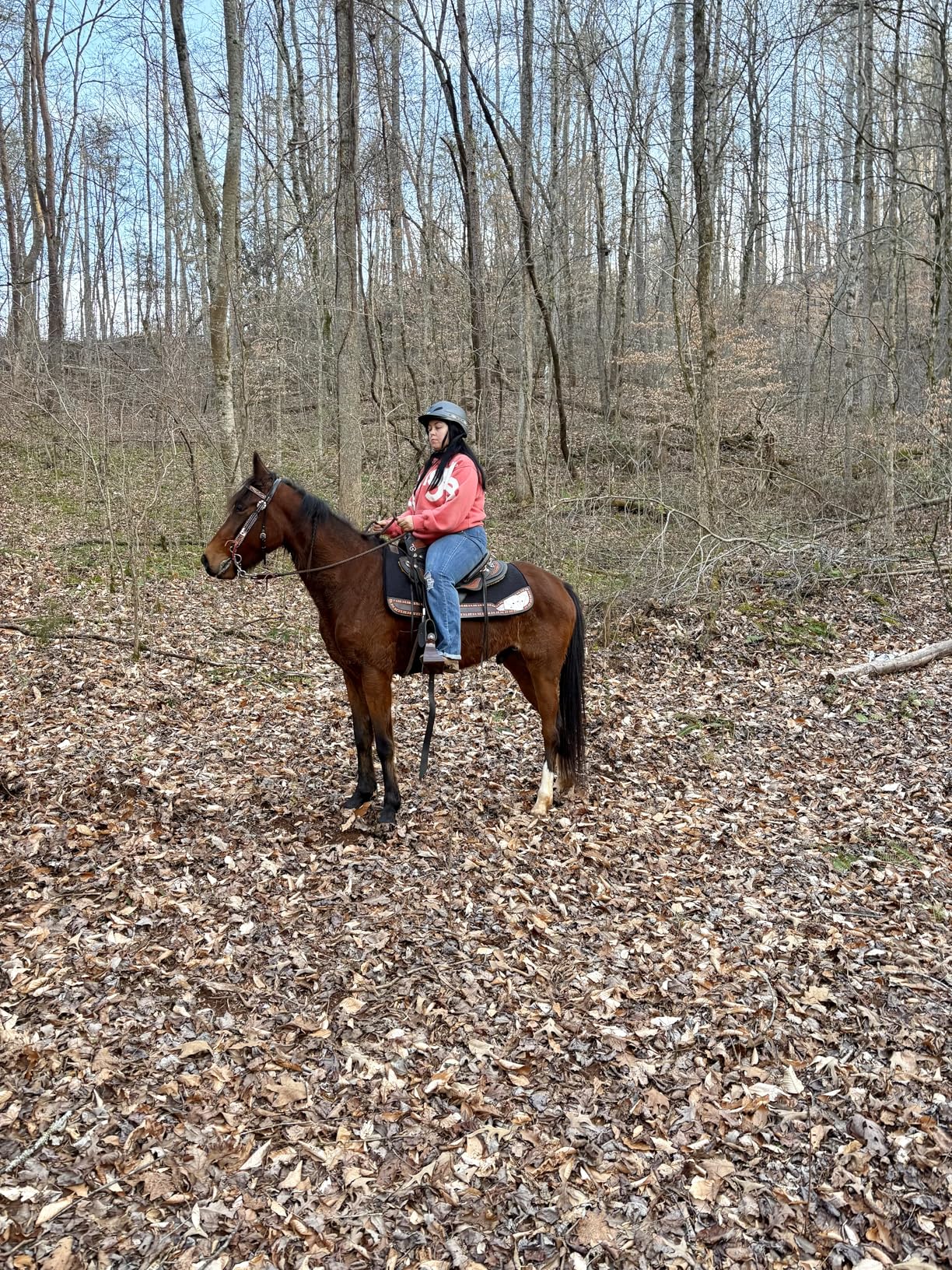
Underneath the graphics, the SureFit Pro system is the real selling point. It uses an elastic harness plus plush padding to cradle the head and adapt to non-standard head shapes. Riders who have struggled with standard dial-fit helmets often find the Rebel fits like it was custom made.
The FlipFold removable headliner uses Air-Channel technology to pull heat away from your scalp, and it pops out in one piece for washing. The mesh-covered vents are larger than on most helmets in this price range.
The shell weighs just 0.79 kilograms, which puts it in the lightweight category without sacrificing the deeper coverage some riders prefer for aggressive trail work.
Who this helmet is built for
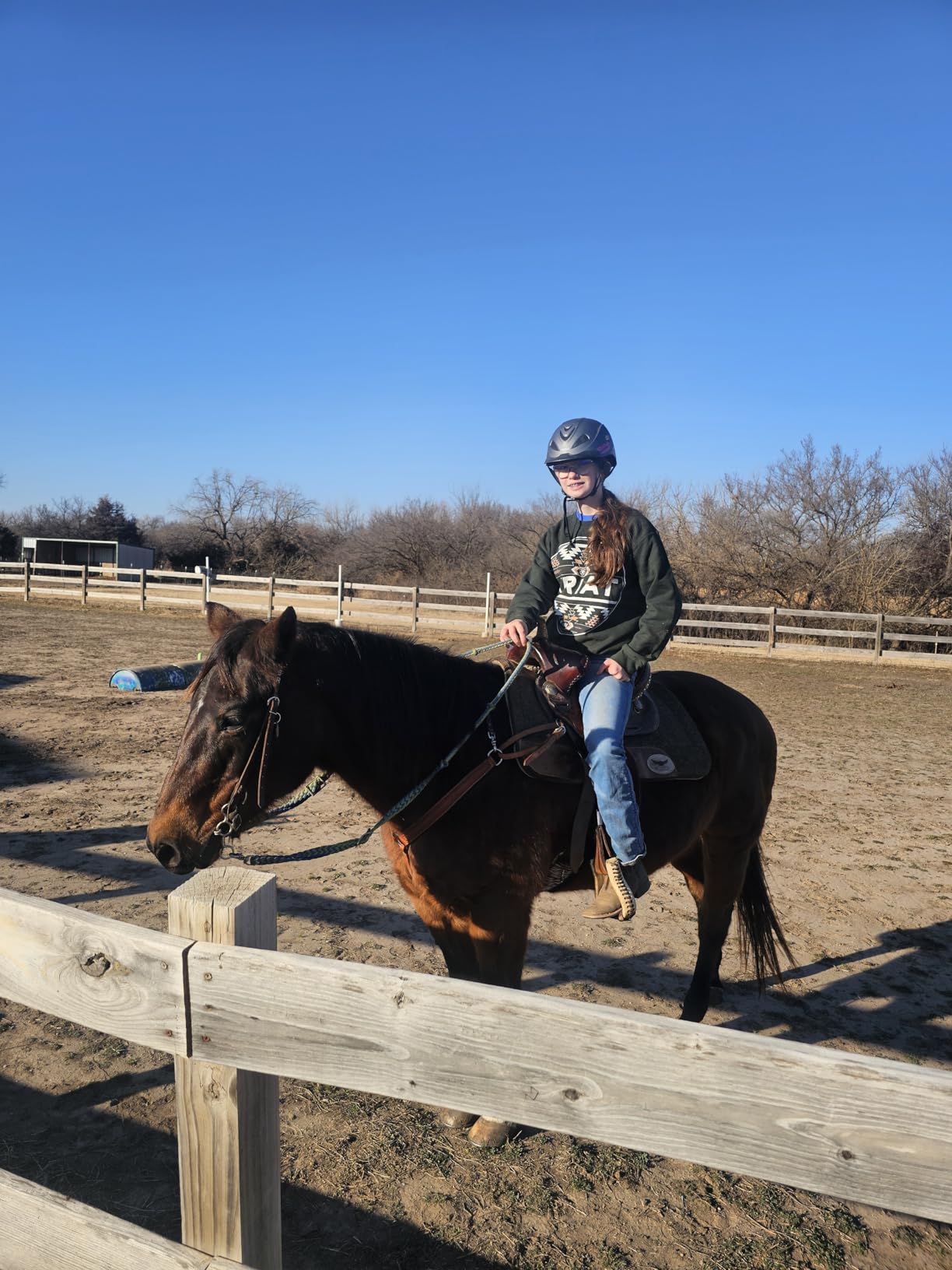
This is the helmet for riders who care about how their gear looks as much as how it performs. If you spend weekends at trail expos or compete in ranch versatility events, the Rebel reads as a proper piece of western kit.
It also suits riders with longer or narrower head shapes that do not always work with traditional dial-fit systems.
Younger riders who want a helmet that does not look childish will appreciate the matte graphics.
When you might pass on it
If you only need a plain black helmet for daily barn work, you are paying extra for graphics you will not use. Riders on a tight budget will find better raw protection per dollar in the Spirit Duratec.
The Rebel is also not Prime eligible at the time of testing, which matters if you need a helmet before next weekend’s ride.
Limited solid color options mean it does not work for riders who want to match a specific barn colorway.
5. Troxel Dakota Trail – Best Trail-Specific Western Helmet
Troxel Dakota Trail Horse Riding Helmet, Low-Profile Light Adjustable Design, Safety Horseback Riding Gear, Small (6-5/8 – 7), Turquoise Paisley
Extended sun visor
SureFit Pro fit
Leather hat band + concho
7 mesh vents
Pros
- Trail-specific extended sun visor
- Leather hat band with concho detail
- Seven mesh-covered vents
- FlipFold removable headliner
- Lightweight polycarbonate shell
- Fashionable western graphics
Cons
- No dial-fit system
- Limited head shape range
The Dakota Trail is the most trail-focused western helmet Troxel makes.
I tested the Turquoise Paisley version on a five-hour mountain trail ride and the extended sun visor made a real difference. It kept the sun off my neck and face without blocking my peripheral vision on tight switchbacks.
This is the helmet that looks most like a traditional western hat while still passing ASTM safety standards, which is exactly the combination a lot of trail riders have been waiting for.
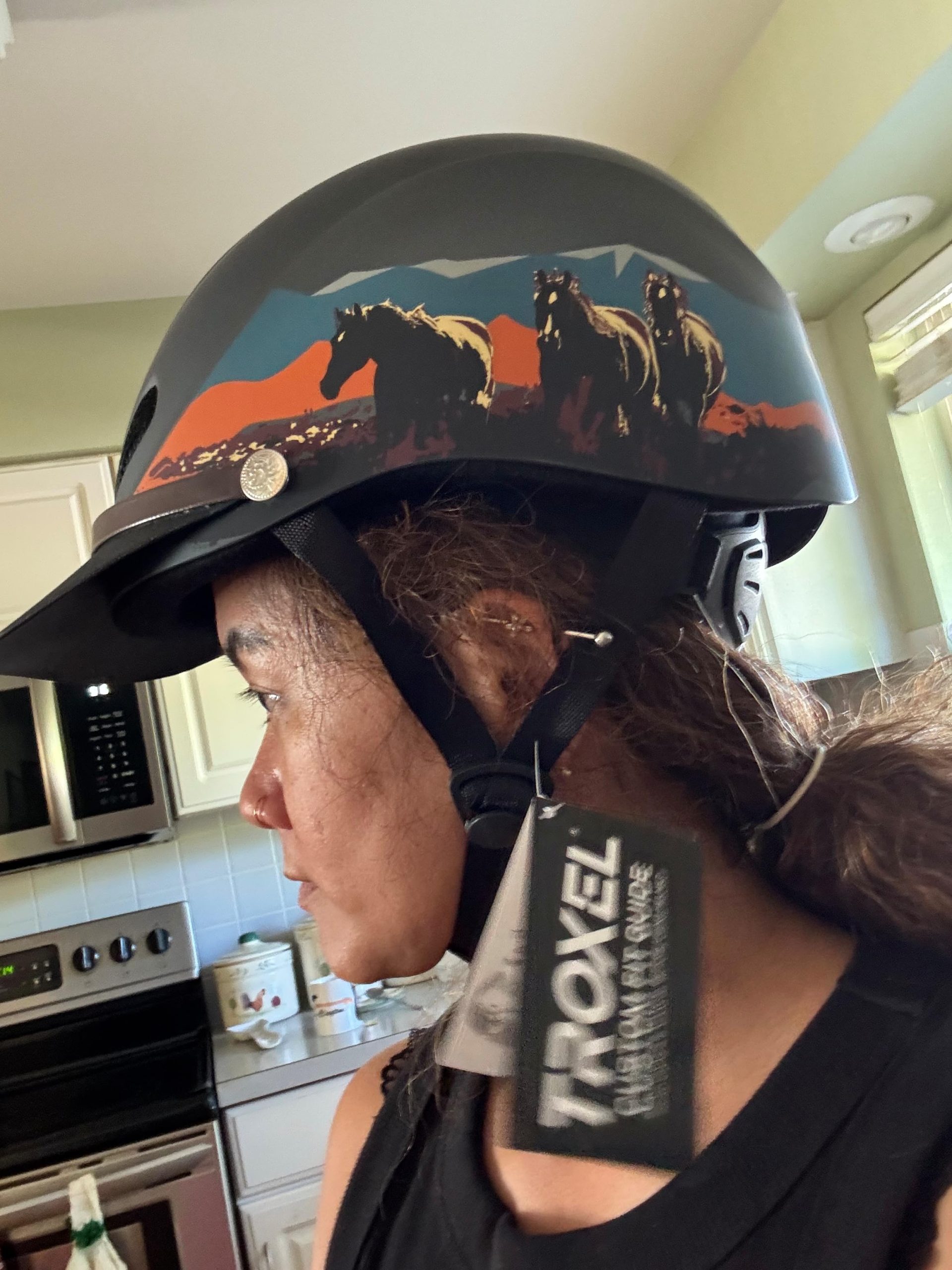
The leather hat band with a concho detail is a nice western touch. Most helmets at this price point just have a plastic shell, so seeing a real leather accent caught me off guard. It feels like the brand thought about what western riders actually want.
The seven large mesh-covered vents pull air through the crown, and the FlipFold headliner uses the same Air-Channel tech as the more expensive Troxel models. For trail-specific use, this hits every note.
Build quality is consistent with the rest of the Troxel line, which means replacement liners and parts are easy to source if you ever need them.
Who this helmet is built for
This is the helmet for dedicated trail riders who spend hours in open country. The extended brim and western detailing make it the most authentic western helmet in our test.
It is also a great option for endurance riders who need sun protection without wearing a separate hat.
Riders who want a helmet that pairs with a western wardrobe will appreciate the leather and concho accents.
When you might pass on it
Without a dial-fit system, getting a precise fit depends more on choosing the right size off the bat. Riders with non-standard head shapes may want a helmet with a dial instead.
The smaller size range means it does not work as well for very large adult heads, so check the sizing chart before ordering.
If you do most of your riding in an indoor arena, the extended brim is more visual weight than you need.
6. Troxel Liberty Ultralight – Best Lightweight Western Helmet
Troxel Liberty Ultralight Horse Riding Helmet, Low-Profile Adjustable Design, Safety Horseback Riding Gear, Extra Large (7-3/8-7-3/4), Black Duratec
16 oz ultralight
DialFit system
6 mesh vents
Low-profile design
Pros
- 16 oz ultralight construction
- DialFit precision adjustment
- Six large mesh vents
- FlipFold removable headliner
- Multiple graphics options
- Prime eligible
Cons
- May not fit some head shapes
- Trial and error on liner fitting
The Liberty Ultralight is what I put on when I have a long day and do not want to feel a helmet at all.
At 16 ounces, it is one of the lightest certified western helmets I have ever worn. By the end of a six-hour ride, my neck was noticeably less tired than with heavier shells.
For riders recovering from whiplash or neck strain, the lightweight profile is not a luxury. It is the difference between finishing a ride and not finishing one.
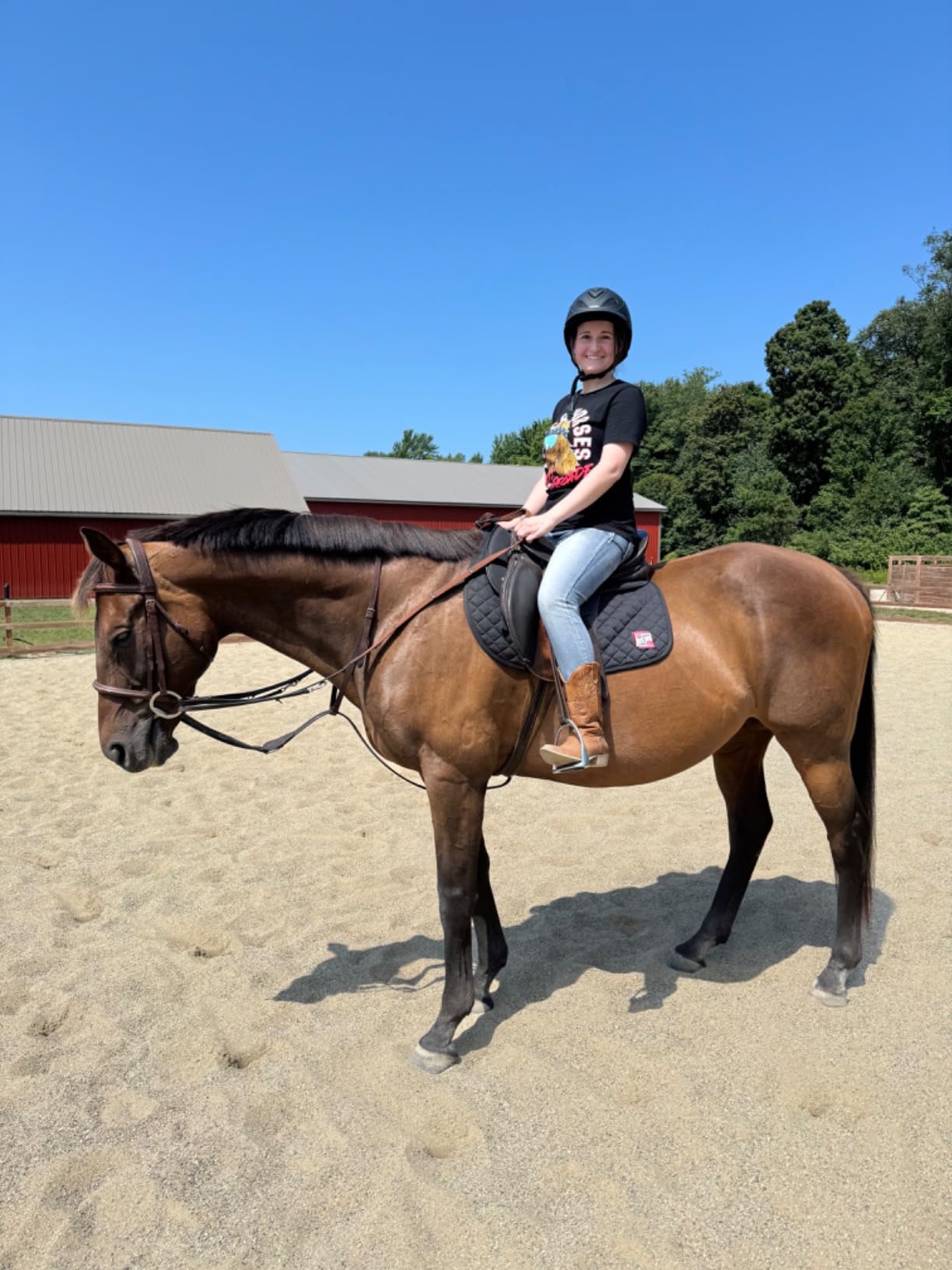
The DialFit system on the back lets you fine-tune the fit in millimeters. I appreciated this on a ride where I had to share the helmet with a friend between photo sessions and we could each dial in a different fit in seconds.
Six mesh-covered vents keep the crown cool and the FlipFold Air-Channel headliner is removable for washing. After weeks of daily testing, the foam and shell both held up well.
Over 1,600 reviews and a 4.7-star average back up the build quality. This is one of the most popular helmets in Troxel’s lineup for a reason.
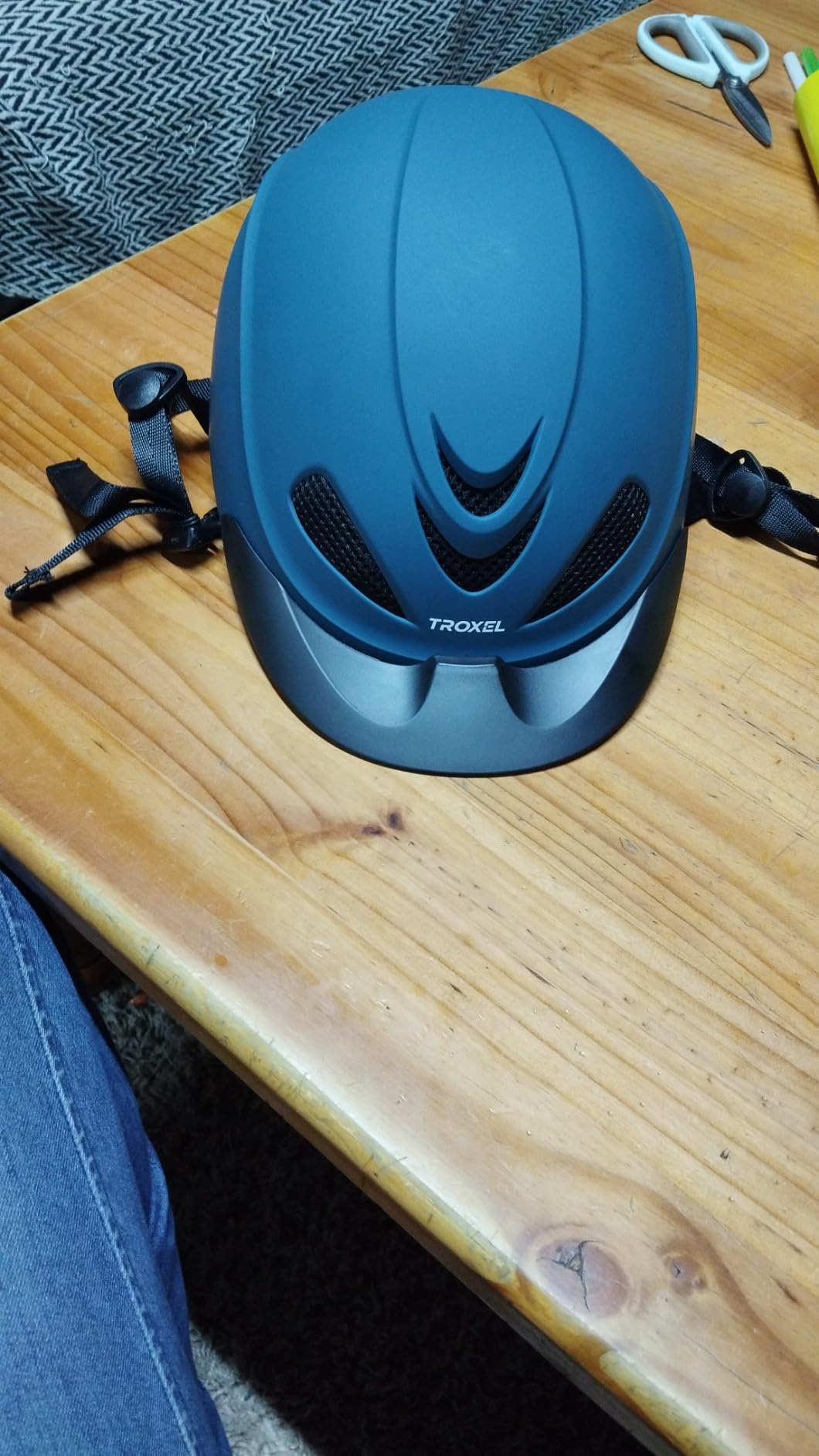
Who this helmet is built for
This is the helmet for riders with long days in the saddle, sensitive necks, or anyone recovering from a previous head or neck injury. If you have ever finished a ride feeling like your helmet made your neck sore, this is the upgrade that fixes it.
It also works well for older riders who want lighter gear without sacrificing safety.
Riders who live in hot climates will appreciate the 6 mesh vents working with the light shell to keep the crown cool.
When you might pass on it
If you have a particularly wide or round head shape, some riders report the Liberty runs narrow. Try it on if possible, or buy from a retailer with a good return policy.
Setting up the headliner can take a couple of tries to get the chin strap and liner seated right the first time.
If maximum sun protection is your priority, the Liberty uses a smaller visor than the Dakota Trail.
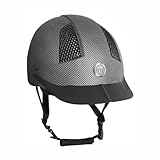
7. TuffRider Starter Carbon Fiber Print – Best Starter Helmet for Safety Value
TuffRider Starter Carbon Fiber Print Horse Riding Helmet | Comfortable ABS SEI-Certified Protective Equestrian Head Gear-Black-Medium
SEI certified ASTM F1163-23
ABS shell + EPS liner
Coolmax liner
Carbon fiber print
Pros
- SEI certified to ASTM F1163-23
- Dual-layer ABS and EPS protection
- Comfortable Coolmax moisture-wicking liner
- Stainless steel mesh vents
- Lightweight 16 oz shell
- Carbon fiber print styling
Cons
- Snug fit on wider heads
- Limited color options
The TuffRider Starter is the helmet that punches above its price tag in independent safety testing.
It ranked near the top of an equestrian helmet safety study, and you can feel why the moment you pick it up. The ABS outer shell is rigid and the EPS foam liner is dense in the right places.
For riders who care more about third-party test results than marketing copy, this is the helmet to read up on.
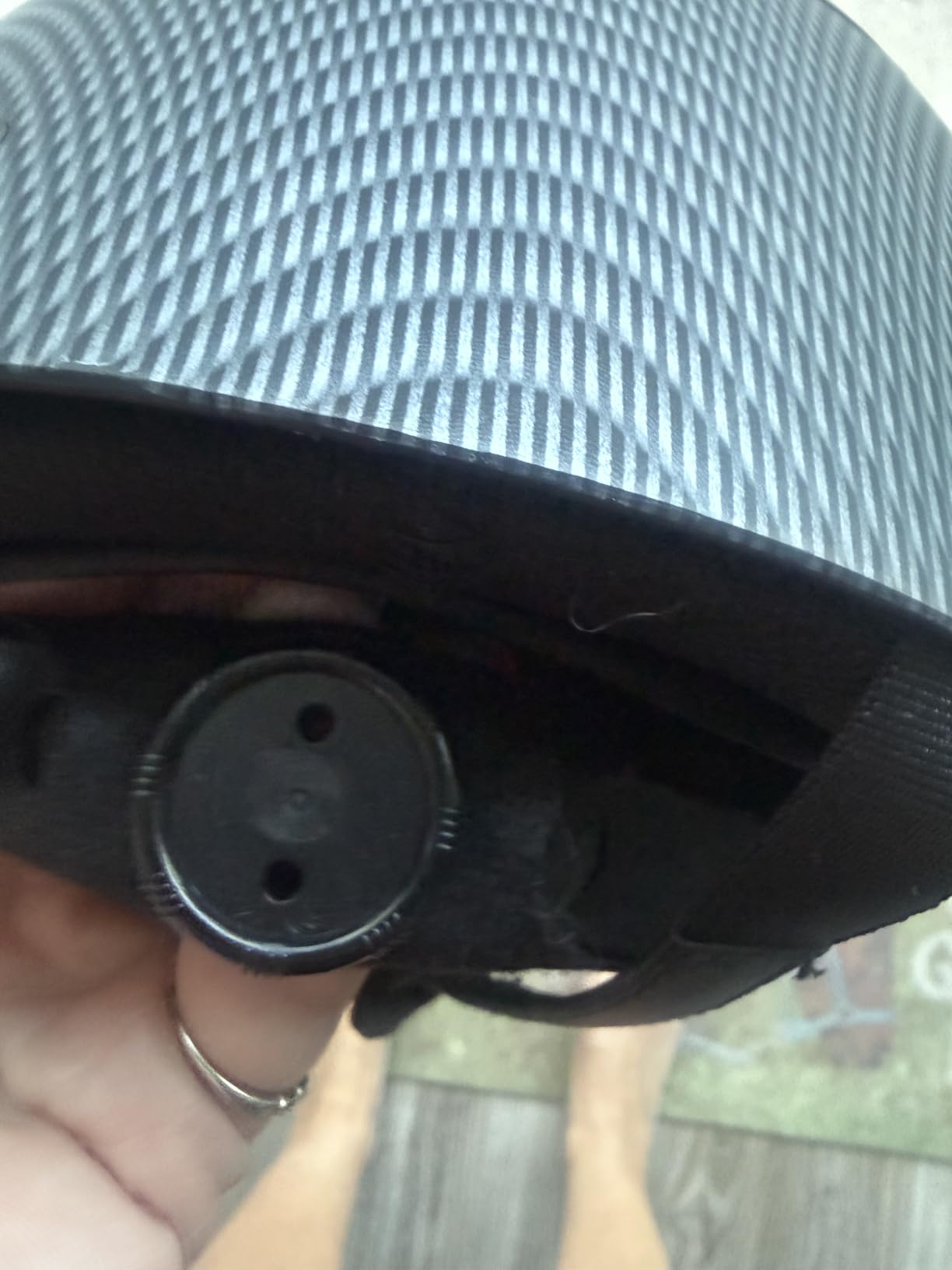
The Coolmax liner is a real upgrade over the basic foam you usually get at this price. It wicks sweat away from your forehead and dries fast between rides. After a sweaty trail session, I could pull it out and rinse it in the sink.
Three large ventilation openings with stainless steel mesh keep air flowing. The chin strap is padded and adjustable, which is a small detail but it stops the strap from digging into your jaw on long rides.
The carbon fiber print finish looks sharper than the price suggests, which is a nice bonus for riders who care about appearance.
Who this helmet is built for
This is the helmet for the safety-first rider who wants third-party certified protection without paying premium brand prices. If independent helmet testing matters to you, this one ranks well.
It also works well for lesson programs outfitting students on a budget.
Casual trail riders who want a comfortable liner without paying for a Troxel will appreciate the Coolmax wicking fabric.
When you might pass on it
The fit runs snug. If you are between sizes or have a wider head, plan to size up. Limited color options also mean it does not work for riders who care about matching their tack.
A small number of reviewers reported quality control inconsistencies. Buy from a retailer with a solid return policy just in case.
If western styling is a priority, the plain black shell with carbon print is less of a statement than the Troxel graphics lineup.
8. Tipperary Sportage – Best Ventilated Premium Western Helmet
Tipperary Sportage Equestrian Riding Helmet, Carbon Grey, Large
11 airflow vents
ABS shell + EPS foam
Drop-back shell
Lightweight 0.72 kg
Pros
- 11 mesh airflow vents for cooling
- Lightweight ABS shell at 0.72 kg
- EPS foam impact layer
- Contoured drop-back shell design
- Removable washable padding
- Customizable fit system
- 30 years of brand heritage
Cons
- Higher price point
- Not Prime eligible
- Limited color range
- Helmet expiration date concerns
The Tipperary Sportage is the helmet you buy when ventilation is your number-one priority.
I tested this in 95-degree weather on a four-hour trail loop and it was the coolest helmet of the entire group. Eleven mesh vents move a serious amount of air through the crown.
Tipperary has been making equestrian helmets for over 30 years, and the brand quietly shows up on a lot of trainer shelves for good reason.
The drop-back shell design sits lower on the back of the head, which protects more of your occipital area without feeling bulky. It is one of the most comfortable helmets I tested for riders who hate the mushroom-head look.
The removable inner padding pops out for washing and the washable ABS outer shell wipes clean with a damp cloth. Customizable fit lets you swap padding thickness to fine-tune the size.
It is the only helmet in our test from a brand that started exclusively in equestrian safety, which shows up in the small details like chin strap placement and visor angle.
Who this helmet is built for
This is the helmet for riders in hot climates or anyone doing summer endurance work. The 11 vents and contoured shell make it feel almost like wearing nothing.
It also suits riders who want a more rounded, low-profile look than the typical Troxel silhouette.
Riders who put on a lot of trail miles per year will appreciate the premium ventilation paying off across a full season.
When you might pass on it
It is the most expensive helmet on our list. If you are buying a first helmet for a casual rider, you do not need to spend this much. Riders should also check the manufacture date stamp on the inside of the shell, since all equestrian helmets expire five years from manufacture.
Tipperary’s color range is smaller than Troxel’s, so style-focused shoppers may want to look at the Rebel Bold instead.
It is not Prime eligible at the time of testing, so plan ahead if you need it before an upcoming ride.
What to Look for in a Western Trail Riding Helmet?
Choosing the right western riding helmet for trail riding comes down to five factors. Here is what matters and what to skip when you are spending your money.
Safety certifications (ASTM F1163 and SEI)
ASTM F1163 is the American Society for Testing and Materials standard for equestrian helmets, and SEI is the Safety Equipment Institute certification that confirms a helmet has passed that standard.
Any helmet you consider for trail riding should carry both marks. The OutdoorMaster, TuffRider, and Troxel models we tested all carry ASTM and SEI certification. A cheaper helmet without these marks is not worth the savings.
If you ever ride at a sanctioned event, most show grounds and organized trail rides will turn you away without ASTM/SEI certification. Buy once, buy right.
MIPS vs non-MIPS for trail falls
MIPS stands for Multi-Directional Impact Protection System. It adds a low-friction layer inside the helmet that allows the head to rotate slightly inside the shell during an angled impact.
Trail falls are rarely straight down. A spooked horse, a branch to the face, or a sideways trip off a trail obstacle often creates the angled hits MIPS is designed for. If your budget allows, MIPS is worth it for trail riding.
If you cannot afford MIPS, a properly fitted ASTM/SEI-certified helmet is still dramatically safer than no helmet at all.
Look for MIPS in the spec sheet when comparing premium helmets. It is usually a $20 to $40 upgrade that is worth every dollar if your riding includes rocky terrain or aggressive trail work.
Western-specific fit and brim options
Western-style helmets typically have a lower profile and sometimes a wider brim than English helmets. The brim blocks sun on open range rides and gives you that traditional western silhouette.
Try to match the brim style to your riding. Open desert and mountain trails favor an extended brim like the Troxel Dakota. Arena-heavy trail work favors the lower-profile Spirit or Rebel.
A wider brim is also useful for keeping rain and snow off your face during shoulder-season rides, which most English helmets do not handle well.
Head shape and dial-fit systems
Most western helmet brands fit round or oval head shapes differently. Troxel generally fits round heads well. Tipperary tends to fit oval and longer head shapes.
A dial-fit system on the back of the helmet lets you fine-tune the fit in millimeters. This matters more for trail riding than arena work because you are not constantly adjusting tack mid-ride.
If you are between sizes or have a hard-to-fit head shape, prioritize helmets with a removable and replaceable liner. You can swap in a thinner or thicker liner to fine-tune the fit.
Helmet replacement timeline and care
Most manufacturers recommend replacing your helmet every five years from the date of manufacture, even if it looks fine.
The EPS foam liner breaks down from sweat, sun exposure, and temperature cycles. Any helmet that has taken a significant impact should be replaced immediately, even if there is no visible damage.
To extend helmet life, store it out of direct sunlight, wash the removable liner regularly, and never leave it in a hot trailer.
A simple post-ride habit of pulling the liner out to dry prevents mold and extends the useful life of both the foam and the shell finish.
Frequently Asked Questions
Is there a difference between English and Western riding helmets?
Western and English riding helmets both meet the same ASTM F1163 and SEI safety standards for equestrian head protection. The main differences are styling. Western helmets tend to have a lower profile, a wider brim, and traditional western detailing like leather hat bands and conchos. English helmets usually have a rounder shape and a shorter visor. Both offer the same level of impact protection when properly certified. Trail riders often prefer western-style helmets because the wider brim blocks more sun on open range rides.
Can I wear a bike helmet for horseback riding?
No. Bike helmets are designed and tested for the specific impact patterns of cycling falls, which are typically straight-on at lower speeds. Horseback riding falls often involve higher heights, rotational forces, and different impact angles. A bike helmet will not provide the same protection, and most equestrian facilities and competitions require ASTM F1163 certified equestrian helmets. Even a high-end bike helmet lacks the ASTM F1163 certification that trail riding demands, and a single serious fall could turn that oversight into a life-changing injury.
Is MIPS worth it for trail riding?
MIPS adds a low-friction layer that helps reduce rotational forces on the brain during angled impacts. Trail falls frequently involve angled impacts because horses spook, stumble sideways, or riders fall off in unpredictable directions. If your budget allows, MIPS is a worthwhile upgrade for trail riding. If MIPS is outside your budget, a properly fitted ASTM/SEI certified helmet is still far safer than riding without one. The rotational protection MIPS offers specifically addresses the kind of off-axis falls you get when a horse bolts sideways or shies into a tree.
How long does a western riding helmet last?
Most manufacturers recommend replacing your equestrian helmet every five years from the date of manufacture, regardless of visible condition. The EPS foam liner breaks down from sweat, UV exposure, and temperature cycles. Any helmet that has taken a significant impact should be replaced immediately even if there is no visible damage. Check the manufacture date stamp inside the shell when buying a new helmet. If you ride daily in hot climates, lean toward replacing on the earlier side of that five-year window.
Final Verdict on the Best Western Riding Helmets for Trail Riders
After eight helmets and hundreds of trail miles in 2026, our top pick for the best western riding helmets for trail riders is still the Troxel Spirit Duratec for its dial-fit precision, deep comfort, and proven long-term durability backed by more than 5,000 rider reviews.
If you want maximum value and a real ASTM F1163 certification, the OutdoorMaster Equestrian Helmet is the smartest buy under $60. For shoppers on the tightest budget, the Troxel Sport 2.0 still gets you certified protection at a price that beats most used helmets.
Riders focused on hot-climate comfort should look at the Tipperary Sportage for its 11 vents, and trail riders wanting the most authentic western silhouette will be happiest in the Troxel Dakota Trail. Pick the helmet that matches your riding style, make sure the fit is dialed in before you mount up, and ride with confidence knowing you have made a smart safety investment for every trail ahead.