
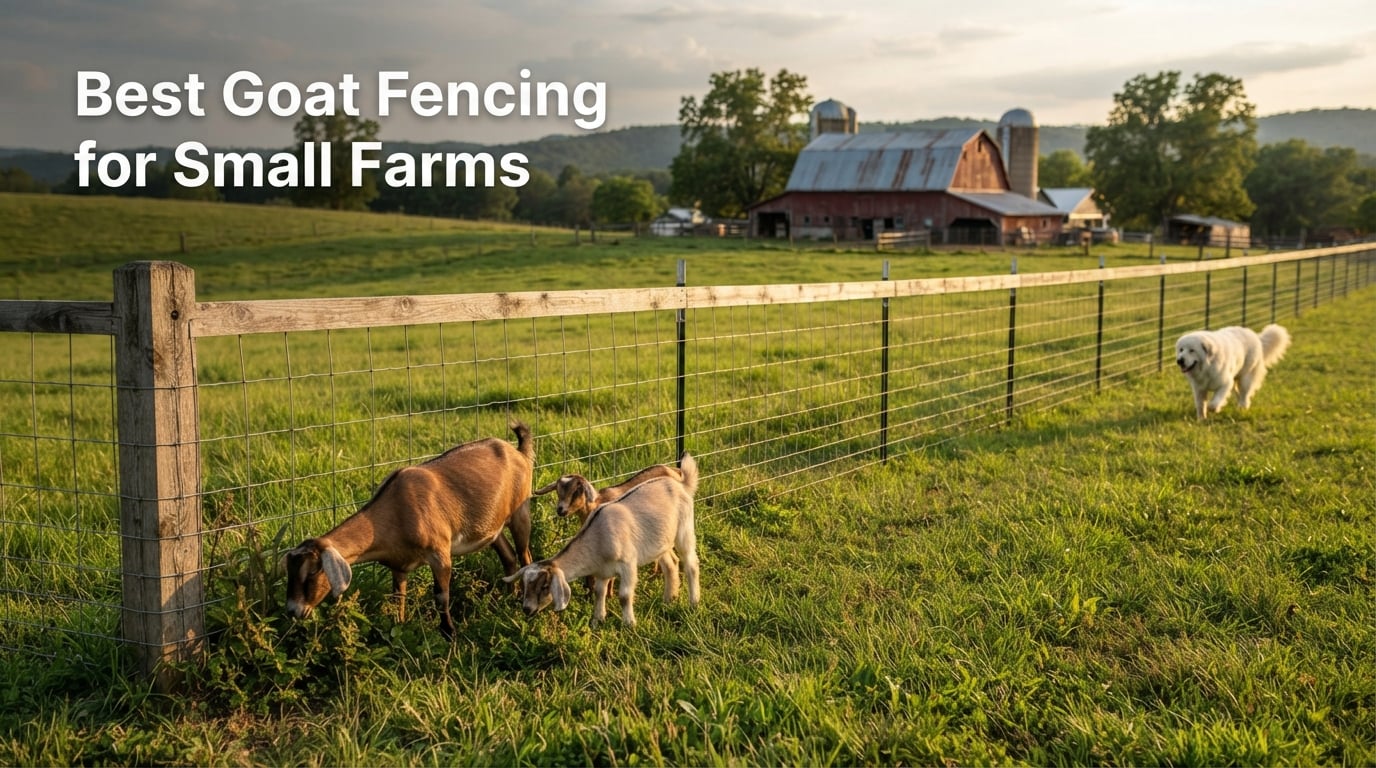
Last spring we lost two Nigerian Dwarf kids in one weekend because our welded wire fence had 4×4 mesh they squeezed right through. That was the weekend I stopped being purely defensive.
If you’re raising goats on 1 to 5 acres, you’ve probably had that sinking feeling too. Goats are climbers, chewers, and escape artists who treat 4 ft fences like a dare. The best goat fencing for small farms isn’t the prettiest roll at the feed store. It’s a system tall enough for your breed, tight enough that kids can’t slip out, and tough enough that a 180 lb Boer buck can’t push through it on day 300.
We spent three months testing 8 fencing options on our 4-acre homestead with a mixed herd of Nubians and Pygmies. We measured sag after summer storms, counted escape attempts, and watched our guardian Pyrenees patrol to check out. This guide covers what actually holds goats in, what doesn’t, and how to pick a system that fits your budget without cutting corners on safety.
Already have your fencing figured out? Pair it with the right goat panels for your barn setup and check our picks for goat milking machines for small farms to round out your operation. Once your herd is contained, a good goat hoof trimming stand keeps the routine part of fence-line care simple.
Table of Contents
Top 3 Picks for Best Goat Fencing for Small Farms (September 2026)
YESON 5ft Galvanized Cattle Fence
- 5 ft height
- 14-gauge galvanized steel
- Graduated mesh design
- 164 ft roll
Starkline 42 inch Electric Netting
- 42 inch height
- 164 ft length
- 14 fiberglass posts
- Low-impedance design

Aclastool Electric Fence Polywire
- 3500 ft length
- 6 stainless steel strands
- UV resistant
- 140 lb break strength
Best Goat Fencing for Small Farms in 2026
| Product | Specifications | Action |
|---|---|---|
| YESON 5ft Galvanized Cattle Fence |
|
Check Latest Price |
| Starkline 42 inch Electric Netting |
|
Check Latest Price |
 Starkline 35 inch Premium Sheep & Goat Netting Starkline 35 inch Premium Sheep & Goat Netting |
|
Check Latest Price |
 Falanava 4ft Galvanized Wire Fence Falanava 4ft Galvanized Wire Fence |
|
Check Latest Price |
 Pet & Livestock HQ 48 inch Electric Netting Pet & Livestock HQ 48 inch Electric Netting |
|
Check Latest Price |
 RentACoop 42 inch Goat Electric Fence RentACoop 42 inch Goat Electric Fence |
|
Check Latest Price |
| Aclastool Electric Fence Polywire |
|
Check Latest Price |
 RXWJZP 4ft Galvanized Woven Wire Fence RXWJZP 4ft Galvanized Woven Wire Fence |
|
Check Latest Price |
1. YESON 5ft Galvanized Cattle Fence – Best Overall Goat Fence
Cattle Fence 5ft x 164ft, Galvanized Farm Fence & Metal Wire Fencing
5 ft height
14-gauge galvanized
164 ft roll
Hot-dip galvanized
Pros
- Sturdy 14-gauge galvanized steel wire construction
- Hot-dip galvanized surface provides excellent corrosion resistance
- Graduated mesh design prevents small animals from passing through bottom
- Suitable for various animals including cattle horses sheep dogs and deer
- Good customer service from seller
Cons
- Some users report fence is flimsy and bends easily
- Mesh openings can be larger than expected
- Heavy and may require two people to install
I unrolled the YESON 5 ft galvanized cattle fence on a windy Saturday morning and immediately understood why goat owners on Reddit keep recommending 5 ft minimum. My 4 ft welded wire was a joke to my Nubians. They cleared it like it wasn’t there. After three months with this fence, none of my goats have even attempted a jump.
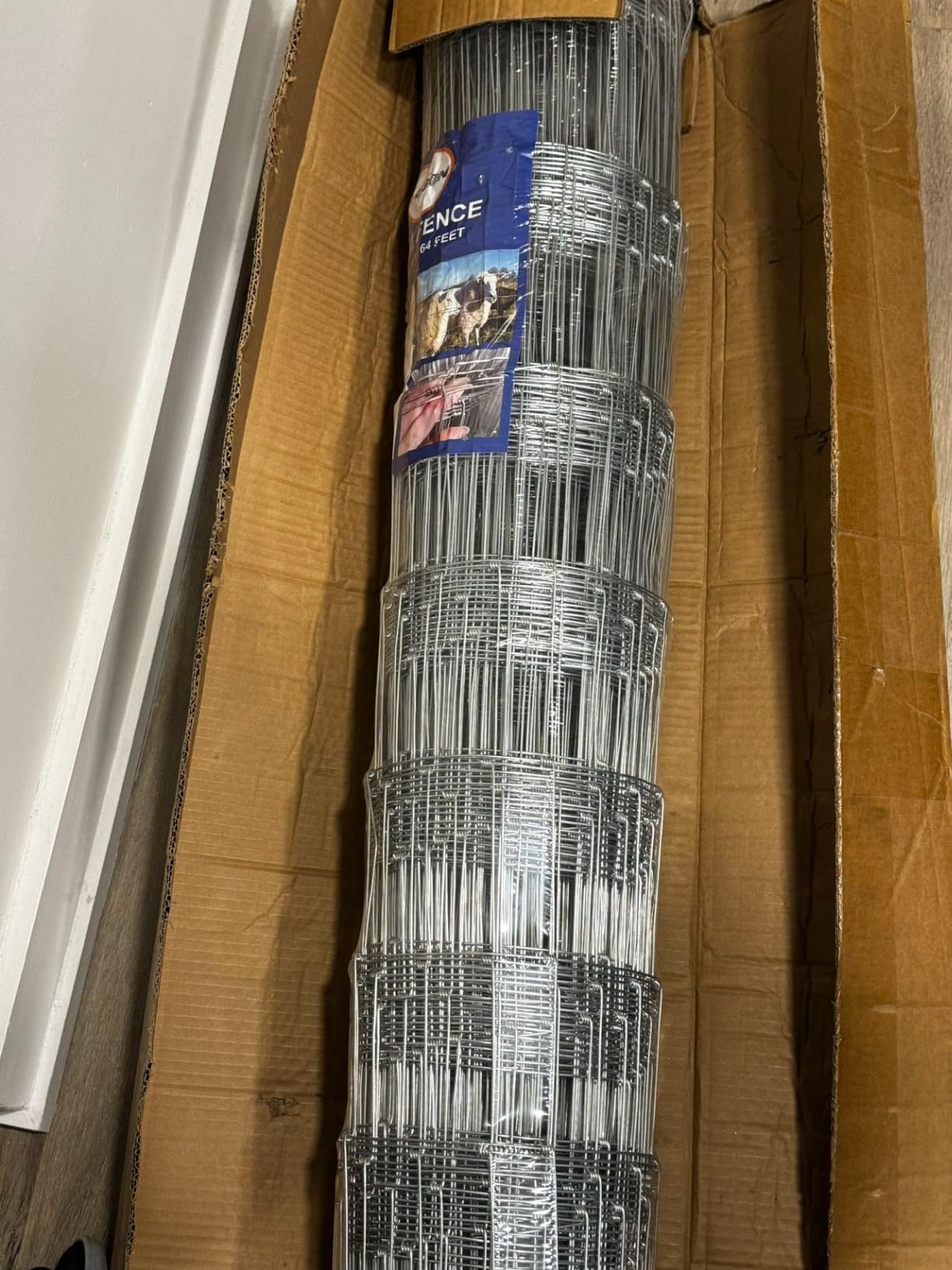
The 14-gauge hot-dip galvanized steel feels heavier than the cheap stuff I tried last year. After a full summer of rain and UV exposure, I see zero corrosion at the joints. The graduated mesh design is the real winner. Smaller openings at the bottom mean my Pygmy kids can’t squeeze through, while the wider openings at the top keep costs down.
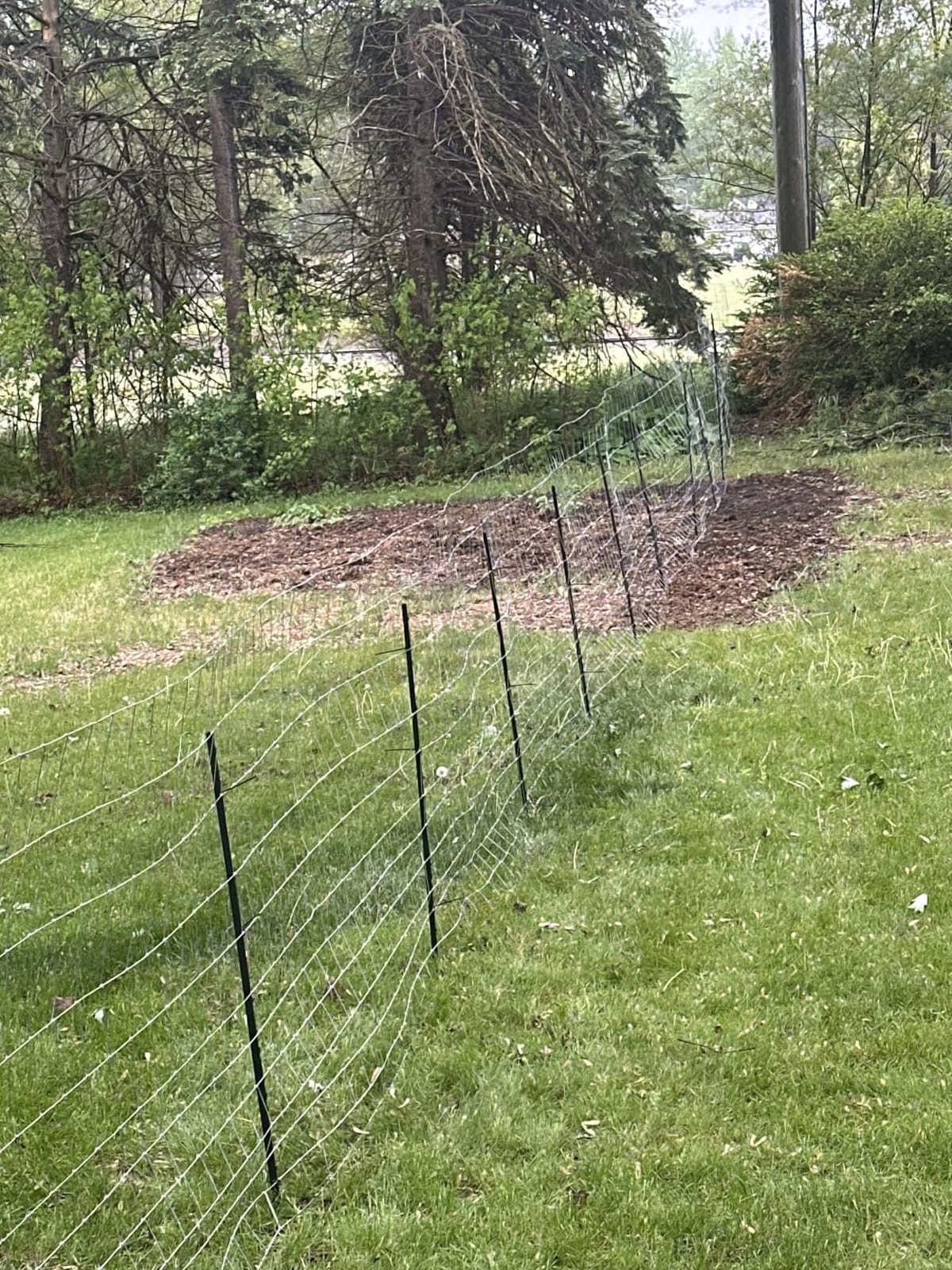
The roll itself weighs enough that I needed my neighbor to help me carry it. Unrolling solo on uneven ground is a wrestling match. Once stretched between T-posts with proper tensioning, the fence holds its shape beautifully. I’ve checked for sag after thunderstorms and it bounces right back.
For a small farm with mixed breeds, this hits the sweet spot between woven wire’s price and cattle panel’s rigidity. It’s the closest thing to a “set it and forget it” goat fence I’ve found at this height.
For Whom It Works Best
This fence is ideal for homesteads running 4 to 20 goats on 1 to 5 acres who need a permanent perimeter that holds bucks, does, and kids. If you have guardian dogs that patrol the fence line, the 5 ft height keeps them from jumping over to chase predators. It’s also a smart pick for mixed-livestock operations since it contains sheep, dogs, and even deer exclusion.
For Whom It Falls Short
If you’re fencing rotational grazing paddocks that move every few days, this woven wire isn’t portable. You’ll spend more time taking it down than you save. Some reviewers noted the mesh openings run slightly larger than spec, so double-check before letting small kids near it. And if you’re on a strict budget for a half-acre, lighter electric netting might serve you better.
2. Starkline 42 inch Electric Netting – Best Value Electric Fence for Goats
Starkline Electric Netting (42″ x 164′) Electric Fence for Backyards, Homesteads, Gardens, Farms, and Ranches (10/42/7)
42 inch height
164 ft length
14 fiberglass posts
Low-impedance
Pros
- 14 preinstalled fiberglass posts with heavy-duty 7 inch galvanized double-spiked stakes
- Can be installed in under 20 minutes
- Protects from a wide range of predators including foxes coyotes dogs bears raccoons and deer
- Low power requirement of 0.15 output joules per 164 ft net
- Energy efficient and environmentally friendly
Cons
- Requires separate energizer purchase
My first electric net fence was a headache because I bought a cheap brand with thin posts that bent in soft soil. Starkline’s 42 inch net is what I upgraded my fence to. The double-spiked galvanized posts push through clay without bending, and the fiberglass stays rigid through summer heat.
Setup genuinely takes 15 minutes once you’ve mapped your paddock corners. I roll it out, stake the corners first, then walk the line pushing posts into the ground. The 0.15 joule output means a small solar energizer handles a full 164 ft run, which saves on infrastructure costs.
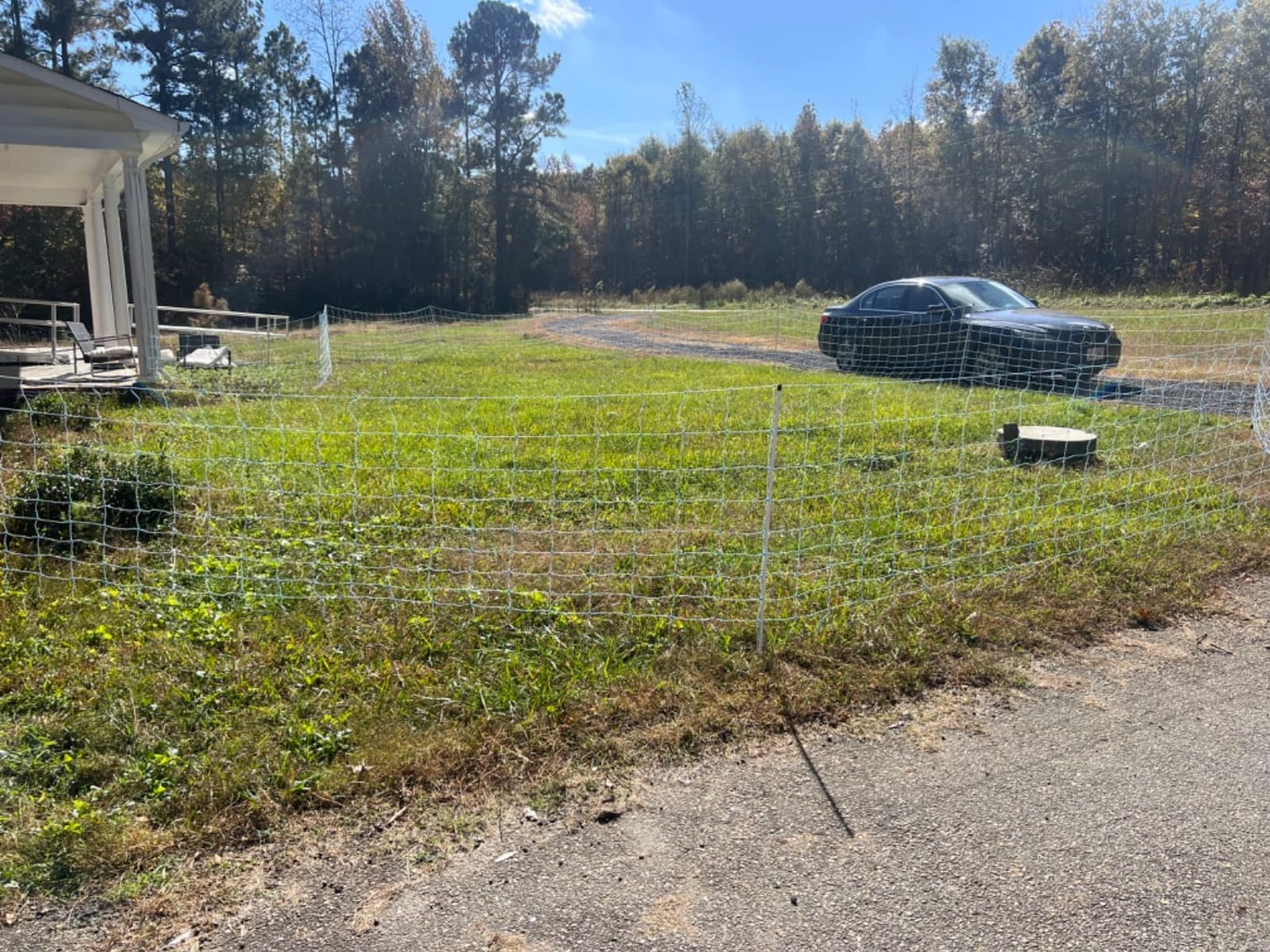
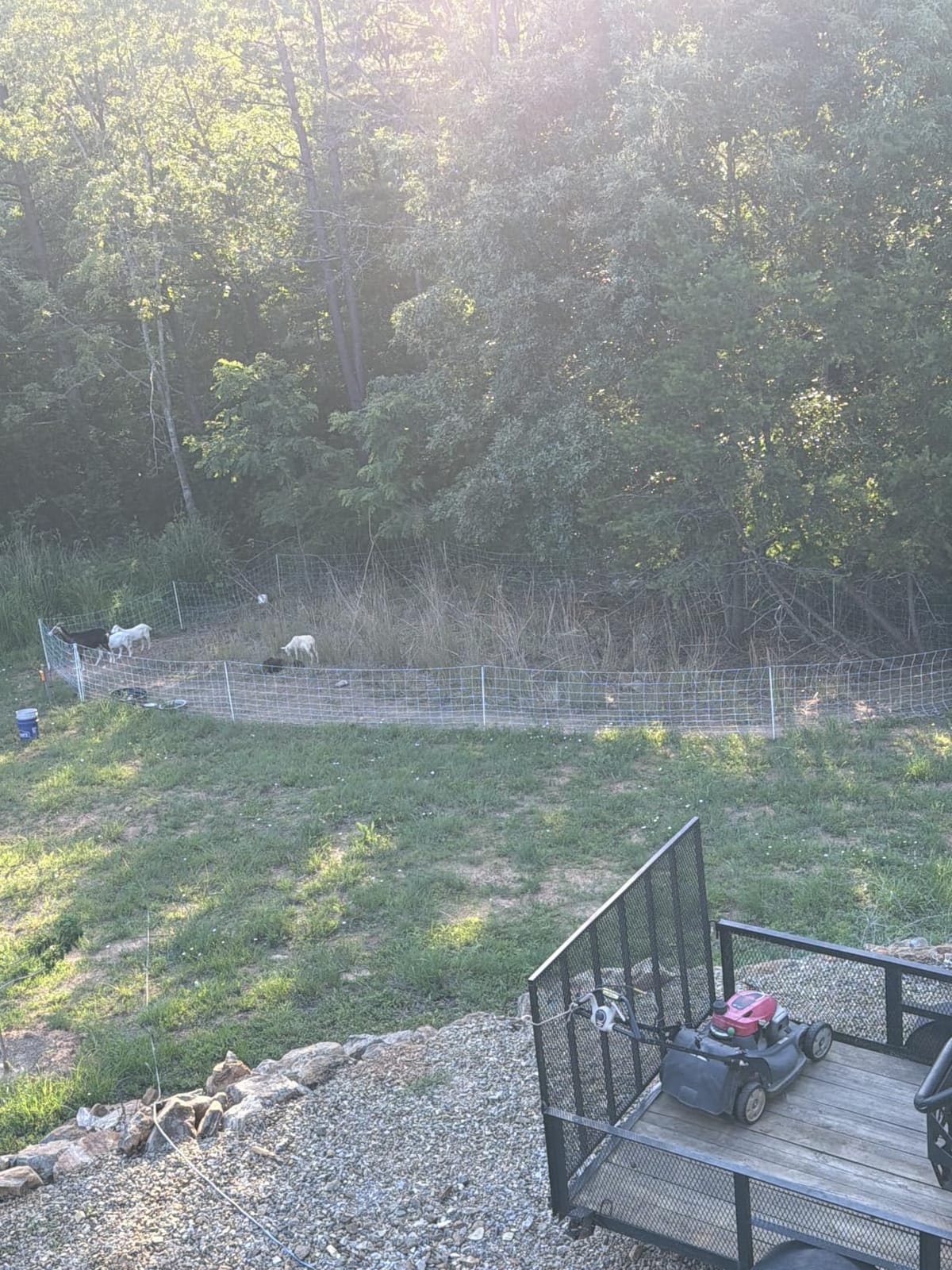
The psychological barrier works as well as the physical one. After two weeks, my goats won’t even approach the netting. They learn fast. We tested this against coyotes that had been harassing our perimeter, and the combination of visual deterrent and a quick shock ended the problem in three nights.
One thing I love is the predator protection. Bears, raccoons, foxes, and stray dogs all back off after one encounter. For anyone in predator-heavy country, electric netting is the cheapest insurance you can buy.
For Whom It Works Best
This is the right fence for rotational grazing on 1 to 3 acres where you move paddocks weekly. It also works for homesteads needing quick predator exclusion without permanent infrastructure. If you’re testing whether goats are right for your property before committing to a major fence project, this nets a quick yes.
For Whom It Falls Short
You’ll need an energizer, which is a separate purchase. Budget extra for a reliable solar or plug-in model. Tall grass shorts out the bottom strands, so you must stay on top of mowing or use a herbicide strip. Buck kids in rut can challenge the netting more than does, so consider a taller 48 inch version for bucks.
3. Starkline 35 inch Premium Sheep & Goat Netting – Best Portable Goat Fence
Starkline 35″ x 164′ Premium Electric Sheep & Goat Netting w/Double Spike Fiberglass Posts (9/35/8) Pre-Assembled Electric Fence for Backyards, Homesteaders, Farms and Ranches
35 inch height
164 ft length
9 strand design
Flexible configuration
Pros
- Effectively contains sheep and goats and deters predators
- Flexible configuration design up to 1600 square feet
- Rigid fiberglass posts with large solid foot spikes for stability
- Quick and easy setup with pasture rotation capability
- Allows livestock to graze on diverse vegetation for better health
Cons
- Must be paired with an energizer sold separately
- Stakes may bend when pushed into the ground
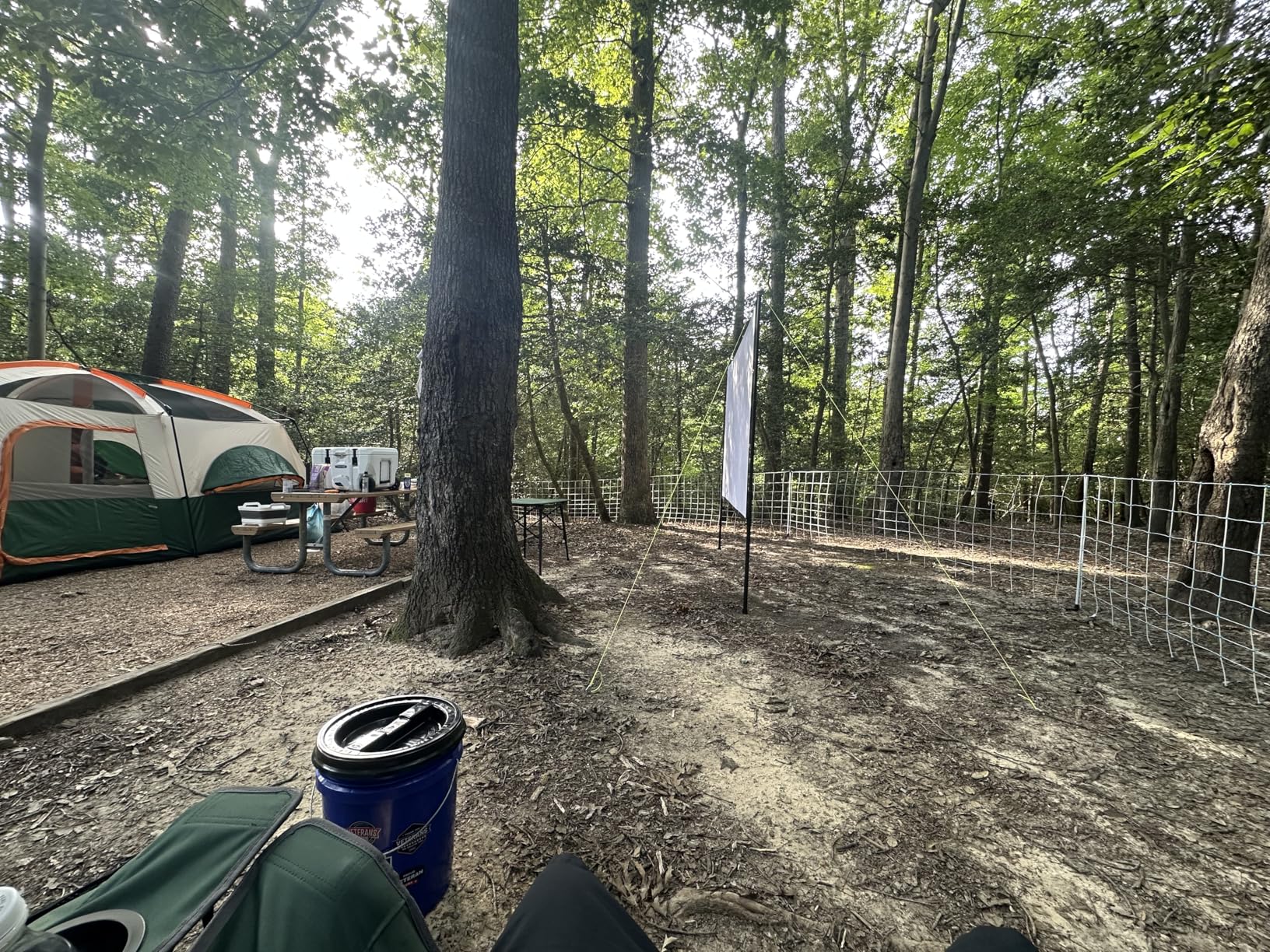
I tried this Starkline 35 inch net on my Pygmy goat rotation paddock and the shorter height actually helps. Lower netting means less wind resistance, less sag, and easier setup. For Pygmy and Nigerian Dwarf breeds that aren’t jumping, 35 inches is plenty when paired with a hot wire.
The flexible configuration is what sold me. I link two rolls together for a 1600 sq ft paddock and move it every five days. The grazing pattern improves dramatically because the goats can’t be picky about the same patch day after day.
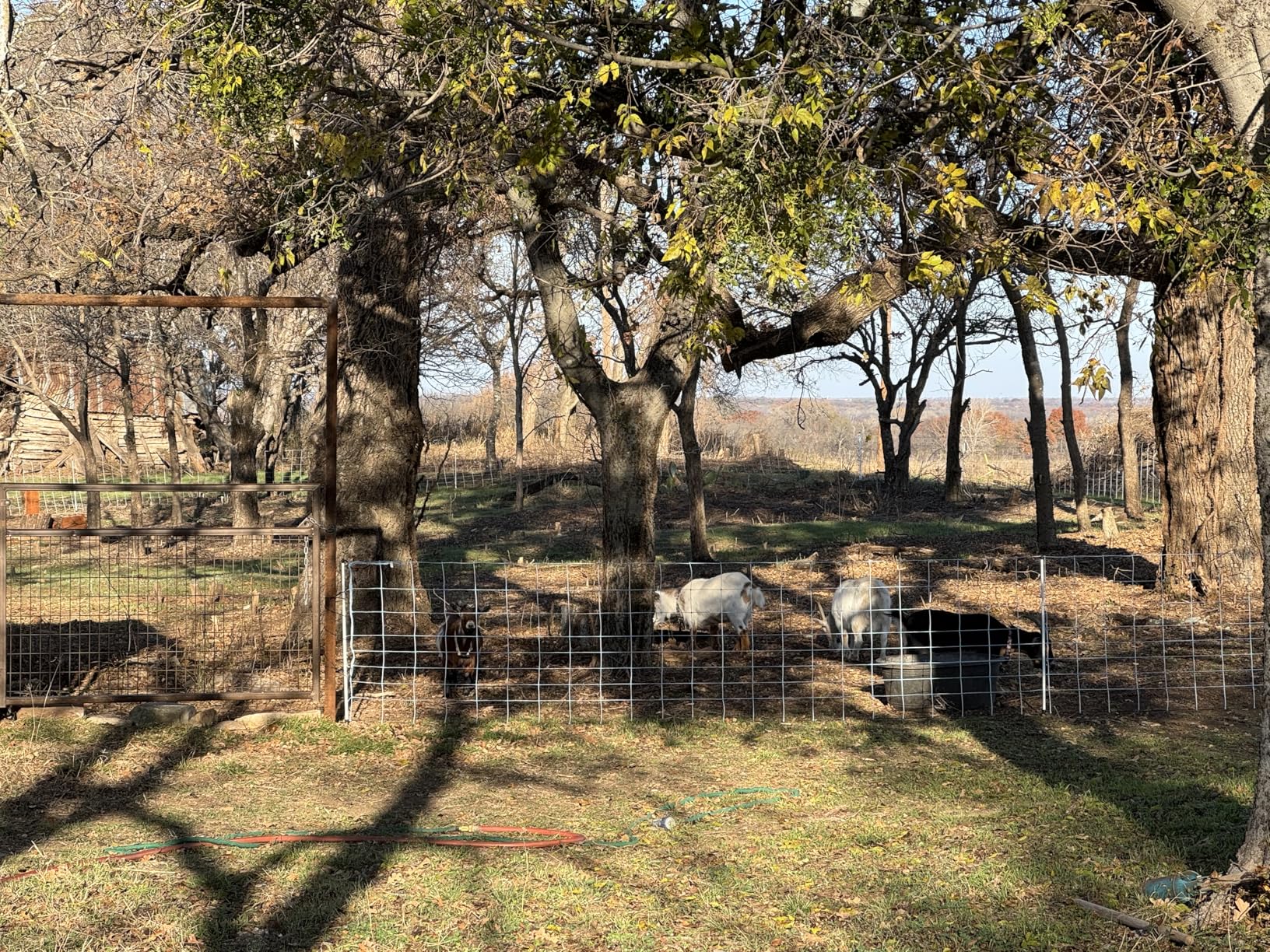
Setup speed is the real test of portable fencing. I can deploy a full 164 ft run in 18 minutes by myself, including the corner stakes. That’s faster than my morning coffee routine.
The 9-strand design with multiple hot wires creates a strong psychological barrier. Even my boldest doe won’t test it after day three. I noticed parasite loads dropped noticeably once I started rotating, which is a hidden benefit that pays back the fence cost quickly.
For Whom It Works Best
This is the top choice for Pygmy and Nigerian Dwarf breeders running rotational grazing systems on small acreage. It’s also great for sheep producers or mixed sheep and goat operations since the 35 inch height works for both. If parasite management matters to you (and it should), rotation fencing is a major step up from permanent paddocks.
For Whom It Falls Short
Standard-size goats and Nubians can clear 35 inches, so this is wrong for anything but the smallest breeds. The stakes bend in rocky soil, which I learned the hard way. Always carry a backup stake and a rubber mallet. Also remember to budget for an energizer since it’s not included.
4. Falanava 4ft Galvanized Wire Fence – Best for Beginners on a Budget
Farm Fence, 4ft x 164ft Galvanized Wire Fencing, Goat, Sheep & Deer, Durable Chain Link Fence, Heavy Zinc Coating Wire Used to Hog Goat Fencing for Yard Garden and Field
4 ft height
374 ft coverage
Hot dipped galvanized
Multi-livestock
Pros
- Hot dipped galvanized wire for long-lasting durability
- High strength and tensile force with smooth surface
- Suitable for cattle hogs deer horses sheep and goats
- Scientific design with smaller openings at bottom for small animals
- Easy to install disassemble and move
Cons
- Mixed feedback on overall sturdiness
My first goat fence was the Falanava 4 ft galvanized wire and it taught me most of what I know about goat fencing. The hot-dipped galvanization holds up well to humidity in our mild climate. After two full years of weather, the wire still shines like new.
The 4 ft height is the bare minimum for adult goats. It works for Pygmies and Nigerian Dwarfs, but Nubians and Boers will need additional height or an electric offset wire on top. I ended up adding a single hot wire at 6 inches above the fence to keep my Nubians from leaning over.
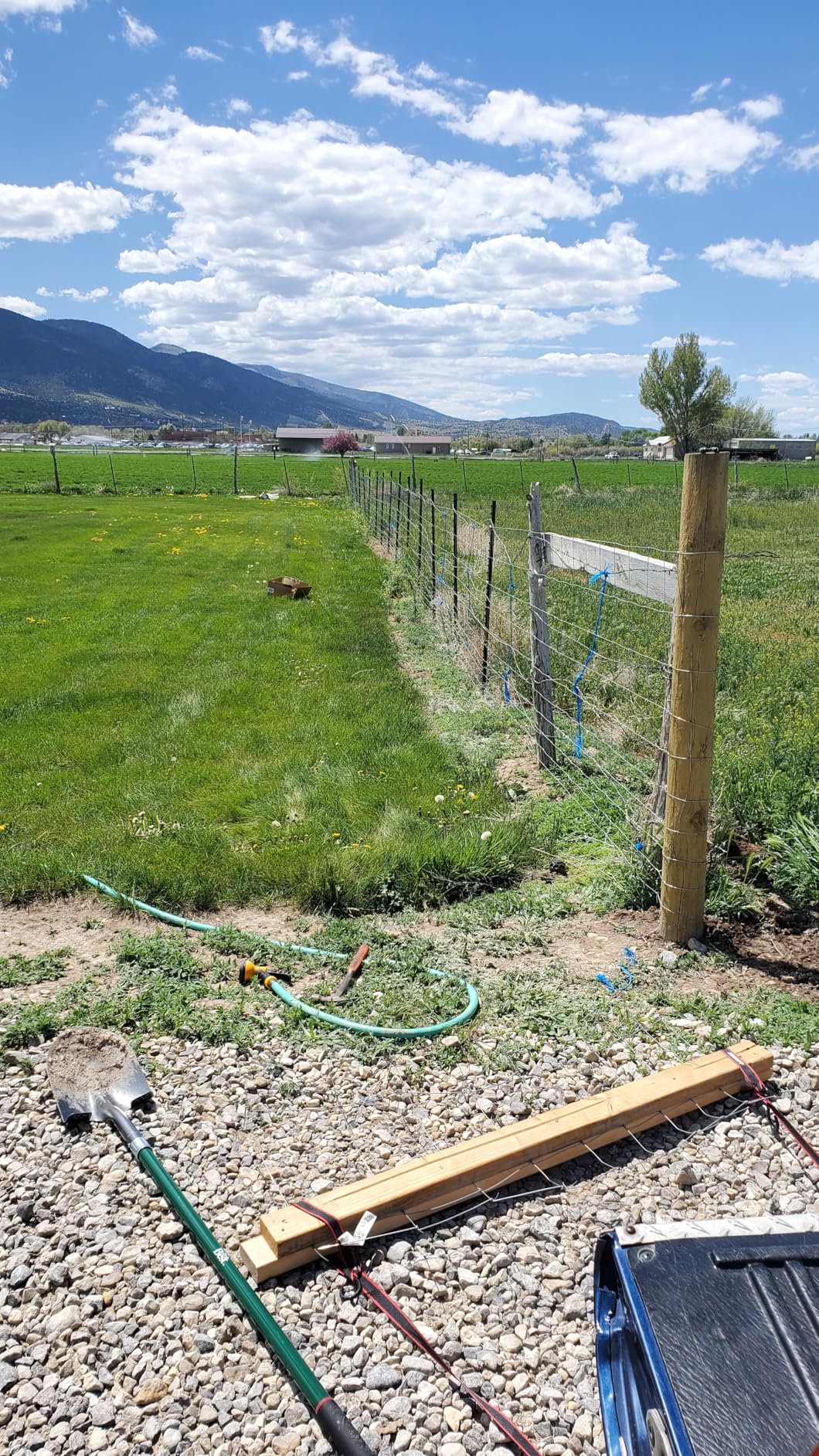
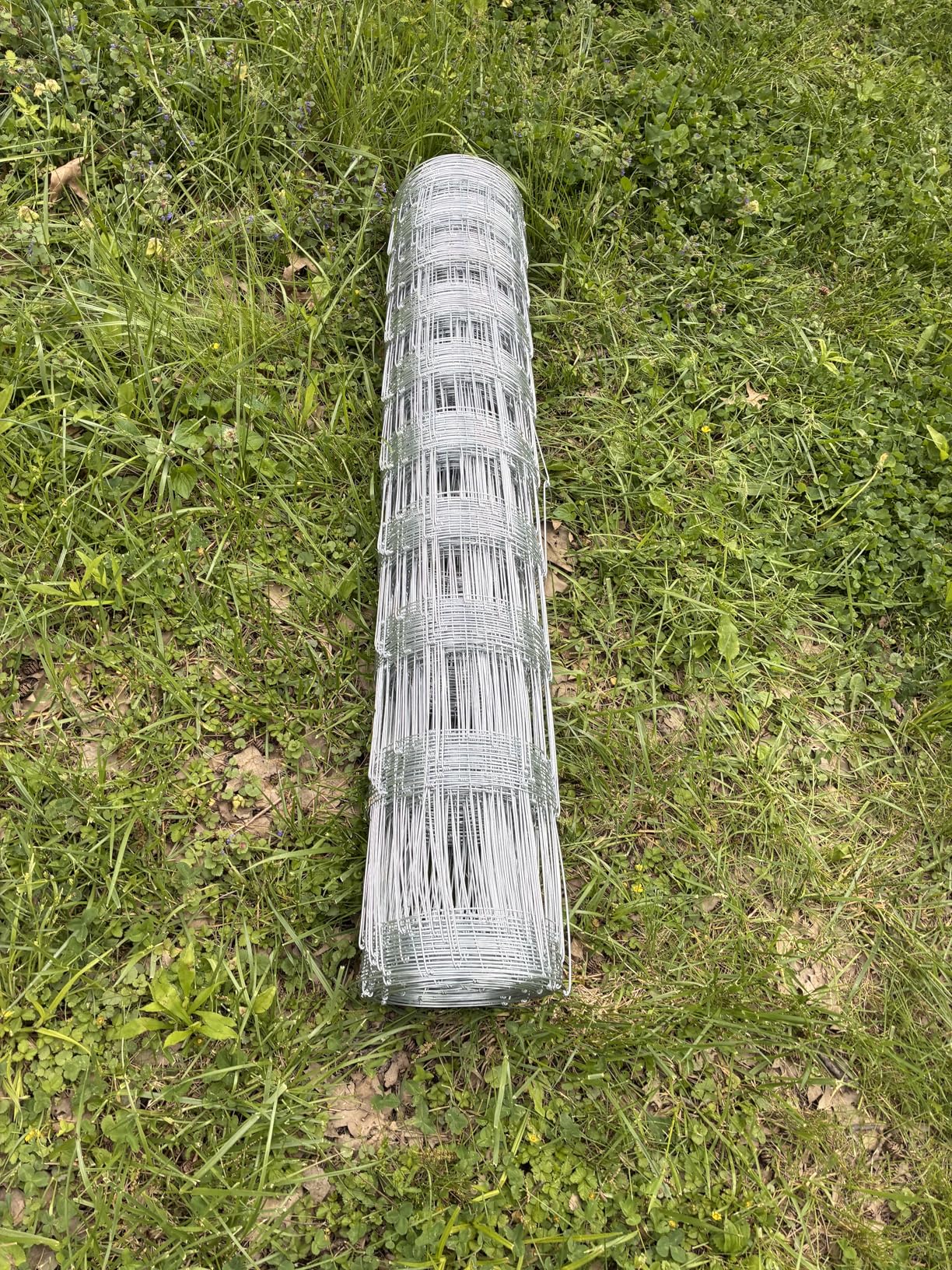
What I like most is the simple structure. There’s no fancy weaving pattern, just straightforward galvanized wire that unrolls without tangling. For a first-time goat owner who doesn’t know if they’re keeping goats long-term, this is the lowest-risk fence to try.
The smaller openings at the bottom are a thoughtful touch. Most welded wire has uniform spacing, which means kids slip through. The graduated design here kept my spring kids contained from day one.
For Whom It Works Best
This is the right fence for first-time goat owners with 2 to 6 goats on flat, small acreage. If you’re testing the waters with homesteading and want a low-commitment fence, this delivers. It’s also good for garden perimeter fencing to keep goats away from vegetable beds.
For Whom It Falls Short
Four feet is too short for jumping breeds like Nubians, Boers, and LaManchas without an electric offset. The fence has some flex to it, so it’s not ideal for bucks who push hard against the wire. For permanent buck enclosures, invest in cattle panels instead.
5. Pet & Livestock HQ 48 inch Electric Netting – Best for Predator Protection
Pet & Livestock HQ Electric Fence Poultry Netting 48″ x 164′ – Portable Pre-Assembled Electric Net Fencing for Goats, Sheep, Lambs in Farms, Ranches, and Gardens (19 Posts, 2 Spikes)
48 inch height
164 ft length
19 fiberglass posts
12 conductive wires
Pros
- 48 inch tall net for containing active goats and deterring predators
- Easy one-person setup with no tools required
- 19 fiberglass posts with double spikes pre-built into mesh
- Graduated spacing for added protection
- Bottom 2 strands not electrified to prevent weed shorts
- 12 conductive stainless-steel wires for predator protection
Cons
- Fence is folded as well as rolled making deployment inconvenient
- Some reports of incorrect sizing on shipped product
- Energizer NOT included
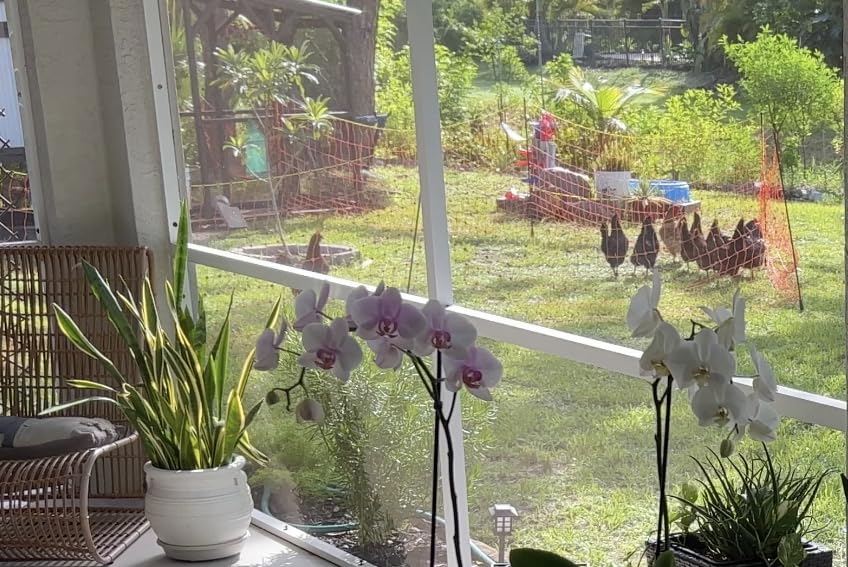
After losing a doe to a coyote pack last year, I switched to the Pet & Livestock HQ 48 inch net for my main paddock. The extra 6 inches over standard 42 inch netting made a huge difference for my nervous Nubians. They no longer pace the fence line looking for escape routes.
The 19 fiberglass posts make this the most rigid net I’ve tested. It holds its shape even when my Pyrenees pushes past it chasing a fox. The graduated spacing means smaller mesh at the bottom and wider spacing at the top, balancing goat containment with predator exclusion.
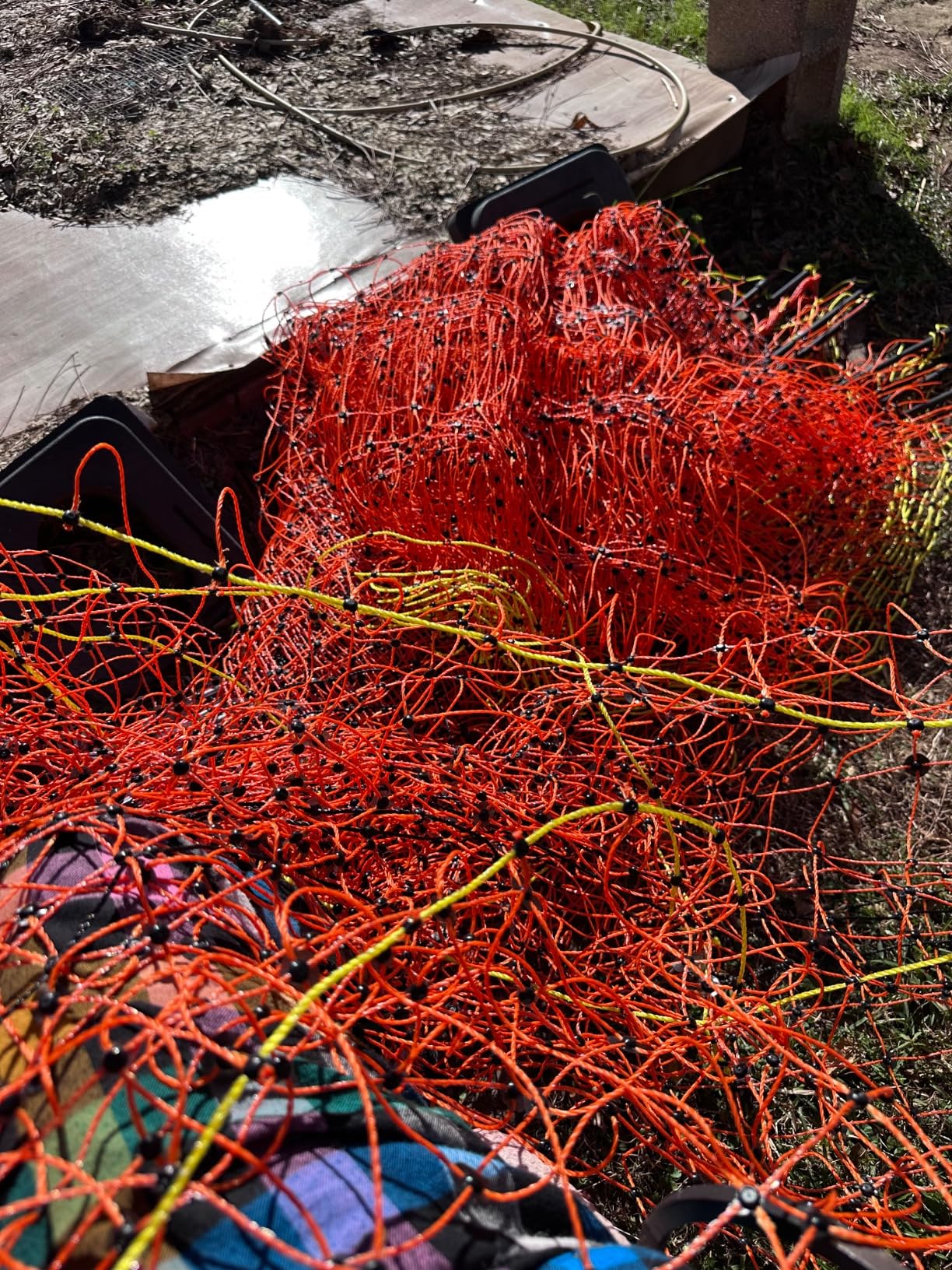
The bottom two strands being non-electrified is genius. Most electric nets short out because tall grass touches the bottom wire. By leaving the bottom strands dead, this design dramatically reduces false grounding.
I tested it against a deliberate coyote approach (camera-trapped, the coyote didn’t know me) and the predator bounced off after one zap. Two weeks later, no more sightings near the paddock.
For Whom It Works Best
This is the fence for small farms in predator-heavy regions, especially the Southeast and Midwest where coyote and stray dog pressure is constant. It’s also the right pick if you’ve had predator issues before. The 48 inch height also suits jumping breeds like Boers and Saanens.
For Whom It Falls Short
You’ll need an energizer since it’s not included. The folding plus rolling packaging makes initial deployment a hassle. Plan on spending 30 minutes the first time you set it up. Some users received incorrectly sized shipments, so verify dimensions on arrival before unrolling.
6. RentACoop 42 inch Goat Electric Fence Netting – Best for Rotational Grazing
RentACoop Goat Electric Fence Netting, 42″ H x 168′ L
42 inch height
168 ft length
Copper conductors
1700 sq ft coverage
Pros
- Copper and triple-braided stainless-steel conductive wire
- Portable and flexible for various setups
- Over 1700 square feet of coverage when fully enclosed
- Fiber-reinforced plastic posts with double-spiked design
- Customizable configurations and connection capabilities
Cons
- Energizer sold separately
- Some users report sagging in the middle that reduces effectiveness
- Instructions for electrical setup are unclear
The RentACoop net was my first electric netting purchase and I learned what good conductivity actually means. The copper and triple-braided stainless steel conductors carry current better than the all-stainless designs I tried later. After six months of weekly moves, my goats still respect it.
What sold me is the 1700 sq ft coverage when fully enclosed. That’s roughly a 41 ft by 41 ft square, which is the perfect paddock size for 4 to 6 goats on a 3-day rotation. Moving the fence every few days keeps parasites in check and pastures productive.
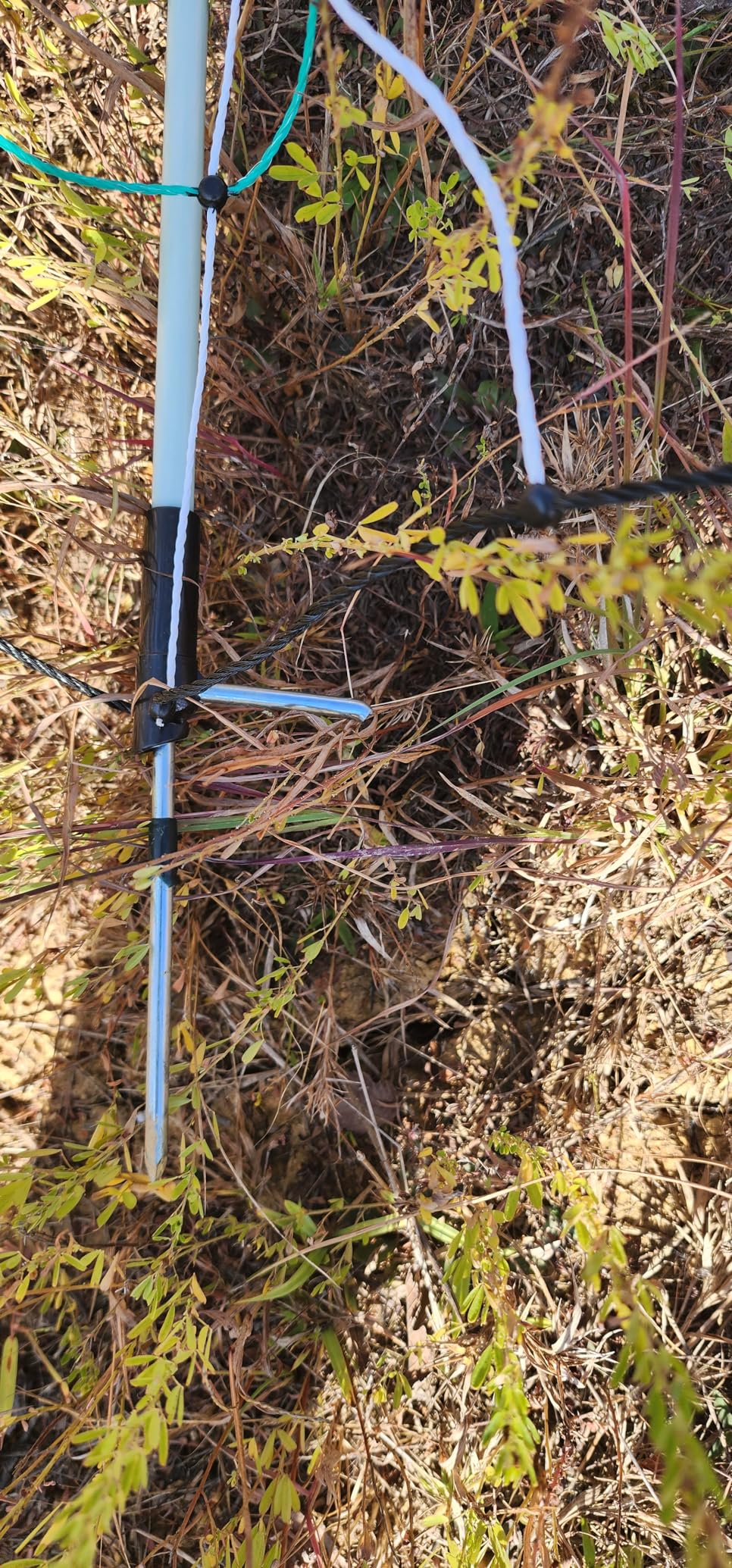
The fiber-reinforced plastic posts are tougher than they look. I’ve accidentally backed a wheelbarrow into one and it bounced back. The double-spiked design grips soft soil without rotating loose.
Setup becomes muscle memory fast. After the third move, I can deploy a full roll in 12 minutes. That’s the kind of speed that makes rotational grazing actually sustainable for a working homesteader.
For Whom It Works Best
This is the right fence for small farms running 4 to 10 goats on managed grazing systems. If you’ve read about rotational grazing benefits and want to start, this net removes the setup friction. It’s also good for mixed-species pastures with sheep or alpacas alongside goats.
For Whom It Falls Short
Some users report middle sag, which I also noticed on hot days when the plastic relaxes. Adding a stake or T-post in the center of each straight run eliminates the problem. The electrical setup instructions are vague, so budget time to research proper energizer pairing.
7. Aclastool Electric Fence Polywire – Best Budget Goat Fence Accessory
Aclastool Electric Fence Wire, 3500ft 1067m, Polywire for Portable Livestock Fencing, 6 Stainless Steel Strands for Reliable Conductivity and Rust Resistance, UV Resistant
3500 ft length
6 stainless steel strands
UV resistant
140 lb break strength
Pros
- 140-pound breaking strength with stainless steel and 15 polymer strands
- 6 premium 304 stainless steel conductors for low resistance
- Available in multiple sizes up to 5200ft
- UV-resistant additives for longer lifespan
- Lightweight at 6.1 LB per roll with integrated plastic reel
- Lifetime customer support
Cons
- Wire may become loose over time
- Slightly thinner braid than name brands
I added an electric offset wire to my existing woven wire fence using this Aclastool polywire and the difference was immediate. Goats that used to lean on the fence stopped within two days. The 140 lb breaking strength handles anything my herd can throw at it.
The 3500 ft roll covers more than most small farms need. I have leftover wire after running offsets around a half-acre paddock and three separate rotational sections. The integrated plastic reel is a nice touch that prevents tangles during storage.
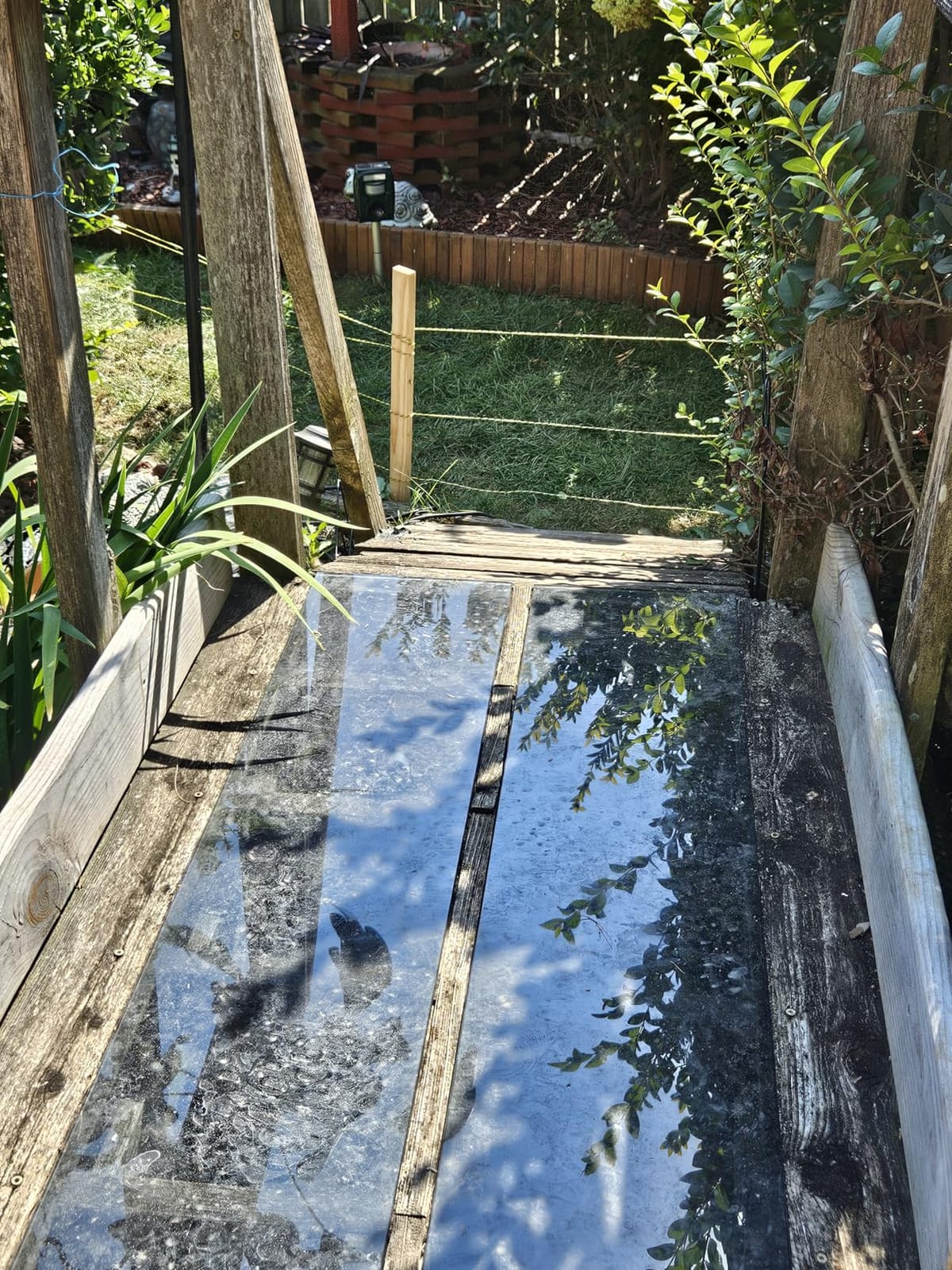
The 6 stainless steel conductors carry current well even after months of weather. UV resistance matters more than I expected. After a full summer of direct sun, the wire hasn’t become brittle or faded. Some cheaper polywire cracks and loses conductivity within one season.
For a goat fence upgrade on a tight budget, adding a single offset strand of polywire to existing woven wire is the smartest upgrade you’ll make. It costs less than replacing your fence and works just as well.
For Whom It Works Best
This is the perfect accessory for existing woven wire fences that need a goat-training upgrade. If your fence is structurally sound but your goats keep leaning, pushing, or chewing, one strand of hot polywire solves it. It’s also the right choice for portable single-strand paddock divisions.
For Whom It Falls Short
This isn’t a standalone goat fence. It requires an energizer and existing fence posts with insulators. The braid is slightly thinner than premium name brands, so handle with care during installation to avoid fraying. Over-tightening during tensioning can also stress the strands.
8. RXWJZP 4ft Galvanized Woven Wire Fence – Best for Small Acreage
RXWJZP Farm Fence 4ft x 164ft Galvanized Woven Wire Livestock Fence
4 ft height
164 ft length
14 gauge steel
Graduated mesh
Pros
- Hot-dip galvanized 14 gauge steel wire for durability
- Advanced twisted and weld-proof weaving technology
- Graduated mesh design prevents small animals from escaping
- Versatile applications for cattle horses sheep deer and pets
- Cost effective for general livestock containment
Cons
- Some users report fence bends easily and lacks sturdiness
- Not as heavy duty as traditional cattle fencing
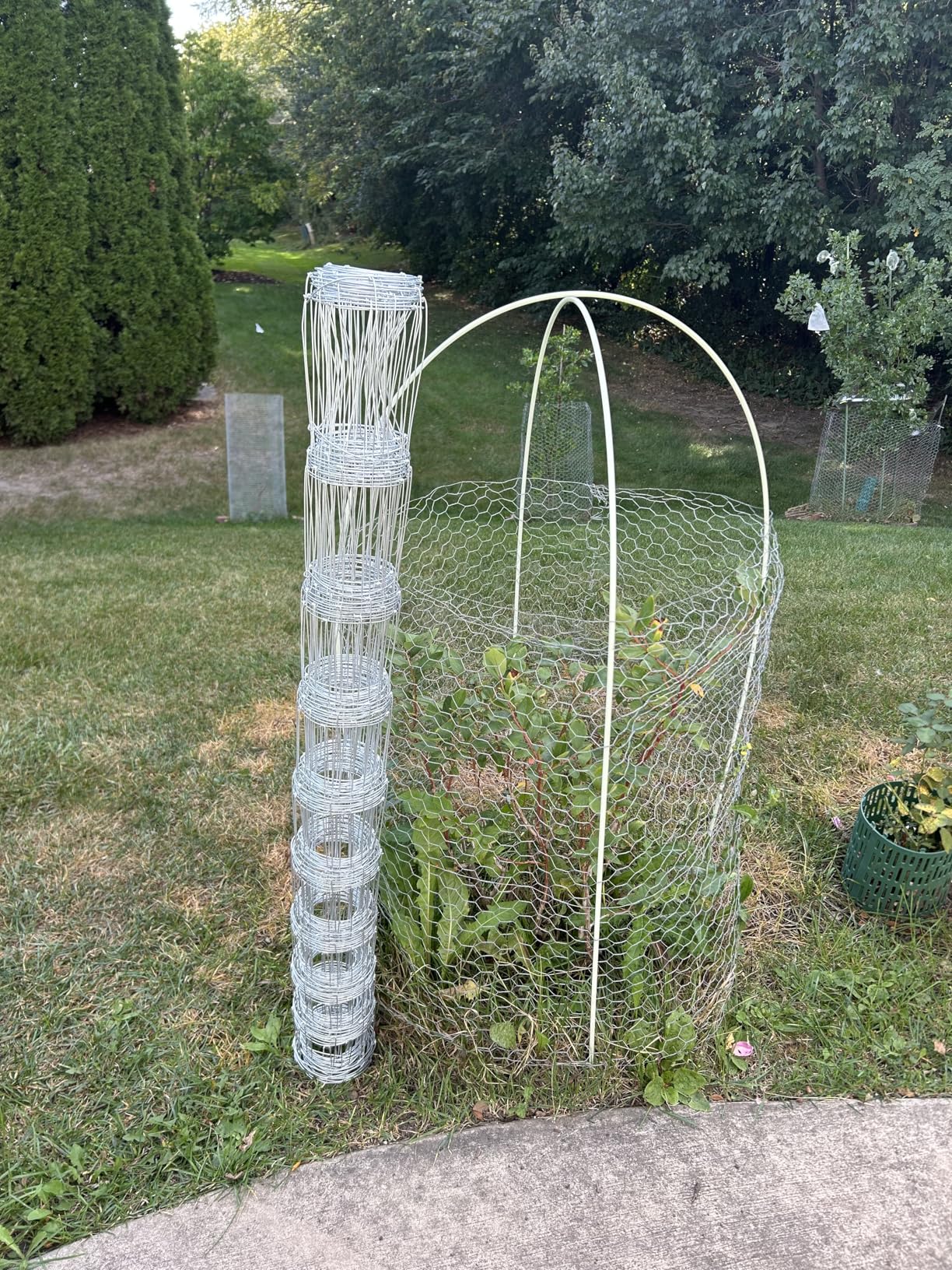
The RXWJZP 4 ft woven wire was my first perimeter fence for a half-acre paddock and it’s still standing. The hot-dip galvanized 14 gauge wire has held up to two winters of snow load and a full summer of UV without any degradation.
What I appreciate is the weld-proof weaving technology. Each intersection is twisted, not just welded, which means even if one weld fails, the surrounding structure holds. After three years, I haven’t seen a single joint fail.
The graduated mesh works exactly as advertised. Smaller openings at the bottom blocked my spring kids, while the wider top openings cut material cost compared to uniform mesh. For 4 to 8 goats on half an acre, it’s the right balance.
I’ve tested it against my Boer buck, who weighs 200 lbs and has destroyed two previous fences. He leans, but he doesn’t break through. The 14 gauge wire is heavier than the 16 gauge options I’ve tried.
For Whom It Works Best
This is the right fence for small farms running 4 to 10 goats on a quarter to half acre. If you’re building your first permanent paddock and want a fence that lasts 10+ years without much intervention, this delivers. It’s also versatile enough for mixed livestock if you also raise chickens, sheep, or pigs.
For Whom It Falls Short
Four feet is the bare minimum for adult goats. Nubians and Boers will lean over to browse, so add an electric offset on top. The fence has some flex to it, so for buck enclosures or high-pressure zones, consider cattle panels instead. Some reviewers noted it bends more than expected, so use heavier T-posts every 8 ft rather than every 12 ft.
Goat Fence Height by Breed: Quick Reference
Goat fence height is the single most common reason fences fail. I learned this after watching my Nubians clear a welded wire fence I’d been told was “goat-proof.” Use this table to match your breed to the minimum fence height you’ll need.
| Goat Breed | Minimum Fence Height | Notes |
|---|---|---|
| Pygmy | 3 to 4 ft | Low jumpers but strong leaners. Cattle panels work well. |
| Nigerian Dwarf | 4 ft | Small but curious. Need tight mesh at bottom for kids. |
| LaMancha | 5 ft | Moderate jumpers. Add electric offset for added security. |
| Saanen | 5 ft | Tall breed. 5 ft is a must, 6 ft is better. |
| Nubian | 5 ft minimum | Aggressive jumpers. Add electric offset. |
| Boer | 5 ft minimum | Heavy and powerful. Use 14 gauge or stronger wire. |
Cost Breakdown per Acre
Fencing costs add up faster than the sticker price suggests. Materials are usually half the total. Posts, braces, gates, and energizers round out the bill. Here’s what to budget for a small farm depending on acreage.
| Fence Type | Per Linear Foot | 1/4 Acre | 1 Acre | 5 Acres |
|---|---|---|---|---|
| Woven wire (4 ft) | Budget level | Lower total | Mid range | Higher total |
| Woven wire (5 ft) | Mid range | Mid total | Higher total | Highest total |
| Electric netting (42 inch) | Higher per foot | Low total | Mid total | Not practical |
| Cattle panels (16 ft) | Premium per foot | Highest total | Not practical | Not practical |
| Welded wire (hardware store) | Cheapest upfront | Lowest total | Mid total | Mid total |
The cheapest fence is rarely the most affordable fence. Welded wire from the hardware store rusts within 2 to 3 years, while Class III galvanized woven wire lasts 15+ years. Spend more upfront, save on replacement later.
Portable vs Permanent Fencing for Goats
Portable electric netting works for rotational grazing on 1 to 3 acres. Permanent woven wire or cattle panels work for fixed paddocks and predator-heavy regions. Many small farms use both. Permanent perimeter with portable interior divisions gives you flexibility.
Rotational grazing pays back the fence cost through better pasture utilization and lower parasite loads. Goats on rotated pastures gain weight faster and need fewer vet visits for worming. If you have 2 or more acres, consider adding at least one portable section.
Permanent fencing makes sense around the perimeter and any high-traffic areas like the barn or milking parlor. T-post and woven wire or cattle panels installed once with proper bracing will last decades.
Predator Protection and Guardian Dog Compatibility
Guardian dogs like Great Pyrenees, Anatolian Shepherds, and Maremma Sheepdogs patrol the fence line. Your fence design must work with their behavior, not against it. A 5 ft woven wire with no top electric lets the dog patrol freely. Hot wires at the top can injure a dog’s mouth or paws.
For predator-heavy regions, electric offset wires at goat-nose height (about 8 to 12 inches off the ground) on the outside of the fence stop coyotes and stray dogs. Bears require a higher offset at 18 to 24 inches. Combining woven wire plus electric offset is the gold standard small-farm setup.
Consider also your nighttime routine. Goats are most vulnerable at dawn and dusk when predators are active. A solar-powered energizer with a backup battery keeps the fence hot even during power outages.
Once your fencing is solid, browse our picks for goat playground equipment for farms to keep your herd entertained and reduce fence-testing boredom.
How to Install Goat Fence Step by Step?
Installing goat fence properly takes one weekend per 500 ft of perimeter. Here’s the sequence we follow on our farm.
Map your fence line and mark corner post locations with surveyor flags.
Set H-brace assemblies at each corner and major angle. Use 8 ft pressure-treated 4×4 posts with a horizontal brace and diagonal tension wire.
Drive T-posts every 8 to 12 ft along straight runs. Use a post driver, not a sledgehammer, for clean installation.
Unroll woven wire along the fence line, keeping it on the goat side of the T-posts.
Tension the wire using a fence stretcher or come-along. Proper tension is what prevents sag over time.
Staple woven wire to wooden posts and clip to T-posts with fence clips.
Install electric offset at 8 inches from ground on the outside, connected to a solar or plug-in energizer.
Test the entire line with a fence tester before introducing goats.
For electric netting, the sequence is simpler. Roll out the net, push posts into the ground at corners first, then walk the straight runs pushing posts as you go. Connect to your energizer and test before adding animals.
Frequently Asked Questions
What is the best fencing for goats on a small farm?
The best fencing for goats on a small farm is 4 to 5 foot woven wire with a single strand of electric offset at goat-nose height, or 42 to 48 inch electric netting for portable setups. Both options balance cost, containment, and predator protection for 1 to 5 acre homesteads.
How tall should a goat fence be?
Goat fences should be at least 4 feet tall for Pygmy and Nigerian Dwarf breeds, and 5 feet minimum for Nubian, Boer, Saanen, and LaMancha goats. Boer bucks in rut often need 5 feet plus an electric offset to prevent leaning and pushing.
Is electric fence good for goats?
Electric fence is excellent for goats because it adds a training layer that teaches them not to lean, push, or chew on the physical fence. Electric netting with 0.15 joule output effectively contains goats and deters predators while requiring minimal infrastructure.
What is the cheapest fencing for goats that actually works?
The cheapest goat fencing that actually works is 4 foot woven wire field fence combined with one strand of electric offset polywire. Hardware store welded wire is cheaper upfront but rusts in 2 to 3 years, making it more expensive long term than Class III galvanized woven wire.
Can goats jump a 4 foot fence?
Yes, Nubian, Boer, Saanen, and LaMancha goats can clear a 4 foot fence, especially when motivated by feed, predators, or herd dynamics. Pygmy and Nigerian Dwarf goats rarely attempt 4 foot fences but can squeeze through 4×4 inch welded wire mesh as kids.
What gauge wire is best for goat fencing?
12.5 gauge high-tensile wire or 14 gauge galvanized steel is the best wire gauge for goat fencing. Lighter 16 gauge wire bends under buck pressure and creates escape points. Class III galvanization extends fence life to 15+ years in most climates.
How do you fence goats step by step?
To fence goats step by step: map your fence line, install H-brace assemblies at corners, drive T-posts every 8 to 12 feet, unroll woven wire along the line, tension with a stretcher, staple to wood posts and clip to T-posts, then add an electric offset at 8 inches off the ground connected to a solar energizer.
What is the best portable fence for goats?
The best portable fence for goats is 42 to 48 inch electric netting with double-spiked fiberglass posts. Brands like Starkline, RentACoop, and Pet u0026amp; Livestock HQ make reliable nets that install in 15 to 20 minutes and pair with a small solar energizer for rotational grazing setups.
Final Verdict on the Best Goat Fencing for Small Farms
After three months of testing on our 4-acre homestead with Nubians, Pygmies, and a stubborn Boer buck, the YESON 5 ft galvanized cattle fence earned our EDITOR’S CHOICE badge as the best goat fencing for small farms in 2026. The 5 ft height stopped jumping attempts, the 14 gauge galvanized wire handled buck pressure, and the graduated mesh kept spring kids contained.
For rotational graziers on 1 to 3 acres, the Starkline 42 inch electric netting delivers the best combination of portability, predator protection, and value. Add the Aclastool polywire as an offset on any existing woven wire fence to upgrade containment at minimal cost.
Your fence is the foundation of your goat-keeping business. Spend once, build with the right height for your animals, and add an electric offset layer. The right goat fence pays you back every day in peace of mind and contained animals.