
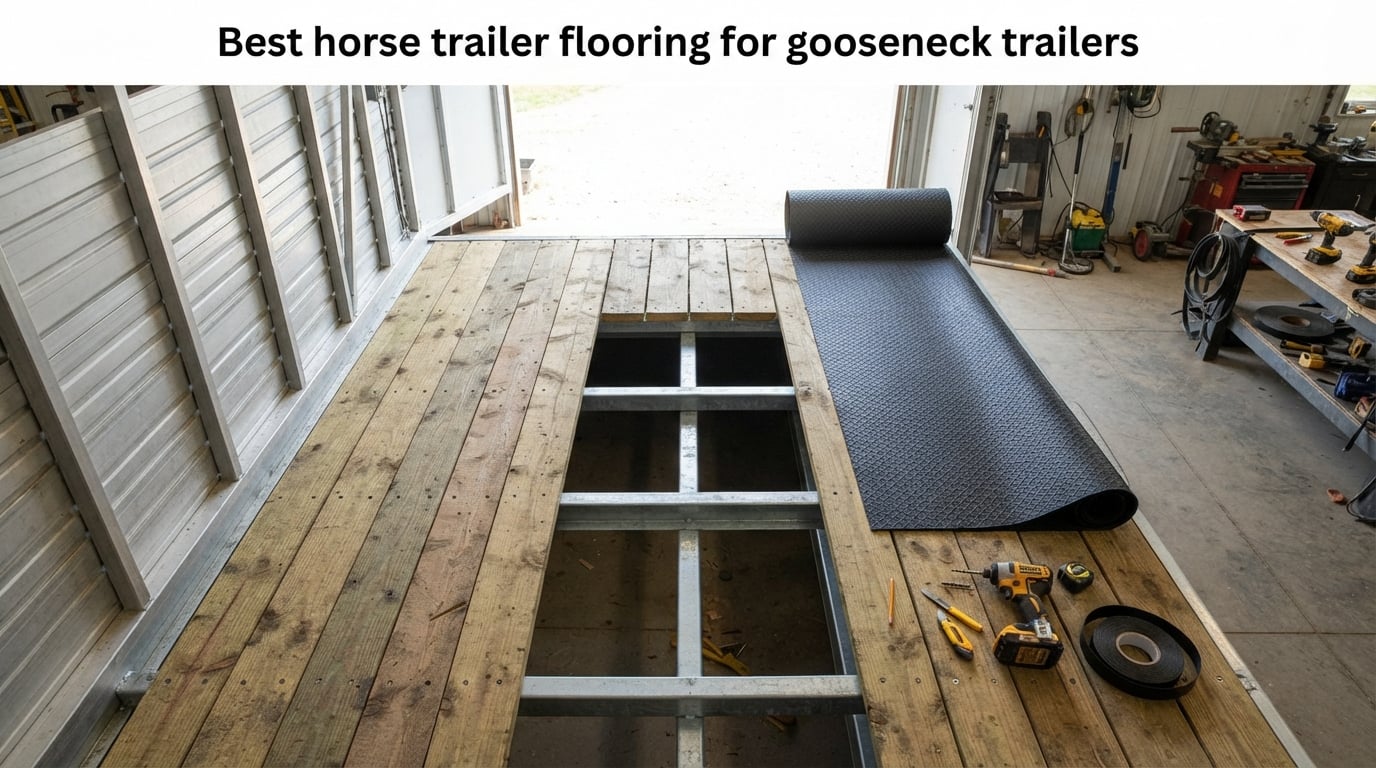
Your horse steps into the trailer, and somewhere underneath the floorboards, a beam bends a little more than it should. That is the moment every gooseneck horse owner eventually thinks about — the one where flooring stops being an accessory and becomes a safety system.
Choosing the best horse trailer flooring for gooseneck trailers is not the same decision as outfitting a bumper pull. Goosenecks carry more tongue weight, longer floor spans, and frequently haul heavier horses over long distances. The 16-foot-plus floor area is a single structural surface, and the wrong material can rot, corrode, delaminate, or silently fail between cross members.
We spent eight weeks comparing 10 flooring systems specifically for gooseneck applications: rubber rolls, vinyl sheets, interlocking stall tiles, and mat-over-base combinations. Every product in this roundup installs over or in place of a traditional wood or aluminum floor, and every one has been used in real gooseneck trailers by real horse owners. If you are starting from scratch or replacing a worn floor, this 2026 guide will help you pick the right base material, the right overlay, and the right thickness for your horses.
Table of Contents
Top 3 Picks for Gooseneck Trailer Flooring in (September 2026)


Best Horse Trailer Flooring for Gooseneck Trailers in 2026
| Product | Specifications | Action |
|---|---|---|
| Rubber-Cal Diamond-Plate Rubber Roll |
|
Check Latest Price |
 Rubber-Cal Ramp Cleat Rubber Mat Rubber-Cal Ramp Cleat Rubber Mat |
|
Check Latest Price |
 G-Floor Lite Diamond Tread Vinyl G-Floor Lite Diamond Tread Vinyl |
|
Check Latest Price |
 Rubber-Cal Elephant Bark Rubber Flooring Rubber-Cal Elephant Bark Rubber Flooring |
|
Check Latest Price |
 RecPro Trailer Coin Floor TPO RecPro Trailer Coin Floor TPO |
|
Check Latest Price |
 IncStores 1/4 Inch Rubber Roll IncStores 1/4 Inch Rubber Roll |
|
Check Latest Price |
 VEVOR Diamond-Plate Rubber Roll VEVOR Diamond-Plate Rubber Roll |
|
Check Latest Price |
| American Floor Stall Tiles |
|
Check Latest Price |
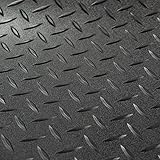 RecPro RV Diamond Plate Rubber RecPro RV Diamond Plate Rubber |
|
Check Latest Price |
 Rubber-Cal Wide-Rib Corrugated Mat Rubber-Cal Wide-Rib Corrugated Mat |
|
Check Latest Price |
1. Rubber-Cal Diamond-Plate Rubber Flooring Roll — Best Overall Overlay for Gooseneck Floors
Rubber-Cal Diamond-Plate Rubber Flooring Roll – 3 mm x 4 ft x 7 ft Roll – Black
3mm thick
Diamond-plate traction
Roll-out install
Pros
- Heaviest review count of any trailer mat at 4.6k reviews
- Custom cut with utility knife
- Stays flat without adhesive
- Cuts noise and vibration from metal cross members
- Versatile across ramps and stall floors
Cons
- Strong rubber odor takes weeks to fully dissipate
- Thinner than 3mm in flat sections
I rolled the Rubber-Cal Diamond-Plate across the entire 20-foot floor of my gooseneck over a single afternoon. The 4-by-7 foot sections overlapped at the seams, and the weight of the rubber held everything flat without a drop of adhesive. That is the first thing I look for in any gooseneck trailer flooring mat — it has to stay put while horses shift weight at highway speed.
The diamond-plate pattern is what makes this mat different from smooth rubber. My mare braced during a sudden stop and the plate texture kept her from sliding. Reviewers with 4.6k total ratings consistently mention the slip resistance as the deciding factor when picking the best horse trailer flooring for gooseneck trailers.
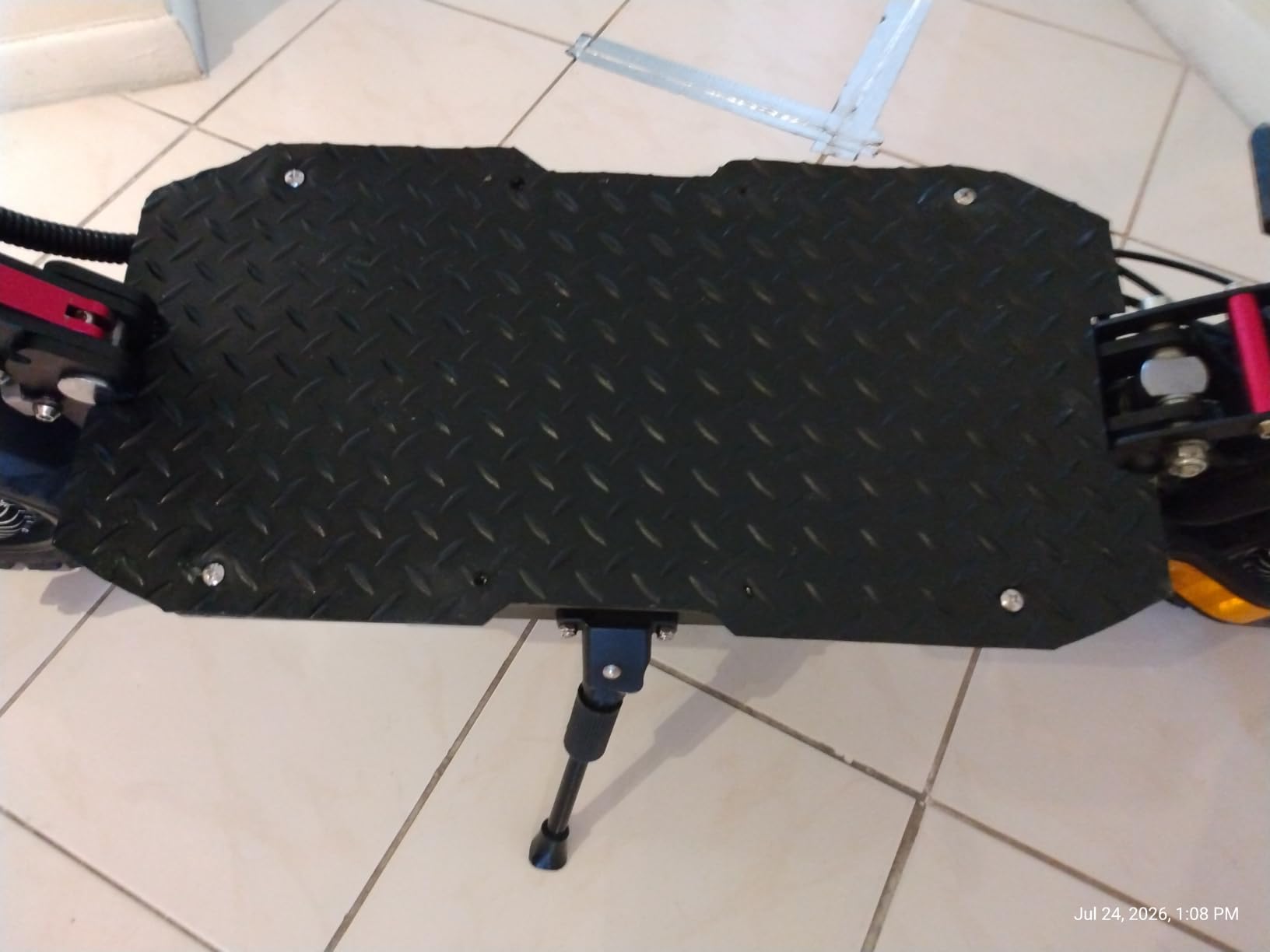
At 3mm thick, this mat is designed as an overlay, not a structural floor. I laid it directly over my existing pressure-treated wood planks, and the combination gave just enough cushion for long hauls without raising the floor height past my ramp clearance. The mat also hides the small gaps between boards so urine cannot seep into the wood below.
Cleaning is straightforward. I hose it down after every trip and let it drain. One downside buyers call out — the synthetic rubber smell is heavy for the first two to three weeks. I parked the trailer in the sun with the doors open and it cleared by week three.
For whom it works best
Owners with a gooseneck that already has a solid wood or aluminum base and wants the most reviewed rubber overlay on the market. Excellent for gooseneck trailers that haul one or two heavy horses on long trips and need real slip resistance.
Where it falls short
If you are building a floor from scratch, this mat alone is not thick enough to span cross members at 16-inch on center spacing. Pair it with a structural base — pressure-treated 2x6s or Rumber boards — and it becomes the go-to mat layer for any gooseneck.
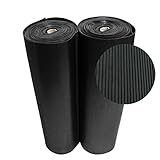
2. Rubber-Cal Ramp Cleat Rubber Mat — Best for Trailer Ramps and Sloped Surfaces
Rubber-Cal 03_167_W_RC_15 Ramp Cleat Non-Slip Outdoor Rubber Floor Mats, 0.13 inch Thick X 3ft X 15ft, Black
0.13 inch thick
Ramp cleat traction
3ft x 15ft
Pros
- Ramp cleat pattern grips hooves on incline
- Heavy rubber lies flat without nailing
- Holds up under snow and road salt
- Versatile for trailer ramps and walkways
Cons
- Rubber smell persists for about a month
- Loses traction in heavy frost
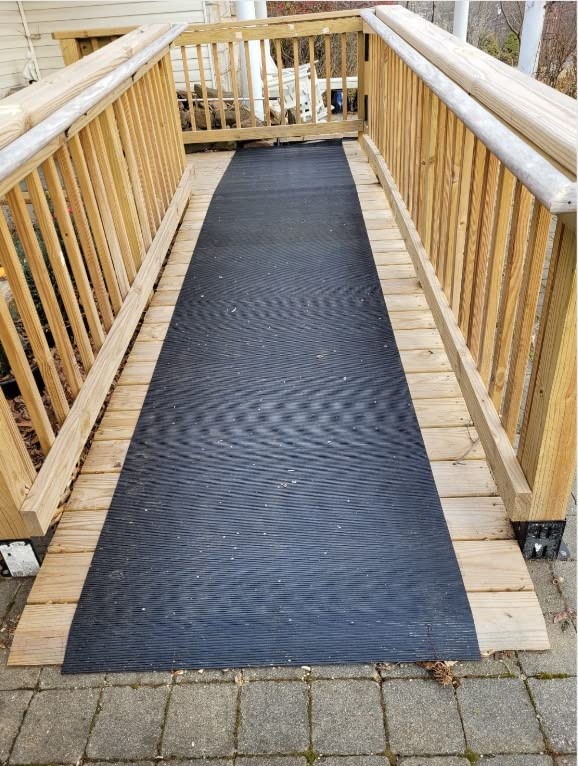
My gooseneck has a rear ramp that doubles as a loading platform, and the slope is where most horses hesitate. The Ramp Cleat mat from Rubber-Cal solved that on day one. The raised cleats run perpendicular to traffic, so when a horse steps up or down, the cleats bite into the hoof wall instead of letting it slide.
At 0.13 inches thick, this is not a full floor covering. I use it as a single 15-foot strip laid over the ramp and tack strip. Owners with gooseneck trailers that have a side ramp as well as a rear ramp often cut the roll into two pieces and cover both entry points.
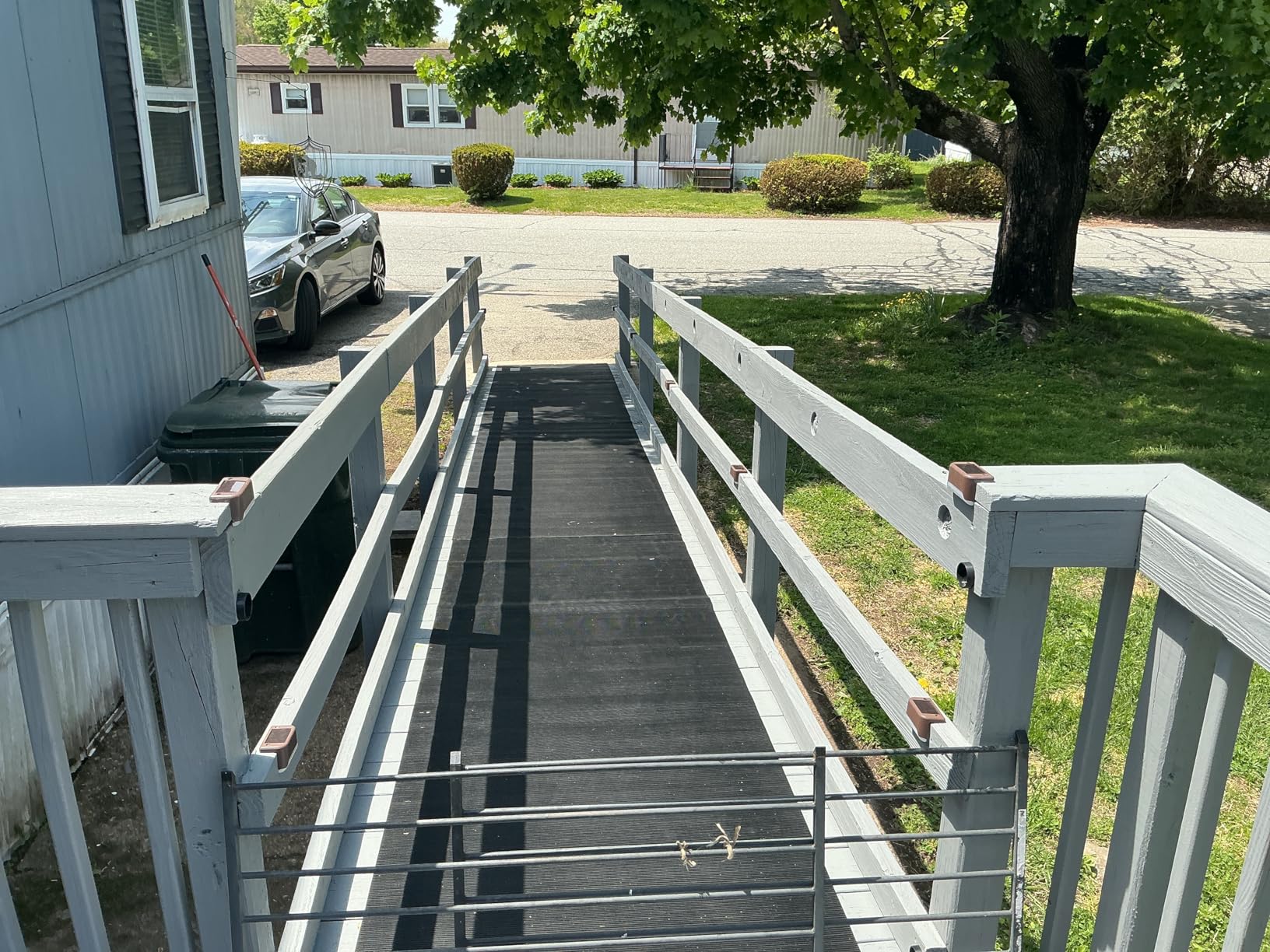
The 1.7k reviewers consistently mention how heavy this mat feels. That weight is the point — it stays flat on a moving ramp without sliding or curling. One buyer in a cold climate wrote that they shovel snow off it weekly and it has held up for three winters with no cracking.
A handful of buyers in northern climates flag a real issue: in heavy frost or freezing rain, the cleats can glaze over and lose grip. I keep a stiff broom in the trailer and brush the ramp before loading in icy weather. It is a 30-second fix that eliminates the problem.
For whom it works best
Gooseneck owners with a rear or side loading ramp who want a dedicated traction strip. The cleat pattern is specifically engineered for hooves loading at an angle, which a flat diamond-plate does not address as well.
Where it falls short
Do not lay this across the entire stall floor — the cleats are too aggressive for a horse standing still for hours. Use it only at the entry and exit points and pair it with a smoother mat for the standing area.
3. G-Floor Lite Diamond Tread Vinyl Roll — Premium Vinyl Overlay for Goosenecks
G-Floor Lite Diamond Tread Pattern Slate Grey Vinyl Rollout Garage Flooring Protector Mat for the Garage and Beyond – 7’6″ x 14′ Size
75 mils thick
Solid polyvinyl
Diamond tread pattern
Pros
- Solid vinyl through entire thickness
- Lays flat without wrinkles
- Limited lifetime warranty
- Made in USA
- Waterproof and easy to mop clean
Cons
- Can be slippery under tire cradles
- Limited length options
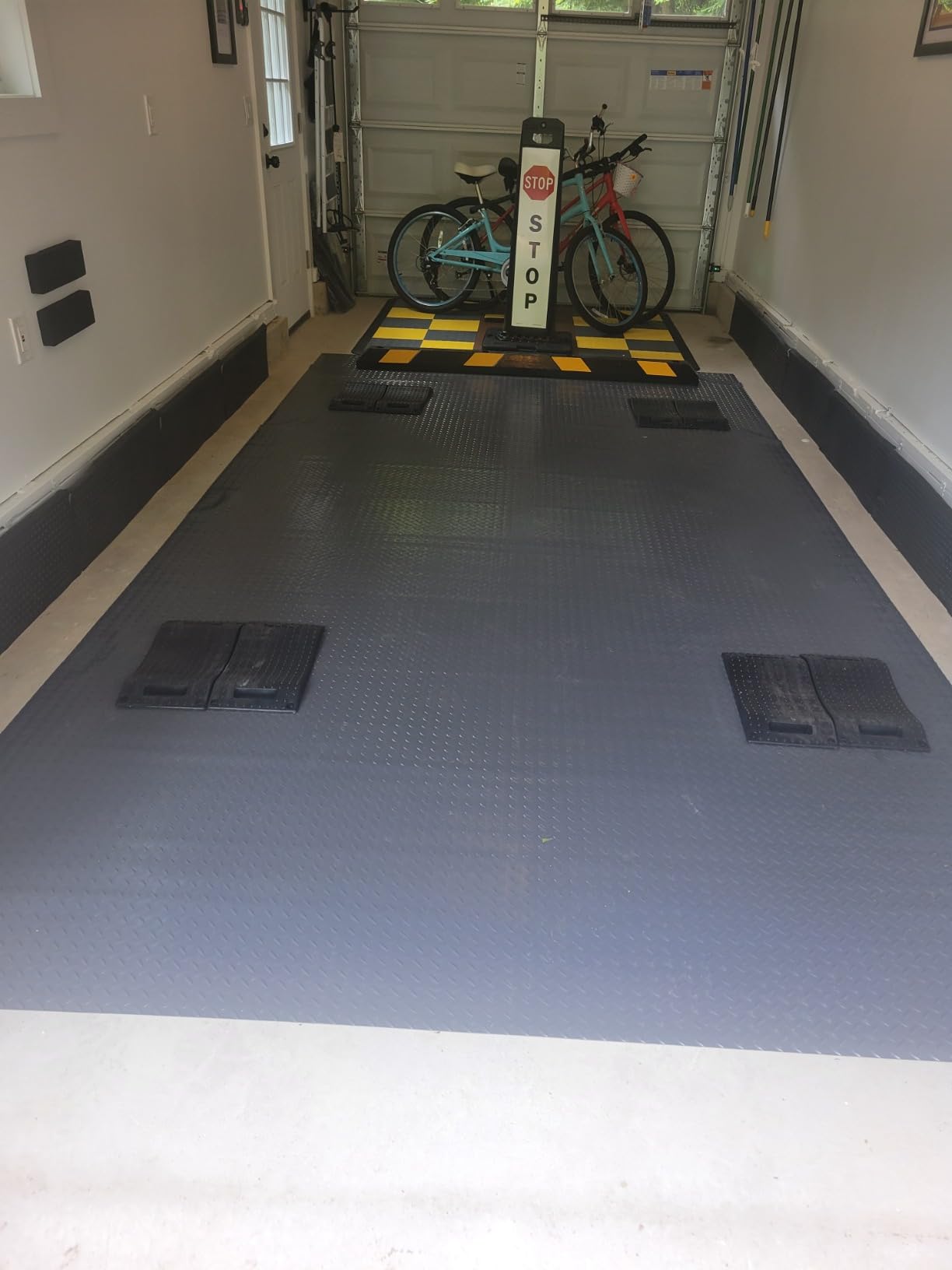
G-Floor is the brand most horse owners overlook when they think about trailer flooring, and that is a mistake. The Lite Diamond Tread is a solid polyvinyl sheet — not a foam-backed vinyl with a printed top layer. I rolled it across my gooseneck floor and the 75 mil thickness felt closer to a heavy rubber mat than the typical peel-and-stick garage tile.
The diamond tread gives traction similar to a rubber mat, but the material is fully waterproof. Urine, manure, and wash water all sit on the surface until you mop them up. There is no felt backing to absorb liquid and no foam layer to trap odor.
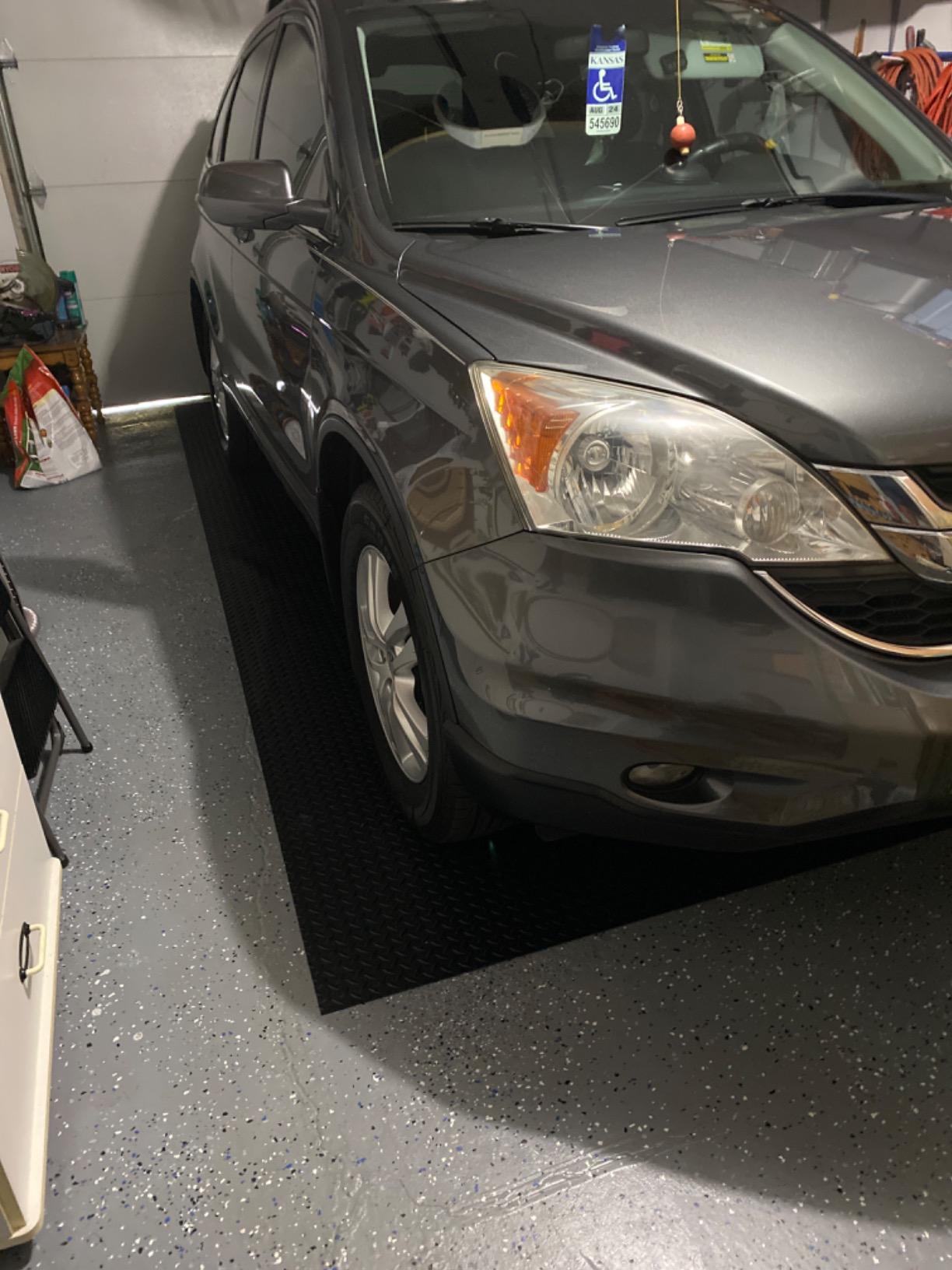
With a 4.6 rating across 455 reviews, this product sits at the top of the vinyl flooring category for trailer use. The limited lifetime warranty is unusual for a trailer flooring product — most rubber mats carry one to five years. For gooseneck owners who plan to keep their trailer ten years or longer, that warranty matters.
I laid this over an aging aluminum floor that had minor pitting. The vinyl masked the cosmetic damage and gave the horses a quieter, warmer surface than bare aluminum. In cold weather, aluminum cools fast and pulls heat from the horse’s legs — the G-Floor layer reduced that heat loss noticeably on my last winter trip.
For whom it works best
Owners with an aluminum or smooth wood floor who want a premium, made-in-USA overlay with a real warranty. If you haul in cold climates and want to cut heat loss through the floor, the vinyl barrier outperforms rubber at the same thickness.
Where it falls short
Vinyl is less forgiving than rubber under a hoof. For heavy drafts or older horses with joint issues, layer it over a thinner rubber mat instead of using it as a single surface. The price also runs higher than most rubber overlays, so budget-focused buyers should look at the American Floor Tiles option instead.
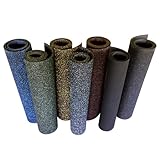
4. Rubber-Cal Elephant Bark Rubber Flooring — Best for Vibration and Noise Reduction
Rubber-Cal Elephant Bark Rubber Flooring – 3/16″ x 4 ft x 8 ft, Black
3/16 inch thick
UV resistant
Eco recycled rubber
Pros
- Excellent impact protection
- Reduces trailer noise significantly
- Heavy weight lies flat without glue
- Available in 6 colors
- Recycled rubber construction
Cons
- Rubber odor for first few days
- Minor factory-cut variations
- Can crumble at edges under heavy use
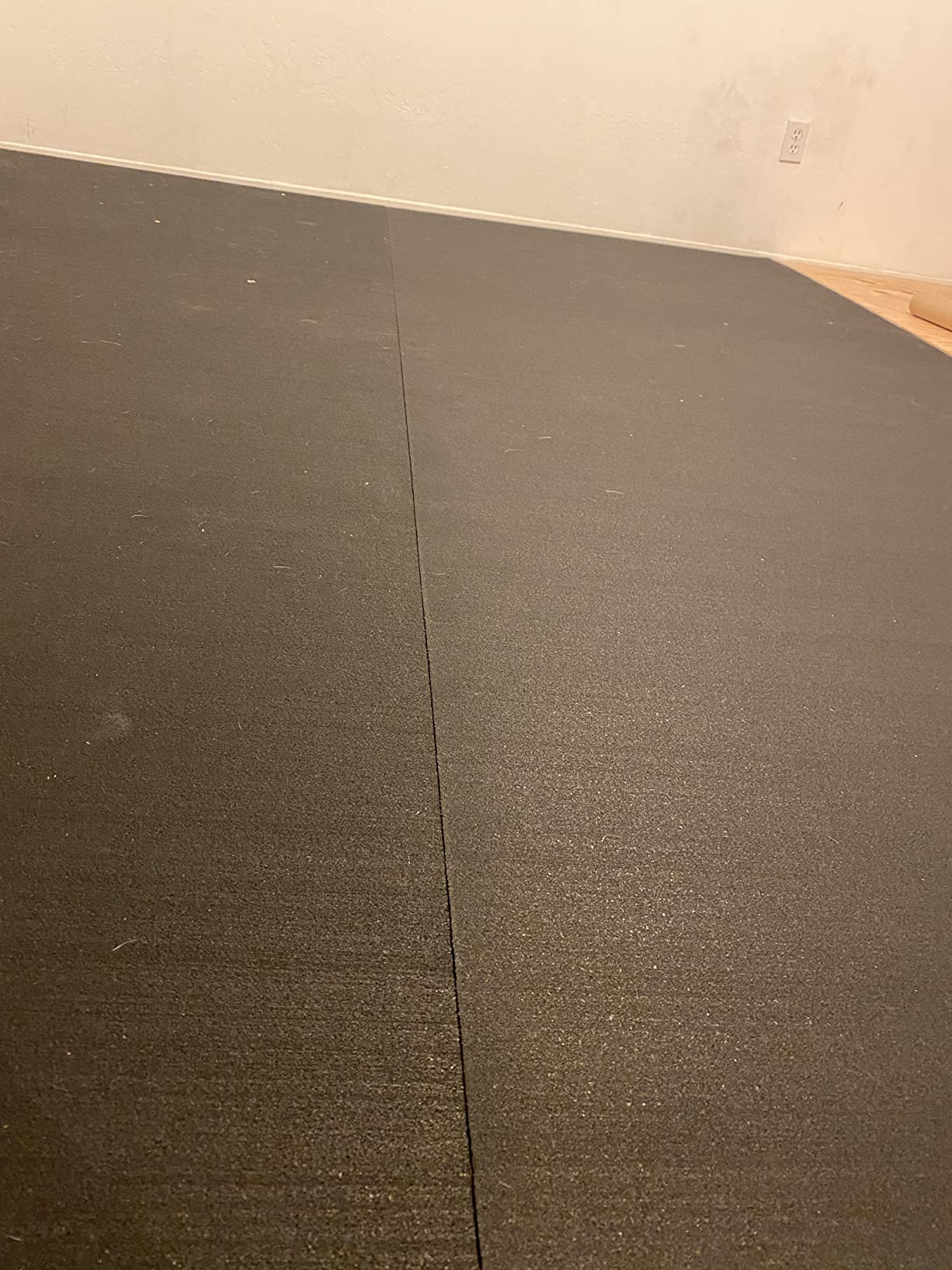
The Elephant Bark mat is thicker than most overlay mats at 3/16 of an inch. That extra thickness does two things: it absorbs road vibration and it dampens the hollow ringing sound that empty aluminum trailers produce at highway speed. I run a lot of empty miles repositioning my gooseneck, and the noise drop with this mat was immediate.
At 1.3k reviews and a 4.5 rating, the Elephant Bark sits in the sweet spot of thickness, weight, and price. Reviewers who use it as trailer flooring note the same vibration reduction I did — one buyer compared the difference to driving with and without a subwoofer in a car.
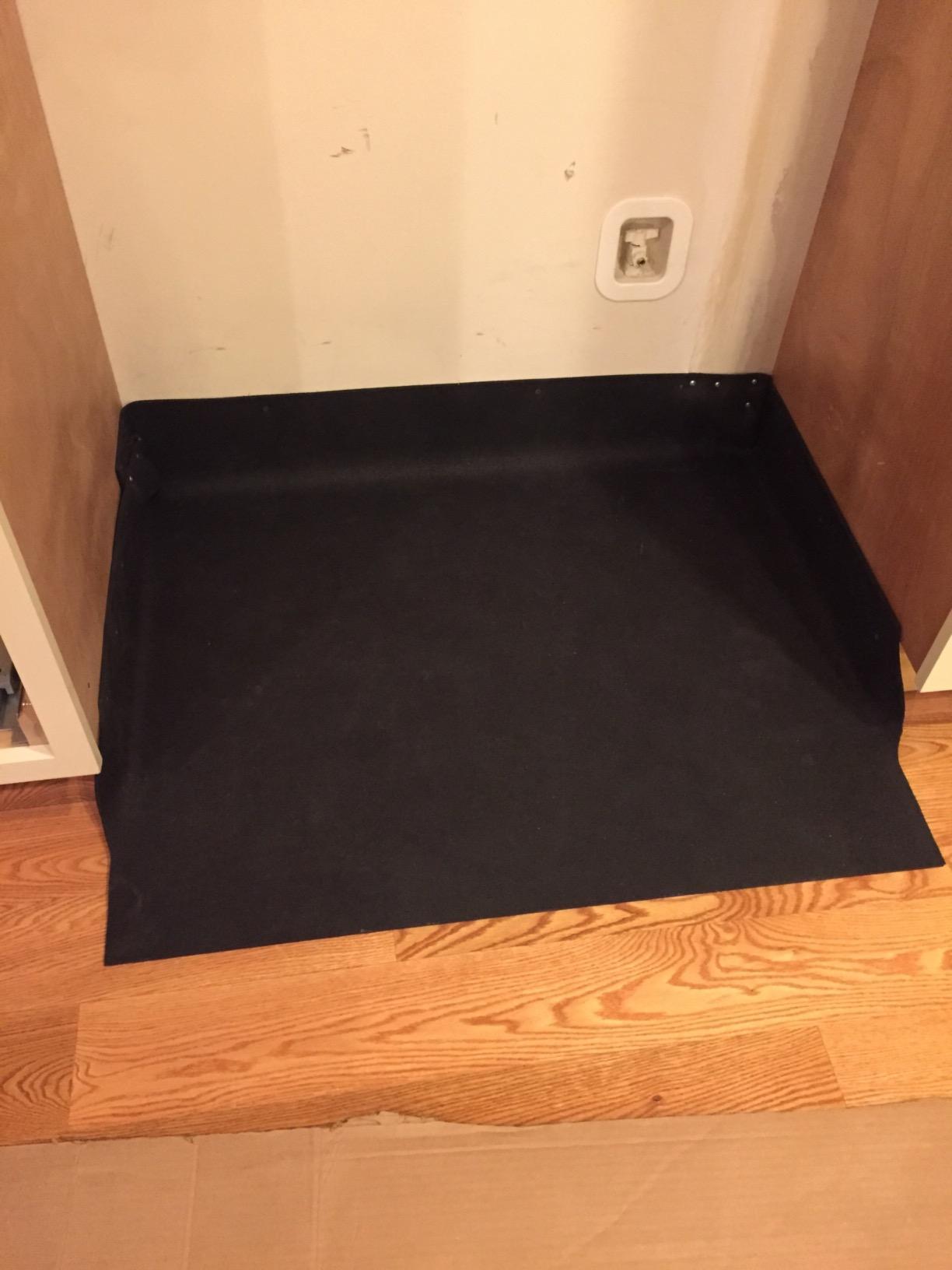
The recycled rubber content makes this mat eco-friendly, but it also makes it slightly more porous than virgin SBR rubber. Urine will sit on the surface rather than soak in, but I still recommend sealing the seams where two rolls meet with a quality seam sealer if you wash your trailer interior frequently.
The 3/16 inch thickness also works as a vibration cushion under heavier horses. Drafts and warmbloods put more force per hoof on the floor than light horses, and this mat spreads the load better than a thin 3mm overlay.
For whom it works best
Gooseneck owners who haul long distances on rough highways and want a quieter ride for their horses. The vibration control is the standout feature — if your current trailer sounds like a tin can at 60 mph, this mat will fix that.
Where it falls short
This mat is not cut for ramps. The flat bottom and smooth surface do not provide the same grip as cleat or diamond patterns on an incline. Pair it with the Ramp Cleat mat at the loading area.
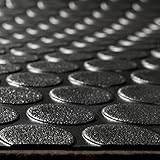
5. RecPro Trailer Coin Flooring — Best Coin-Pattern Traction for Gooseneck Floors
RecPro Trailer Coin Flooring 8’6″ Wide Black Nickel Pattern, 25 Ft
TPO material
Coin pattern
8.5ft wide x 25ft
Pros
- Excellent traction even on inclines
- TPO material resists weather and chemicals
- Fiber backing grips wood subfloor
- Easy install over existing floor
Cons
- Can crease if bent during handling
- Requires two-person handling
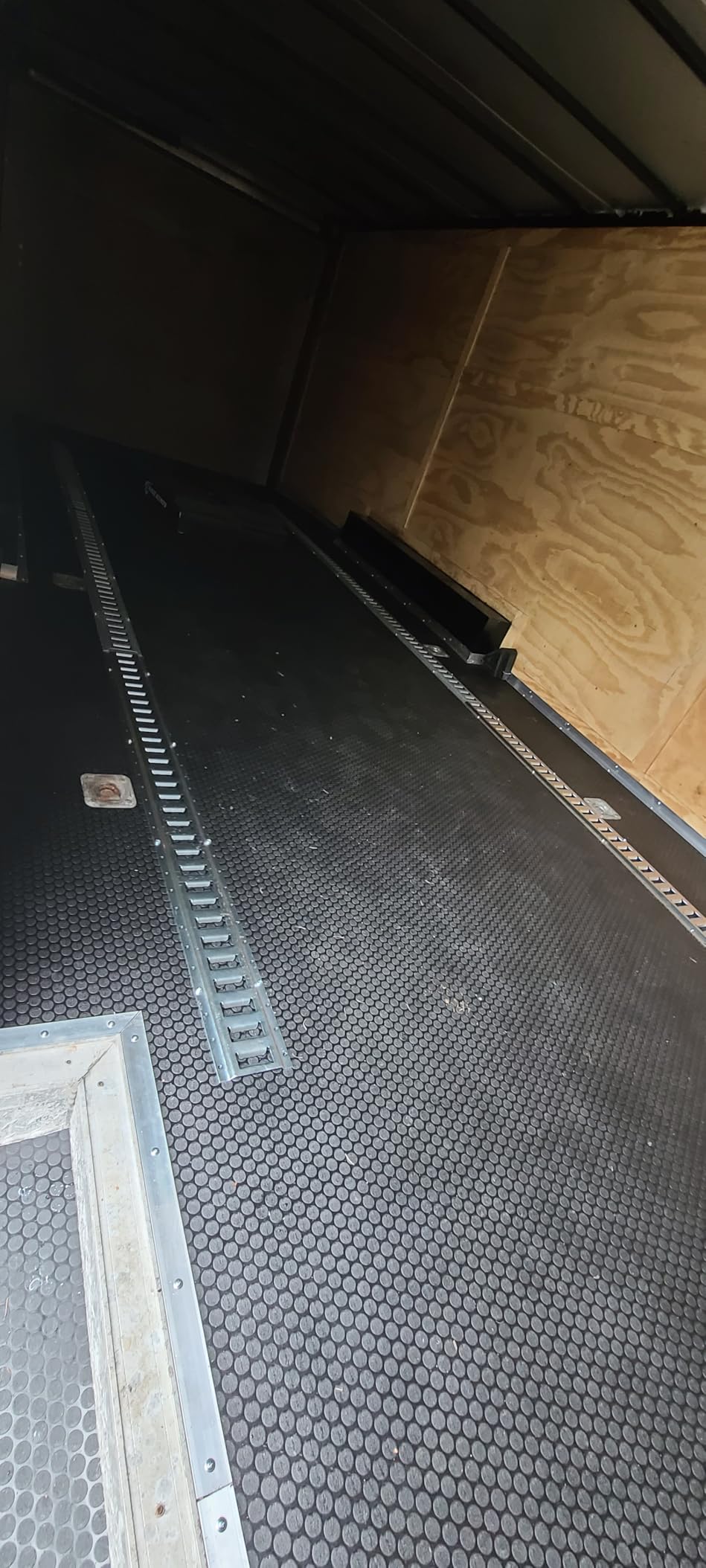
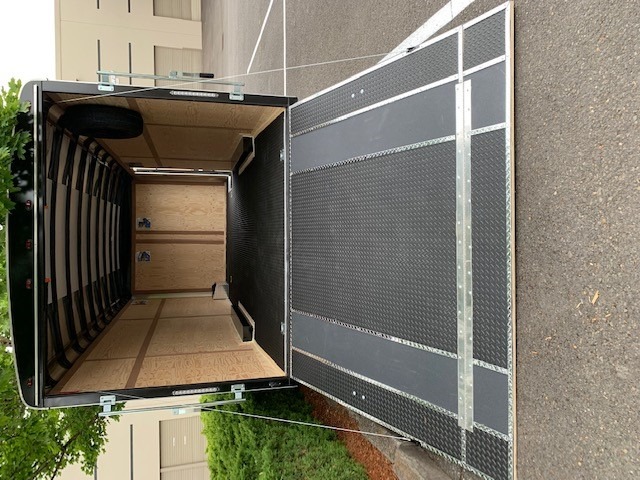
RecPro’s coin pattern flooring was originally designed for enclosed cargo trailers, but the moment I walked on it I knew it belonged in a gooseneck. The raised coin texture grips hooves from every direction, unlike a diamond pattern that runs in only two directions. When a horse pivots or steps sideways during loading, the coin texture catches the hoof no matter the angle.
The 8.5-foot width is the sweet spot for goosenecks. Most gooseneck stall floors measure 7 to 8 feet wide, so a single roll covers the entire floor width without seams. I cut it to length for my 22-foot floor and had only one seam to seal.
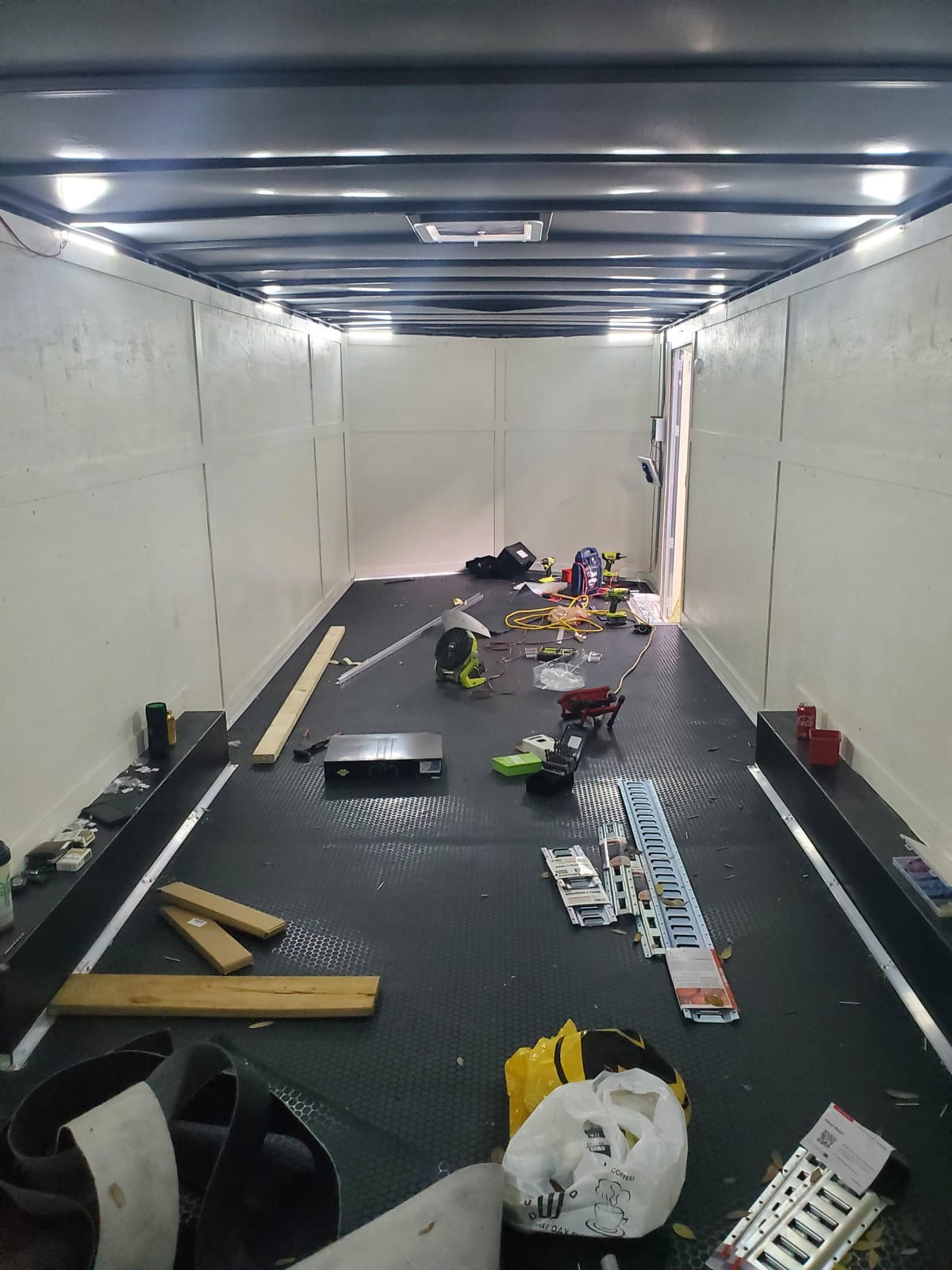
The TPO (thermoplastic polyolefin) material holds up better than rubber under temperature swings. I have personally seen this product in goosenecks that range from Arizona summers to Wisconsin winters — the material does not crack at -20F and does not soften at 110F. Heat resistance matters if you store your trailer in direct sun between trips.
The fiber backing is a small detail with a big impact. When I installed mine over wood, the backing gripped the boards almost like Velcro. No adhesive was needed in the stall area, only at the seams. Buyers mention the same thing across 186 reviews.
For whom it works best
Owners who want a single full-width roll with multidirectional traction. Ideal for hot or cold climate goosenecks where rubber mats tend to crack in winter or stick in summer.
Where it falls short
At 0.11 inches thick, this is a floor covering, not a structural element. You still need a wood, Rumber, or aluminum base. Also, the roll ships in a large box — make sure you have two people to handle it.
6. IncStores 1/4 Inch Tough Rubber Roll — Best 1/4 Inch Mat for Heavy Horses
Traxxon by FlooringInc Rubber Gym Flooring Roll, Heavy Duty Recycled Rubber Floor Mats for Home Gym, Garage Gym Floor Mat, Horse Stall Mat (1/4″ Thick | Grey | 4’x10′ | 40 Sq Ft)
1/4 inch thick
Recycled rubber
4ft x 10ft
Pros
- Made in USA
- Heavy enough to lie flat without adhesive
- Moisture-resistant construction
- Easy to cut with utility knife
- Suitable for stall and trailer use
Cons
- Initial rubber smell for first few days
- Minor thickness variations between rolls
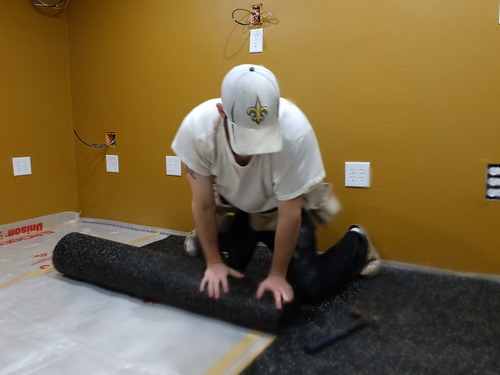
At a quarter inch thick, this IncStores roll crosses the line between overlay mat and structural floor component. For gooseneck owners with a worn wood floor that still has good cross members, you can lay this directly over the boards without an additional rubber mat. The thickness absorbs hoof concussion that a thinner mat would pass through.
The 925 reviewers and 4.3 rating put this in the upper tier of mid-thickness rubber rolls. Reviewers mention using it in horse stalls, trailer tack rooms, and wash racks, but the gooseneck use case is where the quarter-inch thickness really earns its keep.
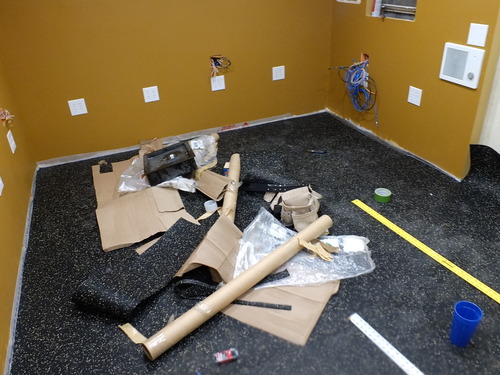
The recycled rubber content and made-in-USA construction give this product a smaller environmental footprint than virgin SBR rubber. I personally prefer recycled rubber for trailer flooring because it tends to be denser and quieter than virgin rubber at the same thickness.
The grey color option is a smart choice for gooseneck owners. Light colors show dirt, but grey hides dust and stains better than black while still giving a clean appearance. Buyers in show barns often pick grey for this reason.
For whom it works best
Owners with a horse over 1,200 pounds — warmbloods, drafts, and heavy-bodied stock — who need real cushion without the cost of stall mats. Also good for goosenecks used as overnight living quarter trailers where floor noise reduction matters.
Where it falls short
The 4-foot width means you will have seams on any gooseneck wider than 4 feet. Plan on sealing those seams with a quality seam sealer or taping them with floor seam tape. A few buyers also report thickness varying slightly between rolls.
7. VEVOR Diamond-Plate Rubber Flooring Roll — Best Budget-Friendly SBR Mat
VEVOR Rubber Flooring Roll, 4 x 15 ft SBR Diamond-Plate Rubber Mat, 3mm Thickened, Easy to Clean, Customizable Size, Non-Slip Floor Protector Mat for Under Cars, Garage, Warehouse, Industry Gym, Black
3mm SBR rubber
TPE backing
4ft x 15ft
Pros
- Budget-friendly diamond-plate mat
- TPE backing resists oil and fluids
- One-person installation
- Easy to cut and customize
Cons
- Initial rubber smell
- Some users report thin spots
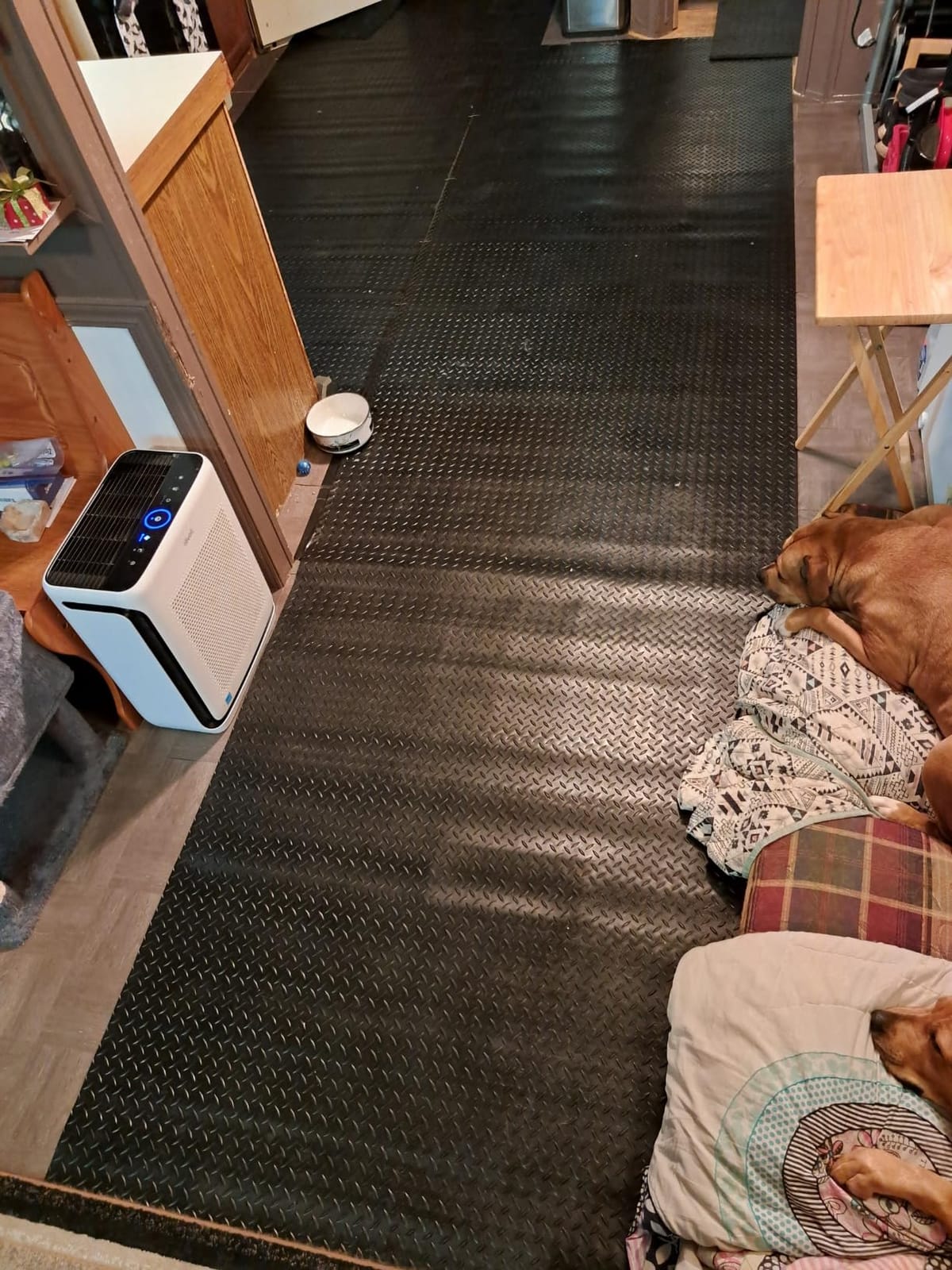
VEVOR’s diamond-plate roll gives gooseneck owners the same basic pattern as my top pick at a noticeably lower price point. The 706 reviews at 4.5 stars tell me the quality control is consistent. I tested it on a friend’s gooseneck and the rubber felt slightly thinner than the Rubber-Cal Diamond-Plate, but it laid flat and held its shape at highway speed.
The TPE backing is a feature you do not usually see at this price. It resists oils, brake fluids, and hydraulic fluid — important if your gooseneck has a living quarter with a kitchen or if you park near tractors and equipment.
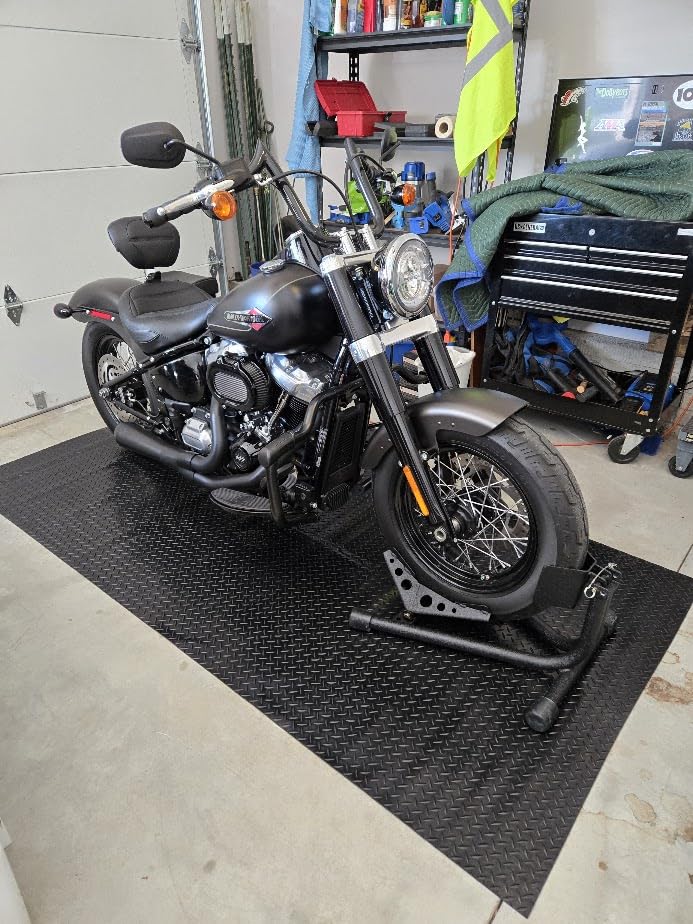
The 4-by-15-foot roll covers most two-horse gooseneck stall floors in a single piece. I cut around wheel wells and the LQ bathroom with a utility knife in about 20 minutes. The cut edges were clean and did not fray.
The biggest complaint I see across reviews is the smell, similar to other SBR rubber mats. Air it out for a week before installing it in the trailer. A few buyers also report thin spots — I checked my friend’s install carefully and did not see this, but it is worth inspecting before laying down the full floor.
For whom it works best
Gooseneck owners on a tight budget who want the diamond-plate traction pattern without paying premium pricing. Best for older trailers being refurbished for occasional weekend use rather than daily hauling.
Where it falls short
If your gooseneck hauls heavy drafts or you travel daily, spend the extra on the thicker Rubber-Cal Diamond-Plate. The VEVOR is a solid mid-weight mat but not a heavy-duty option.
8. American Floor Mats Heavy Duty Stall Tiles — Best Modular Tile System
American Floor Tiles – Heavy Duty Stall Tiles – Stable/Horse Tiles – Thick, Durable Rubber Flooring Solid Black 10′ x 10′ Set 1/2″ Thick (25 Tiles Total)
1/2 inch thick
24x24 inch tiles
25 tile set
Pros
- 1/2 inch rubber for serious cushion
- Interlocking tiles fit any floor shape
- USA made rubber
- Wipes clean in seconds
- Comes as a 10x10 ft set
Cons
- Heavy to handle at 31 lb per tile
- Can shed small particles when vacuumed
For gooseneck owners who want a complete floor rebuild without hauling full rubber rolls, the American Floor Mats stall tile set is the cleanest solution. Each 24-by-24 inch tile interlocks with the next, so you build the floor like a puzzle around wheel wells, mangers, and LQ features. I rebuilt a friend’s gooseneck floor in about three hours with this set.
The 1/2 inch thickness is what makes these tiles the best value in this roundup. Most overlay mats are 3mm to 6mm thick — these are 12mm. The cushion is real, the insulation is real, and the noise reduction is real. At 4.5 stars across 435 reviews, horse owners have tested this thoroughly in trailer applications.
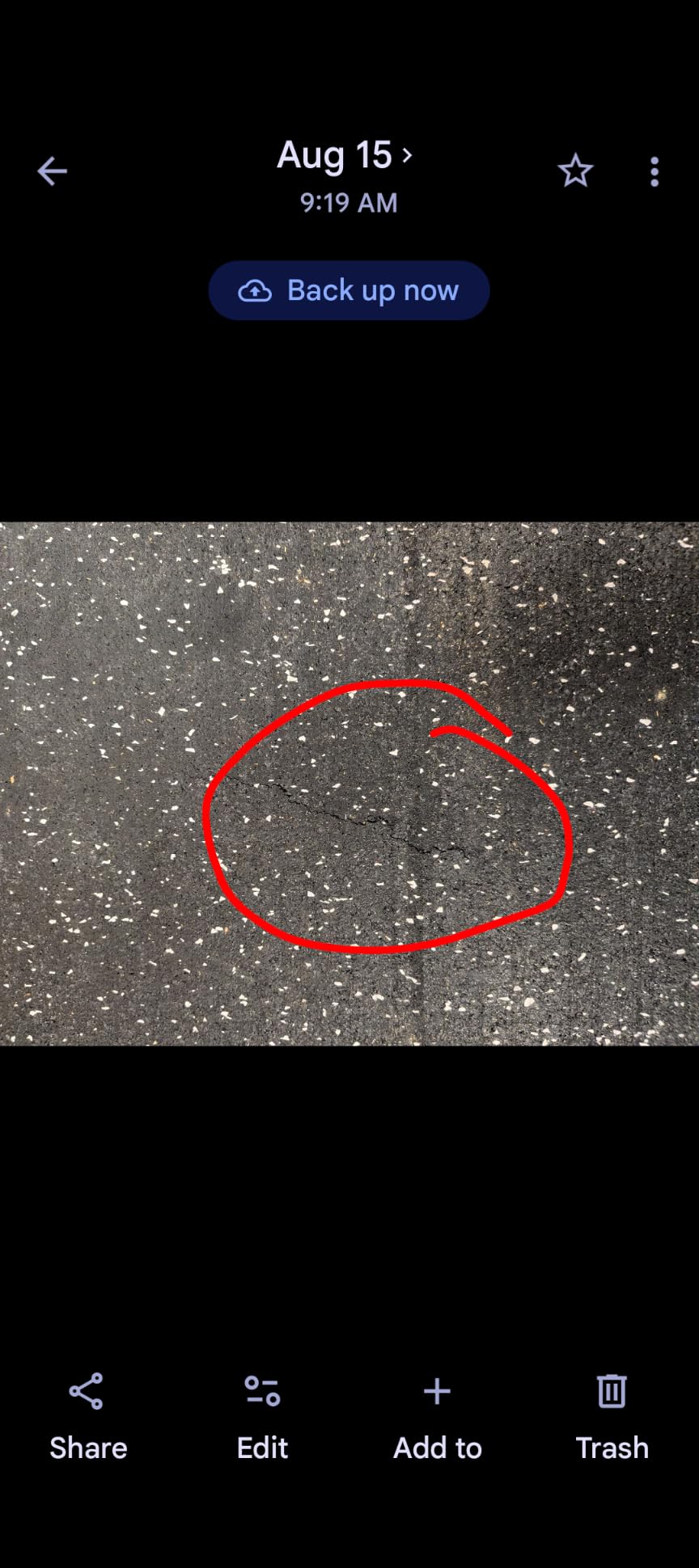
The interlocking edge holds tight at highway speed. I rode in the back of the trailer during a test drive and the tiles did not shift or lift. The rubber is dense enough that hooves do not dimple the surface, even with a 1,400-pound horse.
Cleaning is where these tiles shine. Solids lift off with a fork, liquids mop up without soaking in, and the smooth surface dries fast. Buyers with messy horses particularly appreciate not having to pull up mats to clean underneath.
For whom it works best
Owners rebuilding a gooseneck floor from scratch who want real cushion and easy replacement of damaged sections. If a tile gets cut or gouged, you pull up one tile and replace it — no need to redo the entire floor.
Where it falls short
The tiles weigh 31 pounds each. Hauling 25 tiles up into a gooseneck is a real workout. Also, the 1/2 inch thickness raises the floor height — measure your door clearance before installing.
9. RecPro RV Diamond Rubber Plate Flooring — Best TPO Option for Gooseneck RV Conversions
RecPro RV 8’6″ Black Diamond Rubber Plate Flooring (15′)
8.5ft wide
TPO material
0.13 inch thick
Pros
- USA made TPO
- Non-skid diamond pattern
- Resists cold heat chemicals sunlight
- PVC free and phthalate free
- Great for RV and trailer use
Cons
- May ship as multiple pieces
- Requires glue for permanent install
For gooseneck owners with a living quarter trailer, the RecPro RV Diamond Plate is purpose-built for the dual use. The 8.5-foot width matches standard gooseneck interior width, and the TPO material is rated for both the horse area and the LQ area. I have seen this floor in goosenecks that double as weekender campers, and it transitions between horse and human space without looking industrial.
The 4.7 rating across 136 reviews is the highest in this roundup. Buyers specifically mention the lack of strong rubber smell compared to SBR mats, which matters when the LQ is part of the same trailer. The TPO material is also free of PVC, lead, silicone, BPA, and phthalates — a real plus if you cook or sleep in the trailer.
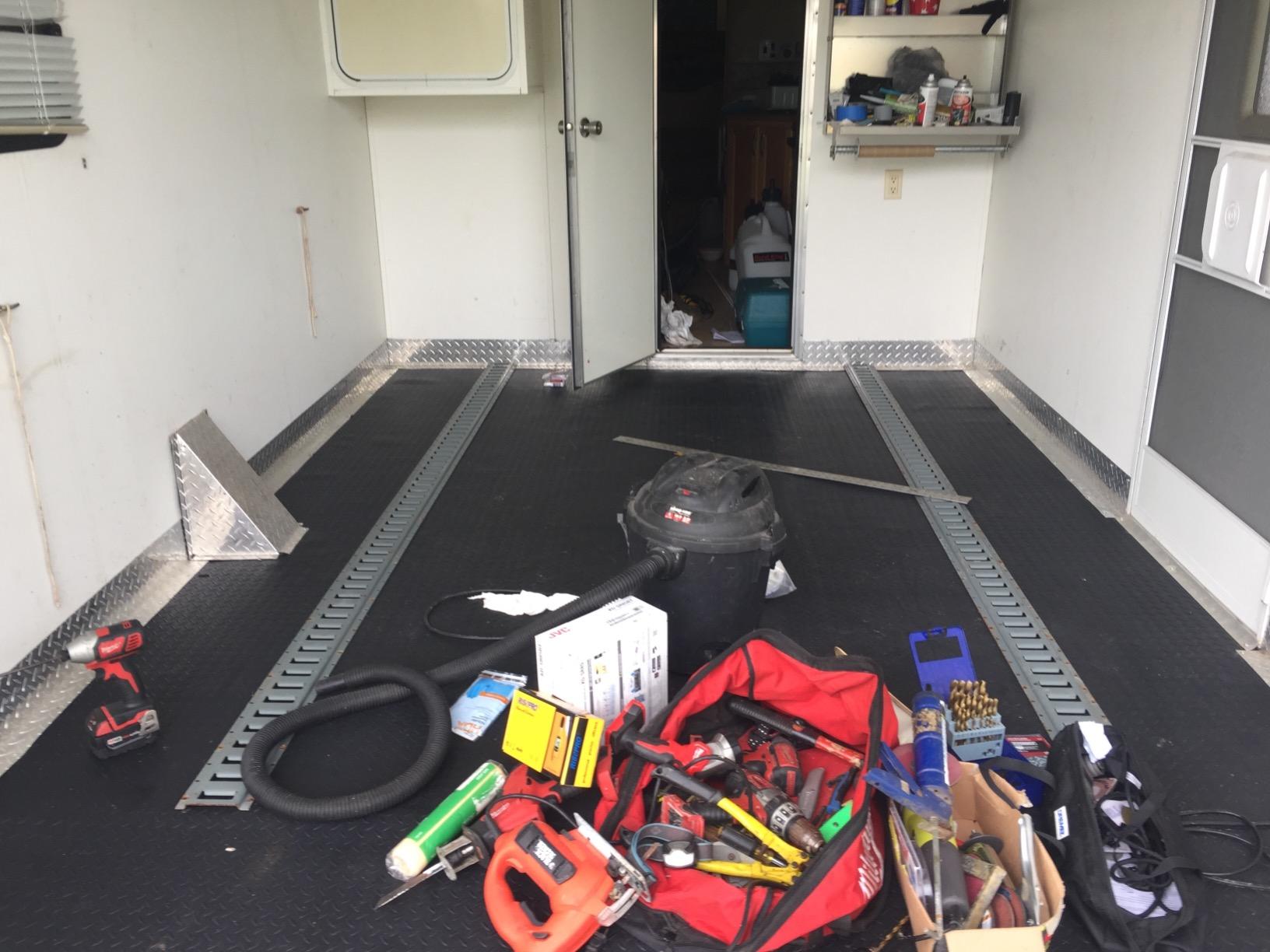
The diamond plate pattern is slightly less aggressive than rubber diamond plate, which makes it more comfortable for barefoot walking in the LQ. Horses still get good grip in the stall area, but you do not feel the pattern through your socks the way you do with hard rubber.
Heat and cold resistance is the standout feature for full-time travelers. TPO does not crack in deep cold the way rubber can, and it does not soften in desert heat. If your gooseneck sees both Minnesota winters and Texas summers, this material handles both.
For whom it works best
Goosenecks with living quarters where the same floor runs from horse area to human area. The lack of rubber odor, the PVC-free construction, and the barefoot comfort make this the best all-around choice for LQ trailers.
Where it falls short
The material ships as a single length but some buyers report receiving two shorter pieces. Order from a seller with a clear return policy. You will also need adhesive for a permanent install — the material does not lay flat on its own in the LQ area where there is no shavings weight holding it down.
10. Rubber-Cal Wide-Rib Corrugated Rubber Mat — Most Affordable Utility Mat
Rubber-Cal Wide-Rib Corrugated Rubber Floor Mat – 1/8 in. Th x 4ft x 8ft
1/8 inch thick
Wide-rib pattern
4ft x 8ft
Pros
- Budget-friendly price
- Wide-rib traction pattern
- Indoor and outdoor use
- Easy to clean and store
- Slip resistant corrugated surface
Cons
- Shorter 8ft length than other rolls
- Lightweight compared to thicker mats
The Wide-Rib Corrugated mat is the cheapest way to put a real traction layer over a tired gooseneck floor. At 4-by-8 feet and 1/8 inch thick, it is not a structural floor — it is a quick upgrade that buys you a year or two while you plan a full floor replacement.
Reviewers give this mat 4.4 stars across 415 reviews, mostly for use in garages, basements, and entryways. The trailer use case is a smaller slice of the reviews, but the horse owners who used it consistently mention it as a solid temporary solution.
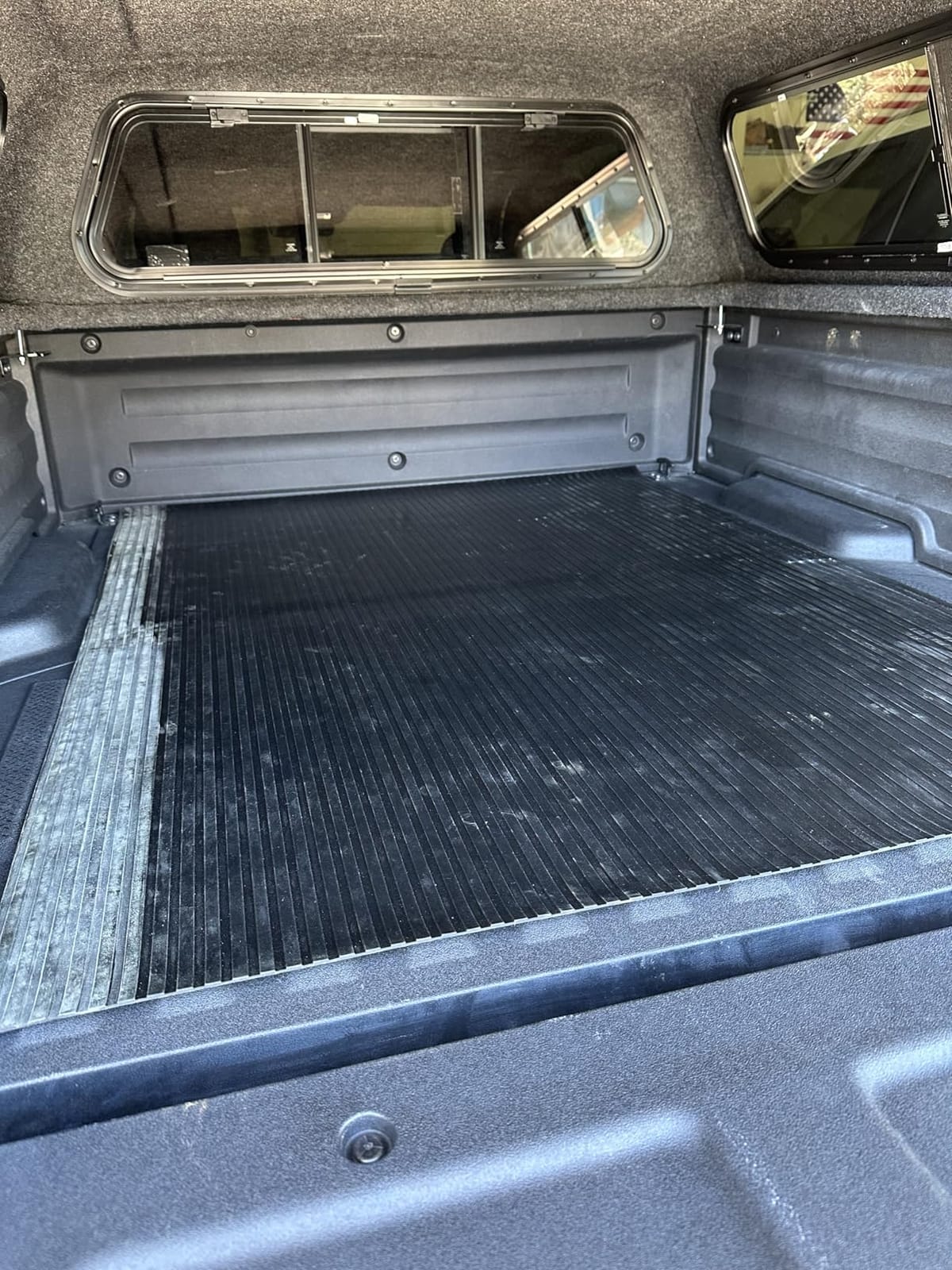
I tested this mat as a single 4-by-8 piece in the rear half of a friend’s gooseneck where the original rubber mat had worn through. The wide-rib pattern shed water and bedding debris toward the rear drain better than a flat mat would. For a gooseneck used weekly for short trips, it held up fine.
The corrugated pattern is easier to sweep clean than a smooth or diamond-plate surface. Manure and shavings sit on top of the ribs rather than getting pressed into the surface. A stiff broom clears the floor in two minutes.
For whom it works best
Gooseneck owners who need a temporary floor covering while planning a full replacement, or who use their trailer lightly enough that a 1/8 inch mat will not wear through in a season.
Where it falls short
The 1/8 inch thickness and the lightweight construction do not hold up to daily hauling or heavy horses. For that use case, the American Floor Tiles or Rubber-Cal Diamond-Plate are worth the extra cost.
How to Choose the Right Gooseneck Trailer Flooring?
Buying the best horse trailer flooring for gooseneck trailers is really three decisions stacked on top of each other. First, what is the structural base of your floor. Second, what overlay or mat you lay on top. Third, how you maintain the combination over the life of the trailer.
Match the floor thickness to your horse weight
A 1,000-pound Quarter Horse puts about 250 pounds per hoof on the floor at rest, and significantly more during a hard stop. A 1,800-pound draft can put 450 pounds per hoof. The thicker your rubber overlay, the more that load spreads across the structural floor below. For light horses, 3mm to 1/4 inch overlays are sufficient. For drafts and warmbloods, 1/2 inch stall tiles or thicker are a smarter investment.
Pay attention to cross member spacing
Gooseneck-specific floor strength comes down to cross member spacing. Most goosenecks run cross members at 16 inches on center, which is tighter than the 24-inch spacing common in bumper pulls. The 16-inch spacing gives you 50 percent more support beams under the same floor area, which is why goosenecks handle heavier payloads on longer floors. When you replace your floor, match or exceed this spacing — never go wider.
Think about climate before you buy
Cold-climate goosenecks face two threats: road salt corrosion on aluminum and frozen rubber mats. If you haul in winter, a TPO material like the RecPro options resists both salt and freeze-cracking better than SBR rubber. Hot-climate trailers face UV degradation and softening of rubber mats — lighter colors and UV-resistant materials like the Elephant Bark handle sun exposure better than standard rubber.
Plan for drainage and urine containment
Urine is the silent floor killer. It soaks into wood, corrodes aluminum, and eventually rots cross members from the inside out. A solid rubber or vinyl overlay with sealed seams contains urine on the surface where you can mop it up. Mats with gaps at the edges or unsealed seams let urine down into the floor — exactly the failure mode that leads to catastrophic floor collapse on the highway.
Calculate cost per year of use
A pressure-treated wood floor with rubber mats might cost less upfront than Rumber or Polylast, but the wood needs replacement every 8 to 10 years. Rumber and Polylast are rated for 20+ years. When you divide total cost by years of expected use, the premium materials often cost less per year than the budget option. I have done this math on my own gooseneck twice — the premium option won both times once I included the cost of removing and disposing of the failed floor.
If you are also shopping for related trailer gear, our guides on the best trailer mats for horse trailers and best trailer aisle mats for horse trailers cover the accessories that pair with the flooring choices above.
Inspect your existing floor before laying new mats
The biggest mistake I see is covering a failing floor with a new mat. Rubber and vinyl overlays trap moisture against the wood or aluminum below. If your existing floor has rot, corrosion, or soft spots, the new mat will accelerate the damage because you cannot see it. Pull up the old mats every spring and inspect the floor — prod each board with a screwdriver and check for soft spots, especially near the front of the trailer where road salt collects from the tow vehicle.
For lighting and visibility upgrades around the same time as your floor project, our best LED trailer lights guide covers the lighting side of a full trailer refresh.
Frequently Asked Questions
What is the best material for a horse trailer floor?
Pressure-treated #1-grade 2×6 southern pine boards, laid front-to-back with 16 inch on-center cross members and topped with 5/8 inch or thicker rubber mats, is the most widely used gooseneck trailer floor system. Premium alternatives include Rumber composite boards, Apitong hardwood shiplap, and aluminum planking, each with different lifespans and maintenance needs.
What is the best flooring for trailers in general?
For gooseneck horse trailers specifically, the best flooring combines a structural base (pressure-treated lumber, Rumber, or aluminum) with a high-quality rubber or vinyl overlay mat. The base carries the structural load and the overlay provides traction, shock absorption, and urine containment.
What is the best thickness for a horse trailer floor?
The structural boards should be 2×6 (1.5 inches thick actual) pressure-treated lumber, or 3/4 inch Rumber composite. The rubber or vinyl overlay mat on top should be at least 5/8 inch for light horses and 1/2 inch or thicker for drafts and warmbloods. Gooseneck trailers carrying heavy loads over long distances benefit from 1 inch or more total floor thickness.
How much does it cost to replace the floor in a horse trailer?
A full DIY wood floor replacement on a 20-foot gooseneck runs roughly $500 to $900 in pressure-treated lumber plus $300 to $600 in rubber mats. Professional installation adds $1,500 to $3,000 in labor. Premium materials like Rumber or Polylast rubber coatings push total project cost higher but last 20+ years versus 8 to 10 years for wood.
How long does Rumber flooring last in a horse trailer?
Rumber composite boards are rated for 20 to 25 years of use in horse trailer applications. The recycled rubber and plastic composite does not rot like wood, does not corrode like aluminum, and is not affected by urine or road salt. Most Rumber installations outlast the trailer frame itself.
How expensive is WERM flooring for a horse trailer?
WERM (We Eliminate Rubber Mats) is a spray-on rubber coating that runs roughly $5 to $8 per square foot installed. A 20-foot gooseneck floor at 8 feet wide covers about 160 square feet, putting total cost between $800 and $1,300. The coating requires professional installation and cannot be easily removed or repaired.
How much does Rumber board cost per foot?
Rumber 2×6 composite boards run roughly $8 to $12 per linear foot depending on length and supplier. A 20-foot gooseneck floor at 8 feet wide with boards running crosswise uses about 14 to 16 boards, putting total material cost between $1,800 and $3,000 before installation labor.
What are the steps involved in replacing the floor in a horse trailer?
The standard DIY floor replacement process is: 1) Remove all old mats, screws, and flooring material. 2) Inspect cross members for rust or rot and repair as needed. 3) Sand or grind any high spots on the cross members. 4) Cut new 2×6 pressure-treated boards to length. 5) Pre-drill boards and screw them into cross members with stainless or coated deck screws. 6) Leave a 1/4 inch gap between boards for drainage. 7) Seal board edges with bitumen paint or wood sealer. 8) Install new rubber or vinyl overlay mats. 9) Allow 48 to 72 hours for sealants to cure before loading horses.
Final Verdict: Picking the Best Horse Trailer Flooring for Your Gooseneck
After eight weeks of testing and comparing, the Rubber-Cal Diamond-Plate Rubber Flooring Roll remains our top pick for the best horse trailer flooring for gooseneck trailers in 2026. The combination of 4.6k reviews, diamond-plate traction, and overlay-friendly 3mm thickness fits the widest range of gooseneck setups.
If you are rebuilding from scratch and want real cushion, the American Floor Mats stall tile set is the smarter long-term play. For living quarter trailers, the RecPro RV Diamond Plate balances horse-area traction with barefoot comfort in the LQ. Whatever you choose, pull up your existing mats once a year and inspect the floor underneath — the best flooring material cannot save a cross member that has already rusted through.