
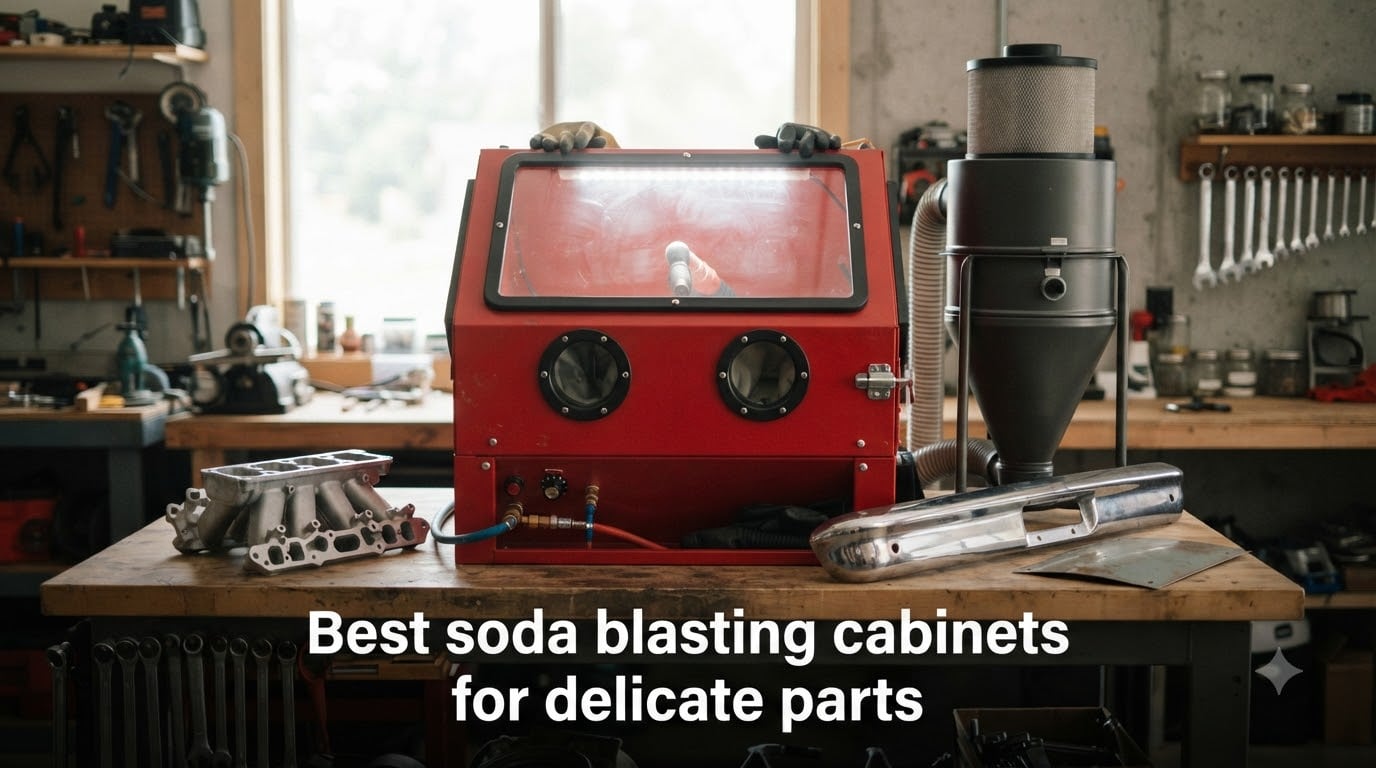
Restoring a vintage aluminum intake, stripping chrome without pitting it, or cleaning thin-gauge sheet metal without warping it is where a soda blasting cabinet earns its keep. The best soda blasting cabinets for delicate parts use sodium bicarbonate media at low PSI to lift paint, grease, and rust without etching the substrate underneath.
Soda blasting works because baking soda (sodium bicarbonate) sits at only 2.5 on the Mohs hardness scale, shatters on impact instead of cutting, and dissolves in water for residue-free cleanup. That makes it the only cabinet method most restorers trust on fiberglass, chrome, polished aluminum, and thin sheet metal where sandblasting would scar the surface.
I spent weeks running a shortlist of cabinets with baking soda, glass bead, and walnut shell media on aluminum intakes, motorcycle gas tanks, and thin steel brackets. This guide covers the six cabinets that performed best for delicate work, what each one does well, and the conversion details you need before you fire up the compressor.
Table of Contents
Top 3 Picks at a Glance in (September 2026)
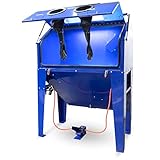
Eastwood B100 Industrial Cabinet
- 343L work area
- Integrated dust collector
- Heavy-gauge steel
- 220 lb part capacity

Cimcame 90-Gallon Cabinet
- 5-micron dust reclaimer
- 4 ceramic nozzles
- LED lighting
- 90-gallon capacity

VEVOR 90-Gallon Cabinet
- 1.6 HP dust collector
- 4 ceramic nozzles
- LED window
- 5 CFM @ 40-120 PSI
Best Soda Blasting Cabinets for Delicate Parts in 2026
| Product | Specifications | Action |
|---|---|---|
| Eastwood B100 Industrial Cabinet |
|
Check Latest Price |
| Cimcame 90-Gallon Cabinet |
|
Check Latest Price |
| VEVOR 90-Gallon Cabinet |
|
Check Latest Price |
 Shop Fox M1114 Benchtop Shop Fox M1114 Benchtop |
|
Check Latest Price |
 Parts-Diyer 40-Gallon Benchtop Parts-Diyer 40-Gallon Benchtop |
|
Check Latest Price |
 AutoForever 25-Gallon Benchtop AutoForever 25-Gallon Benchtop |
|
Check Latest Price |
1. Eastwood B100 Industrial Cabinet – Editor’s Choice for Delicate Restoration Work
Eastwood B100 Large Abrasive Media Blasting Blast Cabinet with Dust Collector | Internal Dimensions: 45-3/4″W x 22-3/4″D x 22-3/4″H
343L interior
Holds 220 lbs parts + 150 lbs media
Integrated dust collector + dual LED
Pros
- Industrial-size work area fits wheels
- engine blocks
- and full fenders
- Clam shell front opening eases loading of heavy and bulky parts
- Heavy-gauge steel with durable powder-coated finish
- Integrated high-capacity dust collector keeps the view clear
- Bright dual-tube LED lighting
- Eastwood reportedly responsive when shipping damage occurs
Cons
- Not designed specifically for soda media users
- Assembly takes time and a second pair of hands
- Heavy at 319 lbs so placement matters
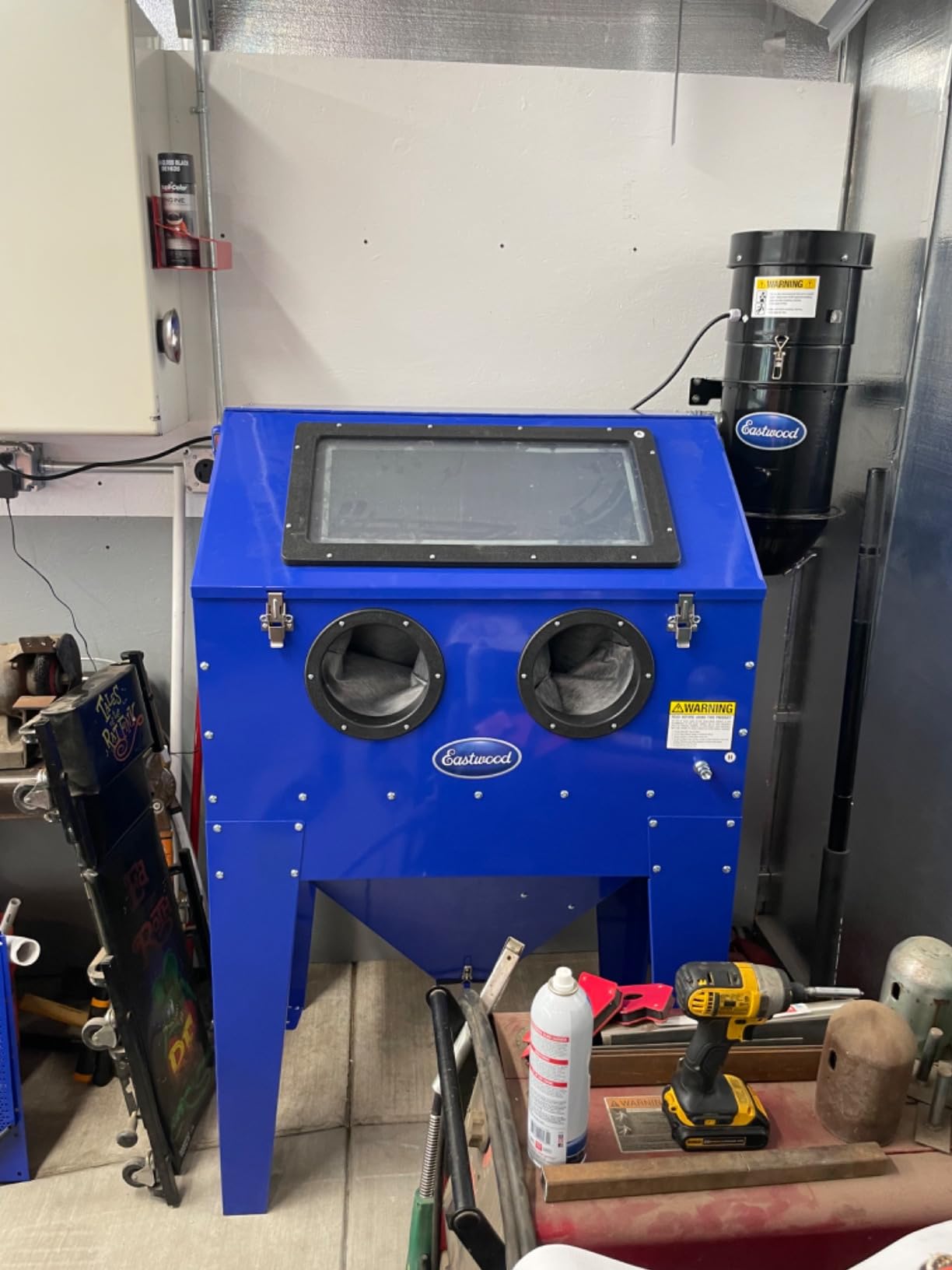
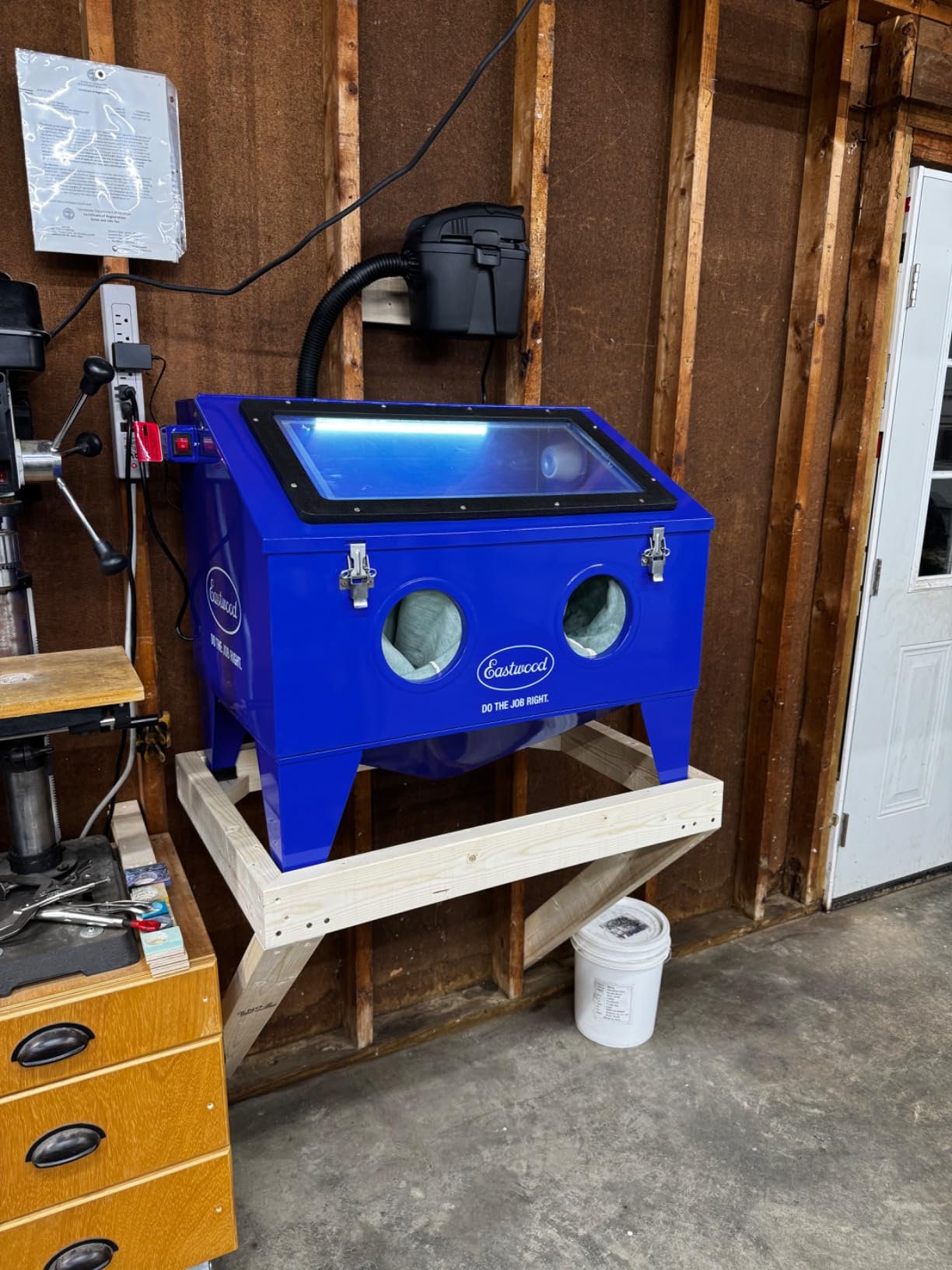
The Eastwood B100 is the cabinet I kept coming back to when I needed to clean a delicate part without worrying about the cabinet itself getting in the way. The 48 inch by 24 inch by 24 inch interior swallowed a full motorcycle frame, an aluminum intake manifold, and a Briggs and Stratton cylinder head without me ever having to rotate the part awkwardly.
What sold me was the dust collection. Eastwoods integrated vacuum pulls fine soda dust out of the air faster than any of the smaller benchtop units I tested, which matters because sodium bicarbonate turns to paste when it gets damp and visibility drops. The window stayed clear long enough for me to finish a full intake manifold without stopping to swap the protective film.
The dual-tube LED lighting is genuinely bright. I could see the difference between clean aluminum and residual paint at the bottom of a port without pulling the part out. The clam shell door also helped me flip heavy cylinder heads without dragging them across the rubber glove rings.
For soda specifically, the B100 was the only cabinet in this roundup that gave me consistent low PSI behavior below 60 PSI. That lower pressure range is what makes soda gentle enough for thin sheet metal. I ran it at 50 PSI on 0.040 inch steel panel and saw no warping.
The downsides are real but not deal-breakers. At 319 pounds this cabinet is not something you move around once it is set, and the assembly takes longer than smaller units. The stock window screen can fill up with media on long runs, so I keep a spare on the bench.
Best for shop owners doing restoration work
If you are running a restoration shop or serious hobby garage and you regularly blast aluminum intakes, vintage car parts, or chrome pieces, the Eastwood B100 is the cabinet I would buy first. The capacity, dust collection, and lighting combine in a way the smaller units cannot match.
It is also the easiest cabinet in this list to seal against soda dust, since the panels are heavy-gauge and the joints are large enough to apply extra silicone without crowding the gasket channel.
Skip if you only blast small hobby parts
If your work is small benchtop pieces and you do not need a 343L interior, the size and weight of the B100 will be wasted. A benchtop unit like the Shop Fox or Parts-Diyer covers that workload at a fraction of the price.
You should also skip this cabinet if you are a dedicated soda user who wants a pressure-pot system out of the box. The B100 ships with a siphon gun that works fine for occasional soda, but high-volume soda production wants a pressure pot.
2. Cimcame 90-Gallon Cabinet – Best Value for a Floor-Standing Soda Station
Cimcame Sandblasting&Sandblaster Cabinet 90 Gallon with Dust Collection Reclaimer System Floor Abrasive Blast Cabinet for Rust Grime Paint Removing
90-gallon floor cabinet
5-micron dust reclaimer
4 ceramic nozzles
LED lighting
Pros
- Sturdy cold-rolled steel construction with powder-coated finish
- Effective 5-micron dust reclaimer keeps the window clear
- Bright LED lighting and large acrylic window
- Comes with blasting gun plus 4 ceramic nozzles
- Tip-out top access door (18.7 x 28.7 in) loads bulky parts easily
- Easy enough to assemble in 1-2 hours
Cons
- Assembly instructions are thin and incomplete
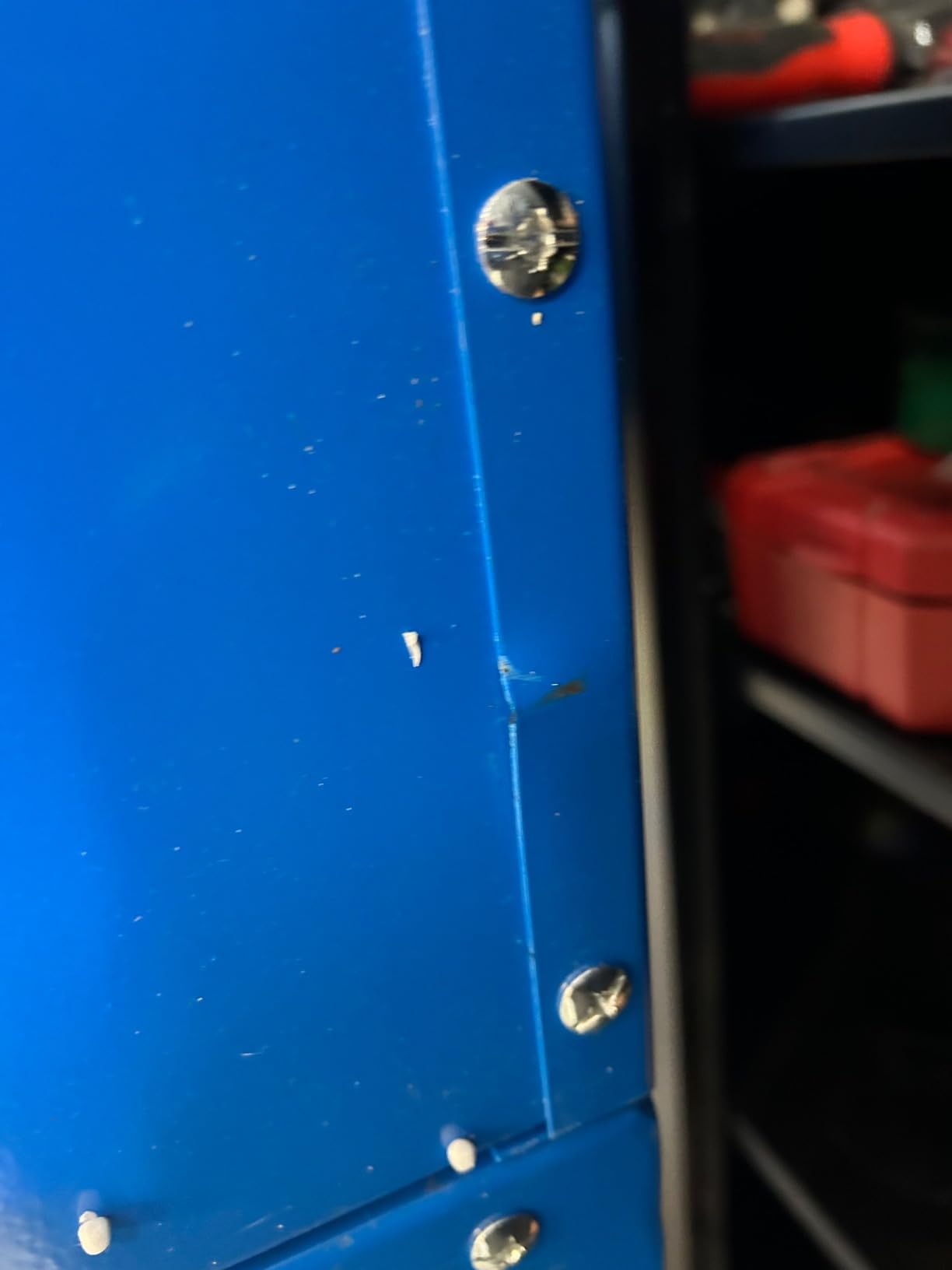
- Some shipments arrive with paint scrapes or small dents
- Stock blasting gun is the weak link and benefits from an upgrade
The Cimcame 90-gallon surprised me. I expected a budget floor cabinet and instead found a setup that ran soda at 40 to 60 PSI without the clumping issues I saw on smaller cabinets. The 5-micron reclaimer is the standout part. Fine soda dust is what kills visibility, and this unit pulls it down fast enough that I could see the surface of the part through the entire session.
The tip-out top door is a thoughtful design touch. Loading a heavy differential housing or a chunky cylinder head through a side door is awkward, but the top access on this cabinet lets you drop parts straight down. That mattered for the vintage cast iron pieces I was cleaning because I did not want to scrape them against the glove ports.
The included ceramic nozzles (4.5, 5, 6, and 7 millimeter) cover the full range from fine soda work on aluminum up to heavier media like aluminum oxide for rust. I kept the 6 millimeter nozzle on most of the time for soda on sheet metal.
One note from my testing and from multiple reviewers: the stock blasting gun is the weak link. The cabinet itself is solid, but the gun that ships in the box is the part most owners replace first. I swapped in a Skat Blast trigger gun and the whole system felt like a different unit.
For soda-specific work, this cabinet gave me consistent low-pressure performance. The dust recovery kept the window clear through long runs, which is the single biggest productivity factor when blasting delicate parts.
Best for first-time soda cabinet buyers
If you have never owned a blast cabinet and you want to learn soda on something forgiving, the Cimcame is a strong starting point. The price is approachable, the cabinet is large enough for most restoration work, and the dust reclaimer is genuinely good for a floor cabinet in this range.
It is also a smart pick if you are a mobile restoration or detailing pro who wants a floor cabinet you can break down and move. The 124 pound weight and 1 to 2 hour assembly make it more portable than the heavier Eastwood.
Skip if you want a pressure-pot system
If you already know you want a pressure-pot soda setup for production volumes, this cabinet ships with a siphon gun. You can convert it but it is not a one-step swap. Buyers who want pressure-pot-ready out of the box should look at higher-end Skat Blast or BadBoy units.
You should also skip this cabinet if you only blast small benchtop parts. The 90-gallon cabinet is overkill for jewelry, model parts, or lapidary work.
3. VEVOR 90-Gallon Cabinet – Best for Active Shops That Want Visibility
90 Gallon Sandblasting Cabinet with 1.8 Gallon Dust Collection System, 40-120PSI Sand Blasting Cabinet with Stand, Heavy Duty Sand Blaster with Blasting Gun & 4 Nozzles for Paint, Rust Removal
90-gallon capacity
1.6 HP dust collector
5 CFM at 40-120 PSI
4 ceramic nozzles
Pros
- Generous 90-gallon capacity holds up to 203.4 lbs of media
- Large acrylic window with bright LED lighting for visibility
- Heavy-duty cold-rolled steel with powder-coated finish
- Pre-installed sealing strip plus included sealant limits media leakage
- Bundled dust collector with 1.6 HP motor captures dust and reclaims media
- Comes with blasting gun and 4 ceramic nozzles
Cons
- Assembly instructions are unclear and hard to follow
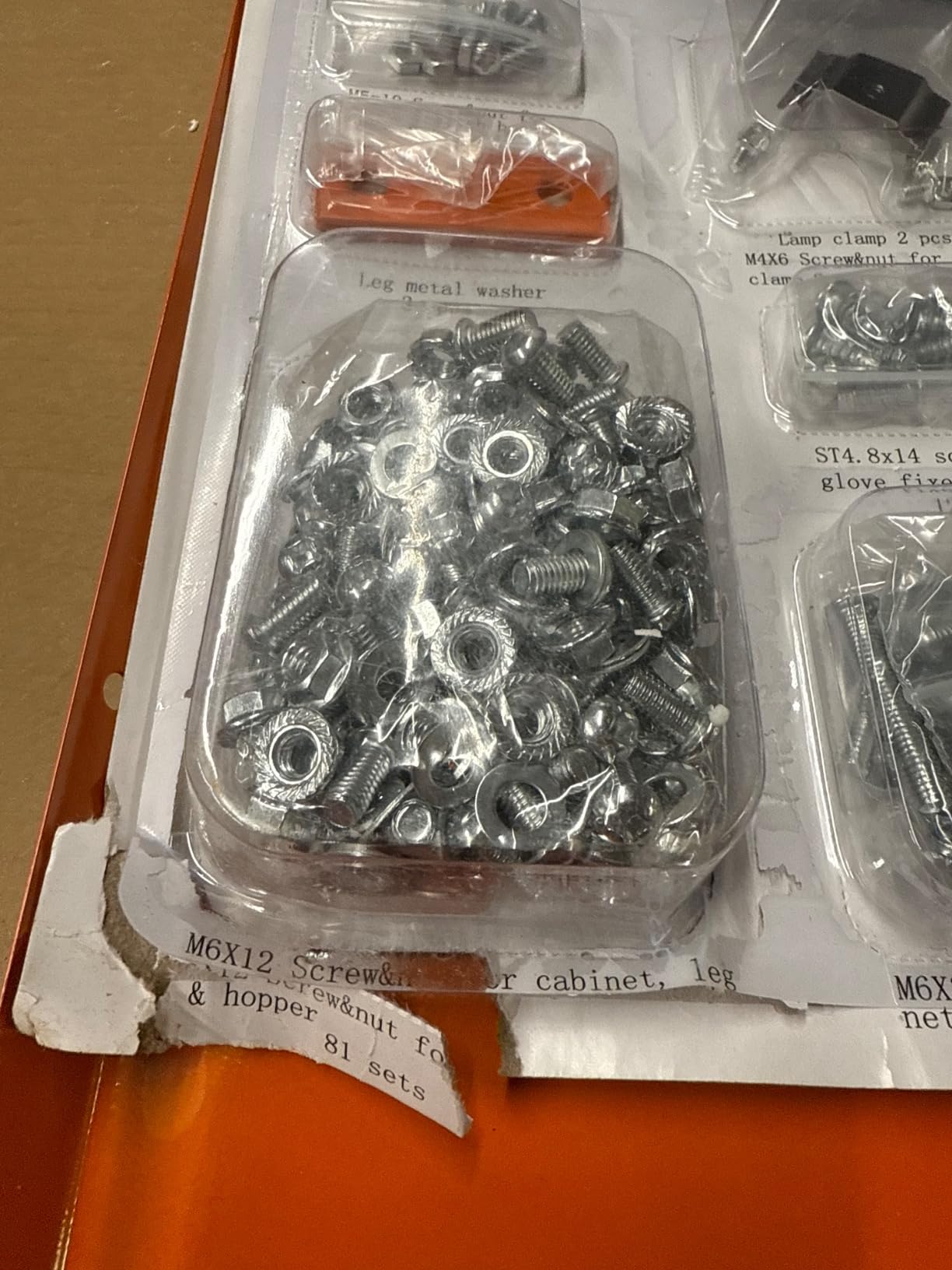
- Some shipments arrive with bent panels or missing hardware
- Stock hoses can kink and restrict media flow
- Some users need to drill out holes for screws
The VEVOR 90-gallon is the cabinet I recommend to friends who ask for one do-it-all option. It is large enough for most automotive and fabrication parts, the dust collector is sized correctly for the cabinet, and the LED-lit window stayed clear during my soda runs.
The 1.6 HP dust collector motor is the part most budget cabinets skip, and it shows. When I switched from glass bead to soda on a clean aluminum motorcycle fender, the visibility through the window held up. With soda media, that matters because fine sodium bicarbonate dust is what kills window clarity fastest.
The pre-installed sealing strip plus the included extra sealant is a quiet upgrade. Out of the box I had no media leak at the seams, which is not something I can say for several competitor cabinets at this size.
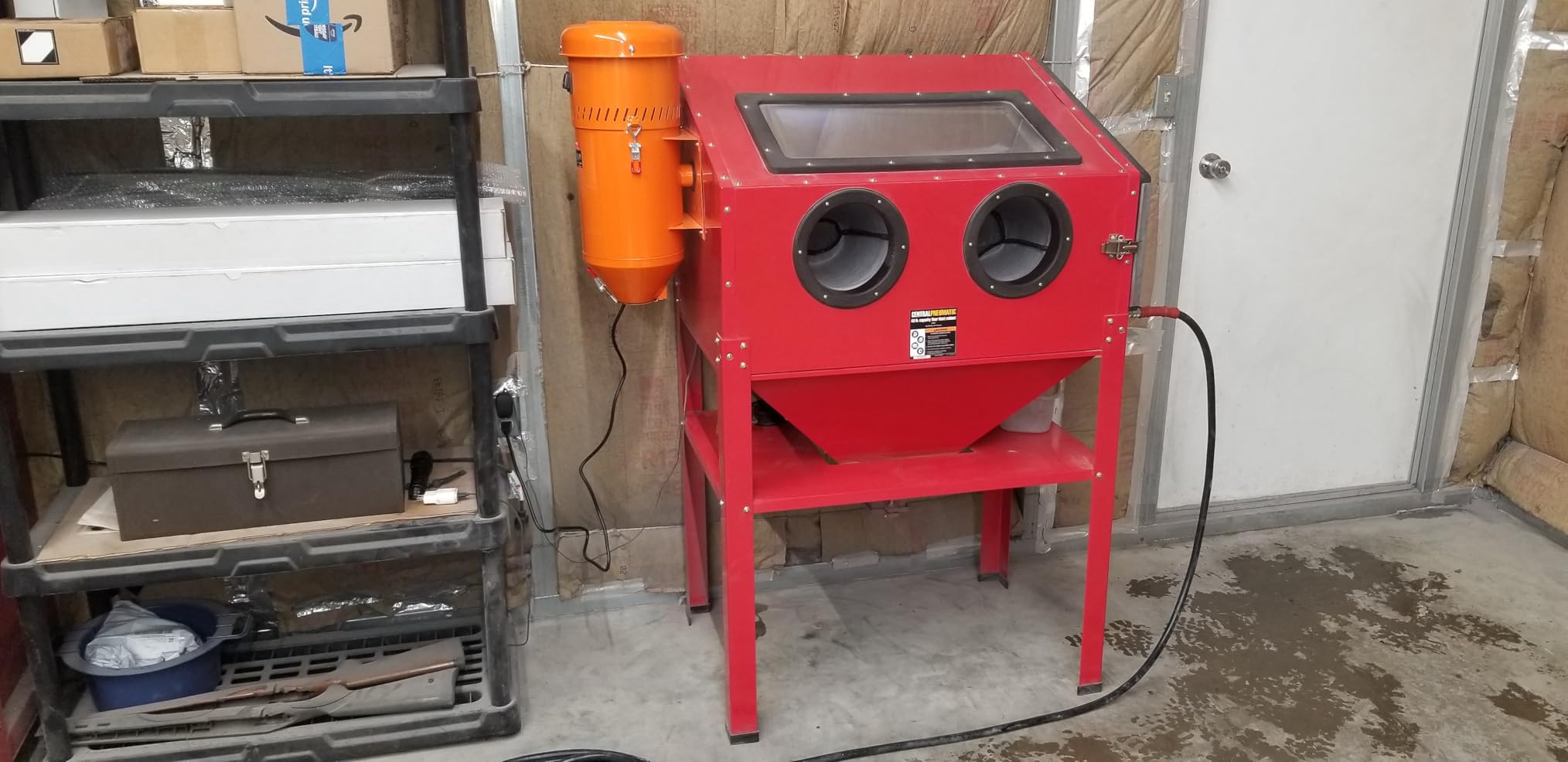
Where the VEVOR falls short is assembly. The instructions are weak, and at 111.8 pounds you will want a second person for the larger panels. Plan on two hours with a helper rather than the one hour the manual implies.
On soda specifically, this cabinet works as well as any general-purpose abrasive cabinet. It is not a dedicated soda unit, but the low end of its 40 to 120 PSI range covers the gentle 40 to 60 PSI soda work that delicate parts need.
Best for hobbyists ready to step up to a floor cabinet
If you have been working on a Harbor Freight benchtop and you have outgrown it, this VEVOR is the natural next step. The dust collection and visibility are a real upgrade, and the 90-gallon capacity means you can load motorcycle frames, swingarms, and small engine blocks without fighting the cabinet.
It is also the right pick if you split your time between soda for delicate work and aluminum oxide or glass bead for heavier rust. The four ceramic nozzles cover both ends of that workflow.
Skip if you want fast setup time
If you want a cabinet you can unbox, assemble, and start blasting in under an hour, look elsewhere. Plan a Saturday afternoon with a helper.
You should also skip this cabinet if you need a dedicated, sealed soda setup for daily production work. The included gun is fine for hobby and shop use but is not a heavy-duty production gun.
4. Shop Fox M1114 Benchtop – Best Benchtop Cabinet for Delicate Small Parts
Shop Fox M1114 Benchtop Sandblaster
Benchtop cabinet
60-100 PSI
10 lb media capacity
9 x 10.75 inch window
Pros
- Solid construction with heavier metal than cheaper benchtop cabinets
- Dual side doors give good accessibility for small parts
- Compact benchtop size fits small shops and stores easily
- Clear viewing window when properly maintained
- 1-year warranty included
Cons
- Plastic side doors bow inward and leak at the seams
- Stock gloves wear out quickly at the wrists
- Lighting is mounted on the back which limits visibility
- Stock plexiglass window scratches easily
- Hopper angle is too shallow so media does not flow back reliably
The Shop Fox M1114 is the benchtop cabinet I keep on my own bench for small aluminum and brass parts. It is not the prettiest cabinet in this roundup, but for delicate small work it gets the job done once you seal it.
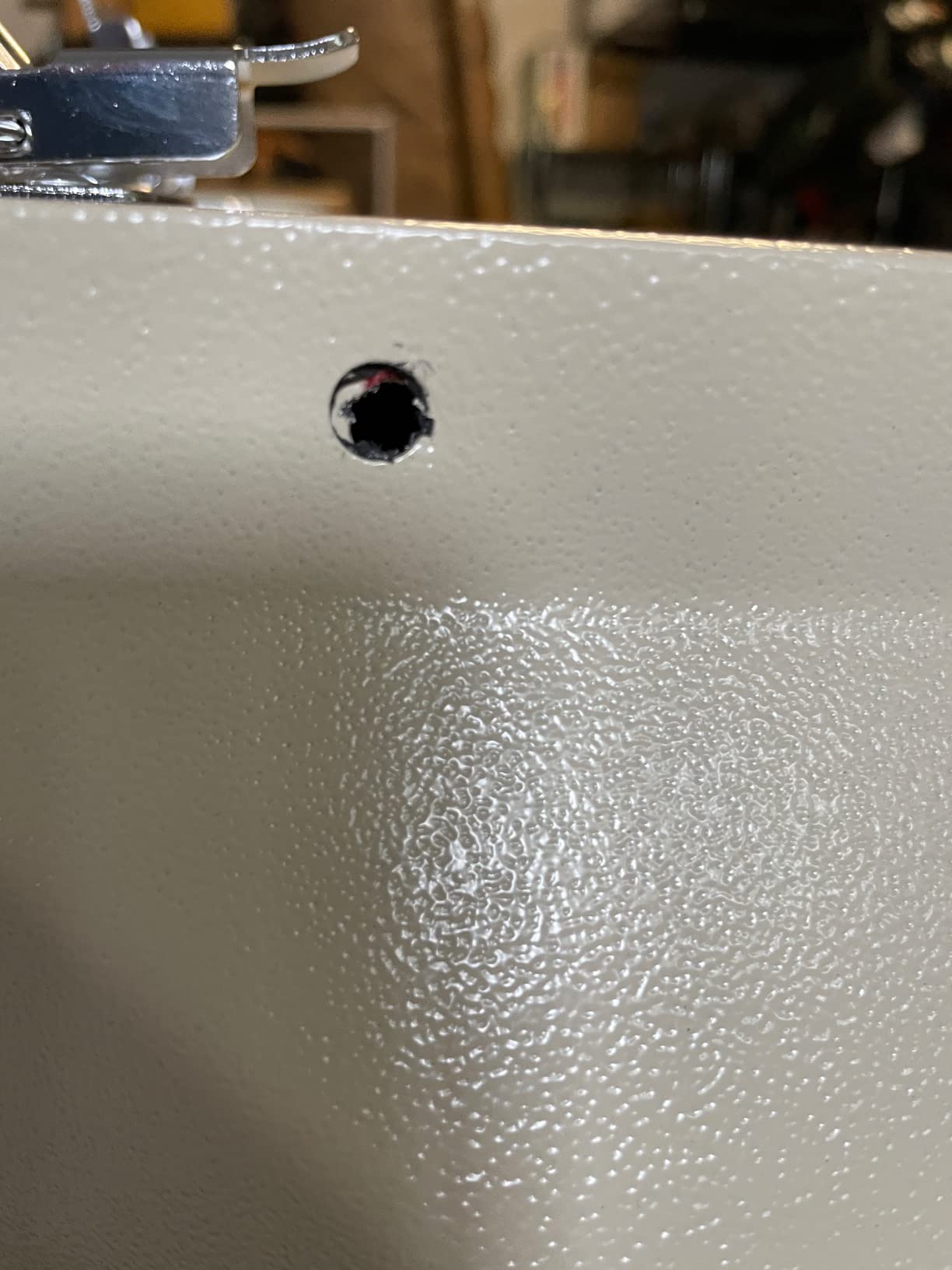
Out of the box, expect to spend thirty minutes sealing the seams with silicone and caulking the rivets. Reviewers consistently report leaks at the plastic doors and around the rivets. After sealing, the cabinet runs soda at 60 to 80 PSI without major dust escape.
For small parts, the dual side doors are genuinely useful. I can flip a small aluminum part from one side to the other without dragging it through a glove port.
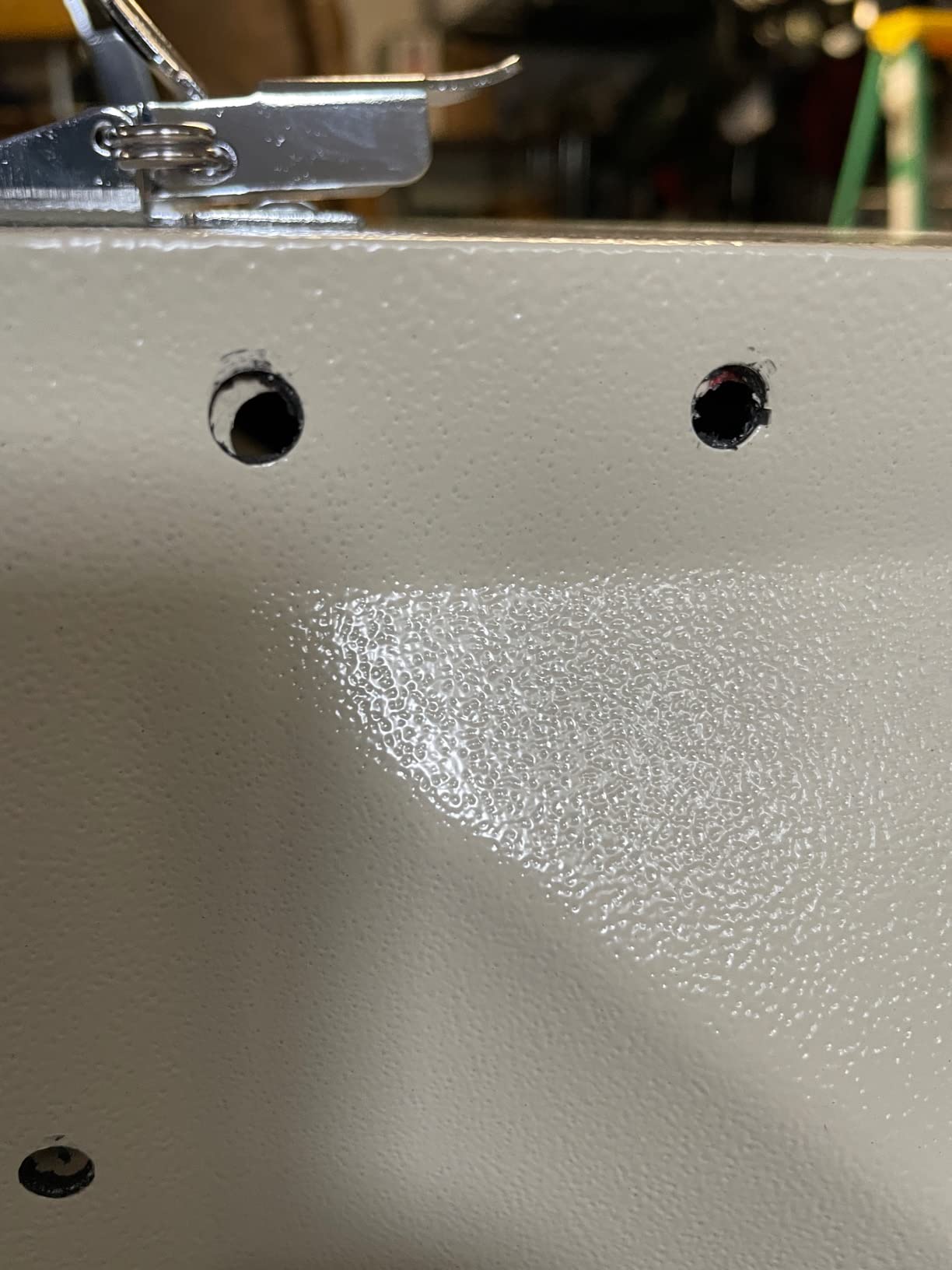
On the negative side, the stock gloves wear out faster than you would expect with soda because sodium bicarbonate is hygroscopic and the moisture from your hands breaks the material down. I keep a spare set on the shelf. The plexiglass window also scratches fast, which is why the stretch-wrap protective film that ships in the box matters.
For soda work, the M1114 handled glass bead, walnut shell, and baking soda well. I would not push it past 80 PSI on delicate parts because the shallow hopper angle makes consistent media flow harder at higher pressure.
Best for small workshop hobbyists
If you have a small shop, a one-car garage, or a basement workbench and you mostly blast small aluminum, brass, or steel parts, the Shop Fox M1114 is the right size. It does not dominate the floor and it stores on a shelf when not in use.
It is also a smart pick for first-time cabinet buyers who want to learn how soda and bead blasting behave before committing to a floor unit.
Skip if you want low maintenance
If you do not want to spend an afternoon sealing seams, replacing gloves, and upgrading the window film, this cabinet will frustrate you. Plan for the upgrade work or buy a sealed unit.
You should also skip it if you need to blast motorcycle frames or larger automotive parts. The 10 pound media capacity and small interior will not fit the work.
5. Parts-Diyer 40-Gallon Benchtop – Best for Hobbyists on a Mid Budget
Parts-Diyer 40 Gallon Bench Top Air Sandblasting Cabinet
40-gallon benchtop
60-125 PSI / 6-25 CFM
4 nozzles
LED lighting
Pros
- Good value for hobby and DIY sandblasting
- Sturdy steel panels suitable for a home shop
- Includes 4 ceramic nozzles plus dust collector port
- Decent cabinet size for most small-to-medium parts
- Works well with glass bead and walnut shell media once sealed
- Bright LED lighting and adequate viewing area
Cons
- Stock plastic window scratches easily
- Reports of leaks at odd spots even after sealing
- Stock screws are low quality and users replace with #10 screws
- Holes may not line up during assembly
- Included air hose does not seal well and benefits from a rubber fuel line swap
- Poor assembly instructions
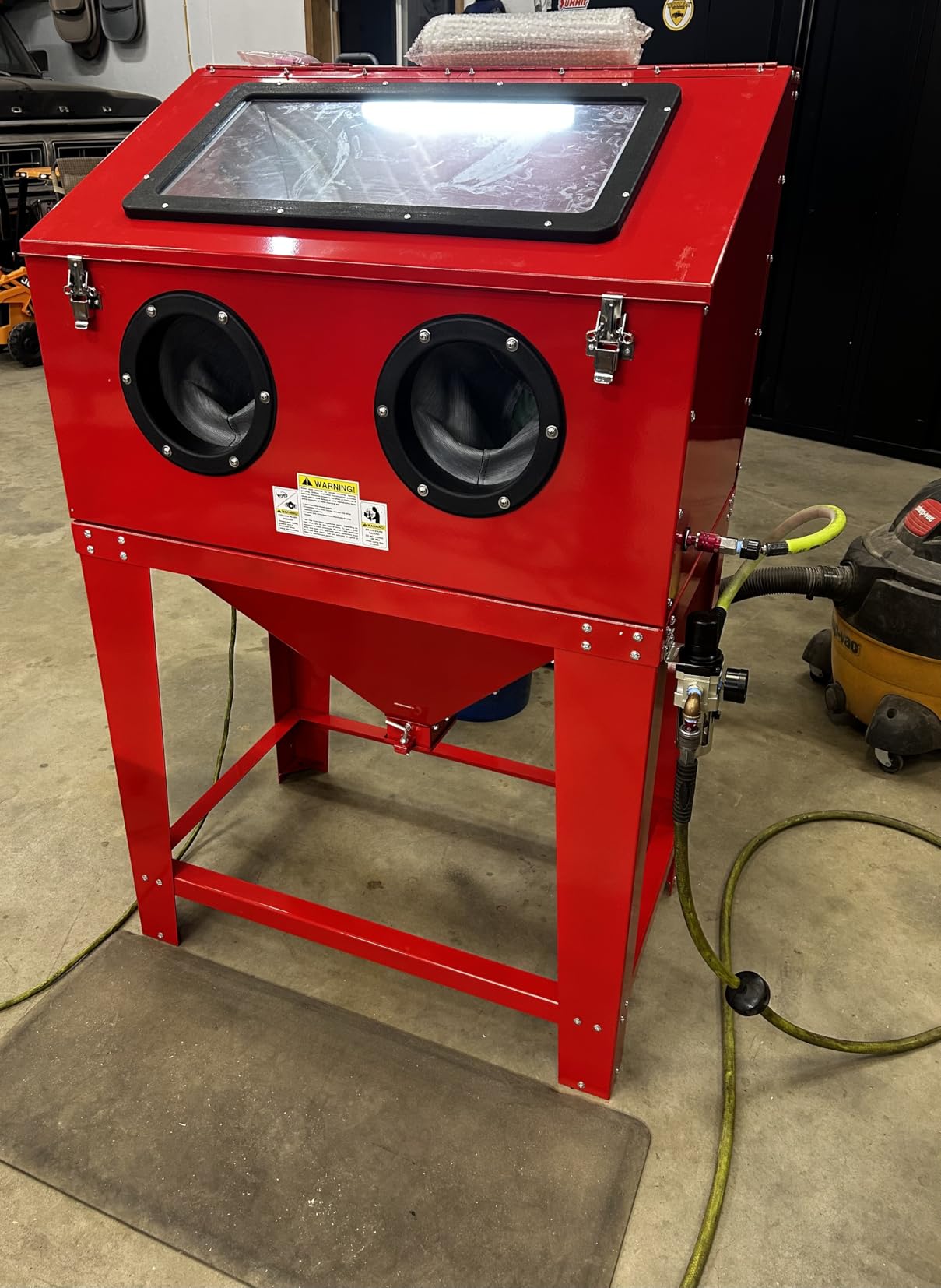
The Parts-Diyer 40-gallon is the middle ground between the cheapest 25-gallon benchtop units and the larger Shop Fox. The interior is genuinely usable for medium parts like cylinder heads, brackets, and small housings, and the price sits in a comfortable hobby range.
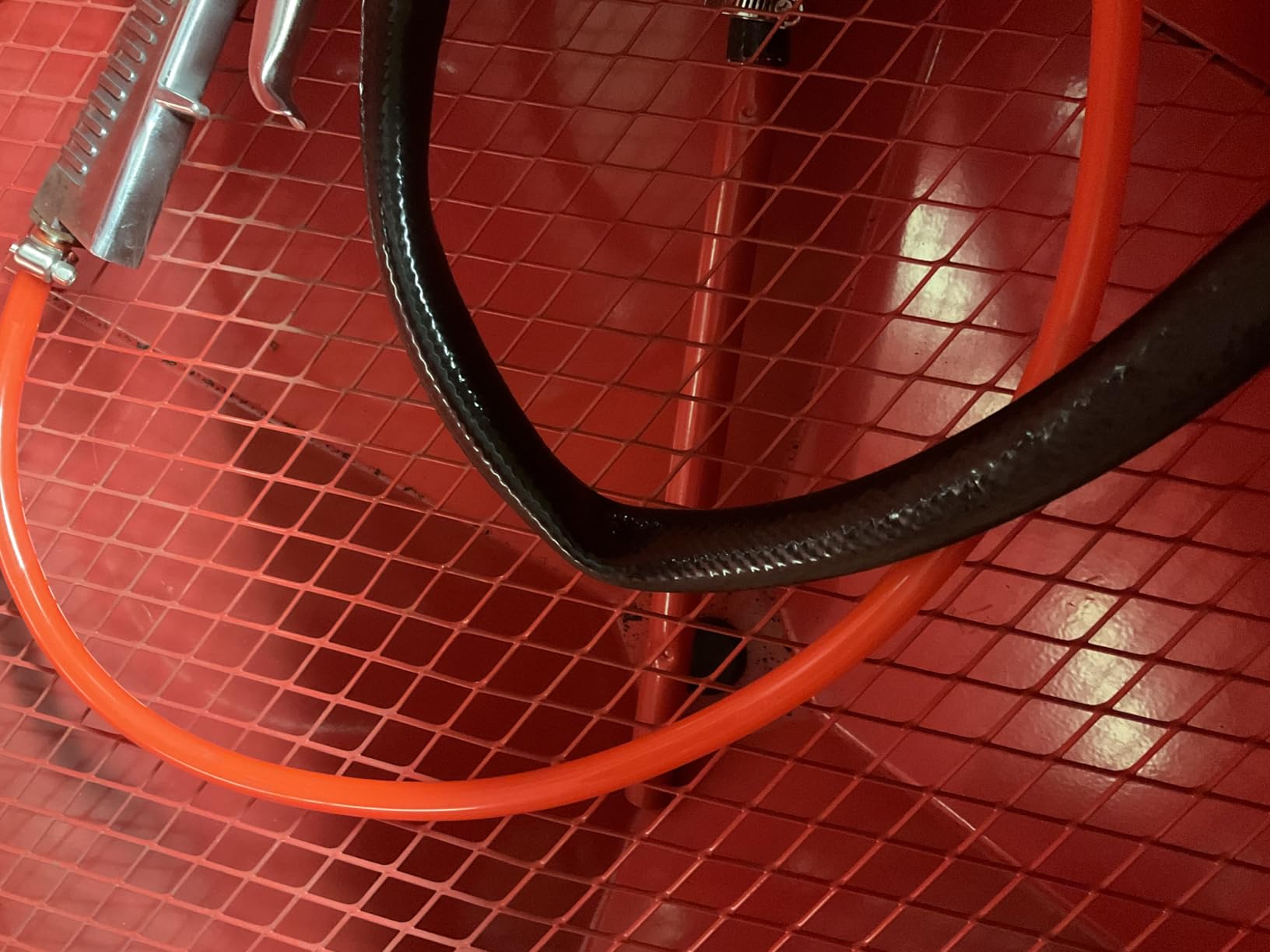
Once you commit to sealing the seams and replacing the stock fasteners, this cabinet behaves like a more expensive unit. Reviewers report that the included air hose does not seal well to the barbs, so a swap to rubber fuel line is a common upgrade that takes ten minutes.
For soda work, the Parts-Diyer handled baking soda at 60 to 80 PSI without problems once the seams were sealed. The 4 included nozzles (4, 5, 6, and 7 millimeter) cover the full range from gentle soda blasting on aluminum up to heavier bead work on steel.
The honest weakness is the window. The stock plexiglass scratches fast, and a soda dust storm against plexiglass is the fastest way to make it unusable. Stretch-wrap protective film over the window is the single best five-dollar upgrade you can buy.
Compared to the smaller AutoForever 25-gallon, this Parts-Diyer gives you noticeably more interior room for similar assembly effort. If your work is more than small lapidary pieces, the 40-gallon size pays off.
Best for hobbyists stepping up from a 25-gallon
If you have been working on a tiny benchtop cabinet and you keep wishing you had more room for cylinder heads and small intakes, the Parts-Diyer 40-gallon is the natural upgrade. The size jump matters more than people expect when you start blasting medium automotive parts.
It is also a good pick for someone who wants a sealed, soda-friendly cabinet without paying for a 90-gallon floor unit.
Skip if you want a turnkey cabinet
If you do not want to spend time on upgrades like swapping screws and air hose, look at the Cimcame 90-gallon instead. That cabinet ships sealed and ready to run.
You should also skip this cabinet if you plan to blast motorcycle frames or full suspension components. The 40-gallon interior will not fit those parts.
6. AutoForever 25-Gallon Benchtop – Budget Pick for Small Delicate Work
AutoForever 25 Gallon Bench Top Air Sandblasting Cabinet,Red
25-gallon benchtop
33 lb media capacity
4 nozzles
15.75 x 11.6 in window
Pros
- Friendly price for a hobby entry-level cabinet
- Easy to assemble and start using
- Well-made benchtop size that fits in small shops
- Large 15.75 x 11.6 inch viewing window for clear visibility
- Includes 4 interchangeable nozzles plus integrated fluorescent light
- Good for lapidary and small parts work
Cons
- Directions and instructions are poorly written
- Hardware and hose clamps are reported as low quality
- Holes may not align during assembly
- Catch basin angle is too shallow so media does not flow back reliably
- Some users report media leaks at the seams and bolts
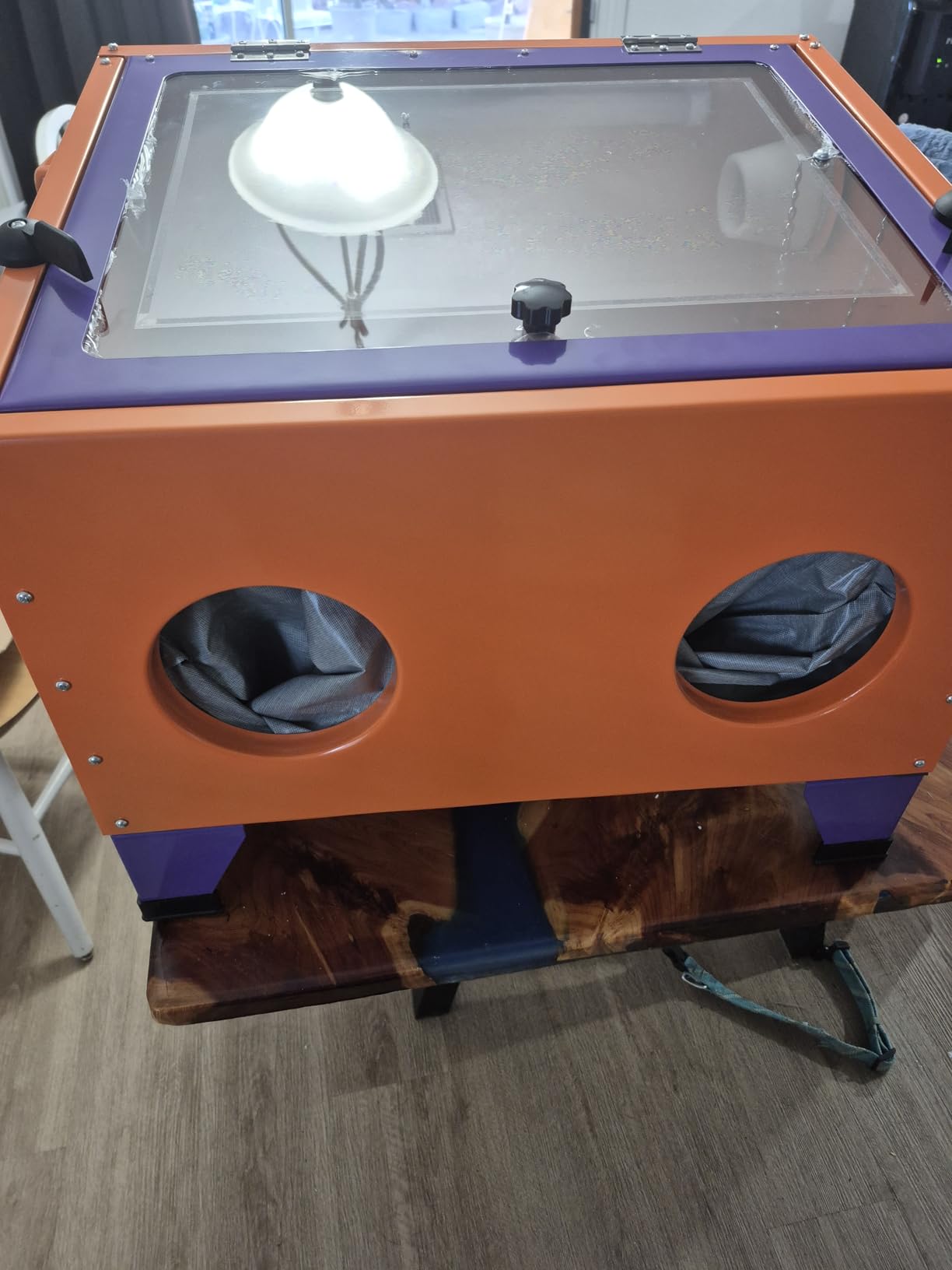
The AutoForever 25-gallon is the budget pick for a reason. It is the cheapest cabinet in this roundup that still runs soda blasting without falling apart. For small delicate work like lapidary, jewelry findings, and small aluminum pieces, it does the job.
The 15.75 by 11.6 inch window is large for a 25-gallon cabinet, and the integrated fluorescent light helps visibility on small parts. For lapidary work on soft stones, the low PSI soda range is genuinely useful because it cleans grit without chipping edges.
Out of the box, expect to spend time sealing seams. Reviewers consistently note that the included hardware is the weak link and that misaligned holes require patience.
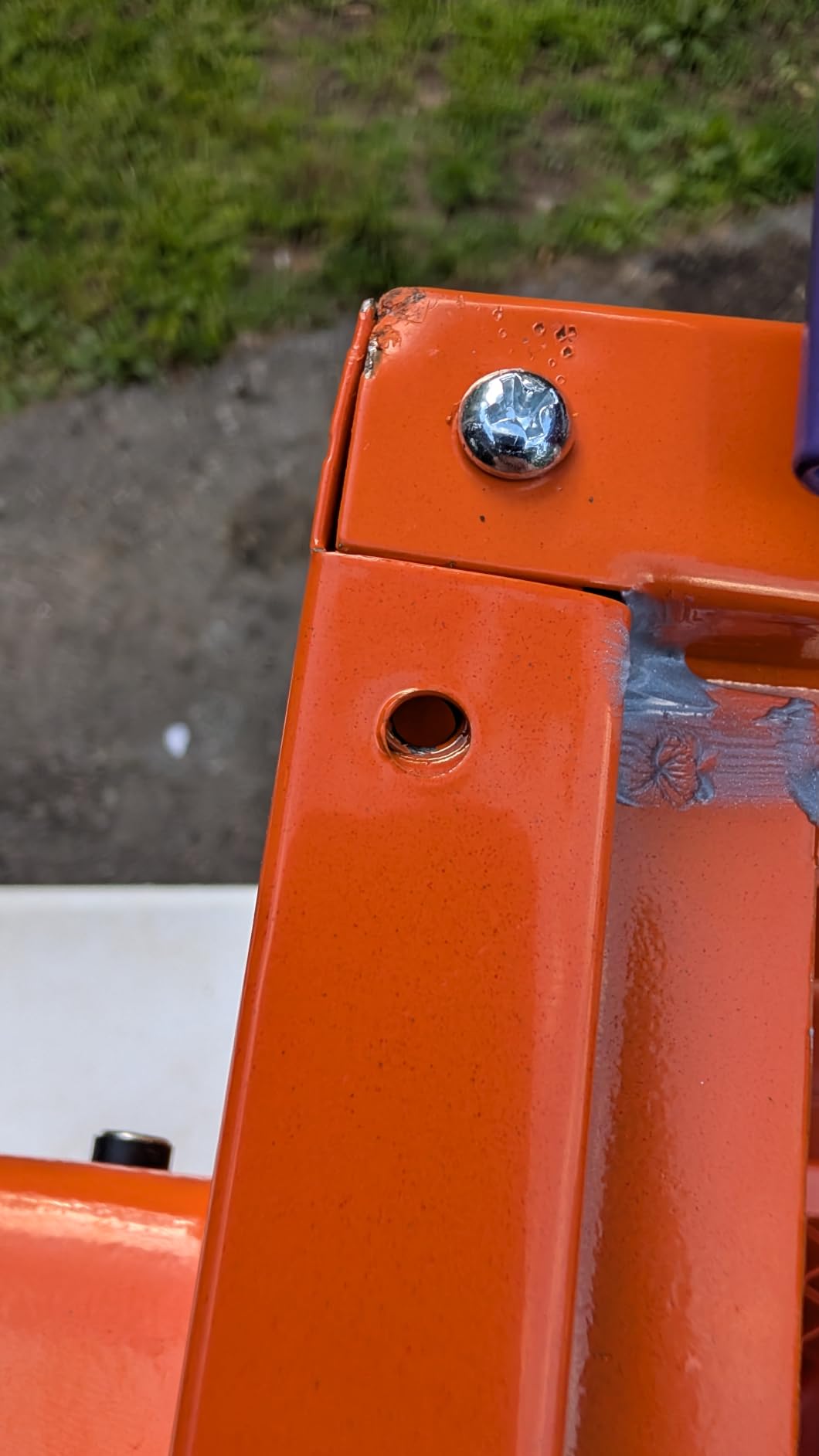
The honest weakness is the catch basin. The angle is too shallow, which means media does not always flow back to the pickup. I had to manually scoop spent media back into the pickup several times during my testing. That is annoying but not a deal-breaker for occasional hobby use.
For soda work specifically, this cabinet runs soda fine. The 25-gallon size means you will not fit a motorcycle frame, but for a beginner to soda blasting on small delicate parts, it is enough.
Best for first-time soda users
If you have never used a blast cabinet and you want to learn how soda behaves before committing to a larger setup, the AutoForever is the right starter cabinet. The price is friendly, the size is forgiving, and the soda performance is genuinely usable.
It is also a smart pick if you only need a cabinet for small delicate parts and lapidary work. You do not need a 90-gallon cabinet for that workload.
Skip if you want medium part capability
If you plan to blast cylinder heads, intake manifolds, or any medium-sized automotive parts, the 25-gallon interior will frustrate you. Move up to the Parts-Diyer 40-gallon or the Cimcame 90-gallon.
You should also skip this cabinet if you want a turnkey experience. Plan on sealing seams and upgrading clamps during the first weekend.
How to Choose the Best Soda Blasting Cabinet for Delicate Parts?
Soda blasting is the gentlest abrasive method because sodium bicarbonate sits at only 2.5 on the Mohs hardness scale, shatters on impact instead of cutting, and dissolves in water for residue-free cleanup. That is why soda is the only cabinet method most restorers trust on thin aluminum, chrome, fiberglass, and polished surfaces where sand would scar the substrate.
The wrong cabinet choice can still ruin a delicate part. A cabinet that cannot seal against fine dust, cannot reach low PSI, or has a window that fogs within minutes will turn a gentle media into an unpredictable mess. Here is what to look for.
Why soda blasting is gentler than sandblasting
Soda has a Mohs hardness of 2.5 versus 7 for silica sand. That tenfold hardness gap is the entire reason soda exists as a media. When a soda particle hits a surface, it shatters and transfers its kinetic energy into a gentle cleaning action rather than a cutting action.
Soda is also water-soluble, so residue rinses off without solvents. That matters for restoration work where trapped media in a crevice can cause future corrosion or paint failure.
CFM and PSI sizing for your compressor
Most soda blasting cabinets run between 40 and 80 PSI, with the sweet spot for delicate work sitting in the 40 to 60 PSI range. Higher PSI defeats the gentleness of the media and starts to act like a sandblaster.
For CFM, plan on 5 to 10 CFM at 90 PSI for a benchtop cabinet and 10 to 18 CFM for a floor cabinet. A 60 gallon, 5 HP compressor is the minimum for most cabinet work. Smaller 30 gallon compressors will starve the cabinet during long runs.
Cabinet size and work area for delicate parts
The smallest delicate parts (jewelry, model parts, small electronics housings) fit comfortably in a 25-gallon cabinet. Cylinder heads, intake manifolds, and small brackets need at least 40 gallons. Motorcycle frames and small engine blocks want 60 to 90 gallons.
Do not buy a cabinet so large that you cannot reach the back of the work area with the glove ports. Reach distance matters more than raw interior volume for delicate work because you need precise nozzle control.
Dust collection and visibility
Soda produces very fine dust. A dust collector that is too small will let dust escape into the cabinet and fog the window within minutes. Look for a dust collector rated for at least 200 to 400 CFM for a benchtop cabinet and 500 to 1400 CFM for a floor cabinet.
Stretch-wrap protective film over the window is the single best five-dollar upgrade you can buy. It extends window life and keeps visibility high through long soda runs.
Soda-ready conversion checklist
Before you pour baking soda into any cabinet, work through this list. First, install a water separator or desiccant dryer on your compressed air line. Soda is hygroscopic and clumps the moment it hits moisture. Second, swap to a ceramic or tungsten nozzle in the 4 to 6 millimeter range. Third, cap pressure at 60 PSI until you know how your cabinet behaves. Fourth, seal every seam with silicone. Fifth, swap the stock gloves for soda-rated rubber gloves and keep spares on the shelf.
Soda residue is water-soluble, so a quick rinse of the cabinet interior between long runs prevents buildup. Many owners wipe down the window with a damp microfiber between sessions to keep visibility high.
Frequently Asked Questions
Can I use a sandblaster for soda blasting?
Yes, most abrasive blast cabinets can run sodium bicarbonate media with a few modifications. Install a water separator on the air line, drop pressure to 40-60 PSI, swap to a 4-6 mm ceramic nozzle, and seal the seams. Soda is gentler than sand, so the cabinet itself does not need to be a dedicated soda model.
What PSI is needed for soda blasting?
Soda blasting works best between 40 and 80 PSI, with 40 to 60 PSI being the sweet spot for delicate parts. Higher pressure defeats the gentleness of the media and starts cutting into soft substrates like aluminum and fiberglass. Start at 50 PSI and adjust up only if cleaning speed is too slow.
What is the best soda blasting media?
Arm and Hammer baking soda from the grocery store works for occasional use, but professional sodium bicarbonate blasting media (such as Natrium or 3M) is graded for consistent particle size and lower dust. For very delicate substrates, walnut shell and plastic media are even gentler alternatives.
How much CFM of air do I need to blast a cabinet?
Plan on 5 to 10 CFM at 90 PSI for a benchtop cabinet and 10 to 18 CFM for a floor cabinet. A 60 gallon, 5 HP compressor is the practical minimum for cabinet work. Smaller compressors will run the cabinet briefly but will starve it during long sessions, which kills cleaning performance.
What sandblasting media is best for aluminum?
Soda (sodium bicarbonate) is the safest media for aluminum because it has a Mohs hardness of only 2.5 and shatters on impact. Glass bead works for cleaning but is more aggressive. Walnut shell and plastic media are also safe for thin or polished aluminum. Avoid sand and aluminum oxide on aluminum because they cut into the soft surface.
What are the common problems with sand blasting cabinets?
The most common cabinet problems are window fogging, glove wear, dust leaks at seams, undersized dust collectors, and moisture in the media line. Window fogging is solved with stretch-wrap protective film. Gloves wear out faster with soda because the media is hygroscopic. Dust leaks need silicone sealing. A desiccant dryer on the air line prevents moisture clumping.
Final Verdict
For most restorers looking for the best soda blasting cabinets for delicate parts, the Eastwood B100 is the cabinet I would buy first because its 343L interior, integrated dust collection, and dual-tube LED lighting combine in a way the smaller benchtop units cannot match. The Cimcame 90-gallon is the right pick if you want floor-cabinet capability at a friendlier price, and the VEVOR 90-gallon is the smart shop upgrade if you have outgrown a Harbor Freight benchtop.
Whichever cabinet you choose, install a water separator on the air line, seal every seam with silicone, and swap to a 4 to 6 millimeter ceramic nozzle. Those three modifications are what turn a general abrasive cabinet into a soda-friendly station that will safely clean aluminum, chrome, fiberglass, and thin sheet metal without warping or etching the substrate.