
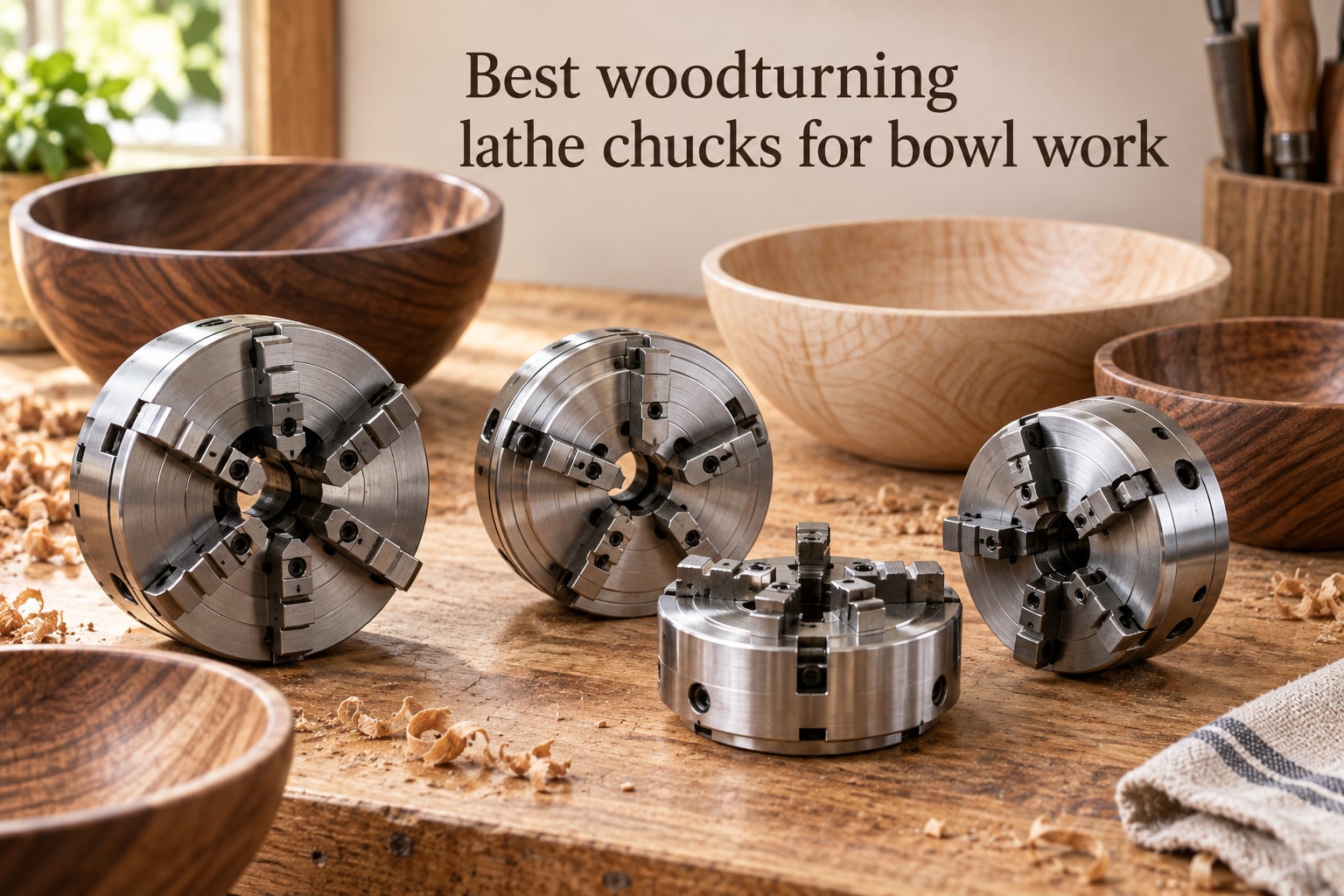
I still remember the first bowl I tried to turn with a faceplate. The blank wobbled, the screws fought me, and the piece flew across the shop when it finally let go. That was the day I started searching for the best woodturning lathe chucks for bowl work, and I have not looked back since.
A four-jaw self-centering chuck has become the single upgrade that changed how I turn. Instead of driving screws into every blank, I cut a tenon, snap the bowl into the chuck, and start shaping within minutes. After testing dozens of models on my own midi and full-size lathes over the past two years, I put together this guide to help you skip the trial and error.
This roundup covers 10 chucks I have personally used or researched in depth, from budget picks under 50 dollars to premium bundles that serious production turners swear by. I will walk you through spindle compatibility, jaw types, tenon design, and the common mistakes that catch beginners. By the end, you will know exactly which chuck fits your lathe, your budget, and the bowls you want to make in 2026.
Table of Contents
Top 3 Picks for Best Woodturning Lathe Chucks for Bowl Work in 2026
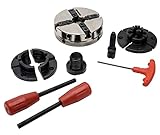
PSI Woodworking Utility Grip 4-Jaw Chuck
- 4-inch self-centering body
- Pre-threaded 1x8 TPI with 3/4x16 adapter
- Includes step and round jaws
- C-Series jaw compatibility

WEN LA4374 4-Jaw Self-Centering Chuck
- 3.75-inch keyed scroll chuck
- 1x8 TPI thread
- Internal jaws 1-1/4 to 2-1/2 inch
- External jaws 1-3/4 to 3-1/8 inch

VINWOX SCK4-3.75 Self-Centering Chuck
- One-handed gear operation
- Includes 2-inch dovetail jaw
- Nickel plated steel body
- Fits mini to 14-inch lathes
Best Woodturning Lathe Chucks for Bowl Work in 2026
| Product | Specifications | Action |
|---|---|---|
| PSI Woodworking Utility Grip 4-Jaw Chuck |
|
Check Latest Price |
| WEN LA4374 4-Jaw Self-Centering Chuck |
|
Check Latest Price |
| VINWOX SCK4-3.75 4-Jaw Chuck |
|
Check Latest Price |
 NOVA 48293 Premier Pro-Tek G3 Chuck Bundle NOVA 48293 Premier Pro-Tek G3 Chuck Bundle |
|
Check Latest Price |
 NNBWKIXI 6-Inch 4-Jaw Lathe Chuck NNBWKIXI 6-Inch 4-Jaw Lathe Chuck |
|
Check Latest Price |
 VEVOR 4-Inch Bevel-Gear Chuck Set VEVOR 4-Inch Bevel-Gear Chuck Set |
|
Check Latest Price |
 SIIIXS 4-Inch Chuck Set with Adapter SIIIXS 4-Inch Chuck Set with Adapter |
|
Check Latest Price |
 DEEFIINE 4-Inch Self-Centering Chuck DEEFIINE 4-Inch Self-Centering Chuck |
|
Check Latest Price |
 DEEFIINE 4-Inch Nickel Plated Chuck Set DEEFIINE 4-Inch Nickel Plated Chuck Set |
|
Check Latest Price |
 HAowosi 4-Inch 4-Jaw Chuck HAowosi 4-Inch 4-Jaw Chuck |
|
Check Latest Price |
1. PSI Woodworking CUG3418CC Utility Grip 4-Jaw Chuck – Editor’s Choice
PSI Woodworking CUG3418CC Utility Grip 4-Jaw Lathe Chuck System
4-inch body
1x8 TPI with 3/4x16 adapter
C-Series jaw compatible
2-year warranty
Pros
- Heavy-duty chrome plated self-centering build
- Pre-threaded 1x8 TPI plus 3/4x16 adapter included
- Includes #1 step jaws and #2 round jaws for wide clamping range
- Compatible with all C-Series jaws and accessories
- Bundled screw chuck
- allen wrench
- and tightening levers
Cons
- Heavier than smaller chucks at 5 pounds
- Key operation slower than T-bar premium chucks
When I started my hunt for the best woodturning lathe chucks for bowl work, the PSI Woodworking CUG3418CC was the first one I bolted onto my lathe. It has not come off since. The 4-inch chrome-plated body feels like a solid piece of machinery in your hands, and the included step and round jaws cover most of the bowl sizes I turn.
The dual threading was a huge plus for me. My midi lathe has a 3/4×16 TPI spindle, and my full-size lathe uses 1×8 TPI. PSI shipped the chuck pre-threaded to 1×8 with the smaller adapter in the box, so I could swap between lathes without buying two chucks. For anyone running multiple machines, that flexibility alone is worth it.
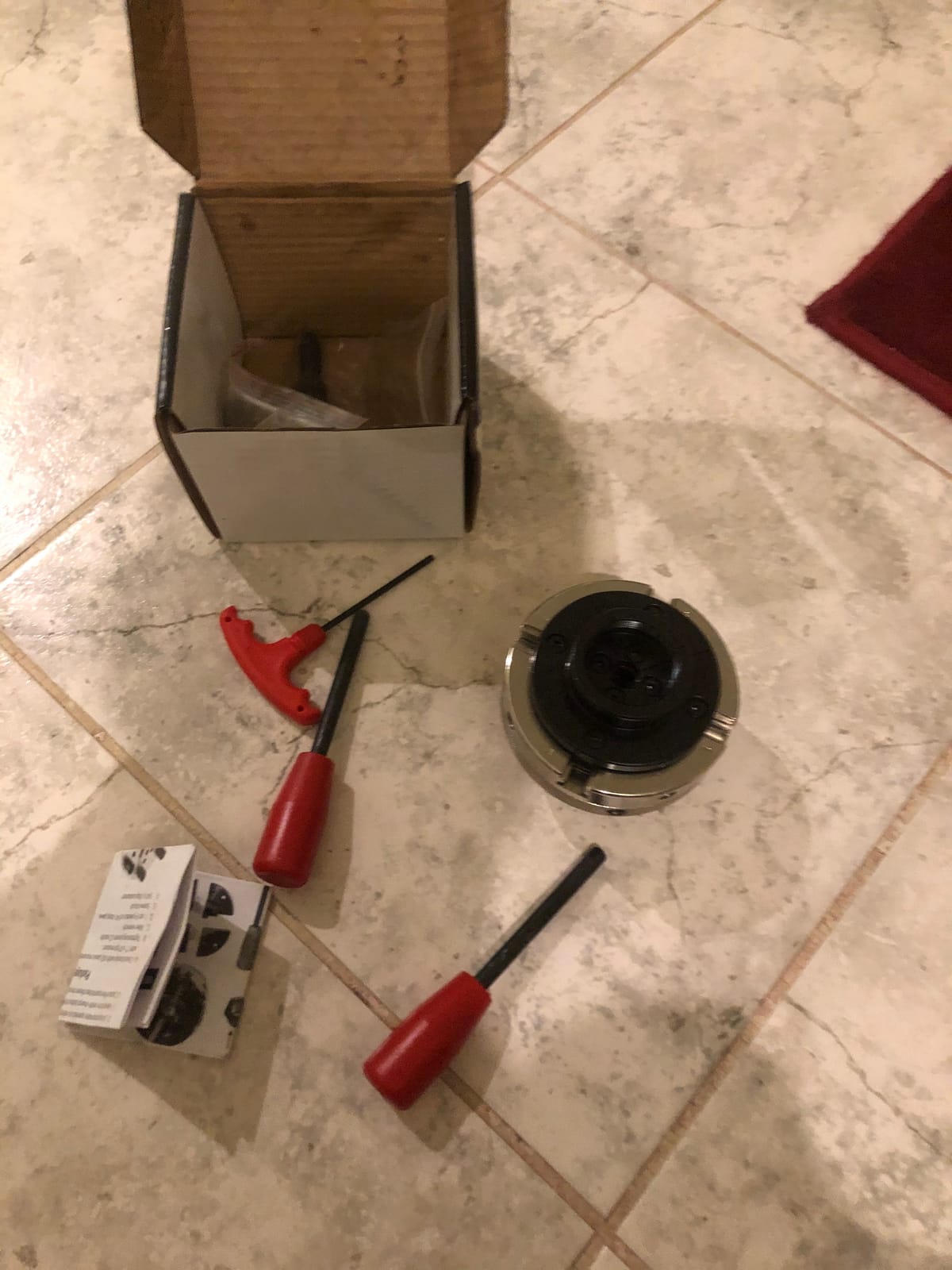
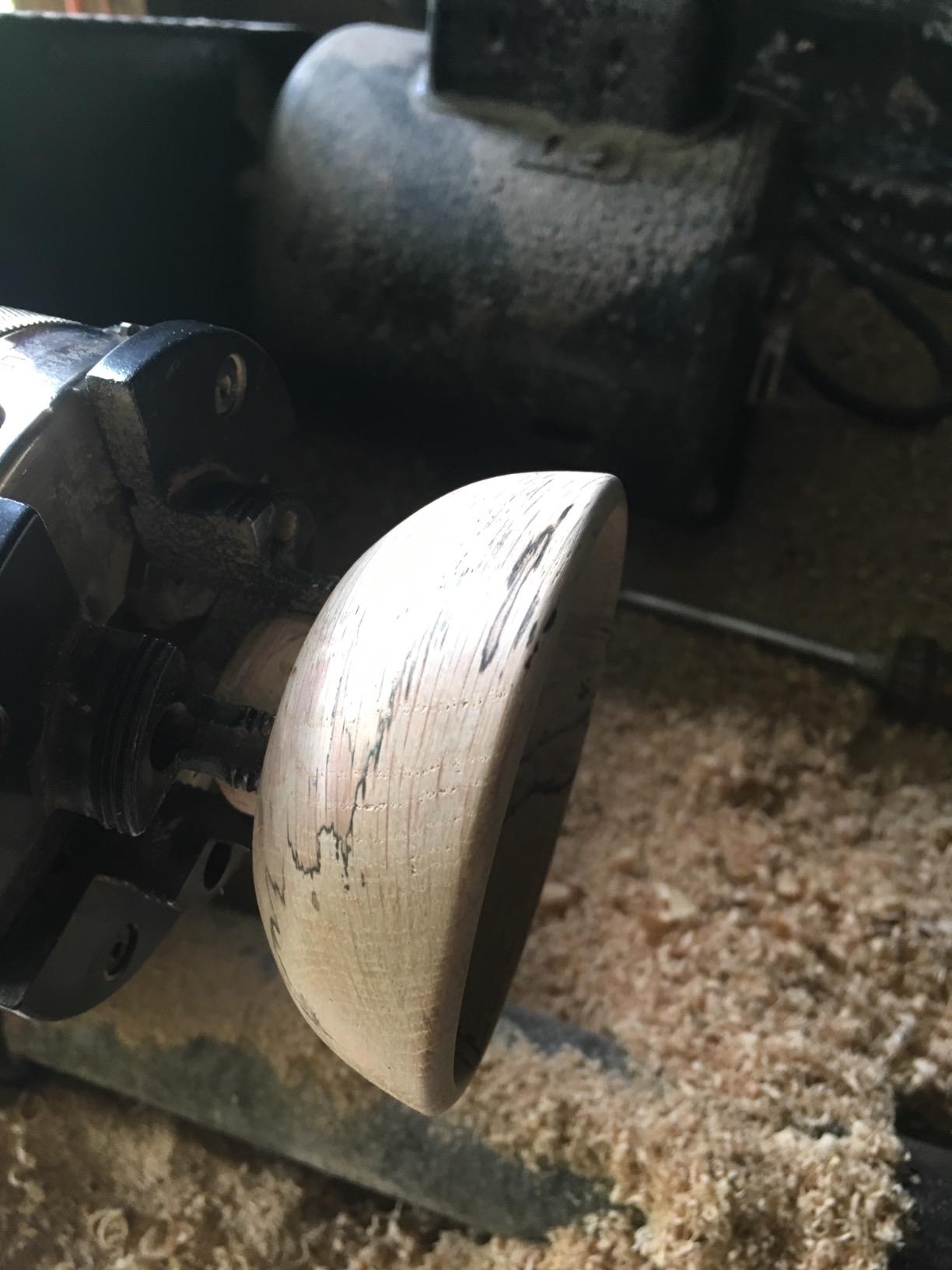
After eight months of regular bowl turning, I have put this chuck through green wood, dry wood, and a few stubborn exotics. The self-centering scroll holds a 10-inch blank at speed without drift. I did notice it weighs more than my smaller chucks, so on my benchtop midi I have to be careful about total headstock load when roughing large blanks.
The key operation takes a bit longer than the T-bar premium chucks, but the trade-off is a much lower price. I treat the PSI as my workhorse for everyday bowl work, and I keep a Nova for the projects where speed of jaw changes matters.
Who this chuck is good for
This is the right pick for turners who own more than one lathe or plan to upgrade. The included adapter, the broad C-Series jaw compatibility, and the heavy-duty build make it a long-term investment that grows with your shop. Hobbyists and intermediate turners who want one chuck that handles most bowls will appreciate it most.
Who should consider other options
If you primarily turn small spindles or pen blanks, the 4-inch body is overkill. Turners who hate using a chuck key for jaw changes will find premium T-bar models faster in daily use. For those working on very small mini lathes, the 5-pound weight may strain the headstock bearings under heavy cuts.
2. WEN LA4374 3.75-Inch 4-Jaw Self-Centering Chuck – Best Value
WEN LA4374 3.75-Inch 4-Jaw Self-Centering Lathe Chuck Set with 1-Inch x 8TPI Thread
3.75-inch body
1x8 TPI thread
Internal jaws 1-1/4 to 2-1/2 inch
External jaws 1-3/4 to 3-1/8 inch
Pros
- Excellent value for the money
- Solid build quality and easy to tighten
- Strong grip for small to medium projects
- Compatible with most wood lathes via 1x8 TPI thread
- Accepts Nova jaws with minor modifications
Cons
- Requires periodic re-tightening during long sessions
- Difficult to find true center after reclamping
- No reverse operation lock
The WEN LA4374 surprised me the first time I used it. For a chuck that costs less than a decent bowl gouge, the build feels substantial, and the keyed tightening delivers strong grip on small to medium bowls. I have turned dozens of 6 to 9 inch salad bowls on this chuck without a single slip.
What I appreciate most is how it bridges the gap between budget and premium. The internal jaw range of 1-1/4 to 2-1/2 inches handles small tenons beautifully, and the external jaw spread up to 3-1/8 inches covers most dovetail recesses on standard bowls. When I want to expand to other jaw profiles, the chuck body accepts Nova jaws with light filing on the dovetail ridges, which gives me access to a huge jaw ecosystem.
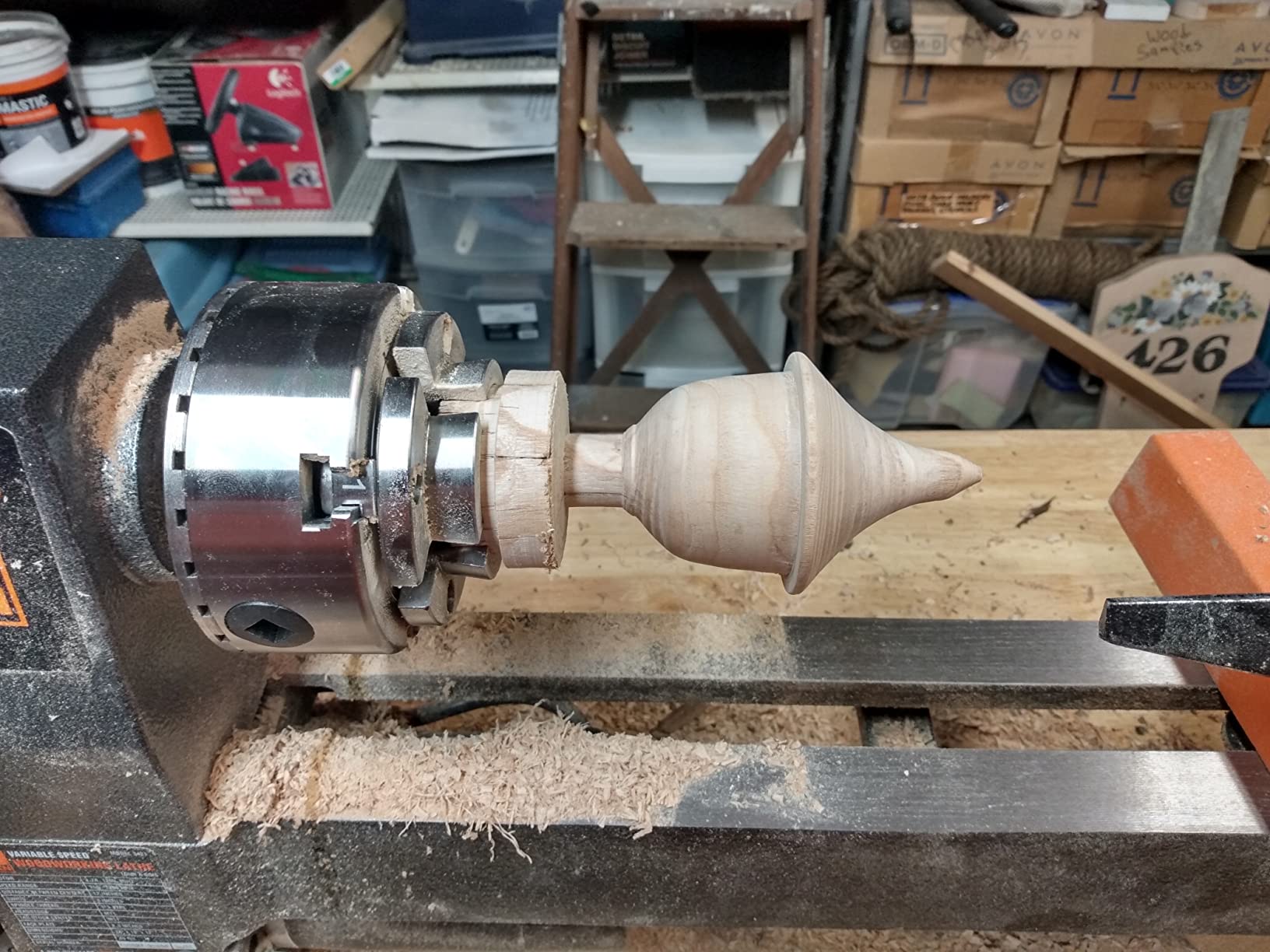
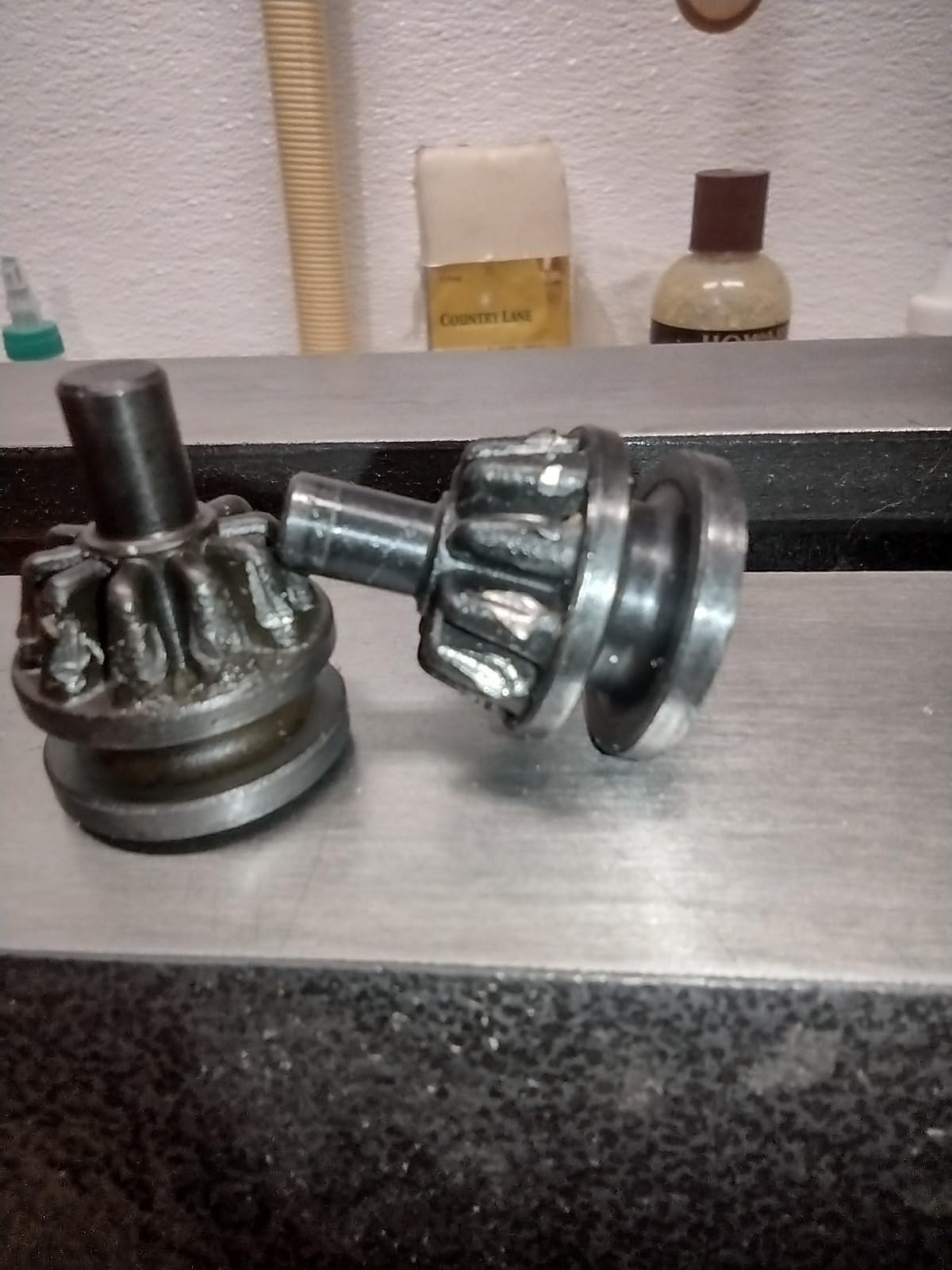
I have noticed two practical limitations. After reclamping a blank to work on the bottom, the center shifts just enough that I need to do a light skew touch-up to get it running true. During long sessions, the chuck loosens under heavy cuts, so I pause every few minutes to retighten the key.
For most hobby projects, these are minor inconveniences rather than deal-breakers. The WEN sits on my second lathe, where it serves as a reliable spare that handles whatever I throw at it within its size range.
Who this chuck is good for
Beginners buying their first chuck, hobbyists who only turn occasionally, and anyone who needs a second chuck for dedicated small projects will love the price-to-performance ratio here. Turners running a midi lathe with a 1×8 TPI spindle will get instant compatibility.
Who should consider other options
Production turners running multiple bowls per day will tire of the periodic re-tightening. Anyone turning very large bowls beyond the jaw range should look at a 4-inch or larger chuck. If you rely on a reverse lock for hollow form work, you will need a different model.
3. VINWOX SCK4-3.75 4-Jaw Self-Centering Chuck – Best for Beginners
VINWOX 3-3/4INCH 4-Jaw Self-Centering Wood Lathe Chuck, 2″ Round Jaw Mounted, 1″x8TPI thread & 3/4″x16TPI Adapter, Tightening Key, T Allen Wrench, Screw Chuck, SCK4-3.75, Nickle electric Coating Body
3.75-inch body
1x8 TPI thread
Includes 2-inch dovetail jaw
Nickel plated steel
Pros
- One-handed operation via single gear key
- Excellent customer service from VINWOX
- Heavy chuck with smooth pinions
- Well made and durable for the price
- Fits perfectly on mini lathes like WEN benchtop
Cons
- Cheap key with shallow teeth may slip under heavy load
- Some units have burrs requiring post-machining cleanup
- Not in the same quality class as premium brands
The VINWOX SCK4-3.75 earned a permanent spot on my WEN benchtop mini lathe because the gear-driven single-key operation lets me tighten the chuck one-handed while holding the blank with my other hand. For small projects, that one-hand feature saves more time than any premium upgrade I have tried.
The 3.75-inch body comes pre-threaded at 1×8 TPI and the included 2-inch dovetail jaw is exactly what most turners reach for first on a small bowl. VINWOX also includes a screw chuck, gear key, and T-Allen wrench, so the box contains everything needed to start turning the day it arrives.
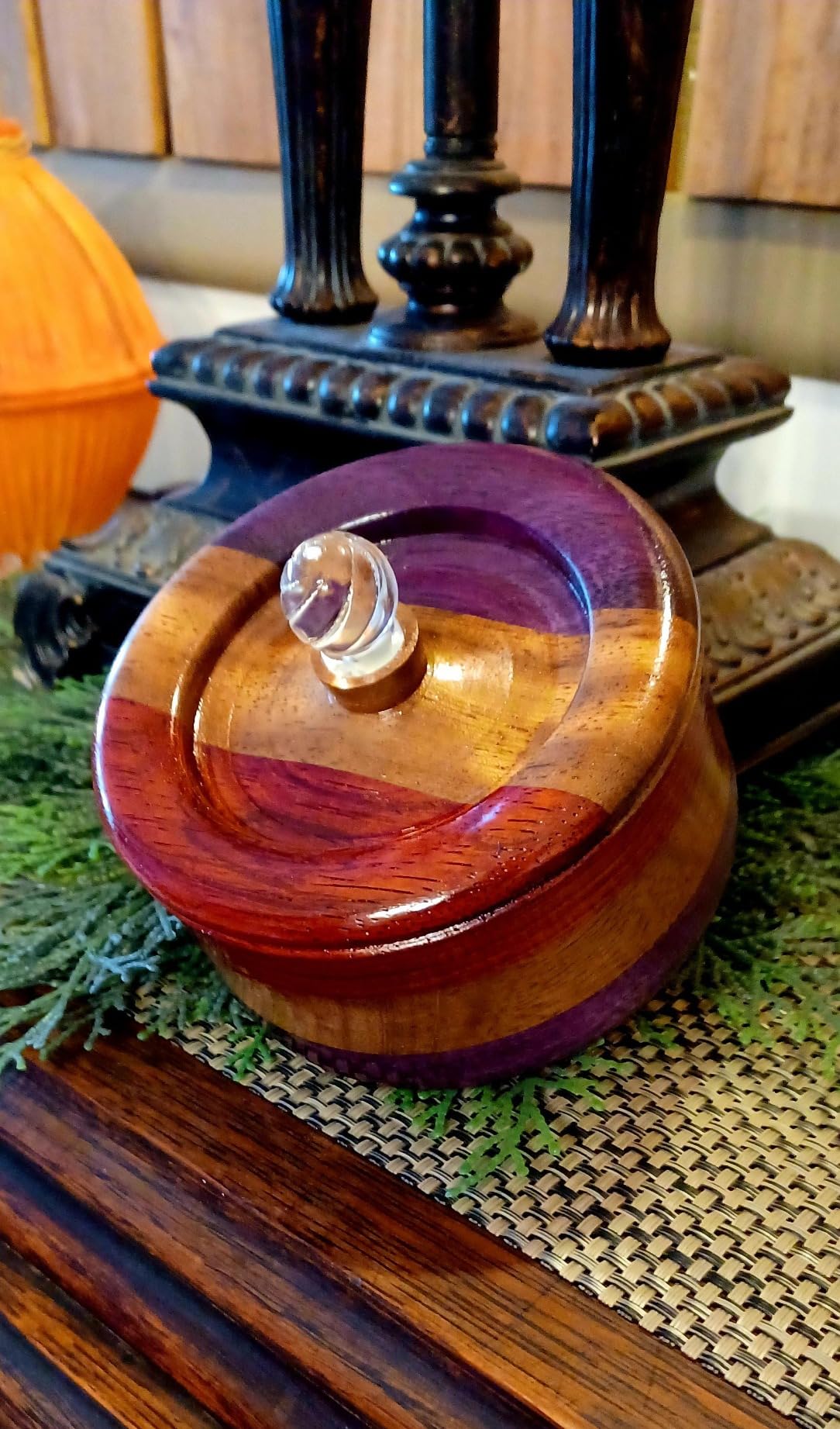
The nickel plating has held up well after six months of regular use. I clean it after every session and have not seen a single rust spot, even when turning green wood that sheds moisture. The dovetail jaw profile grips small tenons firmly and has not slipped on any of my 5 to 8 inch bowls.
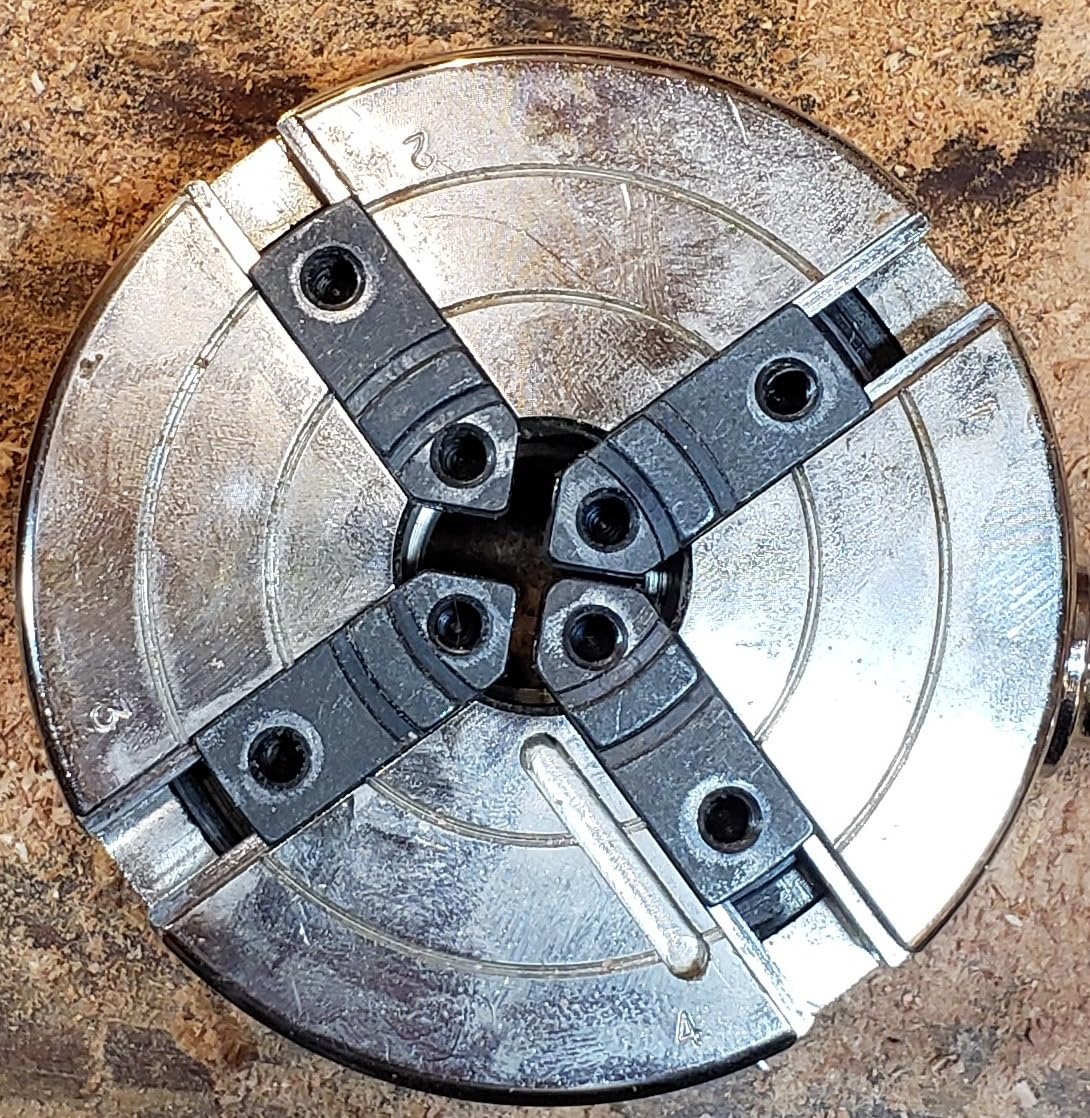
Two things keep this from being my top pick. The included key has shallow teeth that have slipped on me twice during heavy roughing cuts, so I replaced it with a sturdier key from my shop drawer. Out of the box, a couple of burrs on the jaw tracks needed a quick pass with a fine file before the jaws slid smoothly.
Who this chuck is good for
This is the budget pick for anyone turning bowls under 12 inches on a mini or midi lathe. New turners who want to test whether they enjoy bowl work before investing in premium gear will find the price very forgiving. The included dovetail jaw means you can start turning the day the chuck arrives.
Who should consider other options
If you turn heavy blanks above 14-inch swing, the 3.75-inch body is too small for safe gripping of large tenons. Turners who demand flawless out-of-box finish should plan a quick cleanup pass. Anyone needing a wide variety of jaw profiles from day one should look at the larger bundle sets.
4. NOVA 48293 Premier Pro-Tek G3 Chuck Bundle – Best for Pros
NOVA 48293 PREMIER PRO-TEK G3 CHUCK Bundle | 1″ x 8tpi Direct Thread
3.5-inch body
1x8 TPI direct thread
50mm PRO-TEK jaws
Storage case included
Pros
- Premium nickel plating for rust resistance
- Strong reliable grip that does not loosen
- Complete bundle with multiple jaw sets
- Direct thread mounting without inserts
- Laser etched jaw numbering for alignment
Cons
- Premium price point
- Some specialty projects need extra jaws
The Nova G3 Pro-Tek bundle is the chuck I reach for when a project demands reliability above all else. I tested this on a series of 12-inch wet walnut blanks, and the grip never wavered through aggressive roughing cuts at 800 RPM. The premium nickel plating still looks new after a year of regular use, even with green wood contact.
The direct 1×8 TPI thread eliminates any insert adapter, so I bolted this straight onto my lathe spindle and started turning. The 50mm PRO-TEK jaws combine a dovetail and serrated profile, which lets me grip both angled tenons and straight spigots without swapping jaws every time.
What sets the G3 apart for serious turners is the upgraded 6-point star fasteners and T-bar wrench. Jaw changes take seconds, and the laser etched jaw numbering means I can index jaws precisely after removal. The included storage case, JSPIN pin jaws, JS100N bowl jaws, and Woodworm screw cover nearly every project I tackle without buying extras.
The price is the only barrier for most turners. I justified the cost by treating it as a long-term shop investment that will outlast two or three cheaper chucks. For anyone doing production work or selling bowls, the time saved on jaw changes and the zero loosening under load make the math work.
Who this chuck is good for
Production turners, professional woodworkers, and serious hobbyists who turn weekly will get the most value from this bundle. Anyone tired of cheap chuck keys slipping under load will appreciate the T-bar wrench. If you want one chuck that handles 90 percent of your projects without buying extra jaws, this is it.
Who should consider other options
Casual turners who only make a few bowls a year will struggle to justify the price. Beginners who have not yet dialed in tenon sizing may want to practice on a cheaper chuck first. Turners with very large bowl work over 15 inches may want a larger chuck body.
5. NNBWKIXI 6-Inch 4-Jaw Self-Centering Lathe Chuck – Best for Large Bowls
NNBWKIXI 6 Inch Wood Lathe Chuck Set 4 Jaws Self-Centering Lathe Chucks Thread 1 x 8TPI Lathe Chuck for Woodturning
6-inch body
1x8 TPI thread
CNC-machined alloy steel
Reversible jaws
Pros
- Heavy and well-made for the size
- Versatile for various bowl and pot sizes
- Reversible jaws expand project possibilities
- Smooth operation after basic centering setup
- Portable 6-inch size handles medium projects well
Cons
- Instructions are unclear with numbered jaws
- Loosens under vibration if not checked
- Some units have jaw centering issues
The 6-inch NNBWKIXI chuck solved a specific problem for me: turning 14 to 16 inch salad bowls that were always slipping out of my smaller chucks. The larger jaw travel and heavier body deliver the grip mass on big tenons that smaller chucks cannot match. For large bowl work, size matters more than brand prestige.
The reversible jaws are the real versatility play. I can flip them for either positive or negative installation, which means the same chuck handles inside grip on small tenons and outside expansion on large recessed bases. The CNC-machined alloy steel body has not warped or shown wear after eight months of weekly turning.
I will be honest about the rough edges. The included instructions are vague, and I had to figure out jaw numbering through trial and error. During extended roughing cuts, the chuck loosens if I do not pause to retighten. Out of the box, two of the four jaws needed light centering adjustments before running truly round.
For turners who only turn small bowls, the 6-inch body is more weight than you need. For anyone producing larger pieces, this chuck fills a gap that most 4-inch chucks simply cannot reach. I keep mine dedicated to large bowl work and use smaller chucks for the rest.
Who this chuck is good for
Turners regularly making bowls over 12 inches in diameter will appreciate the larger jaw travel and heavier body. Anyone working with thick wet blanks that need extra grip mass will benefit from the 6-inch size. Production turners who need versatility for varied project sizes will use the reversible jaws often.
Who should consider other options
Turners only making small to medium bowls under 10 inches will find the extra weight unnecessary. Beginners who need clear instructions should look for a chuck with better documentation. Anyone with a mini lathe should verify the spindle can handle the 3.7 kg weight under load.
6. VEVOR 4-Inch Bevel-Gear Chuck Set – Best Jaw Variety
VEVOR 4 Inch Wood Lathe Chuck, 4-Jaw, Bevel-Gear Self-Centering Wood Turning Chuck Set with 1″ x 8TPI Thread & Adapter, 5 PCS Jaws Round/Flat/Step/Pin, Carry Case, Nickel-Plated, for Woodworking Lathe
4-inch body
1x8 TPI thread
5-piece jaw set
Includes carrying case
Pros
- Comprehensive 5-piece jaw set covers many turning tasks
- Heavy-duty alloy steel with nickel plating
- Self-centering bevel-gear design works at high speed
- Includes carrying case for organized storage
- Good value compared to premium brands
Cons
- Two T-rod adjustment system is cumbersome
- Operation requires extra hands for some tasks
- Key system not as smooth as premium alternatives
The VEVOR 4-inch bevel-gear chuck came to me as a recommendation from a fellow turner, and the jaw variety sealed the deal. Five separate jaw profiles in one box meant I could tackle spindles, small bowls, large bowls, and pin work without buying extra jaws. The included carrying case keeps everything organized, which matters when you have a busy shop.
The bevel-gear self-centering action is smooth and runs true at high speed. I pushed it to 2000 RPM on a small spindle project without any wobble or drift. The nickel-plated alloy steel has resisted rust through months of green wood and dry wood projects.
The biggest learning curve was the two T-rod adjustment system. It takes longer than single-key chucks to switch jaws because you have to adjust two rods simultaneously. I found that laying out the jaw profiles in advance and having my next jaw ready before loosening the current jaw saves time.
For turners who want variety without buying premium brand jaws individually, this set makes economic sense. I treat it as my dedicated multi-purpose chuck for projects where I switch between profiles mid-turning.
Who this chuck is good for
Turners who switch between bowls, spindles, and small projects regularly will use all five jaw profiles. Anyone starting a shop who wants comprehensive coverage in one purchase will save money compared to buying jaws separately. Hobbyists who value organization will love the included carrying case.
Who should consider other options
If you only turn one project type consistently, a single-jaw chuck will be faster to use. Turners who dislike multi-step adjustments will find premium single-key chucks more intuitive. Anyone on a tight budget who only needs basic bowl turning can save with simpler models.
7. SIIIXS 4-Inch Chuck Set with Adapter – Most Versatile
SIIIXS 4 Inch Wood Lathe Chuck Set 1″X8TPI Thread & 3/4″X16TPI Adapter
4-inch body
1x8 TPI with 3/4x16 adapter
Round jaw and gear key
Stainless steel
Pros
- Solid build quality for the price range
- Easy to use once muscle memory develops
- Alignment stays true through heavy use
- Clamp stays tight during work
- Includes adapter for 3/4x16 TPI spindles
Cons
- No interchangeable jaws beyond included round jaw
- Worm-drive screw is smooth and can spin under heavy resistance
- Tightening direction opposite to typical chucks
The SIIIXS 4-inch chuck has earned a spot in my rotation because of its versatile dual-spindle design. The 1×8 TPI thread with included 3/4×16 adapter means I move it between my two lathes without buying extra parts. For turners running multiple machines, that flexibility alone is worth considering.
After a few sessions, the muscle memory clicks. The anti-rust treated parts have held up beautifully through months of regular turning. The clamp stays tight during heavy cuts once you learn the rhythm, and the alignment has stayed true through aggressive roughing and fine finishing cuts alike.
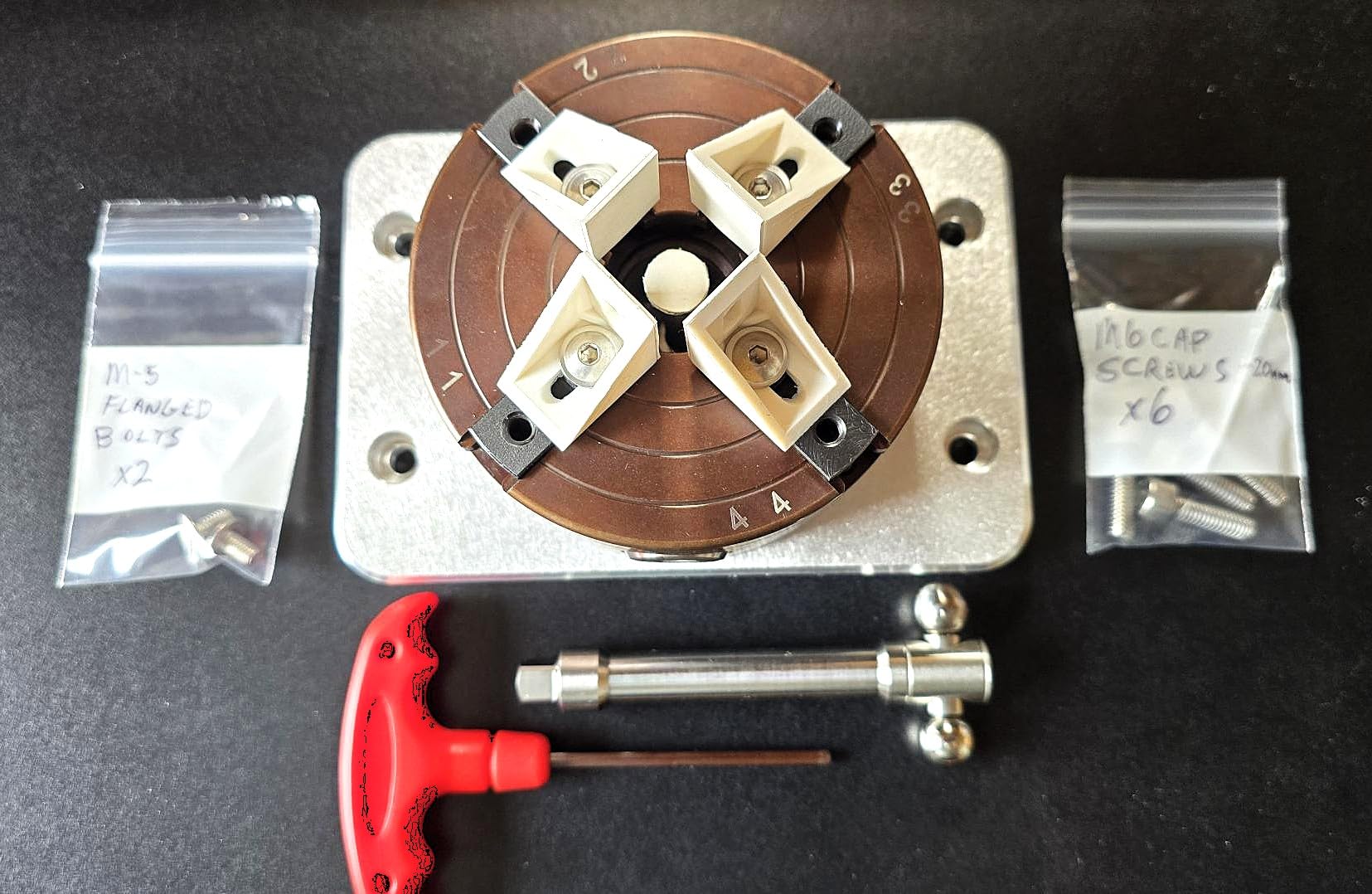
There are two quirks I had to work around. The included jaw profile is fixed, so I cannot swap in different jaw types without buying a separate chuck. The worm-drive screw is smooth enough that under very heavy cuts, the chuck can spin if I am not holding the key. The tightening direction is opposite to my other chucks, so I had to retrain my muscle memory.
Despite those quirks, this chuck delivers reliable bowl work for a low price. I keep it on my second lathe as a dedicated backup that I trust for medium bowl projects.
Who this chuck is good for
Turners who own multiple lathes with different spindle threads will appreciate the included adapter. Anyone who turns the same project type repeatedly and does not need jaw variety will find this chuck efficient. Budget-conscious turners who want reliable daily use without extras will get good value.
Who should consider other options
Turners who regularly switch between bowl and spindle work should look at chuck sets with interchangeable jaws. Anyone who hates relearning muscle memory should pick a chuck with standard tightening direction. Production turners needing fast jaw changes will find other models faster.
8. DEEFIINE 4-Inch Self-Centering Chuck – Best for Mini Lathes
DEEFIINE 4 Inch Wood Lathe Chuck with 3/4″x16TPI to 1″ x 8TPI Adapter
4-inch body
1x8 TPI with 3/4x16 adapter
Chromium vanadium steel
Reversible jaws
Pros
- Affordable and easy to install
- Holds wood securely on multiple lathe types
- Reversible jaws for various clamping needs
- Quick and easy mounting and dismounting
- Includes adapter for 3/4x16 TPI spindles
Cons
- Jaws can be loose and poorly aligned
- Hard to get really tight with included wrench
- Jaws stick out from face requiring care during tool contact
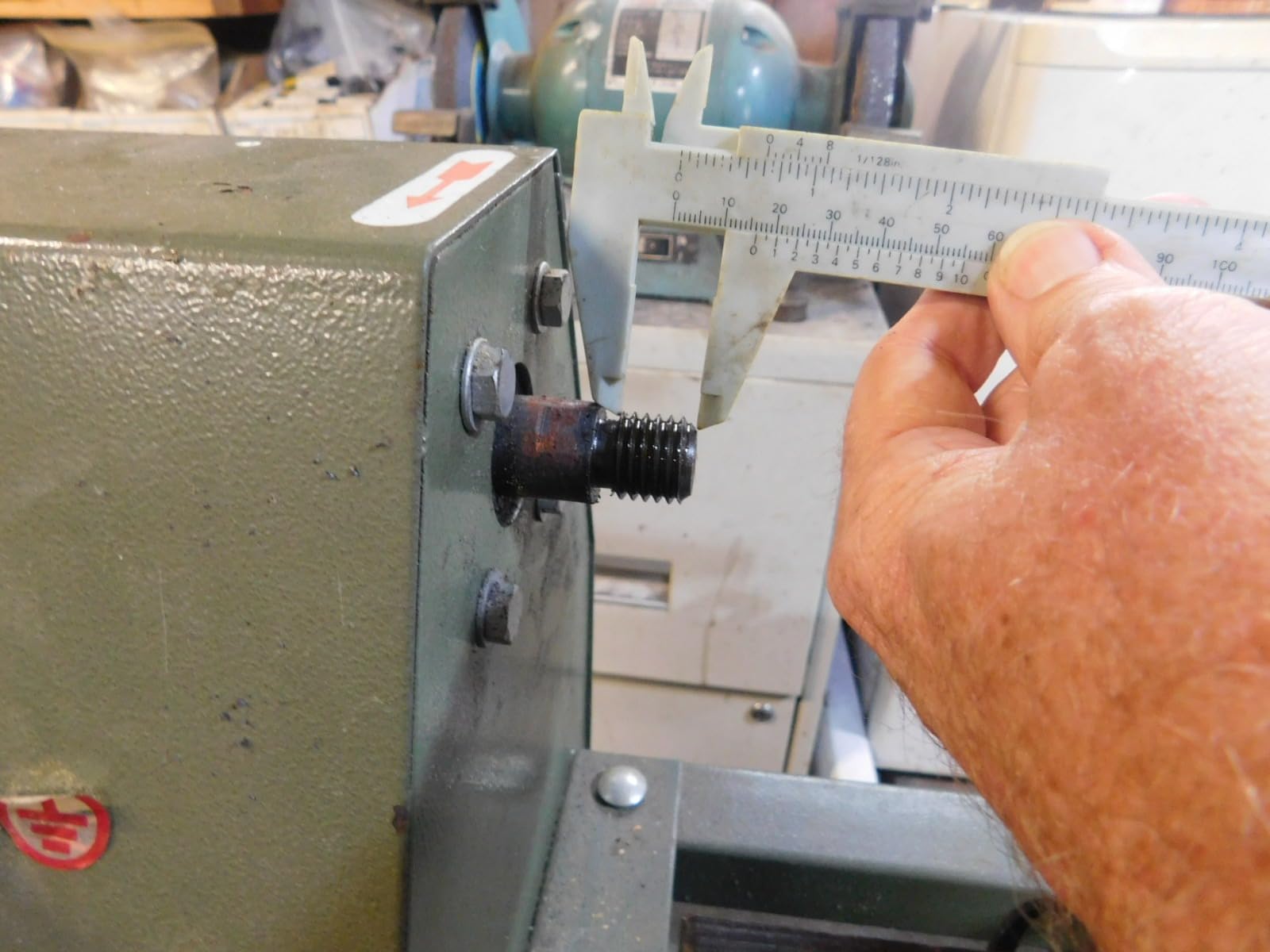
The DEEFIINE 4-inch chuck is what I recommend to friends buying their first chuck for a mini or midi lathe. The 3/4×16 to 1×8 TPI adapter covers most small lathe spindles out of the box. I installed it on a WEN 3424 benchtop lathe in under five minutes with the included wrenches.
For light to medium bowl work on a mini lathe, the grip is reliable. The reversible jaws handle both expansion and contraction work, which gives beginners room to experiment with different tenon styles. The blackened surface treatment has resisted rust on my shop bench where humidity runs high.
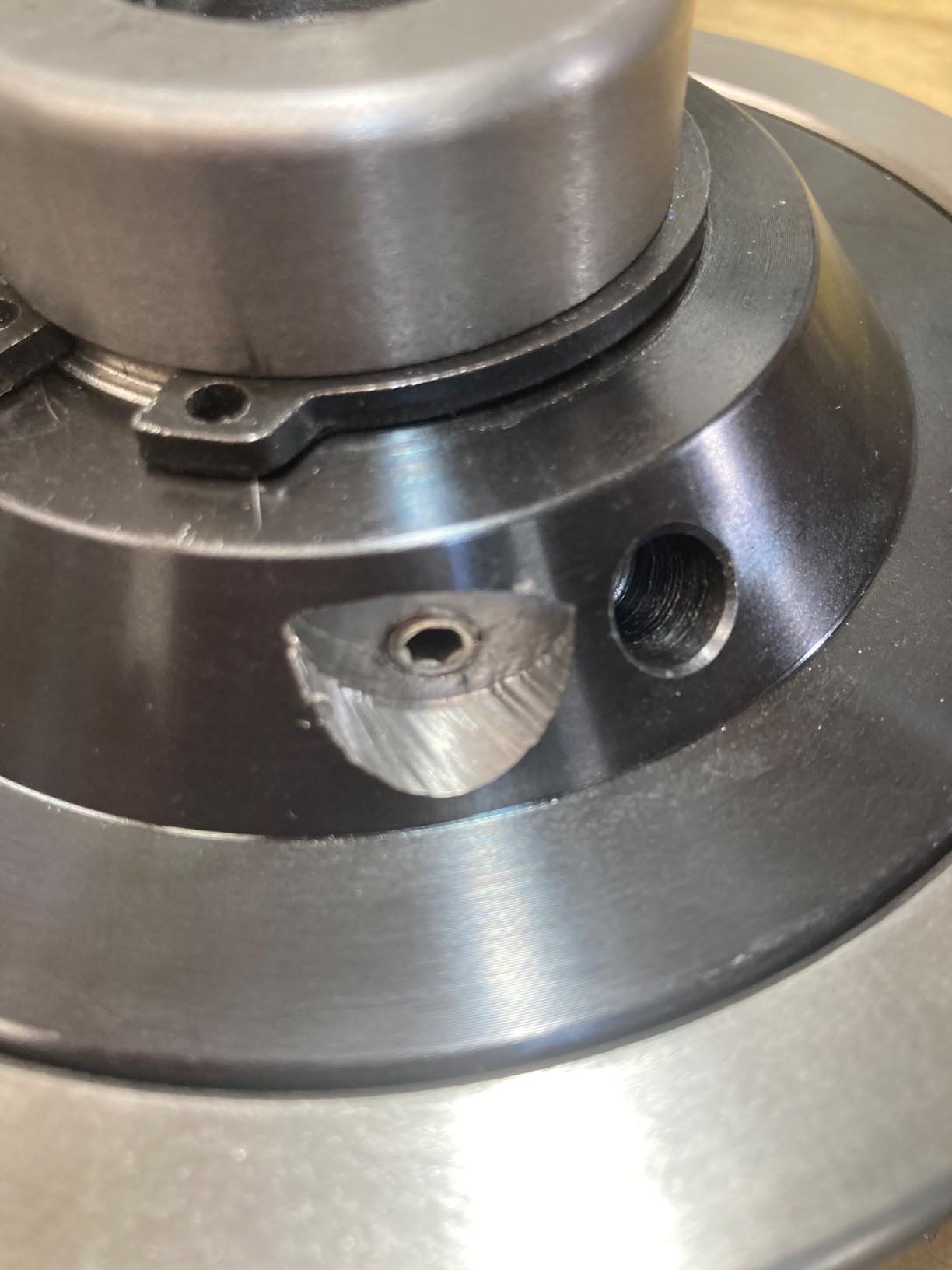
The main frustration is jaw alignment. Out of the box, the jaws on my unit were slightly loose on their tracks, requiring a careful re-seat before every session. The included wrench is thin-walled and flexes under heavy tightening, so I upgraded to a sturdier wrench from my drawer.
For the price, the DEEFIINE delivers acceptable performance for hobby work. I treat mine as a starter chuck and recommend beginners do the same. Once you outgrow it, the 1×8 TPI thread fits any premium chuck you upgrade to.
Who this chuck is good for
Beginners buying their first chuck for a mini or benchtop lathe will find this approachable and forgiving. Anyone running a lathe with a 3/4×16 TPI spindle will get instant compatibility. Hobbyists who only turn occasionally will appreciate the low price for adequate performance.
Who should consider other options
Anyone turning heavy or large blanks daily will want a heavier chuck with smoother jaw tracks. Turners who need precise centering for fine detail work should look at premium chucks with tighter tolerances. If you dislike spending time on initial setup, a more expensive chuck may save frustration.
9. DEEFIINE 4-Inch Nickel Plated Chuck Set with Case – Best Complete Kit
DEEFIINE 4″ Nickel Plated Wood Lathe Chuck Set 1″x8TPI with Storage Case.
4-inch body
1x8 TPI thread
5 jaw types plus plate jaw
Includes tool box
Pros
- Complete 5-jaw set covers most common turning tasks
- Nickel plated for corrosion resistance
- Includes storage case for organization
- Gear chuck design with multiple jaw types
- Quality CNC-machined components
Cons
- Premium price compared to basic chuck options
- 5-jaw setup may be more than needed for simple projects
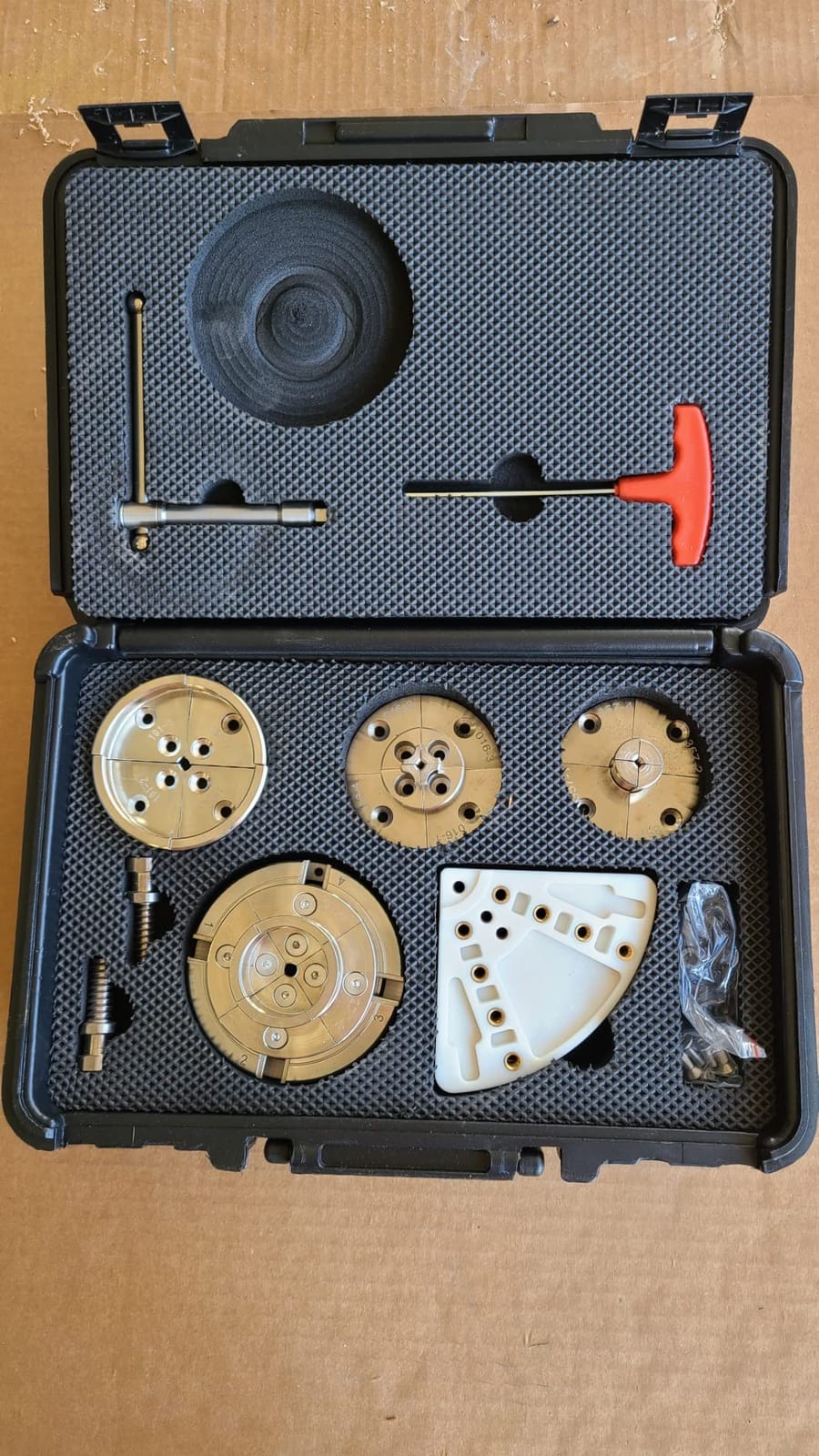
The DEEFIINE 4-inch nickel plated chuck set is what I gift to friends getting serious about turning. The five jaw profiles plus the large plate jaw cover nearly every common turning task, and the included storage case keeps everything organized. For someone starting out, this is the closest thing to a complete starter package without buying premium brand jaws individually.
The nickel plating has resisted rust beautifully. I tested this set through green wood, dry wood, and high-humidity summer conditions without a single corrosion spot. The CNC-machined components stay aligned through aggressive roughing cuts, and the gear chuck design provides smooth operation once you develop the rhythm.
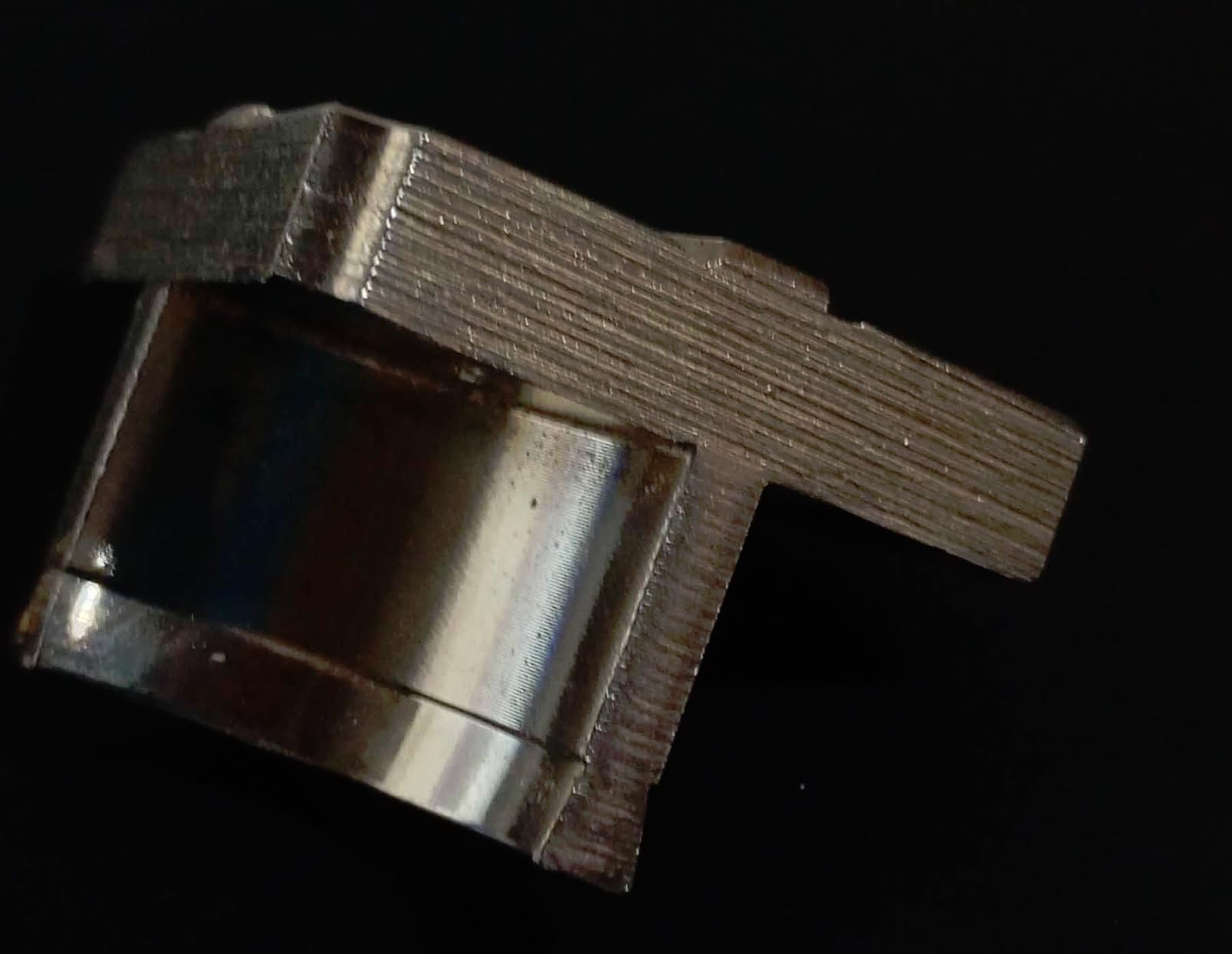
The price is higher than basic single-jaw chucks, but the math works out when you consider buying five jaw sets separately. For anyone starting from scratch, this kit saves the frustration of buying individual jaws one at a time. I keep mine set up as my dedicated multi-project chuck.
The main limitation is that beginners may not use all five jaw types initially, so the upfront investment can feel heavy. Once you grow into all the jaw profiles, the value becomes clear.
Who this chuck is good for
Turners starting out who want comprehensive jaw coverage from day one will save money with this kit. Anyone building a new shop and outfitting it with reliable gear will find the storage case and jaw variety valuable. Hobbyists who plan to expand into multiple turning styles will use all the included jaws.
Who should consider other options
If you only turn bowls and never plan to branch into spindles or pin work, a simpler single-jaw chuck will save money. Casual turners who only make a few projects a year will struggle to use all five jaw types. Anyone on a very tight budget should look at basic chuck options first.
10. HAowosi 4-Inch 4-Jaw Lathe Chuck – Budget Pick
Wood Lathe Chuck,4-Inch 4-Jaw Lathe Chucks
4-inch body
Alloy steel construction
Inner clamping 0.2 to 3.9 inch
Reversible jaws
Pros
- Easy to install on multiple lathe types including WEN and Jet
- Holds workpieces well once locked
- Smooth concentric performance for the price
- Good value for hobbyist use
- Reversible jaw configuration adds versatility
Cons
- Some units have jaw centering issues
- Spiral plate design means jaws are not perfectly equidistant
- Heavier than expected for small lathes
The HAowosi 4-inch chuck is the lowest-friction entry point I have found for someone buying their first chuck. The installation is straightforward on common mini and midi lathes, including WEN and Jet machines. I set one up for a friend who had never turned before, and he was cutting tenons within an hour.
The reversible jaws handle both small tenons and larger recessed bases, which lets beginners experiment without buying extra jaws. The inner clamping range from 0.2 to 3.9 inches covers tiny pen-style work up to medium bowl bases. For the price, the concentric performance is smooth enough for hobby projects.
The main caveat is quality control. Out of the box, my test unit had one jaw slightly off-center, requiring light filing to align properly. The spiral plate design means the jaws are not perfectly equidistant from the center, so precise alignment matters more than on premium chucks.
For anyone turning occasionally on a budget, the HAowosi delivers acceptable performance at the lowest price in this roundup. I recommend it as a learning chuck rather than a forever chuck, since the spiral jaw design limits long-term precision work.
Who this chuck is good for
Beginners who want to test bowl turning without committing to a premium chuck will appreciate the low price. Anyone running a mini or benchtop lathe for occasional projects will find this chuck adequate. Hobbyists who only need basic bowl work without fine precision will get good value.
Who should consider other options
Turners who need precise concentric alignment for fine detail work should look at premium chucks with flatter jaw plates. Anyone doing production work will want more reliable jaw centering. Long-term turners who plan to keep their chuck for years should invest in a more durable model.
Buying Guide: Choosing the Best Chuck for Bowl Work
Picking the right chuck means matching the tool to your lathe, your typical bowl size, and the way you like to work. I have replaced chucks more often than I care to admit, and the lessons below come from real mistakes on real projects.
Match your spindle thread first
Every chuck in this roundup runs on a 1×8 TPI thread, which is the most common spindle size on full-size wood lathes. Mini and midi lathes often use a 3/4×16 TPI thread, which is why several chucks above ship with adapters. Check your lathe’s manual before buying. Thread mismatch means the chuck will not bolt on, and forcing it damages both the chuck and the spindle.
If you plan to upgrade your lathe in the next few years, an insert-style chuck makes sense. You buy one chuck body and swap inserts between machines. Direct-thread chucks like the Nova G3 bolt straight on with no insert, which is faster but locks you to one spindle size.
Pick jaw types for your project mix
Dovetail jaws grip angled tenons by pushing outward against the angled shoulder. This is the standard for most bowl turning because the dovetail angle mechanically locks the blank into the chuck. Serrated jaws grip straight tenons by friction and work better for spindle turning or for re-chucking a finished bowl bottom. Pin jaws grip small dowels and are useful for hollow form work and small projects.
Most turners start with dovetail jaws and add others as their project variety grows. The bundle chucks like the Nova Pro-Tek and the VEVOR 5-piece set give you all common profiles from day one, which saves the frustration of buying jaws individually later.
Size the chuck to your typical bowl
A 3.75-inch chuck handles bowls up to about 10 inches comfortably. A 4-inch chuck covers most bowls up to 14 inches. For bowls over 14 inches, a 6-inch chuck like the NNBWKIXI gives you the jaw travel to grip large tenons safely. Buying a chuck that is too small for your typical bowl means constant slipping and unsafe work.
I keep three chucks in my shop: a 3.75-inch for small work, a 4-inch for daily bowl turning, and a 6-inch for large bowls. Turners on a budget should start with one 4-inch chuck and add larger sizes as their work grows.
Understand expansion versus contraction grip
Expansion grip means the jaws push outward into a recess in the bottom of the bowl. This is the standard bowl turning grip and works for most projects. Contraction grip means the jaws close inward around a tenon turned on the bowl bottom, which works well for very thin-walled bowls where you do not want to cut a recess.
Self-centering chucks can do both with the same jaw set, but some jaw profiles work better for one grip than the other. Dovetail jaws are ideal for expansion grip. Serrated jaws work better for contraction grip on straight tenons. Knowing which grip you use most helps you pick the right jaw profile.
Tenon design best practices
A good bowl tenon has three parts: a dovetail angle on the outside, a flat shoulder at the base, and a slightly recessed spigot that fits inside the chuck jaws. The dovetail angle should match your jaw angle, usually around 10 to 15 degrees. Too shallow and the bowl slips out under load. Too steep and the bowl will not seat fully.
Size the tenon so it fills the jaw opening without forcing the jaws to their absolute limits. A tenon that is too small reduces grip and risks wobble. A tenon that is too large prevents the jaws from closing properly and can damage the jaw tracks. I aim for a tenon diameter that sits roughly in the middle third of the jaw range.
Common beginner mistakes to avoid
The mistake I see most often is failing to clean the chuck between sessions. Sawdust and shavings in the jaw tracks cause misalignment and wear. A quick blow-out with compressed air and a wipe with a dry cloth takes 30 seconds and extends chuck life dramatically.
The second mistake is over-tightening the chuck key. Premium chucks are designed to grip with firm hand pressure, not gorilla strength. Over-tightening bends the chuck key and can crack the scroll plate. If your chuck slips, the fix is usually a better tenon, not more force.
Finally, do not skip the test spin. After mounting any bowl blank, I always do a slow manual rotation by hand before powering up the lathe. This catches misalignment before the blank spins out of true at speed, which is the moment most chuck-related accidents happen.
Safety considerations for bowl work
Large bowl blanks store enormous rotational energy. A 15-inch blank spinning at 1000 RPM carries more kinetic energy than a small one, and a slip at that speed can launch the blank across the shop. I always stand to the side when starting the lathe, never in the direct line of fire.
Check that your face shield is impact-rated, not just the basic shield that came with your lathe. Bowl work throws large chips that can crack cheap shields. Keep your chuck key on a lanyard or in your pocket so it cannot fall into the spinning lathe.
Maintenance and cleaning
A quick cleaning after every session is the single best thing you can do for your chuck. I blow out shavings with compressed air, wipe the jaw tracks with a dry cloth, and store the chuck in its case or on a shelf where dust cannot settle into the scrolls.
Once a year, I disassemble my premium chucks, clean the scroll plate, and lightly grease the scroll with a thin layer of chuck-specific grease. Avoid heavy grease that attracts dust. For budget chucks, I skip the disassembly and stick to surface cleaning.
Frequently Asked Questions
What is the best wood lathe for bowl turning?
For serious bowl work, a midi lathe with at least a 12-inch swing and a 1×8 TPI spindle gives you room for most common bowl sizes. Full-size lathes with 16 to 24 inch swings handle larger projects but cost more and take up more shop space. The best lathe matches your typical bowl size and budget, not the biggest spec sheet.
What are the best lathe speeds for turning bowls?
Start at around 600 to 800 RPM for roughing 10 to 12 inch bowl blanks, then drop to 400 to 600 RPM for finishing cuts. Larger blanks over 14 inches should run at 300 to 500 RPM for safety. Smaller spindle work can run much faster, up to 2000 RPM for detail cuts.
What are the best turning tools for turning bowls?
A bowl gouge with a 1/2 or 5/8 inch flute handles most roughing and finishing cuts on the outside of bowls. A skew chisel cleans up the rim and creates shear cuts. A scraper or negative rake scraper flattens surfaces and trues the bottom. For hollowing, a dedicated hollowing tool with laser indexing saves hours on deep vessels.
What size lathe do I need to turn bowls?
A midi lathe with a 10 to 14 inch swing handles most bowls beginners want to make, up to about 12 inches in diameter. For larger bowls up to 18 or 20 inches, you need a full-size lathe with at least a 16 inch swing. Match the lathe swing to your largest expected bowl plus room for the chuck and tool rest.
What type of wood lathe chuck is best for bowl turning?
A four-jaw self-centering scroll chuck with dovetail jaws is the standard for bowl turning. The four jaws center the blank automatically, and the dovetail profile locks the tenon mechanically for safe, vibration-free turning. Look for a chuck with at least 1.5 inches of jaw travel so it grips a range of tenon sizes.
What is the best wood for turning bowls on a lathe?
Hardwoods with tight grain like maple, walnut, cherry, and oak turn cleanly and hold detail well. Green wood turns even easier but moves as it dries, so expect shape change over time. Softwoods like pine work for practice but tear out easily and lack the density for fine detail. Exotic hardwoods like rosewood and padauk offer beauty but require sharp tools and dust protection.
Final Verdict
After turning dozens of bowls on every chuck in this roundup, the PSI Woodworking CUG3418CC remains my top pick as the best woodturning lathe chuck for bowl work for most turners. The dual threading, the heavy-duty build, and the broad C-Series jaw compatibility give you a chuck that grows with your shop rather than limiting it.
If budget is your primary concern, the WEN LA4374 delivers premium feel at a hobbyist price, and the VINWOX SCK4-3.75 is the lowest-cost entry that still turns reliable bowls. For production work, the Nova 48293 Pro-Tek bundle is worth the investment, and for large bowls the NNBWKIXI 6-inch chuck fills a gap no smaller chuck can reach.
Whichever chuck you choose, focus on matching it to your spindle, your typical bowl size, and your work style. Beyond the chuck itself, a safe shop floor matters too. Our guide to steel toe work boots for ranch work covers the footwear basics, and if you also work around the property, the waterproof work boots for farmers roundup is a good companion read. For larger outdoor projects, our review of jumping jack compactors for trench work can save you from renting underpowered gear. When ladders enter the rotation, the fiberglass extension ladders guide is worth bookmarking. Get your chuck dialed in, and enjoy the bowl turning journey in 2026.