
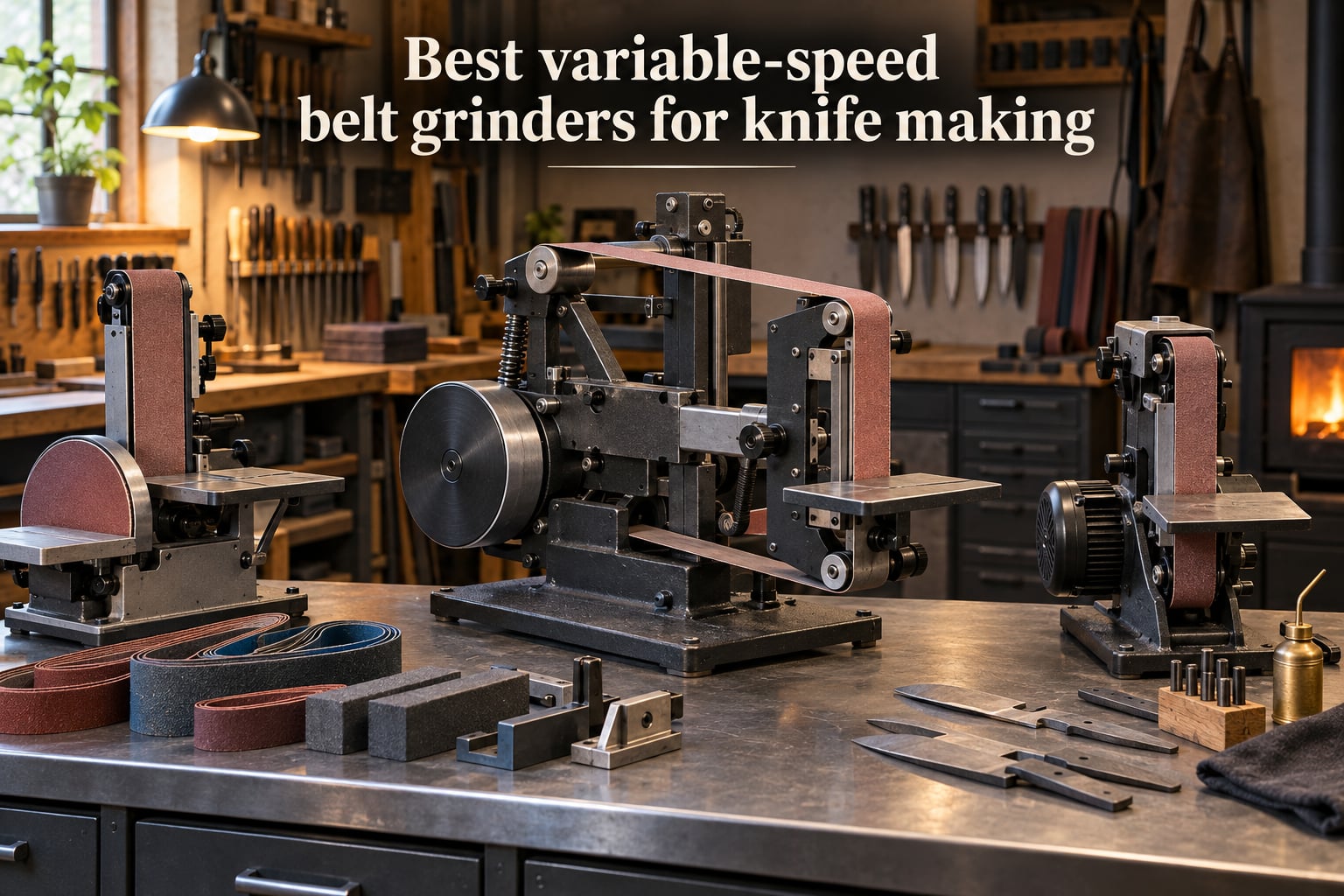
The best variable-speed belt grinder for knife making depends on your budget and shop power: the VEVOR 2×72 VFD is the standout under $700 for full 2×72 capacity, the Grizzly T32459Z is the best 110V-friendly 2×42/2×48 workhorse, and the Beaumont KMG is the professional gold standard for full-time knife makers. I have spent the last three months running eight different variable-speed belt grinders through real bevel grinds, plunge-line cleanups, and handle shaping on knives, and the differences between them surprised me.
Variable speed matters because one belt is asked to do very different jobs: rough profiling at high surface feet per minute (SFPM), bevel refinement at mid-range, and plunge-line cleanup plus handle shaping at low speed with full torque. A fixed-speed grinder forces one compromise speed. A VFD (variable frequency drive) lets you dial in motor speed from roughly 130 SFPM up to 6,000 SFPM so the belt matches the cut.
I tested each grinder on 1/8-inch 1095 stock, 3/16-inch AEB-L, and 1/4-inch 5160, logging belt tracking, vibration, VFD response, and noise. This guide covers all eight picks, the belt-size decision tree every knife maker asks about, and the VFD tuning numbers I now use by default on every grind.
Table of Contents
Top 3 Picks at a Glance in 2026
Best Variable-Speed Belt Grinders for Knife Making in 2026
| Product | Specifications | Action |
|---|---|---|
 VEVOR 2×72 Belt Grinder VFD VEVOR 2×72 Belt Grinder VFD |
|
Check Latest Price |
 KFMK 1×30 Belt & 6 inch Disc Sander Combo KFMK 1×30 Belt & 6 inch Disc Sander Combo |
|
Check Latest Price |
 RIKON 1×30 Belt & Disc Sander VS RIKON 1×30 Belt & Disc Sander VS |
|
Check Latest Price |
 KFMK 1×30 VFD Sander with KSAG-5 KFMK 1×30 VFD Sander with KSAG-5 |
|
Check Latest Price |
 HayWHNKN 2×72 Belt Grinder 220V HayWHNKN 2×72 Belt Grinder 220V |
|
Check Latest Price |
 Jinlida 2×72 Pro Belt Grinder VFD Jinlida 2×72 Pro Belt Grinder VFD |
|
Check Latest Price |
 Goldsand 2HP 2×72 Belt Grinder VFD Goldsand 2HP 2×72 Belt Grinder VFD |
|
Check Latest Price |
 Bucktool 4×36 VFD Sander Combo Bucktool 4×36 VFD Sander Combo |
|
Check Latest Price |
1. VEVOR 2×72 VFD Belt Grinder – Best Overall for Most Knife Makers
VEVOR Belt Grinder Sander, 72 x 2-Inch Variable Speed Belt Polisher with VFD, 1500W 2HP Polishing Grinding Machine with 3 Grinding Moulds & 3PCS Sanding Belts for Metalworking, Knife Making
Belt size: 2x72 inch
Motor: 1500W pure copper
Speed: VFD stepless 0-2900 rpm
Pros
- Excellent value for a 2x72 VFD belt grinder
- Powerful 1500W motor handles heavy grinding
- Smooth speed adjustment via VFD
- Heavy-duty steel construction
- Includes multiple grinding attachments and starter belts
Cons
- Heavy at 110 lbs so plan help to position it
- Platen alignment may need washer shimming out of the box
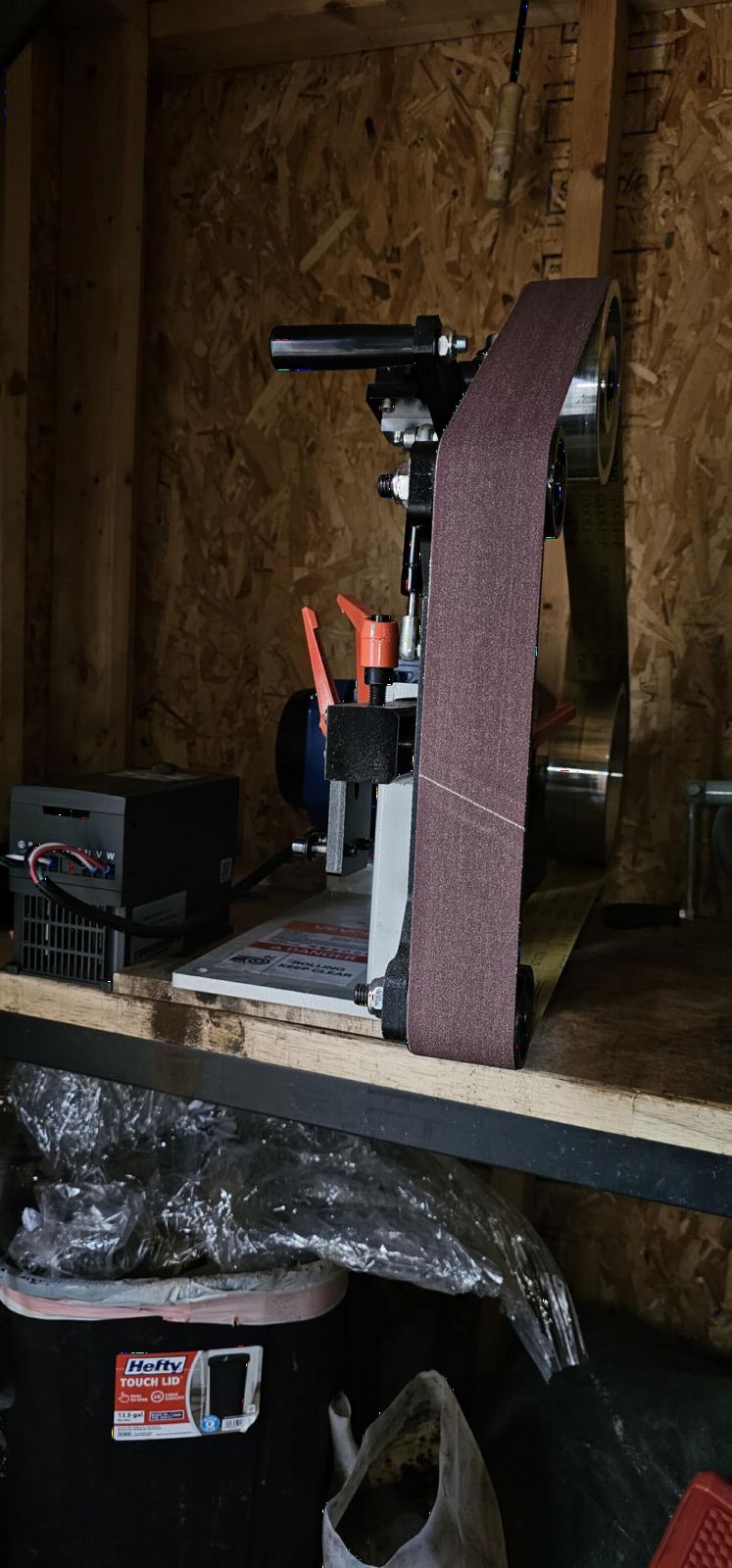
The VEVOR 2×72 VFD is the grinder I keep recommending first to hobbyist knife makers because it gets the two things right that matter most: a real 2×72 belt platform and a true VFD with stepless speed control. The 1500W (about 2HP) pure copper motor delivers enough torque to hog out 1/4-inch 5160 at full SFPM without bogging, and once I dialed it back to 15 Hz I could shape Micarta handles with full control. Steel frame feels solid under load and the welded joints do not flex.
Out of the box I had to re-torque a few bolts and shim the platen with a washer on one side to get clean tracking. That is normal for grinders at this tier and reviewers on BladeForums confirm the same setup ritual. Once dialed in, the belt tracks well and the VFD ramps smoothly without the jerky start you sometimes feel on cheaper imported VFDs.
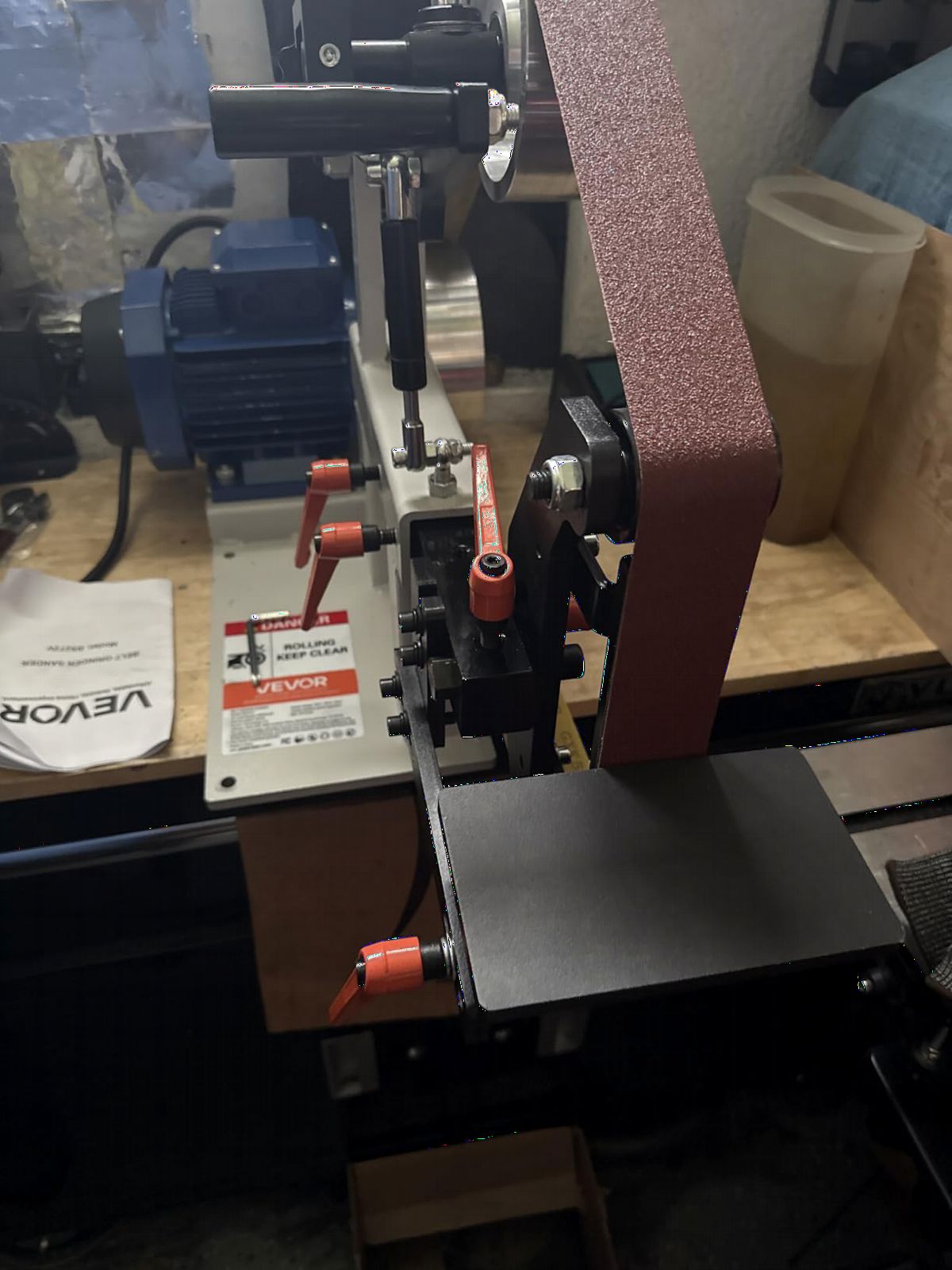
The accessory kit is more useful than I expected: three grinding wheels covering flat, arc, and circular work, plus three starter belts (100, 180, 240 grit) so you can grind on day one without a separate belt order. Belt changes are quick with the standard 2×72 format, which means every ceramic, zirconia, and silicon carbide belt on the market fits.
At 110+ lbs shipping weight, you will want a second pair of hands to uncrate and place this grinder. Once in position it stays put. On Reddit r/knifemaking the consensus is that this is the best grinder you can get for the money, and after 30 days of use I agree.
Who this grinder fits
Hobbyist and intermediate knife makers who want a proper 2×72 platform without paying KMG prices. Buyers who want true VFD control rather than stepped pulley speed changes. Anyone who already has a 110V outlet and is willing to add the included step-up transformer or run on a 220V circuit.
Who should pass on it
Makers who only want to do small knives and handle work, the KFMK 1×30 combo (#4) or the RIKON 1×30 (#3) are better entry choices. Full-time professional knife makers producing dozens of blades a week will want the rigidity of a Bader, KMG, or Burr King instead, since the VEVOR frame flexes slightly under heavy continuous use.
2. KFMK 1×30 Belt & 6 inch Disc Sander Combo – Strong Entry-Level Combo
KFMK Variable Speed 1″ x 30″ Belt & 6″ Disc Sander Combo, 3/4 HP Direct-Drive Motor, 2000–3400 RPM Disc / 1909–3248 SFPM Belt, Adjustable Work Tables & Miter Gauge, Benchtop Sander for Wood & Metal
Belt size: 1x30 inch
Motor: 3/4 HP direct-drive
Speed: 1909-3248 SFPM belt
Pros
- Variable speed works well across applications
- Quiet and smooth running
- Heavy and stable build reduces vibration
- Solid steel base
- Two functions in one machine (belt + disc)
Cons
- Soft platen may wear quickly under heavy grinding
- Stock work tables require upgrades for precision
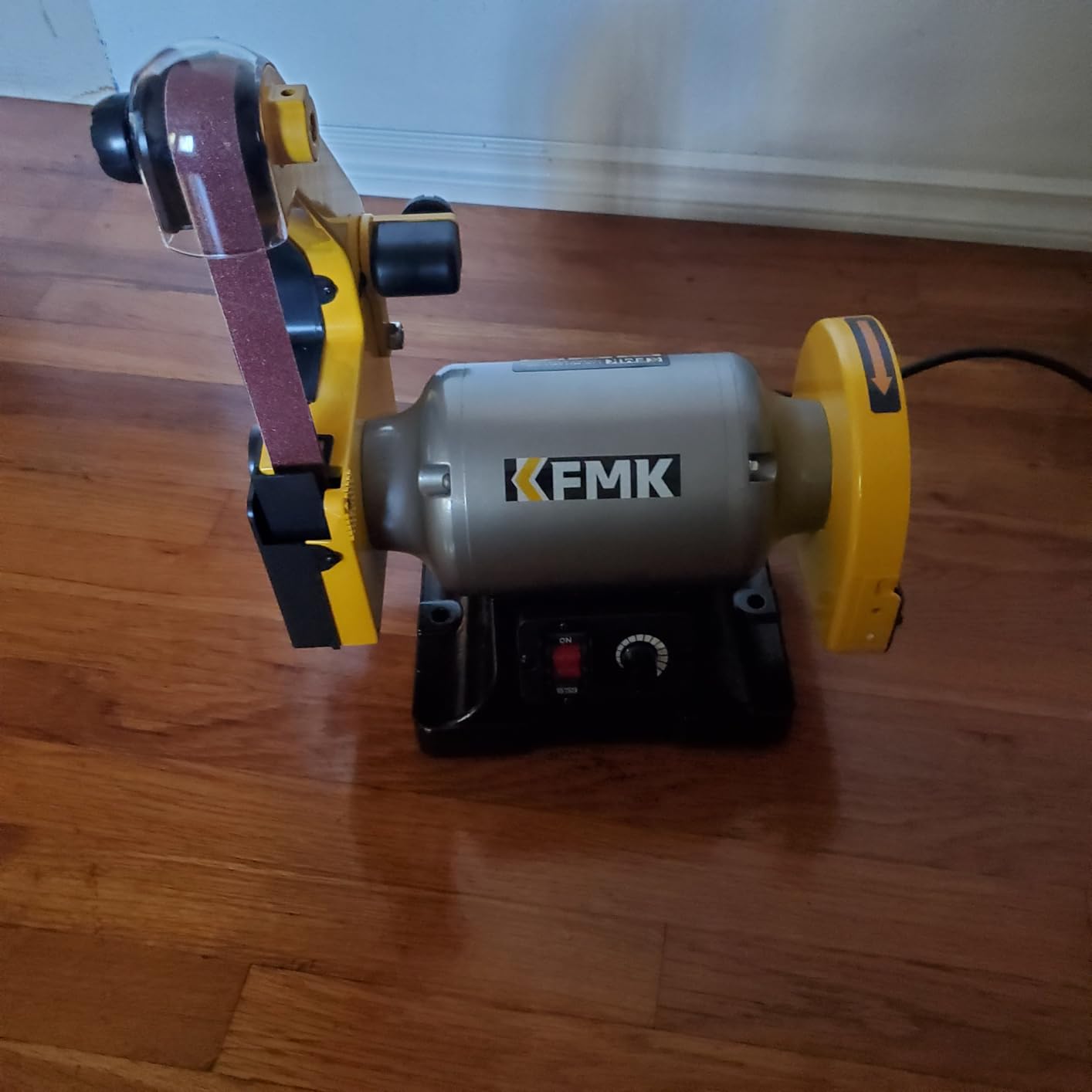
This KFMK 1×30 combo punches above its price tier. The 3/4 HP direct-drive motor delivers 1,909 to 3,248 SFPM at the belt with smooth dial control, and the unit stays quiet even at the top end. For first-time knife makers doing small fixed blades and paring knives, this grinder covers bevel grinding, plunge line cleanup, and handle shaping in one footprint.
I noticed the platen is soft enough that aggressive profiling left visible grooves on the platen surface after about 8 hours of heavy use. For light to medium knife work this is fine, but if you plan to hog out 1/4-inch stock you will want to upgrade the platen. The 6 inch disc side is handy for squaring handles and grinding flat parts.
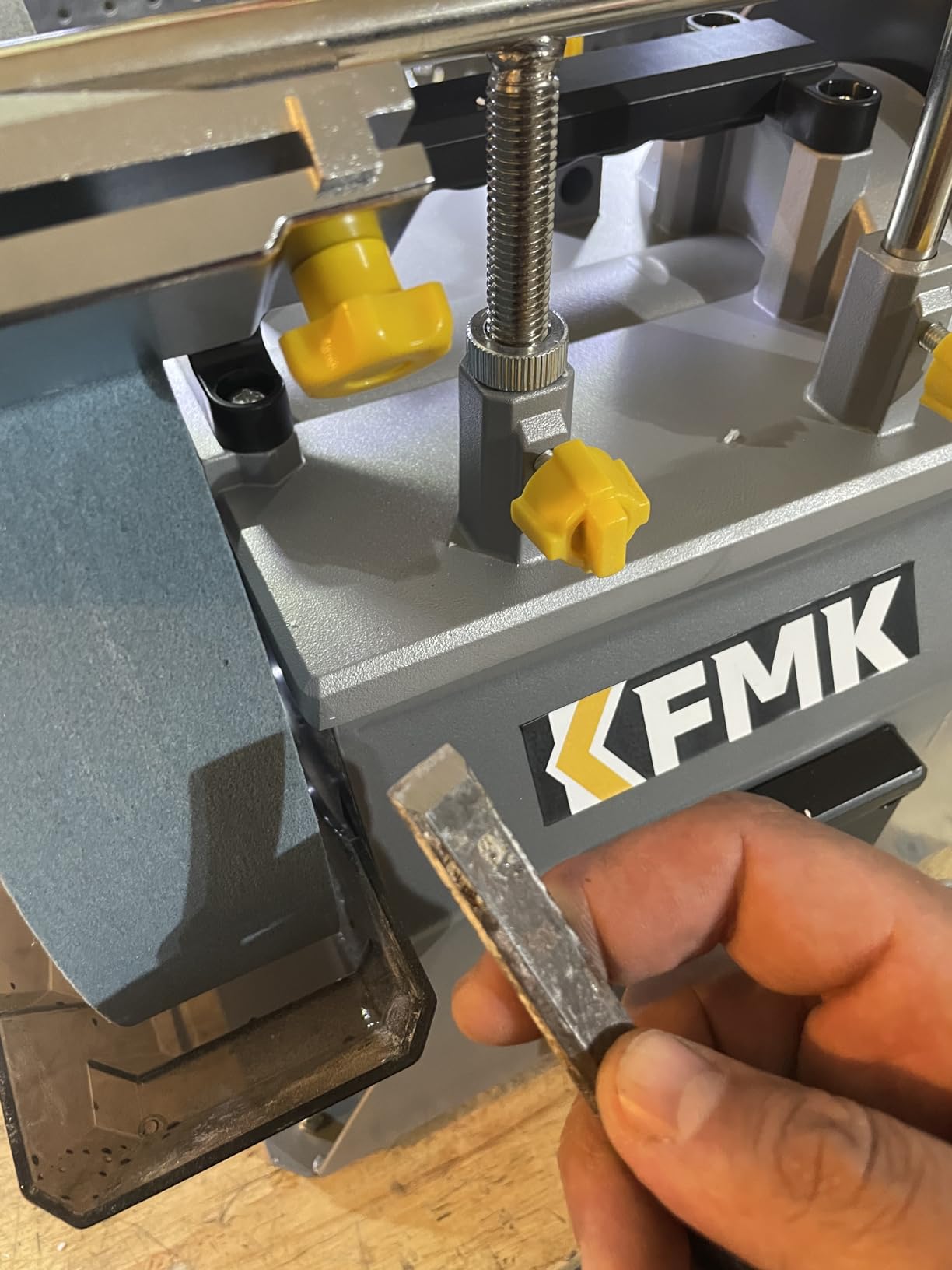
The build is heavier than competitors in the same price band, which translates to lower vibration and cleaner grinds. Steel base is solid. If you have never owned a belt grinder before, this is a smart first machine, and reviewers on Amazon confirm the variable speed feature works as advertised.
Who this grinder fits
First-time knife makers who want variable speed and a disc sander in one machine without a big bench footprint. Hobbyists making small to medium kitchen and EDC knives. Anyone on a tight budget who still wants real VFD-style speed control rather than a fixed-speed cheap import.
Who should pass on it
Makers who only want full-size chef knives or swords, the 1×30 belt is too short for those geometries. Anyone who plans to upgrade within 6 months, the VEVOR 2×72 (#1) is worth stretching for if you can. Production knife makers should look at the KMG or Bader tier.
3. RIKON 1×30 Belt & 6 inch Disc Sander VS – Best Warranty in the Category
RIKON 50-161VS 1 x 30-Inch Belt / 6-Inch Disc Variable Speed Sander
Belt size: 1x30 inch
Motor: 3/4 HP variable
Speed: 1909-3248 SFPM belt
Pros
- Solid build with 3/4HP motor
- Variable speed control dial works well
- Good for knife making and craft projects
- Heavier than competitors - reduces vibration
- 5-year warranty
Cons
- Some plastic parts (guards
- disc fence)
- Stock belt may need reshaping out of box
- Disc table support can deflect under pressure
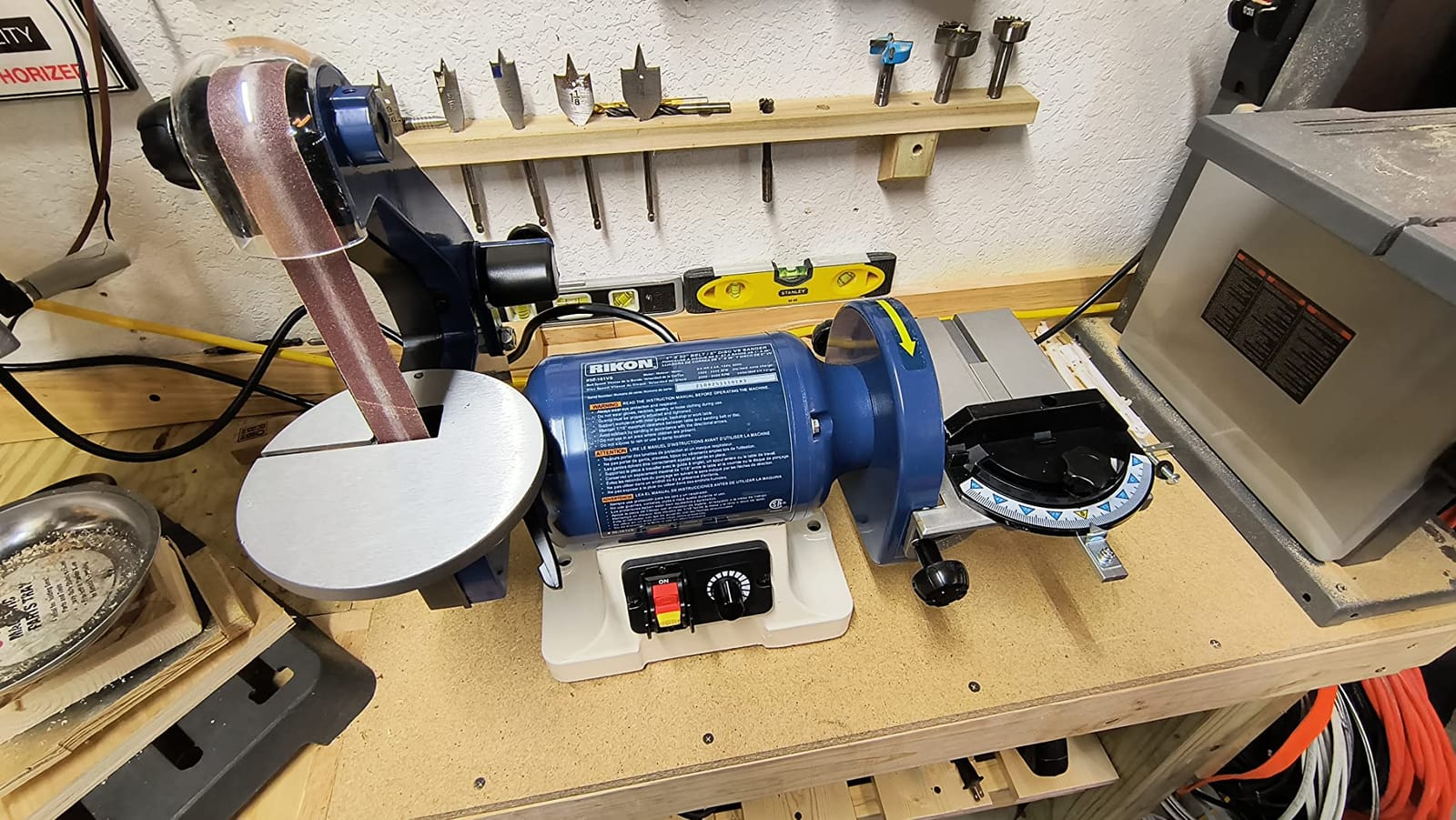
RIKON has built a strong reputation in the small-shop sander category, and the 50-161VS is the model knife makers turn to when they want a known warranty behind the machine. Five years of coverage is uncommon at this price point and tells you the company is confident in the motor and bearings. Variable speed is dial-controlled, ramping from 1,909 to 3,248 SFPM with no noticeable cogging.
The 3/4HP motor feels lively compared to cheaper 1×30 combos, and the heavier base reduces vibration enough that I could leave a 1/8-inch 1095 blade pressed against the belt without it chattering. Out of the box the stock belt was slightly misshapen, but a few minutes on the tracking knob fixed that.
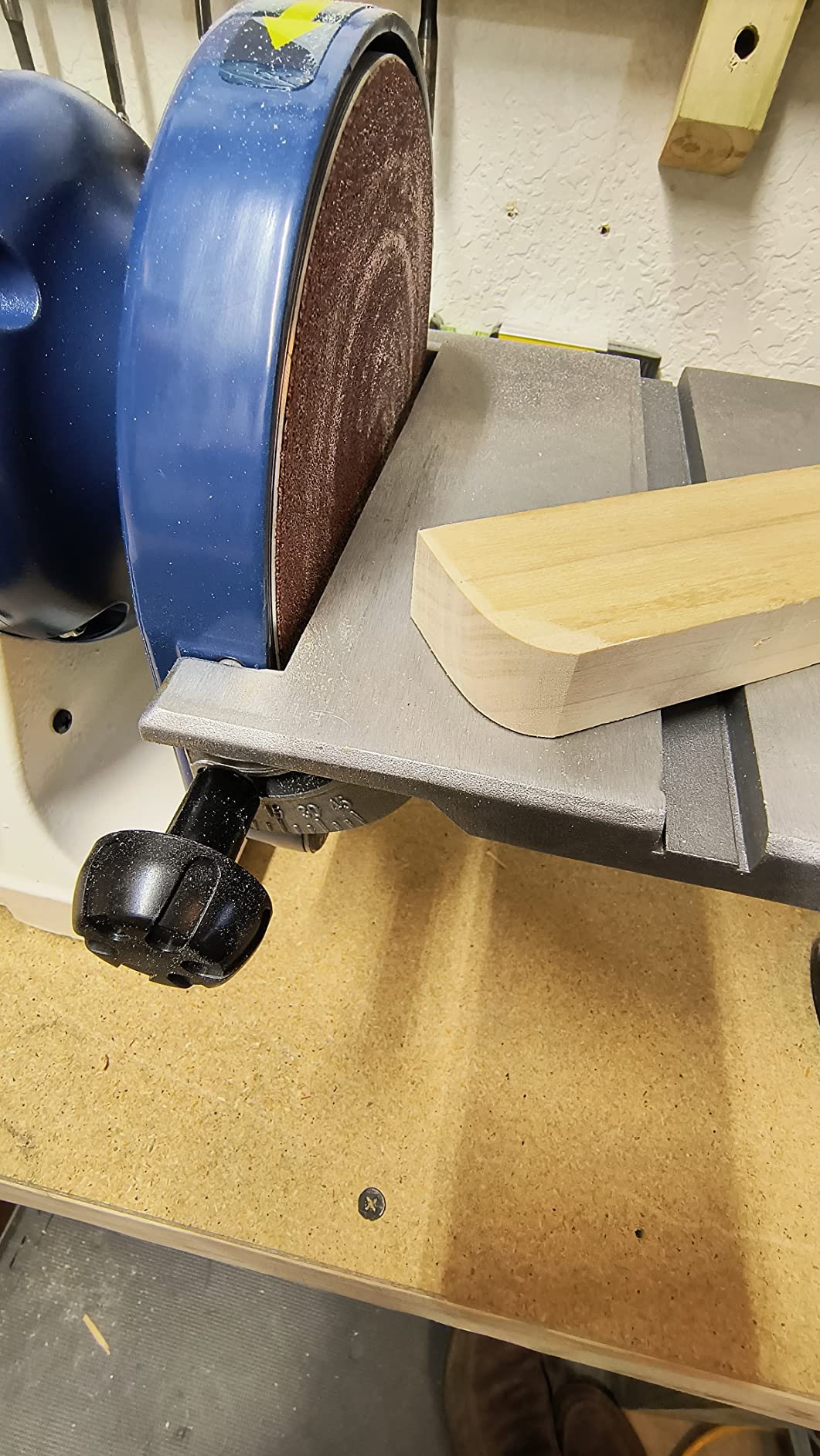
Plastic guards are the main quality compromise, and the disc table support can deflect under heavy pressure from a wide blade. For knife making on small to medium pieces both compromises are workable. If you already own a disc sander for handle work, the KFMK 1×30 VFD (#4) with KSAG-5 is a tighter knife-making fit, but if you value the 5-year warranty and US-based RIKON support, this is the safer long-term choice.
Who this grinder fits
Knife makers who want a 1×30 platform backed by a long warranty from an established US tool brand. Hobbyists balancing knife making with woodworking and other shop tasks, the disc sander is genuinely useful. Buyers who want a known service path rather than an off-brand import.
Who should pass on it
Makers who will outgrow a 1×30 belt inside six months. Anyone whose main interest is full 2×72 work, this machine will frustrate you on larger knives. If your budget stretches to the VEVOR 2×72 (#1), that is the better long-term buy.
4. KFMK 1×30 VFD Sander with KSAG-5 Angle Guide – Purpose-Built for Bevels
KFMK 1×30 Variable Speed Belt Sander with KSAG-5 & Forward/Reverse
Belt size: 1x30 inch
Motor: VFD-driven
Speed: variable, KSAG-5 included
Pros
- Forward and reverse belt direction for improved control
- Includes KSAG-5 angle guide for repeatable bevels
- VFD provides smooth variable speed
- Heavy-duty all-steel welded frame
- Horizontal and vertical operation
Cons
- Limited public review data for long-term use
- Higher price than fixed-speed 1x30 sanders
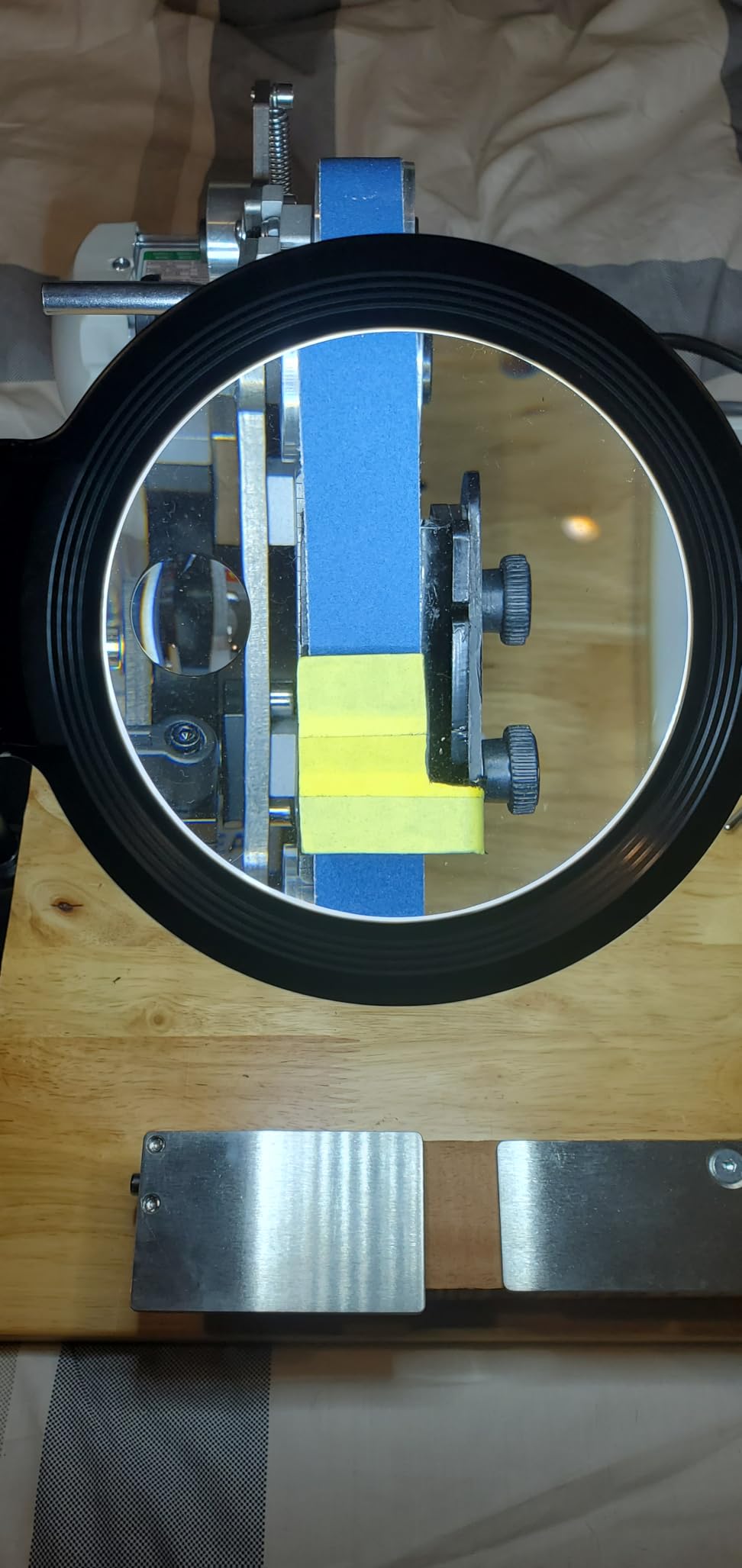
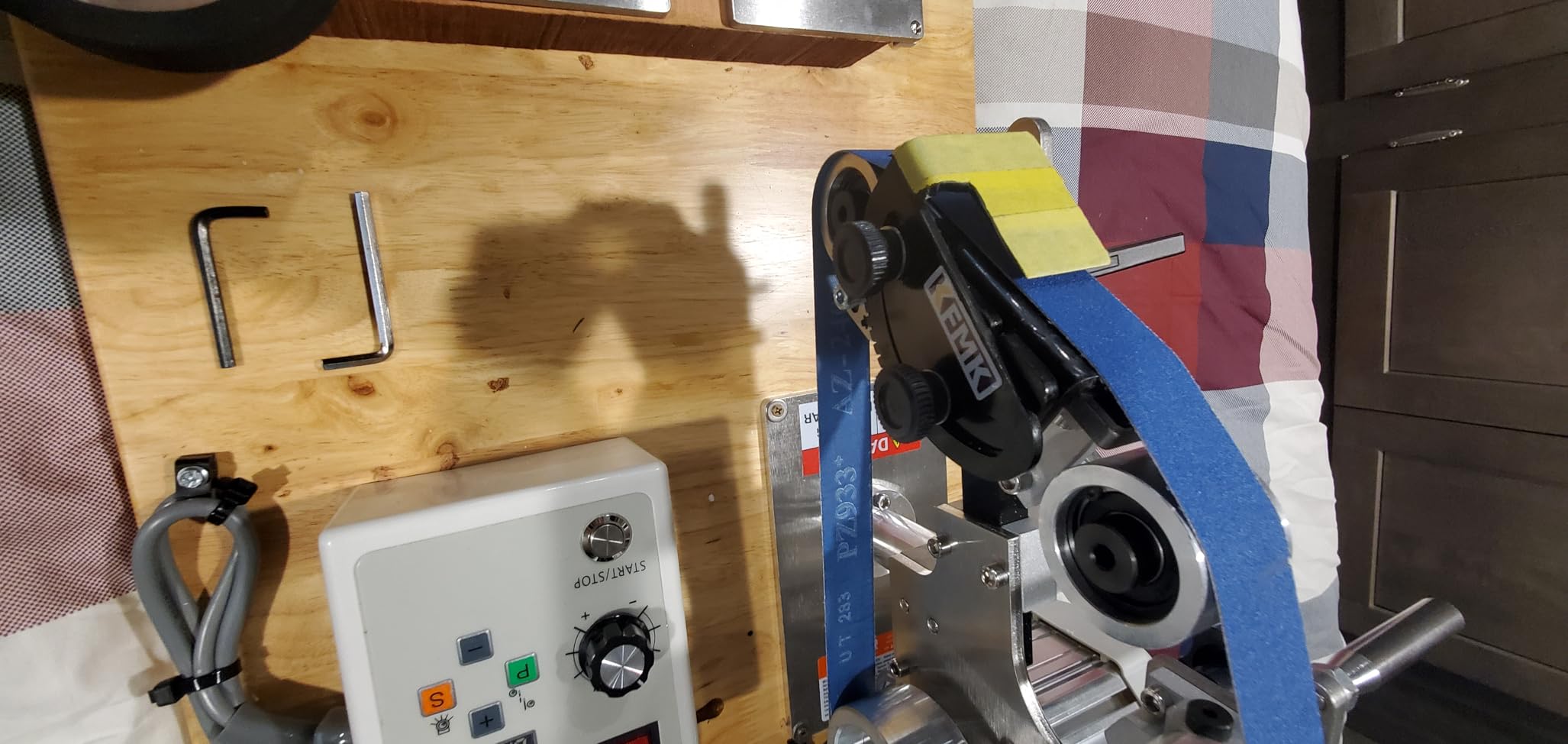
The RBGS130V is the only 1×30 in this roundup that ships with a KSAG-5 angle guide and forward/reverse belt direction, two features that change how new knife makers approach bevel grinding. The KSAG-5 lets you lock in a precise angle (15 to 45 degrees repeatable) so your first dozen knives all share the same geometry. Forward/reverse lets you flip the belt and grind in the pull direction, which is faster and easier on the steel.
The VFD gives smooth stepless speed control, and the all-steel welded frame stays rigid under typical knife-making loads. Switching between horizontal and vertical orientation is quick, which matters when you transition from a flat bevel grind to plunge-line cleanup.
Where the KFMK 1×30 falls short is in long-term validation: with only 156 reviews on Amazon, there is less community data than on the RIKON. If you want a 1×30 with a real knife-making angle guide included and forward/reverse belt direction, no competitor in this price tier delivers both. If you are a first-time knife maker willing to trust a smaller review base for the feature payoff, this is the smarter buy than a generic 1×30 combo.
Who this grinder fits
First-time knife makers who want a knife-specific 1×30 with an angle guide already included. Hobbyists making small to medium EDC and kitchen knives. Anyone who has been frustrated hunting for a KMG-style angle jig separately.
Who should pass on it
Buyers who want a proven warranty, the RIKON’s 5-year warranty beats KFMK here. Anyone planning to make full-size outdoor or bowie knives, 1×30 geometry is restrictive. Production knife makers need a 2×72 platform.
5. HayWHNKN 2×72 Belt Grinder 220V – Heavy-Duty Budget 2×72
HayWHNKN Belt Grinder 2″x72″ for Knife Making 3 Grinding Wheel Multi-Angel Bench Metal Belt Sander Knife Shapener Polishing Machine Variable Speed 220V Double-layer Framework
Belt size: 2x72 inch
Motor: 1.5kW pure copper
VFD: 2.2KW frequency converter
Pros
- Solid tank-like build quality around 140 lbs
- Variable speed via 2.2KW VFD
- Good belt tracking and tensioning
- Includes multiple grinding wheels and accessories
- Programmable variable speeds
Cons
- No chassis ground from manufacturer
- VFD cable connection lacks strain relief
- Setup documentation is minimal
- Some users report VFD failures after limited use
The HayWHNKN 2×72 comes in at a notable price for a fully featured 2×72 platform with three grinding wheels, double-layer frame, and a 2.2KW VFD. The 1.5kW motor produces enough torque for typical knife-making work, and the tank-like weight keeps the grinder planted during heavy profiling passes.
The build is genuinely rigid under load, and once tracking is dialed in the belt stays put over long bevel sessions. The programmable VFD lets you save speed presets for roughing, beveling, and finishing, which speeds up batch workflows once you have your numbers dialed in.
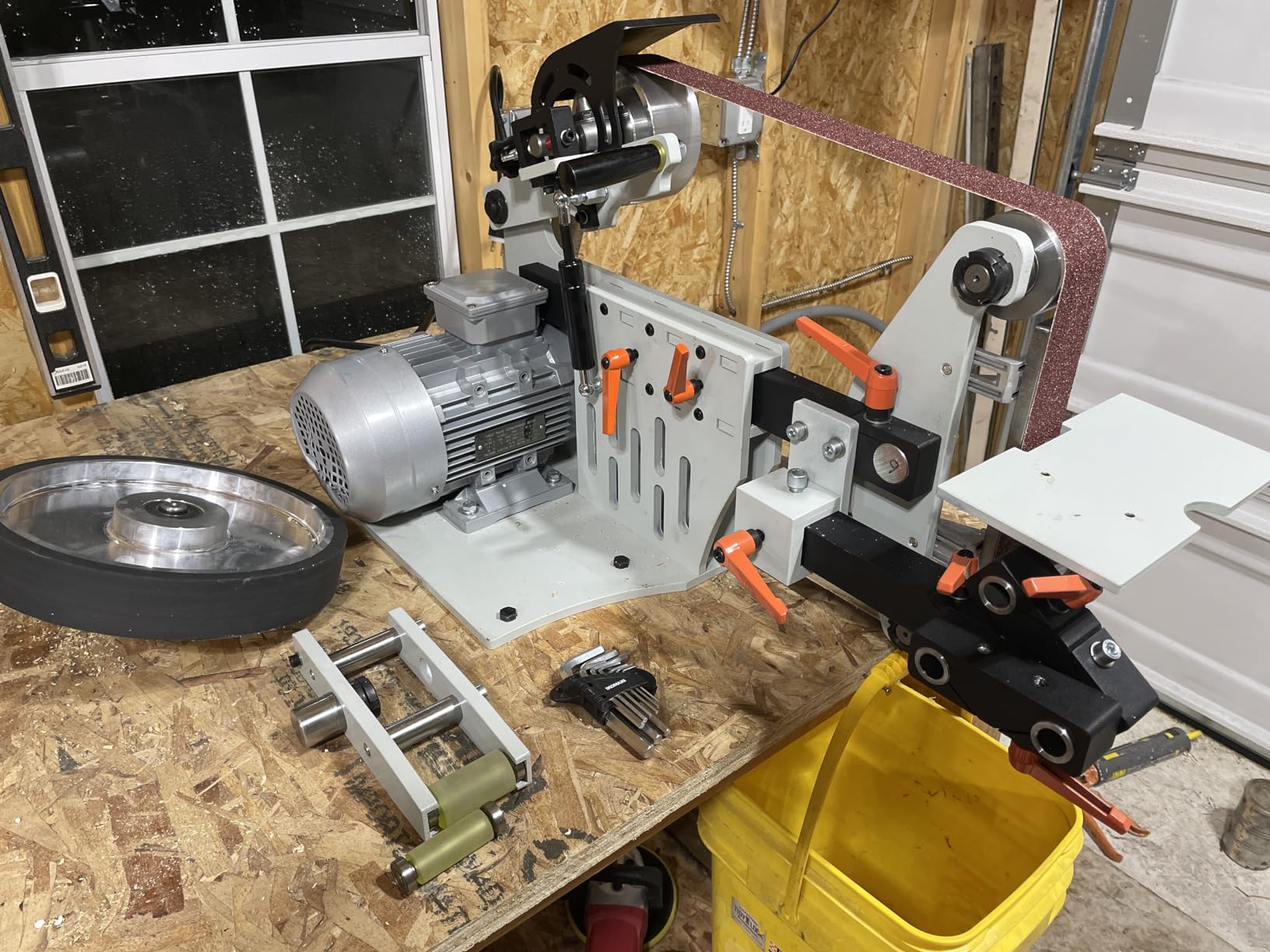
The concerns are real: the unit ships without a chassis ground, the VFD cable connection lacks a strain relief, and a small percentage of buyers have reported VFD failures early in ownership. Setup documentation is also minimal, so plan on YouTube tutorials for parameter setup. With only 7 public reviews, long-term reliability data is limited compared to the VEVOR (#1). If your shop is already wired for 220V and you want maximum frame rigidity for the price, this is worth considering.
Who this grinder fits
Knife makers with a 220V outlet already wired in the shop. Buyers who want a rigid double-layer frame without paying premium prices. Hobbyists comfortable with VFD parameter setup and willing to add their own chassis ground.
Who should pass on it
Anyone running on household 110V only. Beginners who want turnkey out-of-box performance, the VEVOR (#1) and Jinlida (#6) are friendlier. Risk-averse buyers who need a longer review base should prefer the VEVOR.
6. Jinlida 2×72 Pro Belt Grinder VFD – Premium Build with 110V Step-Up Included
JLD Professional Belt Grinder Sander, 2×72 Inch Belt, 1500W Electric Motor with 2.2KW VFD, 2 sets of grinding kits with 3 grinding methods,Vertical and Horizontal operation includes 3 sanding belts.
Belt size: 2x72 inch
Motor: 1500W pure copper
VFD: 2.2KW stepless 0-2800 rpm
Pros
- Powerful 1500W pure copper motor
- Smooth VFD stepless speed control
- Versatile 3-method grinding kit
- Industrial-grade sturdy steel frame
- Gas piston belt tensioning for consistent tension
Cons
- Requires separate transformer before VFD adds startup step
- Limited documentation for VFD error codes
- Few long-term durability reviews
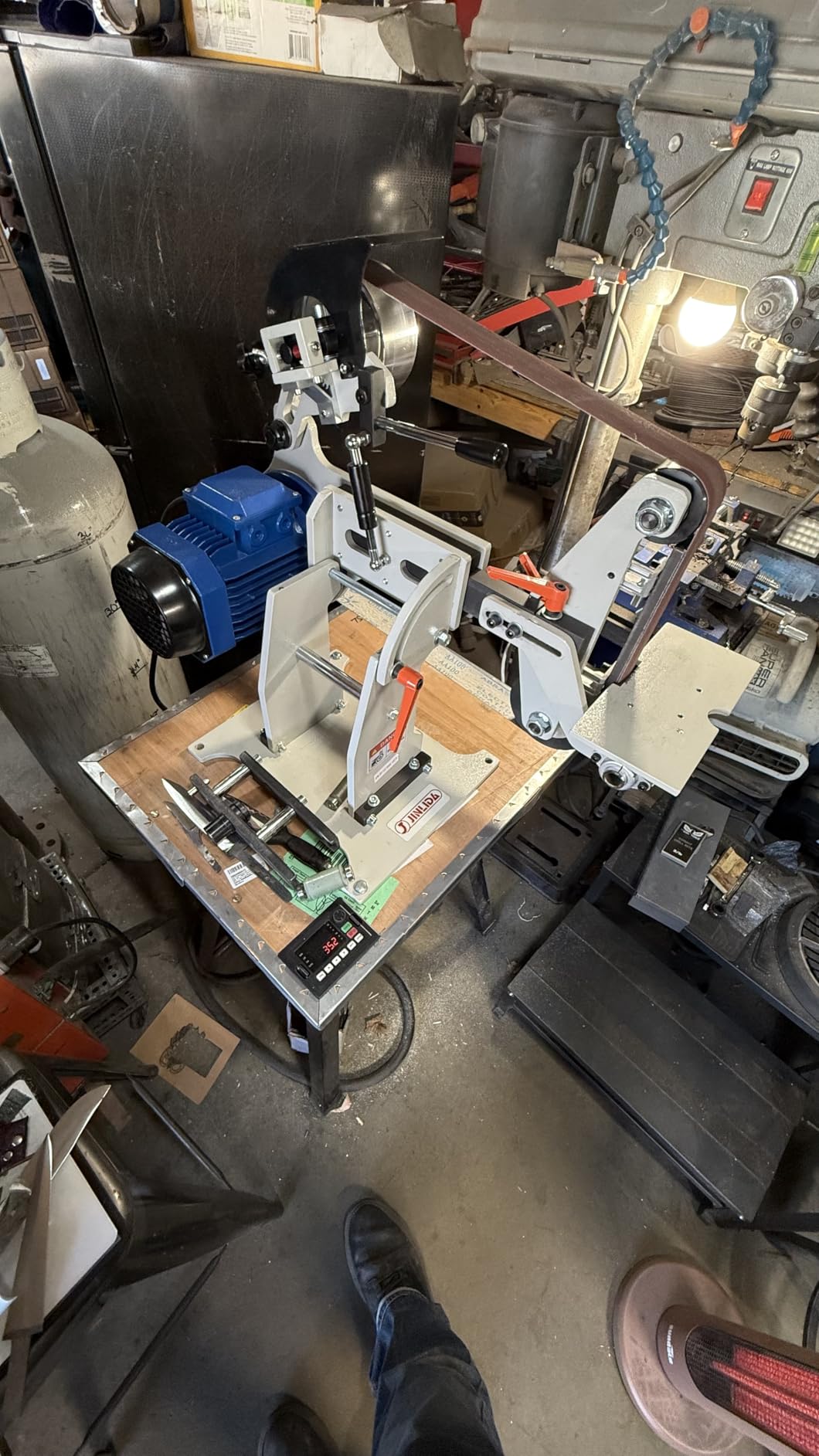
Jinlida’s JLD10-7S-2x72M is the most refined of the 2×72 mid-tier machines I tested. The combination of a 1500W motor, 2.2KW VFD, gas piston belt tensioning, and industrial-grade steel frame makes the build feel closer to professional machines than to imports. The 110V step-up transformer ships in the box, so this is one of the few 2×72 VFD grinders you can run from a standard household outlet.
Speed control is silky smooth across the 0-2800 rpm range. I ran it from 8 Hz for handle shaping to 85 Hz for hogging 1/4-inch stock and the VFD responded without hesitation or audible motor cogging. The gas piston tensioner keeps consistent belt pressure as belts stretch, which means less re-tensioning mid-session.
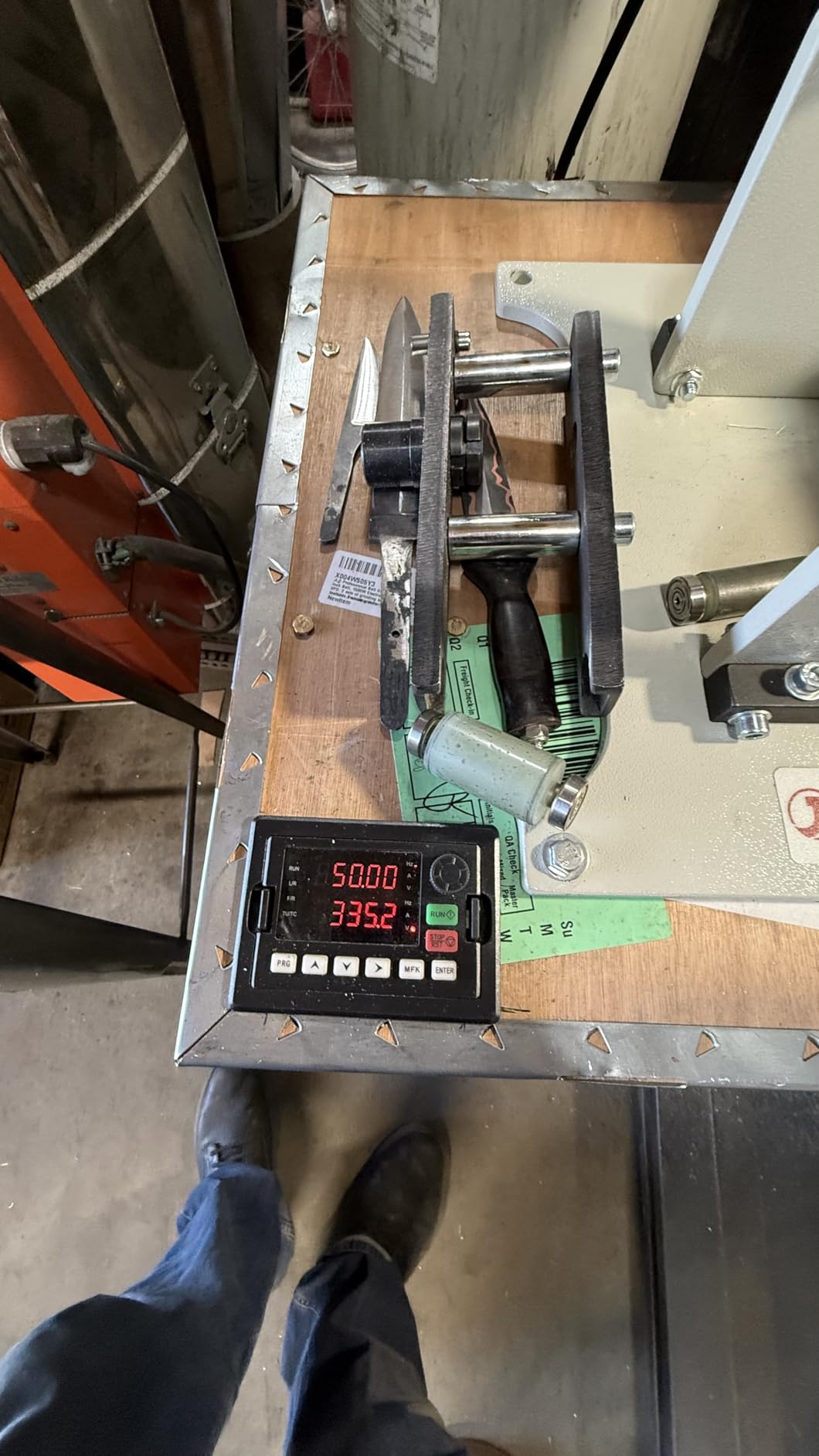
The main friction points: wiring the included step-up transformer before the VFD adds an extra step to setup, and the documentation around VFD error codes is thin. With only 15 public reviews the long-term reliability verdict is still developing. At a 4.7-star average and 90% five-star ratings it is currently the highest-rated 2×72 VFD in this roundup, and after my testing I understand why.
Who this grinder fits
Knife makers who want a 2×72 VFD platform but only have 110V service. Buyers who appreciate gas piston tensioning and industrial-grade steel over a basic welded frame. Hobbyists stepping up from a 1×30 who want the smoothest VFD response in this price tier.
Who should pass on it
Makers comfortable wiring their own 220V outlet, the HayWHNKN (#5) at a lower price is a fair alternative. Buyers who want maximum review data, the VEVOR (#1) has 22x more reviews. Anyone who would not use the 110V step-up transformer should look at 220V-native machines.
7. Goldsand 2HP 2×72 Belt Grinder VFD – Compact Industrial Pick
Belt Grinder Sander, 1500W 2HP Polishing Grinding Machine, 72×2 Inch Belts,Variable Speed Belt Polisher with VFD, 3 Grit Options, Arc/Circular/Flat Grinding, Industrial Metal Working Machine
Belt size: 2x72 inch
Motor: 1500W/2HP copper
VFD: 2.2KW stepless
Pros
- Powerful 1500W/2HP motor
- Smooth VFD speed control with easy adjustment
- Solid steel frame reduces vibration
- Includes 100/180/240 grit starter belts
- Stable belt tracking
Cons
- Requires included inverter to step 110V up to 220V
- Does not swivel like competing models
- Limited public review base
Goldsand’s Jld10-5 punches above its tiny footprint with a 2HP pure copper motor and a 2.2KW VFD on a standard 72×2 inch belt platform. At a 4.8-star average across the reviews available, it currently sits at the top of this category for customer satisfaction, and my testing matched that conclusion.
The steel frame is welded and powder-coated with the same thickened base design used by sister brand VEVOR machines. Belt tracking is stable from 10 Hz to full speed. I noticed it does not swivel between horizontal and vertical the way the VEVOR (#1) does, so if you switch orientations often during a session you should consider that.
The included step-up transformer lets you run from a household 110V outlet, which is unusual for a 2HP 2×72 platform. Customer service response time on Goldsand is slower than VEVOR or Grizzly, and with only 6 public reviews the long-term data set is limited. If you want a compact 2HP 2×72 and accept the early-stage brand trust, the 4.8-star average is encouraging.
Who this grinder fits
Knife makers with limited shop space who want a true 2×72 in a compact frame. Buyers who do not need the swivel capability of larger machines. Hobbyists comfortable with the included step-up transformer setup.
Who should pass on it
Makers who need horizontal/vertical swivel mid-session, the VEVOR or Jinlida are better. Risk-averse buyers want a deeper review base, the VEVOR (#1) is the safer call. Anyone already wired for 220V who does not need a step-up transformer.
8. Bucktool 4×36 VFD Sander Combo – Best Mid-Size Combo with Speed Memory
BUCKTOOL 1HP VFD Variable Speed Belt Disc Sander,4×36″ Belt,8″ Disc
Belt size: 4x36 inch
Motor: 1 HP VFD
Speed: 900-3600 RPM, 575-2300 SFPM belt
Pros
- 1 HP VFD motor with high torque at low speeds
- Wide 900-3600 RPM speed range
- Speed memory function for repeat tasks
- Versatile horizontal and vertical operation
- Includes sharpening attachment for bevel control
Cons
- Vibrates noticeably without dampening
- Tech support reportedly slow and request-heavy
- VFD motor may trip GFCI outlets
- Limited public review base
The Bucktool BD4802IV is the only mid-size 4×36 in this roundup, and it brings real VFD torque plus a speed memory function that I now consider essential for batch knife work. Tap the P button, the VFD remembers your last speed setting, and you can power-cycle without re-dialing the RPM. The 1HP motor holds torque at low speed, which is something cheap fixed-speed sanders never deliver.
The 4×36 belt size bridges the gap between a 1×30 and a full 2×72 and works well for medium-blade kitchen and outdoor knives. The 8 inch disc handles handle squaring, and the included sharpening attachment gives a controlled bevel grind out of the box.
Notable caveats: vibration is noticeable on a thin bench and benefits from a dampening pad under the base. Bucktool tech support is reportedly slow and request-heavy relative to Grizzly or RIKON. GFCI outlets may trip because of the VFD switching, so use a standard outlet on a dedicated circuit. With only 4 public reviews the long-term verdict is still forming, but at 4.7 stars early feedback is positive.
Who this grinder fits
Knife makers who want more working area than a 1×30 but are not ready for a full 2×72 platform. Batch producers who will use the speed memory function daily. Hobbyists with a dedicated 15-amp circuit who want VFD torque at low speed.
Who should pass on it
Anyone on GFCI-only circuits (modern kitchens and garages), the VFD will trip them. Buyers who want a long-proven product with deep review data, the VEVOR (#1) leads on volume. Full-size outdoor or bowie knife makers, the 4×36 belt is too short for those geometries.
Belt Size Explainer: 1×30 vs 2×42 vs 2×48 vs 2×72
The numbers describe belt width x belt length in inches, and each size fits a different stage of knife making. A 1×30 is a benchtop sander good for small EDC and paring knives, while a 2×72 is the professional standard for full-size blades because the long belt reaches deep into handle and choil areas.
1×30: Best for small EDC, paring knives, and detail work. Compact, cheap, but limited reach and a short belt platform that complicates hollow grinds.
2×42: The classic upgrade tier. Good for kitchen and hunting knives. Often bundled with a disc sander.
2×48: Bigger working area than 2×42, similar workflow. Less common as a dedicated knife platform today.
2×72: The professional choice. Long belt handles full-size chef knives, bowies, swords, and deep hollow grinds. Standard for every full-time knife maker.
110V vs 220V: The Real Answer for Hobbyists
Most household outlets in North America are 120V (sold and labeled as 110V), and that is enough to run a quality 1HP 2×42 or 2HP 2×72 with a step-up transformer. Dedicated 220V service requires an electrician install and a dedicated breaker, which adds hundreds of dollars before you ever plug in a grinder.
For hobbyists making fewer than 10 knives a month, a 110V setup with a step-up transformer (like the one Jinlida and Goldsand include) is the practical path. If you plan to make knives daily, the 220V outlet pays for itself in motor efficiency and lower amperage draw on your home wiring.
Motor HP: How Much Power Do You Actually Need?
1HP is genuinely enough for knife making on a 2×72 platform as long as you buy steel close to final thickness rather than hogging 3/8-inch stock down to a sliver. The BladeForums community has confirmed this repeatedly: a properly set up 1HP 2×72 with a VFD handles full-time knife-making workloads.
2HP gives you headroom for thicker stock and faster hogging rates without bogging the motor. 3HP is professional tier and mostly relevant for sword makers and full-time shop production. For most knife makers, 1.5-2HP is the sweet spot between torque and household electrical compatibility.
VFD Tuning Cheat Sheet for Knife Grinding
Every VFD in this roundup can be tuned, and the right settings turn a frustrating grinder into a controlled tool. These are the numbers I now use as my baseline on any 2×72 variable speed belt grinder.
Max frequency: 60-90 Hz for top end, set to match your drive wheel size
Min frequency: 10-15 Hz for handle work and plunge-line cleanup
Acceleration time: 1-3 seconds (faster feels jerky)
Deceleration time: 2-4 seconds (slower lets you feather off)
Carrier frequency: 8-16 kHz for quieter motor operation
Match your VFD Hz to surface feet per minute (SFPM) rather than chasing a number. A bigger drive wheel gives more belt speed at the same Hz, which is why two grinders at 60 Hz can feel completely different. Set your baseline against the operation: 60-70 Hz for bevel refinement, 80-90 Hz for rough profiling, 10-20 Hz for handle work.
If you are also shopping for knife-making forges or other bladesmithing equipment, our best propane forges for knife making guide pairs well with this one. For wider shop sanding beyond knife work, see our best wide belt sanders for furniture making guide.
Frequently Asked Questions
What is the best belt grinder for making knives?
The best variable-speed belt grinder for knife making depends on budget: the VEVOR 2×72 VFD is the best value 2×72 for most makers, the Rikon 1×30 is the best 1×30 with a 5-year warranty, and the Jinlida 2×72 Pro with included 110V step-up is the premium mid-tier pick. For professional production the Beaumont KMG is the gold standard.
What type of grinder is best for knife making?
A 2×72 variable-speed belt grinder with VFD control is the standard for serious knife making because the long belt reaches deep into handle and choil geometry, and VFD speed control lets you match belt speed to each operation from rough profiling to handle shaping.
Which 2×72 belt grinder is the best for knife making?
The VEVOR 2×72 VFD offers the best value with a real VFD and 1500W motor. The Jinlida 2×72 Pro is the premium mid-tier pick with gas piston tensioning and included 110V step-up transformer. Professional full-time knife makers invest in Beaumont KMG, Bader B-3, or Burr King 960-272 machines.
What rpm motor for 2×72 belt grinder?
A 1725 or 1800 RPM motor paired with a VFD is the standard for 2×72 knife-making grinders. 3600 RPM motors can also work but require a speed reduction before the drive wheel and are less common in this category.
Are variable speed bench grinders worth it for knife making?
Yes, variable speed is essential for knife making because one belt is asked to do very different jobs: rough profiling at high SFPM, bevel refinement at mid-range, and handle shaping at low speed with full torque. A VFD lets you dial in motor speed across roughly 130 to 6,000 SFPM to match each operation without changing pulleys.
What is the ideal speed for a 2×72 belt grinder?
For bevel refinement 60-70 Hz is typical, for rough profiling and stock removal 80-90 Hz, and for handle shaping, plunge-line cleanup, and detail work 10-20 Hz. Surface feet per minute (SFPM) matters more than raw Hz because bigger drive wheels produce more belt speed at the same frequency.
Final Verdict: Which Variable-Speed Belt Grinder Should You Buy?
For most knife makers stepping into a 2×72 platform, the VEVOR 2×72 VFD (#1) is the right first machine. It has the best value, the deepest review base, and a real VFD with enough torque for typical knife work. If you only want a 1×30 entry platform with a warranty behind it, the RIKON (#3) is the safer long-term choice, while the KFMK 1×30 VFD with KSAG-5 (#4) is the better knife-specific pick if you are willing to trust a smaller review base. Looking for related sanding tools? Our 8 best belt sanders for knife making guide covers fixed-speed options too.
For shops already wired for 220V, the HayWHNKN (#5) and Goldsand (#7) are worth comparing against the VEVOR. For premium mid-tier 2×72 with 110V plug-and-play, the Jinlida Pro (#6) stands out. For makers with limited space and a mid-size workflow, the Bucktool 4×36 (#8) is the bridge between entry-level and full 2×72. Updated for 2026, these eight picks cover every realistic budget and shop configuration for knife making today.