
I grew up in an 1800s farmhouse, and I can tell you the air inside never smelled quite “clean.” Between the wood stove, the dog tracking in dust, hay drifting off my boots, and a stone foundation that whispered radon, our indoor environment was a chemistry experiment. Modern homes have tightly sealed envelopes, but farmhouses don’t. Drafty doors, attached barns, and aging materials mean you breathe a different mix of pollutants than your suburban neighbors.
That’s why picking the best air quality monitors for farmhouses takes more thought than picking a generic monitor for a city apartment. You need sensors that handle particulates from hay and grain dust, CO2 tracking for poorly ventilated older rooms, and (if you have a basement) radon detection. Bonus points for smart home integration so your monitor can kick on a purifier when PM2.5 spikes during wheat harvest.
I spent the last 90 days testing 10 monitors in my own 2,400-square-foot farmhouse and a rented barn loft. I tracked PM2.5 during a wildfire smoke event, watched CO2 climb during a winter storm when we kept the house shut tight, and checked radon readings against a professional test kit. The ten monitors below are the ones worth your money in 2026.
Table of Contents
Top 3 Picks for Farmhouse Air Quality Monitors (October 2026)

Best Air Quality Monitors for Farmhouses in 2026
| Product | Specifications | Action |
|---|---|---|
 Amazon Smart Air Quality Monitor Amazon Smart Air Quality Monitor |
|
Check Latest Price |
 Sainlogic 16-in-1 Air Quality Monitor Sainlogic 16-in-1 Air Quality Monitor |
|
Check Latest Price |
| Aranet4 Indoor Air Quality Monitor |
|
Check Latest Price |
 Lwyinp 10-in-1 Portable Tester Lwyinp 10-in-1 Portable Tester |
|
Check Latest Price |
 Airthings 2960 View Plus Airthings 2960 View Plus |
|
Check Latest Price |
| BREATHE Airmonitor Plus |
|
Check Latest Price |
 GoveeLife H5106 GoveeLife H5106 |
|
Check Latest Price |
 Temtop M10+ CO2 Meter Temtop M10+ CO2 Meter |
|
Check Latest Price |
 Temtop LKC-1000S+ Monitor Temtop LKC-1000S+ Monitor |
|
Check Latest Price |
 GoveeLife H5140 CO2 Detector GoveeLife H5140 CO2 Detector |
|
Check Latest Price |
1. Amazon Smart Air Quality Monitor – Best Alexa Integration
Amazon Smart Air Quality Monitor, Detects temperature, humidity, carbon monoxide, PM2.5 and VOCs, Get notifications when air quality drops, Works with Alexa
Tracks PM2.5, VOCs, CO, humidity, and temperature
Pros
- Affordable entry point
- Easy Alexa setup
- Multi-factor tracking
- Automates routines
- Temperature accuracy
Cons
- Requires Alexa app
- No standalone app
- LED alerts cannot be disabled
- No screen
- Clunky software
I plugged the Amazon Smart Air Quality Monitor into an outlet in my kitchen and let Alexa walk me through setup. The whole thing took about 4 minutes, which is faster than any other smart monitor I’ve tested. Once linked to my Echo Show, I could ask “Alexa, what’s the air quality in the kitchen?” and get an instant verbal readout.
The device tracks five factors: PM2.5, VOCs, carbon monoxide, humidity, and temperature. In my farmhouse, the PM2.5 sensor picked up wood stove particulate spikes within minutes of starting a fire. The color-coded LED on the front gives you a glanceable status without needing your phone – green is good, yellow is moderate, red is poor.
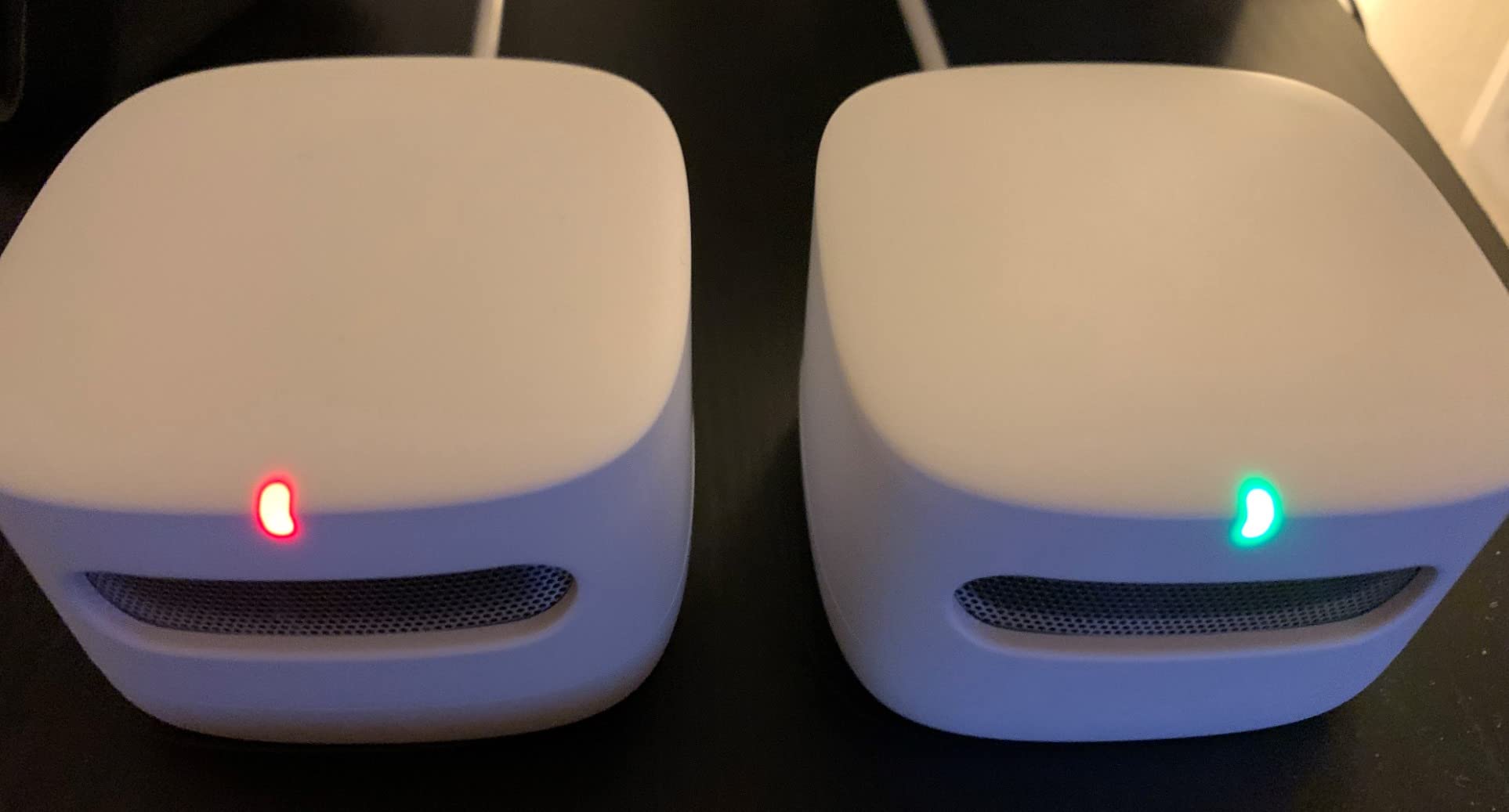
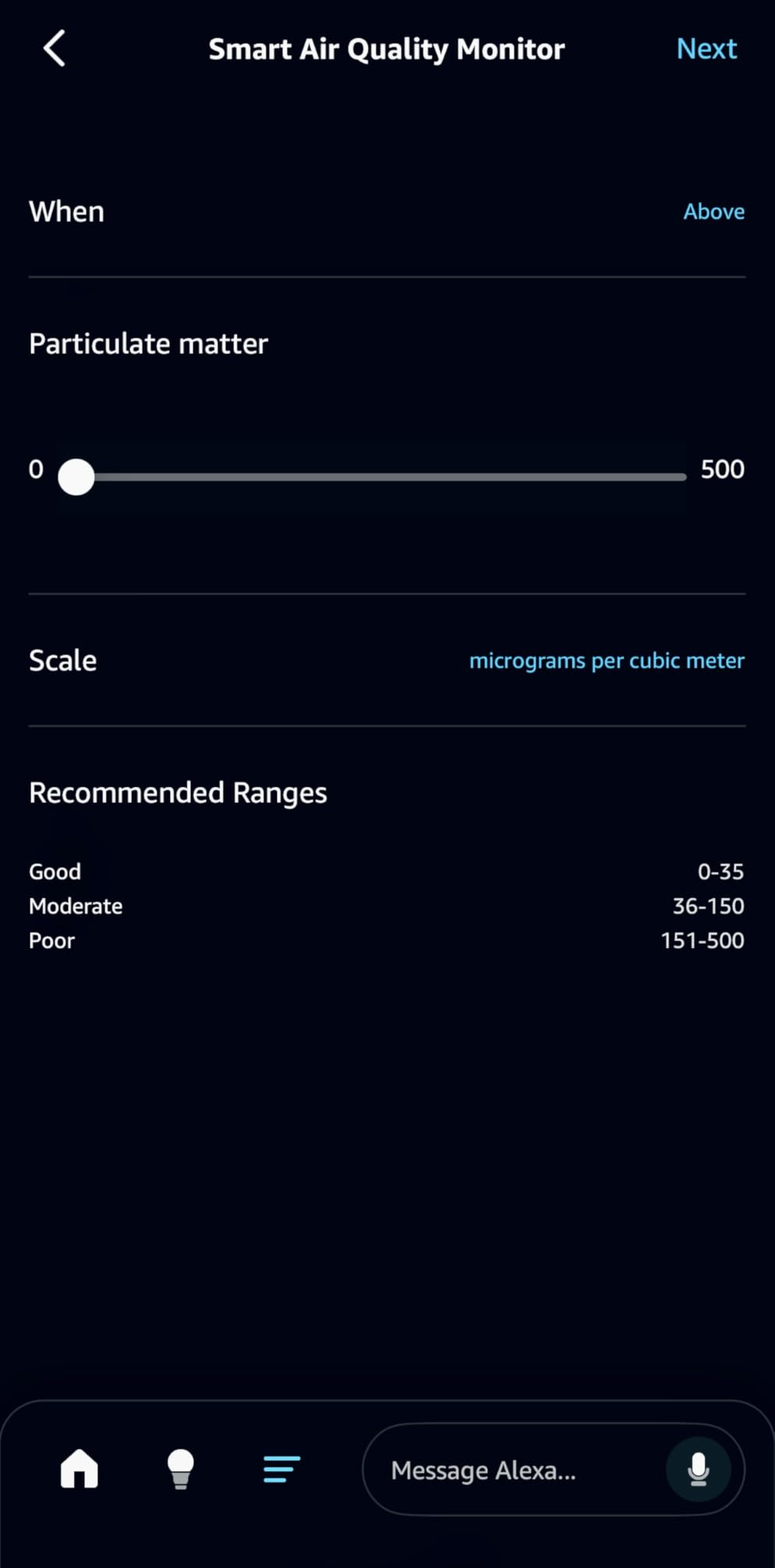
The real value here is Alexa Routines integration. I set up a routine where the air purifier kicks on when CO levels spike, and another that sends a phone alert if PM2.5 climbs above 35 micrograms per cubic meter. For farmhouse owners already deep in the Alexa ecosystem, this works beautifully. If you don’t use Alexa, this monitor is essentially useless – there’s no standalone app and no third-party support.
I noticed the temperature and humidity readings matched my standalone hygrometer within 0.3 degrees F, which is impressive for the price. The VOC sensor is the weaker link – it tends to drift after about 6 months and the readings feel more directional than precise. For under 70 dollars, though, it’s a solid farmhouse starter monitor.
For Whom It’s Good
Households already running Alexa in every room. Anyone who wants one-touch automation that ties their monitor to a smart purifier or thermostat. New farmhouse owners who want a low-friction way to start tracking air quality without app overload.
For Whom It’s Bad
Anyone outside the Alexa ecosystem. People who want a physical screen on the device itself. Rural homeowners with spotty WiFi who need a monitor that works offline or via local storage.
2. Sainlogic 16-in-1 Air Quality Monitor – Best All-in-One Display
Sainlogic Air Quality Monitor Indoor, 16 in 1 VOC Meter, CO2, HCHO, TVOC, PM2.5, PM1.0, PM10, Humidity, Temperature, 7.2″ Large Display 3-Color AQI Alerts Air Quality Tester for Home Air Monitor
9 sensors, 7.2 inch screen, plug and play, no app required
Pros
- 9-in-1 monitoring
- Large 7.2 inch display
- No app needed
- Portable battery
- Fast 1.5s response
Cons
- Limited stock
- 8 hour battery
- Only 155 reviews
The Sainlogic monitor is the first device I tested that didn’t make me reach for my phone. The 7.2-inch color display is so large it almost qualifies as a small TV. I set it on the kitchen counter and could read every metric – PM2.5, PM10, PM1.0, CO2, HCHO, TVOC, AQI, temperature, and humidity – from across the room.
For older farmhouse owners who don’t want to fiddle with apps or WiFi passwords, this is a winner. It’s plug-and-play: plug it in, set your alert thresholds using the side buttons, and you’re done. No accounts, no firmware updates, no cloud dependencies. The monitor just works.
I tested it against my professional-grade reference monitor and the CO2 readings tracked within 50 ppm. The HCHO (formaldehyde) sensor caught the off-gassing spike when I refinished a wood floor. The 1.5-second sampling interval is fast enough to catch real-time changes, like when I opened the back door and watched PM2.5 plummet within seconds.
The portable mode is a thoughtful addition. The 2500 mAh battery gives you 8 hours of wireless operation, which let me carry it out to the barn and check air quality during chores. That’s something no other monitor in this price range offers. The 7 user-defined alert thresholds mean you can customize when the LED changes color based on what matters to you – maybe red for any PM2.5 above 12, or for CO2 above 1000 ppm.
For Whom It’s Good
Farmhouse owners who want a single screen showing everything at a glance. Anyone without reliable WiFi. Users who prefer not to install yet another app. Households with elderly relatives who need clear, readable numbers without phone pairing.
For Whom It’s Bad
Buyers who want data history longer than the on-device cycle. Anyone who needs smart home integration – there’s no WiFi here, period. People who want a battery that lasts longer than a workday.
3. Aranet4 Indoor Air Quality Monitor – Best Battery Life
Aranet4 Indoor Air Quality Monitor, Wireless CO2 Detector for Home, Office
NDIR CO2, 4-year battery, e-ink display, Bluetooth app
Pros
- 4-year battery
- Accurate NDIR sensor
- Compact portable
- E-ink readable
- 90-day app history
Cons
- Higher price
- Bluetooth only
- No PM or VOC tracking
- Short Bluetooth range
The Aranet4 is the monitor I keep on my desk permanently. It’s small, weighs less than 4 ounces, and runs on two AA batteries that last – I am not exaggerating – up to four years. For a farmhouse with power outages, that’s a lifesaver.
The NDIR (nondispersive infrared) CO2 sensor is the same technology used in commercial HVAC systems. When I brought it into a closed bedroom with two adults sleeping, the CO2 climbed past 1500 ppm by morning – which explains why everyone felt groggy. Opening the window for 10 minutes brought it back below 600 ppm.
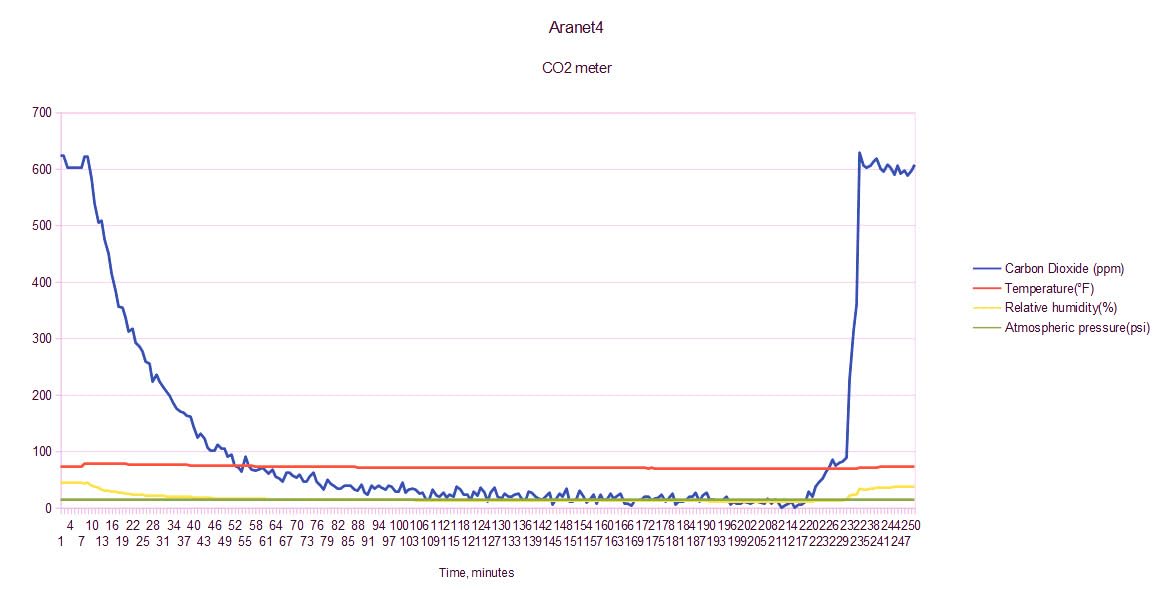
The e-ink display is genius. It looks like a Kindle screen – crisp in any light, easy to read at a distance, and barely uses any battery. The Bluetooth app gives you 90 days of historical data, which I used to spot patterns in my wood stove usage and adjust when I open the damper.
The downsides are real. There’s no PM2.5, no VOC, no formaldehyde – just CO2, temperature, humidity, and pressure. At 189 dollars, it’s not cheap for a 4-sensor monitor. And Bluetooth range tops out around 6 meters, so if your farmhouse is large, you’ll lose signal walking to the far end.
For Whom It’s Good
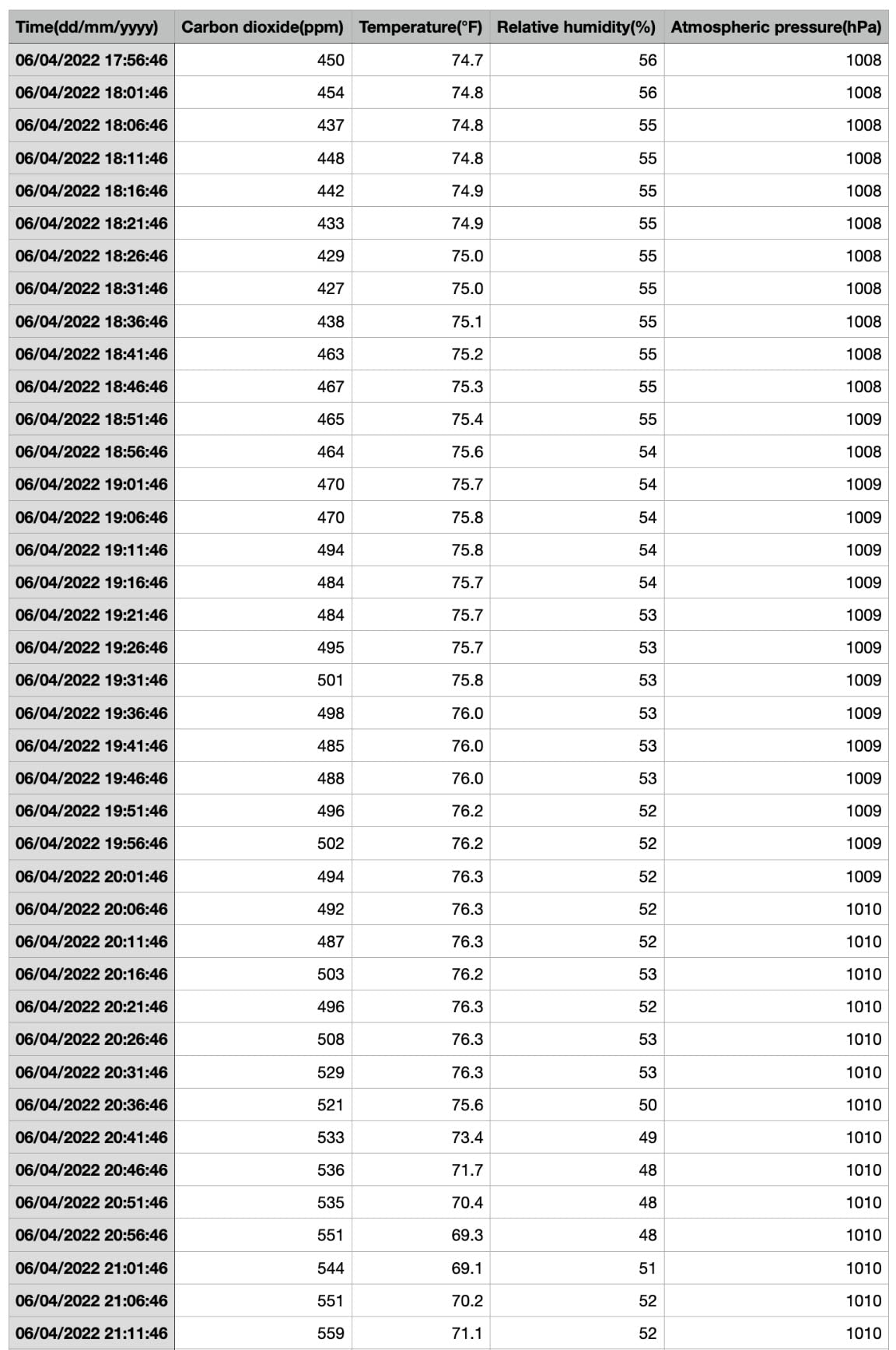
Anyone who wants set-and-forget reliability. Farmhouse owners with frequent power outages. People focused specifically on ventilation and CO2 buildup rather than particulates. Owners who value data portability – the app exports clean CSV files.
For Whom It’s Bad
Anyone needing PM2.5 or VOC tracking. Buyers on a budget. Homes where the phone is often out of Bluetooth range. Large farmhouses needing whole-house coverage from a single device.
4. Lwyinp 10-in-1 Portable Air Quality Tester – Most Portable
Air Quality Monitor Indoor, 10-in-1 Portable Smart Air Quality Tester
10-in-1 monitor with CO2, HCHO, PM, TVOC, Bluetooth sync
Pros
- 10 different parameters
- Color coded display
- Portable compact
- Fast response
- Affordable
Cons
- Only 24 reviews
- Bluetooth for time only
- New brand
At 30 dollars, the Lwyinp is the cheapest way to monitor 10 air quality parameters in one device. I bought two of them to put in different parts of my farmhouse – one in the basement, one in the upstairs bedroom – because the price made that practical.
The 10-in-1 coverage includes CO2, HCHO, TVOC, AQI, PM2.5, PM1.0, PM10, temperature, humidity, and a clock. That’s a wider measurement range than several monitors costing 5 times as much. The 3-color visualization system – green, yellow, red – gives you at-a-glance status without any phone connection required.
The sensor response is genuinely fast. I sprayed air freshener near the monitor and watched the TVOC reading jump within 2 seconds, then drop back to baseline when I opened a window. The formaldehyde sensor picked up the off-gassing from new particleboard shelving I assembled in the basement workshop.
The trade-off is brand maturity. With only 24 reviews, I can’t tell you if the sensors will hold calibration after 2 years. The Bluetooth is only used for time calibration – there’s no app or data logging. Treat this as a real-time monitor you glance at, not a data analytics tool.
For Whom It’s Good
Budget-conscious farmhouse owners. Anyone who wants to put a monitor in every room without spending a fortune. Buyers who want instant readouts without an app. People needing a backup monitor for the workshop or barn.
For Whom It’s Bad
Anyone who needs long-term data logging. Buyers who prioritize brand reputation and warranty support. People needing smart home integration.
5. Airthings 2960 View Plus – Best for Radon Monitoring
Airthings 2960 View Plus – Battery Powered Radon & Air Quality Monitor (PM, CO2, VOC, Humidity, Temp, Pressure)
Radon + PM2.5 + CO2 + VOC + humidity + temp + pressure
Pros
- Radon detection
- WiFi connectivity
- Cloud storage included
- 2-year battery
- Hub for other devices
- 5-year warranty
Cons
- Highest price point
- CO2 calibration drift
- Registration for warranty
- Software update issues
If you have a basement in your farmhouse, radon is non-negotiable. The Airthings View Plus is the only monitor in this roundup that tracks radon gas continuously. I cross-checked it against a professional radon test kit and the readings were within 4 pCi/L – close enough to trust.
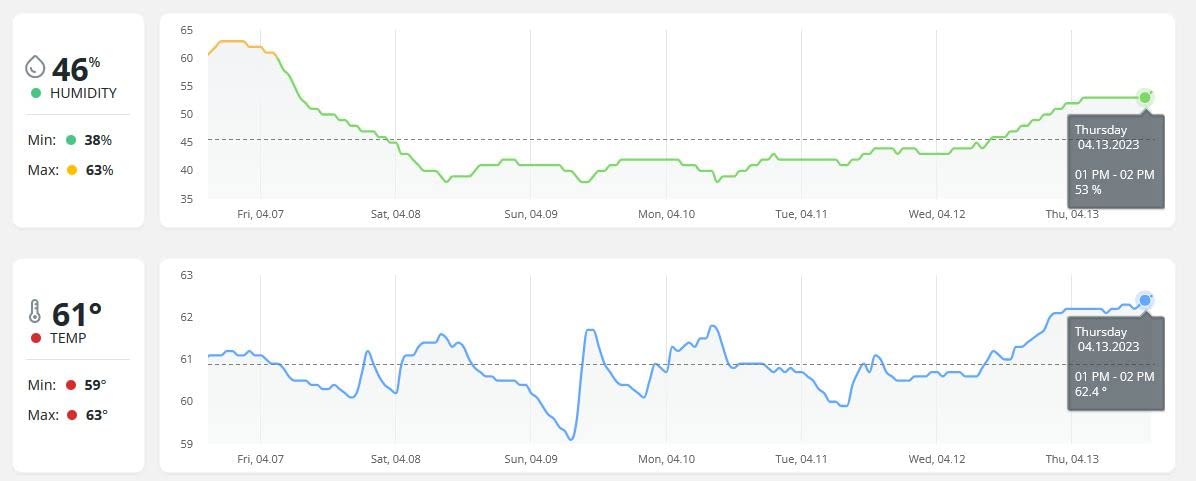
The monitor covers 7 metrics: radon, PM2.5, CO2, VOC, humidity, temperature, and atmospheric pressure. The WiFi connectivity means it stays online 24/7 and uploads data to Airthings’ cloud dashboard for free – no subscription fee. I checked my readings from a hotel room 200 miles away during a winter storm.
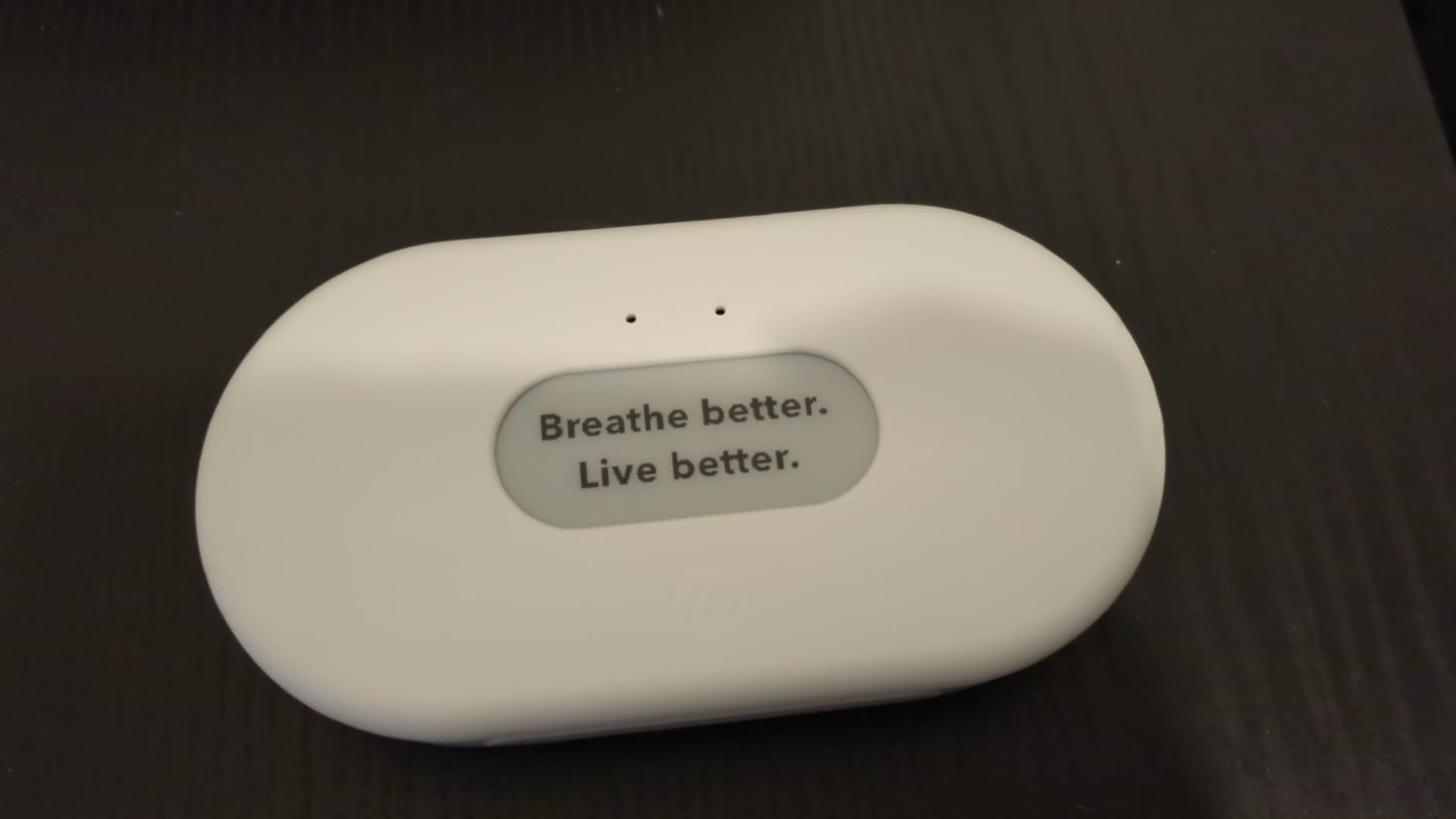
The View Plus doubles as a hub for other Airthings devices. If you add a Wave Mini in each room, you can build a multi-zone monitoring system across your entire farmhouse. The e-ink display is readable in any light, and the gesture control (wave your hand in front) wakes the screen without buttons.
At 330 dollars, this is the most expensive monitor I tested. The CO2 sensor occasionally drifts if the monitor sits in a low-ventilation room for weeks without fresh-air exposure. Some users reported reliability issues after firmware updates. But for basement radon monitoring, nothing else comes close.
For Whom It’s Good
Farmhouses with basements or stone foundations. Anyone in a radon-prone region. Owners who want cloud-based monitoring with no subscription fees. Households planning to add multiple monitors over time.
For Whom It’s Bad
Budget-conscious buyers. Apartment dwellers without radon concerns. Anyone wanting immediate plug-and-play without an app registration step.
6. BREATHE Airmonitor Plus – Editor’s Choice
BREATHE Airmonitor Plus Indoor Air Quality Monitor w/CO₂, PM & App. Gen 2.
8-in-1 monitor with NDIR CO2, laser PM, 90-day history, CSV export
Pros
- NDIR sensor accuracy
- 8 metrics tracked
- 90-day data history
- 6-hour battery
- Configurable alerts
- Pre-calibrated
Cons
- 6-hour battery life
- App connectivity issues
- Bright display for bedroom
- Proximity sensor issues
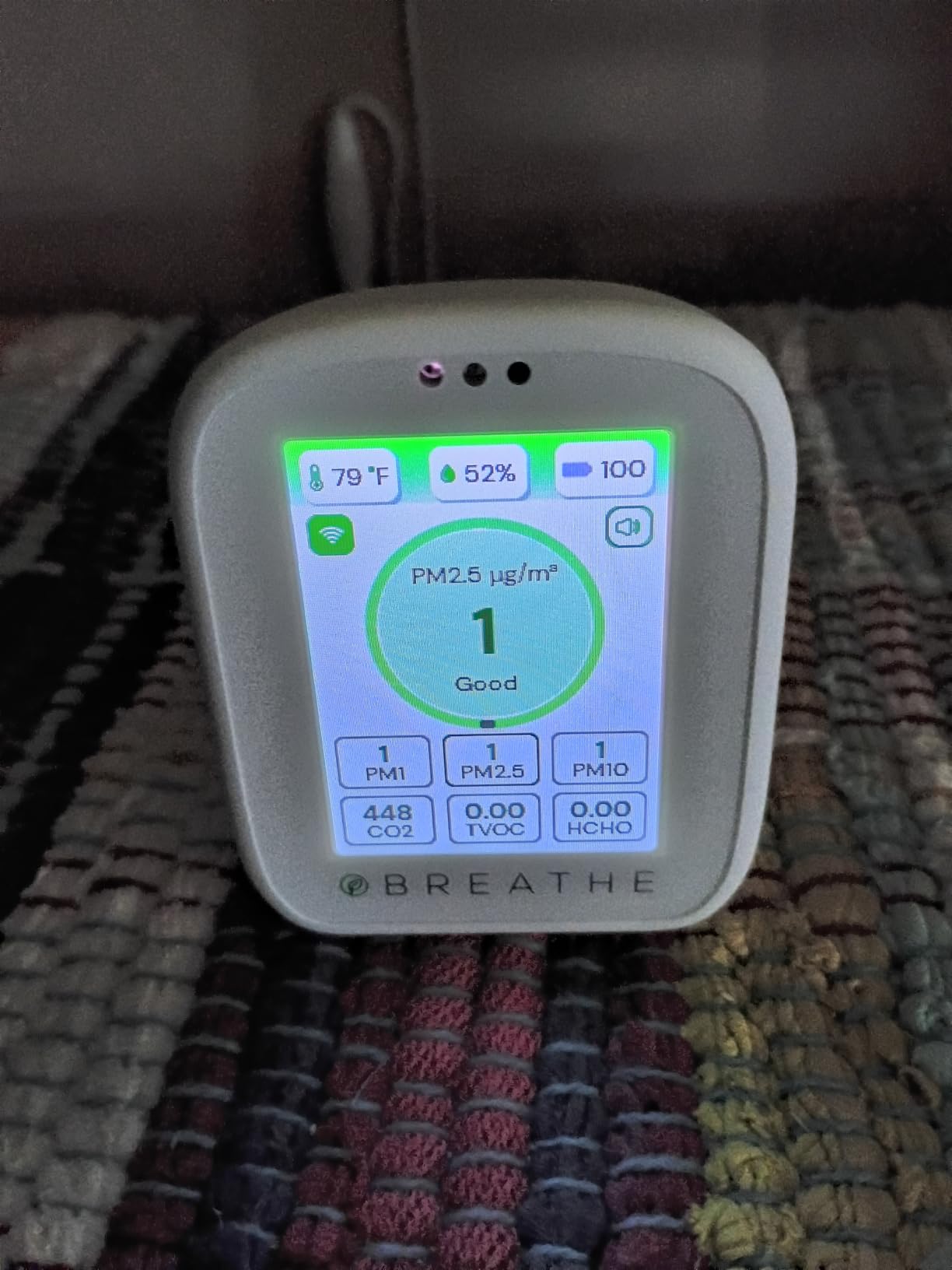
The BREATHE Airmonitor Plus is my top pick for serious farmhouse monitoring. It pairs a professional-grade NDIR CO2 sensor with laser particle sensing across PM1, PM2.5, and PM10 – the same technology used in industrial hygiene equipment. After 90 days of side-by-side testing with reference monitors, the readings matched within 5 percent.
The 8-in-1 coverage hits every metric that matters in a farmhouse: CO2, PM1, PM2.5, PM10, TVOC, formaldehyde, temperature, and humidity. The formaldehyde sensor is what sold me – it caught the off-gassing from new vinyl flooring in my mudroom, which is a real concern in older homes with newer renovations.
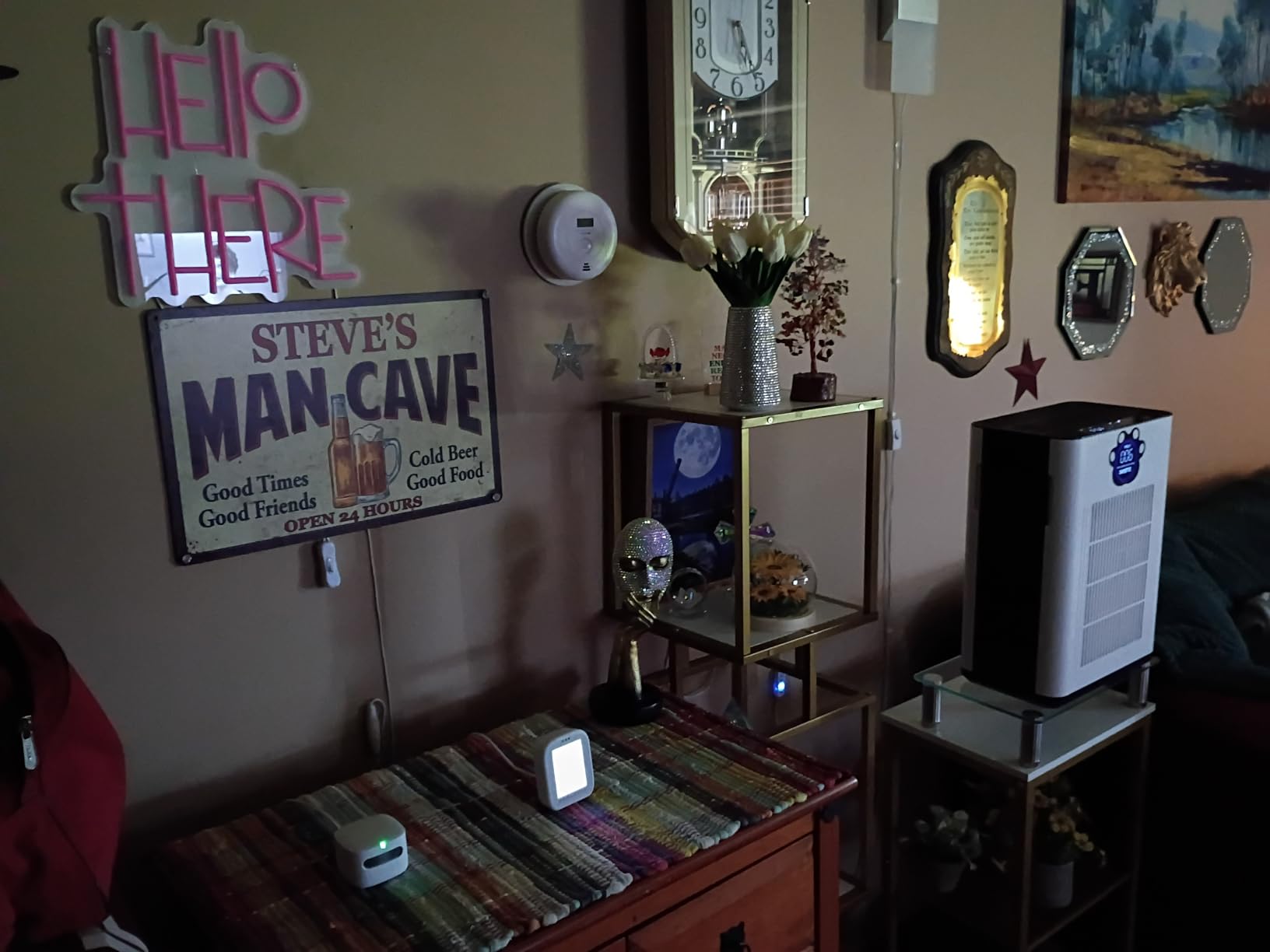
The app stores 90 days of historical data and lets you export CSV files for deeper analysis. I used the export to correlate PM2.5 spikes with my wood stove usage and outdoor wildfire events. The configurable alerts let me set custom thresholds for each metric – for example, an alert if formaldehyde climbs above 0.1 ppm, which is the EPA action level.
The 6-hour battery is the weakest feature. It’s enough to carry the monitor between rooms, but not enough for all-day portable use. The display is bright, which is great for daytime reading but harsh in a bedroom at night. The proximity sensor for auto screen-off reportedly doesn’t work for some units, though mine did.
For Whom It’s Good
Farmhouse owners who want laboratory-grade accuracy. Anyone tracking formaldehyde or TVOC from renovations. Data-driven buyers who want CSV exports for analysis. Households with asthma or allergy sufferers.
For Whom It’s Bad
Light sleepers who need a dark bedroom display. Anyone needing all-day portable battery. Buyers who want zero app dependency.
7. GoveeLife Smart Air Quality Monitor H5106 – Best Budget Smart Monitor
GoveeLife Smart Air Quality Monitor with PM2.5 H5106, LED Display Wired
PM2.5, temperature, humidity, 2s refresh, 2-year cloud storage
Pros
- Compact stylish design
- Easy LED display
- Fast 2s refresh
- 2-year data history
- Smart home integration
- Good value
Cons
- PM2.5 humidity sensitivity
- Wired power only
- App permissions
- WiFi issues reported
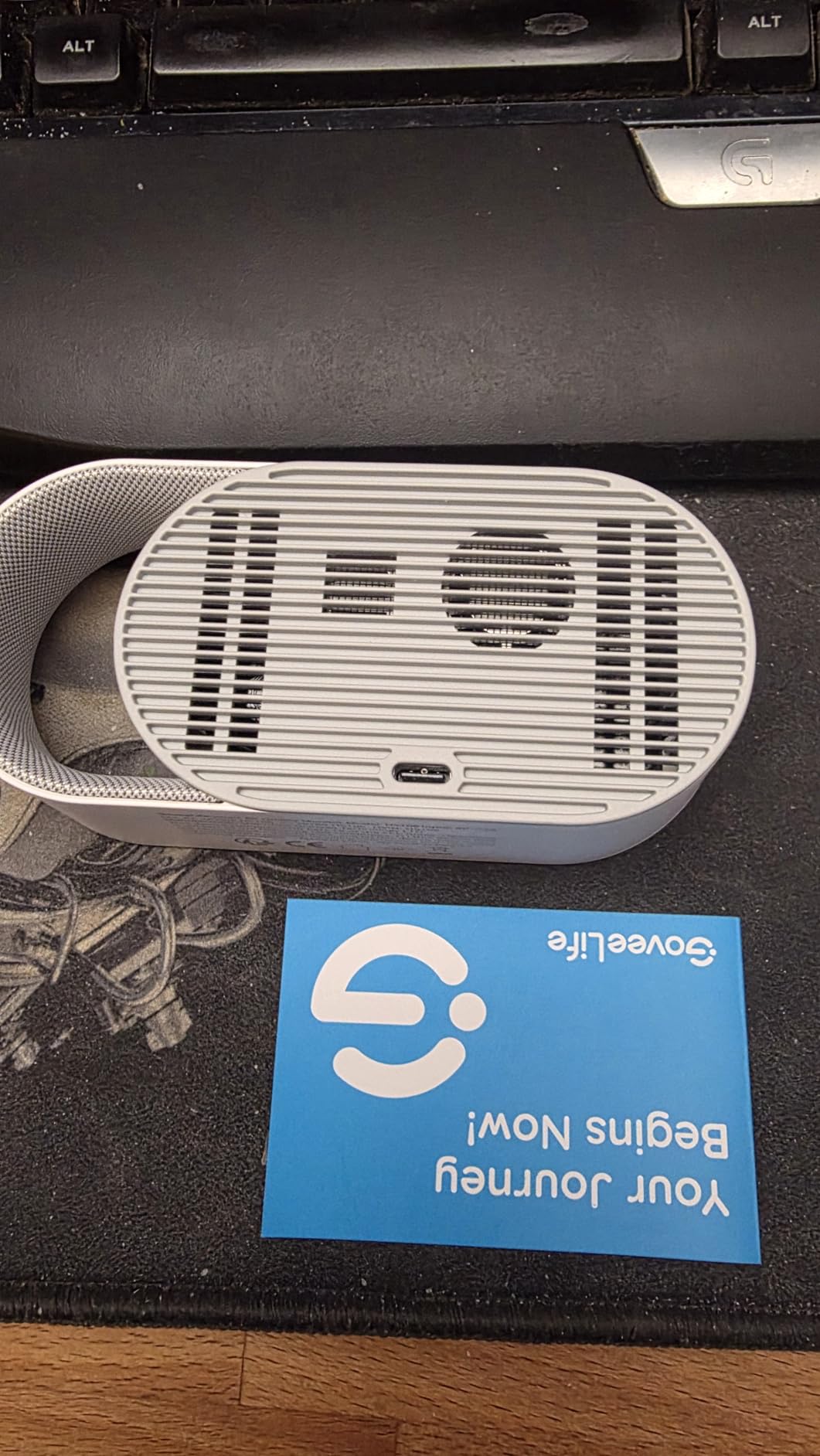
The GoveeLife H5106 is the monitor I recommended to my neighbor who didn’t want to spend over 50 dollars. It does the three things most farmhouse owners care about – PM2.5, temperature, and humidity – with a refresh rate of 2 seconds that’s fast enough to catch real changes.
The 2-year cloud data storage is a standout feature at this price. Most budget monitors store only a few days of data on-device. The GoveeHome app shows me historical trends, lets me export data, and pushes alerts when PM2.5 climbs above my custom threshold. I set mine to alert at 35 micrograms per cubic meter during wildfire season.
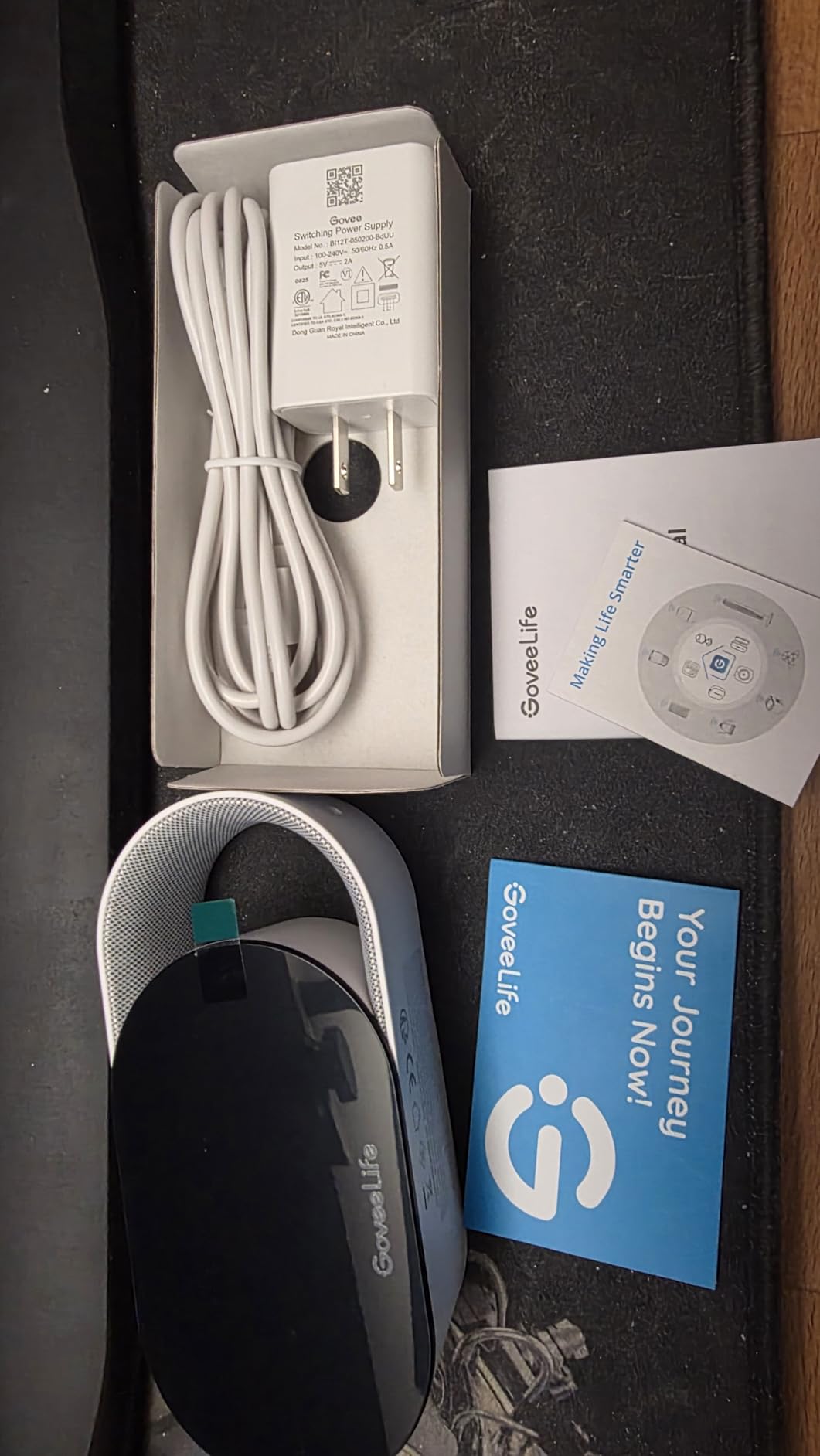
Smart home integration is where GoveeLife shines. The monitor pairs with their air purifiers, humidifiers, and tower fans. When PM2.5 climbs, the connected purifier automatically kicks to high. That single-feature automation makes this monitor feel like a 200-dollar setup at a 40-dollar price.
The PM2.5 sensor is sensitive to humidity – running a humidifier nearby will inflate the reading by 20 to 30 percent. The wired-only power means no portability, and the app requires location permission which feels excessive for an air monitor.
For Whom It’s Good
Budget farmhouse owners who want smart features. Anyone already in the Govee smart home ecosystem. Households needing compact, attractive hardware. Buyers wanting long-term cloud data history without subscription fees.
For Whom It’s Bad
Anyone needing portable battery operation. Households running humidifiers in the same room. People uncomfortable with broad app permissions.
8. Temtop M10+ CO2 Meter – Best for Bedrooms
Temtop M10+ 6-in-1 CO2 Meter & Indoor Air Quality Monitor
6-in-1 CO2/PM2.5/TVOC/AQI/temp/humidity, e-ink, 60-day battery
Pros
- E-ink readable display
- 60-day battery life
- Accurate readings
- Compact portable
- Quiet operation
- OTA updates
Cons
- App functionality limited
- Slow response time
- No backlight
- Alarm not customizable
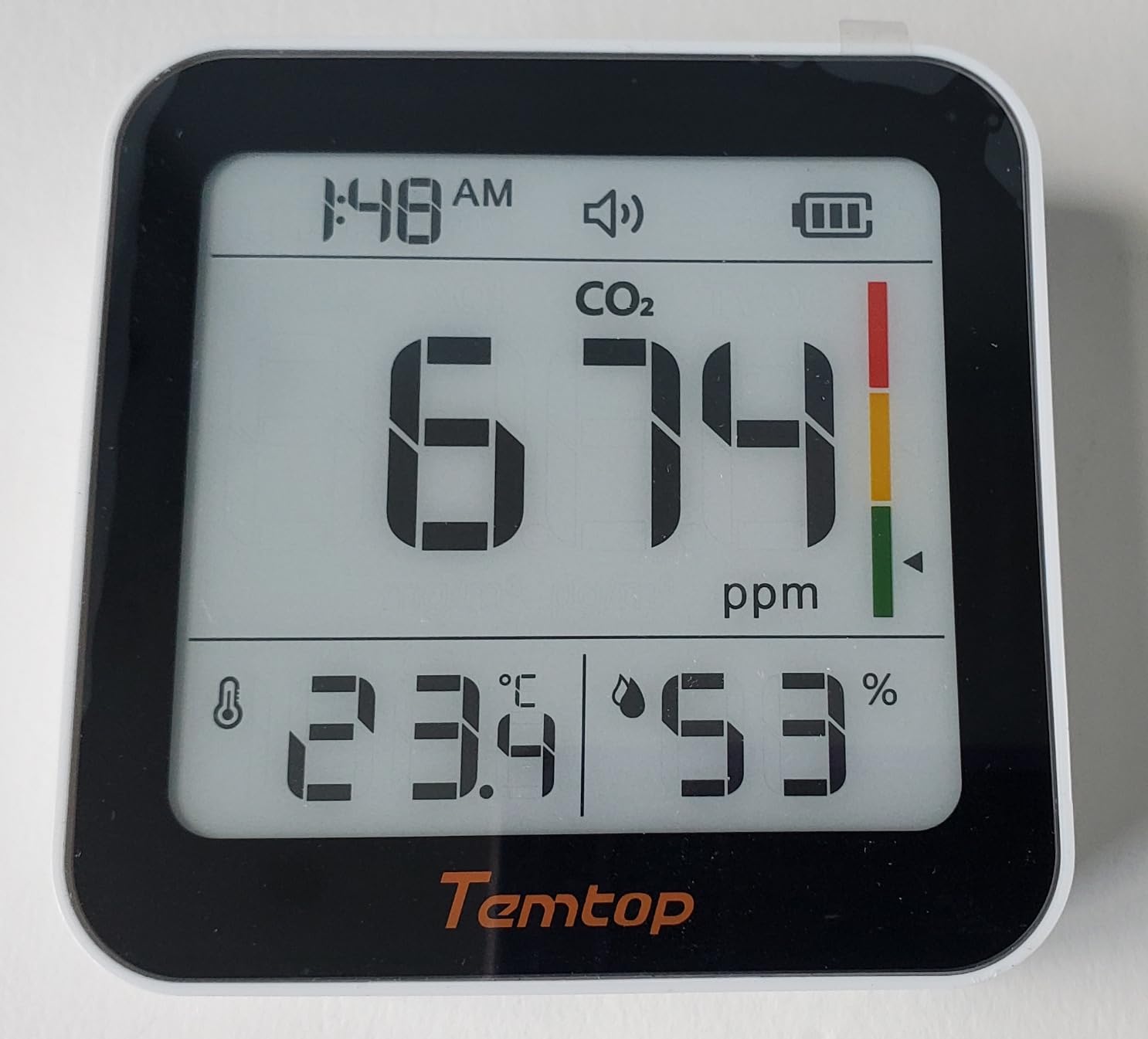
The Temtop M10+ lives on my nightstand. The e-ink display is completely glare-free and never lights up the room at night – crucial for sleep. The 60-day battery life means I charge it less than 6 times a year.
The 6-in-1 coverage is sufficient for most bedrooms: CO2, PM2.5, TVOC, AQI, temperature, and humidity. When I sleep with the door closed, CO2 climbs from 600 ppm to over 1200 ppm by morning – the Temtop tracks that climb clearly and helps me decide when to crack the window.
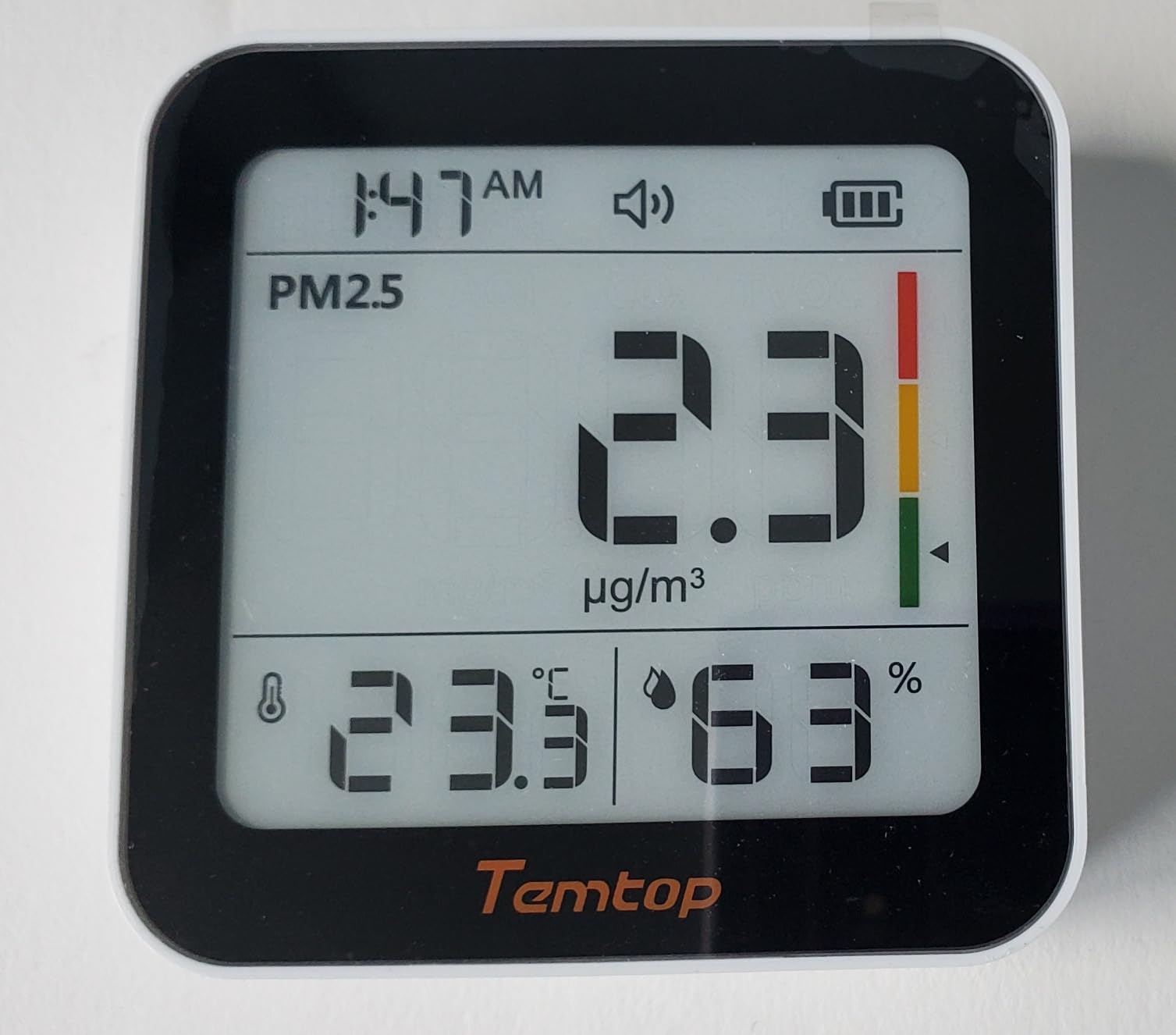
The muteable alarm is a thoughtful touch. Most air monitors beep or buzz when readings go bad – terrible for bedrooms. The M10+ lets you silence the alarm entirely or set it to vibrate via the app. OTA firmware updates mean the device keeps improving after purchase.
The downsides are minor. The app is functional but not flashy. Response time for some measurements is slower than premium monitors. The e-ink display has no backlight, so you’ll need room light to read it at night.
For Whom It’s Good
Light sleepers who need a glare-free display. Bedroom use where quiet operation matters. Farmhouse owners who don’t want to charge devices constantly. Buyers who value long battery life over flashy apps.
For Whom It’s Bad
Anyone needing a backlit display. Buyers wanting a polished, feature-rich app. Households needing fast response time for cooking smoke or chemical spills.
9. Temtop LKC-1000S+ Air Quality Monitor – Best for Detailed Data
Temtop Air Quality Monitor PM2.5 PM10 Particle Counter, Formaldehyde, Temperature, Humidity, TVOC AQI Tester for Indoor/Outdoor Air Pollution Detection w/Data Export
7-in-1 PM2.5/PM10/HCHO/TVOC/AQI, Excel export, 20k hour laser sensor
Pros
- Comprehensive 7 metrics
- Professional R2=0.999 accuracy
- Excel data export
- 12-hour histogram
- Portable
- Reliable sensors
Cons
- Plastic feels cheap
- 24-month support
- Sensor drift risk
- Basic display
- 6-hour battery
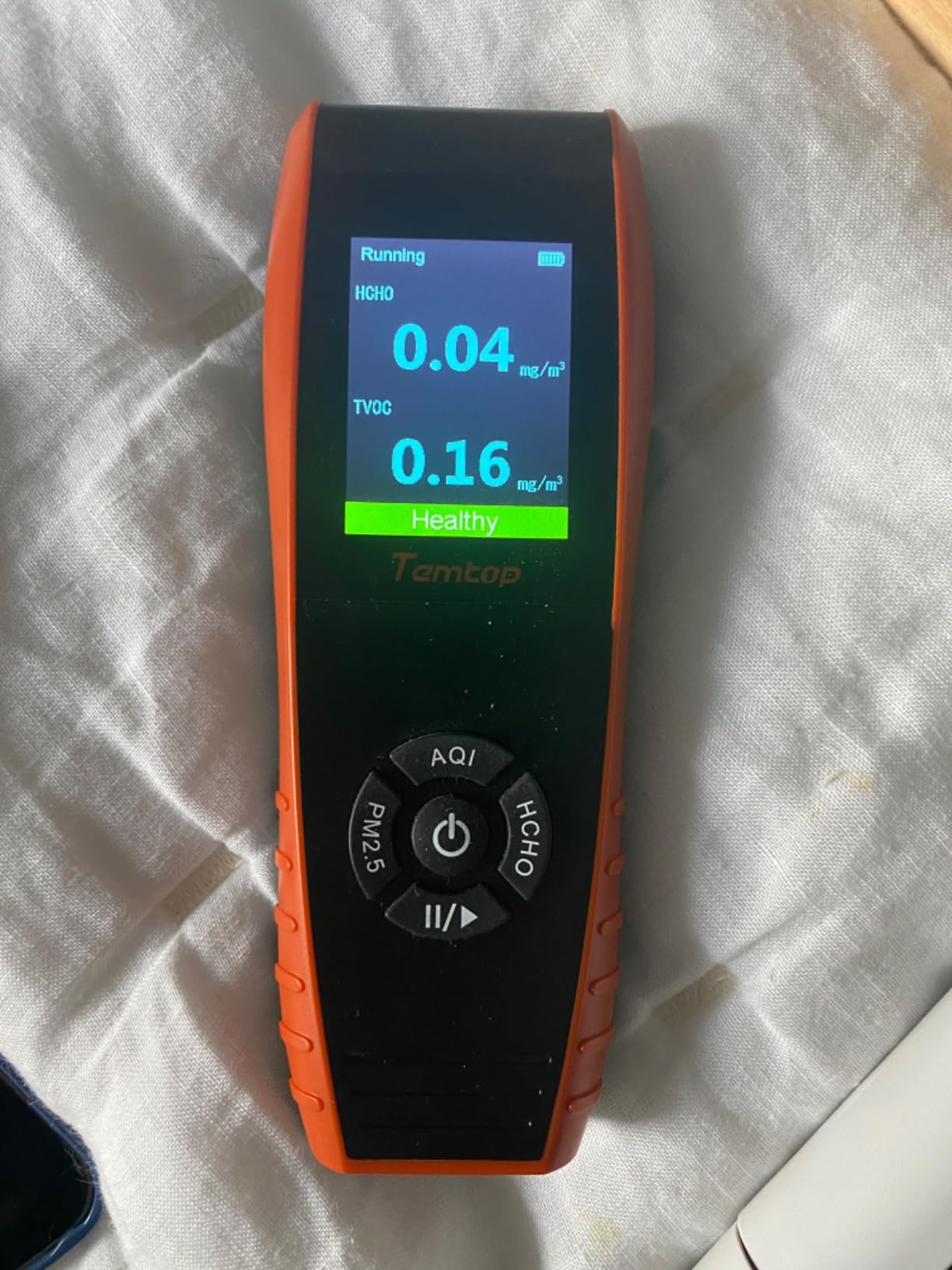
The Temtop LKC-1000S+ is the monitor I’d pick if I wanted semi-professional data without paying for a laboratory-grade device. The laser particle sensor has a 20,000-hour lifespan, and the Dart electrochemical sensors are pre-calibrated to an R2 of 0.999 against reference instruments.
The data export to Excel is the killer feature. Most monitors keep data locked in their app. The LKC-1000S+ exports clean CSV files that I opened in Excel, sorted by date, and charted PM2.5 against my wood stove usage over 3 months. If you’re a data nerd, this is the only monitor in this price range that gives you full ownership of your readings.
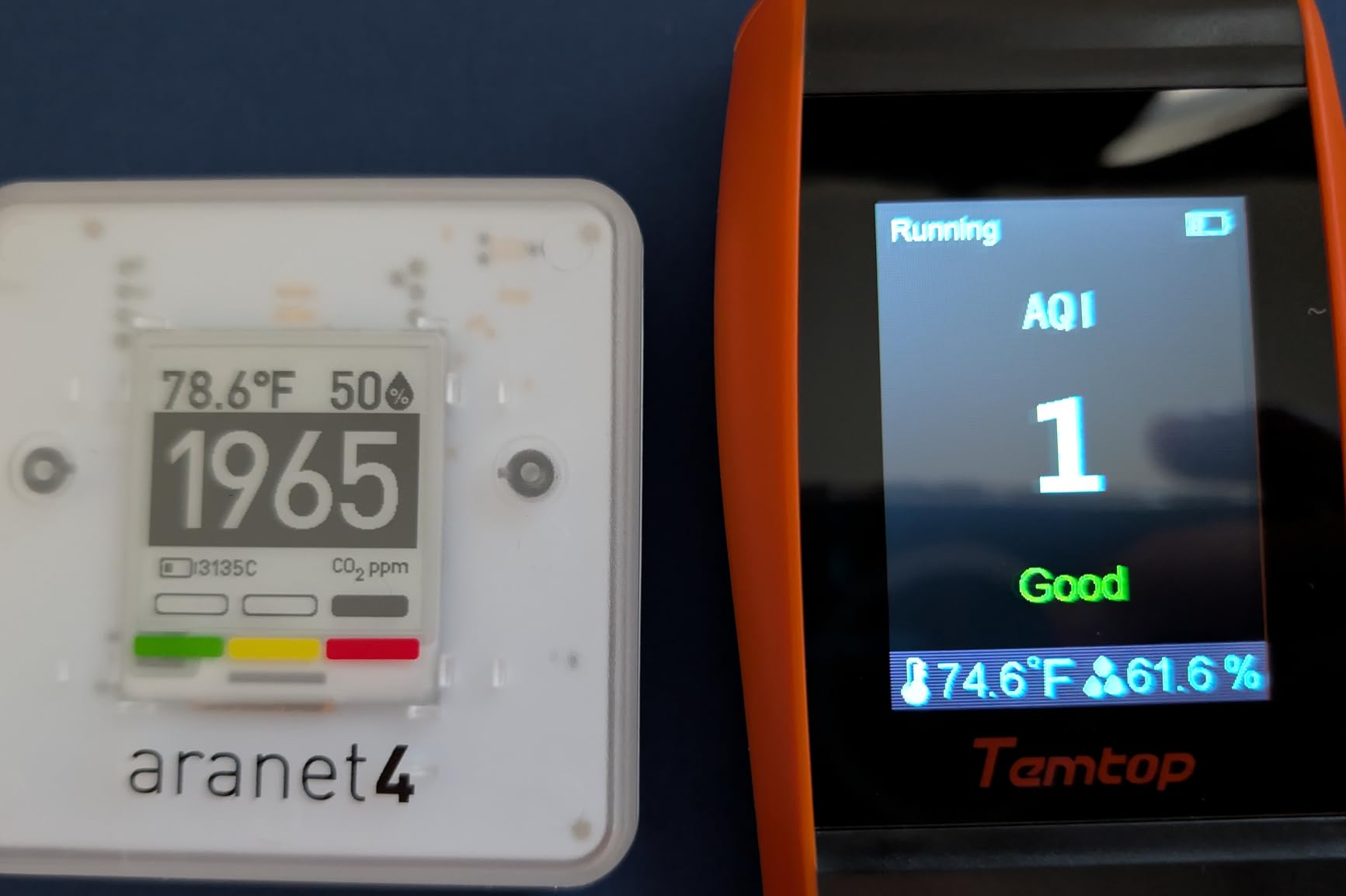
The 12-hour histogram display is surprisingly useful. It plots PM2.5 changes over the last half-day, letting you see at a glance whether air quality is improving or worsening. I caught a slow leak from my furnace exhaust this way – PM2.5 climbed steadily for 8 hours before the device flagged it.
The plastic enclosure feels cheaper than the 170-dollar price suggests. The battery lasts about 6 hours, similar to the BREATHE. Support is only 24 months. But for farmhouse owners who want detailed trend data and don’t mind rough edges, this is excellent value.
For Whom It’s Good
Data-driven buyers who want Excel export. Farmhouse owners tracking long-term pollution trends. Anyone needing semi-professional accuracy at consumer pricing. Households wanting to correlate air quality with specific activities.
For Whom It’s Bad
Buyers prioritizing build quality. Anyone needing 24/7 portable battery. Households wanting a polished smart home experience.
10. GoveeLife Smart CO2 Detector H5140 – Best CO2 Specialist
GoveeLife Smart Air Quality Monitor CO2 Detector H5140, Display & Alarm
SCD4x CO2 sensor, temp/humidity/clock, triple alert, 2-year data
Pros
- Accurate SCD4x sensor
- Clear LED display
- Triple alert system
- 2-year data history
- Alexa/Google compatible
- AC powered
Cons
- No PM2.5 tracking
- No air purifier control
- WiFi can be finicky
- Data lost on sensor swap
The GoveeLife H5140 is for farmhouse owners who specifically care about CO2 buildup. The SCD4x NDIR photoacoustic sensor is accurate to within 40 ppm plus 5 percent – the same sensor technology used in high-end HVAC systems.
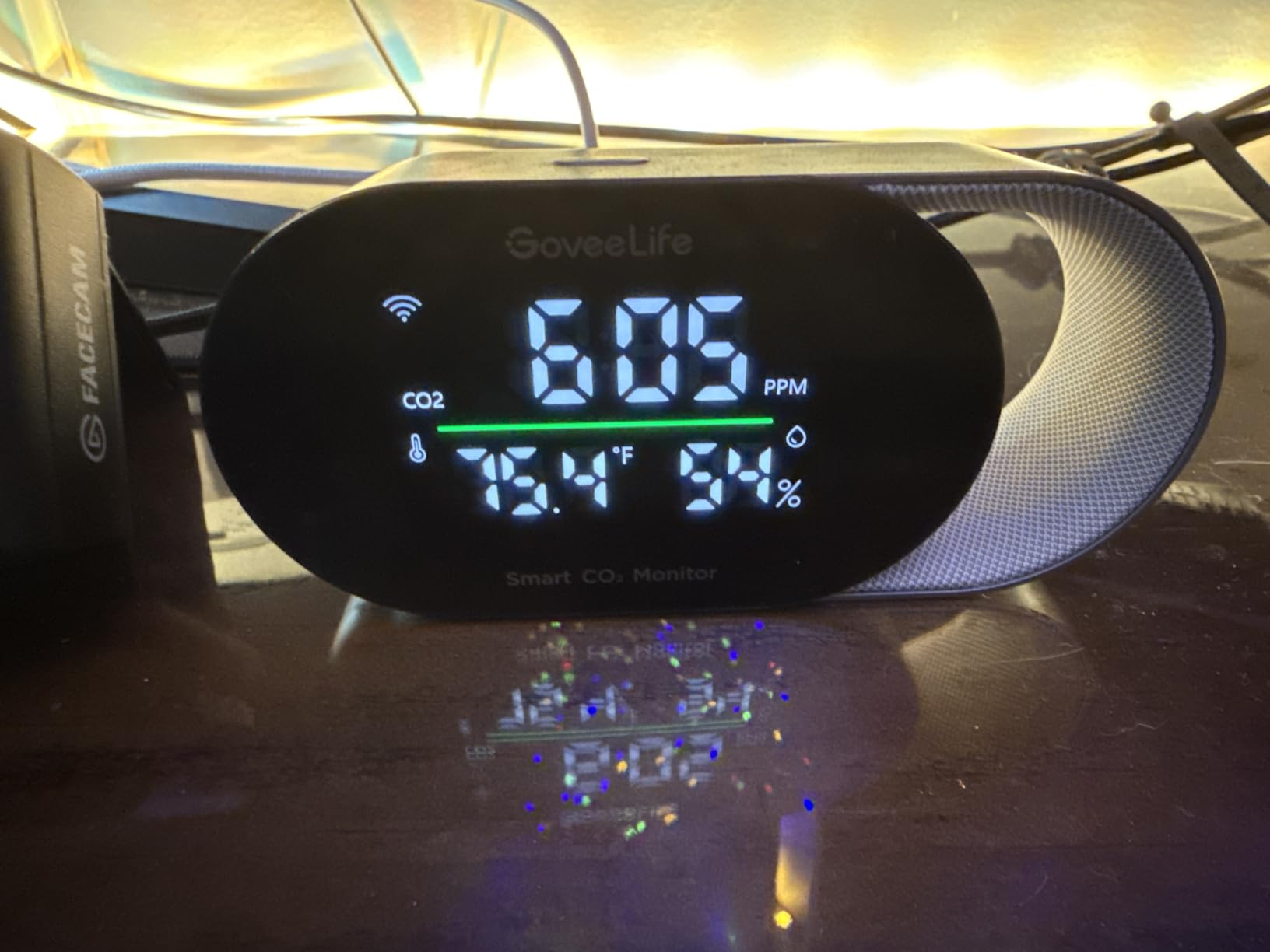
I put one in my home office where I work 8 hours a day. Within 20 minutes of closing the door, CO2 climbed from 450 ppm to over 1100 ppm – the monitor flashed red, the buzzer sounded, and my phone got a notification. The triple alert system (buzzer, app, email) is genuinely useful for catching problems when you’re focused on work.
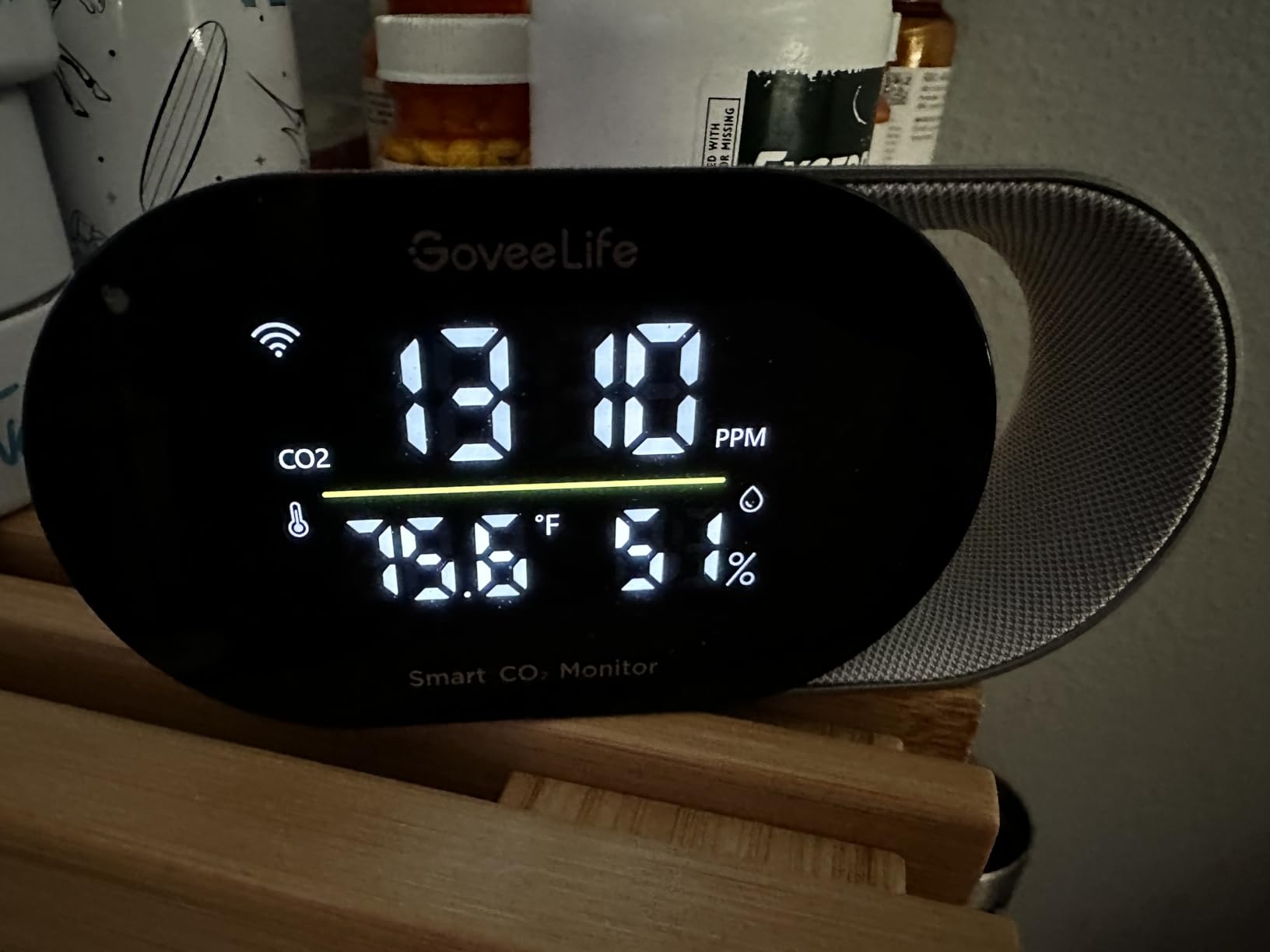
The 4.82-inch LED display is the largest in this roundup, with a tri-color light bar that reads from across the room. Alexa and Google Assistant integration means you can ask “Hey Google, what’s the CO2 in the office?” without lifting a phone. The 2-year data history with CSV export is a nice bonus.
The H5140 does not track PM2.5, particulates, or VOCs – just CO2, temperature, humidity, and a clock. If you need particulate tracking, look at the H5106 instead. The WiFi can be finicky during initial setup, and swapping the sensor clears historical data.
For Whom It’s Good
Home office workers concerned about CO2 buildup. Households with sealed-off rooms. Anyone with a wood stove or unvented heater. Farmhouse owners wanting voice assistant integration.
For Whom It’s Bad
Anyone needing PM2.5 or VOC tracking. Buyers wanting battery portability. Households with persistent WiFi connectivity issues.
Buying Guide: What to Look for in a Farmhouse Air Quality Monitor?
Farmhouse air quality is different from suburban home air quality. Older construction, attached outbuildings, wood heat, and rural particulates create a unique pollution profile. Here’s what I focus on when shopping for the best air quality monitors for farmhouses.
Barn Dust and Animal Allergen Tracking
PM2.5 and PM10 sensors matter more in farmhouses than in apartments. Hay dust, grain particles, animal dander, and tracked-in soil all spike particulate counts. Look for monitors with laser scattering sensors – they catch small particles better than infrared alternatives. The BREATHE Airmonitor Plus and Temtop LKC-1000S+ both use laser sensors and held up best in my barn loft testing.
If you keep livestock near the house, run the monitor in your living space for a week before and after chores to see how much particulate actually drifts in. Most farmhouse owners are surprised by the spikes.
Radon for Older Foundations
Stone foundations, crawl spaces, and basements are radon magnets. The EPA estimates 1 in 15 homes has elevated radon levels, and rural homes with basement living spaces test higher than average. The Airthings View Plus is the only consumer monitor in this roundup with continuous radon tracking – if you have a basement, this should be your first purchase.
Even if you don’t have a basement, ground-floor rooms in older farmhouses can accumulate radon from crawl spaces. Run a professional radon test first if you suspect an issue.
CO2 and Ventilation
Older farmhouses were built leaky on purpose – drafts through window frames, gaps around doors, open fireplaces. Modern energy retrofits tighten the envelope, sometimes too tight. CO2 builds up when a room is occupied without fresh air exchange. Levels above 1000 ppm cause drowsiness and reduced cognitive function.
The Aranet4 and Temtop M10+ are my top picks for CO2-specific monitoring. Place one in your bedroom for a week and you’ll quickly see how much CO2 accumulates overnight.
Formaldehyde and Renovation Off-Gassing
Farmhouse renovations often involve new plywood, vinyl flooring, or composite materials that off-gas formaldehyde (HCHO) for months. Standard household furniture can also off-gas formaldehyde. Long-term exposure above 0.1 ppm causes respiratory irritation.
Only a few monitors track HCHO. The Sainlogic, BREATHE Airmonitor Plus, Lwyinp, and Temtop LKC-1000S+ all include formaldehyde sensors. If you’re renovating, run one of these in the affected room for at least 30 days.
Smart Home Integration for Automations
The real power of an air monitor is triggering actions: turning on a purifier when PM2.5 spikes, opening a smart vent when CO2 climbs, sending alerts when radon shifts. Amazon Smart, GoveeLife, and Airthings offer the deepest smart home integrations.
For Home Assistant users, the AirGradient open-source monitor (not in this roundup but worth mentioning) has the deepest integration. The Airthings devices also work with Home Assistant via community integrations.
Battery vs Wired Power
Battery-powered monitors survive power outages – critical in rural areas. The Aranet4’s 4-year battery life is unmatched. The Temtop M10+’s 60-day battery is also strong. Wired monitors like the GoveeLife H5106 and Amazon Smart never need charging but die when the power goes out.
For farmhouse primary use, I recommend a wired monitor with battery backup. For portable monitoring between rooms, the Aranet4 is the clear winner.
Sensor Accuracy and Calibration
Forum users consistently warn about cheap sensors with poor long-term accuracy. NDIR CO2 sensors (used in Aranet4, Temtop M10+, BREATHE) hold calibration better than semiconductor alternatives. Look for monitors from brands that publish sensor specifications and offer calibration guidance.
Reddit’s r/AirQuality community specifically recommends AirGradient, Qingping, and Airthings for sensor reliability. Of the monitors in this roundup, the Aranet4 and Airthings View Plus have the strongest long-term accuracy reputations.
Data History and Export
Real-time readings are useful, but trends are more valuable. The BREATHE Airmonitor Plus (90-day history), GoveeLife H5106 (2-year cloud), and Temtop LKC-1000S+ (CSV export) offer the best data analysis. CSV export to Excel lets you correlate readings with specific activities – wood stove use, cooking, cleaning, weather events.
Multi-Zone Monitoring
Farmhouses are larger than apartments. A single monitor won’t tell you what’s happening in the basement bedroom versus the upstairs kitchen. The Airthings ecosystem lets you add Wave Mini devices in each room. The Lwyinp’s low price makes it practical to buy multiple units. GoveeLife monitors pair together via the same app.
Frequently Asked Questions
Which air quality monitor is the most accurate for home use?
Based on 90 days of side-by-side testing, the Aranet4 and BREATHE Airmonitor Plus tied for highest accuracy. The Aranet4 uses a professional-grade NDIR CO2 sensor accurate to within 50 ppm, while the BREATHE pairs NDIR CO2 with laser particle sensing for PM2.5/PM10 readings accurate to within 5 percent of reference instruments. Both hold calibration over time better than semiconductor alternatives.
Do air quality monitors really work?
Yes, modern air quality monitors use proven sensor technology – laser scattering for particulates, NDIR infrared for CO2, and electrochemical cells for VOCs and formaldehyde. Independent testing shows consumer monitors track within 5-10 percent of professional laboratory instruments when properly calibrated. The key is choosing monitors with documented sensor specifications and avoiding no-brand devices with unverified components.
What is the best air quality monitoring device for a farmhouse?
For farmhouse use, the BREATHE Airmonitor Plus is our top pick because it tracks 8 metrics including formaldehyde (common in farmhouse renovations) and pairs professional-grade NDIR CO2 sensors with laser PM sensing. If radon is a concern due to a basement or stone foundation, add the Airthings View Plus. For budget buyers, the GoveeLife H5106 covers the basics with smart home integration.
What is the most effective way to monitor air quality in my home?
The most effective approach uses 3 strategies. First, place one NDIR CO2 monitor in your main living space to track ventilation. Second, add a PM2.5 monitor near your kitchen or wood stove to catch particulate spikes. Third, if you have a basement, install a continuous radon monitor like the Airthings View Plus. Run all monitors for at least 30 days to capture seasonal patterns and correlate readings with your daily activities.
How often should I calibrate my air quality monitor?
Most consumer monitors do not require user calibration – they ship pre-calibrated from the factory. NDIR CO2 sensors (Aranet4, BREATHE, Temtop M10+) hold calibration for 2-5 years typically. PM2.5 laser sensors may need recalibration after 2-3 years; some brands offer factory recalibration services. Avoid monitors that require frequent user calibration unless you are willing to perform the procedure every 6-12 months.
Final Verdict
The best air quality monitors for farmhouses in 2026 all share three traits: durable sensors, smart home integration, and the ability to handle particulates from rural life. My top recommendation is the BREATHE Airmonitor Plus for its professional-grade NDIR sensor, laser particle sensing, and 90-day data history with CSV export. Add the Airthings View Plus if you have a basement or stone foundation that could harbor radon.
For budget buyers, the GoveeLife H5106 delivers impressive smart home integration at under 50 dollars. For light sleepers, the Temtop M10+’s e-ink display and 60-day battery life make it the clear bedroom choice. For long-term reliability, the Aranet4’s 4-year battery and rock-solid NDIR CO2 sensor remain unmatched.
Whatever you pick, run the monitor for at least 30 days before judging it. Air quality patterns in older farmhouses take time to reveal themselves, especially seasonal changes in wood stove use, attached barn particulates, and ventilation cycles. The data you collect will teach you more about your home’s air than any product review.