
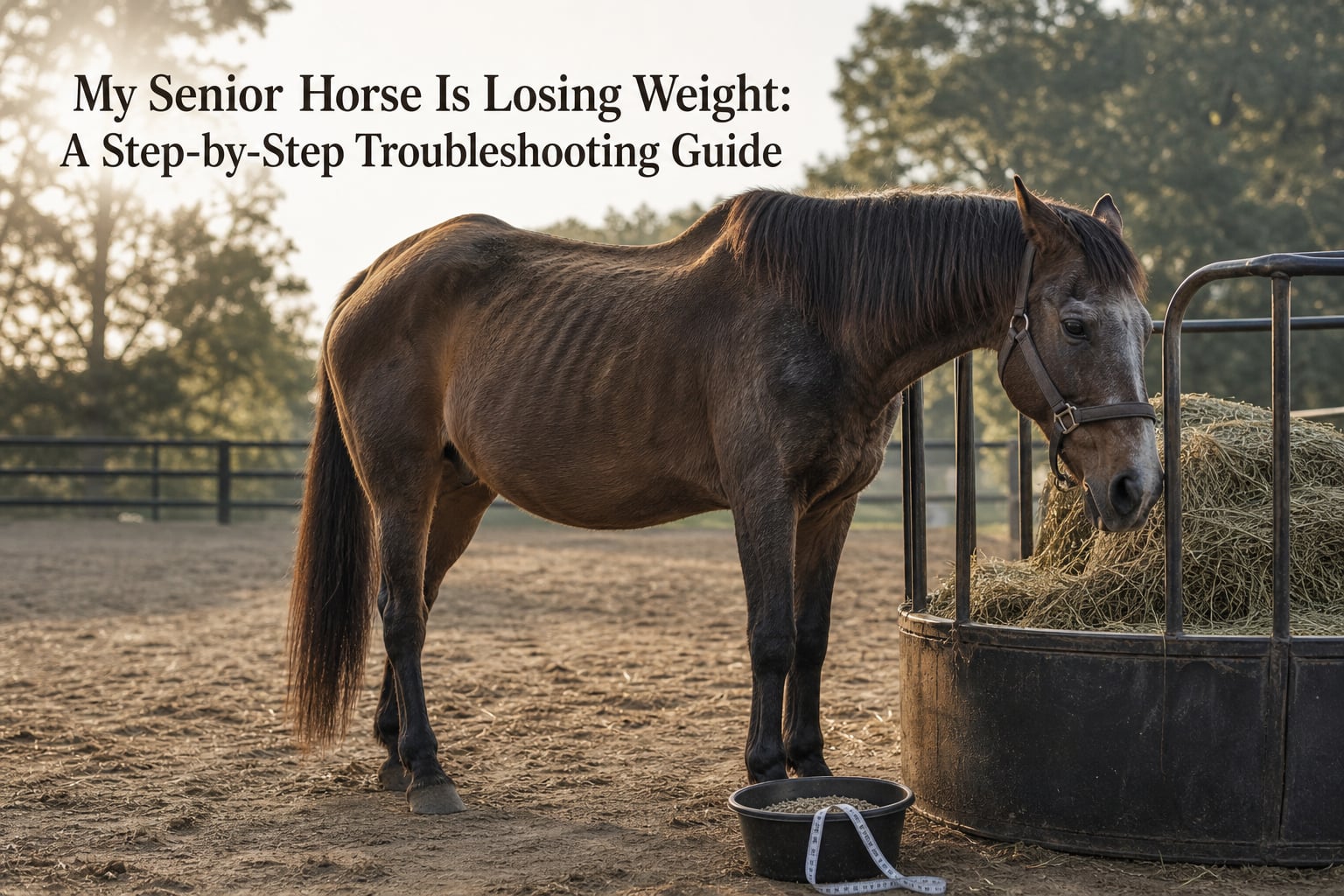
When my senior horse is losing weight, I do not treat it as an unavoidable part of getting older. A horse can be past 15, keep eating with enthusiasm, and still have a problem with chewing, parasites, pain, calories, nutrient use, or an illness that needs veterinary attention.
This senior horse losing weight troubleshooting guide puts the most useful checks in order: teeth first, then parasites, feed and access, medical causes, management, and a gradual plan for recovery. It cannot diagnose your horse, but it can turn a worrying change into clear observations and better questions for your veterinarian.
Start sooner rather than later. Older horses have less room to lose muscle and body reserves, and a small change in a heavy winter coat can be easy to miss until it becomes significant.
Table of Contents
Use this six-step senior horse losing weight troubleshooting decision tree first
Work through the steps in this order unless your horse has an urgent warning sign. The sequence begins with common, fixable reasons for an underweight senior horse and moves toward the areas where your veterinarian may need to test, examine, or treat.
- Check chewing and book a dental examination. Is hay being dropped, is there long fiber in manure, or is eating slow and awkward?
- Review parasite control with a fecal egg count. Do not assume a deworming routine proves parasites are not involved.
- Audit what reaches the horse. Measure forage and feed, inspect forage quality, and watch whether a herd mate pushes the horse away.
- Ask the veterinarian to look for disease, pain, and poor nutrient use. A horse losing weight but still eating may need more than a calorie increase.
- Remove management drains. Cold, stress, travel, loneliness, chronic discomfort, and limited water can all change intake or energy needs.
- Build weight back gradually and measure the response. Keep a record so the plan is based on change, not a single impression.
If you find a likely issue at one step, still complete the baseline record below and contact your veterinarian when weight loss is unexplained, ongoing, or pronounced. Senior horse weight loss causes can overlap; worn teeth and insufficient forage, for example, often occur together.
Start by measuring change rather than guessing
A weight tape used at the same place and in the same way can show a trend, even though it is not a perfect scale. Photograph both sides, the front, and the hindquarters on the same day each week, ideally without a thick blanket or heavy coat hiding the outline.
Also score body condition by feeling, not only looking. The Henneke Body Condition Score uses fat cover over the neck, withers, shoulder, ribs, loin, and tailhead; ribs that can be felt may be normal, while prominent ribs, a sharp backbone, and hollow areas around the tailhead suggest a horse needs closer assessment.
Watch muscle separately from fat. Horse weight loss and muscle atrophy can show as a deeper hollow along the topline, a narrower rump, or a shoulder that looks less rounded, even when the belly seems large from forage or grass.
Step 1: Check teeth because chewing problems can hide behind a good appetite
Dental trouble is one of the first things to rule out in an older horse losing weight. A horse may walk to the feeder eagerly but get too little nourishment if chewing hurts, teeth do not meet effectively, or long-stem forage cannot be ground well enough for digestion.
Look for quidding, which is partly chewed balls of hay or grass dropped from the mouth. Other clues include eating unusually slowly, dunking feed in water, bad breath, nasal discharge, resisting the bit, spilling soaked feed, or long recognizable fibers in manure.
A normal glance into the mouth is not a dental examination. Ask your veterinarian or a qualified equine dental professional working with your veterinarian to examine the mouth properly, including the back teeth, gums, tongue, tooth surfaces, loose teeth, and signs of periodontal disease.
Feed a horse with poor dentition in a chewable form while you wait for guidance
If chewing is difficult, do not assume more dry hay is the answer. Your veterinarian or equine nutrition professional can help you choose a complete senior ration, soaked forage pellets, soaked cubes, or another forage replacement that fits the horse’s medical needs and can be eaten safely.
Soak feeds completely according to the manufacturer’s directions and supervise the horse during meals. Hard, dry pellets or cubes can be unsafe for a horse that cannot chew well, and any abrupt change in diet can upset the digestive system.
Owners often describe soaked forage as the turning point for a horse with poor teeth, but it is a management response, not proof that teeth were the only cause. Keep the dental appointment, track body condition, and ask what amount of long-stem forage remains appropriate for your horse.
Step 2: Check parasites with evidence instead of repeating a calendar habit
Parasites can contribute to poor condition, but a routine deworming date does not tell you a senior horse’s parasite load. A fecal egg count gives your veterinarian useful information for a targeted parasite-control discussion, while age, pasture management, deworming history, and clinical signs provide the rest of the picture.
Take a fresh manure sample as your veterinarian or laboratory instructs and record the date of the last treatment. Ask about the testing schedule that fits your horse and property, rather than selecting a product or repeating treatments based on weight loss alone.
Loose manure, poor coat condition, colic history, or a sudden drop in condition add urgency to that conversation. Parasites are one possible reason for geriatric horse weight loss, but treating blindly can overlook dental disease, inadequate calories, ulcers, or a medical condition.
Review pasture pressure and manure handling alongside the test
High stocking density and manure accumulation can increase exposure on some properties. Discuss pasture rotation, manure removal, mixed grazing where appropriate, and testing with your veterinarian or farm advisor instead of relying on a single practice for every horse.
Keep the result in the horse’s health record. If the horse loses weight again, the combination of prior fecal egg counts, treatments, and body-condition notes helps the veterinarian see patterns that a one-time test cannot show.
Step 3: Audit forage, calories, water, and actual feeder access
An underweight senior horse may be offered plenty of feed but receive too little usable energy. The audit starts with what is actually consumed, not what is loaded into a wheelbarrow or placed in a feeder for the group.
Measure hay by weight for several days and note the type, cutting, smell, visible mold, dust, stemminess, and how much is left. Forage quality matters because a very mature, coarse, or poorly stored hay can be harder to chew and may provide less digestible energy than the horse needs.
Match the ration to the horse in front of you
Ask a veterinarian or qualified equine nutritionist to review the whole ration: forage, pasture, concentrate, supplements, treats, salt, and medication. They can calculate energy, protein, minerals, and the changes needed for your horse’s body condition, work level, health status, and ability to chew.
Senior feeds and forage replacements can help some horses, especially those with poor dentition, but “senior” on a label is not a diagnosis. A horse with PPID, insulin dysregulation, kidney concerns, laminitis history, or another condition may need a different approach than a healthy hard keeper.
Add or change feed gradually. Increasing several items at once makes it hard to tell what helped, raises the chance of digestive upset, and can hide a worsening medical problem behind a more complicated ration.
Watch one full meal because herd dynamics can defeat a good feeding plan
Spend time nearby at turnout and at each meal. A lower-ranking horse may be chased from hay, wait until others finish, or look relaxed when people are present but lose access after the barn is quiet.
Separate feeding stations widely, feed the senior horse apart if safe, or use a stall or dry lot during meals when your setup allows. The goal is calm, predictable access to the horse’s own measured ration, not simply adding another shared pile.
Check water as carefully as feed. Dirty, icy, distant, poorly placed, or unfamiliar water can reduce intake; reduced water intake may also affect manure consistency and make a horse less comfortable eating.
Plan ahead for cold weather because staying warm uses energy
Horse losing weight in winter is a common pattern because cold, wind, wet conditions, and less grass can raise energy needs. Shelter from wind and rain, dry bedding, appropriate blanketing when indicated, adequate forage, and frequent body-condition checks can make a meaningful difference.
Do not wait until spring to check beneath a winter coat. Run both hands over the ribs, backbone, hip, and tailhead weekly, and compare the weight-tape trend with photos and feed records.
Step 4: Ask the veterinarian to investigate disease, pain, and poor nutrient use
Horse losing weight but still eating is not a contradiction. A horse can consume meals but lose condition when chewing is inefficient, calories do not meet increased demand, chronic pain changes behavior, or illness affects metabolism, absorption, or protein and muscle maintenance.
Make the veterinary call early if weight loss is sudden, progresses over a few weeks, continues after a sensible feeding adjustment, or appears with behavior, coat, manure, drinking, urination, breathing, or movement changes. There is no safe at-home test that separates normal aging from all medical causes.
Expect a methodical examination rather than one universal blood test
Your veterinarian may begin with a history, body-condition assessment, temperature, heart and respiratory checks, mouth examination, manure discussion, and a review of diet and medications. Depending on findings, they may recommend blood work, urinalysis, endocrine testing, ultrasound, endoscopy, pain or lameness assessment, or other diagnostics.
PPID, often called equine Cushing’s disease, is one condition veterinarians consider in older horses. A long or delayed-shedding coat, increased drinking or urination, repeated infections, laminitis, changes in topline, and weight loss may be clues, but only a veterinarian can interpret signs and testing in context.
Gastric ulcer disease, chronic diarrhea, dental disease, kidney or liver problems, cancer, respiratory disease, and intestinal or malabsorption problems are among the possibilities a veterinarian may explore. Not every thin older horse has one of these conditions, which is exactly why a structured workup is more useful than guessing.
Take pain seriously because discomfort can consume energy and change eating
Arthritis, hoof pain, poorly fitting tack, or chronic lameness can limit movement to a feeder, reduce turnout comfort, disturb sleep, and cause muscle loss through less activity. A horse may still clean up feed while pain quietly lowers quality of life and reduces the ability to maintain condition.
Report stiffness, reluctance to lie down or rise, short strides, shifting weight, changes in temperament, and difficulty reaching hay. Pain management must be prescribed and monitored by a veterinarian; do not add human pain medicines or alter doses on your own.
Step 5: Reduce stress and remove the daily barriers to eating well
Management factors rarely explain dramatic loss by themselves, but they can magnify a dental, nutrition, or medical problem. Older horses often cope less well with frequent herd changes, a new feeder design, distant water, mud, fly pressure, transport, isolation, or a pasture mate that controls the resources.
Give the horse a predictable routine and observe the moments when it may be losing access: turnout, hay delivery, medication time, blanketing, and evening feeding. A short video from a safe distance can show your veterinarian or barn manager something that is hard to describe.
Provide a dry, comfortable place to rest and enough shelter to get out of wind, rain, heat, and insects. Check that gates, footing, and feeder height do not make a stiff horse work harder than necessary to reach water and forage.
Separate body weight from the appearance of an aging topline
Some older horses lose muscle over the back and hindquarters due to age, reduced exercise, pain, or disease, while still carrying adequate fat in other areas. That change deserves attention, but a larger belly or thick neck does not prove the horse has enough condition elsewhere.
Use hands-on scoring, tape measurements, photos, and your veterinarian’s assessment together. This avoids chasing a cosmetic change with extra calories when the horse instead needs pain support, a medical workup, or an appropriate conditioning plan.
Step 6: Restore weight gradually after the cause is being addressed
Weight gain is safest when the cause and ration are reviewed together. First correct access, dental trouble, parasites, pain, or illness where possible; then make measured diet changes and give the horse time to respond.
Divide the daily ration into smaller meals when practical, keep forage available as advised, and make every change gradually. A veterinarian or equine nutritionist can set a target body condition and explain whether a complete senior feed, forage replacement, added fat source, or another ration change fits your horse.
Do not try to make a horse gain weight fast by suddenly doubling concentrate or adding many supplements. Rapid, unplanned changes can upset the digestive tract and may be risky for horses with metabolic concerns, laminitis risk, or a history of colic.
Judge progress every week and act if the trend stays flat or falls
Use the same weight tape, the same photo angles, and the same body-condition points each week. A steadily declining trend is more important than one unusually low reading, while a stable trend during treatment can still be meaningful progress.
Contact the veterinarian again if the horse is eating the planned ration but is not gaining, keeps losing, develops new signs, or cannot comfortably eat the diet. The point of monitoring is not to prove you did everything perfectly; it is to catch the need for a changed plan.
Prepare for the vet visit with records that speed up the next decision
Many owners feel guilty when an old horse loses condition, especially when they have already tried more feed or changed hay. Weight loss can be subtle, causes can overlap, and asking for help early is responsible care rather than a failure.
Before the appointment, prepare a simple record that lets the veterinarian focus on patterns instead of rebuilding the history from memory.
- Dates and photos showing when you first noticed the change.
- Weekly weight-tape readings and hands-on body-condition notes.
- Every feed, forage, pasture time, treat, supplement, and medication, with measured amounts.
- Recent dental work, fecal egg counts, parasite treatments, vaccinations, illness, colic, and lameness history.
- Changes in thirst, urination, manure, coat, appetite, chewing, behavior, turnout, herd members, and weather exposure.
- Questions about testing, pain, safe forage alternatives, and a realistic monitoring interval.
Ask the veterinarian what changes need an immediate call and when they want the next update. A clear follow-up point helps avoid the frustrating situation where “everything seemed normal” but the horse continued to lose weight between visits.
Discuss quality of life honestly when weight loss continues despite care
End-of-life decisions are deeply personal, and persistent low body condition alone does not set a universal deadline. The more useful question is whether the horse can be comfortable, eat and drink with interest, move and rest without unacceptable pain, interact normally, and have more good days than bad.
Talk with your veterinarian about pain, mobility, appetite, response to treatment, recurring illness, ability to maintain condition, and the daily effort required to keep the horse comfortable. Write down good and difficult days for several weeks; a record can make a hard conversation clearer than a decision made after one bad afternoon.
Answer common questions about senior horse weight loss directly
Why is my senior horse suddenly losing weight?
Sudden weight loss in a senior horse can result from dental pain, parasites, inadequate usable calories, disease, chronic pain, ulcers, stress, or a change in access to food and water. Call a veterinarian promptly for rapid loss or illness signs, then record body condition, feed intake, manure, and behavior to support the examination.
How do you put weight on a skinny senior horse?
First have a veterinarian assess the cause, especially teeth, pain, parasites, and illness. Then use a measured ration designed for that horse, improve safe access to quality forage and water, make changes gradually, and track body condition weekly rather than trying to force rapid weight gain.
Why is my horse losing weight but still eating?
Eating normally does not prove a horse is getting or using enough nutrition. Chewing problems, poor forage digestibility, herd competition, pain, parasites, ulcers, endocrine disease, and other medical conditions can allow a horse to finish meals while body condition falls.
What should I feed an old skinny horse?
The right feed depends on dental ability, forage quality, medical conditions, and the full ration. Ask a veterinarian or qualified equine nutritionist whether the horse needs a complete senior feed, a safely soaked forage replacement, a different forage plan, or another gradual adjustment; do not make a major change without considering health risks.
How often should I check my senior horse’s weight?
Feel body-condition areas and check the horse’s eating and manure daily when you notice weight loss. Use the same weight tape and photo angles weekly, or as your veterinarian directs, because a consistent trend is more informative than a single estimate.
What are the signs of end of life in horses?
Possible signs include uncontrolled pain, inability to rise or move comfortably, persistent loss of appetite or body condition, repeated serious illness, distress, and far more bad days than good. These signs need an individual quality-of-life discussion with a veterinarian, who can assess comfort and help plan compassionate next steps.
Take the next step by recording the change and booking the right check
My senior horse is losing weight is a problem worth breaking into small, practical checks: examine chewing, discuss parasite testing, measure actual feed access, look for illness and pain, reduce stress, and monitor a gradual recovery plan. Begin the baseline today and call your veterinarian early when the loss is sudden, unexplained, or continuing.
The aim is not to find a single perfect feed or blame age for every change. It is to give an older horse the best chance of comfort and stable condition by finding what has changed and responding with evidence, patience, and veterinary guidance.