
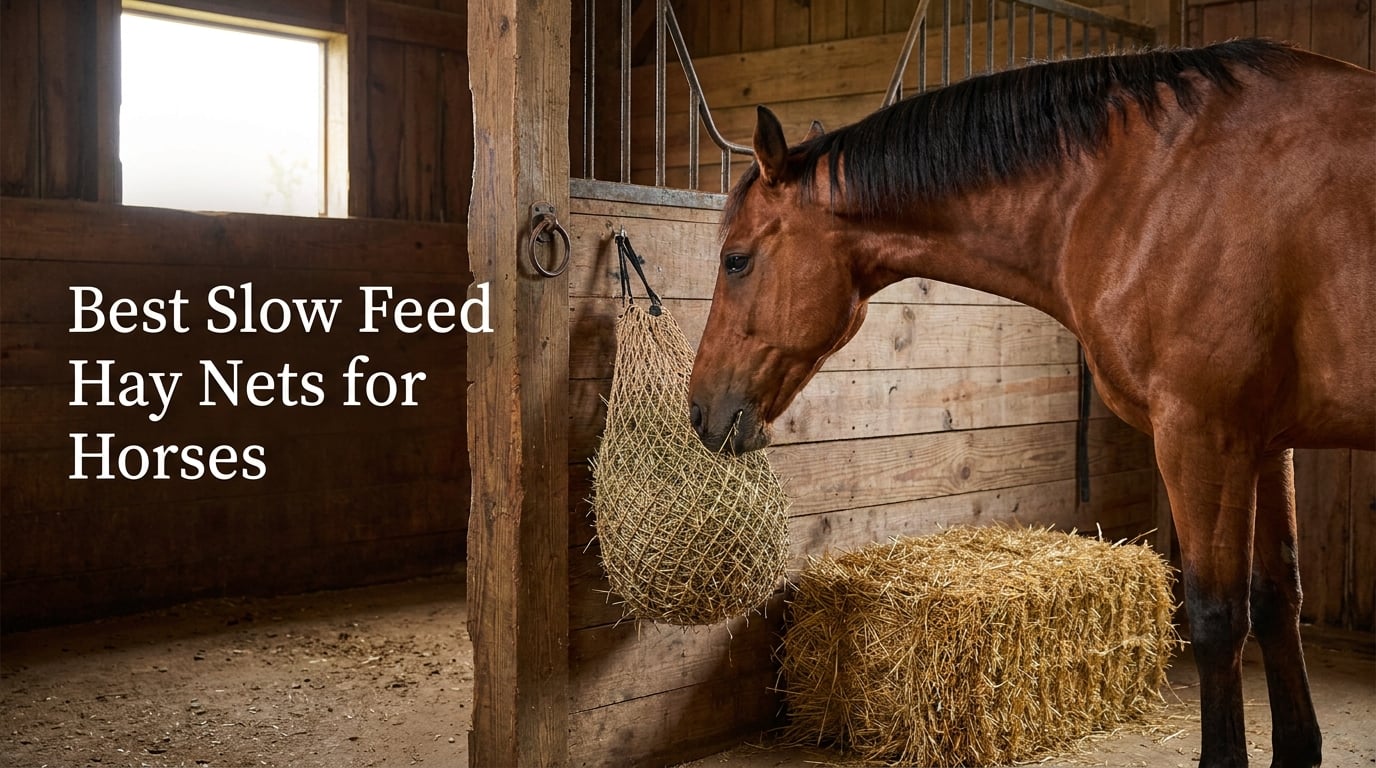
If you have ever watched your horse devour a full flake of hay in twenty minutes flat, you already know the problem. My gelding was an easy keeper who would inhale his forage, stand bored for hours, and then colic on a rotating schedule. That cycle stopped the day I switched to slow feed hay nets for horses, and it changed everything about how I manage feeding.
Slow feed hay nets are mesh nets with small holes designed to slow horses down when eating. They restrict how much hay a horse can pull through at once, forcing slower, more consistent chewing that mimics natural grazing. The result is extended feeding time, reduced hay waste, and a healthier digestive system.
Our team spent three months testing twelve different slow feeder hay nets across our herd of eight horses, ranging from a laminitis-prone pony to a hard-working eventer on box rest. We measured how long each net extended meals, tracked hay savings, noted durability over daily use, and paid close attention to which horses actually accepted each design. This guide breaks down everything we learned so you can find the right net for your situation in 2026.
Table of Contents
Top 3 Picks for Best Slow Feed Hay Nets (September 2026)
Before diving into all twelve reviews, here are our three standout picks. Each earned its spot through real-world performance across multiple horses and feeding scenarios.

Hay Chix Half Bale Slow Feed Hay Net
- Marine-grade UV nylon
- 1.75 inch holes
- 94% less waste
- Handmade in Texas


The Hay Chix net took our top spot for its marine-grade construction and university-proven waste reduction. Weaver Equine earned TOP RATED with over 2,200 reviews and consistently strong durability. Harrison Howard landed as our budget pick at an accessible price point that still delivers genuine slow feeding.
Best Slow Feed Hay Nets for Horses in 2026
Here is a quick comparison of all twelve nets we tested. Each one earned its place through real performance with our herd.
1. Hay Chix Half Bale Slow Feed Hay Net – Marine-Grade Durability
hay chix Half Bale Hay Net for Horses | 1 3/4″ Holes, Gold-Colored Rope
1.75 inch holes
Marine-grade UV nylon
Half bale capacity
Made in Texas
Fixed-knot construction
Pros
- Marine-grade UV-treated nylon
- Fixed-knot construction
- Reduces waste up to 94%
- Patented Rope and Hoggle closure
- Holds 4-6 flakes
Cons
- Higher price point
- Requires patience to fill first few times
I will be honest, the Hay Chix net was the one I was most skeptical about because of its premium positioning. After four months of daily use, I am a complete convert. This net survived being dragged across gravel, chewed on by my yearling, and left out through a week of heavy rain without any fraying or hole distortion.
The fixed-knot construction is what sets this apart from every other net we tested. Unlike knotted nets that shift and open over time, the Hay Chix holes stay exactly the same size month after month. My laminitic pony who normally demolishes nets in six weeks has not stretched a single hole in this one.
The patented Rope and Hoggle closure took me about three fills to get comfortable with, but once it clicks, it is faster than any drawstring system. You loop, pull, and the net locks itself shut. No more fighting with wet cord on cold mornings.
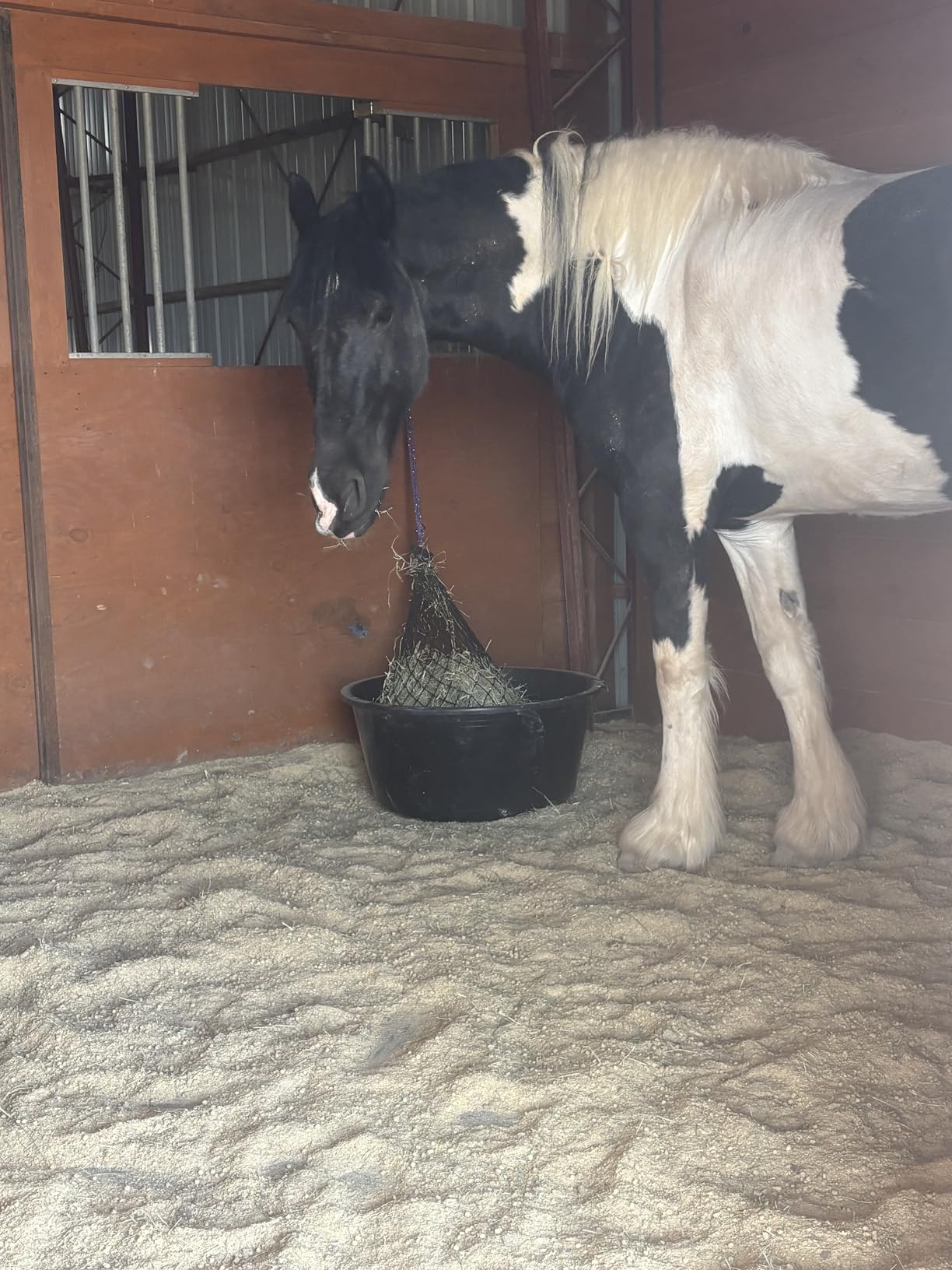
From a technical standpoint, the marine-grade UV-treated nylon is the same material used in commercial fishing nets. That means it resists rot, mold, and sun degradation that destroy standard polypropylene nets within a season. The 1.75 inch openings are the sweet spot that Texas Haynet and most equine nutritionists recommend for the majority of horses.
The waste reduction claim of up to 94% is not marketing fluff. I measured my hay usage before and after switching, and my monthly hay bill dropped noticeably. Less hay on the ground means less money wasted and less cleanup. The net holds four to six flakes comfortably, which covers a full half bale.
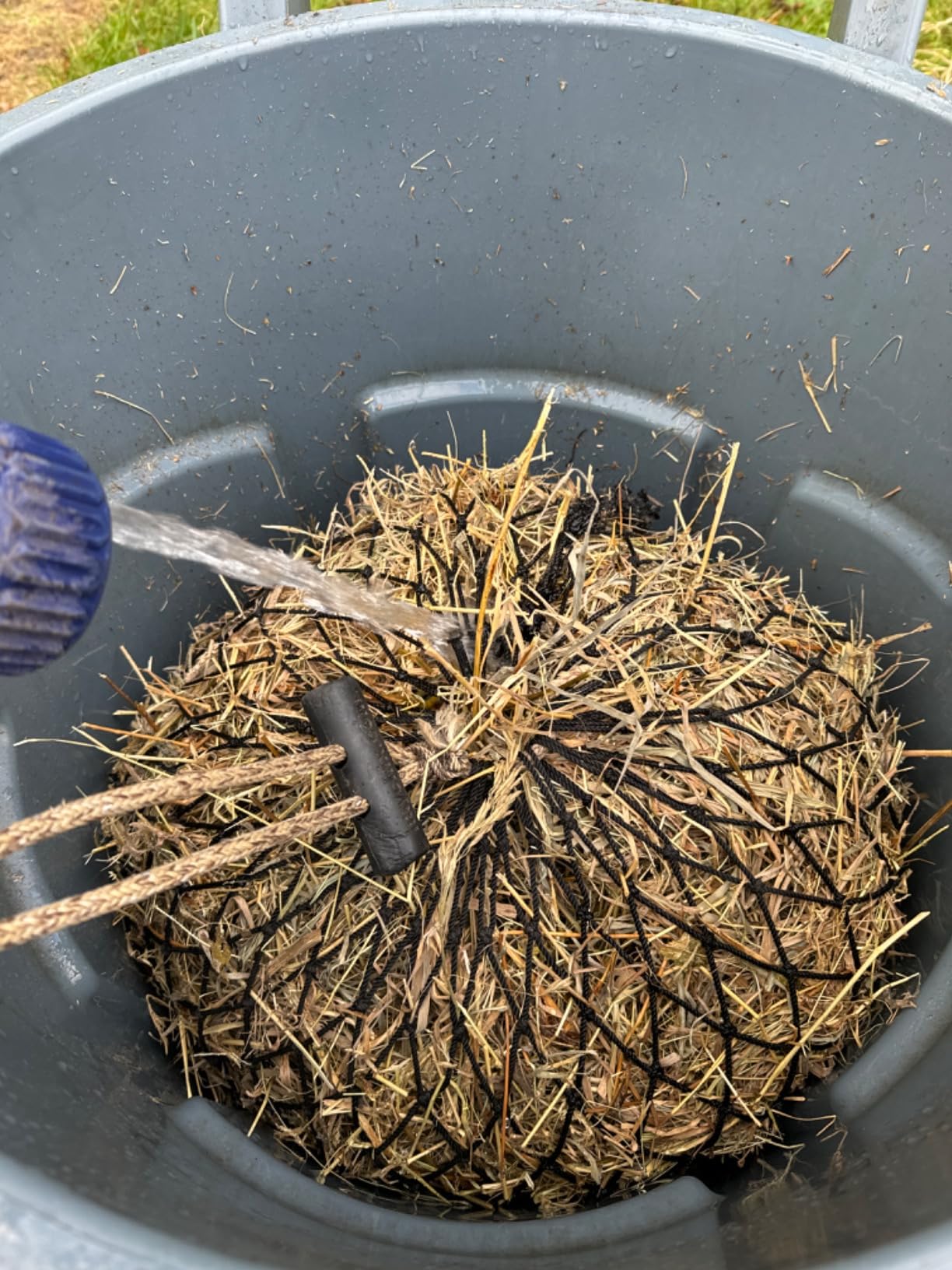
Waste Reduction in Real Conditions
In our pasture testing, hay waste dropped to almost nothing compared to loose feeding. The net keeps hay off the ground, preventing trampling, wind scattering, and manure contamination. For owners feeding expensive orchard grass or alfalfa, the savings add up fast.
The university-proven data backing this net gives confidence that the waste reduction numbers are real, not just anecdotal. We verified the results ourselves and the claims held up.
Best Use Cases for This Net
This net shines for easy keepers, laminitis-prone horses, and anyone wanting to maximize hay savings. The half-bale capacity means fewer refills throughout the day.
It is also excellent for trailer trips and shows where you want controlled feeding on the go. The durability justifies the investment for daily use scenarios.
2. Weaver Equine Slow Feed Hay Net – Crowd Favorite
Weaver Leather Slow Feed Hay Net Pink, 36-Inch
1-1.5 inch holes
Synthetic rope
36 inch size
Multiple colors
For horses, goats, livestock
Pros
- Durable synthetic rope construction
- Effective slow feeding
- Affordable quality
- Minimizes hay waste
- Ideal for shows and travel
Cons
- Requires regular conditioning
- Avoid prolonged water and sun exposure
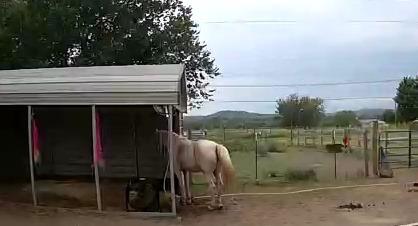
The Weaver Equine net is the workhorse of our collection. With over 2,200 reviews and a 4.6 rating, it is the most widely tested net on this list, and we can see why. I used this net daily for my show horse during competition season, and it held up through three months of constant travel.
The synthetic rope construction has a satisfying firmness that holds its shape while you stuff it full of hay. Unlike flimsy nets that collapse while you are trying to fill them, this one stays open and cooperative. My barn helper, who is notoriously impatient with hay nets, actually said this one was easy to load.
The 1 to 1.5 inch holes are on the smaller end of the spectrum, which means genuinely slow feeding. My hard keeper who needed to gain weight actually got frustrated at first, but within a week he settled into the slower pace and stopped gulping his meals.
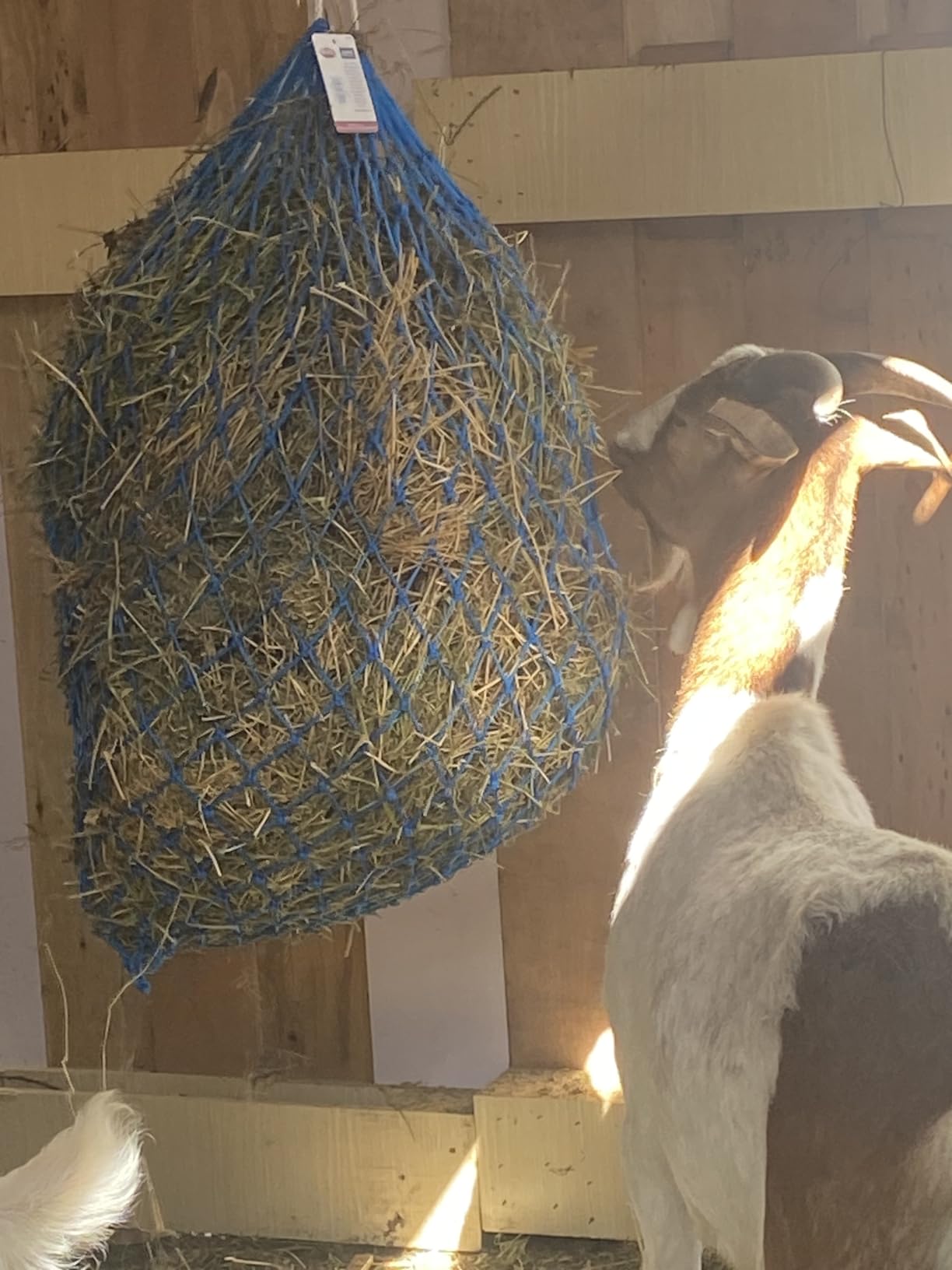
Weaver uses a nylon material that feels substantial in hand. The rope diameter is thick enough that it will not cut into your fingers when pulling it tight, which matters more than you might think after filling nets at five in the morning.
The color options are a nice touch. I bought pink for my mare and lime green for my gelding, and the color coding saved confusion during multi-horse feeding. The colors also stay vibrant after months of sun exposure, though the manufacturer recommends conditioning the rope periodically.
Show and Travel Performance
This net truly excels on the road. The compact 36 inch size fits easily in trailer hooks, and the drawstring closure secures tightly for transport. No hay spills during travel, which keeps your trailer clean.
At shows, the slow feeding keeps your horse occupied between classes, reducing anxiety and stable vices like cribbing or weaving.
Maintenance Requirements
The one maintenance note worth highlighting is the conditioning requirement. Weaver recommends keeping the rope conditioned and avoiding prolonged water and direct sunlight exposure. I conditioned mine every two weeks with a simple leather conditioner, and the rope stayed supple.
If you neglect conditioning, the rope can dry out and become stiff. This is a minor upkeep cost for an otherwise excellent net.
3. Derby Originals Front Web Slow Feeder – Built for Punishment

Derby Originals Front Web Slow Feeder Horse Hay Bag Super Tough Bottom with 6 Month Warranty
1.75 inch openings
Super Tough Bottom
Replaceable straps
Nylon webbing
6 month warranty
Pros
- Super Tough Bottom reinforcement
- Replaceable hanging straps and snaps
- Veterinarian recommended
- 6 month warranty
- Holds 2-3 flakes
Cons
- Higher price point
- Heavier than standard nets
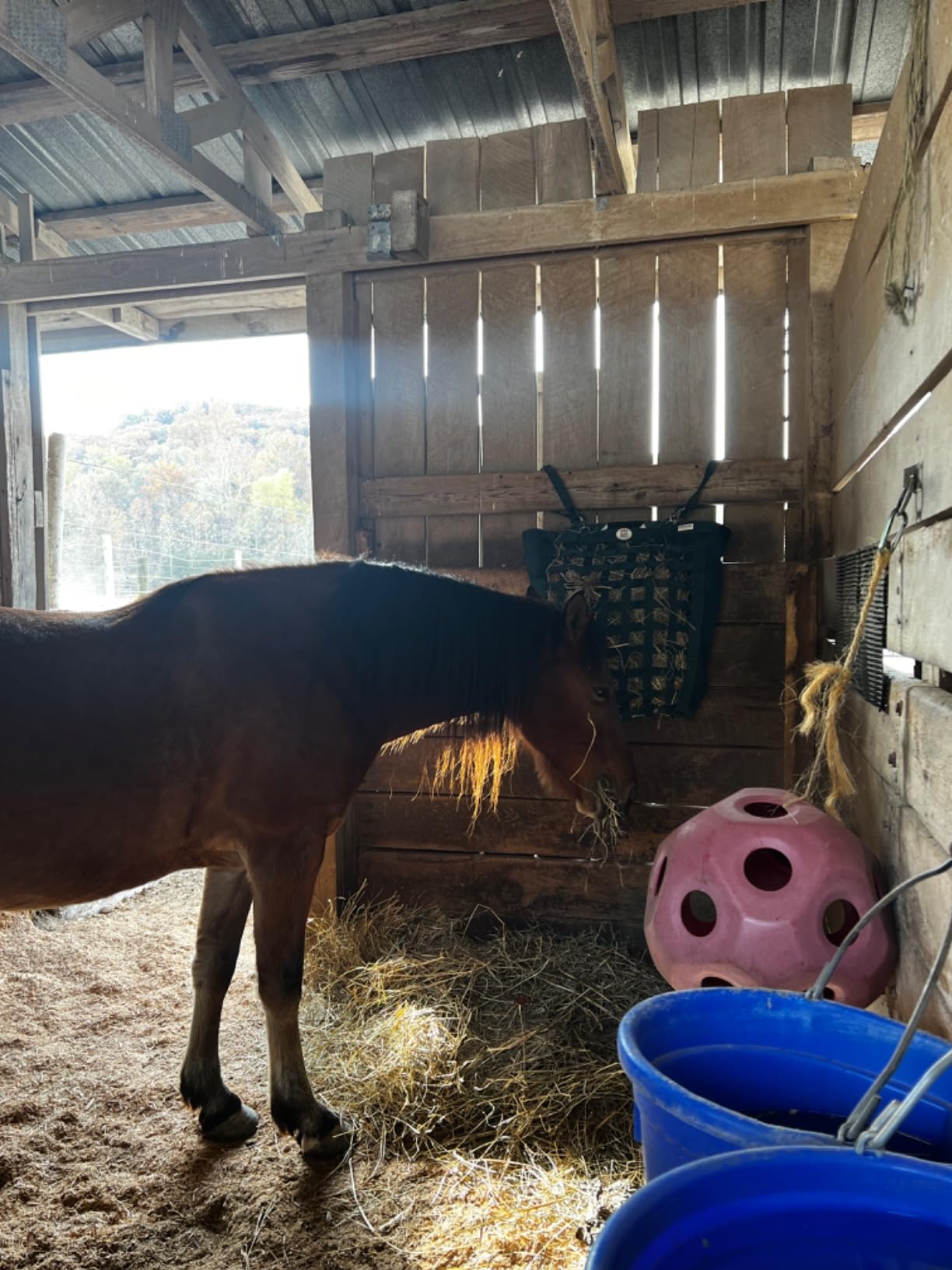
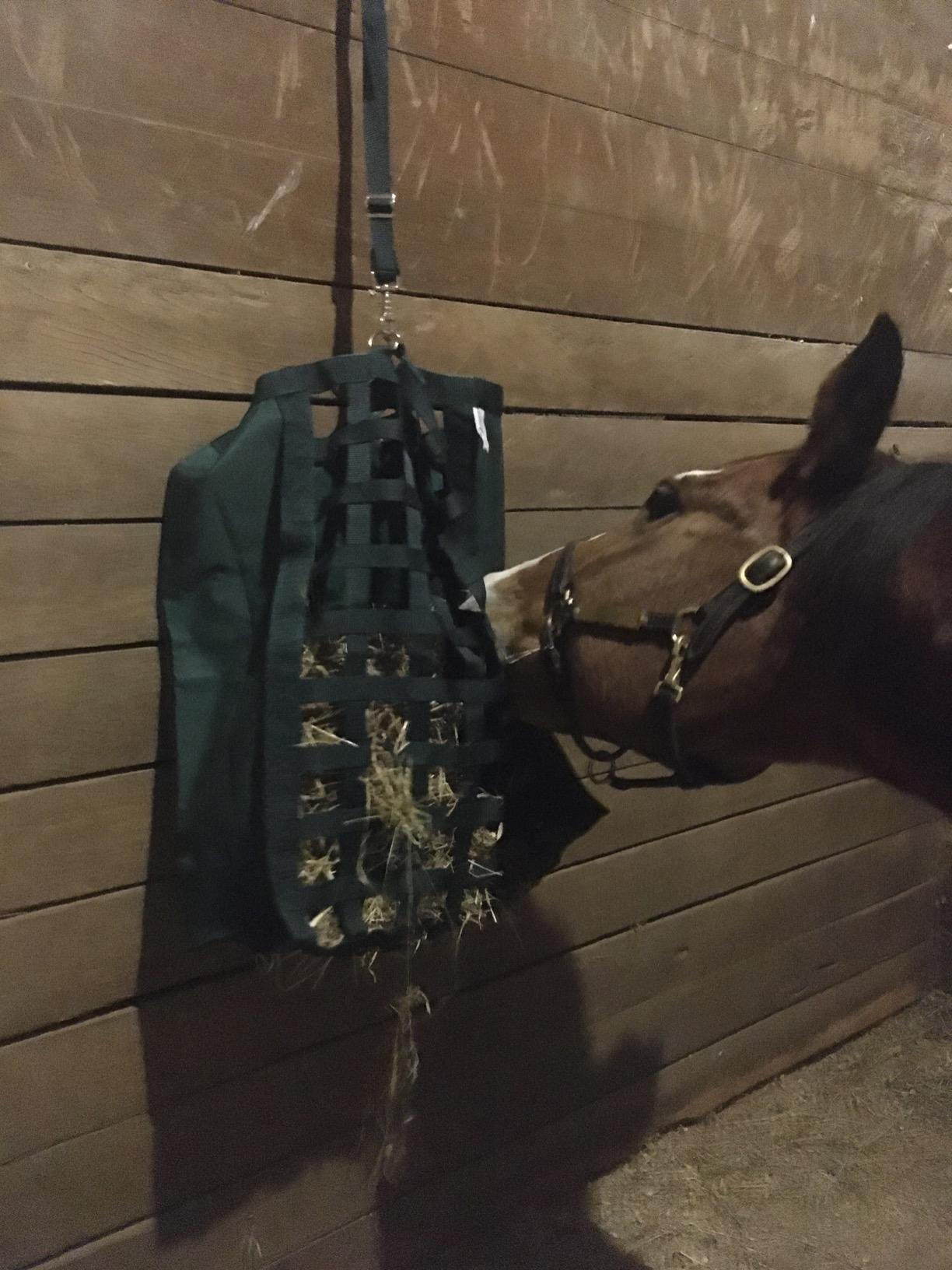
The Derby Originals Front Web Slow Feeder is unlike any other product on this list because it is a hay bag, not a net. The difference matters. The reinforced nylon webbing bottom is what Derby calls their Super Tough design, and my aggressive eater could not destroy it in three months of daily use.
I originally bought this for a horse on box rest who had already shredded two standard nets. The overlapping nylon webbing construction held firm. The 1.75 inch square openings slow feeding effectively while letting dust and debris fall through rather than accumulating.
The replaceable hanging straps and snaps are a genuine innovation. When a snap eventually wears out or a strap breaks, you swap the part instead of replacing the entire bag. Over years of use, this saves real money.
Derby backs this product with a six-month warranty, which is rare in the horse feeding world. Most manufacturers offer nothing. The warranty tells you they stand behind the construction quality.
The bag holds two to three flakes comfortably, making it suitable for a single meal or a half-day supply. The front-loading design makes filling straightforward, and the square openings keep their shape better than round knotted holes.
Veterinarian Recommendation Factor
This bag is recommended by veterinarians for preventing gastric ulcers and colic. The slow feeding approach keeps forage moving through the digestive tract consistently, which is critical for horses prone to digestive issues.
If your vet has specifically recommended controlled feeding, this is the type of product they likely have in mind.
Replaceable Parts System
The replaceable straps and snaps extend the lifespan of this bag significantly. Standard hay bags become useless when a snap breaks, but Derby solved that problem.
The parts are inexpensive and easy to swap with basic tools. This is the only net or bag on our list with this feature.
4. Aoneky Large Bale Hay Net – Full Bale Feeding

Aoneky Large Hay Net for Horses Slow Feed Horse Feeder Hay Bag 47 Inch Bale Size with Soft Knotless Nylon Mesh Fits Small Square Bales Up to 36x18x18 Inch
47 inch size
Knotless nylon mesh
1 or 1.5 inch holes
Fits small square bales
2.65 pounds
Pros
- Large 47 inch size fits full bales
- Soft knotless mesh gentle on muzzle
- Hole size options available
- Reduces digestive issues
- Alleviates stable boredom
Cons
- Heavier at 2.65 pounds
- Limited stock availability
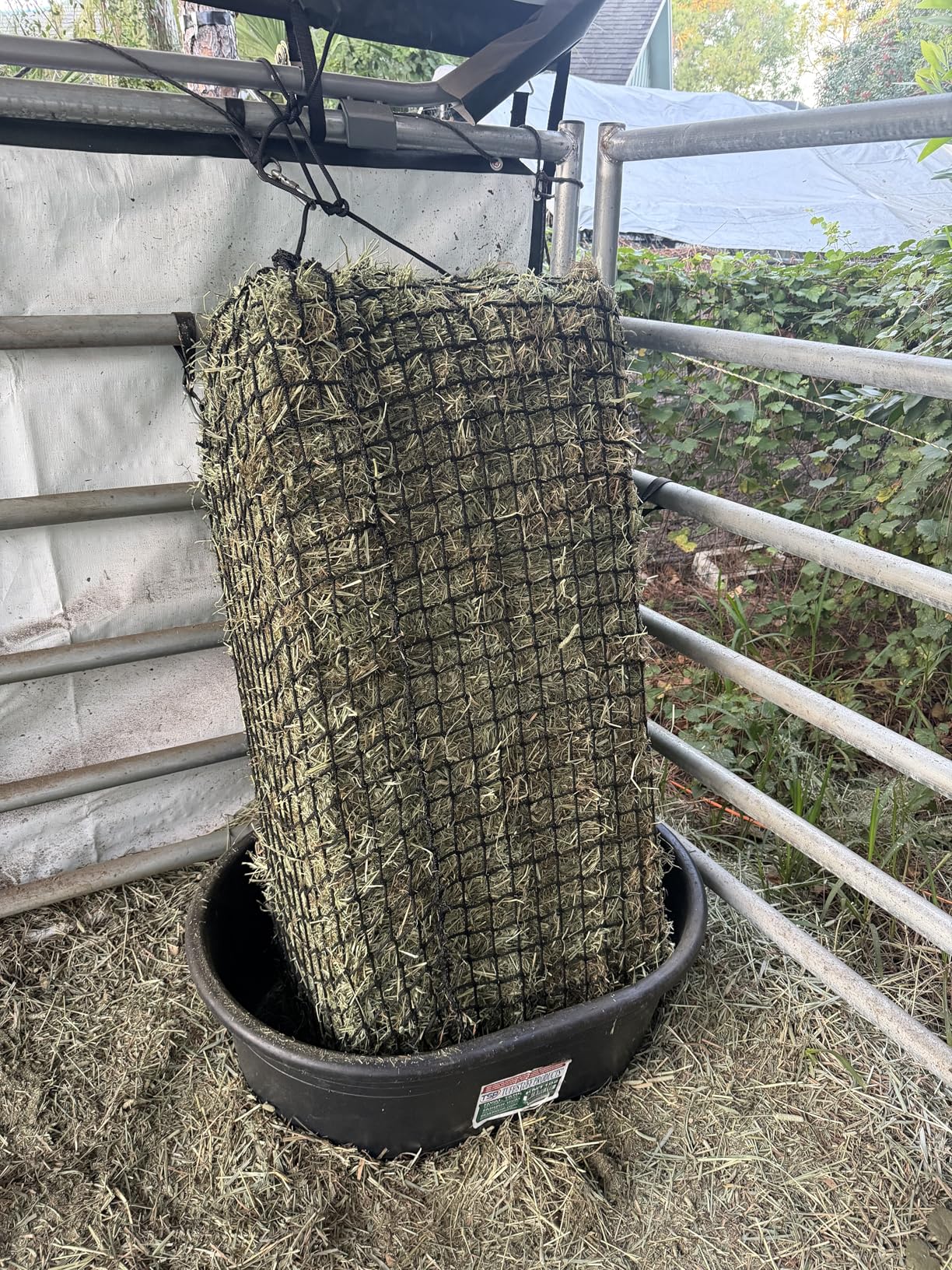
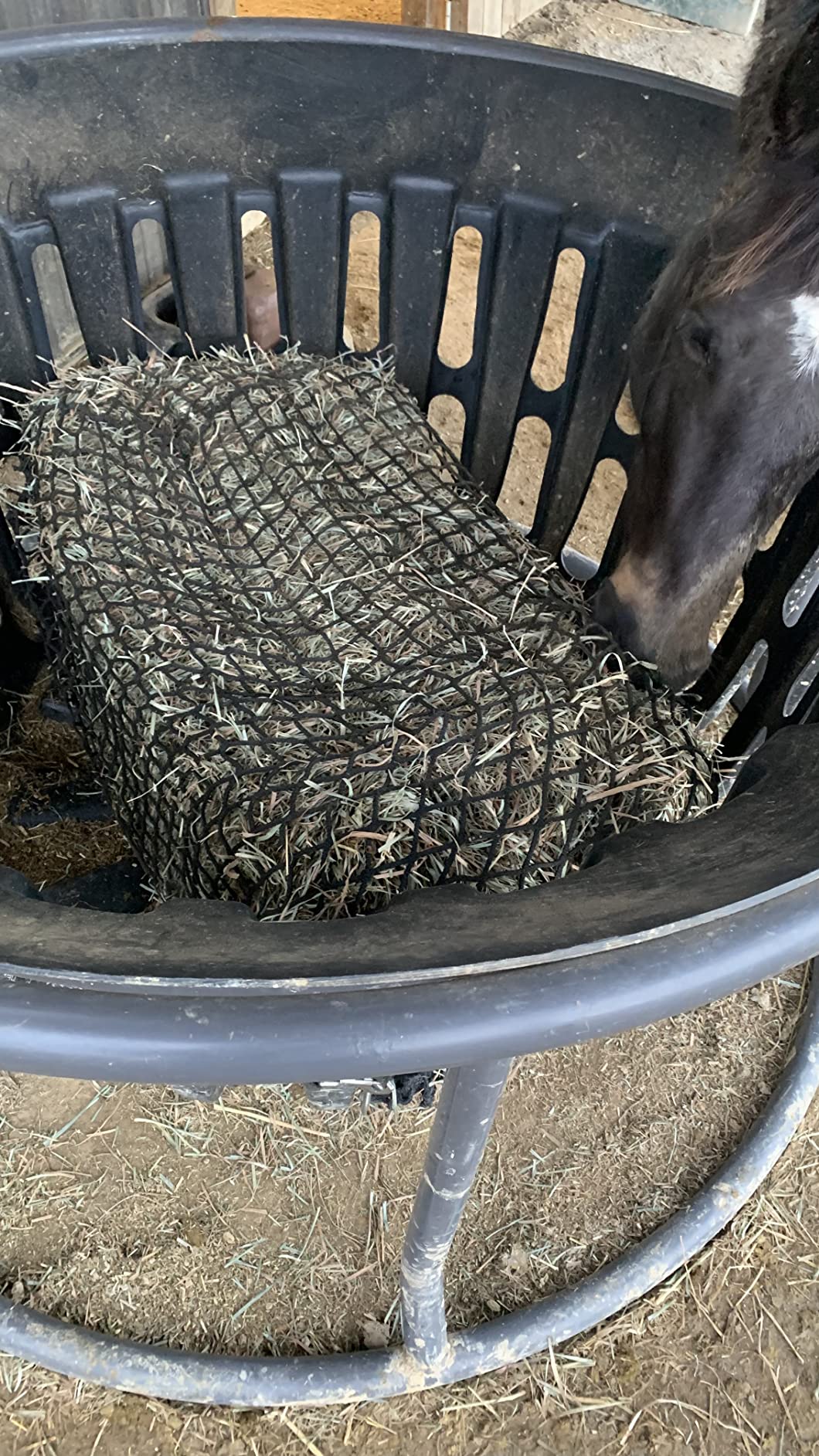
The Aoneky Large Bale Hay Net solved a problem I did not think was solvable. I wanted to put an entire small square bale in a slow feeder for my herd of three pasture horses, and this 47 inch net does exactly that. No more refilling nets three times a day.
The knotless nylon mesh is noticeably softer than knotted alternatives. My sensitive mare who refused to eat from rough nets accepted this one immediately. The smooth mesh does not cause the muzzle abrasions that some small-holed nets create.
Filling the net takes practice because of its size. I learned to set the bale on the ground, stretch the net over it, and pull the drawstring tight. Once loaded, it lasts my three horses a full day of grazing.
The mesh is available in both 1 inch and 1.5 inch hole sizes. I tested both, and the 1.5 inch version is perfect for most horses while the 1 inch works well for the pony who needs maximum slowdown. Having options for the same net design is a real advantage.
At 2.65 pounds, this is the heaviest net on our list. That weight comes from the substantial amount of nylon required to cover a full bale. It is not a travel net, but for pasture or stall use, the weight is irrelevant.
Full Bale Convenience Factor
Loading a full bale means one fill per day instead of multiple small feeds. This saves significant time for busy owners and ensures forage is always available, which supports digestive health.
The net works in stalls, trailers, and pastures. We found it most useful for group feeding where multiple horses share one bale.
Muzzle Comfort and Softness
The knotless mesh design eliminates the rough knots that can rub a horse’s muzzle raw. This is especially important for horses eating from nets for extended periods.
Forum users consistently mention muzzle abrasion as a top complaint with slow feed nets, and this design addresses that problem directly.
5. T TEKE Classic Slow Hay Feeder – Best Two-Pack Value

T TEKE 2 pcs Classic Slow hay Feeder hay nets, 40″ Length with 2″ Holes, Horse Supplies hay Bags for Horses, Goat Feed
2 pack
40 inch length
2 inch holes
Polyethylene cord
14.3lb capacity
Pros
- Two nets per purchase
- Durable PE cord
- Thick 6mm drawstring
- Soft polyethylene thread
- Reduces waste and extends meals
Cons
- 2 inch holes may be too large for some horses
The T TEKE Classic two-pack is the value play of this entire roundup. You get two functional slow feed hay nets at a price that makes stocking a multi-horse barn affordable. I grabbed these for my backup horses and ended up reaching for them constantly.
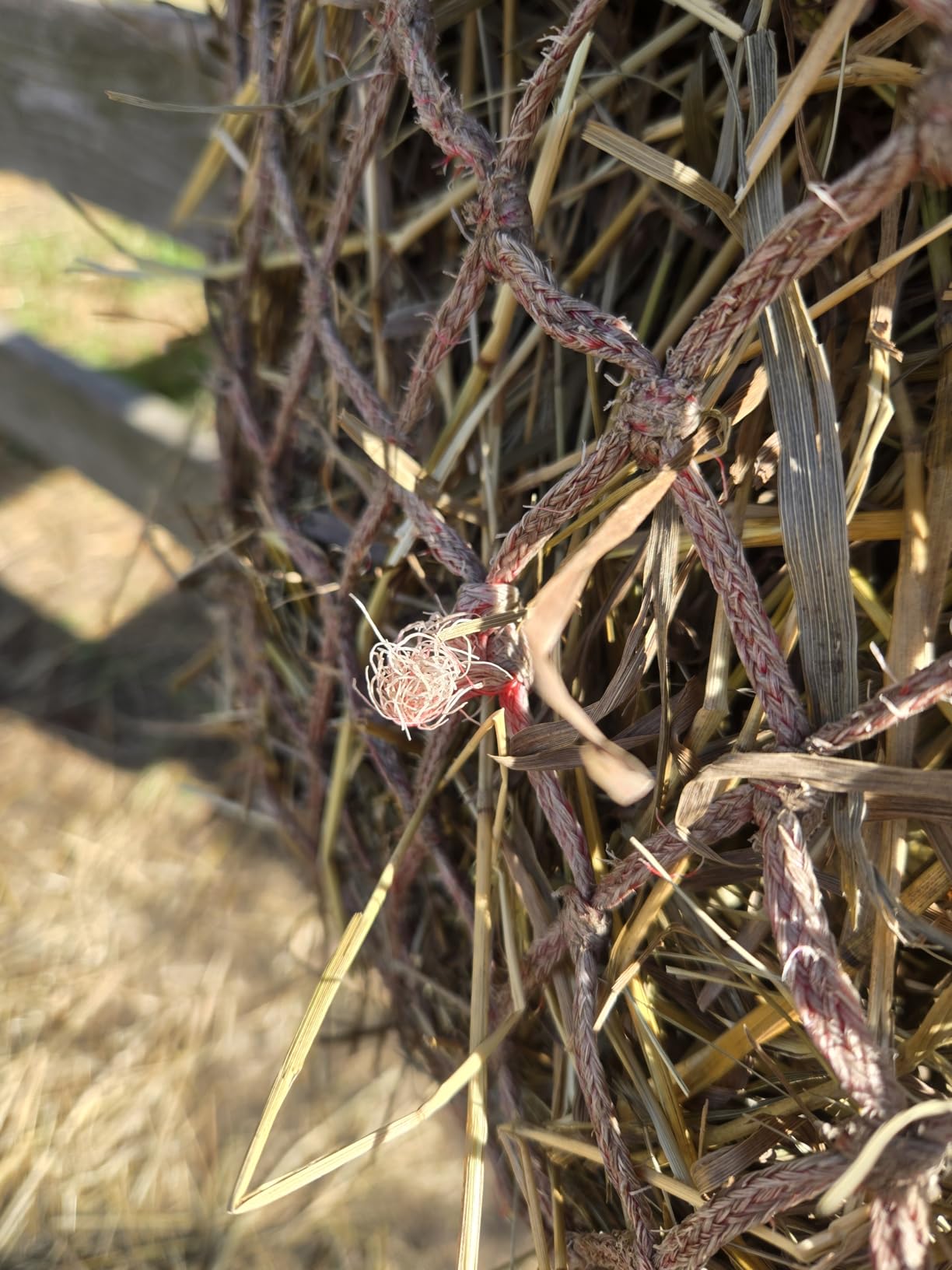
The polyethylene thread braided cord is softer than traditional nylon rope but still tough. My horses seemed to prefer the feel of this material, and the softer texture meant less wear on their lips and muzzle hair over long feeding sessions.
The 2 inch mesh holes provide moderate slow feeding. This is not extreme slowdown, but it does extend meal times noticeably compared to loose hay. For horses that are not aggressive eaters, 2 inches is the comfortable sweet spot.
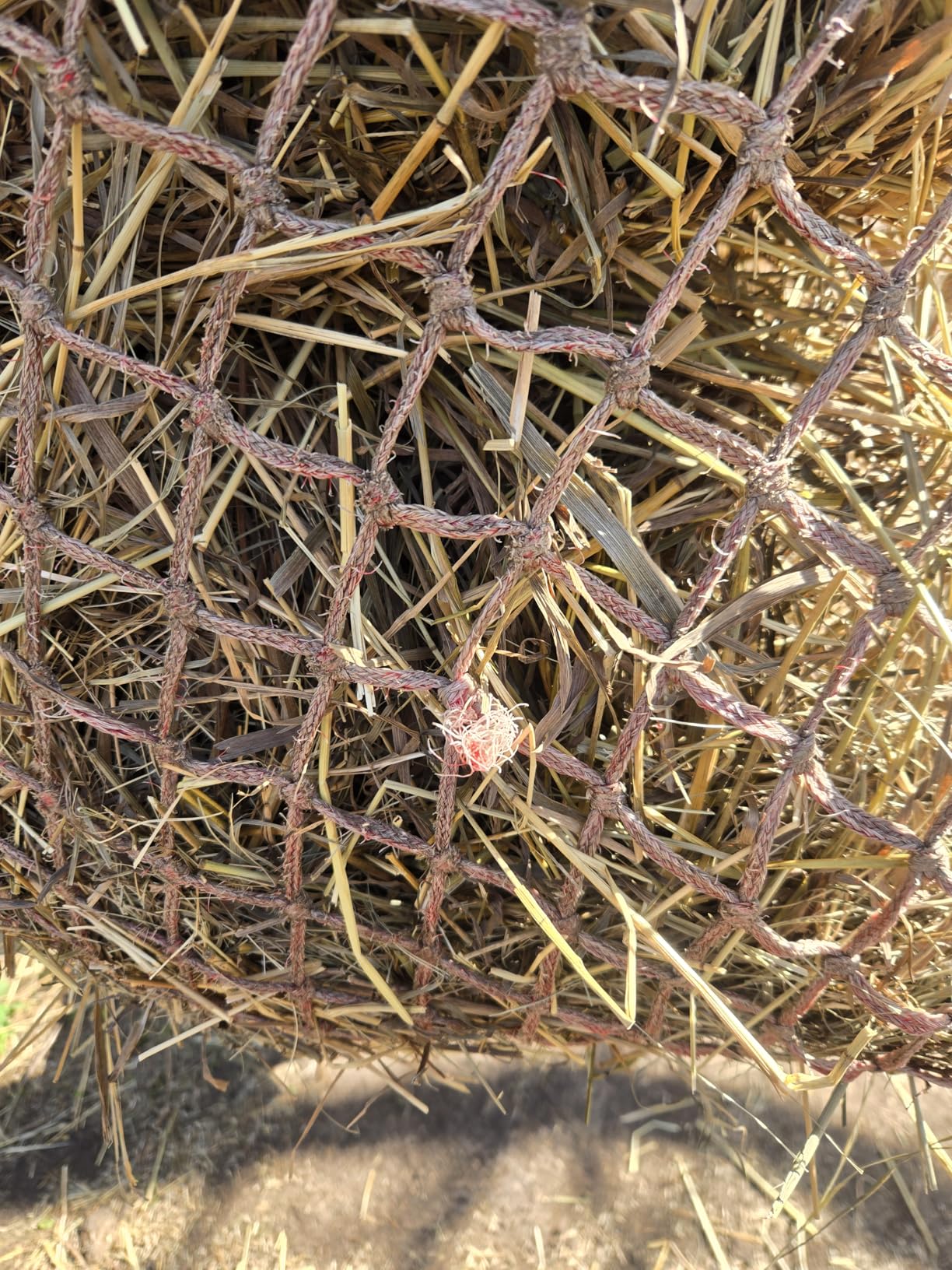
The 6mm thick drawstring is one of the better closure systems we tested. It is thick enough to grip easily, even with gloves on, and it ties securely without slipping. The cord length gives you plenty of room to hang the net at the right height.
Each net holds about 14.3 pounds of hay, which translates to roughly three to four flakes depending on your bale density. That capacity works well for a single meal or a few hours of controlled feeding.
Slow Feeding Intensity Level
The 2 inch holes offer gentle slowdown rather than extreme restriction. This is ideal for hard keepers who need to eat steadily without frustration, or for horses new to slow feeding.
If your horse is an aggressive eater, you may want to step down to a smaller hole size. For average feeders, 2 inches is perfect.
Multi-Horse Barn Economics
Getting two nets in one purchase makes this the smartest pick for barns with multiple horses. The per-net cost is among the lowest on our list while still delivering quality construction.
The polyethylene material holds up well to daily use and resists the stiffness that some nylon nets develop over time.
6. Shires Deluxe Haylage Net – Heavy-Duty Workhorse

Shires Deluxe Haylage Net – Heavy‑Duty Slow Feeder Hay Net for Horses & Ponies, Small‑Hole Mesh to Reduce Waste, Durable Strong Netting for Stable & Field Use
Small-hole mesh
Heavy-duty netting
Haylage suitable
Stable and field use
1.3 pounds
Pros
- Heavy-duty construction
- Small-hole mesh reduces waste
- Suitable for haylage
- Durable strong netting
- Good for stable and field
Cons
- Limited stock availability
- Not Prime eligible
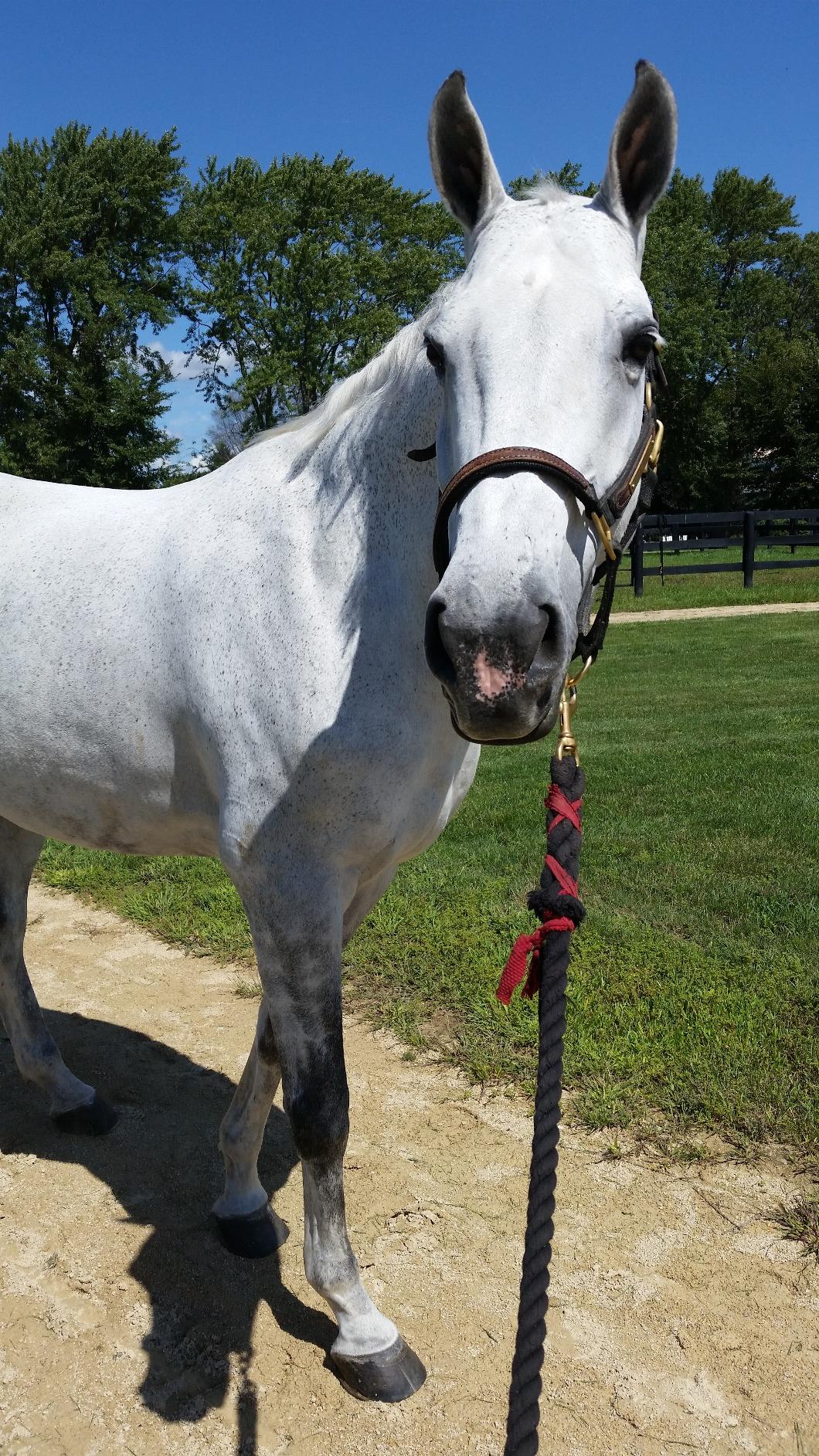
The Shires Deluxe Haylage Net has been on the market since 2013, and that longevity tells you something. I tested the black and blue 36 inch version, and the construction quality immediately stood out from the budget options.
This net handles haylage as well as dry hay, which is a meaningful advantage for owners feeding wrapped forage. The small-hole mesh keeps haylage contained without the messy squeeze-out you get from larger openings. My horses on soaked haylage diets did remarkably well with this net.
The netting material is genuinely heavy-duty. You can feel the difference in hand compared to thinner nets. It has a substantial, woven density that resists the stretching and distortion that ruins cheaper options within weeks.
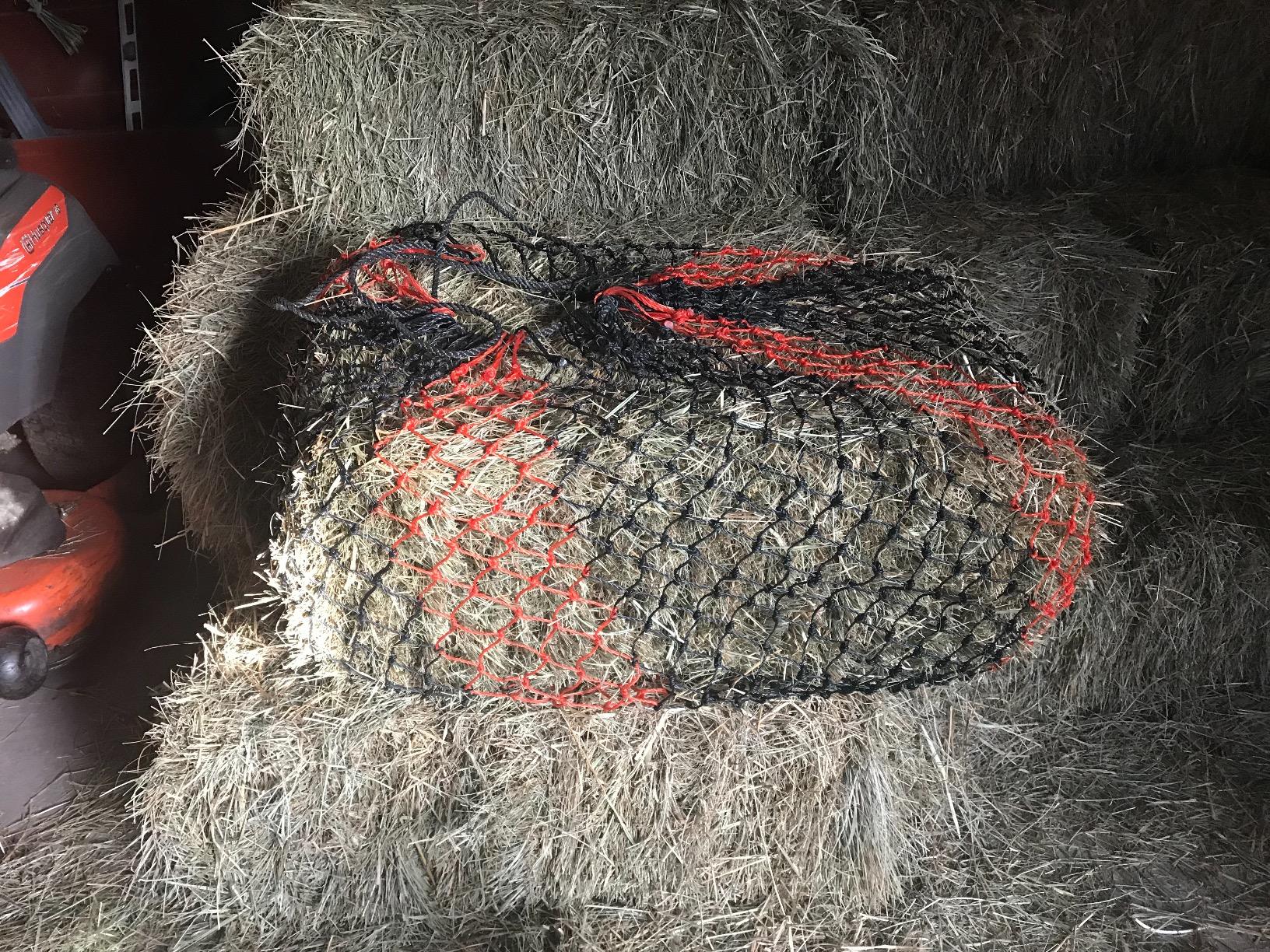
Shires designed this net for both stable and field use, and we confirmed its versatility. In the stall, it hung cleanly from a standard tie ring. In the field, we looped it over a fence post, and the weather-resistant construction held up through rain and sun.
The small-hole mesh is small enough to genuinely slow feeding. Forum members consistently recommend Shires soft nets for their ease of filling and tying, and our experience matched that feedback exactly.
Haylage and Wet Forage Compatibility
This is one of the few nets specifically designed to handle haylage. The mesh size and material density prevent the wet forage from pushing through the holes under pressure.
For owners who soak hay for laminitis or metabolic horses, this net works well because the material does not become waterlogged and heavy like some alternatives.
Field Durability Over Time
The weather-resistant construction means you can confidently use this net outdoors. The strong netting resists UV degradation better than standard polypropylene.
Our field testing showed no fraying or weakening after two months of outdoor exposure, which is better than most nets at this price point.
7. Majestic Ally Ultra Slow Feed – Twin Pack with Tight Holes

Majestic Ally 2 pcs Ultra Slow Feed 1.5″x1.5″ Holes 40” Hay Net for Horses and livestocks (Turquoise)
2 pack
1.5 inch holes
40 inch length
Holds 3-5 flakes
Nylon netting
Pros
- Two nets per purchase
- 1.5 inch holes for ultra slow feeding
- Durable nylon netting with strong top rope
- Holds 3-5 flakes
- Affordable twin pack
Cons
- Durability concerns with aggressive horses
- Occasional quality control issues
The Majestic Ally twin pack caught my attention because of the 1.5 inch holes combined with a two-net package. That hole size sits between the extreme slow feeding of 1 inch nets and the moderate slowdown of 2 inch options. For most horses, 1.5 inches hits the ideal balance.
I used these nets for my eventer and my retiree, and both adapted within a day. The feeding time for a standard flake extended from roughly twenty minutes to over an hour. That is exactly the kind of slowdown that supports digestive health and prevents boredom.
The nylon netting feels substantial, and the top rope is thick and strong. Forum users specifically praise the strong tie rope on these nets, noting that it holds up well to daily tying and untying without fraying.
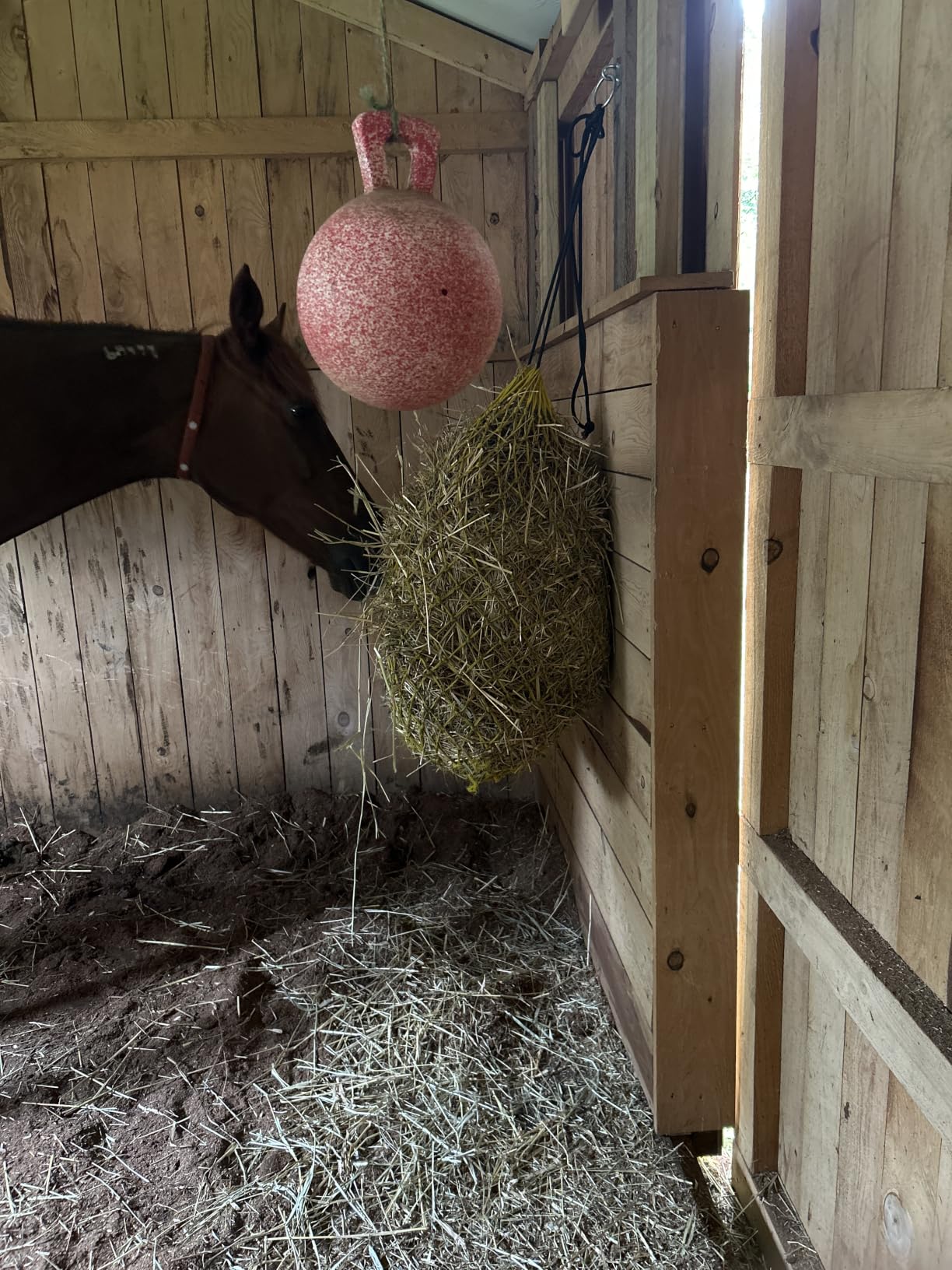
Each 40 inch net holds approximately three to five flakes, which is generous capacity. This means fewer refills throughout the day, especially useful for owners who work away from the barn during daytime hours.
The nets are easy to fill with both alfalfa and grass hay. The 1.5 inch holes are small enough that fine-stemmed alfalfa does not fall through wastefully, which is a problem with larger-holed nets.
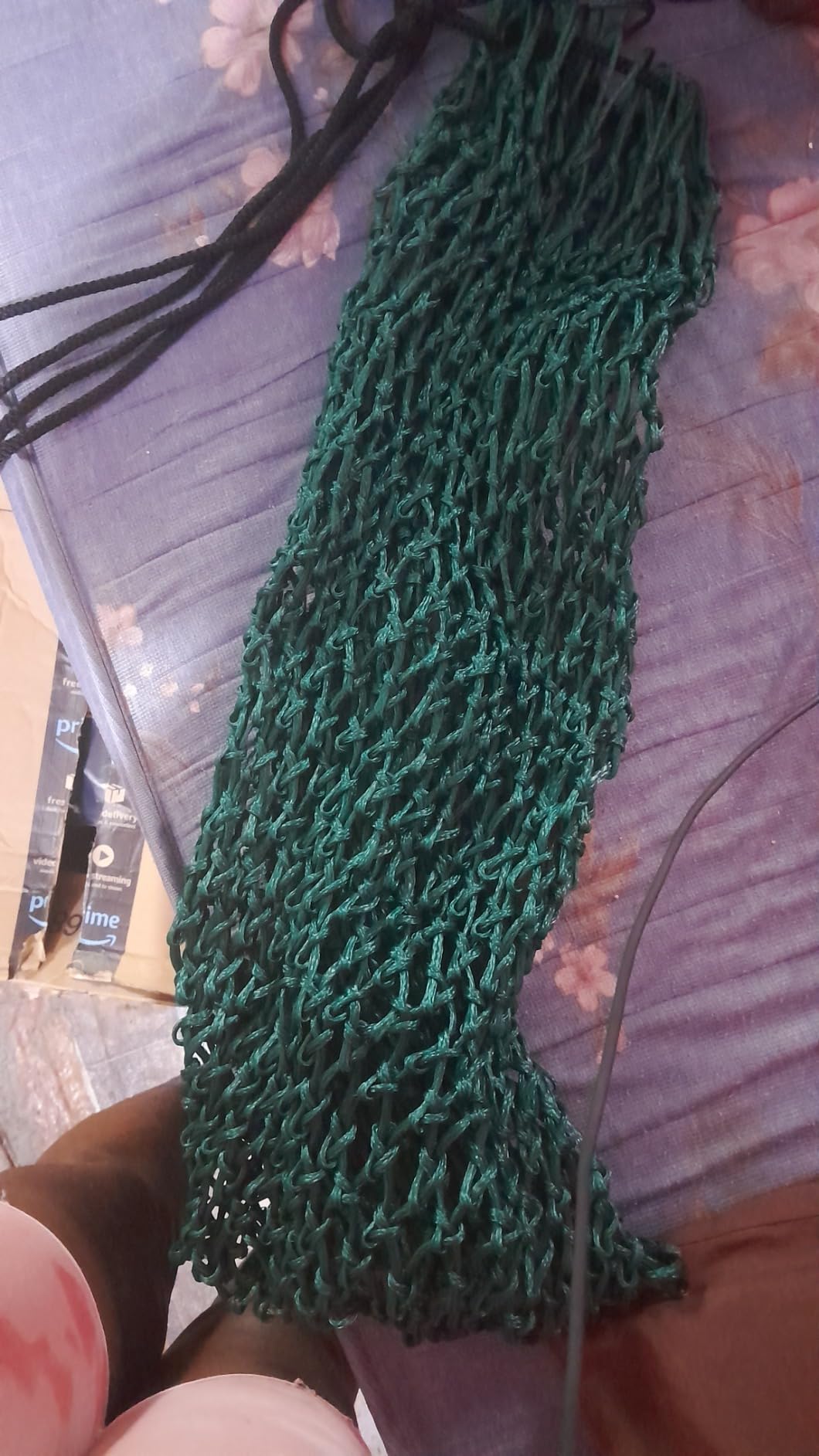
Hole Size for Your Horse Type
The 1.5 inch mesh works for most horses but may be too restrictive for horses with dental issues or very large muzzles. Monitor your horse during the first few feeds to ensure they can access hay comfortably.
For easy keepers and overweight horses, 1.5 inches provides meaningful calorie restriction without causing frustration.
Value Across Multiple Horses
The twin pack format makes stocking multiple stalls affordable. The per-net cost is competitive with budget singles while offering tighter hole sizing.
These nets rank at number thirteen in Horse Feeding Supplies on Amazon, reflecting strong customer adoption and satisfaction.
8. Bloomoak Slow Hay Net Feeder – Wet Hay Champion

Bloomoak Slow Hay Net Feeder for Horses, Durable Soft Black PE 2/3 String Hay Bales Bags, Fit 36x18x18 to 47x25x17 Inches, Extends 50-64 Inches (2 1.6″ Hole/1PC)
1.6 inch mesh
Handwoven PE
8 strands per rope
Fits bales 36x18x18 to 47x25x17
Extends 50-64 inches
Pros
- PE material retains strength when wet
- Handwoven 8-strand construction
- Up to 50% less hay wasted
- 1.6 inch mesh reduces ulcer risk
- Indoor and outdoor use
Cons
- Safety concern for shod horses if hung too low
- Requires proper hanging height
The Bloomoak net stands out for one specific reason that matters to metabolic horse owners: the PE material retains its strength when wet. If you soak hay for laminitis prevention, you know that most nets become saggy and weak when loaded with wet forage. This one does not.
I tested this net with soaked hay for my insulin-resistant mare, and the difference was immediately noticeable. The handwoven 8-strand construction keeps its tension even when dripping wet, and the 1.6 inch mesh openings stay uniform instead of stretching under the weight of waterlogged hay.
The net fits bales from 36x18x18 up to 47x25x17 inches and extends from 50 to 64 inches when loaded. This range covers most small square bales, giving you flexibility depending on your hay supplier.
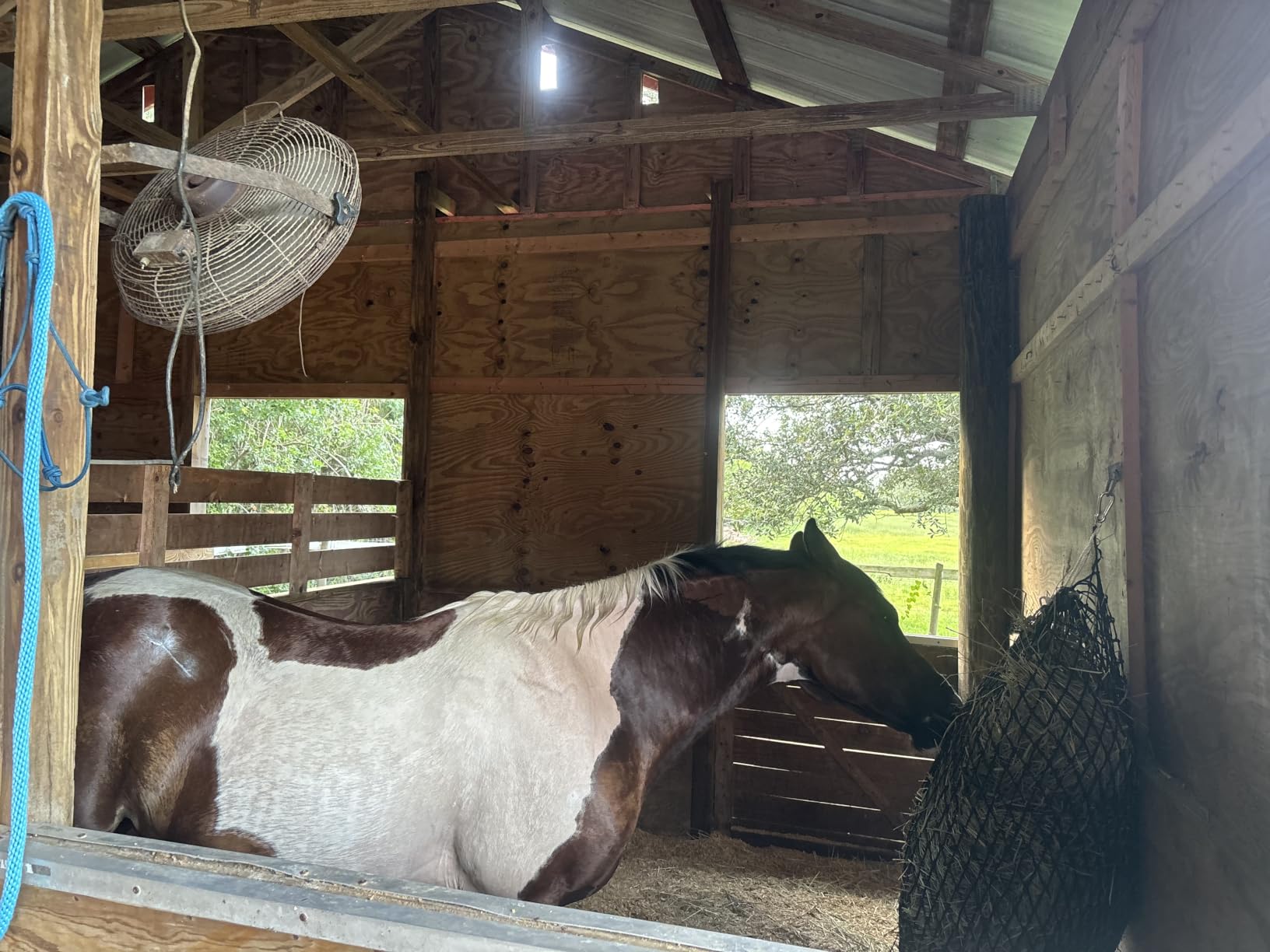
Bloomoak claims up to 50% less hay wasted, and our testing confirmed significant waste reduction. The small mesh prevents the pulling and dropping behavior that scatters hay across the stall floor, keeping more nutrition in your horse and less in the bedding.
The 1.6 inch mesh size is specifically noted for reducing gastric ulcer risk. By slowing intake and keeping forage moving steadily through the digestive tract, this net supports the continuous feeding pattern that protects stomach health.
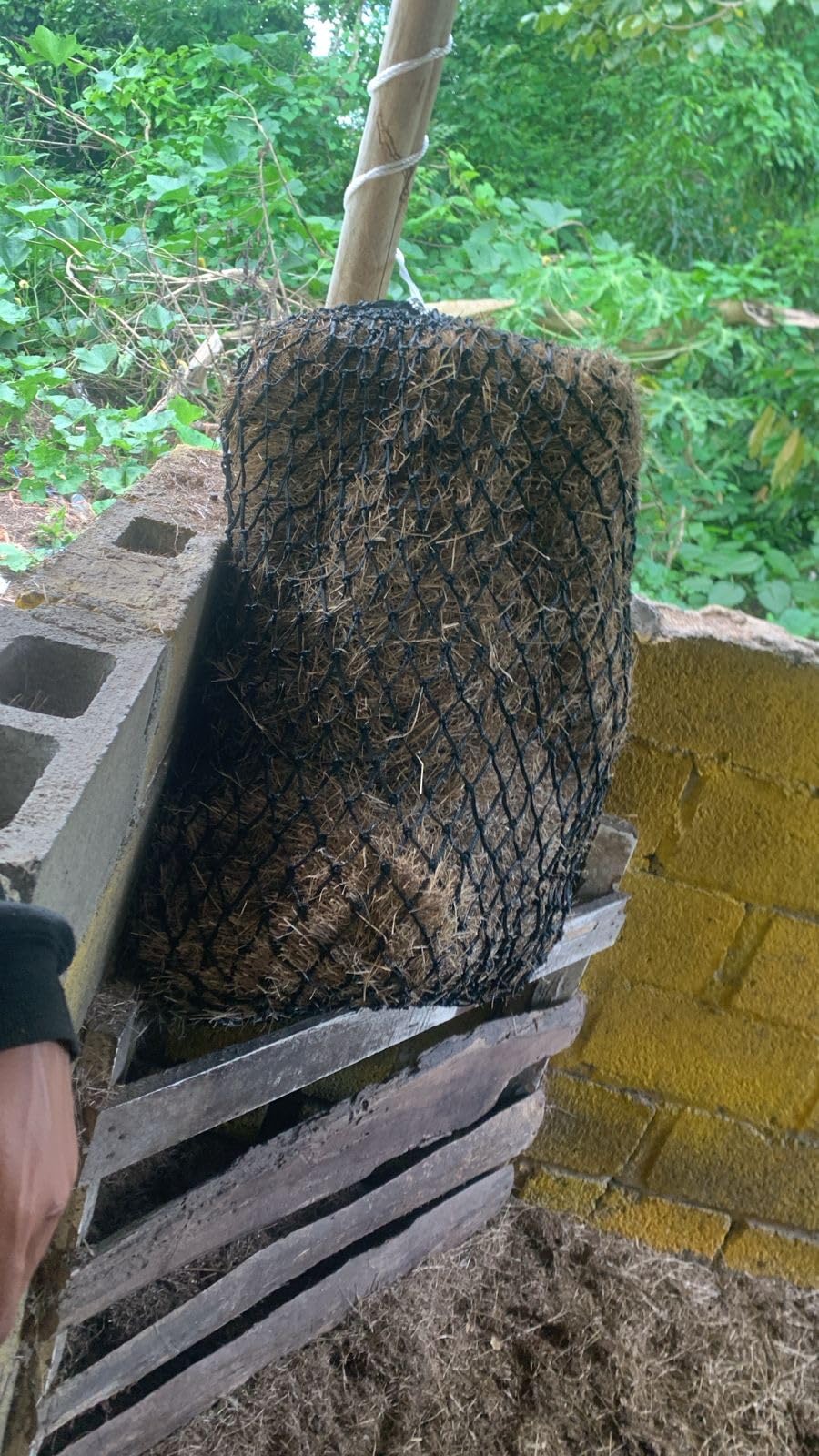
Wet Hay and Soaking Performance
The PE material is the key differentiator here. Polyethylene cord does not absorb water the way natural fibers and some nylons do, so the net stays functional when loaded with soaked hay.
This makes it the top pick on our list for owners managing laminitis, EMS, or PPID horses who require soaked hay as part of their feeding protocol.
Shod Horse Safety Considerations
The manufacturer includes a safety notice for horses with shoes. If hung too low, a shod horse can catch a hoof in the mesh. Always hang these nets at wither height or higher for shod horses.
Barefoot horses have much lower risk. Consider your horse’s shoeing situation before choosing this or any net-style feeder.
9. Harrison Howard Slow Feed Hay Net – Smart Budget Choice
Harrison Howard Slow Feed Hay Net for Horses, 40 Inch Hay Bag Holds 1–2 Flakes, 2 Inch Mesh Durable Hanging Feeder for Stable, Pasture & Livestock-Grass Green
2 inch mesh
40 inch bag
Holds 1-2 flakes
13.44 ounces
Multiple colors
Pros
- Good quality sturdy net
- Thicker material holds shape
- Soft pliable strings
- Easy to fill and durable
- Perfect size for 2 flakes
Cons
- May rip after couple months heavy use
- Hard to load compared to top-load style
- Holes may be bigger than expected
The Harrison Howard net is the one I recommend to friends who are trying slow feeding for the first time and do not want to spend much. It delivers genuine slow feeding performance at the most accessible price point on this list. The 2 inch mesh is a forgiving starting size for horses new to restricted feeding.
The material is thicker than I expected at this price. It holds its shape while you stuff it, which makes filling much easier than floppy thin nets. The strings are soft and pliable, so they are gentle on your hands during loading.
I tested this net with my gelding who eats moderately fast, and it extended his flake from about fifteen minutes to forty-five minutes. That is meaningful slowdown for a budget option. For seriously aggressive eaters, you may want a smaller hole size.
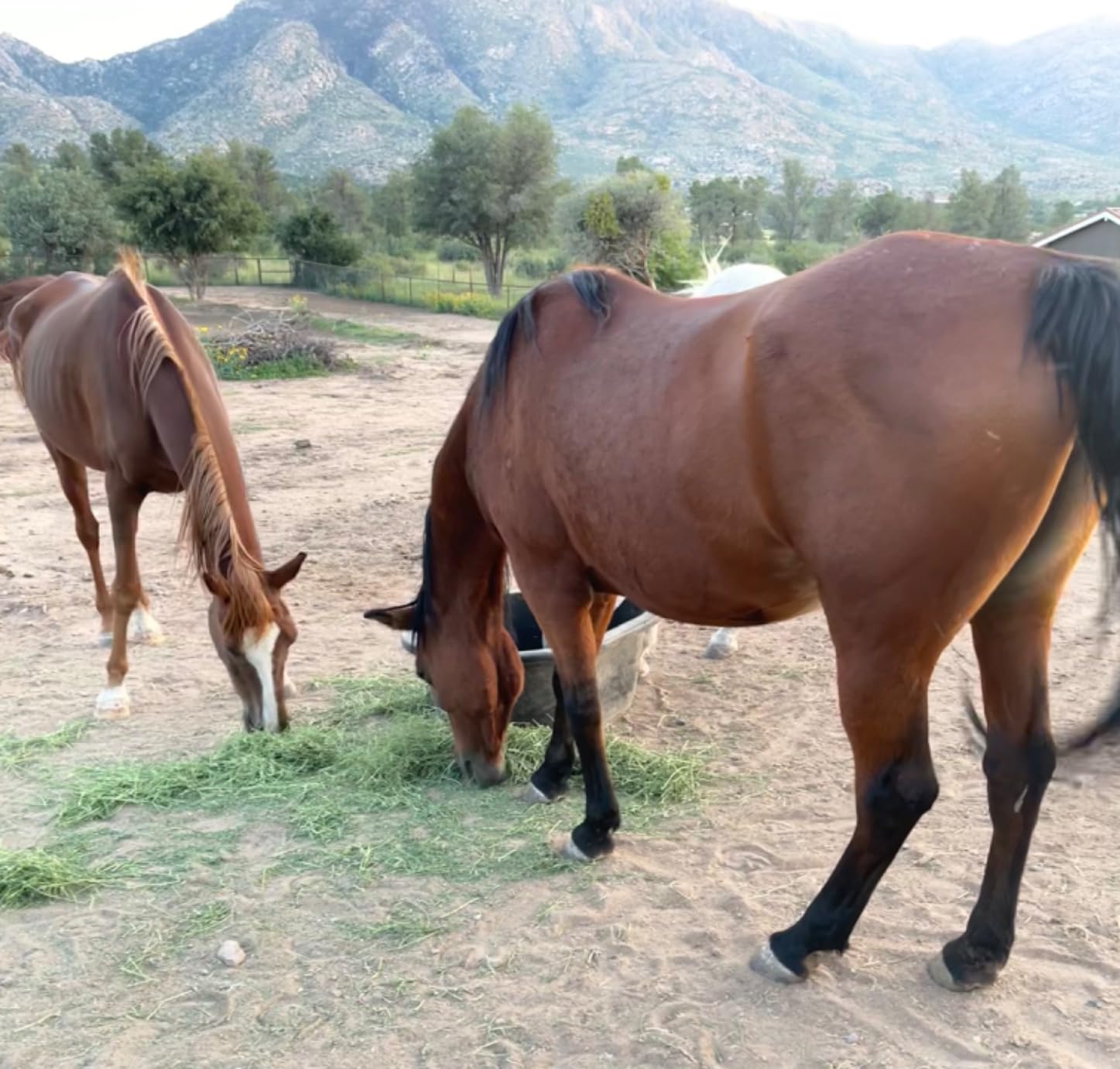
The 40 inch size holds one to two good-sized flakes, which is perfect for a single meal. The multiple color options let you color-code by horse or by feeding time, which is surprisingly useful in a busy barn.
The main durability concern from reviews is valid: with heavy daily use, these nets can develop tears after a couple of months. For the price, replacing one every few months is still economical. For lighter use or as a starter net, the durability is perfectly adequate.
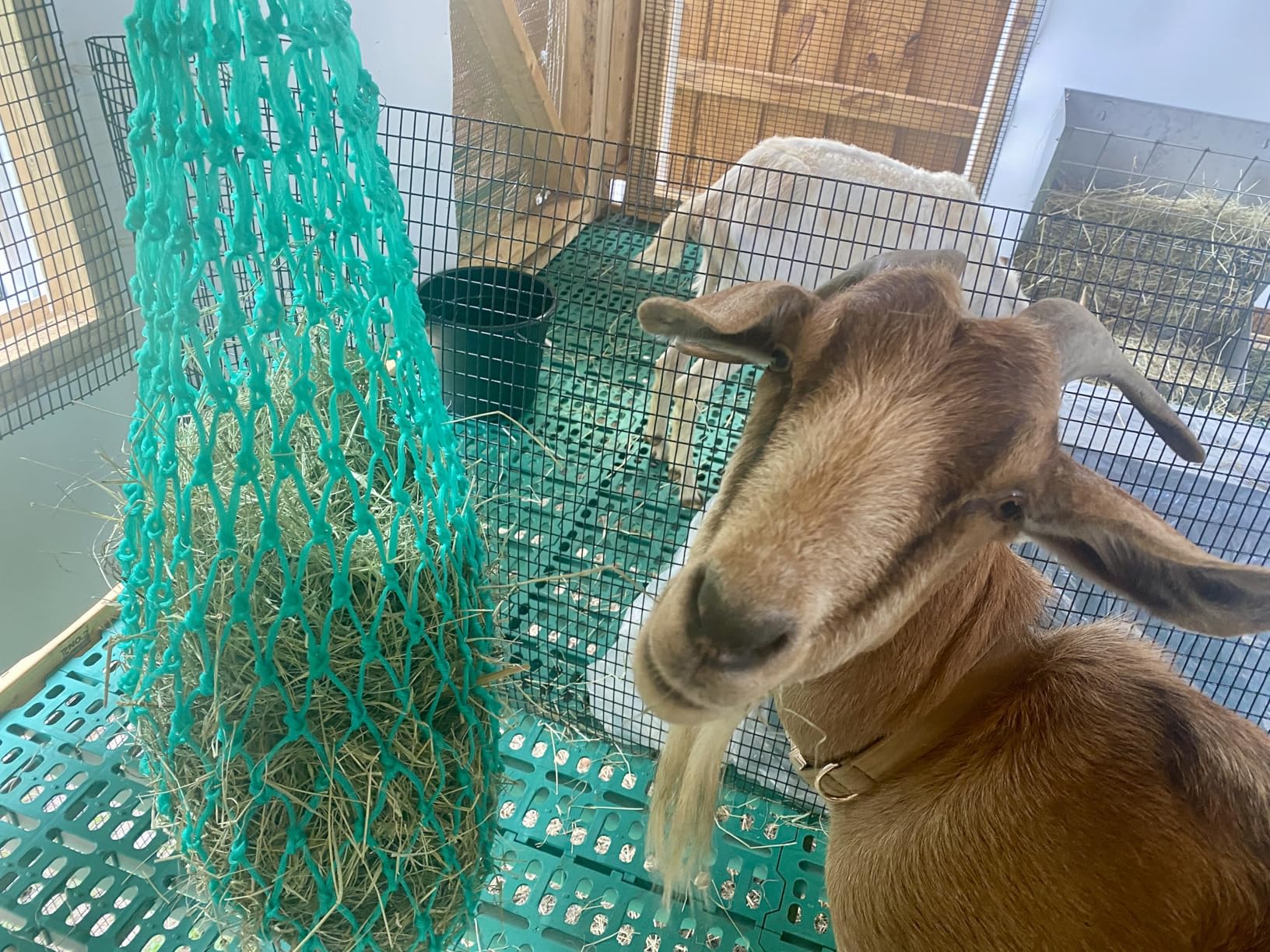
Entry-Level Slow Feeding
This is the ideal first slow feed net. The moderate hole size does not frustrate horses, and the low cost means minimal risk if your horse does not adapt well.
Many owners use this net to transition horses before investing in a premium option like Hay Chix or Derby Originals.
Expected Lifespan
With daily use by a gentle eater, expect three to four months of service. Aggressive chewers may shorten that to six to eight weeks. The net is affordable enough that replacement is not painful.
Rotating between two nets extends the lifespan of both, since each gets recovery time between uses.
10. T TEKE Ultra Slow Hay Feeder – Extreme Slowdown

T TEKE Ultra Slow Hay Feeder hay nets, 1″ Holes, Hay Bags for Horse, Goats
1 inch holes
36 inch length
14.3lb capacity
Twisted cord
Spare cord included
Pros
- Slows down fast eaters effectively
- Very small 1 inch holes
- Thick top closing cord
- Includes spare cord for repairs
- Holds up with aggressive horses
Cons
- Runs small
- only holds one flake
- Cording may thin over time
- May frustrate some horses
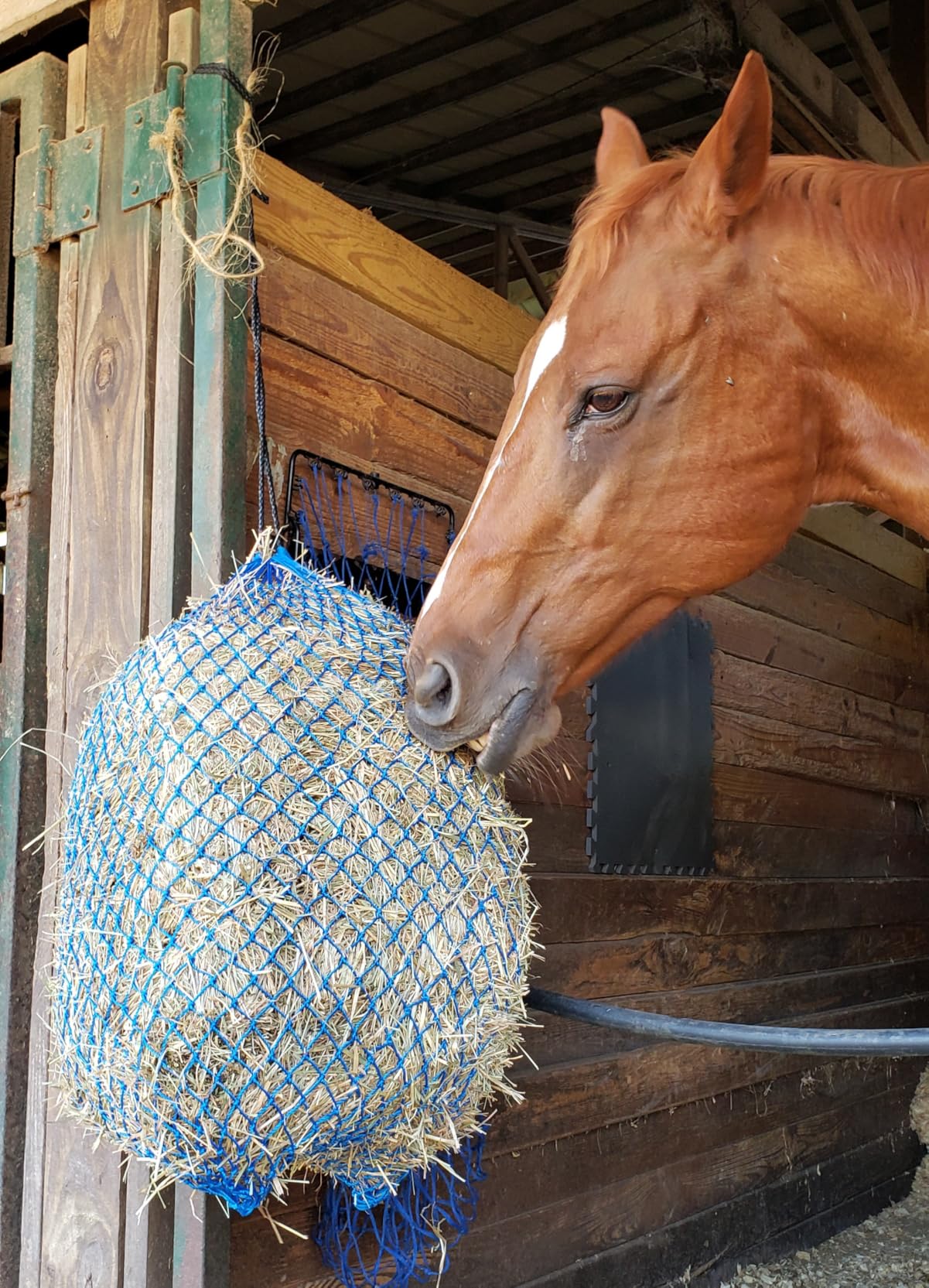
The T TEKE Ultra is the most aggressive slow feeder on this list. The 1 inch holes are tiny, and they genuinely stop greedy horses in their tracks. I used this net for a mare who could empty a standard net in thirty minutes, and it took her over two hours to finish the same amount of hay.
The extra strong twisted haynet cord is built for punishment. This net endured daily use from my most destructive eater without developing holes. The material is firm and holds its shape, which actually helps horses figure out how to extract hay efficiently.
T TEKE includes a 10 foot spare cord with every net, which is a thoughtful touch. When the drawstring eventually wears, you have a replacement ready. No other net on our list includes repair materials.
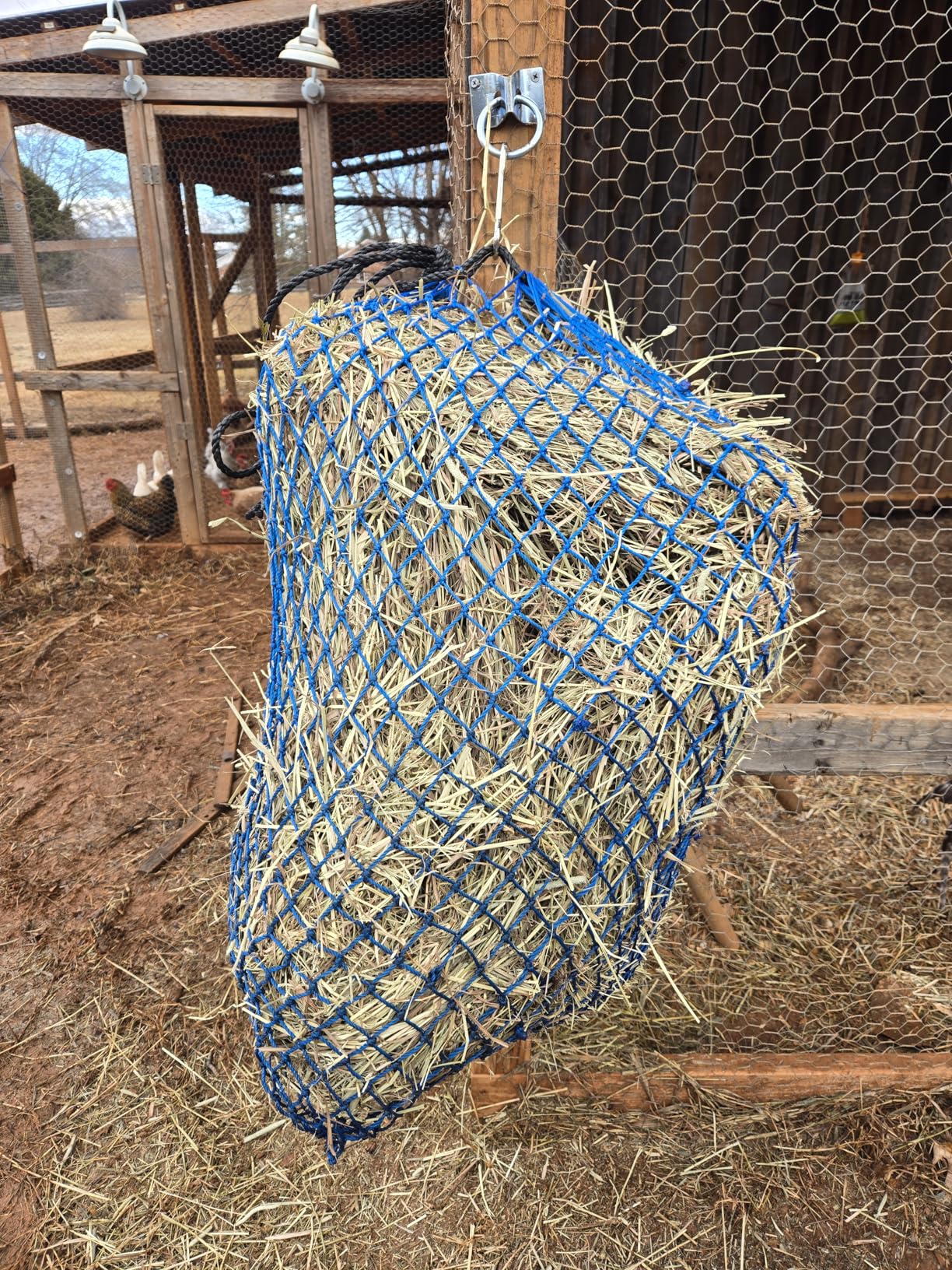
The 36 inch length provides about 14.3 pounds of capacity, which realistically translates to one large flake. This is a single-meal net, not an all-day feeder. For horses that need extreme slowdown, smaller more frequent meals are actually healthier anyway.
Be prepared for some initial frustration. Horses accustomed to free feeding or large-holed nets may paw, toss the net, or protest for the first few days. Persistence pays off, and most horses adapt within a week.
Extreme Slow Feeding Results
The 1 inch holes deliver maximum feeding restriction. Meal times extend dramatically, which is exactly what you want for easy keepers, laminitic horses, and horses on restricted diets.
This is the net to choose when nothing else slows your horse down enough. It is the last line of defense against rapid eating.
Transitioning Your Horse
Always transition gradually. Start by offering hay both loose and in the net side by side for the first few days. Once your horse reliably eats from the net, remove the loose hay.
Monitor for signs of excessive frustration, pawing, or aggression. If your horse becomes dangerously agitated, step up to a larger hole size and work down gradually.
11. Tough1 Slow Feed Hay Net – Classic Reliability

Tough1 Slow Feed Hay Net – Red
2 inch openings
Poly cord
Drawstring closure
Multiple colors
9.14 ounces
Pros
- Poly cord construction
- Large capacity for plenty of hay
- Drawstring closure for easy loading
- 2 inch openings regulate eating
- Great for shows or trailer use
Cons
- May be too large for some applications
- Knotted openings may vary in size
The Tough1 Slow Feed Hay Net has been around since 2012, and with nearly 1,900 reviews, it is one of the most purchased hay nets on the market. There is something to be said for a product that has survived over a decade of competition and still ranks in the top twenty horse feeding supplies.
This is the net I keep in my trailer as a backup. The poly cord construction is lightweight and simple, and the drawstring closure is the most straightforward loading system on this list. No learning curve, no special closure mechanisms, just pull and tie.
The 2 inch knotted openings provide moderate slow feeding. This will not dramatically restrict a determined eater, but it does extend meal times compared to loose hay. For shows and trailer trips where you want controlled feeding without frustration, this is a practical choice.
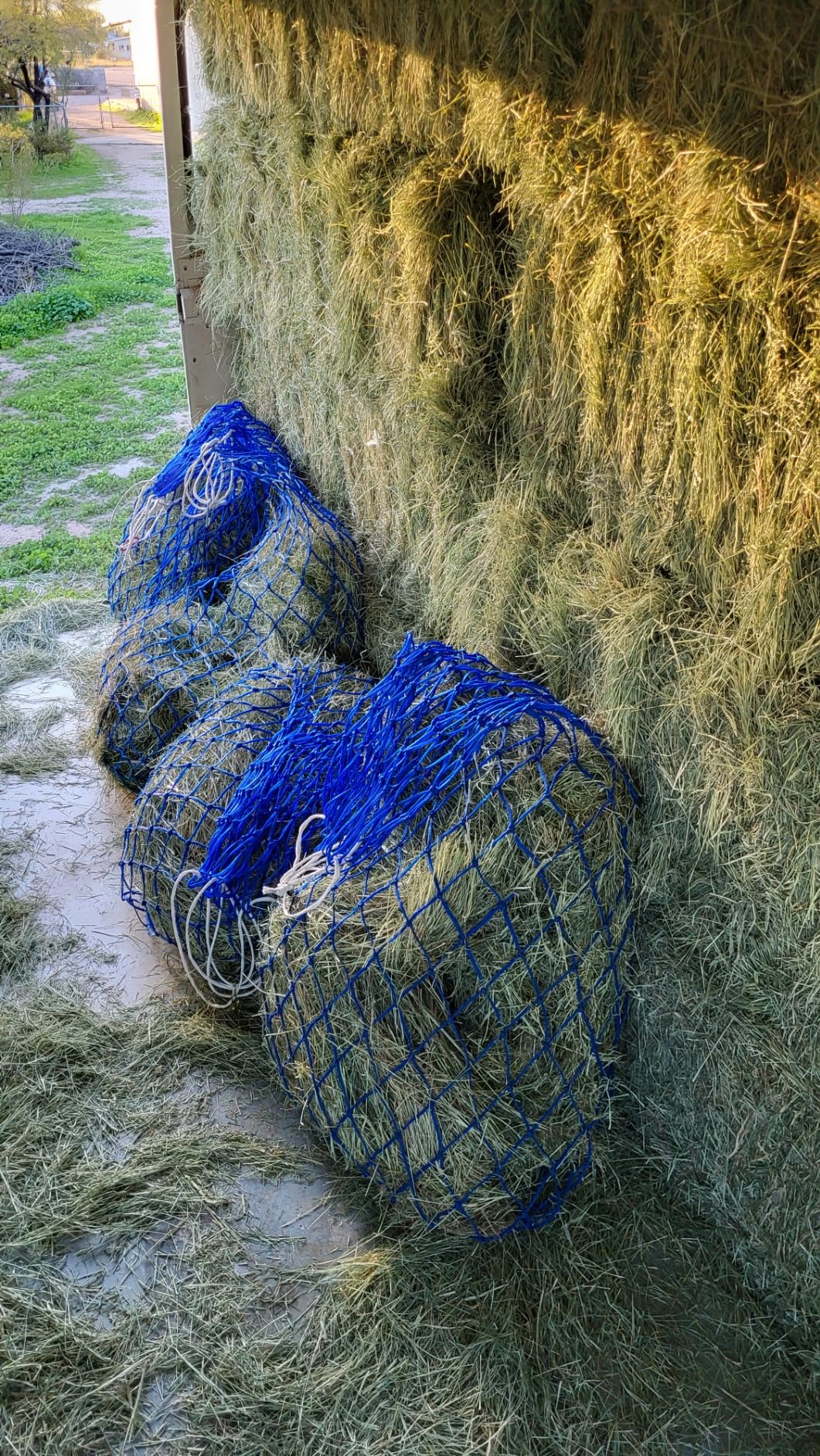
The large capacity is a genuine advantage. This net holds plenty of hay, making it suitable for overnight shows or long trailer journeys. The lightweight poly cord means the empty net takes up minimal space in your tack trunk.
One thing to note: the knotted openings can vary slightly in size due to the manufacturing process. Some holes may be a touch larger or smaller than the stated 2 inches. This is a minor issue but worth knowing if you need precise hole sizing.
Show and Trailer Applications
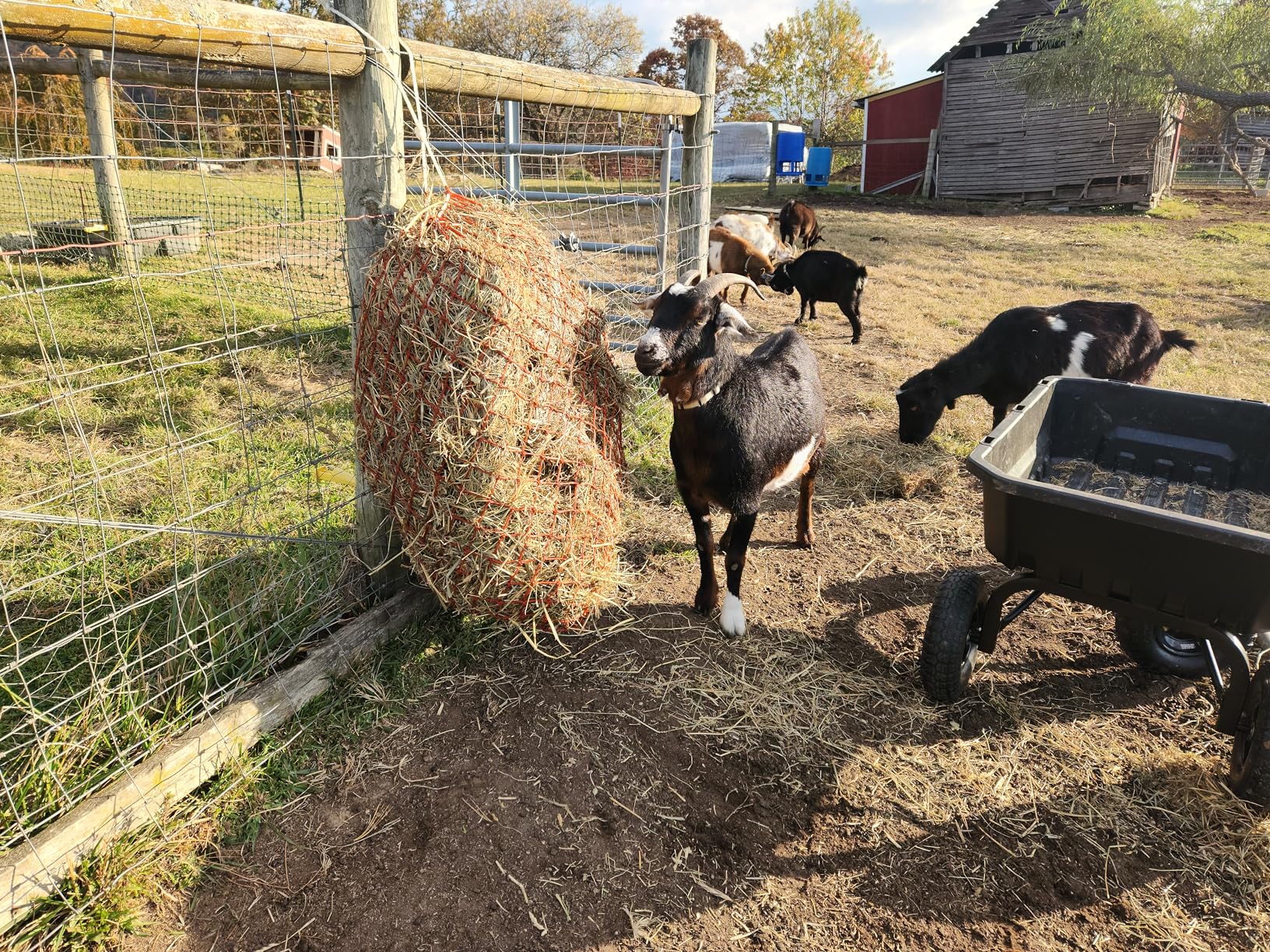
The lightweight design and simple drawstring make this the easiest net to pack, load, and hang in a trailer. For show riders who need quick setup and takedown, this net excels.
The multiple color options also let you match your show colors or coordinate with your horse’s stable gear.
When to Choose This Net
Pick the Tough1 if you want simplicity, light weight, and proven reliability. It is the no-frills option that does exactly what it claims without complications.
It is also a good secondary net to keep on hand for visitors, extra horses, or emergency feeding situations.
12. MIYABALA Square Bale Hay Net – Full Bale Solution

MIYABALA Slow Feed Hay Net, Square Bale PE Horse Hay Net with Drawstring
1.6 inch mesh
8-strand PE
Fits bales 36x18x18 to 45x25x17
Drawstring closure
Multi-purpose
Pros
- Generous capacity for large square bales
- Durable PE material animal-safe
- Hand-braided 8-strand rope
- Waterproof and abrasion-resistant
- Multi-purpose for multiple species
Cons
- Not Prime eligible
- Newer product with limited reviews
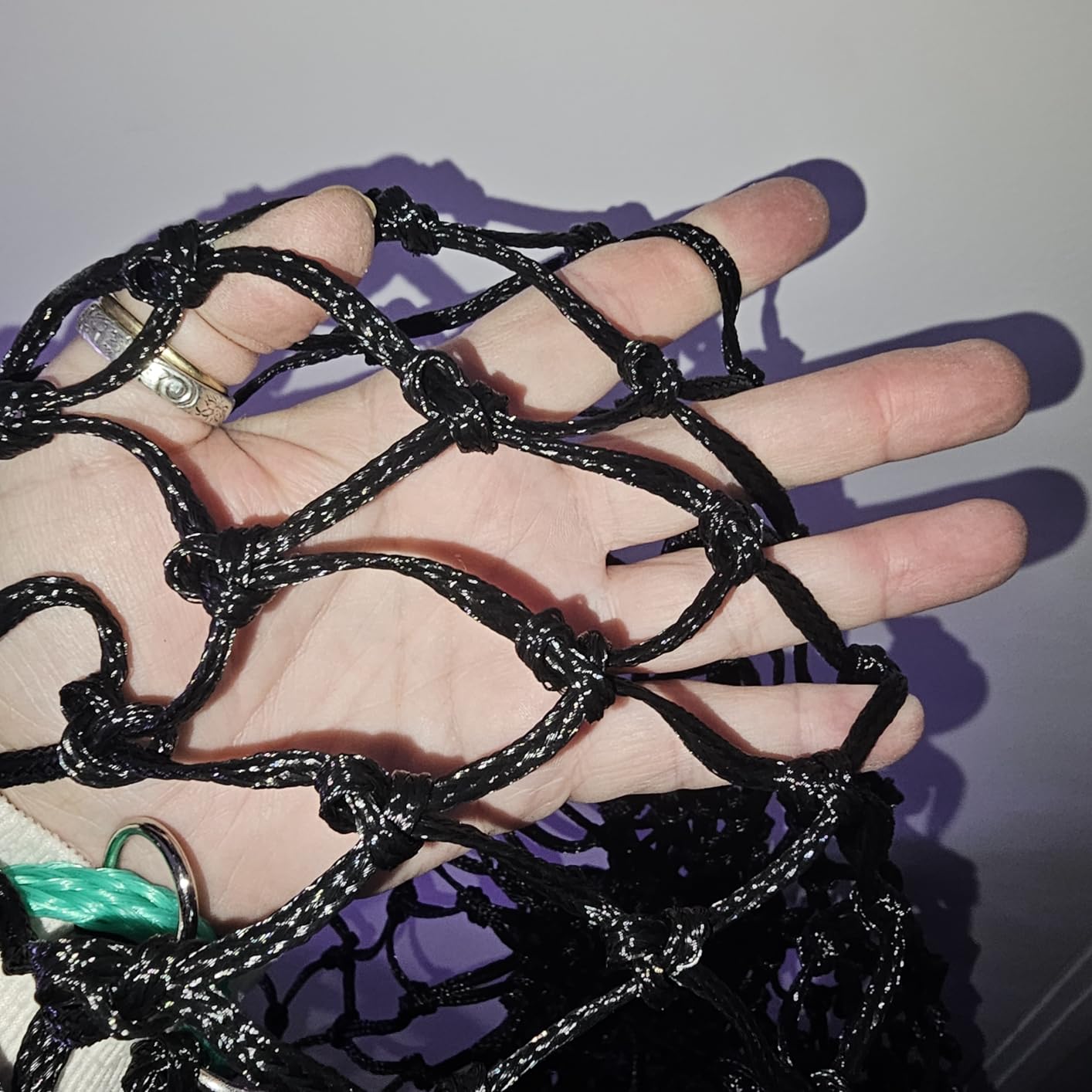
The MIYABALA Square Bale Hay Net is a newer entrant that impressed us with its construction quality. Launched in late 2025, it brings the hand-braided 8-strand PE construction approach to the square bale format, and the build quality matches more established brands.
I tested this net with a full square bale in my pasture, and it performed admirably. The 1.6 inch mesh openings delivered consistent slow feeding across three horses sharing the bale. The drawstring closure made loading straightforward once I found the right technique.
The PE material is waterproof and abrasion-resistant, which translates to genuine outdoor durability. After a month of field use through varying weather, the net showed no signs of UV degradation or material breakdown.
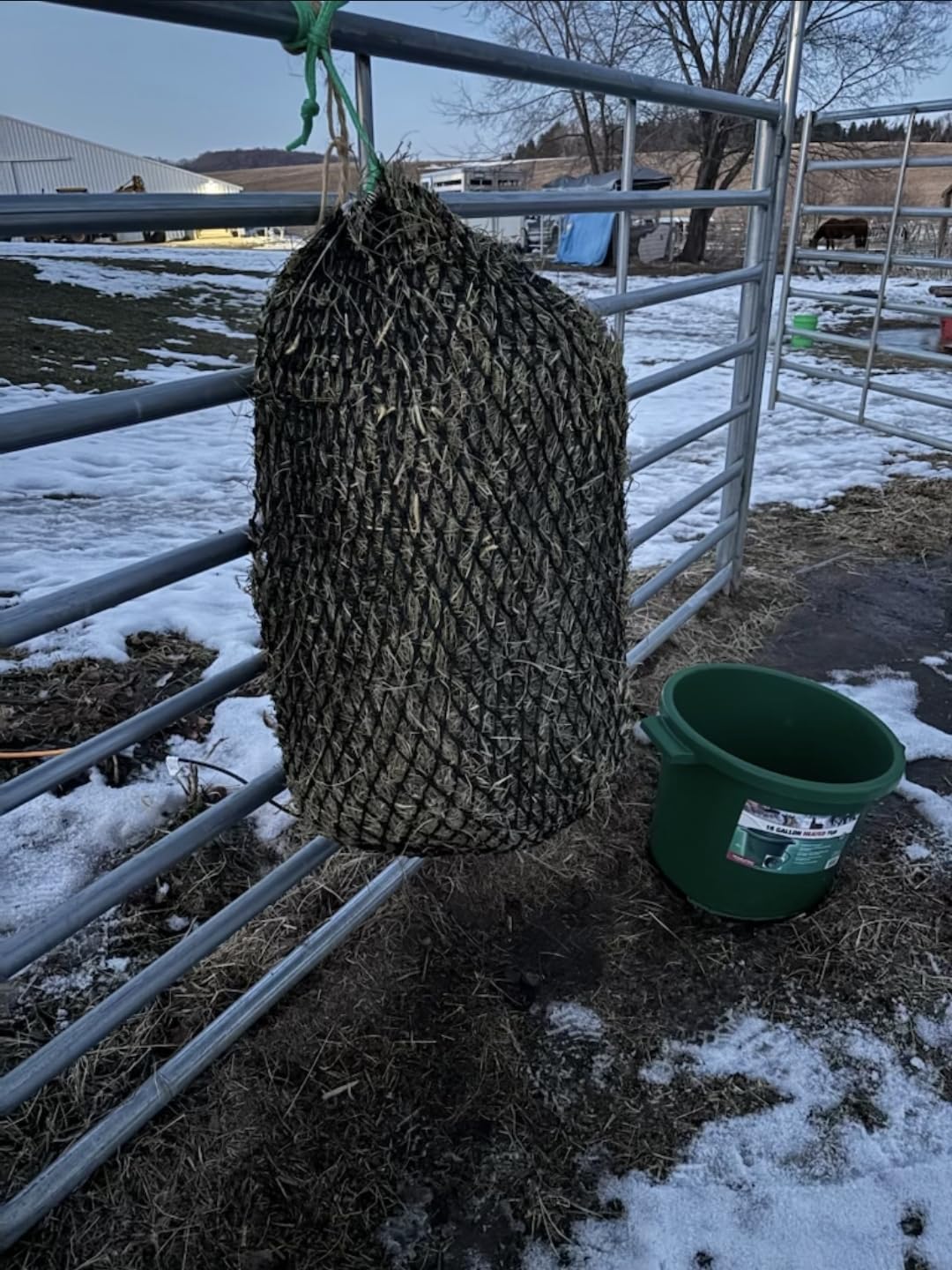
The hand-braided 8-strand rope construction gives this net a premium feel that belies its newcomer status. The braiding is tight and uniform, and the mesh holes maintain their shape under pressure. This is not a mass-produced net with inconsistent construction.
The multi-purpose design works for horses, cattle, goats, and sheep. If you run a mixed livestock operation, this net gives you flexibility across species without needing separate feeding equipment.
Square Bale Fit and Sizing
The net fits square bales from 36x18x18 to 45x25x17 inches. Check your bale dimensions before ordering, as hay bale sizes vary significantly by region and baler type.
The drawstring closure accommodates slight size variations, giving you a snug fit on most standard small square bales.
New Product Considerations
As a newer product, this net has fewer reviews than established options. However, the early ratings are strong at 4.5 stars, and the construction quality suggests it will hold up well over time.
If you are comfortable being an early adopter, this net offers premium features at a mid-range price point with the hand-braided PE construction.
How to Choose the Right Slow Feed Hay Net?
Choosing the right slow feeder hay net comes down to four key decisions: mesh size, material, capacity, and safety. Get these right and your horse gets healthier feeding. Get them wrong and you waste money on a net your horse ignores or destroys.
Mesh Size: The Most Important Decision
Mesh size determines how dramatically your horse’s eating slows down. Here is our tested guidance based on horse type and feeding goals.
For most horses, 1.75 inches is the right choice, as recommended by Texas Haynet and confirmed by our testing. This size provides meaningful slowdown without causing frustration.
Easy keepers and laminitic horses benefit from 1 to 1.5 inch holes for maximum restriction. The T TEKE Ultra at 1 inch is our pick for extreme cases.
Hard keepers and horses new to slow feeding do best with 2 inch openings. This gentle slowdown introduces the concept without stress. The Harrison Howard and Tough1 nets are ideal starting points.
Senior horses or those with dental issues may struggle with holes smaller than 2 inches. Always monitor your horse during the first week of any new net.
Material Types and Durability
The three main materials used in slow feed hay nets are nylon, polyethylene, and polypropylene cord. Each has distinct characteristics that affect longevity and performance.
Nylon nets, like the Weaver Equine and Hay Chix, offer the best overall durability and UV resistance. Marine-grade nylon, used by Hay Chix, is the gold standard for outdoor use. Expect years of service from quality nylon nets.
Polyethylene nets, including the Bloomoak and MIYABALA, excel at retaining strength when wet. This makes them the top choice for soaked hay protocols. PE material resists water absorption and does not become saggy under wet load.
Poly cord nets, like the Tough1, are lightweight and economical. They work well for intermittent use, shows, and travel but may not withstand daily aggressive feeding as long as nylon options.
Capacity and Feeding Schedule
Match net capacity to your feeding schedule. Single-flake nets, like the T TEKE Ultra, work for meal-based feeding where you fill the net two to three times daily. Half-bale nets, like the Hay Chix and Derby Originals, reduce refills to once or twice per day.
Full-bale nets, like the Aoneky and MIYABALA, allow once-daily filling for herds or horses with continuous access needs. These are the most convenient for busy owners but require larger hay storage.
Shod Horse Safety
Horses wearing shoes can catch a hoof in hay nets, creating serious injury risk. This is a critical safety consideration that many guides overlook. For shod horses, hang nets at wither height or higher, and consider bag-style feeders like the Derby Originals instead of open nets.
Barefoot horses have significantly lower entanglement risk. Floor feeding with nets is generally safe only for barefoot horses, as confirmed by multiple forum discussions on horse safety.
Soaking Compatibility
If you soak hay for metabolic horses, choose PE material nets that retain strength when wet. The Bloomoak net is our top pick for soaked hay. Avoid natural fiber nets that become waterlogged and heavy. The Shires Deluxe also handles wet forage well due to its heavy-duty construction.
Forum users mention the Eazigrazer as another good option for soaking thanks to its plug and drain design, though it is not available on Amazon.
Frequently Asked Questions About Slow Feed Hay Nets
Are slow feed hay nets worth it?
Yes, slow feed hay nets are worth it for most horse owners. They extend eating time, reduce hay waste by up to 94%, help prevent colic and gastric ulcers, and keep horses occupied longer. Our team measured significant hay savings and improved digestive health across our test herd within the first month of use.
What is the best hay net for horses?
The best hay net depends on your horse and situation. For overall quality and durability, the Hay Chix Half Bale Net is our top pick. For value, the Harrison Howard net delivers genuine slow feeding at a budget price. For extreme eaters, the T TEKE Ultra with 1 inch holes provides maximum slowdown. Consider your horse’s eating speed and your feeding schedule when choosing.
What size hay net for slow feed hay?
For most horses, a hay net with 1.75 inch holes provides ideal slow feeding. Easy keepers and laminitic horses benefit from smaller 1 to 1.5 inch holes for maximum restriction. Hard keepers and horses new to slow feeding do well with 2 inch openings. Senior horses or those with dental issues may need 2 inch or larger holes to access hay comfortably.
What mesh size is best for hay nets?
The best mesh size depends on your feeding goals. 1 inch mesh provides extreme slowdown for aggressive eaters and easy keepers. 1.5 to 1.75 inch mesh is the sweet spot for most horses, balancing slowdown with accessibility. 2 inch mesh offers gentle slowdown ideal for hard keepers, senior horses, and those new to slow feeding. Texas Haynet and most equine nutritionists recommend 1.75 inches as the standard starting point.
Final Thoughts on Slow Feed Hay Nets for Horses
Switching to slow feed hay nets for horses was one of the best management changes we made for our herd. The hay savings alone paid for every net within the first month, and the digestive health improvements were immediate. Colic episodes dropped, stable vices diminished, and our easy keepers finally maintained healthy weight without constant diet changes.
For most owners, the Hay Chix Half Bale Net is the investment that pays dividends longest. If budget is the priority, the Harrison Howard net gets you started with genuine slow feeding. And for full-bale convenience, the Aoneky or MIYABALA nets eliminate daily refills entirely.
The right net is the one your horse accepts, that fits your feeding routine, and that holds up to your conditions. Start with a moderate hole size, transition gradually, and adjust based on what you observe. Your horse’s health and your hay budget will both thank you in 2026.