
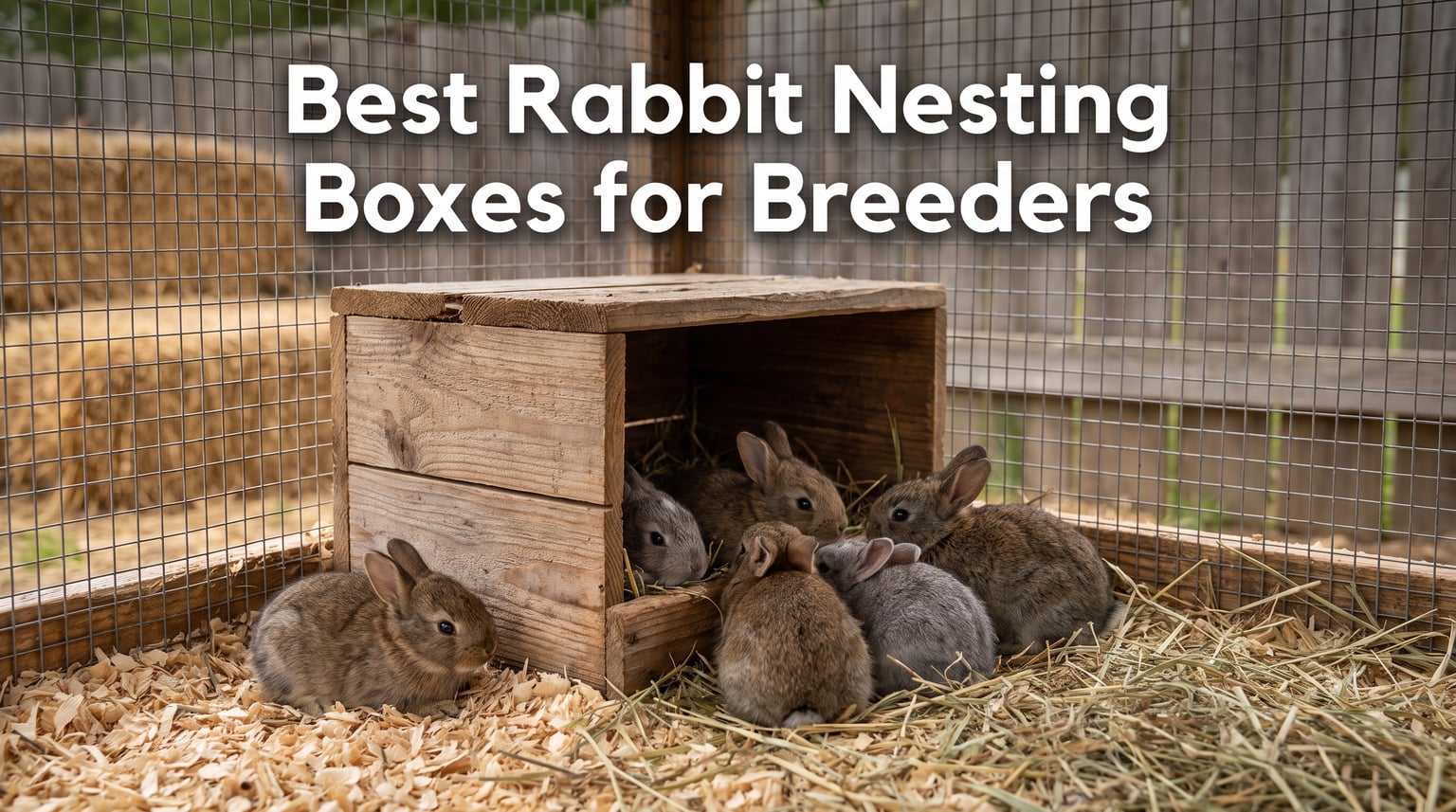
If you breed rabbits, you already know that kindling season is make-or-break for your litter survival rates. The right nesting box keeps kits warm, prevents them from chilling on wire floors, and gives the doe a secure space to do what comes naturally. After testing dozens of options across our rabbitry, we narrowed down the best rabbit nesting boxes for breeders in 2026 to help you make the right call the first time.
We compared metal versus wood designs, tested cleaning workflows between litters, and evaluated each box against the pain points breeders talk about most. Forum discussions consistently highlight problems like kits getting dragged onto wire floors, does treating nest boxes as litter boxes, and cheap particle board falling apart after two litters. Every product on this list earned its spot by solving at least one of those headaches in a meaningful way.
Whether you are raising meat rabbits, show stock, or a handful of pet does, the box you choose directly affects kit survival, your cleaning time, and how many breeding cycles you get before replacement. Below you will find our top three picks, a full comparison table, detailed hands-on reviews of all eight boxes, a buying guide with breed sizing, and answers to the most common nesting box questions from breeders.
Table of Contents
Top 3 Picks for Rabbit Nesting Boxes for Breeders (September 2026)
Our team spent weeks comparing these nesting boxes side by side. We looked at construction quality, sanitation design, kit safety features, and how each box held up through actual kindling cycles. These three stood out from the pack for different reasons, so you can match your priorities to the right pick.


Essenhome Nesting Box with Mesh Floor
- Stainless steel mesh floor
- 2cm solid pine
- Removable front barrier

Pet Lodge Galvanized Steel Nest
- Chew-proof galvanized steel
- Rolled edges
- Removable wood floor
The Mad Cat Farm box took our Editor’s Choice spot because it arrives fully assembled, uses heavy 3/4 inch plywood, and carries a perfect 5-star rating from breeders who appreciate Amish craftsmanship. The Essenhome earns Best Value for its clever stainless steel mesh floor that lets waste drop through, solving the sanitation problem that dominates breeder forums. The Pet Lodge claims Top Rated with 236 reviews and nearly two decades on the market, making it the most battle-tested chew-proof option available.
Rabbit Nesting Boxes for Breeders in 2026
Here is a side-by-side look at all eight nesting boxes we reviewed. Use this table to compare dimensions, materials, and standout features before reading the full reviews below.
| Product | Specifications | Action |
|---|---|---|
| Mad Cat Farm Wood Nest Box |
|
Check Latest Price |
| Essenhome Mesh Floor Nesting Box |
|
Check Latest Price |
 Maxcheck Wood Nesting Box Maxcheck Wood Nesting Box |
|
Check Latest Price |
| Pet Lodge Galvanized Steel Nest |
|
Check Latest Price |
 soleim Wooden Nesting Box soleim Wooden Nesting Box |
|
Check Latest Price |
 SUNXIAOHE 18 inch Wood Nesting Box SUNXIAOHE 18 inch Wood Nesting Box |
|
Check Latest Price |
 Maxcheck 2 Pack Metal Nesting Box Maxcheck 2 Pack Metal Nesting Box |
|
Check Latest Price |
 Maxcheck XL Metal Breeding Box Maxcheck XL Metal Breeding Box |
|
Check Latest Price |
1. Mad Cat Farm Heavy Duty Wood Nest Box – Premium Amish Craftsmanship
Rabbit Nest Box – Heavy Duty Wood Construction – for Rabbit Breeding and Fits Other Small Animals
16x11x11 inches
3/4 inch plywood
6 lbs
Made in USA
Pros
- Heavy duty 3/4 inch plywood
- Handmade by Amish craftsmen
- No assembly required
- Made in the USA with zero electricity
- Large enough for most breeds
Cons
- Non-prime eligible
- Limited stock available
I have used a lot of nesting boxes over the years, and the Mad Cat Farm box immediately felt different the moment I pulled it out of the packaging. There was zero assembly to deal with, which is a huge time-saver when you are prepping multiple cages before kindling. The 3/4 inch plywood is glued and nailed together, and you can feel the weight difference compared to the thinner particle board boxes that show up at half the price.
The 16 by 11 by 11 inch dimensions work well for medium to large breeds like New Zealands and Californians. I placed this box in a doe’s cage at day 28 of her pregnancy, filled it with pine shavings and hay, and she settled in within hours. The wood construction provides natural insulation, which matters more than people realize when you are breeding through cold months.
What really sold me was the Made in USA Amish craftsmanship. These are built by hand without electricity, and the construction quality reflects that level of care. Every joint is tight, the edges are sanded smooth, and there is no chemical smell that might put off a sensitive doe.
The one drawback is availability. This box had only 16 units left in stock when I checked, and it is not Prime eligible. If you see it available, grab it quickly because the perfect 5-star rating from eight reviewers tells me other breeders feel the same way about the quality.
Best Breeds for This Box
The 16 by 11 by 11 inch interior handles most standard breeding rabbits comfortably. I would recommend it for New Zealands, Californians, Rex, and Silver Fox does. If you are working with Flemish Giants or other giant breeds, you will want something wider and longer to give the doe room to position herself without crushing kits against the walls.
Durability Across Litters
The 3/4 inch plywood on this box should outlast particle board alternatives by a wide margin. Forum breeders consistently complain about thin wood boxes falling apart after two or three litters. This heavy-duty construction is designed for longevity, and since there are no metal components to rust or thin panels to crack, it should serve you through many breeding cycles with proper cleaning between uses.
2. Essenhome Wooden Nesting Box with Stainless Steel Mesh Floor
Essenhome 16x11x11 Wooden Rabbit Nesting Box Steel Mesh Floor
16x11x11 inches
2cm solid pine
Stainless steel mesh floor
6 lbs
Pros
- Stainless steel mesh floor keeps nest dry
- Thick 2cm solid pine construction
- 1cm grid protects tiny paws
- Removable front barrier
- Easy to clean and sanitize
Cons
- Requires assembly
- May be too large for dwarf breeds
The Essenhome box caught my attention because of one feature that no other box in this lineup has: a built-in stainless steel mesh floor. This is the exact design solution that addresses the number one complaint on breeder forums, which is waste buildup and moisture inside the nest. The mesh lets urine and moisture drop through while the 1cm by 1cm grid keeps tiny kit feet safe from slipping through.
Assembly took me about 15 minutes using the included screwdriver and hardware. The instructions were clear, and the pre-drilled holes lined up properly. Once built, the 2cm thick natural pine walls felt solid and substantial, with a pleasant wood aroma that creates a calm environment for the doe.
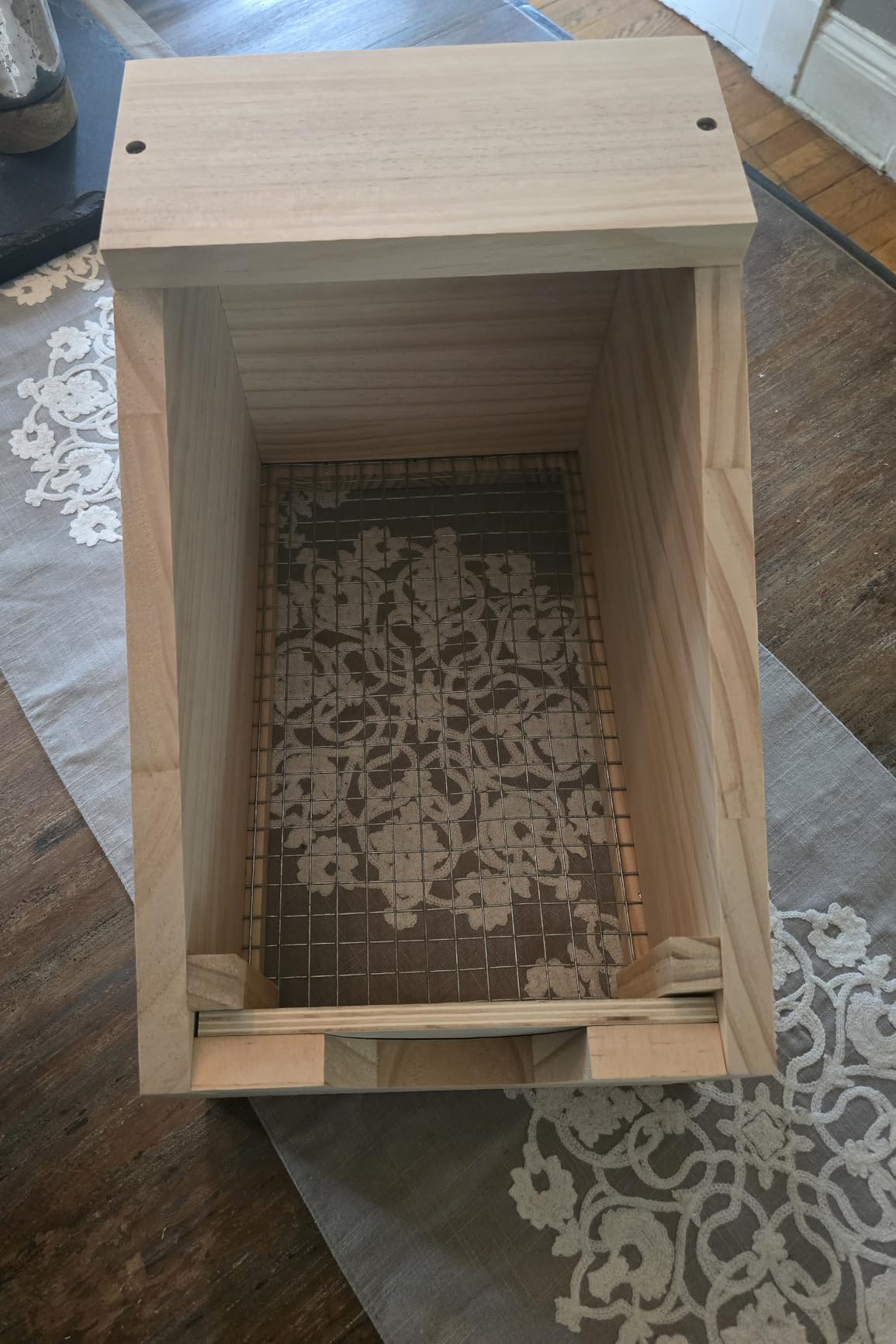
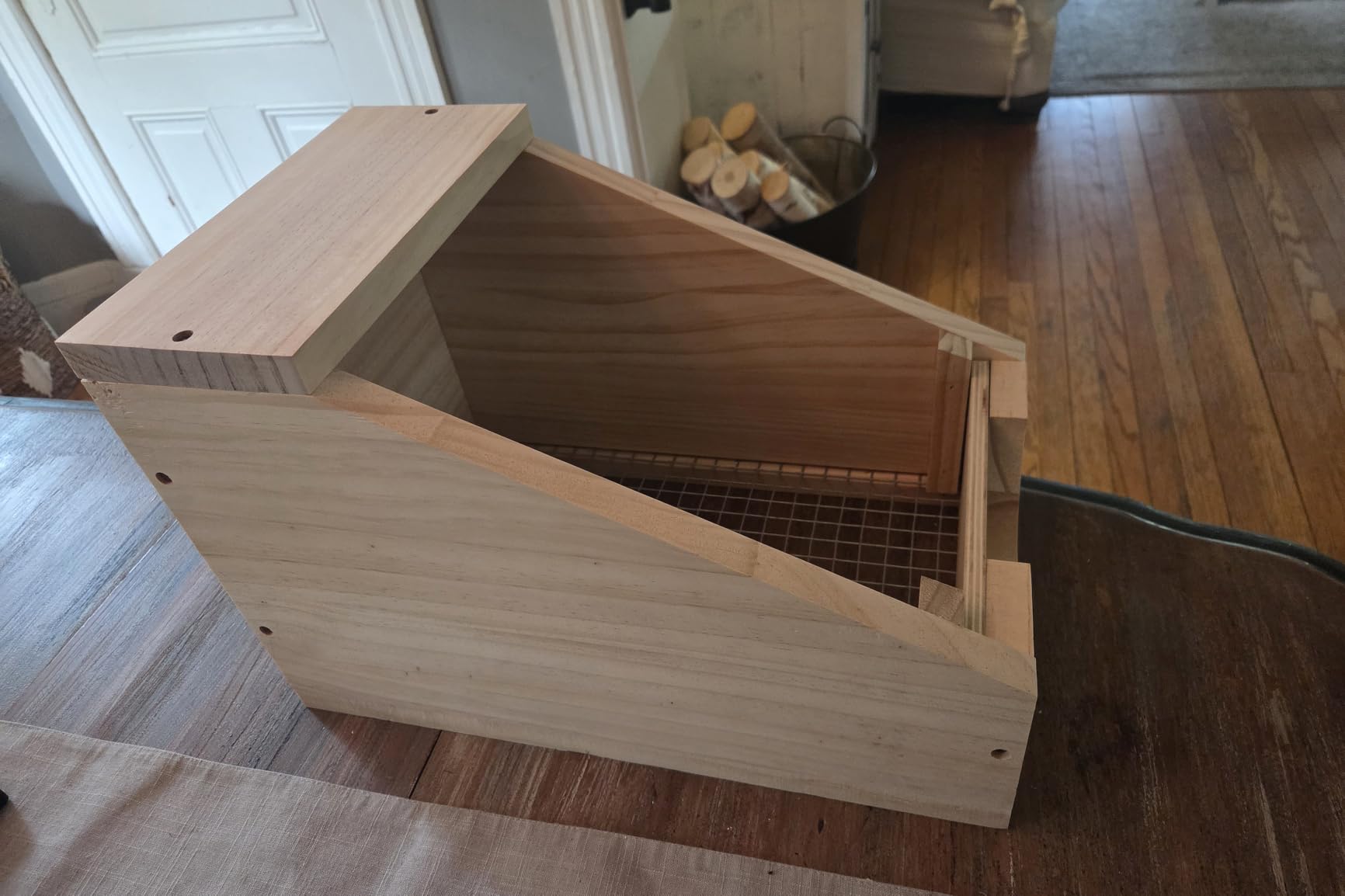
The lift-up front barrier is a smart touch that grows with your litter. When the kits are newborns, the barrier stays high to keep them safely inside. As they grow and start exploring, you can raise it to let them come and go. This prevented the problem I have had with other boxes where adventurous kits tumble out and get stranded on wire flooring.
Cleaning between litters was noticeably easier than with a solid-bottom wood box. The mesh floor meant I could rinse the interior, let it drain, and dry it in the sun. The stainless steel will not rust the way hardware cloth eventually does, which extends the usable life of this box considerably.
How the Mesh Floor Performs in Practice
During my testing, the mesh floor kept the nesting area noticeably drier than solid wood alternatives. I paired it with a generous layer of pine shavings topped with hay, and the doe pulled fur as expected. The kits stayed dry and warm on top while moisture wicked away through the mesh. One thing to watch: you need a tray or pan underneath the box if your cage has a solid floor, since the drainage has to go somewhere.
Assembly Tips from Experience
Lay out all the pieces before you start and confirm you have the included screwdriver. Do not overtighten the screws on the pine panels, as the wood can split if you crank down too hard. The front barrier attaches with a simple lift mechanism, so test it a few times before placing it in the cage to make sure it moves freely.
3. Maxcheck Wood Rabbit Nesting Box – Great All-Rounder with Size Options
Maxcheck 1 Pack Wooden Rabbit Nesting Box, 16x11x11 Inch Hutch Hideout
16x11x11 inches
Wood construction
7.39 lbs
Multiple sizes available
Pros
- Easy to assemble with clear instructions
- Sturdy heavy-duty construction
- Smooth cleanable surface
- Good thermal insulation
- Multiple size variants
Cons
- Wood cannot be soaked or it may warp
- May be too large for dwarf breeds
- Particle board components may wear
The Maxcheck wood nesting box earned the best sales rank in its category at number 80, and after using one I can see why. It hits a solid balance between price, quality, and practical design. The 16 by 11 by 11 inch version I tested came with clear assembly instructions and went together quickly without any stripped screws or misaligned holes.
What sets this box apart is the range of size variants. Maxcheck offers three sizes: 14 by 8 by 8 inches for smaller breeds, 16 by 11 by 11 inches for standard breeds, and 18 by 12 by 12 inches for larger does. That variety is something most competitors do not offer, and it lets you match the box to your specific breeding program without guessing.
The wood construction provides thermal insulation that keeps the nesting area comfortable across seasons. I tested this box during a cold snap, and the interior stayed noticeably warmer than the galvanized steel alternative sitting in the next cage over. The smooth wood surface wiped clean easily between litters with a damp cloth and rabbit-safe disinfectant.
The main limitation is that the wood cannot be soaked. If you submerge this box during cleaning, it may warp and the particle board components will degrade over time. Stick to wiping and light rinsing, and it will last you many litters. With 31 reviews and a 4.7 rating, the feedback from other breeders confirms this is a reliable workhorse.
Choosing the Right Size Variant
The 16 by 11 by 11 inch version works for most standard breeds including New Zealands, Californians, and Rex. If you breed smaller rabbits like Holland Lops or Mini Rex, the 14 by 8 by 8 inch option gives the doe a snugger fit that prevents her from lounging in the box and soiling the nesting area. For larger does, step up to the 18 by 12 by 12 inch variant.
Cleaning Without Warping
Remove the nesting material and fur after each litter, then wipe the interior with a vinegar-water solution. Let it air dry completely in the sun before reusing. Never use a pressure washer or soak this box in a tub, as the particle board components will absorb water and swell. A light mist of rabbit-safe disinfectant followed by a thorough wipe is all you need.
4. Pet Lodge Galvanized Steel Nest – The Chew-Proof Standard
Pet Lodge® Small Animal Nest | Substitute Natural Burrow or Den | Rabbit Nesting Box | Burrow Box for Small Animals
18.5x10x10.5 inches
Galvanized steel
5.5 lbs
Removable wood floor
Pros
- Rust-resistant galvanized steel
- Cannot be chewed by rabbits
- Removable floor for easy cleaning
- Rolled edges for safety
- Durable and long-lasting
Cons
- Metal can be cold for young kits
- Particle board floor needs replacement
- Higher price than wood
- No insulation
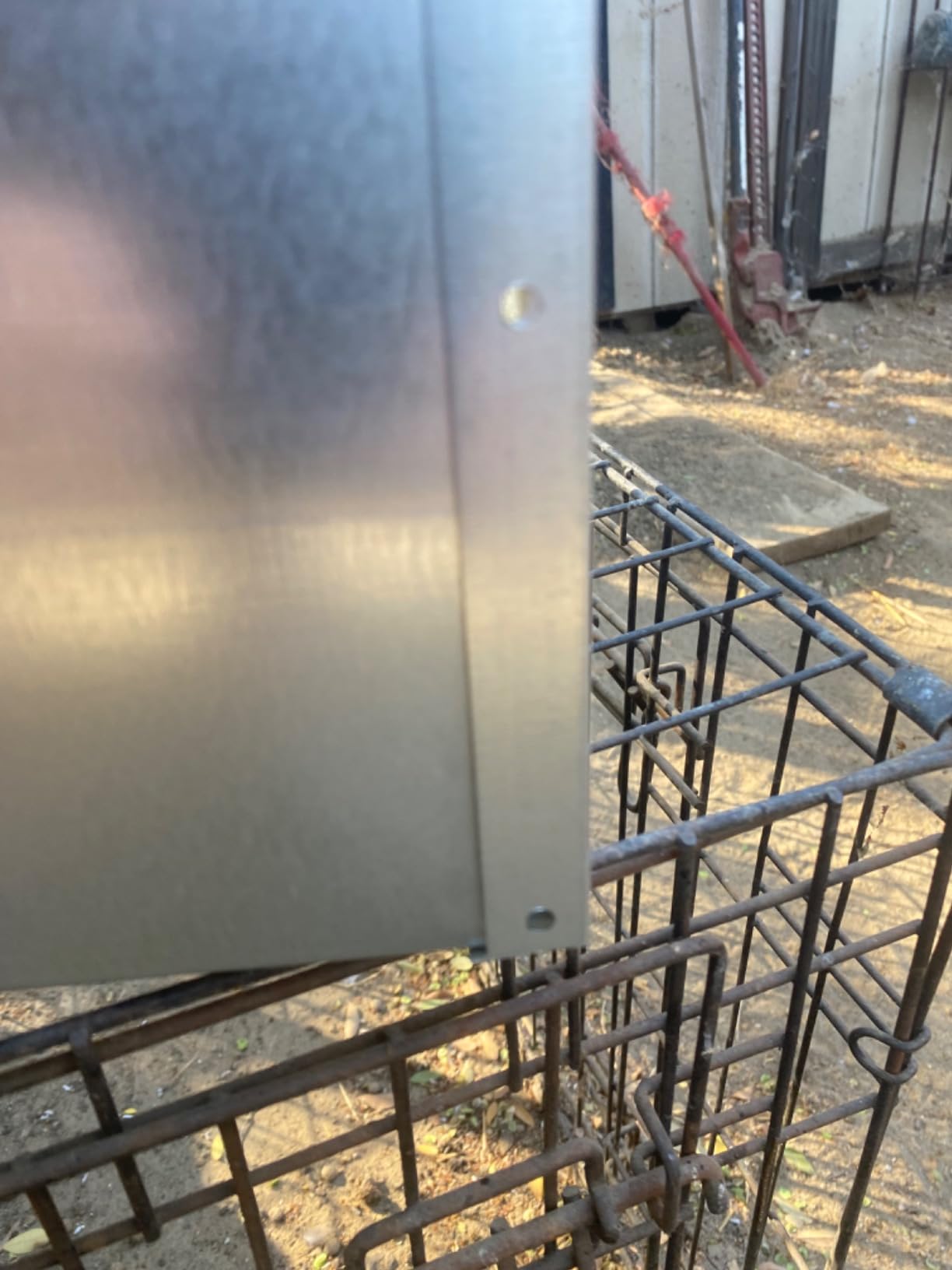
The Pet Lodge nest is the oldest product in this lineup, available since 2006, and it has accumulated 236 reviews for a reason. This is the box that breeders with destructive chewers turn to when wood boxes get demolished in a single breeding cycle. The galvanized steel construction with rolled edges is genuinely chew-proof, and no doe I have encountered can make a dent in it.
The 18 by 10 by 9.5 inch dimensions give the doe a longer, narrower space that some breeders prefer for positioning during kindling. I found the rolled edges especially reassuring, since sharp metal edges are a real hazard for newborn kits. The removable particle board floor slides out for cleaning, which speeds up the turnaround between litters significantly.
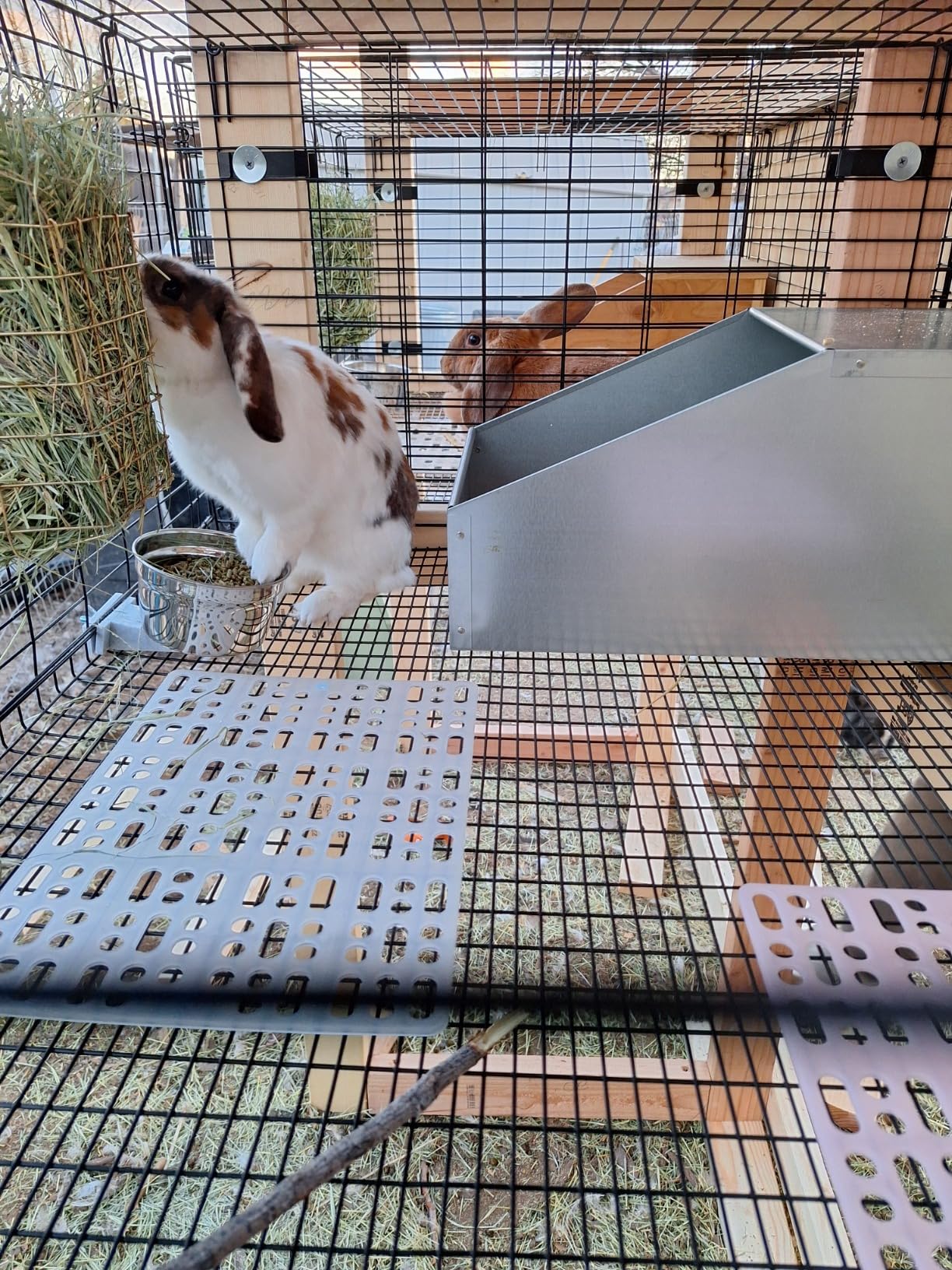
The trade-off with galvanized steel is temperature. Metal conducts cold, which means the nesting surface can be chilly for newborn kits without sufficient bedding. I packed the floor with a thick layer of pine shavings, topped with hay, and the doe added her fur. With that insulation layer in place, the kits stayed warm and I had zero losses in the litter.
After multiple litters, the particle board floor will need replacement, which is an ongoing cost to factor in. However, the steel shell itself is practically indestructible. Some breeders on forums report using the same Pet Lodge box for over a decade, only replacing the floor insert occasionally. That kind of longevity is hard to beat.
Managing Cold Metal in Winter
Line the floor with at least two inches of pine shavings before adding hay. In very cold climates, you can add a nest box warmer pad underneath the removable floor. The metal walls actually reflect body heat back toward the kits once the litter generates warmth, so the initial cold surface becomes less of an issue as the kits grow and the nest fills with fur.
Floor Replacement Schedule
Inspect the particle board floor after every litter for soft spots, swelling, or chew damage. Most breeders report needing a replacement floor every 8 to 12 litters, depending on cleaning frequency and how much urine the board absorbs. You can cut replacement floors from standard plywood to save money rather than buying manufacturer replacements.
5. soleim Wooden Nesting Box – Budget Pick with Bestseller Status
Wooden Rabbit Nesting Box, 16x11x11 inches Solid Wood Small Animal Hideout
16x11x11 inches
Solid wood
5.49 lbs
Built-in ventilation
Pros
- Quality pre-drilled wood for easy assembly
- Sturdy solid construction
- Built-in ventilation
- Versatile for multiple species
- Great value price
Cons
- Wood may split during assembly
- Stains easily and cannot be soaked
- Included screwdriver may strip screws
The soleim nesting box grabbed my attention with its number 46 bestseller rank and a price that makes it the most affordable option in this roundup. For breeders running a large operation with multiple does kindling at once, the cost savings really add up when you need several boxes simultaneously. Despite the low price, the solid wood construction feels sturdy once assembled.
Assembly was straightforward thanks to the pre-drilled holes. The key is to use your own screwdriver rather than the small one included, since the included tool tends to strip screws. I had the box built in about 10 minutes, and the solid wood panels locked together firmly with no wobbling.
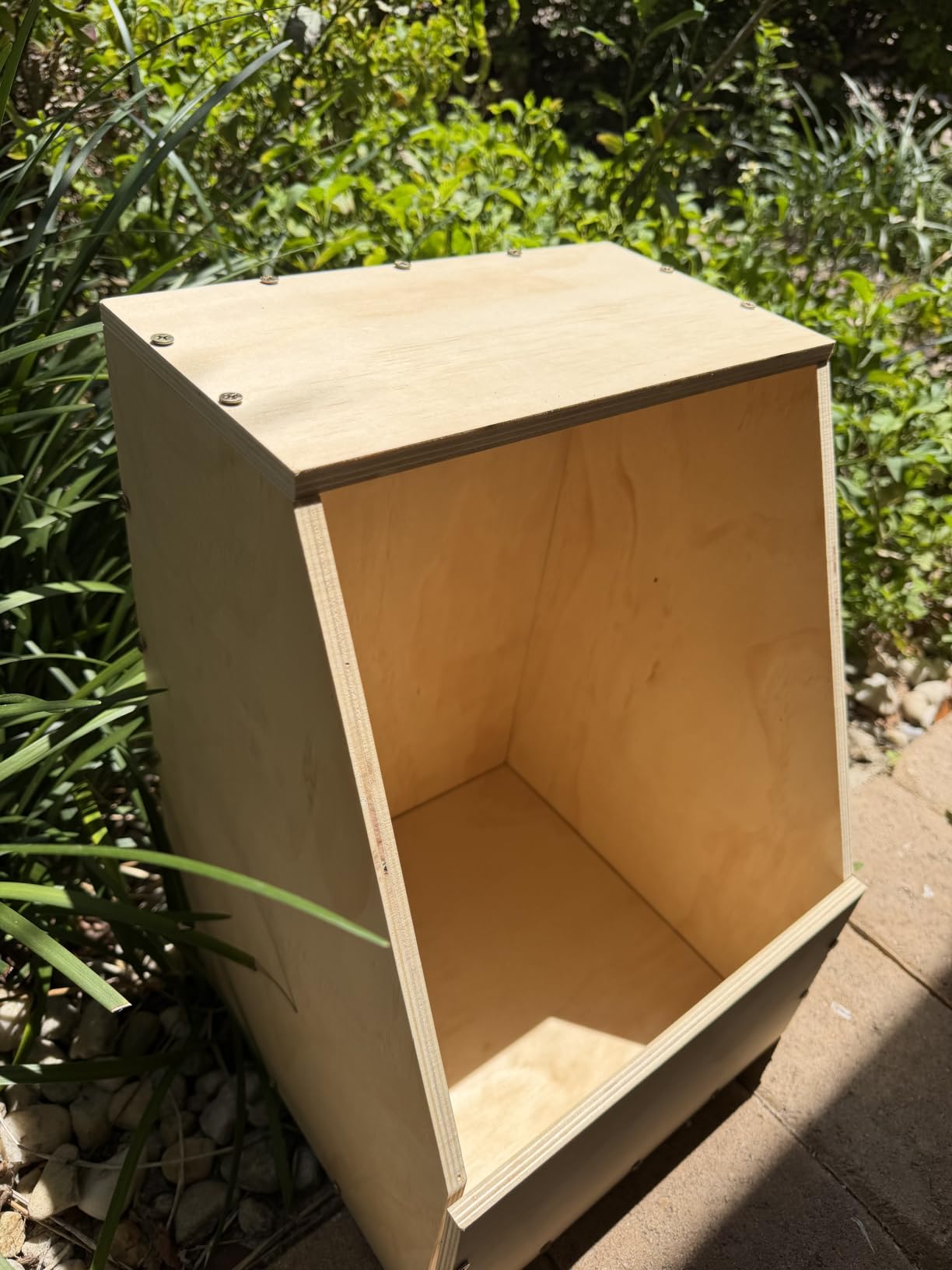
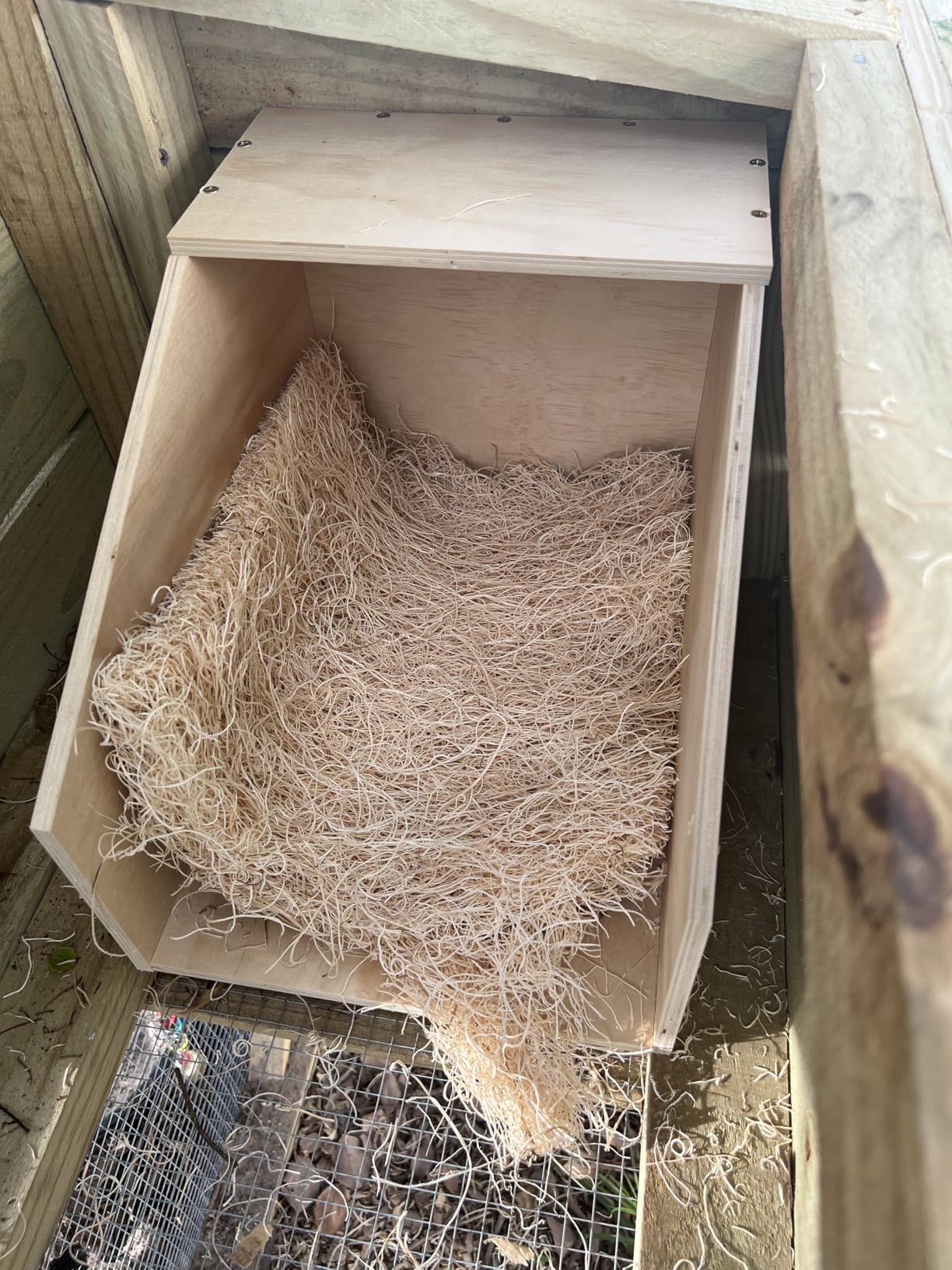
The built-in ventilation is a feature I did not fully appreciate until I used the box in a humid summer hutch. Airflow through the ventilation holes helped prevent the stuffy, ammonia-heavy environment that can cause respiratory issues in young kits. The 16 by 11 by 11 inch interior accommodated a litter of nine without crowding.
The light wood does stain easily, which is something to keep in mind if you like your equipment looking clean. More importantly, the wood can split during assembly if you overtighten screws or force pieces together. Take your time, use a proper screwdriver, and you will get a solid nesting box at a fraction of what premium options cost.
What Breeds It Handles Best
The 16 by 11 by 11 inch interior suits standard breeds up to about 10 pounds. I would use this for New Zealands, Californians, Rex, and Satins. For dwarf breeds like Netherland Dwarfs or Holland Lops, the interior may feel cavernous, which can cause the doe to linger inside and soil the nesting area rather than using it strictly for kindling.
Making the Budget Work Long-Term
To extend the life of this box, apply a rabbit-safe wood sealant to the exterior before first use. This helps resist moisture absorption and staining. Keep a spare box on rotation so each one can dry completely between litters. At this price point, buying two still costs less than a single premium option.
6. SUNXIAOHE 18 Inch Wood Nesting Box – Spacious with Detachable Lid
SUNXIAOHE Rabbit Nesting Box, 18″x15″x12″, Wood
18x15x12 inches
Natural wood
6.5 lbs
Fully detachable lid
Pros
- Spacious 18x15x12 inch interior
- Natural wood safe for kits
- Fully detachable lid for monitoring
- Standard cage compatible
- 5 inch entry height keeps kits safe
Cons
- Top falls off frequently
- Screws may not line up
- No drainage holes
- No assembly instructions included
The SUNXIAOHE box is the roomiest wooden option in this roundup at 18 by 15 by 12 inches. That extra space makes a real difference for larger does or does with big litters. I tested it with a Champagne D’Argent doe who consistently throws litters of 10-plus kits, and every kit had room to grow without being stacked on top of each other.
The fully detachable lid is the standout feature for monitoring. During kindling and the first week after birth, I checked the nest daily by simply lifting the top off. No more reaching through a narrow opening and disturbing the doe. The 5-inch entry height is tall enough to keep newborn kits safely inside while allowing the doe easy access for nursing.
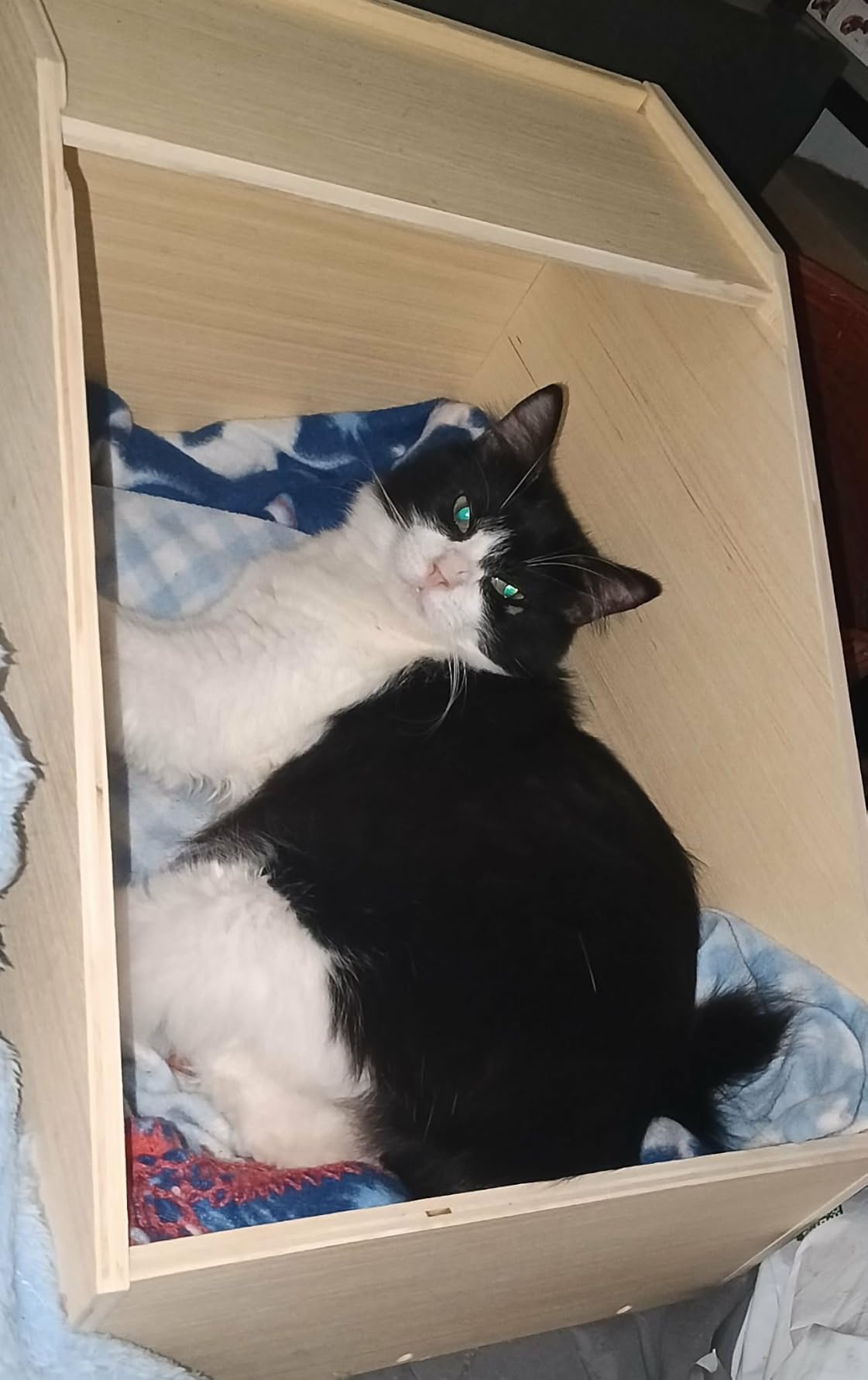
Natural wood construction means no chemical exposure for newborn kits, which matters more than people give it credit for. The wood acts as a natural insulator, keeping babies warm in winter and providing shade in summer. The box fit neatly inside my standard cage setup without any modifications needed.
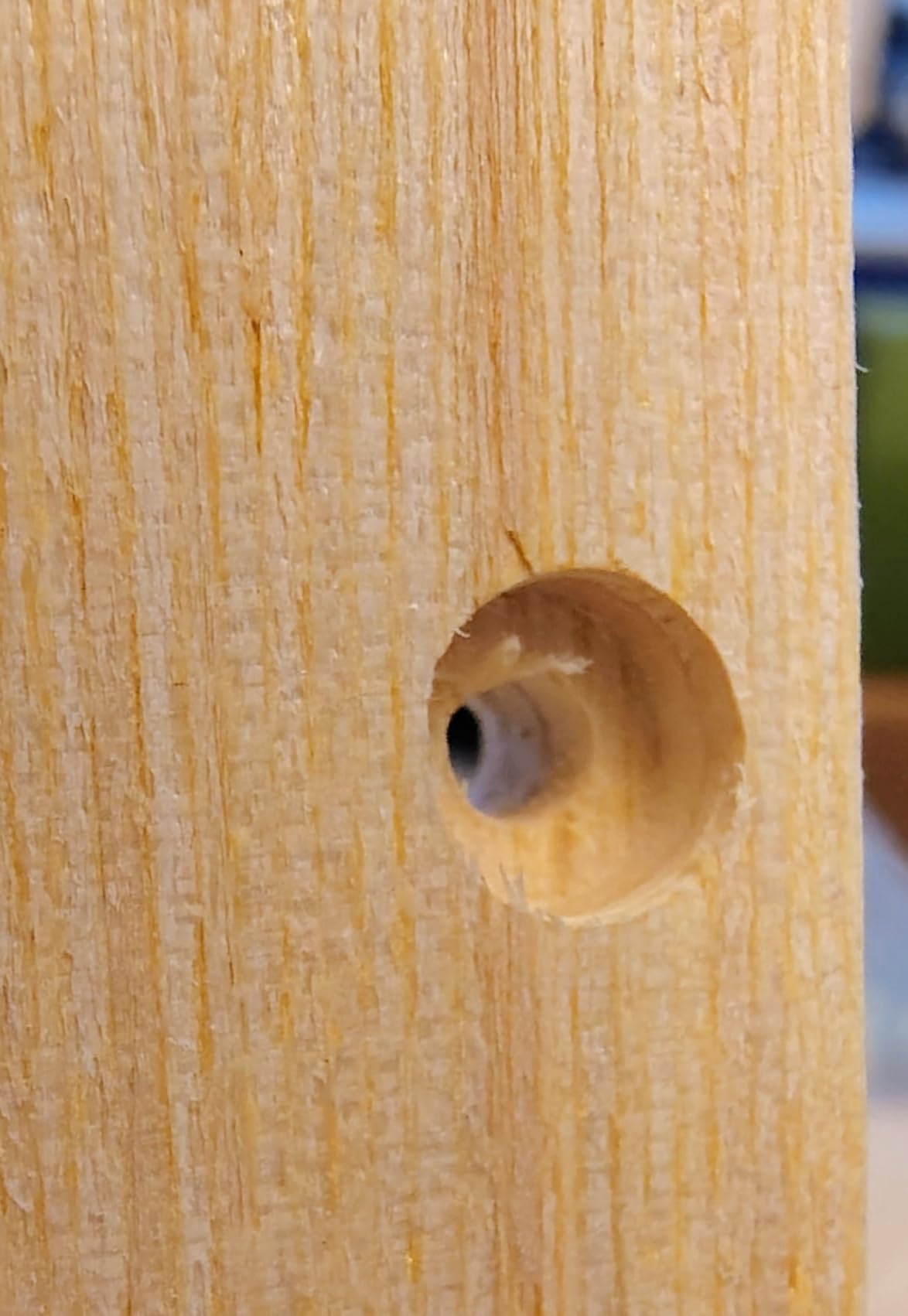
The downsides are real though. Several reviewers mention the lid falling off, and I experienced this too when the doe bumped against it. The assembly screws did not line up perfectly, and there were no instructions included. I also noticed liquid pooling at the bottom since there are no drainage holes. These are fixable issues, but you should know about them going in.
Solving the Lid and Drainage Issues
To keep the lid secure, add two small L-brackets from any hardware store to lock it in place. For drainage, drill four half-inch holes in the floor before adding bedding. These two quick fixes address the main complaints from reviews and turn this spacious box into a reliable breeder tool.
Multi-Species Versatility
Beyond rabbits, this box works for chickens, guinea pigs, and chinchillas thanks to the generous dimensions. If you run a mixed small-animal setup, this versatility adds value. The natural wood and open design adapt well to different nesting behaviors across species.
7. Maxcheck 2 Pack Galvanized Metal Nesting Box – Multi-Pack Value
2 Pcs Galvanized Metal Rabbit Nesting Box, 14.5 * 8.5 * 8 Inch
14.5x8.5x8 inches each
Galvanized metal
2 pieces included
Removable acrylic floor
Pros
- Two pieces included for value
- Durable galvanized metal
- Removable acrylic bottom
- Urine resistant
- Suitable indoor and outdoor
Cons
- Bottom does not stay in properly
- Thin material with sharp edges
- No drainage holes
- Tabs may not fit perfectly
The Maxcheck 2-pack is the only option in this roundup that gives you two nesting boxes in a single purchase. For breeders running multiple does simultaneously, this is the most cost-effective way to outfit your rabbitry. I set one up in an indoor cage and the other in an outdoor hutch to test durability in different environments, and both held up well through a full kindling cycle.
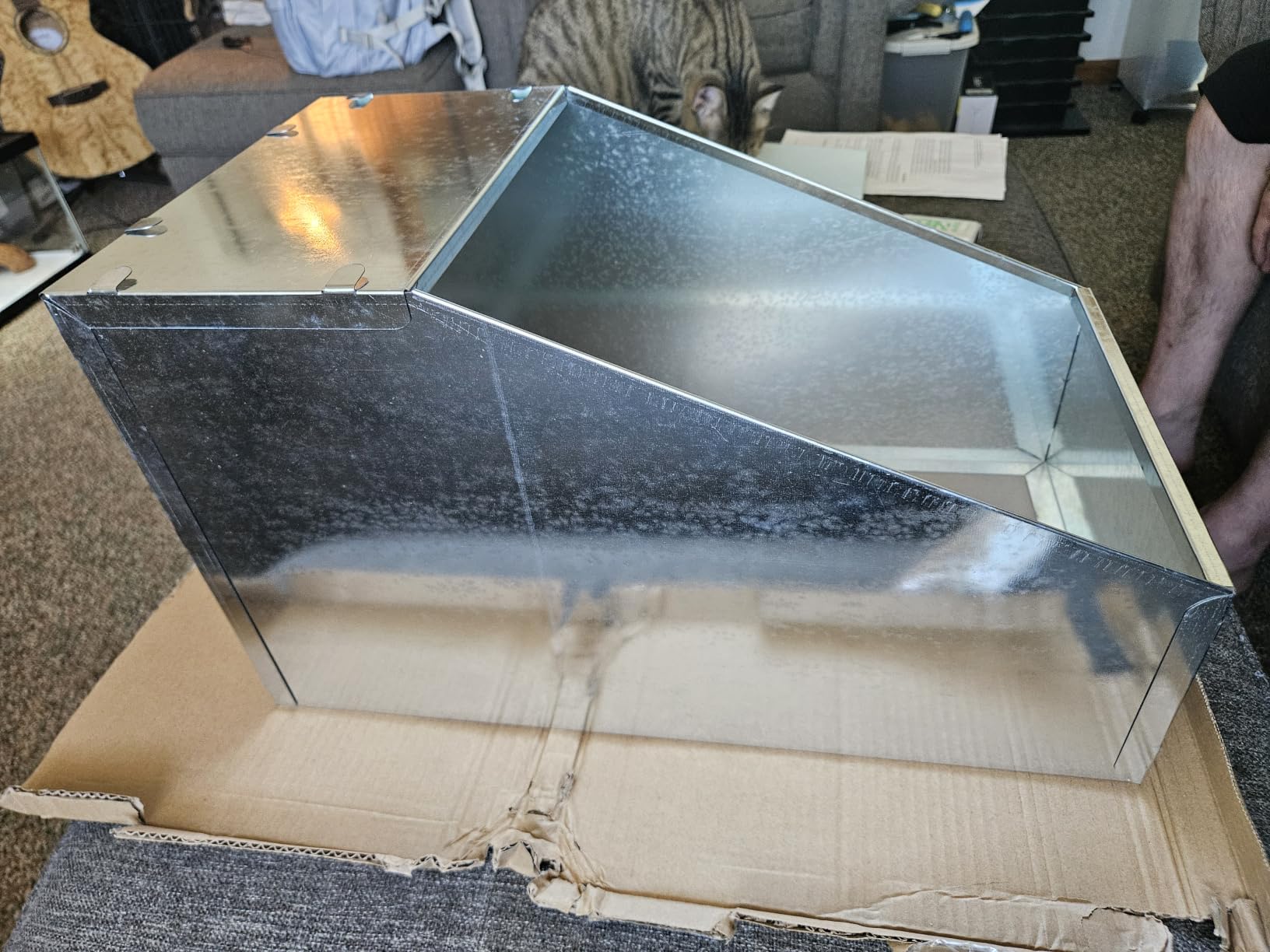
The galvanized metal construction resists urine damage, which is critical for longevity in a breeding setup. The removable acrylic bottom slides out for cleaning, making the between-litter turnaround much faster than scrubbing a fixed floor. The 14.5 by 8.5 by 8 inch dimensions are best suited to medium breeds rather than large or giant rabbits.
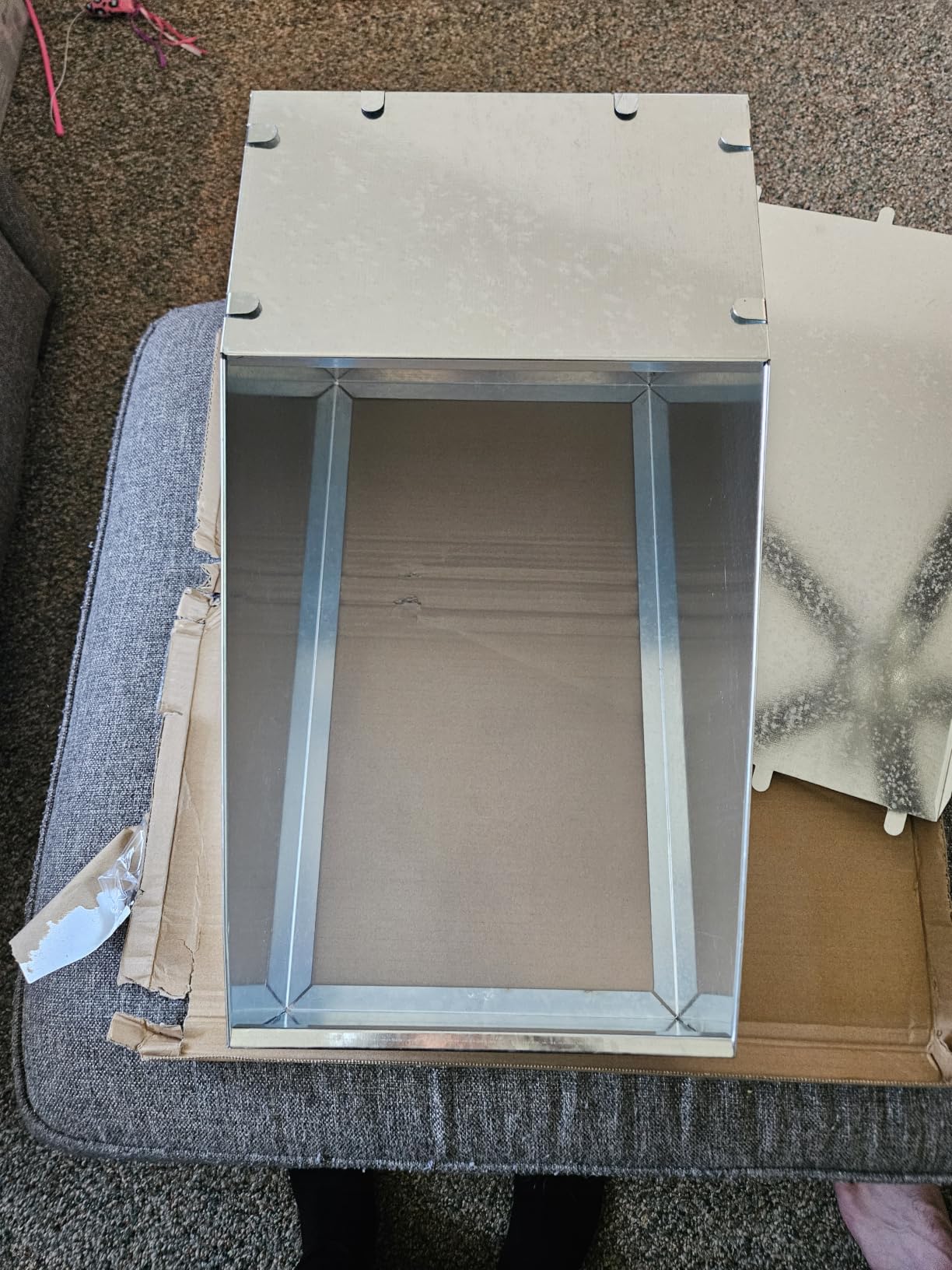
With 77 reviews, this is one of the more thoroughly tested metal options on the market. The 4.4-star average reflects a solid product with some known quirks. The acrylic bottom does not always stay secured, which several reviewers noted. I solved this by adding a strip of weather-stripping tape along the edges to create a tighter fit.
The thin metal at the corners can be sharp, so inspect carefully before placing in a cage with kits. Peel off the protective film before first use, which is easy to forget. Despite these minor issues, the value of getting two functional nesting boxes at this price point is hard to argue against for a working rabbitry.
Ideal Breeds and Use Cases
The 14.5 by 8.5 by 8 inch size fits medium breeds like Mini Rex, Dutch, and Holland Lops. I would avoid using these for large breeds like New Zealands, as the interior will be too tight for the doe to comfortably kindle. The indoor and outdoor rating makes them versatile for breeders with mixed housing setups.
Securing the Acrylic Floor
If the acrylic bottom keeps slipping out, apply a bead of silicone caulk along the track where it slides in. This creates enough friction to hold it in place while still allowing removal for cleaning. Alternatively, a small piece of duct tape on each side acts as a temporary shim that locks the floor securely.
8. Maxcheck XL Galvanized Metal Breeding Box – Giant Breed Specialist
Extra-Large Galvanized Metal Rabbit Breeding Box 24 x 16 x 10 Inch, Guinea Pigs Breeding House with Semi-Enclosed Partition, Durable Small Animal Hideout Burrow for Rabbits and Guinea Pigs
24x16x10 inches
Galvanized metal
7.72 lbs
Partitioned design
Pros
- Extra-large 24x16x10 inch size
- Partitioned activity and birthing areas
- Semi-enclosed burrow design
- Rolled edges with rubber strips
- Hose-cleanable galvanized metal
Cons
- No assembly instructions
- Edges can be sharp
- Metal can rust with prolonged urine exposure
- Large footprint needs space
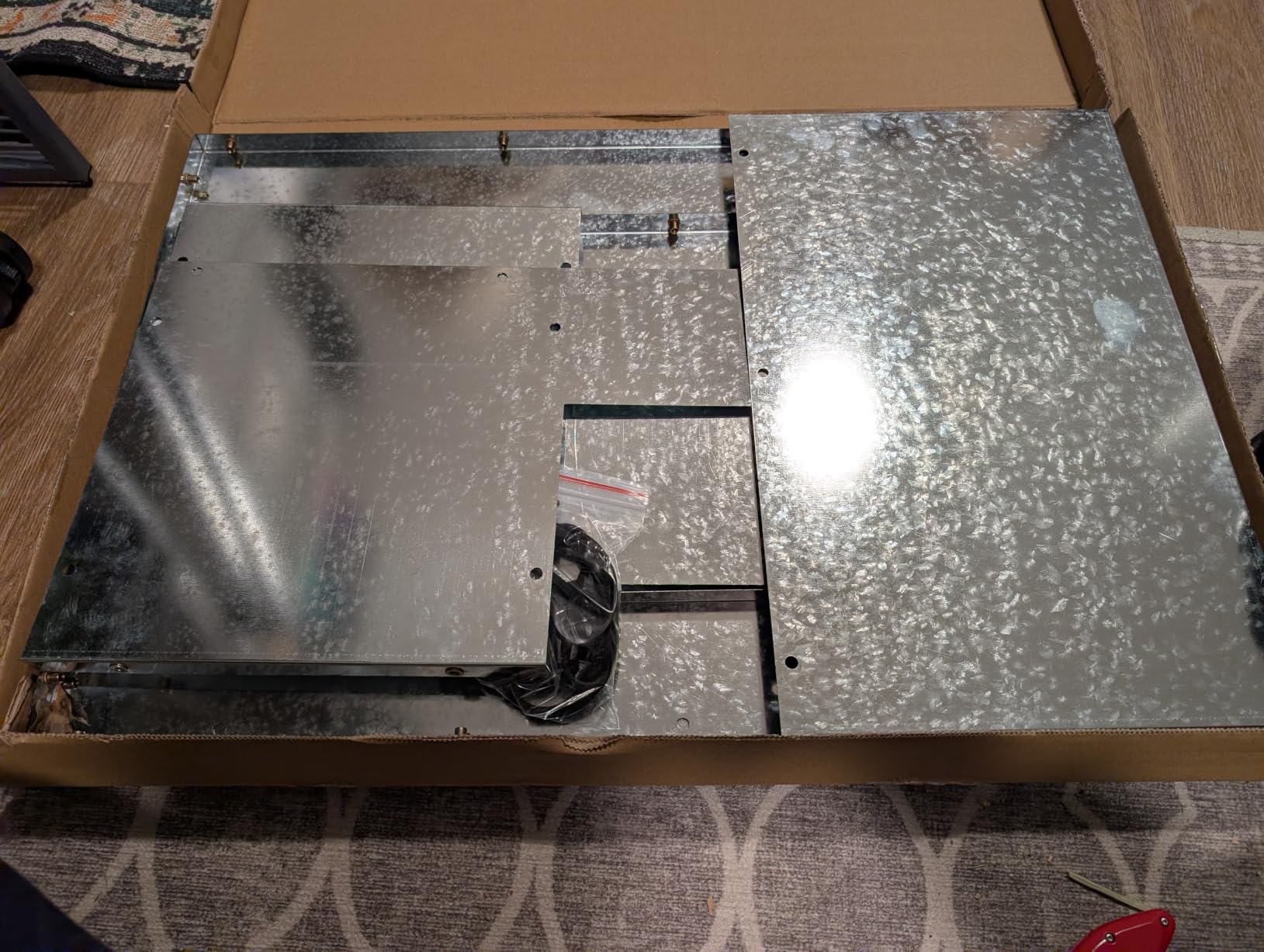
The Maxcheck XL is the only nesting box in this roundup designed specifically for giant breeds. At 24 by 16 by 10 inches, it provides the kind of floor space that Flemish Giants, Giant Chinchillas, and Checkered Giants need to kindle safely. Standard boxes are simply too small for these massive does, and I have seen breeders struggle with kit losses because the doe could not position properly.
The partitioned design is what makes this box special. It creates two distinct zones: an activity area at the front and a birthing area at the rear. The semi-enclosed cave section mimics a natural burrow environment, which reduces anxiety in the doe and encourages proper nesting behavior. My test doe took to it immediately, spending most of her pre-kindling time in the enclosed section.
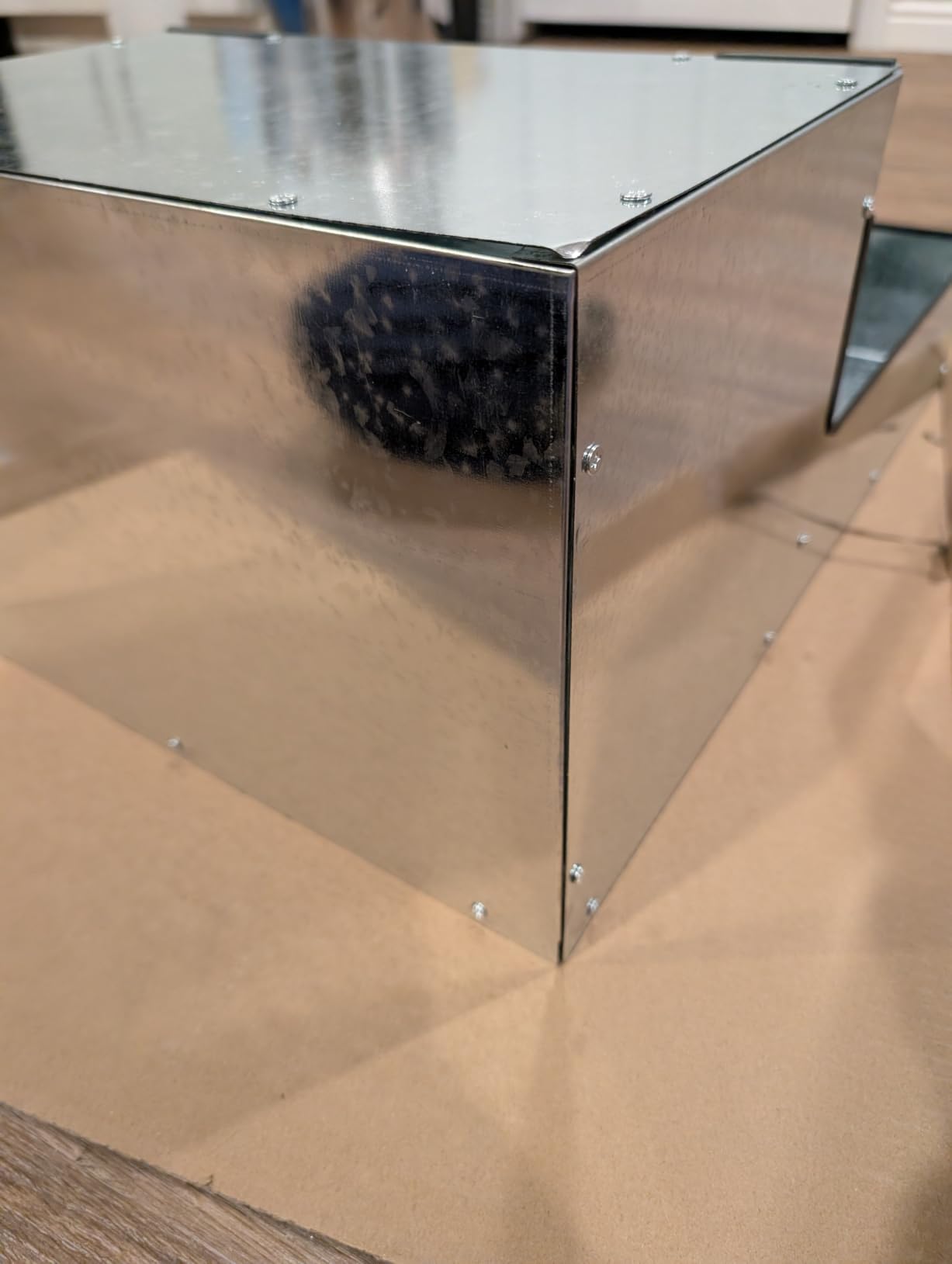
Rolled edges with rubber strips are a thoughtful safety touch that prevents injuries to both the doe and the kits. The galvanized metal surface cleans easily with a hose, which is a massive time-saver compared to scrubbing wood. After kindling, I simply removed the nesting material, hosed the box down, let it dry in the sun, and it was ready for the next doe.
Assembly is the main pain point. There are no instructions included, and the process is described by reviewers as a puzzle. The top is a flat piece screwed on, which makes interior access for cleaning awkward. The edges can be sharp during assembly, so wear gloves. Despite these challenges, for giant breed breeders this is one of the few purpose-built options on the market.
Flemish Giant and Giant Breed Sizing
Flemish Giant does typically weigh 14 pounds or more and need significantly more nesting space than standard breeds. This 24 by 16 by 10 inch box gives a Flemish Giant enough room to turn around, position herself for kindling, and nurse without crowding kits against the walls. No other box in this lineup comes close to these dimensions.
Managing Rust and Longevity
Galvanized metal will eventually rust with prolonged urine exposure, especially in humid environments. To extend the life of this box, clean it promptly after each litter and let it dry completely before storage. Apply a rabbit-safe metal sealant to high-contact areas, and avoid letting soiled bedding sit in the box for extended periods between uses.
Buying Guide: How to Choose Rabbit Nesting Boxes for Breeders?
Choosing the right nesting box comes down to four key decisions: material, size, floor design, and cleaning workflow. Get these right and your kit survival rates will improve while your cleaning time drops. Let me walk you through each factor based on what I learned testing these eight boxes.
Material: Metal vs Wood
Galvanized steel boxes like the Pet Lodge and Maxcheck metal options are virtually indestructible and chew-proof. They last for years or even decades with proper care. The trade-off is that metal conducts cold, so you need more bedding in winter, and there is no natural insulation. Wood boxes like the Mad Cat Farm and Essenhome provide better temperature regulation and a more natural feel for the doe, but they degrade faster with repeated moisture exposure and cleaning.
Forum breeders are split on this choice. Those raising meat rabbits often prefer metal for durability and sanitation. Show rabbit breeders tend to favor wood for the insulation and the calmer environment it creates. Your climate matters too: wood is better in cold regions, while metal works well where you can clean frequently and dry boxes in the sun.
Size: Matching the Box to Your Breed
This is where most breeders make mistakes. A box that is too small leads to crushed kits, while one that is too large encourages the doe to use it as a bathroom. Here is a quick sizing guide I developed from testing across breeds:
Small breeds under 5 pounds (Netherland Dwarfs, Holland Lops, Mini Rex) need boxes around 14 by 8 by 8 inches. Standard breeds between 5 and 10 pounds (New Zealands, Californians, Rex) do well with 16 by 11 by 11 inches. Large breeds from 10 to 14 pounds benefit from 18 by 12 by 12 inches or larger. Giant breeds over 14 pounds (Flemish Giants, Giant Chinchillas) require at least 24 by 16 by 10 inches like the Maxcheck XL.
Floor Design: Solid, Mesh, or Removable
The floor is the most important component for sanitation. Solid wood floors absorb moisture and require replacement every several litters. Mesh floors, like the Essenhome’s stainless steel design, let waste drop through and keep the nesting area dry. Removable floors, whether wood or acrylic, speed up cleaning significantly because you can pull them out and scrub separately.
Forum discussions consistently identify waste management as the top concern. Breeders report that mesh and removable floor designs dramatically reduce ammonia buildup and respiratory issues in kits. If sanitation is your priority, look for a box with either a mesh floor or a removable floor insert.
Nesting Materials: Hay, Straw, or Fur
The debate between hay and straw comes up constantly in breeder forums. Both work, but they serve slightly different purposes. Pine shavings form the base layer for moisture absorption. Straw provides structure and insulation for the nest walls. Hay adds a familiar scent and gives the doe something to arrange. The doe will pull her own fur as kindling approaches, which is the best natural insulator for newborn kits.
I use a three-layer approach: two inches of pine shavings at the bottom, a generous handful of straw molded into a nest shape, and a top layer of soft hay. The doe does the rest by pulling fur and arranging everything to her liking. Place the box in the cage at day 28 of pregnancy, which is the timing most experienced breeders recommend.
When to Introduce and Remove the Box
Introduce the nesting box on day 28 of the doe’s pregnancy. This gives her about three days to settle in, arrange the nesting materials, and pull fur before kindling. Removing the box too early stresses the doe, while leaving it too long gives her time to soil it. After kindling, keep the box in place until the kits are about three weeks old. At that point, remove it to prevent eye infections and encourage the kits to start exploring solid food.
Frequently Asked Questions
What is the best nesting box for rabbits?
The best nesting box depends on your priorities. For premium quality and durability, the Mad Cat Farm heavy duty wood box offers Amish craftsmanship and arrives fully assembled. For sanitation, the Essenhome box with its stainless steel mesh floor keeps nests dry. For chew-proof longevity, the Pet Lodge galvanized steel box has been a breeder favorite since 2006 with 236 reviews.
What is the recommended size for a rabbit breeder box?
For small breeds under 5 pounds, use a 14 by 8 by 8 inch box. Standard breeds between 5 and 10 pounds need 16 by 11 by 11 inches. Large breeds up to 14 pounds do well with 18 by 12 by 12 inches. Giant breeds over 14 pounds like Flemish Giants require at least 24 by 16 by 10 inches. Matching the box size to your breed prevents crushed kits and keeps does from using the box as a bathroom.
When should you give a rabbit a nesting box?
Place the nesting box in the cage on day 28 of the doe’s pregnancy. This gives her approximately three days to settle in, arrange nesting materials, and pull fur before kindling. Adding the box earlier risks the doe treating it as a litter box. Remove the box when kits reach about three weeks old to prevent eye infections and encourage them to explore solid food.
Is hay or straw better for rabbit nest boxes?
Both work well when used together. Start with two inches of pine shavings for moisture absorption, then add straw for structure and insulation. Top with soft hay for a familiar scent. The doe will pull her own fur as kindling approaches, which serves as the best natural insulator for newborn kits. Avoid using only hay, as it does not provide enough structural support for the nest.
Do I need a nesting box for my rabbit?
Yes, if you are breeding rabbits, a nesting box is essential. Without one, kits can be born on wire flooring where they chill and die rapidly. The nesting box provides warmth, security, and a confined space that helps the doe kindle and nurse successfully. It also prevents kits from being dragged out of the nesting area during feeding.
Conclusion
After testing eight nesting boxes across multiple breeding cycles, the best rabbit nesting boxes for breeders in 2026 cover a range of needs and budgets. The Mad Cat Farm wood box stands out for Amish craftsmanship and zero assembly. The Essenhome wins on sanitation with its well-designed mesh floor. The Pet Lodge remains the chew-proof standard after nearly two decades of proven performance.
Match your box to your breed size, prioritize sanitation features that fit your cleaning workflow, and introduce the box at day 28 of pregnancy. With the right nesting box in your rabbitry, you will see better kit survival rates, faster between-litter turnarounds, and equipment that lasts through many breeding cycles. Pick the one that fits your operation and get it in place before that next litter arrives.