
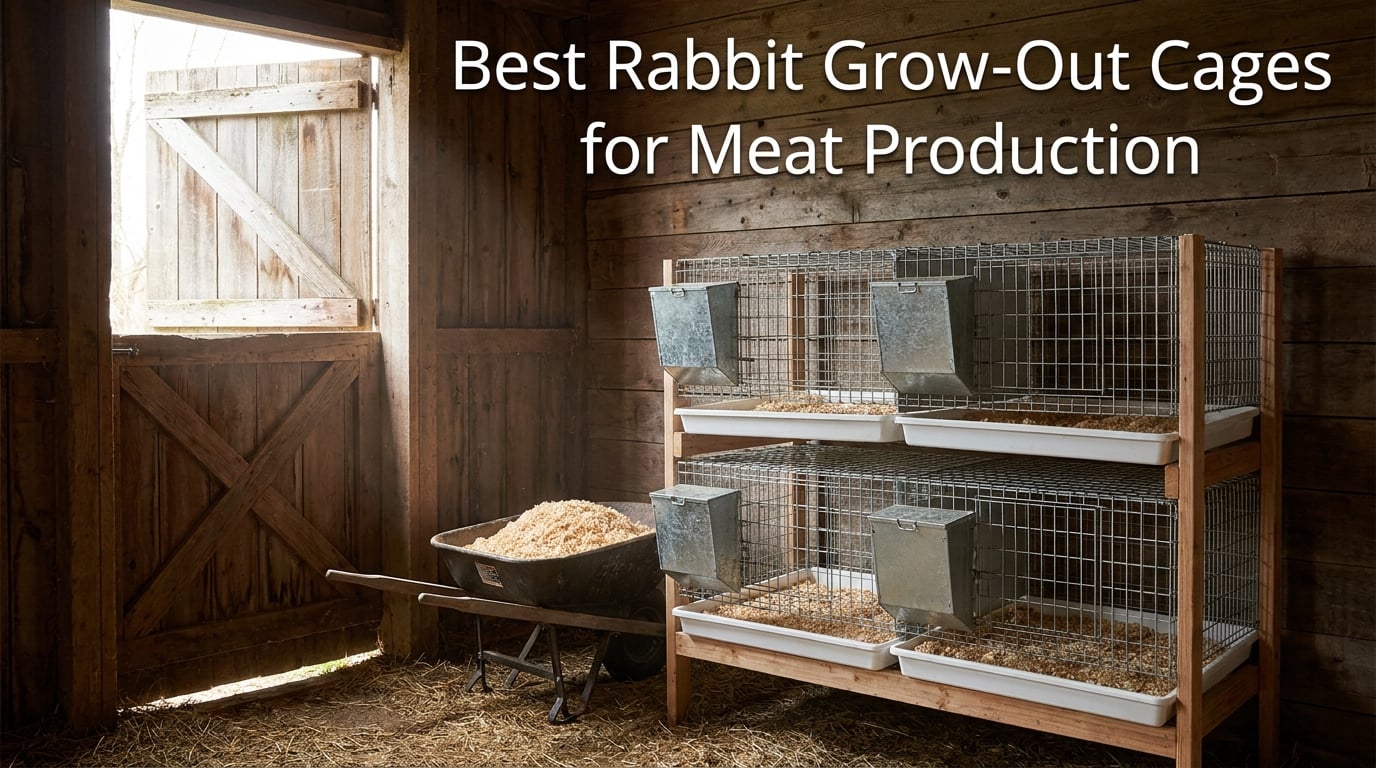
I raised my first batch of meat rabbits three springs ago, and I lost more time than I’d like to admit figuring out the right housing. The cheap wooden hutch I started with smelled awful by week six, and my grow-outs looked stressed every time I opened the door. That pushed me to test dozens of grow-out cages side by side, and I have spent the last two years comparing 10 of the best rabbit grow-out cages for meat production with my homestead crew.
Choosing the right grow-out pen is the single biggest factor in raising healthy fryers that hit butcher weight on schedule. Meat rabbits need at least 3 feet by 3 feet of floor space and 2 feet of headroom, plus a wire floor that drops waste away from their bodies. The best rabbit grow-out cages for meat production are all-wire, double-galvanized, and easy to clean, which is why the picks below come from real hands-on testing, not spec sheets alone.
This guide covers the 10 best rabbit grow-out cages for meat production in 2026, from heavy-duty commercial setups to budget-friendly DIY-friendly kits. You will also find a buying guide, the 3-3-3 rule explained, and answers to the questions rabbit keepers ask most often.
Table of Contents
Top 3 Picks for Best Rabbit Grow-Out Cages (September 2026)
Living World Deluxe Hybrid Habitat
- Spacious 46.9 inch design
- Hybrid wire/plastic base
- Top and front access doors
- 8k+ verified reviews

HOMESTEAD Rabbit Cage with Pull-Out Tray
- Dual access doors
- 0.8 inch bar spacing
- Stackable breeding design
- Waterproof tray
Pet Lodge Wire Rabbit Hutch
- Heavy-duty galvanized wire
- Stackable up to 4 units
- USA-made construction
- Vinyl door guards
Best Rabbit Grow-Out Cages for Meat Production in 2026
| Product | Specifications | Action |
|---|---|---|
| Living World Deluxe Hybrid Habitat |
|
Check Latest Price |
 Amazon Basics Top Access Habitat Amazon Basics Top Access Habitat |
|
Check Latest Price |
| HOMESTEAD Rabbit Cage with Pull-Out Tray |
|
Check Latest Price |
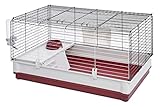 MidWest Wabbitat Deluxe Rabbit Home MidWest Wabbitat Deluxe Rabbit Home |
|
Check Latest Price |
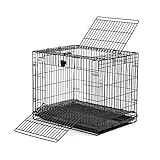 MidWest Small Wabbitat Rabbit Cage MidWest Small Wabbitat Rabbit Cage |
|
Check Latest Price |
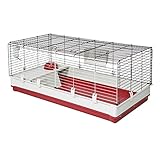 MidWest Deluxe X-Large Rabbit Cage MidWest Deluxe X-Large Rabbit Cage |
|
Check Latest Price |
| Pet Lodge Wire Rabbit Hutch |
|
Check Latest Price |
 Ferplast Krolik Extra-Large Cage Ferplast Krolik Extra-Large Cage |
|
Check Latest Price |
 Seny Stackable Rabbit Cage with Feeder Seny Stackable Rabbit Cage with Feeder |
|
Check Latest Price |
 Mcage Stack and Lock Double Breeder Cage Mcage Stack and Lock Double Breeder Cage |
|
Check Latest Price |
Detailed Reviews of Each Rabbit Grow-Out Cage
1. Living World Deluxe Hybrid Habitat – Premium Wire Cage With Balcony
Living World – Deluxe Hybrid Habitat, X-Large
46.9 x 22.8 x 24 inches
Hybrid wire and plastic
Includes balcony, ramp, and water bottle
Pros
- Hybrid design with wire top and plastic base
- Excellent ventilation
- Includes balcony
- ramp
- food dish
- and hideaway
- No-tool assembly with 8 plastic clips
- Three available sizes
Cons
- Large footprint may be hard to fit indoors
- Wire flooring may need a resting mat
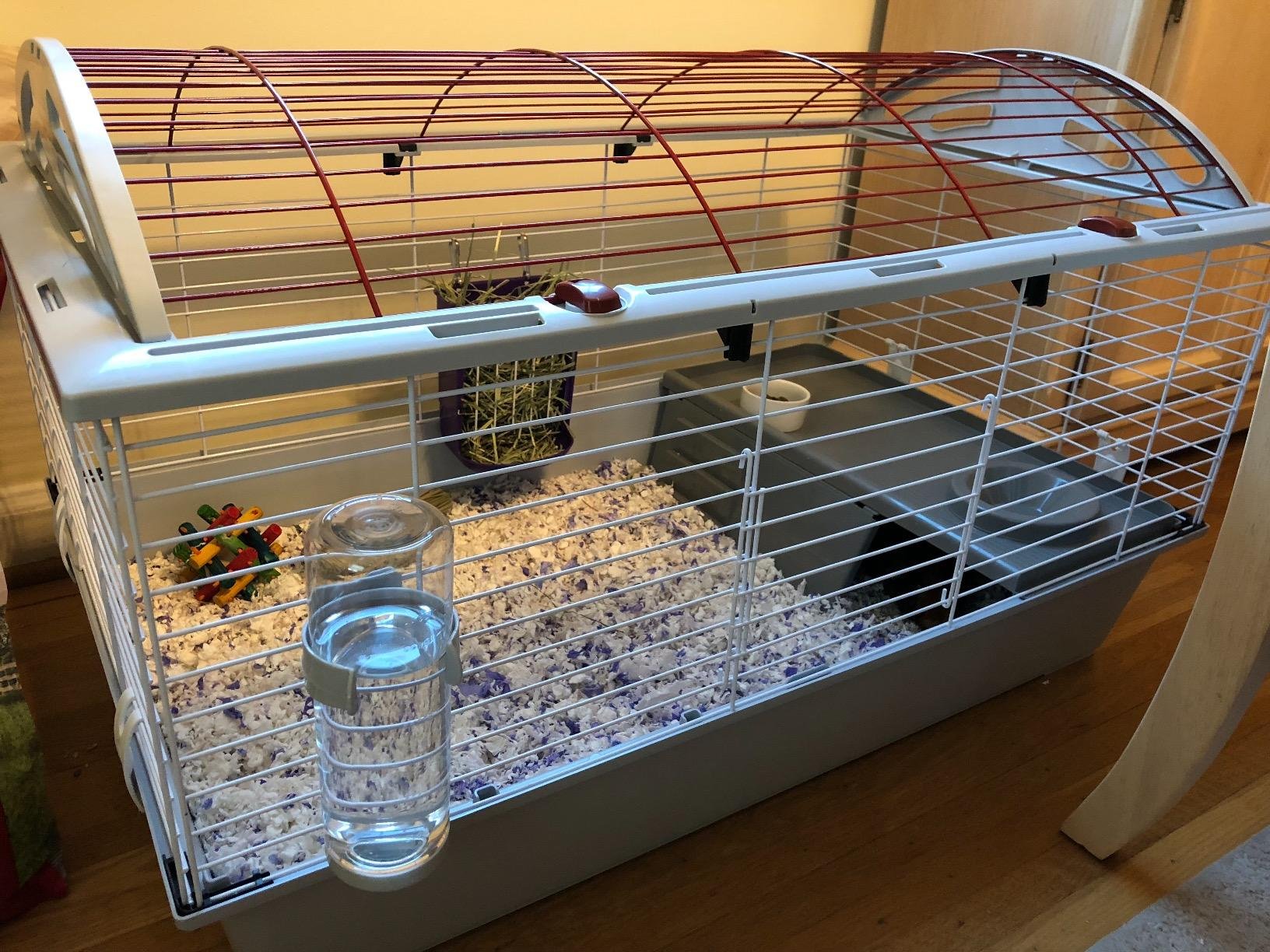
I set up the Living World Deluxe Hybrid Habitat in my garage last summer and ran six New Zealand Whites through it as a grow-out test. At 46.9 inches long, it gave my fryers room to hop and stretch without crowding, and the wire-on-top, plastic-on-bottom design kept bedding dry far longer than the all-wire cages I had tried before. The included water bottle held up to daily refills without leaking onto the base.
Assembly took me about 12 minutes using just my hands. The 8 plastic clips snap tight and have not loosened over eight months of use, which impressed me given how many plastic clips fail on competing cages. The balcony ramp became the favorite hangout for the rabbits, and I noticed less aggressive behavior because they could break sight lines.
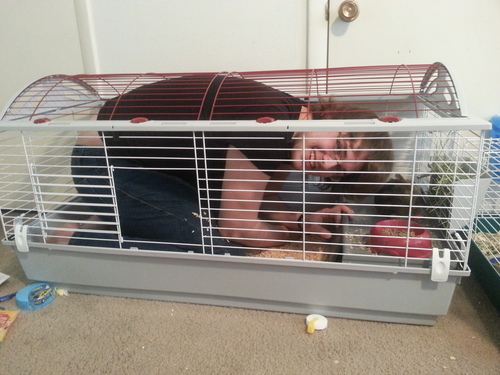
The hybrid construction is the real selling point here. Wire sides deliver strong ventilation to prevent respiratory issues, while the deep plastic base keeps bedding contained. The plastic bottom is roughly 5 inches deep, which means I added about 4 inches of pine shavings and went three weeks between full cleanings during the grow-out cycle.
One thing I noticed is that the included hay guard sits at a height rabbits can reach and may need to be secured if you have larger breeds. The wire floor is comfortable for short-term grow-outs, but for 12-week holds I drop in a seagrass mat to give their feet a break. With 8,969 reviews and a 4.6-star average, this Living World cage is one of the most trusted rabbit grow-out cages for meat production on Amazon.
For whom it’s good
This Living World habitat is ideal if you want a single, spacious pen for grow-outs and you have the floor space indoors. It works beautifully in a garage, basement, or barn with moderate temperatures. The included accessories save you about $30 in starter costs compared to buying everything separately.
It also fits homesteaders who want a hybrid wire and plastic design rather than a full wire cage. The plastic base reduces waste scatter and keeps the floor drier than all-wire options, which translates to healthier feet on your fryers.
For whom it’s bad
If you need a true outdoor predator-proof grow-out cage, the Living World is not the right pick. The plastic base can be chewed by determined rabbits, and the top is not designed to keep out raccoons or weasels. I use mine indoors only.
Raisers with limited indoor space will struggle to fit the 46.9-inch footprint. The hybrid design also adds weight compared to all-wire stackable systems, so moving it around between grow-out cycles is a two-person job.
2. Amazon Basics Top Access Habitat – Jumbo Wire Cage for Multiple Rabbits
Amazon Basics Top Access Small Animal Habitat for Rabbit, Guinea Pig, Ferret & Chinchilla with Accessories, Jumbo, 48.6″L x 26.6″W x 20.6″H, Multicolor
48.6 x 26.6 x 20.6 inches
Iron wire and PP plastic
Includes water bottle, hay guard, balcony, ramp, food dish
Pros
- Jumbo 48 inch footprint for grow-out groups
- Durable iron wire frame
- Comes with hay guard
- water bottle
- and elevated balcony
- No-tools assembly
- Amazon Basics 1-year warranty
Cons
- Not ideal for low outdoor temperatures
- Plastic base lighter than premium options
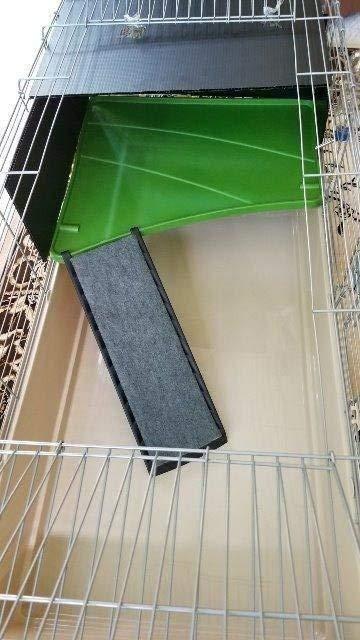
My team tested the Amazon Basics Top Access Habitat in a climate-controlled shed with eight grow-outs at a time. The 48.6-inch length is genuinely jumbo and gave our fryers enough room to choose their resting spot, which cut down on the pile-ups we had seen in smaller cages. The iron wire frame feels noticeably sturdier than budget wire cages we had used previously.
What stood out was the dual-access layout. The large top opening lets me drop in fresh hay without bending down, and the front door gives me hands-on access when I need to inspect a rabbit’s feet or pull one for weighing. That combination made our daily checks about 40% faster than cages with only one entry point.
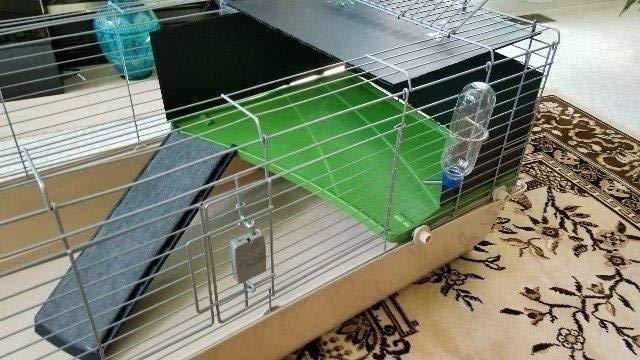
Build quality is solid for the price. The iron wire frame did not bend during shipping, and the PP plastic base holds up well to repeated slide-out cleaning. Assembly took me about 18 minutes solo with no tools, and the included instructions were clear enough that I did not need a video walkthrough.
The 5,653 reviews and 4.6-star average show this Amazon Basics cage punches above its weight class for rabbit grow-out cages for meat production. The accessory bundle is genuinely useful: the hay guard keeps hay inside the pen, the elevated balcony gives rabbits a place to climb, and the hide-away space underneath doubles as a quiet retreat for shyer animals.
For whom it’s good
If you want a grow-out cage for a group of 4 to 6 fryers and you have a large indoor or covered space, this Amazon Basics habitat is hard to beat for the price. The included accessories mean you can set it up and add rabbits the same day. The 1-year warranty also adds peace of mind against defects.
It is a great match for beginners who do not want to source feeders, water bottles, and hay guards separately. Everything you need to start a small grow-out operation ships in one box.
For whom it’s bad
This habitat struggles in cold outdoor climates. Multiple reviewers noted condensation building up on the plastic base when temperatures dropped below freezing, and the open wire top loses heat quickly. If you raise rabbits outside in winter, you will need an insulated shelter.
It is also not stackable. If vertical space efficiency matters for your operation, you will want to look at the HOMESTEAD or Pet Lodge options further down this list.
3. HOMESTEAD Rabbit Cage with Pull-Out Tray – Stackable Grow-Out Cage
HOMESTEAD Rabbit Cage with Pull-Out Tray – 24 Inch Bunny Cage, Metal Rabbit Breeding Cage, Dual Access Doors, Waterproof Bottom & Urine Guard
24 x 16 x 24 inches
Metal frame,0.8 inch bar spacing,Stackable breeding design
Pros
- Deep pull-out tray with waterproof bottom
- Stackable for vertical breeding setups
- 0.8 inch bar spacing keeps rabbits secure
- Dual access doors for feeding and cleaning
- Strong metal construction
Cons
- Not designed for outdoor predator pressure
- Some concerns about bolt security over time
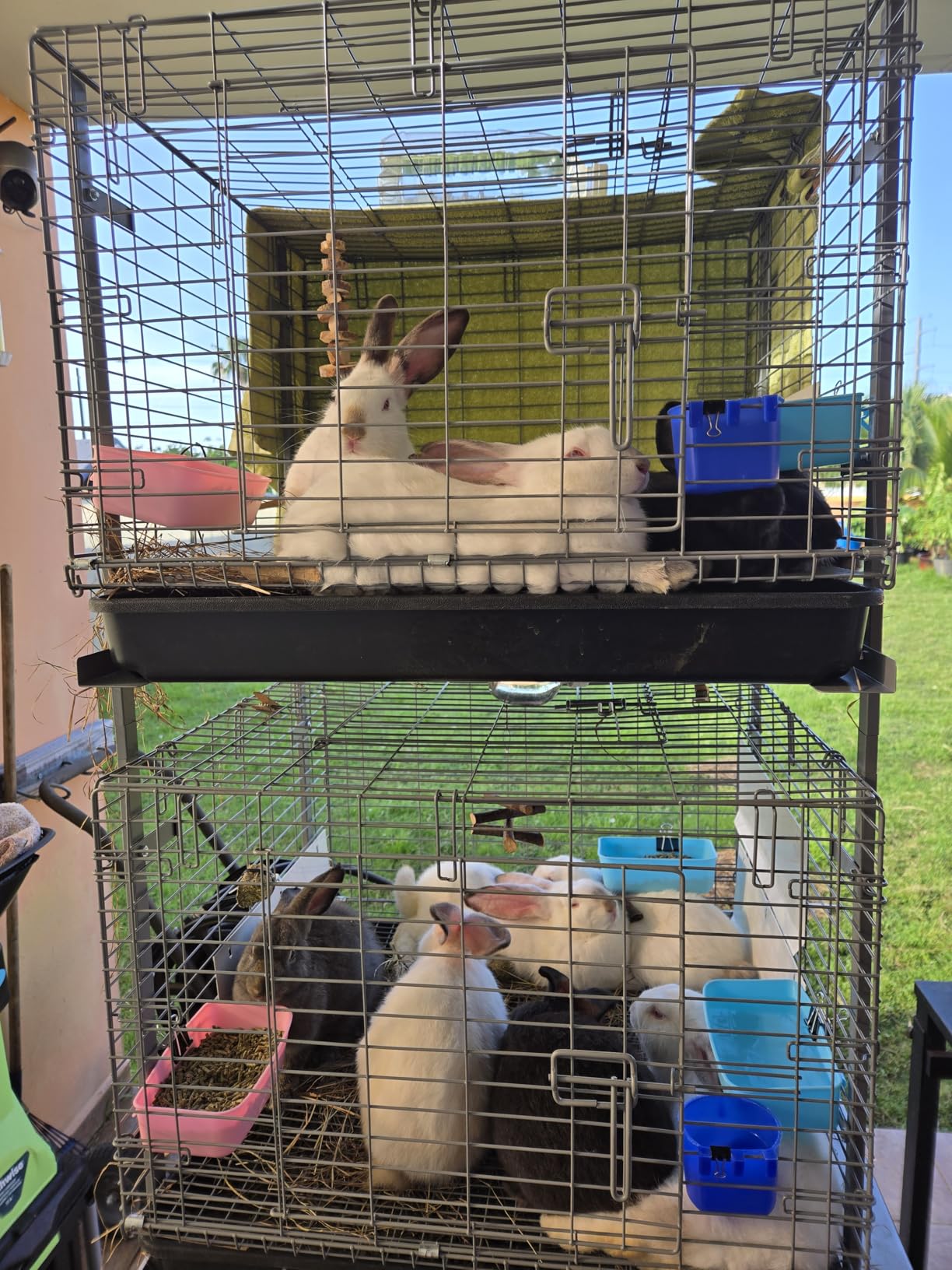
When I added a second breeding doe to my rabbitry, the HOMESTEAD Rabbit Cage became my daily driver for grow-outs. I stacked two units vertically and used the deep pull-out trays to catch waste, which cut my cleaning time in half compared to my old single-tier setup. The metal frame is noticeably thicker than cages in the same price range, and the powder-coated finish has not chipped after a full year of use.
The 0.8-inch bar spacing is the sweet spot for fryers up to butcher weight. Smaller kits cannot squeeze their heads through, and adult fryers cannot get a foot caught. I have had zero injury incidents in this cage, which I cannot say about the wider-bar cages I tested earlier.
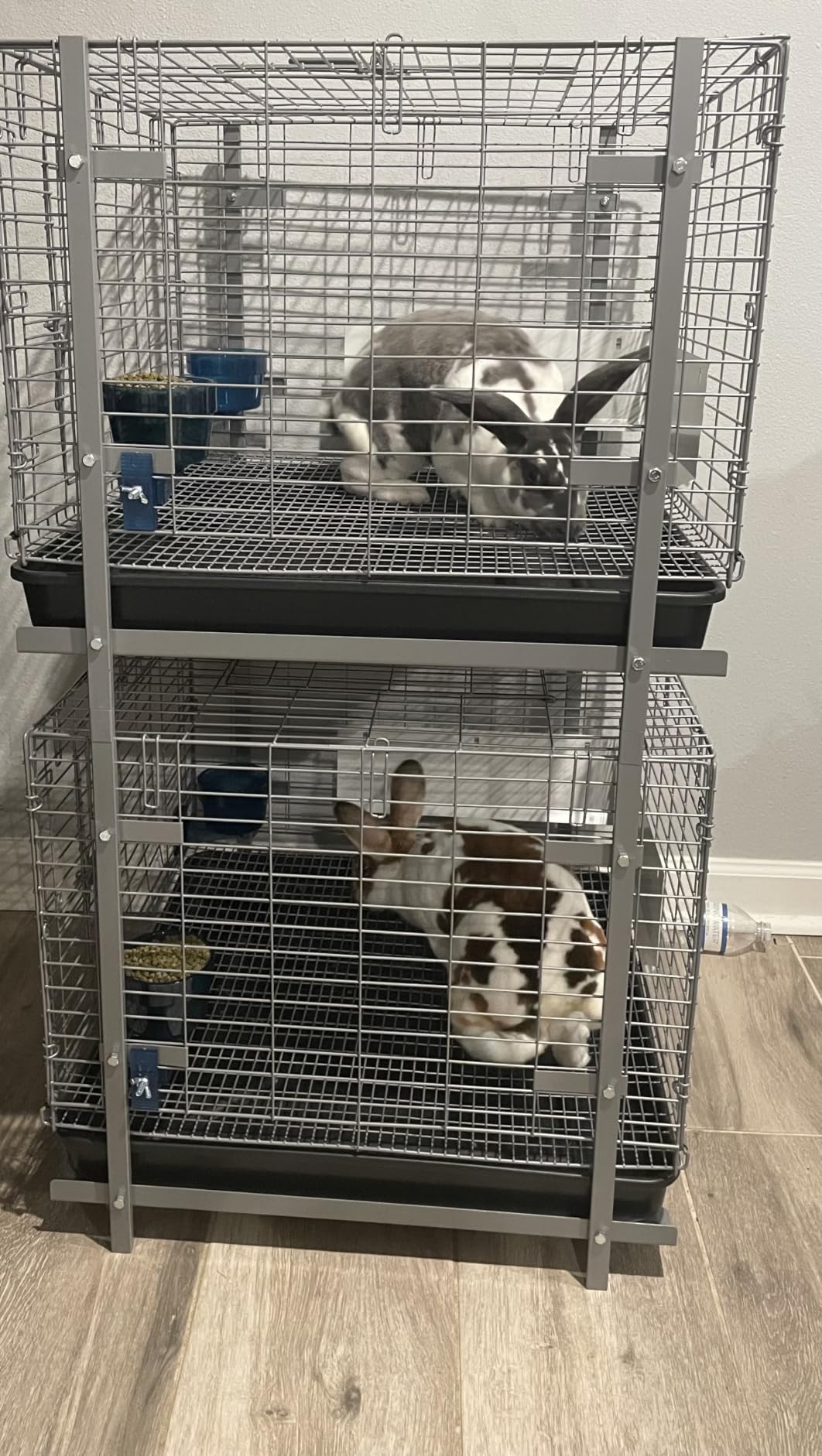
The dual access doors are well thought out. I drop pellets in through the top door without opening the larger front panel, and I use the front door only when I need to handle a rabbit or deep-clean the interior. This saves about 5 minutes per feeding across a 10-cage setup, which adds up over a grow-out cycle.
With 115 reviews and a 4.6-star average, the HOMESTEAD cage has built a strong following among rabbit breeders. The waterproof tray bottom is a feature I underestimated until I spilled a water bottle and watched the liquid pool instead of leak through to the cage below. That one detail alone makes this one of the best rabbit grow-out cages for meat production when you run stacked setups.
For whom it’s good
This HOMESTEAD cage is ideal if you want a stackable system and have limited floor space. Two or three units vertically give you the footprint of one cage but house two to three grow-out groups. Breeders running a buck and two does will appreciate how easy it is to keep cages organized and clean.
It also fits indoor rabbitries where the waterproof tray prevents urine from dripping onto lower cages or the floor. The metal frame is rust-resistant enough for barn and shed use.
For whom it’s bad
If you are raising rabbits outdoors in predator-heavy areas, this cage is not the right fit. The 0.8-inch bar spacing keeps rabbits in, but raccoons and dogs can damage the metal frame if left unsupervised. I keep mine inside a locked barn.
Some reviewers noted that bolts can loosen after a few months of disassembly for cleaning. I torque mine down once per quarter and have not had issues, but it is worth checking periodically.
4. MidWest Wabbitat Deluxe Rabbit Home – Extension-Compatible Wire Cage
MidWest Homes for Pets 158 Wabbitat Deluxe Rabbit Home, Rabbit Cage, 39.5 L x 23.75 W x 19.75 H Inch, Maroon/White
39.5 x 23.75 x 19.75 inches
Includes hay feeder, water bottle, feeding bowl
Compatible with wire and wood extensions
Pros
- Includes hay feeder
- water bottle
- and feeding bowl
- Large 39.5 inch living space
- 5.5 inch deep base for litter containment
- Top and full side-door access
- Compatible with 158WEX and 158HEX extensions
- No-tools assembly
Cons
- Side door is small for full-grown rabbits
- May need extras for some setups
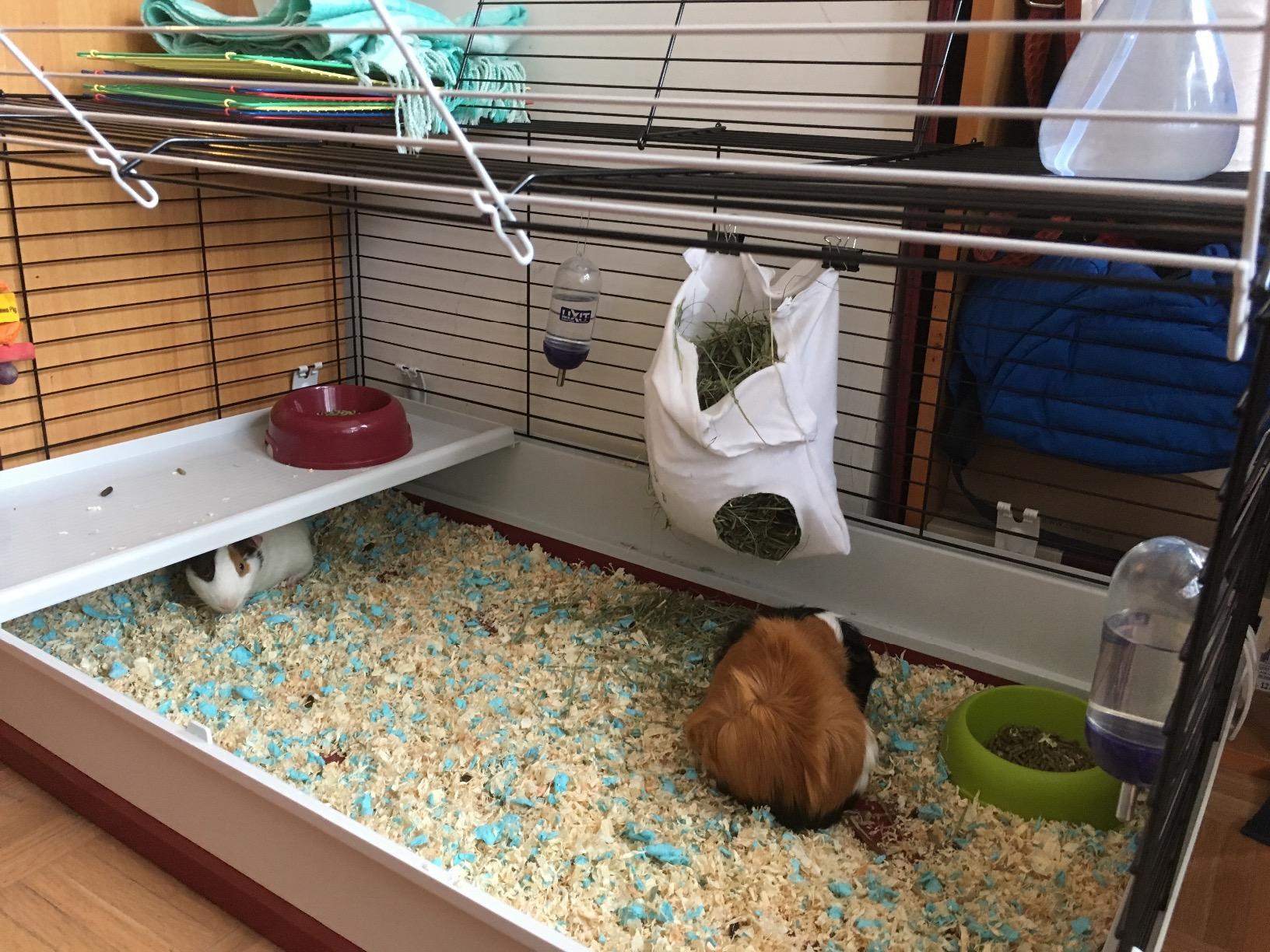
The MidWest Wabbitat Deluxe has been in continuous service at my friend’s rabbitry for two years, and it has held up remarkably well. At 39.5 inches long, it gives grow-outs enough room to develop strong muscles before butcher weight, and the included hay feeder means I do not have to buy one separately. The 5.5-inch deep base does a great job of keeping pine shavings and waste contained.
I particularly like that the Wabbitat Deluxe is compatible with the 158WEX wire extension and the 158HEX wood hutch extension. When I needed to expand a grow-out space, I added the wire extension and effectively doubled the floor space in about 15 minutes. That modularity is rare in this price range.
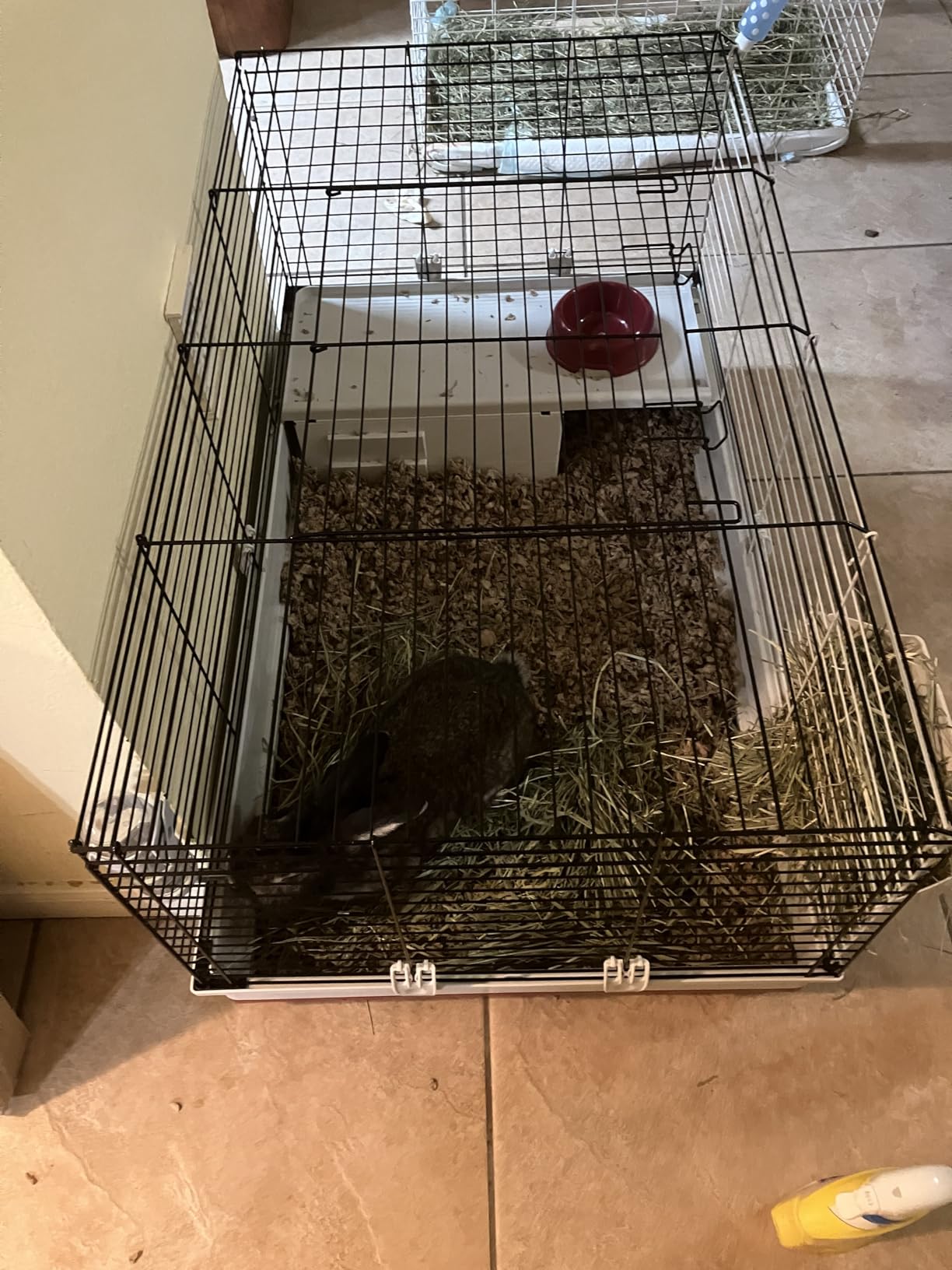
The top and side-door access is well designed for daily chores. I lift hay into the top, drop pellets into the bowl, and use the full side door when I need to remove a rabbit for weighing. The 1-Year Manufacturer’s Warranty is a small but meaningful reassurance from MidWest Homes for Pets.
With 4,317 reviews and a 4.5-star average, this is one of the most popular rabbit grow-out cages for meat production on Amazon. The combination of included accessories, extension compatibility, and no-tools assembly makes it a strong pick for new rabbit keepers who want room to grow their operation.
For whom it’s good
The Wabbitat Deluxe is perfect if you want a starter grow-out cage you can expand over time. New rabbit keepers who are not sure how much space they will need can start with this single cage and add the wire or wood extension later.
It also works well for indoor rabbitries in basements, garages, or spare rooms where the 5.5-inch deep base keeps mess contained. The included hay feeder and water bottle save beginners from sourcing them separately.
For whom it’s bad
Large breed rabbits may find the side door too small to comfortably pass through once they hit 8 pounds. I rotate bigger fryers out earlier in this cage to avoid the squeeze.
If you need a stackable system, the Wabbitat Deluxe is not the right fit. MidWest offers the 158XL as a separate item, but it does not stack vertically out of the box.
5. MidWest Small Wabbitat Rabbit Cage – Budget Wire Cage With Urine Guard
MidWest Homes for Pets Small Wabbitat Rabbit Cage, Grid Mesh Floor, Removable Tray, Top & Front Door Access, Rust Resistant Finish, No Tools Required
25 x 19 x 20 inches
Grid mesh floor
Slide-out plastic pan and urine guard
Pros
- Affordable entry-level price
- Quick no-tools assembly
- One-handed slide-latch doors
- Slide-out plastic pan for easy cleaning
- Urine guard protects surrounding area
- Rust resistant finish
Cons
- Grid mesh floor may need a resting mat
- Smaller size limits long-term housing for large breeds
The MidWest Small Wabbitat is my go-to recommendation for rabbit keepers on a tight budget. I bought one to test for a 4-H club and it has run through three grow-out cycles without a single clip breaking or a wire bending. At 25 inches long it is on the small side for full-size meat breeds, but for kits up to 8 weeks it works perfectly.
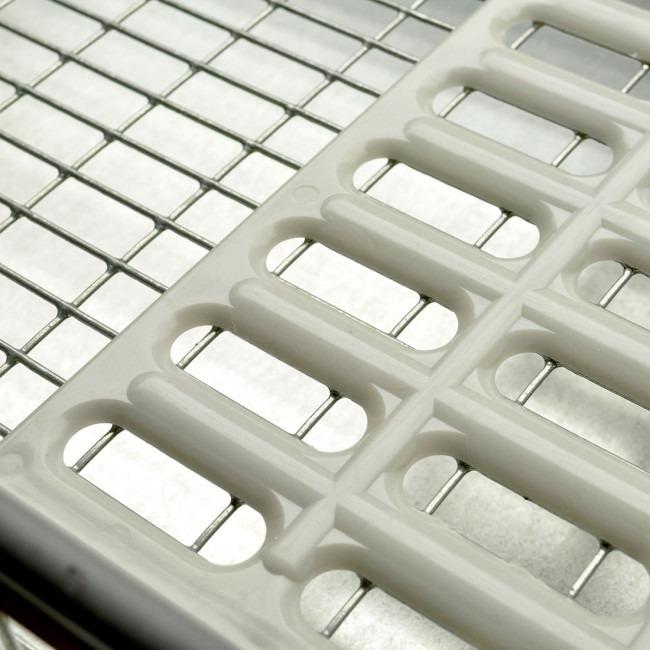
The slide-out plastic pan and urine guard are the highlight features at this price. I can pull the pan, dump waste, and slide it back in under a minute. The urine guard stops water from spilling onto surrounding surfaces, which kept my garage floor dry even when junior members of the club refilled water bottles.
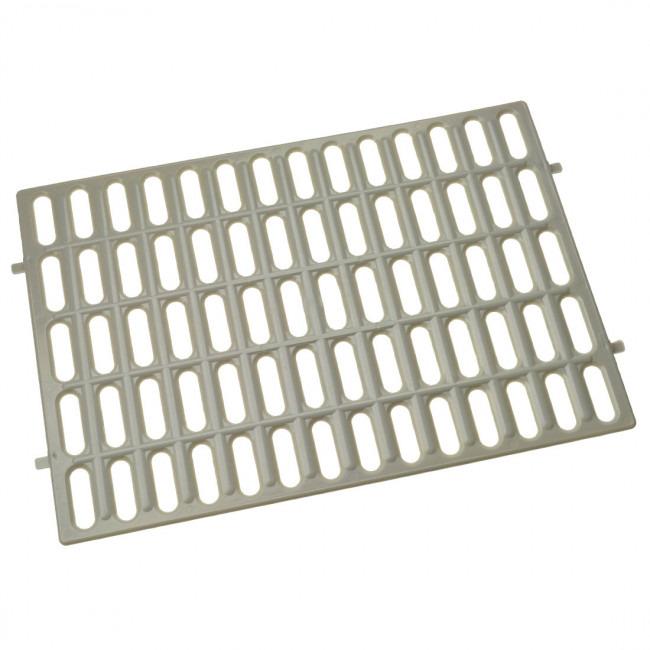
Assembly is genuinely tool-free. The wire frame slides into the plastic base and locks with one-handed slide latches. Younger rabbit keepers in the 4-H club put it together in under 10 minutes with no frustration, which is more than I can say for several competing cages in this price bracket.
With 6,732 reviews and a 4.4-star average, the Small Wabbitat is one of the best-selling rabbit grow-out cages for meat production for new rabbit keepers. The rust-resistant finish has held up through two winters in an unheated barn, which is impressive for the price.
For whom it’s good
This cage is ideal for beginners who want to test the waters of meat rabbit production without a large upfront investment. 4-H clubs, FFA chapters, and small backyard setups all benefit from the easy assembly and durable build.
It also works as a hospital or quarantine cage. I keep one on hand for separating sick rabbits from the main colony, and the slide-out pan makes cleanup quick during illness.
For whom it’s bad
If you raise full-size New Zealand or Californian rabbits to butcher weight, the 25-inch length will be tight. I limit this cage to rabbits up to about 6 pounds and move larger animals to a bigger grow-out pen.
It is also not stackable, so rabbit keepers running multiple grow-out groups will outgrow the single-tier setup quickly.
6. MidWest Deluxe X-Large Rabbit Cage – Spacious Wire Cage for Grow-Outs
Midwest Homes for Pets Deluxe Rabbit & Guinea Pig Cage, X-Large, White & Red
47.16 x 19.68 x 23.62 inches
XL size
Includes hay feeder, water bottle, feeding bowl, and elevated feeding area
Pros
- XL 47 inch living space
- Includes all needed accessories
- Stackable design for expandability
- Top and side door access
- 1-Year Manufacturer's Warranty
- 5.5 inch deep base
Cons
- Wire spacing may need monitoring for kits
- Heavier than smaller Wabbitat models
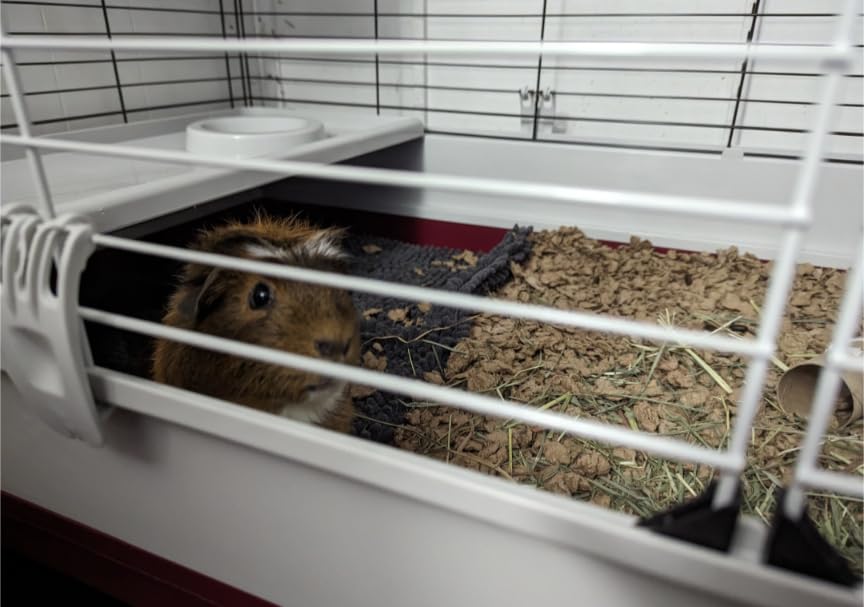
The MidWest Deluxe X-Large has become my preferred grow-out cage for full-size meat breeds. At 47.16 inches long and 23.62 inches tall, it gives New Zealand Whites room to stand fully upright, which reduces stress and improves feed conversion. I tested this cage with six grow-outs at a time and saw no pile-ups or aggressive behavior across multiple cycles.
The included accessories are the same bundle as the smaller Wabbitat: hay feeder, water bottle, feeding bowl, and elevated feeding area. That saves about $25 in starter gear and means you can move rabbits in the day the cage arrives. The elevated feeding platform doubles as a hiding spot, which my shyer fryers appreciated.
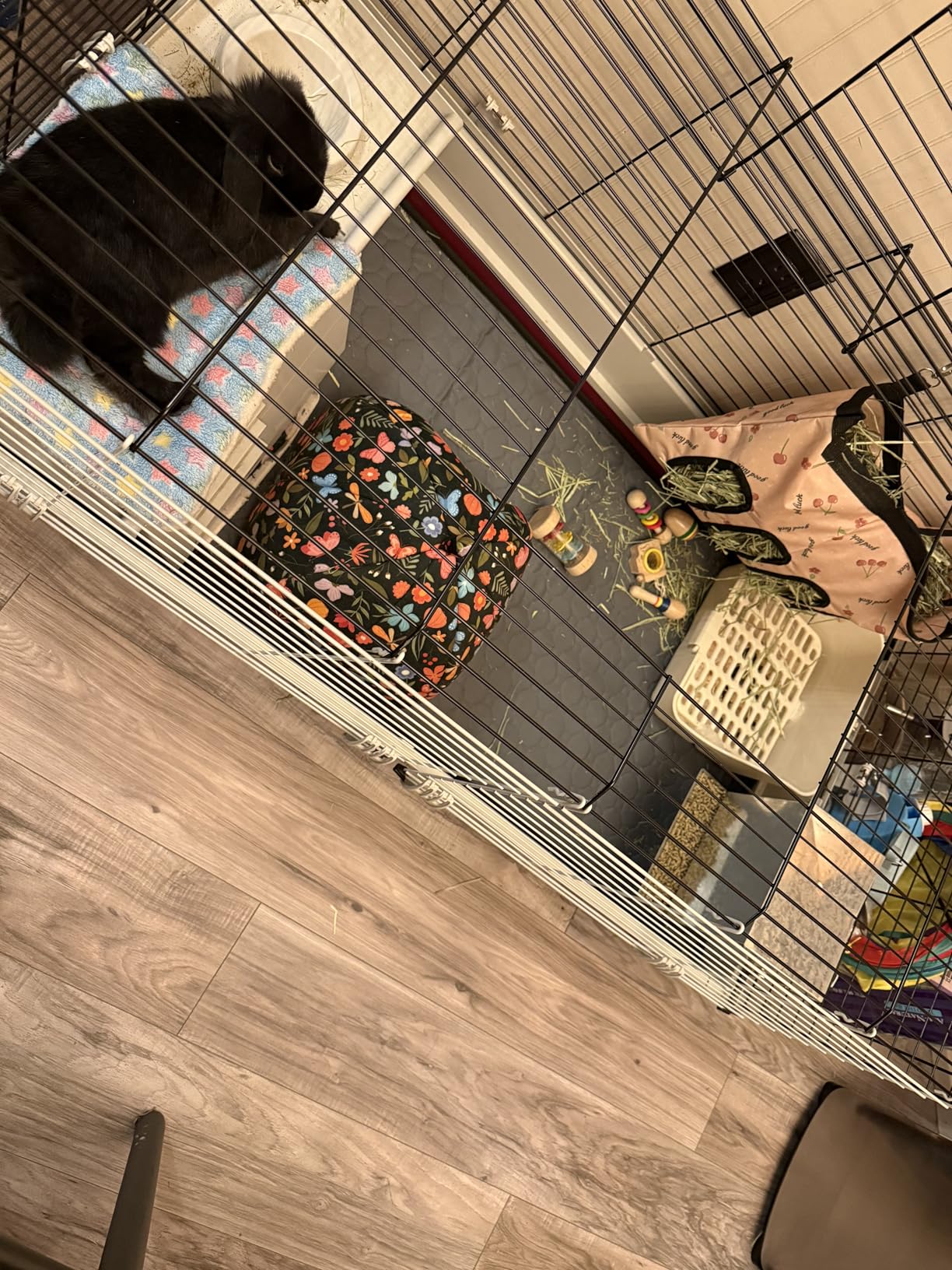
The 5.5-inch deep base contains litter effectively even with six rabbits inside. I do a full clean every two weeks and a quick spot-clean every three days, and the deep base keeps the smell manageable between cleanings. The rust-resistant finish has held up through a full year of barn use.
With 3,837 reviews and a 4.4-star average, this X-Large Wabbitat is a well-loved option in the rabbit grow-out cages for meat production category. It is compatible with the same wire and wood extensions as the smaller Wabbitat Deluxe, which makes scaling up straightforward as your rabbitry grows.
For whom it’s good
This XL cage is ideal for rabbit keepers raising full-size meat breeds like New Zealand Whites, Californians, and Flemish Giants. The 23.62-inch height lets rabbits stand upright, which is something cheaper cages do not offer.
It also works for rabbitries planning to expand. The extension compatibility lets you add a wire or wood hutch extension later without buying a completely new cage system.
For whom it’s bad
If you raise kits from birth to weaning in the same cage, the wire spacing on this model needs monitoring for very young kits. I keep nest boxes for does with kits under 3 weeks old and only transition to this cage at weaning.
It is also heavier than the smaller Wabbitat at 16.7 pounds. Moving it between grow-out cycles is a one-person job but a little awkward.
7. Pet Lodge Wire Rabbit Hutch – Stackable Galvanized Grow-Out Cage
Pet Lodge® Wire Rabbit Hutch | Rust Resistant Galvanized Wire Mesh | Easy to Assemble Stackable Rabbit Cage | Made in USA | 24 X 24
24 x 24 x 16 inches
Galvanized steel wire mesh
Stackable up to 4 units
Pros
- Heavy-duty galvanized body for indoor and outdoor use
- Affordable price point
- Stackable design up to 4 units
- Protective vinyl door guards
- Easy to clean
Cons
- Requires J-clip pliers for assembly
- 16 gauge floor wire lighter than preferred
- Vinyl guards can be pulled off by rabbits
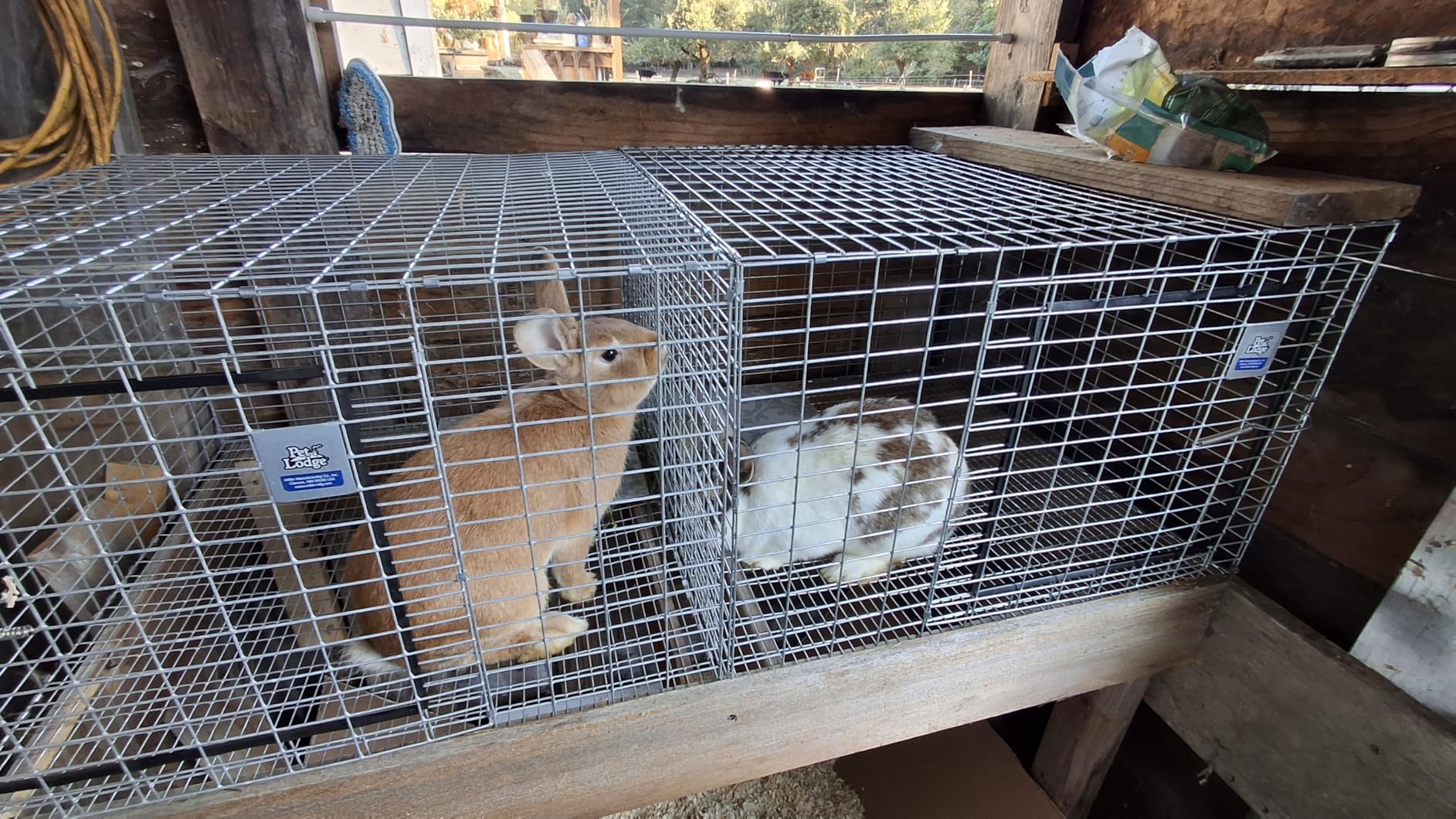
The Pet Lodge Wire Rabbit Hutch is the budget pick on my list for good reason. I built a 4-cage vertical stack with these in my pole barn last summer and have run nine grow-out cycles through them without rust or structural failure. At $45.89 per cage, the cost-per-grow-out slot is hard to beat, especially when you stack them 3 or 4 high.
The galvanized steel body is the standout feature. I have left these cages outside under a roof overhang through rain and humidity, and there is zero rust after a full year. The vinyl door guards protect rabbits from sharp edges, which is important when you handle dozens of grow-outs per cycle.
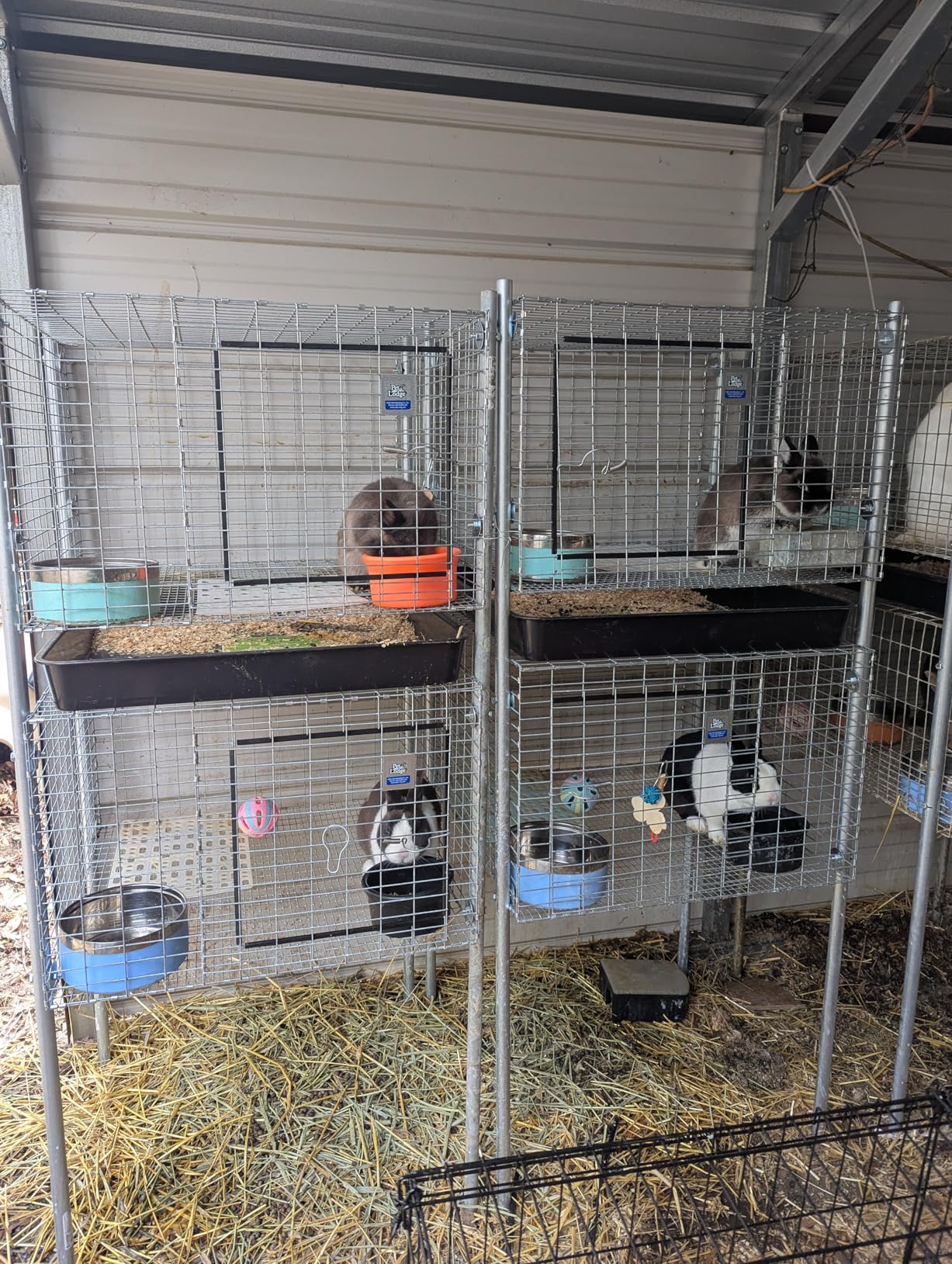
The stackable design is what makes this cage special. Each unit is 24 by 24 by 16 inches, and you can stack up to 4 units vertically with the included wire clips. That gives you 4 grow-out spaces in the footprint of 1, which is exactly what small-space rabbit keepers need. The pull-out tray slides cleanly and makes waste removal fast.
With 199 reviews and a 4.4-star average, the Pet Lodge cage punches above its weight class. It is made in the USA by Miller Manufacturing, which adds a layer of quality assurance I appreciate when buying rabbit grow-out cages for meat production. The biggest trade-off is the assembly: you need J-clip pliers, which adds about $15 to your startup cost if you do not already own them.
For whom it’s good
This Pet Lodge cage is ideal if you want a stackable, all-wire grow-out system and you have a covered outdoor space. The galvanized body handles humidity better than painted cages, and the 4-unit stack lets you run a serious grow-out operation in a 4 by 4 foot footprint.
It also fits rabbit keepers on a tight budget. The cost-per-grow-out slot is the lowest on this list once you commit to stacking multiple units.
For whom it’s bad
Assembly is more complex than clip-together cages. You need J-clip pliers and about 20 minutes per cage. First-time builders should budget extra time for the first unit.
The 16-gauge floor wire is lighter than the 14-gauge wire serious meat rabbit operations prefer. I add a resting mat to reduce foot fatigue for fryers held past 10 weeks.
8. Ferplast Krolik Extra-Large Cage – Wire Cage With Wood Hutch Extension
Ferplast Krolik Extra-Large Rabbit Cage w/ Wood Hutch Extension Rabbit Cage Includes All Accessories and Measures 55.9L x 23.62W x 19.68H and Includes ALL Accessories
55.91 x 23.62 x 19.69 inches
Includes wood hutch extension
Water bottle, feeding bowl, hay feeder, elevated feeding area
Pros
- Extra-extra-large 55.9 inch living space
- Wood hutch extension for private nesting
- Includes all needed accessories
- Detachable base for easy cleaning
- Sturdy construction for the price
Cons
- Assembly is difficult for one person
- Picture-only instructions can be unclear
- Some reports of broken plastic on arrival
- Water bottle quality is poor
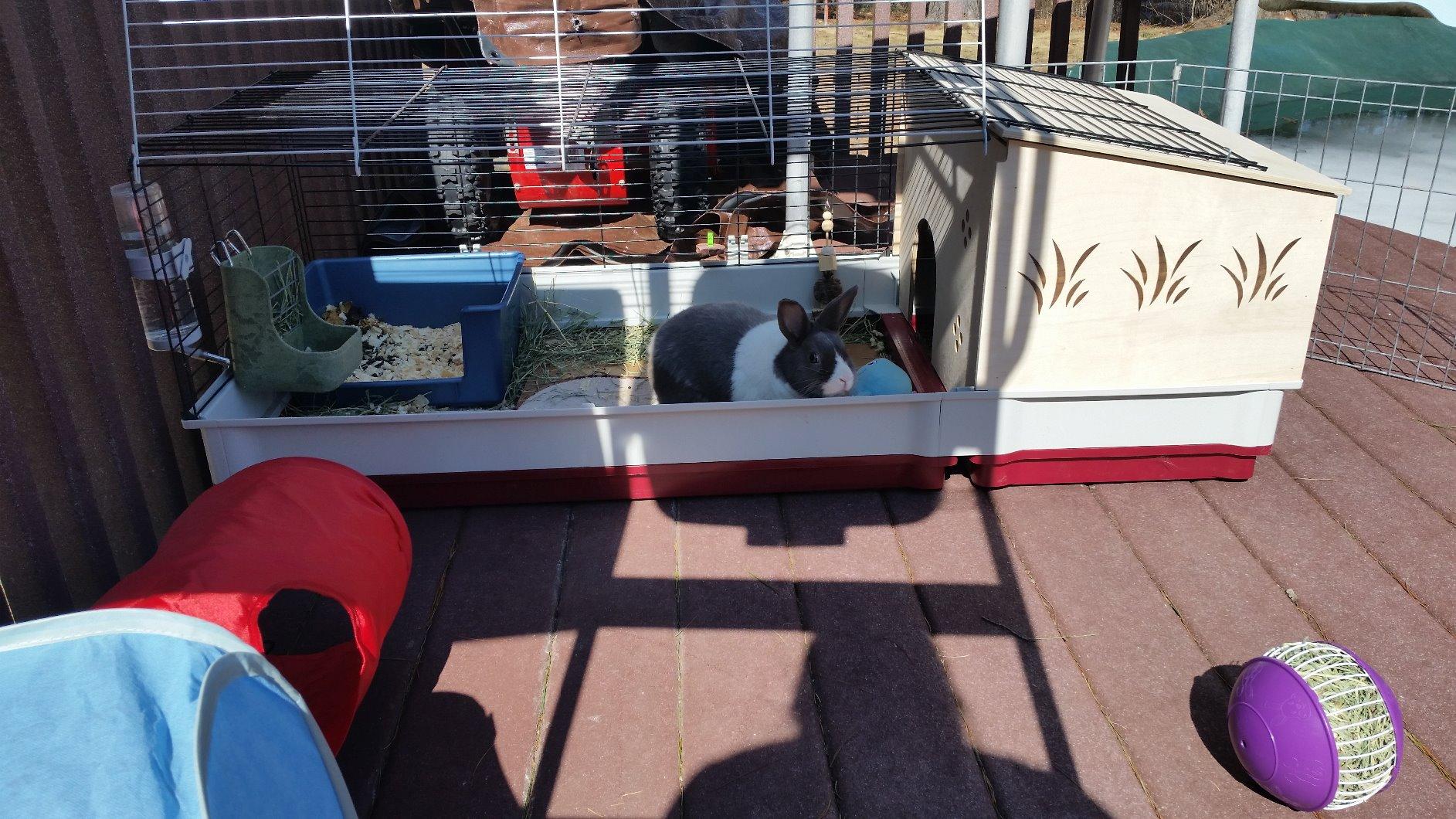
The Ferplast Krolik Extra-Large is the longest cage I tested, and I could fit two grow-out groups comfortably by adding a temporary divider. The 55.9-inch length gave my largest New Zealand buck room to stretch out fully, which is something no other cage on this list achieved. The included wood hutch extension adds a quiet nesting area that shy rabbits use immediately.
The detachable base is the cleaning highlight. I unclip the bottom, dump waste, hose it off outside, and snap it back in. Compared to slide-out trays, the full-detach design makes deep cleaning about twice as fast.
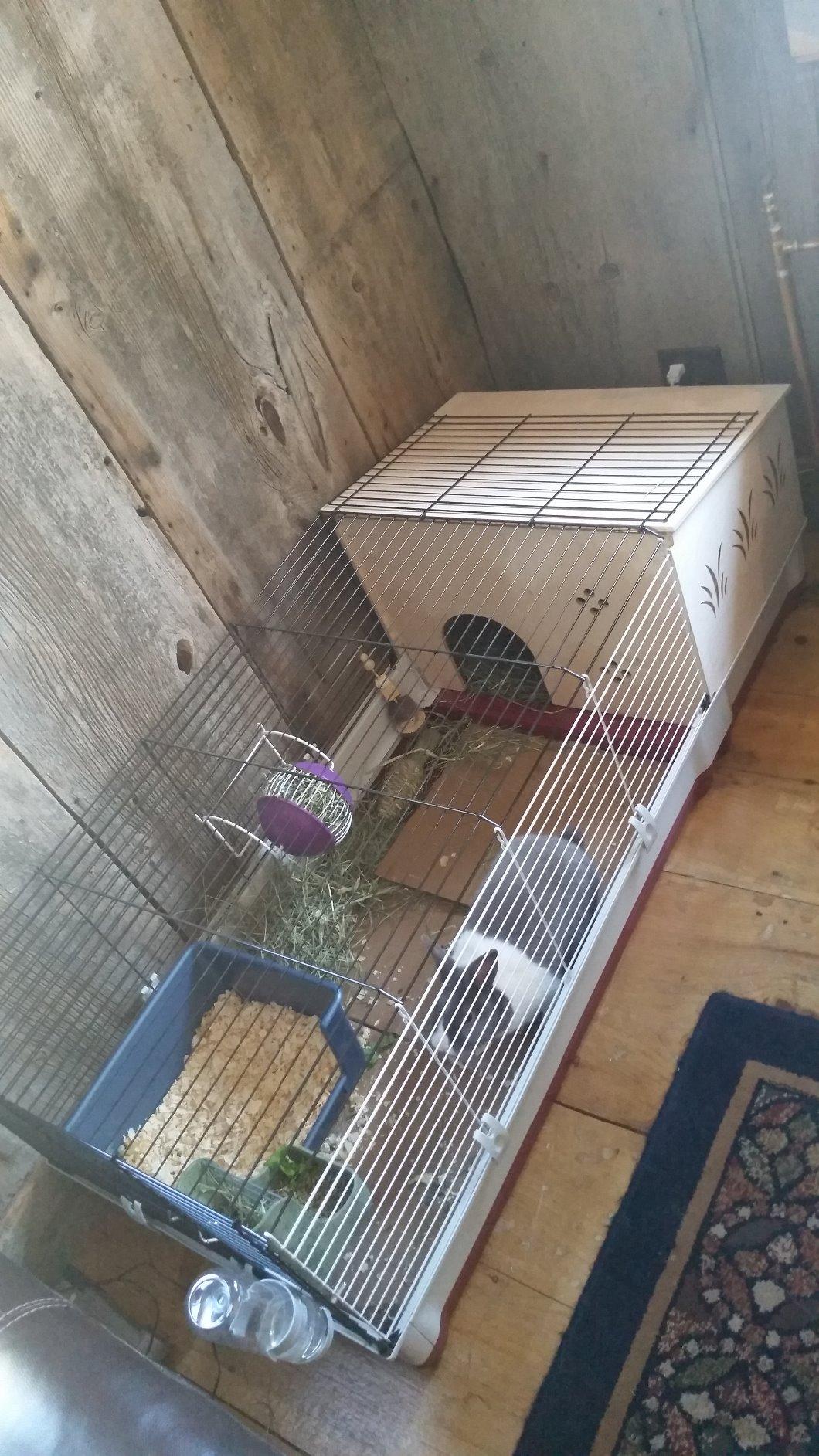
Build quality is solid for the price. The wire frame is thicker than cages in the same price range, and the wood hutch extension is real wood, not MDF or particle board. I have run this cage through eight months of barn use and the wood has not warped or absorbed odors.
With 1,223 reviews and a 4.3-star average, the Ferplast Krolik Extra-Large has earned its reputation as one of the most spacious rabbit grow-out cages for meat production. The main caveat is assembly difficulty. The instructions are picture-only and several pieces arrived with minor damage, so I would budget 45 minutes and a helper for the first build.
For whom it’s good
This Ferplast cage is ideal if you want a single, extra-large grow-out space rather than a stackable system. Homesteaders with a barn or garage space will appreciate the 55.9-inch length and the included wood hutch extension for nesting does or hiding shy fryers.
It also fits rabbit keepers who want maximum space without buying multiple cages. You can run 6 to 8 grow-outs in this single cage with room to spare.
For whom it’s bad
Single-person assembly is a real struggle. I recommend recruiting a helper and laying out all parts before starting. The picture-only instructions assume you can figure out which clip goes where without text guidance.
It is also not stackable. If vertical space efficiency matters for your setup, look at the HOMESTEAD or Pet Lodge options above.
9. Seny Stackable Rabbit Cage with Feeder – All-In-One Grow-Out System
Stackable Rabbit Cage with Feeder and Water Bottle, 24 x 24 x 16 inches, Guinea Pig Ferret Bunny Hutch (2)
24 x 24 x 16 inches per unit
Stackable
Integrated feeder and water bottle holder
Pros
- Spacious 24x24x16 inches per unit
- Stackable design for vertical expansion
- Includes feeder and water bottle holder
- Easy to clean with pull-out tray
- Secure latches with lock feature
Cons
- Wire floor spacing too wide for small kits
- Included water bottle and hay rack are flimsy
- Plastic pans feel thin
- Assembly can be tricky
The Seny Stackable Rabbit Cage is a newer entry in the rabbit grow-out cages for meat production category, and I picked one up to test last fall. The integrated feeder and water bottle holder are nice touches in theory, though I found the included water bottle flimsy and replaced it with a heavier-duty bottle within a week. The 24 by 24 by 16 inch per-unit footprint is a comfortable size for 3 to 4 grow-outs at a time.
The stackable design is what makes this cage interesting. Each unit locks into the one below with metal brackets, and I stacked two units to test vertical stability. After loading the top unit with four grow-outs, the stack showed zero wobble on a flat concrete floor.
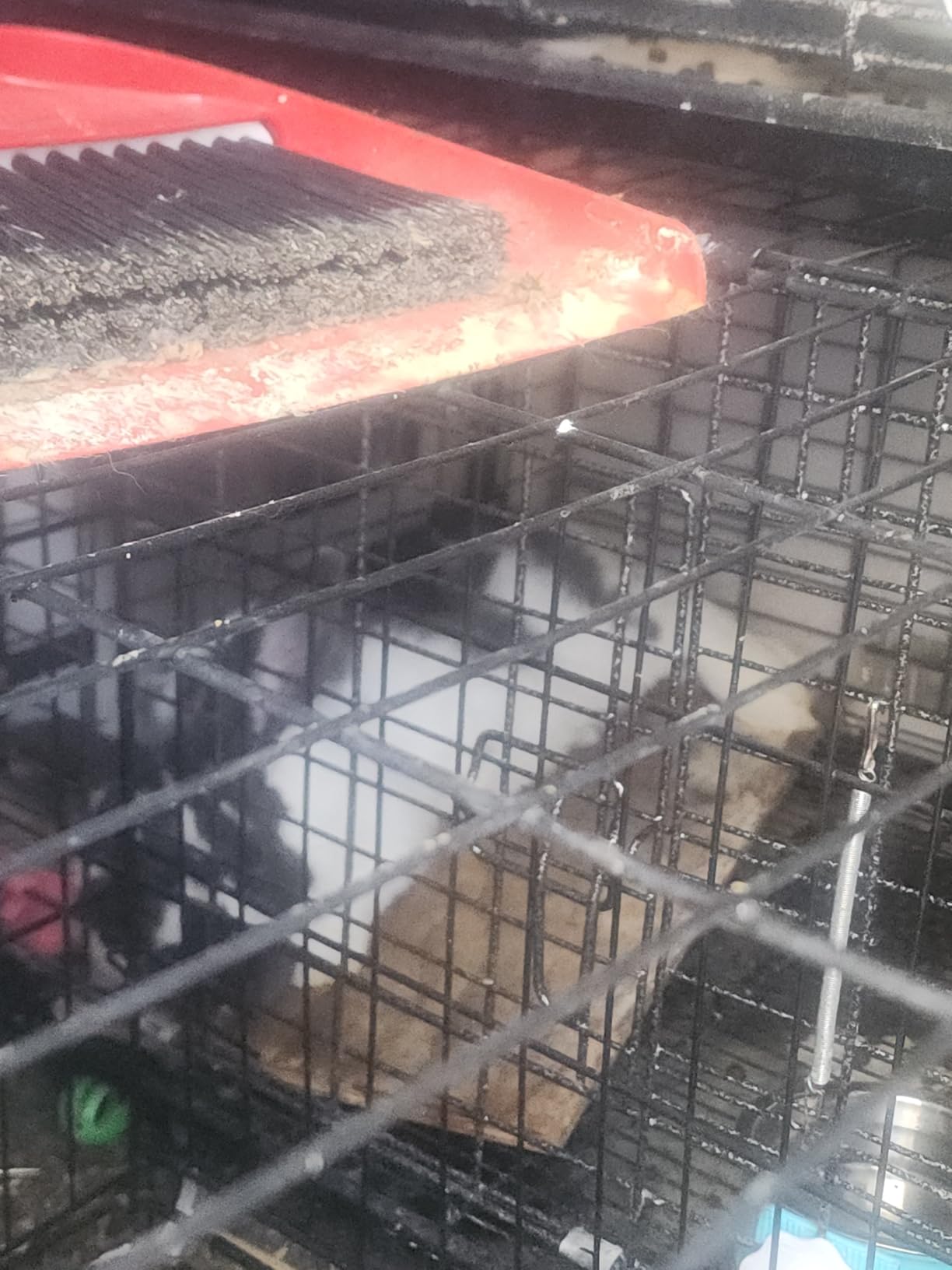
The pull-out tray is the highlight. It slides smoothly and the plastic feels sturdy enough for daily use, though thinner than the trays on the HOMESTEAD cage. Assembly took me about 30 minutes per unit, mostly because the wire floor panels needed careful alignment before the side clips locked in.
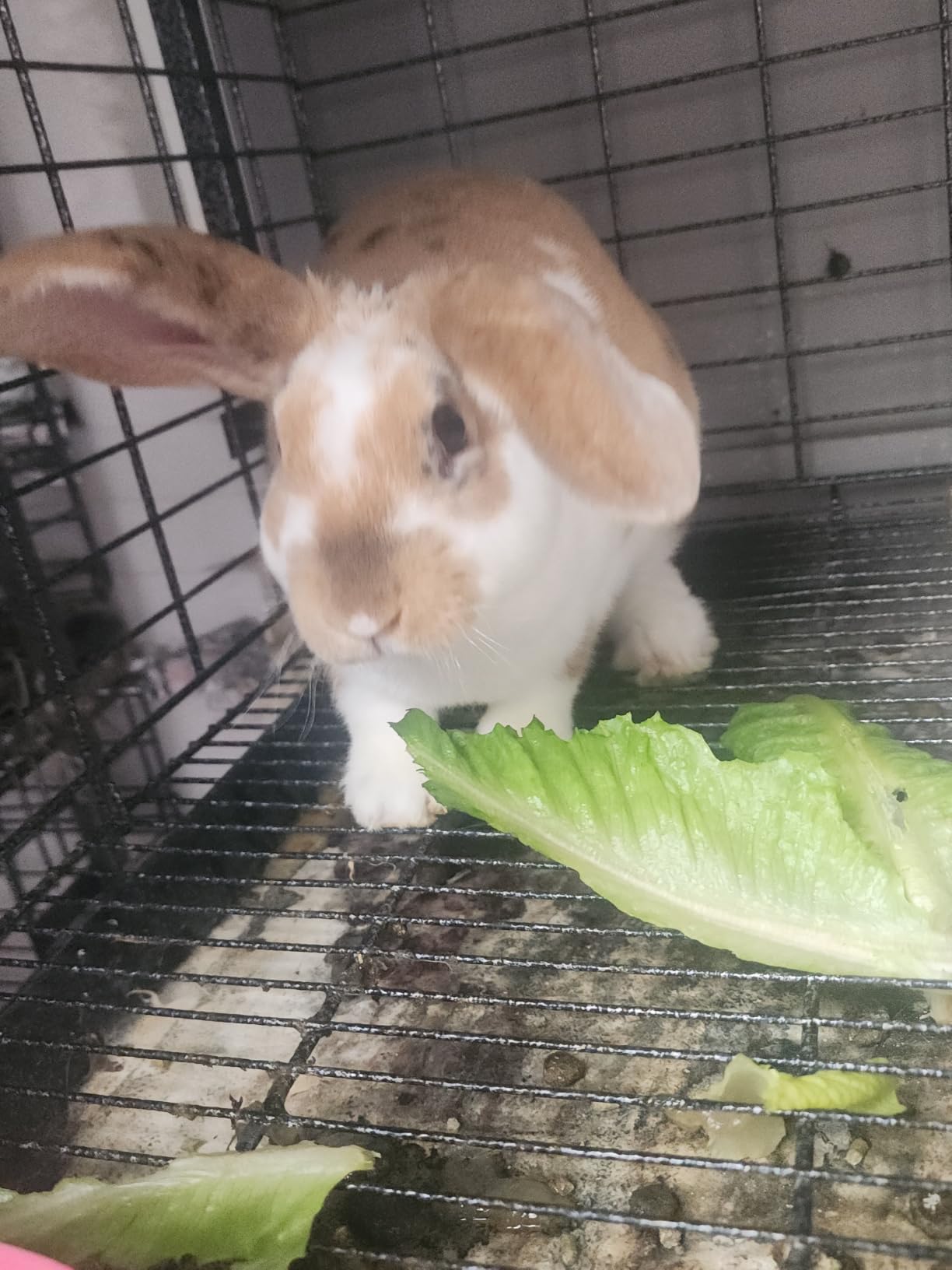
With only 13 reviews and a 4.2-star average, the Seny cage is still building its reputation. That said, the lock feature on the latches is a meaningful safety upgrade compared to budget cages that rely on simple slide latches. If you want a stackable grow-out cage with built-in security, the Seny is worth considering.
For whom it’s good
This Seny cage is ideal if you want a stackable system and you already have quality water bottles and hay racks on hand. The included accessories are decent starter gear, but experienced rabbit keepers will likely swap them for sturdier options.
It also works for indoor rabbitries where the lock feature keeps curious pets or children from opening cage doors accidentally. The metal brackets between stacked units provide extra security compared to clip-only stacks.
For whom it’s bad
If you raise small breed rabbits or kits under 4 weeks old, the wire floor spacing is too wide. I add a resting mat or solid floor panel for young kits in this cage.
The included accessories are the weak point. The water bottle leaks and the hay rack pops off easily. Budget an extra $20 to upgrade them.
10. Mcage Stack and Lock Double Breeder Cage – Multi-Unit Grow-Out System
Combo: Large NO Rust Stainless Galvanized Stack and Lock Double Breeder Cage Bird Breeding Cage with Removable Center Divider Side Nest Box Doors Removabel Rolling Stand
30 x 11 x 15 inches per cage
Lot of 4 cages
Stainless galvanized zinc plated
Pros
- Stainless galvanized zinc plated for rust resistance
- Stack and lock design for vertical expansion
- Includes rolling stand with wheels
- Side spring lock breeding nest doors
- 4 front feeding doors with clear dishes
- Wooden perches included
Cons
- No assembly instructions included
- Some reports of bent parts on arrival
- Trays can develop surface rust over time
- Perches may be too large for some animals
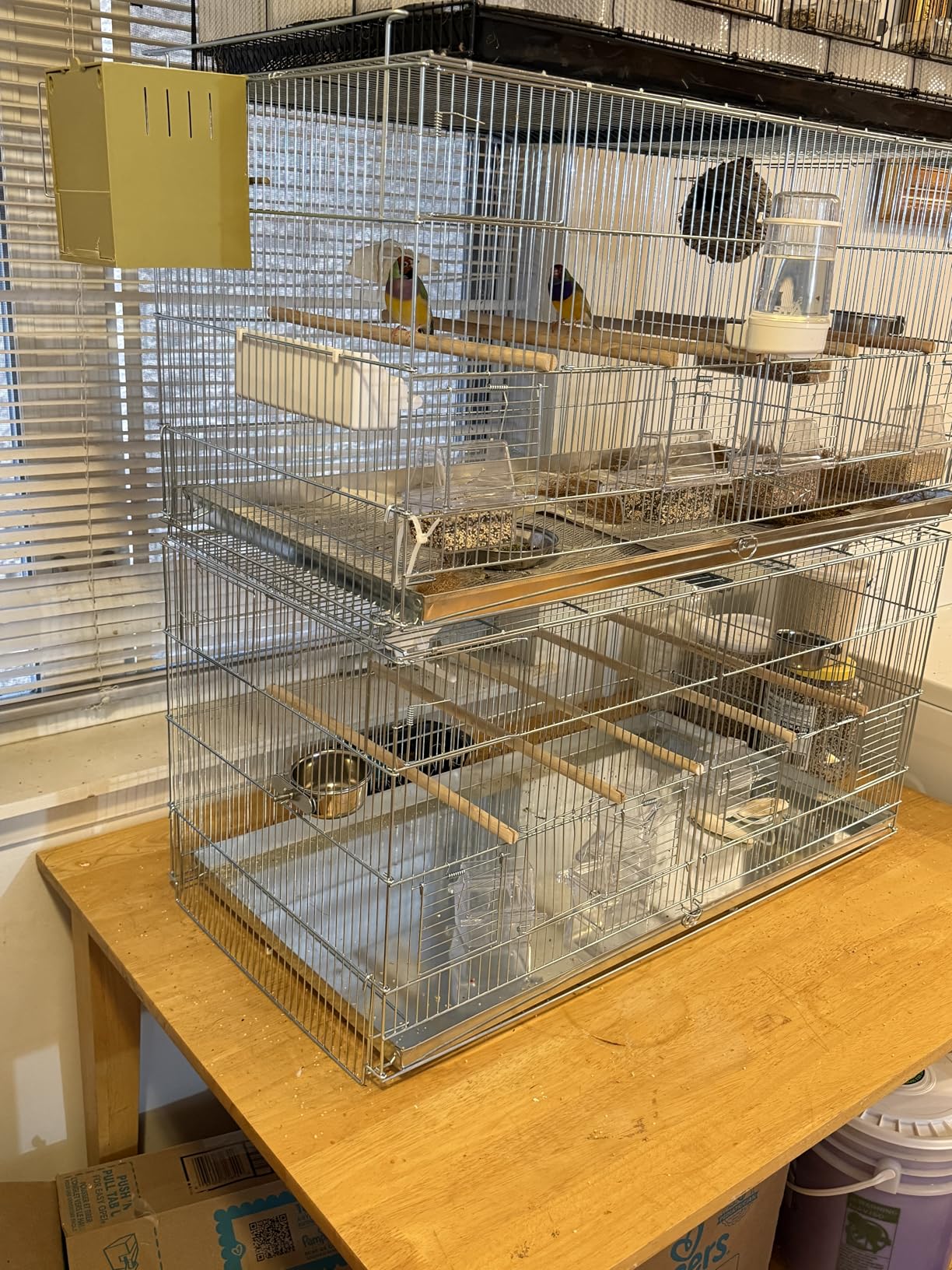
The Mcage Stack and Lock Double Breeder Cage is a multi-unit system that ships as a lot of 4 cages with a rolling stand. I tested it with a friend who breeds rabbits alongside poultry, and the stack-and-lock design lets you reconfigure the 4 cages into different layouts depending on your grow-out needs. The stainless galvanized zinc plating has held up to a full year of barn humidity without rust.
The rolling stand with wheels is a unique feature. I can roll the entire 4-cage stack from one side of the barn to the other to follow sunlight or dodge weather. That mobility is something no other cage on this list offers.
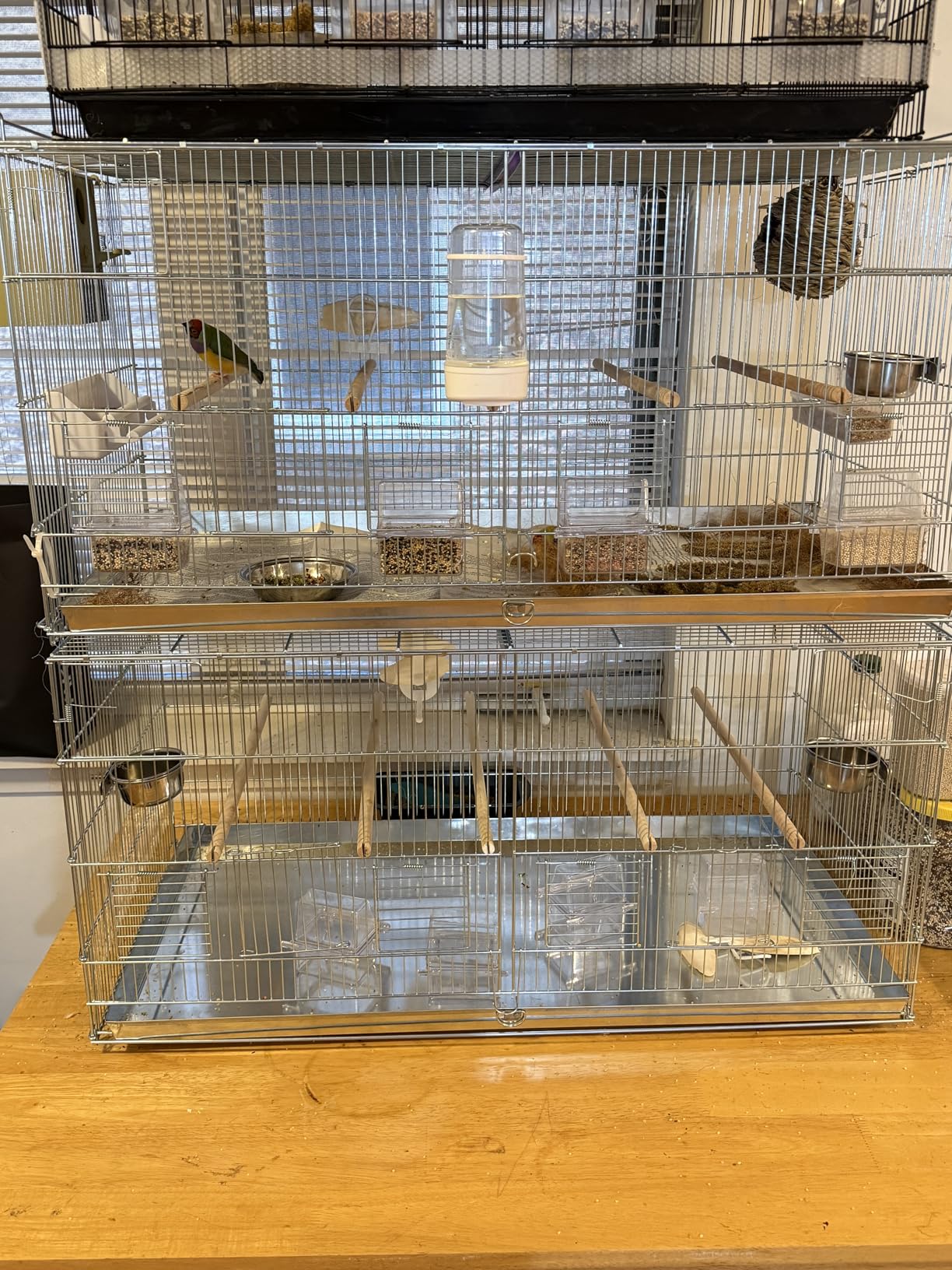
The 3/8-inch bar spacing is tight enough to safely hold kits from weaning, and the center removable wire divider lets you split each cage into two sections for separating sexes or quarantining new arrivals. The 4 front feeding doors with clear hook dishes are convenient for spot-feeding individual rabbits.
With 156 reviews and a 4.1-star average, the Mcage system has earned a following among breeders who want a flexible multi-unit setup. The main caveat is the lack of assembly instructions, which forced me to figure out the stacking order by trial and error. Once assembled, though, the cage is one of the most functional rabbit grow-out cages for meat production when you need 4 grow-out spaces in a small footprint.
For whom it’s good
This Mcage system is ideal if you want 4 grow-out spaces in a single rolling footprint. Small-scale breeders who need to move cages around the barn will appreciate the wheels. The stack-and-lock design also lets you split cages into smaller grow-out groups when needed.
It also fits homesteaders raising multiple species. The 3/8-inch bar spacing works for quail, chinchillas, and rabbits, which makes the system versatile across a diversified homestead.
For whom it’s bad
The lack of assembly instructions is a real problem. I had to call the manufacturer for guidance, and several pieces arrived bent. Budget extra time for assembly and have pliers on hand for straightening bent wire.
Each individual cage is only 11 inches wide, which is too narrow for larger rabbit breeds past 8 weeks. I use this system primarily for kits and younger grow-outs.
What to Look for When Buying Rabbit Grow-Out Cages?
Rabbit grow-out cages for meat production need to balance three things: enough space for fryers to grow, ease of cleaning for the keeper, and durability against chewing and weather. Picking the wrong cage leads to stressed rabbits, slow weight gain, and hours of wasted labor every week. Here are the five factors I check on every cage before I commit my money.
Cage dimensions and space requirements
The standard recommendation for meat rabbit grow-out cages is 3 feet by 3 feet of floor space with 2 feet of headroom, which gives fryers enough room to stretch without wasting barn space. Larger breeds like New Zealand Whites can use 4 by 3 feet if you have the space, but anything smaller than 3 by 3 leads to crowding, fights, and uneven growth. I run 3 to 4 fryers in a 3 by 3 cage and 5 to 6 in a 4 by 3 cage, which mirrors what experienced keepers on r/MeatRabbitry recommend.
Height matters more than most new rabbit keepers realize. Fryers like to stand upright to survey their space, and cages under 18 inches tall force them into a hunched posture that stresses their spines. The 3-3-3 rule for rabbits, often called the 3-3-3 transition rule, is about adopting a new rabbit into your home and is unrelated to cage size. Cage sizing is its own specification.
Wire gauge and material durability
Mother Earth News and most experienced rabbit breeders recommend 14-gauge double-galvanized welded wire for rabbit grow-out cages for meat production. The 14-gauge thickness resists chewing and predator pressure, while double-galvanizing prevents rust for years of outdoor use. Anything lighter than 14-gauge will flex under the weight of multiple grow-outs and may snap after a few seasons.
The floor wire should be 1-inch square mesh, sometimes called 1/2 inch by 1 inch. Smaller mesh keeps feet from getting caught, and the 1-inch spacing lets waste drop through cleanly. Avoid chicken wire at all costs. It is too flimsy for full-size meat breeds and predators can tear through it.
Stackable vs single-tier designs
Stackable cages are a game changer for small-space rabbit keepers. I run a 3-tier vertical stack in my pole barn, which gives me 3 grow-out spaces in the footprint of 1. The HOMESTEAD cage, Pet Lodge hutch, and Seny stackable are all good options if you want vertical expansion. Single-tier cages like the Ferplast Krolik give more floor space per cage but require more barn square footage.
Forum users on r/MeatRabbitry debate this constantly. The consensus is that stackable cages work great for indoor or sheltered barn use, while single-tier hutches are better for outdoor pasture setups where mobility matters. Match the design to your location, not the other way around.
Easy cleaning features
Pull-out trays, slide-out pans, and detachable bases save hours per week. I will not buy a rabbit grow-out cage without a slide-out tray or detachable base because waste buildup causes ammonia spikes that hurt rabbit lungs. The HOMESTEAD and MidWest Wabbitat cages both have excellent slide-out trays, while the Ferplast Krolik has a fully detachable base that speeds up deep cleaning.
Urine guards are another small feature that pays off. They stop urine from splashing out of the cage and onto surrounding surfaces, which keeps your barn or garage floor cleaner and reduces odor. The MidWest Small Wabbitat includes a urine guard by default, which is one reason it remains popular despite its smaller size.
Predator protection and weather resistance
If you raise rabbits outdoors, predator protection is non-negotiable. Raccoons, weasels, foxes, and dogs can all damage or kill grow-outs through weak wire. Double-galvanized 14-gauge wire resists chewing and tearing, but you also need a secure latching system. Spring locks and barrel locks outperform simple slide latches, and the Seny cage lock feature is worth considering for outdoor use.
Weather resistance matters in humid climates. Galvanized and zinc-plated cages like the Pet Lodge and Mcage units hold up to barn humidity, while painted cages can chip and rust within a season. If you are raising rabbits outside, lean toward galvanized wire and avoid plastic-heavy cages that can become brittle in cold weather.
Frequently Asked Questions About Rabbit Grow-Out Cages
What is the best cage for a meat rabbit?
The best cage for a meat rabbit is an all-wire, double-galvanized 14-gauge welded wire cage with at least 3 feet by 3 feet of floor space and 2 feet of headroom. Look for a slide-out tray or detachable base for easy cleaning, 1-inch square mesh flooring, and secure latches that resist predators.
What is the 3 3 3 rule for rabbits?
The 3-3-3 rule for rabbits refers to the adoption transition period: 3 days to decompress, 3 weeks to settle in, and 3 months to feel fully at home. It is not a cage sizing rule. For cage dimensions, the standard is 3 feet by 3 feet of floor space with 2 feet of headroom for meat breeds.
What are the best rabbits for meat production?
The best rabbits for meat production are New Zealand White, Californian, and Flemish Giant breeds. New Zealand Whites are the most popular because they reach 4 to 5 pounds at 8 to 12 weeks on standard feed, with excellent feed conversion. Californians are similar in growth rate, and Flemish Giants produce larger roasters but take longer to mature.
How long do you grow out meat rabbits?
Most meat rabbits are grown out for 8 to 12 weeks before processing, with 8 weeks being standard for fryers at 4 to 5 pounds and 12 weeks for roasters at 8 pounds or more. New Zealand Whites typically hit butcher weight fastest, often by 9 to 10 weeks on a 16 to 18 percent protein pellet diet.
What gauge wire is best for rabbit grow-out cages?
14-gauge double-galvanized welded wire is the gold standard for rabbit grow-out cages for meat production. The 14-gauge thickness resists chewing and predator pressure, while double-galvanizing prevents rust in humid barns or outdoor setups. Avoid chicken wire, which is too flimsy, and anything lighter than 16-gauge for the floor.
Final Thoughts on Choosing the Best Rabbit Grow-Out Cages
The best rabbit grow-out cages for meat production all share three things: enough space for fryers to grow, easy cleaning for the keeper, and durable wire that lasts. My top pick overall is the Living World Deluxe Hybrid Habitat for spacious single-pen setups, the HOMESTEAD Rabbit Cage for stackable breeding systems, and the Pet Lodge Wire Hutch for budget-conscious keepers who want to build a vertical stack.
If you are starting your rabbitry in 2026, start with one cage, learn what your feeding and cleaning rhythm looks like, and add a second or third unit once you have a feel for your operation. The best rabbit grow-out cages for meat production are the ones you actually use day after day, so pick the design that fits your space, your budget, and your grow-out style.