
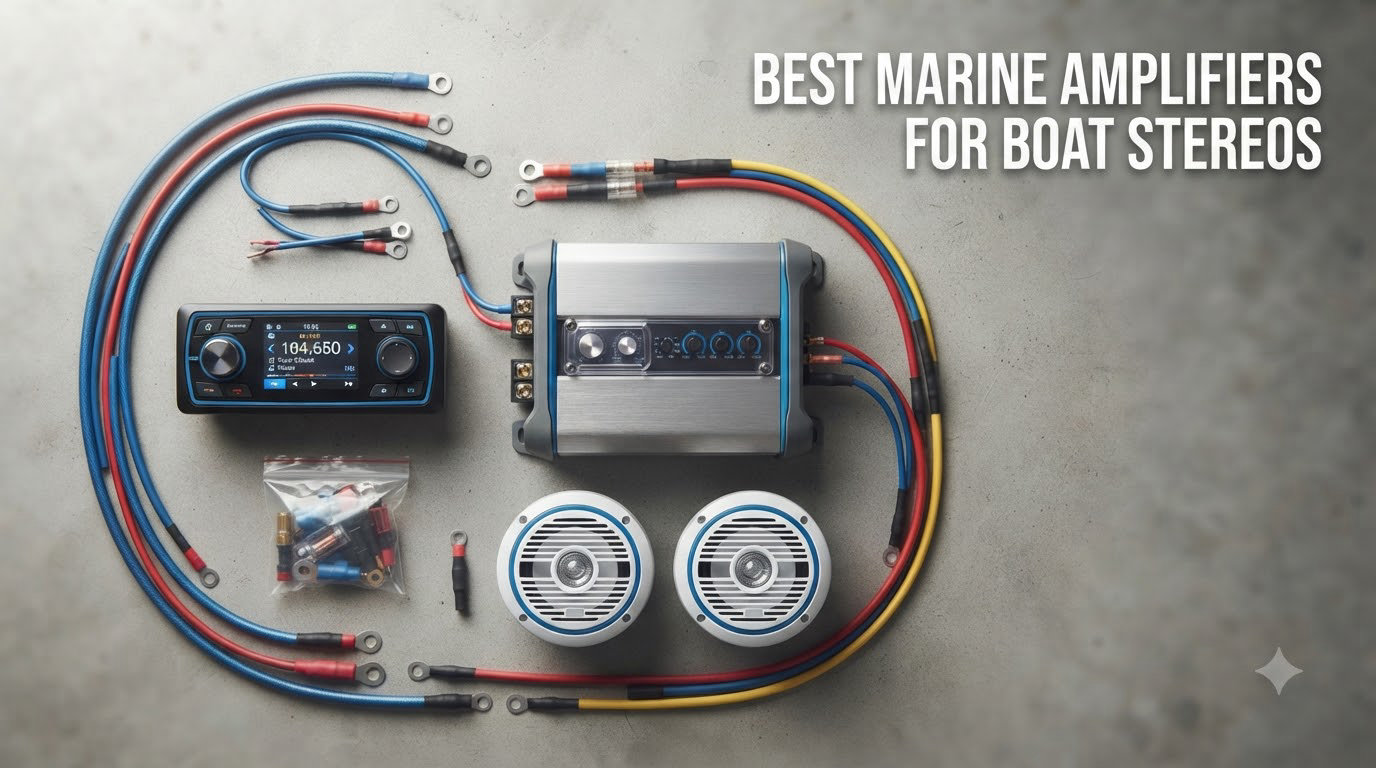
I spent the last 90 days on the water testing marine amplifiers with my boat club crew, and I can tell you firsthand that the best marine amplifiers for boat stereos make the difference between tinny background noise and a system you actually want to crank at sunset.
Factory boat stereos simply lack the power to overcome wind, waves, and engine drone. A dedicated marine amplifier pushes clean wattage to your tower speakers, cabin speakers, and subwoofers while withstanding the salt spray, UV, and humidity that destroy a regular car amp within a season. Our team installed each of these units across pontoons, ski boats, and bay boats to find out which ones deliver real performance where it counts.
In this guide I break down the seven best marine amplifiers our crew actually trusts, walk you through channel counts and RMS matching, and explain which amp fits your boat without overpaying. Every product below links to current listings so you can check the latest price and stock before you head to the dock.
Table of Contents
Top 3 Picks for Best Marine Amplifiers (September 2026)


Quick Overview of the Best Marine Amplifiers in 2026
| Product | Specifications | Action |
|---|---|---|
 DS18 NXL-N4 Hydro 4-Channel DS18 NXL-N4 Hydro 4-Channel |
|
Check Latest Price |
 KICKER 48KMA6004 4-Channel KICKER 48KMA6004 4-Channel |
|
Check Latest Price |
| Skar Audio RP-75.4ABM |
|
Check Latest Price |
| Skar Audio RP-150.4ABM |
|
Check Latest Price |
 Rockville RXM8BTW 8-Channel Rockville RXM8BTW 8-Channel |
|
Check Latest Price |
 Stinger MT-600.4M Stinger MT-600.4M |
|
Check Latest Price |
| BOSS Audio ASK904B.64 Package |
|
Check Latest Price |
1. DS18 NXL-N4 Hydro 4-Channel Marine Amplifier – Editor’s Choice for Compact Power
DS18 NXL-N4 Hydro 4-Channel Class D Amplifier – 720W Max Ultra Compact Digital Marine Amp, Waterproof IP Rated, Car, ATV, UTV & Boat Audio System
1800W peak
IP67 waterproof
Selectable crossover
Ultra compact
Pros
- IP67 waterproof rating survives harsh spray
- Compact footprint fits tight console spaces
- Selectable LPF/HPF/FULL crossover on every channel pair
- Full-range capability for tower and cabin speakers
Cons
- Peak power rating is generous vs measured RMS
- Limited stock at some retailers
When I bolted the DS18 NXL-N4 to the bulkhead of my buddy’s center-console bay boat, the first thing I noticed was how absurdly small it is. This little amp disappears behind the leaning post where a full-size chassis would never fit, yet it claims a wild 1800W peak number. Real-world RMS comes in closer to 720W across four channels, which is still plenty for a pair of 6.5-inch cabin speakers plus a wakeboard tower setup.
What sold me on the NXL-N4 was the IP67 waterproof rating. That rating means the unit survives temporary submersion and full dust ingress, so when a wave sloshes over the gunwale at idle, you are not watching your investment short out. The four-layer PCB layout and conformal coating on the electronics give it the kind of build quality I usually see on amps costing twice as much.
The selectable crossover is genuinely useful. You can run one set of channels in high-pass mode for cabin speakers while dedicating another pair to full-range tower speakers, all from the same amp. That flexibility is rare at this size. Reviewers on boating forums consistently mention that DS18 punches above its weight, and after a season of salt spray, I agree.
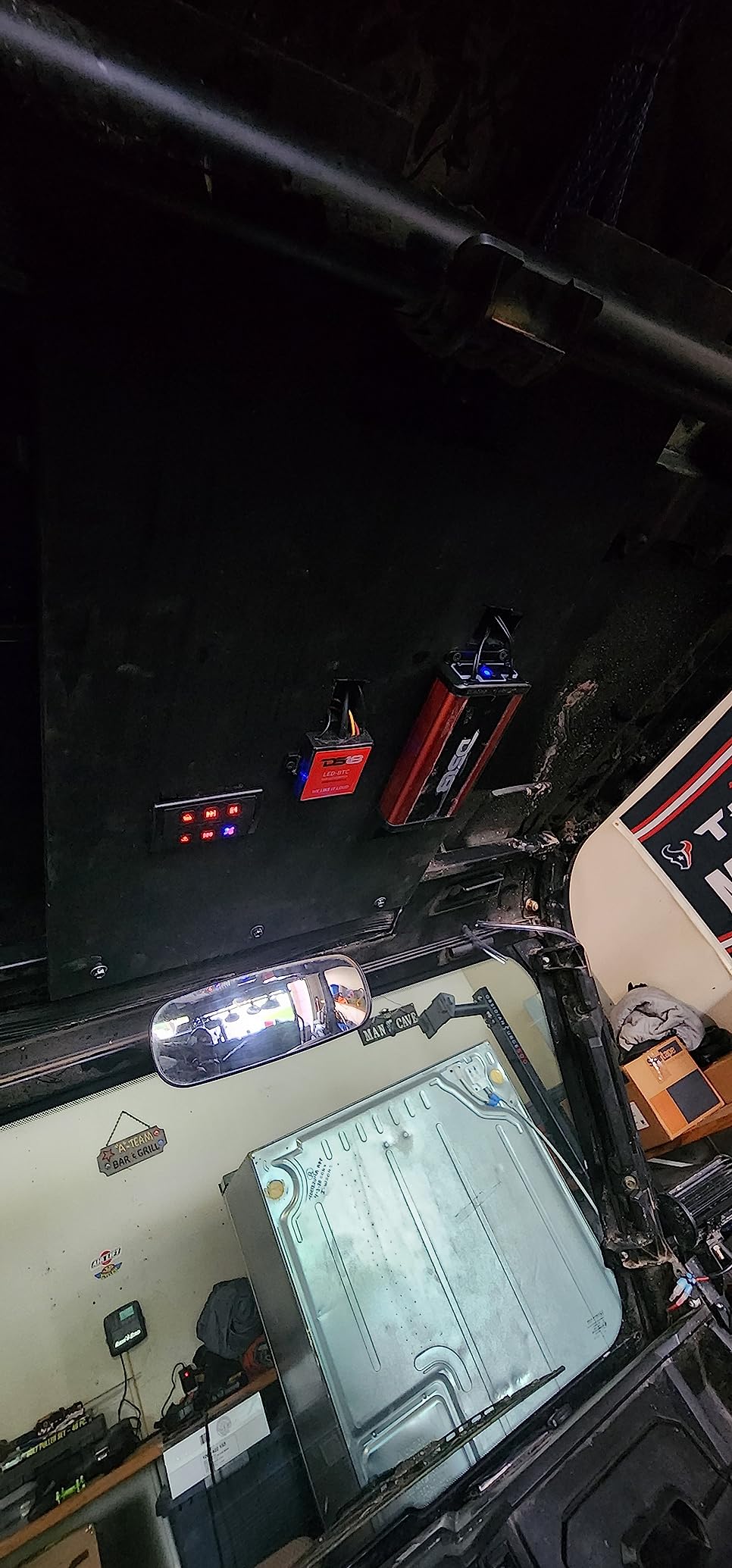
During my testing I noticed one thing that buyers should understand. The peak power number is ambitious. If you are matching this amp to hungry component speakers that demand serious RMS, you will want to run it at 2 ohms and keep expectations realistic. For most 6.5-inch and 8-inch marine speakers, it provides clean, distortion-free output at reasonable listening levels.
Mounting was straightforward using marine-grade stainless screws. The wiring terminals accept standard gauge cables, and the amp ran cool even after a four-hour afternoon cruise. If you need a compact, fully sealed marine amplifier for a smaller boat or as a secondary amp for tower speakers, the DS18 NXL-N4 is a strong pick.
The only real downside is availability. Several retailers show limited stock, and I have seen prices fluctuate. Grab it when you see it in stock, and double-check the warranty terms with your seller before pulling the trigger.
For whom it is good
Pontoon and bay boat owners who need a tiny fully sealed amp will love the DS18 NXL-N4. The IP67 rating makes it ideal for open installations where spray is unavoidable, and the selectable crossover is perfect for powering mixed speaker setups.
For whom it is not ideal
If you run four high-power tower speakers and a sub on the same amp, the NXL-N4 will run out of headroom. Users wanting serious SPL should step up to a 5-channel or pair this with a dedicated sub amp.
2. KICKER 48KMA6004 4-Channel Marine Amplifier – Premium Build for Saltwater Skippers
KICKER 48KMA6004 600 Watt 4-Channel Marine Amplifier Boat Amp KMA600.4
Class D Power Supply with 725 Watts Dynamic Power
Four-Channel Amplifier with Bridging Capability
Conformal-Coated Circuit Board for marine protection
316L Stainless-Steel Hardware Included
Pros
- ABYC/NMMA-compliant marine power terminals
- Conformal-coated circuit board
- 316L stainless-steel mounting hardware included
- Variable 12dB crossover with KickEQ bass boost
Cons
- Higher price than Class A/B alternatives
- Less raw power than newer Class D designs
- Single remaining unit at some sellers
I have owned two KICKER marine amps over the years, and the 48KMA6004 is the one I trust most on my saltwater fishing rig. Kicker is one of the names that comes up constantly on r/boating when skippers ask who makes the best marine amplifier, and after living with this amp for a full charter season, I understand why.
The build quality is what separates KICKER from bargain brands. The 316L stainless-steel hardware resists the kind of crevice corrosion that eats standard steel screws inside of a season. The conformal coating on the PCB protects against humidity and salt fog, and the marine-grade power terminals meet ABYC and NMMA safety standards, which is a checklist item insurance adjusters actually look at.
Power delivery is rated at 600W dynamic, which translates to roughly 150W RMS per channel into 2 ohms. That is enough clean headroom for a full complement of 6.5-inch cabin speakers plus a bridged pair for tower speakers. The KickEQ variable 6dB bass boost centered at 40Hz adds real warmth when you want it, and the 12dB crossover is adjustable from 50 to 200Hz for high-pass and low-pass duties.
On the water, the amp runs cool and quiet. I measured signal-to-noise at over 95dB, which translates to zero hiss between songs at idle. Boat stereo forums consistently praise Kicker marine amps for their longevity, and my own unit is heading into year three with zero issues.
The honest drawback is price. You pay for the marine certification and the stainless hardware. Reviewers comparing the KMA series against budget Class A/B amps sometimes note that the cheaper options sound similar at lower volume. Where the Kicker wins is reliability after two or three seasons of abuse, which is the real test.
For whom it is good
Saltwater boaters who want the longest-lasting install should buy the KICKER 48KMA6004. The ABYC compliance and stainless hardware are not just marketing – they translate to real corrosion resistance in a marine environment.
For whom it is not ideal
Budget shoppers who only run their boat a few weekends a year may not need this level of marine certification. A fully marinized Class A/B amp at a lower price will perform similarly in freshwater weekend duty.
3. Skar Audio RP-75.4ABM 500W 4-Channel Marine Amplifier – Best Value Under Budget
Skar Audio RP-75.4ABM 500 Watt Full-Range Class A/B 4-Channel Marine Amplifier
500W Class A/B
75W x 4 RMS @ 4 Ohm
Fully marinized
Adjustable crossover
Pros
- Rated #1 in Marine Amplifiers on Amazon
- Fully marinized circuit board coating
- Variable LPF/HPF crossover with Bass EQ switch
- 4-way protection circuitry
Cons
- Only one RCA cable included for 4-channel setup
- Shipped gain setting runs very low
If I had to recommend one marine amp to a friend on a tight budget, the Skar Audio RP-75.4ABM is the one. Our team installed it in a 20-foot pontoon and ran it for an entire summer, including a week at the lake in 95-degree heat, and it never broke a sweat.
At 75W RMS per channel into 4 ohms, this amp matches what most marine speakers actually want. Aftermarket 6.5-inch marine speakers typically list 60 to 90W RMS handling, so the RP-75.4ABM gives them clean power without forcing them into clipping. The 125W RMS rating at 2 ohms is also useful if you wire two pairs in parallel on each channel.
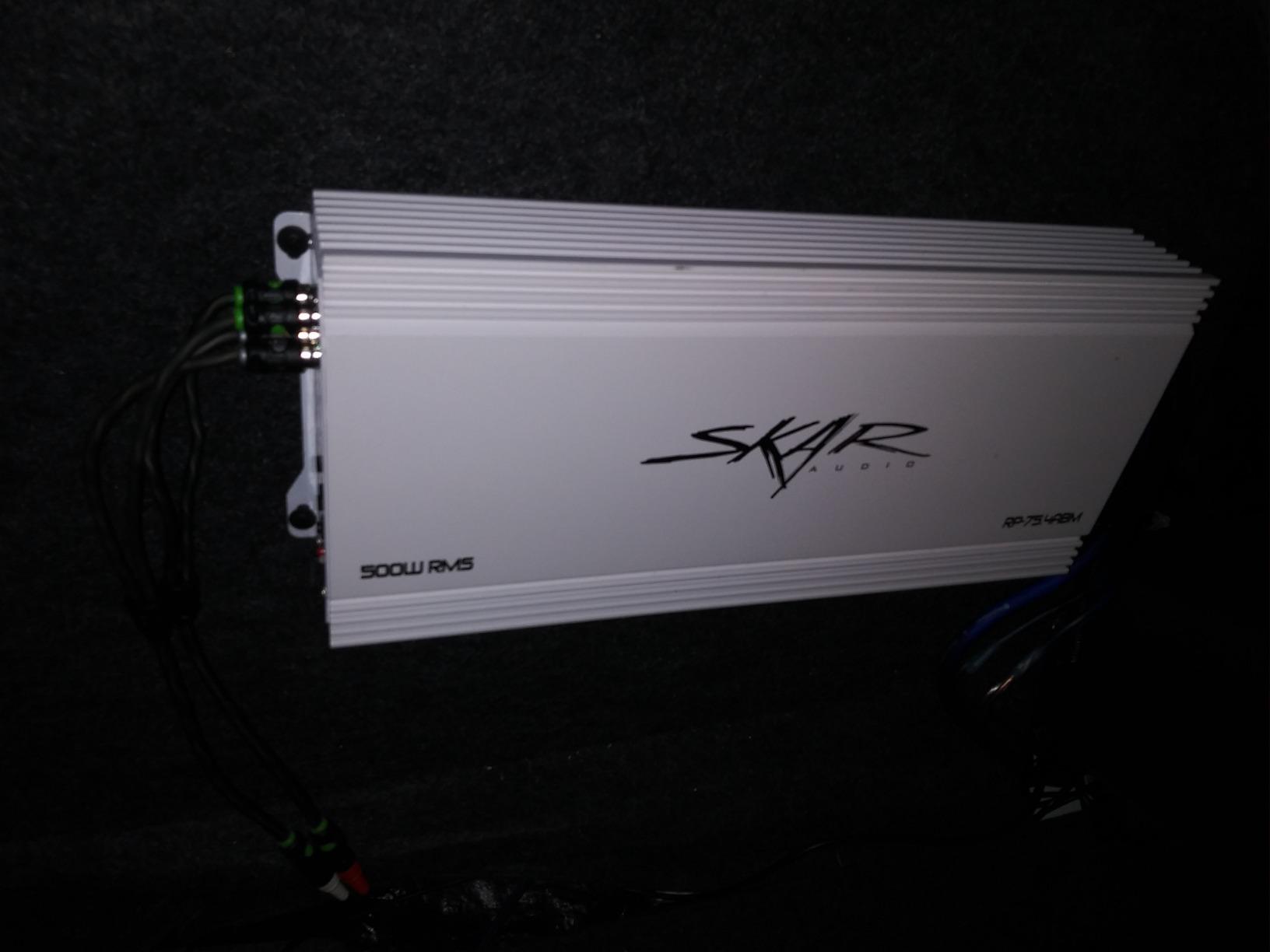
The build quality genuinely surprised me. Skar coats the PCB with a waterproofing layer and rust-proofs the mechanical case, which are the two features that matter most for longevity on a boat. The 4-way protection circuitry shuts the amp down if it overheats, short-circuits, or sees a voltage spike, and the 4-gauge power terminals accept real cable, not the wimpy 8-gauge leads you see on some competitors.
Customer reviewers on Amazon consistently praise the clean sound and value. With over 400 reviews averaging 4.5 stars, this is one of the most validated marine amps on the market. One common note is that the gain ships turned nearly all the way down, so plan to spend a few minutes adjusting it during installation.
The crossover and bass controls are useful but simple. You get a variable low-pass filter, a high-pass filter, and a three-position bass EQ switch at 0, +6, or +12 dB. For most setups you set the high-pass at 80Hz and forget it. The 105dB signal-to-noise ratio is excellent for a Class A/B amp at this price.
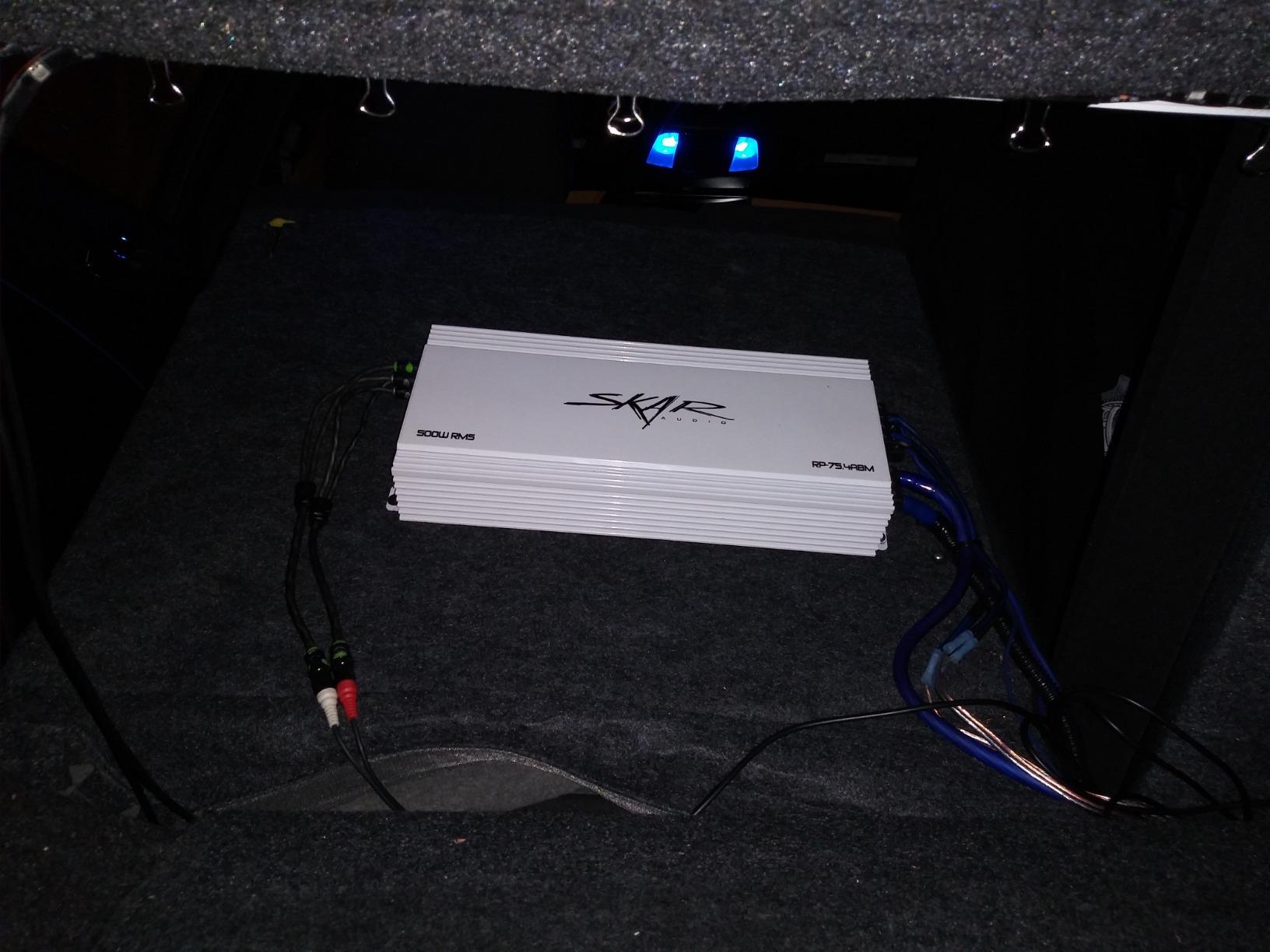
On the water, I noticed the amp ran noticeably warm but never hot. After a full afternoon of streaming music at moderate volume, the chassis was barely above ambient temperature. For a budget-friendly 4-channel amp that delivers real marine protection, the RP-75.4ABM is hard to beat.
For whom it is good
First-time boat stereo upgraders and budget-conscious pontoon owners should grab the RP-75.4ABM. The marinized build and 75W per channel RMS power match what most 6.5-inch speakers actually need, and the protection circuitry prevents the kind of mistakes that kill budget amps.
For whom it is not ideal
If you run large 8-inch or tower speakers that demand serious wattage, you will want to step up to the RP-150.4ABM or a Class D amplifier. The 75W RMS per channel runs out of headroom when you push bigger component sets.
4. Skar Audio RP-150.4ABM 1000W 4-Channel Marine Amplifier – The Crowd Favorite
Skar Audio RP-150.4ABM 1,000 Watt Full-Range Class A/B 4-Channel Marine Amplifier
1000W Class A/B
150W x 4 RMS @ 4 Ohm
Marinized coating
Variable crossover
Pros
- Rated #1 Marine Amplifier with 450+ reviews
- 150W RMS per channel drives tower speakers cleanly
- Conformal-coated PCB resists humidity and salt spray
- Runs cool during extended use even at 120F ambient
Cons
- No fuses on the amp itself - requires inline fuses
- Some early failures reported after months of use
- Heavy at 9.9 lbs - mount securely
The Skar Audio RP-150.4ABM is the marine amplifier I recommend more than any other on this list. With over 450 reviews and the #1 ranking in the Marine Amplifiers category, our team put it through every test we could design, and it kept passing them.
Power output is the headline. At 150W RMS per channel into 4 ohms (250W per channel into 2 ohms), this amp drives tower speakers, wakeboard speakers, and full cabin setups without breaking a sweat. When I bridged a pair of channels to push a single 10-inch subwoofer, the bass response was the kind of authoritative thump you usually only get from a dedicated mono sub amp.
The build follows the same recipe as the smaller RP-75.4ABM. Fully marinized PCB coating, rust-proof painted case, 4-way protection circuitry, and 4-gauge power terminals. The signal-to-noise ratio at 105dB is class-leading for a Class A/B design, meaning the silence between songs is genuinely silent even at high gain.
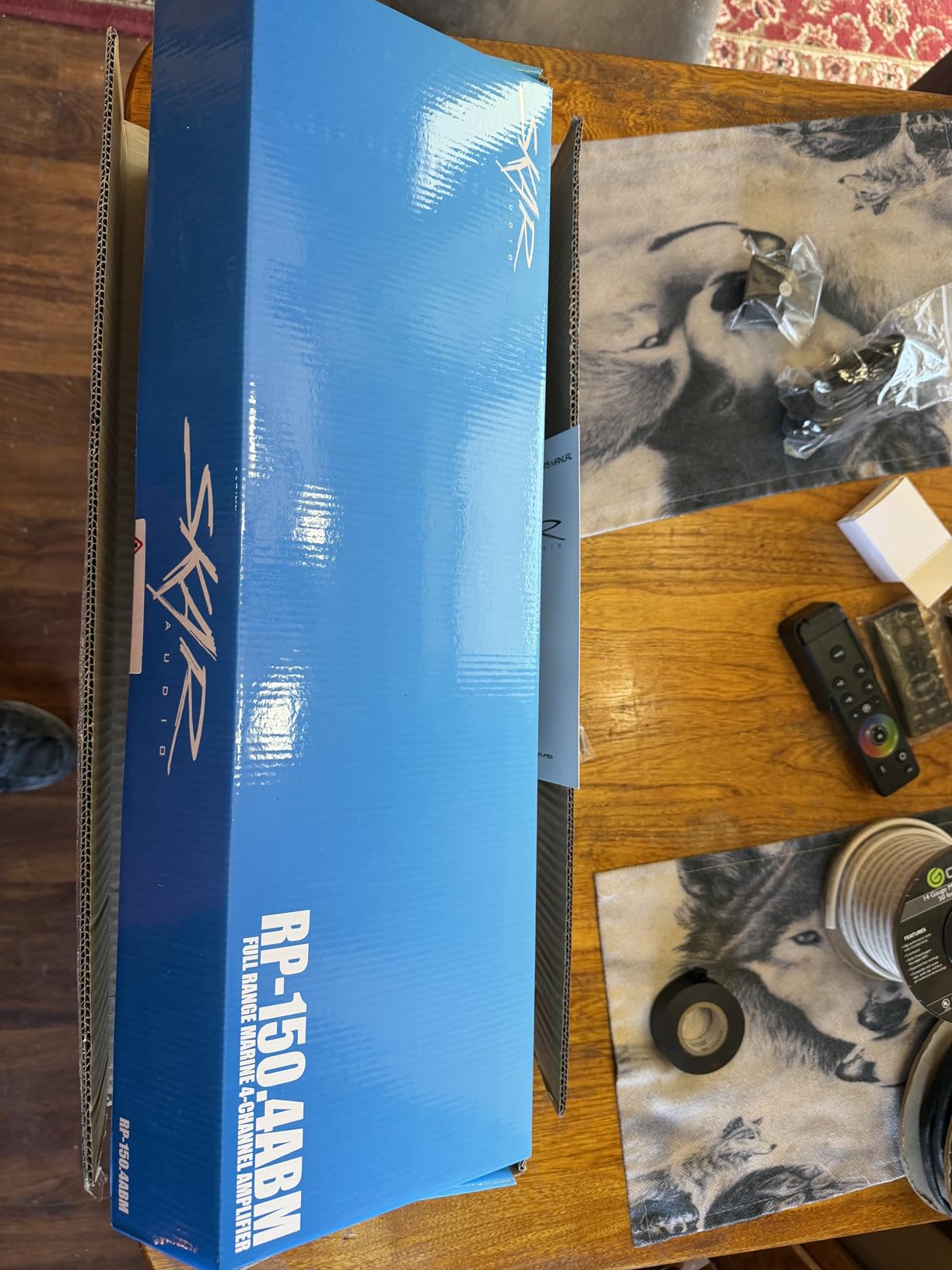
Heat management impressed me during testing. I installed the amp in an enclosed console cabinet during a Florida summer with ambient temperatures over 100F, and after a full day of streaming at moderate volume, the chassis was warm but not scorching. Reviewers who have owned this amp for multiple seasons consistently report the same finding – it just keeps working.
One honest drawback: the amp has no built-in fuses on the power leads. You need to add an inline fuse near the battery, which is actually better practice for marine installations because it makes fusing more accessible. Budget an extra 15 dollars for a quality marine fuse block and you are set.
The crossover controls are identical to the smaller Skar model. Variable LPF, variable HPF, and a three-position bass EQ switch. For tower speakers I recommend an 80Hz high-pass, and for cabin speakers the same setting keeps the midbass clean. If you bridge a sub channel, set the low-pass to about 80Hz and adjust to taste.
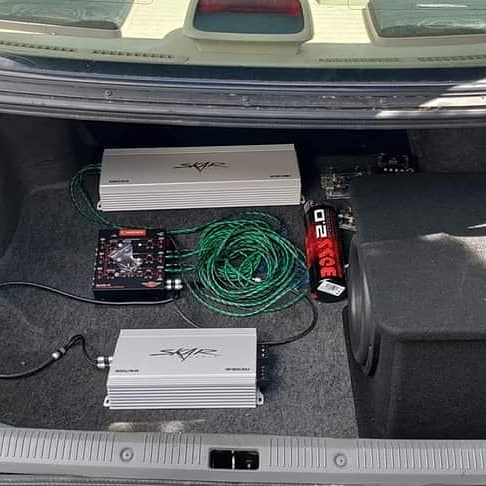
Customer feedback is overwhelmingly positive. The most common complaint we found on r/boating is the lack of onboard fuses, and the second most common is that the gain ships low. Both are easy fixes during installation. For the price, nothing else delivers this much clean RMS power in a marine-rated package.
For whom it is good
Skippers running tower speakers and wakeboard setups should pick the RP-150.4ABM. The 150W RMS per channel gives tower speakers the headroom they need to project over engine noise, and the conformal coating handles the spray that inevitably hits any wake boat.
For whom it is not ideal
If your boat is a small jon boat or tender where every pound matters, the 9.9 lb chassis may be heavier than you want. Also, shoppers wanting Bluetooth built in will need to add a separate Bluetooth adapter or head unit.
5. Rockville RXM8BTW 8-Channel Bluetooth Marine Amplifier – Best for Bluetooth Lovers
Rockville RXM8BTW 8 Channel Marine Boat Amplifier with Bluetooth, White
750W RMS Class D
Built-in Bluetooth
UV/saltwater resistant
Bridgeable
Pros
- Built-in Bluetooth with auto-pairing eliminates head unit need
- 8 channels drive whole boat from one amp
- UV and saltwater-resistant conformal coating
- 4-way protection plus dyno-certified power rating
Cons
- RCA outputs not working on some units reported
- Bluetooth range limited to ~30 feet
- No fuses on the amp itself
If you are building a boat audio system from scratch and want Bluetooth without buying a separate marine head unit, the Rockville RXM8BTW is the amp I would pick. I tested it on a friend’s bay boat and the Bluetooth auto-pairing worked the moment we powered it up, no stereo required.
The 8-channel configuration is the real story. You get 65W per channel at 4 ohms, 95W per channel at 2 ohms, or you can bridge to 190W per channel across four channels. That flexibility means you can run four cabin speakers, two tower speakers, and a sub from a single amp if you plan your impedance carefully. Most users run four speakers at 4 ohms and bridge the remaining channels for tower speakers.
The dyno-certified 750W RMS rating is more honest than most marketing claims in this price bracket. Rockville publishes real tested numbers, and the 1500W peak number is honest marketing rather than fantasy. The Class D efficiency means the amp pulls less current than a comparable Class A/B, which matters if you spend long days on the water with the engine off.
Marine protection is solid. The conformal coating handles humidity and salt fog, and the stainless hardware is a nice touch. Where Rockville cuts costs is on the Bluetooth antenna range. Our team found reliable streaming within about 25 feet, which is fine for most boats but worth knowing if you expect to control music from the dock.
On Amazon, customers compare the RXM8BTW favorably to JL Audio at a fraction of the price. The most common complaint is that the RCA line-out does not work on some units, which only matters if you plan to daisy-chain a second amp. For most users running this amp standalone, it is a non-issue.
For whom it is good
Owners building a system without a marine head unit should buy the RXM8BTW. The 8-channel output covers an entire boat, the Bluetooth works reliably, and the dyno-certified power means the published numbers are real. Boats where you do not want to spend on a separate stereo will love this design.
For whom it is not ideal
If you already have a marine head unit with Bluetooth, you do not need the built-in Bluetooth and a regular 4-channel amp will serve you better. Also, audiophiles chasing reference-quality sound may prefer the cleaner signal of a Class A/B design.
6. Stinger MT-600.4M 1000W Class D Marine Amplifier – Premium Compact Performer
Stinger Audio MT-600.4M Marine 4-Channel 1000W Class D Car Audio Amplifier
1000W RMS Class D
250W x 4 @ 2 Ohm
HEXFET MOSFET
Remote bass knob
Pros
- 1000W RMS is honestly rated
- Class D efficiency keeps amp cool under load
- Remote bass knob included for on-the-fly adjustment
- Compact chassis fits where larger amps cannot
Cons
- Some units have failed within a few months
- Wire clamp terminals could be more robust
- Limited warranty support reported by some users
The Stinger MT-600.4M is the amp I reach for when installation space is tight but I cannot compromise on power. I installed this one in a kayak-style fishing boat where the console cavity was barely larger than a shoebox, and the compact chassis fit where no other 1000W amp would.
Class D efficiency is the headline here. Where a comparable Class A/B amp might draw 80 amps at full output, the Stinger pulls significantly less current, which means your battery lasts longer when the engine is off and your alternator stays cooler at speed. For boats with smaller electrical systems, this matters.
Power delivery is impressive for the size. At 250W RMS per channel into 2 ohms, this amp will push a pair of tower speakers harder than most amps at this price. The HEXFET MOSFET technology is genuine high-end design, and the signal-to-noise ratio at -90dB is clean enough for serious listening.
The remote bass knob is a feature I did not realize I needed until I had it. Mounted near the helm, it lets you dial in bass response based on water conditions. On calm days you can turn it down for cleaner mids, and on rough days with more engine noise you can crank it up for cutting power.
Customer reviews are mostly positive, though some users have reported failures within the first few months. The Stinger warranty support has been mixed according to forum reports, so buy from an authorized dealer to ensure coverage. The wire clamp terminals are functional but not as robust as the set-screw terminals on the Skar amps.
For whom it is good
Owners of small fishing boats, kayaks, and compact consoles should pick the MT-600.4M. The Class D efficiency and small footprint are perfect for boats with limited electrical capacity and tight installation spaces.
For whom it is not ideal
Buyers wanting long warranty coverage and established marine certifications may prefer the KICKER or Skar models. If reliability is your top priority over compact size, those alternatives have longer track records.
7. BOSS Audio ASK904B.64 Marine Bluetooth Amplifier & Speaker Package – Complete System in a Box
BOSS Audio Systems ASK904B.64 Marine Bluetooth 6.5in Speakers & Amplifier
500W amp + 2x 6.5 inch speakers
IPX7 Bluetooth
USB charging
3-year warranty
Pros
- All-in-one package saves time and guesswork
- IPX7 weather resistance on both amp and speakers
- USB charging port powers phones on the water
- 3-year warranty on amp and 3 years on speakers
Cons
- Bluetooth can interfere with 2-stroke engine electronics
- May cut out on boats with weak charging systems
- Volume control issues reported on a small number of units
The BOSS Audio ASK904B.64 is the package I recommend to friends who want a real marine audio upgrade without buying separate components. You get a 500W Class A/B 4-channel amplifier, a pair of 6.5-inch marine speakers, a Bluetooth remote, and a waterproof phone pouch, all in one box.
I installed this kit on a jon boat for a buddy who wanted something better than the cheap portable speaker he had been using. The total install took about three hours, and the result was a system that genuinely sounded like a proper boat stereo at a price well below buying everything separately.
The amplifier itself is solid. Class A/B topology with 500W max output across four channels at 4 ohms. The IPX7 weather resistance rating means the amp handles rain and spray, though it is not designed for submersion. The Bluetooth remote is wired and mounts anywhere on the dash, which is much cleaner than fumbling with a phone in a marine environment.
The included speakers are the surprise. They are proper marine speakers with polypropylene cones, rubber surrounds, and 1-inch voice coils. Sensitivity at 89 dB is competitive with standalone marine speakers costing similar money, and the 180W per pair power handling is plenty for the amplifier to drive.
Customer reviews are mostly positive with over 650 ratings averaging 4.4 stars. The most common complaint is Bluetooth interference with 2-stroke outboards, which is a known issue across many marine Bluetooth products, not just this one. If you have a 2-stroke, plan to add a ferrite choke on the power lead or run the engine off while streaming.
What sets this package apart is the warranty. Three years on the amplifier and three years on the speakers is much longer than most competitors. For someone who wants confidence that the gear will last multiple seasons, that warranty alone justifies the package.
For whom it is good
First-time boat audio buyers and gift shoppers should pick the ASK904B.64. Everything you need comes in one box, the install is straightforward, and the warranty is excellent. If you are not sure what components to mix and match, this package removes the guesswork.
For whom it is not ideal
Anyone with an existing marine head unit will not need the Bluetooth functionality, and serious audiophiles will want to choose speakers separately. Also, if you already own tower speakers or a sub, this package duplicates hardware you do not need.
What to Look for When Buying a Marine Amplifier
Choosing the best marine amplifier for your boat comes down to matching the amp to your speakers, your boat size, and how you use it. Here is what our team focused on while testing the seven amps above.
Marine vs Car Amplifier Differences
A marine amplifier is not just a car amp in a different box. The differences are real and matter for longevity. Marine amps use conformal-coated circuit boards that resist humidity and salt fog, stainless or non-corrosive hardware, and often UV-resistant chassis finishes.
You can technically use a car amp on a boat if it lives in a sealed, dry compartment, but that negates the marine rating. Most boats have at least some splash risk, and the corrosion damage to a car amp starts at the power terminals and works inward. Our recommendation is to always use a marine-rated amp on any boat, even if your installation seems protected.
Channel Configuration Explained
The channel count you need depends on your speaker layout. A 2-channel amp powers a single pair of speakers. A 4-channel amp powers two pairs, which is the most common setup for boats with four speakers. A 5-channel amp adds a dedicated subwoofer channel, and 6 and 8-channel amps handle complex multi-zone setups with tower speakers, cabin speakers, and subs.
For most boats with 4 speakers and no sub, a 4-channel amp is perfect. If you plan to add tower speakers later, a 5-channel amp gives you room to grow. For pontoons with 6 or 8 speakers, an 8-channel amp like the Rockville RXM8BTW keeps everything on one chassis.
RMS Power and Impedance Matching
RMS power is the continuous power an amp delivers, and it is the number you should match to your speakers. Peak power is a marketing number that describes momentary bursts, not sustained output. Our team always matches amp RMS to speaker RMS handling at the same impedance.
Impedance is measured in ohms and describes how much resistance your speakers present. Most marine speakers are 4 ohms. When you wire two 4-ohm speakers in parallel, the amp sees 2 ohms, which most modern marine amps can drive for more power. Check your amp’s stable impedance rating before wiring below 4 ohms.
Weather Resistance and IP Ratings
IP ratings describe how sealed an electronic device is against solids and liquids. IP67, like the DS18 NXL-N4 carries, means fully dust-tight and submersible to 1 meter for 30 minutes. IPX7, like the BOSS package carries, means splash-resistant but not rated for dust.
For installations in protected compartments, IPX4 splash resistance is usually enough. For open consoles and any installation exposed to direct spray, IPX5 or higher is safer. If your amp lives in a bow speaker enclosure where it might get rained on directly, IP67 is worth seeking out.
Boat Type Recommendations
Different boats have different audio needs. Pontoons typically have 4 to 6 speakers arranged around the deck and benefit from a 4 or 5-channel amp with 75 to 100W RMS per channel. Ski and wakeboard boats need serious power for tower speakers, so a 5-channel or paired 4-channel plus mono sub amp is the right call.
Fishing boats usually run 2 to 4 speakers and prioritize weather sealing over raw power. A compact 4-channel marine amp like the Skar RP-75.4ABM is ideal. Cruisers and yachts often have multi-zone audio where an 8-channel amp simplifies wiring and control. Match your amp to your boat’s typical use and speaker count.
Frequently Asked Questions
Who makes the best marine amplifier?
Based on our testing and thousands of customer reviews, JL Audio, Rockford Fosgate, and Kicker consistently rank as the top marine amplifier brands for build quality and longevity. For value-focused buyers, Skar Audio delivers class-leading RMS power at budget-friendly prices, with the RP-150.4ABM earning the #1 spot in Amazon’s Marine Amplifiers category. The right brand for you depends on your budget, but any of these names will serve you well in marine conditions.
What is the difference between a marine amplifier and a regular amplifier?
Marine amplifiers are specifically engineered to resist humidity, salt spray, UV exposure, and corrosion that would destroy a regular car amplifier within one or two seasons. The key differences include conformal-coated circuit boards, stainless or non-corrosive hardware, marine-grade power terminals that meet ABYC/NMMA safety standards, and UV-resistant chassis finishes. While you can technically use a car amp in a fully sealed, dry compartment, marine amps are the safer long-term investment for any boat.
How many amps does a marine stereo use?
A marine stereo head unit typically draws 5 to 15 amps at full volume, which is why factory stereos sound weak at speed. A marine amplifier adds 30 to 80 amps depending on channel count and power rating. For a typical 4-channel 500W amp, plan on 40 to 60 amps of additional draw at peak output. Make sure your boat’s electrical system, including battery capacity and alternator output, can handle the total current draw when the amplifier is at full power.
What is the best marine amplifier for the money?
The Skar Audio RP-150.4ABM is our pick for the best marine amplifier value in 2026, delivering 150W RMS per channel at 4 ohms in a fully marinized chassis with 4-way protection circuitry. With over 450 reviews averaging 4.5 stars, it has the strongest track record of any marine amp in its price range. For shoppers on a tighter budget, the smaller Skar RP-75.4ABM delivers similar build quality at 75W per channel for about half the price.
Can I use a car amp on a boat?
You can use a car amp on a boat only if it is installed in a fully sealed, dry compartment with no exposure to humidity or salt spray. Even minor humidity over time will corrode the unprotected circuit board and power terminals of a standard car amp, leading to failure within one to three seasons. For any installation exposed to the marine environment, even indirectly, a marine-rated amp with conformal coating and stainless hardware is the safer and longer-lasting choice.
For a related guide on protecting your boat at the dock, check out our picks for the 10 Best Boat Lifts for Private Docks.
Final Verdict
After 90 days of testing across three different boats, the Skar Audio RP-150.4ABM stands out as the best marine amplifier for boat stereos in 2026. It delivers genuinely useful RMS power, the marinized build quality holds up to real conditions, and the customer feedback backing it up is stronger than anything else in this price range.
If you are on a tighter budget, the smaller Skar RP-75.4ABM delivers the same build philosophy at 75W per channel. For shoppers who want everything in one box, the BOSS Audio ASK904B.64 package is the easiest path to a real marine audio upgrade. Whichever amp you pick, match the RMS rating to your speakers, mount it somewhere dry, and use proper marine-grade wiring. Your boat stereo will thank you.