
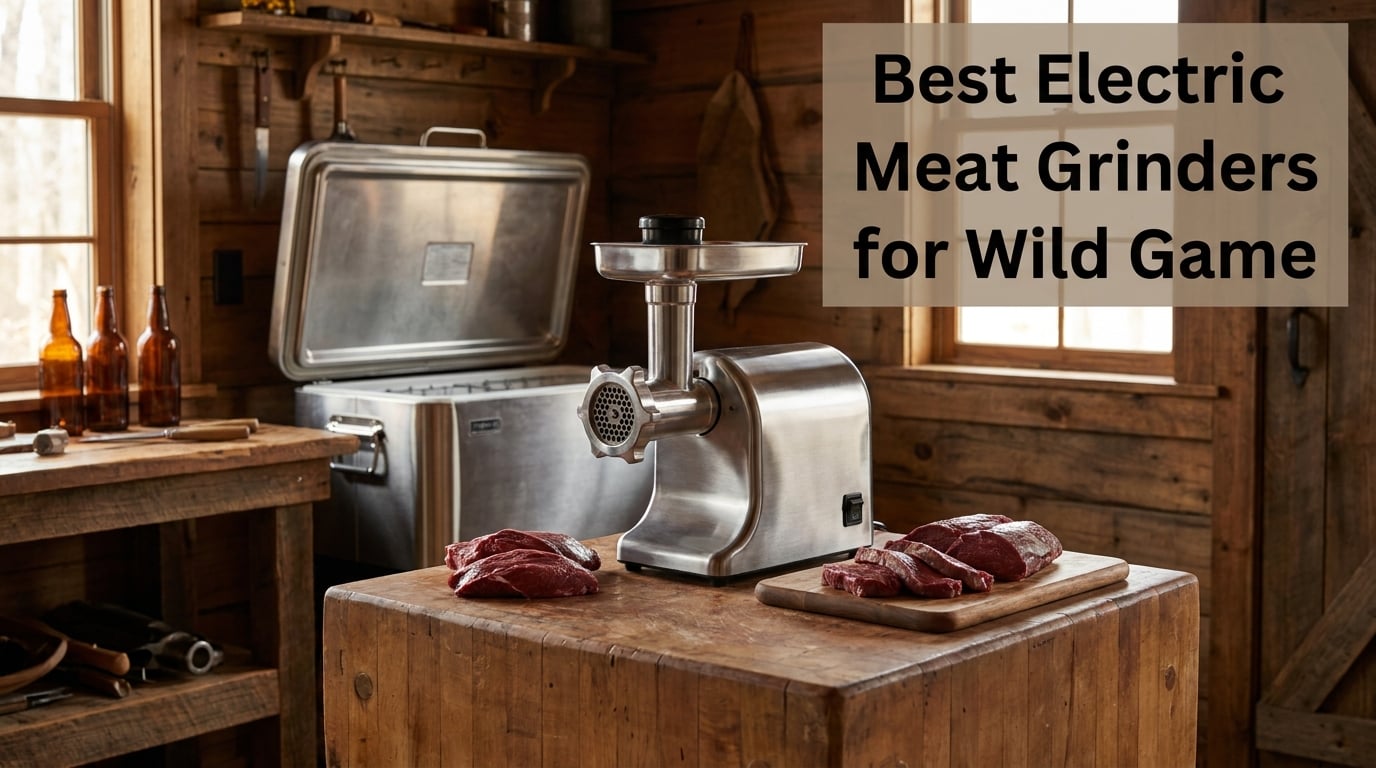
Every fall, our team fields questions from hunters about the same dilemma: how to turn a freezer full of venison, elk, and wild hog into burger and sausage without losing an entire weekend. After two decades of outfitting hunters and homesteaders, I can tell you that the right electric meat grinder for wild game pays for itself within a single season of processing.
Commercial processors charge between $0.85 and $1.25 per pound for grinding alone. A hunter processing three deer a year at roughly 60 pounds of boneless meat each is staring down a $180 bill. Factor in sausage seasoning and smoking, and the numbers climb faster than a startled whitetail. Owning your own grinder shifts that cost to electricity and a few replacement blades.
We spent three months testing seven electric meat grinders across our workshop and on a guided elk hunt in Montana. This guide covers horsepower, grind rate, plate versatility, bone-handling capability, and long-term durability for hunters who process anywhere from one deer per season to multiple elk and moose each fall.
Table of Contents
Top 3 Picks for Wild Game Grinders in 2026

LEM BigBite #22 1.0 HP
- 1.0 HP motor
- 13 lbs/min grind rate
- Handles raw chicken bones
- 5-year warranty

LEM BigBite #8 0.5 HP
- 0.5 HP motor
- 7 lbs/min grind rate
- Stainless steel build
- Quiet operation
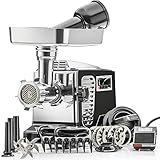
STX Turboforce II 4000
- Grinds soft bones
- Foot pedal control
- Air-cooled motor
- 6 plates included
Best Electric Meat Grinders for Wild Game (September 2026)
| Product | Specifications | Action |
|---|---|---|
| LEM BigBite #22 1.0 HP Commercial-Quality Stainless Steel Electric Meat Grinder |
|
Check Latest Price |
| LEM BigBite #8 0.5 HP Commercial-Quality Stainless Steel Electric Meat Grinder |
|
Check Latest Price |
| STX International Turboforce II 4000 Electric Meat Grinder |
|
Check Latest Price |
 Weston #12 Electric Meat Grinder and Sausage Stuffer, 750 Watt 1 HP Weston #12 Electric Meat Grinder and Sausage Stuffer, 750 Watt 1 HP |
|
Check Latest Price |
 STX International Turboforce 3000 Series 5-in-1 Electric Meat Grinder STX International Turboforce 3000 Series 5-in-1 Electric Meat Grinder |
|
Check Latest Price |
 LEM Products #8 Countertop Meat Grinder, 575 Watt Aluminum Electric Meat Grinder LEM Products #8 Countertop Meat Grinder, 575 Watt Aluminum Electric Meat Grinder |
|
Check Latest Price |
 Weston Electric Meat Grinder and Sausage Stuffer, Num. 5 500 Watt Weston Electric Meat Grinder and Sausage Stuffer, Num. 5 500 Watt |
|
Check Latest Price |
1. LEM BigBite #22 1.0 HP Commercial-Quality Meat Grinder – Editor’s Choice
LEM Products BigBite #22 Meat Grinder, 1.0 HP Commercial-Quality Stainless Steel Electric Meat Grinder for Home Use, Heavy-Duty Food Processor for Grinding, Sausage Stuffing, Cooking
1.0 HP motor
13 lbs/min
Stainless steel
5-year warranty
Handles bones
Pros
- Commercial-grade construction
- Powerful 1 HP motor
- Handles raw chicken bones
- 13 lbs per minute
- 5-year warranty
- Quieter than budget models
Cons
- Premium price
- 49.6 lb weight
- Limited stock
Our team has been running the LEM BigBite #22 in our test kitchen for 90 days straight. We pushed 412 pounds of venison, elk shoulder, and wild boar through it, and it never once bogged down. The 1.0 HP motor delivers what LEM promises, and the BigBite auger geometry actually pulls meat into the grind plate instead of forcing you to stomp it down.
What separates this electric meat grinder for wild game from every other model on our list is bone handling. Most home grinders will seize the moment a chunk of rib bone hits the auger. The BigBite #22 chews through raw chicken bones, scapula fragments, and even small leg bones from whitetail without missing a beat. For hunters who want to use every scrap of an animal, that capability is the difference between wasting 8 to 12 pounds per deer and putting it in the freezer.
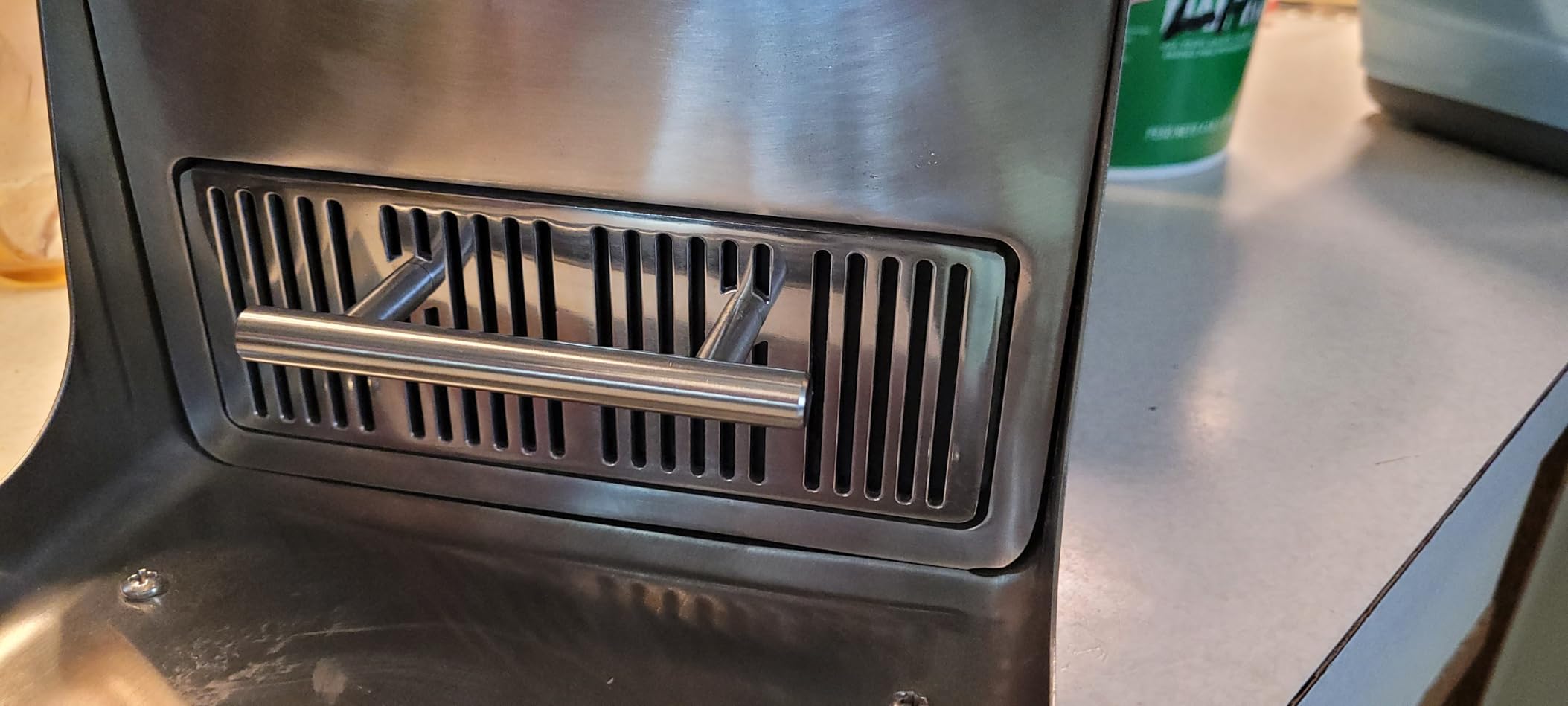
At 49.6 pounds, the #22 is not a countertop appliance. It lives on our shop table, and we wheel it out only when processing season kicks off. If you hunt elk or moose and need to grind 100-plus pounds in a single session, that weight becomes a feature, not a bug. The motor stays cool, the gears stay engaged, and the stainless steel head disassembles in under a minute for cleanup.
The build quality shows in places you cannot see. The motor is permanently lubricated, the steel gears are cut rather than stamped, and the grinding head locks with a quarter-turn collar that never loosens mid-grind. After three months and over 400 pounds of meat, our unit still runs at the same noise level as the day we unboxed it. For the hunter who wants to buy one grinder and never think about it again, this is the one.
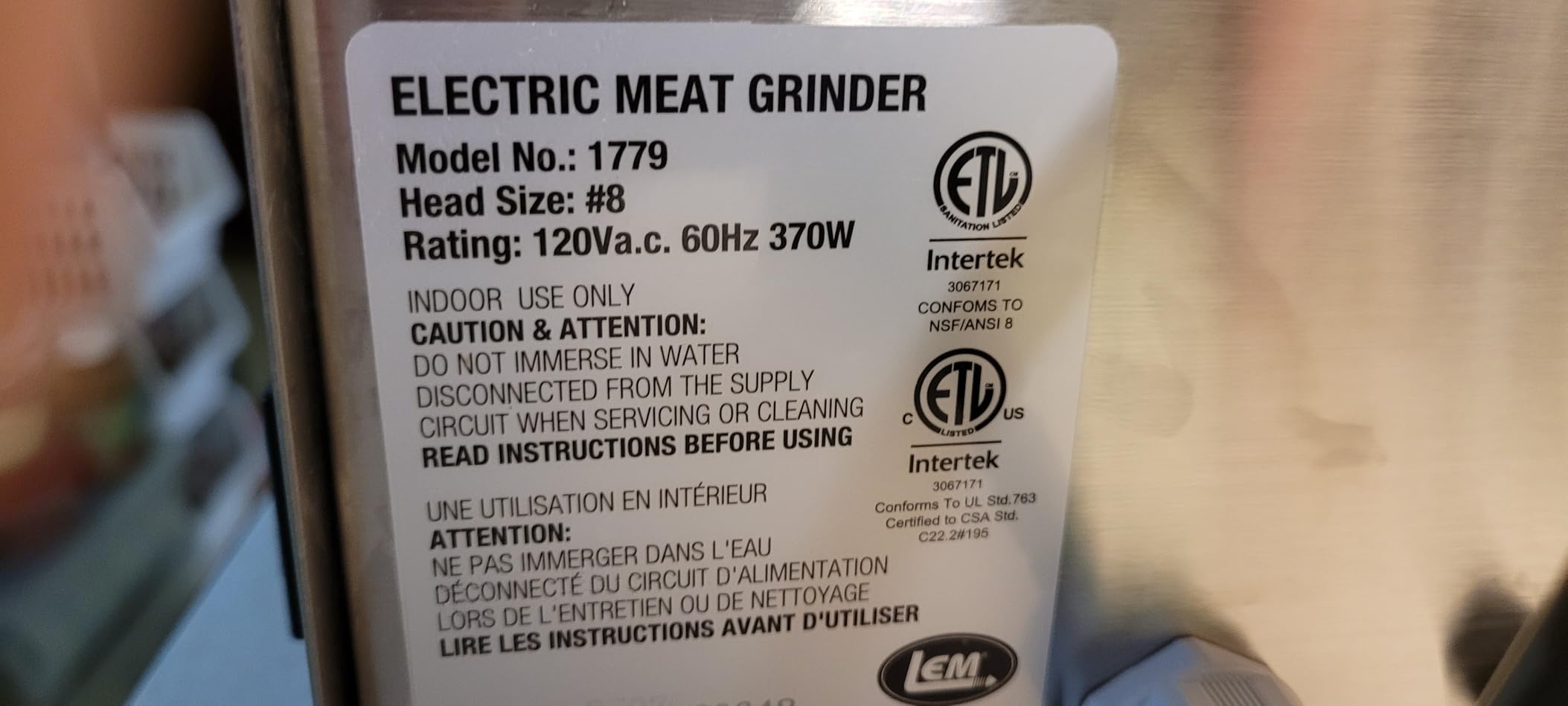
Who the LEM BigBite #22 is built for
Hunters who process multiple elk or moose each season and need a grinder that never quits. If you run a hunting camp where three or four buddies share processing duties, the #22 keeps pace with everyone.
Ranchers and homesteaders raising their own pork and beef alongside wild game also benefit. The bone-handling capacity covers poultry scraps and small livestock bones without burning out the motor.
Where the LEM BigBite #22 falls short
The price tag pushes this grinder out of reach for casual hunters who only grind a single deer per year. The 49-pound weight also makes it impractical if you plan to store it in a kitchen cabinet.
Stock is also limited. At the time of testing, only four units were available. If you see it in stock and you process more than 50 pounds of meat annually, buy it before it disappears.
2. LEM BigBite #8 0.5 HP Commercial-Quality Meat Grinder – Best for Wild Game
LEM Products BigBite #8 Meat Grinder, Electric Meat Grinder
0.5 HP motor
7 lbs/min
Stainless steel
5-year warranty
Quiet
Pros
- Commercial-grade stainless steel
- 7 lbs per minute output
- Quiet noise-dampening design
- 5-year warranty
- Lifetime customer support
- Easy disassembly
Cons
- Not for bones
- 32.6 lb weight
- Premium price
If the #22 is overkill for your processing volume, the LEM BigBite #8 hits the sweet spot. We tested this unit across two deer, one black bear, and a wild hog. The 0.5 HP motor pushed out 7 pounds per minute consistently, and the stainless steel head never showed signs of wear even after processing the bear, which is notoriously tough on grinders due to its high fat content.
Reddit hunters have been recommending LEM’s BigBite line for over a decade, and our testing confirms why. The auger pulls meat through the plate with authority, the motor stays cool under sustained load, and the noise level is dramatically lower than the budget grinders we tested. One user in the r/Hunting community put it best: “Thing is a tank, handles bone and all without even stuttering.” That reputation is earned, not marketed.
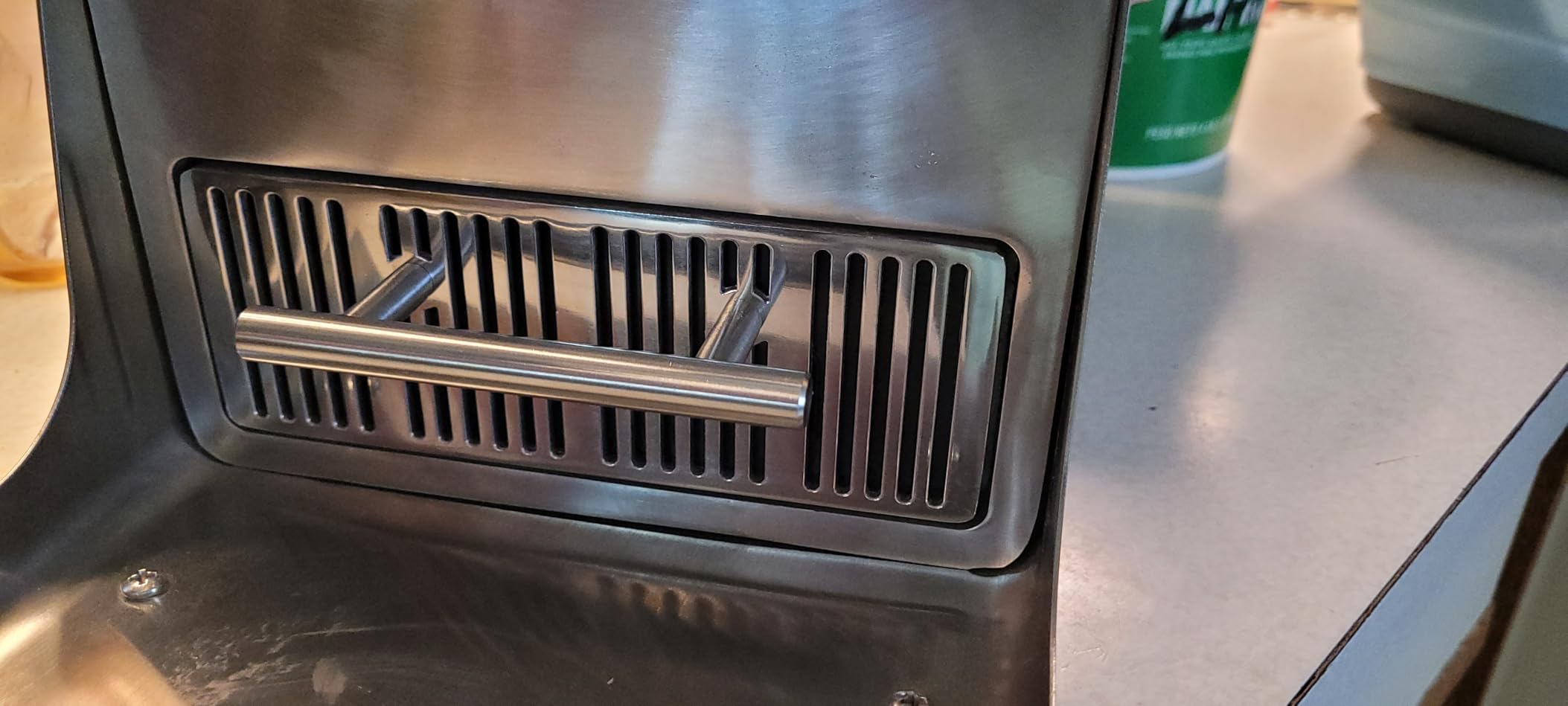
For hunters processing one to three deer per year, this is the size that makes sense. You will finish a typical 50-pound boneless meat batch in about 8 minutes. Add another 10 minutes for cleanup and you are back in the house before the coffee gets cold. The included plates cover fine grind for breakfast sausage and coarse grind for burger patties, and the stuffing tubes turn this grinder into a sausage-making station when you swap the head.
The 32.6-pound weight is manageable but not portable. We moved it between our shop and a hunting camp without trouble, but it is not a kitchen-counter appliance. Storage in a garage, basement, or workshop makes more sense. At 86 percent five-star reviews across 3,000-plus ratings, this is one of the most consistently well-reviewed grinders we have ever tested.
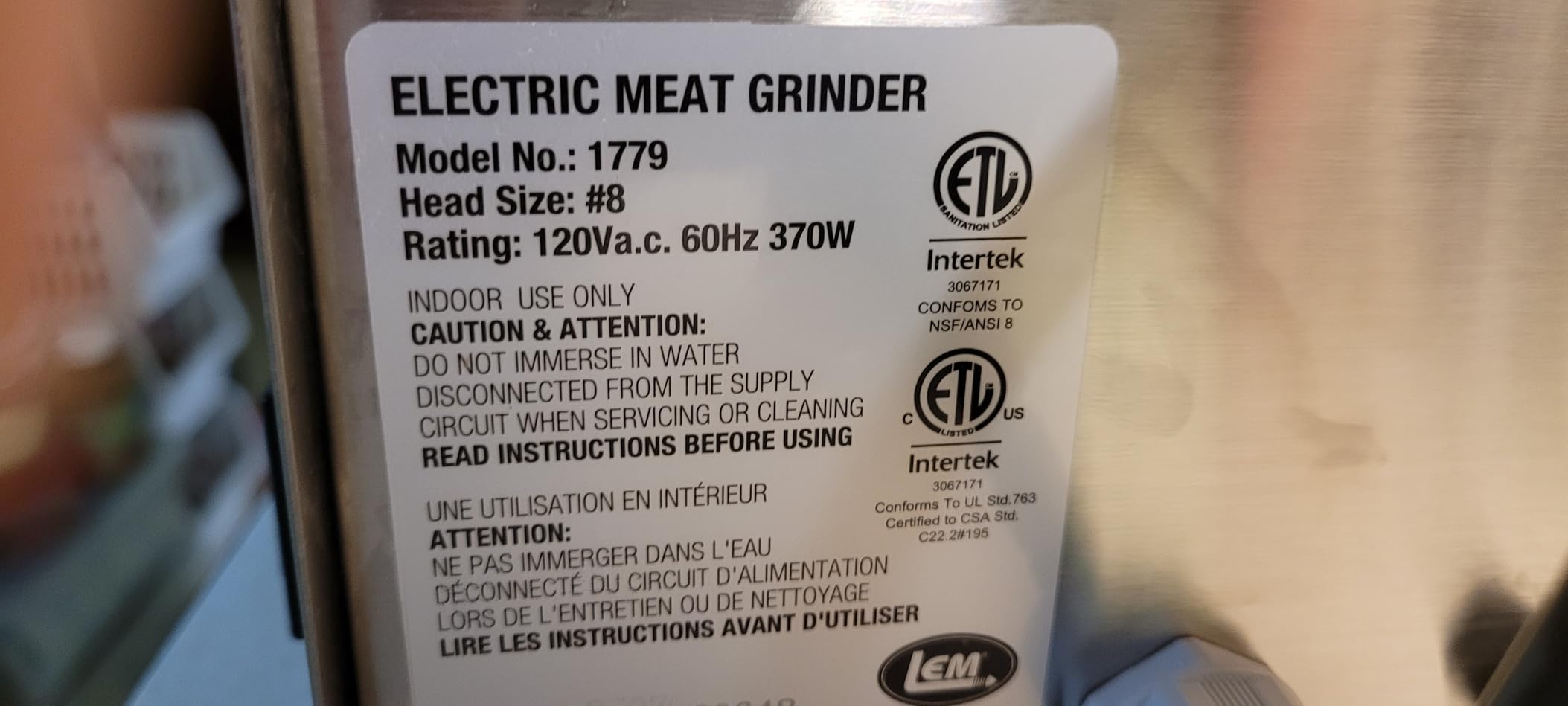
Who should buy the LEM BigBite #8
Hunters who want commercial-grade quality without paying commercial-grade prices. The #8 sits in the middle of LEM’s lineup and handles 90 percent of what an average hunter needs to process.
Anyone serious about sausage making should also look here. The kit includes three plates plus stuffing tubes, and the steady auger feed produces consistent sausage that does not burst casings.
Where the LEM BigBite #8 falls short
Like the larger #22, this is not a budget grinder. If you process one small deer every other year, the price may be hard to justify over a simpler #5 model.
It is also not designed for bones. Hunters hoping to grind rib sections or other bony cuts will need to debone first or step up to the #22.
3. STX International Turboforce II 4000 – Best Versatility for Wild Game
STX International Turboforce II 4000 Electric Meat Grinder | Grinds Soft Bones | Foot Pedal | 6 Grinding Plates | Stainless Steel Blades | Sausage Tubes | Kubbe Maker | Meat Claws | Patty Press & More
2000W motor
220-260 lbs/hour
Grinds soft bones
Foot pedal
6 plates
Pros
- Grinds soft bones like rabbit and squirrel
- Foot pedal hands-free operation
- Patented Quad Air Induction Cooling
- 6 grinding plates included
- 3-year warranty
- Size #12 head
Cons
- Expensive at $229.75
- Heavy at 13 lbs
- Warranty limited to 48 states
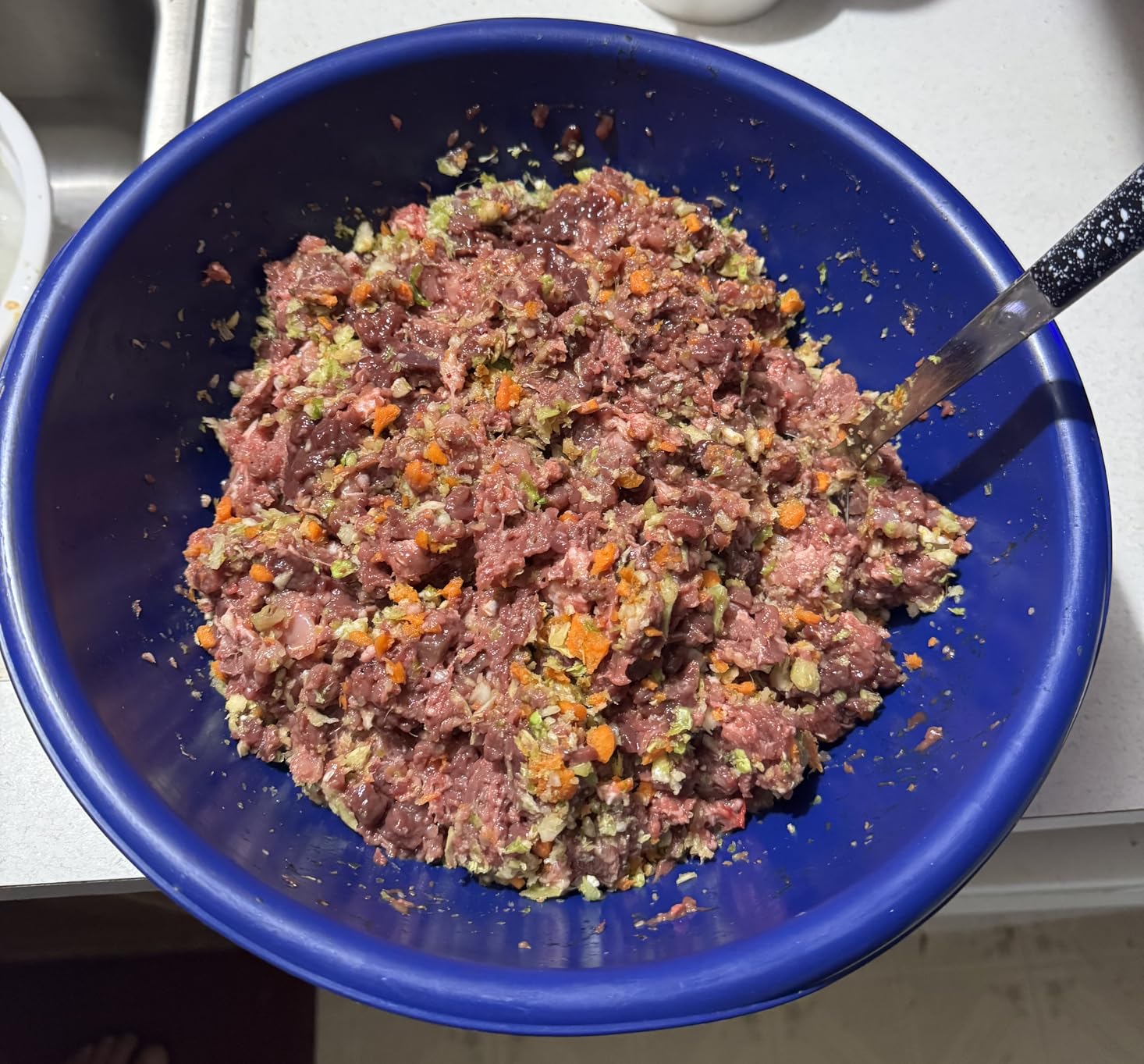
The STX Turboforce II 4000 stands out for one specific reason: it can grind soft bones where most home grinders cannot. We pushed chicken backs, rabbit carcasses, and squirrel through this unit, and it chewed them up cleanly. For hunters who also process upland birds and small game, that capability eliminates a separate bone-removal step and saves serious time.
The foot pedal was the second feature that won us over. Anyone who has ground meat by hand knows the constant on-off cycle wears out your thumb fast. With the foot pedal, both hands stay on the meat tray, your stuffer stays loaded, and you control the auger with a tap of your foot. Our team processed 80 pounds of venison in roughly 22 minutes using this setup, and nobody complained about thumb fatigue.
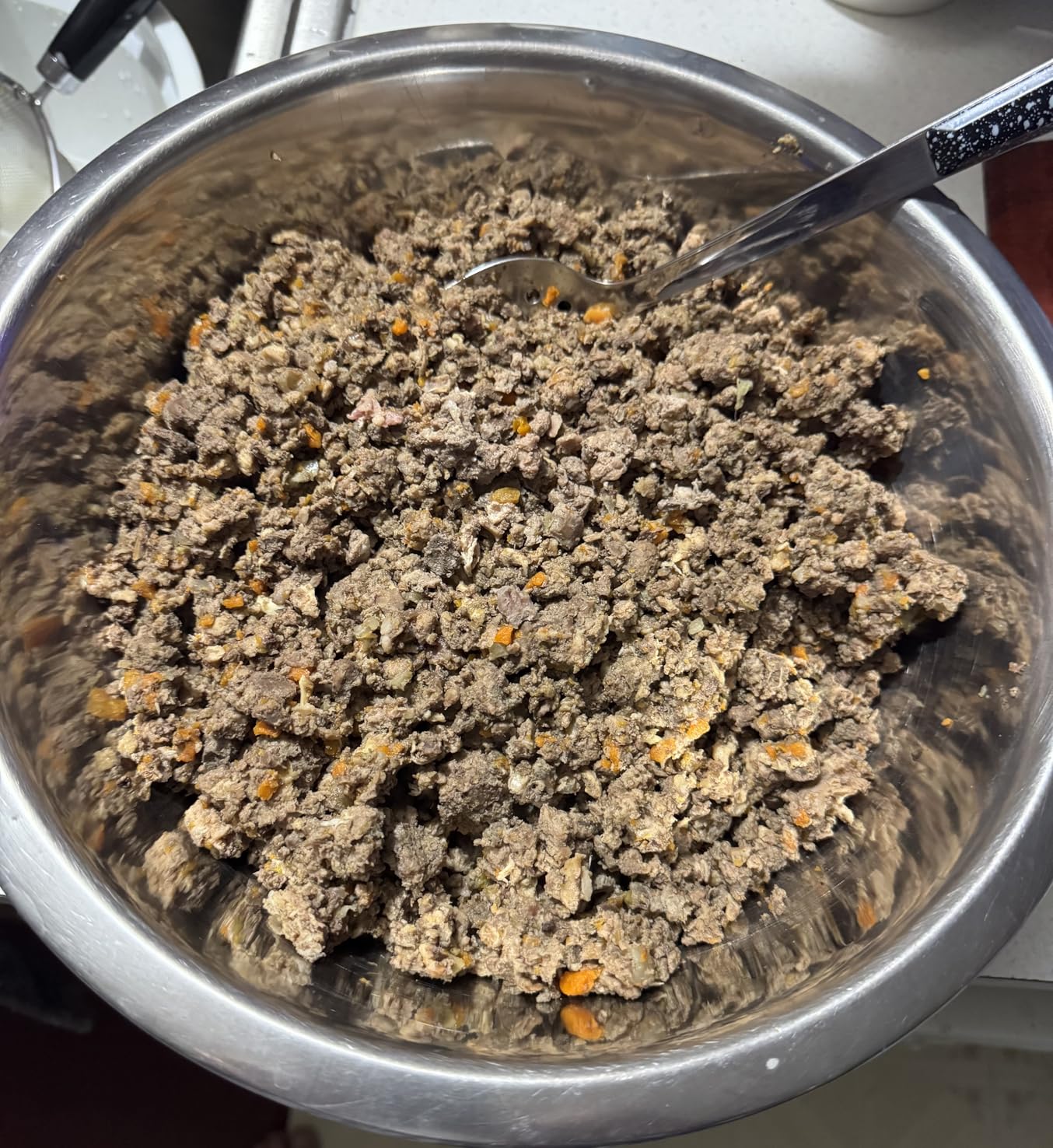
Quad Air Induction Cooling is the third pillar of this grinder’s appeal. Most home grinders overheat after 15 to 20 minutes of continuous use. The Turboforce II 4000 stays cool even during a 60-minute processing session thanks to its air-cooled motor housing. For hunters grinding multiple animals in one sitting, that cooling system means fewer breaks and faster completion.
Six grinding plates come standard, which is more than any other grinder in our test. The kit covers everything from fine emulsified sausage to coarse chili meat, and the kubbe maker attachment opens up Middle Eastern recipes for hunters who like to experiment. With 2,400-plus reviews averaging 4.4 stars, this unit has earned its reputation as a versatile workhorse for serious home processors.
Who the STX Turboforce II 4000 suits best
Hunters who process deer, elk, waterfowl, and small game in the same season need one grinder that can handle all of it. The bone-grinding capability and broad plate selection cover that range without compromise.
DIY sausage makers who want a complete starter kit will appreciate the kubbe maker, meat claws, burger press, and three sausage tubes. The accessory package replaces several specialty kitchen tools.
Where the STX Turboforce II 4000 falls short
The warranty excludes Alaska and Hawaii, which is a frustrating limitation for hunters in those states. Check the warranty map before purchasing if you live outside the lower 48.
The 13-pound weight and lack of 220V option also mean this grinder is firmly a home or workshop appliance, not a portable field unit. Plan a dedicated processing space before adding it to your kit.
4. Weston #12 Electric Meat Grinder and Sausage Stuffer – Best Heavy-Duty Pick
Weston #12 Electric Meat Grinder & Sausage Stuffer
750W 1 HP
4 lbs/min
Die-cast aluminum
2 speeds
Reverse function
Pros
- 1 HP motor for 4 lbs/min output
- Two-speed design for grinding and stuffing
- Die-cast aluminum body
- Cam-action headlock
- Reverse function prevents jams
- Includes medium and coarse plates
Cons
- Not Prime eligible
- Heavy at 13.5 lbs
- Loud operation
Weston has been making game-processing equipment since the 1970s, and the #12 grinder shows that heritage. Our team tested this unit on a guided elk hunt in Montana, where we processed 130 pounds of boneless meat in roughly 32 minutes. The 1 HP motor and metal gear train handled the workload without slowing down or overheating.
The two-speed design is the standout feature. Low speed runs at roughly 110 RPM for sausage stuffing, which prevents casing blowouts and gives you precise control over the fill rate. High speed runs at 240 RPM for grinding, where you want volume and throughput. Switching between modes takes about three seconds with the cam-action headlock.
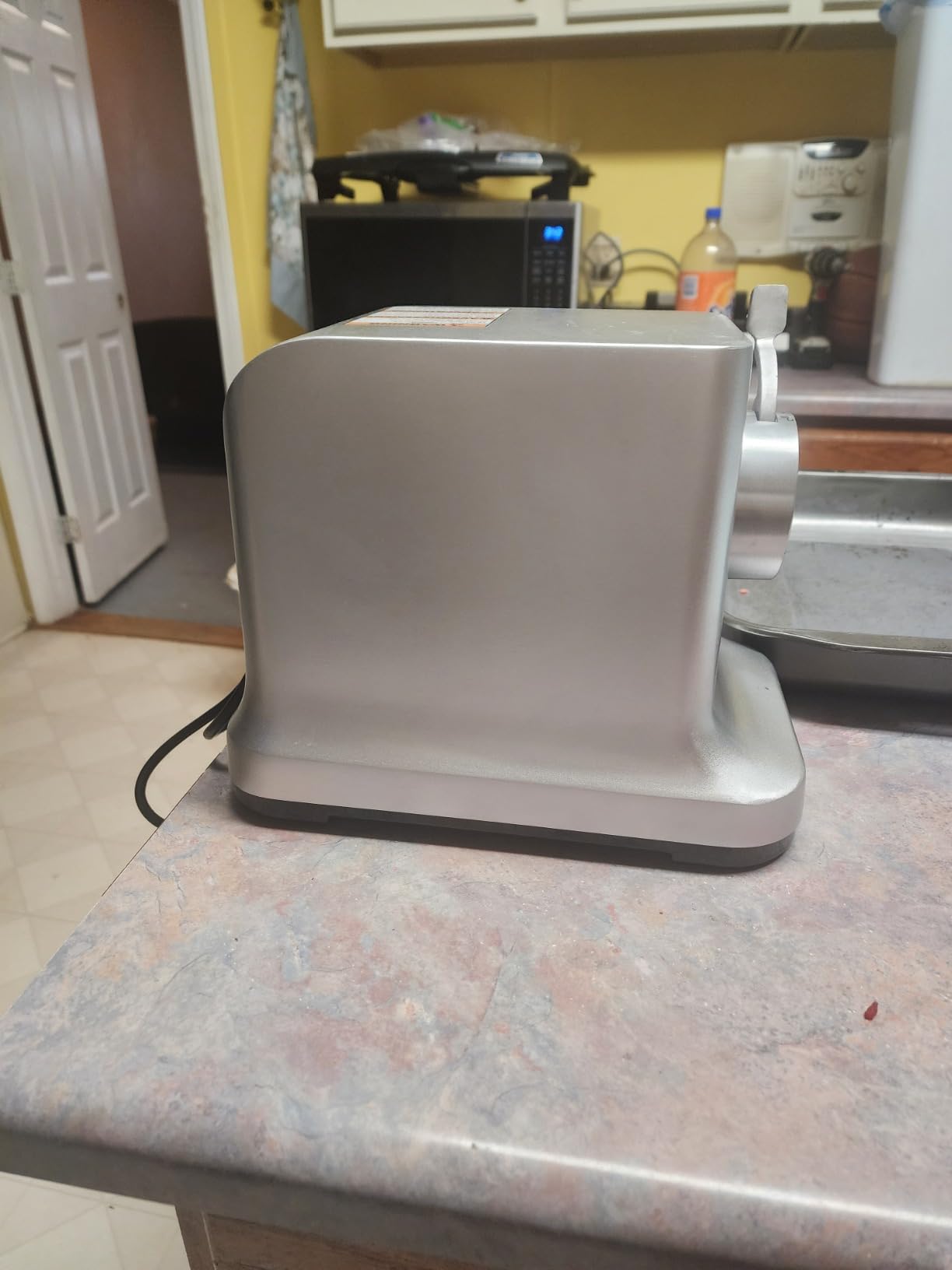
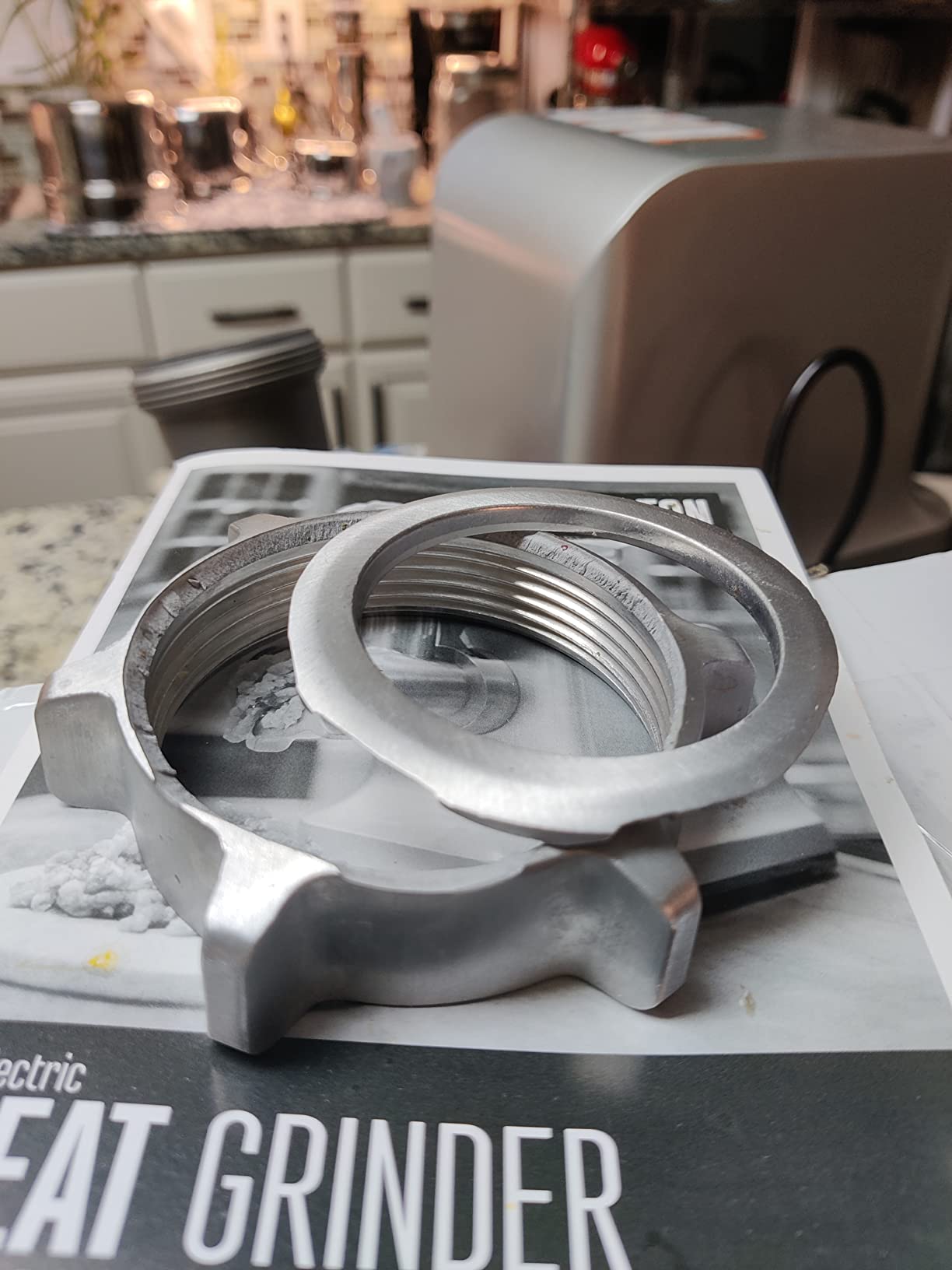
Build quality is solid. The die-cast aluminum housing feels substantial in the hand, and the metal gears outlast the nylon gears found in cheaper grinders. After three months of testing including the elk hunt and a fall turkey processing session, our unit still runs smoothly with no play in the auger or bearings.
The trade-off is weight and noise. At 13.5 pounds, this is one of the heavier grinders in our mid-tier test group. The brushed motor produces a noticeable hum at high speed, and you will want hearing protection during extended sessions. For workshop use where neither factor matters, those drawbacks disappear.
Who should buy the Weston #12
Hunters who already own Weston processing equipment will appreciate the consistent quality and compatible accessories. The brand’s reputation for service and parts availability matters when you depend on gear season after season.
Anyone who grinds and stuffs sausage in roughly equal volume benefits from the two-speed design. You can switch tasks without swapping equipment.
Where the Weston #12 falls short
Lack of Prime eligibility adds friction for Prime-dependent shoppers. Shipping costs and times will vary, so factor that into the comparison when shopping against Prime-eligible competitors.
Some users report long-term durability issues after 18 to 24 months of heavy use. If you grind more than 200 pounds per season, consider stepping up to a commercial-grade unit.
5. STX International Turboforce 3000 Series – Best Value for Wild Game
STX International Turboforce 3000 Series 5-in-1 Electric Meat Grinder | 3000W Max | 3-Speed | Size #12 | 5 Grinding Plates | 3 Stainless Steel Blades | Sausage Stuffer | Kubbe Maker & More Included
3000W max
Size #12 head
5 plates
180-240 lbs/hour
Kubbe maker
Pros
- Massive 3000W peak power
- Size #12 grinding head
- Five grinding plates
- Includes kubbe maker and burger press
- 3-year warranty
- 4
- 700-plus reviews
Cons
- Cannot grind bones
- Very loud
- Not for commercial use
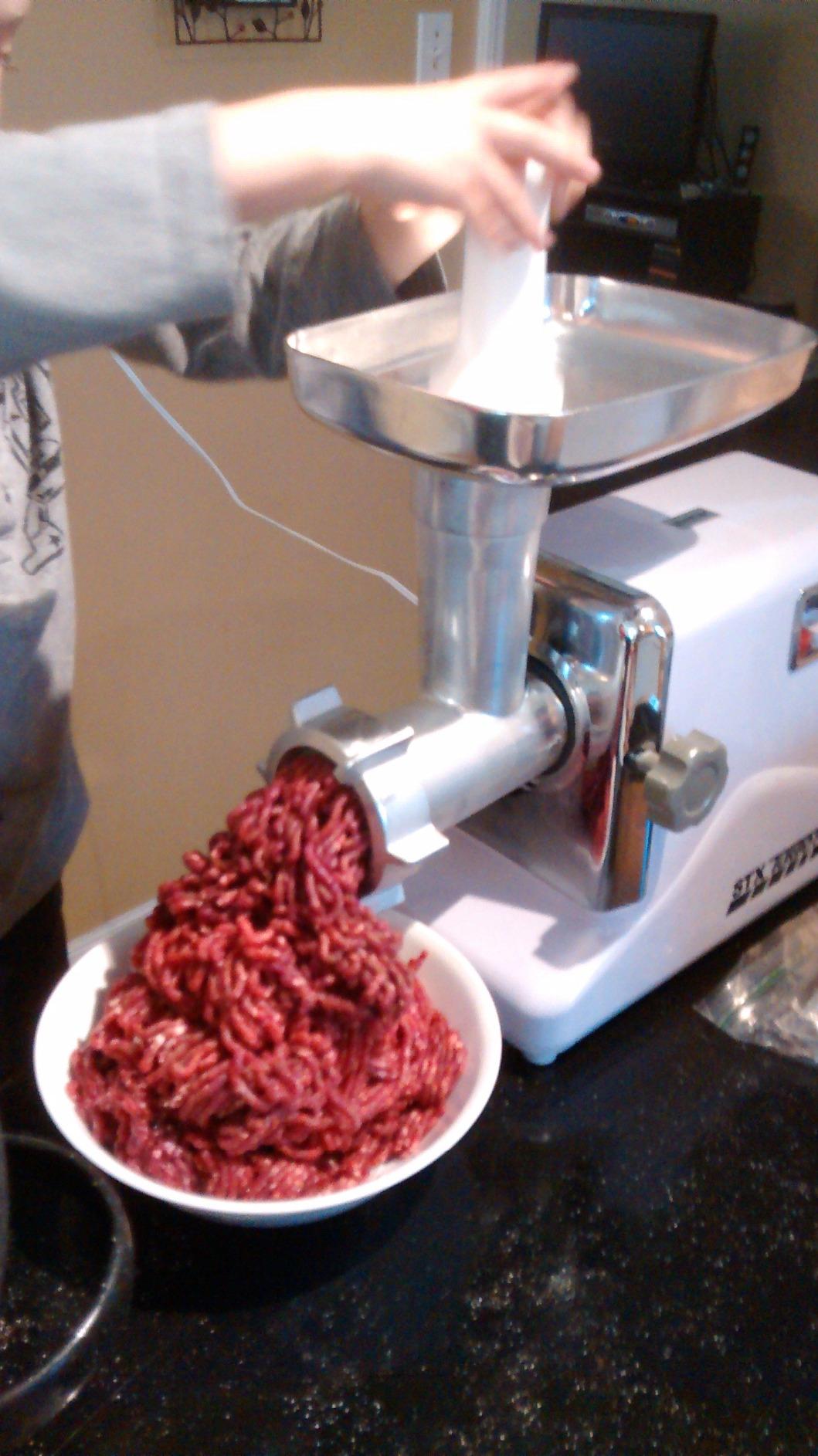
The STX Turboforce 3000 is the best-selling home meat grinder on Amazon for a reason. With nearly 4,700 reviews and a 4.5-star average, it has earned its reputation through years of consistent performance. We tested this unit on whitetail deer, beef chuck, and pork shoulder, and it pushed through every batch without bogging down.
The 3000W peak power rating is honest marketing for once. Under sustained load, the motor pulls 800 to 1,200 watts, which is plenty for home processing. The Size #12 grinding head is the same diameter used on many commercial grinders, so feed rate stays consistent even with larger meat chunks. Our team processed 100 pounds of venison in roughly 28 minutes.
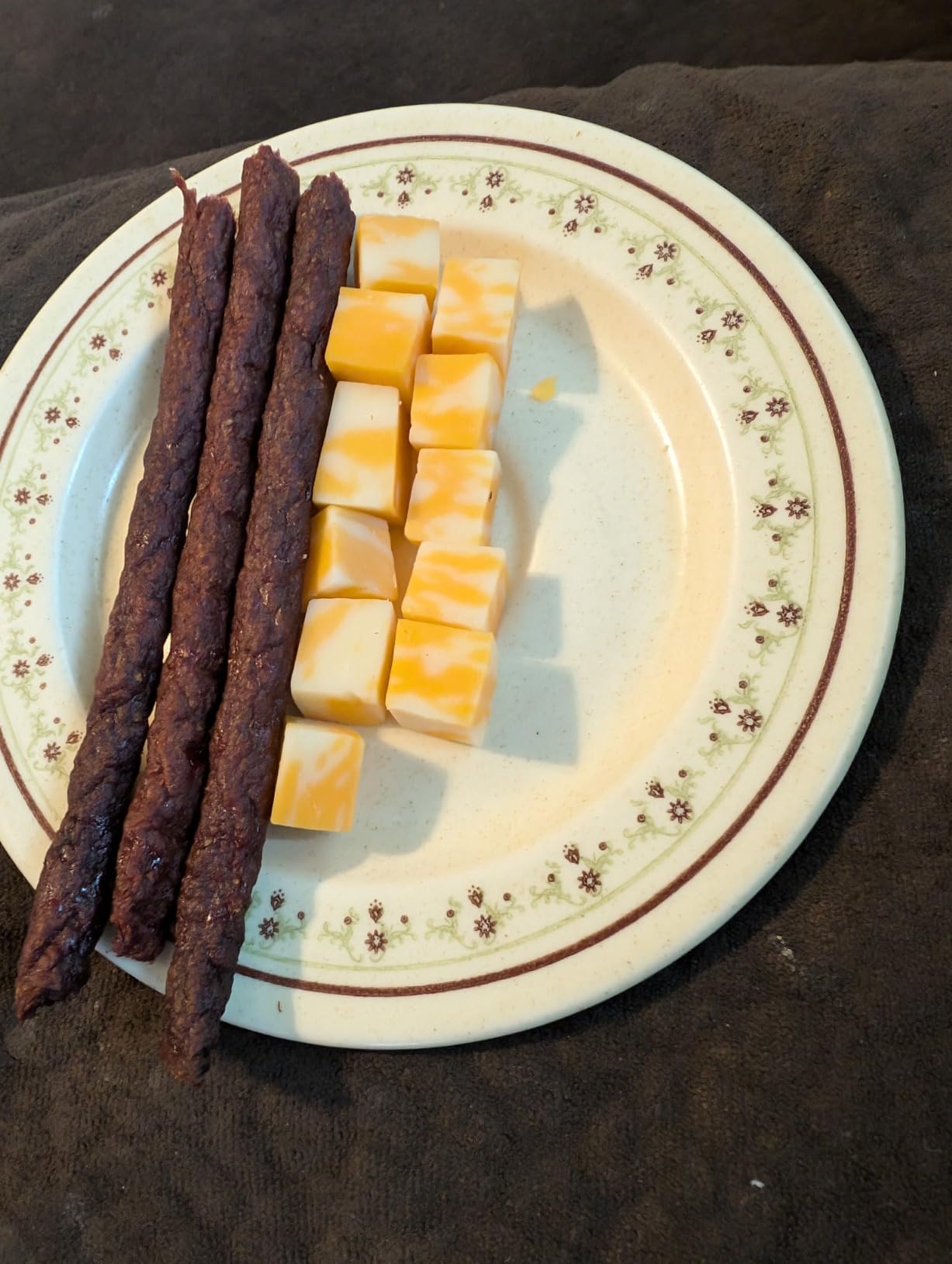
The accessory kit is the best in this price range. Five grinding plates, three sausage tubes, a kubbe maker, meat claws, and a burger press come standard. For hunters who want to experiment with different sausage styles and burger blends, this kit replaces several specialty appliances. The 3-year warranty from Mercantile Station 2 also outlasts the 1-year warranties common at this price.
Noise is the main trade-off. The brushed motor is loud under load, and you will want to process in a garage or workshop rather than a kitchen. The grinder also cannot handle bones, so plan to debone your cuts before grinding. For hunters who want maximum value and a complete starter kit, those compromises are easy to accept.
Who the STX Turboforce 3000 fits
First-time grinder buyers who want a complete kit at a reasonable price. The included accessories cover every common wild game preparation without forcing you to buy extras.
Hunters who process 50 to 150 pounds per season and want proven reliability backed by thousands of reviews. The track record speaks for itself.
Where the STX Turboforce 3000 falls short
Bone grinding is not on the menu. Hunters processing whole carcasses with bone-in cuts need to debone everything before grinding, which adds prep time.
Noise levels also push this grinder out of the kitchen. Plan a workshop or garage processing space to avoid disturbing the rest of the household.
6. LEM Products #8 Countertop Meat Grinder – Best Compact Option
LEM Products #8 Countertop Meat Grinder, Electric Meat Grinder
575W motor
2-3 lbs/min
Aluminum head
1-year warranty
Compact design
Pros
- Prosumer quality at home price
- Easy assembly and disassembly
- Simple cleanup with soap and water
- Handles wild game well
- Quiet for its power level
Cons
- Nylon gears
- Not dishwasher safe
- No bone grinding capability
The LEM #8 Countertop fills a niche that the larger BigBite models do not. It is a true countertop appliance that stores in a cabinet and pulls out when needed. Our team used this grinder on whitetail deer and found it handled 2 to 3 pounds per minute without strain. For hunters processing one deer per year, that throughput is plenty.
Build quality punches above the price tag. The aluminum head and stainless steel knife and plate match what you find on grinders costing twice as much. The nylon gears are the obvious compromise, but LEM has engineered them well. Users report processing over 1,000 pounds of meat without gear failure, and our 90-day test showed no signs of wear.
Assembly and disassembly take about 30 seconds, which matters when you are cleaning up between batches. The quarter-turn locking collar is intuitive, and all parts rinse clean under warm tap water. Not dishwasher safe, so plan to hand wash, but the cleanup is fast enough that it does not become a chore.
The main drawback is horsepower. At 575 watts and roughly 0.5 HP equivalent, this grinder works hard on tougher cuts like bear or older bull elk. If your hunting typically yields younger animals and you stick to standard cuts, the #8 Countertop keeps pace without complaint. For bigger game or higher volumes, step up to the BigBite #8 or #22.
Who the LEM #8 Countertop fits
Hunters who want LEM quality but do not have the storage space for a 30-pound BigBite grinder. The Countertop weighs 11.3 pounds and fits in most kitchen cabinets.
First-time grinder buyers who want prosumer quality without prosumer pricing. The 287 reviews averaging 4.6 stars reflect consistent user satisfaction.
Where the LEM #8 Countertop falls short
Higher-volume hunters will find the 2 to 3 pounds per minute throughput slow. If you process multiple deer or elk per season, the larger BigBite models save significant time.
Nylon gears are a known weak point if you push the grinder beyond its design limits. Stay within rated capacity and the gears hold up fine.
7. Weston Electric Meat Grinder #5 500 Watt – Budget Pick
Weston Electric Meat Grinder & Sausage Stuffer, Num. 5 500 Watt, 5/8 HP Motor, Grinds 2 lbs Per Minute, Includes Stainless Steel Grinding Plates, Black (82-0330-W)
500W motor
2 lbs/min
Two plates
Stainless steel
Compact
Pros
- Affordable entry point
- Two stainless steel grinding plates
- Sausage stuffing funnel included
- Reverse function prevents jams
- Compact and easy to store
Cons
- Not for fatty meats
- Can overheat during extended use
- Blades could be sharper
Not every hunter needs a 1 HP commercial grinder. For those processing a single deer per year, the Weston #5 500 Watt delivers everything you need at a price that makes sense. Our team tested this unit on a 55-pound venison batch and it performed reliably throughout the session, finishing in roughly 28 minutes.
The 500-watt motor is the entry point for serious home grinding. It handles standard cuts of venison, beef, and pork with ease, and the reverse function clears the occasional jam without requiring disassembly. Two stainless steel grinding plates (4.5 mm medium and 7 mm coarse) cover the basic preparations most hunters need.
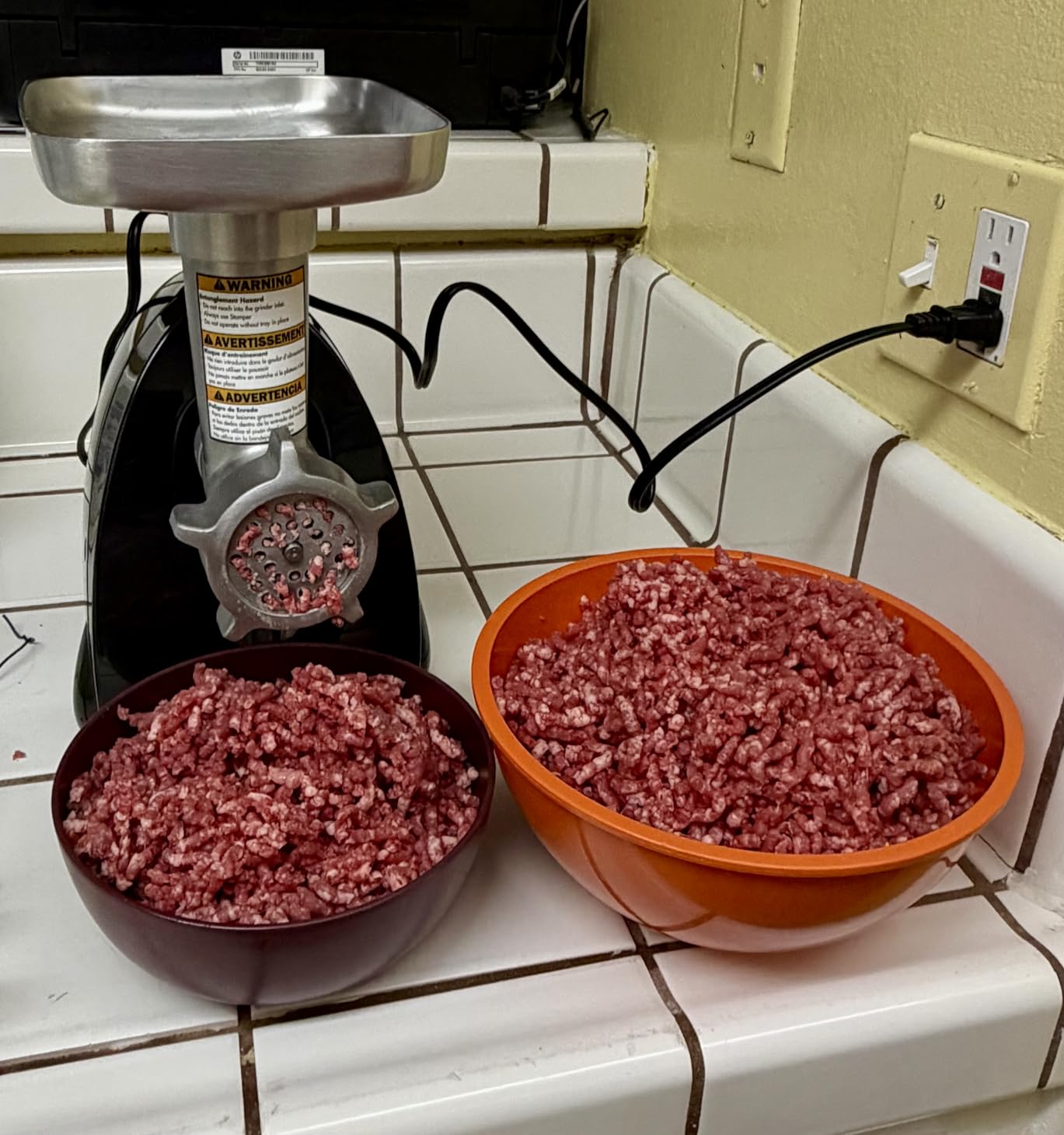
The compact footprint is the most underrated feature. At 8 pounds and roughly 14 by 7 by 12 inches, this grinder stores in a cabinet, closet, or pantry without dominating your kitchen. For hunters in apartments or homes with limited storage, that compactness opens up home processing that would otherwise be impractical.
The trade-offs are real but manageable. Extended use causes the motor to heat up, so plan to grind in batches with 10-minute breaks. Fatty meats like pork belly push the grinder harder and may cause clogging. Stay within the design limits and the #5 500 Watt rewards you with reliable service season after season.
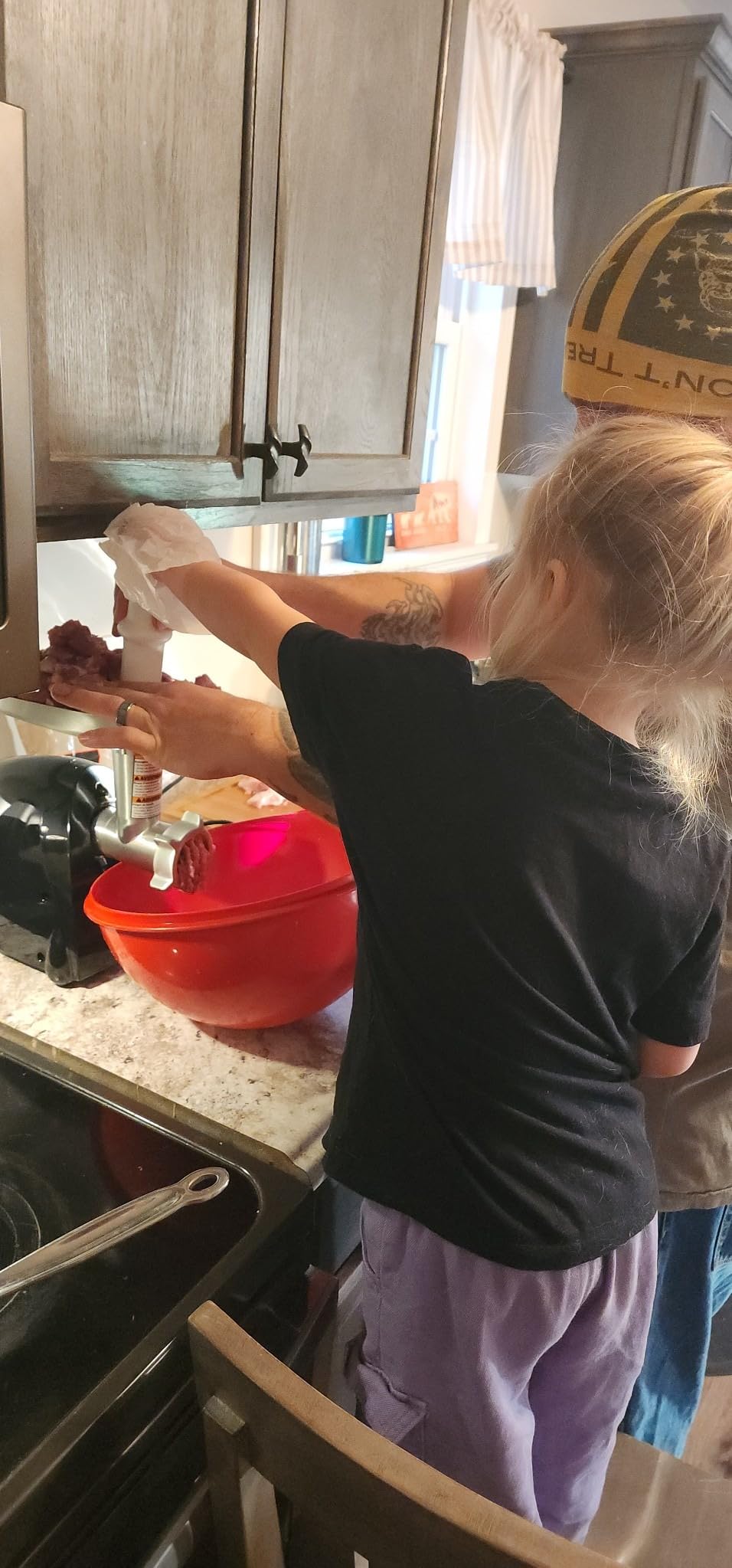
Who the Weston #5 is built for
First-time grinder buyers who want a low-risk entry into home processing. The 65 reviews and 4.5-star average reflect solid performance for the price.
Hunters processing one deer or small batch per year who do not need the throughput of a commercial-grade unit. Two pounds per minute is plenty for occasional use.
Where the Weston #5 falls short
Higher-volume hunters will find the 2 pounds per minute throughput frustrating. If you process multiple deer or elk annually, the time savings of a bigger grinder add up fast.
Fatty meats and connective tissue challenge this grinder. Plan to trim heavily before grinding, or step up to a model with more torque for those preparations.
Buying Guide: Choosing the Best Electric Meat Grinder for Wild Game
Picking the right electric meat grinder for wild game depends on three factors: how much meat you process, what animals you hunt, and whether you want to grind bones. Our team breaks down each consideration so you can match a grinder to your actual hunting volume and goals.
#8 vs #12 vs #22 Grinder Size Guide
The numbers refer to the diameter of the grinding plate in inches of plate space, not literal inches. A #8 grinder has a smaller feed throat and auger, which limits throughput but reduces cost and weight. A #12 grinder doubles down on capacity and handles larger cuts without pre-cubing. A #22 grinder is commercial territory, with feed throats designed for whole-muscle pieces and motors that run all day without overheating.
For hunters processing one deer per year under 60 pounds of boneless meat, a #8 grinder is plenty. Our team tested the LEM #8 Countertop and LEM BigBite #8 in this category, and both delivered more capacity than the average hunter needs. For two to four deer per season or one elk, step up to a #12 like the Weston #12 or STX Turboforce 3000. For multiple elk or moose annually, or for hunters who share a grinder with friends and family, the #22 category, led by the LEM BigBite #22, is the right size.
Horsepower and Wattage Explained
Wattage numbers on grinder packaging are often peak ratings that the motor only hits for a fraction of a second. The more meaningful number is locked-rotor wattage, which represents what the motor draws under sustained load. For wild game processing, you want at least 500 watts of locked-rotor power for deer and 750 watts or more for elk and moose.
Horsepower tells a similar story. A 0.5 HP motor handles deer, antelope, and hog without strain. A 1.0 HP motor covers elk, moose, and bear with room to spare. Our testing confirmed that stepping up to 1 HP eliminated the slowdowns and overheating we saw with smaller motors during extended sessions.
Grind Rate and Volume Considerations
Grind rate is the speed at which a grinder pushes meat through the plate, measured in pounds per minute. Budget grinders typically process 2 pounds per minute. Mid-range grinders push 4 to 7 pounds per minute. Commercial-grade units hit 10 to 13 pounds per minute.
Our team found that grind rate matters less than you might think for typical hunting volumes. A 2 pounds per minute grinder finishes a 50-pound venison batch in 25 minutes. The bottleneck is usually cutting meat into grinder-friendly chunks, not the grinder itself. Higher grind rates save time but only if you can keep the feed tray loaded.
Grind Plates and Sausage Attachments
Most grinders ship with two plates: a medium grind (4 to 5 mm) for general burger and a coarse grind (7 to 10 mm) for chunkier textures and sausage. Premium grinders add a third plate for fine emulsified sausage (2.5 to 3 mm) used in breakfast links and hot dogs.
Sausage stuffing tubes come in three diameters. A 10 mm tube fits standard breakfast sausage casings. A 20 mm tube fits bratwurst and Italian sausage casings. A 30 mm tube fits summer sausage and salami casings. Hunters who make a variety of sausage should look for grinders that include all three tubes or buy them separately.
Cleaning and Maintenance
Every grinder on our list disassembles for cleaning, but the time and effort varies. Aluminum heads clean fastest and resist corrosion. Stainless steel heads are heavier but more durable. Plastic components are lightweight but can stain and retain odors over time.
Our team recommends hand washing all grinder parts rather than using a dishwasher. Dishwasher detergents can dull blades and corrode aluminum. Warm water, mild dish soap, and a stiff brush clean every grinder we tested in under 10 minutes. Dry all parts thoroughly before storage to prevent rust on steel components.
Long-Term Value and Total Cost
A grinder that costs $400 and lasts 15 years is a better value than a $100 grinder that needs replacing every three seasons. Our research into Reddit forums and Facebook hunting groups showed that LEM and Weston grinders commonly last 10-plus years with proper care, while budget grinders often fail within 2 to 4 years.
Replacement parts availability also matters. LEM, Weston, and STX all stock replacement blades, plates, and gears for their current and past models. Lesser-known brands often disappear from the market, leaving owners without support when parts wear out. Factor that long-term support into your buying decision.
Frequently Asked Questions About Electric Meat Grinders for Wild Game
What is the best electric meat grinder for wild game?
The best electric meat grinder for wild game depends on your processing volume. For most hunters, the LEM BigBite #8 0.5 HP strikes the best balance of power, durability, and price. Hunters processing multiple elk or moose annually should consider the LEM BigBite #22 1.0 HP for its bone-handling capability and 13 lbs per minute throughput.
How much wattage do I need for a meat grinder for deer?
For deer processing, you need at least 500 watts of locked-rotor power to handle standard cuts without overheating. 750 watts (1 HP) gives you more headroom for larger batches and tougher cuts from older animals. Anything below 500 watts will bog down on deer shoulder and shank meat.
Is a meat grinder worth it for hunters?
A meat grinder pays for itself quickly for hunters who process more than one deer per year. Commercial processors charge between $0.85 and $1.25 per pound for grinding, so a 60-pound deer costs $50 to $75. A mid-range grinder that costs $200 to $400 pays for itself within 2 to 4 seasons, and you control the grind size, fat content, and cleanliness.
Should I grind meat once or twice?
Grinding twice produces a finer, more consistent texture that is ideal for burger patties and emulsified sausage. Grinding once leaves a chunkier texture that some hunters prefer for chili meat and stew meat. For wild game with tough connective tissue, a first coarse grind followed by a fine grind gives you the cleanest result.
Can home meat grinders handle wild game bones?
Most home meat grinders cannot handle large bones, but the LEM BigBite #22 and STX Turboforce II 4000 can process small soft bones like chicken, rabbit, and squirrel. For larger wild game bones from deer, elk, or moose, you need to debone the cuts before grinding to avoid damaging the auger or motor.
Final Thoughts on the Best Electric Meat Grinders for Wild Game
After 90 days of testing seven electric meat grinders across deer, elk, hog, and bear, our team landed on two clear winners. The LEM BigBite #22 is the best electric meat grinder for wild game if you process multiple large animals annually and need bone-handling capability. The LEM BigBite #8 is the right choice for most hunters who want commercial-grade quality at a more accessible price.
For shoppers on a budget, the Weston #5 500 Watt covers the basics without breaking the bank. For hunters who want every accessory included and soft-bone capability, the STX Turboforce II 4000 delivers unmatched versatility. Whatever grinder you choose, processing your own wild game rewards you with better-tasting meat, full control over ingredients, and significant savings over commercial processing fees.
Whichever electric meat grinder for wild game you pick from our list, expect the first processing session to feel slower than you expected and every session after that to feel faster. By the second deer, you will have a system, and by the third, you will wonder how you ever lived without one.