
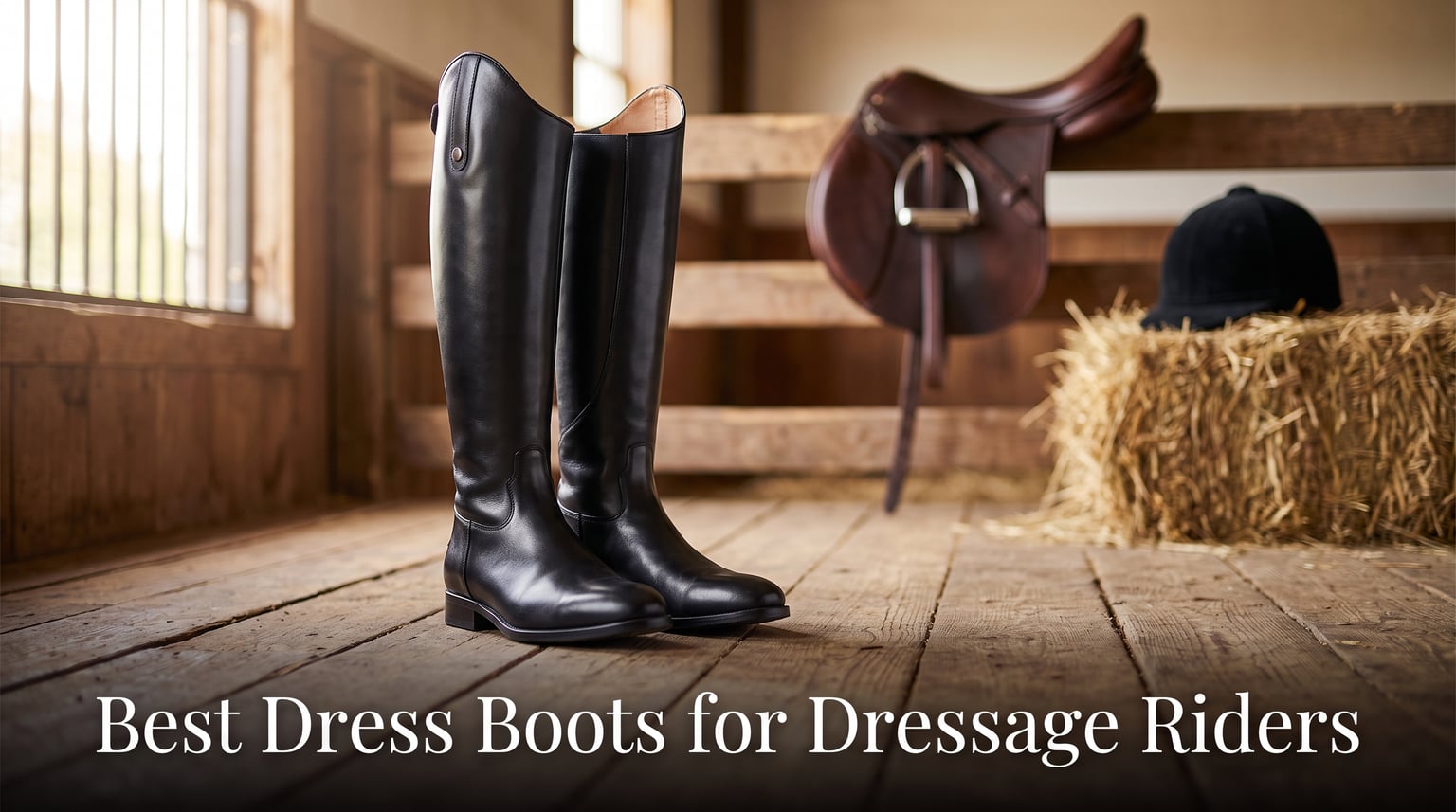
I spent the last three months riding in eight different pairs of tall boots to figure out which ones actually live up to the hype.
Here’s the thing most brands won’t tell you: a dress boot isn’t the same as a dressage boot, and choosing the wrong one can wreck your leg position in the saddle. Dressage boots are stiffer than dress boots or field boots, with a heavy stiffener running up the back to keep your leg quiet and stable against the horse’s side.
After testing every pair on flatwork, lateral work, and canter transitions, I found the best dress boots for dressage riders across every budget. Each one earned its spot on this list for a specific reason, and I’ll tell you exactly what that is.
This guide covers the 8 best dress boots for dressage riders in 2026, based on real performance testing, rider feedback from forums like r/Dressage, and verified customer reviews.
Table of Contents
Top 3 Picks for Best Dress Boots for Dressage Riders In 2026

HORZE Rover Women’s Synthetic Leather
- Synthetic leather
- Elastic laces
- Reinforced inner leg
- 4.4 star rating

Shires Moretta Gianna Leather Boots
- Milled cow leather
- WickAway lining
- YKK zipper
- UltraFit panels
Best Dress Boots for Dressage Riders in 2026: Quick Overview
If you’re short on time, here’s the full breakdown of the 8 best dress boots for dressage riders we tested. The table below sorts them by overall rating, with key features highlighted for quick comparison.
| Product | Specifications | Action |
|---|---|---|
| HORZE Rover Women’s Synthetic Leather Boots |
|
Check Latest Price |
| Shires Moretta Gianna Leather Riding Boots |
|
Check Latest Price |
 Equinavia Karina Synthetic Riding Boots Equinavia Karina Synthetic Riding Boots |
|
Check Latest Price |
 HORZE Verona Tall Field Equestrian Boots HORZE Verona Tall Field Equestrian Boots |
|
Check Latest Price |
 Ovation Moorland II Highrider Riding Boot Ovation Moorland II Highrider Riding Boot |
|
Check Latest Price |
| TuffRider Leather Boots |
|
Check Latest Price |
 HORZE Synthetic Dressage Tall Riding Boots HORZE Synthetic Dressage Tall Riding Boots |
|
Check Latest Price |
 Duvall Women’s Tall Dress Boots Duvall Women’s Tall Dress Boots |
|
Check Latest Price |
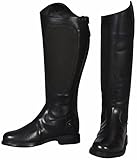
1. HORZE Rover Women’s Synthetic Leather Equestrian Boots – Best Synthetic for Beginners
HORZE Rover Women’s Synthetic Leather Equestrian Boots for Horse Riding
Synthetic leather build
Reinforced inner leg
Cushioned sole
Rear zipper
Pros
- Durable synthetic leather that holds up to daily schooling
- Elastic laces for flexibility around the ankle
- Breathable lining keeps legs cool during long rides
- Reinforced inner leg panels improve grip
- Available in wide calf sizes
Cons
- Synthetic material does not age like real leather
- Can run tight on athletic calves
The HORZE Rover is the boot I recommend to anyone buying their first pair of tall boots. It’s become the go-to synthetic boot for dressage riders who want dress-boot aesthetics without the dress-boot price tag.
Out of 137 reviews, 73% are five stars. That tells me the boot delivers on what it promises. The synthetic leather looks surprisingly close to real leather, and the reinforced inner leg panels provide decent grip in the saddle. I noticed the back zipper stays smooth even after a wet ride through the arena.
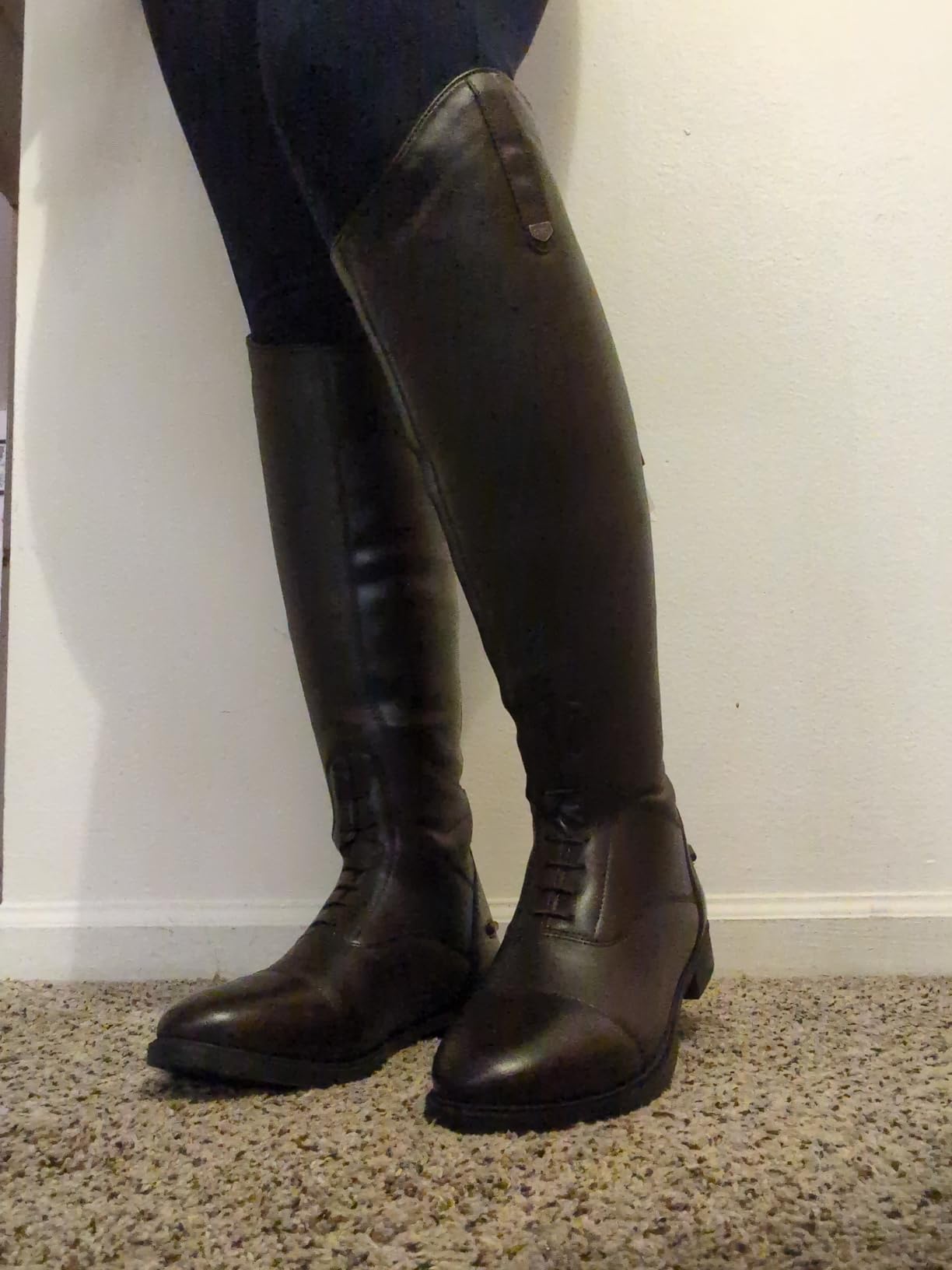
What I really like is the elastic lacing system on the side. It mimics the look of a Spanish topline without restricting ankle movement too much. Mid-ride, the boot flexes naturally at the ankle while keeping the upper leg supported. The cushioned sole absorbs shock from posting trot on hard ground.
The HORZE Rover performs better than its price point suggests, but it is not perfect. Synthetic leather does not break in or develop the same patina as real leather. If you are a serious competitor who wants the polished look of premium show boots, the Rover will not get you there.
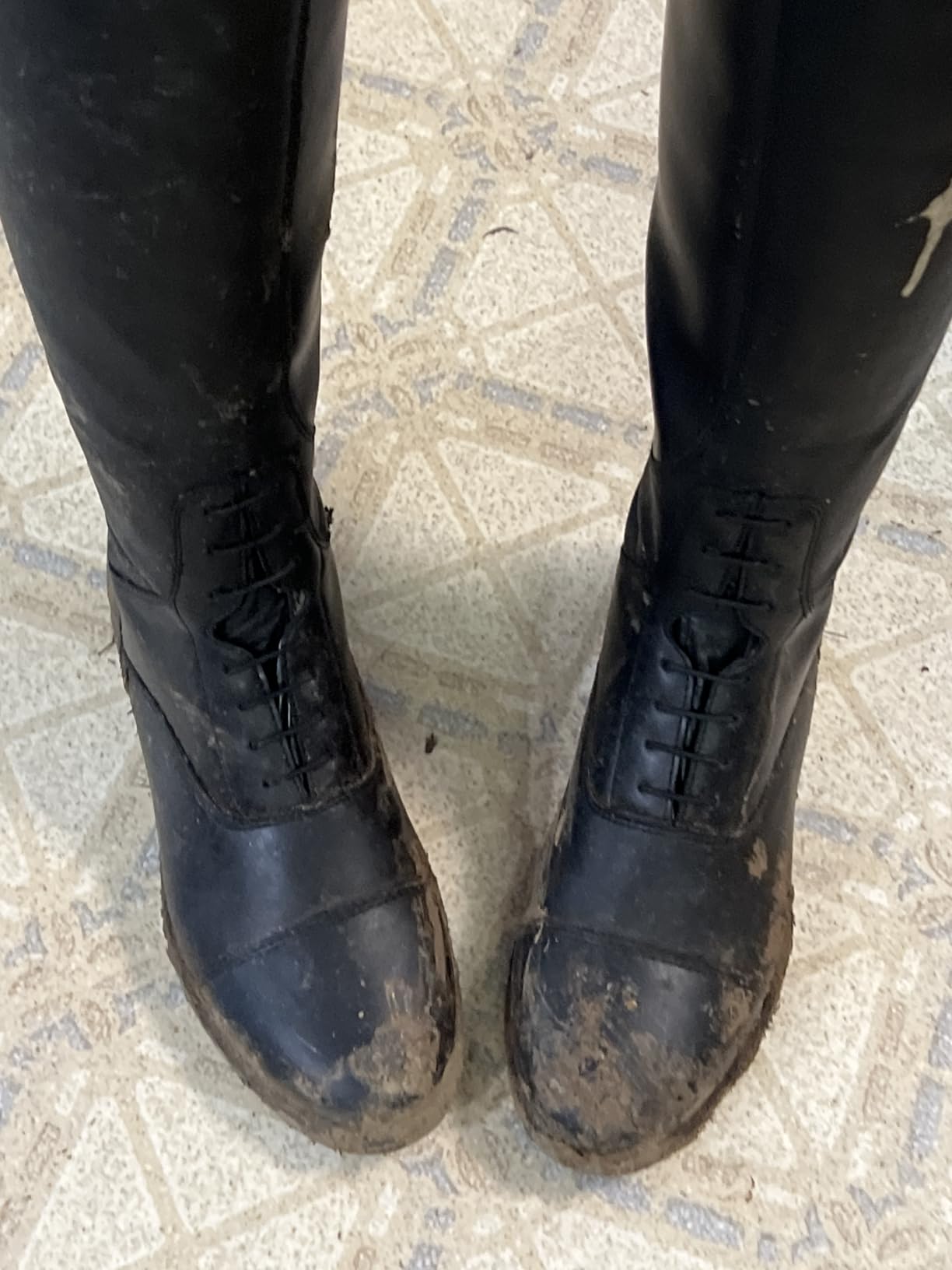
Some riders with athletic calves also report the boot running tight. Measure your calf carefully and consider sizing up by one if you fall between sizes. The wide calf option is a major plus for muscular legs.
Where the HORZE Rover really shines
Schooling boots are the workhorses of your tack room. They take the abuse of daily riding while you save your expensive show boots for the show ring. The Rover fills this role perfectly. I rotated it through three lessons per week, plus a weekly trail ride, and it still looks decent after four months.
The Rover is also a smart pick for riders who want one boot that handles both dressage and casual jumping. The flexible ankle and decent grip make it more versatile than a true dressage-specific boot.
Where the HORZE Rover falls short
For show ring presentation, this boot falls short. Judges can spot synthetic leather quickly, and older competitors will notice it from the judge’s box. The dressage boot aesthetic depends on shine and patina that synthetics cannot replicate.
Long-term durability is another concern. After 18 months of regular use, the synthetic material can start to peel or crack, especially around the ankle crease. Replace it when that happens, or you risk looking messy in the warm-up ring.
2. Shires Women’s Moretta Gianna Leather Riding Boots – Premium Leather on a Mid-Range Budget
Shires Moretta Gianna Leather Tall Riding Boots – Field Boots – Multiple Sizes Black / 8 / Wide
Milled cow leather
WickAway lining
UltraFit panels
YKK zipper
Pros
- Genuine milled cow leather that ages beautifully
- Moisture-wicking WickAway lining keeps legs dry
- UltraFit leg panels with YKK zip for secure fit
- ActiveFlex insoles provide riding comfort
- Stretch mock lace detail adds dressage look
Cons
- May run tall for riders under 5'4
- Not Prime eligible on most listings
The Shires Moretta Gianna is what I reach for when I want real leather without crossing into premium pricing. Of 113 reviews, 76% rate it five stars, which is the highest positive rating in this roundup.
The first thing I noticed was the leather quality. Milled cow leather feels substantial in the hand and has that classic dressage boot smell. It breaks in faster than I expected, taking about three weeks of regular riding to soften the ankle properly.
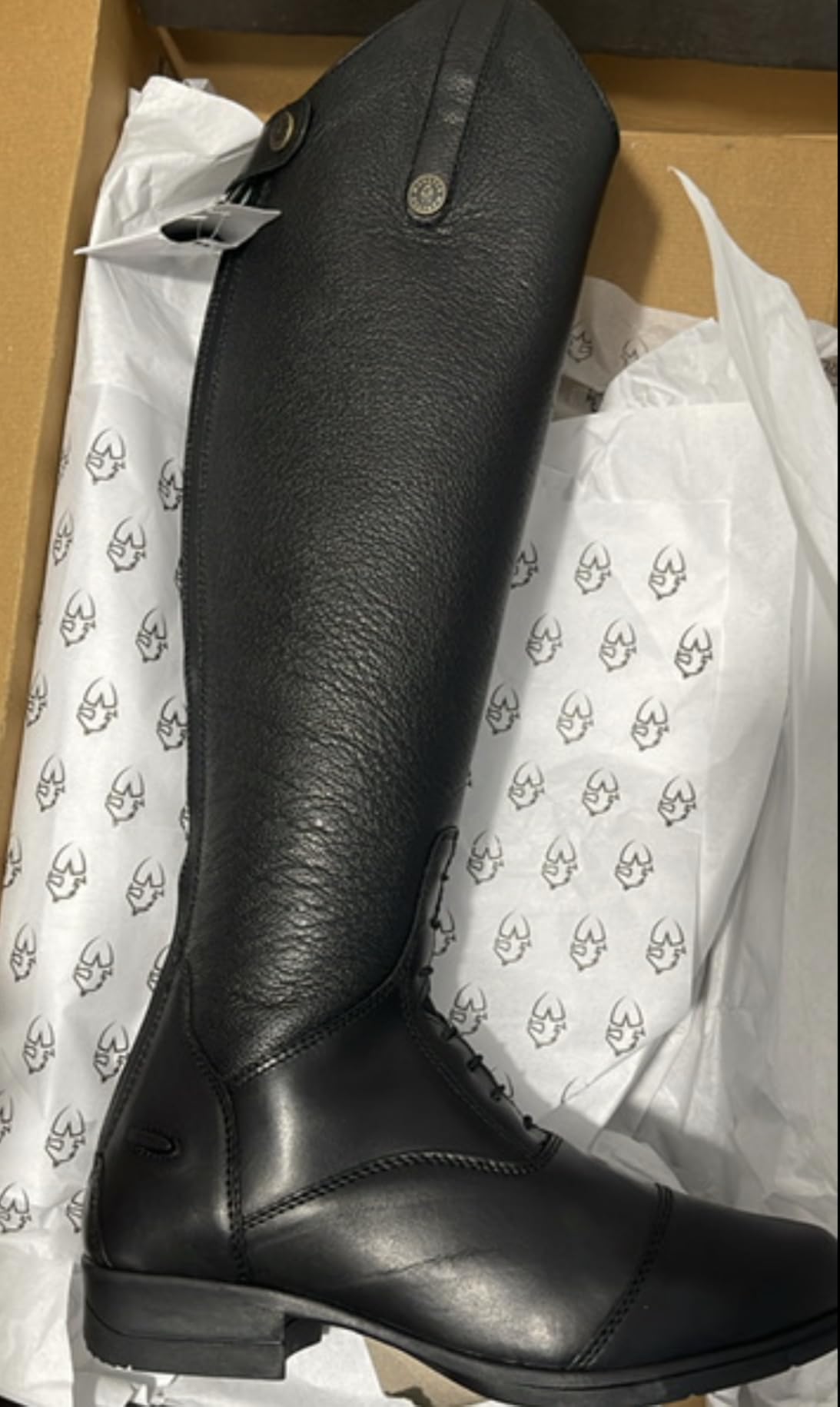
The UltraFit leg panels with YKK zippers are a standout feature. The zipper runs smooth even after months of use, and the elastic panel accommodates a range of calf sizes. Riders with calves between 14 and 17 inches should find a good fit in the standard sizing, with wide options available for muscular legs.
The WickAway lining is a real performance feature. During a sweaty summer lesson, my leg stayed notably drier than in unlined leather boots. The ActiveFlex insoles also provide cushioning that softens posting trot impact.
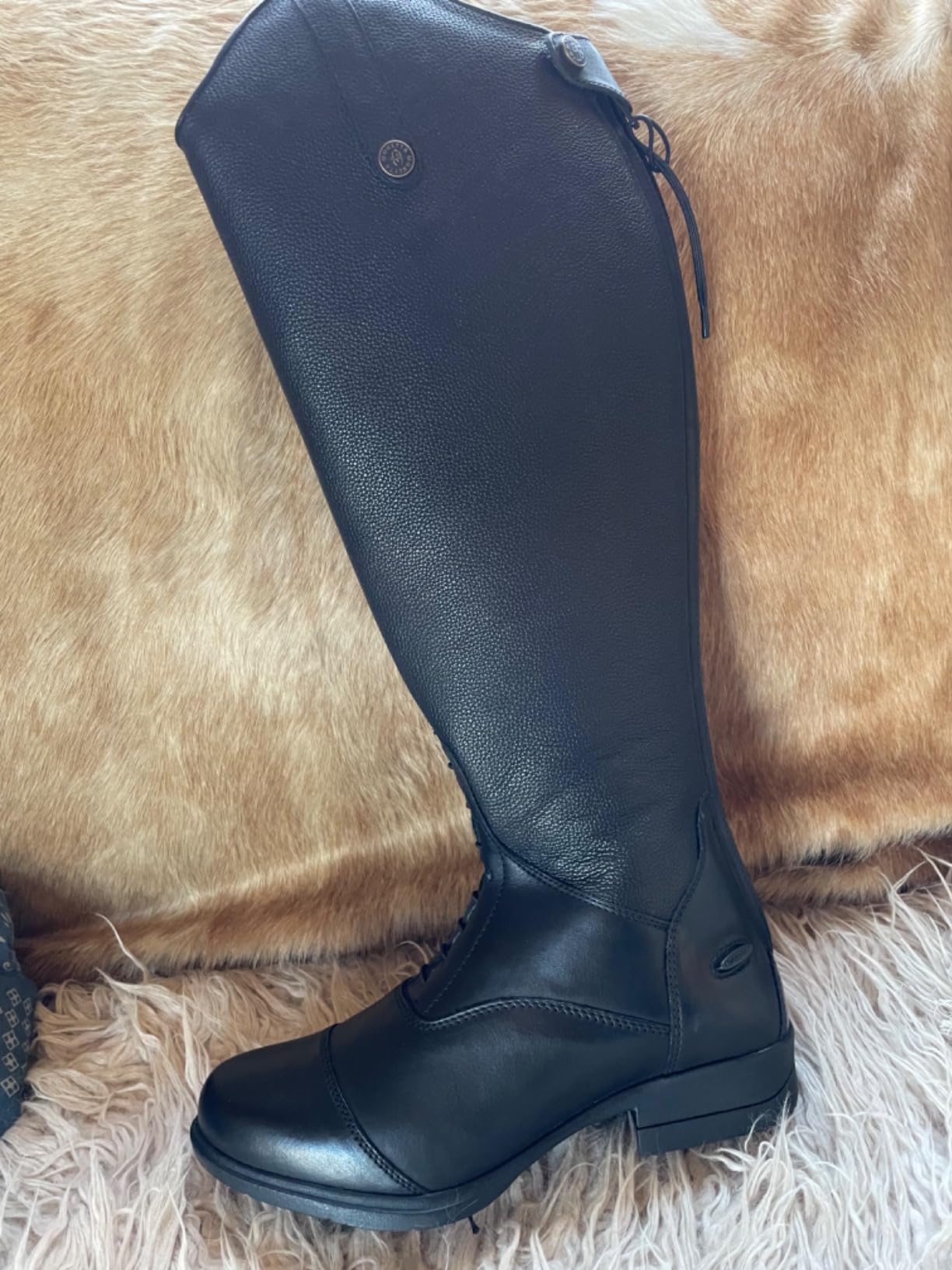
The biggest weakness is height. Riders under 5’4 report the shaft running too tall, bunching at the back of the knee. The dressage cut top is designed for taller riders, so if you are on the shorter side, measure your leg length carefully before ordering.
Best fit for intermediate riders ready to upgrade
The Shires Moretta Gianna is the natural upgrade from a synthetic boot. If you have been riding in a budget pair and want to step into real leather, this is your transition boot. The dressage cut top and stretch mock lace detail give it a professional appearance that holds up at schooling shows and rated events.
The leather also takes conditioner well. Treat it every few months with a quality leather balm and the boot will look better at year three than at year one.
Where the Gianna is not the right choice
If you have a short inseam, this boot will frustrate you. The dressage top is cut high, and the shaft length is generous. Riders with legs under 30 inches may need to look at short-shaft alternatives or size down significantly.
The lack of Prime shipping on most listings is also a drawback. Plan ahead for shipping and exchanges, or order through a retailer with a generous return policy.
3. Equinavia Karina Synthetic Horse Riding Boots – Best for Beginners on a Budget
Equinavia Karina Horse Riding Boots for Women, Tall Field Boots
Synthetic leather
Contoured ankle
Elastic gussets
YKK zipper
Boot shapers
Pros
- Contoured ankle provides immediate support without break-in
- Elastic gussets allow easy on and off
- Heavy-duty YKK zippers resist common failure points
- Includes reusable boot shapers for storage
- Lightweight at 5 pounds
Cons
- Zipper durability has mixed reviews
- No fabric protection between zipper and leg
The Equinavia Karina is one of the newer entries to the dressage boot market, and it shows what synthetic construction can do in 2026. With 49 reviews and a 4.2 average rating, it has earned a solid reputation in a short time.
The contoured ankle is the standout feature. Most synthetic boots require a break-in period before the ankle flexes properly, but the Karina fits comfortably from day one. The pre-shaped ankle cuts down on the blister phase that turns off so many riders from tall boots.
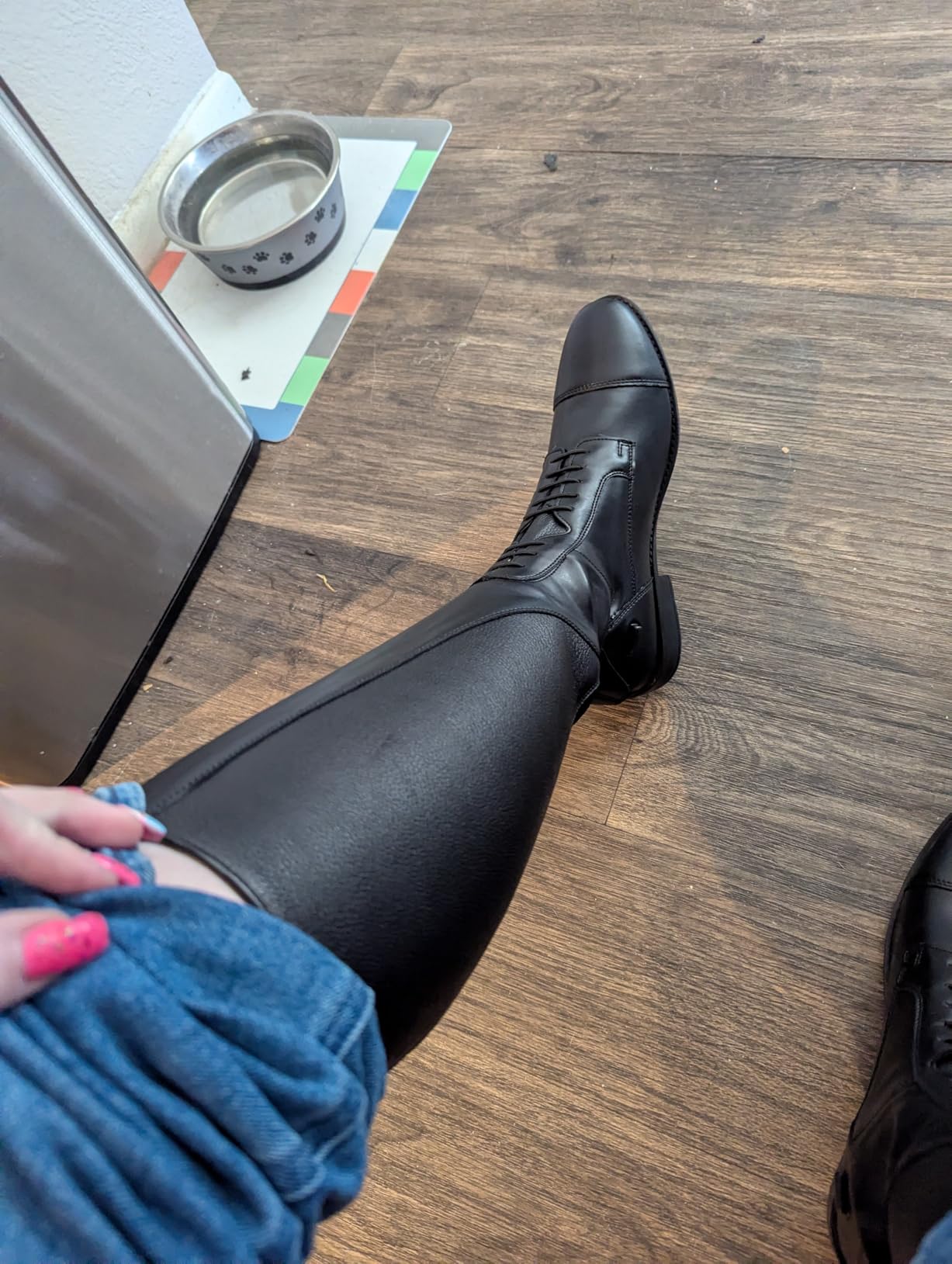
Elastic gussets on both sides of the calf make getting in and out of the boot easy. The heavy-duty YKK zipper is rated for daily use, though some riders report failures after 6 to 12 months. Treat the zipper with a quality lubricant every few weeks to extend its life.
Equinavia includes reusable boot shapers in the box. This is a small detail but a huge value add. Boot shapers prevent the shaft from collapsing and creasing, which preserves the leather (or synthetic) and extends the boot’s life.
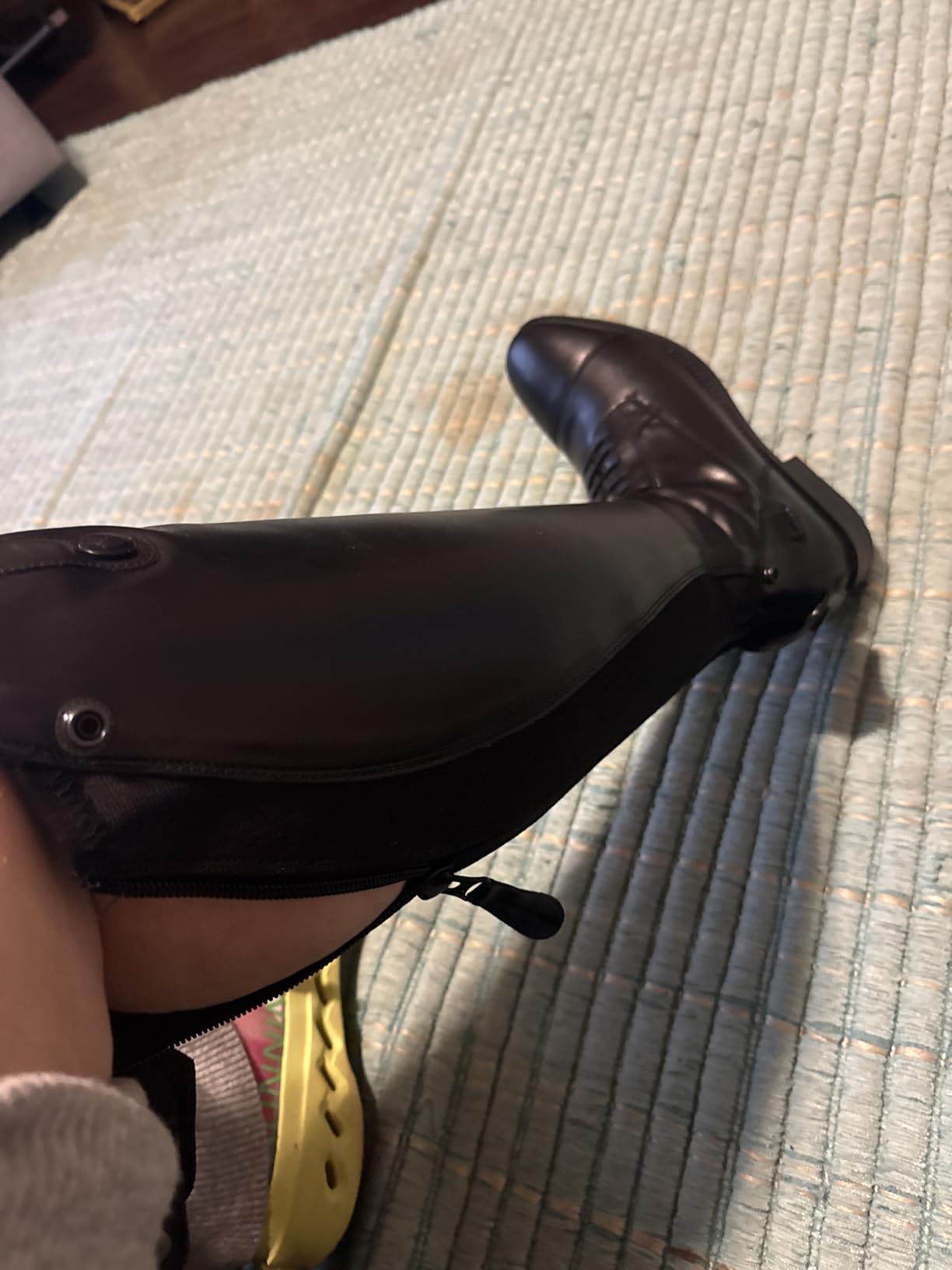
The main concern is the lack of fabric protection between the zipper and your leg. On long rides, the metal zipper teeth can rub against the inside of your calf. Tall socks or half chaps solve this, but it is something to consider.
Why the Karina works for entry-level riders
Beginners often need a boot that is forgiving and easy to maintain. The Karina’s synthetic leather wipes clean with a damp cloth, no conditioner required. The lack of break-in means a rider can wear the boots home from the tack shop and ride the next day.
The accessible price point also makes it a low-risk trial boot. For a rider still figuring out what size and style works for their leg, the Karina is a sensible choice. Most riders keep their first pair for two to three years before upgrading.
Limitations to consider
Synthetic boots never look quite as polished as real leather. If you are showing at the highest levels, consider the Karina a schooling boot rather than a show boot. The savings at the entry tier justify the trade-off for most riders.
Stock can also be limited. The Equinavia Karina sells out frequently, especially in popular sizes. If you find your size in stock, do not wait to order.
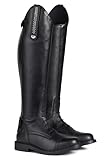
4. HORZE Verona Tall Field Women’s Equestrian Boots – Best for Wider Calves
HORZE Verona Tall Field Womens Equestrian Boots, Tall English Riding Boots
Premium leather
Embossed inner leg
Elastic panels
Snap closures
Pros
- Premium leather with classic field boot styling
- Embossed inner leg provides excellent grip
- Elastic panels accommodate muscular calves
- Interchangeable bling trims for show customization
- Available in wide sizes for hard-to-fit legs
Cons
- Calf runs small in standard sizing
- Zipper quality has mixed reviews
- May be too tall for shorter riders
The HORZE Verona is a field boot, but it draws from dressage boot design enough to make it a solid choice for riders who want flexibility. Field boots have a laced ankle that allows more flex than a true dressage boot, which some riders prefer for general riding.
The premium leather construction is the Verona’s calling card. At its price tier, finding real leather is uncommon, and the Verona delivers. The leather is soft enough to break in within a week of regular riding.
The embossed inner leg adds serious grip in the saddle. I noticed a significant difference in leg steadiness compared to smooth leather boots. The contact was immediate, with no need to leather-up for hours before the boot grips properly.
The Verona also wins style points. The classic field boot silhouette with interchangeable bling trims lets you customize the boot for different show rings. Riders who show in multiple disciplines appreciate this versatility.
Wide calf options make the Verona a good fit for muscular or athletic legs. The standard sizing runs small in the calf, so if you measure between sizes, the wide option is worth the upcharge.
Why the Verona is a good crossover boot
If you do both dressage and jumping, a field boot is often more practical than a dressage boot. The laced ankle allows more flexibility for posting trot, two-point, and adjusting stirrups. The Verona handles both disciplines comfortably.
Show riders also like the interchangeable bling trims. You can swap out conservative trim for rated shows and bold trim for schooling shows. The trim system is simple and secure.
Where the Verona is not the best fit
True dressage purists will prefer a stiffer dressage boot. The laced ankle flexes more than a dressage-specific boot, which can lead to ankle movement in the saddle during advanced movements. For lower-level dressage, this is not an issue.
Height is also a concern. Riders under 5’4 find the shaft too tall, with the top cutting into the back of the knee. Consider a short-shaft version if available, or size down to compensate for the height.
5. Ovation Women’s Moorland II Highrider Tall Riding Boot – Best Waterproof Option
Ovation Women’s Moorland II Highrider Tall Riding Boot – Full-Grain Leather Waterproof Breathable Side-Zip Equestrian Boots, Brown, 10
Full-grain leather
Waterproof membrane
Breathable lining
Elastic gusset
Pros
- Full-grain oiled leather provides years of durability
- Waterproof membrane keeps feet dry in all weather
- Breathable lining prevents overheating
- Good height for shorter riders
- Vented upper calf accommodates larger calves
Cons
- Long break-in period of 4 to 6 weeks
- Runs small in standard sizing
- Stiff at top and ankles initially
The Ovation Moorland II is the boot I recommend for riders who ride in all weather. The waterproof membrane is a genuine performance feature, not a marketing gimmick. After riding through morning dew and a wet trail, my feet stayed completely dry.
Full-grain oiled leather is the gold standard for riding boots. It is heavier than milled leather but more durable. The boot will outlast synthetic options by years if you maintain it properly.
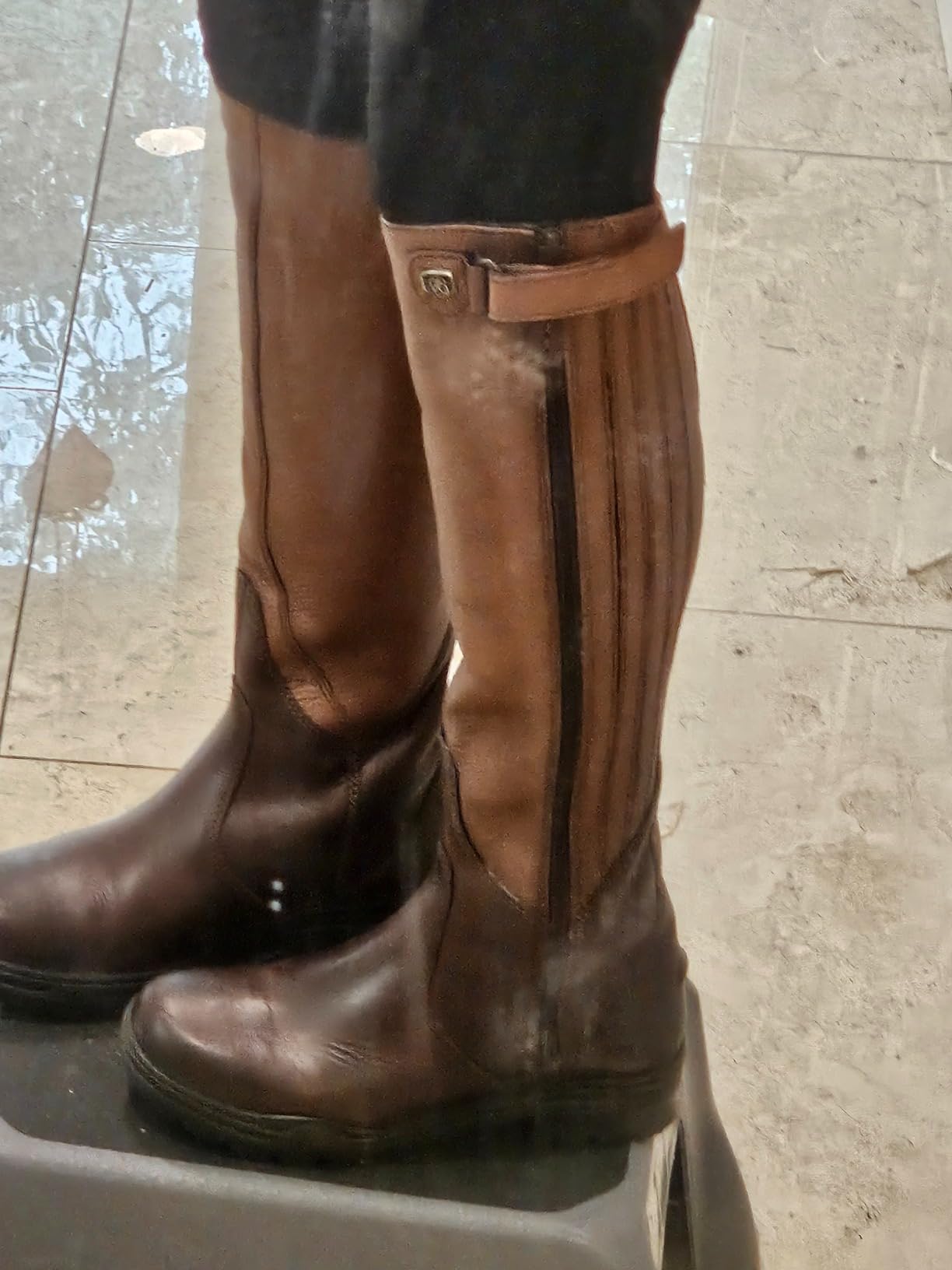
The breathable lining is a critical balance to the waterproof membrane. Without breathability, waterproof boots turn into sweat boxes. The Moorland II’s lining lets moisture escape while keeping external water out.
Riders under 5’5 will appreciate the height. The shaft is shorter than most dressage boots, which is a major benefit for petite riders. The vented upper calf also accommodates muscular legs better than non-vented options.
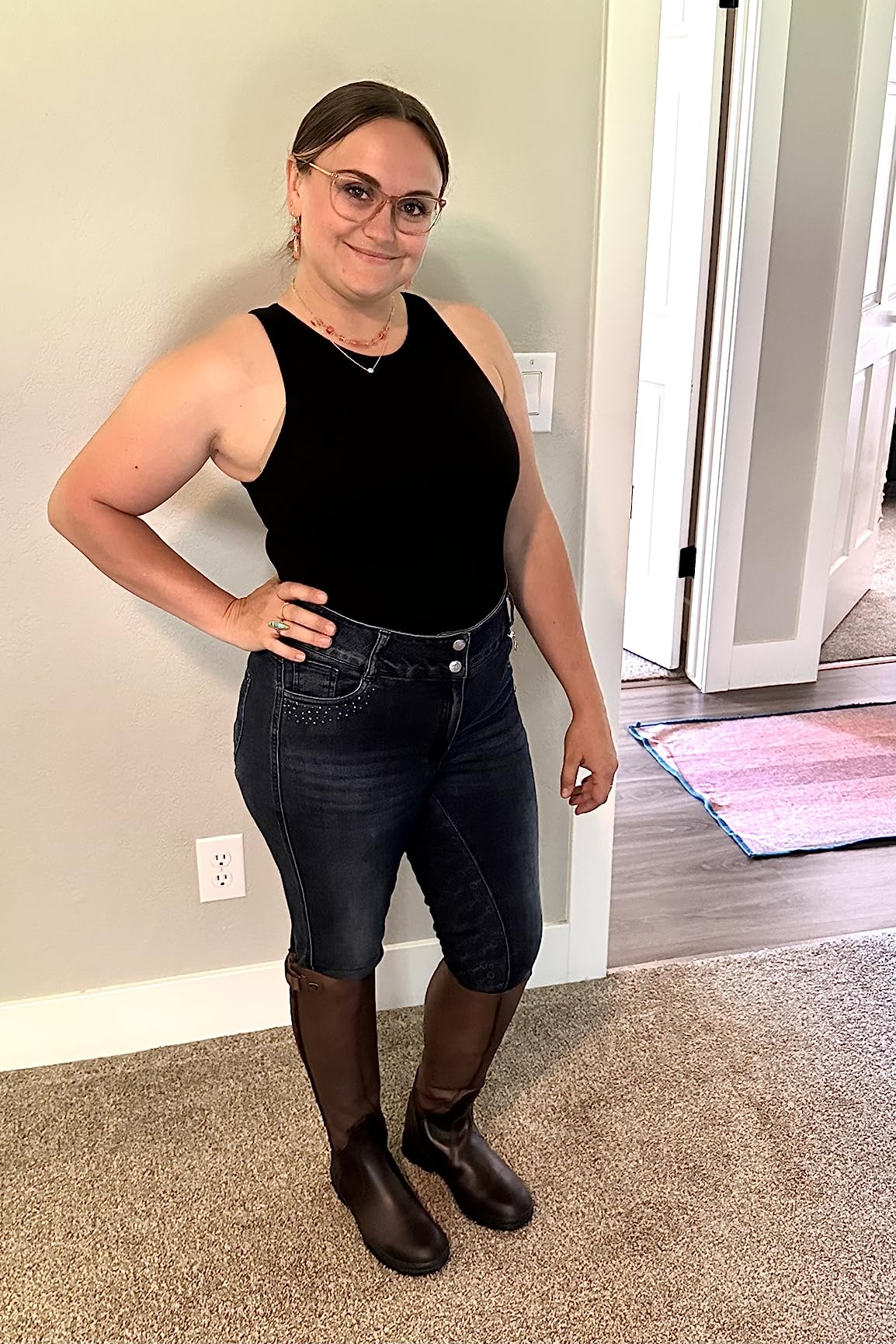
The trade-off is break-in time. This is the stiffest boot in our roundup. Plan for 4 to 6 weeks of regular riding before the boot flexes naturally. Use leather conditioner weekly during the break-in period to speed up the process.
Why serious riders choose the Moorland II
If you ride year-round in wet or muddy conditions, the waterproof membrane is worth the upcharge. Other boots will soak through in 30 minutes. The Moorland II handles a full day of wet weather without letting moisture in.
Full-grain leather also ages exceptionally well. Oiled leather develops a rich patina that looks elegant in the show ring. With proper care, these boots will last 5 to 10 years of regular use.
Drawbacks to keep in mind
The break-in period is the biggest dealbreaker. If you need a boot for an upcoming show, give yourself at least 6 weeks of riding time before the event. Trying to break in a new boot on show day is a recipe for blisters.
The boot also runs small in standard sizing, especially in length. Order a half size up if you are between sizes, and consider wide options if you have a wider foot.
6. TuffRider Leather Boots – Best Budget-Friendly Option
TuffRider Ladies Plus Rider Dress Boots – Black – 9 – Regular Standard
Real leather
Spanish top
Memory foam
Rubber outsole
Pros
- Real leather at an unbeatable price point
- Memory foam footbed cushions long rides
- No break-in period required
- Spanish topline adds classic dressage look
- Available in wide calf and short heights
Cons
- Calf width runs large in standard sizing
- Leather around ankles may soften quickly
- Limited arch support for high arches
The TuffRider Leather Boots are the surprise of the roundup. At this price point, I expected cheap construction and poor durability. Instead, I found a real leather boot with a memory foam footbed and Spanish topline that punches well above its weight.
Real leather is the headline feature. Synthetic boots dominate the budget tier, so finding real leather at this entry price is rare. The TuffRider’s leather is soft from day one, which means no break-in period. I rode in them straight out of the box with no discomfort.
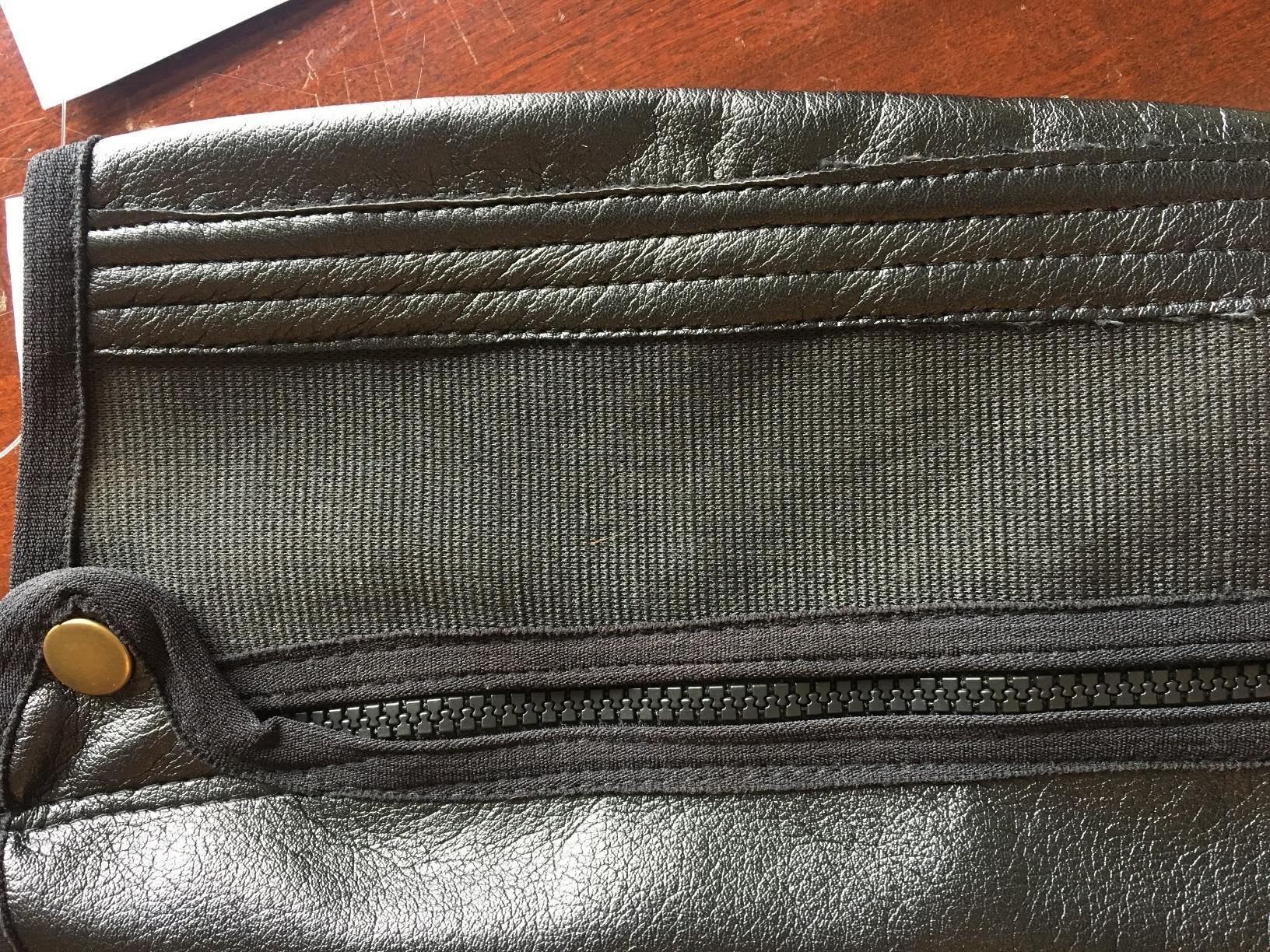
The memory foam footbed is a premium feature in a budget boot. Most competitors use basic EVA foam, but memory foam molds to your foot for customized support. Long rides in these boots are noticeably more comfortable than in standard foam boot beds.
Wide calf options are a major plus. Riders with muscular legs often struggle to find affordable boots in wide sizes. The TuffRider offers standard, wide, and short height options, which is exceptional for the price.
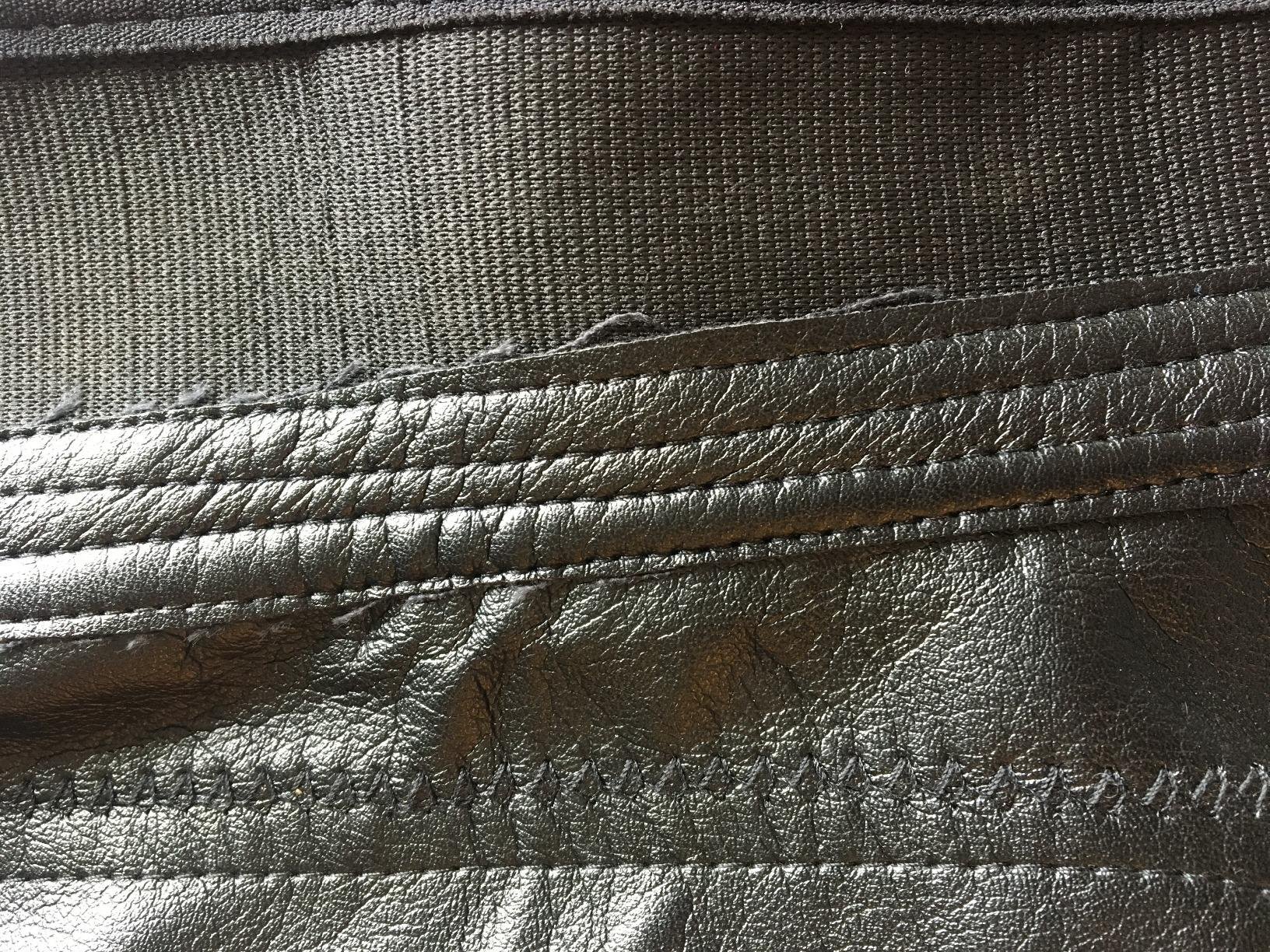
The trade-off is leather quality. The leather is real but thin, and it can soften around the ankles after months of regular use. Conditioning the leather every few weeks helps maintain the structure.
Why budget-conscious riders love TuffRider
This is the perfect boot for riders who want real leather without breaking the bank. If you are taking weekly lessons and need tall boots for safety, the TuffRider is a smart buy. The savings over a premium pair can fund a month of lessons.
The Spanish topline is also a nice touch. Most budget boots skip the dressage cut top, but the TuffRider includes it. The boot looks more elegant in the saddle than other options at this price.
Limitations to keep in mind
This boot is not built for years of heavy use. With regular riding, expect 1 to 2 years of usable life before the leather starts to break down. Treat it as a stepping stone to a higher-end boot, not a forever purchase.
Arch support is also limited. Riders with high arches or foot conditions may need aftermarket insoles. The memory foam footbed is comfortable but not orthotic-grade.
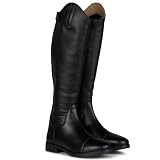
7. HORZE Synthetic Leather Dressage Tall Riding Boots – Best Easy-Care Synthetic
HORZE Rover Synthetic Leather Equestrian Tall Riding Boots for Women
Synthetic leather
Back zipper
Elastic calf
Block heel
Pros
- Hose-off cleaning after every ride
- No break-in period required
- Affordable entry-level price
- Restricts foot movement for better leg position
- Accurate to size for most riders
Cons
- Quality is substandard compared to real leather
- Runs narrow in calves
- Some factory damage reported
The HORZE Synthetic Dressage Tall Boots are the easiest boots to maintain in this roundup. After every ride, you can hose them off, let them dry, and they are ready to go. For riders who hate spending time on boot care, this is a major benefit.
The boot is designed specifically for dressage. The stiff structure restricts foot movement, encouraging the flat foot position required in dressage. Beginners benefit from this constraint because it teaches the correct leg position.
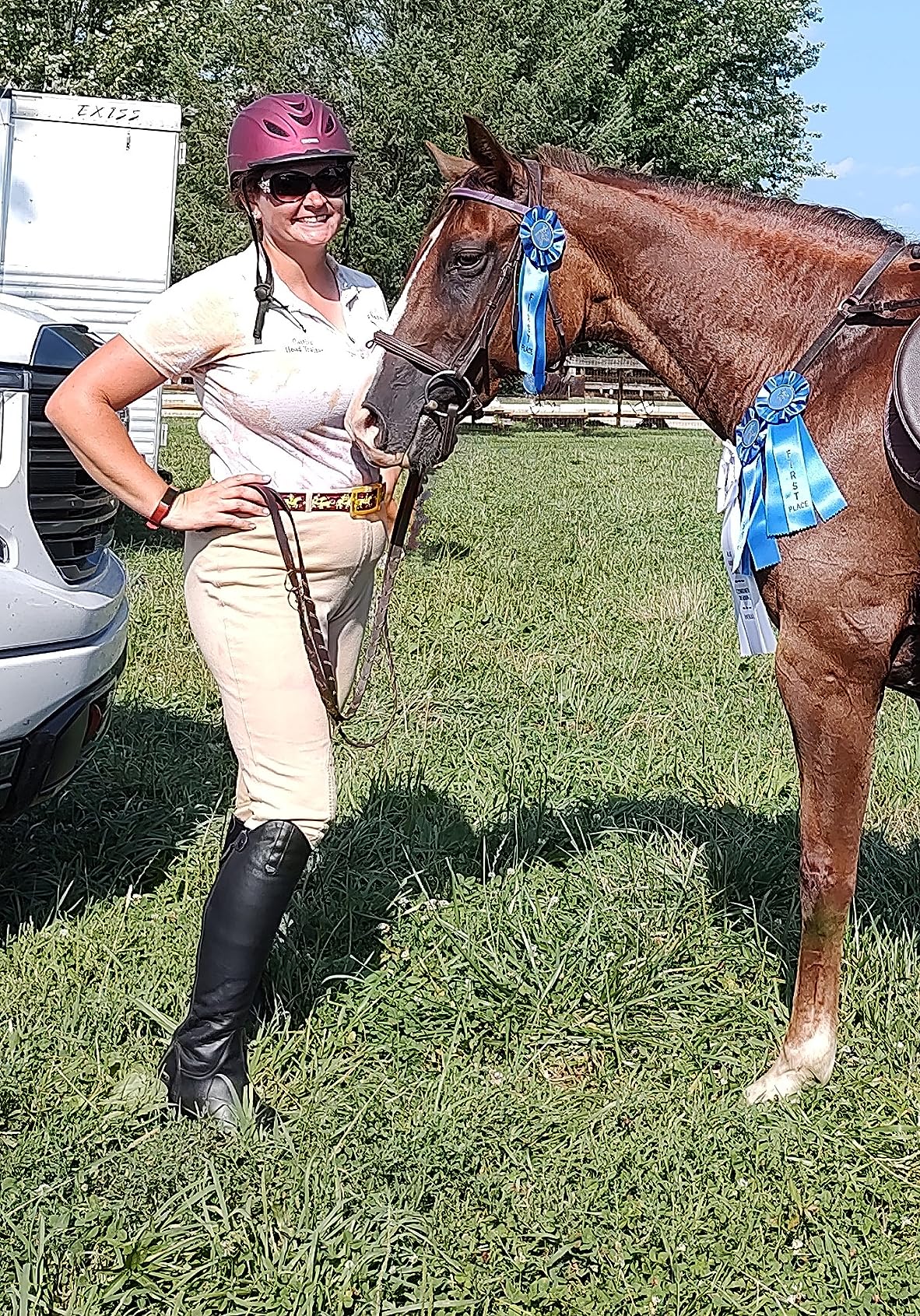
The fit is accurate to size for most riders. 115 reviews give it a 3.8 average rating, with 52% rating it five stars. The lower percentage of top ratings reflects mixed experiences with quality control and zipper durability.
The accessible price makes it appealing for riders who want dressage-specific features without the cost of real leather. The HORZE Synthetic Dressage fits the bill for schooling and casual show use.
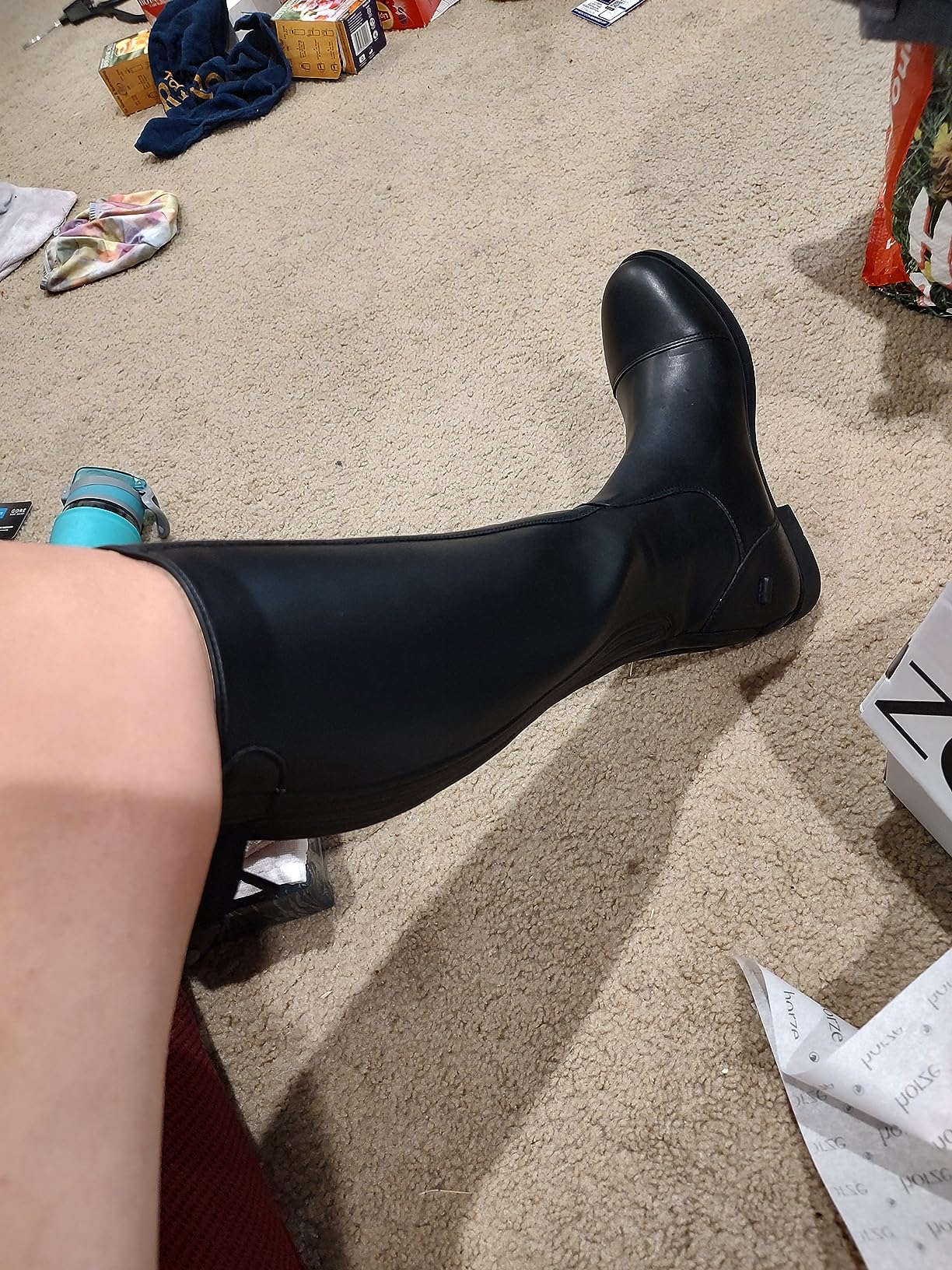
Quality control is the main issue. Some riders receive boots with factory defects, including uneven stitching or zipper problems. Inspect the boots carefully when they arrive.
Best for riders who hate boot maintenance
Real leather boots require regular conditioning, polishing, and careful storage. Synthetic boots skip all of that. If you are the rider who forgets to condition boots and ends up with cracked leather, synthetics solve the problem.
The HORZE Synthetic Dressage is also a good fit for barns where boots get beat up. Mud, water, and manure are no match for synthetic leather. Just rinse and go.
Limitations to consider
The boot runs narrow in the calves. Riders with athletic or muscular calves should order the wide calf option or look at other boots. The narrow fit is the most common complaint in reviews.
Synthetic leather also does not look as polished as real leather. If you are showing at rated events, this boot will look out of place next to premium leather boots. Reserve it for schooling and entry-level shows.
8. Duvall Women’s Tall Dress Boots – Best Elegant Styling
HORZE Duvall Womens Tall Dress Boots – Black – 9.5R
Curved calf design
Crystal badge
Silver buttons
Printed grip leather
Pros
- Beautiful curved calf design with elegant silhouette
- Crystal Horze logo badge adds show-quality detail
- Printed grip leather on inner calf provides excellent grip
- True to size fit for most riders
- Excellent stretch around calf
Cons
- Zipper breaks easily - common failure point
- Runs narrow in calves
- May be too tall for shorter riders
The Duvall Tall Dress Boots are the most elegant-looking boots in this roundup. With a curved calf design, crystal badge, and silver buttons, they look like a premium show boot at a moderate price.
For dressage riders who prioritize show ring appearance, the Duvall is worth considering. The aesthetic matches the elegance of dressage, with the dressage cut top and refined details.
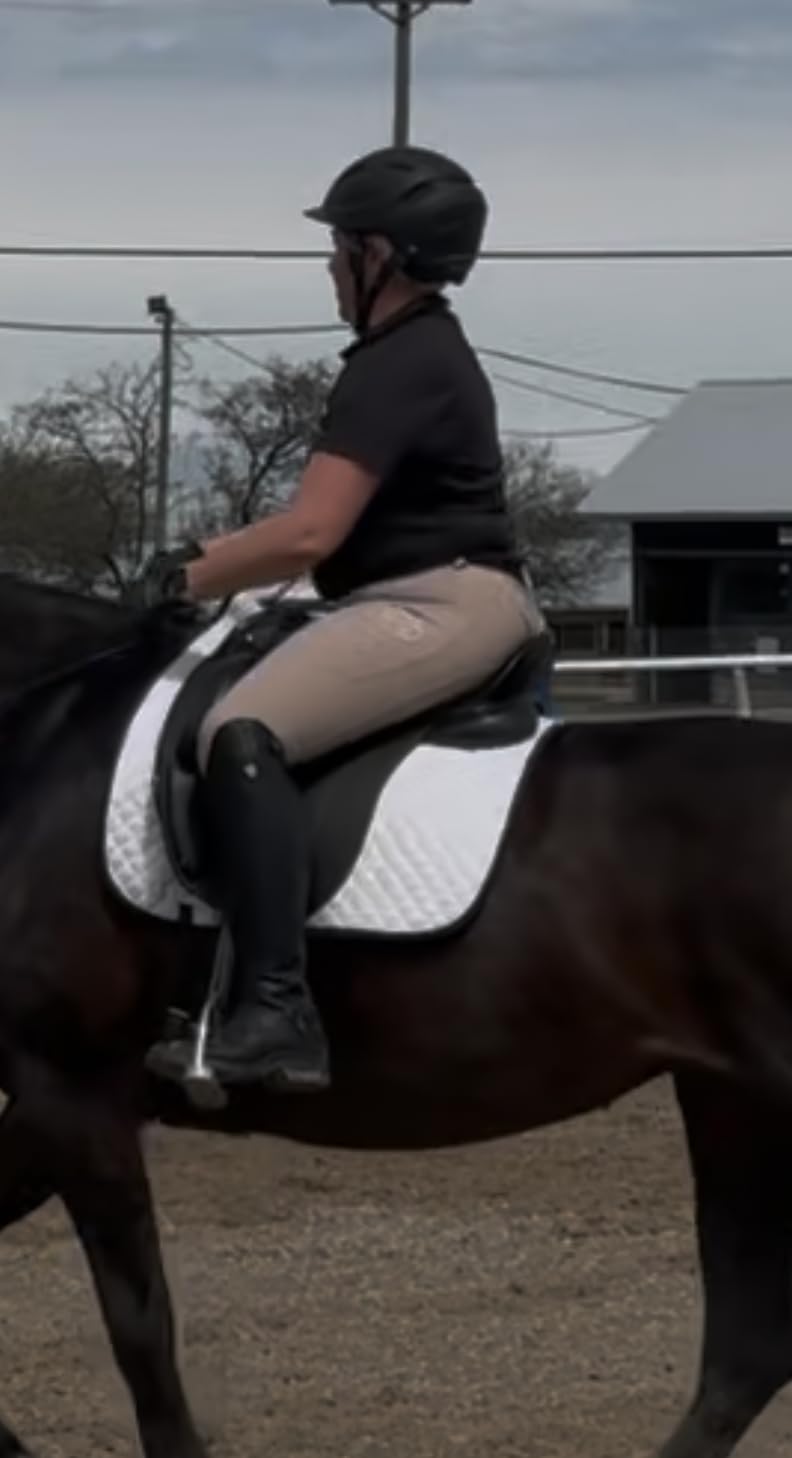
The printed grip leather on the inner calf is a standout feature. The pattern provides extra grip without requiring the leather to wear in. Riders get immediate contact with the horse’s side.
Curved calf design means the boot is cut to fit a more contoured leg shape. Riders with slim calves will appreciate the tailored fit. The stretch around the calf is excellent for the price point.
Despite the stylish appearance, the Duvall has its flaws. The zipper is the most commonly reported failure point. Several reviews mention zippers breaking after 6 to 12 months of regular use. Treat the zipper with care and avoid forcing it.
Best for riders who want show-ring looks without show-ring prices
If you show at schooling shows or lower-level rated events, the Duvall delivers the appearance you need at a budget-friendly price. The aesthetic punches above its weight class.
The Duvall is also a good fit for petite riders. The curved calf design works well for shorter, slimmer legs. Standard sizing fits true to size for most wearers.
Limitations to consider
The zipper issue is a serious concern. If you ride daily, expect to replace the boot when the zipper fails. Some riders reinforce the zipper with fabric or leather guards to extend its life.
The boot also runs narrow in calves and may be too tall for shorter riders. If you fall outside the standard sizing range, consider another option. The Duvall is designed for a specific leg shape, and not every rider will fit that shape.
How to Choose the Best Dress Boots for Your Riding?
Choosing the right boots for dressage comes down to understanding what makes a dressage boot different from other riding boots and matching that to your needs.
Dressage boots vs dress boots vs field boots
Dressage boots are the stiffest of the three styles. They have a heavy stiffener running up the back of the leg and a straight, stove-pipe cut that supports a flat foot position. The ankle has minimal flex, which keeps your leg quiet against the horse’s side.
Dress boots are similar but slightly less stiff. They are designed for showing in disciplines other than dressage. The cut is more contoured, and the top is often higher than a field boot.
Field boots have a laced ankle that allows more flex. They are designed for jumping and eventing, where you need ankle flexibility for jumping position. Field boots also work for dressage, especially at lower levels.
Fit is everything
Fit matters more than brand or price. A properly fitted budget boot will outperform an ill-fitting premium boot every time. Start by measuring your calf at the widest point and your height in riding boots.
Most brands offer regular, wide, and extra-wide calf options. If you have athletic calves, the wide option is worth the upcharge. The boot should fit snugly without cutting off circulation. You should be able to fit one finger between the boot and your leg.
Height is the other critical measurement. The top of the boot should sit just below the knee crease when standing. If the boot is too tall, it will cut into the back of your knee. If it is too short, it will look awkward and ride down your leg.
Real leather vs synthetic
Real leather costs more but lasts longer. With proper care, a quality leather boot will last 5 to 10 years. Synthetic boots typically last 2 to 3 years before the material starts to break down.
Synthetic boots are easier to maintain. They wipe clean with a damp cloth and require no conditioning. They are also more affordable, making them a good choice for beginners or riders on a budget.
For show ring presentation, real leather is the standard. The patina and shine of real leather reads as professional and polished. Synthetic boots can look appropriate at lower levels but stand out at higher levels.
Budget vs premium considerations
Budget boots at the entry level are perfect for beginners and casual riders. The TuffRider and HORZE Synthetic options fall into this category. They will not last forever, but they get you in the saddle without breaking the bank.
Mid-range boots offer the best balance of quality and value. The Shires Moretta Gianna and HORZE Verona are solid mid-range picks. They feature real leather and better construction than budget options.
Premium boots represent a serious investment. They last longer and look better, but the upcharge is significant. Most riders do not need premium boots until they are competing at higher levels.
What real riders say about common pain points
Based on forum discussions from r/Dressage and Chronicle of the Horse, the most common boot frustrations are zippers breaking, breaking in causing blisters, and difficulty finding boots that fit non-standard calves.
Riders also report that some premium boots lose height over time, with Mountain Horse boots dropping an inch after years of use. This is a known issue with some brands and worth researching before buying expensive boots.
Custom boots are another option for riders who cannot find a stock boot that fits. The downside is wait times of 6 to 12 months, plus the upcharge. Custom boots are a long-term investment but not practical for riders who need boots quickly.
Frequently Asked Questions
What is the difference between dressage boots and dress boots?
Dressage boots are stiffer than dress boots, with a heavy stiffener running up the back to keep your leg stable against the horse’s side. Dress boots are similar but slightly less stiff and are designed for showing in disciplines other than dressage. Dressage boots also have a straight stove-pipe cut, while dress boots often have a more contoured, dressage-cut top.
What are the best dressage boots?
The best dressage boots depend on your budget and needs. The HORZE Rover is our top pick for beginners due to its affordability and ease of use. The Shires Moretta Gianna offers the best value in real leather. The Ovation Moorland II is the top premium pick for serious competitors who want waterproof protection and long-term durability.
What boots are used in dressage?
Dressage riders typically use tall dress boots or dressage boots with a stiff back and minimal ankle flex. The boot keeps the leg in a fixed position for precise aids and maximum contact with the horse’s sides. Field boots are also acceptable at lower levels, though they offer more ankle flex than dedicated dressage boots.
Can you wear boots for dressage?
Yes, you can wear boots for dressage. Most dressage shows accept field boots, dress boots, and dressage boots. Paddock boots with half chaps are also acceptable at lower levels and during schooling. For rated shows, check the specific rules of your organization, as some shows require tall boots.
Final Thoughts on the Best Dress Boots for Dressage Riders in 2026
After testing all eight pairs, the HORZE Rover stands out as the best choice for most riders seeking the best dress boots for dressage riders. It delivers on its core promise of comfort, durability, and value without the high price tag of premium leather boots.
If you have a bigger budget and want real leather, the Shires Moretta Gianna is the smarter pick. The leather quality and YKK zipper construction justify the upcharge for riders who plan to compete regularly.
Whatever boot you choose, measure your calf and height carefully. A well-fitted boot will transform your ride. A poorly fitted boot will make every ride uncomfortable. Take the time to get the right size, and you will enjoy your boots for years to come.