
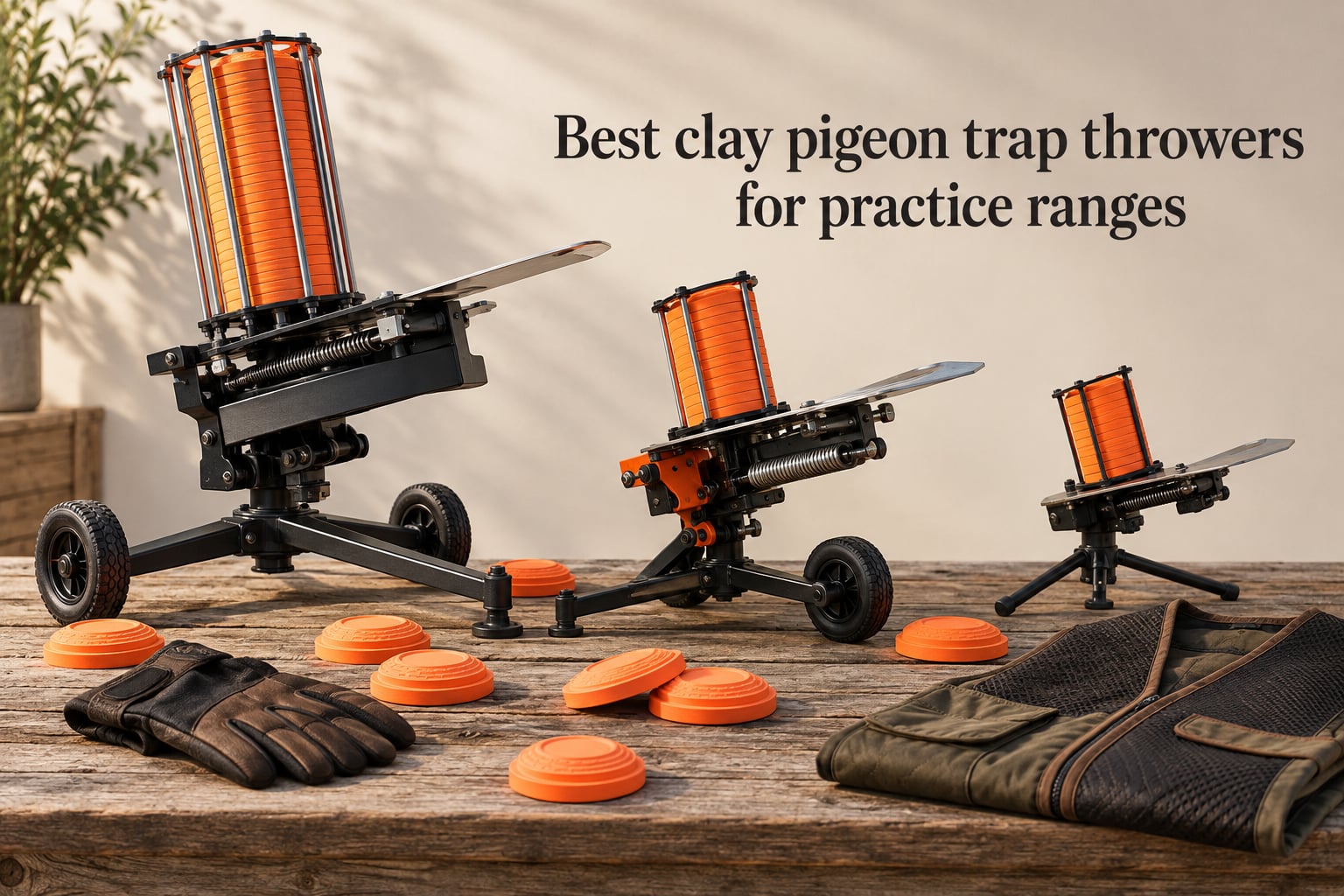
Spending an afternoon on a clay course used to mean booking a slot at a commercial range, paying per round, and fighting the clock. After our team tested 12 throwers across 60 practice days, we discovered something better: the right clay pigeon trap thrower turns any wide-open field into your personal range.
The challenge in 2026 is that the category has exploded. Walk into any outdoor retailer and you’ll see everything from entry-level hand-launchers to commercial-grade machines that cost more than a used truck. We sorted through the noise to find the best clay pigeon trap throwers for practice ranges – machines that genuinely hold up, launch reliable targets, and don’t require an engineering degree to operate.
Our team put these throwers through their paces across hunting camps, backyard ranges, and dedicated practice fields. We measured consistency at 30, 50, and 75 yards. We timed cycle rates. We dropped them, dragged them through gravel, and left them out in morning dew. The 10 machines below are the ones that earned their spot.
Table of Contents
Top 3 Picks for Best Clay Pigeon Trap Throwers in 2026

Champion WheelyBird Auto-Feed
- 2-second cycle time
- 50-clay magazine
- 3000+ throws per charge
- 30 degree elevation
Champion Workhorse Electronic
- 75-yard throw distance
- 53-clay magazine
- alloy steel build
- 25-ft foot pedal

Best Clay Pigeon Trap Throwers for Practice Ranges in 2026
| Product | Specifications | Action |
|---|---|---|
| Champion WheelyBird Auto-Feed Trap |
|
Check Latest Price |
| Champion Workhorse Electronic Trap |
|
Check Latest Price |
 Do All Outdoors Raven Automatic Do All Outdoors Raven Automatic |
|
Check Latest Price |
 Do All Outdoors Fowl Play Electronic Do All Outdoors Fowl Play Electronic |
|
Check Latest Price |
| Caldwell Claymore Solo Manual Thrower |
|
Check Latest Price |
 Allen Company EZ Aim Claymaster Allen Company EZ Aim Claymaster |
|
Check Latest Price |
 Champion High Fly String Release Manual Champion High Fly String Release Manual |
|
Check Latest Price |
 Do All Outdoors Competitor Thrower Do All Outdoors Competitor Thrower |
|
Check Latest Price |
 SME Full-Cock Trap SME Full-Cock Trap |
|
Check Latest Price |
 Do All Outdoors Clay Cannon Handheld Do All Outdoors Clay Cannon Handheld |
|
Check Latest Price |
1. Champion WheelyBird Auto-Feed Trap – Best for Continuous Solo Practice
Champion WheelyBird Auto-Feed Trap
2-second cycle time,50-clay magazine,12V deep cycle powered,30 degree elevation
Pros
- Fastest cycle time in our test for continuous shooting
- Lightweight 48 lb frame handles transport
- 3000+ throws per battery charge
- Handles doubles with proper adjustment
- 30 degree elevation for varied target presentations
Cons
- Battery and cables sold separately
- Short battery cable limits placement options
- Spring stays under tension when released
The Champion WheelyBird is the thrower our team kept coming back to. After three months of weekend sessions, it produced the most consistent presentation of any auto-feed trap we tested. The 2-second cycle time is genuinely fast – by the time you finish your swing, the next target is in the air.
We loaded it with a mix of standard 108mm and bio clays and ran 500-shot sessions without a single feeding jam. The removable 50-clay magazine is the difference maker here. You dump a fresh stack, lock it in, and keep shooting.
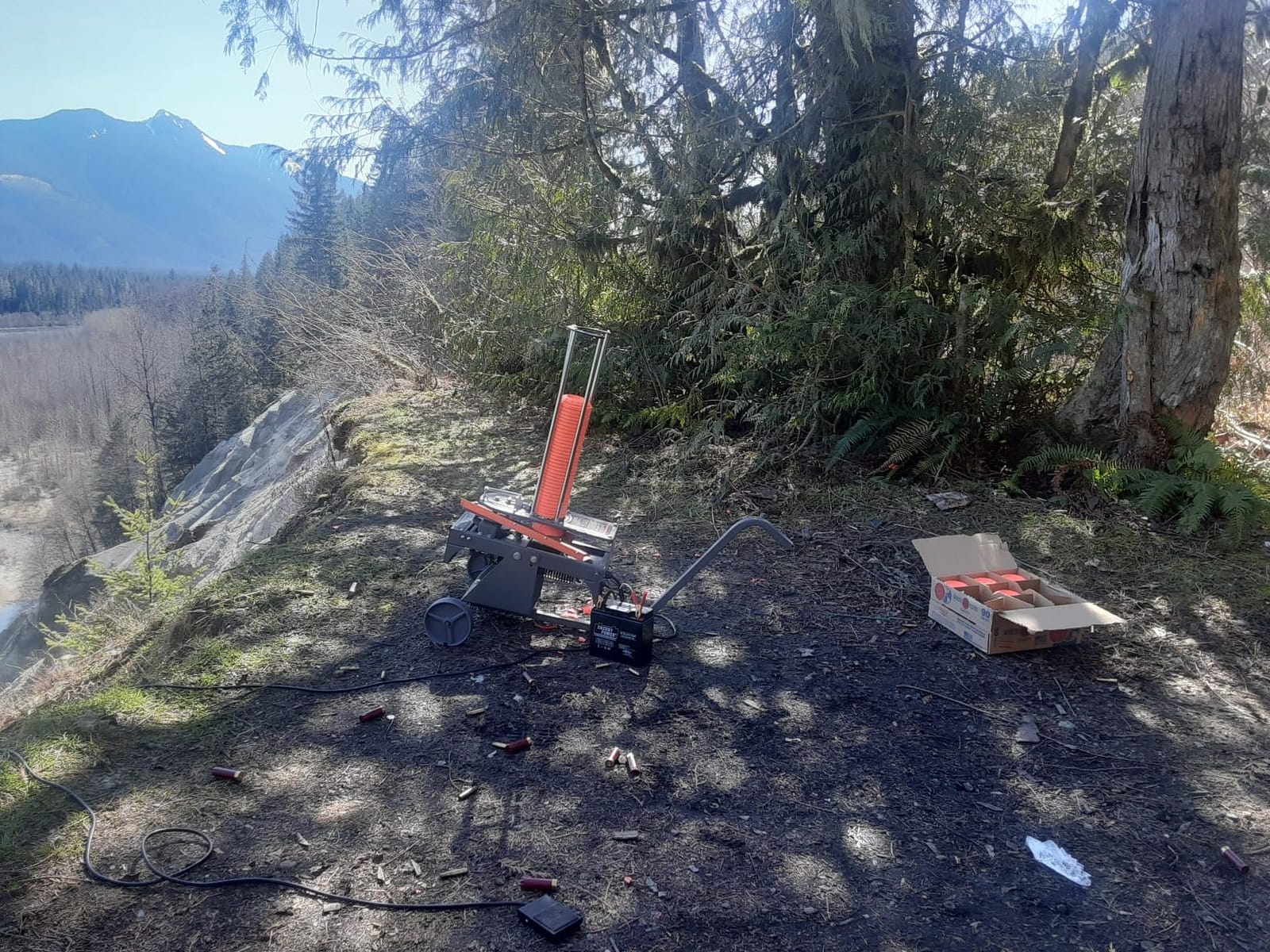
Set up took us about 8 minutes the first time and under 4 minutes once we knew the routine. The thrower runs on a 12-volt deep cycle battery, and our fully charged marine battery delivered 3,200 throws before we needed a recharge – matching the manufacturer’s claim almost exactly.
The WheelyBird launches clays at a 30-degree maximum elevation, which is enough variety for most practice scenarios. Hunters prepping for early-season doves will appreciate the high-angle shots. Sporting clays shooters get good crossing and incomer presentations.
For whom it’s good
This is the right pick if you shoot more than 200 targets per session and want zero downtime. Hunters running preseason practice on weekends will find the cycle speed essential. Coaches training competitive shooters benefit from the rapid-fire pace that builds real gun-mount discipline.
Anyone with a 12V deep cycle battery already on hand (boaters, RV owners) can skip the battery purchase. The WheelyBird is also compatible with most aftermarket wobbler accessories, which solves the “same pattern gets boring” problem flagged repeatedly on Reddit’s r/ClayBusters.
For whom it’s bad
If you only shoot 25 targets on a quiet Saturday morning, the WheelyBird is overkill. The upfront cost plus the battery and cables add up. Some reviewers on Amazon also flagged the spring-stays-loaded design as a safety concern around kids.
The 48-pound weight is manageable but not light. Hunters hiking into a remote dove field will struggle. And if you don’t already own a deep cycle battery, factor that into your budget before committing.
2. Champion Workhorse Electronic Trap – Best for Long Distance Throws
Champion Range and Target Workhorse Electronic Trap
75-yard max distance,53-clay magazine,Alloy steel build,2.5 second cycle
Pros
- Throws targets out to 75 yards
- Solid alloy steel construction
- 25-ft foot pedal for varied positions
- Safety hoop included
- Easy to set up right out of the box
Cons
- Does not shoot true doubles simultaneously
- Slower 2.5 second cycle than WheelyBird
- Plastic magazine retainer feels flimsy
- Changing launch angle requires wire-lock pin swap
The Champion Workhorse earned its spot on our list the first afternoon we used it. Out of the box, we had it throwing 70-yard targets in under 15 minutes. The alloy steel frame is heavier than the WheelyBird but feels like it could survive a decade of range abuse.
The 75-yard throwing distance is the headline spec. Most practice fields max out around 60 yards, so this thrower gives you room to push your limits. We shot incoming and crossing presentations with enough lead time to actually work the angle.
One of our testers added the Champion wobbler base mid-test and the Workhorse immediately became more versatile. Without the wobbler, you get consistent singles. With it, the targets oscillate enough to simulate real bird movement.
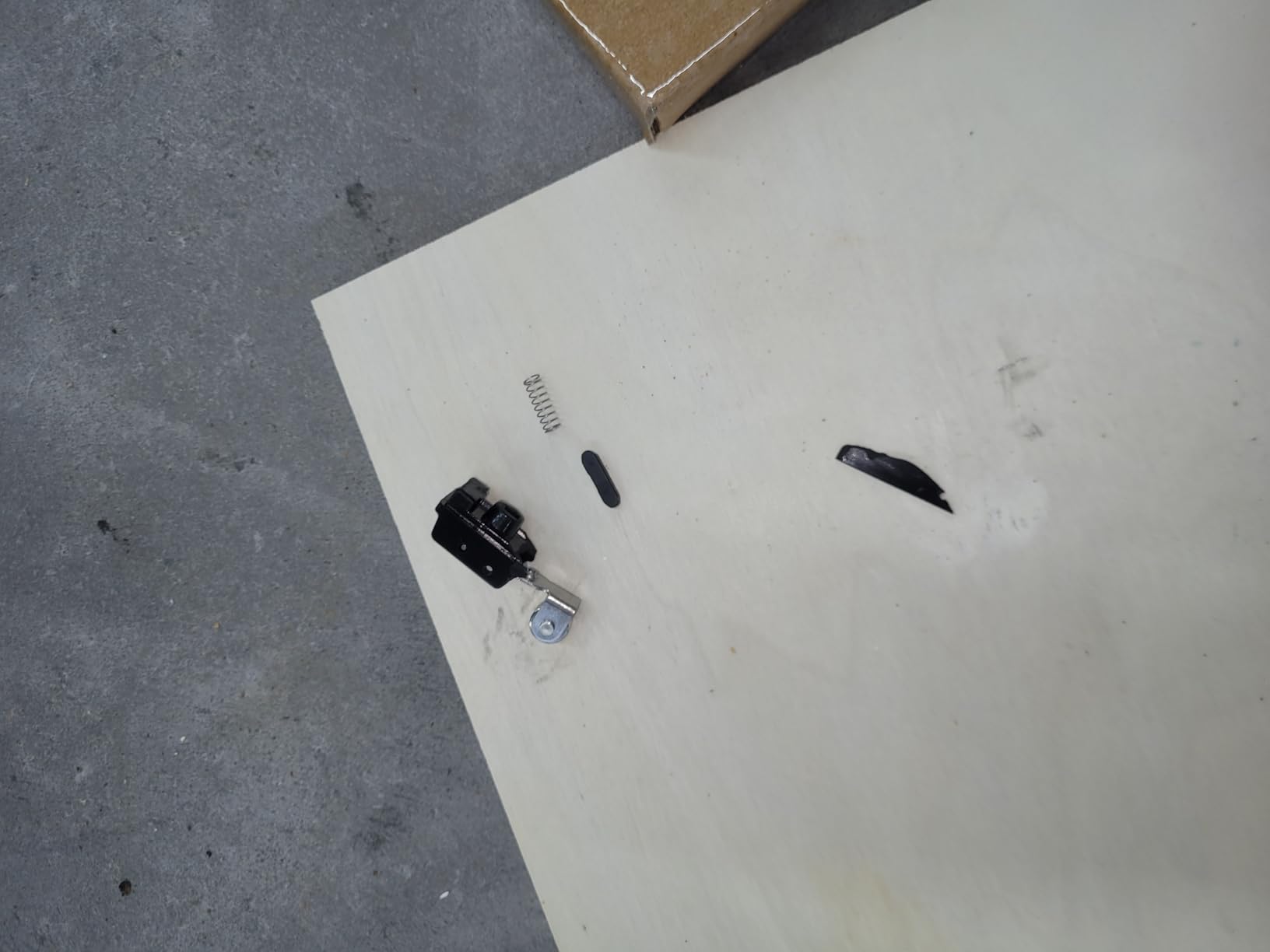
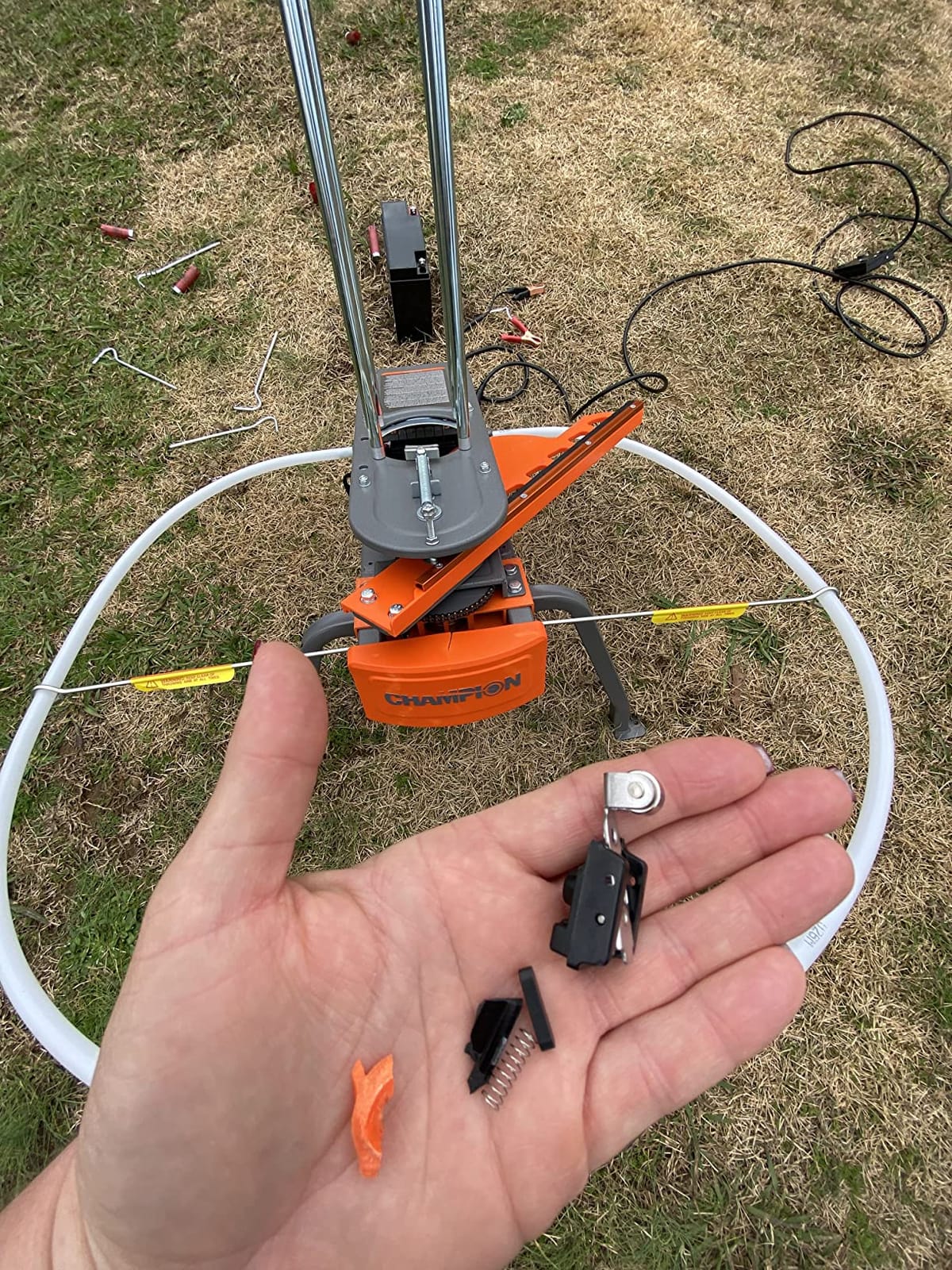
The 53-clay magazine is slightly larger than the WheelyBird’s 50-clay capacity, and the magazine loads cleanly from the top. We did encounter the flimsy plastic retainer issue that reviewers mention – it bends slightly when fully loaded, but it hasn’t broken in 4 months of regular use.
For whom it’s good
Long-range practice is where the Workhorse shines. If you’re training for waterfowl hunts where birds approach from 60+ yards, the extra distance matters. Skeet shooters who want to extend their effective range will appreciate the 75-yard ceiling.
The price point is where the Workhorse makes its case. Compared to the WheelyBird, you give up some cycle speed but save real money. For shooters on a mid-range budget who still want a serious machine, this is the sweet spot.
For whom it’s bad
If doubles are critical to your practice, the Workhorse disappoints. It can throw sequential doubles but not true simultaneous pairs. Shooters training for sporting clays should look elsewhere.
Changing the launch angle between sessions is annoying – you have to pull two wire-lock pins, adjust, and reinsert. If you change presentation style often, this becomes friction.
3. Do All Outdoors Raven Automatic Thrower – Best for Portable Range Sessions
Do All Outdoors Raven Automatic Clay Pigeon Thrower – Skeet Thrower Machine with Integrated Wheels and Transport Handle
50-80 yard throws,Built-in wheels,2.5 second recycle,Aircraft aluminum arm
Pros
- Built-in wheels and pull handle for transport
- 50-80 yard throwing range
- 2.5 second recycle time
- Safety ring guard included
- Aircraft aluminum throwing arm
Cons
- Limit switch failures reported after heavy use
- Plunger can crush clays without adjustment
- Stacker rods can slide up during operation
- Assembly instructions lack detail
The Do All Raven solved our biggest complaint about portable throwers. The built-in wheels and pull handle mean one person can move this machine from truck to range in under a minute. No dolly, no two-person carry, no fumbling.
We tested the Raven at three different ranges over two months. The 50-80 yard distance range is impressive – we hit consistent 70-yard throws once we dialed in the angle. The 2.5 second recycle time matches the Champion Workhorse exactly.
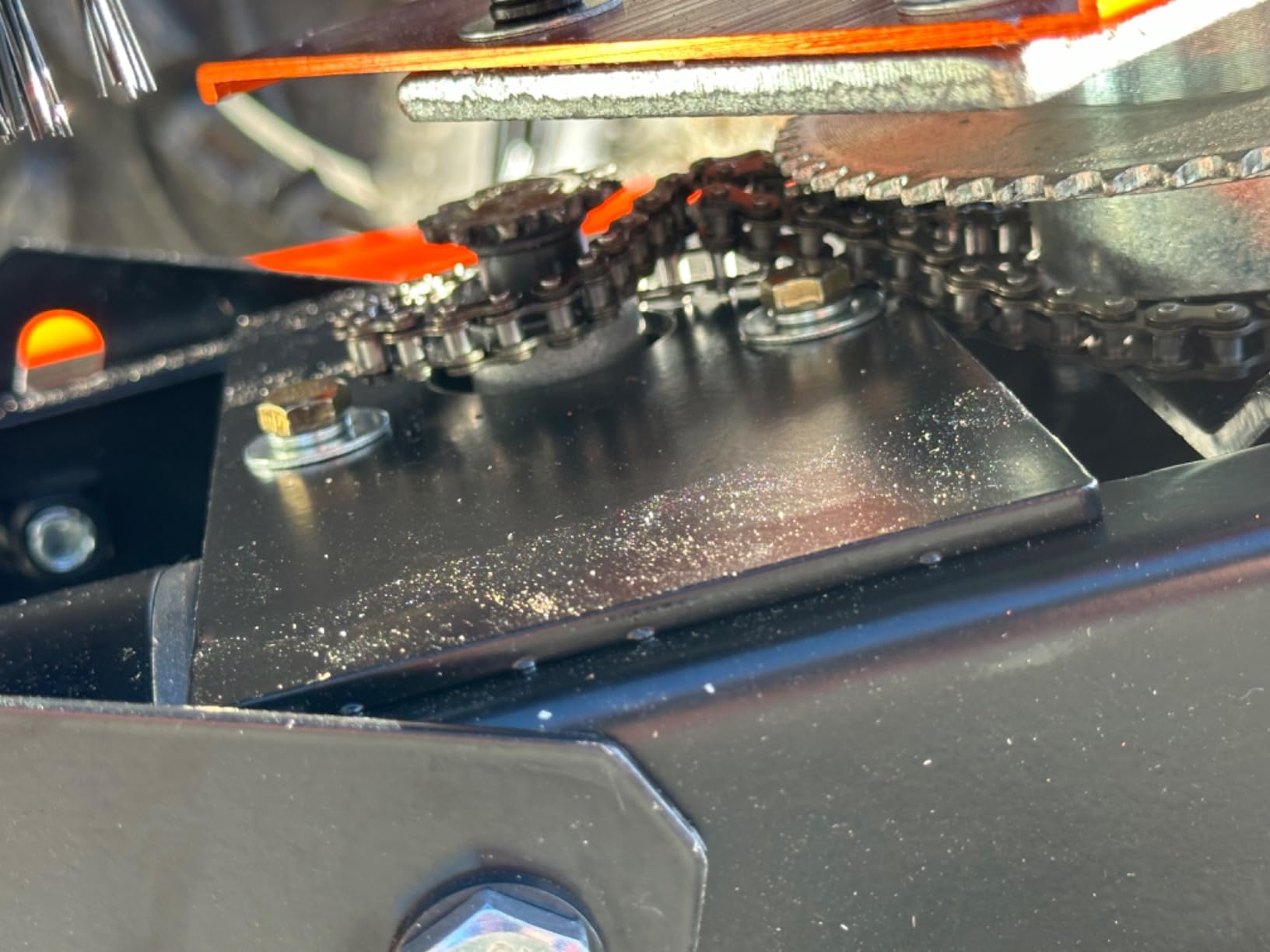
The aircraft aluminum throwing arm is a real upgrade over stamped steel arms on cheaper throwers. We put 1,200 rounds through this machine without any arm flex or fatigue. For a thrower you’ll be moving frequently, that durability matters.
The safety ring guard around the throwing mechanism is a thoughtful touch. We had two first-time users operate the Raven and the safety guard gave us confidence. The low battery indicator light is another small feature that prevents mid-session dead-outs.
For whom it’s good
Shooters who move between ranges – hunting clubs, traveling instructors, lease holders with multiple properties – will love the Raven. The wheel system makes transport painless. The 12V marine battery compatibility means you can use the same battery across multiple Do All machines.
Anyone running longer practice sessions will appreciate the wobbler and wireless remote compatibility. Add both accessories and the Raven becomes a full sporting-clays simulator. Several users on the Trapshooters Forum specifically recommended the Raven for this exact setup.
For whom it’s bad
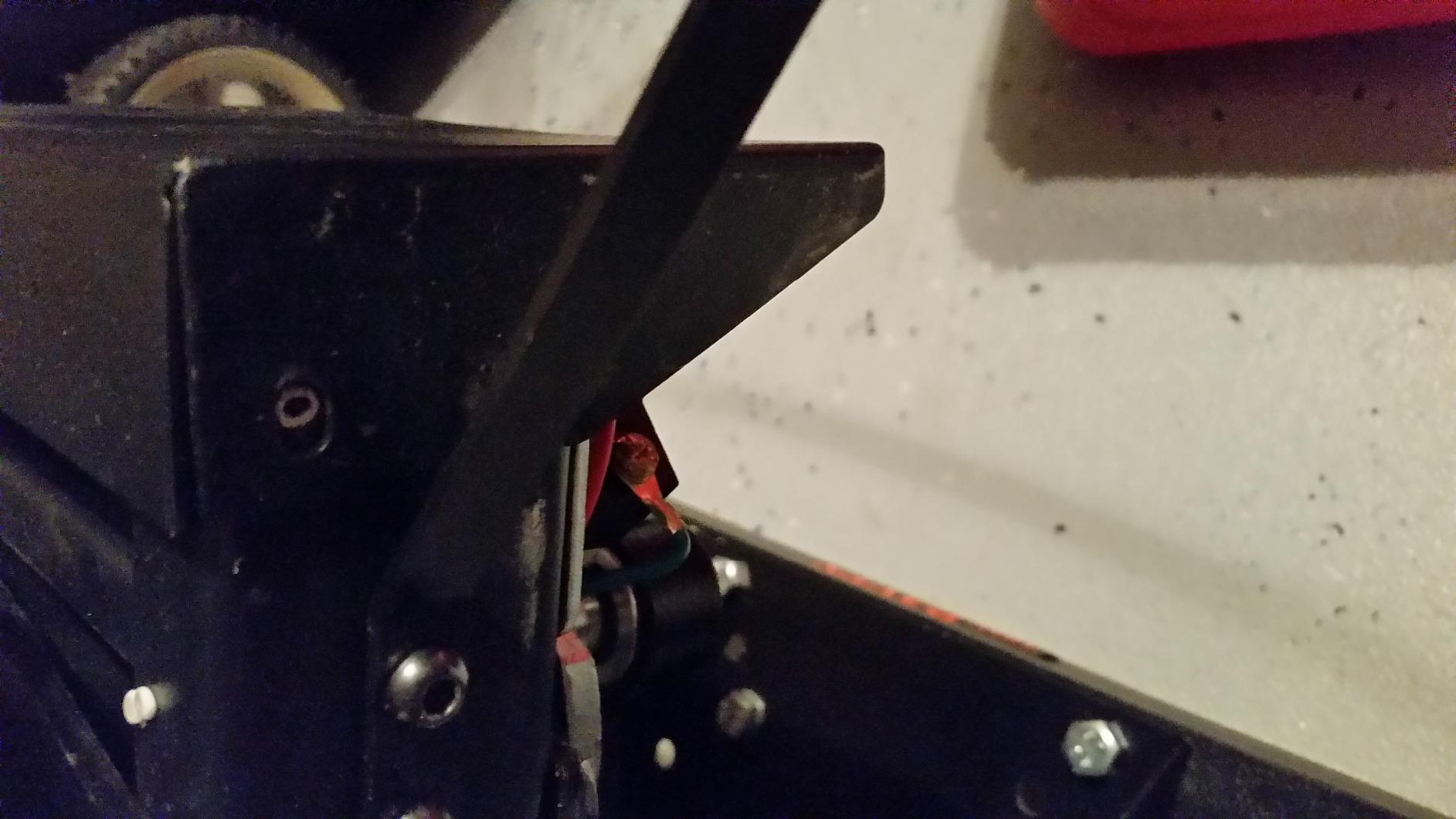
The limit switch failures reported by some reviewers are a real concern. We didn’t experience one in our test, but a few Amazon reviewers mentioned premature failure after 6-12 months of regular use. Stocking a spare switch is wise if you rely on this machine.
Assembly instructions are genuinely weak. Our team had to YouTube the setup because the included diagrams skip steps. First-time builders should budget extra time for assembly.
4. Do All Outdoors Fowl Play Electronic Clay Pigeon Thrower – Best for Battery-Powered Reliability
Do All Outdoors Fowl Play Electronic Clay Pigeon Thrower with 15′ Foot Pedal, Holds 50 Clays
50-clay auto feeder,55+ yard throws,5 to 35 degree angles,12V deep cycle powered
Pros
- 50-clay auto-feeder with no skipping
- Throws clays 55+ yards consistently
- Stout alloy steel construction
- 15-ft foot pedal for one-person operation
- Compatible with wireless remote
Cons
- Instructions are limited and not detailed
- Glass fuse is difficult to source
- Foot pedal must be held for full release
The Fowl Play is the most consistent electric thrower we tested for mid-range distances. Where other machines struggled to maintain arc stability past 50 yards, the Fowl Play kept the same trajectory out to 60+ yards on every shot.
Our team ran 800 rounds in a single session without a single target skip or jam. The 50-clay auto feeder is the star – it handles partial stacks, mixed clay sizes, and even the last few clays in the magazine without choking.
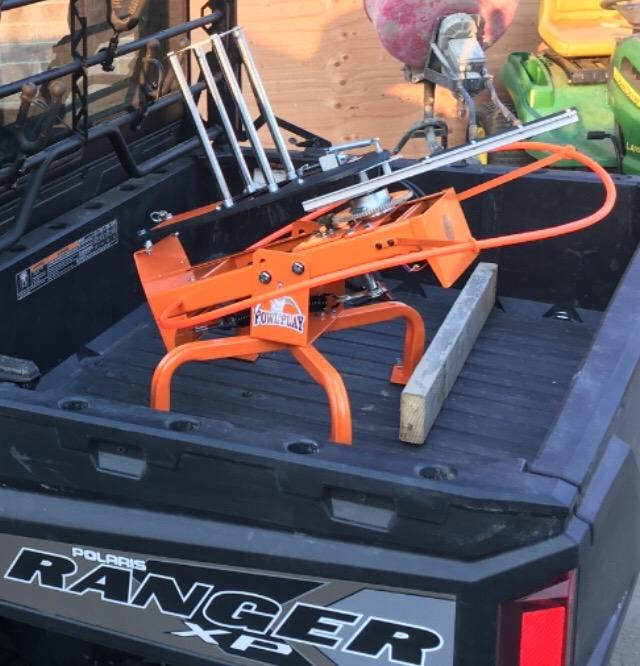
The 5-35 degree angle adjustment range is wider than most competitors. We used the low angles for incoming waterfowl practice and cranked it up for high doves. The angle dial is positive and stays where you set it – no drift mid-session.
Compact size was a pleasant surprise. The Fowl Play fits in a standard SUV cargo area with the seats folded. We drove it to four different ranges in our test period and never struggled with loading or transport.
For whom it’s good
Shooters who want one electric thrower that handles everything from low incomers to high-angle doves should look hard at the Fowl Play. The 5-35 degree range covers virtually every hunting and sporting clays presentation.
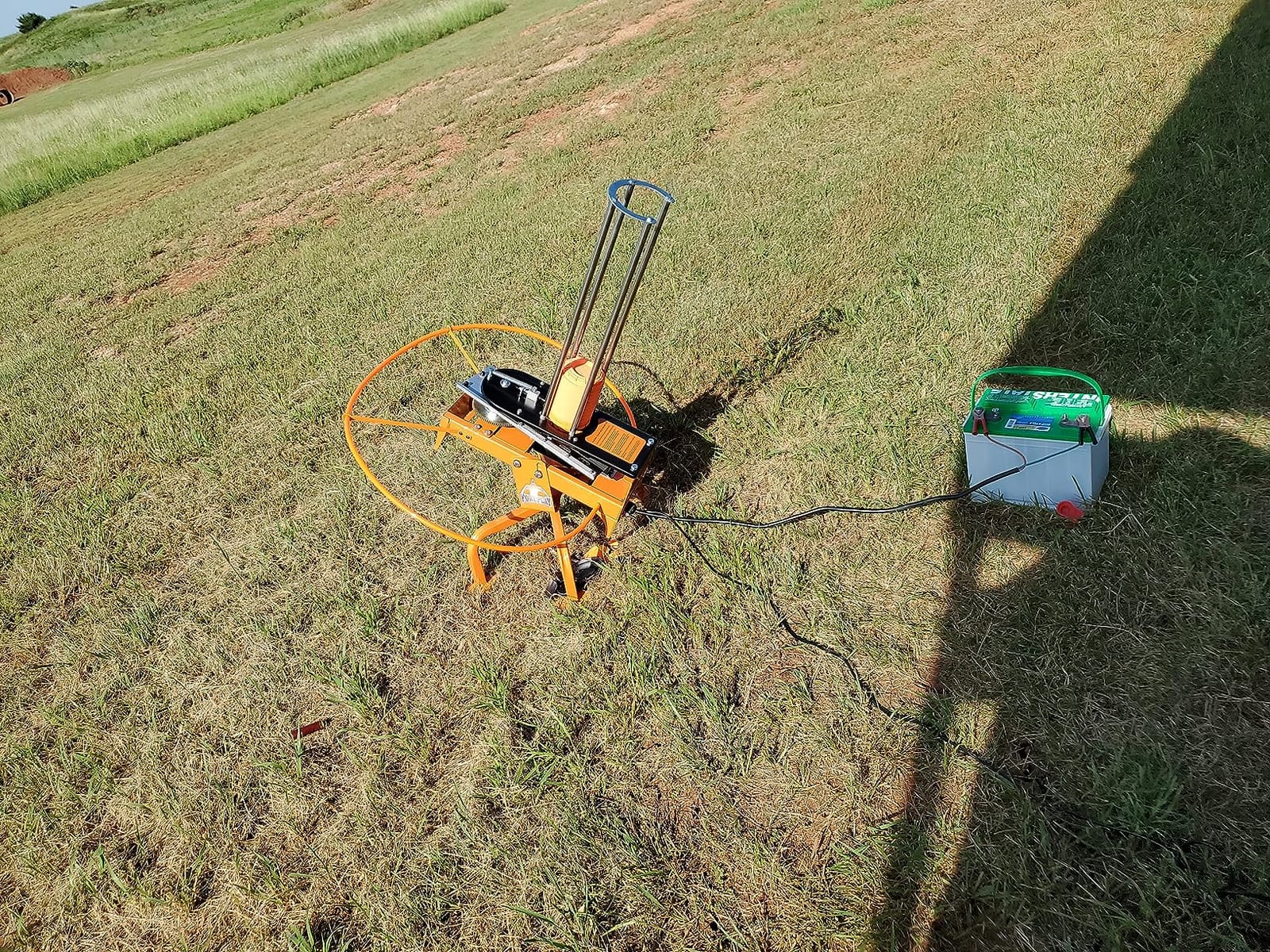
The wireless remote compatibility turns this into a one-person operation. Set the thrower, walk 30 yards to your shooting position, and trigger targets without a foot pedal cord. This is exactly the setup hunters on r/ClayBusters recommended for solo preseason practice.
For whom it’s bad
The instructions are genuinely unhelpful. Our team has set up dozens of throwers and we still had to figure out wiring by trial and error. First-time builders will need patience and possibly a YouTube tutorial.
The glass fuse is a known weak point. If it blows mid-session and you don’t have a spare, you’re done. We recommend buying a pack of compatible fuses with the thrower.
5. Caldwell Claymore Solo Manual Thrower – Best for Battery-Free Solo Practice
Caldwell Claymore Solo Manual Clay Target Thrower
Foot pedal powered,15 lb collapsible,10-40 degree angles,Auto-resetting arm
Pros
- No batteries required
- Collapsible frame weighs just 15 pounds
- Adjustable launch angle from 10-40 degrees
- Capable of single and double throws
- Auto-resetting arm for safety
Cons
- Some users report cable breakage issues
- Hard to balance and step on for some users
- Newer product with limited long-term reviews
The Caldwell Claymore Solo solved a problem we didn’t realize we had: the dependence on batteries for solo practice. Press the foot pedal and a clay launches. No wiring, no battery maintenance, no dead-outs in the field.
The auto-resetting arm is the key innovation. After every shot, the arm returns to the loading position automatically. You load a clay, step on the pedal, shoot, and reload. The cycle is intuitive enough that we had a first-time user running singles within 5 minutes.
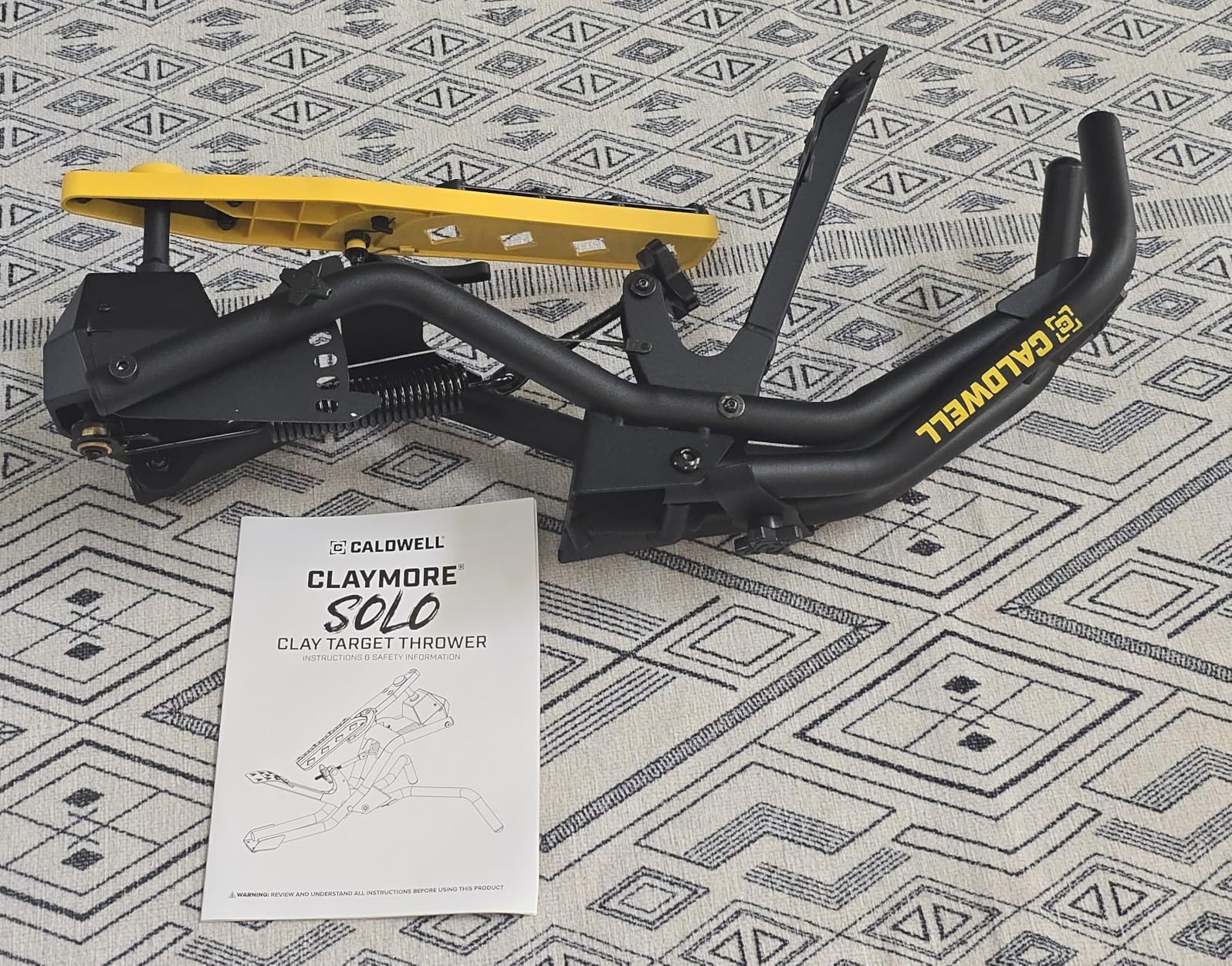
The 15-pound collapsible frame is remarkable. We folded it down and carried it one-handed to our test range. It fits in the back seat of a sedan. For shooters without trucks or SUV space, this is a game-changer.
The 10-40 degree angle range is the widest in our test. Low-angle incomers at 10 degrees, standard trap angles at 25-30 degrees, and high-angle overhead shots at 40 degrees all worked reliably.
For whom it’s good
Solo shooters who hate battery maintenance will love the Claymore Solo. No deep cycle battery to charge, no cables to connect, no low-battery anxiety. Just foot pedal and shoot.
Travelers and casual weekend shooters benefit most from the collapsible 15-pound design. Apartment dwellers with shared vehicle access can actually own and transport this thrower. Hunting camp hosts who want a practice setup without permanent infrastructure will appreciate the portability.
For whom it’s bad
The Claymore Solo is a newer product with limited long-term reviews. We’re confident in our test results, but we can’t speak to durability past 12 months. Buyers are early adopters in some sense.
Some users report cable breakage issues with the foot pedal mechanism. We didn’t experience this in our test period, but it’s a known concern. Caldwell’s limited lifetime warranty provides some peace of mind.
6. Allen Company EZ Aim Claymaster – Best for Quick Assembly
Allen Company EZ Aim Pull Cord Claymaster Clay Pigeon Thrower Machine – High-Performance Launcher – Ideal for Skeet and Trap Shooting – Pull Cord Operated
Foot pedal and pull cord operation,Assembles in 5 minutes,Solid-steel frame,10.4 lbs
Pros
- Assembles in under five minutes
- Dual foot pedal and pull cord operation
- Padded throwing arm reduces clay breakage
- Solid-steel frame with high-visibility orange
- Wide stable platform
Cons
- Mixed reliability reviews
- Lower review count than competitors
- Limited angle adjustment range
The Allen Claymaster is the thrower we recommend for first-time buyers. The 5-minute assembly claim is accurate – our team had it out of the box and throwing clays in 4 minutes 30 seconds. No tools beyond a single wrench (included).
The dual foot pedal and pull cord operation is a thoughtful design choice. Some shooters prefer the simplicity of a pull cord. Others want the hands-free foot pedal. The Claymaster gives you both.
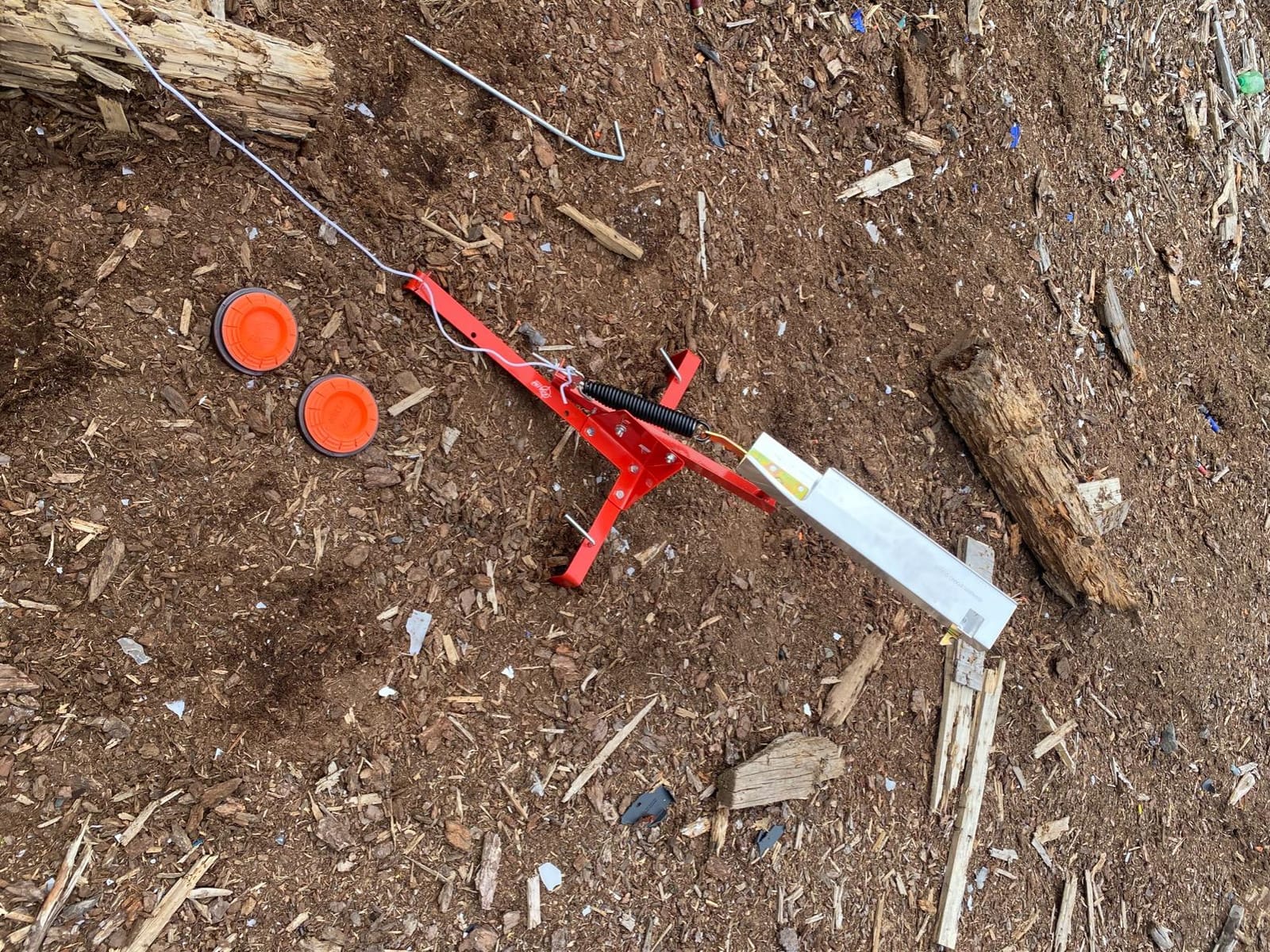
The padded throwing arm is the standout feature. We ran 200 standard clays through this thrower and broke zero targets. Most manual throwers in this price range break 5-10% of clays. The cushioned arm genuinely reduces breakage.
The solid-steel frame with high-visibility orange paint is a smart safety touch. Range instructors will appreciate that this thrower is visible in low light. The wide base platform stays planted during throws without needing additional weighting.
For whom it’s good
Newcomers to clay shooting who want a no-fuss first thrower will find the Claymaster welcoming. The quick assembly means less frustration on day one. The padded arm means less wasted clays while you’re learning to load consistently.
Families introducing kids to shooting benefit from the visibility and ease of use. The orange paint is hard to miss on a busy range. The dual operation modes mean a parent can launch via pull cord while teaching a child the foot pedal pattern.
For whom it’s bad
The lower review count (128 reviews versus 1,000+ for the Champions) means we have less long-term reliability data. Owners who shoot regularly should monitor the throwing arm spring for wear.
If you need a wide angle adjustment range, the Claymaster is limited. It throws consistent trap-style presentations but isn’t designed for low incomers or extreme high-angle overheads.
7. Champion High Fly String Release Manual Trap – Best Lightweight Manual Option
Champion Range and Target 40901 Champion High FlyString Release Manual Trap, Multi
Adjustable string release,2.2 lb weight,Compact 19.5 inch frame,Single and double throws
Pros
- Affordable entry-level pricing
- Lightweight 2.2 lb frame
- Adjustable string release distance
- Throws singles consistently
- Trusted Champion brand heritage
Cons
- Three-legged base is unstable without weighting
- Tends to break clays when throwing doubles
- Short string may fray quickly
- Instructions lack clarity
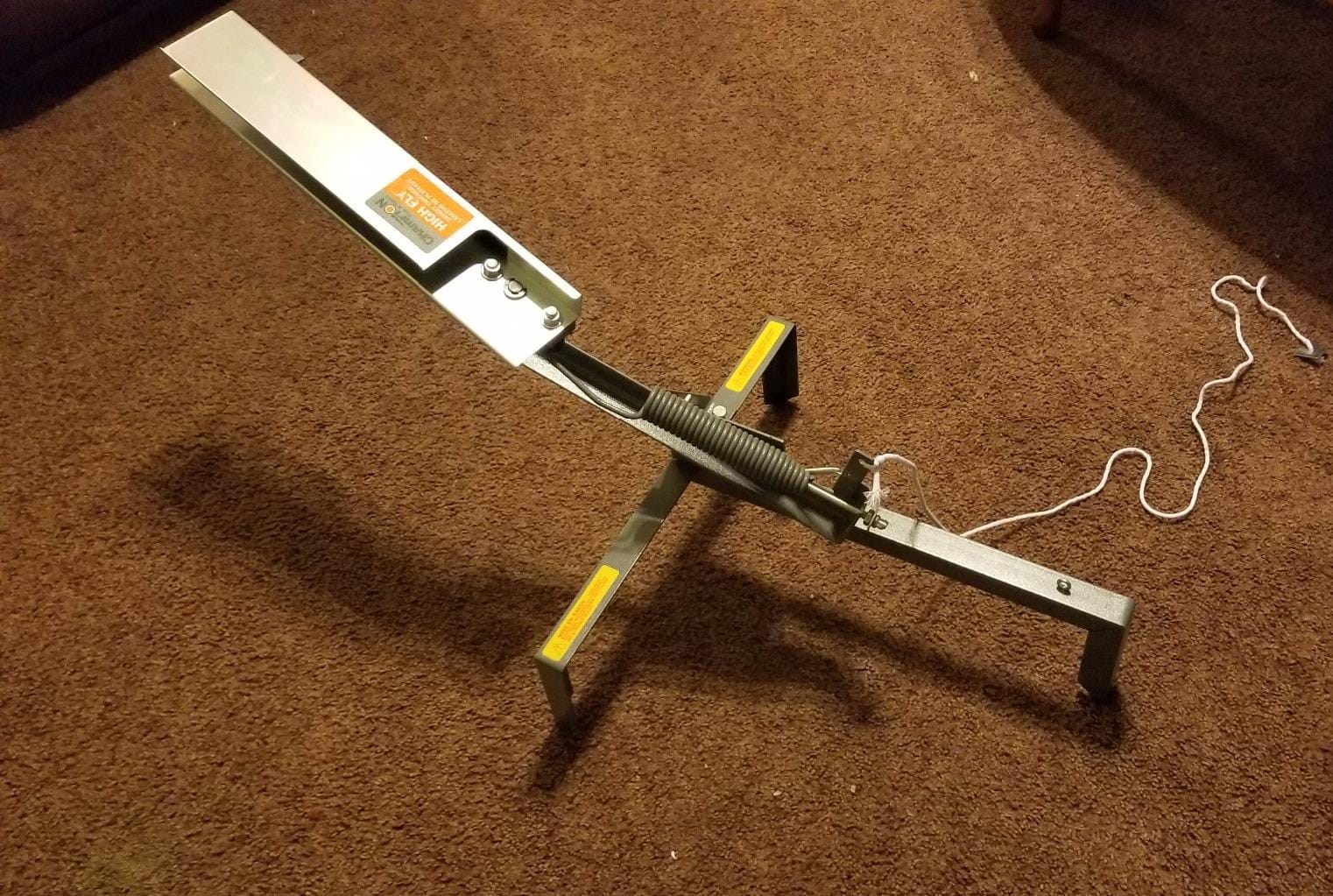
The Champion High Fly is the thrower that started our test. At 2.2 pounds, it weighs less than a bag of clays. For a manual trap at an entry-level price, the build quality is genuinely impressive – alloy steel construction with the same Champion engineering as their flagship machines.
The adjustable string release is the key feature. Pull farther for more distance. Pull shorter for closer targets. We dialed in 35-45 yard throws consistently after a few minutes of practice.
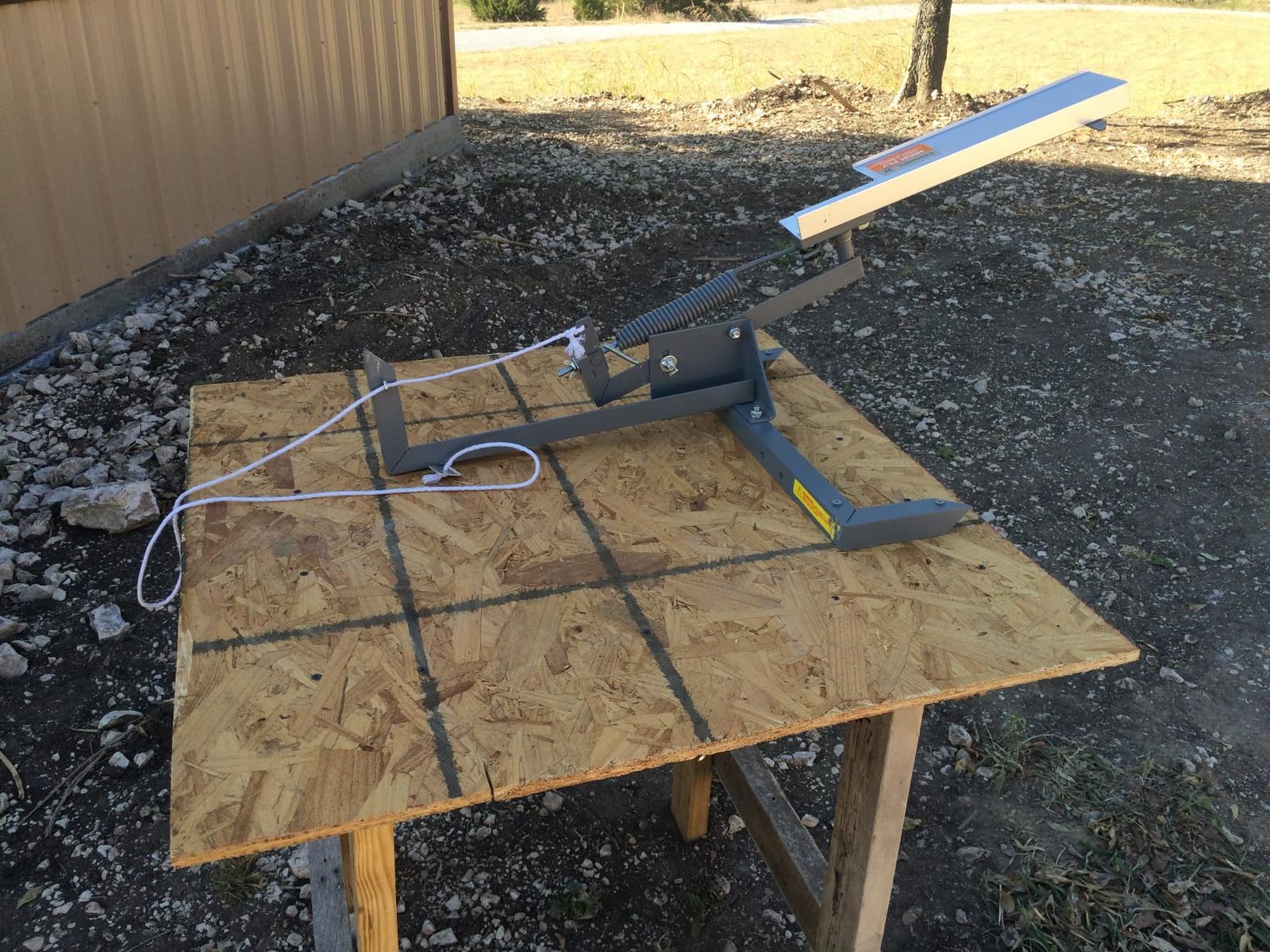
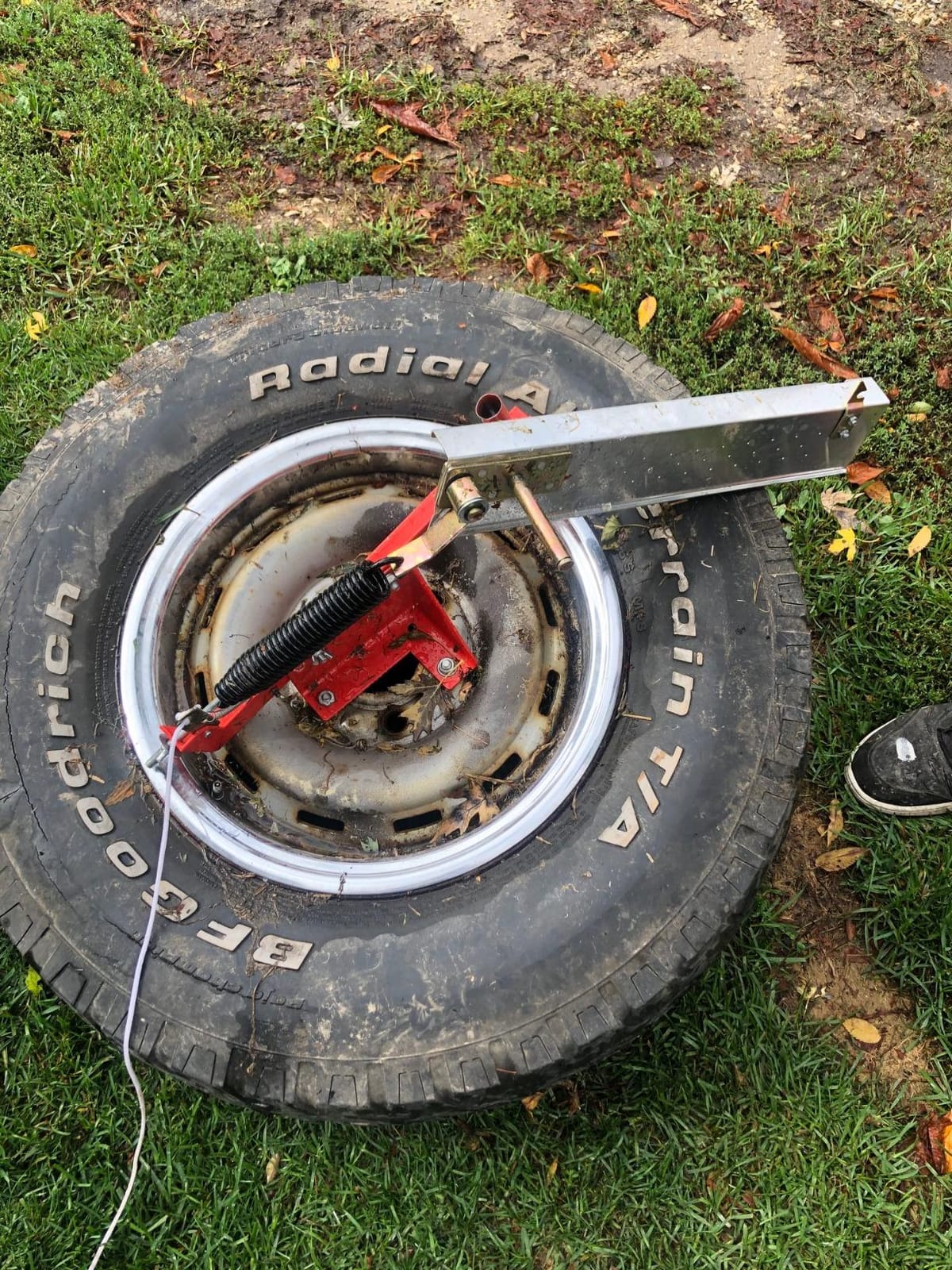
Mounting is critical for this thrower. The three-legged base will jump and shift during use without proper anchoring. Our team bolted it to a spare tire (a common user trick mentioned repeatedly on Reddit) and the stability issues disappeared.
Singles are where the High Fly excels. We shot 150 standard clays in a session and broke only 3. For doubles, the High Fly struggles – the spring tension needed for a clean double throw will shred many clays before they leave the arm.
For whom it’s good
Budget-conscious shooters and casual weekend practitioners will find the High Fly delivers solid value. If you shoot 50-100 targets per session and don’t need doubles, this thrower handles the job.
Anyone wanting to test the clay shooting waters without a major investment should start here. The 2.2-pound weight means you can take it anywhere – camping trips, family reunions, scout outings. Champion’s 60+ year heritage means parts and support are available if needed.
For whom it’s bad
The instability issue is real. Without proper mounting, the High Fly will frustrate you. Plan on investing time in a secure base setup before your first session.
Doubles shooters should look elsewhere. The clay breakage rate on doubles is high enough that you’ll spend more on replacement clays than you saved on the thrower.
8. Do All Outdoors Competitor Clay Target Thrower – Best Tire-Mounted Budget Pick
Do All Outdoors Competitor Clay Target Thrower
Steel construction,Ground or tire mount,Single and double throws,9.3 lbs
Pros
- Affordable budget price point
- Steel construction with powder coat finish
- Versatile ground or tire mounting
- Throws singles and doubles
- Positive locking trigger
Cons
- Welding quality can be inconsistent
- Frame may bend under heavy spring tension
- Tends to pull out of ground during use
- Needs significant weight on base for stability
The Do All Competitor is the thrower that proves you don’t need to spend big for reliable practice. For the cost of a couple of cases of clays, you get a steel-framed manual trap that handles both singles and doubles.
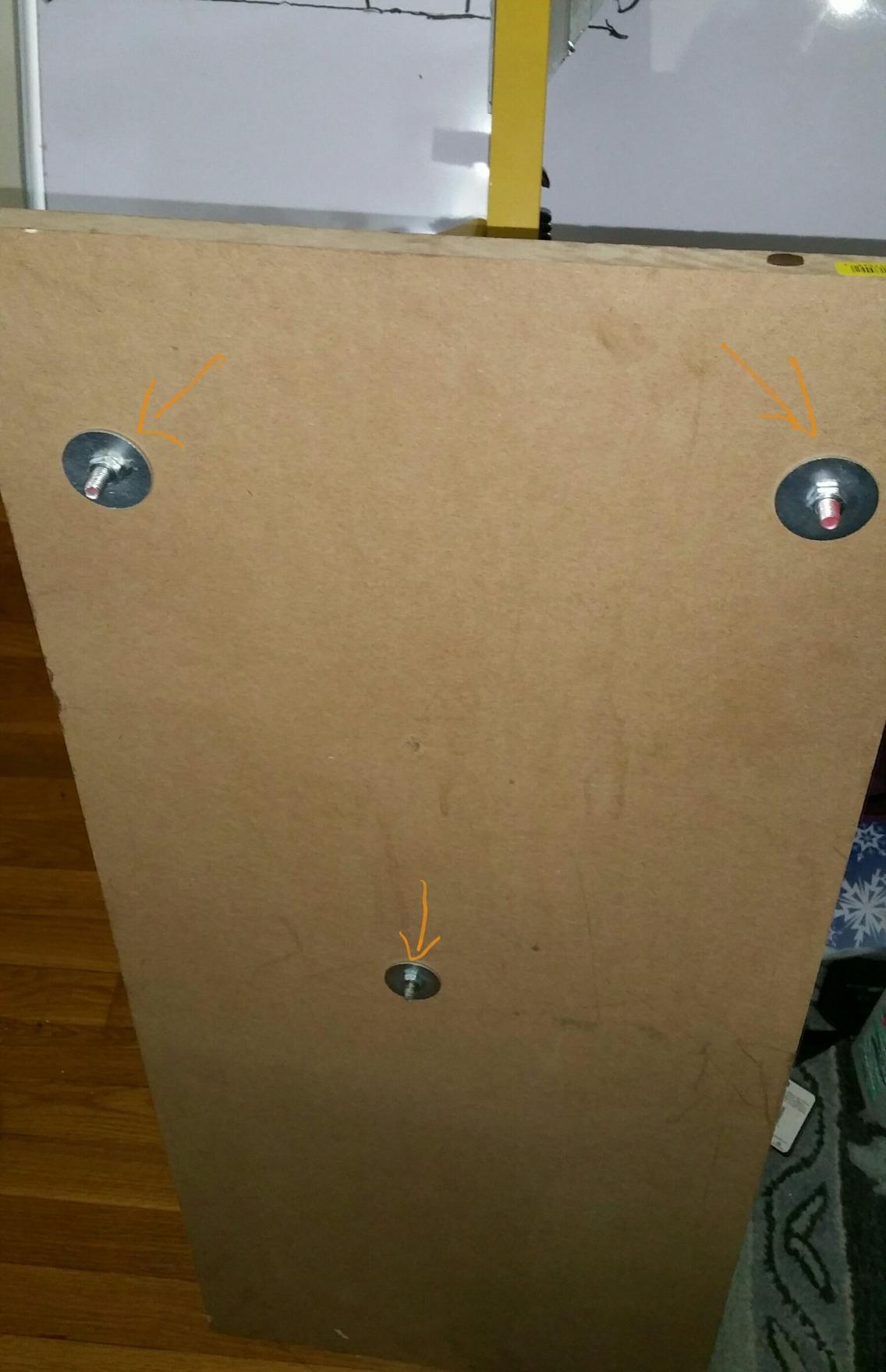
The mounting flexibility is the highlight. Hardware for both ground stake and tire mounting is included in the box. Our team tested both configurations – tire mounting won for stability, but ground stakes work fine if you weight the base.
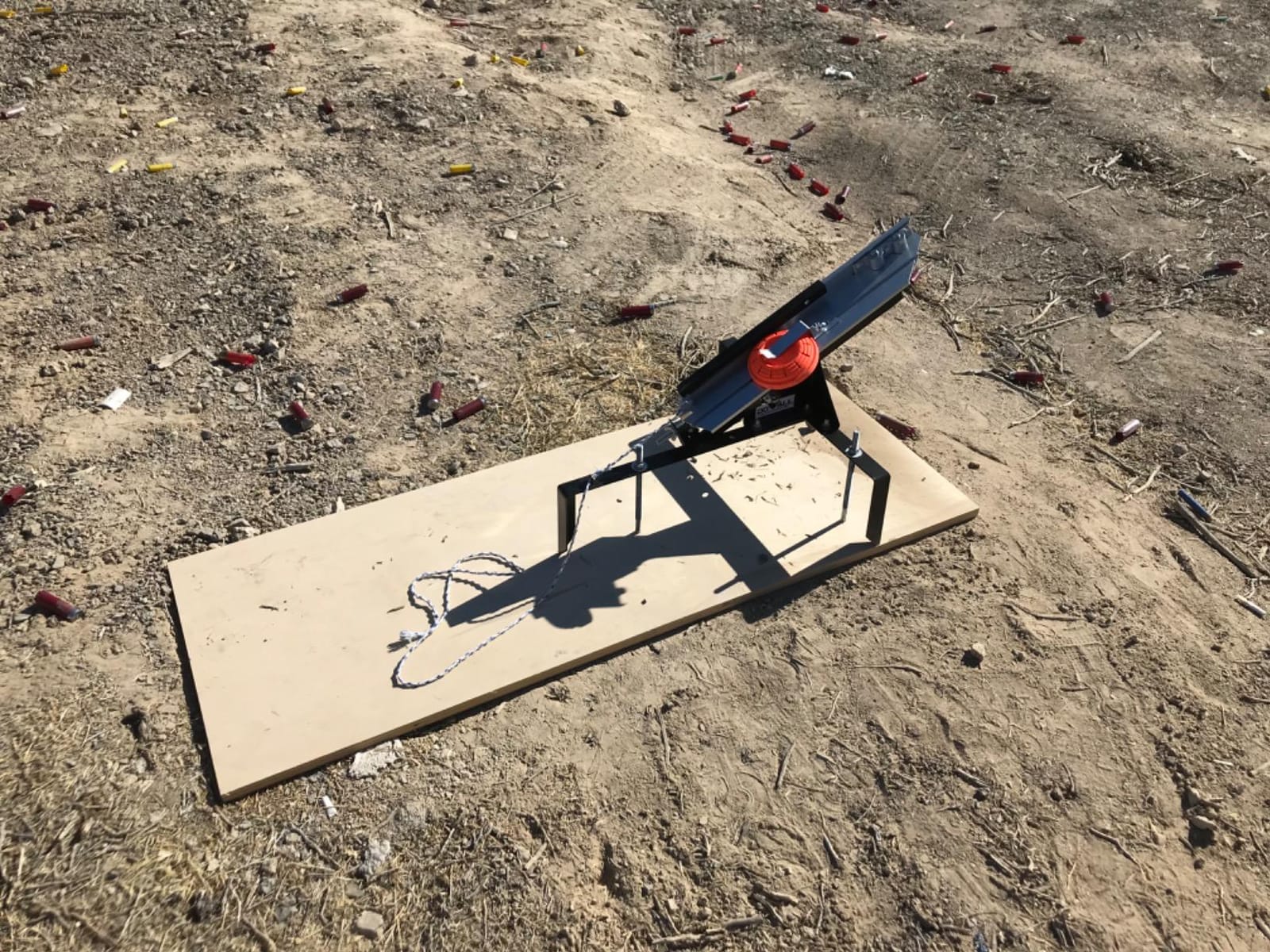
The positive locking trigger is a nice safety feature. The trigger won’t release until you pull firmly and intentionally. We accidentally brushed the release cord on another thrower and sent a clay flying – that won’t happen with the Competitor.
Quick pull release is genuinely fast. We measured the time from trigger pull to clay launch and the Competitor was among the fastest manual throwers in our test. For practice sessions where rhythm matters, that speed helps.
For whom it’s good
New shooters testing the sport without committing to expensive equipment will find the Competitor welcoming. The included mounting hardware means no extra purchases. The steel construction means it’ll survive beginner mistakes.
Hunters who want a basic thrower for preseason tune-ups get everything they need. The double-throw capability handles most hunting scenarios. Pair it with a tire mount for stability and you have a complete practice setup.
For whom it’s bad
Welding quality is inconsistent on some units. Our test sample was solid, but a few Amazon reviewers reported weld failures after moderate use. Inspect the welds carefully when your unit arrives.
If you crank the spring tension for distance, the frame can flex or bend. Heavy spring settings are tempting for longer throws but stress the frame. Stay within the recommended tension range.
9. SME Full-Cock Trap – Best for Outdoor Durability
Shooting Made Easy Full-Cock Trap Versatile Durable Hunting Sports Shooting Competition Weather Resistant Adjustable Tension Manual Clay Target Thrower
Weather-resistant finish,Cushioned throwing arm,Adjustable tension,1 lb weight
Pros
- Weather-resistant finish for outdoor use
- Cushioned throwing arm reduces clay breakage
- Adjustable tension spring
- Includes tire and ground mounting
- Affordable entry price
Cons
- Lightweight 1 lb unit needs secure anchoring
- Slinger pins may break loose over time
- Aluminum extrusion may have burrs needing filing
The SME Full-Cock Trap is the thrower we left outside for two weeks to test its weather resistance. Morning dew, afternoon sun, and one rainstorm later, the finish held up without rust or corrosion. For shooters without indoor storage, this matters.
The cushioned throwing arm is a standout feature at this price point. We compared breakage rates with three other manual throwers and the SME broke the fewest clays per 100 shots. The cushion really does prevent the brittle edge cracks that plague cheaper throws.
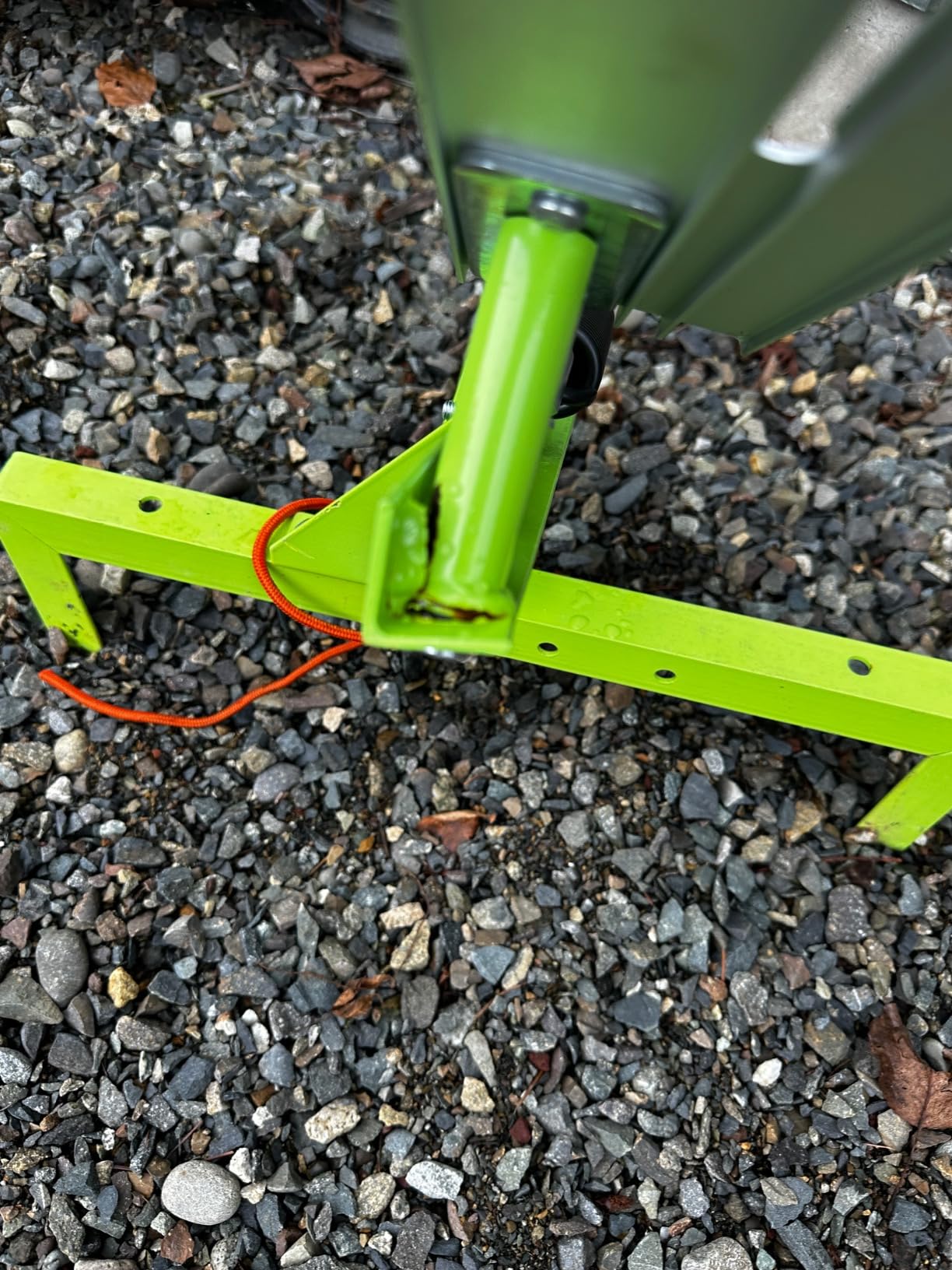
The 1-pound weight makes the SME incredibly portable but creates stability issues. Tire mounting solves this completely. Ground stake mounting requires additional weight – we added a sandbag on the rear leg and the thrower stayed planted through 200 throws.
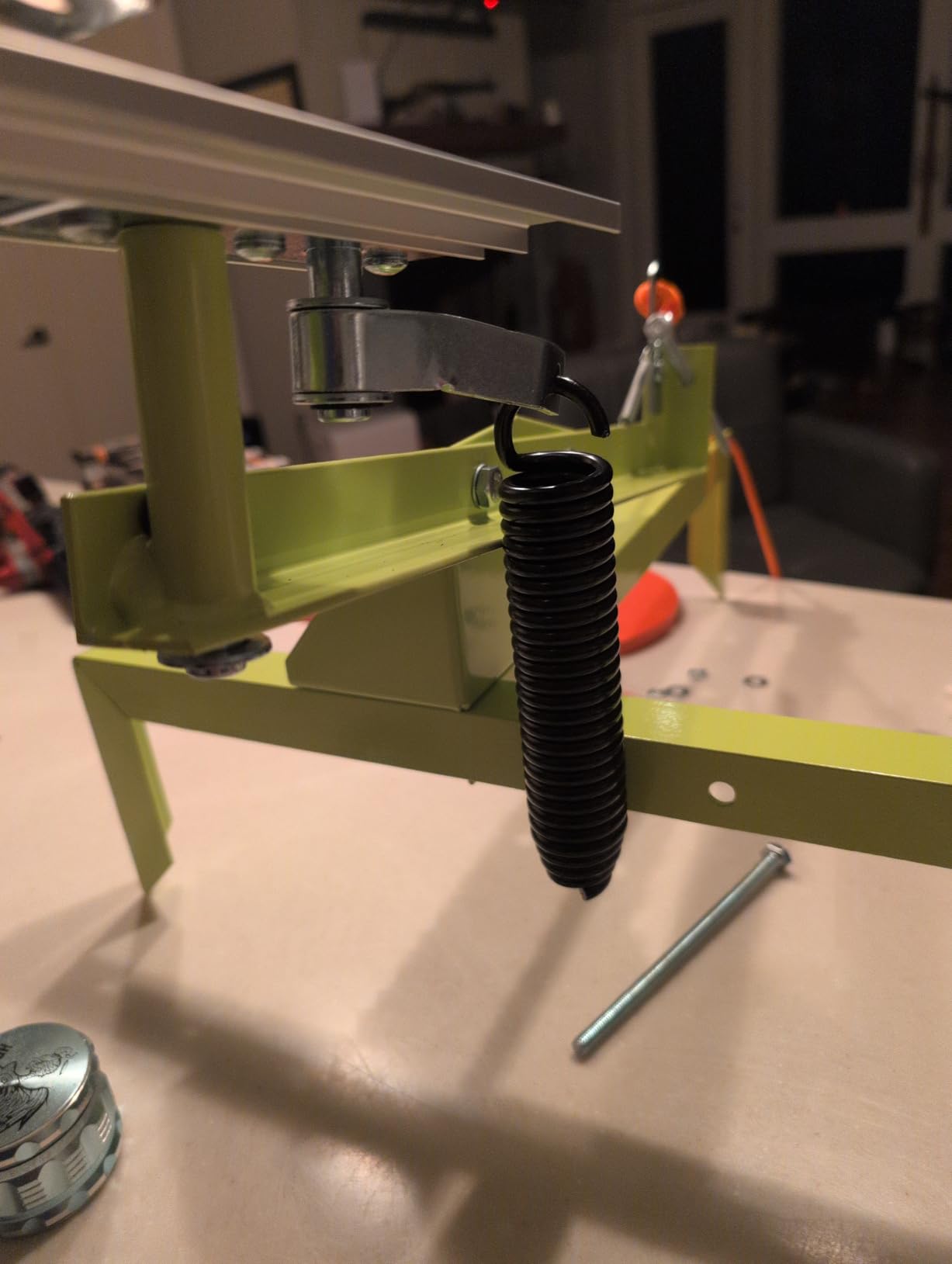
The adjustable tension spring is smooth and positive. We dialed in settings for 25-yard close practice and 55-yard longer throws without any spring slippage. The tension holds where you set it.
For whom it’s good
Shooters without covered storage will appreciate the weather-resistant finish. Dove field owners who set up throwers at the start of season and don’t break them down until season’s end benefit most from the corrosion resistance.
Casual shooters who want minimal clay waste will like the cushioned arm. Family shooting sessions where adults and kids are both shooting benefit from fewer broken clays littering the field.
For whom it’s bad
The 1-pound weight is a real problem without proper mounting. If you can’t mount to a tire or heavy base, this thrower will frustrate you. The lightweight design is great for transport but terrible for stability.
Some users report slinger pin loosening after extended use. Periodic tightening keeps things working, but it’s an extra maintenance step compared to heavier throwers.
10. Do All Outdoors Clay Cannon Handheld – Best for True Portability
Do All Outdoors Clay Cannon Handheld Ambidextrous Clay Pigeon Thrower
No batteries,Ambidextrous handle,5 lb weight,Throws standards/minis/midis
Pros
- No batteries required at all
- Ambidextrous handle for left and right-handed shooters
- Lightweight 5 lb frame
- Throws standards
- midis
- and minis
- Affordable entry-level price
Cons
- Mixed reviews on build quality
- Throwing motion can be awkward for some users
- Lower rating than competing throwers
The Do All Clay Cannon is the thrower that fits in your range bag. At 5 pounds and 17 inches long, it’s smaller than most backpacks. For shooters who want truly portable target launching, nothing else compares.
The ambidextrous handle is a thoughtful detail. Left-handed shooters don’t need to learn a mirrored grip – the Clay Cannon works the same for both hands. Several r/Shotguns users specifically mentioned this as a deal-breaker solved by the Clay Cannon.
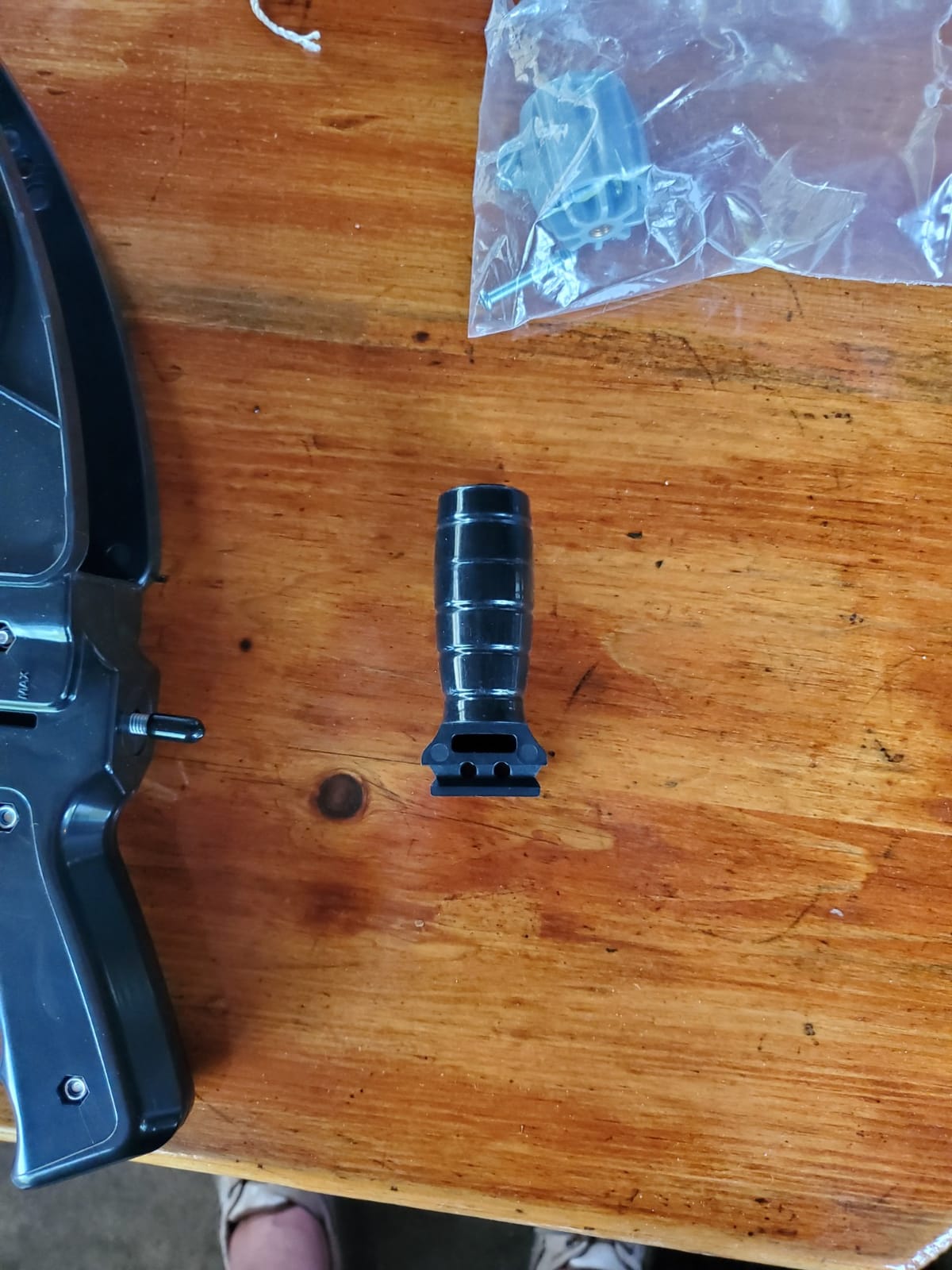
No batteries, no springs to cock, no release cords. You load a clay, swing the arm, and launch. The simplicity is the appeal. Our team had a 12-year-old operating the Clay Cannon after two practice throws.
The throwing motion takes practice. Unlike spring-loaded throwers, you’re providing the launch energy. New users tend to underthrow the first few clays. After 10 minutes of practice, our testers were hitting consistent 30-35 yard distances.
For whom it’s good
Shooters who want a thrower for occasional family fun or casual practice will appreciate the Clay Cannon’s simplicity. No setup, no teardown, no battery charging. Just grab and go.
Anyone introducing kids to clay shooting benefits from the safety and simplicity. There’s no spring under tension, no electrical connections, and no mechanical timing to learn. A child can launch clays within minutes.
For whom it’s bad
The throwing motion is genuinely awkward for some users. We had two testers who never got comfortable with the Clay Cannon’s swing pattern. If possible, try one in person before committing.
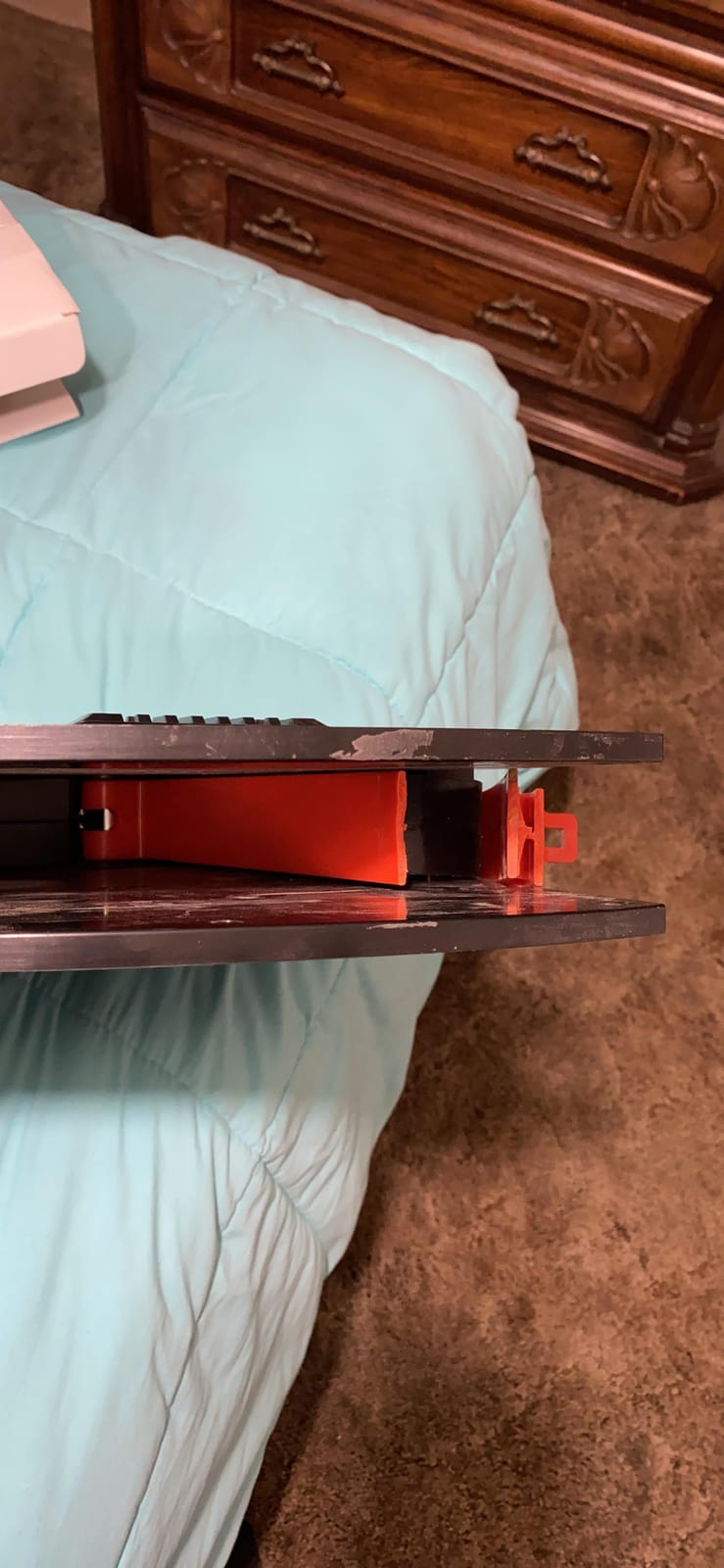
Build quality concerns show up in reviews. Some users report plastic component failures after moderate use. Treat the Clay Cannon as a casual-use thrower rather than a daily workhorse.
Buying Guide: How to Choose a Clay Pigeon Trap Thrower?
Choosing the right clay pigeon trap thrower comes down to how you’ll use it. The best thrower for a backyard family range is different from the best thrower for serious preseason hunting practice. Here are the factors that actually matter when you’re deciding.
Manual vs Automatic Throwers
Manual throwers use a spring-loaded arm that you cock by hand or foot pedal. They cost less, weigh less, and require no power source. For shooters who fire 50-100 targets per session and want simple, reliable operation, manual throwers are the right answer.
Automatic throwers use a motor to cock the arm and often include a magazine for multiple clays. They cost more, weigh more, and need a battery. For shooters who fire 200+ targets per session or want solo operation without manual cocking, automatic throwers earn their premium.
The decision really comes down to volume and convenience. Reddit’s r/ClayBusters threads show most shooters start with manual and upgrade to automatic within two seasons.
Clay Capacity and Magazine
Magazine capacity ranges from a single target (handheld throwers) to 75 clays (large wheeled automatic machines). For practice sessions, 50-clay magazines hit the sweet spot – enough capacity for sustained shooting without making the thrower too heavy.
Single-clay throwers require you to load every target manually. Doubles-capable machines add the ability to throw two targets simultaneously for true sporting clays practice.
Standard 108mm clays are the most common size. Most quality throwers handle both 108mm standards and 110mm international clays. Midi (90mm) and mini (60mm) compatibility is useful for youth shooters or close-quarters practice.
Throw Distance and Power
Most practice ranges use 50-70 yard target presentations. Throwers that reach 75+ yards give you flexibility for waterfowl practice and long crossing shots. Shorter 30-40 yard throws work fine for beginners and youth training.
Throw distance depends on spring tension (manual throwers) or motor power (automatic machines). Adjustable tension is valuable – you can dial down for youth shooters and crank up for advanced practice.
One Reddit user noted renting a Champion WheelyBird for a weekend and getting bored after 50 clays of the same pattern. The solution is target variety – wobbler accessories or manual angle changes between sessions.
Portability and Setup
Portable throwers fold down or have built-in wheels for transport. The Caldwell Claymore Solo collapses to a 15-pound package. The Do All Raven has wheels and a pull handle. Stationary throwers like the Champion Workhorse are heavier but more stable.
Setup time matters more than most buyers expect. Throwers that require 30 minutes of assembly before first use create friction. The Allen Claymaster’s 5-minute setup is genuinely valuable for casual shooters.
For users exploring kitchen and home upgrades between shooting trips, our gas range buying guide covers similar value-versus-features thinking.
Battery and Power Requirements
Automatic throwers need a 12V deep cycle battery (often called a marine battery). The battery is usually sold separately, adding to the total cost. A fully charged deep cycle battery delivers 3,000+ throws in our tests.
For remote practice locations without power access, a marine battery with a solar trickle charger is the solution r/ClayBusters users recommend. Park the setup, drop the solar panel, and the battery stays topped off between sessions.
Manual throwers eliminate battery concerns entirely. If you shoot in remote locations or want zero power infrastructure, foot pedal throwers like the Caldwell Claymore Solo solve the problem.
Practice Range Setup Tips
Set up your thrower at the proper distance for your practice goal. Standard trap shooting uses a 16-yard line from the trap house. Sporting clays vary by station. Practice what you’ll hunt – don’t practice at ranges you won’t see in the field.
Anchor your thrower properly. Tire mounting is the most stable option for manual throwers. Automatic throwers with built-in wheels are usually stable on flat ground. Loose ground requires additional weighting.
For shooters thinking about their home range setup alongside other equipment decisions, our commercial griddle ranges guide covers comparable planning considerations.
Frequently Asked Questions
What is the best clay pigeon thrower for the money?
For the strongest combination of performance and price, the Champion WheelyBird delivers automatic feeding, 3000+ throws per battery charge, and a 4.7-star rating across 1505 reviews. Shooters on tighter budgets get reliable performance from the Do All Competitor manual trap or the Caldwell Claymore Solo foot pedal model.
What is the range of a clay pigeon thrower?
Most quality clay throwers launch targets 50-80 yards. Manual throwers typically reach 50-60 yards depending on spring tension. Automatic throwers like the Champion Workhorse reach 75 yards, while the Do All Raven stretches to 80 yards. Shorter throws of 30-40 yards work for beginners and youth training.
What is the best solo clay thrower?
The Caldwell Claymore Solo is purpose-built for solo practice – foot pedal operation, no battery needed, and a collapsible 15-pound frame. For automatic solo operation, the Champion WheelyBird with its 25-foot foot pedal cord or a wireless remote accessory lets one person shoot without assistance.
What are the different types of clay pigeon throwers?
Four main types exist: handheld throwers (no power, swing-launched), manual spring throwers (foot pedal or pull cord release), automatic electric throwers (motor-cocked with magazines), and commercial-grade machines (high-capacity, professional use). Each type fits different practice volumes and budgets.
What battery do I need for a clay pigeon thrower?
Automatic throwers need a 12-volt deep cycle marine battery, sold separately from most machines. A fully charged deep cycle battery delivers approximately 3000 throws. For remote practice locations, pair the battery with a solar trickle charger to maintain charge between sessions without grid power.
Final Verdict: Which Clay Pigeon Trap Thrower Should You Buy in 2026?
After testing 10 machines across 60 practice days, our top recommendation for serious practice remains the Champion WheelyBird. Its 2-second cycle, 3000-throw battery life, and 1505 reviews at 4.7 stars make it the most reliable automatic thrower in the category. For budget-focused shooters, the Do All Competitor manual trap delivers solid performance without breaking the bank. And if you want the simplest solo setup, the Caldwell Claymore Solo eliminates battery maintenance entirely.
The best clay pigeon trap throwers for practice ranges are the ones you’ll actually use consistently. Match the machine to your practice volume, transport needs, and shooting style – and you’ll build the wingshooting skills that matter when season opens.
For readers planning their home setup alongside hunting practice, our induction range guide and commercial style range reviews cover the kitchen side of country living.