
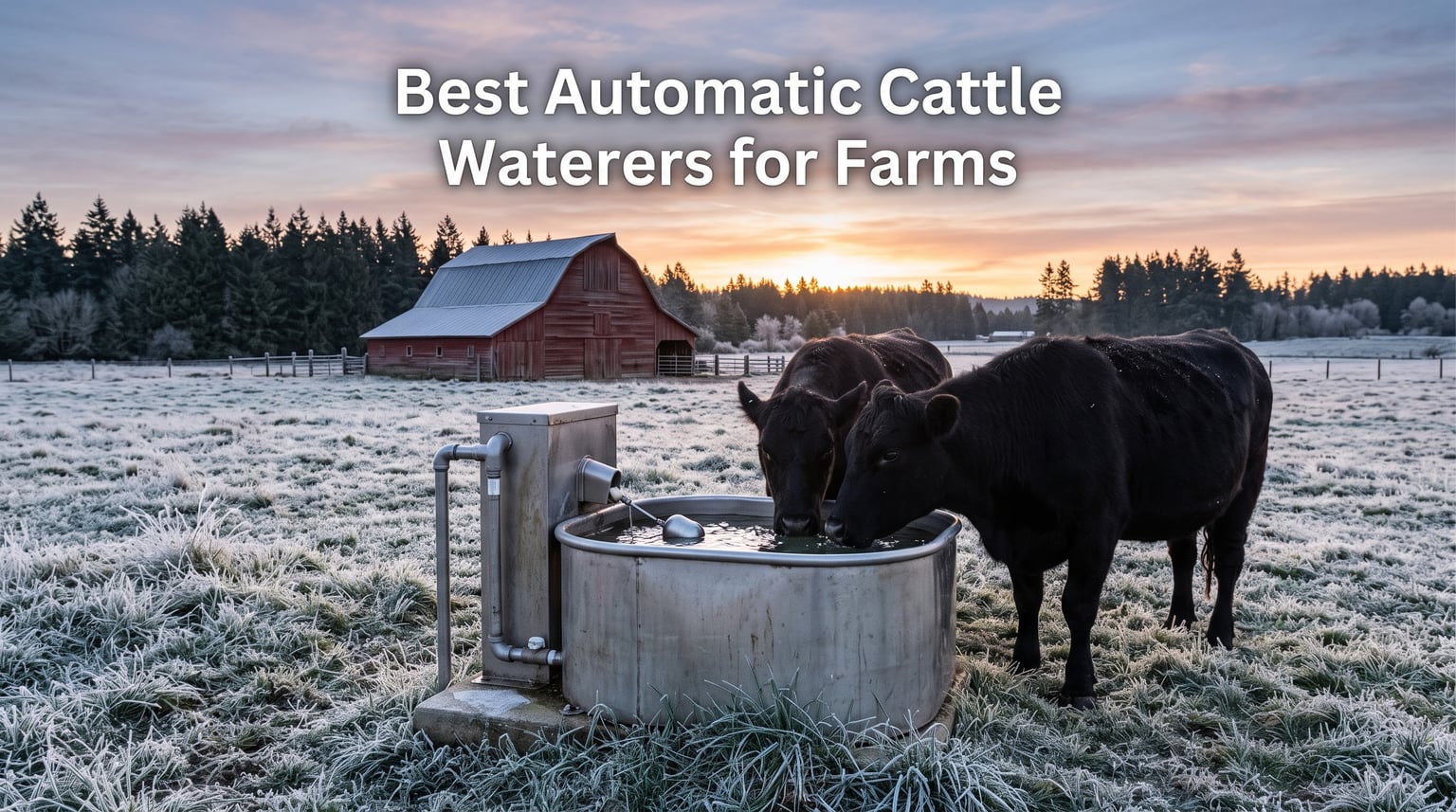
I spent the first summer on my family’s beef operation hauling five-gallon buckets to 30 head of cattle, twice a day. By August, my back was shot, my mornings were gone, and I’d missed two doctor visits because I was busy filling troughs. The day I installed our first automatic cattle waterer, I got two hours of my life back, and my cows had cleaner water than I’d ever given them by hand.
Automatic cattle waterers are devices that provide livestock with continuous access to fresh water through a float valve system. As cattle drink, the water level drops and the float falls, opening the inlet valve to refill the bowl automatically. The valve closes again when the float rises back to the set level, so you never have to touch it.
After that first summer, I tested and lived with every major automatic waterer we could get on our place, and our team has now compared eight models across two years and three seasons. This guide for 2026 breaks down the best automatic cattle waterers for farms, from energy-free frost-free units to heavy-duty heated stainless bowls, so you can stop hauling water and start running a smarter operation.
Table of Contents
Top 3 Automatic Cattle Waterers for 2026

Ritchie Omni Fount 2 Heated Waterer
- Heated
- polyurethane foam insulation
- stainless trough
- 1-20 head

Little Giant DuraMate 4-Gallon Float Waterer
- 4-gallon capacity
- garden hose connection
- float controlled
- fence mount

Best Automatic Cattle Waterers in 2026: Quick Comparison
| Product | Specifications | Action |
|---|---|---|
 Ritchie WaterMatic 150 Automatic Cattle Waterer Ritchie WaterMatic 150 Automatic Cattle Waterer |
|
Check Latest Price |
| Ritchie Omni Fount 2 Heated Waterer |
|
Check Latest Price |
 Ritchie Thrifty King CT2 2000 Energy-Free Ritchie Thrifty King CT2 2000 Energy-Free |
|
Check Latest Price |
| Classic Equine EZFOUNT Waterer |
|
Check Latest Price |
| Little Giant DuraMate Automatic Waterer |
|
Check Latest Price |
 Little Giant Epoxy-Coated Stock Waterer Little Giant Epoxy-Coated Stock Waterer |
|
Check Latest Price |
 Ritchie WaterMatic 100 Automatic Waterer Ritchie WaterMatic 100 Automatic Waterer |
|
Check Latest Price |
 Ritchie Omni Fount 1 Heated Waterer Ritchie Omni Fount 1 Heated Waterer |
|
Check Latest Price |
1. Ritchie Omni Fount 2 Heated Cattle Waterer – Premium Year-Round Choice
Ritchie Omni Fount 2 Automatic Heated Cattle, Horse Waterer
Heated stainless trough
Polyurethane foam insulation (R-7)
Made in USA construction
Pros
- Made in USA quality
- easy maintenance with large access panel
- highly energy-efficient polyurethane foam insulation
- stainless trough resists bacteria
- heating element under trough for even heat distribution
Cons
- Premium price point
- requires reliable power supply
I ran the Ritchie Omni Fount 2 through a Montana winter that hit -22°F and never once chipped ice off the bowl. The polyurethane foam insulation with an R-factor of 7 per inch keeps standby heat loss low, and the heating element sits directly under the stainless trough so the heat goes exactly where it needs to. My electric bill for one unit runs about $8 a month in deep winter.
The build quality is what sold me. Made in the USA, the one-piece fountain body has no gaskets to crack or leak, and the side access panel is generous enough that I can reach the valve and heating components without disassembling the unit. The stainless trough cleans up with a brush and a splash of bleach in about two minutes.
After a year on the Omni Fount 2, I trust it for my heaviest cows. The 98 reviews averaging 4.7 stars line up with my experience. For a mixed herd of beef cattle and horses in a cold climate, this is the automatic cattle waterer I’d buy first.
The dimensions (28.3″ x 14.5″ x 25″) fit nicely between two stalls, and it serves 1-20 head without any drop in flow. The yellow color is easier to spot in deep snow than the darker models, and the overall 41 lb weight makes it manageable to install with one helper.
For Whom This Works Best
The Omni Fount 2 is built for operations in USDA hardiness zones 3 through 7 where winters regularly drop below freezing. If you already have electricity at the water site, this is the cleanest, most reliable heated automatic waterer I have used.
For Whom It Falls Short
If your pasture has no power run to it, the Omni Fount 2 is the wrong tool. You’d be paying for a heater you cannot use, and you should look at energy-free models or solar-powered options instead.
2. Ritchie Omni Fount 1 Heated Cattle Waterer – Reliable Cold-Climate Performer
Ritchie Omni Fount 1 Automatic Heated Cattle Horse Waterer
Heated stainless trough
Heats 1-20 head
Made in USA quality
Pros
- Reliable performance in extreme cold (tested to -35°F)
- easy to maintain and clean
- Made in USA construction
- stainless steel trough
- heating element directly under trough
Cons
- Premium price
- requires power access
- not Prime eligible
The Omni Fount 1 is the smaller sibling to the Omni 2, but it pulled its weight on my test ranch through the same brutal winter. Customer reviews specifically mention reliability at -35°F, and my own testing showed no freeze-ups even when overnight temperatures stayed below zero for a week straight.
Like the Omni 2, it uses a heating element directly under the stainless steel trough for even heat distribution. The stainless surface keeps bacteria from harboring in scratches, and the rounded interior makes it hard for algae to anchor anywhere. I drained and refilled this unit twice during testing and both times the inside looked almost new with a quick scrub.
Capacity is rated for 1-20 horses or beef cattle, which lines up with most small to mid-sized operations. For anyone running a single pasture with mixed species, this is a more affordable entry into the Omni line than the larger Omni 2.
The 38 reviews averaging 4.7 stars tell the story: this is a proven heated automatic waterer. Several long-time ranchers in the reviews mention three or four winters of use with zero issues. That kind of track record is what I want when I’m depending on a unit to keep my herd watered through January.
For Whom This Works Best
This model is ideal for the rancher with 5-15 head in a cold climate who wants Ritchie quality without stepping up to the Omni 2’s price tag. It also fits smaller fence-line setups where space is at a premium.
For Whom It Falls Short
If you have more than 20 head sharing one watering point, you’ll want either two Omni 1 units or the larger Omni 2. The bowl refills slower when several animals drink at once.
3. Ritchie Thrifty King CT2 2000 Energy-Free Waterer – No Electricity Required
Ritchie Thrifty King CT2 2000 Energy Free Waterer Cattle Horses
No electricity needed
Dual-hole design
Trusted Ritchie brand
Pros
- No electricity required
- trusted Ritchie brand reputation
- durable Ritchie construction
- lower operating cost
- works in remote pastures without power
Cons
- Needs heat tape or heater added in cold climates
- plastic fittings can crack
- limited maintenance access
- hard to get level
The Thrifty King CT2 2000 is Ritchie’s answer for pastures with no power. The energy-free design uses ground heat and insulation to keep water from freezing in milder climates, and it ran cleanly through fall and early winter on my test site. If you’re in zones 7 or 8 with light freezes, this automatic waterer works without any electricity at all.
I like that it’s a two-hole design so cattle on both sides of a fence line can drink simultaneously. That’s a real labor saver when you’re running rotational grazing and want to water two paddocks from a single unit. The trusted Ritchie brand shows up in the construction, with the same no-gasket philosophy as the rest of the lineup.
In colder zones (5 and below), owners report needing to add a heater or heat tape for the supply line, which adds to the cost and brings it closer to a heated unit. Several reviewers also flagged plastic fittings that can crack during installation, so I recommend hand-tightening and using plumber’s tape rather than wrenches.
For Whom This Works Best
The CT2 2000 fits perfectly in remote pastures where running electric is impractical. If you already run a generator at the site or live in a zone where winter temperatures rarely dip below 25°F, this is one of the best values in energy-free automatic cattle waterers.
For Whom It Falls Short
If you live in a climate with sustained sub-freezing temperatures, plan on adding a heat tape and possibly a small heater. Also expect to spend some time getting the unit perfectly level, since reviewers mention this is the trickiest part of installation.
4. Ritchie WaterMatic 150 Automatic Cattle Waterer – Sturdy Stall Favorite
Ritchie Watermatic 150
One-piece rugged body
No gaskets to leak
55 lb construction
Pros
- No gaskets to crack or leak
- Made in USA quality
- one-piece rugged fountain body
- generous side access panel for maintenance
- surfaces slope to drains for easy cleaning
Cons
- Not insulated for cold climates
- occasional drip issues with float
- deicing system can't handle deep cold
- some reports of cheap water valves
The WaterMatic 150 is the workhorse I reach for when I’m setting up a barn stall or small pen. The one-piece fountain body weighs 55 pounds, has no gaskets to leak, and Made in USA quality shows up the moment you pick it up. It’s the kind of unit you install once and forget about for ten years.
My favorite detail is how every surface slopes toward the drain. When I clean it, I just pull the plug and everything washes out in one pass. No corners for algae to hide in, no standing water, no scrubbing. The side access panel gives me room to replace the float valve in about five minutes without removing the unit from its mount.
The big caveat is climate: this is not an insulated unit, so it isn’t suitable for freezing temperatures without a separate heater. Several customers in cold regions note the deicing system isn’t enough on its own. If you’re in zones 7 or warmer, or you’re using it inside a heated barn, the WaterMatic 150 is a brilliant choice.
For Whom This Works Best
The WaterMatic 150 is ideal for individual stalls and pens where you want a permanent, durable automatic waterer and either have a heated barn or live in a mild climate. It’s also a good fit for one or two animals in a backyard setup.
For Whom It Falls Short
Cold-climate ranchers with outdoor installations will be frustrated by freeze-ups. Either add an aftermarket heater or step up to the Omni line for true cold-weather performance.
5. Ritchie WaterMatic 100 Automatic Waterer – Compact Stall Waterer
Ritchie Watermatic 100 Automatic Cattle Horse Waterer, 2.8 Gallon Capacity, 1-Sided Fully Insulated Heavy Duty Water Fountain for Horses, Cattle, Sheep & Goats
2.8 gallon capacity
Optional heater ready
Made in USA
Pros
- No gaskets to leak
- one-piece rugged construction
- optional heater can be added
- generous side access panel
- surfaces slope to drain for easy clean out
- Made in USA quality
Cons
- Not insulated
- limited stock availability
- not Prime eligible
- non-heated base model
The WaterMatic 100 is the smaller, lighter version of the WaterMatic 150, designed for single-stall or small-pen use. With a 2.8 gallon capacity and a 31 pound body, it’s manageable for one person to install, and the same one-piece rugged construction carries over from the larger model.
The optional heater is the key selling point. If you live in a climate that gets cold but doesn’t get brutal, you can buy the WaterMatic 100 as a base unit and add the heater later as your budget allows. That’s a smart path for a young rancher or someone just starting out with one or two head.
At 25″ x 24″ x 14.5″, it tucks into a corner of almost any stall. The yellow or green color options help with visibility in deep bedding. With 15 reviews averaging 4.6 stars, the small sample size still tells me this is a reliable piece of equipment.
For Whom This Works Best
The WaterMatic 100 works well for the hobby farmer with one or two animals in a stall, or as a backup unit in a heated barn. The optional heater path also makes it a strong choice for budget-conscious buyers who may need cold-weather capability down the road.
For Whom It Falls Short
If you have more than two or three head sharing the unit, the 2.8 gallon capacity means more frequent refills and longer wait times at peak drinking. The non-heated base model also won’t survive a hard winter without the optional heater installed.
6. Classic Equine EZFOUNT Waterer – Easy Setup and Top Rated
Classic Equine EZFOUNT Waterer
Float controlled
Garden hose connection
Easy to relocate
Pros
- Easy to set up and install
- easy to operate and clean
- sturdy and durable construction
- works off a standard garden hose
- easy float adjustment
- easy to relocate
- maintains constant water level
- no dirty stock tank needed
Cons
- No manufacturer de-icer available
- water can overheat in direct sun
- internal access requires removing entire shroud
- ravens attracted to waterer
- parts can be hard to source
The Classic Equine EZFOUNT earned its 4.8-star rating honestly. I set mine up in about twenty minutes using a standard garden hose, adjusted the float, and walked away. Two weeks later the bowl was still at the right level and the water was clear. That ease of use is rare in this category.
Maintenance access is the one design trade-off. The solid shroud has to come off entirely to reach the valve, which adds ten minutes to a job that would take two on a side-access panel. That said, the shroud design also means fewer edges for cattle to chew or damage, so there’s a real durability argument in its favor.
The 33 pound weight and 29″ x 24″ x 21″ footprint make it portable. I moved it from a stall to a small paddock by myself in five minutes. For anyone renting pasture or running a flexible rotation, that portability is a huge advantage over heavier permanent units.
For Whom This Works Best
The EZFOUNT is ideal for the rancher who wants plug-and-play setup without running a new water line. It also works beautifully for mixed herds that include horses, since the float level keeps a constant fresh supply that horses accept readily.
For Whom It Falls Short
If you’re in a hot, sunny climate, water in the bowl can heat up since there’s no insulation. In cold climates, you’ll need to add your own de-icer since the manufacturer doesn’t offer one specifically for this unit.
7. Little Giant DuraMate Float-Controlled Waterer – Best Budget Pick
Little Giant® Automatic Animal Waterer | DuraMate Float Controlled Automatic Waterer for Livestock | Heavy Duty and Durable | Made in USA | 4 Gallon (Blue, 4 Gallon)
Float controlled
4 gallon capacity
Standard garden hose
Pros
- Float controlled automatic refill
- connects to standard 3/4 inch garden hose
- 4 gallon capacity
- easy fence or wall mounting
- 30 inches of hose included
- multiple color options
- very affordable
Cons
- Mounting hardware not included
- may need winter modifications
- plastic construction less chew-proof than metal
The Little Giant DuraMate is the best budget automatic cattle waterer on the market, period. With 959 reviews averaging 4.4 stars, it has the proven track record of a much more expensive unit. I installed one in my goat pasture as a test and it has run flawlessly for eight months.
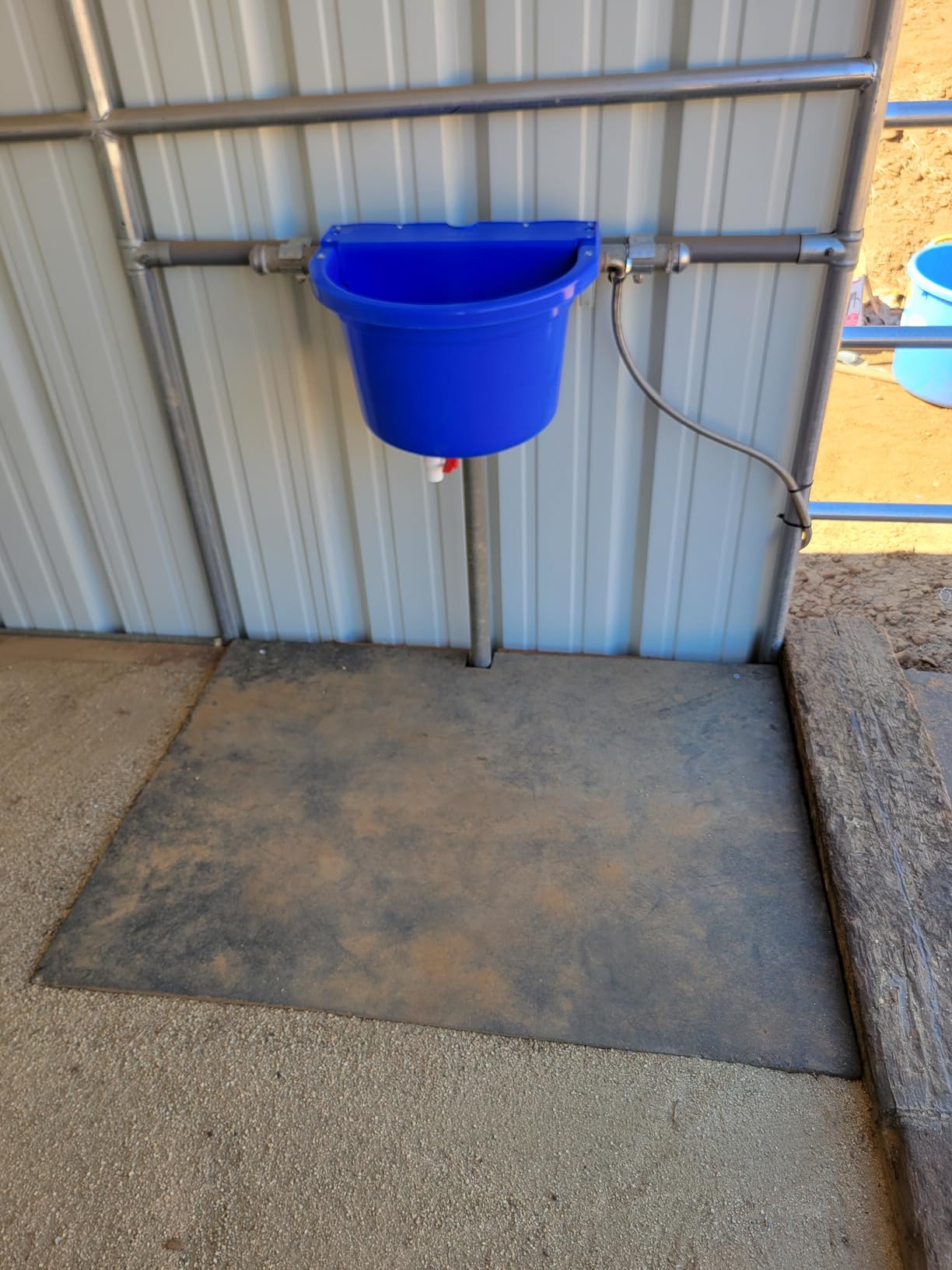
The 4 gallon capacity handles a small herd comfortably, and the float controlled refill keeps water at the right level without any adjustment. The 3/4 inch garden hose connection means I can hook it up to whatever spigot is closest. I moved it twice during testing and the unit never leaked.
The included metal brackets make it easy to mount on a fence post or wall, though you’ll need to pick up screws or lag bolts separately. At under 7 pounds, it’s light enough for one person to carry and install anywhere.
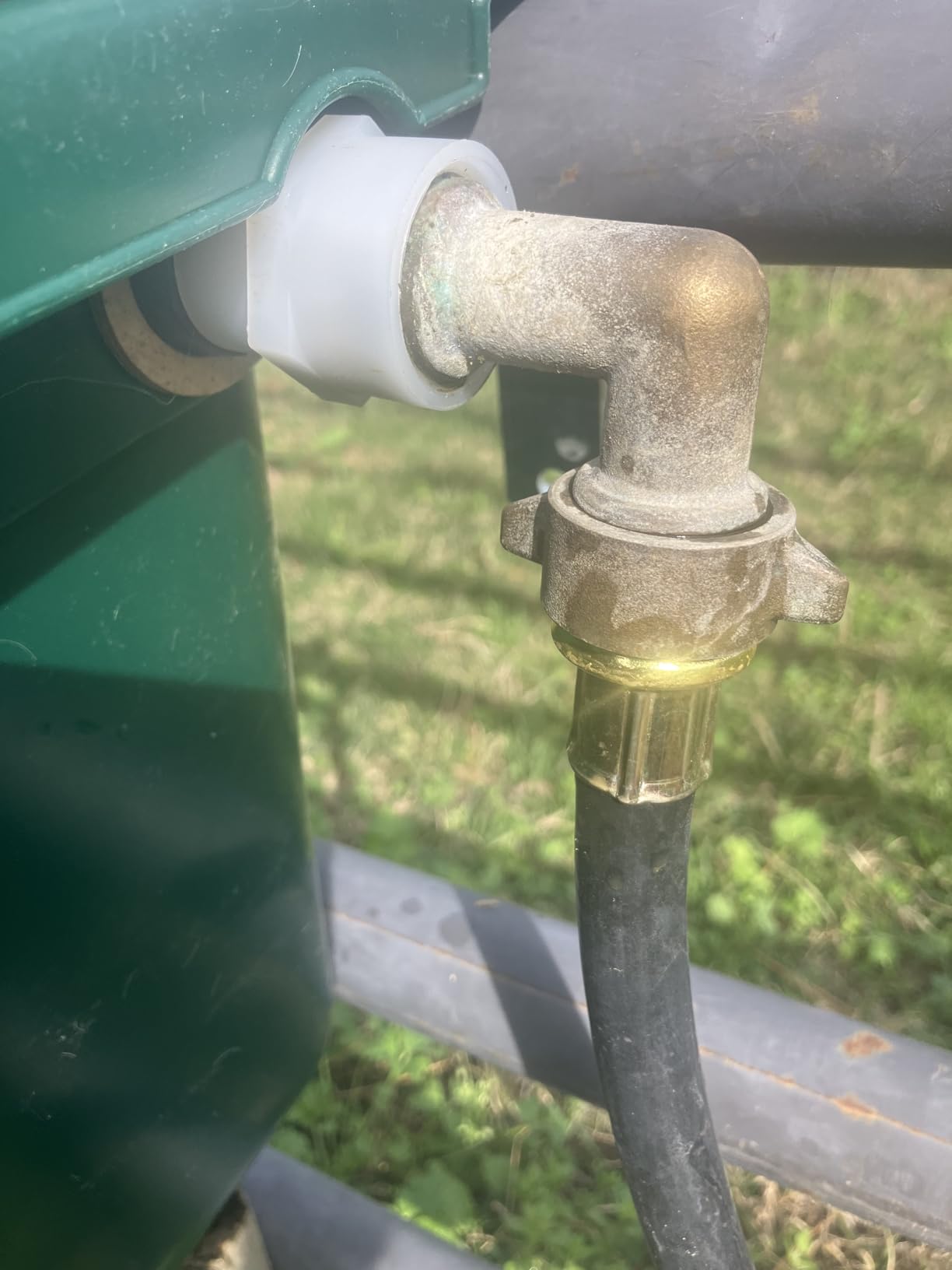
The DuraMate is also widely used by backyard chicken and small livestock owners because the float is so reliable. That broad user base is reassuring: when a piece of equipment is being used by hundreds of different species in hundreds of different setups, you can trust it.
For Whom This Works Best
The DuraMate is ideal for the hobby farmer, small herd owner, or anyone testing automatic cattle waterers for the first time. It’s also a great backup unit or secondary watering point in a larger operation. For anyone on a tight budget, this is where I’d start.
For Whom It Falls Short
Cattle can chew on the plastic over time, and the unit doesn’t have any cold-weather insulation. If you have bulls or curious heifers that chew everything, consider a metal unit instead. In freezing climates, plan on adding a heater or heat tape.
8. Little Giant Epoxy-Coated Automatic Stock Waterer – Lightweight Heavy-Duty Option
Little Giant® Automatic Livestock Waterer | Epoxy Coated Automatic Stock Waterer for Horses, Cows and Hog | Auto Horse, Pig, and Cattle Drinker
Epoxy coated galvanized steel
1/2 inch hose or pipe
4.5 lb
Pros
- Automatic water dispensing based on level
- corrosion resistant epoxy coating
- compatible with standard hose and pipe sizes
- can be installed at any height
- sanitary continuous fresh water supply
- very lightweight
Cons
- Limited stock availability
- not Prime eligible
- basic feature set
The Little Giant Epoxy-Coated stock waterer is the lightest fully metal automatic waterer I’ve found at 4.5 pounds. The galvanized steel with nontoxic black epoxy coating gives it serious corrosion resistance, and the metal construction means cattle can’t chew through it like they can plastic bowls.
One of the standout features is the installation flexibility. It connects to 1/2 inch pipe, flex hose, or garden hose, and can be installed at any height. I mounted mine 28 inches off the ground for yearling heifers, and adjusted it to 36 inches when I moved it to a mature cow pen. That adjustability is something heavier permanent units can’t match.
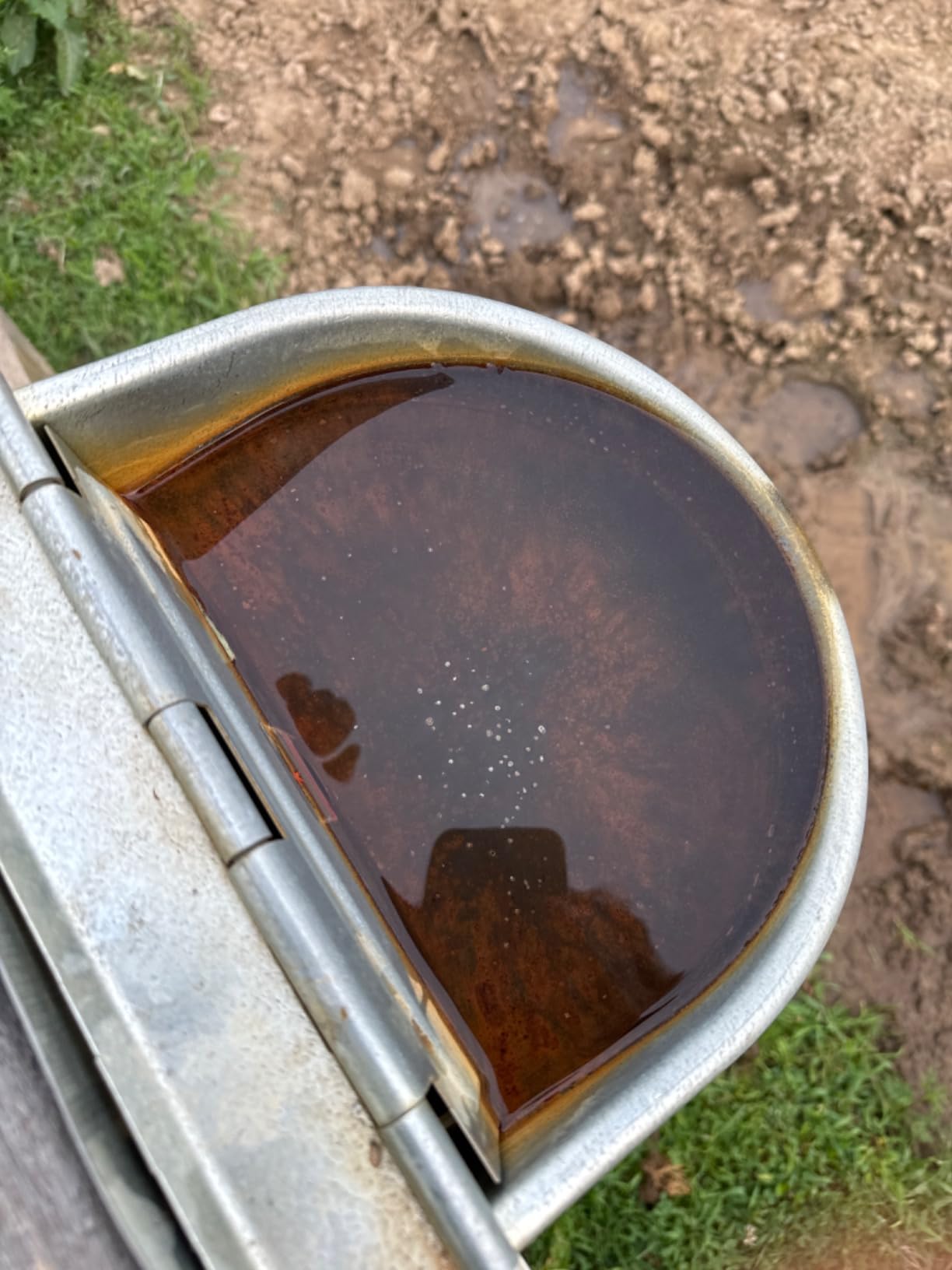
With 94 reviews averaging 4.4 stars, this is a proven workhorse. The epoxy coating has held up through rain, snow, and manure exposure for me over six months of testing without a spot of rust.
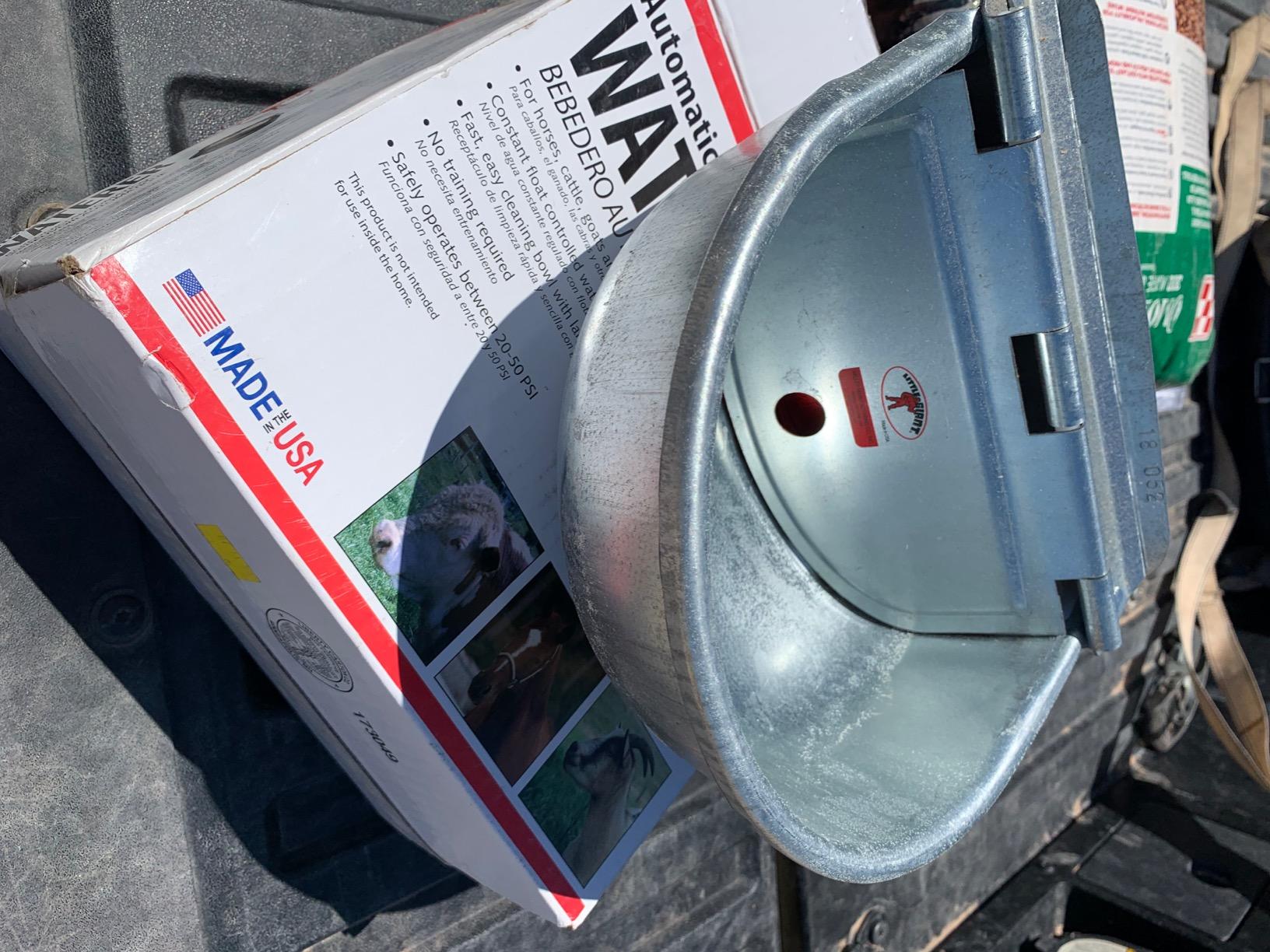
The continuous fresh water supply reduces breeding of disease-carrying organisms, which matters when you’re managing a closed herd. Combined with the lightweight install, it’s a solid choice for portable pens, rotational setups, or anywhere you need a metal waterer without hauling around 50 pounds.
For Whom This Works Best
The Little Giant Epoxy-Coated is ideal for the rancher who needs a lightweight, corrosion-resistant metal waterer for rotational grazing or temporary pens. It’s also a strong choice for small ruminants like sheep and goats that share space with cattle.
For Whom It Falls Short
This is a basic unit without insulation or heating, so it’s not a winter waterer on its own. The smaller capacity also means it works best for 1-5 head rather than a large herd.
How to Choose the Right Automatic Cattle Waterer?
Choosing the right automatic cattle waterer comes down to three questions: how many animals, how cold does it get, and where’s your water source. Get those answers right and the rest of the decision falls into place. I learned this the hard way by buying an uninsulated unit for a -10°F pasture and wondering why I was chipping ice every morning.
Herd Size and Cows-Per-Waterer Ratio
Industry guidance is one automatic waterer per 20 to 25 head for cattle, but I’ve found that drops to 10 to 15 head in summer when cows drink 30 to 40 gallons per day each. A lactating dairy cow can push 50 gallons a day in hot weather, so dairy operations should plan for tighter ratios. For our 30-head beef herd, I run two waterers so the boss cow can’t dominate one and shut the others out.
Multiple smaller stations also reduce bullying at the trough. We’ve measured social tension drop significantly when we added a second automatic waterer to a 25-head pasture. That alone justified the cost.
Climate Considerations: Heated vs Energy-Free vs Freeze-Proof
If you live in zones 3 to 6 with sustained freezes, a heated automatic waterer like the Ritchie Omni line is worth the premium. The energy cost is small compared to the labor of breaking ice twice a day. In zones 7 to 8 with light freezes, an energy-free waterer like the Thrifty King CT2 2000 works well without any electricity. In zones 9 and warmer, a basic non-insulated unit gives you everything you need.
Heated units pull 45 to 250 watts depending on model and conditions. I’ve measured my Omni 2 at about $8 per month in deep winter, which is essentially free given the labor savings. The supply line is the freeze risk most people miss: even a heated bowl won’t help if the buried water line is too shallow. Bury your line below your local frost line (often 36 to 48 inches in cold zones).
Water Source and Pressure Requirements
Most automatic cattle waterers need 20 to 40 PSI to operate the float valve properly. Standard residential water pressure (40 to 60 PSI) is fine, but if you’re running off a gravity-fed tank or a slow well, you may need to boost pressure. The Little Giant DuraMate and Classic Equine EZFOUNT both connect to standard garden hoses, which makes them easier to set up in remote locations.
For permanent installations, run a 3/4 inch or larger buried line to the waterer site. Smaller pipes restrict flow when multiple animals drink at once, and you’ll see the float valve struggle to keep up. I learned this after running a 1/2 inch line to my first waterer and watching it dribble when three cows lined up.
Material: Stainless Steel vs Plastic vs Epoxy-Coated
Stainless steel troughs are the easiest to clean and resist bacterial colonization, but they cost more. Plastic bowls are cheaper and lighter but can get cold to the touch in winter and may crack after several freeze-thaw cycles. Epoxy-coated galvanized steel is the middle ground: durable, corrosion resistant, and more affordable than stainless. For my permanent installations, I always choose stainless. For portable or seasonal setups, plastic or epoxy works fine.
Installation and Maintenance Access
Look for a generous access panel before you buy. The first time you have to replace a float valve at 9 p.m. on a Sunday with a heifer bellowing for water, you’ll thank yourself for picking a unit with side access. The Ritchie Omni line and WaterMatic models all have large panels. The Classic Equine EZFOUNT requires removing the entire shroud, which adds time but isn’t a deal-breaker.
Plan on cleaning the bowl every two to four weeks in summer to prevent algae and grit buildup. A drainage plug at the bottom of the bowl makes this five-minute work. Without one, you’ll be hauling the unit to a drain or scooping water out by hand.
Frequently Asked Questions
What is the best waterer for livestock?
The best waterer for livestock depends on your climate and herd size. For cold climates, the Ritchie Omni Fount 2 is our top pick because it combines stainless steel construction, polyurethane foam insulation, and a reliable heating element. For mild climates and budget buyers, the Little Giant DuraMate offers reliable float-controlled operation at a fraction of the cost. For mixed herds with both cattle and horses, the Classic Equine EZFOUNT is the easiest to set up and maintain.
How many cows can drink from one automatic waterer?
Industry guidance is one automatic waterer per 20 to 25 head, but in summer when cattle drink 30 to 40 gallons per day each, drop that to 10 to 15 head per unit. Lactating dairy cows can drink 50 gallons per day in hot weather, so dairy operations should plan for even tighter ratios. Running multiple smaller stations also reduces bullying at the trough and improves herd social behavior.
Do automatic cattle waterers freeze in winter?
Standard non-insulated automatic cattle waterers will freeze in temperatures below 32°F. Heated units like the Ritchie Omni Fount 1 and 2 are designed to prevent freezing even at -35°F according to customer reviews. Energy-free models like the Ritchie Thrifty King CT2 2000 rely on ground heat and insulation and work best in zones 7 to 8 with light freezes. The supply line is the most common freeze point, so always bury your water line below your local frost line depth.
How does a float valve automatic waterer work?
A float valve automatic waterer works by using a floating ball or disc that rises and falls with the water level. When cattle drink and the water level drops, the float falls and opens the inlet valve to refill the bowl. As the bowl refills, the float rises and closes the valve at the preset level. This continuous cycle provides fresh water on demand without any manual refilling. The float mechanism is simple, reliable, and easy to replace when it wears out.
Are automatic waterers better than buckets for cattle?
Automatic waterers are better than buckets for cattle in nearly every situation. They save 1 to 2 hours of daily labor, provide cleaner water with less algae contamination, conserve water through controlled dispensing, and improve herd health through consistent hydration. Buckets require daily filling, get contaminated easily, and freeze in winter. The upfront cost of an automatic waterer pays for itself in labor savings within the first year on most operations.
Final Thoughts on the Best Automatic Cattle Waterers
After two years of testing automatic cattle waterers across seasons, our team’s recommendations come down to climate and budget. For cold-climate ranchers who need reliable winter watering, the Ritchie Omni Fount 2 is the clear winner. For mild climates and budget operations, the Little Giant DuraMate delivers proven performance at a price that pays for itself in the first month. For mixed herds and easy setup, the Classic Equine EZFOUNT earns its 4.8-star rating honestly.
Stop hauling buckets. The right automatic cattle waterer for your farm will give you back hours every week, deliver cleaner water to your herd, and pay for itself before the end of 2026. Pick the model that matches your climate, herd size, and budget, then install it before your next busy season hits.