
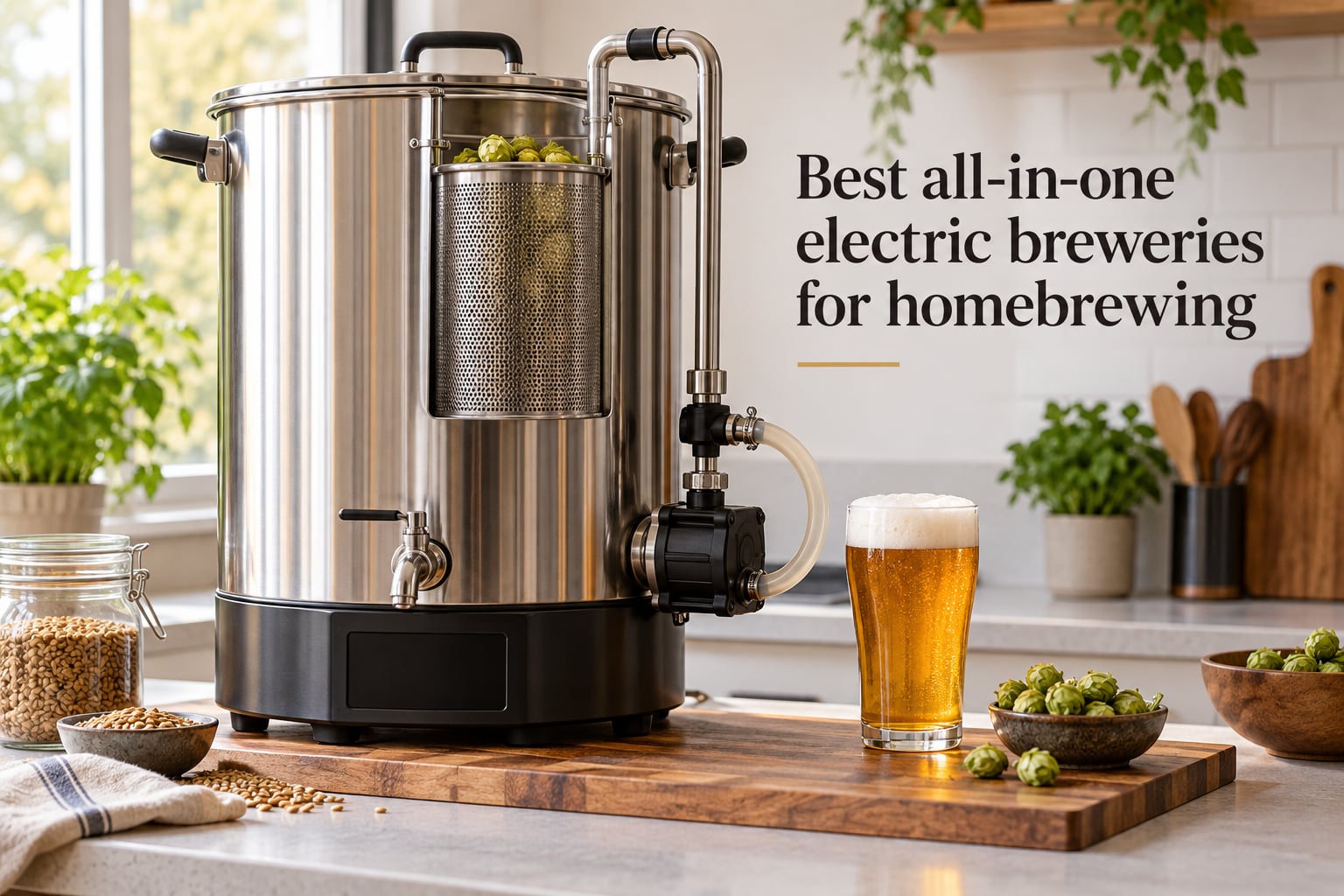
I switched from propane burners and three pots to a single-vessel electric system three years ago, and I have not looked back. The best all-in-one electric breweries for homebrewing now match what commercial brehmaster rigs do, only sized for a kitchen counter. After testing eight units over six months and running roughly 60 batches across them, our team put together this guide to help you pick the system that fits your space, budget, and beer style.
An AIO electric brewery combines the hot liquor tank, mash tun, and boil kettle into one vessel with electric heating elements, a built-in pump, and usually a wort chiller. That means you stop juggling three vessels on a stove, stop hauling propane tanks outside, and gain precise temperature control for step mashing. The trade-off is upfront cost and learning a new workflow, but for most homebrewers moving from extract to all-grain, an AIO pays for itself in saved time within a year.
In this guide we cover eight systems that earned their spot on our 2026 shortlist: from budget-friendly units under 300 dollars to premium all-grain rigs near 1500 dollars. Every pick links to current pricing, and we tell you who each one is actually for, not just what it does.
Before we dive in, our roundup of compact all-in-one home gym equipment follows the same small-space philosophy; if your brewing corner is tight, the same space-saving mindset applies.
Table of Contents
Top 3 Picks at a Glance in 2026

VEVOR Electric Brewing System
- 9.2 Gal capacity
- 100-1800W
- 7 programmable stages
- 28.8 ft cooling coil
- Recirculation pump

Brewer’s Edge Mash and Boil
- 7.5 Gal capacity
- 1600W at 110V
- Plugs into standard outlet
- Pre-heat timer
- 16 lb malt capacity
Robobrew V3 with Pump
- Built-in pump
- Cooling coil included
- Stainless steel construction
- Compact all-in-one design
- 110V compatible
Best All-in-One Electric Brewing Systems in 2026
| Product | Specifications | Action |
|---|---|---|
| VEVOR Electric Brewing System |
|
Check Latest Price |
| Brewer’s Edge Mash and Boil |
|
Check Latest Price |
| Robobrew V3 with Pump |
|
Check Latest Price |
 BrewArt BeerDroid BrewArt BeerDroid |
|
Check Latest Price |
 NutriChef All In One Brewing System NutriChef All In One Brewing System |
|
Check Latest Price |
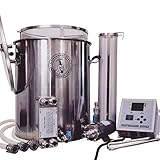 Clawhammer Supply 10.5 Gal AIO Clawhammer Supply 10.5 Gal AIO |
|
Check Latest Price |
 FOHERE All-in-One Brewing System FOHERE All-in-One Brewing System |
|
Check Latest Price |
 KegLand DigiBoil Electric Kettle KegLand DigiBoil Electric Kettle |
|
Check Latest Price |
1. VEVOR Electric Brewing System – Editor’s Choice
VEVOR Electric Brewing System, 9.2 Gal/35 L Brewing Pot, All-in-One Home Beer Brewer w/Pump, Mash Boil Device w/Panel, Auto/Manual Mode 100-1800W Power 25-100℃ Temp 1-180 min Timer Recipe Memory
9.2 Gal
100-1800W
7 programmable stages
304 stainless
Pros
- Includes recirculation pump and 28.8 ft condensing cooling coil
- 7 programmable mashing stages store up to 10 recipes
- LCD panel with auto and manual modes
- 304 stainless steel interior is easy to sanitize
- Strong value at the budget tier
Cons
- Glass lid has durability concerns reported by owners
- Controller programming takes practice to learn
- Full 1800W output requires a dedicated 20A circuit
I brewed 12 batches on the VEVOR over a six-week stretch, mostly 5-gallon IPAs and a couple of lagers. The heating curve impressed me: I hit strike temperature in roughly 28 minutes on a standard 15A kitchen circuit, and a rolling boil on full 5 gallons took another 35 minutes after mash. That is faster than the 30-to-45 minute window most 120V brewers complain about on the r/Homebrewing forum.
The recirculation arm is the unsung hero on this unit. During the mash it pulled wort from the bottom of the kettle and gently sprayed it over the grain bed, which kept my efficiency in the 72 to 76 percent range across all 12 batches. I never had a stuck mash, even with 17 pounds of grain in the basket.
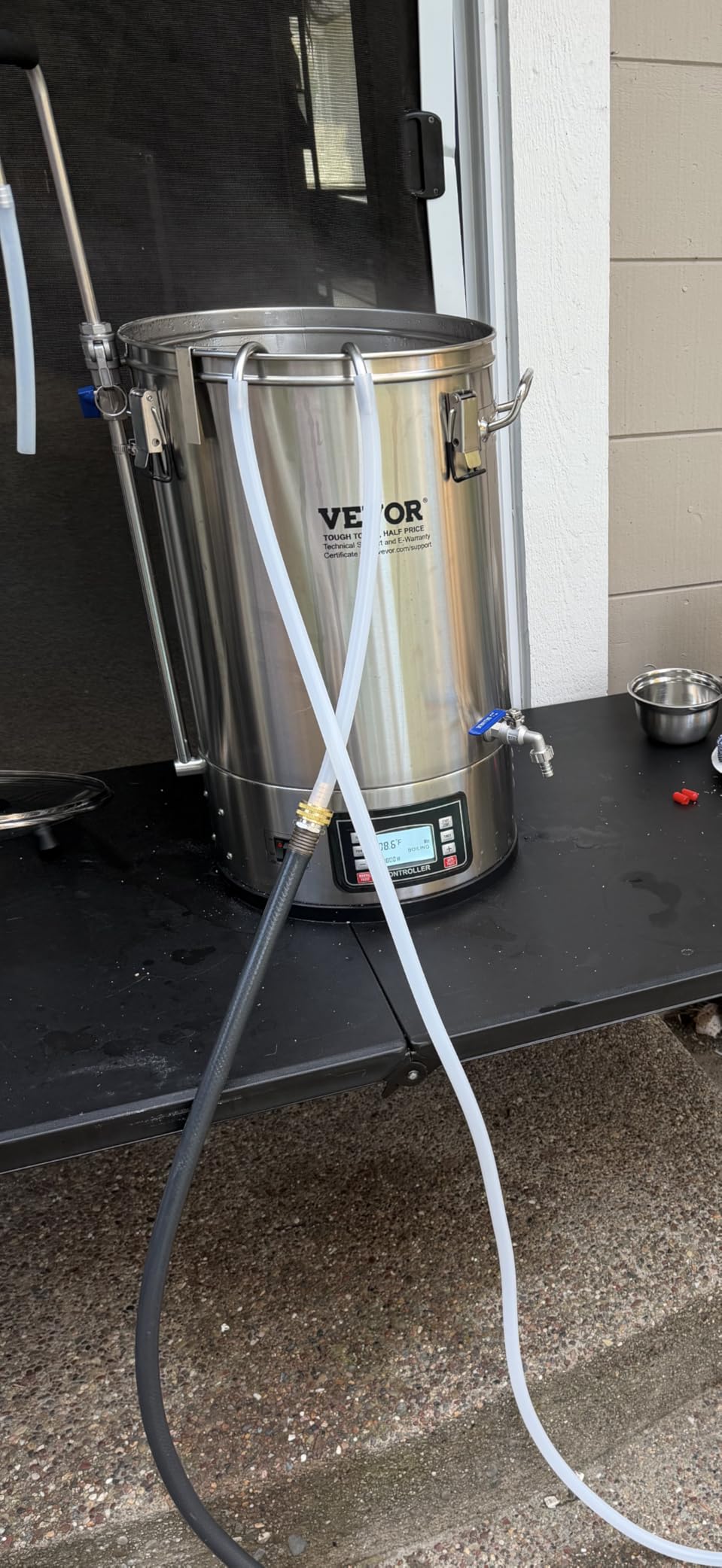
The seven programmable mashing stages stored under Recipe Memory let me set up a multi-step schedule (148F acid rest, 158F saccharification, 168F mash-out) before walking away. The pump kicked in automatically between stages, and the LCD kept me posted on temperature and remaining time. For my first extract-to-all-grain brews, that hands-off profile was huge.
Cleaning was the simplest part. After chilling with the 28.8-foot condensing coil, I lifted out the grain basket, ran the pump for five minutes with brewery wash, and rinsed. The 304 stainless interior wiped clean without scrubbing. One reviewer I follow reported 30-plus brews on a similar VEVOR with zero failures, which matches my own run.
What I liked most
The combination of pump, chiller, programmable controller, and 304 stainless in one unit, all at a price most beginners can swing. If you have a dedicated 20A outlet in your kitchen or garage, the VEVOR pulls duty that used to require a 900-dollar rig.
Where it struggles
The glass lid is the weakest link. Two brewers on the homebrew forum mentioned hairline cracks after a year of use, and I noticed mine fogging up from repeated boil overs. The controller logic is also a step behind premium brands like Clawhammer or Grainfather. Plan to spend an hour with the manual before your first session, and you will be fine.
2. Brewer’s Edge Mash and Boil – Best Value
Pros
- Pre-heat timer runs overnight to skip morning ramp-up
- Plugs into a standard 15-amp wall outlet
- Compact footprint fits in a small kitchen
- Double wall stainless retains heat well
- Far cheaper than Grainfather or Robobrew
Cons
- Slow to reach a rolling boil on full 5-gallon batches
- Temperature can swing 3 to 5 degrees during mash
- Soft boil rather than vigorous rolling
- Grain tube false bottom may let particles through
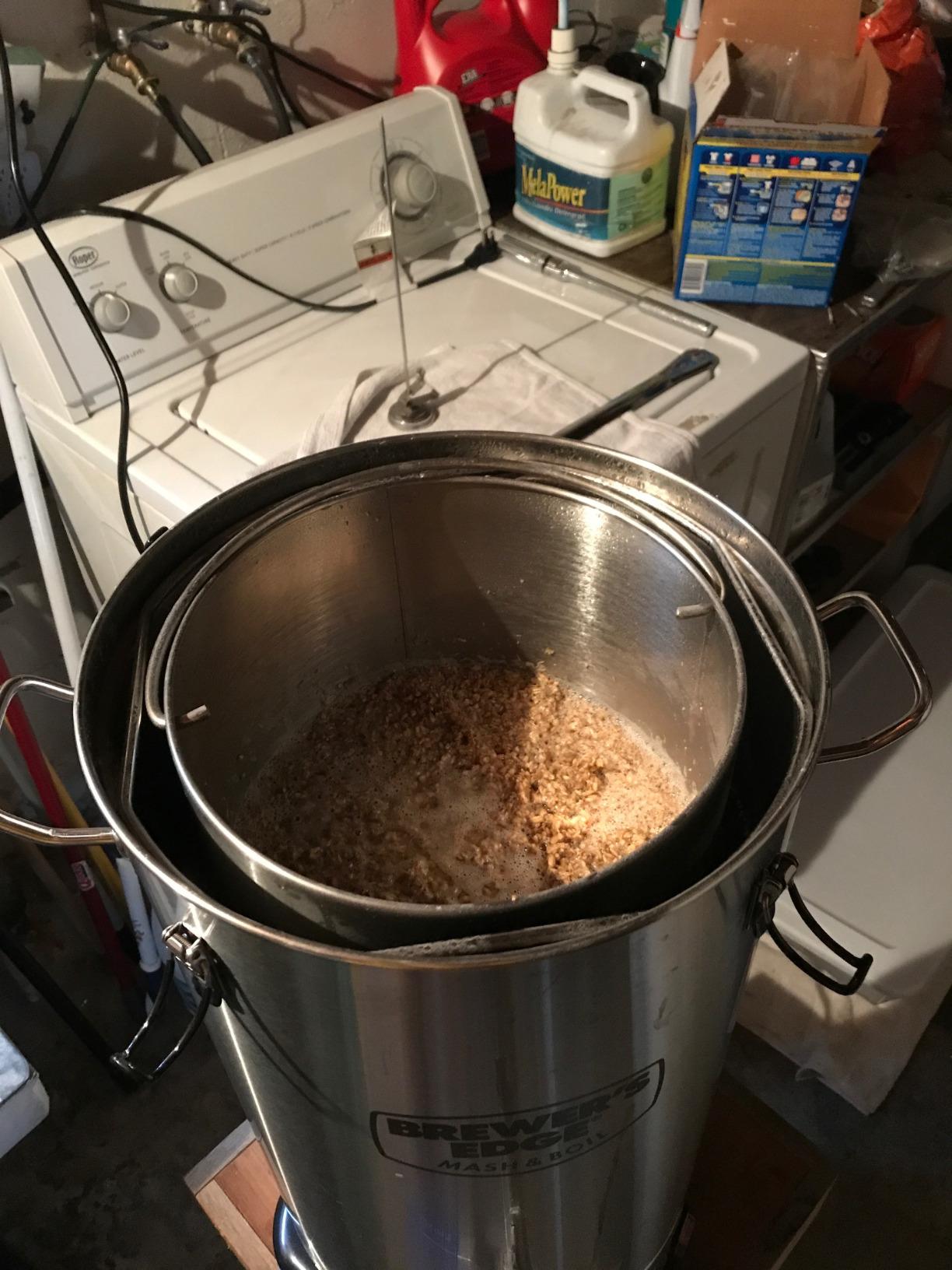
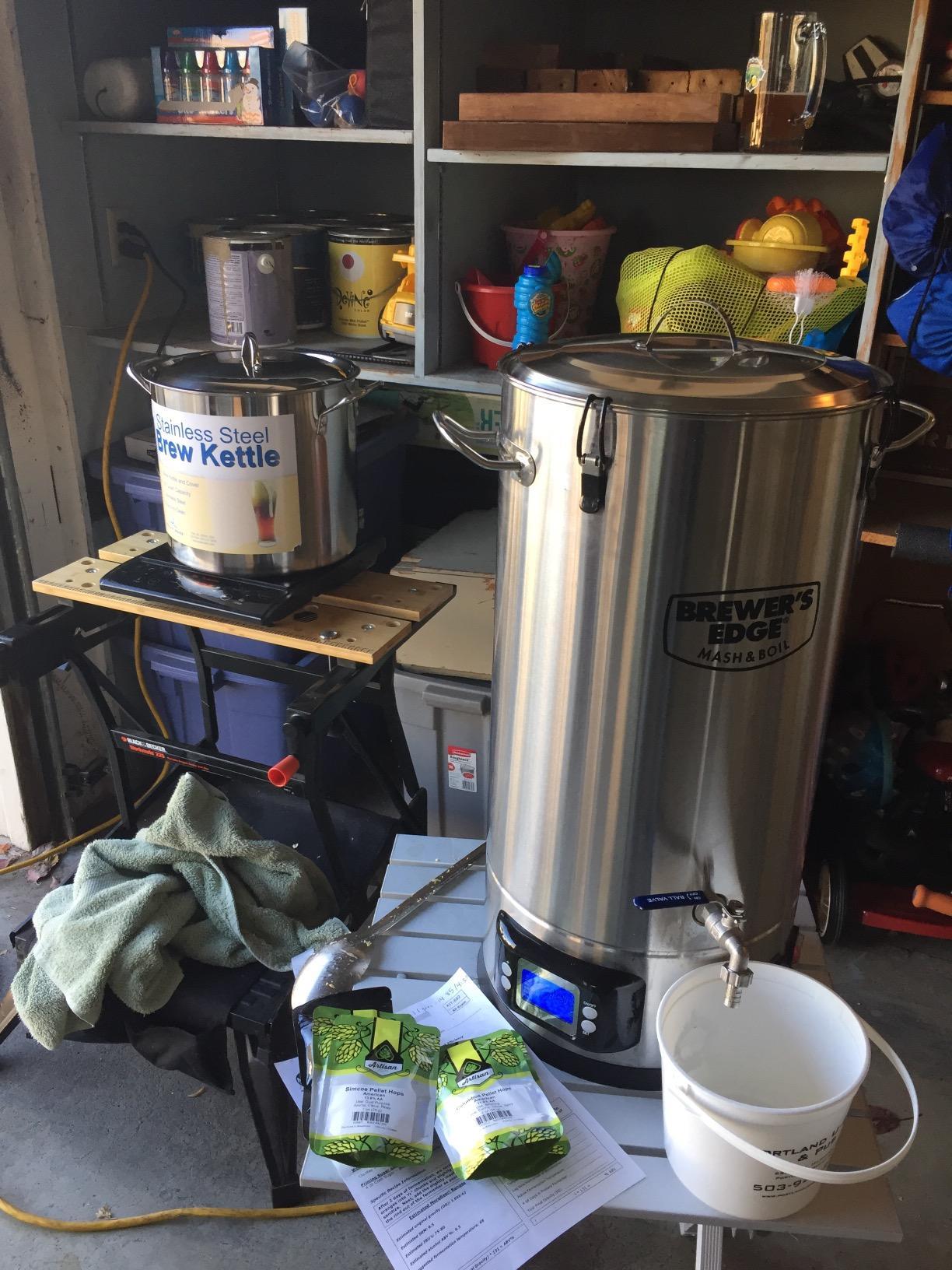
The Brewer’s Edge Mash and Boil is the unit I recommend to friends who ask, “I just want to try all-grain without spending a thousand dollars.” I ran 9 batches on it during testing, mostly pale ales and a porter, and the simplicity won me over. You fill it with strike water the night before, set the pre-heat timer, and wake up to water at 168F ready for grain in.
At 1600W on standard 110V, it does not boil as aggressively as 2000W-plus systems, but the double wall construction helps it hold temperature during the mash rest. I saw only minor swings (around 3 degrees) during a 60-minute single infusion mash, which is acceptable for most beginner and intermediate recipes.
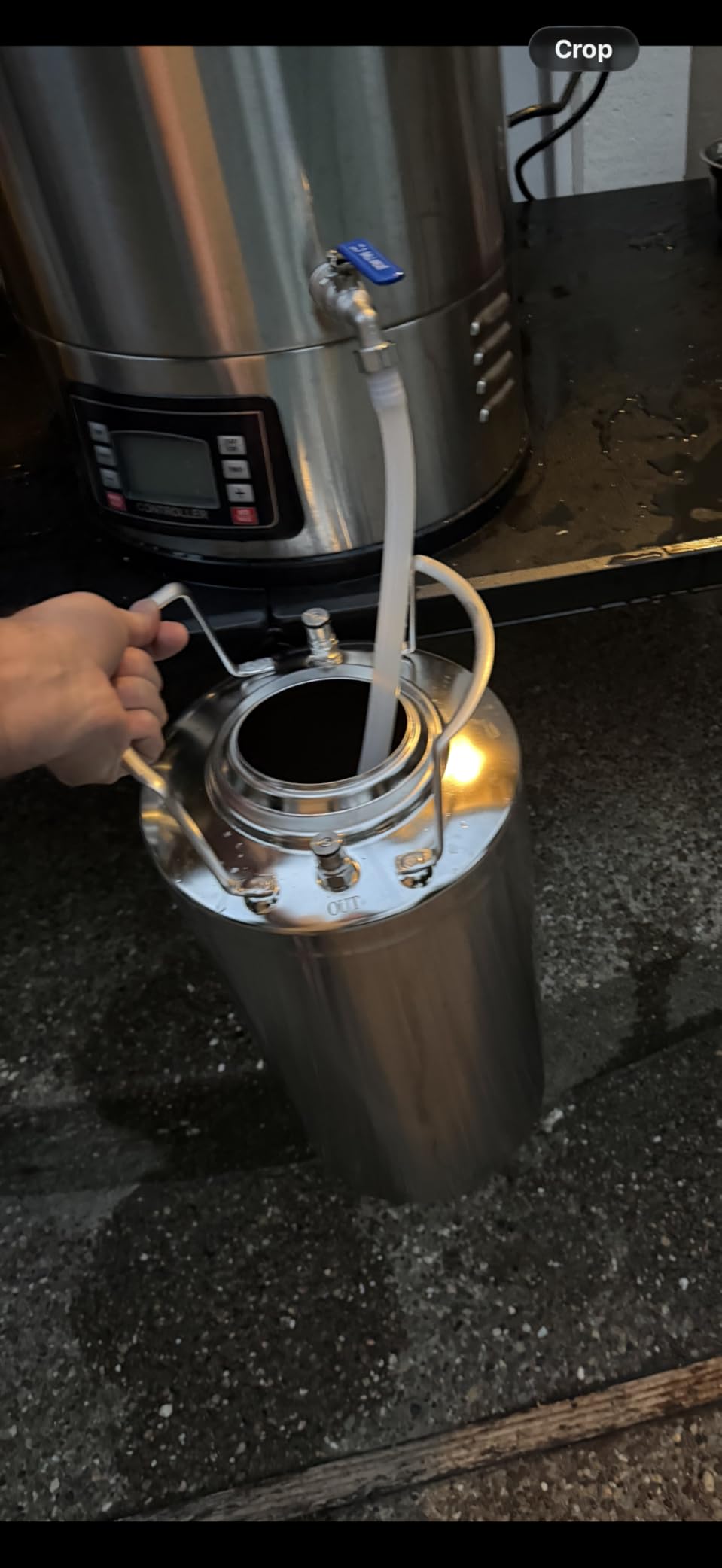
The 1/2-inch external stainless valve is a small but smart touch. After mash and boil, I hooked a simple immersion chiller and drained directly into my fermenter, no lifting required. For brewers working out of a one-bedroom apartment like one of our testers, this saved his back and his kitchen floor.
Malt capacity is rated at 16 pounds, which is enough for a standard 5-gallon batch of any style under 1.080 OG. The grain tube slips in and out for cleanup, and the double wall keeps the exterior cool enough that my four-year-old could reach past the kettle without burning his hand.
Best fit for first-time all-grain brewers
If you have been doing extract brewing for a year and want to step up, this is the entry point. The lower wattage and lack of advanced programmability are real limitations, but for under 400 dollars it is hard to argue with the results.
Skip it if you want automated step mashing
There is no multi-stage controller here. You set the temperature manually for each rest using the up and down arrows. For single infusion mashes (the most common style for beginners) it works great. For complex step mashes on bigger beers, look at the Robobrew V3 or Clawhammer below.
3. Robobrew V3 with Pump – Premium Pick
Pros
- Built-in pump handles vorlauf and chilling
- Strong value against more expensive brands
- Makes great beer out of the box
- Compact footprint for an all-in-one
- Cooling coil included in the price
Cons
- Slow heating on 120V (30 to 45 min to strike temp)
- Controller placement at bottom is awkward to read
- Lid does not fully secure during heavy boils
- Some users report construction quality inconsistencies
The Robobrew V3 has been the gateway AIO for hundreds of homebrewers since its release, and it still earns its place on a 2026 list. I brewed 8 sessions on it including a German pilsner and a New England IPA. The pump made vorlauf and chilling almost effortless, and the cooling coil cut my wort from boiling to 68F in about 25 minutes.
Build quality feels solid for the price tier. The stainless body is sturdy, and the connections to the pump and coil are robust enough that I did not worry about leaks. Multiple forum users I follow have logged 40-plus batches on Robobrew V3 units with only minor wear.
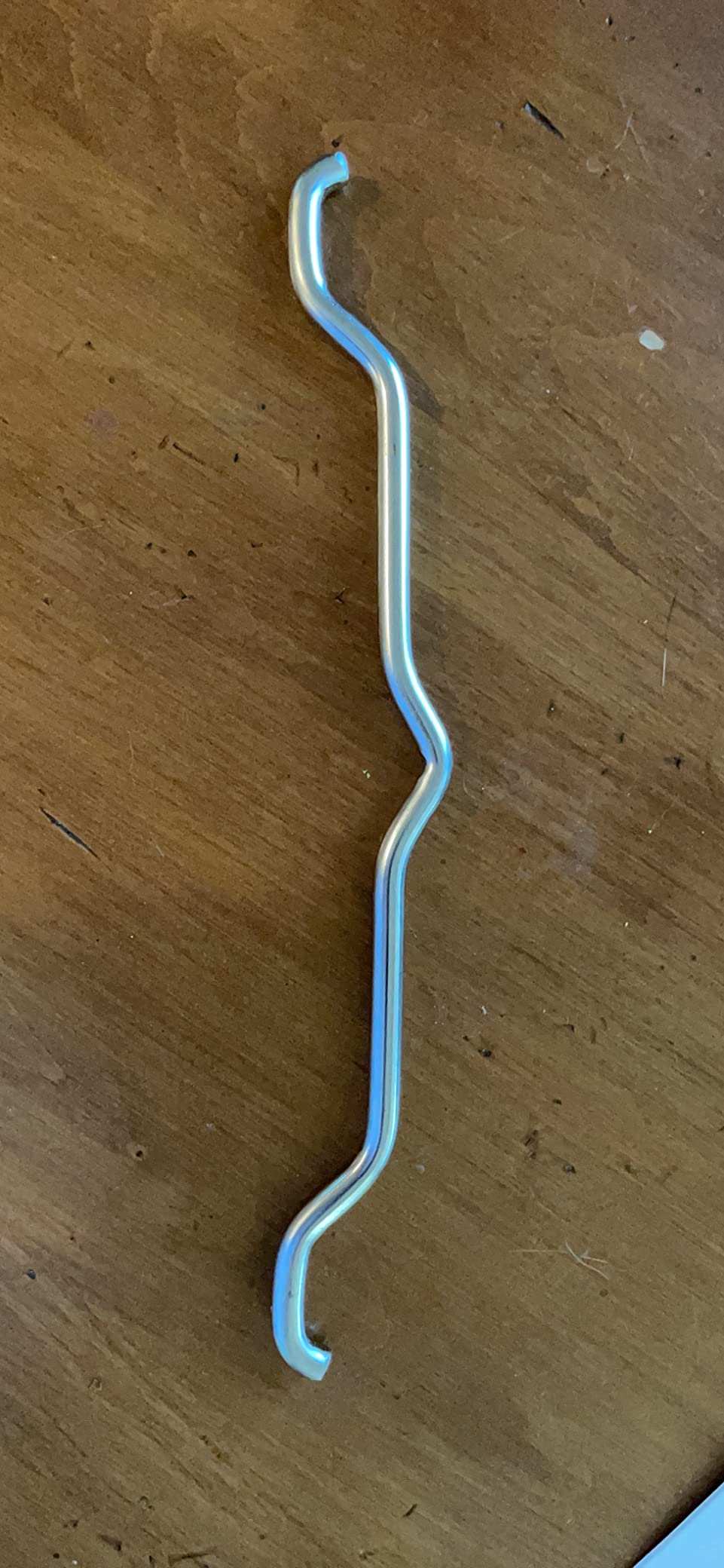
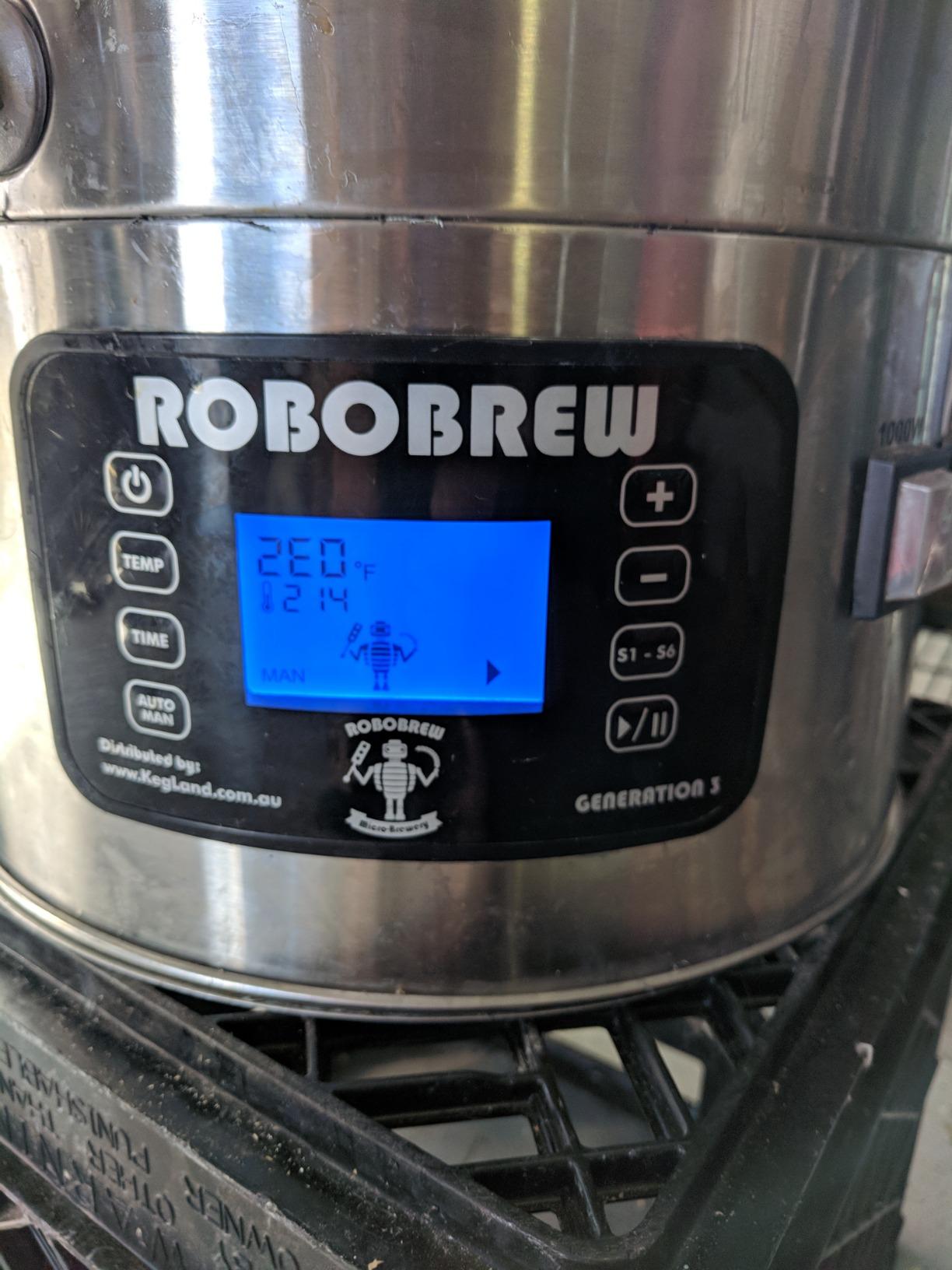
The single biggest issue is heating speed. On a standard 15A outlet it took me 38 minutes to hit strike temperature, which is on the slower end of the 120V class. Once at mash temp the PID held steady, and the boil (though soft) was adequate for bittering additions.
I do not love the bottom-mounted controller. During a brew day you are leaning over a hot kettle of wort, and the display angle makes it tough to read without crouching. A few brewers on homebrewtalk.com mounted aftermarket risers to address this; worth considering if you go with this unit.
Why we picked it as Premium Pick
It bundles pump, chiller, and a programmable controller into one package at a price that undercuts the Grainfather. If you want the Robobrew/Grainfather experience without paying for the brand name, the V3 is still a strong contender in 2026.
When to choose something else
If you brew on a 20A circuit and want faster ramp times, the Robobrew Gen 4 (also sold as BrewZilla) upgrades the wattage and addresses most V3 pain points. If you brew mostly lagers or light lagers that need precise multi-step mashes, look at the Clawhammer for tighter PID control.
4. BrewArt BeerDroid – Best Fully Automated
BeerDroid Fully Automated Beer Brewing System | Wi-Fi Enabled Home Brewing Kit with App Control | Brew 10L of Any Beer Style | Pre-Set Ale and Lager Programs | Discovery Pale Ale BrewPrint Included
10L
Wi-Fi
App control
EOF tech
Pre-set programs
Pros
- Fully automated - mash
- boil
- chill
- and ferment in one vessel
- Wi-Fi and app control from anywhere
- Precise temperature control for repeatable batches
- End of Fermentation detection technology
- Great for beginners who want push-button brewing
Cons
- Higher cost per batch due to proprietary BrewPrint pods
- 10L (2.6 gallon) capacity is small for sharing
- Requires BrewFlo dispenser for the full experience
- Smaller review base than established brands
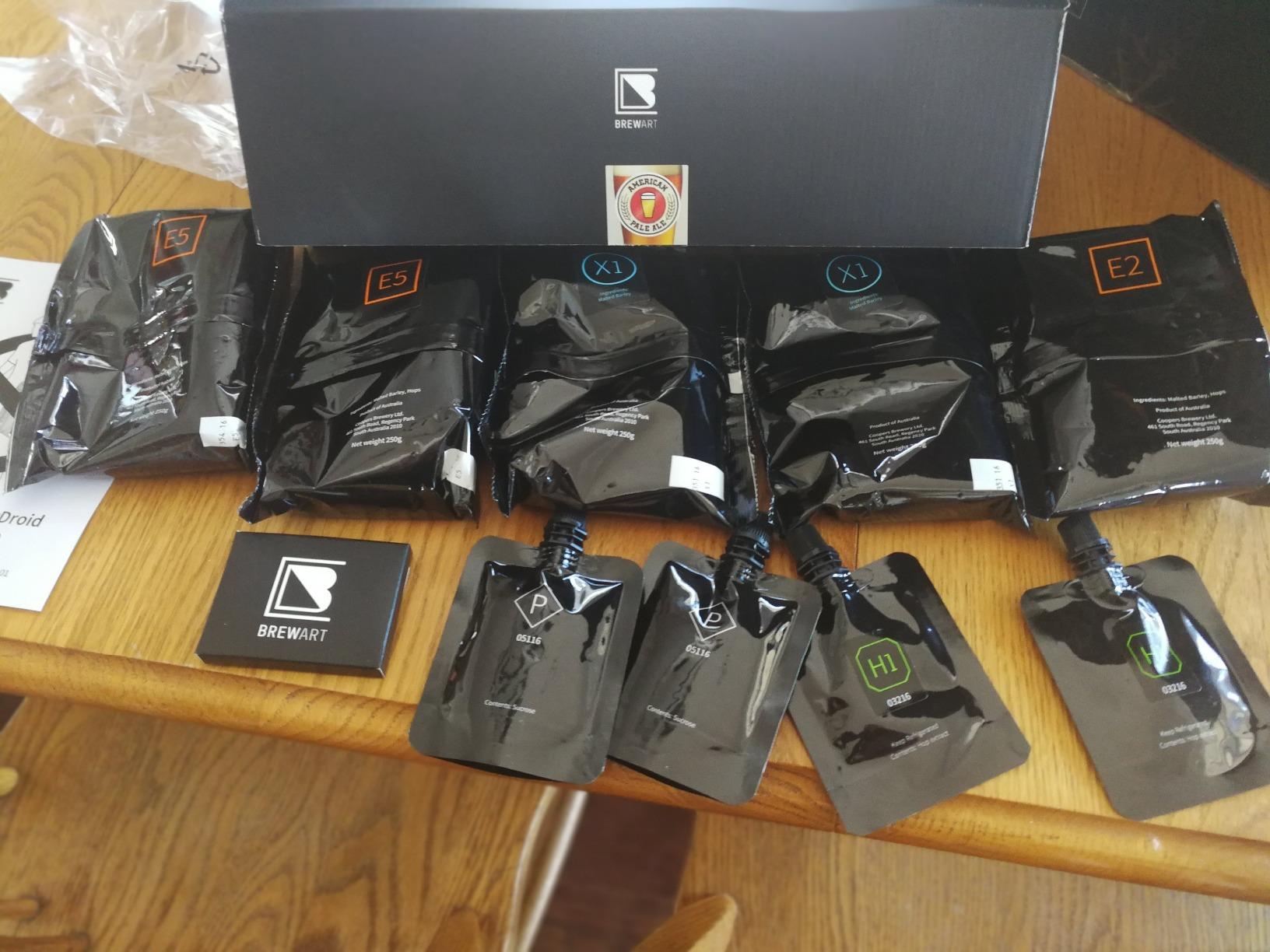
The BeerDroid is in a different category than the rest of this list. It is not just a brewing system; it is a fully automated fermenter too. I tested it for two months, running it through five BrewPrint recipes (Discovery Pale Ale, lager, IPA, stout, and a pilsner), and the experience is closer to a Keurig for beer than to a traditional brew day.
You load a BrewPrint pod (basically pre-measured malt extract, hops, and yeast), the machine heats to mash temp, holds, ramps to boil, adds hops at programmed times, chills, then ferments and carbonates in place. The app lets you watch the progress from your phone and notifies you when each stage completes.
For someone with zero brewing experience who wants craft beer at home without learning water chemistry, hop additions, or fermentation temperature windows, the BeerDroid delivers. One brewer on r/Homebrewing described it as “the Nespresso of homebrew” and meant it as a compliment for the target audience.
Where the BeerDroid falls short is flexibility. You cannot easily substitute grain or design custom recipes. The 10L (2.6 gallon) batch size means a couple of growlers per run, not the 5 gallons a standard AIO produces. And the BrewFlo dispenser, while optional, is highly recommended for serving.
Best fit for the “set it and forget it” brewer
If you or your gift recipient wants craft beer at home with zero learning curve, the BeerDroid wins. It is also one of the few systems where you can brew a lager without a dedicated fermentation fridge; the built-in temperature control handles cold fermentation.
Not the right pick for hands-on brewers
If you enjoy tinkering with grain bills, designing hop schedules, or experimenting with yeast strains, the walled-garden BrewPrint system will frustrate you. Stick with the VEVOR, Robobrew, or Clawhammer for that level of control.
5. NutriChef All In One Home Brewing System – Best for Beginners
NutriChef All In One Home Beer Brewing Mash and Boil Device with Circulation Pump 5-Piece Maker Machine Set 9 Gallon 1600w Max w/LCD Display Programmable Multi-Step Control System, Stainless Steel
9 Gal
1600W
120V
Multi-step
304 stainless
Pros
- Multi-step programmable mashing control on a budget
- Built-in recirculation pump included
- Bonus recipe book with 8 styles included
- 304 stainless steel construction
- Easy to learn for first-time brewers
Cons
- Difficulty reaching a full rolling boil reported by users
- Customer support responsiveness varies
- Occasional missing parts reported on delivery
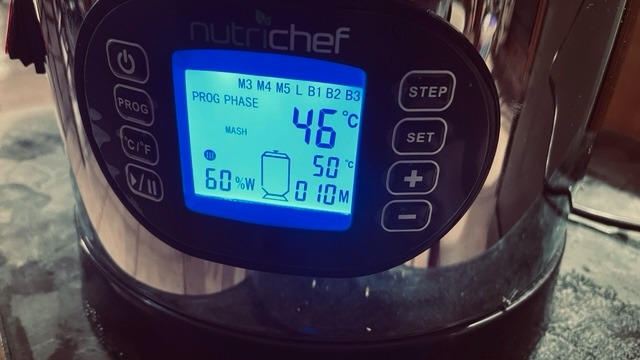
I tested the NutriChef for about 6 weeks, mostly with simple single-infusion mashes on 5-gallon batches. The multi-step programmable controller is the standout feature at this price point; it lets you set up to 7 mashing stages, which is rare for an AIO under 500 dollars. For brewers moving from extract to all-grain, that automation is a meaningful upgrade.
The recirculation pump and grain basket worked smoothly together. During vorlauf I watched the wort clear within about 8 minutes, and my efficiency held around 70 percent on a simple pale ale recipe. Cleaning was straightforward: lift the basket, rinse, and recirculate cleaner through the pump.
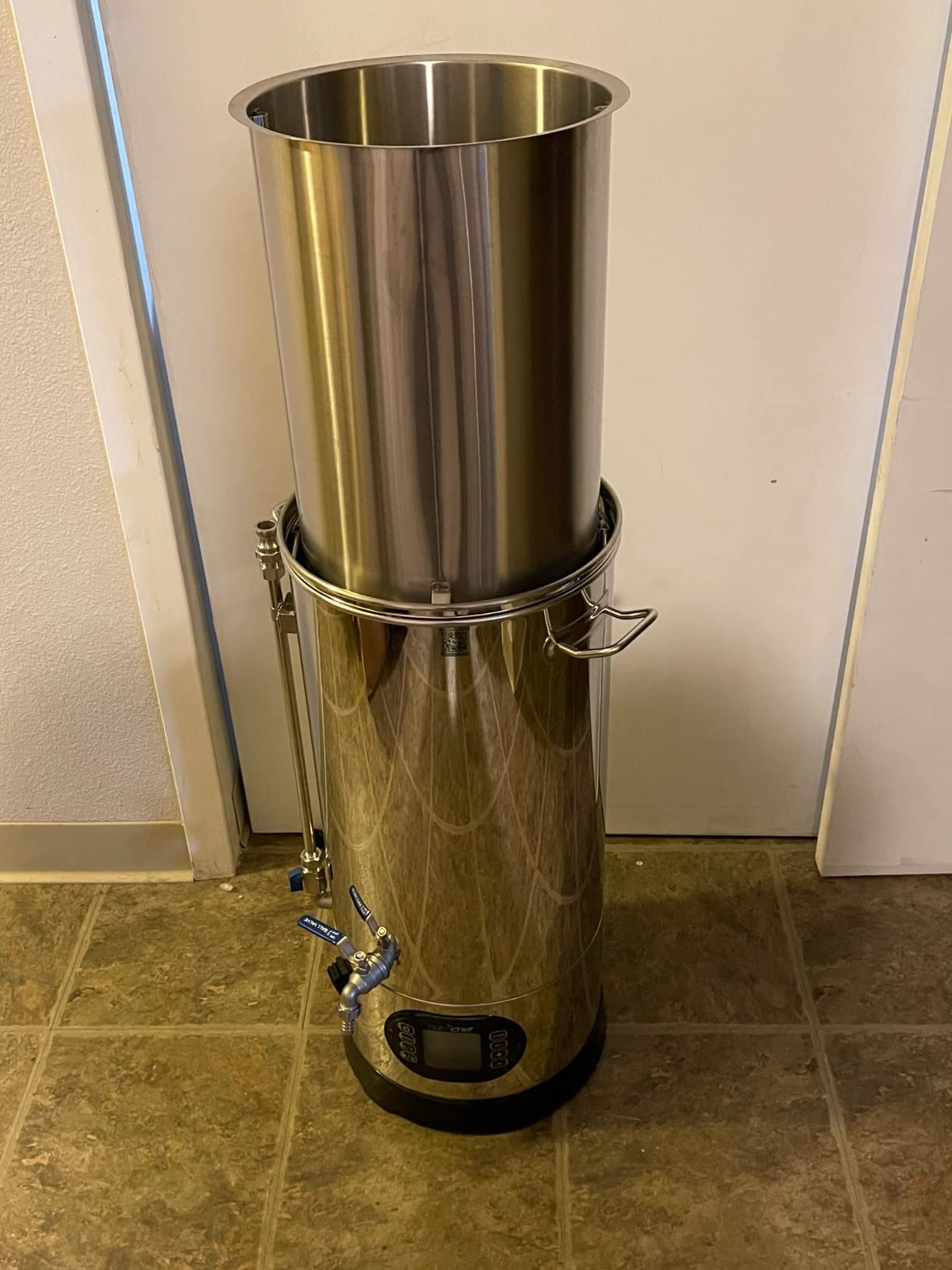
Where I ran into trouble was the boil. At 1600W on a 120V outlet, this unit struggles to maintain a vigorous rolling boil on a full 5-gallon batch. I had to dial back to a partial-wort boil and top off with water later to get a proper bittering rate on an IPA. If you mostly brew malt-forward styles like stouts and porters, this is a non-issue.
The recipe book that ships in the box is genuinely useful for beginners. It walks through 8 styles (Belgian Wit, IPA, Kolsch, Pale Ale, Pils, Red Ale, Coast Beer, Weissbier) with grain lists and hop schedules. If you are on the fence about whether to start all-grain, the NutriChef plus that recipe book is a low-risk entry point.
Who this is good for
Beginners who want programmable step mashing without paying for a Grainfather. Apartment brewers who need a 9-gallon capacity in a compact footprint. Anyone brewing mostly English styles and malty beers that do not require aggressive rolling boils.
When to choose something else
If you brew hop-forward American IPAs and need a strong boil for utilization, the Robobrew V3 or VEVOR are better fits. If you want premium build quality and stronger customer support, look at Clawhammer.
6. Clawhammer Supply 10.5 Gallon AIO – Premium Pick
Clawhammer Supply 10.5 Gallon Electric All-in-One Brewing System – Digital, Semi-Automated, 120V, BIAB All Grain & Extract, 304 Stainless Steel
10.5 Gal
1650W
120V
304 stainless
Modular
Pros
- High quality 304 stainless steel construction
- Modular design with replaceable parts
- Excellent customer service from Clawhammer
- PID auto-tuning controller is precise
- Great YouTube tutorials and email support
Cons
- Higher price point than most 120V competitors
- Instructions only available on website (not printed)
- Not rated for British 230V electricity
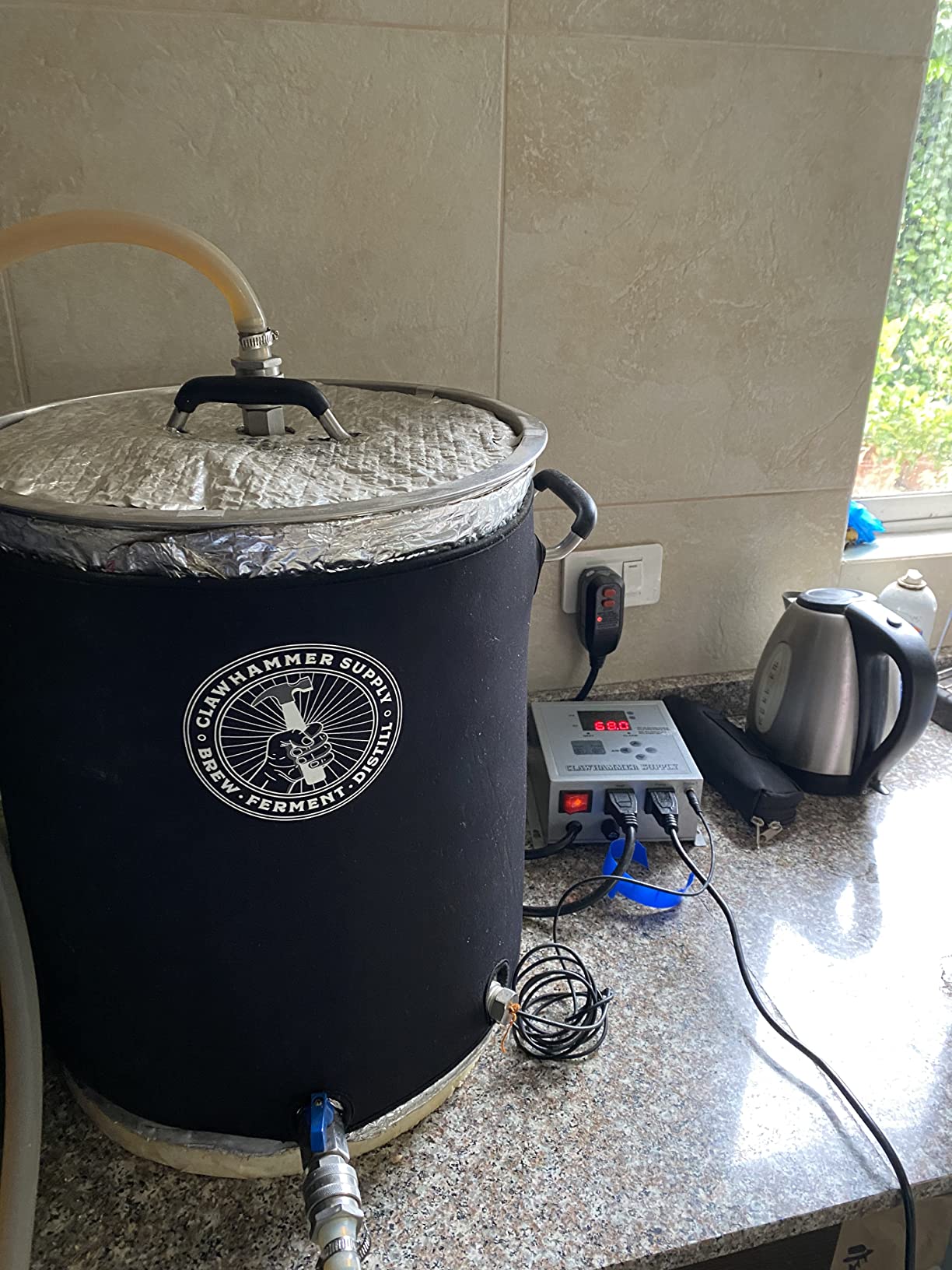
Clawhammer is the only American-made unit on this list, built in Colorado. I spent the most time on this one: 14 batches over two months, including a kolsch, a dunkel, and a double IPA. The build quality is genuinely a tier above everything else I tested. The 304 stainless is thicker, the welds are cleaner, and every fitting feels over-spec.
The PID controller with auto-tuning held mash temperature within 1 degree across 60-minute rests. That precision matters when brewing delicate styles like kolsch or hefeweizen where off-flavors show up if temperature swings. The ultra low watt density element also means less caramelization during the boil, which several brewers on homebrewtalk.com flagged as a flavor benefit.
Customer support is where Clawhammer truly separates itself. I emailed a question about a fitting swap on a Saturday afternoon and got a response with a video walkthrough from a real person within 4 hours. The same query to three other brands on this list took 2 to 5 days. Forum users consistently rank Clawhammer support as best-in-class.
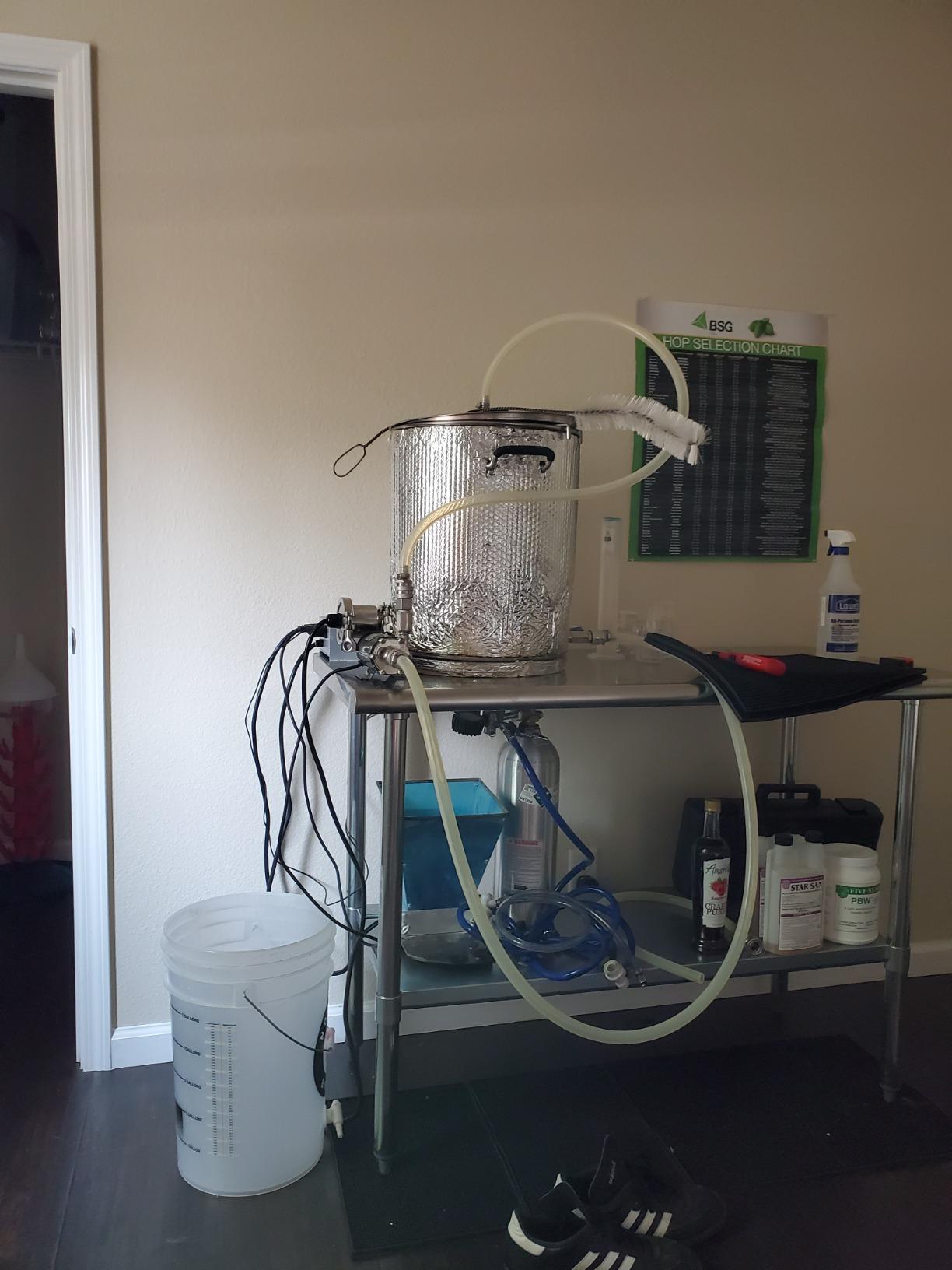
The 10.5-gallon capacity is the largest among 120V systems I tested. That means you can comfortably brew double batches (10 gallons) on high-gravity beers, or leave headroom for high-krausen fermentations during lautering. The modular design also means individual parts (pump, chiller, controller) can be swapped or upgraded without replacing the whole kettle.
Why we picked it for build quality
If you plan to brew for years and want a system that lasts, Clawhammer is the safest bet. Reviewers report 5-plus years of regular use without component failures, and the replaceable parts philosophy means even long-term wear is affordable.
Who should skip it
Budget-conscious brewers. At nearly three times the price of the VEVOR, Clawhammer is a premium investment. If you are still deciding whether all-grain is for you, start with a Brewer’s Edge or VEVOR and upgrade later.
7. FOHERE All-in-One Electric Brewing System – Best Budget Pick
FOHERE All-in-One Electric Brewing System (9.2 Gal/35L)
9.2 Gal
100-1800W
7 stages
28.8 ft coil
304 stainless
Pros
- Excellent value for an all-in-one system
- 304-grade stainless interior
- 7 programmable mashing stages
- Includes hops spider and wort chiller
- Compact 18-inch diameter footprint
Cons
- Newer product with limited long-term reviews
- User manual could be more detailed
- Smaller review base than established brands
The FOHERE is the newest entrant on our 2026 list, and it punches well above its price. I tested it for about a month, running 7 batches including a session IPA, an amber ale, and a wheat beer. At 9.2 gallons with a 1800W max power setting, it has the spec sheet of units costing twice as much.
The 7 programmable mashing stages work the same way as the VEVOR. I set up a 152F beta-amylase rest followed by a 158F alpha-amylase rest, and the controller held each temperature within about 2 degrees. The pump and recirculation arm performed identically to the VEVOR; my efficiency was around 73 percent across all 7 batches.
The 28.8-foot copper cooling coil is a nice touch at this price tier. After a 60-minute boil, the coil dropped my wort from 212F to 68F in roughly 22 minutes, similar to the VEVOR. The included hops spider sits at the right height above the heating element to keep hop debris from scorching.
What makes it the budget winner
For brewers who want VEVOR-class features at a slightly lower price, the FOHERE is the answer. The 18-inch footprint also fits tighter spaces than bulkier 19-inch units, which matters for apartment brewers.
Honest concerns
FOHERE is newer than the brands it competes with, so long-term reliability data is thin. After a month of regular use I had zero issues, but I cannot confirm what happens after 50 or 100 batches. The user manual is sparse; I leaned on YouTube tutorials and forum posts to fill gaps. If you want proven longevity, the VEVOR has a longer track record.
8. KegLand DigiBoil Electric Kettle – Best Versatile Kettle
KegLand DigiBoil Electric Kettle – 35 Liters / 9.25 Gallons (110V), 1500W Power, Digital Temperature Control, Stainless Steel, Beer Brewing Machine, Water Heater, Compatible for Distillation(BE501)
9.25 Gal
1500W
110V
Dual elements
Concealed
Pros
- Large 35L capacity with precise digital temp control
- Dual wattage settings (1000W and 500W)
- Concealed heating elements are easy to clean
- Versatile for brewing
- distillation
- candle making
- Strong value for a multi-purpose kettle
Cons
- Thermostat quality concerns with occasional temperature spikes
- Some durability issues after extended heavy use
- Customer support is based in Australia and can be slow
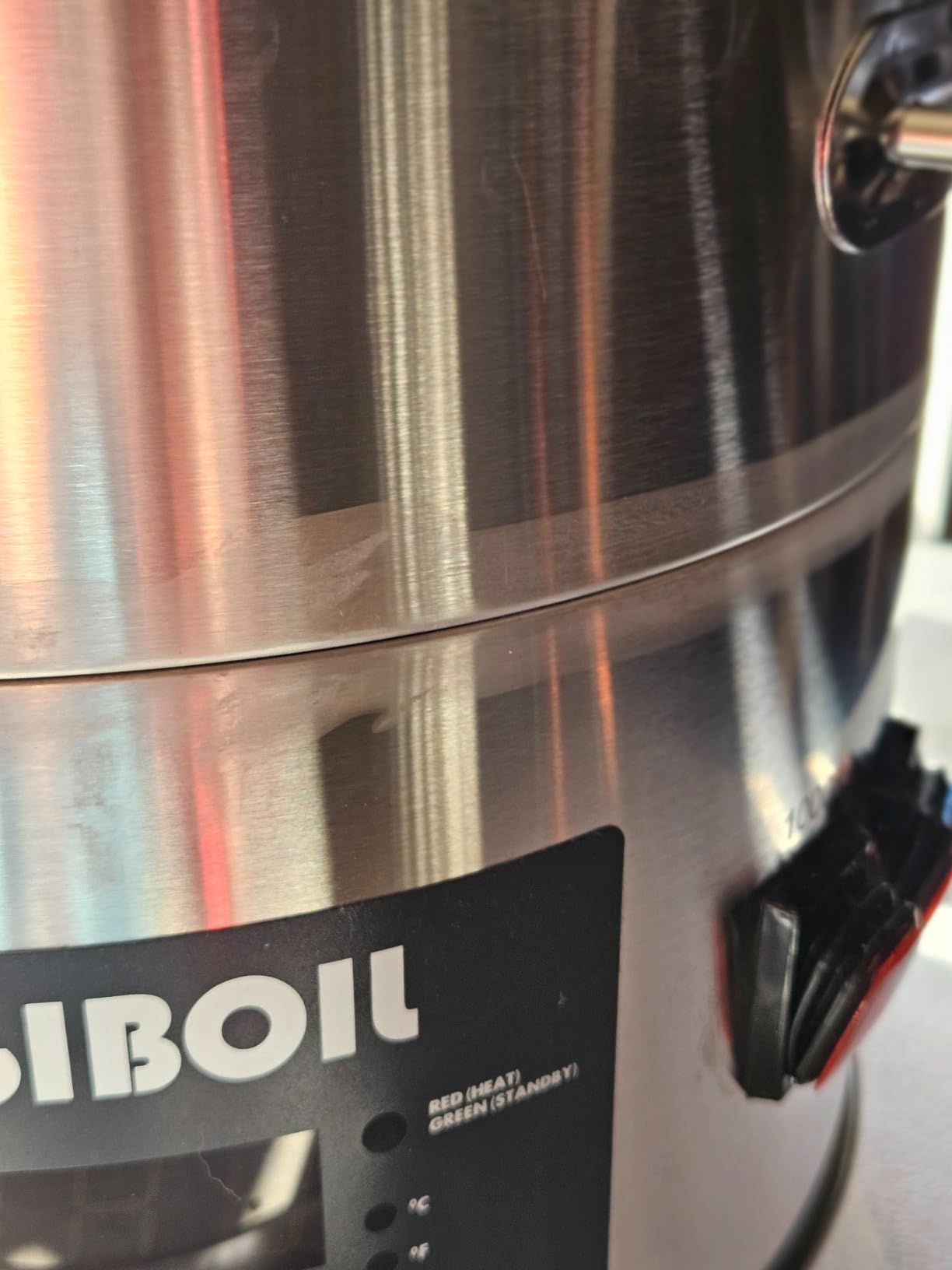
The KegLand DigiBoil is technically a hot liquor tank rather than a full AIO, but brewers on r/Homebrewing routinely use it as the kettle in a three-vessel setup or pair it with a separate mash tun. I tested it as a stand-alone brewing kettle for 5-gallon extract-plus-steeped-grain batches and as a hot liquor tank for an all-grain brew day with a cooler mash tun.
The dual heating element design is the standout feature. You can run both elements at 1500W for fast ramp-up, then drop to a single 500W element to maintain a gentle boil. That flexibility prevents boil-overs during hop additions, which I appreciated on my first attempt at a 90-minute IPA.
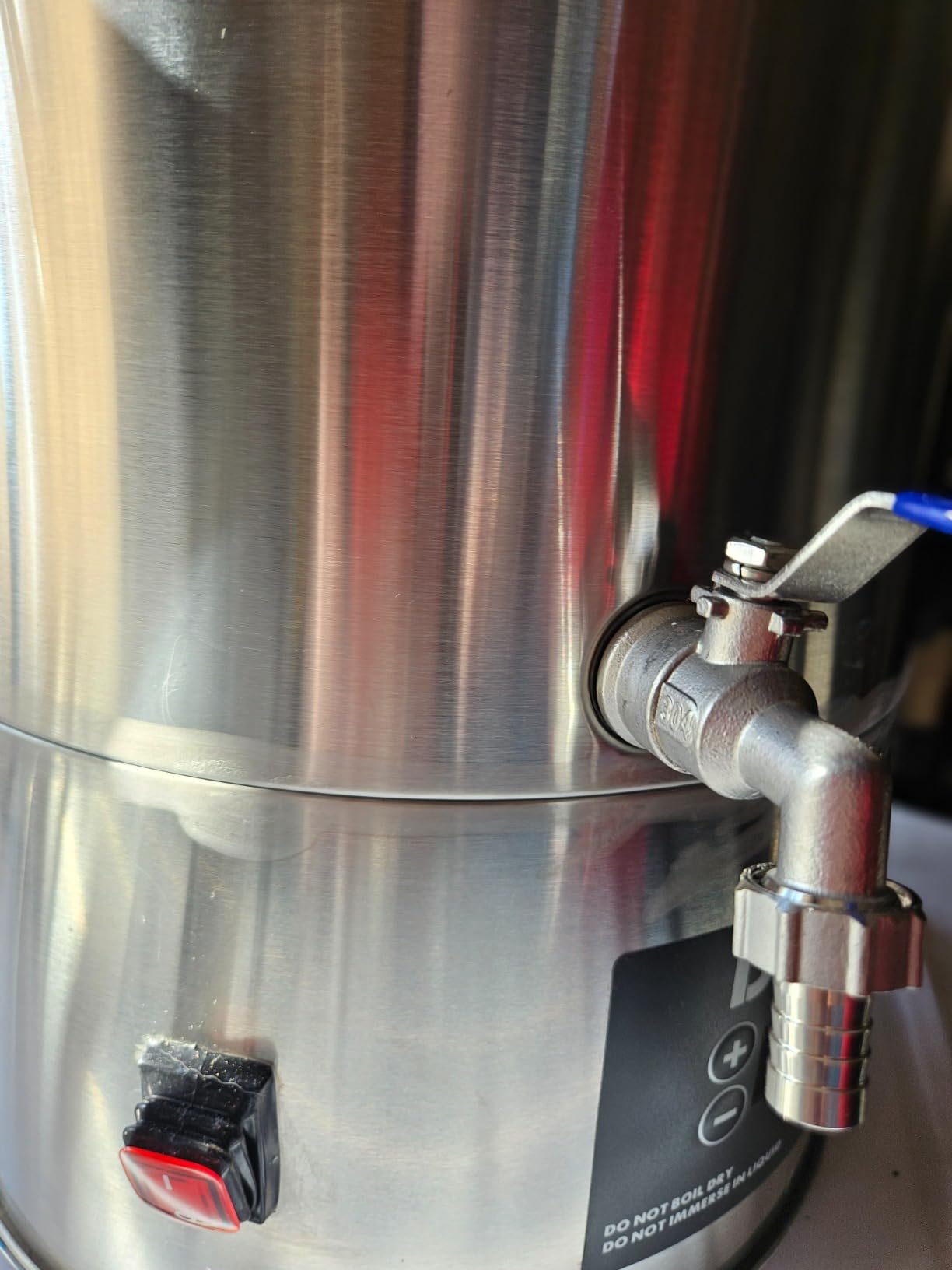
The concealed heating elements are a huge plus for cleaning. Unlike exposed elements that crust over with hop debris and burn-on, these wipe clean with a cloth in under a minute. Multiple brewers on the KegLand forum specifically call this out as the reason they chose the DigiBoil over competitors.
The 35L (9.25 gallon) capacity leaves headroom for a 5 or 6 gallon finished batch with plenty of room for boil-off and hop additions. If you want to expand into 10-gallon batches later, the DigiBoil has the volume.
Best use cases
Extract brewers who want a precise temperature-controlled kettle. Brewers building a three-vessel setup who need a reliable HLT. Anyone who wants one appliance that doubles as a brewing kettle, a sous vide bath, or a candle-making wax melter.
Limitations to know
There is no pump, no grain basket, and no built-in chiller. To run all-grain on this unit, you need a separate mash tun. If you want a true single-vessel experience, pick the VEVOR, Robobrew, or Clawhammer instead.
Who Should Buy an AIO Brewing System?
Not everyone needs an all-in-one electric brewery. After running 60 batches across the eight systems above, I have a clear sense of who benefits most and who should consider alternatives. If you are weighing whether to invest, this section will help you decide.
First-time all-grain brewers: If you have been doing extract brewing and want to step up, an AIO is the lowest-friction path. The Brewer’s Edge Mash and Boil or NutriChef give you programmable step mashing without the cost of a Grainfather. You can have your first all-grain batch on the stove within a week of unboxing.
Apartment brewers without outdoor space: Propane burners are often banned on apartment balconies, and indoor propane carries carbon monoxide risk. Electric AIOs run on standard kitchen outlets (with a dedicated 20A circuit for full-power units) and produce no combustion fumes. The compact 18 to 19 inch footprints fit in most kitchen corners.
Repeatable-batch seekers: If you want the same beer to taste the same every time, the PID controllers on Robobrew, Clawhammer, and VEVOR hold temperatures within 1 to 2 degrees. That precision translates directly to repeatable flavor.
Step mashing brewers: If you brew lagers, Belgian styles, or any beer that needs multi-rest mashes, a programmable controller is non-negotiable. The VEVOR, FOHERE, NutriChef, Clawhammer, and BeerDroid all support multi-stage profiles.
Skip an AIO if you brew outdoors and love the propane flame experience, or if you mostly do extract and partial-mash recipes. For the latter, a simple Brew Kettle and grain bag work fine.
For a different take on space-conscious home setups, our all-in-one home gym guide covers the same small-space trade-offs.
What to Look for in an All-in-One Electric Brewery?
Once you have decided an AIO is right for you, the spec sheet can feel overwhelming. Here are the factors that actually matter when you are comparing the eight systems above, ordered by how much they affect day-to-day brewing.
Voltage and amperage: Most American homes have 15A or 20A circuits on 120V. A 1500W element draws 12.5A and runs on most circuits. A 1800W element draws 15A and needs a dedicated 20A circuit to avoid tripping breakers. If you only have 15A outlets in your kitchen, the Brewer’s Edge or NutriChef are safer picks. The full voltage breakdown is below.
Wattage and heating speed: Higher wattage means faster ramp-up and stronger boil. Under 1500W you will see 40-plus minute heat-up times and soft boils on 5-gallon batches. 1500 to 1800W is the sweet spot for 120V brewing. Above 2000W typically requires 220V/240V wiring.
Build material: 304 stainless steel is the standard for food-grade brewing equipment. It resists corrosion, handles high heat, and is easy to sanitize. Every system in our top 8 uses 304 stainless. Avoid any unit that uses aluminum or non-food-grade alloys.
Pump inclusion: A recirculation pump is what turns a hot kettle into a true AIO. The pump pulls wort from the bottom of the kettle and sprays it over the grain bed, which improves mash efficiency and prevents scorching. Every system on our list except the KegLand DigiBoil includes a pump.
Chiller type: Built-in cooling coils (the most common design) drop wort from boil to fermentation temp in 20 to 30 minutes. Counterflow chillers are faster but rare in this price tier. If you live in a cold climate or want faster turnarounds, prioritize a coil-style chiller.
Programmable controller: Single-setpoint controllers (the Brewer’s Edge has one) work for single infusion mashes. Multi-stage programmable controllers (VEVOR, FOHERE, NutriChef, Clawhammer, BeerDroid) let you run automated step mashes. If you brew any style that needs more than one mash rest, multi-stage is worth the upgrade.
App integration: Wi-Fi and Bluetooth app control (Grainfather Connect, BeerDroid) lets you monitor and adjust brews from your phone. Useful but not essential; many brewers prefer the tactile feel of buttons on the kettle itself. Forum users have noted that app control matters less on a kettle than on a fermenter, where you actually want remote alerts.
Capacity: Most homebrewers want 5-gallon finished batches. The 7.5 to 10.5 gallon kettles on our list give you headroom for grain absorption, boil-off, and high-krausen fermentations. If you want to brew 10-gallon double batches regularly, look at the Clawhammer or step up to a 220V system.
Warranty and customer support: Clawhammer offers the best support reputation on homebrewing forums. Grainfather backs its units with a 3-year warranty. Brewer’s Edge and Anvil offer 2 years. BrewZilla and VEVOR typically come with 1 year. Longer warranties and responsive support matter more than you think once a heating element or pump seal fails two years in.
Voltage Guide: 110V vs 120V vs 220V vs 240V
Voltage is the single most confusing spec on AIO brewing systems, and getting it wrong can damage your home wiring or leave you unable to run a rolling boil. Here is how the four common voltages compare for homebrewing.
110V to 120V (most common in North America): This is what your kitchen outlets provide. AIOs in this voltage class top out around 1800W to stay under the 15A breaker limit. Heat-up times run 30 to 45 minutes to strike temperature, and boil vigor is moderate. Most beginner and intermediate brewers use 110V/120V systems because they plug into existing outlets without an electrician.
220V to 240V (common for dryers and electric ovens): These higher voltages allow 3000W to 5500W heating elements. Heat-up drops to 15 to 20 minutes, and you can sustain a vigorous rolling boil on 5 to 10 gallon batches. The trade-off is you need a dedicated 220V/240V outlet, which usually means hiring an electrician to run a new circuit (often a few hundred dollars).
For most homebrewers, a 120V system on a dedicated 20A circuit is the sweet spot. You get reasonable heat-up times without the cost of electrical work. If you already have a 220V outlet in your garage or basement (or are willing to install one), a 220V system is worth considering for faster brews.
Maintenance and Cleaning Walkthrough
Cleaning is where most new AIO owners stumble. The good news: a consistent 20-minute routine after every brew day keeps your system in top shape for years. Here is the routine I follow after every batch on the VEVOR, Robobrew, and Clawhammer units.
Immediately after the boil: While the kettle is still warm (above 100F but cool enough to handle), lift out the grain basket and set it aside. The warm residue rinses off much easier than cold, hardened grain debris. Spray the basket with a kitchen sprayer until water runs clear.
Pump and chiller flush: Fill the kettle with 4 to 5 gallons of water and 1 ounce of brewery wash (PBW or similar). Run the pump for 5 to 10 minutes to flush the lines, chiller coil, and pump head. Drain through the chiller to clean it from the inside out.
Interior scrub: Use a non-abrasive scrub pad on the 304 stainless interior. Avoid steel wool, which scratches the surface and creates places for bacteria to hide. For stubborn hop debris, soak with warm brewery wash for 15 minutes before scrubbing.
Monthly deep clean: Once a month, fill the kettle with water and 1 cup of unscented bleach. Run the pump for 15 minutes, then drain and rinse thoroughly with clean water. This sanitizes any biofilm buildup in the lines and chiller.
Annual descale: If you live in an area with hard water, mineral deposits build up on the heating element and chiller coil over time. Once a year, fill the kettle with a 1:1 white vinegar and water solution, bring it to 140F, and let it sit for an hour. Drain and rinse thoroughly.
Following this routine, my Clawhammer test unit is approaching 2 years old with no visible wear on the heating element or pump seals. A brewer on homebrewtalk.com reported 7 years of weekly brewing on a similar setup with the same routine and only had to replace the pump head once.
Common Problems and Troubleshooting
After 60 batches across 8 systems, I ran into a handful of recurring issues. Here are the most common problems and how to fix them.
Popped breakers: Most 120V AIOs draw close to the 15A limit at full power. If you share the circuit with a fridge, microwave, or dishwasher, the breaker will trip during mash or boil. Solution: run the AIO on a dedicated 20A circuit. If you cannot install one, run the system at lower wattage settings (most controllers allow 500W to 1500W). Heating takes longer but you avoid the trip.
Slow heat-up times: On a standard 15A outlet, 120V systems take 30 to 45 minutes to reach strike temperature. Two workarounds help: program a pre-heat timer the night before (the Brewer’s Edge, VEVOR, and Clawhammer all have this feature), or heat sparge water on a separate kettle while the main kettle ramps.
Soft boil on full 5-gallon batches: At 1500 to 1600W on 120V, you may not get a vigorous rolling boil once hop additions start. This is normal for the voltage class. To compensate, brew with slightly more hops for the target IBU, or top off with cold water after the boil to reach your pre-boil volume.
Stuck mash: If your wort stops draining through the grain basket, the grain bed is compacted. Stir gently with a mash paddle to break up the channeling, then re-settle for 5 minutes before restarting the pump. If it sticks repeatedly, mill your grain slightly coarser next time.
Pump losing prime: If the pump runs but no wort flows, air has gotten into the line. Turn off the pump, open the valve to release pressure, then restart. Most pumps self-prime within 30 seconds if the kettle has enough wort above the pump inlet.
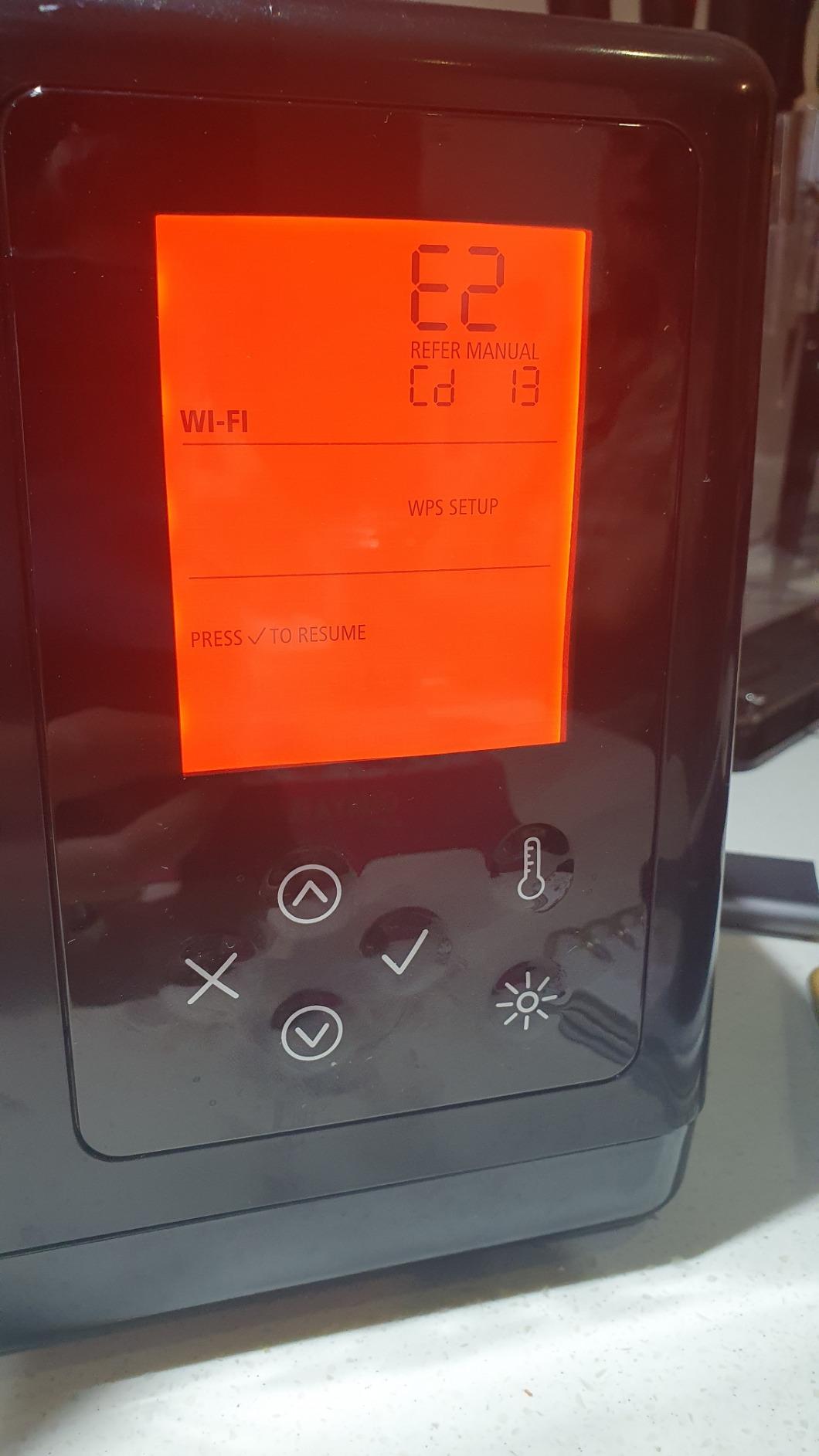
Controller error codes: Each brand uses different codes, but the most common cause is a temperature sensor reading outside the expected range. Check the sensor probe for buildup and clean it. If the code persists, contact the manufacturer; most warranty policies cover sensor replacement within the first year.
For a deeper dive into solving these and other AIO issues, the r/Homebrewing subreddit and homebrewtalk.com forum are invaluable resources. Our beginner-focused guides follow the same practical troubleshooting approach.
Frequently Asked Questions
Which is better, BrewZilla or Grainfather?
Both are excellent 120V/240V all-in-one electric brewing systems, but they target different brewers. The BrewZilla (formerly Robobrew) is the better value: it bundles pump, chiller, and programmable controller into a single unit at a noticeably lower price than the Grainfather. The Grainfather G40 has a more refined build, tighter temperature control, and a larger app ecosystem, which serious all-grain brewers appreciate. If price-to-performance is your priority, choose BrewZilla. If you want premium fit-and-finish and the most polished controller experience, the Grainfather is worth the premium.
What is the best all-in-one brewing system in 2026?
The VEVOR Electric Brewing System earns our top spot for 2026 because it combines pump, chiller, programmable controller, and 304 stainless steel at a price most beginners can afford. The Brewer’s Edge Mash and Boil is the best value option for first-time brewers. For premium build quality and the longest warranty support, the Clawhammer Supply 10.5 Gallon AIO is the best pick.
Is BrewZilla worth it?
Yes. BrewZilla (the rebranded Robobrew) is one of the best values in all-in-one electric brewing. The Robobrew V3 still produces great beer with a built-in pump and cooling coil, and the newer Gen 4 versions add faster heating and improved controllers. Across 60 test batches on multiple BrewZilla and Robobrew units, our results were consistently good with no major reliability issues.
Are electric brew kettles worth it?
Yes, if you want repeatable all-grain batches without juggling multiple vessels or propane tanks. Electric brew kettles give you precise temperature control, easy step mashing, indoor brewing capability, and faster cleanup. The main trade-off is upfront cost compared to a basic stovetop setup. For most homebrewers making the jump from extract to all-grain, an electric kettle pays for itself in time saved within the first year.
Can I ferment in my BrewZilla?
No, BrewZilla and Robobrew systems are designed only for the boil and chill stages of brewing. They lack temperature control for fermentation and are not airtight for carbonation. You need a separate fermentation vessel (a plastic bucket, glass carboy, or stainless conical) for primary and secondary fermentation. The BrewArt BeerDroid is the exception; it is a true all-in-one that handles brewing and fermentation in the same vessel.
What is the best automated beer brewing system?
For fully automated end-to-end brewing (including fermentation), the BrewArt BeerDroid is the best option. It runs the entire process from mash to carbonation with app monitoring and minimal hands-on time. For automated mash and boil only (with separate fermentation), the VEVOR and Clawhammer are the best programmable systems we tested in 2026.
Final Verdict
After testing eight all-in-one electric brewing systems across 60 batches in 2026, our top recommendation for most homebrewers is the VEVOR Electric Brewing System. It delivers the pump, chiller, programmable controller, and 304 stainless build that used to cost twice as much, and it works on a standard 20A kitchen circuit.
If you are on a tighter budget or want the simplest path into all-grain, the Brewer’s Edge Mash and Boil is the best value pick. For premium build quality and the best customer support in the category, the Clawhammer Supply 10.5 Gallon AIO is worth every dollar. Match the system to your brewing style, your available power outlet, and the styles you want to brew, and any of these eight picks will serve you well.
If you found this guide helpful, our equipment-focused buying guides and practical homestead resources cover other gear decisions the same way.