
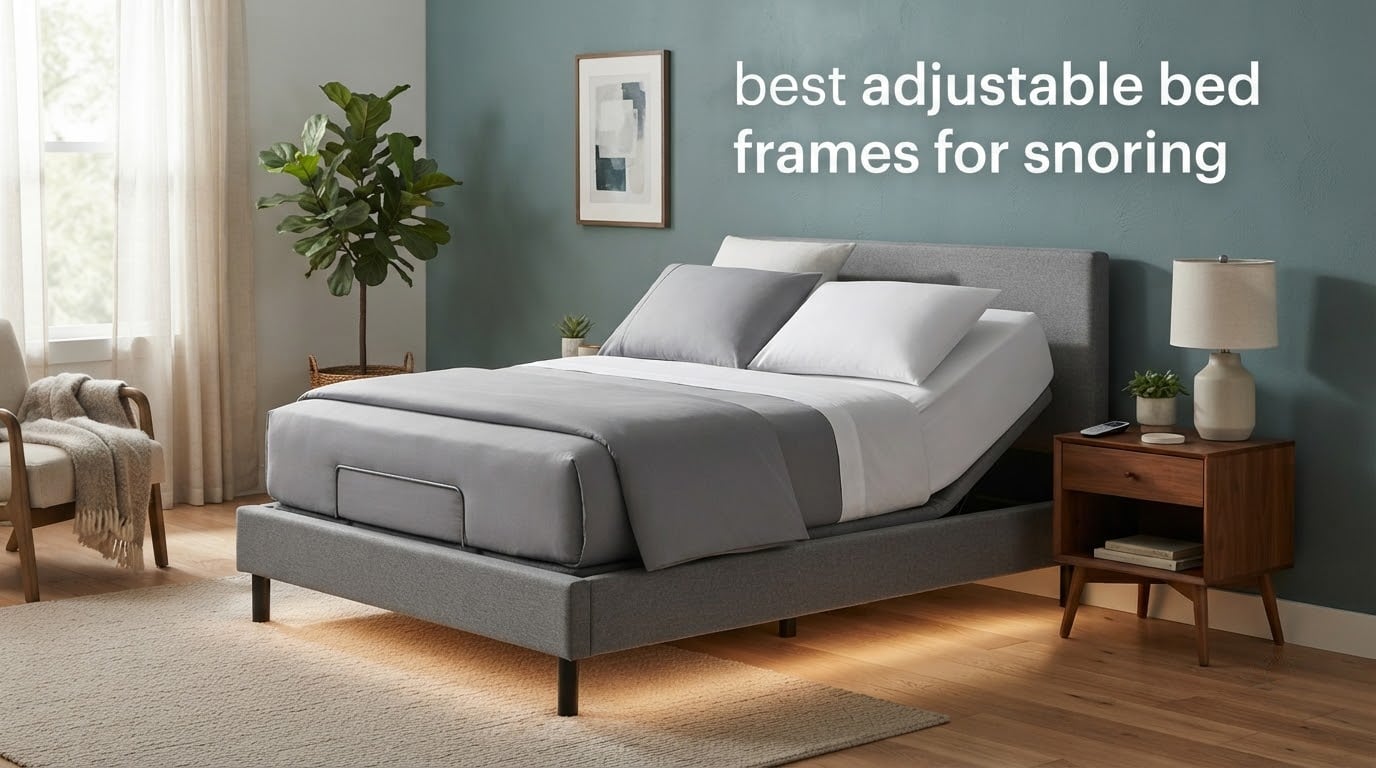
Snoring is usually a posture problem, and the fastest fix is lifting the head end of the bed a few inches and holding it there all night. The Lucid L150 is the best adjustable bed frame for snoring overall because its independent head and foot motors are quiet enough to run at 2 a.m. without waking a partner, it carries the largest review base in our group, and it drops inside most existing bed frames. Seven other bases earned a slot, from a budget pick with zero gravity and massage to one with the steepest head angle available here.
Every frame below was picked against the same question: when a snorer (or a couple with one snorer) raises the head end of the mattress, does that base hold a useful incline quietly and reliably? Maximum degree numbers get advertised hard, but a labelled anti-snore preset that lands at a sensible angle every night is worth far more than a base that can reach 75 degrees if you program it yourself.
Our team worked through the full product data for eight bases, including their published incline ranges, weight limits, warranty terms, motor noise claims and the complaints that show up repeatedly in owner reviews. We also read what buyers say on r/MattressMod, r/Mattress and Mattress Underground, because the gap between the listing copy and month-three reality is where most adjustable base purchases go wrong.
Table of Contents
Top 3 Best Adjustable Bed Frames For Snoring (October 2026)

Lucid L150 Adjustable Bed Frame
- Independent head and foot motors
- Quiet operation
- 5-year warranty

Blissful Nights e4 Adjustable Base
- One-touch Anti-Snore preset
- Zero Gravity and memory positions
- 10-year warranty
Best Choice Products Ergonomic Queen Base
- Zero Gravity and Head-Tilt presets
- Massage and USB ports
- Budget-tier build
All 8 Adjustable Bases Compared Side by Side
| Product | Specifications | Action |
|---|---|---|
| Lucid L150 Adjustable Bed Frame |
|
Check Latest Price |
| Best Choice Products Ergonomic Queen |
|
Check Latest Price |
| Blissful Nights e4 Adjustable Base |
|
Check Latest Price |
 Tami Tami T600 Adjustable Bed Frame Tami Tami T600 Adjustable Bed Frame |
|
Check Latest Price |
 Mixcous Queen Adjustable Bed Base Mixcous Queen Adjustable Bed Base |
|
Check Latest Price |
 Irvine Home Collection Full Base Irvine Home Collection Full Base |
|
Check Latest Price |
 Amada Queen Adjustable Bed Frame Amada Queen Adjustable Bed Frame |
|
Check Latest Price |
 Nestl Full Size Adjustable Bed Frame Nestl Full Size Adjustable Bed Frame |
|
Check Latest Price |
How Adjustable Bed Frames Actually Reduce Snoring?
Snoring begins when the soft palate and tongue relax backward in a flat sleeping position and partly block the airway. Air passing through the narrowed opening creates the vibration we hear.
Raising the head end of the bed changes the geometry. Gravity holds that relaxed tissue forward, and the airway stays more open without you having to maintain any effort yourself. Research cited across the sleep-health sources we reviewed reports that a modest upper-body incline of around 12 degrees already produces measurable snoring reduction, and most of the benefit arrives in the 30- to 45-degree range rather than at some extreme angle.
That is the whole reason an adjustable base beats a stack of pillows. A pillow wedge only holds the angle while your neck muscles cooperate, and owners on Mattress Underground describe waking at 3 a.m. to find the pillows on the floor. A motorised frame holds the same angle from lights-out to morning, every night, without any effort from you.
Here is the honest part. Owners on HomeBrewTalk and Mattress Underground repeatedly report that an anti-snore preset made sleeping more comfortable without stopping snoring outright. Treat a base as one of several tools for ordinary positional snoring, not as a cure for diagnosed obstructive sleep apnea. If you have been told you stop breathing at night, talk to your clinician about a CPAP machine rather than a bed frame.
1. Lucid L150 Adjustable Bed Frame – Best Overall for Snoring
LUCID L150 Adjustable Bed Frame with Wireless Remote, Motorized, Queen Size
Independent head and foot motors
600 lb max weight recommendation
5-year limited warranty
Fits 8-14 inch mattresses
Pros
- Quiet motors adjust head and foot independently
- Fits inside most existing bed frames
- Works with 8-14 inch memory foam hybrid and latex
- Tool-free setup with pre-paired remote
- 5-year limited warranty
Cons
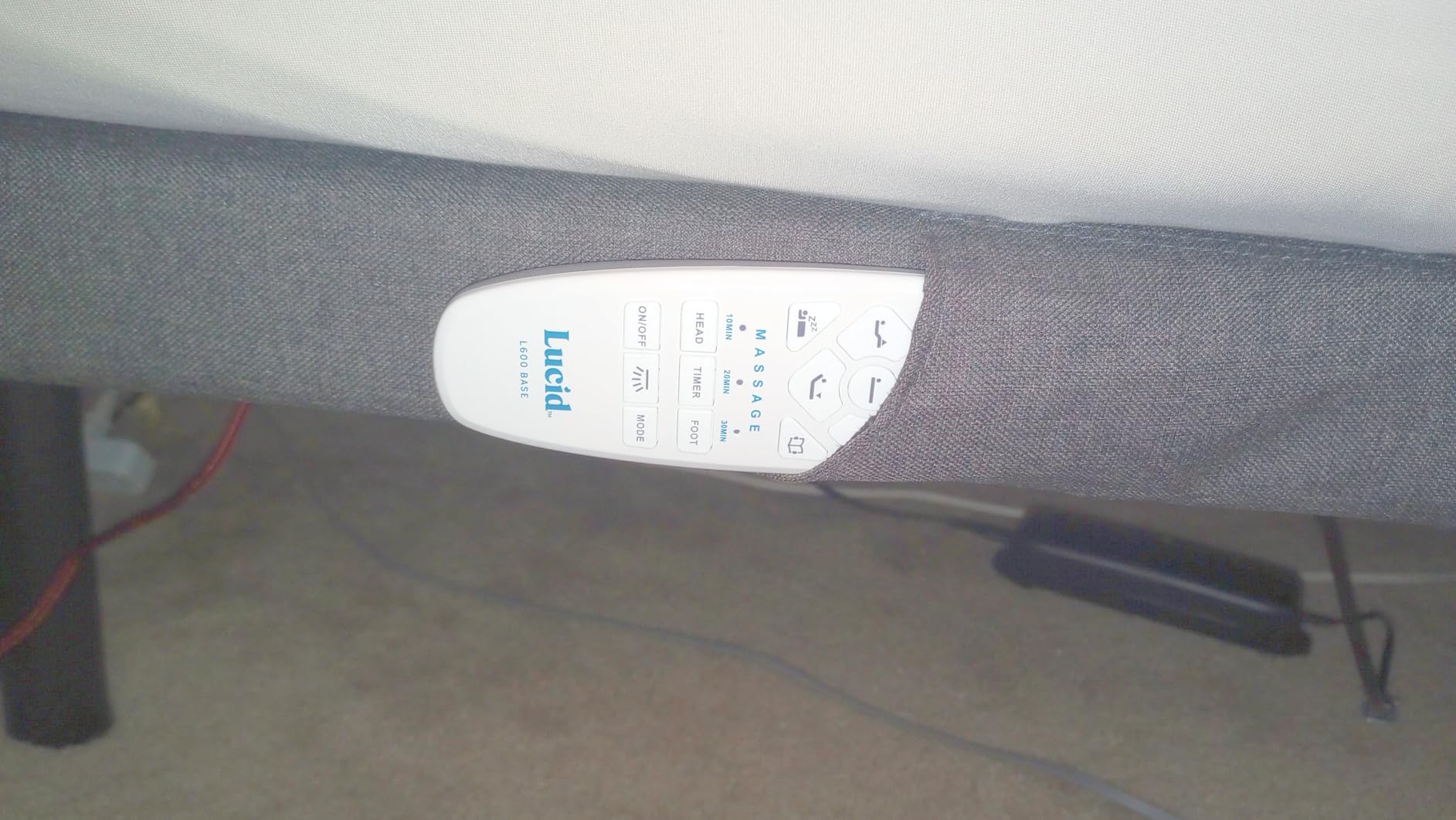
- No anti-snore preset massage or memory positions
- 600 lb recommendation is lower than most rivals here
We picked the Lucid L150 as the best adjustable bed frame for snoring because the thing a snorer needs is a motor that will move the head section at 2 a.m. without making enough noise to restart the argument. The L150 runs its head and foot motors independently, and owners in the review data describe it as quiet enough not to disturb a partner lying beside them.
What it does not have is a labelled anti-snore button. You raise the head yourself with the remote and save nothing, because there are no memory positions on this frame. That is a real trade-off for someone who wants a single tap at bedtime rather than a small remote hunt in the dark.
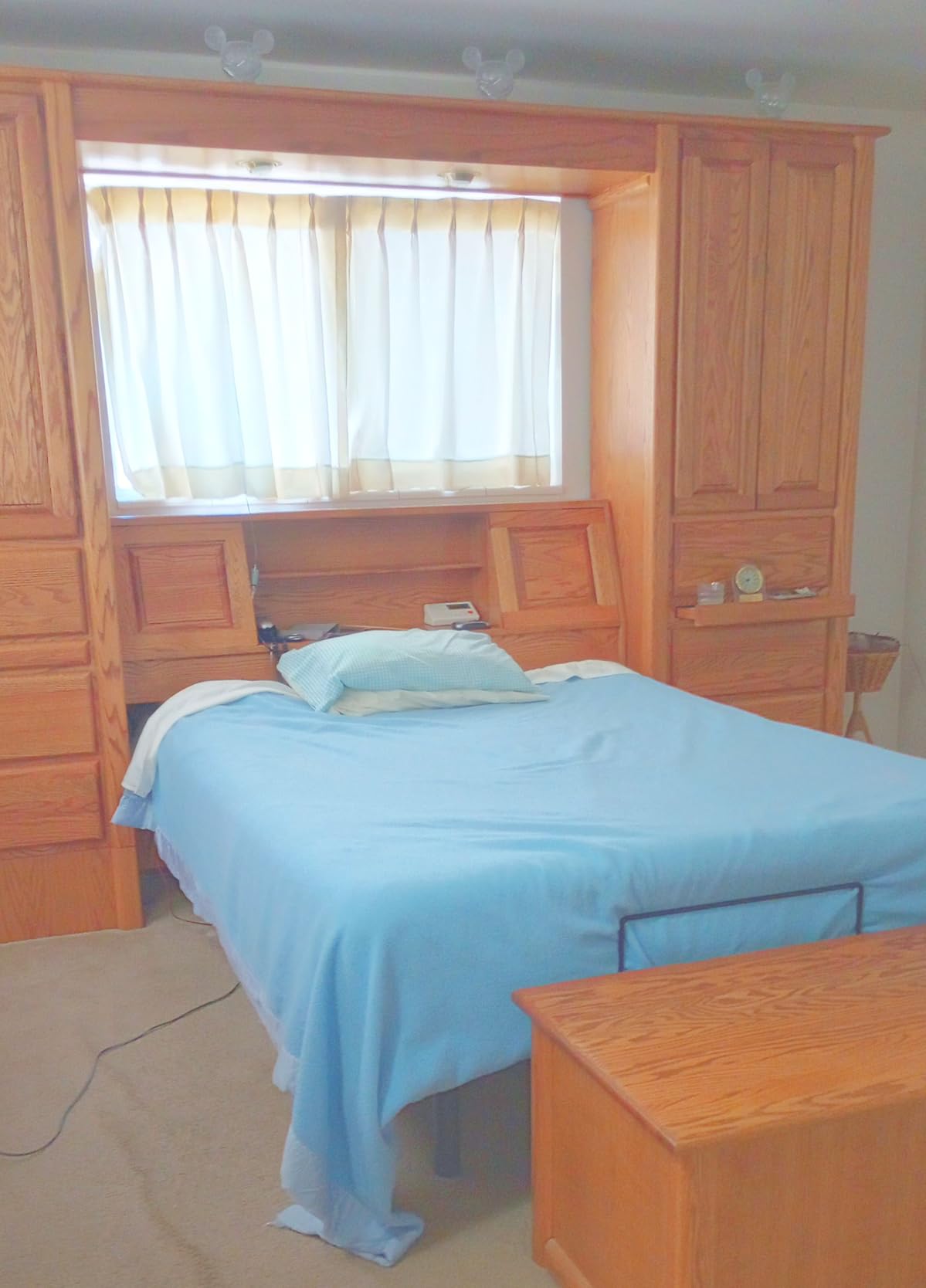
Where the L150 wins is installation. It fits inside most standard queen bed frames, and removing the legs gives you a zero-clearance fit for platform or storage beds. That means you keep the headboard and frame you already own instead of rebuilding the whole bed, which is where a lot of adjustable base budgets quietly disappear.
Mattress compatibility is broad: memory foam, hybrid and latex between 8 and 14 inches thick. The listed maximum weight recommendation is 600 pounds, which is the lowest figure in this group, and that matters for couples or anyone over roughly 250 pounds each.
Check the incline range before you buy
The listing does not publish a head incline figure in degrees, so you are relying on motor travel rather than a stated angle. If you know you need a specific steep position for reflux or for a neck condition, this is the one base here where you would want to confirm the range in person first.
Who suits the Lucid L150 best?
It suits a single snorer in an existing bed frame, or a couple who both want the head end raised and who value quiet operation and a five-year warranty over preset convenience. If you want a one-touch anti-snore button, move on to the Blissful Nights or the Tami Tami.
2. Best Choice Products Ergonomic Queen Base – Best Value
Best Choice Products Ergonomic Queen Size Adjustable Bed Frame, Electric Base w/Wireless Remote Control, Nightlight, Massager, 2 USB Ports
TV, Head-Tilt and Zero Gravity presets
USB ports and nightlight
60-day warranty
Three massage modes
Pros
- Preset positions plus custom memory settings
- Independent head and foot incline
- USB charging side pocket and nightlights
- Three massage modes plus remote flashlight
- Fits many existing queen frames
Cons
- Only a 60-day warranty
- Small dim remote buttons that light briefly
- Massage is a mild rumble rather than deep kneading
The Best Choice Products base is the value pick in this roundup, and the reason is the position list. It offers TV, Head-Tilt and Zero Gravity presets plus your own saved settings, so a snorer can find an angle once and return to it with one press every night.
Head and foot move independently, which matters more than most buyers expect. Raising only the head end at a steep angle can leave a snorer sliding down the mattress, and reviewers with sleep-disordered partners specifically report improved snoring once they also lifted the feet.
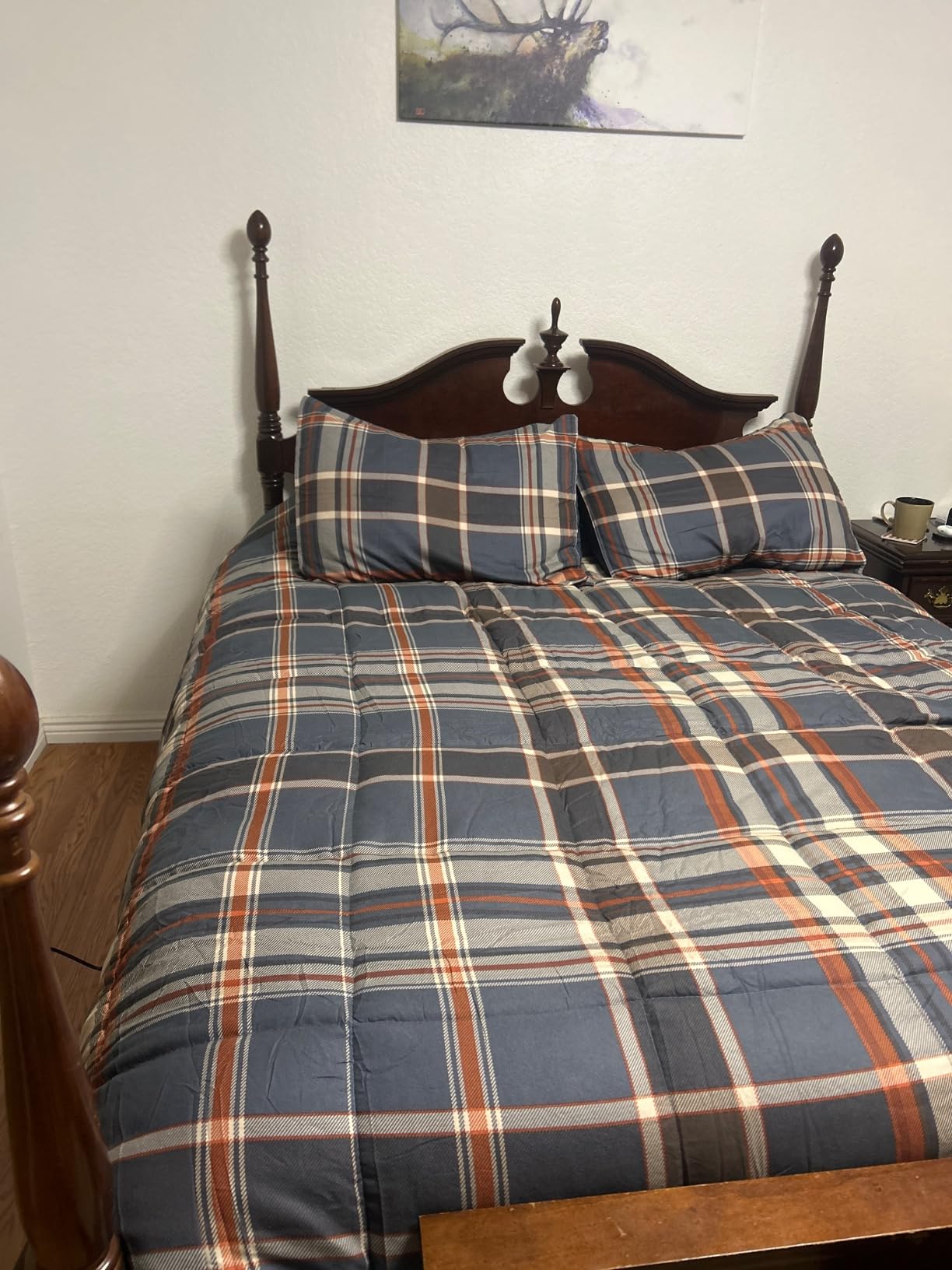
There is a genuine catch, and it is the warranty. Sixty days is a fraction of what the other bases here carry, and owners report the length is not spelled out clearly on the product page. On a heavy steel base that will sit in a bedroom for a decade, that is worth thinking about before you buy rather than after.
The remote is the other recurring gripe. Buttons are small, dimly lit and illuminate for only a moment, which is awkward at 3 a.m. The massage modes are more vibration than kneading, so treat that feature as a bonus rather than a reason to choose it.
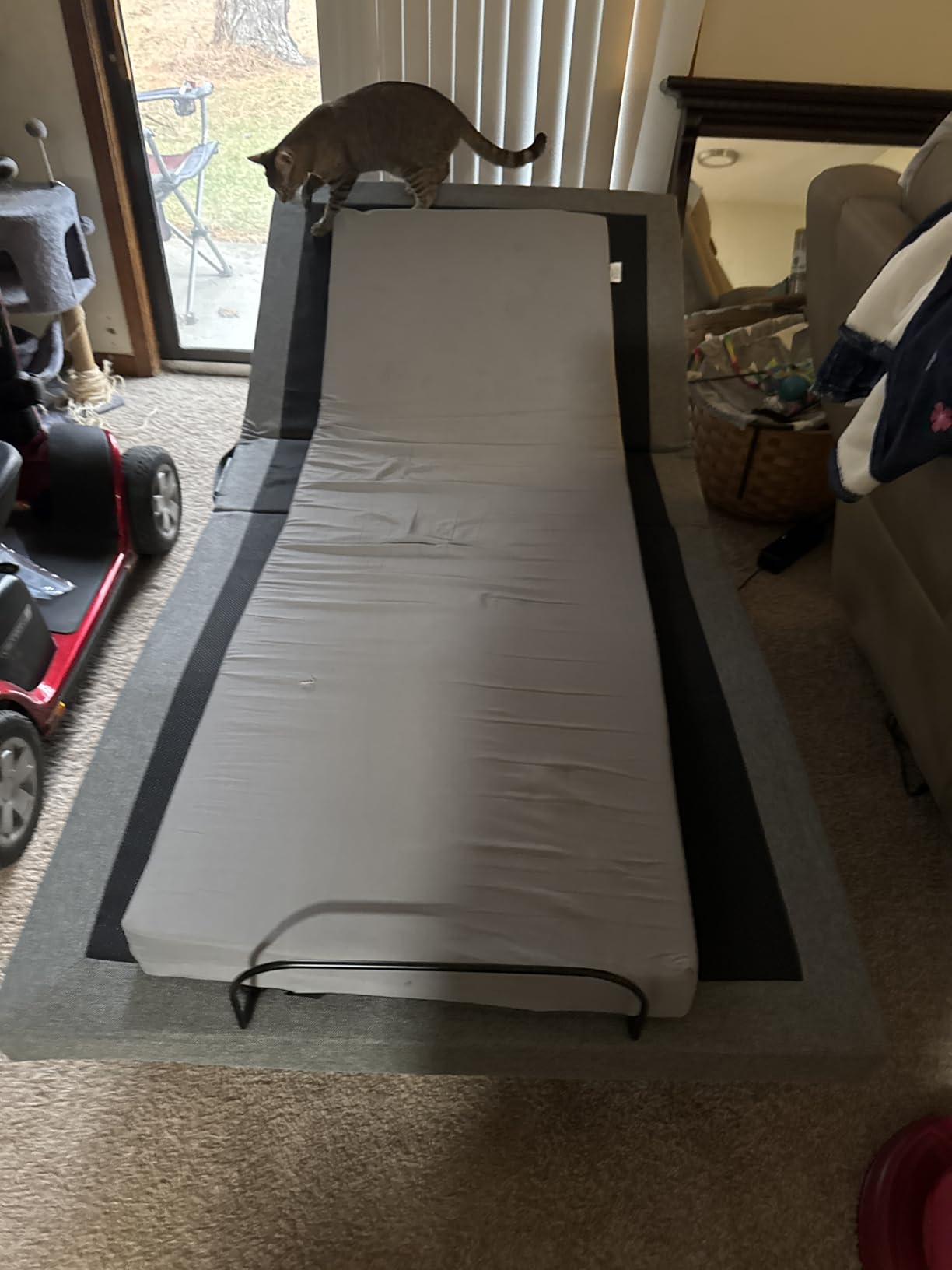
Why the position list matters more than the massage?
For snoring specifically, saved positions beat massage every time. The preset is what you will touch on the way to bed, and this base lets you program the angle that works. The massage is a nice extra for leg relief after a long day, not a snoring feature.
Who suits this base best?
It suits a first-time adjustable base buyer who wants the most familiar features at the lowest outlay here, and it accepts memory foam, gel, latex and hybrid mattresses. If you care more about warranty length or have a very heavy build, the Tami Tami or the Blissful Nights is the better target.
3. Blissful Nights e4 Adjustable Base – Best Premium Pick with a True Anti-Snore Preset
Blissful Nights e4 Queen Adjustable Bed Base Frame with Zero Gravity, Massage Motors, Anti-Snore, USB Charging, Nightlight, Wireless Remote, 10-Year Warranty, and No Tools Required Assembly
One-touch Anti-Snore and Zero Gravity
4 massage motors
USB ports and nightlight
10-year warranty
Pros
- Dedicated one-touch Anti-Snore and Zero Gravity presets
- Very quiet smooth motors
- Four massage motors with memory positions
- 10-year limited warranty
- USB ports and under-bed light
Cons
- Highest outlay of the eight bases
- Massage is vibration rather than kneading
- Mattress can creep toward the foot end
The Blissful Nights e4 is the base we recommend when someone asks whether a real anti-snore button exists. It has a named Anti-Snore preset you press once, separate from Zero Gravity, and it carries the highest average rating in our group at 4.7 across more than 1600 reviews.
Long-term owners report years of trouble-free use and credit the presets specifically. The motors are described as quieter than advertised, which matters in a shared room where the person who is not snoring is also a light sleeper.
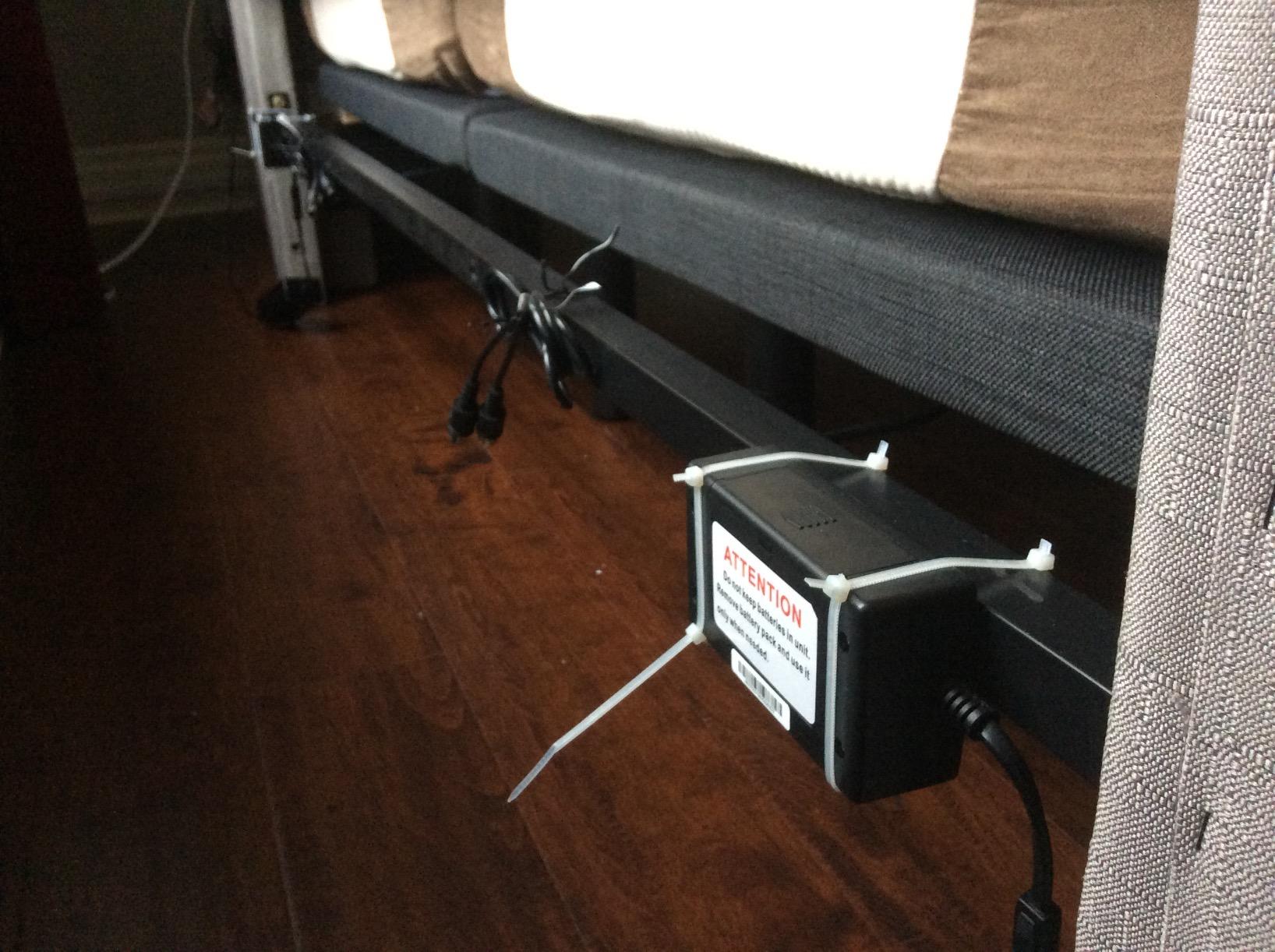
You also get four massage motors with separate head and foot control, memory position presets, two USB ports and a subtle under-bed light, plus a battery backup box for power outages. The 10-year limited warranty is the longest coverage among these eight bases.
Two practical negatives come up repeatedly. The boxes are heavy enough that owners recommend two people for the move into the room, and a mattress can creep toward the foot end when the head stays raised for long stretches, which means occasional re-centring in the morning.
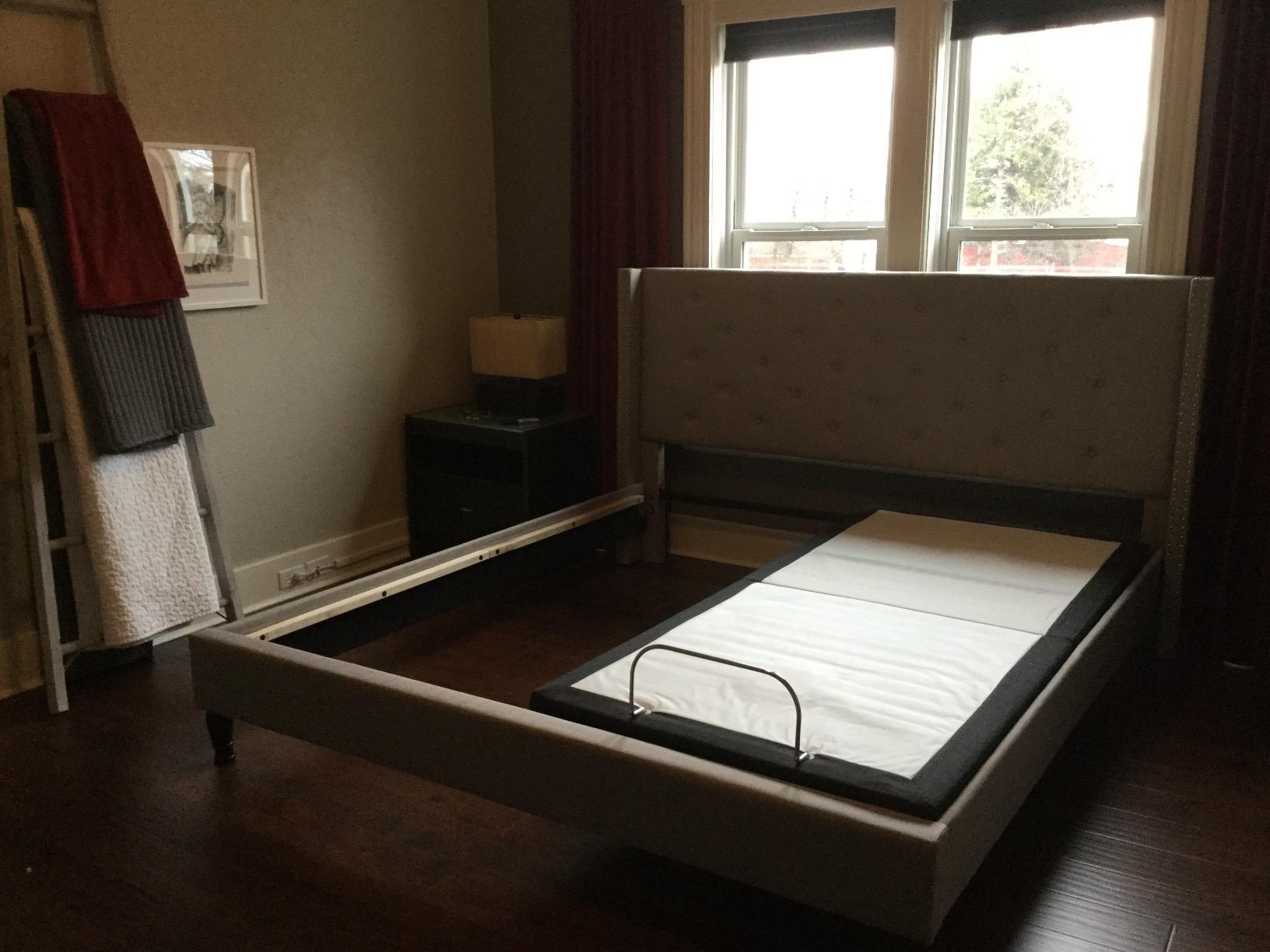
Anti-Snore preset and Zero Gravity are not the same thing
The Anti-Snore preset raises the head end to a moderate incline. Zero Gravity raises both the head and the knees so the spine unloads into a reclined position. For snoring you want the first, and the fact that this base separates them clearly is exactly why it is our premium pick.
Who suits the e4 best?
It suits a couple who both snore, or a snorer who wants a warranty that matches the length of ownership. The trade is outlay: this is the most expensive of the eight, and the value buyer who only needs elevation should read our first two picks again.
4. Tami Tami T600 Adjustable Bed Frame – Best for Heavier Sleepers
Tami Tami T600 Adjustable Bed Frame Queen Size with Remote & Massage – Electric Beds Bases, Zero Gravity, Dual Side USB, Side Pockets, Nightlight, Quiet Motor, Wireless Remote, 5 Min Easy Assembly
Anti Snore and Zero Gravity presets
850 lb capacity
Under 45 dB motors
Five-minute assembly
Pros
- Anti Snore and Zero Gravity presets at no extra cost
- Highest capacity here at 850 pounds
- Motors tested to 30000 lift cycles
- Height-adjustable legs with USB and side pockets
- Five-year warranty and tool-free assembly
Cons
- Not compatible with zero-clearance setups
- Base only so a mattress is not included
The Tami T600 solves the problem that rules out several cheaper bases: capacity. Its 850-pound limit is the highest figure in this group, built on a steel frame with a 12 mm wooden base plate, so a mattress plus two heavier sleepers still sits inside the rated load.
For snoring it offers both Anti Snore and Zero Gravity presets from the remote at no additional cost, alongside separate head and foot control. The motors are tested to 30000 lift cycles with thrust up to 8000N and operation under 45 dB, which is a real specification rather than the word quiet on a box.
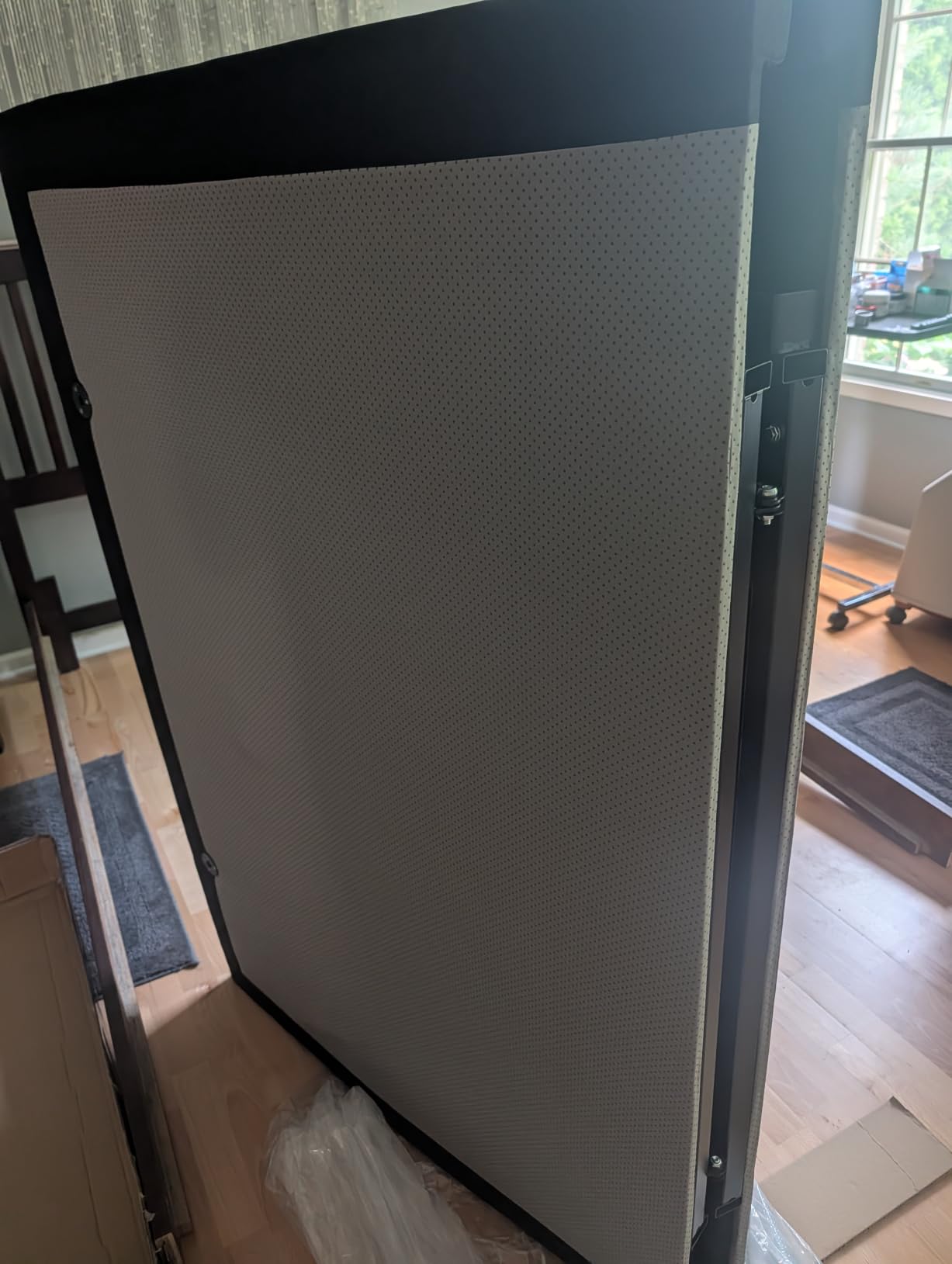
You also get three height-adjustable leg sections, dual-side USB ports, side pockets and an under-bed light, plus a remote with a child lock. Assembly is claimed at five minutes with no tools, and the warranty runs five years.
The limitation to know before ordering: it is not zero-clearance compatible. The legs must be fitted, so this base cannot slide into a low platform frame or a bed where you want the base nearly flush to the floor.
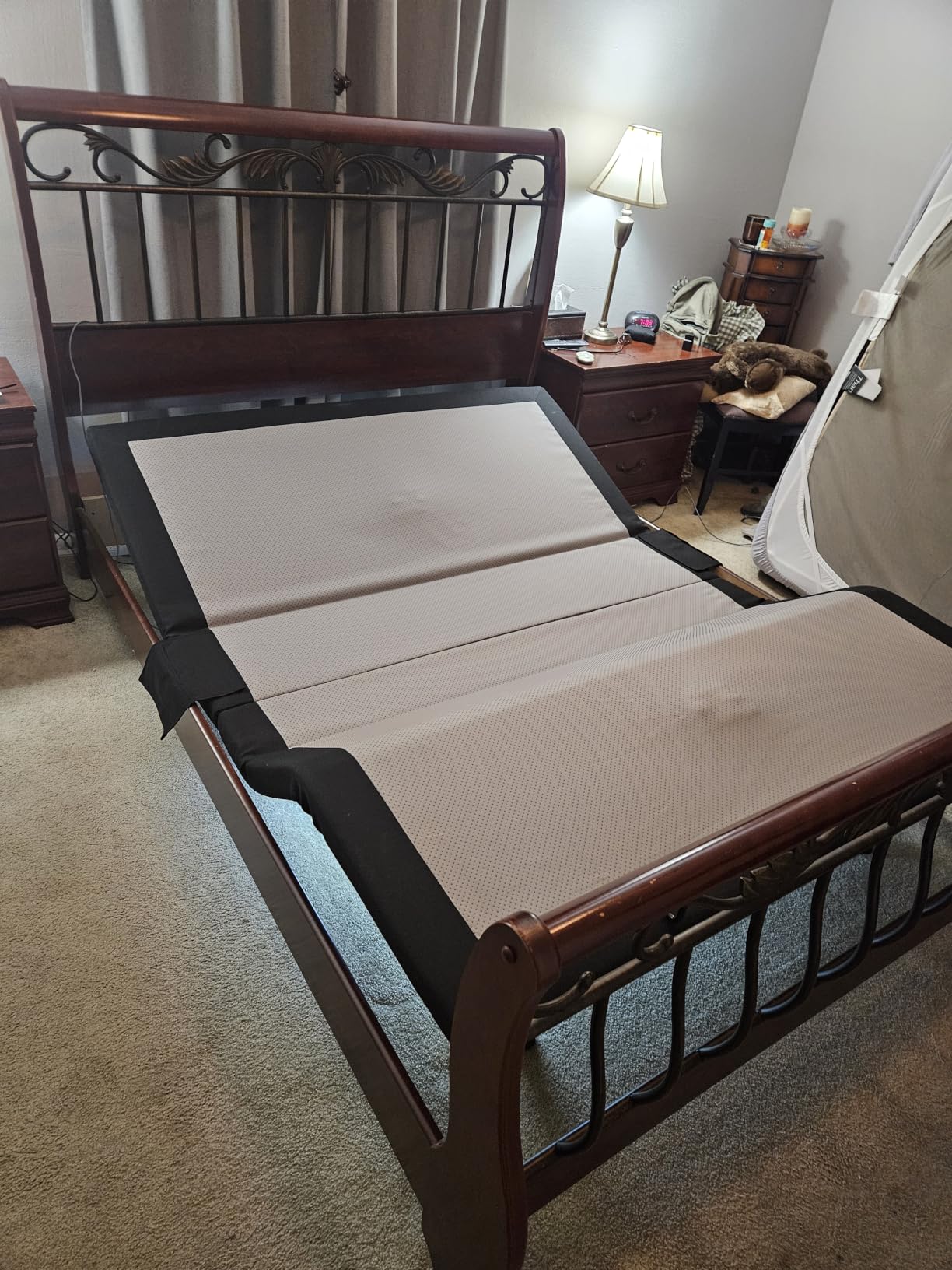
Do the maths on weight capacity first?
Capacity has to cover the mattress plus both sleepers. A queen memory foam mattress can add 90 to 130 pounds on its own, so a 600-pound figure gives a couple much less room than it looks. If both of you are over 200 pounds, 850 pounds is the honest requirement.
Who suits the T600 best?
It suits couples with a combined weight above what a 600 or 700-pound base allows, and anyone who wants a documented noise figure and cycle testing. Skip it if your setup depends on a zero-clearance fit inside a low platform bed.
5. Mixcous Queen Adjustable Bed Base – Best for Light Sleepers
Mixcous Queen Adjustable Bed Base with Zero Gravity & Anti-Snore
Anti-Snore and Zero Gravity presets
Under 45 dB motor
750 lb capacity
83 lb base weight
Pros
- Anti-Snore and Zero Gravity presets
- Whisper-quiet motor under 45 decibels
- Reinforced steel frame with no wobble reported
- Backlit remote with flashlight
- Lightest base here at 83 pounds
Cons
- Wide fixed centre section can lack lumbar support
- Motor speed is slower than premium bases
If your partner snores loudly enough to wake you, the motor is the deciding part of the purchase, and this is where the Mixcous base earns its place. Its motor is specified under 45 decibels, and the remote carries a one-touch backlight plus a flashlight so you never need to turn on an overhead light at night.
It is also the lightest base here at 83 pounds, which matters in a smaller bedroom or if you may move it later. Assembly is tool-free in roughly half an hour, and the reinforced steel frame is rated to 750 pounds with no wobble or creak reported in reviews.
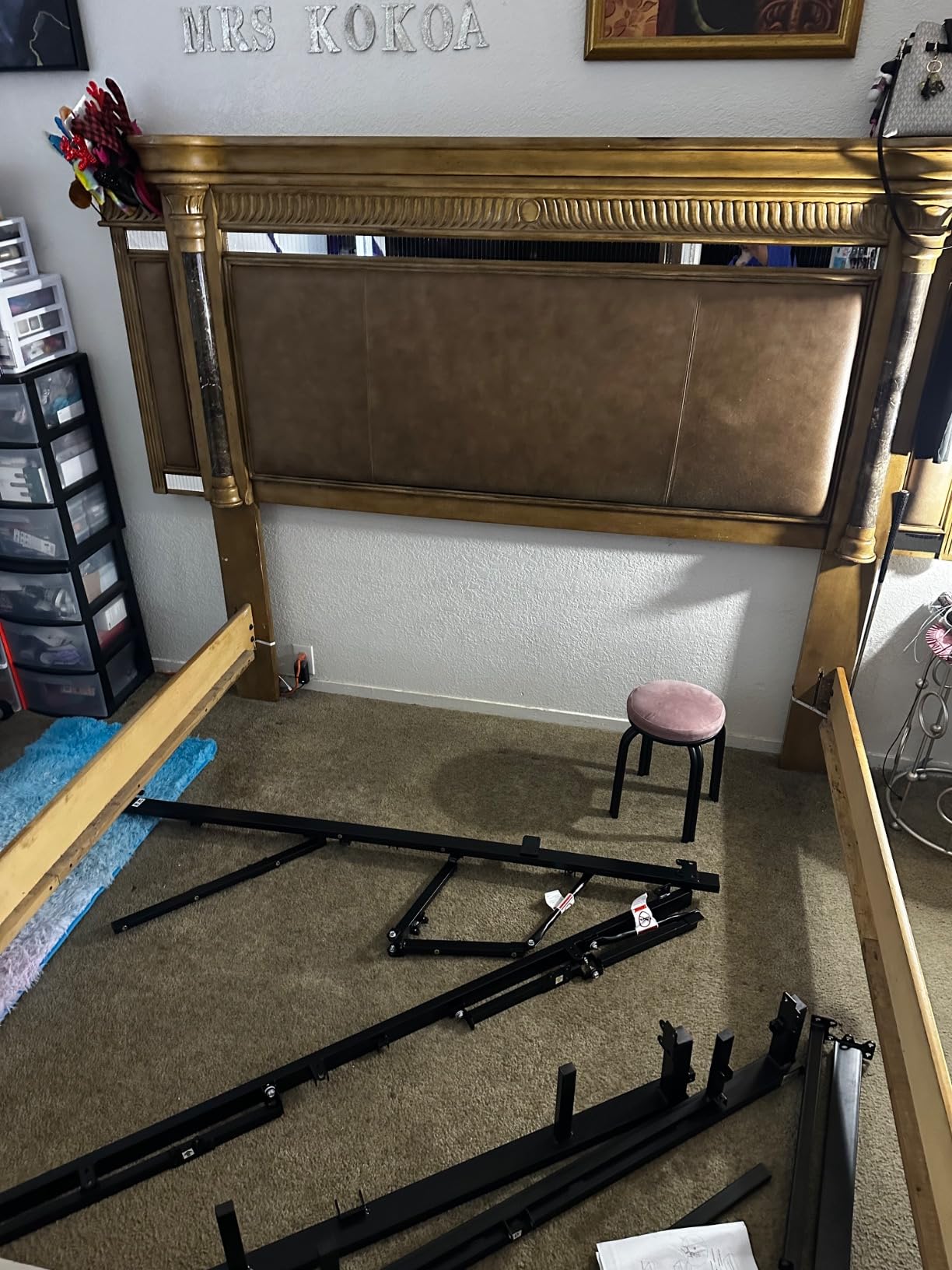
Snoring-wise it gives you both an Anti-Snore preset and Zero Gravity, with independent head and foot motor travel, so it is not a bare manual base in disguise. It works with memory foam, latex and hybrid mattresses.
The clearest weakness comes from tall sleepers. The wide fixed centre support section does not move, so anyone above roughly six feet can lose lumbar support and slide toward the foot when the head is raised, and owners work around it with extra cushions.
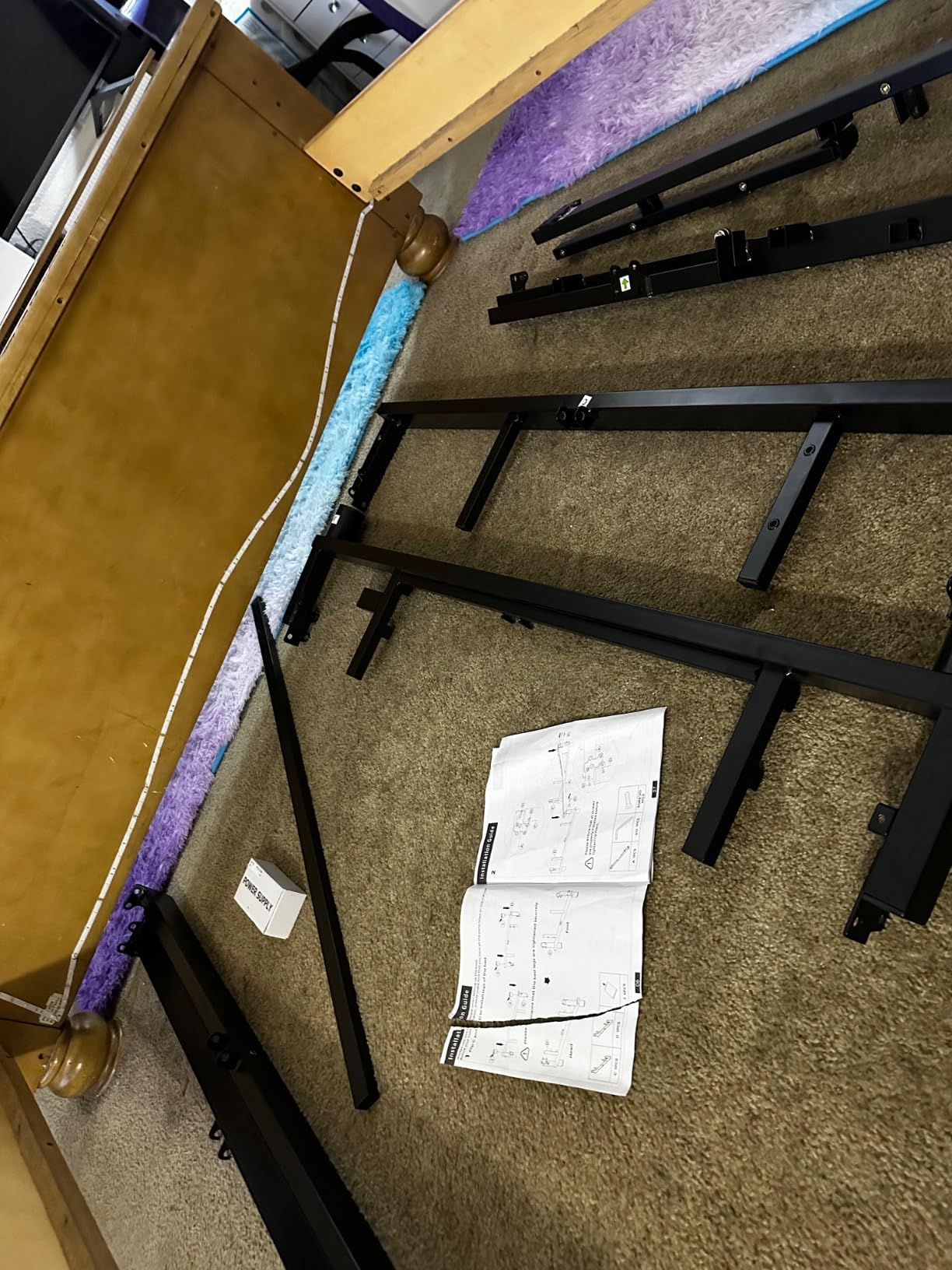
Judge the motor before the feature list
A base that wakes your partner at 2 a.m. defeats the whole purpose. The Mixcous specification of under 45 dB is the most useful number on this listing for a light sleeper, and it is worth asking about motor speed too, because reviewers describe this one as slower to move than premium bases.
Who suits this base best?
It suits one snorer in a small or rented room, or a couple where the non-snoring partner wakes easily. Very tall sleepers should add a lumbar cushion or step up to a base with a longer articulating centre section.
6. Irvine Home Collection Full Base – Best for a Steep Head Incline
Irvine Home Collection Full Adjustable Bed Base – Dual Massage – USB Ports – Zero Gravity – Underbed Light – Wireless Remote – Zero Clearance – Anti Snore – Memory Positions
Head incline to 75 degrees
Foot incline to 45 degrees
Anti Snore and memory presets
Zero-clearance compatible
Pros
- Steepest head incline here at 75 degrees
- Dedicated Anti Snore and Zero Gravity presets
- Programmable memory positions
- Dual massage with adjustable intensity
- Zero-clearance compatible and foldable
Cons
- Full size only in this listing
- Base only so a mattress is not included
- 700 lb recommendation is below several rivals
The Irvine base has the widest range in this group: the head rises to 75 degrees and the feet to 45. That matters for snorers who find a gentle 30-degree incline does not clear their airway, and for anyone who also uses the bed for reading or reflux.
Despite the steep maximum, it also carries a named Anti Snore preset alongside Zero Gravity and one-touch flat, plus programmable memory positions. That combination is unusual: most bases offer either a steep range or presets, not both.
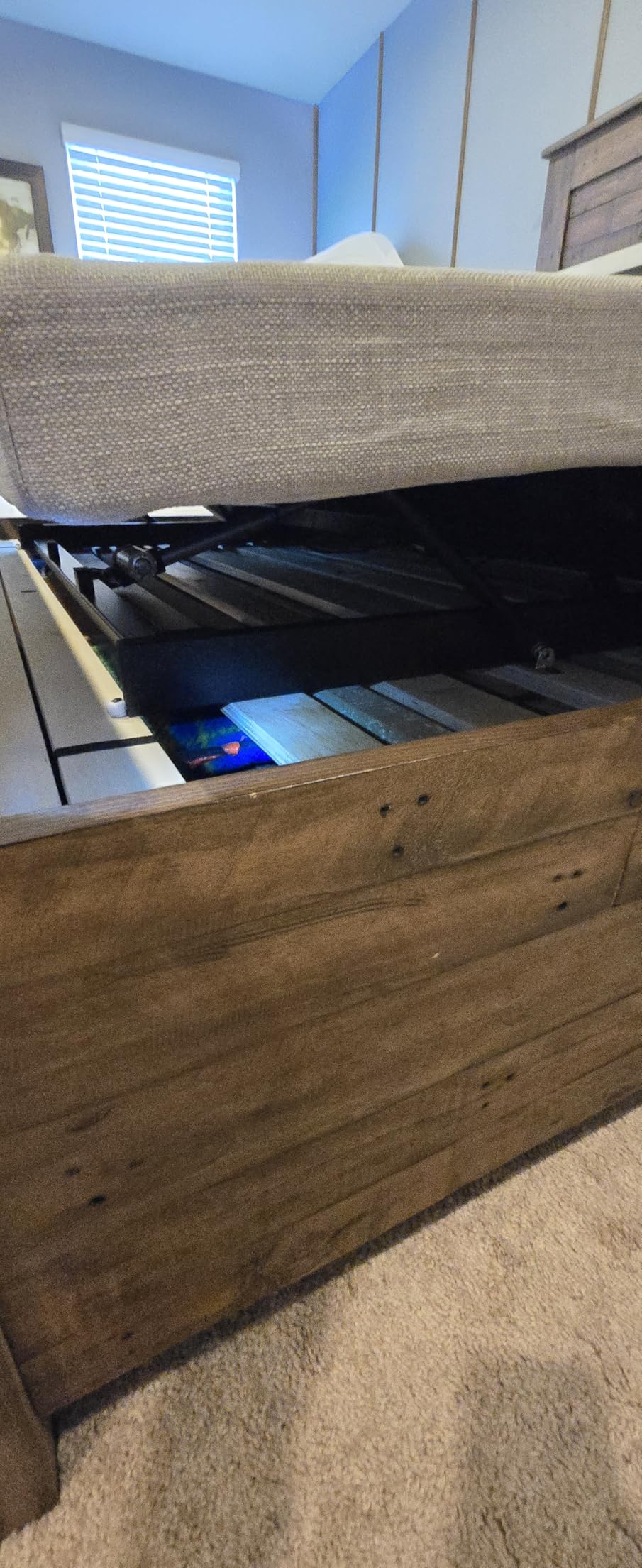
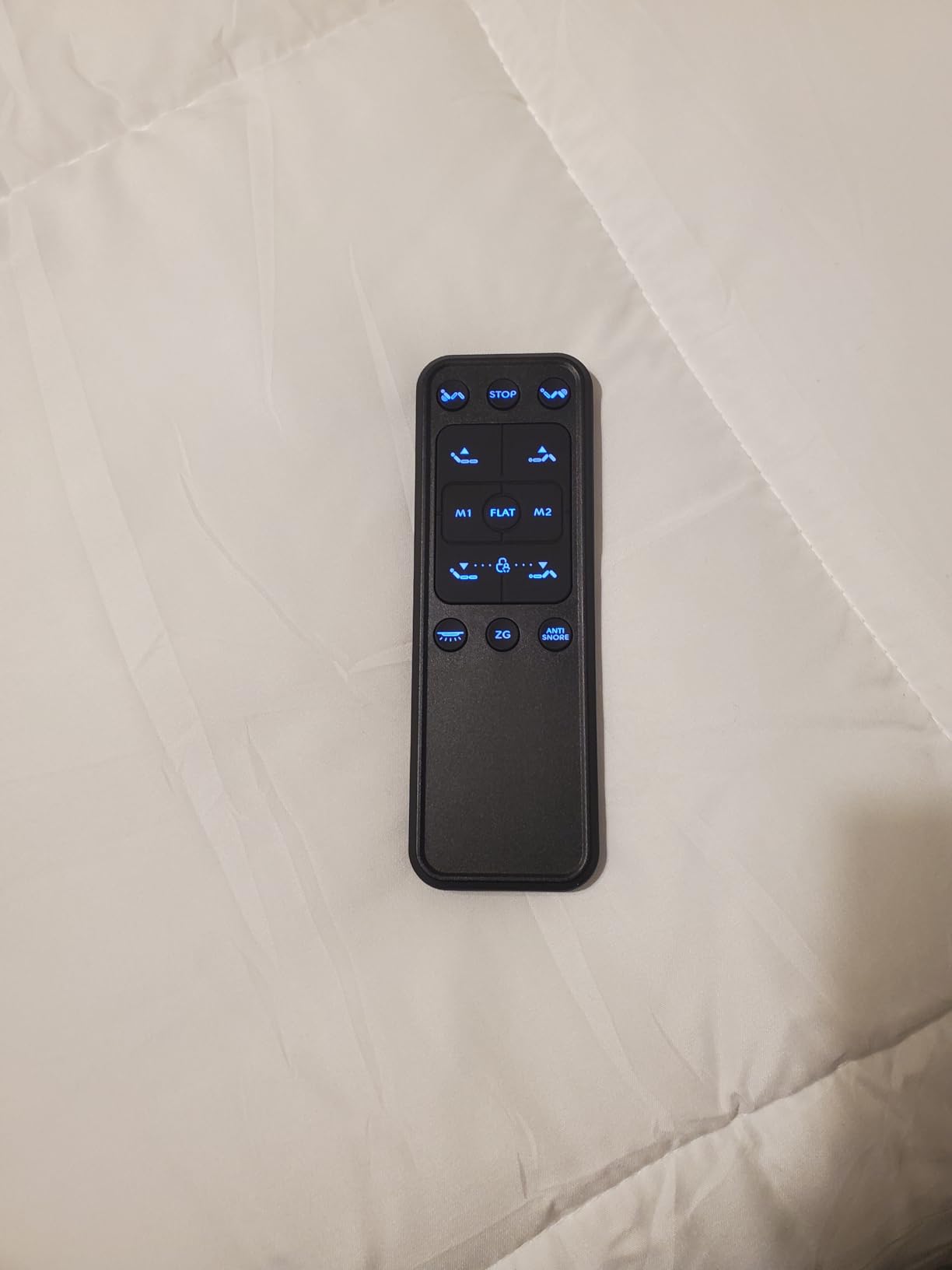
Other features include dual massage targeting the upper body, lower body or both with adjustable intensity, a backlit remote, USB charging, under-bed lighting, height-adjustable legs and anti-slip fabric. It is zero-clearance compatible and folds for transport, and there is a nationwide warranty and parts service line.
The catch is that this listing is Full size, so a couple needs to look at another variant rather than buying this directly. It is also base only, and its 700-pound recommendation sits below the Lucid and Tami figures.
Maximum degrees are not the whole story
A 75-degree head angle is a steep sit-up position, not a sleeping position. Most snorers settle somewhere in the 30- to 45-degree band and stay there, so buy this base for the range and use the Anti Snore preset as your nightly position.
Who suits this base best?
It suits a single sleeper who wants a very steep option for daytime use or for a neck and back condition, in a small room where a zero-clearance, foldable base helps. Couples should look for a matching size variant.
7. Amada Queen Adjustable Bed Frame – Best for Charging and Under-Bed Storage
Amada Queen Adjustable Bed Frame with Massage and Zero Gravity
65 degree head incline
Four USB charging ports
Four leg height options
Pros
- Head raises to 65 degrees for snoring relief
- USB-A and USB-C ports on each side
- Four massage modes with three intensities
- Four configurable leg heights
- Three-step tool-free setup
Cons
- Very heavy to move
- Short power cord that plugs in on one side only
- One owner reported USB ports failing after six months
The Amada base is marketed explicitly around snoring reduction, and the head section rises to 65 degrees with the feet lifting to 45, which gives a wider window than most of the budget bases here. Owners in the review data who snore report good results from that range, and one owner using a CPAP machine reports better sleep since getting the base.
It is also the best-equipped for charging and storage. There is a USB-A and a USB-C port on each side, a soft under-bed nightlight, and four configurable leg heights so you can trade storage space against how easy it is to get into bed.
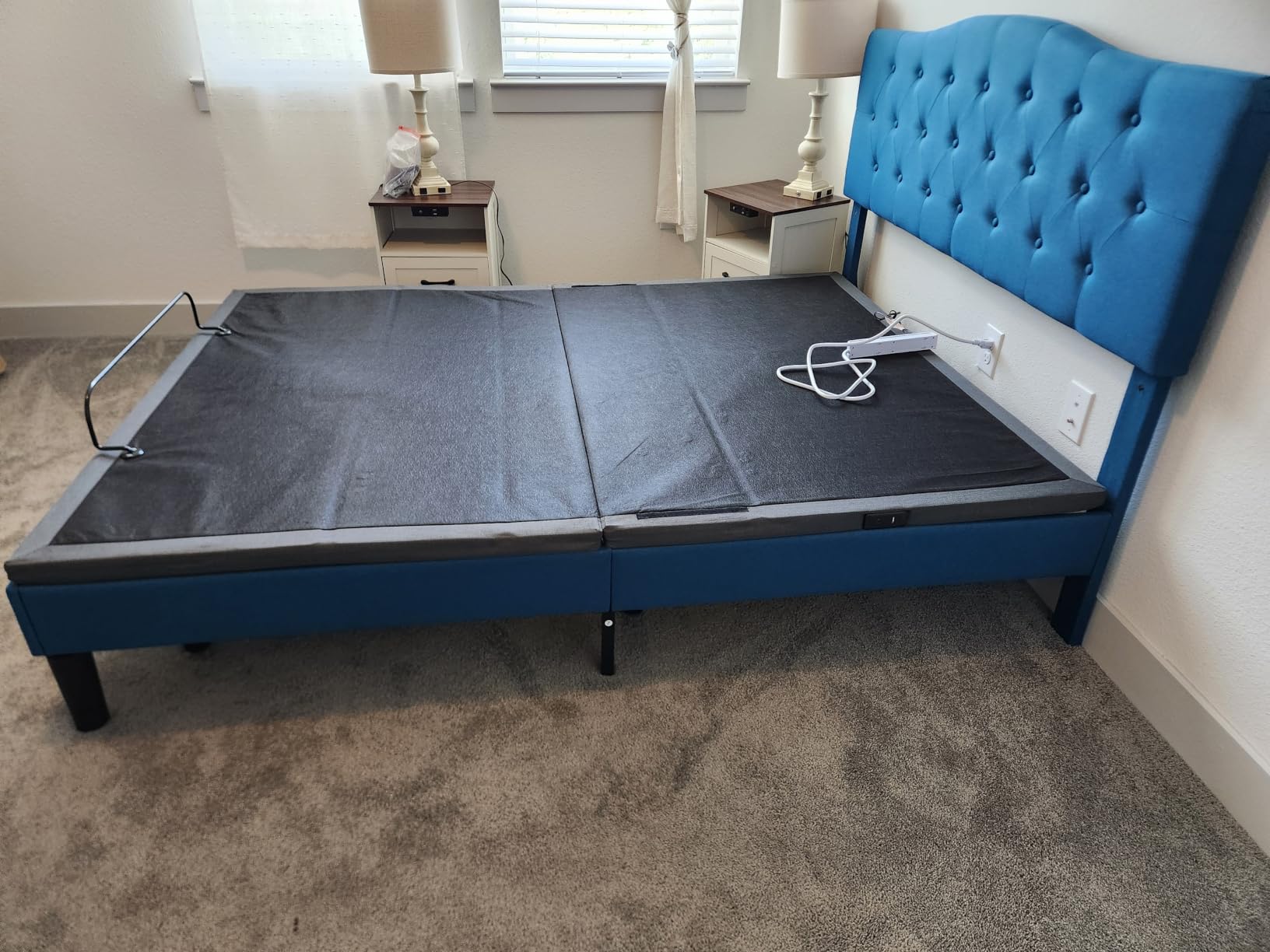
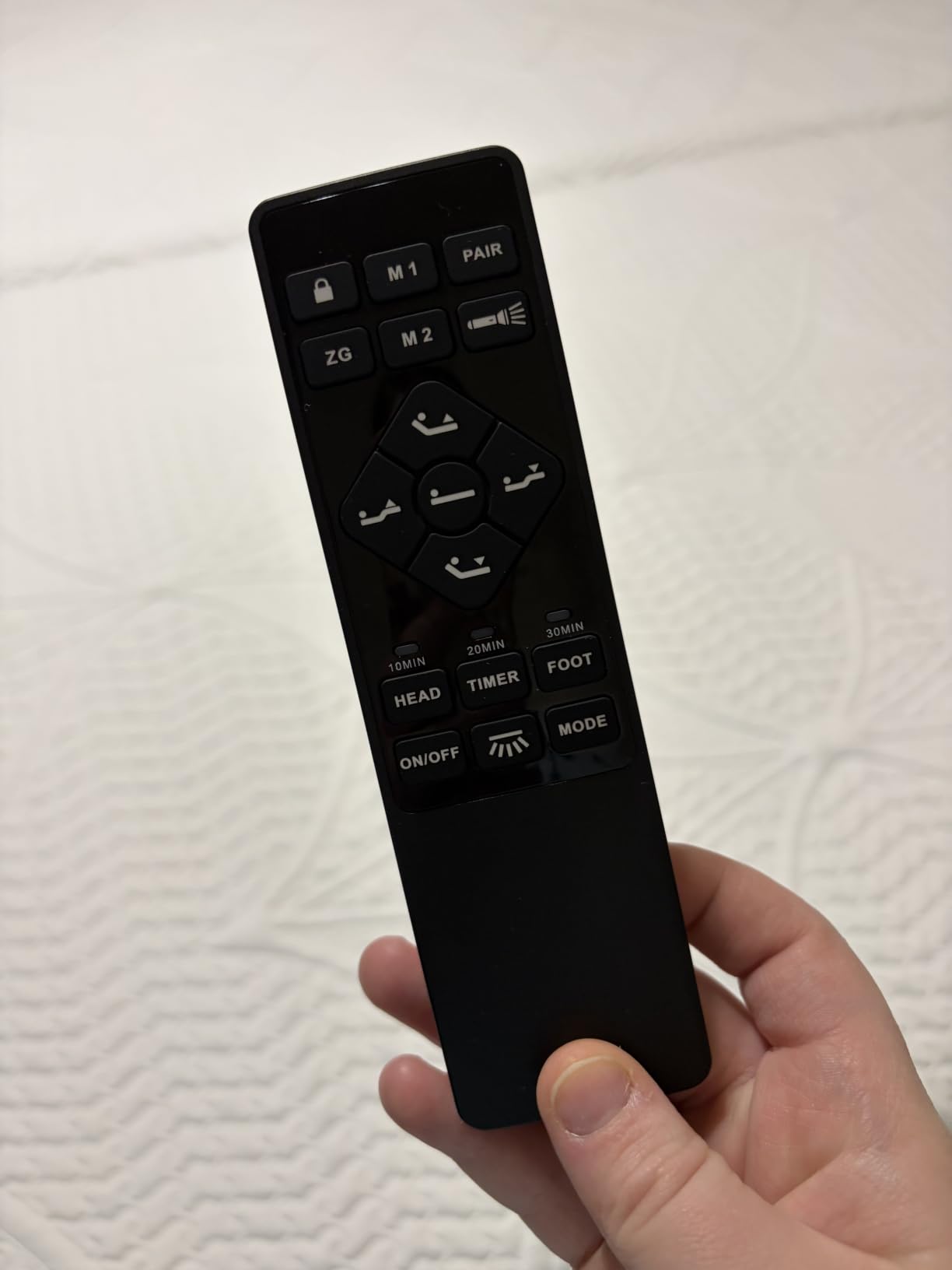
Setup is a three-step tool-free process, and owners fitting it inside an existing sleigh bed report success. Two memory positions and two programmable remote settings cover the recurring angles, and the mattress retainer bar matters more than it sounds on a flexing deck.
The negatives are physical. It is very heavy to move and several owners stress needing two strong people, the power cord is short and only reaches one side, and one owner reported the USB ports stopped working after about six months.
Set the leg height before the mattress goes on
Because you can change leg height later, decide early whether you want under-bed storage or a lower, easier-to-enter bed. Read the manual first, because the retainer bar can be released by a stray remote press if you do not.
Who suits this base best?
It suits a snorer who wants a steeper-than-standard angle without stepping up to the steepest base in the group, and anyone who needs more charging points or adjustable leg height in a small bedroom. Compatible with queen latex and memory foam mattresses of 14 inches and below.
8. Nestl Full Size Adjustable Bed Frame – Best for Small Rooms and Guest Rooms
Nestl Full Size Adjustable Bed Frame, Electric Base with Head and Foot Incline, Zero Gravity, Flat and Anti Snore Presets, Quiet Motor, No Box Spring Needed
One-touch Anti Snore preset
55 degree head incline
No box spring needed
Quiet motor
Pros
- One-touch Zero Gravity Anti Snore and Flat presets
- Independent 55 degree head incline
- No box spring required
- Compact full size footprint for small rooms
- Owners report a slight incline noticeably helps
Cons
- Extremely heavy to unbox and position
- All leg sections stacked give a very high bed height
- Very thin memory foam does not flex well
- Customer service described as unresponsive
The Nestl is the one here aimed at apartments, guest rooms and any space where floor clearance is the problem. It needs no box spring, and it carries a sturdy alloy steel frame with a mattress retainer bar.
Its preset row is simple and snoring-focused: one-touch Zero Gravity, Anti Snore and Flat on a wireless remote, with the head rising to 55 degrees and the foot to 45. One owner with recent-onset snoring reports that a slight head incline noticeably helped, which is the most common result people describe.
This is where expectation setting matters most, because owners are candid that the preset improves comfort more reliably than it silences snoring. View it as a comfort and posture tool for positional snoring, and pair it with other measures if the noise continues.
The drawbacks are the heaviest package in the group, with several owners needing four people or a professional mover, and customer service described repeatedly as unresponsive, including one report of a head motor failing after a single use. Very thin memory foam mattresses do not flex well over the foot section.
Check the bed height before ordering
With every leg section fitted this base sits high, which is uncomfortable for getting in and out and can outrank any snoring benefit. Decide which leg sections you need and remove the rest on day one.
Who suits this base best?
It suits a single snorer in a small apartment or a guest room, and anyone who wants a simple three-button remote instead of a menu of positions. If you already own a solid wood frame you like, our guide to solid wood bed frames covers keeping a frame and swapping only the base.
How to Set Your Adjustable Bed to Stop Snoring?
Most bases arrive with the anti-snore position pre-programmed or close to it, but a ten-minute setup session makes a measurable difference to whether the preset actually helps you.
Start flat and sleep one full night. You need a baseline. Note whether snoring is worse on your back, and whether it wakes you or your partner.
Raise the head end to roughly 30 degrees first. On most remotes this is a mid-range position rather than the top of the travel. Research cited in sleep-health reviews points to improvement from an incline of around 12 degrees upward, with more benefit in the 30- to 45-degree band.
Add foot elevation in the same adjustment. Raising the head alone pushes you down the mattress. Lifting the knees slightly keeps your spine in a neutral line and stops the slow slide that makes people abandon the position by morning.
Save that position to a memory setting. If your base has memory positions or custom presets, program the angle now so nightly use is one press.
Add a wedge pillow rather than stacking. Stacked pillows collapse by early morning, which is the most common complaint we read about propped-up solutions. One wedge under the neck keeps your airway aligned with the new angle.
Test for two weeks before judging it. Owners report the difference is obvious within the first few nights, but positional snoring can take a couple of weeks of consistent elevation to settle.
If snoring persists, change one thing at a time. Side sleeping, alcohol in the evening and nasal congestion all interact with position. If you still stop breathing at night, that is a medical question, not a bed-setting one.
Automatic Snore Detection: What Actually Exists in 2026?
This is the most searched question around adjustable bases and the least answered one. The short version: true sensor-driven snore detection is available, but it is not standard, it appears on only a small share of mainstream bases, and none of the eight frames in this roundup carries it.
Here is the difference that matters. A one-touch anti-snore preset is a button that runs the base to a pre-set angle. Automatic anti-snore response uses sensors in the base or under the mattress to detect a change in breathing or vibration consistent with snoring, then raise the head section on its own while you sleep. The second is what buyers mean when they ask whether a bed can detect snoring.
Sensor-based systems are the reason higher-end smart bases ask for a subscription, a paired sleep tracker or an app connection, because the hardware has to run continuously and report back. That is a different product category from the eight bases here, which are all remote-controlled and work with the mattress you already own.
Our honest read of the owner discussion on r/MattressMod and r/snoring is that people keep asking for this feature because it is the natural end state of the category. Until it arrives at the budget end, the practical substitute is a saved position you can reach in one press, which is what the Blissful Nights, Tami Tami, Irvine, Mixcous and Nestl all offer.
Mattress Compatibility: Check This Before You Buy
An adjustable base flexes, and the mattress has to flex with it without bunching, cracking or losing support.
Memory foam, latex and hybrid mattresses flex well, and every base here is rated for them. Check the stated thickness limit anyway, because most of these frames specify something in the region of 14 inches.
Traditional connected-coil innerspring mattresses do not. Bending them repeatedly damages the coils and the internal unitised structure. If you own one, replace it with a foam, latex or hybrid mattress before buying a flexing base.
Thin mattresses are a problem, not a saving. Owners of very thin foam mattresses report they do not flex well over the foot section, which also weakens any leg massager on the base.
Mattress creep is normal. Owners of the Blissful Nights report the mattress creeping toward the foot end during long raised periods. A fitted sheet with a gripper texture helps.
Check whether legs are required. The Tami T600 explicitly does not work with zero-clearance setups, while the Lucid and Irvine will fit either way. That one detail decides whether the base fits your frame.
Split King Bases for Snoring Couples
Snoring is a two-person problem. The loudest thread across r/MattressMod and Mattress Underground is not about getting the snorer to stop, but about raising one half of the bed without the movement waking the other person.
A split king runs two twin XL bases side by side under two twin XL mattresses, with a gap down the centre. Each sleeper controls their own head and foot position, so the snorer can raise their side to 45 degrees while the other stays flat. Owners describe this as the single biggest quality-of-life gain of an adjustable setup, and it is why couples dominate the forum discussion.
The cost is the centre gap, which some people find annoying, and the fact that you need two twins rather than one queen. Note also that two independent motors are two chances for noise, so check the decibel rating of both halves if your partner is a light sleeper.
None of the eight bases here is a split king as listed, and the common workaround owners use is two twin XL versions of the same base. On a dual-motor split setup the anti-snore preset on the snoring partner’s side works exactly as it does on a single base.
Buying Guide: Nine Things to Check Before You Pay
These are the checks that come up again and again in owner reviews of bases at every price point, and they are ordered by how often they cause regret.
Preset type. Decide whether you need a labelled anti-snore button, a zero gravity position, or simply the ability to save a manual angle. Bases with no memory settings make you re-adjust every night.
Head incline range. Look for a published range, not a maximum. Somewhere in the 30- to 45-degree band is where most snoring benefit arrives.
Weight capacity against your real load. Capacity must cover the mattress plus both sleepers. A queen memory foam mattress alone can add well over 100 pounds.
Motor noise. A base that wakes your partner at 2 a.m. has failed at its one job. Look for a published decibel figure under about 45 dB.
Warranty length. The range here runs from 60 days to 10 years. Pay attention to whether the frame and the motors and electronics are covered for the same period, since electronics usually wear out long before steel.
Return policy before delivery. Adjustable bases are frequently final sale once they arrive, so confirm the retailer’s return terms in writing before you order rather than after a base is in your hallway.
Mattress type and thickness. Foam, latex and hybrid under roughly 14 inches. Traditional innerspring is not compatible with a flexing deck.
Zero-clearance fit. Some bases require legs and will not work in a low platform frame. Measure your frame’s internal height and compare it with the base height before ordering.
Weight of the package. These bases range from 83 pounds to 137 pounds plus packaging. Owner reports of needing three or four people are common, so plan the move before the delivery arrives.
One last practical note. If you are replacing the frame as well as the base, decide what the frame has to do. If you only need storage and a headboard, a simple solid frame is enough and most of these bases drop straight inside.
Where an Adjustable Base Fits Among Snoring Solutions?
An adjustable base is one tool among several, and it works best as the layer that supports whatever else you are already doing.
Side sleeping is free, needs no equipment, and addresses positional snoring directly. If you have never tried it, try it before spending anything.
Nasal dilators and external nasal strips help when the blockage is in the nose rather than the throat. They pair well with head elevation because both work on the same airway.
Oral appliances reposition the jaw and are effective for mild to moderate obstructive sleep apnea when prescribed by a clinician.
Regular exercise and weight management reduce airway restriction over the long term, and a compact adjustable dumbbell for home gym setup is an easy way to keep the habit going once the bed height is sorted.
A wedge pillow gives you a fixed incline for nothing, but it collapses nothing and does not move you when you turn over. It is the free trial version of what a base does.
CPAP and other prescribed therapy are the treatment for diagnosed obstructive sleep apnea. An adjustable bed is a comfort and positioning tool that can help you tolerate therapy, not a substitute for it.
If you have been diagnosed with sleep apnea, keep using your prescribed machine and raise the bed to whatever angle makes the machine tolerable at night. That combination is what owners with apnea describe as the most realistic outcome.
Frequently Asked Questions
Do adjustable bed frames help with snoring?
They help most with positional snoring caused by sleeping flat, because raising the head and upper body keeps the relaxed tissue of the soft palate and tongue forward. Research cited by sleep-health sources reports improvement from an incline of around 12 degrees, with more benefit in the 30- to 45-degree range. They ease snoring; they do not treat diagnosed obstructive sleep apnea.
Is there an adjustable bed frame that can detect snoring?
Yes, but it is not standard and it is not on the bases in this roundup. Automatic anti-snore response uses sensors in the base or mattress to detect breathing changes and raise the head section on its own, usually through an app or a paired sleep tracker. The eight frames reviewed here are remote-controlled, so the practical substitute is a saved position you can reach in one press.
How do I set my adjustable bed to prevent snoring?
Start flat, then raise the head end to roughly 30 degrees and add a slight foot elevation so you do not slide down the mattress. Save that position to a memory setting so it is one press at bedtime, and support your neck with a single wedge pillow rather than stacked pillows. Give it two consistent weeks before judging whether it helped.
What is anti-snore mode on an adjustable bed?
Anti-snore mode is a one-touch preset that raises the head end of the bed to a moderate incline, usually somewhere between 30 and 45 degrees, to keep the airway more open. It is different from zero gravity, which raises both the head and the knees to unload the spine. A base with a named anti-snore preset is easier to use nightly than one that relies on manual memory settings.
Will my current mattress work on an adjustable bed base?
Memory foam, latex and hybrid mattresses work well, generally under about 14 inches thick. Traditional connected-coil innerspring mattresses do not, because repeated flexing damages the coils and the internal structure. Very thin foam mattresses also flex poorly, which weakens leg elevation and any leg massager. Check the thickness limit on the specific base before you order.
Who should not use an adjustable bed?
Anyone who cannot safely operate the remote, or who is likely to fall while getting in or out at a raised height, should talk to a clinician first. People on blood thinners or with certain back and hip conditions may need advice before sleeping at an incline. If you have been told you stop breathing during sleep, an adjustable bed is a comfort tool and not a replacement for prescribed therapy.
Conclusion: The Best Adjustable Bed Frame for Snoring in 2026
The best adjustable bed frame for snoring depends on which constraint binds you. The Lucid L150 is the best overall pick because its independent motors are quiet, it fits inside an existing frame, and more than 10000 reviews describe it holding up in real homes. If you want a labelled one-touch anti-snore preset and a 10-year warranty, the Blissful Nights e4 is the one to beat. If the budget is the constraint, the Best Choice Products base gives you zero gravity, head tilt, memory settings and USB ports for the least outlay of the eight.
For heavier couples, the Tami Tami T600’s 850-pound capacity solves the maths that rules out cheaper frames. For a light sleeper lying beside a snorer, the Mixcous base’s sub-45 dB motor and backlit remote are the practical answer. And for a small room, the Nestl’s compact full size frame keeps the geometry simple.
Whatever you choose, raise the head and knees together, save the angle, and give it two weeks. If the snoring continues or you have been told you stop breathing during sleep, talk to a clinician about prescribed treatment rather than expecting a bed frame to replace it.