
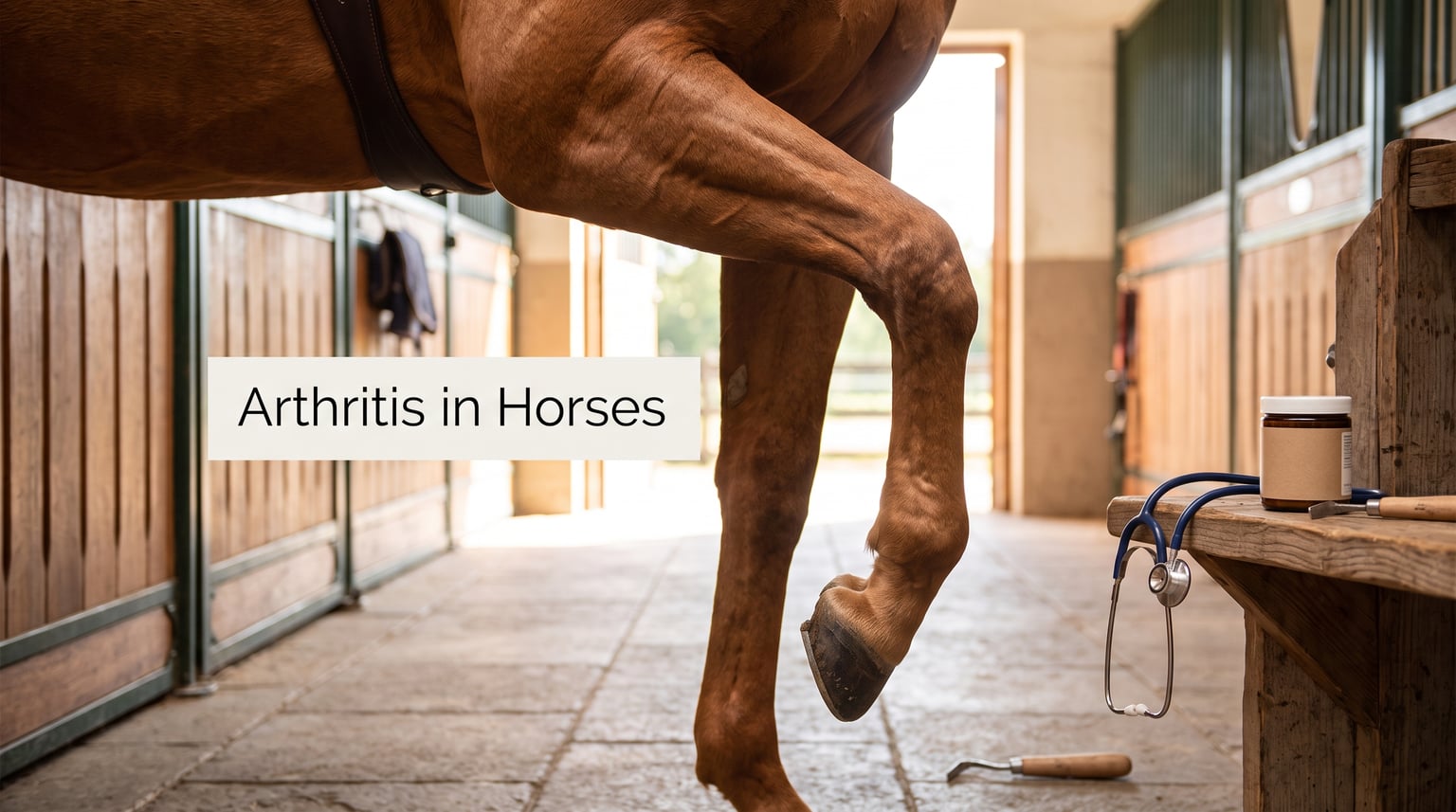
Arthritis in horses is the most common cause of equine lameness, accounting for more than 60% of all lameness cases seen by veterinarians. If your horse has started moving stiffly, hesitating on turns, or struggling to warm up, joint degeneration could be the reason.
I have worked with sport horses, schoolmasters, and backyard retirees for years, and I have watched owners miss the early signs until the damage was already advanced. In this guide, I will walk you through what arthritis actually is, what causes it, the symptoms to watch for, how vets diagnose it, and what real treatment and management options look like in 2026.
Whether you are searching for answers because your own horse was just diagnosed, or you want to prevent arthritis before it starts, this guide is built to give you clear, practical information you can act on.
Table of Contents
What Is Arthritis in Horses?
Arthritis in horses is a progressive, degenerative condition that causes inflammation and breakdown of the cartilage within one or more synovial joints, leading to pain, stiffness, and reduced mobility.
Osteoarthritis (OA), formerly called degenerative joint disease (DJD), is the most common form. It involves the gradual wearing away of the articular cartilage that normally cushions the ends of bones inside a joint. As cartilage thins, bone rubs on bone, the joint capsule thickens, and bony outgrowths called osteophytes can develop.
Synovial joints are the moving joints of the horse, including the fetlock, knee, hock, stifle, and coffin joint. Inside each synovial joint is synovial fluid, which lubricates movement and nourishes cartilage. When that system breaks down, the result is the lameness, swelling, and pain we recognize as arthritis.
Types of Arthritis Seen in Horses
Not every case of arthritis in horses looks the same. Here are the three main types our team sees in practice:
- Osteoarthritis (OA): the chronic, wear-and-tear form that usually appears in older horses or those with high athletic workloads.
- Traumatic arthritis: develops after a specific joint injury, such as a chip fracture or ligament damage.
- Septic arthritis: a sudden, severe infection of the joint, most common in foals but possible in any horse after a wound or injection complication.
Equine joint inflammation in any form can lead to permanent damage if left untreated, which is why early recognition matters so much.
Causes and Risk Factors
The main causes of arthritis in horses are repetitive mechanical stress, joint injury, age-related cartilage wear, and conformational defects that load the joints unevenly.
Horses are performance animals by nature. Every jump, gallop, or sliding stop sends force through the joints. Over time, that repeated loading can outpace the body’s ability to repair cartilage, especially when combined with other stressors.
Common Risk Factors I See in Real Horses
- Age: senior horses naturally have more cartilage wear, with most showing some OA changes by their late teens.
- Discipline: sport horses in jumping, dressage, reining, barrel racing, and endurance face the highest mechanical loads.
- Conformation: straight hocks, long pasterns, or toed-in forelegs concentrate stress on specific joints.
- Previous joint injury: a single traumatic event like a chip fragment accelerates joint degeneration dramatically.
- Poor hoof balance: long toes or uneven trimming shift load up the limb.
- Obesity: extra body weight increases compressive force on every joint.
- Developmental disease: osteochondritis dissecans (OCD) and other orthopedic issues in young horses often lead to arthritis later.
Many forum members have shared that their “heart horse” was diagnosed with arthritis unusually young, often because of an old injury or conformational issue that was missed earlier. Genetics and breed predisposition, particularly in warmbloods and stock-type horses with specific conformational traits, can also play a role.
Signs and Symptoms of Arthritis in Horses
The most common signs of arthritis in horses are stiffness, lameness, swelling or heat around a joint, reduced range of motion, and behavioral changes such as resistance to work.
Owners often tell me their horse just “isn’t right” before they can point to anything specific. Trust that instinct. Arthritis symptoms can be subtle, especially early on, and getting ahead of them saves joint function.
Early Signs Worth Watching For
- Stiffness that improves as the horse warms up, or, paradoxically, a horse that warms up poorly
- Shortened stride or a “pottery” gait, especially on a circle
- Reluctance to pick up a lead, take a particular canter depart, or jump from one direction
- Difficulty holding a hind leg up for the farrier
- Heat or visible swelling over the fetlock, knee, hock, or stifle
- Pain on flexion tests, where the vet bends the joint and the horse trots off lame
- Cracking, grinding, or popping sounds (crepitus) during movement
- Changes in behavior: pinning ears when saddled, biting at the flank, girthiness, or irritability
Front Leg vs Hind Leg Patterns
Arthritis in horses’ front legs often shows up as a shortened, choppy forelimb stride, with the horse stumbling or dragging its toes. Hind leg arthritis, especially in the hock or stifle, usually causes the horse to drag a hind toe, swing the leg outward, or have difficulty engaging for collection.
Owners searching for “signs of arthritis in horses back legs pictures” often describe seeing a horse that moves with a wide-based stance or struggles to back up smoothly. Those are classic hock or stifle pain signs.
How Vets Diagnose Arthritis in Horses
Veterinarians diagnose arthritis in horses through a combination of physical lameness examination, flexion tests, nerve and joint blocks, and imaging such as X-rays, ultrasound, MRI, or CT.
The diagnostic process is layered because lameness is rarely obvious about where it originates. A horse that looks off in the hind end may actually have pain referred from the lower back or hock. Good diagnostics pinpoint the exact joint.
The Diagnostic Workup
- Static exam: palpating joints for swelling, heat, and thickening of the joint capsule.
- Movement exam: watching the horse walk and trot in a straight line and on circles, often on hard and soft ground.
- Flexion tests: holding a joint flexed for 30 to 60 seconds, then jogging the horse to see if lameness worsens.
- Diagnostic analgesia (blocking): injecting local anesthetic into specific nerves or joints to numb them and see if the lameness improves. This is the gold standard for localizing pain.
- Imaging: X-rays reveal bone changes, narrowed joint spaces, and osteophytes. Ultrasound shows soft tissue damage. MRI and CT give detailed 3D views, especially useful for coffin and fetlock joints.
- Joint fluid analysis: a sample of synovial fluid can confirm infection or inflammation and rule out septic arthritis.
In my experience, owners are often surprised at how many joints vets end up blocking before finding the primary source. A thorough workup may take 90 minutes or longer, but the answer it gives is worth it.
Treatment Options for Equine Arthritis
Treatment for arthritis in horses falls into four main categories: medications, joint therapies and injections, oral joint supplements, and lifestyle and management changes.
There is no single “best” treatment for arthritis in horses. Most cases do best with a combination approach, customized to the joint involved, the horse’s age, workload, and owner budget. Below is what I walk every new client through.
Medications and Pain Relief
Non-steroidal anti-inflammatory drugs (NSAIDs) are the backbone of pain relief for arthritis in horses. The most common options include:
- Phenylbutazone (“Bute”): the classic, affordable NSAID for short-term flare-ups and chronic pain. Long-term use requires monitoring for ulcers and kidney issues.
- Firocoxib (Equioxx): a COX-2 selective NSAID that tends to be gentler on the gastrointestinal tract during long-term use.
- Flunixin meglumine (Banamine): often used for acute inflammation and colic-related pain.
- Meloxicam and other newer NSAIDs: sometimes chosen for senior horses needing ongoing relief.
NSAIDs treat pain and inflammation but do not regrow cartilage. They are a tool, not a cure.
Intra-Articular (Joint) Injections
Joint injections are a cornerstone of equine arthritis treatment. Vets inject medication directly into the affected joint under sterile conditions. Common injectables include:
- Corticosteroids: powerful anti-inflammatories such as triamcinolone and methylprednisolone. They reduce inflammation quickly and can give months of relief.
- Hyaluronic acid (HA): mimics the joint’s natural lubricant and is often combined with a steroid.
- Polyacrylamide hydrogel (Arthramid): a newer viscosupplement that acts as a long-lasting joint cushion.
- Autologous biologics: PRP (platelet-rich plasma), IRAP (interleukin-1 receptor antagonist protein), and stem cell therapies use the horse’s own blood or tissues to support cartilage repair.
Many owners I have spoken with say their horses have stayed comfortable for one to three years after a single round of injections, especially when combined with smart management.
Systemic Injectable Therapies
Some treatments work through the bloodstream rather than inside a single joint:
- Adequan (polysulfated glycosaminoglycan): given by intramuscular injection twice weekly for several weeks, it supports cartilage repair.
- Legend (hyaluronic acid IV): a systemic HA treatment delivered intravenously.
Oral Joint Supplements
Joint supplements for horses are not regulated like drugs, but several ingredients have decent evidence behind them:
- Glucosamine and chondroitin sulfate: building blocks of cartilage.
- MSM (methylsulfonylmethane): a sulfur donor with mild anti-inflammatory effects.
- Omega-3 fatty acids: from fish oil or flax, supporting joint comfort.
- Avocado-soybean unsaponifiables (ASU) and hyaluronic acid orally: increasingly common in premium supplements.
Forum owners have mixed opinions on supplements, with some swearing by them and others seeing no change. I recommend thinking of supplements as long-term background support rather than a stand-alone solution for advanced arthritis.
Alternative and Complementary Therapies
Many owners add complementary therapies to their horse’s plan:
- PEMF (pulsed electromagnetic field therapy): may reduce inflammation and support healing.
- Acupuncture: can help manage chronic pain and improve mobility.
- Chiropractic and physiotherapy: useful for compensatory issues in the spine and soft tissues.
- Underwater treadmill or swimming: builds muscle without loading joints.
- Shockwave therapy: sometimes used to stimulate healing in surrounding tissues.
Surgical Options
For severe cases, surgery may help. Arthroscopy lets a surgeon clean up bone fragments, debride cartilage lesions, or smooth joint surfaces. In end-stage hock arthritis, surgical fusion can actually relieve pain by eliminating the joint motion that causes it.
Management and Daily Care
The single best management strategy for arthritis in horses is consistent, appropriate movement combined with good weight control and 24/7 turnout when possible.
Owners often ask me whether they should keep their arthritic horse moving or rest it. The answer is almost always movement. A horse that stands in a stall stiffens up, while a horse that moves freely maintains joint flexibility and muscle support.
A Practical Daily Care Routine
- Turnout as much as possible: gentle movement at will is better than stall rest for almost every arthritic horse.
- Daily light exercise: walking under saddle, hand walking, or turnout in a large paddock keeps joints mobile.
- Soft footing: deep, even footing reduces concussion on hard joints.
- Weight management: keeping a body condition score around 5 out of 9 reduces stress on joints significantly.
- Warm-up and cool-down: give arthritic horses a longer warm-up and slower cool-down than you would a sound one.
- Joint support during work: properly fitted boots can protect lower joints during exercise.
- Flare-up plan: have NSAID doses and stall rest guidance on file with your vet before you need them.
Quality of Life Assessment
One of the hardest parts of caring for an arthritic horse is judging quality of life. I encourage owners to track small things monthly:
- Is the horse lying down and getting up normally?
- Is the horse interested in food, friends, and its environment?
- Can the horse walk, turn, and back without obvious pain?
- Are “good days” still outnumbering “bad days”?
Forum members often share that the day they retire a horse from riding feels like a failure, but most find that their horse actually looks better and lives a happier life once expectations change.
Prevention Strategies
You cannot prevent every case of arthritis in horses, but smart management in the early years significantly lowers the risk and slows progression.
Prevention works best when started before joint damage is visible on X-ray. By the time lameness shows up, cartilage loss has usually been underway for months or years.
Prevention Tips That Actually Work
- Schedule regular farrier work: balanced hooves distribute load evenly across joints.
- Build fitness gradually: avoid sudden jumps in workload that overload cartilage.
- Use appropriate footing: avoid working horses excessively on deep, deep, hard, or uneven ground.
- Maintain a healthy weight: obese horses develop arthritis earlier and faster.
- Treat injuries promptly: a small strain treated early may prevent a big joint problem later.
- Consider preventative joint support: in high-performance horses, some vets recommend systemic injections or strategic supplements during heavy seasons.
Foals with septic joints need immediate veterinary care. Prompt flushing and antibiotics often save the joint and prevent lifelong arthritis.
Prognosis and Life Expectancy
Arthritis in horses is not curable, but it is manageable, and most horses with arthritis can live comfortable, useful lives for many years after diagnosis.
How long a horse can live with arthritis depends mostly on how well the disease is managed and how early intervention begins. Horses with mild OA that respond to injections, supplements, and good management often work into their late teens or even early twenties. Severe, end-stage cases may have a shorter quality-of-life window and require harder conversations about retirement or humane euthanasia.
Owners searching for “how long can a horse live with arthritis” usually want a number. The honest answer is that arthritis alone rarely shortens lifespan directly, but it does affect quality of life, which is what matters.
Frequently Asked Questions
What is the best treatment for arthritis in horses?
The best treatment for arthritis in horses is a combination approach tailored to the individual. Most cases benefit from a layered plan that includes NSAIDs for pain relief, intra-articular injections such as corticosteroids or hyaluronic acid for joint inflammation, systemic therapies like Adequan or Legend, joint supplements, and consistent low-impact exercise. The right combination depends on the joint affected, the horse’s age, and how advanced the disease is, so working closely with your veterinarian is essential.
How long can a horse live with arthritis?
Most horses with arthritis live for many years after diagnosis, especially when the condition is well managed. Mild to moderate cases often remain comfortable and even rideable into their late teens or twenties with the help of injections, supplements, and proper management. The key factor is quality of life rather than lifespan itself, so regular reassessment and open conversations with your vet matter most.
What can take away arthritis pain in horses?
NSAIDs such as phenylbutazone (Bute), firocoxib (Equioxx), and flunixin meglumine (Banamine) are the most common options for relieving arthritis pain in horses. Intra-articular injections of corticosteroids combined with hyaluronic acid can provide longer-lasting relief. Non-drug options that help include controlled exercise, weight management, soft footing, turnout, and complementary therapies such as acupuncture or PEMF.
How long do arthritis flare-ups last in horses?
Arthritis flare-ups in horses typically last from a few days to two or three weeks. A mild flare caused by extra work or cold weather often resolves within a few days of rest and NSAIDs. A more serious flare, especially one tied to structural changes inside the joint, can last longer and may require joint injections or a re-evaluation by your vet. Flare-ups that do not respond to standard treatment within a week deserve a closer look.
Can arthritis in horses go away?
Arthritis in horses cannot be fully cured, but its symptoms can be dramatically reduced and the disease can be slowed. Cartilage that has worn away does not grow back to its original state, but treatments such as joint injections, regenerative therapies, supplements, and good management can keep horses comfortable and active for years. Early diagnosis and consistent care offer the best long-term outcome.
What is the most common arthritis in horses?
Osteoarthritis, also known as degenerative joint disease, is by far the most common type of arthritis in horses. It accounts for more than 60% of all equine lameness cases and is most often seen in older horses and performance horses with high workloads on their joints.
Key Takeaways
Arthritis in horses is common, manageable, and worth catching early. If your horse is moving stiffly, swelling at a joint, or simply not performing like last season, do not wait it out.
Talk to your veterinarian about a full lameness workup, ask about the joint therapies and supplements that match your horse’s needs, and commit to the daily management that keeps arthritic horses comfortable for years. With the right plan, your horse can stay sound, happy, and useful well into 2026 and beyond.