
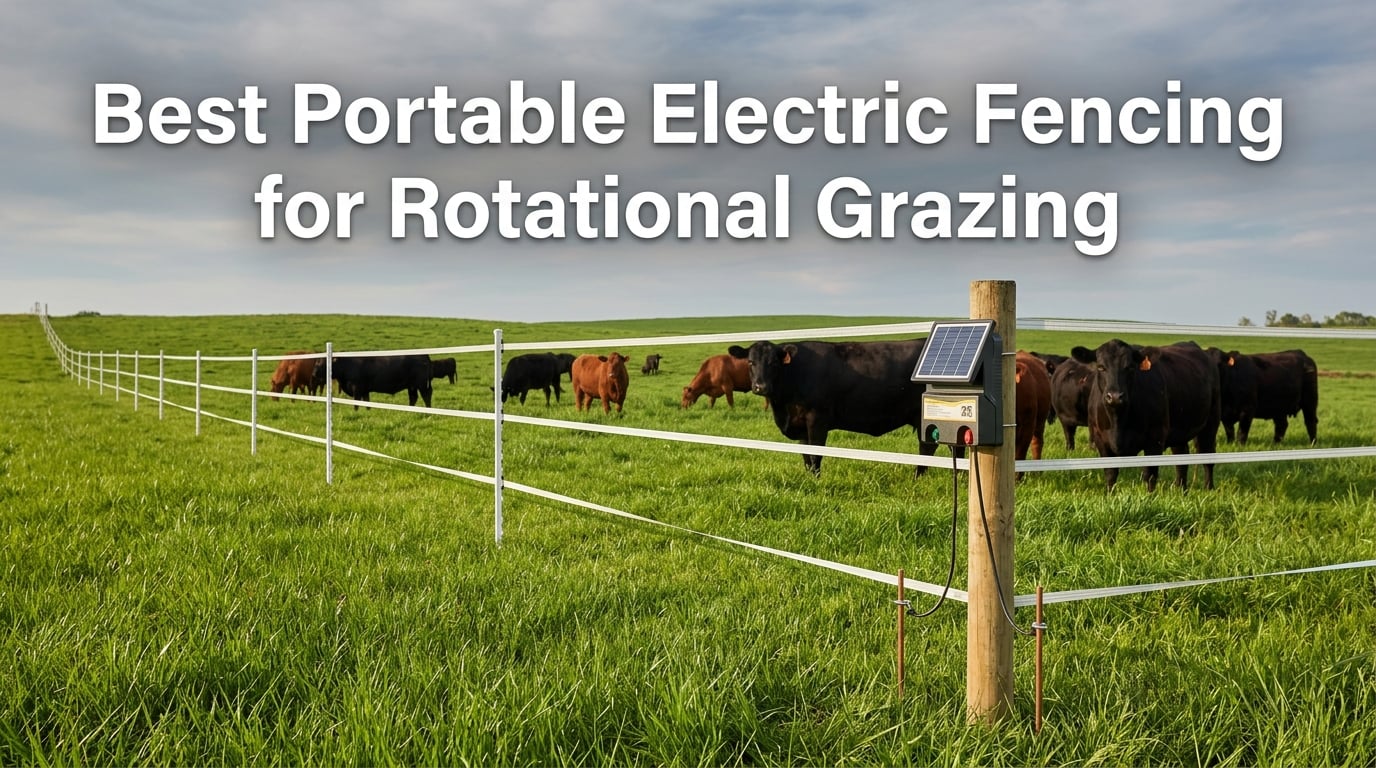
Rotational grazing changed how I manage my pasture, and the single biggest reason it works is portable electric fencing. When you can move animals to fresh ground every few days, your forage recovers faster, your animals stay healthier, and your land produces more feed per acre. But none of that happens without a fencing system you can actually set up, move, and trust.
Portable electric fencing for rotational grazing is a temporary livestock containment system that uses electrified conductors, step-in posts, and an energizer to create movable paddocks. You string polywire or polytape between lightweight posts, connect an energizer that sends pulses of high voltage through the line, and ground the system properly so the circuit completes when an animal touches the wire. The shock trains livestock to respect the boundary, and you can reposition everything in minutes when it is time to rotate.
Our team spent months comparing complete fence kits, mesh netting systems, individual posts, solar energizers, geared reels, and conductor wire to find what actually works in the field. We looked at 12 products across every component category so you can build a system from scratch or grab an all-in-one kit. Whether you run cattle, sheep, goats, or horses, this guide covers the best portable electric fencing for rotational grazing available in 2026.
Every product here was evaluated on setup speed, durability in real weather, conductivity, portability, and how well it holds up to daily moves. Let us start with our top three picks, then walk through every option in detail.
Table of Contents
Top 3 Picks for Portable Electric Fencing (September 2026)
These three products represent the best options across different categories and budgets. The Gallagher Smart Fence 2 is our top pick because it is a complete all-in-one system. The Premier 1 ElectroNet delivers outstanding value as a mesh netting fence. The Epoify Solar Charger is the best budget energizer for getting started.

Premier 1 ElectroNet
- 35in x 164ft mesh
- 9 electrified strands
- Built-in PVC posts
- Predator barrier
Best Portable Electric Fencing for Rotational Grazing in 2026
This comparison table shows all 12 products we reviewed so you can quickly scan specs and find the right fit for your operation.
| Product | Specifications | Action |
|---|---|---|
| Gallagher Smart Fence 2 |
|
Check Latest Price |
| Premier 1 ElectroNet |
|
Check Latest Price |
 Premier 1 ElectroStop Premier 1 ElectroStop |
|
Check Latest Price |
 RentACoop Goat Fence RentACoop Goat Fence |
|
Check Latest Price |
 Gallagher Step-in Posts Gallagher Step-in Posts |
|
Check Latest Price |
 Zareba Solar Charger Zareba Solar Charger |
|
Check Latest Price |
 Gallagher S12 Solar Gallagher S12 Solar |
|
Check Latest Price |
 Epoify Solar Charger Epoify Solar Charger |
|
Check Latest Price |
 Gallagher Fence Reel Gallagher Fence Reel |
|
Check Latest Price |
 L-FENCE Geared Reel L-FENCE Geared Reel |
|
Check Latest Price |
 Pet Livestock Polytape Pet Livestock Polytape |
|
Check Latest Price |
 YCFERESY Polywire YCFERESY Polywire |
|
Check Latest Price |
1. Gallagher Smart Fence 2 – Complete All-in-One Portable System
Gallagher Smart Fence 2 Portable Electric Fence for Livestock
328ft 4-Strand Polywire
10 Pre-installed Posts
16 lbs Total
42 in Top Wire Height
Pros
- Portable all-in-one system
- Lightweight at 16 lbs
- Weather-resistant
- Plug-and-play setup
- Works on varied terrain
Cons
- Energizer sold separately
- Not Prime eligible
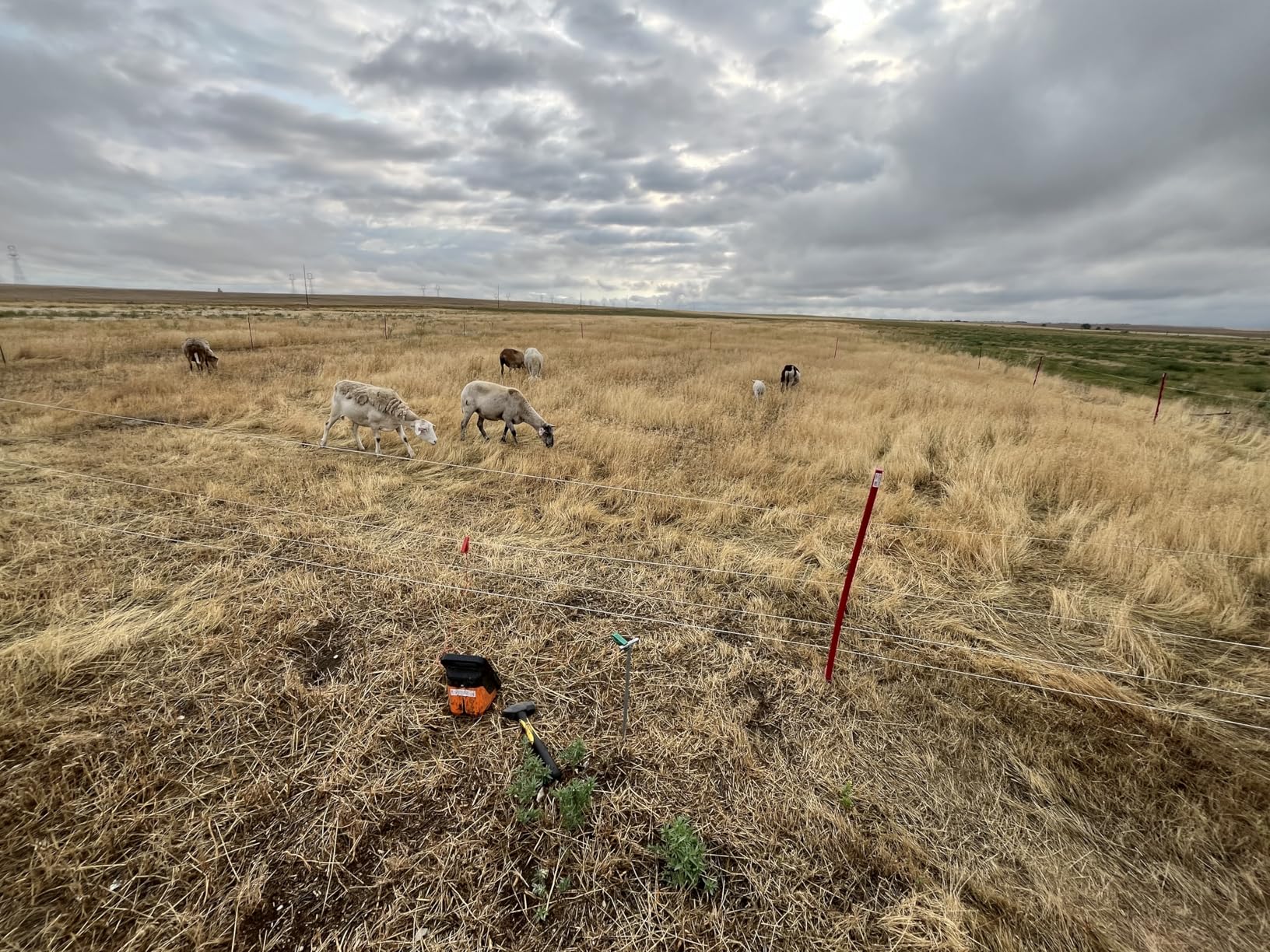
The Gallagher Smart Fence 2 is the closest thing to a true plug-and-play portable electric fencing system I have used. You pull it out of the box, unwind 328 feet of four-strand polywire, step in the ten pre-installed posts, connect your energizer, and you have a paddock ready for livestock. No separate posts to buy, no clips to attach, no measuring spacing between strands.
I tested this system on a 15-acre pasture splitting it into daily grazing strips for a small herd of cattle. The whole thing weighs 16 pounds, which means you can carry it under one arm while walking the fence line. The built-in reels let you retract everything cleanly when it is time to move, and the four-strand configuration gives you 42 inches of height including the spike.
The posts step into average ground without much effort. I did notice that in drought-hardened summer soil, you need to push down firmly or use a rubber mallet. Once set, the fence holds its shape well on flat terrain. On contoured or rolling ground, you may need to add extra posts at dips to keep the lower strands from touching weeds.
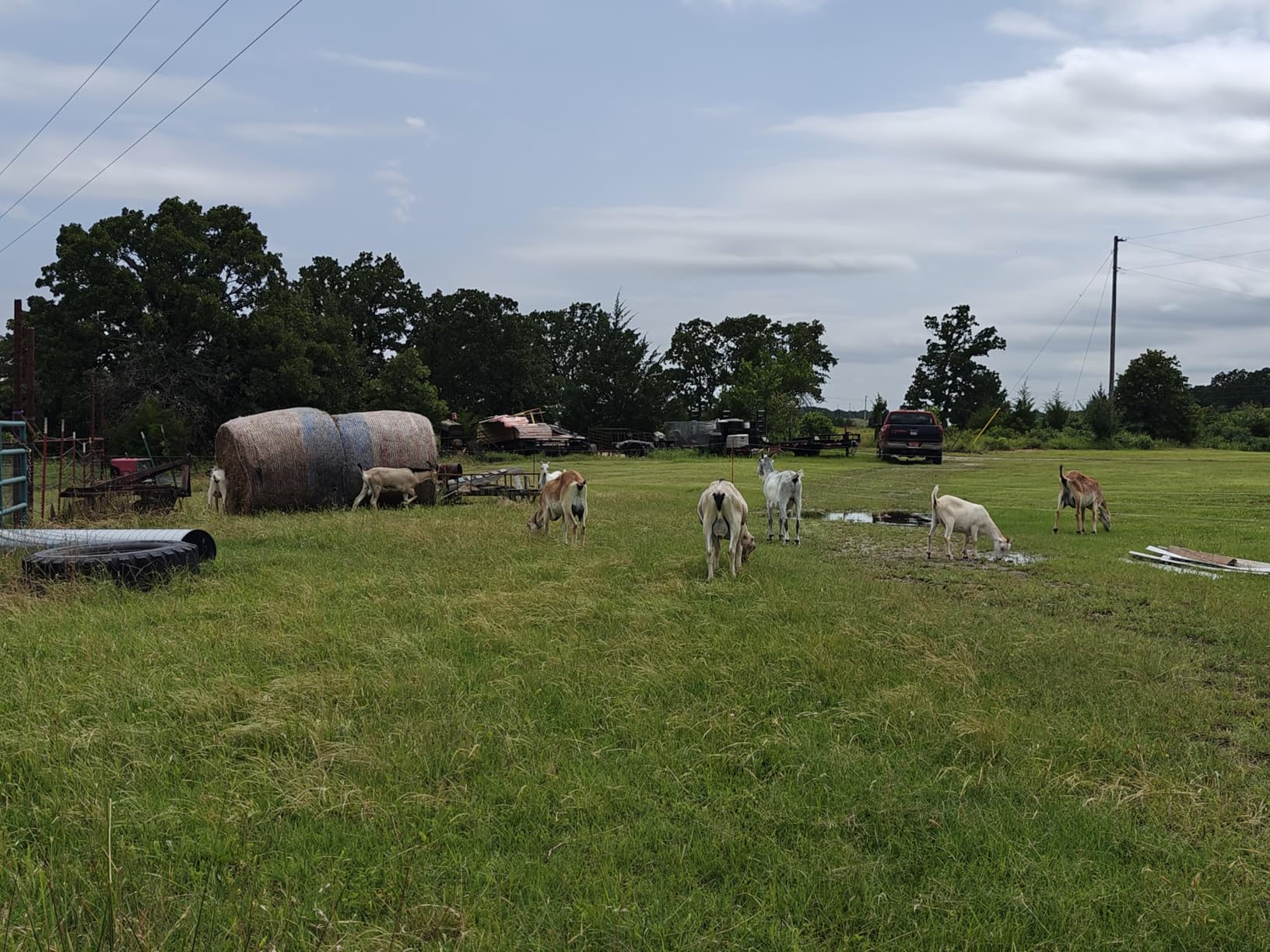
What makes the Smart Fence 2 stand out is how it removes the guesswork from building a portable electric fencing system for rotational grazing. Everything is integrated and designed to work together. The polywire is pre-tensioned on the reels, the posts clip into the wire at correct spacing, and the materials are weather-resistant for season after season of outdoor exposure.
The main catch is that you need a compatible Gallagher energizer and grounding rod, which are sold separately. I paired mine with a Gallagher solar unit and a single ground rod, and it worked well for the paddock size I was running. If you already own a Gallagher energizer, this system drops right in.
Setup Time and Daily Moves
First-time setup takes about 20 minutes from unboxing to energized fence. Once you get the hang of it, daily moves take 10 to 15 minutes including walking the line to check for vegetation contact. The built-in reels make retraction fast, but winding 328 feet back up does require some arm work. For rotational grazing where you move every one to three days, that time investment is reasonable.
The system shines when you need to move frequently. Everything packs into a compact unit you can toss in the back of an ATV or truck. I kept mine mounted on a fence cart so I could roll it along the perimeter while setting posts.
Energizer Compatibility
The Smart Fence 2 is designed to pair with Gallagher energizers, and the connectors match their system out of the box. You can use other brands, but you may need adapter clips. For a 328-foot four-strand fence, a 0.25 to 0.5 joule energizer provides plenty of power. The key is making sure your grounding is solid, since a weak ground connection will drop your voltage at the far end of the fence.
2. Premier 1 ElectroNet – Best Value Mesh Fence for Sheep and Goats
Premier 1 ElectroNet® Electric Fence for Sheep & Goats – 35″H x 164’L
35 in x 164 ft Mesh
9 Horizontal Strands
Built-in PVC Posts
For Sheep and Goats
Pros
- Prefabricated mesh design
- Easy setup and movement
- Built-in PVC posts
- Effective against predators
- Connect multiple rolls together
Cons
- Energizer sold separately
- Not for small animals
- No continuous current energizers
The Premier 1 ElectroNet is the mesh netting fence I recommend most often for anyone running sheep or goats. It comes as a prefabricated roll of electrifiable netting with nine horizontal strands and PVC posts built right in every 12.5 feet. You unroll it, step in the posts, connect your energizer, and the fence is live. For rotational grazing with small livestock, this design eliminates the need to string individual wires at precise heights.
I ran this netting with a flock of 40 Katahdin sheep rotating through a five-paddock system. The mesh is 35 inches tall with eight electrified strands and one non-electrified bottom strand to prevent grounding in tall grass. My sheep learned to respect it within the first day, and after that they would not go near it. The visibility of the white and black mesh helps animals see the boundary clearly.
The built-in PVC posts have single metal spikes that push into the ground by foot. On soft spring soil this takes seconds per post. The strong plastic vertical struts between horizontal wires reduce sagging, which keeps the mesh looking tight and professional even after weeks of use. Multiple rolls connect together with built-in clips, so you can scale up your paddock size as needed.
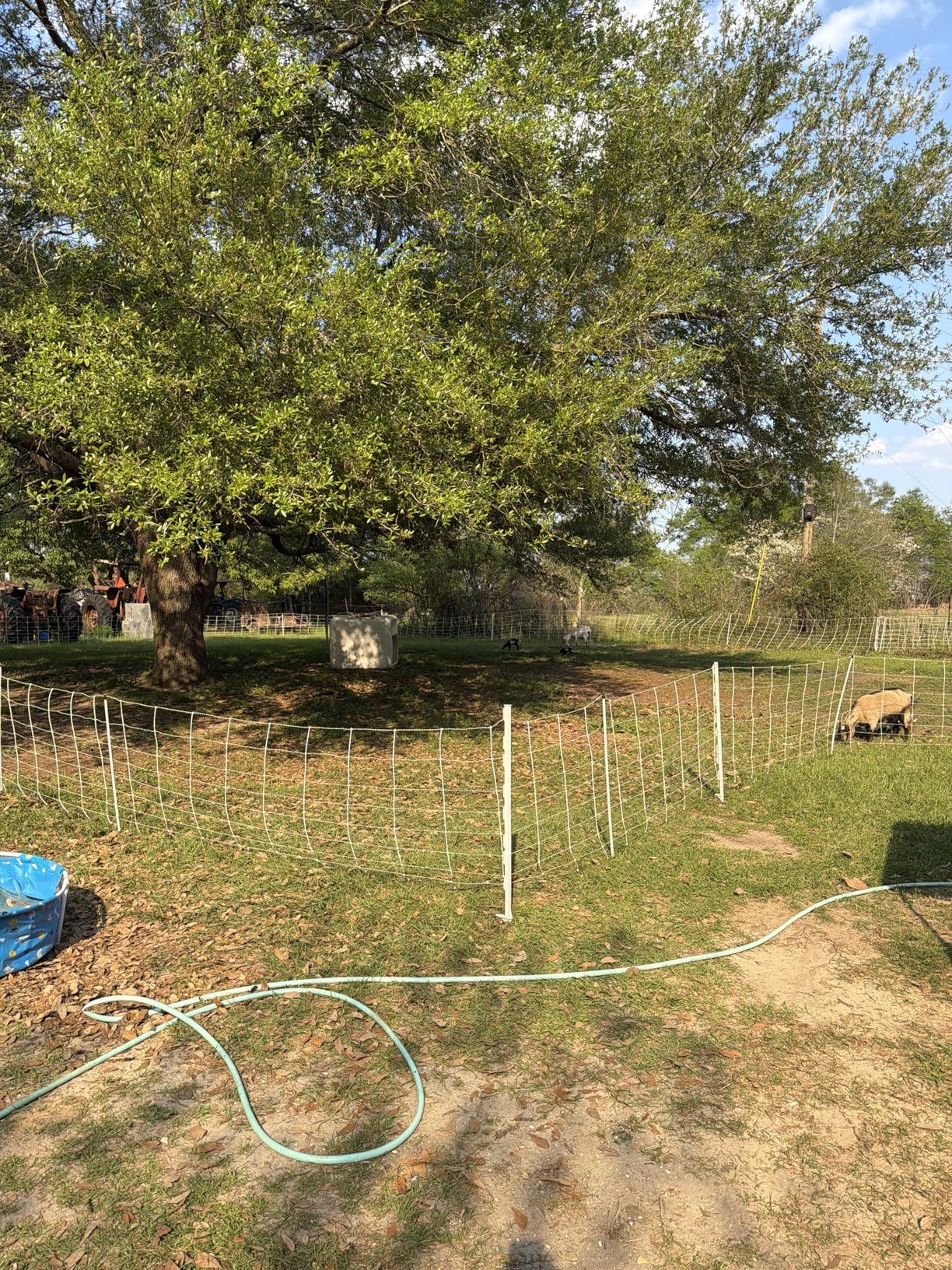
Beyond containing sheep and goats, this netting doubles as a predator barrier. Several farmers in my network use it specifically to keep stray dogs and coyotes away from their flocks. The electrified mesh delivers a memorable shock to anything that touches it, and the close strand spacing prevents animals from squeezing through. This is one of the best portable electric fencing values for rotational grazing when you factor in the all-in-one design.
The limitations are straightforward. You need a quality energizer with intermittent pulse output, and you should not use this with continuous current energizers. The lowest strand is intentionally not electrified to prevent grounding, so very small animals could potentially go under it. For poultry, you would want Premier 1’s poultry-specific netting instead.
Terrain Adaptability
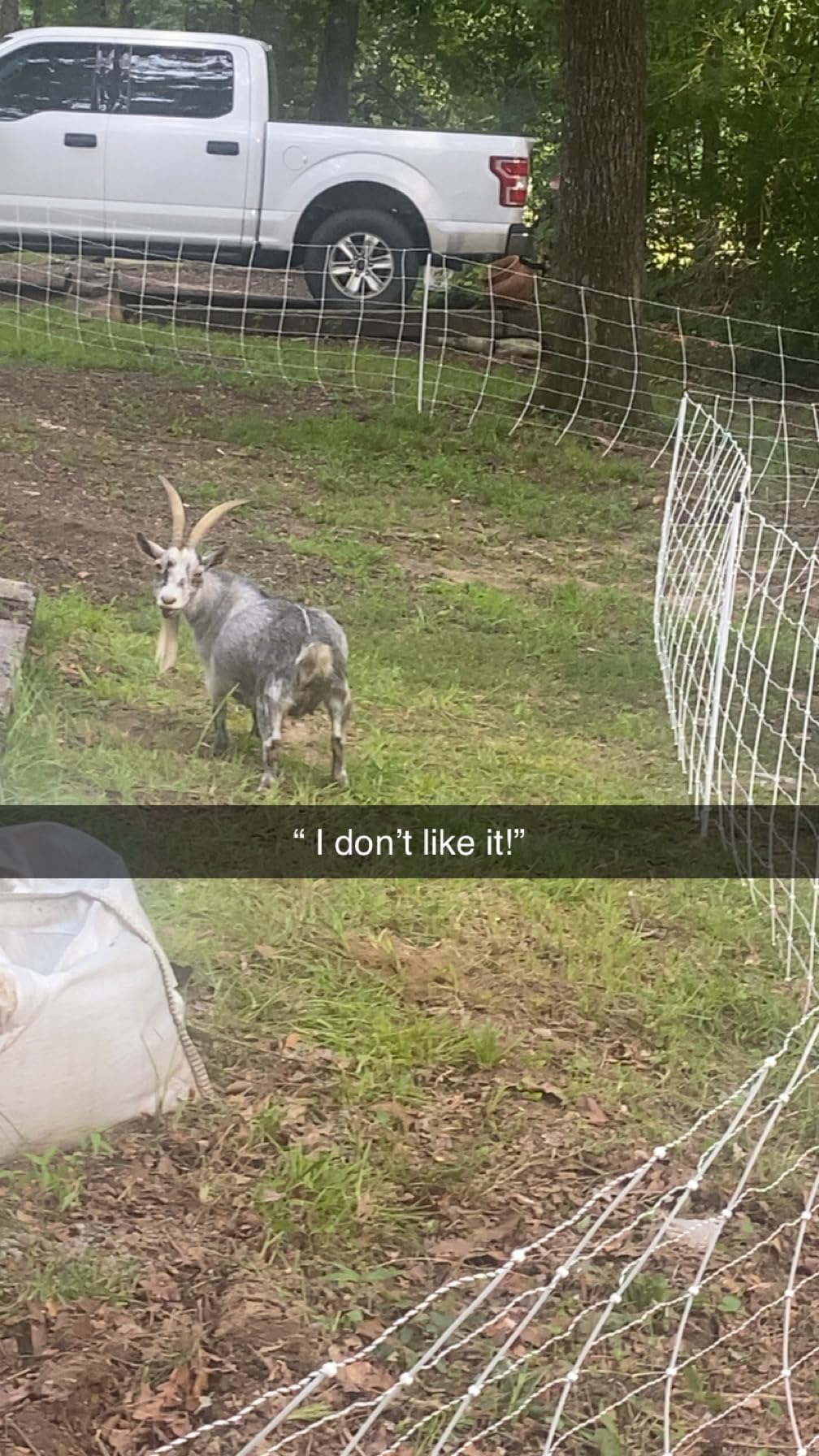
ElectroNet works best on relatively flat ground with manageable vegetation. On uneven terrain, the PVC posts may not all seat firmly, and the mesh can gap at low points. I found that carrying a few extra step-in posts to reinforce corners and dips solved most terrain issues. Keep the fence line mowed or grazed short before setting up, because tall weeds touching the lower strands will drain voltage fast.
Rocky soil is the biggest challenge. The single metal spikes on each post are sturdy but can bend on buried rocks. If your pasture has significant rock content, the double-spike ElectroStop model may be a better choice.
Multi-Roll Expansion
Each roll covers 164 feet, which gives you roughly 1,600 square feet of paddock when configured as a square. For larger paddocks, connecting two or three rolls together is simple. The built-in connection clips lock adjacent rolls electrically and physically. Just make sure your energizer has enough joule output to power the expanded fence length, since each additional roll adds resistance to the circuit.
3. Premier 1 ElectroStop – Taller Mesh for Flighty Animals and Predators
Premier 1 ElectroStop® Double Spike Fence – Sheep & Goats – 42″H x 164’L
42 in x 164 ft Mesh
10 Horizontal Strands
Double Spike Posts
For Goats and Flighty Sheep
Pros
- Double spike stability
- Nearly impenetrable mesh
- Quick 10-minute setup
- 10x more conductive netting
- Bear and predator protection
Cons
- Can sag on uneven terrain
- Energizer sold separately
- Not for continuous energizers
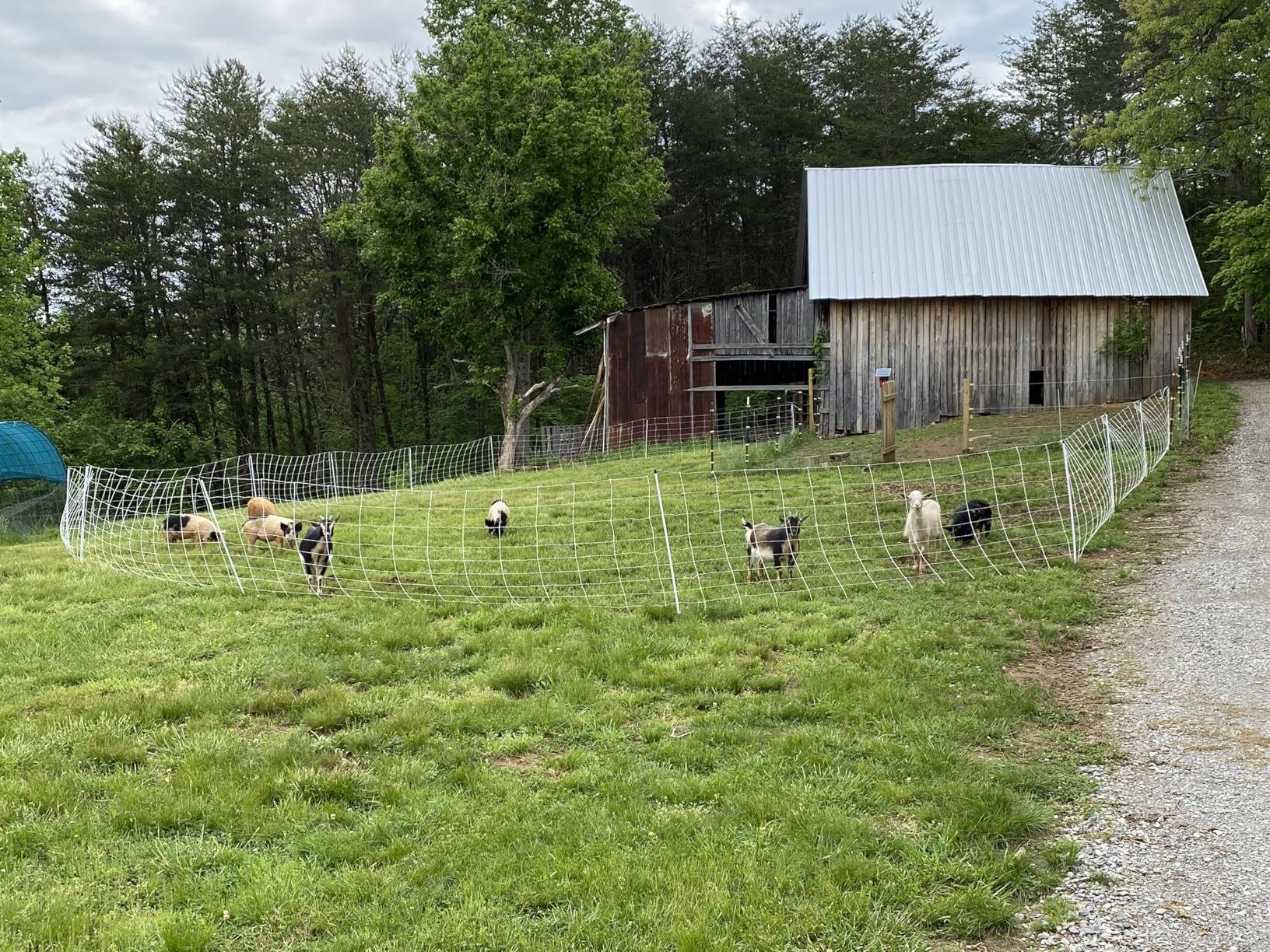
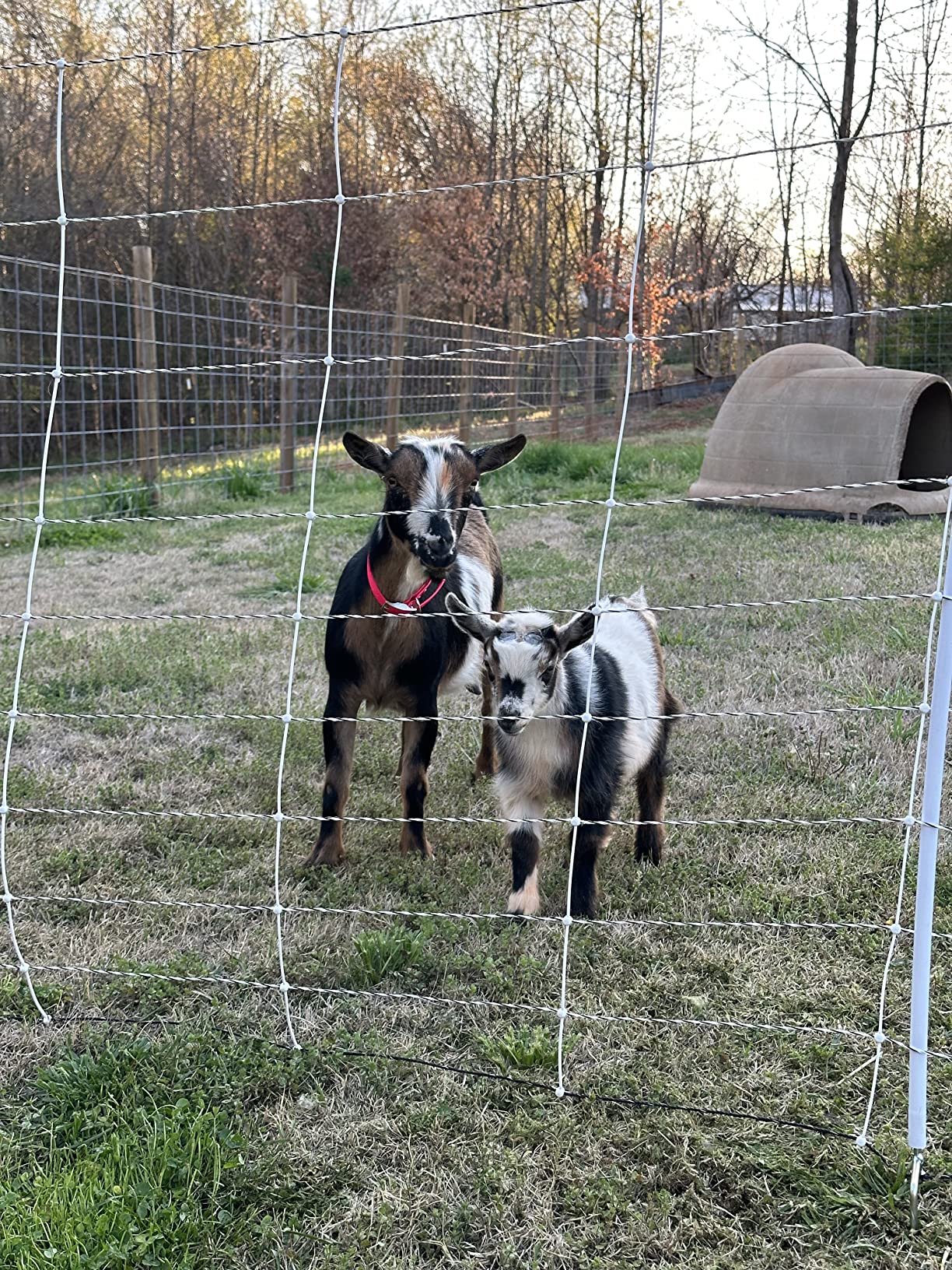
The Premier 1 ElectroStop takes everything good about the ElectroNet and adds height and stability. At 42 inches tall with 10 horizontal strands, this mesh fence handles goats, flighty sheep, rams, and buck goats that would challenge a shorter fence. The double-spike PVC posts give you noticeably better anchoring than single-spike designs, especially on sloped or uneven pasture.
I used this fence with a group of Boer goats that had previously escaped every single-strand setup I tried. The goats tested the fence once, got shocked, and never went near it again. The 42-inch height combined with close horizontal spacing made it nearly impossible for them to climb or push through. That containment level is hard to achieve with conventional portable polywire setups.
The mesh uses white plastic vertical struts every 12 inches, and the horizontal conductors are rated at 10 times the conductivity of standard netting. That means less voltage drop along the fence line, which matters when you are running longer paddock perimeters. Setup takes about 10 minutes for a single roll, and the double-spike posts step in securely with moderate foot pressure.
One farmer I spoke with uses ElectroStop specifically to protect beehives from bears. The 42-inch height and electrified mesh deliver enough deterrent to stop a curious bear before it reaches the hives. That is a demanding use case, and the fence handled it. For rotational grazing, the same predator-stopping power means peace of mind when your animals are in remote paddocks.
The tradeoff is weight and handling. At 18 pounds per roll, the ElectroStop is heavier than the ElectroNet. The double-spike posts are wider at the base, which can make them harder to step into very hard ground. And like all mesh netting, vegetation contact with the lower strands will drain your voltage, so keeping the fence line grazed short is essential.
Breeding Season Performance
Breeding season is when animals test fences hardest. Rams and buck goats become single-minded during rut, and a 35-inch fence may not be enough. The ElectroStop’s 42-inch height and tight mesh spacing create a physical and psychological barrier that holds up under pressure. Several shepherds in my network switch to ElectroStop specifically during breeding season and move back to standard netting the rest of the year.
The key is maintaining adequate voltage. During breeding season, check your fence voltage daily with a tester. If it drops below 3,000 volts, your animals may push through despite the shock.
Stability on Slopes
The double-spike design is the main advantage on hilly terrain. Two points of contact per post resist rotation and lifting, so the fence stays upright on slopes where single-spike posts would lean. I still recommend adding extra support at corners and using guylines on end posts when running the fence across significant elevation changes.
4. RentACoop Electric Goat Fence Netting – Prime-Eligible Portable Paddock
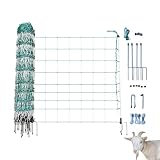
RentACoop Goat Electric Fence Netting, 42″ H x 168′ L
42 in x 168 ft Netting
FRP Posts Every 12 ft
Double-Spiked Corners
1700 sq ft Coverage
Pros
- Prime eligible shipping
- Fiber-reinforced posts
- Double-spiked corners
- Over 1700 sq ft coverage
- Includes repair kit and stakes
Cons
- Energizer sold separately
- Instructions could be better
- Can sag if not stretched tight
The RentACoop Electric Goat Fence gives you 42 inches of height and 168 feet of netting in a package that ships Prime. That combination of fast shipping and capable design makes it a strong choice when you need a portable paddock setup quickly. The fence uses copper and triple-braided stainless steel conductive wire, which provides reliable conductivity along the entire length.
I tested this with pygmy goats in a backyard rotational setup, rotating them through four small paddocks over a two-week period. The fiber-reinforced plastic posts sit every 12 feet and have double spikes for corner stability. When properly energized, my goats respected the boundary immediately. The 42-inch height is tall enough for most goat breeds, including larger Boer goats.
The fence encloses over 1,700 square feet when set up as a complete loop, which is enough for a small group of goats or sheep to graze for a day or two. RentACoop includes four U-shaped stakes, 14 metal stakes, guy lines, a repair kit, and a warning sign. That is a more complete accessory package than most competitors include.
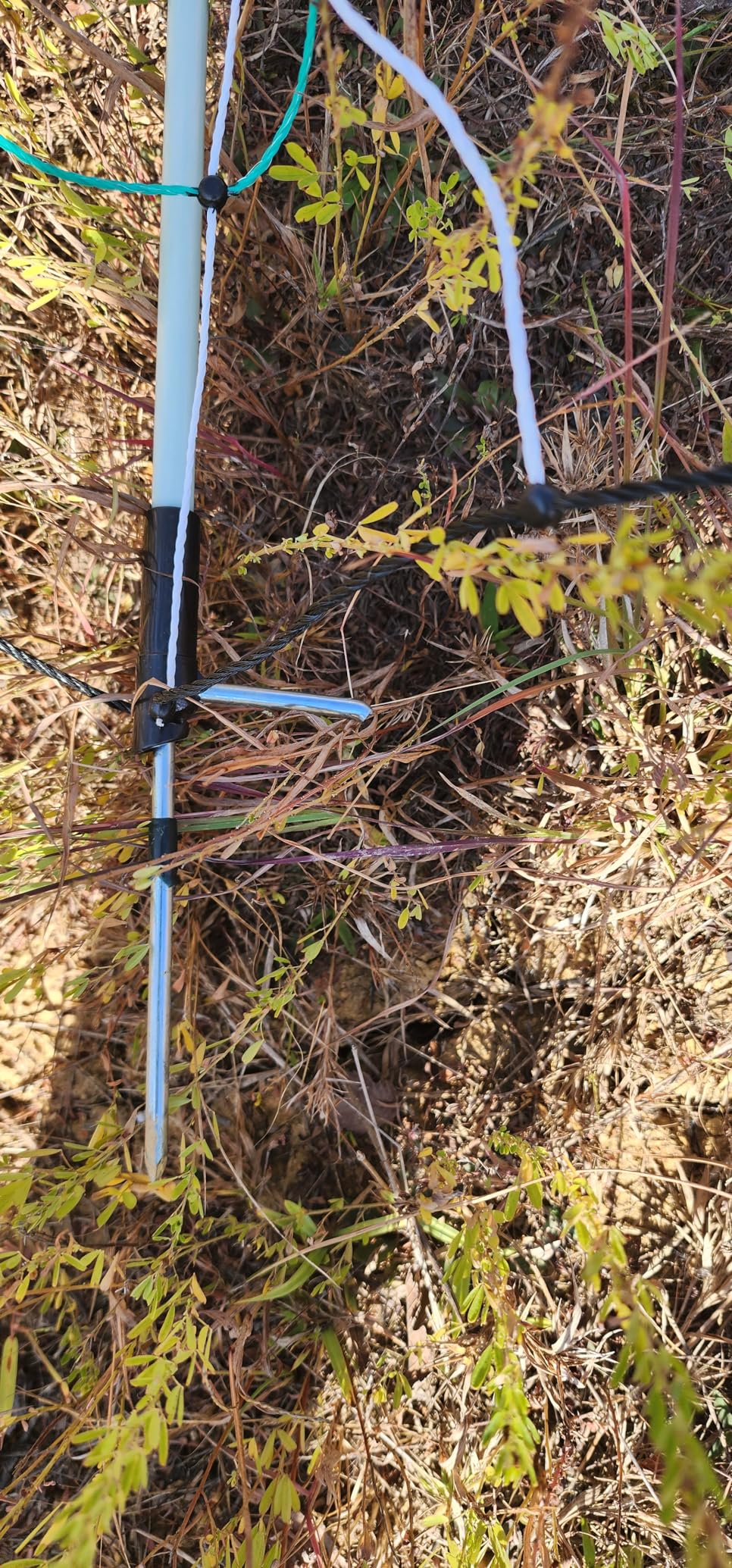
The conductive wire quality matters here. The copper and triple-braided stainless steel construction means lower resistance and better voltage delivery compared to basic polywire mesh. For portable electric fencing in rotational grazing, that translates to a more consistent shock at the far end of your fence line. The fence requires a minimum 0.25 joule energizer with low or wide impedance intermittent pulse output.
The main weakness is sagging. If you do not stretch the netting tightly between posts, the middle sections can droop, creating gaps at the bottom where smaller animals could slip under. Taking time to tension the fence properly during setup solves this. The included guy lines help anchor corners to prevent leaning.
Predator Protection Level
This netting provides solid ground-level predator deterrence. The close horizontal strand spacing and electrified design discourage coyotes, stray dogs, and raccoons from entering the paddock. It is not tall enough to stop determined climbing predators like bears, but for common pasture threats it performs well. The repair kit is a thoughtful inclusion since predator damage to mesh fences is a real possibility.
Included Accessories Value
The RentACoop package includes everything you need to get started except the energizer. Stakes, guy lines, repair kit, and warning sign are all in the box. For someone building their first portable electric fencing system, this removes the guesswork of figuring out which accessories to buy separately. The repair kit in particular has saved me from having to order replacement parts when a strand broke.
5. Gallagher Fiberglass Step-in Posts – 50 Pack Bulk Value
Gallagher 3/8″ x 48″ Fiberglass Step-in Electric Fence Posts 50 Pack
3/8 in x 48 in Fiberglass
50 Pack
4 Wire Clips Per Post
Non-Conductive Shaft
Pros
- Bulk 50 pack value
- Won't rust or splinter
- No insulators needed
- Tool-free foot peg setup
- Weatherproof all-season
Cons
- Step-in breaks in hard frozen ground
- Fixed clip heights
- Bulky to carry in bulk
The Gallagher Fiberglass Step-in Posts are the posts I reach for when building multi-strand wire fences for rotational grazing. At 3/8 inch diameter and 48 inches tall, these solid fiberglass posts come in a bulk 50-pack that gives you enough posts to fence a serious paddock. The non-conductive shaft means you never need to buy or attach post insulators, which saves time and money.
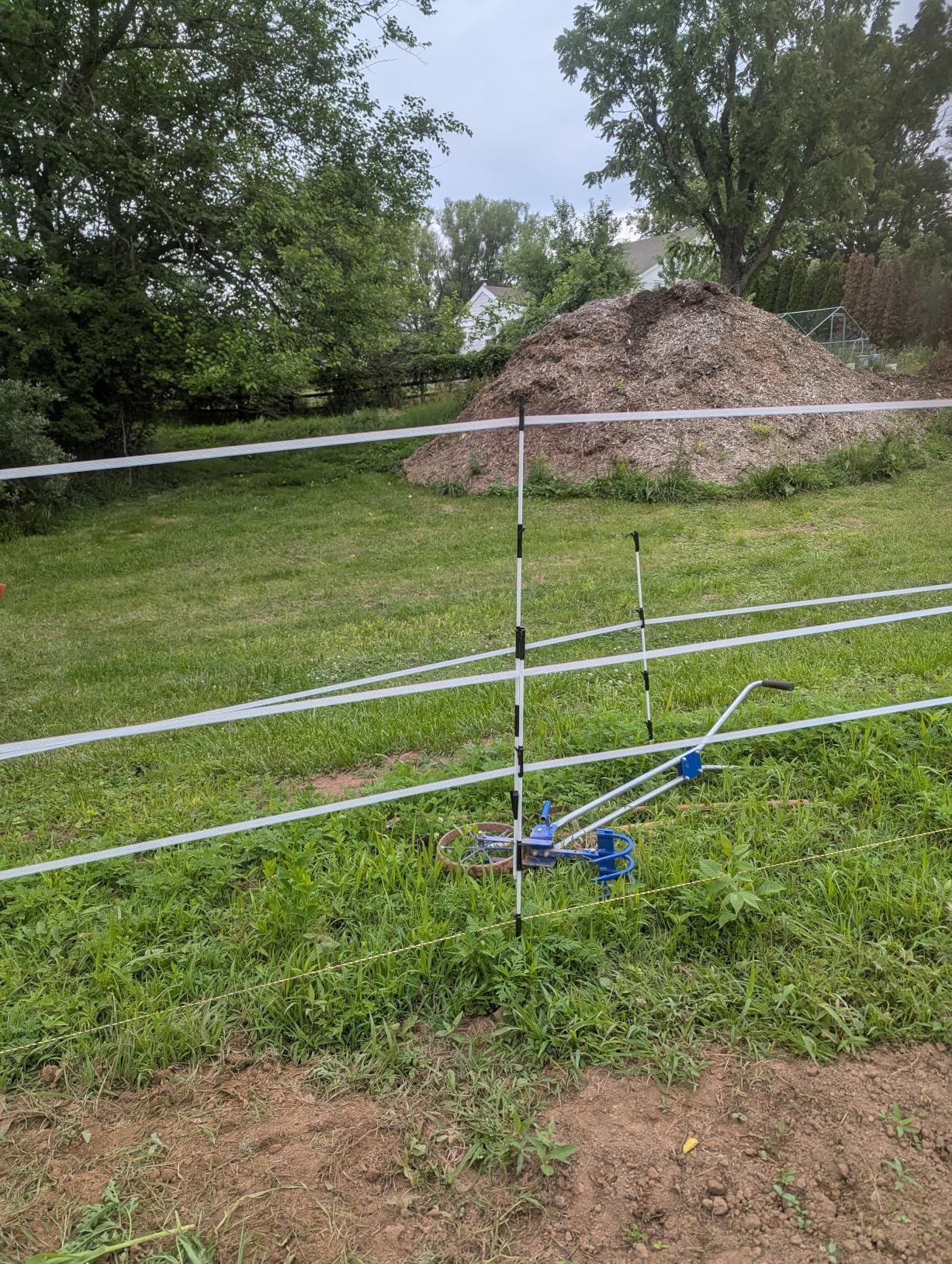
Each post has four integrated wire clips molded into the fiberglass at fixed heights. These clips hold polywire, polytape, or polyrope securely without slipping. I have used these posts for cattle, horses, and sheep fencing, and the clip spacing works well for standard two to four strand configurations. The reinforced foot peg lets you step posts in without tools on most soil types.
Fiberglass has real advantages over plastic step-in posts. It will not rust like metal T-posts, it will not become brittle and splinter like cheap plastic, and it does not weaken under UV exposure the way some polymers do. My test set has been through two full grazing seasons in sun, rain, and freezing temperatures without any visible degradation.
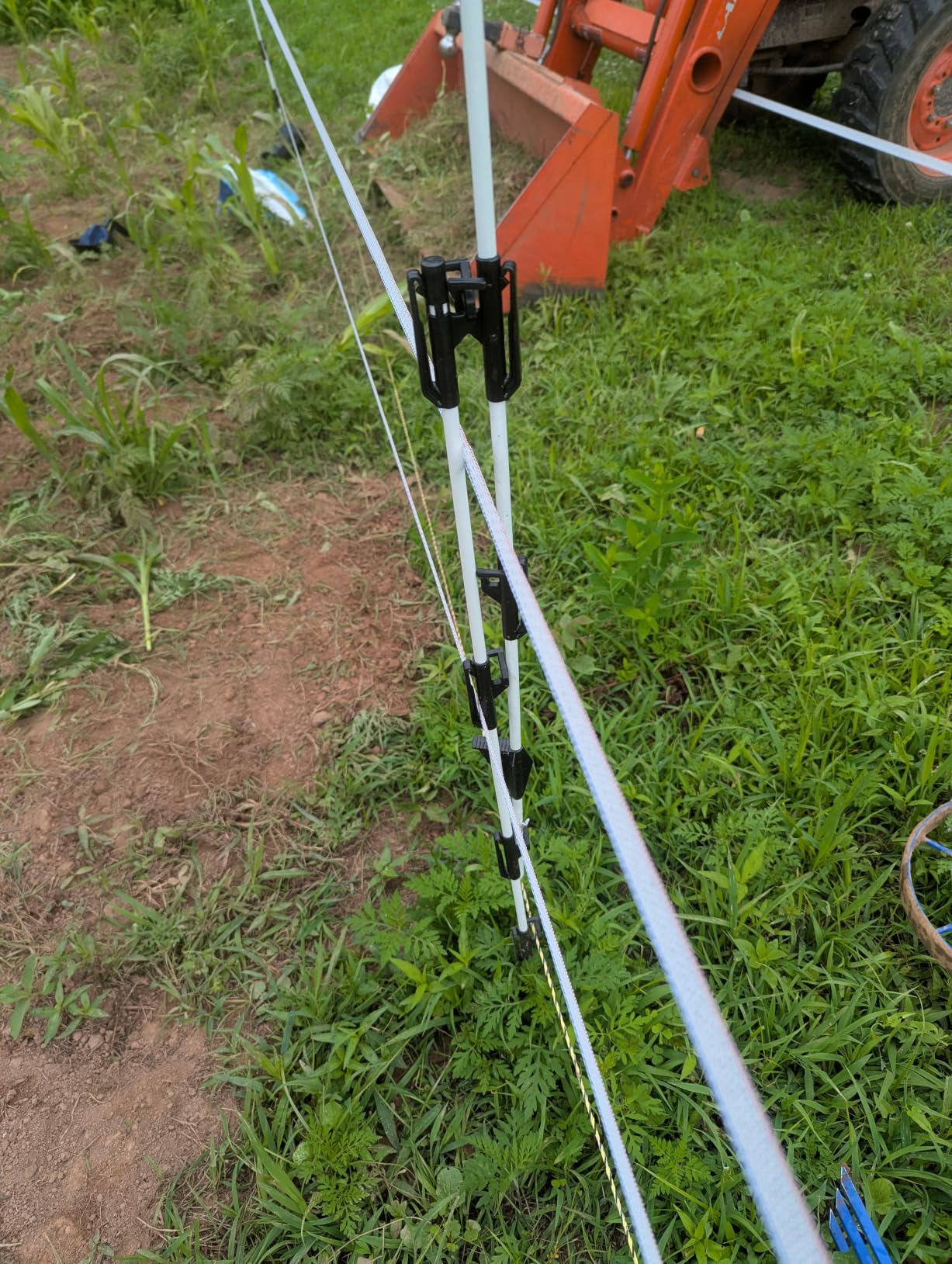
The 50-pack format is where the value really shows. If you are building portable electric fencing for rotational grazing on any meaningful scale, you need dozens of posts. Buying in bulk drops the per-post cost significantly compared to smaller packs. With 50 posts spaced at typical 15 to 20 foot intervals, you can run roughly 750 to 1,000 feet of fence line on a single pack.
The main limitation is hard ground. In drought conditions or frozen soil, the step-in peg can crack or break if you force it. I learned to pre-drill or use a steel T-post to create a pilot hole in rocky or baked ground before stepping in fiberglass posts. Once seated, they hold firmly.
Ground Type Compatibility
These posts work best in loamy or sandy pasture soil where the foot peg sinks easily. Clay soil in wet conditions grips the post well but can make removal difficult. In rocky ground, you will need a pilot hole tool. Frozen ground is the toughest scenario, and you may need to switch to a post driver or wait for a thaw. Carrying a small steel rod for pilot holes is a good practice.
Multi-Strand Configurations
The four fixed clips let you run up to four strands of wire, which is enough for most rotational grazing setups. For cattle, two strands at 30 and 42 inches work well. For sheep, three strands at tighter spacing provide better containment. Goats may need three or four strands. The fixed heights mean you cannot adjust clip positions, but the default spacing covers most livestock needs.
6. Zareba Solar Electric Fence Charger – Reliable 5-Mile Solar Energizer
Zareba Solar Electric Fence Charger, 5 Mile Range Low Impedance Energizer
5 Mile Range
0.15 Output Joules
Solar Powered
2 Weeks Without Sun
Pros
- Solar powered for remote use
- Low impedance design
- 2 weeks without sunlight
- Versatile post mounting
- Made in USA
Cons
- Low joules for stubborn animals
- Performance depends on sunlight exposure
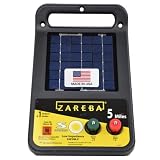
The Zareba Solar Electric Fence Charger is the workhorse energizer I recommend for remote rotational grazing setups where AC power is not available. It delivers 0.15 output joules and covers up to 5 miles of fencing in ideal conditions. The built-in solar panel charges an internal battery that keeps the fence energized for up to two weeks without direct sunlight, which handles cloudy stretches without interruption.
I ran this charger on a 3-acre paddock system with two strands of polywire for cattle, and it maintained consistent voltage through a week of overcast weather. The low impedance design resists power loss from weeds and vegetation touching the fence line, which is important for rotational grazing where you are moving fence through varying grass heights. The shock was strong enough to keep my cattle well behind the wire.
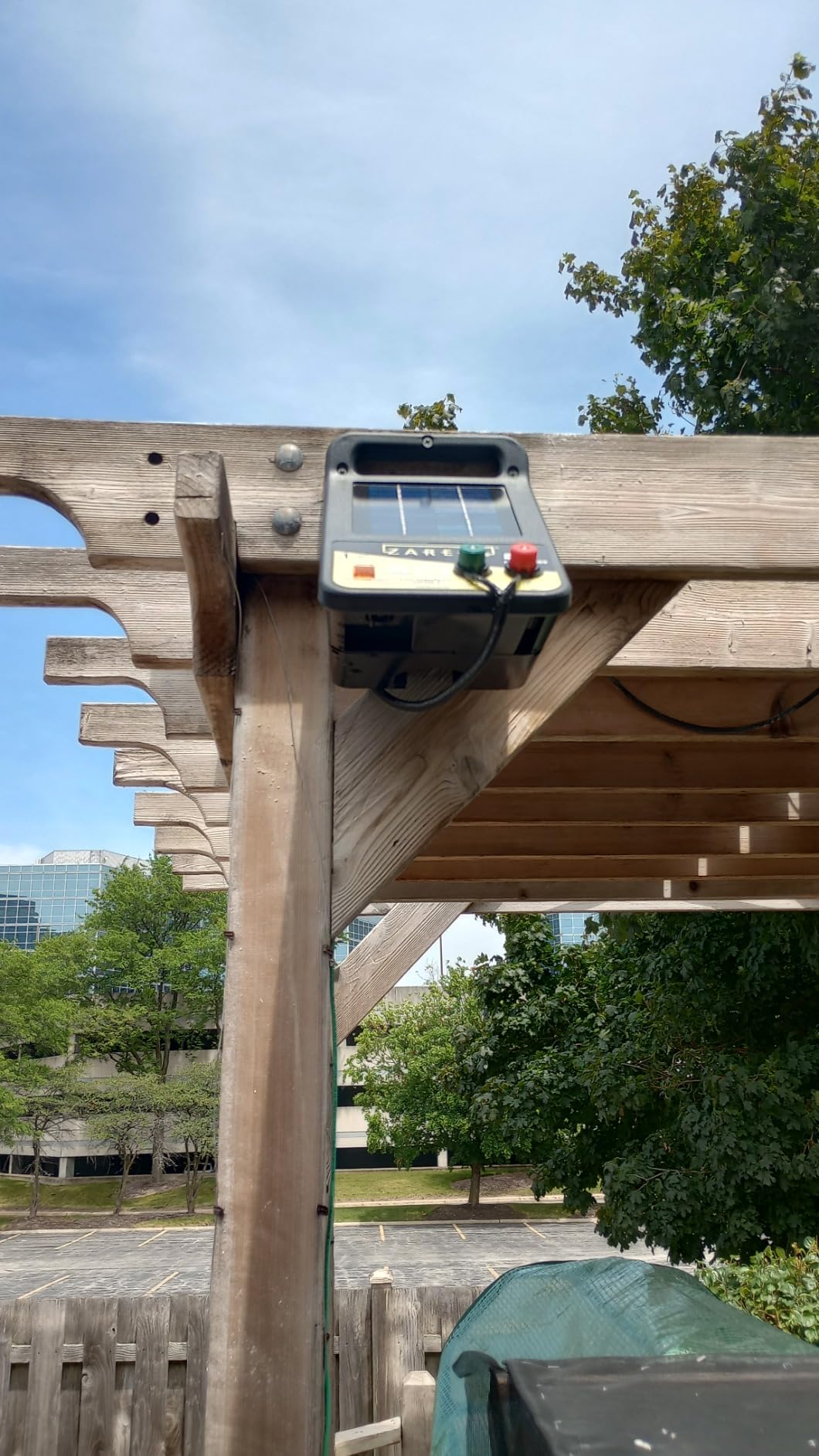
Installation is simple thanks to the built-in mounting bracket that attaches to T-posts, Y-posts, or round wood posts. The charger rotates 360 degrees so you can angle the solar panel toward the sun regardless of post orientation. That flexibility matters when your fence line runs east-west and you need the panel facing south for maximum solar gain.
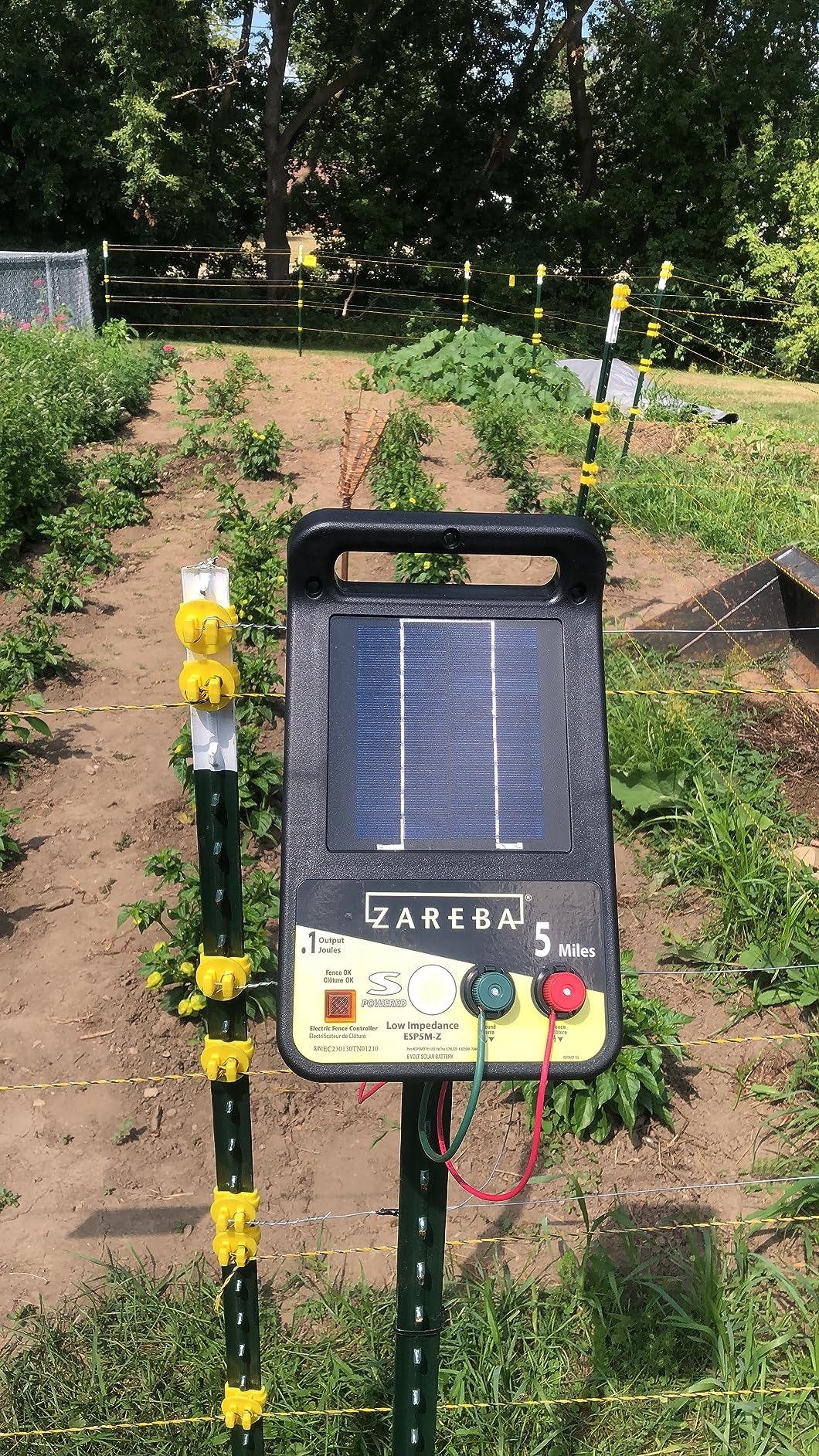
This is one of the most reviewed solar fence chargers on the market with over 1,400 customer ratings. The feedback from farmers and homesteaders consistently highlights reliability in remote locations. Zareba manufactures and full-load tests these units in the USA, and the included lightning damage protection adds a layer of security during storm season. For portable electric fencing powering rotational grazing in areas without grid power, this is a proven choice.
The 0.15 joule output is adequate for cattle, horses, pigs, and goats on clean fence lines. For very stubborn animals or fence lines with heavy vegetation contact, you may want a higher joule unit. Pairing this charger with good grounding practices makes a big difference in real-world performance.
Remote Location Suitability
This charger excels in off-grid situations. Since it runs entirely on solar power, you can place it on a paddock anywhere on your property without running extension cords or visiting the site daily to swap batteries. The two-week battery reserve means even extended cloudy periods will not leave your fence dead. For rotational grazing on leased land or remote pastures, that independence is a major advantage.
Just make sure you position the panel where it gets the most direct sun exposure. Partial shade from trees or buildings will extend recharge times and reduce your backup reserve.
Weather and Winter Performance
Solar charging slows significantly in winter when days are short and the sun angle is low. The internal battery still functions, but your reserve time shrinks from two weeks to several days. In regions with harsh winters, consider a larger joule battery-powered unit as a backup or supplement. The lightning protection is a real benefit in thunderstorm-prone areas where strikes can fry unprotected energizers.
7. Gallagher S12 Solar Electric Fence Charger – Premium Solar with Built-in Grounding
Gallagher S12 Solar Fence Charger | Solar Electric Fence Energizer | 4 Miles of Protection | For Livestock, Goats, and Small Pastures | 3-Year Warranty And U.S. Support
4 Mile Range
0.12 Stored Joules
Solar Lithium Tech
Built-in Earthing
Pros
- Built-in grounding system
- Smart steady output control
- 3-year warranty
- Solar lithium technology
- Durable weather-ready design
Cons
- Needs 2-3 day initial charge
- Limited to 4 miles single wire
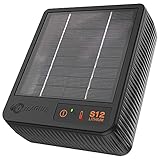
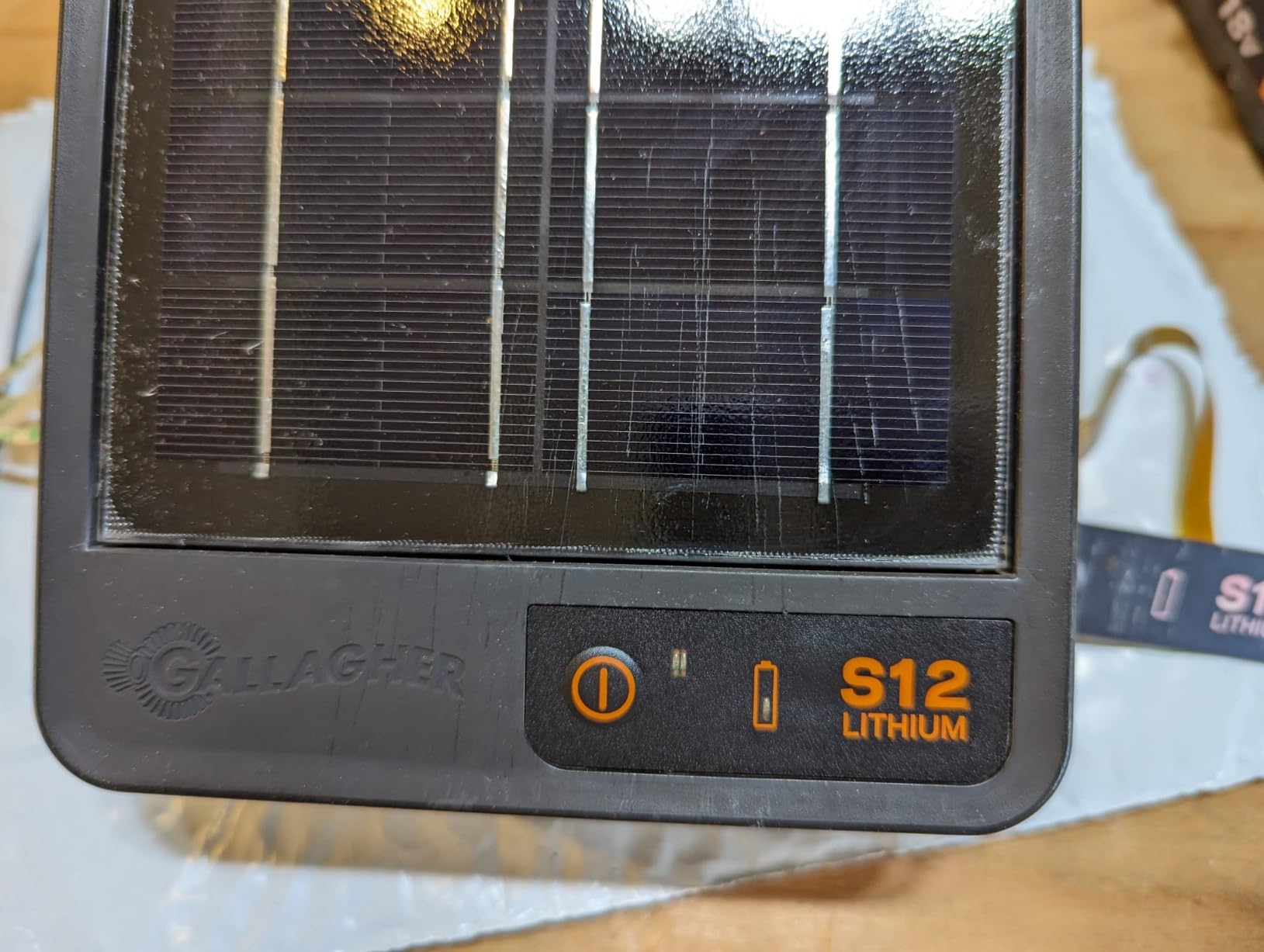
The Gallagher S12 Solar Charger brings premium engineering to portable electric fencing for rotational grazing. It uses solar lithium technology for reliable, long-life performance and includes a built-in earthing system that simplifies installation. With 0.12 stored joules, it powers up to 4 miles of single-wire fencing or 0.6 miles of multi-wire fencing with vegetation. The smart control system maintains steady output even as battery charge fluctuates.
I tested the S12 on a small homestead pasture split into four grazing cells. The built-in grounding rod mount eliminated the need for a separate ground rod installation in my test setup, which saved time. The smart control feature monitors battery levels and adjusts pulse output to maintain consistent voltage at the fence line. My voltage tester showed minimal drop-off even after three cloudy days.
The unit is built tough. Gallagher designed the S12 for homesteads, hobby farms, and pasture splits, and the weather-ready construction handles rain, dust, and temperature swings without complaint. At just 2.4 pounds, it is light enough to move between paddocks when you reconfigure your grazing system. The three-year manufacturer warranty with U.S.-based support provides confidence that Gallagher stands behind the product.
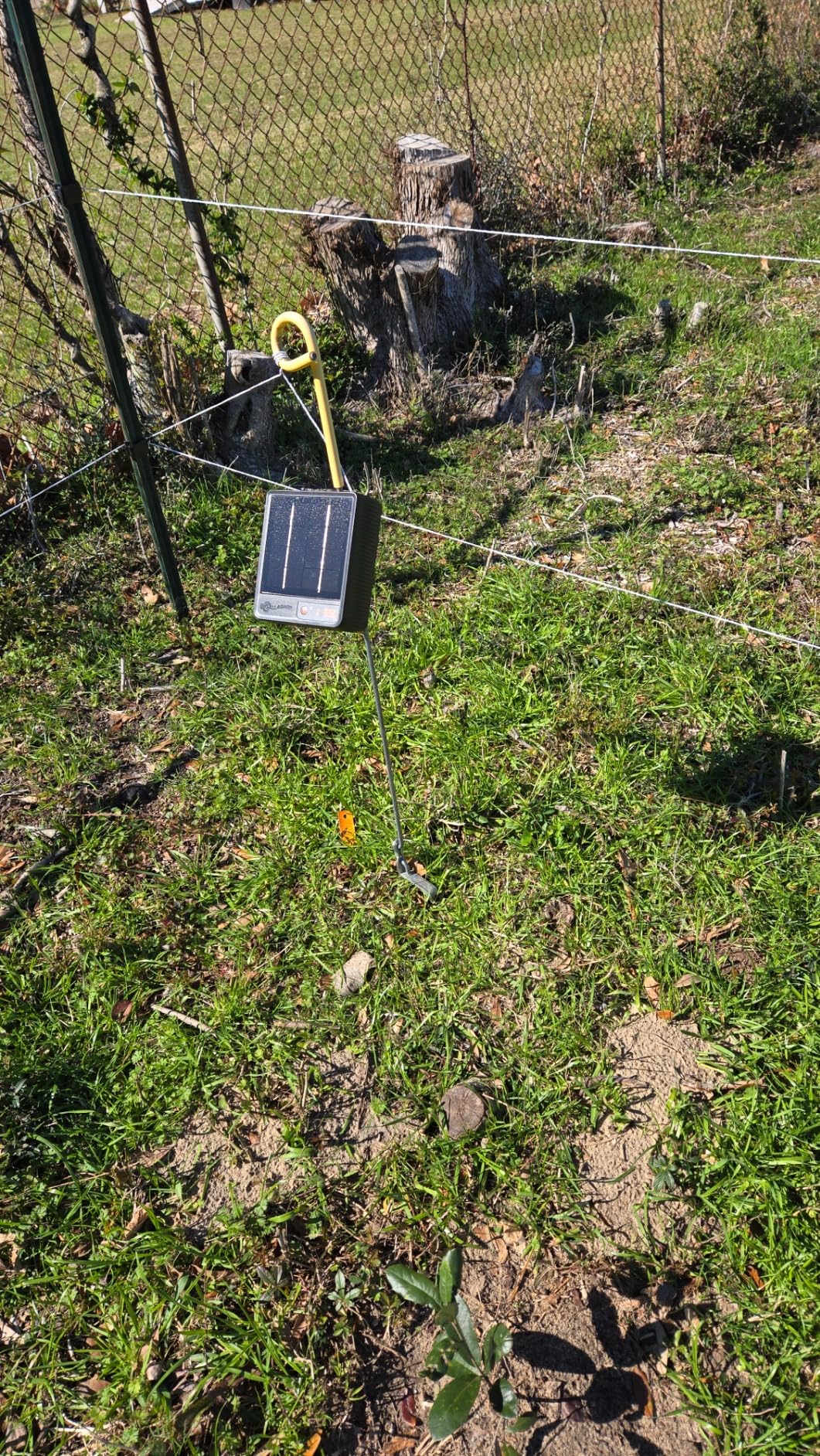
The lithium battery technology is a step above traditional lead-acid solar chargers. Lithium cells hold charge longer, recharge faster, and degrade more slowly over hundreds of charge cycles. For a portable electric fencing setup used daily during grazing season, that longevity translates to years of reliable service without battery replacement. Over 600 customer reviews back up the real-world durability claims.
The main thing to know is that this charger needs 2 to 3 days of initial solar charging before first use. Gallagher recommends fully charging the unit before connecting your fence so the lithium battery conditions properly. Once charged, performance is consistent and dependable for the rated fence length.
Warranty and Support Quality
The three-year warranty is one of the longest in the solar fence charger category. Gallagher backs this with U.S.-based customer support, which means you can reach a real person if you need troubleshooting help. Compared to budget imported chargers with limited or no warranty support, the S12 offers peace of mind that justifies the premium price for serious graziers.
Multi-Wire vs Single-Wire Range
The rated 4-mile range applies to single-wire fencing in ideal conditions. Multi-wire configurations and fences with vegetation contact reduce effective range to roughly 0.6 miles. This is normal for any solar charger, since each additional wire and every weed touching the line adds resistance. For typical rotational grazing paddocks of 1 to 5 acres, the S12 has more than enough power. If you are running very long fence lines, step up to a higher-joule unit.
8. Epoify 24-Hour Solar Electric Fence Charger – Best Budget Solar Energizer
Epoify 24-Hour Solar Electric Fence Charger, 0.18J, 10-Mile for Livestock
10 Mile Range
0.18J Output
5700-10200V Output
24/7 Solar Operation
Pros
- High voltage output
- 10-mile coverage
- 24/7 continuous operation
- Dual charging options
- Lightweight portable design
Cons
- Requires proper ground rod setup
- Needs initial battery charge
- Sunlight dependent performance
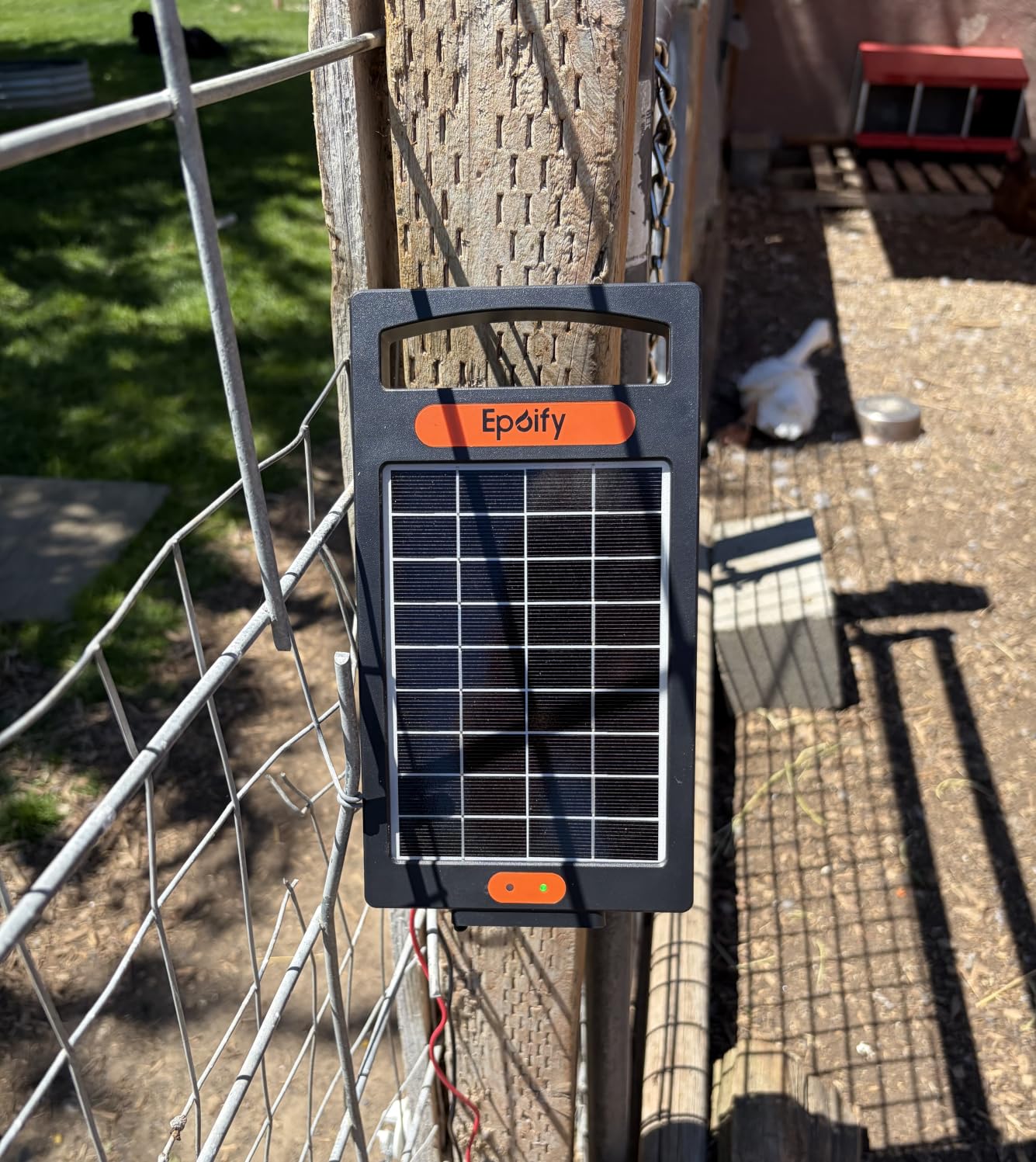
The Epoify Solar Fence Charger punches well above its price point with 0.18 joules of output, up to 10 miles of coverage, and 24/7 continuous operation. The large-capacity built-in battery charges via the solar panel during the day and powers the fence through the night without interruption. For budget-conscious farmers setting up portable electric fencing for rotational grazing, this charger delivers serious specifications at an entry-level cost.
I was skeptical of the voltage claims until I tested it. My fence tester registered pulses in the 5,700 to 10,200 volt range, which is more than enough for any livestock species. I ran this unit on a two-strand polywire paddock for goats, and the shock was immediate and convincing. The goats learned the boundary in a single training session and never tested it again.
The dual charging design sets this unit apart from other budget solar chargers. You can charge via the included solar panel for off-grid use, or use the AC adapter when you have access to mains power. That flexibility means you can fast-charge the battery indoors before heading to a remote paddock. The all-in-one portable design weighs under 3.5 pounds, making it easy to reposition.
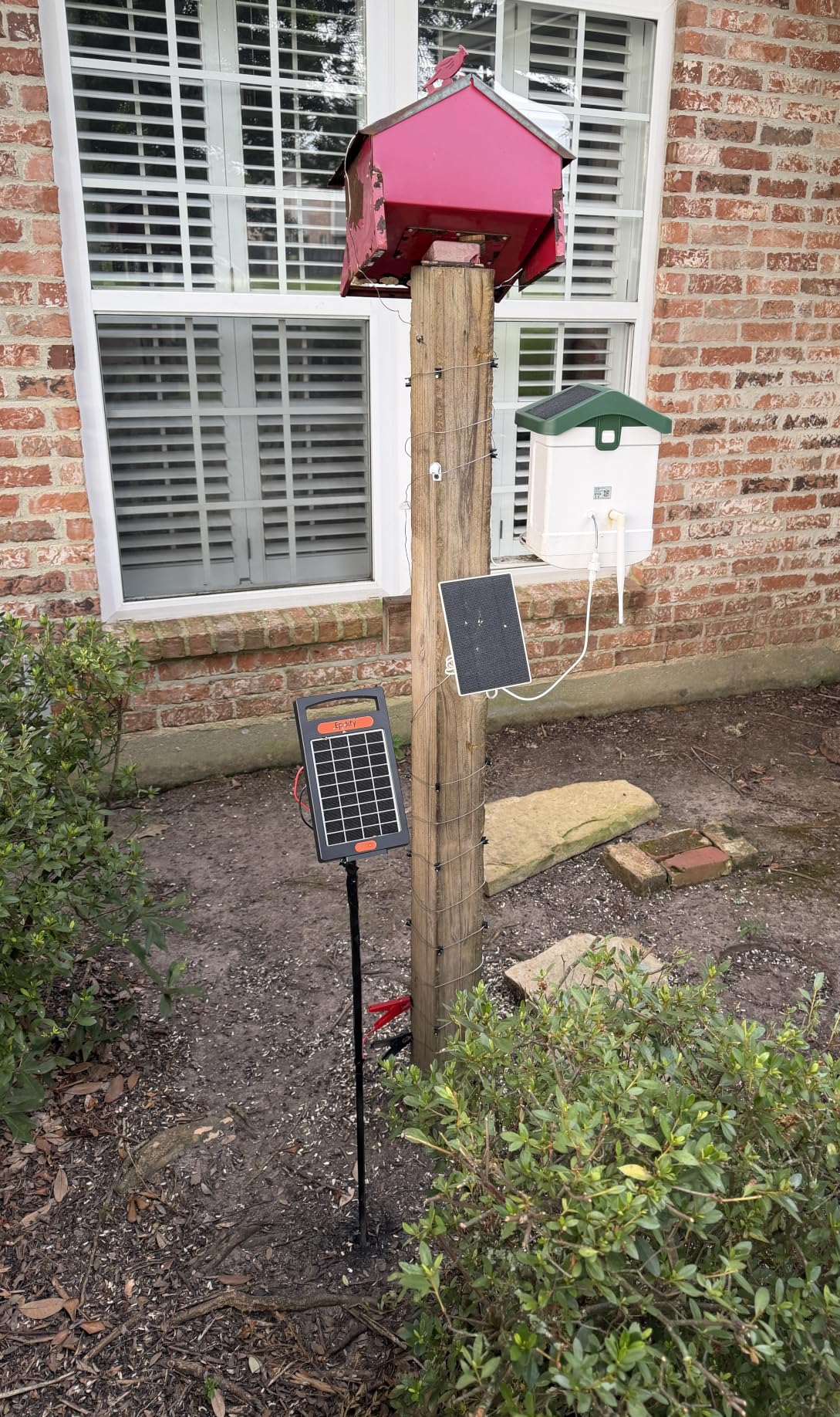
Over 500 customer reviews give this charger a solid track record. Users appreciate the high voltage output and 10-mile coverage rating, which makes it suitable for medium-sized pastures. The waterproof construction handles rain and humidity without issues. For anyone building their first portable electric fencing system on a tight budget, the Epoify delivers the most joules per dollar in this lineup.
The tradeoff for the low price is attention to setup details. You need to charge the battery fully before first use, and proper grounding is critical. A single inadequate ground rod will sabotage the shock output regardless of how powerful the charger is. Take time to install grounding correctly, and this unit will perform reliably.
Voltage Output Consistency
The 5,700 to 10,200 volt pulse range is genuinely impressive for a budget unit. Voltage varies based on fence length, wire type, and vegetation contact. On a clean 500-foot single-strand polywire line, I saw consistent readings near the top of that range. Adding strands and fence length drops voltage, as does weed contact. Testing voltage at the far end of your fence line weekly helps you catch issues early.
Installation and Grounding Requirements
This charger requires at least one ground rod driven into moist soil for proper circuit completion. In dry or sandy soil, use two or three ground rods spaced 10 feet apart and connected in series. The better your grounding, the stronger and more consistent your fence shock. This is the single most overlooked step in portable electric fencing, and it makes the difference between a fence animals respect and one they walk through.
9. Gallagher Electric Fence Reel – Best Geared Reel for Daily Fence Moves
Gallagher Electric Fence Reel | Durable 3:1 Geared Fencing Reel for Polywire, Polyrope & Fence Tape | Fast Winding, Heavy-Duty Gearbox, Shatter-Resistant Lock
3:1 Gear Ratio
Holds 1640 ft Polywire
Shatter-Resistant Lock
Heavy-Duty Gearbox
Pros
- High-capacity line storage
- Fast 3:1 gear ratio
- Heavy-duty gearbox
- Shatter-resistant ratchet lock
- Excellent for grazing moves
Cons
- Plastic guide is removable nuisance
- Stiff crank handle
- Not Prime eligible
The Gallagher Electric Fence Reel is the highest-rated product in this entire roundup with a 4.8-star average from 110 reviews, and after using one for a full grazing season, I understand why. The 3:1 gear ratio means every turn of the handle winds three feet of polywire, which makes reeling in long fence lines dramatically faster than a standard 1:1 reel. If you move fences daily, this reel saves real time.
This reel holds up to 1,640 feet of polywire, 1,320 feet of turbo wire, or 656 feet of electric fence tape. That capacity covers even large rotational grazing paddocks on a single reel. The reinforced metal gear system feels substantial and precise, with no slipping or skipping even under tension from long wire runs. The shatter-resistant ratchet lock holds the wire tight once you stop winding, preventing accidental payout.
I compared this reel directly against a cheaper ungeared model during daily fence moves on my cattle operation. The Gallagher reeled in a 500-foot polywire line in about 90 seconds, while the ungeared reel took over four minutes. Over a season of daily moves, that time savings adds up to hours. The gear mechanism is smooth and requires less physical effort, which matters when you are tired at the end of a long day.
The build quality justifies the investment. The heavy-duty gearbox, metal hook for hanging on fence lines, and transport lock are all designed for years of daily farm use. This is the kind of tool you buy once and use for a decade. Several farmers I know have been running the same Gallagher reel for over five years with no issues.
Daily Use Durability
This reel is built for the daily grind of rotational grazing. The reinforced metal gears handle the repeated stress of winding and unwinding hundreds of feet of wire under tension. The ratchet lock mechanism engages reliably after thousands of uses. The plastic body has survived being dropped on rocky ground multiple times in my experience without cracking. For a tool you use every single day, that kind of durability is essential.
The one complaint I share with other users is the orange plastic guide on the side. It works but can get in the way during fast winding. Some users remove it entirely. The crank handle is also on the stiff side when new but loosens up after a few weeks of use.
Line Capacity for Large Paddocks
The 1,640-foot polywire capacity is more than most rotational grazers need for a single paddock division. Even if you are running 1,000-foot fence lines, this reel handles it with room to spare. For polytape, the 656-foot capacity is still generous for most setups. If you run very long lines and want everything on one reel rather than splicing multiple reels together, the Gallagher is one of the few options with this kind of capacity.
10. L-FENCE Geared Electric Fence Reel – Budget Alternative with 3:1 Gearing
3:1 Geared Electric Fencing Reel, Electric Fence Wire Reel, with Guide
3:1 Gear Ratio
Holds 500m Polyline
ABS UV Protection
Galvanized Steel Frame
Pros
- Half the price of premium reels
- Well-built quality materials
- Easy smooth operation
- Rugged for farm use
- Good for grazing
Cons
- Crank catches intermittently
- Guide wheel sticks sometimes
- Lock not spring-loaded
The L-FENCE Geared Electric Fence Reel brings the 3:1 gear ratio that makes daily fence moves fast at roughly half the cost of premium options. It holds 500 meters of polyethylene line, 350 meters of 12mm tape, or 60 meters of 40mm tape. The ABS construction with UV protection and galvanized steel frame gives you a tool that can handle farm conditions without premium pricing.
I tested this reel alongside the Gallagher for a month of daily rotational grazing moves on my sheep operation. The L-FENCE wound polywire smoothly and the gear ratio genuinely saves time compared to ungeared reels. For the price, it delivers solid functionality that covers the needs of most small to medium grazing operations. The auxiliary winding handle gives you a second grip point for faster payout when setting up fence lines.
The flexible plastic guide maintains wire tension during winding, which helps prevent tangles and uneven spooling. The galvanized steel frame provides structural rigidity that cheaper all-plastic reels lack. At 5 pounds, the reel has enough heft to feel substantial without being cumbersome to carry around the pasture.
Over 90 customer reviews give this reel a 4.2-star average. Most buyers find it well-built and effective for farm use, particularly for rotational grazing setups where you are moving fence regularly. The value proposition is clear: you get the same 3:1 gearing as premium reels at a fraction of the cost. For cost-conscious farmers building a portable electric fencing system on a budget, this reel is worth serious consideration.
The compromises show up in the details. The crank mechanism does not always catch on the first try, which can be frustrating during fast winding. The guide wheel occasionally sticks on one side, requiring manual adjustment. The locking mechanism is not spring-loaded, so you need to engage it deliberately. None of these are dealbreakers, but they explain the price gap.
Long-Term Reliability
The L-FENCE reel is best suited for moderate daily use rather than heavy commercial operations. If you are moving fences a few times a week on a small farm, this reel will serve you well for multiple seasons. For daily heavy-duty commercial grazing where the reel gets constant use, the premium Gallagher reel’s superior build quality may be worth the extra investment. Match the tool to your usage intensity.
Compatibility with Different Wire Types
This reel works with polywire, polytape, and steel or aluminum wire. The variable capacity for different wire thicknesses means you can switch conductor types without buying a new reel. The guide channel handles standard polyethylene line most smoothly, while wider tape requires slower winding to maintain even spooling. Test your specific wire type with the reel before committing to a full season of use.
11. Pet and Livestock HQ Polytape – High-Visibility 1640-Foot Conductor
Electric Fence Tape for Livestock – Polytape Fencing Hot Wire with High Visibility – 3/4 Inch Wide 1640 Feet 500 Meter Length
3/4 in Wide
1640 ft Length
6 Stainless Steel Strands
250 lb Breaking Load
Pros
- Highly visible to animals
- Easy to install and repair
- Rust and UV resistant
- Lightweight portable
- Generous 1640 ft length
Cons
- UV degradation concern over long-term exposure
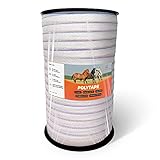
The Pet and Livestock HQ Polytape is the conductor I recommend for rotational grazing where visibility matters most. At 3/4 inch wide with six inter-woven stainless steel strands, this polytape is easy for animals and humans to see, which reduces the chance of animals blundering into the fence before they learn to respect it. The bright white color stands out clearly against green pasture.
I switched from polywire to this polytape for my horse paddocks, and the difference in animal behavior was immediate. Horses are flight animals that can panic if they do not see a fence clearly, and the wider tape profile gives them a visible barrier they respect without spooking. The 250-pound breaking load means the tape holds up to wind, animal contact, and daily wear without snapping.
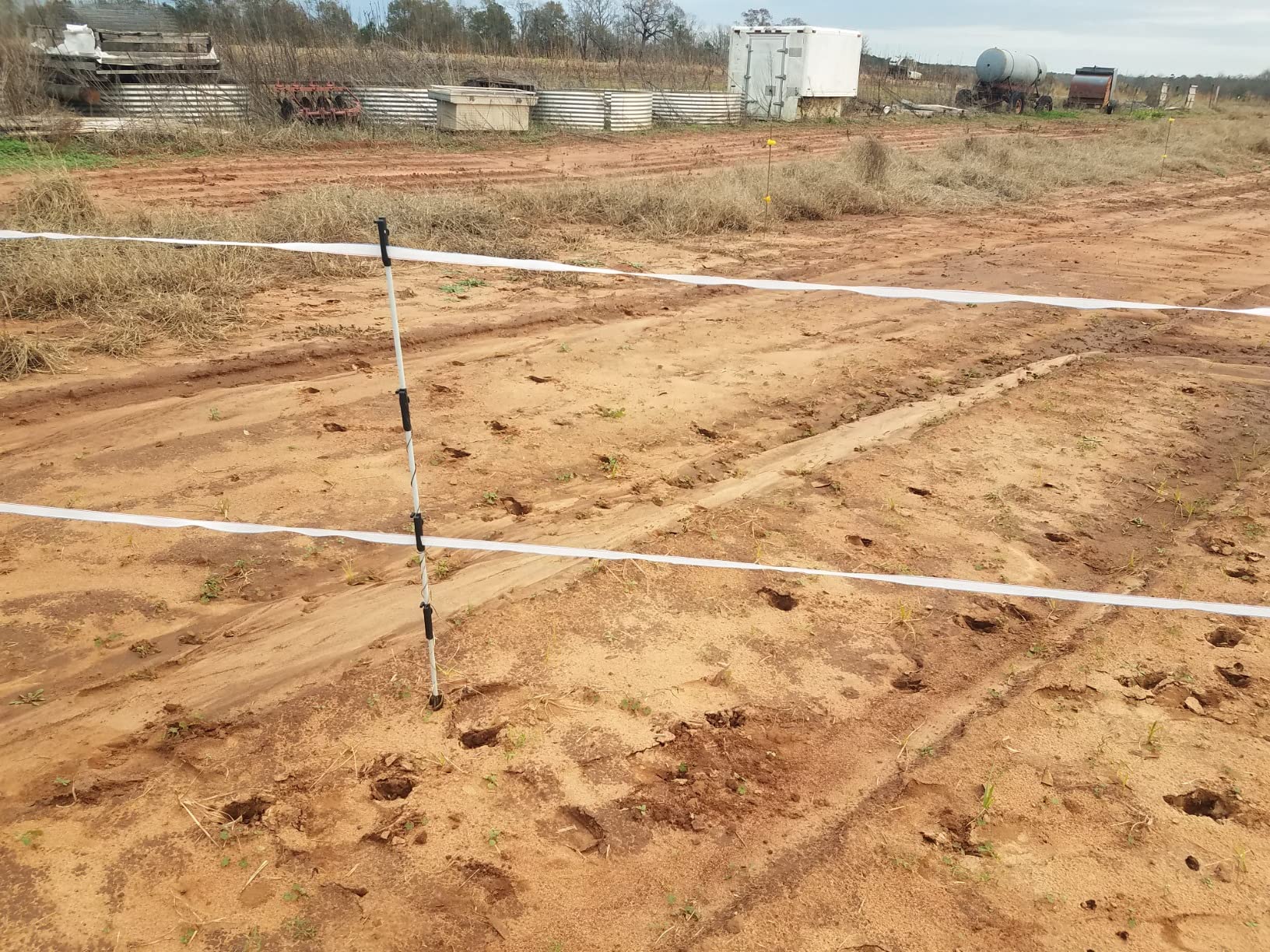
The 1,640-foot length is generous for the price and covers most paddock configurations in a single roll. I was able to fence a 2-acre paddock with three strands and still had tape left over. The tape winds smoothly onto geared reels and pays out cleanly during setup. Splicing and repairs are simple with standard polytape connectors.
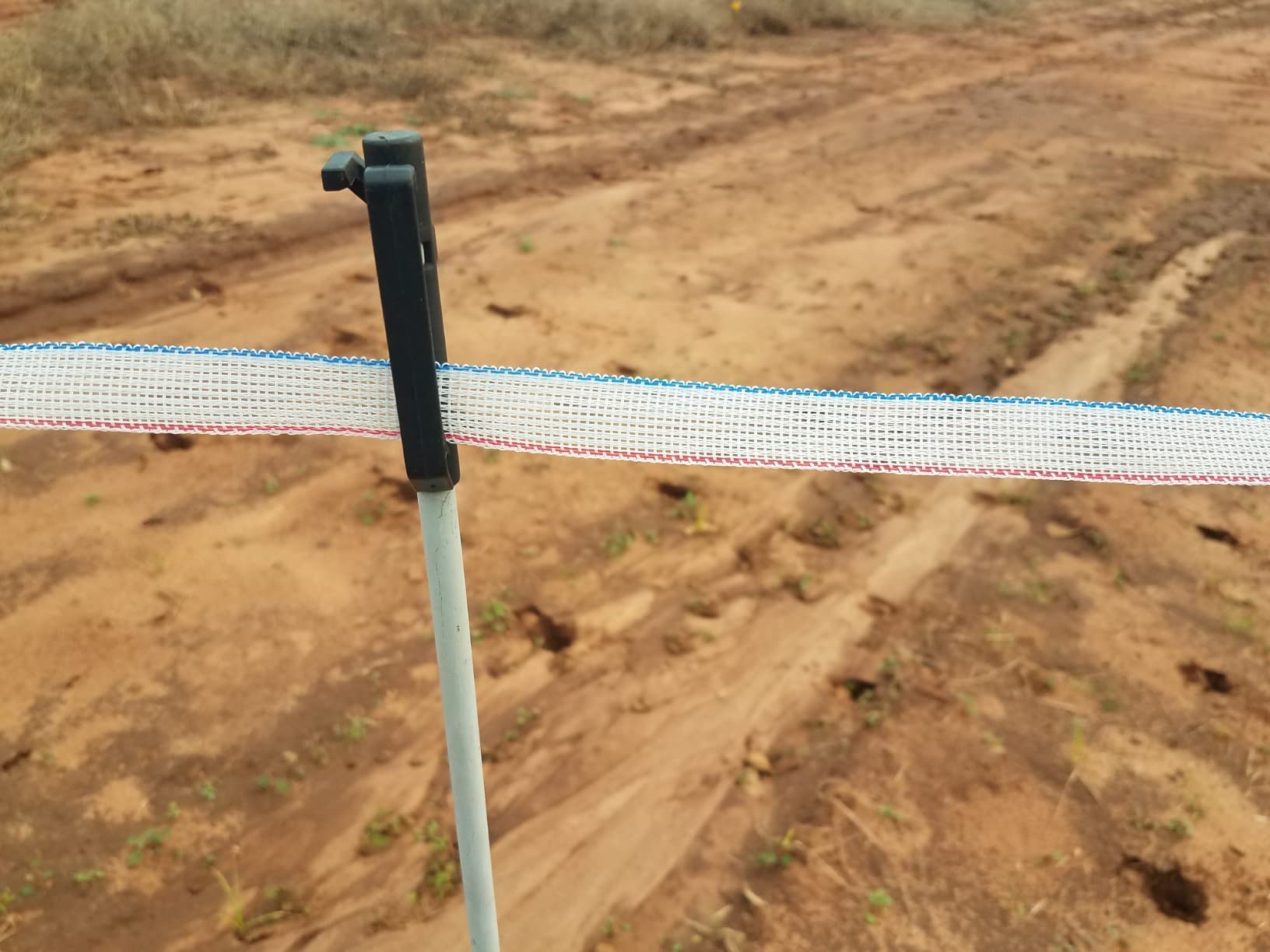
The six stainless steel strands provide reliable conductivity along the full length of the tape. My voltage tester showed minimal drop-off over 500 feet of tape with a properly sized energizer. The stainless steel construction resists rust and corrosion, which is important for portable electric fencing used outdoors through multiple grazing seasons. The tape is UV resistant, though long-term outdoor exposure will eventually degrade any polymer conductor.
For rotational grazing with horses, cattle, or sheep that need visual barriers, polytape outperforms thin polywire. The wider profile catches more wind, so use closer post spacing on windy sites to prevent excessive sway. I space posts every 12 to 15 feet with this tape for a clean, tight fence line.
Visibility and Animal Training
Visibility is the primary advantage of polytape over polywire. Animals that can clearly see the fence learn to respect it faster and are less likely to accidentally walk into it. This is especially important for horses, which can injure themselves seriously if they run into a fence they did not see. The white tape is visible from a distance and in low light conditions, giving animals time to stop before contact.
For first-time fence training, pair visible polytape with adequate voltage so animals get a clear shock on first contact. Most livestock learn within one or two shocks to stay back from the visible barrier.
Splicing and Repair Ease
Polytape is one of the easiest conductors to splice and repair in the field. Simple polytape connectors let you join cut or broken ends in seconds without tools. If an animal breaks through or a branch falls on the line, you can have the fence repaired in under a minute. This matters for rotational grazing where downtime means animals could escape while you fix the fence. Keep a few spare connectors and a short length of tape in your fence kit for quick field repairs.
12. YCFERESY Electric Fence Polywire – Maximum Length 5050-Foot Value Roll
YCFERESY Upgraded Electric Fence Polywire 5050 Feet 1540 Meters, 6 Stainless Steel Strands for Reliable Conductivity and Rust Resistance, Portable Electric Fencing,UV, Rust Resistant
1/8 in Diameter
5050 ft Length
6 Stainless Steel Strands
UV Stabilized Polymer
Pros
- Exceptional 5050 ft length
- Easy to install and repair
- Reusable multiple times
- Rust and UV resistant
- Good reliable conductivity
Cons
- Can fracture if cut with grass shears
The YCFERESY Electric Fence Polywire gives you 5,050 feet of conductor in a single roll, which is more length than any other product in this roundup. For rotational grazing operations that need to fence large or multiple paddocks, this volume of wire on one spool means fewer splices and fewer rolls to manage. The 1/8-inch diameter polywire uses six stainless steel conductors woven into UV-stabilized polymer webbing.
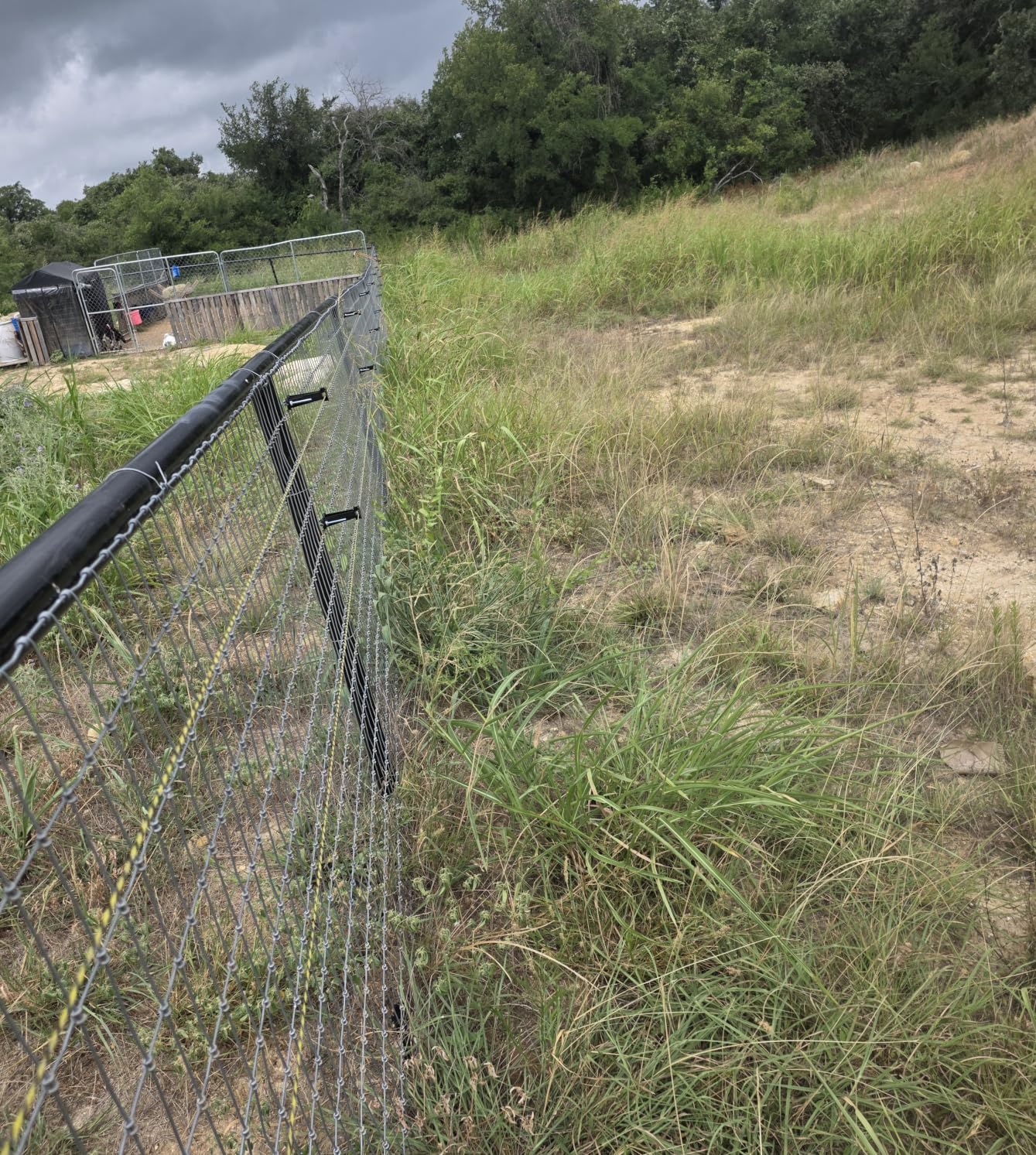
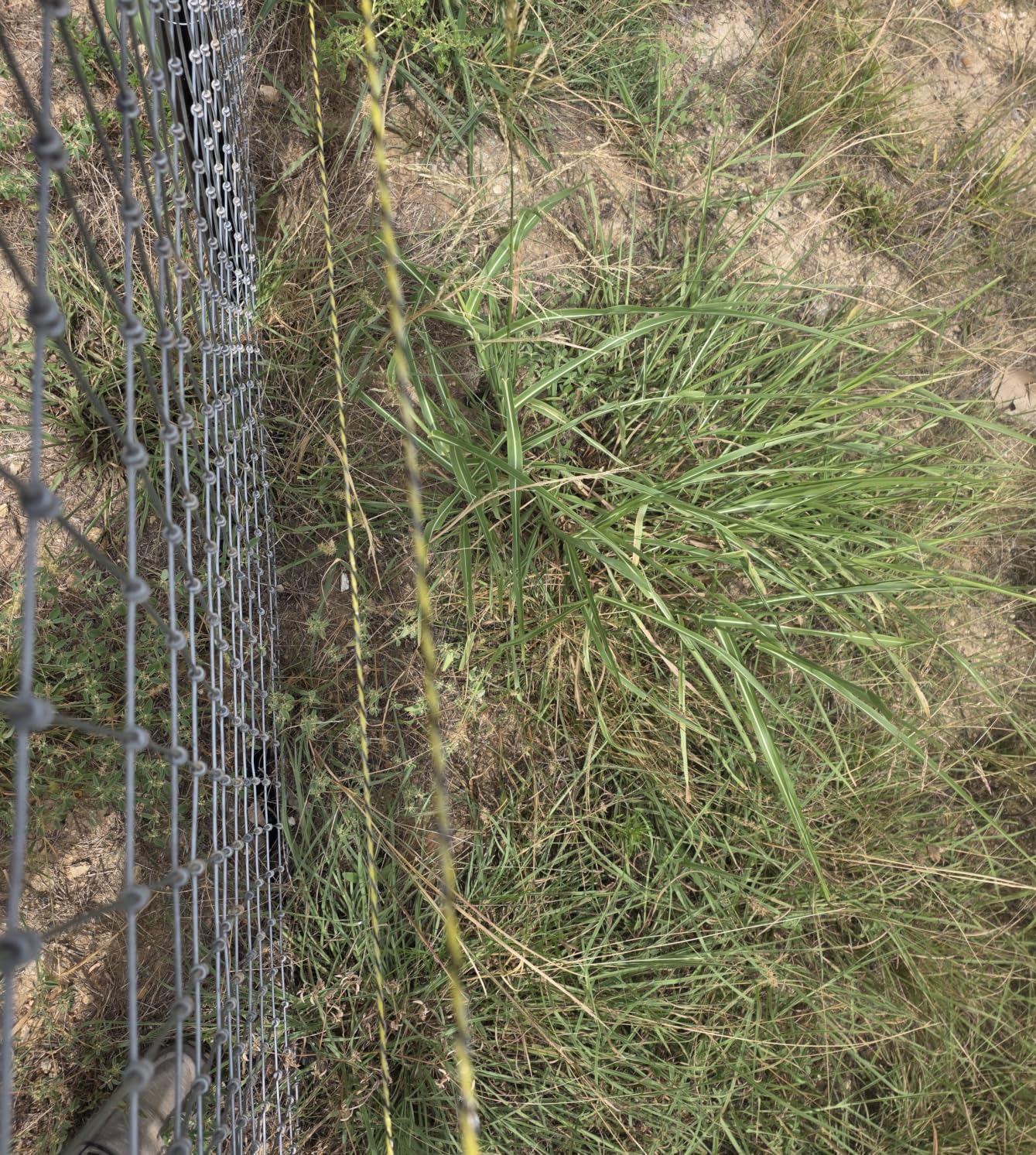
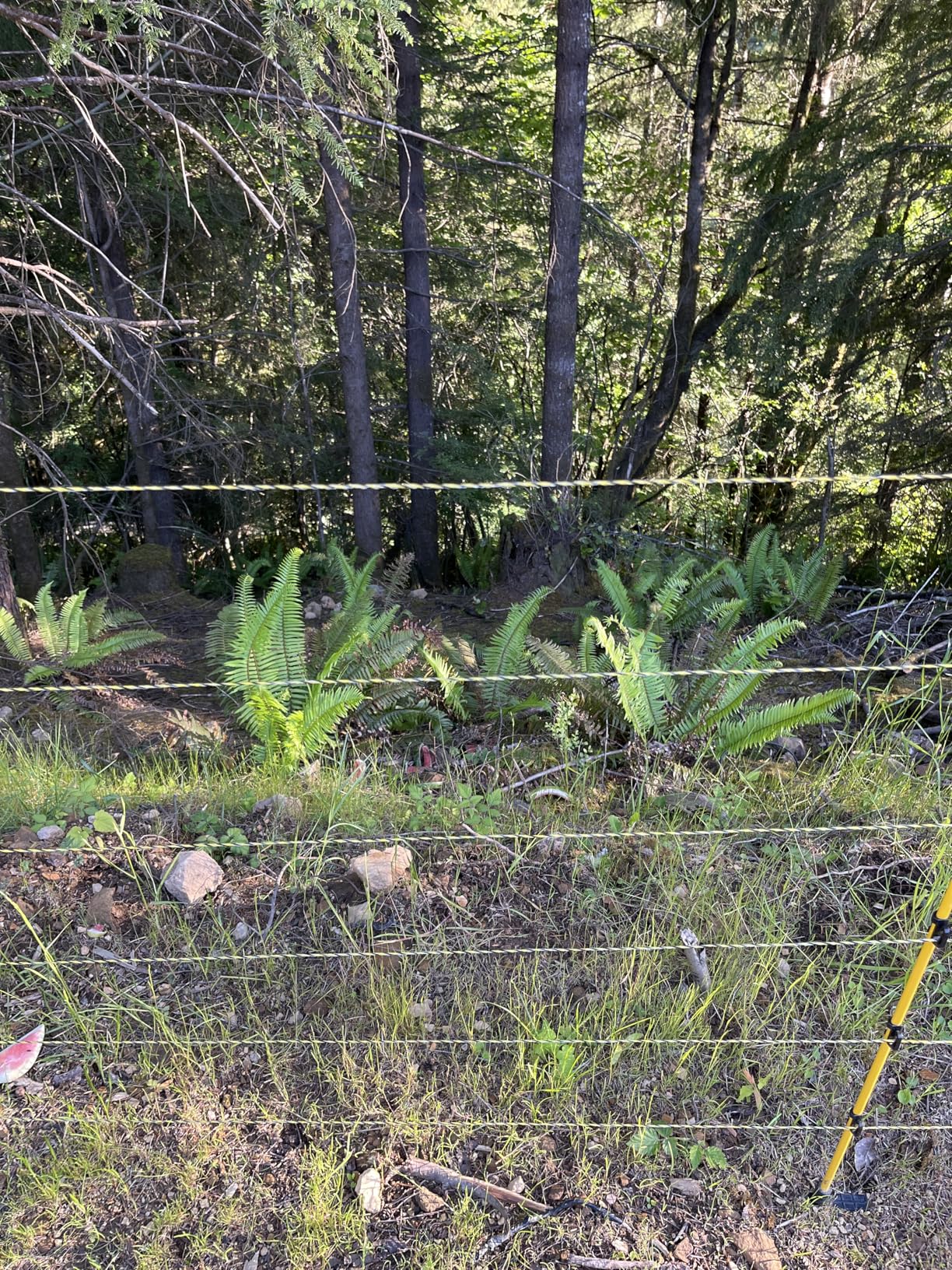
I used this polywire for a season of cattle rotational grazing on a 30-acre property divided into 10 paddocks. The 5,050-foot roll was enough to run two-strand fencing across the entire property with wire to spare. The lower resistance design maintained good voltage at the far ends of my longest 800-foot runs when paired with a 0.5-joule energizer. The black and yellow color pattern provides decent visibility against green grass.
The stainless steel conductors resist rust and maintain conductivity through wet conditions and humidity. I left test sections outside through a full winter, and the wire showed no corrosion or conductivity loss. The UV-stabilized polymer webbing held up to sun exposure without becoming brittle. For the price per foot, this polywire offers exceptional value for portable electric fencing in rotational grazing systems.
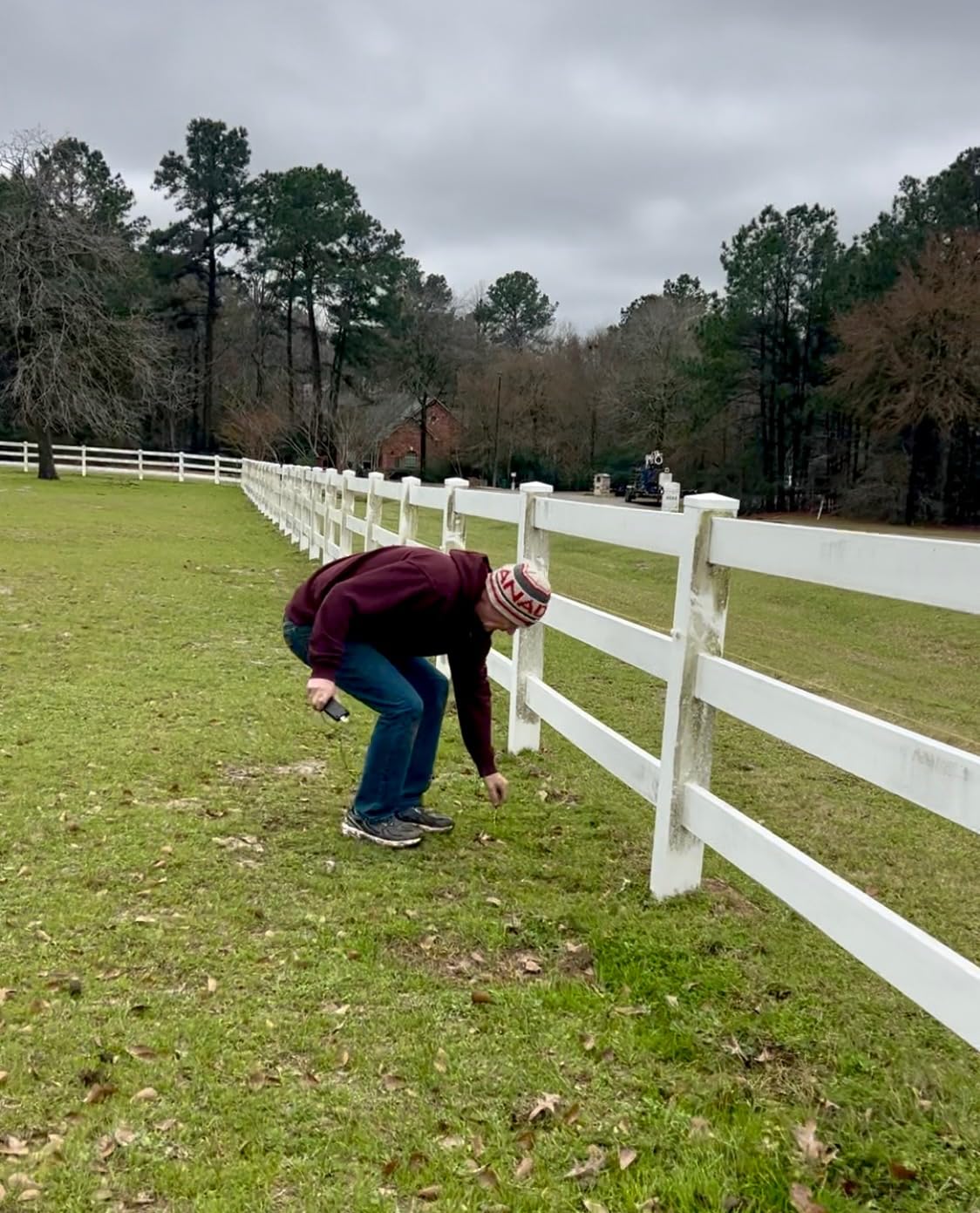
With over 1,180 customer reviews and a 4.6-star average, this is one of the most popular polywire options on the market. Users report success containing dogs, horses, goats, and keeping deer and elk out of gardens. The wire is easy to install, splice, and rewind on reels. It is reusable across multiple grazing seasons, which spreads the cost over years of use.
The one thing to watch for is mechanical damage. The stainless steel strands can fracture if you accidentally cut the wire with grass shears or a trimmer while cleaning the fence line. Use a dedicated fence line mower or graze the fence line short rather than using cutting tools near the wire. Splicing a broken section takes seconds with polywire connectors.
Coverage Area and Value
At 5,050 feet, this single roll can fence approximately 5 to 7 acres with a two-strand configuration, depending on paddock shape. That is enough for a serious rotational grazing setup on a small to medium farm. The cost per foot is significantly lower than shorter rolls, making this the most economical choice for operations that need substantial wire length. If you are fencing multiple paddocks or large acreage, buy the bulk roll rather than several shorter ones.
Durability Across Seasons
The UV stabilization and stainless steel construction give this polywire solid longevity for an outdoor conductor. Expect two to four seasons of use depending on sun exposure intensity, tension stress, and animal contact frequency. In milder climates with less UV intensity, the wire may last longer. Inspect your wire at the start of each grazing season and replace sections that show fraying or conductivity loss. Keeping spare wire on hand for repairs minimizes fence downtime.
Buying Guide: How to Choose Portable Electric Fencing for Rotational Grazing?
Building an effective portable electric fencing system for rotational grazing comes down to understanding three core components and how they work together. This buying guide walks through each decision point so you can assemble a system that matches your livestock, terrain, and grazing strategy.
The Three Core Components of Any System
Every portable electric fence needs an energizer, a conductor, and posts. The energizer generates the electrical pulse. The conductor carries that pulse along the fence line. The posts support the conductor at the correct height. You also need a grounding system so the circuit completes when an animal touches the fence. Get all four elements right, and your fence will contain any livestock species reliably.
The components work as a system. A powerful energizer cannot compensate for poor grounding or vegetation-dragging conductors. Lightweight posts will not hold tension if your wire is too heavy. Match each component to the others for a balanced setup that performs in real conditions.
Polywire vs Polytape: Choosing Your Conductor
Polywire is thinner, lighter, and winds onto reels more compactly, making it ideal for cattle and sheep where visibility is less critical. It catches less wind, so you can use wider post spacing. Polytape is wider and more visible, which makes it better for horses and for initial fence training when animals need to clearly see the barrier. Tape catches more wind and requires closer post spacing.
Both use stainless steel conductors woven into polymer webbing. More strands mean better conductivity and lower voltage drop over distance. Six-strand conductors, like the Pet and Livestock HQ polytape and YCFERESY polywire in this roundup, offer an excellent balance of conductivity and cost. For very long fence runs, consider polyrope, which has even lower resistance but is heavier and harder to rewind.
Energizer Selection: Solar, Battery, or AC Power
Solar energizers like the Zareba, Gallagher S12, and Epoify in this guide are ideal for remote paddocks without access to AC power. They charge during the day and run continuously, with battery reserves for cloudy periods. Solar units are the most popular choice for rotational grazing because paddocks move and permanent power connections are impractical.
Battery-powered energizers using deep-cycle marine batteries offer higher joule output for stubborn animals or long fence lines. You need to recharge or swap batteries periodically, which adds a maintenance task. AC-powered energizers deliver the most consistent power and highest joule ratings but require a permanent power source, limiting their usefulness for truly portable setups.
Voltage and Joule Requirements by Animal Type
Cattle need 2,000 to 3,000 volts to respect a fence. Sheep and goats require 3,000 to 4,000 volts because their wool and hair insulate against lower voltages. Horses need 2,000 to 3,000 volts, and visibility matters as much as shock strength for equine safety. Predators like coyotes and dogs need 4,000-plus volts to deter effectively.
Joule rating measures the energy delivered per pulse. For clean single-wire fences, 0.12 to 0.25 joules handles most livestock. For multi-strand or netting fences with vegetation contact, step up to 0.5 to 1.0 joules. For very long fence lines or heavy weed pressure, 1.0 joules or more maintains adequate voltage at the far end. Always size your energizer for the total fence length and condition, not just the number of animals.
Grounding System Essentials
Grounding is the most overlooked element of portable electric fencing, and it is the number one cause of weak fences. Without proper grounding, the electrical circuit cannot complete through the animal’s body, and the shock is weak or nonexistent. Drive galvanized ground rods at least three feet deep into moist soil near the energizer. In dry or sandy soil, use multiple rods spaced 10 feet apart and connected in series.
Test your grounding by shorting the fence line to ground with a metal rod, then checking voltage between the ground rod and a separate probe placed three feet away. If you read more than 200 volts, your grounding system needs improvement. Add more rods or drive them deeper into moist soil. Good grounding can double your effective fence voltage.
Post Selection for Your Terrain
Fiberglass step-in posts like the Gallagher 50-pack offer the best combination of durability, non-conductivity, and ease of use. They work well in most soil types and last for years. Plastic step-in posts are lighter and cheaper but can become brittle in cold weather or UV sunlight. Metal T-posts are extremely durable but conduct electricity, so they require insulators at every wire attachment point.
For mesh netting fences like the Premier 1 ElectroNet and ElectroStop, the posts are integrated into the netting design. This eliminates post selection as a separate decision but limits your flexibility to customize strand heights. For wire-based systems, fiberglass posts are the default recommendation for most rotational grazing applications.
Paddock Layout Tips for Rotational Grazing
Size your paddocks so animals graze each section down in one to three days before moving. This prevents selective grazing and gives forage time to recover. Use a back fence behind the animals so they cannot return to grazed areas. Lane systems with permanent perimeter fencing and portable interior divisions give you the most flexibility.
Keep fence lines as straight as possible. Corners create tension stress on posts and wire, so use braced corner assemblies or additional support posts at turns. Carry a fence voltage tester on your daily rounds so you can catch problems before animals discover them. Moving fencing daily takes discipline, but the pasture improvement is worth the effort.
Frequently Asked Questions
What is the best electric fencing setup for rotational grazing?
The best setup combines a solar or battery energizer rated at 0.25 to 1.0 joules, fiberglass step-in posts or mesh netting, and polywire or polytape conductor with proper grounding. For beginners, an all-in-one system like the Gallagher Smart Fence 2 or Premier 1 ElectroNet provides everything you need in one package. Add galvanized ground rods driven into moist soil to complete the circuit.
What voltage is needed for portable electric fence?
Portable electric fences need 2,000 to 4,000 volts depending on the animal. Cattle and horses require 2,000 to 3,000 volts. Sheep and goats need 3,000 to 4,000 volts because their wool and hair insulate against lower shocks. Predators require 4,000-plus volts. Use a fence tester to verify voltage at the far end of your fence line regularly.
How many volts does an electric fence need for cattle?
An electric fence for cattle needs 2,000 to 3,000 volts to be effective. Cattle have thin hides and learn quickly, so this voltage range provides a sufficient deterrent. A single-strand fence at 30 to 42 inches with 0.25 joules or more of energizer output typically delivers adequate voltage for cattle containment in rotational grazing.
What is temporary electric fencing?
Temporary electric fencing is a movable livestock containment system using lightweight posts, electrified wire or mesh, and a portable energizer. Unlike permanent fencing, it can be set up, moved, and taken down in minutes, making it ideal for rotational grazing where animals are moved between paddocks regularly. The fence uses high-voltage low-amperage pulses to train animals to respect the boundary.
How do you set up a portable electric fence for rotational grazing?
To set up a portable electric fence, first install your energizer and ground rods near the paddock site. Then place step-in posts or unroll mesh netting along your planned fence line every 12 to 20 feet. String polywire or polytape through the post clips at the correct heights for your livestock. Connect the energizer to the fence wire and turn it on. Test voltage with a fence tester to confirm the circuit is working before introducing animals.
Conclusion
Finding the best portable electric fencing for rotational grazing comes down to matching the right components to your livestock, terrain, and budget. For an all-in-one solution, the Gallagher Smart Fence 2 gives you everything in a single 16-pound package. For sheep and goat operations, the Premier 1 ElectroNet and ElectroStop deliver proven mesh netting containment with predator protection. And for powering any system off-grid, the Zareba, Gallagher S12, and Epoify solar chargers cover every budget tier.
The components in this guide work together as a system. Pair quality conductors like the Pet and Livestock HQ polytape or YCFERESY polywire with durable Gallagher fiberglass posts, wind everything efficiently on a geared reel, and power it all with a properly sized solar energizer. Invest time in your grounding setup, test voltage regularly, and your rotational grazing system will pay dividends in pasture health and animal performance for years to come.