
The best seesaws for backyards are the ones that match the riders, not the marketing photos. We spent weeks comparing ten teeter totters across frame material, seat count, per-seat weight capacity, motion type and ground footprint, then reported what the owner reviews actually say about bolts loosening, seats cracking and frames bending.
Two questions decide most of these purchases: how many kids will share the ride, and how much does the heaviest one weigh. A plastic rocker that a three-year-old loves will be outgrown in two summers, while a full-size steel airplane unit will stay in the yard for a decade and swallow a fifth of it.
Every pick below carries a stated capacity, a clear best-for line and an honest con. If you are building out the rest of your yard, our guides to swing sets for backyards and in-ground trampolines cover the other two pieces most families pair with a seesaw.
Table of Contents
Top 3 Picks for Seesaws for Backyards (October 2026)

LIFETIME Airplane Teeter Totter
- Seats seven children
- Powder-coated steel frame
- Airplane design with spinning propeller
- All-weather resistant

Simplay3 Rock and Roll Seesaw
- Four-seat seesaw side
- Molded climbing dome
- One-piece no-assembly plastic
- Ages 24 months to 6 years
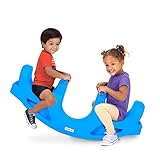
Simplay3 Up and Down Teeter Totter
- Rocker plus flip-over tunnel
- No assembly
- Seats two toddlers
- Ages 18 months to 5 years
Best seesaws for backyards in 2026
Here is the shortlist at a glance. Scan the seat count and the per-seat capacity first, because those two numbers decide whether a model works for your family or becomes a two-seat toy that only the two smallest children can share.
| Product | Specifications | Action |
|---|---|---|
| LIFETIME Airplane Teeter Totter Ace Flyer |
|
Check Latest Price |
| Simplay3 Two Sided Rock and Roll Seesaw |
|
Check Latest Price |
| Simplay3 Up and Down Teeter Totter |
|
Check Latest Price |
 Gym Dandy TT-360 Spinning Teeter Totter Gym Dandy TT-360 Spinning Teeter Totter |
|
Check Latest Price |
 Grow’n Up Heracles Seesaw Grow’n Up Heracles Seesaw |
|
Check Latest Price |
 Gym Dandy TT-210 Teeter Totter Gym Dandy TT-210 Teeter Totter |
|
Check Latest Price |
 Amictoy 360 Spinning Teeter Totter Amictoy 360 Spinning Teeter Totter |
|
Check Latest Price |
 PLATPORTS Double Rocking Seesaw PLATPORTS Double Rocking Seesaw |
|
Check Latest Price |
 TP Toys Spiro Spin Teeter Totter TP Toys Spiro Spin Teeter Totter |
|
Check Latest Price |
 Nova 4-Seat Swivel Seesaw Nova 4-Seat Swivel Seesaw |
|
Check Latest Price |
1. LIFETIME Airplane Teeter Totter Ace Flyer: seats seven kids
LIFETIME Airplane Teeter Totter Ace Flyer 151110 Primary Color Double Play
92 by 95 inch footprint
51.3 kg unit weight
Seats up to seven
Ages 5 to 12
Powder-coated steel
Pros
- Highest rated and most reviewed pick here at 4.8 stars from 862 reviews
- Seats seven children where most models seat two
- Airplane body with dashboard and spinning propeller
- Powder-coated all-weather steel frame
- No cement needed for installation
Cons
- Largest footprint and heaviest unit in the group
- Suits ages 5 to 12 so toddlers are outgrown quickly
- Effectively a permanent yard installation
This is the one we would build a yard around. The Ace Flyer holds seven children on a double teeter-totter frame, and at 4.8 stars across 862 reviews it has the strongest combination of rating and owner volume in this roundup. There is no other unit here that carries a full sibling group or a small street at once.
The airplane shape is not decoration, either. The dashboard and spinning propeller give a queue of waiting children something to do, which in a seven-seat toy matters more than the extra seats themselves. Two independent teeter-totter ends mean the ride keeps working even when one end is empty.
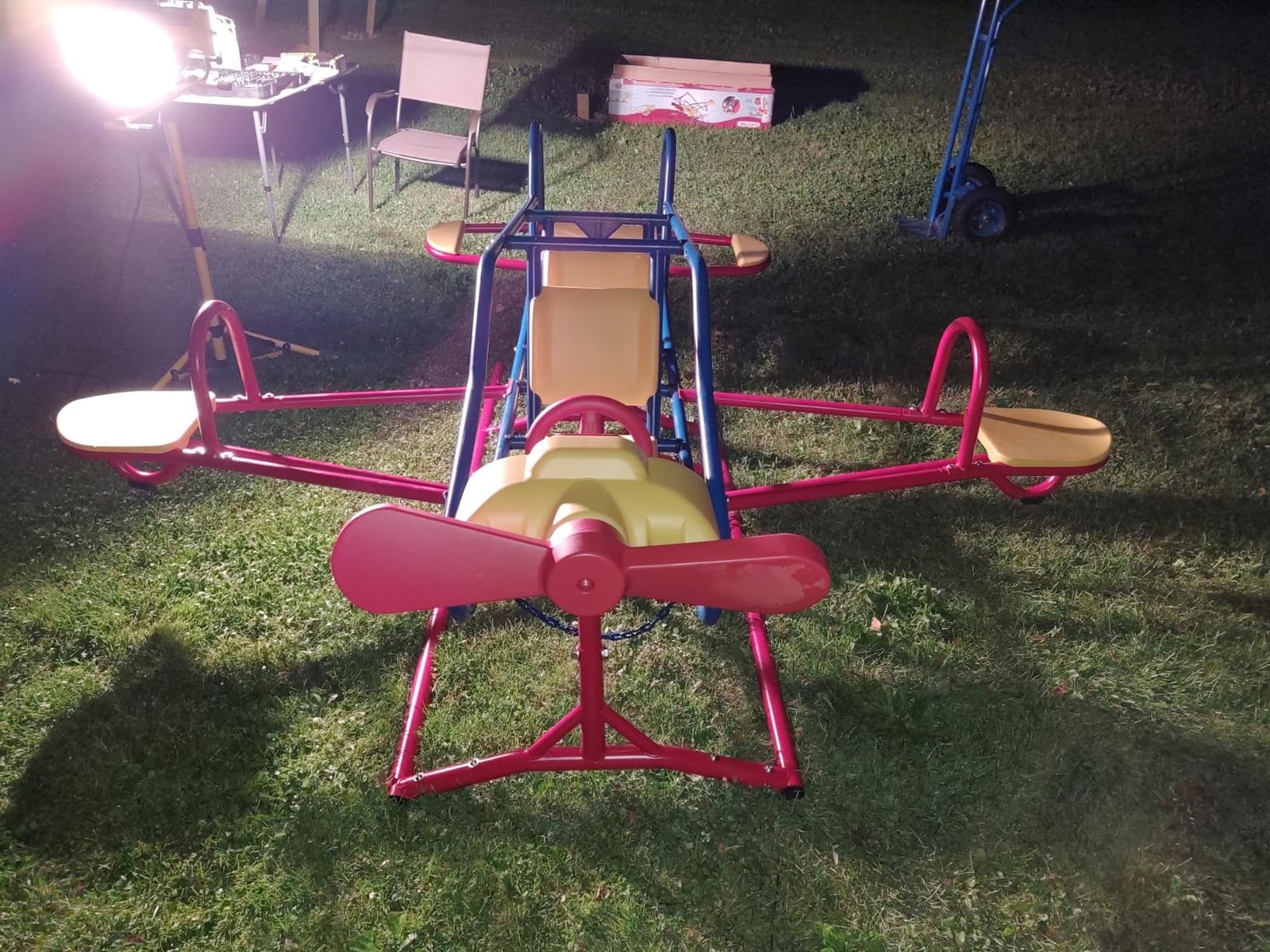
Assembly is straightforward, all tools and components are included, and no cement is required, so it goes down on flat grass rather than in a poured pad. The powder-coated steel frame is built for permanent outdoor installation and carries a one-year limited manufacturer warranty.
The trade-offs are size and commitment. At 92 by 95 inches you need genuinely open ground, and at 51.3 kg this is not something you slide across the lawn each weekend. It is a build-it-once purchase.
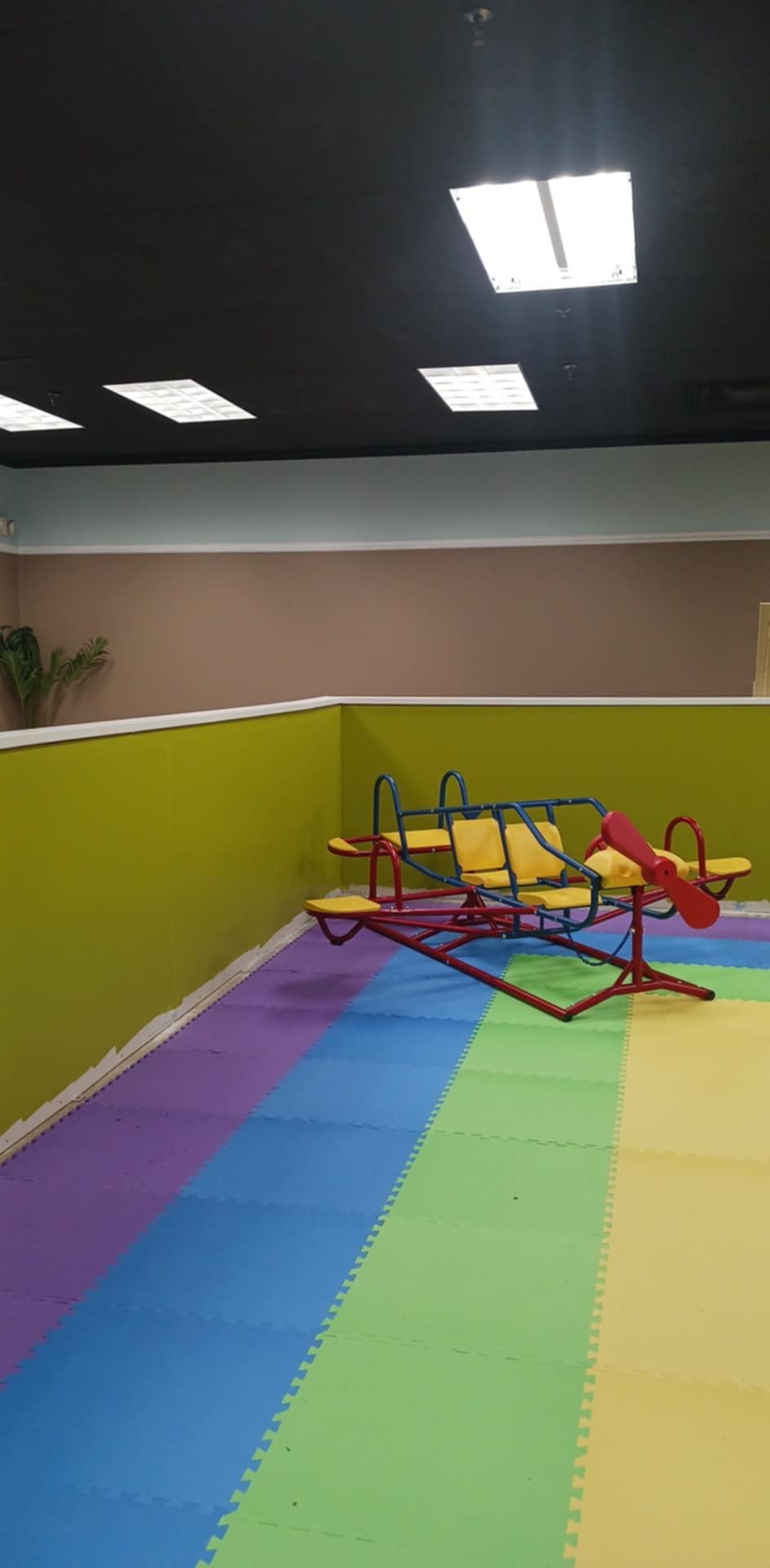
Who should buy the LIFETIME Airplane
Families with three or more children, grandparents hosting a crowd, or anyone pairing a seesaw with a larger playset in a wide yard. If your kids are under five, wait; the age rating starts at five and the seat height is built for older bodies.
It also makes the most sense when you have help on assembly day and a plan for where it lives. Two adults and an afternoon is realistic for a frame this size.
Who should skip it
Renters, small suburban lots, and anyone who wants a toy they can move to a different corner of the yard seasonally. A 51.3 kg steel unit in a tight lot is more commitment than most backyards can hold.
If your children are two different sizes, be aware that the shared fulcrum means the heavier rider still wins the argument. There is no easy seat-height adjustment here.
2. Simplay3 Two Sided Rock and Roll: two play zones in one footprint
Simplay3 Two Sided Rock and Roll Teeter Totter Seesaw and Climbing Bridge, Fits up to Four Children and Kids for Rocking and Climbing – Indoor/Outdoor, Made in USA (Latte)
47 by 23.5 by 11.5 inches
Four children
One-piece plastic
Ages 24 months to 6 years
Pros
- Ties for the highest rating in the group at 4.8 stars from 822 reviews
- Climbing dome on one side and a four-seat seesaw on the other
- One-piece construction with no bolts or assembly
- Weatherproof so it works indoors or out
- Molded non-slip texture on steps and grips
Cons
- Plastic build caps out around age six
- Shared frame means crowded capacity drops quickly
- Not built for big kids or tweens
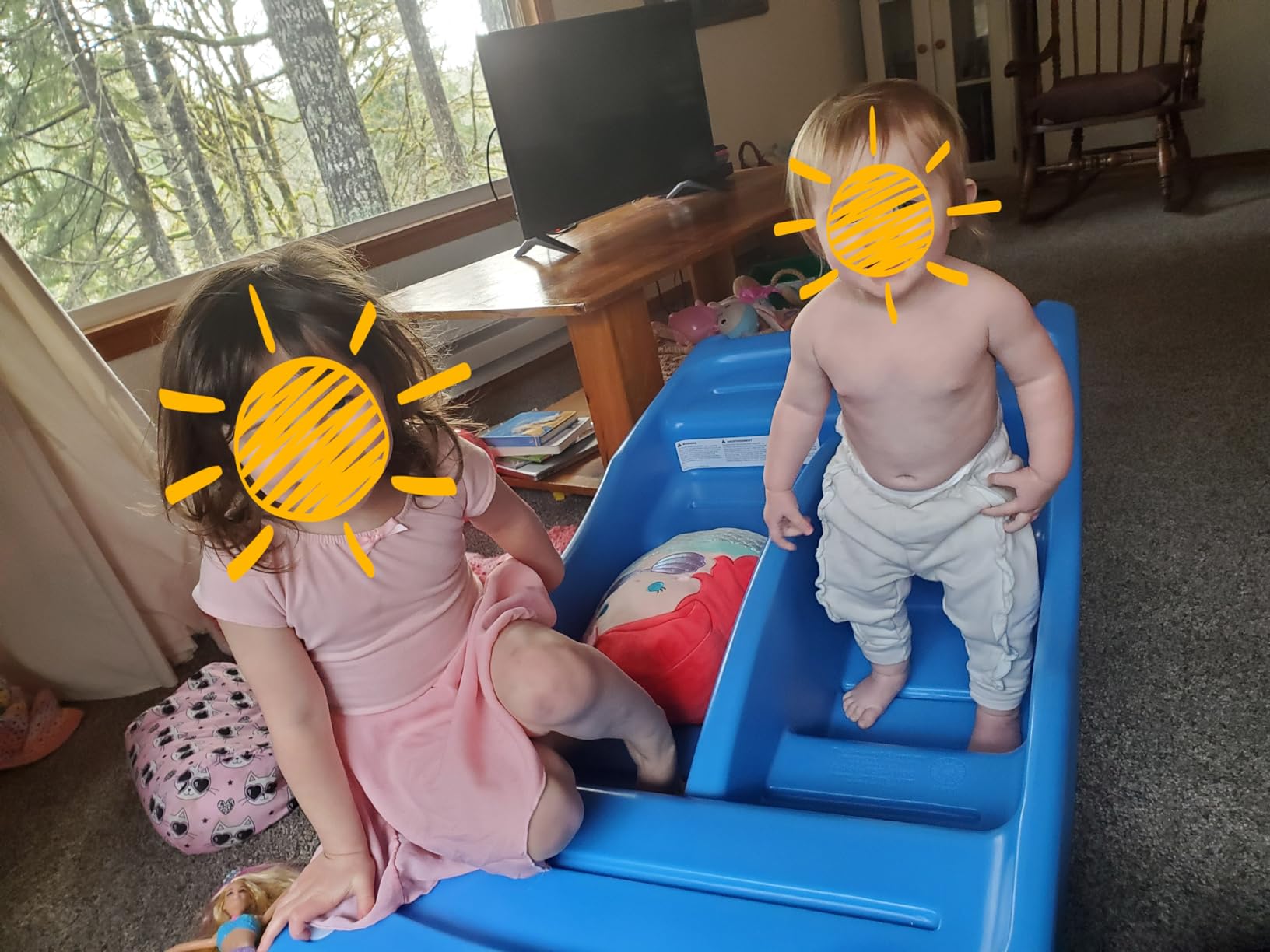
For a family with toddlers and preschoolers, this is the most efficient use of square footage we found. One side is a molded climbing dome, the other is a rocking seesaw boat with two seat levels, and the whole thing flips in about a minute. Parents of two to six-year-olds describe it as effectively indestructible.
The 4.8-star rating across 822 reviews places it right behind the Ace Flyer. What earns that score is the two-in-one design: the climbing side absorbs the child who has just stepped off the seesaw, which removes the queue problem entirely.
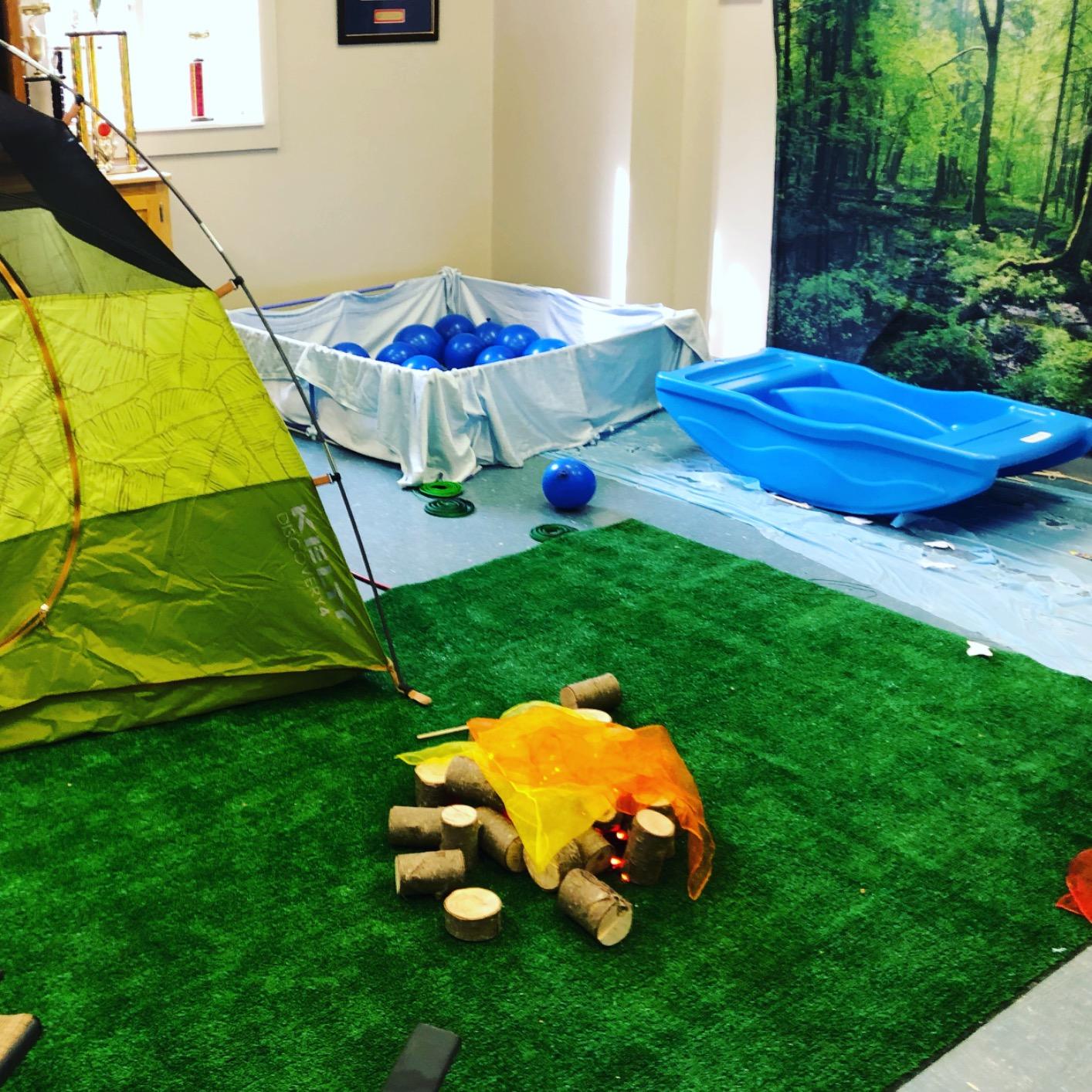
Because it is a single molded piece with no fasteners, there is nothing to loosen and nothing to rust. That is a meaningful advantage over every bolt-together steel model in this list, and it is why owners keep them past the age limit. Molded-in non-slip textures on the bridge steps and hand grips are a genuine safety detail on a toy this small, where fingers are the main climbing hazard.
Who should buy the Simplay3 Rock and Roll
Homes with children between two and six, especially a small yard or a paved patio where a steel frame would sit awkwardly. It is also the easiest unit we listed to hand to a grandparent or move between rooms and yards.
Daycare and preschool operators get two activity stations out of one footprint, which matters when floor space is the constraint.
Who should skip it
Any household with kids over six. The age rating tops out around six years, and the plastic frame has no real path to a big child or a tween.
Families whose children climb hard on everything should supervise the dome side closely. It is a molded plastic structure, and rough use shortens the life of any plastic playground toy.
3. Simplay3 Up and Down Teeter Totter: the toddler starter
Simplay3 Up and Down Teeter Totter Seesaw – Rocking Fun for Two Toddlers or Kids Ages 18 Months to 5 Yrs- Sapphire, Made in USA
40.5 by 9 by 16.75 inches
8.9 lb unit weight
Two riders
Ages 18 months to 5 years
Made in Ohio
Pros
- Most owner reviews of any pick here at 4.7 stars from 1407 ratings
- Rocks and spins or flips over for a crawl tunnel
- No assembly and unbreakable one-piece body
- Light enough for a toddler to reposition alone
- Entry-level pick that needs no cement or tools
Cons
- Narrow base is unstable on uneven or soft ground
- Needs a smooth level surface to stay safe
- Bigger children outgrow the size and weight limit fast
Start here if your youngest is between eighteen months and five years. It rocks and spins one way, then flips over into a crawl tunnel and balance challenge the other way, so a single toy covers three play modes. The 1407 reviews at 4.7 stars make it the most proven product in the roundup by owner volume alone.
There is no assembly and no hardware. It is a single molded plastic body, weatherproof, made in Ohio, and light enough at 8.9 pounds that a small child can drag it to a new patch of yard themselves. That solves a problem most parents do not think about until moving day.
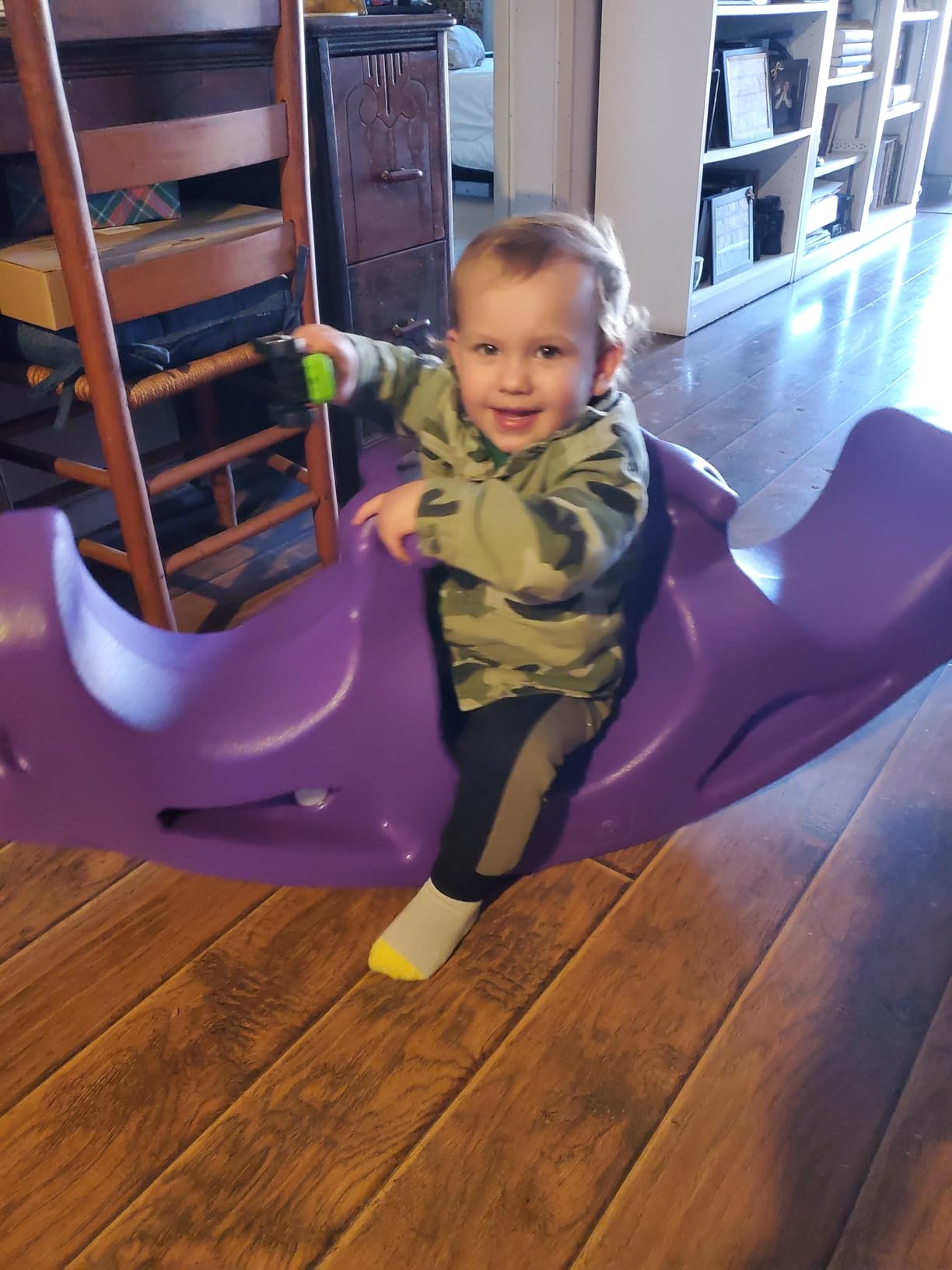
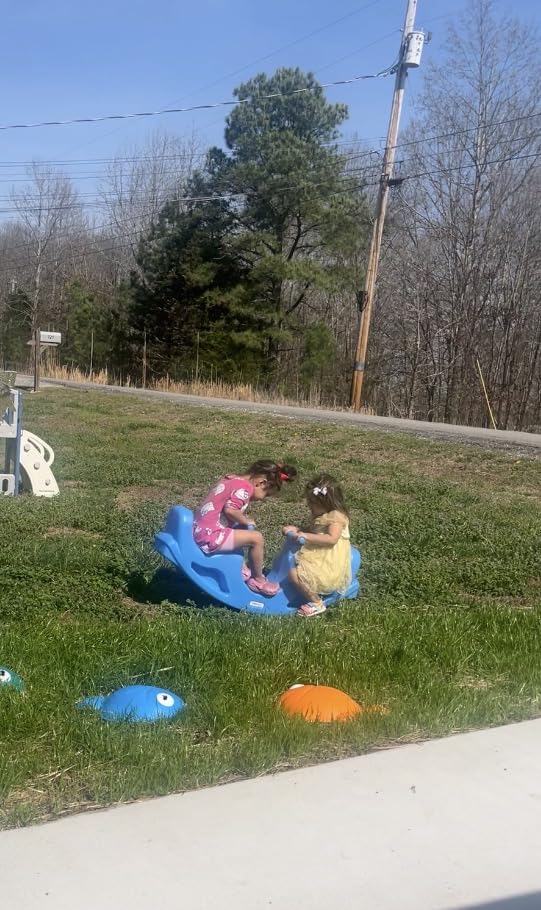
The one consistent caution in reviews is the narrow base. On anything other than a smooth, flat surface it can be unsteady, and it may tip as a child steps off. Set it on a patio slab, a compacted sand patch or a very level lawn rather than in soft ground.
Two seats is the limit. Three riders means one child waits, and the waiting child is usually the one who climbs on without permission.
Who should buy the Simplay3 Up and Down
Parents of twins and toddlers, anyone in a first-stage playroom or nursery, and families who want a first seesaw that will not damage a hard surface when a child falls against it.
It is also the simplest entry point into seesaw play, and the flip-over tunnel mode buys you several more months of use than a plain rocker.
Who should skip it
Yards with uneven or recently rained-on ground. The narrow base is the whole safety story on this toy, and it only works on a genuinely flat surface.
Children over about five years old. They will outgrow both the length and the weight limit within a season.
4. Gym Dandy TT-360: no more bottoming out
Gym Dandy Spinning Teeter Totter – 360-Degree Rotation Seesaw with Impact Absorbing Seats – Kids Backyard Playground Equipment, TT-360
101 by 38 by 45 inches
59.6 lb unit weight
300 lb frame
Two players
Ages 3 to 17
Two-year warranty
Pros
- Rotates a full 360 degrees so a lowered seat slides out of the way for boarding
- Urethane roller wheels absorb the slam at the end of travel
- Heavy-duty powder-coated frame rated to 300 lbs
- Two elongated cushioned seats with rubber grip handles
- Covers the widest age range in the roundup at 3 to 17 years
Cons
- 101 inch footprint is the largest here and eats yard space
- 59.6 lb weight makes repositioning a two-person job
- Priced well above a basic plastic backyard teeter totter
Bottoming out is the failure mode that gets blamed on the child rather than the toy. When a fulcrum seat reaches the end of travel it hits the ground hard, and a foot under the seat gets crushed. The TT-360 sidesteps that by hanging roller wheels under each seat so the landing is absorbed instead of dropped.
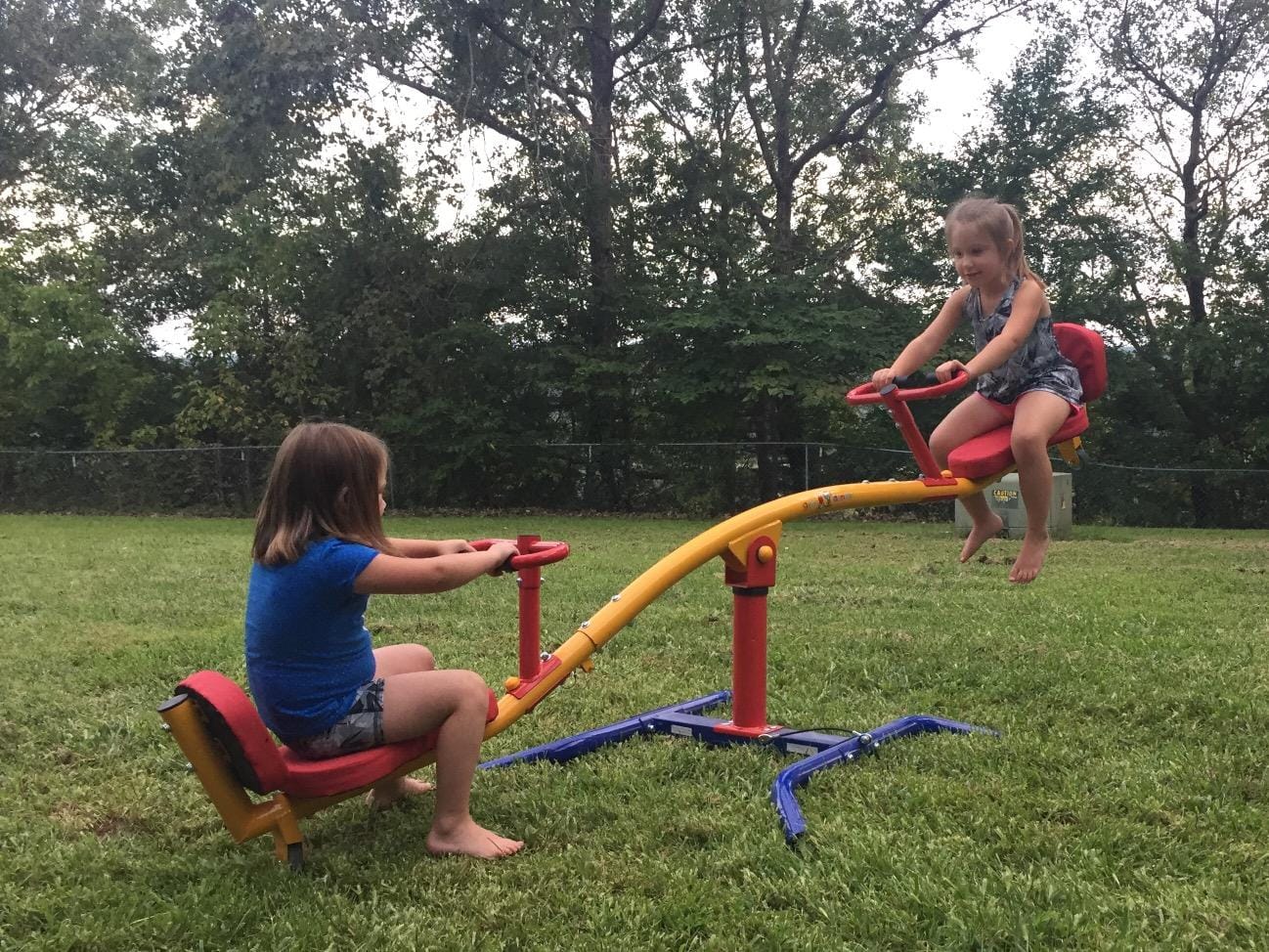
The 360-degree rotation is the second win. A lowered seat swings aside, which means a child boards from the side without climbing over the other rider. On a traditional seesaw that boarding moment is where most falls actually happen.
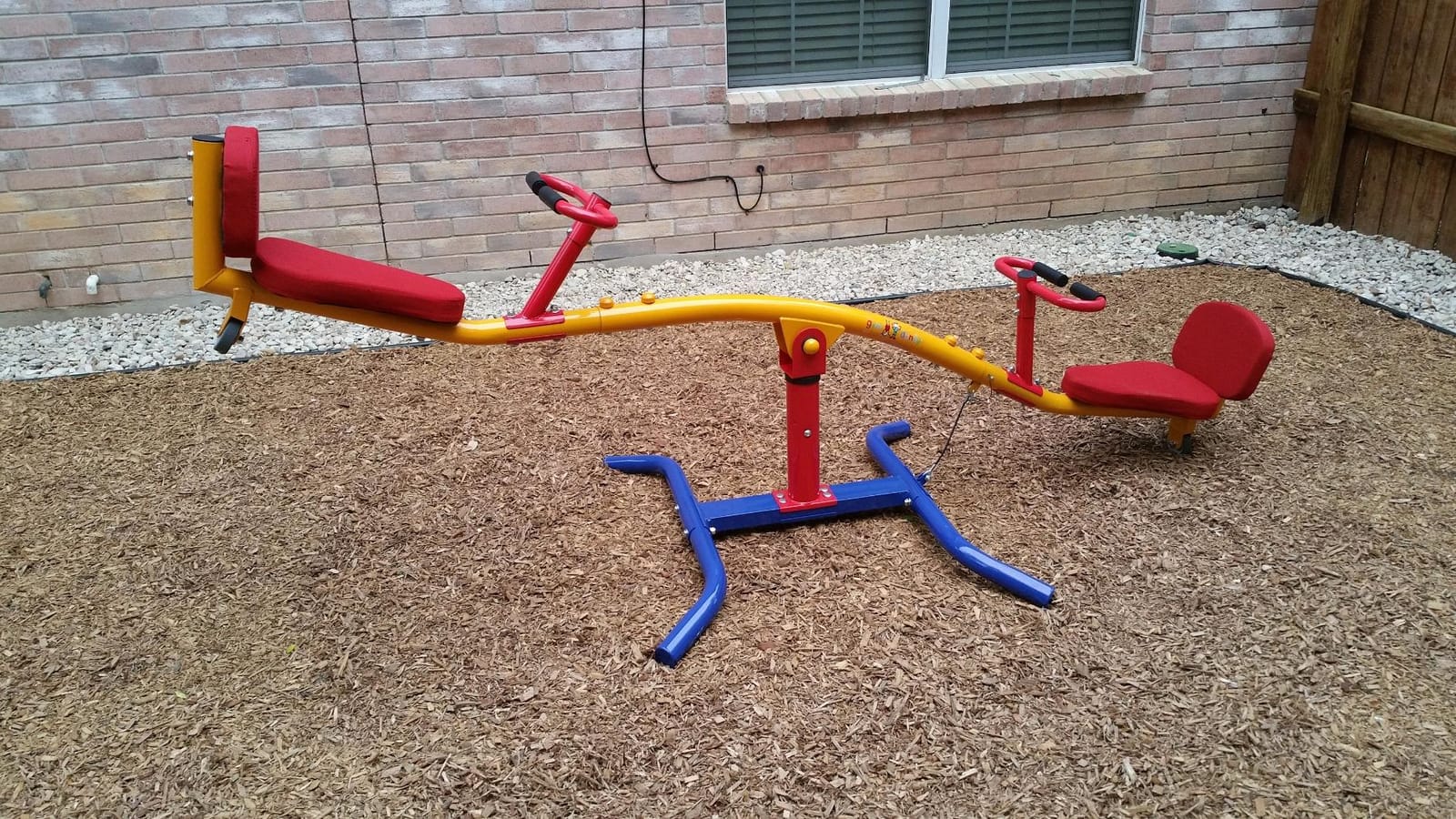
Build quality is the reason for the premium tier: urethane rather than hard plastic wheels, a powder-coated frame with a 300 lb rating, cushioned seats, rubber grips, and a two-year manufacturer warranty that is longer than most of this category offers.
Its rating is 4.7 across 957 reviews, so this is not a small-sample premium. It is a proven design sold at a premium price.
Who should buy the Gym Dandy TT-360
Households with kids spanning a wide age range, particularly a five-year-old and a twelve-year-old who will share. The 3-to-17 age rating is the broadest on this list.
Anyone whose kids are hard on equipment, or who has had a foot caught under a conventional seesaw seat before. The wheel-and-rotation design exists for exactly that.
Who should skip it
Small yards and renters. At 101 by 38 inches and 59.6 pounds, this is close to a permanent fixture, and it needs clear space in every direction rather than tucked against a fence.
Anyone shopping on a tight budget. There are functional plastic models that hold up fine with younger children.
5. Grow’n Up Heracles: a spinning seesaw one adult can carry
Grow’n Up Heracles Seesaw – Original design, Age 3+
77.78 by 30.4 by 22.4 inches
17.2 lb unit weight
Rated to 100 lbs
Age 3 and up
Four-leg metal base
Pros
- Combines 360-degree rotation with classic up-and-down rocking
- Soft foam handle guards are gentle on small hands
- Only 17.2 lb so one adult can move it between rooms and yard
- Four-leg metal base resists rust outdoors
- Owners report it still in good shape after two years of heavy use
Cons
- Seats sit low to the ground and get uncomfortable for older children
- No return spring so toddlers need help getting back up
- Screws need periodic re-tightening
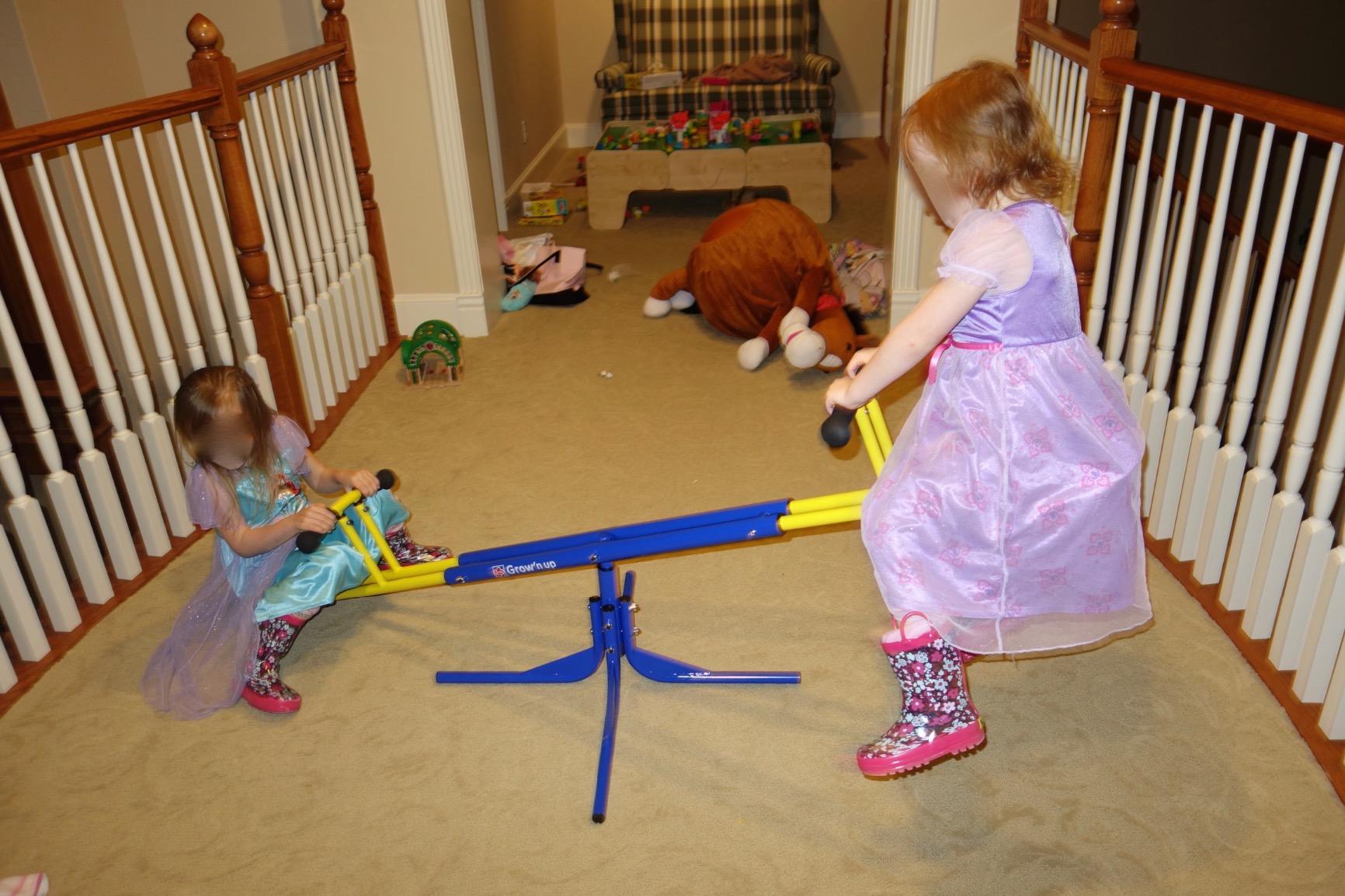
This is the portability answer. At 17.2 pounds it is one of the few metal-framed seesaws here a single adult can carry from a garage to the yard without a second pair of hands, which matters for renters and for anyone who mows around it.
It also does the thing kids actually keep asking for. The board rotates a full 360 degrees while still rocking up and down, so the motion never repeats exactly. Families describe it as a toy that grows from the toddler years into the big-kid range, and 933 reviews at 4.6 stars back that up.
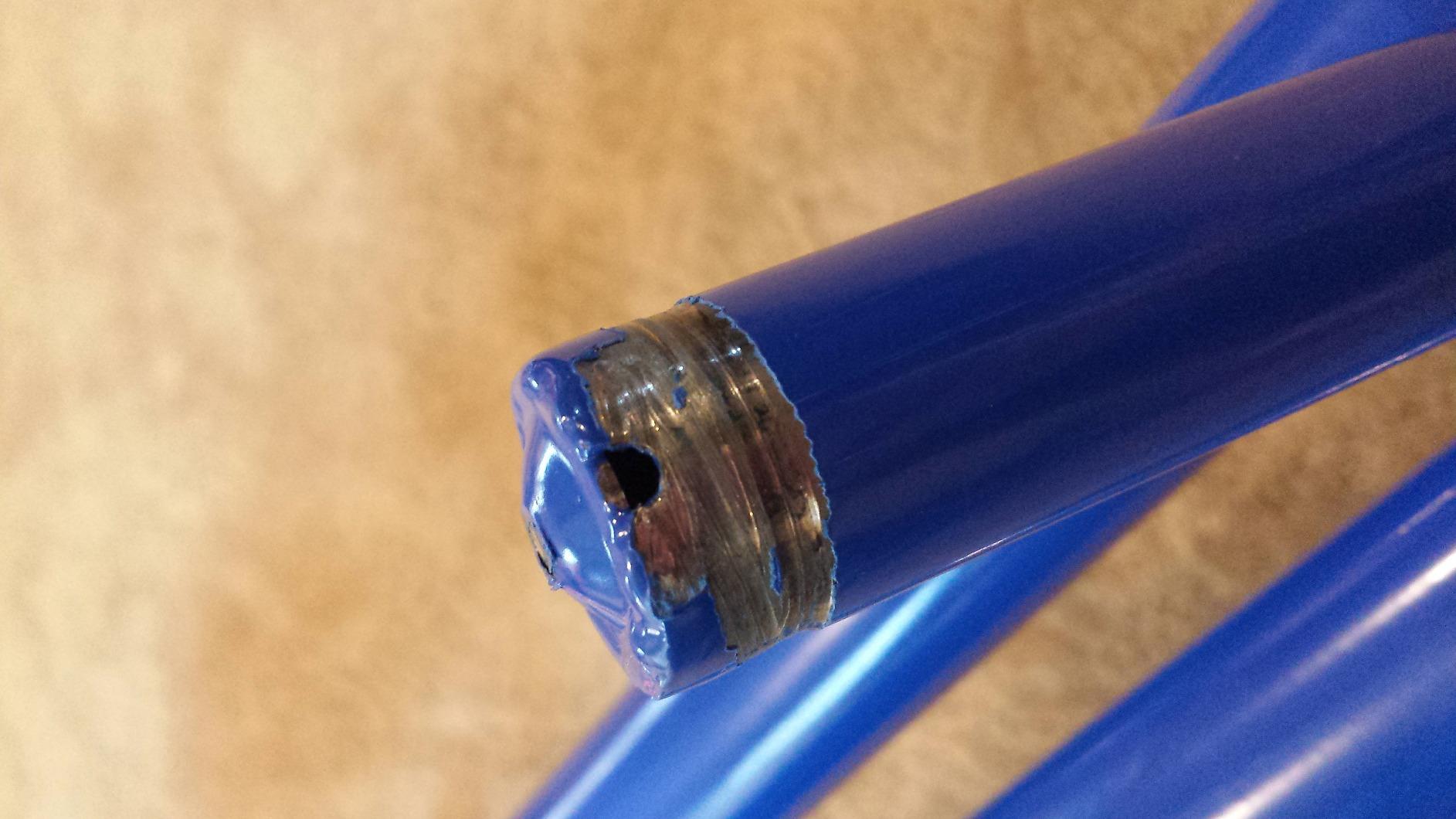
Two details set it apart from budget metal models. The handle guards are wrapped in soft foam, which matters because small hands grip those bars constantly, and the four-leg base is wider than a simple A-frame and steadier on grass.
Assembly takes about half an hour for most owners. Plan for it, because the four legs look identical and are not clearly labelled, which is the single most common build complaint in reviews.
Who should buy the Grow’n Up Heracles
Families who want metal durability at plastic-unit weight. It is a good match for a child moving out of the toddler stage but not yet ready for a full-size steel frame.
Anyone whose yard is small enough that the toy will need to move for mowing, leaf clearing or seasonal storage.
Who should skip it
Children who are already tall. The seats sit close to the ground, which is comfortable at three and awkward at eight.
Households with many children at once. It is a two-seater, and nothing locks the pivot board to the stand, so check that it is seated properly before the first ride of the day.
6. Gym Dandy TT-210: a traditional fulcrum with a bump absorber
gym dandy Teeter-Totter Home Seesaw Playground Set TT-210, Multi Colored, 37.00 x 31.00 x 85.50 inches
86 by 34 by 33.5 inches
38 lb unit weight
300 lb total capacity
Ages 3 to 13
Padded seats
Pros
- Keeps the familiar single-fulcrum park seesaw feel
- Reinforced bump absorber softens the stop at each end
- Large elongated padded seats plus ergonomic padded grips
- Heavy-duty powder-coated steel rated to 300 lbs total
- Age range from 3 to 13 in one unit
Cons
- Traditional fulcrum design still lands harder than rotating models
- 38 lb weight limits repositioning
- Costs more than basic backyard models for the steel frame
Some children do not want a spinning ride. They want the up-and-down pump of the seesaw they grew up with, and this is that, with a better stop at the end of the travel. The reinforced bump absorber takes the edge off the slam without changing the fundamental feel.
The 300 lb total rating and the 3-to-13 age range make it the most useful traditional option for a family with a big spread in ages. At 4.6 stars across 831 reviews it is well proven rather than a niche import.
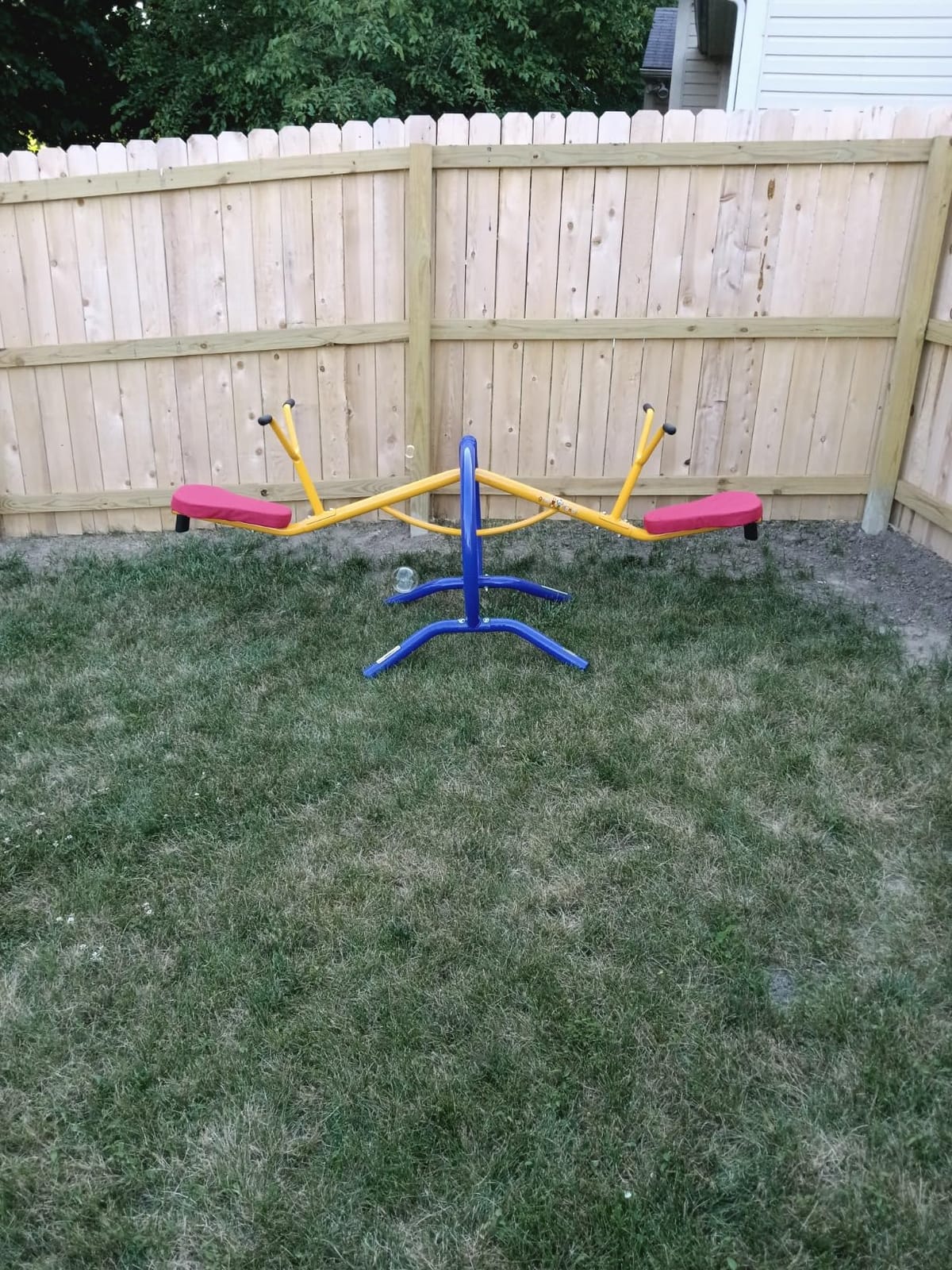
The padded details are what justify stepping up from a basic steel frame. Elongated padded seats and ergonomic grip handles with padding prevent the calluses and numbness that come from bare steel bars after twenty minutes of hard play.
The finish is a bright powder coat, which is the difference between a frame that survives one season outdoors and one that survives five. Check bolts at the start of each season either way.
Who should buy the Gym Dandy TT-210
Anyone who grew up on a seesaw and wants to reproduce it properly, plus families with one child in the 3-to-5 range and another approaching their teens.
It is also a reasonable step up for a family moving past a plastic toddler rocker who is not ready for the footprint or weight of a rotating premium model.
Who should skip it
Anyone whose kids tend to ride one-handed or dive off a moving seat. A classic fulcrum travel still ends in a firm stop, and a rotating model absorbs that landing instead.
People with narrow yards. At 86 by 34 inches you need clearance on both sides, not just under the beam.
7. Amictoy 360 Spinning Teeter Totter: the small-yard compromise
Amictoy Teeter Totter for Kids, 360° Spinning Seesaw, 100 lb Seat
72 by 48 by 24 inches
15 lb unit weight
160 lb per seat
Ages 3 to 10
Triangular steel base
Pros
- Three-tube triangular base is more stable than a simple two-leg frame
- Foam-padded handles reduce hand abrasion on longer play sessions
- Only 15 lb so it is genuinely portable
- Compact 75 by 30 inch footprint suits small and mid-sized yards
- 160 lb per seat is a strong per-rider rating for the size
Cons
- Shortened buffer rod makes the ride faster and more challenging for younger children
- Still requires steel frame assembly
- Swings harder than most models so a supervisor should watch the first rides
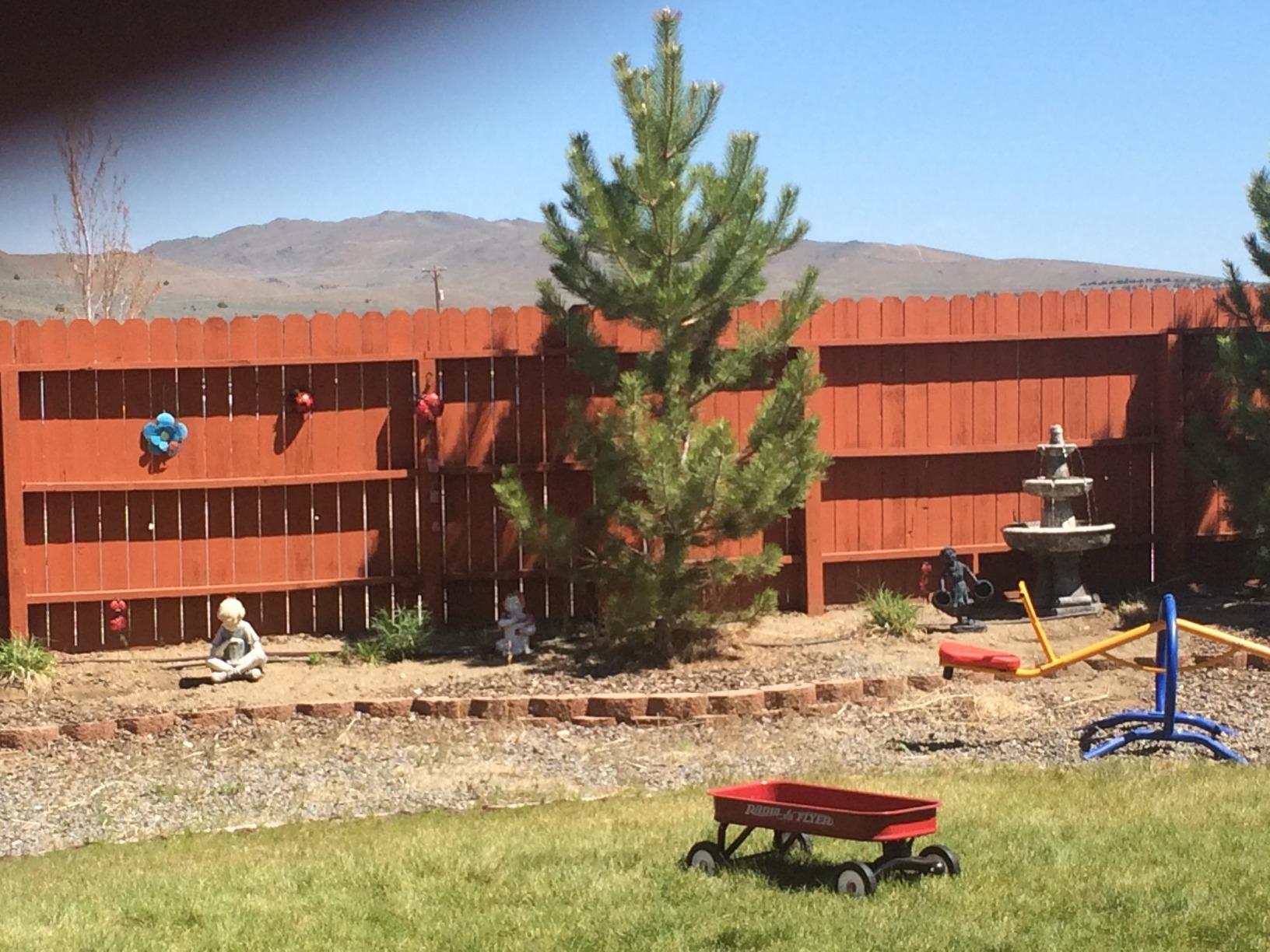
This is the pick for a yard where a 101-inch premium unit will not fit. The footprint is 75 by 30 inches and the whole thing weighs 15 pounds, so two people can reposition it easily and it takes up a strip rather than a square.
The engineering change that sets it apart from other budget spinners is the three-tube triangular base. Most low-cost seesaws use a simple A-frame that twists under load; a triangular chassis resists that, and reviewers single it out as more stable than simpler frames at the same size.
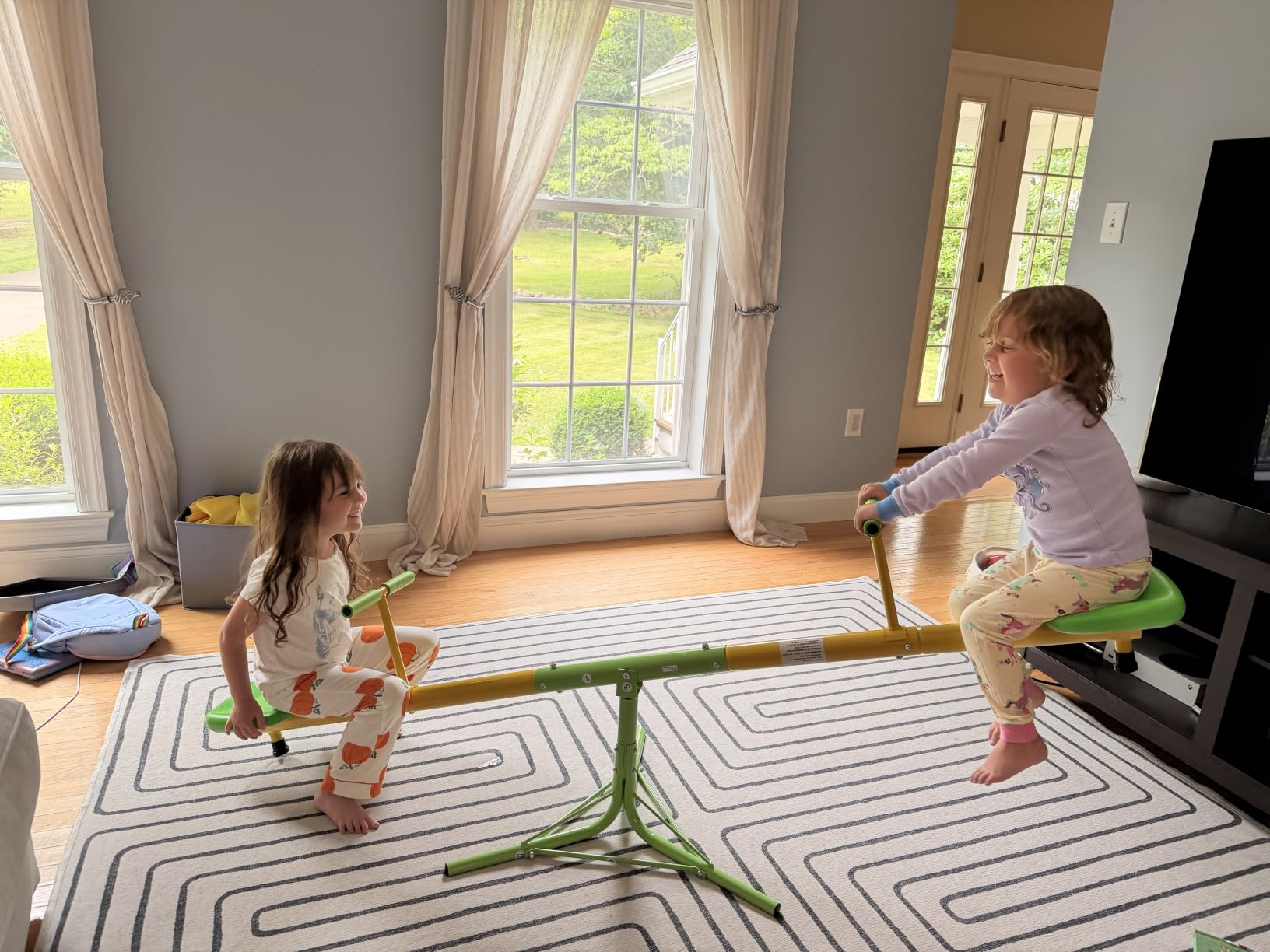
Per-seat capacity is the number to notice here. The 160 lb per seat rating on a frame this light is unusually strong, and it means an adult can supervise from the other seat if a toddler needs company.
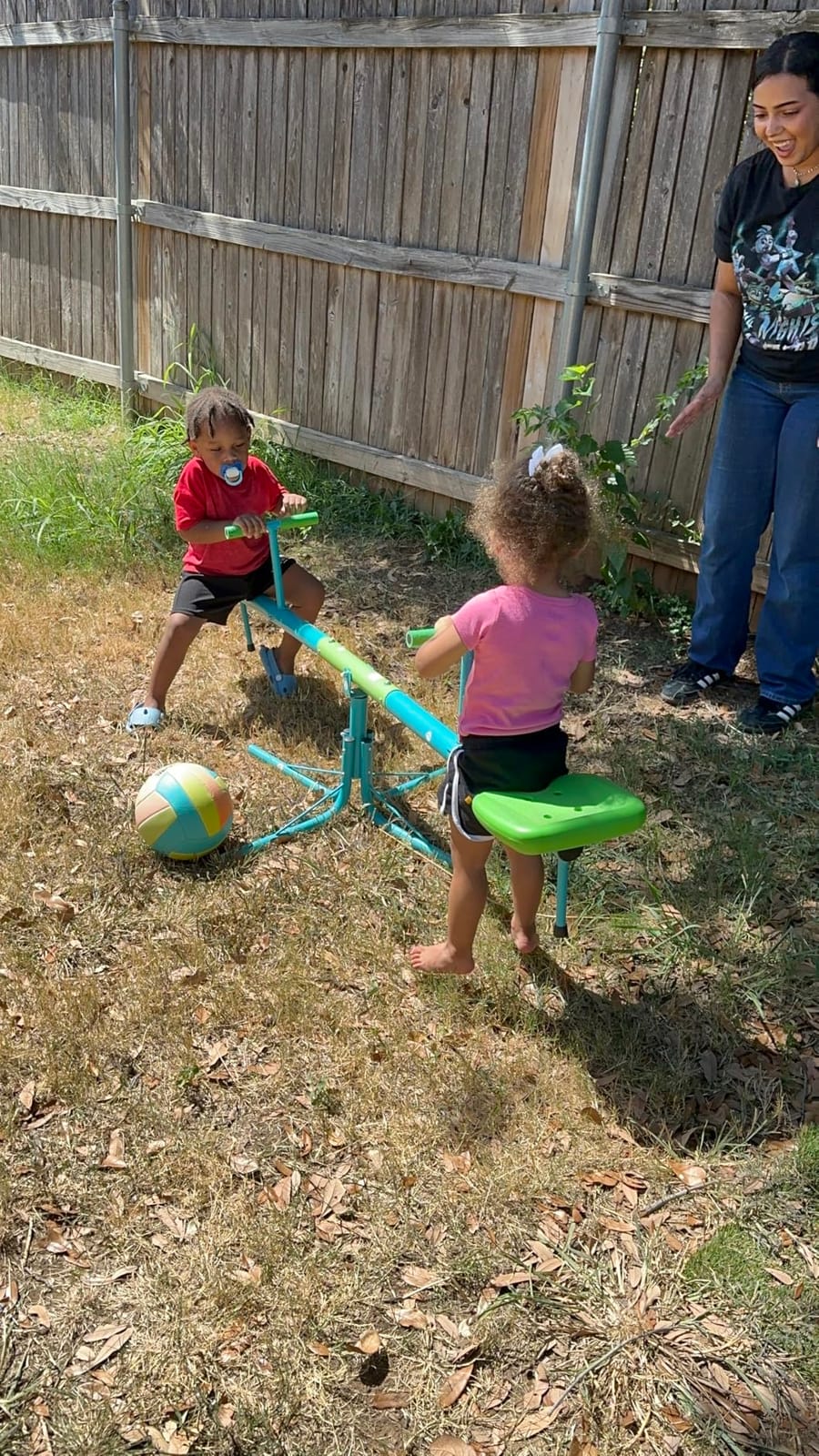
The same shortened buffer rod that creates the livelier ride is the main caution. It swings faster and higher than most models, which older children enjoy and younger children sometimes find too much.
Who should buy the Amictoy teeter totter
Households with a compact yard, a patio, or a rental property where a permanent-looking steel structure is not practical. The low weight also suits grandparents who want it out in the garage for most of the year.
It is a good budget step up from a plastic toddler rocker once children are past age five and want spinning motion.
Who should skip it
Families with a toddler and a large child sharing one two-seater. Per-seat capacity is generous, but the swing amplitude will not suit a small rider who is not used to it.
Anyone hoping to avoid assembly. The steel frame needs building, unlike the molded plastic units.
8. PLATPORTS Double Rocking Seesaw: built for ages three to five
PLATPORTS Double Rocking Seesaw – 2-Seater Teeter Totter for Kids Ages 3-5 – Outdoor Ride-On Playground Toy for Two Children – Durable Steel Rocking Chair Seesaw for Backyard Fun
55 by 21 by 15 inches
22 lb unit weight
154 lbs total or 77 per child
Ages 3 to 5
Pros
- Curved rocking-chair motion is gentler and more controllable than a straight seesaw
- Back supports give toddlers a secure place to hold on
- Compact 55 inch width fits small yards easily
- Powder-coated alloy steel frame rated to 154 lbs
- ASTM compliant and CE certified
Cons
- 154 lb total limit is the smallest capacity in the roundup
- Two seats only with no room for a third child
- Smooth plastic seat surfaces can be slippery for small children
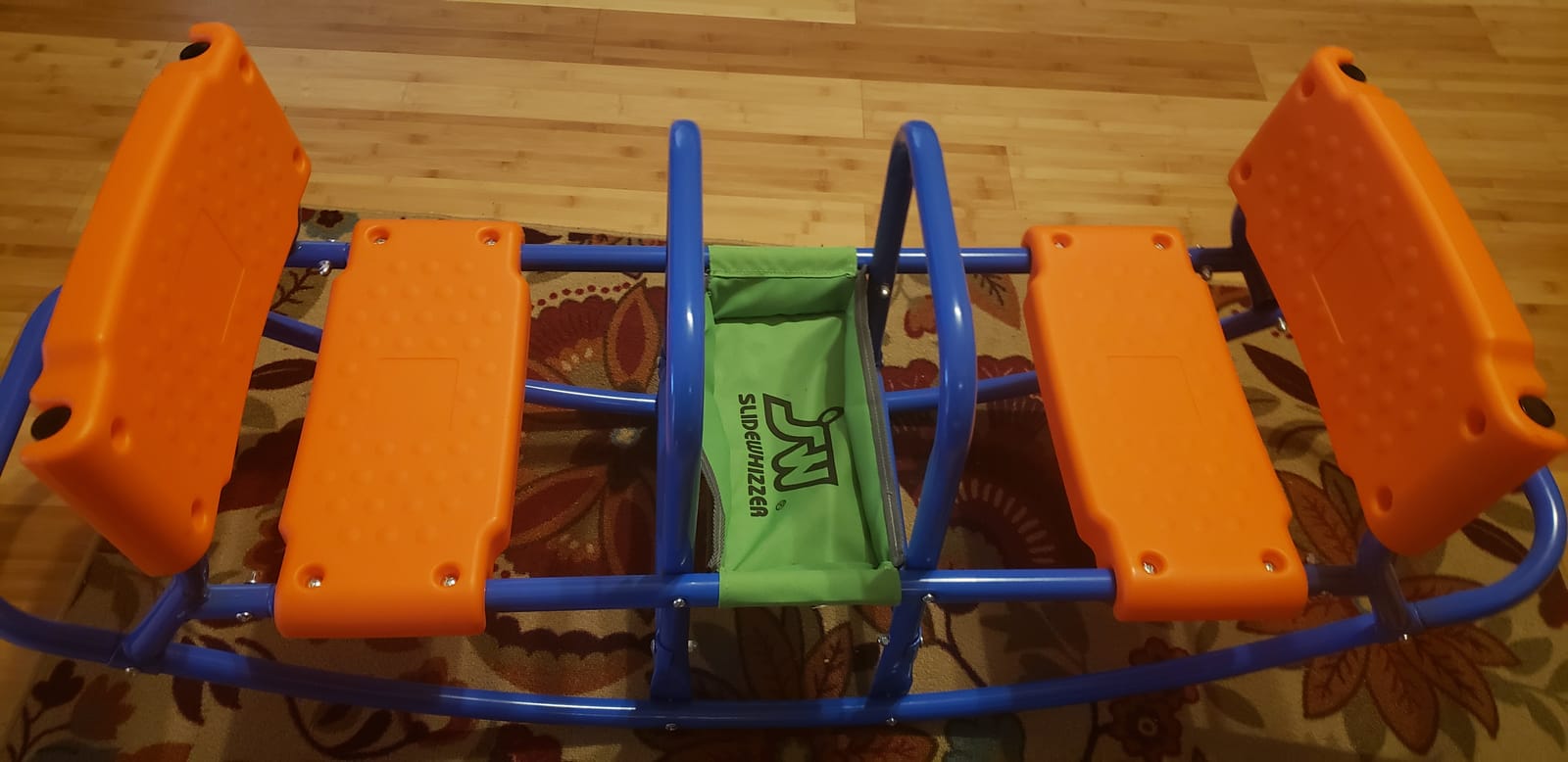
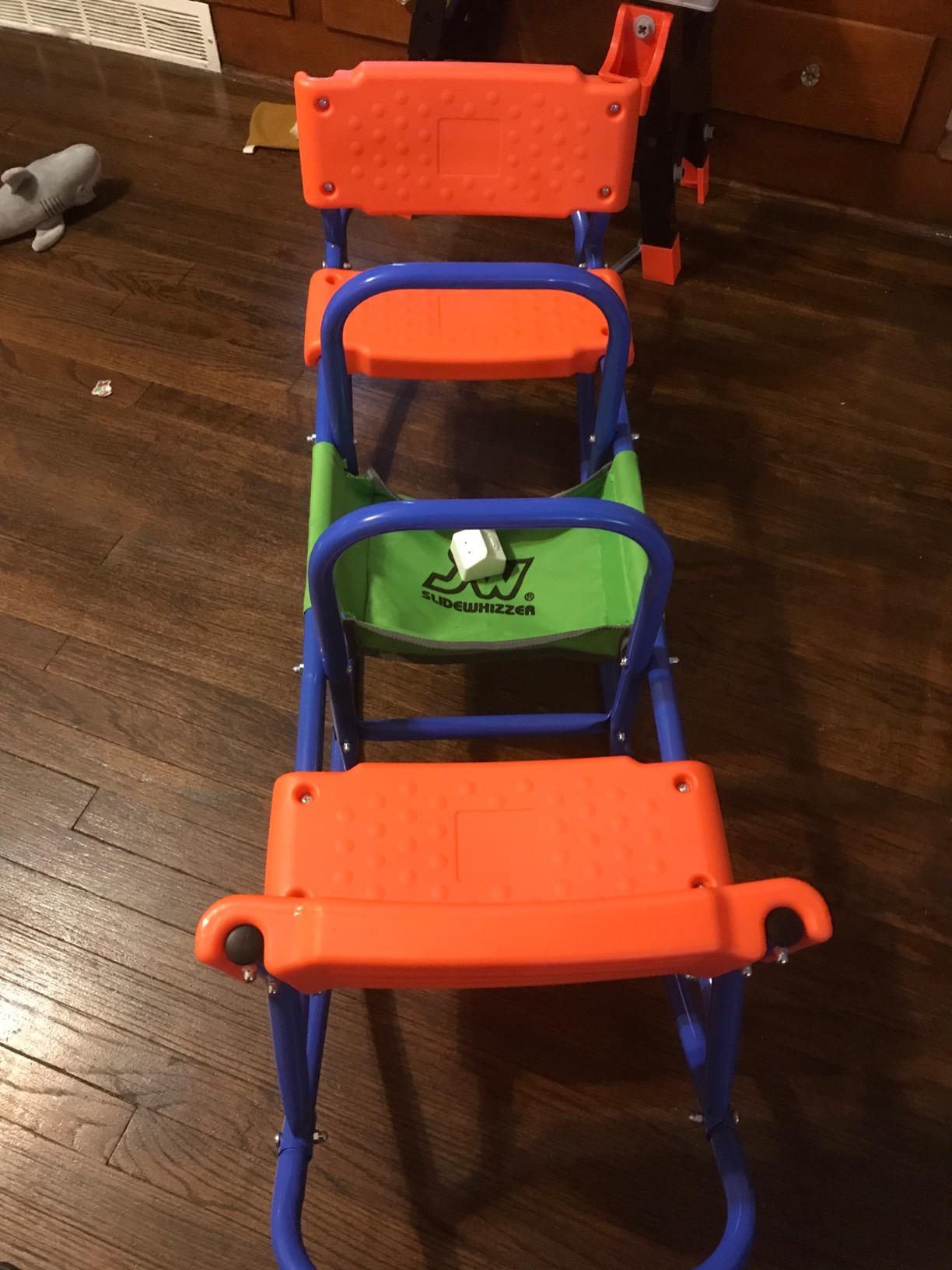
This is the one to buy for a child who is not ready for a full seesaw. The frame uses a hybrid rocking-chair and seesaw motion, so the arc is curved and controlled rather than the fast tip of a straight fulcrum ride. Parents of three-to-five-year-olds pick it for exactly that reason.
The seat backs are the other deciding detail. A toddler on a flat seesaw seat has to grip the bar with both hands and cannot lean back. With a back support, a small child can settle in and hold on with one hand, which removes the flailing that causes most of the wobble.
It is also one of the few models here with third-party certification stated on the record: it exceeds ASTM safety standards and is CE certified. That matters more than usual because the capacity is modest.
At 154 lbs total, or 77 lbs per child, this is the smallest capacity in the roundup. Check your heaviest rider before buying.
Who should buy the PLATPORTS Double Rocking Seesaw
A single toddler or a pair of similar-sized preschoolers in a small yard. The 55-inch width is the narrowest footprint here, so it fits where nothing else will.
It is also the safest introduction for a child who is cautious on equipment or has mild balance and sensory sensitivities, since the curved path is slower and more predictable than a spinning ride.
Who should skip it
Any family with a child over about five or two children of noticeably different weights. The 77 lb per-seat limit and the fixed two-seat layout rule it out quickly.
Check the seat surface before handing it over. Smooth molded plastic can be slippery for small children once it is wet.
9. TP Toys Spiro Spin: bouncing seats that clear the lawn
TP Toys Spiro Spin Teeter Totter – Bounces and Spins 360 Degrees, Blue/Green
74.41 by 24.8 by 39.37 inches
8.8 kg unit weight
77 lb per end
Ages 3 to 8
Ground anchors included
Pros
- Inflatable ball-style wheels create a genuine spin and bounce that few toys match
- Wheels lift off the ground at rest so it does not scuff grass or decking
- U-shaped ground anchors included for securing the base
- Assist handle lets an adult guide the motion
- Seat height fits two to six-year-olds well
Cons
- Ball wheels can arrive defective or lose air over time
- Replacement parts are hard to source outside the UK
- Included plastic pump can break on first use
This is the most unusual design in the roundup. Inflatable ball-style wheels let the seats spin a full 360 degrees while bouncing, so the ride glides rather than arcs. Children who quickly tire of ordinary up-and-down motion tend to stay with this one longer.
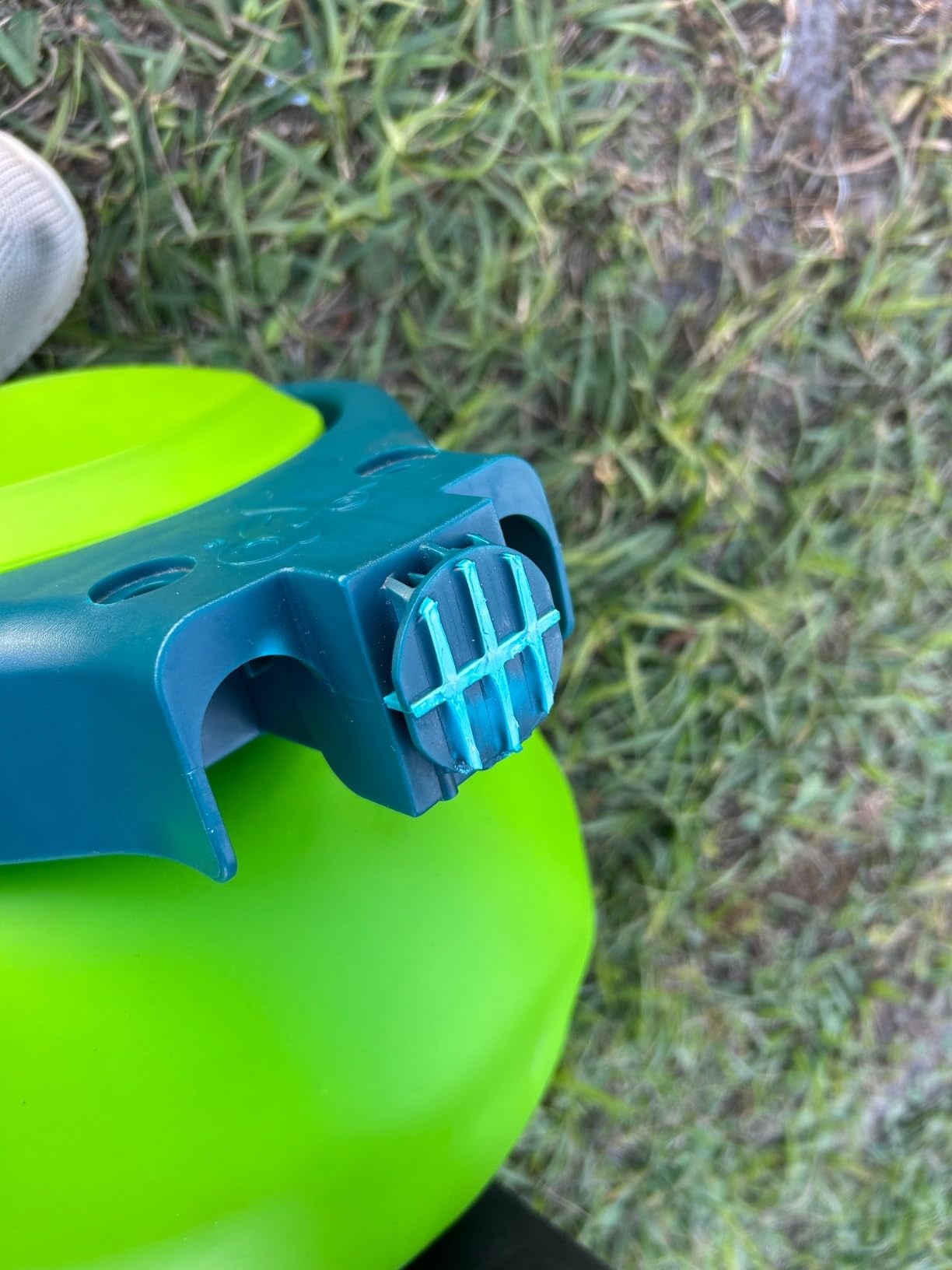
It is also the friendliest to the ground itself. The wheels lift clear of the grass at rest, so it does not leave a dead patch or gouge a deck the way a fixed fulcrum frame does, and U-shaped ground anchors are supplied to hold the base in place on lawn.
It is the only pick here with an adult assist handle, so a parent can steady the motion for a child who is still learning the timing. That turns a frustrating ride into a teachable one.
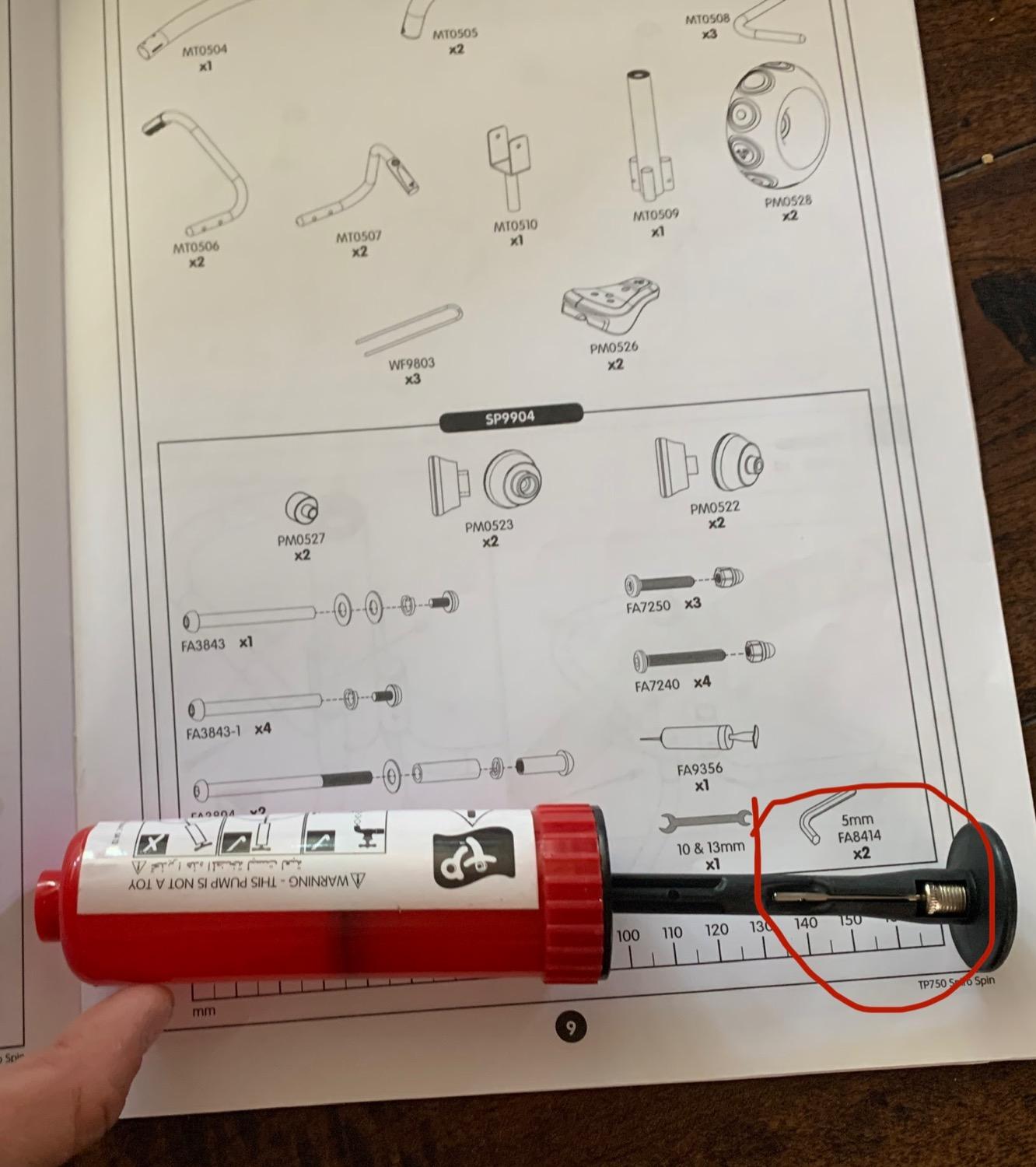
Now the honest part. At 4.2 stars from 894 reviews, this is the lowest-rated product in our group, and the reason is consistent: the wheels. They can arrive defective, the included pump can fail, and replacement parts are hard to source outside the UK.
Who should buy the TP Toys Spiro Spin
Families with children aged three to eight who get bored with a conventional seesaw, and anyone with a deck or a lawn they do not want marked. The floating wheel design is genuinely kinder to both surfaces.
It is also the only option here that ships with ground anchors as standard, which matters on a slope or in a windy yard.
Who should skip it
Anyone who wants a low-maintenance toy. Inflatable components need checking, and a punctured ball wheel can end play until a replacement is found.
Households far from the UK, given the parts difficulty reported in reviews. The low rating is about wheels, not motion, but wheels are what break.
10. Nova 4-Seat Swivel Seesaw: four riders on one frame
Nova Microdermabrasion Kids Seesaw Swivel Teeter Totter Home Playground Equipment, 360 Degrees Rotating Safe, Outdoor Fun for Kids, Toddlers, Boys, Children (4 Seats)
75 by 39 by 39 inches
450 lb frame or 110 per child
Four seats
Ages 3 to 10
Pros
- Four padded seats
- where most seesaws in this roundup seat two
- 450 lb frame rating equals 110 lb per child
- Frame adjusts from 72 to 78.7 inches for tighter yards
- Handle bars include a bump absorber to soften the stops
- Weather-resistant powder coat finish
Cons
- Swivel seat supports reported flimsy and prone to breaking under heavy use
- Screws and end stoppers loosen with repeated use
- Metal frame reported bending under load for some owners
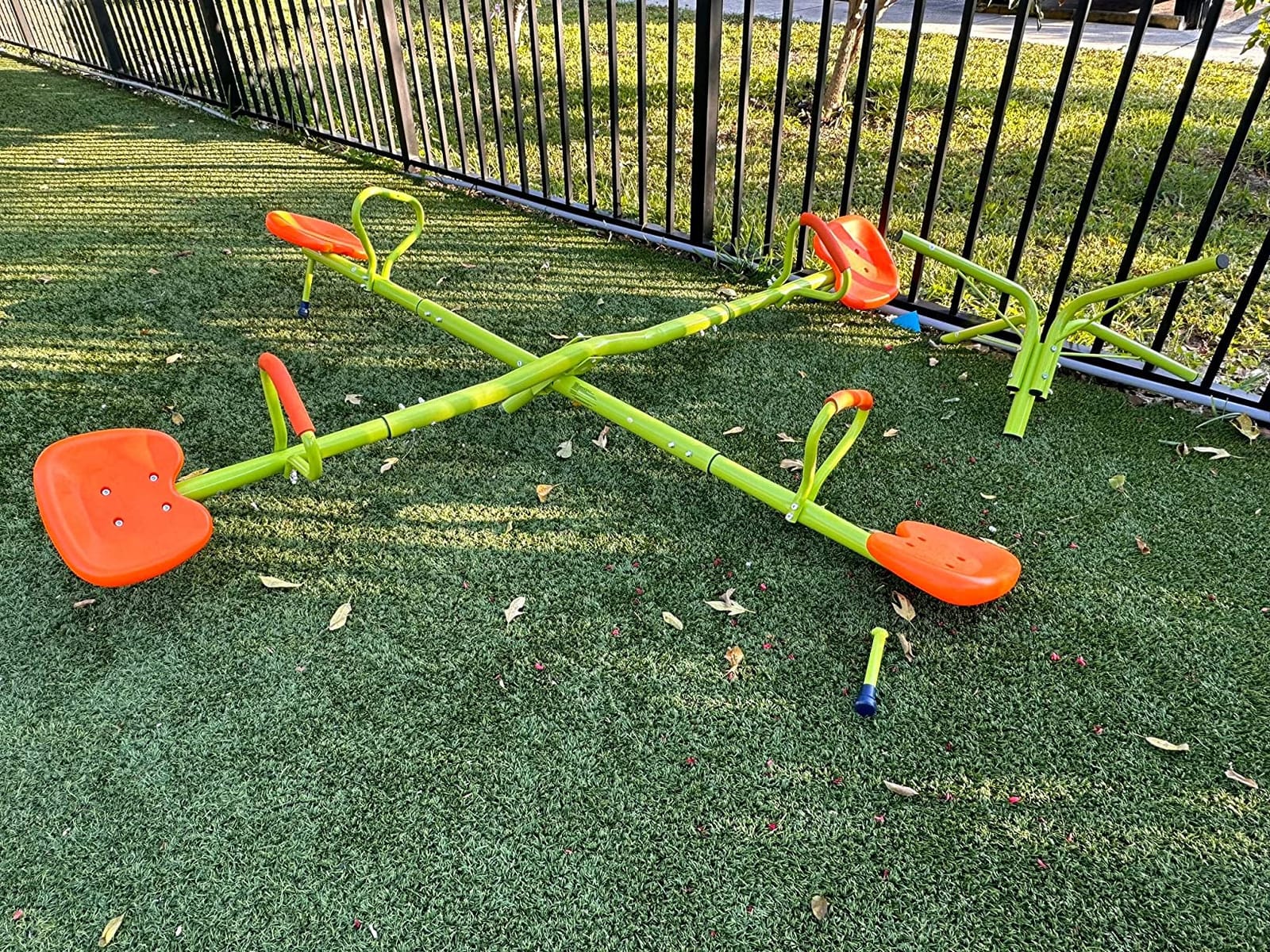
Four seats on a compact frame is the pitch here, and the frame backs it up with a 450 lb rating that works out to 110 lb per child. The board also adjusts from 72 to 78.7 inches, which helps when a yard is tight.
For a busy household with a couple of preschoolers and a couple of bigger kids, that is a hard combination to find. Most of the other multi-seat models we looked at are far heavier to shift across a lawn.
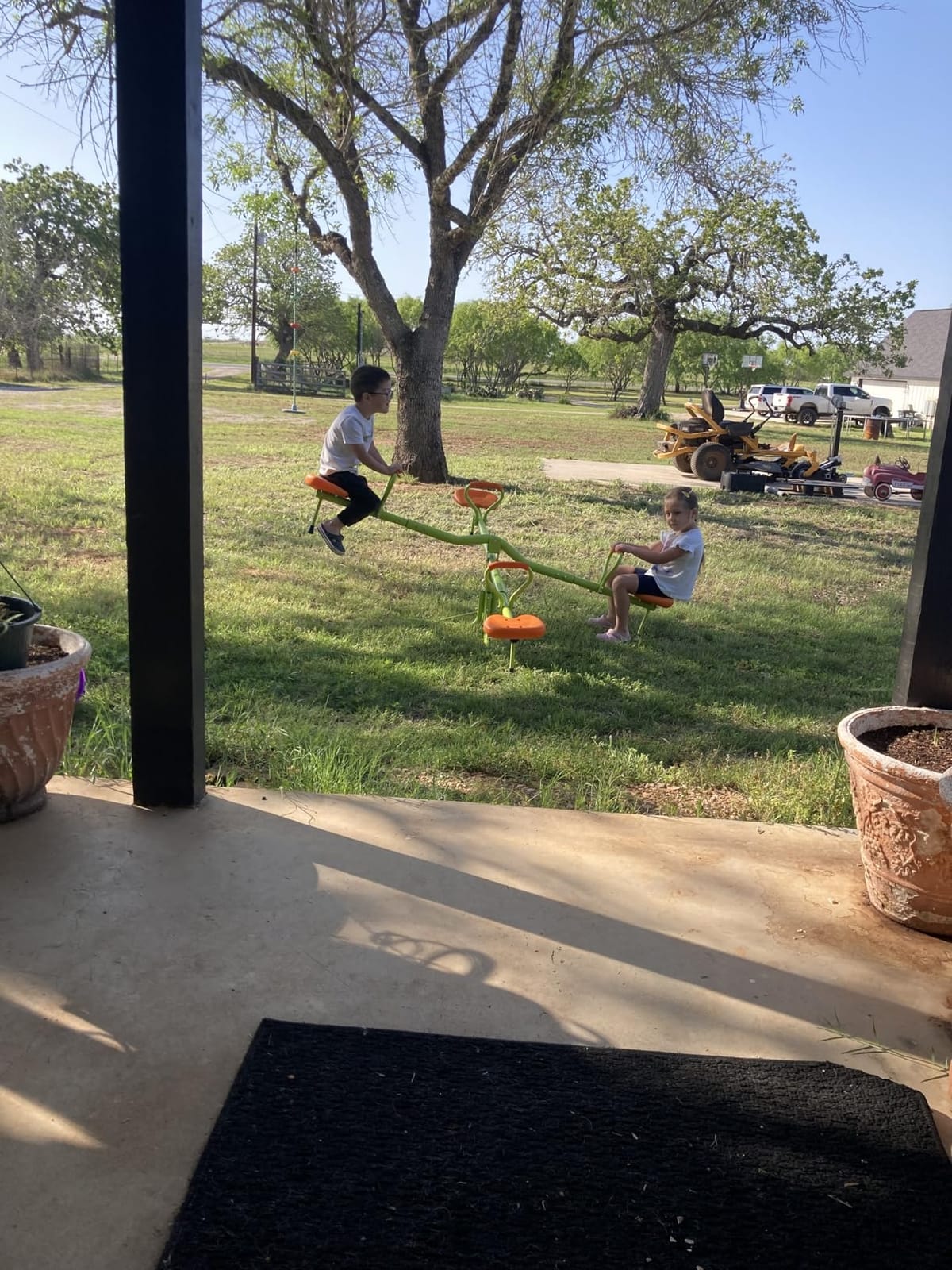
The handle bars carry a bump absorber mechanism, so the stop at the end of travel is softer than a bare-bounce fulcrum. Seats are large, elongated and padded, which is the right call on a four-seat toy where kids are crowded.
The caution is build consistency. At 4.3 stars from 402 reviews, this is the least-proven pick here, and the complaints cluster in one place: hardware. Reviewers report swivel seat supports that feel flimsy, screws and end stoppers that loosen with heavy use, and a metal frame that bent under load for some owners.
Who should buy the Nova 4-Seat Swivel Seesaw
Families with three or four riders, especially mixed-age households where the bigger children want to join a toddler on the ride. The 110 lb per-seat rating is one of the higher figures here.
Anyone who needs the frame length adjustable, since it expands from 72 to 78.7 inches to fit a narrower yard or a longer one.
Who should skip it
Homes expecting daily hard use from multiple children. If four kids will hammer it every weekend, a heavier frame like the Gym Dandy models is the safer bet long term.
Anyone who will not spend five minutes re-tightening bolts each season. That maintenance step is not optional on this unit based on what owners report.
What to know before you buy
Most buyers start with price or color and end up regretting it, because the two decisions that actually matter are seat count and per-seat weight capacity. Get those right and the rest is preference.
Here is the shorthand. Per-seat capacity is the number each child must stay under. Total capacity is the whole unit, and it is often simply double the per-seat figure on a two-seater. A model with a high total rating but a low per-seat rating means one heavy child can still overburden one end.
Motion type
Fulcrum seesaws rock on a fixed pivot and feel the most traditional, but they stop hardest at the end of travel. Pendulum and rotating designs hang the seat so the arc continues smoothly and the landing is absorbed, which is why they cost more. Rocking-chair frames curve the path and are the gentlest option for a toddler.
The Spiro Spin in this roundup adds a fourth variant, where the wheels lift off the ground at rest so the seat glides rather than swings.
Seat count and household size
Two seats suit a single child or a pair of similar ages. Three to four seats change the dynamic entirely, because a waiting child is a climbing child. One owner with three kids described adding a counterweight to keep a third rider balanced, which is the practical fix for a two-seater that a bigger child outgrows.
Seven seats, as on the Ace Flyer, works because there is always another end available.
Age range
Toddler rockers run from eighteen months to about five years and are built low and soft. Mid-range steel seesaws typically start at three and run to thirteen. Multi-seat airplane and frame units usually start at five, because the seat height is set for a bigger child.
Read the age range as a comfort rating rather than a limit. A five-year-old can ride a three-plus unit, but a six-year-old on a toddler rocker is a foot-crushing risk.
Metal vs plastic, and what fails
Steel frames carry the weight and last, provided the finish holds. Powder-coated or galvanized steel resists rust; bare welded tubing does not, and one marketplace review put it plainly, complaining that metal bends too easily to survive more than one summer.
Plastic never rusts and never needs bolts checked, but it fades and becomes brittle under UV exposure, and it caps out at a much lower weight ceiling. For children under six it is the right call. Above that, steel wins.
For the rest of your yard layout, our picks for backyard pergolas and outdoor conversation sets cover the shade and seating side of the same space.
Seesaw safety and ground prep
Almost every seesaw injury story involves the ground, not the toy. A seesaw throws a rider off at its fastest point, and where they land matters more than how high the seat sits.
The standard playground guidance is a clear fall zone of roughly nine feet in every direction from the pivot, with surfacing under the entire arc. That number comes from public-playground rules designed for shared equipment, and it is the single most useful thing a backyard owner can take from them.
What to put underneath
Loose-fill mulch, engineered wood chips or sand are the cheapest options and the most forgiving in a fall. The surface has to be maintained, because a compacted or swept layer loses its shock-absorbing quality.
Rubber surfacing tiles and poured rubber cost more per square foot and last longer. If the seesaw sits on a patio or concrete pad, tiles are the practical fix, since bare concrete is the hardest and most dangerous surface to fall onto.
Anchoring
Anchoring matters more than most buyers expect. A seesaw develops momentum and then lands hard enough to shift its base, so on a slope or a hard patio it walks across the yard over a season rather than tipping all at once.
Look for a frame with pre-drilled anchoring holes and drive ground anchors or stakes through them. The TP Toys Spiro Spin in this roundup includes U-shaped anchors as standard. On slopes, anchor on the uphill side and check them at the start of each season.
If you cannot anchor, set the unit on level ground in the middle of the open area rather than at the edge, and expect to reposition it. Manufacturers generally do not warrant a unit that was never fixed down.
House rules worth setting
One rider per end, one child at a time boarding, and nobody standing at the ends while the beam is moving. Feet stay inside the seat area rather than trailing near the ground.
Check bolts and pivot hardware every few months, particularly on the bolt-together steel models. Loose hardware is the most commonly reported complaint across every category in this roundup, and it is the cheapest problem to fix.
Solving the unequal-rider problem
A seesaw works as a lever, and the heavier rider always wins unless you change the geometry. That is why a three-year-old and a nine-year-old cannot share a two-seater without an argument every single ride.
The rule is simple. Have the heavier child sit closer to the fulcrum. Moment equals weight times distance, so a 70-pound rider sitting one seat closer balances a 40-pound rider sitting further out. On models with adjustable seat positions you can widen the gap deliberately.
Where you cannot adjust the seats, families improvise. The most common fix, described in owner video accounts of solving this with three kids, is a counterweight: a sandbag or a container of sand strapped to the light child’s side, or ballast in the base frame.
On multi-seat models, the built-in answer is a third or fourth seat. Give the heavy rider their own end at the same distance from the pivot and the balance problem solves itself. That is a large part of why the four-seat and seven-seat designs exist.
Do not solve this with a spring or by wedging the beam. Every fix that changes the travel of the beam reintroduces the bottom-out problem the bump absorbers exist to prevent.
Why playgrounds dropped seesaws
Public playgrounds largely stopped installing seesaws because of cost and liability, not because children outgrew them. Three things converged: fall-zone surfacing has to extend across the whole arc, the equipment has to clear modern ASTM F1487 impact standards, and a spinning seat that lets a lowered end swing into another child is hard to certify.
The surfacing line item is the expensive one. A compliant public playground has to install engineered material across the entire use zone and maintain it. For a single piece of equipment, that cost per child served is higher than for a swing set, which sits on a smaller footprint with a far smaller swing arc.
Tragic accidents on multi-seat seesaws, where an adult riding with a small child was struck or fell badly, accelerated the retreat. That history is also why certified capacity figures matter so much when you are comparing models.
The upshot for a backyard owner is that home seesaws have kept developing while public ones stalled. The rotating, wheel-absorbing designs in this roundup exist because home manufacturers solved the stopping and boarding problems that made certification difficult.
Frequently Asked Questions
Is there a difference between a teeter-totter and a seesaw?
No real mechanical difference. A seesaw and a teeter-totter are the same fulcrum ride, and the naming is regional and generational rather than functional. Sellers, parents and playground specs use the two words interchangeably, so a teeter totter listed as a seesaw is the same category of product.
What is a seesaw in a playground?
A seesaw in a playground is a rigid board or beam mounted on a central fulcrum so one end rises as the other falls. Riders pump it up and down with their legs, and the resulting shifting weight trains balance, core strength and the coordination needed to time a shared ride with another child.
Why don’t playgrounds have seesaws anymore?
Public playgrounds dropped seesaws mainly for cost and certification reasons. Completing the required fall-zone surfacing across the full swing arc is expensive, and rotating seats are difficult to certify under modern impact standards. A few multi-seat accidents involving adult riders accelerated the retreat.
What is the ideal age for a seesaw?
Most models are rated from three years up, and toddler rocker designs start around eighteen months. Traditional steel seesaws commonly run from three to thirteen, while multi-seat frame units usually start at five because the seat height suits an older child. Treat the age range as a comfort rating rather than a hard limit.
How much weight can a backyard seesaw hold?
Check the per-seat rating rather than the total. A two-seater rated at 300 lb total is usually 150 lb per child, and some two-seaters list one high total figure while leaving the per-seat figure unstated. A reasonable floor is around 75 lb per seat for kids, with 110 lb or more per seat on heavier frames.
Do I need to anchor a backyard seesaw?
Anchoring is advisable, especially on a slope, a hard patio or anywhere the ground is soft. A moving beam builds momentum and then lands hard enough to shift the base, so an unanchored unit slowly walks across the yard. Look for pre-drilled anchoring holes and use ground anchors or stakes, checking them at the start of each season.
What surface should go under a backyard seesaw?
Loose-fill mulch, engineered wood chips or sand are the cheapest and most forgiving options, and they need regular maintenance to stay loose. Rubber tiles or poured rubber cost more but last longer. Avoid bare concrete or asphalt, and aim for roughly nine feet of clear space in every direction from the pivot.
Conclusion
The best seesaws for backyards in 2026 come down to two numbers: seats and per-seat weight capacity. Get those right and the motion type is flavor.
For a crowd, the LIFETIME Airplane Ace Flyer is the winner here, carrying seven children on a powder-coated steel frame at 4.8 stars from 862 reviews. For toddlers, the Simplay3 Up and Down is the proven first ride. For mixed ages and hard use, the Gym Dandy TT-360 absorbs the landings that make traditional fulcrums risky.
Whatever you pick, budget for the ground underneath it. Nine feet of clearance and a maintained loose-fill surface will do more for your child’s safety than any feature printed on the box.