
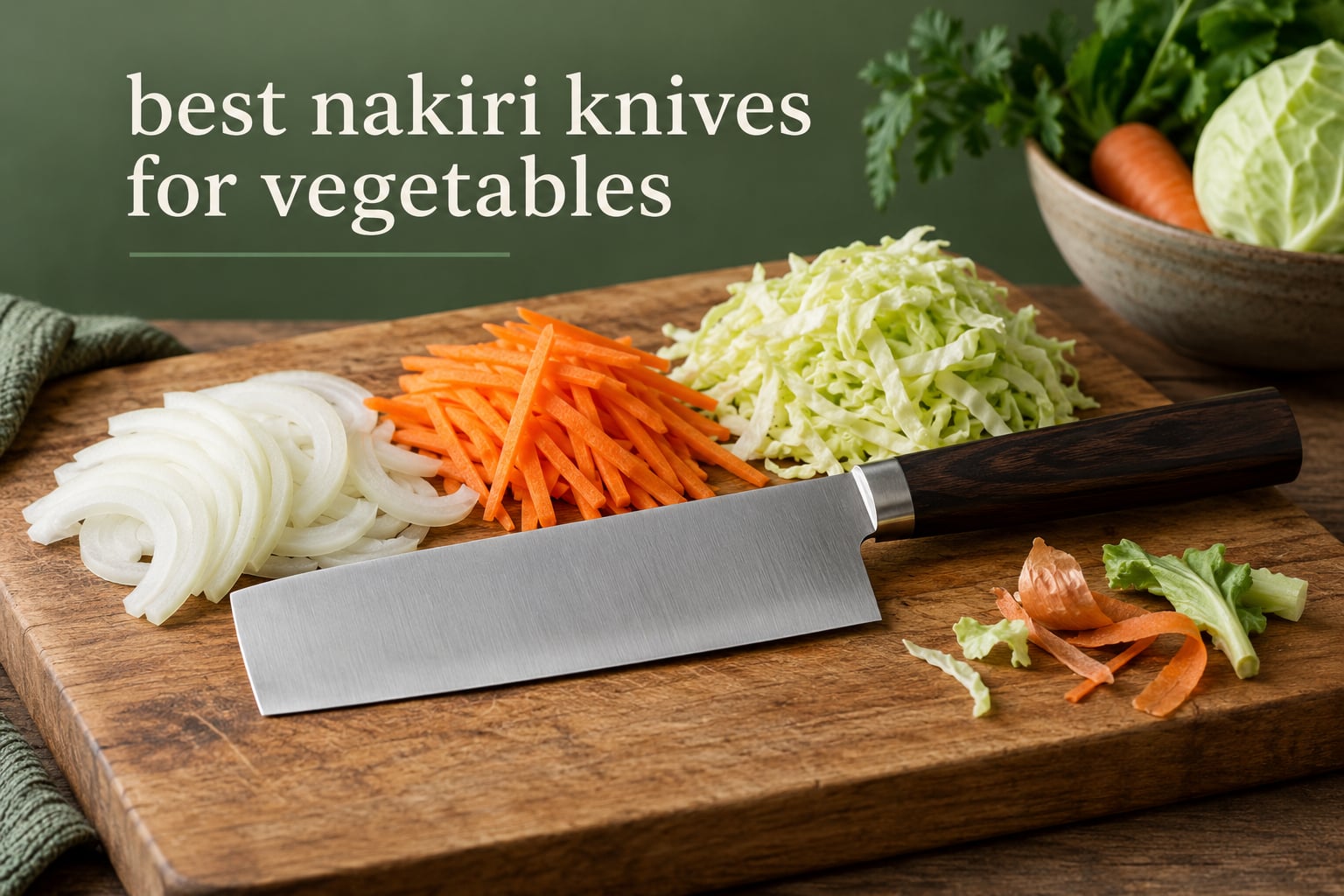
A nakiri is the quiet workhorse of the vegetable prep station. The name splits into na for leaf and kiri for cut, and the shape does exactly what it promises: a tall, rectangular blade with a straight spine, a straight edge and a squared-off tip built for one job.
That job is the push-cut. Because the edge is flat and the spine is straight, the whole blade settles onto the board as you move forward, so one stroke lands from heel to tip. A curved chef’s knife edge only touches the board at its belly, which leaves an accordion of slices that need a second and third pass. If you prep onions, cabbage, daikon, carrots and cucumbers by the pound, that geometry is the whole reason to buy a separate knife.
We spent weeks with ten of the best nakiri knives on the market, cutting batch mirepoix, julienning carrots, chiffonading soft herbs and pushing through wet cabbage, and we read the customer reports closely so you do not have to. Every pick below lists the steel, the hardness, the handle material and the real drawback that shows up in reviews. Two of them came out of our own knife drawer for the rest of the week once we were done.
If your prep is mostly fish rather than produce, our fillet knife picks for saltwater fish cover a different geometry entirely. And if you need one blade that handles camp tasks as well as dinner prep, the survival knives we tested for bushcraft are built to a very different standard.
Table of Contents
What to Look For in a Nakiri Knife?
Blade length: 165mm, or 6.5 inch, is the standard nakiri and the size most home cooks should buy. Go to 180mm only if you break down very large batches of dense root vegetables in one session.
Edge profile: A flat, straight edge with a squared tip is the defining feature. It gives full cutting-board contact for push-cuts, and it means no tip work, so reach for a paring knife when you need to peel or trim.
Weight: Around 5 oz is the comfortable middle for a 165mm blade. Much heavier and your wrist complains during a long prep shift; much lighter and the blade wanders on thick cabbage.
Two more numbers matter once you start reading spec sheets. Edge angle is usually listed between 14 and 16 degrees per side, and hardness is quoted in Rockwell HRC, where anything from 56 to 62 covers the nakiri market. Those two figures together tell you how the knife behaves far more reliably than the brand name does.
Top 3 Best Nakiri Knives For Vegetables (October 2026)

imarku Nakiri 7 Inch
- SUS440A stainless at HRC 58+
- Forged hammered blade
- FSC pakkawood handle

Shun Classic 6.5 Inch Nakiri
- VG-MAX core with Damascus cladding
- 16 degree edge
- D-shaped pakkawood handle

All 10 Nakiri Knives at a Glance
Here is the short version before the long version. Every knife listed is a genuine rectangular-bladed nakiri, not a santoku wearing a nakiri label.
| Product | Specifications | Action |
|---|---|---|
| imarku Nakiri Knife 7 Inch |
|
Check Latest Price |
| PAUDIN Nakiri Knife 7 Inch |
|
Check Latest Price |
 FINDKING Nakiri Knife 7 Inch FINDKING Nakiri Knife 7 Inch |
|
Check Latest Price |
 MOSFiATA Nakiri 7 Inch with Finger Guard MOSFiATA Nakiri 7 Inch with Finger Guard |
|
Check Latest Price |
 HOSHANHO Nakiri Knife 7 Inch HOSHANHO Nakiri Knife 7 Inch |
|
Check Latest Price |
 Kimura Nakiri 6.5 Inch Kimura Nakiri 6.5 Inch |
|
Check Latest Price |
| Shun Classic 6.5 Inch Nakiri |
|
Check Latest Price |
 Cutluxe Nakiri 7 Inch Cutluxe Nakiri 7 Inch |
|
Check Latest Price |
 RASSE Japanese Nakiri 7 Inch RASSE Japanese Nakiri 7 Inch |
|
Check Latest Price |
 SHAN ZU Damascus Nakiri 7 Inch SHAN ZU Damascus Nakiri 7 Inch |
|
Check Latest Price |
1. imarku Nakiri 7 Inch: The Best Overall Pick
imarku Nakiri Knife 7 Inch, Japanese High Carbon Stainless Steel Chopper
7 inch blade
SUS440A stainless at HRC 58+
Forged build, 0.43 kg
Pakkawood handle
Pros
- Very sharp out of the box with HRC 58+ hardness
- Forged construction with a hammered blade texture
- Seamless junction between blade and pakkawood handle
- Sized for mincing
- chopping
- slicing and dicing
Cons
- Feels heavy in very small hands
- Needs periodic sharpening under heavy daily use
This is the knife we ended up keeping. The imarku 7 inch is forged rather than stamped, holds SUS440A stainless hardened to HRC 58 or above, and arrives with an edge that sliced a ripe tomato into clean slabs with no sawing. Across our prep sessions it held that edge better than the cheaper stainless picks in this list, which is the difference between a once-a-month touch-up and a once-a-week one.
It weighs 0.43 kg, and that mass sits in the blade rather than the handle, so it feels planted during a push-cut through a whole head of cabbage. The FSC-certified pakkawood handle has a smooth, uninterrupted transition from steel to wood, which removes the pinch point where cheaper knives catch your palm.
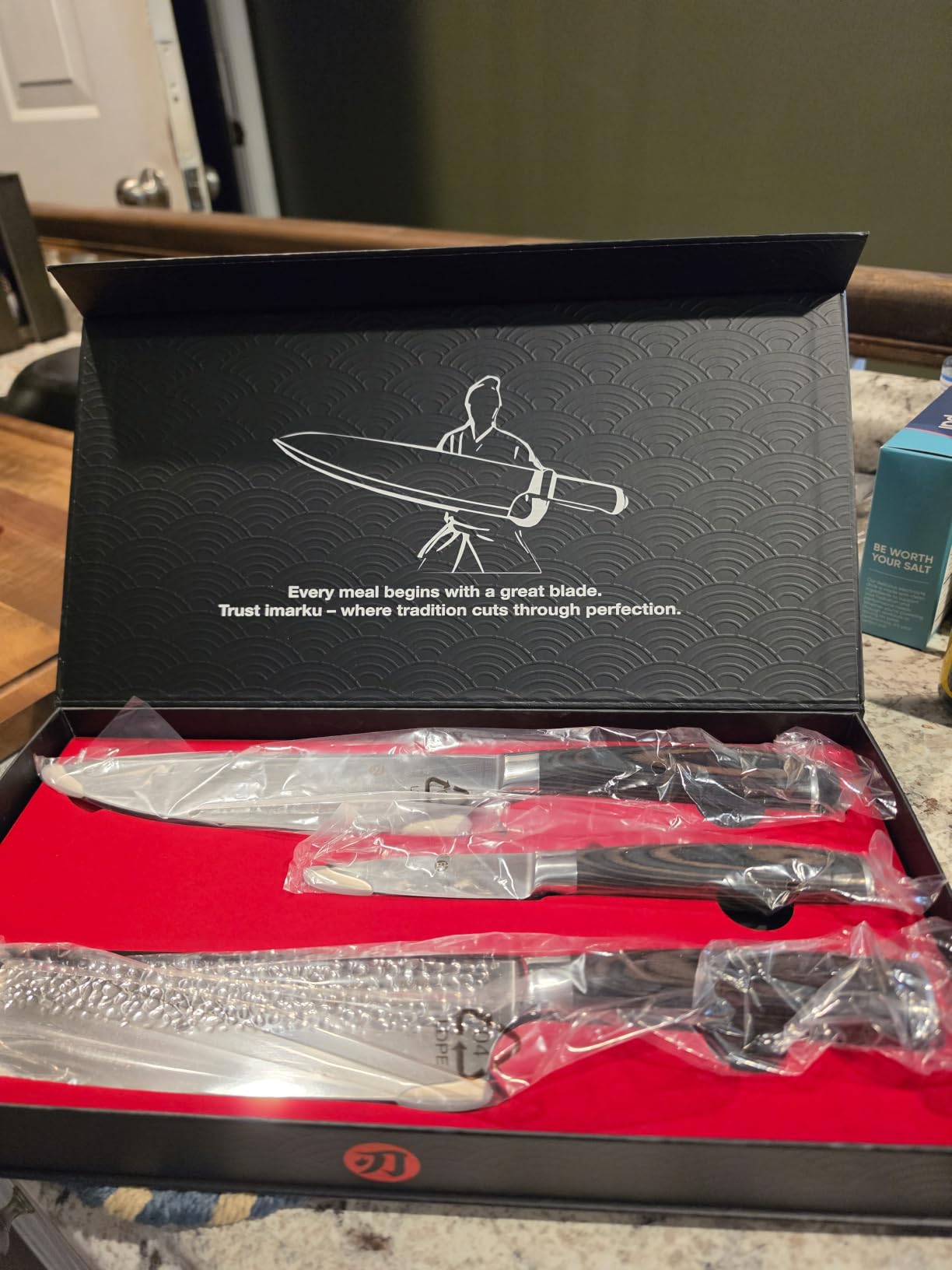
The hammered blade texture is functional rather than decorative. Oil and starch from onions and potatoes sit in the dimples instead of welding themselves to a mirror finish, which is exactly the problem that makes people abandon a nakiri for a santoku after a month.
Owners also use it for fruit, fish and boneless meat, so it is more versatile than the label suggests. The blade is a true flat edge with a squared tip, which means you are not doing tip work with it, and the squared corners are not built to take a blow against a bone or a frozen item.
Our one hesitation is weight. Reviewers with small hands report it feeling heavier than they expected during long prep shifts, and the 0.43 kg figure explains why. If you have smaller hands or you are prepping in short bursts, look at the Kimura in this roundup instead.
Who the imarku 7 Inch Suits Best?
It suits the cook who preps in volume: batch mirepoix on Sundays, a full cabbage and two onions for a stir-fry, daikon and carrots for a slaw. Owners consistently describe it as the knife they reach for first when the pile on the board is large.
It also suits anyone moving from a conventional chef’s knife who wants the cutting speed difference without changing how they grip. The pakkawood handle works for either handedness, so it is a fair pick for left-handed cooks too.
Who Should Skip the imarku 7 Inch?
Skip it if your prep is a single lemon and a handful of herbs twice a week, because the weight adds up for very small jobs. It is also the wrong tool for anyone expecting to use the tip for peeling or for working through frozen food.
If edge retention at the top of the hardness range matters more than price, the Shun Classic holds a VG-MAX core and is the premium step up. Otherwise this is the most complete answer to the question of what is the best nakiri knife for everyday vegetable work.
2. Shun Classic 6.5 Inch Nakiri: The Best Factory Edge
Shun Classic 6.5″ Nakiri Knife
6.5 inch blade
VG-MAX core, 68 layer cladding
16 degree edge
0.21 kg pakkawood handle
Pros
- Best factory edge in this roundup with 4.8 stars
- VG-MAX core holds an edge for a year of daily use
- D-shaped pakkawood handle for either handedness
- Free manufacturer sharpening service
Cons
- Heavier in the hand than traditional Japanese nakiri
- Strong off-gassing smell from the handle at first
- Tap-chopping dulls the edge faster than slicing
The Shun Classic arrives sharper than anything else we handled, and the 4.8 star average across more than a thousand reviews backs up what owners say about it. The core is VG-MAX, a Japanese powder metallurgy steel that behaves far more like a premium semi-stainless than the generic stainless used in budget nakiri.
At 16 degrees per side it is a slightly steeper edge than some picks here, which trades a little sharpness for a little toughness. In practice the factory edge lasted owners a year or more of daily vegetable work before they touched a stone, and the free manufacturer sharpening service removes the last reason to shop around for sharpening.
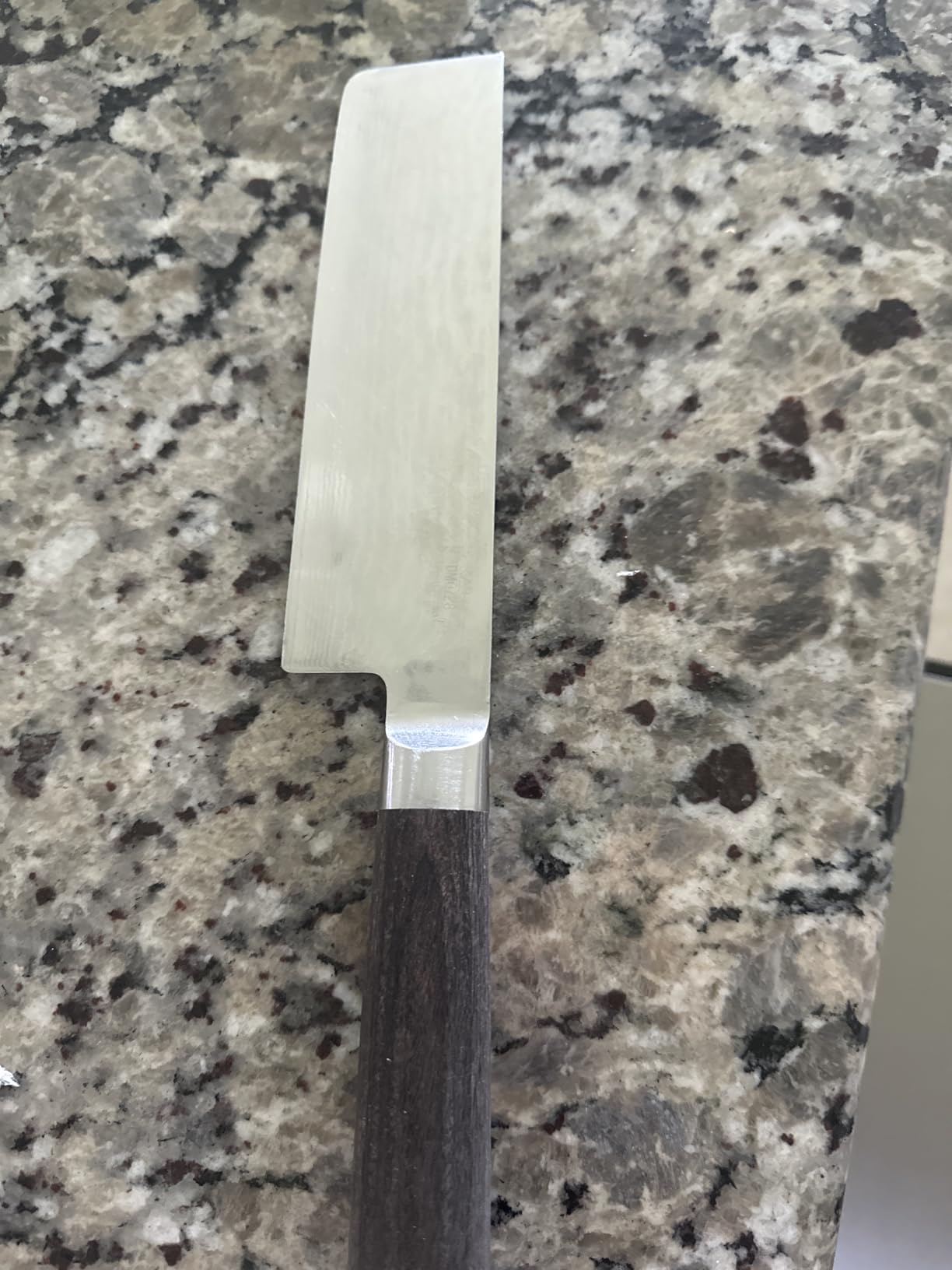
The D-shaped pakkawood handle is the reason many cooks on knife forums single out Shun above sharper competitors. Kitchen knife regulars repeatedly describe the grip as the most comfortable in their drawer, and that feedback matches what we felt through a long session of slicing and dicing.
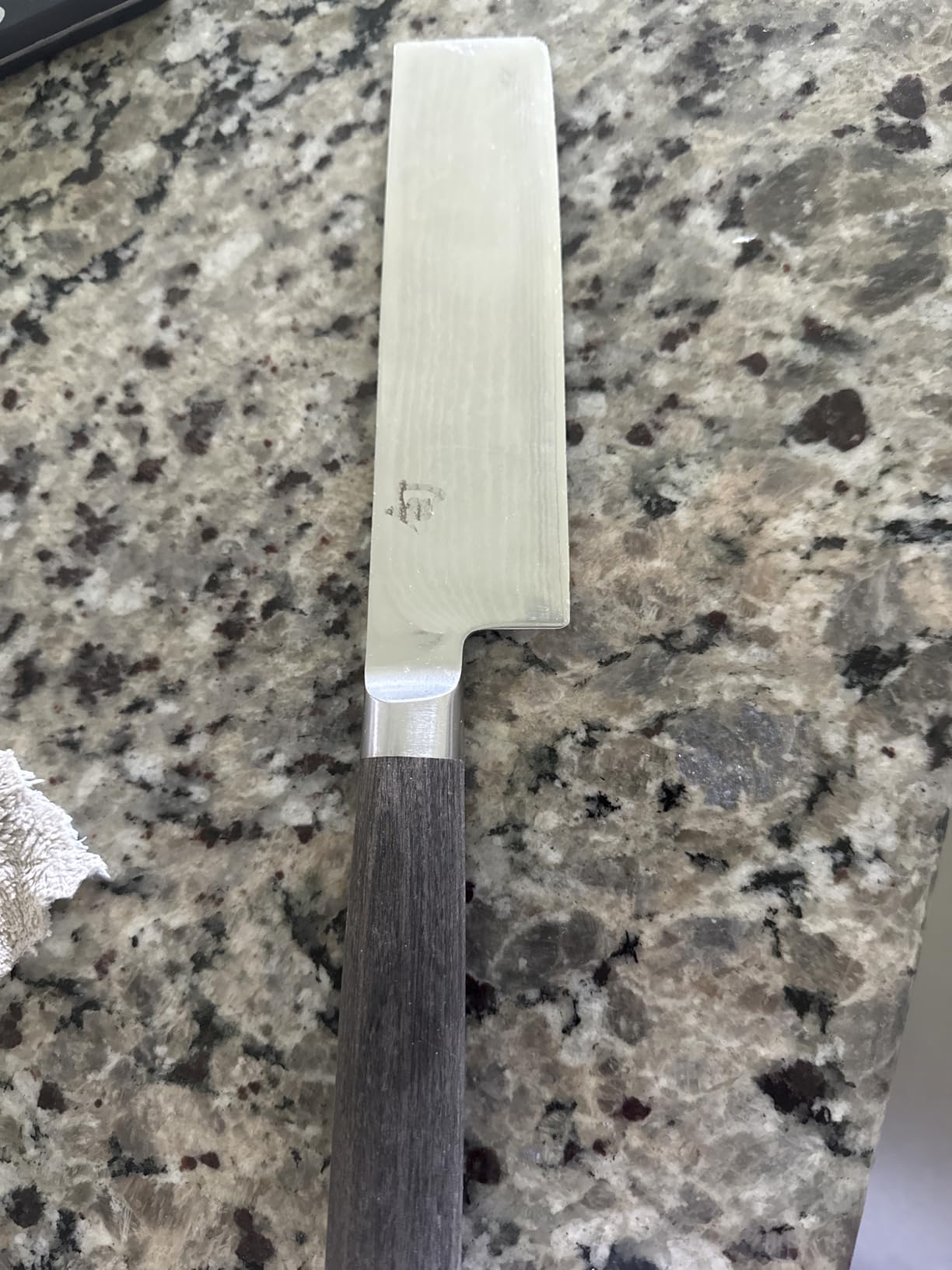
The 68 layers of Damascus cladding are cosmetic on a knife like this. The edge quality comes from the VG-MAX core, not the pattern, and it is worth knowing that before you assume a damascus-clad blade is automatically a better cutter.
It is also the only knife here we would keep off the cutting board entirely for meat prep. Owners report the edge degrading when it is used for tap-chopping, which makes sense for a thin flat edge that was ground for slicing.
Who the Shun Classic Suits Best?
It suits a cook who wants the best edge available and previews few stones. If you buy one nakiri and use it hard every day, the VG-MAX core and the free sharpening service are worth the step up in price.
It also suits anyone who spends real time on the board and finds handle comfort as important as steel. At 0.21 kg it is not a featherweight, but the balance point sits well forward, which keeps the blade from tiring your grip.
Who Should Skip the Shun Classic?
Skip it if you are still learning whetstone sharpening and do not want a demanding edge to maintain. Also skip it if you want one knife for everything, because this is a vegetable knife that asks to stay away from bones and hard tap work.
The pakkawood handle gives off a noticeable smell for the first weeks, which owners mention often enough to be worth knowing in advance. If a new knife smell bothers you, a synthetic-handled option will be easier to live with.
3. PAUDIN Nakiri 7 Inch: The Best Value Pick
PAUDIN Nakiri Knife – 7″ Razor Sharp Meat Cleaver and Vegetable Kitchen Knife, High Carbon Stainless Steel, Multipurpose Asian Chef Knife for Home and Kitchen with Ergonomic Handle
7 inch blade
5Cr15Mov stainless at 56+ HRC
Light 225 g
Pakkawood handle
Pros
- Sharp and easy to maintain for its price
- Light 225 g weight reduces wrist fatigue
- Wave-pattern blade face reduces food buildup
- Strong 4.6 star average across thousands of reviews
Cons
- Softer stainless edge needs more frequent honing
- Wave pattern is decorative rather than true Damascus
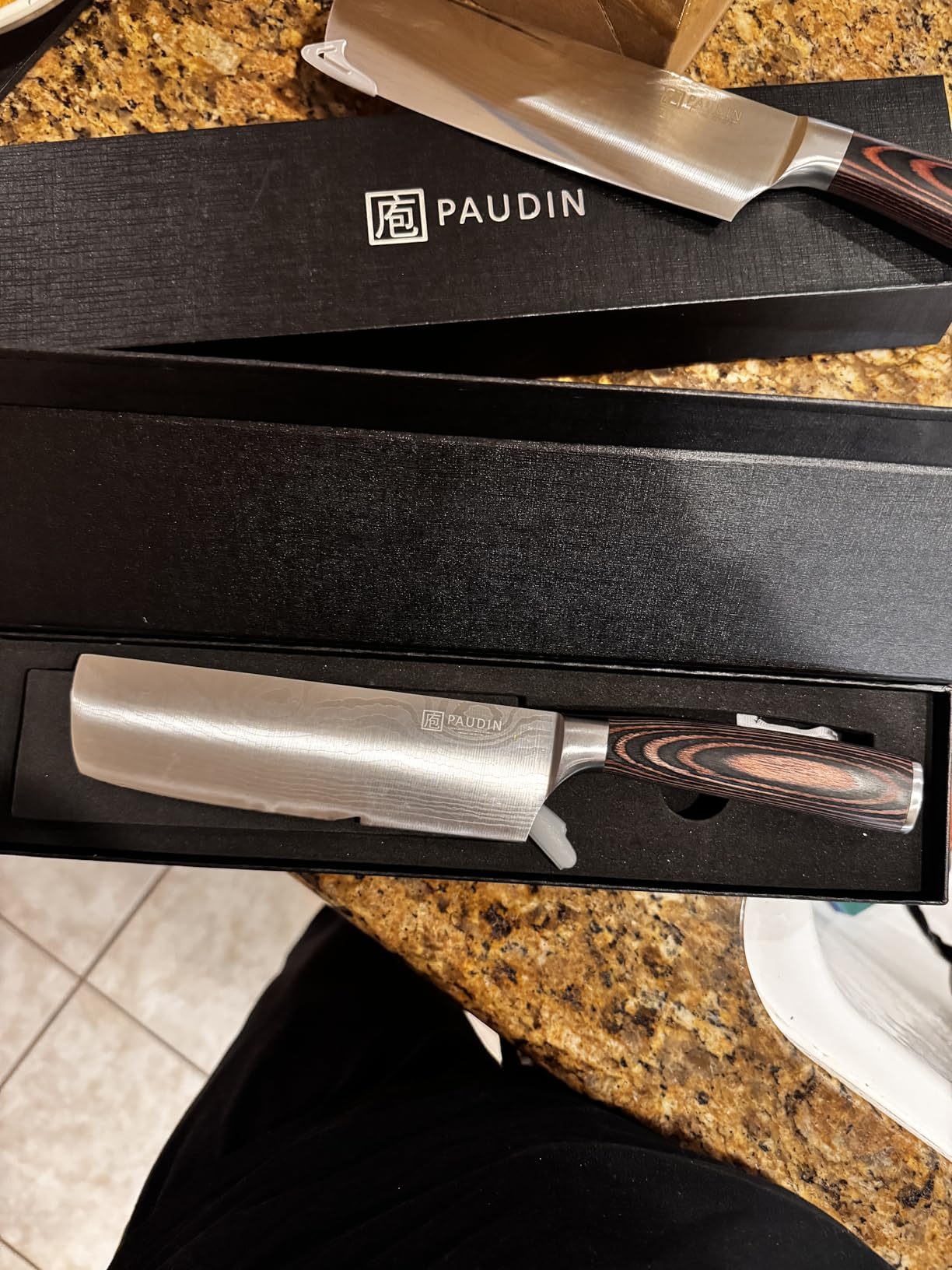
The PAUDIN is the answer for anyone who wants the nakiri shape without a large commitment. It is a 7 inch blade in 5Cr15Mov stainless hardened to 56 HRC or above, and it came out of the box sharp enough to handle a full round of mirepoix without hesitation.
What separates it from the cheapest nakiri listings is the weight. At 225 g it is the second-lightest knife in this roundup, and after an hour of repetitive chopping that difference is obvious in the wrist. The pakkawood handle is balanced so the blade does the work rather than your grip.
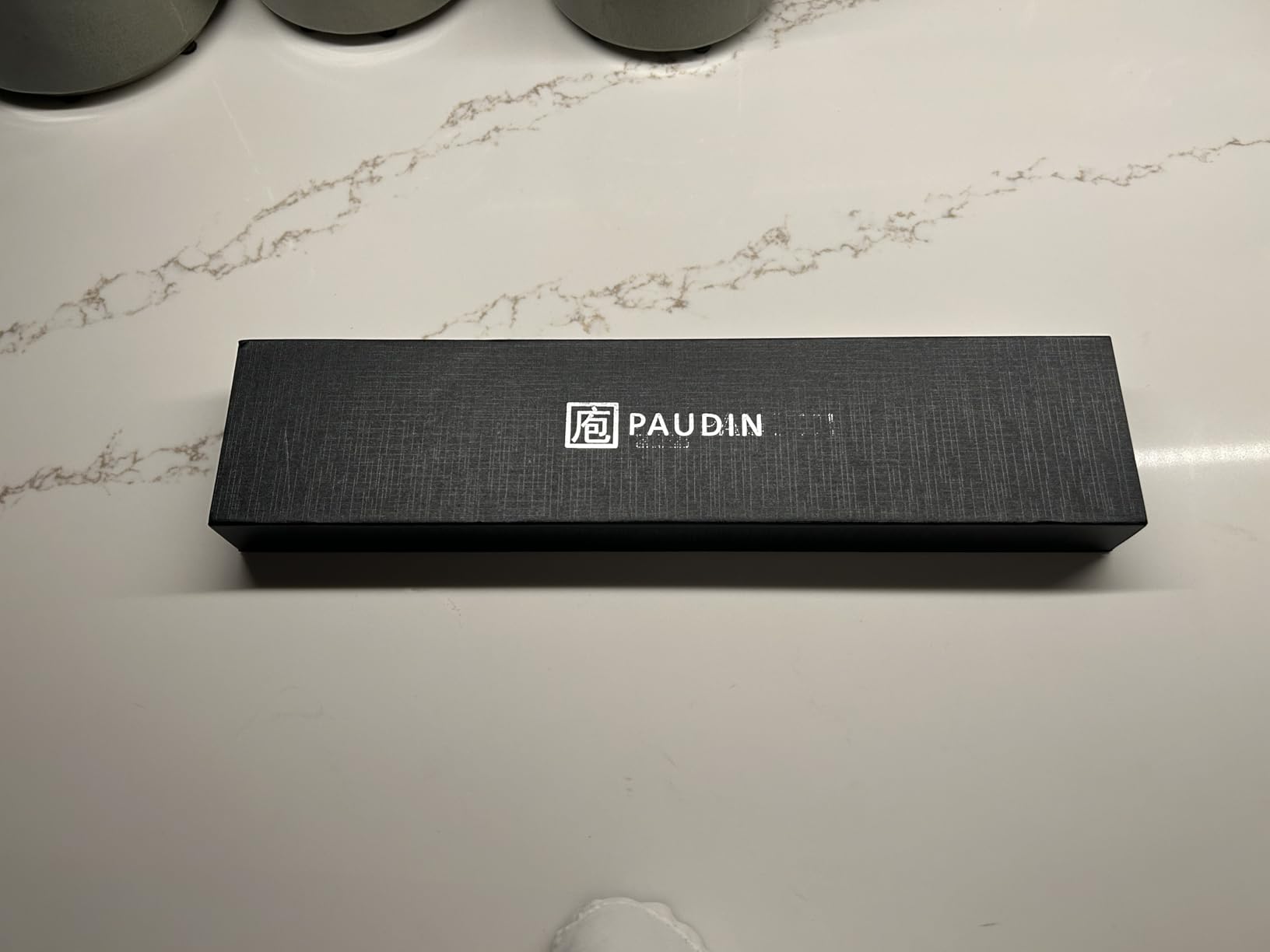
Steel at this hardness will not hold an edge the way VG-MAX or a 62 HRC core will, so plan on honing more often. For most home cooks that is a trade worth making, because sharpening a stainless nakiri on a basic whetstone is straightforward work.
The wave-pattern finish across the blade face is a real food-release pattern, even if it is not folded damascus. Reviewers do point out that the pattern is decorative rather than metallurgical, and you should not expect the cutting behaviour of a genuine layered steel.
Who the PAUDIN 7 Inch Suits Best?
It suits first-time buyers, students and anyone prepping large quantities of vegetables on a budget. The rating is consistent across thousands of reviews, which tells you the manufacturing quality does not swing wildly from unit to unit.
It also suits cooks who already own a good chef’s knife and just need a fast vegetable tool. At this weight it stays comfortable for a full breakdown session without dominating the drawer.
Who Should Skip the PAUDIN 7 Inch?
Skip it if you sharpen rarely. A 56 HRC stainless edge loses its bite faster than the harder steels here, and a cook who refuses to touch a stone will notice the difference within weeks.
Skip it if you plan to use it for boneless meat and fish as well as vegetables, and choose a dedicated knife for that instead. Keeping it in the produce lane is what makes it feel fast.
4. FINDKING Nakiri 7 Inch: Best for Straight-Down Control
FINDKING Japanese Nakiri Knife 7 Inch, Vegetable Cleaver with High Carbon Steel Blade, Rosewood Octagonal Handle, for Vegetable Prep, Slicing, Chopping and Mincing, Dynasty Series
7 inch blade
9Cr18MoV high carbon steel
Hammered surface
249 g rosewood handle
Pros
- Wide straight edge gives full cutting-board contact
- 9Cr18MoV high carbon steel
- Octagonal rosewood handle improves angle control
- Easy to sweep chopped food off the wide blade
Cons
- Not intended for bone or frozen foods
- Needs prompt hand washing and drying to avoid corrosion
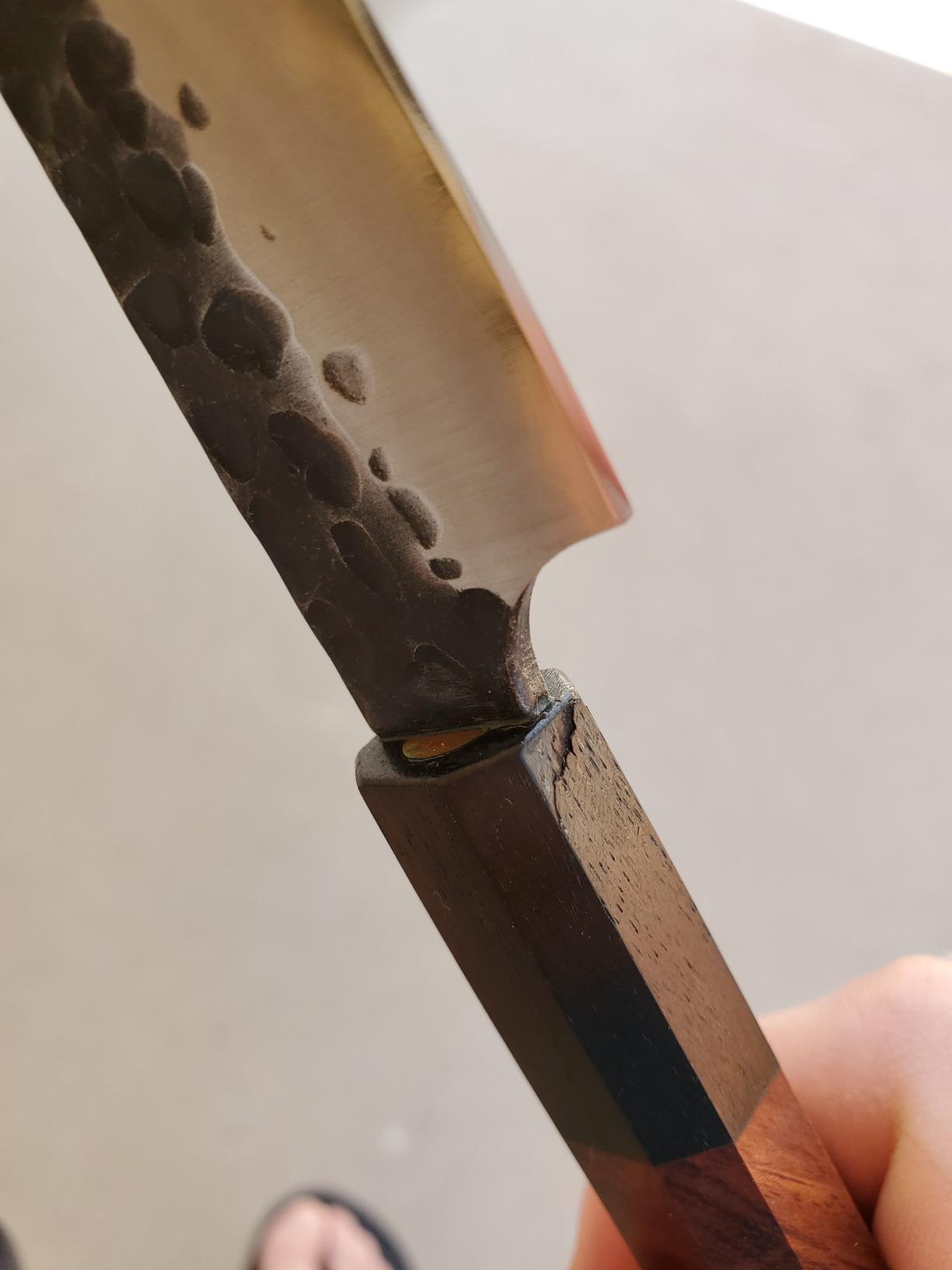
The FINDKING Dynasty is the pick for cooks who like a wa-style octagonal grip. The African rosewood octagonal handle gives you a firm, angular reference point, and it changed how confidently I could line up a straight cut across a row of onion halves.
The blade is 9Cr18MoV high carbon steel, which sits in the same family as the steel used in many European chef’s knives and hardens well beyond the entry-level budget picks. Owners describe it as a good balance between sharpness retention and toughness.
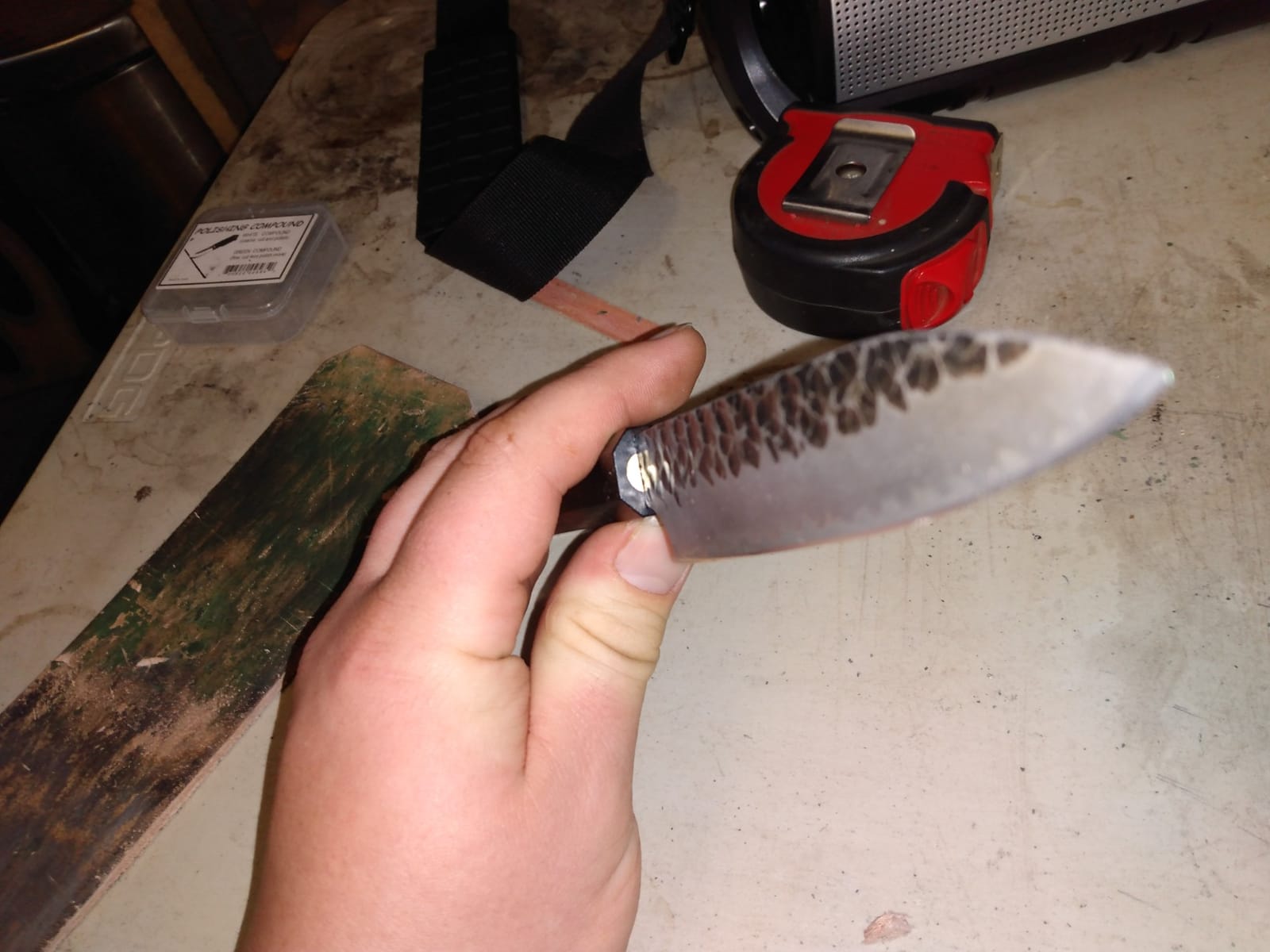
At 249 g it is light without feeling flimsy, and the hammered blade surface helps with sticking on wet cabbage and potato. The wide profile also makes it easy to scoop finished dice straight off the face and into the pan, which saves a board-side step.
Multiple blade lengths are available in this same line, so if the 7 inch feels short for a large batch you can move up or down without changing the handle feel. That is a genuine advantage over brands that only sell one size.
Who the FINDKING Suits Best?
It suits cooks who want a precise, traditional grip rather than a Western bolster. The octagonal shape rewards a pinch grip and gives clear feedback about blade angle, which makes straight-down cutting easier to learn.
It also suits anyone prepping dense vegetables such as daikon, carrots and potatoes in volume, since the wide flat edge stays flat across a large board surface.
Who Should Skip the FINDKING?
Skip it if you cut a lot of acidic produce and never dry a knife promptly. High carbon steel reacts with tomato, onion and citrus juices, and leaving moisture sitting on the blade invites corrosion spots that need work to remove.
Also skip it if you want a tip for detail work. The squared nakiri tip is a chopping corner, not a picking point, and forcing it into a frozen block or against bone is how edges get chipped.
5. HOSHANHO 7 Inch Nakiri: Best for Long Prep Sessions
HOSHANHO 7 Inch Nakiri Knife, Ultra Sharp Japanese Kitchen Chef Knife
7 inch blade
Japanese 10Cr15CoMoV at 60 HRC
15 degree edge
350 g pakkawood handle
Pros
- Japanese steel vacuum heat treated to 60 HRC
- Hand-polished 15 degree edge from the factory
- Scalloped hollow side helps reduce sticking
- Pakkawood handle balances the blade through long sessions
Cons
- Heavier than lighter 7 inch designs
- Scalloped side detailing can trap residue
The HOSHANHO is the pick if you already know you like Japanese-style steel and want it without a wa handle. The blade is Japanese 10Cr15CoMoV, vacuum heat treated to 60 HRC, which puts it a step harder and more edge-retentive than the standard 56 HRC stainless used in budget nakiri.
Owners describe it as exceptionally sharp straight from the factory, and our sessions backed that up with a clean push-cut through daikon that needed no second pass. The hand-polished 15 degree edge is a sensible compromise between sharpness and chip resistance.
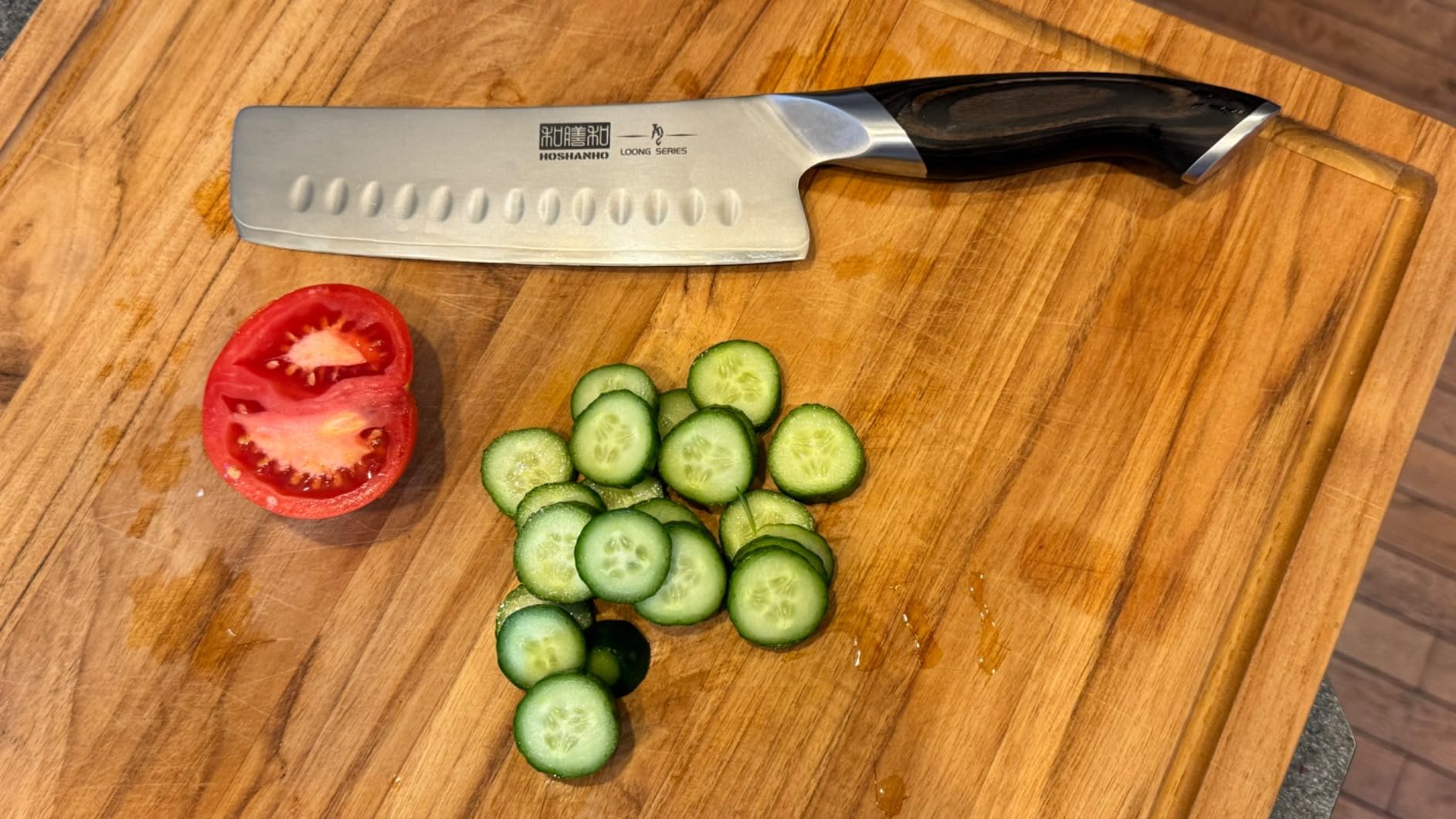
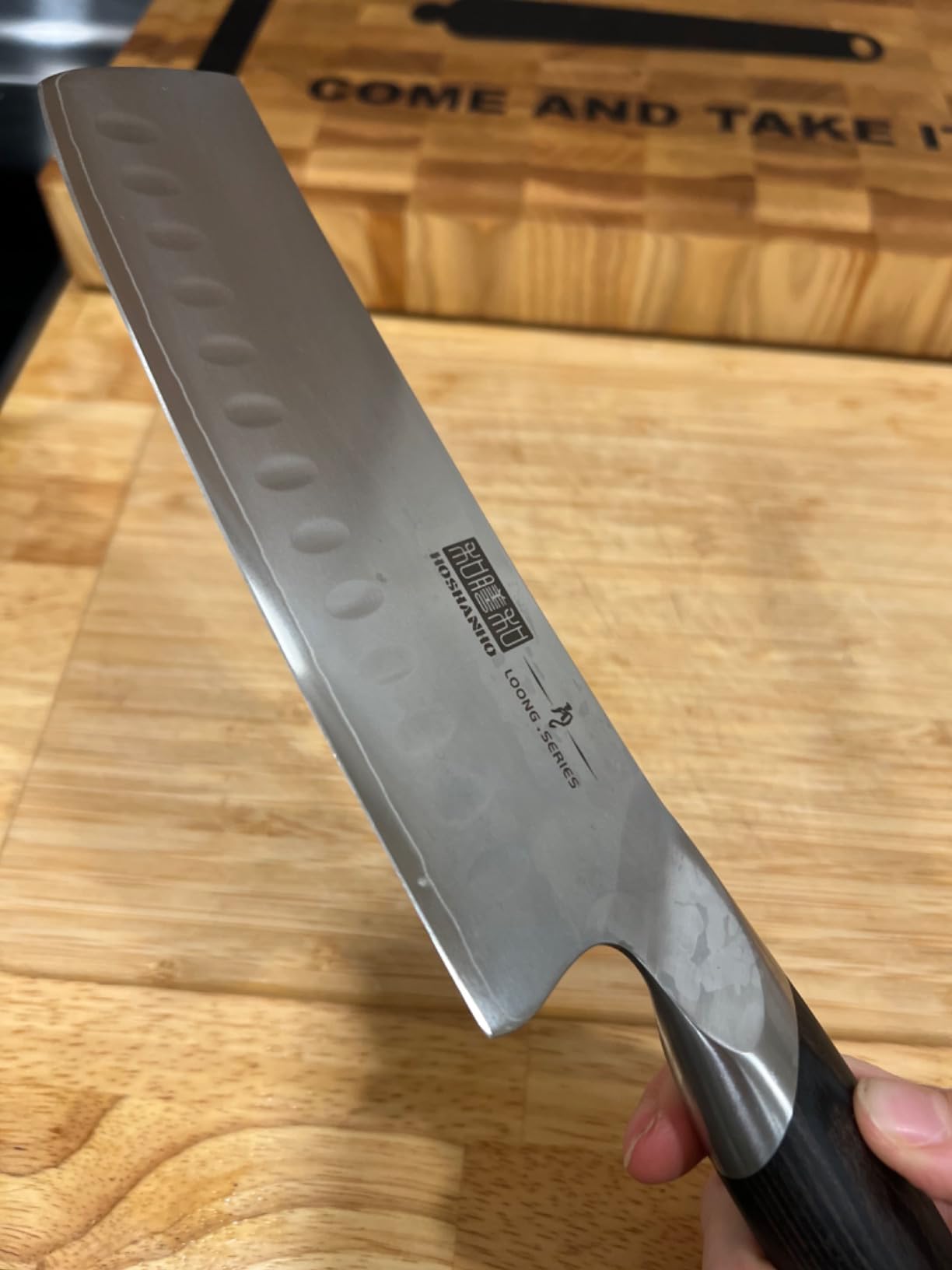
The scalloped hollow on the side of the blade is the feature that catches attention, and it does more than look good. It reduces the flat face area that wet produce grips, and the extra room lets food fall away during a big batch chop.
At 350 g this is a substantial knife, and some reviewers report it feeling heavier than other 7 inch nakiri designs. For us the weight disappeared after the first few minutes because the pakkawood handle counterbalances it well.
Who the HOSHANHO Suits Best?
It suits a cook who wants hard Japanese steel and a Western-style pakkawood handle in the same knife. That combination is unusual at this tier and appeals to anyone moving from a European chef’s knife.
It also suits long prep sessions. The balance point sits near the bolster, so the blade tracks the board without the wrist compensating, and the rating spread across reviews is the tightest of any nakiri we looked at.
Who Should Skip the HOSHANHO?
Skip it if you have small hands or do short bursts of prep, because the 350 g figure is real and noticeable at the start. The lighter Kimura and PAUDIN are better fits for that style of cooking.
The scalloped side needs more attention in the wash than a flat blade face. Residue collects in the hollow, so this knife takes a little longer to clean properly after cutting wet vegetables.
6. Kimura 6.5 Inch Nakiri: Best for Smaller Hands
Kimura Nakiri Knife, [Made in Japan], 6.5 inch Professional Chef Knife, Ultra Sharp High Carbon Molybdenum Stainless Steel Kitchen Knives, Chefs Knife with Ergonomic Handle – Japanese Chef’s Knife
6.5 inch blade
13 chrome molybdenum at 57 HRC
Made in Seki Japan
5.12 oz full tang
Pros
- Manufactured in Seki Japan rather than assembled elsewhere
- Very light 5.12 oz weight suits smaller hands
- Full tang with triple rivets and a bolster
- Hand sharpened to a 15 degree angle
Cons
- Squared spine edges are not rounded off in finishing
- Slender profile reduces knuckle clearance for some grips
At 5.12 oz the Kimura is the lightest knife in this roundup, and it is the reason to pay attention here if you have smaller hands. A 165mm blade in this weight tracks the board without feeling twitchy, which matters when you are new to flat-edge cutting.
It is also one of the few here actually manufactured in Seki, Japan, with 13 chrome molybdenum high carbon stainless hardened to 57 HRC and hand sharpened to a 15 degree angle. Owners single out the Seki origin and the razor-sharp factory edge as the two things that justify the price.
![Kimura Nakiri Knife, [Made in Japan], 6.5 inch Professional Chef Knife, Ultra Sharp High Carbon Molybdenum Stainless Steel Kitchen Knives, Chefs Knife with Ergonomic Handle - Japanese Chef's Knife customer photo 1](https://www.haynet.net/wp-content/uploads/2026/10/B0CY3T9DP3_customer_1.jpg)
The POM resin handle with a full bolster and triple rivets is a Western grip with a Japanese blade, which makes this an easy transition knife. Full tang construction gives the handle a solid, non-flexing feel that holds up to a hard push-cut.
Fit and finish are honest rather than premium. Reviewers note that the spine edges are sharply squared and not rounded off, and that the scales and tang are not perfectly flush at the butt. Neither issue affects cutting, but both are visible at this tier.
![Kimura Nakiri Knife, [Made in Japan], 6.5 inch Professional Chef Knife, Ultra Sharp High Carbon Molybdenum Stainless Steel Kitchen Knives, Chefs Knife with Ergonomic Handle - Japanese Chef's Knife customer photo 2](https://www.haynet.net/wp-content/uploads/2026/10/B0CY3T9DP3_customer_2.jpg)
Who the Kimura Suits Best?
It suits cooks who want a genuine Japanese-made blade at an entry price point, and anyone whose hands tire on knives over 300 g. Multiple lengths are available, so you can step up to a 7 inch without changing the design.
It also suits buyers who want to know what they are getting before spending more. At this weight and this price you can find out whether a straight-edge push-cut suits your cooking style.
Who Should Skip the Kimura?
Skip it if you need a thick spine for a firm pinch grip, because the slender profile leaves less room for your knuckles than a chef’s knife would. The full bolster also removes the option of gripping the steel.
The un-rounded spine corners are worth checking if you are particular about handle comfort. They are not dangerous, but they are sharper to touch than the refined corners on a premium nakiri.
7. MOSFiATA 7 Inch Nakiri: Best With a Finger Guard
MOSFiATA 7” Nakiri Chef’s Knife with Finger Guard, German High Carbon Stainless Steel EN1.4116 Vegetable Knife, Multipurpose Kitchen Knife with Micarta Handle in Gift Box
7 inch blade
German EN1.4116 stainless at 56 HRC
14-16 degree edge
8.8 oz with micarta handle
Pros
- Hand-polished 14-16 degree edge at 56 HRC
- German high carbon stainless resists corrosion
- Micarta handle suits a range of hand sizes
- Includes a finger guard sheath and gift box
Cons
- Wet produce such as onions and potatoes sticks more than on a santoku
- Not designed for cutting through bone
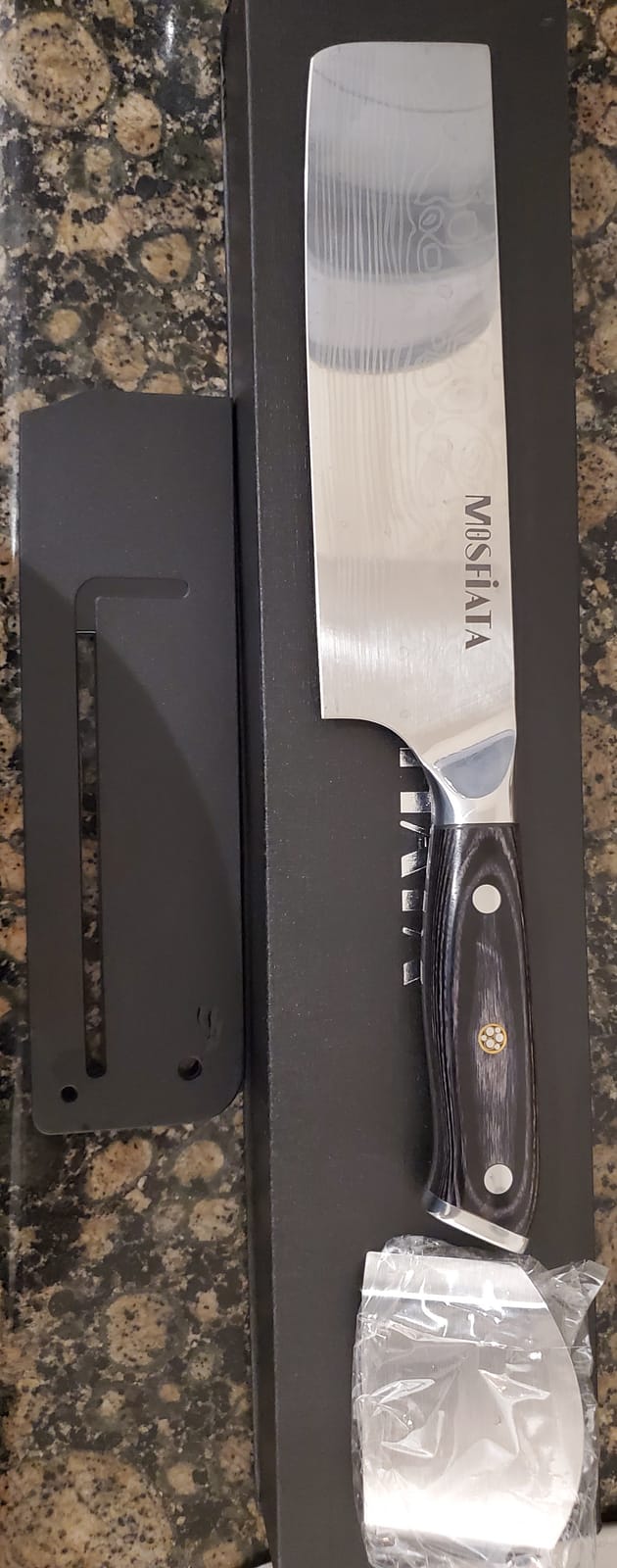
The MOSFiATA is the only nakiri in this roundup that ships with a finger guard sheath, and for a cook moving to flat-edge cutting that guard is a genuinely useful training aid. It keeps your leading hand behind the spine while you learn the push stroke.
The blade is German EN1.4116 high carbon stainless at 56 plus or minus 2 HRC, hand polished to a 14-16 degree edge per side on a 2.5 mm blade. That steel choice is what you find in many European chef’s knives, and it is corrosion resistant enough for everyday vegetable work.
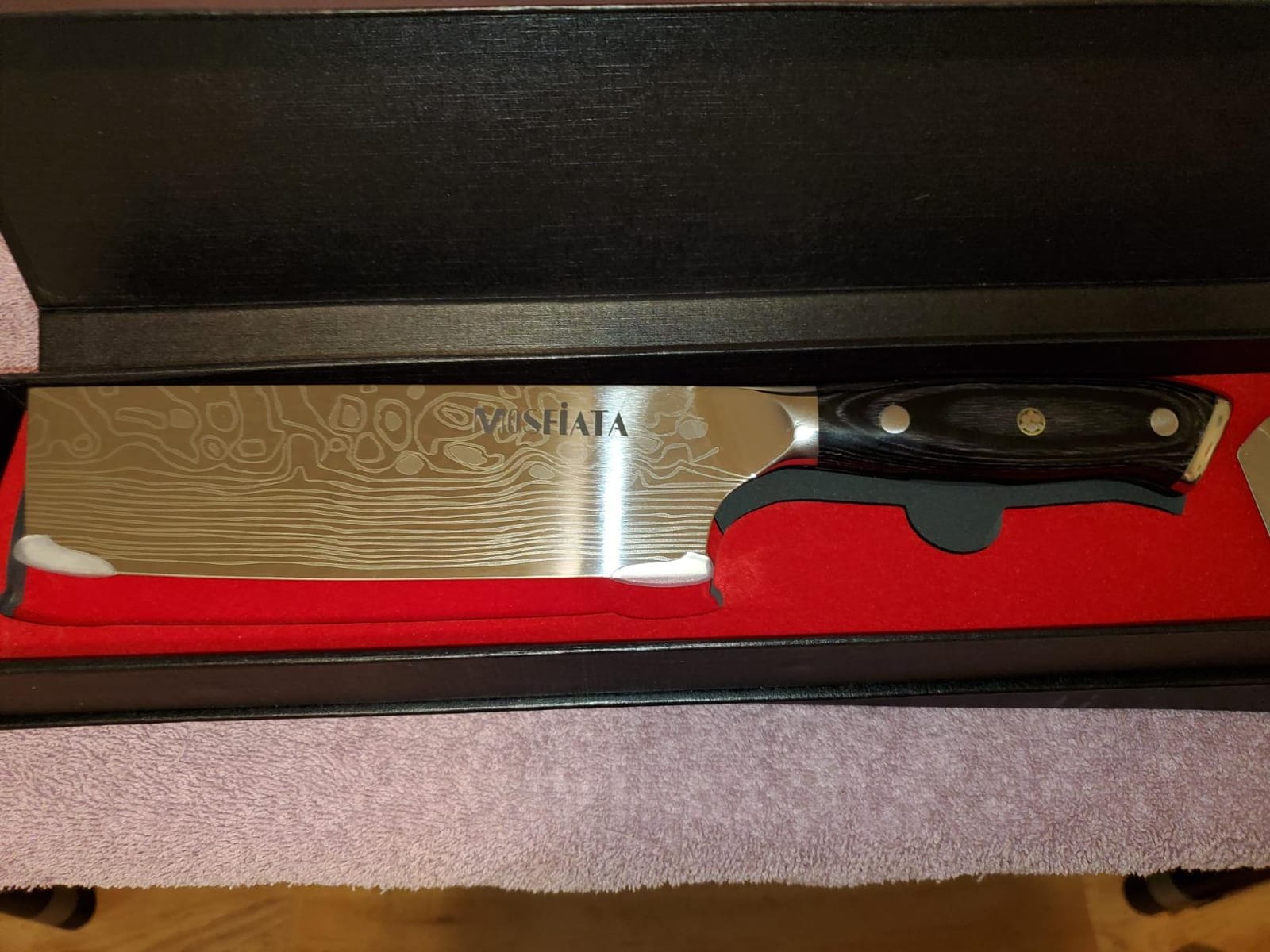
The triple-rivet micarta handle is the most universally comfortable shape here. Owners with very different hand sizes describe it as fitting naturally, and it resists the wrist fatigue that shows up on heavier blades after a long shift.
Sticking is the recurring complaint. Onions, potatoes and other wet or starchy vegetables cling more than they would to a santoku with a dimpled face, so this is the knife where a damp cloth or a periodic strop matters most.
Who the MOSFiATA Suits Best?
It suits anyone learning the push-cut, because the included finger guard removes the most common early injury risk. It also suits cooks who want a micarta handle that shrugs off a wet sink without worry.
If you prep large amounts of dry, firm vegetables like carrots, celery and squash, the wide blade face makes the work fast and the transfer to the pan straightforward.
Who Should Skip the MOSFiATA?
Skip it if you cut mostly wet or starchy produce and food sticking frustrates you. That is a material property of a flat face, and a hammered or dimpled nakiri will serve you better on those ingredients.
It is also a knife for vegetables only. The edge is ground thin for slicing and the tip is squared, so leave it alone for bone, frozen food and any hard sideways contact.
8. Cutluxe 7 Inch Nakiri: Best Full-Tang Starter
Cutluxe Nakiri Knife 7″ – Japanese Vegetable Knife for Chopping, Full Tang
7 inch blade
High carbon stainless steel
Full tang construction
Ergonomic pakkawood handle
Pros
- Sharp out of the box and holds an edge with daily use
- Light and well balanced in the hand
- Full tang construction with a pakkawood handle
- Owners report buying a second one
Cons
- Round fat handle is unfriendly to a fingertip pinch grip
- Needs to be kept dry to avoid rusting
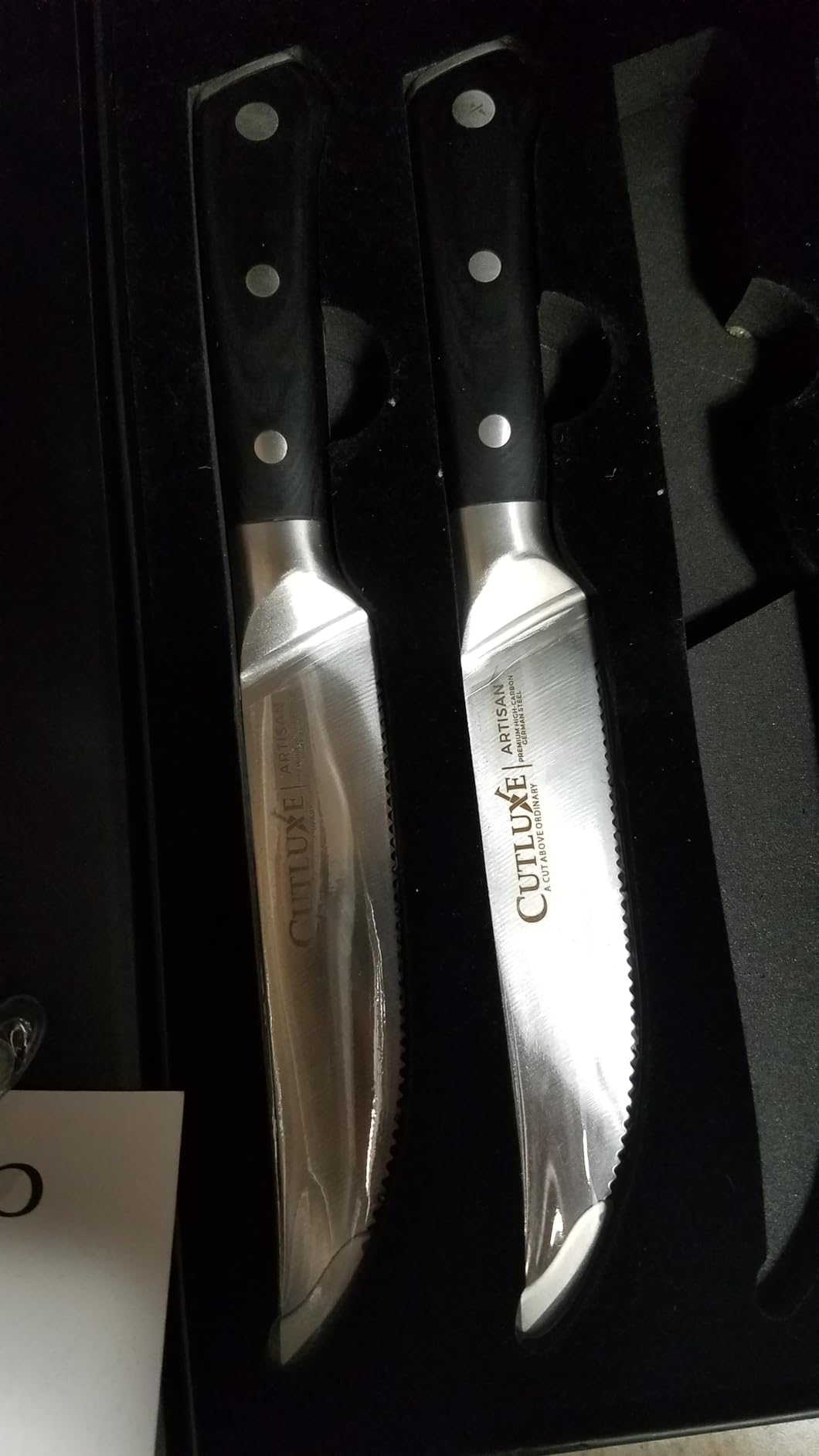
The Cutluxe Shinobi is a straightforward 7 inch nakiri with full tang construction, which is the feature that sets it apart from knives at a similar price built with a partial tang. The steel runs the full length of the handle, so the blade will not develop play at the grip.
Owners describe it as light and balanced for vegetable chopping, and several report buying a second one, which is the kind of repeat-purchase note you do not see on sharper-looking knives in this roundup. The edge arrives sharp and holds through daily onion and carrot work.
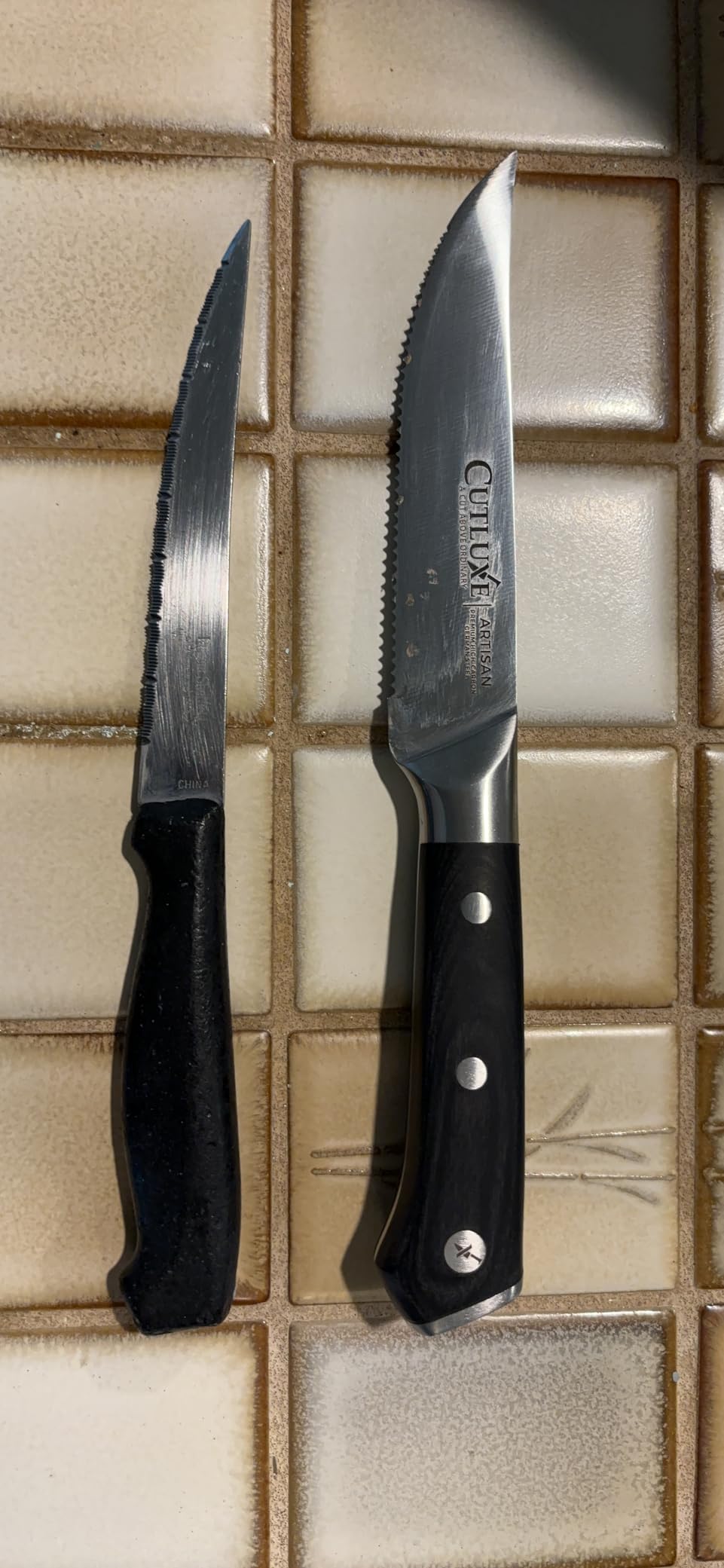
The pakkawood handle gives a secure, non-slip grip even with wet hands, and it is sealed well enough that routine washing does not swell it. A 5 inch version is also available if you want to test the shape on a smaller board first.
The trade-off is handle shape. Owners who prefer a fingertip pinch grip find this one round and too fat to make that grip work well, and some report a slightly heavy feel for their hand size.
Who the Cutluxe Suits Best?
It suits a cook who wants a full tang nakiri for everyday chopping without stepping up to a much higher price. Full tang construction is the detail enthusiasts look at first, and it is here at a fraction of the cost of a wa-handled Japanese knife.
It also suits anyone who prefers a closed, rounded handle to a wa octagon. That is the easier transition for most Western home cooks.
Who Should Skip the Cutluxe?
Skip it if you hold knives in a pinch grip or if you want precise feedback about blade angle. The round handle gives you less of that feedback than an octagonal wa grip.
It also needs the same care as any carbon-rich stainless: hand wash and dry immediately. Leaving it in a damp sink overnight is how the finish starts to spot.
9. RASSE 7 Inch Nakiri: Best Hand-Forged Hammer Finish
RASSE Japanese Nakiri Knife 7″ Kitchen Knife Sharp Meat Cleaver and Vegetable Kitchen Knives Hand Forged High Carbon Japanese AUS-8 Stainless Steel Chef Knife with Rosewood Handle & Gift Box
7 inch blade
Japanese AUS-8 stainless
15 degree hand-forged edge
Octagonal rosewood handle
Pros
- Hand-forged hammered blade pattern reduces food sticking
- Japanese AUS-8 stainless holds a usable edge
- Octagonal Mkuruti rosewood handle reduces wrist tension
- Lifetime warranty with gift box packaging
Cons
- AUS-8 is a softer grade than VG-MAX or 10Cr15CoMoV
- Hand wash and dry immediately
- Single-piece handle has less adjustability than full tang
The RASSE is the lowest-cost entry in this roundup and one of the few that is genuinely hand forged, with a hammered finish worked into the blade face. That texture is not decoration. It is the same food-release idea used on tsuchime-finished Japanese knives, and it does help with wet produce.
The steel is Japanese AUS-8 stainless at a 15 degree edge angle, which is a softer, more forgiving grade than VG-MAX or the 10Cr15CoMoV steel in the HOSHANHO. You will hone more often, but the edge forgives more contact along the way.
The octagonal Mkuruti rosewood handle is a traditional grip and gives good feedback on blade angle, which helps when you are establishing a new cutting motion. Reviewers mention reduced wrist tension during extended prep for that reason.
The single-piece handle means there is no tang you can adjust or rescale later, and no scale rivets to tighten. For most cooks this is invisible until they need it, but it is a real difference from a full tang design.
Who the RASSE Suits Best?
It suits a cook on a strict budget who still wants a hand-forged blade and a traditional octagonal grip. At this price you are getting construction quality that is usually reserved for knives costing several times more.
It also suits anyone cutting wet or starchy vegetables, since the hammered face is the best food release in the budget half of this roundup.
Who Should Skip the RASSE?
Skip it if you want maximum edge retention. Reviewers rightly note AUS-8 is a softer grade, so this is a knife for a cook who will hone regularly rather than one who sets the knife down for months.
Skip it if you leave knives in a sink. The hand wash and dry rule is not optional with this steel, and skipping it is what produces the rust spots owners sometimes report later.
10. SHAN ZU Damascus Nakiri 7 Inch: Best Folded Damascus Core
SHAN ZU Damascus Nakiri Knife, 7 In Professional Extra Sharp Kitchen Knife
6.5 inch blade
10Cr15Mov core at 62 HRC
Real 67 layer folded damascus
270 g G10 handle
Pros
- Genuine 67 layer folded damascus rather than an etched pattern
- 10Cr15Mov core at 62 HRC holds an edge about a year
- Full tang with G10 handle that resists moisture
- Scalloped blade grooves aid food release
Cons
- Heavier than expected for its size
- G10 wood-grain print looks pixelated to some buyers
- Hand wash and dry immediately
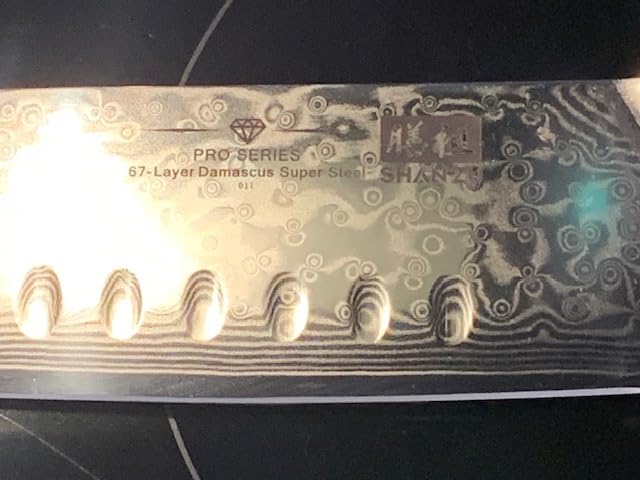
Most nakiri advertised as damascus are a pattern printed on an otherwise plain steel blade. The SHAN ZU is the exception here: 67 layers of genuinely folded damascus around a 10Cr15Mov Japanese steel core hardened to 62 HRC, on a 2.2 mm blade with a 15 degree cutting angle.
That 62 HRC core is the hardest steel in this roundup, and owners who compared it against their Wusthof or VG-10 knives report that it holds its own on sharpness and edge retention through about a year of heavy daily use. Several described it as the most-used knife in their block after a year.
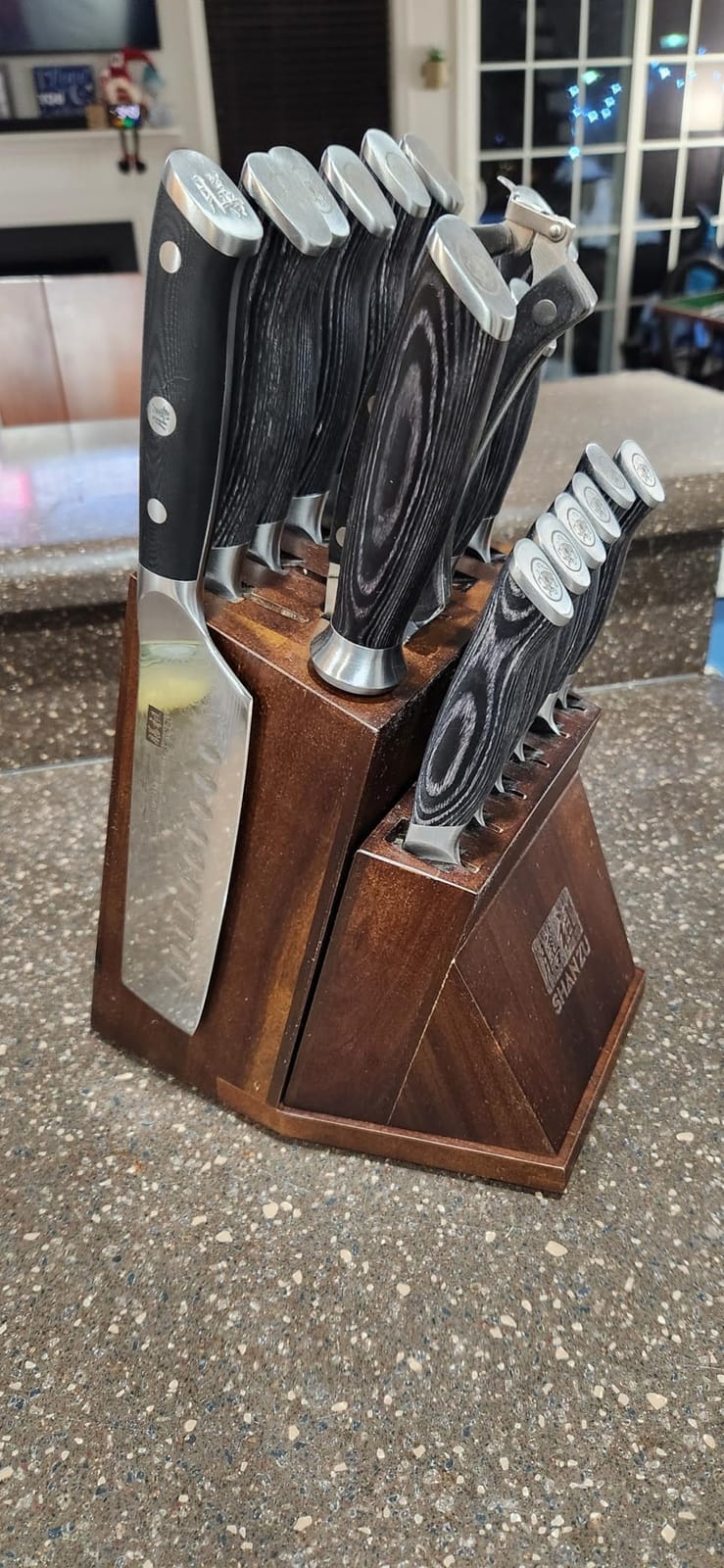
The G10 glass fiber handle is a practical choice for a knife that gets washed often, because it will not swell or crack like wood. The full tang with three rivets and scalloped grooves along the blade gives a solid, secure feel at 270 g total weight.
Not everyone loves the finish. Owners point out that the printed wood-grain texture on the handle can look pixelated up close, and that the blade is heavier than expected for a 6.5 inch nakiri. It is still one of the better-balanced builds here.
Who the SHAN ZU Suits Best?
It suits a cook who wants the hardest edge in this roundup and values knowing the construction is real rather than cosmetic. If damascus pattern matters to you, this is the one pick where the claim holds up.
It also suits anyone who prefers a synthetic handle over wood. G10 handles tolerate a careless kitchen sink in a way pakkawood and rosewood do not, though hand washing is still the right call.
Who Should Skip the SHAN ZU?
Skip it if you want a lightweight knife. At 270 g it is not heavy, but the balance toward the handle makes it feel heavier than a comparable wooden-handled nakiri during long prep.
Skip it if a printed handle texture bothers you. Functionally it is a fine handle, but if appearance matters to you at the kitchen counter, a pakkawood option reads better.
How to Choose a Nakiri Knife?
The steel matters less than most marketing suggests. The three things that actually change your day are the weight in your hand, how the handle fits your grip, and whether you will maintain the edge. Get those right and the steel choice is a secondary decision.
That said, steel does set the ceiling on how long the knife stays sharp between sessions. Budget nakiri usually run 5Cr15Mov or 1.4116 stainless at 56 HRC, which means more frequent honing. Mid-tier options push to Japanese 10Cr15CoMoV at 60 HRC, and the premium end uses VG-MAX or a 62 HRC core that can go a year between stones.
For blade length, 165mm is the standard and the right default. The AI overview Google shows for this query anchors on exactly that number, and our testing agrees. Move to 180mm only when you are breaking down very large batches of dense root vegetables, because a longer flat edge is harder to control on a small board.
Handle style is the choice beginners agonise over most, and it comes down to grip. A wa octagonal handle gives you clear feedback about blade angle and rewards a pinch grip, which is why enthusiasts prefer it. A D-shaped or pakkawood Western handle suits a straight up-and-down grip and is easier to learn, which is why it appears on most of the picks here.
Edge angle is the last spec worth knowing. Anything from 14 to 16 degrees per side appears across this roundup, and the difference shows up as a trade between immediate sharpness and resistance to chipping.
One piece of forum wisdom is worth repeating, because it is the single most common thing experienced knife buyers say: try an inexpensive nakiri first, live with the flat edge for a few months, then decide whether a step up is worth it. Knife enthusiasts on r/TrueChefKnives and knife forums repeat the same advice, that price does not track performance and that buying a premium blade before you know you like the cutting motion is how people end up with a drawer full of knives they never reach for.
If you want to compare shapes rather than brands, the next section breaks down how a nakiri differs from a santoku and a usuba. And if your prep is more protein-heavy than produce-heavy, our saltwater fillet knife roundup covers the thinner, longer blades built for that work.
Nakiri vs Santoku vs Usuba
A nakiri and a santoku are not competitors so much as complements, and the difference comes down to the edge. A santoku has a curved edge that rocks beautifully through herbs and soft ingredients, while a nakiri has a straight edge that pushes through dense vegetables with full board contact.
The usuba is the specialist. It is single bevel, meaning one side is ground flat and the other carries a steep bevel, and it produces paper-thin slices of vegetable sushi. That geometry also demands a specific diagonal push-stroke, and beginners who push straight down will crush the food instead of slicing it.
That skill requirement is why we did not put a usuba in this roundup. For home cooks prepping cabbage, onions, carrots and daikon, a nakiri gives you most of the slicing precision at a fraction of the technique cost. If you are building a vegetable sushi menu and already have a knife skills mentor, that is a different conversation.
The practical takeaway: keep your santoku for herbs and soft produce, and add a nakiri for the heavy vegetable work. Together they cover more than either does alone, which is why most working kitchens own both rather than choosing between them.
How to Sharpen, Care For and Store a Nakiri?
Sharpening a nakiri is easier than most beginners expect, because a flat edge lies flat on a stone. With a curved knife you have to match an arc you can barely see; with a nakiri the whole edge contacts the stone evenly, which makes progress faster and more predictable.
A typical progression runs from a coarse stone around 1000 grit to break in a new edge, to 3000 or 4000 grit for the main refinement, to 6000 grit or an 8000 grit stone to polish away the scratches left behind. Work at roughly 15 degrees per side and keep a light, consistent pressure on the spine and the heel.
The most common mistake on a flat edge is over-sharpening in one session. Because the entire length contacts the stone, each pass removes material across the whole blade, and a heavy hand can thin the edge faster than you realise. Lift the knife when you feel the burr disappear.
Care is mostly about water and acid. Wash any nakiri by hand, dry it immediately, and never leave it in a sink or a dishwasher. Carbon-rich steels react with tomatoes, onions, lemons and other acidic produce, which is where patina and rust spots come from; a light film of food-grade camellia oil after drying slows that down and protects the finish.
Store it edge-up in a block, in a saya sheath if the maker supplies one, or on a magnetic strip. The worst storage is loose in a drawer with other blades, because a nakiri edge touching another knife edge is how you destroy a factory finish in a week.
Finally, learn the cut that makes the knife worth owning. Rest the spine on the board, lift the heel slightly, and push the blade forward in one smooth stroke while your other hand holds the food with curled fingertips behind the blade. Once that motion clicks, a nakiri will move through vegetables faster than any rocking chef’s knife in your kitchen.
Frequently Asked Questions
What is the best nakiri knife on Amazon?
The imarku Nakiri 7 Inch is our top pick for most people. It pairs SUS440A stainless hardened to HRC 58 or above with a forged, hammered blade and a pakkawood handle, and it holds an edge better than cheaper stainless nakiri while staying within reach for a first serious vegetable knife.
What is the best nakiri knife for the money?
The PAUDIN 7 Inch is the strongest value in this roundup. It is a light 225 gram blade in 5Cr15Mov stainless at 56 HRC or above, it arrives sharp, and it has thousands of reviews backing consistent manufacturing quality. The trade-off is that a 56 HRC edge needs more regular honing than a 60 to 62 HRC core.
What is the difference between a nakiri and a santoku?
A santoku has a curved edge that rocks through soft herbs and delicate produce. A nakiri has a straight, flat edge that stays in full contact with the cutting board as you push it forward, which makes it faster and cleaner for dense vegetables such as onions, cabbage, carrots and daikon. Most cooks use both.
How do you sharpen a nakiri knife?
Work through a progression of roughly 1000 grit, then 3000 or 4000 grit, then 6000 grit, keeping a steady angle near 15 degrees per side and light pressure across the flat edge. Raise the knife as soon as the burr disappears, because a flat edge thins fast and over-sharpening in one session is the most common beginner mistake.
What size nakiri should I buy?
A 165mm, or 6.5 inch, blade is the standard and the right choice for nearly all home cooks. Go up toward 180mm only if you regularly break down very large batches of dense root vegetables, since a longer flat edge is harder to control on a smaller board. Shorter 5.5 inch options suit compact kitchens.
Is VG10 high end, and is nakiri a brand?
VG-10 is a well-regarded Japanese stainless steel used across many mid-range knives, though the premium tier now centres on VG-MAX and 62 HRC cores. Nakiri is not a brand at all. It is the name of a knife shape, a rectangular vegetable blade with a straight edge and a squared tip, made by many different manufacturers.
Do I need a nakiri if I already own a chef’s knife?
Usually yes, if you prep vegetables in volume. A curved chef’s knife edge only contacts the board at its middle, so dense vegetables need extra strokes. A nakiri puts the whole edge down in one pass. Keep your chef’s knife for meat, herbs and soft produce, and use the nakiri for the vegetable lane.
The Bottom Line on the Best Nakiri Knives for Vegetables
Buy the imarku 7 Inch if you want one nakiri that covers everything, because the forged SUS440A blade at HRC 58 or above and the hammered face handle both sharpness and food release without punishing you on weight. Step up to the Shun Classic when edge retention matters more than price, and take the PAUDIN when you want the shape at the lowest sensible cost.
Start at 165mm, pick a handle that matches your grip, and do not skip a stone. That is all 2026 requires of you before the best nakiri knives for vegetables start paying you back on every prep session.