
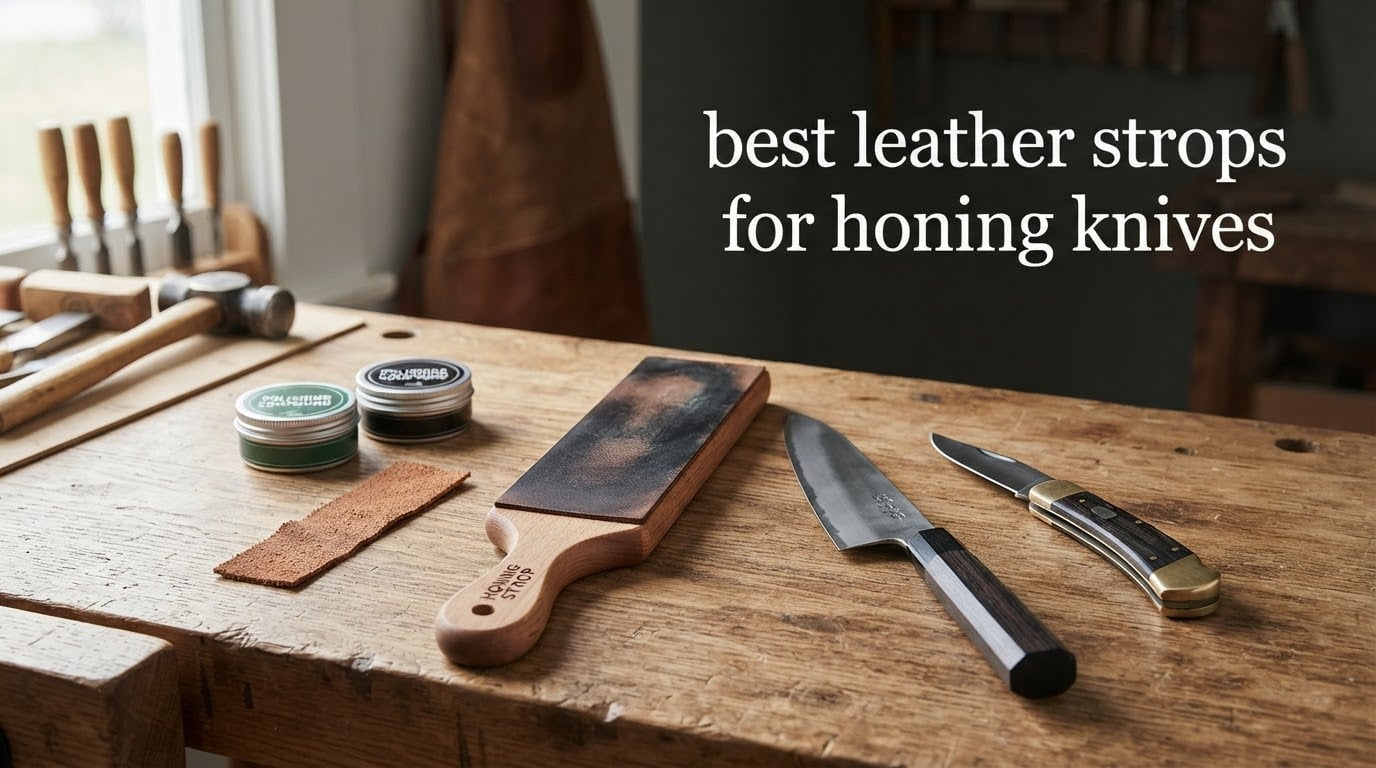
A leather strop is a strip of treated hide, glued or mounted flat, that you draw a knife blade across to straighten and polish the edge after sharpening. If you are hunting for the best leather strops for honing knives in 2026, you will find that the differences between them come down to three things: how stiff the leather is, how long the working face is, and whether compound is already loaded.
Stropping is not sharpening. Sharpening grinds metal away to reshape a bevel, and every session costs you steel. Stropping folds a microscopic burr back over the edge and polishes it, removing almost no metal at all, so you can do it every week without wearing down a blade. That is the whole reason a strop belongs in a maintenance kit rather than a drawer.
We pulled together twelve leather strops that cover the full range of use, from a 27 g travel hone to a 14 inch paddle that will handle a chef’s knife in a handful of confident strokes. Along the way we looked at what reviewers actually complain about, because the complaints tell you more than the feature lists do.
Table of Contents
Top 3 Best Leather Strops For Honing Knives (October 2026)

Bacher 12.6 in Leather Strop Kit
- 3 mm bark-tanned cowhide
- FSC beech paddle
- Four grits plus care balm


Hutsuls 14 inch Buffalo Leather Paddle
- 14 inch face
- Buffalo leather on ashwood
- Green compound included
Quick Overview: All 12 Leather Strops Compared
| Product | Specifications | Action |
|---|---|---|
| Bacher 12.6 in Leather Strop Kit |
|
Check Latest Price |
| BeaverCraft 3 x 8 in Double Sided |
|
Check Latest Price |
 Lansky Leather Stropping Hone Lansky Leather Stropping Hone |
|
Check Latest Price |
| Hutsuls 14 in Buffalo Leather Paddle |
|
Check Latest Price |
 Hutsuls 3 x 8 in Vegetable Tanned Hutsuls 3 x 8 in Vegetable Tanned |
|
Check Latest Price |
 BeaverCraft 14 in Carving Paddle BeaverCraft 14 in Carving Paddle |
|
Check Latest Price |
 LAVODA 3 x 8 in Honing Strop LAVODA 3 x 8 in Honing Strop |
|
Check Latest Price |
 Sharp Pebble Double Sided Strop Sharp Pebble Double Sided Strop |
|
Check Latest Price |
 Flexcut 8 x 2 in PW14 Flexcut 8 x 2 in PW14 |
|
Check Latest Price |
 Knives Plus 8 in Pre-Loaded Strop Knives Plus 8 in Pre-Loaded Strop |
|
Check Latest Price |
 Angerstone 14.3 in Oversize Kit Angerstone 14.3 in Oversize Kit |
|
Check Latest Price |
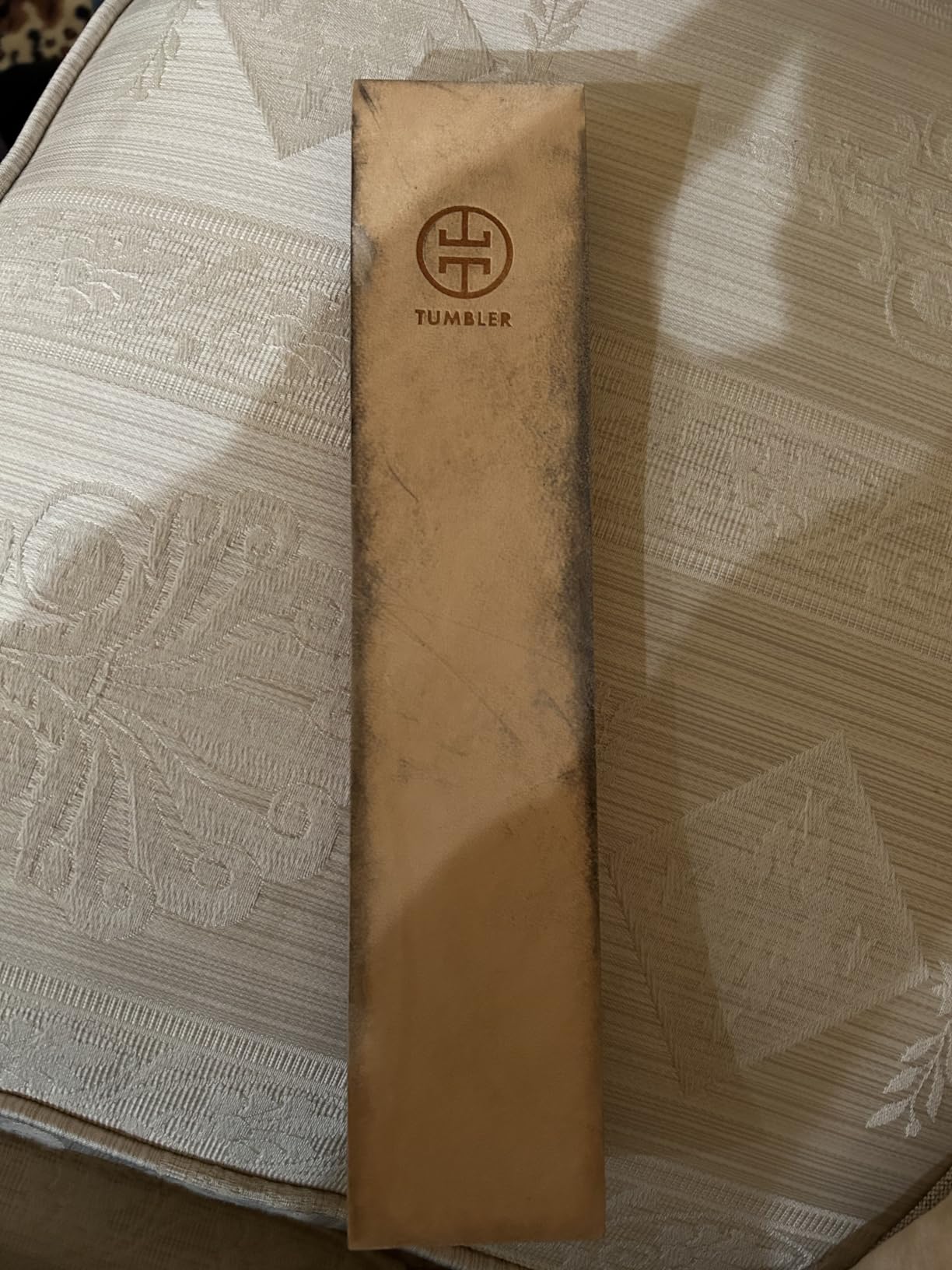
 Tumbler Beech and Cowhide Strop Tumbler Beech and Cowhide Strop |
|
Check Latest Price |
1. Bacher 12.6 inch Leather Strop Kit: the Most Complete Set
Bacher Leather Strop – 12.6 in, Knife Sharpening Kit, 4 Compounds & Balm
12.6 x 2.36 in paddle
320 g
3 mm bark-tanned cowhide
Red White Green Black pastes plus balm
Pros
- Dead flat FSC beech backing
- Four graded grits plus lanolin balm included
- Wide 56 mm face also works a plane iron
- Handles knives chisels axes and straight razors
- eBook guide and wooden applicators in the box
Cons
- 320 g is heavy for a packable field setup
- You need all four pastes to use the full grit range
This is the kit we keep coming back to after working through a dozen strops. The cowhide is 3 mm thick and bark-tanned, glued to a solid FSC beech paddle that stays flat under a hand pulling hard on a chef’s knife. That flatness matters more than any feature on the box, because a face that bows turns your strokes into a curved edge.
The set arrives with Red 2000, White 5000, Green 8000 and Black 12000 pastes, plus a lanolin and beeswax balm. Five wooden applicators are included and roughly 1 g covers one side, so you are not rationing compound for the first year of use.
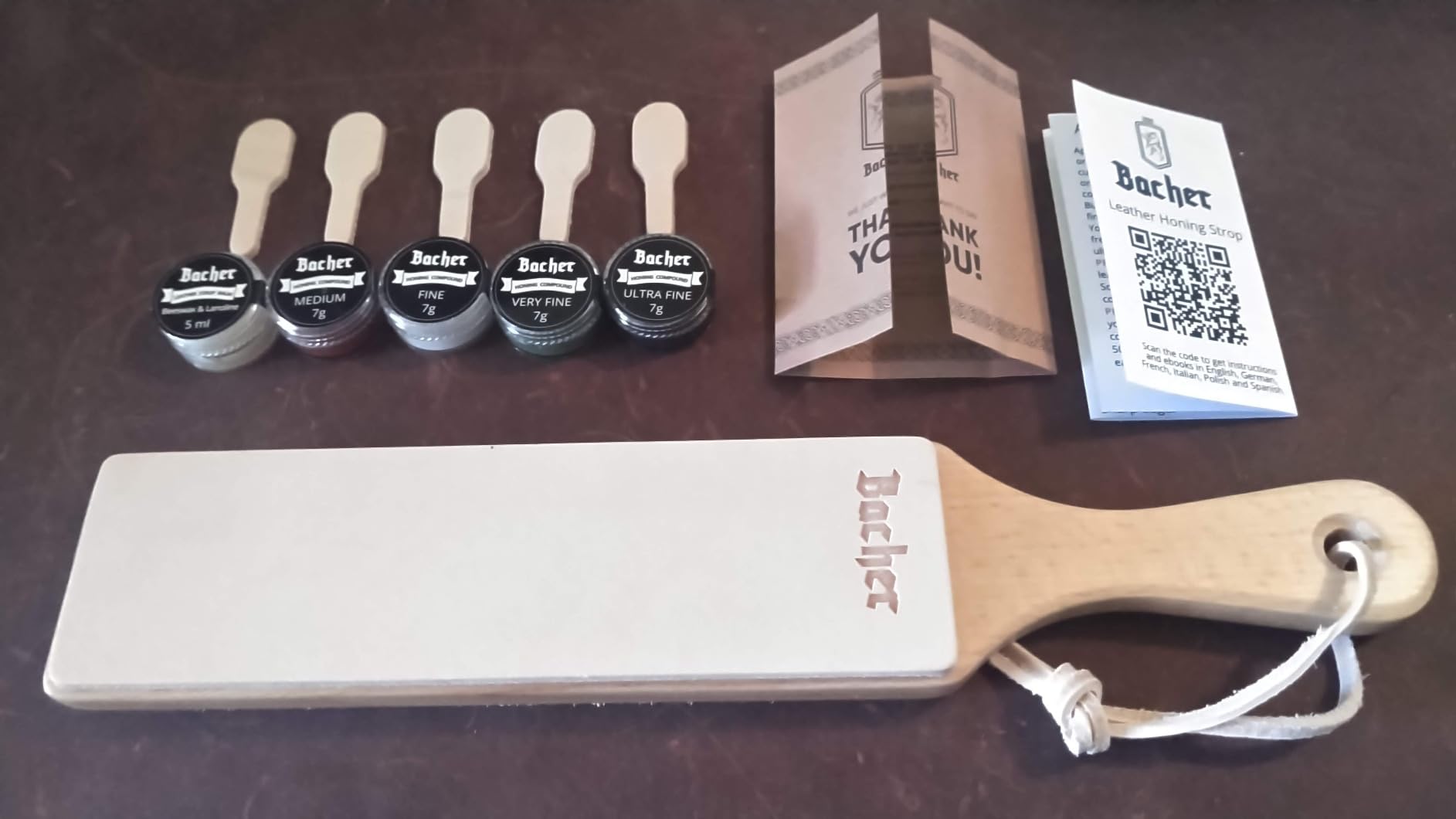
At 320 g this is the heaviest paddle in our group and we noticed it immediately when packing it for a trip. For a bench at home, that mass is a benefit. It resists sliding without needing a non-slip foot, and the wide 56 mm working face also takes a plane iron laid flat, which is the kind of versatility you stop noticing until a chisel is in your hand.
Maintenance is simple. Top the pastes up roughly every 30 to 50 sharpening sessions and sand the face back after 300 or 500. Reviewers point out that the full grit range only pays off if you actually use the red and white alongside the green, so treat the extra pastes as a progression rather than optional extras.
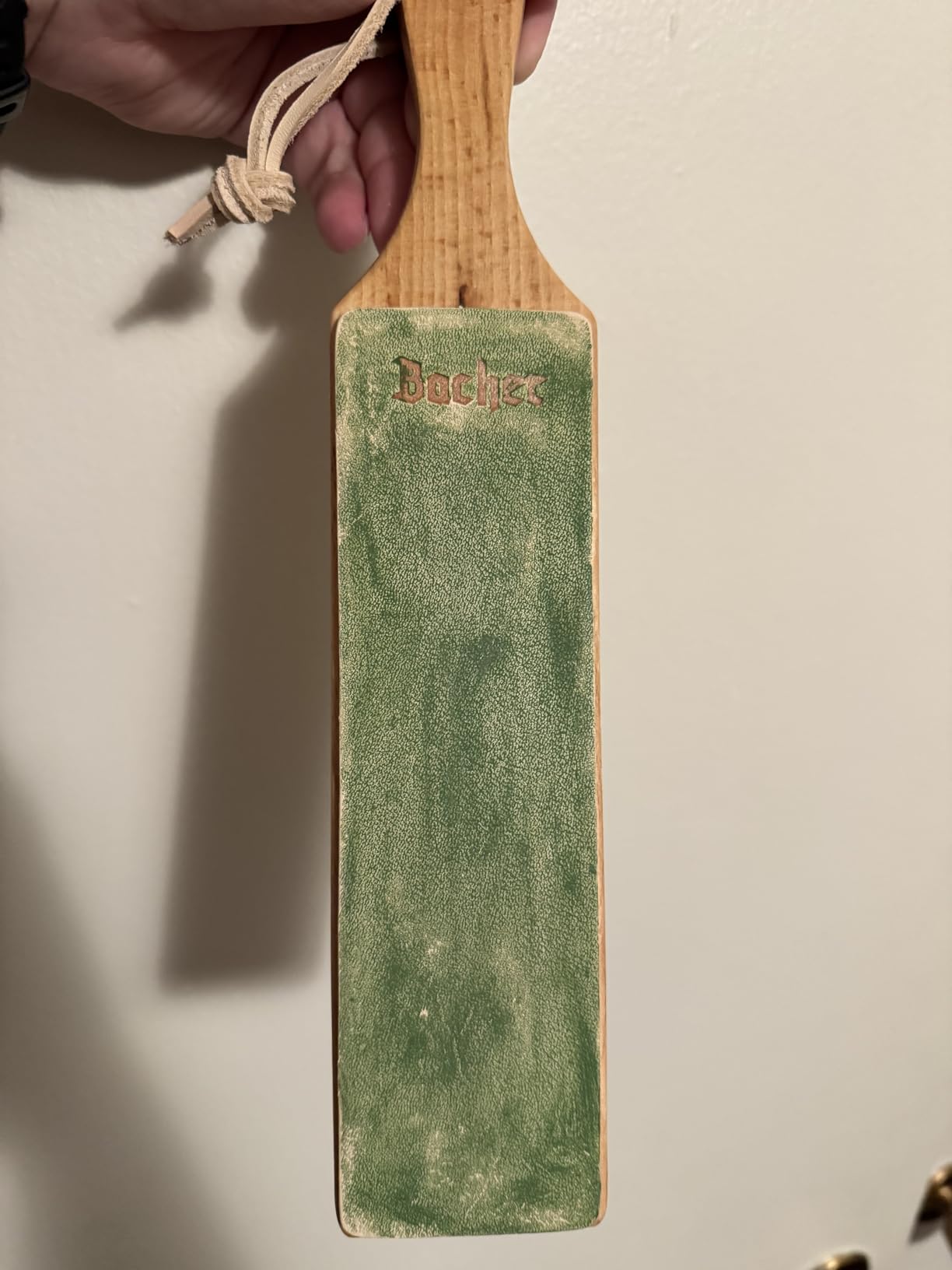
Where the Bacher kit earns its place?
For anyone who sharpens more than a pocket knife, this is the one to buy first. Chisels, gouges, V-tools, scissors and straight razors all sit within what the paddle is built for, and having four grit stages in one box removes the guesswork of buying pastes separately. If you are outfitting a workshop, that consolidation is worth more than the weight.
It also suits people who want a measured progression rather than one aggressive compound. The Bacher set lets you start at Red 2000 after a stone session and finish at Black 12000 before you put an edge into a cutting board.
Where the Bacher kit is not the right tool?
If your stropping happens in a pack, a boat or a field kit, the 320 g paddle is more mass than you want. Two of the lighter options below are built for that. The other limitation is that the four-paste system only makes sense if you keep all four bottles within reach and remember which stage you are on.
2. BeaverCraft 3 x 8 inch Double Sided Strop: Small, Cheap, Genuinely Useful
BeaverCraft Stropping Leather Strop for Knife Sharpening Strop LS2P1 – Knife Stropping Kit 3 x 8 IN – Knives Sharpener with Honing Strop Polishing Compound Set – Double Sided
7.87 x 1.57 in strip
60 g
Leather
Smooth and rough faces
Pros
- Light enough for a small box or a carving pouch
- Compound included so you can start immediately
- Rough face works with or without compound
- Produced in Ukraine to European standards
Cons
- No rigid backing
- so it wants a flat board under it
- Small runway means many more passes on a long chef's knife
- One reviewer reported it not appearing genuinely double-sided
This is the strop we recommend to anyone testing whether they enjoy sharpening at all. At 60 g and 7.87 inches long, it disappears into a drawer or a tool roll, and the smooth face takes polishing compound while the rough face works fine bare.
The tradeoff is structural. There is no wood or rigid backing, so the leather moves under the blade and you need a light, controlled touch plus a stable base to keep strokes consistent. Reviewers routinely recommend gluing it to a scrap of MDF or clamping it to a bench.
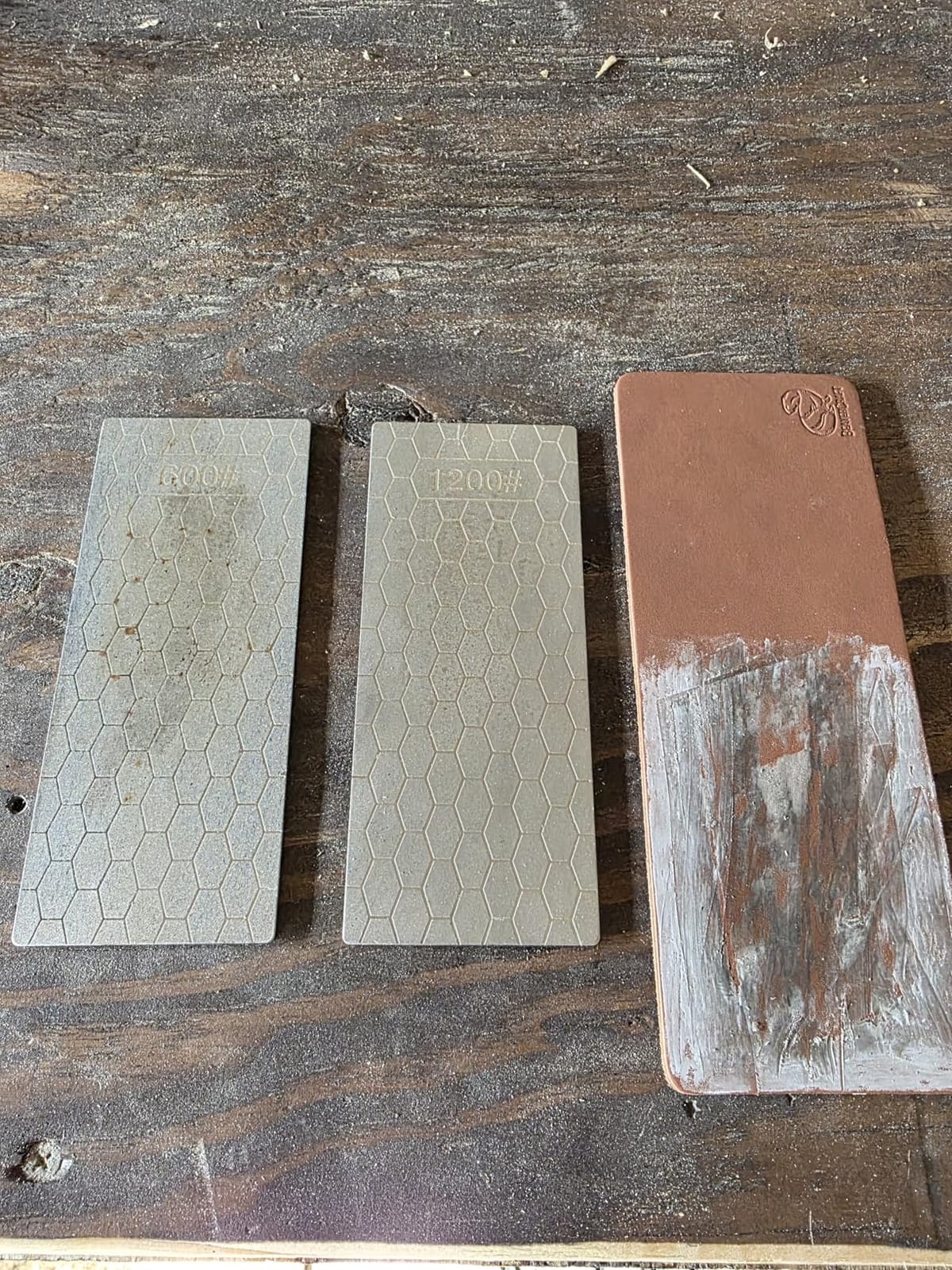
For edge maintenance on a folder, a paring knife or a spoon knife, the short runway is not a problem at all. The complaints that do appear are consistent: a ten inch chef’s knife needs many more passes, and because the leather flexes, an aggressive stroke will roll the edge rather than refine it.
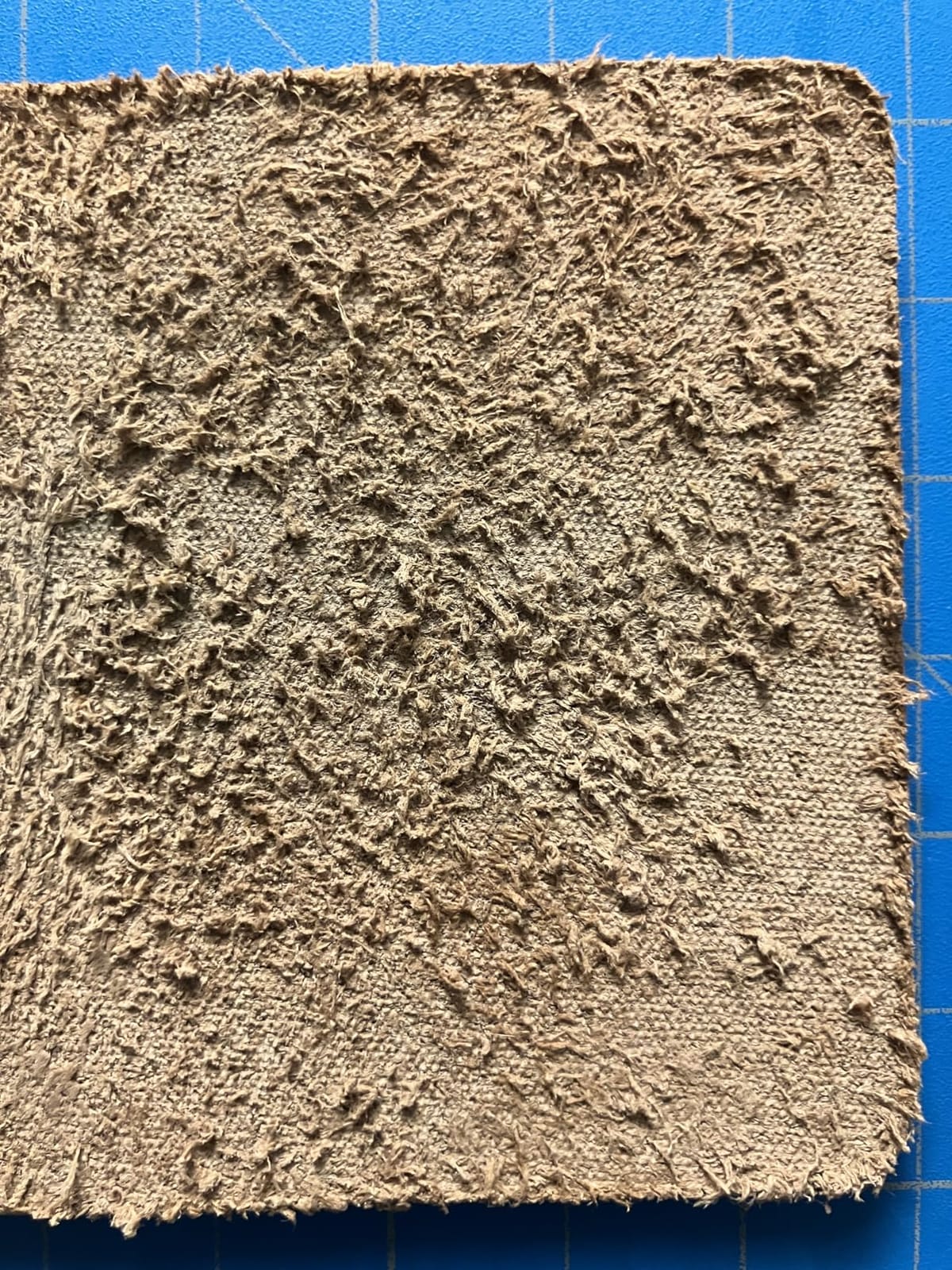
One reviewer also reported that the strip did not look genuinely double-sided out of the box. Treat the rough face as a bonus rather than a promise, and check the surface before you commit to a long stropping session.
Where the BeaverCraft strip is the right buy?
It is the lowest-commitment way into stropping, and the included compound removes the excuse of needing a second purchase. If you sharpen at a kitchen counter or on a camp stool, the light body makes it the easiest one here to keep to hand. Our field-oriented pick, the Hutsuls 3 x 8 inch version below, offers a similar footprint with thicker hide.
It also works as a travel companion. It pairs naturally with a small folding knife and takes up no meaningful space, so it is the one we would hand to someone who wants a field knife maintained without carrying a full sharpening kit.
Where it falls short?
The lack of rigidity is the honest limitation. Consistency in a stroke comes from the face staying put, and a loose hide cannot give you that. Users wanting a mirror finish on long blades will be faster and happier with a paddled option. Our broader picks on bushcraft survival knives are exactly the blades that punish a short, soft runway.
3. Lansky Leather Stropping Hone: The Lightest Option Here
Lansky Leather Stropping Polishing Hone, HSTROP, One Size
5 x 5 in square hone
27 g
Leather
Made in the USA
Pros
- Weighs 27 g
- by far the lightest strop tested
- Puts an extremely fine finishing edge on a blade
- Made in the USA with a one year warranty
Cons
- Small hone face limits how much blade length each pass covers
- Square format suits finishing rather than full-length strokes
At 27 g this is the lightest strop in the roundup, and it changes what you are willing to carry. Reviewers describe it consistently as a finishing step used after stone sharpening, rather than a working strop you run a dull blade across. That is the right mental model.
The 5 by 5 inch square gives you four usable orientations, so you can find an angle that suits the blade in front of you. Made in the USA and backed by a limited one-year manufacturer warranty, which is more support than most options in this category offer.
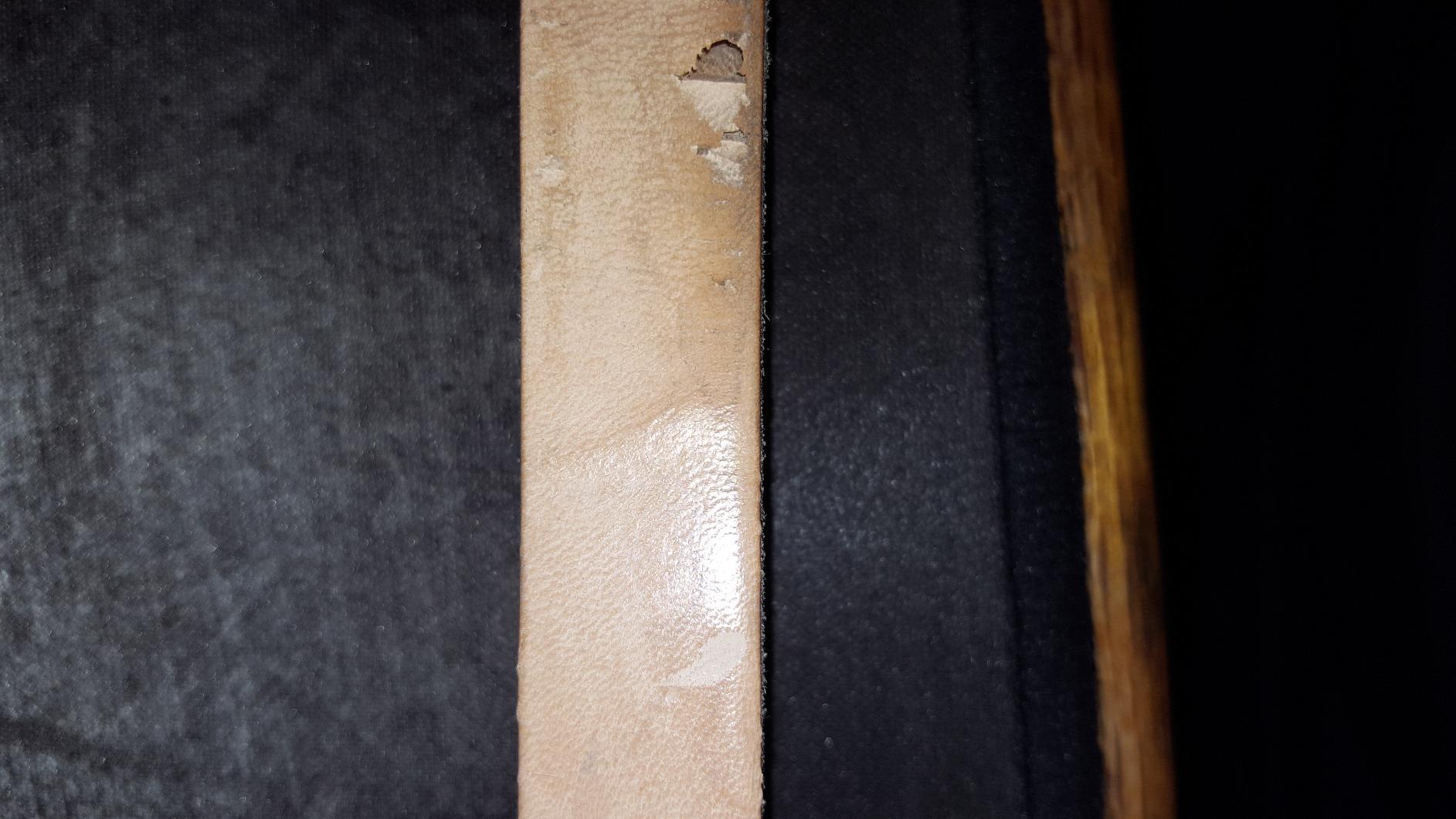
Buyers consistently report an extra-fine edge as the outcome, with 74 percent giving five stars. The single recurring gripe is coverage. On a long blade you are working in short overlapping segments, which is fine for the last two passes and tedious for a full session.
Because the hone is small and flat, there is no handle to fatigue on. For a few careful finishing strokes at the end of a sharpening session, that simplicity is worth more than a long face would be.
Where the Lansky hone fits?
It belongs in a pocket, a knife pouch or a small bench drawer where weight is the deciding factor. It is also a good companion to a fillet knife that gets sharpened at the sink, where pulling a paddle strop out of a cupboard is too much ceremony for the job.
If your sharpening routine already includes a stone or a diamond plate, this is the missing last step. Owners tend to use it as the moment an edge goes from sharp to genuinely keen.
Where it is the wrong choice?
Do not buy it as your primary strop for wide blades. The face is simply too small to make full-length strokes practical, and there is no compound system, so you are loading it yourself. If your knives are 8 inches or longer and you strop frequently, choose a paddle.
4. Hutsuls 14 inch Buffalo Leather Paddle: Long Strokes in a Comfortable Grip
Hutsuls Double Sided Leather Strop Paddle Kit – Get Razor-Sharp Edges, Ergonomic Handle, Quality Honing Leather, and Step-by-Step Guide
14 x 2.4 in paddle
7.84 oz
Organic buffalo leather on ashwood
Green compound and guide included
Pros
- 14 inch face handles folders through to large Japanese and chef's knives
- Ergonomic wooden paddle handle stays comfortable in long sessions
- Organic buffalo leather glued to solid ashwood
- Green stropping compound and step-by-step guide included
- Dark leather hides metal staining better than tan
Cons
- Hide runs roughly 3-4 oz rather than the thicker 5-6 oz
- Included green compound smears onto the blade if applied too heavily
Length is the headline here. A 14 inch face lets a ten inch knife travel nearly the full blade in a single pass, which cuts the number of strokes needed to cover an edge and reduces the chance of a misalignment at the point where segments meet.
The handle is what makes the length usable. Without a shaped grip, a 14 inch paddle becomes tiring fast. Owners with decades of sharpening experience call this a critical final step in their own routine, and 79 percent rate it five stars.
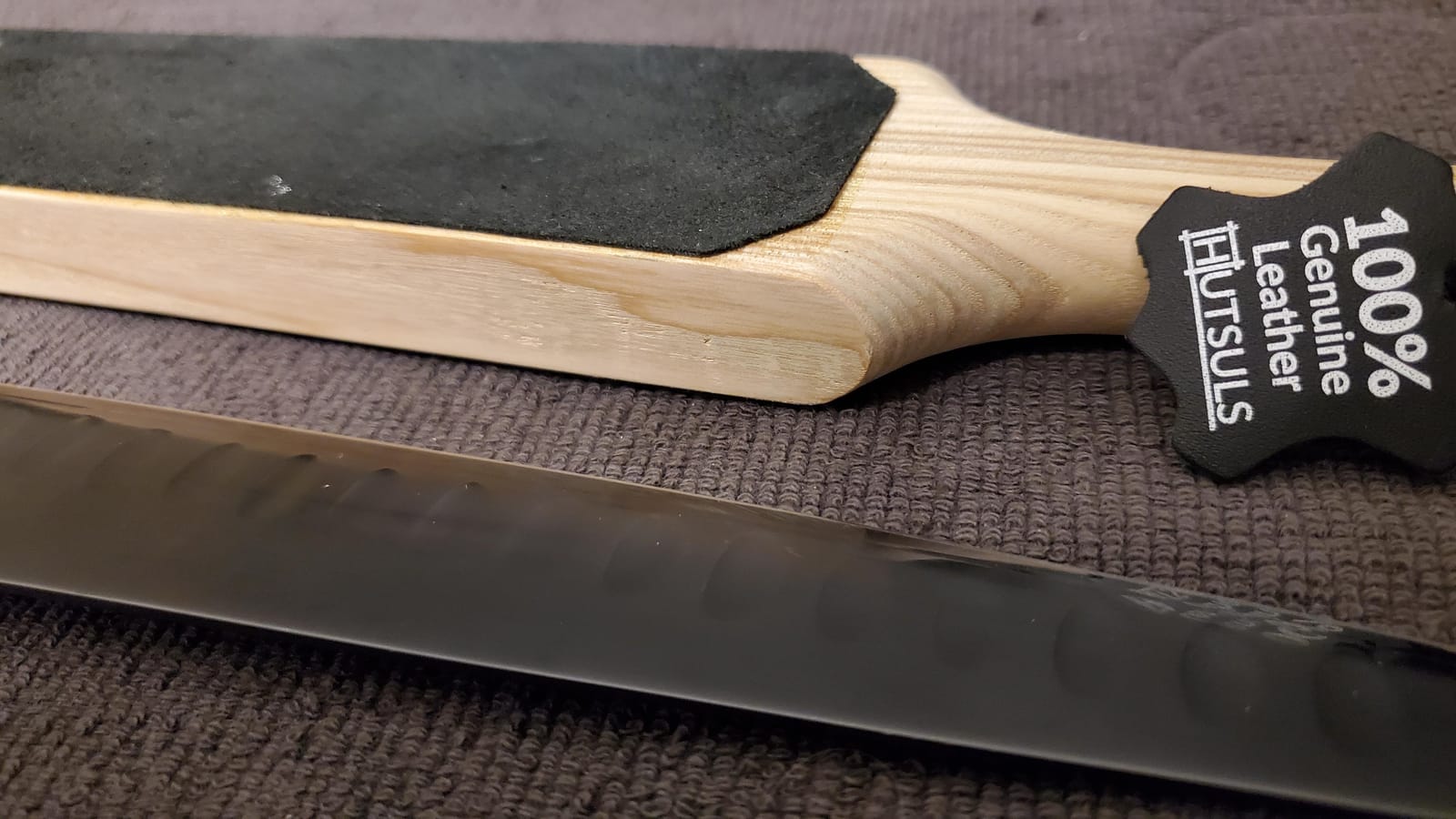
One side is smooth and the other is rougher, so you pick the face that suits the compound you have loaded. The dark leather is a practical detail rather than a cosmetic one: black and dark hides disguise metal staining that would show on tan strops after repeated use.
The main complaint is the hide thickness. Reviewers put it at roughly 3 to 4 oz, lighter than the 5 to 6 oz used on premium traditional strops, so it flexes a little more under hard pressure. The second gripe is the included green compound, which needs sparing application or it transfers onto the blade.
Who should buy the Hutsuls paddle?
Anyone whose blades are longer than eight inches. Long faces suit full-length strokes, wide coverage of a chef’s knife, and the sweeping passes that carving gouges need. It also works on axes, chisels and plane blades according to the manufacturer.
Choose it over a short strip when comfort during a long session is the deciding factor. The ergonomic handle and long face reduce both hand fatigue and the number of separate segments you have to align.
Where it falls short?
If you want the stiffest possible face, the thinner hide is a compromise. And because the green compound arrives in the box, expect to spend a few minutes learning how much is enough. Experienced users who strop at camp also point out that 7.84 oz is more than the lightest options by a wide margin.
5. Hutsuls 3 x 8 inch Vegetable Tanned Strop: Built for the Camp Kit
Hutsuls Brown Leather Strop with Compound – Get Razor-Sharp Edges with Stropping Kit, Green Honing Compound & Vegetable Tanned Two Sided Knife Sharpener Step-by-Step Guide Included
8 x 3 in strip
16 oz
4.0 mm vegetable-tanned buffalo leather
Green compound and guide
Pros
- Genuine 4.0 mm vegetable-tanned buffalo leather cut generously at 3 x 8 inches
- No wood block needed so it fits in a shoulder bag
- Green compound and step-by-step guide for beginners
- Handles knives axes gouges chisels and plane blades
- Offered in brown and black
Cons
- Loose leather with no backing is less rigid than a paddle
- Some users wanted a slightly larger stropping surface
This is the flat-hide version of the Hutsuls line, and the 4.0 mm vegetable-tanned buffalo hide is noticeably more substantial than what most budget strips use. It is the piece we would put in a shoulder bag for campsite sharpening.
Because there is no wood block, it packs flat and takes almost no room. Reviewers use it as the final finishing stage after stones or diamond plates, particularly on chisels and plane irons where a polished bevel cuts cleanly through end grain.
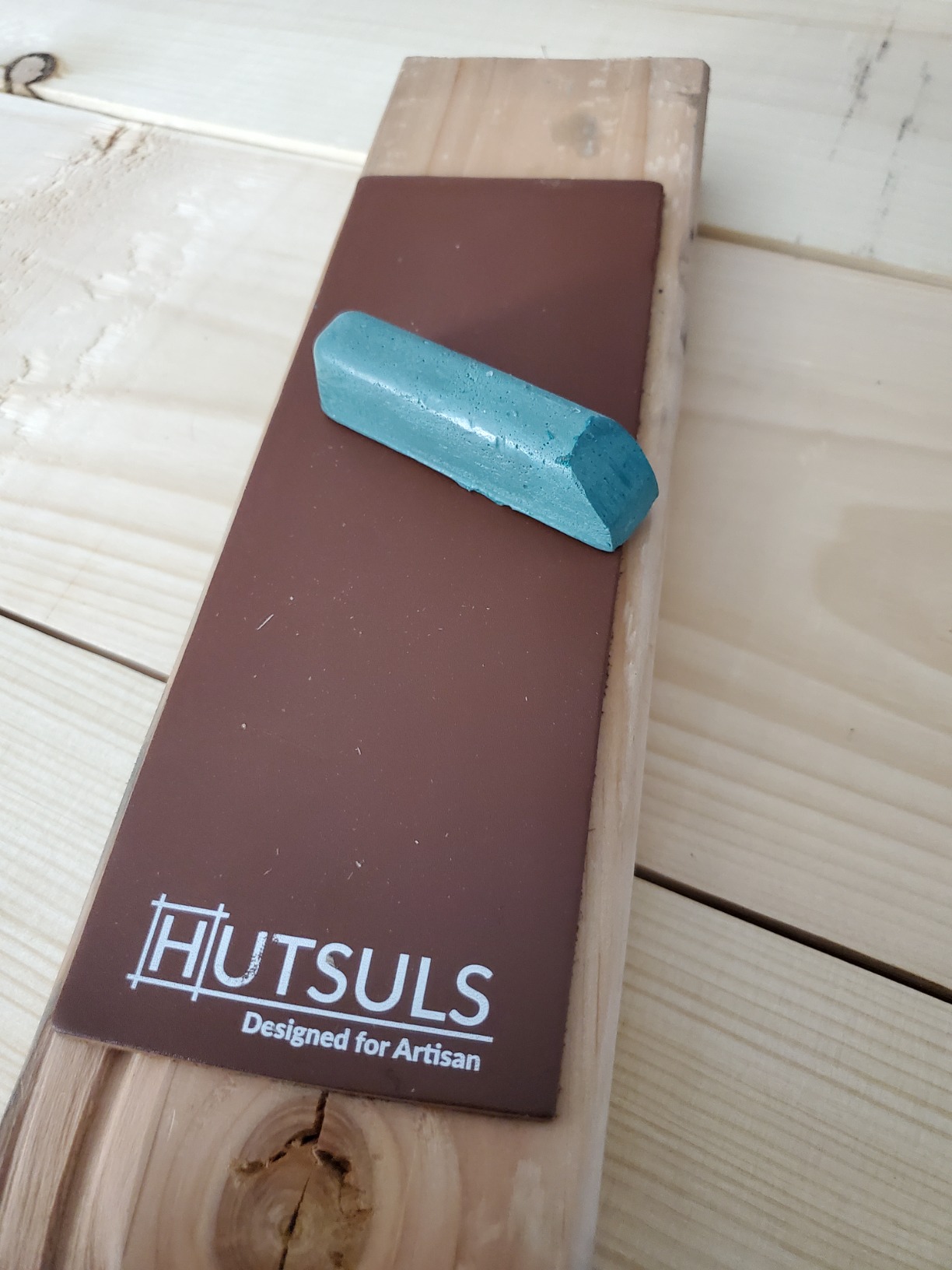
It comes with one smooth side and one rougher side, so you can match the face to the compound. At 16 oz it is heavier than the other loose strips here, but still light enough to be carried without thinking about it.
The complaints are modest. The leather is unbacked, so it moves under pressure the way any flat hide does. Several users asked for a larger surface, which is a fair request if your blades run long.
Where this flat strip works best?
Camp and pack use, plus any bench where you already have a board to lay it on. The hide is thick enough to take a firm compound layer and hold it, and the included green paste gets you working immediately.
It is also a sensible second strop. Keep the flat version in a bag and leave a paddle at the bench, and you cover both the portable and the fixed case without buying two products from the same category.
Where it falls short?
Rigidity is the trade you make for packability. If you push hard on a blade, an unbacked hide compresses and the stroke becomes less consistent than on a wood paddle. Users with larger blades should look at the longer paddles instead. It is also worth noting that the brown version stains more visibly than the black one over time.
6. BeaverCraft 14 inch Carving Paddle: Longest Face in the Group
BeaverCraft Leather Strop for Knife Sharpening – Double-Sided Knife Strop & Stropping Compound Kit – Honing Strop Block 14″ for Woodcarving Tools, Chisel Knife Sharpening Kit Leather Sharpener LS6P1
14.6 x 2 in paddle
270 g
Leather on ashwood
Green-gray polishing compound included
Pros
- Longest stropping face here at 14.6 inches with an ashwood handle
- Two distinct leather faces
- one smooth and one rougher
- Green-gray polishing compound included
- Strong showing with woodcarvers and chisel users
Cons
- Narrow 2 inch width frustrates buyers wanting more surface
- Included paste is described as a bit greasy and many prefer a finer compound
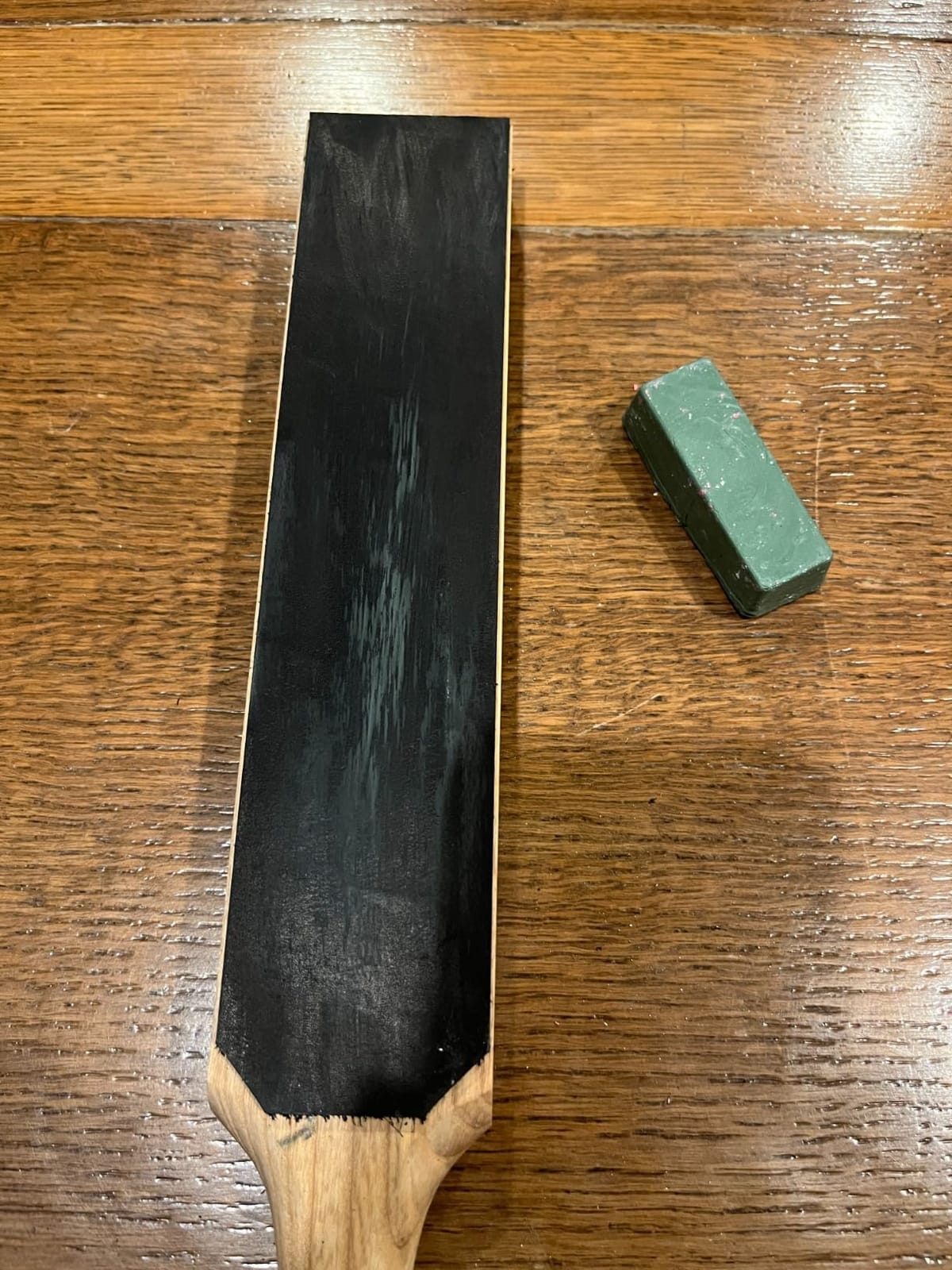
At 14.6 inches this is the longest working face in the roundup, and it shows. Carvers and knife owners report that it reliably removes burrs and lays down a finishing polish across a wide blade in very few passes.
The ashwood shaft is shaped for either hand, and the 270 g weight gives the paddle enough mass to stay put while you draw a long blade across it. That stability is what lets a beginner get a consistent stroke on the first try.
The design logic here is width versus length. You gain reach but lose surface area, so a 2 inch width means covering a broad gouge takes several adjacent passes. That is the consistent complaint, and it is the reason to choose this paddle for knives rather than for large carving spoons.
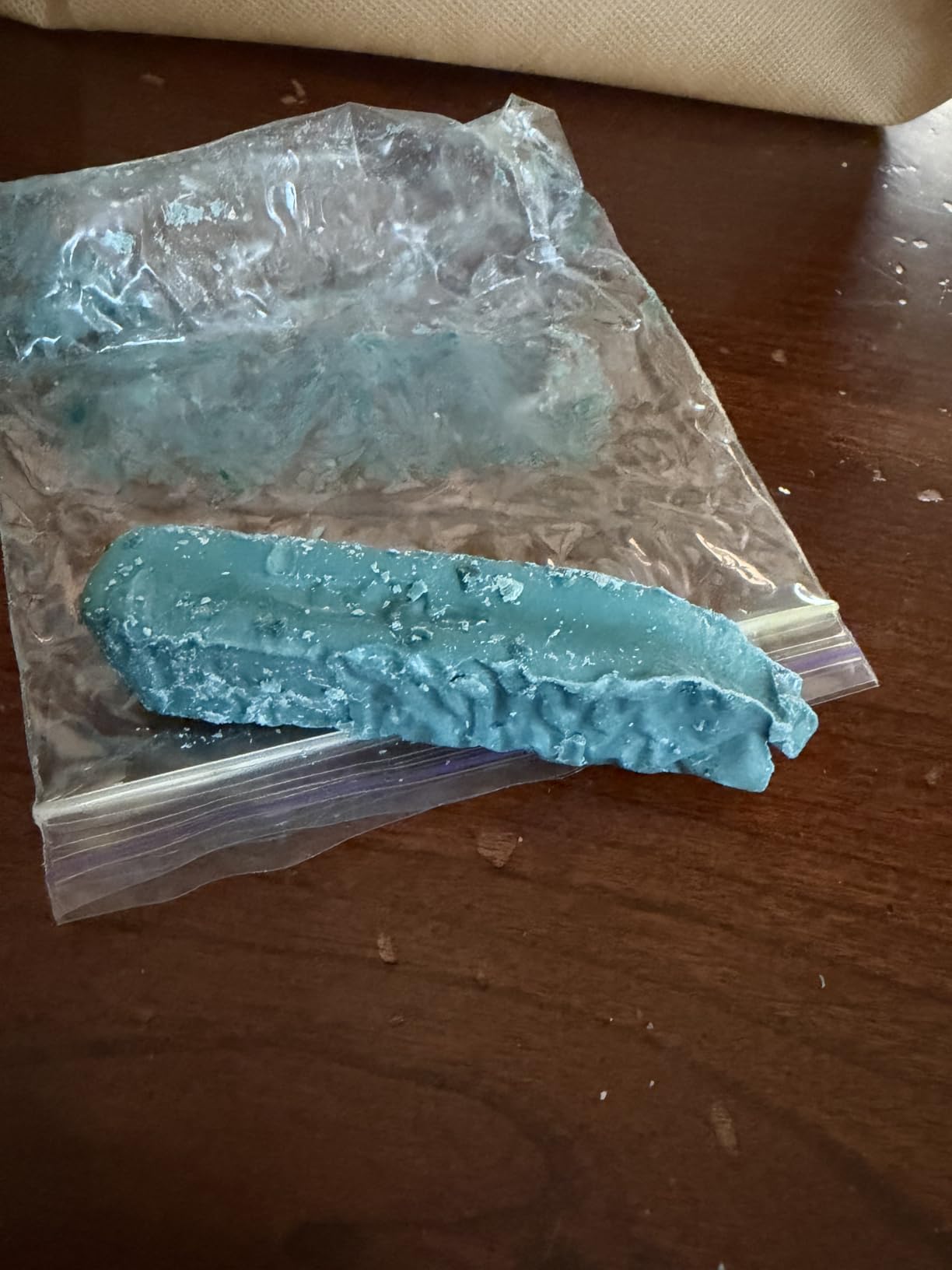
Two eBooks on sharpening whittling knives and hook knives ship in the box, which is useful if you work in that space. The green-gray polishing compound gets you started, though several users found it greasy and moved to a finer paste.
Where the BeaverCraft paddle fits?
Whittling, carving knives and any long blade where you want full-length passes in one movement. The ranking in Tools and Home Improvement shows strong demand among carvers, and that shows in the reviews, which repeatedly mention hook knives and gouges.
It is also a good first paddle, because a shaped handle and 270 g of backing remove most of the technique barriers that make flat strips frustrating. If you are stepping up from a budget strip, this is the natural destination.
Where it falls short?
The 2 inch width is the honest limit. If you alternate between knives and wide carving gouges, the wide-face Angerstone kit covers more ground per pass. The included compound is also the weakest part of the package, and most regular users end up buying their own.
7. LAVODA 3 x 8 inch Honing Strop: The Cheapest Way to Add a Stropping Step
LAVODA Leather Honing Strop for Knife Sharpening with Polishing Compound Double Sided (3 Inch by 8 Inch)
8 x 3 in strip
2 oz
Vegetable-tanned leather
2 oz honing compound and guide
Pros
- High-grade vegetable-tanned leather at a very low price
- Surface is prepared so compound loads easily
- 2 oz of honing compound plus a beginner-friendly guide
- Users report taking a decades-old knife from partial cuts to full paper slices
- Mounts easily on a scrap board or MDF for a stiffer setup
Cons
- Loose hide requires mounting on wood for firm strokes
- Leather arrives stiff and needs massaging before it will roll
- Directions are scant and one side can be rough underneath
- Small relative to some users' blades
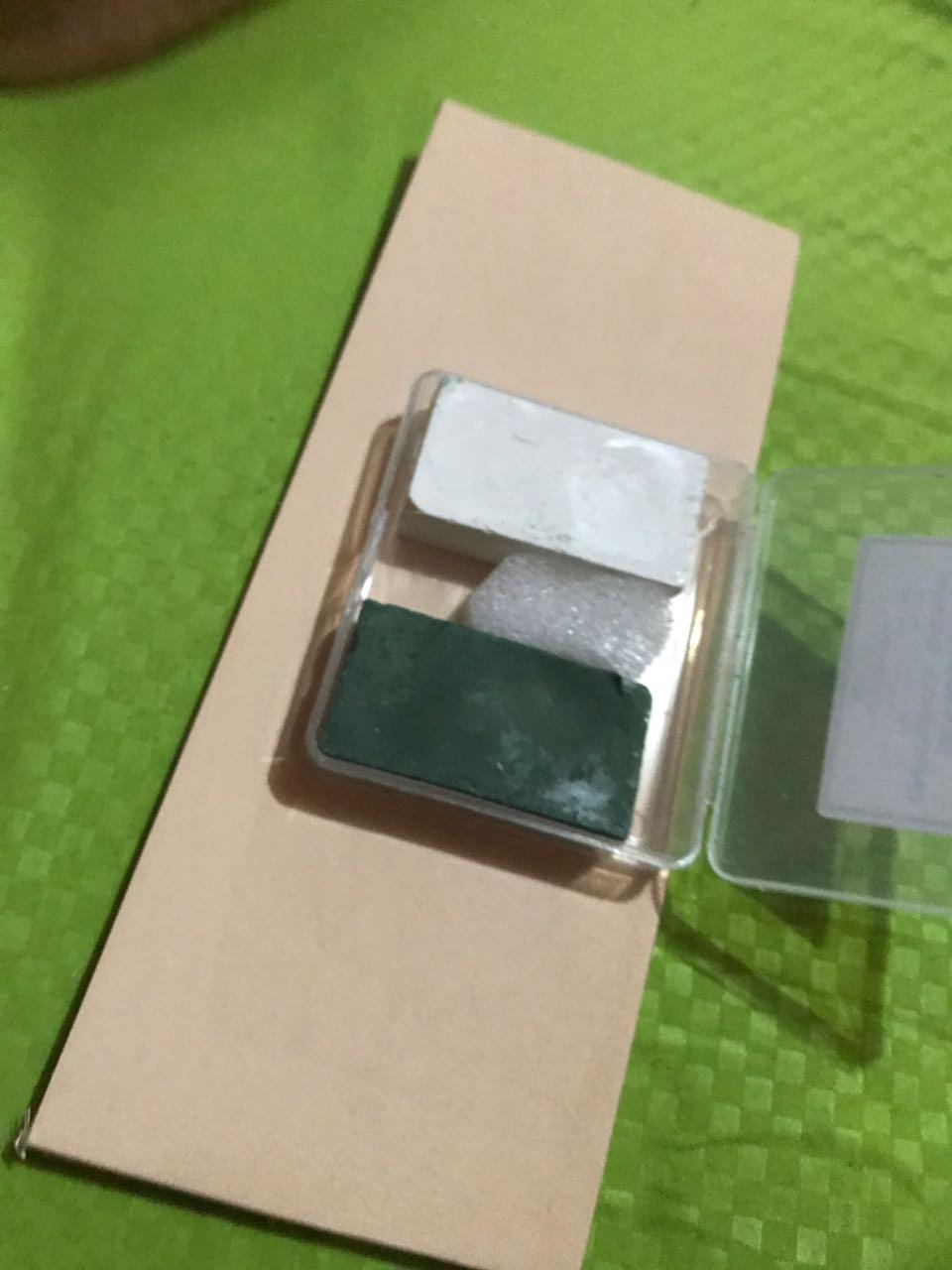
This is the strop we point people toward when the question is simply whether stropping is worth adding to their routine. At 2 oz and 8 by 3 inches, it costs almost nothing to find out, and the 2 oz of honing compound included means the first session needs no extra purchase.
The leather is vegetable-tanned and arrives already surfaced, which is the detail that makes it beginner-friendly. Compound spreads across it instead of sitting in patches, so your first loading looks like the loading in the guide.
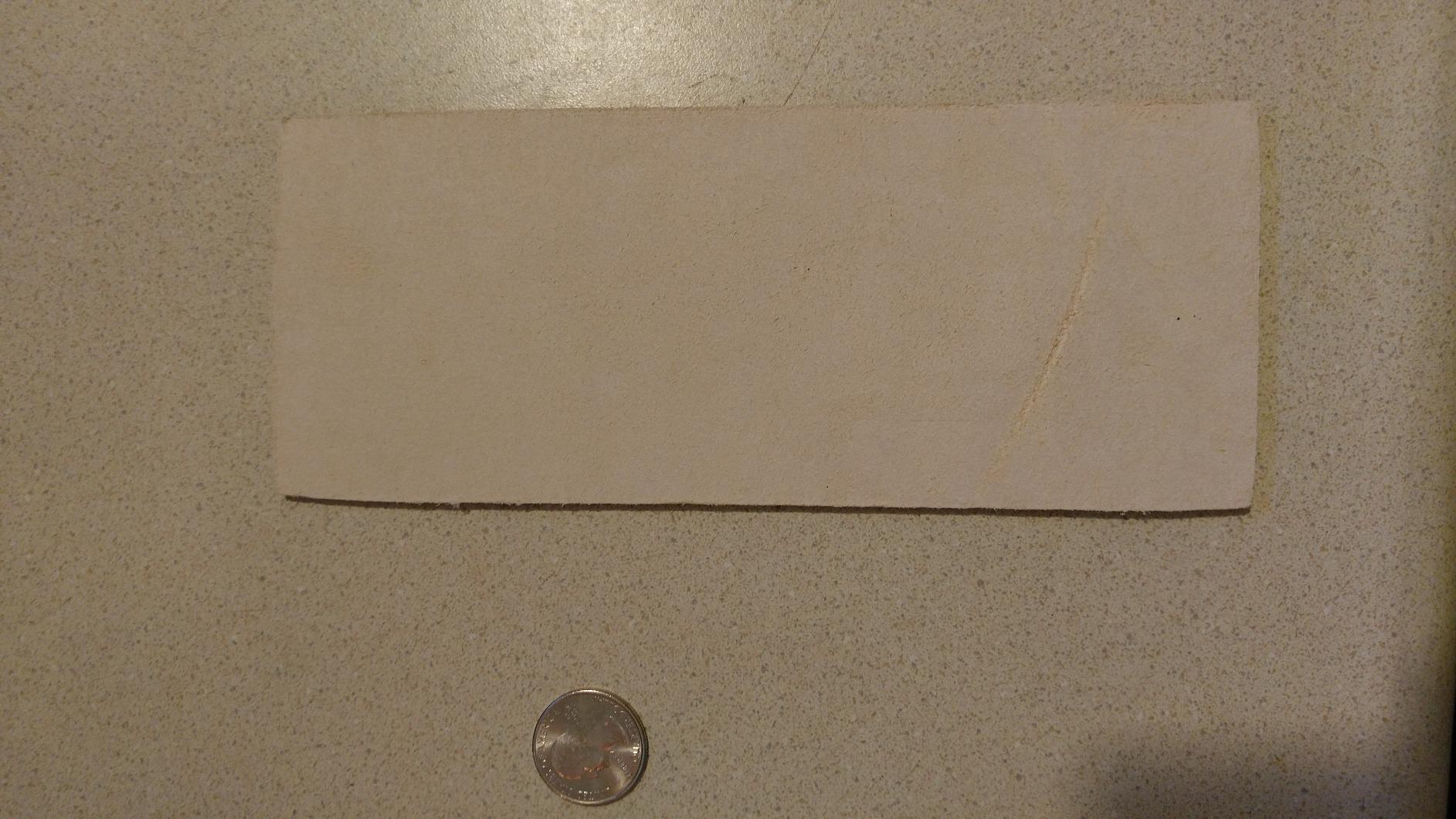
Users report dramatic results on older kitchen knives, and this strop gets a lot of credit for mirror-polishing chisels, plane irons and whittling knives. It is widely described as a budget finishing step rather than a full sharpening system.
The recurring issues are physical. The hide arrives stiff and needs massaging before it will bend, and because it is loose you will want it mounted on wood. The directions are thin, and a few users note that the underside of one side can be rough enough to catch.
Where the LAVODA strop makes sense?
It suits a first strop, a second strop for a workshop full of chisels, and anyone who sharpens on an occasional weekend rather than a schedule. The included guide is written for beginners, which matters at this end of the market.
If your blades are small, whittling knives and paring knives, the 8 by 3 inch face is workable. Mounted on a scrap of MDF it becomes a serviceable bench strop for a fraction of what the paddled options cost.
Where it falls short?
Nothing here is refined. The hide is loose, the instructions are scant, and 20 percent of reviewers land at three or four stars, the second-largest share of dissatisfaction in this group. If you already know you will sharpen regularly, spend the difference on a paddle with a handle.
8. Sharp Pebble Double Sided Strop: The Most Stable Bench Option
Sharp Pebble Leather Strop for Knife Sharpening
8.1 x 3.2 in
1.1 lb
Leather on bamboo base
Non-slip rubber foot
Pros
- Bamboo base with a non-slip rubber bottom pins it to a bench
- Large stropping area is easy to hold without strain
- Green polishing compound and a detailed eBook included
- Users report a genuine mirror polish on kitchen and carving setups
- Customer support and instructions are strong
Cons
- Some buyers find the leather soft rather than premium
- Dye can bleed into the compound and the surface can arrive uneven
- One buyer sanded the face flat before it would load evenly
- A cut into the leather from an over-eager first pass is hard to hide
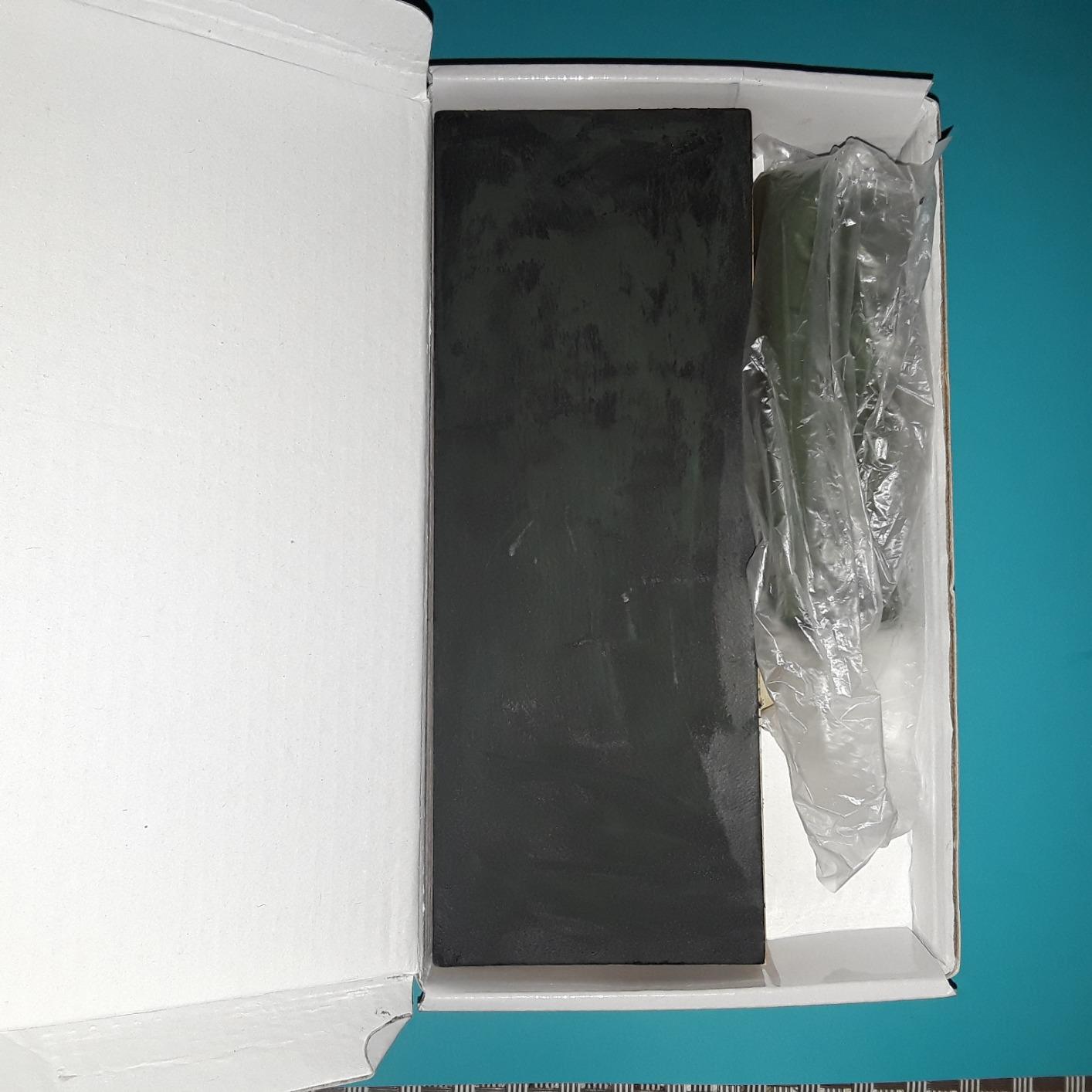
Stability is the reason to look at this one. A bamboo base with a rubber foot means the strop stays put without you holding it down, which is the single biggest factor in whether a beginner gets a straight stroke.
At 8.1 by 3.2 inches it covers a good portion of a chef’s knife in a single pass, and the large face is comfortable to hold without strain. Kitchen and woodcarving users both report a genuine mirror polish once the included green compound is worked in.
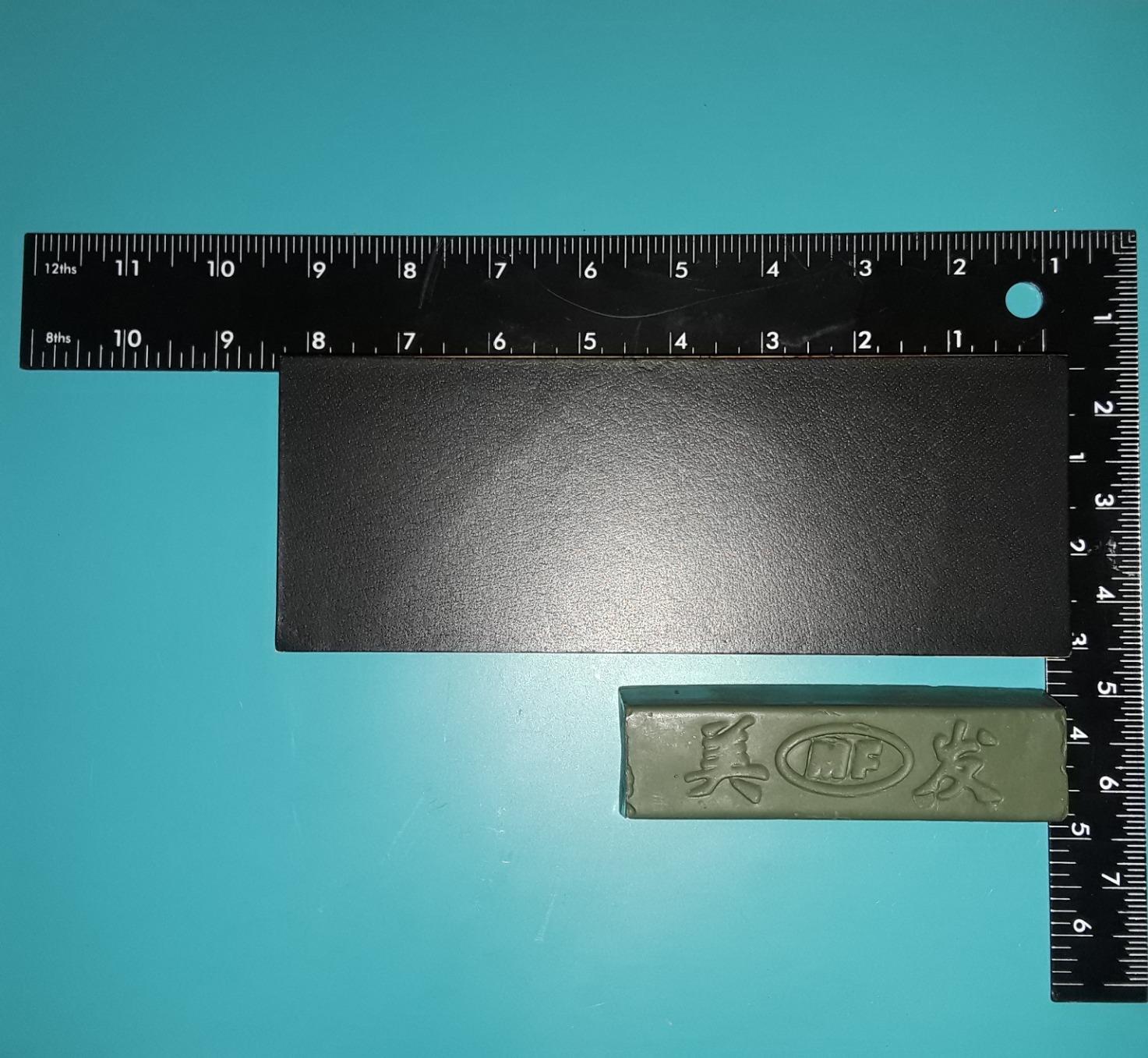
This strop has the lowest average rating in our group at 4.4, and the complaints cluster around the leather rather than the design. Buyers report softness, dye transfer onto the compound, and a surface that is sometimes uneven out of the box. One owner sanded the face flat before it would load evenly.
A separate thread of complaints mentions cuts into the leather from an aggressive first pass. This is a normal leather problem, but on a dark dye finish it shows more than it would on a tan hide.
Where the Sharp Pebble strop fits?
A dedicated bench, and specifically a kitchen counter where a wet or greasy strop would slide on wood. The rubber foot solves that, and the wide face suits the blades most people actually use day to day, including the knives we cover in our saltwater fillet knife guide.
It is a good match for people who strop often and want the process to be repeatable without thinking about bracing the strop with one hand.
Where it falls short?
Leather quality is the issue. At 1.1 lb it is the heaviest piece in this group, and the weight comes from the base rather than from a thick hide. If you want a stiffer face, the thicker bark-tanned cowhide on the Bacher paddle is a step up in both density and consistency.
9. Flexcut 8 x 2 inch PW14: Made for a Carving Pouch
Flexcut Wood Carving Tools | 8″ x 2″ Leather Knife Strop with 1 Ounce Bar of Flexcut Gold Polishing Compound for Polishing and Buffing | PW14 | Made in the U.S.A.
8 x 2 in face
0.2 kg
Wood-backed leather
1 oz Gold polishing compound bar
Pros
- Wood backed
- so no tensioning or flat surface is needed
- Includes a 1 oz bar of Flexcut Gold compound that lasts a long time
- Made in the USA with a limited lifetime warranty
- Fits a carving pouch and suits small carving knives and gouges
- Reported to bring dull Flexcut and Mora blades back to near-new
Cons
- Leather is thin and lightly grained
- so it needs a sandpaper rough-up to take compound
- Some buyers found the texture inconsistent and the blade bumped along the surface
Flexcut built this for carvers, and the decisions all point that way. The face is wood backed, so you can clamp it to a bench or hold it in one hand without arranging anything, and the limited lifetime warranty is the strongest support commitment anywhere in this roundup.
The included 1 oz bar of Gold polishing compound is unusually generous and lasts a long time. Carvers report that it brings dull Flexcut and Mora blades back close to new, which is a hard thing to do with a finishing tool.
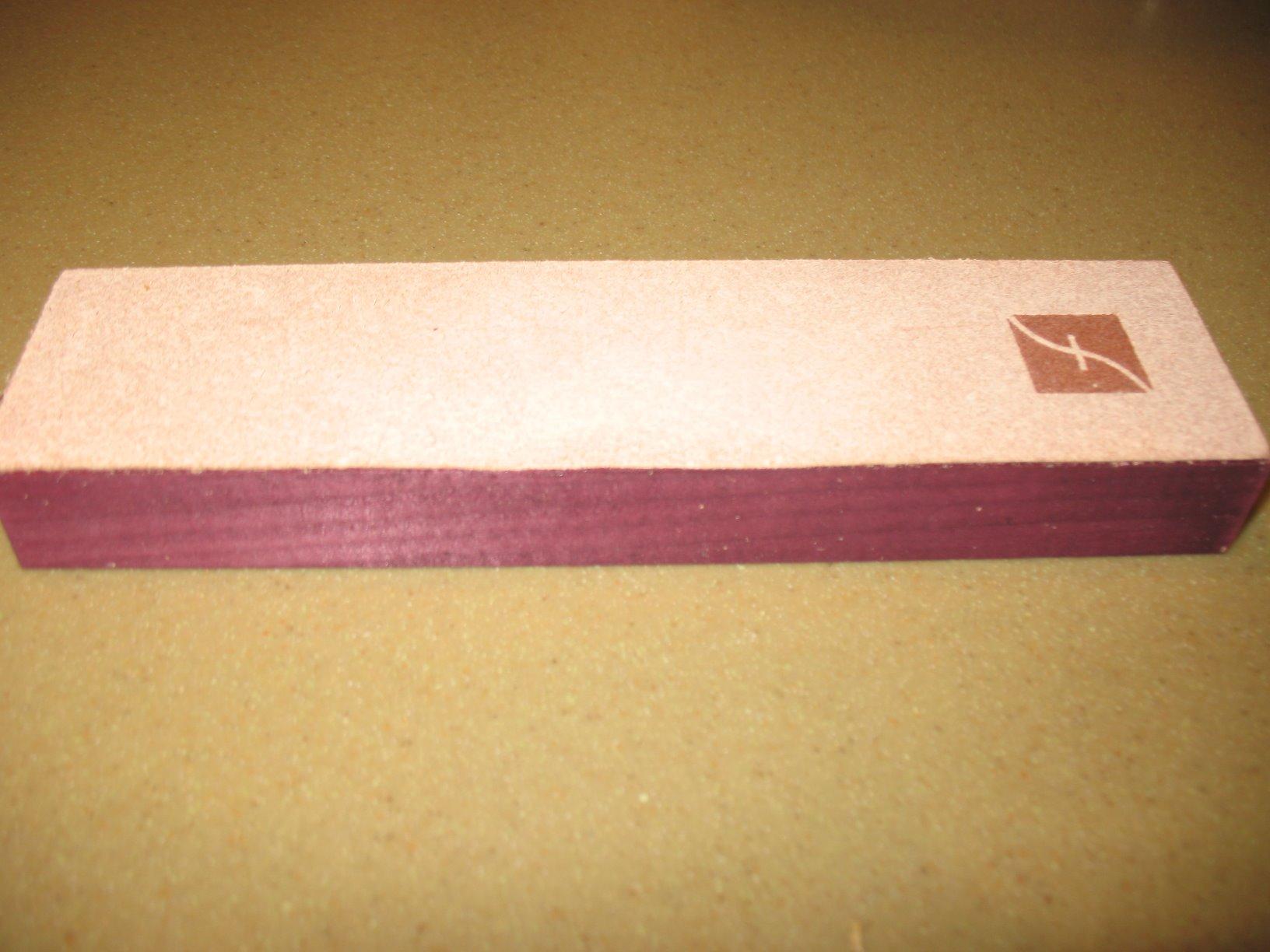
At 8 by 2 inches it is a compact face, and the width suits small carving knives and narrow gouges more than a chef’s knife. The design is deliberately portable, matching the pouches these tools already live in.
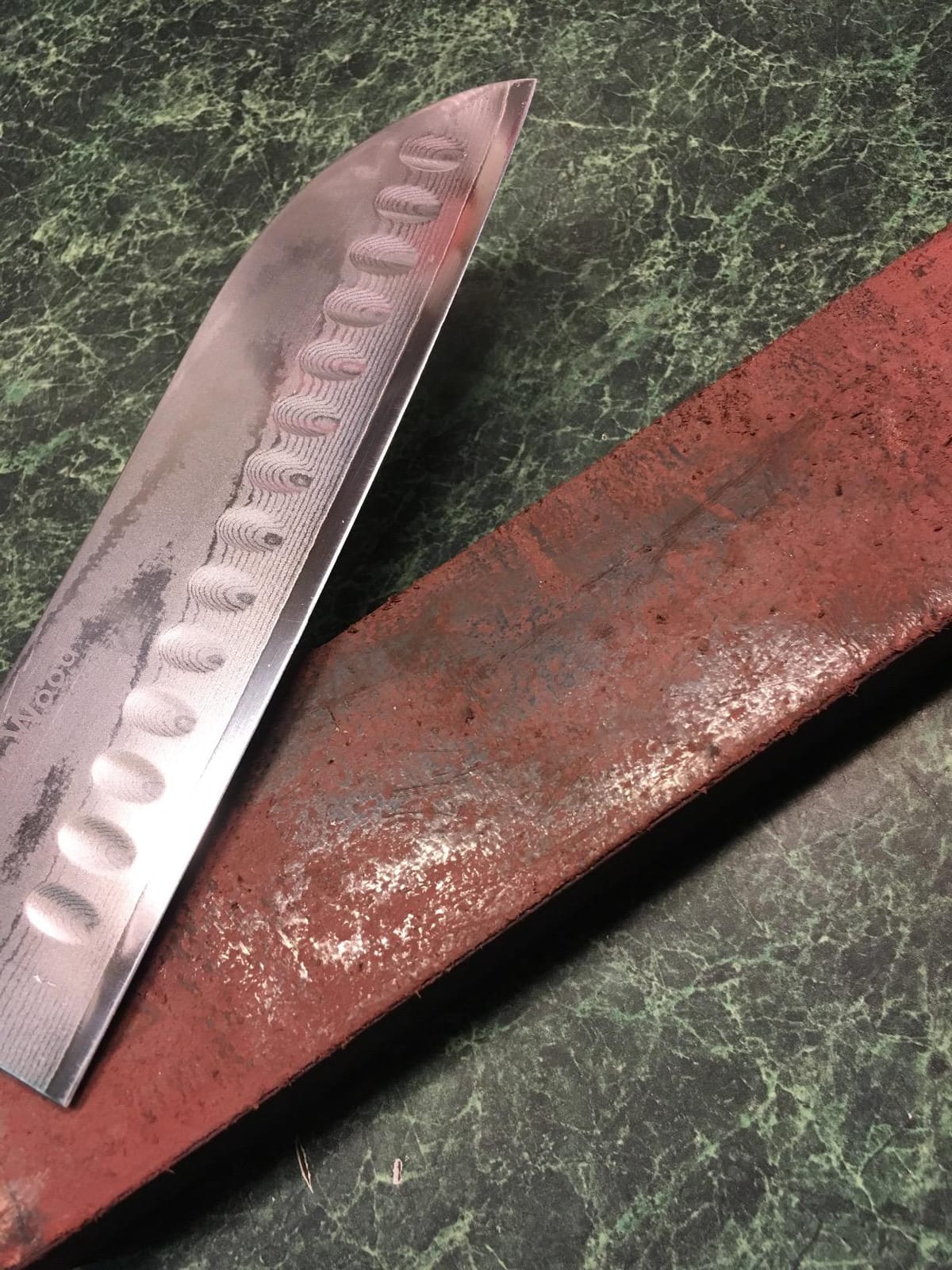
The consistent criticism is the leather itself. It is thin and lightly grained, so compound does not sit on it evenly until you rough the surface with sandpaper first. Some buyers also found the texture inconsistent enough that the blade bumped along the face, which interrupts a stroke.
Who should choose the Flexcut strop?
Woodcarvers and whittlers who already own Flexcut tools, and anyone who wants a strop that clamps down or works one-handed. The Gold compound bar is a genuine value add, and the warranty means a broken strop is not a permanent loss.
It also works as a dedicated straight-razor finisher for those who keep a razor and strop in the same drawer. Just expect to spend five minutes roughing the face on the first use.
Where it falls short?
The thin hide means less correction than a thick cowhide paddle gives you, and the surface inconsistency reported by some buyers is a real issue for a finishing tool. Users working on wide blades will find 2 inches too narrow for efficient coverage.
10. Knives Plus 8 inch Pre-Loaded Strop: Nothing to Maintain
Knives Plus Strop Strop Block, Leather Sharpening Strop, 8 long”
8 x 2.5 in face
16 oz
MDF and chap leather
Pre-loaded with high chrome rouge
Pros
- Arrives pre-loaded with high chrome rouge rubbed in while the leather was warm
- Hand-made start to finish in Amarillo
- Texas
- Virtually maintenance-free with no loading or dressing required
- Highest average rating in this group at 4.8
Cons
- Fixed compound means you cannot change grit the way you can with loose paste
- 8 inch face is shorter than the long paddles in this roundup
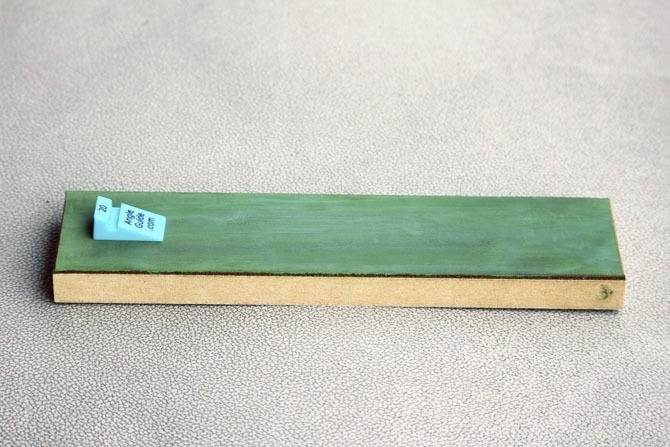
This is the highest-rated strop in the group at 4.8, with 84 percent of its 788 reviews at five stars. The reason is simple: there is no process. The high chrome rouge compound is hand rubbed into the leather while it is still warm during manufacture, so the strop works the moment it arrives.
Technique is unusual too. The blade is pulled backwards with moderate pressure across the face, which is a more forgiving motion for beginners than the standard spine-first draw most guides teach.
It is built from MDF and chap leather on an 8 by 2.5 inch surface, and it is hand-made from start to finish in Amarillo, Texas. Being virtually maintenance-free is the real product here, particularly for people who strop a knife every few days.
At 16 oz it carries without feeling like a brick. The 8 inch length is shorter than the long paddles above, which matters if your blades are wide, but for a folder or a hunting knife it covers most of the edge in a couple of passes.
Where the pre-loaded strop wins?
It is the strongest choice for someone who wants an edge maintained without thinking about compounds at all. No loading, no dressing, no tracking which stage you are on. For a pocket knife carried daily and drawn from a sheath sharp, that convenience is the entire pitch.
Because the compound is fixed, treat it as a single-purpose finisher. Once you start working through a grit progression on other tools, this stays your quick-touch strop rather than part of the sequence.
Where it falls short?
You give up control over grit, which is the main thing experienced sharpeners value. If you want to move from a coarse compound to a mirror finish, that is not possible here. It also costs more per use-case than the bare strips, which is only sensible if you value the zero-maintenance part.
11. Angerstone 14.3 inch Oversize Strop Kit: Widest Face Here
Angerstone Oversize Double Sided Leather Strop Kit(3″ Knife Stropping Leather)with Ergonomic Handle – Knife Strop for Sharpening Knives, Wood Carving Chisels, Buffing Compound Included
14.3 x 3 in paddle
1.1 oz
Genuine cowhide on quarter-sawn pine
Green white and red compounds
Pros
- Widest 14.3 by 3 inch face in the group for gouges and wide blades
- Vegetable-tanned cowhide screwed to quarter-sawn pine that sits flat
- Comfortable ergonomic handle for long sessions
- Three compounds supplied: green chromium oxide
- white aluminum oxide and red
- Experienced sharpeners match straight-razor sharpness with diamond emulsion
Cons
- Instructions are confusing for a first-time hone user
- Included compound sticks are generic next to diamond pastes
- Grit level is not stated in the listing or paperwork
- Some shipments arrived missing the polishing compound sticks
The 3 inch width is what separates this from the other long paddles. It is the widest working face in the roundup, which means a wide carving knife or a straight razor covers in a single sweep instead of three or four adjacent passes.
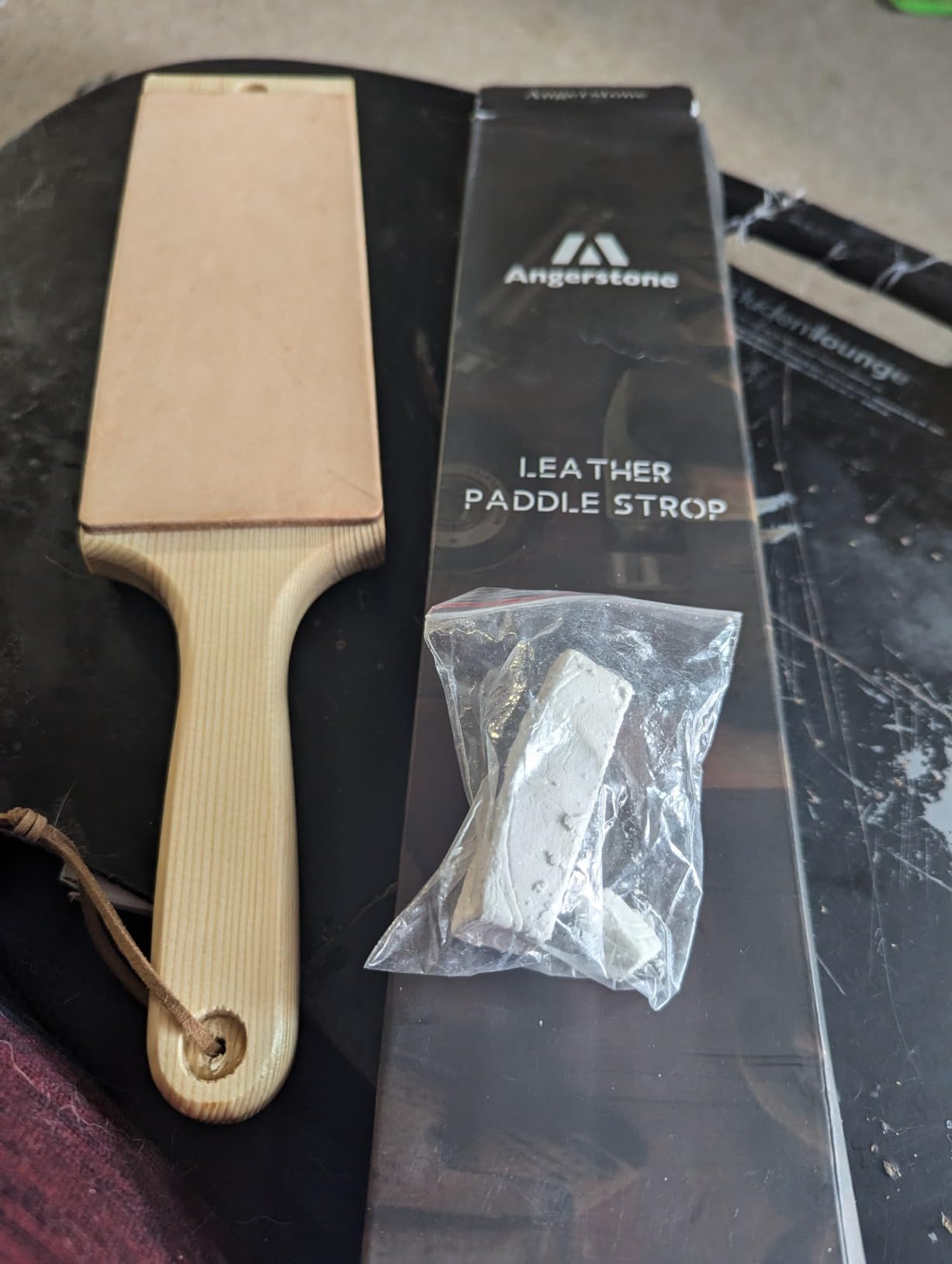
Construction is sound: strictly vegetable-tanned cowhide fixed to the paddle with two screws over a quarter-sawn pine base. That screw fixation is a better answer to leather lift than glue alone, and the base sits flat without wobbling.
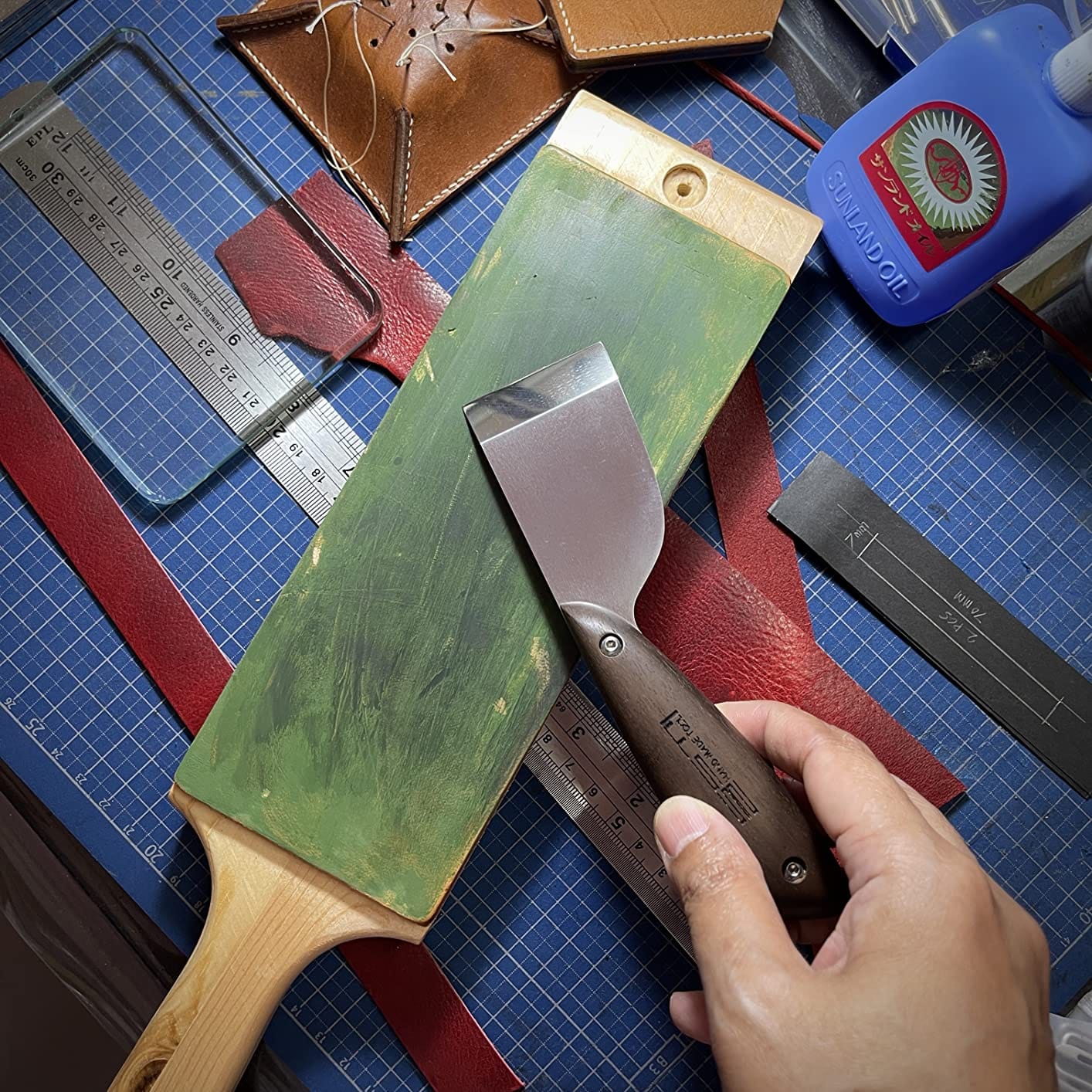
Experienced sharpeners report matching straight-razor sharpness by loading diamond emulsion onto the same hide, which is a useful thing to know since the included compounds are basic.
The complaints cluster around documentation. Instructions are confusing to a first-time user, the grit level of each stick is not stated anywhere, and some shipments arrived without the polishing compounds. Check the box before you rely on it.
Who the Angerstone kit suits?
Carvers, straight-razor users and owners of wide chef’s knives. If your stropping surface is the bottleneck rather than your technique, more width solves more problems than more length does.
It also suits anyone who wants a proper grit progression in the box. Three compounds cover green chromium oxide, white aluminum oxide and red, which is enough to move from deburring to polish without a second purchase.
Where it falls short?
The included instructions are the weakest element, and no grit numbers are given, which makes the progression harder to reason about. The generic compound sticks are also replaceable once you decide what you like.
12. Tumbler Beech and Cowhide Strop: Built for Rolling Sharpener Setups
Tumbler Leather Strop for Knife Sharpening
9.8 x 2.2 in
0.14 kg
Solid beech and vegetable-tanned cowhide
No compound supplied
Pros
- Solid beech wood paddle with vegetable-tanned genuine cowhide
- Designed as the final step in the Tumbler rolling sharpener system
- Slim 9.8 inch profile suits a knife drawer or a chef's setup
- Matches a broader kitchen sharpening ecosystem
Cons
- No compound supplied
- so a separate paste or emulsion is required
- 9.8 by 2.2 inches is narrower and shorter than most carving strops
This strop exists to finish a specific system. It is the last step after the Tumbler Rolling Knife Sharpener, realigning the edge and removing the metal that the rolling sharpener leaves behind, and it is meant to be used in that sequence.
The build is straightforward: solid beech wood with vegetable-tanned genuine cowhide, at 0.14 kg. Owners use it to reach paper-thin cuts on kitchen knives, and 80 percent of its 503 reviews give five stars.
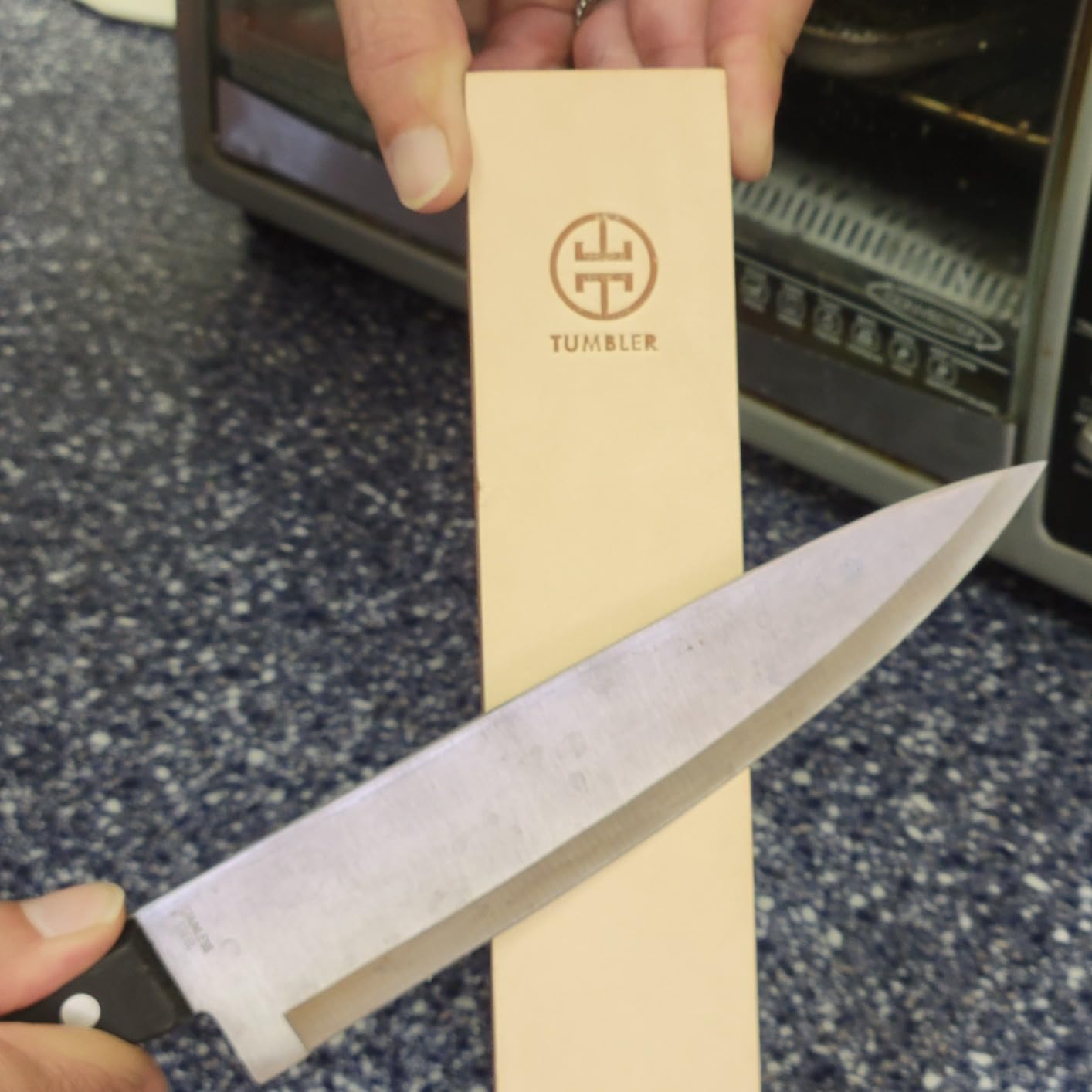
The slim 9.8 inch profile suits a knife drawer better than a long paddle does. It is a clean, unobtrusive object that does not take over a counter, which matters more in a kitchen than in a workshop.
Two limitations are clear. No compound is supplied, so you need your own polishing paste or emulsion. And at 2.2 inches wide it covers less per pass than the carving-oriented paddles, so wide blades take more strokes.
Where the Tumbler strop fits?
Kitchen setups that already run a rolling sharpener, and cooks who want a dedicated edge-maintenance step rather than a full sharpening session. The narrow beech paddle is comfortable to pick up and use at a counter.
It is also a coherent gift for someone starting out with a knife set. Pairing it with a regular weekly routine means the edge gets realigned on a schedule instead of waiting for a proper sharpening day.
Where it falls short?
Buying it outside a Tumbler ecosystem is fine but loses some of the point, since the whole idea is finishing that system’s output. The missing compound is the practical snag. And for carvers or straight-razor users, 9.8 by 2.2 inches is simply too small a face.
Which Stropping Compound Goes on Which Side?
Most stropping confusion comes from treating the two faces of a leather strop as interchangeable. They are not. The rough or flesh side has tooth, so it holds a coarser bar compound; the smooth side is nearly flat, so it takes a finishing paste or a diamond emulsion.
The practical pairing we use follows a simple rule. Bar compounds go on the rough or suede face, and liquid emulsions go on the smooth face. The rationale is that a harder bar needs something to bite into, while a suspension of diamond particles needs a flat, even surface to spread across.
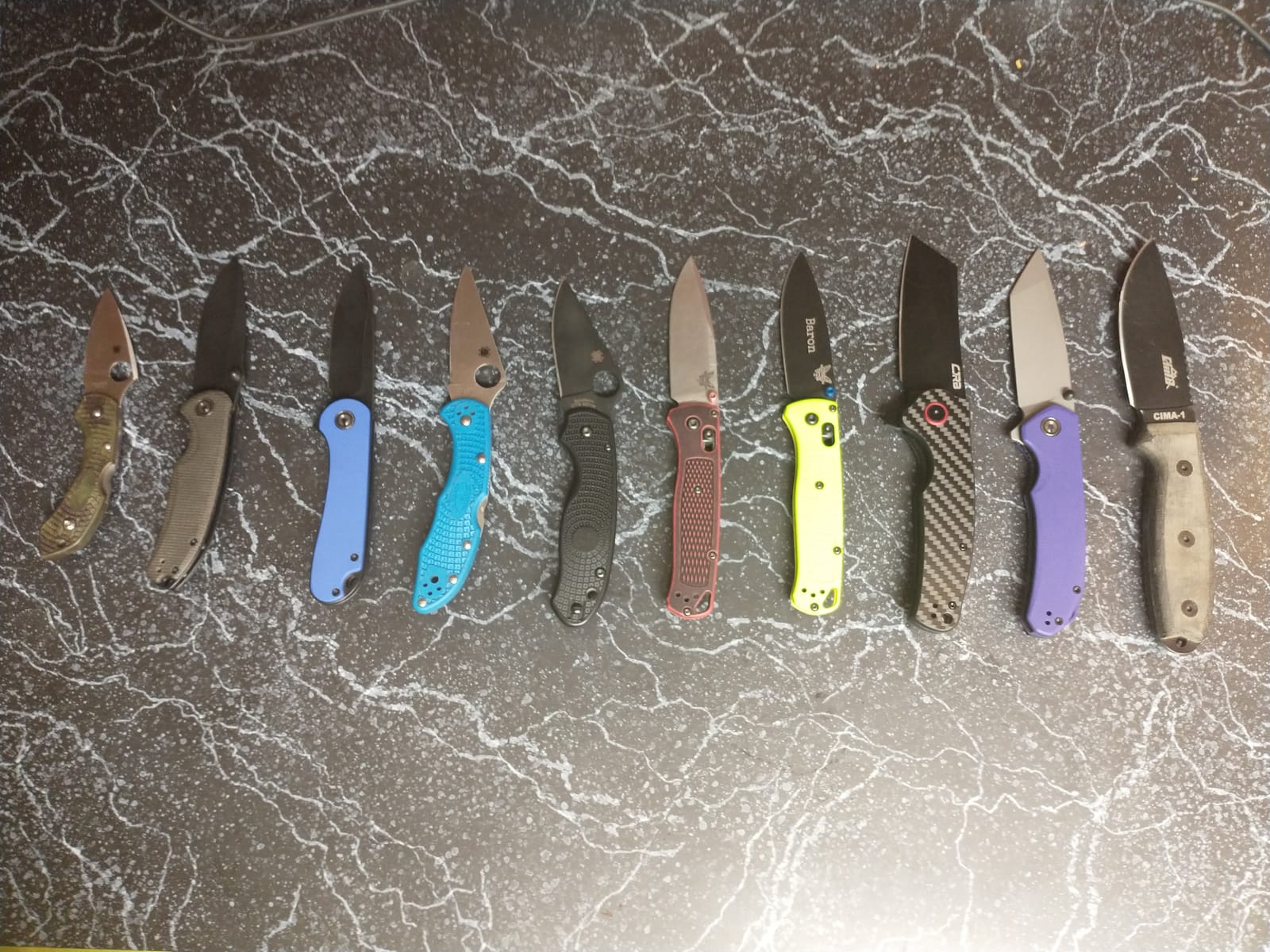
On colour and grit, the useful progression runs green for the fastest cut, white for general deburring, black for finishing and red for the finest polish on many systems. The Bacher kit names its four stages directly as Red 2000, White 5000, Green 8000 and Black 12000, which is a clean way to think about ordering rather than guessing.
Do you need compound at all? Bare leather works, and users on Reddit’s r/sharpening are blunt about it: both faces will realign an edge with no compound loaded, so do not treat a bare strop as a mistake. What compound adds is speed of correction and a brighter finish, not basic functionality.
Two alternatives are worth knowing. Metal polishes such as Flitz or Simichrome work as inexpensive fine finishing agents on the smooth face, though they are not as even as a proper stropping paste. Diamond emulsion gives the most predictable result on hard steels and is the most common choice for straight-razor work, matching what experienced users report doing with the Angerstone hide.
How to Strop a Knife Without Rolling the Edge?
Stropping goes wrong in a small number of predictable ways, and almost all of them come down to pressure, direction and which part of the blade touches the leather.
Step 1: Lay the strop flat and brace it. Every good stroke starts with a surface that does not move. Sit on a non-slip foot, clamp a wood-backed strop, or hold a paddle by its handle with the far end weighted.
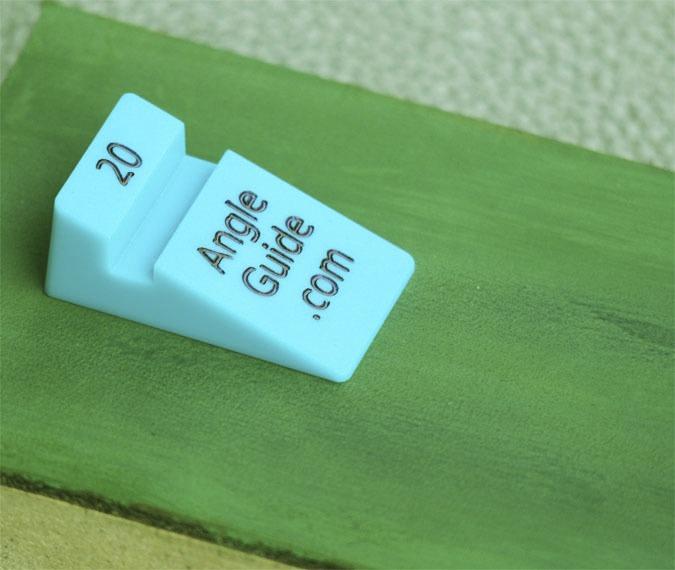
Step 2: Hold the blade at a shallow angle. Think of a few degrees off flat rather than the 20 degrees you would use on a stone. You are not grinding a bevel here, you are polishing the apex.
Step 3: Draw spine-first, away from you. The spine leads and the edge trails. This is the convention most guides teach and the one the Knives Plus strop is explicitly built around, with the blade pulled backwards at moderate pressure.
Step 4: Use light pressure and more strokes. This is the mistake beginners make most often. KitchenKnifeForums advice is consistent on this: do not strop with force, because pressure rolls the edge and dulls what you were trying to sharpen. If you are pushing hard, you are doing the job of a stone.
Step 5: Lift between passes and reset. Rolling the blade onto its side to turn around adds an uncontrolled edge-over motion that causes exactly the damage you are avoiding.
Stropping serrated knives is a different problem. The scalloped edge does not lie flat on a strop face, so each tooth has to be worked individually and the technique takes far longer than it is worth. Serrated knives are better maintained with a dedicated serrated sharpener.
Buying Guide: Leather, Size, and Style
Leather type. Full-grain cowhide is the common standard and it is what most of this group uses. Bark-tanned hide is tougher and holds a flat face better, which is why the Bacher paddle uses 3 mm of it on beech. Buffalo leather is also widely used and reads as a close cousin of cowhide in practice. Horse butt and kangaroo appear often in enthusiast conversation as premium cuts, mainly valued for density and how long they hold a loaded surface. A user on Reddit’s r/sharpening put the DIY case simply: bovine shoulder or butt is the premium cut and will be stiffer.
Size matched to blade length. This is the sizing guide most roundups skip, and it is the one that changes results. A 3 by 8 inch strip suits pocket knives, paring knives and whittling knives. A 5 inch square hone covers a folding blade and short kitchen knives. An 8 to 9.8 inch face handles hunting knives and most folding knives. Once you pass 8 inch blades, you want 12 inch or longer paddles so a single pass covers most of the edge, and for wide gouges you want width as much as length.
Backing style. Wood-backed paddles like the BeaverCraft and Flexcut strops give you rigidity and a handle in one piece. Rigid synthetic bases like the Sharp Pebble bamboo design resist sliding. Flat hides with no backing pack smallest but need a board under them, which is the arrangement most people use in the field.
Sides. Double-sided is preferred by almost everyone who sharpens regularly, because it gives you a rough face for deburring and a smooth face for finishing in one tool. Single-sided strops are not wrong, they just limit your progression.
Compound included or not. A kit with compound or paste gets you running in a minute and removes the most common beginner barrier. A bare strop costs less and lets you choose what you load, but it will sit unused more often. The pre-loaded option goes furthest and gives you the least control.
Maintenance. Leather dries out. Clean a strop with a little water and mild soap or a scraper for hardened compound, let it dry away from heat, and use a leather balm or conditioner when the face starts feeling dry and stops loading evenly. You will know it needs reloading, not conditioning, when strokes start leaving a grey or black smear instead of a bright finish.
Frequently Asked Questions
Are leather strops good for sharpening knives?
They are excellent for maintaining and refining an edge, but they are not a substitute for sharpening. A leather strop removes almost no metal, which means it cannot reshape a badly dull or damaged bevel. Its job is to straighten the micro-burr left by sharpening, polish the apex, and restore keenness quickly and often.
Is a strop better than a honing rod?
They do different jobs. A honing rod realigns an edge between full sharpening sessions and can handle a moderately dull blade. A strop with leather refines and polishes an already-sharp edge and removes burr, producing a brighter finish. If you want one tool for weekly maintenance, a strop is usually the better buy.
Which strop is better for stropping, smooth or suede?
Both work, and for a bare strop the difference is small. Once compound is involved, put bar compounds such as green or white on the rough or suede face where they have something to grip, and put diamond emulsion or fine paste on the smooth face where they spread evenly. Using the wrong face is the most common cause of compound not loading properly.
What kind of leather is used for stropping?
Vegetable-tanned full-grain cowhide is the most common and the standard for good reason: it is dense, it takes a compound layer well, and it stays flat. Buffalo leather is a frequent alternative, and horse butt and kangaroo are enthusiast choices valued for density and durability. Bark-tanned cowhide on a wood paddle is the sturdiest configuration.
How do I load a leather strop with compound?
Warm the leather slightly if you can, spread a thin even layer over the rough side with a cloth or paper, and let it sit so it soaks in. Then take the face flat against a hard surface and buff the excess off with the back of a knife spine until the leather develops an even sheen. Too much compound smears onto the blade, so err on the light side.
Do you need compound when using a strop?
No. Bare leather will realign an edge and remove a fine burr perfectly well, and experienced users on Reddit’s r/sharpening consistently say the compound is optional. What compound adds is faster correction and a brighter, more polished finish, especially on hard steels.
How often should I strop a knife?
Weekly maintenance for a knife you use daily, and before it goes dull if you notice resistance early. Stropping removes so little metal that you can do it far more often than a full sharpening session. If a blade needs stropping several times a week to stay sharp, it is probably due for sharpening.
Final Verdict
If you want one strop that covers knives, chisels and straight razors and comes with everything you need to run a full grit progression, the Bacher 12.6 inch kit is our pick for 2026. The bark-tanned cowhide on flat beech is the most dependable surface we tested, and 3,886 reviews at 4.7 stars is the strongest combination of rating and volume in this group.
For a small budget or a first strop, the BeaverCraft 3 by 8 inch strip does the job with compound included, and the LAVODA strop costs even less if you want the simplest possible entry. When packing weight matters, the Lansky hone at 27 g and the Hutsuls flat strip are the two to consider.
Long blades belong on a long paddle. The BeaverCraft 14 inch carving paddle and the Angerstone 14.3 inch kit give you full-length strokes, and the latter adds the width that wide gouges need. Carvers who want zero upkeep will prefer the Knives Plus pre-loaded strop, while bench cooks get the most from a base that will not slide.
Whichever you pick, the habits matter more than the hardware. Light pressure, spine-first strokes, and a compound matched to the correct face will do more for your edges than an expensive paddle ever will. Our guides to survival knives and fillet knives both depend on the same edge maintenance routine, and if you work with hides at all our notes on leather working equipment are worth a look too.