
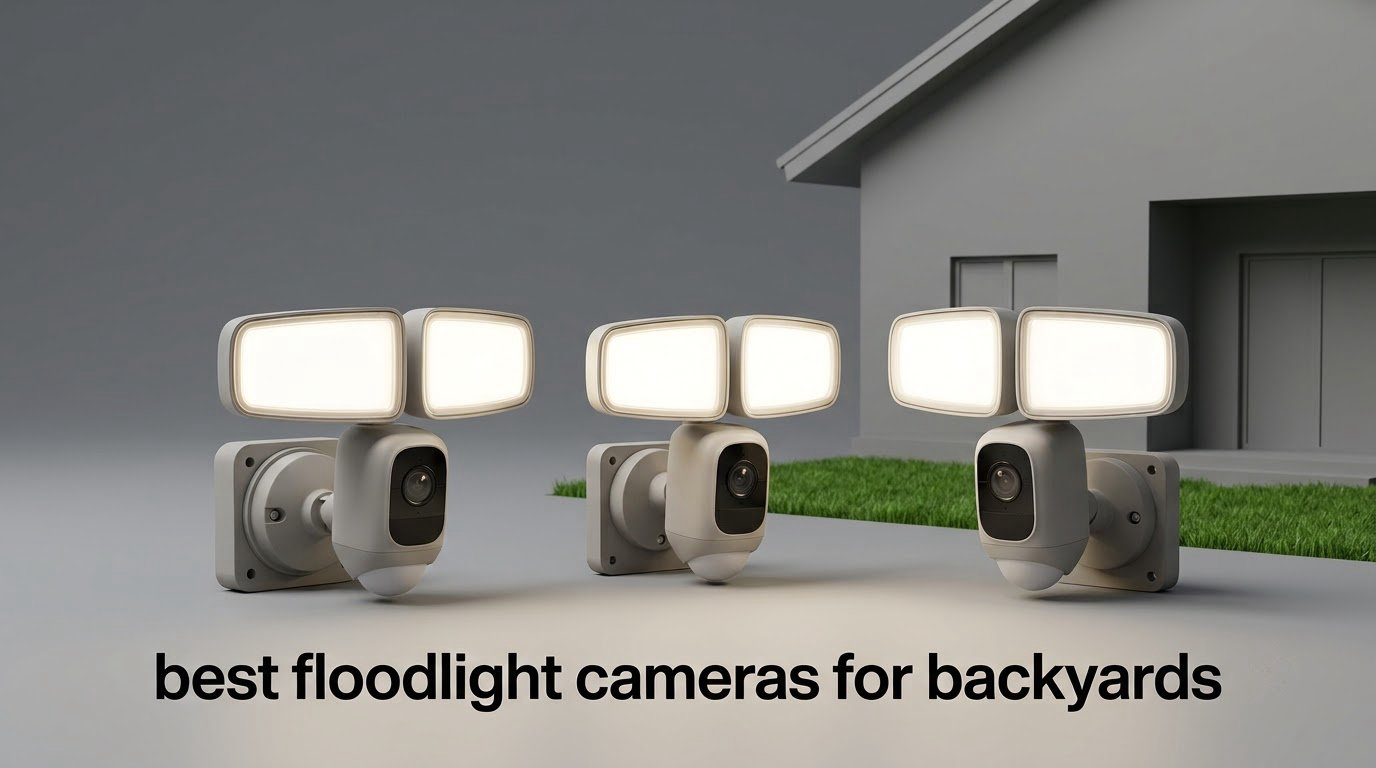
The Ring Floodlight Cam Wired Plus is the best floodlight camera for most backyards, because 2000 lumens of motion-activated light, a 1080p sensor and a hardwired power connection give you dependable full-colour footage from dusk to dawn without a monthly fee. It is also the most proven option we found, with a 4.7 average across more than 44k reviews.
That said, a backyard is not a front door. The back of a house is where Wi-Fi fades, where no one wired an outlet, where a tree line throws moving shadows across the fence, and where the nearest wall is the side of a garage rather than an eave. A camera that wins on a driveway spec sheet can still leave you with dark corners and a phone full of squirrel alerts.
So this roundup of the best floodlight cameras for backyards is organised around yard problems rather than brand tiers. We compared ten current models on light output, coverage angle, night vision range, how they are powered, and whether they keep recording when you refuse to pay a cloud subscription. We updated this guide for 2026, and every model below is a currently shipping version rather than a discontinued listing.
If you have a large lot, we also cover floodlights for bigger properties in our guide to the best floodlight security cameras for large properties.
Table of Contents
Top 3 Best Floodlight Cameras For Backyards (October 2026)

Ring Floodlight Cam Wired Plus
- 2000 lumens
- 1080p HD video
- Hardwired power
- Customizable motion zones


All Ten Floodlight Cameras Compared for Backyard Coverage in 2026
| Product | Specifications | Action |
|---|---|---|
| Ring Floodlight Cam Wired Plus |
|
Check Latest Price |
 Blink Wired Floodlight Camera Blink Wired Floodlight Camera |
|
Check Latest Price |
 Arlo Wireless Floodlight 2K HDR Arlo Wireless Floodlight 2K HDR |
|
Check Latest Price |
| WYZE Floodlight Camera v2 |
|
Check Latest Price |
 Blink Outdoor 4 Floodlight Camera Blink Outdoor 4 Floodlight Camera |
|
Check Latest Price |
| eufy Floodlight Camera E340 |
|
Check Latest Price |
 eufy Floodlight Camera E30 eufy Floodlight Camera E30 |
|
Check Latest Price |
 Ring Floodlight Cam 4K Pro Ring Floodlight Cam 4K Pro |
|
Check Latest Price |
 Tapo 2K Outdoor Pan/Tilt Floodlight Tapo 2K Outdoor Pan/Tilt Floodlight |
|
Check Latest Price |
 REOLINK Elite Floodlight WiFi 4K REOLINK Elite Floodlight WiFi 4K |
|
Check Latest Price |
1. Ring Floodlight Cam Wired Plus – Best Overall for a Typical Backyard
Ring Floodlight Cam Wired Plus, Outdoor Home or Business Security with Motion-Activated 1080p HD Video and Floodlights, White
1080p HD video
2000 lumens
Hardwired
85dB siren
Pros
- 2000-lumen lights cover a medium backyard
- Reliable detection with customizable zones
- 1080p day and night video with two-way talk
- Mounting hardware and multi-tool included
- Works with Alexa and the Ring app
Cons
- Fixed lens with no pan or tilt
- Coarse floodlight on and off control
- Several features sit behind the Ring Protect plan
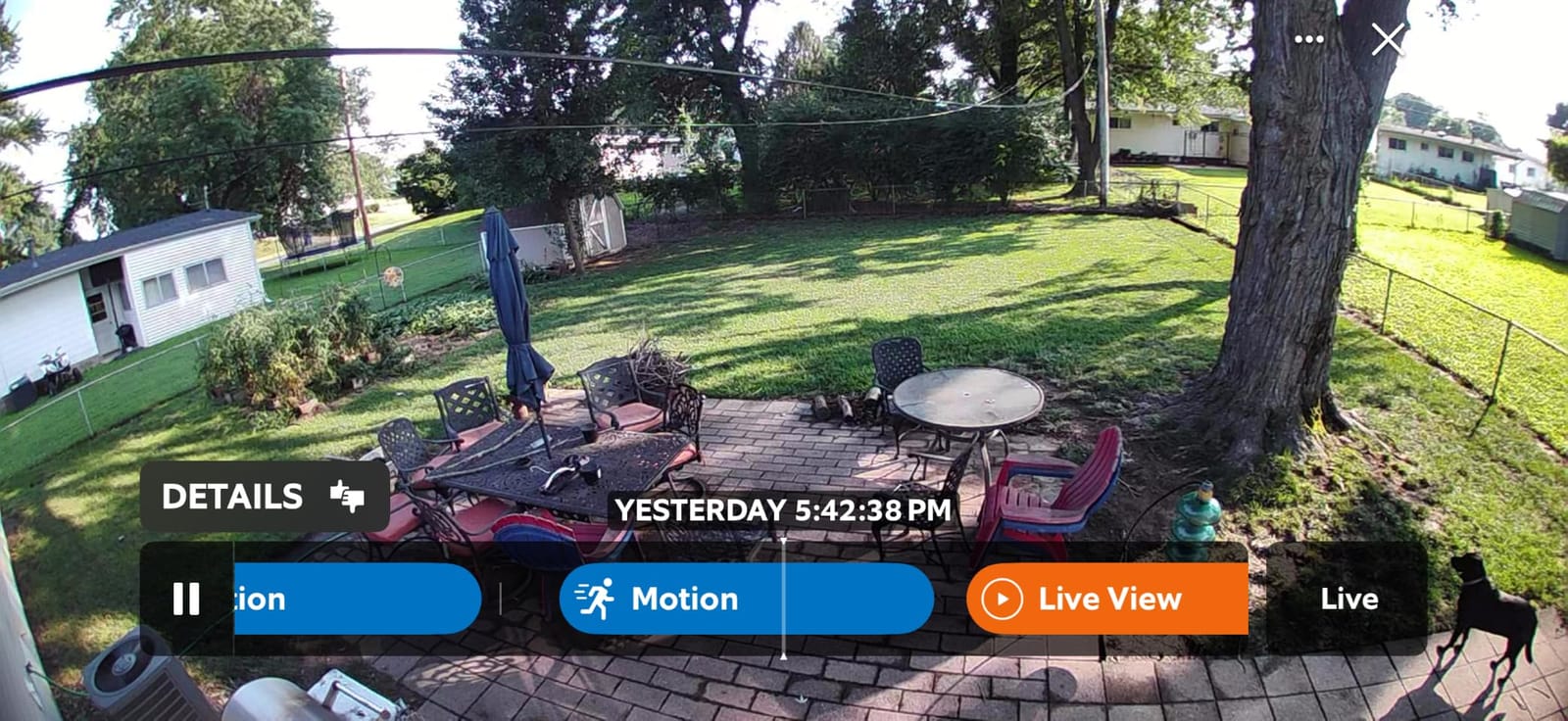
Most yards are a medium yard: a patio, a lawn, a fence line and maybe a shed. The Ring Floodlight Cam Wired Plus covers that shape better than anything else in this list, and 44k reviews at a 4.7 average is the deepest owner record we found in the category.
The light is what earns its place. Two thousand lumens of motion-activated LED is enough to turn a black yard into a readable scene when someone walks the fence line, and the camera records in colour rather than falling back on grainy infrared.
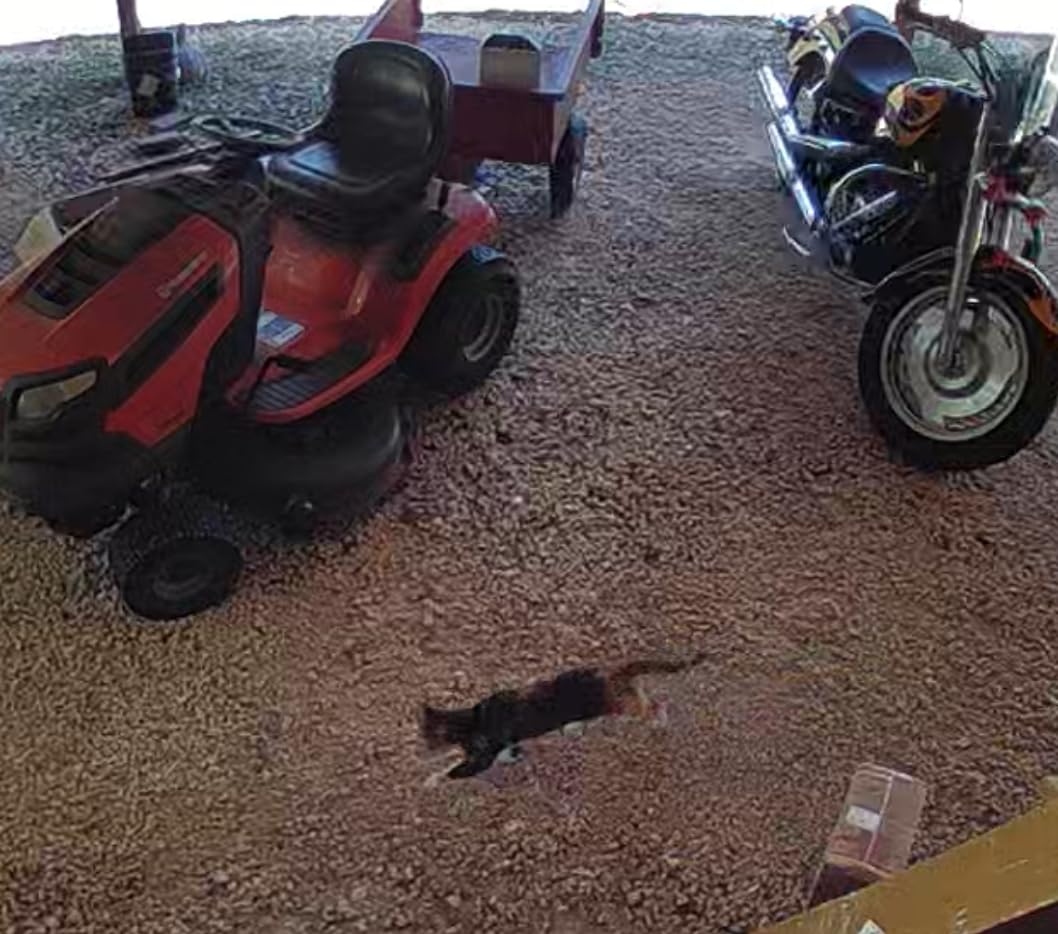
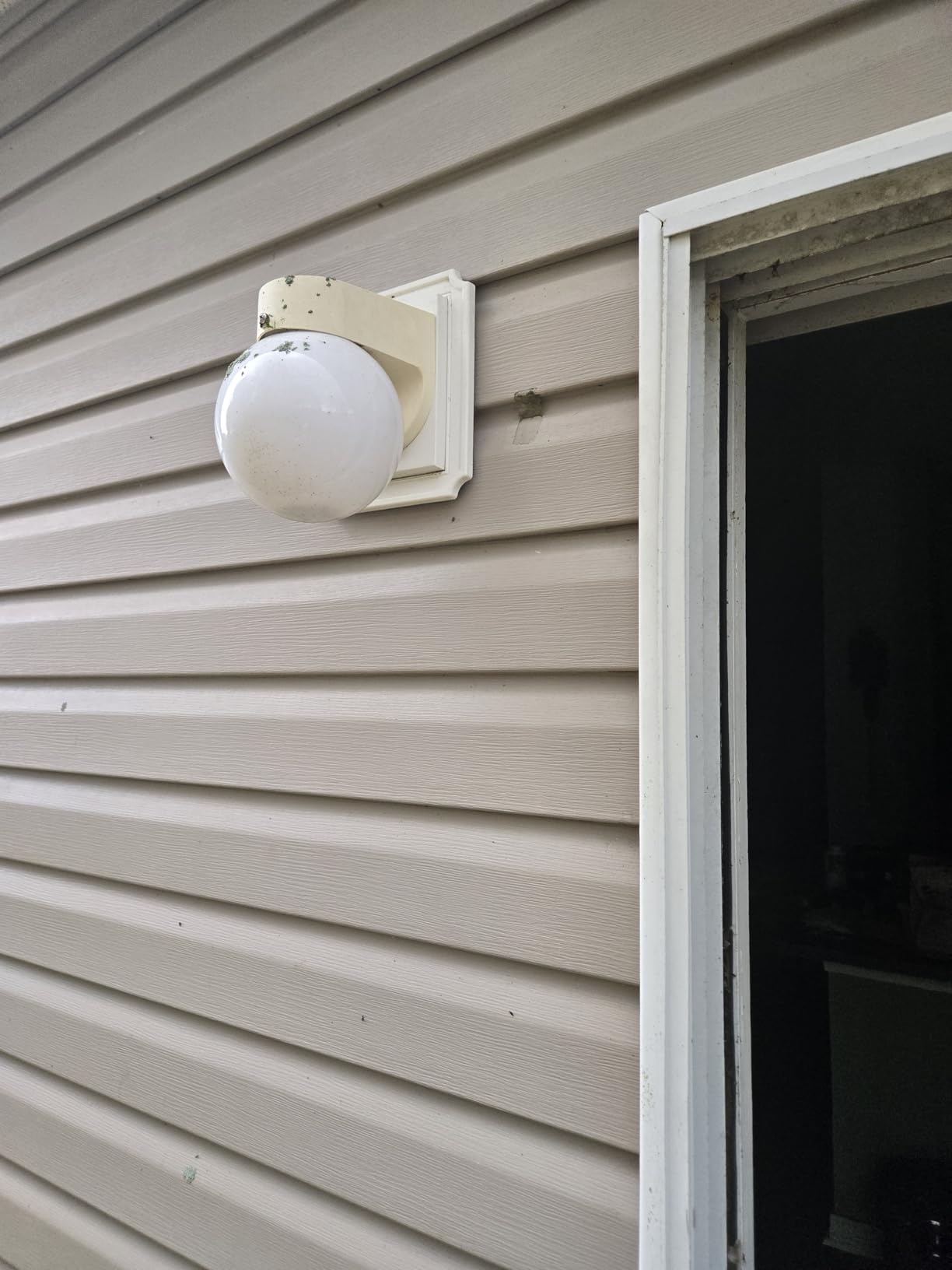
Installation is the part people underestimate. This is a hardwired unit, so you need an existing exterior box or a run of cable from a junction box, and the box position matters because the camera has no pan or tilt. Mount it where the lens can see the whole yard before you run wire, not after.
Two-way talk and the app-activated siren cover the deterrence angle, and Alexa integration is a genuine advantage if you already own other Ring hardware. Subscription-gated features are the real trade-off: recorded history and much of the AI detection sit behind Ring Protect, though live view still works without it.
Who it suits?
Owners who already use Alexa or the Ring app, and anyone with a junction box who wants a set-and-forget install. It is the pick for a normal suburban backyard where a fixed 1080p view is enough.
Who should look elsewhere?
Wide open lots, because there is no way to pan or tilt once it is mounted. Also worth skipping if you refuse recurring cloud fees and want recorded history without paying for a plan.
2. Blink Wired Floodlight Camera – Best Budget Pick for Bright Yards
Blink Wired Floodlight Camera – Smart security camera, 2600 lumens, HD live view, enhanced motion detection, built-in siren, Works with Alexa – 1 camera (Black)
2600 lumens
1080p HD
Wired to existing fixture
Dual-zone motion
Pros
- 2600 lumens floods a yard brightly
- Entry cost for a wired floodlight camera
- Dual-zone motion detection cuts notifications
- Color night view and crisp two-way audio
- Connects to existing outdoor wiring
Cons
- Clip history beyond the trial needs a Blink plan
- Fixed camera angle with no pan or tilt
- Person detection is an optional paid feature
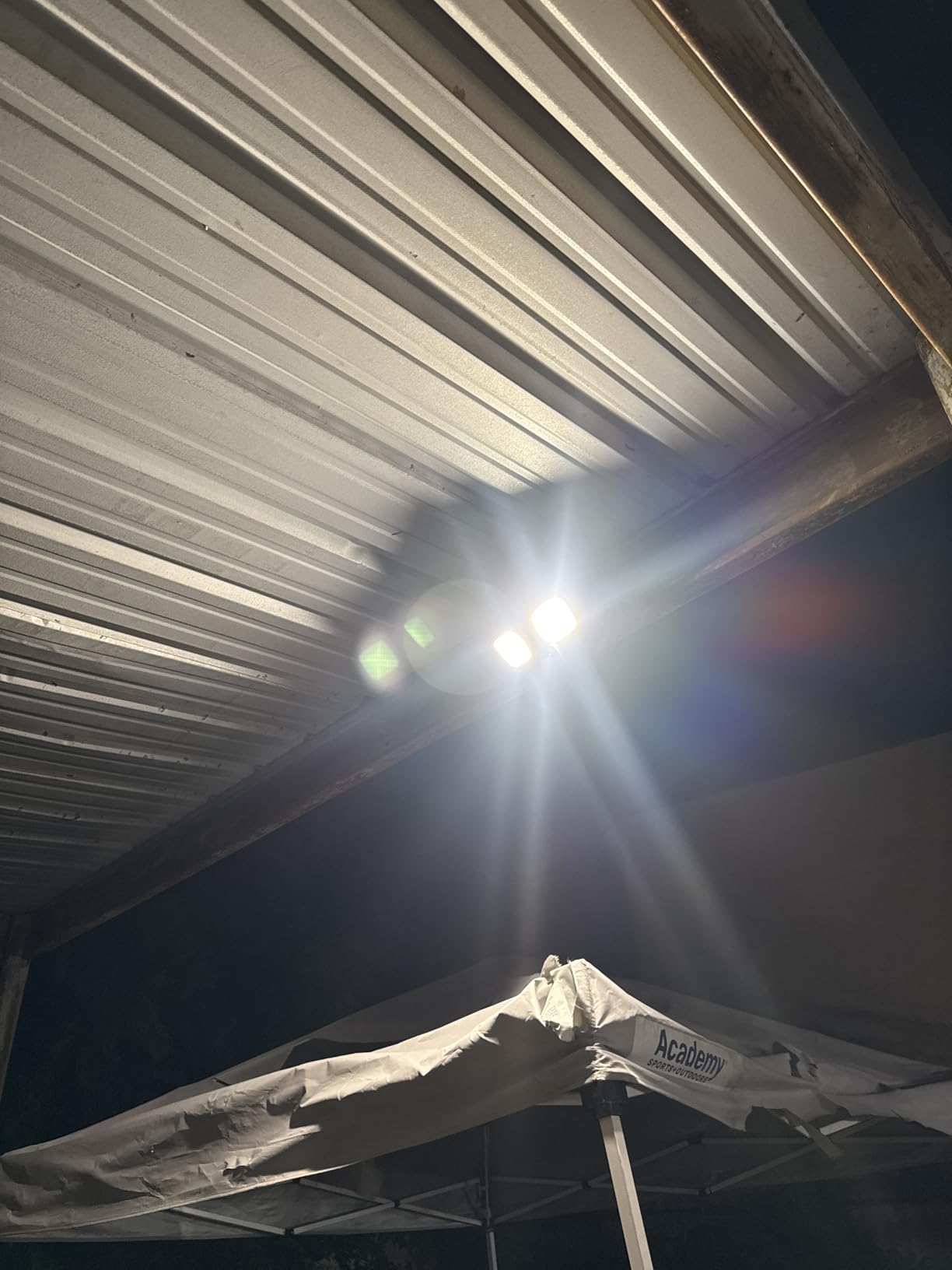
Blink put out the brightest light in this roundup for the money. At 2600 lumens it out-lights the Ring Wired Plus by 600 lumens, and it connects straight to an existing outdoor fixture, which makes it the cheapest way to get real floodlight coverage onto a back wall.
Dual-zone motion detection is the feature backyard owners notice. You can define a zone for the walkway and a separate zone for the fence, so alerts arrive for the parts of the yard you care about rather than for the whole scene.
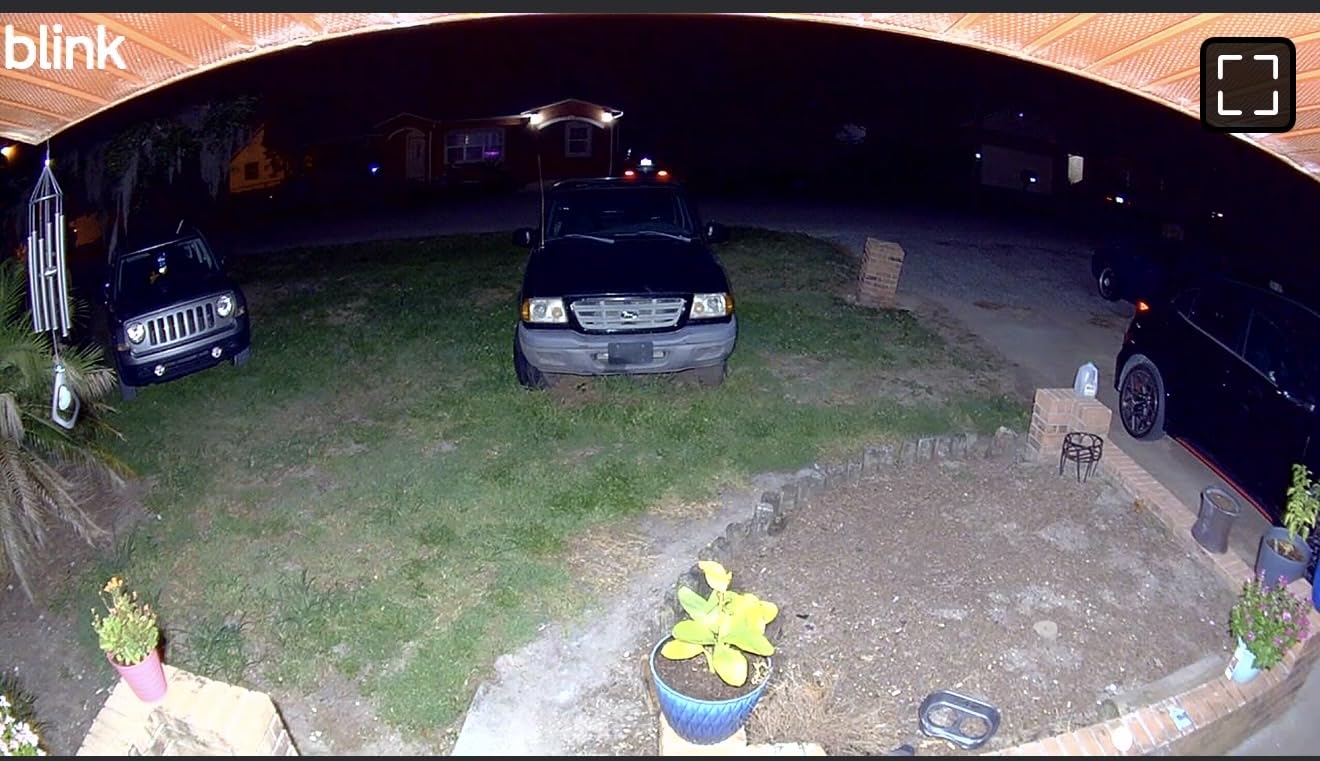
Video is 1080p with a color night view, and the two-way audio is consistently described as clear. The built-in siren handles the audible deterrent role without extra hardware.
The reason the rating sits at 4.2 rather than higher is storage. Cloud clip history past the free trial requires a Blink subscription, though a Sync Module 2 with USB storage or a Sync Module XR with a microSD card gives you a local alternative.
Who it suits?
Buyers with an existing exterior light fixture and a medium yard who want bright light and clean zoning on an entry budget. It is also a sensible second unit for a wide yard, since two fixed views are cheaper than one pan-tilt camera.
Who should look elsewhere?
Anyone who needs recorded footage without a subscription and without buying extra hardware, and anyone who wants a movable lens. Person detection, one of the most useful filters against animal alerts, is a paid feature here.
3. Arlo Wireless Floodlight 2K HDR – Best for No-Wiring Installs
Arlo Wireless Floodlight Security Camera 2K HDR – 1-Cam
2K HDR video
Up to 3000 lumens
160-degree view
Battery powered
Pros
- 2K HDR video with color night vision
- No wiring needed for a quick install
- Up to 3000 lumens across 160 degrees
- Works with Alexa Apple Home and Google
- Auto zoom and tracking
Cons
- Proprietary cable rules out standard wiring
- Some owners report repeated Wi-Fi dropouts
- Recorded history and AI need a paid Arlo plan
Arlo is the pick when you rent, or when the only sensible mounting point is a fence post or the side of a shed with no nearby power. The 13000 mAh rechargeable battery removes the wiring question entirely, and the floodlight still reaches up to 3000 lumens.
The 160-degree field of view is wide for a floodlight camera, and 12x digital zoom pulls detail out of the far corner of a yard. Color night vision and HDR hold up in the mixed lighting you actually get at the back of a house, where a neighbouring security light bleeds into frame.
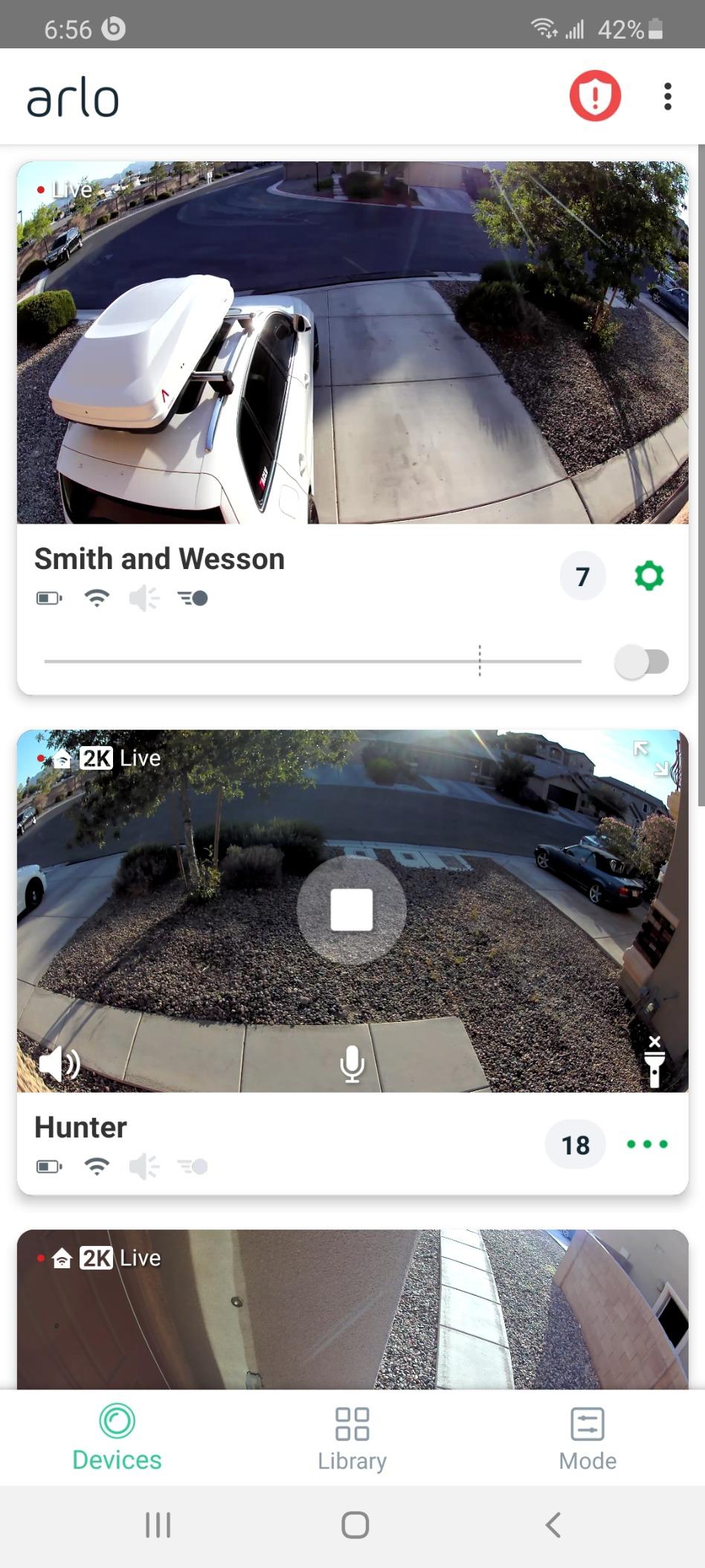
It integrates with more platforms than any other wired option here, covering Alexa, Apple Home, Google Home, SmartThings and IFTTT. That matters if you have mixed brands and want the camera to appear in the app you actually open.
Two limitations deserve a plain look. The charging cable is proprietary, so you cannot wire it like a normal floodlight later, and owners report recurring Wi-Fi dropouts where the camera goes offline without sending an alert. Recorded history also requires an Arlo Secure plan.
Who it suits?
Renters, outbuildings and any yard without an accessible outlet. The 2K HDR sensor and wide lens also make it a good fit for a medium yard where you want detail at the gate.
Who should look elsewhere?
Owners who want recorded history without a recurring charge, and anyone who plans to mount high and forget the camera for a year, because battery recharging from a ladder is a recurring chore.
4. WYZE Floodlight Camera v2 – Best for Recording Without a Subscription
WYZE Floodlight Camera v2, 2K HD Outdoor Security Camera with 2800 Lumens
2K HD video
2800 lumens
270-degree PIR
microSD local storage
Pros
- 2K sensor with color night vision
- 2800-lumen dimmable lights
- 160-degree view with 270-degree PIR
- Local microSD recording removes the fee
- True dusk-to-dawn light sensor automation
Cons
- Limited tilt range restricts aiming
- Cloud event clips are snapshots only
- 2.4GHz Wi-Fi with no 5GHz
The WYZE Floodlight Camera v2 is the answer to the subscription question that dominates forums about this category. A microSD card records 24/7 locally for up to 30 days, with no plan attached, so the camera keeps working as a security camera if you cancel everything.
Light output is strong at 2800 lumens and dimmable, and the 270-degree PIR sweep covers more of a yard than the visible 160-degree lens angle, which means fewer misses at the edges of a detection zone.
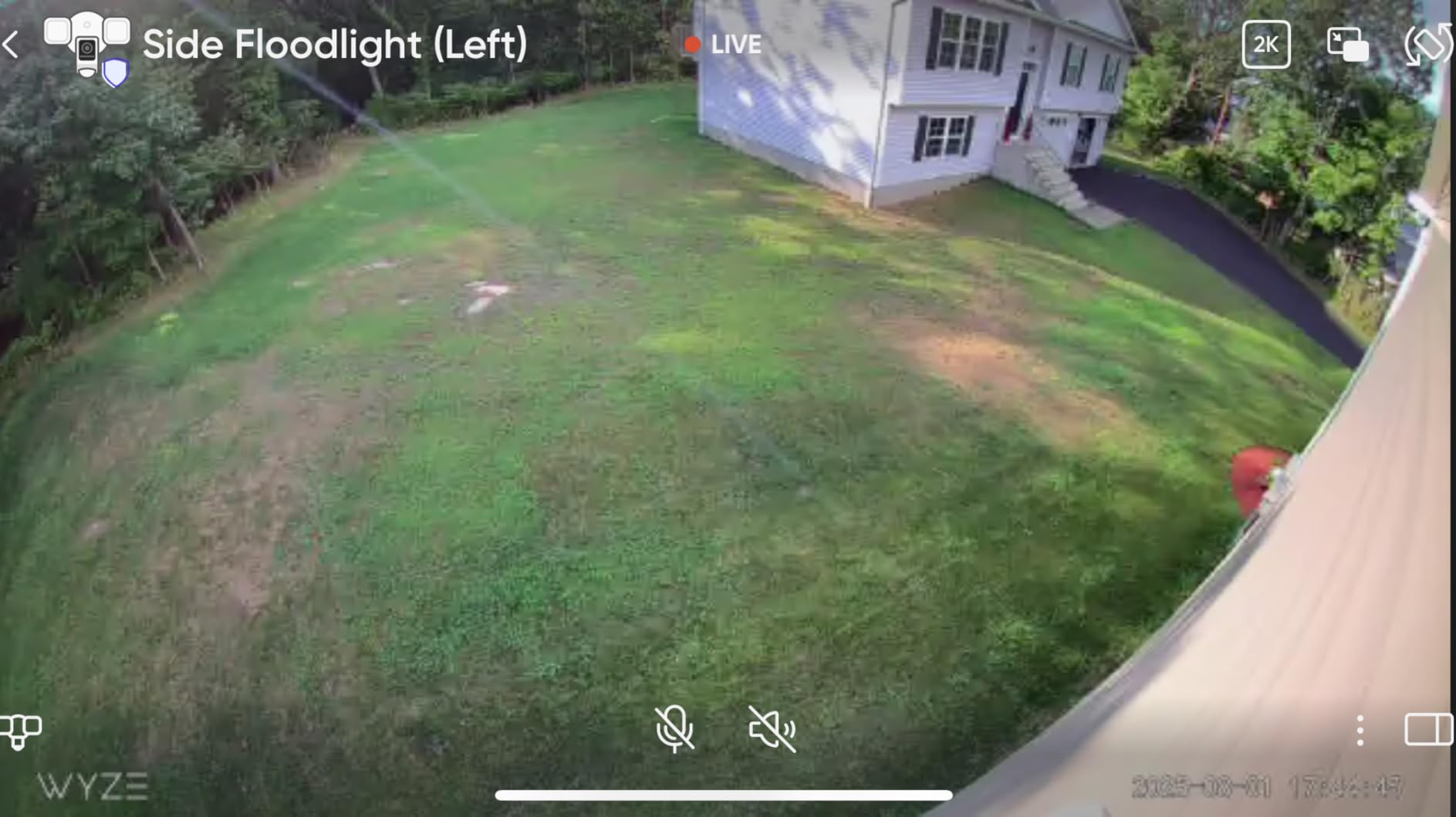
It uses a real ambient light sensor for dusk-to-dawn automation rather than a clock schedule, so the light does not switch on at eight in the evening during a rainstorm. The 105dB siren and two-way talk handle deterrence.
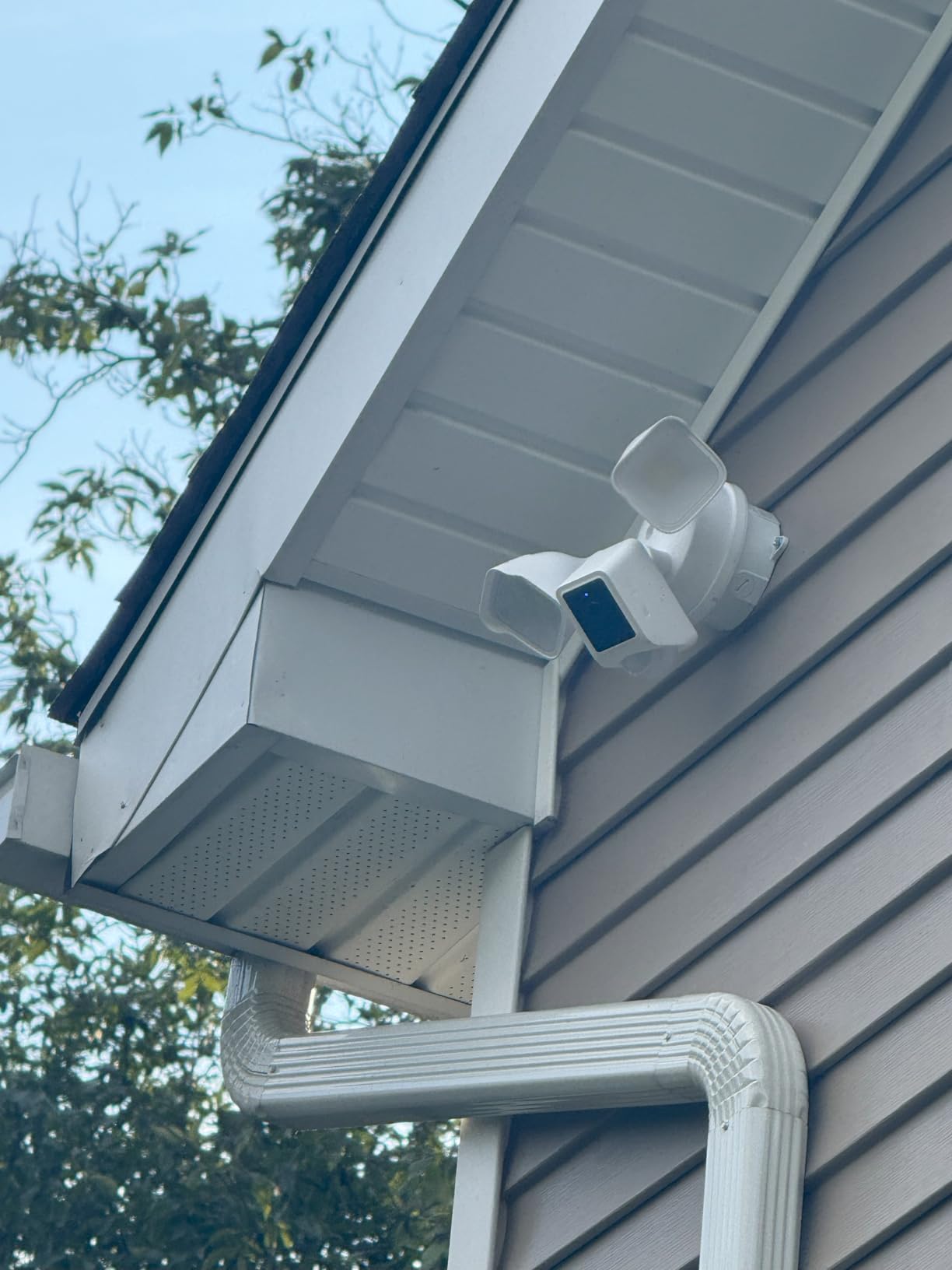
Aim is the weak point. The tilt range is fixed, so you cannot swing the lens far across the yard to cover a specific corner, and you have to choose the mounting point carefully. The camera is 2.4GHz only, which also matters if your back-of-house network has been split onto 5GHz.
Who it suits?
Owners who want local recording, IP65 weather resistance for year-round exposure, and a bright light for a medium yard. The corded 110V supply also means it keeps filming through a power cut only if you add a backup source, but it never needs a battery swap.
Who should look elsewhere?
Anyone needing a movable lens or 5GHz Wi-Fi. Cloud event recording without a plan captures snapshots rather than video, and playback from the microSD card can be choppy on long clips.
5. Blink Outdoor 4 Floodlight Camera – Best for Sheds and Outbuildings
Blink Outdoor 4 Floodlight Camera — Wireless smart security camera, 700 lumens, two-year battery life, enhanced motion detection, Sync Module Core included — 1 camera system
700 lumens
1080p HD
Two AA lithium batteries
Sync Module Core included
Pros
- Truly wire-free install for sheds and fences
- Up to two years on the included batteries
- Sync Module Core included in the box
- Dual-zone enhanced motion detection
- 1080p view with crisp two-way audio
Cons
- 700 lumens is dim for a large yard
- Cloud clip history needs a Blink plan
- Infrared-only night view when the light is off
This is the cheapest way to put a camera on a shed door or a back fence with no power and no Wi-Fi extension. Two AA lithium batteries run for up to two years, and the Sync Module Core comes in the box so you can set the system up as a standalone unit.
For a small area, such as a gate, a side alley, or the doorway of a detached workshop, the install convenience outweighs the light output. Dual-zone enhanced motion detection narrows alerts to where people actually walk.
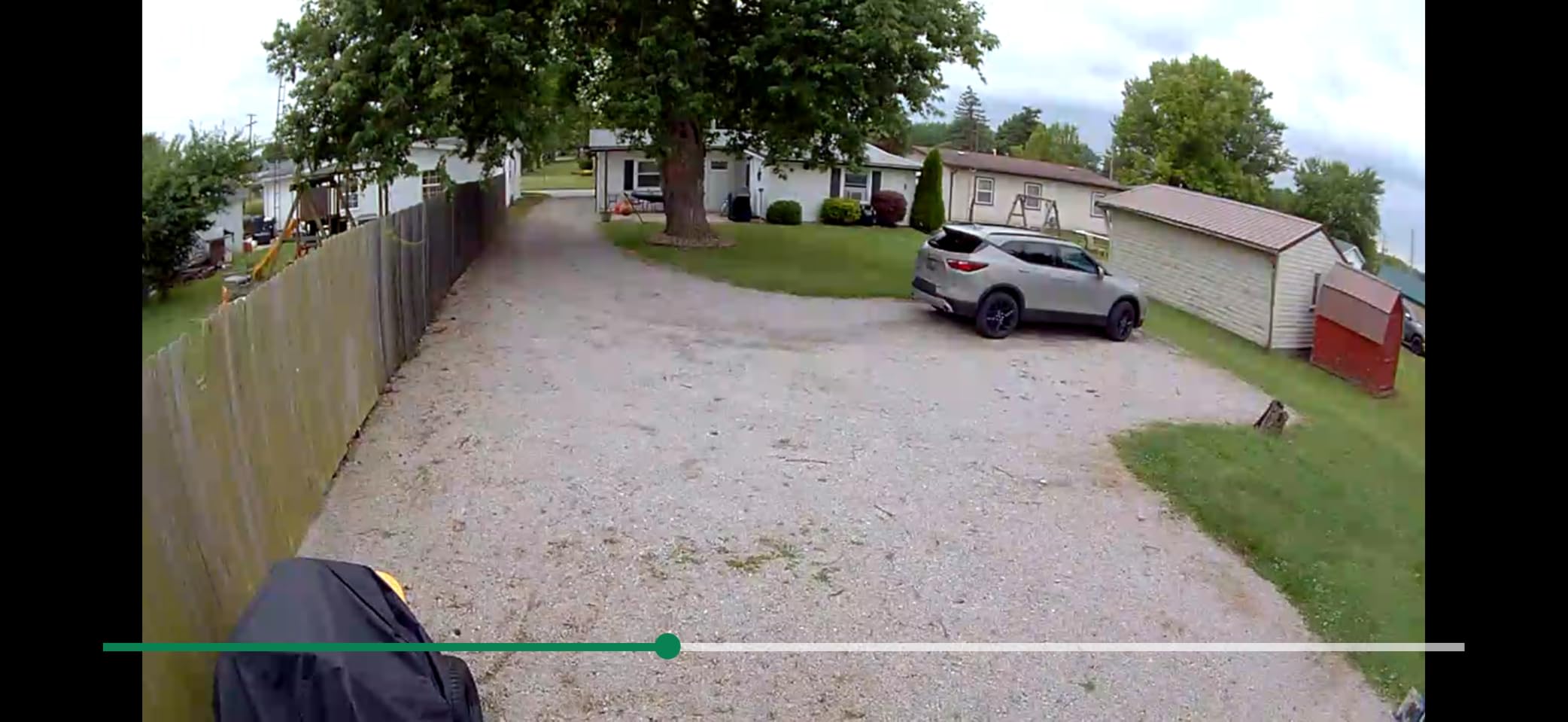
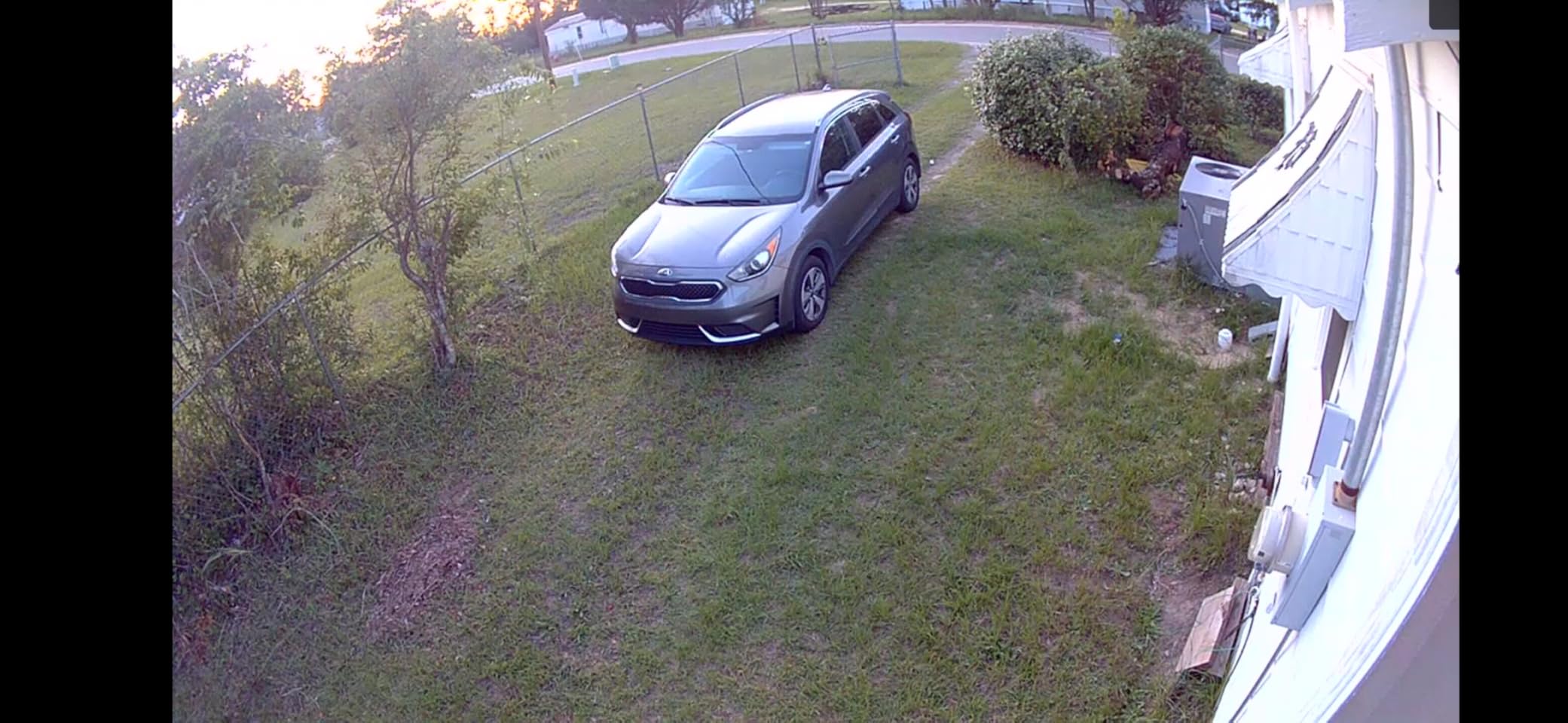
The limitation is brightness. At 700 lumens this floods a small patch, roughly the area directly below the mount, and it will not light a wide lawn the way a 2000 to 3000 lumen wired model does. When the light is off, night vision is infrared only.
Local microSD backup up to 256GB requires a Sync Module XR, which is a separate purchase. Without that, clip history after the free cloud trial depends on a subscription.
Who it suits?
Renters, detached garages and pool or garden buildings where wiring is impossible. It is the sensible second camera for a backyard that a wired unit cannot reach.
Who should look elsewhere?
Anyone who needs to identify a face across an open yard at night. The light output is the deciding factor here, and 700 lumens will not get you there.
6. eufy Floodlight Camera E340 – Best Dual-Lens Coverage Without a Fee
eufy Security Floodlight Camera E340, Dual-Lens, 360° Coverage, 8X Zoom
3K plus 2K lenses
360-degree pan-tilt
2000 lumens
Wi-Fi 6
Pros
- 3K wide and 2K telephoto in one body
- 360-degree pan-tilt with AI auto-tracking
- 24/7 local recording with no monthly fee
- 2000-lumen light plus 95dB alarm
- Dual-band Wi-Fi 6 holds a long link
Cons
- Detection can trigger late and clip events short
- Resolution drops to 2K with tracking on
- Pan-tilt motor is not silent
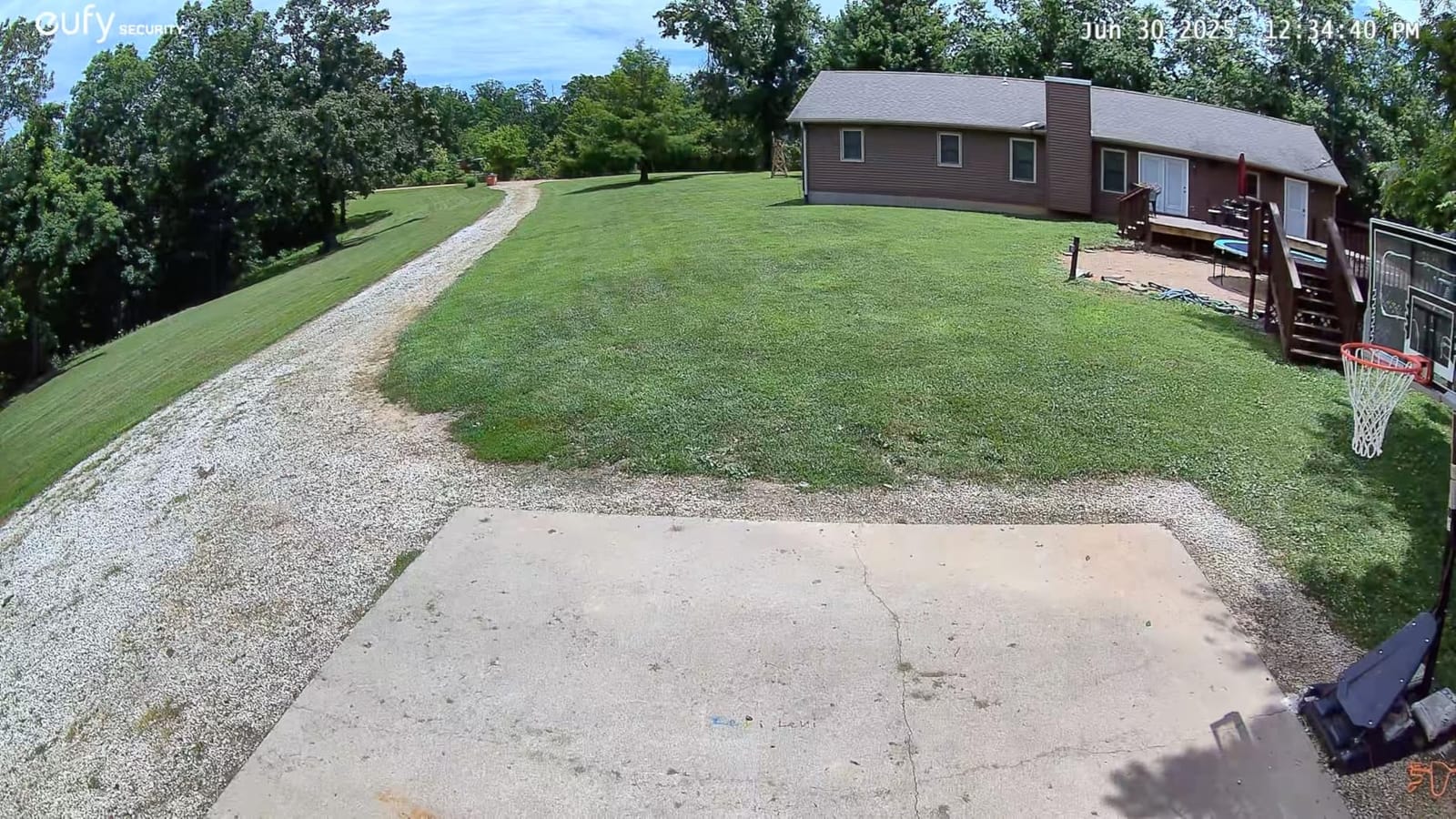
The E340 is the most capable all-round camera in this roundup for a yard with awkward corners. A 3K wide lens and a 2K telephoto in one body, on a 360-degree pan-tilt mount, means one unit can cover the patio and still pull facial detail from the far fence at up to 50 ft with 8x hybrid zoom.
AI detection of people, vehicles and pets with auto-tracking and patrol schedules is what makes the pan-tilt useful in practice. Set a schedule and the camera sweeps the yard on its own instead of staring at one fixed rectangle of grass.
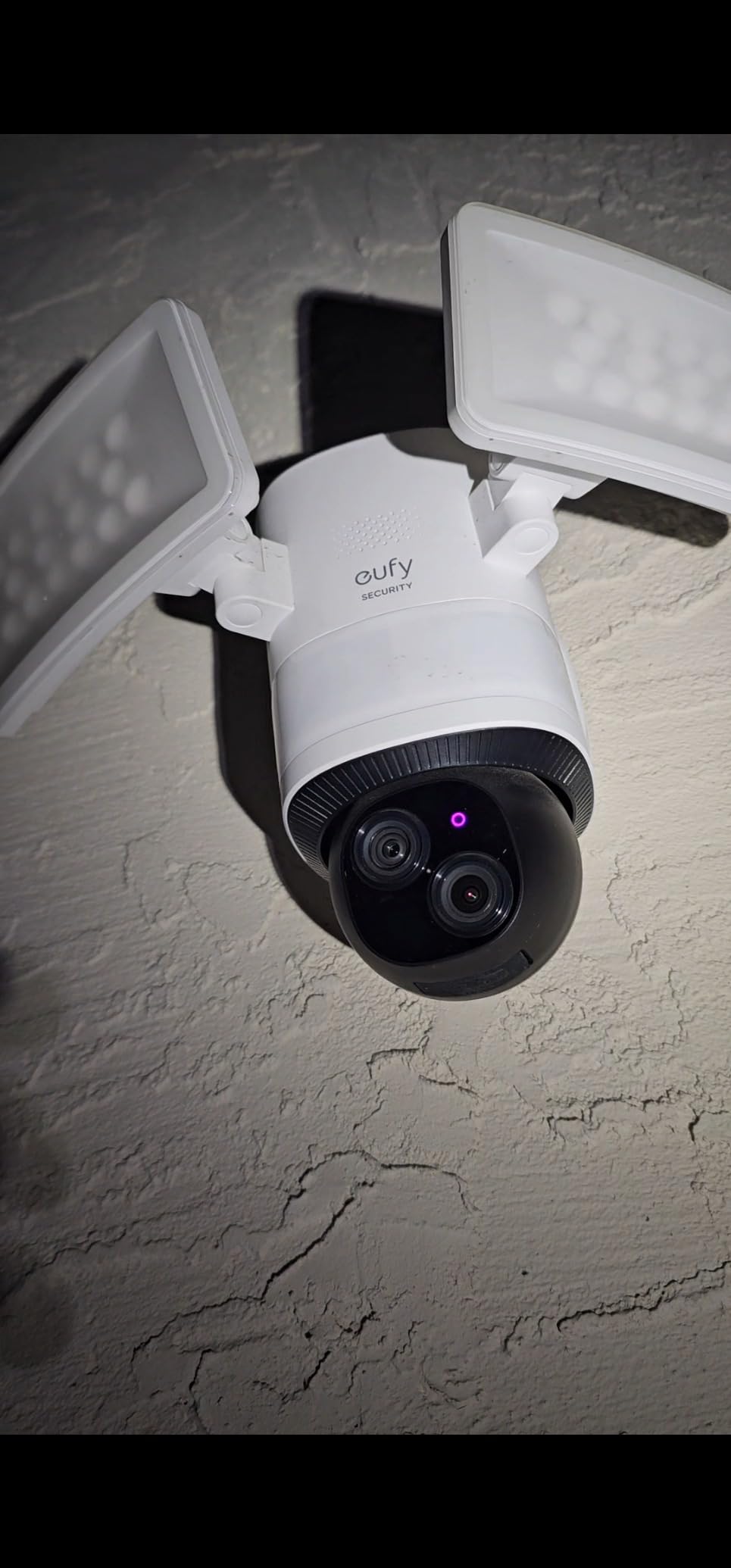
Storage is the headline: 24/7 continuous recording to a microSD card up to 128GB, or to a HomeBase S380, with no subscription required. Dual-band 2.4GHz and 5GHz Wi-Fi 6 makes it the most resilient connection option in a house with walls between the router and the back door.
Reviewers do report that motion detection sometimes triggers late and that recordings can cut off while motion continues, and enabling AI tracking or the dual view drops the maximum resolution to 2K. The pan-tilt motor is also audible when it moves.
Who it suits?
Owners of a medium to large backyard who want one camera instead of two, and who refuse to pay a monthly recording fee. The dual-band radio and local recording make it the safest pick for a house with weak back-of-house signal.
Who should look elsewhere?
Anyone sensitive to motor noise near a bedroom window, or who needs a perfectly quiet pan. MicroSD setup can be fiddly, and the included bracket may not line up with an existing junction box.
7. eufy Floodlight Camera E30 – Best Pan and Tilt on a Fixed Lens
eufy Security Floodlight Camera E30, 2K, AI Detection & Tracking, Outdoor
2K HD video
360-degree pan and tilt
2000 lumens
Hardwired
Pros
- 360-degree pan and tilt with patrol schedules
- AI tracking keeps people and vehicles framed
- 2000-lumen light for color low-light video
- Hardwired 24/7 recording with no fee
- Power amplifier extends Wi-Fi range
Cons
- Single lens with no telephoto option
- 2.4GHz Wi-Fi only
- 20 fps frame rate trails rivals
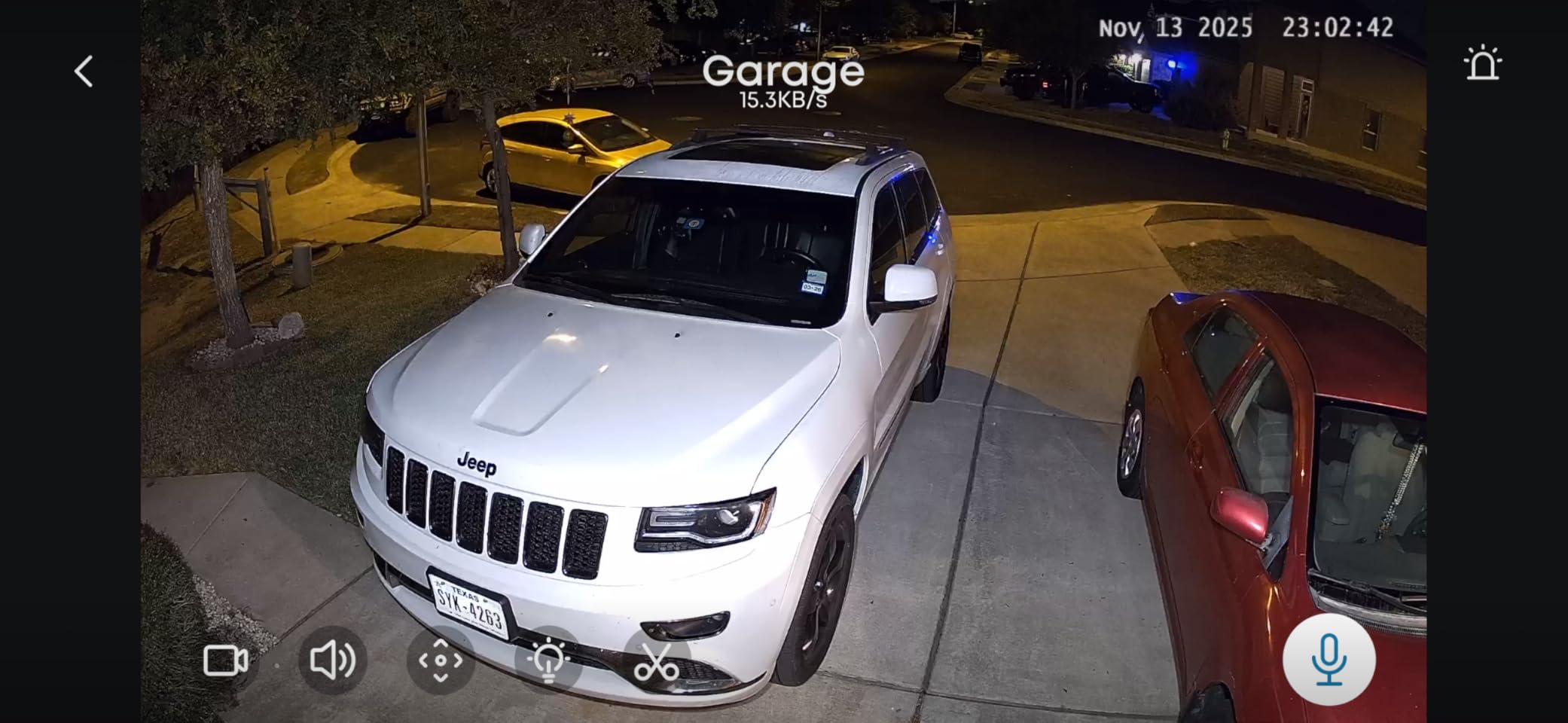
If you want a camera that moves but do not need a telephoto lens, the E30 is the cleaner option. It pans and tilts through 360 degrees, follows people and vehicles with AI detection, and runs 24/7 hardwired recording with no monthly fee.
The power amplifier is aimed squarely at the back-of-house problem. Owners report roughly 50 percent greater signal range, which is often the difference between a camera that stays online and one that drops off the network every evening when the router is busy.
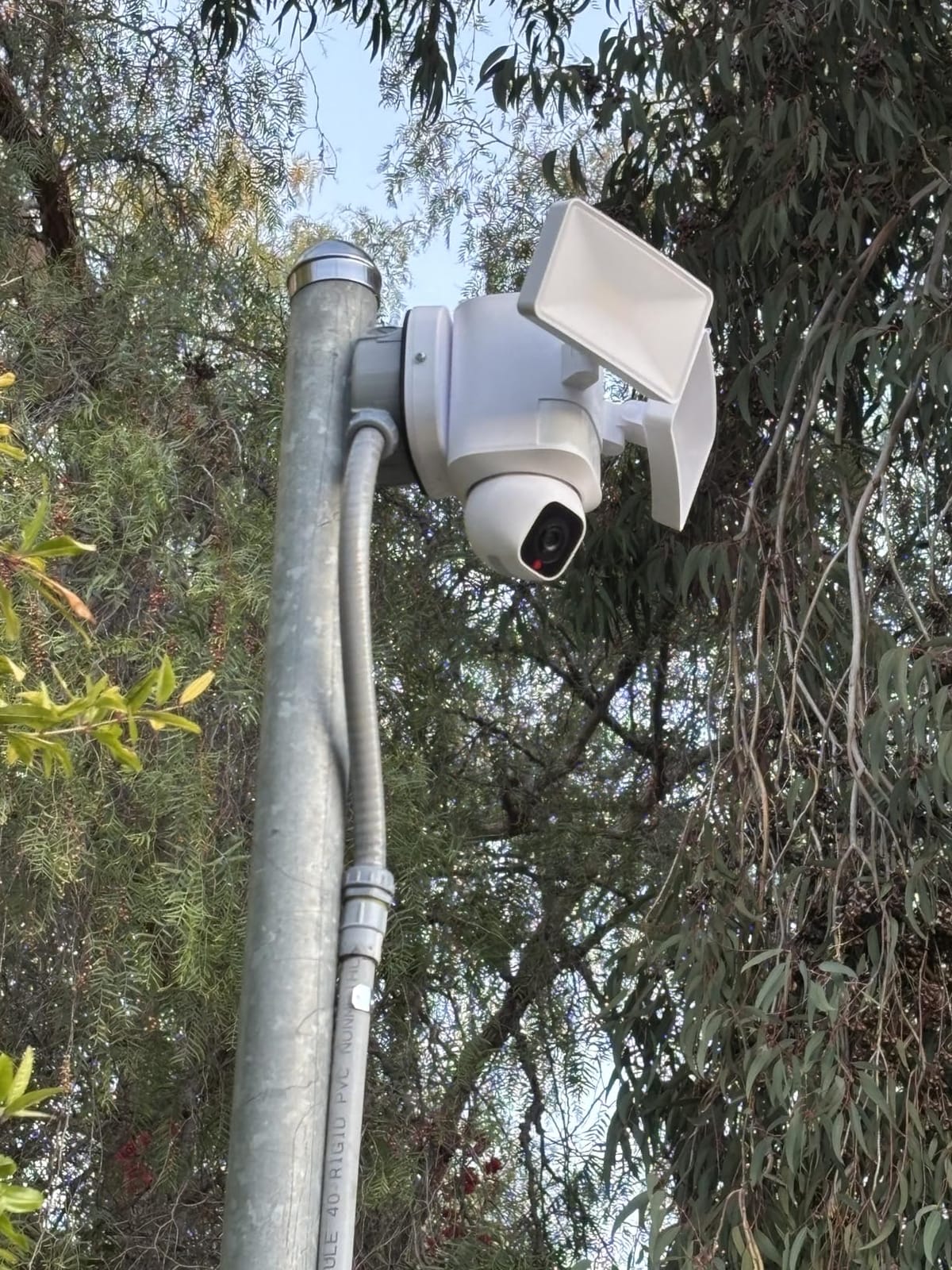
At 2000 lumens the light matches the Ring Wired Plus, and the built-in siren supports custom voice alerts, which is a more effective deterrent than a siren alone in a quiet cul-de-sac.
The trade-offs are honest ones: a single lens means no zoomed detail on a distant subject, the radio is 2.4GHz only, and the 20 fps frame rate is lower than most rivals, which shows up when someone moves quickly across the frame.
Who it suits?
A medium backyard with an exterior box, an owner who wants patrol coverage rather than a single fixed view, and anyone whose router struggles to reach the back of the house on 2.4GHz.
Who should look elsewhere?
Open lots where you need to read detail at 40 ft, since there is no telephoto here. 5GHz networks and fast-motion detail are also weaker than the alternatives.
8. Ring Floodlight Cam 4K Pro – Best 4K Detail on a Ring Account
Ring Floodlight Cam 4K Pro (newest model), Wired, Retinal 4K with wide-angle video, 10x Enhanced Zoom, and 2000 Lumen Floodlights, White
Retinal 4K video
10x zoom
2000 adjustable lumens
Radar motion detection
Pros
- Retinal 4K with 10x enhanced zoom
- Radar 3D motion detection cuts alerts
- Low-Light Sight gives color with lights off
- Brightness adjustable from 200 to 2000 lumens
- Includes a ground wire and wiring strap
Cons
- Upgraders report small gains over earlier models
- Motion detection a step weaker than before
- Larger body with less articulation
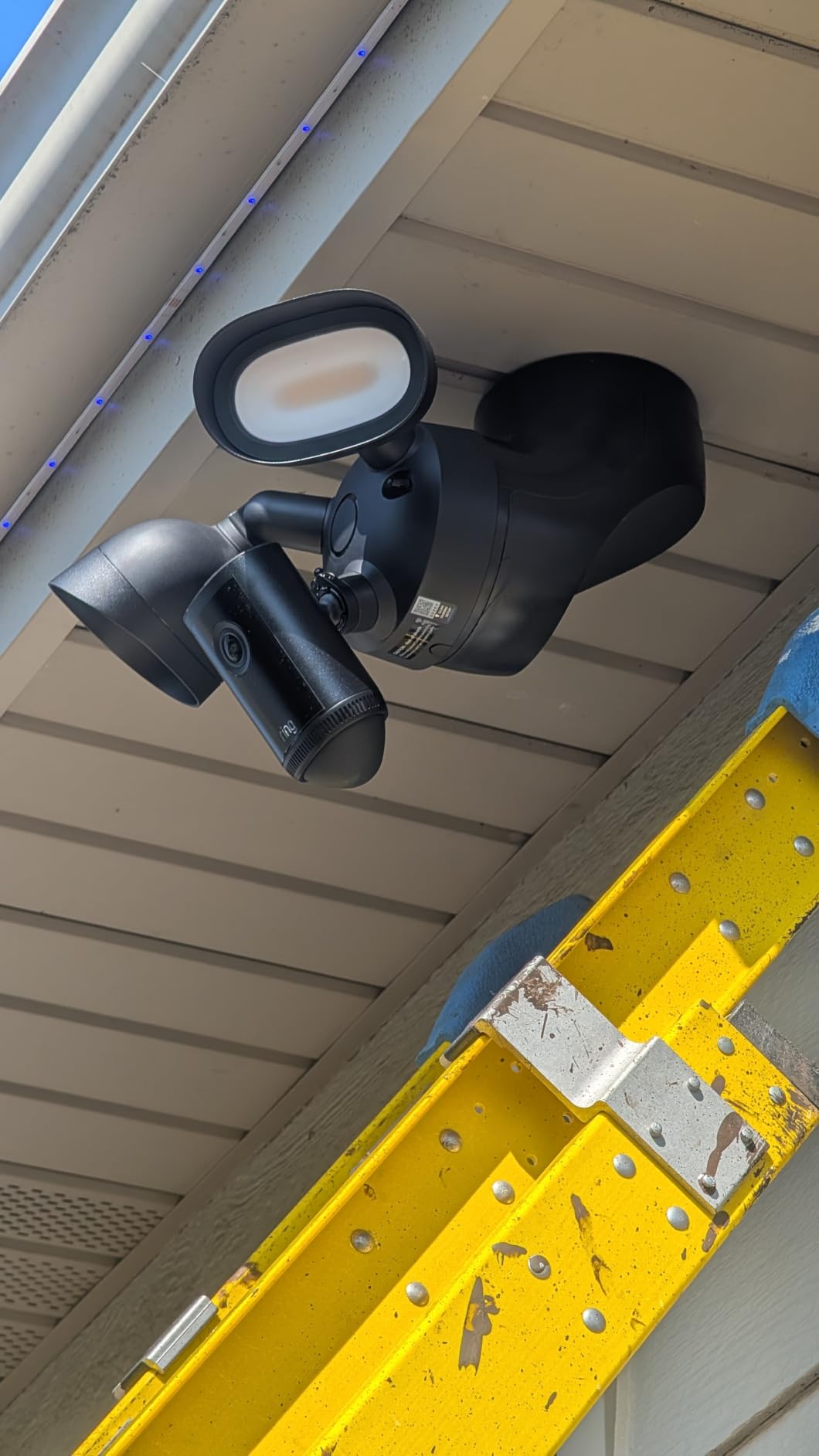
This is the newest Ring floodlight in the roundup, and the reason to choose it is sensor detail. Retinal 4K with a wide-angle lens and 10x enhanced zoom gives you the best chance of identifying a face at the far end of a yard, and Low-Light Sight produces a full-colour image even with the floodlights off.
Motion detection moved to radar-based 3D detection, which filters out some of the background movement that trips up PIR sensors when a tree or a washing line moves. Audio+ improves two-way talk, which matters if you plan to speak to someone at the back gate.
Owners who already run a Ring account get the shortest path to setup, and the mount is better thought out than earlier models, with a wiring strap and an included copper ground wire for a safer hardwired install.
Be measured if you are upgrading. Owners moving from an earlier Ring Pro report only marginal real-world clarity gains, slightly weaker motion detection, a larger body with less articulation, and a floodlight colour temperature that reads more yellow.
Who it suits?
A medium to large yard where identifying a person matters more than keeping a monthly bill low, and households already invested in the Ring ecosystem. The adjustable 200 to 2000 lumen range lets you dial brightness for a neighbour-sensitive setup.
Who should look elsewhere?
Owners who want local recording without a plan, since the same subscription caveat applies as on the Ring Wired Plus. It is also the most expensive camera we reviewed, and the least compelling upgrade if you already own a recent Ring floodlight.
9. Tapo 2K Outdoor Pan/Tilt Solar Floodlight – Best Solar Option
Tapo 2K Outdoor Pan/Tilt Wireless Floodlight Security Camera, C615F KIT
Solar panel with battery
2K 3MP
800 dimmable lumens
360-degree tracking
Pros
- Solar panel and battery remove all wiring
- 360-degree pan and tilt with AI tracking
- 2K clarity with a dimmable 800-lumen light
- Subscription-free person pet and vehicle detection
- microSD up to 512GB with no fee
Cons
- 800 lumens dims a large yard
- Solar charging stops below 32F
- Hub needed for 24/7 continuous capture
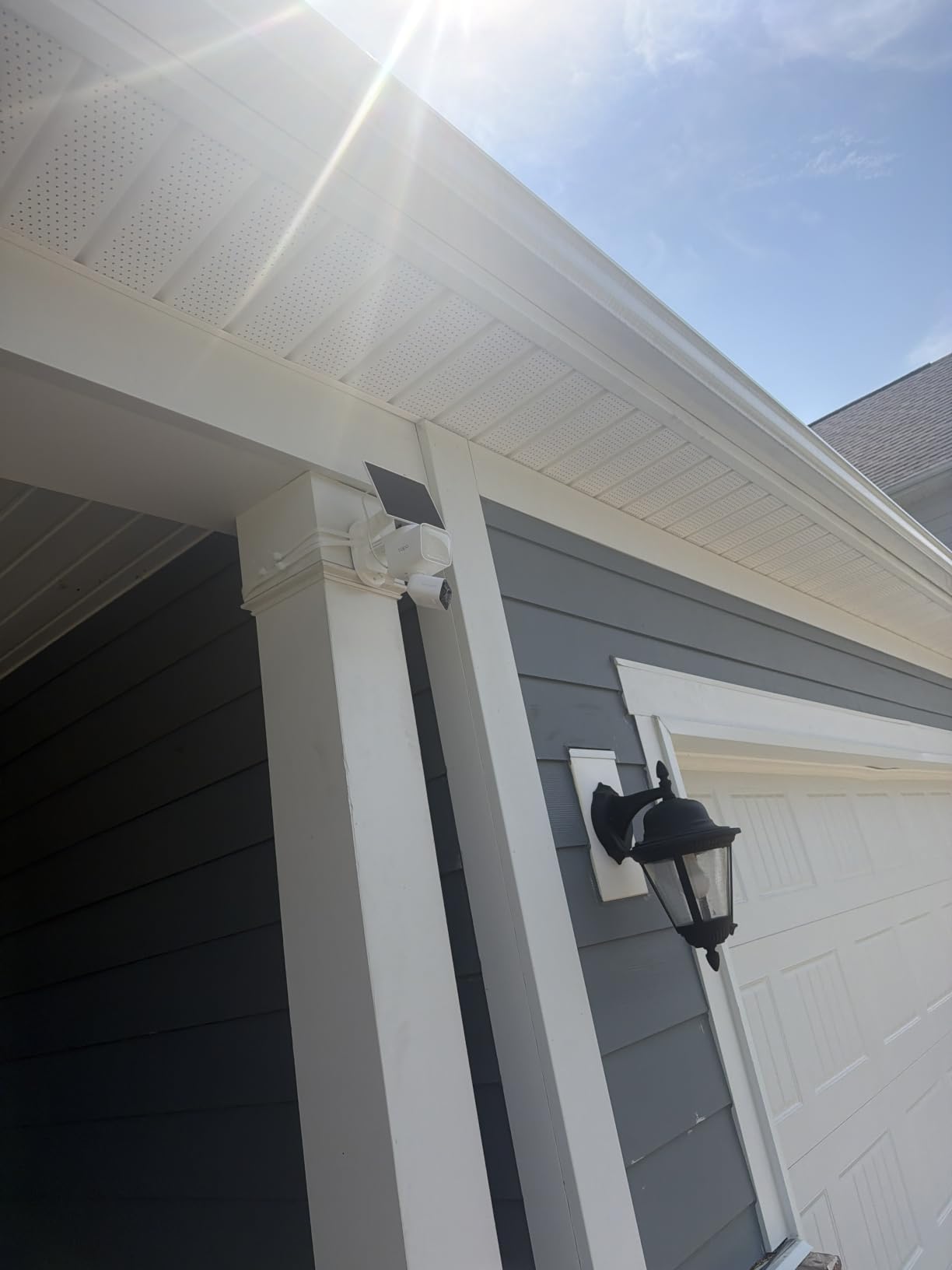
The Tapo C615F is the one camera here that solves power, coverage and subscription cost at once. A solar panel and a 10400 mAh battery mean no wiring and no ladder trips to the roof, 360-degree horizontal and 130-degree vertical pan-tilt covers most of a yard, and AI detection runs without a subscription.
Charging math is straightforward: 45 minutes of direct sun covers a full day, and the battery holds up to 140 days on cloudy weather. Local microSD storage runs to 512GB, which is the largest card capacity any pick in this roundup supports.
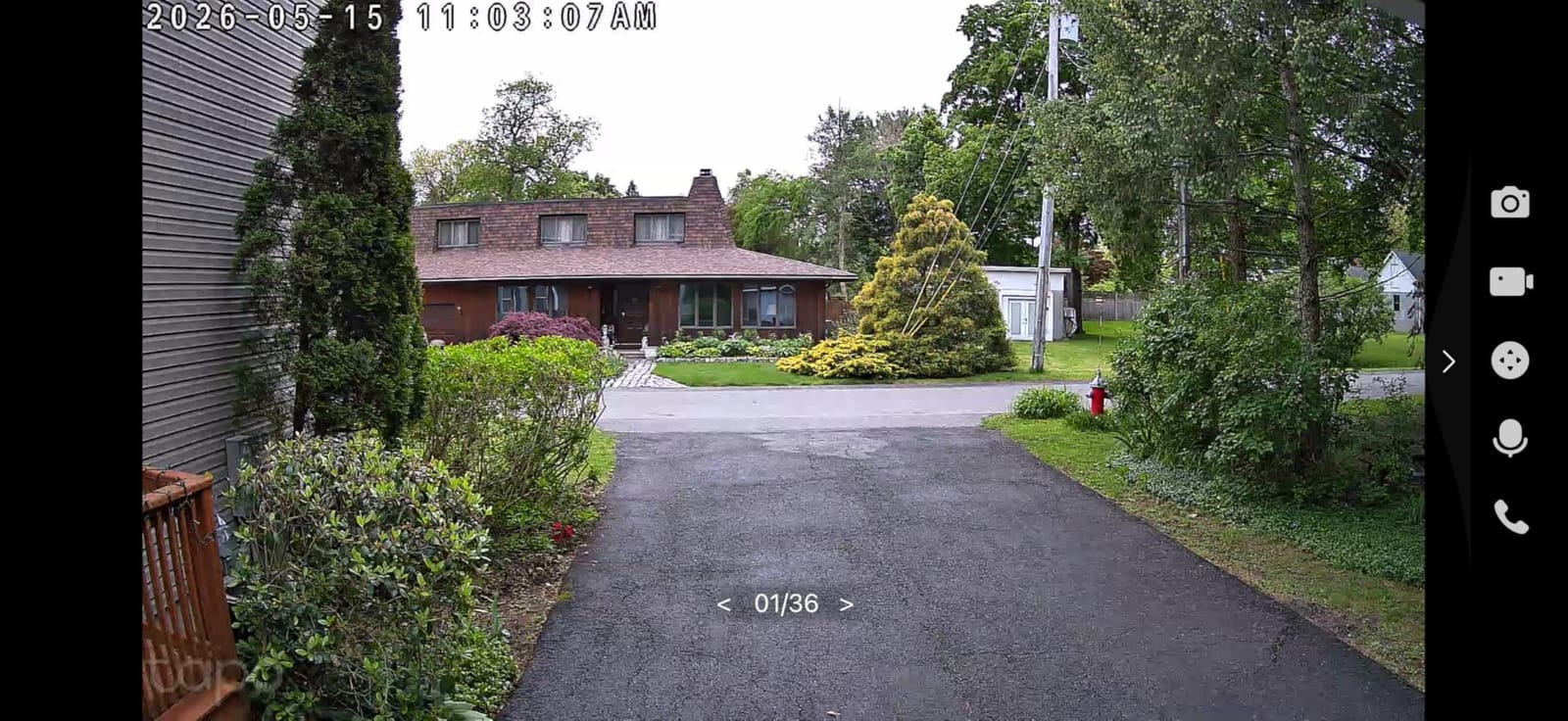
The light is the compromise at 800 lumens, dimmable but well short of the wired models. It handles a patio or a small yard well; for a wide lawn you would need a second unit or a wired camera alongside it.
Two constraints are worth knowing. Solar charging does not work below 32F, so a shaded northern yard relies on battery carry-over in winter, and 24/7 continuous recording beyond microSD intervals needs an H500 hub.
Who it suits?
Renters, small yards and anyone who wants a pan-tilt view with no wiring, no battery ladder trips and no monthly fee. IP65 weatherproofing suits year-round exposure.
Who should look elsewhere?
Large open lots and anyone needing 4K detail. A 2.4GHz-only radio and a frozen-solar cutoff make it a poor fit for yards in cold climates with heavy shade.
10. REOLINK Elite Floodlight WiFi 4K – Best 180-Degree Panoramic Coverage
REOLINK Elite Floodlight WiFi 4K 8MP 180° Panoramic Wired Floodlight Camera
4K 8MP
180-degree panorama
3000 lumens
RTSP and ONVIF
Pros
- 4K 8MP stitched 180-degree panorama
- 3000-lumen lights tunable from 3000K to 6500K
- On-device AI for people vehicles and animals
- RTSP and ONVIF for Home Assistant and NVRs
- 512GB microSD with no monthly fees
Cons
- AI over-triggers on rain wind and insects
- Some owners report light strobing at night
- Visible seam in the middle of the image
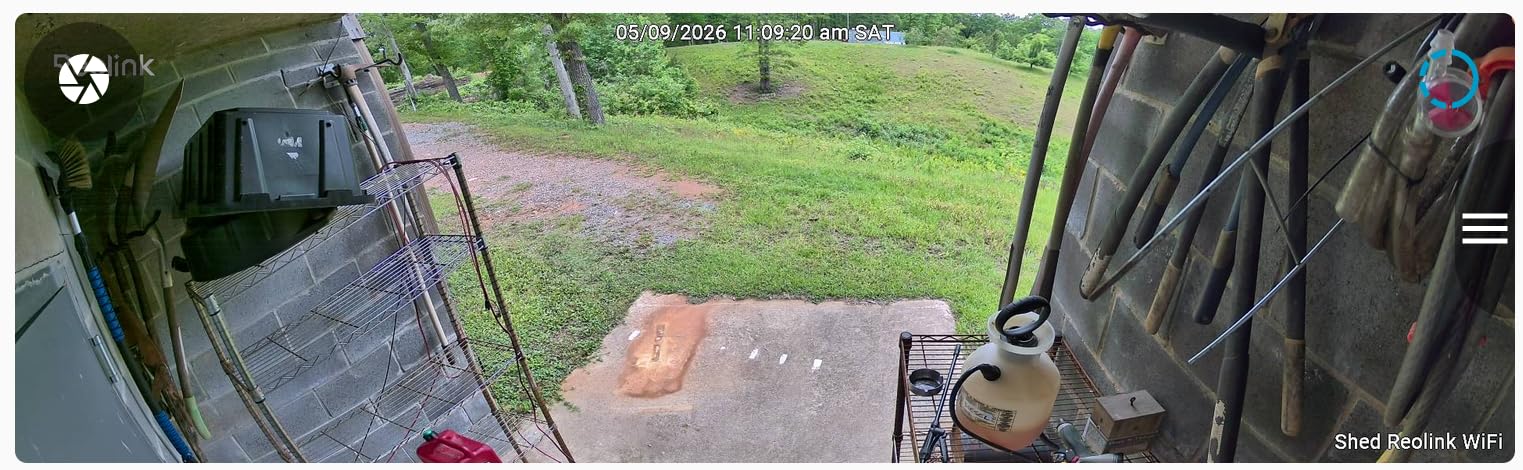
For a wide or open backyard, the Reolink Elite has the widest single view in this roundup. Two lenses stitch into a 180-degree panoramic 4K 8MP image, so a single mount on a back wall can see both side fences with far fewer blind spots than a fixed rectangular camera.
The light is the brightest here at 3000 lumens, dimmable, and tunable from 3000K to 6500K, which lets you warm the output down near a neighbour’s fence line and brighten it across open lawn. Illumination reaches up to 40 ft.
Everything runs locally. On-device AI detection of people, vehicles and animals, 24/7 recording to a 512GB microSD card, an NVR or a Home Hub, and RTSP plus ONVIF support for Home Assistant, Frigate, Blue Iris and NAS setups, with no cloud account required.
The reasons for a 4.1 average are worth reading. On-camera AI over-triggers on rain, wind, insects and spiders until you reduce sensitivity, some owners report the light strobing at night with the camera unable to settle exposure, and a faint seam sits in the middle of the stitched image.
Who it suits?
Large or unusual-shaped yards, and privacy-focused setups where keeping footage off a cloud server matters. It is also the pick if you run Home Assistant and want ONVIF rather than a brand-locked app.
Who should look elsewhere?
Owners who want a polished phone app, since feed freezing is a repeated complaint. The skinny aspect ratio also reduces vertical coverage, and the lights cannot be fully disabled at night, only motion-activated.
How to Place a Floodlight Camera in a Backyard?
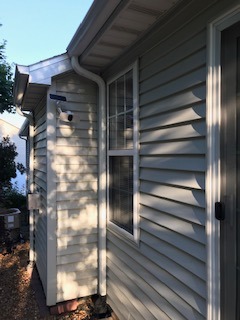
Mount it high and aim it across the yard, not down at the ground. Most back-of-house installs go on an eave or a garage wall at roughly 8 to 10 ft, angled so the lens looks along the fence line and the LEDs wash the far corner rather than the wall below the mount.
Check three things before you drill. Walk the yard at night and note where existing lights already reach, so you are not paying for brightness you already have. Confirm your Wi-Fi at the exact mount point, not at the back door. And work out the viewing angle from that height, because every fixed camera here has limits you cannot adjust later.
If you have a pan-tilt model such as the eufy E340, the E30 or the Tapo, a slightly lower and more central mount works better, because the camera does the aiming for you. Fixed models such as the Ring, Blink and WYZE units need the height and the angle to be right on the first attempt.
Wired, Battery or Solar: Which Power Source Fits Your Backyard?
Wired is the reliable answer and the one owners describe as set and forget. It never needs a battery swap, it never dims, and it delivers the full light output every time. The cost is installation: a junction box, a safe cable run, and sometimes an electrician if no box exists.
Battery is for renters and outbuildings. The Arlo Wireless Floodlight and the Blink Outdoor 4 both mount in minutes, and the Blink runs up to two years on two lithium cells. The trade is light output and recharge access at height.
Solar is the maintenance-free version of battery, and the Tapo C615F is the clearest example. Check the charge maths against your shade before committing: a panel in partial shade will not deliver the 45 minutes of direct sun the quoted charge time assumes.
One more factor belongs in this decision: outages. A hardwired camera on mains power goes dark when the power goes, unless you pair it with a backup source. A battery or solar unit keeps recording through a cut, which is worth knowing if your main worry is a night-time intrusion.
How Much Light Does Your Backyard Need?
Match the lumens to the yard, not to the marketing. A patio or small city yard is comfortably served by 2000 lumens. A medium suburban lot is better at 2600 to 3000 lumens. An open lot or a long driveway needs the top of the range plus a wide field of view.
Below roughly 1000 lumens, the light becomes a close-range pool rather than yard coverage, which is why the 700 and 800 lumen battery and solar models are positioned for sheds and small areas here. More lumens is not automatically better either, since very bright light close to the lens can overexpose a subject walking past the wall.
Adjustability matters as much as the peak number. The Ring 4K Pro and the Reolink Elite both let you dial brightness down, which is the polite choice when a neighbouring fence is a few feet away.
Floodlight Cameras Without a Subscription
Four picks in this roundup record locally with no monthly fee: the eufy E340, the eufy E30, the WYZE Floodlight v2 and the Reolink Elite. The Tapo C615F also runs subscription-free AI detection and local microSD recording, with cloud as an option rather than a requirement.
What a subscription usually gates is worth knowing before you buy. Live view and motion alerts generally work without a plan on most brands. Recorded clip history, longer retention, and AI object classification are the features most often moved behind a paid tier, which is why the local-storage models feel like a different category of product rather than a cheaper one.
For a five-year view, one microSD card is a one-time cost that no plan replaces. Reviewers who went local cite cost avoidance and privacy as the deciding factors, not missing features, and that is consistent across the cameras we compared.
How to Stop False Alerts on a Backyard Camera?
Wildlife and vegetation are the most cited complaint in owner discussions about this category, and the fixes are mostly settings work. Start by drawing motion zones over the walkway, gate and patio rather than the whole yard, and exclude the tree line and any fence opening where a squirrel runs every evening.
Next, lower PIR sensitivity a step or two from the default. Squirrels and small animals are exactly what high sensitivity is designed to catch, so the same setting that catches an intruder also catches them. Where the brand offers AI object filtering, turn it on and restrict alerts to people and vehicles.
Finally, check the light schedule. Lights that trigger during the day usually mean the dusk-to-dawn sensor is being overridden by a time schedule, and lights cycling on and off usually mean a motion zone overlaps another one or the sensitivity is set too low to sustain a single event.
If motion is not detected at night, the cause is usually range rather than settings. A yard-scale floodlight camera needs its detection zone pointed at the far fence, and a camera that is aimed at a nearby wall will see very little of the yard after dark.
Signal, Junction Boxes and Install Reality
Weak Wi-Fi at the back of the house is the most common real-world failure, and it is worth testing before you buy. Stand where the camera will mount and run a signal check on your phone at 2.4GHz. A full but slow reading means you need a mesh node or an access point rather than a different camera.
Expect a junction box for most wired installs. A high and low box arrangement is what allows an angled under-eave mount, because a single box on a flat wall limits how far you can tilt the light panels. Confirm the box exists, and confirm the wall is exterior-rated, before buying a hardwired model.
Also plan the cable run. Ironmongery and siding decide how much work that is, and if no box exists at all, a battery or solar model can be cheaper than the electrician. Two of the picks here ship with a ground wire and wiring strap, which makes a hardwired install safer on older homes.
Which Ecosystem Fits Your Smart Home?
There is no brand-neutral winner here, and owners in forums consistently ask which floodlight camera works with the gear they already own. Ring is smooth if your home is Ring plus Alexa, and the Arlo Wireless Floodlight is the broadest option, covering Alexa, Apple Home, Google Home, SmartThings and IFTTT from one app.
For local control, Reolink and the eufy models are the practical choices, with microSD recording and, on the Reolink, RTSP and ONVIF for Home Assistant, Frigate and Blue Iris. Google Home and Apple HomeKit users are best served by checking the specific model, since support varies by generation rather than by brand.
Our other backyard coverage guides cover the gear around the camera, including outdoor conversation sets for backyards and swing sets for backyards, if you are planning the space as well as watching it.
Frequently Asked Questions
What is the best floodlight camera for a backyard?
The Ring Floodlight Cam Wired Plus is the best floodlight camera for most backyards. Its 2000-lumen motion-activated lights, 1080p video, hardwired power and a 4.7 average across more than 44k reviews make it the most dependable general pick. For yards with no outlet, choose the Arlo Wireless Floodlight; for one camera covering a large yard, choose the eufy E340.
What is the best outdoor camera without a monthly subscription?
The eufy Floodlight Camera E340 records 24/7 to a microSD card up to 128GB or a HomeBase S380 with no monthly fee, and it adds 360-degree pan-tilt coverage with a 3K and 2K dual lens. The Reolink Elite, the eufy E30 and the WYZE Floodlight Camera v2 also record locally without a plan.
Is a wired security camera better than a wireless security camera for a backyard?
For a fixed backyard mount, wired is usually the better choice: no battery decay, full light output every time, and no ladder visits. Wireless wins where wiring is impossible, such as rentals, sheds and pool buildings. A battery or solar unit also keeps recording during a power cut, which a plain wired camera does not unless you add a backup source.
How many lumens do I need for a backyard floodlight camera?
About 2000 lumens suits a patio or small city yard, 2600 to 3000 lumens covers a medium suburban lot, and open lots need the top of the range plus a wide field of view. Below roughly 1000 lumens the light forms a close pool rather than yard coverage, which is enough for a shed or gate but not for a lawn.
Do I need a junction box to install a floodlight camera?
Most wired floodlight cameras need an existing exterior box or a new junction box to sit on. A high and low box arrangement is what allows an angled under-eave mount, since a single flat-wall box limits how far the light panels can tilt. Check for a box before buying, and choose a battery or solar model if running new cable would mean hiring an electrician.
Why does my floodlight camera send constant false alerts?
Wildlife, moving branches and headlights are the usual causes. Draw motion zones over the walkway and gate only, exclude the tree line, lower PIR sensitivity from the default, and turn on AI person or vehicle filtering where the brand offers it. If lights trigger during the day, check that a time schedule has not overridden the dusk-to-dawn sensor.
Conclusion
For a typical backyard, the Ring Floodlight Cam Wired Plus is the pick: 2000 lumens, a proven record of owner satisfaction, and a hardwired install that keeps working. Cover a large yard with one camera and you are better served by the eufy E340 or the Reolink Elite. Avoid wiring entirely and the Arlo Wireless Floodlight or the Tapo solar unit will get you a view of the yard this year.
The one question worth answering before any of them is whether you will pay a monthly recording fee. If the answer is no, start with the locally recording models in the 2026 list, and the rest of the decision becomes yard size and power. Prices in this category move constantly, so check the current listing before you buy.