
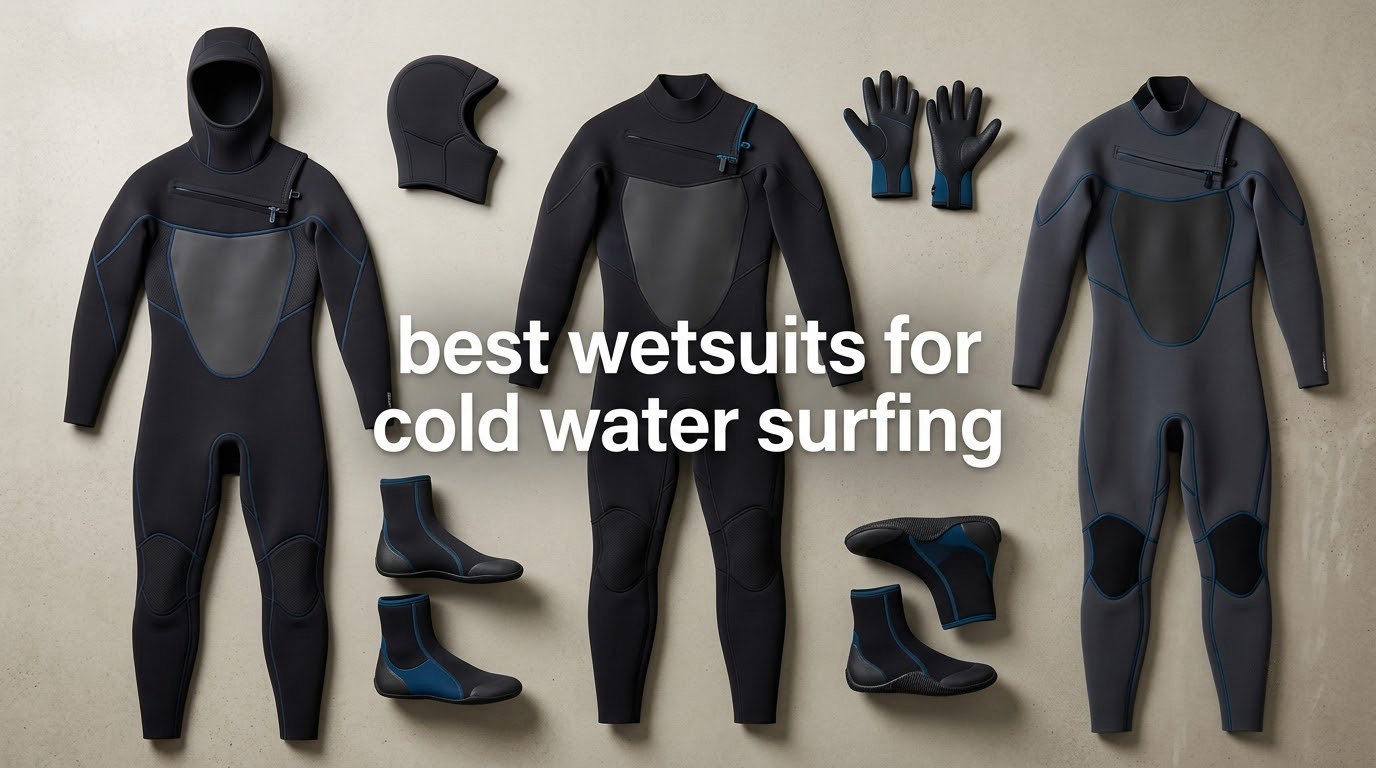
There is no single best wetsuit for cold water surfing, because the right suit depends on one number: your local water temperature. If you only read one line on this page, read this one. The O’Neill Men’s Epic 4/3mm Back Zip Full Wetsuit is the most balanced cold water surfing wetsuit you can buy right now, with 4/3mm neoprene, glued and blindstitched seams and 1195 owner reviews behind it. It handles the 50s°F band that most of the North Atlantic and North Pacific winter season actually delivers.
Cold water has three bands, and they demand different gear. Around 55 to 60°F you need a well-sealed 4/3mm. Between 45 and 55°F you want a 5/4mm, hooded, and most surfers add mitts and booties. Below 45°F a single suit stops being enough, and 6/5/4mm with a hood, 7mm boots and 5mm mitts becomes the realistic kit. Getting the band wrong is why so many people end up cold in a suit that should have worked.
We spent weeks putting twelve fullsuits through their paces and reading thousands of owner reviews to work out which construction details actually matter. Our team compared the full range here, from a low-cost 5mm to a premium O’Neill flagship, and every verdict below comes from the specification data and verified buyer feedback rather than marketing copy. We also looked at how people surf, not just how they sit still, because session length changes the answer more than most brand differences do.
If you want the short version: the O’Neill Epic is the pick, the yonsub 5mm hooded is the value pick if you surf genuinely cold water on a budget, and everything else falls somewhere between. Our cold weather limits guide covers a different kind of exposure question, but the principle is the same: know your real numbers before you commit to gear.
Table of Contents
Top 3 Best Wetsuits For Cold Water Surfing (October 2026)

O’Neill Epic 4/3mm Back Zip Fullsuit
- 4/3mm cold water neoprene
- Glued and blindstitched seams
- 1195 owner reviews

yonsub 5mm Hooded Front Zip Fullsuit
- Integrated hood for real cold
- 5mm neoprene body
- Front zipper entry

BARE 5MM Revel Men’s Full Wetsuit
- Anatomically correct patterning
- Internal seals and knee armour
- 2-year warranty
Quick Picks: Best Wetsuits for Cold Water Surfing in 2026
Every suit below is rated and reviewed here, ordered by how much we trust it for genuine cold water surfing rather than by brand. The thickness figure is the real neoprene thickness of the body panels, and the water temperature column is the range the construction and the verified owner feedback support.
| Product | Specifications | Action |
|---|---|---|
| O’Neill Epic 4/3mm Back Zip |
|
Check Latest Price |
 Owntop 5mm Neoprene Fullsuit Owntop 5mm Neoprene Fullsuit |
|
Check Latest Price |
 Hevto 5/4/3/2mm Full Wetsuit Hevto 5/4/3/2mm Full Wetsuit |
|
Check Latest Price |
 Lansru 5mm SCR Neoprene Wetsuit Lansru 5mm SCR Neoprene Wetsuit |
|
Check Latest Price |
 Ho Stevie 4/3mm Chest Zip Ho Stevie 4/3mm Chest Zip |
|
Check Latest Price |
 ZCCO 5mm Front Zip Fullsuit ZCCO 5mm Front Zip Fullsuit |
|
Check Latest Price |
 O’Neill Hyperfreak 4/3mm Zipless O’Neill Hyperfreak 4/3mm Zipless |
|
Check Latest Price |
 O’Neill Hyperfreak 4/3mm Chest Zip O’Neill Hyperfreak 4/3mm Chest Zip |
|
Check Latest Price |
 REALON 4/3mm Full Wetsuit REALON 4/3mm Full Wetsuit |
|
Check Latest Price |
| yonsub 5mm Hooded Fullsuit |
|
Check Latest Price |
| BARE 5MM Revel Full Wetsuit |
|
Check Latest Price |
 XCEL Axis 4/3mm Back Zip XCEL Axis 4/3mm Back Zip |
|
Check Latest Price |
Two entries deserve a flag. The XCEL Axis carries the highest rating in this group at 4.7, but on only 15 reviews, so we treat it as promising rather than proven. The O’Neill Epic is the opposite: a slightly lower 4.5 rating earned across 1195 reviews, which is a far more reliable signal for a buyer.
Wetsuit Thickness and Water Temperature Chart
Water temperature decides thickness, not the other way around. Use this as the starting point, then adjust for how long you stay in and how cold you run.
Below 40°F (4°C): use a 6/5/4mm or 6/5mm hooded fullsuit, add 7 to 8mm booties and 5mm mitts. A single suit rarely works alone here.
40 to 50°F (4 to 10°C): use a 5/4mm or 5/4/3mm hooded fullsuit. A hood is strongly advised, and gloves make the difference between a two hour session and a one hour session.
50 to 55°F (10 to 13°C): use a 4/3mm hooded fullsuit, or a 5/4mm if you are thin or feel the cold easily.
55 to 63°F (13 to 17°C): use a 4/3mm fullsuit. Non-hooded is workable at the top of this band.
63°F and warmer (17°C and up): use a 3/2mm fullsuit. A 4/3mm will work but most owners report overheating.
Two things adjust those numbers. Session length matters more than brand: a surfer sitting in the water for ninety minutes loses far more heat than someone paddling hard for twenty. Forum surfers report exactly this, describing a hooded 6/5/4mm with 8mm booties and 5mm mitts as comfortable in well-below-freezing water, with the caveat that it depends on continuous movement.
Throat and chest coverage is the second adjustment. A single significant heat loss route is the neck, which is why most of the cold suits here use a double seal or a 360 degree barrier rather than a simple velcro flap. If your water sits at the cold end of a band, treat the extra millimetre at the neck as worth more than the extra millimetre in the legs.
1. O’Neill Epic 4/3mm Back Zip Full Wetsuit — Best All-Round Cold Water Choice
O’Neill Men’s Epic 4:3mm Back Zip Full Wetsuit, Black 2, X-Large
4/3mm UltraFlex neoprene
Windproof smoothskin chest and back
Glued blindstitched seams
Pros
- Warm enough for 50sF water for most surfers
- Excellent shoulder and arm movement
- Runs true to the size chart
- Durable seams and Krypto Armor knee pads
Cons
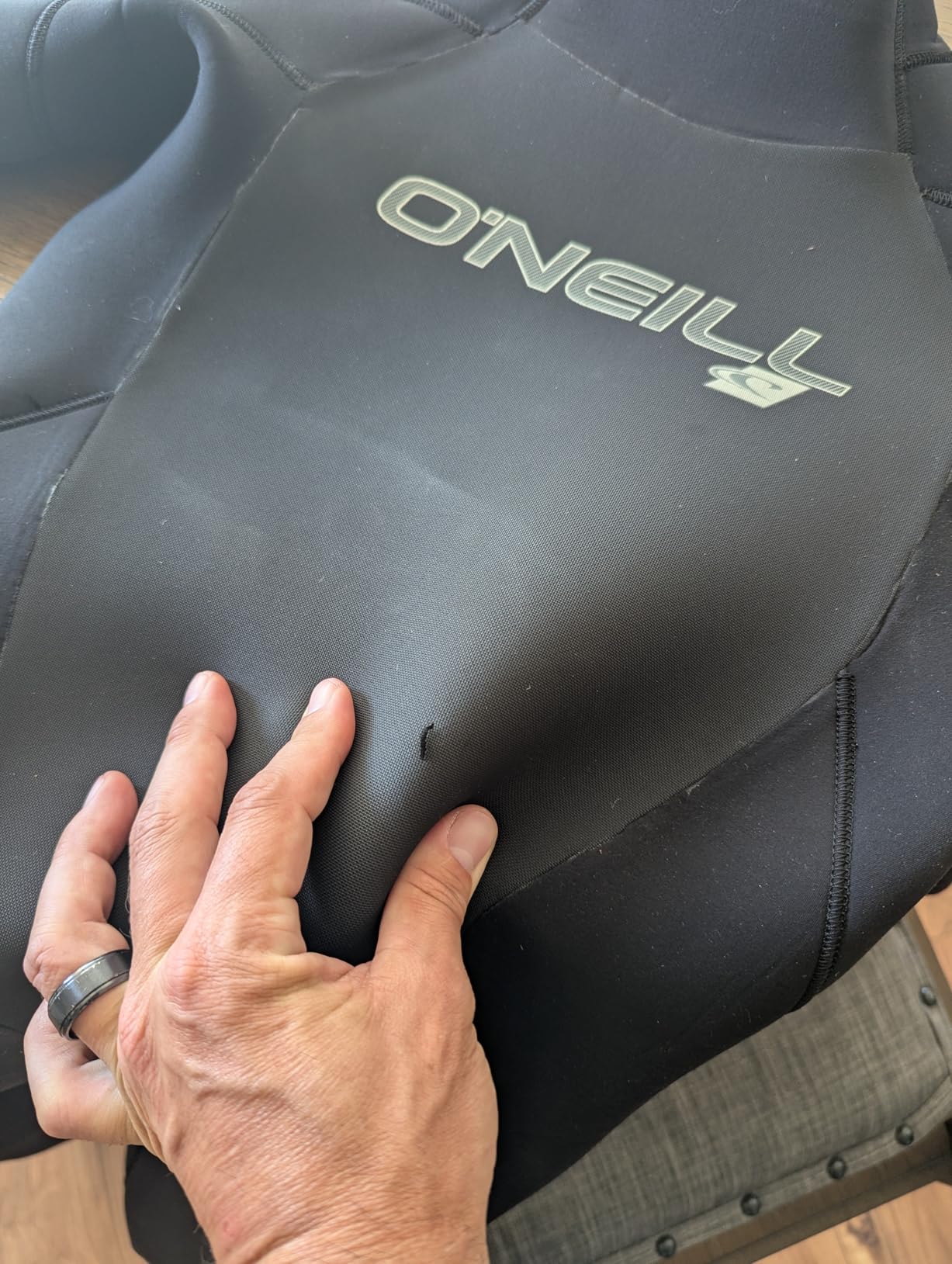
- Some long term owners report seam and knee stitching failures
- Neck velcro flap is very sticky
- Too warm above roughly 78F
With 1195 verified reviews at a 4.5 rating, this is the most thoroughly tested suit we looked at, and the volume of feedback matters here. Cold water claims are easy to make and hard to verify. When almost 1200 buyers describe the same behaviour, you can trust the pattern.
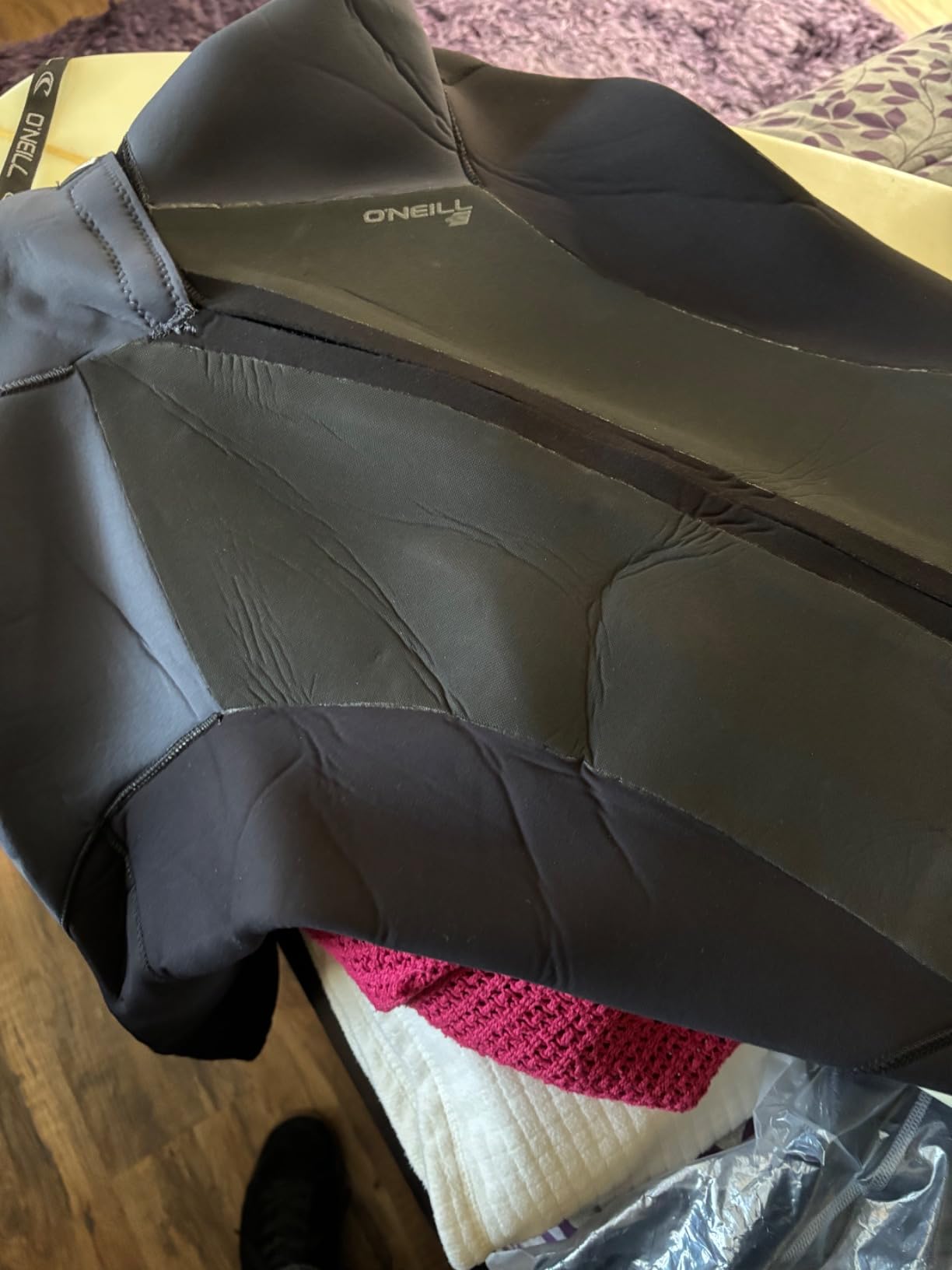
Owners consistently report enough warmth for water in the 50s without extra layering, which makes this the single most useful band in winter surfing. The UltraFlex neoprene sits through the shoulders, arms and lower body, and the windproof smoothskin with Fluidflex Firewall across the chest and back blocks the wind chill that makes shoulder sessions miserable.
The suit runs true to the published size chart, which removes the single most common source of disappointment with a new wetsuit. If you are used to sizing down out of habit with other brands, do not do it here. Owners also single out shoulder and armpit freedom of movement as a real strength, and that matters during a long paddle.
Seam construction is where cold water suits live or die, and this one uses glued and blindstitched seams with a double super seal neck and hand-cuff sleeve construction. That combination keeps water where it belongs. Krypto Armor knee pads take the punishment from a board, and the corrosion-resistant back zipper has a small key pocket with a loop behind it.
Who this suit works for?
This is the suit for a surfer who wants one piece of gear that covers most of a winter without changing. If your water runs from about 50 to 58°F, the construction here is built for exactly that, and the shoulder mobility keeps paddling fatigue down during a long session.
It also suits anyone who is putting a wetsuit on for the first time this winter, because the size chart behaves the way the label says. We would rather you spend your cold-water money on mitts and a hood than on a suit that does not fit.
Where the feedback turns critical?
A minority of long-term owners report seams and knee-pad stitching splitting after extended use, and a small gap at the lower back comes up occasionally. Those are durability complaints rather than warmth complaints, so they matter if you keep one suit for many seasons.
The neck velcro flap is a recurring minor annoyance because it is very sticky and can work its way inside the suit. Owners also report the suit is too warm above roughly 78°F water unless flushed frequently, which is a real consideration if you surf a temperate coastline all year.
2. Owntop 5mm Neoprene Fullsuit — Best Budget Warmth
Owntop 5mm Wetsuit for Men Women, High Stretch Warmth Neoprene Suit
5mm body with 4mm CR cuffs
Rated to about 10C or 50F
GBS seams and front YKK zip
Pros
- Very warm 5mm neoprene for the money
- Soft and very stretchy
- Front zip is easy to get on and off
- Well sealed seams
Cons
- Runs small in chest and legs for some buyers
- Difficult to remove
- Printed size chart is not accurate for everyone
This is the suit that answers the most common objection to surfing in genuinely cold water, which is cost. Owners report warmth in mid-40s water that rivals suits costing several times more, and the 541 reviews at a 4.2 rating show the pattern is consistent rather than anecdotal.
The construction is 5mm neoprene through the body with 4mm CR neoprene at the wrists and ankles, rated to approximately 10°C or 50°F water. Those thinner cuffs are a genuinely good decision, because thin cuffs seal to your skin and stop the water flush that pulls warm water out of the suit.
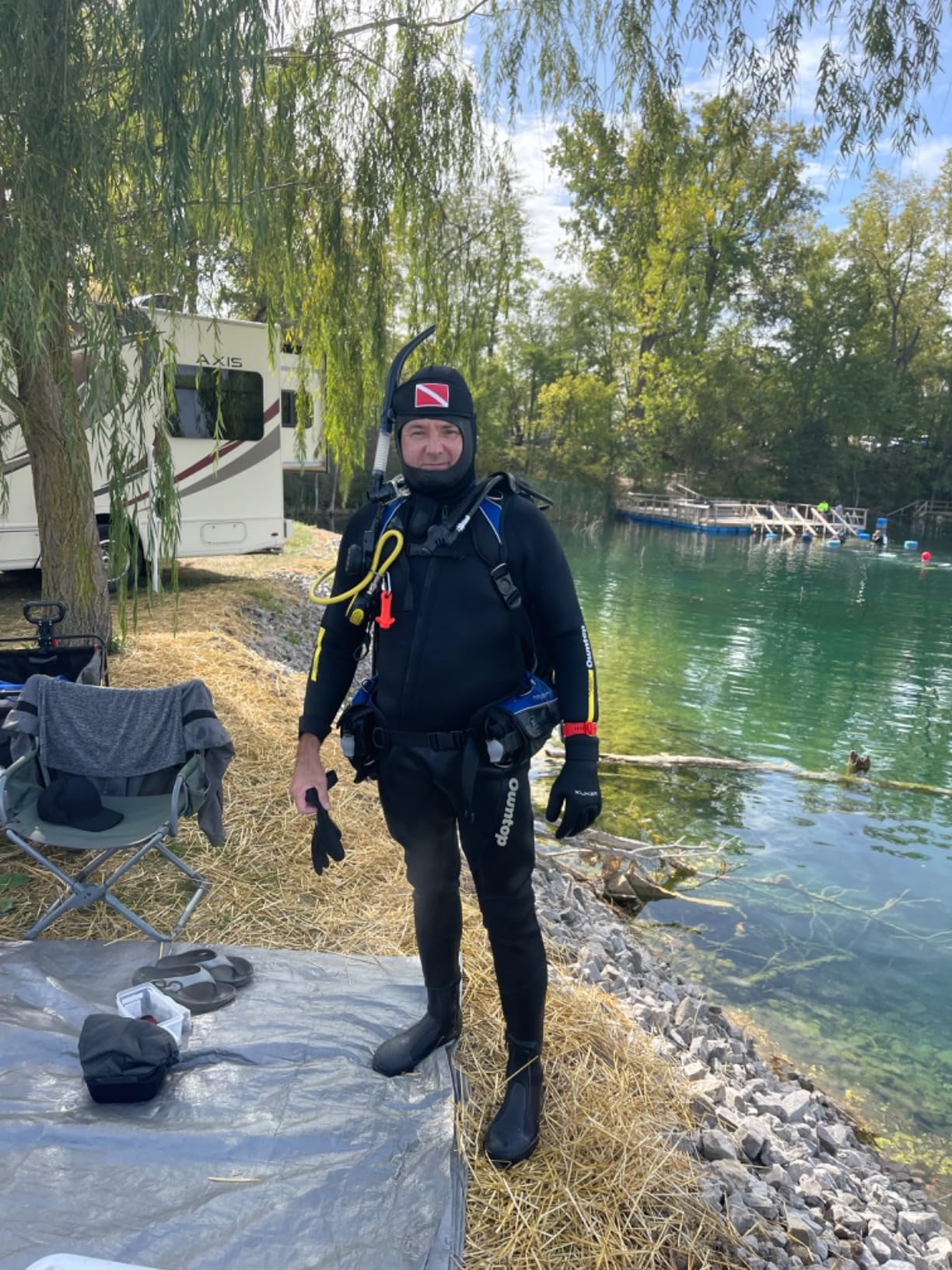
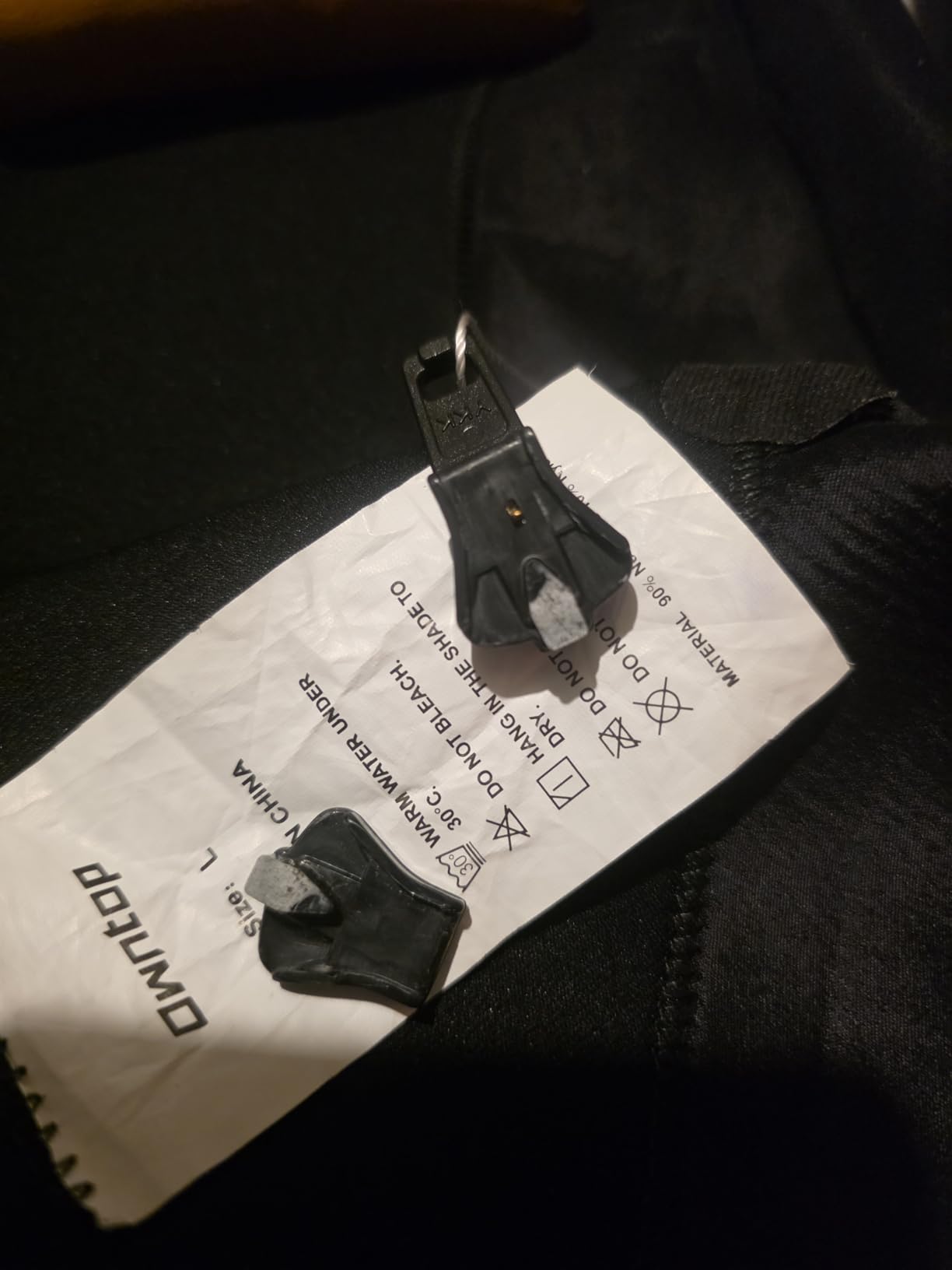
GBS seam construction and a front YKK zipper are the two details that separate this from a disposable dive suit. The seams keep water ingress low, and the front zip means you can get in and out without a helper, which matters most for thick neoprene. A UPF 50+ rating also gives some protection on long midday sessions in brighter climates.
Shorter and petite surfers report good results, with the long suits in the range fitting well. That is worth knowing if you are used to brands that only grade upward in length. The suit is unisex and covers a wide size range.
When the budget pick is the right call?
Choose this suit if your water sits in the 45 to 52°F range and you want genuine 5mm warmth without committing to a premium brand. It is also a good first winter suit, because the front zip makes the learning curve of dressing a thick neoprene suit much less painful.
It is a strong second suit for people who surf hard and simply want warmth. Reviewers using it for surfing, scuba, snorkelling, canoeing and kayaking report the same insulation, which suggests the rating is not specific to any one activity.
What buyers regret?
The most common complaint is that it runs small in the chest and legs, forcing some buyers to size up, and the printed size chart is not accurate for every measurement. Our advice is to measure against the chart rather than ordering your usual size, and to read recent reviews for the specific size you need.
The second issue is physical rather than technical. At 5mm, this suit is genuinely hard to remove, and reviewers say that matters most if the zipper ever fails. Keep the zipper lubricated with fresh water after every session, which also helps the suit last.
3. Hevto 5/4/3/2mm Neoprene Full Wetsuit — Best Thickness Choice
Hevto Men Wetsuit 4/3mm Neoprene GBS Full Wet Suit in Cold Water Back Zip for Surfing Swimming Diving Kayak SUP (Men Blue, M)
Available in 4/3mm and 5/4mm
SCR neoprene with nylon shell
Glued blindstitched and taped seams
Pros
- Good warmth and flexibility for the cost
- Well sealed seams reduce water ingress
- Reinforced knees handle board use
- Good buoyancy and stretch
Cons
- Size chart runs small for some buyers
- Back zipper is harder to reach than a front zip
Most buyers in this roundup have one fixed thickness. This one lets you choose, and the listing covers 4/3mm and 5/4mm variants with mapped thinner sections, which is unusual at this level of the market. That flexibility is the reason it earns a place on a cold water list.
Premium SCR neoprene with a super-stretch nylon outer is the core material. In practice owners describe good warmth and good stretch at the same time, which sounds ordinary until you have owned a stiff 5mm that fought every paddle stroke. Reviewers are largely focused on value for money rather than on prestige.
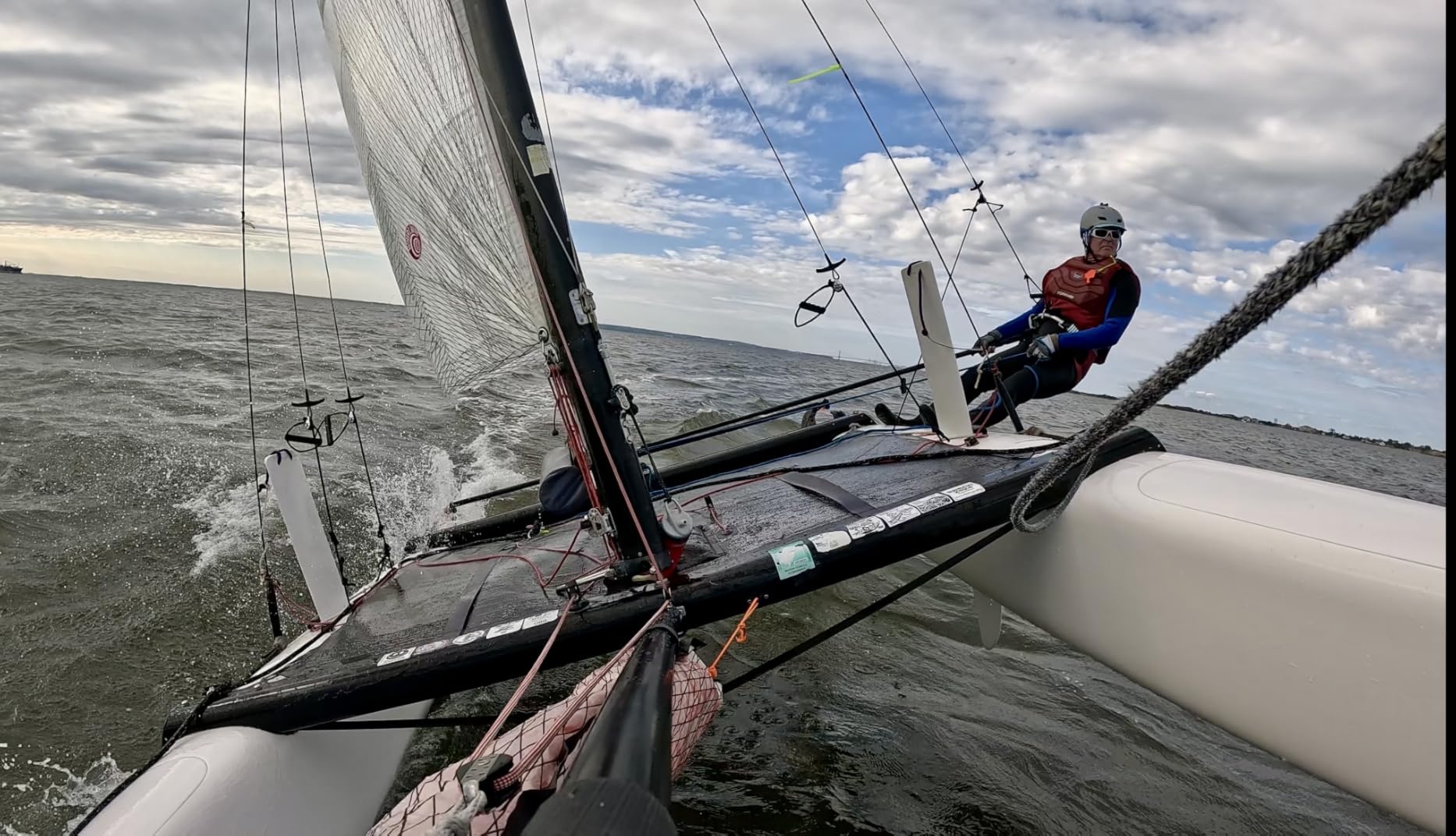
Seam work is the standout feature. Glued, blindstitched and taped seams go beyond what most suits in this bracket offer, and that triple seal is what keeps cold water from working its way through the shoulders and torso over a long session. Reinforced knee areas take the direct impact of a board, which is the fastest way to destroy a budget suit.
The back zipper has an upgraded puller and a protective flap, so the entry point is guarded against the sand and grit that cause the most common zipper failures. The stretch and buoyancy are well suited to a mid-range suit that will spend time surfing, diving and paddleboarding.
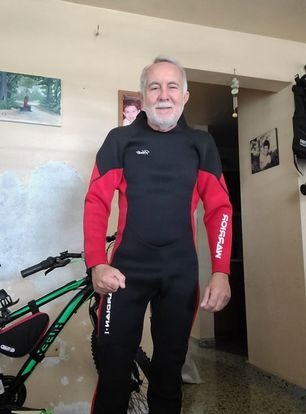
Why the thickness flexibility matters?
Winter water temperatures at a given break rarely hold one number. A cold front drops the water five degrees in a day, and if you own only a 4/3mm you will be under-equipped for a week. Having a 5/4mm option in the same brand means you can respond to the actual forecast rather than the average.
It is also a sensible choice for surfers who travel. A 4/3mm covers most shoulder-season water, and the 5/4mm covers the winter pulse without needing a second brand’s size chart and fit to learn.
Fit notes to check before you order
Some buyers report that the size chart runs small and recommend sizing up, so treat the chart seriously and read the size-specific comments. A suit that is too small in the torso is the fastest route to feeling cold, because a tight suit pushes out the thin warmed water layer that does the insulating.
The back zipper is harder to reach than a front zip, which reviewers raise as the second friction point. If you are getting in and out of a thick suit in a car park in the rain with numb hands, that is a bigger deal than it sounds.
4. Lansru 5mm SCR Neoprene Wetsuit — Best Front-Zip Comfort
Lansru Men Wetsuit, 5/4 mm SCR Neoprene Wetsuits for Men,UPF 50+(L)
5mm SCR neoprene body
4mm CR neoprene at neck and limbs
2.9 pound weight
Pros
- Warm 5mm SCR neoprene that holds heat
- Smooth front YKK zip
- Reinforced knees and abrasion resistant nylon
- Less rubbery odour than many comparable suits
Cons
- Sleeves and legs can run tight or long
- Size chart favours chest and waist over height
- Heavy and stiff to get in and out
At 2.9 pounds this is one of the lighter 5mm suits we looked at, and the seamless design at the neck and limbs is the reason. Seams are where bulk collects in a fullsuit, and removing them from the neck and wrists directly improves both comfort and the seal against cold water.
The construction pairs 5mm SCR neoprene with 4mm high-elasticity CR neoprene at the neck and limbs. That split-thickness approach is the sensible way to build a 5mm suit, because the places that need to flex and seal do not need to be as thick as the torso.
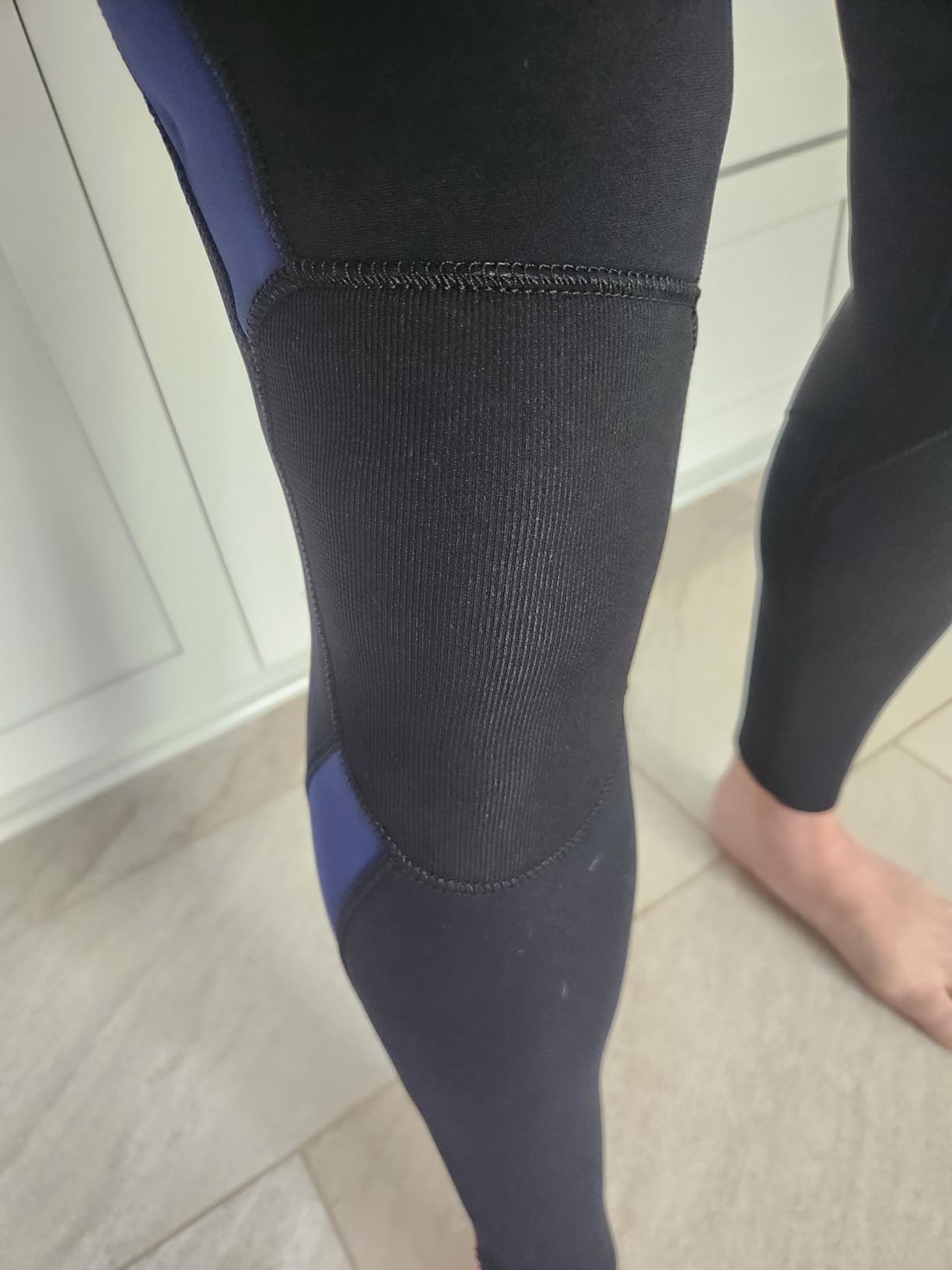
Owners report that the 5mm SCR neoprene holds heat well in cold water and that the arms stretch comfortably for most body types. The front YKK zip is smooth and easy to operate, which sounds like a small detail until you have tried to close a chest zip on a wet 5mm suit with cold hands.
There are also small quality touches. A skin-friendly patch design reduces the neck irritation that many 5mm suits cause, OEKO-TEX STANDARD 100 certification covers the material, and reinforced knee panels sit over an abrasion-resistant nylon outer. Reviewers also note less rubbery odour than many comparable suits.
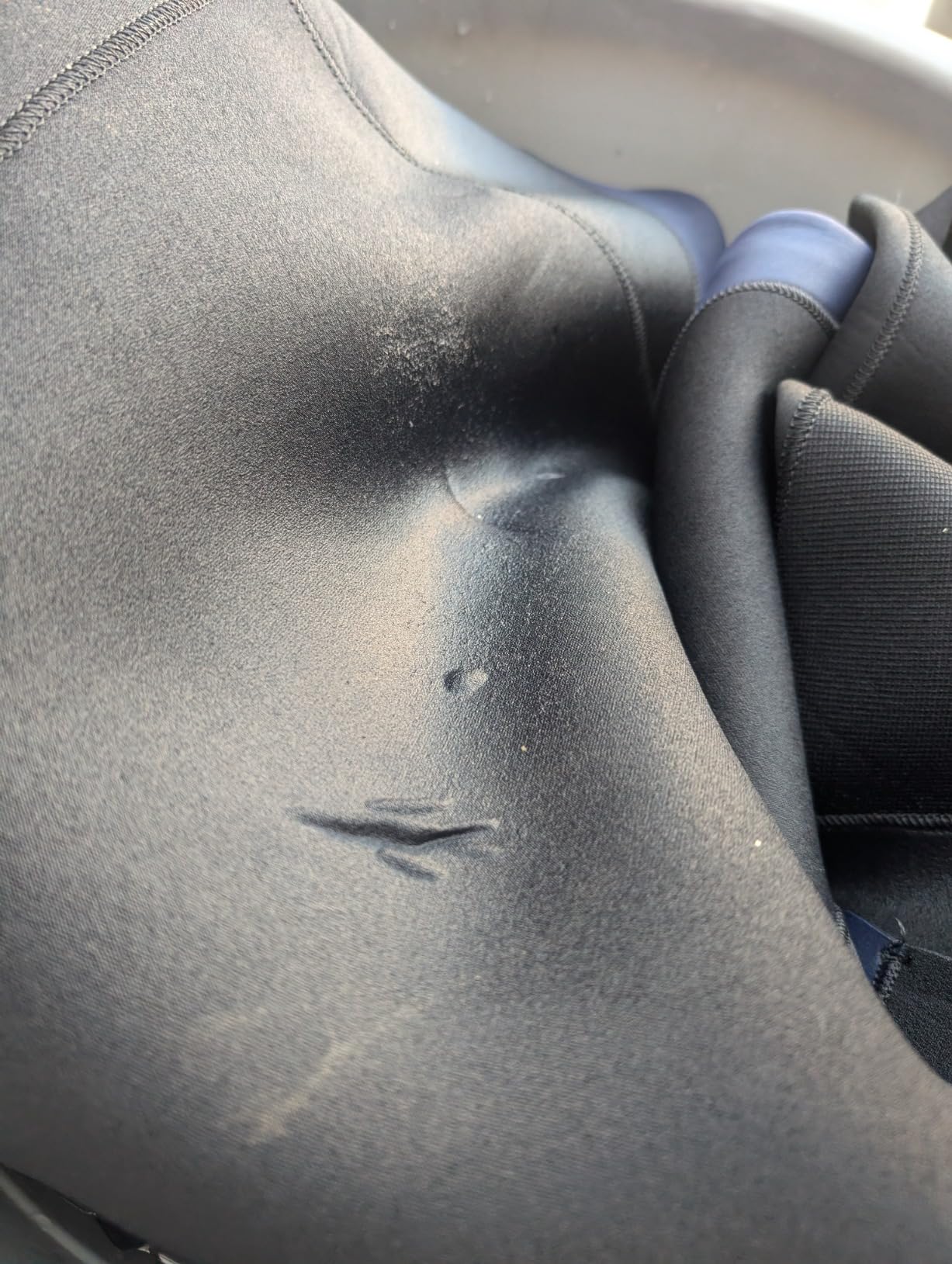
Where this suit earns its place?
This is a strong option for divers and snorkellers who also want a surfing suit, because the seamless neck and limb design and the easy front zip suit repetitive entry and exit. Surf buyers who dislike a back zip get the same benefit here.
The UPF 50+ rating is a genuine bonus for anyone surfing long midday sessions at lower latitudes, where sun exposure through a dark suit is a real concern over a season.
The sizing complaint to take seriously
The size chart prioritises chest and waist over height, and that misleads taller surfers. Several buyers needed to size up because sleeves and legs ran tight or long depending on size. Check both measurements and read reviews for your height before ordering.
Buyers also report that the suit is heavy and stiff, so it takes real effort to get in and out. That is a feature of 5mm neoprene rather than a defect, but if you surf from a rocky launch or need to change quickly, plan for it.
5. Ho Stevie 4/3mm Chest Zip Surf Wetsuit — Best True Surf Silhouette
Men’s Surfing Wetsuit – Chest Zip Fullsuit – Warm Superstretch 3/2mm or 4/3mm Neoprene w/GBS Seams (Black 4/3mm, S (Small))
4/3mm rated to 51F water
Glued blindstitched and taped GBS seams
SuperStretch limestone neoprene
Pros
- Genuinely warm 4/3 with no leaks reported
- Super stretch neoprene reduces arm fatigue
- Chest zip improves shoulder mobility
- Small brand swaps defective suits quickly
Cons
- Neck opening runs too tight for several buyers
- Chest zipper can fight you when wet
- Runs about an inch short versus major brands
Almost every wetsuit in this roundup is a dive suit that surfers wear. This one is built the other way round, as a surfing chest zip fullsuit, and that shows in the details that matter when you spend two hours paddling.
The 4/3mm version is rated to water as cold as 51°F, with a 3/2mm option rated to 56°F and warmer. SuperStretch limestone-based neoprene is the material, and limestone neoprene is lighter and softer than petroleum-based foam, which is a real advantage for arm fatigue over a long session.
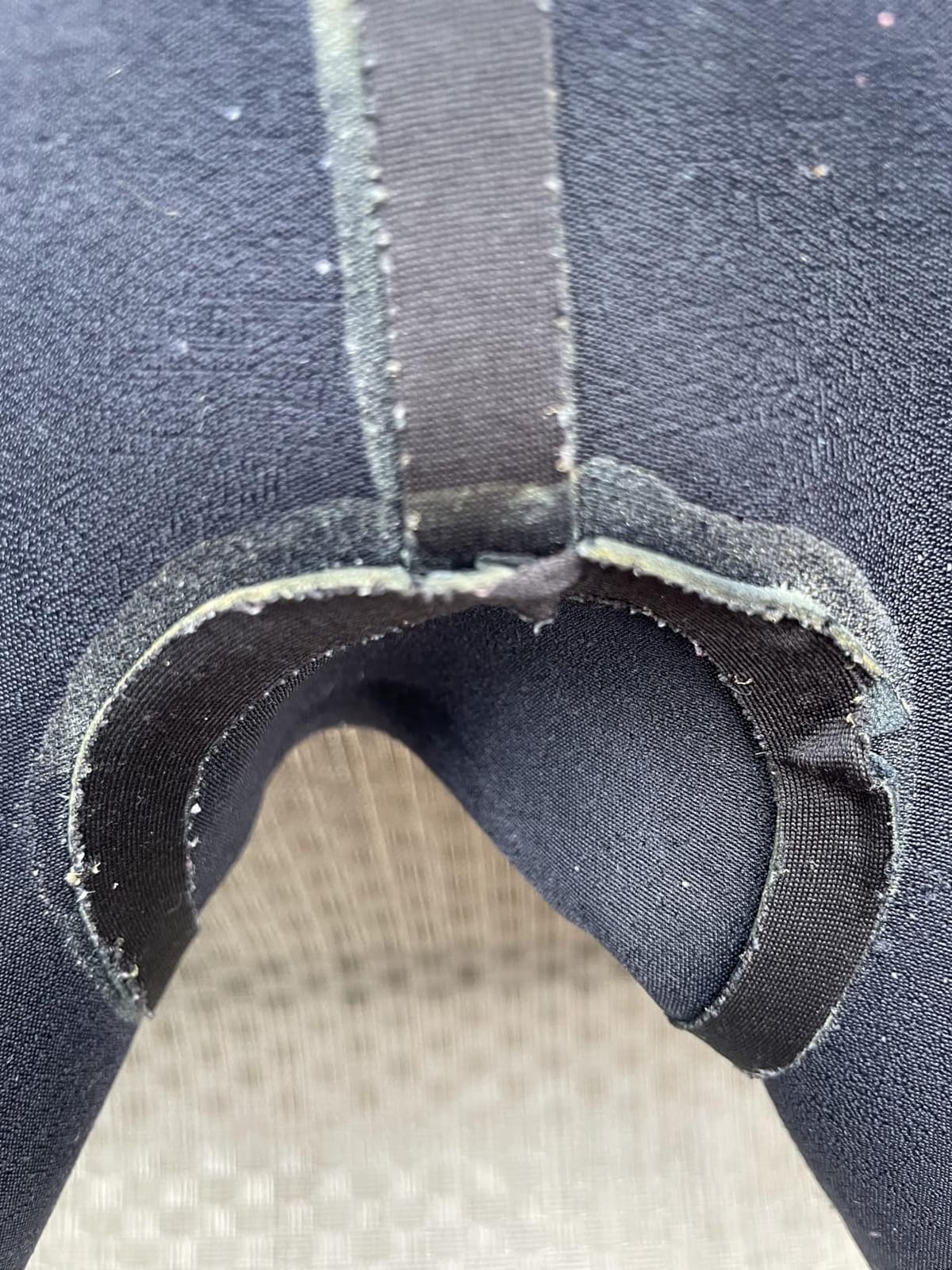
The GBS seam construction is specified properly: blind stitched, then glued and taped. In cold water this is the detail that decides whether you feel warm, and owners report genuinely warm performance with no leaks. The chest zip opening is there for flexibility and specifically to keep cold water running down your back.
A key loop behind the chest zipper is a small surf-specific touch, and there is a 1 year manufacturer warranty plus a 30-day satisfaction guarantee. Owners highlight the customer service, describing quick swaps on defective suits, which is unusual from a small brand.
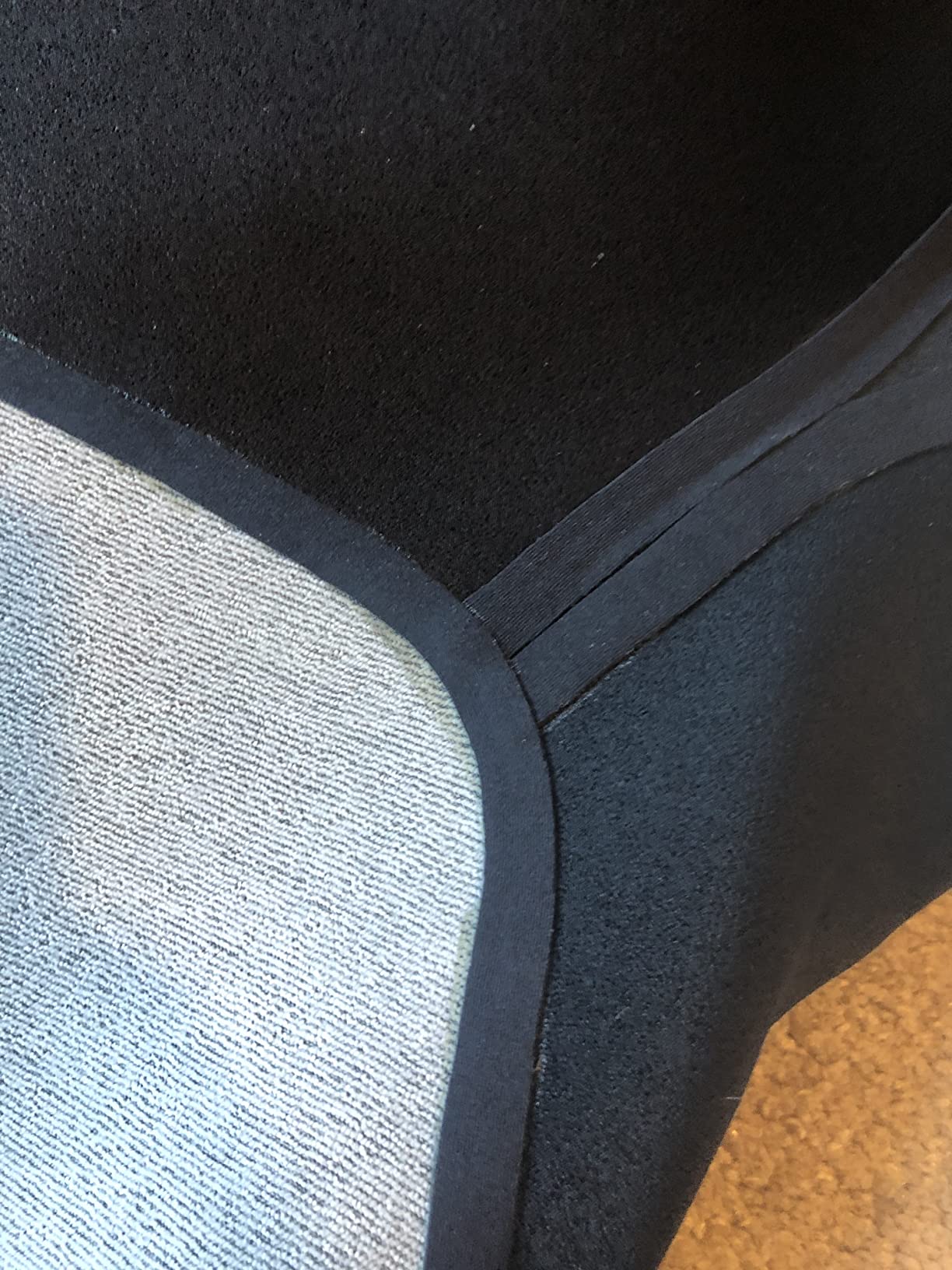
Why the chest zip matters for surfing?
A back zip leaves a chunk of neoprene running the length of your spine, and it opens a cold line straight down the back. A chest zip removes most of that, and buyers specifically report better shoulder mobility as a result. For duck dives and long paddles, that is the difference between a suit you fight and a suit you forget about.
It is also a better fit for surf-specific body shapes and proportions, and the key loop behind the zipper keeps a car key from scratching a window on the drive to the break.
Watch the neck and the length
Several buyers report the neck opening runs too tight, and the chest zipper can be hard to close once the suit is wet or stretched. Those two are related: a snug neck plus a stiff zip makes the last step of getting dressed frustrating, especially in cold conditions.
Owners also note the suit runs roughly an inch short compared with major brands. If you are tall or have a long torso, check the length measurement carefully, because an inch matters for both warmth and movement.
6. ZCCO 5mm Fullsuit — Best for Quick Dressing
ZCCO Men’s 5mm Neoprene Wetsuit – Ultra Stretch Full Body Diving Suit with Front Zip for Snorkeling, Scuba Diving, Swimming and Surfing(MF502-M)
5mm neoprene and nylon
Long front zipper plus four limb zips
Smooth skin at collar wrists ankles
Pros
- 5mm gives solid cold water insulation
- Long front zip plus limb zips speed up dressing
- Smooth skin seals reduce water ingress
- Padded knee pads protect board and rocks
Cons
- Long front zipper needs a helper for some wearers
- Only a 3 month warranty
- Limited size range on some colourways
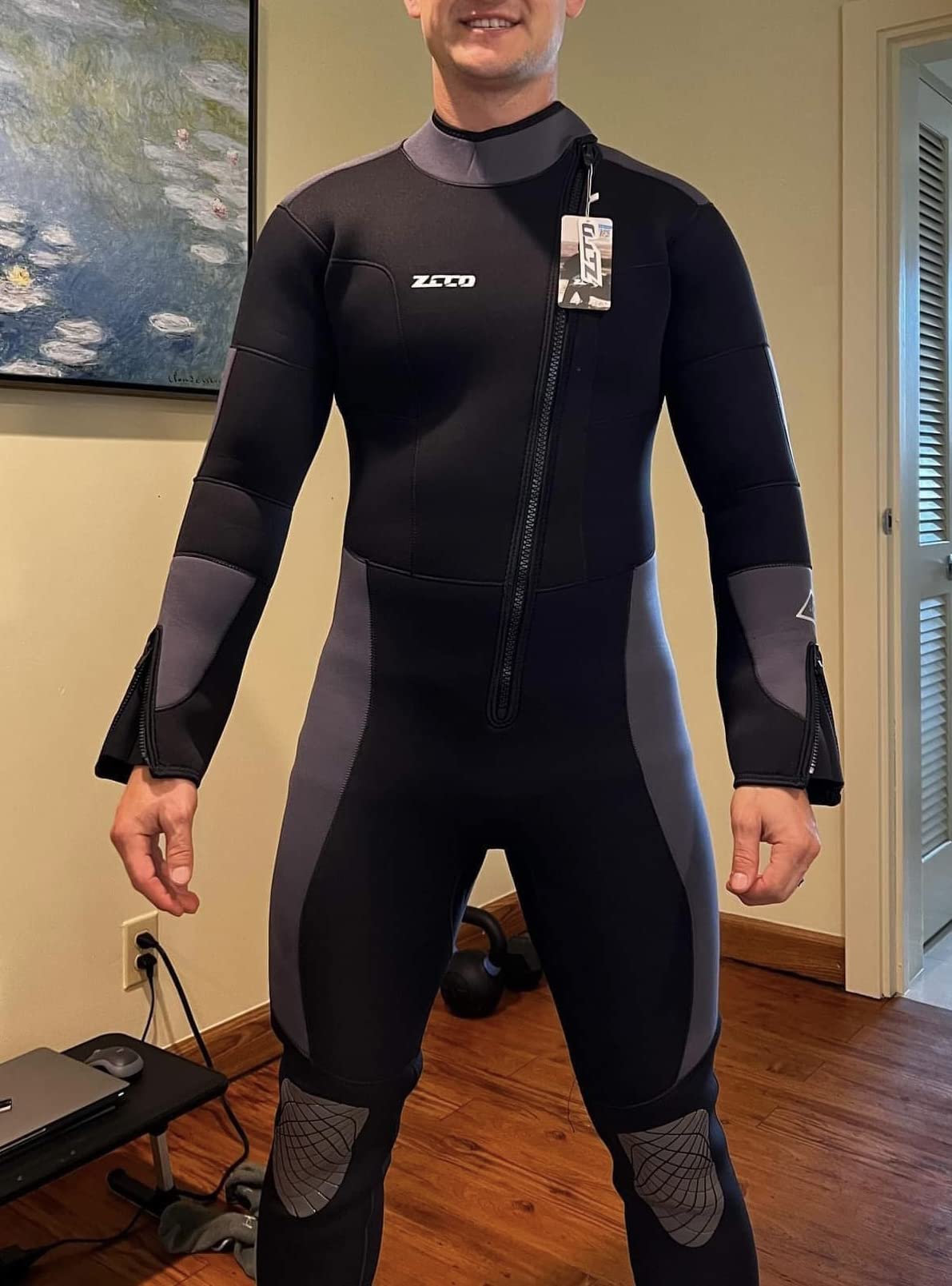
The distinguishing feature here is the entry system, and it is the most sensible solution we found to the single biggest complaint about thick neoprene. Instead of one opening, this suit has a long front zipper plus four small zippers at the arms and legs, so you can get into it in stages rather than all at once.
Buyers credit that design directly with faster dressing than bulkier 5mm suits, and in cold water that is not a convenience. When you are changing on a beach in 40°F wind, the difference between one wrestling match and four easy steps is the difference between getting in the water and skipping the session.
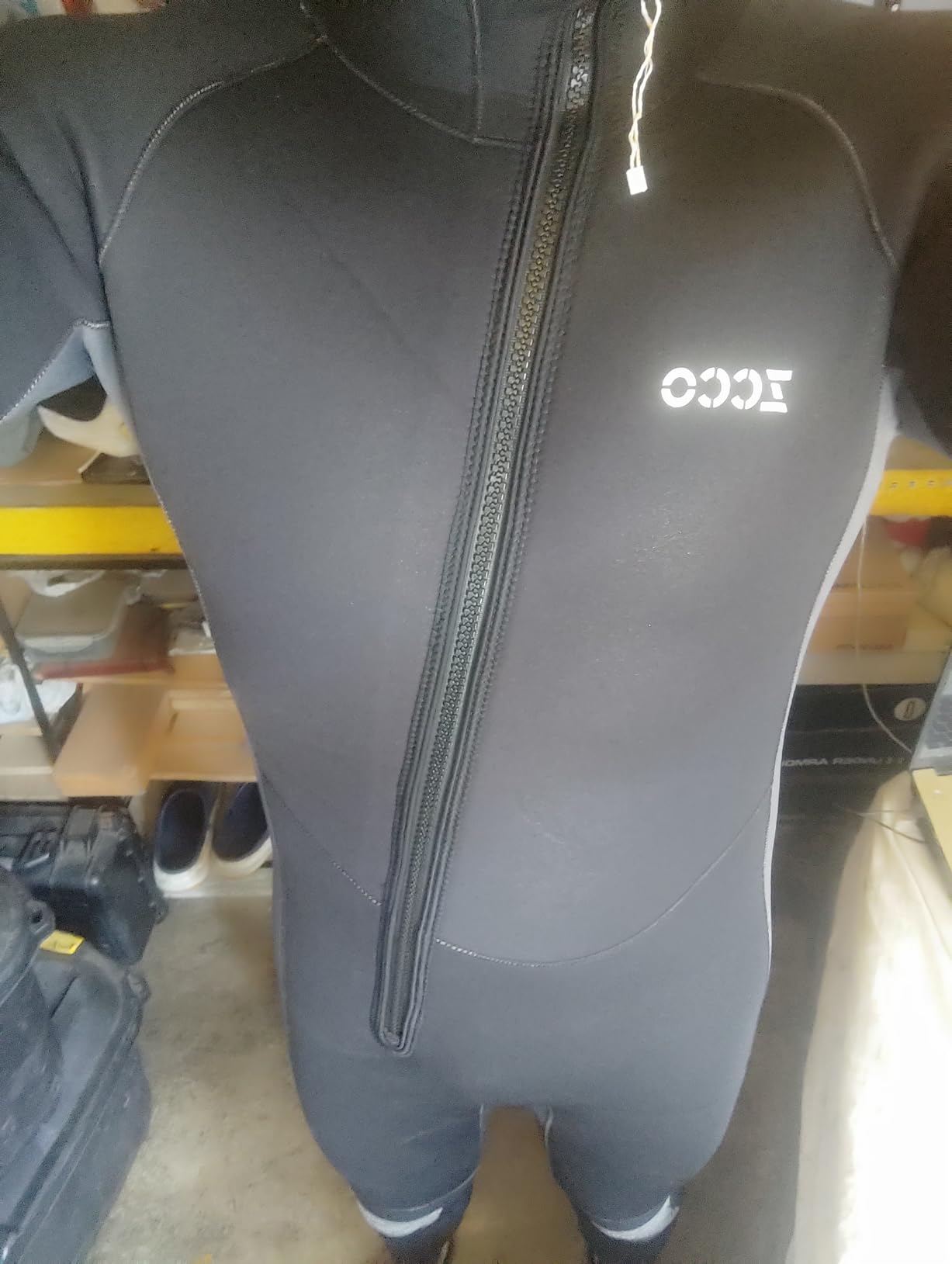
The 5mm neoprene and nylon construction gives solid cold water insulation, and the material is 90% neoprene and 10% nylon. Smooth-skinned neoprene at the collar, wrists and ankles is the detail that limits water ingress, because smooth skin sits tighter against skin than textured fabric and resists the water flush effect.
Padded nylon knee pads protect the board contact area, and the suit carries a UPF 50+ rating. The pattern is aimed at snorkelling, scuba, swimming, kayaking and surfing, and warmth is the most consistently praised feature across reviews.
Who benefits most from this entry system?
Anyone who changes alone, in a car park, in the cold. The four limb zippers mean you can open a wrist or ankle rather than forcing your whole body through one opening, which suits surfers who put a wetsuit on over a thermal base layer in winter.
It is also a good suit for cold water swimmers and divers who enter and exit the water several times in one session, since each entry is faster once the suit is warm and stretched.
The limitations to weigh
The long front zipper requires a helper to reach for some wearers, particularly shorter or less flexible surfers. That is a real constraint for anyone who surfs alone, and it is the main reason this is not our top pick.
Buyers also report only a 3 month warranty, which is short against a premium two-year workmanship warranty, and limited size availability on some colourways. If you are between sizes, check what is actually offered before you commit.
7. O’Neill Hyperfreak 4/3mm Zipless — Best for Flexibility
O’NEILL Hyperfreak Comp Zen 4/3 Black LT (6’2″-6’4″, 180-200 lbs)
4/3mm cold water neoprene
Zipless entry over a 360 degree barrier
4 pound suit weight
Pros
- Exceptional flexibility from minimal seam design
- Zipless entry removes a failure point
- Very light for a 4/3mm
- Snug without feeling restrictive
Cons
- Zipless design is slower to get into than a zipped suit
- Premium cost for the Hyperfreak line
- Few customer reviews for the listing
If flexibility is what stops you surfing in winter, this is the suit to look at. The minimal seam design is the point: fewer seams means fewer panels of neoprene competing against each other during a paddle stroke, and owners consistently report exceptional flexibility as a result.
The zipless entry system runs over a 360 degree barrier with drain holes and a Cinch chord closure. That barrier is the cold water answer. A zipper is a hole in a fullsuit, and removing it means there is no seam across the shoulders and no mechanical part that can fail or leak.
Techno Butter 3 exterior jersey provides maximum stretch, and the inner Techno Butter 3x jersey is described as the lightest and softest in the range. The neoprene tape seams are super stretch, which keeps the reduced seam count from becoming a hard, chafing ridge across the shoulders.
At 4 pounds, it is genuinely light for a 4/3mm suit, and that weight matters on long paddles. Reviewers note it should fit snug but not restrictive across a wide size run, which is exactly the fit a surfer wants.
Why the zipless barrier suits cold water?
The 360 degree barrier seals evenly around the neck and chest with no opening to leak, and the drain holes let trapped water escape rather than sitting against your skin. For surfers who feel the cold through the neck and chest first, that is the most valuable millimetre in the whole suit.
It is also a low-maintenance design. There is no zip to lubricate, no zip to seize in salt, and no zip to replace. If you surf all winter at the same break, fewer failure points is a genuine advantage.
Why the thin review count gives us pause?
Customer feedback for this listing is thin compared with the O’Neill Epic, so we are relying more on the specification and the brand’s own patterning than on a large body of owner reports. That does not make it a bad suit, but it makes it a less proven one.
Buyers do report that the zipless design is slower and harder to get into than a zipped suit, and the cost sits well above most of the field. If you are a first-time winter surfer who struggles to dress, a zipped suit will get you in the water with less frustration.
8. O’Neill Hyperfreak 4/3mm Chest Zip — Best for 58°F Water
O’Neill Hyperfreak 4/3 mm Chest Zip Full Black/Black XS (5’7″-5’9″, 125-140 lbs)
4mm thickness rated to 58F water
TechnoButter 3X neoprene
Chest zip with reinforced seams
Pros
- Excellent warmth in 55F water
- Outstanding flexibility once you are on
- TechnoButter neoprene moves well for paddling
- Long serving owners rate fit and quality highly
Cons
- Difficult to get into at first
- Threads and elbow fabric reported wearing through
- Too warm for some in mild water
This one carries an explicit temperature rating of 58°F, which is more useful information than most brands publish. It is built for slightly chilly swells, and owners confirm excellent warmth in 55°F central California water, a real-world test rather than a laboratory claim.
TechnoButter neoprene is the material, chosen for easy paddling rather than maximum insulation. That is the right trade for surfing, because a suit that restricts you is a suit that ends your session early. Owners report outstanding flexibility and comfort once the suit is on.
The chest zip is there for easy beach entry, and reinforced seams are specified to prevent seeping. For most surfers, a chest zip also removes the cold line down the back that a back zip creates, which is why surf-specific brands use this layout almost universally.
Long-serving O’Neill owners rate the fit and quality highly, and one recurring tip from reviews is to size up one size for a very good fit if you have a lean build. That is the exception to the usual size-down rule, and it is worth weighing against the thickness.
Where the 58°F rating is useful?
Publishing a temperature rating lets you buy with confidence in the band where the suit was actually designed. If your water runs 54 to 58°F, this sits in the sweet spot, and the reinforced seams give you the sealed construction cold water needs at that temperature.
It is also a good shoulder-season suit for a surfer who will later move up to a hooded 5/4mm, because the chest zip pattern is the same across most of the range and the fit will be familiar.
Durability is the weak point
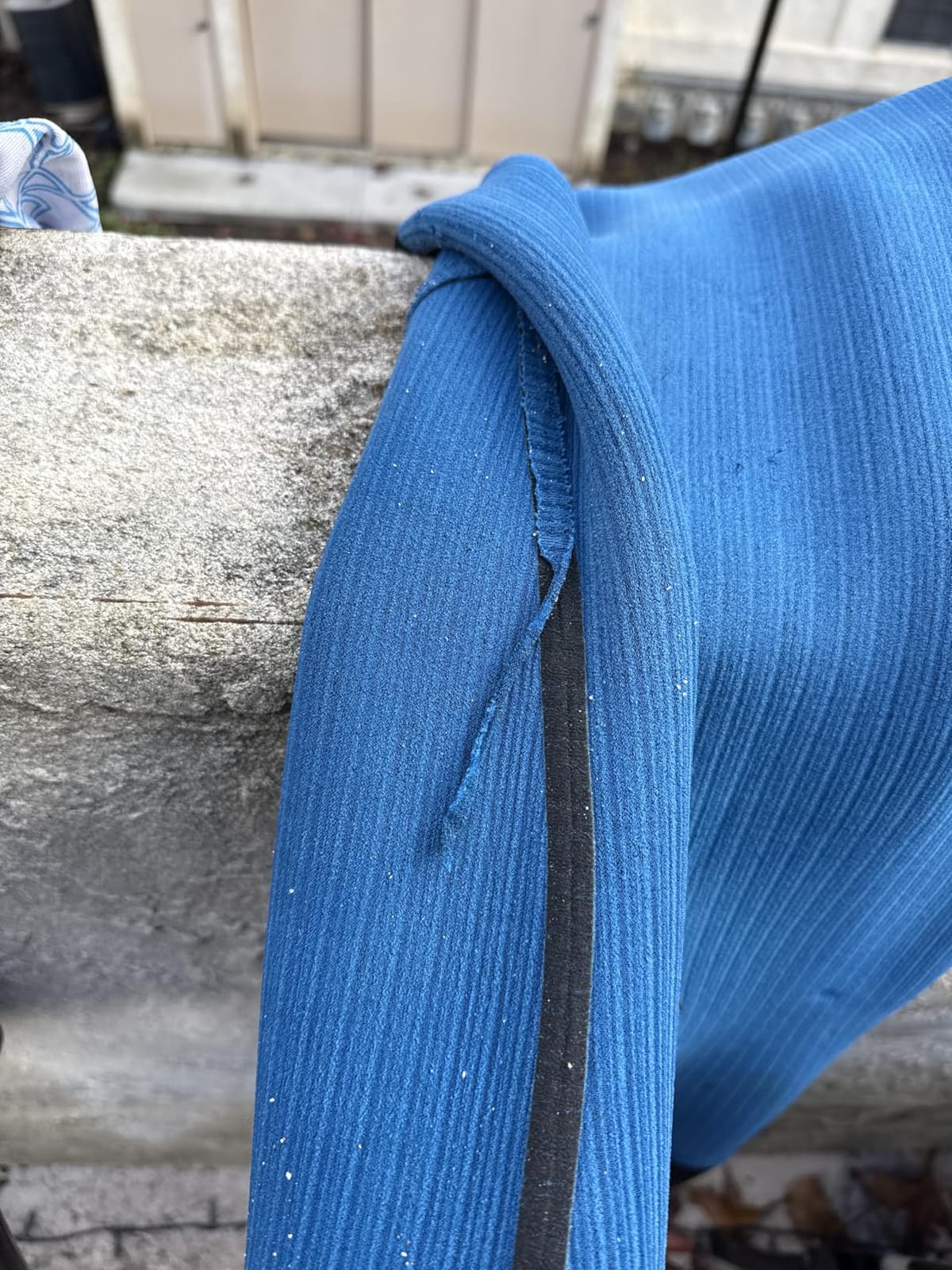
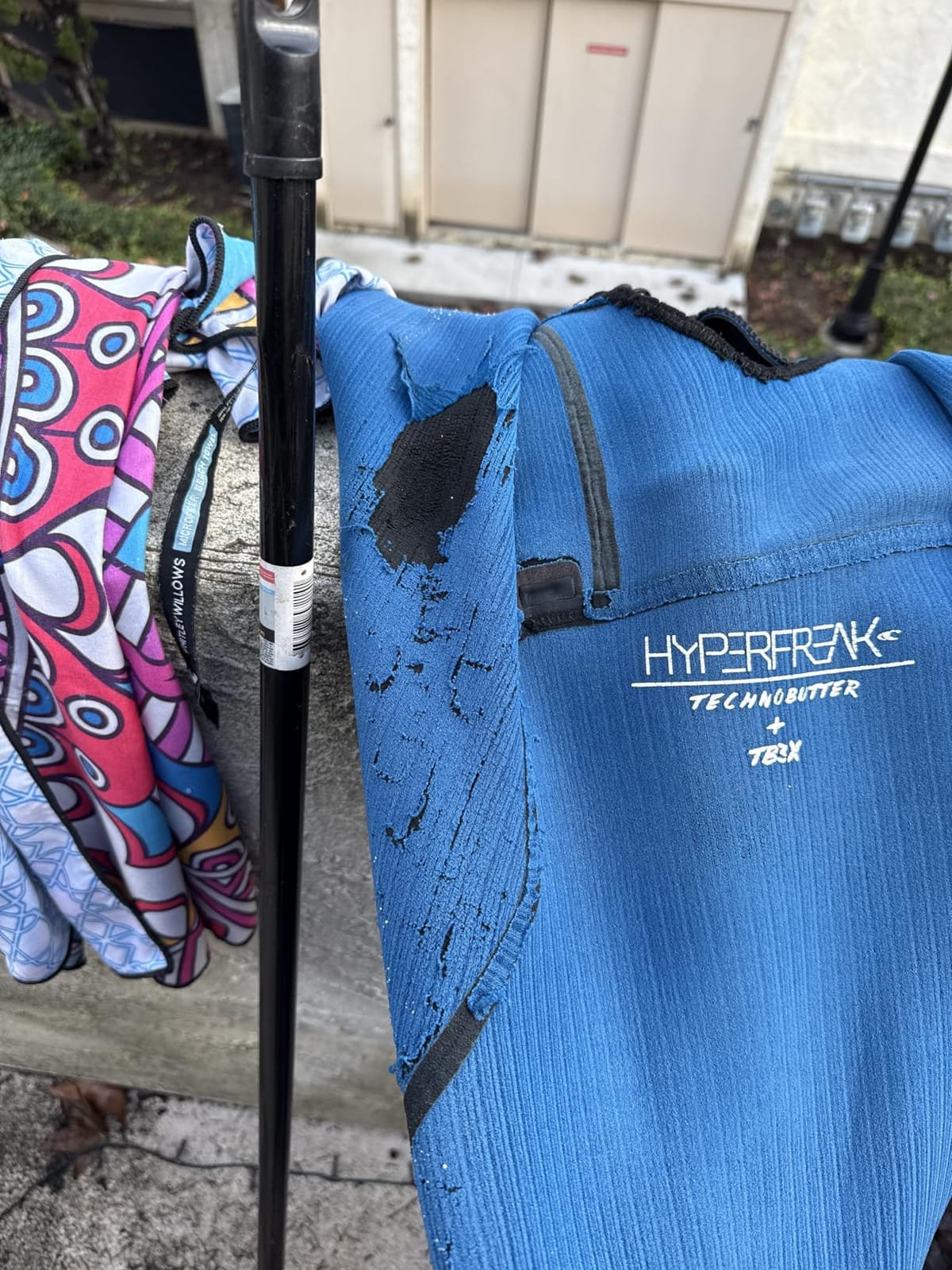
Owners report threads and elbow fabric wearing through within months of heavy use, and one unit had its zipper pull tab tear off after light handling. That is the main reason the rating sits below the O’Neill Epic despite the premium construction.
Buyers also report the suit is difficult to get into at first and needs practice, and that it runs too warm for some people in mild water. Expect a break-in period on the entry, and check your forearms and elbows after your first few sessions.
9. REALON 4/3mm Full Wetsuit — Best for Men’s and Women’s Cuts
REALON Full Wetsuit Mens Womens 4/3mm Neoprene Diving Scuba Triathlon Wet Suits Cold Water Keep Warm Back Zipper Long Sleeve Thermal Swimsuit
4/3mm neoprene, sealed construction
Thickened hips knees and elbows
Back zipper entry
Pros
- Keeps surfers warm in 60F water for extended periods
- Good seams with no rough edges after repeated use
- Accurate sizing and easy self dressing
- Mens and womens cuts available
Cons
- Check the size chart rather than ordering usual size
- Thinner build than the deepest cold water suits
Most of the suits here are graded as unisex, which in practice means one pattern stretched across different body shapes. This one is offered in a dedicated mens cut and a dedicated womens cut, and for cold water surfing that difference is about more than appearance.
Fit drives warmth more than any other single feature. A suit that is too tight pushes water out of the insulation layer, and a suit that hangs loose traps a thick layer of cold water that your body has to heat. A womens cut gives you a torso length and hip shape that actually matches, so the neoprene sits where it was designed to.
The 4/3mm neoprene uses a fully sealed construction intended to minimise water ingress, and the temperature rating is 68°F. With thickened hips, knees and elbows, plus a sun protection coating layer, it is aimed at the shoulder season and mild cold rather than the extremes.
Owners report keeping warm in 60°F water for extended periods, and praise the seams for having no rough edges after repeated use, which is a comfort issue that gets worse every session if ignored. The back zipper makes self-dressing straightforward.
Why the cut matters more than the label?
A womens cut lets you choose a suit by your actual measurements rather than by a unisex size chart compromise. That improves both warmth and comfort, and for surfing specifically it improves shoulder rotation, which is where wetsuit discomfort usually shows up first.
If you have found that off-the-shelf mens suits bunch at the shoulders or ride up in the back, a dedicated womens cut usually fixes it. The same reasoning applies in reverse for anyone who has been squeezed into a womens pattern.
Where the limits are?
The 68°F rating and 4/3mm build mean this is not the suit for genuinely frigid water, and reviewers note the build is thinner than the deepest cold water suits. If your water drops into the 40s, look at 5mm options instead.
Buyers are also advised to check the size chart rather than ordering their usual size. The review count is small at 45, so the pattern is promising rather than proven, and reading the size-specific comments is worthwhile.
10. yonsub 5mm Hooded Front Zip Fullsuit — Best Hooded Value Pick
Full Wetsuits-5mm 3mm Wetsuit-Mens Neoprene Diving Suit Front Zipper Hoodie Snorkeling Surfing Suits High Elasticity Long Sleeve – Diving Water Sports Solid Colored Autumn Winter Spring Summer
5mm neoprene with integrated hood
Front zipper entry
Quick drying neoprene
Pros
- Integrated hood adds real warmth in cold water
- 5mm gives solid thermal protection
- High elasticity allows full paddling motion
- Front zip makes dressing straightforward
- Protects against sea lice and stings
Cons
- Sizes listed by body weight not height
- Some lengths run long for smaller wearers
This is the only suit in the roundup with a genuinely integrated hood at this level of cost, and that single feature moves it much closer to serious cold water territory. Owners credit the hood with adding real warmth in genuinely cold water, which is exactly the judgement you would expect from surfers who needed it.
A hood traps the single largest heat loss route in the body. Head and neck account for a disproportionate share of heat leaving a surfer in cold water, and no amount of extra millimetres on the legs replaces covering them properly.
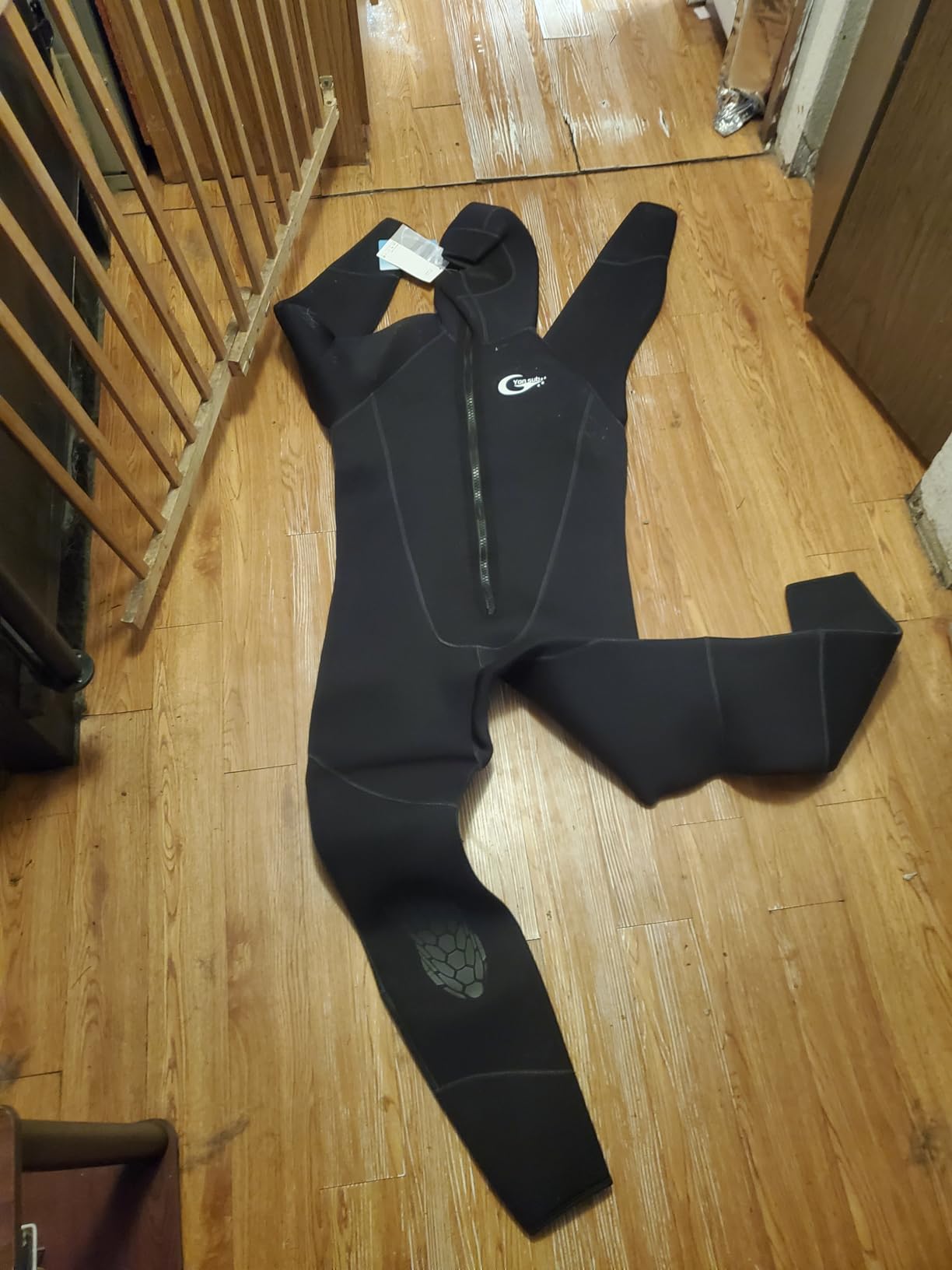
The 5mm neoprene gives solid thermal protection, and high-elasticity long sleeves allow a full range of paddling motion despite the thickness. The front zip is there for secure, easy movement during entry and exit, which is a practical benefit at 5mm.
Two smaller details are worth noting. The neoprene is described as quick drying, which matters a great deal in winter because a wet suit that stays wet is cold on shore, not just in the water. And the suit gives protection against sea lice and jellyfish stings, which is a real benefit for anyone surfing rocky or weedy entries.
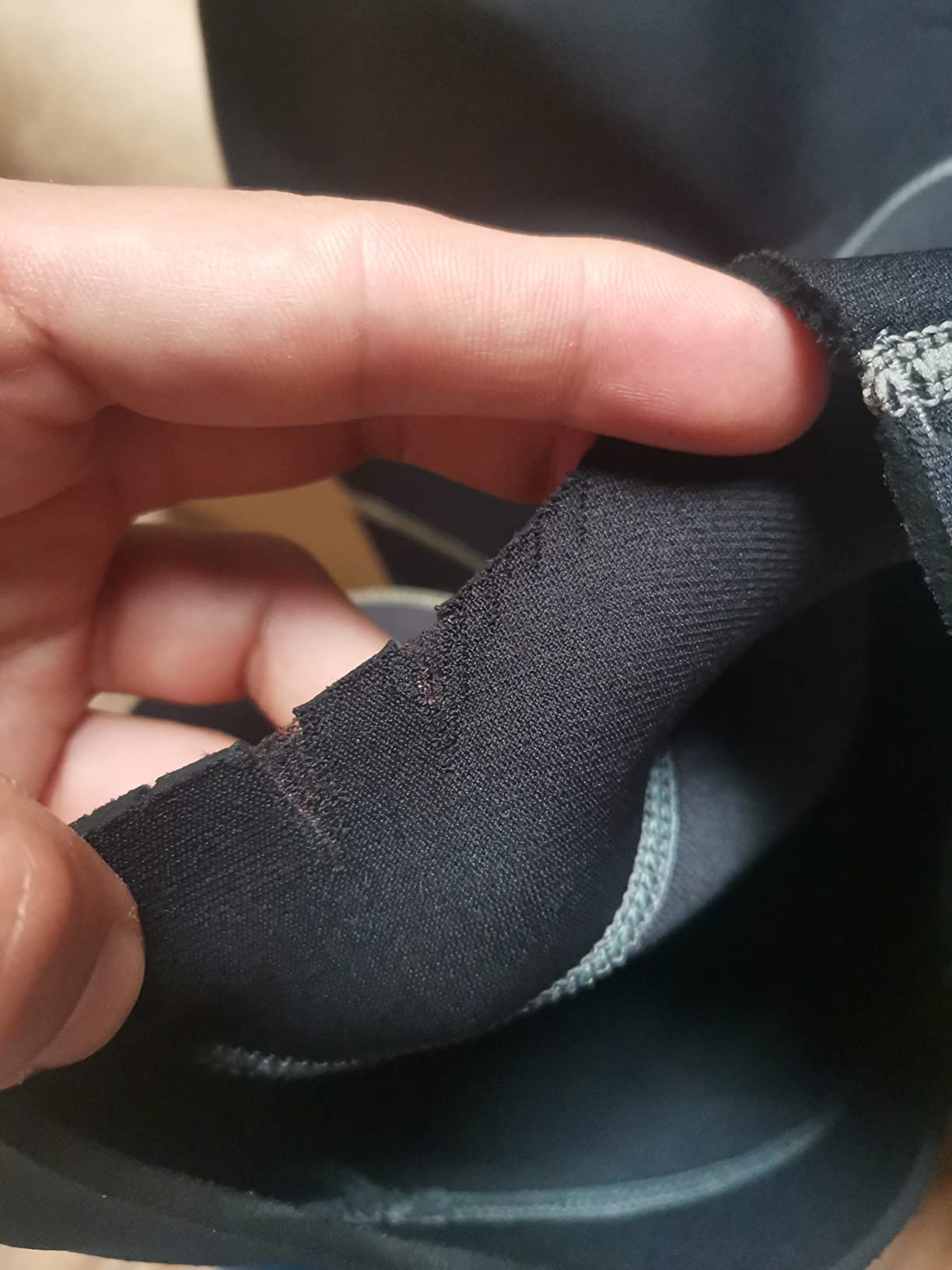
Why a hood changes the whole suit?
If your water runs in the 45 to 52°F band, a hooded 5mm extends your session length more than any other single feature we found. Forum surfers repeatedly describe a hood as the first thing added to a kit rather than the last, and this suit arrives with one built in and properly sealed.
The integrated hood also removes the fit problem that separate hoods create. A separate hood slides and leaves a gap at the neck, and it can ride up during a duck dive, which means cold water runs down your back precisely when you are generating the least heat.
Check the sizing method carefully
Unlike most brands, this suit is sized by body weight in kilograms rather than by height. That is a genuine advantage if you know your weight, but it will catch you out if you are used to grading by height, and there is up to 2cm of manual measurement variance.
Some lengths also run long for smaller wearers. Take the measurement table seriously, and if you are between sizes, check the reviews for the size you need rather than guessing.
11. BARE 5MM Revel Men’s Full Wetsuit — Best for Durability
BARE 5MM Revel Men’s Full Wetsuit | Combines Comfort and Flexibility | Made from a Blend of Neoprene and Laminate | Designed for All Watersports Including Scuba Diving and Snorkeling | Grey M
5mm neoprene fullsuit
Anatomically correct shoulder patterning
2-year workmanship warranty
Pros
- Anatomically correct pattern for shoulder and neck comfort
- Internal cuffs and seals keep cold water out
- Easy to don and doff with a non-snagging back zip
- Armor-flex knees hold up to wrecks and rocks
- Fits non-athletic body shapes better than most
Cons
- Not the warmest 5mm option for very cold water
- MLT cut can leave a water pocket at the lower back
- Some sizes need trying on in store
This carries the highest average rating of any suit we reviewed, at 4.6, and the reason shows up in the reviews themselves. Owners consistently single out the patterning rather than the raw thickness, which is a rarer compliment because it is the part manufacturers cut first when costs rise.
An anatomically correct pattern in the shoulder and neck reduces pressure points, and pressure points become pain points after a two hour session in cold water. A low profile collar with a velcro tab designed not to snag is the second half of that same thinking, because a collar that catches on your hood or beard ruins the seal.
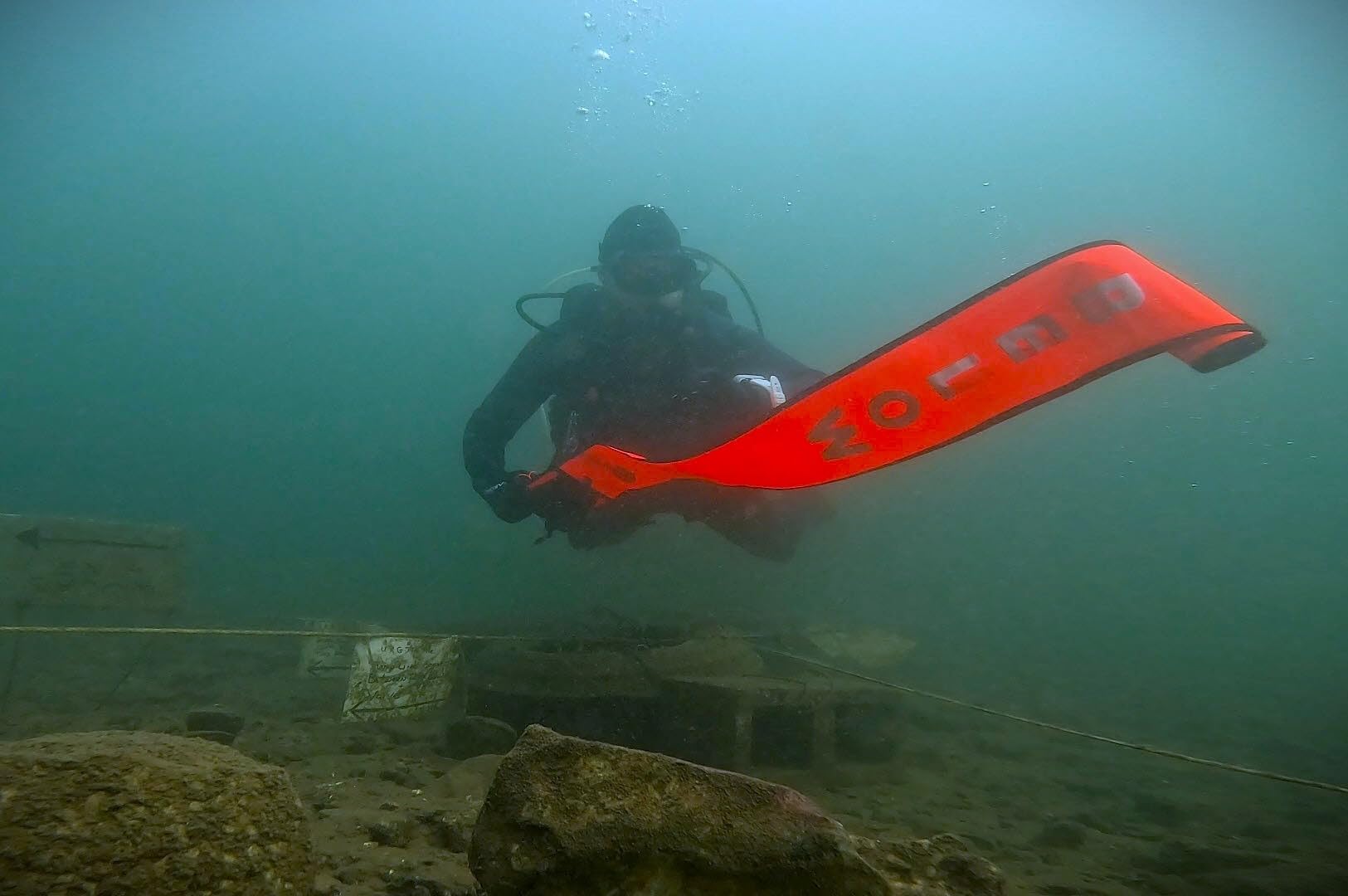
Internal seals below the calves and elbows are the feature we would highlight. Seals at those points stop the water flush that pulls warm water out of the suit, and owners report that they keep cold water out effectively. The extra long heavy duty back zipper is designed for easy donning and doffing and does not snag.
Armor-flex knee pads sit in the high-wear area, and divers and surfers report the suit holds up against wrecks and rocks. The 2-year warranty on workmanship and materials is far longer than anything else in this roundup, which is the clearest signal about expected build quality.
When durability decides the purchase?
If you surf a rocky reef, a river mouth or a break with a heavy board, knee and shoulder failure is what ends a suit, not seam leakage. Owners report this suit lasting through conditions that break faster suits, and the warranty backs that up.
It is also a good choice for divers and cold water swimmers who need one suit across several activities, and reviewers note it fits non-athletic body shapes better than most branded suits, which is a genuine comfort advantage.
The honest caveat on warmth
Owners are clear that 5mm alone is not the warmest option for very cold water, and you should layer or move to a thicker mapped suit if your water sits in the 40s. The internal seals mitigate that, but they do not replace more millimetres.
The MLT cut can also leave a water pocket at the lower back, and some sizes may need trying on in store to get the right fit. If you can get to a shop, do it. Otherwise, measure carefully rather than relying on your usual size.
12. XCEL Axis 4/3mm Back Zip Full Wetsuit — Best for Stretch and Quick Dry
XCEL Men’s Axis, Back Zip Full Wetsuit, Easy Entry, High Performance Stretch, 4/3mm
4/3mm ultrastretch neoprene
ThermoLite IR chest panel
Watertight back zipper
Pros
- High stretch neoprene that moves freely
- ThermoLite IR chest panel adds warmth
- No leaking reported across many sessions
- Correct leg length beats most brands
- Handles Northern California winter water
Cons
- Older model design
- Seams and inner lining can degrade after years
- Limited size availability in XXL and XXLS
This is the highest rated suit here at 4.7, and we want to be honest about why it is not the winner. The rating comes from 15 reviews. That is a small sample, and small samples move a lot. We would rather you buy a proven suit than a statistically superior one.
What owners do report is consistent and specific. The ultrastretch neoprene with quick-dry fibres moves freely for surfing, windsurfing and SUP, and the ThermoLite Infared chest panel adds noticeable warmth through the core, which is where surfers lose heat first.
A watertight zipper and Fusion X seam tape at reinforced stress points handle the entry and the high-load areas, and the suit was designed and tested at XCEL’s Hawaii factory. Owners report no leaking across many sessions, and correct leg length, which buyers single out as better than most brands.
Why the quick-dry claim matters in winter?
Quick-dry fibres change shore time more than most buyers expect. A suit that dries between sessions and overnight is warm on the beach instead of cold, and the surfing-waves and Malibu crew communities both surface the same recurring problem: a wetsuit that freezes on shore between sessions.
One owner reports the suit runs warm enough for Northern California winter water with a 2mm hooded overshirt, which is a useful layering data point for anyone in that range.
Why we stopped short of recommending it outright?
The sample size is the main reason. Fifteen reviews cannot confirm seam longevity, and owners already note that seams and the inner Lycra lining can degrade after several years of use, which is exactly the kind of thing a bigger sample would reveal more reliably.
It is also an older model design with an older profile, and size availability in the largest XXL and XXLS is limited. If you are buying for a small-to-regular adult in the 50s to upper 50s water, the stretch and quick dry are worth a look. For a bigger sizing or a long-term buy, choose a suit with deeper review history.
Cold Water Surfing Buying Guide
What thickness do I actually need?
Start with the coldest water you expect to surf, not the average. Most surfers under-buy here, because the suit feels warm in the first ten minutes and the chill arrives slowly. A suit that is too thin works perfectly in 55°F and becomes genuinely dangerous in 48°F.
Read thickness notation carefully. 4/3mm means 4mm through the torso and 3mm through the arms and legs, and the thinner sections are what let you paddle. A flat 5mm suit is thicker everywhere and considerably more restrictive. Mapped suits such as the 5/4/3mm add a 3mm section in the legs again, which is the difference between surfing and swimming.
If you surf below 45°F regularly, a single suit will not carry you. The realistic kit is a 6/5/4mm or 6/5mm hooded fullsuit with 7 to 8mm booties and 5mm mitts, and even then session length discipline matters more than any spec.
Hooded suit or separate hood?
A hood is effectively mandatory below 50°F, and it is a meaningful upgrade as low as 55°F for anyone who feels the cold easily. The head and neck are the largest single heat loss route on the water, and covering them costs you almost nothing in flexibility.
Integrated is better than separate where you can get it. A separate hood can ride up during a duck dive and leave a gap that runs cold water straight down your back. If you are stuck with a non-hooded suit in cold water, treat the hood as the first accessory to buy, ahead of gloves.
Seam construction: the one spec that decides warmth
This is the most important line on any cold water wetsuit listing, and most buyers ignore it. Three constructions exist, and only one belongs in a suit you will use in 50°F water.
Flatlock: threads pass through the neoprene on both sides, leaving visible stitch holes. Fast and flexible, and it leaks. Forum surfers list flatlock seams in cold water suits as a deal breaker, and we agree.
Blindstitch: the stitch passes through one layer only, so there is no path through the foam. Better, but the needle holes still allow slow seepage.
Glued and blindstitched: blindstitch first, then glue is applied to seal the seam completely. This is the cold water standard.
Taped: a tape film is heat-bonded across the seam for a permanent seal. Often combined with the above on the highest-wear areas.
The H2 heading on each suit above tells you what it uses. The O’Neill Epic, the Hevto, the Ho Stevie and the XCEL all use glued and taped construction. That is why they hold up in cold water and why budget suits that skip it feel cold after an hour.
Neoprene type and why it changes the fit
Neoprene is a foam filled with millions of sealed gas bubbles, and those bubbles are the insulation. Your body warms a thin layer of water inside the suit, and that warmed layer becomes the barrier. More thickness means more gas trapped, which means more warmth and more bulk.
Petroleum-based neoprene is the baseline. Limestone neoprene is lighter, softer and more flexible, and it is what the Ho Stevie uses. Yulex is made from natural rubber rather than petroleum, which changes the feel again: it is the least flexible of the three and generally the most expensive.
Finish matters too. Smooth skin suits shed water and block wind better, which is why some cold water brands favour them. Double-lined suits feel warmer against the skin but can trap water, and divers report overheating on the paddle-out followed by rapid chilling on the outside back, especially with double-lined construction in cold conditions.
Sizing: the size-down rule and its exception
The standard advice is to size down, and the mechanism is worth understanding. A slightly undersized suit stops water flushing through it once you are in, your body warms that small amount of water, and that becomes your insulation. An oversized suit holds a large volume of cold water that you have to heat, which is slower and drains you faster.
The exception applies to the thickest suits. Brands of 6/5/4mm and similar suits commonly recommend sizing up, because at that thickness an undersized suit genuinely restricts the shoulder and chest and you cannot paddle. The O’Neill Hyperfreak 4/3mm chest zip reviews also report that sizing up a size gives a very good fit for lean builds.
The practical rule: size down in 3/2mm and 4/3mm, and consider the brand guidance at 5mm and above. If a suit is tight across the chest, the cold will beat the thickness anyway.
Boots, mitts and the rest of the cold water kit
Below 50°F your hands and feet are the weakest point of a wetsuit, because they have no circulation to speak of. Gloves or mitts are the first thing surfers add and the last thing they regret skipping. 5mm mitts are the usual winter answer, and neoprene mitts are warmer than glove-style designs because there is no finger separation to let cold in.
Booties matter less in a fullsuit with covered ankles, since the suit cuffs already seal, but a separate 6 to 8mm boot over a thin suit ankle is a genuine upgrade. Check cuff compatibility, because poor glove and boot fit with suit cuffs is a common and avoidable frustration.
Your harness, leash, wax and thermos matter as much as the suit on a sub-40°F day. If you want the wider cold-weather thinking, our cold climate water heating guide covers a different problem, but the shared lesson is the same: preparation beats improvisation.
Wetsuit or drysuit?
A drysuit keeps water out entirely and uses layers for warmth, which makes it the better option below about 36°F or 4°C where no single wetsuit is enough. It is also the answer for anyone who runs cold, since insulation is adjustable rather than fixed by millimetres.
The trade is mobility and practice. Drysuits require a layering system, careful sealing at the neck and wrists, and more time in the changing room, and a puncture in the latex means water in. Most surfers make the switch permanently once they start surfing consistently below 40°F.
Until then, a 6/5/4mm wetsuit with a hood, boots and mitts is simpler and cheaper, and for most surfers it is enough. The crossover point is not a fixed water temperature but a fixed commitment to winter surfing.
Care and storage, and how long a suit really lasts
Cold water accelerates neoprene damage in ways warm water does not, because the suit is wet, cold and salty for longer. Forums ask repeatedly how long a suit should last, and no competitor answers it. In practice, a well-looked-after 4/3mm gives several seasons of regular winter use, and a neglected one fails in one.
Rinse in fresh water after every session: salt crystallises in the neoprene pores and in blindstitch glue lines, and it dries into the foam rather than out of it.
Hang to dry in the shade, inside out: direct sun and radiators cook neoprene and destroy the loft that makes it insulate. Turning it inside out dries the inner jersey properly.
Lubricate the zip with fresh water: a dry zip runs rough and then fails, and zips are the most common failure point on every suit in this roundup.
Store loosely folded, never compressed: a suit left under a board in a hot car loses loft permanently and never recovers it.
Fix small tears immediately: a dab of neoprene cement and a patch keeps a nick from becoming a seam failure across the whole panel.
Loft loss is the invisible one. Used suits look fine and have lost the gas structure that made them insulate, which is why judging a second-hand suit is so hard. Press the palm into the neoprene and wait. If it springs back slowly, the loft is gone and the suit will feel thin no matter what the label says. If your rinse water is hard, the minerals left behind work against the same foam, and our hard well water softener guide explains why.
Frequently Asked Questions
What wetsuit is best for very cold water?
Below 45F (7C) no single suit is enough. Use a 6/5/4mm or 6/5mm hooded fullsuit with 7 to 8mm booties and 5mm mitts, and keep sessions short. In the 45 to 55F band a 5/4mm or 5/4/3mm hooded fullsuit is the correct answer, and a well-sealed 4/3mm with good seam construction handles the low 50s comfortably.
What are the best winter wetsuits for surfing?
For most winter surfers the O’Neill Epic 4/3mm Back Zip is the strongest all-round choice, with glued and blindstitched seams and the deepest review history in its class. The yonsub 5mm hooded is the best value pick if you surf colder water, and the BARE 5MM Revel is the most durable for rocky breaks. All three use sealed seam construction suitable for genuine cold water.
What are the best surfing wetsuits for cold water surfing in 2026?
The best wetsuits for cold water surfing in 2026 fall into clear temperature bands. A 4/3mm fullsuit covers 50 to 63F water, a 5/4mm hooded suit covers 45 to 55F, and a 6/5/4mm hooded suit with boots and mitts is needed below 45F. The single most important spec in all of them is glued and blindstitched or taped seams rather than flatlock.
What is a good winter wetsuit for surfing?
A good winter wetsuit for surfing is a fullsuit at 4/3mm or thicker with sealed seams. For most surfers the sweet spot is a 5/4mm or 5/4/3mm hooded model, because it adds warmth at the neck and chest without making paddling difficult. Add 5mm mitts and booties below 50F, and treat fit as more important than brand.
What is the recommended wetsuit thickness for winter surfing?
Use 4/3mm for water between 55 and 63F (13 to 17C), 5/4mm or 5/4/3mm for 45 to 55F (7 to 13C), and 6/5/4mm or 6/5mm for water below 45F (7C). A hood is recommended below 50F. These are starting points, and session length, body type and how cold you run all shift the answer in either direction.
Conclusion
Twelve suits, one clear answer. The O’Neill Men’s Epic 4/3mm Back Zip Full Wetsuit is the best wetsuit for cold water surfing for most people, because 1195 owner reviews confirm it stays warm in the 50s, moves well in the shoulders and runs true to its size chart. If your water is colder or your budget is smaller, the yonsub 5mm hooded gets you into genuinely frigid water with a proper hood for very little money.
Match the thickness to your coldest expected water, insist on glued and blindstitched or taped seams, size down unless the brand tells you otherwise, and add mitts before you add another millimetre. Get those four right and the best wetsuits for cold water surfing become an easy purchase rather than a gamble.
Check the current details and owner feedback for your size before you commit, and suit up for a season rather than a session.