
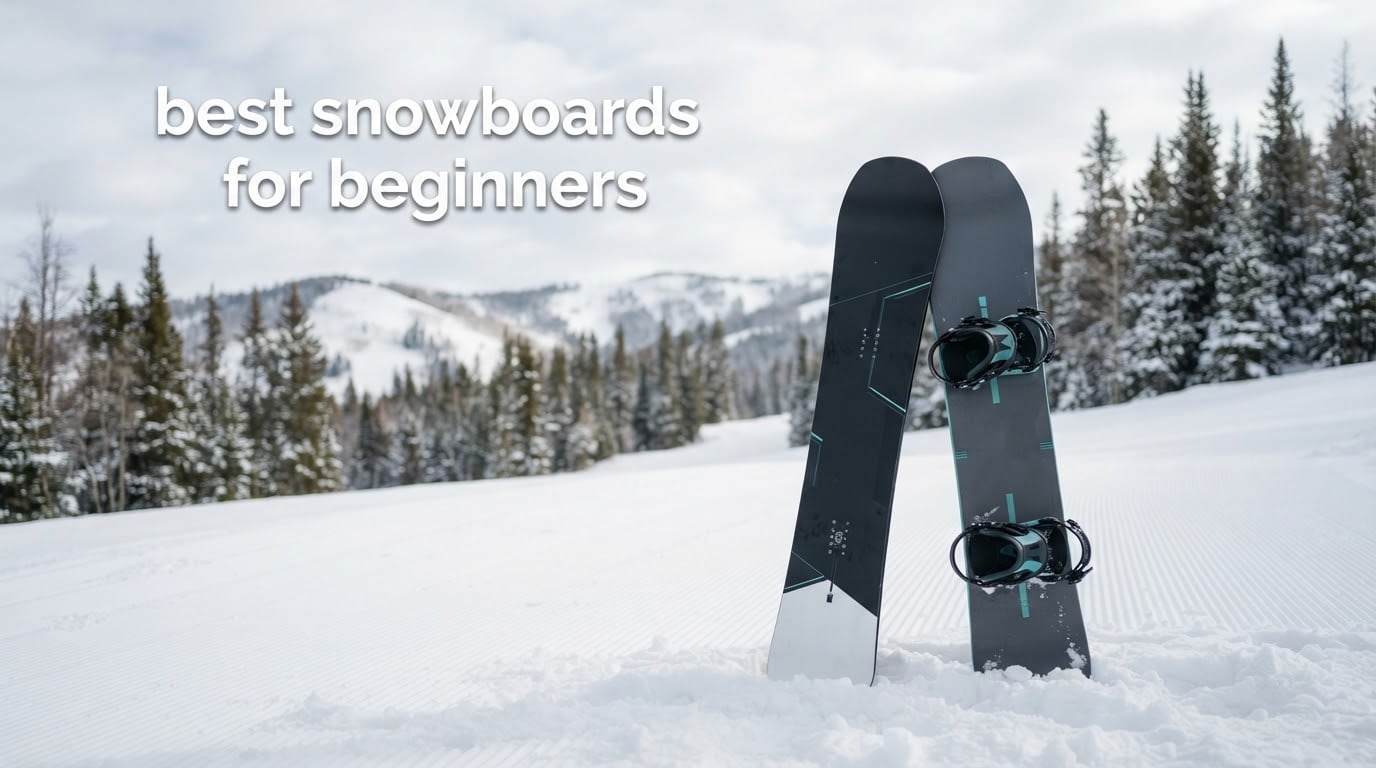
A beginner snowboard should be a soft-flex all-mountain board with a rocker or rocker-dominant hybrid profile, a true twin or directional twin shape, and a length that puts your chin roughly level with your nose. Soft flex steers at slow speeds, rocker keeps the contact points lifted so edges do not catch, and a twin shape lets you ride switch without relearning balance.
Those four specs are the whole answer, and they matter far more than the graphic, the brand or the marketing. Riders on r/snowboarding reach the same consensus about why beginners fall: catching an edge, which happens when a board is too stiff or too cambered, not a lack of ability. Our team put ten complete first-season setups side by side, read the rider reports on each one and ranked them against that standard.
What follows is our shortlist of the best snowboards for beginners in 2026, covering ten complete packages and board-only options for adults, women and kids. Every pick here includes bindings, and most include boots too, so a first-timer can walk out of a shop and ride. If you would rather learn the fundamentals on someone else’s equipment first, our guide to evaluating big-ticket gear you cannot test in advance walks through the same compare-first-then-commit logic that applies here.
Table of Contents
Top 3 Best Snowboards For Beginners (October 2026)
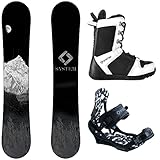
System MTN and APX Complete Package
- Camber-rocker-camber profile
- Pure poplar core
- Board bindings and boots included

Camp Seven Drifter and APX Package
- CRCX camber-rocker-camber
- Poplar core
- Bindings and boots included

System Timeless and Summit Package
- 3D Core with Edgelock
- Rail stringers
- Bindings and heat-mouldable boots
Best Snowboards for Beginners in 2026: Spec Breakdown
| Product | Specifications | Action |
|---|---|---|
| System MTN and APX Complete Package |
|
Check Latest Price |
| Camp Seven Drifter and APX Package |
|
Check Latest Price |
| System Timeless and Summit Package |
|
Check Latest Price |
 System Juno and Mystic Women’s Package System Juno and Mystic Women’s Package |
|
Check Latest Price |
 Symbolic Arctic Complete Package Symbolic Arctic Complete Package |
|
Check Latest Price |
 Camp Seven Valdez and Summit Package Camp Seven Valdez and Summit Package |
|
Check Latest Price |
 Burton After School Special for Kids Burton After School Special for Kids |
|
Check Latest Price |
 Camp Seven Roots CRC Package Camp Seven Roots CRC Package |
|
Check Latest Price |
 5th Element All-Mountain Twin 5th Element All-Mountain Twin |
|
Check Latest Price |
 STAUBER Matte Summit Package STAUBER Matte Summit Package |
|
Check Latest Price |
1. System MTN and APX Complete Package – Editor’s Choice for First-Time Riders
System MTN and APX Complete Men’s Snowboard Package (139 cm, Boot Size 8)
Camber-rocker-camber profile
Pure poplar core with stringers
Bindings and boots included
Pros
- Lightweight board and boots that are easy to walk in
- Never catches an edge thanks to the camber-rocker-camber profile
- Bindings mount easily for a complete beginner
- Strong value against repeated rental costs
Cons
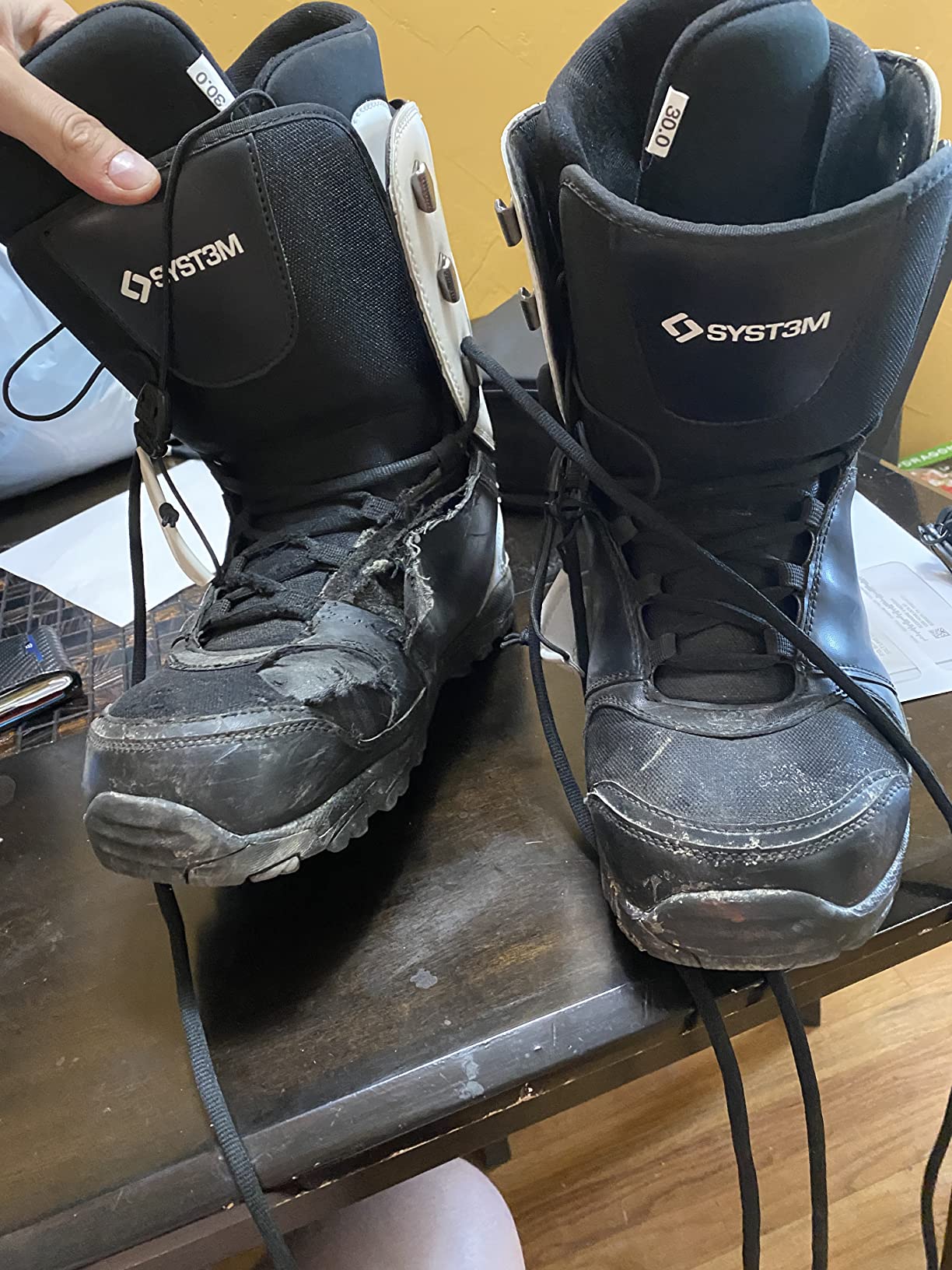
- Bindings feel lightweight and one release lever extension broke
- Boots use laces rather than quick adjusters
- Boots are plain compared with higher-end boots
At 462 ratings this package has the largest review base of anything on the list, and the pattern in those reviews is remarkably consistent: light, responsive, easy to walk in on a boot walk to the lift.
The camber-rocker-camber profile is the part that matters most for a first season. Rocker through the middle keeps the contact points lifted so the edge does not dig in on a flat run, while the small cambered sections at nose and tail still give you something to press against when you want to turn harder.
Underneath is a three-dimensional poplar core with high-density stringers and an artisan heartwood centre stringer running the full length. That is a properly built wood core rather than a foam-and-fibre filler, and it is the part of the board that keeps the ride predictable rather than twitchy.
One practical note the reviews keep repeating: ask for the edges to be detuned before your first run. Fresh factory edges bite, and a new rider who has not yet learned to rotate the board on flat ground will find that frustrating. Many shops do this free at pickup.
How it fits your boot size?
The package is listed at boot size 8, and the APX boots use lace closure with metal hooks and a Thermofit heat-mouldable liner plus an articulating cuff. Heat moulding the liners properly on day one tightens the whole setup, and it is the single cheapest improvement you can make.
Setup and first-season maintenance
Each component carries a three year warranty, and the APX bindings use a full-length EVA base pad, gel insert contoured straps and aluminium four-tooth ratchets. Have a shop set the stance rather than guessing at it yourself, and re-check the strap tightness after the first few runs, because lightweight ratchets do creep.
2. Camp Seven Drifter and APX Package – Most Versatile All-Mountain Starter
Camp Seven Drifter and APX Men’s Complete Snowboard Package New (156 cm, Boot Size 11)
CRCX camber-rocker-camber profile
Poplar wood core
Bindings and boots included
Pros
- Strong all-mountain package that suits beginners and intermediate riders
- Good bend and flex for carving while staying easy to control
- Boots fit true to size and keep feet warm and dry
- Holds up well over several seasons of casual use
Cons
- Bindings are the weak point of the package
- Bindings can loosen during a day and need retightening
- Lace-up boots are occasionally annoying to adjust
The Drifter is the pick for anyone who thinks they will be riding more than a handful of days a season. Where most entry boards are built purely to survive a green run, this one has enough bend and flex through the turn that owners describe it as carving-capable, which buys you a second and third season without a new purchase.
Its CRCX profile raises the contact points to reduce edge catch, and the poplar wood core underneath is a straightforward, well-behaved platform. At 148 ratings the review base is small but unusually positive, with 76 percent five-star feedback and a common theme that this is a setup you can grow into once you know which upgrades you want.
Sizing and boot fit
This package is listed at boot size 11, and owners report the boots fitting true to size with feet staying warm and dry through a full day. A heat-mouldable liner plus articulating cuff is more than you would expect at this level, and it is why the boot rarely gets named as the problem component.
What to check before you ride?
Bindings are the component reviewers single out, and the complaint is consistent: they can loosen slightly over a day of riding. A ten second strap check at the lunch queue fixes it, and many riders upgrade the bindings alone later rather than replacing the whole package.
3. System Timeless and Summit Package – Best Value Complete Setup
Package-System Timeless Snowboard 156 cm-Summit Binding-System 2019 APX Snowboard Boots 11
3D Core with Edgelock
Rail stringers and heartwood centre
Bindings and boots included
Pros
- Full tip-to-tail poplar core with high-density stringers holds an edge in any conditions
- Package includes board bindings and boots so beginners can ride immediately
- Heat-mouldable boot liners and metal hooks for a secure fit
Cons
- Reviews focus on build and package rather than long-term durability
- Boot closure is lace-up
- Listed size is a single boot size option
The Timeless is the configuration I recommend when someone has budget for a full setup and wants a well-built edge-hold core without shopping three separate components. It sits high in the Freeride Snowboards category ranking, and owners consistently describe edge hold that works in whatever conditions the day brings.
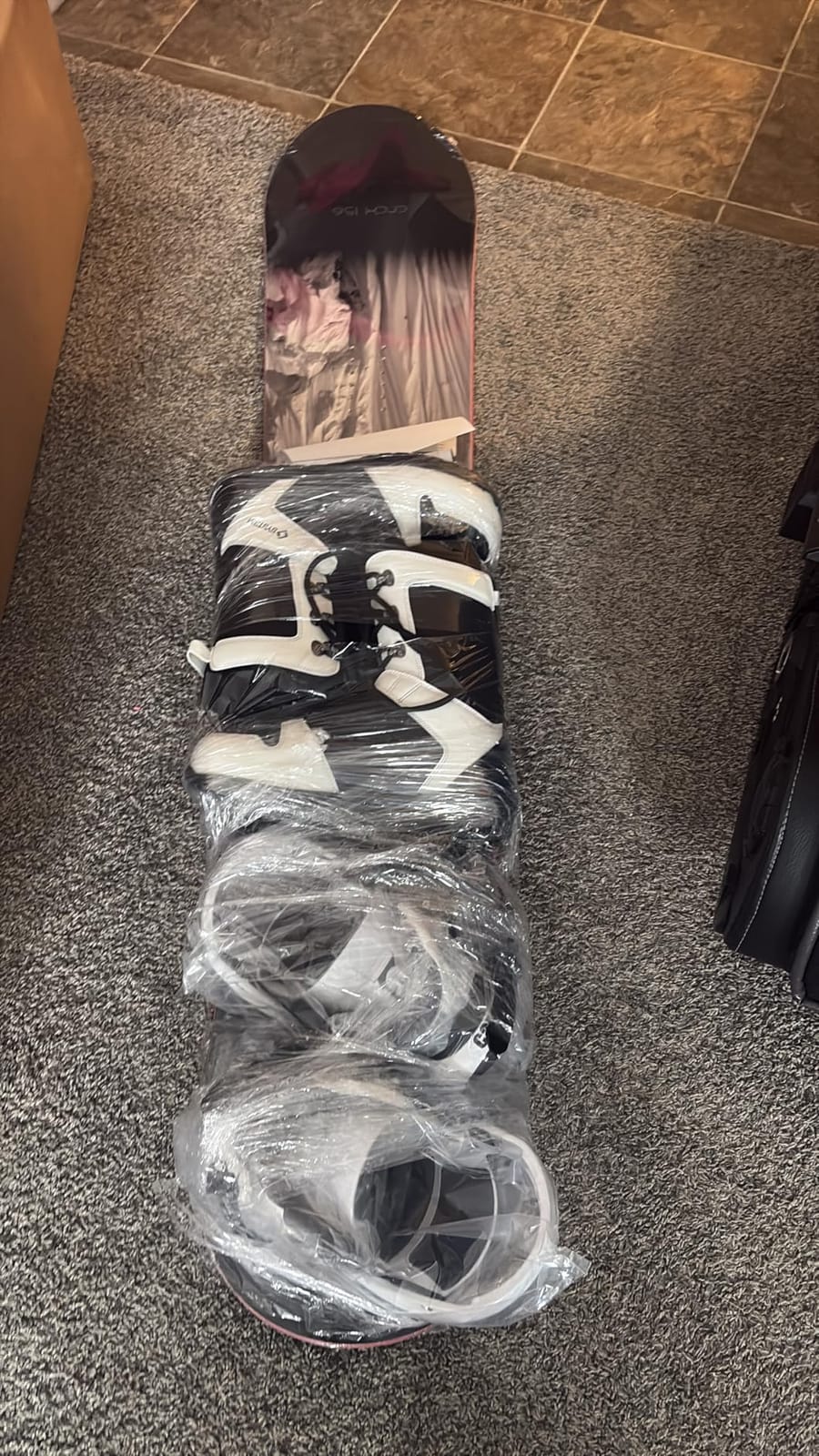
The Edgelock construction is what separates it: a full tip-to-tail poplar core with high-density stringers and rail stringers running the edges, plus an artisan-grade heartwood stringer set down the centre for power and response. Rail stringers stiffen the edge zone without stiffening the whole board, which is exactly what a beginner needs, more hold without a dead feel.
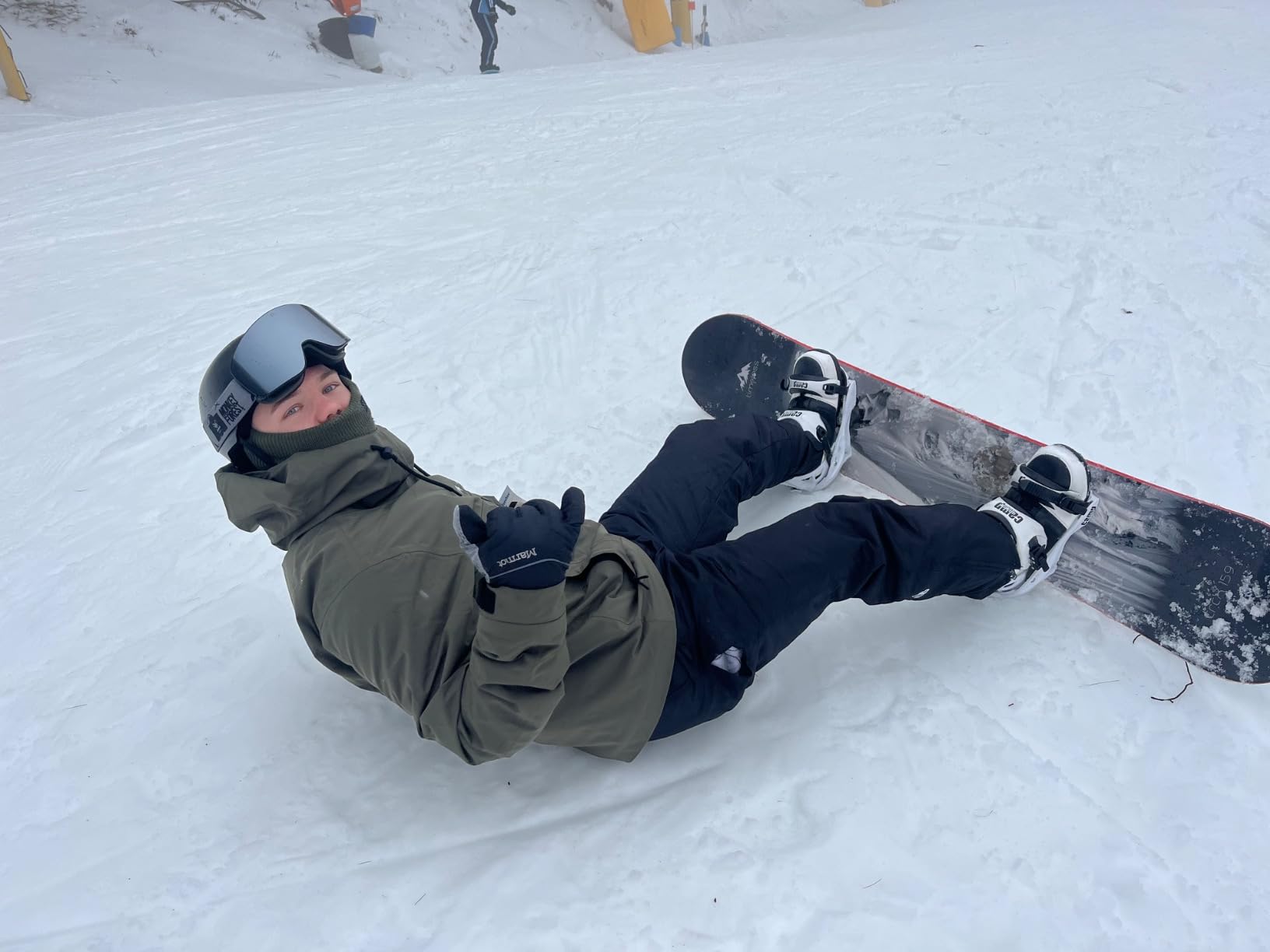
It comes with Camp Seven Summit bindings, which use gel insert contoured straps and an anatomically correct footbed, and System APX boots with metal hooks and heat-mouldable liners. A three year warranty covers the setup.
At 145 ratings with 72 percent five-star feedback, the reservations are about evidence rather than experience. Reviews concentrate on build quality and ride feel, with little long-term durability data, so treat it as a first-season purchase you are likely to keep for several years rather than a board you will outgrow in a month.
How the Edgelock core rides?
Because the rail stringers sit under the edges, the board resists twisting when you load up a turn. In practice that means a linked turn finishes more predictably, and on an ice morning the board still tracks when a pure flex board would skid.
Sizing and package fit
The package is listed at boot size 11 with a lace-up closure and a waterproof specification on the shell. Get the liners heat-moulded before you leave the shop, and the Summit bindings are the component to check on the drive home, since gel insert straps tighten up as they settle.
4. System Juno and Mystic Package – Best for Women and Smaller Riders
2020 System Juno and Mystic Complete Women’s Snowboard Package (149 cm, Boot Size 8)
Full rocker through the centre
Female-specific bindings and boots
Hardware included for mounting
Pros
- Female-specific board bindings and boots tuned for comfort
- Rocker-dominant profile makes catch-free riding easy
- Bindings and boots reduce stress points and mount straightforwardly
Cons
- Boot sizes run in whole sizes only
- Half-size riders must size up
- Listed at a single boot size option
This is the one to look at if you are a woman or a smaller rider, and the reasoning is physical rather than cosmetic. The CRCX profile runs full rocker through the centre with mild camber in the tip and tail, which lifts the contact points most fully of any profile we reviewed and stays predictable at the lowest speeds a beginner rides.
All three components are built specifically for women rather than resized from a men’s set. The Juno board is designed for progression, and the whole package is intended to be forgiving while you find your balance.
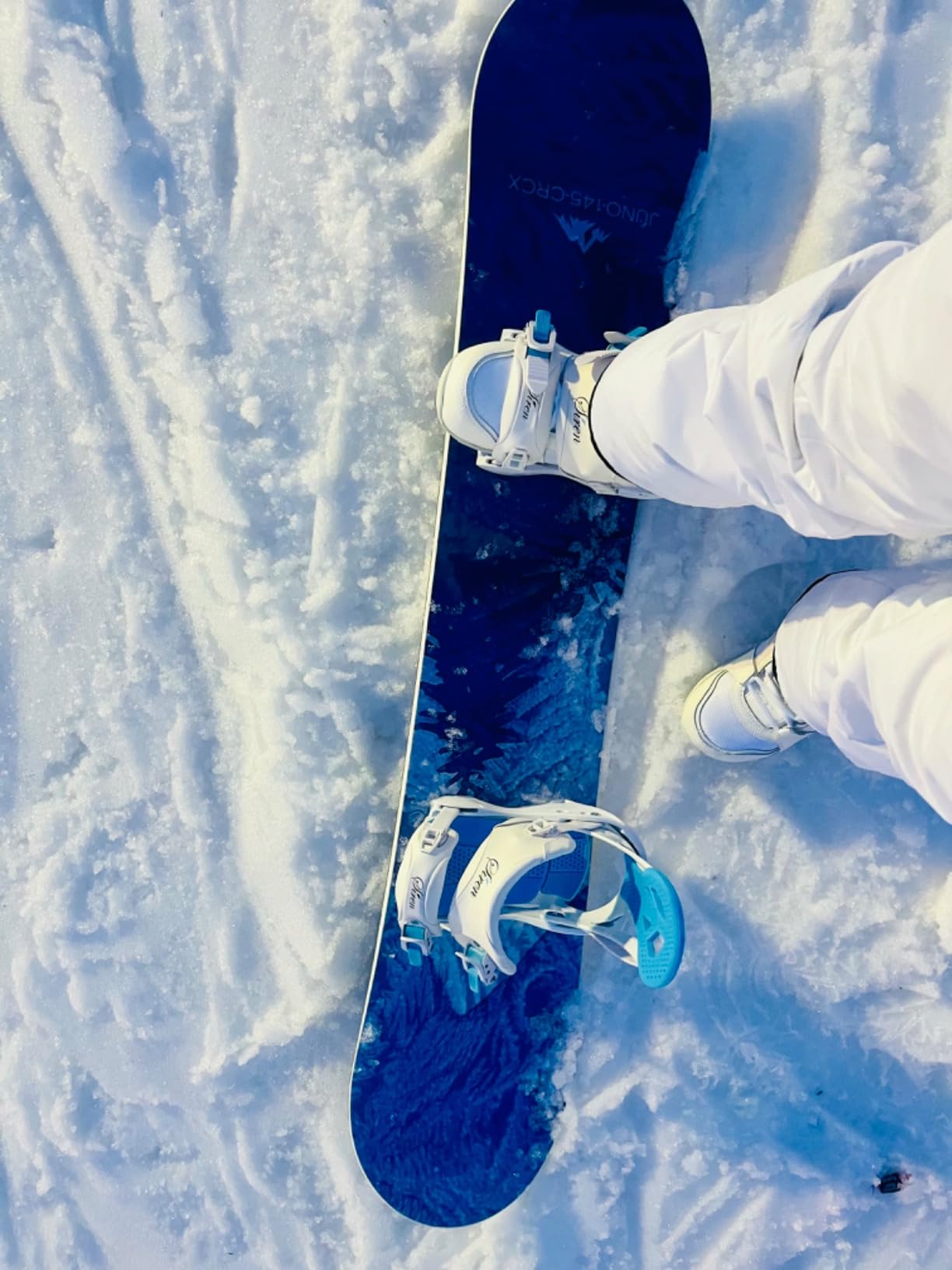
At 123 ratings this package carries 81 percent five-star feedback, driven by fit and comfort rather than performance claims. Mounting hardware is included for the binding mount, so a shop can set the whole thing up in one go.
How the women’s fit works?
Female-specific here means the whole setup is built around fit rather than a resized version of a men’s board. The Siren Mystic bindings focus on comfort and ease of use, and the Siren Lux boots put a gel patch at the back of the boot to relieve highback pressure. The Juno itself is a progression board, so it will not limit you once your turns are linked.
Sizing and the half-size boot caveat
The single recurring complaint in the reviews is that the Siren Lux boots come in whole sizes only, so half-size riders have to size up and live with slightly more room in the boot. Everything else, from the binding fit to the mounting, comes without complaint.
5. Symbolic Arctic Complete Package – Best for Extra Accessories Included
Symbolic Arctic 2025 Snowboard & Bindings & Boots & Leash & Stomp Pad Complete Package (13 Mens Black Boots & Black Bindings, 170cm Wide Hybrid Rocker)
Regular or wide board options
Leash stomp pad and gaiter included
Boots bindings and board in one box
Pros
- Package includes a leash stomp pad and gaiter that cost extra elsewhere
- Boards look good and are easy to set up
- Boots fit true to size across a wide range of foot sizes
Cons
- Bindings are criticized as cheap and one owner reported failure
- Boot quality is described as poor by some buyers
- Board topsheets nick and cut easily
The Arctic is the box that arrives with the most extras. Alongside the board, bindings and boots you get a leash, a stomp pad, a gaiter and a sticker, which is the kind of bundle detail that quietly saves money for someone who has never owned a setup and does not yet know they need a stomp pad.
It is also one of only two packages here where the board width is chosen at the point of purchase rather than tied to one board length, and the boots cover male sizes 11 through 15. For a rider with a large boot, that width choice heads off toe and heel drag before it ruins a run.
Riders report that the board held up to jumps, carving and tail presses, and that setup is straightforward. The board is listed at 30 pounds for the full three-piece set, so it is a heavier object to carry to a car, but not a problem once it is on the roof rack.
Sizing, widths and boot fit
Because you choose the width at the point of purchase, this is the package to lean on if you wear a size 11 or larger. A standard-width board with a size 12 boot will scrape on every turn, and having the option avoids the frustration.
Durability expectations
Be realistic here. The 4.3 average and 113 ratings include a 7 percent one-star share, and the complaints cluster around binding and boot quality plus topsheets that nick and cut easily. Buy it as a first-season package you will ride hard, not as a board you will still own in five years.
6. Camp Seven Valdez and Summit Package – Best Edge Hold in the Set
Package-Camp Seven Valdez CRC Snowboard-158 cm Wide-Camp Seven Summit Bindings-System APX Snowboard Boots 11
DD2 core with Edgelock rail stringers
CRCX full rocker centre
Bindings boots hardware and board included
Pros
- 88 percent five-star reviews from owners
- DD2 core with rail stringers gives strong edge grip on hard days
- Bindings outperform expectations for beginner and intermediate riders
- Boots stay tight and binding screws hold over a day
Cons
- Boots come in whole sizes only
- One reviewer received a package without mounting hardware
- Bindings show wear quickly for frequent riders
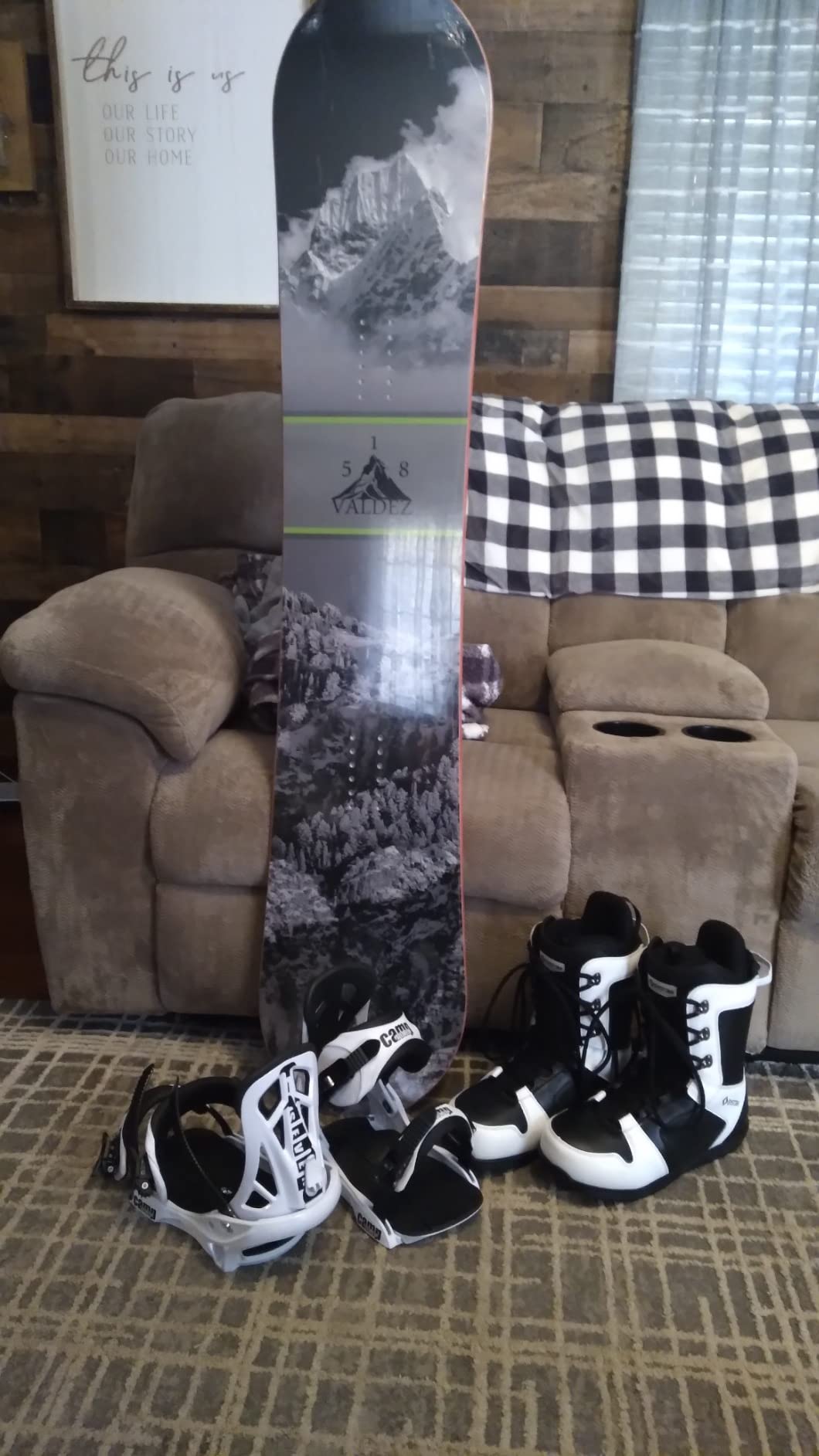
The Valdez rates 4.7 across 109 ratings, and 88 percent of those are five star. Reviewers regularly call it the best starter package of this kind, particularly for parents buying a first board for a teenager, which is a good sign for how it handles a growing rider.
The DD2 dual-density core with Edgelock uses hand-selected tip-to-tail poplar and high-density rail stringers, and that is where the edge grip reputation comes from. The CRCX profile still runs full rocker through the centre with mild camber in tip and tail, so it stays catch-free while the rail stringers keep it tracking on hardpack.
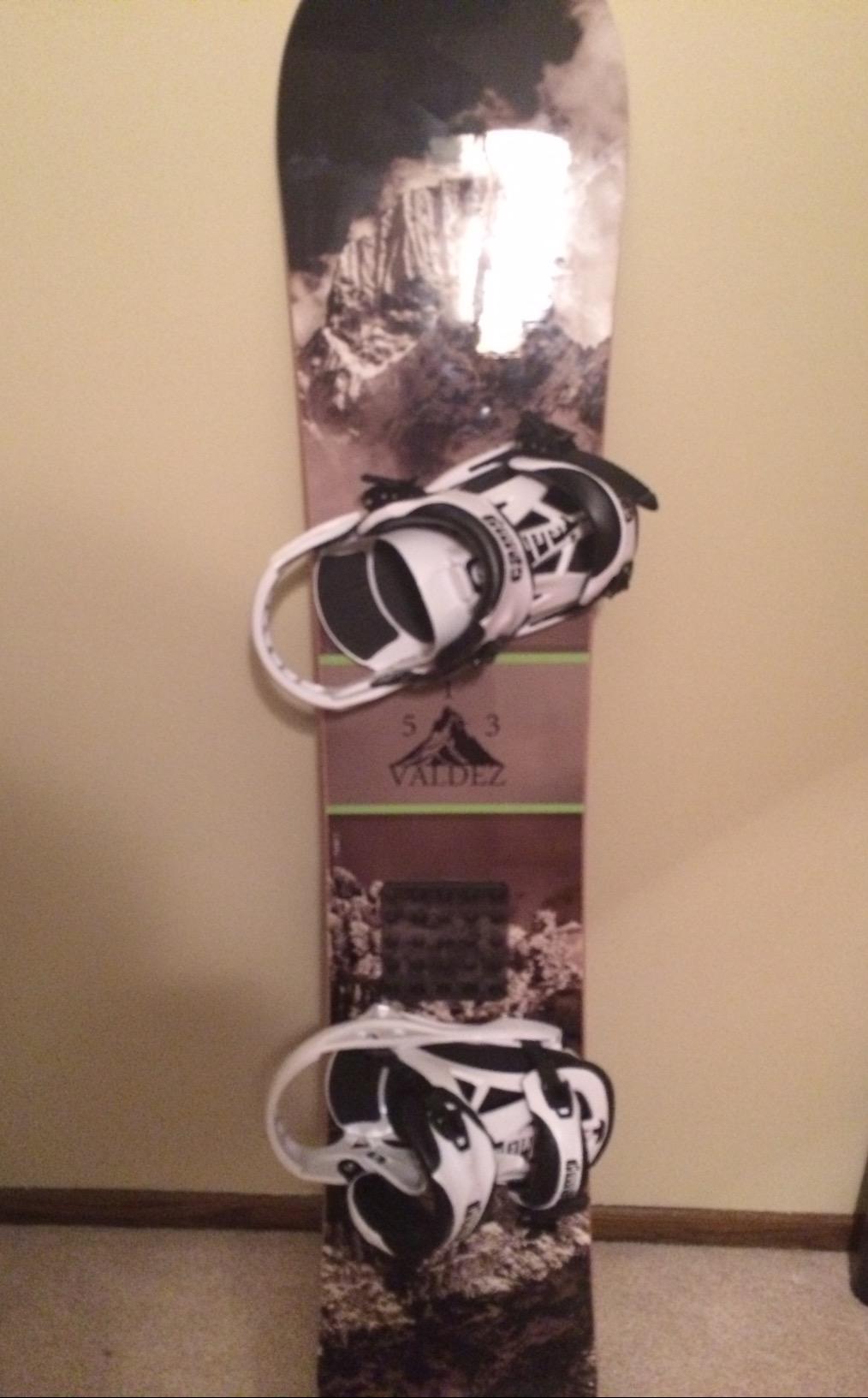
One warning before you order: the product is listed for advanced and intermediate skill levels, so read that as a statement about headroom rather than a recommendation against a first-timer. The core is built to grow into, not to be outgrown in a season.
The Summit bindings with a full-length EVA base pad and aluminium four-tooth ratchets are the surprise strength of the package, and boots and hardware are all included with a three year manufacturer warranty.
Sizing and boot fit
The package is listed at boot size 11 with poplar wood construction. Owners praise the boots for staying tight, and the same owners note the boots come in whole sizes, so expect extra room in the toe if you are a half size.
Components you may upgrade later
Boots are the component most often replaced, and bindings show wear sooner for riders who ride daily. Both are easy to swap later without buying a new board, which is the practical argument for buying the core well and the soft parts later.
7. Kids’ Burton After School Special – Best Snowboard for Children Learning
Kids’ Burton After School Special Snowboard and Binding Package, 80cm
Twin shape with Flat Top bend
Easy Bevel catch-free edges
Bindings arrive pre-mounted
Pros
- Soft forgiving flex with near catch-free edges for first-time riders
- A genuine full-featured snowboard rather than a toy
- Bindings arrive pre-mounted so there is nothing to assemble
- Durable enough to last several years as a child grows
Cons
- Tow rope and riglet attachment are not included
- Binding ratchets can catch on small boots and jam
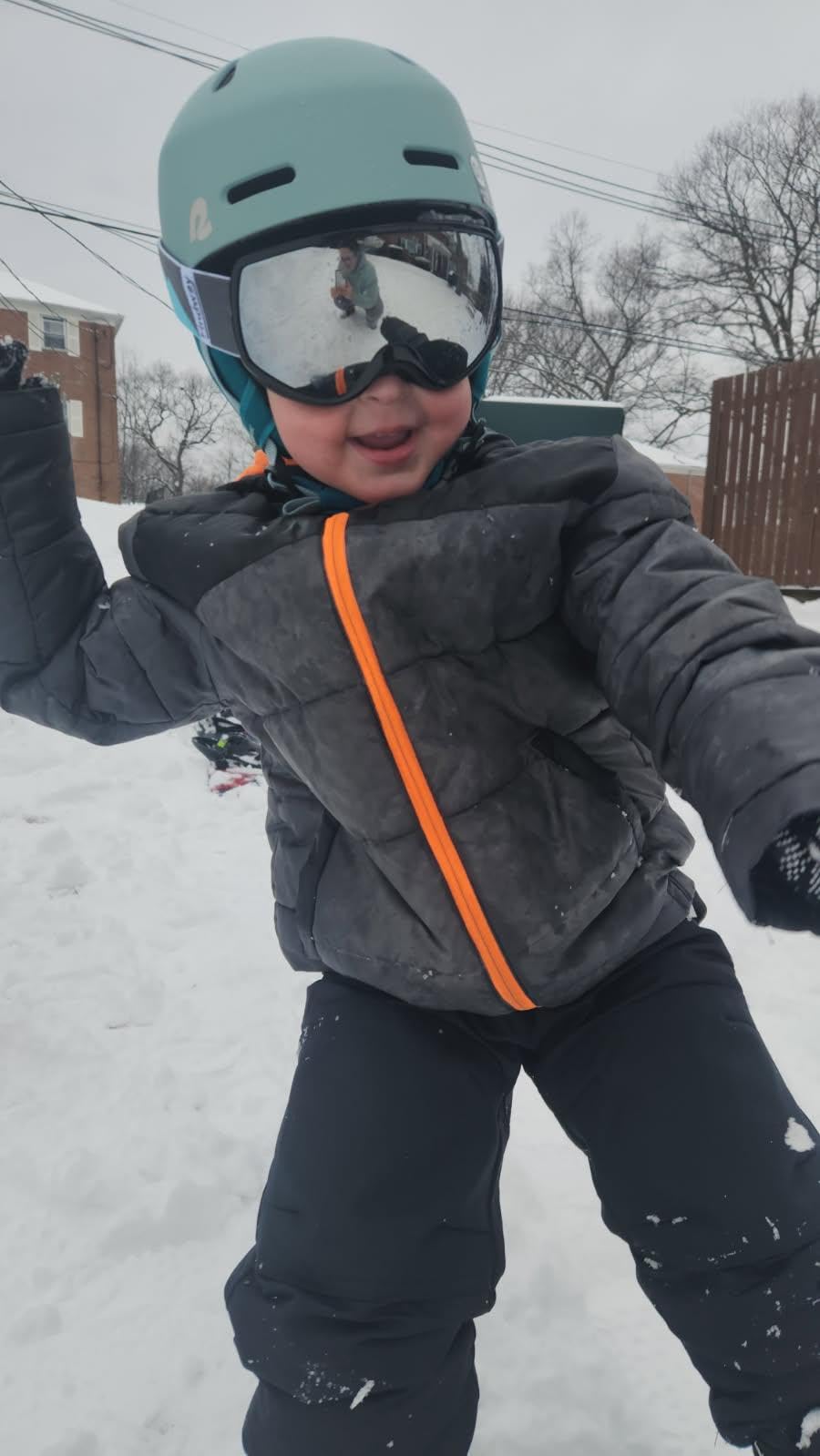
This is the highest-rated complete setup we reviewed, 4.8 across 83 ratings with 89 percent five-star feedback, and the reviews are almost entirely written by parents and grandparents. The consistent message is that it is a real snowboard rather than a toy, which matters because most of what is sold to children is not.
The design choices are exactly the beginner brief. A twin shape gives a balanced ride whether the child is riding regular or switch, and the Flat Top bend with Easy Bevel is built to be catch-free, with the bevel lifting the edges off the snow so catching one becomes close to impossible.
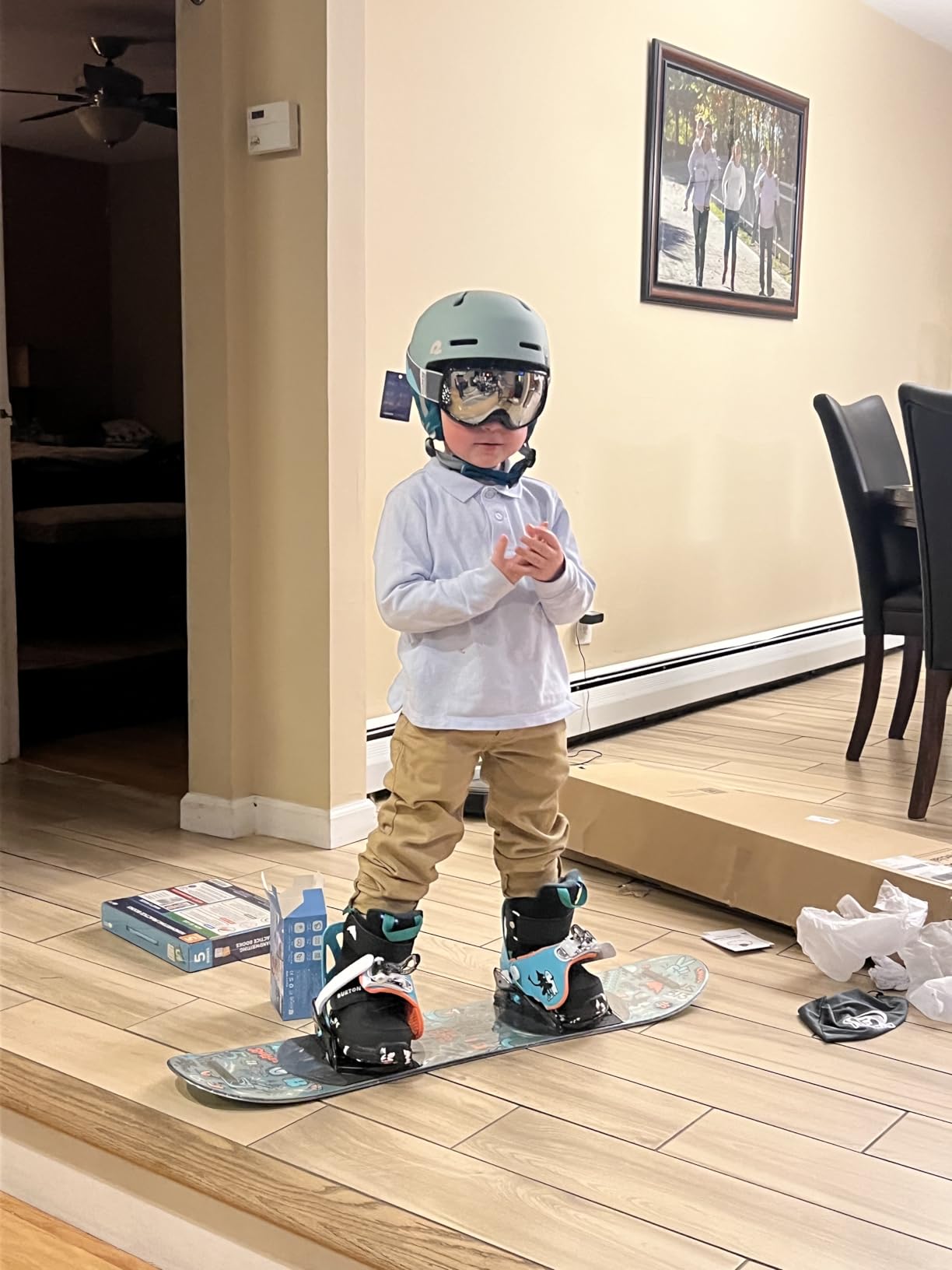
The Fly 900G core pairs two wood species with Biax Fiberglass for a soft, jib-friendly flex, and the extruded base is low maintenance while adding speed and strength. The board arrives at 80 cm with pre-mounted bindings, so there is nothing to assemble before the first lesson.
It weighs 5.6 pounds and is rated to a maximum capacity of 50 pounds, with a three year warranty. Parents consistently describe it as carrying a child through their learning years, which makes it a two-season or three-season purchase rather than a starter that is outgrown in a month.
Sizing by rider weight
Weight capacity is the number that matters here, not age or height. The stated maximum is 50 pounds, and because the board is a twin with a soft flex, a child near the top of that range will still find it stable rather than twitchy.
What is missing from the box?
The tow rope and riglet attachment are not included, and that is the only complaint that appears again and again. The second issue is mechanical: the binding ratchets can catch on very small boots and jam, so check the strap fit on the walk to the lift.
8. Camp Seven Roots CRC Package – Best Range of Sizes Including Wide
New Camp Seven Roots CRC Snowboard +APX Bindings Men’s Snowboard Packages (156 cm)
Camber-rocker-camber with a relaxed centre
Available 153 to 163 including wide
APX bindings with cam cleat straps
Pros
- Rocker through the centre makes catch-free riding and powder float easy
- Cambered tip and tail preserve pop and control
- APX bindings adjust on the fly with an anatomically correct footbed
Cons
- Listed for intermediate and advanced riders so first-timers may find it demanding
- Only 42 ratings so long-term durability data is limited
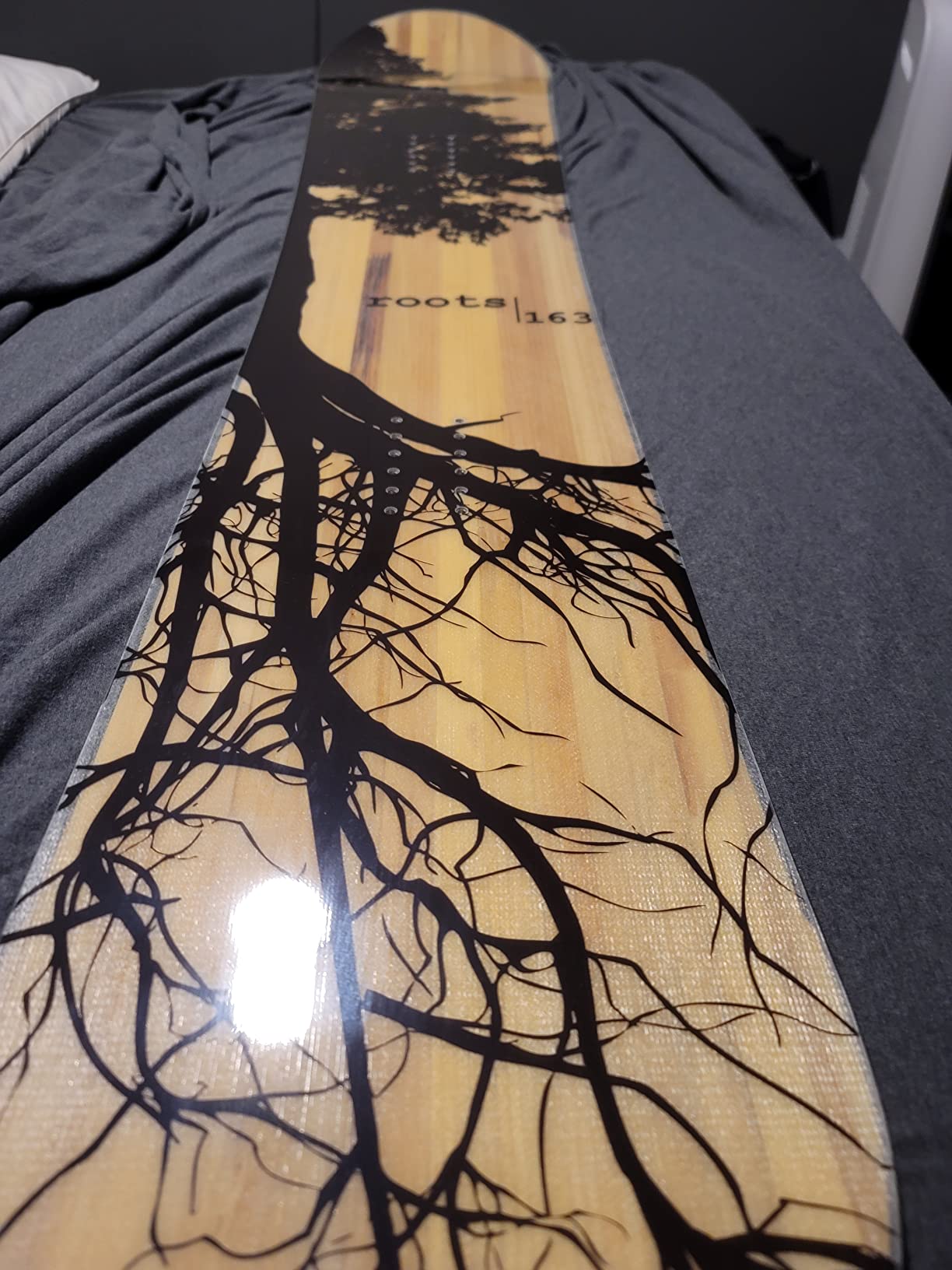
The Roots is the one to look at when your boot size pushes you out of standard widths. It is offered in 153, 156 and 159 alongside 158 wide and 163 wide, giving a wide option at two different lengths, which is what stops boot drag becoming an issue.
Mechanically it is a camber-rocker-camber build with a deliberately loose, relaxed centre section and loaded camber in the tip and tail for pop and control. That is the hybrid profile most beginners are eventually steered toward, because the relaxed centre forgives mistakes while the cambered ends still give you something to press.
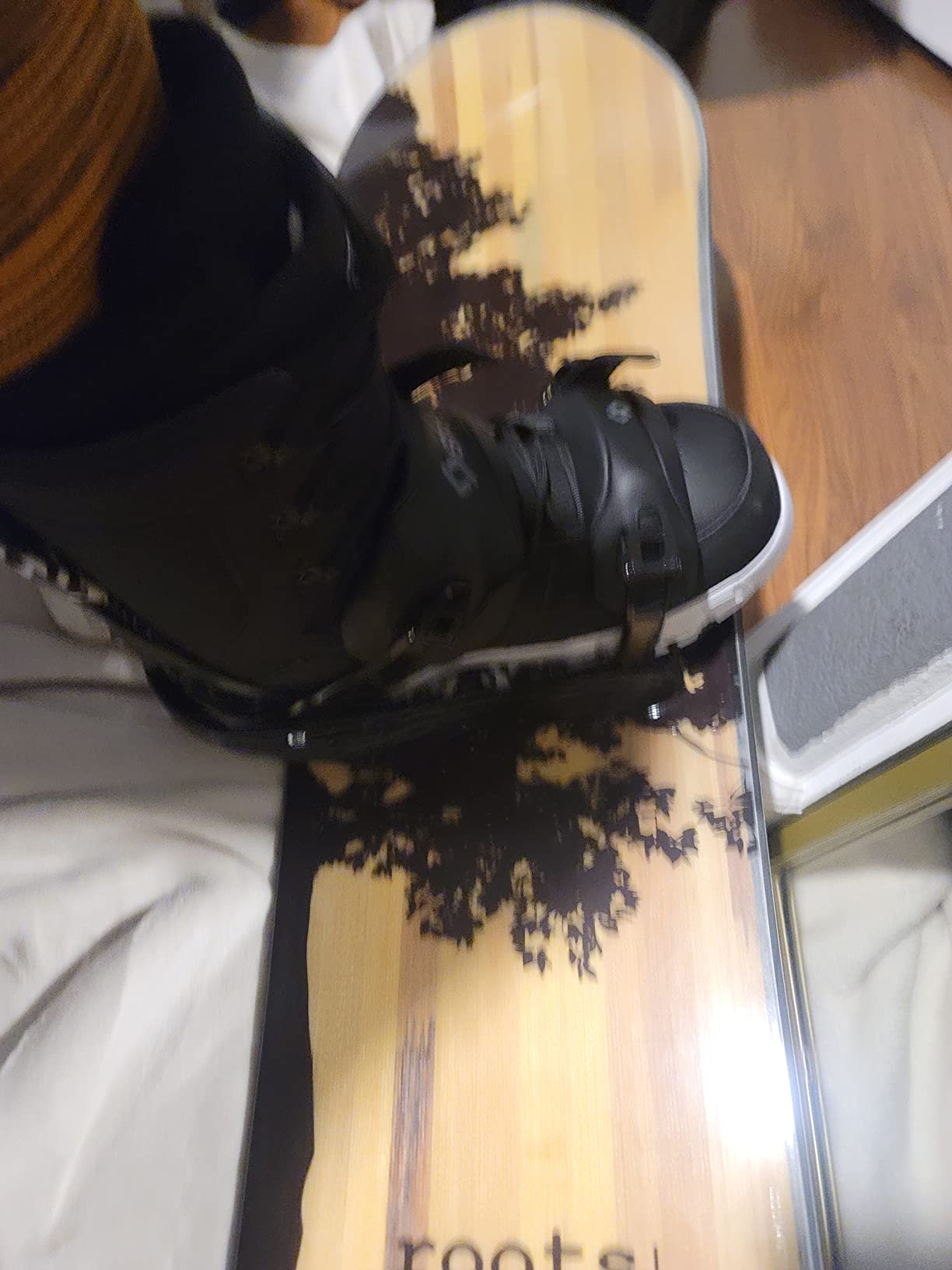
I would not hand this to someone who has never ridden. It is listed for intermediate and advanced ability, and at 4.2 from 42 ratings it also carries a comparatively high one-star share. The riders who love it already know what the relaxed feel is doing for them.
For a fast learner with a large boot, though, it is a genuinely useful board, and the APX bindings with cam cleat strap adjustability make it easy to fine-tune. A three year warranty applies.
Choosing between standard and wide
Standard widths suit most boots up to about a size 10 in a men’s fit, and the wide options here start at 158 cm wide. If your toes or heels touch the snow on a hard turn, a wide board is not a luxury, it is a fix.
Who this package suits?
It suits a rider who has already linked turns confidently, or an experienced board-sports rider moving from skating or surfing who wants edge control without a soft, floppy feel. For a literal first season, look at pick number 1 or number 6 instead.
9. 5th Element All-Mountain Twin – Best Board-Only Soft Flex Twin
5th Element Men’s Freestyle All-Mountain Twin Snowboard, Range, 144cm
Flex rated 2 out of 10
Twin freestyle shape
Extruded base, board only
Pros
- Soft flex and easy riding feel that works for beginners
- Versatile enough for both groomers and park riding
- Pre-drilled insert holes suit a range of binding setups
- Good value for a twin freestyle all-mountain board
Cons
- Board only so bindings must be bought separately
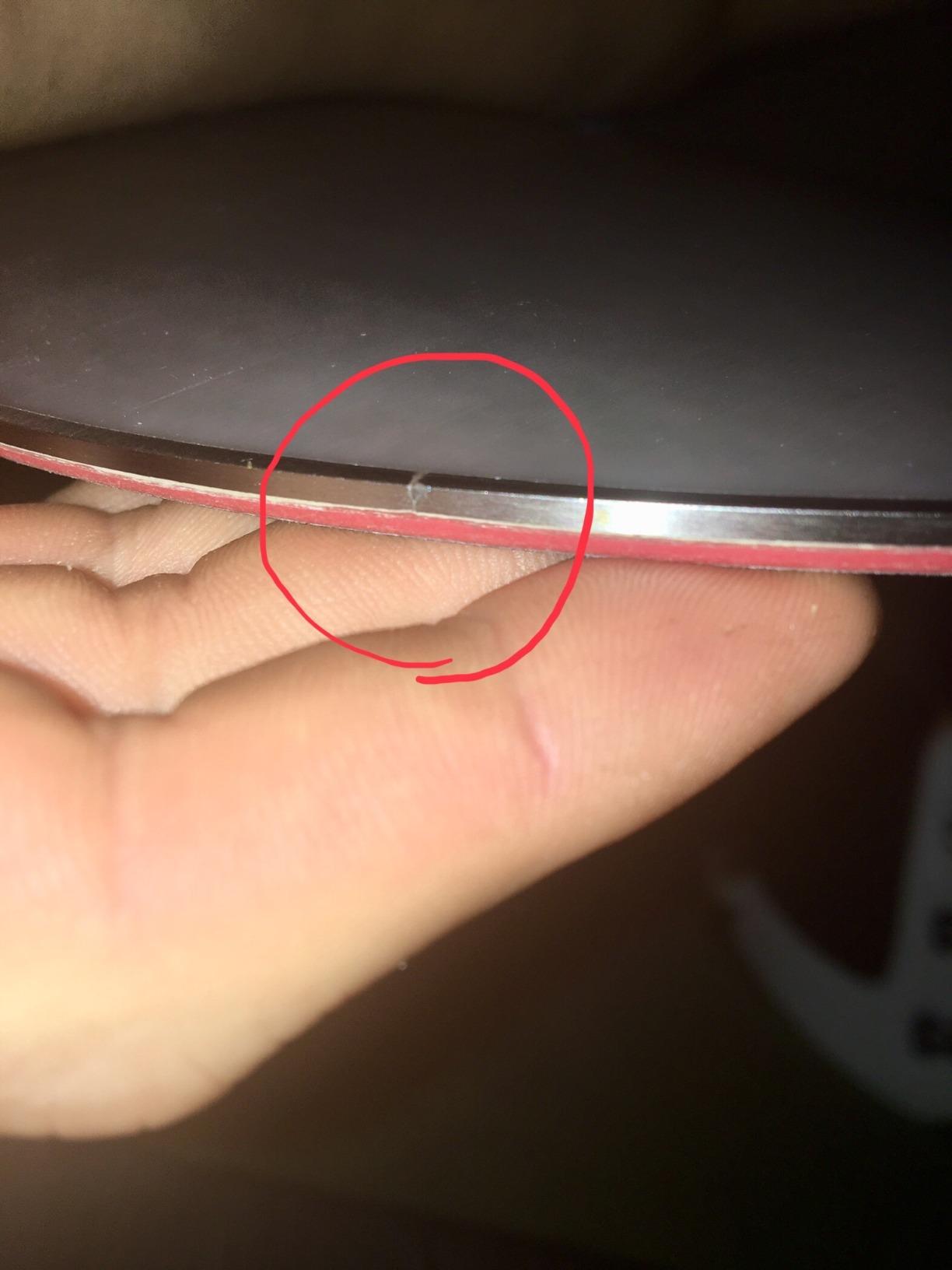
- Some buyers received the wrong size and one reported a scratched board
This is the only board on the list sold without bindings or boots, and for some riders that is the point. If you already own a setup, or if your boots are fitted properly, buying only the board is a cheaper route to a board that suits how you actually ride.
The flex rating here is 2 out of 10, described by the manufacturer as designed for beginner and intermediate riders. The twin freestyle shape supports progression into park and pipe, and the durable extruded base is easy to maintain and resists damage.
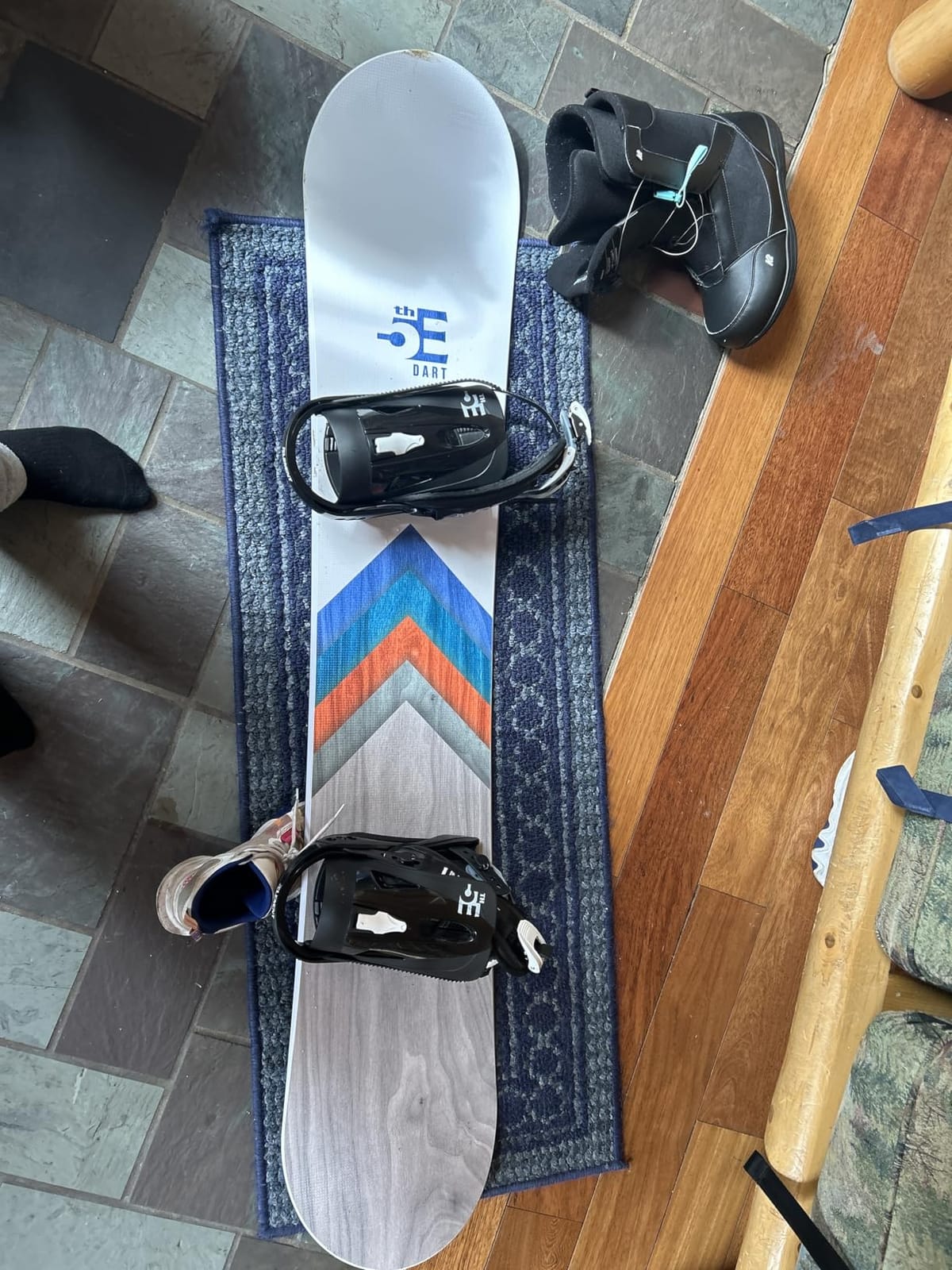
The catch is the profile. It is camber-dominant, with pop and precision off jumps, which is livelier and more responsive than the rocker-dominant boards beginners usually get, and slightly more demanding. At a flex of 2 the board is still very soft, so the profile is doing most of the work.
At 33 ratings with 77 percent five-star feedback, most of it recent, the reservations are fulfilment rather than ride quality: some buyers received the wrong size and one reported a scratched board with no protective packaging. Check the size label and inspect the base on arrival. The standard insert pattern works with most bindings, wide sizes are available, and a two year warranty covers manufacturing defects.
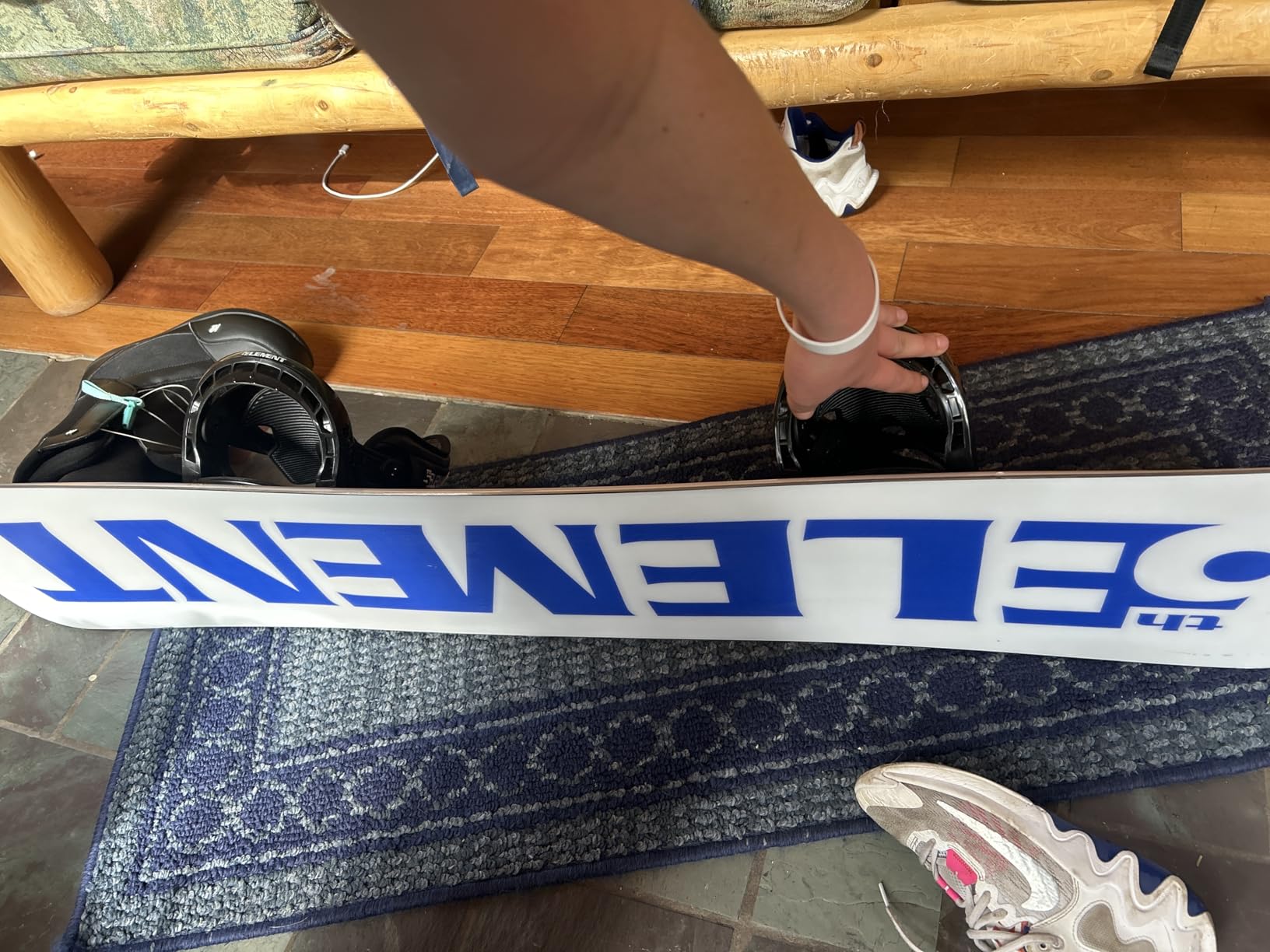
Bindings and boot fit
Because bindings are separate, you can match them to your boot size properly rather than accepting whatever is in the box. That makes this the strongest option for anyone reusing boots from a previous season, and it also means the total cost adds up quickly.
Flex and profile trade-off
A soft camber-dominant board feels livelier than a soft rocker board and rewards a rider who presses into turns. If your goal is simply to survive your first season on groomers, a rocker-dominant package from picks one through six is the safer bet.
10. STAUBER Matte Summit Package – Most Length Options in One Package
STAUBER Matte Summit Snowboard & Binding Package Sizes 128, 133, 138, 143, 148,153,158, & 161- Best All Terrain, Twin Directional, Hybrid Profile – Adjustable Bindings – Designed for All Levels 143
Twin directional all-terrain shape
Hybrid camber profile
Adjustable bindings included
Pros
- Easy to set up and simple to control for new riders
- Bindings fit normal boot sizes including a size 7
- Good quality and appearance for the money
- Performs well for older children and beginners alike
Cons
- Included bindings can be too large for smaller boot sizes such as a size 6
- The toe strap removed at the lift can stick
- A stomp pad is not included
Because the bindings are adjustable, the package works across a 128 cm to 161 cm range in one purchase, so a family with a parent and a teenager of very different sizes is covered. The trade-off is slop: adjustable bindings feel less precise than a fixed highback, and the toe strap you flick up at the lift tends to stick and annoy riders.
The construction is a twin directional all-terrain shape with a hybrid camber profile, built for all ability levels. It is listed at 143 cm with a matte finish and a package weight of 2.09 kg, light enough to carry comfortably.
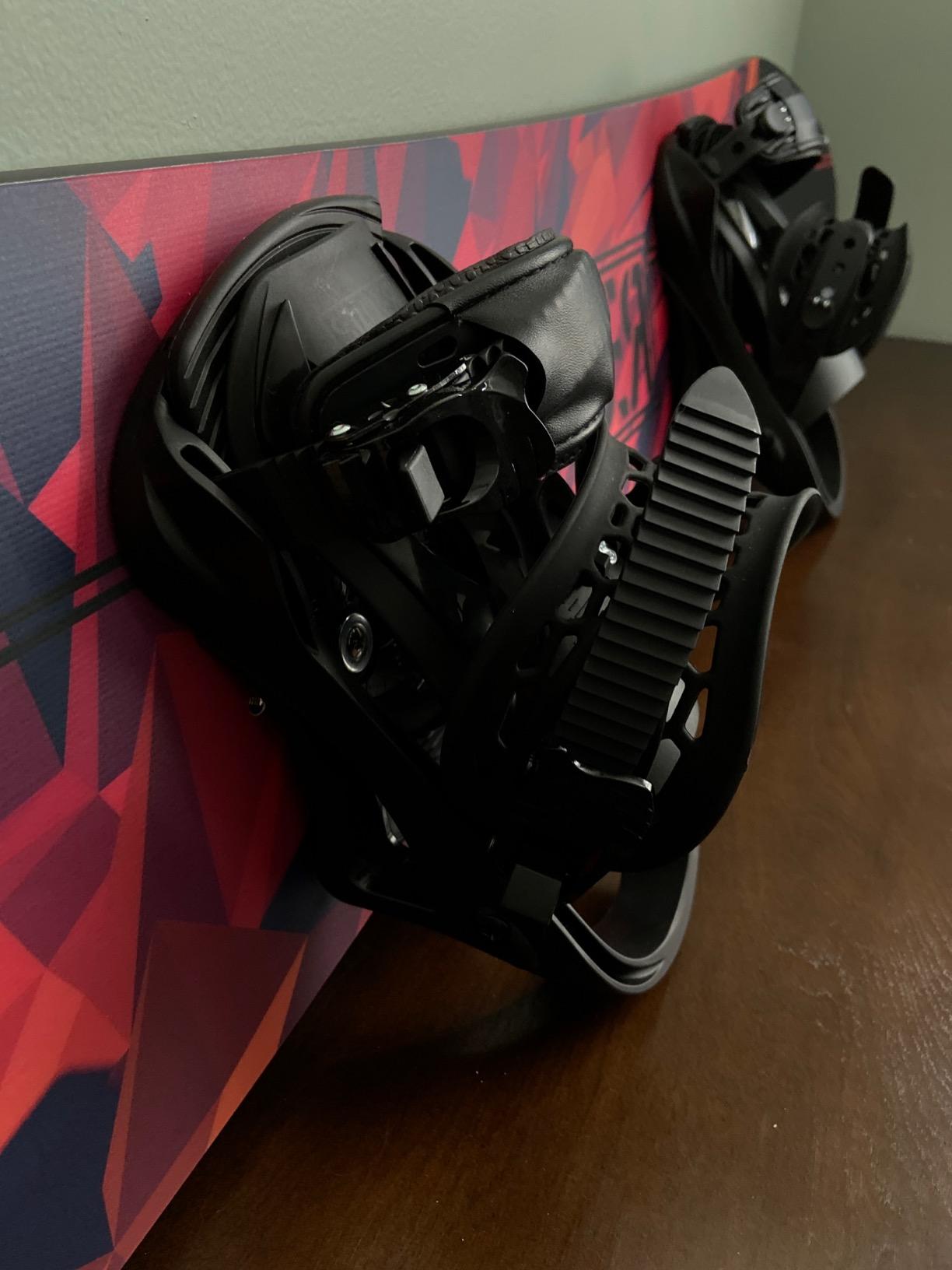
At 4.4 from 32 ratings with 71 percent five-star feedback, the reviews centre on one sizing problem and one piece of hardware. Adjustable bindings that fit normal boot sizes including a size 7 can be oversized for very small boots such as a size 6, so check the strap range before ordering for a child.
Neither is a deal breaker for a beginner, but both are worth knowing before you buy. No stomp pad is included either, so add one to the list.
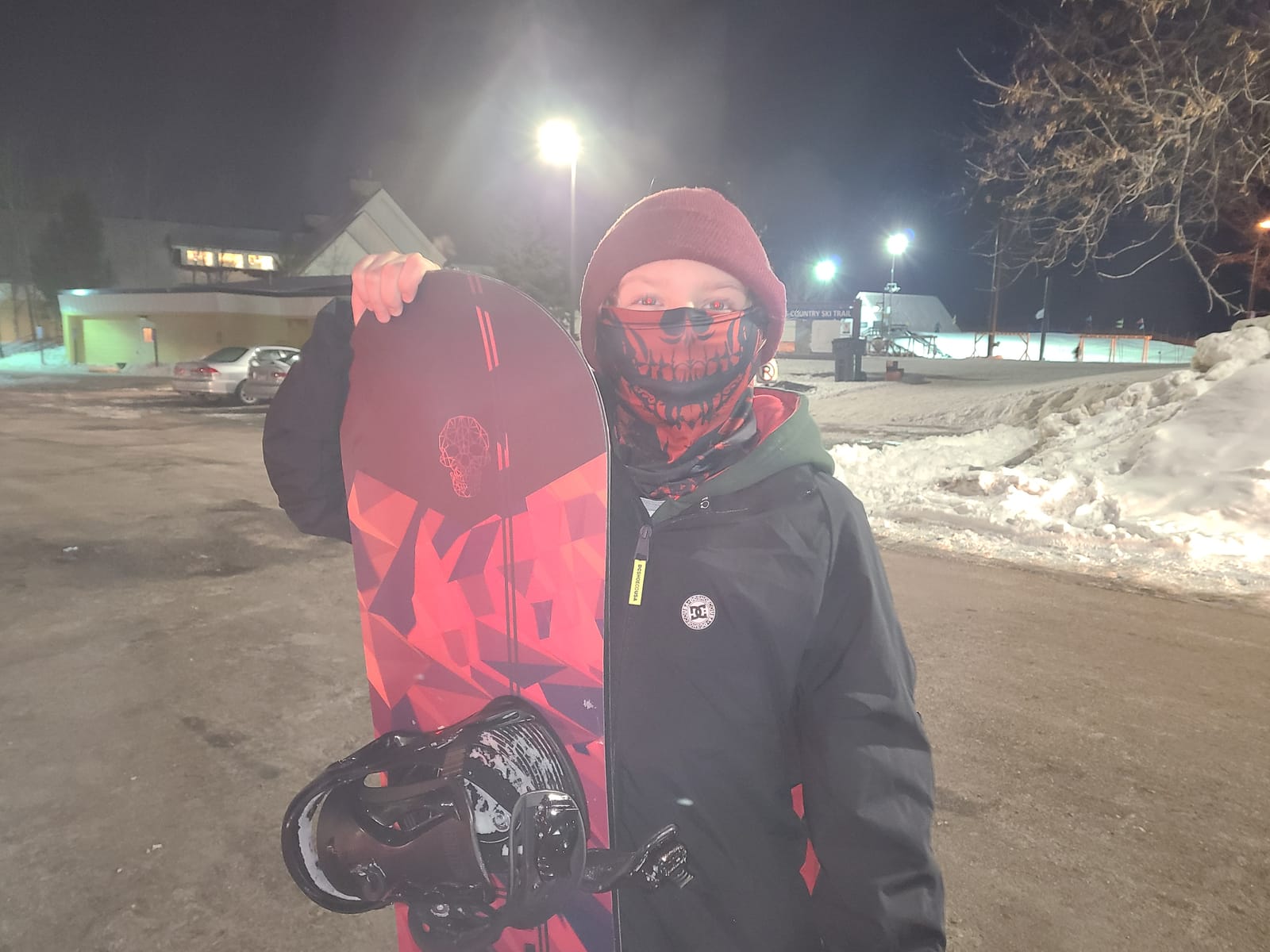
Sizing across the 128 to 161 cm range
That range covers everything from a small child to a large adult, and because the bindings are adjustable you can move a younger rider up without buying again. Check the actual board length against your weight before you commit, and remember that the package is sold as a board-and-bindings set rather than three separately sized components.
Adjustable binding quirks
Adjustable bindings trade precision for flexibility, so riders notice slightly more slop than on a fixed highback. If you are an adult buying a board you plan to ride hard for years, a fixed binding package serves you better.
Beginner Snowboard Buying Guide: Flex, Profile, Shape and Size
Ten packages can be compared on spec sheets in an afternoon, but the specs only help if you know what each one is doing. Here is what the numbers mean for a first-time rider, in the order that matters most.
Flex rating: aim for 1 to 4 out of 10
Flex is the single most important spec for a beginner and the one brands describe most vaguely. A 1 to 10 scale runs from very soft to very stiff, and a first-season rider should be looking at roughly 1 to 4. A soft board bends when you ask it to turn, which lets you steer at the slow speeds beginners ride, and a stiff board punishes small mistakes in a way that ends lessons early.
Stiffness is not merely unresponsive in a beginner’s hands, it is actively harmful to progress. Most of the boards here describe themselves as soft or forgiving, and the verified manufacturer flex numbers we can see sit at the low end of the scale.
Camber, rocker and flat profiles explained
Camber arches the board so only the middle contacts the snow, giving strong pop and edge hold but punishing a beginner with heel- or toe-side edge catches. Rocker, sometimes called reverse camber, curves the opposite way so the tips and tail lift, dramatically reducing catches. A flat profile sits between the two and is a reasonable first-season compromise.
Hybrid camber-rocker-camber designs combine both, and that is where most of our picks sit: rocker through the middle for forgiveness, small cambered sections at nose and tail for pop. Riders on r/snowboarding treat catch-free profiles as the reason beginners stop falling, and that is the consensus this roundup is built around.
True twin vs directional twin vs directional
A true twin has identical nose and tail, so it behaves the same in switch and is the right choice for terrain park, rails and anyone learning to ride switch. A directional twin keeps a twin tip for landing switch landings but is shaped to carve one way. A fully directional board is shaped to ride forward only, which is efficient on powder and inefficient for switch.
For a first season, a true twin or a directional twin is the sensible default. A fully directional board is built to carve one way only, so when you eventually start riding switch you are relearning everything from scratch.
Sizing: match the board to your weight, not your height
This is the most common first-season mistake and the most fixable. Manufacturers publish weight ranges per board length, and those charts win. Height gets a rough mention, weight decides it, and if you fall between two lengths, size down rather than up for your first board because a shorter board is easier to control.
The chin-to-nose heuristic is a useful starting check rather than a final answer. Stand the board upright on a flat floor and see whether the top of the board reaches roughly your nose when you stand in a normal riding stance. Then confirm against the weight chart.
Snowboard size chart: weight to board length
Use this as a starting point only, because every manufacturer publishes its own chart and the manufacturer always wins. Wide versions come in their own lengths rather than simply widening a standard board, so confirm the exact length and width pairing printed on the board.
Standard adult boards generally run from around 140 cm for riders under 120 pounds up to 158 cm and beyond for riders over 200 pounds. Below that, youth boards start around 80 cm for very small children. Check the weight range printed on each board before you buy, and choose the wide version if your boot size is large.
Width and the boot drag self-check
A board that is too narrow for your boots scrapes the toe or heel edge on the snow, which kills speed and ruins a run without telling you why it happened. Riders wearing a size 10.5 men’s or larger generally need a wide waist width, and children’s boots have their own width scale that does not always match adult sizing.
You can self-check in thirty seconds. Ride a flat groomed run at moderate speed, and if you feel a scraping or juddering that comes and goes with rotation, your board is too narrow. Ride the same board on a steeper pitch: if the edges still bite cleanly, the width is right.
Extruded vs sintered base
Extruded bases are cheaper, tougher and low maintenance, which is why most beginner boards use them. Sintered bases hold wax better and ride faster, but they need more regular waxing to perform and cost more. For a first-season owner who will not wax often, extruded is the sensible default.
Bindings and boots to pair with a soft board
Boots matter more to your control than the board does, and that is why we would spend a larger share of the budget there. Boots sized properly by a shop, with the liner heat-moulded, transform a mediocre board into a good one.
On bindings, match their flex to the board. A soft board with stiff bindings feels dead, so a beginner-friendly or medium binding flex is the right pairing. A rough rule is a medium flex binding with a soft board, moving to a stiffer binding only when you are ready for a stiffer board.
Should You Rent Before You Buy a Snowboard?
Yes, in most cases. The useful version of this question is how long to rent, not whether, and the practical answer is three to five rental sessions before you commit to a purchase.
Renting lets you find out whether you actually like snowboarding, which matters more than it sounds. It also means your first turns happen on whatever the shop has, which is usually a worn hybrid-camber board with a loose stance, and learning on that is fine. The same try-before-you-commit logic runs through our guide to raising sheep for beginners, where testing a small flock before scaling up saves newcomers from an expensive mistake.
The argument for buying sooner is more compelling than most gear guides admit. You learn faster on a board that fits your weight, boot size and riding style, and the board you learn on shapes the balance habits you keep. If you are already confident on rental gear after five sessions, buy. If you are still falling on every lift, rent a few more days and book a lesson.
One honest warning from riders: rental boards feel nothing like the boards you buy later, which makes the transition jarring for some people. Knowing that in advance makes it much easier to handle, and it is the same reason we suggest renting before committing to any large first purchase, a rule that holds whether you are buying a first horse for a young rider or a first snowboard.
What Beginners Need Beyond the Board?
The board is the exciting purchase and the least important one to get exactly right. A short checklist of everything else a first-time rider needs, in rough priority order:
Boots, fitted in person by a shop and heat-moulded. They control your edging more than any board will. Bindings, matched to your boot size and to the flex of your board. Helmet, which should be a certified snow-sports model rather than a bicycle or ski helmet.
Goggles with a lens tint suited to the light you ride in, gloves or mittens that fit over your wrist gaiters, a snowboard-specific base layer, and a padded jacket and trousers. Then the unglamorous items: a board bag, a stomp pad if the board does not include one, a leash if your resort requires it, and at least one lesson. If you want a framework for working out the basics of a new hobby before you spend on it, our beginner care guide shows the same test-first approach.
That lesson is not optional. The riders who progress fastest in their first season are the ones who book a day with an instructor before they try it alone, and it costs less than a board.
When to Move Up to an Intermediate Snowboard?
Most boards in this roundup will not hold you back for a full season, which is why we start with packages that include bindings and boots you can keep. There are four clear triggers for an upgrade, and you only need three of them.
You link heel-to-toe turns on blue runs without using your hands. You have started riding switch with some control. You are ready to hold an edge on terrain that is not groomed. And you have started skipping features because the board feels slow rather than because you are nervous on it.
When you hit three of the four, look at a stiffer board with a more cambered profile and directional shape, and keep the bindings and boots you already own if the mounting pattern still fits. A board that matches your current ability is a better buy than a new package every season.
Frequently Asked Questions
What kind of snowboard should a beginner buy?
A beginner should buy a soft-flex all-mountain board, rated roughly 1 to 4 out of 10, with a rocker or rocker-dominant hybrid profile and a true twin or directional twin shape. Rocker keeps the contact points lifted so edges do not catch, and a twin shape allows switch riding. Size the board to your weight rather than your height, using chin-to-nose as a starting check and the manufacturer’s weight chart as the final word.
What to look for when buying your first snowboard?
Check six things. Flex: soft, 1 to 4 out of 10. Profile: rocker or rocker-dominant, avoiding aggressive camber. Shape: true twin or directional twin. Length: sized to your weight, not your height. Width: wide waist if you wear a size 10.5 men’s boot or larger. Base: extruded for low maintenance. Pair the board with properly fitted boots, which control edging better than the board does.
What do beginner snowboarders need?
You need a board, bindings, boots, a certified snow-sports helmet, goggles, gloves, warm base layers, a board bag, a stomp pad and at least one lesson. Boots deserve the largest share of the budget because they control edging better than the board itself. Book the lesson before the first trip rather than after a frustrating day of falls.
What size snowboard is best for a beginner?
Size the board to your weight rather than your height, then confirm against the manufacturer’s chart. The chin-to-nose test is a useful starting check: with the board on a flat floor, the top should reach roughly your nose. If you fall between two lengths, size down, because a shorter board is easier to control at beginner speeds.
Should I buy or rent a snowboard first?
Rent first in most cases, for three to five sessions, to confirm you enjoy the sport before committing. Buy sooner if you already link turns confidently, because you learn faster on a board that matches your weight, boot size and riding style. Remember that a well-fitted set of boots matters more to your control than the board itself.
Is 25 too old to start snowboarding?
No. Age is not a meaningful limit, and adults in their thirties and forties start every season. Fitness and prior board-sports experience matter more than age, and riders from skateboarding, surfing or wakeboarding already understand edge control. Take a lesson, start on green runs, and expect a normal two to three day learning curve.
Can a beginner ride an intermediate snowboard?
Yes, an intermediate board is possible on green runs if it is the right length for your weight, but you will catch edges and waste lessons on a profile that is harder to ride. An intermediate board is a stiffer flex with a more cambered profile and usually a directional shape, all of which ask for faster edge engagement than a new rider can produce.
Final Thoughts on the Best Snowboards for Beginners in 2026
The best snowboards for beginners in 2026 all share the same three traits: a soft flex, a profile that keeps the edges from catching, and sizing that matches your weight. Start with the System MTN and APX Complete Package if you want the most proven all-round first setup, the Camp Seven Valdez if edge hold on hard days is your priority, and the System Juno and Mystic if you are a woman or a smaller rider. Book a lesson before the first day, and spend your remaining budget on properly fitted boots.