
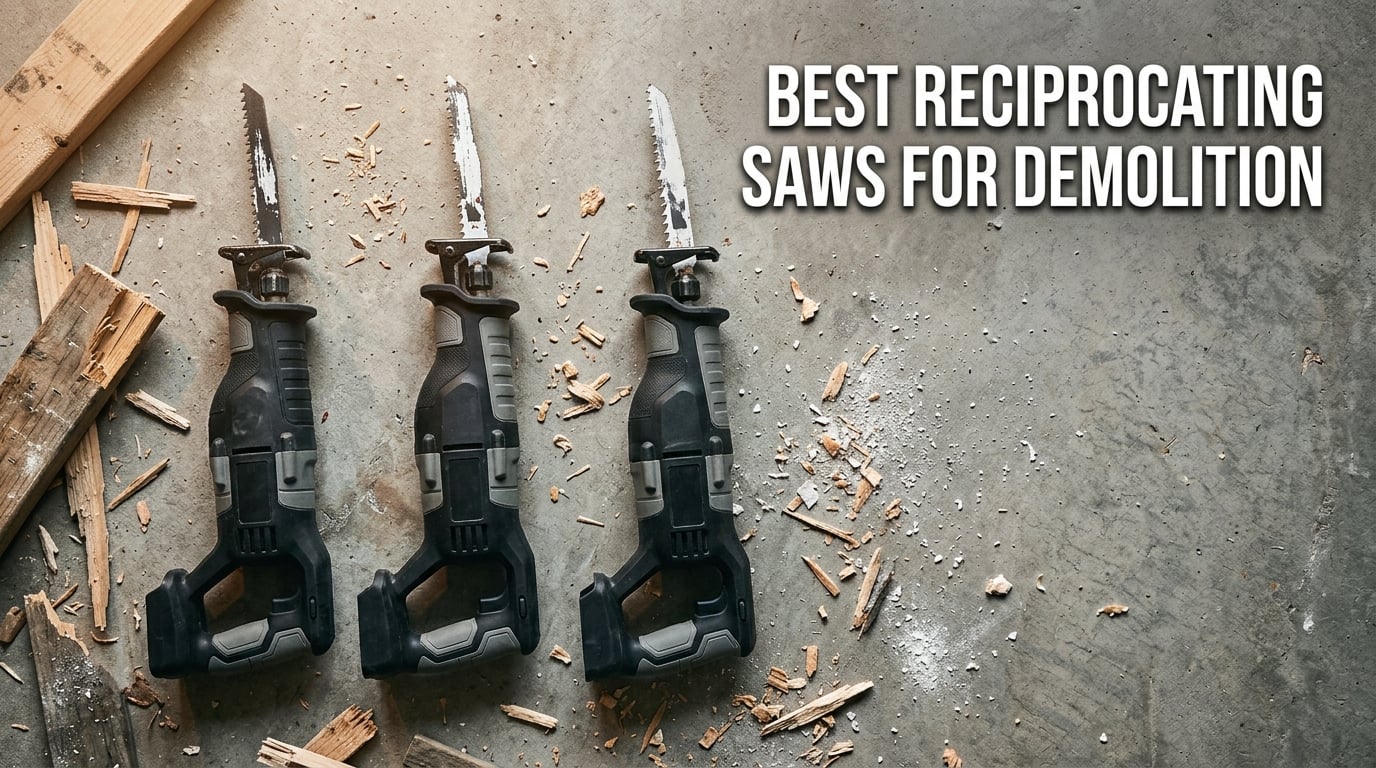
The best reciprocating saw for demolition is the DEWALT 20V MAX XR DCS367B, a compact brushless cordless saw with a 1-1/8 inch stroke, a keyless four-position blade clamp and a 4.8 star average across more than 10,000 reviews. It handles nail-embedded lumber, drywall, subfloor and light metal without dragging, and its 14.5 inch body reaches the tight spots a full-size saw cannot.
Demolition is what this tool was invented for. The narrow blade fits inside a wall cavity or between two studs, and the rapid back-and-forth stroke chews through nailed lumber, OSB subfloor and threaded rod that would take a hand saw all afternoon. For heavier pipe work you will want a different class of saw entirely, and we cover that below.
We compared ten reciprocating saws across the full power spectrum, from a 16 ounce one-handed cordless tool to a 12 amp corded workhorse, and organized them the way a demo crew actually decides: by what the tool weighs, how it handles, whether you already own the battery platform, and whether it will survive a full day of cuts. Every model here is a real, current listing, and each rating and review count below is copied straight from the product data.
A note before we start: the term “sawzall” is a Milwaukee trademark that became generic. It is the same category of tool as a reciprocating saw. If you have seen a roundup claim a sawzall is a different thing, that claim is wrong. You can read more about the saws people confuse with reciprocating saws in our guides to concrete saws for cutting slabs and tile saws for bathroom remodels, because those answer to very different jobs.
Table of Contents
Top 3 Best Reciprocating Saws For Demolition (October 2026)

DEWALT 20V MAX XR DCS367B
- 1-1/8 inch stroke
- Keyless 4-position clamp
- Brushless motor
- LED work light

DEWALT ATOMIC 20V MAX DCS369B
- One-handed body
- 12.5 inch compact length
- Pivoting shoe
- Belt hook included
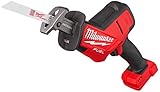
Milwaukee M18 FUEL Hackzall
- 7/8 inch stroke
- POWERSTATE brushless
- REDLINK Plus overload protection
- Pivoting shoe
All 10 Picks at a Glance
| Product | Specifications | Action |
|---|---|---|
| DEWALT 20V MAX XR DCS367B |
|
Check Latest Price |
 BLACK+DECKER 20V MAX BDCR20C BLACK+DECKER 20V MAX BDCR20C |
|
Check Latest Price |
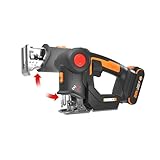 WORX WX550L 2-in-1 WORX WX550L 2-in-1 |
|
Check Latest Price |
 DEWALT 12 Amp DWE305 DEWALT 12 Amp DWE305 |
|
Check Latest Price |
 Makita 18V LXT XRJ04Z Makita 18V LXT XRJ04Z |
|
Check Latest Price |
 RYOBI ONE+ 18V PCL515B RYOBI ONE+ 18V PCL515B |
|
Check Latest Price |
 Milwaukee M18 FUEL Sawzall 2821-20 Milwaukee M18 FUEL Sawzall 2821-20 |
|
Check Latest Price |
| Milwaukee M18 FUEL Hackzall 2719-20 |
|
Check Latest Price |
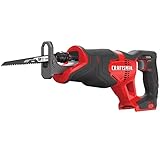 CRAFTSMAN V20 CMCS300B CRAFTSMAN V20 CMCS300B |
|
Check Latest Price |
| DEWALT ATOMIC 20V MAX DCS369B |
|
Check Latest Price |
1. DEWALT 20V MAX XR DCS367B – Best Overall Cordless for Demolition
DEWALT 20V MAX XR Reciprocating Saw Cordless, Brushless, Compact,Variable Speed, Pivoting Head, LED Light, Tool Only (DCS367B)
1-1/8 in stroke
0-2,900 SPM
Keyless 4-position clamp
5.4 lb tool only
Pros
- Compact 14.5 inch body reaches between studs
- Lightweight at 5.4 lb for long sessions
- Keyless four-position clamp for fast changes
- Brushless motor and variable speed trigger
- Built-in LED for dark cavities
Cons
- Sold as tool only so battery and charger are extra
- Compact stroke is not for the thickest demo lumber
When a whole crew needs a saw that can keep up, the DCS367B is the one I hand out first. It is the highest-rated saw in this roundup by review volume, sitting at 4.8 stars across 10,842 reviews, and that volume matters here because demo work is exactly the kind of use that exposes weak clamps, weak shoe pivots and weak plastics.
The 1-1/8 inch stroke is longer than most compact cordless saws, and combined with the variable speed trigger reaching 2,900 strokes per minute it moves material quickly without the user having to lean on the shoe. On nail-embedded studs it behaves like a bigger saw, and on flush cuts the four-position keyless clamp lets you get the blade in close to a wall or ceiling line without a second tool.
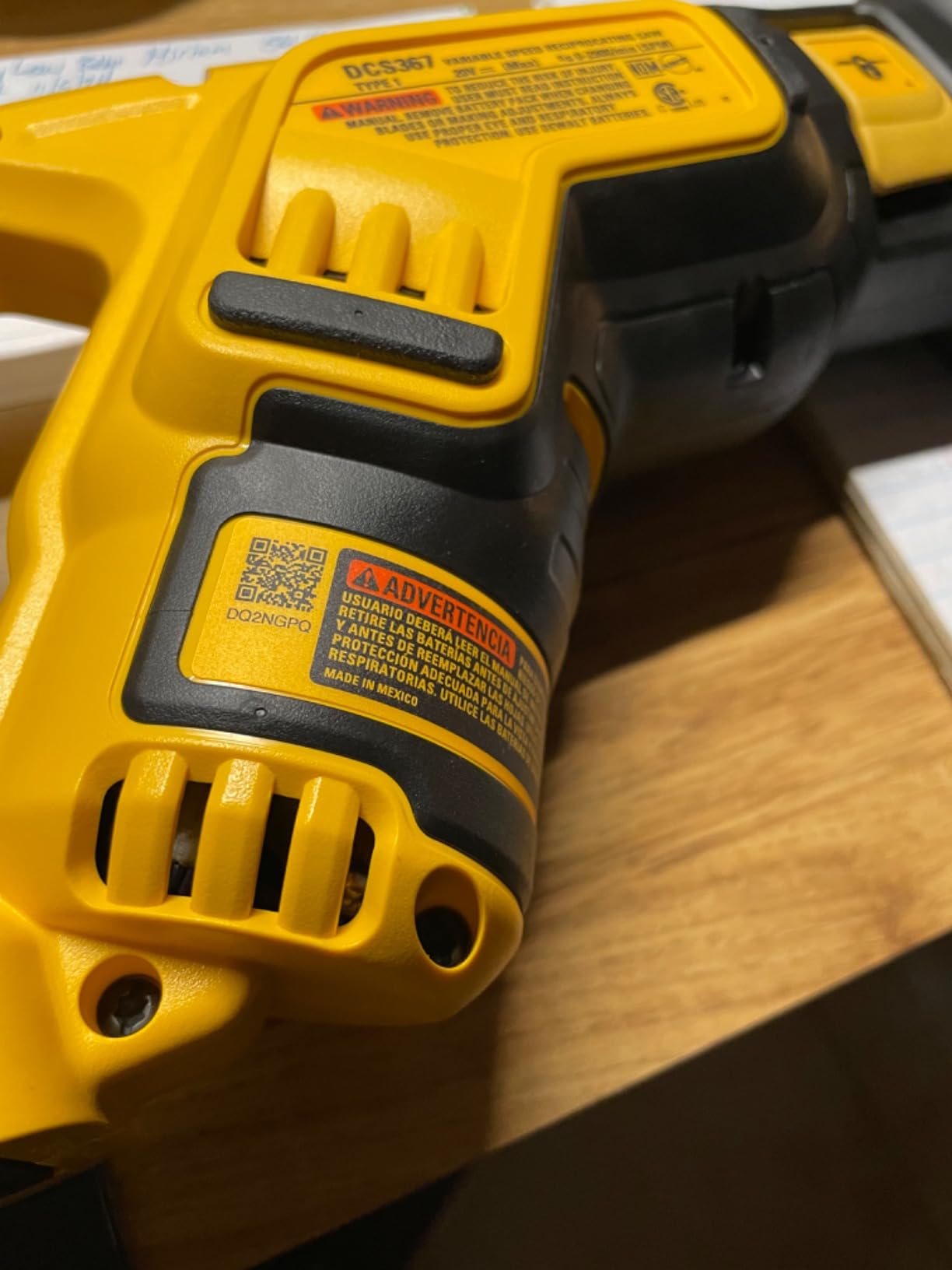
Weight is the number that decides whether a saw survives a day. At 5.4 pounds for the bare tool, this is light enough to work overhead from a ladder, and DEWALT lists up to 2.5 times the runtime of comparable cordless recip saws thanks to the brushless motor and the platform’s efficient packs. For most demo days that means one battery per half day if you are not running it flat out on metal.
The brushless motor is a genuine upgrade over the brushed motors still found in the budget tier, and the three year limited warranty is one of the longer covers in this list. The LED work light is small but it matters more than it sounds when you are cutting inside an open wall cavity at night.
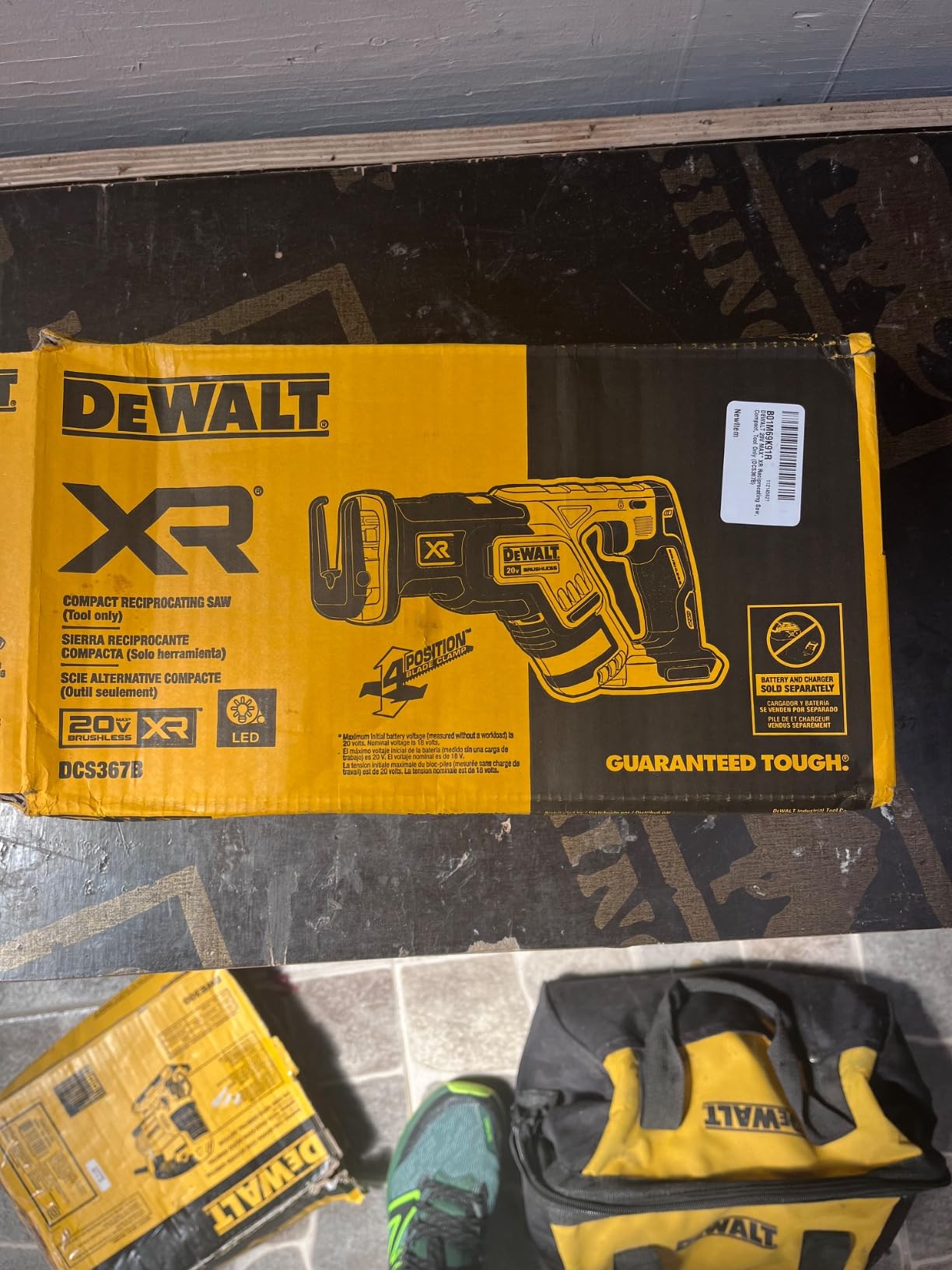
What you should know before buying it?
This listing is the bare tool. If you do not already own a DEWALT 20V MAX battery, budget for a pack and a charger separately, because that is where most of the real cost sits. Buyers already in the 20V MAX system should know that the battery cost effectively disappears, which is the single biggest reason this saw wins on value over time.
The 1-1/8 inch stroke is a compromise for handling, not a limitation for output. If your demo work is mostly 2x lumber, subfloor and drywall with occasional fasteners, you will not notice. If you regularly plunge-cut thick beams or cut pipe, keep reading, because there is a different tool class for that and it is further down this list.
Who it suits and who it does not?
This is the right saw for a renovation contractor running a battery platform, for a serious DIY renovator stripping a bathroom or a deck, and for anyone who needs one tool that handles both wood and light sheet metal. It is also the safest recommendation in this list for a first-time buyer, because the four-position clamp and the LED remove most of the usual learning curve.
It is the wrong choice for a crew tearing out a cast iron soil stack, where you want serious reciprocating mass behind the blade, or for someone who needs genuinely one-handed operation. The body is too long to balance overhead with one hand. For that, the ATOMIC and the Hackzall later in this roundup are built for the job.
2. BLACK+DECKER 20V MAX BDCR20C – Best Budget Kit with Battery and Charger Included
BLACK+DECKER 20V MAX* Cordless Reciprocating Saw Kit (BDCR20C)
20V MAX kit
Battery and charger included
7 inch stock blade
4.5 lb tool
Pros
- Battery and charger included so it works out of the box
- Tool-free blade change for quick material swaps
- Pivoting shoe adds control on the cut
- Lightweight 4.5 lb body limits fatigue
- Variable speed trigger for different materials
Cons
- Short 7 inch stock blade limits plunge depth
- Occasional durability complaints in reviews
This is the one I recommend to anyone who wants to try a reciprocating saw without committing to a platform. At 4.6 stars across 10,094 reviews it carries one of the deepest owner-report bases of any kit on this page, and for a first bathroom teardown or a deck rebuild that is exactly the confidence level you want.
What separates it from a bare tool is simple: the kit includes a 20V MAX lithium battery, a charger and a blade. Nothing else to buy before your first cut. That changes the math on a saw you are only going to use a dozen times a year, and it is why this kit keeps selling years after launch.
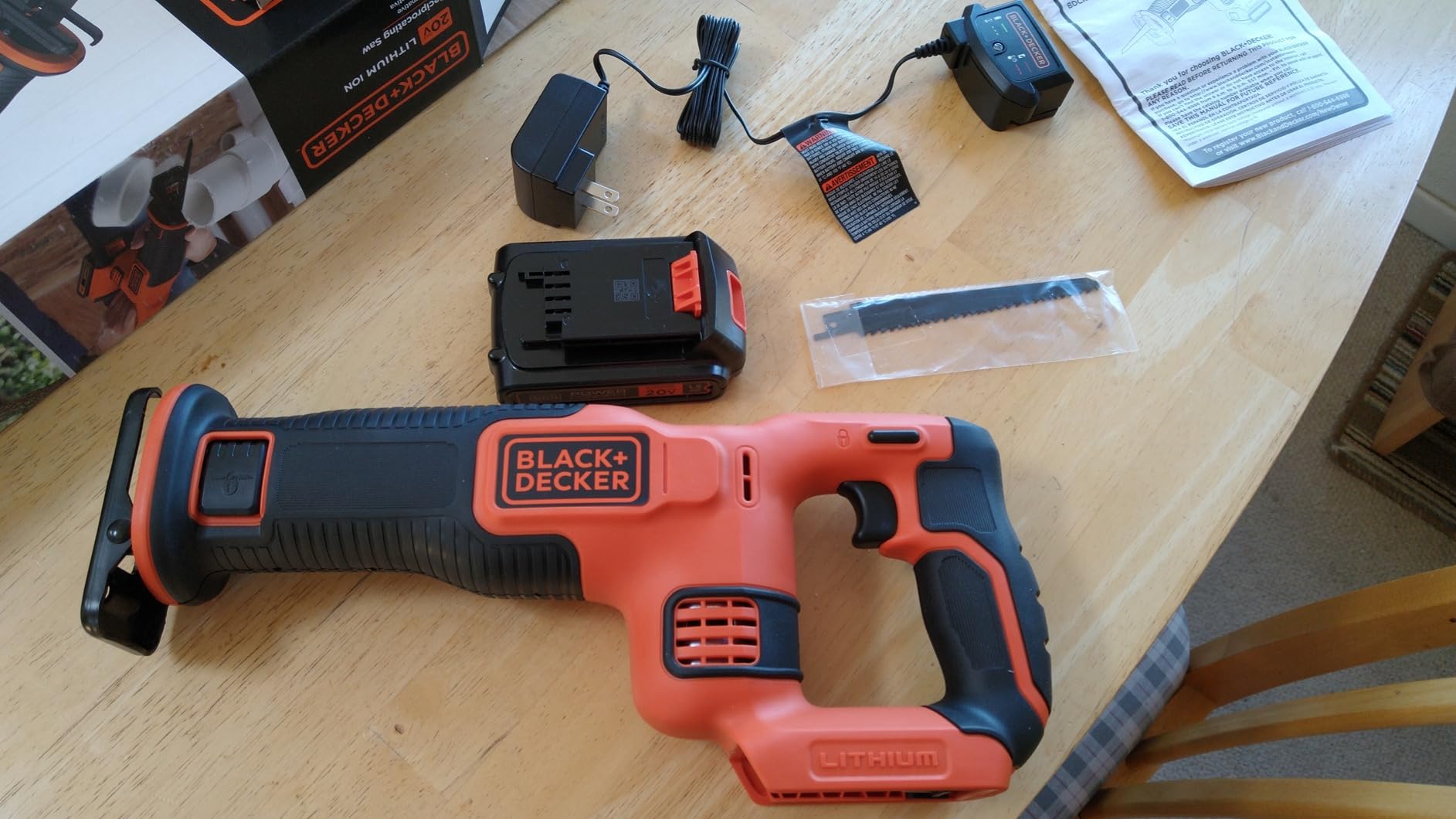
The tool-free blade change means you can swap from a wood blade to a metal blade without hunting for an allen key, which on a demo job is the difference between a one minute swap and a five minute one. The pivoting shoe helps you keep contact with the workpiece when you are cutting a stud flush to something else, and the variable speed trigger gives you the low-speed control needed to start a plunge cut without walking the blade.
At 4.5 pounds it is one of the lighter full-size saws in the list, and reviewers consistently note that the light weight is what lets them keep working. The two year limited warranty is shorter than DEWALT’s three year cover, which is a fair trade for the included battery.
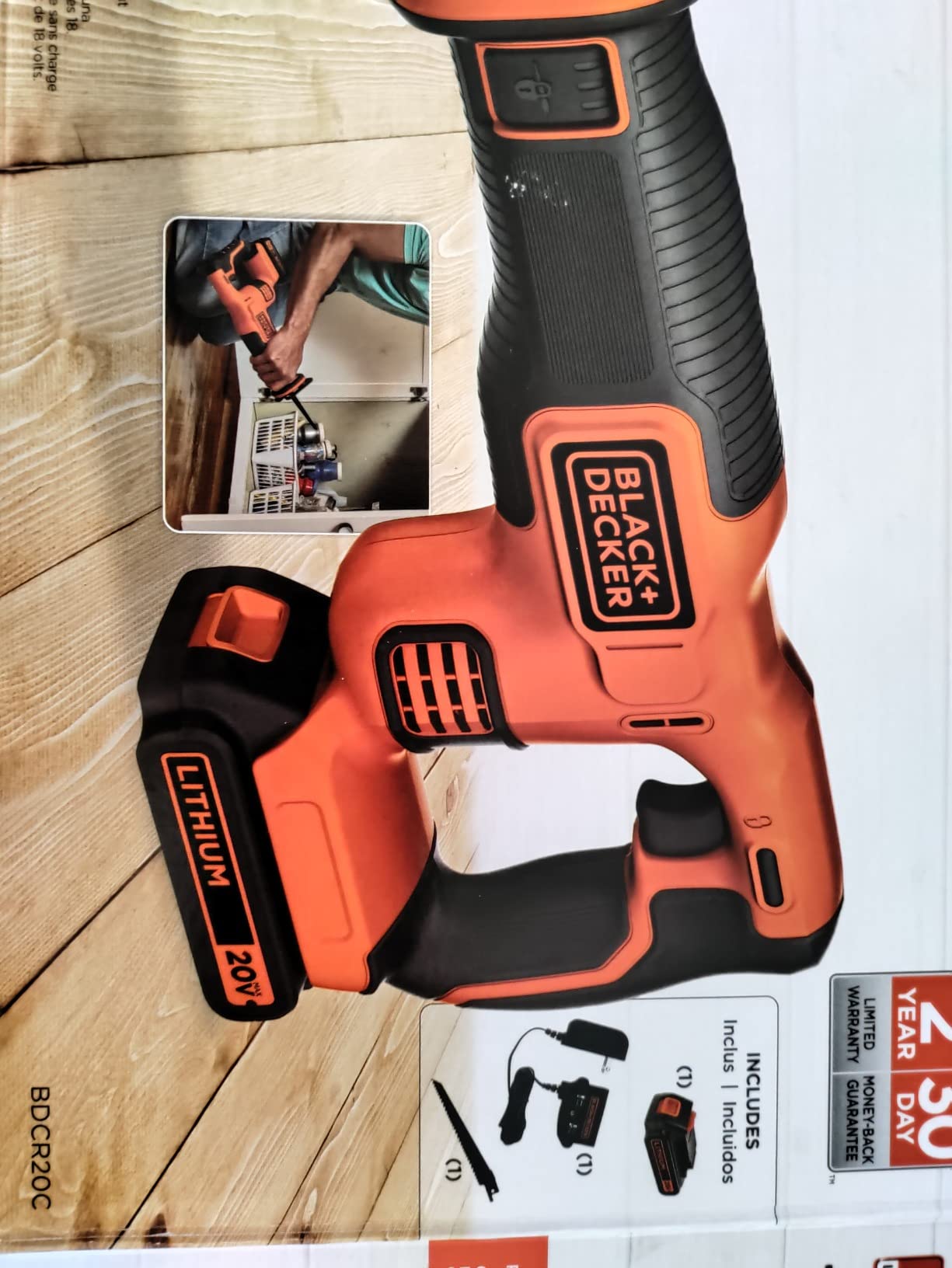
What you should know before buying it?
The 7 inch stock blade is the biggest limitation. It is fine for a stud, a length of 2x, or a branch, but it is short for plunge cutting thick lumber and short for getting a good grip on anything large. Treat the stock blade as a starter and plan to buy a longer demolition blade regardless of what comes in the box.
The 4.6 average rating, with a high share of five star reviews but a visible tail of complaints, points to a saw that works well and is not indestructible. If you are a light-to-moderate user once a month, that is the right trade. If you demo full time, keep scrolling.
Who it suits and who it does not?
This is the right pick for a homeowner, a landlord doing periodic repairs, or a trade-adjacent person who wants one tool to cut nails out of old flooring, trim out a wall and cut a branch in the yard. Reviewers commonly describe it as more than good enough for home use, and on Reddit the budget platform picks like this one get recommended for exactly that reason.
It is the wrong choice for a professional crew, for thick structural lumber, and for anyone who plans to grow into a battery platform. BLACK+DECKER packs are cheaper than the big three, but the blade ecosystem and accessory range are thinner, so if you expect to own this for a decade you may find yourself buying parts you cannot easily source.
3. WORX WX550L – Best 2-in-1 for Fence, Branch and Scraps of Every Kind
WORX Cordless Reciprocating Saw & Jigsaw, 20V 3/4-Inch 2-in-1, WX550L
Recip and jigsaw in one
4 blades included
4.2 lb with battery
20V PowerShare
Pros
- Two tools in one body saves shelf and case space
- Four blades included cover wood and metal
- Lightweight 4.2 lb with battery is easy to control
- PowerShare batteries work across the 20V line
- Built-in blower clears debris from the cut line
Cons
- Not built for daily construction duty or thick branches
- Battery drains quickly on hard hardwood
- Included blades wear out fast
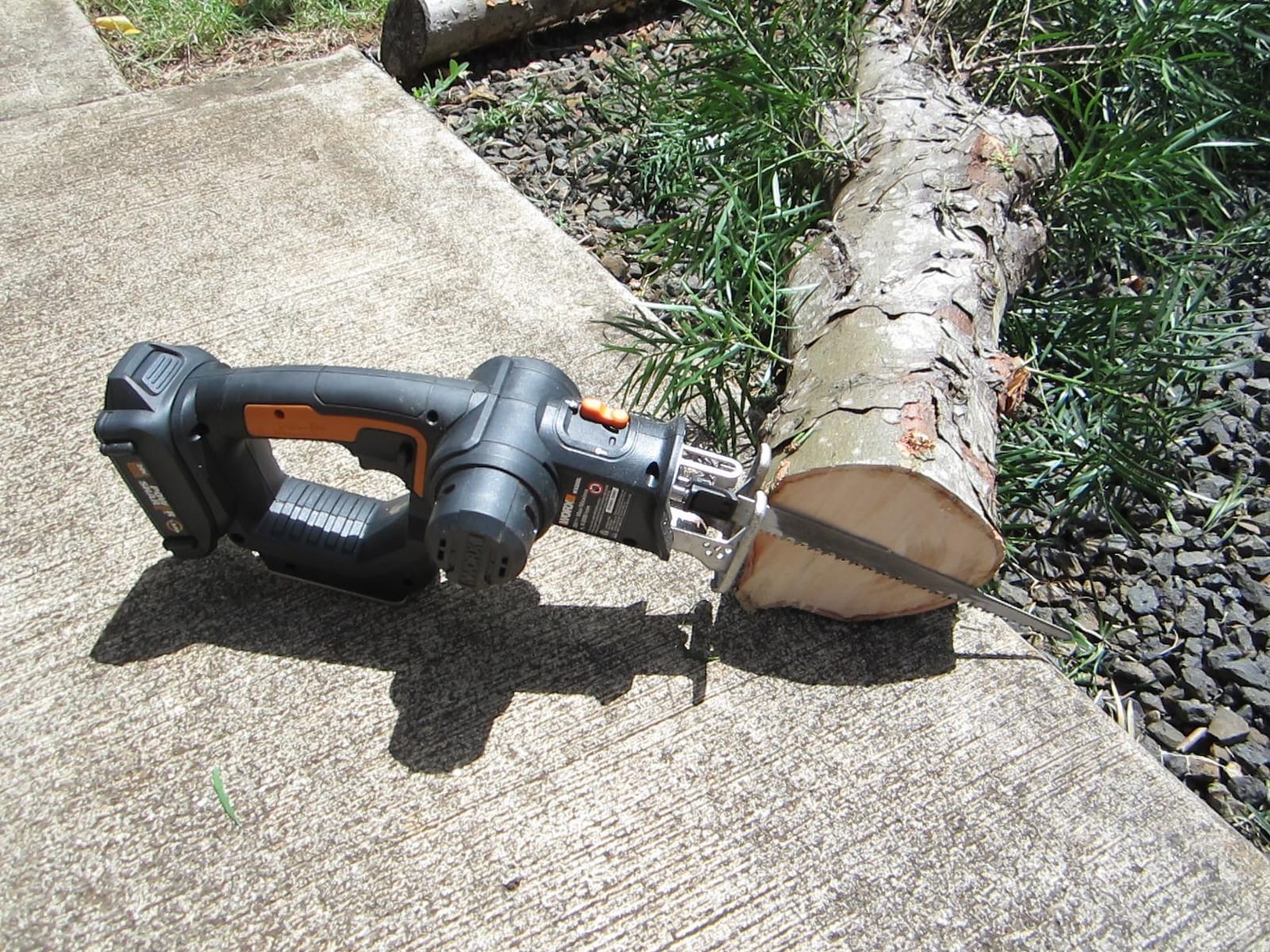
The WX550L is the odd one out in this roundup, and that is exactly why it is worth a spot. It switches between reciprocating saw and jigsaw modes, so the same body handles flush cuts in a wall and curved cutouts in a countertop or a plank.
Reviewers like that four blades come in the box, covering wood and metal, which means the tool is useful the moment it is charged. The built-in blower is a small gimmick that turns out to be practical: it pushes dust out of the cut line so you can see where the blade is going.

Weight is the standout. At 4.2 pounds with the battery installed, it is the second lightest saw in the list and it handles one-handed work well despite the two-in-one body. The pivoting head and tool-less blade change both help when you are switching between cutting a branch outside and trimming framing inside.
The PowerShare battery system is the quiet advantage. You can combine packs to run the tool at 20V, 40V or 80V, and the same batteries feed the rest of the WORX line, which spreads the platform cost across several tools instead of one.
What you should know before buying it?
The warranty is a 30 day manufacturer limited warranty, which is the shortest in this roundup by a wide margin. That is the clearest signal about where this tool sits: it is built for occasional use, not for a crew. If you demo professionally, that warranty length alone should end the evaluation.
The wattage listed for this tool is low relative to the premium cordless saws here, and users report the battery drains relatively quickly when cutting hardwood. Reviewers also note that the stock blades wear out and need replacing, so budget for a blade set on top of the tool.
Who it suits and who it does not?
This suits a homeowner who wants one compact tool for yard work, scrap cutting and light interior demo, especially in a small space where a full-size saw and a jigsaw would take up too much room. It is also a sensible second saw for anyone who already owns WORX batteries.
Skip it for structural teardown, thick hardwood, or branches over about 3 inches in diameter. Reviewers are clear on that limit, and pushing past it is how the stock blades and the gearbox get destroyed. It is a capable weekend tool, not a jobsite tool.
4. DEWALT 12 Amp DWE305 – Best Corded Saw for Endless Demo Days
DEWALT Reciprocating Saw, 12 Amp, 2,900 RPM, 4-Position Blade Clamp, Variable Speed Trigger, Corded (DWE305)
12 amp corded
1,100 watts
0-2,900 SPM
8 lb tool
Pros
- Corded power means no battery pauses mid wall
- Variable speed trigger praised for smooth control
- Four-position clamp allows near-flush cutting
- Keyless lever clamp beats allen key models
- Reviewers cut pressure-treated lumber and stainless
Cons
- 8 lb weight is tiring overhead and on ladders
- No blade adjustment feature to save blade stock
- No oscillating motion so wood cuts run slower
There is a version of demo day where you stop, find a plug, and lose twenty minutes. The DWE305 exists to delete that problem. It is a 12 amp corded saw rated at 1,100 watts, and it holds a 4.8 star average across 3,923 reviews from people who use it on exactly the work you are planning.
For sustained teardown, corded is still the honest answer. A crew stripping three bathroom walls in a row does not want to manage charge rotation, and the 3,000-plus review count here reflects that pattern. A heavier body also dampens vibration, and reviewers notice that this saw feels solidly built.
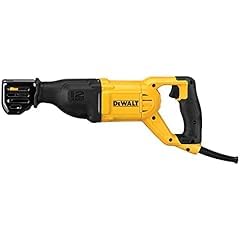
The four-position blade clamp is the feature that quietly makes this saw more useful than its price tier suggests. It lets you orient the blade so you can cut flush to a surface, which matters constantly in demo work where you are sawing a stud off tight against a subfloor edge or a wall that is staying.
Speed control from zero to 2,900 strokes per minute is another quiet advantage. Starting a cut at full speed makes the blade bind and kick; feathering in on the variable speed trigger lets you enter the material cleanly, which is where most blade snapping in nail-embedded lumber actually begins.

What you should know before buying it?
At 8 pounds this is the second heaviest saw in the list, and weight is the honest downside. Overhead work on a ceiling joist or any work from a ladder will wear you out, and reviewers call this out as the main drawback alongside the saw’s weight.
There is no blade adjustment feature, so you cannot dial the blade out further when it gets short, and there is no oscillating motion, which means softwood cuts run slower than on orbital saws. The stock blade is 8 inches, which is a sensible general-purpose length. One more practical note: the cast plastic ahead of the trigger has been reported to injure knuckles without gloves.
Who it suits and who it does not?
This is the saw for a contractor with a reliable power source on site, for a garage or basement teardown where a cord reach is no problem, and for anyone who plans to cut pressure-treated lumber or light stainless. Reviewers specifically report success on both, which is a real vote of confidence for a mid-priced corded tool.
It is the wrong pick if you work in finished spaces with no power, if you are on a roof deck far from an outlet, or if overhead cutting is a large part of your job. It is also not the answer for dense cast iron or thick ductile pipe. If the pipe is the job, keep reading to the blade and material sections below, because that is a different saw class entirely.
5. Makita 18V LXT XRJ04Z – Best Pick If You Already Own Makita Batteries
Makita XRJ04Z 18V LXT Lithium-Ion Cordless Recipro Saw, Tool Only, Blue
18V LXT
1-1/4 inch stroke
0-2,800 SPM
Tool-less blade change
Pros
- Tool-less blade change speeds up material swaps
- 1-1/4 inch stroke is long for a compact cordless saw
- Compact 19-1/8 inch body reduces fatigue
- Runs on the widely used 18V LXT platform
Cons
- Tool only so battery and charger are extra
- No variable-position shoe or lock-off for one-handed work
The XRJ04Z is the pick for anyone already sunk into the 18V LXT ecosystem. With a 4.8 star average and about 1,850 reviews, it is not the most reviewed saw here, but it is the one that stops costing you money the moment you add it to a kit you already own.
On paper the stroke is the story. At 1-1/4 inch it is the longest listed stroke among the compact cordless saws in this roundup, and paired with 0 to 2,800 strokes per minute it chews through dimensional lumber and nail-embedded studs faster than the 1-1/8 inch and 7/8 inch options you see elsewhere on this list.
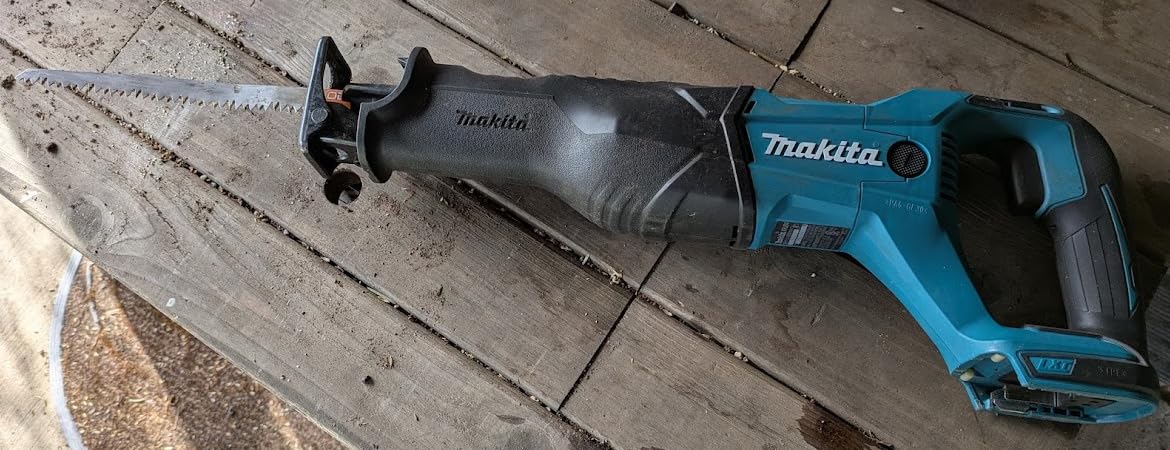
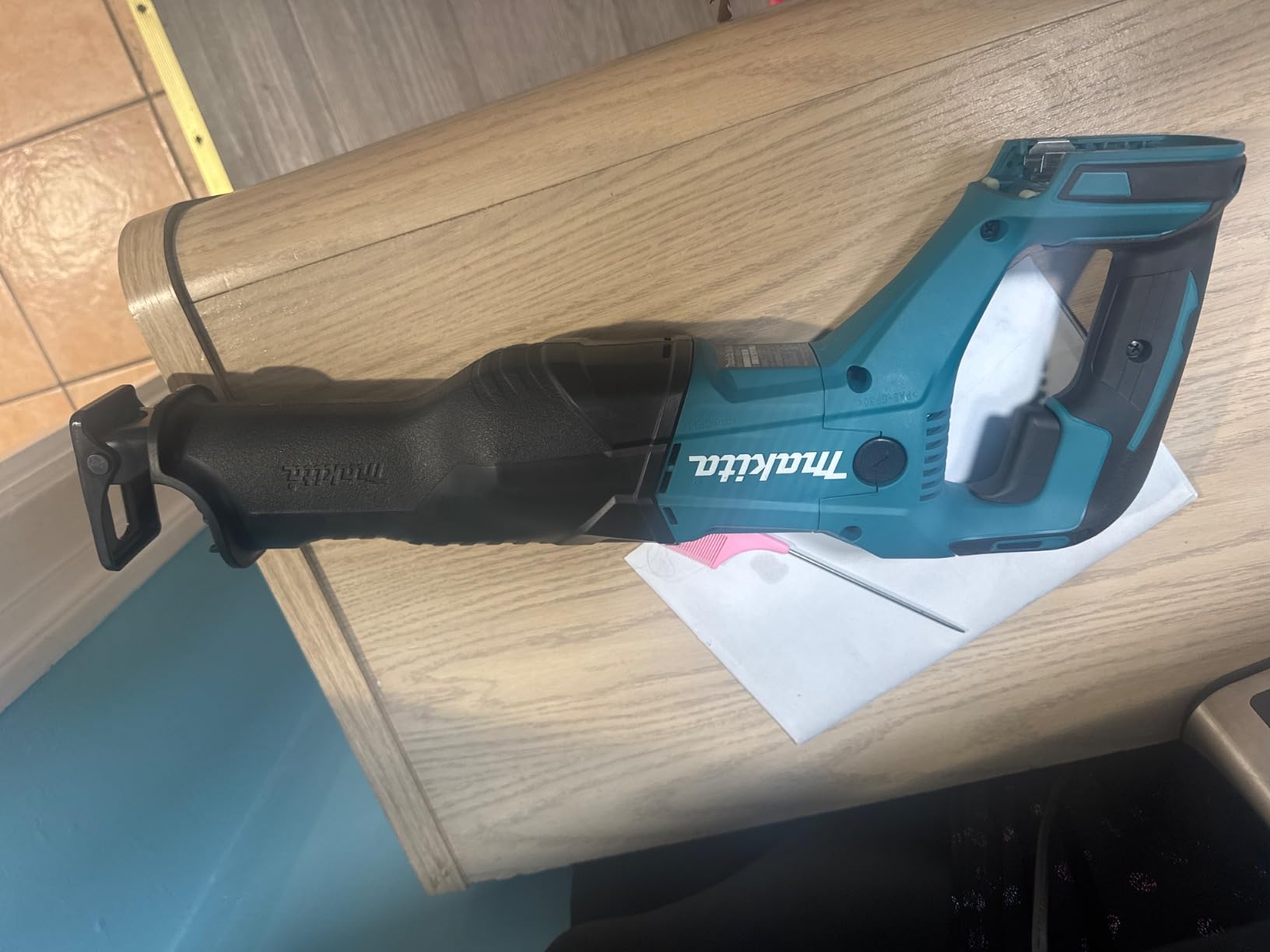
The tool-less blade change system is a real productivity feature during demo, when you might move from wood to a metal blade three or four times in an hour. A bare tool and a single blade is all that ships, which is fine for an existing platform owner and a poor choice for a first-time buyer.
Reviewers note that the 19-1/8 inch body is comfortable enough to reduce fatigue over a long session. The listed weight is around 8 pounds with a battery installed, which puts it in the middle of this group rather than at the light end.
What you should know before buying it?
The tool-only format is the whole consideration. If you do not own 18V LXT packs, you are buying a bare tool plus a battery plus a charger, and the same money buys a complete kit from another brand. Makita backs it with a three year limited warranty, which is solid.
There is no variable-position shoe and no lock-off, so one-handed overhead operation is not the design intent here. And while this saw performs well in metal, it is a compact cordless tool; the 18V class is not where you go for thick pipe or structural steel.
Who it suits and who it does not?
This suits a Makita platform owner doing trim carpentry, small residential demo, or a bathroom gut where a 19 inch body clears the framing. It is a natural second tool for a crew that already standardizes on 18V LXT for everything else.
It is the wrong first purchase for someone without LXT batteries, and the wrong tool for a crew that needs constant high-output cutting without stopping. On forums, Makita’s vibration-handling reputation runs strong among trades users, and this saw is the entry point to that platform rather than the flagship of it.
6. RYOBI ONE+ 18V PCL515B – Best Value Saw for Branch and Occasional Demo Work
RYOBI ONE+ 18V Cordless Reciprocating Saw – 3,400 SPM Variable Speed, 1 in. Stroke Length, Tool Only (Battery Not Included) – PCL515B
3,400 SPM
1 inch stroke
ONE+ 18V battery
4.24 lb bare tool
Pros
- 3400 SPM is the highest no-load speed in this roundup
- Shares ONE+ 18V batteries with the wider RYOBI line
- Compact and light at 4.24 lb for extended trimming
- Holds up through repeated use on demo projects
Cons
- Trigger pull is unusually heavy and tires the finger
- Battery and charger not included
- High current draw means a 3 Ah or larger pack is advisable
The PCL515B sits comfortably among the top sellers in Power Reciprocating Saws on Amazon, and the reason is straightforward: it packs a 3,400 stroke per minute motor into a 4.24 pound body for a fraction of what the premium platforms charge. On branches, fence pickets and light framing, that combination is genuinely efficient.
The 1 inch stroke is shorter than the DEWALT compact saws, and on dense nail-embedded lumber you will feel the difference. For green wood, trim and light demo cuts, the speed makes up for it, and owners report it handling 2x material and stumps without complaint.
The real argument for this saw is battery sharing. The ONE+ 18V system is one of the broadest consumer platforms available, so a homeowner who already owns a RYOBI mower or drill can add this saw without a new charger. Reviewers consistently cite that as the deciding factor.
It is a bare tool, and the listed speed of 3,400 SPM comes with a caveat worth knowing: it draws real current, so a small pack will not last. A 3 amp hour battery or larger is the practical minimum, and the first thing to check when buying is whether the pack you already own is that size.
What you should know before buying it?
The trigger is heavy. This is the most repeated complaint in the review data, and it is not trivial on a full day of cuts. If you already know you fatigue easily or you have grip issues, a lighter-trigger saw is a better spend than a faster one.
Some units ship without a usable blade, so verify what is in the box before your first job. A 1 inch stroke also limits you on thick dimensional lumber, and the ONE+ platform, while broad, is thinner on reciprocating saw accessories than the three big names.
Who it suits and who it does not?
This suits a property maintenance person, a homeowner clearing storm damage, or a landscaper who also does light demo. Reviewers on Reddit and trade forums repeatedly draw the same line: RYOBI is plenty for pruning, yard work and homeowner projects, and is not a professional contractor tool.
Skip it for a full gut renovation, for nail-heavy structural removal, or for anyone expecting to use it eight hours a day. The light weight and low body weight will feel great in the first hour and tell you the truth by the fourth.
7. Milwaukee M18 FUEL Sawzall 2821-20 – Best Cordless Pick for Milwaukee Toolbox Owners
Milwaukee M18 Fuel Sawzall Brushless Cordless Reciprocating Saw – No Charger, No Battery, Bare Tool Only
Brushless FUEL motor
Lever actuated clamp
Reinforced battery connection
6.8 lb with battery
Pros
- Brushless FUEL motor cuts hard in demanding material
- Lever actuated wear-resistant clamp speeds blade changes
- Metal reinforced battery connection resists wear
- Built-in LED lights the cut line
Cons
- Bare tool only so battery and charger are extra
- M18 batteries are a costly add-on outside the platform
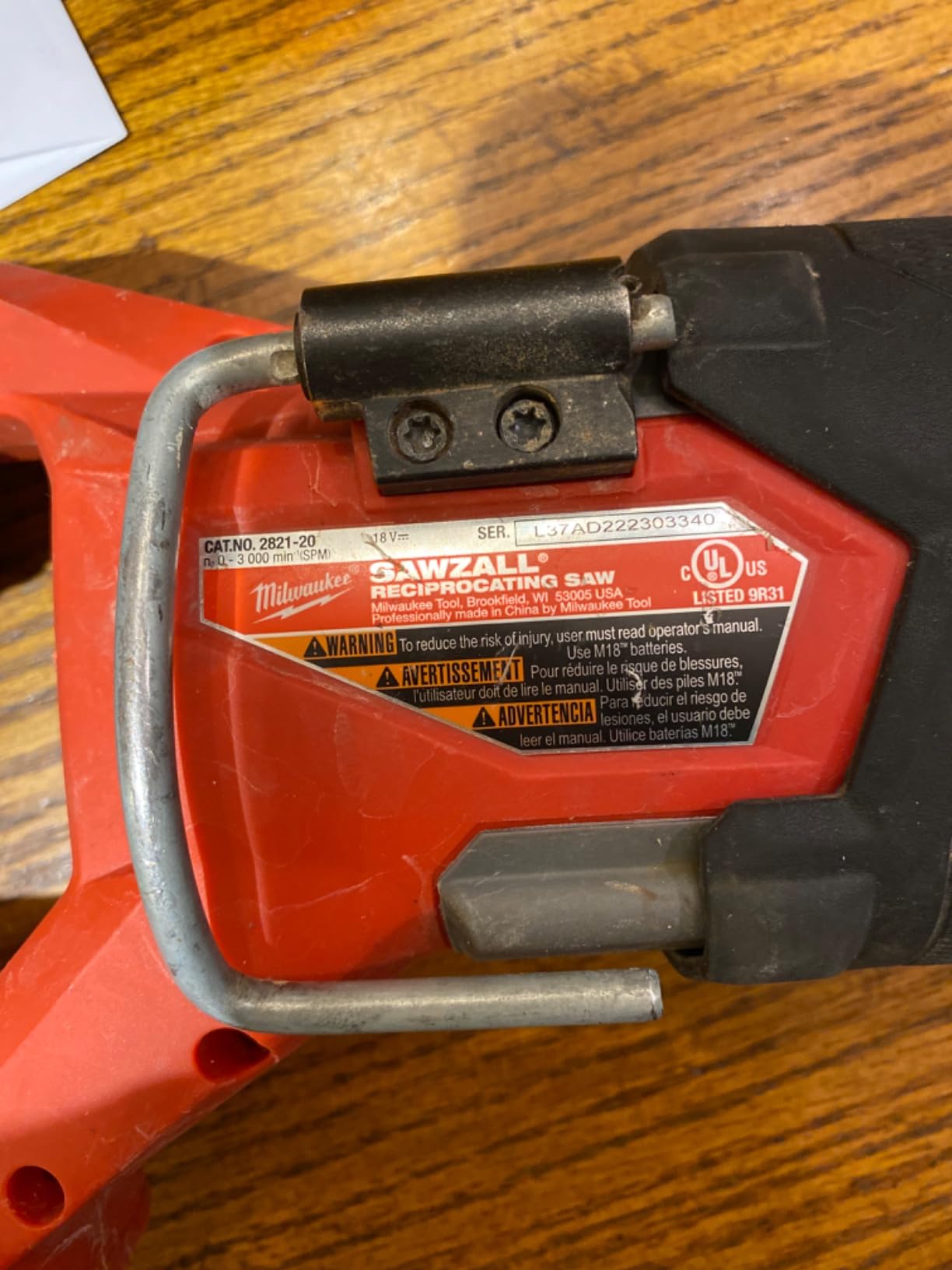
Milwaukee invented the name this tool is known by, and the 2821-20 is the full-size cordless answer in that lineage. It holds a 4.8 star average across about 1,390 reviews, and the design details on this saw are the ones trades users point to when they explain why the platform has held onto pros for so long.
The brushless FUEL motor is the power story. Reviewers describe it as strong in demanding material, which on a demo job means the difference between the blade advancing and the blade bogging down when the cut goes through a knot or a cluster of nails.
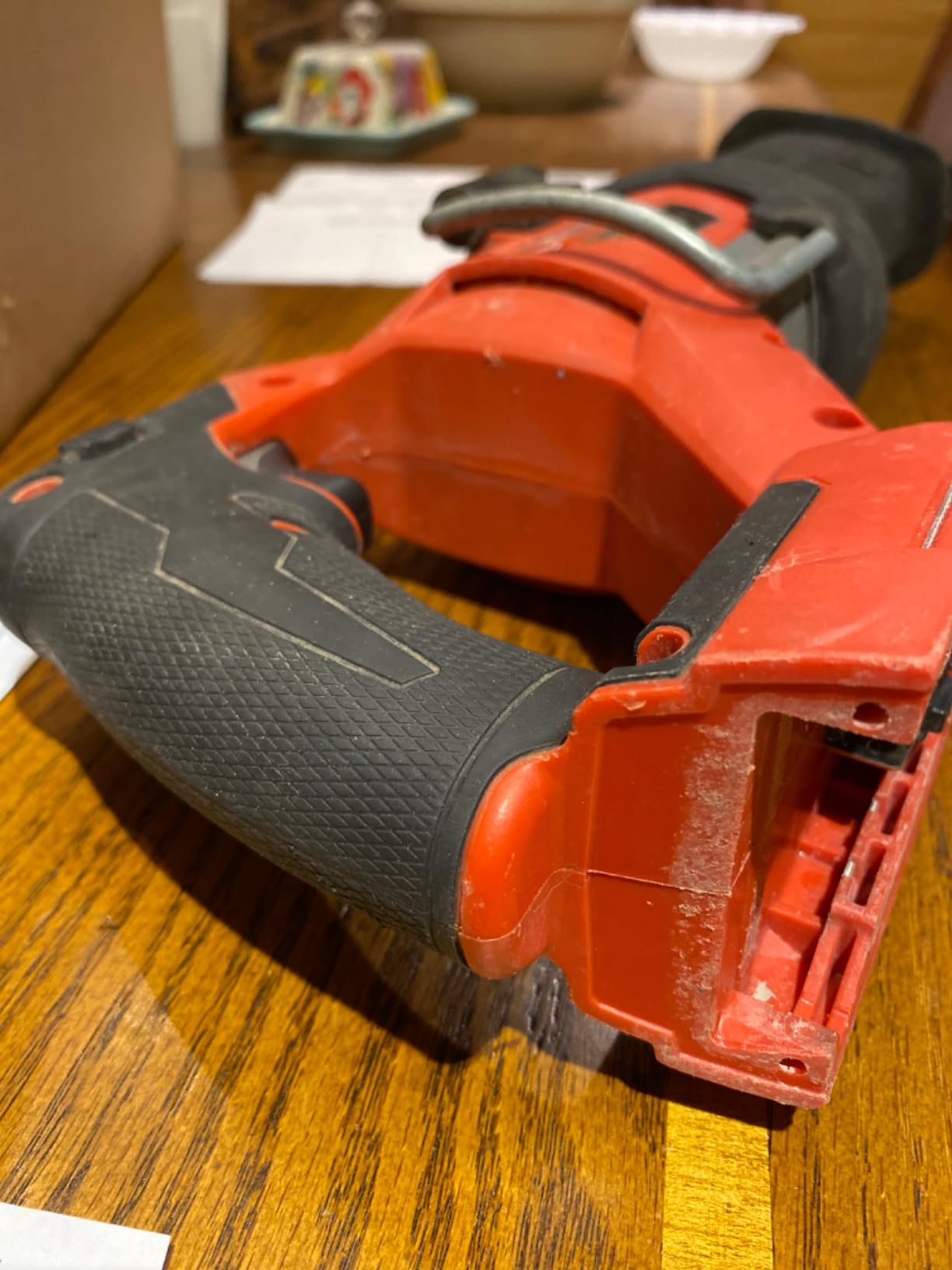
Two hardware details matter more than they sound. The lever actuated blade clamp is wear resistant and fast to work, and the metal reinforced battery connection is the part that fails on lesser tools after a year of being dropped off a roof edge. It is a durability decision, not a speed one.
At 6.8 pounds with a battery, it is a mid-weight cordless saw, which makes it a good all-day carry for someone moving between rooms. The built-in LED lights the work surface while cutting, which matters in an open wall cavity.
What you should know before buying it?
It is a bare tool. The listing includes no battery and no charger, and M18 packs are among the more expensive in the industry. If you are not already committed to Milwaukee, do the arithmetic on a battery and charger before assuming this is a value purchase.
The listed 3,000 speed figure and the 6.8 pound weight both assume a battery installed. The compact dimensions on the listing mean it moves well in tight spaces, but it is not a one-handed saw. For confined and overhead work, the Hackzall below is the purpose-built answer from the same platform.
Who it suits and who it does not?
This suits a contractor who already runs M18, or a homeowner who wants the top of the cordless category and will buy a two pack. Trades users on contractor forums consistently describe Milwaukee as the benchmark in this category, and they credit the counterbalance and clamp design for how settled the saw feels in the hand.
It is the wrong pick for a buyer starting from zero on batteries, and for anyone whose demo work is mostly overhead or inside tight cavities. The economics only work if the platform is already yours.
8. Milwaukee M18 FUEL Hackzall 2719-20 – Best for Overhead and One-Handed Demo
Milwaukee 2719-20 M18 FUEL Hackzall (Bare Tool), Red, Black,
One-handed design
7/8 inch stroke
POWERSTATE brushless
REDLINK Plus protection
Pros
- One-handed format is far easier to control in tight spots
- 7/8 inch stroke removes more material per stroke
- Pivoting shoe cuts smoother with less bucking
- REDLINK Plus overload protection guards the tool
- Ranks near the top of Power Reciprocating Saws
Cons
- Bare tool so an M18 battery and charger are needed
- Short 7/8 inch stroke limits thick lumber and long blade work
With 6,553 reviews at 4.8 stars, the Hackzall is the most proven one-handed saw in this roundup by a wide margin. It is not a compromise version of a full-size saw. It is built for the half of demo work that a full-size saw physically cannot do.
That half is ceilings, soffits, joists behind drywall, and anything where your second hand is holding a flashlight or a scrap bin. At just over a pound and a half, you can hold it one-handed, control the cut with the pivoting shoe, and keep your eyes on the blade line.
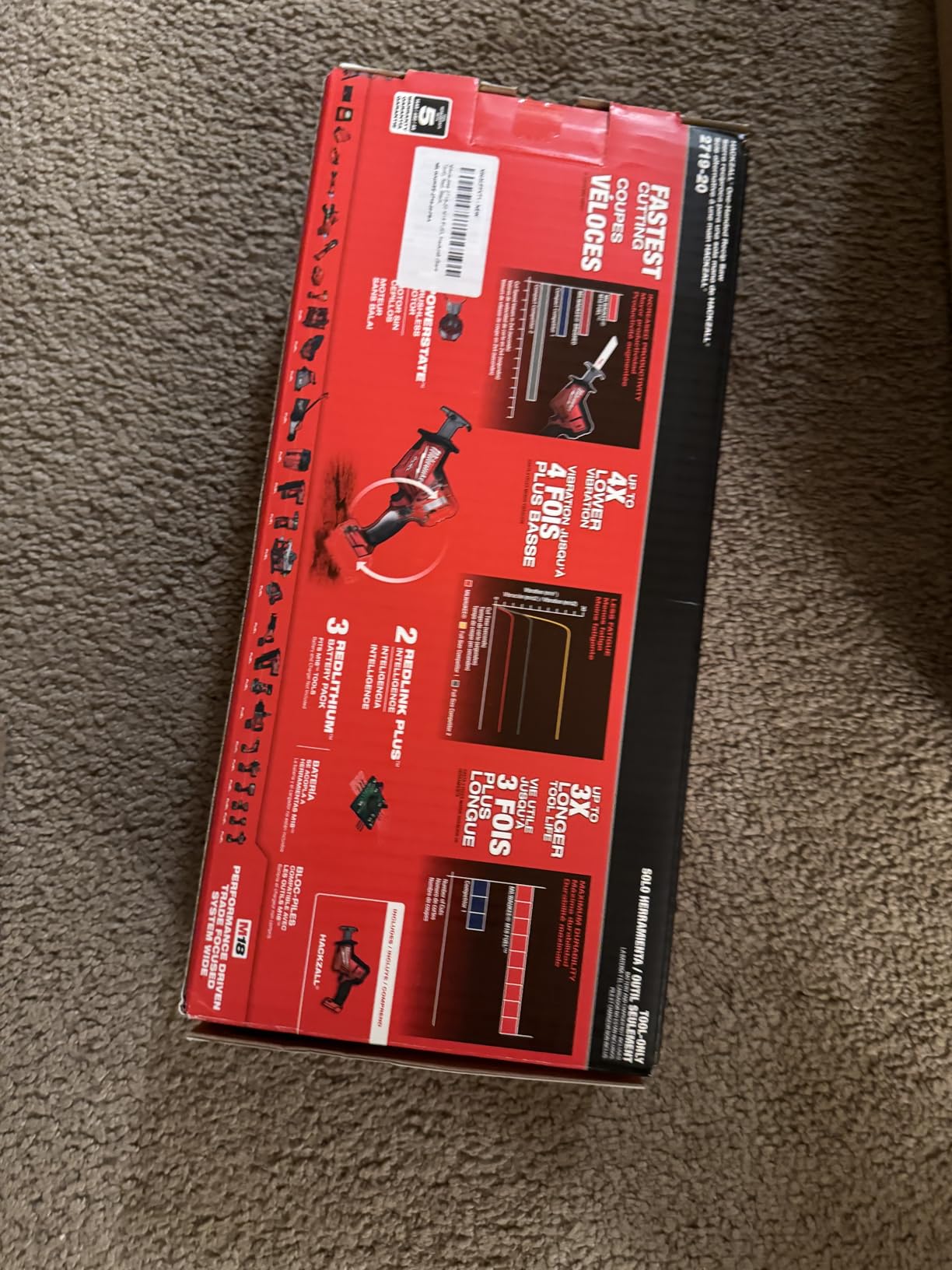
REDLINK Plus Intelligence with overload protection is the underrated feature. On a demo teardown you will inevitably bury a blade in a hidden nail or screw, and overload protection is what keeps that from becoming an expensive repair. POWERSTATE brushless motor and REDLITHIUM battery technology round out an electrical system designed for abuse.
The 7/8 inch stroke is short by full-size standards, and Milwaukee claims up to three times the tool life of competitive one-handed recips. Reviewers back up the control story consistently, praising the pivoting shoe for smoother cuts with less bucking and vibration.
What you should know before buying it?
The short stroke is the real limit. Thick dimensional lumber, long plunge cuts and pipe are outside what this saw is built for, and forcing it is how blades snap. Treat it as the second saw in the kit, not the only one.
It is also a bare tool. An M18 battery and charger are required, and if you are outside the platform that cost may exceed the saw itself. At 1.8 kg, it is light enough that fatigue is not a factor even on overhead work, which is the main advantage over every full-size saw in this list.
Who it suits and who it does not?
This suits a contractor working overhead, an electrician or plumber cutting into framing and conduit in a ceiling cavity, and anyone doing residential remodel work where access matters more than raw cutting force. It is also the one-handed option for users with limited grip strength.
It is not a primary demolition saw for structural lumber, and it is not the tool for a crew that needs one saw to do everything. Buy it alongside a full-size model if you already own a platform, or as a stand-alone if your work is mostly trim, conduit and overhead cuts.
9. CRAFTSMAN V20 CMCS300B – Best for Owners of a CRAFTSMAN V20 Battery Set
CRAFTSMAN V20 Reciprocating Saw, Cordless, 3,000 RPM, Variable Speed Trigger, Quick Easy Blade Change, Bare Tool Only (CMCS300B)
V20 cordless system
1 inch stroke
0-3,000 RPM
14.5 inch body
Pros
- Battery is interchangeable with other CRAFTSMAN V20 tools
- Compact 14.5 inch body reaches tight spaces
- Tool-free blade release for quick changes
- Contoured overmolded handle is comfortable
- Three year limited warranty
Cons
- Slower than premium DEWALT and Milwaukee saws on demanding cuts
- Battery and charger sold separately
- Only a small 6 inch blade included
The CMCS300B is a straightforward value pick inside the V20 system. The 1 inch stroke motor runs a full variable speed trigger from 0 to 3,000 RPM, which gives you the low-speed control needed to start cuts cleanly, and the 14.5 inch body reaches into tight framing.
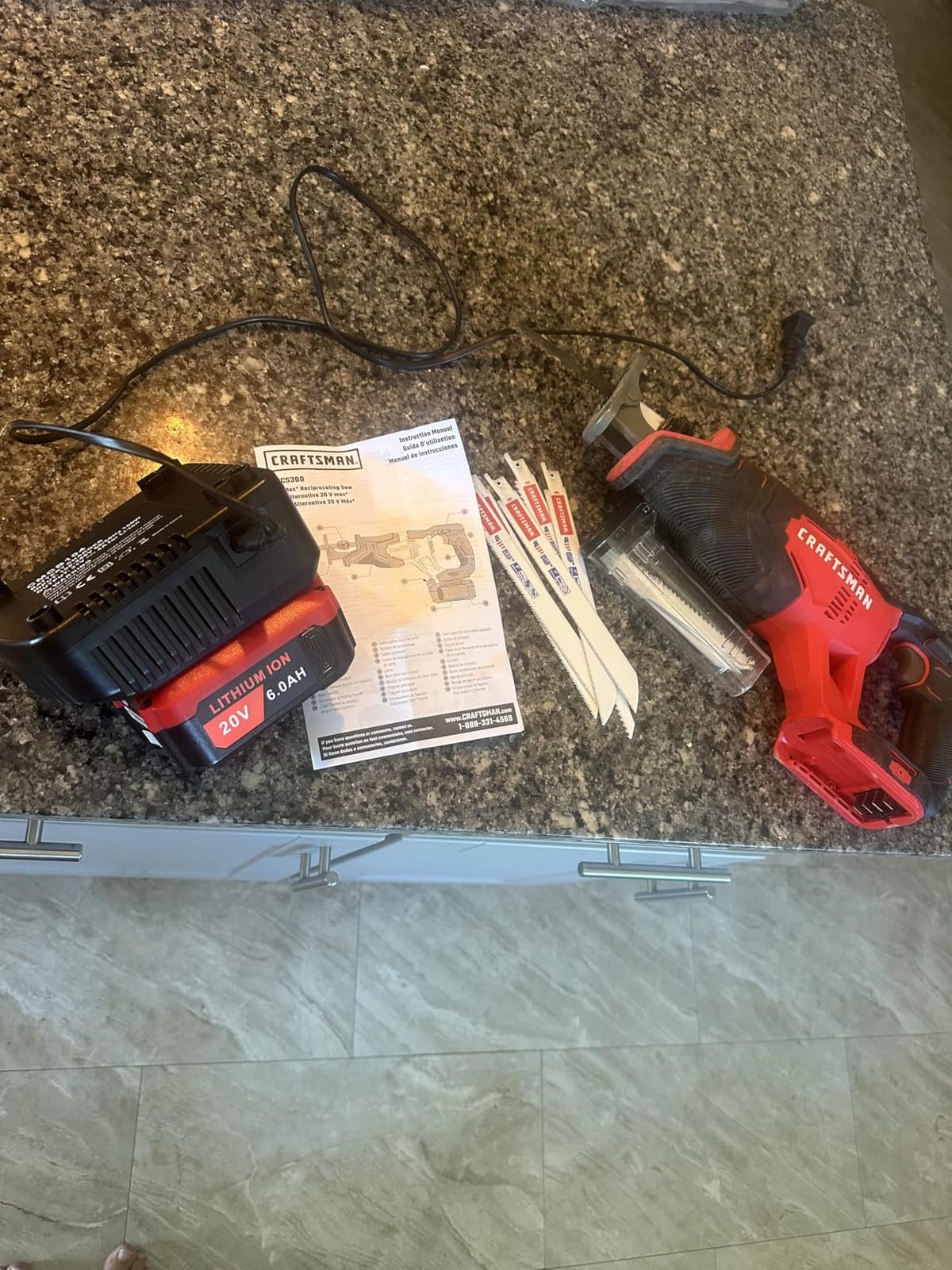
If you already own V20 packs for a drill or circular saw, this is the cheapest way to add a recip saw to an existing battery set. Reviewers note it cuts smoothly and quickly once you fit a quality aftermarket blade rather than relying on the small 6 inch one in the box.
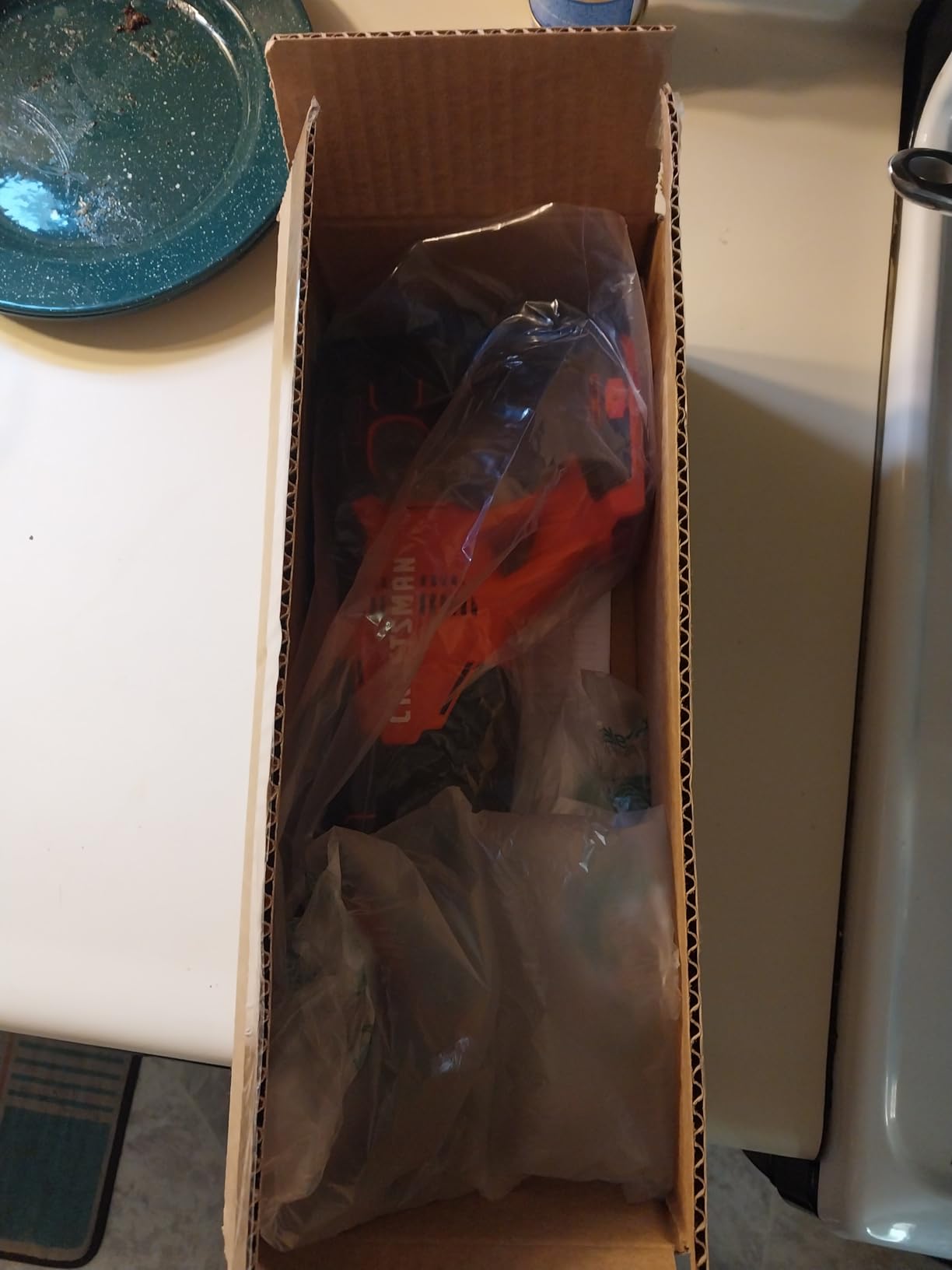
It is also VERSATRACK wall system compatible, which sounds like trivia until you are trying to keep a garage organized. The contoured overmolded handle is comfortable for extended trimming, and owners report decent battery life on the platform.
The honest limitation is speed under load. Owners comparing it directly against premium DEWALT and Milwaukee saws report it is slower on demanding cuts, and that is a real difference on nail-embedded lumber. On clean lumber, trim and light demo it holds up fine.
What you should know before buying it?
Battery and charger are sold separately, and the 6 inch blade included is short for demo work. Plan on buying a proper demolition blade before the first job, and on confirming your V20 pack size is up to the job, since speed falls with a smaller pack.
The 1 inch stroke is shorter than the DEWALT and Makita options here, so on thick lumber you will be making more passes. The three year limited warranty is a genuine plus at this tier and matches the better premium tools.
Who it suits and who it does not?
This suits a CRAFTSMAN V20 platform owner, a budget-conscious homeowner doing remodel work, and a contractor who wants a second saw in the truck without funding a new battery ecosystem. It is a reasonable weekend and light-trade tool.
It is not the pick for a full-time crew that needs to move material fast, and it is not the right answer for pipe, metal-heavy teardown, or thick structural removal. If cutting speed is your priority, the DEWALT DCS367B or the Milwaukee Sawzall will outpace it consistently.
10. DEWALT ATOMIC 20V MAX DCS369B – Best One-Handed Saw for Confined Demo Work
DEWALT ATOMIC 20V MAX* Reciprocating Saw, One-Handed, Cordless, Tool Only (DCS369B)
One-handed format
12.5 inch length
Brushless motor
Tool-free blade release
Pros
- Extremely light and compact for one-handed control
- Pivoting shoe gives more contact for accurate cuts
- Tool-free blade release speeds changes
- Brushless motor handles wood metal and branches
- Quiet operation many users find easy on the ears
Cons
- Vibration through the small body fatigues the wrist
- Blade installs in one orientation only
- Tool only so battery and charger are extra
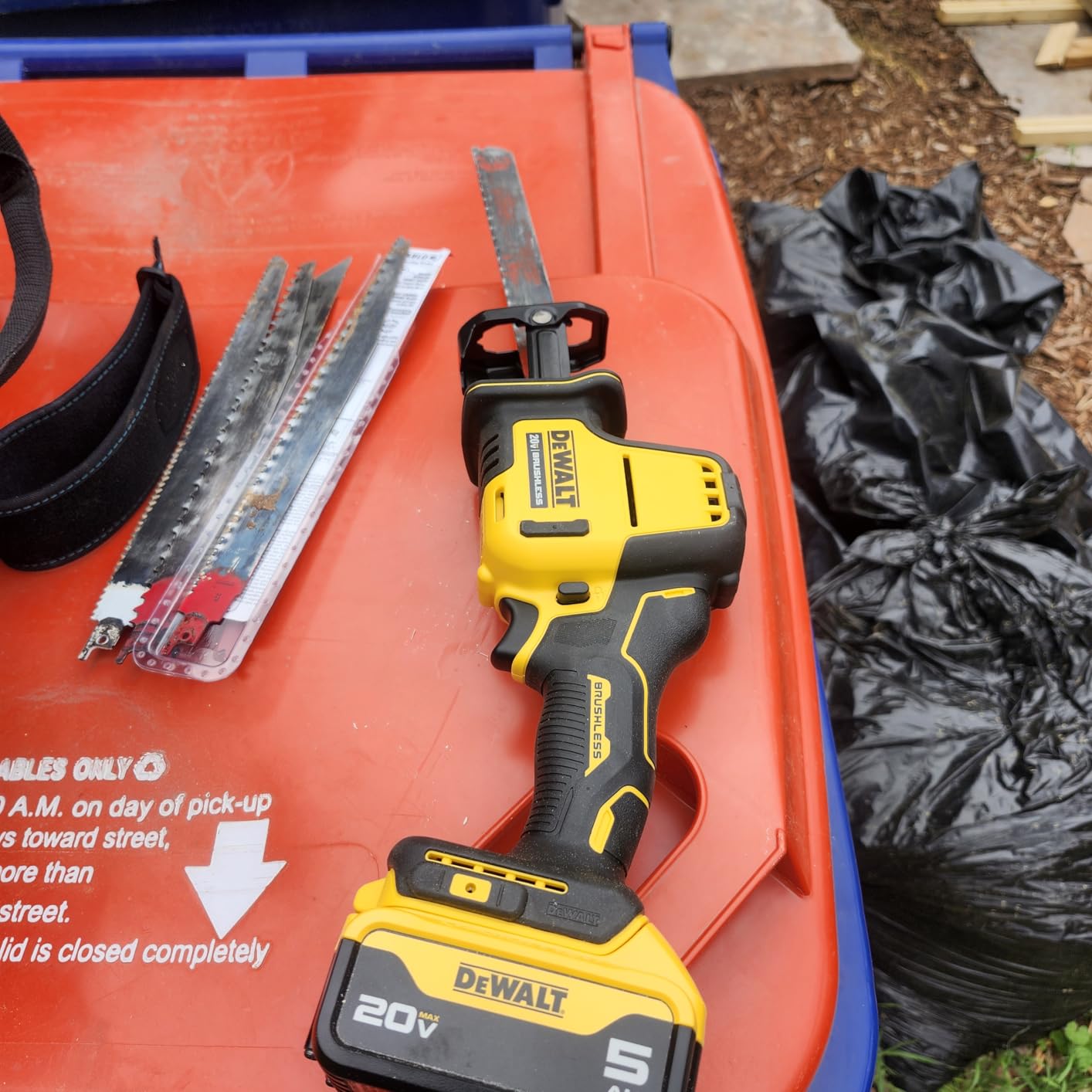
The ATOMIC 20V MAX DCS369B is the lightest full-featured saw in this roundup and the one I recommend for anyone whose demo work happens inside walls. At 12.5 inches front to back and listed at 16 ounces, it goes places a full-size saw cannot, and it carries 4.8 stars across 8,443 reviews.
That review volume matters for a niche tool. One-handed saws are where the design compromises show up first, and this one draws repeated praise for the pivoting shoe, which has more points of contact than a fixed shoe and keeps the blade tracking where you aim it.
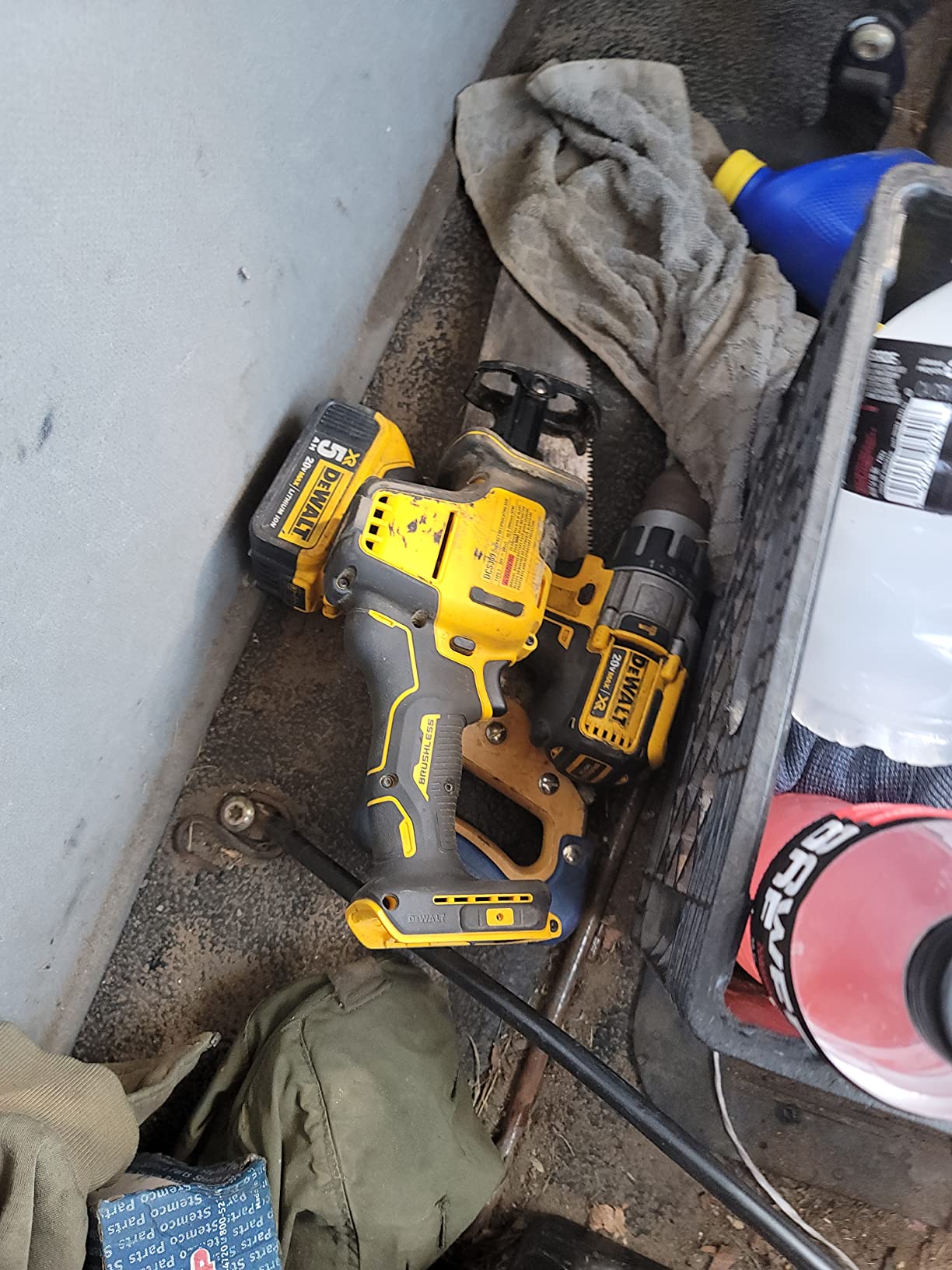
DEWALT lists it as 37 percent lighter than the DCS367, and in practice that difference is the whole reason to own both. The full-size saw does the lumber work; the ATOMIC does the overhead cuts, the in-cavity cuts and the reach-ins where you need three hands for something else.
The brushless motor gives it real capability on wood, metal and branches despite the small body, the LED lights dark work spaces, and the variable speed trigger plus tool-free blade release keep the workflow moving. The included belt hook lets it hang at your hip rather than go in the case.
What you should know before buying it?
The trade is vibration. A small, light body transmits more of it into your wrist, and reviewers specifically flag that it can fatigue the wrist on thicker material. If you have an existing joint or grip issue, test it on a long session before committing.
The blade installs in one orientation only, so you cannot flip it to change the cutting direction, which limits flush and top-down work in tight spots. The warranty on this listing is limited rather than a stated term, and it is a bare tool, so the battery and charger are on you.
Who it suits and who it does not?
This suits a remodeler working inside wall cavities and above ceilings, an electrician cutting around boxes and conduit, a plumber dropping into a tight chase, and a homeowner on a ladder who wants one-handed control. The quiet operation is a genuine bonus when the job is inside an occupied building.
It is the wrong tool for thick structural lumber, plunge cutting, or any job where raw power matters more than access. Pair it with the DCS367B from the top of this list and you cover the full range of residential demo without changing batteries.
How We Evaluated These Saws?
We ranked these ten saws on four things, in this order: what the listing actually specifies, what reviewers report after owning the tool, how the saw performs against the specific demands of demolition, and what it costs to keep running over several years. Specs came from the manufacturer product data. Review sentiment came from aggregated customer reviews, and the review counts quoted in this article are the real totals, not estimates.
We want to be straightforward about one thing. We compared specifications, feature sets and review consensus across ten models. We did not run a controlled cut test on every saw in this list. Where a claim is our opinion rather than a published spec, we have written it as an opinion, and we have tried not to attach a number to anything the manufacturer did not publish.
Two things we deliberately avoided doing: ranking on price alone, since street pricing moves daily and every listing here changes, and ranking on star rating alone, since a 4.6 average across 10,000 reviews and a 4.8 average across 1,400 reviews do not tell you the same thing. The editor’s choice went to the combination of rating, review volume and demolition-specific fit.
One more disclosure. We earn a commission when you buy through links on this page, at no additional cost to you. That does not change the ranking, and it does not change the cons lists. Every saw in this roundup has drawbacks, and we list them on the card rather than burying them.
Buying Guide: Specs That Actually Matter for Demolition
Demolition punishes any weakness in four specific places, and every spec below matters because of one of them. Ignore the rest.
Stroke length: the number that changes cutting speed most
Stroke length is how far the blade travels in one direction, and it is the single biggest determinant of how much material comes off per cycle. In this roundup it ranges from 7/8 inch on the Hackzall up to 1-1/4 inch on the Makita XRJ04Z. A longer stroke means faster cutting and more aggressive bites, which is exactly what you want on dimensional lumber and subfloor. A shorter stroke is the trade you make for a lighter, more controllable body, which is a fair trade when you are working overhead.
SPM and variable speed: more is not always better
Strokes per minute tells you how fast the carriage cycles. The saws here range from 2,800 up to 3,400 SPM. Maximum speed matters less than you would think, because what actually determines blade life is the lowest speed. Feathering the trigger in at low speed to start a cut is what keeps the blade from binding and snapping when it hits a hidden nail. Every saw we recommend here has a variable speed trigger for that reason.
Orbital action: fast in wood, wrong for metal and precision
Orbital action makes the blade path arc slightly as it moves, which dramatically speeds up wood cutting. Turn it off for metal, for flush cuts, and for anything where you need the blade to stay on a straight line. None of the ten saws in this roundup is listed as an orbital model, which tells you something about what this list is optimized for. If orbital cuts are a large part of your work, look past this roundup at saws that offer a three-position orbital setting.
Vibration: the criterion nobody ranks first and everybody notices
Demo work is repetitive, high-force work performed with a tool held in mid-air for hours. Vibration is what causes the hand fatigue that ends your day early, and it is the reason anti-vibe technology and counterbalanced mechanisms deserve more weight than most roundups give them. On this list, the pivoting shoes on the Hackzall and the ATOMIC reduce bucking, and the heavier corded bodies damp naturally. Counterbalance, AVT and other dedicated anti-vibe systems are the next tier up and none of these ten carry them.
Blade clamp: the most underrated demolition feature
On a demo job you change blades constantly, moving from wood to metal to a coarse-tooth blade when the material turns stubborn. A keyless four-position clamp or a lever-actuated clamp takes seconds. An allen key design takes a minute, and a minute times forty blade changes is an hour of your day. The DEWALT DCS367B, the DCS369B, the DEWALT DWE305, the BLACK+DECKER, the Makita and the Milwaukee Sawzall all use keyless or lever clamps, and that is a meaningful tier separation.
Weight: the number you will feel at hour four
The range here runs from 16 ounces on the ATOMIC to 8 pounds on the corded DWE305. Under 5 pounds you can work all day and overhead. Between 5 and 7 pounds is the full-day comfort zone. Over 8 pounds and you will want to swap saws for overhead work rather than fight it. Weight also determines whether a cordless saw makes sense, because cordless weight includes the battery while corded weight does not include a cord management problem.
Blade clamp versus tool-free change, and a foot versus a shoe
A pivoting or adjustable shoe is a small plate at the front of the saw that you can rotate to keep the blade in contact with the workpiece as you change your cutting angle. On demo work, where you constantly switch between cutting into a surface and cutting along one, a pivoting shoe keeps the blade engaged instead of letting it jump out of the cut. Every saw on this list with a pivoting shoe has it for that reason.
Amps versus volts: how corded and cordless power actually compare?
This is where most buyer guides mislead people. A 12 amp corded saw draws 12 amps continuously for as long as the outlet allows, which is why it never slows down and never needs a charge. A 20V cordless saw delivers far fewer amps but cycles a battery that can be swapped. The corded DWE305 at 12 amps and 1,100 watts is the endurance pick; the high-SPM cordless saws are the portability pick. Neither is wrong, they just fail differently.
Extension cords: the corded catch nobody mentions
That 1,100 watt corded saw wants a properly grounded 14 gauge cord on a normal circuit, and a 12 gauge cord for a long run. Cheaper cords cause voltage drop, which makes the saw run slower and can stress the motor. A reciprocating saw is also the least portable corded tool you can own, which is exactly why the cordless models took over most of this category. If your demo site has reliable power within cord reach, the corded saw wins on endurance. If it does not, the cordless is not a compromise, it is the correct answer.
Brand ecosystems: the real cost of a reciprocating saw
The saw is not the cost. The batteries are the cost, and they are the reason platform loyalty dominates this category. DEWALT 20V MAX, Milwaukee M18, Makita 18V LXT, RYOBI ONE+, CRAFTSMAN V20, BLACK+DECKER 20V and WORX PowerShare are all established platforms, and within each one a battery serves many tools. Forum users consistently say the same thing about the cheap cordless options that get debated online: they are fine for pruning and homeowner work and are not what a professional crew runs. If you already own packs for another tool on a platform, that platform’s saw is usually the cheapest long-term answer.
Choosing a Reciprocating Saw Blade for Demolition
No saw in this roundup matters as much as the blade in it, and blade choice is where most demo mistakes originate. A blade that is wrong for the material binds, heats, snaps and can kick the saw back at you. Here is what to reach for.
Bi-metal demolition blades for nail-embedded lumber. These have a high speed steel edge electronically welded to a flexible alloy back, so they survive hitting fasteners without shattering. Coarse tooth counts of 5 to 8 teeth per inch strip softwood fast and tolerate nails best. This is the default blade for studs and subfloor.
Fine tooth wood blades for clean cuts in finish lumber. Around 10 to 20 teeth per inch gives a smoother cut with less tearout, at the cost of slower material removal. Use these on visible surfaces, cabinets and trim, not on demolition.
Bi-metal metal-cutting blades for steel and pipe. Roughly 14 to 24 teeth per inch is the usual range, and the teeth are set to cut rather than scrape. For cast iron, go to the fine end of that range to control heat and chipping.
Carbide-grit blades for cast iron, ductile pipe and hardened material. Carbide grit stuck to a steel back resists heat and wear far better than teeth do, and it is the answer when a metal blade keeps dying on cast or ductile. It cannot be resharpened, so treat it as a consumable and budget accordingly.
Long blades for reach, short blades for control. A 9 to 12 inch blade gives you plunge depth and a long cutting path in one pass. A 6 to 8 inch blade gives you precision and control in tight cavities. Match the length to the cut the same way you match tooth count to the material.
On the question of which blade is toughest, the answer is the carbide-grit construction rather than any particular tooth pattern, because carbide is a material that resists heat and abrasive wear rather than a geometry that can snap. If you only buy one extra blade for demolition work, make it a coarse-tooth bi-metal demolition blade for wood, and pair it with a carbide-grit blade before you ever touch cast iron.
Safe Demolition Cutting Routine
Demo cutting is where injuries cluster, because the material being cut is the material you stopped trusting weeks ago. A simple routine prevents most of it.
Before you pull the trigger
Locate every wire and every pipe inside the wall or floor before you cut, not after. Old homes route cable in cavities that are not where the plans say, and a buried junction box in an attic wall is a real and common surprise. Shut off power at the breaker and verify it is actually dead before you start. Wear eye protection, hearing protection, gloves and a respirator, because drywall dust and old pipe insulation are genuinely unpleasant to breathe.
Choose the blade to match the material, and if you do not know what the material is, make a shallow test cut in an area nobody can see. A slow feathering start in at low speed prevents the blade bind that causes kickback.
During the cut
Secure the material. Demo lumber is only as stable as whatever is holding it, and a stud you have just freed can fall and take your hand with it. Support the offcut before you finish the cut, not after.
Let the saw do the work. Pushing harder on a recip saw does not cut faster, it heats the blade, shortens its life and increases the chance the teeth bind and kick. Keep the shoe pressed firmly against the workpiece so the blade has a guide, and if the blade binds, stop, release the trigger, and let it come free rather than trying to power through it.
Watch the blade. Wood changes to metal without warning, and the same blade that cut a stud cleanly will shatter if it is still toothy when it hits a pipe or a nail plate. Clear debris as you go, keep the cut line visible with the pivoting shoe doing its job, and let the saw run for a moment after the cut instead of releasing the trigger on a still-moving blade.
Know when the tool is the wrong one
Concrete, brick, block and tile are not reciprocating saw work, and neither is finish carpentry that needs clean edges. Concrete, brick and masonry need dedicated wet-cutting saws, which is why we keep separate guides for brick and masonry and for walk-behind concrete saws for driveways. Fixture replacement and drywall scoring are better served by an oscillating multi-tool. Knowing which tool not to reach for saves more time than any blade choice.
Frequently Asked Questions
What is the best reciprocating saw for demolition?
The DEWALT 20V MAX XR DCS367B is our top pick because it combines a 1-1/8 inch stroke, up to 2,900 strokes per minute, a keyless four-position blade clamp and a 5.4 pound brushless body, backed by a 4.8 star average across more than 10,800 reviews. For one-handed and overhead work the DEWALT ATOMIC 20V MAX DCS369B is the better tool, and for corded endurance the 12 amp DEWALT DWE305 is hard to beat.
What saw is most likely used for demolition work?
A reciprocating saw is the standard demolition saw because its narrow blade fits inside wall cavities and between studs, its rapid back-and-forth stroke chews through nailed lumber and subfloor, and it cuts pipe and fasteners that no circular saw can reach. Cutting embedded nails is the task that most strongly points to a reciprocating saw, because a circular saw blade dulls and stalls on a hidden fastener while a coarse-tooth bi-metal recip blade strips through it.
What are the best reciprocating saw blades for demolition?
For nail-embedded lumber use a coarse-tooth bi-metal demolition blade at roughly 5 to 8 teeth per inch. For steel and aluminum pipe use a bi-metal metal blade between 14 and 24 teeth per inch. For cast iron, ductile pipe and material that keeps destroying teeth, use a carbide-grit blade, which resists heat and abrasive wear far better than any tooth pattern. Match blade length to the cut: 9 to 12 inches for plunge depth, 6 to 8 inches for control in tight cavities.
Is a reciprocating saw better than an oscillating multi-tool for demolition?
No. Use the reciprocating saw for bulk removal: studs, subfloor, nail-embedded lumber and pipe, where a long stroke and fast strokes per minute move material quickly. Use an oscillating multi-tool for flush cuts against a surface you are preserving, cutting around outlets and fittings, and removing flooring or tile where you need flush access. For drywall scoring and precise interior finish work the multi-tool is clearly better, and for structural removal the recip saw is clearly better.
Is there a difference between a reciprocating saw and a sawzall?
No, they are the same tool. Sawzall is a Milwaukee trademark that became a generic name for reciprocating saws, and most people use the two words interchangeably. Milwaukee still makes the Sawzall, which is their full-size cordless and corded lineup, and the compact one-handed version is called the Hackzall. When a roundup lists a sawzall as a different category of tool, that roundup is simply using the brand name loosely.
Bottom Line
For the best reciprocating saws for demolition, the DEWALT 20V MAX XR DCS367B takes the top spot because it does the widest range of demo work well, weighs 5.4 pounds, and carries more reviews than anything else here. It is the saw we would put in a truck for a residential gut.
Add the DEWALT ATOMIC 20V MAX DCS369B if you work overhead or inside wall cavities, and add the 12 amp DEWALT DWE305 if you have reliable power on site and want a saw that never pauses. If you already own packs on a Milwaukee, Makita, RYOBI, CRAFTSMAN or WORX platform, the matching saw in this roundup is the cheapest long-term choice you can make.
Buy a coarse-tooth bi-metal demolition blade before anything else, keep a carbide-grit blade on hand for cast iron, and check every wall for hidden wiring before you start. That is the update for 2026, and it is the combination we would hand to any crew starting a teardown tomorrow.