
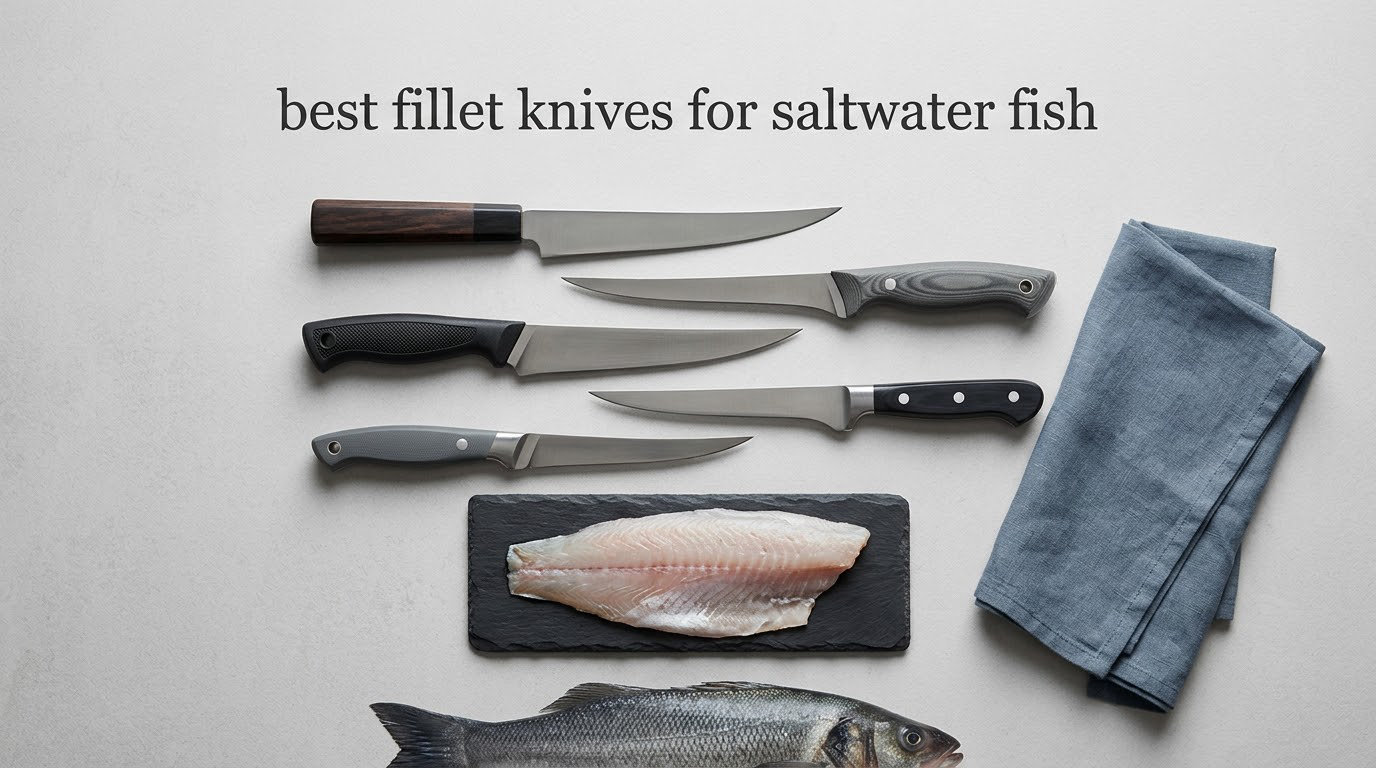
The knife you clean fish with on a boat deck is a different tool than the one you use at home. Saltwater fish carry tougher skin, denser muscle and heavier bone, and the chloride in seawater drives pitting corrosion into any steel you leave wet overnight. A freshwater fillet knife that feels nimble in the kitchen can flex too much on a grouper, and a stiff chef’s knife will tear the loin off a redfish instead of lifting it.
After weeks of comparing blades, reading angler forums and putting these knives through dockside cleanings, the answer is straightforward. The best fillet knife for saltwater fish is one with a 7 to 9 inch corrosion-resistant stainless blade, a flexible or semi-flex profile and a non-slip grip that stays put with slime on your hands. The surf fishing combos we tested earlier kept putting me on the dock with wet hands and a full cooler, which is exactly the condition that exposes a mediocre blade.
Below is the full breakdown of the best fillet knives for saltwater fish in 2026, covering manual flex blades, folding options and electric reciprocating units for high-volume offshore days.
Table of Contents
Top 3 Best Fillet Knives For Saltwater Fish (October 2026)

Bubba Li-Ion Cordless Electric Fillet Knife
- Cordless lithium-ion power
- 4 Ti-nitride coated blades
- Non-slip grip with trigger guard
- LED battery indicator

HOSHANHO 7 Inch Fillet Knife
- Japanese 10Cr15CoMoV steel
- 15 degree hand-polished edge
- Pakkawood handle
- 7 inch thin blade

imarku 7 Inch Fillet Knife
- 59 plus or minus 2 Rockwell C
- Thin flexible blade
- FSC-certified pakkawood
- Heat treated and honed
All 12 Saltwater Fillet Knives at a Glance in 2026
| Product | Specifications | Action |
|---|---|---|
| Bubba Li-Ion Cordless Electric Fillet Knife |
|
Check Latest Price |
| HOSHANHO 7 Inch Fillet Knife |
|
Check Latest Price |
| imarku 7 Inch Fillet Knife |
|
Check Latest Price |
 KastKing Speed Demon Pro 9 Inch KastKing Speed Demon Pro 9 Inch |
|
Check Latest Price |
 Rhinoreto 6.5 Inch Flexible Fillet Knife Rhinoreto 6.5 Inch Flexible Fillet Knife |
|
Check Latest Price |
 Rapala Fish n Fillet 6 Inch Rapala Fish n Fillet 6 Inch |
|
Check Latest Price |
 Rapala Heavy Duty Electric Fillet Knife Rapala Heavy Duty Electric Fillet Knife |
|
Check Latest Price |
 Bubba 7 Inch Tapered Flex Fillet Knife Bubba 7 Inch Tapered Flex Fillet Knife |
|
Check Latest Price |
 Kershaw 7 Inch Clearwater Fillet Knife Kershaw 7 Inch Clearwater Fillet Knife |
|
Check Latest Price |
 Morakniv Fishing Comfort Fillet Knife Morakniv Fishing Comfort Fillet Knife |
|
Check Latest Price |
 Gerber Gear Controller 10 Inch Gerber Gear Controller 10 Inch |
|
Check Latest Price |
 Toadfish Stowaway Folding Fillet Knife Toadfish Stowaway Folding Fillet Knife |
|
Check Latest Price |
1. Bubba Li-Ion Cordless Electric Fillet Knife – Best Overall for High-Volume Saltwater Cleaning
BUBBA Li-Ion Cordless Electric Fillet Knife with Non-Slip Grip Handle, 4 Ti-Nitride S.S. Coated Non-Stick Reciprocating Blades, Charger and Case for Fishing
Cordless lithium-ion power
4 coated reciprocating blades
Non-slip grip with trigger guard
Pros
- Cordless design with no cord to snag on a dock or in a boat
- Four Ti-nitride coated stainless blades for non-stick cutting
- LED battery life indicator on the handle
- Blades store in the zippered case for cleaning
- Trigger guard keeps the grip secure with wet hands
Cons
- Reciprocating blades are less precise than a fixed sharp edge at the rib cage
- Bulkier and heavier than any hand fillet knife here
This is the knife I reach for when a charter boat comes back with twenty striped bass and a limited window to clean them. The cordless lithium-ion design removes the single worst failure mode of electric fillet knives, which is an eight foot cord snagging on a cleat or dropping into the water mid-cut.
The body has a 7 inch reciprocating blade standard, and the package includes four Ti-nitride coated stainless steel blades. That coating is what stops fish flesh from bonding to the blade during a long run, which is the difference between a clean cut and a gummy one after ten fish.
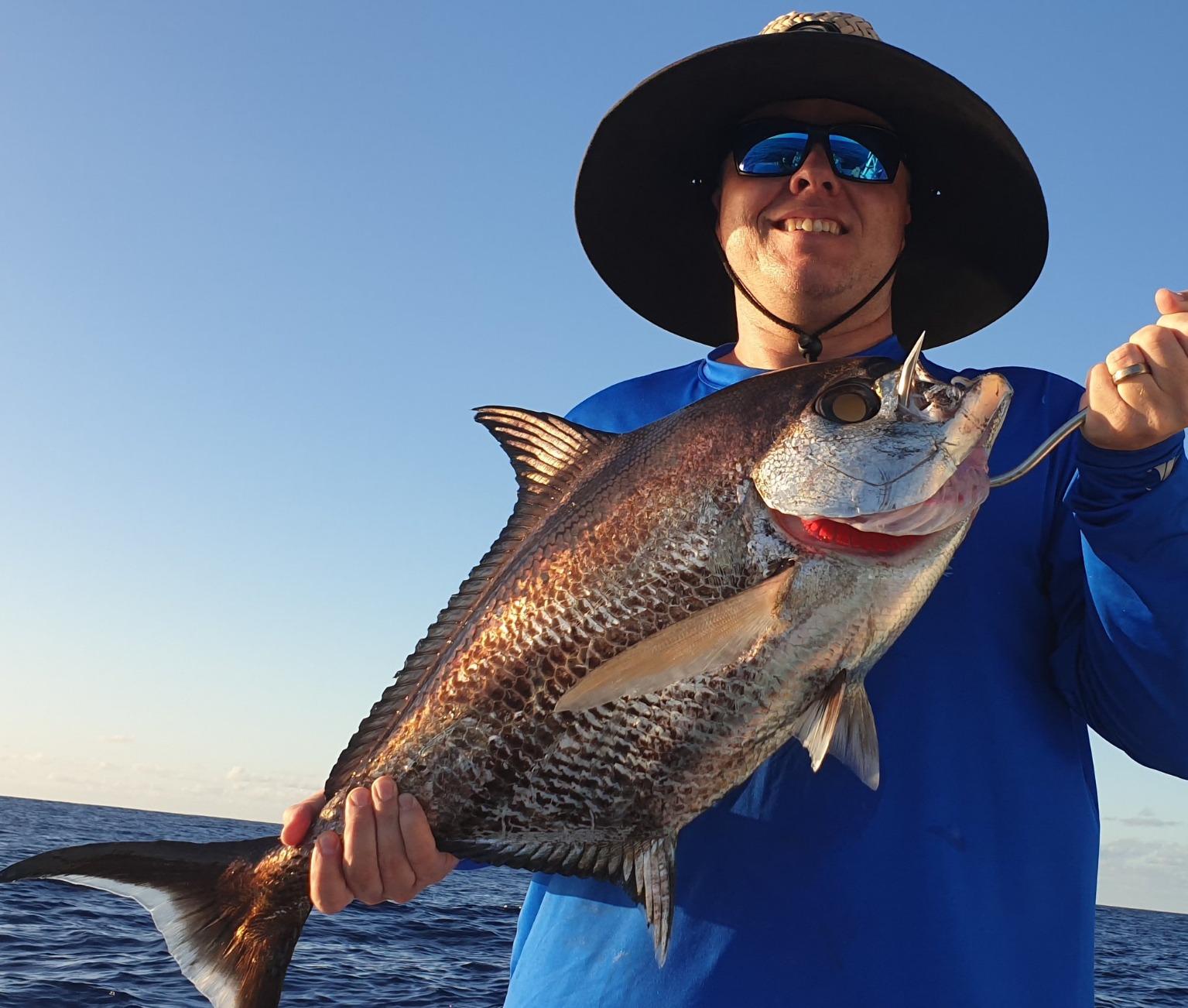
The non-slip grip with its trigger guard gives you a three-point hold: palm, fingers and trigger. With scales and slime on both the blade and your hands, that guard is the reason I stopped worrying about drops, and the LED battery indicator tells you when you have enough charge left to finish the cooler.
Reviewers put 84 percent of their ratings at five stars and 9 percent at four stars across more than 6300 reviews, and the recurring note is batch throughput. One buyer described filling a full stringer without a single re-hone, which is the use case where nothing else on this list keeps up.
Where the electric blade wins and where it annoys you?
It wins on volume. A reciprocating blade powers through skin, rib bones and pin bones that would take a fixed edge several careful passes, and the coated teeth shed flesh instead of fouling. For a cooler full of snapper or a stack of stripers after a long day offshore, that throughput is hard to argue with.
It annoys you at the finishing stage. A motor-driven stroke cannot make the short, angled cut that lifts a loin cleanly off the pin bones, so I still finish every electric-cut fillet with a manual blade. Motor vibration also builds wrist fatigue faster than a hand knife over a full morning.
Who should buy this and who should not?
Buy it if you clean a lot of fish in one session, if you move between boats and docks without reliable power, or if a hand cramp ends your trip early. The removable blades and included case mean maintenance is a matter of rinsing a part and swapping it, not disassembling a motor.
Skip it if you mostly clean one or two fish a week. A 7 inch flex blade like the Bubba tapered model below will give you a more precise result and take up a fraction of the space. This is a tool for throughput, and treating it as a general-purpose kitchen knife is a mistake.
2. HOSHANHO 7 Inch Fillet Knife – Best Value Japanese Steel Fillet Blade
HOSHANHO Fillet Knife 7 Inch, Super Sharp Japanese Fish Boning Knife
7 inch blade in Japanese 10Cr15CoMoV
15 degree hand-polished edge per side
Pakkawood handle
Pros
- Japanese 10Cr15CoMoV high carbon steel holds a fine hard edge
- Thin 7 inch blade slices and bones with less waste
- Corrosion and abrasion resistant pakkawood handle
- Ergonomic handle reduces fatigue over long sessions
Cons
- Straight edge design is not built for sawing through bone
- Pakkawood needs hand washing and periodic care
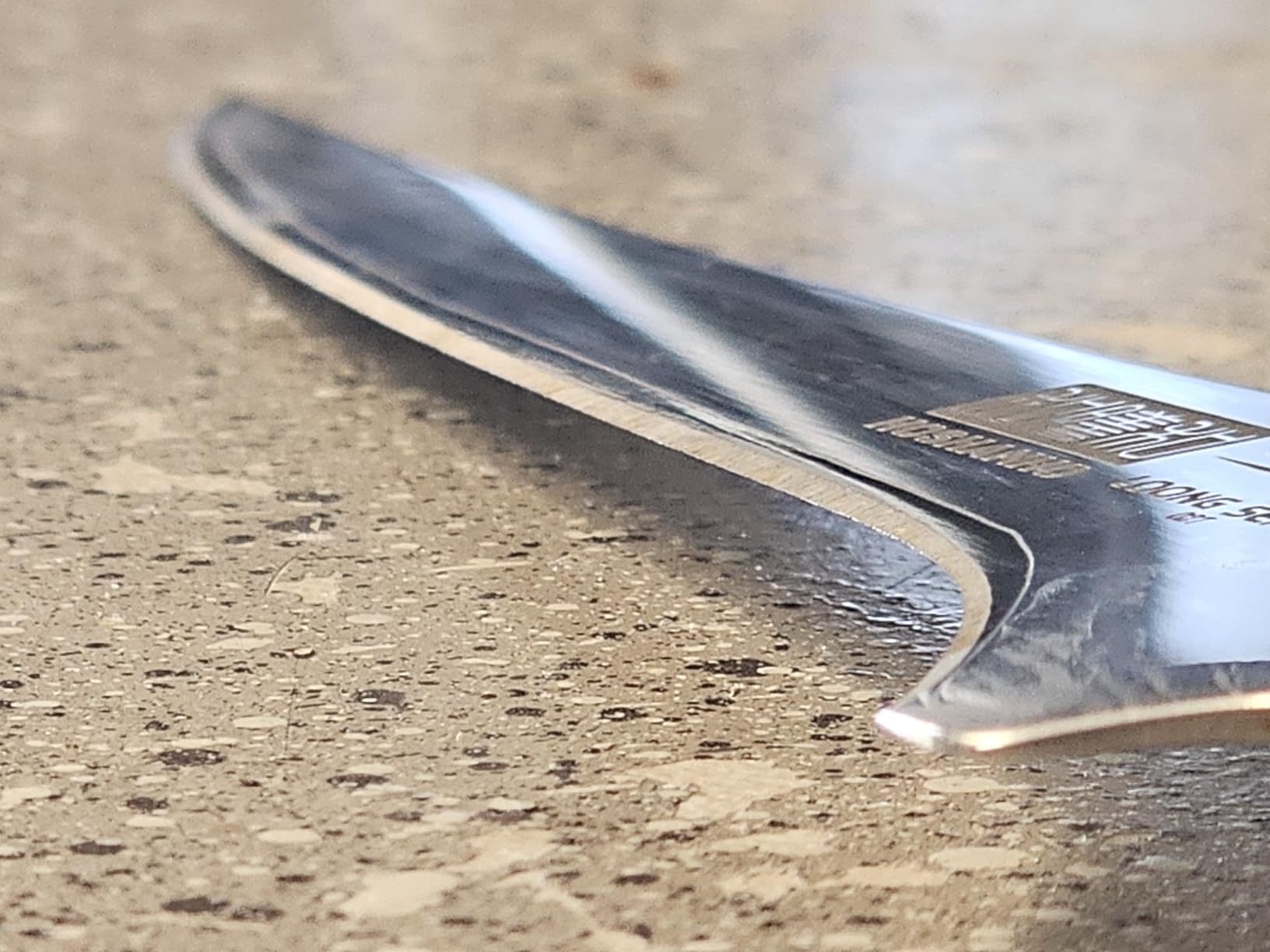
This is the knife I recommend to anyone moving up from a department store blade without moving up to a premium saltwater brand. The steel is Japanese 10Cr15CoMoV, a high carbon stainless that takes a finer edge than typical G4116 and holds it longer through a morning of filleting.
The 15 degree hand-polished edge per side is finer than the 18 to 20 degrees common on Western fillet knives. That produces a cleaner first cut through the shoulder of a redfish, though it also means the edge needs more frequent attention than a beefier factory grind.
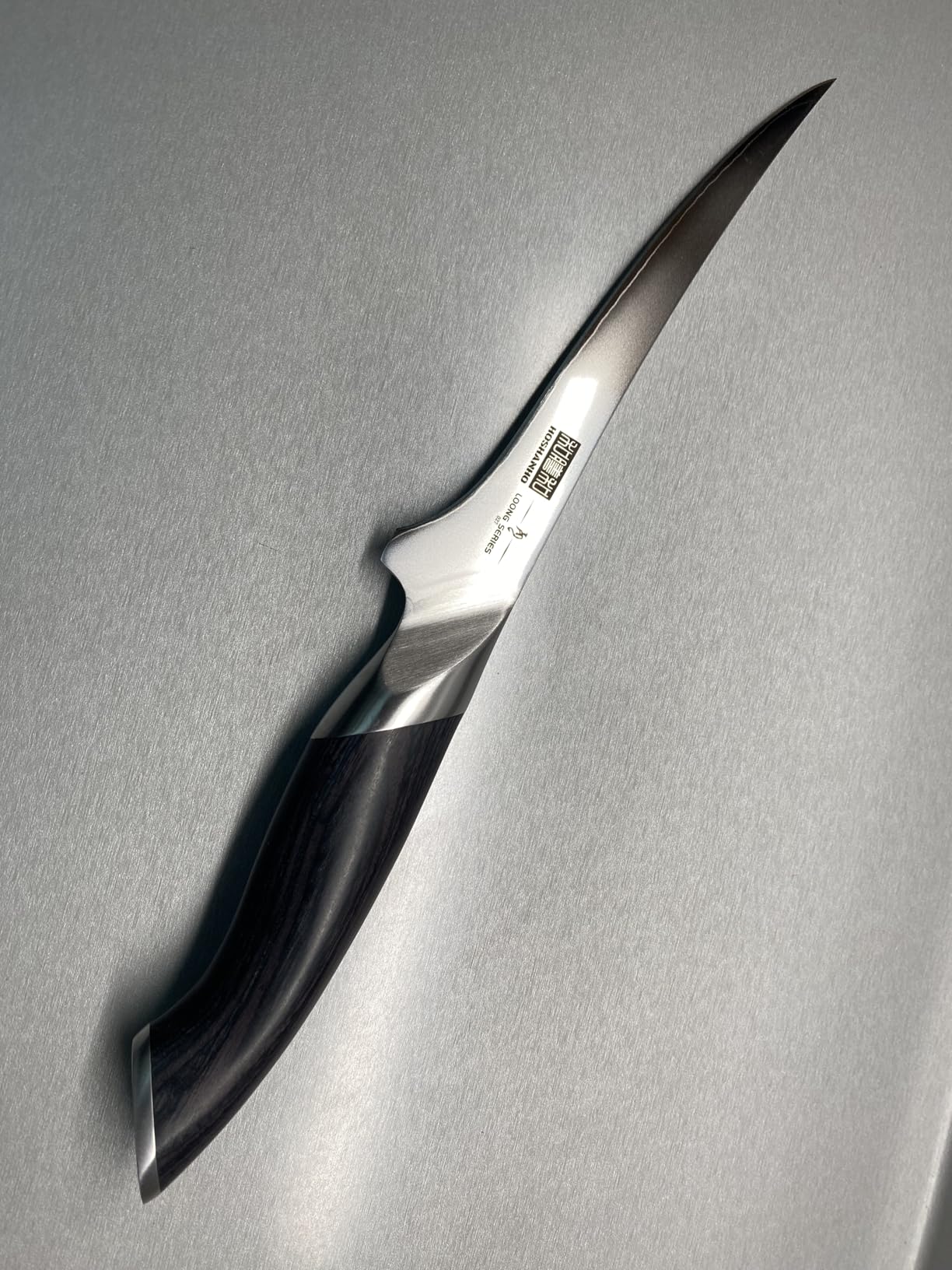
The pakkawood handle is a real asset in saltwater conditions. It is a resin-laminated composite that will not swell or go slick the way untreated hardwood can, and it holds its shape through repeated rinse-and-dry cycles better than bare wood.
Owners give it 83 percent five-star ratings, and the most common praise is for precision on thin fillets. The most common caveat, and it is a fair one, is that this is a straight-edge kitchen fillet knife rather than a heavy saltwater flex blade, so it wants a different technique.
How it handles a dockside saltwater session?
On a dock, the 7 inch blade is short enough to control and long enough to make a full pass behind the shoulder of a sea trout. The thin profile follows the rib cage in a single sweep if you keep the blade flat, and the fine edge means less meat lost to tearing along the lateral line.
What it will not do is saw through a large rib cage. On grouper or a big snapper, you will want to use the spine of the fish to lever the blade through rather than pressing straight down, and a more flexible dedicated flex blade does that job with less effort.
Who should buy this and who should not?
Buy it if you fillet at home, clean modest inshore catches, and want a knife dedicated to fish so you do not dull your chef’s knife. It is also the easiest transition into high carbon stainless for anyone moving up from a stamped blade.
Pass if you are cleaning pelagic species offshore, where blade length matters more than edge fineness. A 7 inch blade means more strokes to get down a tuna loin than a 9 or 10 inch blade, and those extra strokes add up on a pitching deck.
3. imarku 7 Inch Fillet Knife – Most Versatile for Hardness and Control
imarku Fillet Knife 7 Inch, Japanese High Carbon Stainless Steel
Japanese 10Cr15CoMoV at 59 plus or minus 2 Rockwell C
7 inch thin flexible blade
FSC-certified pakkawood handle
Pros
- 59 plus or minus 2 Rockwell C gives long edge retention
- Thin flexible blade adapts to fish shape and cuts waste
- Heat treated and finely honed out of the box
- Mirror finish with laser-etched logo
Cons
- Will not power through thick large bones
- A small number of buyers reported a misaligned tang
The imarku is the pick for anyone who wants one knife that does both jobs: a precise kitchen-grade edge and a blade flexible enough to hug a curved rib cage. The steel is the same Japanese 10Cr15CoMoV family as the HOSHANHO, hardened to 59 plus or minus 2 Rockwell C, which is on the harder side of what fillet knives typically use.
That hardness is the reason the edge survives a long session. A softer steel loses its bite partway through a cooler of fish, and a harder steel holds it, at the cost of being more demanding to put a real edge back on. Hone it regularly and it stays sharp across a full trip.
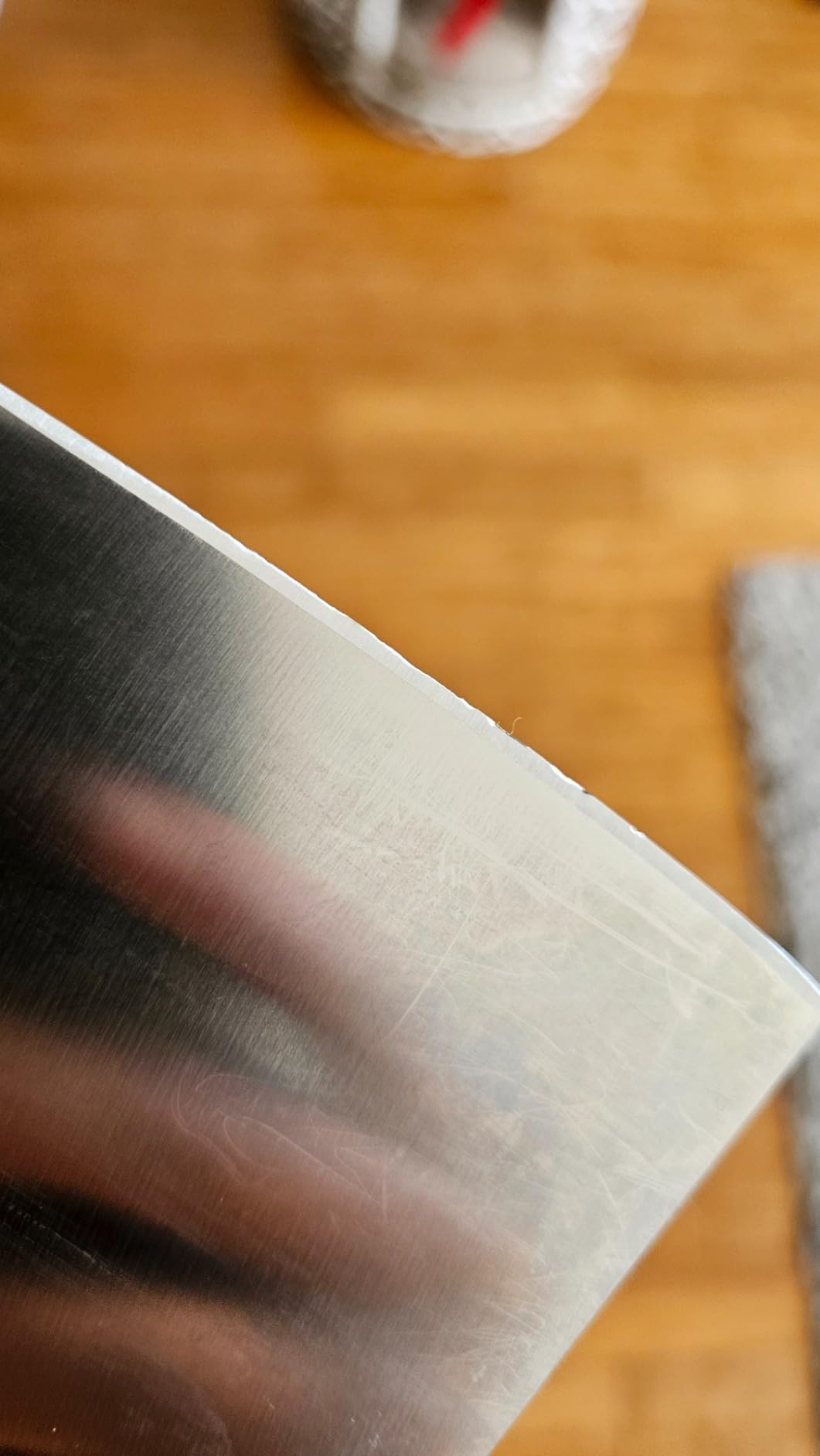
The FSC-certified pakkawood handle is specified at 8 to 12 percent moisture content, which is the range that resists absorption. Owners mention reduced fatigue over extended use, and the mirror-finished spine, ferrule and tip add a bit of corrosion margin you do not get from a raw finish.
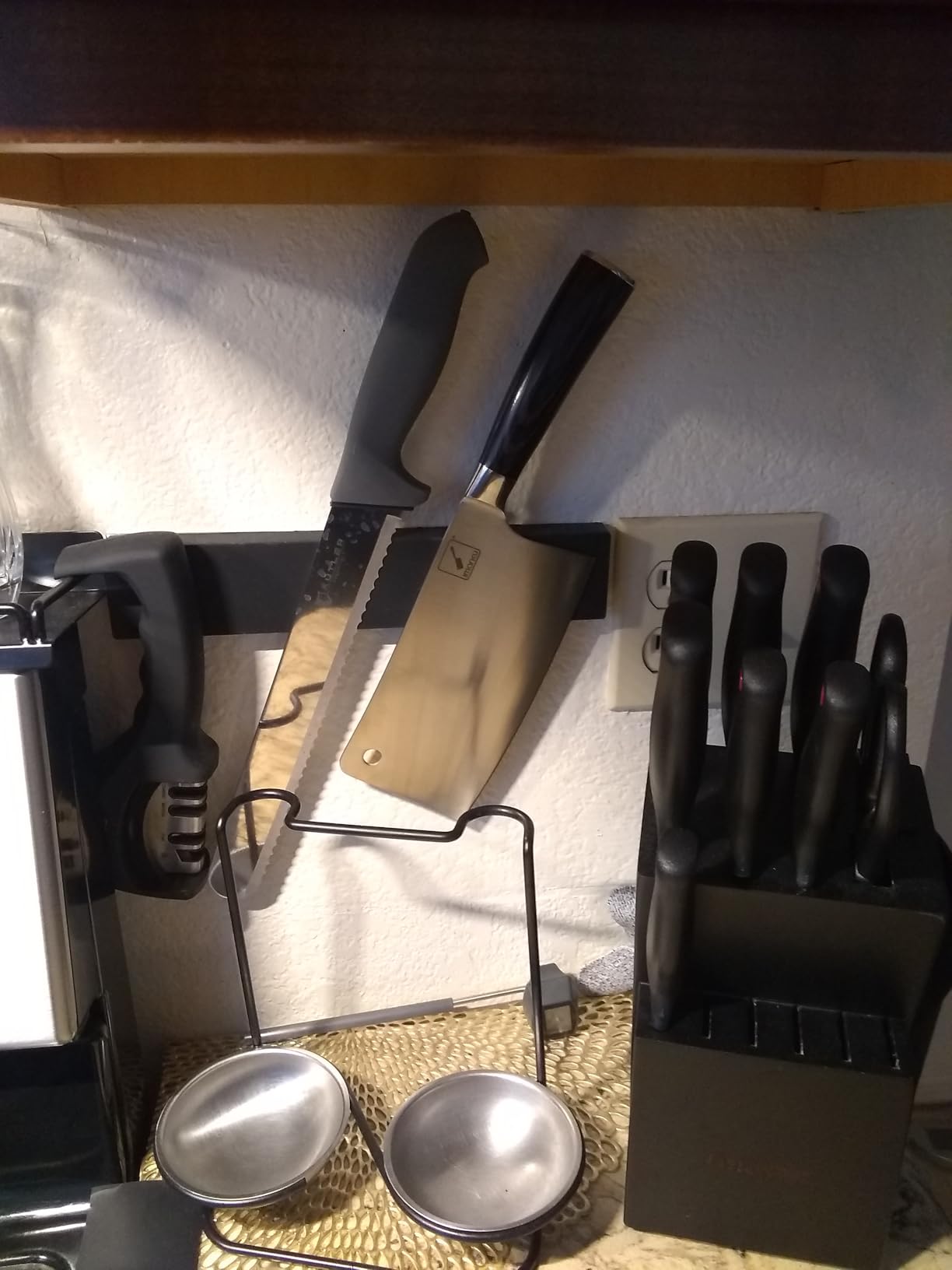
Reviewers rate it 4.7 stars across 4026 reviews and point to out-of-the-box sharpness and balanced weight that suits medium to large hands. A small number of buyers found the blade could not cut thicker bones, and a few reported an off-center tang and returned the unit.
What the 59 Rockwell number means on the water?
Higher hardness means the edge resists rolling and abrasion, so a thin 15 degree edge survives contact with bone and connective tissue. It also means the steel is less forgiving of the sideways abuse a fillet knife takes when you catch a spine mid-stroke, because harder steel chips instead of rolling over.
The practical rule is simple. Work the blade flat along the bones, hone it between fish rather than after, and it will stay sharp through a full day. Try to force it through a thick rib cage and you will grind away edge that a softer blade would have simply bent around.
Who should buy this and who should not?
Buy it if your priority is a single versatile blade for home filleting and moderate boat cleaning, and you are willing to keep a honing steel in the boat. The pakkawood handle tolerates saltwater far better than bare wood, which is the detail most reviewers miss.
Pass if you want maximum meat recovery on large game fish and accept an edge that needs frequent touch-ups. For pure loss-free filleting on a mahi or a striped bass, a super thin flex profile beats a harder thin blade every time.
4. KastKing Speed Demon Pro 9 Inch Fillet Knife – Top Rated Long Flex Blade
KastKing Speed Demon Pro Fillet Knife, 9” Fillet Knife
9 inch G4116 German stainless blade with black finish
Non-slip super polymer grip
Sheath with drainage slots
Pros
- G4116 German stainless holds an edge in fresh and salt water
- 9 inch blade follows natural fish contours
- Non-slip super polymer grip cleans up easily
- Sheath drainage slots keep the blade dry
- Covered by a peace of mind warranty
Cons
- 9 inch length is oversized for smaller inshore species
- Some owners report grip degradation after several years
The Speed Demon Pro is the general-purpose answer for an angler who cleans one varied species after another. A 9 inch blade covers everything from sea trout to a decent-sized grouper, and the G4116 German stainless with a black finish is specified by the manufacturer for both fresh and salt water.
Blade length is the real story here. Forum consensus among knife enthusiasts puts larger saltwater fish at roughly 8.5 inches, and that number exists for a reason: a longer blade means fewer strokes to get down a long flank, and fewer strokes on a moving deck is fewer chances to slip.
The super polymer grip is the detail I appreciate most at a dock. It stays secure with wet hands, and it rinses clean with hose water instead of holding onto slime the way textured rubber or wood does. It also tolerates being dropped into a livewell far better than a pakkawood handle.
Owners give it 80 percent five-star and 13 percent four-star ratings across 3749 reviews, and the standout story is endurance. One long-track user filled hundreds of king, coho and chum salmon before noticing the grip starting to deteriorate after about six years, which is a fair expectation for a polymer grip.
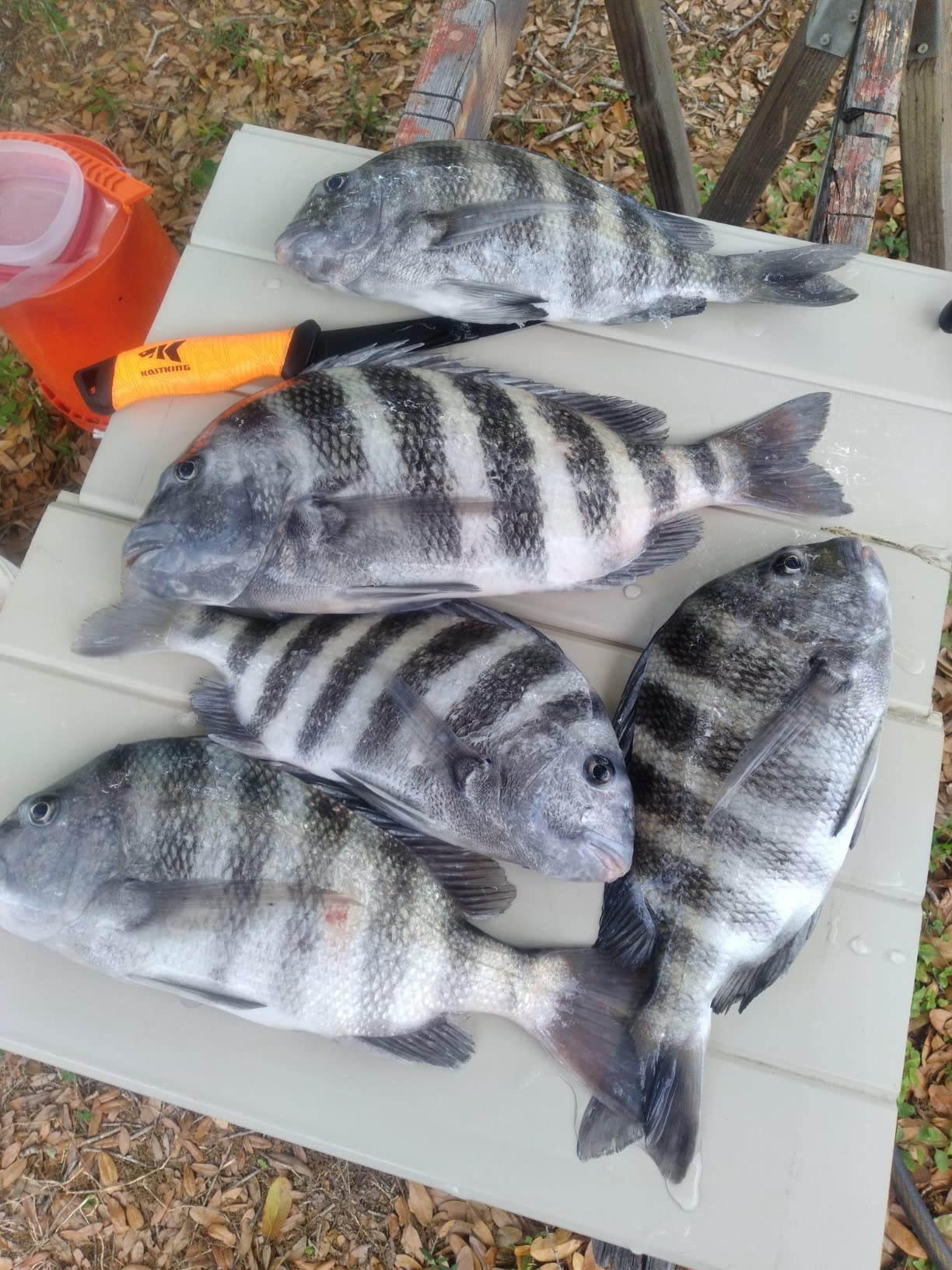
Whether 9 inches is the right length for you
If you fish one area and know your species, length is a compromise. Nine inches is generous on a 16 inch redfish, where the tip wanders beyond the tail, and efficient on a 30 inch striped bass, where a 7 inch blade means many more strokes along a back that will not sit still.
The sheath is worth noting for dockside work. It has open slots that drain water, so a wet blade goes back into the sheath without sitting in a salt bath, and the handle locks in place rather than rattling loose in a tackle bag.
Who should buy this and who should not?
Buy it if you want one knife that covers most inshore and nearshore species without changing technique, and if a washable grip matters more to you than a premium handle material. It is also the one I would hand to someone who does not want to think about knives.
Pass if you only ever fish inshore flats. The 9 inch length is the single most-cited limitation, and if you are downrigging for scup or sea bass all summer, a 6.5 inch blade is easier to control in close quarters.
5. Rhinoreto 6.5 Inch Flexible Fillet Knife – Best Starter Kit for New Anglers
Rhinoreto 6.5″ Flexible Fillet Knife for Fish with Sheath & Sharpener
6.5 inch precision-ground German stainless blade
Rubber handle for wet hands
Sheath and ceramic sharpener included
Pros
- German stainless blade cuts cleanly on the first pass
- Rubber handle stays locked in when wet
- Kit includes a vented sheath and ceramic sharpener
- Ergonomic handle fits all hand sizes and either handedness
Cons
- Stamped construction is less refined than forged blades
- 6.5 inch blade is short for tuna or salmon
Most people who ask about a saltwater fillet knife are not looking for a hobby, they are looking for one tool that works. This kit is the shortest path to a clean answer: a 6.5 inch German stainless blade, a rubber handle and a vented sheath, with a double-sided ceramic sharpener in the box.
The included sharpener matters more than it sounds. The most common complaint in every angler forum about new fillet knives is that they arrive needing work, and having a ceramic hone in the tackle bag means you can fix the edge at the dock rather than at a kitchen counter three days later.
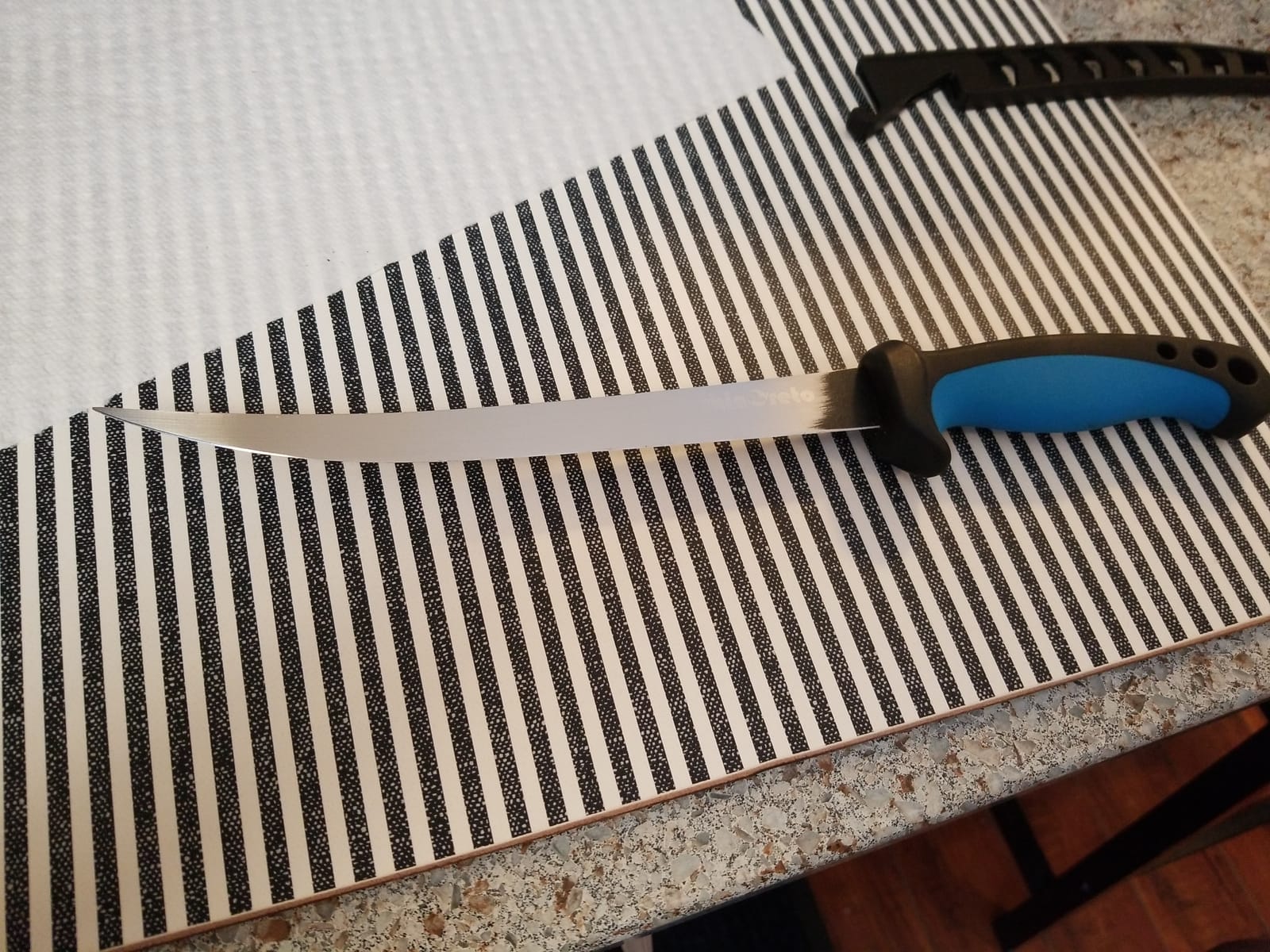
The rubber handle is the piece that earns its keep on a wet deck. Owners consistently describe it as locked into the hand when handling slippery fish, and at 3.04 ounces the whole knife is light enough that hand fatigue is rarely a factor, even across a long afternoon.
It holds a 4.5 star average across 3534 reviews with 74 percent five-star. Buyers single out the bundled sheath and sharpener, the wet-hand grip and the value, while the stamped build and short blade are the most-cited limits for bigger fish.
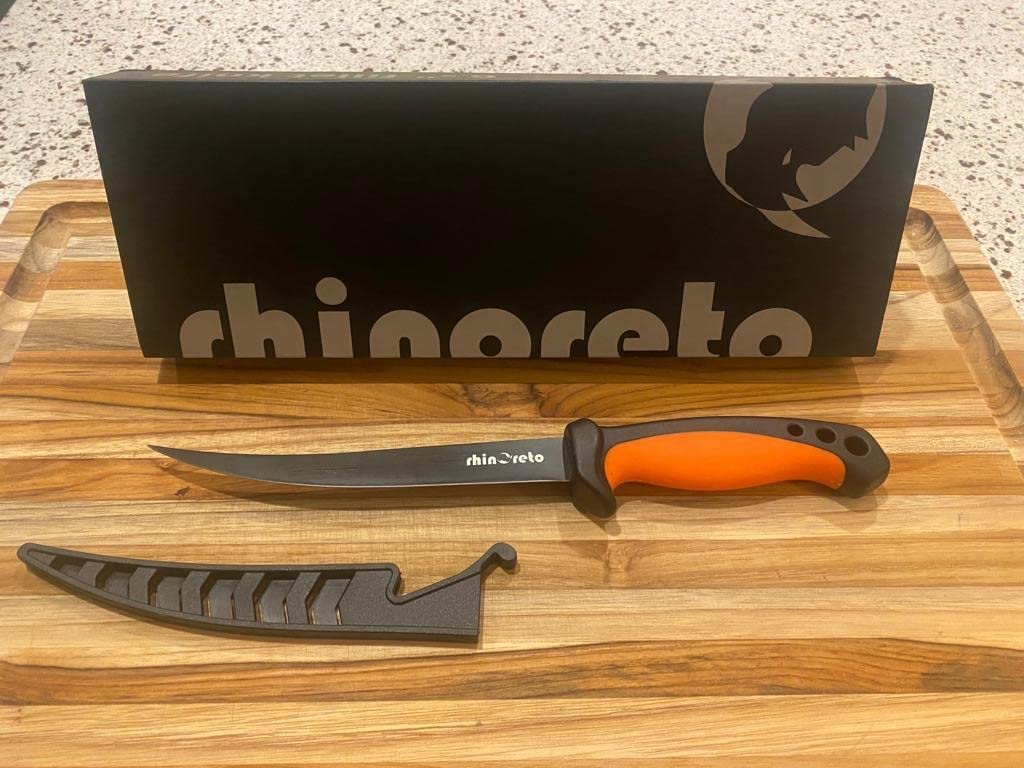
What you get versus what you upgrade later?
You get a complete, self-contained setup on day one, which removes the most common reason new knives sit unused. The vented sheath drains water so the blade is not marinating in salt between trips, and the rubber handle rinses clean under a dock washdown hose.
What you do not get is forged construction or a long blade. The stamped build is lighter and cheaper, and the 6.5 inch length is right for panfish, sea bass, scup and trout but genuinely short for anything you have to reach deep into a thick flank.
Who should buy this and who should not?
Buy it if this is your first fillet knife, if you fish from a kayak or a small boat where space is tight, or if you want a complete kit for a younger angler without a second purchase. It is also an easy gift that arrives ready to use.
Pass if you already know you will be cleaning tuna, mahi or large salmon regularly. In that case put the money toward the longer 9 or 10 inch flex options, where the extra reach does real work instead of just adding length.
6. Rapala Fish n Fillet 6 Inch – Best for Small Inshore Species
Rapala Fish ‘n Fillet Knife, 6 Inch Stainless Steel with Sheath
6 inch stainless blade with compound bevel
Tooled leather sheath
Compact sharpener included
Pros
- Controlled 6 inch blade for precise filleting cuts
- Compound bevel edge works well for contour cuts
- Leather sheath plus a compact single-stage sharpener
- Balanced weight reduces fatigue over long sessions
Cons
- Some buyers report it arrives needing sharpening
- Handle has a heavy poly top coat some find slippery
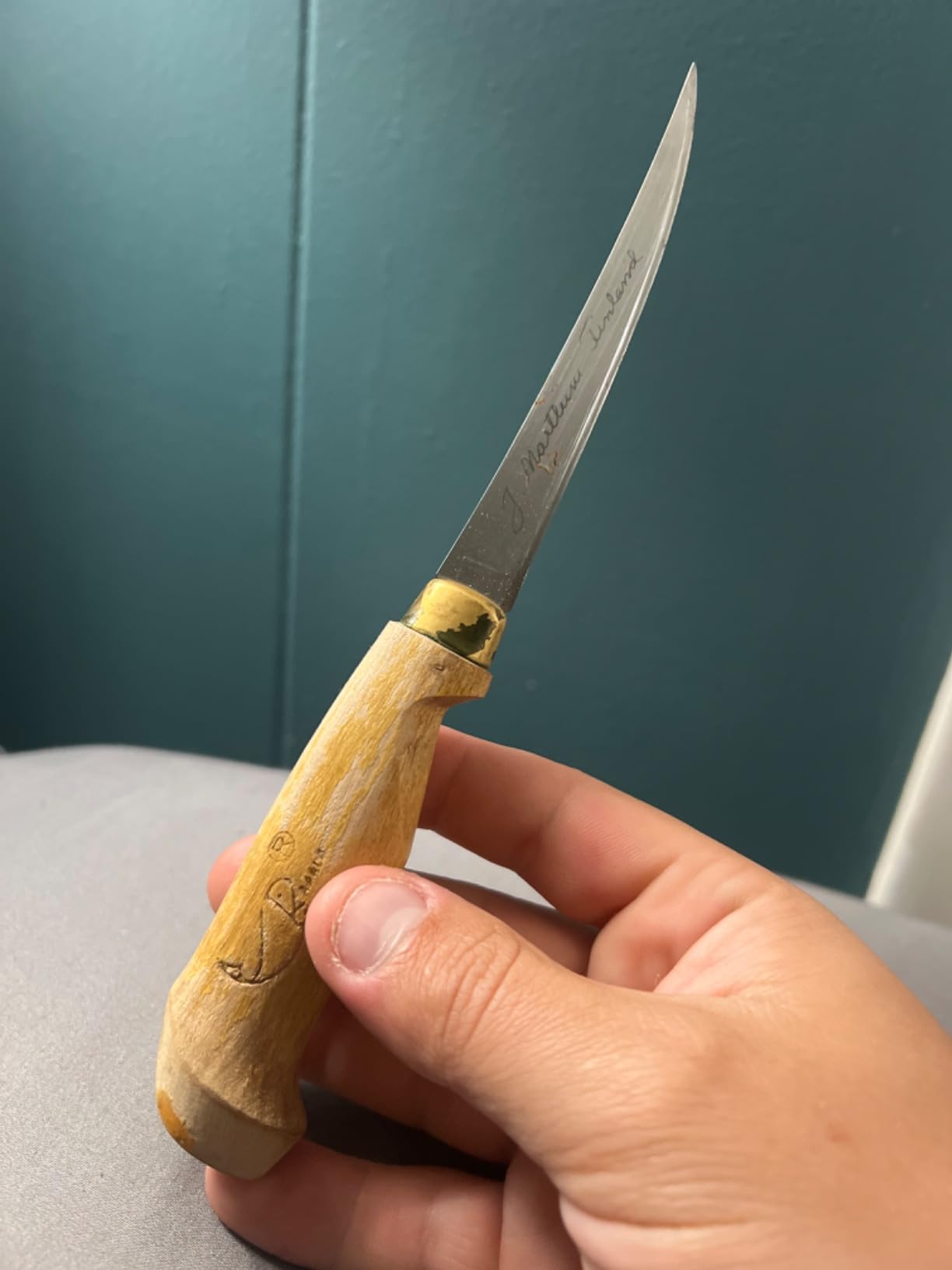
The Rapala 6 inch has been on the market long enough that owners describe replacing a 25 or even 40 year old version with the identical model. That kind of continuity is unusual in a category where designs churn, and it tells you something about how the design was solved.
Six inches is a deliberate choice. It is short enough that the tip stays under control on a small fish held in one hand, and the compound bevel gives you a fine working edge at the tip with more durability back toward the heel where force is highest.
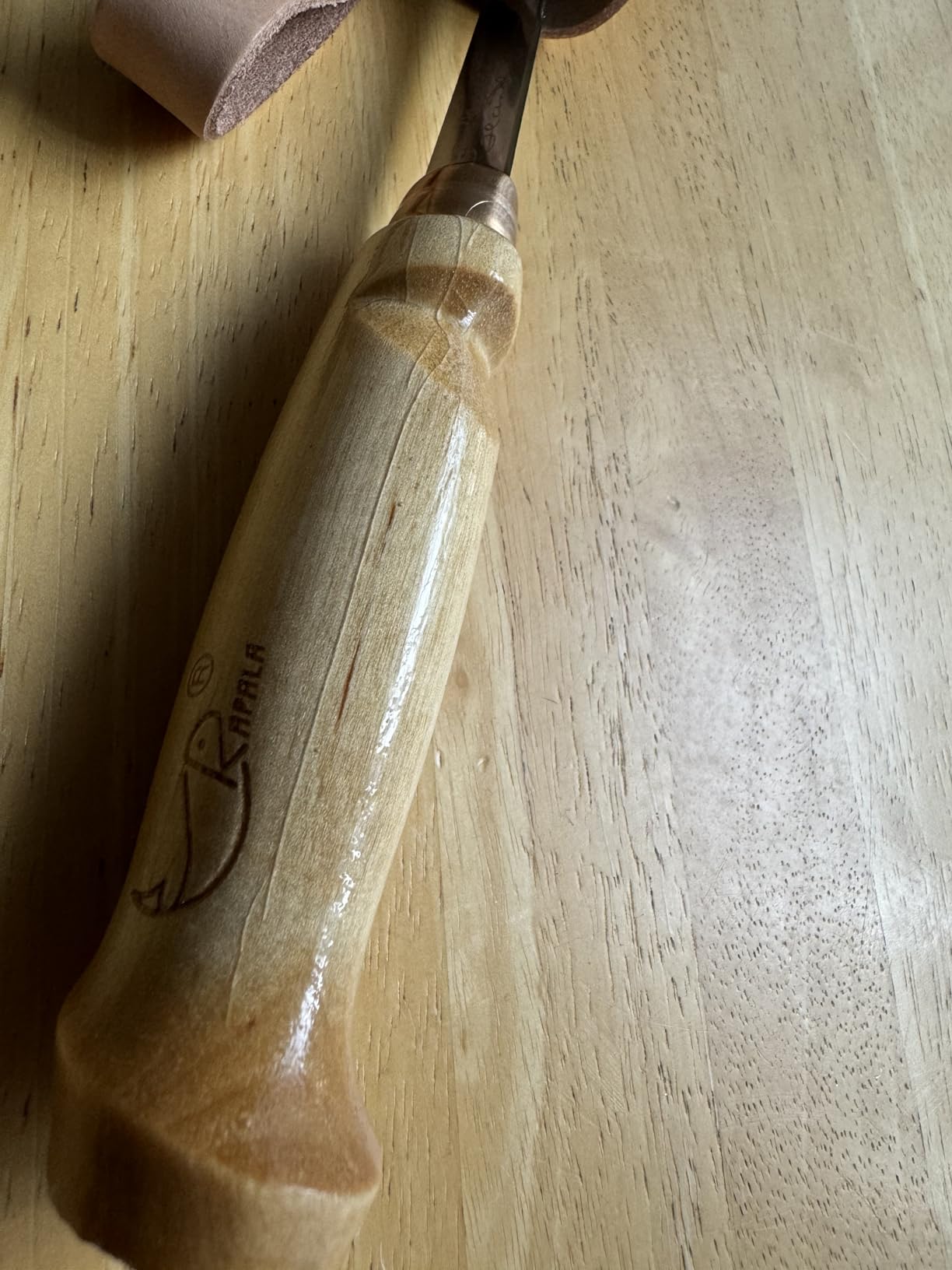
At 6.72 ounces it is heavier than most plastic-handled knives, and that weight is the point. A blade that feels a little substantial when the fish is flopping on the deck is easier to keep on a controlled path than a featherweight that skitters off bone.
It scores 4.7 stars from 2361 reviews with 83 percent five-star, and the loyalty theme runs through the reviews. The two recurring gripes are a factory edge that can arrive dull and a handle with a heavy poly top coat that some buyers find slippery and cheap-looking.
Handling small fish on a wet deck
For redfish, sea trout, scup and panfish, a 6 inch blade is genuinely easier to use than anything longer. You are working close to the tail and the head where space is tight, and a shorter blade lets you roll the fish and change your angle without repositioning your whole stance.
The flexible profile makes the layout of the bones easy to read. You feel the ribs through the blade before you cut to them, which is a big safety advantage when you are cutting toward a hand holding the tail.
Who should buy this and who should not?
Buy it if you target inshore species in the one to four pound range, if you prefer a knife with some heft in the hand, and if you like a design that has stayed unchanged for decades. The leather sheath is a nice touch for a boat console or a tackle bag.
Pass if edge quality out of the box is your top priority. Hone it on the included sharpener before your first trip, and the complaint disappears, but skipping that step is exactly where some owners run into trouble.
7. Rapala Heavy Duty Electric Fillet Knife – Best for High-Volume Cleaning
Rapala Heavy Duty Electric Fillet Knife, Powerful and Ergonomic Fish Filleting Tool with Advanced Motor, Razor-Sharp Stainless Steel Blades for Precision Cutting, Perfect for Effortless Fish Cleaning
7.5 inch serrated reciprocating blade
Built-in cooling fan
Replaceable dishwasher safe blades
Pros
- Built-in cooling fan keeps the motor cool on long runs
- Claimed twice the speed and three times the power of standard units
- 7.5 inch serrated blade cuts bone and skin
- Dishwasher safe blades simplify cleanup
Cons
- Requires a wall outlet and an 8 foot cord
- Some units had a blade retaining pin break
This is the electric option for people who clean at a dock or a cabin where power is available and the volume is high. The built-in cooling fan is the feature that changes the experience, because heat is what ends most electric fillet knife sessions early.
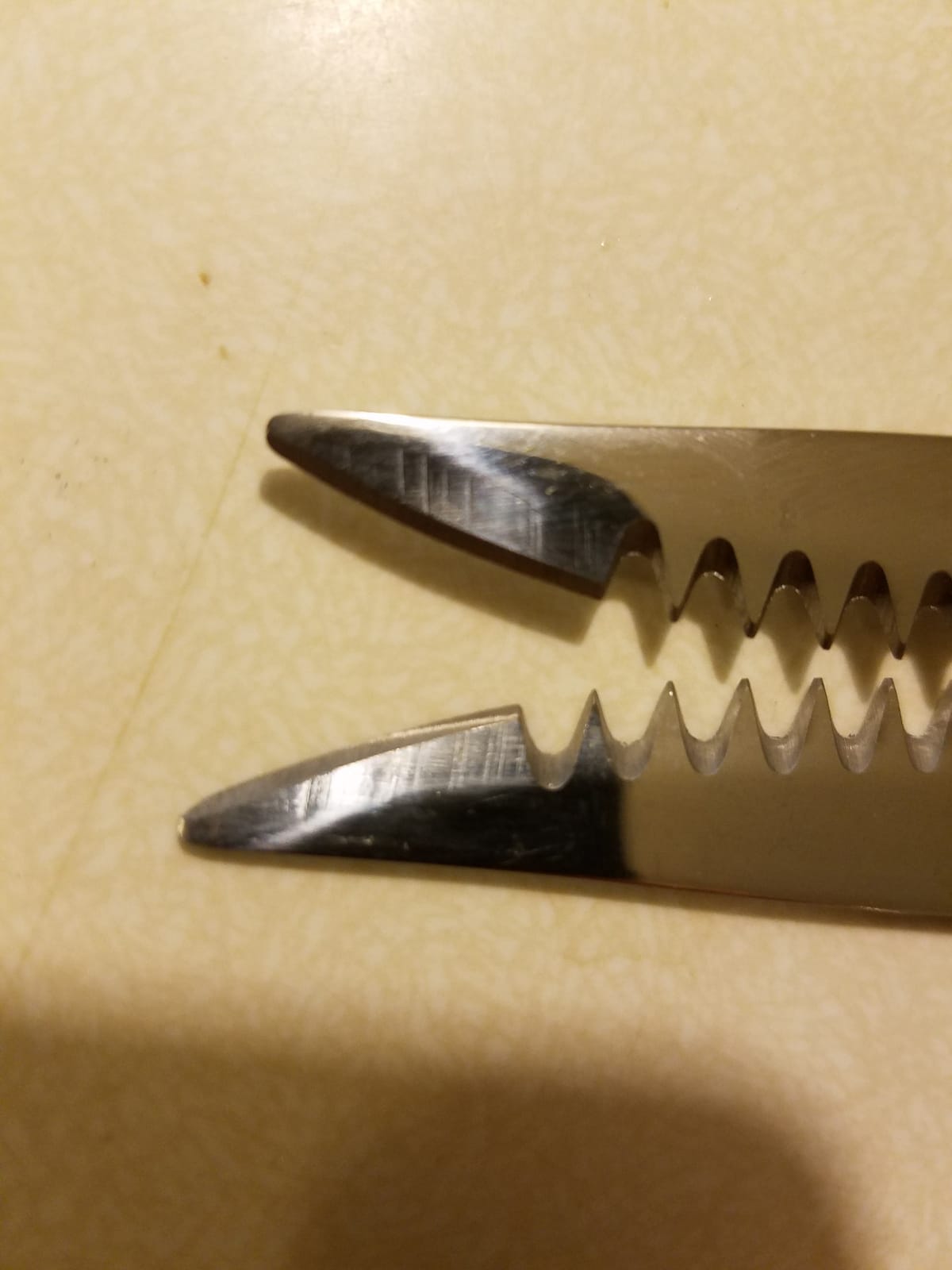
The 7.5 inch serrated reciprocating blade cuts through skin, rib bones and pin bones in a single continuous pass, and the blade is replaceable and dishwasher safe. Owners also note it accepts blades from other electric fillet knives, which is a small compatibility win when a blade wears out.
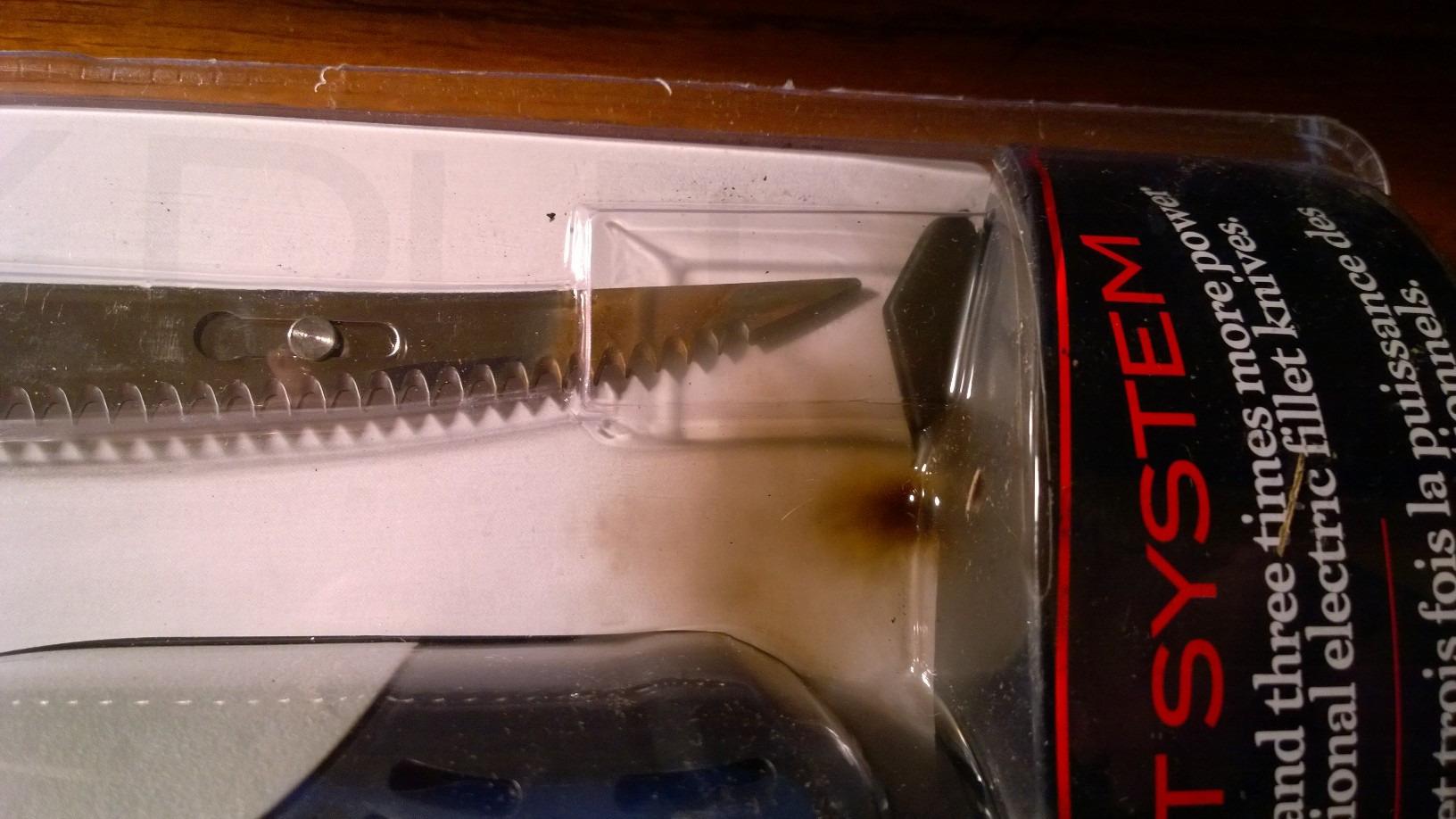
Reviewers give it 4.5 stars across 2007 ratings with 75 percent five-star, and the good stories are all about endurance on thick-boned fish like walleye and panfish batches. Several buyers mention Rapala customer support replacing a broken blade quickly, which is worth knowing when you are relying on a tool offshore.
The cooling fan is what allows a long continuous run, and the manufacturer describes it as twice the speed and three times the power of a standard electric fillet knife. I would treat that as a marketing claim and judge it on how it handles a full cooler, which it does well.
When a cord is a liability instead of a feature?
An 8 foot cord with a plug means you need an outlet, and that single fact rules this knife out for most boat decks. A cable in a livewell is a hazard, and a cable across a cockpit is an obstruction every time someone moves.
Where it works is a fish cleaning station, a dock with shore power, or a garage where you are breaking down a haul from an aquaculture run. If you process volume in one place rather than moving around a boat, the cord buys you a lighter, more powerful tool than any battery unit.
Who should buy this and who should not?
Buy it if you fillet at a fixed station with reliable power and clean more than a handful of fish at a time. The cooling fan and replaceable dishwasher-safe blades make it the low-friction choice for a volume workflow.
Pass if you clean on a boat, in a kayak, or anywhere without an outlet. The recurring complaints in reviews are the cord itself and a blade retaining pin that loosened on a few units, so check the pin is seated before a long run.
8. Bubba 7 Inch Tapered Flex Fillet Knife – Best Flex Blade for Minimal Meat Loss
BUBBA 7 Inch Tapered Flex Fillet Fishing Knife with Non-Slip Grip Handle, Full Tang Stainless Steel Non-Stick Blade, Lanyard Hole and Synthetic Sheath for Fishing, Boating and Hunting
Super thin 8Cr13MoV tapered flex blade
Non-slip trigger grip
Safety guards against fish spines
Pros
- Super thin tapered flex blade removes meat with minimal loss
- Trigger grip gives control around spines and bones
- Integrated safety guards protect against blade and fish spines
- Sheath included
- At 13 inches overall it is a genuinely long fillet tool
Cons
- Thin flex blade is not for heavy sawing through large bones
- Heavier at 9.6 ounces than most plastic-handled competitors
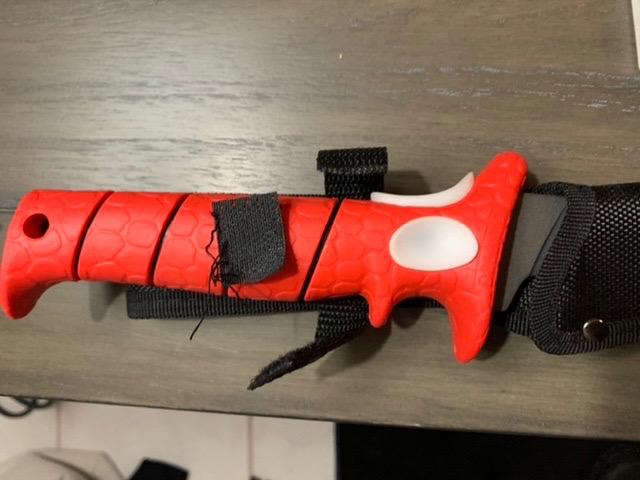
This is the knife I use when the goal is to keep as much meat as possible on the frame. The 8Cr13MoV blade is described as super thin and tapered, and taper is what makes it: the spine is thicker than the edge, so the blade flexes progressively along its length rather than giving way all at once.
Taper also means the blade can dive around the curve of a rib cage in one long draw instead of a series of short corrective cuts. On a large redfish or a snapper, that single long pass is the difference between a clean yield and a fillet with flesh torn off it.
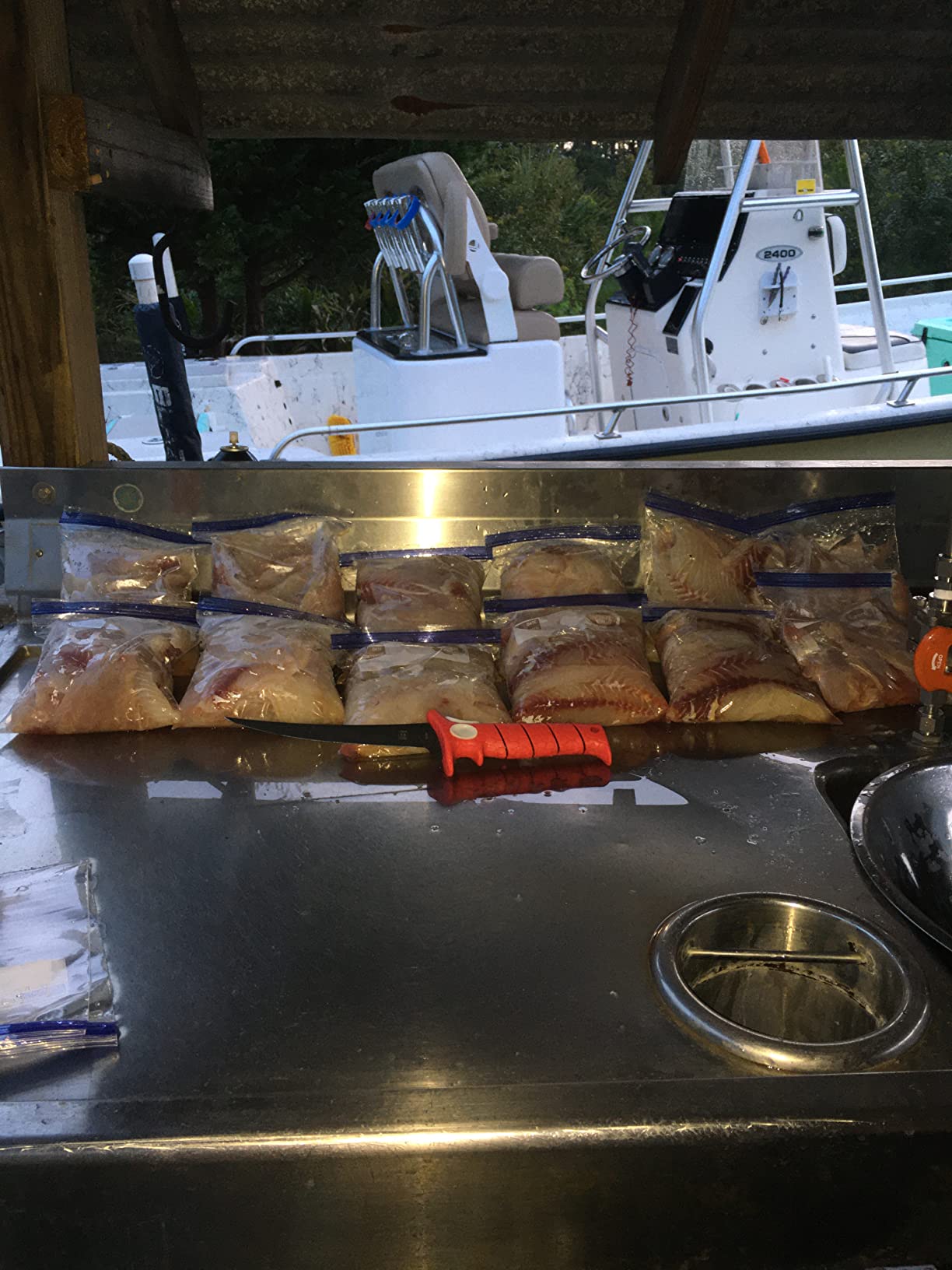
The safety guards are an underrated detail. The non-slip handle works as a trigger grip, and the integrated guards protect your hand from both the edge of the blade and the spines of the fish, which matters most on species with sharp dorsal spines like grouper and snapper.
It holds a 4.8 star average from 1688 reviews with 88 percent five-star, tied for the highest rating in this group. Reviewers consistently call out the tapered flexible blade for loss-free filleting and the grip plus spine guards for working safely around fish structure.
Flex versus stiffness and why it changes your yield
A blade flexible enough to bend around the curve lets the edge stay in contact with the bone through the whole stroke, so the cut is continuous. A stiff blade only touches in short segments, which means the knife has to be repositioned constantly and tends to tear meat between contact points.
The trade-off is strength. A very thin flex blade is the wrong tool if you need to saw through a large bone or cut through a thick head, and reviewers note this directly. Match the flex to the job: precision meat removal on normal table fish, and something stouter for heavy structural work.
Who should buy this and who should not?
Buy it if you care about yield and work on fish with firm, dense flesh, which is most of what comes off a saltwater dock. The 13 inch overall length gives you a real reach, and the trigger grip is comfortable for extended sessions.
Pass if you need a general-purpose knife that also handles bone or ice. At 9.6 ounces it is the heaviest manual blade here, and for smaller fish that weight is more than the task requires.
9. Kershaw 7 Inch Clearwater Fillet Knife – Budget Pick for Everyday Use
Kershaw 7″ Clearwater Fish Fillet Knife, Black, 7 Inch Blade
7 inch Japanese 420J2 stainless trailing point blade
Co-polymer non-slip handle
Molded ABS sheath with belt loop
Pros
- Japanese 420J2 stainless with corrosion-resistant construction
- Trailing point blade with the right amount of flex
- Light 3.3 oz weight reduces fatigue
- Sheath with integrated belt loop for carry
Cons
- 420J2 is a softer alloy needing more frequent sharpening
- Plain edge is not designed for sawing through bone
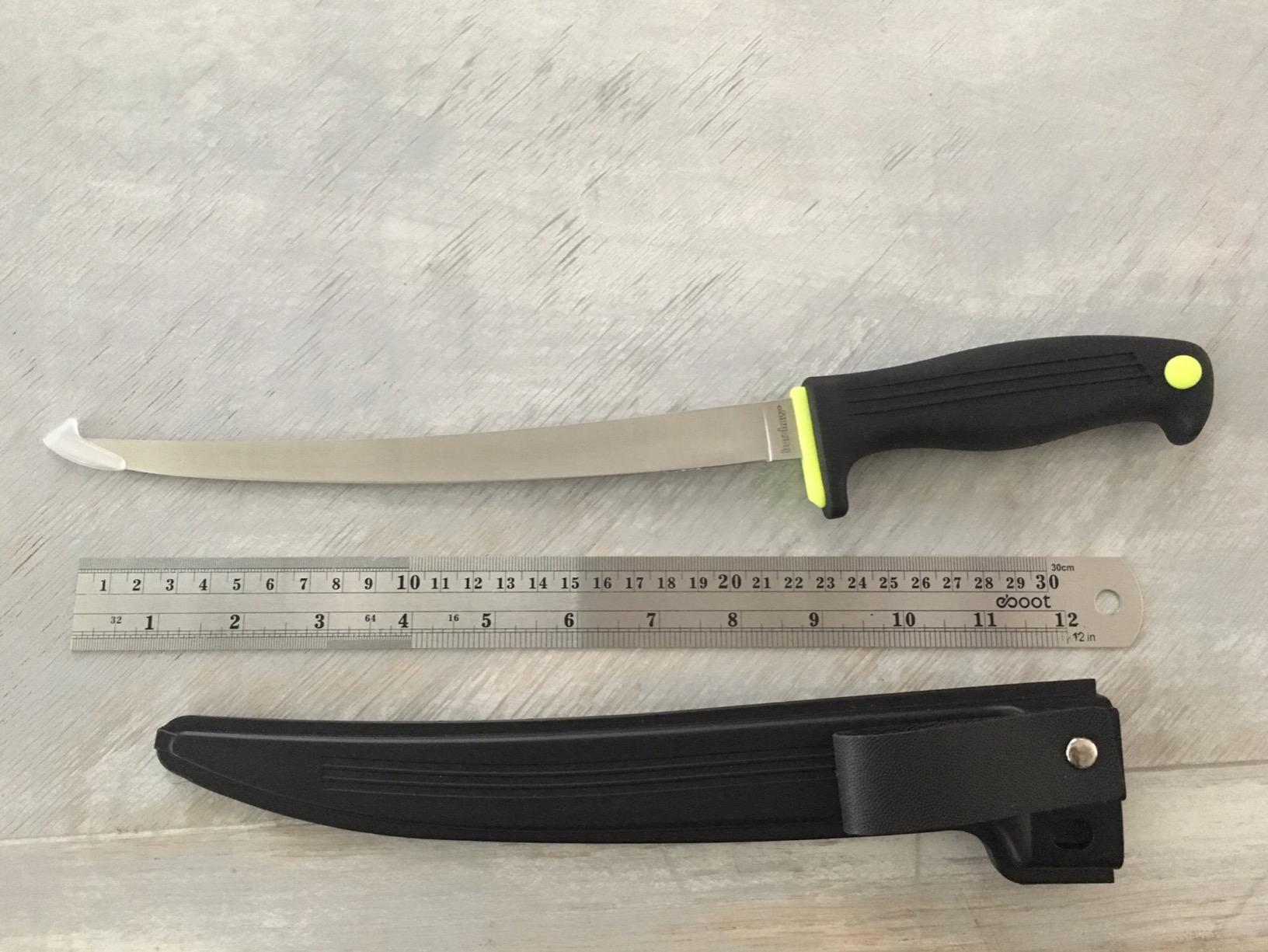
The Clearwater is the simplest answer on this list, and simplicity has real value when you are choosing a knife for a boat. The 7 inch trailing point blade in Japanese 420J2 stainless is a proven, corrosion-resistant steel, and the whole knife weighs just 3.3 ounces.
That weight matters more than it sounds. Repeatedly lifting a 3.3 ounce knife through a dozen fish produces noticeably less hand fatigue than working with a 9.6 ounce blade, and on a long day with smaller fish you feel the difference by the afternoon.
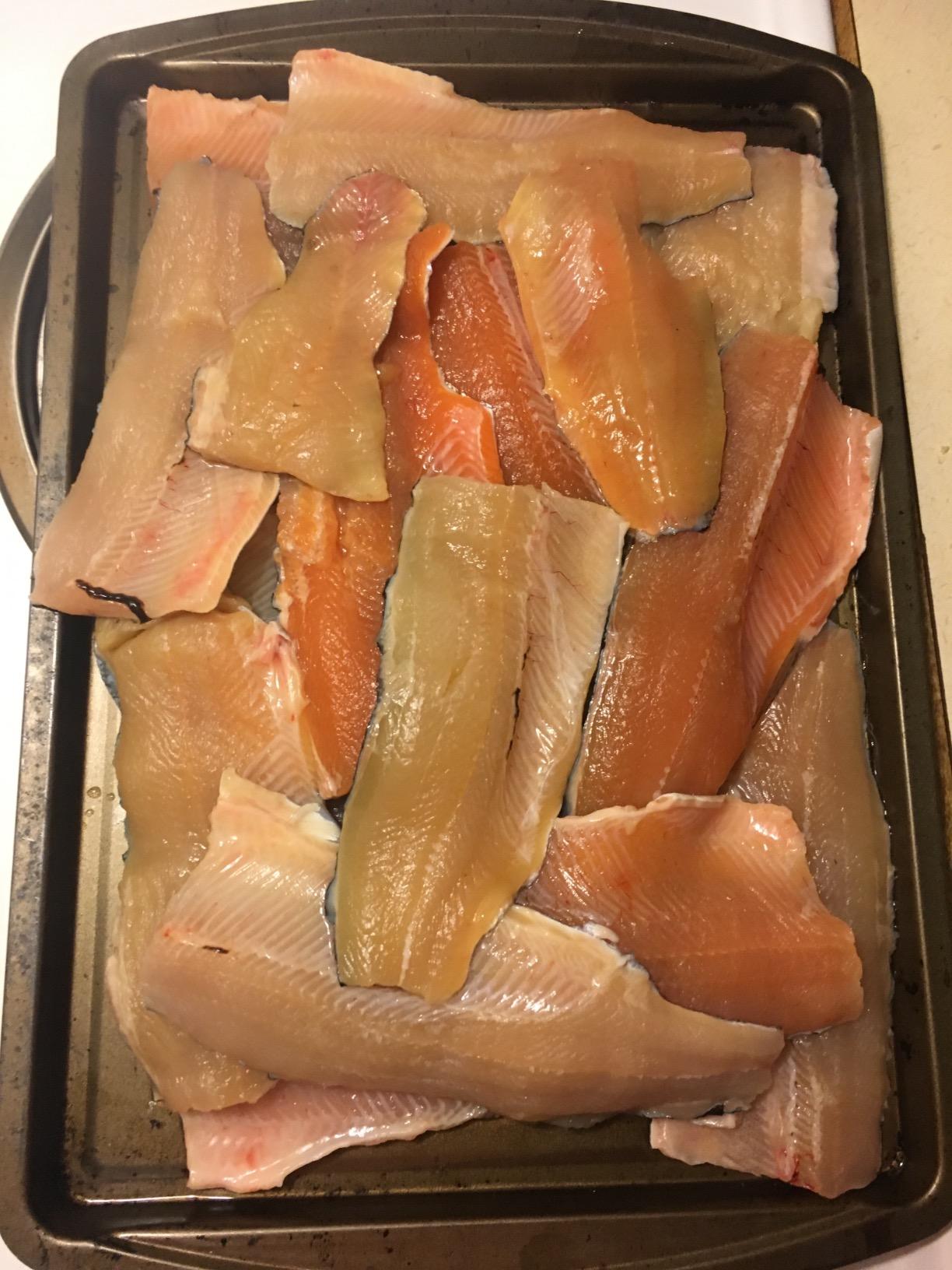
The co-polymer handle is designed for wet and slippery marine conditions and does not absorb odors, which matters when the same knife lives in a fish hold. The molded ABS sheath with an integrated belt loop keeps the blade covered and lets you clip it to a vest or a cooler strap.
Owners give it 4.6 stars from 1573 reviews with 75 percent five-star, treating it as a capable inexpensive everyday fillet knife for salmon, tilapia, cod, tuna, bass and catfish. The honest weakness is steel hardness, so edge retention comes out average compared with the high carbon options.
What softer steel costs you and when it is worth it?
420J2 sits lower on the hardness scale than the high carbon steels used in the HOSHANHO and imarku. That means it dulls sooner and needs a hone between fish rather than at the end of the trip, but it is also more forgiving and easier to bring back to a working edge.
For an angler who cleans a handful of fish a week, that trade is a good one. You get a knife that stays sharp for a full session with one touch-up, and you replace a dented blade without thinking twice.
Who should buy this and who should not?
Buy it if you want a dependable lightweight blade for everyday saltwater use and you do not want to manage a sharpening routine. The sheath and belt loop make it the easiest to just grab and go, with nothing to keep track of.
Pass if you are processing a large catch in one session or want the longest possible interval between hones. You will be reaching for the honing steel repeatedly with this blade, which is fine work, just not what you want mid-session on a pitching deck.
10. Morakniv Fishing Comfort Fillet Knife – Best for Packable Gear and Lightweight Carry
Morakniv Companion Stainless Steel Fish Fillet Knife with Sheath, Black/Yellow, 6.1 Inch
6.1 inch Sandvik 12C27 stainless blade
Soft friction grip with finger guard
3.5 oz with sheath
Pros
- Sandvik 12C27 offers strong corrosion resistance and toughness
- Soft friction grip and finger guard for wet handling
- Handle does not absorb odors in changing weather
- Light 3.5 oz weight with sheath
Cons
- 6.1 inch blade is short for larger game fish
- Fixed sheath is another loose item in a boat
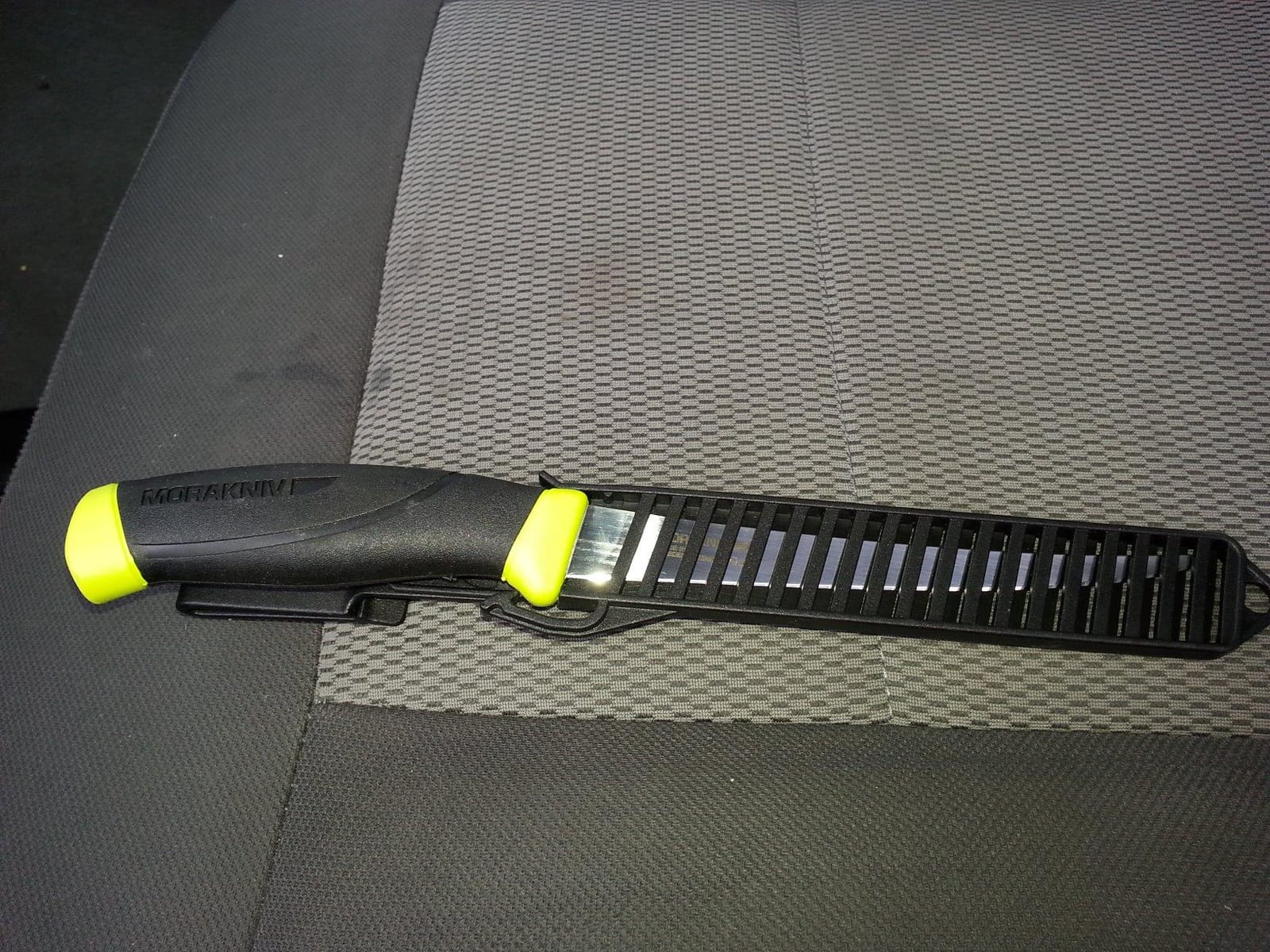
The Morakniv is the one I keep in the small dry bag for shore and kayak sessions. Sandvik 12C27 is a well-regarded stainless with a good balance of corrosion resistance and toughness, and the blade thickness is listed at 0.07 inch, or 1.9 mm, which is a sensible spine for a flexing fillet blade.
At 6.1 inches of blade and 3.5 ounces with the sheath, it is the smallest complete setup here. The soft friction grip and finger guard give you control on wet hands, and the guard stops a slick fish from sliding down onto the edge while you reposition.
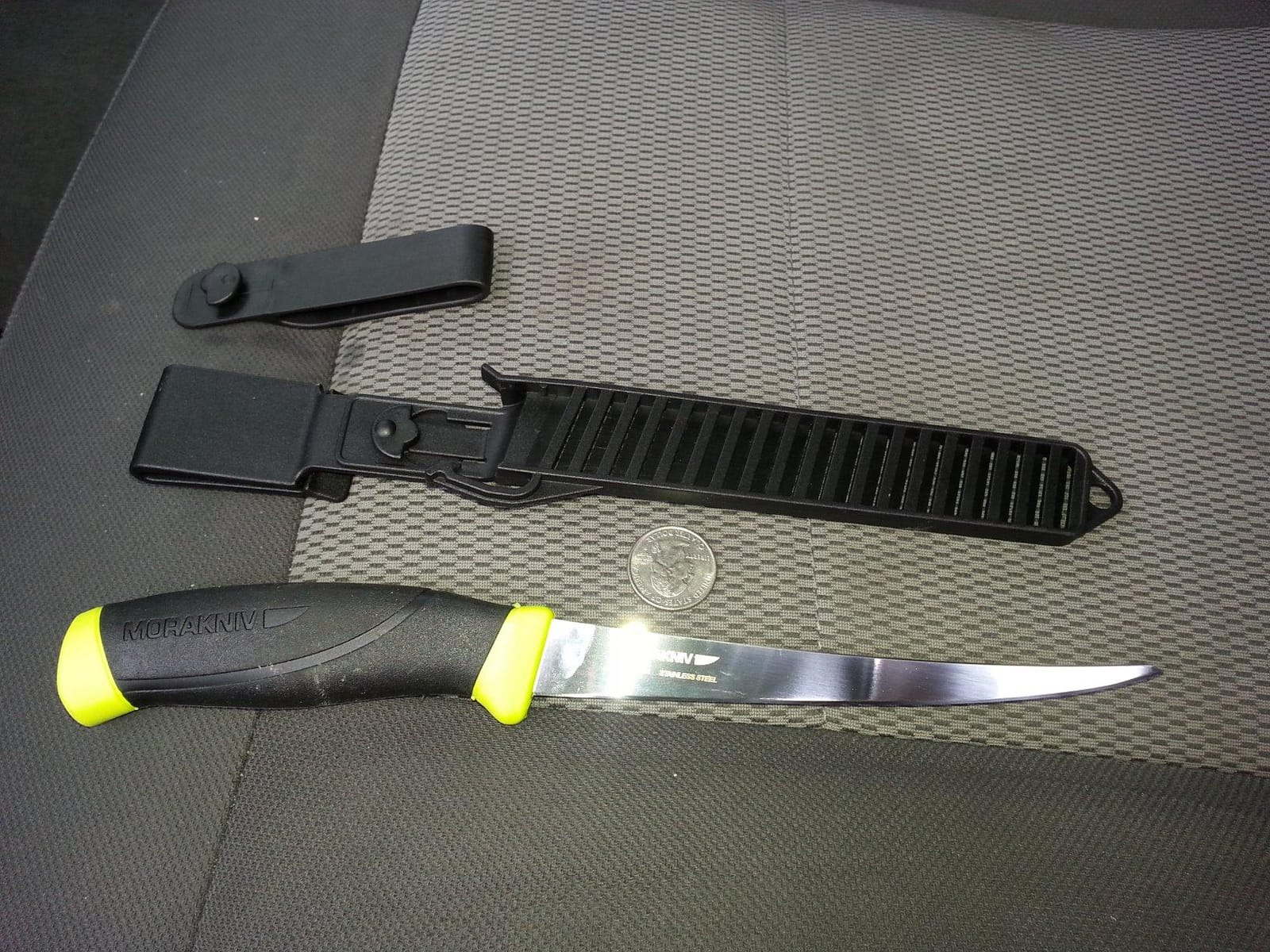
One detail deserves attention in a saltwater context: the handle does not absorb odors and works across changing weather conditions. Fish smell in a closed kayak hatch is a real problem, and a handle that will not hold onto it is worth more than it sounds.
It scores 4.8 stars from 1127 reviews with 85 percent five-star and 95 percent at four stars or better, which is unusually consistent. Reviewers emphasize secure wet-weather grip, corrosion resistance and low carry weight for stream and shore fishing.
When a 6 inch blade is the right answer?
For trout, scup, sea bass, panfish and small redfish, a 6.1 inch blade is not a compromise, it is the correct tool. Short blades are easier to control when the fish is small and your support hand is close to the edge, which is the highest risk position in filleting.
The limitation is the other end of the scale. Reviewers flag the short blade for larger game fish, and that is simply geometry. You cannot reach deep into a thick flank with a short blade, so you end up making more passes over an area that is harder to keep steady.
Who should buy this and who should not?
Buy it if you fish from shore, from a kayak, or on trips where every gram and every loose item counts. The polymer sheath with a detachable belt clip and belt loop is easy to rig on a PFD or a pack strap.
Pass if you clean large offshore species. For that you want a 9 or 10 inch blade, and you will also want to decide where the sheath lives, since a fixed sheath is one more thing to keep from sliding off a boat seat.
11. Gerber Gear Controller 10 Inch – Best for Big Game Fish
Gerber Gear Controller – Saltwater-Resistant Fishing Fillet Knife with Sheath & Built-In Knife Sharpener – Premium Fishing Gear – 10″, Cyan
10 inch mirror-polished stainless blade
SALTRx corrosion resistance
HydroTread grip with GuideFins
Pros
- SALTRx corrosion engineering plus a mirror-polished finish
- HydroTread grip and GuideFins control on slippery fish
- 10 inch blade handles larger fish and steaking
- Sheath includes a built-in knife sharpener
Cons
- Some units arrive blunter than expected
- Heaviest manual knife here at 14.4 ounces
The Gear Controller is built for the end of the size range, and it is the only knife here with corrosion treatment named as a product feature. SALTRx is Gerber’s salt water corrosion resistance engineering, paired with a mirror-polished blade, and that combination is aimed squarely at boat and dock use.
A 10 inch blade is a serious reach. On a tuna, a cobia or a large grouper, it means a single long draw down the back rather than a series of overlapping strokes, and it is also the length most anglers use for steak cuts when they bring fish home.
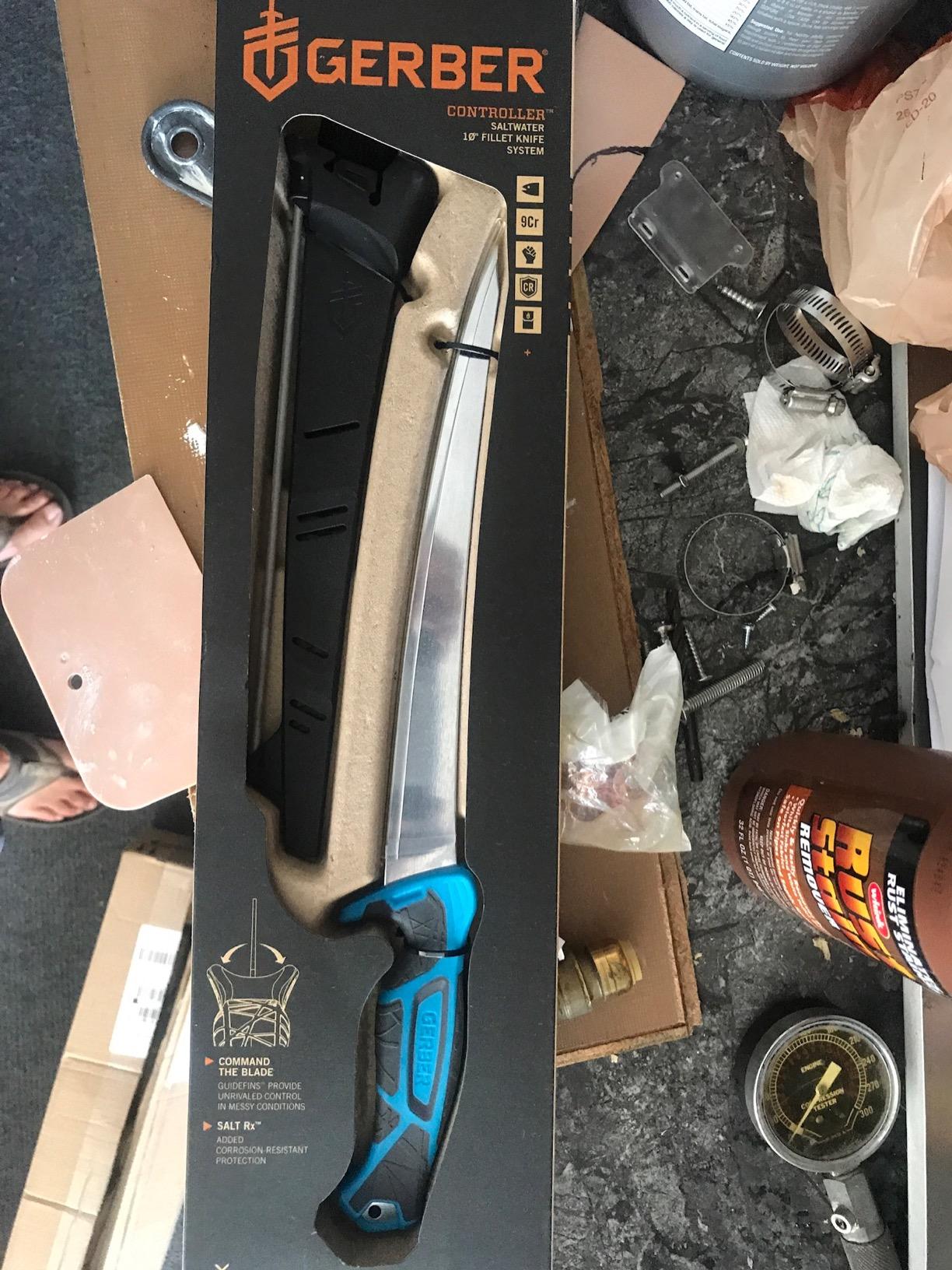
The HydroTread grip with GuideFins is Gerber’s answer to wet, slimy hands. The fins give your fingers a defined place to sit so the handle does not rotate in your palm mid-stroke, and reviewers consistently credit the grip with control on slippery fish.
At 4.7 stars from 543 reviews with 83 percent five-star, anglers report using it for saltwater, walleye and northern pike, and several note it becomes the sharpest knife in their collection after a few passes on the included steel. A small minority received a dull factory edge.
Is a 10 inch blade overkill for most anglers?
For most inshore work, yes. A 10 inch blade on a small fish means the tip extends past the tail, and the extra length becomes an obstacle inside a boat rather than an advantage. The Gear Controller makes sense when you regularly handle fish big enough to fill that reach.
Weight is the other factor. At 14.4 ounces it is the heaviest manual blade here, and that is a real cost over a long session. The mirror polish and SALTRx treatment do reduce the corrosion risk that usually comes with heavier blades, but the rinse habit still applies.
Who should buy this and who should not?
Buy it if you boat fish for pelagic or large nearshore species, if you want corrosion resistance engineered in rather than assumed, and if the built-in sharpener in the sheath matters to you for maintenance in the field.
Pass if you fish inshore flats, where a 7 inch blade is more controllable, or if you already own an electric unit and want a manual finishing knife instead. This is a specialist big-fish tool, and a specialist tool is only worth owning if you meet its use case.
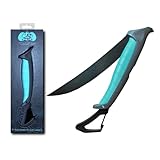
12. Toadfish Stowaway Folding Fillet Knife – Best Folding Option for a Compact Kit
Toadfish Stowaway Folding Fillet Knife, 7 in, Saltwater Fish Knife
7 inch coated Japanese stainless blade
Folds into its own handle
Serrated spine plus ground edge
Pros
- Folds into its own handle with no separate sheath to lose
- Coated Japanese stainless resists saltwater pitting
- Serrated spine saws frozen chunk bait
- Carabiner clips to a belt loop or cooler handle
Cons
- Shorter blade less suited to tuna or large salmon
- One buyer received a dull blade out of the box
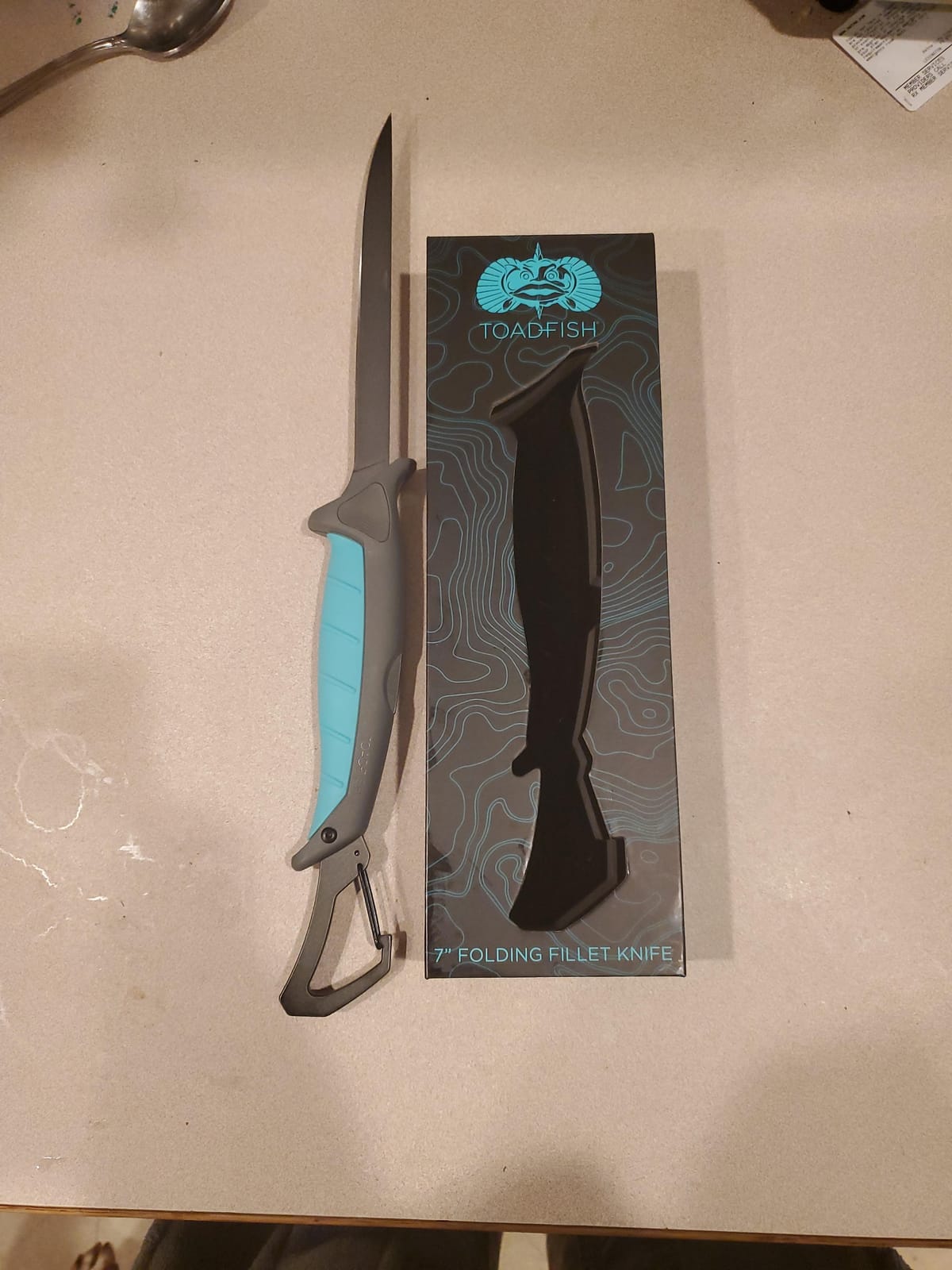
The folding design solves a problem no fixed blade can, which is losing a sheath overboard. This blade folds back through the handle to become its own sheath, so there is one object instead of a knife and a second item to keep track of on a boat or in a kayak hatch.
The edge is a two-tool setup. A ground edge handles filleting while a serrated spine saws through frozen chunk bait, and for an angler cutting bait at a ramp or a dock in winter, that saves carrying a second knife for a job that happens every trip.
The Japanese stainless carries a black coated finish specified to resist saltwater pitting, and the textured handle rinses clean at the dock. Buyers rate it 4.6 stars from 451 reviews with 85 percent five-star, and the folding, self-sheathing design is the standout theme across those reviews.
Customer service came up more than once. A buyer who received a dull unit had it replaced and the replacement arrived extremely sharp, which is worth noting given that a dull blade out of the box was the main complaint on this listing.
The folding versus fixed blade debate on a deck
Arguments against folding are mostly about rigidity and cleaning. A pivot collects salt and grit, and a joint has more places for water to sit than a solid tang, so a fixed blade with a sheath is easier to keep clean and slightly stiffer in the cut.
Arguments for it are about logistics. There is no loose sheath, the knife is short enough to clip to a PFD or a cooler handle with the carabiner, and it disappears into a pocket when you are not cleaning. For most anglers, that trade is worth making.
Who should buy this and who should not?
Buy it if you want the smallest complete saltwater package, if you lose gear overboard often, or if you need one knife for both filleting and frozen bait cutting. The 7 inch length suits inshore species like redfish, snapper, trout and panfish.
Pass if you plan to clean large game fish. The short blade is the most-cited limitation, and a folding handle is not the place to put force into a thick rib cage, so pair it with a longer fixed blade if both are in your future.
How to Choose a Saltwater Fillet Knife?
Steel is the easiest place to overthink this purchase, so start somewhere else. The question is not which alloy is technically best, it is what you are cutting and whether you will rinse the blade when you get back. A knife that stays sharp and gets rinsed will outperform a better steel that sits in salt all night.
Blade length matched to the fish on your line
The general rule that keeps coming up among experienced anglers is that the blade should be roughly two inches longer than the fish you are cleaning. That gives you enough reach to make a single pass down the flank while keeping the tip under control on smaller fish.
Forum consensus in the knife enthusiast communities puts 6.5 to 7 inches as the sweet spot for smaller fish and roughly 8.5 inches for larger saltwater species. Forum anglers are largely describing freshwater panfish at the low end and offshore fish at the high end, so treat those as anchors rather than hard limits.
Blade length to species quick match
A 6 to 6.5 inch blade covers trout, sea bass, scup, panfish and small redfish, where control matters more than reach. A 7 inch blade is the general-purpose sweet spot for sea trout, snapper and grouper, and it is the most common length in this roundup for good reason.
An 8.5 to 9 inch blade suits striped bass, large redfish and any fish you want a long single draw on. A 10 to 12 inch blade is for offshore pelagic work on tuna, mahi and wahoo, where fewer strokes on a moving deck matters more than finesse.
Blade steel and what corrosion really means
Stainless steel is not corrosion-proof, it is corrosion-resistant. The chromium in the steel forms a passive oxide layer that slows corrosion, and chloride ions from seawater attack that layer and dig pits into the steel underneath. The pits are what you see as orange flecks after a knife sits in salt overnight.
G4116, 420J2 and 12C27 are the workhorse stainlesses in this roundup, all of which trade some edge retention for corrosion resistance and low fuss. High carbon Japanese stainless such as 10Cr15CoMoV holds a finer edge but still needs a rinse. A coating such as the Gear Controller’s SALTRx treatment or the Toadfish’s black finish adds another layer of protection on top of the alloy.
For larger operations, the equipment side of fish handling matters too. If you are moving volume rather than a few fish, our guide to fish grading equipment covers the sorting and handling workflow that comes after the fillet.
Flexible, semi-flex or stiff
Flexibility determines how a fillet knife actually cuts. A flexible blade bends around the curve of the rib cage, keeping the edge in contact with the bone through one long continuous stroke. A stiff blade only contacts in short segments, forcing you to reposition constantly and tearing more meat between contact points.
Semi-flex, sometimes called E-stiff, sits in the middle and is the most versatile category. Very stiff blades earn their place when the work involves structural cutting rather than filleting, such as working through a large head or rib cage, but that is a different job with a different tool.
Handle, grip and wet-hand security
Everything about the handle is decided by water and fish slime. Look for a non-slip surface, a trigger grip or guard that gives you a defined hold, and a shape that does not rotate in your palm. GuideFins on the Gear Controller and the trigger guard on the Bubba electric are two different solutions to the same rotation problem.
Handle material divides cleanly. Polymer and rubber clean under a hose and will not swell, stainless is essentially indestructible and cold in the hand, and pakkawood feels best but needs hand washing and occasional care. Wood and unsealed hardwood are the materials most likely to go slick after a season of saltwater use.
Sheath, lanyard and what is in the box
A sheath is not an accessory on a saltwater knife, it is part of the corrosion strategy. A venting or drainage design lets a wet blade dry instead of sitting in a salt bath, and a sheath that locks the handle in place stops it rattling against the edge inside a bag.
Also check what else is included. A bundled honing steel or ceramic sharpener solves the most common real complaint, which is a knife that arrives needing work. Rhinoreto and Rapala both include one, and the Gerber sheath has a built-in sharpener inside it.
Electric or Manual: Which One Earns Its Place on the Boat?
The tradeoff is straightforward once you separate the two jobs involved in filleting. The rough cut, through skin, rib bones and pin bones, is where an electric reciprocating blade wins decisively. The finishing cut, lifting the last of the loin off the pin bones with precision, is where a hand blade wins every time.
Many anglers end up owning both, and that is a reasonable outcome. The cordless Bubba electric handles the volume and the harsh cutting while a 7 or 9 inch flex blade finishes each fillet. If you only want one tool, the choice depends on how many fish you clean in one sitting and whether you have power available.
For electric, cordless is the only sensible option on a boat. The corded Rapala needs an outlet and an eight foot cord, which is fine at a dock with shore power and a poor choice anywhere you have to move around. For manual, blade length and flex matter more than steel, and the honest test is whether the blade can follow a curve without you repositioning it every inch.
The Rinse, Dry and Hone Routine That Stops Pitting
Corrosion complaints are the most common recurring thread in angler forums, and almost all of them come back to the same cause. A blade that was rinsed and dried properly does not pit. A blade that went into a sheath or a sink full of salt water and sat overnight will show flecks within a day.
Rinse under fresh water immediately. Hold the blade under a running tap for a full minute, and pay attention to the heel, the spine and the area where the edge meets the bolster, where salt collects.
Clean the handle too. Fish slime holds salt against the metal where the blade meets the handle, and a polymer grip that has never been washed will eventually push that salt onto the blade.
Dry before storing. Towel it, then let it air dry with the blade exposed rather than closed in a sheath or a sink. Damp and dark is exactly the environment pitting needs.
Do not put a wet knife back in the sheath. Wait until it is dry, or use a venting sheath designed to drain. A closed sheath over a wet blade is the single worst storage habit.
Hone before the trip, not after. A quick pass on a ceramic hone or steel before each session keeps the edge from dulling mid-clean, which is the frustration most owners describe.
Stow it dry between trips. Do not leave a fillet knife in a livewell, a tackle bag pocket or a boat console drawer over winter. If you are smoking your catch, our fish smoker guide covers the same salt exposure from the other direction.
Follow that routine and most corrosion problems simply do not appear. The alloys on this list are all corrosion-resistant rather than corrosion-proof, which means the rinse is not optional if you want the blade to look new in a few years.
Wet Deck Safety: Gloves, Guards and Sheaths
Almost every serious hand injury in filleting comes from the same position, which is the support hand under the fish with the blade travelling toward it. The best fix is a cut-resistant filleting glove, and it is the cheapest safety upgrade available to an angler. They are worth it even for experienced cutters because the fish moves unpredictably.
After that, the knife features that matter are guards and grips. The Bubba 7 inch flex has integrated safety guards against both the blade and fish spines, the Morakniv has a finger guard, and the Bubba electric uses a trigger guard. All three stop a hand from sliding forward onto the edge, which is how a lot of these cuts happen.
Finally, carry discipline. Sheathe the knife before it comes out of the water, use a lanyard or carabiner clip so a dropped knife does not go over the side, and keep your cleaning surface clear. On a wet, moving deck, an unclipped knife is a loose projectile.
Frequently Asked Questions
What is the best fillet knife for saltwater fish?
A 7 to 9 inch corrosion-resistant stainless blade with a flexible or semi-flex profile and a non-slip grip is the best all-round choice. For the highest volume cleaning, a cordless electric model with coated reciprocating blades cuts the fastest.
What is the best knife for filleting redfish?
For redfish, a 7 to 9 inch semi-flex or flex fillet knife is the right tool. Redfish have firm, dense flesh and a moderate frame, so a 9 inch blade gives you one long draw along the rib cage. Pair it with a cut-resistant glove and a non-slip grip.
What size fillet knife do I need for saltwater fish?
Match blade length to fish size. Use 6 to 6.5 inches for trout, sea bass, scup and panfish, 7 inches as the general-purpose choice, 8.5 to 9 inches for striped bass and large redfish, and 10 inches or more for offshore tuna, mahi and wahoo.
Should a saltwater fillet knife be flexible or stiff?
Flexible for filleting, because a blade that bends around the curve of the rib cage keeps the edge in contact through one long stroke. Choose a stiffer blade only when the work involves structural cutting through a large head or rib cage.
What steel is best for a saltwater fillet knife?
For corrosion resistance, G4116, 420J2 and Sandvik 12C27 are the practical workhorses. For a finer, longer-lasting edge, Japanese high carbon stainless such as 10Cr15CoMoV is sharper but needs more frequent honing. No steel is corrosion-proof, so rinsing after use still matters.
How do I stop my fillet knife from rusting after saltwater use?
Rinse under fresh water for a full minute, clean the handle, dry the blade completely, and never store a wet knife in a closed sheath. Pitting corrosion is driven by salt sitting on steel in a damp environment, so drying does more than any alloy choice.
Is an electric fillet knife better for saltwater fishing?
Electric knives are faster on the rough cut through skin, bone and pin bones, and a cordless model is the right choice on a boat. They are less precise at the finishing cut, so many anglers pair an electric for volume with a manual flex blade for the last of the loin.
The Saltwater Fillet Knife Worth Carrying
If you take one recommendation from this roundup, make it the Bubba Li-Ion cordless electric if you clean volume, and a 7 to 9 inch flex blade if you clean a few fish at a time. The cordless electric won this list on throughput, with the most reviews of any pick here and a 4.7 star average, and its cordless design removes the failure mode that ruins most electric knives on a boat.
For the manual side, the HOSHANHO and imarku 7 inch knives cover home filleting and light dock work with harder Japanese stainless, the KastKing 9 inch is the general-purpose saltwater workhorse, and the Gerber Gear Controller 10 inch covers offshore pelagic fish. Whatever you choose, the rinse, dry and hone routine above does more for blade life than any steel decision you will make at the start.
Those were the best fillet knives for saltwater fish in 2026. Every pick here earns its place for a specific fish and a specific deck, and the right one is the knife that matches the size of what you actually catch.