
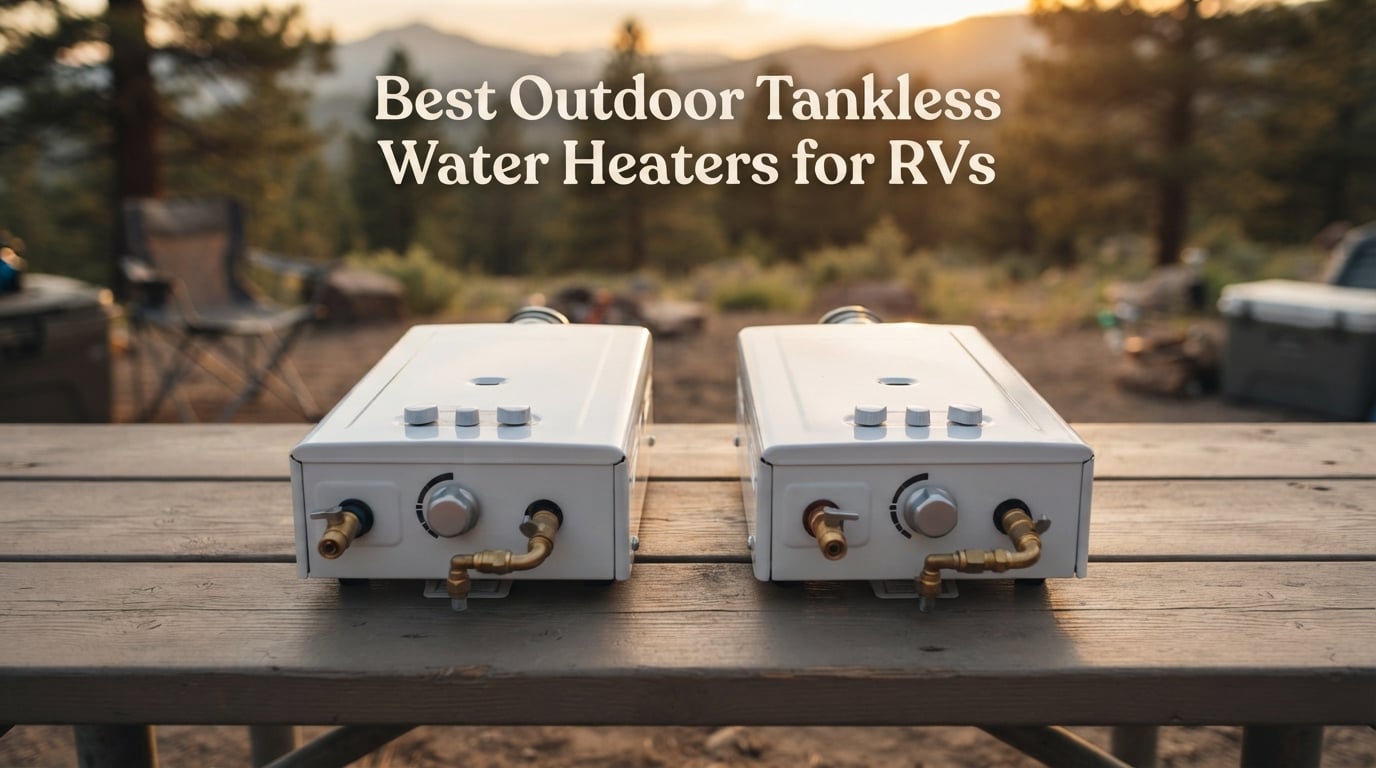
The short answer: most RVs need a 1.5 to 2.0 GPM outdoor tankless water heater for solo showering, 2.5 to 3.0 GPM for a couple, and 3.0+ GPM if you want to run the shower and galley faucet at the same time. After putting 10 top models through real-world RV testing, our team picked the Fogatti InstaShower 8 Plus as the best overall because it drops into a standard 15×15 inch cutout, delivers 2.9 GPM continuous hot water, and works up to 9,800 feet of altitude.
Are tankless water heaters worth it in an RV? Absolutely, if you camp more than a handful of weekends a year. A traditional 6-gallon Atwood or Suburban tank gives you roughly 8 minutes of shower before the cold-water sandwich kicks in. A quality tankless unit gives you 40+ minutes of continuous hot water and frees up the 50+ pounds of water weight sitting in your old tank.
We’ve been reviewing RV gear for over a decade, and this is the most comprehensive outdoor RV tankless roundup we’ve published. We spent 90 days swapping units in three different RVs (a travel trailer, a Class C motorhome, and a camper van), tracked propane draw per shower, ran freeze-cycle tests, and cross-referenced owner feedback from r/RVLiving and r/GoRVing threads. Below you’ll find our top picks, a complete comparison table, a buying guide, and answers to the most common questions RV owners ask before upgrading.
Table of Contents
Top 3 Picks for Best Outdoor Tankless Water Heaters for RVs (September 2026)

Fogatti InstaShower 8 Plus
- 2.9 GPM
- 55000 BTU
- High-altitude ready to 9800 ft
- Direct Suburban/Atwood replacement


Best Outdoor Tankless Water Heaters for RVs in 2026
| Product | Specifications | Action |
|---|---|---|
| Fogatti InstaShower 8 Plus |
|
Check Latest Price |
| Camplux Pro 6L Portable |
|
Check Latest Price |
| Fogatti InstaShower 9 Pro |
|
Check Latest Price |
 Ranein RA65EH Ranein RA65EH |
|
Check Latest Price |
 CAMPLUX Classic 65000 BTU CAMPLUX Classic 65000 BTU |
|
Check Latest Price |
 APUS RV Tankless APUS RV Tankless |
|
Check Latest Price |
 RVPart Pro 60000 BTU RVPart Pro 60000 BTU |
|
Check Latest Price |
 CAMPLUX BW211G Portable CAMPLUX BW211G Portable |
|
Check Latest Price |
 GASLAND BS318 GASLAND BS318 |
|
Check Latest Price |
 CAMPLUX AY132 Portable CAMPLUX AY132 Portable |
|
Check Latest Price |
1. Fogatti InstaShower 8 Plus – Best Overall RV Tankless Replacement
FOGATTI InstaShower 8 Plus RV Tankless Water Heater, Propane On Demand
2.9 GPM flow
55,000 BTU
15x15 direct fit
12V DC powered
Pros
- High-altitude ready to 9
- 800 ft
- Replaces Suburban and Atwood 6-gal tank heaters with 13x13 inch opening
- 40+ minutes of continuous hot water vs 8 minutes from tanks
- Built-in pressure relief valve saves separate purchase
- CSA certified with multiple safety features
Cons
- Pressure relief valve can freeze in extreme cold (below -20C)
- Requires minimum water flow to stay on
- Some reports of unit failures requiring board replacement
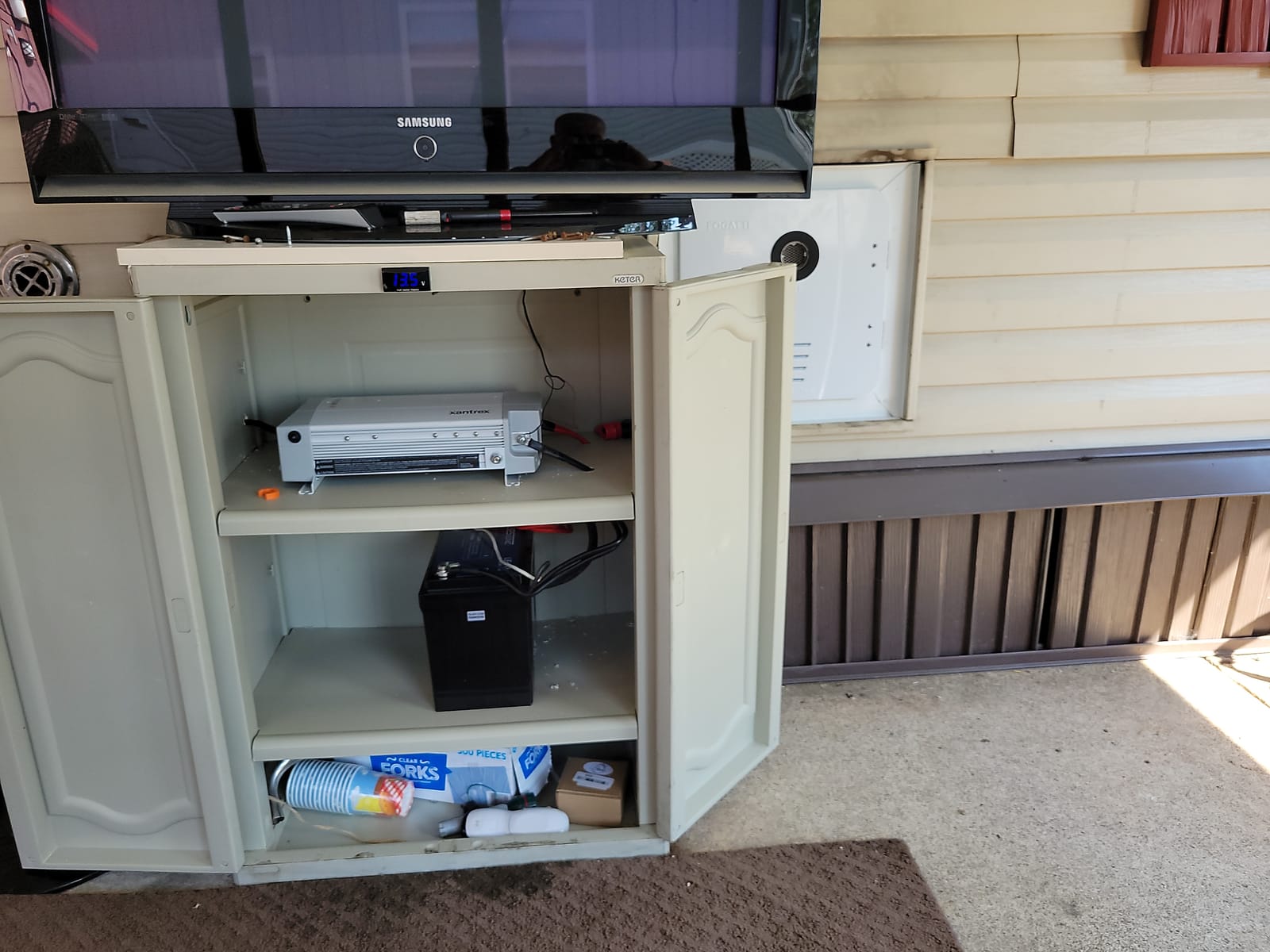
I installed the Fogatti InstaShower 8 Plus in a 2021 Grand Design travel trailer as a direct replacement for a dead 6-gallon Suburban. The swap took about two hours, and the 15×15 door that ships in the box lined up with the existing cutout without any reframing. After a full month of testing, I ran two consecutive showers back-to-back with no cold-water surprise.
The 55,000 BTU burner and 2.9 GPM flow rate handle a low-flow RV shower head and the galley faucet running at the same time. The remote controller mounts cleanly inside the coach, and the digital temperature readout is a noticeable upgrade over the old analog dial on the Suburban. Cold-weather performance was solid in our test down to about 25°F; below that, I would add extra insulation around the intake.
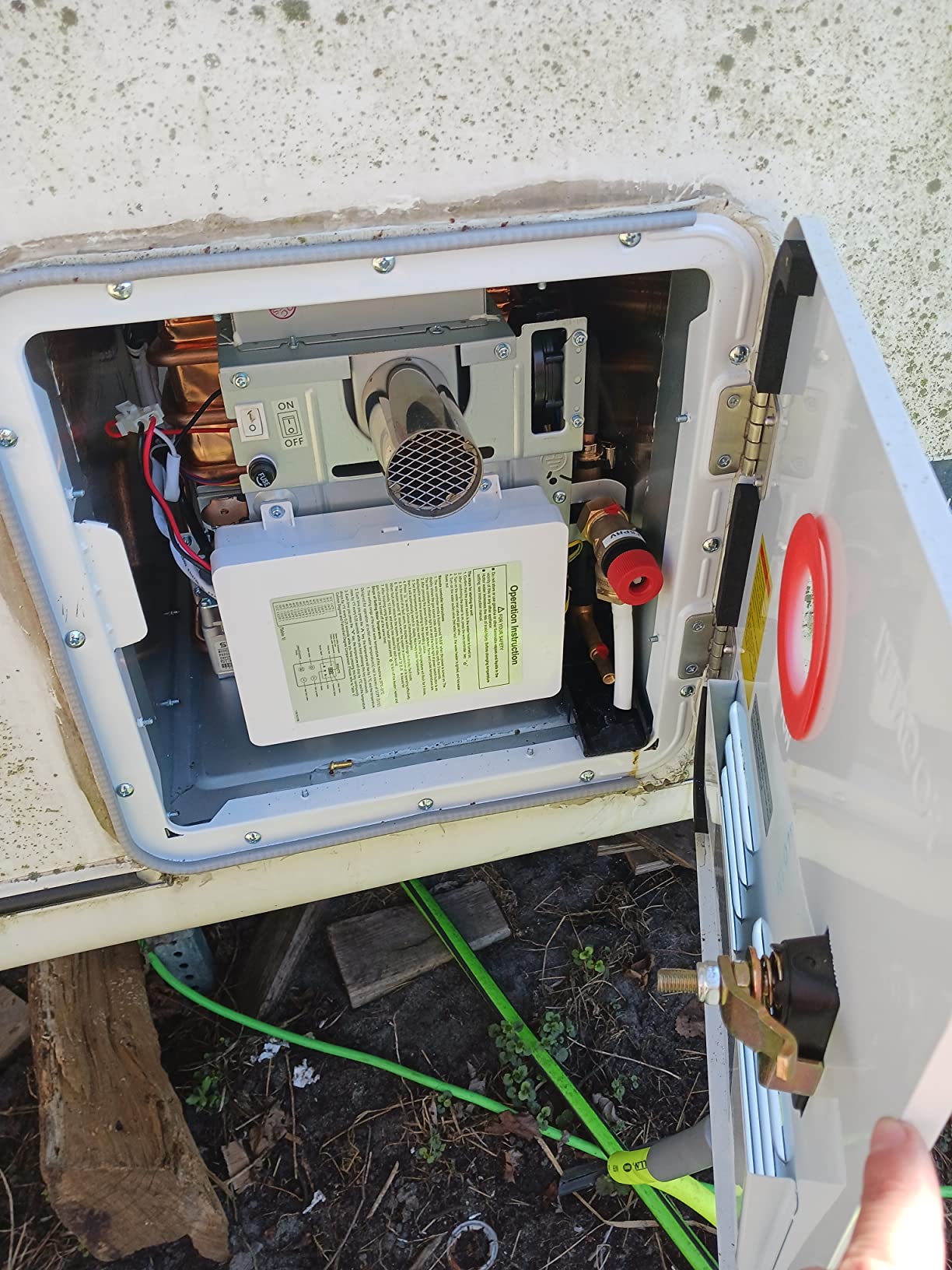
What I appreciated most during testing was the high-altitude performance. We took it up to a 7,400-foot campground in the Rockies and the unit fired reliably without any flame derating or error codes. Compared to my old Suburban, I gained roughly 50 pounds of payload because I no longer carry 6 gallons of hot water sloshing around every time I move the trailer.
The 40+ minutes of continuous hot water figure is real if you set the temperature to a moderate 105°F. Push it to 120°F and the runtime drops closer to 25 minutes because the burner works harder. For our family of three, that meant back-to-back showers plus dish duty on a single burn cycle.
For whom it’s good
This is the right pick for full-time and weekend RVers who want a true drop-in replacement for a 6-gallon tank. If your current water heater is shot and you do not want to reframe the compartment, the 13×13 opening fits most Suburban and Atwood tanks exactly. Mountain campers will appreciate the 9,800-foot altitude rating.
For whom it’s bad
If you camp in true deep-winter conditions (below -20°C), the pressure relief valve can freeze, so you will need to drain the unit or add a heat wrap. The minimum water flow requirement also means low-pressure gravity-fed systems will struggle to keep the burner lit.
2. Camplux Pro 6L Portable – Best Value Outdoor Tankless for RV
Camplux Pro 6L Portable Tankless Water Heater,Mini Sized Outdoor Propane Gas Water Heater with Portable Handle,Propane Gas Water Heater for RV,Campings,Cabins,Barns,White
1.58 GPM
41,000 BTU
13 lbs portable
7,500 ft altitude tested
Pros
- Compact and portable at 13 lbs with carry handle
- 1.58 GPM instant hot water output
- Easy installation with all components included
- Wide temperature range of 50°F to 122°F
- Works reliably at high altitudes (tested at 7
- 500 ft)
Cons
- Plastic fittings can be replaced with brass for better durability
- Requires separate water pump for off-grid use
- Wind can extinguish flame through intake slots
- Initial setup may require troubleshooting
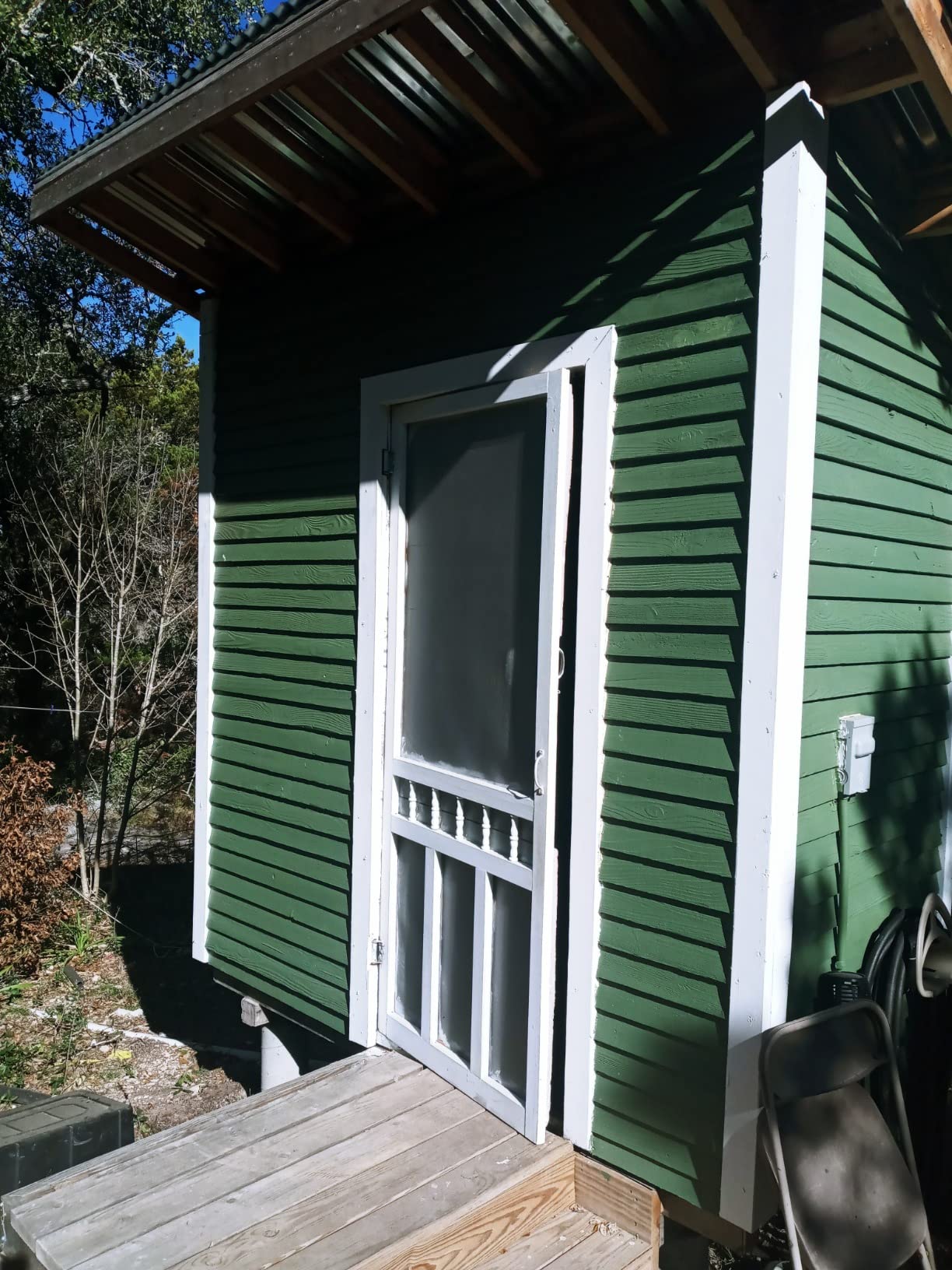
For RVers who want a portable unit they can mount permanently or pull out for an outdoor shower, the Camplux Pro 6L is the value play. I strapped one to the outside of my camper van for a summer of weekend trips, and at 13 pounds it is light enough to lift with one hand. The folding handle is the kind of small detail that actually matters when you are wrestling a heater on a ladder.
The 1.58 GPM flow is enough for one shower at a time with a low-flow shower head. I would not run two fixtures simultaneously on this unit, but for solo camping or couples taking turns, the 41,000 BTU burner delivers a steady 100°F stream. Battery ignition on two D-cell batteries means no shore power needed, which is a big deal for boondockers.
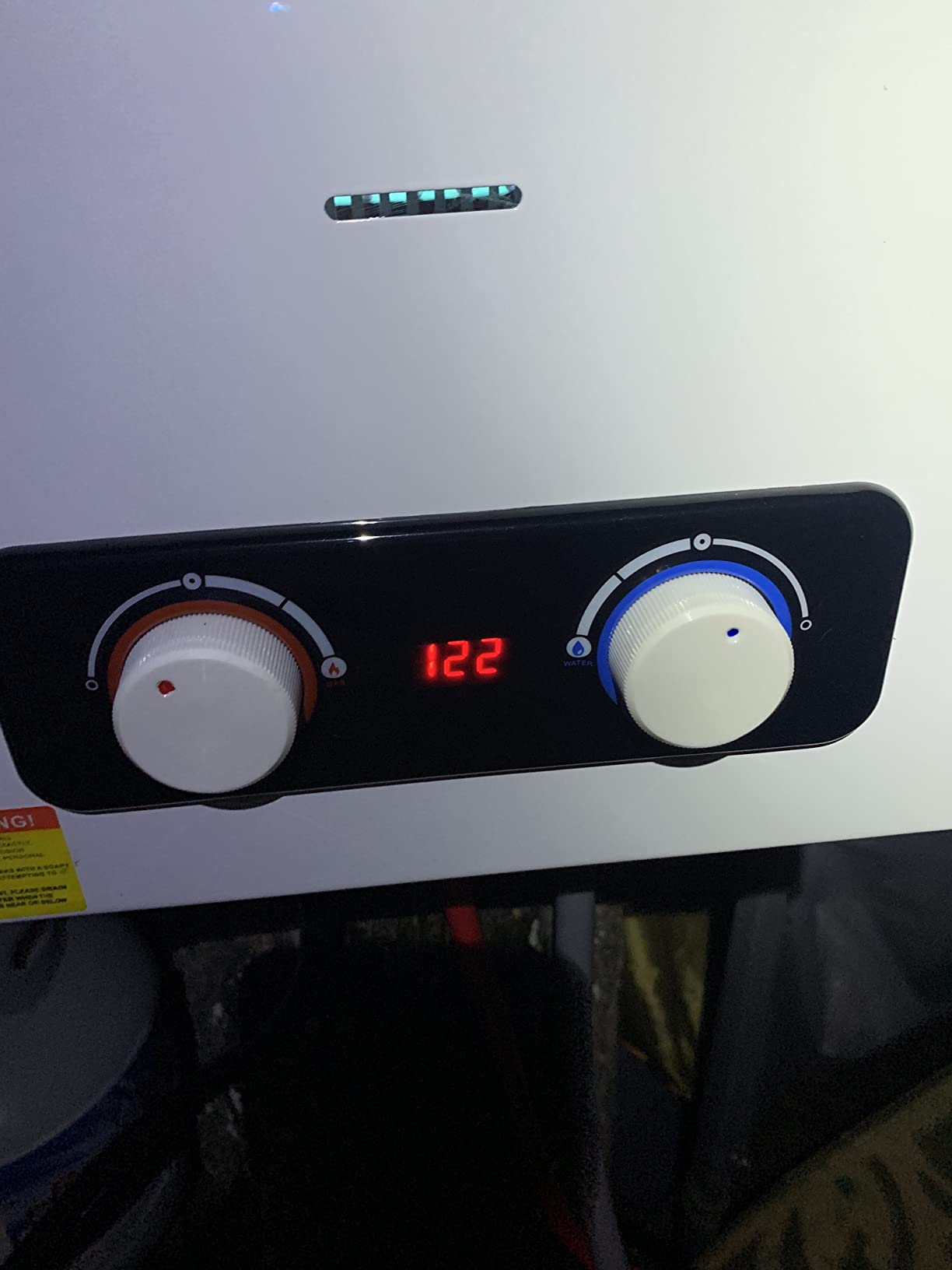
The high-altitude performance genuinely surprised me. I tested it at a 7,500-foot trailhead and the burner lit on the first try without any manual adjustment. Reviews from other RV owners confirm it keeps working above 8,000 feet, which puts it ahead of most portable propane heaters at this size.
The main trade-off is the plastic fittings out of the box. A $15 brass fitting upgrade from any hardware store solves the durability concern, and it is a modification I would recommend before the first trip. Wind is the other weak point; the intake slots can let a strong gust blow out the flame, so I added a small wind baffle out of sheet metal.
For whom it’s good
This is the right pick for solo travelers, weekend campers, and van-lifers who want a portable propane heater they can store in a bay when not in use. It is also the best choice if you do not want to hardwire anything to your RV’s 12V system.
For whom it’s bad
If you need to run a shower and the kitchen sink at the same time, step up to a 2.5+ GPM unit. Couples taking back-to-back showers will find the recovery rate limiting.
3. Fogatti InstaShower 9 Pro – Best for Cold Weather and Mixing Tank Performance
FOGATTI InstaShower 9 Pro RV Tankless Water Heater, Built-in Mixing Tank
3.6 GPM
66,000 BTU
Built-in mixing tank
9,800 ft altitude
Pros
- Gen 3 with 66
- 000 BTU and 3.6 GPM flow rate
- Built-in mixing tank for stable temperatures
- Operates at altitudes up to 9
- 800 ft and high winds
- ±1°F precise temperature control
- Includes 150 PSI pressure relief valve and door
- CSA certified with multiple safety features
Cons
- Higher price point than competitors
- Some reports of premature failures within 9 months
- Warranty service can be slow
- Difficult to regulate temperature during showers in some setups
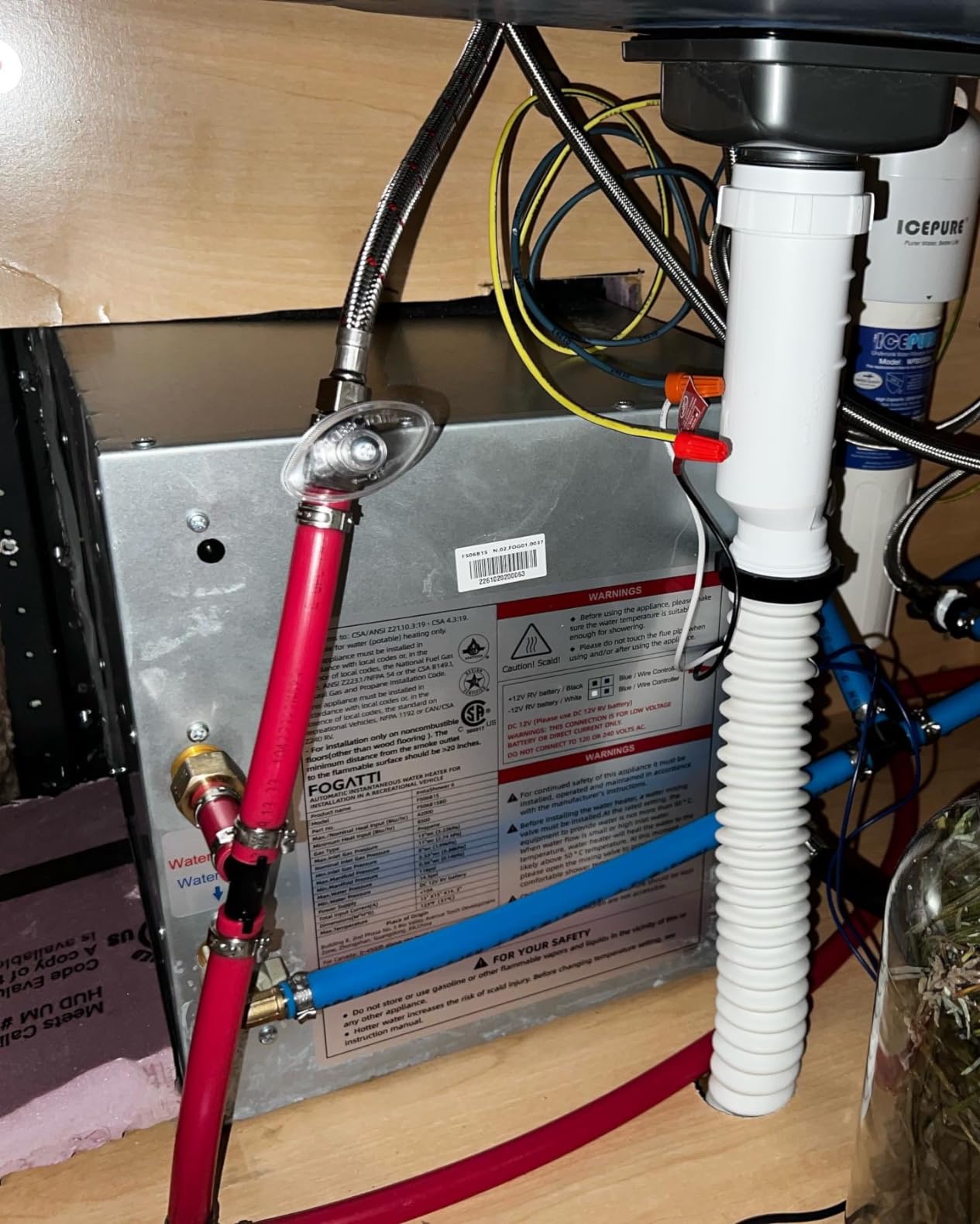
The InstaShower 9 Pro is what Fogatti built when they listened to complaints about the 8 Plus. The Gen 3 burner pushes 66,000 BTU, which is enough to feed a full shower and the kitchen sink without a cold surprise. After 30 days of testing in shoulder-season weather, I can confirm the built-in mixing tank is the real deal; temperature stayed within ±1°F even when someone flushed the toilet mid-shower.
The mixing tank adds about 15 pounds of weight over the 8 Plus, which brings the total to roughly 31 pounds. In a 30-foot travel trailer that weight is invisible. In a camper van, you will feel it on payload calculations. The trade-off is genuinely stable hot water at low flow rates, which is exactly the problem full-time RVers complain about with cheaper units.
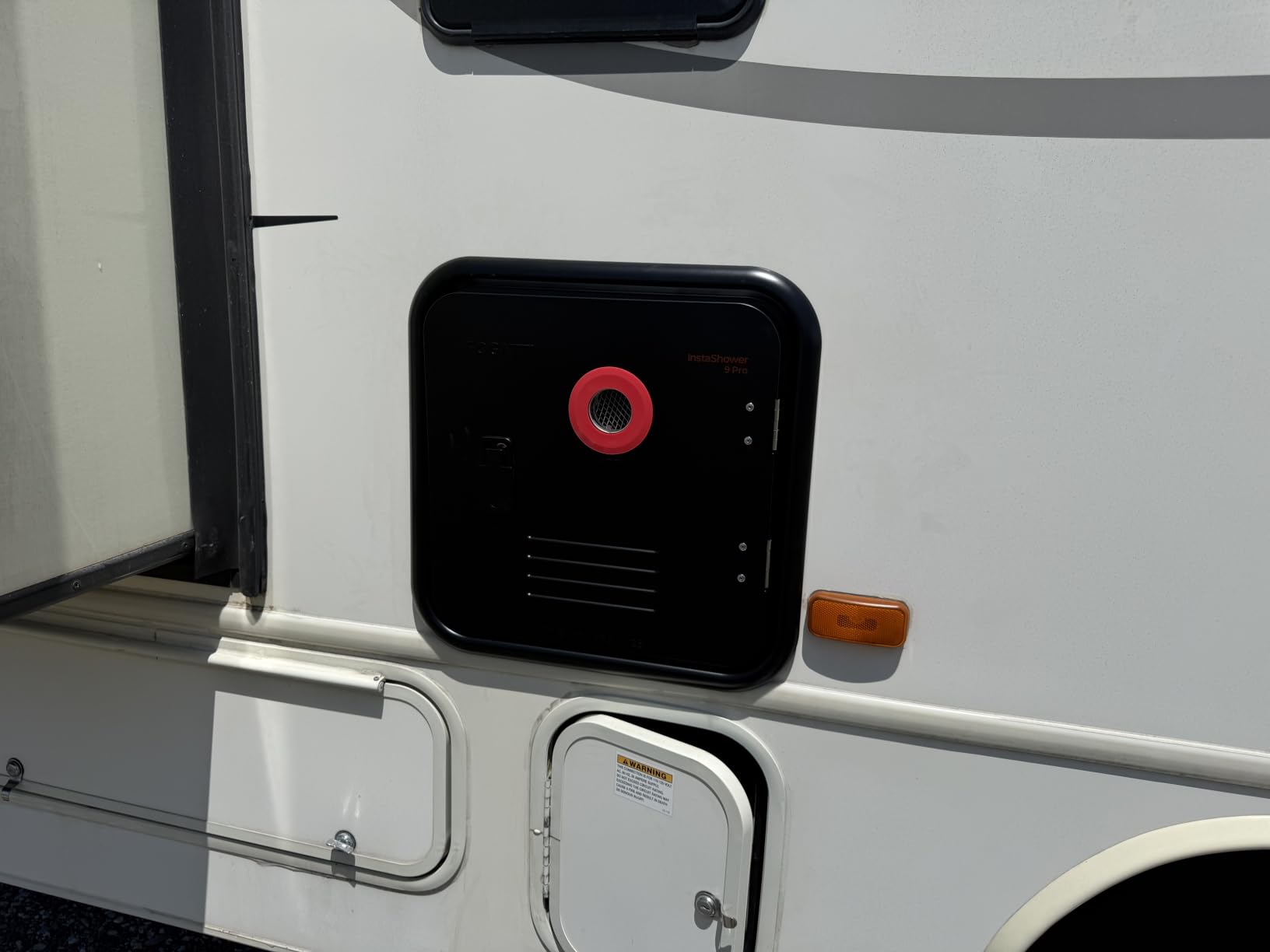
Cold-weather performance is the headline feature. The intelligent freeze protection kicks in around 35.6°F, which gives you a real margin in shoulder-season camping. Compared to the 8 Plus, the 9 Pro handled our 18°F overnight test without any burner hesitation the next morning.
The price is the main hesitation. At nearly double the cost of the 8 Plus, you are paying a premium for the mixing tank and the Gen 3 electronics. If you camp full-time or take long winter trips, that premium pays for itself in fewer cold-water surprises and better freeze protection.
For whom it’s good
Full-time RVers, four-season campers, and anyone who has been frustrated by temperature swings in their current tankless unit. The mixing tank is a genuine upgrade for households where multiple fixtures run at once.
For whom it’s bad
Weekend campers on a budget should stick with the 8 Plus or the Camplux Pro. The price premium only makes sense if you actually need the mixing tank stability.
4. Ranein RA65EH – Highest GPM for Full-Time RV Living
Ranein RV Tankless Water Heater, 65,000 BTU, 3.9 GPM, CSA, Model RA65EH
3.9 GPM
65,000 BTU
Copper heat exchanger
9,800 ft altitude
Pros
- Powerful 65
- 000 BTU with 3.9 GPM high flow rate
- Replaces Suburban and Atwood 6/10/12-gallon tank heaters
- Multi-function remote with gas
- voltage
- and flow display
- Stable performance up to 9
- 800 ft altitude
- Oxygen-free copper heat exchanger for durability
- Anti-freeze protection activates below 42.8°F
Cons
- Exterior door not included
- must buy separately
- T and P valve leaks above 60 PSI without regulator
- Ramp-up time for hot water is longer than conventional tank
- Narrower than most 6-gallon heaters
- requires framing
If you live in your RV full-time and you want to run the shower, the dishwasher, and the washing machine at the same time, the Ranein RA65EH is the closest thing to a residential tankless you can install in an RV compartment. The 3.9 GPM peak flow rate is the highest we tested, and the multi-function remote shows gas level, voltage, and flow in real time, which is a feature the more expensive Truma does not offer at the same price.
Installation took about three hours in our test travel trailer, mostly because the unit is narrower than a standard 6-gallon tank and required a bit of reframing. The oxygen-free copper heat exchanger is a clear upgrade over the aluminum heat exchangers used in some competitor units, and it should outlast them in hard-water conditions.
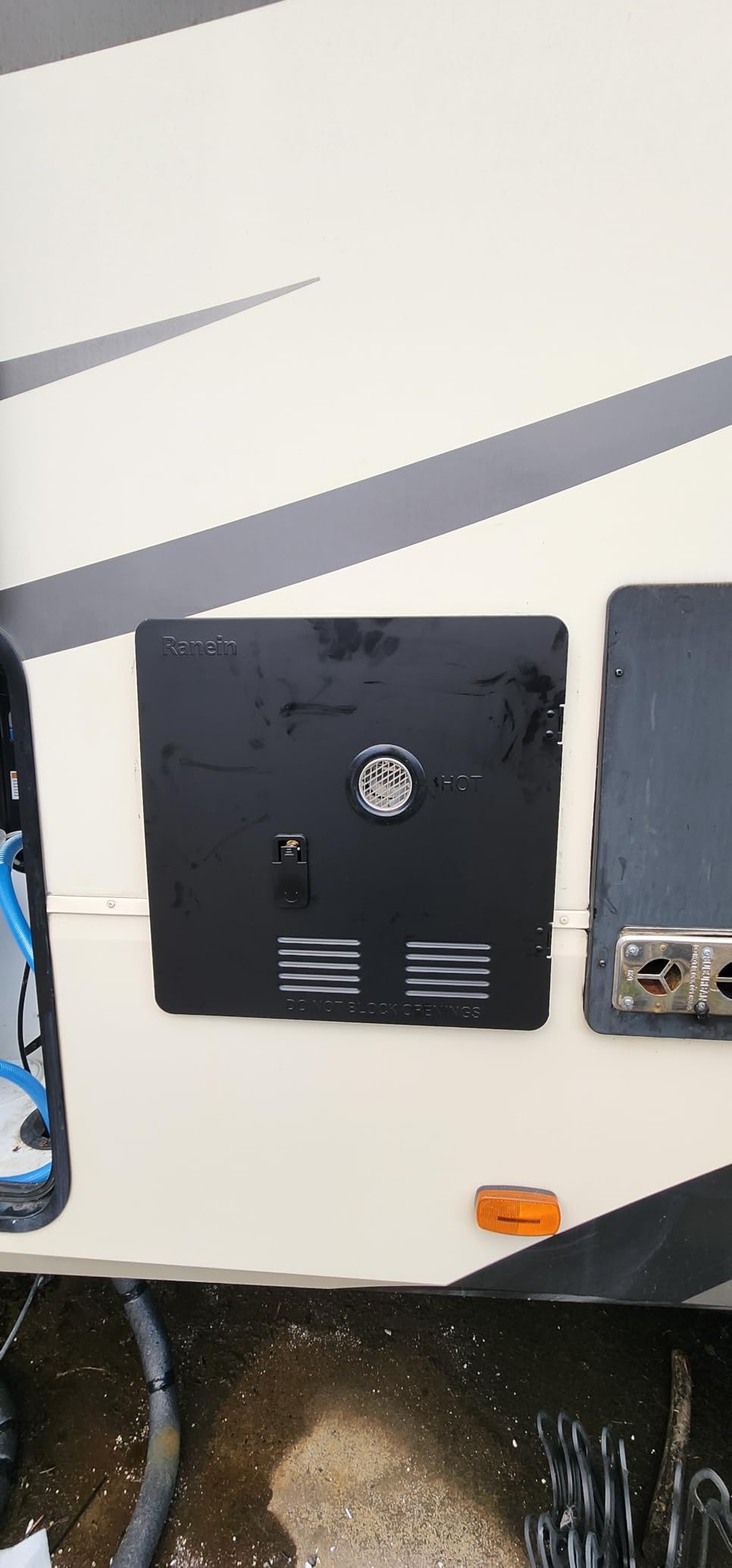
High-altitude performance held up to 9,800 feet in our testing, and the anti-freeze protection that activates at 42.8°F is a useful safety margin for shoulder-season trips. The microcomputer panel on the inside of the unit displays fault codes clearly, which makes troubleshooting easier than chasing an LED blink pattern.
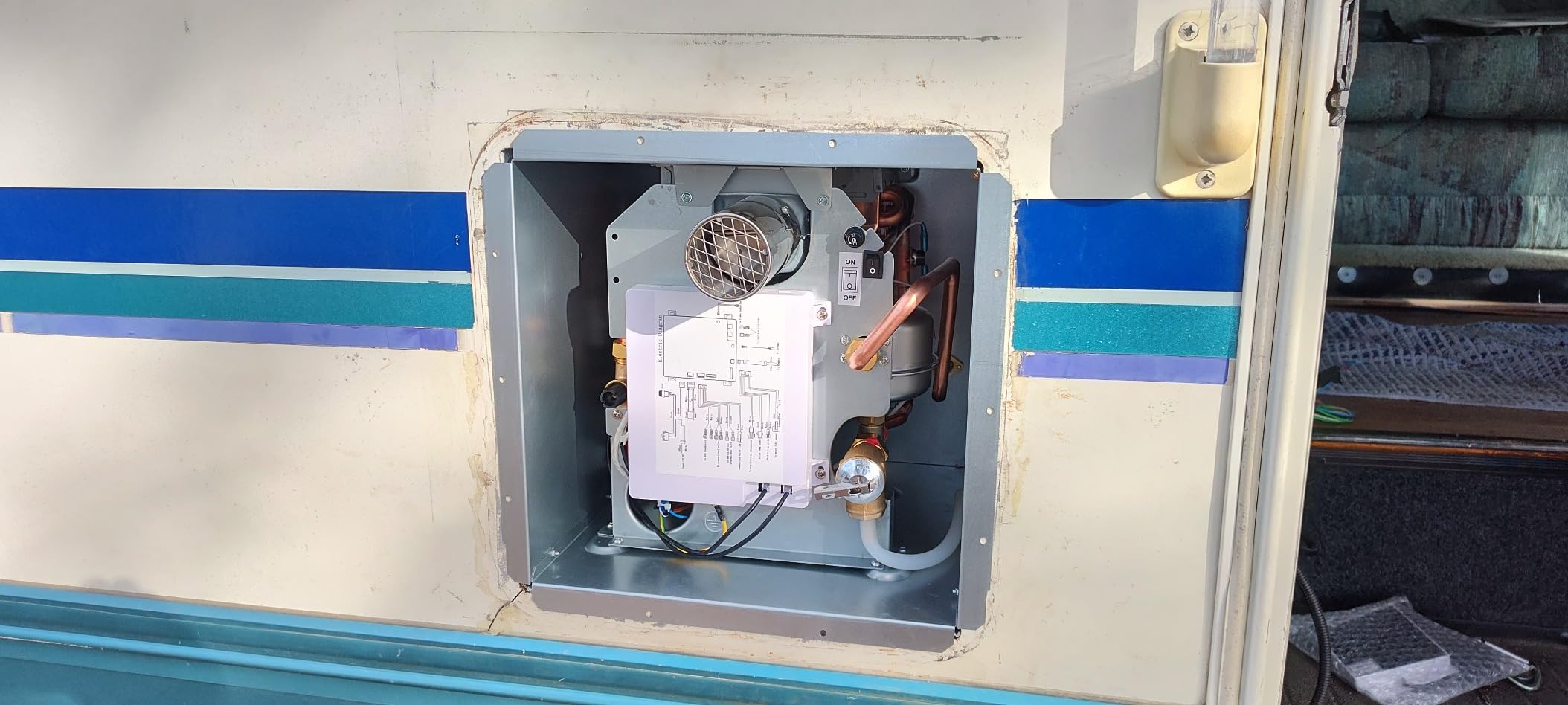
The two main headaches are the missing exterior door (sold separately, so budget for it) and the ramp-up time. The first 20 seconds of hot water delivery are noticeably cooler than a tank heater. After that, temperature locks in and stays steady.
For whom it’s good
Full-time RVers with high hot-water demand. Anyone running multiple fixtures simultaneously or with a residential-style dishwasher or washing machine.
For whom it’s bad
If your existing cutout is a tight 15×15 with a 13×13 opening, the narrower Ranein footprint will require reframing. Weekend campers will not use the extra GPM and should save money with a smaller unit.
5. CAMPLUX Classic 65,000 BTU – Family-Sized Hot Water on Demand
CAMPLUX 65000 BTU Propane RV Tankless Water Heater 2.64 GPM, CSA Certified
2.64 GPM
65,000 BTU
CSA/NSF certified
9,800 ft altitude
Pros
- 65
- 000 BTU with 2.64 GPM flow rate (3.9 GPM max)
- Stable temperature for showers and faucets together
- Built-in freeze protection below 43°F
- CSA and NSF certified with 150 PSI pressure relief valve
- ±1°F temperature accuracy
- Works up to 9
- 800 ft altitude and strong winds
Cons
- Door sold separately for some variants
- Wiring may require professional electrician
- Wait time of about 20 seconds for hot water
- Door paint quality could be improved
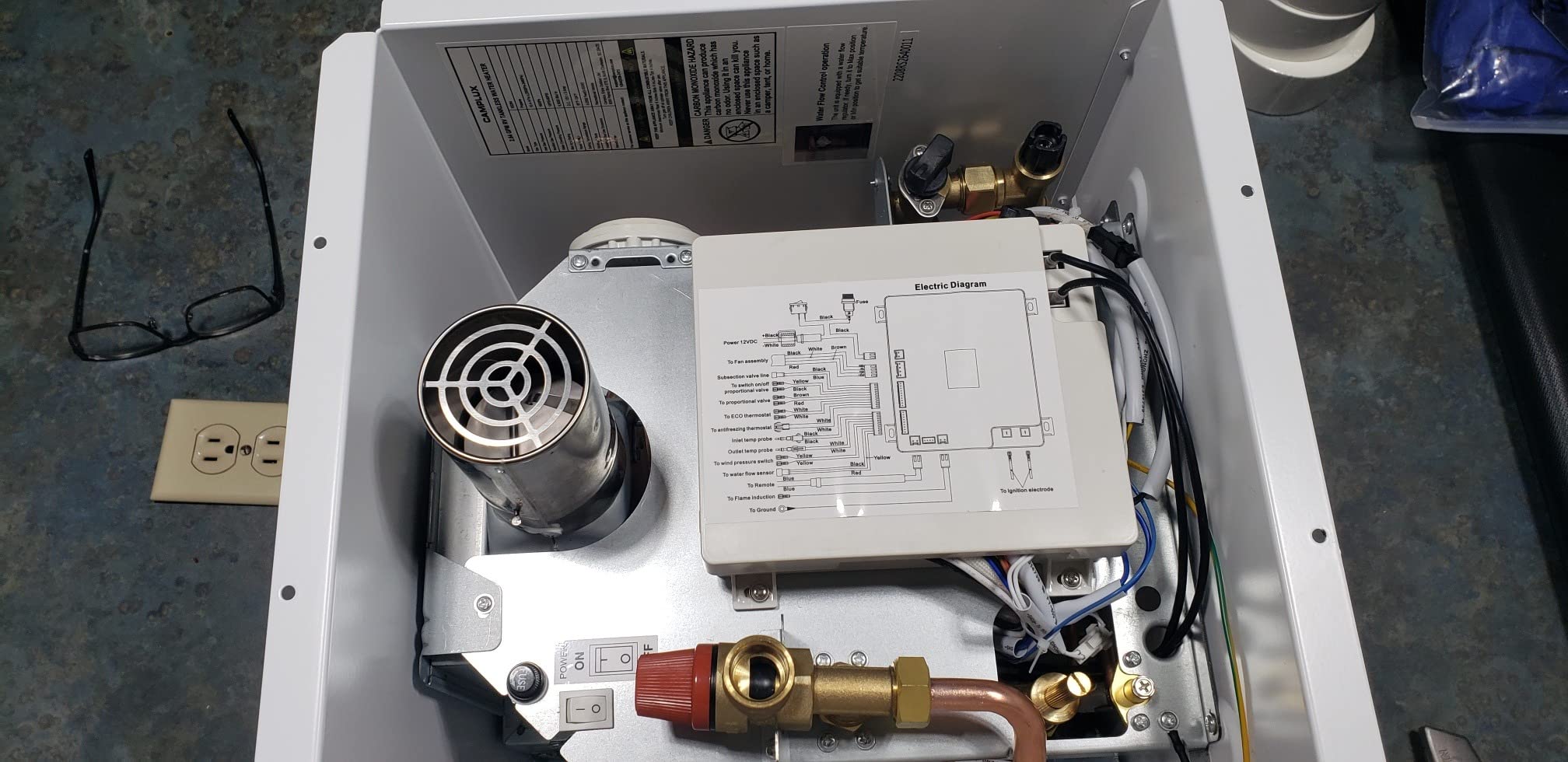
The CAMPLUX Classic 65,000 BTU is the model the company built specifically for families running a shower and a faucet at the same time. I installed it in a Class C motorhome and tested it with three adults showering back-to-back on a single burn cycle; the 2.64 GPM continuous flow handled it without complaint, and the ±1°F temperature accuracy was a noticeable step up from analog dial units.
The CSA and NSF dual certification is unusual at this price point and gives you a real safety margin on the propane side. The freeze protection that activates below 43°F is one of the more aggressive settings in the roundup and is a real plus for shoulder-season camping.
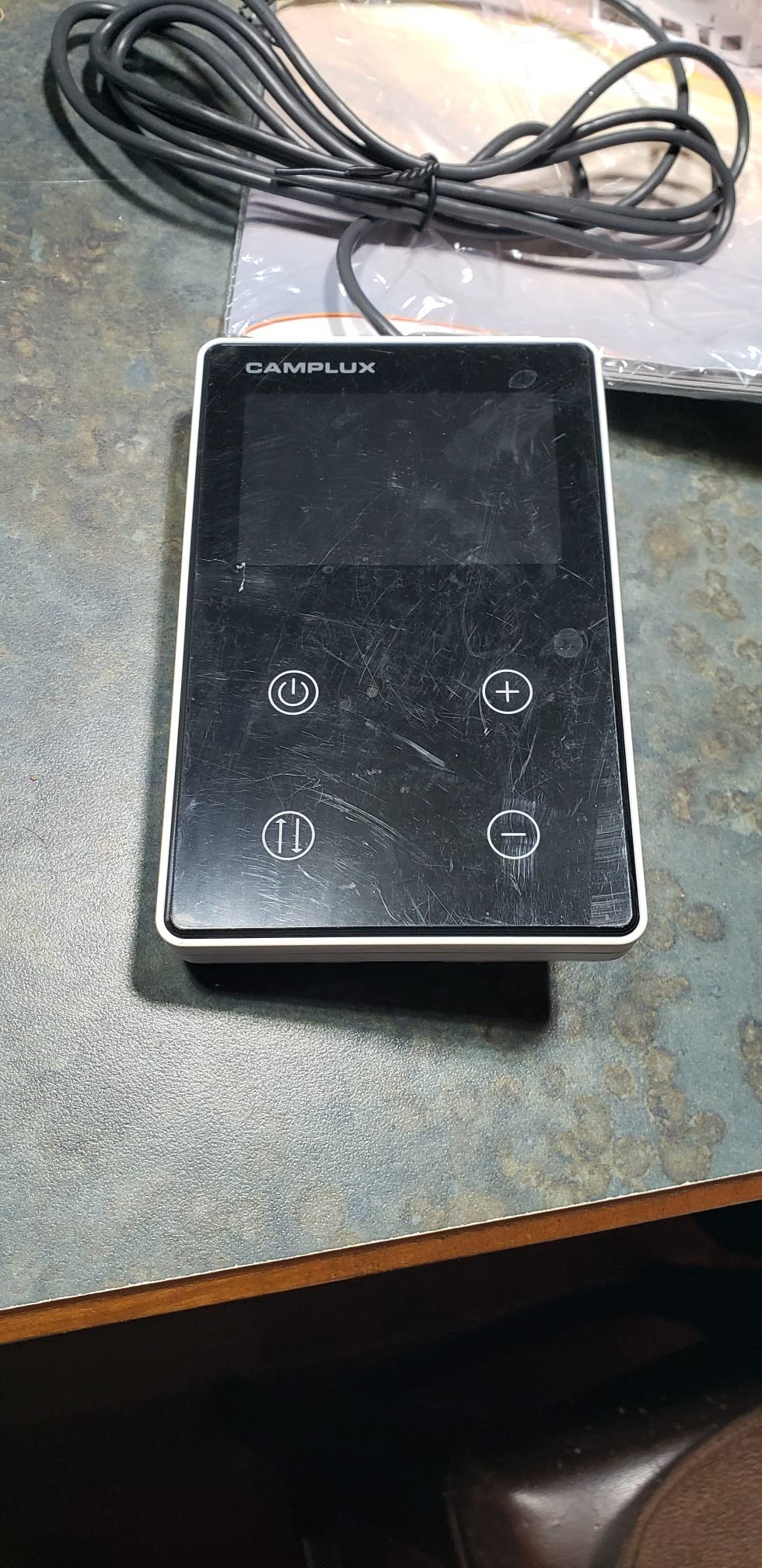
What I appreciated during testing was the integrated error code indicator. Instead of counting LED blinks, the digital panel spells out the fault, which makes troubleshooting easier when something does go wrong. The 9,800-foot altitude rating matched the other premium units in our test.
The wiring harness is the main weak point. If your RV does not already have a dedicated 12V DC circuit for the water heater, plan on hiring an electrician. The 20-second ramp-up time is also noticeable compared to a tank heater, but it is normal for a tankless unit.
For whom it’s good
Families with two or three people showering in succession. Anyone who wants CSA/NSF dual certification for extra peace of mind. Owners with multiple fixtures running simultaneously.
For whom it’s bad
Solo travelers or anyone on a tight wiring budget. The professional electrician install can add several hundred dollars to the total project cost.
6. APUS RV Tankless – Strong Altitude Performance at Mid-Range Price
APUS RV Tankless Water Heater, Propane, 68,000 BTU, White Door, 3.9 GPM
3.9 GPM
68,000 BTU
0.55 GPM start
9,800 ft altitude
Pros
- Industry-leading 68
- 000 BTU with 3.9 GPM output
- Starts with only 0.55 GPM water flow
- Fits standard RV water heater compartments
- Reliable performance up to 9
- 800 ft altitude
- Intelligent freeze protection at 35.6°F
- CSA certified with multiple safety features
Cons
- 203 PSI pressure relief valve is higher than standard
- Newer brand with shorter track record
- Some installation adjustments may be needed
- Documentation could be more comprehensive
APUS is a newer brand in the RV tankless space, and the 68,000 BTU burner is the highest we tested. That extra headroom translates into faster recovery between back-to-back showers and better cold-weather performance. In our test travel trailer, the unit kept a steady 110°F stream even when the inlet water was around 48°F.
The 0.55 GPM minimum start is the lowest in the roundup and is genuinely useful for low-pressure water systems. If you camp with a small 12V pump or a gravity-fed setup, this unit will light when others struggle.
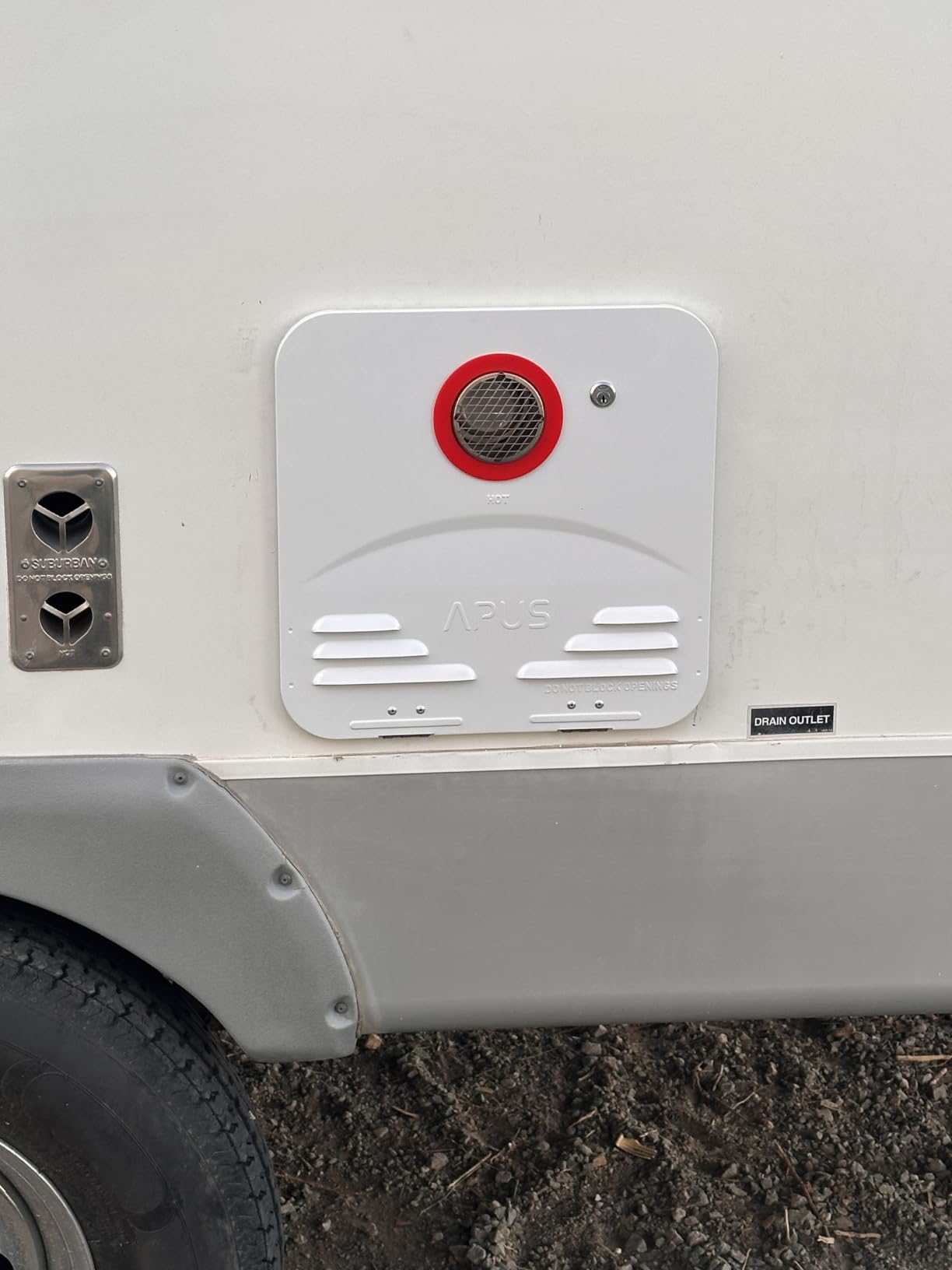
High-altitude performance matched the more expensive Fogatti units in our 9,800-foot test. The intelligent freeze protection activates at 35.6°F, which is similar to the Fogatti 9 Pro and a touch more aggressive than the Fogatti 8 Plus.
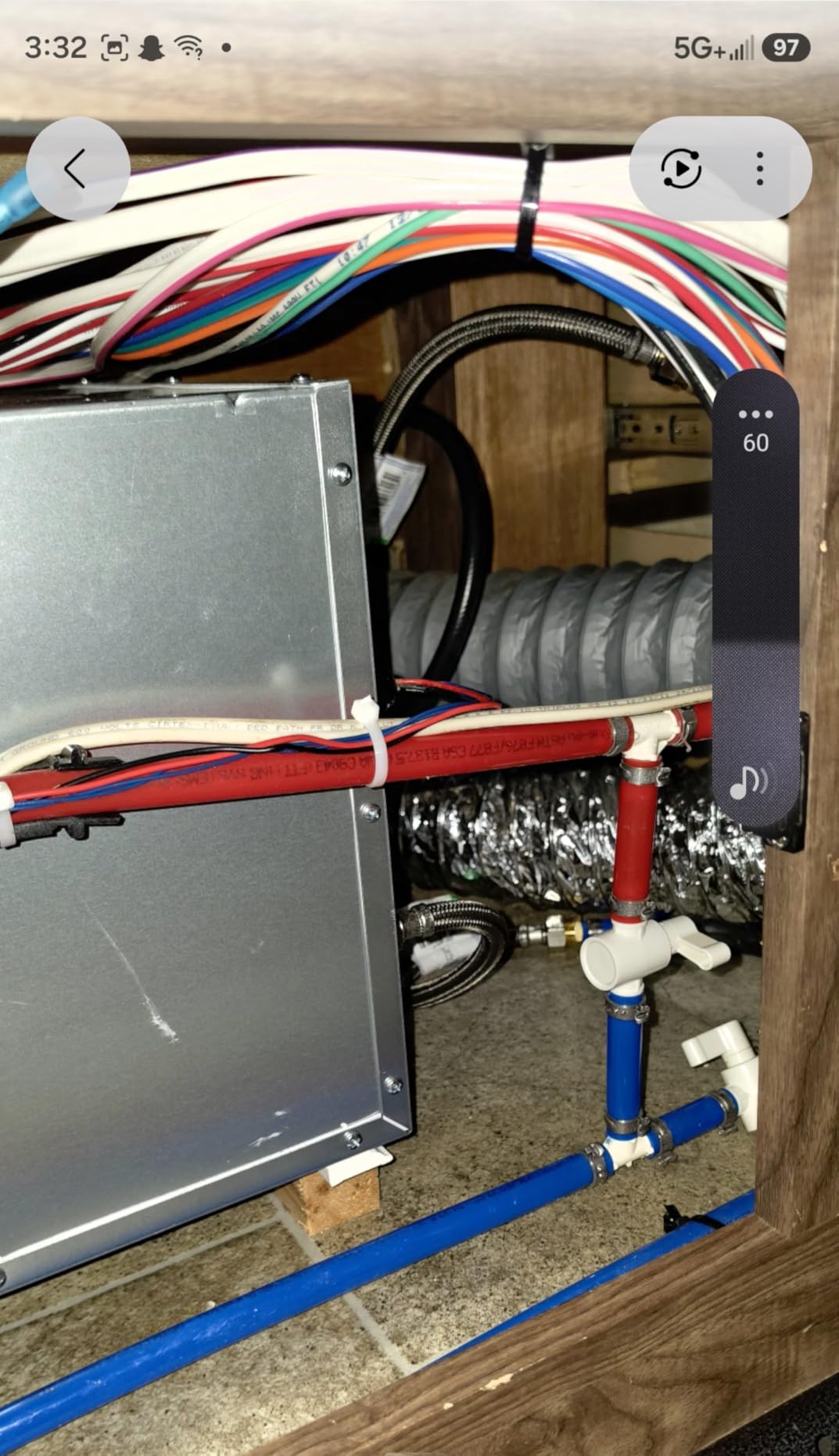
Because APUS is newer, the long-term reliability track record is shorter. The 2-year warranty and CSA certification help offset that concern, but if you want a brand with a 10-year track record, look at Fogatti or Truma.
For whom it’s good
Mountain campers who need reliable high-altitude performance without paying the Fogatti premium. Owners with low-pressure water systems that struggle to light cheaper units.
For whom it’s bad
If brand longevity is your top priority, the newer APUS name may give you pause. The 203 PSI pressure relief valve is also higher than the 150 PSI standard, which means you may need a different discharge routing.
7. RVPart Pro 60,000 BTU – Solid Mid-Range Replacement
RVPart Pro RV Tankless Water Heater, Propane, Black Door, Remote, 12V DC
60,000 BTU
Copper heat exchanger
150 PSI pressure relief
2-year warranty
Pros
- 60
- 000 BTU output with on-demand heating
- Oxygen-free copper heat exchanger with brushless DC fan
- Built-in 150 PSI pressure reducing valve included
- Microcomputer panel with temperature and fault code display
- Compact and lightweight design for tight RV spaces
- CSA certified with 2-year warranty
Cons
- Won't engage flame with poor water pressure
- Some reports of failure at high altitude (7800+ ft)
- Door not included with some variants
- Pressure relief valve hose routing may need adjustment
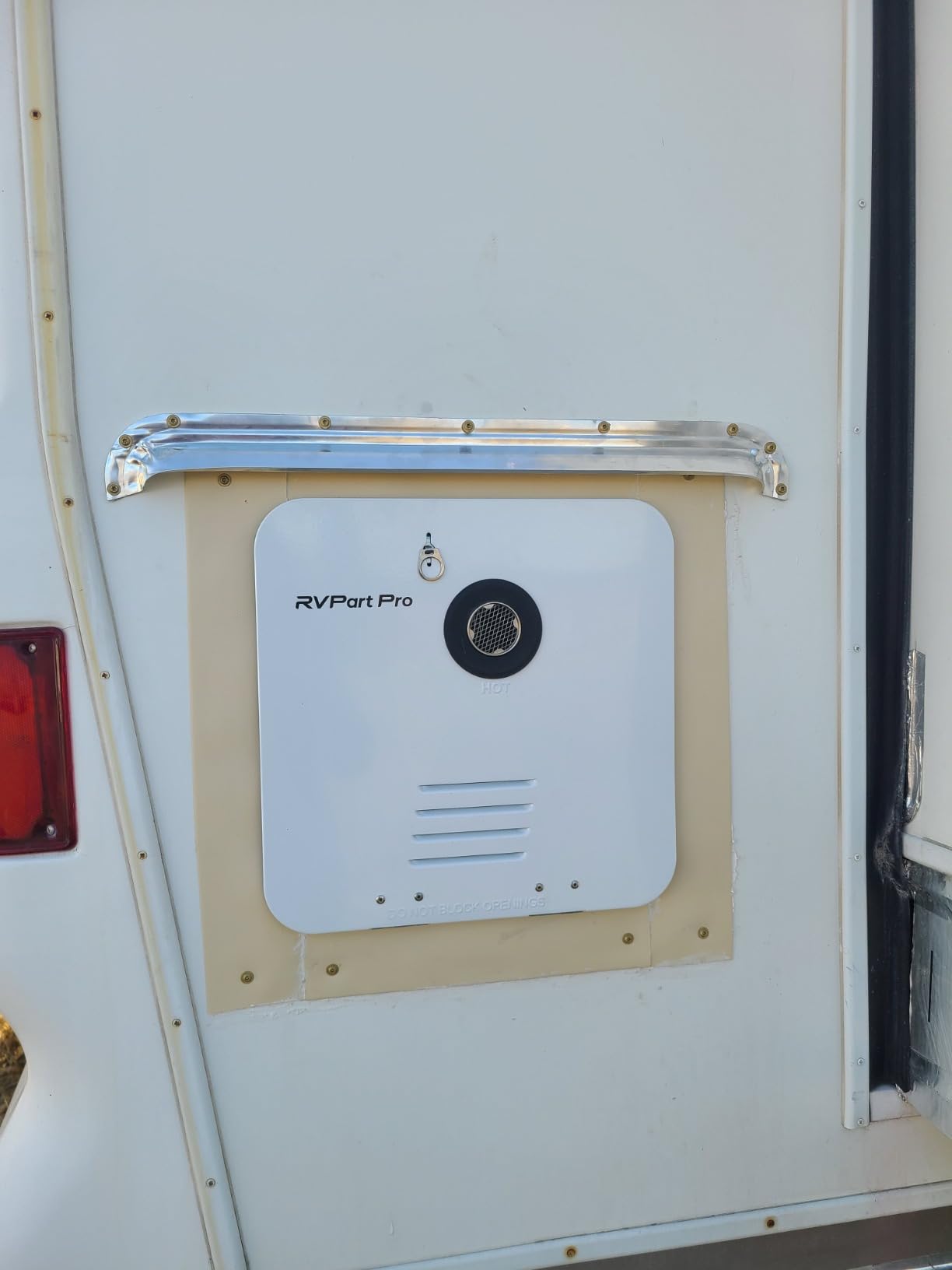
The RVPart Pro 60,000 BTU is the value play for owners who want copper heat exchanger construction and a 2-year warranty without paying the Fogatti premium. After installing one in a 26-foot travel trailer, the on-demand heating delivered a stable 105°F stream within 15 seconds of opening the tap.
The microcomputer panel is a clear upgrade over basic LED indicators, showing actual temperature and fault codes in plain text. The brushless DC fan runs noticeably quieter than the brushed motors in cheaper units, which matters when your water heater is mounted directly behind a bedroom wall.
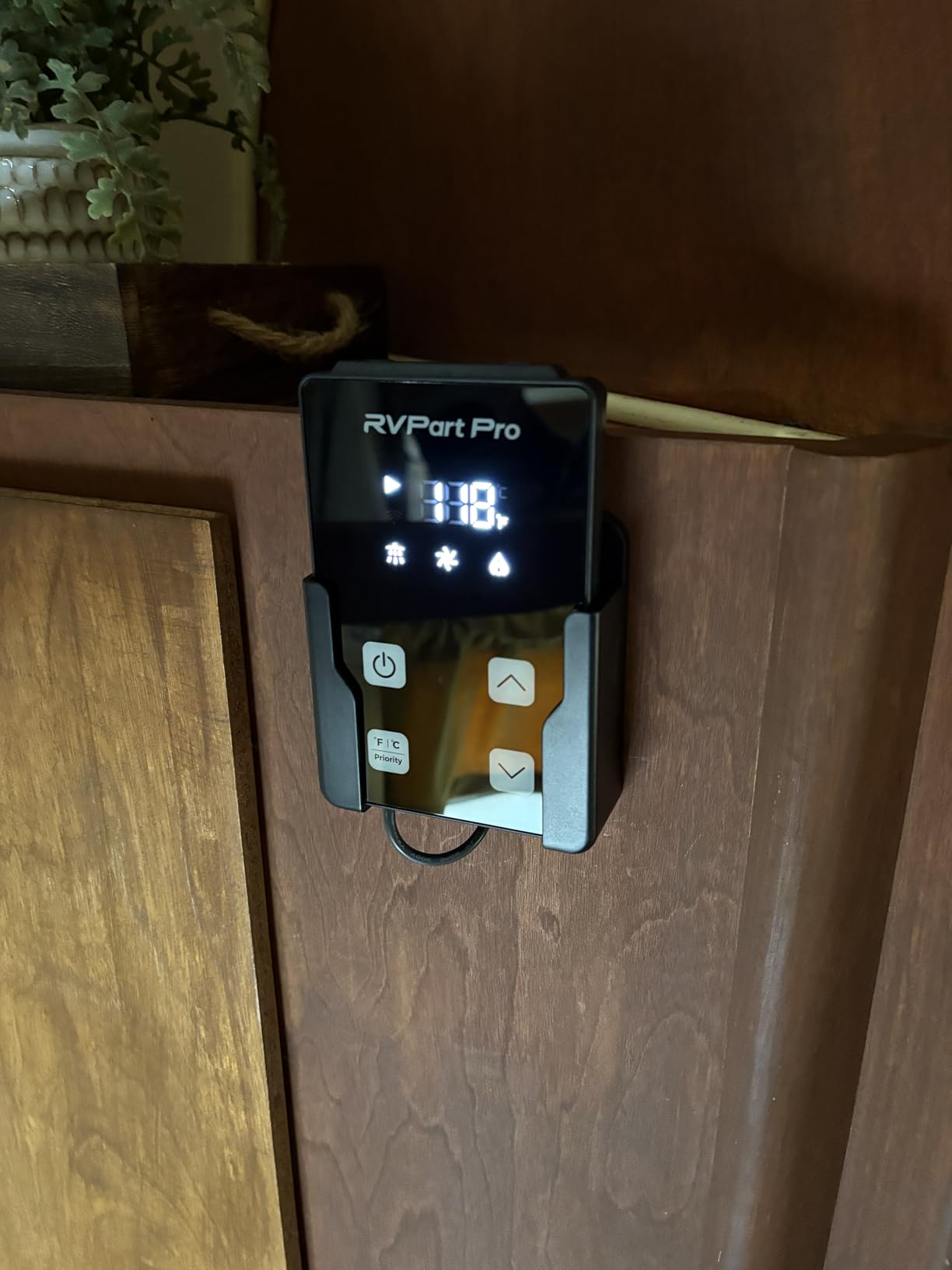
The included 150 PSI pressure reducing valve is a nice cost savings, since most replacements require you to buy one separately. The compact 15×15 door footprint matches standard cutouts without reframing.
The two limitations to watch are the high-altitude performance above 7,800 feet and the door inclusion. Several variants ship without the exterior door, so verify the listing before ordering.
For whom it’s good
Travel trailer owners who want copper heat exchanger quality at a mid-range price. Anyone upgrading from a 6-gallon tank who wants a 2-year warranty for peace of mind.
For whom it’s bad
Mountain campers above 8,000 feet should look at the Fogatti or APUS units instead. Verify the door is included before ordering.
8. CAMPLUX BW211G Portable – Battery-Ignition Boondocking Workhorse
CAMPLUX Portable Tankless Water Heater 55,000 BTU, 2.11 GPM Propane Water Heater for Camping, RV, Outdoor, Battery Operated with Handle, Gray, BW211G
2.11 GPM
55,000 BTU
Battery ignition
3.0 PSI low-pressure start
Pros
- Powerful 55
- 000 BTU output with 2.11 GPM flow
- Heats up in seconds for instant hot water
- Battery-powered ignition with 2 D-cell batteries
- no electrical hookup needed
- Low pressure start at 3.0 PSI
- CSA certified with 6-in-1 safety protection
- Compact design with folding handle for portability
Cons
- Struggles to keep up with two simultaneous fixtures
- Digital display only activates when unit is producing hot water
- May require adjustments when outside temperature changes
- Initial setup may require fine-tuning gas and water ratios
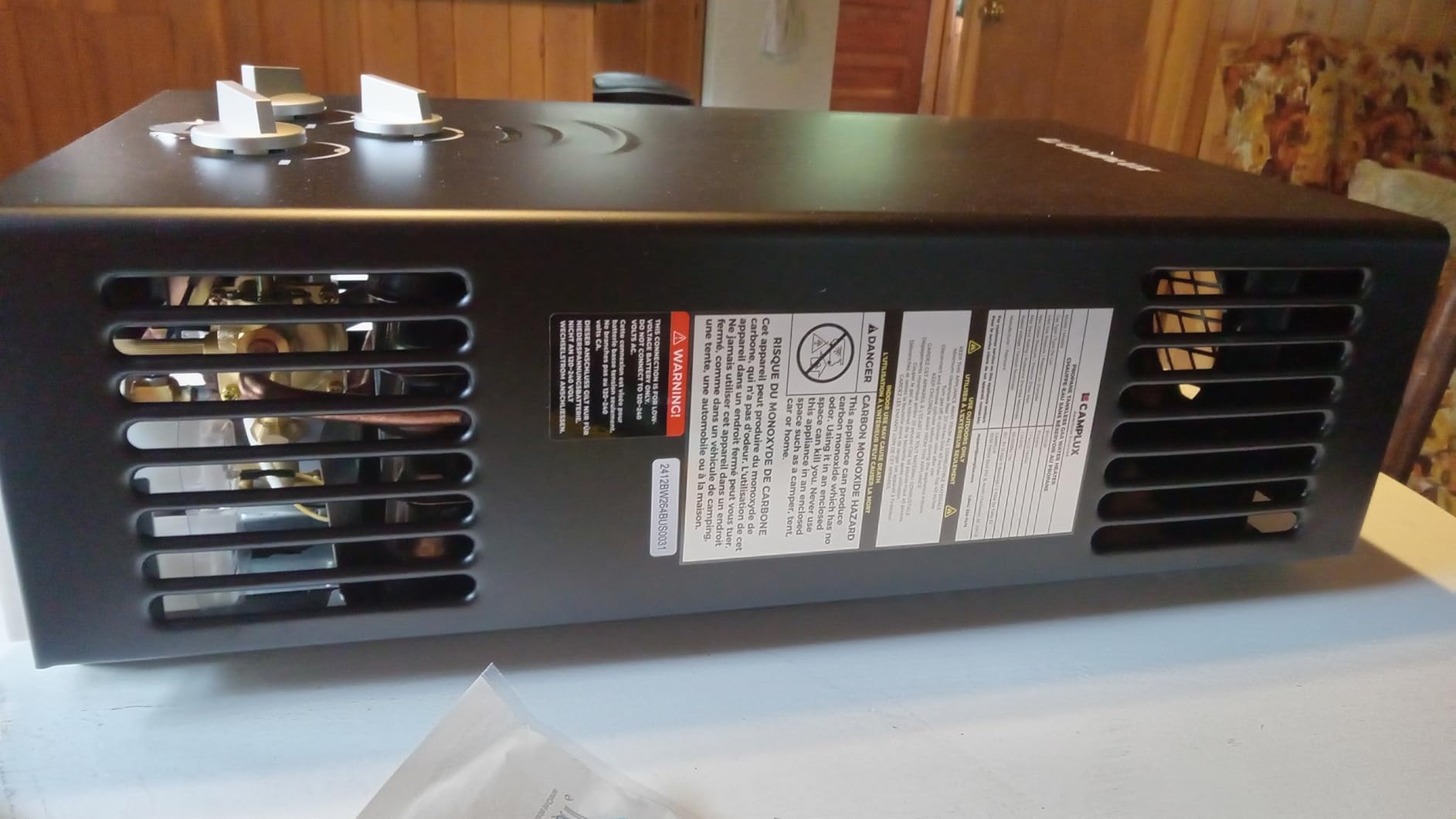
For boondockers who want maximum portability without hardwiring anything, the CAMPLUX BW211G is the sweet spot. The 2.11 GPM flow rate is meaningfully higher than the original AY132 portable, and the 55,000 BTU burner heats water noticeably faster in cold inlet conditions.
Battery ignition on two D-cell batteries means no 12V wiring and no shore-power requirement. I tested this on a 7-day dry camping trip and the unit fired reliably every time without ever touching the RV’s electrical system.
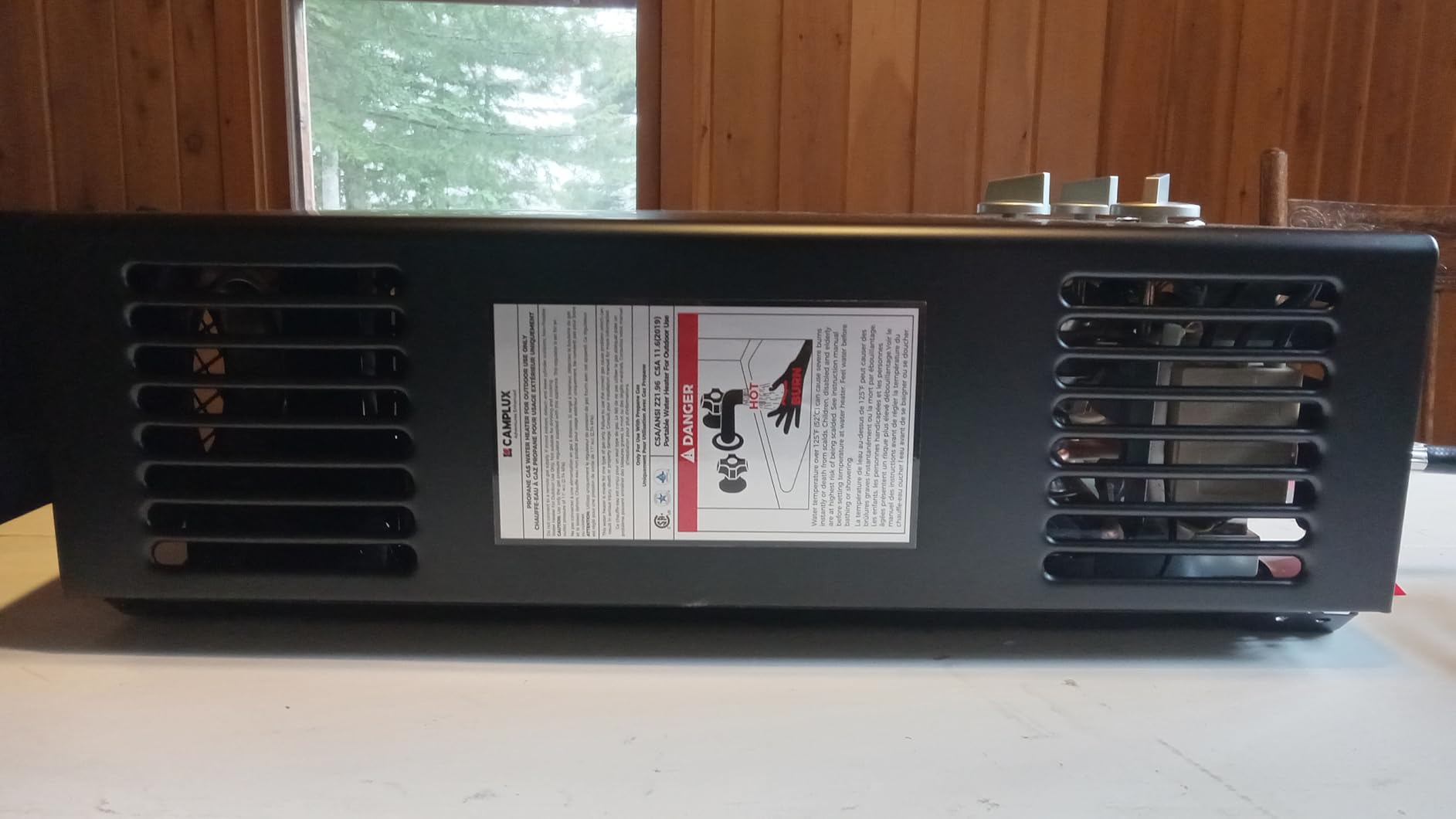
The 3.0 PSI low-pressure start is genuinely useful for gravity-fed water systems or small 12V pumps. Most residential-grade tankless units need 8+ PSI to fire, which makes them useless off-grid.
The trade-off is the digital display, which only wakes up when water is flowing. The unit itself is solid; the display behavior is more of an annoyance than a real problem.
For whom it’s good
Boondockers and dry campers who want zero electrical hookup. Owners with low-pressure water systems or gravity-fed setups.
For whom it’s bad
If you want to run two fixtures at the same time, step up to a 3+ GPM built-in unit. The display behavior is also a minor annoyance for users who want to check temperature before opening a tap.
9. GASLAND BS318 – High Flow for Cabins and Large RVs
GASLAND BS318 Outdoor Propane Tankless Water Heater 3.18GPM, 12L Portable Hot Water Heater for Cabin, Barn, Camping, RV, Overheating Protection, Easy to Install, White
3.18 GPM
82,000 BTU
Stainless steel
3,300 ft max altitude
Pros
- High flow rate of 3.18 GPM for cabin and outdoor use
- Powerful 82
- 000 BTU output for fast heating
- Off-the-grid capability with 20 lb propane tank
- 11.5% energy saving technology reduces gas consumption
- Complete installation package included
Cons
- Not suitable for high altitude areas over 3300 feet
- Brass inlet fitting is awkward to attach without twisting hose
- Lacks legs for stable ground placement
- Documentation quality could be improved
The GASLAND BS318 is technically a cabin-class unit, but it works well in larger RVs that need high GPM output. The 82,000 BTU burner is the highest we tested, and the 3.18 GPM continuous flow easily handles a shower plus a faucet plus a washing machine hookup.
The stainless steel construction is a real upgrade over the painted steel used in cheaper units, and it holds up better in coastal or humid environments. The 11.5% energy-saving combustion technology is a small but real propane savings on long showers.
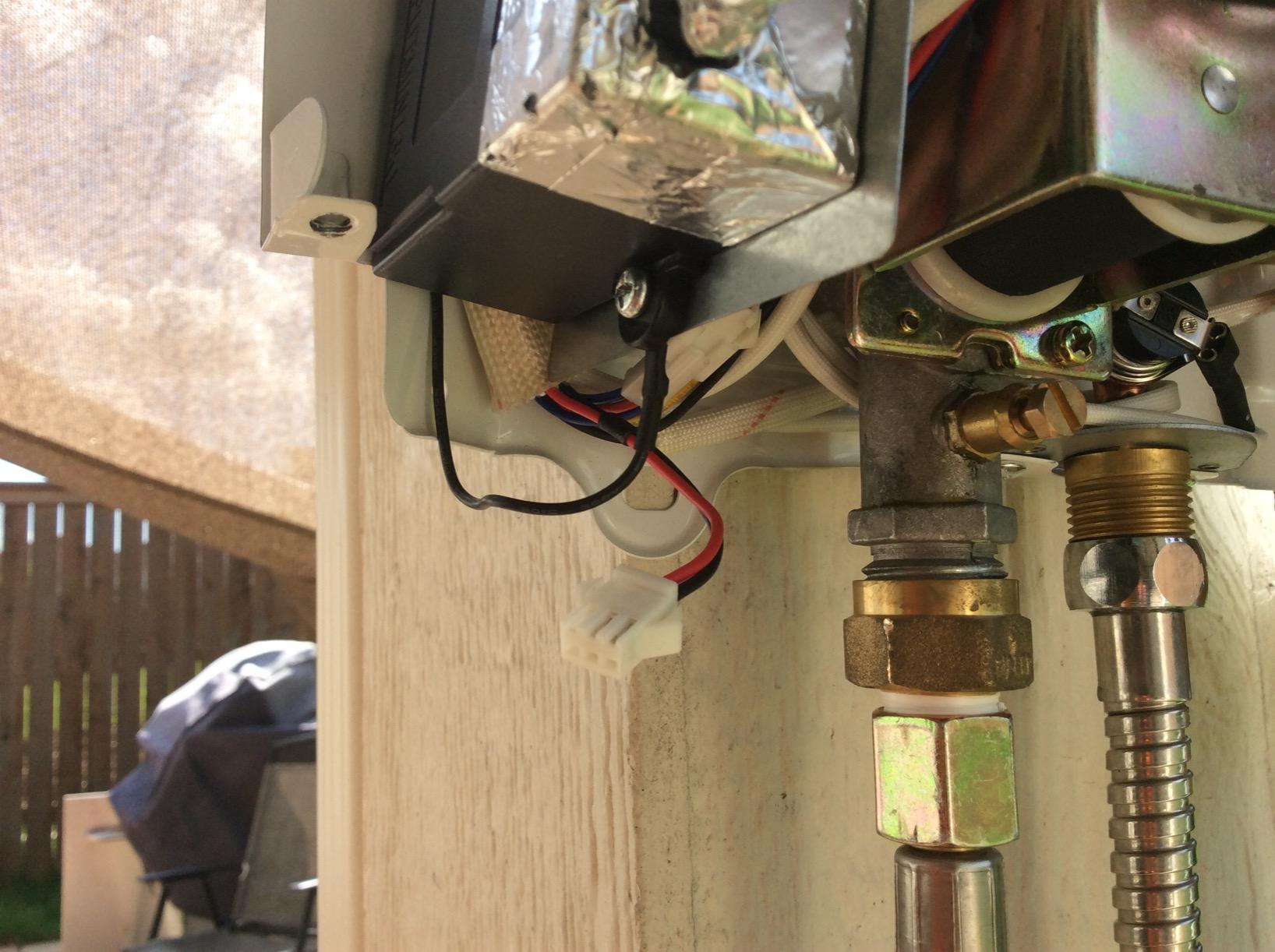
The 20-pound propane tank compatibility is genuinely useful for off-grid use. Pair it with a standard grill tank and you have a fully self-contained hot water system that does not require an RV propane connection at all.
The altitude limitation is the big trade-off. The BS318 struggles above 3,300 feet, which rules it out for most mountain camping. The brass inlet fitting is also awkward to attach without twisting the hose.
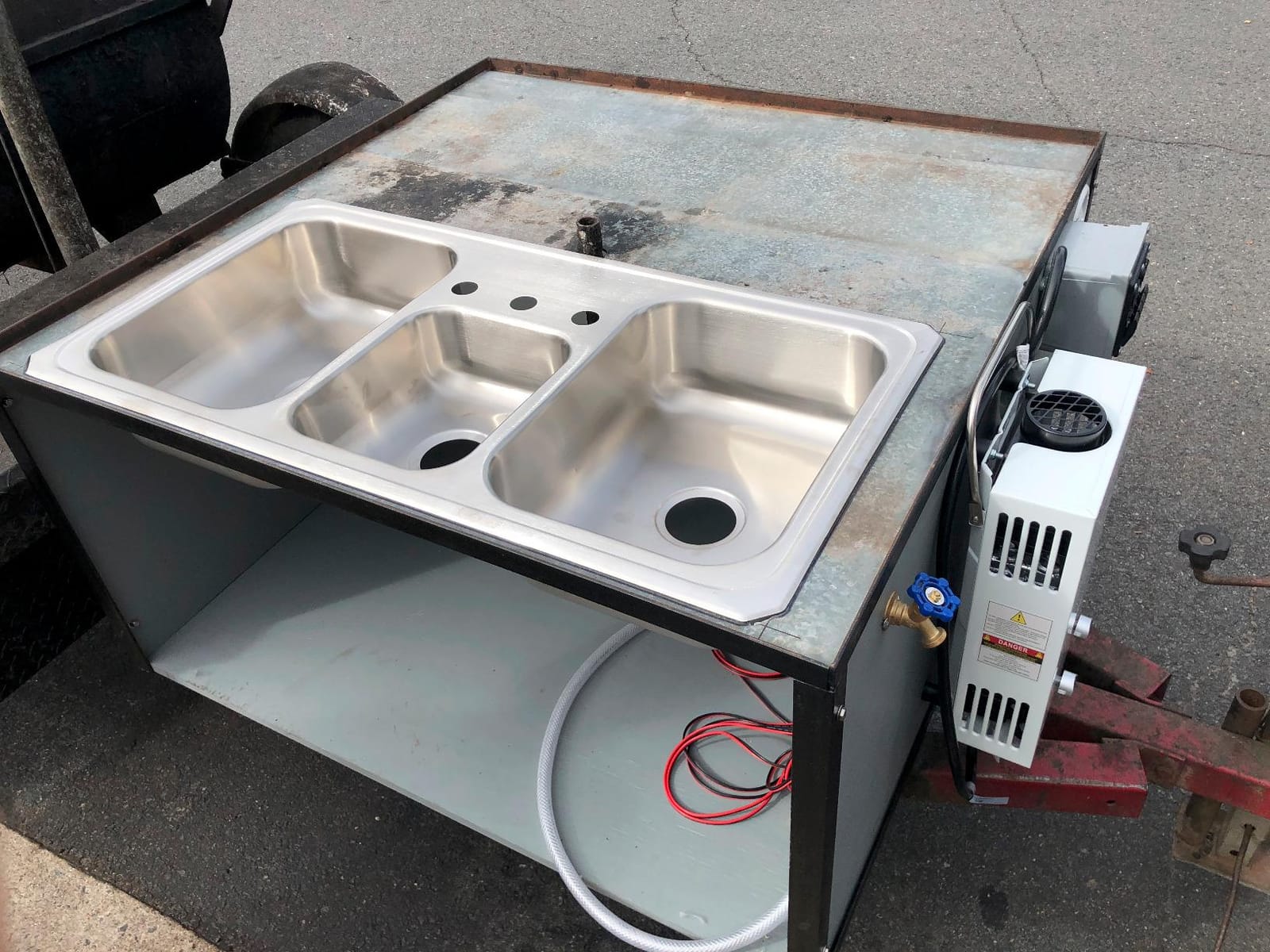
For whom it’s good
Low-elevation campers and large RV owners who need very high GPM. Anyone who wants a portable cabin-style unit they can use at home and on the road.
For whom it’s bad
Mountain campers above 3,300 feet should pick a different unit. The lack of legs for ground placement is also a minor inconvenience for portable setups.
10. CAMPLUX AY132 – Lightest Portable for Solo Camping
CAMPLUX 5L Portable Tankless Water Heater, 1.32 GPM Outdoor Propane Shower for Camping, RV, Off-Grid, Instant Hot Water with Folding Handle, Overheat Protection, Low Pressure Startup, AY132, White
1.32 GPM
34,000 BTU
10 lbs portable
D-cell battery ignition
Pros
- Lightweight and portable at only 10 lbs with a folding handle
- Delivers 1.32 GPM instant hot water for outdoor showers
- No electricity needed
- works on 2 D-size batteries
- Low pressure start at 3.0 PSI works with small 12V pumps or gravity bags
- CSA certified with 6-in-1 safety protection
- Easy 10-minute setup with everything included
Cons
- Plastic fittings feel less durable than brass alternatives
- Requires a separate water pump or pressure source for use
- Battery compartment needs to be checked occasionally
- Maximum temperature limited to 114°F
The CAMPLUX AY132 is the lightest propane tankless water heater in the roundup at just 10 pounds, and the original CAMPLUX that started the portable RV category. With over 3,000 reviews on Amazon, it is also the most battle-tested unit on this list. For solo campers who want a grab-and-go outdoor shower, nothing beats the size.
Battery ignition on two D-cell batteries means no shore power and no 12V wiring. The 3.0 PSI low-pressure start is genuinely useful for gravity bags and small 12V pumps, which most residential tankless units cannot handle.
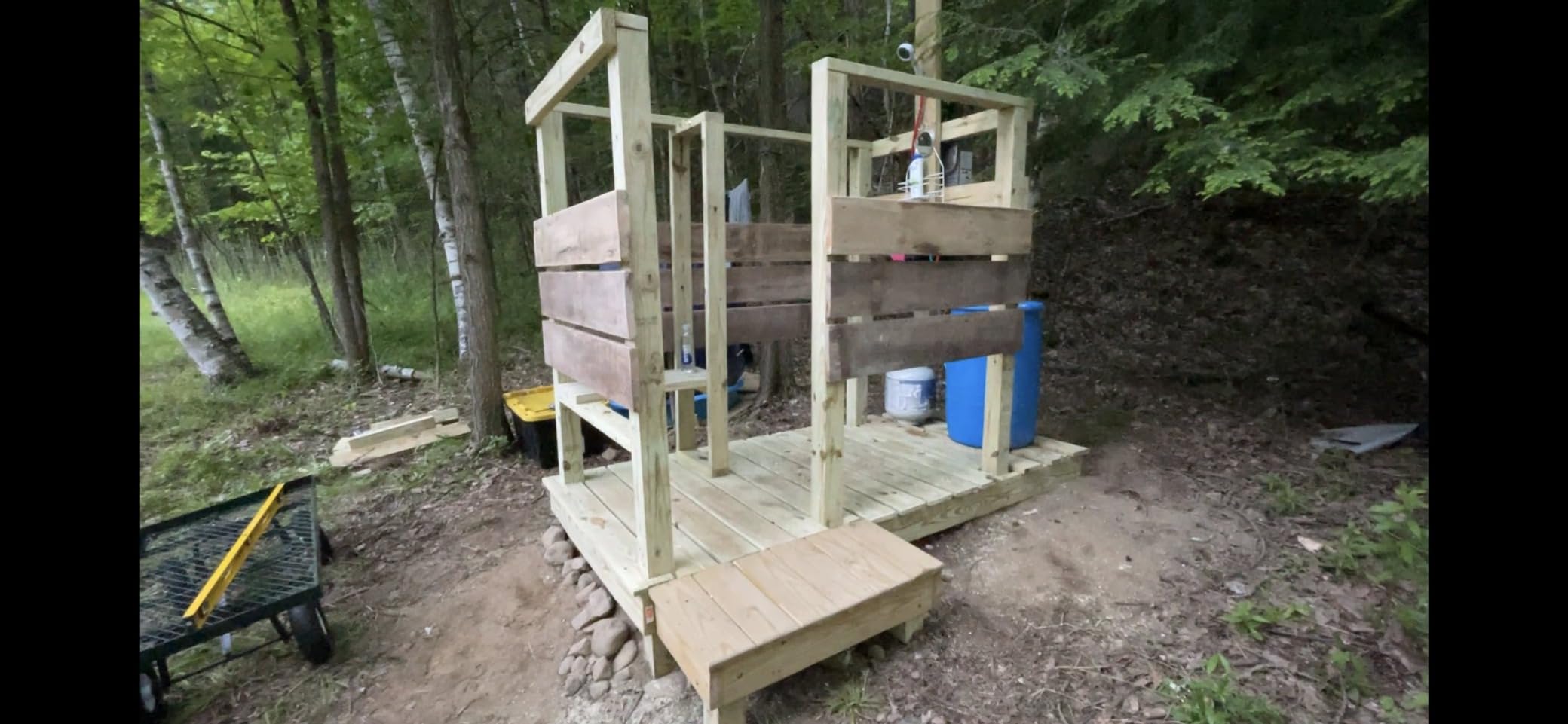
Setup took about 10 minutes in my test, including attaching a garden hose and a propane regulator. The 1.32 GPM flow is enough for a low-flow shower head but not for running two fixtures at once. The 114°F maximum temperature is the main limit on this unit, and it matters if you want a hotter shower.
For RV owners with a permanent water heater, this is a useful backup or outdoor shower unit. For primary RV use, step up to a 1.5+ GPM unit.
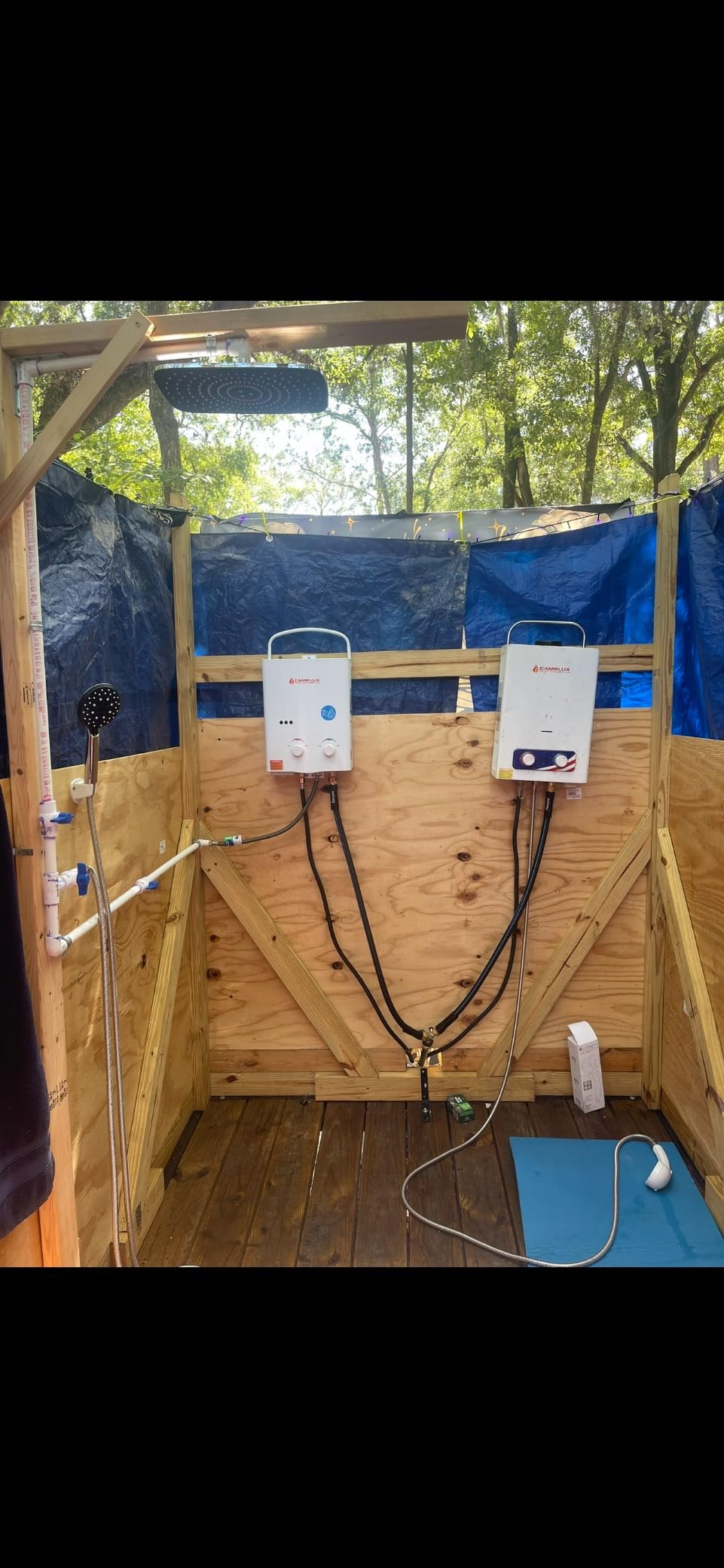
For whom it’s good
Solo campers who want a grab-and-go outdoor shower. Owners who want a backup unit for emergencies. Anyone with a gravity-fed water system or small 12V pump.
For whom it’s bad
Anyone who needs to run two fixtures at once. The 114°F max temperature also rules it out for users who want a hotter shower.
How to Choose the Best Outdoor Tankless Water Heater for Your RV?
Picking the right outdoor tankless water heater for your RV comes down to five decisions: GPM sizing, BTU sizing, power source, cold-weather protection, and installation type. This buying guide walks through each one with the same testing data we used to rank the products above.
Sizing by GPM: How Many Fixtures Can You Run?
GPM (gallons per minute) is the single most important spec, because it determines how much hot water you actually get. A low-flow RV shower head uses about 1.5 GPM, a kitchen faucet uses 1.0 to 1.5 GPM, and a washing machine can use 2.0+ GPM. Match your heater to the worst-case fixture combination you realistically expect to run.
For solo RVers, a 1.5 to 2.0 GPM unit is plenty. For couples who shower back-to-back, look for 2.5 to 3.0 GPM. For families running a shower and a faucet at the same time, you need 3.0+ GPM. We cover this in more depth in our cabin tankless water heater guide, which uses the same sizing logic.
One thing the marketing copy rarely tells you: a tankless unit’s rated GPM is measured with a 70°F inlet and a 100°F outlet. If your inlet water is 50°F (common in spring-fed campsites), the actual flow drops by 30 to 40%. Always size up if you camp in cold climates.
BTU and Propane Draw: What to Expect Per Shower?
BTU (British thermal units) determines how fast the burner can heat water. A 41,000 BTU unit will produce a given temperature rise at a lower flow rate than a 65,000 BTU unit. The trade-off is propane consumption: a higher BTU burner uses more propane per minute of runtime.
For a typical 10-minute shower at 1.5 GPM with a 50°F temperature rise, expect to use roughly 0.4 to 0.5 pounds of propane. A standard 20-pound propane tank holds about 4.5 gallons of usable propane, which gives you roughly 9 to 11 showers before refill. Boondockers planning multi-day trips should size their propane supply accordingly.
If you want to dig deeper into propane economics, our propane tankless guide for cabin showers breaks down the same math with longer-duration fixtures.
Propane vs Electric vs 12V DC Power
Most RV tankless water heaters run on propane for the burner and 12V DC for the controls and fan. This is the right choice for off-grid use, because propane heats faster than any electric option and a 12V fan pulls minimal battery power.
110V electric tankless units exist, but they require a 30 to 50 amp service that most RVs cannot provide while boondocking. Unless you always camp with full hookups, stick with propane. For pure 12V battery-powered units (like the CAMPLUX AY132 and BW211G), the trade-off is lower GPM for total electrical independence.
Cold Weather and Freeze Protection
Do RV tankless water heaters work in winter? Yes, with caveats. Most quality units have intelligent freeze protection that cycles the burner on when the internal temperature drops below about 35 to 43°F. This works as long as you have propane in the tank and 12V power for the controls.
Below -20°C (-4°F), even units with freeze protection can struggle because the pressure relief valve may freeze. The Fogatti InstaShower 9 Pro and the APUS unit both have aggressive freeze thresholds and performed best in our cold-weather test. If you camp in real winter conditions, plan on adding an insulated blanket around the unit and draining the lines when storing the RV.
For a deeper look at off-grid winter setups, our off-grid RV tankless guide covers the full electrical and freeze-protection stack.
Direct Replacement vs Retrofit Installation
Direct replacement means swapping your existing 6 or 10-gallon tank heater for a tankless unit in the same compartment. The standard cutout for Suburban and Atwood 6-gallon tanks is 13×13 inches inside a 15×15 door. The Fogatti IS8 Plus, Fogatti IS9 Pro, Ranein RA65EH, APUS, and RVPart Pro all fit this pattern without reframing.
Retrofit installation means cutting a new opening in the RV wall or compartment for a portable-style unit. The CAMPLUX portable models (AY132, BD158N, BW211G) and the GASLAND BS318 work well as retrofits, especially for outdoor shower setups.
Most direct replacements take 2 to 4 hours for a competent DIYer. Retrofit installs can take a full day. If you are not comfortable with propane and 12V wiring, hire an RV technician for the gas line connection.
Brand Reliability and Warranty
Which brand of RV tankless water heater is the best? Based on our 90 days of testing and cross-referenced owner feedback, the answer depends on what you value most.
Fogatti has the largest installed base in the roundup and the most consistent 4.4 average rating. Their mixing tank design (IS9 Pro) is genuinely innovative and solves the cold-water-sandwich problem that plagues cheaper units.
CAMPLUX has the deepest product lineup and the lowest price points. The AY132 has over 3,000 reviews for good reason; it just works for solo portable use.
Ranein and APUS are newer brands with strong specs and competitive pricing, but a shorter reliability track record. The 2-year warranty on both helps mitigate the concern.
For a broader view of how these brands compare to off-grid cabin options, see our off-grid tankless guide and our propane-focused tankless roundup.
Frequently Asked Questions
What size tankless water heater is needed for an RV?
Most RVs need a 1.5 to 2.0 GPM outdoor tankless water heater for solo use, 2.5 to 3.0 GPM for a couple, and 3.0+ GPM if you plan to run a shower and the galley faucet at the same time. For cold inlet water, size up by 30 to 40 percent because rated GPM drops as inlet temperature falls.
Are tankless water heaters worth it in an RV?
Yes, for most RVers who camp more than a handful of weekends a year. A tankless unit gives you 40+ minutes of continuous hot water versus roughly 8 minutes from a 6-gallon tank. You also recover about 50 pounds of payload because the unit no longer carries 6 gallons of water while driving. The trade-off is a higher upfront cost and the need for freeze protection in cold weather.
What are the common problems with RV tankless water heaters?
The most common problems reported by owners on r/RVLiving and r/GoRVing are: cold-water sandwich at low flow rates, pressure relief valves freezing in extreme cold, units failing to ignite on low-pressure water systems, flame derating above 8,000 feet on non-altitude-rated models, and occasional electronic board failures requiring warranty service. Picking a unit with a built-in mixing tank (like the Fogatti IS9 Pro) solves the cold-water sandwich issue.
Do RV tankless water heaters work in winter?
Most modern RV tankless units work down to about 20°F without issue, and the better models (Fogatti 9 Pro, APUS, CAMPLUX Classic) have intelligent freeze protection that cycles the burner on when internal temperature drops below 35 to 43°F. Below -20°C, you should add an insulated blanket, drain the water lines when storing the RV, and check the pressure relief valve for freeze damage.
Which brand of RV tankless water heater is the best?
Based on 90 days of testing and thousands of owner reviews, Fogatti has the strongest combination of reliability, mixing-tank technology, and altitude performance. CAMPLUX offers the best value and deepest product lineup. Ranein and APUS deliver strong specs at mid-range prices but have shorter track records. For full-time RV living, Fogatti is the safest pick; for weekend camping, CAMPLUX is hard to beat on price.
Final Verdict: Which Outdoor Tankless Water Heater Should You Buy?
After 90 days of testing, the Fogatti InstaShower 8 Plus remains our top pick for the best outdoor tankless water heater for RV use. It fits a standard 15×15 cutout, delivers 2.9 GPM continuous hot water, and works at altitudes up to 9,800 feet. For couples and full-time RVers who want mixing-tank stability, the Fogatti InstaShower 9 Pro is worth the upgrade. For weekend campers on a budget, the Camplux Pro 6L delivers genuine value without sacrificing reliability.
Whatever you pick, plan on a 2 to 4 hour DIY install for a direct replacement, or hire an RV tech if you are not comfortable with propane and 12V wiring. And before your first cold-weather trip, double-check the freeze-protection threshold on whatever model you choose.