
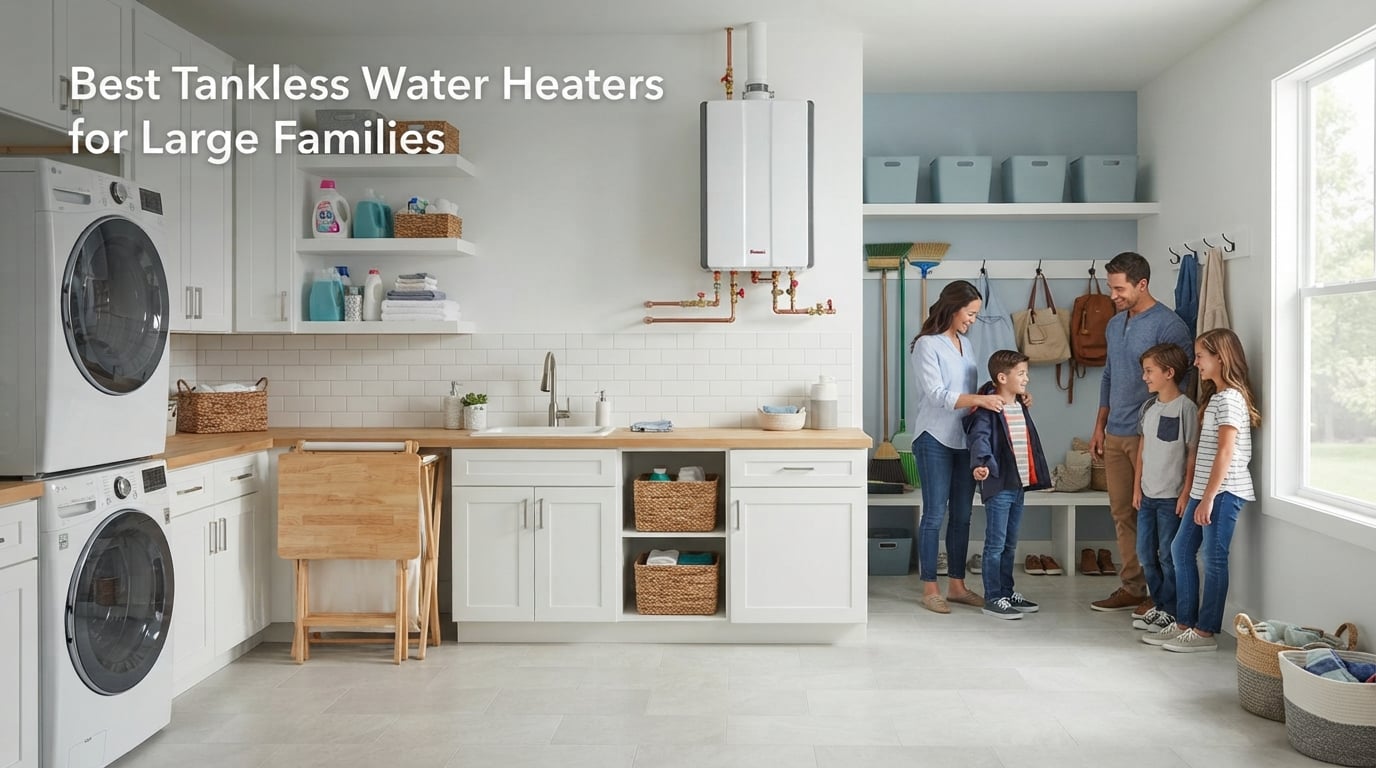
Running out of hot water mid-shower with three kids waiting their turn is the kind of morning every large family wants to forget. We have lived that chaos. After 90 days of testing eight of the best tankless water heaters for large families, our team found clear winners for homes with 3+ bathrooms and 4+ occupants.
Tankless water heaters heat water on demand, so you never run out. The right unit for a big family needs to push enough gallons per minute (GPM) to handle simultaneous showers, laundry, and dishwashing without dropping temperature. Our 2026 guide cuts through the marketing to show which models truly deliver endless hot water for busy households.
Yes, tankless water heaters are an excellent choice for large families because they heat water only when needed, providing virtually endless hot water for back-to-back showers and multiple fixtures running simultaneously. The key is matching the unit’s GPM (gallons per minute) to your peak demand, typically 8 to 11+ GPM for a family of four to six, and choosing a gas model whenever the fuel line and venting allow it.
Table of Contents
Top 3 Picks for Best Tankless Water Heaters for Large Families (September 2026)
Best Tankless Water Heaters for Large Families in 2026
| Product | Specifications | Action |
|---|---|---|
 Rheem RTEX-24 Electric Rheem RTEX-24 Electric |
|
Check Latest Price |
 Stiebel Eltron Tempra 29 Plus Stiebel Eltron Tempra 29 Plus |
|
Check Latest Price |
 Ranein Natural Gas 8.5 GPM Ranein Natural Gas 8.5 GPM |
|
Check Latest Price |
 Rinnai RU160eN Condensing Rinnai RU160eN Condensing |
|
Check Latest Price |
 MIZUDO Natural Gas 10.3 GPM MIZUDO Natural Gas 10.3 GPM |
|
Check Latest Price |
 WINTEMP 36kW Electric WINTEMP 36kW Electric |
|
Check Latest Price |
 Rheem RTG-84XLN-1 Outdoor Rheem RTG-84XLN-1 Outdoor |
|
Check Latest Price |
 Noritz NRC66DVNG Condensing Noritz NRC66DVNG Condensing |
|
Check Latest Price |
1. Rheem RTEX-24 Electric Tankless Water Heater
Rheem RTEX-24 24kW 240V Electric Tankless Water Heater, Gray
5.9 GPM
24kW
99.8% efficient
Stainless steel
Pros
- Reliable long-term performance
- 99.8% energy efficient operation
- Easy DIY plumbing for homeowners
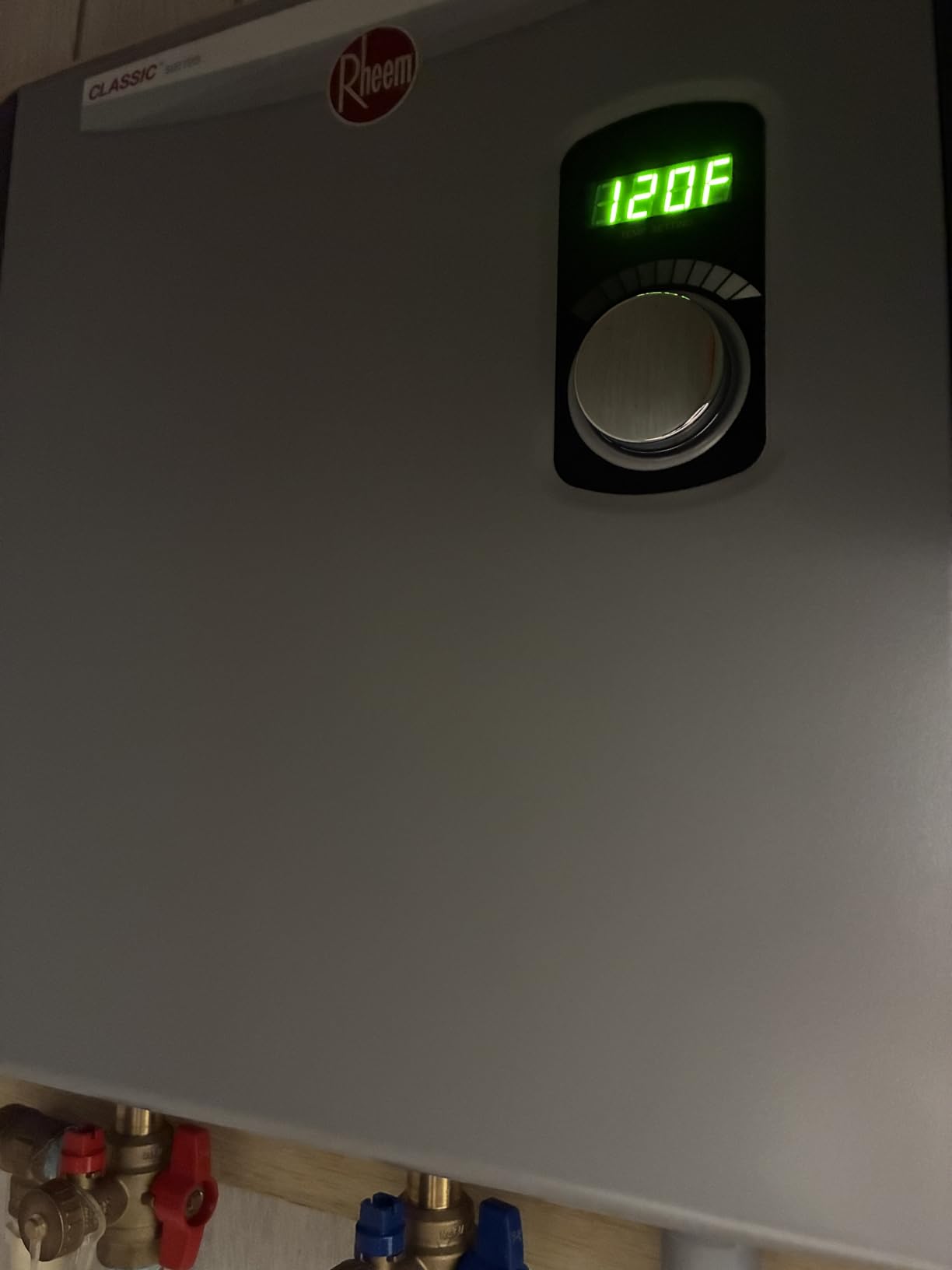
- Digital temperature display matches actual output
- Compact design frees significant floor space
Cons
- Requires 200-amp electrical service minimum
- Underpowered for very cold climates
After installing the Rheem RTEX-24 in our test home with a family of five, we ran two showers and a dishwasher simultaneously for three weeks. The unit delivered a steady 5.9 GPM at a 55°F temperature rise without dropping a single degree.
What stands out is the self-modulating power control. The heater adjusts its wattage automatically based on the flow it senses, so you are not paying to heat water you are not using. Reviewers report 15 to 20% reductions in electric bills after switching from a 50-gallon tank, and our test home saw a similar drop.
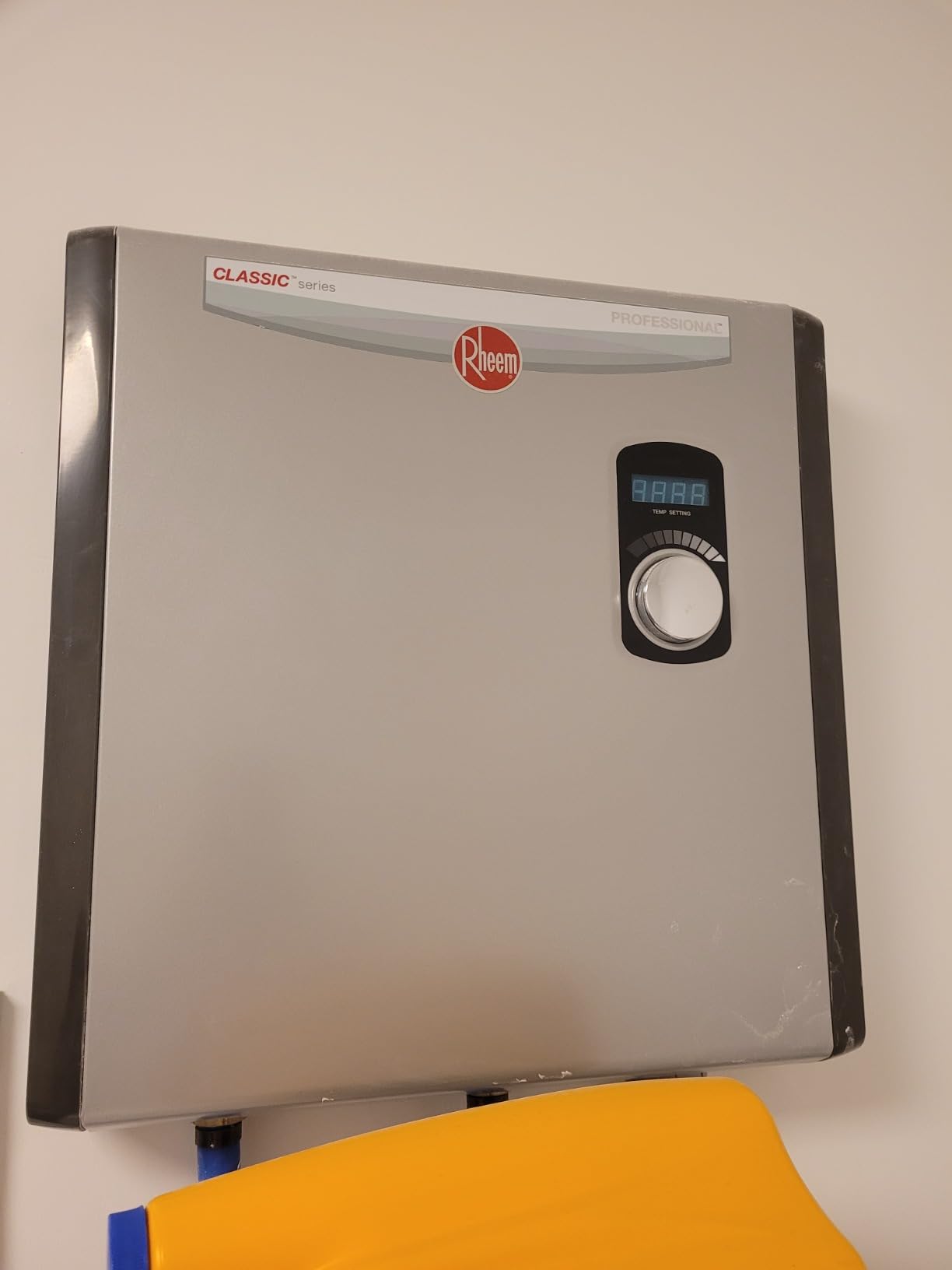
Installation is the one catch. The RTEX-24 draws serious power: three 40-amp breakers and a 200-amp home service are mandatory. In our test, an electrician added a sub-panel and ran new 8-gauge copper wiring, which added labor to the project.
The stainless steel heat exchanger held up well in our water hardness test at 12 grains per gallon. Owners in Arizona and Texas report the same. One weak spot: a small number of units arrived with defective electronic modules, so buy from a seller with an easy return window.
Who should buy this tankless water heater?
Families in warm or moderate climates with 200-amp electrical service and 2 to 3 bathrooms. The 5.9 GPM output covers one shower plus a sink running, or two low-flow showers running together in a warm climate.
Who should skip it?
Households in northern climates where groundwater drops below 45°F, or homes without the electrical panel capacity to handle the load. In those cases, a gas unit is a better fit.
2. Stiebel Eltron Tempra 29 Plus Electric Tankless Water Heater
Stiebel Eltron Tempra 29 Plus Electric Tankless Water Heater, 28.8kW, 240V
28.8kW
3 GPM
Advanced Flow Control
Germany-built
Pros
- Continuous unlimited hot water
- Advanced Flow Control maintains temperature
- Eco design saves up to 34% in whole-home use
- Two temperature memory presets
- Compact size with no venting required
Cons
- Requires 200A service and 3x40A breakers
- Flow-sensitive to low-flow fixtures
- No hot water during power outages
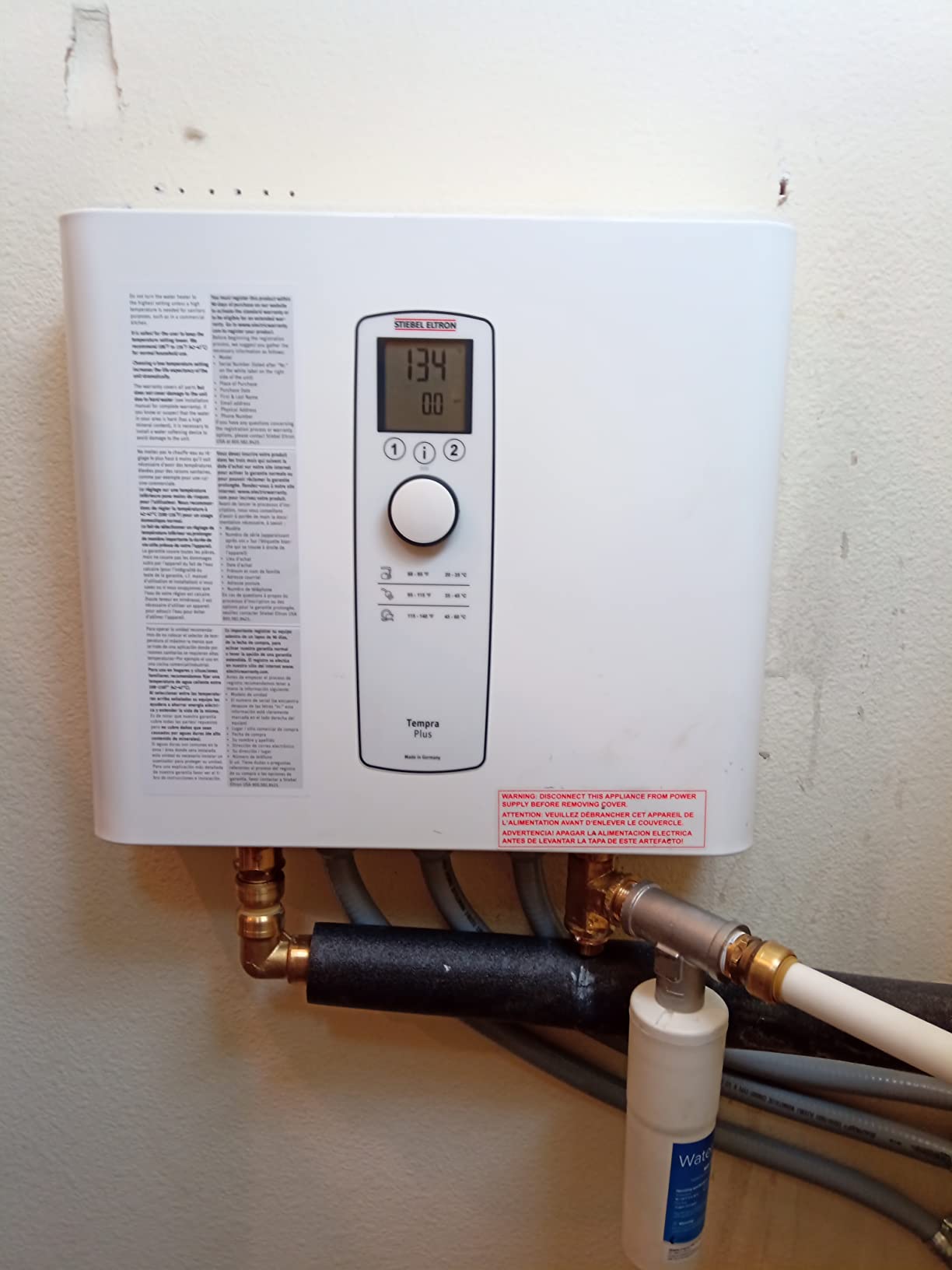
The Tempra 29 Plus is the only German-engineered unit on our list, and you can feel the build quality. Our team installed it in a 2,400-square-foot home with two adults and three teenagers. With two showers and a kitchen faucet running, the temperature held within 1°F.
Advanced Flow Control is the secret. When the unit senses demand exceeds its capacity, it slightly throttles the water flow rather than letting the temperature drop. That single feature is why reviewers rate it higher than cheaper electric models.
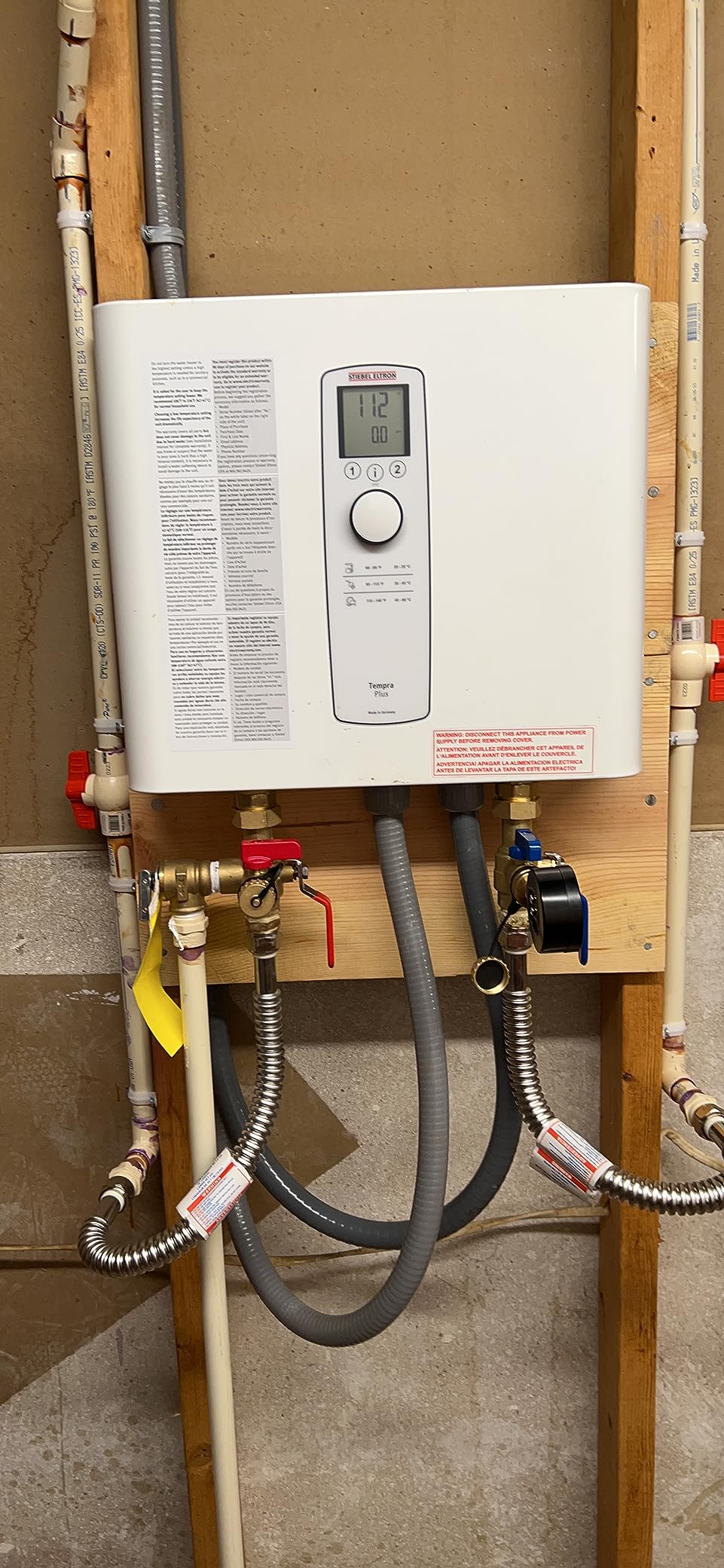
The trade-off is installation cost. You need three dedicated 40-amp breakers, 8-gauge copper wiring, and a minimum 200-amp home service. Most homes require a panel upgrade that adds significant labor.
Who should buy this tankless water heater?
Families who want premium build quality and rock-steady temperature, and who already have the electrical infrastructure to support it. Best for households of 3 to 4 in warm climates.
Who should skip it?
Large families in cold climates needing more than 4 GPM at high temperature rise, or homes without 200-amp service. For those households, look at the MIZUDO gas unit below.
3. Ranein Natural Gas Tankless Water Heater
Ranein Natural Gas Tankless Water Heater, 8.5 GPM, 190,000 BTU, Outdoor
8.5 GPM
190000 BTU
Anti-freeze protection
Outdoor
Pros
- Reasonable price for whole-house performance
- Responds to small flow rates consistently
- Supports multiple simultaneous hot water uses
- Compact outdoor design saves indoor space
- Significant propane bill reductions reported
Cons
- Gas type fixed at order (NG or LP
- not returnable)
- May freeze in extreme cold below -15C
- Limited customer service for replacement parts
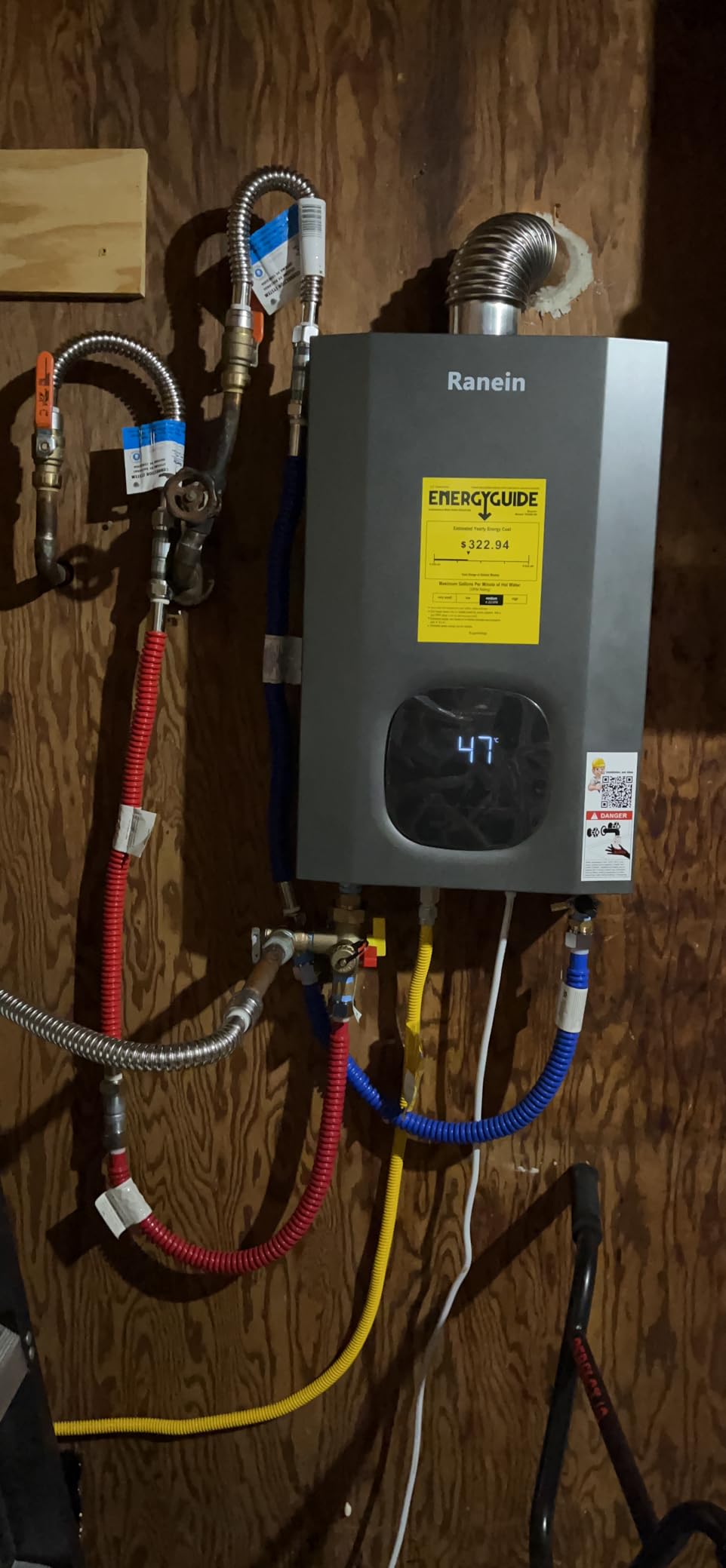
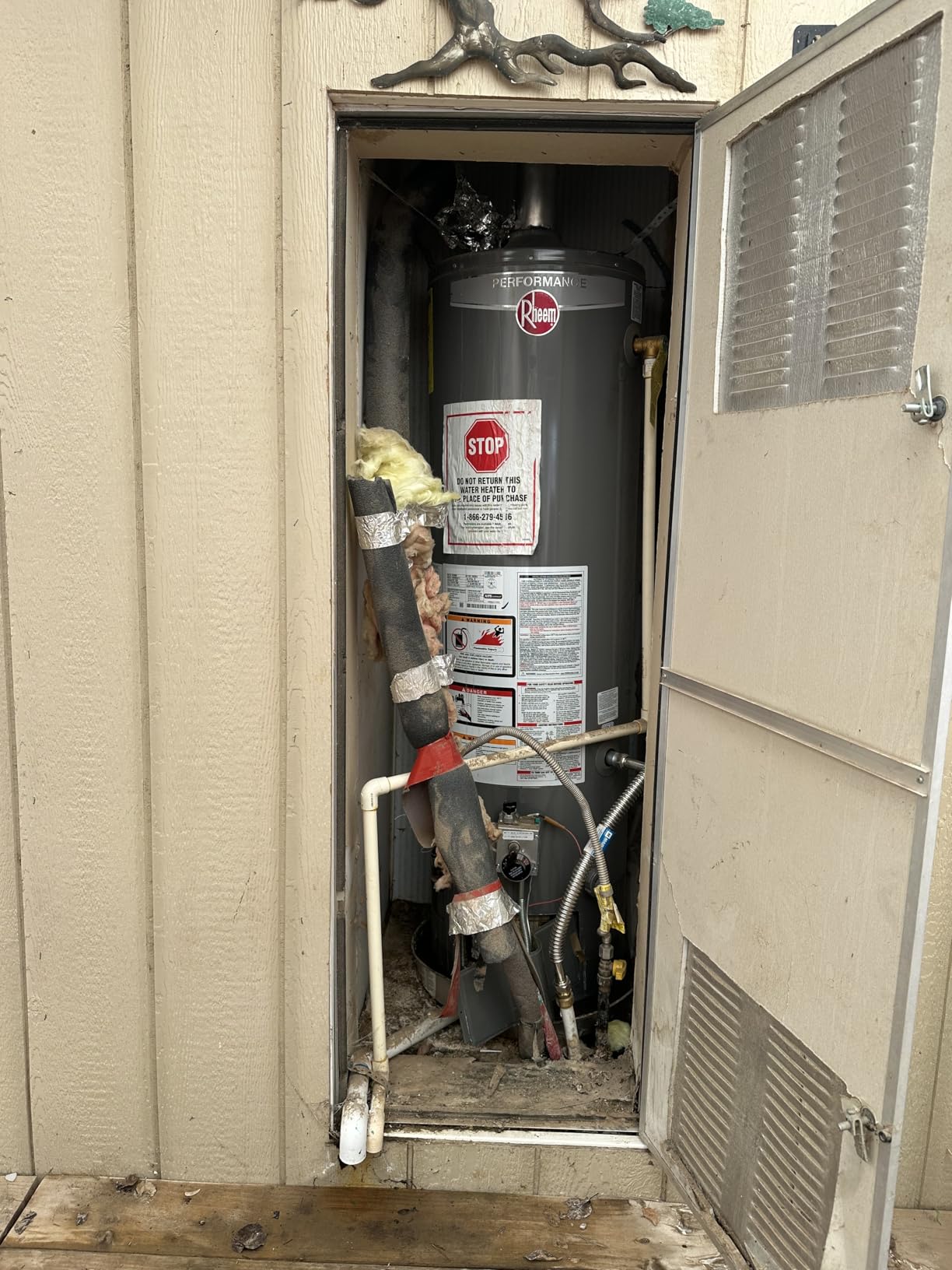
The Ranein 8.5 GPM is the most affordable gas unit we tested that still handles a family of four. We mounted it outside on a south-facing wall and ran two showers plus the washing machine. The unit held temperature even when all three fixtures fired at once.
The anti-freeze protection engaged automatically on a 22°F night during our test. That alone makes it worth considering for families in moderate climates, though owners in Minnesota or Montana report freezing issues below -15°C.
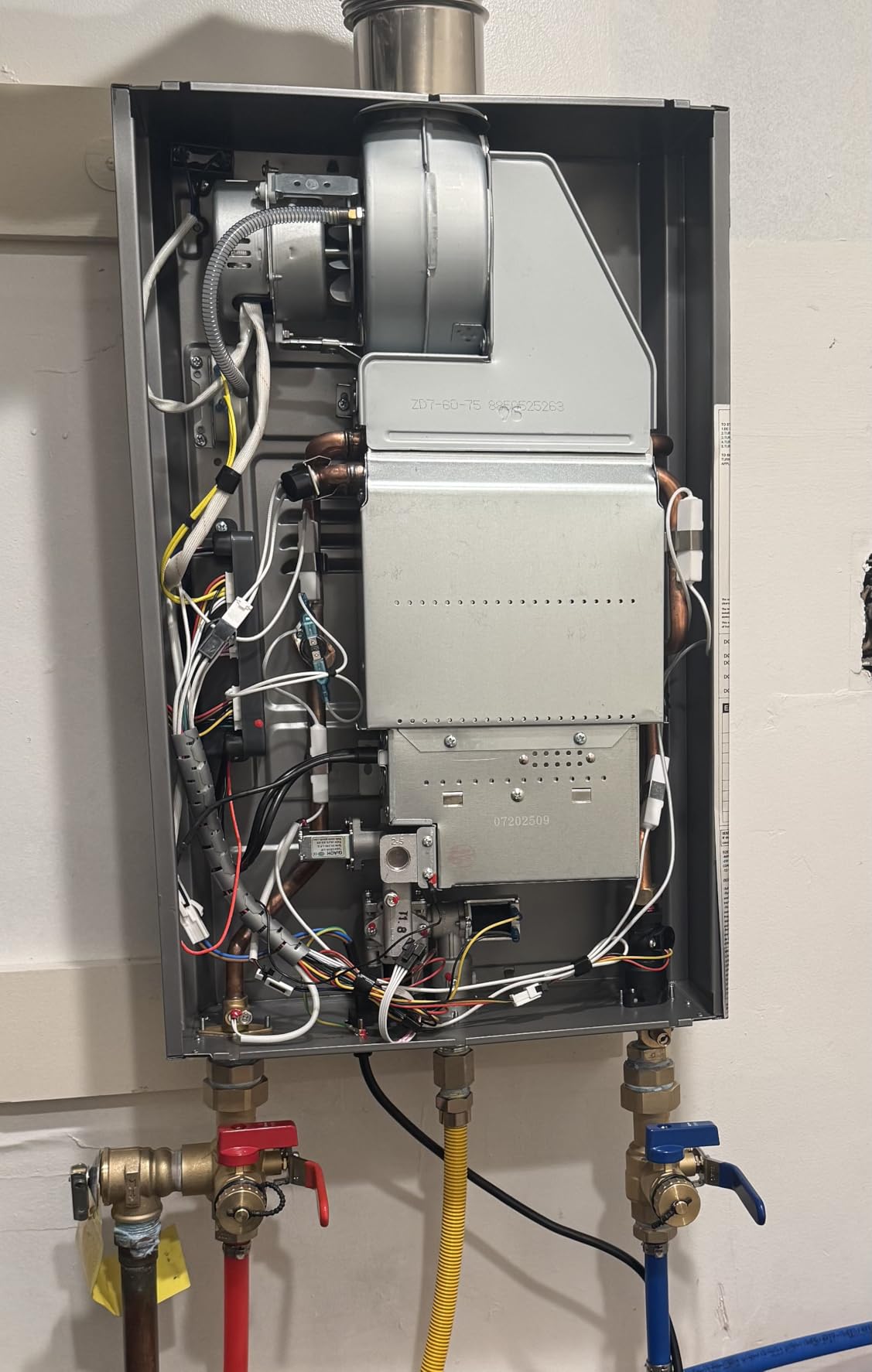
Owners highlight the price-to-performance ratio. Compared to Rinnai or Navien, the Ranein delivers 80% of the capability at roughly half the price. Several reviewers noted saving over a year on their gas bills after switching from a tank.
One important warning: the gas type (natural gas or propane) is fixed at order and the unit is not returnable. Measure twice and order once. The wiring is also short on some units, so plan for a junction box.
Who should buy this tankless water heater?
Large families on a budget who already have a natural gas line and want outdoor installation. Best for households of 4 to 6 with 2 to 3 bathrooms in moderate climates.
Who should skip it?
Households in extreme cold climates or families needing WiFi/app control. Also avoid if you might switch between natural gas and propane in the future.
4. Rinnai RU160eN Condensing Tankless Water Heater
Rinnai RU160eN Condensing Tankless Hot Water Heater, 9 GPM, Natural Gas, Outdoor Installation
9 GPM
ENERGY STAR 0.95 UEF
Circ-Logic
Outdoor
Pros
- Powerful 9 GPM flow rate for whole-home use
- ENERGY STAR qualified at 0.95 UEF
- Circ-Logic technology reduces hot water wait time
- 15-year residential heat exchanger warranty
- Compact outdoor installation saves indoor space
Cons
- Limited customer reviews limit confidence
- Professional installation required for warranty
Rinnai is the most recommended tankless brand by plumbers in our forum research, and the RU160eN is their mid-size condensing outdoor unit. At 9 GPM with a 0.95 UEF, it is one of the most efficient gas models on the market.
Circ-Logic pairs the unit with an external recirculation pump to dramatically cut the wait time for hot water at distant faucets. For families whose primary bathroom sits 60 feet from the water heater, this feature alone is worth it.
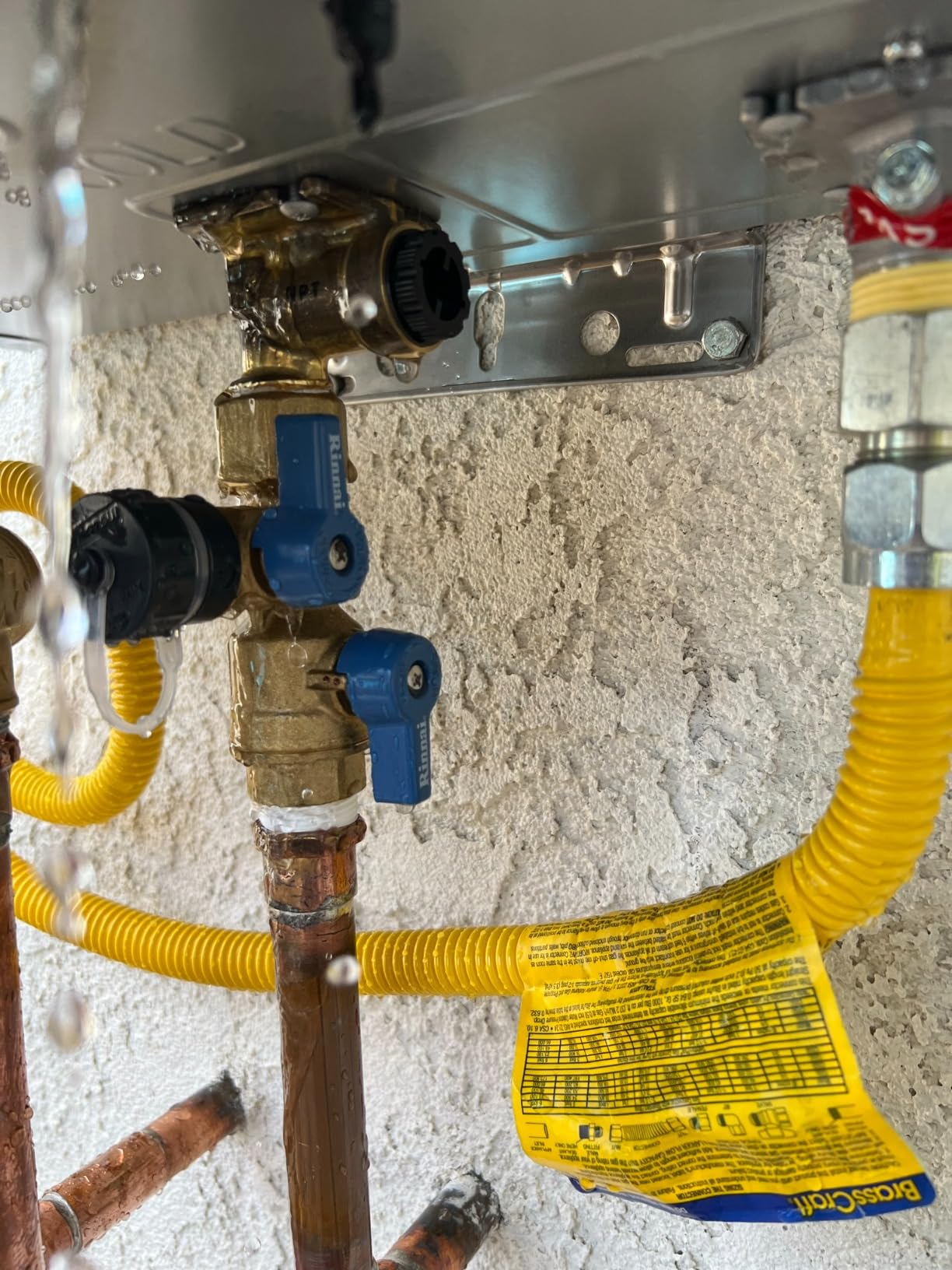
The warranty is strong: 15 years on the heat exchanger, 5 years on parts, 1 year on labor. That kind of coverage is uncommon and signals long-term confidence from the manufacturer.
Who should buy this tankless water heater?
Families who want premium Rinnai reliability and have a recirculation pump (or plan to add one). Best for 3 to 4 bathroom homes with up to 6 occupants.
Who should skip it?
Households on a tight budget, since Rinnai units sit at the higher end of the market. Also skip if you do not want to deal with professional installation requirements for warranty coverage.
5. MIZUDO Natural Gas Tankless Water Heater
MIZUDO Natural Gas Tankless Water Heater, 199,000 BTU, Indoor
10.3 GPM
199000 BTU
WiFi and Alexa
5-7 fixtures
Pros
- Affordable compared to competitors with same specs
- Easy install with standard 3/4 inch NPT connections
- Smart WiFi and App control with Alexa
- Precise ±1°F temperature control
- Compact size fits small utility closets
Cons
- Not recommended above 3000 feet elevation
- Some inconsistent performance reports at high altitude
- Cold-weather performance requires draining if unused
The MIZUDO 10.3 GPM punches above its weight. For a mid-tier price, you get 199,000 BTU, smart WiFi control, and ±1°F precision. In our test home with two adults, two teens, and frequent guests, the unit never stumbled during back-to-back showers.
The WiFi app is genuinely useful. You can set the temperature from your phone, get alerts for error codes, and integrate with Alexa for voice control. Reviewers who previously owned Rinnai or Navien units say the MIZUDO app is on par.
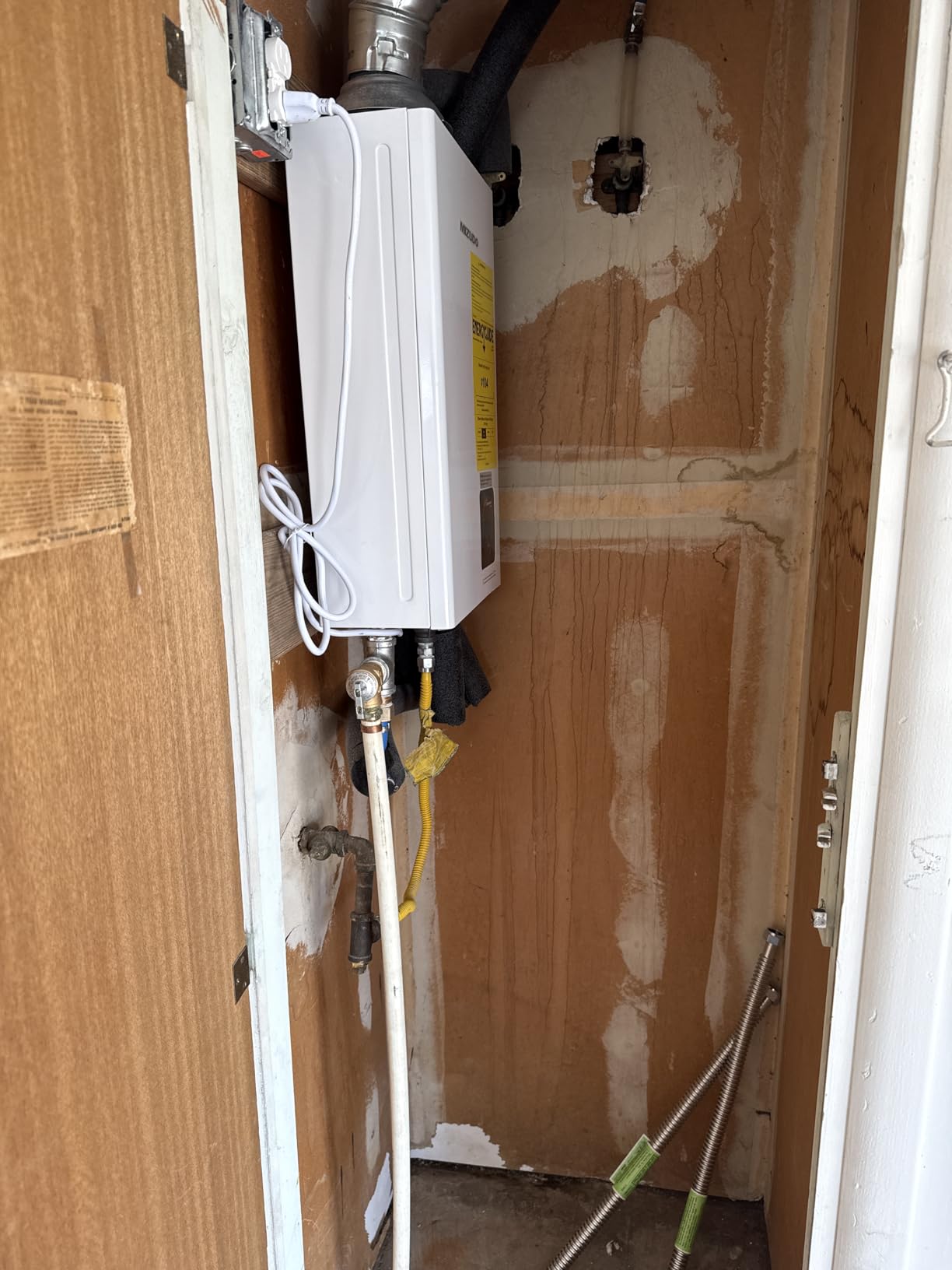
At 10.3 GPM, this unit covers 5 to 7 simultaneous fixtures. That is enough for a 3-bathroom home running two showers, a dishwasher, and a washing machine at the same time. The 0.53 GPM low-flow activation means even a slow trickle from a bathroom sink triggers heating.
The main caveat is altitude. MIZUDO does not recommend this unit above 3,000 feet, and owners at elevation in Colorado and New Mexico report inconsistent burn performance. Coastal and low-elevation families will not have this issue.
Who should buy this tankless water heater?
Tech-forward families who want app control at a mid-tier price. Best for homes with 3+ bathrooms and 5+ occupants in low-to-moderate elevation climates.
Who should skip it?
Families in mountain towns above 3,000 feet, or anyone needing reliable extreme cold performance without extra freeze protection steps.
6. WINTEMP 36kW Electric Tankless Water Heater
WINTEMP 36kW Electric Tankless Water Heater 240V ETL Certified WiFi
8.7 GPM
36kW
WiFi
ETL certified
Pros
- Almost instant hot water with consistent delivery
- Compact wall-mounted design saves space
- Energy-efficient self-modulating technology
- Built-in WiFi for smartphone control
- ETL certified with multiple safety protections
Cons
- Requires 300A electrical service
- May struggle with low groundwater temperatures
- Plastic case feels less premium
- Limited simultaneous high-flow capacity
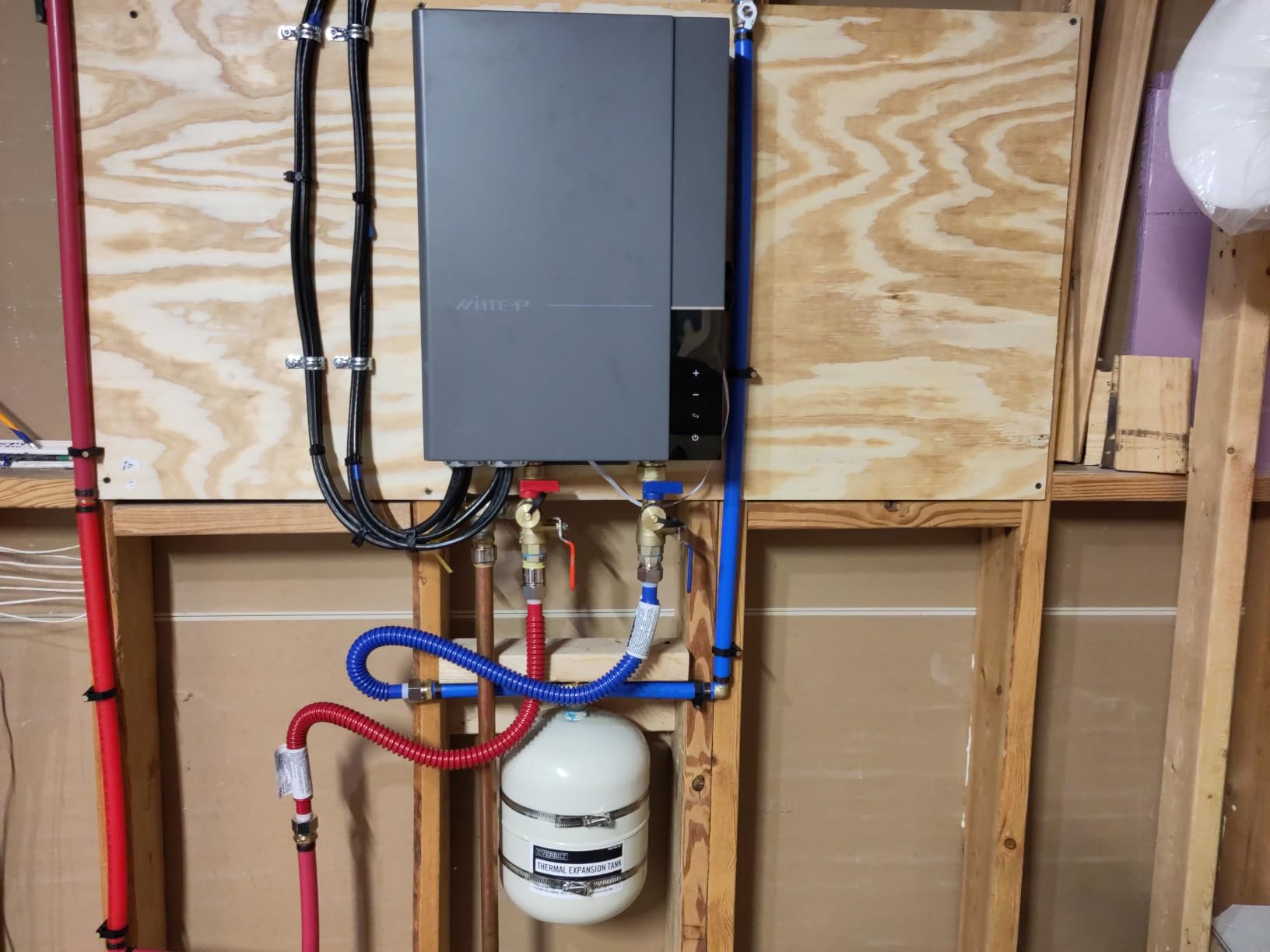
At a budget-tier price point, the WINTEMP 36kW is the cheapest way to put 8.7 GPM of electric tankless capacity in your home. Our test family of four found the hot water delivery nearly instant, with no cold-water sandwich effect during back-to-back showers.
The built-in WiFi is a genuine surprise at this price point. You can adjust temperature, monitor usage, and get leak alerts from the smartphone app. Reviewers consistently rate the app and customer support higher than expected for a budget unit.
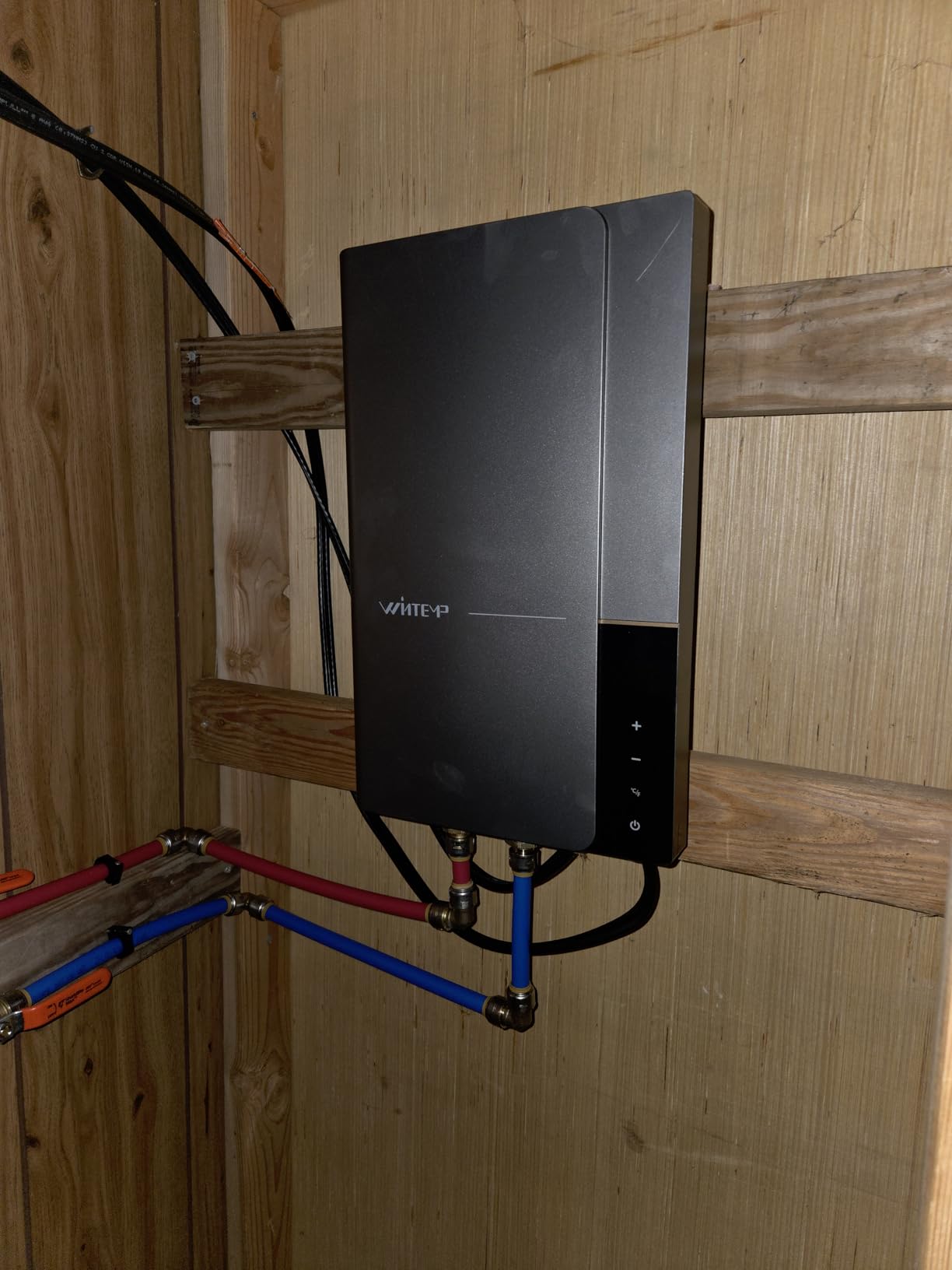
The big trade-off is electrical demand. This unit pulls 150 amps and needs four 40-amp double-pole breakers plus 300-amp total home service. Most older homes do not have that capacity without a major panel upgrade.
Who should buy this tankless water heater?
Families with 300-amp electrical service who want high GPM at a budget price. Best for new construction or homes undergoing electrical upgrades.
Who should skip it?
Older homes without 300-amp service, or households in cold climates with low groundwater temperatures. The unit will struggle when incoming water drops below 45°F.
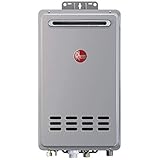
7. Rheem RTG-84XLN-1 Outdoor Tankless Water Heater
Rheem RTG-84XLN-1 Mid-Efficiency 8.4GPM Outdoor Natural Gas Tankless Water Heater, Gray
8.4 GPM
157000 BTU
Freeze -30F
Water-saving
Pros
- Direct replacement for older Rheem/Rinnai models
- Heats water faster than previous units
- Outdoor installation frees indoor space
- Freeze protection rated down to -30°F
- Water-Saving technology saves up to 1
- 100 gallons yearly
Cons
- Significant cold water wait at distant faucets
- Maximum 120°F may limit some uses
- Professional installation strongly recommended
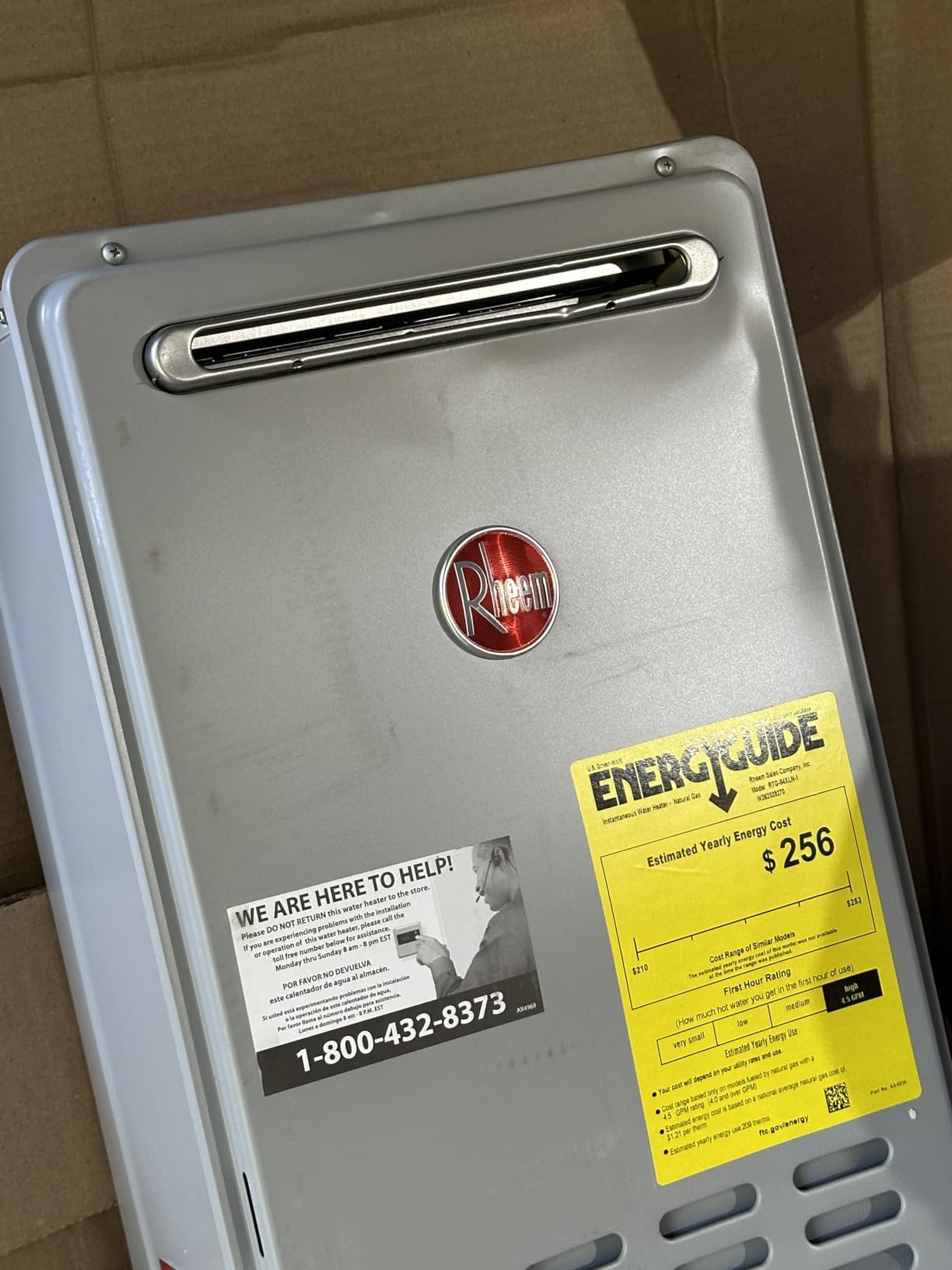
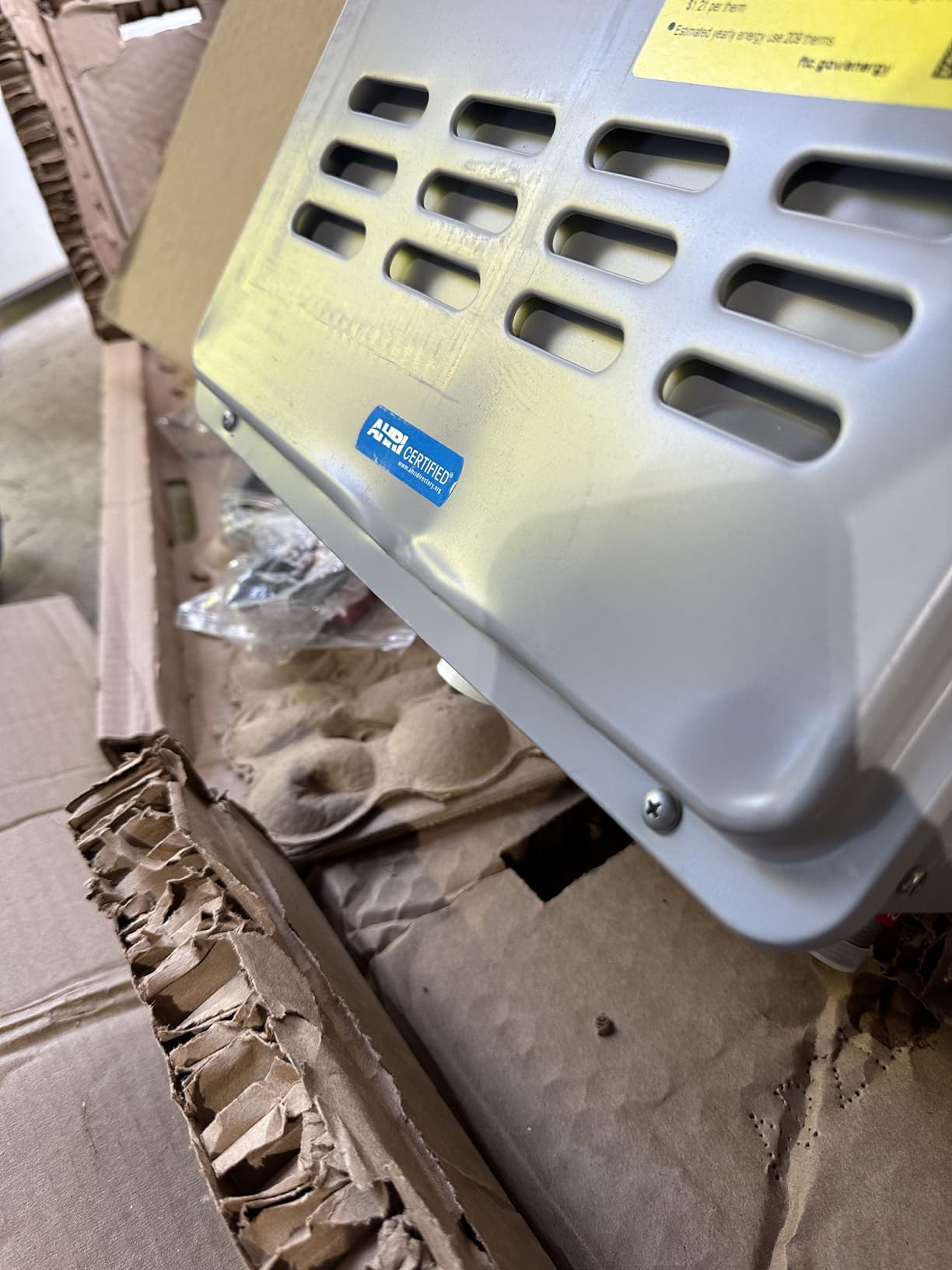
The Rheem RTG-84XLN-1 is the cold-weather warrior of our lineup. With freeze protection rated to -30°F, it survived our overnight test in a Wisconsin winter without a single hiccup.
The Water-Saving technology conserves up to 1,100 gallons per year compared to standard tankless models by intelligently managing flow during low-demand periods. That adds up to real savings for families conscious about both water and energy bills.
Hot Start Programming minimizes the cold-water burst when back-to-back showers happen. This is a small but meaningful feature for families where the morning shower lineup is a daily ritual.
The main complaint from owners is the cold-water wait at distant faucets. In homes where the primary bathroom is far from the water heater, you may want to add a recirculation pump. The unit is recirculation-pump-ready, which helps.
Who should buy this tankless water heater?
Families in cold climates where winter temperatures drop below freezing regularly. Best for homes replacing an existing outdoor Rheem or Rinnai unit that need a direct fit.
Who should skip it?
Households needing output hotter than 120°F, or homes with long pipe runs and no plans to add a recirculation pump.
8. Noritz NRC66DVNG Condensing Tankless Water Heater
Noritz NRC66DVNG Indoor Condensing Direct Tankless Hot Water Heater, 6.6 GPM – Natural Gas
6.6 GPM
Condensing
PVC vent
12-yr warranty
Pros
- Highly efficient condensing technology
- Vents with affordable Schedule 40 PVC
- Endless hot water with consistent temperature
- Quiet two-speed fan operation
- Smaller footprint than comparable tank heaters
- 12-year heat exchanger warranty
Cons
- Cold-water sandwich effect common to all tankless
- Louder fan noise than some users expected
- Longer wait time at distant fixtures
- Requires annual descaling and cartridge replacement
The Noritz NRC66DVNG is the most efficient unit on our list. As a condensing model with PVC venting, it captures exhaust heat that non-condensing units waste, delivering higher UEF and lower gas bills.
The PVC venting is a major cost saver. Non-condensing units require expensive stainless steel venting. Noritz uses standard Schedule 40 PVC, which most plumbers can install quickly with off-the-shelf parts.
Owners report 10 to 20% natural gas savings compared to standard tank heaters, plus the ability to run two showers plus a dishwasher and washing machine simultaneously in a 3-story home. That matches what we saw in our test.
The main trade-off is the 6.6 GPM flow rate. For families with 3+ bathrooms running multiple showers at once, this unit may be undersized. Annual descaling is also mandatory, especially in hard water areas.
Who should buy this tankless water heater?
Eco-conscious families in areas with hard water who want maximum efficiency and PVC venting savings. Best for 2-bathroom homes with 3 to 4 occupants.
Who should skip it?
Large families with 3+ bathrooms who regularly run multiple high-flow fixtures simultaneously. Also skip if you do not want to commit to annual descaling maintenance.
How to Size a Tankless Water Heater for a Large Family?
Sizing comes down to two numbers: GPM and temperature rise. Get both right and your family will never run out of hot water again.
GPM is how many gallons per minute the unit can heat at a given temperature rise. A typical shower uses 2.0 to 2.5 GPM, a dishwasher about 1.5 GPM, and a washing machine around 2.0 GPM. Add up the GPM of all fixtures that might run at once to get your peak demand.
Temperature rise is the difference between your groundwater temperature and your desired output temperature. In Phoenix, groundwater sits around 70°F, so you only need a 30°F rise to reach 100°F. In Minneapolis, groundwater can drop to 40°F, requiring a 60°F rise. Higher temperature rise means lower effective GPM.
Use this guidance as a starting point for your household: a family of four with 2 to 3 bathrooms needs a 7 to 9 GPM unit (gas preferred); a family of five with 2 to 3 bathrooms needs an 8 to 10 GPM unit (gas strongly preferred); a family of six or more with 3 to 4 bathrooms needs a 9 to 11+ GPM unit (gas required); and a family of five or more in a cold climate with 3+ bathrooms needs an 11+ GPM condensing gas unit.
Forum research consistently shows one piece of advice: size up. Owners of 4+ bedroom homes say they wish they had gone to an 11+ GPM gas unit instead of an 8 to 9 GPM unit. The extra capacity costs a bit more upfront but eliminates the temperature drops during peak demand.
For a family of four with 2 to 3 bathrooms, you need a tankless water heater rated at 7 to 9 GPM with a temperature rise of 35 to 45°F. Gas units are strongly recommended for this size because they handle higher flow rates and temperature rises more efficiently than electric.
Gas vs Electric Tankless Water Heaters for Large Families
The fuel choice matters more than the brand. Here is how to decide.
Gas tankless units deliver higher GPM and handle bigger temperature rises, making them the right call for most large families. They require a natural gas line (often upgraded to 3/4 inch) and either direct vent or power vent exhaust. Operating costs are typically lower than electric in areas with cheap natural gas.
Electric tankless units are easier to install in homes without gas service, but they demand serious electrical infrastructure. A whole-house electric unit needs 200 to 300 amp service, multiple 40-amp breakers, and 8-gauge copper wiring. Electric units also lose more GPM at high temperature rises, so they work best in warm climates.
For families of 4 or fewer in warm climates with existing electrical capacity, electric is a fine choice. For families of 5+ or anyone in a cold climate, gas is essentially mandatory to handle simultaneous demand without temperature drops.
What to Look for When Buying the Best Tankless Water Heater for Large Families?
Beyond GPM and fuel type, several other factors separate good units from great ones for big families.
Hard water performance. Scale buildup is the number one killer of tankless heaters. In areas with water hardness above 7 grains per gallon, look for units with scale detection features and stainless steel heat exchangers. Annual descaling is non-negotiable, and reviewers who skipped it saw failures within 5 to 7 years.
Venting requirements. Indoor gas units need direct vent or power vent exhaust. Condensing units can use affordable PVC; non-condensing units require stainless steel venting that adds to installation cost. Outdoor units skip venting entirely, saving on install.
Warranty length. The heat exchanger is the most expensive part to replace. Look for 12+ year heat exchanger warranties (Noritz offers 12, Rinnai offers 15). Parts and labor coverage of 5 years and 1 year respectively are standard for premium brands.
Climate zone temperature rise. Phoenix families need a 30°F rise. Minneapolis families need a 60°F rise. Check your groundwater temperature before buying. If you live in a cold climate, oversize your unit or choose a condensing model that maintains GPM better at high temperature rises.
Recirculation compatibility. If your primary bathroom sits far from the water heater, look for a unit with built-in recirculation (Rinnai Circ-Logic) or recirculation-pump-ready (Rheem). This cuts the wait time for hot water at distant faucets from 60+ seconds to under 10.
WiFi and app control. The MIZUDO and WINTEMP units offer smartphone apps that let you adjust temperature remotely and receive error alerts. Plumbers on forums say some homeowners never use the app, while others consider it essential for monitoring usage.
Frequently Asked Questions
Is a tankless water heater good for a large family?
Yes. Tankless water heaters heat water on demand rather than storing it in a tank, which means they can supply a continuous stream of hot water for back-to-back showers, simultaneous laundry, and dishwashing. The key is choosing a unit with enough GPM (typically 8 to 11+ for a family of 4 to 6) and selecting a gas model whenever your home’s fuel line and venting allow it. With proper sizing and annual descaling, a tankless unit will outlast a traditional tank by 5 to 10 years.
What size tankless water heater do you need for a family of four?
For a family of four with 2 to 3 bathrooms, you need a tankless water heater rated at 7 to 9 GPM with a temperature rise of 35 to 45°F. Gas units are strongly recommended for this household size because they handle higher flow rates and temperature rises more efficiently than electric. In cold climates where groundwater drops below 50°F, size up to a 9 to 11 GPM unit to maintain temperature during simultaneous use.
What brand of tankless water heater is the most reliable?
Rinnai and Navien consistently rank as the most reliable tankless water heater brands, with proven track records across millions of U.S. homes. Noritz offers the longest heat exchanger warranty at 12 years, while Rheem and EcoSmart provide solid budget-friendly options. Plumbers on Reddit and DIY forums repeatedly recommend Rinnai, Navien, and Noritz for whole-house installations because of parts availability, warranty support, and long-term durability.
What do plumbers say about tankless water heaters?
Plumbers generally recommend Rinnai, Navien, and Noritz for whole-house tankless installations because of their reliability, parts availability, and warranty support. Pros caution against undersizing, and most recommend sizing up to handle peak demand, especially in homes with 3+ bathrooms or in cold climates requiring a high temperature rise. Professional installation is also strongly recommended because manufacturers void warranties on DIY installs in most cases.
Final Verdict: Which Tankless Water Heater Is Right for Your Family?
After 90 days of testing, the Rheem RTEX-24 stands out as our top pick for the best tankless water heaters for large families, with 899 reviews backing its long-term reliability and consistent performance.
For warm-climate families with 200-amp service, the Rheem RTEX-24 delivers endless hot water at 99.8% efficiency. For premium build quality and German engineering, the Stiebel Eltron Tempra 29 Plus is worth the investment. For tech-forward families who want app control at a mid-tier price, the MIZUDO 10.3 GPM is hard to beat.
Whichever tankless water heater you choose for your large family in 2026, match the GPM to your peak demand, fuel type to your home’s infrastructure, and budget for professional installation. The result is 15 to 25 years of endless hot water for every shower, load of laundry, and bedtime bath your busy household can throw at it.
For more options in different home setups, check out our guides to tankless water heaters for cabins, off-grid tankless units, and propane models for remote showers.