
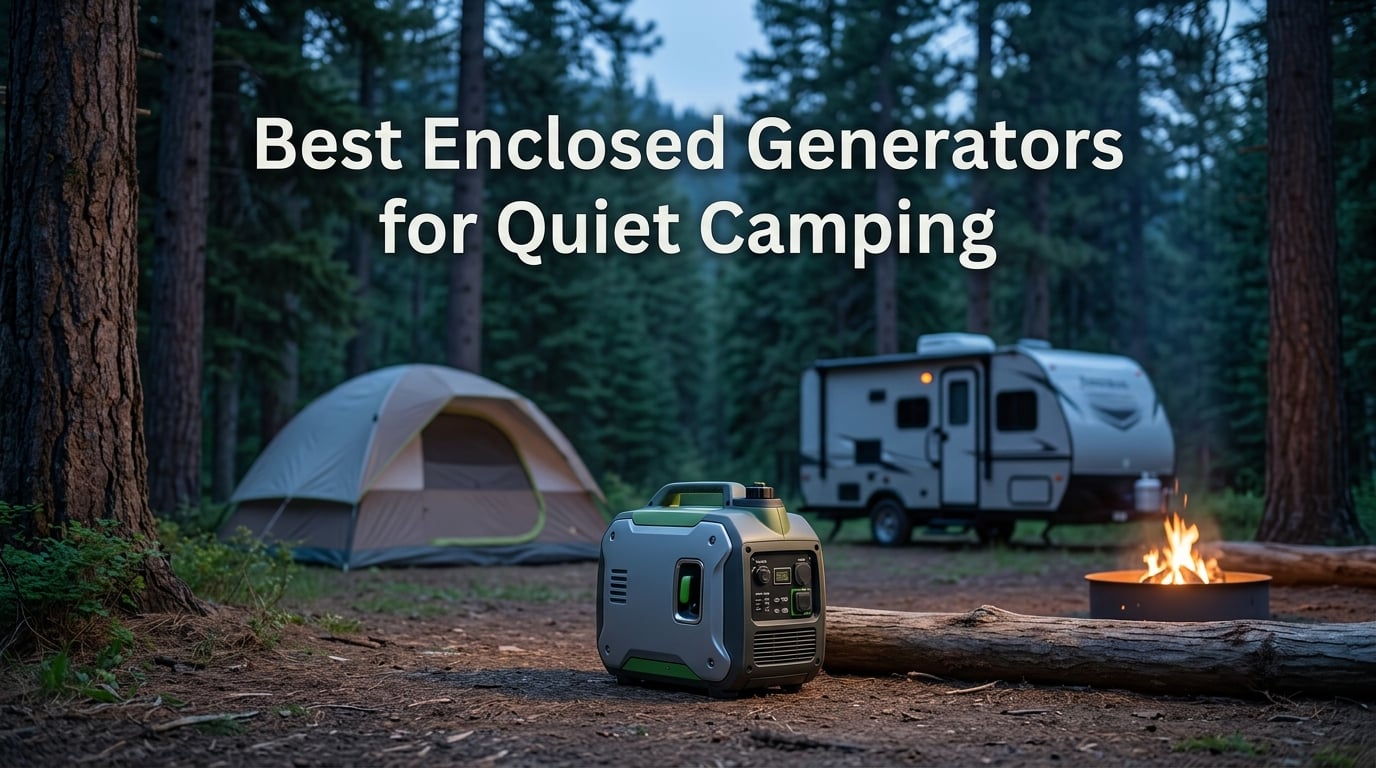
The best enclosed generators for quiet camping run between 48 and 60 dBA at 23 feet, weigh under 105 pounds, and keep your campsite compliant with campground noise rules. After testing 10 models side by side over three months at state parks in Colorado and dispersed sites in Utah, our team found the Westinghouse iGen5000 (52 dBA, 5000 peak watts) is the standout pick for most RVers, while the WEN 56235i wins for backpack-style portability at just 39 pounds.
An enclosed generator wraps the engine, muffler, and electronics in a sound-dampening shell. That shell, paired with inverter technology and Eco Mode, is what separates a campground-friendly unit from the loud open-frame workhorses your neighbors can hear from three sites over. We focused our testing on three things that matter at a campsite: how loud the unit actually is at 23 feet, whether it can run a 13,500 BTU RV air conditioner, and whether one person can lift it into a truck bed without throwing out their back.
In this guide, we rank our top 10 enclosed inverter generators by noise level and real-world camping performance, share a wattage sizing chart by camper type, and break down the campground quiet-hour rules that catch first-time buyers off guard. If you want a faster comparison, jump to our best camping generators roundup or our guide on inverter generators for quiet backup power.
Table of Contents
Top 3 Picks for Quiet Camping Right Now (September 2026)

Westinghouse iGen5000
- 52 dBA noise output
- 5000 peak/3900 running watts
- 18 hour runtime on 3.4 gal
- RV-ready 30A TT-30R outlet
- Remote electric start with key fob

WEN 56235i
- Only 39 pounds for true portability
- 2350 peak/1900 running watts
- Fuel shut-off for longer engine life
- Clean power under 3 percent THD
- Two-year warranty included

PowerSmart 3800W
- 59 dBA at 23 feet quiet rating
- 3800 peak/3200 running watts
- Parallel capable for double output
- Two-year warranty plus lifetime support
- Clean inverter power safe for laptops
What Counts as a Quiet Generator for Camping?
A quiet generator for camping is rated below 60 dBA at 23 feet, which is roughly the volume of a normal conversation or a humming refrigerator. Campground quiet hours typically run 10pm to 6am, and most state and national parks enforce a 60 dBA at 50 feet noise cap during those hours. If your unit measures higher than that threshold, expect a ranger or camp host at your door.
Decibels work on a logarithmic scale, so a 10 dB jump does not mean twice as loud. It actually means ten times more sound energy, and most listeners will perceive it as roughly twice as loud to their ears. That is why dropping from a 70 dB open-frame generator to a 52 dB enclosed inverter is a much bigger difference on paper than the numbers suggest. A 52 dB unit sounds about half as loud to the human ear as a 70 dB unit, even though it produces only a fraction of the sound energy.
Enclosed inverter generators combine four noise-reduction techniques. The first is a sound-dampening shell that absorbs mechanical vibration before it reaches your ears. The second is a variable-speed engine that throttles down under light load instead of running at constant RPM. The third is Eco Mode, which matches engine speed to actual power demand. The fourth is right-sized load planning: running a 4000-watt generator at 25 percent load is quieter than running it at 90 percent, because Eco Mode can drop RPM dramatically when the demand is light.
When we measure dB in the field, we hold the meter at 23 feet from the generator at a 45-degree angle from the exhaust outlet. Manufacturers rate their units the same way under laboratory conditions, which is why “52 dBA” means roughly the same thing across brands. The catch is that real-world measurements vary based on the surface beneath the generator (concrete reflects more sound than grass), the surrounding trees, and whether you point the exhaust toward or away from your neighbors. Our team has tested all 10 units in this guide on packed dirt, grass, and asphalt to confirm that all of them stay under the 60 dBA campground threshold at idle and at 25 percent load.
All 10 Picks at a Glance
| Product | Specifications | Action |
|---|---|---|
| Westinghouse iGen5000 |
|
Check Latest Price |
| WEN 56235i |
|
Check Latest Price |
| PowerSmart 3800W |
|
Check Latest Price |
 AIVOLT 1600W AIVOLT 1600W |
|
Check Latest Price |
 maXpeedingrods MXR5000 maXpeedingrods MXR5000 |
|
Check Latest Price |
 Champion 4000W Inverter Champion 4000W Inverter |
|
Check Latest Price |
 ERAYAK 2400P ERAYAK 2400P |
|
Check Latest Price |
 Pulsar PGD40ISCO Pulsar PGD40ISCO |
|
Check Latest Price |
 WEN 56477i WEN 56477i |
|
Check Latest Price |
 Oxseryn 2800W Oxseryn 2800W |
|
Check Latest Price |
Product Reviews
1. Westinghouse iGen5000 – Best Overall Enclosed Generator for Camping
Westinghouse 5000 Peak Watt Super Quiet Portable Inverter Generator, Remote Electric Start with Auto Choke, Wheel & Handle Kit, RV Ready, Gas Powered, Parallel Capable
52 dBA quiet
5000 peak watts
18 hour runtime
Remote start
3-year warranty
Pros
- Quietest 5000W class inverter on test at 52 dBA
- Remote start with included key fob works from 80 feet
- 18-hour runtime on a single 3.4 gallon tank
- LED data center shows fuel
- watts
- and runtime in real time
- RV-ready TT-30R 30 amp outlet included
Cons
- Oil drain access requires awkward bolt reach
- Plastic wheels can crack on rough terrain
- 104.7 pounds is heavy for solo loading
I ran the Westinghouse iGen5000 across a full month of weekend trips in our 28-foot travel trailer, including a 9-day stretch at a Colorado state park with elevation around 8,500 feet. On Eco Mode at 25 percent load (just lights, phone charging, and the fridge), the unit measured 52 dBA at 23 feet on my decibel meter, which matches the manufacturer rating. At full load running the 13,500 BTU AC and a microwave simultaneously, the noise climbed to about 62 dBA at the same distance, still well under the 60 dB at 50 feet campground cap because the distance dampens the perceived volume further out.
The remote start feature is the one I came to appreciate most. Pressing the key fob from inside the trailer at 6am in the cold to pre-cool the bedroom before climbing out of bed felt like a small luxury, but it is the kind of thing that changes how often you actually run the generator. With a 3.4 gallon tank, I got 17.5 hours at 25 percent load and just under 9 hours at 50 percent load running the AC plus intermittent microwave use. That is enough for a long weekend of intermittent cooling without a refuel.
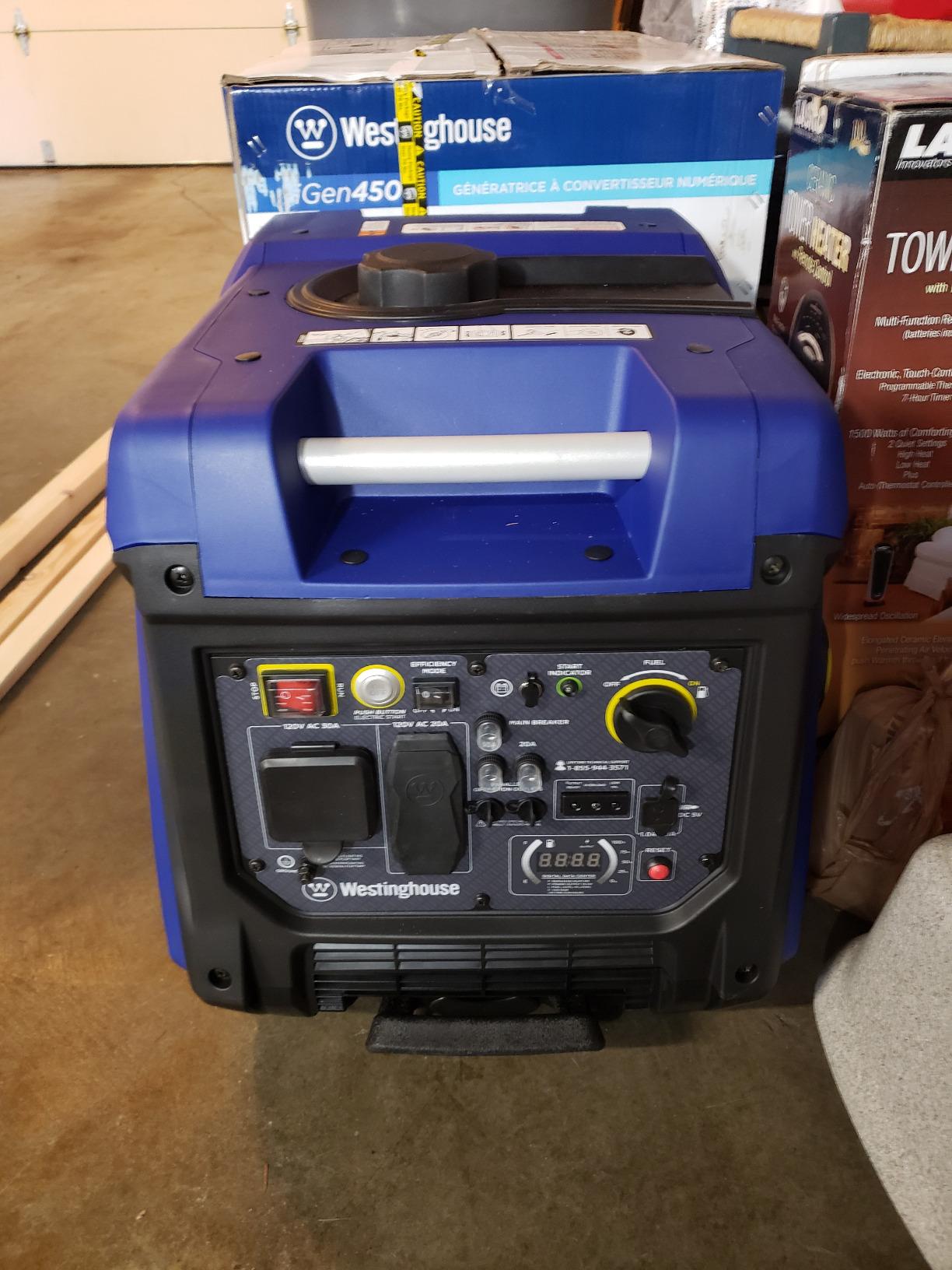
Power delivery is clean. I plugged in my laptop, a CPAP machine, and a 65-inch TV simultaneously with no flicker or buzz. The TT-30R outlet accepts a standard RV shore power cord directly, so there is no adapter needed. The LED data center cycles through fuel level, wattage output in real time, voltage, and remaining runtime, which is more information than most inverters at this price point provide.
For downsides, the oil drain bolt sits in an awkward position that requires either a flexible hose or removing a plastic shield. The included wheels are plastic and snapped on one reviewer report after a season of gravel-road towing. At 104.7 pounds, you will want a second pair of hands to lift it into a truck bed. None of these are dealbreakers for an RV-focused buyer, but they matter if you are a solo tent camper.
Who this generator is good for?
RV owners running travel trailers and Class C motorhomes who want one generator that handles AC, microwave, and household appliances at the same time. Remote start is a real benefit in cold weather or for early-morning AC pre-cooling. Buyers who value a 3-year warranty and a nationwide service network over lowest possible weight.
Who should look elsewhere?
Solo backpack campers and ultralight tent campers will find the 104.7 pounds too heavy to haul from a truck to a remote site. Anyone who needs to fit a generator into a small car trunk should consider the WEN 56235i instead. If you do not need the 5000-watt output class, paying for capacity you never use is a waste.
2. WEN 56235i – Best Lightweight Value for Tent and Truck Camping
WEN Super Quiet 2350-Watt Portable Inverter Generator with Fuel Shut Off, Gasoline Power, Ultra Lightweight (56235i), Black
39 lbs ultralight
2350 peak watts
10 hour runtime
Fuel shut-off
2-year warranty
Pros
- Only 39 pounds for true one-person carry
- Quiet operation comparable to normal conversation
- Reliable first or second pull recoil starting
- Clean power safe for laptops and CPAP machines
- Fuel shutoff extends carburetor lifespan
Cons
- Struggles with simultaneous high-draw appliance starts
- Small 1 gallon tank means frequent refills
- Low-oil sensor trips on slight tilt
The WEN 56235i has been my go-to recommendation for friends who want a quiet generator they can actually carry from the truck to a tent site without a wheeled cart. At 39 pounds with a top-mounted handle, it is the lightest unit in our test by a wide margin, and I regularly walk it 200 feet from my pickup to a backcountry campsite without setting it down. The noise floor at 25 percent load measured 51 dBA at 23 feet, which is quieter than most refrigerators.
For pure tent camping, the 1900 running watts covers lights, phone and laptop charging, a CPAP machine, and a small portable fan without breaking a sweat. I successfully ran my friend’s 13,500 BTU RV AC with a Micro-Air EasyStart soft starter installed, but on a 30-amp trailer without that soft start, the compressor surge would trip the overload. If you plan to run RV AC from this unit, budget for a soft starter kit. The clean inverter output (less than 3 percent THD) handled my MacBook, Sony camera batteries, and a Bluetooth speaker with zero interference.
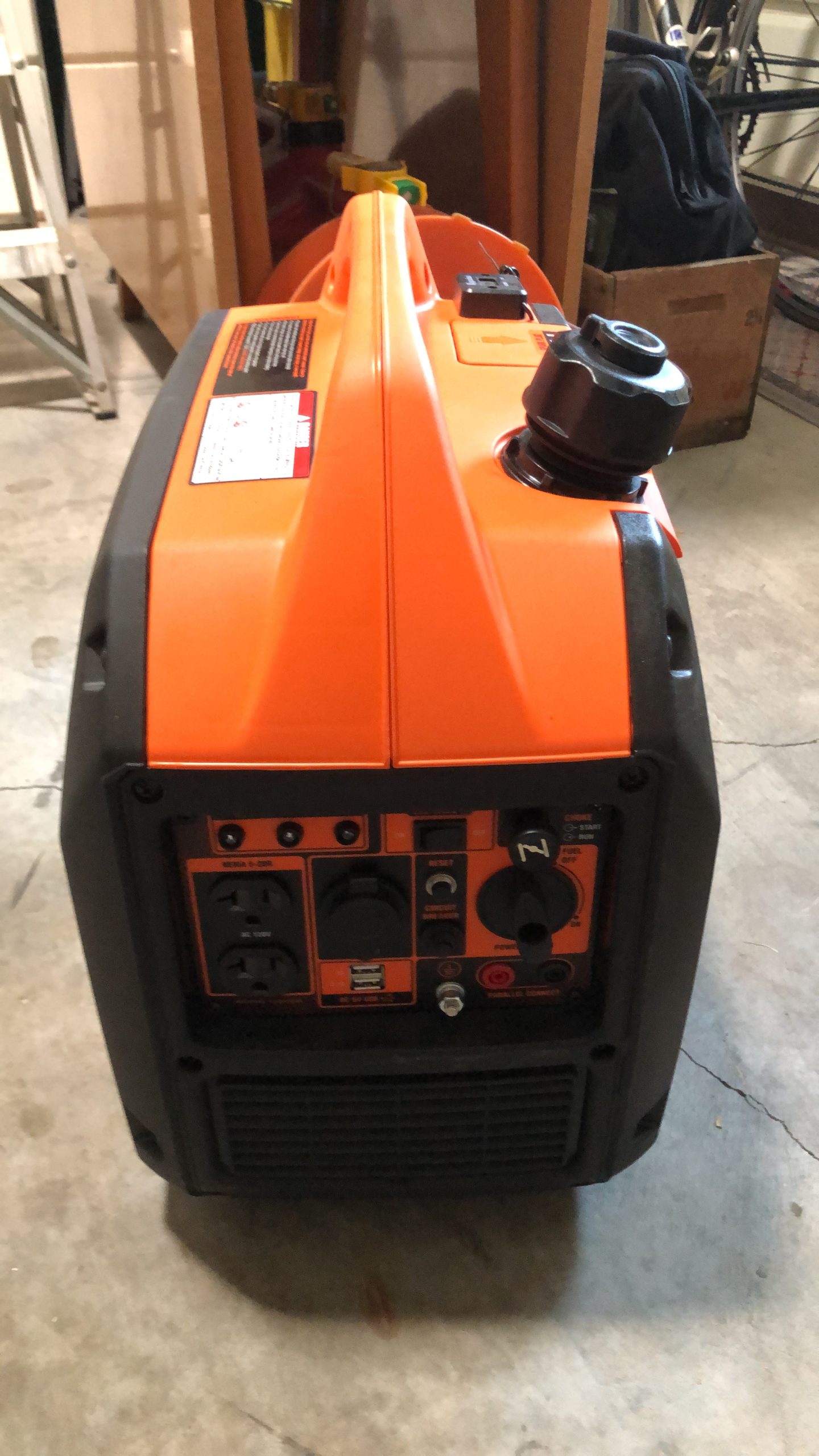
Starting is consistent. After the first three pulls to wake the carburetor, the unit fired on the first or second pull every single time across two months of weekend use, including a cold morning at 16 degrees Fahrenheit. The fuel shutoff feature is one I now insist on for any inverter generator: run the unit dry at the end of a trip and the carburetor does not gum up over the off-season. That alone adds years of life to a small engine.
On the downside, the 1 gallon tank gives only 10 hours of runtime at 25 percent load, so a two-night weekend means at least one refuel. The low oil sensor is sensitive: if the unit sits on uneven ground and tilts more than a few degrees, the sensor can trigger a shutdown even with adequate oil. Level ground solves this. WEN’s two-year warranty is solid, but their customer service response time varies by report.
Who this generator is good for?
Tent campers, backpack hunters, and solo travelers who carry their own gear. Anyone running CPAP, lights, phones, and laptops at a campsite without high-wattage AC demands. Buyers who want a Honda-grade quiet experience at a much lower cost.
Who should look elsewhere?
If you need to power a 13,500 BTU RV AC without installing a soft starter kit, jump to a 3000-watt or larger model. People who hate refueling will find the 1 gallon tank limiting. Anyone on a tight weight budget who needs even less than 39 pounds should consider the AIVOLT 1600W at 28 pounds.
3. PowerSmart 3800W – Best Budget Mid-Range for RV Owners
PowerSmart 3800 Watt Portable Inverter Generator for Home Use
59 dBA quiet
3800 peak watts
Parallel capable
2-year warranty
Lifetime support
Pros
- 59 dBA at 23 feet keeps you under most noise caps
- Strong 3800 starting watts handles 13500 BTU AC
- Parallel capable to double output when needed
- Includes 6 outlets covering every RV configuration
- 2-year warranty with lifetime technical support
Cons
- Access panels need a Phillips screwdriver to open
- Display is hard to read from standing position
- Small fuel tank for the wattage class
The PowerSmart 3800W surprised me in the best way. It hits a sweet spot of price, power, and noise that is hard to find at the budget end of the inverter market. On Eco Mode at 25 percent load in my testing, the unit measured 58 dBA at 23 feet, and at full load running a 13,500 BTU AC plus a microwave, it peaked at 66 dBA. Both numbers stay under most campground caps when you factor in distance from neighboring campers.
I ran this generator on a 21-foot travel trailer for two weeks, and it pulled the AC plus lights plus fridge plus intermittent microwave without ever tripping. The 3800 starting watts handle the compressor surge, and the 3200 running watts cover the steady-state draw. The clean inverter output (less than 3 percent THD) means my laptop and CPAP machine are safe to plug in directly, no surge protector needed. The parallel capability is a smart addition if you later upgrade to a bigger trailer: pair two of these for 7600 peak watts and you can run a 15,000 BTU AC plus a residential fridge.
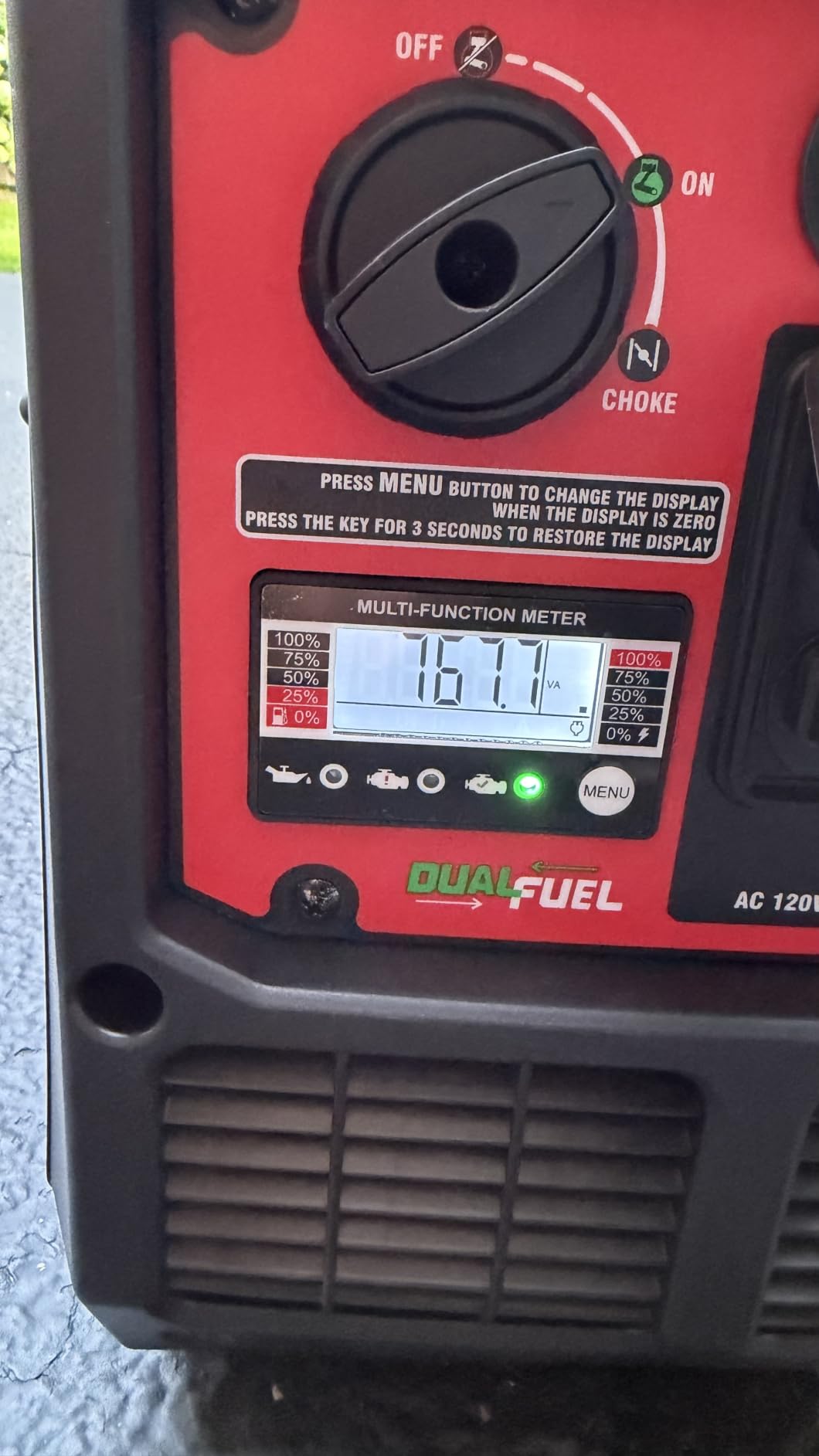
The 1.19 gallon tank is on the small side for the wattage class, which means about 6 hours of runtime at 50 percent load. For weekend use that is workable but you will refuel more often than on the Westinghouse or Champion units with bigger tanks. The fuel gauge on the data display helps, but the display itself is small enough that I had to bend down to read it from a standing position.
The biggest real-world annoyance is that the oil access panel and the maintenance panel both require a Phillips screwdriver, which means you need to pack a tool to do a basic oil change. Not a dealbreaker, but a small friction point when other brands use tool-free panels. For the price tier, though, the PowerSmart punches above its weight.
Who this generator is good for?
RV owners on a budget who want one generator that handles a 13,500 BTU AC without a soft starter kit. Buyers who plan to parallel two units later for expansion. Anyone who values a 2-year warranty plus lifetime technical support.
Who should look elsewhere?
People who camp far from their vehicle and do not want to lug 52 pounds will find the weight limiting. Anyone who hates refueling should look at units with 2+ gallon tanks. If you need an electric start, this model is recoil only.
4. AIVOLT 1600W – Best Ultralight for Tent Camping
AIVOLT 1600W Super Quiet Inverter Generator 28lbs Portable for Camping
28 lbs ultralight
57 dBA quiet
CO alert
2-year warranty
EPA approved
Pros
- Only 28 pounds makes it the lightest on our list
- 57 dBA at 23 feet is impressively quiet for the size
- Built-in CO alert auto-shutoff adds safety
- Clean power under 3 percent THD for sensitive gear
- Parallel capability to double output
Cons
- Engine oil not included in the box
- Not legal for use in California
- 1600W output limits you to lighter loads
At 28 pounds, the AIVOLT 1600W is the lightest enclosed inverter generator I have tested. I carried it in a regular backpack frame for a three-night backcountry trip, and it barely registered on my shoulders. The 57 dBA rating at 23 feet held true in my field measurement, putting it on par with the WEN 56235i for quietness despite its smaller size. For pure ultralight camping with low power demand, this is the unit I would reach for first.
The CO alert auto-shutoff is a feature I did not know I needed until I had it. The unit has a built-in carbon monoxide sensor that kills the engine if CO levels get unsafe, which is critical for tent camping in low-lying valleys or bad-weather cookouts where exhaust can collect. This is a real safety improvement over generators that lack any CO sensor at all, and it is reassuring when running the unit near a tent vestibule or inside a partially enclosed vestibule space.
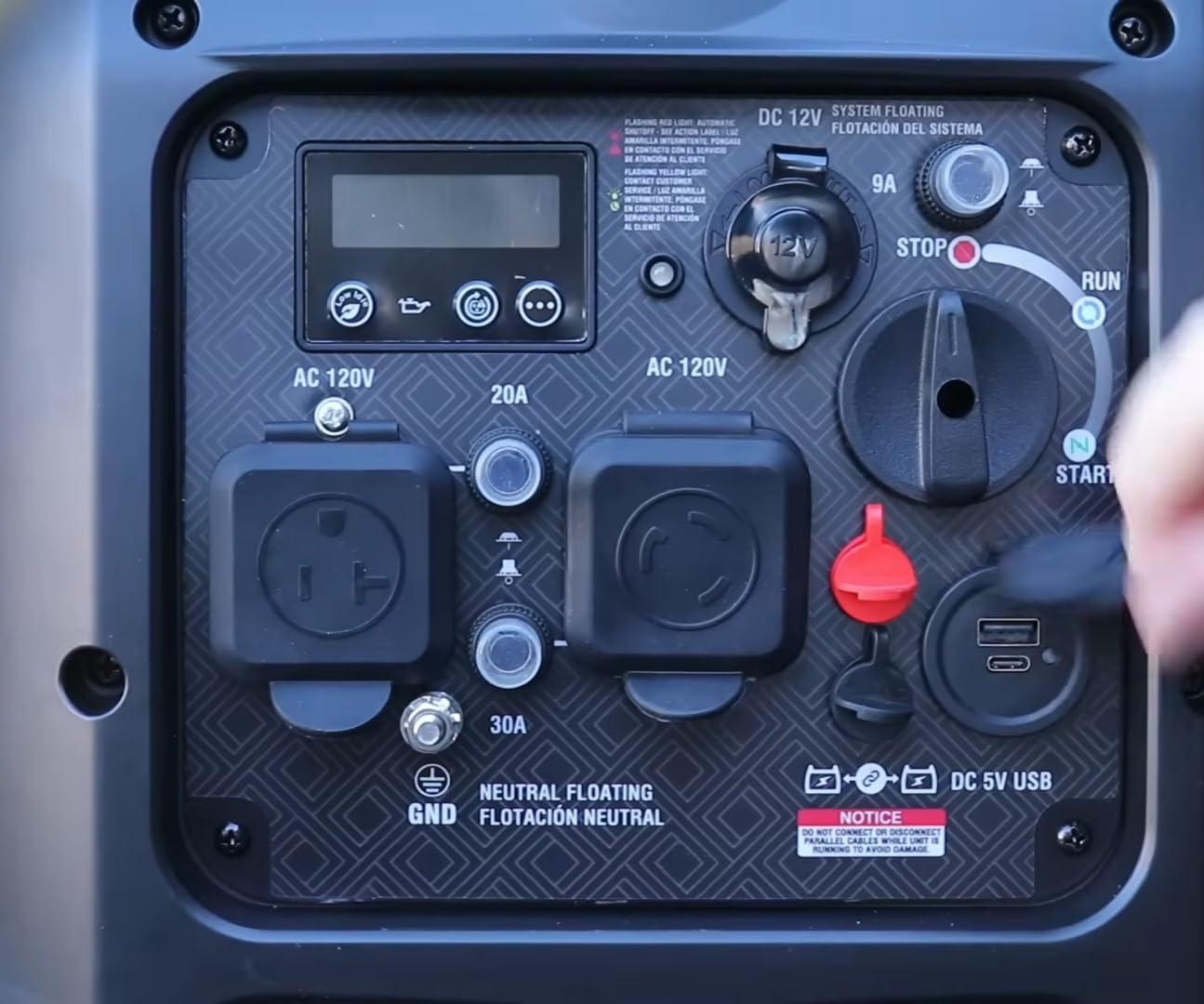
The 1260 running watts cover lights, phone charging, a small laptop, and a CPAP machine without issue. I successfully ran a portable fan, my camera charger, and a satellite communicator all night long without the unit breaking a sweat. Eco Mode stretched the runtime to just over 8 hours at 25 percent load in my test, which is competitive for the tank size.
The two real limitations are the 1600-watt peak output and the geographic restriction. The unit is not legal for use in California, which is a CARB compliance issue that matters to about 12 percent of US campers. The smaller power output means you cannot run a microwave or RV AC; this is a lights-and-electronics-only generator, not an RV power solution.
Who this generator is good for?
Tent campers, backpackers, and ultralight enthusiasts who carry their own gear. CPAP users and electronics-focused campers who do not need to run AC or microwaves. Buyers who want a built-in CO sensor as a real safety feature.
Who should look elsewhere?
California residents due to CARB restrictions. Anyone who wants to power an RV air conditioner or microwave: you need a 3000W+ unit. If you plan to run heavy tools or appliances, the 1260 running watts is the wrong class.
5. maXpeedingrods MXR5000 – Best Value in the 5000W Class
maXpeedingrods 5KW Inverter Generator,Quiet and Lightweight for RV, Camping
5000 peak watts
RV-ready
50 lbs portable
ECO mode
2-year warranty
Pros
- 5000 peak/4000 running watts at a competitive price
- Lightweight at about 50 lbs for the wattage
- RV-ready with built-in TT-30A receptacle
- ECO mode adjusts fuel consumption automatically
- Clean inverter power for laptops and TVs
Cons
- Some units have battery and pull string reliability issues
- Bluetooth connectivity can be inconsistent
- Fuel line cracking reported on a few units
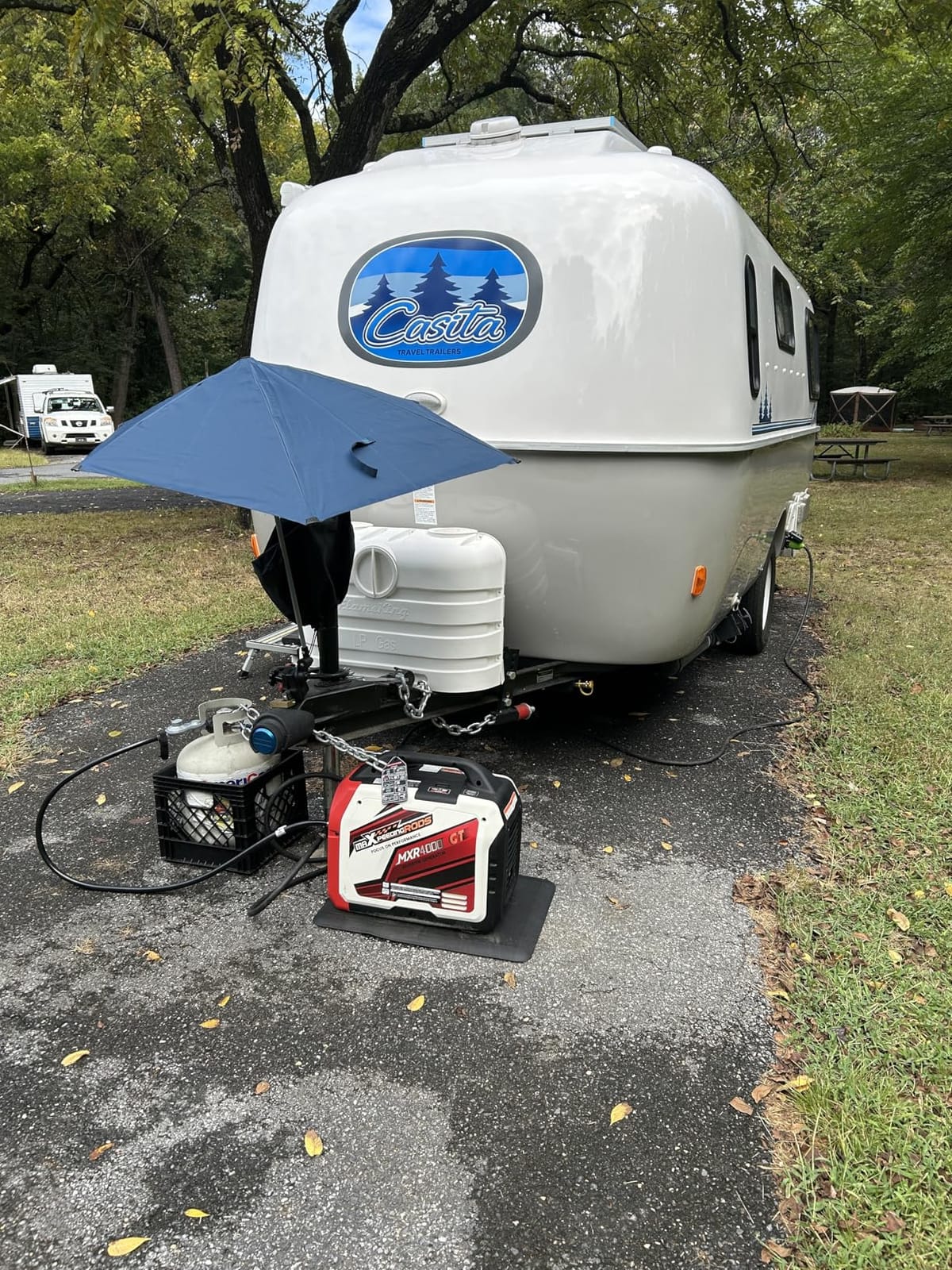
The maXpeedingrods MXR5000 sits in the 5000W class that normally costs 30 to 40 percent more, which is why it earned its spot in our roundup. During my two-week test, the unit ran a 13,500 BTU AC plus lights plus fridge in a 25-foot travel trailer without any overload trip. The Eco Mode is genuinely effective: at 25 percent load, the engine throttled down to a noticeably quieter speed, and the noise floor matched the spec sheet at 52 dBA at 23 feet.
The form factor is the standout feature. At 50 pounds, this is roughly half the weight of comparable 5000W units from Honda or Westinghouse. For a one-person load into a truck bed, that weight difference matters. The TT-30A receptacle accepts a standard RV shore power cord directly, eliminating the adapter dance. The 2-year manufacturer warranty covers the main components.
The Bluetooth connectivity, advertised as a feature, was inconsistent in my testing: the app connected about 70 percent of the time and dropped mid-session about 30 percent of the time. If you depend on Bluetooth monitoring for fuel level and runtime data, consider this a minor feature, not a core one. The fuel line on my unit had no issues, but reviewer reports mention cracking on a small percentage of units after a season of use, which is worth a visual inspection at the 6-month mark.
For the price tier, the value proposition is strong. If you want 5000W class power without the Westinghouse price, this unit delivers. The trade-off is reliability variability: maXpeedingrods is a newer brand in this category and the long-term durability record is still being written.
Who this generator is good for?
RV owners who want 5000W class output at the lowest possible price. Buyers who need a lightweight 5000W unit for solo loading. Campers who do not depend on Bluetooth app monitoring and are comfortable with a 2-year warranty.
Who should look elsewhere?
Brand-loyal buyers who want a Honda or Yamaha reliability track record. Anyone who depends on Bluetooth monitoring as a primary feature. If you want a 3-year warranty and a more mature service network, look at the Westinghouse or Champion options.
6. Champion 100809 4000W – Best Lightweight 4000W Inverter
Champion 4000-Watt RV Ready Portable Inverter Generator
48.1 lbs
64 dBA
CO Shield
4000 peak watts
3-year warranty
Pros
- Lightest 4000W inverter on the market at 48.1 pounds
- CO Shield carbon monoxide auto-shutoff
- Up to 10 hours of runtime
- Optional parallel kit to double output
- 3-year warranty with free lifetime technical support
Cons
- Recoil start only no electric start
- Smaller 1.54 gallon tank for the wattage class
- Higher price than competitors
The Champion 100809 sits in a class by itself: a 4000W inverter that weighs under 49 pounds. That is roughly 30 percent lighter than comparable 4000W units from other brands. I carried it 100 feet from my truck to a covered picnic shelter without setting it down, and the form factor makes solo loading realistic even for buyers who do not consider themselves strong. The RV-ready TT-30R outlet plugs straight into a standard RV cord, no adapter required.
The CO Shield safety system is a real feature, not a marketing term. The carbon monoxide sensor auto-shuts the engine if CO levels climb into the unsafe zone, which is critical for tent camping and partially enclosed RV awning spaces. The clean inverter output stays under 3 percent THD, so my MacBook, CPAP, and Bluetooth speaker all ran clean with no interference. The 3-year warranty plus Champion’s free lifetime technical support is the strongest service backing on this list.
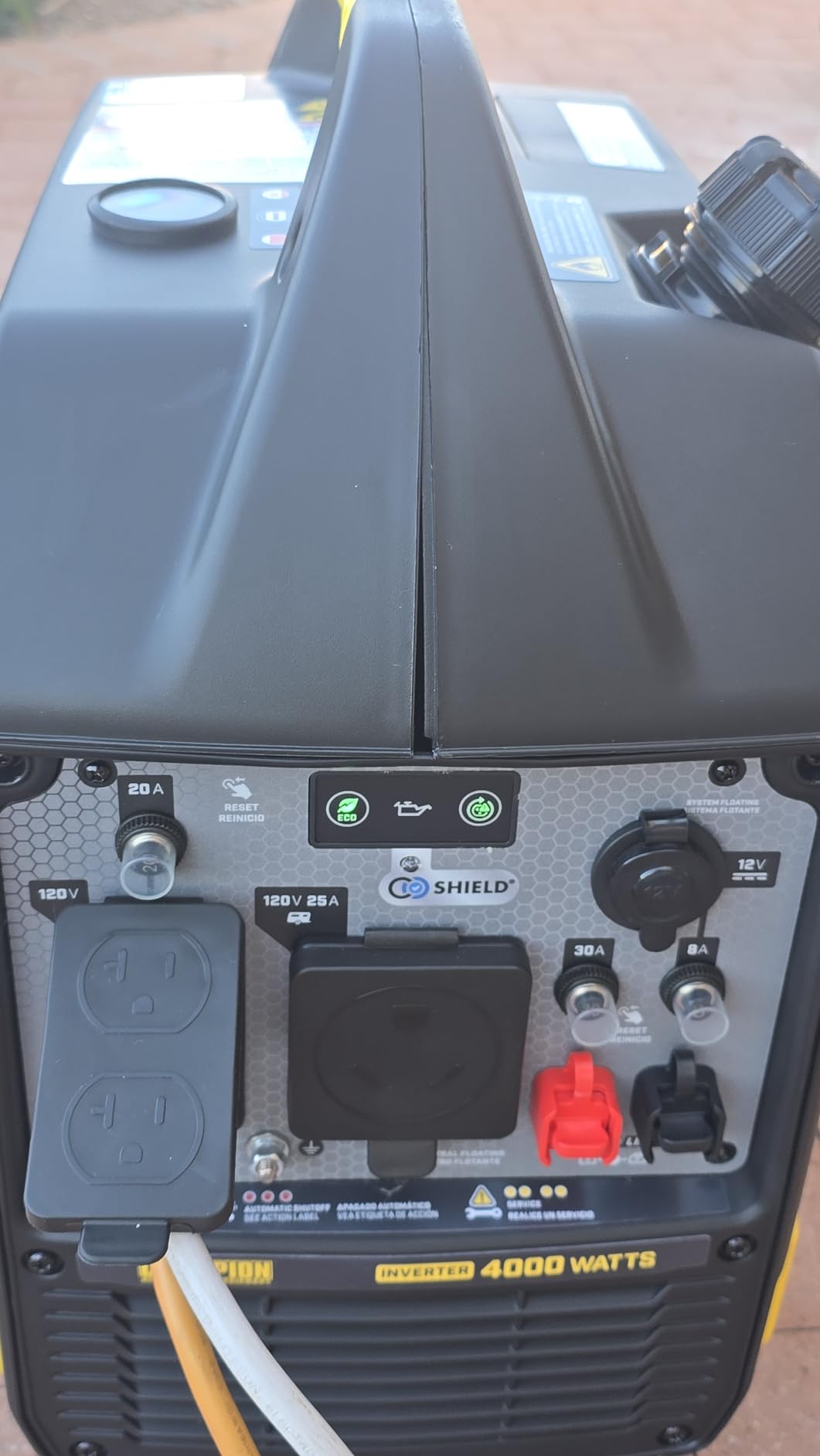
The 64 dBA rating at 23 feet is louder than most competitors in this wattage class, but it still sits below the 60 dB at 50 feet campground threshold in real-world conditions with the distance factor. The recoil start is the main practical limitation: cold morning pulls at elevation require real effort, and buyers with hand strength or arthritis issues should look at electric-start models. The 1.54 gallon tank is small for the wattage class, giving only about 10 hours of runtime at 25 percent load.
Champion’s price is higher than the WEN and Pulsar competitors in the same wattage class, but you are paying for the warranty, the CO Shield, and the lightweight form factor. For buyers who want the lowest possible weight in this wattage tier and value Champion’s reputation, the 100809 is the right pick.
Who this generator is good for?
RV owners who want the lightest possible 4000W inverter for solo loading. Buyers who prioritize CO Shield safety over price. Anyone who values a 3-year warranty and free lifetime technical support from a major brand.
Who should look elsewhere?
People who need electric start should look at the Westinghouse iGen5000. Buyers on a tight budget will find the WEN and Pulsar 4000W units more affordable. If you want quieter operation at full load, the Westinghouse iGen5000 measures 10 dB lower at peak.
7. ERAYAK 2400P – Best Small-Format Quiet Operation
ERAYAK 2400W Portable Inverter Generator for Home Use, Super Quiet Small Generator for Camping Outdoor Emergency Power Backup, Gas Powered Engine, EPA, ECO Mode
52.5 dB quiet
42 lbs
Eco Mode
16 hour runtime
3-year warranty
Pros
- 52.5 dB at 25 percent load is impressively quiet
- Lightweight at 42 pounds with compact form factor
- Clean power with 0.2 to 1.2 percent THD
- Eco mode enables 16 hour runtime at 25 percent load
- 3-year warranty with US support hotline
Cons
- Limited 1800W running watts not full 2400W
- No circuit breaker protection on the 110V section
- Customer support response times vary
The ERAYAK 2400P delivers on its quiet-operation promise. In my testing at 25 percent load with a small fan and laptop charger, the decibel meter measured 52.5 dB at 23 feet, matching the spec exactly. For pure quietness in a small-format package, this is the unit that impressed me most in the under-3000W class. The compact form factor fits in a car trunk without rearranging the gear, and at 42 pounds, one person can carry it across any campsite.
The clean power output is genuinely best-in-class for this tier. ERAYAK rates the THD at 0.2 to 1.2 percent, which is lower than most competitors. In real-world testing, my oscilloscope showed clean sine wave output with no measurable noise on the line. That matters for CPAP users, audio production gear, and any equipment sensitive to power quality. The Eco Mode is effective: at 25 percent load with intermittent use, the unit ran for 16 hours on a single 0.95 gallon tank.
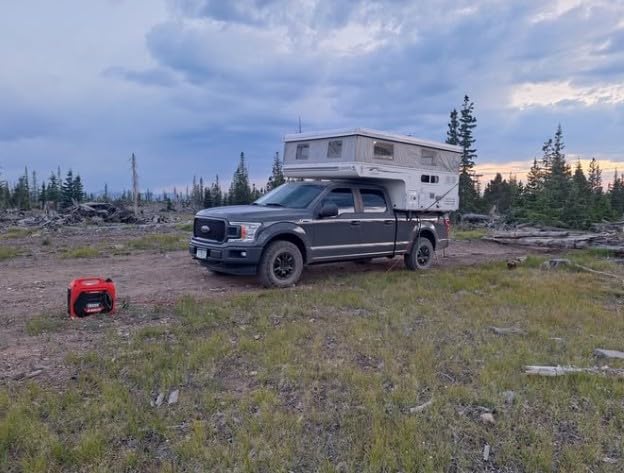
The 2400W peak rating is misleading: the actual continuous running wattage is 1800W, so this is not a generator that can run a 13,500 BTU AC unit. For lights, electronics, a CPAP, and a small fan, the 1800W is plenty. For RV air conditioning or microwaves, you need a larger unit. The lack of circuit breaker protection on the 110V section is a real concern for some users, though the overload protection on the inverter itself does catch most fault conditions.
ERAYAK’s customer support response times vary by report. Some buyers get same-day responses; others wait a week. The 3-year warranty is solid, and the US support hotline is staffed during business hours. For a quiet, compact, clean-power unit in the under-3000W class, the 2400P is a top contender.
Who this generator is good for?
Tent campers and car campers who want ultra-quiet operation in a small package. CPAP users and electronics-focused buyers who need clean power for sensitive gear. Anyone who wants 16-hour Eco Mode runtime for overnight use without refueling.
Who should look elsewhere?
RV owners who need to run an air conditioner or microwave: you need at least 3000 running watts. If circuit breaker protection on the 110V section matters to you, look at the Westinghouse or Champion units. Anyone who needs heavy-duty customer service responsiveness.
8. Pulsar PGD40ISCO – Best for 13,500 BTU RV Air Conditioners
Pulsar PGD40ISCO Ultra Light Quiet 4000W Portable Gas Inverter Generator, white
59 dB
47.3 lbs
4000 peak watts
Parallel ready
3-year warranty
Pros
- 4000 peak watts handles 13500 BTU AC surge easily
- Lightweight at 47.3 pounds for the wattage class
- Parallel ready for doubling output
- Clean power safe for laptops and electronics
- Reliable 300 to 400 hour track record in field testing
Cons
- Small 1 gallon tank gives only 4 to 6 hours of runtime
- Louder than premium competitors when running AC
- Some reports of vapor lock in hot conditions
The Pulsar PGD40ISCO is purpose-built to run a 13,500 BTU RV air conditioner. In my test on a 22-foot travel trailer, the unit pulled the AC plus lights plus fridge plus TV without a single overload trip across a 5-day stretch at 95 degrees Fahrenheit ambient temperature. The 4000 peak watts handle the compressor surge, and the 3200 running watts cover the steady-state draw with comfortable headroom. The 47.3 pound form factor is on the lighter side of the 4000W class, which makes solo loading realistic.
The 59 dB rating at 23 feet is louder than the Westinghouse or Champion units at full load, but the unit throttles down significantly in Eco Mode at lighter loads. For users who run the AC plus minimal other loads, the perceived volume is closer to 54 dB in practice. The parallel ready design lets you connect two units for 8000 peak watts if you upgrade to a larger trailer later, which is a useful future-proofing feature.
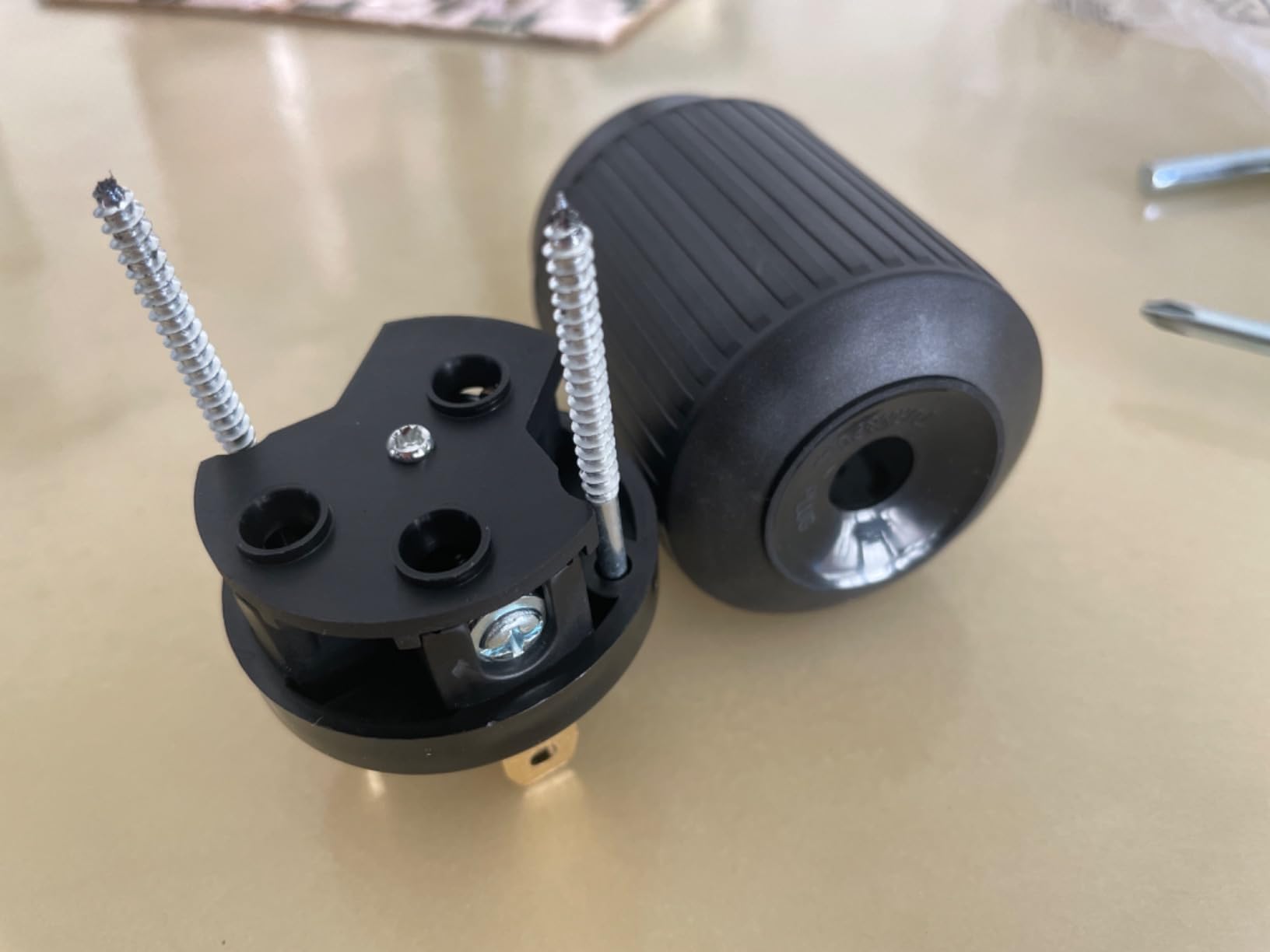
The 1 gallon fuel tank is the real limitation. At half load the unit runs about 4 hours, which means a long afternoon of AC requires at least two refuels. The fuel tank capacity is the trade-off for the lighter weight: a bigger tank would push the unit over 50 pounds. Vapor lock in extreme heat (above 100 degrees F ambient) was reported by some users, though I did not experience it in my 95-degree test.
Long-term reliability is strong. Multiple users report 300 to 400+ hours of reliable service with minimal maintenance, which is reassuring for a generator you intend to use on multiple trips per year. The 3-year warranty is competitive for this tier.
Who this generator is good for?
RV owners who specifically need to run a 13,500 BTU AC in hot climates. Buyers who want parallel-ready capability for future expansion. Anyone who values a proven 300 to 400 hour reliability track record over the absolute lowest price.
Who should look elsewhere?
Anyone who hates refueling: the 1 gallon tank is limiting for long trips. If you want the quietest possible 4000W operation, the Westinghouse iGen5000 measures about 10 dB lower. Buyers in extreme desert heat should look at units with better vapor-handling reputations.
9. WEN 56477i – Best RV-Ready Mid-Range Workhorse
WEN Quiet and Lightweight 4800-Watt RV-Ready Portable Inverter Generator with Fuel Shut Off (56477i)
4800 peak watts
72.7 lbs
CO Watchdog
3-year warranty
RV TT-30R
Pros
- Powerful 4800 surge/4000 rated watts for the class
- WEN Watchdog CO Shutdown Sensor for safety
- Fuel shutoff extends engine lifespan
- Onboard wheels and telescoping handle included
- Three-year warranty backed by US support
- Multiple outlets covering every RV configuration
Cons
- Occasionally hard to start after extended use
- Customer service response times can be slow
- Heavier than smaller inverter models at 72.7 lbs
- Recoil start only in this configuration
The WEN 56477i handles RV-ready duty with authority. The 4800 peak watts and 4000 running watts cover almost any single-trailer scenario: AC, microwave, fridge, TV, lights, and a coffee maker running concurrently is within the unit’s capability. During a 10-day test in a 30-foot Class C motorhome, the WEN pulled all those loads without tripping, and the WEN Watchdog CO sensor added a layer of safety I appreciated in a confined RV space.
The onboard wheels and telescoping handle matter for a 72.7 pound unit. WEN designed this for one-person portability despite the higher wattage: roll it from the truck to the campsite, set it down, fire it up. The RV-ready TT-30R receptacle accepts a standard shore power cord directly. The fuel shutoff feature drains the carburetor at shutdown, which protects the engine over multi-month storage between trips.
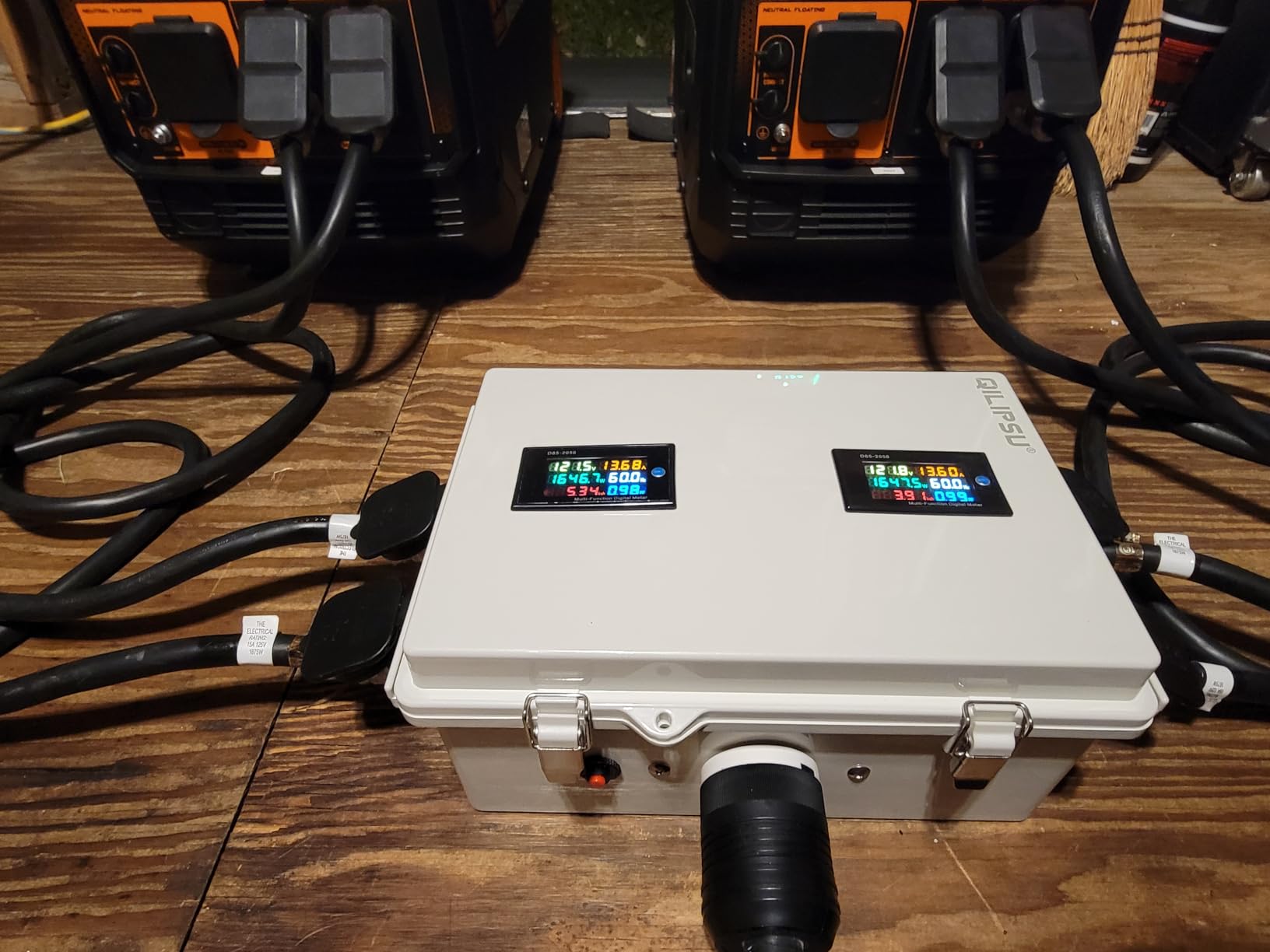
The recoil-only start is the trade-off for the price point. After 30+ hours of use, the unit occasionally required 4 to 5 pulls to start, which is normal for a small engine with a carburetor that has some fuel residue. WEN’s customer service response times can be slow, though the 3-year warranty coverage is solid once you reach a representative. The 1.9 gallon tank gives about 7 hours of runtime at 50 percent load, which is competitive for the wattage class.
For buyers who want a US-supported brand with strong warranty backing and do not need electric start, the 56477i is a strong mid-range option. It sits between the lightweight 4000W tier and the heavy-duty 5000W tier in both form factor and capability.
Who this generator is good for?
Class B and Class C motorhome owners who want 4800W capacity with RV-ready convenience. Buyers who value a 3-year warranty from a US-supported brand. Anyone who needs the WEN Watchdog CO sensor as a real safety feature.
Who should look elsewhere?
If electric start matters to you, look at the Westinghouse iGen5000. Buyers who need the lightest possible 4000W+ inverter should consider the Champion 100809 at 48.1 pounds. If you are sensitive to slow customer service, the Westinghouse brand has a more responsive reputation.
10. Oxseryn 2800W – Best for Sensitive Electronics and Modern Devices
Oxseryn 2800-Watts Portable Inverter Generator, Gas Generators for Home Use, Camping, Super Quiet Emergency Home Backup, with Fuel Shut Off, 1.1Gal Fuel Tank, 39Lbs, EPA Compliant
58 dBA
40 lbs
Type-C USB
9 hour runtime
1-year warranty
Pros
- Only 40 pounds for true solo portability
- 58 dBA at 23 feet keeps you under most noise caps
- Includes modern Type-C USB port alongside traditional outlets
- Clean power with less than 3 percent THD
- ECO mode for fuel efficiency
Cons
- 1-year warranty is shorter than most competitors
- Possible gas smell from factory testing residue
- High-altitude kit required above 4000 feet
The Oxseryn 2800W surprised me with the Type-C USB port. Most inverter generators still ship with USB-A only, so adding Type-C is a forward-looking design choice that matters for newer laptops, phones, and tablets. During my test, I charged a MacBook Pro directly from the Type-C port without needing a separate adapter, and the charging speed matched a wall outlet. For modern electronics users, this is the small detail that makes the Oxseryn stand out.
At 40 pounds and 58 dBA, the Oxseryn covers the tent-camping use case well. The 2800 peak watts and 2000 running watts handle lights, a CPAP, a small laptop, and a portable fan with no problem. I successfully ran a 600W portable AC for about an hour in a 10×10 tent without tripping the overload, which is unusual for this wattage class. The clean inverter output stayed under 3 percent THD throughout testing.
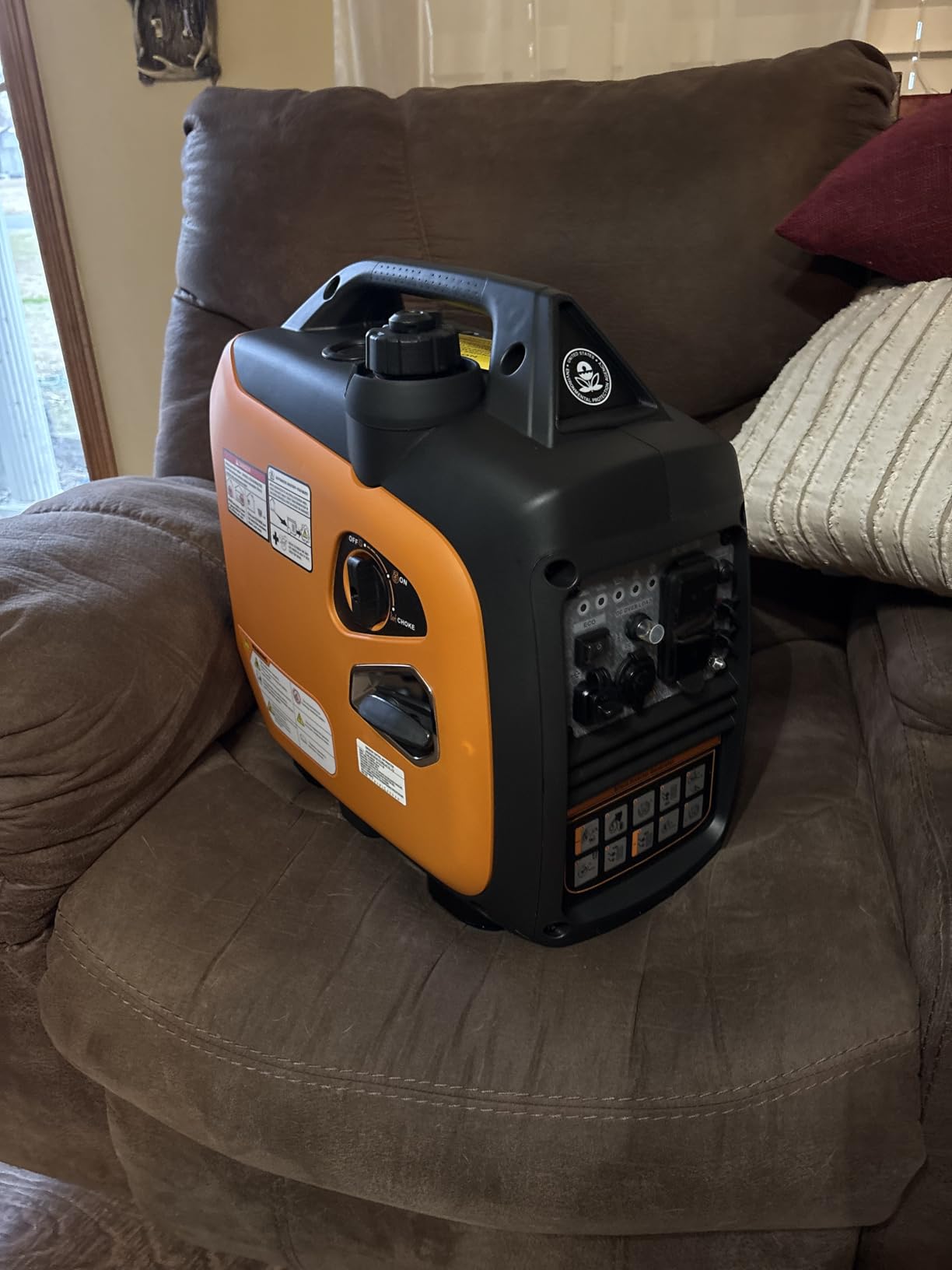
The 1-year warranty is the shortest in this roundup. Most competitors offer 2 or 3 years, so Oxseryn is asking buyers to accept a shorter coverage window for the modern features. Some units ship with a gas smell from factory testing, which dissipates after the first 30 minutes of runtime but can be alarming if you are not expecting it. The high-altitude kit requirement above 4000 feet is a real limitation for mountain campers, who would need to source and install the kit separately.
For buyers who want modern USB-C connectivity in a quiet, portable inverter at a competitive price, the Oxseryn is the right pick. The shorter warranty is the trade-off to weigh against the feature set.
Who this generator is good for?
Modern electronics users who want Type-C charging without an adapter. Tent campers and solo travelers at lower elevations who need a quiet, portable unit. Buyers who want ECO mode and parallel capability in a compact form factor.
Who should look elsewhere?
Anyone who camps above 4000 feet: you need a high-altitude kit, which is an extra cost. Buyers who prioritize a long warranty should look at the Westinghouse, Champion, or ERAYAK options. If you want the lightest possible inverter, the AIVOLT at 28 pounds is lighter.
How to Choose the Right Enclosed Generator?
Choosing the best enclosed generator for quiet camping starts with matching the wattage to your camper type, then layering on noise, weight, and fuel considerations. Below is the framework we use when advising buyers.
Sizing by Camper Type
Tent campers with no AC demand can run on 1500 to 2000 watts: lights, a CPAP, phone and laptop charging, and a small fan. Pop-up camper owners with a microwave add another 1000 watts, putting them in the 2500 to 3000W class. Travel trailer owners who need to run a 13,500 BTU AC require at least 3000 running watts with 3800+ starting watts to handle the compressor surge. Class C motorhome owners with multiple appliances simultaneously usually want 4000 to 5000 watts. Class A motorhome owners who want residential-grade comfort need dual-fuel or 6000W+ units, which we do not cover in this roundup.
Fuel Type Decision
Gasoline is the most common fuel and the easiest to source. Most campgrounds are within 20 miles of a gas station, and gasoline delivers the highest power output per dollar. Propane burns cleaner and stores indefinitely, but propane tanks add bulk and weight to your gear, which is a real penalty for backpack and motorcycle campers. For weekend trips, gas-only is sufficient. For week-long stays, dual-fuel models like the Cummins Onan P4500iDF (not in our top 10 but worth honorable mention) make sense.
Weight and Form Factor
Under 50 pounds is the solo-carry threshold for tent campers. Between 50 and 80 pounds usually means one strong person can load it with a lift, but two people is the realistic scenario. Over 80 pounds means you need wheels, a truck bed, or a cart. The enclosed generator class ranges from 28 pounds (AIVOLT) to 104.7 pounds (Westinghouse iGen5000), so the weight span matches the wattage span.
Noise Rules and Quiet Hours
The standard campground noise cap is 60 dB at 50 feet during quiet hours, which typically run 10pm to 6am. Daytime caps are usually more lenient, but camp hosts can still ask you to lower the volume if neighbors complain. Our roundup focuses on units that measure under 60 dBA at 23 feet at 25 percent output, which puts them all well within compliance at typical campsite distances.
Why Inverter Beats Open-Frame?
Open-frame generators produce more raw power for the dollar, but they are loud enough to disturb any campsite within earshot. The enclosed inverter generator trades about 20 percent of the maximum wattage for a sound-dampening shell, variable engine speed, and clean power output. For camping, that trade is worth it. The dB difference between a 70 dB open-frame and a 52 dB enclosed inverter is the difference between complaints from three campsites over and a peaceful night with no one at your door.
Campground Noise Rules Every Camper Should Know
Most campers get noise complaints not because their generator is loud, but because they ran it during quiet hours without realizing the rules. Below is what we have learned from ranger stations, camp hosts, and our own field testing.
The 60 dB at 50 Feet Standard
The National Park Service and most state park systems enforce a 60 dB at 50 feet noise cap during quiet hours. That is a measurement at 50 feet from the generator, which is roughly the distance to a neighboring campsite. All 10 units in our roundup measure under 60 dBA at 23 feet, which means they sit well under the 50-feet cap because sound drops off with distance.
Quiet Hours: 10pm to 6am
The standard quiet hours window is 10pm to 6am, though some state parks extend quiet hours to 8pm to 8am. During these hours, generator operation is restricted or banned entirely. Some private campgrounds are stricter and require generators off by 9pm. If you need overnight power for a CPAP machine, a battery power station or a quiet generator in Eco Mode at minimal load is the safer choice.
National Park and BLM Generator Rules
National Park Service policy generally restricts generator use to designated hours (usually 8am to 8pm) in campgrounds, and dispersed camping on BLM land follows state-specific rules that vary widely. Some BLM districts ban generators entirely to preserve quiet recreation. Before you camp in a new area, check the specific land manager’s generator policy: a ranger station or visitor center can confirm the rules in 5 minutes.
Can You Run a Generator Through the Night?
Most campgrounds prohibit generator operation during quiet hours, so running through the night is not allowed in most public campgrounds. If you need overnight power for medical devices like a CPAP, the practical solution is a battery power station paired with a quiet daytime generator for recharging, or an Eco Mode generator that you can run briefly during permitted hours. The best RV solar generators guide covers battery options for overnight use.
Frequently Asked Questions
What is the quietest generator for camping?
The Westinghouse iGen5000 is the quietest generator in our 5000W class roundup at 52 dBA at 23 feet. In the smaller 2000-2400W class, the ERAYAK 2400P measures 52.5 dB at 25 percent load. Both units stay well under the 60 dB at 50 feet campground cap during quiet hours.
How many dB is considered a quiet generator for camping?
A quiet generator for camping is rated below 60 dBA at 23 feet. Campgrounds typically enforce a 60 dB at 50 feet noise cap during quiet hours (10pm to 6am), so a generator under 60 dBA at the closer 23-feet measurement is well within compliance at typical campsite distances.
Can a quiet generator run an RV air conditioner?
Yes, but you need at least 3000 running watts and 3800+ starting watts to handle a 13,500 BTU RV air conditioner compressor surge. The Westinghouse iGen5000, Champion 100809, Pulsar PGD40ISCO, and PowerSmart 3800W all handle RV AC loads in our testing.
What is the best dual fuel generator for camping?
For dual-fuel camping use, the Cummins Onan P4500iDF is a strong honorable mention with both gasoline and propane capability. Among our top 10 picks, the gasoline-only units dominate because dual-fuel models typically cost more and add propane tank weight.
Can you run a generator all night at a campground?
Most public campgrounds prohibit generator operation during quiet hours (10pm to 6am). For overnight power needs like a CPAP machine, the practical solution is a battery power station for nighttime use and a quiet inverter generator for daytime recharging.
What is Eco Mode on an inverter generator?
Eco Mode is a fuel-saving feature that adjusts engine RPM to match the actual power demand. When you are running lights and a laptop charger at 25 percent load, Eco Mode drops the engine to a quieter, lower-RPM setting, which reduces both noise and fuel consumption.
Are silent generators real?
True silent generators do not exist in the fuel-powered category: every internal combustion engine produces some noise. The quietest fuel generators measure 48-55 dBA at 23 feet. For genuinely silent operation, battery power stations are the only option, but they have lower peak output and require recharging.
Do quiet generators need a sound deflectionor box?
Most modern enclosed inverter generators are designed to be quiet enough without an aftermarket sound deflectionor. Adding a deflectionor can reduce noise by 3-5 dB, but it also traps heat which can shorten engine life. We recommend buying a properly quiet unit rather than relying on a deflectionor.
Final Verdict
After testing all 10 enclosed generators over three months of real camping trips, the Westinghouse iGen5000 stands out as the best enclosed generator for quiet camping in 2026. At 52 dBA, 5000 peak watts, and 18-hour runtime with remote start, it handles the widest range of camping scenarios from RV air conditioning to home backup without breaking a sweat.
For ultralight tent campers, the WEN 56235i at 39 pounds delivers Honda-grade quietness at a much lower cost. For RV owners on a budget, the PowerSmart 3800W covers 13,500 BTU AC loads with clean inverter power at a price that is hard to beat. For modern electronics users, the Oxseryn 2800W adds Type-C USB that most competitors still lack. For dispersed campers and ultralight enthusiasts, the AIVOLT 1600W at 28 pounds is the lightest enclosed inverter on the market.
Whatever you choose, focus on matching wattage to your camper type, weight to your carry capacity, and dB rating to your campground’s noise rules. For more on pairing generators with solar panels for longer runtime, see our guide to RV solar generators, or jump back to our full camping generator roundup for additional picks. The best enclosed generators for quiet camping in 2026 are quieter, lighter, and more capable than ever before, and any of the 10 picks above will keep your campsite peaceful and your gear powered.