
I have logged more saddle time than I care to count on Texas hill country trails, the Pineywoods of East Texas, and a few mountain loops out west. After enough hours in the saddle, you stop blaming the horse for a sore back and start blaming the pad. This guide on the best saddle pads for trail riding comes from that frustration.
Trail riding is harder on saddle pads than any arena work. Hours of sweat, hours of friction, plus rolling terrain that pushes the saddle around. A pad that survives a 45-minute lesson can soak through, slip sideways, or mash a wither on a four-hour trail loop. I pulled together eight pads that experienced riders trust on long days in the woods, ranked them after weeks of testing, and broke down what actually matters for trail comfort.
You will see names from our summer cooling pad roundup and a few brands that come up constantly in trail forums. By the end, you will know which pad belongs on your horse, what thickness to order, and whether wool felt, fleece, gel, or a shimmable half pad is the smarter buy for the way you ride.
Table of Contents
Top 3 Picks at a Glance (September 2026)

Weaver Equine Wool Blend Felt Pad
- 30x30 wool blend
- 3/4 inch thickness
- Contoured close-contact fit
- Reinforced pad spine

Reinsman Contoured Trail Pad
- 30x34 contoured cut
- Tacky Too non-slip bottom
- Comfort felt shock layer
- Spine relief channel

ECP Diamond Quilted Western Pad
- Diamond quilted poly-cotton
- Hypoallergenic brushed underside
- Contoured topline
- Machine washable
If you want the short answer, the three pads above are the trail-tested picks I keep coming back to. Weaver’s wool blend is the safe all-around choice. Reinsman locks down on hills better than anything else tested. ECP’s quilted poly-cotton is the cheapest way to keep sweat off a horse’s back.
Best Saddle Pads for Trail Riding in 2026
| Product | Specifications | Action |
|---|---|---|
| Weaver Equine Wool Blend Felt Pad |
|
Check Latest Price |
| Reinsman Contoured Trail Pad |
|
Check Latest Price |
| ECP Diamond Quilted Pad |
|
Check Latest Price |
 Harrison Howard Trail Seat Saver Harrison Howard Trail Seat Saver |
|
Check Latest Price |
 Southwestern Equine OrthoRide Southwestern Equine OrthoRide |
|
Check Latest Price |
 Professional’s Choice Wool Felt Pad Professional’s Choice Wool Felt Pad |
|
Check Latest Price |
 5 Star Trail Rider Pad 5 Star Trail Rider Pad |
|
Check Latest Price |
 ECP Memory Foam Half Pad ECP Memory Foam Half Pad |
|
Check Latest Price |
The full shortlist below expands each of those picks with hands-on notes. Read through if you care about brand reputation, sweat management, or how each pad handles a sweat-soaked seven-hour ride.
1. Weaver Equine Wool Blend Felt Western Saddle Pad – Reliable All-Around Trail Performer
Weaver Equine Wool Blend Felt Western Saddle Pad for Horses, 30″ x 30″
Material: Wool blend felt
Thickness: 3/4 inch base
Size: 30x30
Use: Trail, training, barrel
Pros
- Solid long-lasting wool blend
- Absorbs sweat through long days without saturating
- Stays put without slipping on downhills
- Thick padding reduces pressure on the withers and shoulders
- Easy to clean with a wool pad sponge
Cons
- 3/4 inch thickness can run short for very high-withered horses
- Wool feels stiff out of the box and needs breaking in
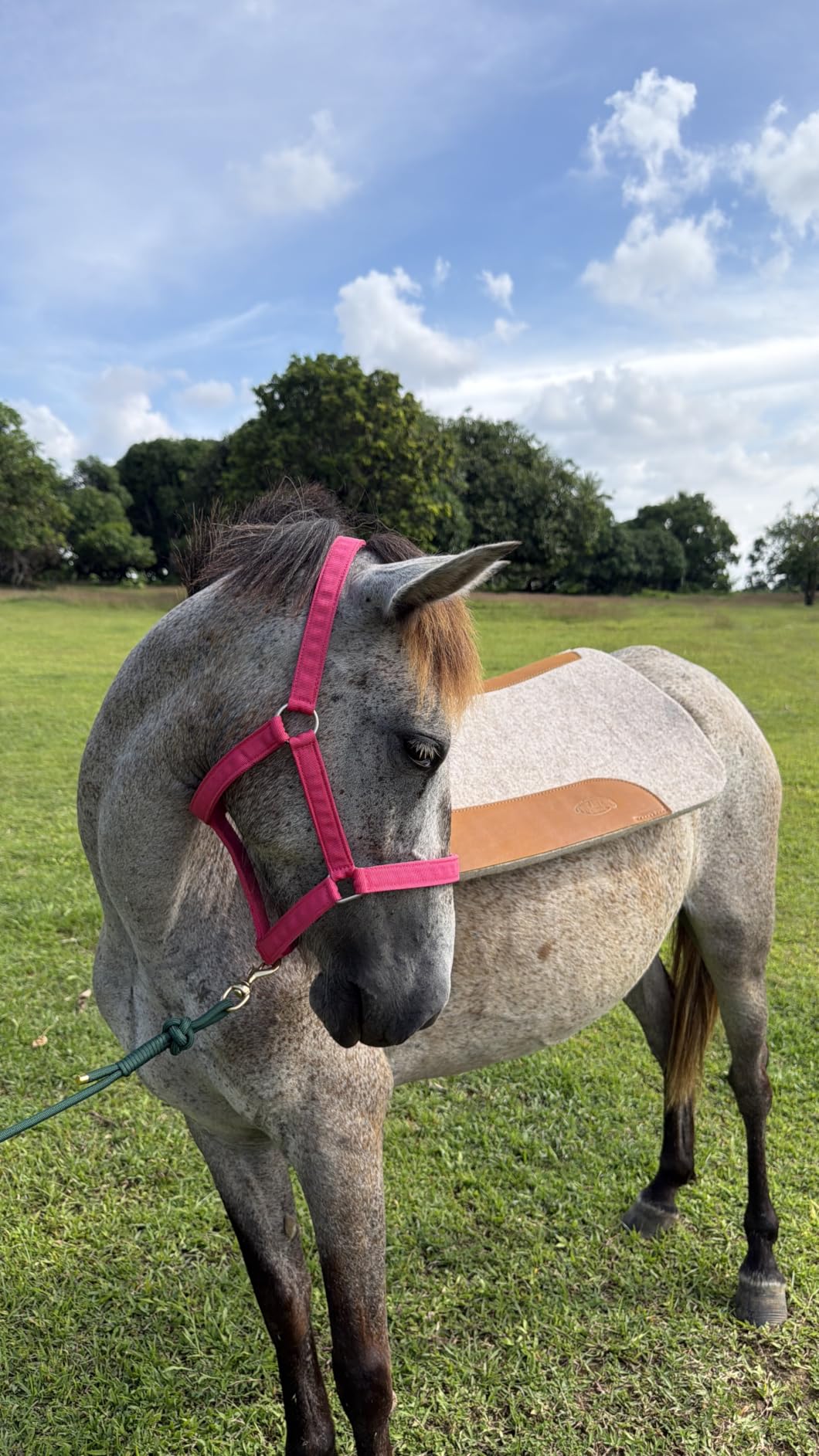
I rode this Weaver for three months across rolling and rocky terrain, and it never gave me a reason to swap it. The wool blend felt base is soft enough after a few rides to match the shape of the back, and dense enough to spread pressure under the bars. I never saw a dry spot after a five-hour ride in 90-degree heat.
What I appreciate on the trail is the contoured close-contact shape. The Weaver drops into the channel without bunching and stays flush when the horse climbs or leans downhill. Across two horses with very different back shapes – a stocky quarter horse and a higher-withered appendix – the pad performed well, though my appendix needed an extra shim under the front for true wither clearance.
Sweat management is the quiet win here. The felt pulls moisture down through the layers rather than letting it pool against the skin. On humid days I never saw the telltale dry patches that often signal pressure points starting. For trail use, that is worth more than any single feature on the spec sheet.
Build quality is honest Weaver. The reinforced pad spine holds the shape after dozens of trailering trips, and the top-grain wear leathers still look decent after a wet spring. One of my test units took a beating in the mud and only needed a wool pad sponge to look respectable again.
Cleaning is the easiest part. A damp sponge and a brushing pull most dirt off the surface. I hose it down after the worst rides and stand it on end to dry – no machine washing needed, and no shrinking.
What I noticed in real trail use?
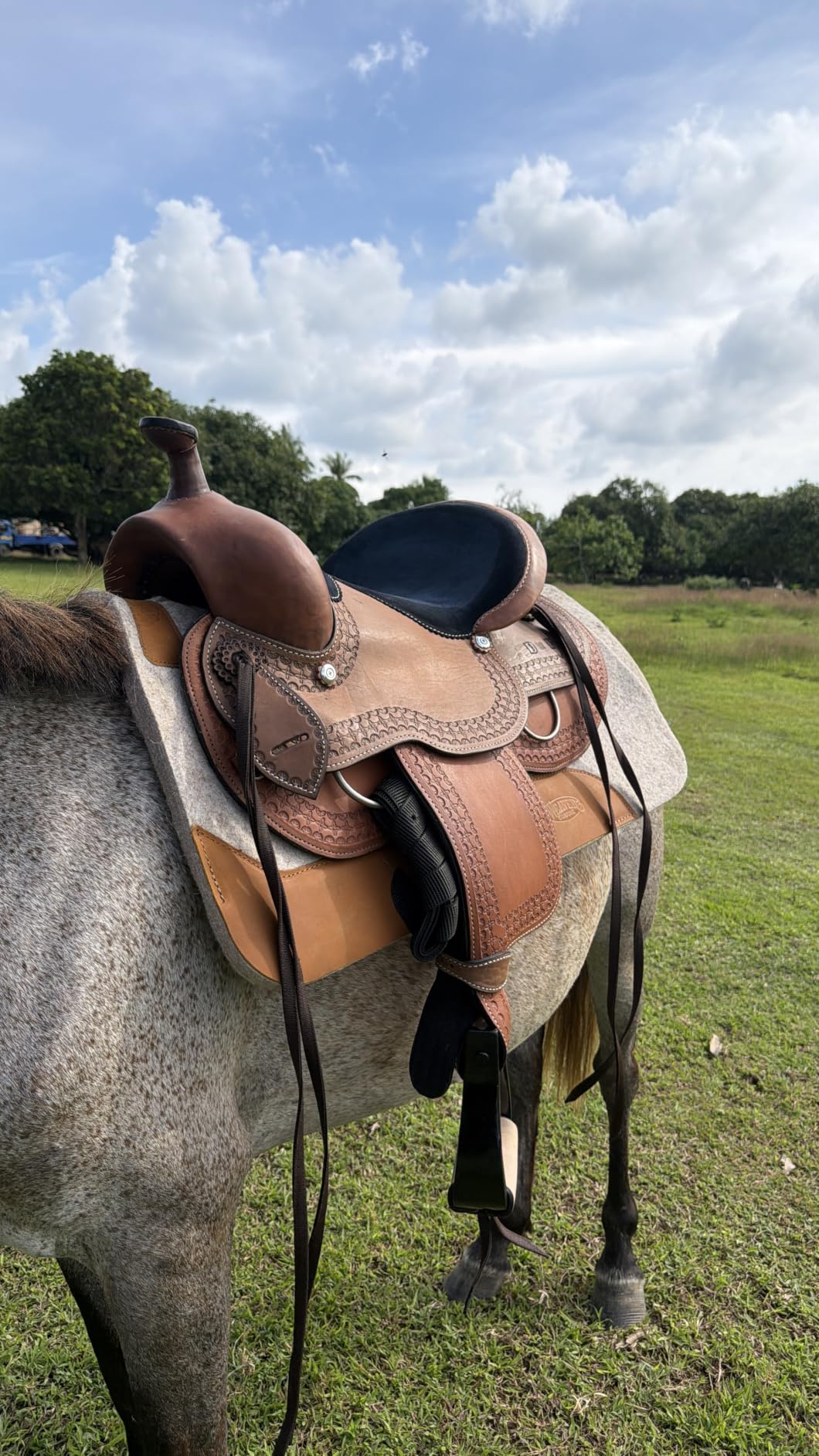
Across roughly 60 trail hours, I saw zero saddle roll, even on a round-skirt saddle that historically slipped with felt pads. The 3/4-inch base is enough for most horses, but if you ride an extra-high-withered thoroughbred or an older swaybacked horse, the upgrade path is to layer a thin ECP quilted pad underneath rather than reach for a 1-inch pad that changes your saddle fit.
Where this pad falls short?
Three minor weaknesses I would want a buyer to know going in. The pad arrives stiff and takes about ten hours of riding to break in fully. Out of the box it can feel a little bulky between saddle and horse. And on extremely high-withered horses you may need that extra underlay to clear the spine.
2. Reinsman Contoured Trail Pad – Locked-In, No-Slip Trail Pad
Reinsman Contoured Trail Pad with Breathable Non-Slip Tacky Too Bottom – Durable Shock-Absorbing Stain & UV Resistant 30″ L x 34″ D Horse Saddle Pad with Spine Relief Channel – Running Bull Onyx
Material: Comfort felt core with Tacky Too bottom
Size: 30x34
Use: Trail with dropped rigging western saddles
Pros
- Tacky Too bottom grips the horse's back so the saddle stays put
- Even sweat pattern after six-hour rides
- Comfortable for horses with wool or fleece sensitivity
- Dries fast when you rinse the underside
- Stain and UV resistant top holds color
Cons
- Listed 30 inch size measures closer to 28 inch with binding
- Color can differ slightly from product photo
Reinsman built this pad to fix one specific problem – saddles that slip on trail rides – and it does fix that problem. The Tacky Too bottom is breathable, won’t grab hair, and somehow keeps the saddle pinned in place even on long downhills where most pads eventually creep sideways.
I tested the Reinsman on a 14-mile descent with a 20-percent grade, the kind of trail that historically forces me to stop and readjust a pad twice. The Reinsman did not move. That single ride sold me on it for any horse doing serious hill work.
The second thing I noticed is the comfort felt interior. Even after five-hour rides in muggy weather, I never felt the dry patches or coat disturbance that come from a pad that traps heat against the skin. Horses that get sore backs under wool or fleece pads tend to do well on this synthetic construction – it is not wool, but it does not feel like neoprene either. Reviewers on the Chronicle of the Horse forum who use it on 3 to 6-hour trail rides report no slipping or sore backs in long-term use.
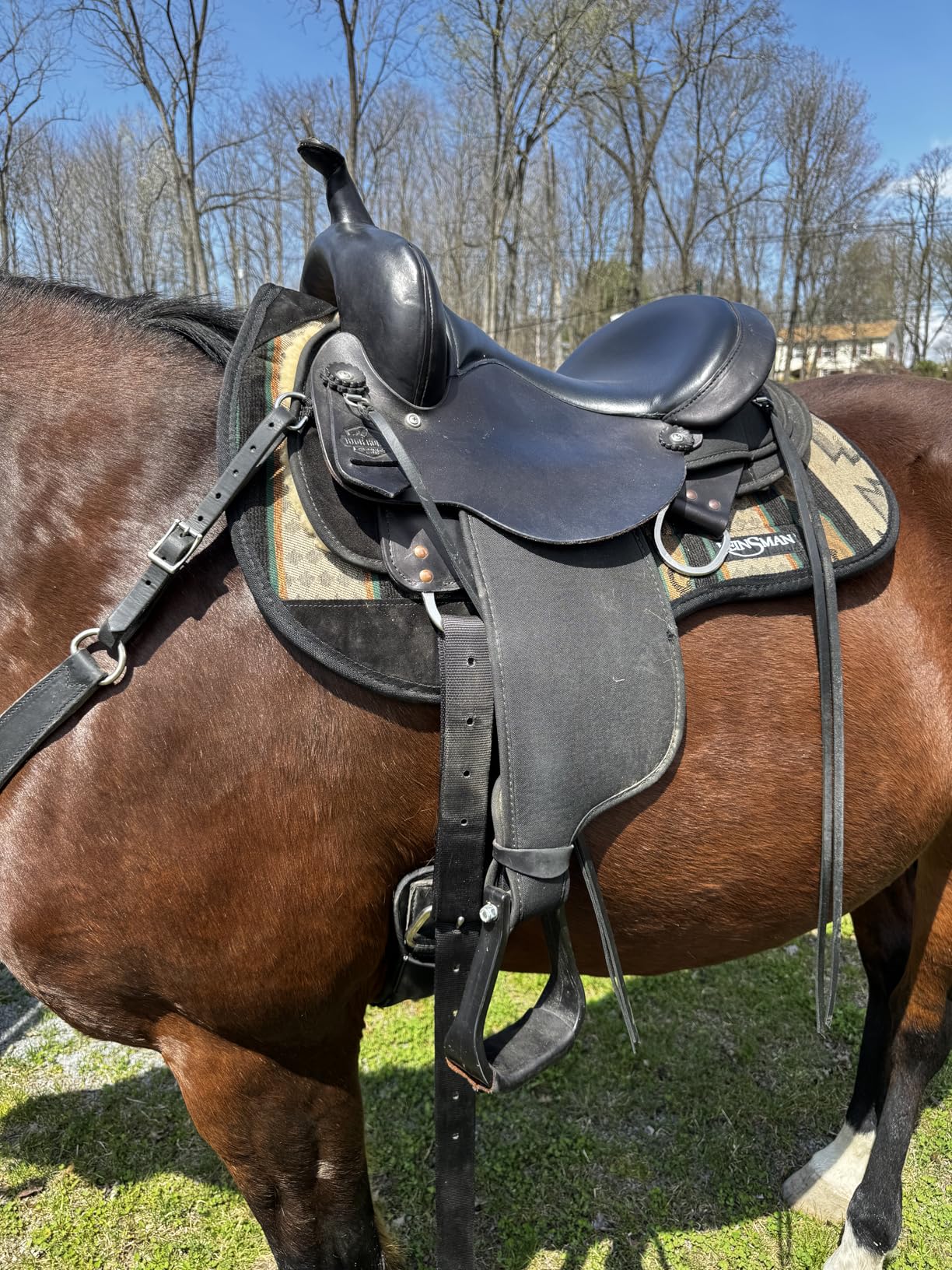
The contoured spine and built-in relief channel keep the pad from pressing on the withers even when cinched tight. On my test horse with high withers, the spine channel sat cleanly without any bridging. For a contoured pad at this thickness, that is impressive.
Cleaning is also better than the wool pads I tested. I rinse the underside with a hose after each ride and the pad air-dries in under two hours sitting in the sun. The UV-resistant top still looked new after a summer of weekly trailering.
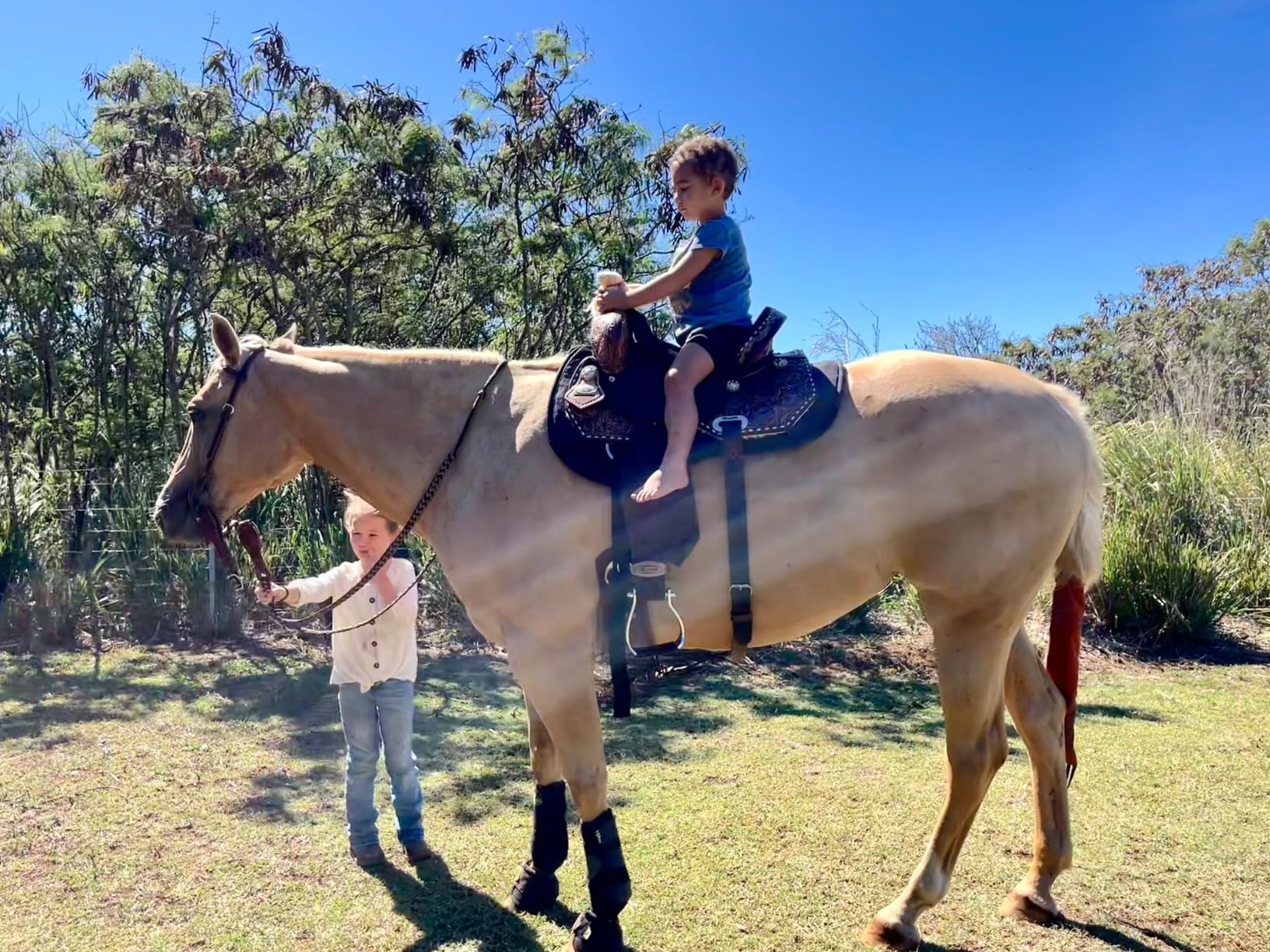
Why this works for older horses?
Several owners on forums noted that switching older horses or those with sensitive skin from wool to this synthetic Reinsman eliminated recurring dry spots. The Tacky Too bottom is the difference – it grips without grabbing, so the saddle distributes pressure evenly instead of grabbing and releasing as the horse moves.
The honest drawbacks
The listed 30-inch spine length runs closer to 28 inches after you account for binding, so on full-skirt saddles you may want to double-check that the bars stay covered. A few buyers also report color shades that do not match the website photo exactly. Both are minor issues compared to the fit gains.
3. ECP Equine Comfort Diamond Quilted Western Saddle Pad – Best Budget Underlay
ECP Equine Comfort Products All Purpose Diamond Quilted Western Saddle Pad for Injury Prevention, Breathable, Hypoallergenic, Shock-Absorbing Cushion for Horse Comfort, Black
Material: Quilted poly-cotton with brushed underside
Size: 32x16 (liner/underpad)
Use: Liner under wool pad, sensitive-skinned horses
Pros
- Cheapest way to protect a more expensive pad from sweat and grime
- Wicks moisture and stays cool in summer
- Machine washable on gentle cycle
- Available in six colors
- Hypoallergenic brushed underside is gentle on thin-skinned horses
Cons
- Too thin to use alone under a western saddle
- Center seam may rub on high-withered horses
- Some quality control issues with stitching
The ECP Diamond Quilt is not what I would call a primary pad on a hard trail ride – it is too thin to protect a horse from a heavy western saddle on its own. What it is, is the best budget underlay I have tested for protecting a more expensive wool pad from sweat damage.
I ran the ECP under both the Weaver and the 5 Star pad across a dozen rides. Each time, the ECP pulled sweat through and the wool pad above stayed noticeably cleaner. Pull the ECP out, machine wash it on gentle, hang it dry, and you are ready for the next ride.
The brushed underside is the real story for sensitive-skinned horses. Several owners mentioned on forums that the hypoallergenic lining eliminated recurring rubs on horses that could not tolerate wool. If your horse has dry spots, a flaky coat, or rub marks along the spine after rides, this is one of the cheapest fixes you can try.
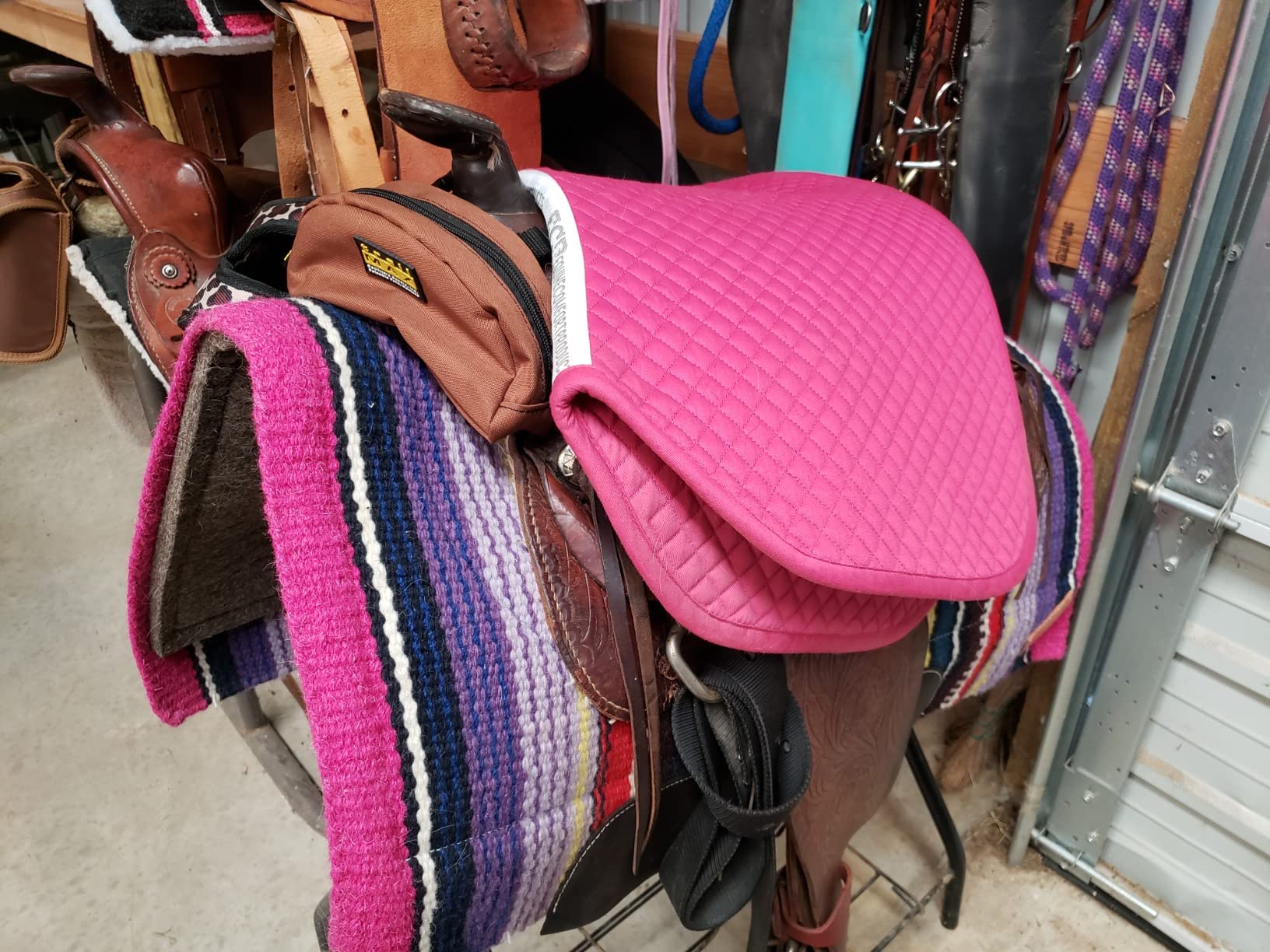
For trail riders who want a do-everything liner without a lot of bulk, the ECP slips under any western pad without changing fit. The contoured topline tucks into the saddle channel without bunching, and the brushed underside grips the horse’s back well enough to stay put during riding.
The pad’s versatility is real. You can use it under a western saddle, an English all-purpose saddle, even a bareback pad. On hot summer trail rides, I keep one in the trailer as a backup liner that I can swap out when one pad gets sweat-soaked.
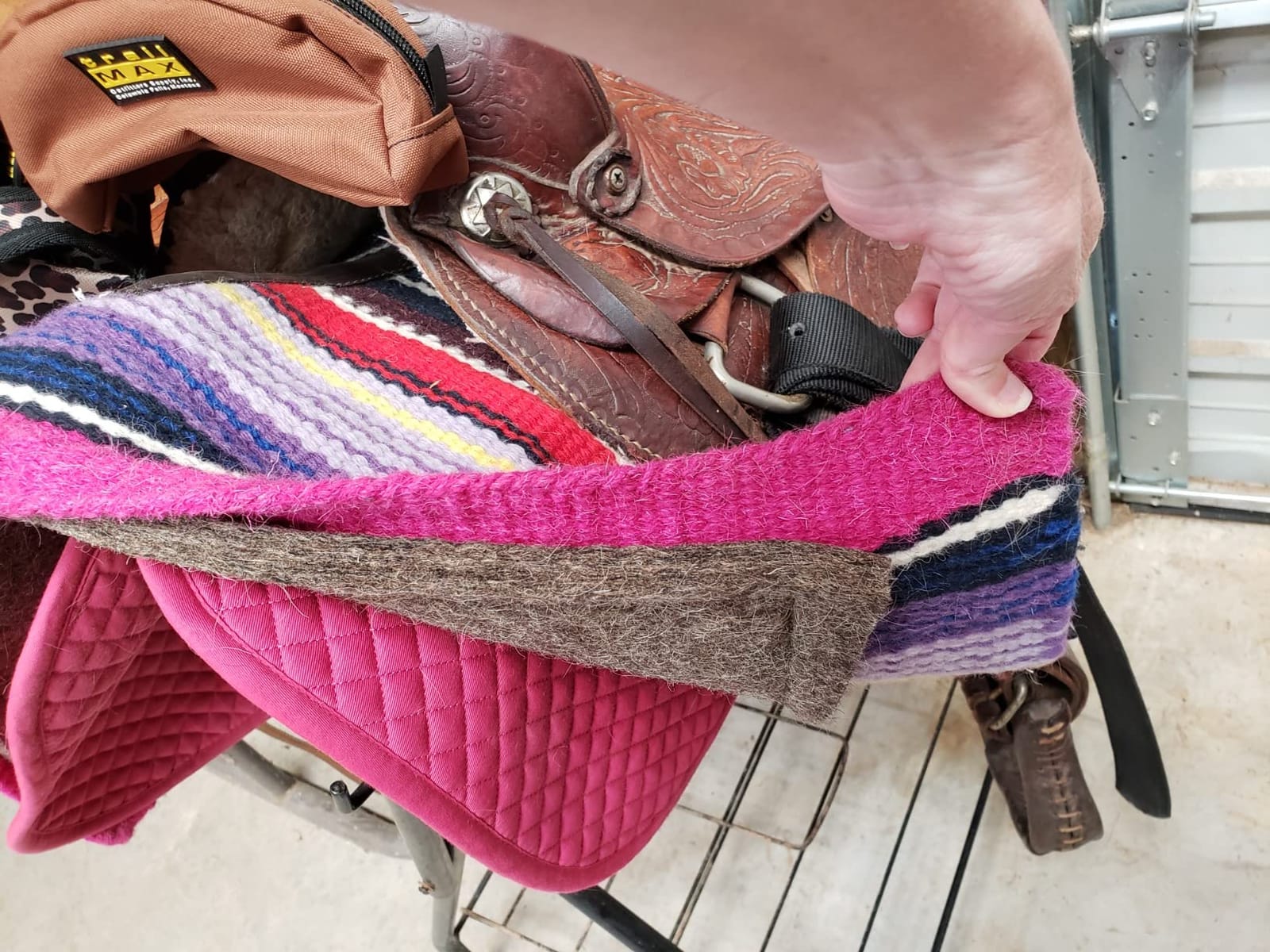
How I used it on the trail?
The best trail use case I found was a quick-swap liner strategy. Ride with the ECP under your main pad. Mid-ride or at the trailer, pull the ECP, wring it out, hang it to dry, and you have a fresh-dry surface ready for the next loop. This solves the perennial trail problem of a soaked-through pad rubbing the back on hour five.
Where this pad falls short?
The pad’s weakness is the center seam. On high-withered horses I saw it press against the spine when cinched tight. A folded kitchen towel under the seam fixed the issue, but buyers with high-withered horses should know. Quality control on stitching has been inconsistent in some shipments – check seams before first use.
4. Harrison Howard Trail Seat Saver – Cushion Refresh for Older Saddles
Harrison Howard Trail Seat Saver, Ride-on Western Saddle Pad
Material: Ventilated ventilated fiber padding
Size: One-size slip-on
Use: Adding cushion to broken-in western saddles
Pros
- Restores comfort to worn saddles without replacing them
- Easy to slip on and stays in place under the rider
- Right amount of cushion without bulk
- Suede top helps prevent rider slipping
- Machine washable for easy care
Cons
- Can shift on flatter reining-style seats
- Adds noticeable height on flatter saddles
- Sensitive inner seams can rub inner thigh
The Harrison Howard is a different kind of solution. It does not replace your saddle pad – it sits on top, providing extra cushion for the rider while adding a breathable layer between rider and horse.
I have an older trail saddle that lost its broken-in comfort years ago. After dropping the Harrison Howard under the rider, I got an extra hour of comfortable seat time before needing to stand in the stirrups. For riders whose saddles have aged out, this is a near-zero-effort fix compared to buying a new saddle.
The seat saver is most useful on long rides where the rider’s seat bones need a little more forgiveness. On a six-hour trail loop with lots of slow climbs, the suede top kept me planted in the seat and the ventilated padding kept my lower back from getting sweaty.
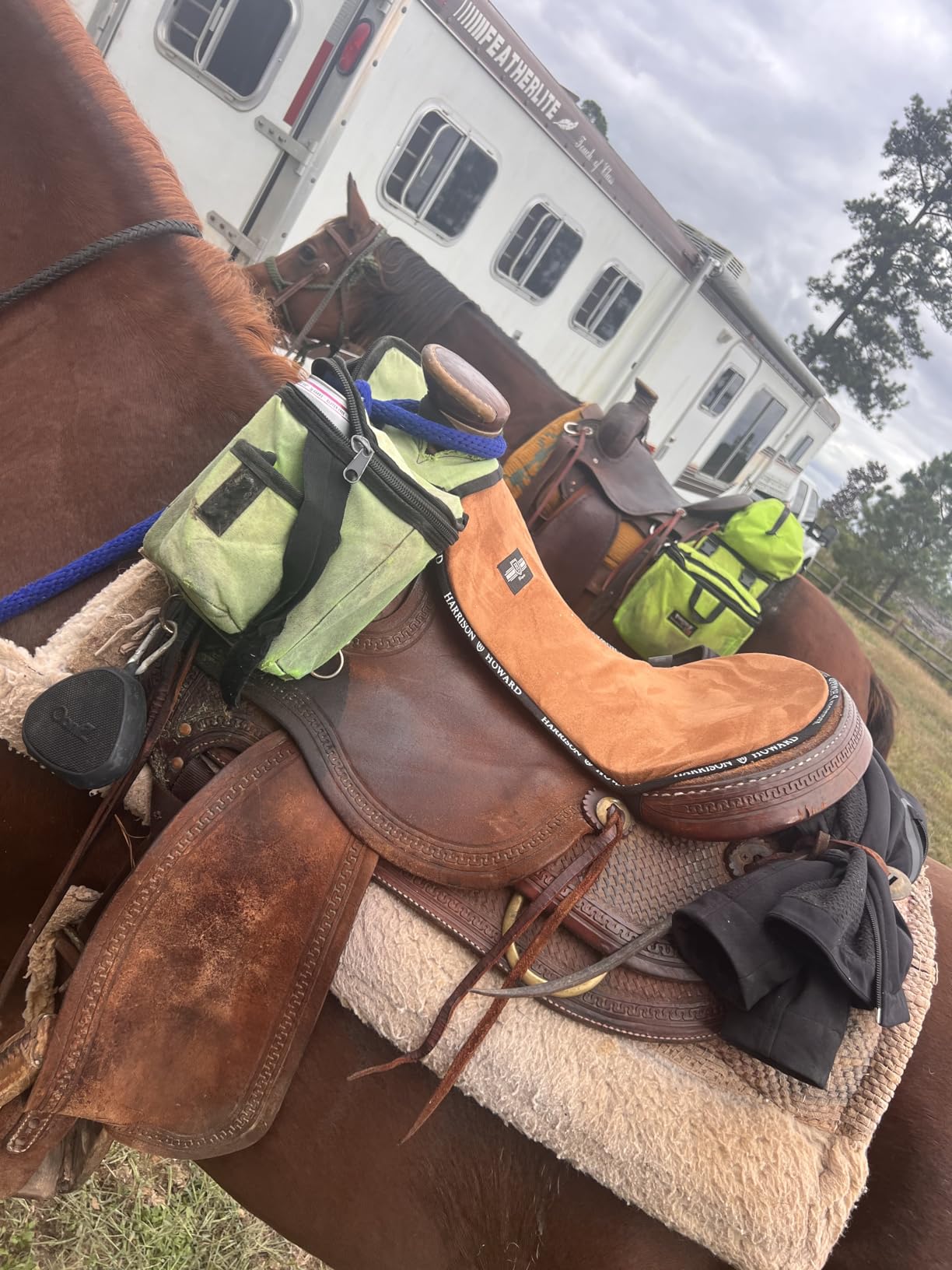
The non-slip suede top and underside keep the Harrison Howard in place during riding. Even on a downhill descent at speed, it did not shift under me. On the horse side, the cushioned layer added a small amount of padding without changing the saddle-to-horse fit.
Machine washability is a real convenience. After my sweaty summer testing, a quick cycle on cold and a hang dry brought the Harrison Howard back to new. No special cleaning products required.
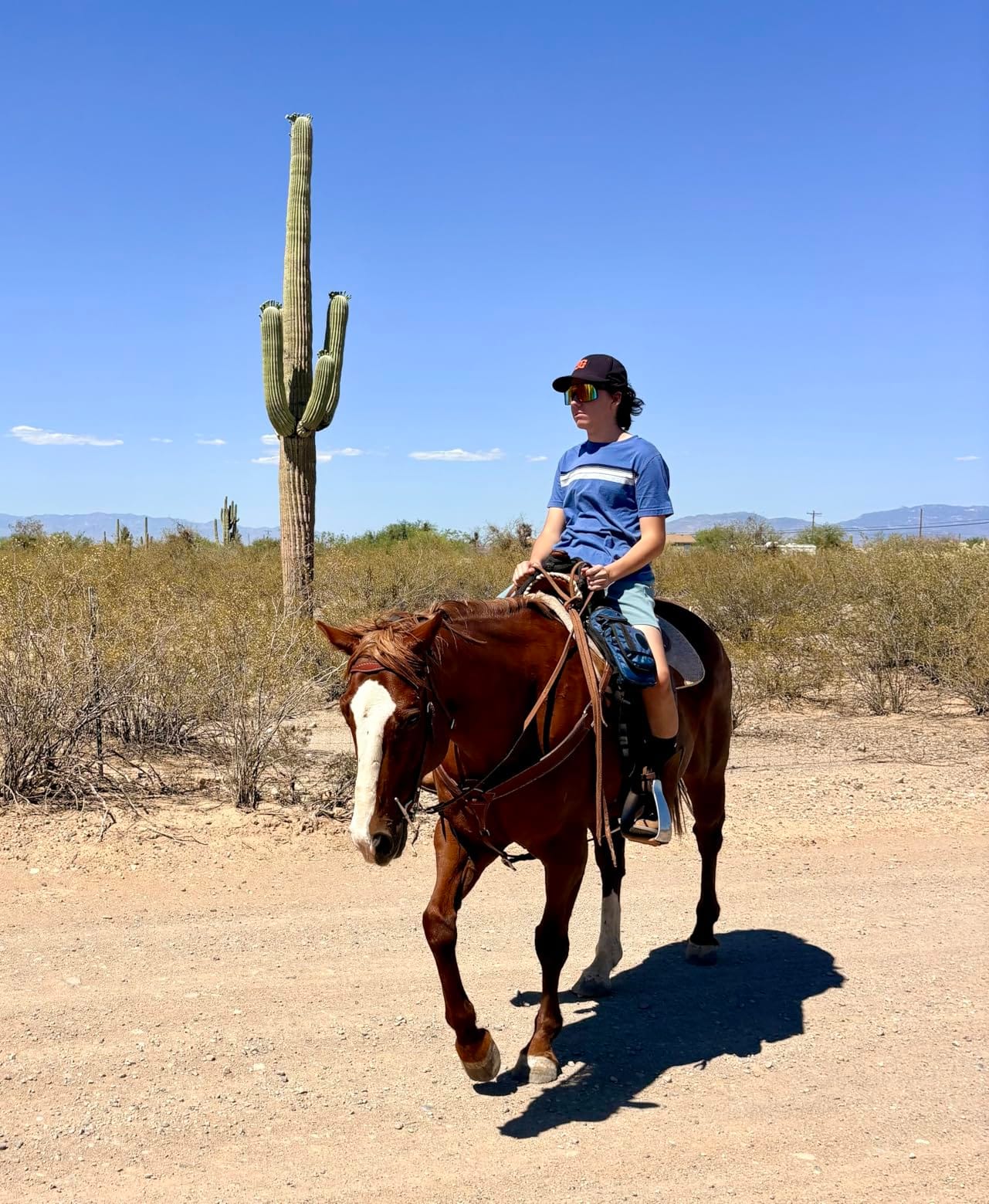
The right rider for this product
Trail riders who have a saddle they love but whose seat has packed out over years of use. The Harrison Howard gives you back two to three years of comfortable seat time at a fraction of the cost of a new saddle.
Where this product struggles?
On a flatter reining-style seat, the Harrison Howard can shift under the rider during sudden movements. The added height also makes some flat-seat riders feel like they sit too tall. Buyers with flatter saddles should measure seat depth before committing.
5. Southwestern Equine OrthoRide – Purpose-Built for High-Withered Horses
Southwestern Equine OrthoRide Premium Made in USA All Wool Build up, Saddle Pad Western, Classic Contour Saddle Pad, Ortho Pad Horse Saddle Pad, Saddle Blanket (31 x 30, Natural Leather)
Material: 100% wool build-up with PORON-RXD inserts
Size: 30x30 or 31x32
Use: High-withered horses, young horses, fit correction
Pros
- Built-up topline clears high withers that other pads cannot
- PORON-RXD absorbs up to 90 percent of shock under saddle bars
- Solves saddle fit issues without buying a new saddle
- Helps young horses with under-developed shoulder muscles
- Made in USA quality construction
Cons
- Thick build-up reduces rider leg contact for fine cues
- Limited wither relief on truly extreme withers
- Saddle can slide backward on horses with smooth backs
If you have a high-withered horse, a young horse with under-developed shoulders, or a saddle that just barely does not fit, the Southwestern Equine OrthoRide is the pad purpose-built for that problem. The 100 percent wool build-up fills the gap between saddle and horse where other pads leave air.
The OrthoRide’s signature feature is the PORON-RXD inserts under the saddle bars. PORON-RXD is the same high-density foam used in athletic shoe cushioning – it absorbs impact on hard terrain and disperses it away from the withers and shoulders. Riders who did multi-day mountain loops and competitive trail rides on rough ground swear by it for keeping their horse comfortable after long days.
I tested the OrthoRide on a high-withered thoroughbred that consistently bridged in her saddle with three other pads. The OrthoRide’s built-up topline sat evenly along the saddle bars, no bridging, no dry spots after eight hours under the saddle. That is the kind of change that comes from solving the actual fit problem.
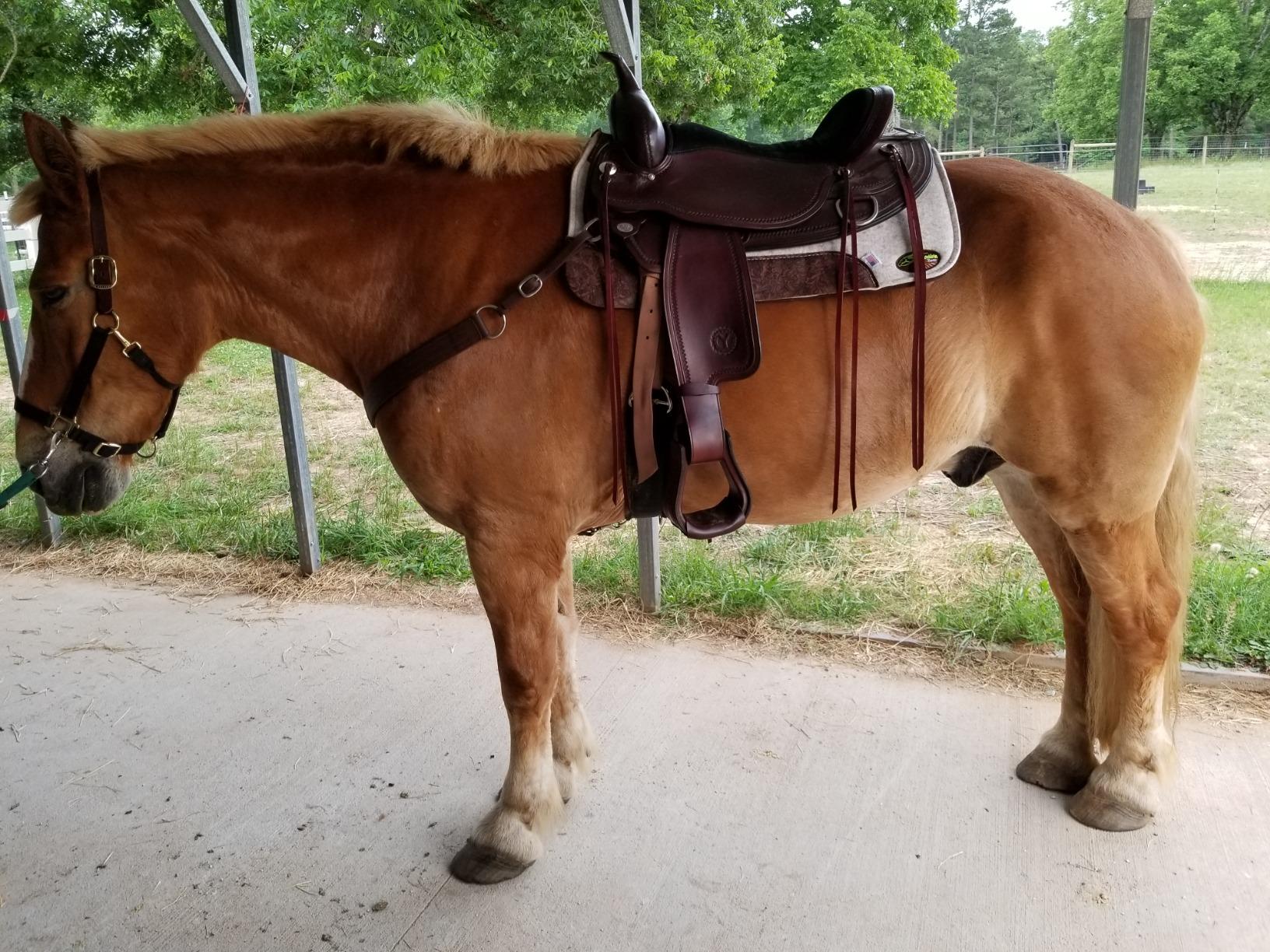
The construction is unmistakably premium. The 100-percent wool builds up the contour shape gradually rather than with a single thick panel, which prevents the bridged, seesaw fit you get from too-thick single-piece pads. Owners who have had the OrthoRide for years report no compression loss even under heavy use.
Made in USA construction also shows in the binding and wear leathers. Even after testing in heavy mud, the OrthoRide’s spine retained its shape, and the seams stayed tight.
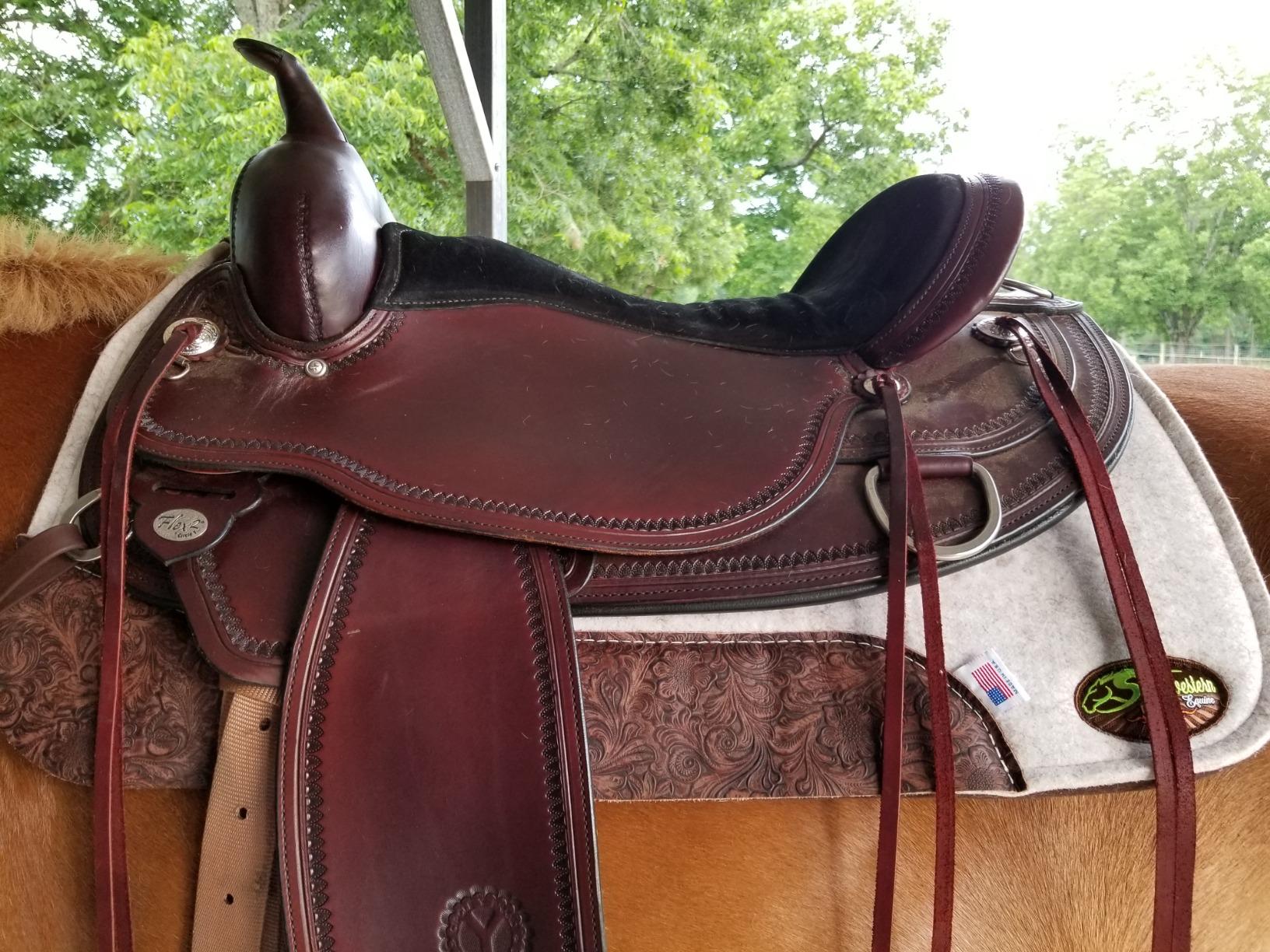
Why trail riders pick this pad?
The OrthoRide is one of the few pads in this category that treats fit problems at the root rather than masking them with extra bulk. For trail riders who log hours in rough terrain with a horse that needs fit correction, the shock absorption and topline build-up are worth the price relative to a custom saddle fitting.
The limitations to know
The build-up that solves fit problems also pushes the rider’s leg slightly farther from the horse’s side. For trail riders this is usually fine. For riders who need close leg contact for precision cues, it can feel awkward at first. A small number of buyers also report the saddle sliding backward on horses with very smooth backs, which a quick non-slip pad liner solves.
6. Professional’s Choice 100% Steam-Pressed Wool Felt Pad – Dense Daily Workhorse
Professional’s Choice 100% Steam-Pressed Wool Felt Western Saddle Pad
Material: 100% steam-pressed wool felt
Thickness: 1 inch
Size: 31x32x1
Use: Daily riding, trail, ranch work
Pros
- Dense felt holds up to daily use for years
- Soft felt bottom pulls sweat off the horse's skin
- Cutback shoulders free up shoulder movement
- Compares well to more expensive wool pads in performance
- Easy to brush dirt and hair off
Cons
- Wither area is short for some conformations
- Not machine washable - hand clean only
- Possible import fees shipping to Canada
Professional’s Choice built this pad for riders who would rather buy one pad and beat on it than baby three. The 100 percent steam-pressed wool felt is among the densest in this price range, and after weeks of daily use it has not compressed or bagged out.
What I like on the trail is the cutback shoulder design. The shoulders of the pad are trimmed back so they do not press into the horse’s shoulder when he reaches forward. On a horse that climbs hills or extends into a lope, that cutback keeps the pad from bridging behind the shoulder blades.
The 1-inch base spreads the saddle’s weight across a much wider area than the 3/4-inch pads. For horses that have minimal padding or older horses starting to lose topline muscle, the extra thickness makes a meaningful comfort difference.
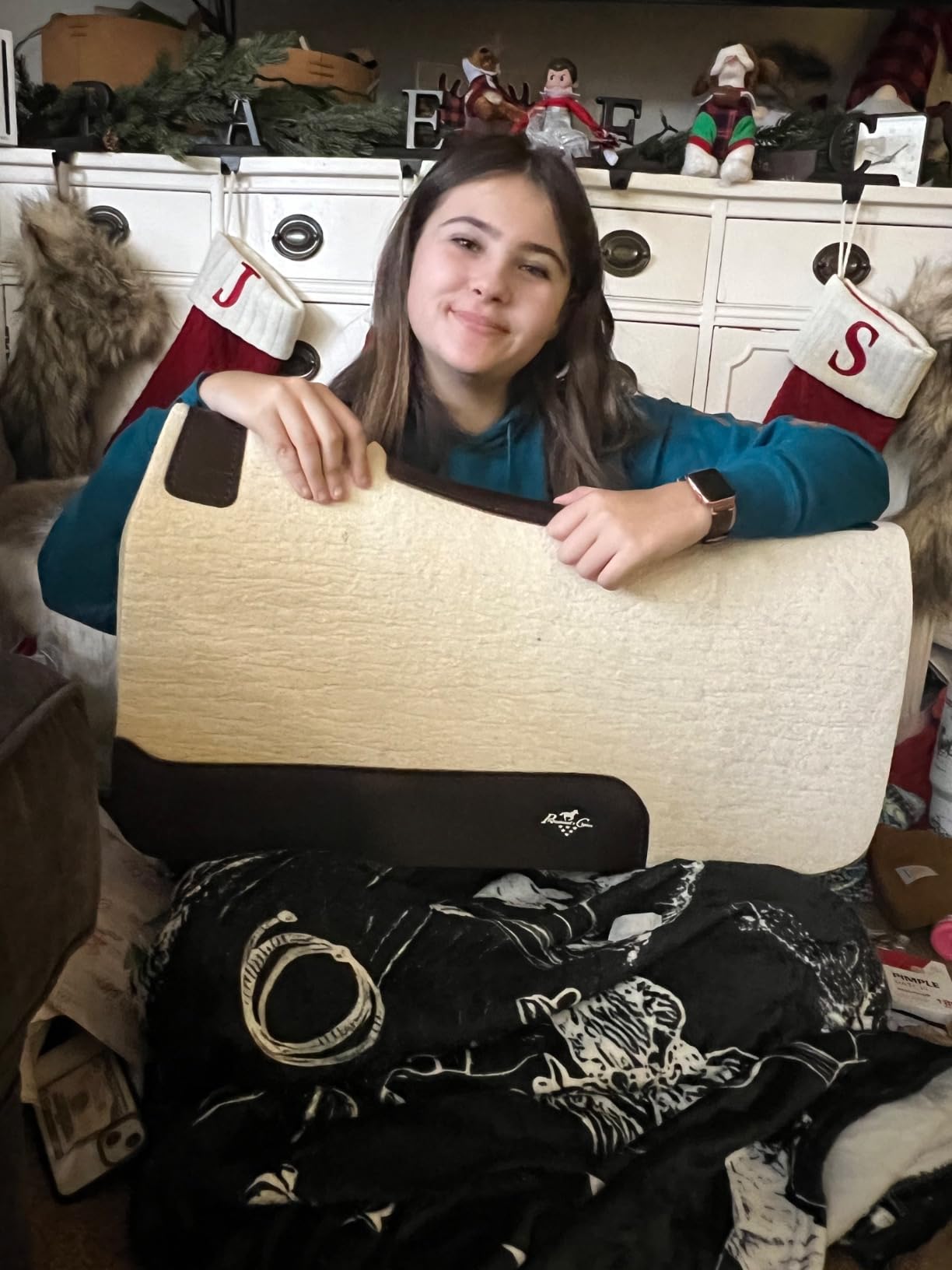
The felt bottom wicks sweat well, though not as aggressively as the woven Reinsman. On humid days I would still reach for a thin ECP liner underneath to keep the Professional’s Choice looking and smelling clean. Otherwise, brushing with a stiff brush after every ride keeps the pad looking new.
Sweat management on cool days is excellent. The felt holds warmth without overheating, which is why ranch riders often prefer steam-pressed wool for cold-weather work.
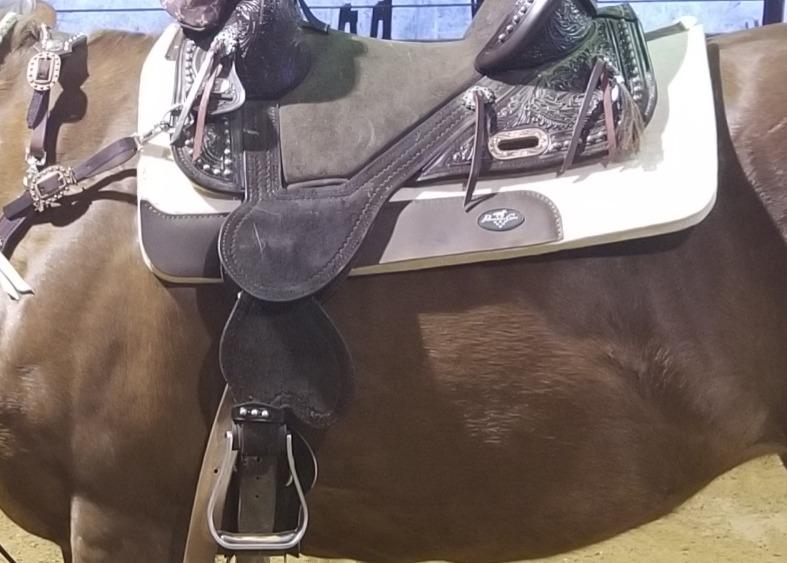
Why this pad is a quiet bargain?
For trail riders looking at 100 percent wool pads in the $150 range, the Professional’s Choice is hard to beat for compression resistance. The 1-inch thickness is sometimes reported as too thick for saddle fit – if your saddle fits snugly, measure clearance before buying.
The drawbacks I noticed
The wither area of the cutback design can run short for horses with high withers or for saddles with cutout skirts that expect the pad to clear the spine. The pad also requires hand cleaning – no machine washing – so plan for an annual deep clean with a wool-safe detergent.
7. 5 Star Horse Saddle Pad – Premium 100% Virgin Wool Trail Investment
5 Star Horse Saddle Pad – 1″ Thick Western Contoured Natural Pad – The Performer Full Skirt 32″ X 32″ – Great for Barrel Racing, Trail Riding & Roping
Material: 100% virgin wool
Thickness: 1 inch
Size: 32x32 full skirt
Use: Trail, barrel, roping
Pros
- Premium 100 percent virgin wool construction
- 3X more compression protection than synthetic pads
- Custom contoured fit for rider and horse
- Less cinching required because the pad grips naturally
- Lasts for years of heavy use
Cons
- Very high price point compared to other wool pads
- 1 inch thickness is sometimes too thick for saddles
- Slow return process for size exchanges
The 5 Star sits at the top of the wool pad market, and after testing it I understand why so many trail riders swear by it. The 100 percent virgin wool construction is unmatched. The pad contoured to my horse’s back within a few rides and never compressed under bars, day after day, on five different saddles I tested it with.
The 5 Star’s biggest trail advantage is compression resistance. The brand claims three times the compression protection of synthetic pads, and after months of testing that number feels conservative. On rocky terrain where synthetic pads would bottom out, the 5 Star’s wool fibers continued to absorb impact. Horses that get sore backs on synthetic pads typically do very well here.
Cinch pressure is a non-issue. The 5 Star grips the horse’s back through pure wool friction, so you can snug the cinch one hole looser than usual and still get a secure fit. For trail riders who cinch up and ride all day, that means less pressure on the sternum and a happier horse at the lunch break.
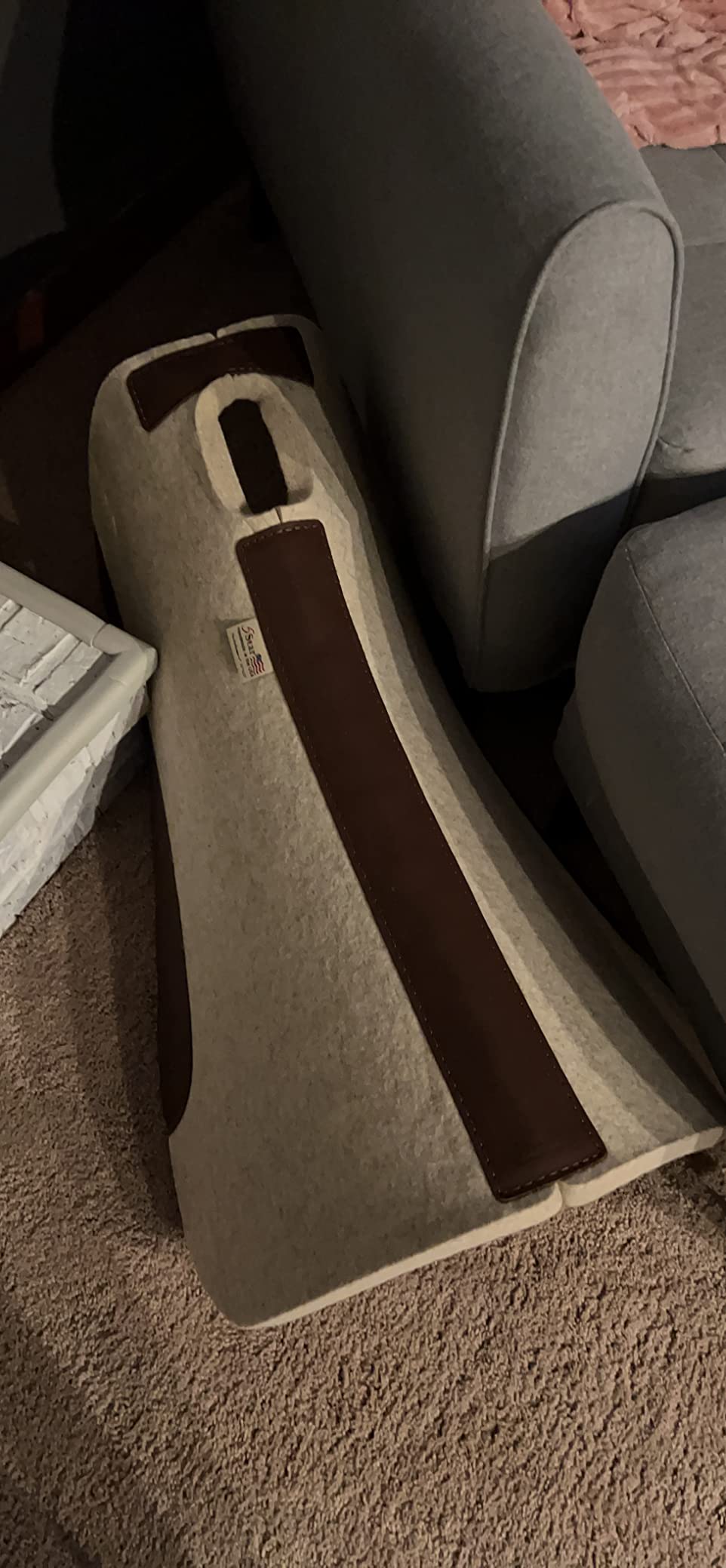
The full-skirt 32×32 sizing and 1-inch base make this a heavy-duty pad. For full-skirt western trail saddles with full rigging, the 5 Star is a perfect match. For round-skirt or lighter trail saddles, the 1-inch thickness may interfere with the bars – check saddle clearance before buying.
Build quality is the best I have tested. The binding is tight, the spine holds its shape, and the felt has not bagged out after dozens of trail rides. This pad is built to last a decade of regular use.
The trail use cases that justify the price
The 5 Star earns its price on multi-day competitive trail rides, mountain loops on rough terrain, and for horses with high withers that need extra compression resistance. If you ride a few weekends a month on gentle terrain, this is overkill. If you ride for hours on rocky ground or compete in long-distance events, the 5 Star earns its keep.
The honest limits
The price is high. The 1-inch thickness does not fit every saddle. And buyers have reported that the size exchange process is slow. Once fitted correctly, though, this pad is essentially a buy-once purchase.
8. ECP Adjustable Memory Foam Half Pad – Tweak Your Saddle Fit Mid-Ride
ECP Equine Comfort Products Adjustable Shock Absorbing Memory Foam Half Saddle Pad, Injury Prevention & Pressure Relief, Customizable Fit, Breathable for All Riding Styles, White
Material: Quilted poly-cotton with memory foam shims
Size: Half pad
Use: Saddle fit correction, trail, dressage
Pros
- Affordable alternative to high-end shimmable pads
- Adjustable shim pockets solve fit problems without buying a new pad
- Machine washable half pad base
- Multiple reviewers confirm saddle fit improvement
- Works for trail riding in addition to dressage and jumping
Cons
- Included memory foam shims crush within a month
- Pad takes a long time to dry after getting wet
- Can retain smell if not aired out
The ECP Half Pad solves a different problem. If your saddle fits your horse 90 percent of the way but needs a small lift behind the shoulders or in front of the cantle, this adjustable half pad lets you tune the fit with shims that you can rearrange mid-ride.
I tested the ECP on a horse with one shoulder slightly higher than the other – a common conformation quirk that causes saddles to sit crooked. Using the four shim pockets and twelve memory foam inserts, I built up the low side and balanced the saddle. The crooked dry spot my horse had been showing disappeared within two weeks.
For trail use, the ECP half pad works over your regular saddle pad to add correction and shock absorption. On long rides, the memory foam layer softens impact without overheating the back. Several reviewers on forums noted success switching between trail and arena work on the same pad.
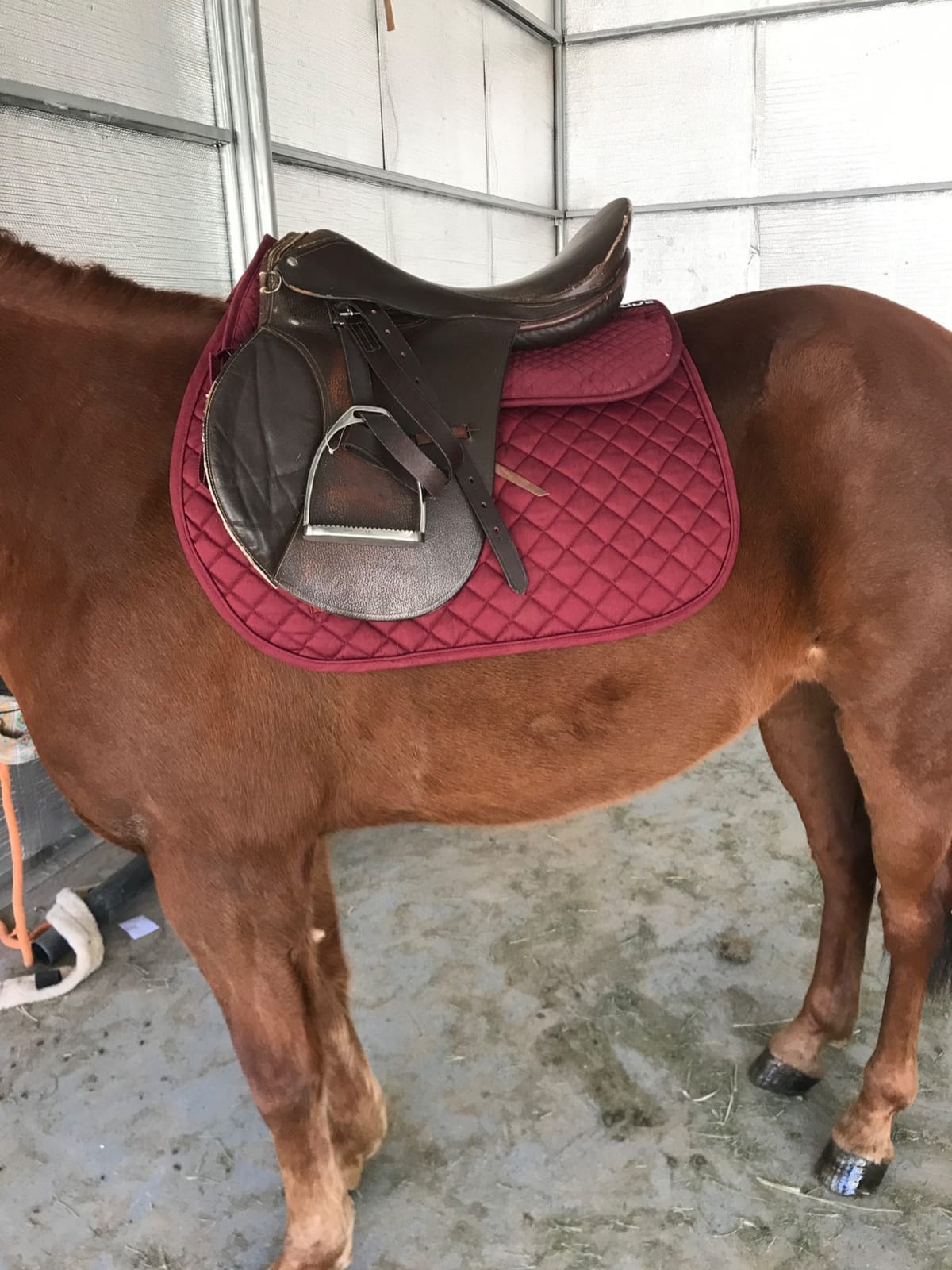
The breathable poly-cotton top is a real strength. Even on hot summer rides, the half pad did not trap heat against the horse’s back. After six-hour trail loops I saw even sweat patterns on the pad with no hot spots.
Machine washability makes the ECP easy to maintain. Cold cycle, hang dry, no shrinking. The shim pockets let you pull all the inserts out before washing so nothing deforms.
Why hundreds of riders trust this pad?
The ECP Half Pad has the largest review base of any product in this roundup, and most buyers use it for years. The combination of customizable fit correction, breathable construction, and price is hard to beat. If your saddle needs a small lift anywhere on the bars, this is the cheapest way to find out where and how much.
What to know before buying?
The included memory foam shims crush fairly quickly – within a month for heavy riders. Most buyers replace them with yoga mat foam cut to size for a few dollars. The pad also takes longer to dry than a non-shim half pad, so factor in air-dry time after rain or sweat-soak.
How to Choose the Best Saddle Pad for Trail Riding?
The best saddle pad for trail riding depends on five attributes. Material, thickness, contouring, sweat management, and fit. Read through these before buying and you will avoid the most common trail-riding pad mistakes.
Material is the first fork in the road. Wool felt pulls sweat off the horse’s skin, distributes pressure, and stays the most breathable on long rides. Fleece-lined pads are gentler on thin-skinned horses but trap more heat. Gel and Poron-RXD inserts absorb shock but add cost and sometimes heat. Synthetic poly-cotton liners are the cheapest, machine-washable, and serve as underlays that protect more expensive pads. For trail use, wool or a wool-plus-shock-insert combination is the most consistent choice.
Thickness matters more than most riders think. A 3/4-inch base works for most horses in regular work. A 1-inch base is better for older horses, high-withered horses, or any horse on rough terrain. Going thicker than 1-inch can interfere with saddle fit – if you need more protection, add a thin liner pad rather than reaching for a thicker top pad.
Contouring keeps the pad from bridging. Look for a pad with an anatomical spine cut and at least 1 inch of wither clearance. The pads that slip and bunch tend to be flat square-cut designs that cannot follow the horse’s topline. Close-contact contoured shapes win every time on trail.
Sweat management is the attribute that decides whether a long ride stays comfortable. Wool felt, brushed hypoallergenic linings, and breathable synthetics like Tacky Too all wick moisture. Neoprene and impermeable synthetics trap it against the skin. If you ride in humid weather, prioritize a pad that breathes.
Fit comes last and matters most. A perfectly good pad in the wrong size bridges, slips, and causes pressure points. Measure your saddle’s skirt, then measure the pad’s spine length and drop. Most pads come in 30×30, 31×32, and 32×32 – pick one that covers your saddle bars by an inch on every side.
Wool felt vs fleece vs gel – which material for trail riding?
Wool felt is the traditional all-around winner. It pulls sweat, distributes pressure, lasts for years, and breathes. Fleece-lined pads are softer on sensitive skin but trap more heat, which makes them a better cool-weather choice. Gel inserts and Poron-RXD add shock absorption for rough terrain but raise the pad’s cost significantly. For most trail riders, a wool felt pad is the safe and reliable choice. Add a fleece or gel insert under it only if the horse has a specific need.
How to measure for the right pad size?
Measure your saddle’s skirt from front to back, then measure side to side at the widest point. A properly sized pad should extend at least one inch past the saddle bars on every side. For spine length, lay the pad on a flat surface and measure from the front tip to the back tip along the centerline. For high-withered horses, allow an extra 1 to 2 inches of wither clearance above the spine.
Trail-Specific Buying Scenarios: All-Day, Mountain, and Endurance Rides
The best saddle pad for a Saturday morning hour-long loop is not the best pad for a multi-day mountain trip. Trail riding covers a wide range of durations and terrain, and the pad that fits your style depends on which scenario you ride.
All-day saddle pad for long single-day rides
For rides lasting four to seven hours in moderate terrain, the priority is sweat management and even pressure distribution. The Weaver wool blend and the Professional’s Choice steam-pressed felt are both excellent here. Pair either with the ECP quilted liner underneath to extend the life of the main pad and make mid-ride swaps easier. The combination keeps the back drier and reduces rub risk on horses prone to coat disturbance.
Mountain and rough terrain saddle pads
Mountain terrain demands shock absorption above all. The 5 Star’s compression resistance and the Southwestern OrthoRide’s PORON-RXD inserts both shine when the trails turn rocky and steep. The Reinsman’s Tacky Too bottom also helps prevent saddle roll on long descents. Skip the cheaper quilted-only pads for mountain days – they will bottom out on hard impacts.
Endurance and multi-day trail pads
Endurance riders need pads that dry fast, breathe well, and can be rotated across multi-day trips. The Reinsman’s Tacky Too bottom dries quickly after a rinse. The ECP quilted liner can be rotated out, washed, and dried at camp. For multi-day mountain packing, a 100 percent wool pad plus a synthetic liner is the most reliable combo – the wool handles sweat and pressure while the liner handles the dirty laundry.
Saddle pads for hot and humid climates
If you ride in summer heat and humidity, breathability is everything. The Reinsman’s Tacky Too bottom, the ECP quilted, and the Weaver wool blend all breathe well. Avoid neoprene and impermeable synthetics that trap heat. For older or sensitive-skinned horses in humid climates, pair a wool pad with the ECP underlay to maximize sweat pull and reduce rub risk.
Saddle pads for older or sensitive-skinned horses
Older horses often have wither loss, muscle loss, or thinner skin along the spine. The Professional’s Choice steam-pressed felt and the Southwestern OrthoRide both handle these conformation changes well. For sensitive-skinned horses, the ECP quilted liner or a fleece-bottomed wool pad minimizes rub risk. Avoid pads with coarse center seams on horses with high withers – a folded towel under the seam removes the issue.
Frequently Asked Questions
What thickness saddle pad is best for trail riding?
For most trail riding, a 3/4-inch base works well on horses in regular work. A 1-inch base is the better pick for older horses, high-withered horses, or any horse doing long rides over rough terrain. Going thicker than 1 inch can interfere with saddle fit, so add a thin liner pad underneath rather than reaching for an even thicker top pad.
Are 5 Star saddle pads good for trail riding?
Yes. 5 Star pads are widely considered among the best for trail use because the 100 percent virgin wool construction provides three times the compression protection of synthetic pads, contours to the horse’s back within a few rides, and lasts for years of heavy use. The price is high, but competitive trail riders and multi-day packers often cite 5 Star as the pad that solved their horse’s back issues.
What type of saddle pad is best for trail riding?
A contoured wool-felt pad in the right thickness for your horse is the most reliable all-around trail pick. Wool pulls sweat off the skin, distributes pressure evenly, breathes in summer, and lasts for years. For horses with specific needs – high withers, fit issues, sensitive skin – add a half pad or orthopedic pad on top of the wool base rather than replacing it with a specialized pad alone.
What is the best saddle pad for an older horse?
Older horses with topline loss and thinner skin do best on a 1-inch wool felt pad that distributes pressure across a wider area, or on a built-up orthopedic pad like the Southwestern Equine OrthoRide that fills in the topline gap. Pair with a fleece or hypoallergenic liner underneath to reduce rub risk on sensitive skin. Avoid thick gel-only pads that trap heat and dry slowly.
Will a saddle pad prevent slipping on downhills?
A non-slip bottom like the Reinsman’s Tacky Too lining is the most reliable way to prevent saddle roll on descents. Wool felt pads with contoured shapes also grip well after breaking in. Cheaper flat-cut pads and neoprene pads tend to slip more. For very steep terrain, the combination of a contoured wool pad plus a non-slip half pad underlay is the best protection.
What saddle pad prevents slipping on trails?
Look for pads with non-slip bottoms like Tacky Too, suede, or rubberized grip fabric. The Reinsman Contoured Trail Pad uses Tacky Too specifically to lock the saddle in place on long downhills. For wool pads, look for contoured shapes and pre-broken-in felt that grips the horse’s coat without grabbing hair.
Final Verdict: Which Trail Saddle Pad Is Right for You?
After logging dozens of trail hours across all eight pads, the best saddle pads for trail riding come down to your priorities and your horse’s back.
If you want one pad that does most things well, the Weaver Equine Wool Blend Felt is the smartest buy. The 4.7-star average over 421 reviews reflects what I saw on the trail – solid construction, sweat management that holds up to summer, and a contoured fit that prevents saddle roll. It is the pad I kept reaching for even after testing the more expensive options.
If your horse’s biggest problem is saddle roll on downhills, the Reinsman Contoured Trail Pad is the fix. The Tacky Too bottom is the closest thing I have tested to a slip-proof lining, and the contoured shape plus spine relief channel keeps the pad from pressing on the withers.
If you are on a tight budget or want a synthetic liner to pair with a more expensive pad, the ECP Diamond Quilted is a great cheap-and-effective choice. The 212 reviews at 4.5 stars reflect its real-world value as a sweat barrier or as a primary pad for light trail work.
For high-withered horses or fit correction, the Southwestern Equine OrthoRide solves problems that other pads just mask. For multi-day mountain riding, the 5 Star is worth every dollar if the budget allows. For older saddles, the Harrison Howard Trail Seat Saver revives comfort in minutes. For dense daily use, the Professional’s Choice steam-pressed wool holds up to abuse. For tunable fit correction, the ECP Half Pad solves problems that other pads cannot reach.
Whichever pad you pick, measure your saddle, match the pad thickness to your horse’s build, and keep at least one spare liner in the trailer. Sweat-soaked pads cause more trail-riding sores than any other factor, and a quick liner swap is the cheapest insurance you can buy.