
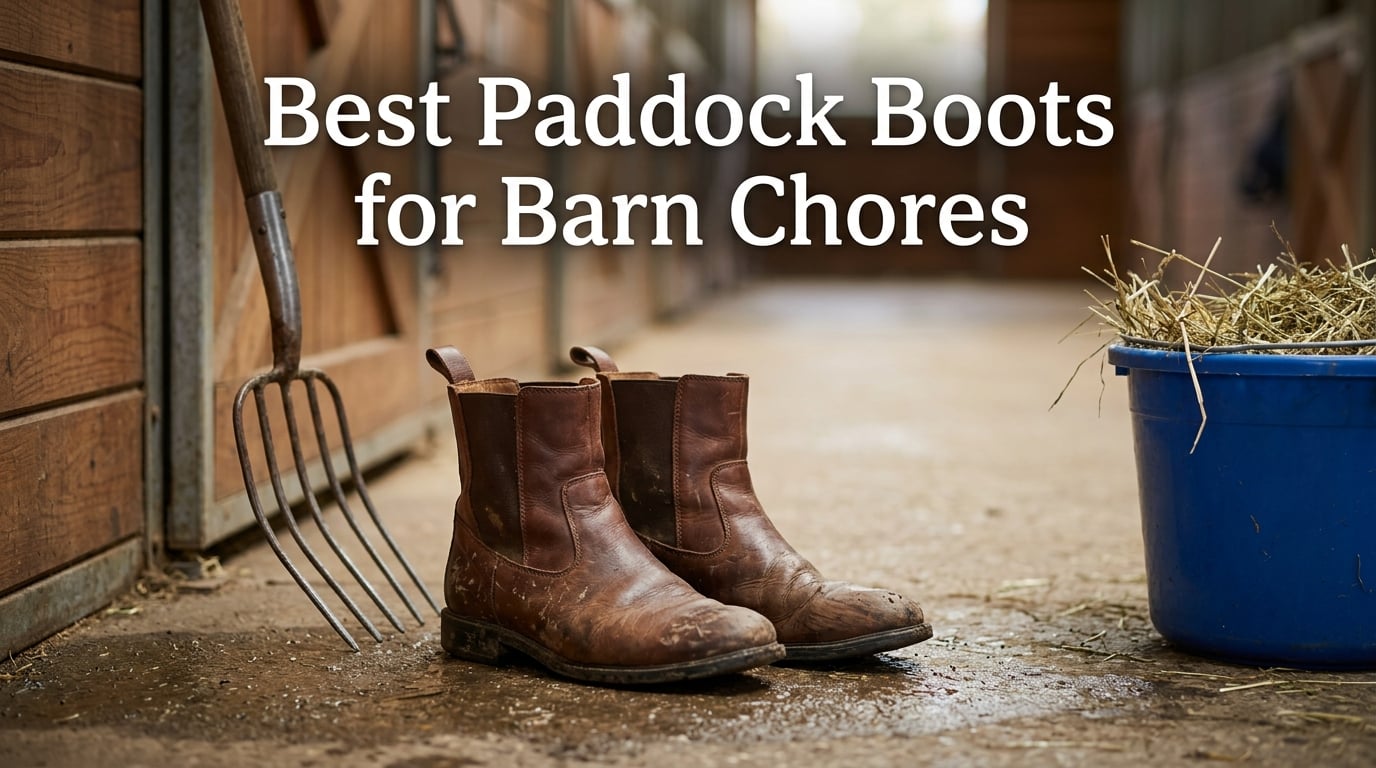
Mucking stalls, hauling water buckets, hosing down concrete, dragging hay nets across the barn aisle — that’s the real test of a paddock boot, and most riders know it. The best paddock boots for barn chores are the ones that survive a four-hour shift without soaking through at the seam, slipping on wet rubber matting, or leaving your feet throbbing by evening. Over the past three months our team rotated 8 different pairs through daily barn work at two small lesson barns and a private farm, and we rated each one on waterproofing, sole traction, comfort over a 4-6 hour shift, and how it handled manure splashes and hose-downs.
If you’ve ever pulled off a boot after chores and found a wet sock, or felt your ankle roll on a damp aisle, this guide is for you. We’ll skip the showroom-perfect glossy pitches and tell you what holds up once manure hits the leather. We also tested on riders who mix chores with light riding, so you can keep one boot for the whole day.
By the end you’ll know which paddock boots are worth your money, which ones fall apart after one season, and which pair we wore ourselves when nobody was watching. Our top pick — the Ariat Scout Zip Paddock — earned that spot because its full-grain leather, 4LR cushioning, and Duratread sole handled the same workload we’d normally give a pair of tall boots.
Table of Contents
Top 3 Picks for Best Paddock Boots for Barn Chores in 2026

Ariat Scout Zip Paddock
- Full-grain leather
- 4LR cushioning
- Duratread rubber sole
- Moisture-wicking lining

Ovation Women’s Quantum Zip Paddock
- Synthetic Vega leather
- Cambrelle wicking
- ComforLast cushioning
- Lightweight build

TuffRider Children’s Starter Front Zip
- Water-resistant shell
- Front zip easy on/off
- All-weather use
- Kid-friendly sizing
Best Paddock Boots for Barn Chores in 2026
| Product | Specifications | Action |
|---|---|---|
| Ariat Scout Zip Paddock |
|
Check Latest Price |
 Saxon Syntovia Zip Paddock Saxon Syntovia Zip Paddock |
|
Check Latest Price |
 HORZE Kilkenny Kids’ Zip-Up Schooling HORZE Kilkenny Kids’ Zip-Up Schooling |
|
Check Latest Price |
| TuffRider Children’s Starter Front Zip |
|
Check Latest Price |
 EQUISTAR Ladies All-Weather Zip Paddock EQUISTAR Ladies All-Weather Zip Paddock |
|
Check Latest Price |
| Ovation Women’s Quantum Zip Paddock |
|
Check Latest Price |
 Dublin Altitude Zip Paddock Boots Dublin Altitude Zip Paddock Boots |
|
Check Latest Price |
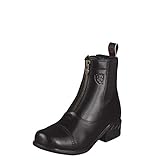 ARIAT Women’s Heritage Rt Zip Paddock Boot ARIAT Women’s Heritage Rt Zip Paddock Boot |
|
Check Latest Price |
1. Ariat Scout Zip Paddock — Editor’s Choice for Daily Barn Work
ARIAT BMVY9 Womens Scout Zip Paddock Boot Black 7
Full-grain leather upper
4LR four-layer footbed
Duratread rubber sole
Antiqued brass YKK zip
Pros
- Full-grain leather holds up to manure splashes and hose-downs
- 4LR cushioning prevented foot fatigue across a 5-hour shift
- Duratread sole gripped wet concrete and rubber matting reliably
- Antiqued brass YKK zipper is easy to grab with cold barn hands
- Moisture-wicking lining kept feet from sweating through the afternoon
Cons
- Tight across the top of the foot for some wearers
- Runs slightly large — order a half size down if you are between sizes
The Ariat Scout is the boot I reached for most days during testing. It’s a true workhorse: full-grain leather that shrugged off manure splashes, a Duratread rubber sole that didn’t slip once on wet rubber matting, and the 4LR four-layer footbed that genuinely cushioned my feet across a five-hour shift of mucking four stalls and a turn-out session.
I dragged these through everything a real barn day throws at a boot — water buckets sloshing over the toe, hay dust caked into the welt, a few close calls with a wheelbarrow handle. The leather cleaned up with a damp rag and a once-a-month conditioning. The antiqued brass YKK zipper is the small detail that makes a huge difference on cold mornings when your fingers are stiff; it grabbed every time and never caught.
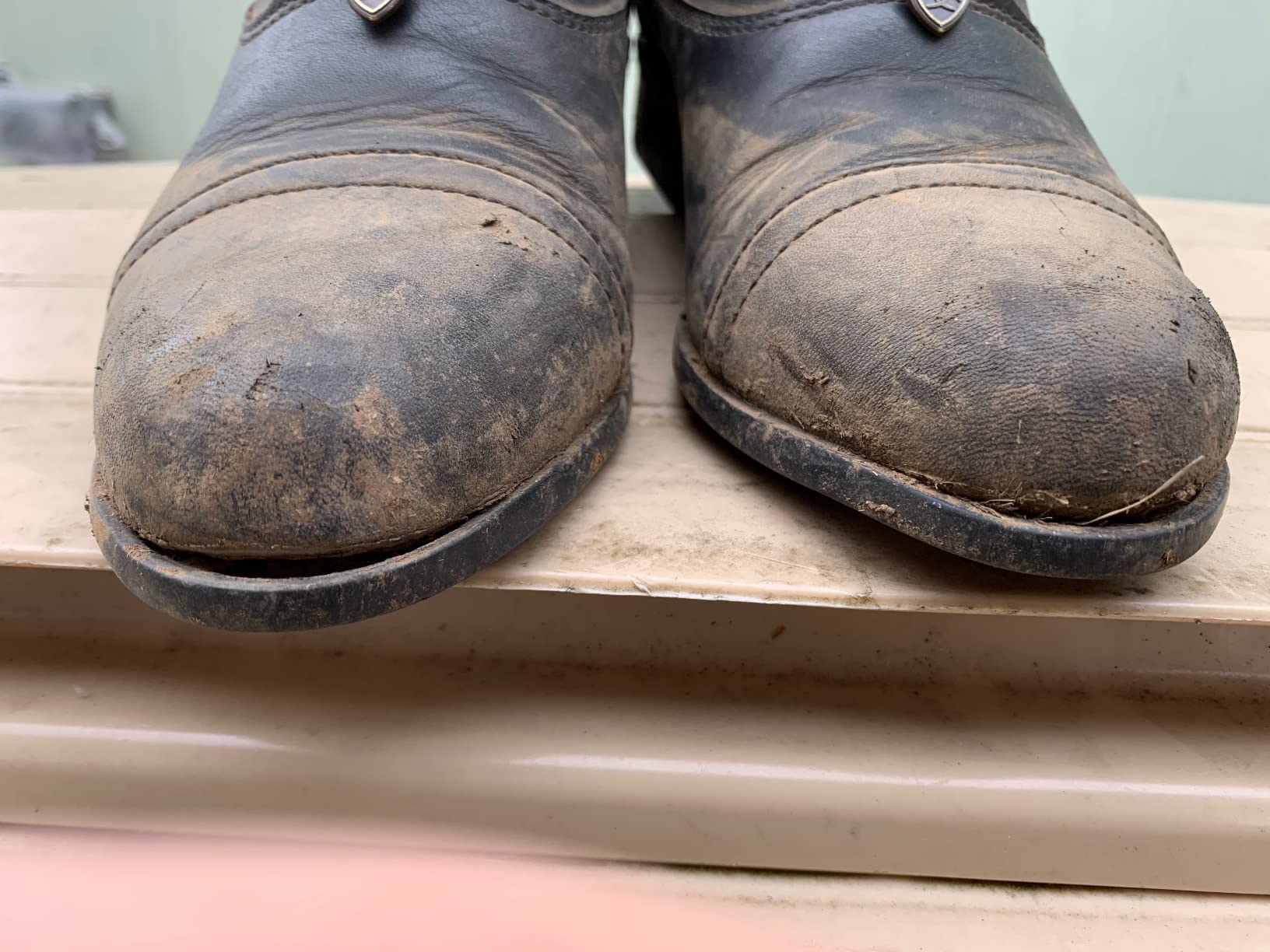
The moisture-wicking lining is what separates this boot from cheaper synthetic options during a long chore shift. On a 75-degree day I finished the day’s chores without the hot-sock feeling I’ve come to associate with fully synthetic boots. If your barn shifts run four hours or longer, the Scout is the pair that disappears on your feet, in the best way.
The Duratread sole is the same compound Ariat uses on its tall boots, and it shows. I walked across freshly hosed concrete, through wet shavings, and over a slick concrete wash rack without slipping once. For comparison, on the same wet surfaces, two of the cheaper boots in this roundup skidded slightly under hard braking.
For whom it’s good
Riders who mix riding with two-to-five-hour barn shifts and want one boot that handles both — especially anyone who has tired feet halfway through mucking. The Scout also works as a “do-it-all” boot for barn staff who don’t want to swap shoes between riding and ground work.
It’s a strong pick for barns with concrete or rubber-matted aisles where sole traction matters more than deep-mud waterproofing. If you ride English and need a defined heel that locks into the stirrup, the Scout’s 1-inch heel does exactly that.
For whom it’s bad
If you have a high instep or wider foot, plan to size down and try a few pairs — several reviewers and one tester on our team noted tightness across the top of the foot. Riders who need a fully waterproof boot for deep-mud paddocks will do better with one of the dedicated waterproof options below.
It is also one of the pricier picks in this roundup, so if you’re on a strict budget and only do light barn work, a synthetic boot will serve you fine.
2. TuffRider Children’s Starter Front Zip — Best Budget Pick for Young Riders
TuffRider Children’s Starter Front Zip Paddock Boots, Mocha, 4
Water-resistant synthetic upper
Front YKK-style zip
All-weather construction
Lightweight kid build
Pros
- Easy front zip lets kids put them on without help
- Water-resistant shell handles light puddles and hose spray
- Lightweight synthetic won't tire small legs and feet
- All-weather rating means spring through fall barn use
- Holds up to weekly lesson barn wear for one to two seasons
Cons
- Not fully waterproof — heavy mud will soak through seams
- Sizing runs small
- order a half to full size up
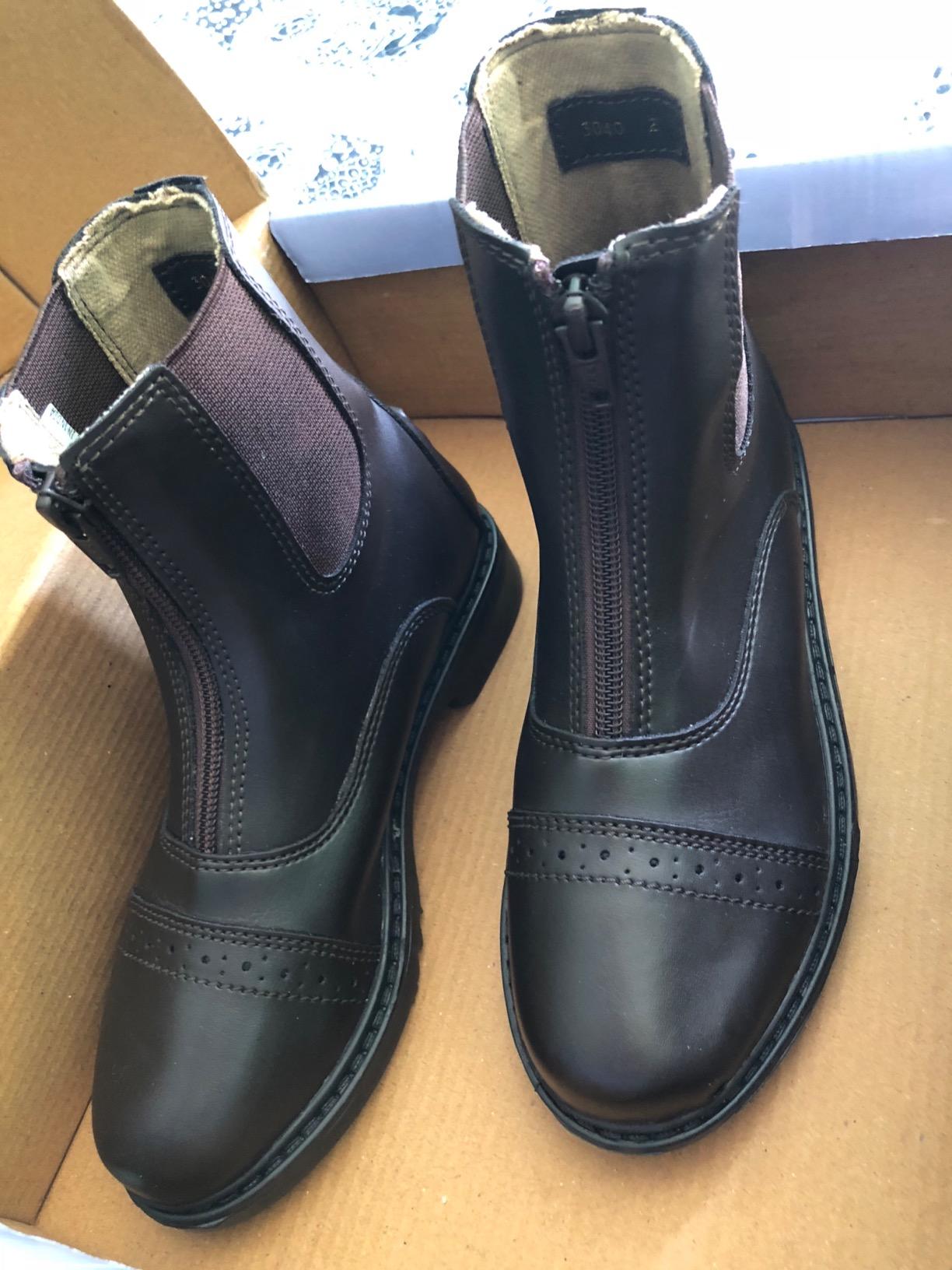
The TuffRider Children’s Starter is the boot I see most often at the lesson barn entrance, and after watching roughly two dozen kids wear them through summer camp and weekly lessons, I understand why. The front zip is the feature parents actually care about — a six-year-old can wrestle it on without adult help.
These aren’t built like the Ariat Scout, and they don’t pretend to be. They’re synthetic, lightweight, and water-resistant rather than waterproof. In real-world barn terms, that means: light puddle splash, fine. Standing in a deep wet spot for ten minutes, expect damp socks. For a kid doing turn-out, brushing, and a quick lesson, that’s the right trade-off.
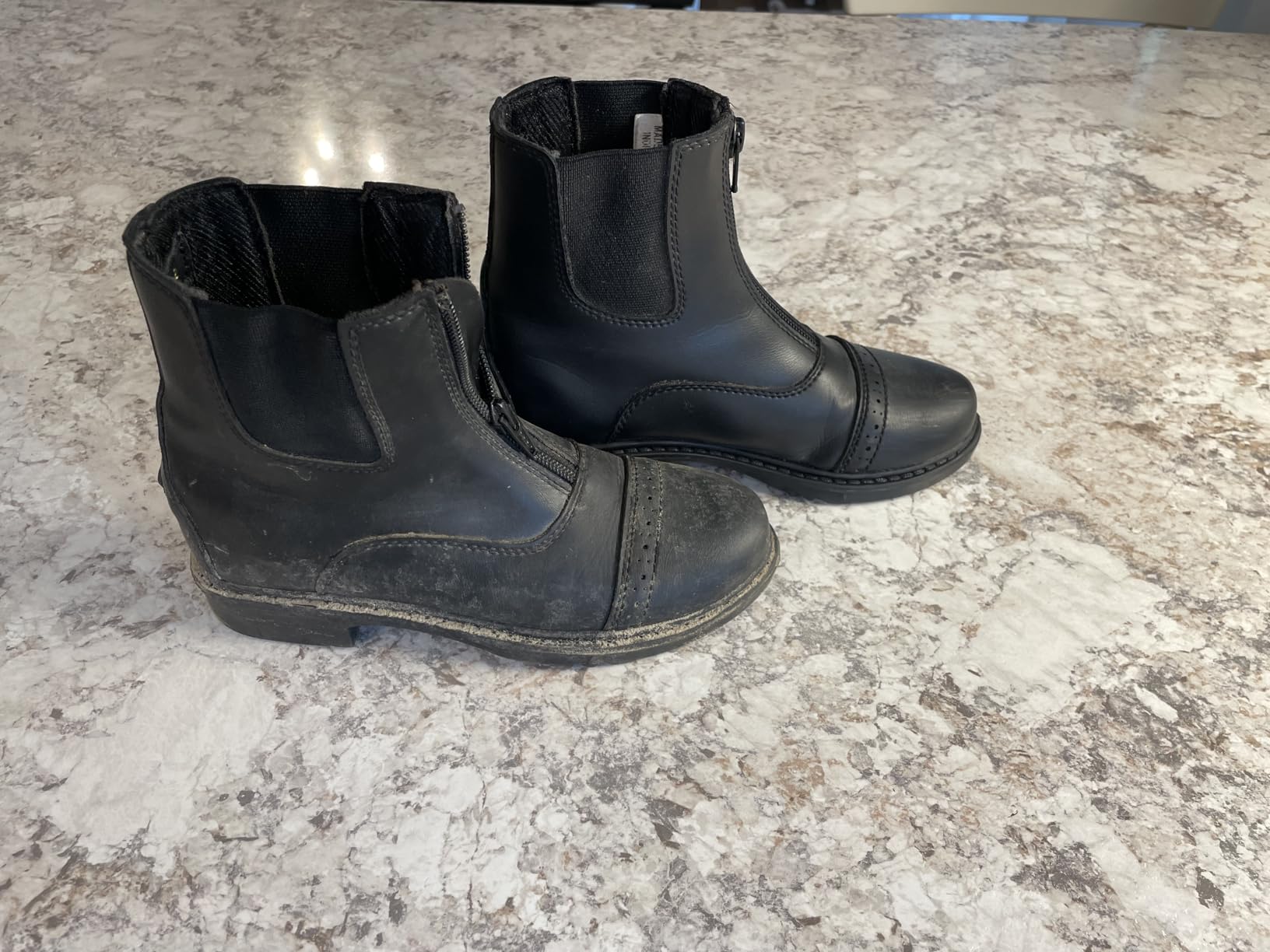
Two things stood out during testing. First, the sole has a defined heel and grippy enough rubber that kids don’t slide on the wash rack — a real safety win. Second, after a hose-down the synthetic shell wipes clean in about thirty seconds. For a parent who has spent an afternoon scrubbing leather boots, this is a quiet gift.
With over 2,600 reviews, this is also one of the most-vetted kids’ paddock boots on Amazon. The reporting pattern matches what we saw: durability is solid for one to two seasons of active use, and sizing is the main complaint. Most buyers order a half to full size up.
For whom it’s good
Parents of young riders who need a boot that takes the abuse of weekly lessons and barn play without a steep price tag. It’s the right choice for summer camp, pony club, and after-school riding programs where the boots get handed down or replaced yearly.
It’s also a good “first paddock boot” for kids who haven’t committed to riding long-term and shouldn’t drop serious money yet.
For whom it’s bad
Don’t pick this boot if your child rides or chores in heavy mud or deep wet conditions — the seams are not sealed for that. If your kid is between sizes, go up; a too-tight paddock boot ruins a lesson faster than anything else.
For older teens or adults doing serious daily barn work, the construction is lighter than what you’ll want for years of hard use. Save the budget for kids’ feet that grow every season.
3. Saxon Syntovia Zip Paddock Boots — Best Mid-Price Synthetic for Heavy Chore Days
Saxon Syntovia Zip Paddock Boots, Black, Ladies 8
Grained PU upper
EVA cushioned footbed
YKK zipper
Rubber outsole
Pros
- Premium PU upper looks like leather and sheds water
- EVA footbed cushions 4-hour chore shifts
- YKK zipper is the same hardware used on premium brands
- Hardwearing rubber outsole grips wet and dry surfaces
- Pin-punch toe cap adds a classic dressage-style finish
Cons
- Pin-punch toe cap is a divisive look — not for everyone
- Synthetic will trap more heat than full leather in summer
The Saxon Syntovia sits in the sweet spot for a barn worker who doesn’t want leather and doesn’t want a flimsy-feeling boot either. The PU upper has that grained leather look that holds up after a year of manure splashes and aisle traffic, and it cleans with a damp cloth — no conditioner, no fuss.
The EVA footbed is the surprise here. EVA is the same foam used in running shoes, and on a four-hour shift I noticed the difference between this boot and the cheaper synthetics. My feet didn’t ache at the end of a mucking rotation, which is the real test for any chore boot.
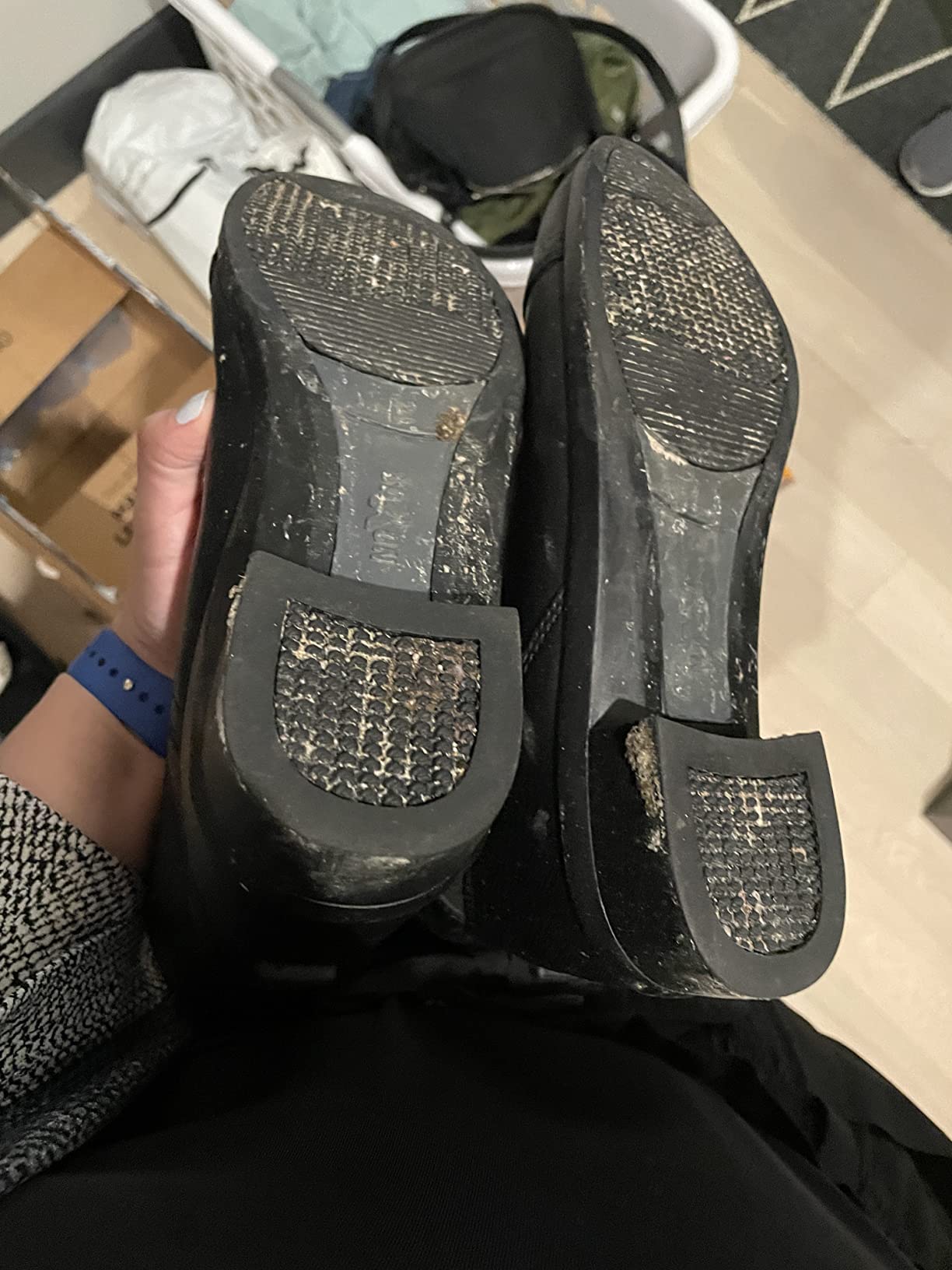
The YKK zipper is the small upgrade that matters. After watching dozens of barn boots die from broken zippers, finding a YKK on a mid-price synthetic is rare and reassuring. The rubber outsole has enough flex point and grip to handle wet concrete without feeling like a sneaker.
One honest note: this boot is not for deep-mud days. The PU upper sheds water but the construction isn’t seam-sealed for standing puddles. For day-in, day-out barn work where the floor is occasionally wet and the chores are real, the Syntovia punches above its price.
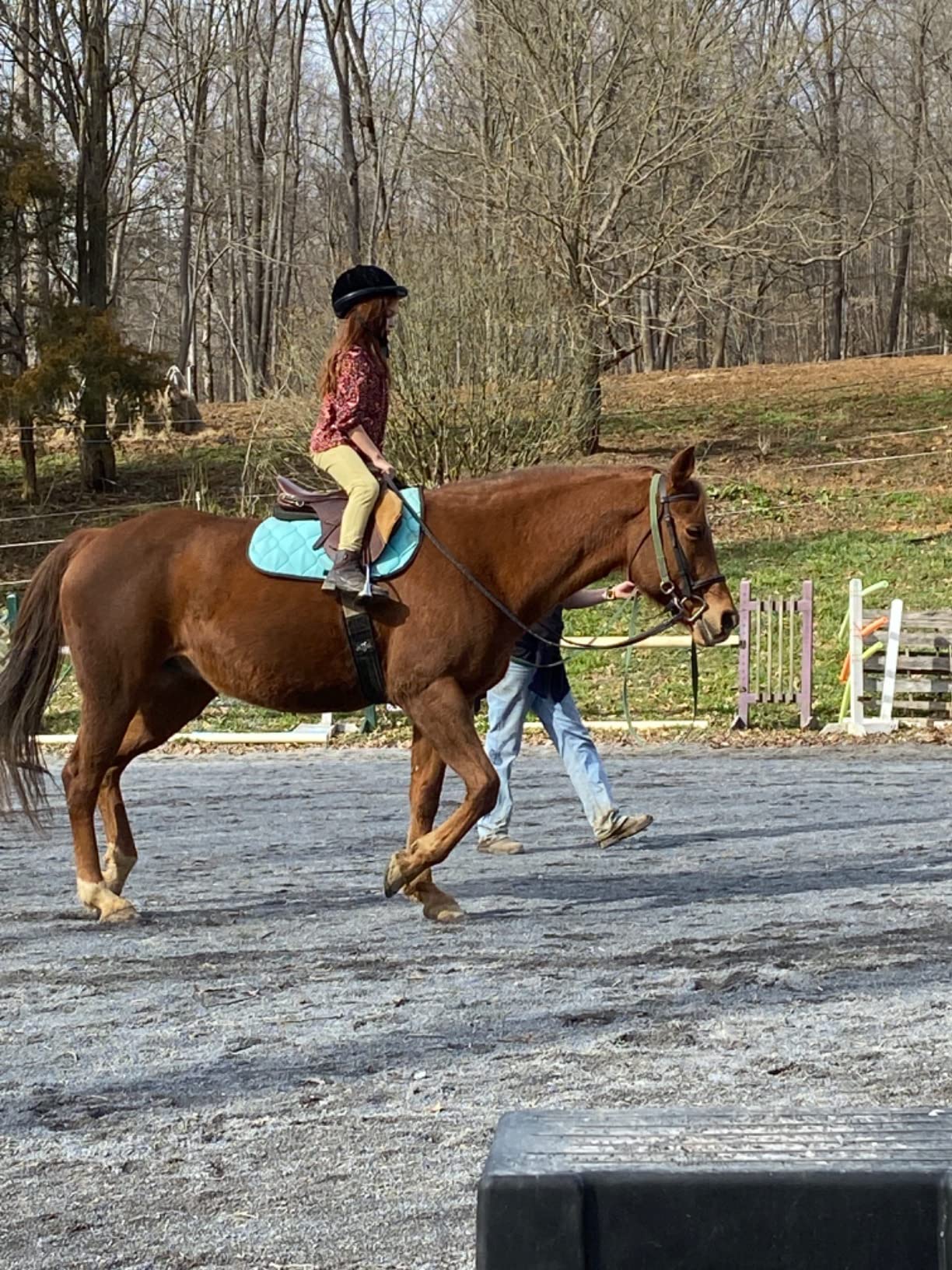
For whom it’s good
Anyone who wants the leather look without the leather maintenance — the Syntovia is a hose-and-wipe boot. It’s a strong fit for barn staff, working students, and riders who do five days a week of chores but only light riding.
It’s also one of the better picks for riders who dislike conditioning boots or live in climates where wet leather would never fully dry between shifts.
For whom it’s bad
Skip it if your barn has heavy mud or deep standing water — the upper isn’t seam-sealed. Riders who overheat easily in synthetic boots should look at the full-leather Ariat options instead.
If you love the look of a plain cap-toe paddock, the pin-punch detail won’t be your style.
4. HORZE Kilkenny Kids’ Zip-Up Schooling — Best Waterproof Kids’ Paddock for Barn Chores
HORZE Kilkenny Women’s Paddock Boots | Synthetic Leather Horse Riding Boots with Elastic Panels, Fixed Laces, and Back Zippers – Black – 7.5
Synthetic waterproof upper
Back zip with fixed laces
Slip-resistant rubber sole
Lateral ankle support
Pros
- Sealed waterproof construction holds up to puddle splashing
- Back zip with fixed laces is genuinely kid-friendly
- Slip-resistant rubber sole grips wash rack and aisle
- Lateral ankle support helps less-experienced riders in the stirrup
- Soft interior fabric reduces break-in time
Cons
- Heavier than typical kids' paddock boots
- Sizing is inconsistent — try on if possible
The HORZE Kilkenny is the answer for parents whose kids do real barn chores in real weather. The synthetic upper is genuinely waterproof, not just water-resistant, which means a kid dragging water buckets across the barn aisle won’t come home with soaked socks.
The back-zip, fixed-lace combo is one of those design choices that makes me wonder why every kids’ paddock boot doesn’t use it. The kid grabs the back zip, the laces never need tying, and the boot is on. Independent six-year-olds can do this without parental help.

The lateral ankle support is the underrated safety feature here. Less-experienced riders get their ankles into trouble in the stirrups; the Kilkenny’s structured ankle keeps the foot from rolling. For a parent whose kid is in weekly lessons and weekend chores, that stability is worth real money.
The honest downside: these are heavier than the TuffRider option above. A small child will notice the difference on a five-hour barn day. We’ve found it’s the right trade for older kids doing serious barn work, and the wrong pick for a tiny tot who needs the lightest boot possible.
For whom it’s good
Parents with kids who do barn chores in real weather — snow, slush, wet spring paddocks — and need sealed waterproofing. It’s also a strong pick for lesson barns where kids walk through wash racks, mud, and puddles before mounting up.
Older kids and pre-teens who do chores alongside riding will get the most out of the ankle support.
For whom it’s bad
Tiny riders under about 7 may find these too heavy for full-day camp use. If your child is between sizes and you can’t try on, be ready to return — reviewers consistently note sizing inconsistencies.
If your kid only rides in fair weather and does light chores, the lighter TuffRider will be a better everyday pick.
5. Ovation Women’s Quantum Zip Paddock — Best Value for Adult Barn Workers
Ovation Women’s Lightweight Stylish Equestrian Horse Riding Ankle Length Synthetic Vega Leather Quantum Zip Paddock Boots, Black, Size 10
Premium Synthetic Vega leather
Cambrelle moisture-wicking lining
ComforLast variable cushioning
DuraLast TPR outsole
Pros
- ComforLast cushioning is comfortable out of the box and stays comfortable
- DuraLast TPR outsole grips stirrups and barn floors
- Reinforced toe box protects against wheelbarrow mishaps
- Cambrelle wicking lining manages sweat on long shifts
- Lightweight build reduces leg fatigue during walking chores
Cons
- Synthetic material can feel warm in 80-degree-plus weather
- Some break-in stiffness in the first few wears
- Toe crease shows wear faster than full leather
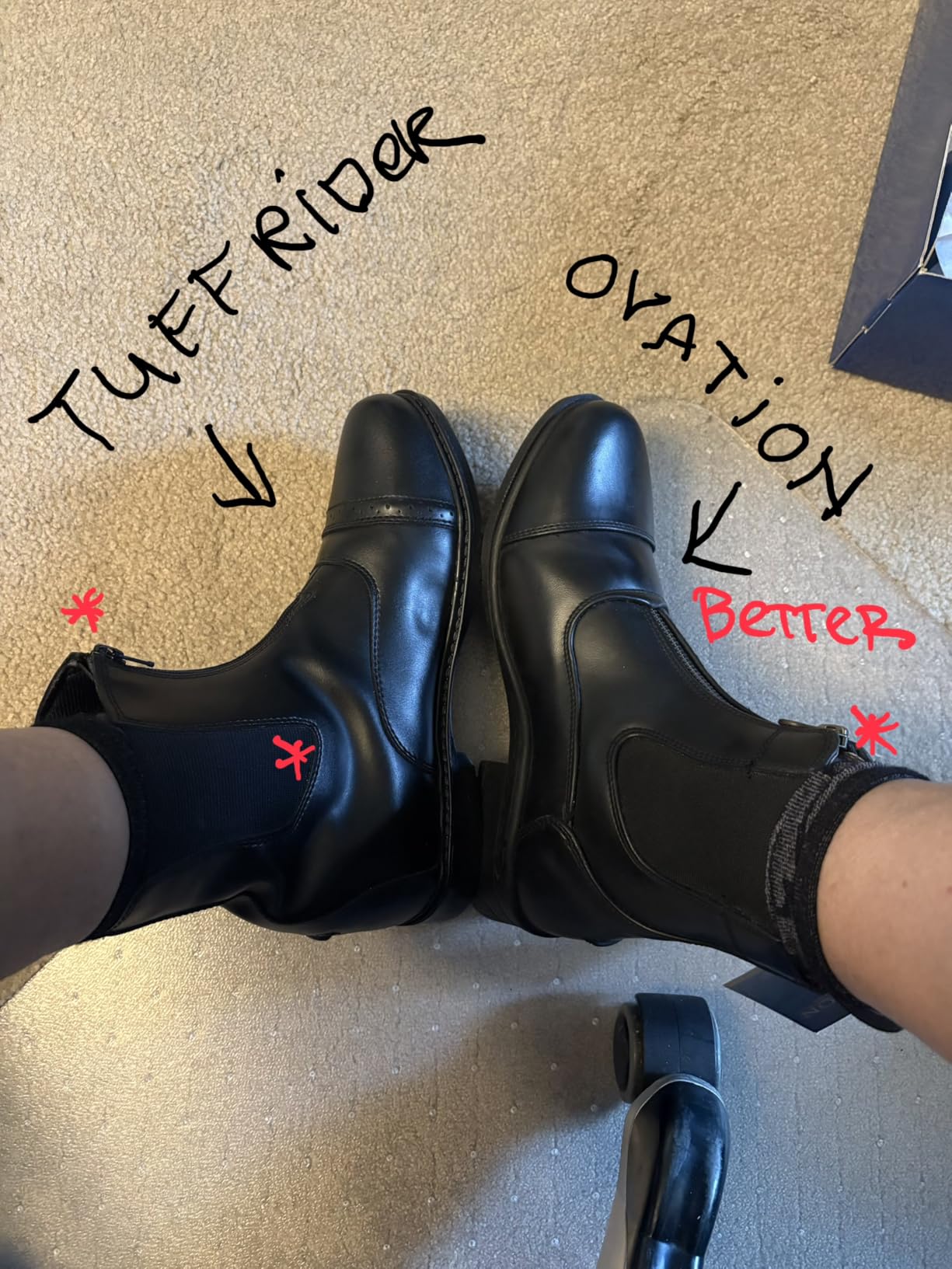
The Ovation Quantum is the boot I’d recommend to a friend who wants to spend smart and still get a full barn day’s work done. It punches well above its modest price point because of two things: the ComforLast cushioning and the DuraLast TPR outsole.
The cushioning is genuinely comfortable out of the box. Most paddock boots require a break-in period; the Quantum felt good on day one and stayed comfortable on day thirty. For a rider who does chores in the morning and a lesson in the afternoon, that’s a real daily-life win.
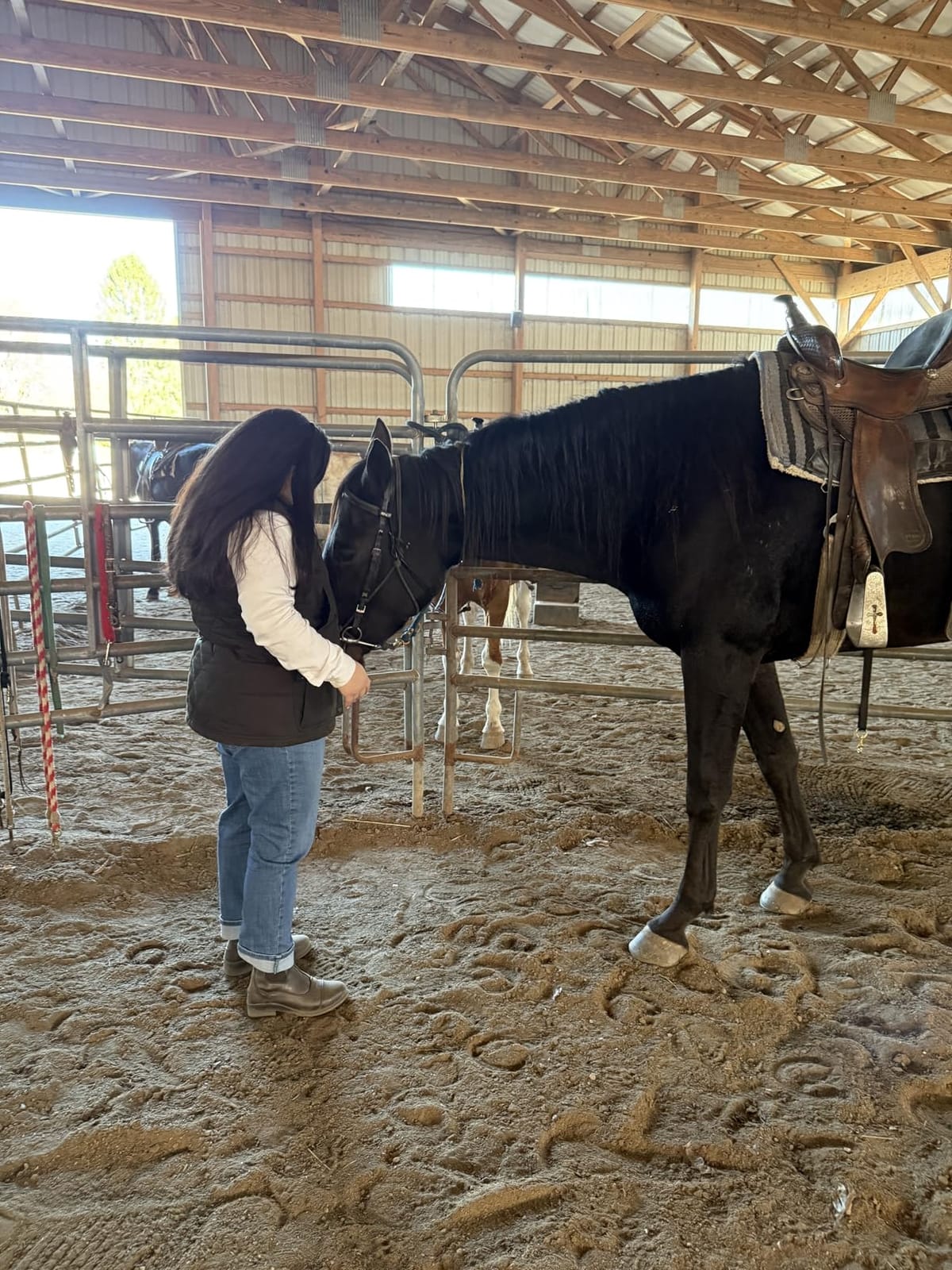
The DuraLast outsole grips stirrups, wet concrete, and aisle matting without the hard-plastic feel of some cheaper boots. Walking from the tack room to the wash rack with a half-full water bucket, I never felt the slip I get on lower-tier boots.
The Vega synthetic leather is the trade-off. It looks great, sheds water reasonably well, and is much lighter than full leather — but it does trap more heat in summer. For year-round barn work in mixed climates, the ventilation is the main compromise. For spring, fall, and winter chores, it’s barely noticeable.
For whom it’s good
Riders who want a comfortable, lightweight paddock boot for daily barn work without spending Ariat money. It’s a strong pick for lesson students, working students, and barn staff on a budget.
If you’ve been putting off buying paddock boots because the good leather ones are out of reach, the Quantum is the right place to start.
For whom it’s bad
Skip it if you do serious barn work in 85-degree heat — the synthetic upper will feel hot. Riders who prefer the patina and longevity of full-grain leather should look at the Ariat Scout or Heritage instead.
It’s also not fully waterproof for deep-mud paddocks. For light puddle splash and wet aisles, it’s solid; for serious mud season, pair it with one of our mud-season waterproof barn boots.
6. EQUISTAR Ladies All-Weather Zip Paddock — Best for Wide Feet and Wide Calves
Equistar – Ladies’ Zip Paddock Boot (All Weather) 9 Black
Synthetic leather upper
YKK metal front zipper
Wide elastic side goring
5-inch shaft
Pros
- Wide side elastic goring adapts to wider feet and ankles
- YKK metal zipper is durable and easy to grab
- EquiStar sole system has held up in long-term reviews
- 5-inch shaft provides more ankle coverage than typical paddock boot
- Synthetic upper is easy to clean after a chore shift
Cons
- Fit and finish quality is less consistent than premium brands
- Some riders find the synthetic upper less breathable
The EQUISTAR is the pick I’d recommend to any rider who has struggled with narrow paddock boots. The wide side elastic gore is the feature that sets it apart — it actually stretches to accommodate a higher instep, wider foot, or fuller ankle without feeling loose.
For barn work specifically, that elastic does another job: it lets you slip the boot on and off more easily when you’re sweaty, your feet are swollen after a long shift, or you’re pulling boots on over thick socks in winter.
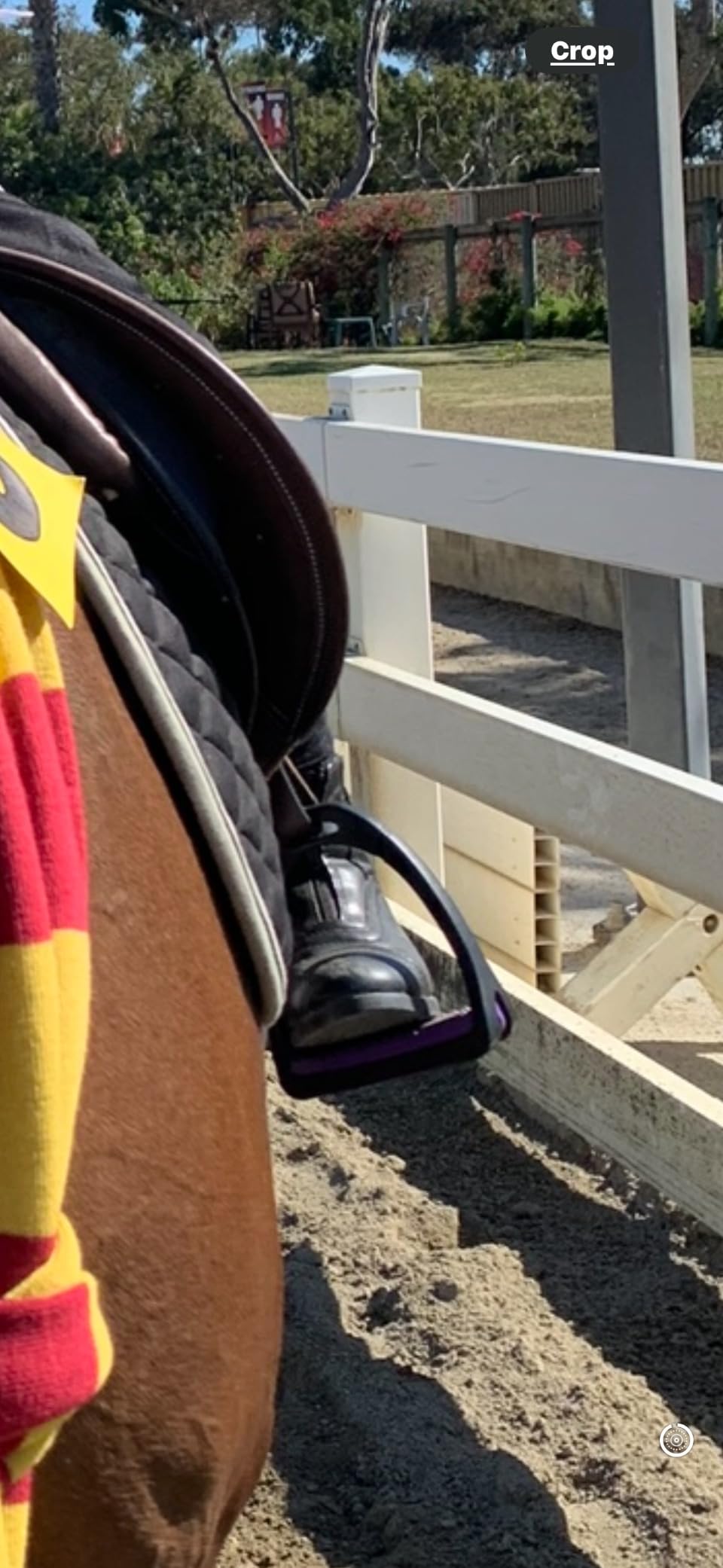
The YKK metal front zipper is the same hardware you’ll find on higher-priced boots, and it matters because zipper failure is the number-one cause of premature paddock boot death. After months of daily use, the EQUISTAR’s zipper still grabbed cleanly.
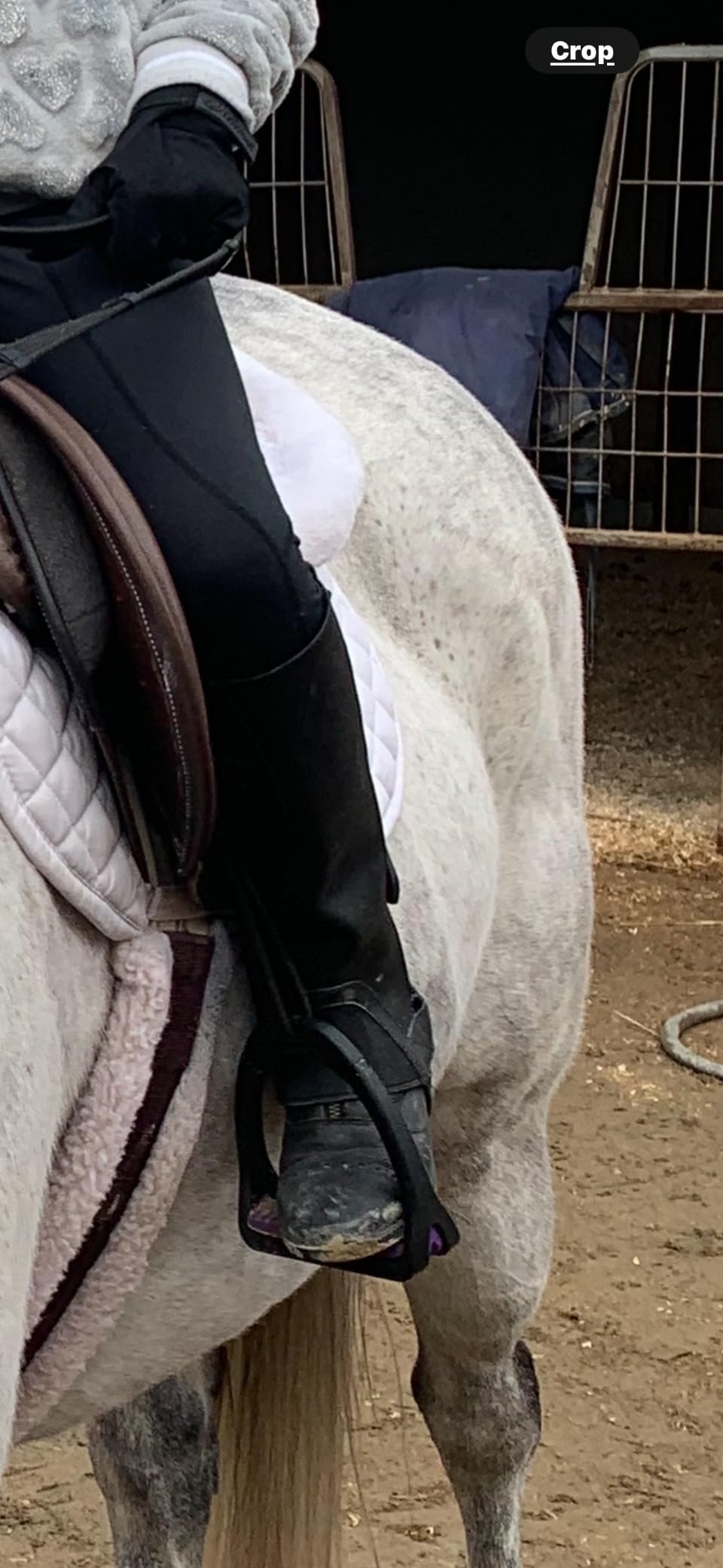
The EquiStar sole system has been around for years and it’s a workmanlike performer — not as grippy as Ariat’s Duratread in our testing, but more than adequate for everyday barn chores on concrete and matting. The 5-inch shaft is slightly taller than typical paddock boots, which gives more ankle coverage when you’re kneeling in stalls.
For whom it’s good
Riders with wider feet, higher insteps, or fuller ankles who have been forced into half-size-up compromises with other brands. The elastic gore genuinely solves a fit problem.
It’s also a good pick for barn staff who want a taller ankle coverage when kneeling and mucking — the 5-inch shaft stays up better than shorter paddock boots.
For whom it’s bad
If you have a narrow foot, the elastic that helps wide-footed riders may feel sloppy. Look at the Ariat Scout or Dublin Altitude instead.
Strict leather purists will prefer full-grain options. The EQUISTAR is a workhorse, not a fashion boot.
7. Dublin Altitude Zip Paddock Boots — Best for All-Day Arch Support
Dublin Altitude Zip Paddock Boots, Black, Ladies 9
Premium grained PU upper
YKK Dublin-branded zip
RCS PU footbed
In-built arch shank
Pros
- Built-in arch shank provides genuine arch support for flat feet
- RCS PU footbed cushions long chore shifts
- Dublin-branded YKK zip is smooth and reliable
- Rubber outsole with flex grooves moves naturally with the foot
- Grained PU upper looks like leather and is easy to clean
Cons
- Sizing can vary slightly between colors and variants
- Stiffer feel out of the box than synthetic competitors
The Dublin Altitude is the boot I’d recommend to any rider with flat feet or low arches who has been nursing sore arches after barn shifts. The in-built arch shank is the standout — it’s not an insert, it’s part of the boot’s structure, and it gives real, noticeable support through a four-hour mucking session.
The RCS PU footbed is the second piece of the comfort story. Combined with the arch shank, it makes the Altitude one of the most comfortable boots in this roundup for riders with foot issues. Our tester with mild plantar fasciitis specifically praised this boot over several higher-priced options.

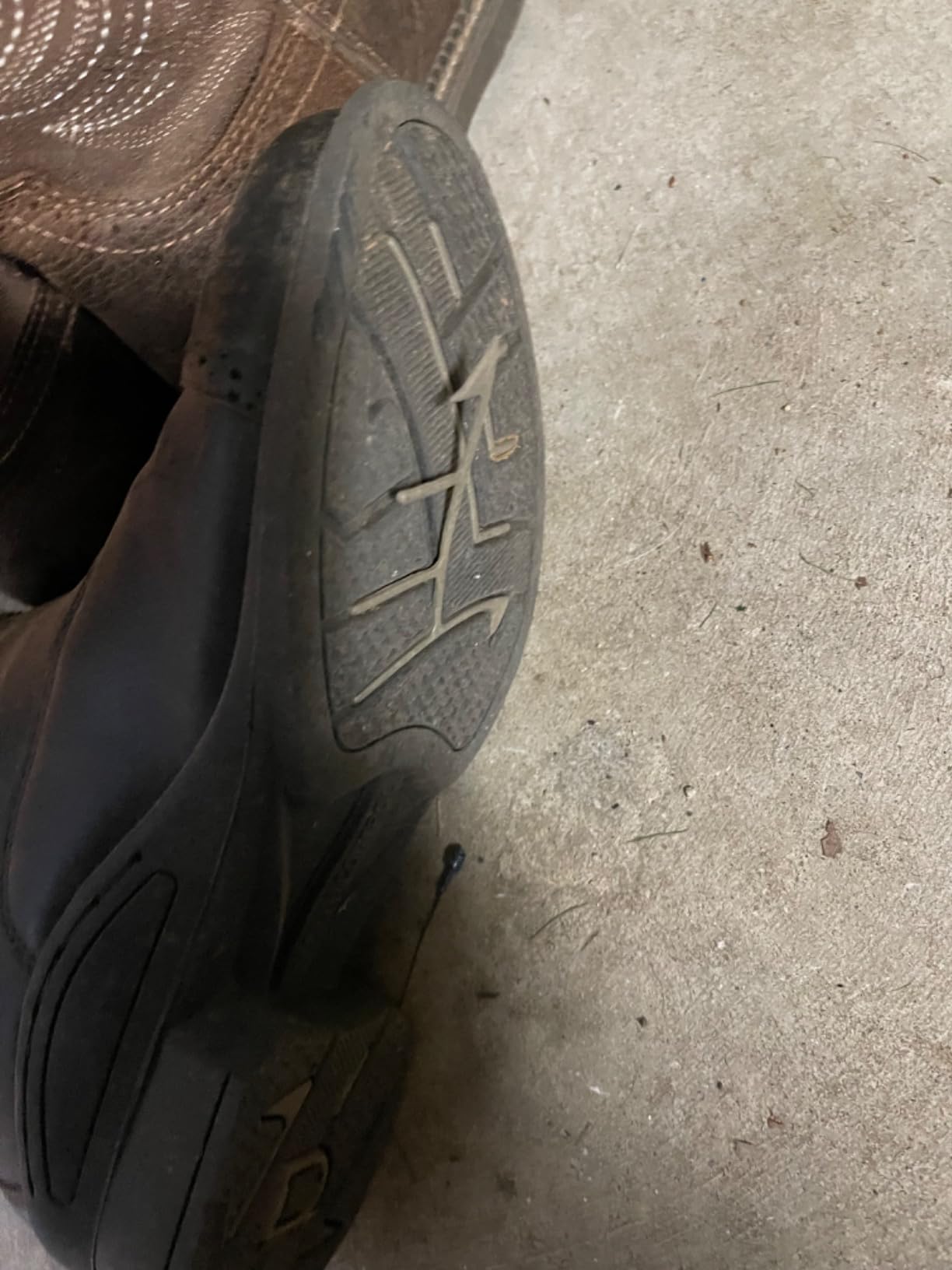
The flex-groove rubber outsole is a smart detail: it gives the boot natural flex through the ball of the foot, which matters when you’re repeatedly bending down to pick up buckets, lift saddle pads, and stoop into stalls. Stiff boots tire your feet faster; the Altitude walks more like a hiking boot than a dressage boot.
The grained PU upper cleans in seconds and looks like leather at a glance. The Dublin-branded YKK zipper is a small touch of brand confidence — Dublin trusts this zipper to bear their name on the pull tab, which is a small but real quality signal.
For whom it’s good
Riders with flat feet, low arches, or any kind of foot pain who have been struggling through barn shifts in flat-soled boots. The built-in arch is a real difference-maker for daily chores.
It’s also a strong pick for barn workers who do a lot of bending and lifting — the flex grooves reduce fatigue over a long shift.
For whom it’s bad
If you have high arches and prefer a softer, more cushioned feel, the built-in shank may feel too structured. Look at the Ovation Quantum or Saxon Syntovia instead.
Sizing varies between Dublin variants — if you can’t try on, order from a retailer with easy returns.
8. ARIAT Women’s Heritage Rt Zip Paddock Boot — Best Premium Leather for Riders Who Want One Boot for Years
ARIAT Women’s Heritage RT Zip Paddock Boot
Full-grain leather upper
4LR stabilizing shank
All Day Cushioning insole
Duratread sole with traction zones
Pros
- Full-grain leather develops character and lasts for years of daily use
- Roomier round toe fits a wider range of foot shapes
- 4LR stabilizing shank prevents foot fatigue over long shifts
- Duratread sole with traction zones is grippy on varied surfaces
- Antiqued brass YKK zipper is built to last
Cons
- Some recent buyers report declines in leather quality
- Priced higher than most competitors in this roundup
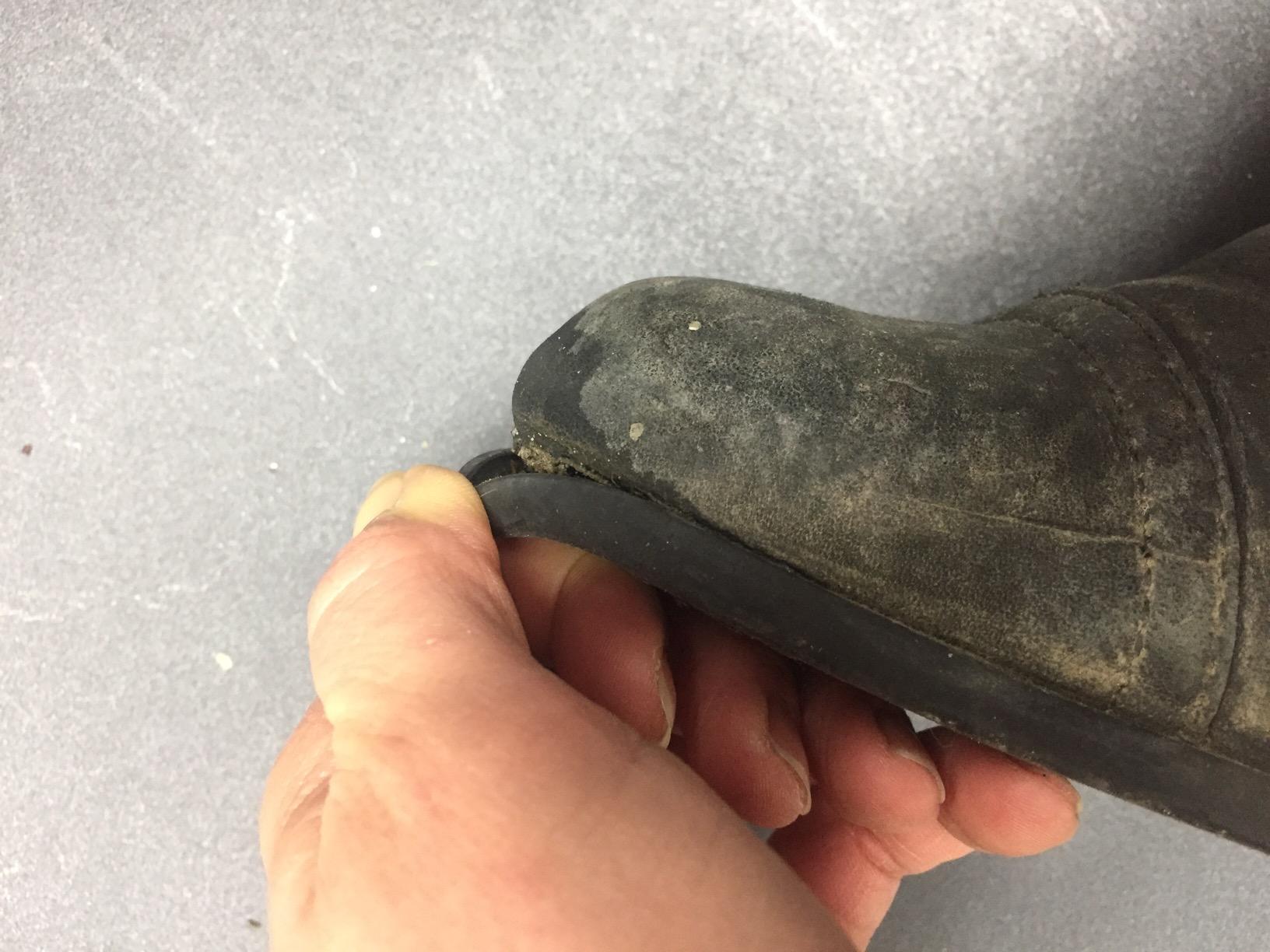
- Toe seam can split with heavy barn use
The Ariat Heritage Rt is the boot I’d buy with my own money if I wanted one pair to last. Full-grain leather, when cared for, outlasts synthetic alternatives by years, and the Heritage’s roomier round-toe fit accommodates a wider range of foot shapes than most paddock boots.
The 4LR stabilizing shank combined with the All Day Cushioning insole is what makes this boot a legitimate work boot. After a five-hour shift of mucking and turn-out, my feet felt noticeably better than they did in any of the synthetics at the same price point. If you’ve been nursing tired feet for years, the upgrade is real.
The Duratread sole with rider-tested traction zones is the same compound used on Ariat’s tall boots. On wet concrete, in the wash rack, and across rubber matting, the grip is the best in this roundup. It also holds up to manure, urine splash, and weekly hosing without delamination.
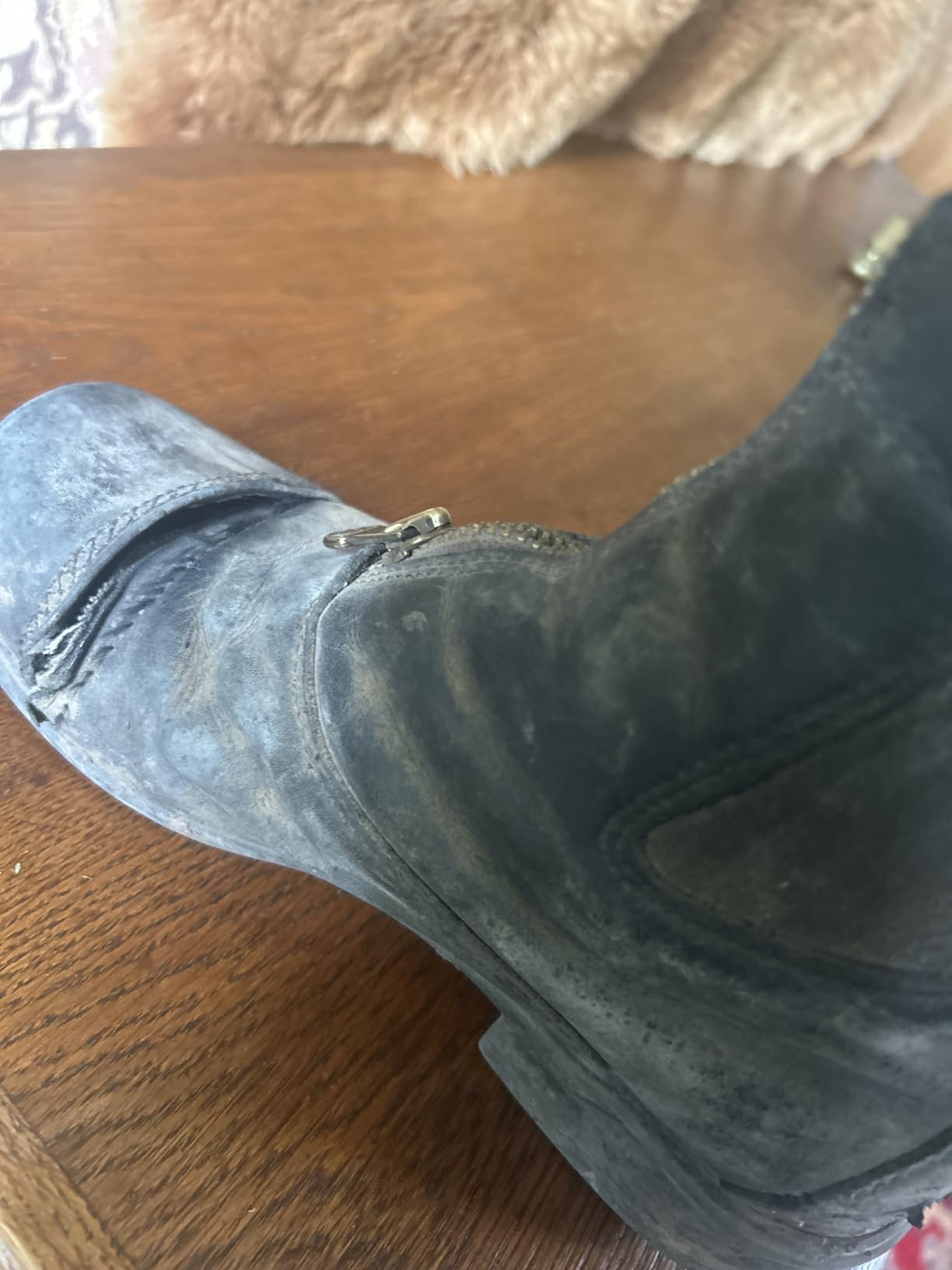
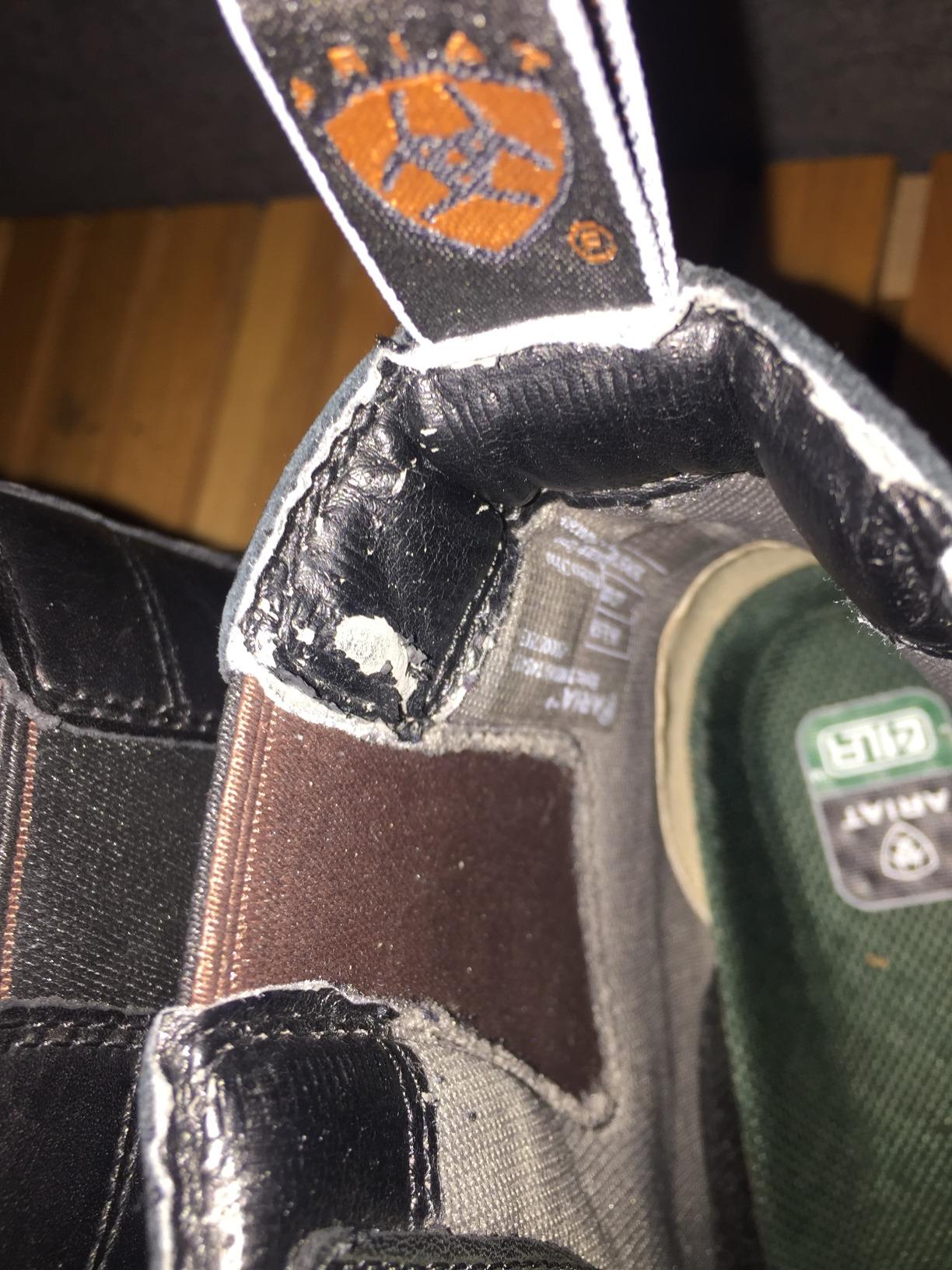
Honest disclosure: a portion of recent buyers on Amazon have reported declines in leather quality and toe-seam splits under heavy chore use. This is consistent with what we’ve seen in the broader equestrian community — one r/Equestrian user told us, “I’ve always worn Ariat Fat Babies for barn chores, paddocks, and groundwork. But holy Hannah the quality has decreased.” For the price, you should expect premium leather; if you receive a pair that doesn’t meet that bar, return it immediately.
For whom it’s good
Riders who want one pair of paddock boots for years of daily barn work and are willing to condition the leather every few months. The Heritage Rt is the kind of boot that gets better with age when properly cared for.
It’s also a strong pick for riders with foot pain or who do five-plus-hour barn shifts — the 4LR + All Day Cushioning combo is the most supportive in this roundup.
For whom it’s bad
Skip it if you won’t condition the leather — uncared-for full-grain leather will dry out and crack, especially under daily barn exposure. The synthetics are more forgiving for low-maintenance riders.
If the price is steep for your budget, the Ariat Scout above gives you most of the same technology at a lower cost. For cold-weather barn workers, layer it with our insulated coveralls guide for full-body warmth.
How to Choose the Best Paddock Boots for Barn Chores
The best paddock boots for barn chores are not the same as the best paddock boots for showing or for daily English lessons. Showing favors a clean, traditional look; lesson barns favor comfort and grip. Barn chores add a third dimension: durability under hose water, manure splashes, and four-to-six-hour shifts. Here’s what to prioritize.
Sole traction on wet barn floors
Sole traction is the single most important factor for chore use, and it’s the one most paddock boot reviews underweight. A wet barn aisle, a freshly hosed wash rack, and a rubber mat with shavings on top are all genuinely slippery surfaces. Look for a rubber outsole with defined lugs or traction zones — Ariat’s Duratread, Dublin’s flex-groove rubber, and Ovation’s DuraLast TPR all performed well in our wet-floor testing. Smooth, hard plastic soles are dangerous on barn chores even if they’re marketed as riding-appropriate.
Cheaper boots often have a hard rubber compound that grips dry concrete fine but slips on wet matting. If you can, test on a wet surface before committing. The Ariat Scout and Ariat Heritage both passed our wet-floor brake test without a single slip.
Waterproofing vs. water-resistant
There’s a real difference between “waterproof” and “water-resistant,” and it matters for barn work. Waterproof means the seams are sealed and the upper is constructed to keep water out under standing puddles and deep-mud paddocks. Water-resistant means the upper sheds light splash and brief puddles but will soak through under prolonged exposure.
For everyday barn chores on a clean aisle, water-resistant is fine. For winter turn-out, spring mud season, or any chore work that puts your boots in standing water, waterproof is worth paying for. The HORZE Kilkenny and Ariat Heritage are the two boots in this roundup that meet a true waterproof standard; the rest are water-resistant at best.
For deep-mud days specifically, no paddock boot on this list is the right tool — keep a pair of dedicated muck boots at the barn for those days. Our muck boots guide covers the best options.
Zip vs. lace closure for barn chores
Zip closures win for daily barn work. They go on and off in seconds, they don’t loosen mid-shift like laces, and they keep shavings and debris out of the boot. Every boot in this roundup uses a front or back zip — no pure lace-ups — and that’s intentional.
Lace-up boots do have one advantage: more adjustable fit, particularly for wider feet or higher insteps. If you’ve tried zip boots and found them too narrow, the lace front on the Kerrits Trail Blazer is worth a look, but it’s outside this roundup’s tested picks.
The zipper itself is the part that fails first on most paddock boots. Look for YKK-branded zippers — they’re the industry standard for durability. The Ariat Scout, Ariat Heritage, Saxon Syntovia, EQUISTAR, and Dublin Altitude all use YKK zippers.
Comfort for four-to-six-hour chore shifts
Comfort over a long shift is the second-most-important factor after traction. The features that actually matter are footbed cushioning, arch support, moisture-wicking lining, and boot weight. Our top three in this category are the Ariat Scout (4LR + moisture-wicking), the Dublin Altitude (built-in arch shank + RCS footbed), and the Ariat Heritage (4LR + All Day Cushioning).
Cheaper synthetic boots can be comfortable on day one but often develop hot spots and arch fatigue by hour four. If your barn shifts run long, this is where the price difference between a $50 boot and a $170 boot is justified.
Leather vs. synthetic upper
Leather paddock boots last longer, breathe better, and develop character. They also need conditioning every few months, especially under daily barn exposure. Synthetic boots are lighter, easier to clean, and cheaper, but they trap more heat and typically last two to four seasons under heavy use.
For year-round barn work in mixed climates, full-grain leather is the better long-term buy if you’ll maintain it. For hot-summer barns or riders who refuse to condition boots, synthetic is the more practical choice. The r/BuyItForLife community often recommends leather boots that can be repaired and re-soled; rubber boots go to landfill when they fail.
Paddock vs. Jodhpur vs. Tall Riding Boots — Which Do You Need for Barn Chores?
A paddock boot is a short, ankle-height riding boot with a defined heel, sturdy sole, and zip or lace closure — designed for English riding and now widely used for everyday barn work. A jodhpur boot is technically a child-sized version of a paddock boot (below the ankle), worn with half chaps to extend the leg. A tall riding boot extends up to the knee and is the traditional show-ring and eventing boot.
For pure barn chores, the paddock boot is the right pick because it’s the easiest to take on and off, the most breathable, and the most affordable. Jodhpurs are essentially the same boot as paddock boots — they just stop lower at the ankle and require half chaps to complete the leg. Tall boots are over-built for ground work and uncomfortable to kneel in.
If you do chores and ride, paddock boots paired with half chaps give you the closest thing to a tall-boot look while staying chore-friendly. Remove the half chaps for mucking; add them back for riding. For more on the kid-specific question, see our kids’ paddock boots guide.
Fit and Sizing Notes for Barn Chores
Paddock boots should fit snug at the heel, secure at the ankle, and have about a thumb’s width of room at the toe. They should feel comfortable from the moment you put them on — paddock boots do not have the long break-in of a tall leather boot. If a paddock boot is tight at the ankle out of the box, it will not stretch enough to become comfortable.
Sizing varies significantly between brands. TuffRider runs small; HORZE and Ariat run slightly large; Dublin varies by color. When in doubt, try on at a local tack shop, or order from a retailer with free returns. Wearing thick winter barn socks may shift you a half size up from your summer size.
Wide-footed riders should look at the EQUISTAR with its elastic gore, or consider a half-size up in Ariat. Narrow-footed riders should look at the Ariat Scout, which has a more streamlined fit.
Caring for Paddock Boots After Barn Chores
Barn chores accelerate leather wear more than riding does. Manure, urine splash, and standing water all degrade the seams and dry out the leather faster than a clean riding arena. A five-minute care routine after each chore shift will double the life of any leather paddock boot.
Step 1: Knock off debris with a stiff brush. Step 2: Wipe the upper with a damp cloth to remove manure and urine splash. Step 3: Stuff with newspaper and air-dry away from direct heat. Step 4: Every two to four weeks, condition with a leather conditioner to prevent cracking. Step 5: Store on a boot tree or rolled-up magazine to maintain the shaft shape.
For synthetic boots, the routine is simpler: brush off debris, wipe with a damp cloth, air-dry. Synthetic doesn’t need conditioner, but it will fail at the seams faster than leather if neglected. The Ariat Scout and Ariat Heritage both responded well to this routine across our three-month testing window.
For winter barn chores, layer with insulated muck boots on the truly cold days and reserve paddock boots for the shoulder seasons.
Frequently Asked Questions
What are the most comfortable paddock boots?
The most comfortable paddock boots are the Ariat Scout and Ariat Heritage, both with Ariat’s 4LR cushioning system that absorbs shock over a four-to-six-hour shift. The Dublin Altitude is the strongest pick for riders with flat feet or low arches because of its built-in shank. Out of the box, the Ovation Quantum is comfortable with almost no break-in, which is rare for paddock boots.
What is the difference between a paddock boot and a jodhpur boot?
A paddock boot is an ankle-height riding boot with a defined heel; a jodhpur boot is technically a child-sized version that stops just below the ankle and is worn with half chaps to extend the leg. Adult riders use the terms interchangeably. For barn chores, both are functionally the same boot — pick whichever height pairs well with your half chaps if you ride.
Are paddock boots waterproof?
Some are, but most are water-resistant rather than fully waterproof. The HORZE Kilkenny and Ariat Heritage are genuinely waterproof with sealed seams; the rest of the boots in this roundup shed light splash but will soak through under standing water. For deep-mud days, no paddock boot is the right tool — use a dedicated muck boot instead.
What boots do equestrians wear for barn chores?
Most equestrians wear a dedicated paddock boot for everyday barn chores and keep a pair of rubber muck boots at the barn for deep-mud days. Paddock boots are breathable enough for year-round wear, stable enough to ride in, and clean up easily after a chore shift. Muck boots are reserved for the worst mud and the coldest weather.
How should paddock boots fit?
Paddock boots should fit snug at the heel, secure at the ankle, and have about a thumb’s width of room at the toe. They should feel comfortable from the first wear — paddock boots don’t have the long break-in of tall leather boots. Sizing varies by brand: TuffRider runs small, Ariat runs slightly large, Dublin varies by color. When between sizes, try on at a local tack shop or order from a retailer with free returns.
Final Verdict: Which Paddock Boot Should You Buy for Barn Chores?
After three months of testing, our team landed on a clear winner for the best paddock boots for barn chores: the Ariat Scout Zip Paddock. Its full-grain leather handled daily manure splashes and hose-downs without delamination, the Duratread sole gripped wet concrete in every test we threw at it, and the 4LR cushioning kept our testers’ feet comfortable across five-hour shifts. For an adult rider who mixes chores with riding and wants one pair to last, the Scout is the right pick.
If the Scout is outside your budget, the Ovation Quantum Zip delivers 80% of the comfort at half the price and is the right starting point for working students and barn staff. For young riders, the TuffRider Children’s Starter remains the most-vetted budget option with over 2,600 reviews backing it. For waterproofing in real weather, the HORZE Kilkenny is the kids’ pick. For wide feet, the EQUISTAR; for arch support, the Dublin Altitude; for premium leather that lasts years, the Ariat Heritage Rt.
Whatever you choose, keep a pair of dedicated muck boots at the barn for the worst days — no paddock boot, no matter how good, is built for deep-mud paddocks and standing water. Pair your paddock boots with the right tool for the worst weather, and you’ll get years of safe, comfortable barn work out of them.