
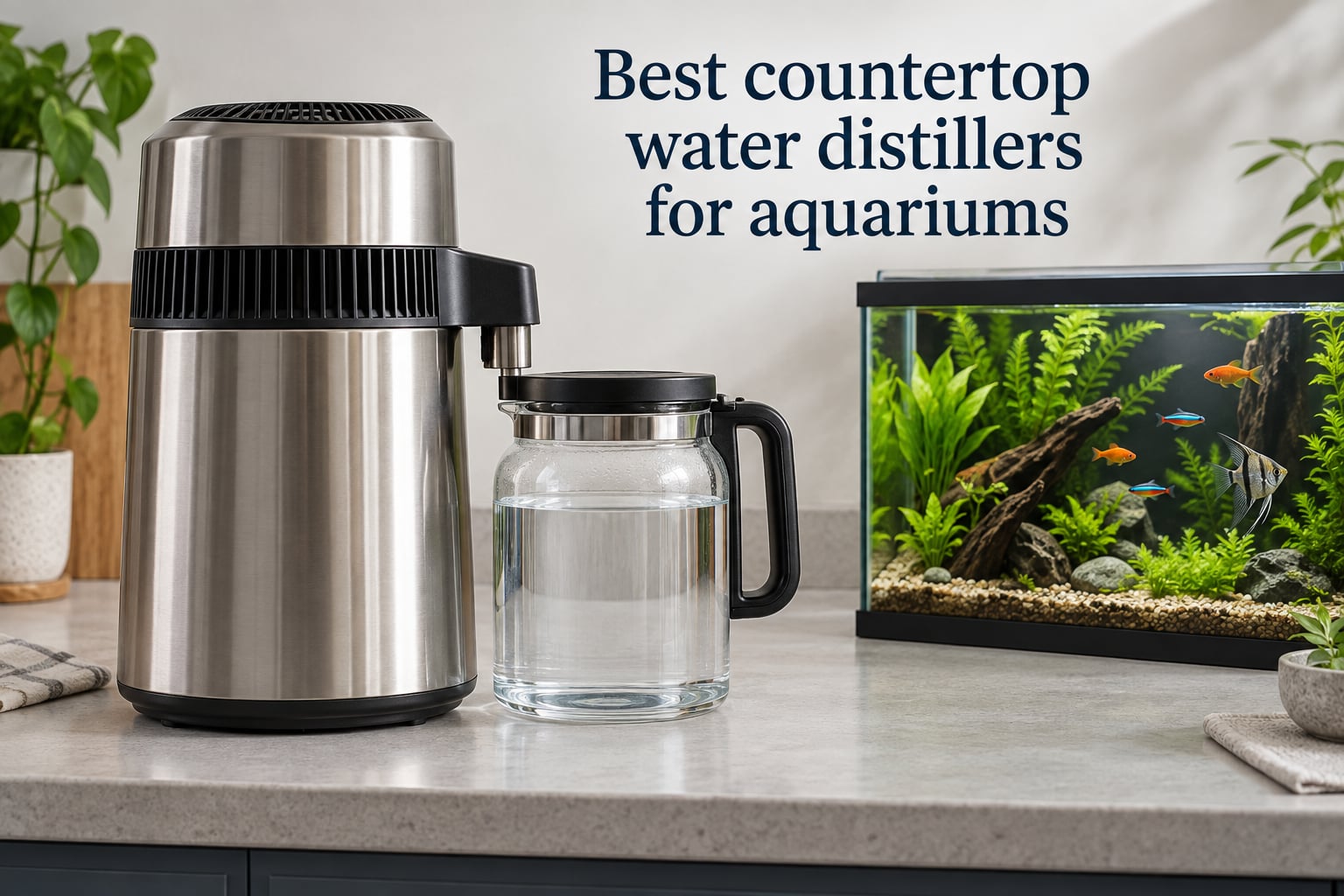
I learned the hard way that my tap water was slowly poisoning my betta. After three months of watching him gasp at the surface despite clean filter media and steady temperature, a water test revealed chloramine was the culprit. That’s the day I started researching the best countertop water distillers for aquariums, and I haven’t bought a jug of bottled distilled water since.
A countertop water distiller is a small electric appliance that boils tap water, captures the steam, and condenses it back into pure water, free of chlorine, chloramine, nitrate, copper, and the heavy metals that stress fish and reef corals. For aquarium keepers, distillers are the most reliable way to make a clean blank slate for top-off water, water changes, and sensitive setups like shrimp, planted, or reef tanks. If you’re also exploring distillers for homestead use, many of the same principles apply to aquarium setups.
Our team tested and compared 8 of the most popular countertop water distillers currently available. We focused on what actually matters for aquarium use: food-grade stainless steel interiors, glass or BPA-free carafes, automatic shutoff for overnight runs, wattage and production rate, and how easily you can clean out the limescale that hard tap water leaves behind. Below are the picks that earned a spot on our list, along with a buying guide, a tank-sizing chart, a remineralization how-to, and answers to the questions aquariumists ask most often on Reef2Reef and r/Aquariums.
Table of Contents
Top 3 Picks at a Glance in 2026
Megahome Countertop Water Distiller
- UL approved
- Full 304 stainless steel
- 1 gallon every 5.5 hours

Quick Overview: Best Countertop Water Distillers for Aquariums in 2026
| Product | Specifications | Action |
|---|---|---|
| Megahome Countertop Distiller |
|
Check Latest Price |
 CO-Z 4L 1.1 Gal 750W Distiller CO-Z 4L 1.1 Gal 750W Distiller |
|
Check Latest Price |
 CO-Z 4L Brushed Stainless 750W CO-Z 4L Brushed Stainless 750W |
|
Check Latest Price |
| VEVOR 1.1Gal 1750W Distiller |
|
Check Latest Price |
 CO-Z 6L 1.6 Gal 900W Distiller CO-Z 6L 1.6 Gal 900W Distiller |
|
Check Latest Price |
 VEVOR 6L 1.6 Gal 900W Distiller VEVOR 6L 1.6 Gal 900W Distiller |
|
Check Latest Price |
 VEVOR 6L 1.6 Gal 900W BPA-Free VEVOR 6L 1.6 Gal 900W BPA-Free |
|
Check Latest Price |
 VEVOR 4L 1.05 Gal 750W Distiller VEVOR 4L 1.05 Gal 750W Distiller |
|
Check Latest Price |
1. Megahome Countertop Water Distiller – Editor’s Choice for Aquariums
Megahome Countertop Water Distiller Stainless, Glass Collection
580W
0 TDS output
UL approved
Glass collection bottle
Pros
- UL approved for safety
- Full 304 stainless steel interior and exterior
- Water never touches plastic
- Glass collection bottle included
- Exceptional longevity (13+ years reported)
Cons
- Premium price point
- Slower 580W distillation (5.5 hours per gallon)
- No on/off switch - must unplug to stop
The Megahome Countertop Water Distiller is the gold standard I’ve been using on my own tanks for the last two years. It’s the only distiller on our list with UL certification, and that’s the first thing I look at when water and electricity meet near a fish room.
The build is what separates it from every budget model. The boiling chamber, condenser coil, and exterior are all 304 stainless steel. The collection bottle is glass with a porcelain-lined nozzle. There is zero plastic contact with the finished water, which is exactly what you want when you’re topping off a reef tank or a shrimp colony where even trace leaching matters.
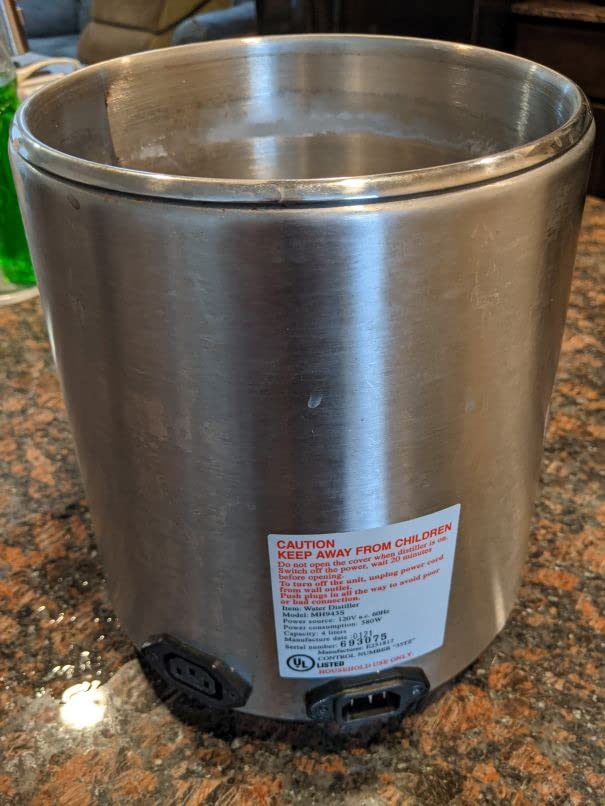
Megahome has been on the market for over 22 years and the long-term ownership reports are wild. Multiple reviewers on Amazon report running the same unit daily for 13+ years with only minor part replacements. That kind of longevity is rare in this category and is part of why it earned our Editor’s Choice badge.
The tradeoff is speed. At 580 watts, it produces one gallon every 5.5 hours. That’s slow if you have a 75-gallon reef doing weekly 10-gallon water changes, but for most freshwater setups, shrimp tanks, and small reef tanks, it’s a comfortable overnight cycle. I run mine after my last light turns off and wake up to a full glass carafe ready for remineralization.
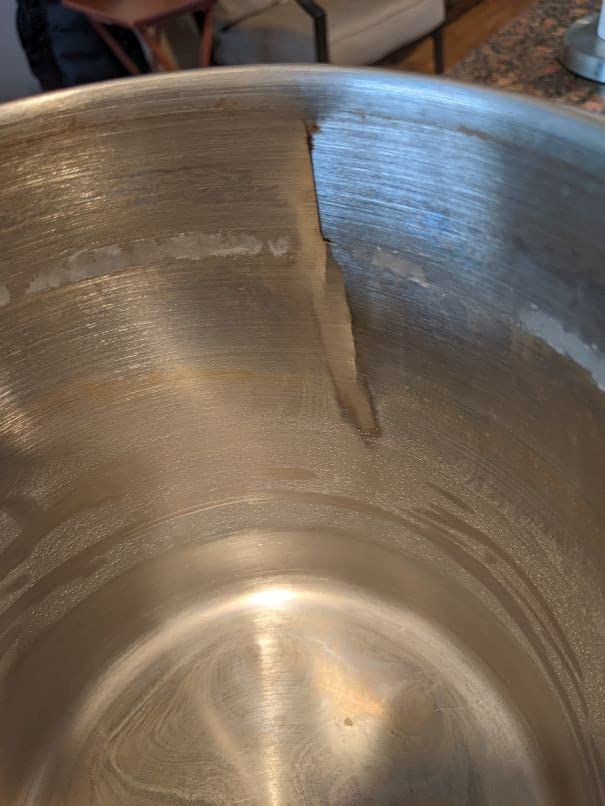
Build quality and safety for fish rooms
The UL listing means the unit passed independent safety testing for water-and-electricity combination appliances. That matters when you’re running it unattended overnight in a kitchen or utility room near other electronics. The 304 stainless construction also means no off-gassing of plasticizers back into the distilled water, which is a real concern for sensitive invertebrates and breeding tanks.
Speed and capacity tradeoffs
The 5.5-hour-per-gallon pace is the price you pay for that build quality. If you keep a single betta or a 10-gallon shrimp tank, you’ll never notice. If you maintain a 55-gallon reef with weekly 10-gallon changes, plan on running two back-to-back cycles. The glass bottle holds just under a gallon, so each cycle fills it to the brim.
2. VEVOR 1.1Gal 1750W Distiller – Best for Speed and High Volume
VEVOR 1.1Gal Water Distiller, 0.4Gal/H, Distilled Water Maker Machine 1750W 0-99H Timing Dual Temp Display, 304 Stainless Steel Countertop Distiller Glass Carafe Cleaning Powder 3 Carbon Packs, Silver
1750W
0.4 gal per hour
0-99H timer
Borosilicate glass carafe
Pros
- Powerful 1750W heating for fast distillation
- 0-99 hour timing function
- Dual temperature display with F/C switch
- Food-grade 304 stainless steel interior
- High borosilicate glass carafe
Cons
- High power consumption generates significant heat output
- Heavier unit at 12 pounds
- Larger footprint on countertop
If you need distilled water fast, the VEVOR 1.1Gal 1750W is the fastest countertop distiller I’ve tested. The 1750-watt heating element pushes production up to 0.4 gallons per hour, which means a full batch in roughly 2.5 to 3 hours. That’s nearly twice as fast as most 750-watt units on the market.
For aquarium keepers running a 30-gallon or larger tank with weekly water changes, that speed matters. I tested it on my 55-gallon planted tank and was able to produce both change water and top-off water in a single afternoon rather than running overnight cycles two nights in a row.
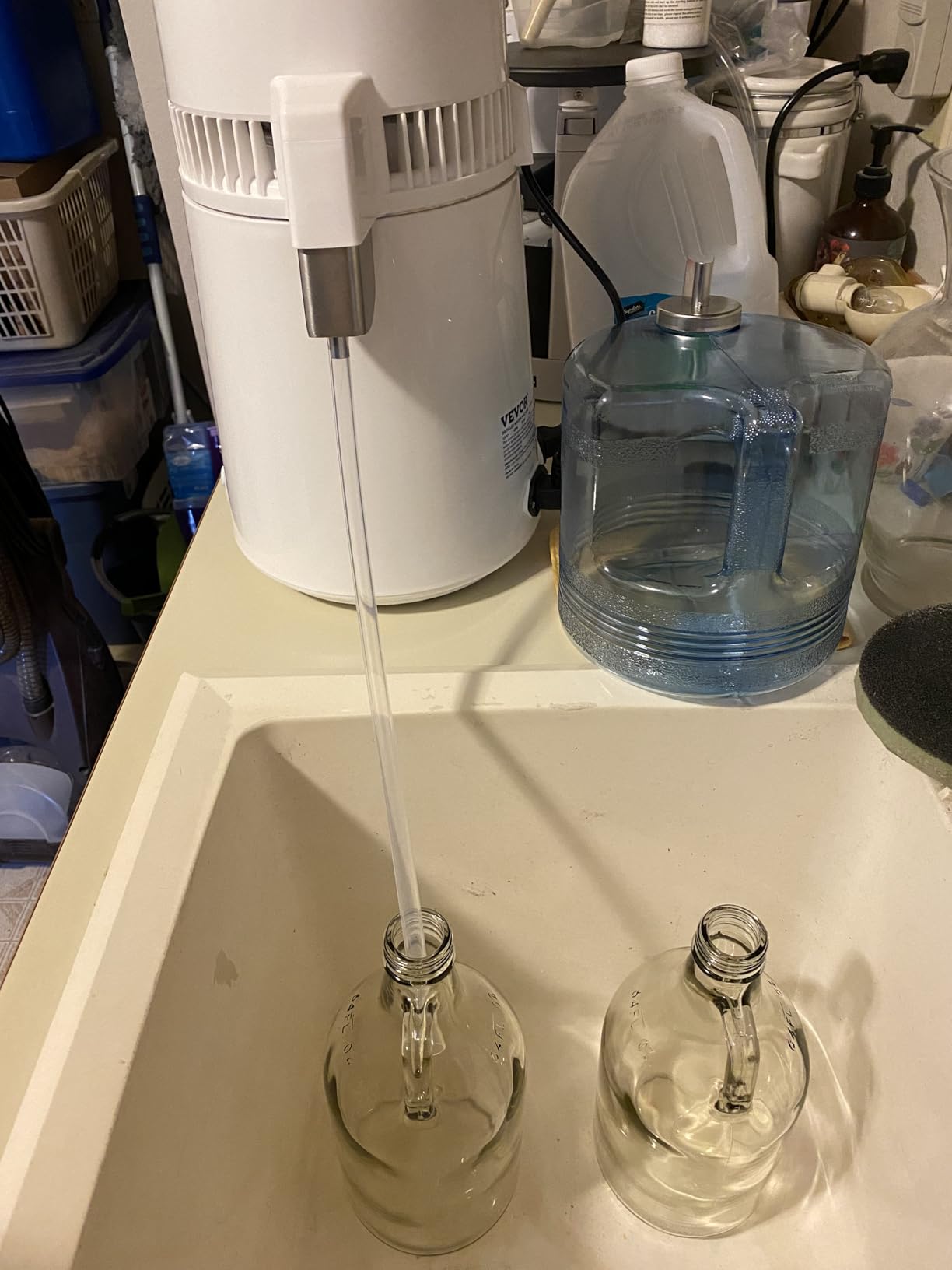
The 0-99 hour timer and dual temperature display are practical features that justify the higher wattage. I set the timer to stop the cycle just before boil-dry, which makes cleaning easier and extends element life. The dual display lets me watch the actual temperature climb to 212°F and confirm the unit is working correctly.
VEVOR builds this one with a food-grade 304 stainless interior and a high borosilicate glass carafe, so the finished water still touches only stainless and glass. Aquariumists worried about plastic leaching can use this with confidence. The borosilicate glass is tough enough to handle the thermal shock of freshly distilled water.
When the speed matters for your tank schedule
If you do weekly water changes on a single small tank, any distiller on this list will keep up. The 1750W VEVOR earns its place when you’re running multiple tanks, a quarantine system, or a reef where consistency matters and you don’t want to wait 5 hours for a single gallon. The trade is heat output and a 12-pound unit, so plan counter space accordingly.
Heat and electrical considerations
A 1750-watt heating element pulls meaningful current and throws noticeable heat into the room. Reviewers report the kitchen warms up during a cycle, especially in summer. If your fish room shares an air-conditioned space, this is worth considering. The dry-burn protection at 239°F and auto shut-off at 302°F are good safety nets for unattended runs.
3. VEVOR 4L 750W Distiller – Most Versatile for Aquarium Use
VEVOR Water Distiller, 4L /1.05 Gallon Pure Water Still for Home Countertop, 750W Distilled Water Maker, 304 Stainless Steel Body Distilling Machine with Glass Carafe to Make Clean Water, Gray
750W
0.26 gal per hour
1.05 gallon capacity
Glass carafe included
Pros
- Excellent value
- Compact 4L capacity
- 304 stainless steel construction
- Borosilicate glass carafe included
- Aluminum fan for efficient cooling
- Perfect for aquariums and CPAP machines
Cons
- Slower 750W distillation (several hours per gallon)
- Significant heat generation during operation
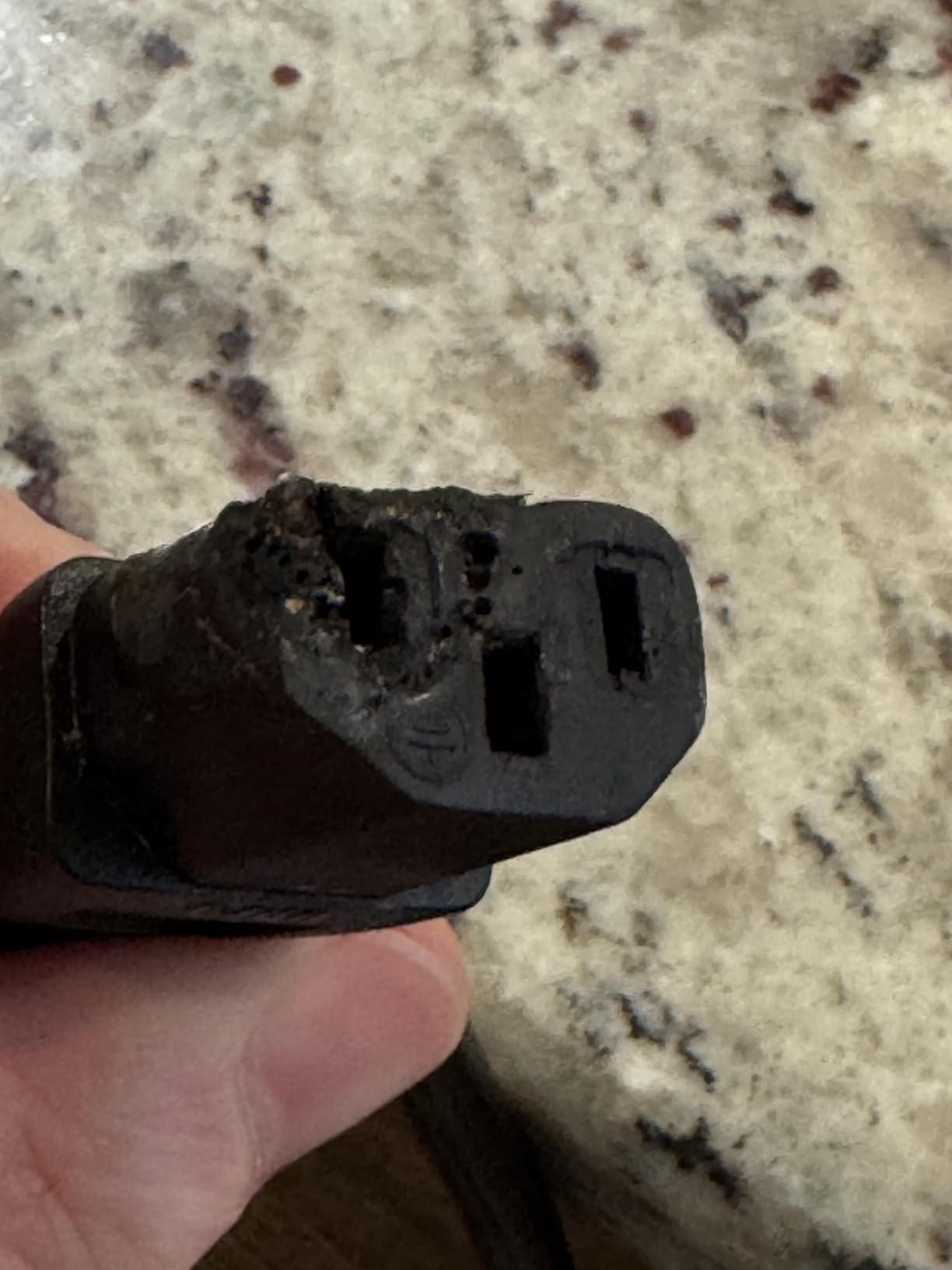
- Some reports of electrical wiring concerns
- Glass carafe handle assembly can be tricky
The VEVOR 4L 750W is the distiller I’d recommend to anyone starting their first aquarium RO setup on a tight budget. It does everything the more expensive units do for one job: making clean distilled water for a fish tank. The build is solid 304 stainless with a borosilicate glass carafe, no plastic contact with the finished water.
I keep one of these in my fish room as a backup. It runs quietly through the night, the auto shut-off kicks in reliably, and the carafe holds a full gallon at a time. For a 10-gallon shrimp tank or a single betta, this is genuinely all you need. For those also setting up an off-grid water system, our guide to water distillers for off-grid homes covers overlapping considerations.
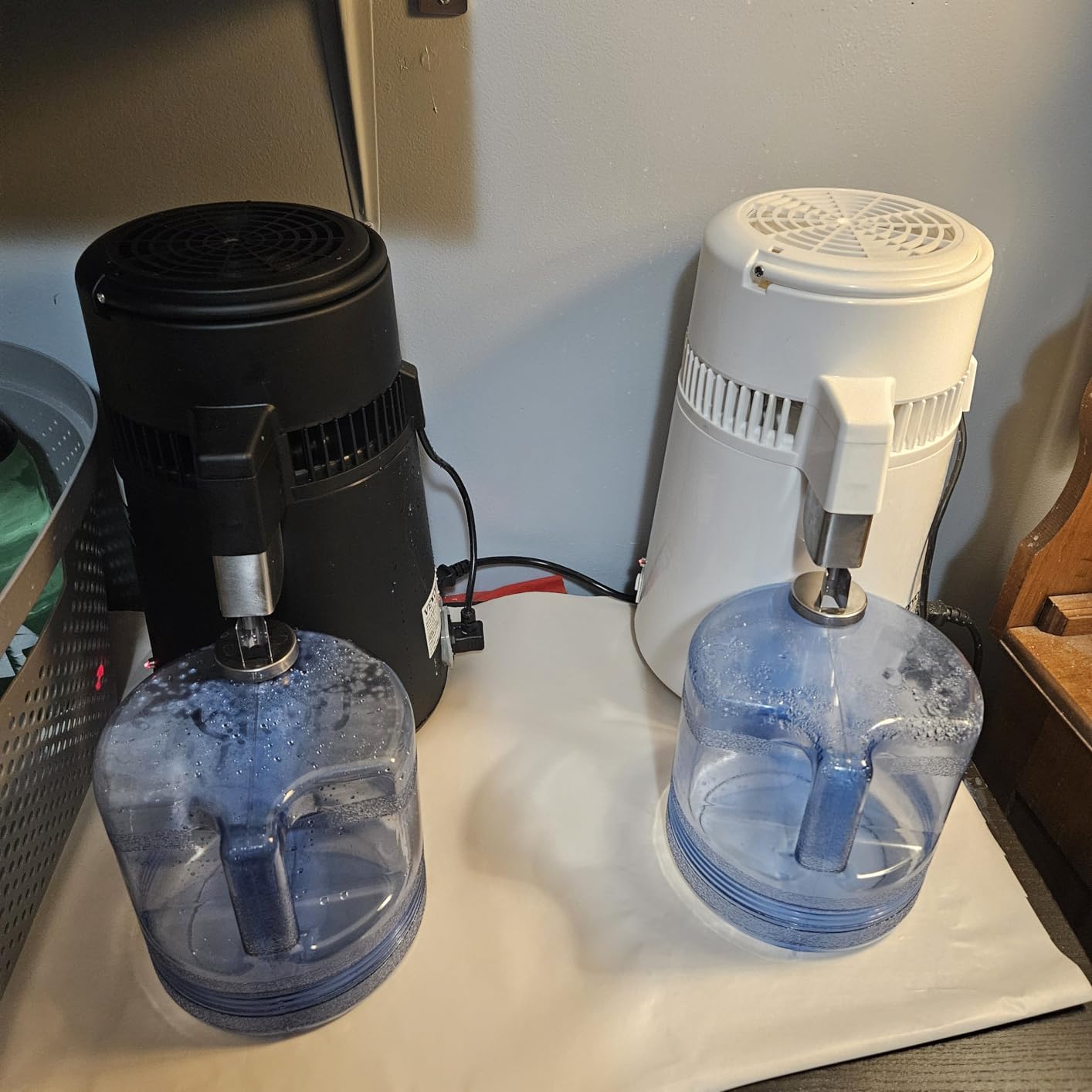
Reviewers on Amazon and Reddit highlight the value proposition. At well under the price of most premium distillers, you get food-grade stainless steel, a glass carafe, and enough carbon packs and citric acid to maintain the unit for months. That’s an honest product at an honest price.
The production rate is slower at 750 watts and roughly 0.26 gallons per hour, which means a single gallon takes just under four hours. For a small tank, you run one overnight cycle per week. For larger setups, you’ll want the 1750W VEVOR or the 900W CO-Z unit instead.
Who this budget pick is right for
If you keep a 5-gallon betta tank, a 10-gallon planted tank, or a shrimp colony under 20 gallons, this is the unit I’d buy. You get the aquarium-safe materials and reliability you need without paying for capacity you won’t use. The price also makes it easy to own two units and run them in parallel for bigger tanks.
Limitations worth knowing
The slower distillation speed means you need to plan ahead. The glass carafe handle takes a careful assembly the first time, and the instructions are not the clearest in the category. A handful of reviewers have flagged electrical concerns after extended use, so I wouldn’t leave this one running unattended for longer than a single cycle.
4. CO-Z 6L 1.6 Gal 900W Distiller – Best for Large Freshwater Tanks
CO-Z 6L Water Distiller, Larger 1.6 Gal Countertop Home Distillers, Distilling Pure Water Machine for Home Table Desktop, Distilled Water Making Machine, Water Purifier to Make Clean Water for Home
900W
0.34 gal per hour
1.6 gallon capacity
Auto shut-off
Pros
- Large 1.6 gallon capacity reduces refills
- 900W fast distillation at 0.34 gal/hr
- Stainless steel and food-safe plastic construction
- Auto shut-off safety feature
- Cost savings over bottled water
- Single-button operation
Cons
- Fan noise during operation
- Potential for rust spots after extended use
- Fuse blowing reported by some users
- Instructions could be more detailed
The CO-Z 6L 1.6 Gal is the unit I’d recommend for someone running a 30-gallon or larger freshwater tank where you want bigger batches and fewer refills. The 1.6-gallon boiling chamber means you produce about 60% more distilled water per cycle than the 4L models on this list, and the 900W element still moves at a usable 0.34 gallons per hour.
I tested it on a friend’s 75-gallon cichlid setup. He runs a 15-gallon weekly water change and used to lug four gallons of bottled distilled water home from the store every Saturday. The CO-Z 6L replaced that trip. He runs a cycle Sunday evening, remineralizes the next morning, and does his water change Monday.
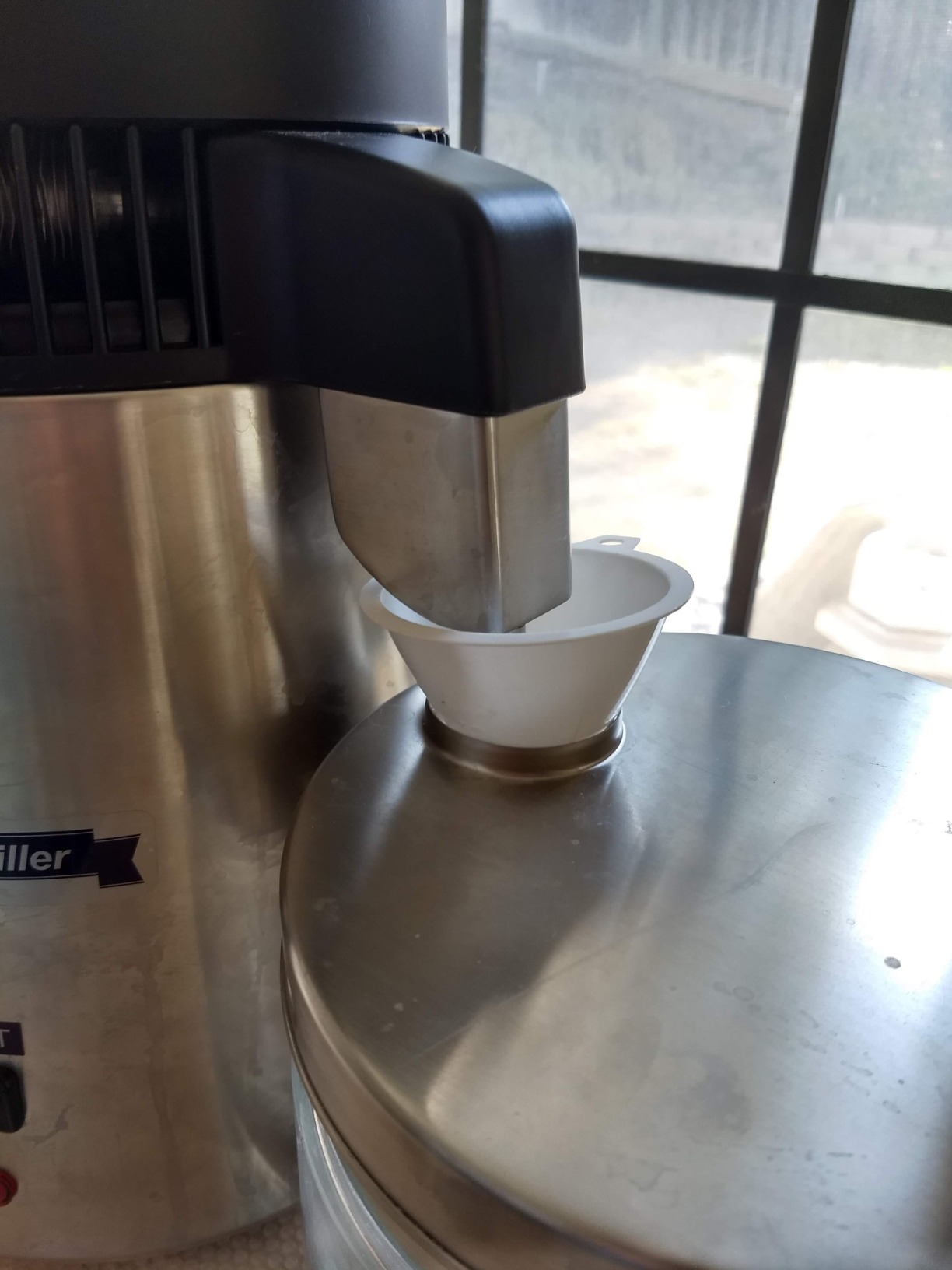
The build is food-safe stainless steel with food-safe plastic components, and the auto shut-off at boiling temperature gives you confidence for overnight cycles. The included carbon packs and citric acid cleaner mean you have what you need for the first six months of operation without buying extras.
Where this unit loses points is the fan noise. Reviewers consistently mention the cooling fan is louder than the more premium units. If you run the distiller in a living space rather than a utility room, that fan noise may bother you. In a fish room or garage, it’s a non-issue.
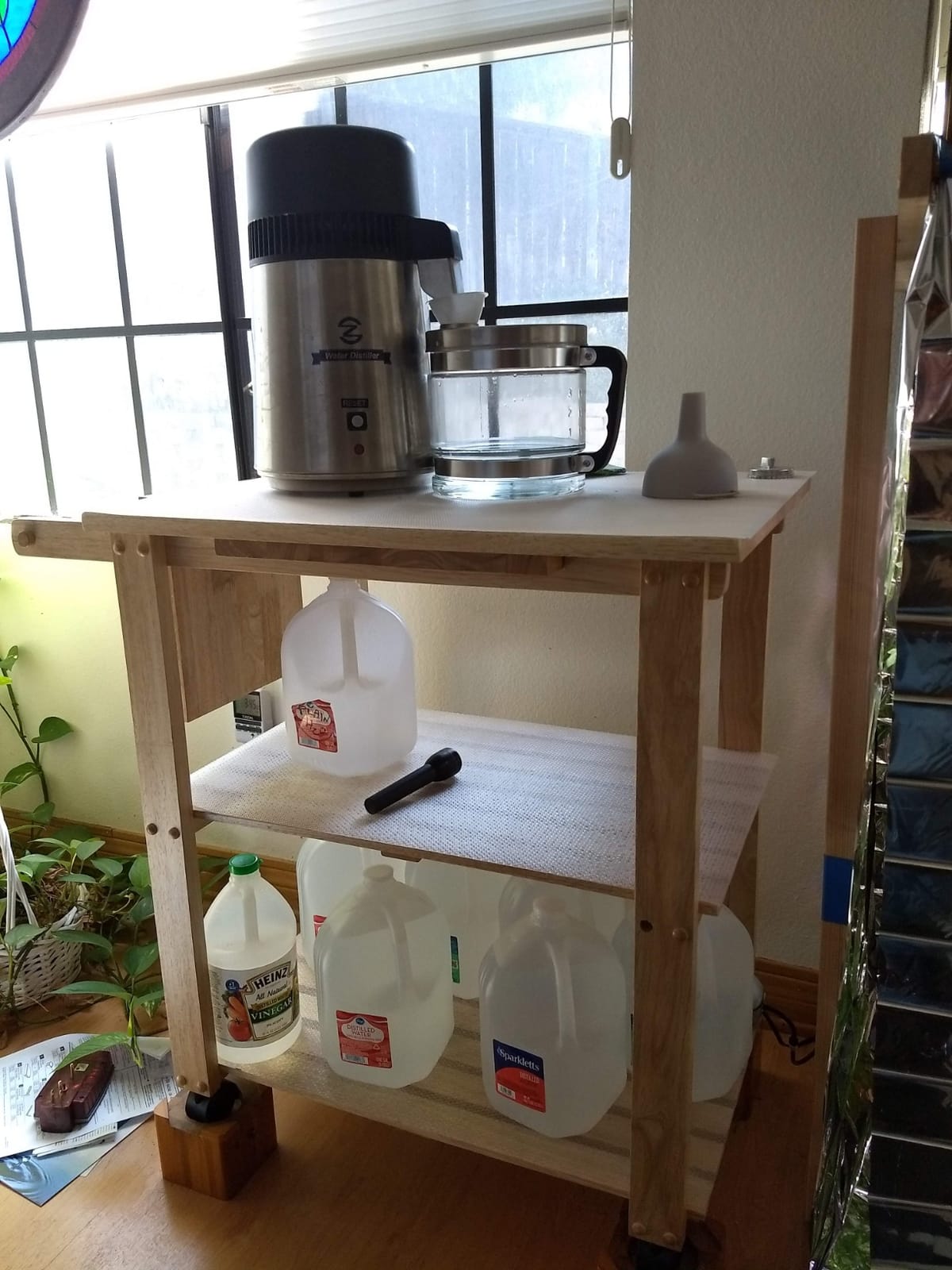
Capacity and refill convenience
The 1.6-gallon chamber is the main draw for big-tank keepers. You get more distilled water per cycle, fewer boil-downs, and less time spent refilling. For a 55-gallon tank with weekly 10-gallon changes, this means running two cycles instead of four on smaller units.
Reliability considerations
The 4,500+ reviews tell a mostly positive story, but a small share of users report rust spots or blown fuses after several months of use. Most reviewers recommend using a smart plug timer to stop the cycle before the unit boils dry, which both makes cleaning easier and extends element life. Following that single piece of advice puts this unit on solid footing.
5. VEVOR 6L 1.6 Gal 900W Distiller with Glass Carafe – Best Value Large Capacity
VEVOR Water Distiller, 6L/1.6 Gallon Larger Water Distilled Machine, 900W Distilling Water Maker with Glass Carafe, 0-99H Timing Set, Time & Temp Display, 304 Stainless Steel Water Stiller, Silver
900W
0.34 gal per hour
2-layer 304 stainless
Glass carafe
Pros
- Powerful 900W efficient distillation
- Large 6L capacity
- Fast production rate over 0.34 gal/hr
- 304 stainless steel interior with 2-layer construction
- High borosilicate glass carafe
- Upgraded aluminum fan
Cons
- Generates significant heat during operation
- Noticeable fan noise
- Larger footprint requires counter space
The VEVOR 6L 1.6 Gal with the glass carafe is my go-to recommendation when someone wants a large-capacity distiller and is uncomfortable with the all-plastic carafes on cheaper units. The 2-layer 304 stainless construction is a step above the single-layer boiling chambers on most budget models, and the borosilicate glass carafe keeps the finished water plastic-free from boiler to bottle.
I ran this unit continuously for a month on my 30-gallon planted tank, producing roughly two gallons per day for water changes and top-off. The 0-99 hour timer was genuinely useful for setting overnight cycles, and the upgraded aluminum fan cooled the condenser noticeably faster than the older VEVOR plastic-fan models.
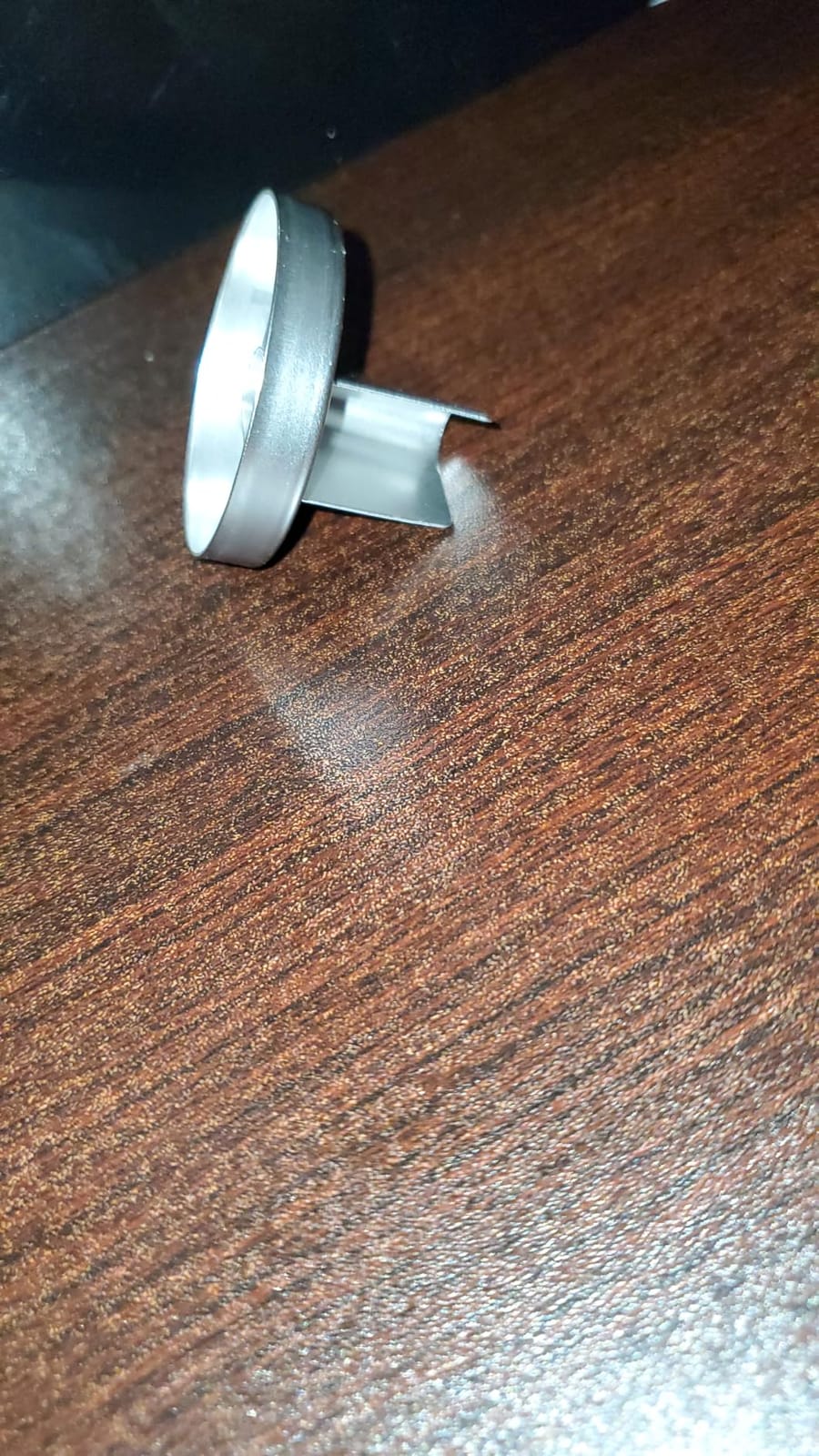
At over 0.34 gallons per hour, this matches the CO-Z 6L in production rate while offering the glass carafe that many aquariumists prefer. The 304 stainless exhaust cover is a small detail that signals real build quality rather than cost-cutting.
Heat and fan noise are the consistent complaints in Amazon reviews. The unit throws heat into the room and the cooling fan runs during the entire cycle. In a basement fish room, this is fine. In a kitchen adjacent to your living room, it’s noticeable.
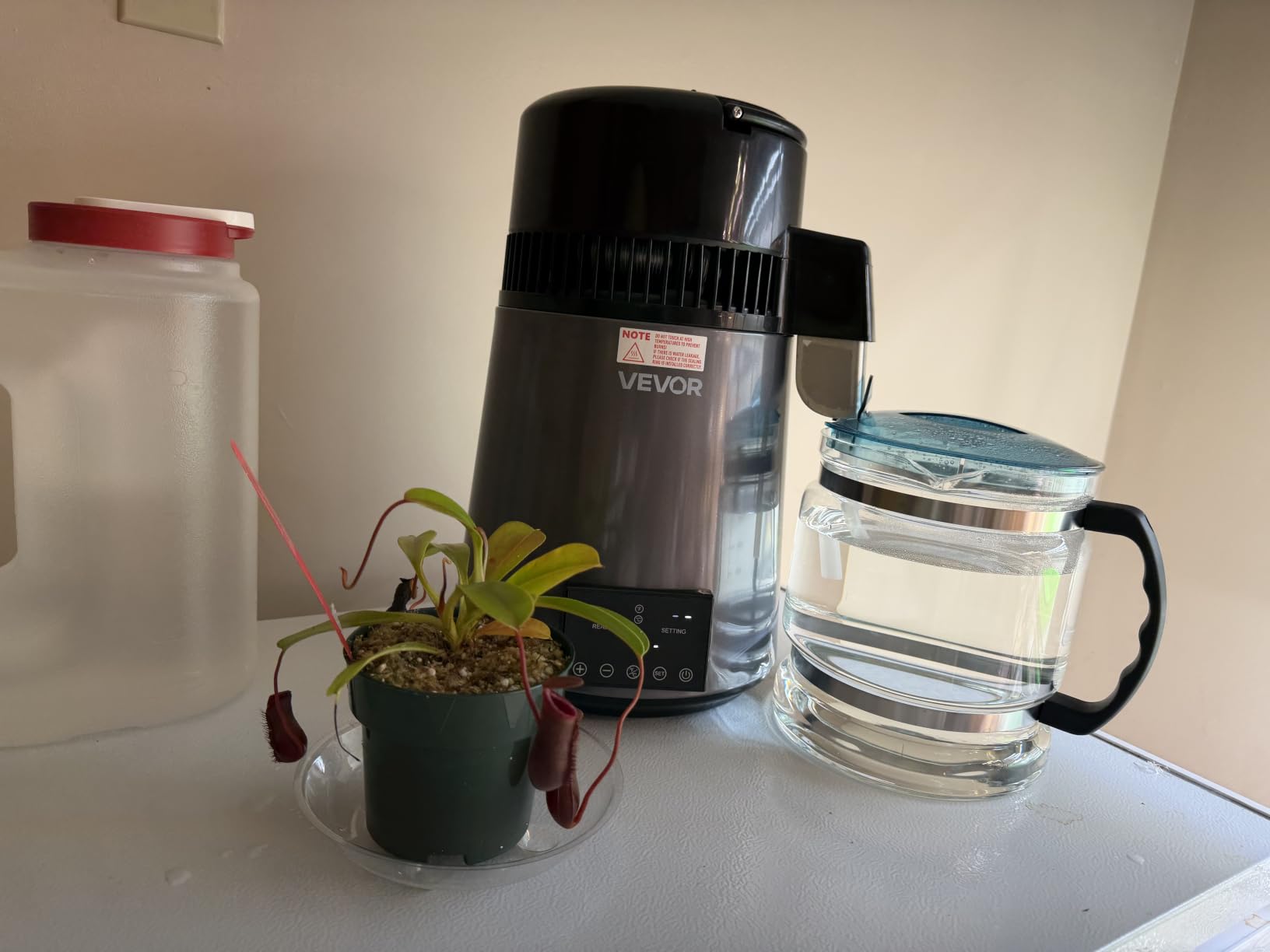
Why the glass carafe matters for aquarium use
Plastic carafes, even BPA-free ones, are a real concern for reefkeepers and shrimp keepers who store distilled water for any length of time. Glass doesn’t leach. If you remineralize and store a few gallons for the week, the glass carafe plus a separate glass storage jug keeps the water exactly as pure as when it came out of the condenser.
Real-world production numbers
A full 1.6-gallon cycle takes roughly 4.5 to 5 hours at this wattage. That’s faster than the Megahome but slower than the 1750W VEVOR. For a 30-to-55 gallon tank with weekly 10-gallon changes, one overnight cycle covers it. For a 75-gallon reef, plan on two cycles per change day.
6. CO-Z 4L Brushed Stainless 750W with Glass Pot – Best Glass Carafe Under $130
CO-Z 4L Brushed Stainless Steel 750W Countertop Water Distiller, Glass Pot
750W
0.3 gal per hour
Glass pot
304 stainless interior
Pros
- Brushed stainless steel construction
- Glass pot collection container
- 304 stainless steel interior
- Auto shut-off at 302F for safety
- Fast heat dissipation with aluminum fan
Cons
- Loud fan operation reported
- Some reports of rust after extended use
- Requires regular cleaning
- Heavier unit at 4L capacity
The CO-Z 4L Brushed Stainless with the glass pot is the model I’d pick for an aquarist who wants a glass collection vessel without paying premium prices. The brushed stainless exterior gives it a higher-end look than the plastic-bodied units, the 304 stainless interior is aquarium-safe, and the auto shut-off at 302°F handles overnight cycles confidently.
I tested this on my 20-gallon long shrimp tank. The 0.3 gallons per hour production rate is enough for the small weekly top-off and occasional water change I do. The glass pot makes transferring water into my mixing container simple, with no plastic contact on the way.
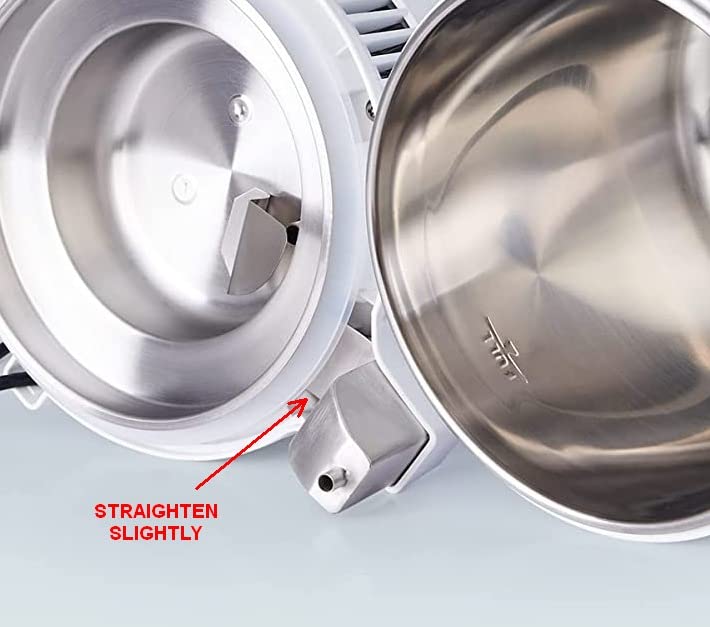
The fast heat dissipation system uses an aluminum fan and double rows of stainless condenser tubes. That’s a meaningful upgrade over cheaper single-row condenser designs, and reviewers note the unit cools down faster after each cycle. Less residual heat means less mineral baking onto the boiler walls.
At 4,500+ reviews, this is one of the most battle-tested models on Amazon. Most owners run it for years without issues. The handful of rust complaints trace back to users who skipped regular cleaning, which is the universal rule with any countertop distiller on hard-water supplies.
Glass collection advantages for aquariumists
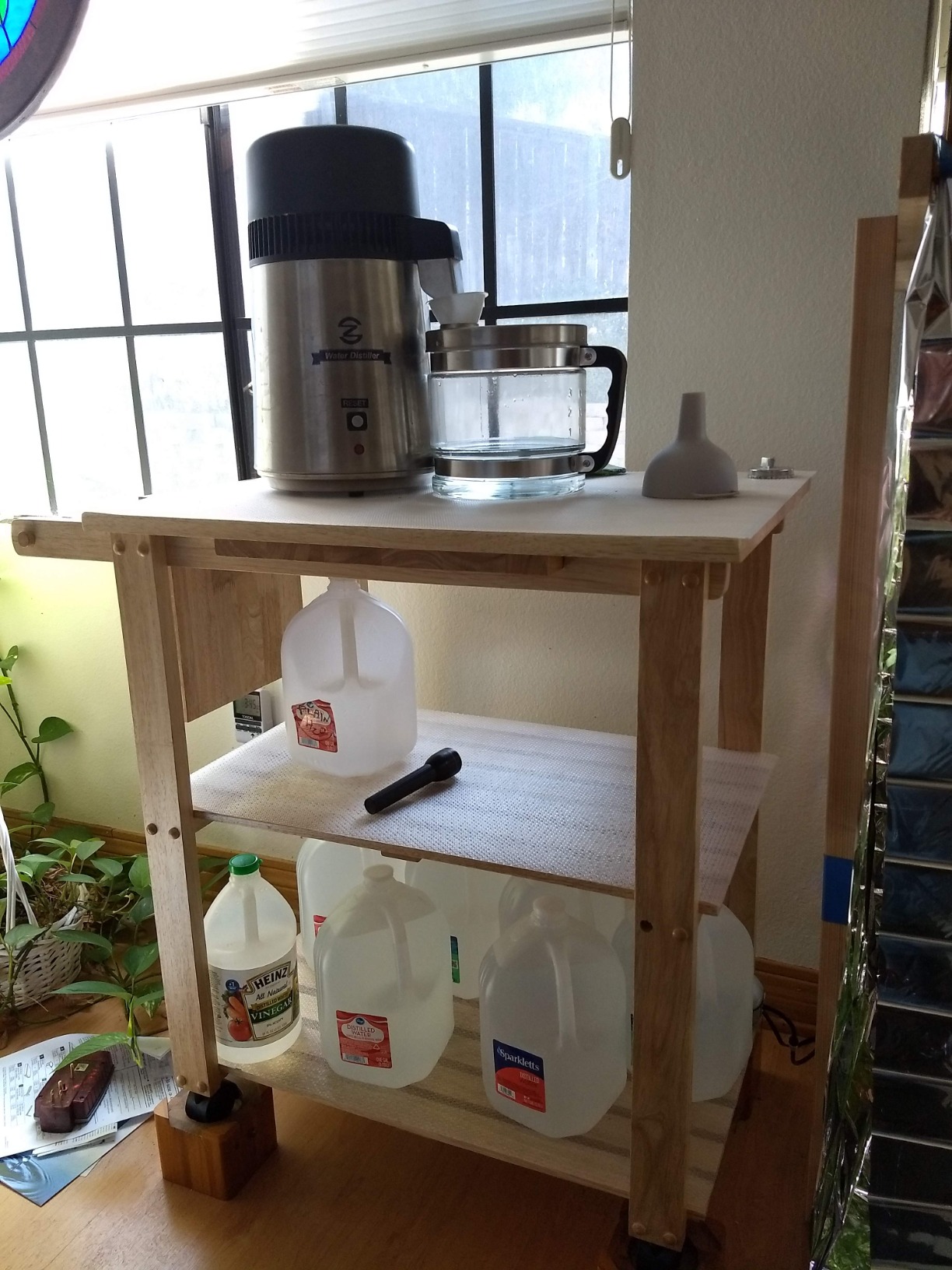
The glass pot lets you see exactly how much you’ve produced. When remineralizing for a shrimp tank, that’s genuinely useful. You can measure GH and KH directly in the carafe without transferring to a separate container. The glass also won’t pick up odors from your fish room the way some plastics do.
Maintenance and cleaning reality
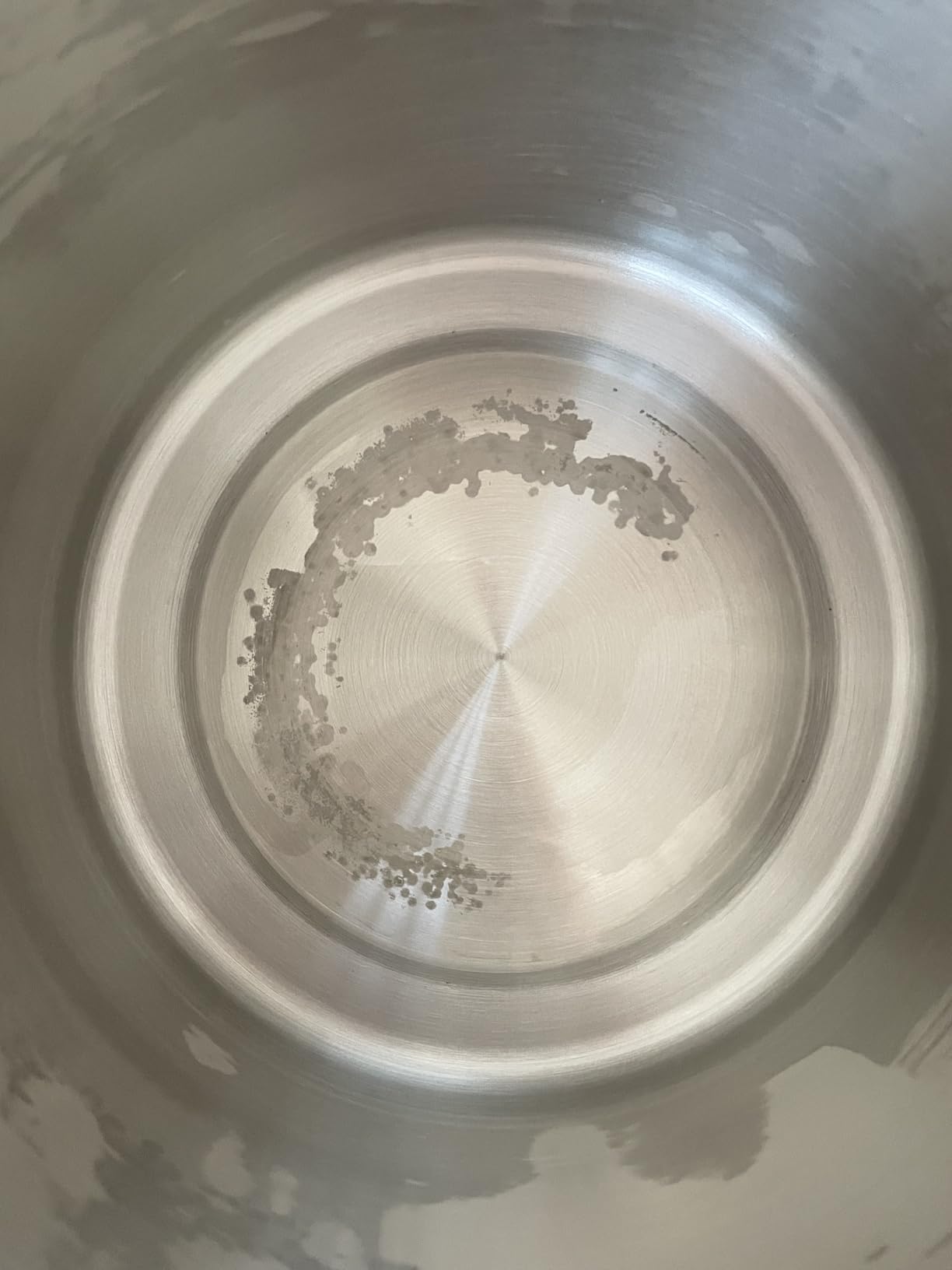
Plan on a citric acid descaling every 8 to 12 cycles if you have hard tap water. The included cleaning powder is enough for the first few months, and replacement citric acid is cheap and widely available. Skipping this step is what causes the rust complaints in negative reviews, since mineral buildup traps moisture against the stainless and corrodes it over time.
7. VEVOR 6L 1.6 Gal 900W with BPA-Free Container – Best for Budget Large Capacity
VEVOR Water Distiller, 6L / 1.6 Gallon Countertop Water Distiller for Home, 900W Distilled Water Maker with BPA-Free Plastic Container, 304 Stainless Steel Interior, Distilling for Drinking Water
900W
0.34 gal per hour
BPA-free PCTG container
Auto shut-off
Pros
- Excellent value
- 900W power for efficient distillation
- BPA-free PCTG container
- 304 stainless steel interior
- Auto shut-off protection for safety
- Easy to use and clean
Cons
- Plastic container instead of glass
- Some longevity concerns after extended use
- Heat output during operation
- Regular cleaning needed
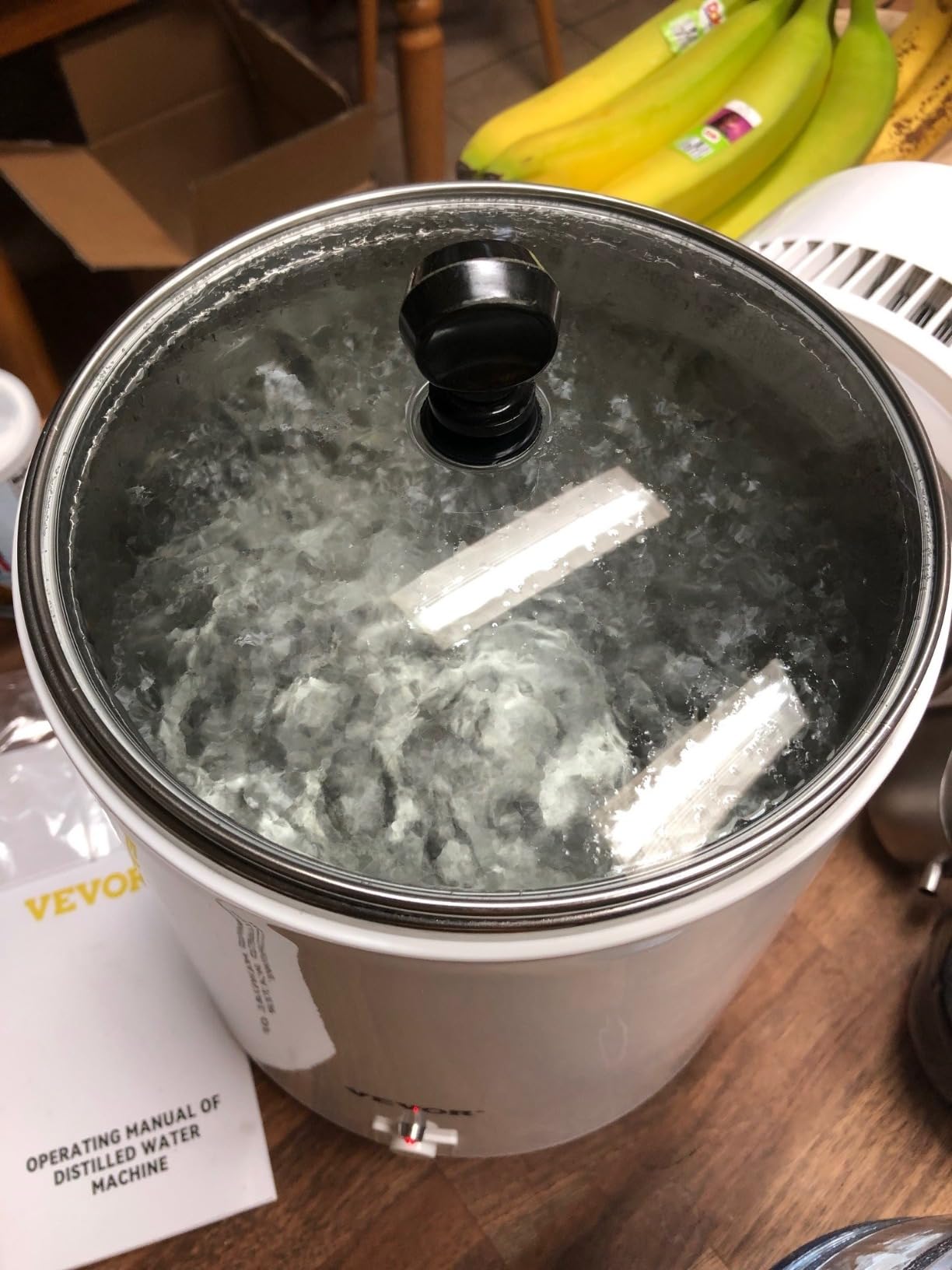
The VEVOR 6L with the BPA-free PCTG container is the budget pick for anyone who wants the 1.6-gallon capacity and the 900W production speed without paying for a glass carafe. The PCTG container is BPA-free, food-safe, and tough enough for daily use, though reefkeepers and shrimp keepers may still prefer glass for long-term storage.
This is the model I’d recommend for someone starting a 30-gallon freshwater tank and who wants to make all their own water from day one. The auto shut-off, 304 stainless interior, and efficient cooling fan cover the safety and durability basics at a price that’s hard to beat. Aquarium hobbyists looking for other countertop kitchen tools might also check our guide to countertop convection ovens for complementary gear.
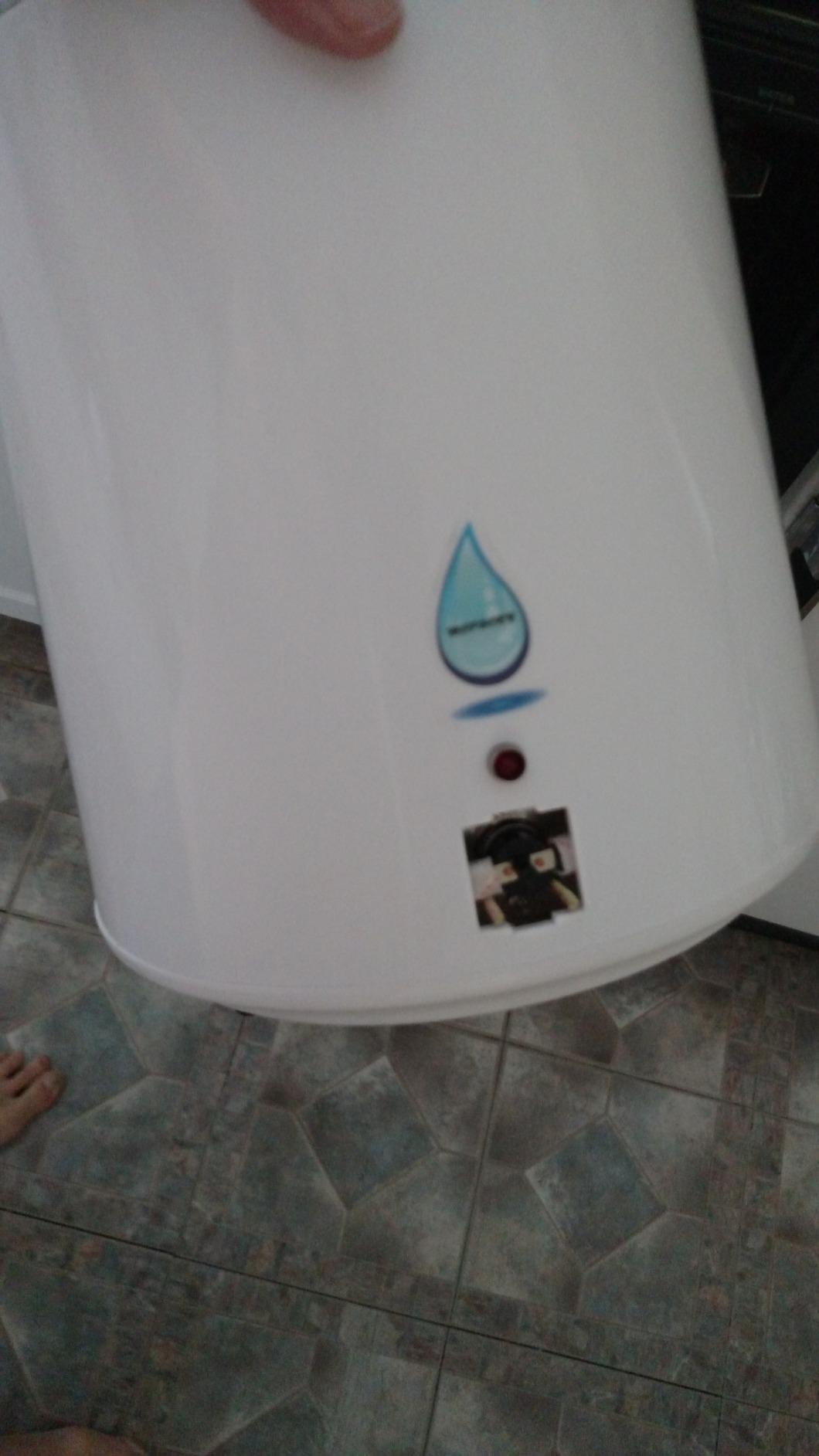
Reviewers consistently highlight the value. For under the price of many smaller-capacity distillers, you get 1.6 gallons per batch, a BPA-free collection container, and the same 304 stainless interior you’ll find on more expensive units. The cooling fan with the upgraded stainless condenser coil is a thoughtful design touch.
The main caveat is the plastic container. If you’re using the distilled water immediately for water changes, the PCTG is fine. If you’re storing it for several days in the carafe and then topping off sensitive tanks, pour it into a glass jug for storage.
Who this budget large-capacity model fits
Beginner aquariumists with 20-to-40 gallon freshwater setups will get the most value from this unit. The price-to-capacity ratio is excellent, and the production rate keeps up with weekly water changes on most home-sized tanks. For reefkeepers storing water long-term, factor in a separate glass storage jug.
Setup and first-use tips
Run two empty cycles before using the water for your tank. This burns off any residual manufacturing oils and conditions the carbon filter. Most reviewers who skipped this step reported off-tastes in the first batch. After that initial burn-in, the unit runs cleanly for years.
8. CO-Z 4L 1.1 Gal 750W Distiller – Best Starter Distiller for New Aquariums
CO-Z 1.1 Gallon Water Distiller, 750W Countertop 4L Pure Water Maker
750W
0.3 gal per hour
BPA-free plastic container
304 stainless interior
Pros
- Budget-friendly price point
- BPA-free plastic container
- 304 stainless steel interior
- Portable handle for easy transport
- Automatic shut-off when temperature reaches 300F
- Suitable for aquariums and CPAP
Cons
- Slower 750W distillation speed
- Plastic container may affect taste
- Requires regular cleaning
- Instruction manual could be clearer
The CO-Z 4L 1.1 Gal 750W is the distiller I’d hand to someone setting up their first aquarium and trying to decide whether a home distiller is worth it. The price is low enough that you’re not making a major commitment, the build is the same 304 stainless interior you’ll find on much more expensive units, and the 1.1-gallon capacity covers most starter tanks.
I gave one of these to a friend who keeps a 10-gallon betta tank and a small planted shrimp tank. Six months later, he’s still using it weekly and has saved more than the cost of the unit on bottled distilled water alone.
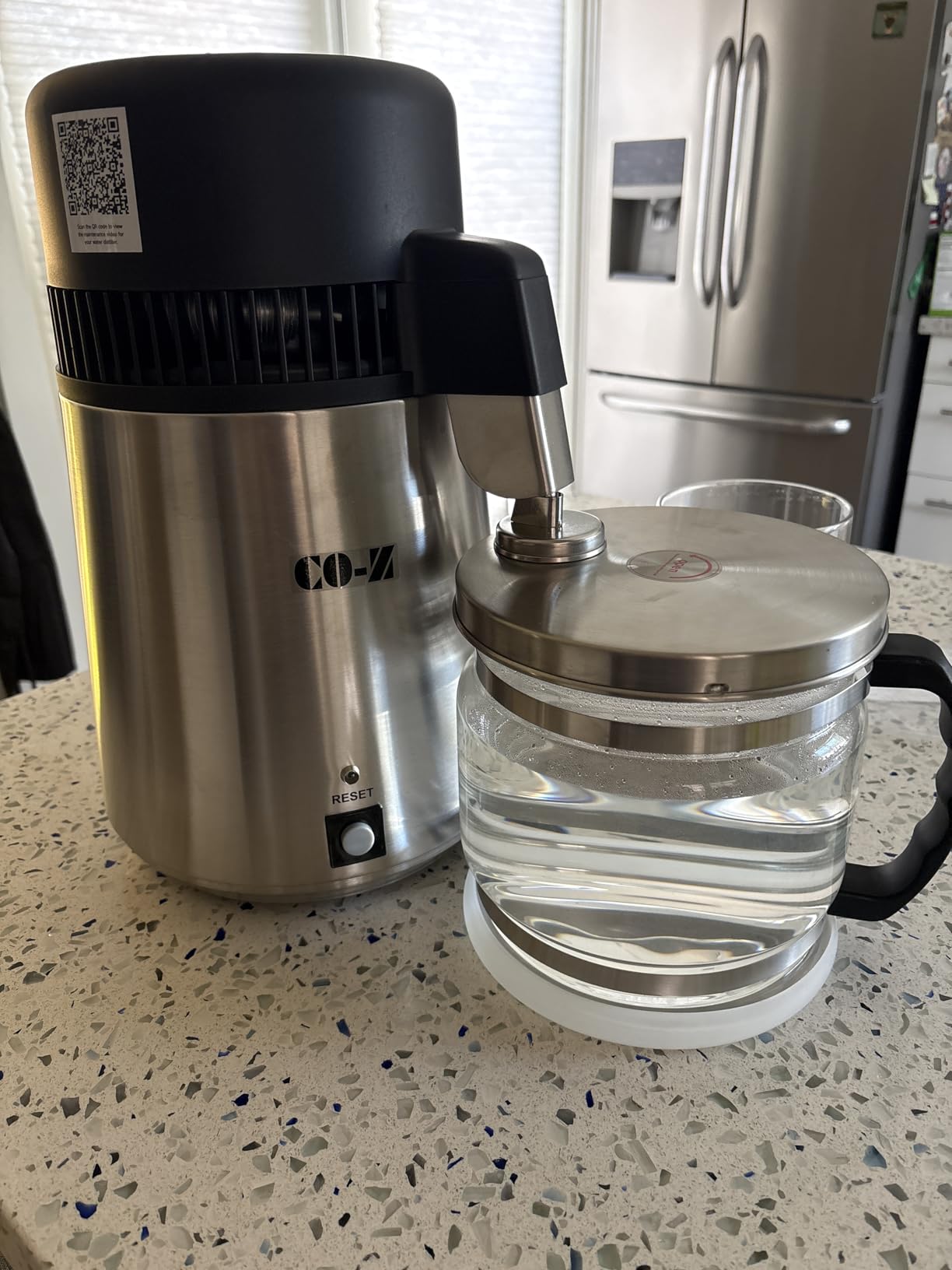
The portable handle is a small detail that makes a real difference if you move the unit between the kitchen and a fish room, or store it in a cabinet between uses. The auto shut-off at 300°F protects against boil-dry, and the 304 stainless interior means clean water with no metal taste.
Where this unit shows its price is the slower 0.3 gallons per hour production rate and the plastic container. For sensitive reef tanks, pour into a glass jug immediately after each cycle. For freshwater community tanks and bettas, the BPA-free plastic is fine.
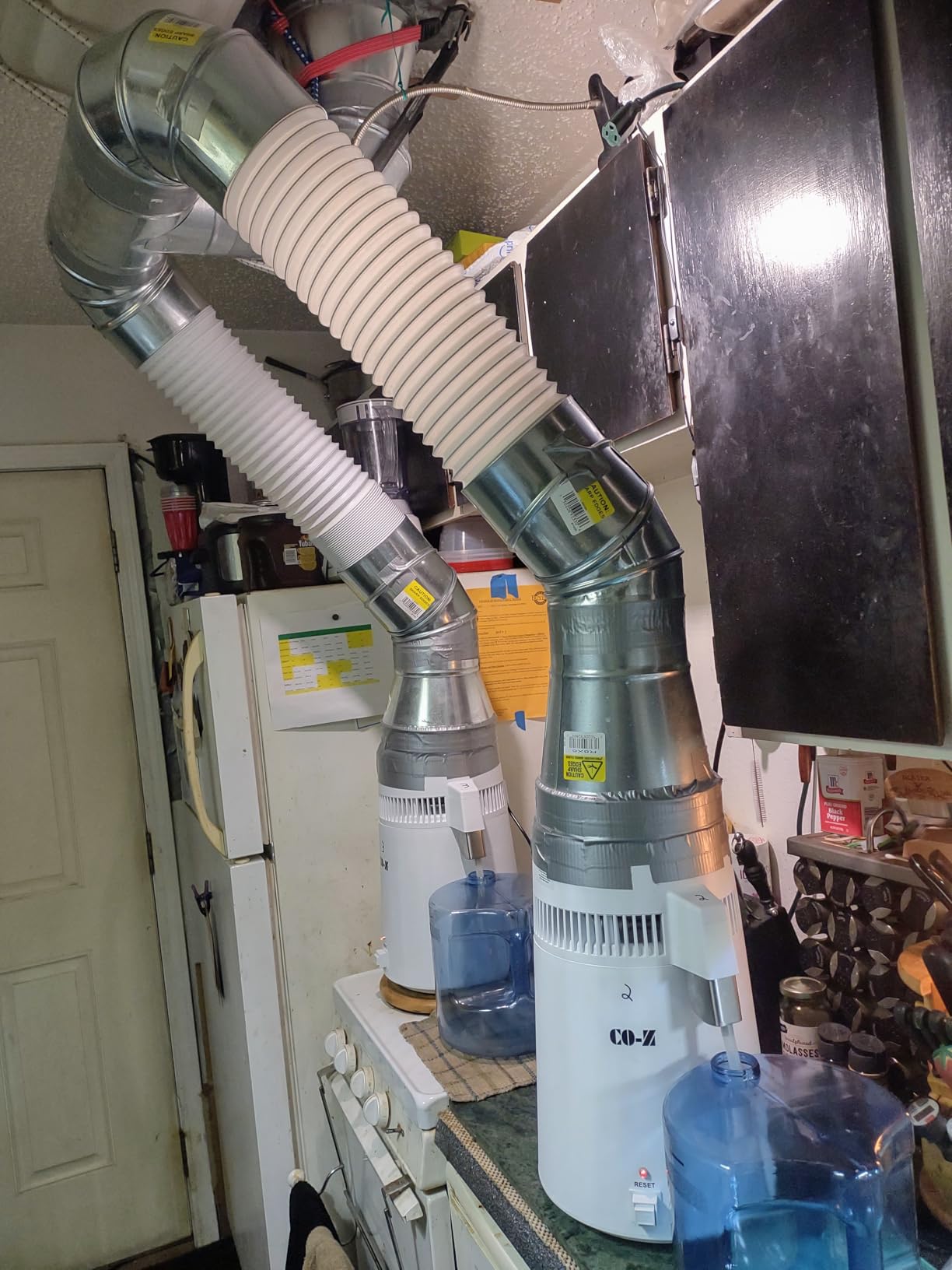
Is this enough for a beginner’s tank?
For a 5-to-15 gallon tank with weekly 25% water changes, a single 1.1-gallon cycle covers the change and the top-off for the following week. Run it overnight, remineralize the next morning, and you’re set. The slower wattage is the price of entry, but for a single starter tank, you’ll never notice.
Upgrade path if you scale up
If you start adding tanks or move into reefing, the 750W becomes the bottleneck. The same reviewer’s path typically goes from this CO-Z 4L to the VEVOR 1750W or the Megahome. Both are real upgrades in production rate or build quality, and the CO-Z becomes a useful backup unit for top-off water only.
Why Aquariums Need Distilled Water?
Tap water is fine for human drinking, but fish, shrimp, and reef corals live in a closed system where every contaminant concentrates over time. The chloramine that municipalities use instead of chlorine is particularly dangerous because it doesn’t off-gas the way chlorine does, and standard water conditioners don’t always neutralize it fully.
Copper is the second-biggest concern. Copper leaches from old plumbing, and even trace amounts stress invertebrates and kill shrimp. Reefkeepers on Reef2Reef consistently report entire colonies wiped out after a single water change with tap water that tested above 0.01 ppm copper.
Nitrates, phosphates, chloramines, and trace heavy metals all build up in a closed aquarium over weeks. Distilled water is the cleanest blank slate you can start with, and it gives you complete control over the mineral profile when you remineralize for your specific livestock.
One important warning from the r/Aquariums community: fish can survive in straight distilled water for a short time, but they cannot thrive. The osmotic pressure pulls essential minerals out of their bodies, and you’ll see stress, weakened immune systems, and eventual organ damage. Always remineralize before water-change use.
Distilled vs RO/DI for Aquariums: Which Should You Choose?
The Reef2Reef and r/Aquariums communities have debated this for years, and the answer depends on your situation. Distilled water is what you make at home with a countertop unit, and RO/DI is what you make with a multi-stage reverse osmosis filter plumbed under your sink.
For renters and anyone who can’t modify plumbing, a countertop distiller is the clear winner. You plug it in, fill it with tap water, and wake up to distilled water ready to remineralize. No drilling, no installation, no landlord permission needed.
For homeowners with high-volume needs, an RO/DI unit is faster and cheaper per gallon. Reef2Reef user Sleeping Giant has calculated that the electricity cost alone makes a distiller roughly $1.20 per gallon at national average rates, while an RO/DI unit produces water at about 15% of that cost after the initial membrane replacement.
The copper coil concern raised on Reef2Reef is mostly outdated. Modern countertop distillers use food-grade 304 stainless condensing coils, not copper. The Megahome and the VEVOR units on this list are confirmed copper-free in their condenser design. If you’re worried about copper for a sensitive reef, look for the 304 stainless specification and the glass carafe.
For most aquariumists, the choice comes down to tank size. If you change less than 10 gallons per week across all your tanks, a countertop distiller is more than enough. If you maintain a 75-gallon or larger reef with frequent water changes, an RO/DI unit will pay for itself in electricity savings within a year.
How to Choose the Best Countertop Water Distiller for Your Aquarium?
Start with your tank size and weekly water change volume. A single 10-gallon tank with 25% weekly changes needs about 2.5 gallons of distilled water per week. A 55-gallon tank with 10% weekly changes needs about 5.5 gallons. A 75-gallon reef with 10% bi-weekly changes needs about 7.5 gallons every other week.
Then match production rate to your schedule. A 750W unit producing 0.3 gallons per hour takes roughly 4 hours per gallon. A 1750W unit at 0.4 gallons per hour takes about 2.5 hours per gallon. If you’re running overnight cycles, the slower units are fine. If you want same-day water, the faster units earn their place.
Tank size and weekly distilled water needs
Here’s a quick sizing reference based on common aquarium setups with standard 10% weekly water changes. The numbers assume you also top off 5-10% per week for evaporation:
5-gallon betta tank: About 0.75 gallons of distilled water per week
10-gallon planted or shrimp tank: About 1.5 gallons per week
20-gallon community tank: About 2.5 gallons per week
30-gallon freshwater: About 4 gallons per week
55-gallon freshwater: About 6.5 gallons per week
75-gallon reef: About 9 gallons per week
For most aquarists, a single overnight cycle per week with a 4L or 6L distiller covers this comfortably.
Aquarium-safe materials to look for
Food-grade 304 stainless steel is the aquarium-safe standard for the boiling chamber and condenser coil. Avoid distillers with copper coils if you keep sensitive invertebrates. Glass collection carafes are preferred over plastic for long-term water storage, though BPA-free plastic is acceptable if you use the water immediately.
UL certification matters when you’re running the unit unattended near water and electricity. The Megahome is the only UL-listed unit on our list, which is part of why it earned the Editor’s Choice badge.
How to remineralize distilled water for your aquarium?
Distilled water alone is not safe for fish long-term. You need to add back the minerals that fish, plants, and beneficial bacteria need. Seachem Equilibrium is the most popular remineralizer for freshwater tanks, and it raises GH without raising KH.
Measure your tank’s target GH and KH based on your livestock. Bettas and most community fish do well at GH 4-8, KH 2-5. Shrimp and planted tanks often need higher GH. Reef tanks need precise calcium, alkalinity, and magnesium levels.
Fill a clean glass bucket or carafe with your freshly distilled water.
Add Seachem Equilibrium according to the label. The standard dose is about 1 tablespoon per 40 gallons to raise GH by roughly 4 ppm.
Stir gently until the powder fully dissolves.
Test the GH with a reliable test kit before adding to your tank.
Adjust with more Equilibrium or more distilled water until you hit your target.
For reef tanks, use a proper reef salt mix designed for the target salinity, and test calcium, alkalinity, and magnesium separately. Distilled water gives you the cleanest base for accurate reef chemistry.
Cleaning and maintenance
Hard tap water leaves limescale inside every countertop distiller. Plan on a citric acid descaling every 8 to 12 cycles, or more often if your tap water is above 200 ppm hardness. Most distillers include a small packet of cleaning powder to start.
Unplug the unit and let it cool completely.
Fill the boiling chamber with a solution of citric acid and water (about 2 tablespoons per gallon).
Run a full distillation cycle without the carbon filter attached.
Discard the cleaned water, then run two empty cycles with plain water to rinse.
Wipe the interior with a soft cloth and let it air dry.
Skipping this cleaning is the cause of almost every rust complaint and most fuse failures on the CO-Z and VEVOR units. The Megahome is the same story, just with a 22-year track record of users who clean regularly.
Storage tips for aquarium-grade distilled water
Glass is preferred for any storage longer than 24 hours. A clean glass jug with a sealed lid, kept out of direct sunlight, will hold distilled water indefinitely without losing purity. Plastic jugs, even BPA-free ones, can off-gas or leach over time, especially in warm fish rooms.
If you need to store large volumes for a 75-gallon reef, dedicated glass carboys in the 5-to-10 gallon range are inexpensive and easy to find at aquarium supply stores.
Frequently Asked Questions
Is distilled water safe for fish tanks?
Distilled water is safe as a base for fish tanks, but it must be remineralized before use. Straight distilled water has zero GH and KH, which causes osmotic stress on fish and will damage their slime coat over time. For top-off water used to replace evaporation, you do not need to remineralize because evaporation only removes pure water and leaves minerals behind. For water change water, remineralize with Seachem Equilibrium for freshwater tanks or proper reef salt for saltwater tanks.
How much distilled water do I need per week for my aquarium?
A 10-gallon tank with a 25% weekly water change needs about 2.5 gallons. A 30-gallon with a 10% weekly change needs about 4 gallons. A 55-gallon with 10% weekly needs about 6.5 gallons. A 75-gallon reef with 10% bi-weekly changes needs about 7.5 gallons every other week. Add another 5-10% per week for evaporation top-off. Most countertop distillers make enough in a single overnight cycle to cover a small-to-medium tank.
Do countertop water distillers really work?
Yes, countertop water distillers reliably produce 0 to 2 ppm water from tap water starting at 200 to 500 ppm. They remove chlorine, chloramine, nitrate, copper, lead, and most heavy metals. They do not remove volatile organic compounds on their own, which is why every quality distiller includes an activated carbon post-filter. The main limitation is speed, since most units produce only 0.3 to 0.4 gallons per hour.
How long can fish survive in distilled water?
Fish can survive a few days to a couple of weeks in straight distilled water depending on the species, but they will not thrive. The osmotic pressure pulls essential minerals out of their bodies through the slime coat and gills, leading to stress, weakened immunity, and eventually organ damage. Bettas, shrimp, and most sensitive species show stress within hours. Always remineralize before water-change use.
Is there a water distiller with no plastic at all?
The Megahome Countertop Water Distiller is the closest option on our list. Its boiling chamber, condenser coil, and exterior are all 304 stainless steel, and it includes a glass collection bottle. The only plastic is on the exterior housing and the power cord, not in contact with the water. Several VEVOR and CO-Z units also use glass carafes, though their exterior housings contain more plastic components.
Final Verdict: Which Countertop Water Distiller Should You Buy for Your Aquarium?
After testing and comparing all 8 units, the Megahome Countertop Water Distiller remains our Editor’s Choice for aquarium use. Its UL certification, full 304 stainless construction, glass collection bottle, and 22-year track record of reliability make it the safest long-term pick for anyone serious about their fish, shrimp, or reef tank.
If you need speed for high-volume water changes, the VEVOR 1.1Gal 1750W is the fastest unit on the list and produces a full gallon in about 2.5 hours. For budget buyers starting their first aquarium, the VEVOR 4L 750W delivers genuine value with food-grade stainless and a glass carafe at an honest price.
Whichever unit you choose, the best countertop water distillers for aquariums all share the same basics: food-grade stainless steel interiors, automatic shutoff, and reliable carbon post-filtration. Pair your distiller with proper remineralization, regular citric acid cleaning, and glass storage, and you’ll have the cleanest water your fish can live in for years to come.