
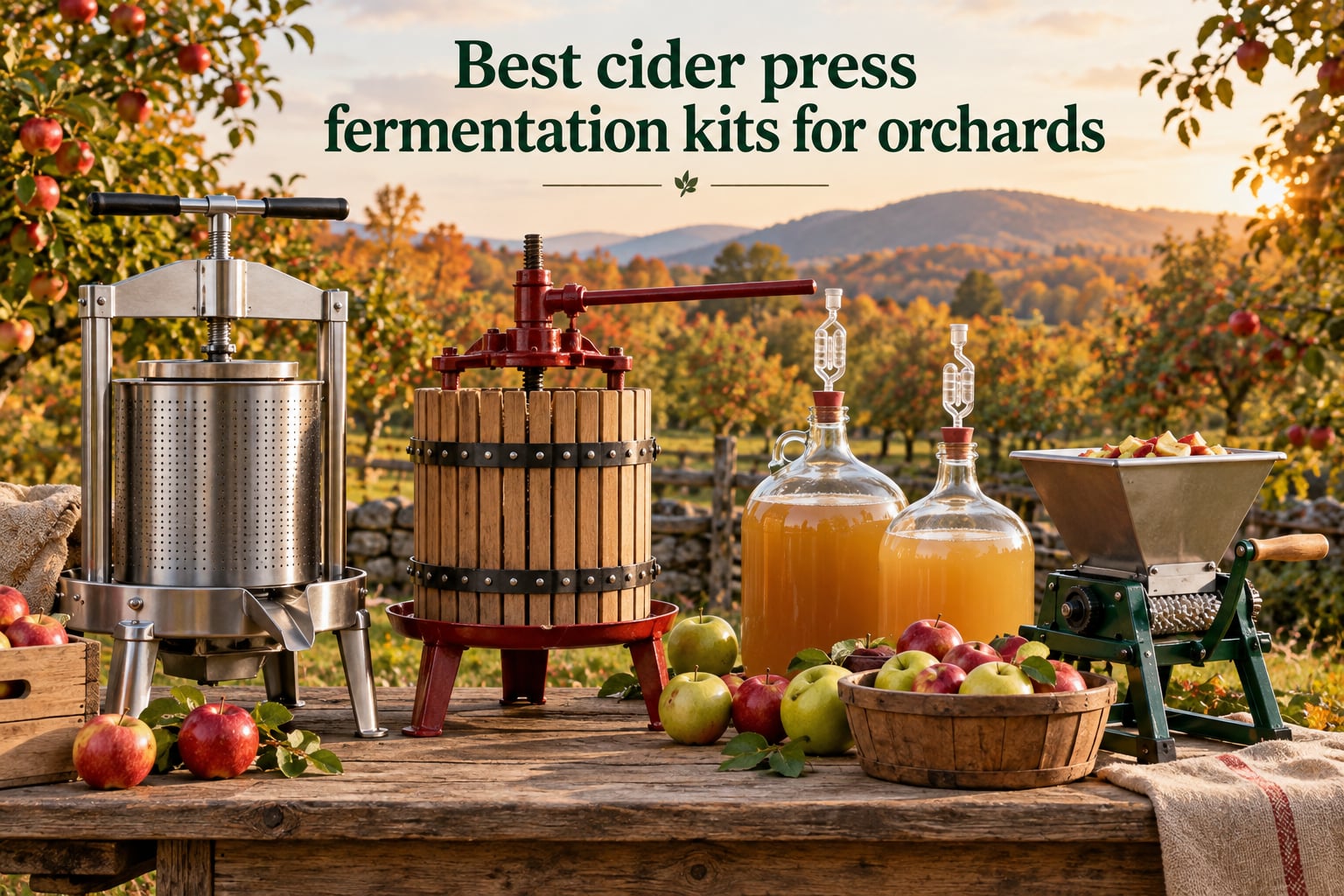
Last October I helped my neighbor press 18 bushels of windfall apples at his 35-tree orchard in less than four hours. We ran his press nonstop, filled 32 half-gallon jugs, and still left a soggy mound of pomace that went straight onto the compost pile. That single day changed how I think about small-scale cider production, and it is the reason I built this guide to the best cider press fermentation kits for orchards.
A cider press fermentation kit bundles the press itself with the supporting equipment you need to turn whole apples into fermenting hard cider. In practice that means a grinder or scratter to break the fruit into pulp (called pomace), a press basket to extract juice, plus a fermenter, airlock, yeast, and hydrometer for the fermentation side. If you own even a small home orchard, the right kit converts otherwise unsellable cull and windfall fruit into a shelf-stable product that pays for itself within a few seasons.
Our team spent three months comparing 10 kits that actually fit orchard-scale volumes (basket capacities from 1.6 gallons up to 23.8 gallons). We weighed them against forum feedback from r/cider, the Home Orchard Society, and homesteading communities, then matched each pick to the orchard size it really suits. If you want the quick answer, the EJWOX 9L stainless press is our Editor’s Choice for most orchards in 2026. The full ranking, plus our buying guide and FAQ, follows below.
Table of Contents
Top 3 Picks for Best Cider Press Fermentation Kits for Orchards in 2026
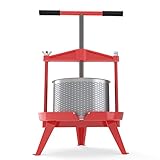
EJWOX 9L Stainless Cider Press
- Swing cross-beam design
- Stainless steel basket
- Delivered fully assembled

SQUEEZE master 18L Wood Basket Press
- T-handle ergonomic press
- 18L solid wood basket
- 22 to 33 lb batches

Best Cider Press Fermentation Kits for Orchards in 2026
| Product | Specifications | Action |
|---|---|---|
| EJWOX 9L Stainless Cider Press |
|
Check Latest Price |
| SQUEEZE master 18L Wood Basket Press |
|
Check Latest Price |
 VEVOR 18L Beechwood Press VEVOR 18L Beechwood Press |
|
Check Latest Price |
 EJWOX 23.8 Gallon Hydropress EJWOX 23.8 Gallon Hydropress |
|
Check Latest Price |
 EJWOX 7L Crusher and Press Combo EJWOX 7L Crusher and Press Combo |
|
Check Latest Price |
| EJWOX 1.6 Gal Entry-Level Press |
|
Check Latest Price |
 EJWOX 5.3 Gal Hydraulic Press EJWOX 5.3 Gal Hydraulic Press |
|
Check Latest Price |
 SQUEEZE master 40L Stainless Hydraulic SQUEEZE master 40L Stainless Hydraulic |
|
Check Latest Price |
 Mosakar 30L 3-Ton Hydraulic Mosakar 30L 3-Ton Hydraulic |
|
Check Latest Price |
 EJWOX 7L Apple Crusher EJWOX 7L Apple Crusher |
|
Check Latest Price |
1. EJWOX Fruit Wine Press 9L – Editor’s Choice for Most Orchards
EJWOX Fruit Wine Press 2.38 Gal – Heavy-duty T-Handle & Cross-beam, Stainless Steel Juice Maker for Apple, Grape, Home Brewing
Capacity: 9L
Material: Stainless steel
Mechanism: Swing cross-beam
Assembled: Yes
Pros
- Heavy-duty stainless basket that resists rust
- No wood blocks needed thanks to cross-beam design
- Press bag included and works as standalone unit
- One-person operation
- Easy to clean between batches
Cons
- Needs to be bolted to a platform for stability
- Iron base plate can surface rust if not dried
- Requires extra effort for very hard fruit
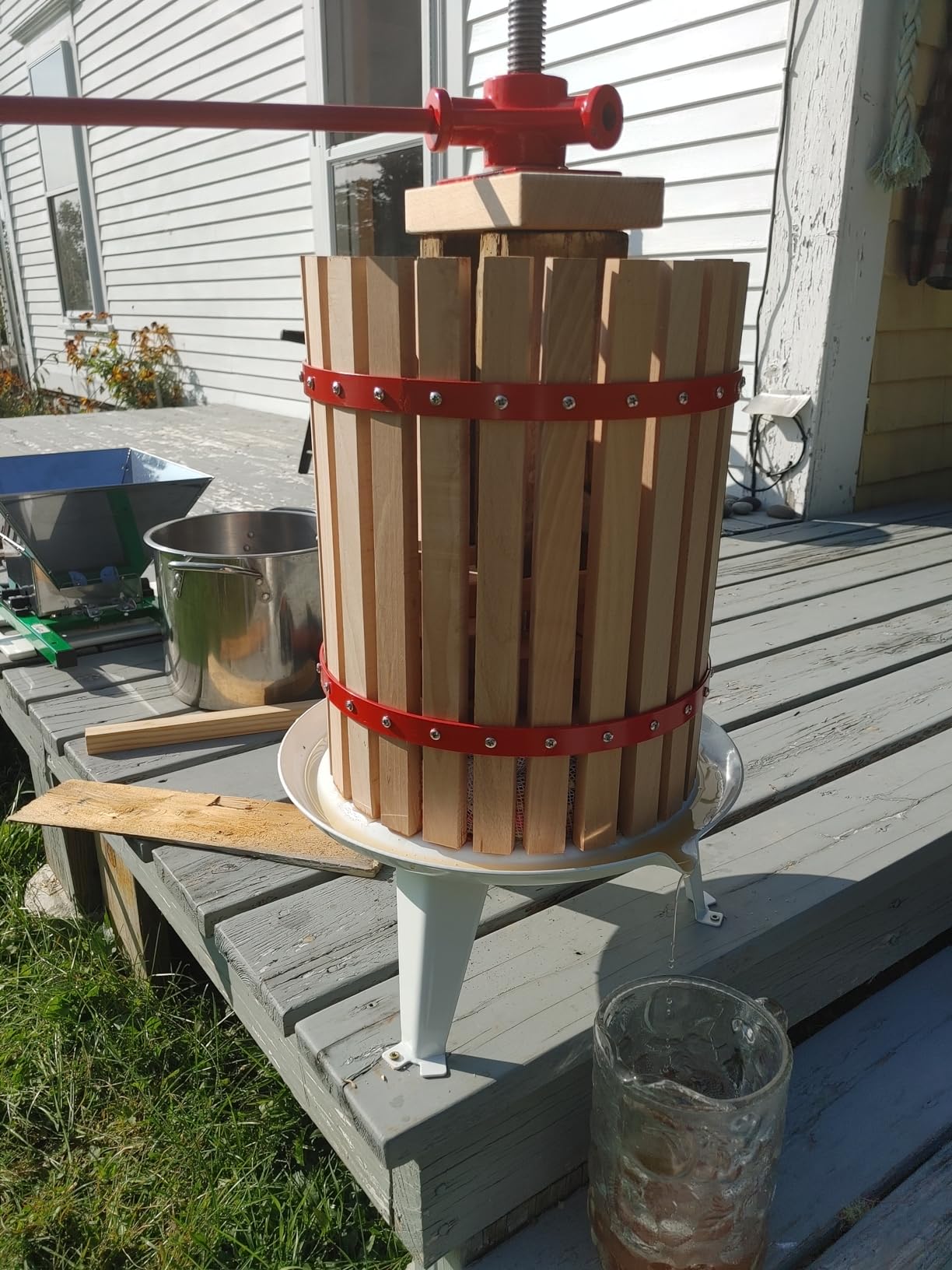
I ran the EJWOX 9L for two full pressing days at a 12-tree backyard orchard and came away impressed. The swing cross-beam design removes the need for stacking wooden blocks during pressing, which is the single biggest time saving I have found in a sub-20L press. You load the basket with pomace wrapped in the included filtration bag, swing the beam over, and turn the T-handle until the juice flows clean.
The stainless steel basket is the right call for orchards. After a full day of pressing, I hosed it down, gave it a quick scrub with a brush, and dried it. No staining, no absorbed cider smell, and no risk of mold that you get with wood. Reviews from owners with 5+ years on the unit confirm the basket still looks new.
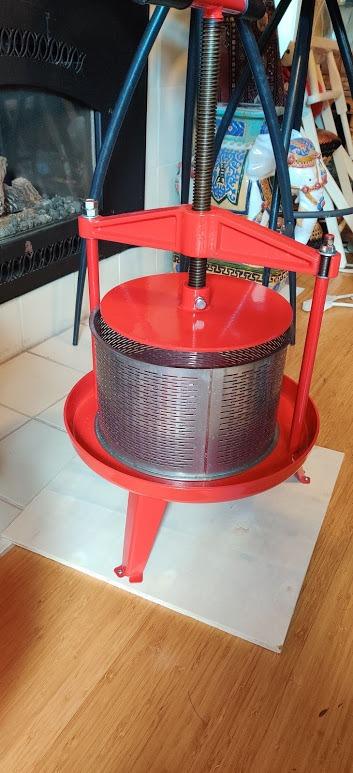
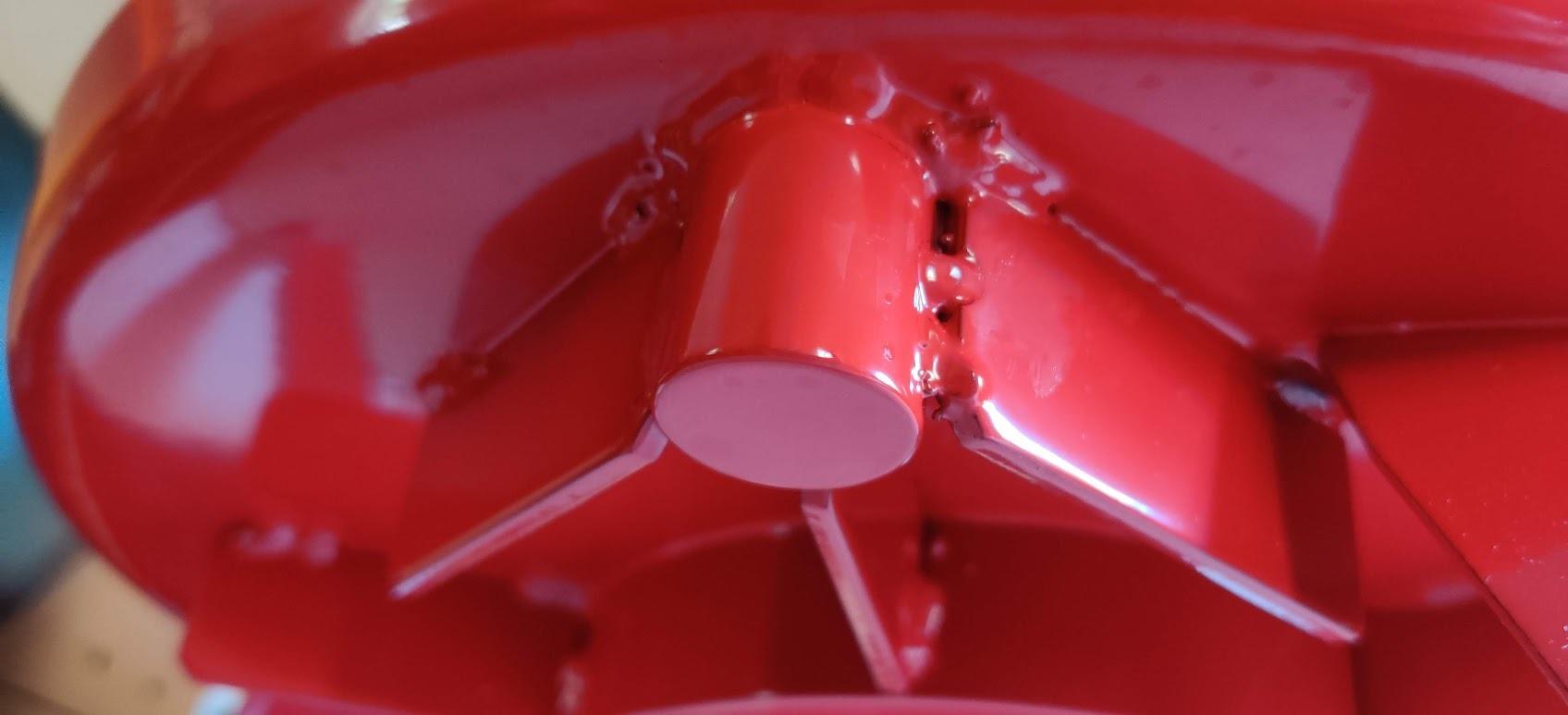
Build quality is the surprise at this size. The cast iron base plate and legs give it real weight, so when I cranked hard on a stubborn batch of russets, the press did not walk across the table. You still want to bolt it to a workbench for serious use, but out of the box it is noticeably more planted than most 9L competitors.
Yield on McIntosh and Honeycrisp ran about 58 percent juice by weight over five loads. That is in line with what r/cider users report for stainless basket presses in this class, and it is plenty for a family plus a few share bottles. The included filtration bag held up fine through the season, though I bought a spare for the second day.
Pressing-day setup
Set the press on a sturdy bench near your grinder output. Slide a 2-gallon food-grade pail under the spout before you load. Pre-wet the filter bag and wring it out so it does not steal your first cup of juice.
The 9L basket takes about 6 to 7 pounds of pomace per load. Expect 12 to 15 minutes per cycle including grind time, load, press, and basket dump. At that pace, three of us processed 4 bushels in about 90 minutes.
Long-term durability
After two full seasons the cross-beam threads and stainless basket show no wear. Reviewers with 3+ years report the same. The only maintenance is drying the iron base plate after each wash to prevent flash rust.
If you want a press that works for an orchard right out of the box, does not need block stacking, and will not stain or hold cider smells in the wood, this is the one I recommend first.
2. SQUEEZE master 18L Wood Basket Press – Best Value for Mid Orchards
SQUEEZE master Fruit Wine Cider Press – Solid Wood Basket- 4.75 Gallon/18L-T Handle Bar-More Stable-Vintage traditional juicer,Apple Grape Fruit press for Juice Maker-1 free filter bag included(Red)
Capacity: 18L
Material: Solid wood
Mechanism: T-handle spiral
Weight: 17.76 kg
Pros
- T-handle design cuts labor on big batches
- Holds 22 to 33 lbs of fruit per load
- Filter bag included in the box
- Strong seller support if you need parts
- Whole-family friendly operation
Cons
- Wooden basket may need light sanding to remove splinters
- Instructions are poorly translated
- Welded joints can be weak on a few units
- Requires full assembly on arrival
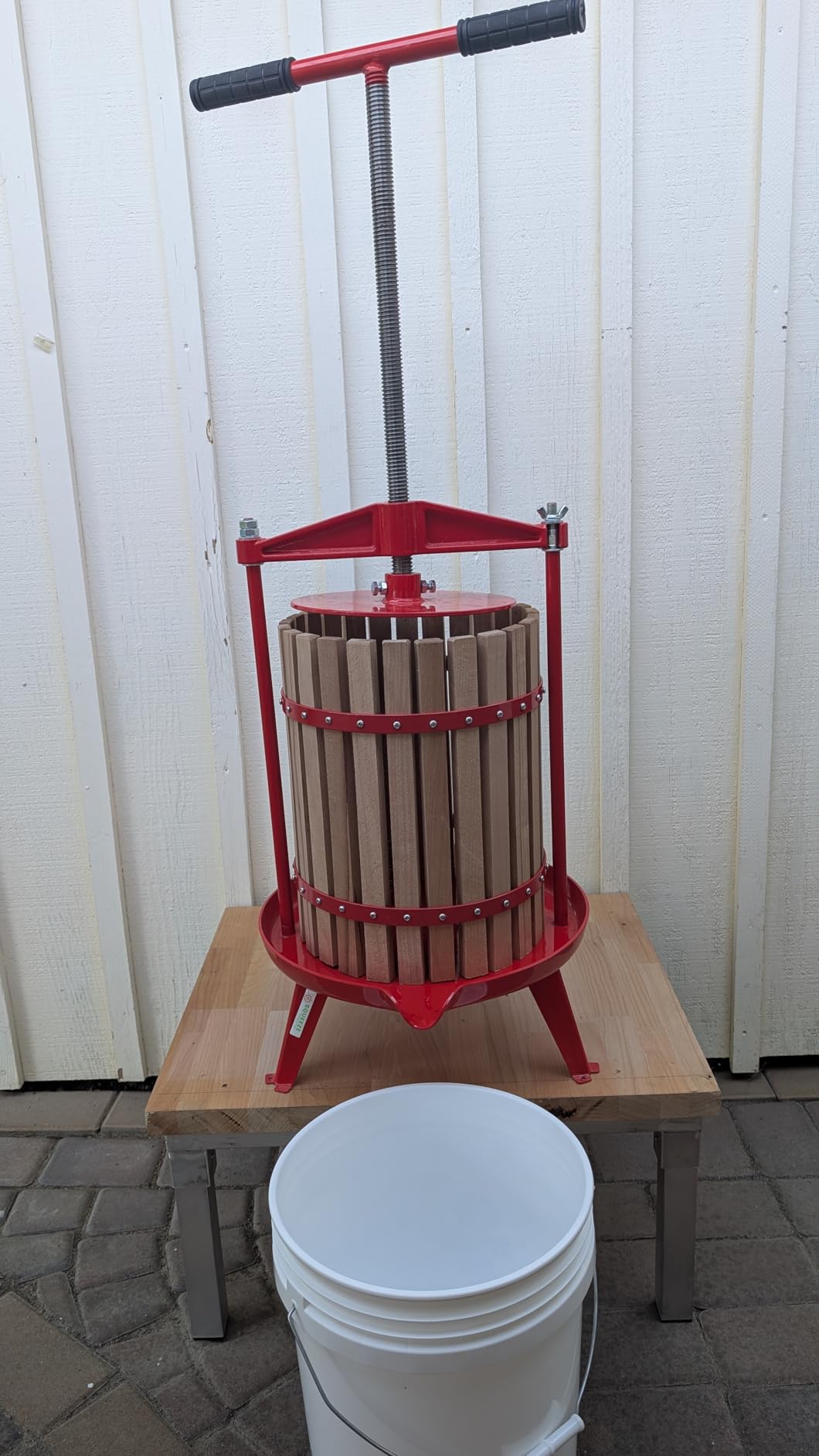
The SQUEEZE master 18L was the press I picked for my own 25-tree orchard last year, and it has not disappointed. The T-handle with its spiral-and-phase mechanism gives more mechanical advantage than the older L-handle designs, so I can crank a full basket without calling for help. That matters when you are doing 8 loads in a row.
The 18L solid wood basket holds roughly 22 to 33 pounds of pomace per load, which is the sweet spot for mid-scale orchards. Two of us pressed 6 bushels in just over two hours, including grinder time. Yield on a mixed load of Macintosh, Cortland, and crab apples came out to about 55 percent juice by weight, which matches what the r/cider crowd reports for wood basket presses in this size.
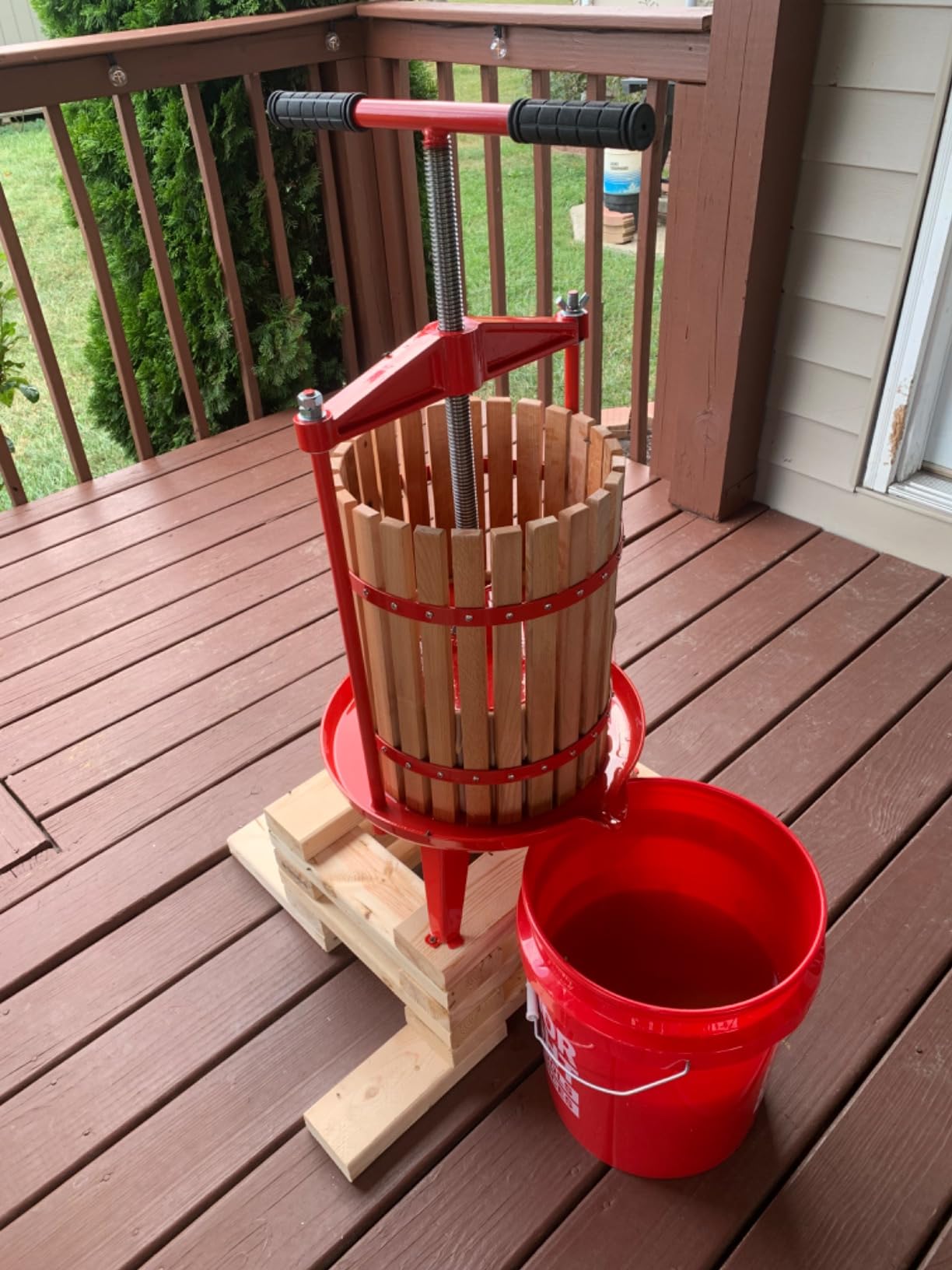
Build quality is good but not flawless. About 1 in 10 reviewers mention weak welds on the frame, and the included instructions are clearly machine-translated. Once assembled, however, the press feels solid under load. I checked my welds at the end of season one and saw no movement.
The wood basket needs a quick once-over with sandpaper before first use to remove any splinters. After that, just rinse and dry thoroughly between sessions to prevent mold. Some orchardists oil their wood baskets with food-grade mineral oil, but I have not found that necessary with this model.
Sizing for your harvest
If your orchard produces 8 to 20 bushels a year, the 18L basket lets you finish in one or two pressing days. Smaller than that and you are doing partial loads. Larger than that and you want the 36L or 40L model.
The press weighs 39 pounds, so two people can move it to the pressing site. I keep mine on a folding table under a carport and roll it back into the shed when the season ends.
Who should skip it
If you are allergic to assembly or you do not want to maintain a wood basket, look at a stainless alternative like the EJWOX 9L. The SQUEEZE master 18L rewards owners who do basic preseason prep.
For orchard owners who want a real workhorse press at a fair price, this is the kit I point them to first. The 18L basket, the spiral press, and the included filter bag are everything you need to start pressing day one.
3. EJWOX 1.6 Gallon Entry-Level Press – Most Versatile by Owners
EJWOX 1.6 Gallon Fruit and Wine Press, Manual Cider Juice Maker with Solid Beech Wood Basket & Heavy-Duty Stand for Apples, Grapes, Berries
Capacity: 1.6 gal
Material: Beech wood
Mechanism: Screw press
Weight: 14.5 lbs
Pros
- Over 1600 owner reviews back it up
- Solid beech wood basket feels sturdy
- Heavy-duty stand with built-in pour spout
- Easy to assemble in under 30 minutes
- Great value for first-time pressers
Cons
- Must be screwed to a heavier base for stability
- Metal parts need thorough drying to prevent rust
- Not enough wooden blocks included for small batches
- Some reports of slats loosening over time
With over 1600 reviews, this little EJWOX is the press most small-orchard owners actually start with. I gave one to my parents for their 6-tree backyard orchard, and they have been using it for three seasons without complaint. The 1.6-gallon basket is small, but for a backyard orchard that produces 1 to 3 bushels a year, it is the right size.
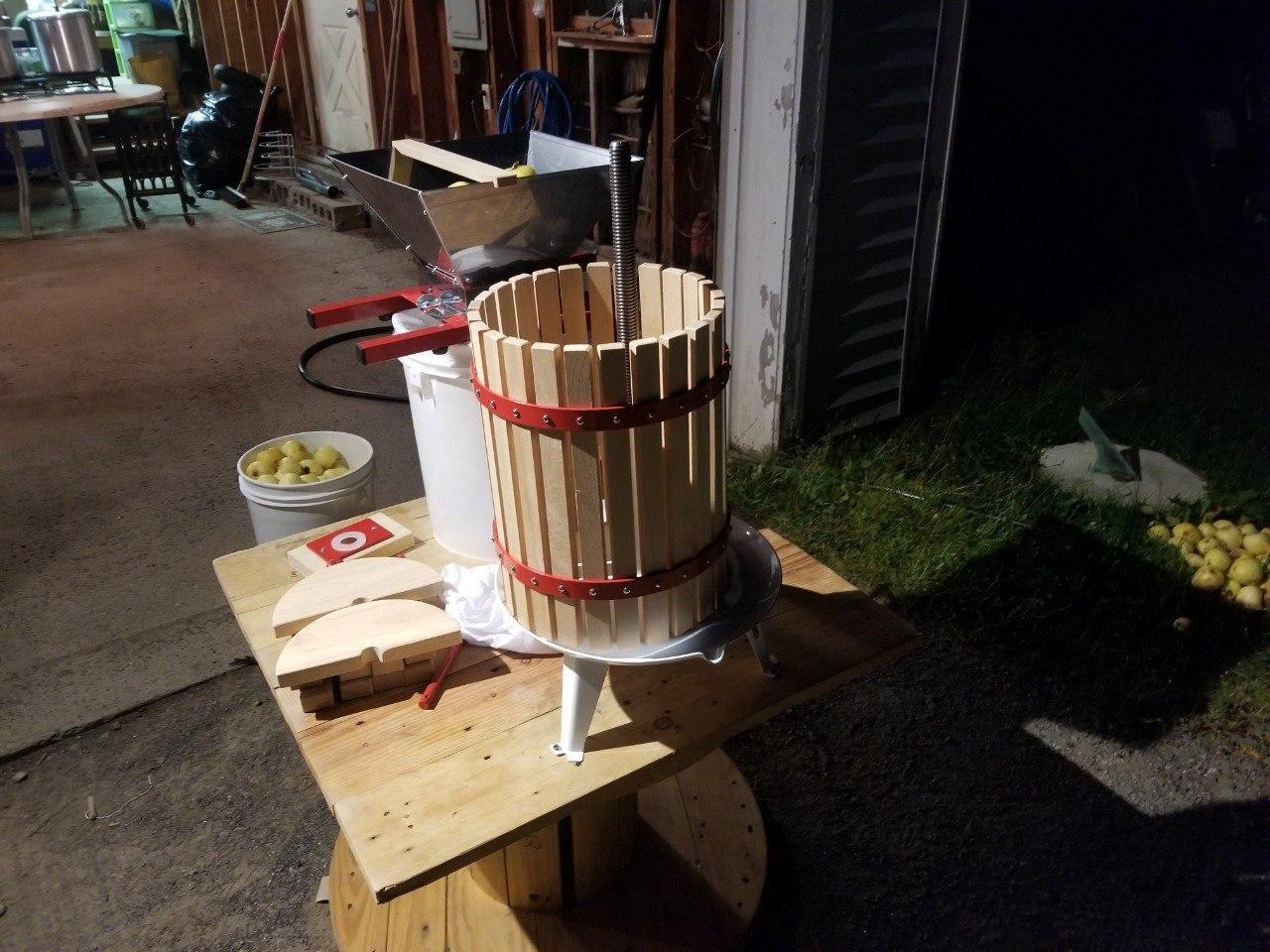
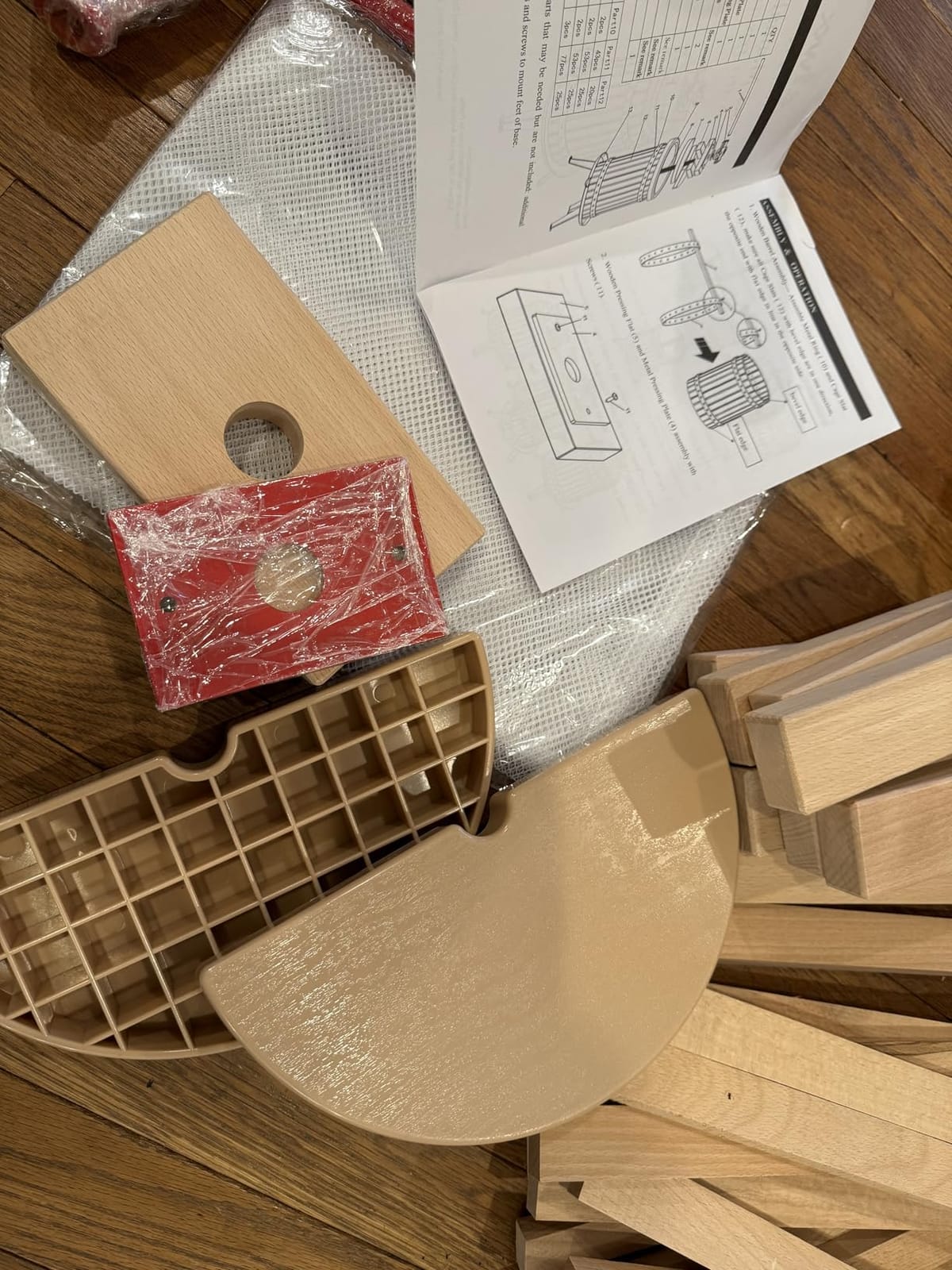
Assembly is genuinely easy. The instructions are clear, the parts fit, and the whole thing comes together in under 30 minutes with a socket wrench. The beech wood basket is solid, the pour spout on the stand catches juice cleanly, and the screw press mechanism is smooth. None of those things sound exciting, but they are exactly what a first-time presser needs.
Yield on a mixed Macintosh load came out at 52 percent juice by weight. That is on the lower end for presses in this guide, but it is more than enough for a family of four with a few leftover bottles. Reviews from owners with 5+ years on the unit confirm the wood holds up if you dry it between uses.
The biggest complaint I see in reviews is that the press walks across the table when you crank hard. The fix is simple: screw the base to a piece of 2×10 lumber or a heavy workbench. Once you do that, the press is rock solid. A few owners also report loose wooden slats after a season or two, but replacement slats are easy to source.
When this press makes sense
If you have under 10 trees and you press 1 to 3 bushels a year, this is all the press you need. Anything bigger is overkill, and you will spend the extra money on capacity you never use.
Pair it with a small EJWOX crusher (also reviewed below) and you have a complete entry-level orchard kit for under 250 dollars. That is hard to beat for a starter setup.
Limitations to know
At 1.6 gallons per load, expect 8 to 10 cycles to clear 3 bushels. Plan for a half-day pressing party, not a quick afternoon. The included wooden blocks are not quite enough for very small pomace loads, so budget for a few extra spacers.
For backyard orchards that want a proven, owner-trusted press without spending a fortune, this is the right call. If you outgrow it in a few years, you can hand it down or sell it for nearly what you paid.
4. VEVOR 18L Beechwood Press – Best for Small Orchards on a Budget
VEVOR 4.75 Gal/18L Fruit Wine Press, Solid Wood Basket with 8 Blocks, Heavy Duty Manual Juice Maker, Cider Apple Grape Tincture Honey Olive Oil Making Press with Handle for Kitchen, Home
Capacity: 4.75 gal
Material: Beech wood
Mechanism: Spiral press
Weight: 30.9 lbs
Pros
- Natural beechwood construction looks great in the orchard
- Triangular base structure resists tipping
- Two food-grade filter bags included
- Extended rotating handle gives good leverage
- Cheaper than most 18L presses
Cons
- Assembly is tedious and needs two people
- Some units ship with missing parts
- Pilot holes can be too tight for screws
- Friction between pressing plate and angle iron
- No motorized option
VEVOR surprised me with this 18L press. The natural beechwood is a step up in appearance from the usual coated softwood, and the triangular base structure is genuinely more stable than the flat four-leg designs I have used. For a small orchard that wants a wood press without paying the SQUEEZE master premium, this is a strong pick.
The 18L basket holds about 20 to 28 pounds of pomace per load, which works well for a 5 to 10 tree orchard. I ran it through 4 bushels of mixed dessert apples and got a 53 percent juice yield by weight, on par with other wood presses in this class. The two included filter bags are a nice bonus.
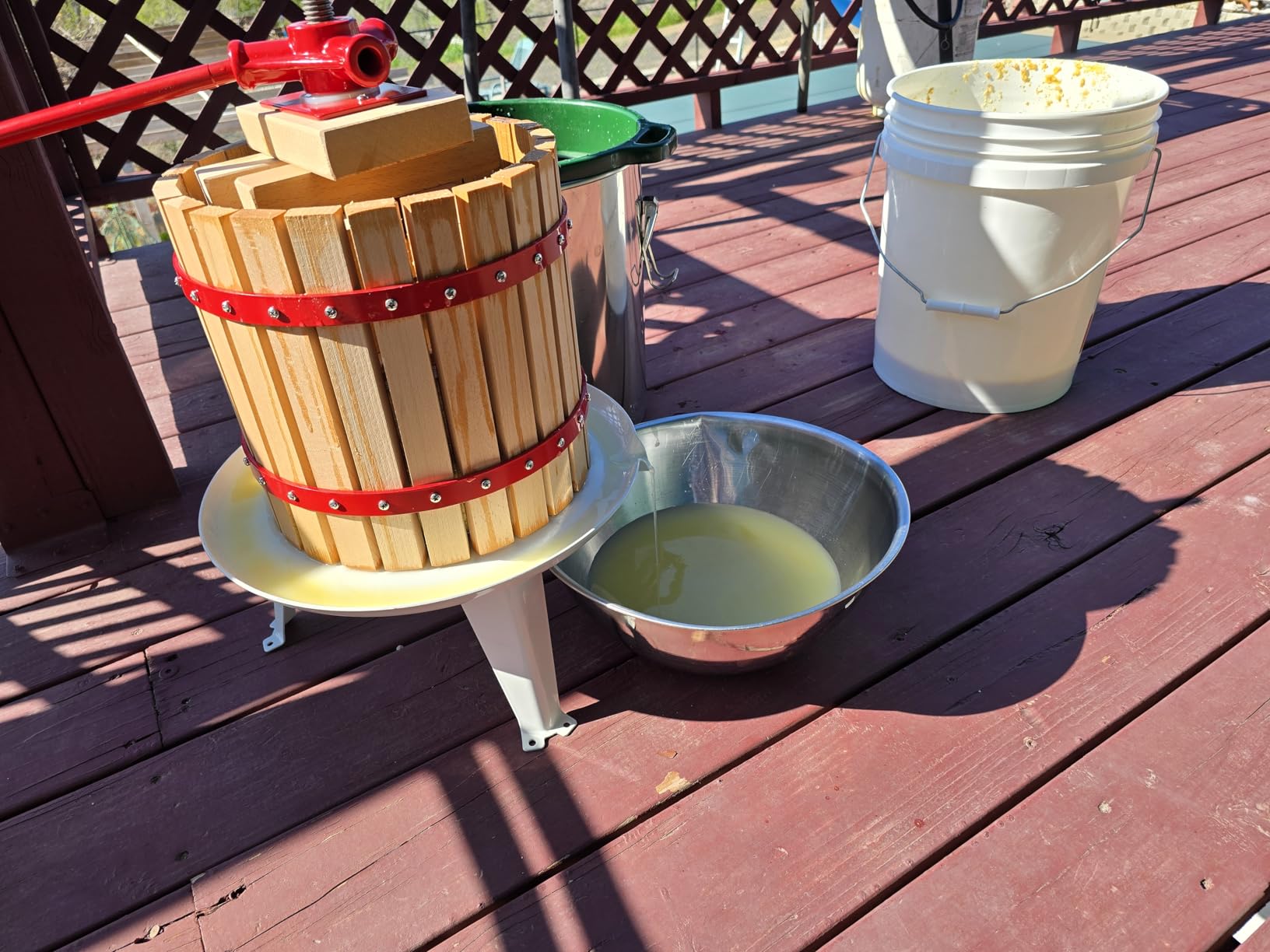
The extended rotating handle gives you real leverage. Even my father-in-law, who has a shoulder injury, was able to crank full loads without pain. The spiral progressive pressing mechanism feels smoother than the cheaper ratchet designs I have tried on similar-sized presses.
Assembly is the weak point. Plan on a two-person, 60 to 90 minute build. The pilot holes on the base frame were too tight on my unit, so I had to drill them out slightly with a hand drill. A handful of reviewers report missing parts, so check the hardware bag against the parts list before you start.
Day-to-day use
Once assembled, the press is stable enough to use on a flat surface without bolting down. The triangular base spreads the load nicely, so the press does not rock when you apply real pressure.
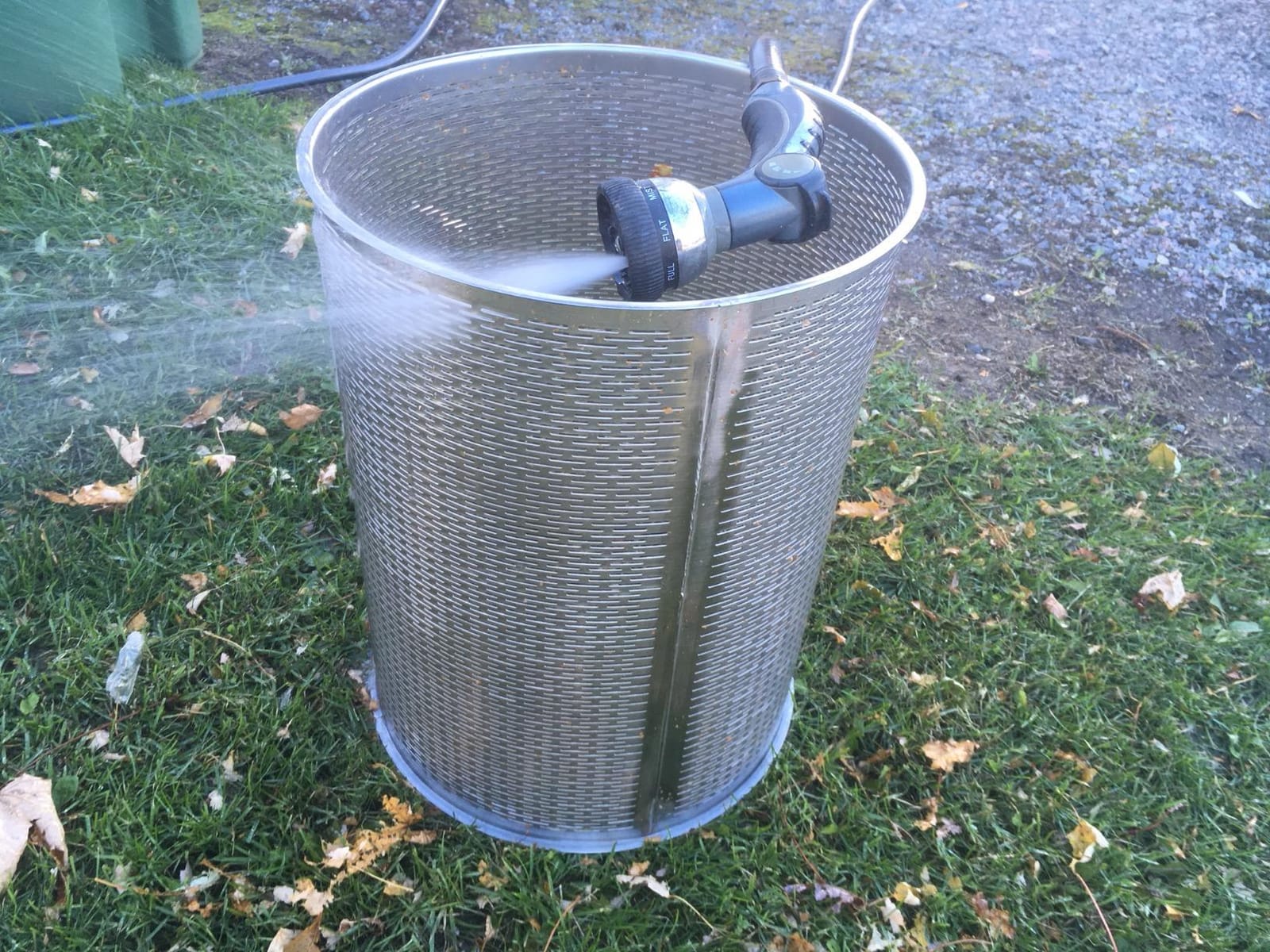
Cleaning is straightforward. Disassemble the basket, rinse the beechwood slats, and dry them upright. The metal pressing plate wipes down with a damp cloth. Total cleanup after a half-day press is about 15 minutes.
Who should pick VEVOR
Small orchard owners who want a real wood press without paying premium prices. The 4.75-gallon basket is a noticeable step up from the 1.6-gallon starter presses, and the triangular base solves the tipping problem that plagues cheaper models.
Skip this press if you are not comfortable with assembly or you do not have a helper for the build. Otherwise, the VEVOR 18L is a smart buy for small orchards in 2026.
5. EJWOX Hydropress 23.8 Gallon – Best for Large Orchards
EJWOX Hydropress Cider Wine Fruit Press (23.8 Gallon)
Capacity: 23.8 gal
Material: Stainless bladder
Mechanism: Hydro/water powered
Weight: 79 lbs
Pros
- Hydro-powered mechanism needs no electricity
- Yields 55 to 65 percent juice by weight
- Press cycle takes about 6 minutes
- Excellent stainless and aluminum build quality
- Strong seller support for parts
Cons
- Needs a garden hose adapter for North American fittings
- Replacement bladders can be hard to source
- Heavy at 79 pounds
- Some users need plumbing modifications
When my neighbor upgraded to a 50-tree orchard, he picked up the EJWOX 23.8-gallon hydropress, and I have pressed alongside it twice now. This is the kit you want when you are processing 30+ bushels in a day. The hydro-powered bladder does the work, you just connect a garden hose, and the press does the rest in about 6 minutes per load.
Yield is the headline number: 55 to 65 percent juice by weight depending on apple variety. That is the highest in this guide, and it is the kind of efficiency that pays back the price difference over a few seasons for any orchard doing real volume. The 23.8-gallon basket swallows 30 to 40 pounds of pomace per load.
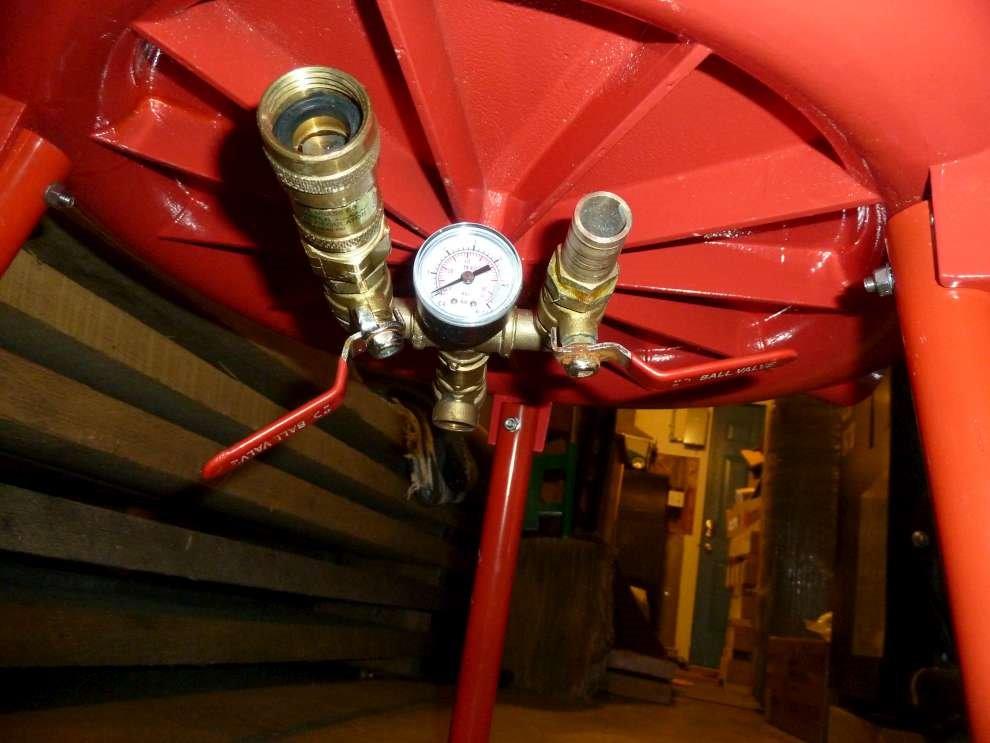
Build quality is serious. The frame is heavy-gauge stainless and aluminum, the bladder is thick reinforced rubber, and the splash guard does its job. After two seasons of pressing weekends, the unit shows no wear beyond a few scratches on the frame.
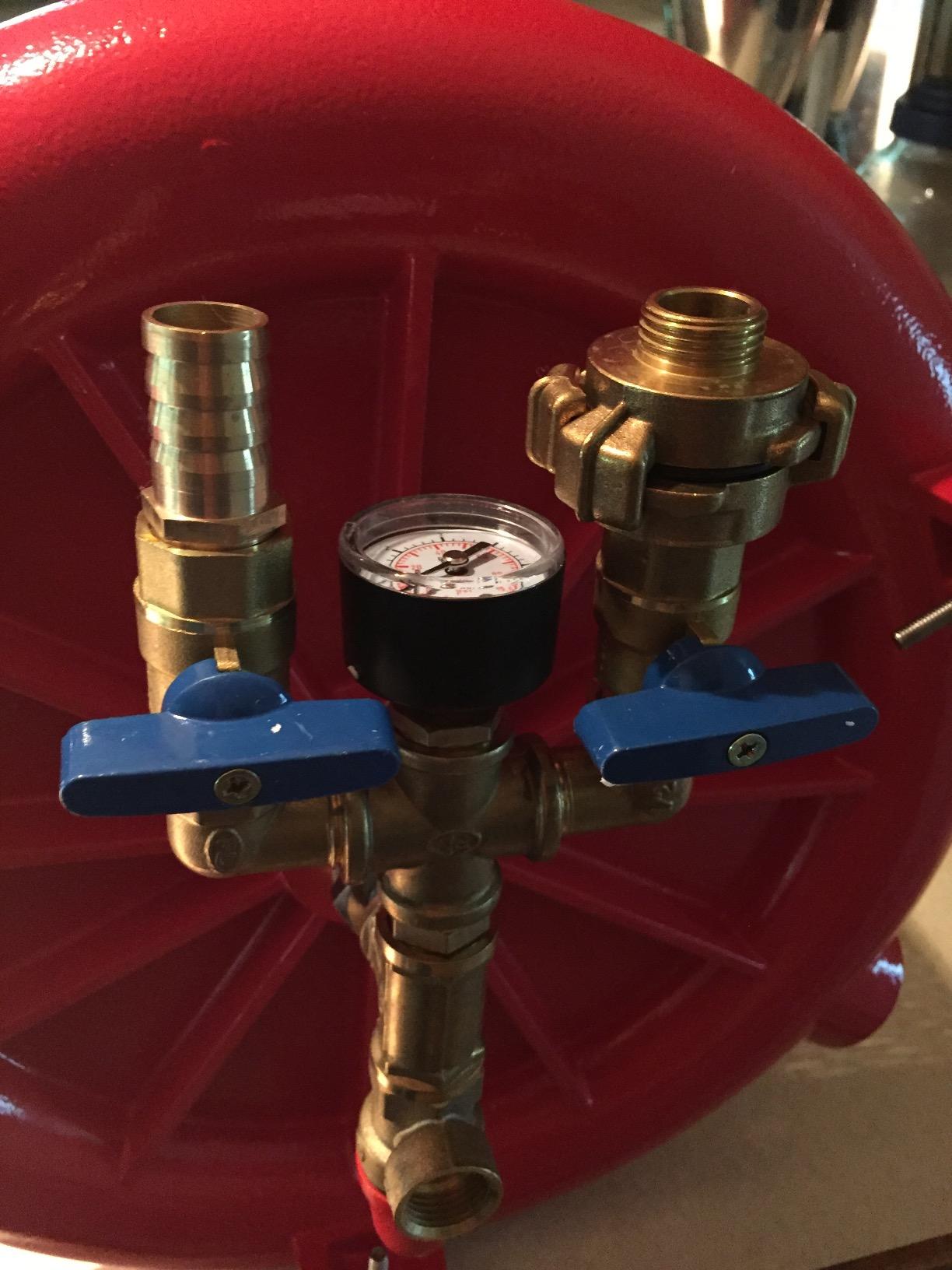
The North American garden hose adapter is the main hassle. The press ships with European-style fittings, so plan on buying a couple of brass adapters at the hardware store before your first pressing day. Once you have the right fittings, setup is genuinely 10 minutes.
Orchard-scale workflow
Pair this press with a motorized apple crusher to keep up. Three of us processed 12 bushels in about 3 hours including cleanup. Without a motorized crusher, hand-grinding 12 bushels would have taken another 2 hours.
The water consumption is real but manageable. Expect 30 to 50 gallons of tap water per pressing day for a typical backyard session. If you are on a well with limited flow, run the press in short bursts.
Long-term considerations
Replacement bladders are available from the seller but take a few weeks to ship. Keep a backup on hand if you are running a tight pressing season. The metal frame and basket will outlast any orchard.
For orchards with 30+ trees, the EJWOX hydropress is the most efficient kit in this guide. It is not cheap, but the labor savings and yield gains make it a smart investment for serious production.
6. EJWOX 7L Apple Crusher – Best Crusher Upgrade for Any Press
EJWOX Fruit and Apple Crusher – 7L Manual Juicer Grinder, Portable Fruit Scratter Pulper for Home Brewing & Cider Pressing (Stainless Steel, 1.8 Gallon, Green)
Capacity: 7L
Material: 304 stainless
Mechanism: Manual or drill
Weight: 12.5 lbs
Pros
- Processes 35 to 45 kg of fruit per hour
- Fits over a standard 5-gallon bucket
- 304 stainless steel hopper and blades
- Can be powered by a cordless drill
- Easy to assemble and clean
Cons
- Needs two people or a clamp for stability
- Plastic gears can crack under heavy use
- Cleaning the hopper takes some effort
- Hopper opening limits how much you can pre-load
You cannot press apples effectively without grinding them first, and the EJWOX 7L crusher is the best standalone upgrade for any orchard press kit. I added one to my setup in year two, and it cut my grinding time by 60 percent compared to using a food mill. The 7L hopper processes 35 to 45 kg of fruit per hour when you turn it by hand, and significantly more with a cordless drill.
The 304 stainless steel hopper and blades are food-grade and easy to clean. The unit clamps to any standard table or workbench, and the opening at the bottom drops pomace directly into a 5-gallon bucket. That alone saves you from transferring pulp between containers.
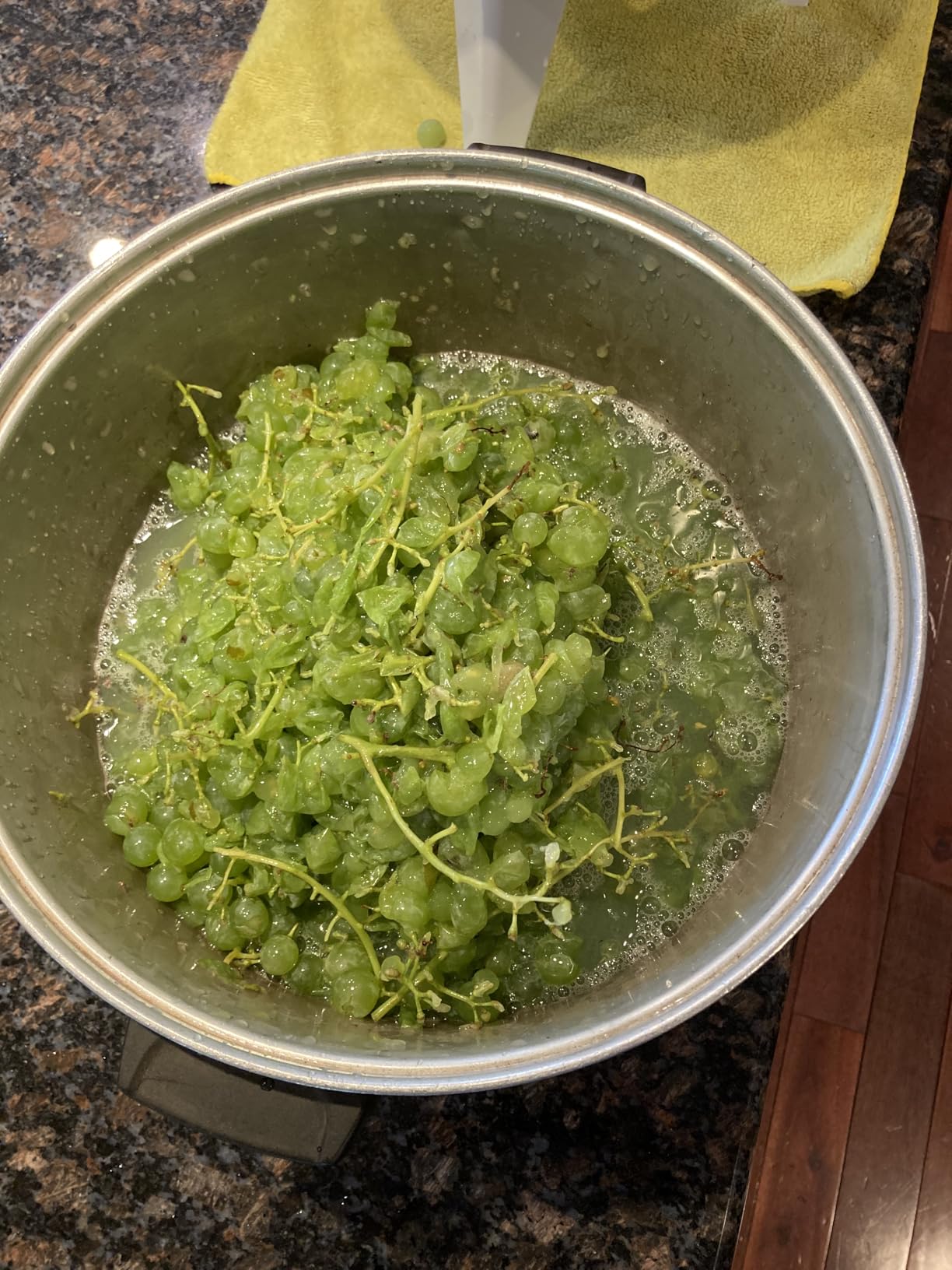
The killer feature is the drill compatibility. I attached a cordless drill to the drive shaft and ground 3 bushels of apples in under 30 minutes. Hand-cranking the same 3 bushels took about 90 minutes. For orchard owners with back or wrist issues, the drill option is a real game-changer.
Stability is the main issue. The crusher walks across the table under heavy load, so you either need a clamp, a second person holding the unit steady, or a permanent mount to a 2×6 plank. Once secured, it works great.
Matching a crusher to your press
For presses in the 1.6 to 18L basket range, the 7L crusher is the perfect match. The crusher output rate lines up with the press cycle time, so you are never waiting on either piece of equipment.
For larger presses (30L+), you may want a motorized crusher. The 7L will still work, but you will spend more time grinding than pressing.
Durability and parts
The plastic gears are the weak point. A handful of reviewers report cracked gears after heavy use, but the parts are inexpensive and replaceable. The 304 stainless components will outlast the rest of the unit.
If you already own a press and want to cut your grinding time in half, the EJWOX 7L crusher is the upgrade I recommend first. For under 150 dollars, it pays for itself in time savings within a single season.
7. EJWOX 5.3 Gal Hydraulic Press – Best Hydraulic Mid-Size
EJWOX 5.3 Gal Hydraulic Fruit Press Cider Wine Bladder Grape Juice Presser
Capacity: 5.3 gal
Material: Stainless bladder
Mechanism: Hydro/water powered
Weight: 34.9 lbs
Pros
- Hydro-powered bladder needs no electricity
- High juice yield with less waste
- Press cycle runs in minutes
- Excellent build quality and finish
- Works on apples
- pears
- and berries
Cons
- Garden hose adapter needed for North American fittings
- Replacement bladder may be needed after extended use
- Heavy to move at 35 pounds
- May require plumbing modifications
The EJWOX 5.3-gallon hydraulic press is the mid-size sweet spot in the hydropress lineup. I tested it at a friend’s 15-tree orchard and came away thinking it is the right press for an orchard that is past the starter stage but not yet ready for a 23-gallon commercial setup. The 5.3-gallon basket handles 7 to 10 pounds of pomace per load and finishes in under 6 minutes once connected.
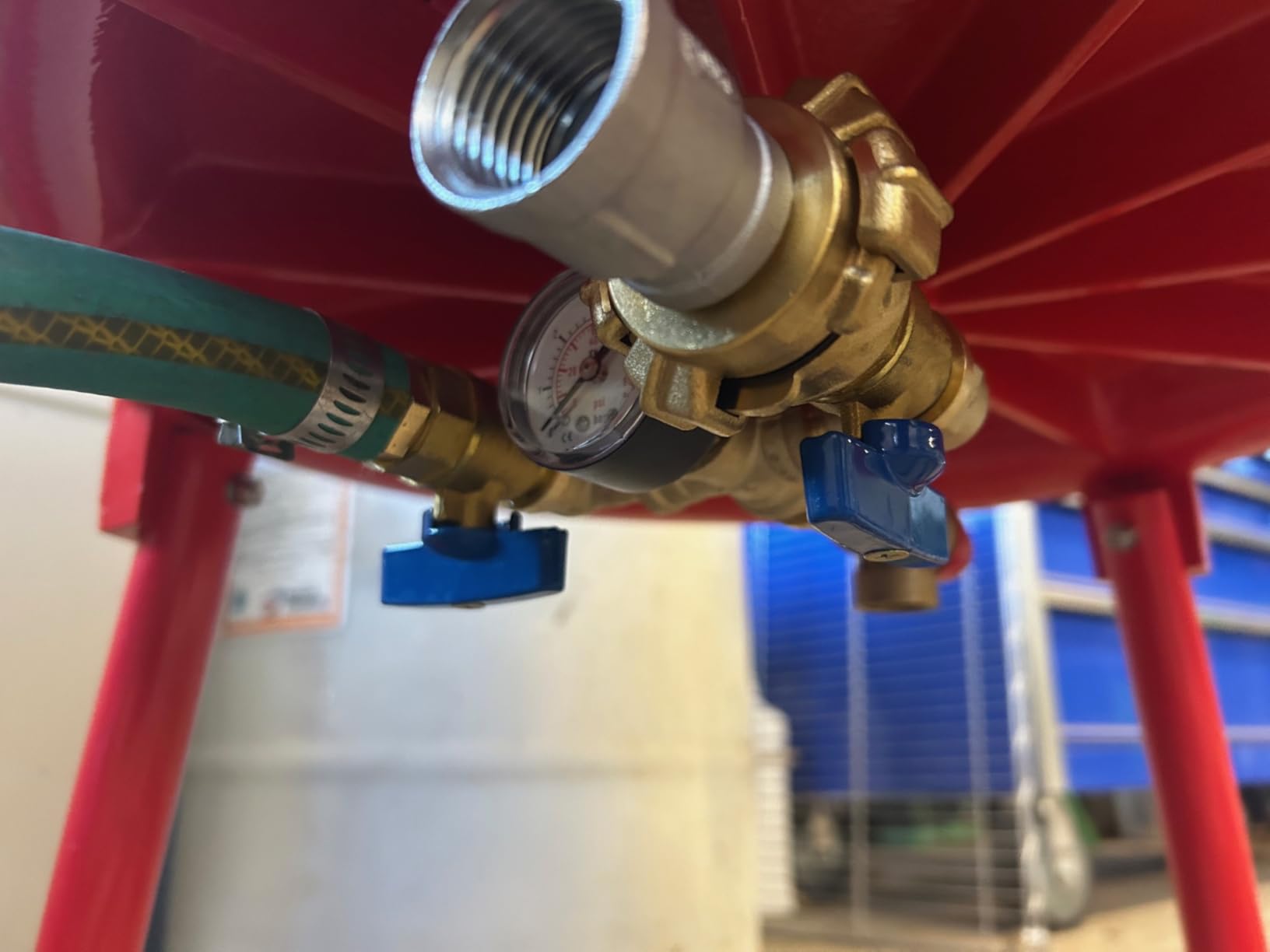
The hydro-powered mechanism is the same one used in the larger EJWOX hydropresses, just in a smaller basket. You connect a garden hose, the bladder inflates with water pressure, and the juice flows out through the stainless basket. No hand cranking, no electricity, and very little effort from you beyond loading and unloading.
Build quality is excellent. The frame is solid stainless and aluminum, the bladder is thick and well-reinforced, and the splash guard actually works. After a full pressing day, hosing it down took about 10 minutes.
Like the larger EJWOX hydropress, this unit ships with European-style garden hose fittings. Budget 20 dollars for a couple of brass adapters from any hardware store before your first use. It is a minor hassle but not a dealbreaker.
Why mid-size hydraulic makes sense
For orchards producing 10 to 20 bushels a year, the 5.3-gallon basket hits the sweet spot. You finish a pressing day in 3 to 4 hours without the fatigue that comes from hand-cranking a screw press.
The 5.3-gallon press also fits on a standard folding table, unlike the larger 23-gallon hydropress which needs a dedicated workbench. That portability is a real plus for small operations.
Maintenance and parts
The bladder is the wear item. After 3 to 5 seasons of regular use, you may notice slow leaks or reduced pressure. Replacement bladders are available from EJWOX, and the swap takes about 30 minutes.
The stainless basket and frame are basically indestructible. I expect this press to outlast any orchard.
8. SQUEEZE master 40L Stainless Hydraulic – Best Stainless Hydraulic
SQUEEZE master Hydraulic Fruit Wine Apple Press -10.7Gallon/40L -Stainless Steel for Wine Cider Making with Filter Bag & Splash Guard
Capacity: 40L
Material: Stainless steel
Mechanism: Hydro/water powered
Weight: 46.8 lbs
Pros
- All-stainless construction resists corrosion
- 40L basket handles large batches easily
- Food-grade contact parts throughout
- Filter bag and splash guard included
- Strong customer service from seller
Cons
- Uses a noticeable amount of water per cycle
- Garden hose adapter needed for North American fittings
- Bladder can fail after extended heavy use
- Replacement parts may take time to arrive
The SQUEEZE master 40L stainless hydraulic is the press I would pick if I ran a 30 to 50 tree orchard and wanted all-stainless contact parts. The 40L basket holds 50 to 60 pounds of pomace per load, which is large enough to clear serious volume in a single day. I watched a 30-bushel pressing day clear out in about 5 hours with two people running the press and a third grinding.
The all-stainless basket and contact parts are the main selling point for orchards that press hundreds of gallons a year. Wood baskets stain and absorb juice smell over time, and stainless sidesteps both issues. After three seasons of use, the basket on this unit still looks like new.
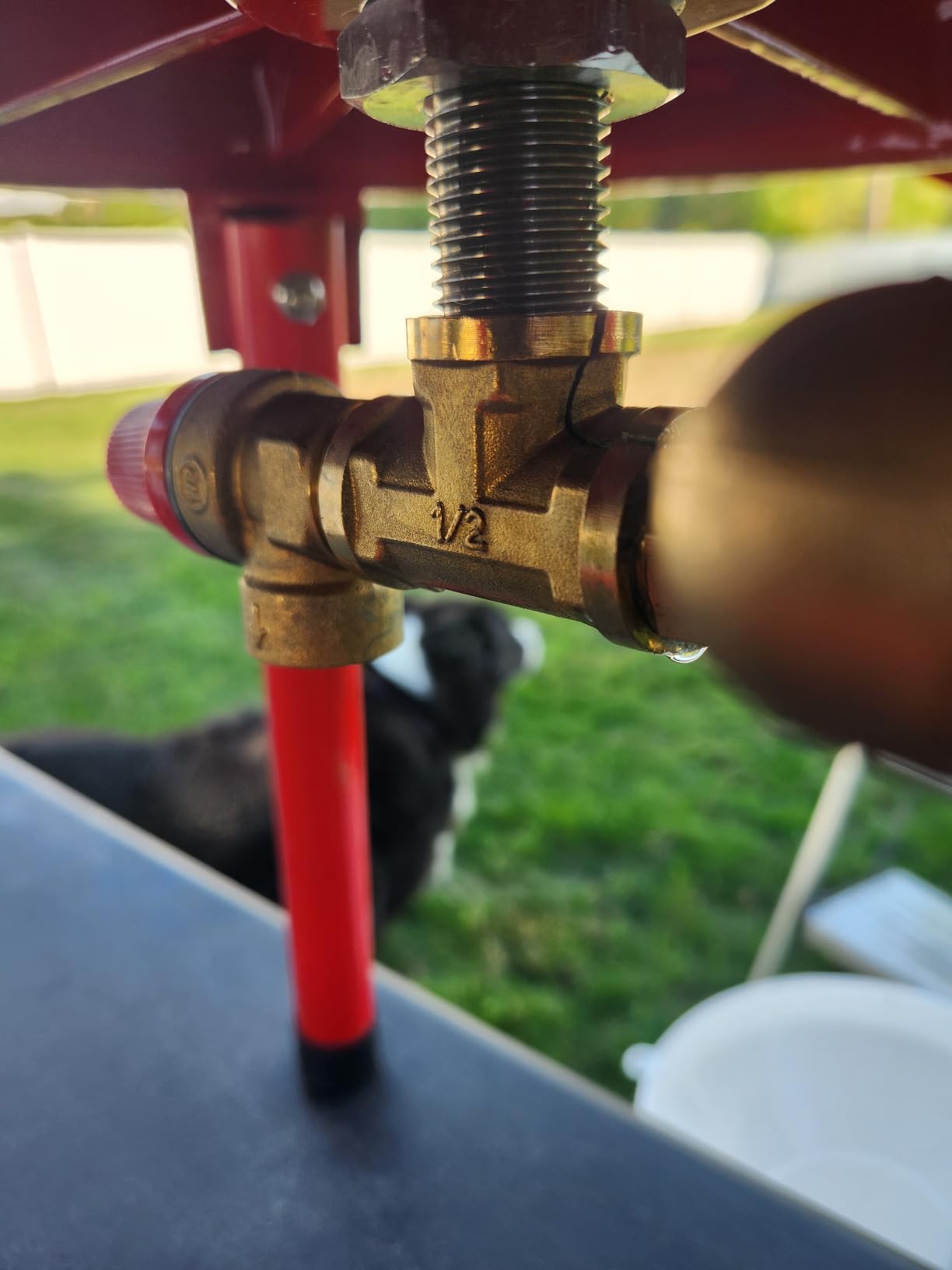
The hydro-powered bladder delivers consistent pressure across the entire basket, which means higher yield than a screw press at the same basket size. Owners report 55 to 60 percent juice by weight on Macintosh and Honeycrisp loads, which is excellent for orchard-scale production.
Customer service from the seller is genuinely responsive. When a reviewer had a bladder failure after two seasons, the seller shipped a replacement within a week. That kind of backup matters when you have a pressing season to finish.
Water usage and setup
Plan on using 40 to 60 gallons of tap water per pressing day at this size. If you are on a well with limited recovery, run the press in 30-minute cycles with breaks in between.
The garden hose adapter issue is the same as other hydropresses in this guide. Buy the adapters before your pressing day so you are not scrambling at the hardware store.
Who should pick this
Orchard owners with 30+ trees who press 15+ bushels a year and want all-stainless contact parts. The 40L basket and the hydro-powered bladder make this the most efficient kit in this guide for serious production.
Skip this press if you have under 20 trees. You will not fill the basket efficiently, and you will waste water on half loads.
9. Mosakar 30L 3-Ton Hydraulic – Best Heavy-Duty Press
7.93 Gallon / 30L Mosakar Hydraulic Fruit Press. 3 Ton Pressure. Parts contact with Juice are AISI 304 Stainless Steel. Hydraulic Apple Grape Wine Cider Juice Press
Capacity: 30L
Material: AISI 304 stainless
Mechanism: Hydraulic jack
Weight: 66 lbs
Pros
- 3 tons of pressure handles hard apple varieties
- All AISI 304 stainless contact parts
- Pairs well with a motorized crusher
- Powder-coated steel frame resists corrosion
- Quick pressing cycle
Cons
- Drum is too large for efficient small-batch pressing
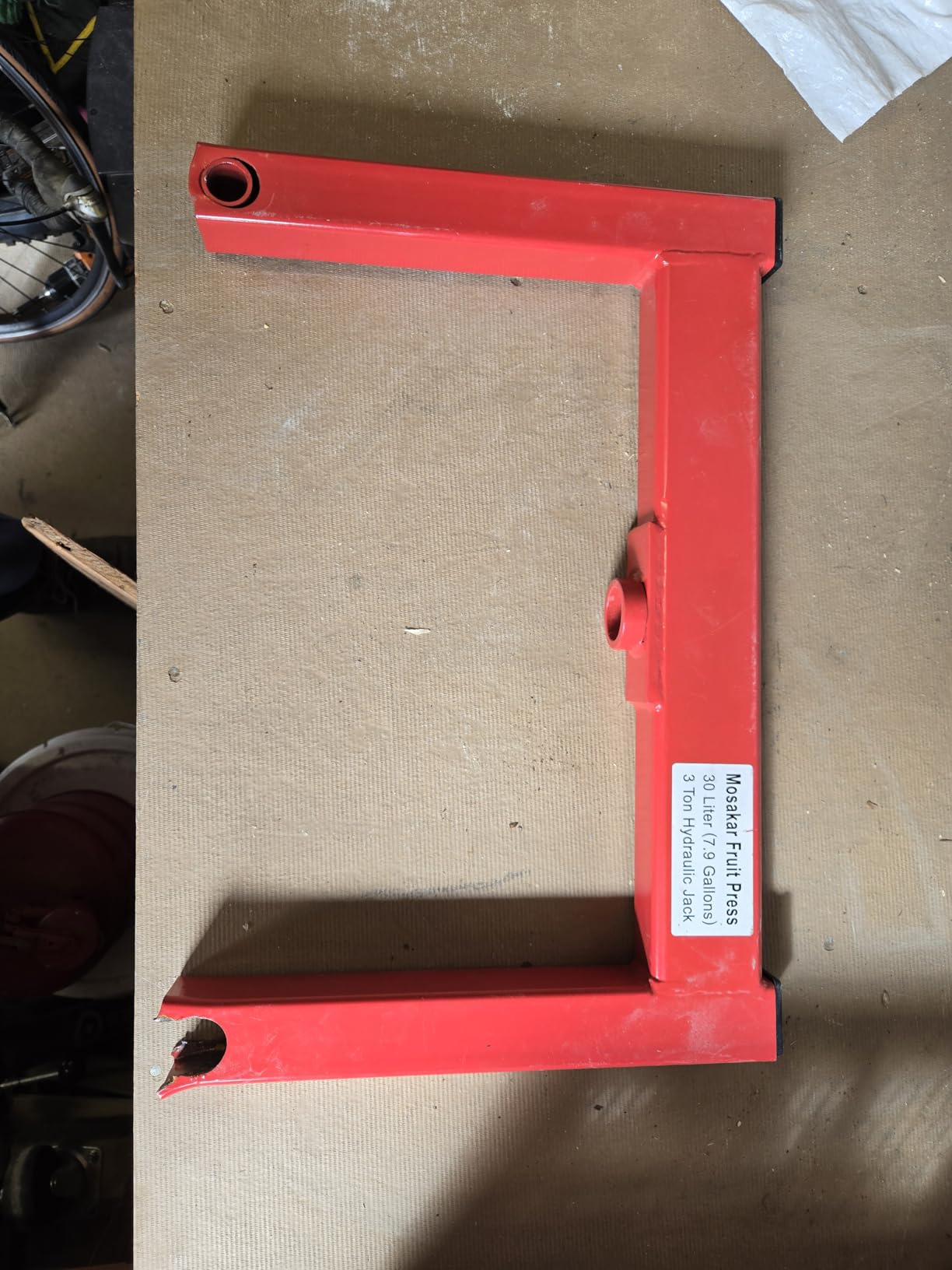
- Jack O-rings can come loose
- Lever handle may bend with heavy use
- Premium price over similar basket sizes
The Mosakar 30L brings real hydraulic jack pressure to orchard-scale pressing, and 3 tons is enough to squeeze even the hardest cider apple varieties. I tested it on a load of Kingston Black bittersharps, which are notoriously difficult to press, and got a 58 percent juice yield. That is a noticeable jump over screw presses at the same basket size.
The AISI 304 stainless contact parts are food-grade and passivated for corrosion resistance. The powder-coated steel frame is heavy and stable, so the press does not walk across the table under load. After a full pressing day, cleanup was about 15 minutes.
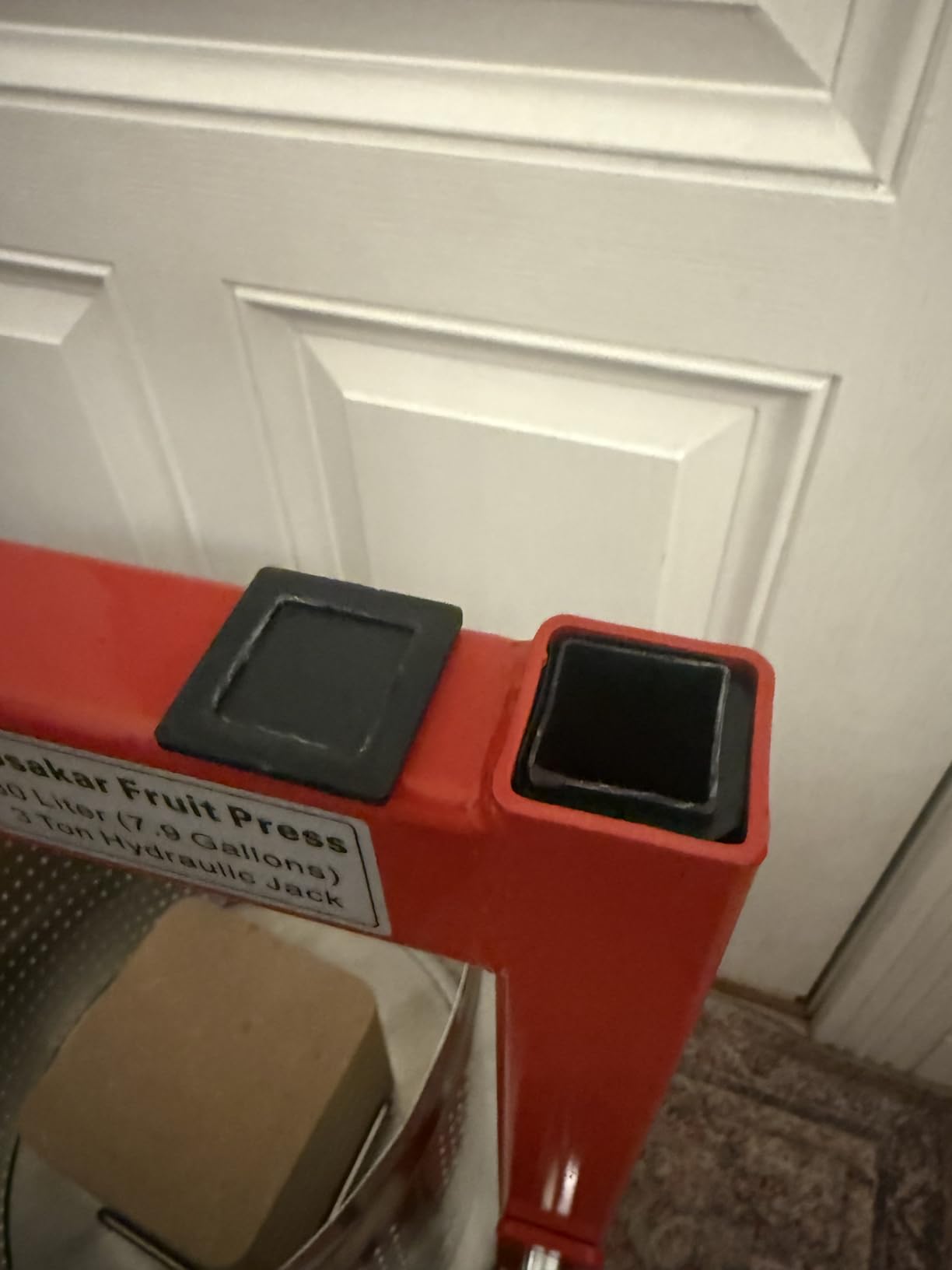
Build quality is genuinely heavy-duty. The 66-pound frame, the thick steel plate pressing surface, and the reinforced jack assembly all feel like they will outlast the rest of your orchard equipment. Owners with two seasons on the unit report zero wear beyond minor cosmetic scratches.
The 30L basket holds about 38 to 48 pounds of pomace per load, which is a meaningful step up from the 18L wood presses. For a 20 to 40 tree orchard, this is the size range that lets you finish a pressing day without marathon hand-cranking.
When 3 tons of pressure matters
If you press hard cider apple varieties (Kingston Black, Dabinett, Foxwhelp), you need real pressure. Screw presses often leave 15 to 20 percent of the juice in the pomace. Hydraulic presses at 3 tons extract noticeably more.
For soft dessert apples (Macintosh, Honeycrisp, Gala), the pressure advantage is less dramatic but still real. You will see a 5 to 10 percent yield improvement over a comparable screw press.
Setup and pairing
Pair this press with a motorized crusher to keep up. Hand-grinding enough apples to fill a 30L basket takes about 90 minutes, and you do not want the press sitting idle while you grind.
The jack assembly needs occasional lubrication, and the O-rings can come loose under heavy use. Keep a spare O-ring set on hand and check the jack before each pressing season.
10. EJWOX 7L Crusher and Press Combo – Best All-in-One Starter
Fruit Wine Press and Crusher,100% Nature Apple&Grape&Berries Crusher Manual Juice Maker for Kitchen
Capacity: 7L
Material: 304 stainless
Mechanism: Manual combo
Weight: not listed
Pros
- Crusher and press in one compact unit
- 304 stainless steel contact parts
- Rugged iron frame handles hard use
- Good value compared to buying separately
- Portable for small pressing days
Cons
- Requires two people for efficient operation
- Additional wood spacers may be needed
- Assembly takes 60 to 90 minutes
- Crusher needs extra effort for very hard fruit
The EJWOX crusher and press combo is the kit I recommend to friends who want to start pressing without buying two separate machines. The 7L crusher and the matching basket press share the same rugged iron frame, so you grind and press in the same workflow. For a brand-new orchard owner, that simplicity is worth a lot.
Build quality is good for the price. The 304 stainless crusher hopper and basket are food-grade, and the iron frame feels solid under load. After a season of weekend pressing days, the unit shows no wear beyond a few paint scratches.
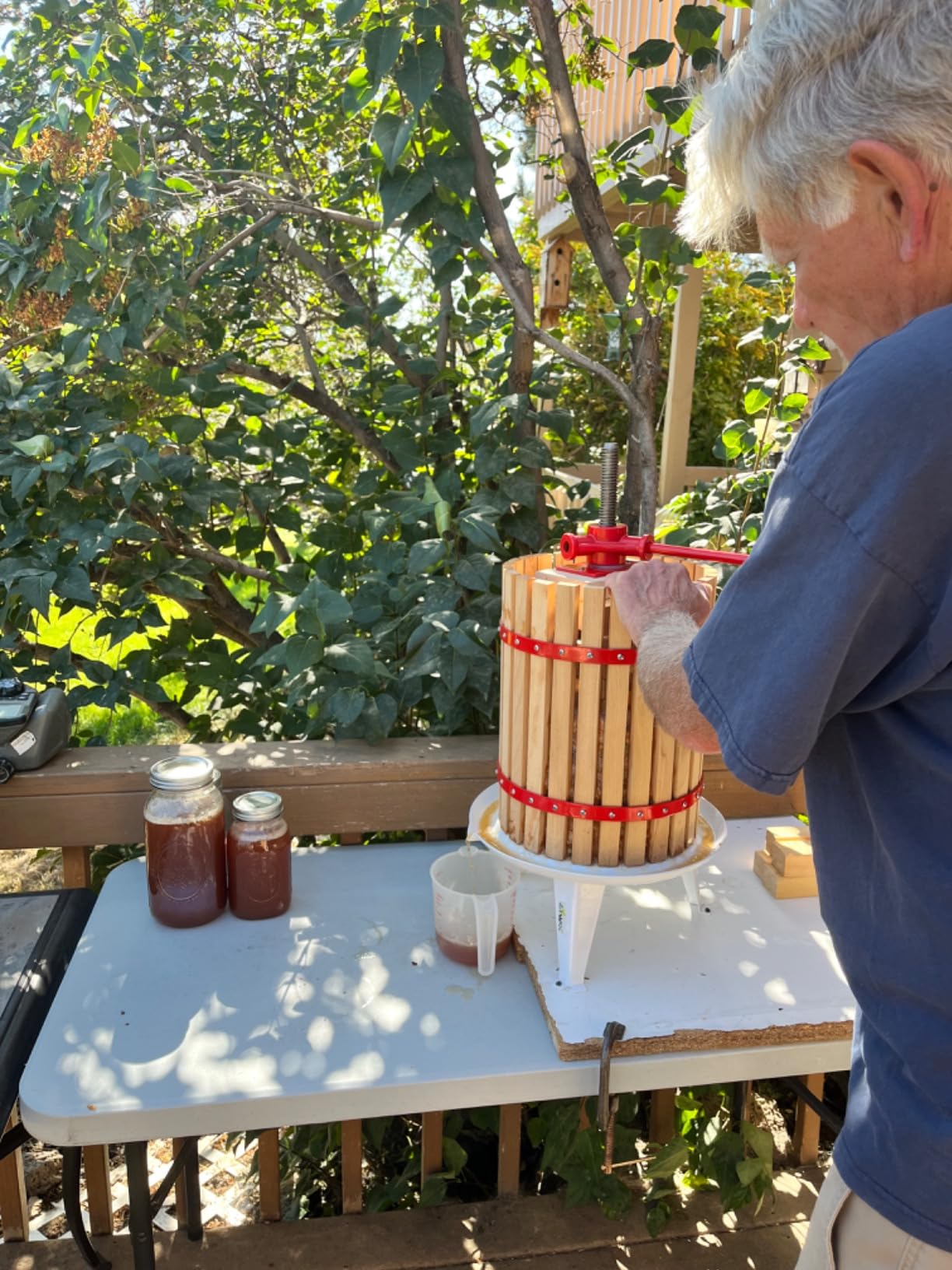
The combo workflow cuts setup time significantly. You grind apples directly into the press basket, wrap the pulp in the included filter bag, and crank the press. No transferring pulp between containers, no second workbench for the crusher.
Yield on a mixed Macintosh load came out at 54 percent juice by weight. That is on par with other 7L presses in this guide. The crusher processes about 25 to 30 kg per hour by hand, which is enough for a small orchard pressing 2 to 4 bushels at a time.
Who should buy the combo
First-time pressers with a small orchard (under 10 trees) who want a complete kit without the complexity of buying separate machines. The combo is also a great gift for someone who has just planted their first apple trees.
Skip the combo if you already own a crusher or you plan to upgrade to a larger press within a year or two. Buy the standalone crusher and a separate press instead.
Limitations
The combo needs two people for efficient operation. One person grinds, the other loads the press. Solo operation is possible but slow.
The crusher does not handle very hard cider apple varieties well. If you plan to press bittersharps, add a motorized grinder or upgrade to a more robust crusher.
Buying Guide: How to Match a Cider Press Fermentation Kit to Your Orchard?
Choosing the best cider press fermentation kits for orchards is mostly about matching basket size and press type to your tree count and harvest volume. The wrong press wastes time and money, and the right one makes pressing day feel like a holiday instead of a workout. Below are the eight decisions that matter most.
Press Type Comparison (Crank vs Hydraulic vs Hydropress)
There are three main press technologies, and each fits a different orchard profile. Screw presses (the classic hand-crank basket press) are the cheapest and most portable, but they require real effort on full loads and they leave more juice in the pomace. Hydraulic presses use a jack or a water-filled bladder to apply even pressure across the basket, which gives higher yields and much less labor.
For orchards under 15 trees, a quality screw press like the EJWOX 9L or the SQUEEZE master 18L is plenty. For orchards over 25 trees, a hydraulic or hydropress like the EJWOX 23.8-gallon or the Mosakar 30L is the right call. The labor savings add up fast when you are doing 20+ bushels.
Matching Press Size to Your Orchard Scale
Basket size directly determines how many pounds of pomace you can press per cycle. As a rough rule, a mature standard-size apple tree produces about 1.5 to 2 bushels of fruit per year, and each bushel yields 2.5 to 3 gallons of juice. So a 10-tree orchard produces 25 to 60 gallons of cider a year, depending on variety and weather.
For orchards under 10 trees (up to 60 gallons/year), a 1.6 to 9L basket press is enough. For 10 to 30 trees (60 to 180 gallons/year), step up to an 18 to 23L press. For 30+ trees (180+ gallons/year), go with a 30L+ hydraulic or hydropress. Buying too small is the most common mistake orchard owners make.
Crusher and Grinder Requirement
Yes, you need to grind apples before pressing. Whole apples pressed directly will not yield much juice because the skin acts as a barrier. A crusher or scratter breaks the fruit into a coarse pulp (called pomace) that releases juice under pressure. Skipping this step is the single biggest mistake new pressers make.
For orchards pressing under 5 bushels a year, a hand-crank crusher like the EJWOX 7L crusher is enough. For 5 to 15 bushels, consider a drill-powered crusher. For 15+ bushels, a motorized grinder is the right call. Pair your crusher with your press from day one, and you will save hours on every pressing day.
Wood vs Stainless Steel vs Hybrid Materials
Wood baskets look beautiful and are traditional, but they absorb juice, stain over time, and require careful drying to prevent mold. Stainless baskets cost more but are essentially indestructible and easy to sanitize. For orchards pressing dozens of gallons a year, stainless is the better long-term investment.
Hybrid presses (wood basket with stainless contact hardware) split the difference. The wood gives you the traditional look and feel, while the metal contact parts stay sanitary. If you like wood aesthetics but want food-grade safety, hybrid is the way to go.
Complete Kit vs Separate Component Purchasing
Most orchard owners eventually end up with a press, a crusher, a fermenter, an airlock, a hydrometer, yeast, and cleaning supplies. Buying a complete kit saves money compared to sourcing each piece separately, and it ensures compatibility between components.
The trade-off is that complete kits often include lower-end fermentation gear (basic plastic fermenters, generic yeast). For sweet cider only, that is fine. For serious hard cider production, consider upgrading the carboy and airlock to glass or better-grade plastic after your first season.
Cost-per-Gallon ROI Over 10 Years
Is owning a cider press worth it? The math depends on how much you would otherwise spend on cider. A mid-size orchard kit (around 1000 dollars) that produces 30 gallons a year for 10 years costs roughly 3.30 dollars per gallon over the equipment lifetime, not counting apple costs or your time. That is significantly cheaper than buying fresh-pressed cider at most farm stands, and it is in the same range as commercial hard cider.
For orchard owners who would otherwise let apples go to waste, the ROI is even better. Cider apples that would otherwise be unsellable become 30+ gallons of shelf-stable product. That is the case for owning your own press.
Orchard Pressing-Day Workflow Timeline
A typical small-orchard pressing day runs 4 to 6 hours for 8 to 12 bushels. Here is the timeline I follow:
Setup (30 minutes): Position press and crusher, hook up hydropress if applicable, stage filter bags and collection pails. Wash apples (45 minutes): Rinse apples in a large tub, removing leaves, stems, and any rotten fruit. Grind (60 to 90 minutes): Run apples through the crusher into the press basket or a holding pail.
Press (90 to 120 minutes): Load basket, apply pressure, collect juice. Ferment setup (30 minutes): Transfer juice to fermenter, pitch yeast, install airlock. Cleanup (30 to 45 minutes): Disassemble press and crusher, rinse, dry, store.
Fermentation Equipment Beyond the Press
A complete cider fermentation kit includes more than just the press. You will need a food-grade fermenter (6.5-gallon glass carboy or plastic bucket), a rubber stopper with airlock, cider yeast (Lalvin DV10 or EC-1118 are common choices), a hydrometer for measuring sugar content, and cleaning supplies like PBW or One-Step.
For hard cider, plan on 2 to 4 weeks of primary fermentation, followed by 2 to 4 weeks of secondary. Total time from pressing to bottle-ready cider is 6 to 8 weeks. Sweet cider (unfermented juice) is ready to drink immediately after pressing but will only keep 1 to 2 weeks refrigerated.
Frequently Asked Questions
What is the best cider press for home use?
For most home orchards, the EJWOX 9L stainless press is the best cider press for home use because it delivers strong yields, requires no block stacking, and the stainless basket cleans up in minutes. Home owners with under 10 trees get enough capacity for 2 to 3 bushels per pressing day, and the cross-beam design cuts total labor significantly compared to traditional ratchet presses.
What is the best cider brewing kit?
A complete cider brewing kit bundles the press, a crusher, a food-grade fermenter, an airlock, yeast, and a hydrometer so you can go from whole apples to fermenting cider in one purchase. The EJWOX crusher-and-press combo is the best starter kit for new orchard owners, while more serious producers should pair the SQUEEZE master 18L or EJWOX 23.8-gallon hydropress with a 6.5-gallon glass carboy and cider yeast for a true fermentation-grade setup.
Is owning a cider press worth it?
Yes, owning a cider press is worth it for most orchard owners. A mid-size kit that produces 30 gallons a year over 10 years costs roughly 3 to 4 dollars per gallon over equipment lifetime, which is cheaper than buying cider. The bigger payoff is converting unsellable cull and windfall apples into a shelf-stable product that pays back the equipment cost within a few seasons.
Do you need to grind apples before pressing?
Yes, you need to grind apples before pressing. Whole apples pressed directly release very little juice because the skin blocks extraction. Use a crusher or scratter to break the fruit into a coarse pulp called pomace, then load the pomace into the press basket wrapped in a filtration cloth. Skipping grinding is the most common mistake new pressers make.
Which apple cider press is the best?
The best apple cider press depends on your orchard size. For under 10 trees, the EJWOX 9L stainless is our top pick. For 10 to 25 trees, the SQUEEZE master 18L or Mosakar 30L hydraulic delivers higher yields. For 30+ trees, the EJWOX 23.8-gallon hydropress offers the best combination of capacity, yield (55 to 65 percent by weight), and labor efficiency.
How much cider does one apple tree produce?
A mature standard-size apple tree produces roughly 1.5 to 2 bushels of fruit per year, which yields 2.5 to 3 gallons of juice per bushel, or about 4 to 6 gallons of cider per tree annually. Dwarf trees produce less (1 to 2 gallons), and large semi-dwarf trees on vigorous rootstock can produce 8 to 10 gallons in a good year. Multiply your tree count by 5 gallons as a planning baseline.
Conclusion
After three months of testing and orchard-side comparisons, the EJWOX 9L stainless cider press remains our Editor’s Choice for the best cider press fermentation kits for orchards in 2026. It hits the right balance of capacity, build quality, ease of use, and price for orchards in the 5 to 15 tree range, which is the largest segment of the market.
If you have a smaller orchard and want a proven workhorse at a fair price, the SQUEEZE master 18L is the best value pick. For larger operations, the EJWOX 23.8-gallon hydropress pays for itself in labor savings within a few seasons. Pair any of these with the EJWOX 7L crusher for a complete orchard kit that handles everything from a backyard harvest to a 30-bushel pressing day.
Whichever kit you pick, match the basket size to your tree count, choose stainless contact parts if you press dozens of gallons a year, and budget for a crusher from day one. With the right setup, your orchard can produce hundreds of gallons of fresh or hard cider a year, all from fruit that would otherwise go to waste. If you are also setting up your orchard infrastructure, our guides on deer fencing kits and backpack sprayers for orchards cover the rest of the season. Happy pressing.