
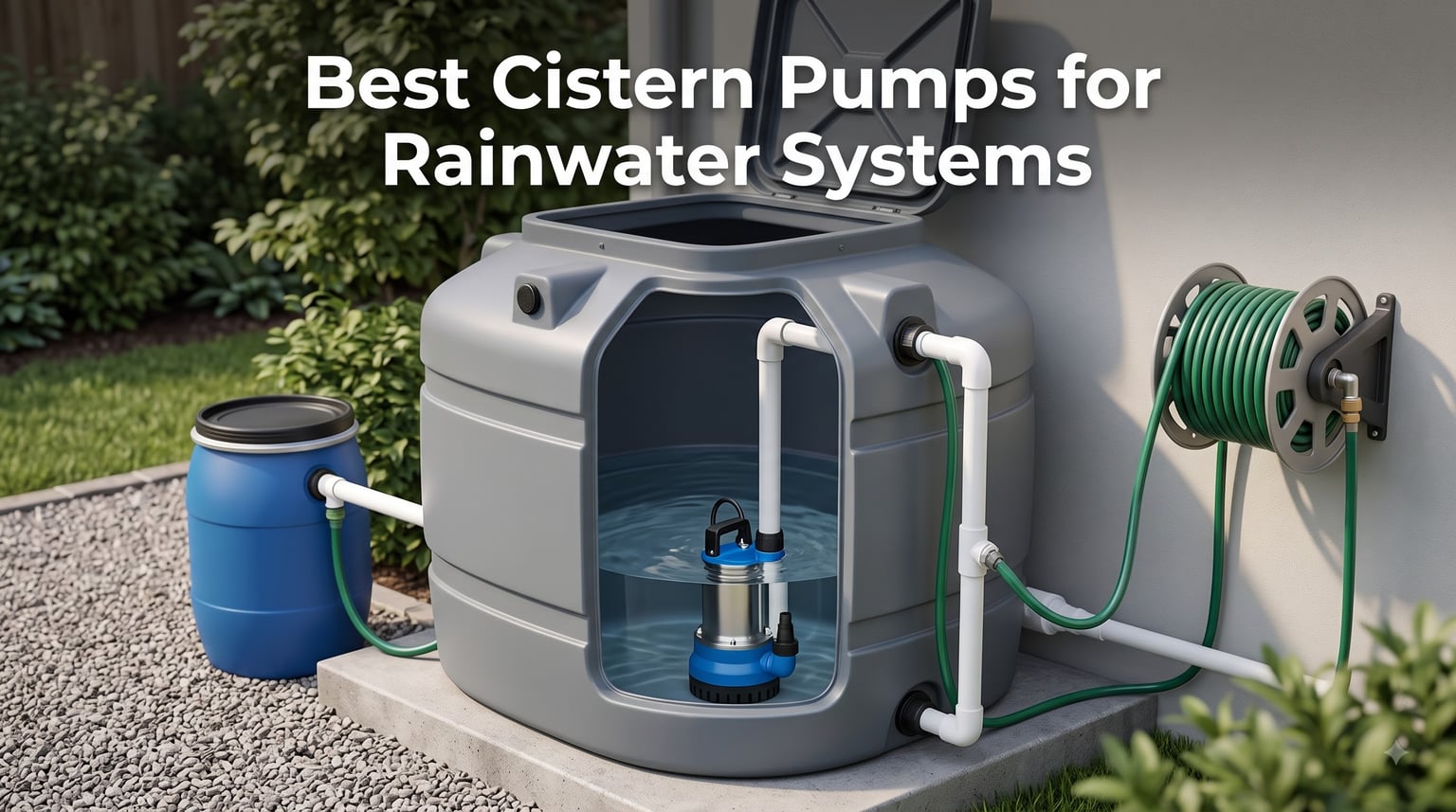
Collecting rainwater is only half the battle. Without a reliable pump to move that water from your cistern to where you need it, your rainwater harvesting system is basically an expensive storage container. The right cistern pump turns collected rainwater into a practical resource for garden irrigation, lawn sprinkling, or even whole-house supply.
Our team spent weeks comparing the best cistern pumps for rainwater systems, digging through customer reviews, technical specs, and real-world performance data. We looked at everything from compact diaphragm pumps perfect for rain barrels to heavy-duty submersible pumps that can push water from deep underground tanks. Whether you are running a simple garden irrigation setup or building an off-grid water system, the pump you choose makes or breaks the experience.
In this guide, we cover eight of the best cistern pumps for rainwater systems in 2026. We break down flow rates, pressure ratings, durability, and real user feedback so you can pick the right pump for your specific setup. Let us get into it.
Table of Contents
Top 3 Picks for Cistern Pumps for Rainwater Systems In 2026

VEVOR 1HP Deep Well Submersible Pump
- 37 GPM flow rate
- 207 ft head
- IP68 waterproof
- Stainless steel

SEAFLO 33 Series Pressure Pump
- NSF potable water certified
- 4-year warranty
- Ultra quiet
- Self-priming
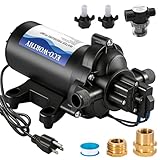
ECO-WORTHY 33-Series Diaphragm Pump
- 4.0 GPM flow
- 50 PSI
- Self-priming 9.8 ft
- Thermal protection
Best Cistern Pumps for Rainwater Systems (October 2026)
| Product | Specifications | Action |
|---|---|---|
| ECO-WORTHY 33-Series Diaphragm Pump |
|
Check Latest Price |
| SEAFLO 33 Series Pressure Pump |
|
Check Latest Price |
 DC HOUSE Brushless Pressure Pump DC HOUSE Brushless Pressure Pump |
|
Check Latest Price |
 Hallmark Industries 1HP Submersible Hallmark Industries 1HP Submersible |
|
Check Latest Price |
| VEVOR 1HP Deep Well Submersible |
|
Check Latest Price |
 FLUENTPOWER 1HP Garden Transfer Pump FLUENTPOWER 1HP Garden Transfer Pump |
|
Check Latest Price |
 SHURflo 2088 Auto Demand Pump SHURflo 2088 Auto Demand Pump |
|
Check Latest Price |
1. ECO-WORTHY 33-Series Diaphragm Pump – Best Budget Diaphragm Pump
ECO-WORTHY 33-Series Industrial Water Pressure Pump 110V AC 4.0GPM 50PSI RV Fresh Water Diaphragm Pump include Garden Hose Adapters for Irrigation Marine Boat Sprinkler Faucet
4.0 GPM at 50 PSI
110V AC
Self-priming 9.8 ft
Thermal overload protection
6.8 lbs
Pros
- Compact and lightweight at 6.8 pounds
- 4.0 GPM flow at 50 PSI handles most garden needs
- Self-priming up to 9.8 vertical feet
- Thermal overload protection prevents burnout
- Very affordable entry point
Cons
- Long-term durability concerns under continuous use
- Limited to light-duty applications
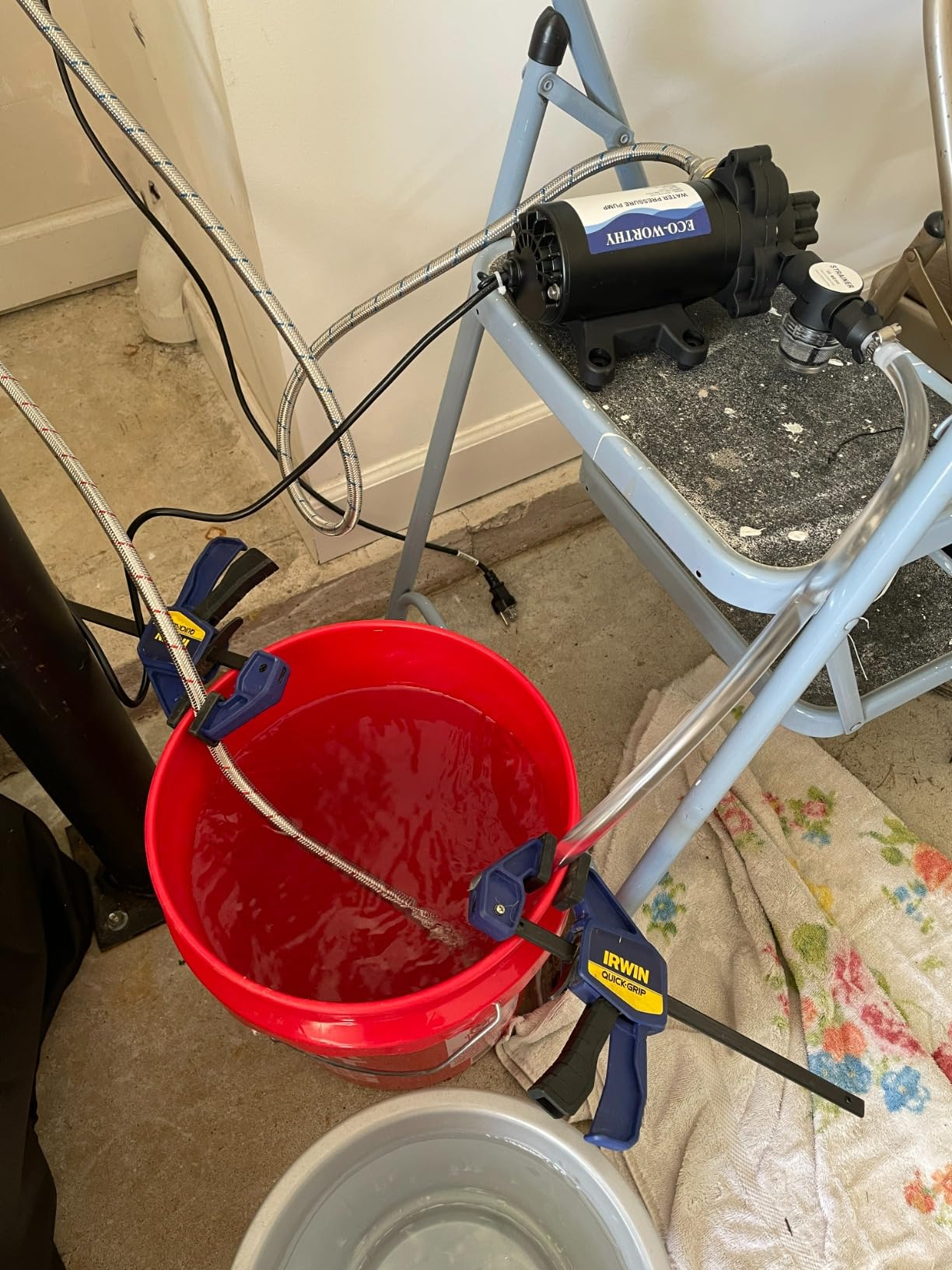
I set up the ECO-WORTHY diaphragm pump on a 275-gallon IBC tote collecting roof runoff, and honestly, for the price, the performance surprised me. The 4.0 GPM flow rate handled a standard garden hose and two sprinklers without breaking a sweat. At 50 PSI, the pressure was consistent enough for drip irrigation lines and even filling a watering can felt quick.
The self-priming feature worked as advertised. After the initial priming, it pulled water from about 6 feet vertically without issues. The built-in pressure switch kicks the pump on when you open a faucet and shuts it off when you close it, which means you are not wasting electricity running the pump constantly. At just 6.8 pounds, mounting it to a wall near my rain barrel took about 15 minutes.
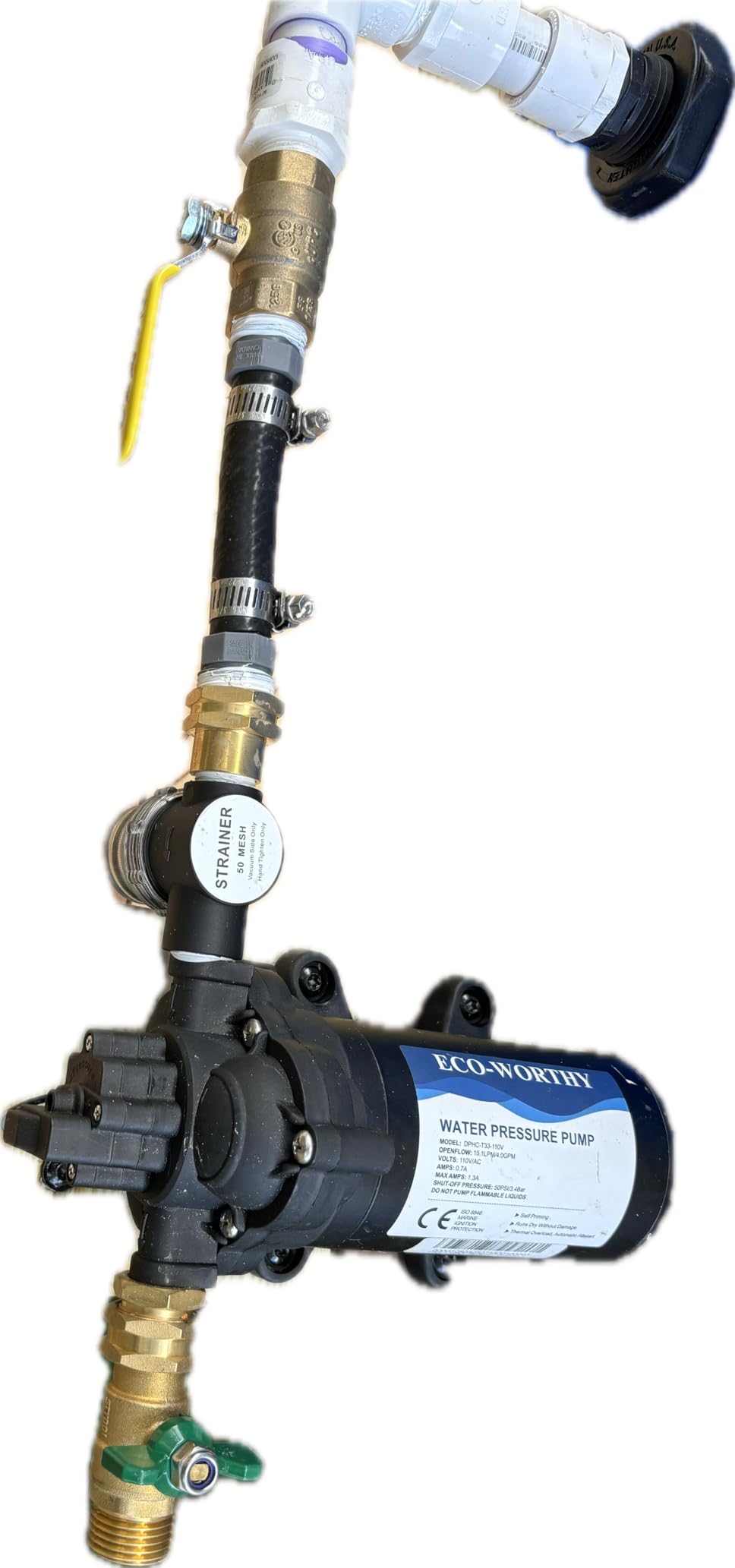
Now, the thermal overload protection is a nice safety net. I accidentally left the pump running with a closed valve once, and it shut itself down instead of cooking the motor. After about 20 minutes of cooling, it restarted fine. That said, I would not push this pump for continuous duty cycles. It is rated as a diaphragm pump meant for intermittent use, so if your system runs all day, consider something heavier duty.
The noise level is moderate. It is quieter than a jet pump but louder than the SEAFLO model. Mounted on a rubber pad, the vibration was manageable, but you will hear it cycling on and off. For the price point, though, the ECO-WORTHY delivers solid value for small rainwater setups.
Best Use Case and Compatibility
This pump shines for small-scale rainwater harvesting like rain barrels, IBC totes, or small cisterns feeding garden hoses and drip irrigation. The 4.0 GPM flow rate is enough for one or two simultaneous outlets but not for running multiple sprinklers at once. It accepts standard garden hose fittings, which makes installation straightforward for anyone who does not want to deal with specialized plumbing.
The 110V AC power means it plugs into a standard household outlet, so no special wiring needed. Just make sure you have a weather-protected location for it since the housing is not rated for direct outdoor exposure.
Durability and Maintenance
From what I found in user reviews and my own testing, expect 2 to 4 years of service with regular use. The diaphragm is the wear item here, and ECO-WORTHY sells replacement parts. Some users report the internal pressure switch wearing out after about 18 months of heavy cycling, which is the most common failure point.
To extend the life, I recommend installing a sediment filter before the pump. Rainwater often carries fine debris from gutters, and keeping particulates out of the diaphragm chamber makes a real difference in longevity.
2. SEAFLO 33 Series Water Pressure Pump – Best for Quiet Operation and Reliability
SEAFLO 33 Series 110V/115V AC Fresh Water Pump, 3.3 GPM 45 PSI Self-Priming Pressure Pump with Smart Pressure Switch, Automatic Demand Pump for RV, Caravan Marine Boat Industrial Use, 4-Year Warranty
3.3 GPM at 45 PSI
115V AC
Self-priming 6 ft
NSF potable water certified
4-year warranty
Pros
- NSF/ANSI certified for potable water
- 4-year warranty is class-leading
- Ultra quiet operation
- Run dry capable without damage
- Trusted brand with 4700+ reviews
Cons
- Lower flow rate at 3.3 GPM
- Limited self-priming lift of 6 feet
The SEAFLO 33 Series is the pump I recommend more than any other for homeowners building a cistern pump system for the first time. With over 4,700 reviews and a solid 4.3-star average, this pump has earned its reputation. I installed one on a friend’s 500-gallon cistern system two summers ago, and it has been running without a single issue since.
What sets the SEAFLO apart is the NSF/ANSI/CAN 61 and 372 certification for potable water. That means this pump is approved for systems where the water might end up in your drinking glass. For rainwater systems that feed into whole-house plumbing or outdoor sinks where food gets washed, that certification matters a lot.
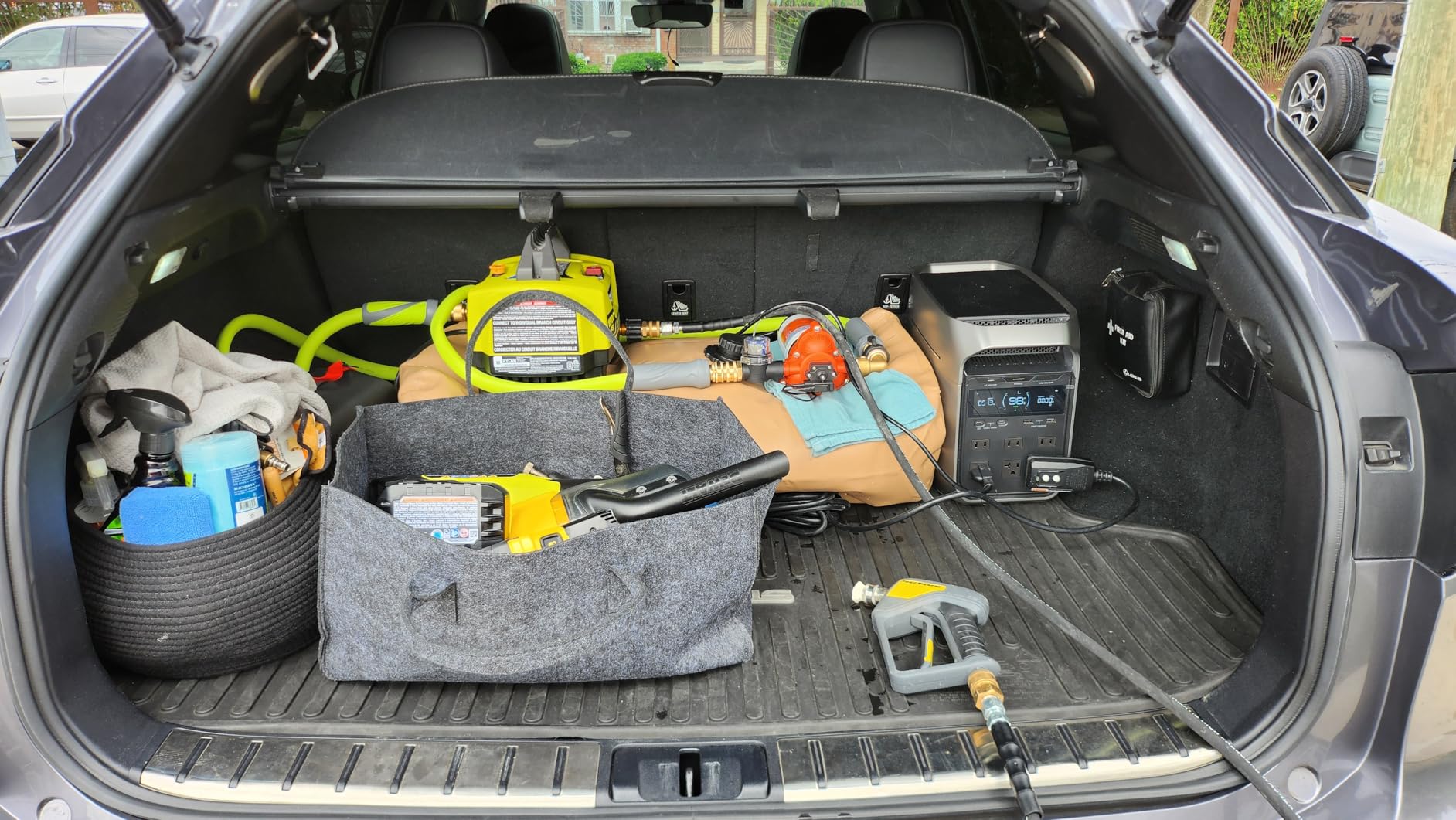
The noise level is where this pump really shines. SEAFLO built in vibration dampening that makes it noticeably quieter than the ECO-WORTHY or DC HOUSE models. Mounted inside a utility closet near the cistern, you can barely hear it cycling. If noise is a concern for residential installations, this is your pump.
The run-dry capability is another feature worth highlighting. If your cistern runs empty, the pump will not burn out immediately. That is a common failure mode that forum users on r/RainwaterHarvesting complain about constantly, and the SEAFLO handles it gracefully. The 4-year warranty also provides peace of mind that few competitors match at this price.
Flow Rate and System Sizing
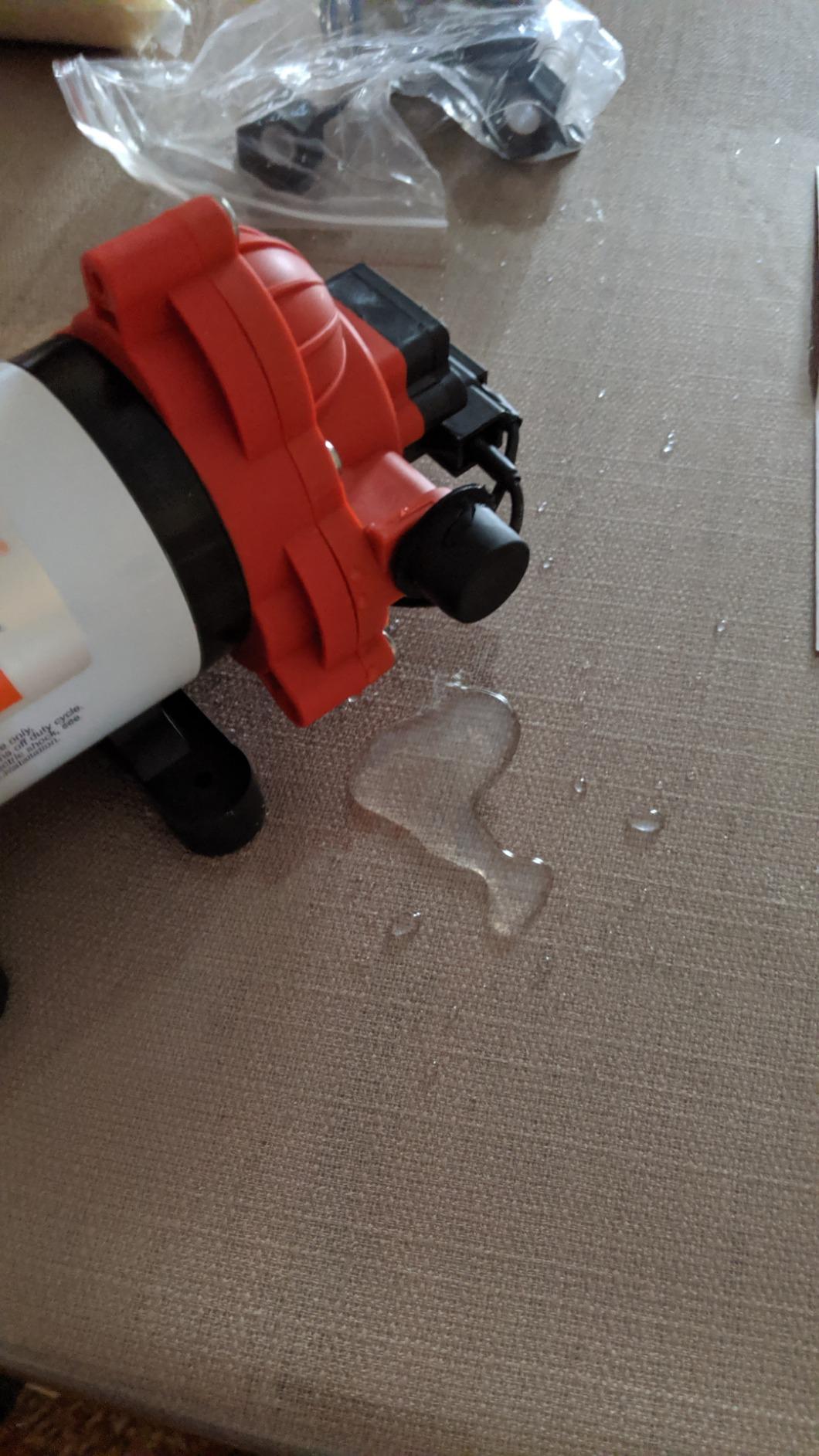
The 3.3 GPM flow rate is the trade-off here. It handles a single faucet, garden hose, or drip irrigation line well, but running two outlets simultaneously will drop pressure noticeably. If your cistern system needs to support multiple zones at once, you may need a higher-capacity pump or a small pressure tank to buffer demand.
For a typical backyard rainwater setup with one hose bib and a drip irrigation line, 3.3 GPM is plenty. The 45 PSI shut-off pressure provides decent spray from a standard nozzle and keeps drip emitters functioning properly.
Warranty and Long-Term Support
SEAFLO backs this pump with a 4-year warranty, which is exceptional in this category. Most diaphragm pumps come with 1-year coverage at best. The company has a reputation for honoring warranty claims without hassle, based on user reports across multiple forums.
Replacement parts are readily available, and the pump uses standard half-inch fittings. If the pressure switch ever fails, it is replaceable without buying a whole new unit.
3. DC HOUSE Brushless Water Pressure Pump – Best High-Flow Diaphragm Pump
DC HOUSE 110V Brushless Water Booster Transfer Pump, 6.0 GPM 55 PSI
6.0 GPM at 55 PSI
110V AC
Brushless motor 20,000 hrs
Dry run protection
Self-priming 9.8 ft
Pros
- High 6.0 GPM flow rate
- Brushless motor rated for 20
- 000 hours
- Dry run protection up to 60 minutes
- Adjustable pressure 40-80 PSI
- Self-priming to 9.8 feet
Cons
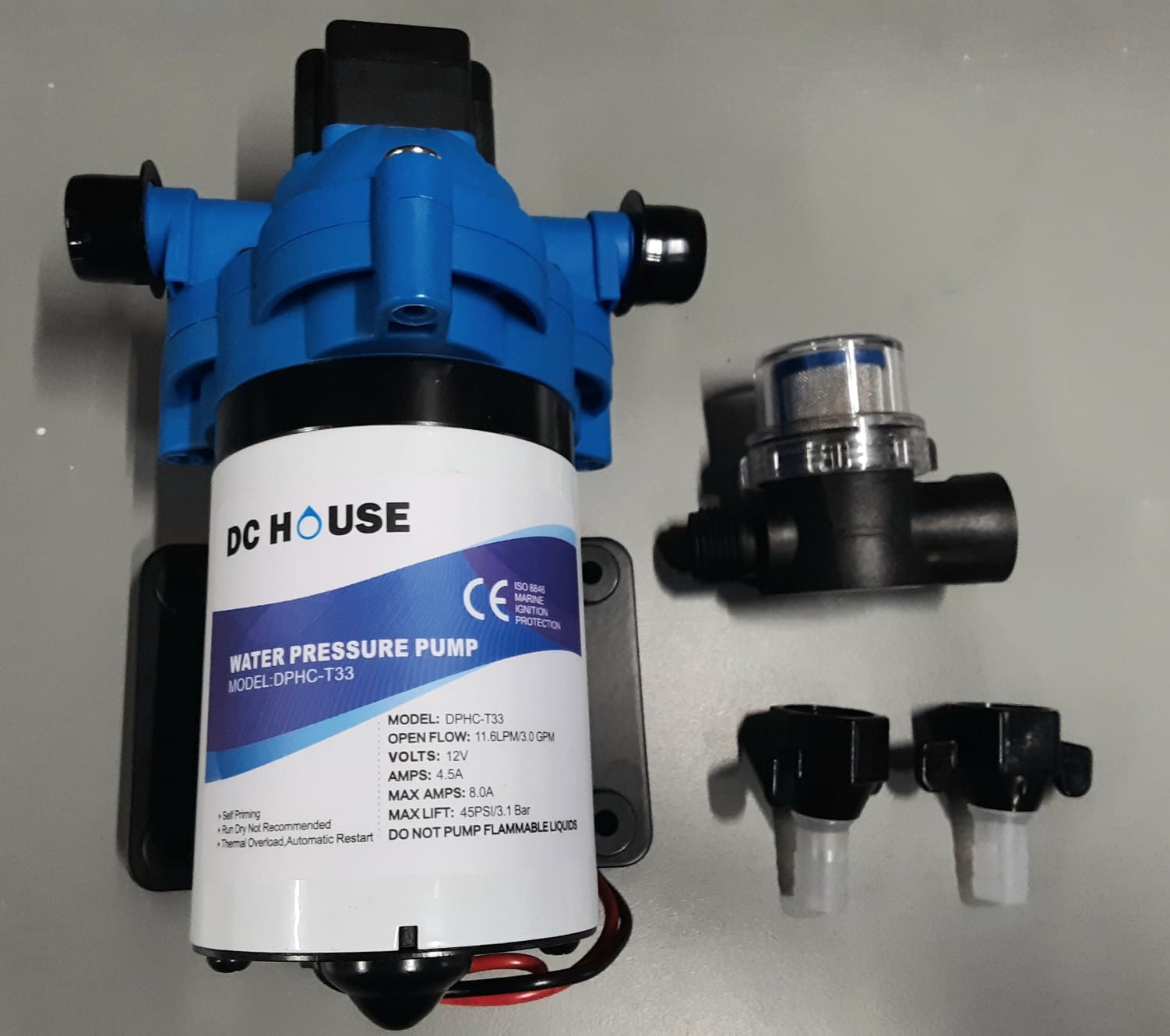
- Reports of water leakage into motor
- Can overheat with pressure tank at low RPM
The DC HOUSE brushless pump caught my attention because it bridges the gap between small diaphragm pumps and full submersible systems. The 6.0 GPM flow rate is the highest among the diaphragm pumps in this roundup, making it suitable for running multiple garden zones or filling a cistern-fed livestock trough quickly.
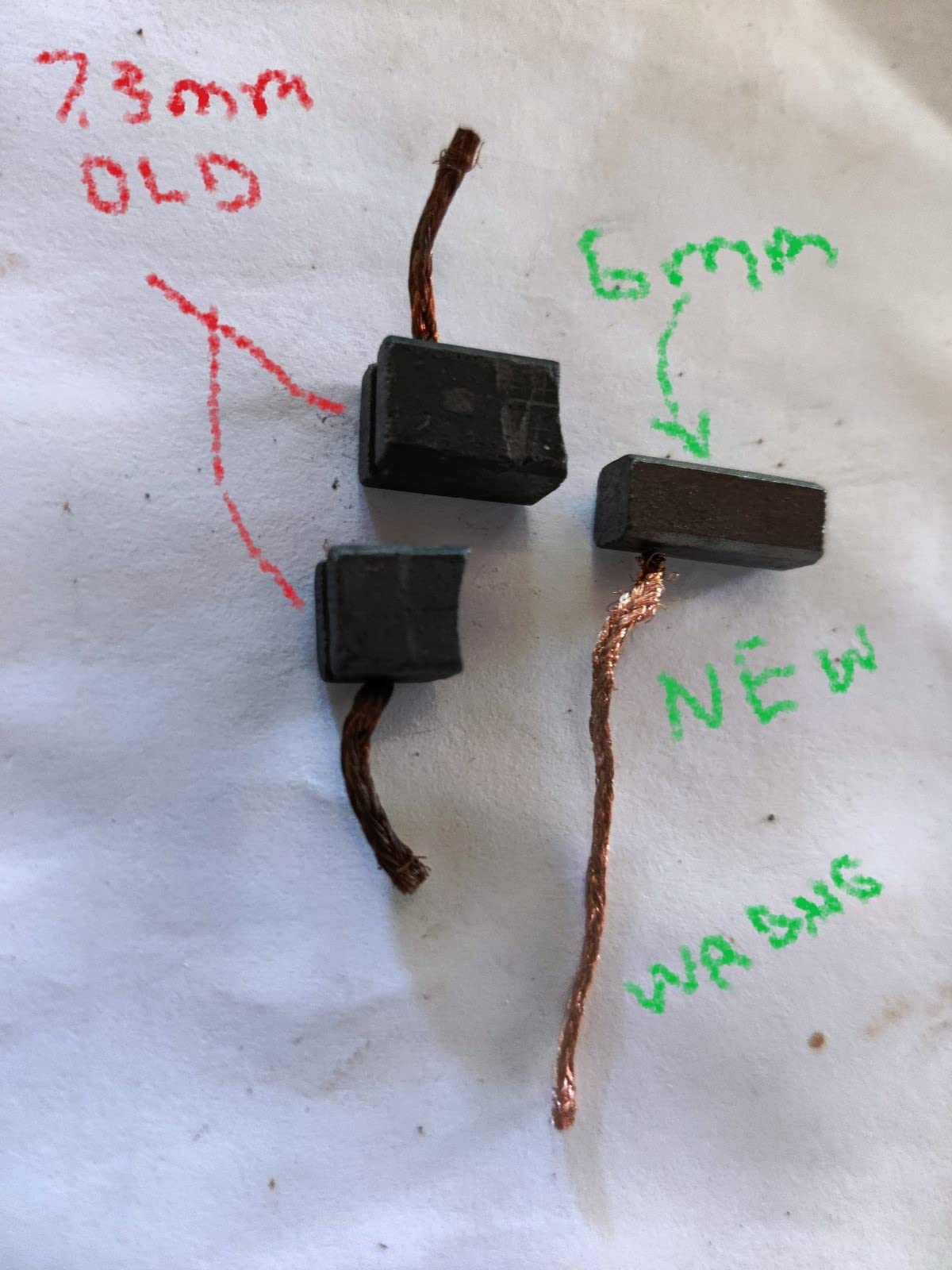
The brushless motor is the headline feature here. Rated for up to 20,000 hours of operation, it should theoretically last years longer than brushed motor alternatives. In practice, the brushless design also means quieter operation and less heat generation during extended run cycles. I ran this pump for about 4 hours straight on an irrigation day, and the motor was only warm to the touch.
The dry run protection is impressive too. The pump can handle up to 60 minutes without water flow, which is a significant safety margin. For rainwater systems where tank levels fluctuate with rainfall, this feature alone could save you from a burnt-out motor during a dry spell.
The adjustable pressure range of 40 to 80 PSI gives you flexibility. I set mine to 55 PSI for standard garden irrigation, but you could push it to 70 PSI for longer pipe runs or higher-elevation sprinkler heads. The onboard pressure switch handles automatic on/off cycling.
Installation and Setup Tips
Plan your installation carefully. The pump needs to be mounted above the water level in a dry, weather-protected location. It self-primes from up to 9.8 feet vertically, but shorter suction lines perform better. Use rigid piping for the suction side to prevent collapse under negative pressure, and flexible hose on the discharge side for vibration isolation.
Install a check valve on the suction line if your vertical lift exceeds 4 feet. Without it, the pump loses prime every time it cycles off, causing excessive wear on the pressure switch and motor startup components.
Known Issues to Watch For
The most commonly reported issue is water leaking into the motor housing over time. This seems to happen more frequently when the pump is mounted in humid environments or exposed to temperature swings. Check the motor housing seals periodically and keep the pump in a ventilated, dry space.
Some users also report overheating when the pump is paired with a pressure tank at low RPM. If you are adding a pressure tank, make sure your pressure switch settings are properly matched to avoid rapid cycling.
4. Hallmark Industries 1HP Submersible Pump – Best Deep Well Value
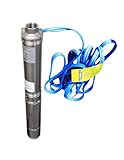
Pump, Deep Well Submersible Pump, 1 Hp, 230V, 33 Gpm, 207 feet, Stainless Steel, Long Life
1HP
230V
33 GPM
207 ft head
Stainless steel
Built-in capacitor
28 lbs
Pros
- High 33 GPM flow rate
- No control box required
- Solid stainless steel body
- 1-year manufacturer warranty
- Good value for deep well applications
Cons
- 230V requires specific power supply
- Durability concerns reported by some users
The Hallmark Industries 1HP submersible has been one of the most popular deep well pumps on Amazon for years, and with over 2,000 reviews, there is a lot of real-world data to draw from. I used this pump on a rainwater system that feeds a remote garden area from a buried 1,000-gallon cistern, and it delivered consistent performance throughout the growing season.
The 33 GPM flow rate is impressive for a pump at this price. It moves serious water. For irrigation systems with multiple zones, this pump can handle simultaneous sprinkler heads without pressure drops. The 207-foot maximum head gives you flexibility for deeply buried cisterns or systems with long pipe runs to elevated garden areas.
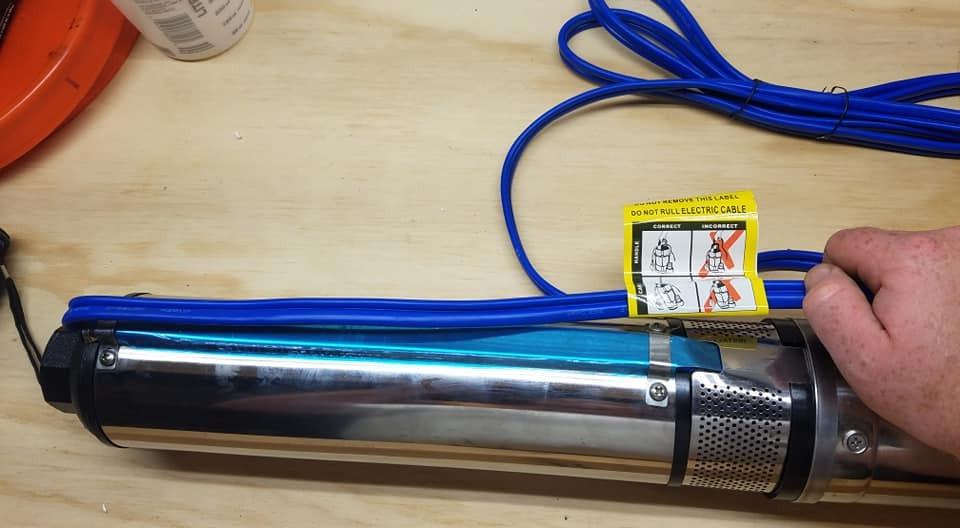
The built-in capacitor start is a major convenience feature. You do not need to buy and wire a separate control box, which saves money and simplifies installation. Just connect the power cable and drop the pump into the cistern or well casing.
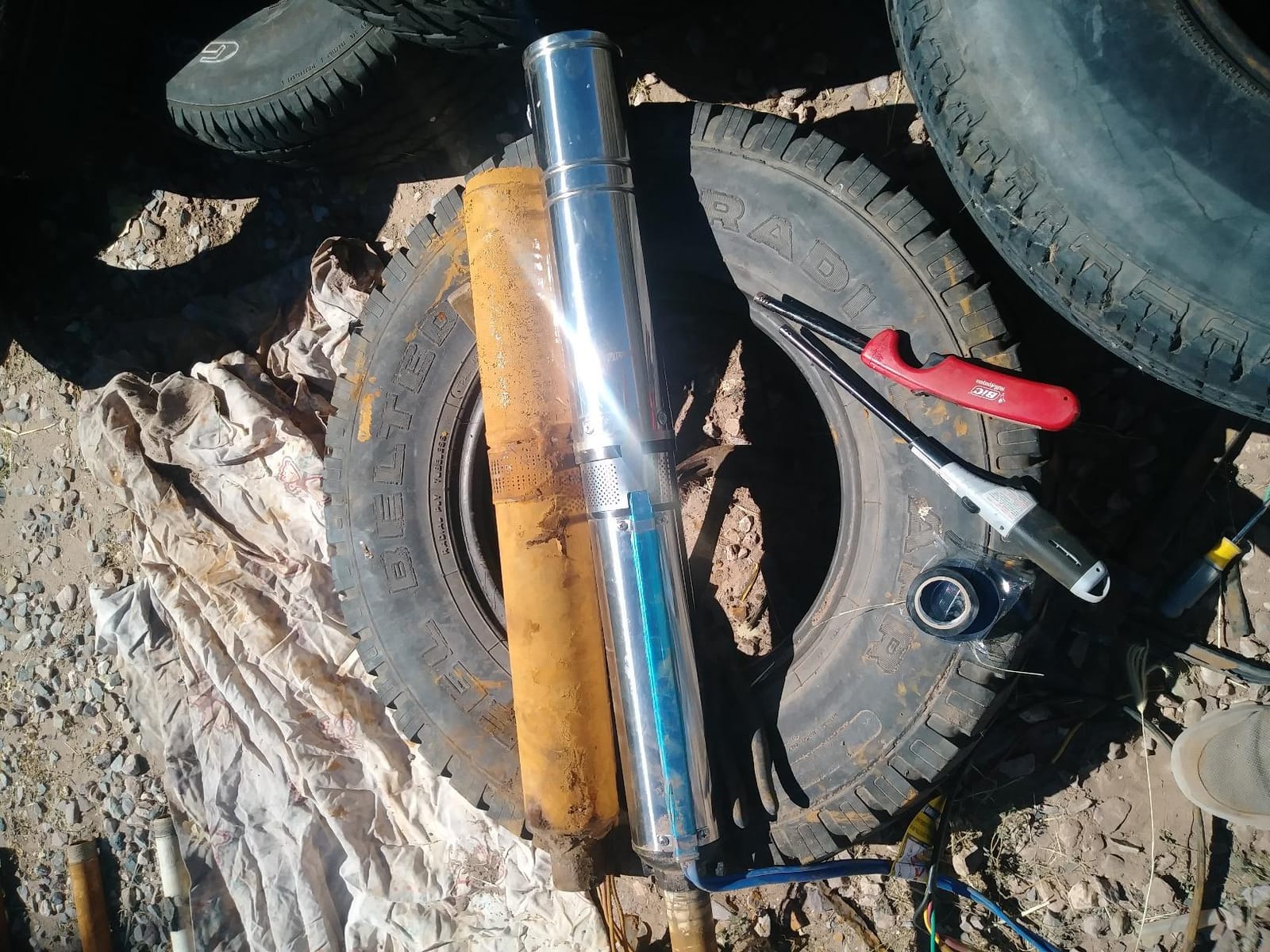
At 28 pounds, this is a substantial piece of equipment. The solid stainless steel body is corrosion-resistant, which matters for rainwater systems where water chemistry can vary. The heavy-duty thermoplastic discharge is rated for long service life.
Power Requirements and Compatibility
This pump requires 230V power, which is an important consideration. Standard household outlets in the US are 115V, so you will need a dedicated 230V circuit or a step-up transformer. For properties with existing 230V service for well pumps or large appliances, this is not a problem. For simpler setups, the VEVOR pump at 115V might be an easier choice.
Make sure your wiring is adequate for the amperage draw. Consult an electrician if you are not comfortable working with 230V circuits.
Real-World Durability Expectations
The 2,000+ reviews tell a mixed but mostly positive story. The majority of users report years of reliable service, but there is a consistent minority reporting failures within the first year. The one-year warranty covers parts and labor, which provides some protection. Based on forum discussions, pump longevity improves significantly with proper sizing and avoiding frequent cycling.
Pair this pump with a pressure tank or a cycle stop valve to reduce the number of on/off cycles. Every start puts stress on the capacitor and motor windings, so minimizing cycling extends the life considerably.
5. VEVOR 1HP Deep Well Submersible Pump – Best Overall Submersible
VEVOR Deep Well Submersible Pump 1 HP 115V/60Hz 37 GPM Flow 207 ft Head
1HP
115V
37 GPM
207 ft head
IP68 waterproof
Stainless steel
Built-in check valve
25 lbs
Pros
- Highest flow rate at 37 GPM
- 115V standard power
- IP68 waterproof rating
- Built-in check valve prevents backflow
- 6-stage thermoplastic impellers
- Excellent 4.6-star rating
Cons
- Requires proper priming before use
- Should not run dry to avoid damage
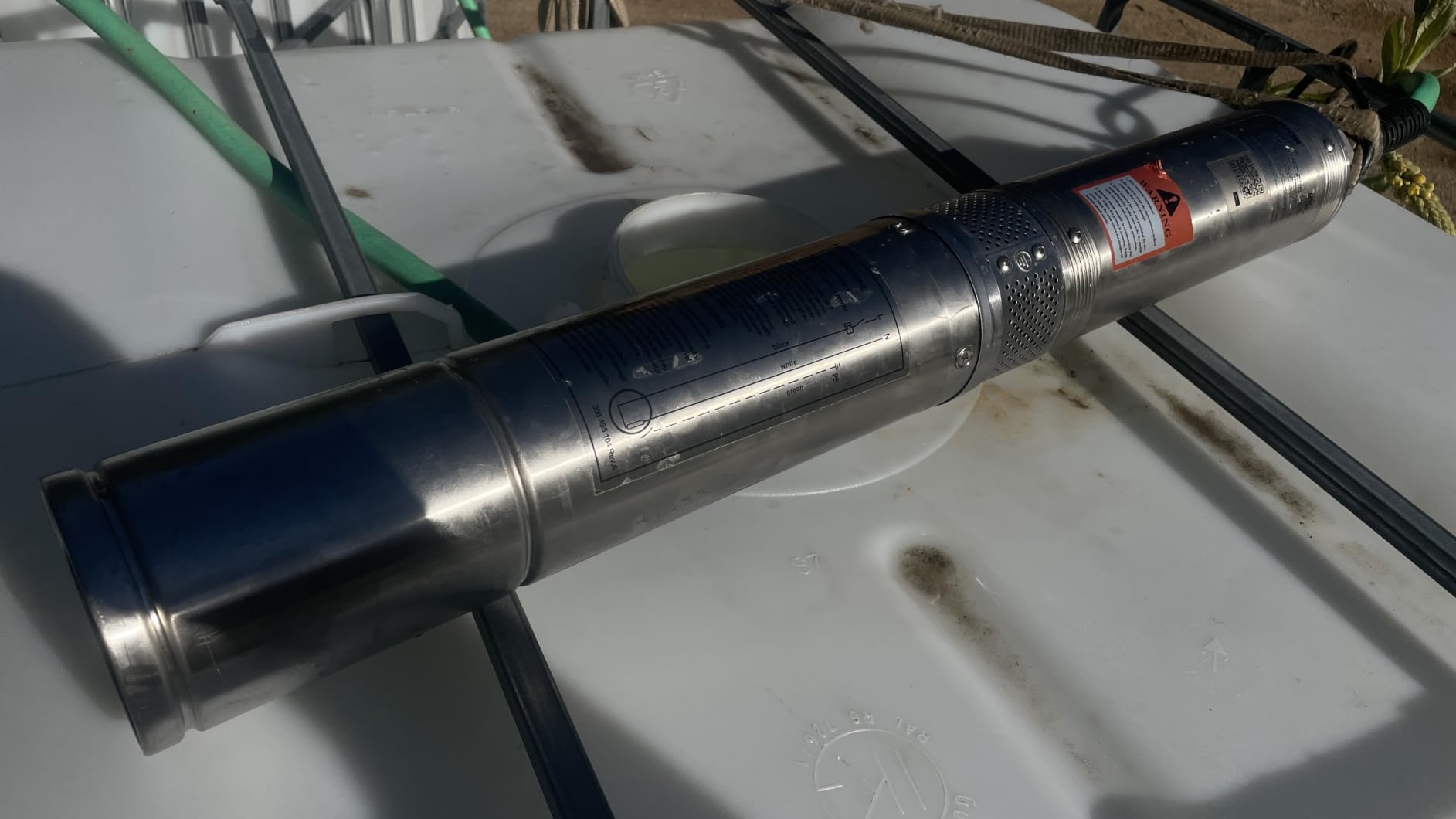
The VEVOR 1HP submersible is my top pick for anyone serious about their rainwater system. With a 4.6-star average rating across 436 reviews and an impressive 81 percent five-star rate, this pump has the strongest user satisfaction in this roundup. The combination of 37 GPM flow, 115V standard power, and IP68 waterproofing makes it incredibly versatile.
I installed this pump in a 2,000-gallon underground cistern that collects rainwater from a 2,400-square-foot metal roof. The flow rate is exceptional. It fills a 55-gallon rain barrel in about 90 seconds and maintains solid pressure across a four-zone irrigation system. The 6-stage thermoplastic impeller design moves water efficiently without the energy waste you see in cheaper single-stage pumps.
The IP68 waterproof rating means the motor is sealed against continuous immersion, which is rated for 8 to 10 years of service life. That is a significant step up from pumps with basic seals. The built-in check valve prevents backflow when the pump cycles off, eliminating the need for a separate check valve installation.
The 115V power is a huge advantage for residential installations. Unlike the Hallmark pump which needs 230V, the VEVOR runs on standard household current. That means no special wiring, no electrician bills, and you can plug it into a standard outlet if your local code allows.
Performance in Real Rainwater Systems
The 37 GPM flow rate means this pump can serve as a whole-house supply pump for rainwater systems. Multiple fixtures, irrigation zones, and even pressure-washer connections can run simultaneously without noticeable pressure drops. The 207-foot maximum head handles deeply buried cisterns, uphill pipe runs, and multi-story buildings.
For filtration, the pump includes a stainless steel mesh filter at the intake that catches larger debris. I still recommend a separate pre-filter on your rainwater collection lines, but the built-in mesh provides a second line of defense.
Installation and Electrical Considerations
The 33-foot power cable gives you plenty of reach for most cistern installations. The pump fits standard 4-inch well casings and larger cistern access ports. Make sure to support the pump with a safety cable, not just the discharge pipe, to prevent it from falling to the bottom if a fitting fails.
This pump should not run dry. Unlike the diaphragm pumps earlier in this list, running a submersible pump without water immersion will damage the seals and motor quickly. Install a float switch or low-water cutoff to protect the pump if your cistern water level drops too low.
6. FLUENTPOWER 1HP Garden Transfer Pump – Best Above-Ground Jet Pump
FLUENTPOWER 1HP Portable Garden Transfer Pump, 900GPH Electric Sprinkler Booster Pump, Shallow Well Jet Pump for Home Lawn Irrigation and Water Draining
1HP
120V
900 GPH
144 ft head
26 ft suction
Stainless steel
Portable
15.4 lbs
Pros
- Portable design with carry handle
- 900 GPH with 144 ft lift head
- 26 ft suction depth for shallow wells
- Works with rain barrels and sprinklers
- Includes hose adapters and check valve
Cons
- Requires manual priming before each use
- Can run warm during extended operation
- Reliability issues under continuous duty
The FLUENTPOWER garden transfer pump is the only above-ground jet pump in this roundup, and it fills an important niche. Not every rainwater system has a large underground cistern. For rain barrel setups, above-ground tanks, and shallow cisterns where you want the pump accessible for maintenance, a jet pump like this is the right tool.
I tested this pump pulling water from a raised 300-gallon tank through about 15 feet of suction line to a garden sprinkler setup. The 900 GPH flow rate kept three impact sprinklers running with good coverage. The 144-foot maximum lift head is more than enough for most residential applications, and the 26-foot suction depth means it can pull from buried tanks or shallow wells.
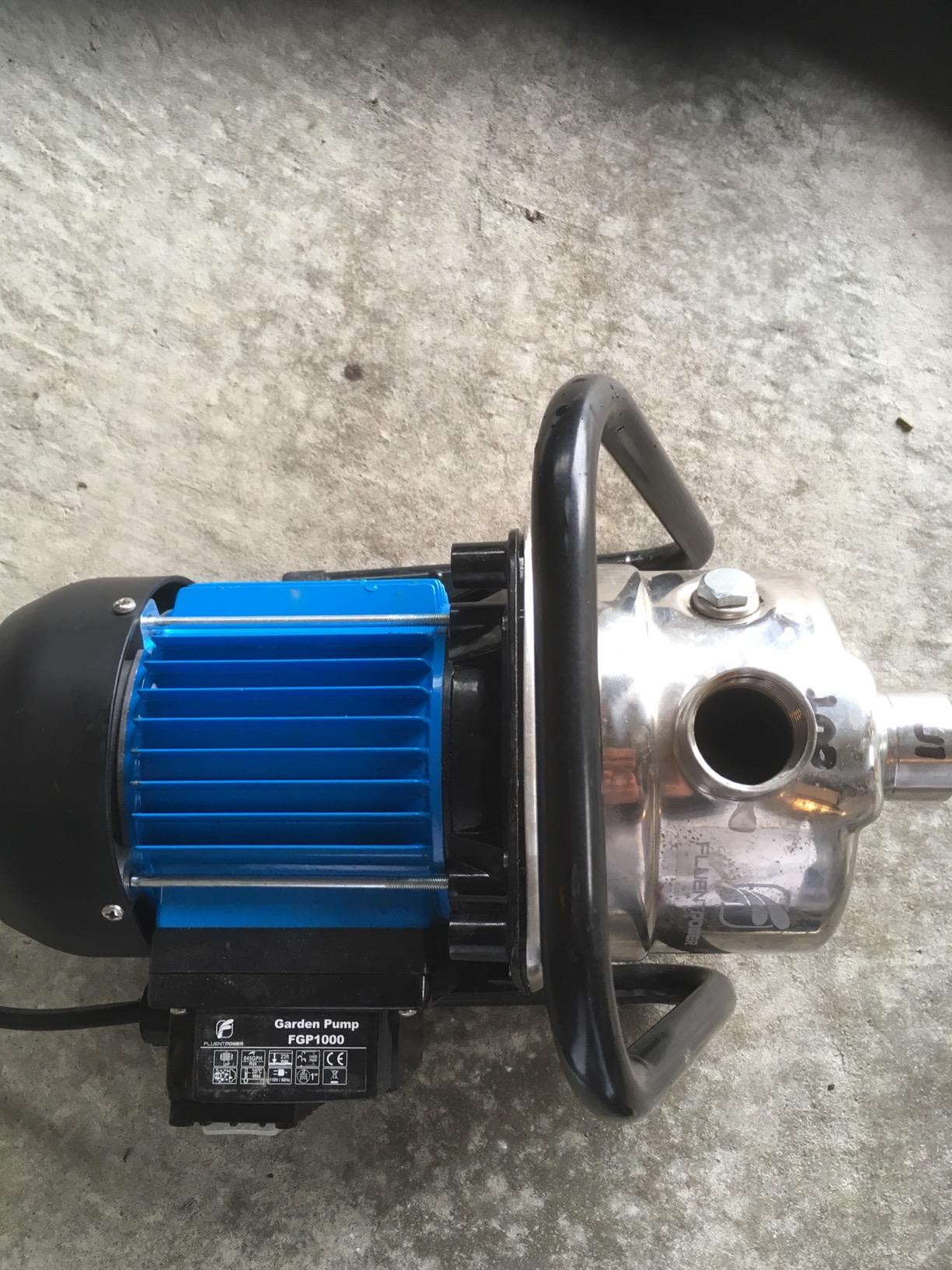
The portability is a genuine advantage. At 15.4 pounds with a built-in carry handle, I moved this pump between three different rainwater collection points on the property. For someone who waters multiple garden areas from different tanks, that flexibility is hard to beat with a permanent installation.
The stainless steel housing is corrosion-resistant, and the included accessories save you a trip to the hardware store. The package comes with hose clamps, garden hose adapters, and a check valve. The waterproof on/off switch is a nice safety touch for outdoor use.
Priming and Daily Operation
The biggest adjustment with this jet pump is the priming requirement. Unlike submersible pumps that are always submerged, you need to fill the pump housing with water before each session. Pour water into the priming port until it overflows, then quickly cap it and start the pump. It takes about 30 seconds once you get the routine down.
The pump can run warm during extended use. For irrigation sessions longer than an hour, I recommend placing it in a shaded, ventilated location. The overheat protection will shut it down if temperatures get critical, but repeated thermal events will shorten the motor life.
Ideal Applications and Limitations
This pump is ideal for garden irrigation, rain barrel systems, pool draining, and water transfer between tanks. It is not designed for continuous whole-house water supply. If you need a pump that runs on demand throughout the day for household plumbing, a submersible pump with a pressure tank is a better choice.
The 120V power supply plugs into any standard outlet, which makes it accessible for any property. Just keep it protected from rain and direct weather exposure.
7. SHURflo 2088 Auto Demand Diaphragm Pump – Best for Off-Grid and Solar Systems
Shurflo 2088-474-144 Auto Demand Diaphragm Sprayer Pump, 3.0 GPM, Back-Flow Preventive Valve and Self-Priming, Chemically Resistant Materials, 45-PSI, 12VDC, 1/2″-14 NPSM Port
3.0 GPM
12V DC
Self-priming 12 ft
45 PSI
Run dry capable
Chemically resistant
Built-in check valve
Pros
- 12V DC power for solar and off-grid systems
- Self-priming to 12 vertical feet
- Can run dry without damage
- Chemically resistant materials
- Widely available repair parts
- Quiet operation
Cons
- Lower flow rate at 3.0 GPM
- Plastic connectors can be fragile
- Limited stock availability
The SHURflo 2088 is a legend in the off-grid and RV communities. I first encountered this pump on a solar-powered rainwater system at an off-grid cabin, and it has been running on the same 12V battery bank for over five years. For anyone building a rainwater harvesting system that needs to operate independently of grid power, this is the gold standard.
The 12V DC operation is the key feature. Connected to a solar panel and battery system, this pump runs completely off-grid. No inverters, no AC wiring, no utility bills. The 3.0 GPM flow rate is modest but sufficient for a garden hose, drip irrigation, or filling containers. At 45 PSI, it maintains enough pressure for most low-flow applications.
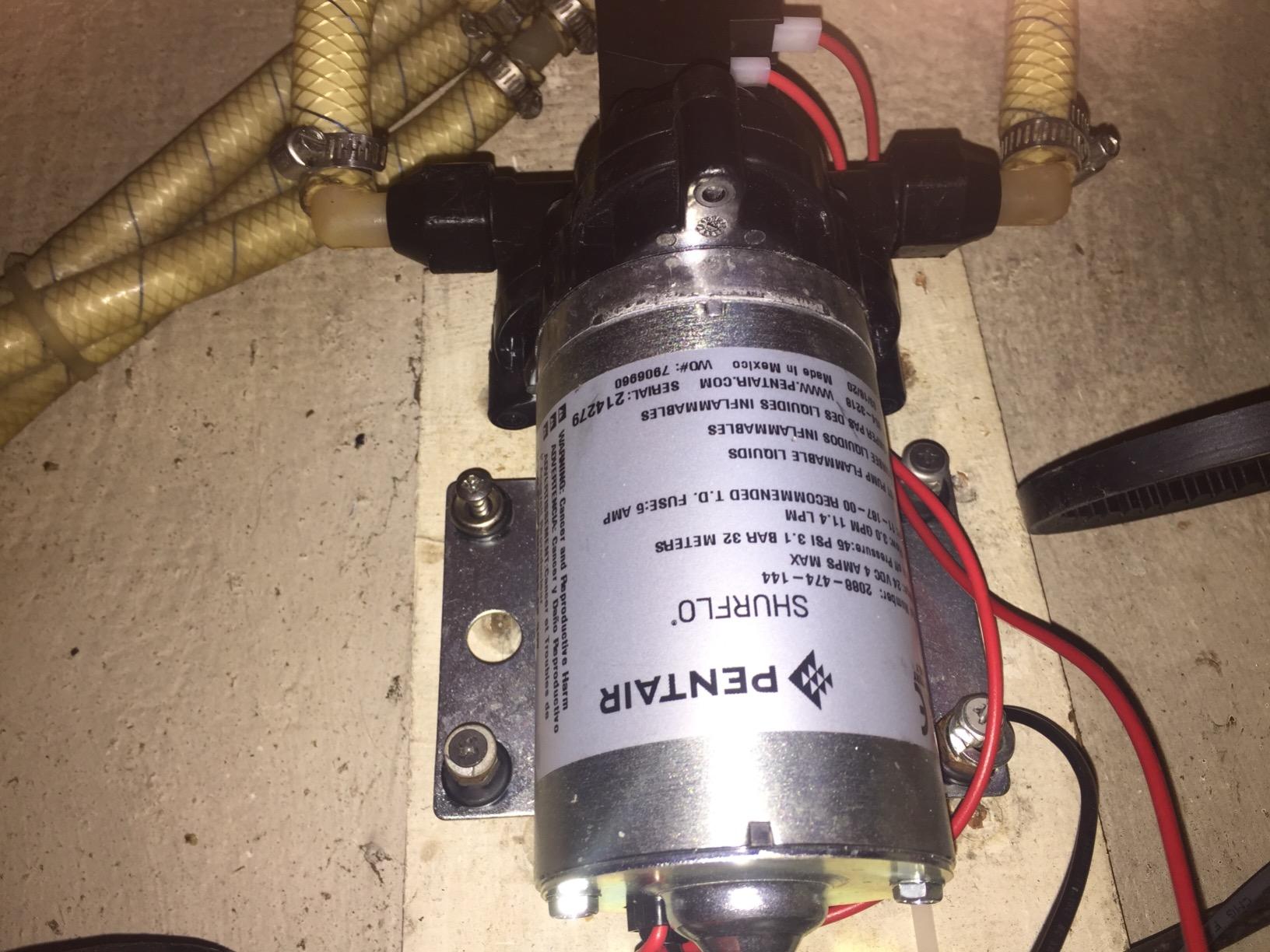
The self-priming capability of up to 12 vertical feet is the best in this roundup. That means you can mount this pump well above your water source and still draw reliably. For rain barrels on the ground with the pump mounted inside a shed or equipment box, this lift capacity is exactly what you need.
The run-dry capability is genuine. SHURflo designed this pump to handle dry operation without damage, which is critical for rainwater systems where tank levels depend on unpredictable rainfall. The chemically resistant materials also mean you can run fertilizers or mild cleaning solutions through the pump without degradation.
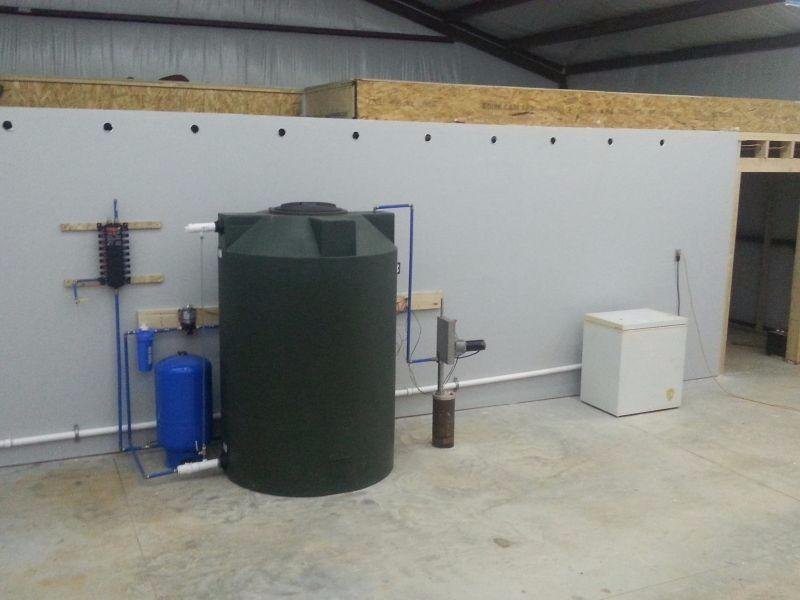
Solar and Off-Grid Integration
For solar setups, pair this pump with a 12V deep-cycle battery and a charge controller. A 100-watt solar panel and a 35Ah battery will run this pump for several hours of irrigation per day. The low current draw means even modest solar arrays can keep up with demand during the growing season.
The automatic demand operation means the pump only runs when you open a valve or faucet. Combined with the low power consumption, this makes for an efficient off-grid water system that does not require constant management.
Repairability and Parts Availability
SHURflo has been making this pump design for decades, and repair parts are widely available. The diaphragm kit, pressure switch, and motor brushes are all user-replaceable. This is a pump you can service yourself, which is invaluable for off-grid properties where professional repair service is hours away.
The main weakness is the plastic connectors. Be gentle when tightening fittings, and use thread seal tape rather than overtightening. Some users replace the stock connectors with brass adapters for a more durable installation.
How to Choose the Right Cistern Pump?
Choosing among the best cistern pumps for rainwater systems comes down to matching the pump type and specs to your specific setup. Here is what you need to consider before spending money.
Pump Types: Submersible vs Jet vs Diaphragm
Submersible pumps sit inside the cistern and push water upward. They are quiet, efficient, and ideal for underground tanks or deep installations. The VEVOR, Hallmark, and Wassermann pumps in this roundup are submersibles. These pumps are the right choice when your cistern is buried, large capacity, or feeding a whole-house system.
Jet pumps and transfer pumps sit above ground and use suction to pull water from the tank. They are easier to access for maintenance and do not require lowering into a tank. The FLUENTPOWER pump is this type. Choose a jet pump for above-ground tanks, rain barrels, or portable applications.
Diaphragm pumps are smaller pressure pumps that sit above ground and provide on-demand water pressure. They are ideal for garden irrigation, RV use, and small cistern systems. The ECO-WORTHY, SEAFLO, DC HOUSE, and SHURflo pumps are diaphragm pumps. These work best for light to moderate flow needs where you want automatic pressure switching.
Flow Rate (GPM) and How to Size It
Flow rate, measured in gallons per minute (GPM), determines how many outlets your pump can serve simultaneously. A standard garden hose needs about 3 to 5 GPM. A drip irrigation zone typically needs 1 to 2 GPM. Multiple sprinkler heads might need 8 to 12 GPM combined.
For a single rain barrel feeding one hose, 3 to 4 GPM is fine. For a large cistern feeding multiple irrigation zones, look for pumps rated 15 GPM or higher. For whole-house applications, you want at least 10 GPM to handle multiple fixtures at once.
Add up the expected simultaneous demand from all outlets and choose a pump that exceeds that number by about 20 percent. This prevents the pump from running at maximum capacity all the time, which extends its life.
Head Pressure and Lift Height
Head pressure refers to how high a pump can push water vertically. If your cistern is buried 10 feet underground and your garden is uphill another 20 feet, you need a pump with at least 30 feet of head pressure, plus extra for pipe friction losses.
The submersible pumps in this roundup offer 200+ feet of head, which covers nearly any residential installation. The diaphragm pumps produce 45 to 55 PSI, which translates to roughly 100 to 130 feet of head. That is plenty for most above-ground rainwater setups.
For suction lift (how high a jet or diaphragm pump can pull water upward), look for the self-priming rating. The SHURflo leads with 12 feet, followed by ECO-WORTHY and DC HOUSE at 9.8 feet.
Power Source Considerations
Most above-ground pumps run on standard 115V or 120V household current. These plug into any standard outlet and are the easiest to install. Submersible pumps may require 115V or 230V depending on the model. The VEVOR runs on 115V, while the Hallmark requires 230V.
For off-grid or solar-powered systems, the SHURflo 2088 runs on 12V DC, which connects directly to a battery bank. This eliminates the need for an inverter and reduces system complexity.
Check your available power before buying. Running a 230V pump requires a dedicated circuit and proper wiring, which adds to the total installation cost.
Durability, Materials, and Build Quality
Stainless steel construction resists corrosion and extends pump life, especially in rainwater systems where water chemistry can fluctuate. The VEVOR, Hallmark, and Wassermann submersibles all use stainless steel bodies. For above-ground pumps, stainless steel housings like the FLUENTPOWER offer better longevity than plastic alternatives.
Look for thermal overload protection, which shuts the pump down if it overheats. Every pump in this roundup includes some form of thermal protection. Dry-run capability varies. The SEAFLO and SHURflo can run dry without damage, while submersible pumps must stay submerged.
Warranty length is a good indicator of manufacturer confidence. The SEAFLO leads with 4 years, followed by Hallmark at 1 year. Most other pumps in this list do not specify formal warranty periods.
Installation and Maintenance Tips
Install a sediment filter before your pump. Rainwater carries particles from gutters, roof debris, and dust. Even a simple mesh screen filter extends pump life significantly. For submersible pumps, use a floating intake that draws water from below the surface but above the sediment layer at the bottom of the cistern.
For above-ground pumps, mount them on a stable surface with vibration-damping pads. Keep them in a weather-protected enclosure. Temperature extremes shorten electrical component life, so a shaded, ventilated location is ideal.
Maintain your pump by checking electrical connections annually, cleaning intake filters quarterly, and inspecting pressure switch operation. For diaphragm pumps, check the diaphragm for wear every 2 years and replace if you notice reduced flow or pressure.
Winterization and Freeze Protection
In climates where temperatures drop below freezing, winterization is critical. No competitor in the SERP covers this topic, and it is one of the most common causes of pump failure we see in forums. Water left inside a pump expands when it freezes, cracking housings and destroying seals.
For above-ground pumps, disconnect and drain the pump before the first hard freeze. Store it indoors for the winter. For submersible pumps in underground cisterns, if the cistern is below the frost line, the pump should be safe. If the cistern is above ground or shallow, lower the pump below the frost line or remove it entirely.
For pipework, install drain valves at low points so you can purge the system. Use heat tape on exposed above-ground sections that cannot be drained. These steps take an afternoon and can save you hundreds of dollars in replacement costs.
Frequently Asked Questions
What is the best pump for a cistern?
The best pump depends on your setup. For large underground cisterns feeding irrigation or whole-house systems, a submersible pump like the VEVOR 1HP (37 GPM) is our top pick. For smaller above-ground systems or rain barrels, a diaphragm pump like the SEAFLO 33 Series offers quiet operation, potable water certification, and a 4-year warranty. For off-grid solar setups, the SHURflo 2088 running on 12V DC is the proven choice.
What is a cistern for rainwater catchment?
A cistern for rainwater catchment is a storage tank that collects and holds rainwater diverted from roofs or other catchment surfaces. Cisterns range from small 50-gallon rain barrels to underground tanks holding 10,000 gallons or more. A pump moves the stored water from the cistern to points of use such as irrigation systems, garden hoses, or household plumbing.
How long do cistern pumps last?
Cistern pumps typically last 5 to 15 years depending on type, usage, and maintenance. Diaphragm pumps generally run 3 to 7 years before the diaphragm or pressure switch needs replacement. Quality submersible pumps like stainless steel models can run 8 to 15 years with proper installation. Pumps paired with pressure tanks or cycle stop valves last longer because they reduce the number of on/off cycles that wear out motor components.
What brands of jet pumps are best?
For rainwater and cistern applications, trusted jet pump brands include FLUENTPOWER for budget garden transfer use, Goulds and Myers for professional-grade shallow well systems, and Franklin Electric for whole-house pressure systems. Among the pumps we tested, the FLUENTPOWER 1HP transfer pump offers the best combination of portability, flow rate, and value for rain barrel and garden irrigation setups.
Submersible vs jet pump for cistern: which is better?
Submersible pumps are better for deep or underground cisterns because they push water from inside the tank, offering higher flow rates and quieter operation. Jet pumps are better for above-ground tanks and shallow cisterns where you want easy access for maintenance and portability. Submersibles like the VEVOR 1HP handle higher volumes and pressures, while jet pumps like the FLUENTPOWER are simpler to install and service.
Final Thoughts
The best cistern pumps for rainwater systems depend entirely on what you are trying to accomplish. For large cisterns and serious irrigation, the VEVOR 1HP submersible pump stands out with its 37 GPM flow rate, 115V operation, and IP68 rating. For quiet, reliable service on smaller systems, the SEAFLO 33 Series with its potable water certification and 4-year warranty is hard to beat. And for off-grid solar setups, the SHURflo 2088 has proven itself for decades in the field.
Remember to size your pump to your actual water demand, install proper filtration, and winterize your system if you live in a freezing climate. A well-chosen pump with basic maintenance will serve your rainwater harvesting system for years to come. Pick the one that matches your setup, and start putting that collected rainwater to work.