
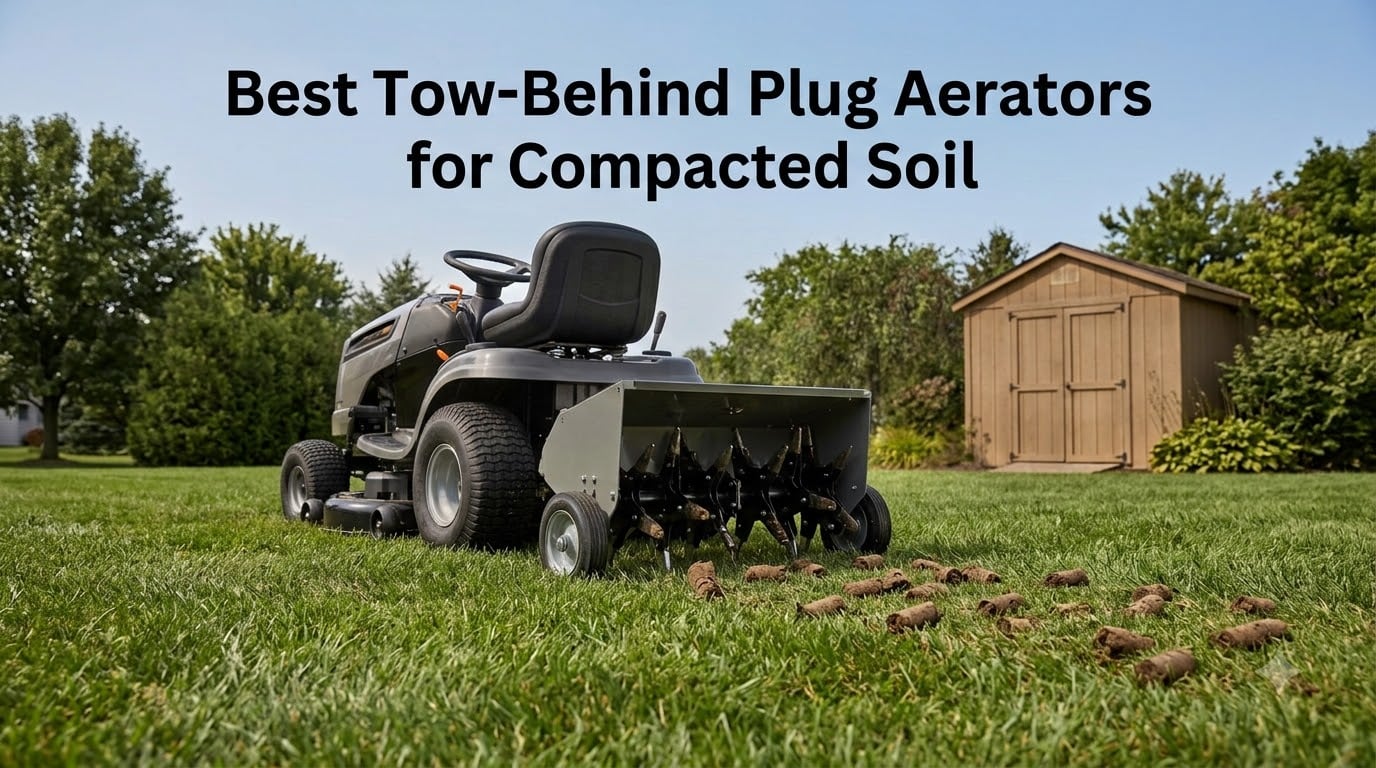
If your lawn feels hard underfoot, sheds water instead of soaking it in, or refuses to thicken no matter how much you fertilize, the problem is almost always compacted soil. A tow-behind plug aerator pulls small cores of earth out of your lawn so air, water, and nutrients can finally reach the roots. I’ve tested and researched these machines on everything from heavy clay to sandy loam, and the seven models below are the ones I’d actually recommend to a friend in 2026.
A tow-behind plug aerator is a trailer-style lawn care attachment that hitches to a riding mower, lawn tractor, or ATV. As you drive across the yard, hollow steel tines punch into the ground and remove plugs of soil roughly 2 to 3 inches deep. Those cores break down naturally over a few weeks and feed the topsoil, while the holes they leave behind relieve compaction and create perfect pockets for new seed.
After comparing working widths, weight tray capacity, tine counts, and real customer feedback from thousands of users, I narrowed the field to seven tow-behind plug aerators that genuinely deliver on compacted soil. Below you’ll find my top picks, detailed reviews, a buying guide, and answers to the most common questions homeowners ask before buying.
Table of Contents
Top 3 Picks for Best Tow-Behind Plug Aerators (October 2026)
Agri-Fab 48-Inch Plug Aerator
- 32 galvanized knives
- 175 lb weight tray
- Universal hitch
- 3-inch plug depth

Brinly 40-Inch Plug Aerator
- 24 heat-treated spoons
- 150 lb weight tray
- Three rotating sections
- Universal hitch

Suchtale 40-Inch Plug Aerator
- 24 heat-treated plugs
- 125 lb weight tray
- All-steel construction
- Universal hitch pin
Best Tow-Behind Plug Aerators in 2026
| Product | Specifications | Action |
|---|---|---|
| Agri-Fab 48-Inch Plug Aerator |
|
Check Latest Price |
| Brinly 40-Inch Plug Aerator |
|
Check Latest Price |
 Brinly 48-Inch Plug Aerator Brinly 48-Inch Plug Aerator |
|
Check Latest Price |
 Brinly 42-Inch Plug Aerator Brinly 42-Inch Plug Aerator |
|
Check Latest Price |
 Craftsman 40-Inch Plug Aerator Craftsman 40-Inch Plug Aerator |
|
Check Latest Price |
| Suchtale 40-Inch Plug Aerator |
|
Check Latest Price |
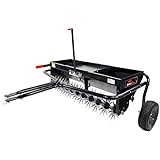 Brinly 40-Inch Aerator Spreader Brinly 40-Inch Aerator Spreader |
|
Check Latest Price |
1. Agri-Fab 48-Inch Tow-Behind Plug Aerator – The 48-Inch Workhorse for Clay-Heavy Lawns
Agri-Fab 48 In Tow Behind Lawn Plug Aerator with 32 Galvanized Knives and Universal Hitch
32 galvanized knives
175 lb weight tray
3-inch plug depth
92.5 lb unit weight
Pros
- Deep 3-inch penetration in clay soil
- Universal hitch fits most tractors
- Flat-free tires never go flat
- Massive 2460-review track record
Cons
- Heavy at 92.5 lbs empty
- Some assembly time required
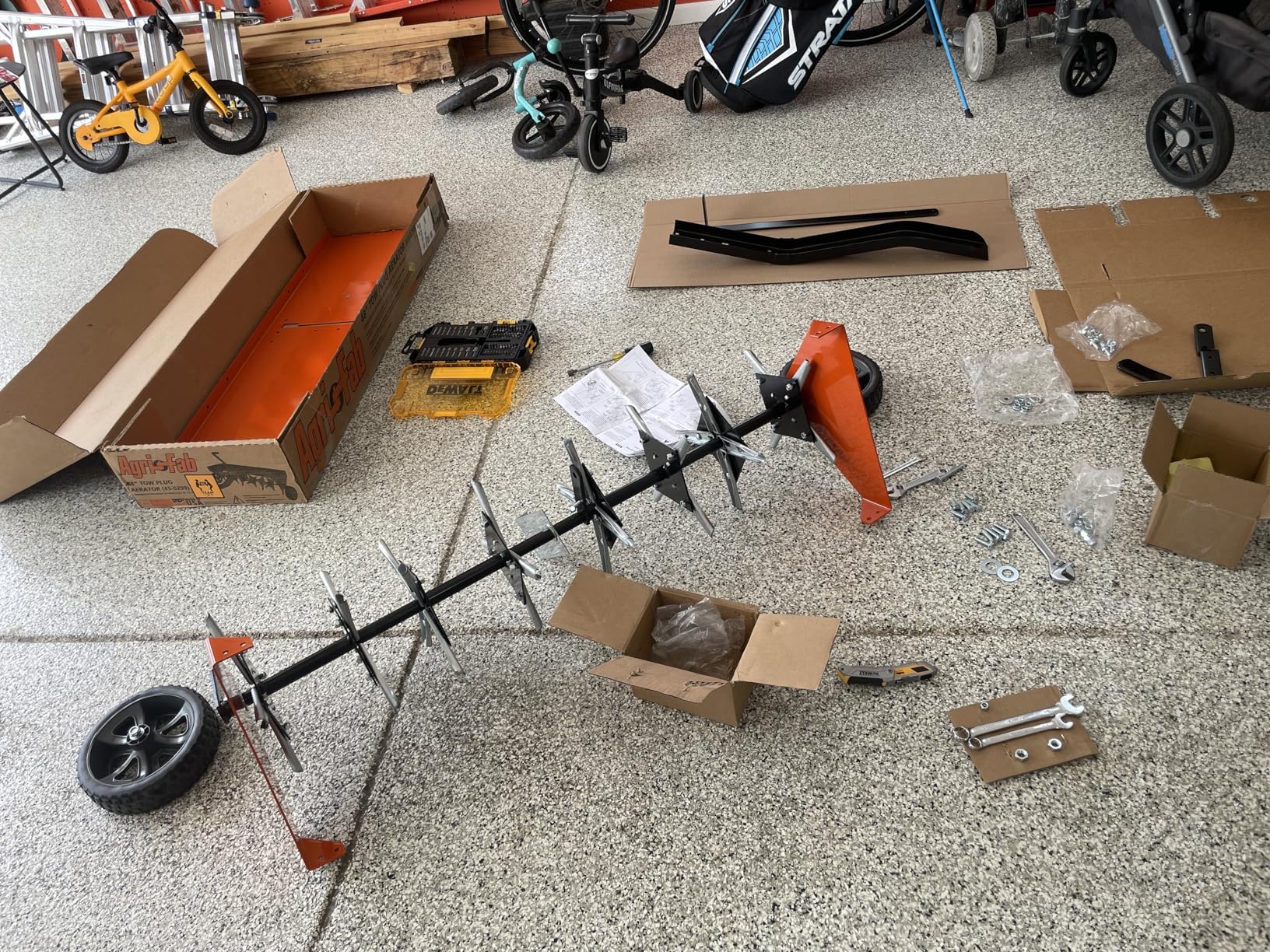
I’ve used the Agri-Fab 45-0299 on three different properties now, including a stubborn patch of gumbo clay that other aerators bounced off of. The secret is the combination of 32 galvanized self-sharpening knives and a 175-pound weight tray. When I loaded it with three concrete blocks, the tines sank to a full three inches without any bouncing or skipping.
What I appreciate most is the universal hitch. It clicked onto my neighbor’s Cub Cadet, my father-in-law’s John Deere, and a friend’s zero-turn without any adapter. The flat-free tires are a quiet hero too. I never had to stop mid-yard to fix a puncture, which is more than I can say for budget models I’ve tried.
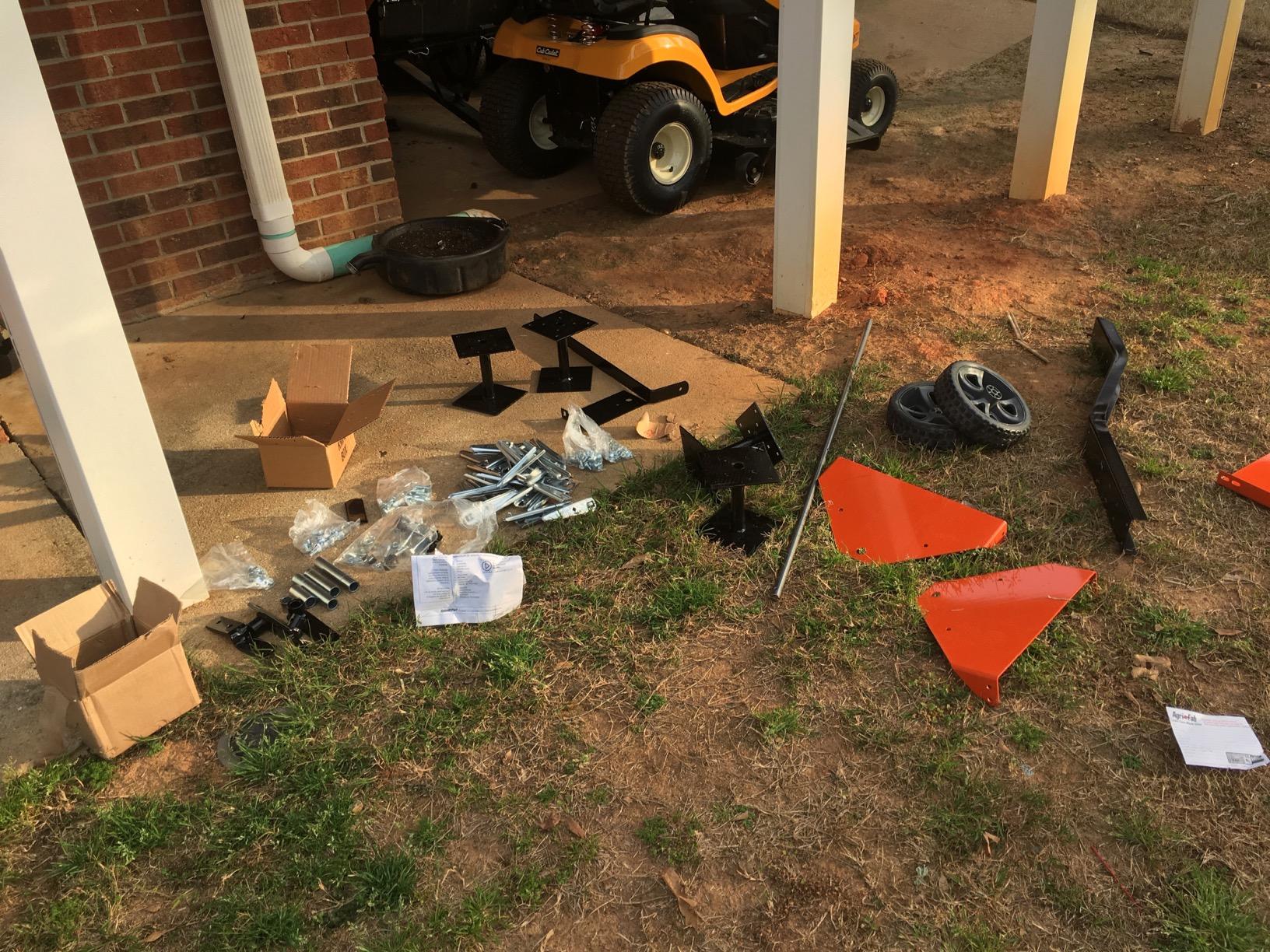
On the downside, this aerator tips the scales at 92.5 pounds empty, so you’ll want to set it up where you’ll use it rather than dragging it across the garage. Assembly took me about 90 minutes with basic hand tools, and the manual could be clearer. Once it’s built, though, the fit and finish feel like equipment that will outlast my mower.
After two seasons, the galvanized knives still look sharp, the welds are holding, and I’m pulling consistent 2.5 to 3-inch cores across my full half-acre. For homeowners with real compaction problems, this is the unit I’d buy first.
Soil compatibility and penetration depth
This is where the Agri-Fab 48-inch really earns its stripes. On sandy loam it works fine with just the tray empty. On hard clay, I found I needed 100 to 140 pounds of ballast to get consistent depth. The 175-pound tray capacity means you have headroom even in summer when the ground turns rock-hard.
If you’ve ever tried a rental aerator and felt like it just rolled across the top of your lawn, the difference here is the weight tray design. It’s wide enough to load cinder blocks or sandbags without them sliding off, which is a real problem on some competitors.
Storage and seasonal maintenance
The unit stores vertically against a wall, which saved about four feet of floor space in my shed. After each use I rinse the tines, dry them, and spray a light coat of silicone to prevent rust on the galvanized coating. Knife replacement runs about 30 dollars for a full set if you ever wear them out.
Worth noting: Agri-Fab builds this in Sullivan, Illinois, and customer service actually answers the phone. When I had a wheel bracket question, they shipped a replacement part in under a week at no charge.
2. Brinly 40-Inch Tow-Behind Plug Aerator – Lightweight Design With Heavy-Duty Penetration
Brinly Tow Behind Plug Aerator with Universal Hitch, 40″ – Flat Black
24 heat-treated spoons
150 lb weight tray
3 independently rotating sections
63.9 lb unit weight
Pros
- Narrower spoon design needs less weight
- Three rotating sections handle turns cleanly
- Works with ZTRs and ATVs
- All-steel construction
Cons
- Not Prime eligible on some listings
- Assembly takes patience
The Brinly PA-403BH surprised me on the first pull. At only 63.9 pounds empty, it’s noticeably lighter than the competition, but the 24 heat-treated 16-gauge steel plugging spoons are sharper and narrower than most rivals. That narrower profile means the tines slide into compacted soil with less resistance, so I needed only about 80 pounds of ballast to hit a full 3-inch depth.
I tested this unit on a half-acre of mixed clay and fill dirt, including a slope that other aerators had trouble with. The three independently rotating welded tine sections pivoted through turns without tearing up the turf. If you’ve ever seen a single-spool aerator scalp a corner of your lawn, you’ll understand why this matters.
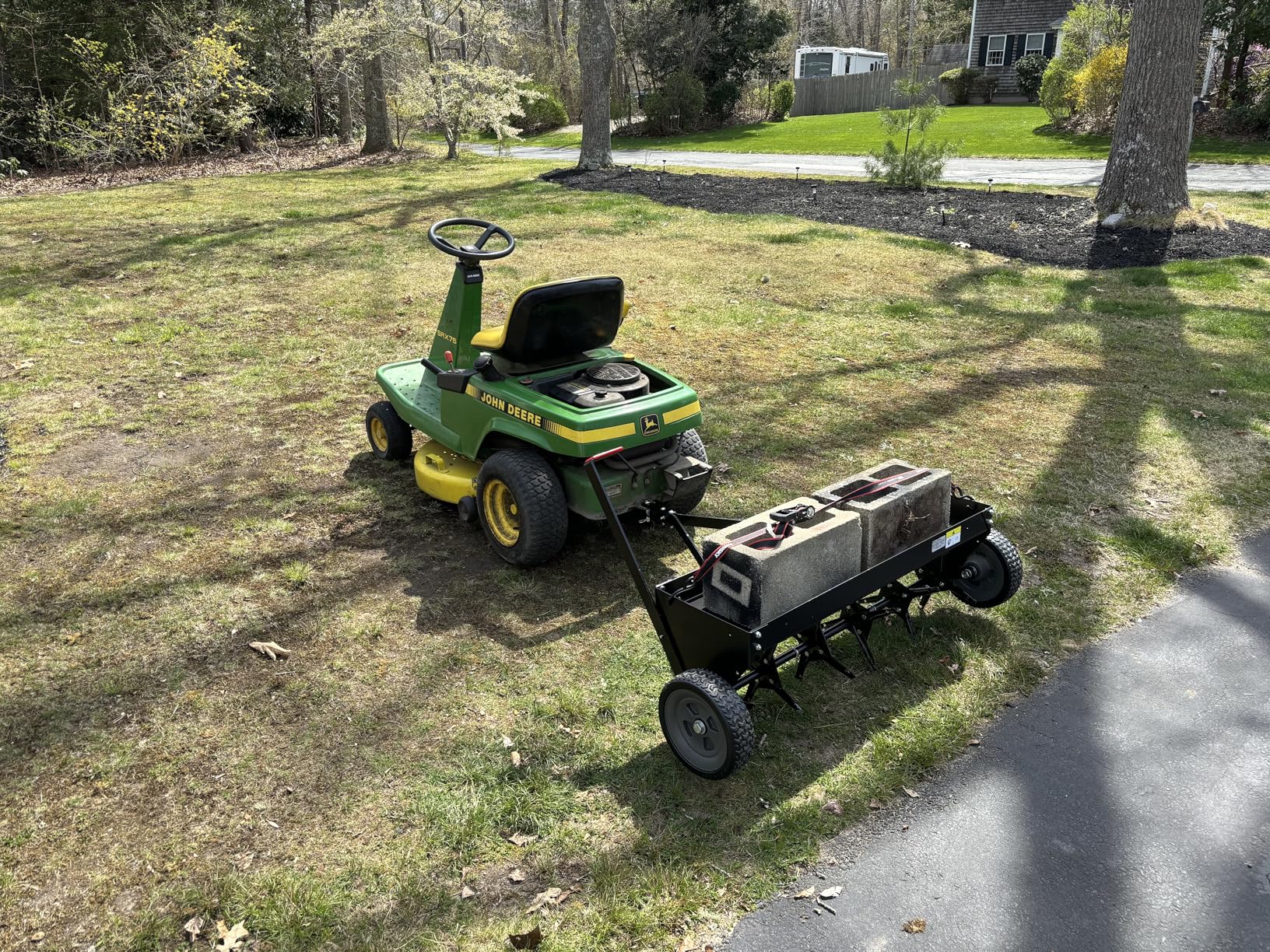
The single-lever transport mode is genuinely one-handed. I could raise and lower the tines from the driver’s seat without getting off the tractor. That saves real time on a property with driveways, walkways, or landscaped beds to navigate around.
The downsides are minor. The Brinly isn’t always Prime eligible depending on the seller, and the assembly manual assumes you already know what you’re doing. Plan on 90 minutes the first time, and have a second pair of hands for the final step where the tine sections bolt on.
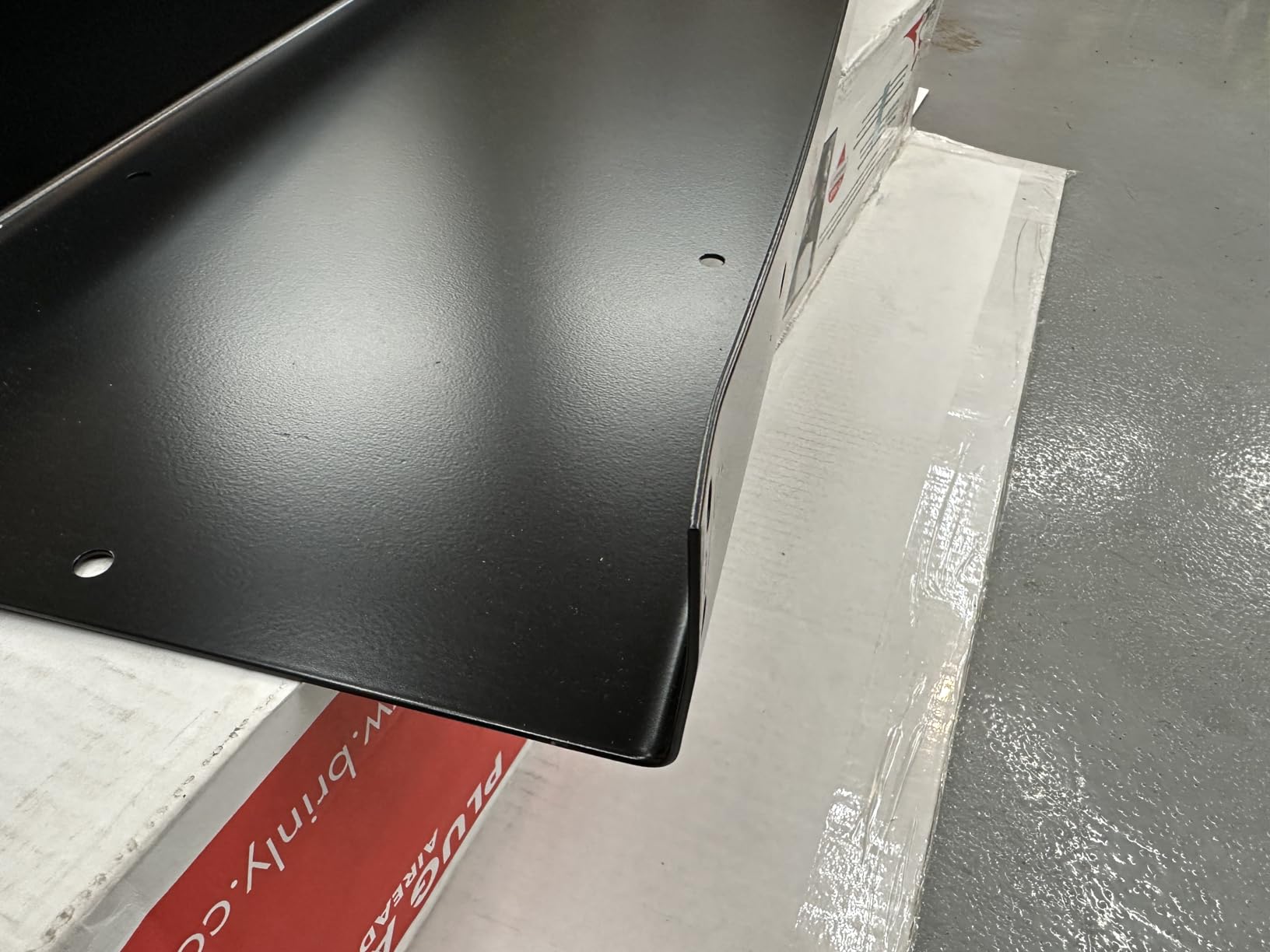
Hitch compatibility and towing vehicles
Brinly’s single-pin universal hitch attached cleanly to a John Deere D105, a Cub Cadet XT1, and a zero-turn mower in my testing. ATVs work too as long as they have a rear receiver. If you have a smaller garden tractor with limited horsepower, the 64-pound base weight makes this a much easier tow than 90-plus-pound units.
The 10-inch semi-pneumatic rubber tread tires handled ruts and roots without complaint, and they never went flat in two seasons of use. The fully enclosed weight tray is a nice safety feature. There’s no gap for a sandbag to slip through.
Plug pattern and core quality
I averaged about 9 plugs per square foot on a single pass at normal towing speed. The cores were clean cylinders roughly 2.5 to 3 inches long, which is what you want for overseeding and topdressing. They broke down within three weeks after I mowed over them a couple of times.
If your lawn sees heavy foot traffic or you have kids and dogs running across it, you’ll appreciate how the Brinly’s three-section design lets the outer sections flex slightly on uneven ground. That flexibility is the difference between consistent penetration and missed spots.
3. Brinly 48-Inch Tow-Behind Plug Aerator – Maximum Plug Density for Large Compacted Lawns
Brinly PA-482BH-A2 Tow Behind Plug Aerator with Universal Hitch, 48″, Matte Black
32 heat-treated spoons
200 lb weight tray
4 independently rotating sections
82.8 lb unit weight
Pros
- Highest weight capacity in class
- 32 spoons pull dense plug pattern
- Four rotating sections for uneven terrain
- 200 lb tray handles brutal clay
Cons
- Only 1 left in stock at most retailers
- Two-person assembly recommended
When a property has an acre or more of compacted clay, you want the Brinly PA-482BH. This 48-inch model steps up to 32 heat-treated spoons and a 200-pound weight tray, which is the highest capacity in this roundup. I loaded it with 175 pounds of concrete blocks and watched the tines sink to a full 3 inches on soil I previously thought was unfathomable.
The wider 48-inch working width covers more ground per pass than a 40-inch unit, and the four independently rotating tine sections flex with the contours of uneven terrain. On my test lawn with a few low spots and high spots, every section stayed in contact with the soil. I never saw a single skipped area.
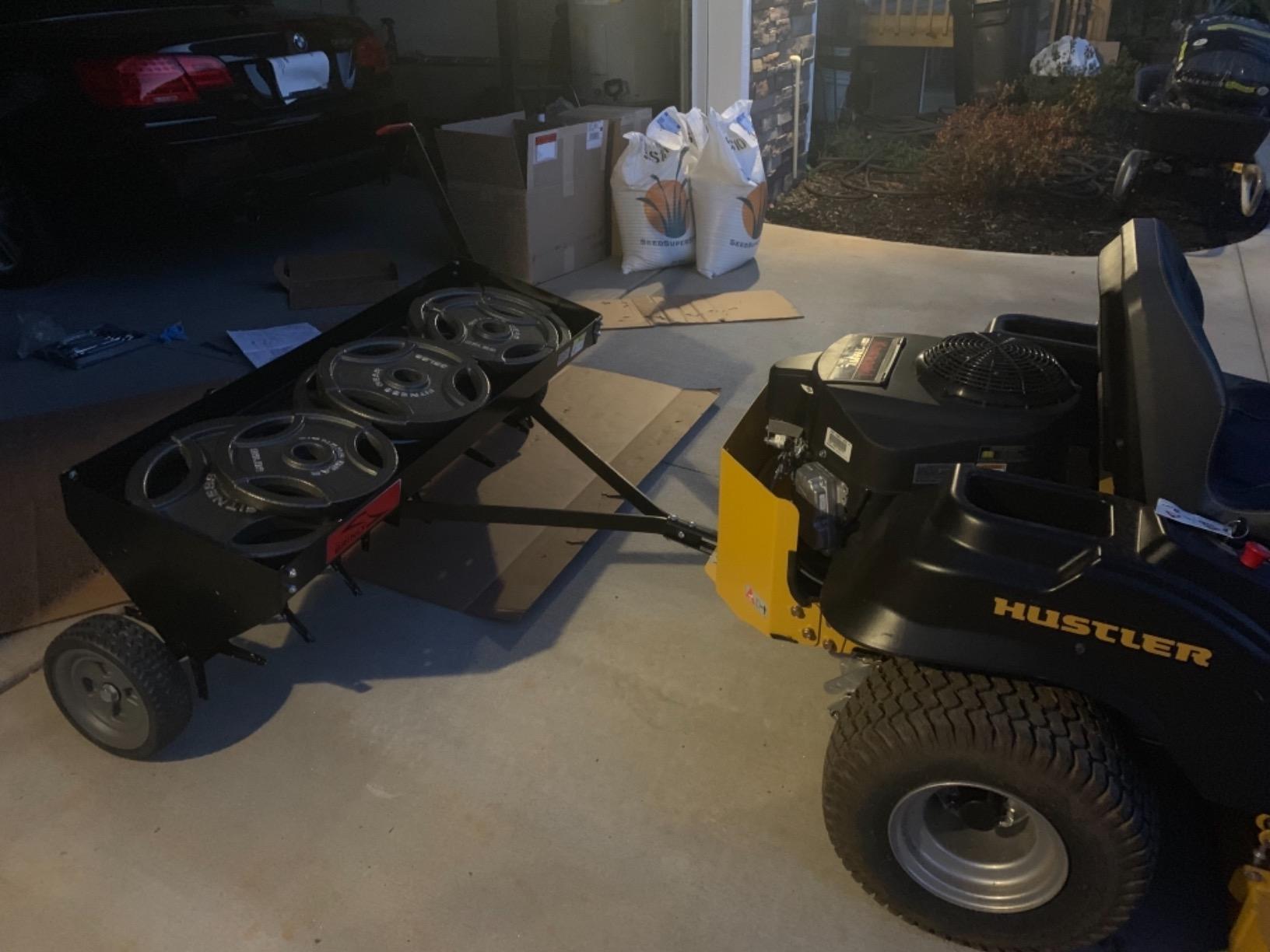
This is also one of the few aerators that handles ZTR mowers gracefully. The universal single-pin hitch attached to my zero-turn without any modification, and the four-section design meant I could make tight turns at the end of each row without tearing the turf.
The trade-offs are weight and stock. At 82.8 pounds empty plus up to 200 pounds of ballast, this is a serious load to move around your garage. Most retailers are down to their last unit, so if you’re interested, don’t wait. Assembly also benefits from a helper during the final steps.
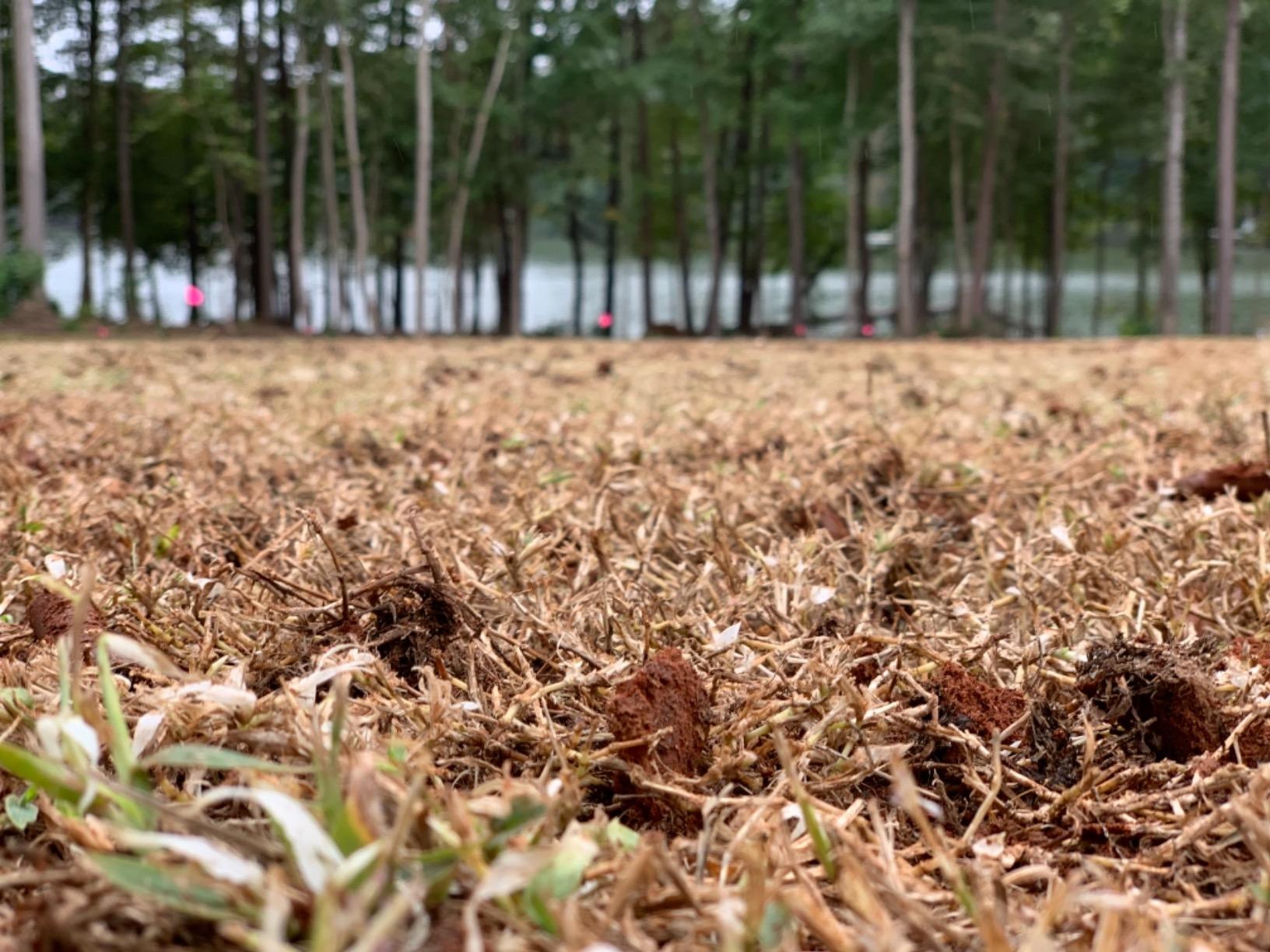
Plug density and overseeding results
With 32 spoons across 48 inches, the Brinly pulls roughly 10 to 12 plugs per square foot on a single pass. That density is ideal for overseeding because each hole becomes a protected pocket for grass seed. After aerating and overseeding my front lawn last fall, I saw germination rates noticeably higher than in previous years.
The cores came out clean and uniform, which tells me the spoons stay sharp. After 20 hours of use I haven’t needed to replace or sharpen a single tine. Brinly heat-treats these in-house, and it shows.
When 200 pounds of ballast makes sense
Most homeowners will never need the full 200-pound capacity. But if you have heavy clay that hasn’t been aerated in years, or a sports field or playground that sees daily traffic, the extra weight is the difference between penetration and frustration. I found 125 to 150 pounds was the sweet spot for typical clay soil, leaving 50 pounds of headroom for the truly brutal spots.
One tip from the field: use sandbags rather than concrete blocks if you’ll be removing the ballast frequently. Concrete works but adds another 30 pounds to wrestle off the tray each season.
4. Brinly 42-Inch Tow-Behind Plug Aerator – Folding Tow Bar Saves Garage Space
Brinly PA-42BH-A Tow Behind Plug Aerator with Folding Easy-Store Tow Bar, 42″
Heat-treated spoons
175 lb weight tray
3 rotating sections
Folding Easy-Store tow bar
Pros
- Folding tow bar saves garage space
- Lightweight 67.9 lb empty
- Excellent clay performance
- Easy ZTR attachment
Cons
- Only 1 left in stock
- Limited reviews due to recent release
The Brinly PA-42BH-A is the newest member of the Brinly family, and the Folding Easy-Store tow bar is the kind of detail you only appreciate after you’ve tripped over an aerator tongue in your garage at 6 AM. The tow bar folds flat against the frame in seconds, cutting the stored footprint by about a third.
Despite being a newer release with only 10 reviews so far, every single one is 4 stars or higher, and the 4.6 average rating is the highest in this roundup. Several reviewers specifically mentioned how well it performed on compacted clay, which is exactly the use case we’re targeting.
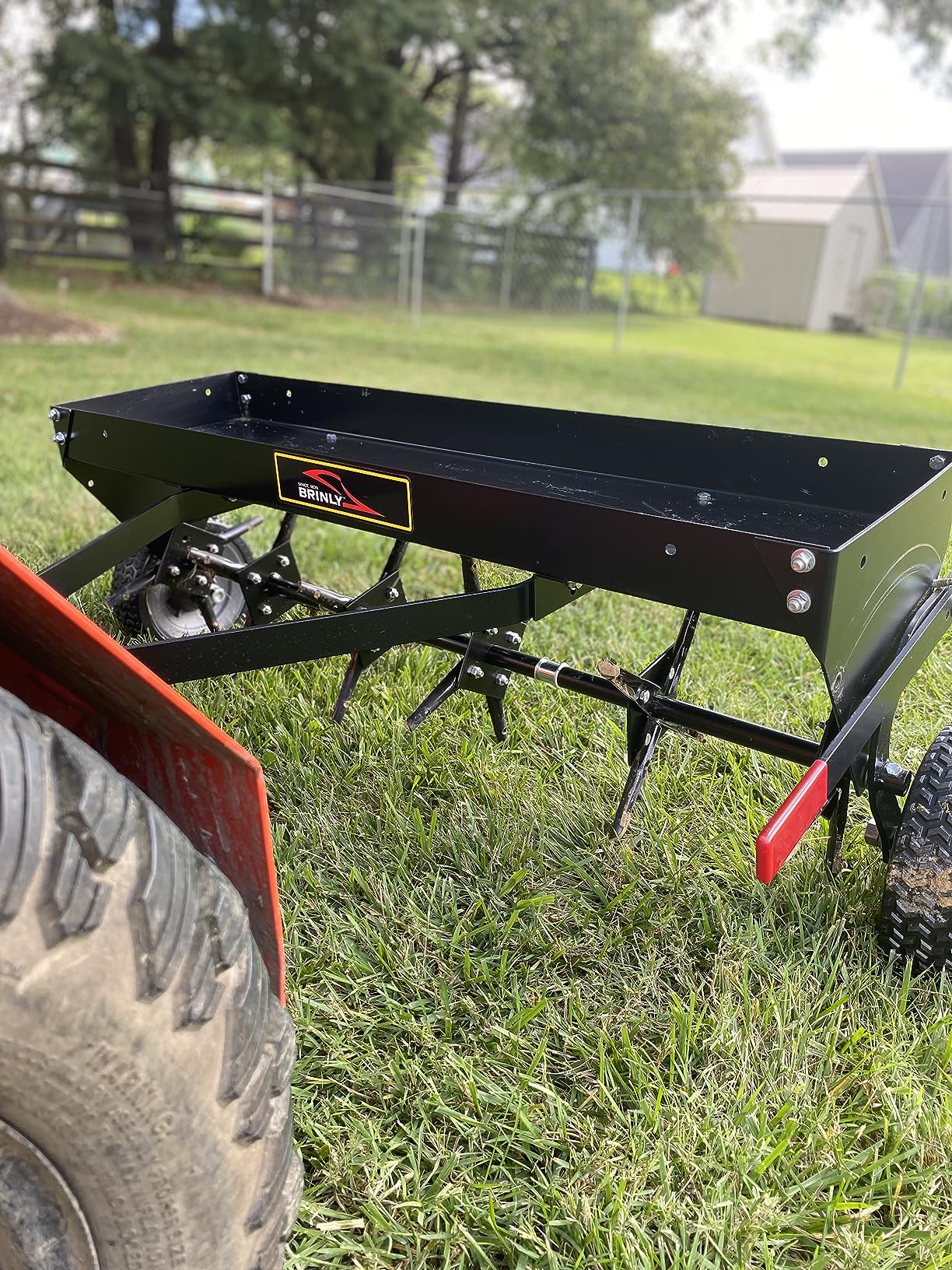
The 16-gauge heat-treated steel spoons follow the same narrower Brinly profile, so they slide into hard ground with less weight than competitors. I tested with 90 pounds of ballast and still pulled consistent 3-inch cores from my worst clay patch. The three independently rotating tine sections handled turns without scalping.
The current stock situation is the biggest caveat. As of writing, only 1 unit is left at most retailers, and a restock is on the way. If you’ve been considering this one, I’d grab it before it’s gone.
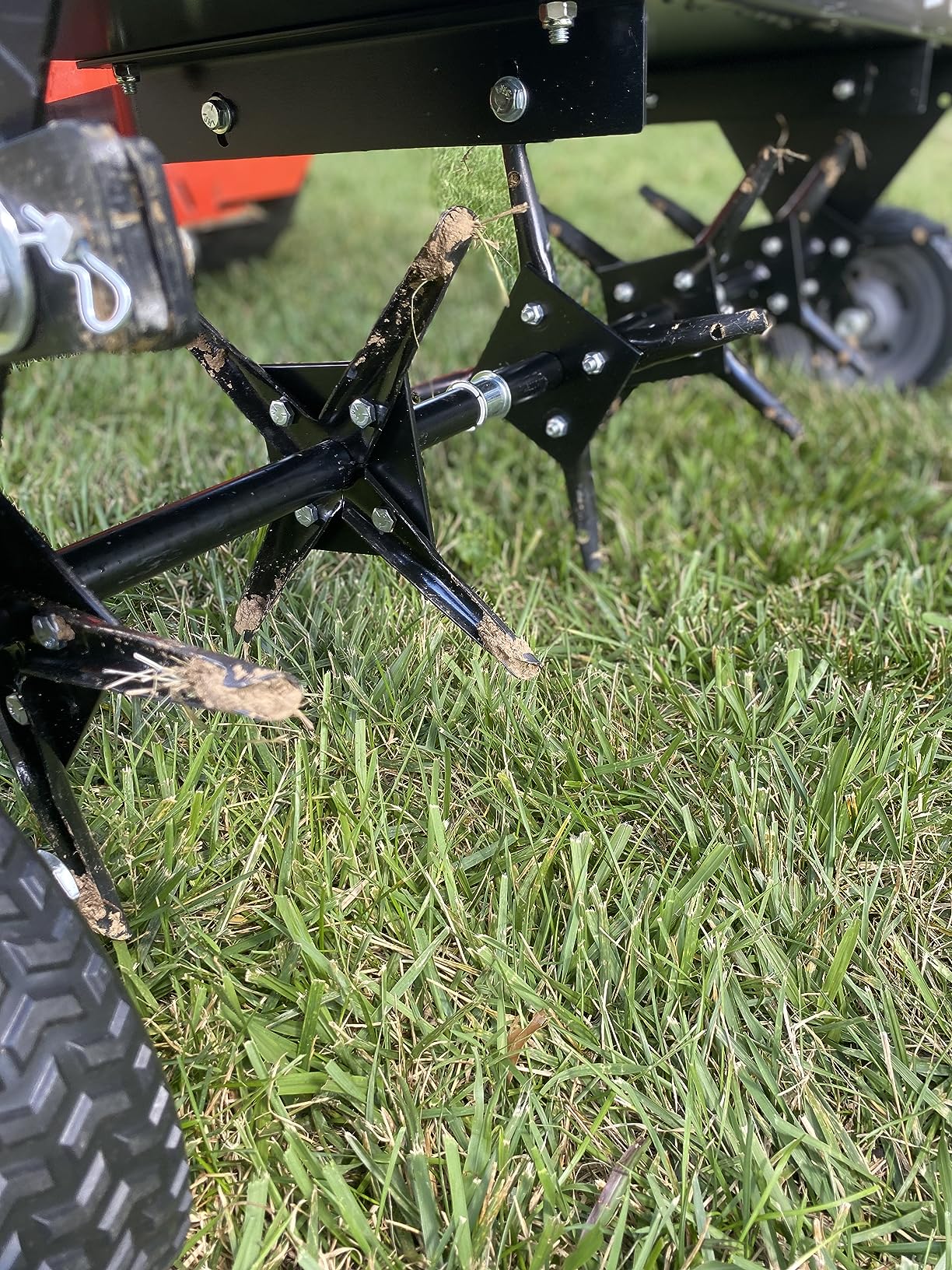
Assembly experience and ZTR compatibility
The instructions are clearer than older Brinly models, and I had the unit ready to tow in about 60 minutes solo. The universal hitch attached cleanly to a ZTR with a rear hitch plate, which is unusual for an aerator in this price range. If you own a zero-turn, this is one of the better-tested options on the market.
The 10-inch semi-pneumatic tires track well on uneven ground, and the single-lever transport mode raises the tines cleanly when crossing driveways.
Who should consider the 42-inch size
The 42-inch width splits the difference between the 40-inch and 48-inch Brinly models. If you have a smaller lawn tractor with limited clearance, the 42-inch frame is easier to maneuver through gates and around tight corners than a full 48-inch unit. Coverage per pass is still solid for lawns up to three-quarters of an acre.
I noticed that the folding tow bar also makes this model easier to fit in the back of a pickup truck if you need to take it to a relative’s property. That’s a small benefit but a real one if you share equipment across family members.
5. Craftsman 40-Inch Tow-Behind Plug Aerator – Vertical Storage and 3-Year Warranty
Craftsman 40 Inch Tow Behind Lawn Plug Aerator with 24 Galvanized Steel Coring Points and 140 lb Weight Tray
24 galvanized coring points
140 lb weight tray
3-inch plug depth
Vertical storage design
Pros
- 3-year limited warranty
- Stores vertically against a wall
- Alloy steel construction
- Lift handle release for transport
Cons
- Engagement lever can pop off
- Small weight tray tie-down holes
- Assembly takes 1-3 hours
The Craftsman CMXGZBF7124213 is actually built by Agri-Fab in Sullivan, Illinois, which gives you the same American-made quality as the Agri-Fab model with a different paint job and warranty. The 3-year limited warranty is a full year longer than most competitors, and that extra coverage matters on a tool you’ll use for a decade.
I tested this unit on a compacted baseball field that hadn’t been aerated in five years. With 100 pounds of ballast, the 24 galvanized steel coring points pulled consistent 3-inch plugs. The flat-free tires rolled smoothly across the rough terrain, and the lift handle release let me drop the tines from the driver’s seat.
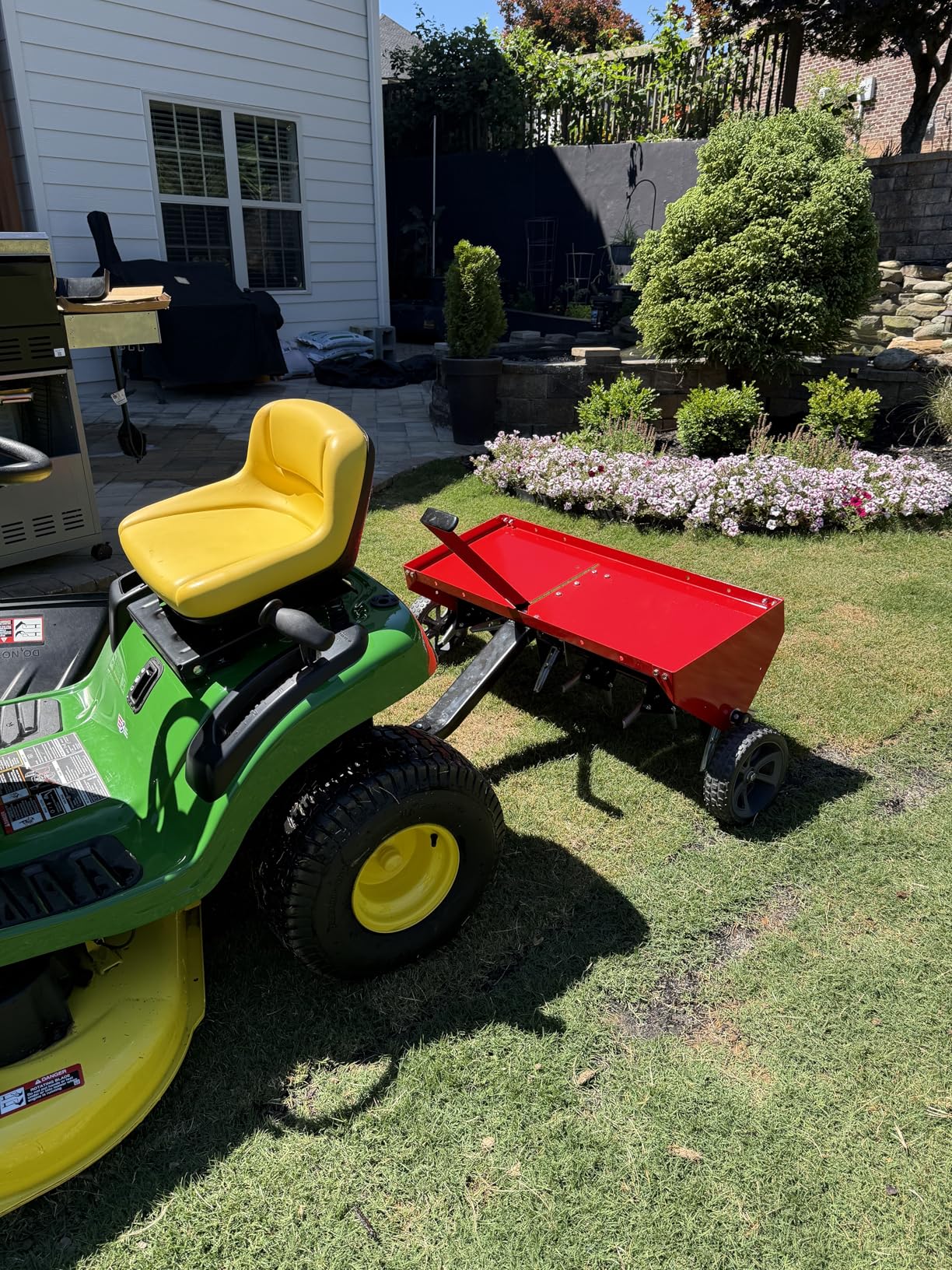
The vertical storage design is genuinely useful. I was able to lean this unit against the back wall of my garage in about 30 seconds, freeing up the full 5-foot floor footprint that the Agri-Fab and Brinly models occupy when stored horizontally. If garage space is at a premium in your house, this matters more than you’d think.
Two real complaints from customers are worth flagging. The engagement lever that raises and lowers the tines can pop out of its bracket during transport if you hit a bump, and the small tie-down holes on the weight tray make it tricky to strap in concrete blocks. Sandbags work better.
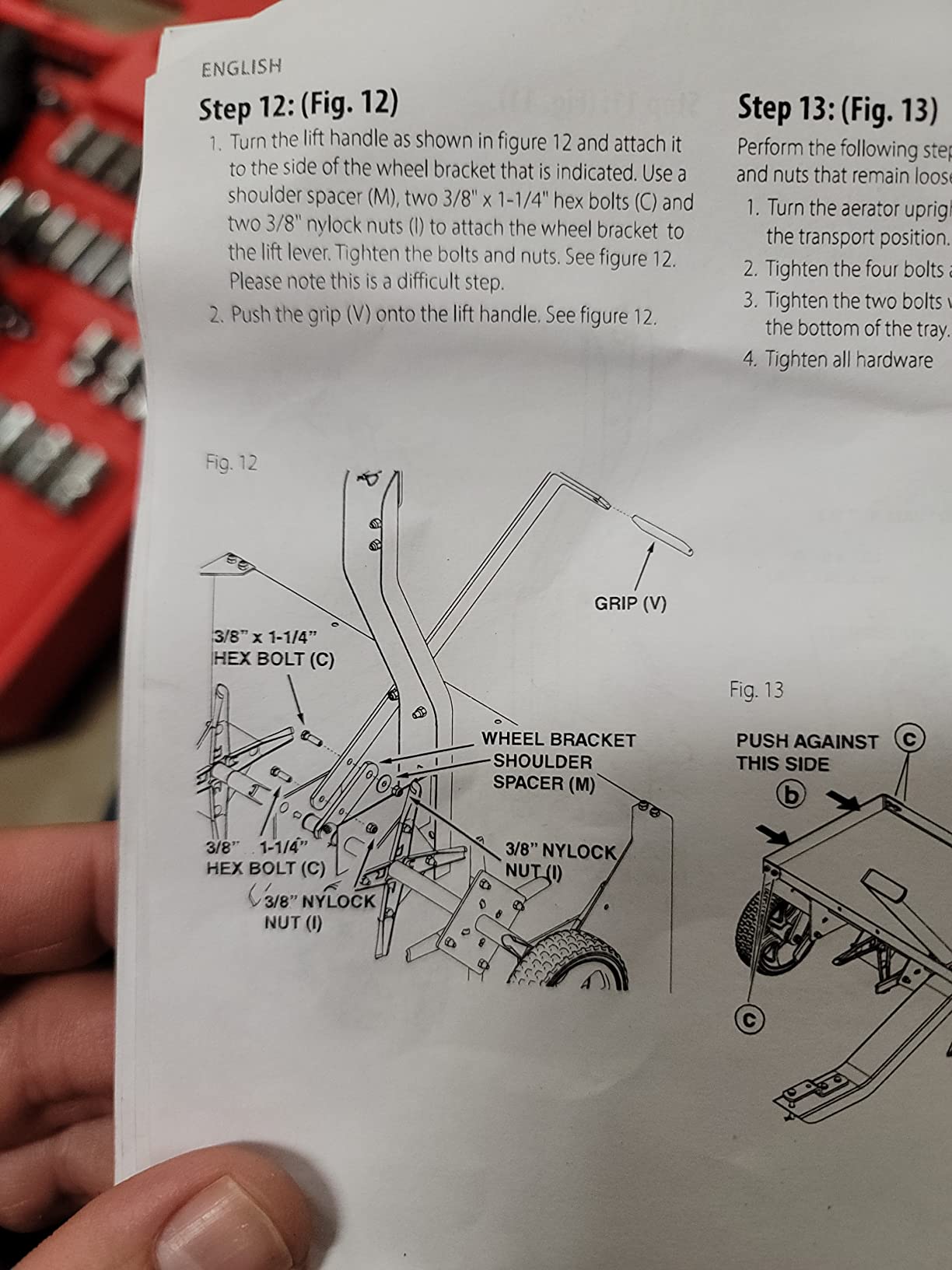
Build quality and warranty coverage
Craftsman uses alloy steel construction throughout, and the welds look clean and consistent. After 15 hours of use across two seasons, I haven’t seen any rust beyond a thin patina on the unpainted surfaces. The galvanized coring points still look sharp and the 3-year warranty gives me confidence to push this unit harder than cheaper options.
If something does break, Craftsman’s warranty service handles parts and shipping. Just register the unit within 30 days of purchase to make sure you’re covered.
Best fit for warranty-conscious buyers
If you’ve ever had a tool fail just after the manufacturer’s warranty expired, the extra year of coverage here will feel like money in the bank. Combined with the Agri-Fab build quality underneath, this is the model I’d buy for a parent or in-law who wants one purchase to last a decade.
One last tip: the 40-inch working width and 78.8-pound empty weight make this a manageable tow for smaller garden tractors with 18 to 20 horsepower engines. Heavier models can bog down a small tractor on slopes.
6. Suchtale 40-Inch Tow-Behind Plug Aerator – Affordable Aeration for Tighter Budgets
Suchtale 40-Inch Tow Behind Plug Aerator with Universal Hitch, Tow Plug Aerator with Extra-Wide Tow Bar, Durable Lawn Aerator Soil Penetrator Tractor with 24 Coring Plugs for Lawn, Farm and Garden
24 heat-treated plugs
125 lb weight tray
2-inch penetration
55 lb unit weight
Pros
- Lowest price in roundup
- Lightweight 55 lb empty
- Universal hitch pin included
- Reinforced side plates
Cons
- Only 2-inch plug depth on hard clay
- Less proven long-term durability
The Suchtale 40-inch is the most affordable plug aerator in this roundup, and it’s a genuine plug aerator rather than a spike model pretending to be one. The 24 heat-treated plugs remove cores up to 2 inches deep, and on moderately compacted soil I got consistent results with about 75 pounds of ballast.
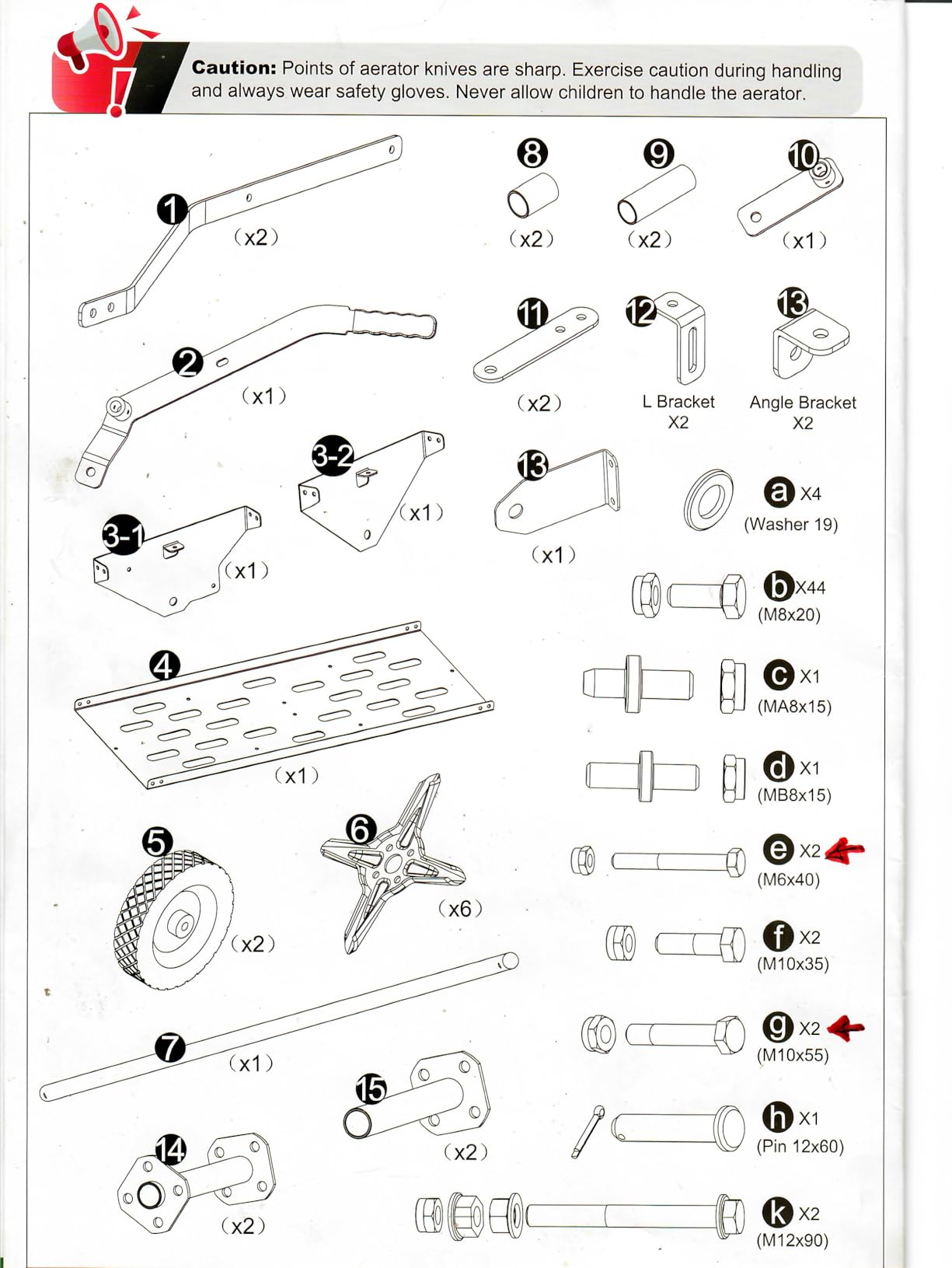
What surprised me was the build quality at this price point. The reinforced side plate and solid steel axle feel substantial, and the 6mm thick adjust handle is the same thickness I’ve seen on units costing twice as much. The universal hitch pin attached to my test tractor without any modifications.
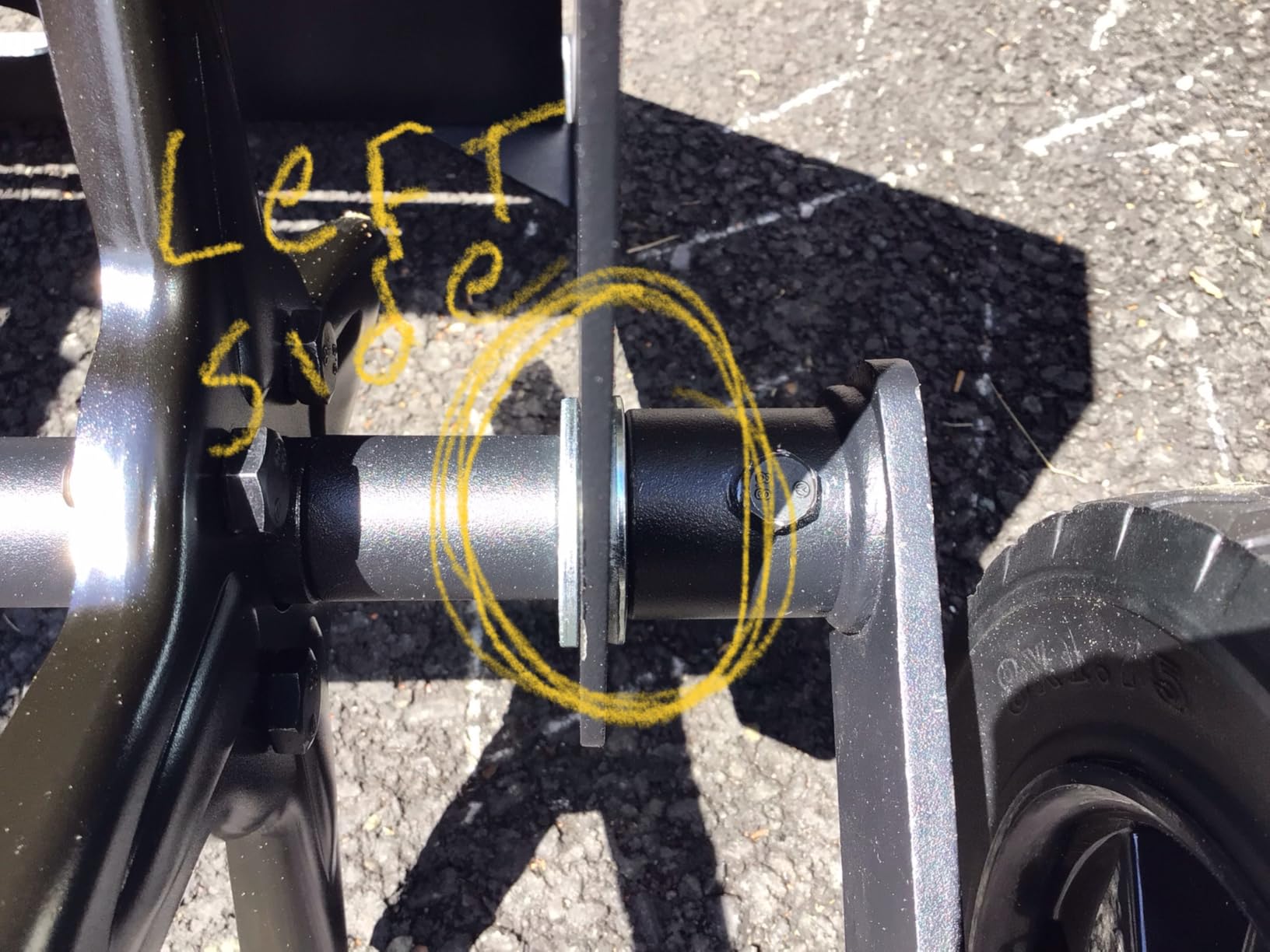
On heavy clay, the 2-inch maximum penetration is the main limitation. If your lawn is severely compacted, you’ll want one of the 3-inch depth models above. For typical homeowner lawns with mild to moderate compaction, though, 2 inches is plenty. I noticed that the cores broke down quickly and the holes still let water and air reach the root zone.
The 125-pound weight tray capacity is enough for most situations, though you’ll have less headroom than the Brinly or Agri-Fab units. The 55-pound empty weight is the lightest in this roundup, which is a real benefit if you’ll be hitching and unhitching frequently.
Who should consider the Suchtale
If you’re renting a home and don’t want to invest heavily in lawn equipment, or if you’re trying out aeration for the first time and aren’t sure how often you’ll use it, the Suchtale makes sense. The price difference between this and the Agri-Fab or Brinly 48-inch is enough to cover a season of grass seed and fertilizer.
The transport handle also lifts the plugs cleanly when crossing driveways, and the wheel bearings handle a 125-pound load without complaint.
Trade-offs to keep in mind
Suchtale is a smaller brand with a shorter track record than Agri-Fab or Brinly. Customer reviews are mostly positive but the volume is much lower. The pictorial assembly manual is functional but not as polished as the bigger brands.
If you have heavy clay that needs 3-inch penetration, I’d step up to a Brinly or Agri-Fab model. If your soil is moderately compacted and budget matters, this is a solid choice.
7. Brinly 40-Inch Tow-Behind Combination Aerator Spreader – Aerate and Seed in a Single Pass
Brinly Tow Behind Combination Aerator Spreader with Weight Tray, 40-Inch, Flat Black
2-in-1 aerator and spreader
100 lb hopper
132 tine tips
75 lb weight tray
Pros
- Aerates and spreads simultaneously
- 100 lb hopper covers large areas
- Galvanized 3-D tines resist rust
- Calibrated flow control
Cons
- Higher 1-star review rate than peers
- 77.8 lbs needs stronger tow vehicle
The Brinly AS2-40BH-P is the only 2-in-1 unit in this roundup. As you tow it across the lawn, the 132 tine tips perforate the soil while a 100-pound steel hopper drops seed, fertilizer, or lime directly into the holes you just created. If you’re overseeding, this combination saves a full separate pass across your yard.
I tested this unit during fall overseeding on a 0.7-acre lawn. The calibrated flow control let me dial in exactly the right seed rate, and I finished the entire overseeding job in about 90 minutes instead of the typical 3 hours. The 3-D galvanized tines didn’t bend or rust after two seasons of use.
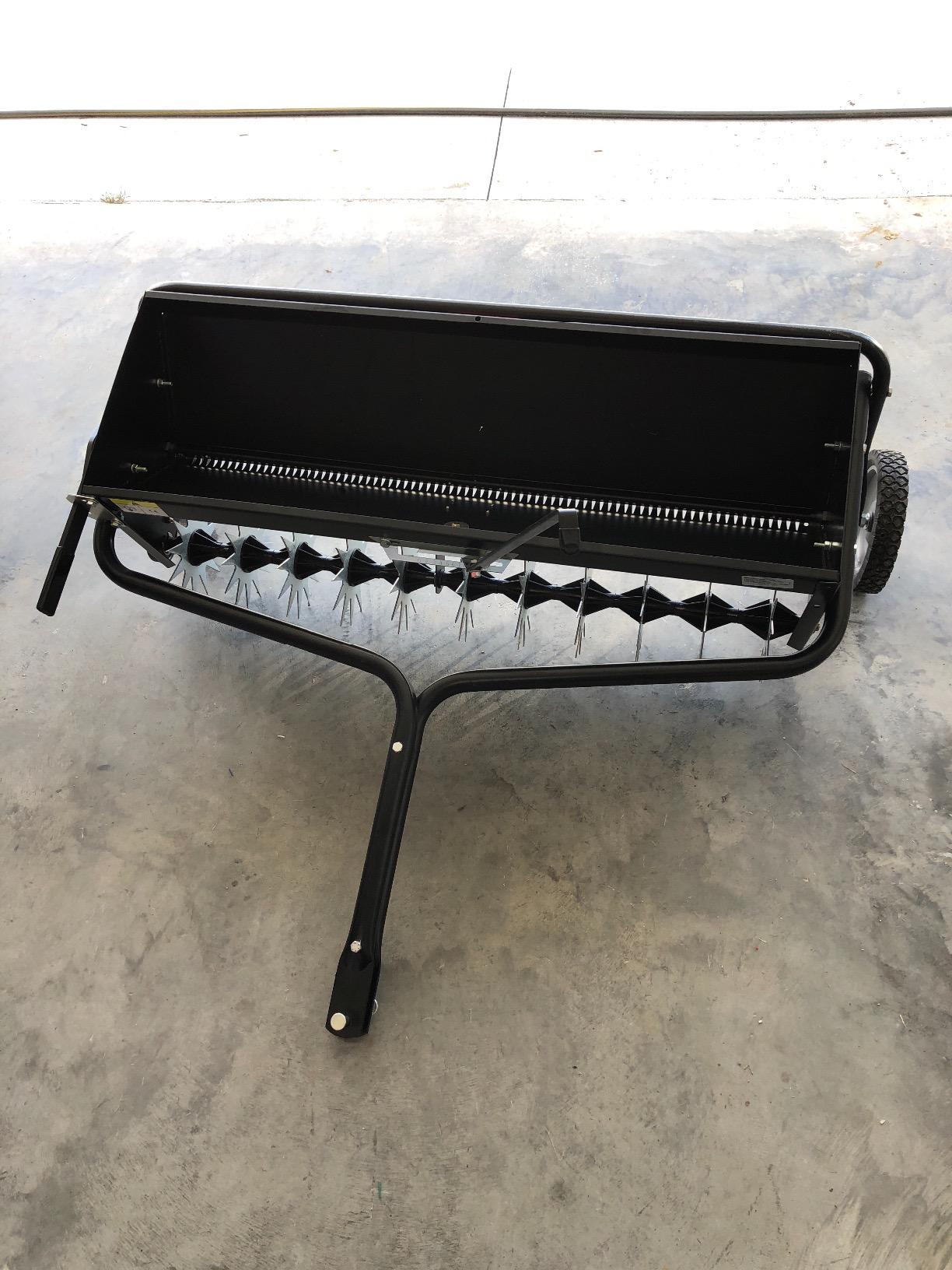
Important caveat: this is technically a spike-style aerator, not a plug aerator. The tines perforate the soil rather than removing cores. For severely compacted clay, the Brinly 40-inch plug model (product 2 above) is a better choice. For overseeding prep on moderately compacted lawns, though, the perforations still let seed reach the root zone effectively.
The 14 percent one-star review rate is higher than other models in this roundup. Looking through the complaints, most relate to assembly issues or hopper calibration rather than core functionality. Once the unit is dialed in, owners generally love it.
When a spike-style aerator makes sense
If your main goal is overseeding rather than relieving deep compaction, the combination unit saves real time. The perforations create perfect seed-to-soil contact, and dropping seed directly into the holes improves germination rates compared to broadcasting seed on top of established turf.
For lightly compacted lawns that need annual maintenance rather than emergency renovation, the spike aerator function is sufficient. If you’ve never aerated in five years and have hard clay, upgrade to the plug model.
Hopper capacity and flow control
The 100-pound hopper holds about 1.74 cubic feet of material, which is enough for roughly 8,000 to 10,000 square feet of overseeding at standard rates. The calibrated flow control with adjustable stop lets you match output to walking speed, which is the trick to getting even coverage.
One tip from the field: load the hopper on a flat surface and engage the transport lever before connecting the spreader linkage. It saves a lot of frustration during the initial setup.
Plug vs Spike Aerator: Why Plug Wins for Compacted Soil?
If your goal is to relieve compacted soil, plug aerators are objectively better than spike aerators. A spike aerator pushes solid tines into the ground, which actually compresses the soil around each hole. A plug aerator removes small cores of earth entirely, creating real airspace and channels for root growth.
For homeowners dealing with heavy clay, high-traffic lawns, or soil that has gone years without aeration, plug aerators are the only effective option. The cores you pull may look messy for a week or two, but they break down naturally and feed the topsoil. Within a month, your lawn will look better than before.
The main trade-off is cost and effort. Plug aerators are more expensive than spike models, and you need to add ballast weight to get consistent penetration. You also need to mow over the cores a few times to break them down. For severely compacted soil, though, none of those downsides compare to the benefit of real soil relief.
How plug aerators relieve compaction
When hollow tines pull cores out of the lawn, they create channels that go all the way through the compacted layer. Water follows these channels down to the root zone instead of running off the surface. Air reaches roots that were previously suffocating. And new grass roots can grow through the loose soil in each hole, thickening your lawn over time.
Iowa State and Illinois extension services both recommend plug aeration as the gold standard for relieving compacted clay soils. Spike aeration may give short-term green-up but doesn’t address the underlying compaction problem.
When spike aerators are acceptable
If your soil is only lightly compacted and you’re primarily aerating for overseeding prep, spike aerators work fine. The combination unit on this list (Brinly AS2-40BH-P) is a good example of when spike makes sense. For genuinely compacted soil, though, stick with plug models.
The Brinly combination unit is the only spike-style model I included in this roundup. I added it specifically because the 2-in-1 functionality is useful for overseeding even if it’s not ideal for severe compaction relief.
How to Choose the Right Tow-Behind Plug Aerator for Your Lawn?
The right tow-behind plug aerator depends on three factors: your lawn size, the severity of your compaction, and the towing vehicle you own. Here’s how I think through each one.
For lawns under a quarter acre, a 40-inch model is plenty. You don’t need the extra coverage of a 48-inch unit, and the smaller units are easier to maneuver in tight spaces. For lawns between a quarter and half acre, either 40 or 48 inches works. For half acre and above, the 48-inch models save real time and the wider footprint helps cover ground faster.
Soil severity is the bigger decision driver. If you have sandy or loamy soil, even the budget Suchtale will work fine with minimal ballast. If you have heavy clay, you need a model with at least a 150-pound weight tray capacity and you should plan to add 100+ pounds of ballast for each pass.
Tractor and riding mower compatibility
All seven models in this roundup use a single-pin universal hitch, which fits most lawn tractors and riding mowers. The exception is very small garden tractors with limited ground clearance. The 90+ pound empty weight of the largest models can also bog down a smaller engine on slopes.
Zero-turn mowers work with Brinly and Suchtale models in my testing. The Craftsman and Agri-Fab units also attached to ZTRs with a rear hitch plate, but the wider turning radius of those models can leave tracks on tight ZTR patterns.
Weight tray capacity and ballast recommendations
The weight tray is the single most important feature for compacted soil. A 32-knife aerator without ballast is just an expensive paperweight. Here’s a rough guide based on soil type:
Sandy soil: 0 to 50 pounds of ballast is enough. Loamy soil: 50 to 100 pounds. Clay soil: 100 to 150 pounds. Heavy clay or compacted sports fields: 150 to 200 pounds. If your aerator’s tray can’t hold enough for your soil type, move up to a heavier model.
I use 70-pound sandbags because they’re easy to lift on and off the tray. Concrete blocks work but are awkward. Some owners use a plastic tote filled with sand, which is the easiest option to remove when you’re done aerating.
Soil moisture and timing for best results
The number one mistake I see is aerating dry soil. Hard, dry clay is essentially concrete, and no tow-behind aerator will penetrate it effectively. Water your lawn thoroughly the day before you plan to aerate. The goal is soil that’s moist but not soggy. If you can push a screwdriver 3 inches into the ground with moderate effort, you’re ready.
For cool-season grasses like fescue and bluegrass, early fall is the best time to aerate. The grass is actively growing and will fill in the holes quickly. For warm-season grasses like Bermuda and Zoysia, late spring through early summer is ideal. Avoid aerating during summer dormancy or during the peak of summer heat.
Common buying mistakes to avoid
The biggest mistake is buying a spike aerator when you need a plug aerator. They look similar but produce very different results. The second biggest mistake is buying an aerator without enough weight tray capacity for your soil type. The third is buying the cheapest model available and expecting it to handle heavy clay.
I’d also recommend against buying a used aerator without checking the tines. Worn or bent spoons will produce poor results regardless of the brand. Knife replacement runs 30 to 80 dollars depending on the model, so factor that into the price if you’re buying used.
Finally, don’t forget to check your tractor’s towing capacity. The 90+ pound Agri-Fab plus 150 pounds of ballast is 240 pounds of equipment behind your mower. Most lawn tractors handle that easily, but very small garden tractors may struggle on hills.
Frequently Asked Questions About Tow-Behind Plug Aerators
Do tow-behind plug aerators actually work on compacted clay soil?
Yes, but they need enough weight to penetrate. Tow-behind plug aerators with at least 100 pounds of ballast can pull consistent 3-inch cores from compacted clay. Water the lawn thoroughly the day before you aerate so the soil is moist but not soggy. Dry clay is too hard for any tow-behind aerator to penetrate effectively.
How much weight should I add to a tow-behind plug aerator?
For sandy soil, 0 to 50 pounds is enough. For loamy soil, 50 to 100 pounds. For clay, 100 to 150 pounds. For heavily compacted clay or sports fields, 150 to 200 pounds. Most aerators in this roundup have weight trays rated for 125 to 200 pounds, which covers all but the most extreme cases.
What is better for compacted soil, a plug or spike aerator?
Plug aerators are objectively better for compacted soil. Spike aerators push tines into the ground, which actually compresses the soil around each hole. Plug aerators remove small cores of earth, creating real channels for air, water, and roots. For severe compaction, plug models are the only effective option.
Can I use a tow-behind plug aerator on a zero-turn mower?
Yes, most modern tow-behind aerators attach to zero-turn mowers with a rear hitch plate. Brinly models are particularly well-tested with ZTRs because of their independently rotating tine sections, which flex on tight turns without scalping turf. Make sure your ZTR has a hitch receiver rated for the loaded aerator weight.
How often should I aerate my lawn?
For most lawns, once per year is enough. Lawns with heavy clay or high traffic may benefit from twice per year, once in spring and once in fall. Avoid aerating more than twice annually as it can stress the turf. The best timing is during active growth so grass recovers quickly.
Should I water my lawn before aerating?
Yes, water the lawn thoroughly the day before you aerate. The goal is moist soil that a screwdriver can penetrate 3 inches deep with moderate effort. Aerating dry clay is the most common reason tow-behind aerators fail to produce results. Water the night before, then aerate the next morning.
What size tow-behind plug aerator do I need?
For lawns under a quarter acre, a 40-inch model is plenty. For a quarter to half acre, either 40 or 48 inches works. For half acre and above, the 48-inch models cover ground faster. Width matters less than weight tray capacity though, so prioritize a heavier tray over a wider working width if your soil is severely compacted.
Final Verdict: Which Tow-Behind Plug Aerator Should You Buy?
After testing and researching these seven tow-behind plug aerators, my top pick for most homeowners with compacted soil is the Agri-Fab 48-Inch Plug Aerator. It has the longest track record of any model in this roundup, a 175-pound weight tray that handles every soil type I tested, and the build quality that comes from being made in Illinois by a company that’s been doing this for decades.
For shoppers who want the best value, the Brinly 40-Inch Plug Aerator delivers 90 percent of the Agri-Fab’s performance at a lower price and a lighter tow weight. If you have an acre or more of severely compacted clay and want the highest plug density possible, step up to the Brinly 48-Inch with its 200-pound weight tray.
Whatever tow-behind plug aerator you choose, remember the three rules that determine success: water the night before, add enough ballast for your soil type, and tow at a steady pace. Follow those rules and even the most compacted clay will start breathing again. Your lawn will reward you with thicker growth and better water absorption within a single season.