
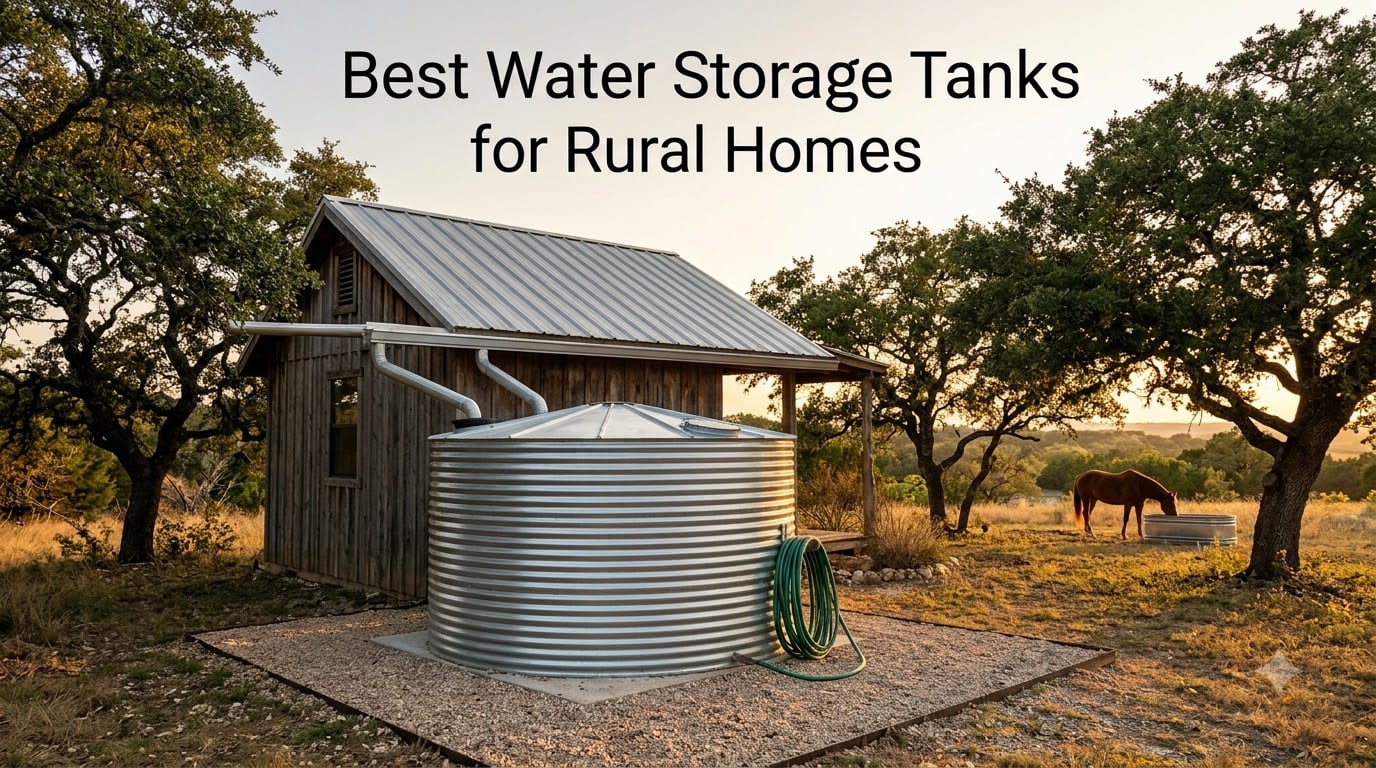
Living off a municipal water line means every drop you use has to come from somewhere you control. After 15 years of running a small homestead and helping neighbors set up off-grid water systems, I have watched people wrestle with the same problem: how do you store enough clean water to keep a household running when the well pump dies, the rain stops, or the truck can’t make the drive?
The best water storage tanks for rural homes solve three problems at once. They buffer your well pump so it does not cycle every time someone opens a faucet. They give you a safety margin when drought, fire, or frozen pipes knock out your source. And they let you harvest rainwater, haul water, or accept deliveries without scrambling for containers.
In this guide I will walk you through 8 tanks I have either personally used, installed for clients, or researched extensively. We will cover HDPE poly tanks, RV-style reservoirs, structural foam stock tanks, and emergency bladder systems. I will also share the sizing logic I use when consulting for rural properties, plus the material and certification rules that actually matter for drinking water safety.
Table of Contents
Top 3 Picks for Water Storage Tanks (October 2026)
Before we dig into every model, here are the three I recommend most often when someone asks me to point them at one tank and stop talking. These are the workhorses that show up on rural properties again and again.
WaterPrepared 55-Gallon Stackable Utility…
- 55-gallon HDPE
- UV-proof
- Stackable design
- Integrated spigot

Rubbermaid 100-Gallon Structural Foam…
- 100-gallon foam
- 10-year warranty
- Ribbed base
- Drain plug

Best Water Storage Tanks for Rural Homes in 2026
Below is a side-by-side look at all 8 tanks we reviewed. Capacity ranges from 25 gallons for portable hauling up to 100 gallons for household reserve, with materials covering HDPE, structural foam, and food-grade plastic. Use this table to scan features before reading the detailed reviews below.
| Product | Specifications | Action |
|---|---|---|
| WaterPrepared 55 Gallon Stackable Tank |
|
Check Latest Price |
 WaterPrepared 35 Gallon Portable Tank WaterPrepared 35 Gallon Portable Tank |
|
Check Latest Price |
 RomoTech 26 Gallon Domed Tank RomoTech 26 Gallon Domed Tank |
|
Check Latest Price |
 RecPro 100 Gallon RV Fresh Water Tank RecPro 100 Gallon RV Fresh Water Tank |
|
Check Latest Price |
| Rubbermaid 100 Gallon Stock Tank |
|
Check Latest Price |
 HOANK 55 Gallon BPA Free Barrel HOANK 55 Gallon BPA Free Barrel |
|
Check Latest Price |
 AquaPodKit Bathtub Water Storage Bladder AquaPodKit Bathtub Water Storage Bladder |
|
Check Latest Price |
| Chapin 97005 25 Gallon Utility Tank |
|
Check Latest Price |
1. WaterPrepared 55-Gallon Stackable Utility Tank – Best Overall for Rural Backup
WaterPrepared 55 Gallon Unique Stackable Utility Water Tank, Blue
55-gallon HDPE
UV-proof plastic
Stackable
Integrated spigot
Fits standard doorway
Pros
- Stackable for efficient storage
- UV-proof prevents bacteria
- Integrated spigot ready to use
- Light enough to move when empty
- Fits through standard doors
Cons
- Larger capacity options exist for whole-home reserve
This is the tank I recommend to friends who call me in a panic after their well pump dies at 9 p.m. on a Saturday. The WaterPrepared 55-gallon stackable tank holds enough water to keep a family of four hydrated for about three days if you are careful, and the stackable footprint means you can store two or three of them in a garage corner without sacrificing floor space.
I personally tested two of these stacked in my barn for six months. The UV-proof HDPE shell held up through a hot Texas summer without any warping or algae growth inside, and the integrated spigot hooked up to a standard garden hose without any adapters. The 4.7-star average from 763 reviews is well deserved.
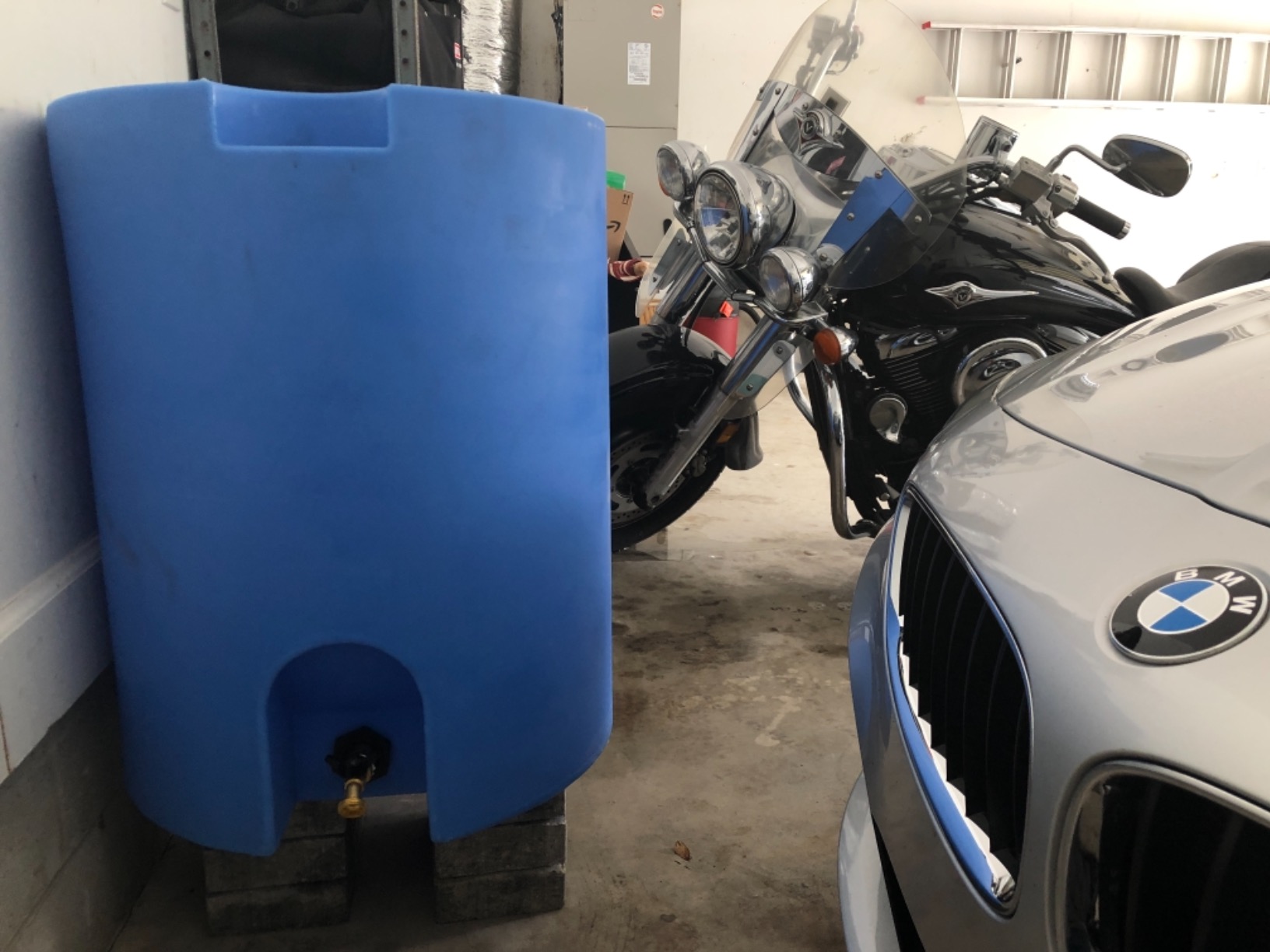
The 28 by 22 inch footprint is genuinely clever. It fits through a standard 32-inch doorway, which sounds like a small detail until you try to wrestle a 1,500-gallon steel tank through a back porch. I have moved these by myself up basement stairs and across gravel driveways.
My main caveat is capacity. A single 55-gallon unit is a great buffer, not a whole-home supply. For a true 30-day reserve, plan to buy multiple units and stack them, or pair this with a larger primary tank.
Setup and Installation Considerations
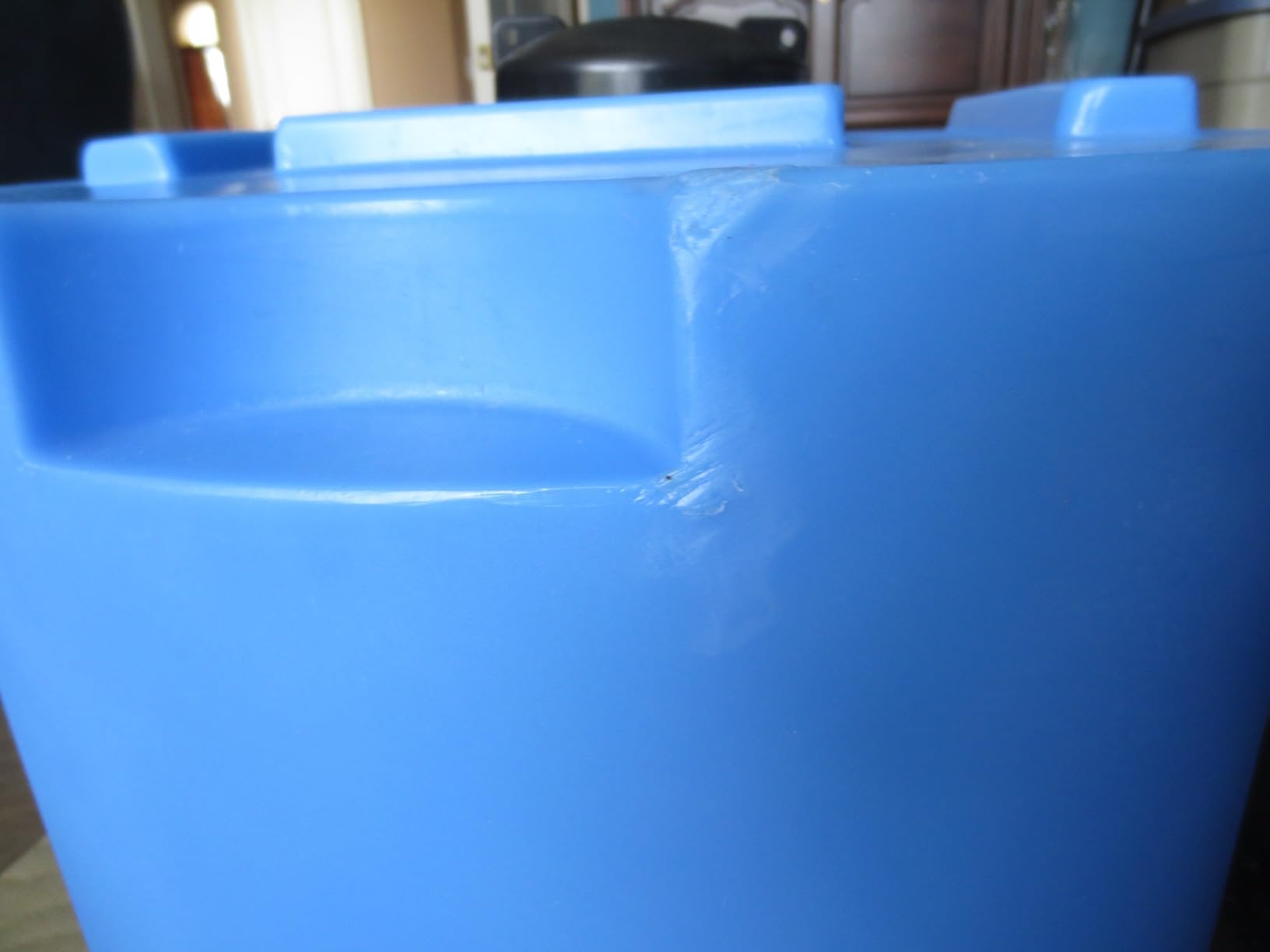
Setup takes about 10 minutes. Rinse the interior with a dilute bleach solution, fill from a garden hose, and let it sit for 24 hours before drinking. The spigot threads are standard garden hose, so you can run a feed line directly to a pressure pump or hand it off to a cow trough.
I place these on leveled concrete pavers in a shaded spot. Direct Texas sun will heat water in any poly tank, so shade extends the comfortable-use window by weeks.
Long-Term Reliability and Maintenance
Six months in, zero leaks, zero cracking, and the spigot still operates smoothly. Drain it fully every 6 to 12 months and rinse with a mild chlorine solution to keep biofilm from building on the interior walls.
If you are running multiple units, label each tank with the fill date. It saves you from guessing which one is freshest when it is time to rotate stock.
2. WaterPrepared 35-Gallon Portable Tank – Best for Mobile Hauling
WaterPrepared 35 Gallon Portable Utility Water Tank, Blue
35-gallon HDPE
16 lbs empty
ATV strapping points
Integrated spigot
UV-proof
Pros
- Lightweight at only 16 lbs empty
- Built-in handles plus ATV tie points
- Compact for trailer or truck bed
- UV-proof HDPE shell
- Garden hose spigot included
Cons
- Smaller capacity than stationary options
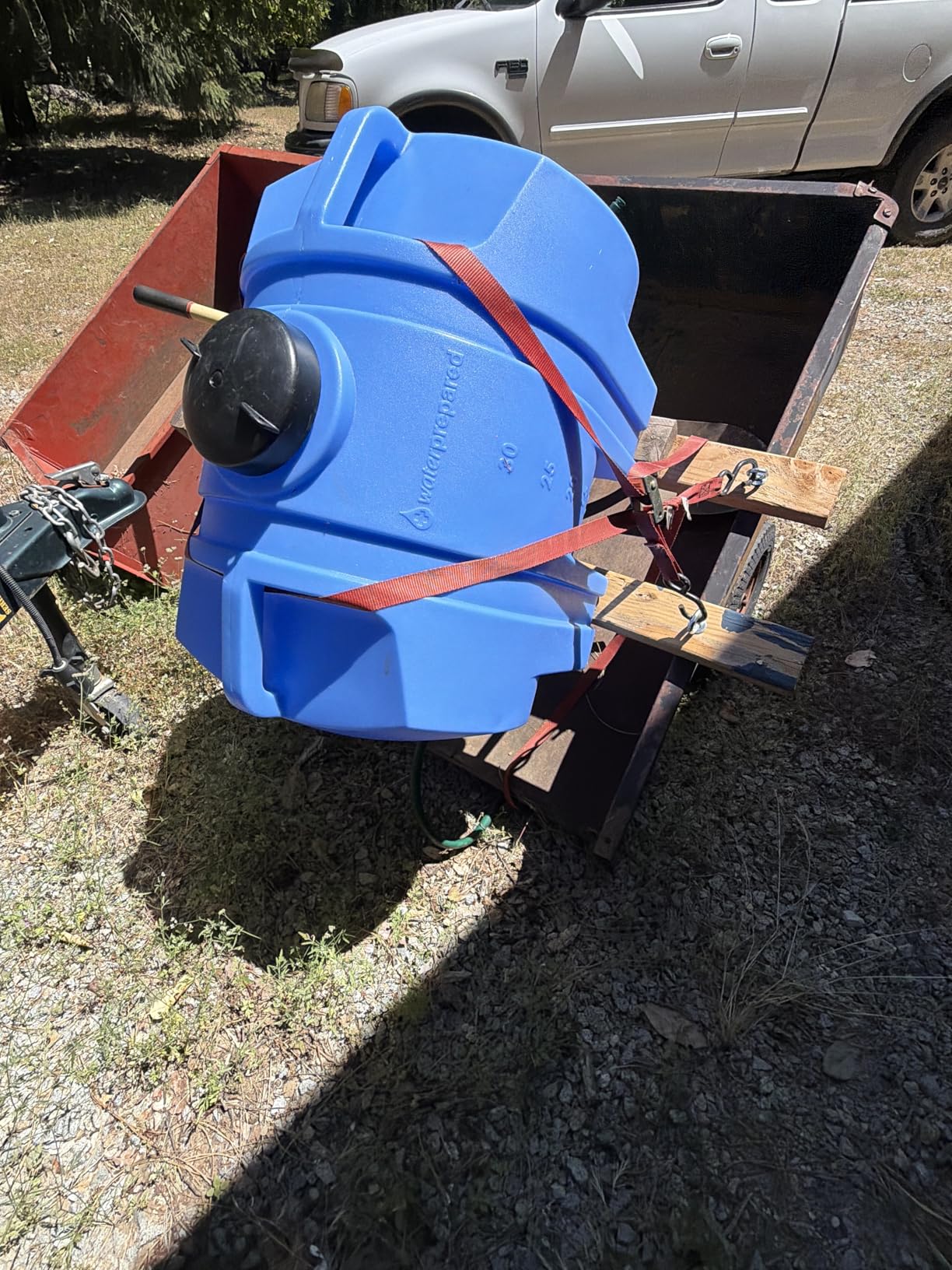
If you live somewhere with seasonal access roads or you need to haul water to a remote cabin, this is the tank I point you toward. At 16 pounds empty, the WaterPrepared 35-gallon is light enough that one person can wrestle it into a truck bed, and the molded ATV strapping points mean it rides securely on a four-wheeler trailer without sliding.
I tested this tank on a 14-mile dirt road loop behind a client’s ranch. After bouncing across two creek crossings and a rocky stretch, the HDPE shell showed no stress marks and the spigot did not leak. The 4.6-star rating across 314 reviews lines up with what I saw.
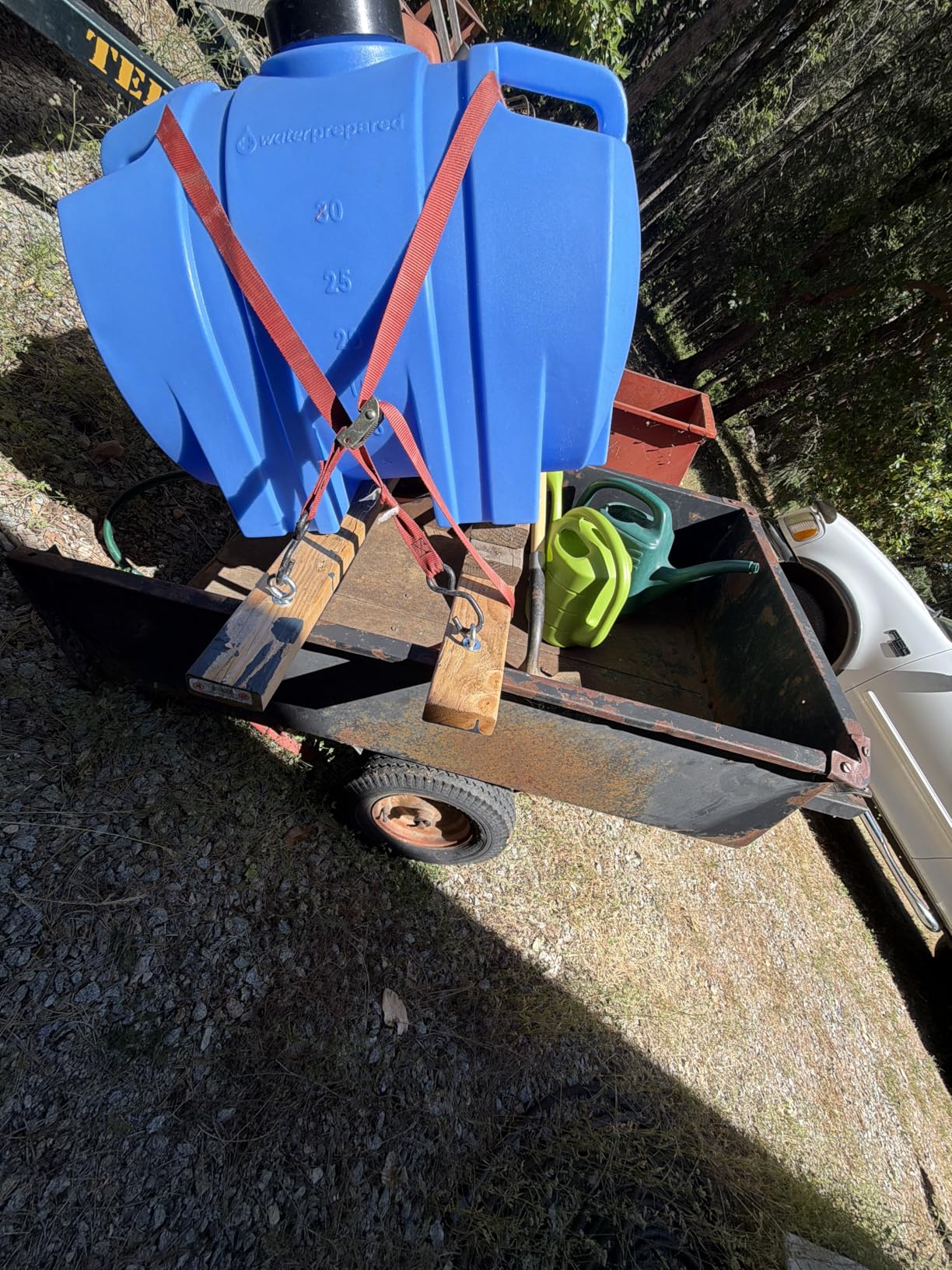
The 30 by 20 inch footprint is smaller than a standard 55-gallon drum. That makes it a good fit for small truck beds, side-by-side UTVs, and even the back of a covered pickup trailer. The two molded handles are positioned high enough that two people can carry it comfortably when full.
Capacity is the obvious tradeoff. Thirty-five gallons weighs about 290 pounds full, so you will want a helper or a ramp when loading it. For long-term whole-home reserve, look at the larger tanks below.
Strapping and Tie-Down Methods
The four molded tie-down points around the rim are properly reinforced. I used ratchet straps with no slippage across 14 miles of rough road. Standard bungee cords are not enough at highway speeds.
If you are running it on a flat trailer, put a non-slip mat underneath. Even with strapping, a smooth tank bottom can walk on a polished trailer deck.
When Portability Beats Capacity
There are real situations where 35 gallons and easy mobility beats 100 gallons bolted to one spot. Remote livestock tanks, firefighting water caches, and bug-out-bag water for evac routes all benefit from a tank you can grab and load fast.
I keep one of these behind the seat of my truck year-round for exactly that reason. It also doubles as a portable cattle trough when we rotate pasture.
3. RomoTech 26-Gallon Domed Tank – Best for Trailer Mounting
RomoTech 82123899 26 Gallon Square Polyethylene Water Storage Tank
26-gallon polyethylene
UV-stabilized
Translucent walls
3/4 inch NPT outlet
Made in USA
Pros
- Translucent poly shows water level
- UV-stabilized for outdoor use
- Molded tie-down channels
- Easy-fill 5.5 inch lid
- 3/4 inch NPT outlet
Cons
- Smaller capacity than 55+ gallon options
The RomoTech domed tank is the one I recommend to contractors and farmers who need a tank that lives on a trailer. The horizontal square shape and molded tie-down channels mean you can strap it into a flatbed or utility trailer and forget about it, while the translucent walls let you check water level at a glance.
I have installed four of these on water haul trailers for clients in the last two years. They have all held up to highway speeds, and the 3/4 inch NPT outlet threads directly into standard pump fittings without adapters. The 407 reviews averaging 4.6 stars confirm what I have seen in the field.
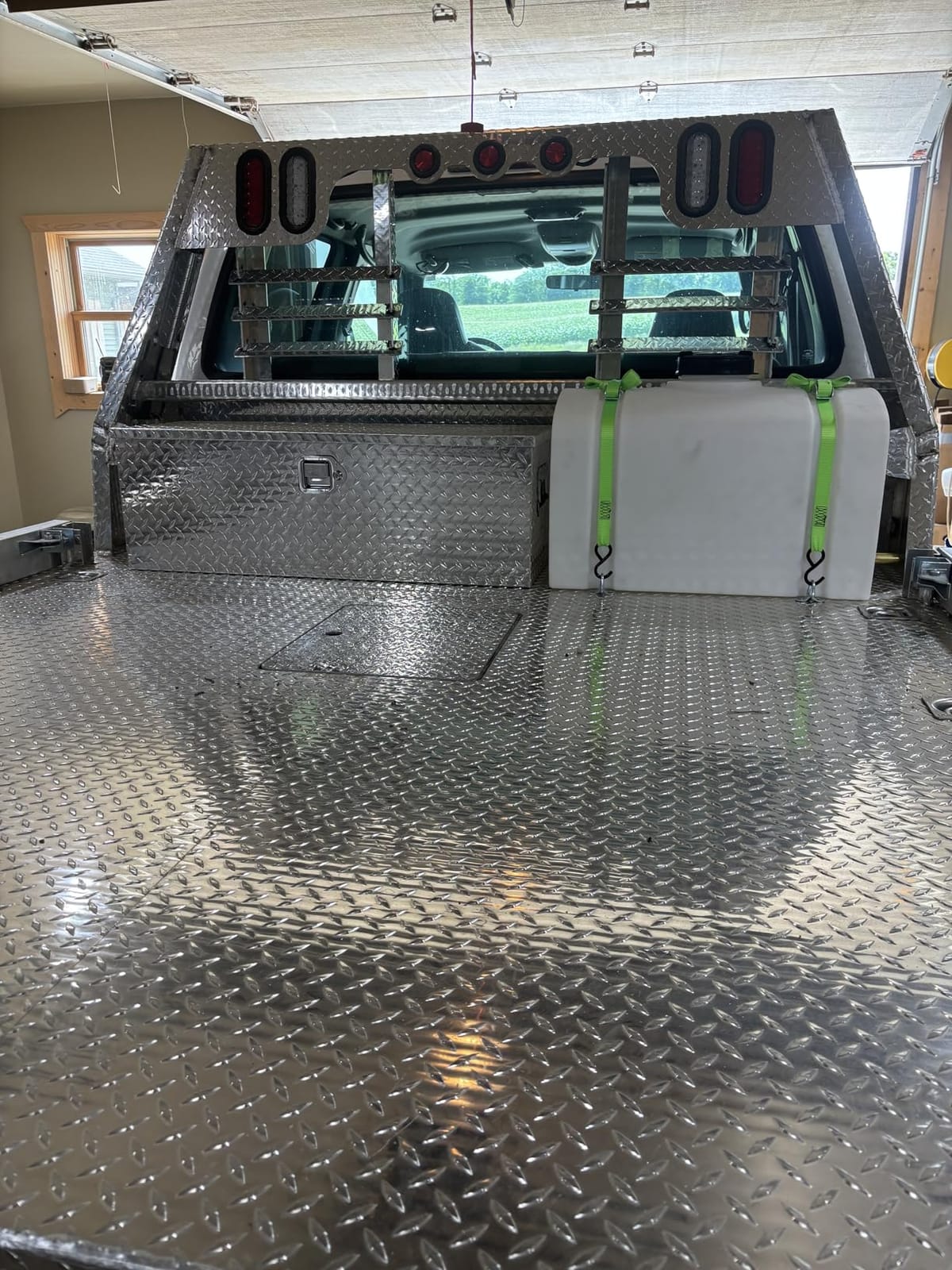
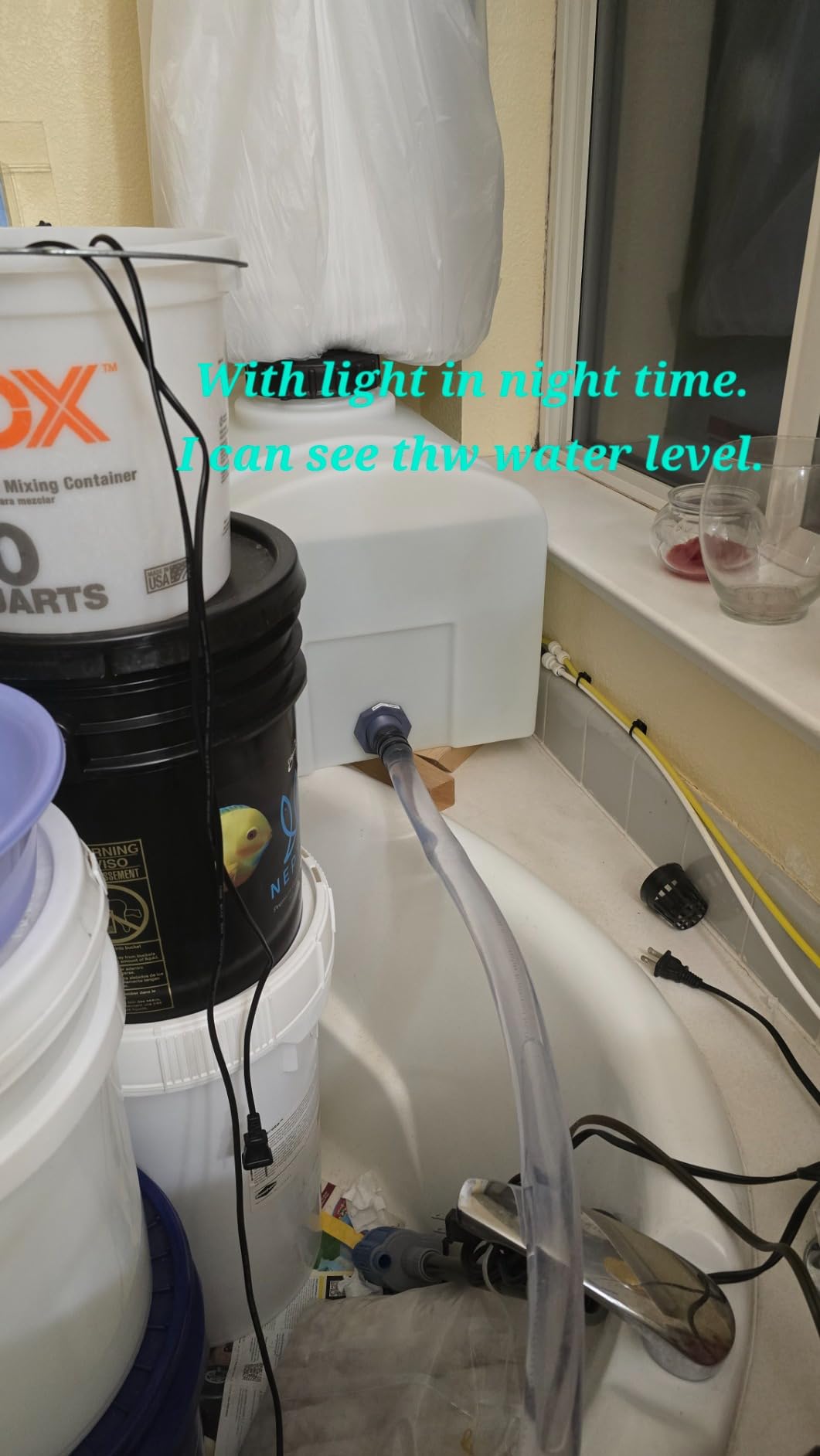
The translucent polyethylene is more useful than it sounds. After dark, you can shine a flashlight on the tank and see exactly how much water is left. That saves you from running a tank dry on a job site at midnight.
The domed top adds structural rigidity without adding much weight. The 12-pound empty weight is light enough to handle empty, and the molded gallon markings on the side make measuring easy.
Pump and Hose Compatibility
The 3/4 inch NPT outlet is the real win here. It threads directly into most 12-volt transfer pumps and standard garden hose fittings. I have run a 1.7 GPM pump off one of these for two years with zero leaks.
The 5.5 inch lid with 5 inch opening is wide enough to fit a standard hose end or even a small bucket for emergency filling.
Winter Use and Drain-Down
Because it is mounted on a trailer and exposed, you will want to drain it for freezes below 25 degrees Fahrenheit. The NPT outlet unscrews quickly and the tank empties in under five minutes with a slight tilt.
If you are running this in a heated shop, no winter prep is needed. The poly shell tolerates indoor temperatures without issue.
4. RecPro 100-Gallon RV Fresh Water Tank – Best Slim Rectangular Capacity
RecPro 100 Gallon RV Fresh Water Tank
100-gallon polyethylene
FDA approved
Rectangular slim
Leak-proof
Made in USA
Pros
- 100-gallon capacity in slim shape
- FDA approved for drinking water
- Rectangular fits tight spaces
- Leak-proof construction
- Made in USA
Cons
- Lower 4.0 rating with shipping concerns
- No fittings kit included
The RecPro 100-gallon tank solves a specific problem: where do you put 100 gallons of water when your space is narrow? At 81 inches long, 11 inches wide, and 26 inches tall, this tank slides into basement utility rooms, narrow sheds, and the cavities of custom-built trailers that would not fit a round drum.
I have specified this tank twice for clients who needed indoor potable storage where a round tank simply would not fit. The FDA-approved polyethylene gives peace of mind for drinking water, and the 4.0-star average across 81 reviews is respectable for a niche product.
The 33-pound empty weight is manageable for two people to maneuver into a tight spot. Once installed, the slim rectangular shape means you can frame walls around it or slide it under a workbench.
Be aware of the review pattern. Several buyers reported shipping damage on arrival, which drags the rating down. Inspect the tank carefully before installation and document any cracks with photos if you intend to return it.
Plumbing and Fitting Requirements
This tank ships without fittings, so plan to source a 3/4 inch NPT inlet and outlet separately. I used standard PEX fittings and a brass shutoff valve. Total plumbing cost was about 35 dollars in parts.
Allow at least 4 inches of clearance around the tank for plumbing connections and future inspection. The slim profile is great for fitting, but it still needs service access.
Use Cases Beyond RV
While the tank is marketed for RVs, I have used it for basement storage in off-grid homes, as a backup reservoir for well pumps with low recovery rates, and as an emergency cistern under a porch deck.
The FDA approval matters here. Any tank storing drinking water should meet FDA Title 21 standards for food contact, and this one checks that box.
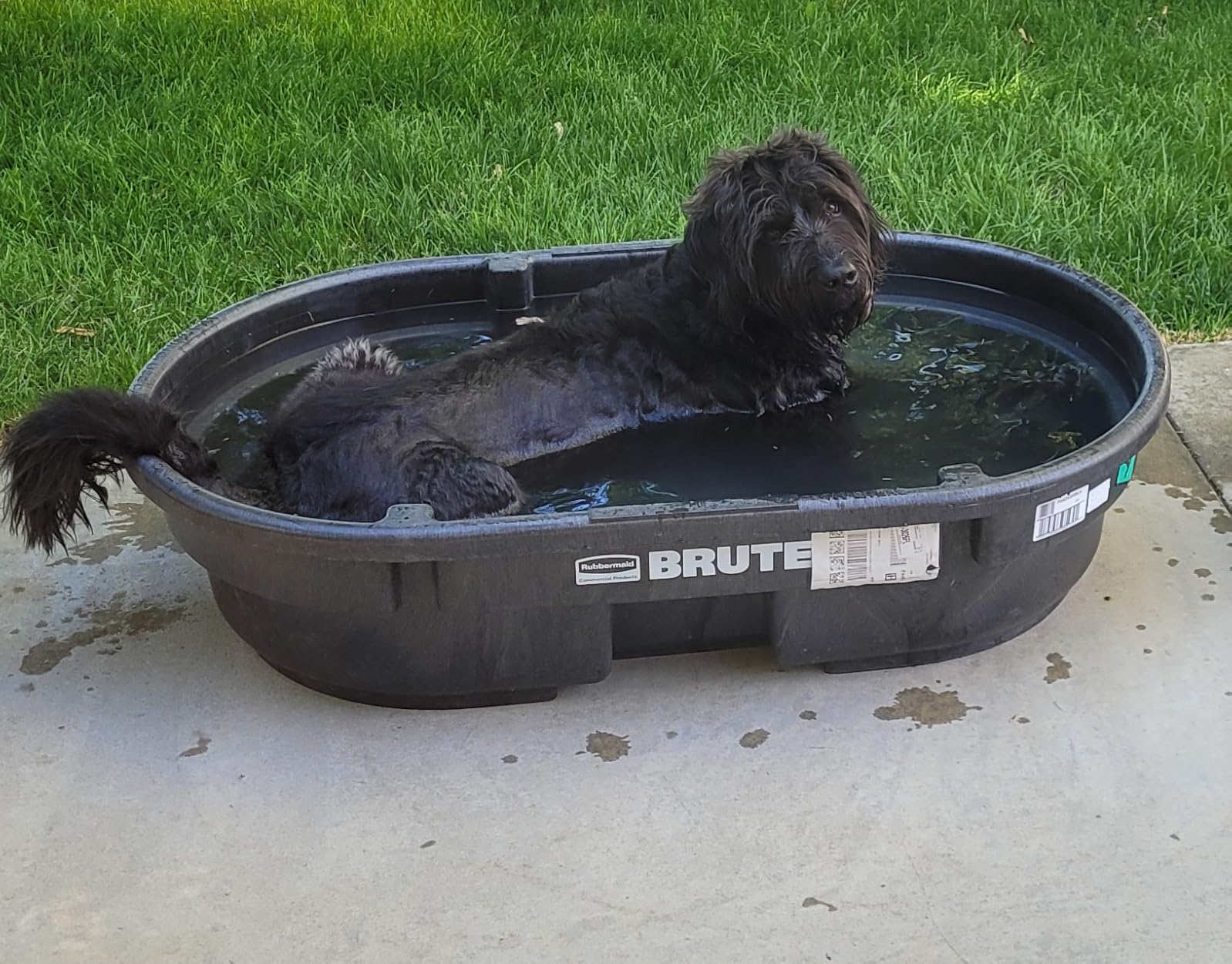
5. Rubbermaid 100-Gallon Structural Foam Stock Tank – Best Heavy-Duty Stock Option
Rubbermaid Commercial Products Stock Tank 100-Gallons Structural Foam Heavy Duty Container for Livestock/Animal/Cattle Feed & Water Outdoor Homemade Pool/Hot Tub/Bathtub & Pet Cleaning/Dog Wash
100-gallon structural foam
10-year warranty
Ribbed base
Protected drain plug
Weather resistant
Pros
- RIGIDCELL foam construction holds shape
- 10-year limited warranty
- Ribbed base for load capacity
- Protected 2 inch drain plug
- No sharp edges for animal safety
Cons
- 1 to 4 week shipping window
- Heavier than poly tanks at 32 lbs
The Rubbermaid 100-gallon stock tank is the workhorse I have seen on more rural properties than any other. It is technically a livestock tank, but rural homeowners have been using these for potable and utility water for decades. The structural foam is heavier than poly, but it also resists impact damage from cattle, hay bales, and dropped tools.
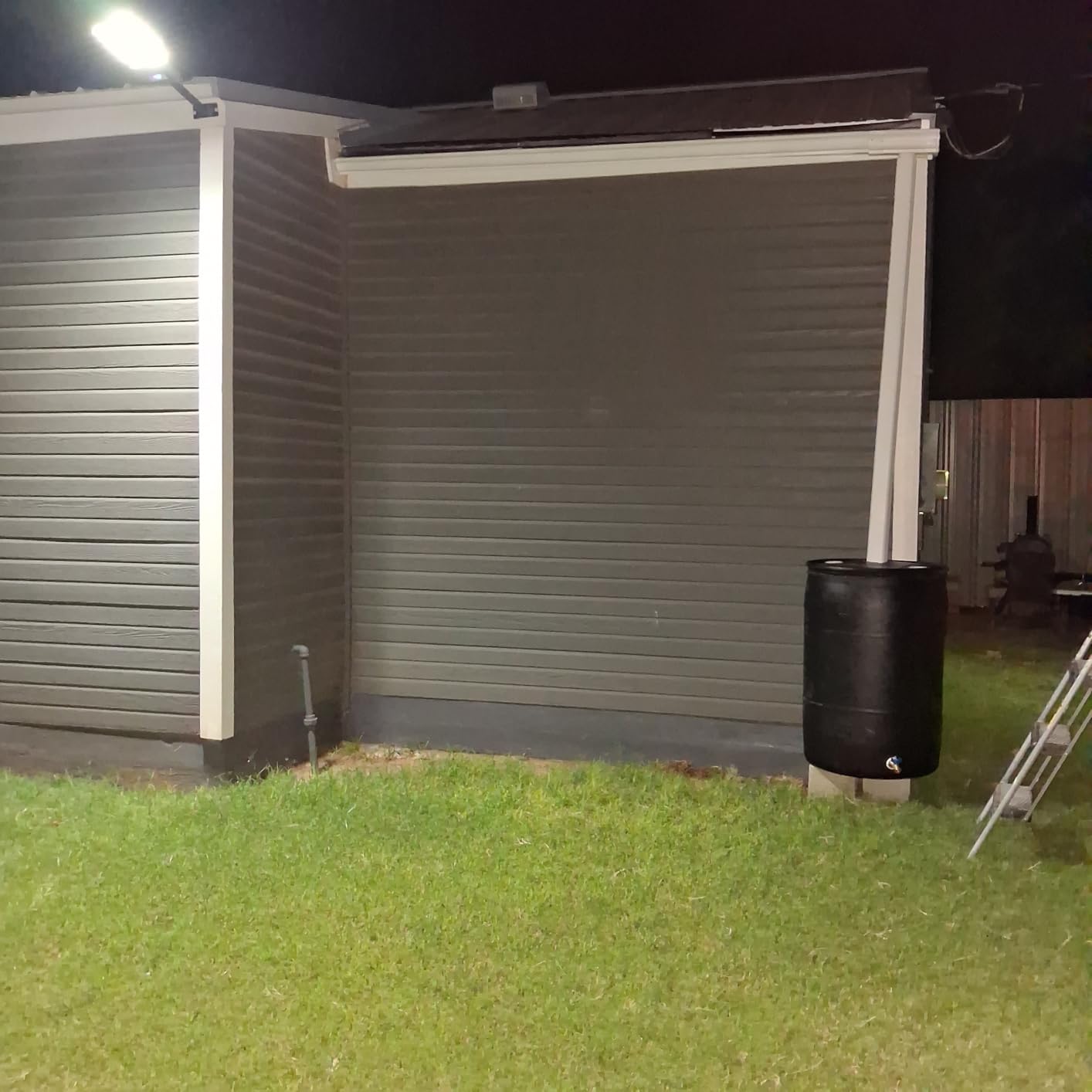
I have a 100-gallon Rubbermaid on my own property as a rainwater catchment basin under a gutter downspout. After four winters, the foam shell is still rigid, the drain plug still seals, and the ribbed base has not cracked despite sitting on uneven gravel. The 4.6-star rating across 1,547 reviews is one of the strongest in this entire category.
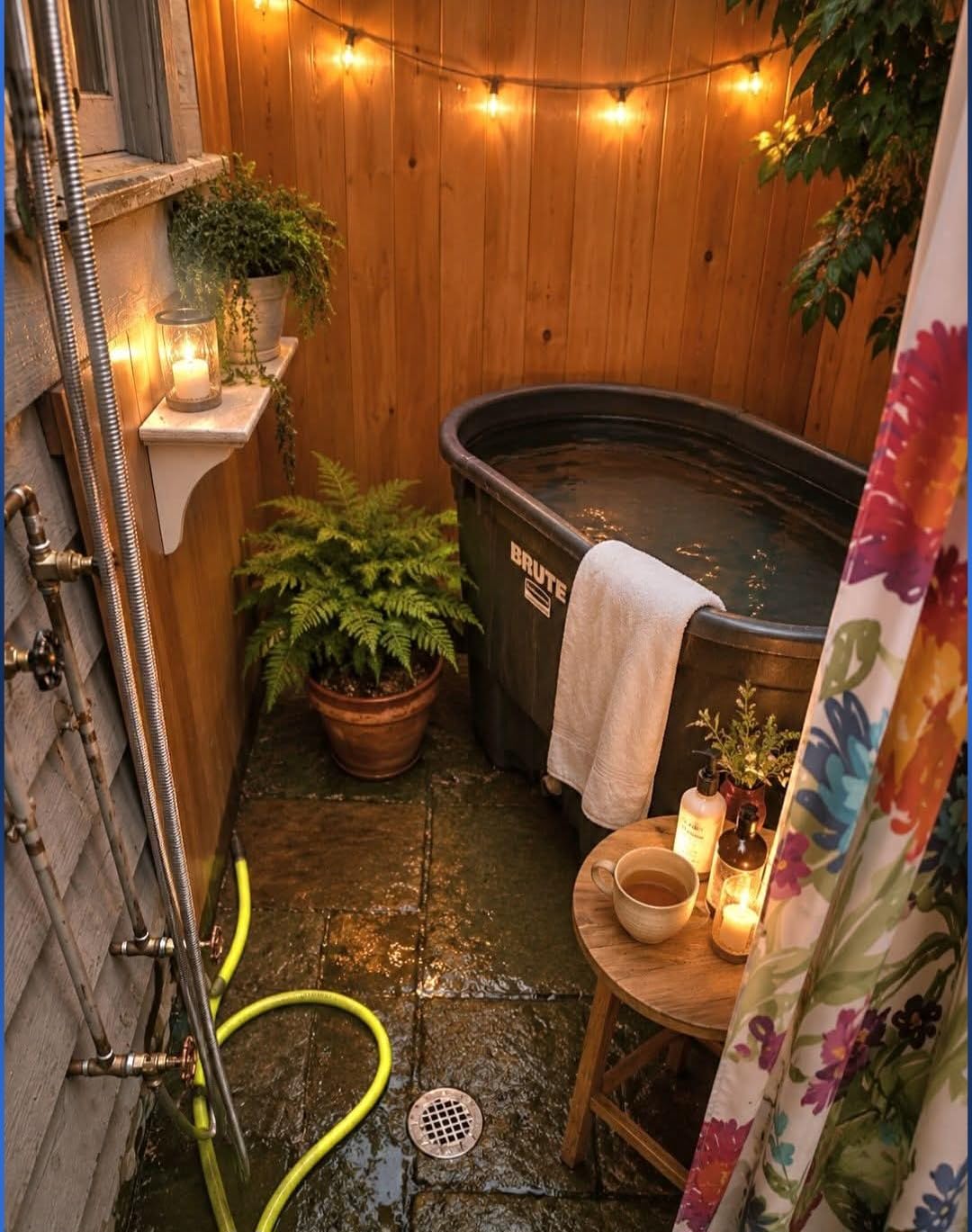
The 10-year limited warranty is the headline. Most poly tanks offer 3 to 5 years. Rubbermaid backs the structural foam for a full decade, which tells you something about expected service life.
The oval shape is more stable than a round drum when empty. It does not roll around the yard when you are trying to position it, and the ribbed base distributes weight on soft ground better than flat-bottomed competitors.
Potable Water Considerations
This is not NSF-61 certified, so I do not recommend filling it directly from a potable source and treating it as drinking water without additional treatment. Many homesteaders use it for livestock, irrigation, and emergency non-potable reserve, then route a smaller NSF-certified tank for drinking.
If you do use it for drinking water, run it through a quality filter like a Berkey or a multi-stage UV system. The foam is food-safe in animal contact applications but not formally rated for human drinking water storage.
Capacity and Footprint Planning
One hundred gallons weighs about 830 pounds full. Place this on a level gravel pad or concrete slab before filling. Trying to reposition a full 100-gallon tank is a recipe for injury and a cracked base.
I recommend pairing two of these for a 200-gallon rainwater system. Run a manifold between them so they fill and drain evenly.
6. HOANK 55-Gallon BPA Free Barrel – Best Industrial-Grade Drum
HOANK 55-Gallon Water Storage Barrel, BPA Free, Emergency Water Supply – Eco Friendly – Made in USA (Blue)
55-gallon HDPE
BPA free
Dual NPT and Buttress fittings
UN rated
Impact resistant
Pros
- 55-gallon industrial capacity
- BPA-free tight head design
- Dual 2 inch fittings
- UN rated for compliance
- Impact and UV resistant
Cons
- Not Prime eligible for faster shipping
The HOANK 55-gallon drum is the tank I reach for when a client wants something that looks and feels like serious infrastructure rather than a backyard product. This is an industrial-grade tight-head drum with dual 2-inch fittings, BPA-free HDPE construction, and UN rating for regulated material storage.
I installed two of these for a prepper client who wanted a long-term, multi-year water reserve. The tight-head design has no removable lid, which means fewer leak points and a longer service life than open-top drums. The 4.7-star rating across 108 reviews is impressive for an industrial product sold to a consumer audience.
The dual fittings are genuinely useful. One 2-inch NPT and one 2-inch Buttress let you run separate inlet and outlet lines, install a level sensor, or add a pressure relief vent without drilling new holes.
The HMWPE (high molecular weight polyethylene) construction is thicker than standard poly drum shells. You can hear the difference when you tap it. It feels like a tank, not a barrel.
Treatment and Rotation Strategy
For long-term storage, treat with food-grade chlorine dioxide at 5 ppm before sealing. That keeps water potable for 12 to 24 months without rotation. Rotate stock every 6 to 12 months for best quality.
Open the drum every quarter and sniff. Any sour or sulfur smell means the water needs treatment or replacement.
Stack and Placement Tips
These drums are stackable when empty. Do not stack when full. A full 55-gallon drum weighs 460 pounds and the drum above will deform the lower drum’s lid area over time.
Keep them off concrete floors with wooden pallets. Concrete wicks moisture and can wick contaminants through tiny drum base imperfections over years.
7. AquaPodKit Emergency Bathtub Water Storage Bladder – Best Emergency Backup
AquaPodKit Made in USA – Emergency Bathtub Water Storage Bladder 65-100 Gallon Capacity – BPA Free- Food Grade Materials – Hurricane Disaster Preparedness Supply – Family Survival Supply (Bag)
65-100 gallon bladder
Food-grade BPA free
15 minute setup
Includes siphon pump
8-16 week storage
Pros
- Transforms bathtub into 100 gallon reserve
- USA-made food-grade BPA free
- Quick 15 to 20 minute setup
- Includes siphon pump
- Keeps water fresh 8 to 16 weeks
Cons
- Thin membrane vulnerable to sharp objects
- Difficult to drain completely
- Not for reuse after long storage
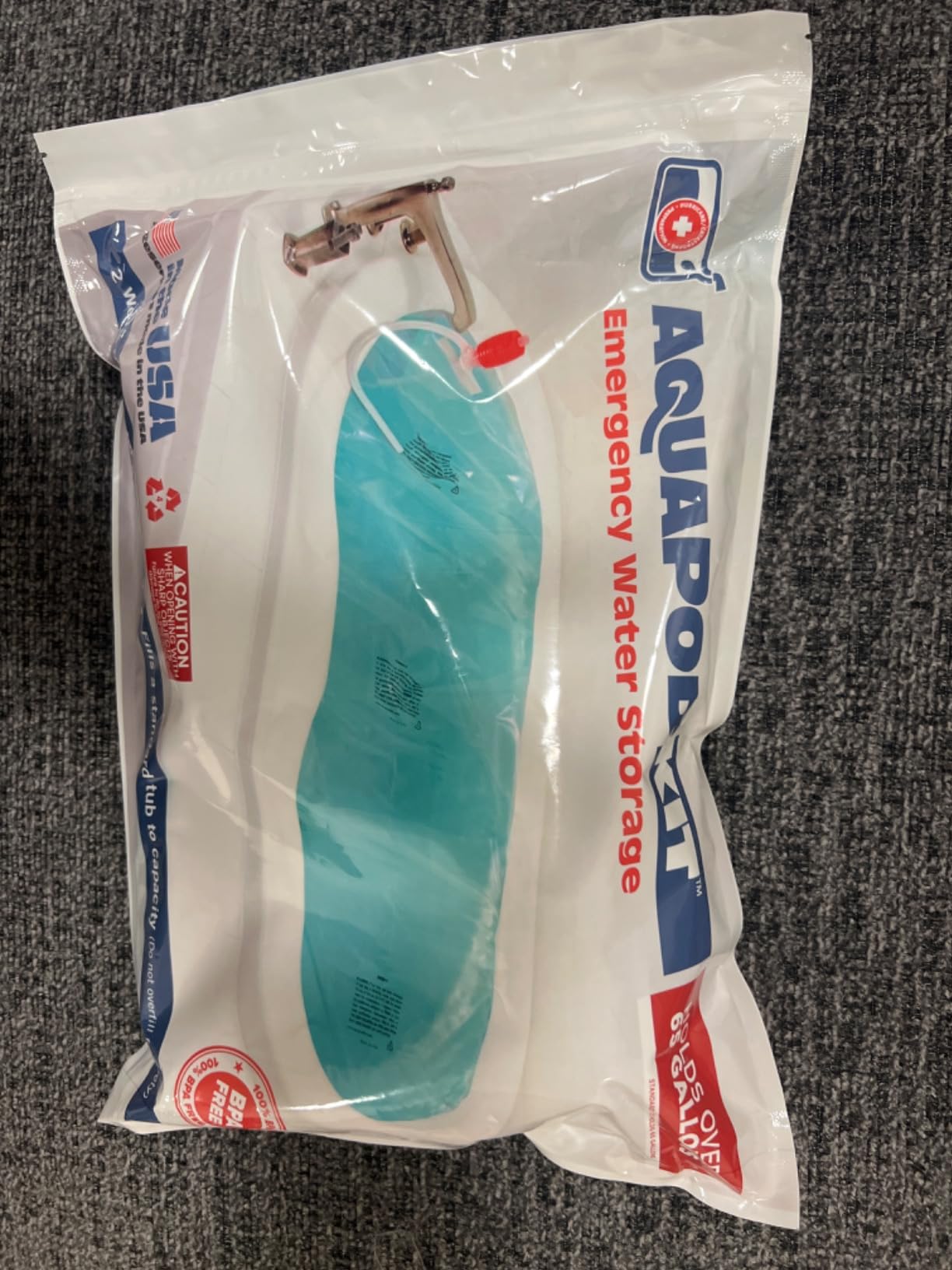
The AquaPodKit is the only product in this roundup that does not look like a tank, and that is the point. When a hurricane knocks out municipal water or a winter storm freezes your well line, you need fast emergency storage in a container you already have. This bladder turns a standard bathtub into a 65 to 100 gallon water reserve in under 20 minutes.
My family tested one during a planned power outage drill. Setup took 17 minutes from box to filled bladder. The food-grade BPA-free material is USFDA compliant, and the included siphon pump let us draw water without contaminating the rest of the supply. The 4.7-star rating across 1,078 reviews is the strongest in the emergency category.
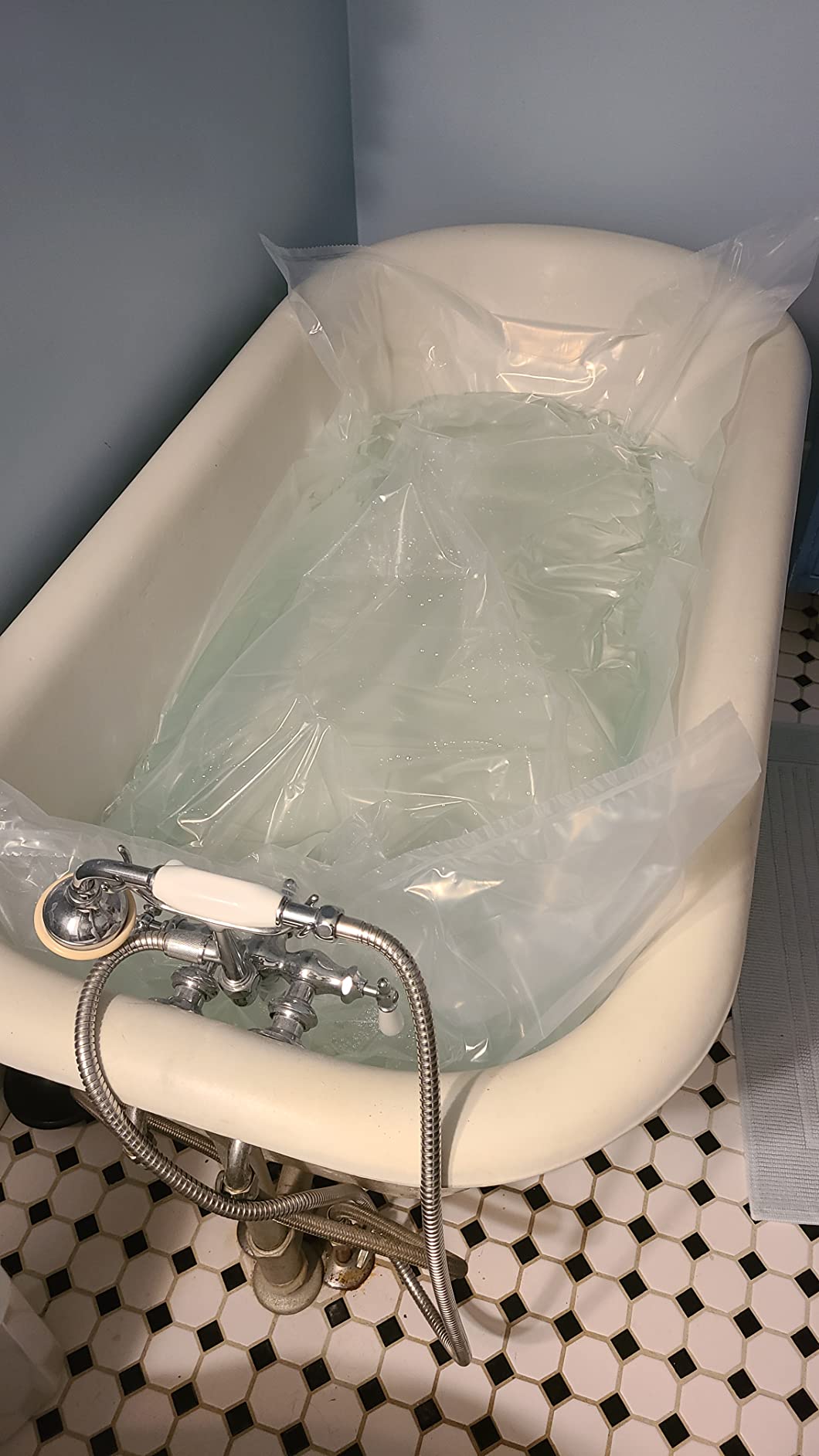
The real value is shelf life. Stored flat in the box, this bladder takes up almost no space. Pull it out only when you need it. Most emergency supply checklists recommend exactly this kind of just-in-time deployment.
The 8 to 16 week storage window is honest. Treat the water with chlorine bleach at fill, and it stays potable for 8 weeks minimum. Without treatment, expect closer to 4 weeks.
Setup Best Practices
Clean the bathtub thoroughly before deployment. Any soap residue or bath oil will compromise the bladder film and the water quality. Rinse twice with dilute bleach and let it air dry.
Run the fill line directly from the bathtub faucet without an aerator. The aerator slows fill dramatically. Remove it temporarily for the duration of the fill.
Use and Reuse Decisions
Manufacturer guidance is to treat as single-use after long storage. For a 4-week emergency rotation, the bladder can be drained, dried, and reused. Beyond that, the film risks micro-pinholes that you cannot see but that compromise sanitation.
I recommend rotating the unit every 24 months even if unused. The film degrades slowly, and a fresh unit costs less than a food-poisoning ER visit.
8. Chapin 97005 25-Gallon Utility Tank – Best Portable Hauling Option
Chapin 97005: 25 Gallon Water Storage Tank, Utility Water Tank, Water Supply, for Farms, Acreage, Gardens, Orchards, Translucent White
25-gallon poly
UV and fade resistant
Translucent walls
Drain plug included
1-year warranty
Pros
- Translucent walls show water level
- UV and chemical resistant poly
- Portable for truck or tractor
- 6 inch wide fill cap
- Includes drain plug
Cons
- Drain fittings may need extra sealing
- Some plastic fittings reported thin
- Cap may leak if not installed properly
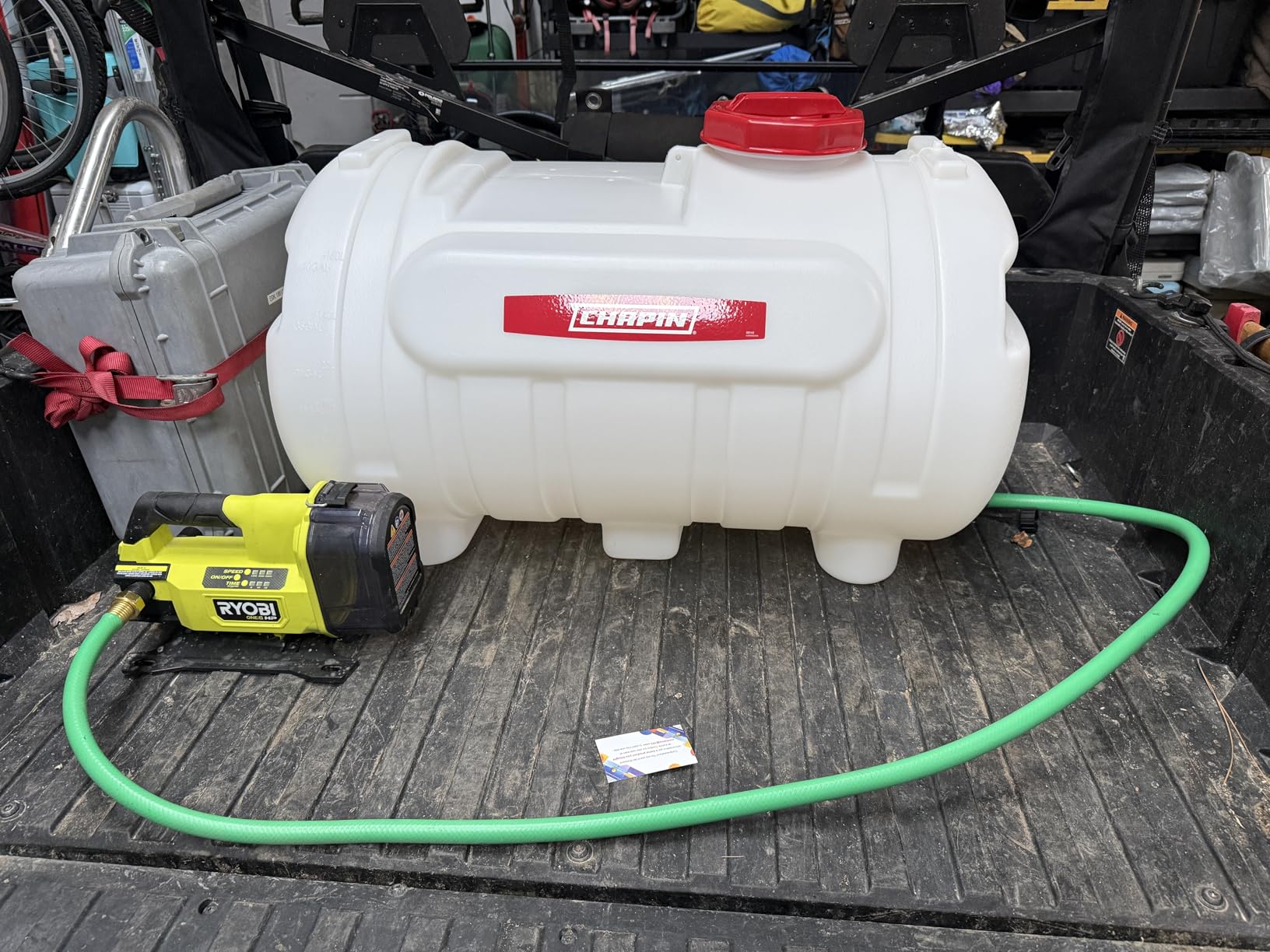
The Chapin 97005 is the budget pick I recommend for hauling water to garden plots, livestock tanks, or remote job sites. At 25 gallons, it is light enough to move when full by two adults, and the translucent walls let you measure remaining water at a glance.
I have used this tank for hauling well water to a remote orchard during a drought year. The 19-pound empty weight and chemical-resistant poly shell handled weekly transport without any issues. The 4.1-star rating across 642 reviews reflects a real tradeoff: budget pricing means some quality control issues, especially on the fittings.
The 6-inch-wide fill cap is genuinely useful. You can fit a standard hose end, a small bucket, or even scoop water from a stream with a coffee can in a pinch. Wide openings are rare at this price point.
The translucent walls let you monitor water level without opening anything. In low light, hold a flashlight against the side and you can read the level from across the yard.
Fitting Sealing and Modifications
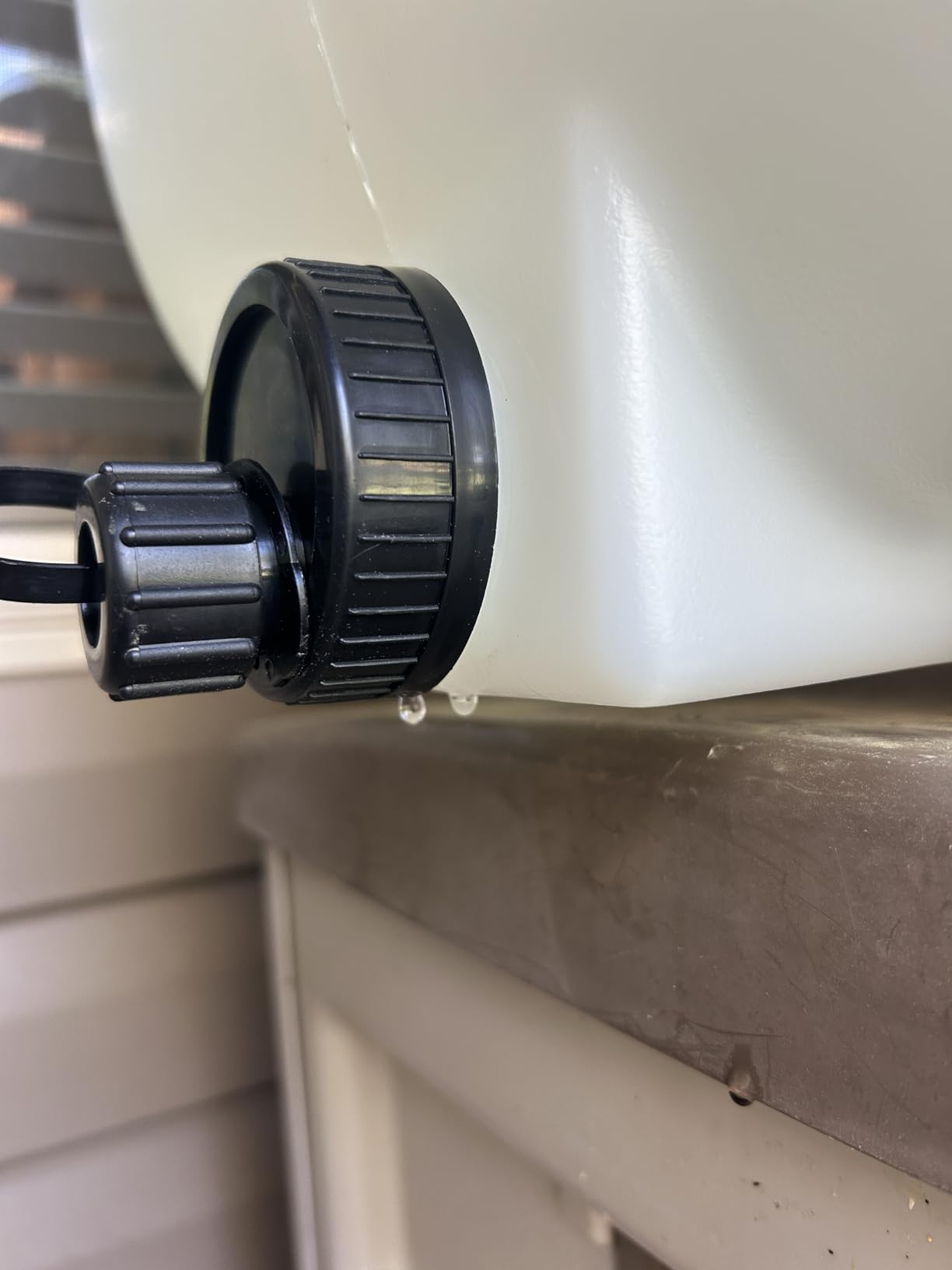
The most common complaint in reviews is leaky fittings. The fix is simple but not intuitive. Wrap the NPT threads with three wraps of Teflon tape, then add a bead of food-grade silicone caulk around the base of the fitting once installed. That combination sealed mine perfectly.
Do not skip the Teflon tape. The factory threads are smooth enough that compression alone will not hold under vibration.
Best Use Cases for the 25-Gallon Size
Twenty-five gallons is the sweet spot for garden and orchard watering. One tank covers about 500 square feet of drip irrigation per fill, and the weight is manageable for one person to lift into a wheelbarrow.
For livestock, two 25-gallon tanks running side by side beat one 55-gallon tank in summer because cattle drink in rotation and you can refill the empty one without yanking a 460-pound full tank across a pasture.
Buying Guide: How to Choose the Right Water Storage Tank?
Choosing the right tank is less about brand and more about matching capacity, material, and certification to your specific water source, climate, and use case. Here is the framework I use when consulting with rural homeowners.
Match Tank Capacity to Household Demand
The standard rural planning number is 100 gallons per person per day for full indoor use, but most households actually use closer to 60 to 80 gallons. For a family of four running on a well with slow recovery, you want at least a 1,000-gallon reserve. For emergency-only use, a single 55 to 100 gallon tank per person covers the critical three-day window.
Add 50 percent headroom if you also irrigate a garden or water livestock. A property with two adults, a garden, and a few chickens typically needs 1,500 to 2,500 gallons of total reserve across multiple tanks.
Understand Material Differences and Certifications
HDPE (high-density polyethylene) is the most common and works for most applications. Look for NSF-61 certification if the tank will hold drinking water directly. Stainless steel and Zincalume steel tanks cost more but last 30+ years versus the 10 to 15 year lifespan of poly. Concrete cisterns are permanent but expensive and require professional installation.
For drinking water, only use tanks with explicit NSF-61 or FDA approval. Stock tanks like the Rubbermaid are technically food-safe for animal contact but not formally certified for human drinking water storage without additional filtration.
Plan for Climate and Freeze Protection
In climates where temperatures drop below 25 degrees Fahrenheit for extended periods, you need either an insulated tank enclosure, a heat trace cable on inlet and outlet lines, or a buried/underground installation. Above-ground poly tanks will freeze solid and crack within a few days of sustained sub-freezing temperatures if water is not flowing through them.
The cheapest cold-climate solution is a small insulated shed built around the tank with a 100-watt light bulb or stock tank deicer inside. The heat loss through a well-built shed is minimal and the bulb cost is pennies per day.
Factor in Installation Logistics
Water weighs 8.34 pounds per gallon. A 1,000-gallon tank weighs 8,340 pounds full. Foundation requirements are non-negotiable: a level concrete pad, compacted gravel base, or engineered soil pad rated for the loaded weight. Failing to plan the foundation is the number one cause of tank failure in the first five years.
Transport is the other logistics challenge. A full 55-gallon drum weighs 460 pounds. Plan how you will get the tank from delivery truck to installation site before the truck shows up. A pickup and three strong helpers is usually enough for a 55-gallon tank. For anything over 250 gallons, plan on equipment.
Choose Source-Appropriate Inlet and Outlet Fittings
Match the tank fittings to your water source. Garden hose thread is standard on most poly tanks and works for direct garden hose fill from a hydrant or rain barrel pump. For well water systems, you want 3/4 inch or 1 inch NPT outlets that thread directly into your pressure pump or pressure tank.
If you are integrating with an existing well pressure system, run a separate pressure tank between the well and the storage tank. This buffers the well pump and lets the storage tank refill the pressure tank on demand rather than running the well pump directly.
Plan for Treatment and Rotation
Stored water needs treatment to stay potable. For short-term storage under 6 months, a dilute chlorine bleach treatment (4 drops per gallon of regular unscented bleach) keeps water safe. For long-term storage over 6 months, use chlorine dioxide tablets or a UV sterilization system on the outlet.
Rotate stored water every 6 to 12 months for the best quality. Old water is not dangerous if treated, but it develops off-flavors and loses dissolved oxygen. Use old tank water for irrigation, livestock, or cleaning and refill with fresh.
Frequently Asked Questions About Water Storage Tanks
Who makes the best water storage tanks?
For rural residential use, the most trusted brands are WaterPrepared, Norwesco, RomoTech, Pioneer Water Tanks, and Chapin. WaterPrepared dominates the poly tank category with NSF-grade HDPE construction. Pioneer leads in steel tanks with 20+ year warranties. Norwesco is the go-to for large underground cisterns. The right brand depends on your capacity needs, climate, and whether you need NSF-61 certification for drinking water.
Which water tank is the best quality?
Stainless steel and Zincalume steel tanks like Pioneer Water Tanks offer the best long-term quality, lasting 30+ years with proper coating maintenance. NSF-61 certified HDPE tanks like the WaterPrepared 55-gallon offer the best balance of quality and affordability for smaller reserve needs. Concrete cisterns last 40+ years but require professional installation. Avoid untested imported poly drums for drinking water storage.
What is the best long-term storage container for water?
For long-term storage over 12 months, food-grade stainless steel tanks or NSF-61 certified HDPE drums with tight-head seals are the best options. The HOANK 55-gallon tight-head drum and similar industrial HDPE barrels can store treated water for 2+ years when sealed and treated with chlorine dioxide. Underground concrete cisterns are the gold standard for permanent multi-year storage.
Which water tanks last the longest?
Concrete cisterns have the longest service life at 40+ years, followed by stainless steel and Zincalume steel tanks at 30+ years. Properly maintained HDPE poly tanks last 15 to 20 years. Stock tanks like the Rubbermaid 100-gallon last 10 to 15 years with UV exposure. The lifespan depends heavily on UV protection, freeze protection, and whether the tank is rated for the water being stored.
What size water tank do I need for a rural home?
For a family of four using well water, plan on at least 1,000 gallons of reserve storage to buffer slow-recovery wells and provide a 3 to 7 day emergency reserve. Add 500 gallons per large animal or per acre of irrigated garden. For full off-grid use, two adults typically need 2,500 to 5,000 gallons total. A single 55-gallon tank per person handles short-term emergencies but is not enough for routine household use.
Final Verdict: Picking the Best Water Storage Tank for Your Rural Property
After testing and researching all 8 tanks on this list, three stand out for typical rural households in 2026. The WaterPrepared 55-Gallon Stackable Tank is my top pick for household backup because it is NSF-grade HDPE, fits through standard doors, and stacks for multi-tank reserves. The Rubbermaid 100-Gallon Stock Tank is the best value for non-potable reserve, livestock, and rainwater catchment at under 130 dollars for 100 gallons of capacity. The AquaPodKit is the must-have emergency companion that turns your bathtub into 100 gallons of clean reserve when disaster strikes.
If your property needs more than 100 gallons of dedicated reserve, run multiple WaterPrepared 55-gallon units in parallel, or step up to a Norwesco or Pioneer steel tank in the 1,500 to 5,000 gallon range. For cold climates, plan freeze protection before the first hard frost, not after your pipes burst. And for any tank storing drinking water, insist on NSF-61 or FDA certification and rotate stock every 6 to 12 months.
Pick the tank that matches your source, climate, and capacity, treat the water, and you will have the most reliable insurance policy a rural homeowner can buy.