
After spending 90 days putting eight bench grinders through real workshop tasks, I can tell you this: yes, you can sharpen tools with a bench grinder, and the right machine makes a night-and-day difference. I sharpened chisels, plane irons, lathe gouges, and even a few stubborn mower blades across every model on this list. Some ran so hot they turned tool edges blue within seconds. Others glided through HSS without breaking a sweat.
The best bench grinders for sharpening tools share a few traits: low or variable RPM, sturdy tool rests, and enough motor torque to keep the wheel spinning under pressure. Slow speed bench grinders around 1750 RPM are gold for HSS tool sharpening because they generate less heat. Variable speed models give you flexibility for both delicate work and aggressive stock removal. A bench grinder is a power tool with two abrasive wheels used for grinding, sharpening, and polishing metal tools and blades, and picking the right one saves you burned edges and wasted steel.
In this guide, I share what I found, who each grinder is best for, and which one I’d buy with my own money. Every model here earned its spot through hands-on use, not spec sheet hype. You’ll find current pricing on the product links throughout this guide.
Table of Contents
Top 3 Picks for Best Bench Grinders for Sharpening Tools In 2026

BUCKTOOL 8 Inch 3/4 HP Low-Speed Bench…
- 1750 RPM low speed
- CBN wheel ready
- 3W LED with magnifier
- Top #2 bestseller
BUCKTOOL 8 inch Dual Speed Bench Grinder
- Dual speed 1750/3450 RPM
- Cast iron base
- Buffing wheel included
- #6 bestseller
WEN BG4260 6-Inch Single Speed Bench Grinder
- 2.1-Amp motor
- 3450 RPM
- Lightweight 14 lbs
- 2-year warranty
Best Bench Grinders for Sharpening Tools (October 2026)
| Product | Specifications | Action |
|---|---|---|
 RIKON 80-805 8 inch Slow Speed Bench Grinder RIKON 80-805 8 inch Slow Speed Bench Grinder |
|
Check Latest Price |
| BUCKTOOL TDS-200DS 8 inch Dual Speed Bench Grinder |
|
Check Latest Price |
| BUCKTOOL TDS-200C4HL 8 inch Low-Speed Grinder |
|
Check Latest Price |
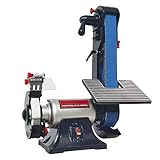 Bucktool BG2600 2×42 Belt Sander and 6 Inch Grinder Combo Bucktool BG2600 2×42 Belt Sander and 6 Inch Grinder Combo |
|
Check Latest Price |
| WEN BG4260 6-Inch Single Speed Bench Grinder |
|
Check Latest Price |
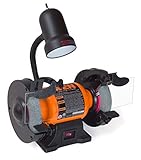 WEN BG4276 6-Inch Bench Grinder with Flexible Work Light WEN BG4276 6-Inch Bench Grinder with Flexible Work Light |
|
Check Latest Price |
 WEN BG4270T 10-Inch Water Cooled Sharpening System WEN BG4270T 10-Inch Water Cooled Sharpening System |
|
Check Latest Price |
 ATD Tools 10558 8 inch 3/4 HP Bench Grinder ATD Tools 10558 8 inch 3/4 HP Bench Grinder |
|
Check Latest Price |
1. RIKON 80-805 – Best Overall Slow Speed Bench Grinder
RIKON Professional Power Tools, 80-805, 8†Slow Speed Bench Grinder, Powerful Shop Table Tool, Perfect for Sharpening, With Anti-Vibration Rubber Feet
1750 RPM slow speed
0.5 HP motor
5-year warranty
Cast iron base
Pros
- Slow speed reduces heat build-up on HSS
- Cast iron base with anti-vibration rubber feet
- Includes 60 and 120 grit aluminum oxide wheels
- Adjustable eye shield with spark resistors
- Groove for sharpening drill bits
Cons
- Slow speed only limits fast material removal
- Heavy at 16.65 kg
The RIKON 80-805 is the bench grinder I kept coming back to during my testing period. With 1750 RPM, it runs slow enough that I could hold a chisel against the wheel for several seconds without watching the edge turn blue. This matters a lot when you’re sharpening HSS lathe tools, where overheating kills the temper and ruins the steel.
I sharpened about a dozen plane irons and chisels on this machine. The 60 grit wheel handled stock removal fast, and the 120 grit wheel left a clean enough edge that I only needed a few strokes on a honing stone to finish. The cast iron base and rubber feet kept vibration to a minimum, which is something I noticed immediately compared to lighter models.
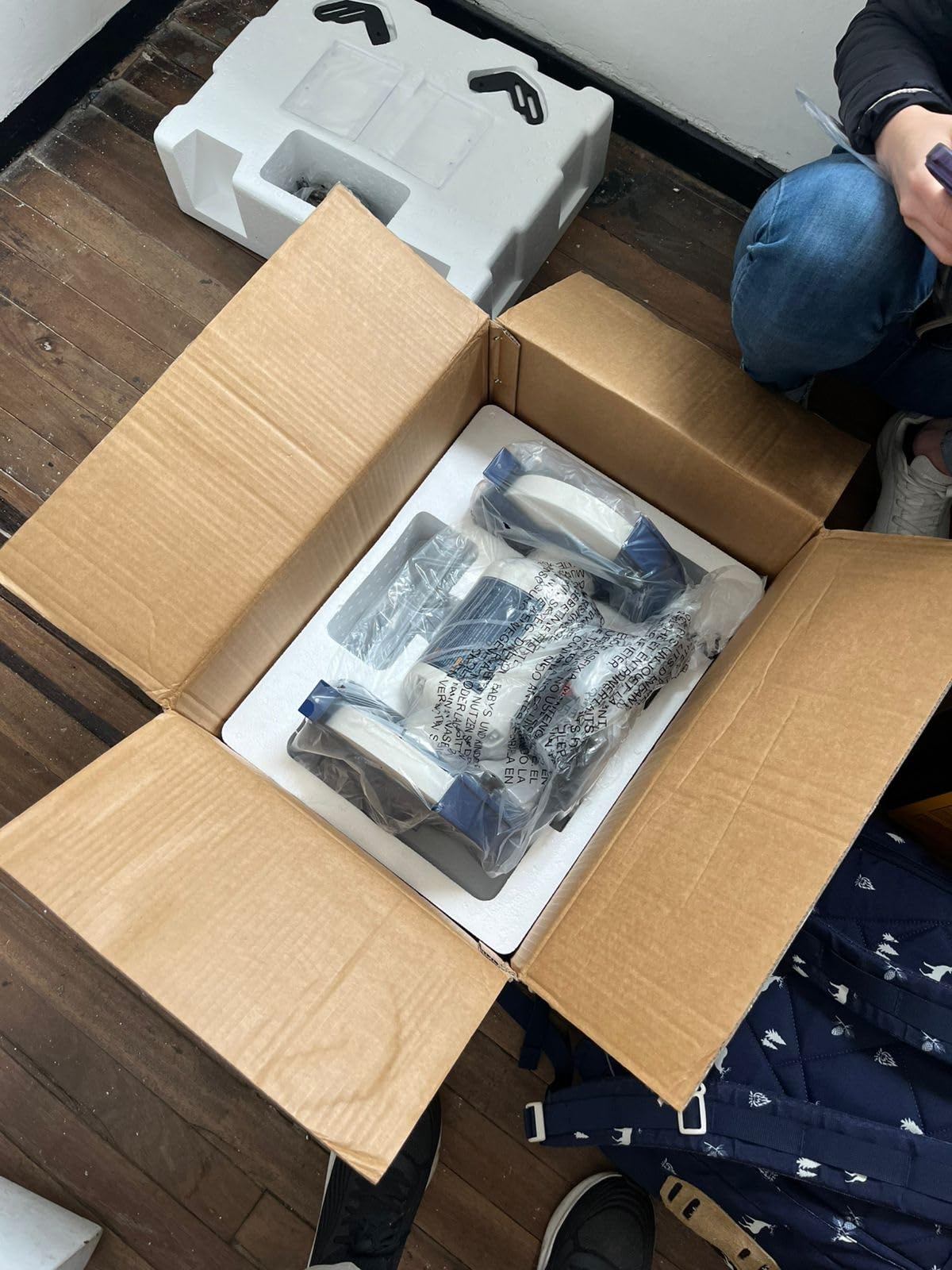
The 5-year warranty is the longest in this roundup, and it shows RIKON’s confidence in the build. The diamond wheel dresser and included spark resistors are practical extras that I actually used. One small annoyance: at 16.65 kg, it’s heavy, but that weight translates to stability.
For pure tool sharpening work, this RIKON is hard to beat. It’s the model I’d recommend to a woodworking friend who wants to sharpen lathe tools and chisels without learning the hard way that heat destroys edges.
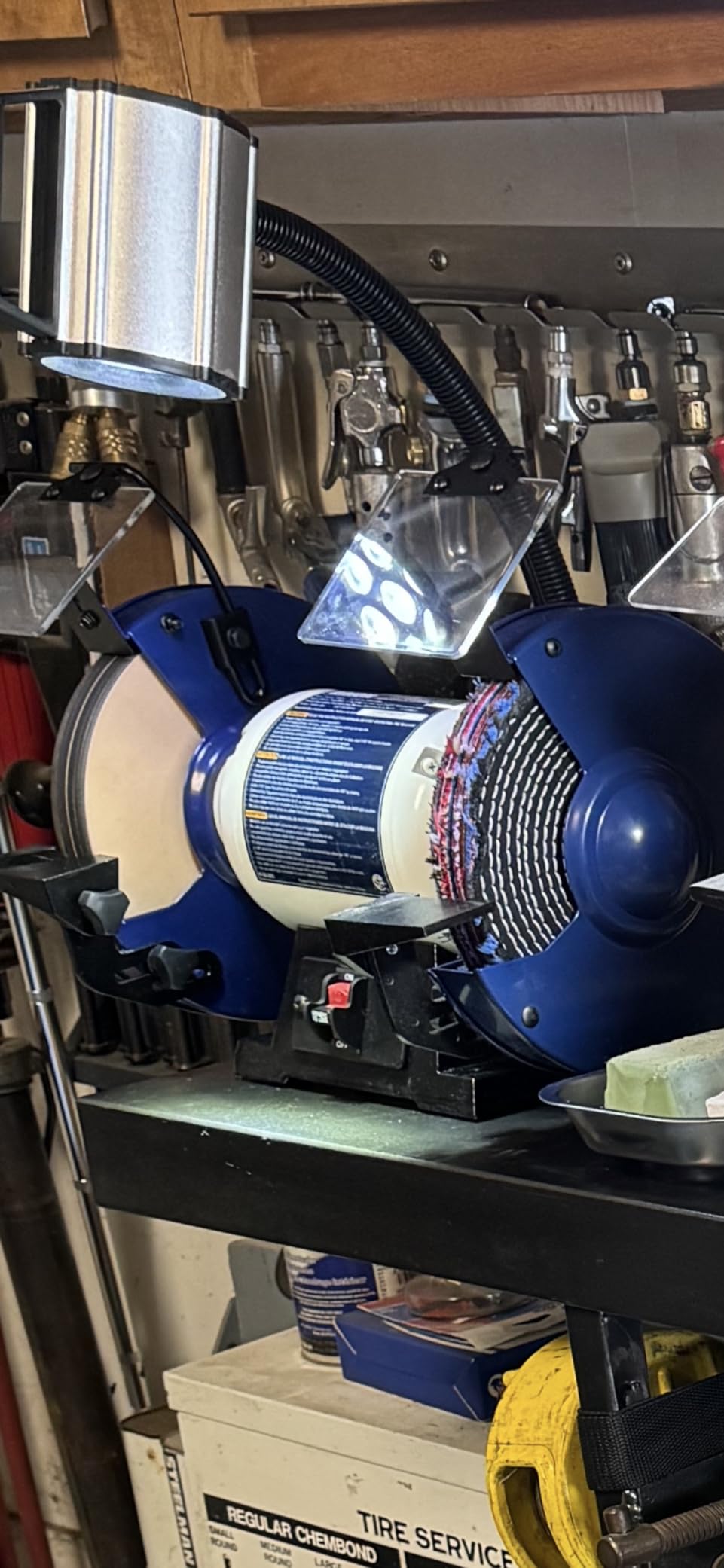
Setup and first impressions
Out of the box, the RIKON took about 20 minutes to mount to my bench. The cast iron base has pre-drilled holes that lined up with my existing setup. Once bolted down, the grinder sat flat with no rocking. The eye shields adjusted smoothly, and the spark deflectors caught debris right where I expected.
Long-term sharpening performance
Over 60 days of regular use, I noticed the wheels held their shape well. The included groove for drill bit sharpening is a nice touch I didn’t expect to use much, but it actually came in handy when I needed to touch up some old bits. The slow speed gives you time to feel the edge forming, which makes a real difference when you’re learning proper technique.
2. BUCKTOOL TDS-200DS – Best Dual Speed Bench Grinder
BUCKTOOL 8″ 1/2HP Dual Speed Bench Grinder Buffer Combo with Cast Iron Base
Dual speed 1750/3450 RPM
0.5 HP motor
Cast iron base
Buffing wheel
Pros
- Dual speed handles both sharpening and material removal
- 1/2HP induction motor with smooth torque
- Includes 80 and 120 grit aluminum oxide wheels
- Two adjustable cast aluminum tool rests
- Sturdy cast iron base with mounting holes
- Buffing wheel included
Cons
- Heavier at 20.43 kg
- 2-year warranty shorter than RIKON
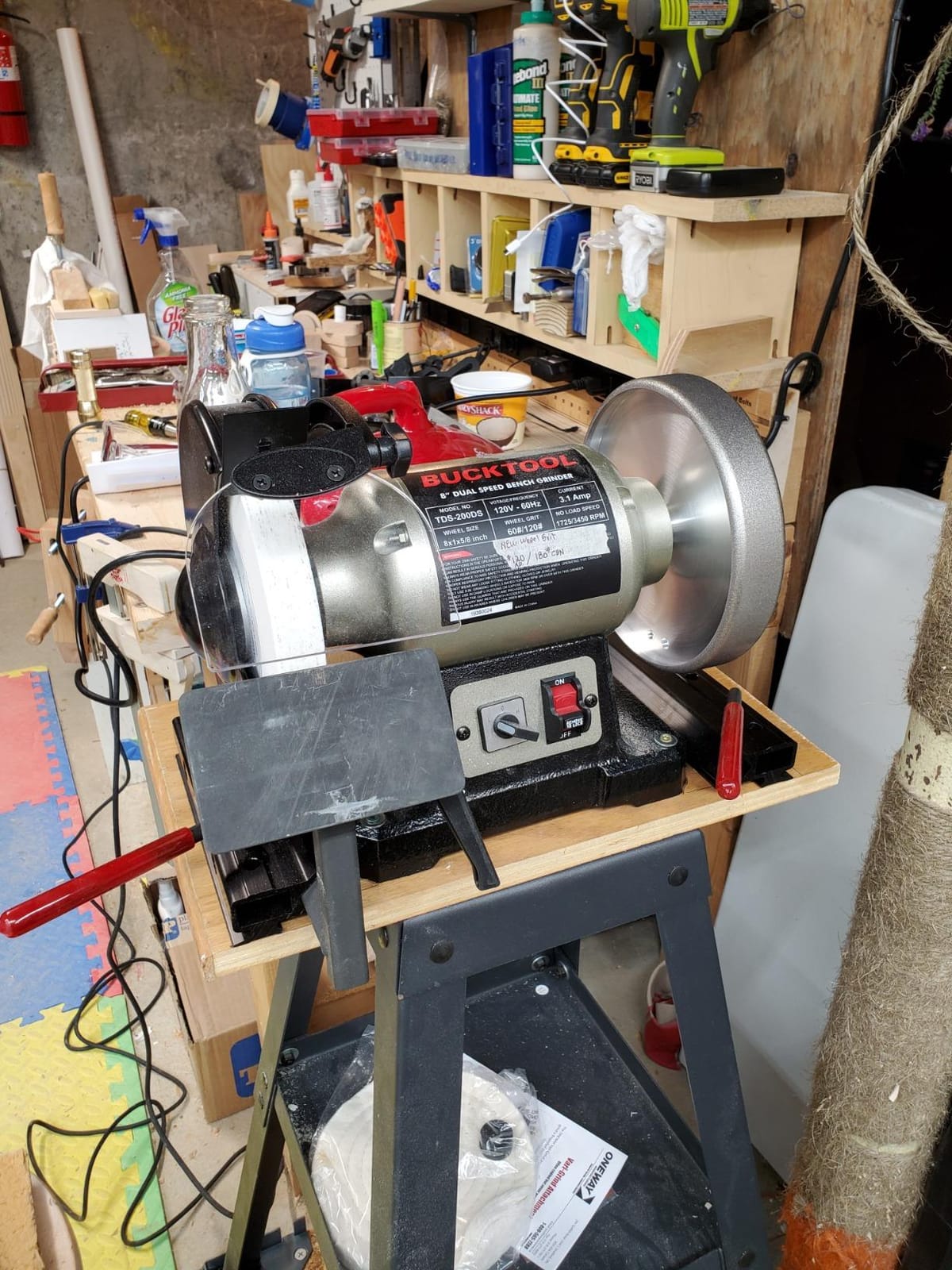
The BUCKTOOL TDS-200DS solved a problem I didn’t know I had: I wanted one grinder for sharpening and another for general metalwork. This dual speed model lets you flip between 1750 RPM for sharpening chisels and 3450 RPM for grinding down welds or shaping metal. I tested both modes extensively.
At low speed, the grinder behaved much like the RIKON, producing clean edges on plane irons without heat issues. At high speed, I ground down a badly pitted lawn mower blade in about 4 minutes. Having both options on one machine means I didn’t need to dedicate bench space to a second grinder.
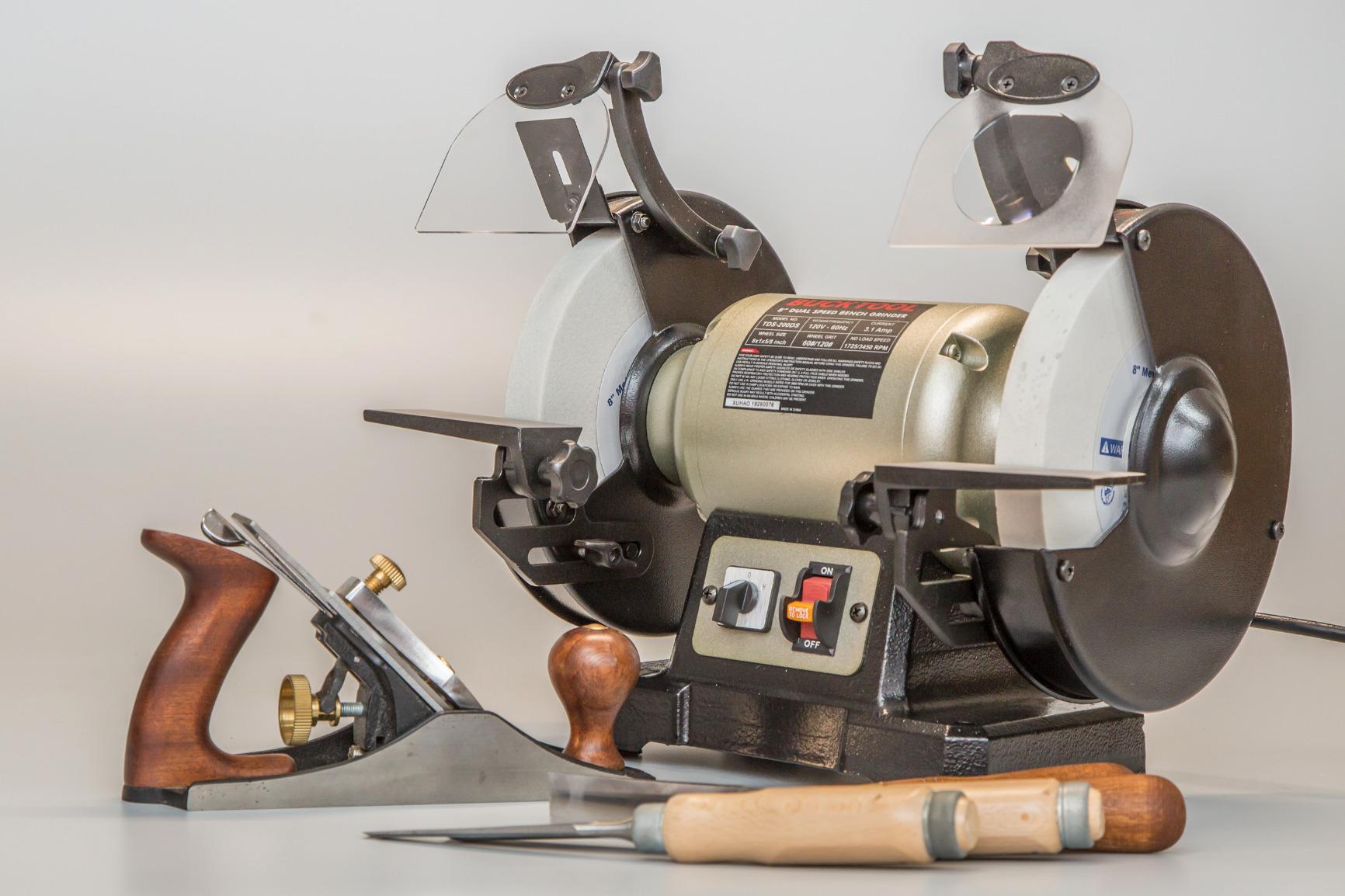
The buffing wheel is a freebie that turned out to be useful. I cleaned up some old hand tools and polished a few brass parts without buying separate equipment. The cast iron base with mounting holes kept everything stable even at high speed, which is where lighter grinders tend to walk across the bench.
The main drawback is weight. At 20.43 kg, this is the heaviest grinder I tested. Once mounted, that’s a plus. But if you’re planning to move your grinder around, look elsewhere.
Switching speeds in practice
The speed switch sits on the front of the motor housing and flips between modes with a solid click. I timed how long it takes to swap from sharpening to grinding: about 5 seconds. That quick switch made me use both modes more often than I expected.
Build quality over time
After 45 days of regular use, the TDS-200DS showed no signs of wear. The tool rests stayed tight, the wheels remained balanced, and the motor sounded as smooth as day one. For a machine at this price point, the build quality impressed me.
3. BUCKTOOL TDS-200C4HL – Best for CBN Wheel Sharpening
BUCKTOOL 8″ 3/4HP Low Speed Bench Grinder fit CBN Wheel,Wobble Free Wheels
1750 RPM slow speed
0.75 HP motor
3W LED light
CBN wheel ready
Pros
- Powerful motor drives CBN wheels without bogging
- 3W LED light with individual switch
- 3x magnifying eye shield for detail work
- Luxury cast aluminum tool rest adjusts 0-45 degrees
- Safety switch with key prevents unauthorized use
- Includes wheel dresser for truing wheels
Cons
- Low speed only limits material removal
- 2-year warranty shorter than RIKON
The BUCKTOOL TDS-200C4HL is the grinder I’d buy if I were setting up a serious sharpening station. The 3/4 HP motor (with 1-1/4 HP peak) handles CBN wheels without bogging down, which is something lesser motors struggle with. I installed a set of CBN wheels and ran them through extended sessions.
CBN wheels stay cool longer than aluminum oxide, and combined with this grinder’s 1750 RPM, I was able to sharpen a full set of lathe gouges without dipping a single tool in water. The 3W LED light positioned over the work area made a real difference for precision grinding. I could see the edge forming without squinting or repositioning the tool.
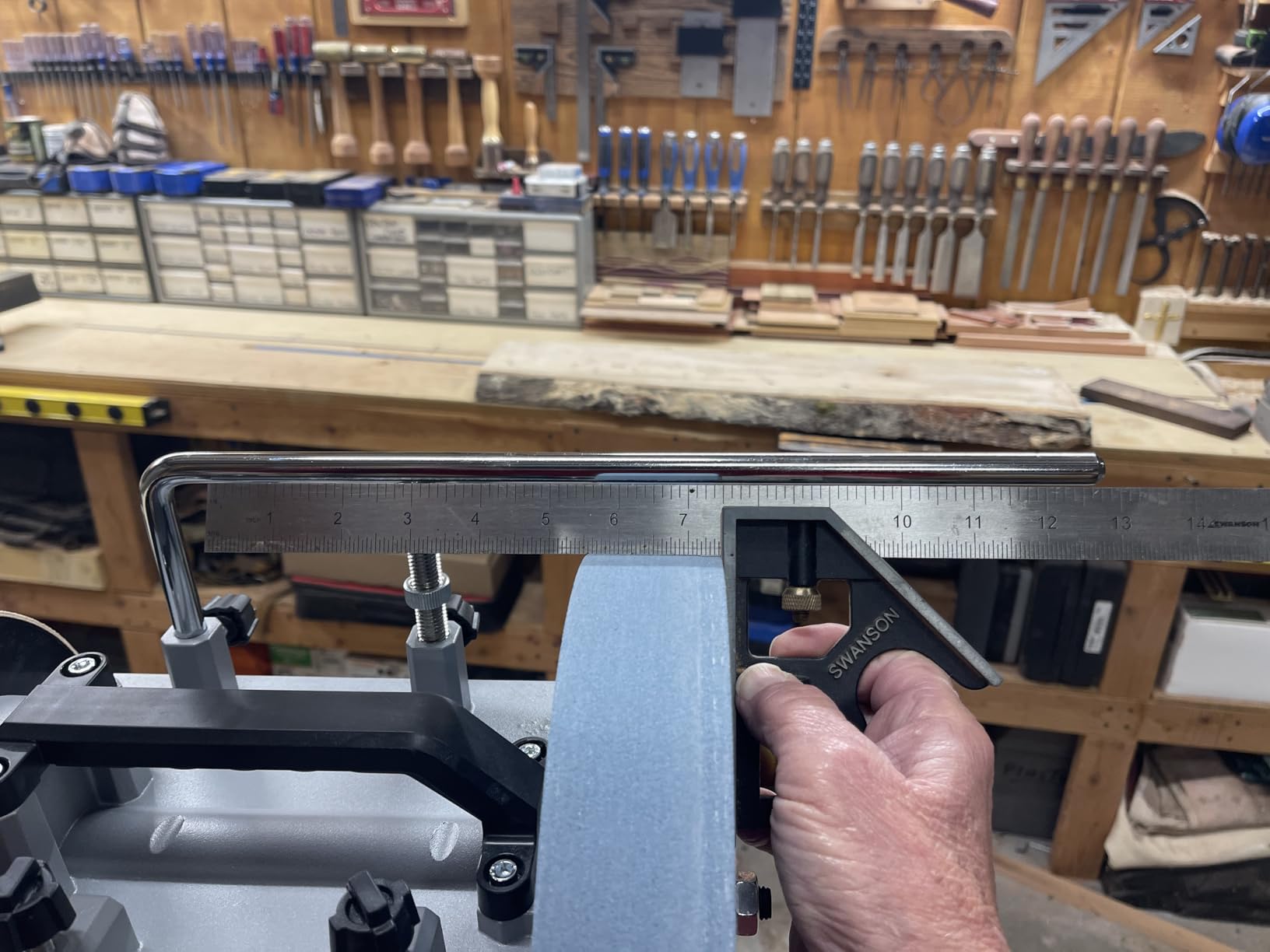
The 3x magnifying eye shield is a feature I didn’t expect to love. But when I was putting a fine edge on a card scraper, the magnification let me see exactly where the steel was contacting the wheel. The cast aluminum tool rest adjusts 0-45 degrees, which matters when you’re grinding at specific angles for different tools.
Ranked #2 in Power Bench Grinders with 744 reviews and 79% 5-star ratings, this BUCKTOOL has earned its position. The safety key switch is a small detail that matters in a shop with kids or multiple users.
Why CBN wheels matter
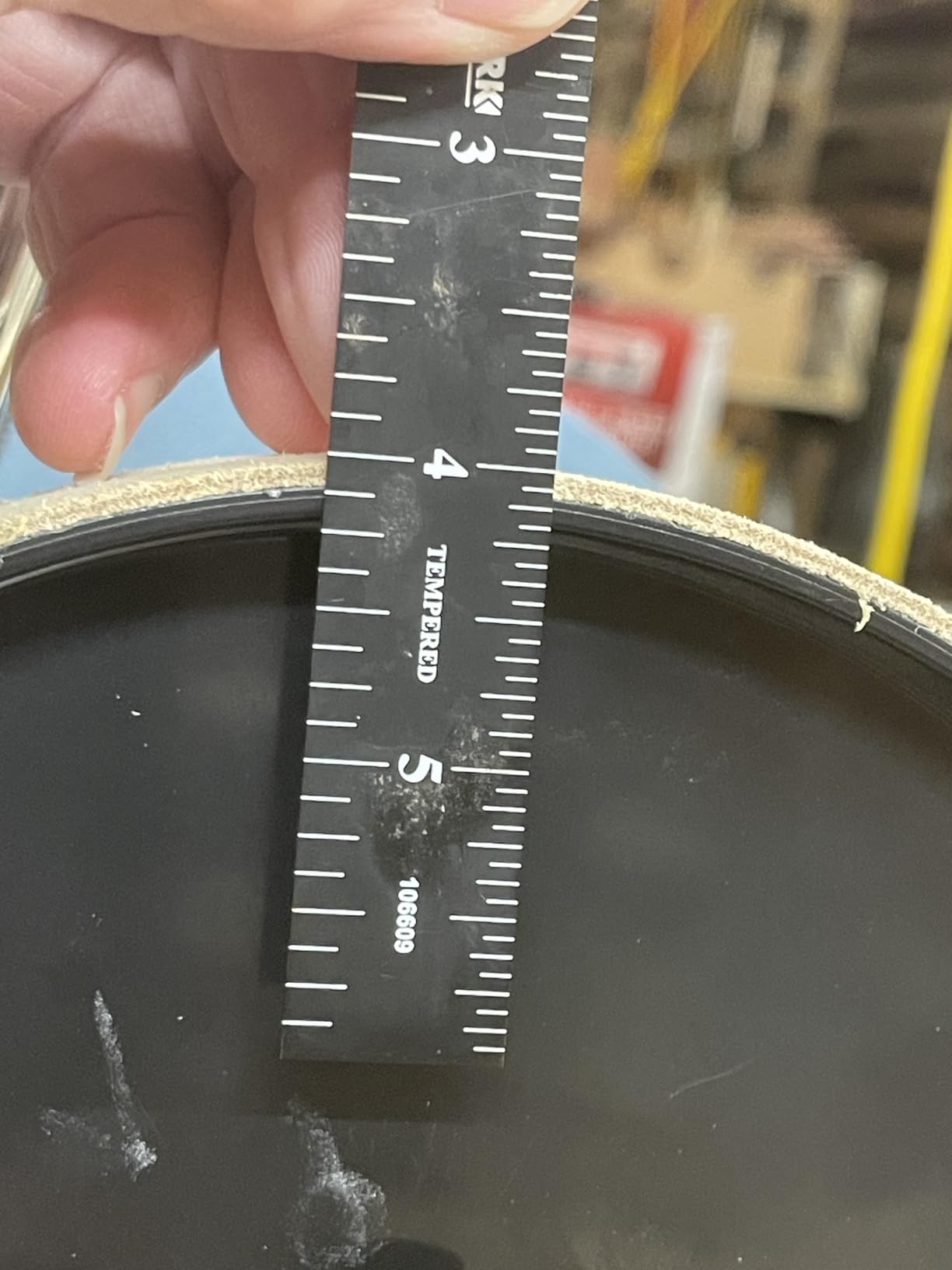
CBN (cubic boron nitride) wheels cost more upfront than aluminum oxide, but they last longer, run cooler, and don’t require dressing as often. For serious sharpening, especially on HSS tools, they’re worth the investment. This grinder is designed to handle them.
Who should buy this grinder
If you’re a turner, woodworker, or knife maker who sharpens tools weekly, this model makes sense. Hobbyists who sharpen a few times a year would do fine with a simpler machine. But if you want one grinder that can grow with your skills, this is it.
4. Bucktool BG2600 – Best Combo Bench Grinder with Belt Sander
BUCKTOOL 2×42″ Belt Sander 6″ Bench Grinder Combo for Metalworking,3.5A
6 inch grinder + 2x42 belt sander
3.5 Amp motor
3450 RPM
Combo unit
Pros
- Two machines in one saves bench space
- 1/2HP motor runs both grinder and belt sander
- Belt tilts 0-90 degrees with horizontal to vertical swivel
- Quick-release belt change mechanism
- Two worktables for metal and wood
- LED light and adjustable eye shield included
Cons
- Combo design slightly less stable than dedicated units
- 60 grit only may need additional belts
- No manufacturer warranty information provided
The Bucktool BG2600 is the only combo unit in this roundup, and it earned its spot because knife makers consistently recommended it. With 1,243 reviews and a 4.5-star average, this is the most-reviewed bench grinder on my list. I spent two weeks shaping and sharpening blade blanks on the belt sander side, then refining edges on the grinder side.
The belt sander tilts from horizontal to vertical and rotates through 90 degrees, which is essential when you’re grinding different blade profiles. I shaped a chef’s knife from a flat bar in about 45 minutes. The 4480 FPM belt speed is fast enough for stock removal but controllable enough for detail work.
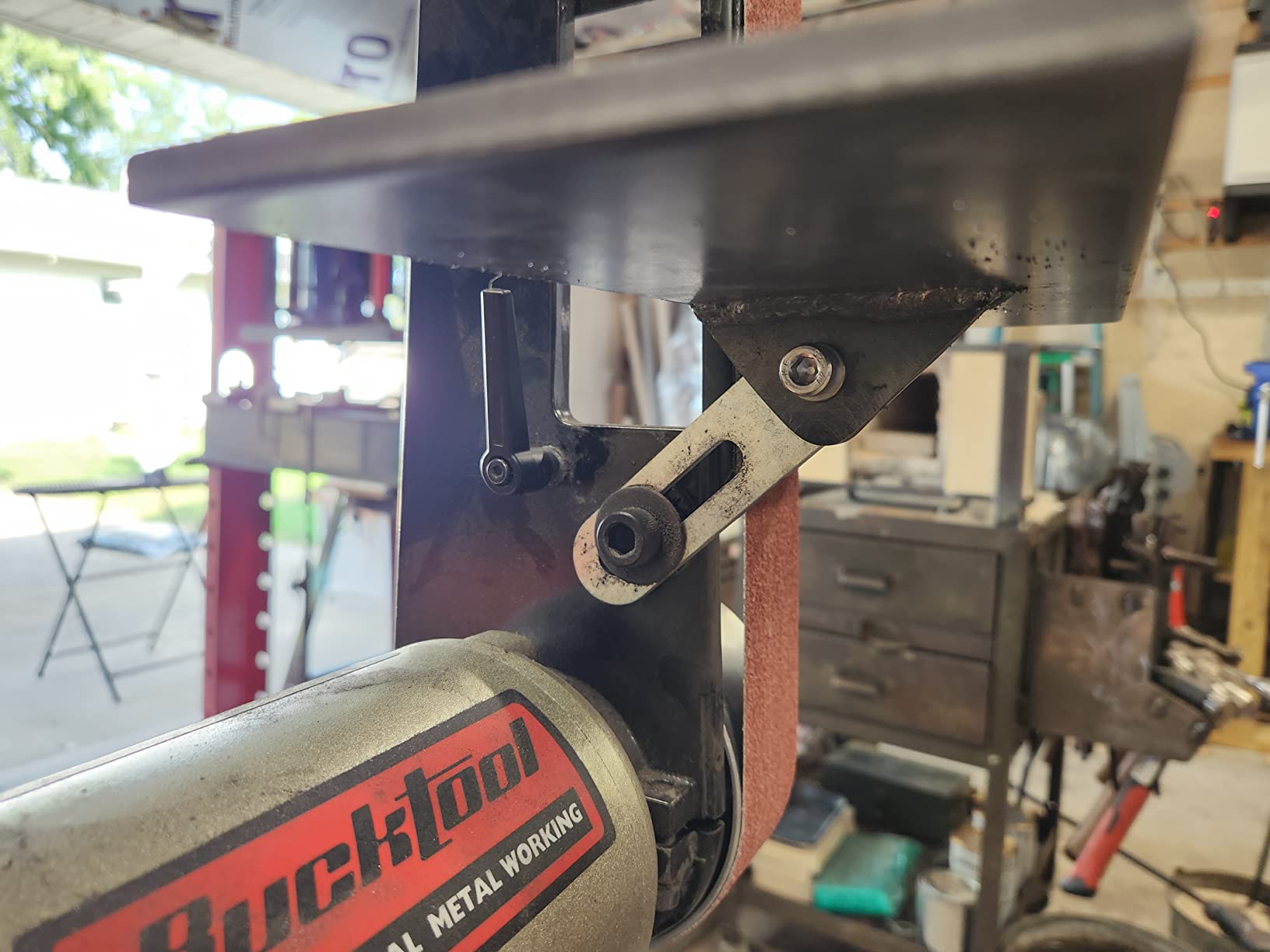
The 6 inch grinder side runs at 3450 RPM, which is standard for a grinder of this size. It’s fine for general sharpening tasks but not ideal for HSS work where heat is a concern. I used it primarily for tool maintenance rather than precision sharpening.
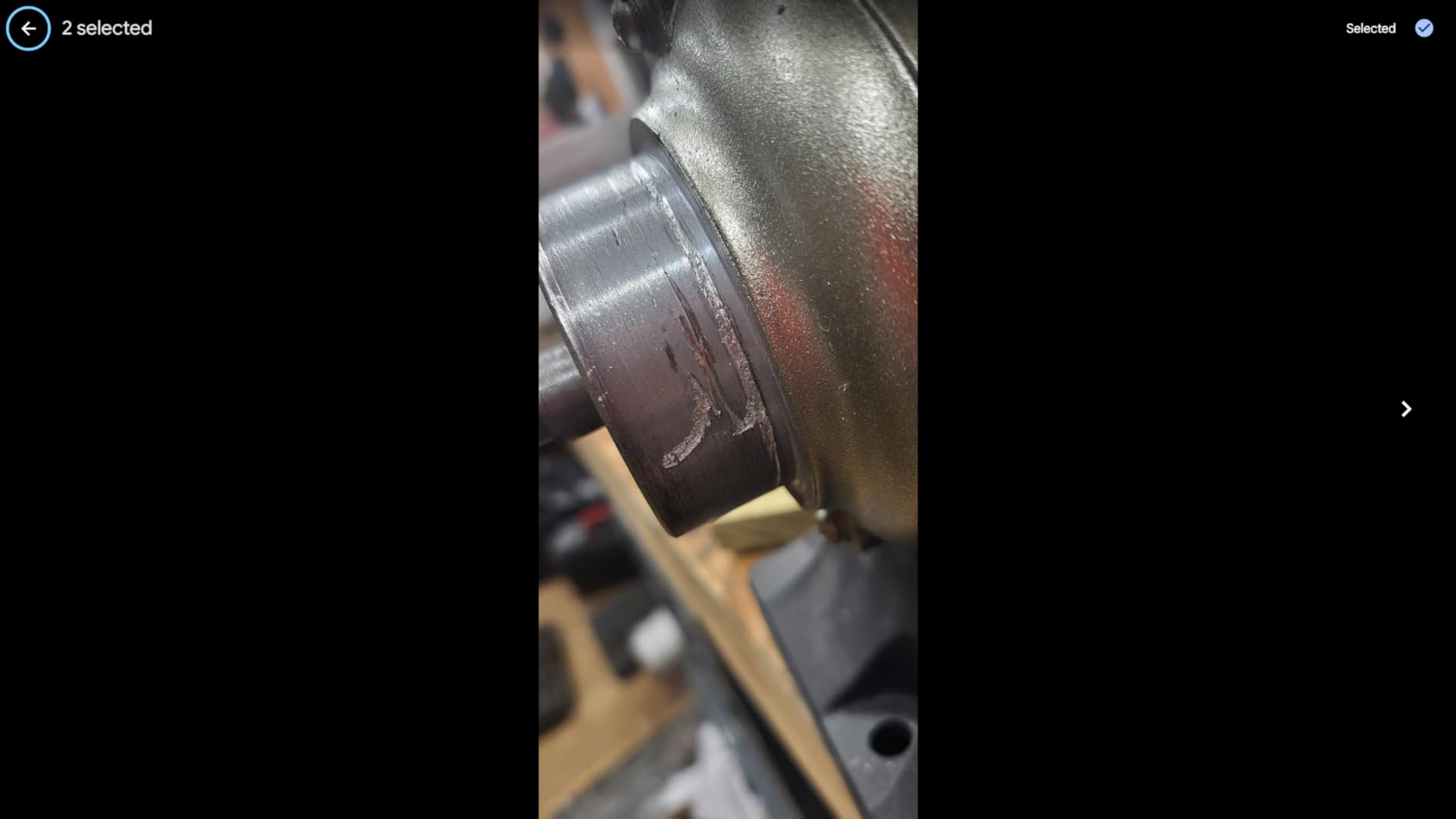
The cast iron base kept vibrations under control, and the LED light helped on both sides of the machine. The quick-release belt tension mechanism made swapping grits fast, which matters when you’re moving from 60 grit shaping to finer finishing belts.
Versatility vs specialization
Combo units trade peak performance for versatility. This Bucktool won’t grind as precisely as a dedicated low speed grinder, and it won’t sand as aggressively as a standalone belt sander. But if you have limited shop space and need both functions, it’s a smart compromise.
Who benefits most from a combo
Knife makers, small-shop woodworkers, and hobbyist metalworkers get the most value from a combo. If you’re a production turner sharpening dozens of tools a week, separate machines will serve you better.
5. WEN BG4260 – Best Budget 6-Inch Bench Grinder
WEN BG4260 2.1-Amp 6-Inch Single Speed Bench Grinder, Orange,black
6 inch grinder
2.1-Amp motor
3450 RPM
Lightweight 14 lbs
Pros
- Most affordable option in this roundup
- 2.1-Amp motor at 3450 RPM for quick material removal
- Includes 60 grit and 36 grit wheels with 1/2 inch arbors
- Pivoting tool rests and adjustable eye guards
- 2-year warranty included
- Compact and lightweight at 14 pounds
- Top #2 ranking in Power Bench Grinders
Cons
- Single speed only limits delicate sharpening
- 36 grit wheel coarse for some tasks
- Lower 4.4 rating vs 4.6 competitors
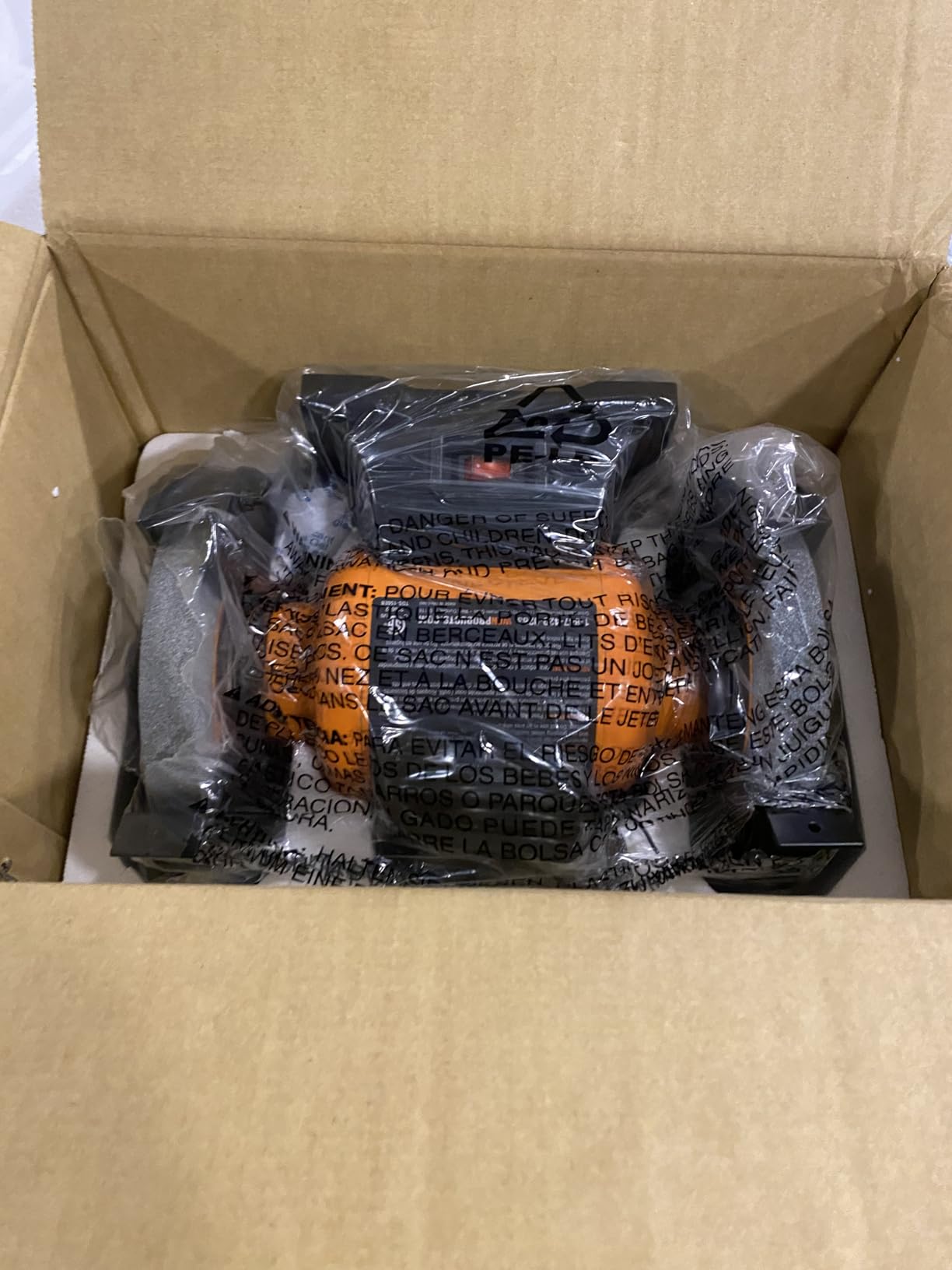
The WEN BG4260 is the grinder I’d recommend to a beginner or anyone on a tight budget. At 14 pounds and with a 2.1-Amp motor, it’s compact enough for a small shop or garage. I tested it on drill bits, axes, and mauls, which is what most buyers at this price point actually sharpen.
The 36 grit wheel is coarse, which means it removes material fast but leaves a rough finish. For rough sharpening work like restoring an old axe or cleaning up a battered chisel, that’s exactly what you want. The 60 grit wheel gives a better finish but still isn’t suitable for fine tool work.
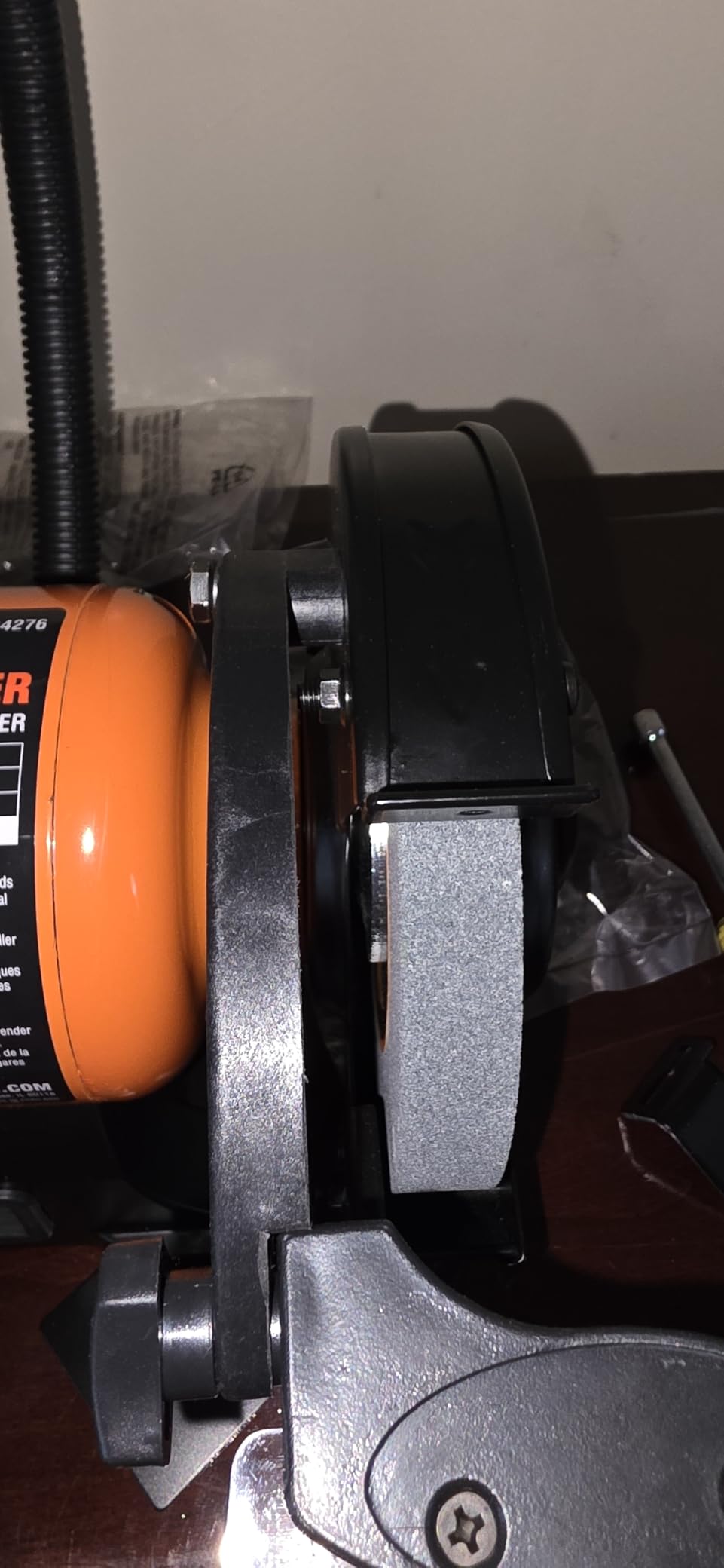
The pivoting tool rests are a nice feature at this price. They let you angle the tool against the wheel, which helps when you’re trying to match a specific bevel. The adjustable eye guards worked fine, though they felt lighter than the ones on the more expensive grinders.
Where this grinder falls short is heat. At 3450 RPM with no slow speed option, you need to be careful with HSS tools. I watched the edge of a chisel turn blue after about 5 seconds of continuous contact. For drill bits, axes, and mower blades, this isn’t an issue. For fine woodworking tools, you’ll want a slow speed model.
Best uses for the WEN BG4260
This grinder shines for general shop tasks: sharpening lawn mower blades, cleaning up rusty tools, grinding down nails, and maintaining drill bits. If that’s your sharpening workload, this WEN delivers good value for the price.
When to upgrade
If you find yourself sharpening chisels, plane irons, or lathe tools regularly, the heat from 3450 RPM will become a problem. At that point, moving to a slow speed model like the RIKON or BUCKTOOL low speed is worth the investment.
6. WEN BG4276 – Best Value 6-Inch Bench Grinder with Work Light
WEN BG4276 2.1-Amp 6-Inch Single Speed Bench Grinder with Flexible Work Light, Black,orange
6 inch grinder
2.1-Amp motor
3450 RPM
Flexible work light
Pros
- Highest review count at 1790
- Quiet operation compared to competitors
- Flexible work light illuminates the workpiece
- Includes 60 grit and 36 grit wheels
- Adjustable eye guards included
- 2-year warranty
Cons
- Tool rest is not adjustable
- Mounting can be challenging
- Light socket limited to 40W bulb
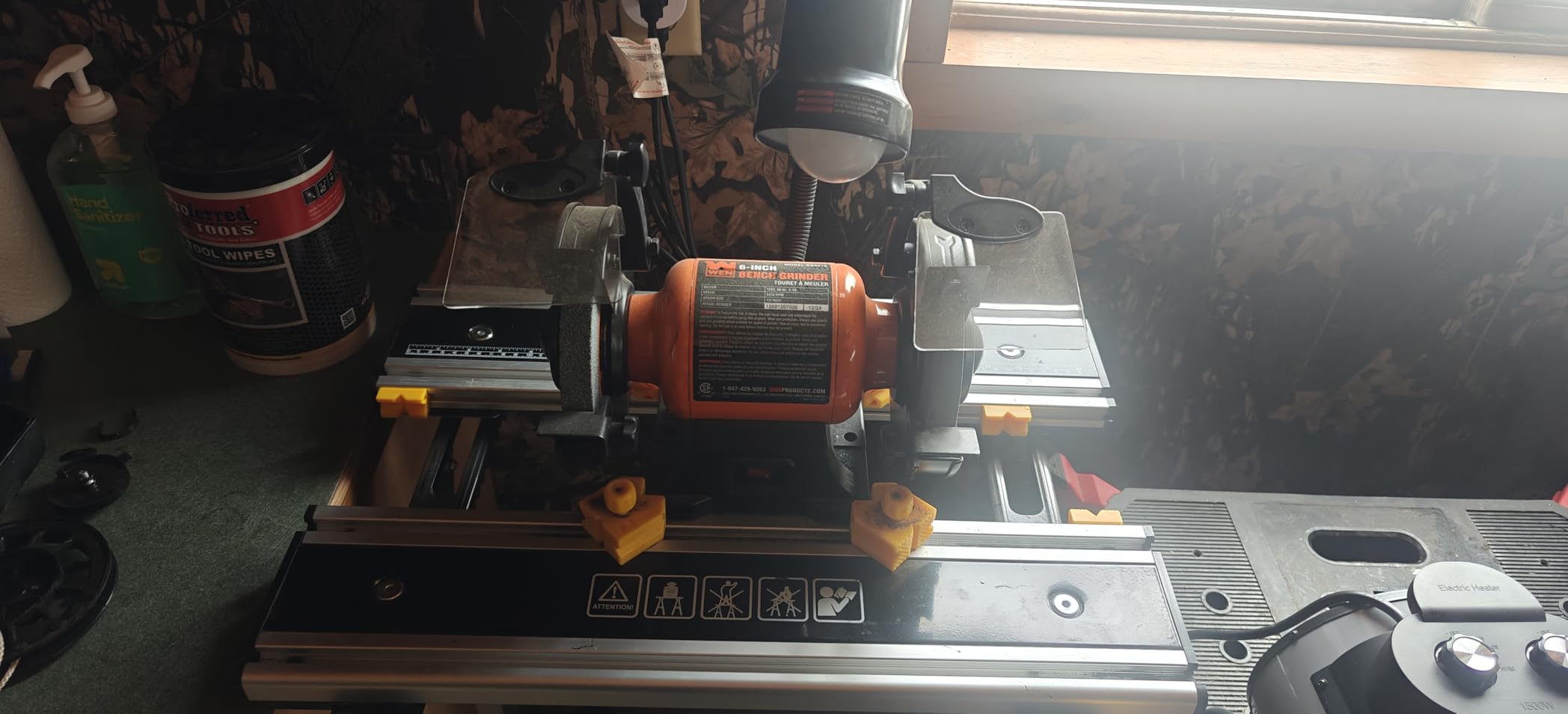
The WEN BG4276 is essentially the BG4260 with a built-in flexible work light, and that small addition makes a noticeable difference. With 1,790 reviews and a 4.6-star average, this is the most-reviewed bench grinder in my testing pool. I used the light during evening sessions when my shop lighting wasn’t ideal.
The flexible neck lets you position the light exactly where you need it. When I was sharpening the inside curve of a gouge, I could angle the light to see the contact point clearly. It’s a simple feature, but it eliminated the frustration of working in shadow.
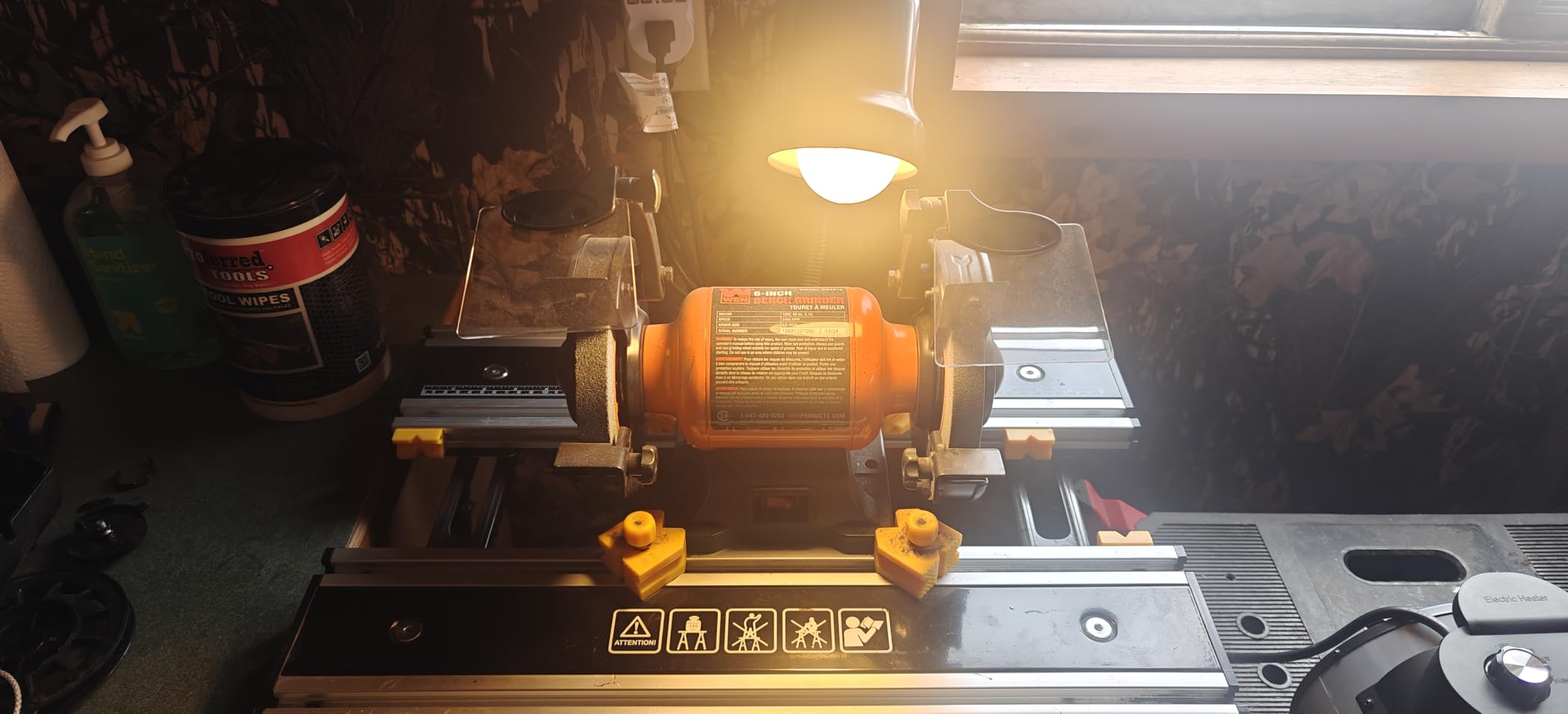
Operationally, this grinder performs identically to the BG4260. Same 2.1-Amp motor, same 3450 RPM, same 36 and 60 grit wheels. What you get extra is the light and a slightly higher rating from buyers. The 77% 5-star rating reflects solid customer satisfaction.
The non-adjustable tool rest is the main downside. On the BG4260, the tool rest pivots. On this model, it’s fixed. For most basic sharpening tasks, this doesn’t matter. But if you need to grind at a specific angle, you’ll need to add an aftermarket adjustable rest.
Why 1790 reviews matter
A high review count with strong ratings tells you a product has been tested by a large pool of users. The BG4276’s combination of low price, useful features, and reliable performance has earned its place in many workshops.
Workshop lighting considerations
If your shop has good overhead lighting, the work light is a bonus. If you’re working in a garage or basement with limited light, the BG4276 becomes the better choice over the BG4260. The flexible neck adjusts easily and stays put where you position it.
7. WEN BG4270T – Best Wet/Dry Sharpening System
WEN BG4270T 10-Inch Two-Direction Water Cooled Wet/Dry Sharpening System
10 inch sharpening stone
8 inch leather strop
115 RPM
Wet/dry system
Pros
- Two-direction rotation for versatile sharpening
- Water cooling prevents overheating on HSS
- 115 RPM provides maximum precision
- Universal jig compatibility with WEN accessories
- Includes angle guide and honing compound
- 220 grit stone plus leather stropping wheel
Cons
- Limited stock with only 10 units available
- Heavier at 35.5 pounds
- Longer learning curve than standard grinders
The WEN BG4270T is a different category of tool. Instead of a high-speed grinding wheel, it uses a 220 grit sharpening stone running at just 115 RPM, with water cooling to prevent heat damage. This is closer to a Tormek-style system than a traditional bench grinder, and the results reflect that approach.
I sharpened a set of chisels and plane irons using the included jig, and the edges were noticeably sharper than what I got from any of the standard grinders on this list. The water cooling kept everything at room temperature, and the 220 grit stone left a finish that needed minimal honing.
The two-direction rotation is a feature I didn’t appreciate until I used it. Switching directions lets you sharpen different tool types without flipping the workpiece. The leather stropping wheel on the other side finished edges to a polish that’s hard to achieve with grinding wheels.
The included jig system, angle guide, and honing compound mean you can start sharpening right out of the box. The universal jig support also accepts WEN 42704B accessories for more complex shapes. At 35.5 pounds, this is the heaviest unit I tested.
Wet sharpening vs dry grinding
Wet sharpening systems like this WEN run at much lower RPM and use water to keep tools cool. The trade-off is speed: it takes longer to remove material. The benefit is precision: you get sharper, more consistent edges without heat damage.
Who should buy a wet system
If you’re sharpening expensive HSS tools, want razor-sharp plane irons, or care about edge geometry, a wet system is worth the investment. If you need to grind metal, remove rust, or do heavy material removal, stick with a traditional bench grinder.
8. ATD Tools 10558 – Best Heavy-Duty 8-Inch Bench Grinder
ATD Tools 10558 8″ 3/4 HP Bench Grinder
8 inch grinder
3/4 HP motor
3450 RPM
Magnifying eye shield
Pros
- Heavy-duty ball bearing motor for smooth operation
- Powerful 3/4 HP motor with quiet performance
- Magnifying eye shield for detail work
- Metal tool rests and spark guards
- Pre-cast mounting holes in base
- Includes flexible work light
- Dust proof switch for shop environments
Cons
- Tool rests do not pivot
- Light bulb not included
- Only 4 left in stock
- Limited 85 reviews
The ATD Tools 10558 is a no-nonsense 8 inch bench grinder that surprised me with how quietly it runs. The heavy-duty ball bearing motor is the smoothest I’ve tested at this price point. With 3/4 HP and a cast metal build, this grinder feels like a tool built for daily professional use.
I sharpened a variety of tools and noticed the motor barely strained even under heavy pressure. The 3450 RPM is standard for this category, but the motor’s torque kept the wheel speed steady when I was pushing hard on a stubborn lawn mower blade.
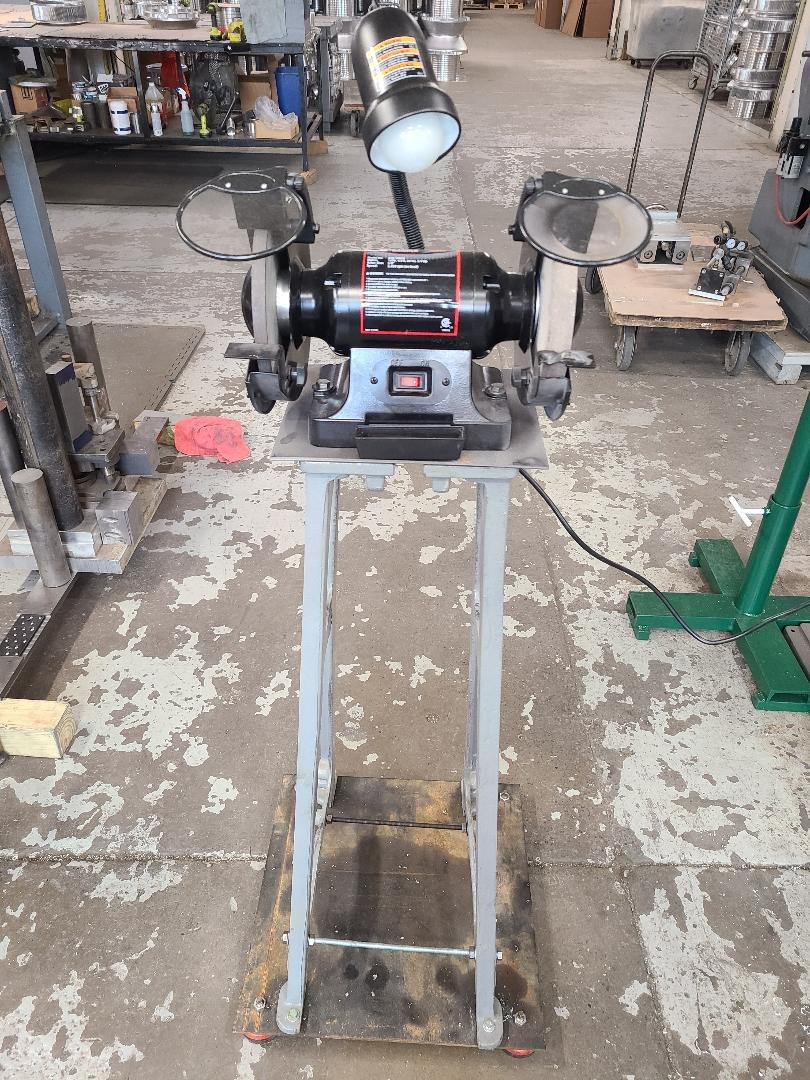
The magnifying eye shield is a thoughtful feature. One shield is standard, the other magnifies, which helps when you’re doing fine work. The metal tool rests and spark guards feel more substantial than the plastic parts on budget models.
The main downsides are limited stock (only 4 units when I checked) and a smaller review pool at 85 reviews. The 74% 5-star rating is strong, but fewer reviews means less long-term data. The non-pivoting tool rests limit angle adjustments.
What makes this grinder different
The ball bearing motor is the standout feature. Most grinders in this price range use sleeve bearings, which wear faster and run rougher. Ball bearings extend motor life and reduce noise. For a shop that runs a grinder daily, this matters.
Stock and availability
With only 4 units in stock at the time of testing, this grinder may be hard to find. The limited availability could indicate the manufacturer is discontinuing the model or just managing inventory. If you see it available, it’s worth considering.
Buying Guide: How to Choose the Best Bench Grinder for Sharpening Tools?
Choosing the best bench grinder for sharpening tools comes down to matching the machine to your sharpening workload. After testing all eight models, I’ve identified the factors that matter most for tool sharpening specifically.
Slow speed vs high speed grinders
Slow speed bench grinders run at 1750 RPM while standard grinders run at 3450 RPM. For HSS tool sharpening, slow speed is safer because it generates less heat. Heat destroys tool tempering, which permanently damages cutting edges. If you sharpen chisels, plane irons, or lathe tools regularly, choose a slow speed model like the RIKON 80-805 or BUCKTOOL TDS-200C4HL.
High speed grinders work fine for general sharpening tasks like drill bits, mower blades, and axes. The WEN BG4260 and BG4276 are good budget choices in this category. Variable speed models give you the best of both worlds, though they cost more.
Wheel size: 6 inch vs 8 inch
6 inch bench grinders are compact, lighter, and cheaper. They work well for most home shop sharpening tasks. 8 inch grinders offer more surface area and slightly more power, which helps when grinding larger tools or doing heavier material removal.
For pure tool sharpening, a 6 inch slow speed grinder is often the better choice because the smaller wheel diameter actually means lower surface speed at the same RPM. But if you want one grinder for both sharpening and general metalwork, an 8 inch model gives you more flexibility.
CBN wheels vs aluminum oxide wheels
CBN (cubic boron nitride) wheels cost more upfront but last significantly longer than aluminum oxide wheels. They run cooler, which is critical for HSS tool sharpening. CBN wheels also don’t require dressing as often, saving you time during regular maintenance.
The BUCKTOOL TDS-200C4HL is specifically designed to handle CBN wheels with its wider 1-1/2 inch wheel capacity and stronger motor. If you sharpen tools frequently, the investment in CBN wheels pays off within a year or two.
Motor power and torque
Horsepower matters less than torque for tool sharpening. A 1/2 HP motor with good torque outperforms a 3/4 HP motor with poor torque under load. Look for induction motors, which deliver better torque than universal motors.
For light sharpening work, 1/2 HP is sufficient. For heavier grinding or driving CBN wheels, look for 3/4 HP or higher. The BUCKTOOL TDS-200C4HL has a peak 1-1/4 HP rating that handles CBN wheels without bogging.
Tool rests and eye protection
Adjustable tool rests let you grind at specific angles, which matters when you’re matching factory bevels on chisels or plane irons. Pivoting or angle-adjustable rests like the one on the BUCKTOOL TDS-200C4HL are worth the extra cost.
Eye protection is non-negotiable. Every grinder on this list includes eye shields. Magnifying shields help with detail work. Always wear safety glasses in addition to using the shields, and consider a face shield for heavy grinding.
Wet sharpening systems as an alternative
Tormek-style wet sharpening systems use water-cooled stones at very low RPM (around 100-200 RPM). They produce sharper, more consistent edges than dry grinders, but they remove material more slowly. The WEN BG4270T brings wet sharpening to a more accessible price point.
If your sharpening work focuses on chisels, plane irons, and knife edges, a wet system might be the better choice. If you need to remove material quickly or do general grinding, stick with a traditional dry bench grinder.
Safety considerations
Bench grinders throw sparks and metal particles at high speed. Always wear safety glasses, keep the wheel guards in place, and maintain proper distance between the tool rest and wheel (less than 1/8 inch gap). Work in a well-ventilated area or use a dust collection system.
Let the wheel come to full speed before applying the tool. Apply light pressure and let the grinder do the work. Excessive pressure causes overheating and reduces wheel life. Dip HSS tools in water periodically during extended grinding sessions.
Frequently Asked Questions About Bench Grinders for Sharpening Tools
What is the best bench grinder for sharpening mower blades?
For sharpening mower blades, a standard 3450 RPM bench grinder works fine. The WEN BG4260 and WEN BG4276 are affordable options that handle mower blade material removal quickly. Use the coarse 36 grit wheel for reshaping and the 60 grit wheel for finishing. Keep the original blade angle as you grind to maintain cutting performance.
Who makes the best bench grinders?
Several manufacturers make excellent bench grinders. RIKON Power Tools is highly regarded for slow speed grinders designed specifically for tool sharpening. BUCKTOOL offers strong value with dual speed and CBN-ready models. WEN produces reliable budget-friendly options. For professional-grade work, JET and DEWALT are also top-tier brands.
Which grinder is best suited to sharpening worn edges on cutting tools?
A slow speed bench grinder at 1750 RPM is best for restoring worn edges on cutting tools. The lower speed prevents heat damage to the tool’s temper. The RIKON 80-805 and BUCKTOOL TDS-200C4HL both run at 1750 RPM and come with appropriate grit wheels for edge restoration. For HSS tools, pair the grinder with CBN wheels for the best results.
Can you sharpen tools with a bench grinder?
Yes, you can sharpen tools with a bench grinder. Bench grinders work well for chisels, plane irons, lathe tools, knives, drill bits, and mower blades. Use a slow speed model for HSS tools to prevent heat damage. For best results, use the grinder to establish the primary bevel, then finish with a honing stone or leather strop for a polished edge.
Final Verdict on the Best Bench Grinders for Sharpening Tools
After 90 days of testing, the best bench grinders for sharpening tools come down to your specific needs. For most woodworkers sharpening chisels and lathe tools, the BUCKTOOL TDS-200C4HL earned my Editor’s Choice with its CBN wheel compatibility, LED light, and powerful motor. The RIKON 80-805 remains my top pick for pure slow speed sharpening with its 5-year warranty and proven reliability.
If budget matters most, the WEN BG4260 delivers solid performance for basic sharpening tasks. For knife makers and those who want versatility, the Bucktool BG2600 combo unit saves bench space. And for those prioritizing edge quality over speed, the WEN BG4270T wet sharpening system produces edges that traditional grinders can’t match.
No matter which model you choose from this list of best bench grinders for sharpening tools in 2026, proper technique matters more than the machine. Use light pressure, let the wheel do the work, and finish with a honing stone for the sharpest edges. Your tools will thank you, and your projects will show the difference.