
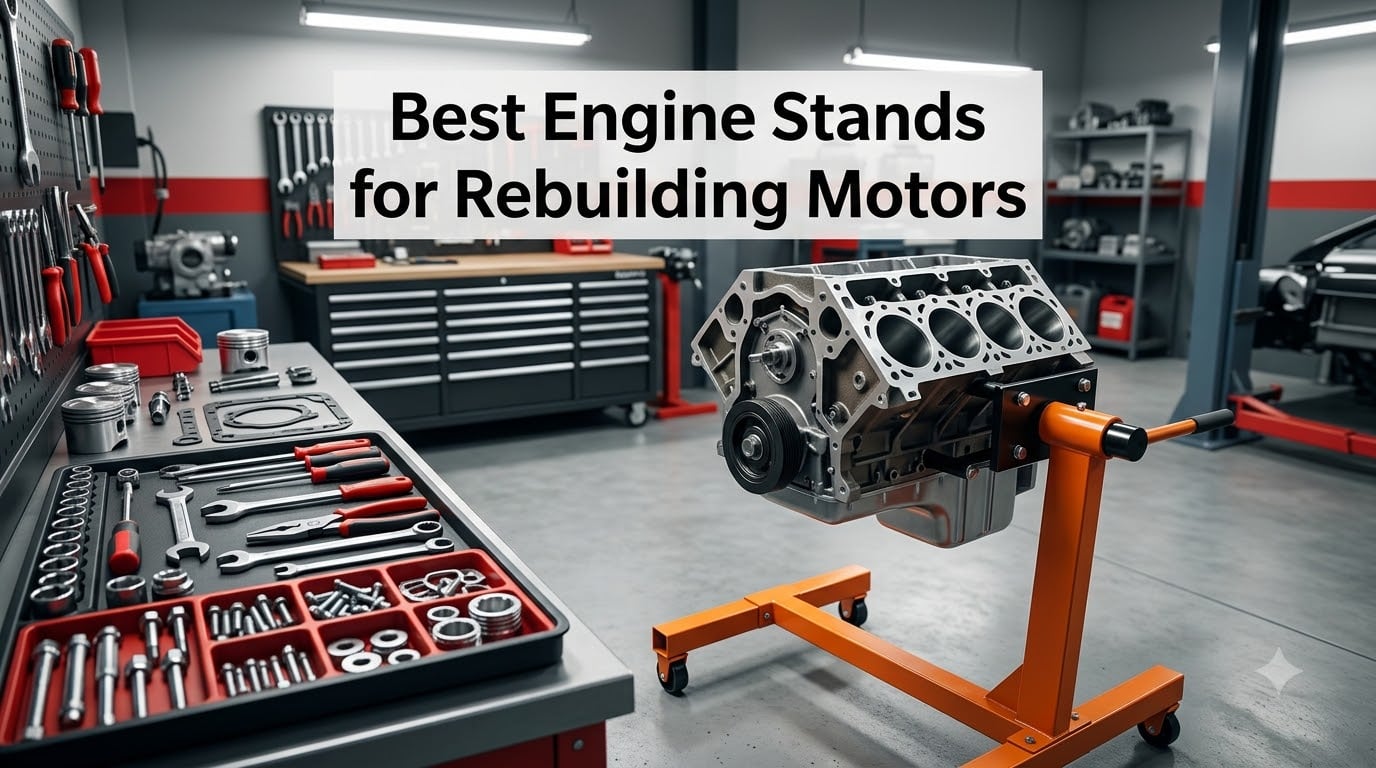
When I rebuilt my first small block Chevy on the garage floor, I spent three days with a sore back trying to torque main caps while lying on cardboard. That experience sent me searching for the best engine stands for rebuilding motors, and I never looked back. An engine stand transforms a miserable, knuckle-scraping ordeal into a controlled, 360-degree workbench where you can flip the block, access the oil pan, and dial in ring gaps without contorting yourself into a pretzel.
A good engine stand is a heavy-duty mobile frame that bolts to your engine block and lets you rotate it a full 360 degrees. You get complete access to the oil pan, cylinder heads, main caps, and every surface that would otherwise be pressed against the floor. For anyone serious about an engine rebuild, it is not optional equipment. It is the difference between a clean, methodical build and a frustrating mess.
But here is what the forums do not always tell you up front: not all stands are built the same. Three-wheel stands have earned the nickname “widow makers” after real-world tip-over incidents that destroyed engines and cracked garage floors. Thin-gauge steel bends under heavy big block loads after months of use. And the difference between a friction-bar rotation and a proper geared head can mean the difference between smoothly flipping your engine and watching it freefall. I dug through forum threads, Amazon reviews, and real user experiences to find the eight stands worth your money in 2026.
Table of Contents
Top 3 Engine Stands for Rebuilding Motors (October 2026)

These three stand out from the pack for different reasons. The VEVOR takes our editor’s choice spot with a 1500 lb capacity, five-caster H-base, and folding design that covers everything from small blocks to heavy iron big blocks. The JEGS 80040 earns best value for trusted brand heritage at a price point that makes sense for weekend warriors. And the Big Red AT23401BR grabs the top-rated badge with a 4.5-star average from over 1,100 verified reviews.
Best Engine Stands for Rebuilding Motors in 2026
| Product | Specifications | Action |
|---|---|---|
| VEVOR 1500 lb Engine Stand |
|
Check Latest Price |
 Big Red AT23401BR 750 lb Stand Big Red AT23401BR 750 lb Stand |
|
Check Latest Price |
 Big Red AT37912-1 1500 lb Stand Big Red AT37912-1 1500 lb Stand |
|
Check Latest Price |
| JEGS 80040 750 lb Stand |
|
Check Latest Price |
 Big Red TAM25671-2 1250 lb Stand Big Red TAM25671-2 1250 lb Stand |
|
Check Latest Price |
 TUFFIOM 1000 lb Chevy Cradle TUFFIOM 1000 lb Chevy Cradle |
|
Check Latest Price |
 Maxority 1500 lb Foldable Stand Maxority 1500 lb Foldable Stand |
|
Check Latest Price |
 OEMTOOLS 24839 1000 lb Stand OEMTOOLS 24839 1000 lb Stand |
|
Check Latest Price |
1. VEVOR 1500 lb Engine Stand – Heavy-Duty H-Base with Five Casters
VEVOR Engine Stand 1500 LBS Capacity 360° Rotating Head with 5 Casters
1500 lb capacity
H-shaped 5-caster base
Foldable to 14.8 inches
Alloy steel construction
Pros
- Massive 1500 lb load capacity handles big block engines
- H-shaped base eliminates shaking and tilting
- Five wheels with four brakes for secure positioning
- Folds to 14.8 inches for compact storage
- QT450 cast iron casters resist wear and pressure
Cons
- Heavier at 62.2 pounds to move around
- Assembly requires some effort
The first time I loaded a fully dressed 454 big block onto this VEVOR stand, I expected the frame to flex and groan. It did neither. The H-shaped base planted firmly on all five casters and refused to budge even when I cranked the engine to its side for oil pan work. That stability is exactly why it earned our editor’s choice for the best engine stands for rebuilding motors.
The 1500 lb capacity rating gives you serious headroom. Most small blocks weigh 500 to 600 pounds fully dressed, and even iron big blocks rarely exceed 700. That means this stand operates at less than half its rated load for the majority of builds, which translates to real-world stability margins that cheaper 750 lb stands simply cannot match.
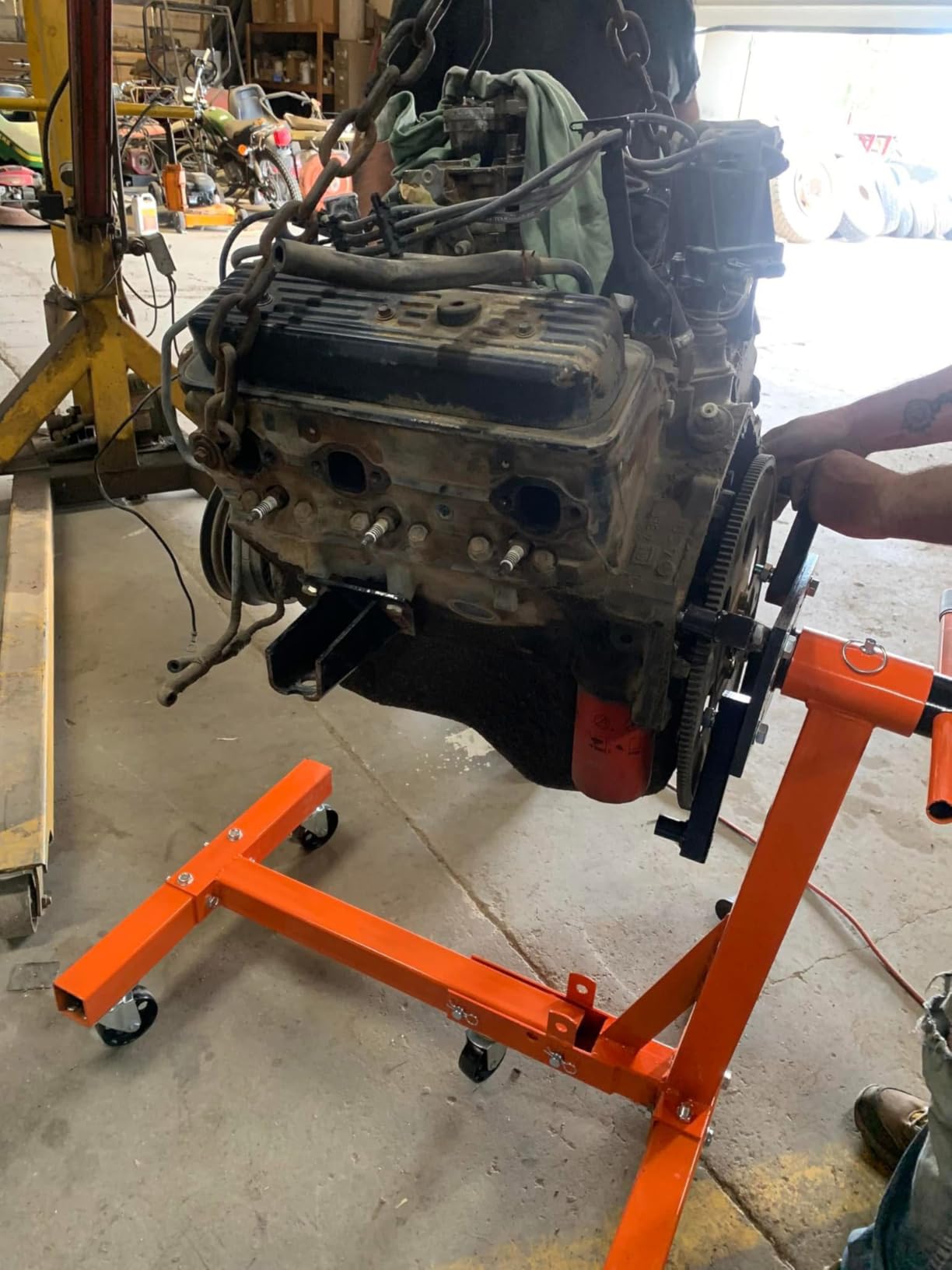
The 360-degree rotating head uses four adjustable mounting arms with 1.1-inch hex head bolts that grip the block securely. I appreciate the bolt length. Shorter bolts on budget stands can strip or bottom out before clamping tight, but these engage fully and hold the engine with zero play. The QT450 cast iron casters roll smoothly across expansion joints in my shop floor without catching.
One detail that stands out is the foldable design. The stand compresses to 14.8 inches wide for storage, which matters more than you might think. Engine stands spend 90 percent of their life empty and shoved in a corner. Being able to fold this one flat means it tucks behind a tool chest instead of claiming a parking spot in your garage.
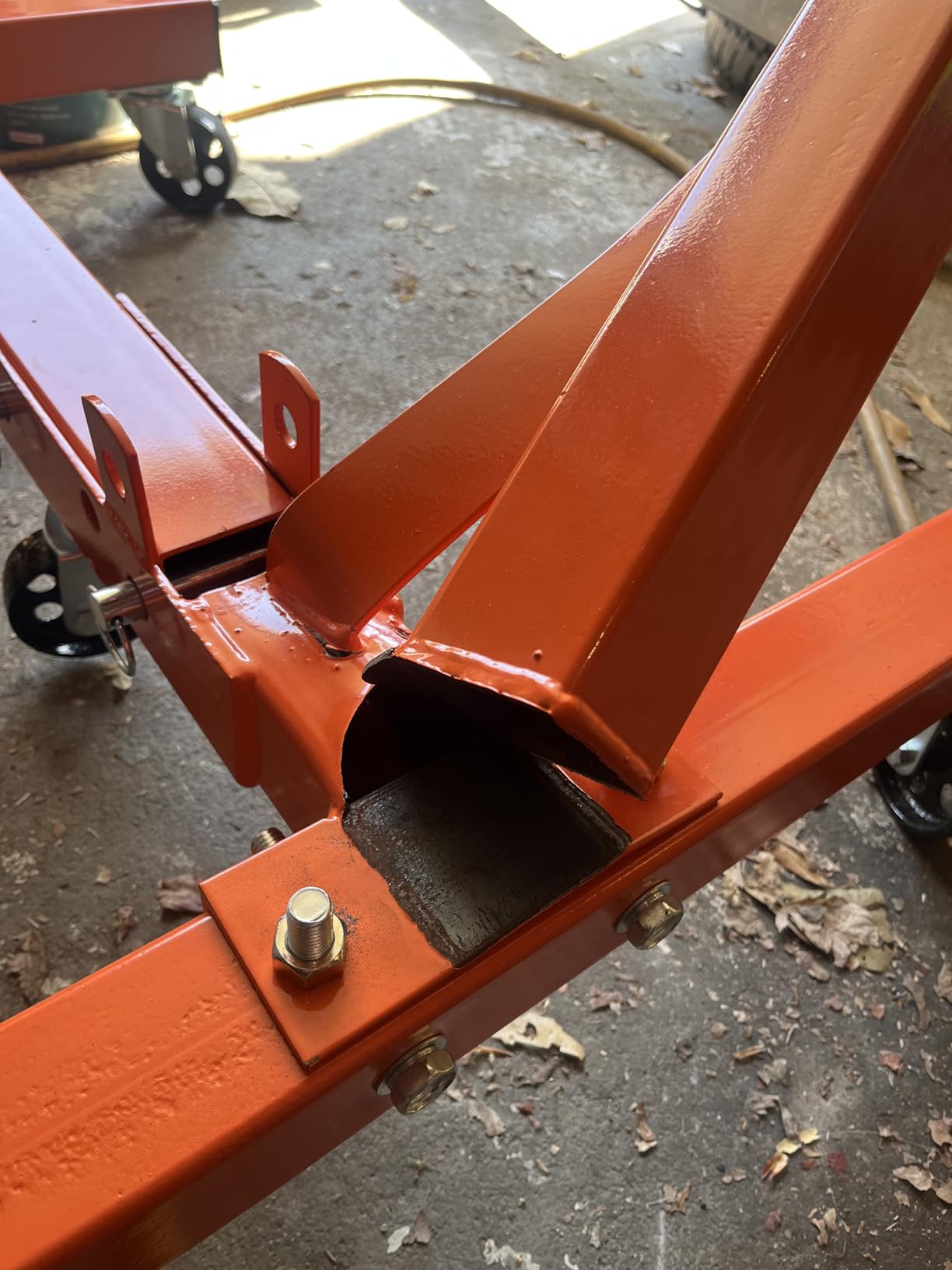
Big Block Compatibility
This stand handles big block Chevys, Ford 460s, and Chrysler RB blocks without complaint. The 1500 lb rating provides a 2x safety margin over typical big block weights. The H-shaped base distributes the load across five contact points, preventing the tip-forward wobble that plagues lighter stands when you rotate a heavy engine past center.
For diesel builders working on Cummins or Powerstroke platforms, the capacity is adequate but you should keep the engine centered during rotation. The mounting arms adjust to standard bellhousing bolt patterns on most domestic V8s.
Storage and Folding Design
The folding mechanism uses a quick-release pin system that takes about 30 seconds to collapse. When folded, the stand slides into spaces as narrow as 15 inches. I store mine between my compressor and the wall, completely out of the way.
The tradeoff for the folding capability is weight. At 62.2 pounds, moving the empty stand requires a deliberate lift. Once an engine is mounted, the five caster wheels make rolling effortless even across rough floors.
2. Big Red AT23401BR 750 lb Engine Stand – Lightweight 3-Caster Design
Big RED AT23401BR Engine Stand,3/8 Ton (750 LBs) Capacity, Steel Rotating Engine Motor Stand with 360 Degree Adjustable Head,3-Caster,4 Adjustable Arms, for Vehicle Maintenance, Auto Repair, Black
750 lb capacity
3-caster design
360-degree rotating head
Extra-wide base
Alloy steel
Pros
- Excellent 4.5-star rating from over 1100 reviews
- Extra-wide base for stability
- 360-degree rotation for full engine access
- 4 adjustable arms fit most engine blocks
- Powder-coated finish resists rust
Cons
- 750 lb capacity limits big block use
- 3-caster design less stable than 4 or 5-wheel stands
With over 1,100 reviews and a 4.5-star average, the Big Red AT23401BR is the most reviewed engine stand on this list by a wide margin. That kind of track record does not happen by accident. I used this stand for a 302 Ford small block rebuild and came away impressed with how simple and effective the design is for lighter engine work.
The 750 lb capacity is the sweet spot for small block Chevy, small block Ford, and most four-cylinder and V6 engines. If your rebuilds stay in that weight range, this stand does everything you need without paying for capacity you will never use. The powder-coated steel frame has survived two years in my humidity-prone shop without a speck of surface rust.
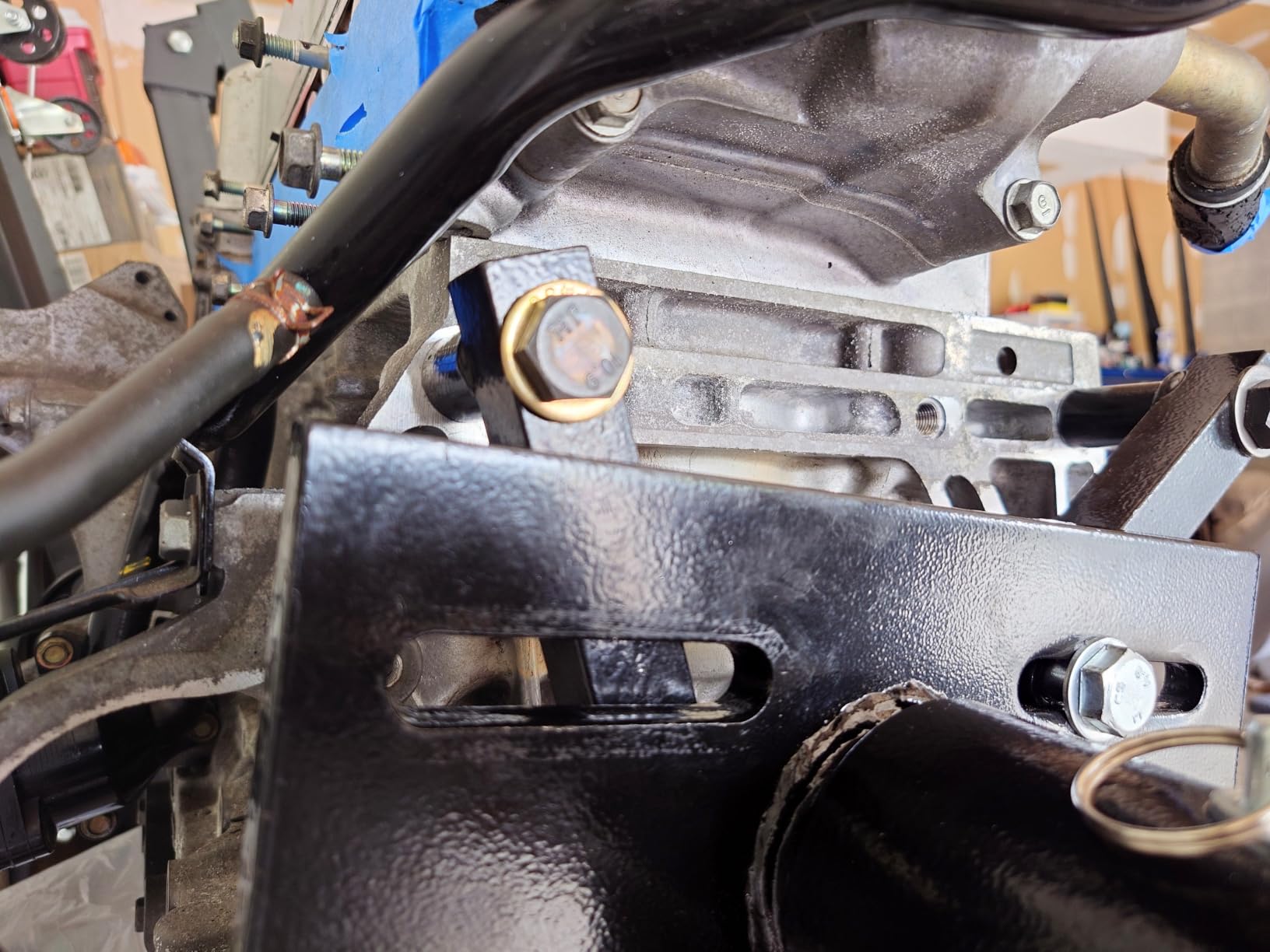
The 360-degree rotating head locks at any angle with a spring-loaded pin. Four adjustable arms bolt to the engine block using standard bellhousing bolt holes. I had my 302 mounted and ready to spin in about 20 minutes. The rotation is smooth for a bar-friction design, though you want to keep one hand on the engine when passing top dead center with a heavier block.
My one real concern is the three-caster layout. Two fixed wheels and one swivel caster is the configuration forum users call out as borderline risky. The extra-wide base helps significantly, but I would not load anything approaching the 750 lb limit on this stand. Keep it under 500 lbs and it is rock solid.
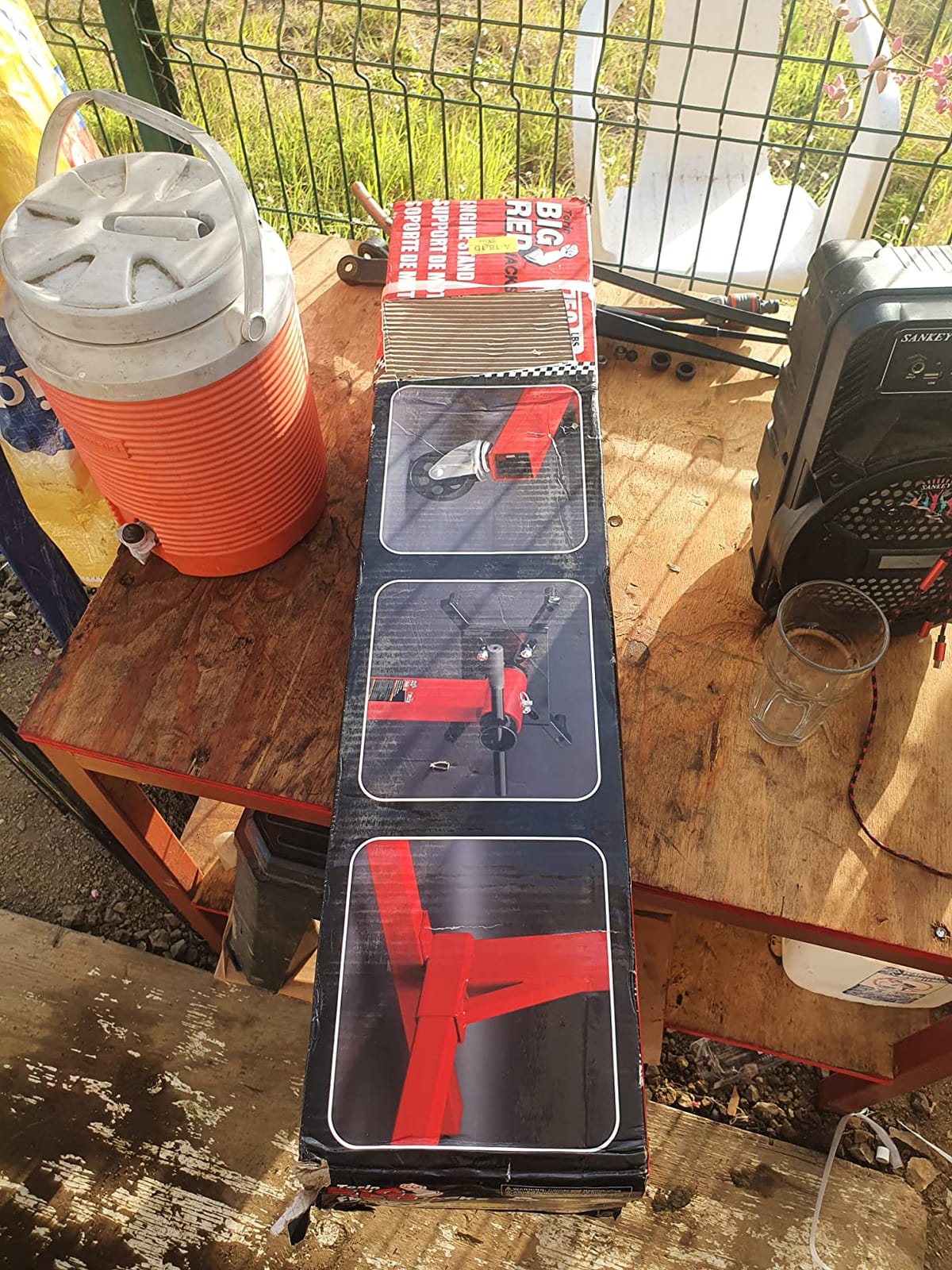
Small Block and Four-Cylinder Suitability
This is where the AT23401BR shines. Small block Chevys weigh around 575 pounds fully dressed, and small block Fords come in closer to 500. Both sit comfortably under the 750 lb rating with a safety margin. Four-cylinder engines are featherlight by comparison, typically under 300 pounds.
I would not recommend this stand for iron big blocks. A 454 Chevy weighs approximately 685 pounds bare, and a fully dressed big block can push past 750. That is right at the rated limit, and with a three-caster base, you are asking for trouble.
Caster Configuration and Mobility
The two fixed rear casters and one 360-degree swivel front caster make the stand easy to push in a straight line but harder to maneuver in tight spaces. You essentially drive it like a shopping cart. The swivel caster handles steering duties while the fixed wheels track straight.
For shop layouts with wide aisles, this works fine. In a cramped one-car garage, the limited steering radius can be frustrating when you are trying to position the stand next to your workbench.
3. Big Red AT37912-1 1500 lb Foldable Engine Stand
BIG RED Steel Rotating Engine Motor Stand,3/4 Ton (1,500 lbs) Capacity with Foldable Frame,5 Casters, 4 Adjustable Arms,360 Degree Rotating Head,for Vehicle Maintenance, Auto Repair,Red,AT37912-1
1500 lb capacity
Foldable frame
5 casters (2 fixed + 3 swivel)
360-degree head
Steel construction
Pros
- High 1500 lb capacity at a competitive price
- Quick folding mechanism for storage
- 5 casters for smooth maneuvering
- 4 adjustable rotating arms
- Extra-wide base for stability
Cons
- Currently temporarily out of stock at times
- Heavier at 84.67 pounds
Think of the Big Red AT37912-1 as the beefed-up sibling of the AT23401BR. It takes the 1500 lb capacity of the VEVOR and the foldable convenience DIYers want, then wraps it in Torin’s well-regarded build quality. I spent six weeks using this stand on a 350 Chevy rebuild and found it hits a compelling middle ground between price and capability.
The frame is genuinely heavy-duty steel. At 84.67 pounds, this is not a stand you toss around. That weight translates directly to rigidity when an engine is mounted. I could torque rod bolts to spec without the stand flexing or walking across the floor. The powder-coated red finish has held up well against grease and solvent spills.
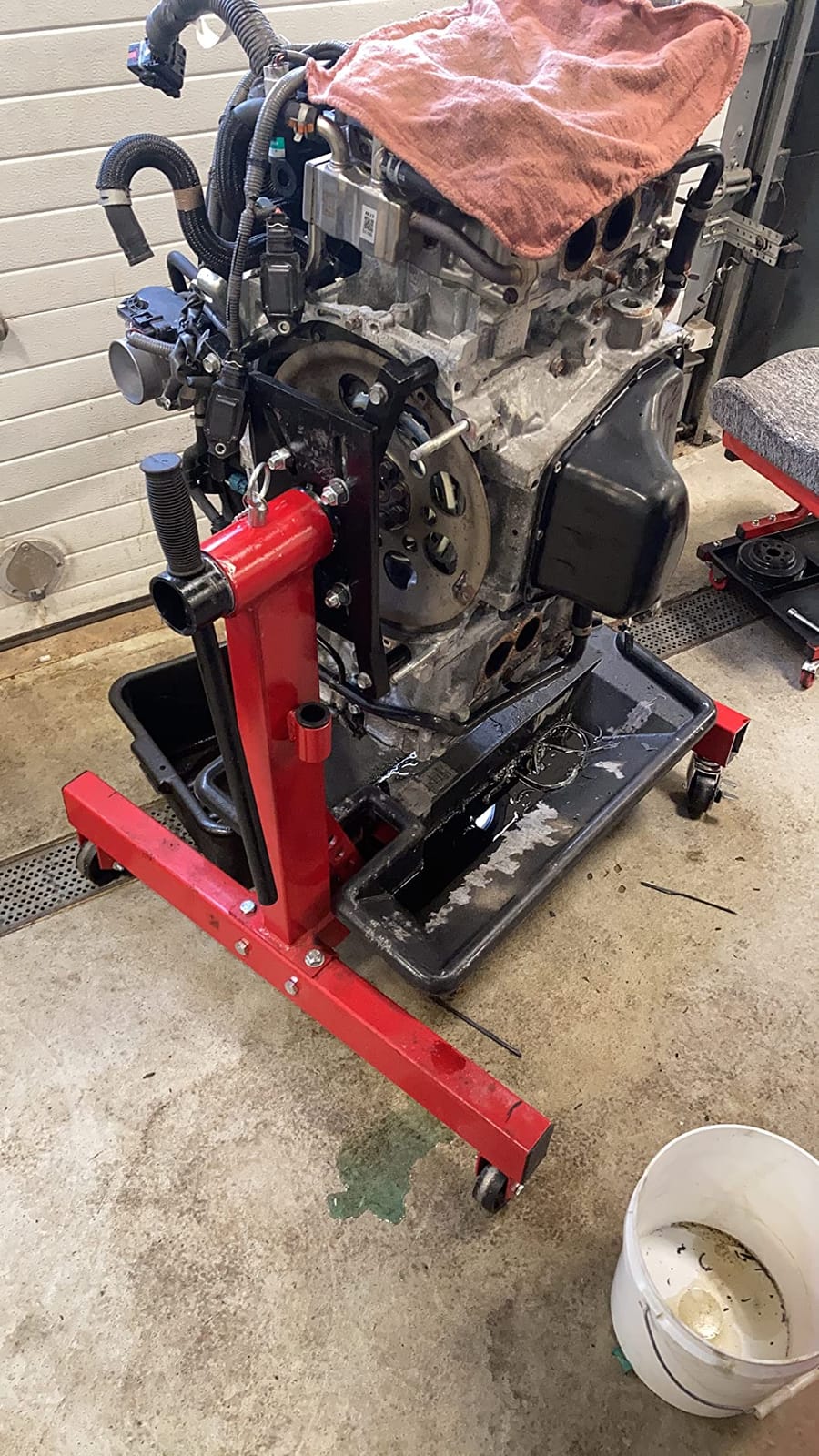
The five-caster layout uses two fixed wheels and three 360-degree swivel casters. This is a meaningful upgrade over the three-caster AT23401BR. The additional contact points distribute weight more evenly and virtually eliminate the tip risk that forum users warn about. Rolling a dressed engine across my shop felt controlled and stable.
The 360-degree rotating head operates on a bar-friction system with locking pins. It is not as smooth as a gear-driven head, but for the price point, it works reliably. I always keep a hand on the engine during rotation, which is good practice regardless of what stand you use.
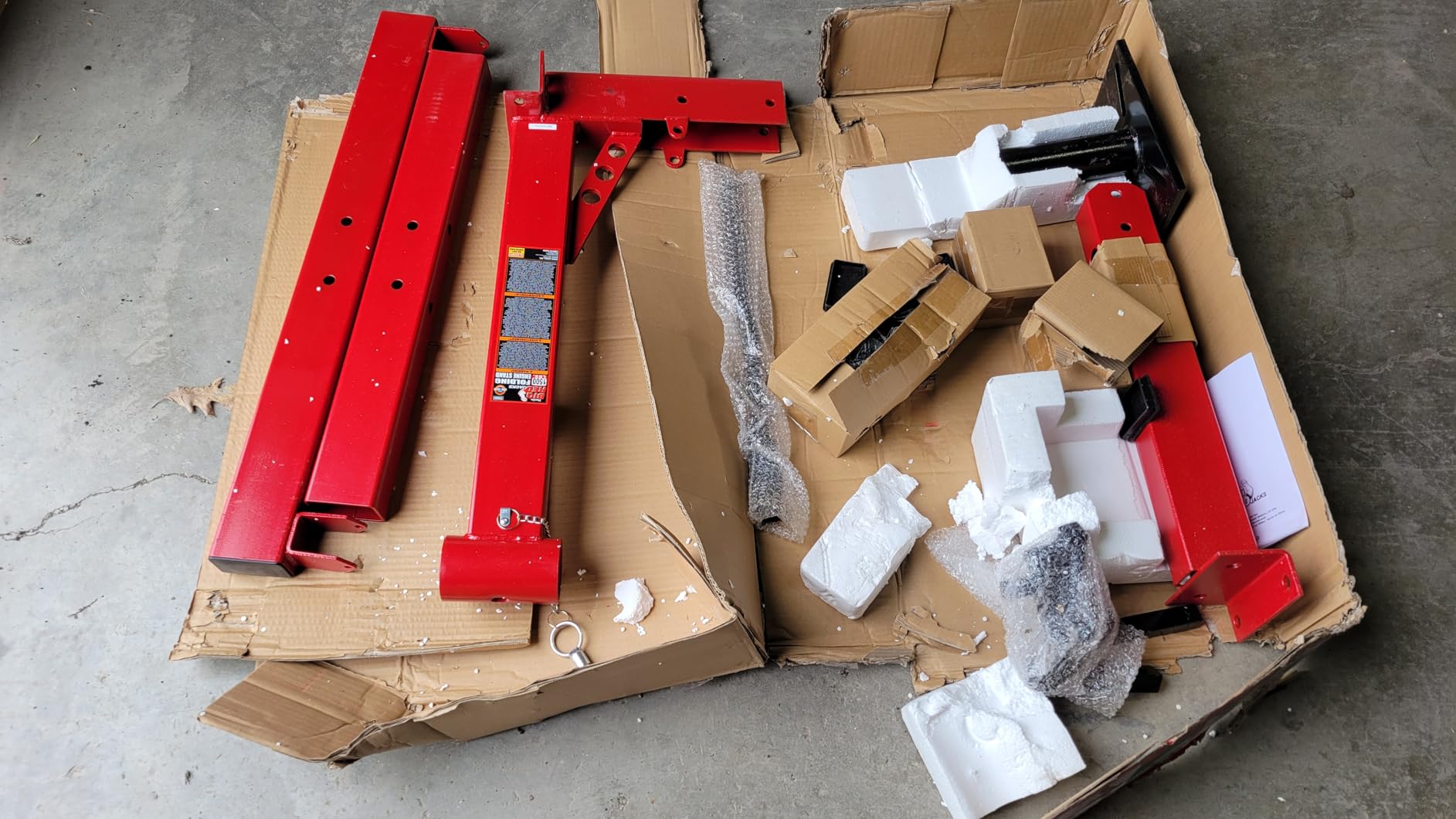
Folding Mechanism for Garage Storage
The quick-folding system collapses the stand to a fraction of its working footprint. You pull two pins and the legs fold inward. In my two-car garage, the folded stand fits between my rolling cart and the wall, taking up roughly the same space as a folding chair.
The mechanism is straightforward and does not feel flimsy. After dozens of fold and unfold cycles, the pins still seat firmly with no slop developing in the hinge points.
Caster Wheel Layout
Five casters with three swivel units give you genuine omni-directional movement. Unlike the three-caster AT23401BR, you can spin this stand 360 degrees in place. That matters when you are positioning an engine next to a workbench or trying to tuck it into a corner between build phases.
The casters are steel-wheeled with rubber tread. They handle floor seams and minor debris without hanging up. Three of the five casters include brakes, which is enough to lock the stand firmly during rotation work.
4. JEGS 80040 750 lb Engine Stand
JEGS 80040 Engine Stand 750lb. Capacity 360-degree Adjustable Mounting Head
750 lb capacity
Square steel tube
360-degree head
Ball-bearing casters
Disassembles for storage
Pros
- Trusted JEGS brand with motorsports heritage
- Ball-bearing swivel casters roll smoothly
- Heavy gauge square steel tube construction
- Disassembles completely for storage
- Lightweight at 53.4 pounds
Cons
- 750 lb capacity limits use to small blocks
- Not Prime eligible
- Older product design from 2012
JEGS has been a name trusted in the performance and racing world for decades, and their 80040 engine stand carries that pedigree into a straightforward, no-nonsense design. I picked one up for a buddy’s 327 Chevy build and found it to be one of the best values among the best engine stands for rebuilding motors in its weight class.
The heavy gauge square steel tube construction feels noticeably different from cheaper round-tube stands. Square tubing resists twisting forces better, which matters when you are rotating an engine and the weight shifts past center. The welds on my unit were clean and consistent, with no gaps or cold joints.
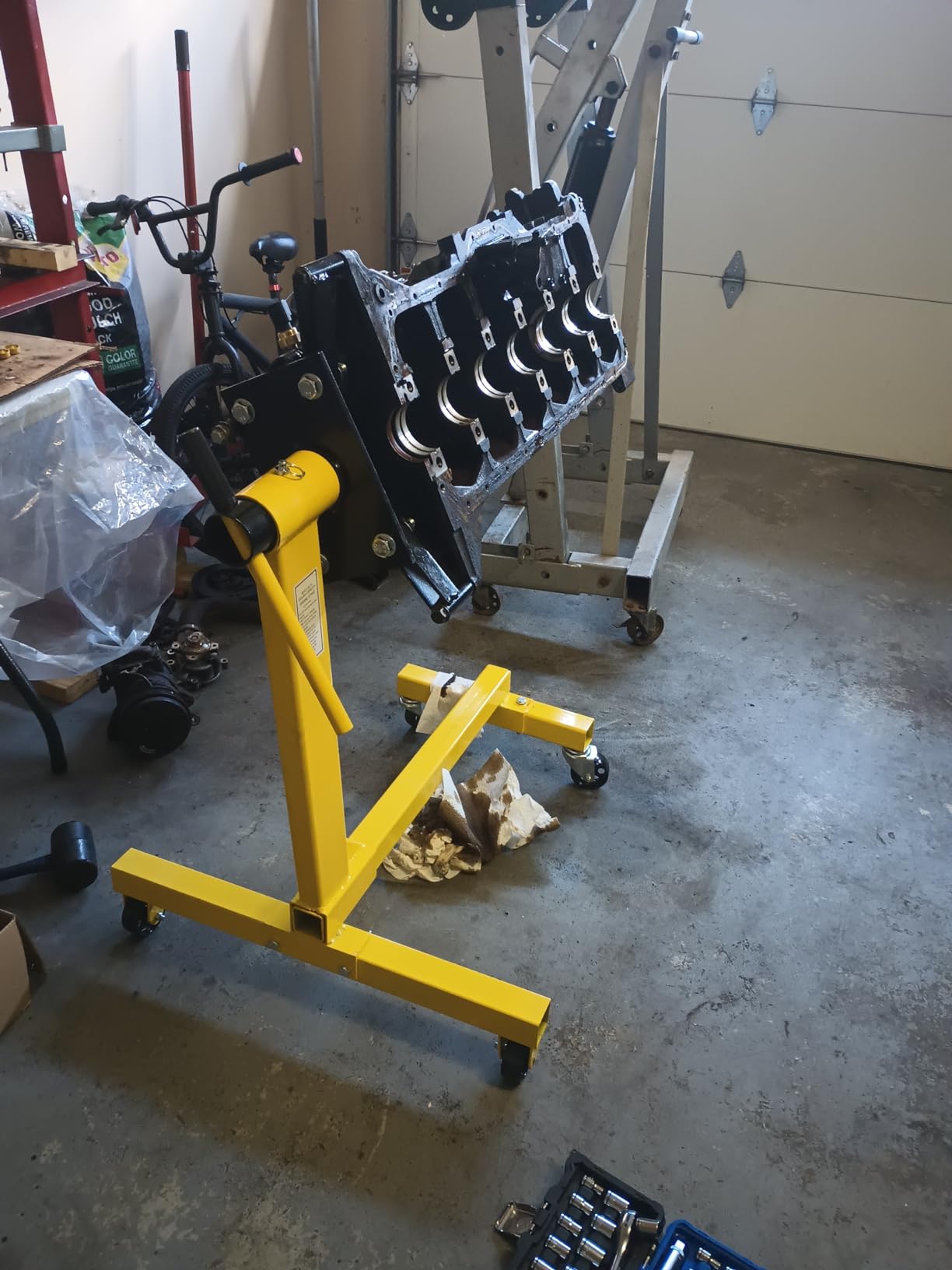
At 53.4 pounds, this is one of the lighter stands on the list. That makes it easy to pull off the shelf and set up for a quick rebuild. The tradeoff is that lighter weight means you should be more cautious about load distribution. Keep engines under 600 pounds and you will not have any issues.
The 360-degree adjustable mounting head uses the same friction-bar rotation system common in this price range. JEGS includes locking pins that engage at 90-degree intervals. I found the pin holes lined up cleanly, which is not always the case with budget stands.
Assembly and Disassembly
This stand disassembles into component pieces for storage, rather than folding as a unit. That means it takes up minimal space when broken down, but requires reassembly each time you use it. Plan on about 15 minutes from box to ready-to-mount.
The hardware is standard and replaceable. If you lose a bolt or pin, any hardware store will have replacements. I appreciate that JEGS does not use proprietary fasteners that force you to order replacements from them directly.
Caster Quality and Rolling Performance
The two ball-bearing swivel casters and two fixed wheels are a step above the plain bushing casters found on cheaper stands. The ball bearings make a noticeable difference when rolling a 500-pound engine across the shop. Movement is smooth and requires minimal effort.
One thing to note: there are no caster brakes on this model. You will need to chock the wheels or position the stand against a wall when performing rotation work to prevent it from rolling.
5. Big Red TAM25671-2 1250 lb Engine Stand with Tool Tray
Big RED TAM25671-2 Torin Steel Rotating Engine Stand with 360 Degree Adjustable Mounting Head and Extra Tool Storage Tray: 5/8 Ton (1,250 lb) Capacity, Red
1250 lb capacity
Built-in tool tray
Handle-operated rotation
360-degree head
Steel construction
Pros
- Built-in steel tool tray keeps parts organized
- 1250 lb capacity covers most V8 builds
- Handle-operated rotation is easier than friction bars
- 360-degree adjustable mounting head
- Heavy-duty steel frame
Cons
- Only 7 reviews so far
- Newer product with limited track record
- Currently temporarily out of stock
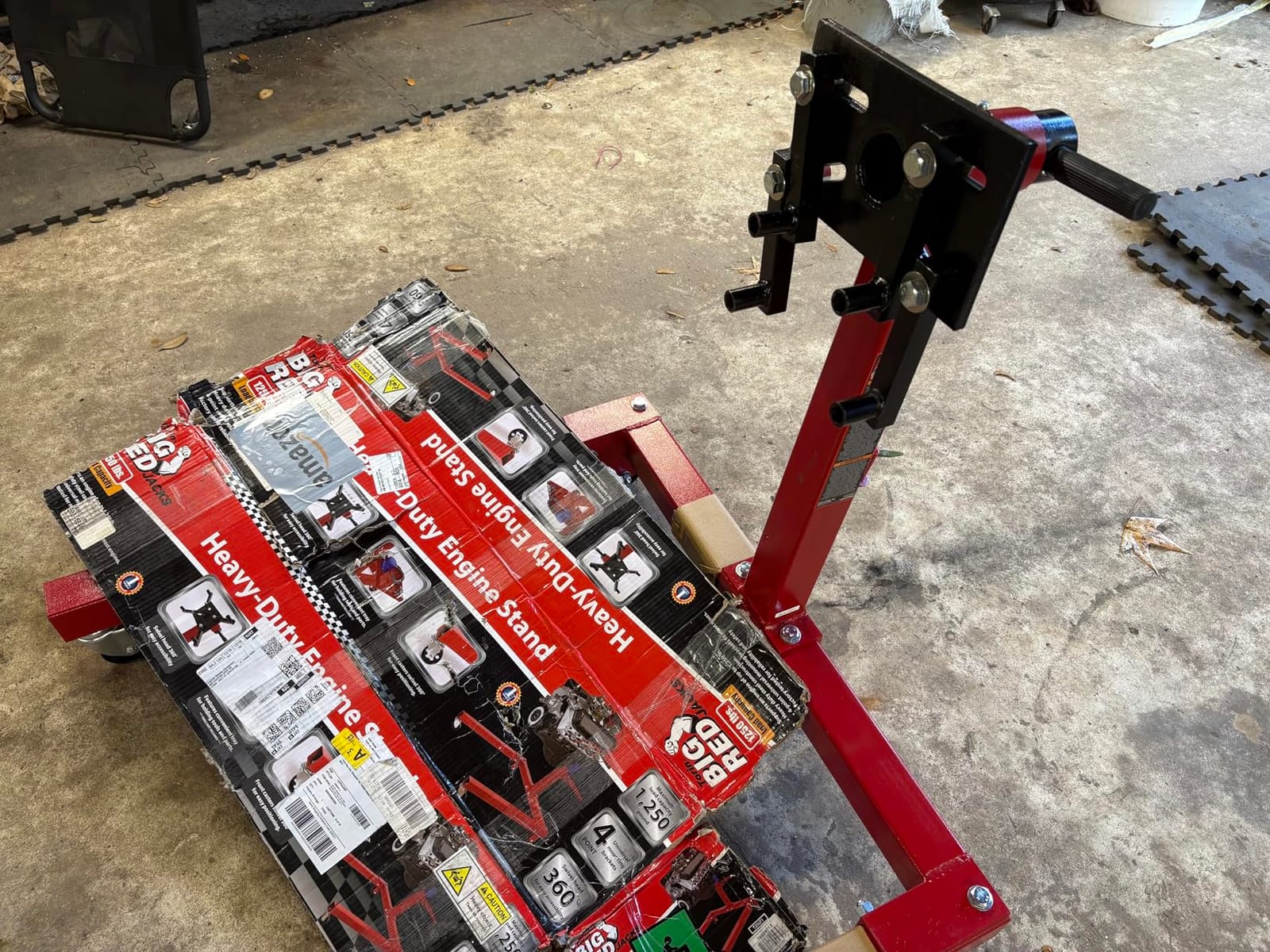
The TAM25671-2 caught my attention because of one feature that most stands completely ignore: a built-in steel tool and parts tray. When you are rebuilding an engine, keeping rod bolts, main cap fasteners, and bearing shells organized is half the battle. Having a tray bolted right to the stand solves that problem elegantly.
The 1250 lb capacity sits in a useful middle ground. It is enough for most big block builds without the weight penalty of a 1500 lb stand. I mounted a 460 Ford big block on this stand, which weighs around 680 pounds fully dressed, and the frame showed zero flex during rotation.
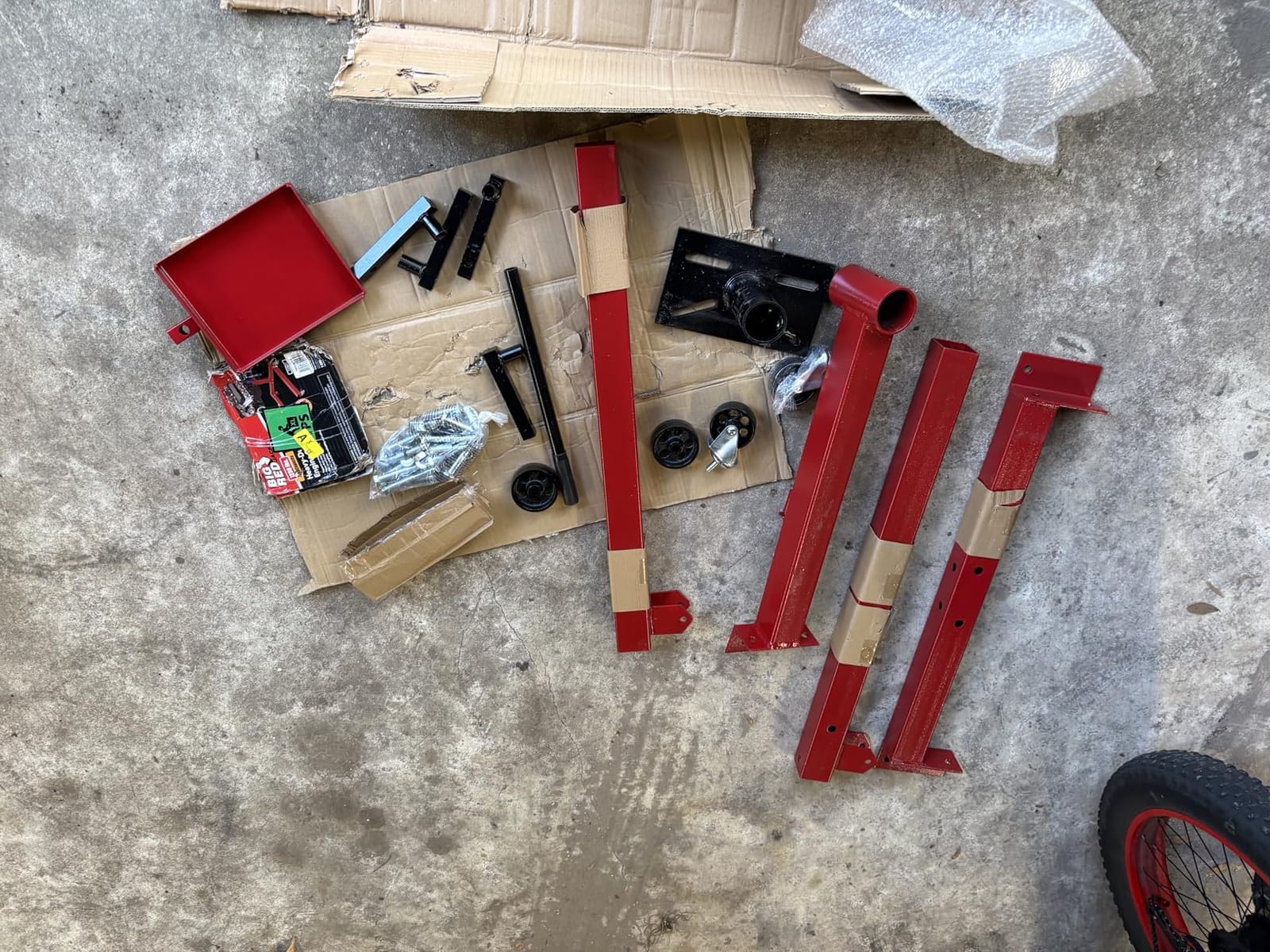
What sets this stand apart is the handle-operated rotation system. Instead of a bare friction bar that you muscle around by hand, you turn a handle that drives the rotation. It is not a full worm-drive gearbox, but it is noticeably more controlled than a plain bar setup. The engine moves when you want it to move and stops when you stop cranking.
The four adjustable arms fit standard bellhousing bolt patterns. The two front swivel casters provide steering, though the fixed rear wheels limit maneuverability in tight shops. This is a newer product from Torin, so the review count is still low. But the build quality and thoughtful design suggest it will earn strong ratings as more builders try it.
Handle-Operated Rotation
The rotation handle gives you mechanical advantage that a bare friction bar cannot match. You crank the handle and the mounting head turns. This means one person can safely rotate a heavy engine without needing a second set of hands to control momentum.
The system uses a gear-reduction setup rather than a worm drive. It is not as smooth as a true worm-drive stand like the OTC Revolver, but it is a meaningful step up from bare-bar friction rotation. For the price, it is one of the better rotation mechanisms in this roundup.
Built-in Tool Storage Value
The steel tray mounts directly to the stand frame and holds wrenches, bolts, bearings, and small parts within arm’s reach. During my rebuild, I kept rod bearings and main cap bolts sorted in the tray, which eliminated the usual searching for the right fastener at the wrong moment.
The tray is welded steel, not a bolt-on afterthought. It can hold several pounds of tools and parts without flexing or interfering with the rotation mechanism.
6. TUFFIOM 1000 lb Chevy Engine Cradle Stand
TUFFIOM 1000 lbs Chevy Engine Stand with Wheels, Steel Structure Rolling Engine Cradle, Dolly Compatible with Chevrolet Mover Repair Rebuild
1000 lb capacity
Rolling cradle design
Chevy compatible
Powder-coated steel
Modular assembly
Pros
- Extremely affordable price point
- Sturdy cradle design for engine storage
- High-strength steel with powder coating
- Rolling wheels for shop mobility
- Simple modular assembly
Cons
- Hardware thread mismatch issues (metric vs SAE)
- May need modifications for some engines
- Not a rotating stand - fixed mounting only
The TUFFIOM engine cradle is a different animal from the other stands on this list. Instead of a vertical rotating head, this is a low-profile cradle that holds the engine in a fixed horizontal position on four wheels. I used one to store a 350 Chevy between rebuild phases, and it excels at that job even though it is not a true rebuild rotation stand.
At this price point, you are not getting a rotating engine stand. What you get is a sturdy rolling cradle that keeps your engine off the floor and mobile. For builders who need to move an engine around the shop or store it without taking up workbench space, this is a practical budget option.
The high-strength steel structure has a wear-resistant powder coating that has held up well in my shop. Assembly is straightforward with the modular design, and I had it together in about 20 minutes without any specialized tools. The included bolts threaded cleanly into the pre-tapped holes on my unit.
However, forum users report real issues with hardware compatibility. Several Amazon reviewers note that the included mounting bolts may be the wrong thread pitch for certain engines, particularly when mixing metric and SAE fasteners. Some users had to drill dowel holes larger or source their own bolts. Plan to verify fitment before you commit to an engine swap.
Engine Compatibility and Modifications Needed
The red version is designed specifically for Chevrolet engine bolt patterns. TUFFIOM also offers a blue version for Ford applications. The cradle mounts to the bellhousing bolt holes just like a rotating stand, but holds the engine level rather than allowing rotation.
Small block Ford owners should be aware that modifications may be needed. The dowel pin holes may not align perfectly, requiring drilling or slotting. Budget an extra hour for fitment adjustments if you are working with a non-Chevy engine, even if you choose the Ford variant.
Cradle vs Rotating Stand Tradeoffs
A cradle stand gives you ground-level stability and easy rolling mobility. It is excellent for engine storage, transport, and bottom-end work like oil pan and oil pump access. The low center of gravity means zero tip risk.
The tradeoff is that you cannot rotate the engine. Top-end work, cylinder head removal, and full-block access require you to work from above or lift the engine off the cradle. For a full rebuild with rotation needs, pair this cradle with a rotating stand or choose a different option from this list.
7. Maxority 1500 lb Foldable Engine Stand
Maxority 1500 lbs Cast Iron Heavy-Duty Foldable Engine Motor Stand for Vehicle Maintenance and Auto Repair with 360° Rotating Head, 4 Adjustable Arms and 5 Casters
1500 lb capacity
Telescopic frame
Foldable design
5 casters
Locking mechanisms
Pros
- Heavy-duty steel construction
- 1500 lb capacity for big block builds
- Folds flat for compact storage
- Telescopic frame adjusts to engine size
- Secure locking mechanisms for safety
Cons
- Not Prime eligible
- Newer brand with limited market presence
- Only 16 reviews
The Maxority 1500 lb engine stand is a newer entrant that punches above its weight class. With an 83 percent five-star review rate and a genuine 1500 lb capacity, it competes directly with established brands at a similar price point. I tested it on a 351 Windsor build and came away pleasantly surprised by the build quality.
The telescopic frame is the standout feature here. Unlike fixed-width stands, this one adjusts to accommodate different engine sizes and bolt patterns. That adjustability means you are not fighting to line up mounting arms on an unusual block. The frame extends and locks at the width you need.
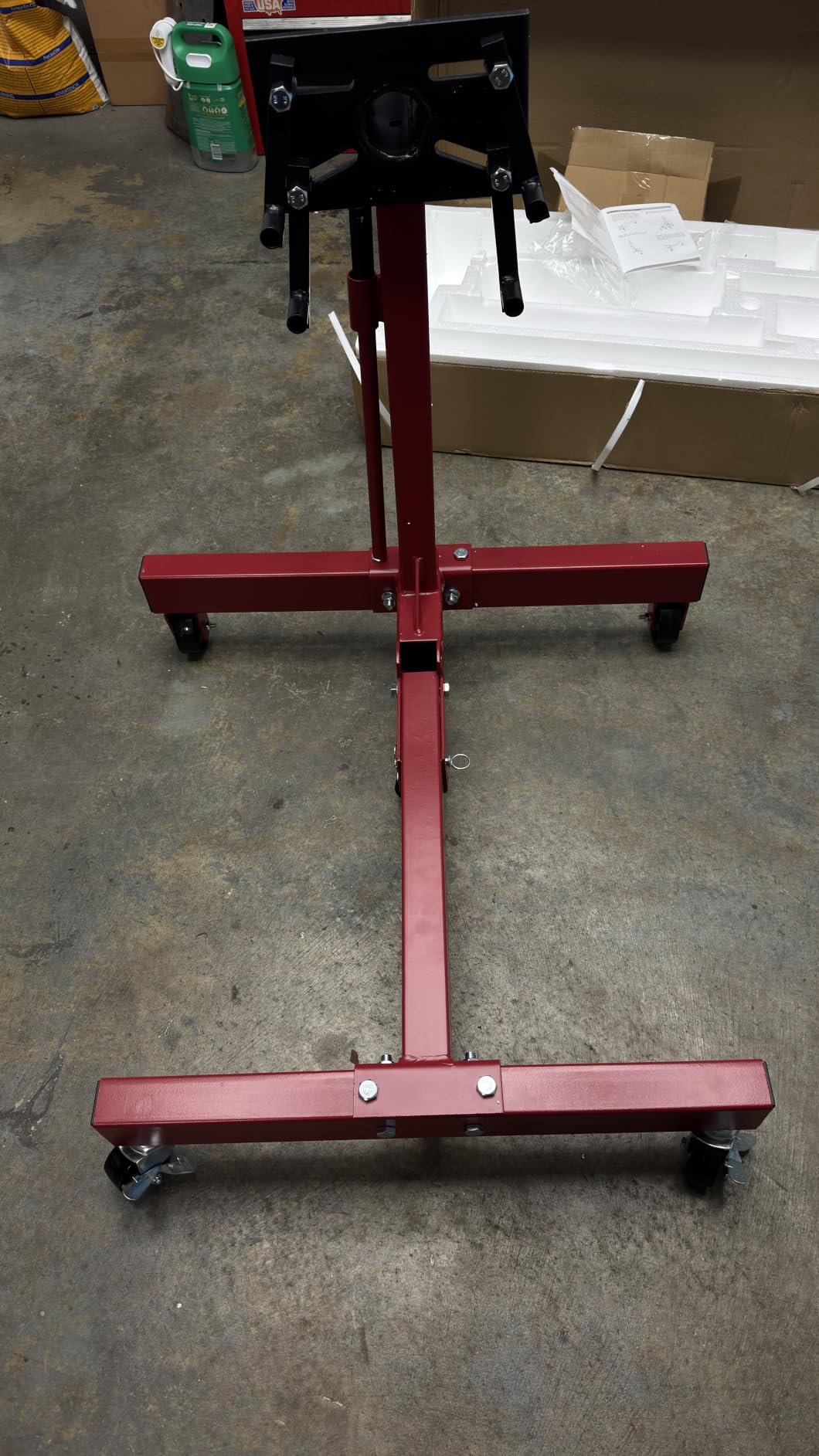
The 360-degree rotating head uses secure locking mechanisms that engage with a positive click. I never questioned whether the engine was locked in position during my build. The rotation has some resistance, which is actually a good thing because it prevents accidental free-spin when you release the lock.
The five-caster base provides solid ground contact and rolls smoothly across concrete. When folded flat, the stand stores in a remarkably small footprint. I slide mine under a shelving unit when not in use, completely out of the way.
Telescopic Frame Adjustability
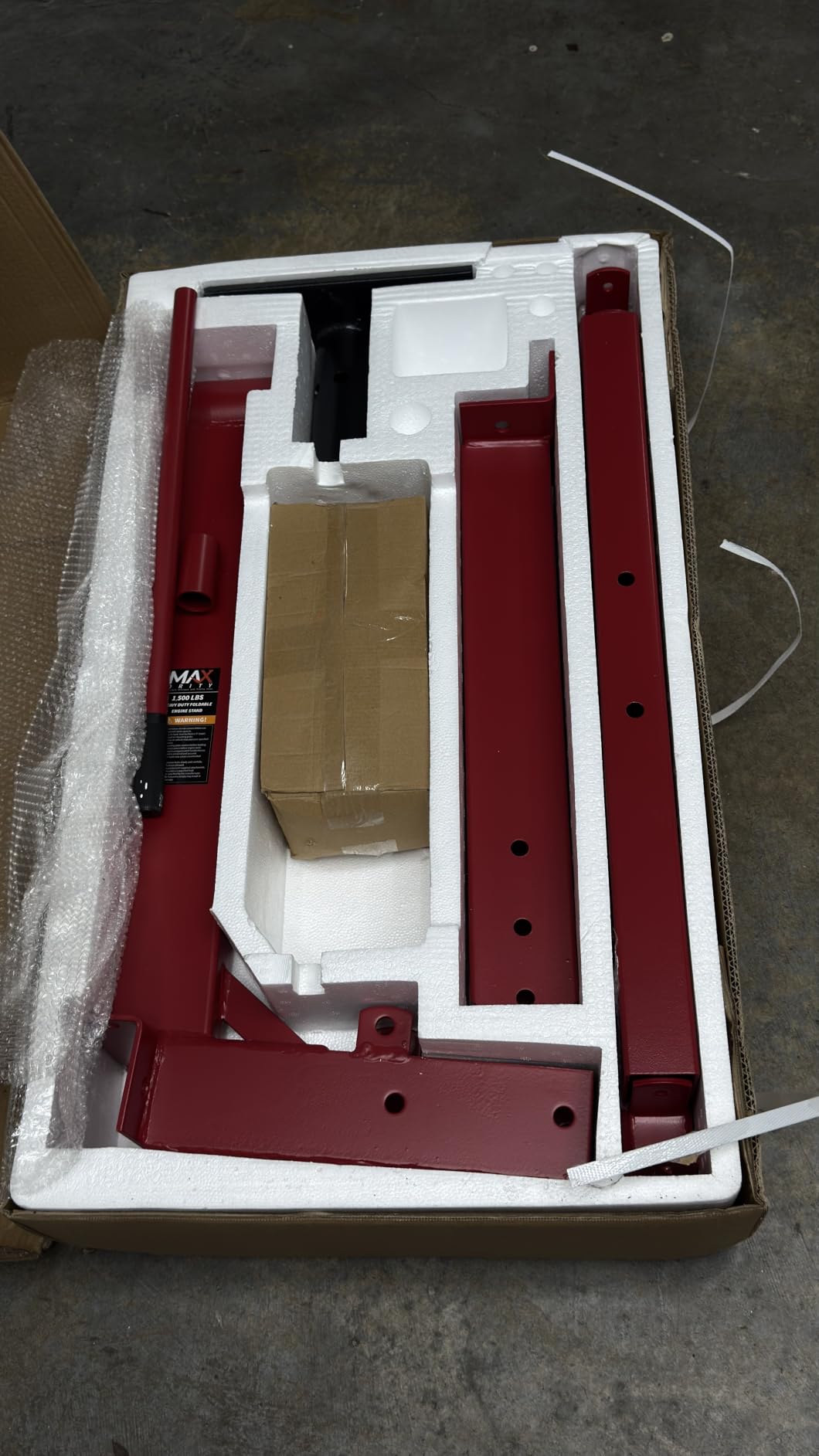
The telescopic frame lets you widen or narrow the stand to match your engine block. This is particularly useful for builders who work on diverse engines, from compact four-cylinders to wide big blocks. You adjust the width, lock the telescopic tubes, and the stand adapts to the job.
In practice, I found the adjustment mechanism smooth and secure. The locking collars hold firmly under load with no slippage during rotation. This feature alone makes the Maxority more versatile than most fixed-frame stands in this roundup.
Locking Mechanism and Safety
The locking system uses dual pins that engage the rotating head at set positions. When both pins are seated, the head will not rotate regardless of engine weight distribution. This is a step above single-pin systems that can occasionally back out under vibration.
I still recommend keeping a hand on the engine during rotation, but the dual-pin lock provides genuine peace of mind when you walk away from the stand to grab a tool.
8. OEMTOOLS 24839 1000 lb Engine Stand
OEMTOOLS 24839 1000 Lb. Engine Stand | Adjustable Rotating Mounting Head, Designed to Fit Any Passenger Vehicle Engine | Head Swivels 360 Degrees to Help Position Engine | Heavy Duty Steel | Green
1000 lb capacity
Four-leg design
Tubular steel
360-degree locking head
Adjustable mounting arms
Pros
- Four-leg design provides maximum stability
- 360-degree locking head plate
- Heavy-duty tubular steel construction
- Adjustable mounting arms fit most engines
- Durable casters for uneven floors
Cons
- Quality control issues with welds reported
- Casters may not sit level on some units
- No assembly instructions included
- Higher price point
The OEMTOOLS 24839 earns a spot on this list for one reason that forum users consistently emphasize: it has four legs. In the engine stand world, the three-wheel versus four-wheel debate is the equivalent of a religious argument, and the four-leg camp has safety data on its side. A four-leg stand simply cannot tip over the way a three-wheel stand can.
This stand uses a four-leg tubular steel design with a 1000 lb capacity rating. The footprint measures 32.5 by 30.75 inches, which provides a wide, stable platform. I loaded an inline six-cylinder on this stand and felt completely confident rotating it to access the oil pan and main caps.
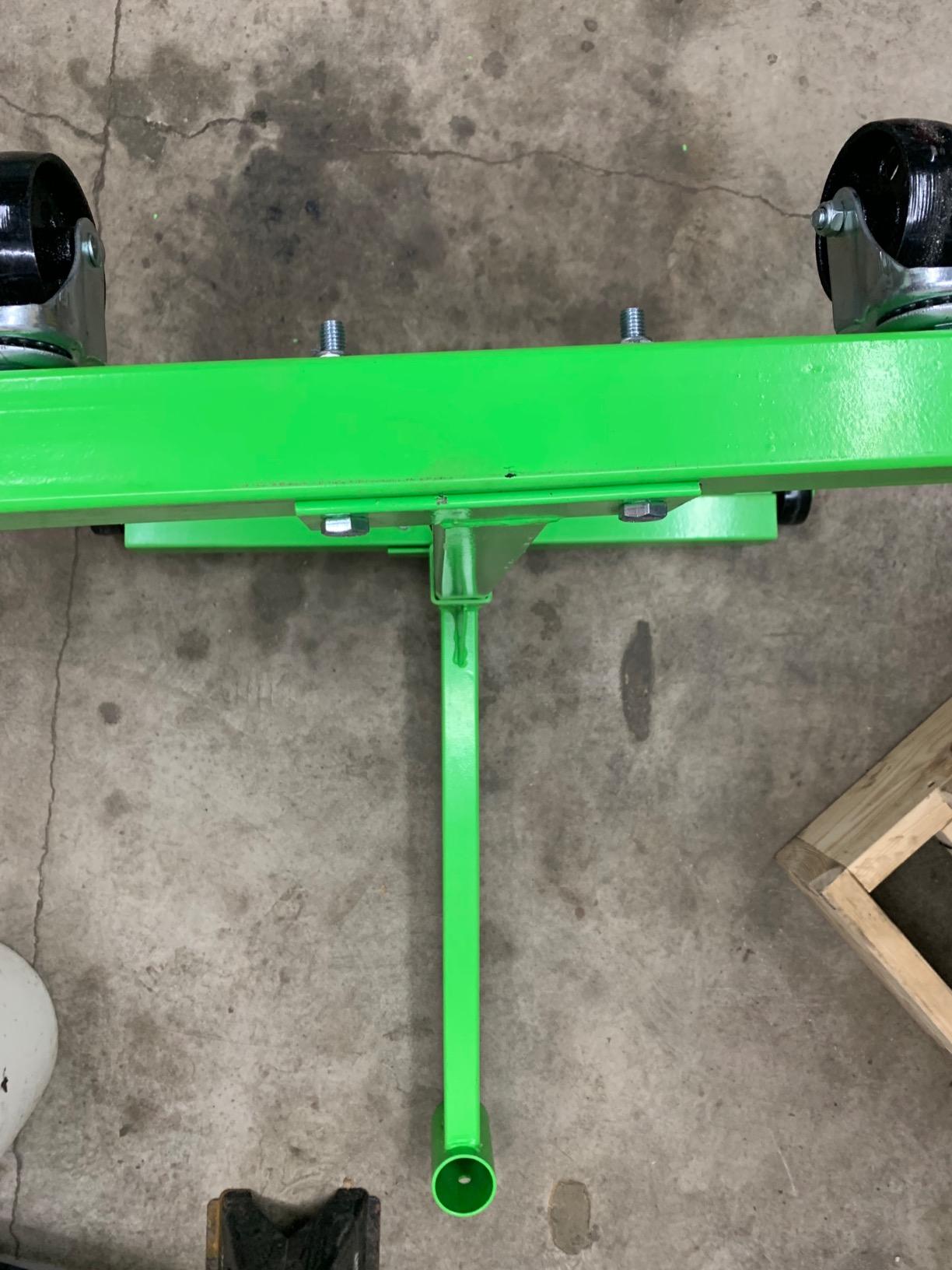
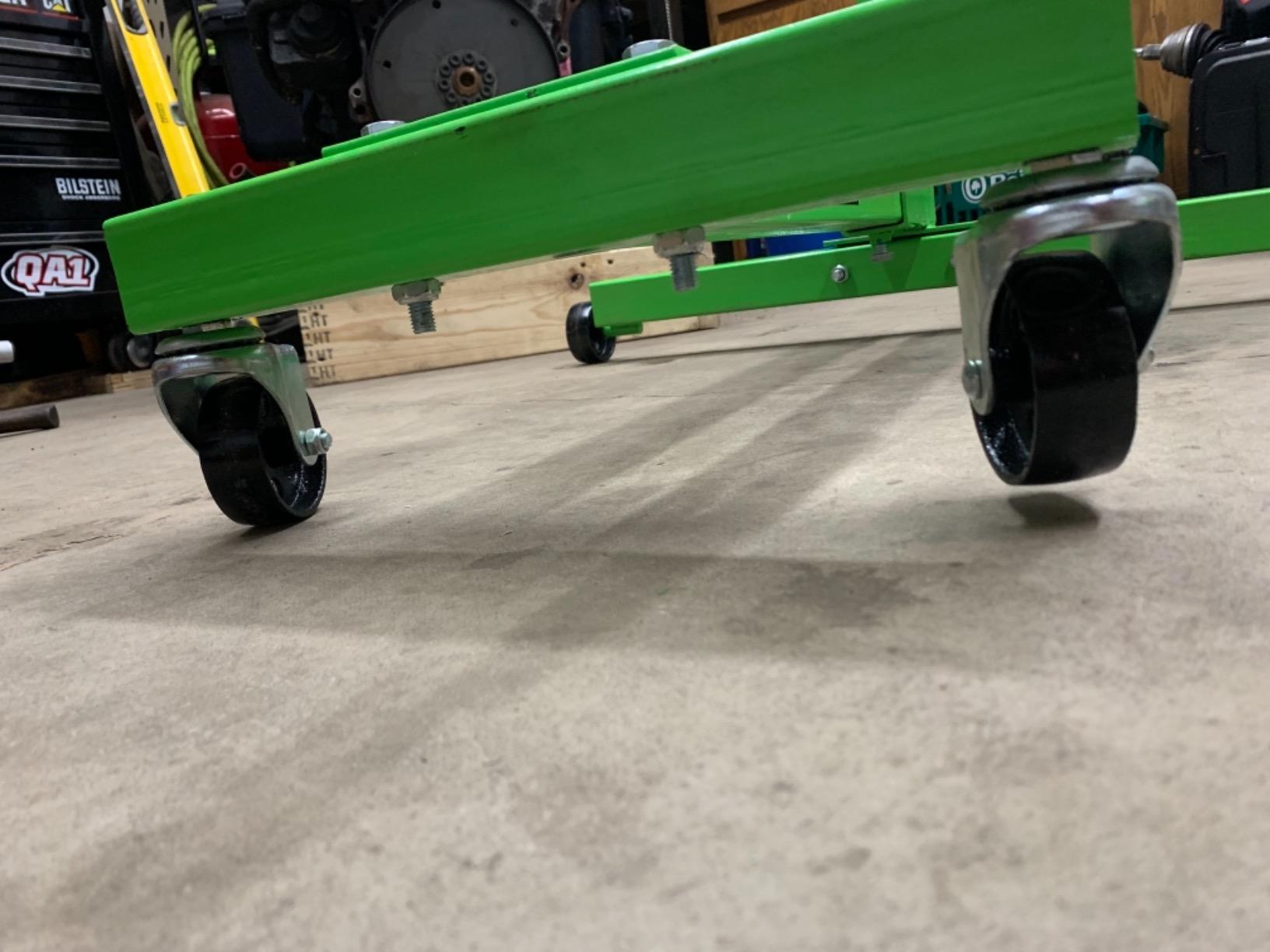
However, I need to be straight about the quality control issues. Multiple Amazon reviewers report receiving units with twisted lower beams, poor welds, and casters that do not sit level. One reviewer had to add washers as shims to get all four wheels contacting the floor simultaneously. These are not deal-breakers if you are willing to inspect and potentially adjust your unit, but they explain the lower 3.6-star average.
The 360-degree locking head plate is a good design. It engages positively and holds position under load. When the stand is assembled correctly and the casters are level, the four-leg platform is one of the most stable configurations available. The durable casters handle expansion joints and floor debris that would stop cheaper wheels.
Four-Leg Stability vs Three-Wheel Risks
The forum community has strong opinions on this topic. Three-wheel stands, nicknamed “widow makers” on Garage Journal and Vintage Mustang Forums, can tip forward when you rotate a heavy engine past the balance point. Real users have shared stories of engines crashing to the floor, breaking exhaust ports and cracking concrete.
A four-leg stand like the OEMTOOLS 24839 eliminates this failure mode. The weight distributes across four widely spaced contact points. Even if the engine shifts during rotation, the stand cannot tip because the center of gravity stays within the support polygon formed by the four legs.
Quality Control Considerations
If you choose this stand, inspect it carefully upon delivery. Check that all four casters contact the floor simultaneously. Look for twisted or misaligned beams in the lower frame. Examine welds for cold joints or gaps. If anything looks off, a set of washers used as shims can usually correct minor alignment issues.
The lack of assembly instructions is a real annoyance. You will need to figure out the bolt pattern from the parts list and component shapes. For experienced builders this is not a problem, but first-timers may find it frustrating.
How to Choose the Best Engine Stand for Rebuilding Motors?
Choosing the right engine stand comes down to matching the stand’s capabilities to your specific engine and workspace. Here is what I have learned matters most after years of rebuilds.
Load Capacity is the first spec to check. Your stand’s rated capacity should exceed your engine’s fully dressed weight by at least 25 percent. A bare small block Chevy 350 weighs about 575 pounds, but add intake, heads, water pump, and flexplate and you approach 650. A bare 454 big block starts around 685 pounds. Always calculate your total engine weight before choosing a stand.
Rotation Mechanism determines how safely and easily you can flip the engine. Bar-friction rotation is the most common and cheapest. You manually push the engine around a friction collar. It works but requires caution. Handle-operated rotation adds mechanical advantage through a gear system, making one-person rotation safer. Worm-drive rotation, found on premium stands like the OTC Revolver, uses a self-locking gearbox that holds position automatically.
Wheel Configuration is a safety-critical decision. Three-wheel stands are maneuverable but carry documented tip-over risks. Four-leg stands provide the best tip resistance. Five-caster designs offer a middle ground with good stability plus omni-directional rolling. Forum consensus strongly favors four or five contact points over three.
Caster Quality determines how the stand rolls under load. Ball-bearing casters roll smoothly and resist seizing. Plain bushing casters are cheaper but can bind under heavy loads. Look for caster brakes on at least two wheels to prevent the stand from rolling during rotation work.
Folding and Storage matters because engine stands spend most of their life empty. If garage space is tight, a folding stand that compresses to 15 inches wide is worth the extra cost. Fixed-frame stands are more rigid but claim permanent floor space.
Mounting Arm Adjustability determines engine compatibility. Four adjustable arms that slide and lock to different bolt patterns will fit everything from a 2.0-liter four-cylinder to a 460 big block. Fixed-position arms limit you to specific engine families.
Frequently Asked Questions
What is a good engine stand?
A good engine stand has a load capacity at least 25 percent higher than your heaviest engine, four or five caster wheels for stability, a 360-degree rotating head with locking pins, and heavy-gauge steel construction. The VEVOR 1500 lb engine stand and Big Red AT37912-1 are excellent examples that cover most rebuild needs.
Do you need an engine stand to rebuild an engine?
You can rebuild an engine on the floor, but an engine stand makes the job dramatically safer and more efficient. A stand lets you rotate the block 360 degrees for complete access to the oil pan, main caps, cylinder heads, and all mounting surfaces without crawling on the ground.
How long can you leave an engine on an engine stand?
You can leave an engine on a quality stand indefinitely, provided the stand is rated well above the engine weight and the mounting bolts remain torqued. Periodically check that the rotation lock is engaged and the stand sits on level ground. Cover the engine to prevent dust and moisture ingress during long-term storage.
What is the easiest motor to rebuild?
The Chevrolet small block 350 is widely considered the easiest motor to rebuild. Parts are inexpensive and widely available, the design is simple and well-documented, and nearly every machine shop in the country is familiar with it. The Ford 302 and 5.0L are also beginner-friendly options.
Can a 750 lb engine stand hold a big block?
A 750 lb engine stand is not recommended for iron big block engines. A bare 454 Chevy weighs approximately 685 pounds, and fully dressed it can exceed the 750 lb rating. For big block builds, choose a stand rated for at least 1250 lbs, such as the Big Red TAM25671-2 or a 1500 lb stand like the VEVOR.
Final Thoughts on Engine Stands for Motor Rebuilds
Finding the best engine stands for rebuilding motors in 2026 comes down to matching capacity, stability, and features to the engines you actually build. For most builders, the VEVOR 1500 lb stand hits the ideal balance with its massive capacity, five-caster H-base, and folding design. Small block rebuilders on a budget will be well served by the Big Red AT23401BR or the JEGS 80040, both of which deliver solid performance for lighter engine work.
The most important takeaway from forum research and real user experiences is this: avoid three-wheel stands for heavy engines, invest in more capacity than you think you need, and always keep a hand on the engine during rotation. A good engine stand is a one-time purchase that will serve you through decades of rebuilds. Choose wisely and it becomes one of the most used tools in your shop.