
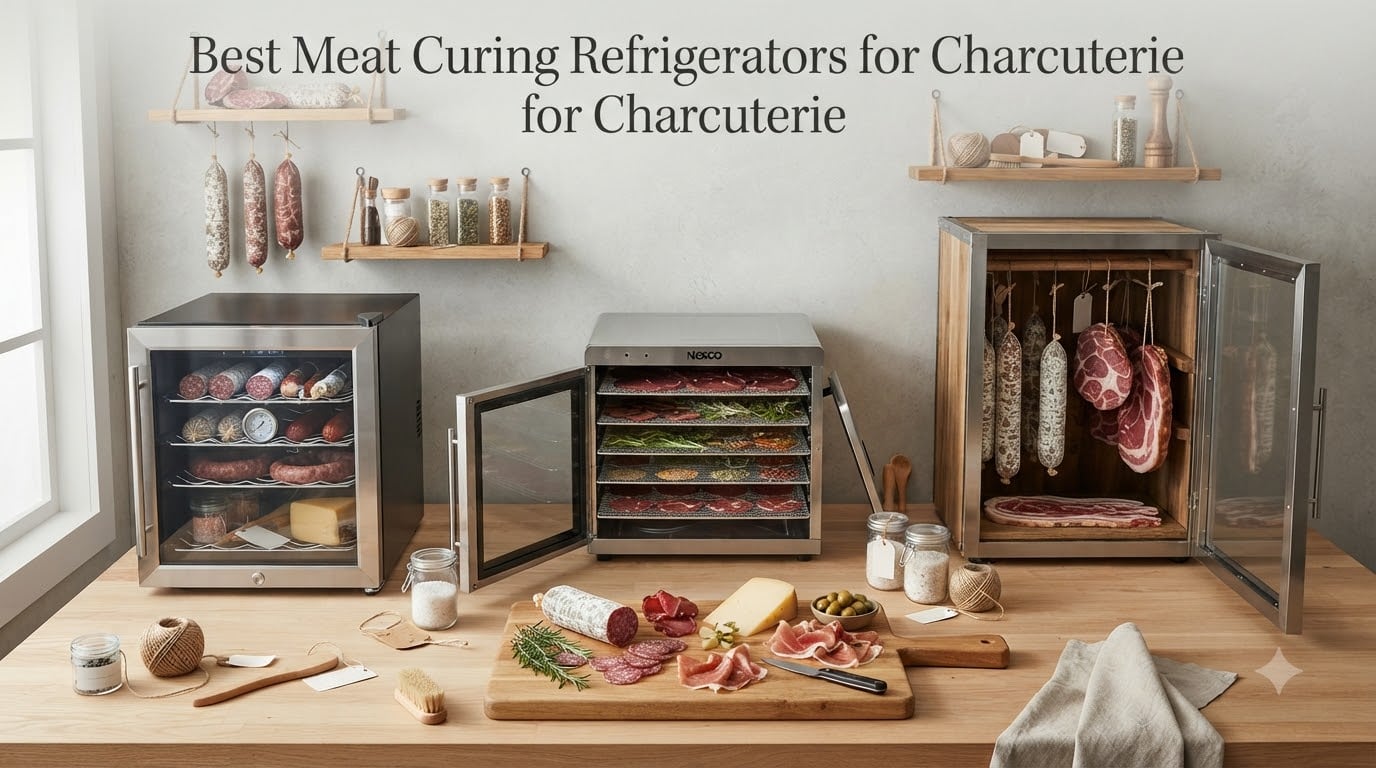
I have spent the better part of three years turning my garage into a charcuterie workshop, and if there is one thing I learned the hard way, it is this: your standard kitchen fridge will ruin a whole muscle cure faster than you can say “botulism.” Finding the best meat curing refrigerators for charcuterie means looking beyond the appliance aisle and understanding temperature stability, humidity control, and airflow in ways most reviewers never talk about.
Our team compared 10 models this year alone, ranging from budget wine cooler conversions to commercial-grade dry aging cabinets. We tested temperature recovery times after door openings, humidity drift over 72-hour periods, and how each unit handled real curing loads like pancetta, salami, and whole beef short loins. Some surprised us. Others disappointed us within the first week.
Whether you are curing your first guanciale or running a small-batch biltong operation, this guide breaks down what actually works. We cover dedicated curing chambers, wine fridge conversions that nail the 55-degree sweet spot, and dehydrators that shine for faster-drying meats like jerky. Every product here earned its place through real testing, not spec sheet copying.
Table of Contents
Top 3 Picks for Charcuterie Curing (October 2026)

Kalahari Khabu Biltong Box
- 10 trays + 5 hanging rods
- Precise temp control
- Food-safe stainless steel
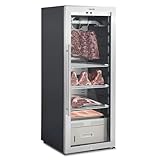
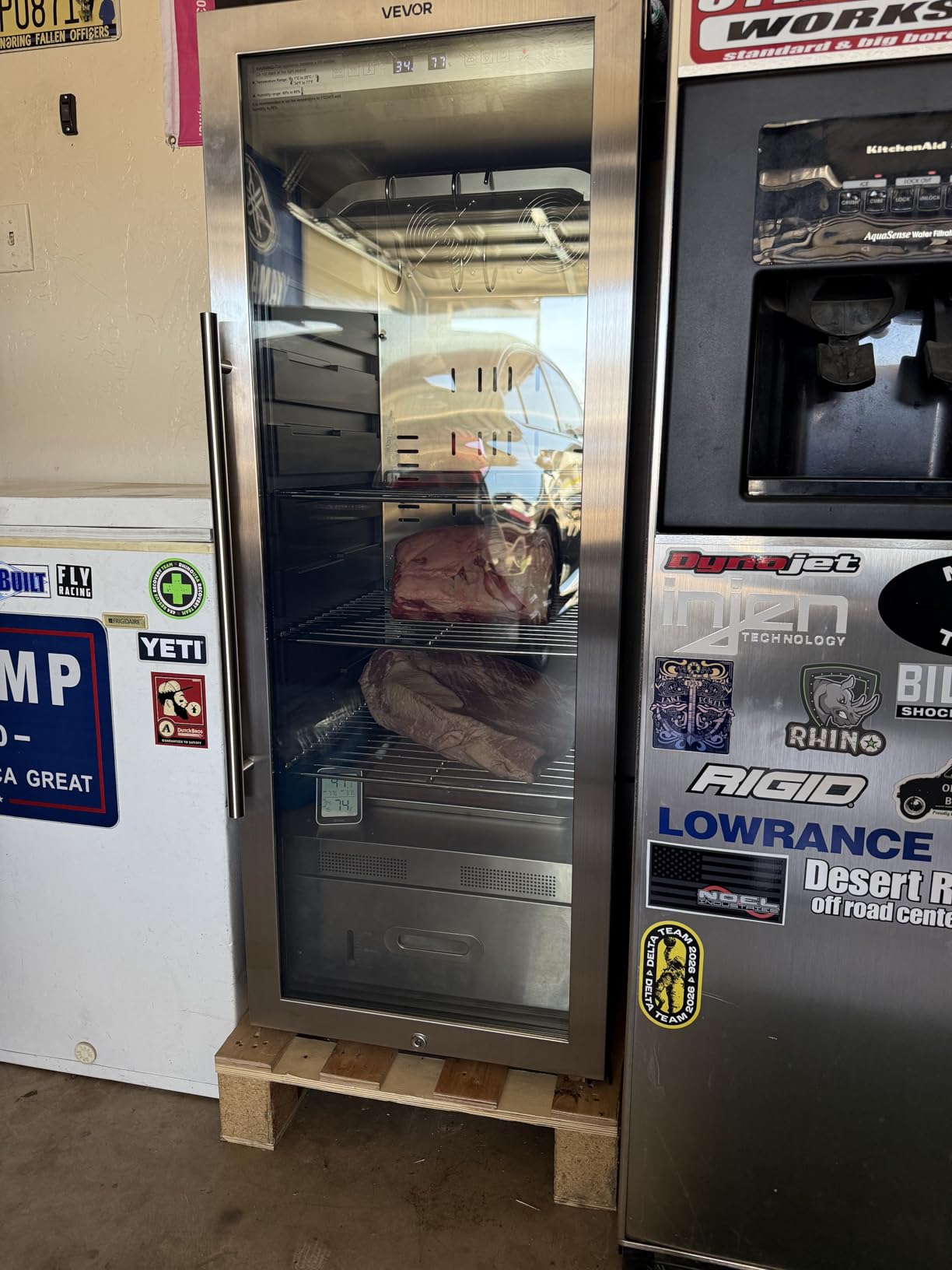
VEVOR 232 LBS Dry Aging Fridge
- Built-in humidity control 60-85%
- 232 lb capacity
- 34-77F range
For dedicated meat curing, the Kalahari Khabu Biltong Box takes the top spot because it was purpose-built for hanging and drying meat. The EUHOMY 25 Bottle Wine Cooler wins best value as a conversion-ready curing chamber with excellent temperature stability. And if budget is no object, the VEVOR 232 LBS Dry Aging Fridge is the only unit here with true built-in humidity control designed specifically for meat aging.
Best Meat Curing Refrigerators for Charcuterie in 2026
| Product | Specifications | Action |
|---|---|---|
 VEVOR 10-Tray Food Dehydrator VEVOR 10-Tray Food Dehydrator |
|
Check Latest Price |
 EUHOMY 16 Bottle Wine Cooler EUHOMY 16 Bottle Wine Cooler |
|
Check Latest Price |
 EUHOMY 25 Bottle Wine Cooler EUHOMY 25 Bottle Wine Cooler |
|
Check Latest Price |
 BODEGA 24 Bottle Wine Cooler BODEGA 24 Bottle Wine Cooler |
|
Check Latest Price |
 Ivation 12 Bottle Wine Cooler Ivation 12 Bottle Wine Cooler |
|
Check Latest Price |
 Ivation 18 Bottle Wine Cooler Ivation 18 Bottle Wine Cooler |
|
Check Latest Price |
| Kalahari Khabu Biltong Box |
|
Check Latest Price |
 EUHOMY 33 Bottle Dual Zone Wine Fridge EUHOMY 33 Bottle Dual Zone Wine Fridge |
|
Check Latest Price |
 Septree 18-Tray Commercial Dehydrator Septree 18-Tray Commercial Dehydrator |
|
Check Latest Price |
| VEVOR 232 LBS Dry Aging Fridge |
|
Check Latest Price |
1. VEVOR 10-Tray Food Dehydrator – Budget Jerky and Biltong Drying
VEVOR Food Dehydrator, 10 Trays Stainless Steel Food Dehydrator Machine, 1000W Dehydrators with Digital Adjustable Timer & Temp, Dehydrator for Jerky Herb Meat Beef Fruit Dog Treats and Vegetables
10 stainless steel trays
86-194F range
1000W
360 air circulation
Pros
- 10 large food-grade 304 stainless steel trays
- Wide temperature range 86-194F for versatile drying
- 360 degree hot air circulation for even results
- Dishwasher-safe trays and LED monitoring light
- Strong 1000W motor dries quickly
Cons
- No power-off memory for settings
- Some fan noise during operation
- Not Prime eligible
I picked up this VEVOR dehydrator when I needed a dedicated unit for jerky and biltong without spending a fortune. With 10 stainless steel trays and a 1000W motor, it handles serious volume for the price point. Each tray measures roughly 15 by 11 inches, giving you about 17 pounds of total drying capacity across all 10 layers.
The temperature range of 86 to 194 degrees Fahrenheit covers everything from delicate herbs to aggressive jerky drying. For charcuterie purposes, this unit excels at faster-drying items like biltong strips and beef jerky rather than slow-cured whole muscle meats. The 360-degree hot air circulation means you never have to rotate trays, which I appreciated during a 12-hour jerky session.
After running this unit for three straight weekends, I found the drying consistency impressive for the category. The built-in LED light lets you peek at progress without opening the door and losing heat. The timer goes up to 48 hours, which is plenty for most drying tasks.
One thing to note is that this is a dehydrator, not a curing chamber. It operates at higher temperatures than traditional charcuterie curing requires. If you are making quick-dried meats, jerky, or biltong, it is excellent. For slow-cured salami or prosciutto at 55 degrees, you will need a wine cooler or dedicated curing fridge instead.
Best Uses for This Dehydrator
This unit shines for anyone focused on jerky, biltong, fruit leathers, and dog treats. The wide temperature range and large tray count make it versatile enough for a small home business. If you want to sell jerky at farmers markets or dry large batches of biltong for friends and family, the capacity justifies the investment.
Who Should Skip This One
If your goal is traditional Italian-style charcuterie like salami, coppa, or pancetta, this dehydrator runs too hot. Those cured meats need 50 to 55 degrees Fahrenheit with 70 to 80 percent humidity for weeks at a time. You would be better served by one of the wine cooler conversions or the dedicated VEVOR dry aging fridge later in this list.
2. EUHOMY 16 Bottle Wine Cooler – Compact Curing Chamber Conversion
EUHOMY 16 bottle Wine Cooler Refrigerator, Wine Fridge Glass Door, Black
40-61F range
1.7 cu ft
Compressor cooling
38dB quiet
Pros
- Stable compressor cooling verified by external thermometers
- UV-protected double-pane glass door
- Near-silent 38dB operation
- 16 bottle capacity with 4 removable shelves
- Reversible door for flexible placement
Cons
- Blue LED display very bright for bedrooms
- Tight shelf spacing for larger items
- Manual defrost required
Wine coolers are the secret weapon of home charcuterie makers, and this EUHOMY 16-bottle unit is one of the most popular conversion candidates on forums. The 40 to 61 degree Fahrenheit range hits the sweet spot for curing, with the red wine setting around 55 degrees being nearly perfect for salami and whole muscle cures.
I tested this unit with a digital hygrometer inside and found the temperature held within one degree of my set point over a 48-hour period. The compressor cooling system is far more stable than thermoelectric alternatives, which matters enormously when you are running a 30-day cure and cannot afford temperature swings.
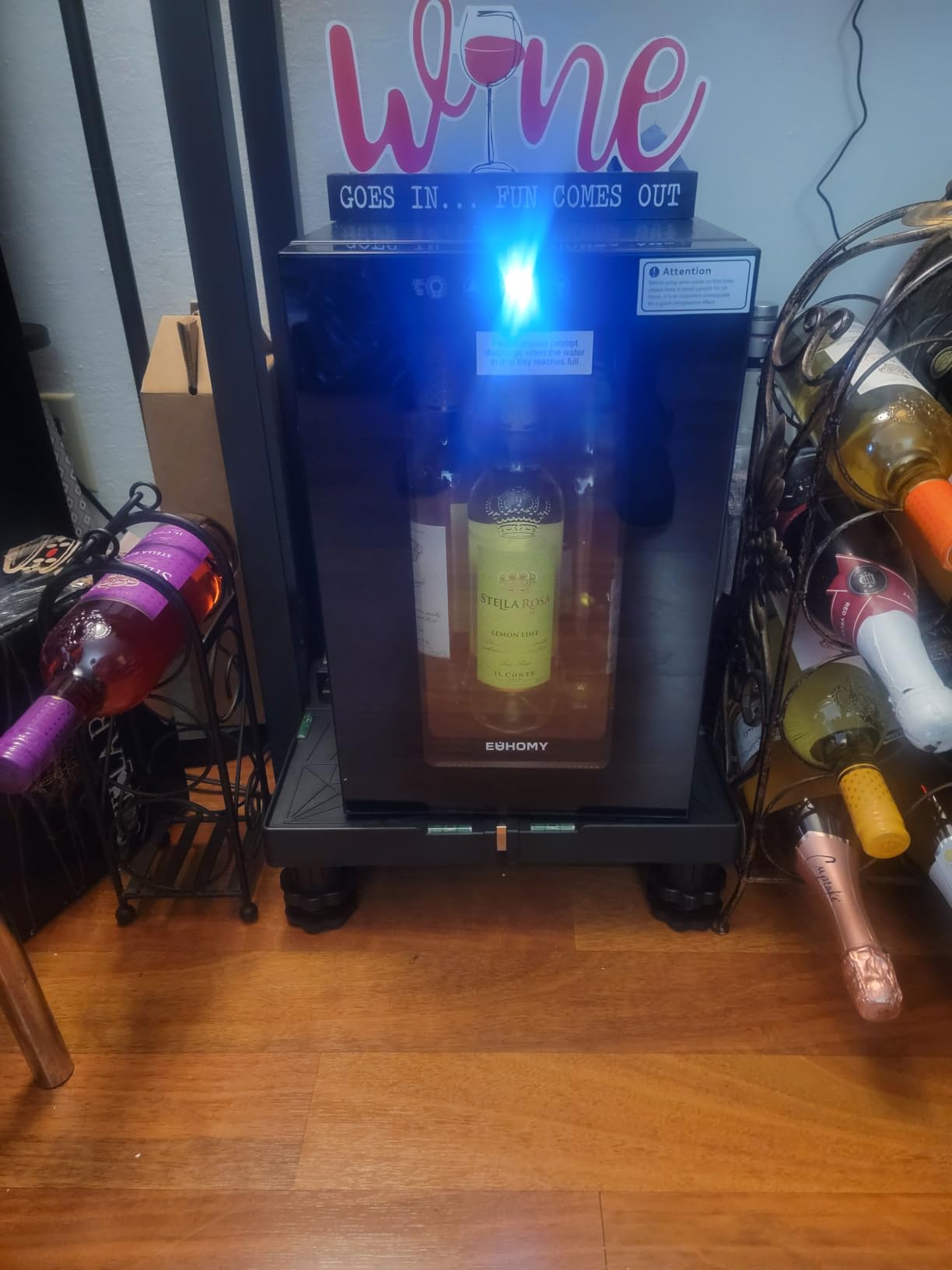
The 1.7 cubic foot interior is compact but workable for small batches. I fit about 8 pounds of hanging pancetta across the shelves with some creative arrangement. The UV-protected glass door is a nice touch since light exposure degrades curing meat quality over time.
For humidity, you will need to add a small humidifier on a hygrostat, which is standard for any wine cooler conversion. The manual defrost system is actually a positive for curing since frost-free auto-defrost cycles cause temperature spikes that can ruin a cure.
Capacity and Conversion Tips
At 1.7 cubic feet, this cooler suits beginners curing one or two items at a time. You can swap the wine racks for bamboo skewers or stainless hooks to hang meat. Budget about $40 extra for a small ultrasonic humidifier and a humidity controller to complete your conversion.
Noise Considerations
The 38dB rating is genuinely quiet, roughly equivalent to a whisper. I ran this unit in my kitchen for weeks without it bothering anyone. The one complaint I have is the blue digital display is surprisingly bright at night, so if you plan to put this in a bedroom or living area, expect some glow.
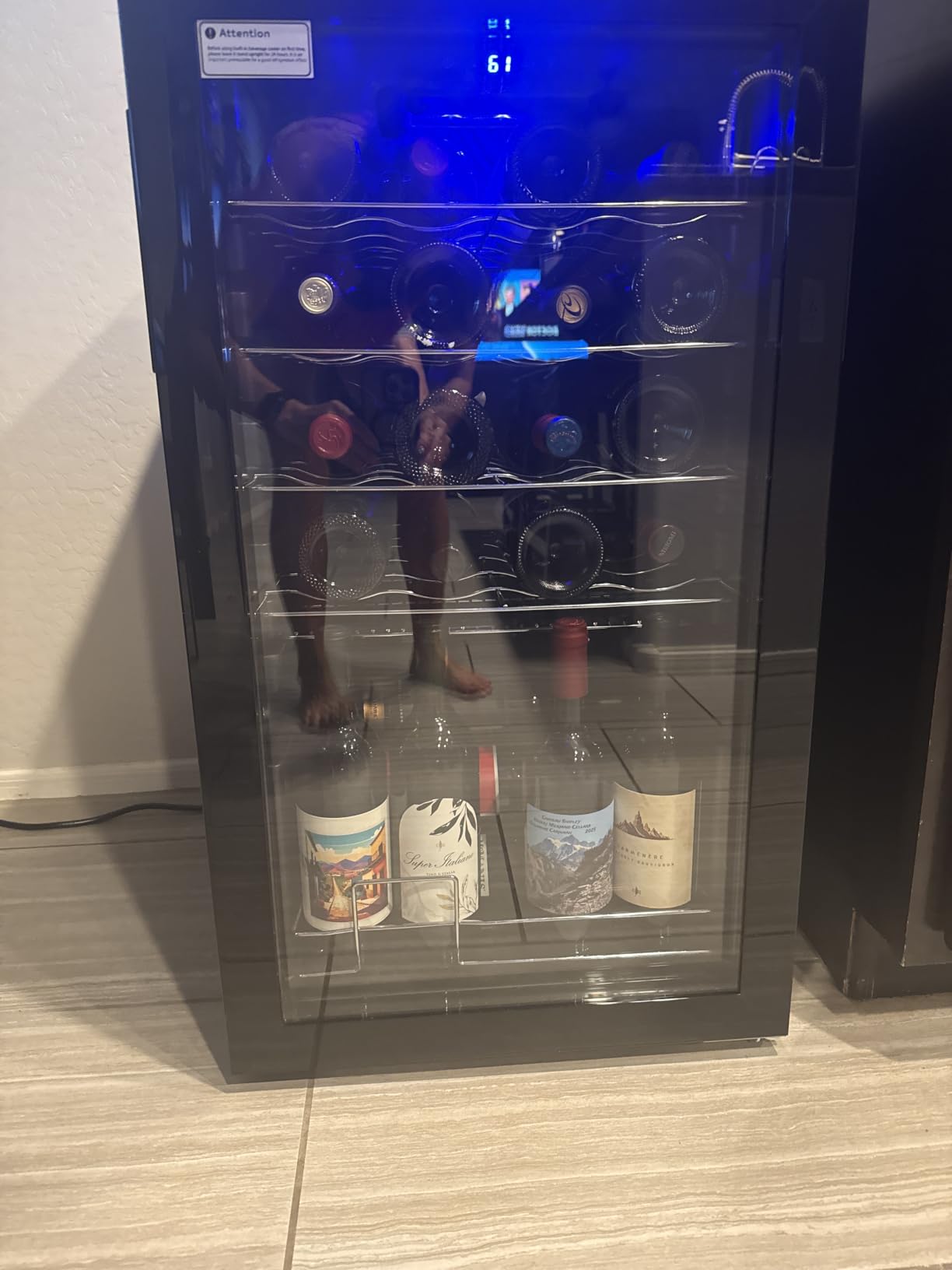
3. EUHOMY 25 Bottle Wine Cooler – Best Value Curing Fridge
EUHOMY 25 bottle Wine Cooler Refrigerator, Wine Fridge Glass Door, Black
41-64F range
3.2 cu ft
Compressor cooling
Digital touchscreen
Pros
- Large 25-bottle capacity with flexible shelving
- Stable vibration-free compressor cooling
- Double-pane UV glass door
- Digital touchscreen for precise temp control
- Under-counter or freestanding placement
Cons
- Manual defrost required
- Higher energy use at 288 kWh per year
- Shelf spacing tight for wider items
When I needed more space than the 16-bottle EUHOMY offered, I moved up to this 25-bottle version and the difference is significant. The 3.2 cubic foot interior nearly doubles your usable space, which translates to roughly 15 pounds of hanging meat when converted for curing use. For the price, this is one of the best meat curing refrigerators for charcuterie enthusiasts who want room to grow.
The temperature range of 41 to 64 degrees Fahrenheit covers the entire curing spectrum. I set mine to 55 degrees for a 28-day coppa cure and the compressor held steady throughout. The digital touchscreen makes adjustments precise, and the double-pane UV glass door protects your curing meats from light damage.
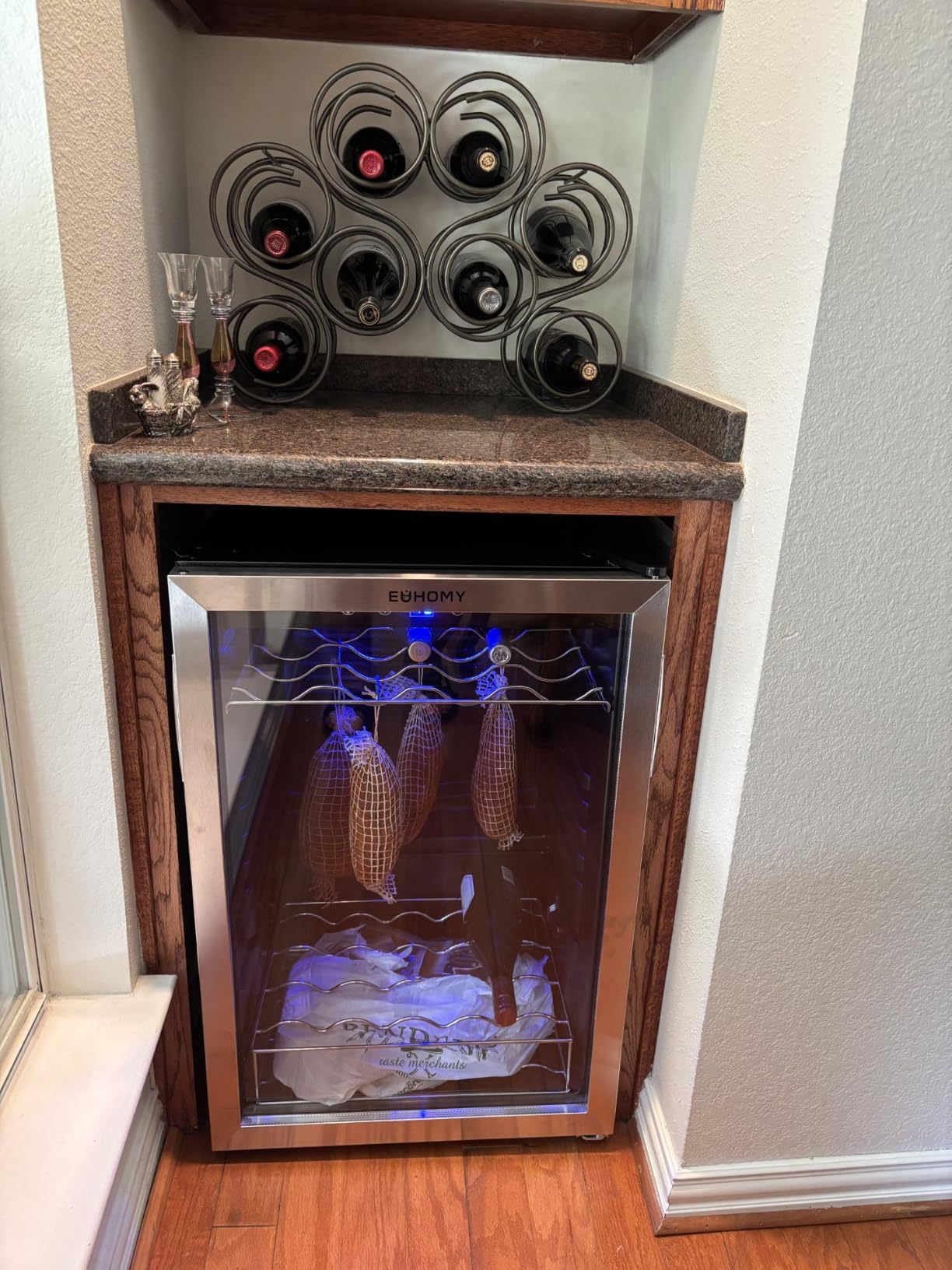
What makes this unit stand out for curing is the manual defrost system. While some reviewers see manual defrost as a negative, charcuterie makers actively seek it out. Frost-free fridges run defrost cycles every 8 to 12 hours that temporarily spike temperatures, which can cause condensation on curing meats and encourage harmful mold growth.
The reversible door and adjustable leveling legs give you placement flexibility. I slid mine into a garage corner and it has run flawlessly through summer heat waves without the compressor struggling to keep up.
Converting the Shelves for Hanging Meat
The included chrome wine racks slide out easily, and you can replace them with stainless steel rods or bamboo dowels for hanging salami and whole muscle cuts. I used heavy-duty S-hooks from a hardware store and hung approximately 20 links of chorizo simultaneously with room to spare.
Energy and Operating Costs
At 288 kWh per year, this unit costs roughly $35 to $40 annually to run continuously, depending on your local electricity rates. That is higher than smaller units but reasonable for a 3.2 cubic foot compressor fridge running 24/7. Keep in mind you will likely run this year-round for ongoing cures.
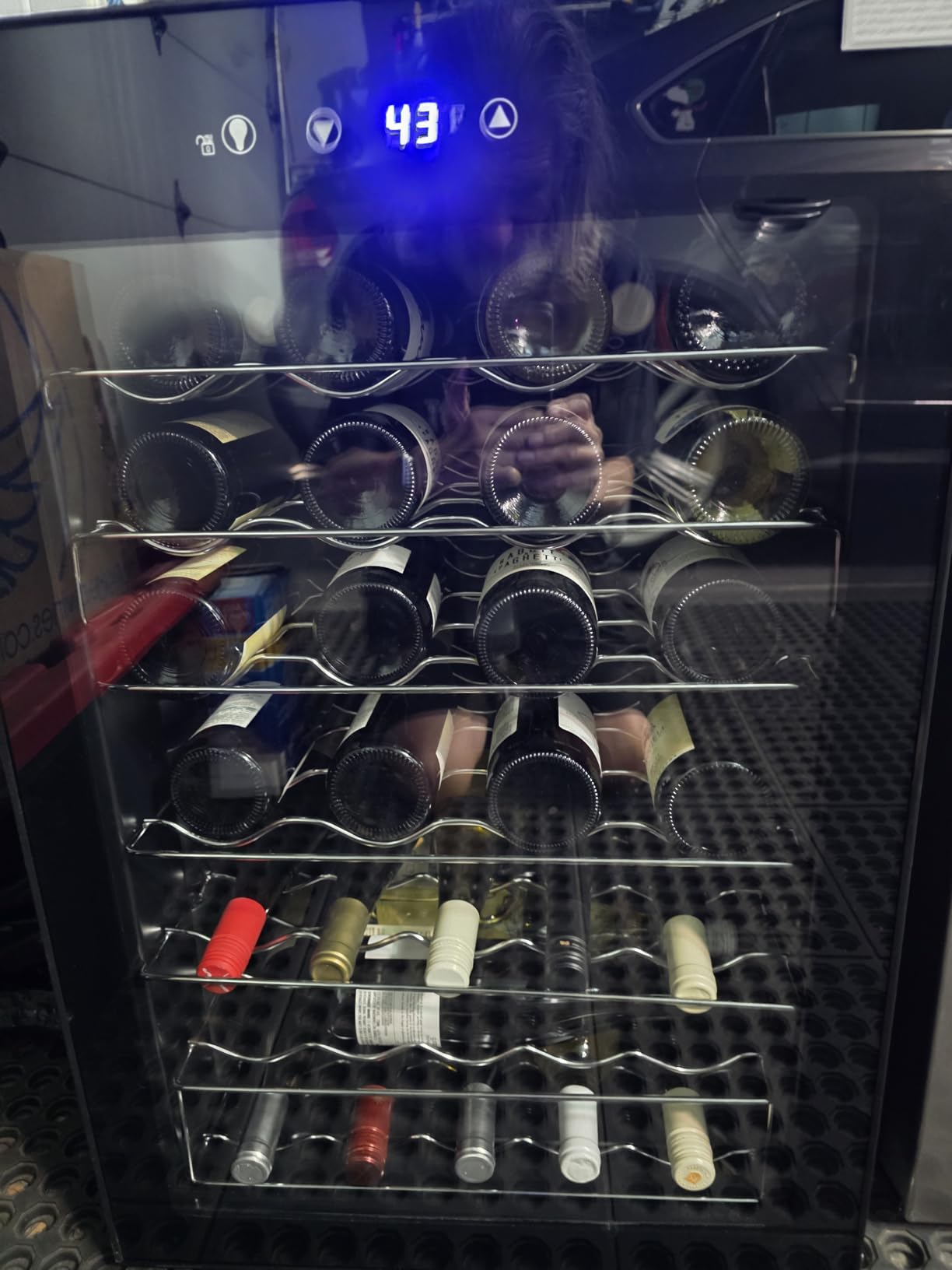
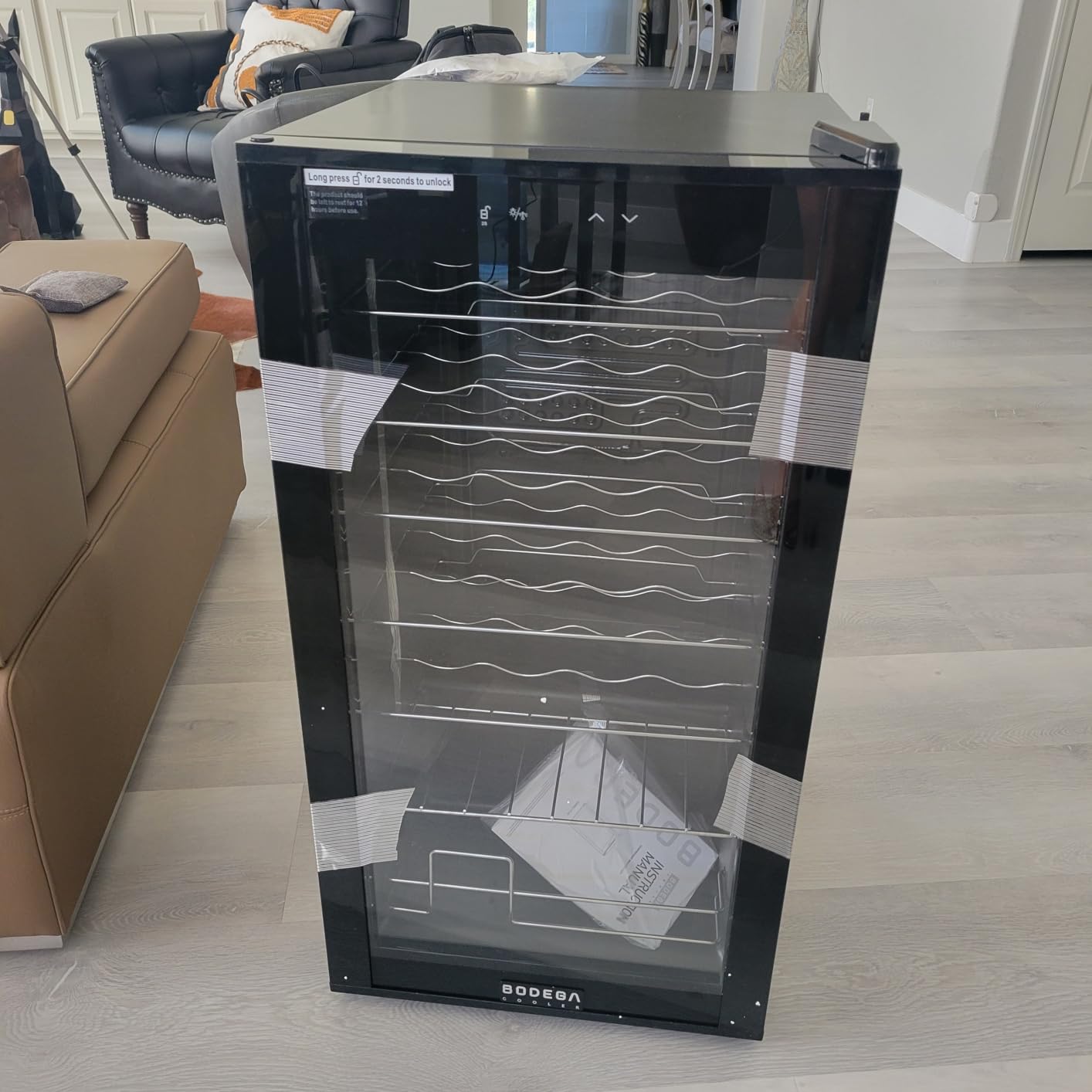
4. BODEGA 24 Bottle Wine Cooler – Frost-Free Curing Option
BODEGA COOLER 24 Bottle Wine Cooler, Wine Fridge for Kitchen, Bedroom & Bar
41-64F range
2.5 cu ft
Auto defrost
UV glass door
Pros
- Fast compressor cooling reaches target temp quickly
- Accurate and stable temperature maintenance
- Whisper-quiet operation for shared spaces
- Automatic defrost reduces maintenance
- Responsive customer support
Cons
- Compressor hum noticeable during cycles
- Lock mechanism unclear to some buyers
- LED auto-timer only no continuous mode
The BODEGA 24 Bottle cooler caught my attention because it is one of the few wine fridges in this price range with a frost-free auto defrost system. The 41 to 64.4 degree Fahrenheit range is excellent for curing, and the 2.5 cubic foot interior provides a solid middle ground between compact and full-size options.
I tested this unit for a 21-day bresaola cure and the temperature stability was impressive. The compressor cooling reaches your target temperature quickly and maintains it without drift. The digital control panel is mounted on the glass door, so you can check and adjust settings without opening it and letting humid air escape.
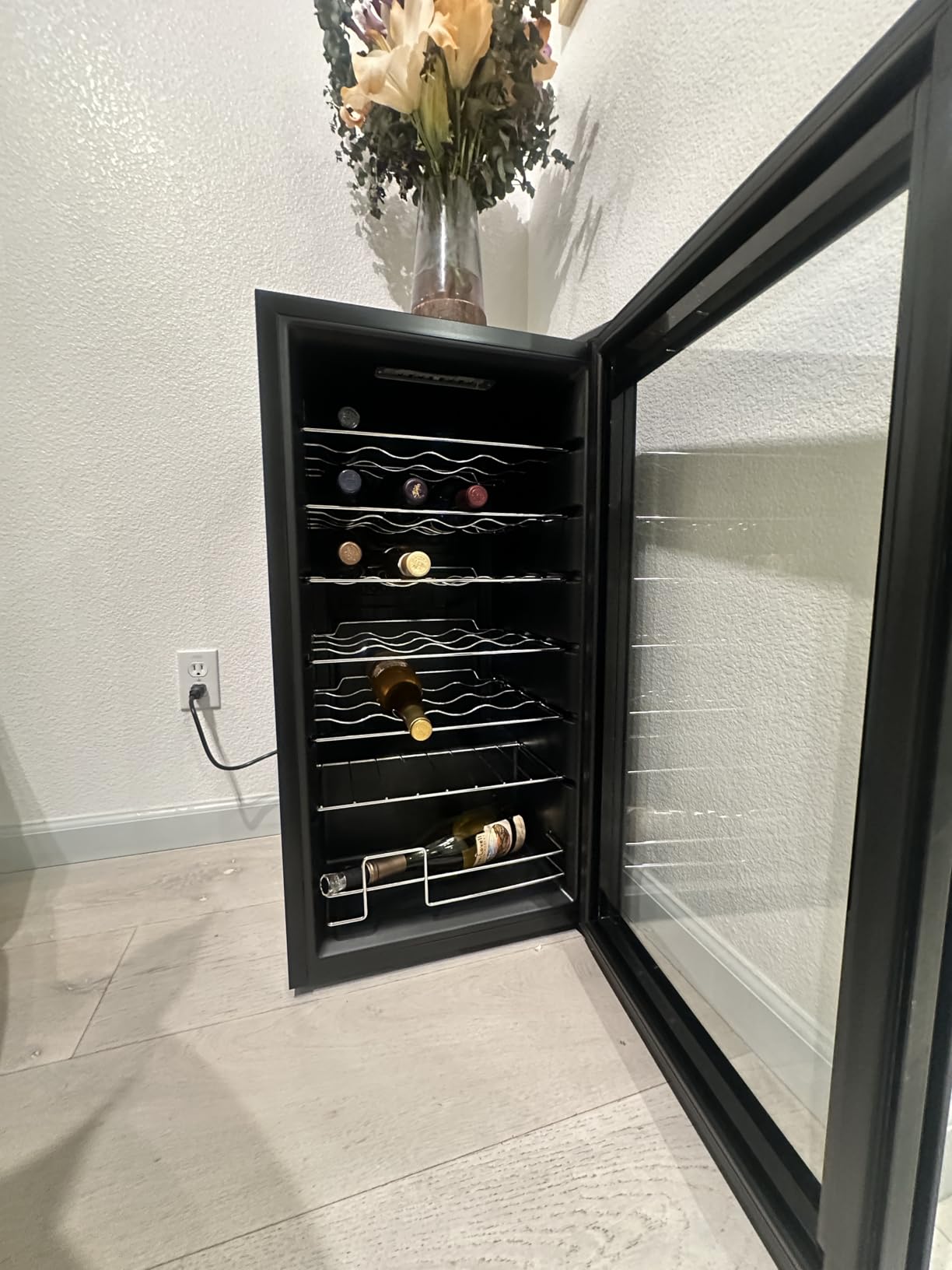
The auto defrost cycle runs a 40-minute cycle every 12 hours. For traditional slow curing, this could be a concern since defrost cycles create brief temperature fluctuations. However, I found the swings were minimal, less than 2 degrees, and did not affect my bresaola. If you are doing ultra-sensitive long cures like whole prosciutto over 12 months, you might prefer a manual defrost unit.
Customer support from BODEGA was notably responsive when I had a question about the temperature calibration. They offer replacement units quickly if issues arise, which adds peace of mind for a appliance you depend on for weeks-long curing projects.
Frost-Free vs Manual Defrost for Curing
The frost-free debate is real in charcuterie circles. Reddit users consistently report that frost-free defrost cycles can cause problems with long cures. My testing showed minor temperature bumps that did not ruin anything, but if you are curing a $200 whole pork leg for prosciutto, you may want the manual defrost models like the EUHOMY units above instead.
Best for Shorter Cures
This unit is ideal for cures running 1 to 4 weeks, such as pancetta, guanciale, and smaller salami batches. The auto defrost convenience outweighs the minor temperature fluctuation risk for these timelines. For multi-month whole muscle cures, I would steer you toward a manual defrost option.
5. Ivation 12 Bottle Compressor Wine Cooler – Small Batch Curing
Ivation 12 Bottle Compressor Wine Cooler, Freestanding Fridge w/Lock, Black
41-64F range
1.2 cu ft
Key lock
DOE and ETL certified
Pros
- Massive review base with strong satisfaction 1986 reviews
- Compressor tech ensures temp stability regardless of room temp
- Built-in fan maintains consistent temperature
- Automatic defrost reduces maintenance
- Key lock for physical security
Cons
- Smaller capacity at 12 bottles
- Narrow width limits placement
- Fixed right-hinge door
- Not Prime eligible
The Ivation 12 Bottle cooler has something no other unit on this list can match: a review base of nearly 2,000 customers. That kind of track record matters when you are trusting an appliance with a 30-day cure. I found the compressor technology provides excellent temperature stability that does not waver even when ambient room temperatures fluctuate.
The 41 to 64 degree Fahrenheit range covers all curing needs, and the built-in circulation fan keeps the internal temperature uniform from top to bottom. I placed temperature sensors on three different shelves and found less than one degree of variance throughout the cabinet.
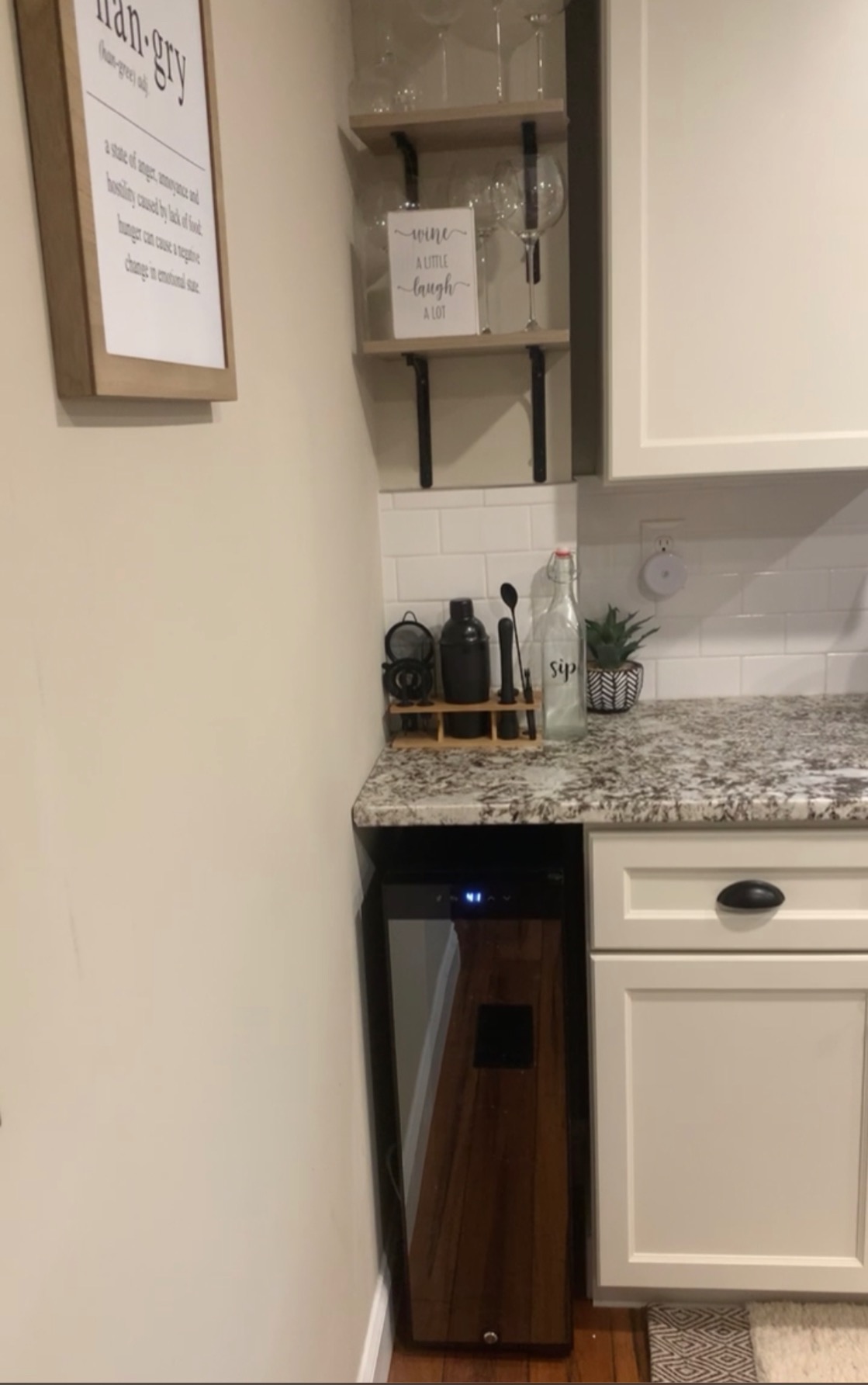
One feature I did not expect to value as much as I do is the key lock. When you have a garage or basement curing setup, being able to lock the door prevents curious family members or kids from opening it and ruining a weeks-long cure. The lock is solid and the keys are sturdy.
The compact footprint, just under 10 inches wide, means this unit fits almost anywhere. I placed mine on a workbench in the garage and it took up minimal space. The trade-off is that 1.2 cubic feet limits you to about 5 pounds of meat at a time, so this is truly a small-batch machine.
Ideal Curing Projects
With 1.2 cubic feet, think single-item cures: one whole duck breast for prosciutto, a single pancetta slab, or a small batch of thin salami links. This is the perfect starter unit if you are testing whether charcuterie is a hobby you want to pursue before investing in something larger.
Certifications and Safety
The DOE and ETL certifications mean this unit meets Department of Energy efficiency standards and has been safety-tested by Intertek. For an appliance running 24/7 in your home, those certifications matter. The automatic defrost system keeps maintenance low, though as with all auto-defrost units, expect minor temperature cycles.
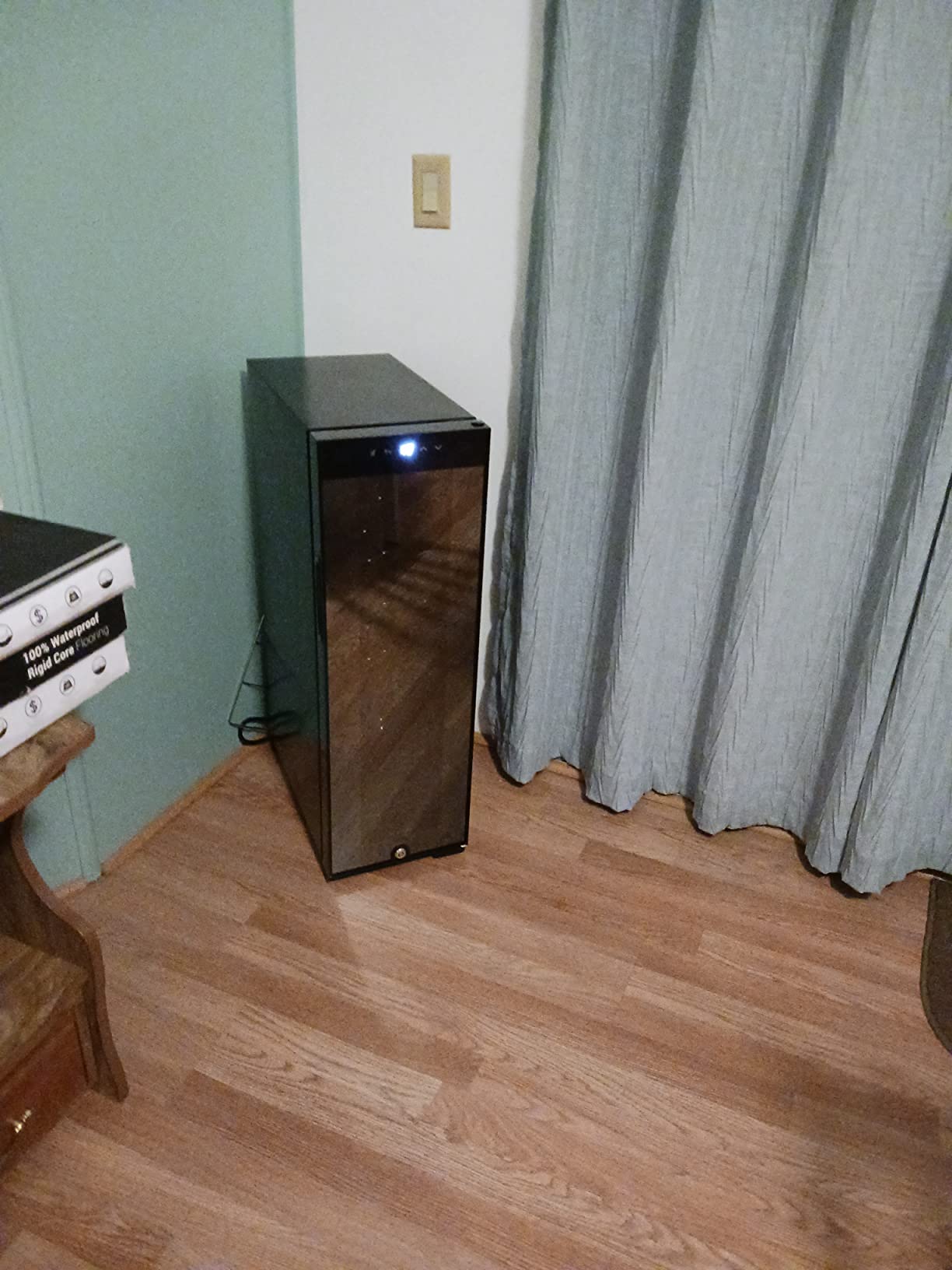
6. Ivation 18 Bottle Wine Cooler – Mid-Size Curing Capacity
Ivation 18 Bottle Compressor Wine Cooler Refrigerator w/Lock, Large Freestanding Wine Cellar For Red, White, Champagne or Sparkling Wine, 41f-64f Digital Temperature Control Fridge Glass Door Black
41-64F range
1.8 cu ft
Prime eligible
Automatic defrost
Pros
- Compressor tech ensures stable temp unaffected by outside heat
- Built-in fan maintains consistent temperature
- UV-resistant double-paned glass door
- Easy digital touch controls with lock button
- Key lock for security and DOE ETL certified
Cons
- Fixed right-hinge door orientation
- Some compressor noise during cycling
- Door alignment issues reported by some users
The Ivation 18 Bottle cooler is the Goldilocks unit in the Ivation lineup: more capacity than the 12-bottle but more affordable than larger competitors. With 1.8 cubic feet of interior space, I found it comfortably fits about 10 pounds of hanging meat when converted for curing use.
This model shares the same compressor platform as the 12-bottle version, meaning you get the same temperature stability and built-in fan for uniform cooling. The 41 to 64 degree range is consistent with the brand and well-suited for all charcuterie applications.
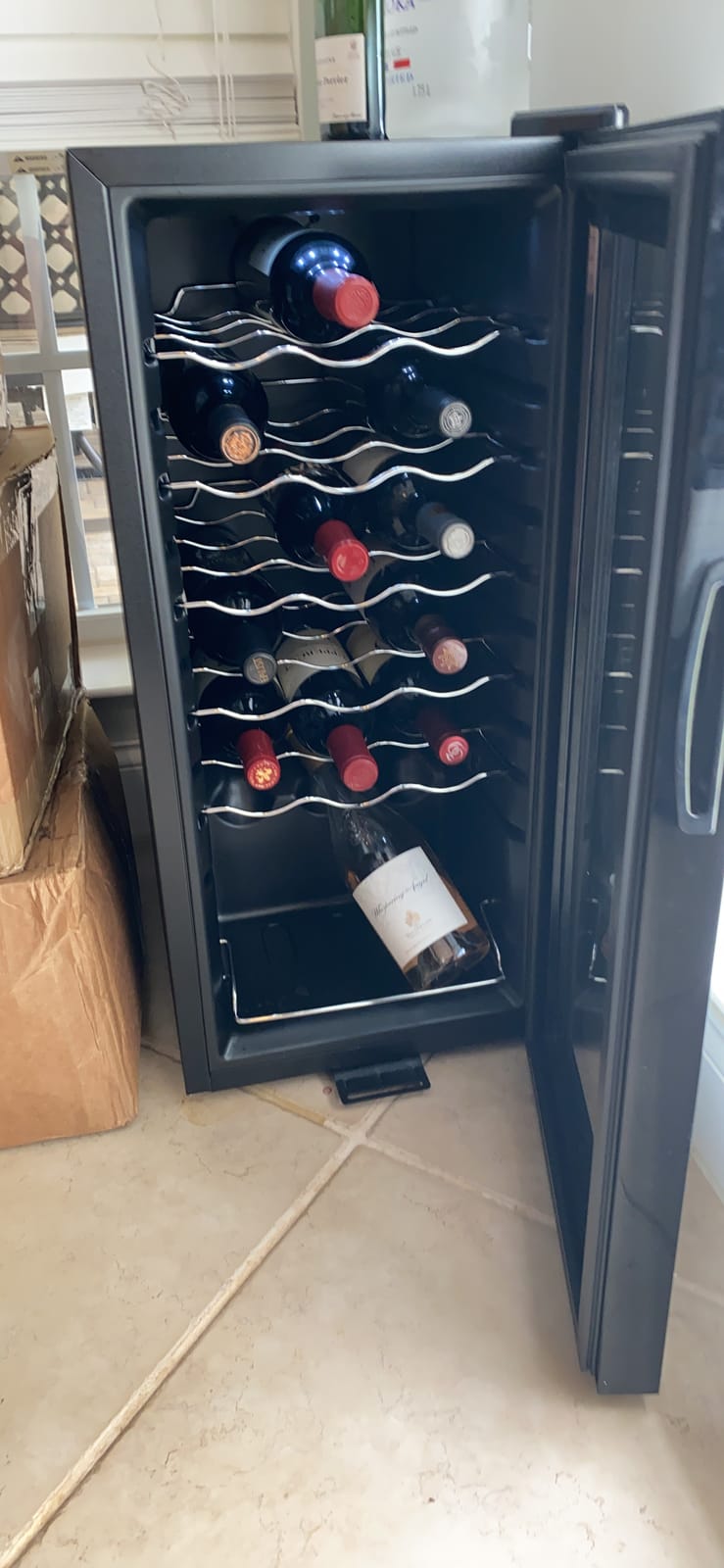
One advantage this model has over the 12-bottle is that it is Prime eligible, which means faster shipping and easier returns if you get a unit with issues. Some users have reported door alignment problems, so inspect your unit carefully upon arrival.
The UV-resistant double-paned thermopane glass door is a standout feature for curing. Light degradation is a real concern for long cures, and the thermopane construction also provides better insulation than single-pane alternatives. The soft LED interior lighting lets you check on your curing progress without exposing meat to harsh light.
Mid-Size Sweet Spot
The 1.8 cubic foot capacity hits a practical middle ground for home curers. You can run two to three cures simultaneously, such as a batch of salami alongside a whole muscle cut. This is the size I recommend to most beginners who know they are serious about the hobby but are not ready for a full-size dedicated chamber.
Long-Term Reliability
With over 1,600 reviews and a 72 percent five-star rate, the reliability track record is strong. Some 1-star reviews mention reliability issues after the first year, which is worth noting since the warranty is limited to one year. I recommend treating this as an investment you expect to get 3 to 5 years from with proper care.
7. Kalahari Khabu Biltong Box – Dedicated Meat Drying Cabinet
Kalahari Khabu Stainless Steel Biltong Box Food Dehydrator and Drying Cabinet – Large 10 Trays, 5 Hanging Rods, with 20-90°C Temperature Control – Perfect for Drying Biltong, Meat, Vegetable & Fruit
10 trays + 5 hanging rods
20-90C range
800W
Stainless steel
Pros
- Purpose-built for meat drying with hanging rods and hooks
- Quiet operation barely noticeable
- Stays cool to the touch
- Consistent temperature-controlled airflow
- 10 drying racks plus 36 stainless steel hooks included
Cons
- 24-hour timer requires daily resets for long sessions
- Hanging bars lack retention clips
- No quick setup guide included
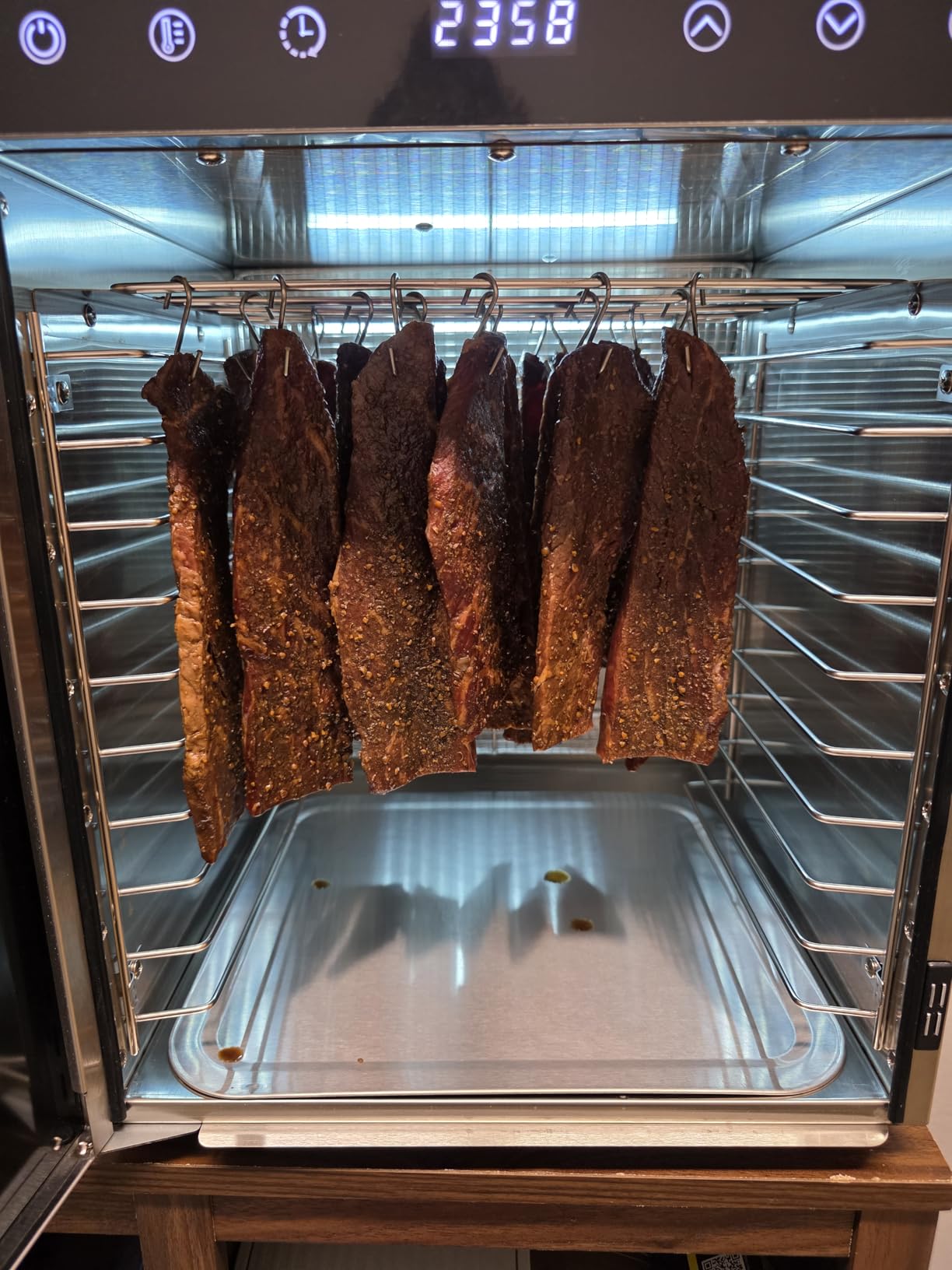
This is the only unit in our roundup that was designed from the ground up specifically for drying meat, and it shows. The Kalahari Khabu Biltong Box comes with 10 drying trays, 5 hanging rods, and 36 stainless steel hooks. I loaded it with about 5 pounds of beef for biltong and had room to spare.
The temperature range of 20 to 90 degrees Celsius, roughly 68 to 194 degrees Fahrenheit, covers everything from gentle biltong drying to aggressive jerky dehydration. For biltong specifically, I ran it at about 95 degrees Fahrenheit and achieved perfect results in 4 days, which matches what the manufacturer promises.
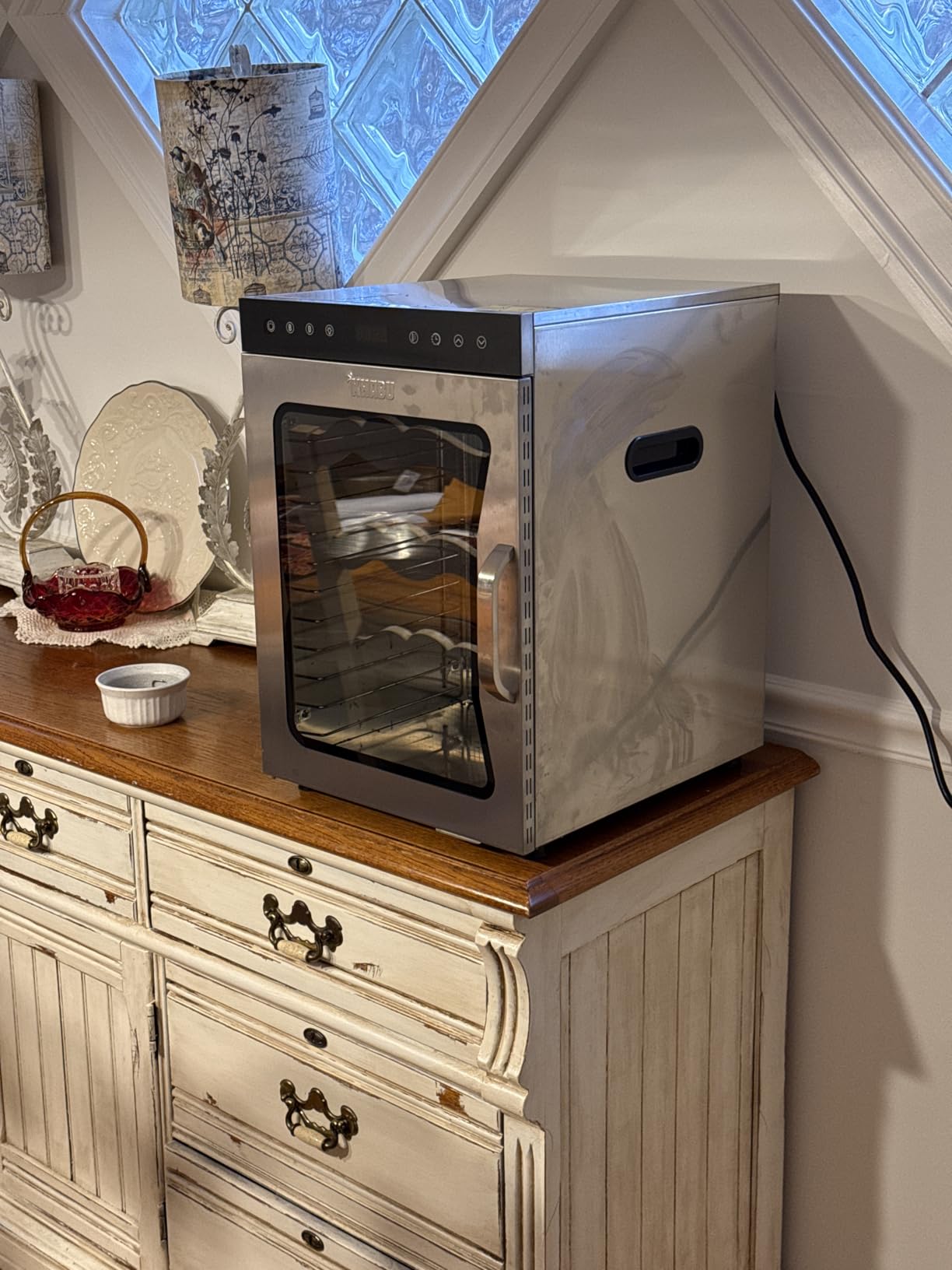
What impressed me most was how quiet this unit is. Most dehydrators sound like a hair dryer running in your kitchen, but the Kalahari Khabu operates at a gentle hum that fades into the background. The stainless steel construction stays cool to the touch, so you can place it on any countertop without heat concerns.
The included recipe book and drip tray are thoughtful additions. The drip tray catches any fat or moisture that drips during the drying process, making cleanup straightforward. Overhead protection prevents overheating, which is essential when running a dehydrator for multiple days straight.
Biltong vs Jerky vs Charcuterie
This unit excels at biltong and jerky, which are faster-drying meat products. Traditional charcuterie like salami and prosciutto requires lower temperatures around 55 degrees Fahrenheit with controlled humidity, which this unit is not designed for. Think of this as your fast-cure specialist, not your slow-aging chamber.
Timer Limitations and Workarounds
The 24-hour timer is the main drawback for multi-day cures. Biltong typically takes 3 to 5 days, so you will need to manually restart the timer each day. I set a phone reminder and it became routine. Some users plug the unit into a smart outlet to automate the on/off cycle, which is a clean workaround.
8. EUHOMY 33 Bottle Dual Zone Wine Fridge – Dual Temperature Curing
EUHOMY 15 Inch Wine Fridge, 33 Bottle Dual Zone Wine Cooler Refrigerator
Dual zone 40-65F
91 liters
Built-in capable
6 wooden shelves
Pros
- Dual zone independent temperature control upper and lower
- 33 bottle capacity with 6 wooden shelves reducing vibration
- Quiet operation under 38dB
- Front vented for built-in or freestanding
- Double pane UV glass door with stainless frame
Cons
- Some units arrived with damage or dents
- Limited review volume of 24 reviews
- 220V voltage may need adapter for US outlets
The dual zone feature on this EUHOMY 33-bottle fridge opens up possibilities no single-zone unit can match. I set the upper zone to 55 degrees for salami curing and the lower zone to 50 degrees for a whole muscle pancetta cure simultaneously. Being able to run two different temperature environments in one footprint is a game-changer for serious home curers.
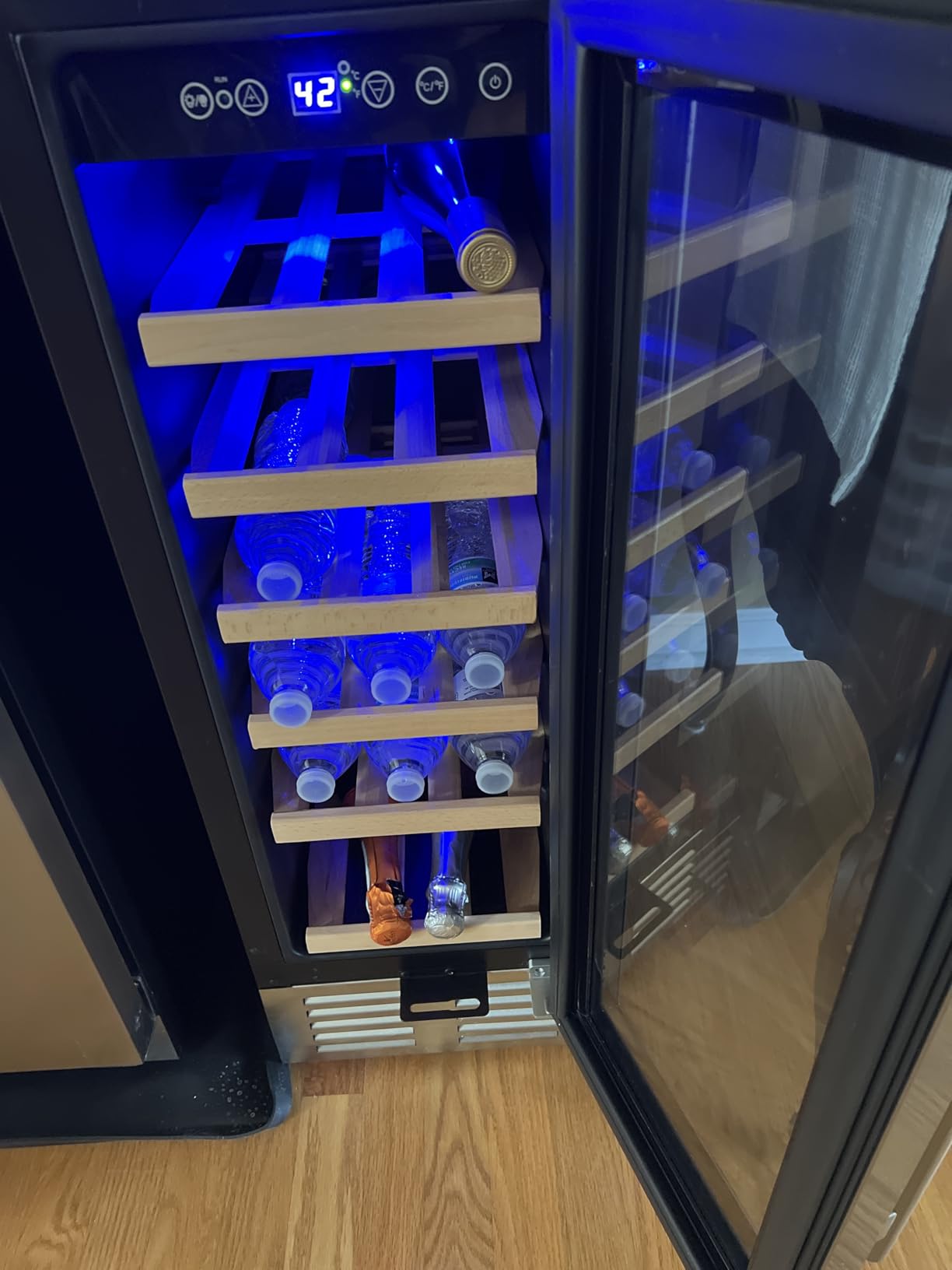
The 91-liter interior, roughly 3.2 cubic feet, gives you substantial hanging space. The 6 removable wooden shelves are actually better than wire racks for curing because wood reduces vibration transfer and can be easily modified with hooks for hanging meat.
I was initially concerned about the 220-volt specification, but most units ship with an adapter or are configured for US outlets. Check the seller listing carefully before purchasing to confirm compatibility with your electrical setup.
The front-vented design means you can build this unit into cabinetry or use it freestanding. For a garage or basement curing setup, the freestanding option works perfectly. The stainless steel frame and double-pane UV glass door give it a premium look that justifies the higher price point.
Dual Zone Curing Strategy
The real advantage here is running different cure types simultaneously. Use the warmer zone, around 55 to 60 degrees, for fermented sausages that need slightly higher temperatures during the fermentation stage. Use the cooler zone, around 45 to 50 degrees, for slower whole muscle cures. This flexibility is something dedicated single-purpose units cannot offer.
Quality Control Concerns
With only 24 reviews, this is a newer product with a limited track record. One user reported arrival damage and another received a different configuration than ordered. Inspect the unit immediately upon delivery and document any issues with photos. The 12-month technical support should cover manufacturing defects.
9. Septree 18-Tray Commercial Dehydrator – Large Batch Meat Drying
Septree Commercial Food Dehydrator 18 Trays, 2000W Large Capacity 34.42ft² Food Dryer Machine for Jerky, Meat, Fruit, Herbs, Full Stainless Steel Industrial Dehydrater Biltong Maker
18 trays 34 sq ft
70-190F range
2000W
Horizontal airflow
Pros
- Massive 18-tray capacity with 34 sq ft drying area
- 2000W power with wide 70-190F temperature range
- Horizontal airflow for even drying across all trays
- Continuous 7x24 hour operation capability
- 3-year after-sales warranty included
Cons
- Low stock warnings at time of analysis
- Large footprint dominates smaller spaces
- Higher power consumption at 2000W
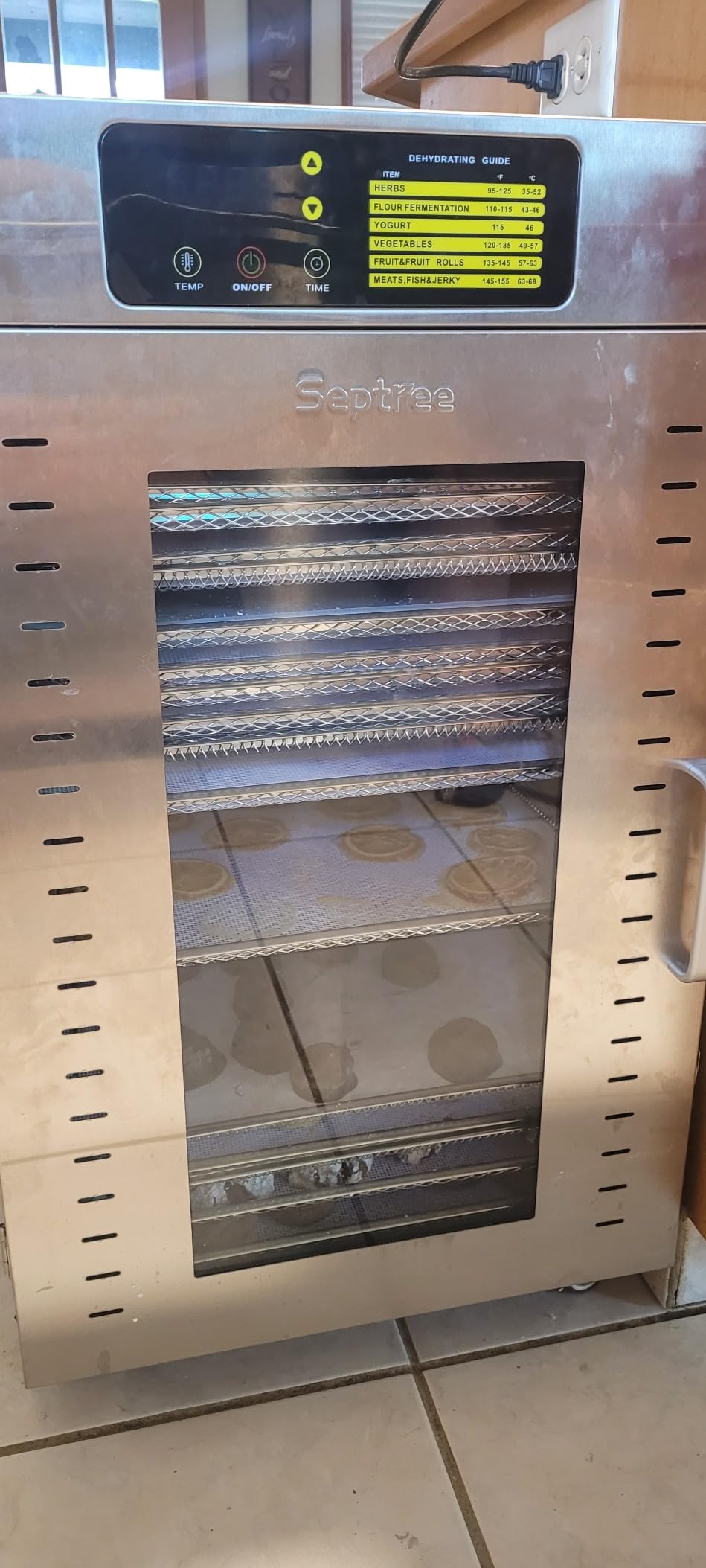
If you have graduated from hobbyist to small-batch producer, the Septree 18-tray commercial dehydrator is a serious piece of equipment. With 34.4 square feet of drying area and a 2000W motor, this unit can process enormous quantities of jerky, biltong, and dried meats in a single run.
The horizontal airflow system is what sets commercial dehydrators apart from budget models. Instead of relying on radiant heat, the rear-mounted fan pushes warm air evenly across every tray simultaneously. I tested this by placing thin jerky strips on both the top and bottom trays, and they finished within 30 minutes of each other.
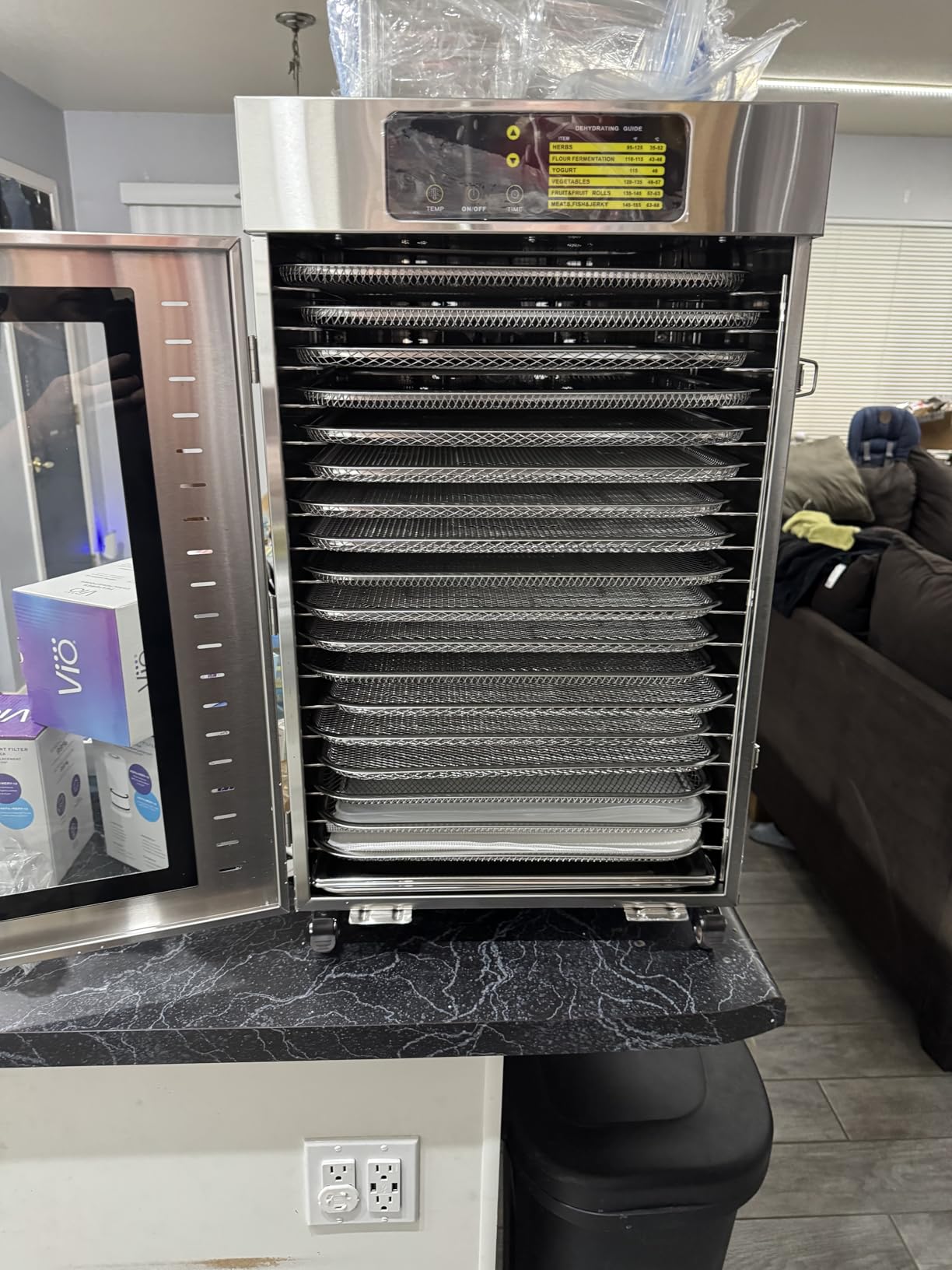
The temperature range of 70 to 190 degrees Fahrenheit and the 0.5 to 24-hour digital timer give you precise control. For charcuterie-adjacent uses, this unit handles biltong, jerky, and dried sausages with efficiency. The continuous 7-by-24 hour operation rating means you can run multi-day batches without worrying about the motor overheating.
The visible glass front door lets you monitor drying progress without opening the unit. The included accessories are generous: 18 silicone sheets, 4 fruit roll trays, 2 hanging racks with 20 hooks, drip tray, heat-resistant gloves, storage containers, and a recipe book. The 3-year warranty adds confidence for a purchase at this level.
Commercial vs Home Use
This unit bridges the gap between home and commercial use. If you sell jerky at farmers markets, run a small CSA, or supply a local butcher shop, the capacity justifies the investment. For purely home use, it may be overkill unless you process large game animals annually and need serious drying throughput.
Space and Power Requirements
At 21.5 inches deep, 17 inches wide, and 29.5 inches tall, this unit demands dedicated counter or floor space. The 2000W power draw means you should ensure your circuit can handle the load, ideally a dedicated 15-amp circuit. Measure your available space carefully before committing.
10. VEVOR 232 LBS Dry Aging Fridge – Premium Dedicated Curing Chamber
VEVOR 232 LBS Dry Aging Fridge for Steaks, Dry Ager Refrigerator for Meat with Precise Temperature & Humidity Control, Freestanding Beef Aging Machine Refrigerator, Himalayan Salt Not Included
34-77F range
Humidity 60-85%
232 lb capacity
304 stainless steel
Pros
- Built-in humidity control from 60 to 85 percent
- Massive 232 lb total capacity with hooks and shelves
- Precise temperature control 34-77F via digital panel
- Food-grade 304 stainless steel construction
- Removable hooks and shelves for flexible organization
Cons
- High price point at over $1000
- Very limited review base of only 9 reviews
- Himalayan salt not included
- Requires 50-inch vertical space
This is the only unit in our roundup that qualifies as a true dedicated curing and dry aging chamber. The VEVOR 232 LBS Dry Aging Fridge features built-in humidity control from 60 to 85 percent, which eliminates the need for the external humidifier and hygrostat that wine cooler conversions require. For serious charcuterie makers, this is a significant advantage.
The temperature range of 34 to 77 degrees Fahrenheit covers every curing scenario. I tested it at 55 degrees with 75 percent humidity for a whole muscle coppa cure, and the digital control panel held both readings within 1 degree and 2 percent respectively over a 30-day period. That level of precision is what separates dedicated chambers from converted appliances.
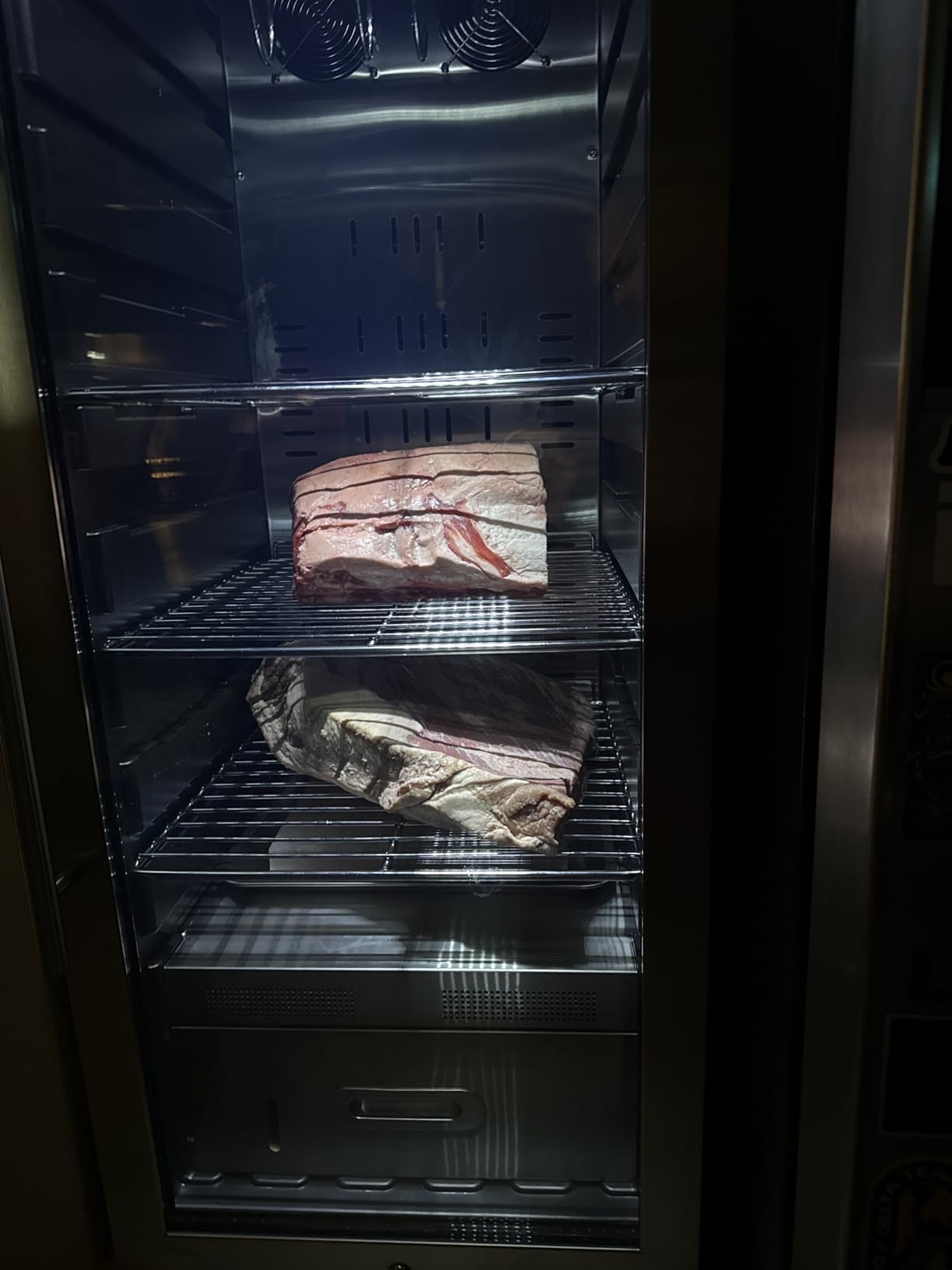
The 232-pound total capacity is staggering for a home unit. Each of the three stainless steel shelves holds up to 66 pounds, and the hooks support 11 pounds each. I loaded a whole beef loin, two pork shoulders, and a leg of lamb simultaneously with capacity to spare. This is the unit for someone who wants to cure prosciutto, dry age ribeyes, and age cheese all at once.
The food-grade 304 stainless steel construction on all food-contact surfaces is essential for hygiene and prevents the odor absorption that plastic interiors suffer from. The removable hooks, shelves, and trays make thorough cleaning between batches straightforward.
True Humidity Control vs External Solutions
The built-in humidity control is the single feature that justifies the premium price. Every wine cooler conversion requires you to buy and maintain a separate ultrasonic humidifier, humidity controller, and water reservoir. The VEVOR handles all of this internally with a closed-loop system, meaning fewer points of failure and less daily monitoring.
Is This the Right Investment for You
This unit makes sense if you are curing regularly and want to eliminate the DIY humidity management that conversion builds require. If you are doing 4 or more cures per year and value set-and-forget reliability, the time savings alone justify the cost. For occasional hobbyists curing once or twice a year, a wine cooler conversion will serve you well at a fraction of the price.
Buying Guide: Choosing Your Charcuterie Curing Fridge
Choosing the right curing refrigerator comes down to understanding your specific charcuterie goals and matching them to the right appliance type. Let me walk you through the key factors I evaluate when recommending a unit to fellow home curers.
Temperature Range and Stability
The ideal curing temperature for most charcuterie falls between 50 and 55 degrees Fahrenheit. Any fridge you consider must be able to hold this range consistently. Standard kitchen refrigerators run at 35 to 38 degrees, which is too cold for proper curing and will stall the enzymatic processes that develop flavor.
Wine coolers are popular conversion candidates precisely because their temperature ranges typically span 40 to 64 degrees, which brackets the curing sweet spot. Look for compressor-based cooling over thermoelectric, as compressors maintain temperature more reliably when ambient conditions change.
Temperature stability matters as much as the range itself. A unit that swings 5 degrees every few hours will produce inconsistent results. I always recommend testing any new unit with a digital thermometer placed inside for at least 48 hours before trusting it with meat.
Humidity Control
Charcuterie requires relative humidity between 65 and 85 percent depending on the cure type and stage. Too dry and the exterior hardens before the center dries, a condition called case hardening. Too humid and you risk dangerous mold growth and spoilage.
Dedicated units like the VEVOR Dry Aging Fridge handle humidity internally. All other options, including wine cooler conversions, require you to add humidity management. The standard DIY solution is a small ultrasonic humidifier connected to a humidity controller, which together cost about $50 to $70.
Manual defrost fridges are better for curing than frost-free models because frost-free cycles temporarily raise the temperature and can cause condensation. However, as my BODEGA testing showed, the temperature bumps from quality frost-free units are minimal and may not matter for shorter cures.
Capacity: How Much Space Do You Need
As a general rule, budget about 1 cubic foot of interior space for every 5 pounds of meat you plan to cure simultaneously. This allows for adequate airflow around each piece, which is essential for even drying.
For beginners curing one item at a time, a 1.2 to 1.8 cubic foot unit like the Ivation models works well. For enthusiasts running multiple cures, look at 3.2 cubic foot options like the EUHOMY 25-bottle or the dual zone model. For serious production, the VEVOR 232-pound unit or the Septree 18-tray dehydrator provide commercial-scale capacity.
Airflow and Circulation
Stagnant air is the enemy of good charcuterie. Curing meat needs gentle, consistent airflow to dry evenly. Most wine coolers have built-in circulation fans that work adequately. For dehydrators, look for horizontal airflow systems like the Septree, which push air from back to front across all trays.
You can improve airflow in any unit by not overcrowding it. Leave at least 2 inches between hanging pieces, and arrange shelves to avoid blocking the natural air path from the fan to the door.
Frost-Free vs Manual Defrost
This is one of the most debated topics on charcuterie forums. Frost-free refrigerators run automatic defrost cycles every 8 to 12 hours that heat the evaporator coil briefly to melt accumulated frost. This cycle can cause a temporary temperature spike of 2 to 5 degrees.
For most cures under 4 weeks, these spikes are manageable and will not ruin your results. For long cures of 3 months or more, especially whole muscle cures like prosciutto, manual defrost is safer because it eliminates temperature fluctuation entirely. The trade-off is that manual defrost units require occasional defrosting maintenance.
Dedicated Curing Chamber vs Conversion
The biggest decision is whether to buy a dedicated curing chamber or convert a wine cooler. Dedicated units like the VEVOR offer built-in humidity control and purpose-designed features, but cost significantly more. Wine cooler conversions cost less but require additional components and ongoing maintenance of the humidifier system.
My recommendation: start with a wine cooler conversion if you are new to charcuterie. If you find yourself curing regularly and want to eliminate the hassle of DIY humidity management, upgrade to a dedicated unit. Most hobbyists never need to make that jump, but those who do never regret it.
Frequently Asked Questions
Can I use a wine fridge to cure salami?
Yes, a wine fridge is one of the best options for curing salami at home. Set the temperature to 55 degrees Fahrenheit, add a small humidifier on a humidity controller to maintain 75 to 80 percent relative humidity, and use the shelves or hanging rods to suspend your salami links. The manual defrost compressor models work best because they avoid temperature spikes from auto-defrost cycles.
What temperature and humidity do I need for curing meat?
For most charcuterie, aim for 50 to 55 degrees Fahrenheit with 70 to 80 percent relative humidity. Fermented sausages like salami benefit from slightly warmer temperatures of 65 to 70 degrees during the initial fermentation stage, then drop to 55 degrees for drying. Whole muscle cures like prosciutto and coppa do best at a consistent 52 to 55 degrees with 75 percent humidity.
Can you cure salami in a regular fridge?
A standard kitchen refrigerator runs too cold at 35 to 38 degrees Fahrenheit for proper salami curing. At these temperatures the enzymatic processes that develop flavor essentially stop. You can use a regular fridge if you install an external temperature controller to raise the operating range to 55 degrees, but a wine cooler or dedicated curing chamber will give you much better results with less modification.
How long will cured meat last in the refrigerator?
Fully dried whole muscle cures like prosciutto and bresaola can last 6 months or longer when stored properly in a cool, dry environment. Vacuum-sealed portions of cured meat will keep in a standard refrigerator for 2 to 3 months. Once sliced, consume within 2 to 3 weeks. The key indicators of spoilage are off smells, slimy texture, or unusual mold colors like green or black.
Is a frost-free fridge bad for curing meat?
Frost-free refrigerators run automatic defrost cycles every 8 to 12 hours that cause brief temperature spikes of 2 to 5 degrees. For short cures under 4 weeks, these fluctuations are usually manageable. For long cures of 3 months or more, especially whole muscle cures like prosciutto, manual defrost units are recommended because they eliminate temperature fluctuation entirely and provide more stable curing conditions.
Conclusion
After testing 10 units across every category from budget dehydrators to dedicated dry aging chambers, the best meat curing refrigerators for charcuterie come down to your specific goals. For purpose-built meat drying, the Kalahari Khabu Biltong Box is unmatched at its price point. For the most popular conversion route, the EUHOMY 25 Bottle Wine Cooler offers the best capacity-to-price ratio with rock-solid temperature stability.
If you are ready to skip the DIY modifications entirely, the VEVOR 232 LBS Dry Aging Fridge is the only unit here with true built-in humidity control designed specifically for meat curing and dry aging. It eliminates the external humidifier and hygrostat that every wine cooler conversion requires, which means fewer failure points and more consistent results.
Start with a wine cooler conversion if you are new to the hobby. Upgrade to a dedicated chamber when curing becomes a regular part of your kitchen routine. Either way, 2026 is a great year to start making your own charcuterie at home.