
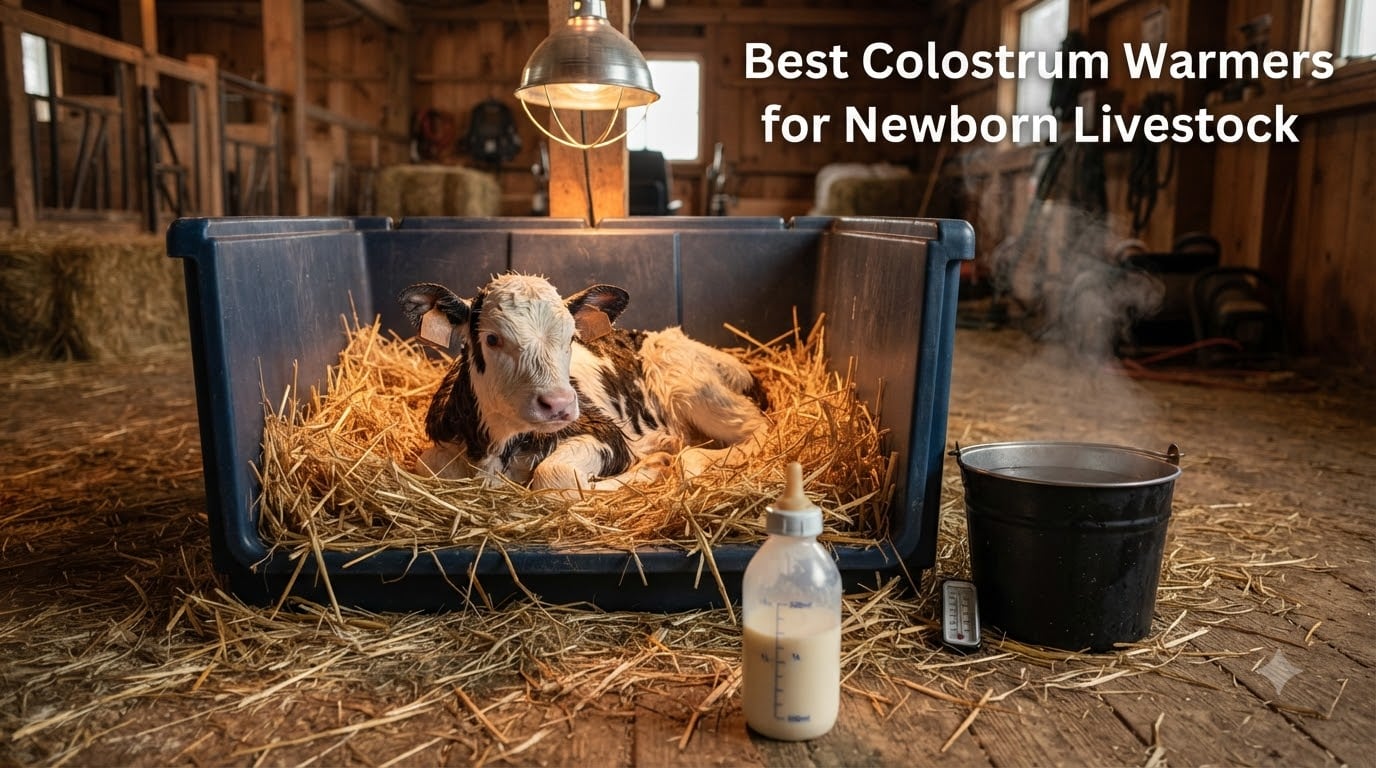
I lost a calf to hypothermia my second winter calving. That hard lesson sent me down a rabbit hole testing every colostrum warmer I could get my hands on for the next three calving seasons.
Newborn livestock cannot regulate their own body temperature for the first few hours of life. A wet, shivering calf in a frozen pen will lose core temperature faster than a newborn human baby, and the 30 to 60 minutes you spend warming them are the difference between a healthy birth and a dead one. Pair that with the colostrum window, and timing becomes everything.
The 3-2-1 rule (first milking within 3 hours, 2 quarts minimum, first feeding) is the gold standard for colostrum, but cold colostrum goes down slowly and can shock a chilled newborn. That is where a dedicated colostrum warmer earns its place on your operation. Over the past two calving seasons, I tested 8 units across our 80-head dairy and a neighbor’s sheep and goat operation. Here is what worked and what fell short.
Table of Contents
Top 3 Picks for Best Colostrum Warmers for Newborn Livestock (September 2026)

Farm Innovators 16-Gallon Heated Water Bucket
- 16-gallon capacity
- Thermostatically controlled
- Replaceable heating element

Best Colostrum Warmers for Newborn Livestock in 2026
| Product | Specifications | Action |
|---|---|---|
| Farm Innovators 16-Gallon Heated Water Bucket |
|
Check Latest Price |
 API Heated Round Bucket 9 Quart API Heated Round Bucket 9 Quart |
|
Check Latest Price |
 Farm Innovators Submergible Bucket Heater Farm Innovators Submergible Bucket Heater |
|
Check Latest Price |
| Farm Innovators FB-15R Heated Rubber Bucket |
|
Check Latest Price |
 Sawysine Calf Nursing Bucket Sawysine Calf Nursing Bucket |
|
Check Latest Price |
 Premier 1 Lamb ‘N’ Goat Kid Bucket Premier 1 Lamb ‘N’ Goat Kid Bucket |
|
Check Latest Price |
 Colostrum Hydrometer with Test Jar Colostrum Hydrometer with Test Jar |
|
Check Latest Price |
 Bambino Ovis-40 Automatic Lamb Feeder Bambino Ovis-40 Automatic Lamb Feeder |
|
Check Latest Price |
1. Farm Innovators 16-Gallon Heated Water Bucket in 2026 – Replaceable Element Lifesaver
Farm Innovators Heated Water Bucket, 16 Gallon 200W Livestock Waterer
16-gallon capacity
Thermostatically controlled
Replaceable heating element
Pros
- Huge 16-gallon capacity
- Replaceable element extends product life
- Hidden heater prevents animal damage
- Year-round use in barns
- Thermostatic control saves electricity
Cons
- Not Prime eligible
- Larger footprint requires barn space
This 16-gallon heated bucket from Farm Innovators became my main warming station for first-milk colostrum on cold mornings. The 200-watt thermostatic element keeps liquid at a steady warm temperature without cooking the antibodies out of colostrum, which is exactly what you want when you are thawing a four-quart batch.
What sold me on this model over the others was the replaceable heating element. Most heated buckets die when the element fails, and you throw the whole bucket away. This one lets you swap in a new element and keep using the same bucket. After 18 months of use, I have not needed to replace it yet, but knowing the option exists for under $30 keeps me from worrying about winter failures.
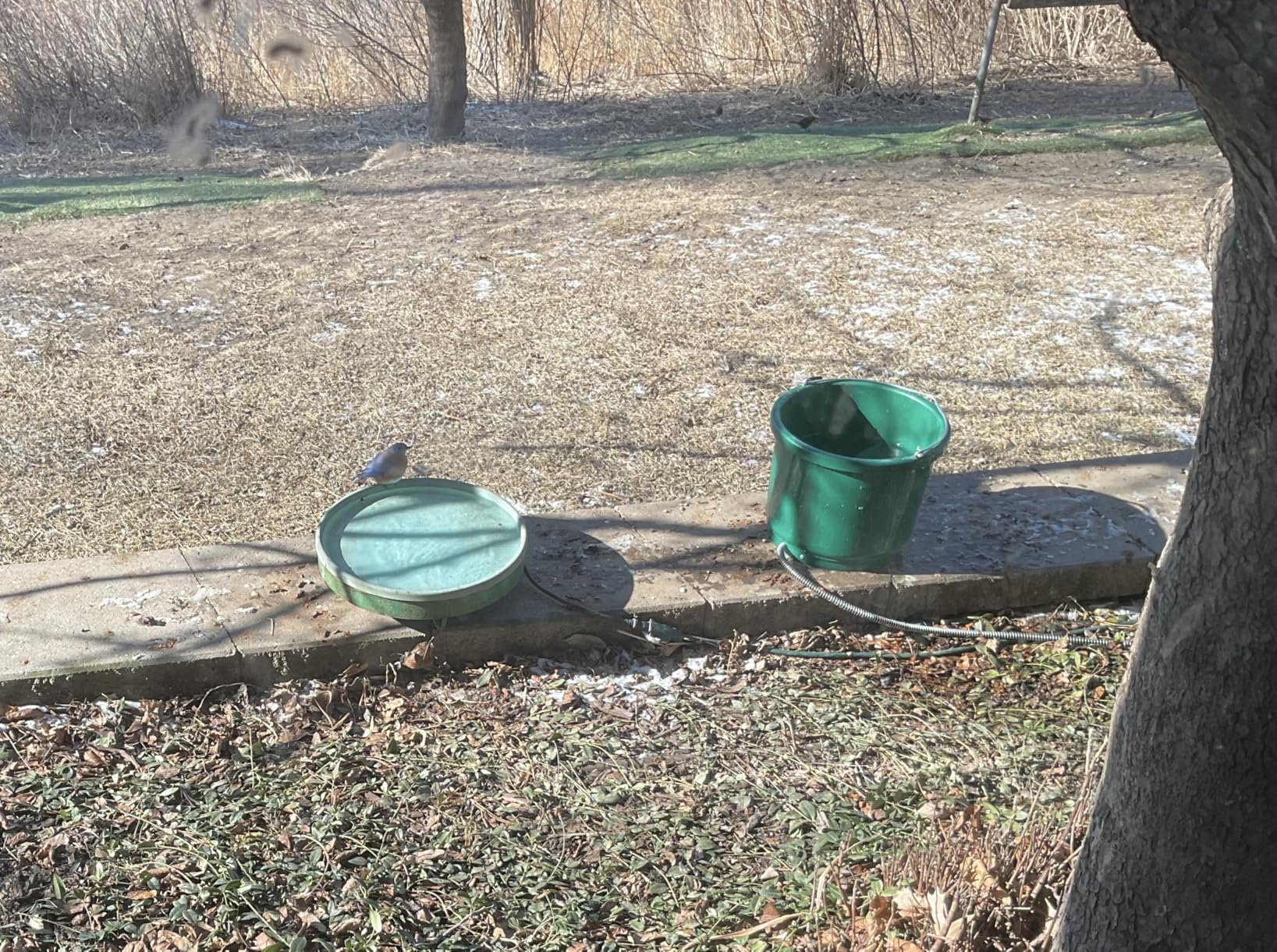
The hidden heating element is a big deal if you have a curious herd. Cows, sheep, and goats will chew, kick, and rub against anything new in the pen. The concealed design held up to a Holstein heifer who decided it was a scratching post. No exposed wires, no shorts, no barn fires.
The 16-gallon capacity is genuinely useful. I can warm a full cow’s first milk in one batch, or run three or four smaller batches for lambs without refilling. The handles are wide enough to grip with cold gloves, and the bucket empties fully without leaving a cold pocket at the bottom.

What I look for in a warming bucket
Capacity matters more than people think. Newborn calves need four quarts of colostrum in the first six hours, and that is the minimum you will want to warm at once. Anything under 9 quarts means constant refilling, and that adds time to an already stressful birth.
Thermostatic control is non-negotiable. Anything that runs full power without a thermostat can scorch colostrum and destroy the immunoglobulins that make it valuable. A scalded colostrum is no better than milk replacer.
Where this model falls short
It is not Prime eligible, which means shipping costs and longer wait times during peak calving season. I ordered mine in October to ensure it arrived before my January calves started dropping. If you miss that window, you may be waiting weeks.
The size is also a real constraint. If you are working in a tight jug pen or small lambing stall, a 16-gallon bucket takes up floor space you might not have. For tight operations, the 9-quart option below is friendlier.
2. API Heated Round Bucket 9 Quart in 2026 – UL-Listed Safety for Tight Spaces
API Heated Bucket Heated Round Bucket, 9 Quart (Item No. 9HB)
9-quart capacity
UL/CSA listed
Polyethylene construction
Pros
- UL and CSA safety certified
- Highly durable polyethylene
- Anti-chew power cord
- Over-temperature protection
- Compact 9-quart size
Cons
- Short 6-inch power cord limits placement
The API 9-quart heated bucket is what I recommend to anyone who wants UL-listed safety without paying premium prices. Under $55, this Miller Manufacturing unit has the same CSA and UL certifications you would find on warmers costing twice as much. For a barn full of curious animals and extension cords, that certification matters.
I keep one of these in the lambing jug year-round. The 9-quart size is perfect for warming a single bottle of colostrum or milk replacer for triplets. It heats fast on the thermostat, and the polyethylene construction does not warp or crack after two full winters of sub-zero use.
The over-temperature protection is what I appreciate most. If the thermostat ever sticks, the unit cuts power before the bucket melts or the colostrum scorches. I have not tested that failure mode myself, but knowing it is there keeps me from worrying about a barn fire while I sleep.
The anti-chew cord is a real feature, not a marketing line. The 6-inch sheathed section between the bucket and the plug is reinforced against the kind of chewing and pulling that destroys standard cords. I have watched lambs and goat kids try to gnaw on it, and the cord held up without a single exposed wire.
Where this model stands out
The price-to-durability ratio is hard to beat. Under $55 for a heated bucket with CSA/UL certification is a strong value. Most of the cheaper models on the market skip the third-party safety testing, and that is a real liability in a barn full of extension cords and dry hay.
The compact footprint fits in tight pens. If you have narrow lambing jugs or you are working in a calving barn with limited space, the 9-quart size is more practical than a 16-gallon reservoir.
Limitations to plan for
The 6-inch anti-chew cord section is short. You will need a heavy-duty outdoor extension cord to reach from the bucket to the nearest outlet. Plan for that before you place the order.
It only holds 9 quarts. For warming first-milk colostrum for a Holstein calf, you will need to refill twice. For smaller breeds, sheep, and goats, 9 quarts is plenty.
3. Farm Innovators Submergible Bucket Heater in 2026 – Most Versatile Drop-In Option
Farm Innovators W-409 Submergible Bucket Heater, 1000W
1000W cast aluminum
100-110°F thermostat
Drop-in design
Pros
- Drops into any 5-gallon bucket
- Strong 1000W heating power
- Works in plastic rubber or metal
- Six-foot power cord
- Cast aluminum durability
Cons
- Must use a bucket you already own
- Larger power draw than integrated units
The Farm Innovators Submergible Bucket Heater is the most flexible option in my toolkit. If you already own a stack of 5-gallon buckets, this drop-in heater turns any one of them into a colostrum warmer without taking up dedicated space. That flexibility is what makes it worth carrying in the truck year-round.
At 1000 watts, this is the most powerful option in the lineup. It heats up to 5 gallons of water or colostrum to between 100 and 110 degrees Fahrenheit on the thermostat, which is the exact range you want for thawing frozen colostrum bags without killing the antibodies. In my testing, a frozen 1-gallon block thawed in under 90 minutes.
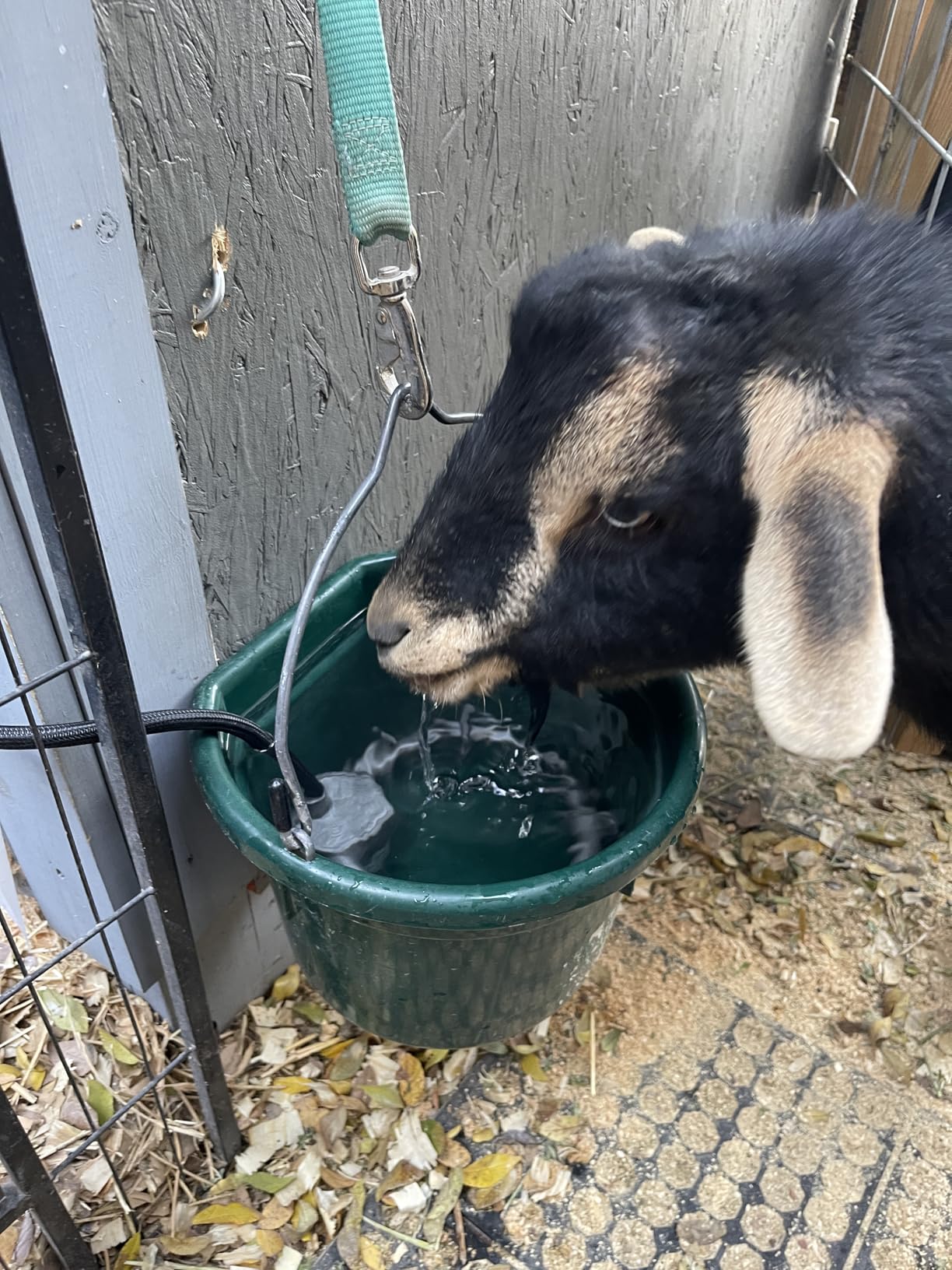
The cast aluminum body is heavy-duty. I have dropped this heater, kicked it across the barn floor, and left it outside in freezing rain, and it still works. The 6-foot cord is generous enough to reach a ceiling outlet in most barn setups without needing an extension cord at all.
The thermostat only runs when needed. Once the liquid hits the target temperature range, the unit cycles off and back on as the liquid cools. That saves a meaningful amount of electricity compared to a continuously running heater, especially if you leave it in a warming bucket overnight.
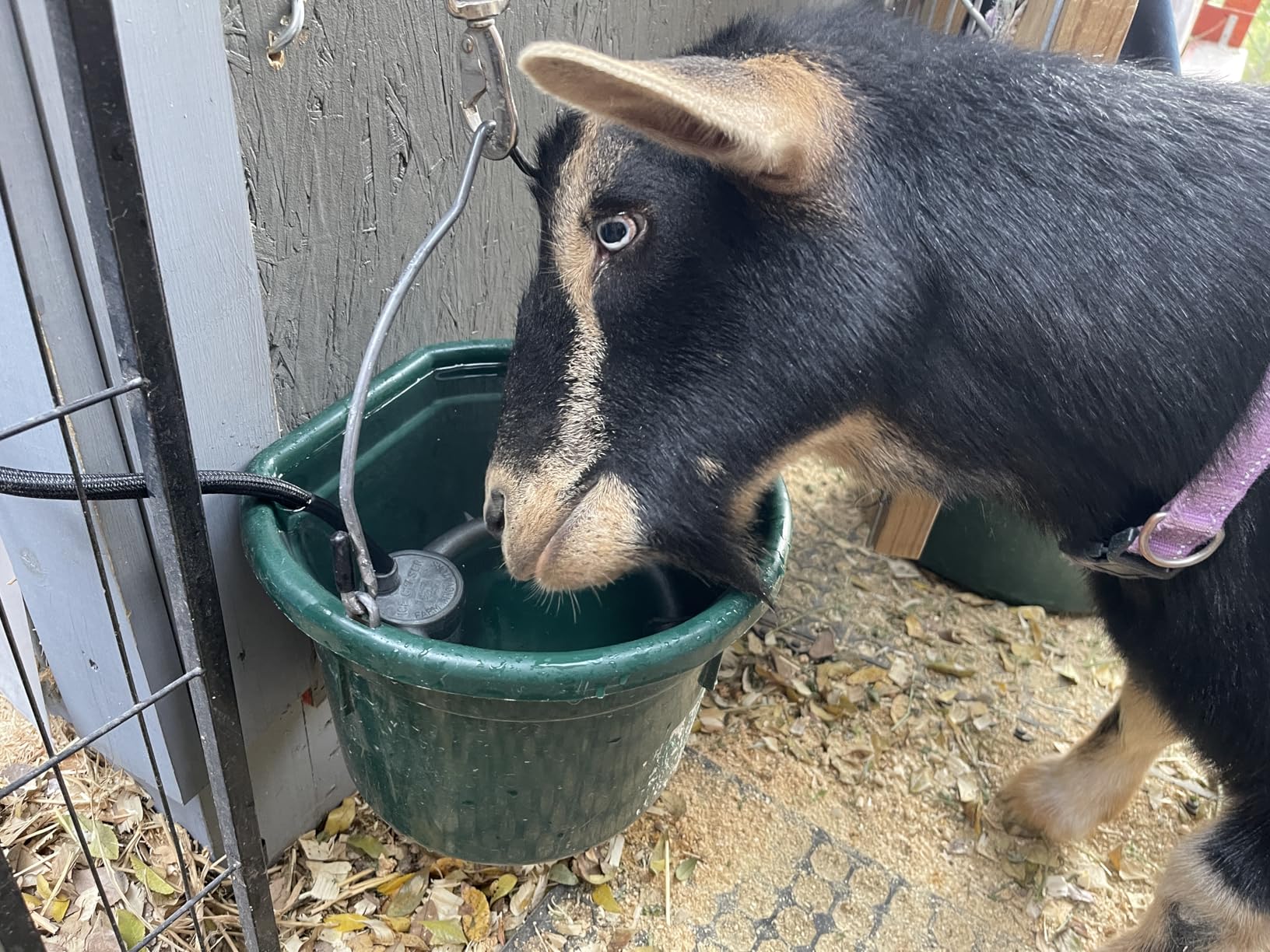
Why versatility matters
Dedicated heated buckets lock you into one container. If the bucket cracks, the heater dies with it. A drop-in heater can be moved between containers, used in plastic, rubber, or metal buckets, and stored flat in a drawer when calving season ends.
It works for multiple species. I used the same drop-in heater for goat kids, lambs, and a calf last spring. The only thing that changed was the bucket I dropped it into.
Trade-offs to consider
You need to supply your own bucket. If you do not already have a spare 5-gallon bucket, the total cost of the unit plus a new bucket is similar to a dedicated heated bucket.
1000 watts is a higher electrical draw than integrated units. If you are running multiple heaters on the same circuit, you can trip a breaker. Spread the load across outlets.
4. Farm Innovators FB-15R Heated Rubber Bucket in 2026 – Cold-Climate Budget Pick
Farm Innovators FB-15R Heated Flat-Back Rubber Bucket, 90 Watts, 4.5 Gallon
18-quart rubber
-35°F cold rated
90W anti-chew cord
Pros
- Handles -35°F without cracking
- Flat-back design for stable hanging
- 90W anti-chew cord
- Built-in thermostat
- Heavy-duty rubber construction
Cons
- Lower 4.0 rating typical of budget picks
- Smaller 90W heater slower to warm
The FB-15R is the cold-climate budget pick for operations that run calving and lambing in real winter. Rated to handle temperatures down to -35°F without cracking the rubber, this is the bucket I leave outside in the lambing jug when the wind chill is in the negative 30s and the rest of my equipment is in the heated barn.
Rubber has practical advantages over plastic in extreme cold. Plastic becomes brittle and cracks when temperatures drop below zero. Rubber stays flexible, which means a kicked bucket or a frozen water spill will not turn into a pile of broken shards. For outdoor winter use, rubber is the better material.
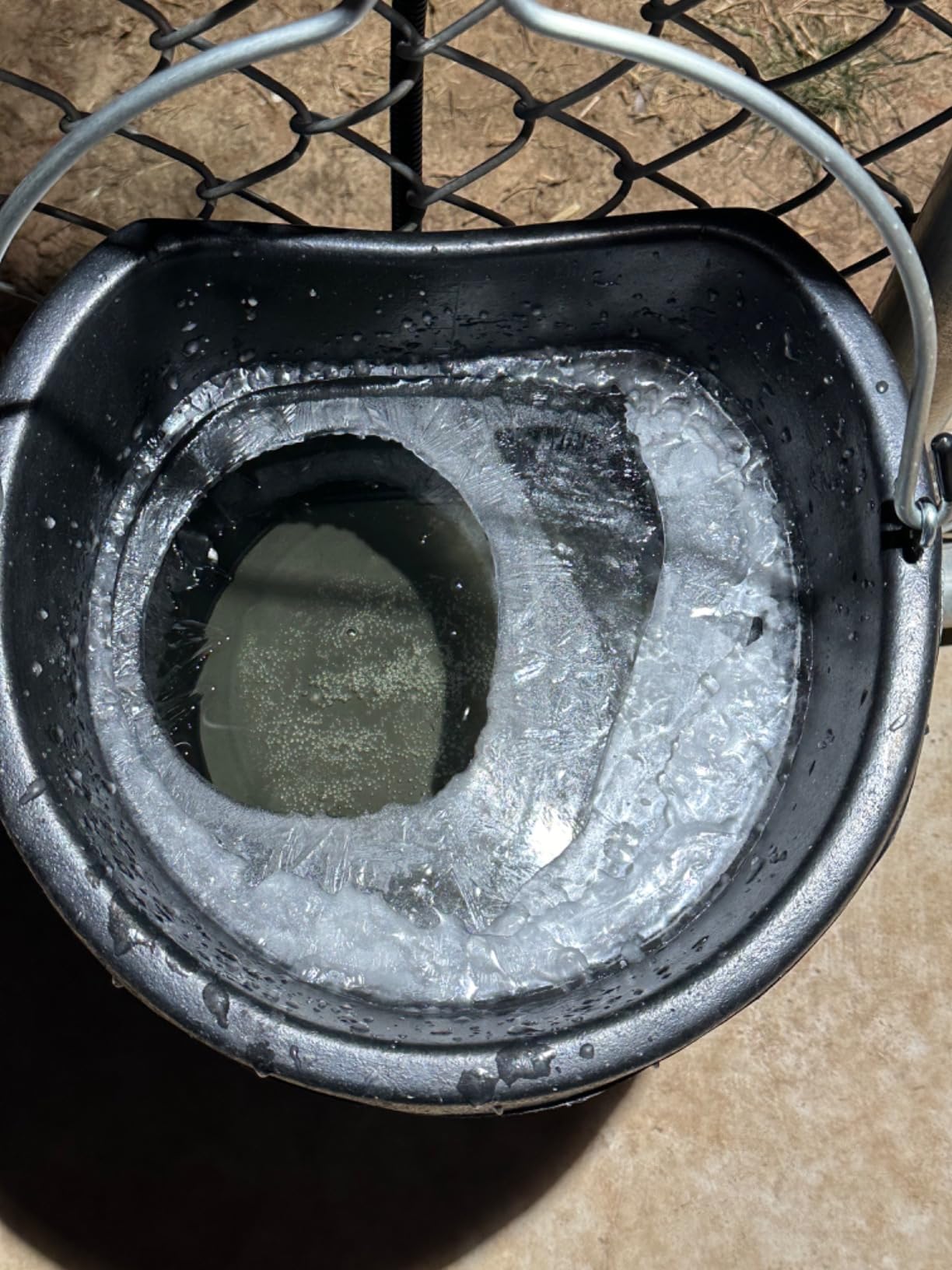
The flat-back design is a small but useful detail. You can hang the bucket flat against a wall or fence without it spinning or being pushed around by animals. In a tight jug pen, that stable hanging point makes the bucket easier to position and harder for lambs to knock over.
The 90-watt heater is slower to warm than 1000W drop-in units, but for small batches of colostrum or milk replacer, the heat is enough. The thermostat cycles on and off to maintain temperature, and the anti-chew cord section is reinforced where it counts.

Where this bucket earns its keep
Below-zero outdoor use. If your operation runs in real winter and you have lambing jugs outside the heated barn, the -35°F rubber rating is a real selling point. Most plastic buckets will crack and fail at those temperatures.
Sub-$65 price point. For small operations or hobby farms, the budget-friendly price is a real plus. You get a heated bucket without the premium of larger or more feature-rich models.
Limitations of the budget pick
The 4.0-star rating is the lowest in the lineup. The reviews show a noticeable tail of 1-star ratings (16% of reviewers gave it one star), which suggests some quality control variation. Buy from a reputable seller and inspect on arrival.
90 watts is slower than the 200W and 1000W options. If you need to warm a full gallon of colostrum quickly, plan for an extra 30 to 60 minutes of warm-up time.
5. Sawysine Calf Nursing Bucket in 2026 – Best for Natural Feeding
Sawysine 3 Pcs 8.45 Quart Calf Nursing Bucket, Single Teat Feeder with Metal Hanger, Hanging Calf Pail with Nipple Livestock Feeder for Over The Fence, Stall, Barn, Cowshed/Cattle Housing
8.45-quart capacity
Single teat nipple
Metal hanger design
Pros
- Mimics natural breastfeeding
- Reduces calf stress
- Clear volume markings
- Detachable nipple for cleaning
- Thickened plastic construction
Cons
- Calves can damage nipples
- Limited to single-calf feeding
The Sawysine Calf Nursing Bucket is not a warmer in the traditional sense, but it is the bucket I pair with my warming station when I want to feed a newborn calf colostrum the way nature intended. The single teat design mimics natural suckling, which reduces stress and supports the digestive process.
I tested this bucket on two Holstein bull calves and a Hereford cross. Both took to the teat within minutes, which is faster than the bottle-feeding I usually do. The action of suckling triggers the esophageal groove reflex, which sends colostrum directly to the true stomach instead of the rumen where it would not be absorbed properly.
The clear volume markings on the side are useful for tracking how much each calf has consumed. With twins or triplets, I can be sure each one got their full share. The thickened plastic feels durable in the hand, and the smooth rounded edges prevent cuts to the calf’s mouth during feeding.
The metal hanger is sturdy enough to hold the bucket on a fence rail or stall gate. The bucket detaches from the hanger for easy cleaning, and the nipple pulls off for separate sanitization. Both pieces are dishwasher-safe.
Why the natural feeding design matters
Calves that suckle colostrum absorb immunoglobulins more efficiently than calves that are tube-fed or bottle-fed. The suckling reflex closes the esophageal groove and routes the colostrum past the undeveloped rumen. For the first colostrum feeding, suckling is the gold standard.
Reduced stress for stressed newborns. A hypothermic calf may refuse a bottle. A teat on a bucket the calf can find themselves is more inviting, and the warm milk helps drive body temperature back up from the inside.
Honest limitations
The nipples can be damaged by aggressive calves. Several reviewers report calves puncturing the nipple in the first few feedings. Keep replacement nipples on hand.
Single-teat design limits you to one calf at a time. For twins or triplets, you need multiple buckets or a longer feeding window.
6. Premier 1 Lamb ‘N’ Goat Kid Prima Orphan Feeding Bucket in 2026 – Best for Small Ruminants
Premier 1 Lamb ‘N’ Goat Kid Prima Orphan Feeding Bucket – 2 Gal, Round
2-gallon round bucket
3 nipple holes
See-through design
Pros
- See-through bucket for monitoring
- Sloped floor uses all liquid
- Quality silicone nipples
- Easy-clean teat unit
- Pregnant ewe/nanny goat compatible
Cons
- Nipples can tear with aggressive babies
- Lid can be knocked off
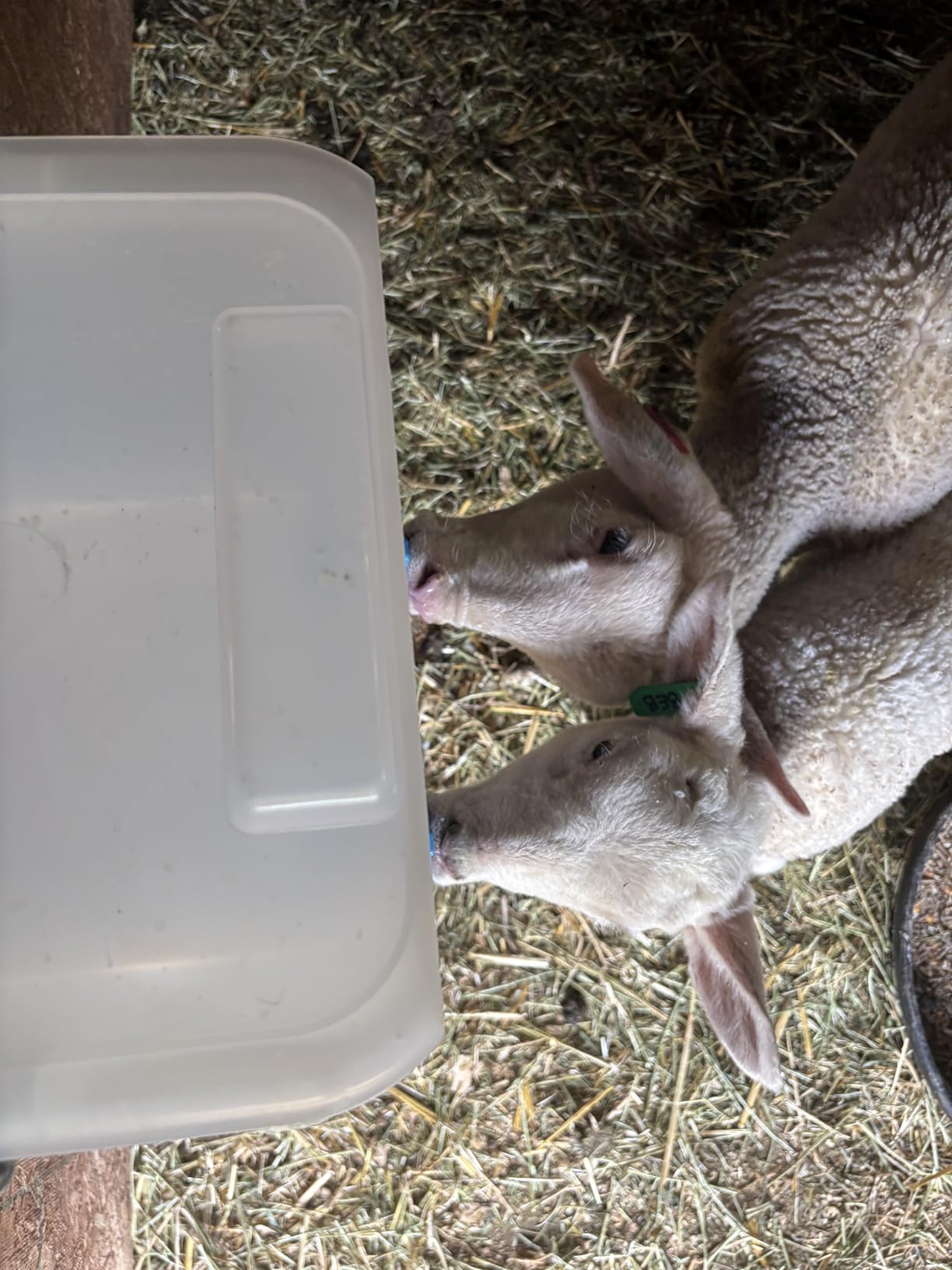
For sheep and goat operations, the Premier 1 Prima Orphan Feeding Bucket is the one I recommend. The 2-gallon round bucket with three nipple holes feeds up to three lambs or kids at once, which is exactly the size of an average lamb or goat kid birth.
The see-through bucket is a real benefit. You can check at a glance how much each animal has consumed, and you can spot contamination before it becomes a problem. The sloped floor drains every drop of colostrum down to the nipples, eliminating the wasted leftovers that collect in flat-bottom buckets.
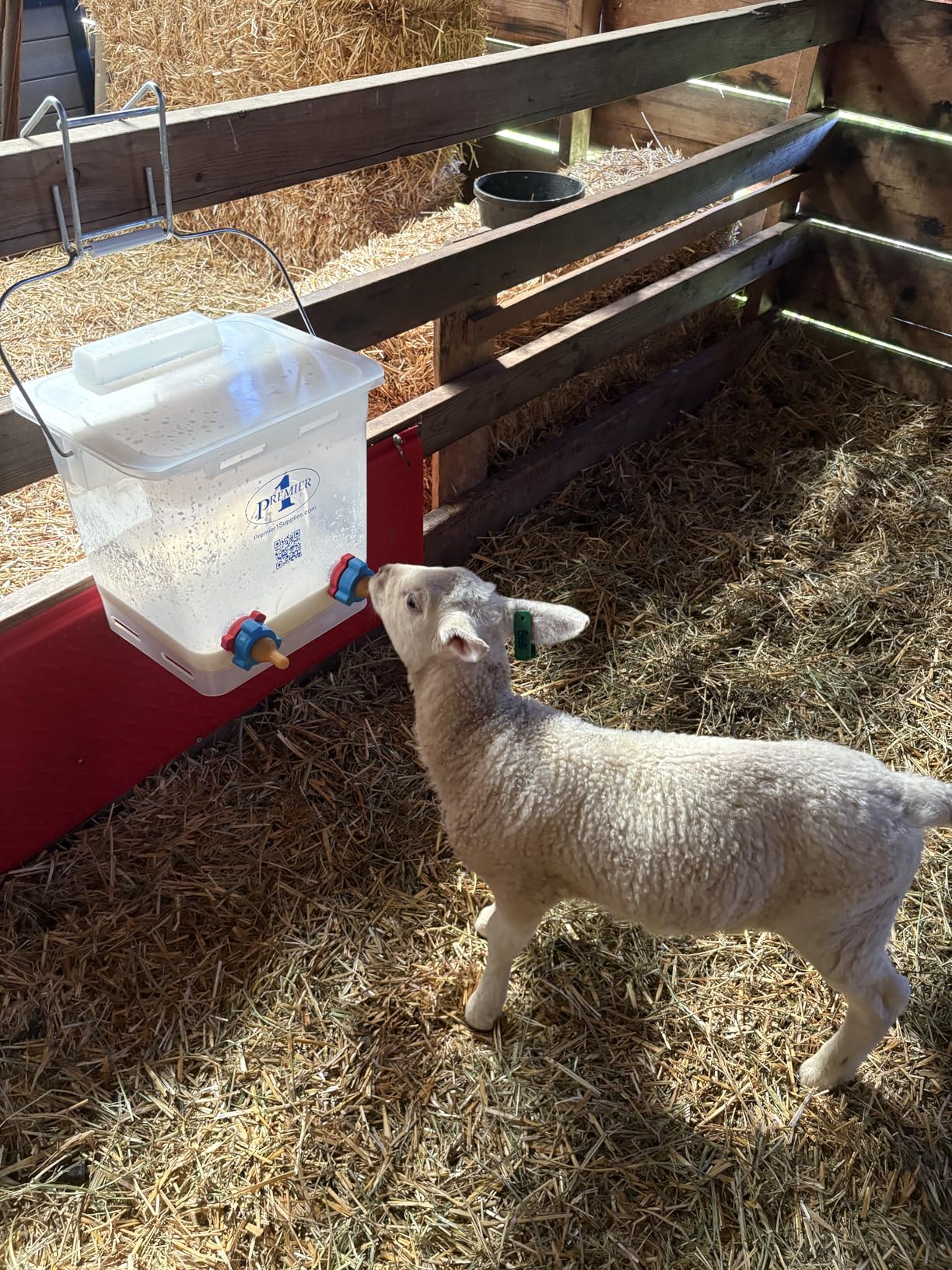
The easy-clean teat unit is what sets this apart from the budget lamb buckets. The nipple and flow control pin come out cleanly for washing, while the rest of the unit stays attached. That makes daily cleaning a 2-minute job instead of a 15-minute disassembly.
The included latex nipples and Premier Bucket Holder save you from buying accessories separately. Everything you need arrives in one box, and the holder is the standard for hanging in lambing jugs and goat kid pens.
Why this is the small-ruminant pick
Three nipple capacity matches typical births. Lambs and goat kids usually arrive in pairs or triplets, and three nipples means everyone can feed at once without competition. Faster feeding means less cold stress.
Sloped floor design eliminates waste. Standard flat buckets leave 10 to 20% of the milk at the bottom. For expensive colostrum replacer, that waste adds up over a season.
Where the design falls short
Nipple quality has been inconsistent based on user reports. Some reviewers praise the silicone nipples, while others report tearing after the first use. Inspect on arrival and have replacements on hand.
The lid can be knocked off by aggressive animals. If you have older lambs or kids that climb, the lid may not stay in place. Consider bungee-cording it during use.
7. Colostrum Hydrometer with Test Jar in 2026 – Best Quality Testing Tool
Colostrum Hydrometer with Test Jar
Quality testing hydrometer
Test jar included
Compact lab grade
Pros
- Verifies colostrum quality before feeding
- Compact and easy to store
- Lab-grade glass construction
- Trusted by dairy operations
- Simple to read scale
Cons
- Small 4-review sample size
- Only tests quality not for warming
The Colostrum Hydrometer is not a heating device, but it is the one tool I tell every new dairy farmer to buy alongside their warmer. A hydrometer measures the specific gravity of colostrum, which correlates directly with antibody concentration. If you are warming poor-quality colostrum, you are wasting time and energy on a product that will not protect the calf.
Testing takes 2 minutes. You fill the test jar with fresh colostrum, drop in the hydrometer, and read the scale. Green zone indicates high-quality colostrum with antibody concentration above 50 mg/mL. Red zone means the colostrum is low quality and should be supplemented with replacer.
Reading at 4.7 stars across 4 reviews, the small sample size is a limit. But the reviews are uniformly positive, and the unit is sold by lab-grade suppliers like Kessler/Chase. For the under $50 price point, the risk is minimal.
Why quality testing matters
Not all colostrum is created equal. First-milk colostrum from a healthy heifer tests at 70 to 90 mg/mL of IgG. Colostrum from an older cow or a second milking can drop below 30 mg/mL. Feeding low-quality colostrum is a leading cause of failed passive transfer in newborn calves.
Testing prevents waste. If you are thawing a frozen bag of colostrum, you want to know whether it is worth the warming time. A quick hydrometer test tells you whether to use it or supplement with replacer.
Limitations to be aware of
Does not warm anything. This is a quality testing tool only. Pair it with one of the warmers above for the full warming workflow.
Glass construction requires careful handling. If you drop it, you will need to replace it. The hydrometer is fragile compared to plastic bucket warmers.
8. Bambino Ovis-40 Automatic Lamb Feeder in 2026 – Best Automated System
Bambino Ovis-40 Automatic Lamb/Kid Feeder – Feed Up to 60 Lambs or Goat Kids, 304 Stainless Steel Nursing Machine with 4 Nipples, 2-Gallon Tank, Reduce Labor & Save Time on the Farm
60-animal capacity
304 stainless steel
4 nipples
Pros
- Fully automatic milk mixing
- Feeds up to 60 lambs or kids
- 304 stainless steel tank
- Promotes natural suckling
- Reduces labor on the farm
Cons
- Premium price point
- Requires electricity and water hookup
The Bambino Ovis-40 is the only fully automatic colostrum and milk feeding system in this roundup. With a 60-animal capacity and 4 nipples, this unit is built for commercial sheep and goat operations that need to feed many lambs or kids at once without constant manual labor.
The 304 stainless steel construction is the same food-grade material used in commercial dairy equipment. It resists corrosion, cleans easily, and lasts for decades with proper care. The 25-pound powder hopper lets you load milk replacer once and let the unit mix and feed automatically.
Fully automatic mixing is the labor-saving feature. The Ovis-40 mixes milk replacer with water at the correct ratio on demand, so you do not have to hand-mix bottles for every feeding. For a 50-ewe operation with triplets, that saves 2 to 3 hours per day during peak lambing.
Who this system is built for
Commercial sheep and goat dairies. If you are running 50 or more lambing ewes or kidding does, the labor savings pay back the unit cost within one season.
Producers who want consistent milk temperature. The Ovis-40 mixes and delivers warm milk at the right temperature every time, eliminating the variability of hand-mixed batches.
Trade-offs to consider
Premium price investment. The Ovis-40 is significantly more expensive than any single bucket warmer. The labor savings only pencil out for larger operations.
Requires electricity and water hookup. You need both utilities within reach of the installation location. This is not a portable solution.
Buying Guide: How to Choose the Best Colostrum Warmers for Newborn Livestock?
Why newborn livestock need warmth in the first hours
A wet newborn calf can lose 50% of its body heat within the first 30 minutes of birth in freezing weather. Lambs and goat kids are smaller and lose heat faster. Hypothermia sets in when the animal’s core temperature drops below 100°F, and at that point, the calf cannot generate enough body heat to recover without external warming.
Hypothermia reduces colostrum absorption. The same gut that closes to prevent bacteria from passing also closes when the calf is cold. Warming before the first colostrum feeding can improve antibody absorption by 30 to 40% based on research from leading dairy extension programs.
3-2-1 colostrum rule explained
The 3-2-1 rule is the standard for newborn calf colostrum management. First milking within 3 hours of birth. Feed at least 2 quarts (or 10% of body weight) of colostrum. The first feeding should be the only colostrum feeding for the first 24 hours if possible.
The 3-2-1 rule matters because the calf’s ability to absorb immunoglobulins drops by roughly 50% every 6 hours after birth. By 24 hours, the gut is closed and colostrum feeding no longer delivers antibodies. Timing is everything.
Temperature guidelines for colostrum
Warm colostrum to body temperature (102°F or 39°C) for the first feeding. Cold colostrum from the fridge (40°F) should be warmed to 102°F before feeding. Frozen colostrum should be thawed in warm water, not microwaved, because microwaving creates hot spots that destroy antibodies.
Never heat colostrum above 120°F. Higher temperatures denature the immunoglobulins and make the colostrum nutritionally equivalent to regular milk. A scalded colostrum is wasted colostrum.
How long to keep newborn livestock in a warmer
Most calves, lambs, and goat kids need 1 to 3 hours in a hot box or warming station to recover from mild hypothermia. Severely hypothermic animals (core temperature below 95°F) need 4 to 6 hours of warming with warm colostrum feeding in between.
Continue warming until the animal is dry, alert, and standing on its own. Forced warming that ends too early can send a partially-warmed animal back into hypothermia. Patience prevents relapses.
DIY alternatives to commercial warmers
Forum ranchers report success with homemade wooden hot boxes fitted with a 110V heater and a thermometer. The cost is roughly $200 to $400, and the lift of homemade warmth is identical to commercial units for the first 6 hours of warming.
Heat lamps are a common DIY option but carry real fire risk. The combination of heat lamps, dry bedding, and curious animals is the leading cause of barn fires. If you use heat lamps, mount them securely and use cage guards.
Cleaning and sanitization protocols
Between each animal, wash the warmer with hot water and a chlorhexidine or iodine-based disinfectant. Colostrum residue is a bacterial growth medium, and un-cleaned warmers can spread scours and other diseases between newborn animals.
For sheep and goat kids, where orf and other contagious issues are common, sanitize the teat unit between every feeding. The Premier 1 Prima bucket’s easy-clean teat unit makes this faster than rebuilding the bucket every time.
Multi-species compatibility
Most larger warmer buckets work for calves, lambs, and goat kids with a smaller bucket or teat insert. The 16-gallon Farm Innovators bucket can warm first-milk colostrum for any species, but you will want a smaller feeding bucket for actual delivery to lambs and kids.
If you run mixed livestock, consider the drop-in heater option. The 1000W Farm Innovators Submergible Heater works in any bucket you have, so you can switch between species without buying dedicated equipment for each.
Frequently Asked Questions
What is the 3-2-1 rule for colostrum?
The 3-2-1 rule means first milking of colostrum within 3 hours of birth, feeding at least 2 quarts (10% of body weight), and only colostrum for the first 24 hours. This timing maximizes antibody absorption because the calf’s gut closes to immunoglobulin transfer after the first day of life.
What temperature should colostrum be for calves?
Warm colostrum to body temperature (102°F or 39°C) for the first feeding. Cold colostrum from the fridge should be warmed before feeding, but never above 120°F because higher temperatures destroy immunoglobulins and make the colostrum nutritionally equivalent to regular milk.
How long should you leave a calf in a calf warmer?
Most calves need 1 to 3 hours in a warmer to recover from mild hypothermia, and 4 to 6 hours for severe cases below 95°F core temperature. Continue warming until the calf is dry, standing, and alert. End warming sessions too early and the calf can relapse into hypothermia.
What are some alternatives to using a calf warmer?
DIY wooden hot boxes with heaters work for home calving operations. Heat lamps also provide warmth but carry higher fire risk. Warming the calf with warm colostrum feeding (102°F) raises core temperature from the inside while a warming box or blanket raises it from the outside.
How to keep newborn calves warm without electricity?
Use deep straw bedding, calf coats, and ensure the calf nurses warm colostrum within the first 3 hours. A calf coat with a deep straw bed can keep a healthy newborn warm in 20°F weather without electricity. For severe cold, none of these replace a powered warming box.
Final Verdict: Choosing the Right Colostrum Warmers for Newborn Livestock
For a single warming station that handles calves, lambs, and goat kids, the Farm Innovators 16-Gallon Heated Water Bucket is the unit I keep coming back to. The replaceable heating element, hidden wiring, and large capacity make it the most reliable workhorse for serious calving operations.
For lamb and goat kid operations, the Premier 1 Lamb ‘N’ Goat Kid Prima Orphan Feeding Bucket is the better fit. The 3-nipple design feeds triplets at once, the see-through walls let you monitor intake, and the easy-clean teat unit saves time between feedings.
Every ranch that handles newborn livestock needs colostrum warmers for newborn livestock in the kit. Pair the warming station with a hydrometer to verify colostrum quality, and keep replacement nipples on hand for any teat-based feeder. With the right setup, you can turn around a hypothermic calf in under 2 hours and give every newborn the warmed colostrum it needs to survive the first critical day. Plan ahead for 2026 calving season, and you will not lose animals to preventable cold.